



Blonde hair looks for curly hair can go soft and glossy, or they can go stripey and dry in one bad appointment. There isn’t much middle ground once lightener meets a curl pattern with bends, coils, and a little attitude. That’s why the best blonde on curls is never a flat all-over beige sheet; it’s a placement problem first, a color choice second.
Curls break up light in a way straight hair never will. A ribbon of honey on a spiral reads differently than the same foil line on a board-straight bob, and that’s the whole point. When the blonde is placed where the curl naturally turns, the color starts doing that lovely old-photo thing—soft shine, visible texture, and just enough contrast to feel deliberate.
The vintage vibe matters here, too. Pin curls, finger waves, brushed-out sets, Marcel waves, soft side parts, bouncy fringe—these shapes already know how to flatter blonde tones. Put them together and you get hair that looks styled rather than overworked. The trick is choosing the right shade and the right silhouette for the curl pattern you actually have, not the one you wish would show up after diffusing.
Why These Blonde Looks Feel Fresh on Curly Hair
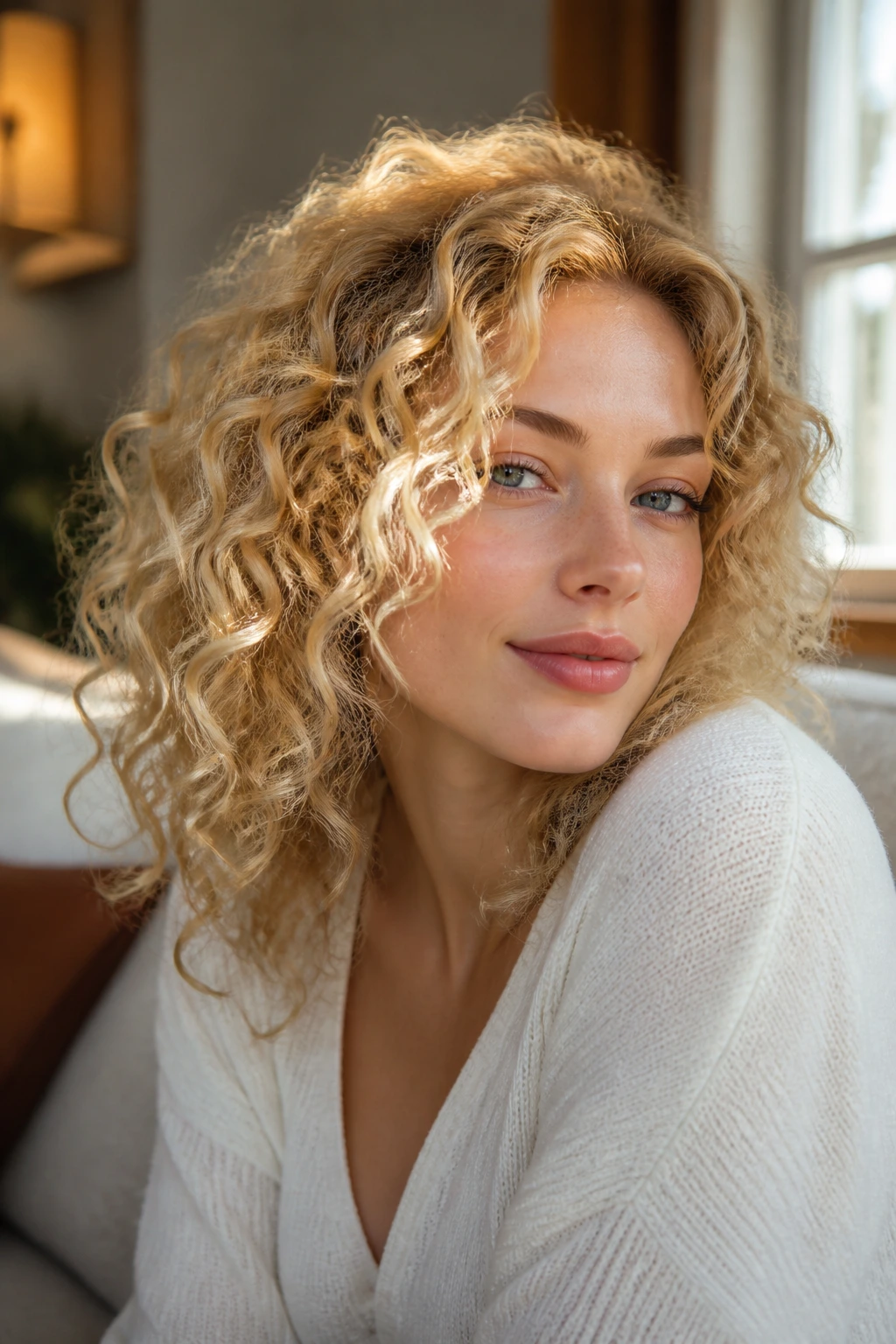
- Curl-Specific Color Placement: These looks are built around ribbons, halos, face frames, and ends that sit where curls catch light instead of hiding it.
- Vintage Without Costume Energy: The references come from real old-school shapes—finger waves, pin curls, Marcel bends, brushed-out volume—not from trying to make curly hair pretend it’s straight.
- Shade Range That Actually Works: Butter blonde, champagne, honey, beige, pearl, and icy cream all show up here because each one behaves differently on curls.
- Maintenance You Can Plan For: Some looks can live on a gloss and a deep conditioner. Others need toning every few weeks and a little more care around the hairline.
- Room for Different Curl Types: Loose waves, springy ringlets, coils, and fuller textures all have a place in this collection.
- Style, Not Just Color: A good blonde on curls isn’t only about lift level. The cut, part, finish, and shape decide whether it feels vintage, modern, or just crowded.
1. Hollywood Butter Blonde Finger Waves
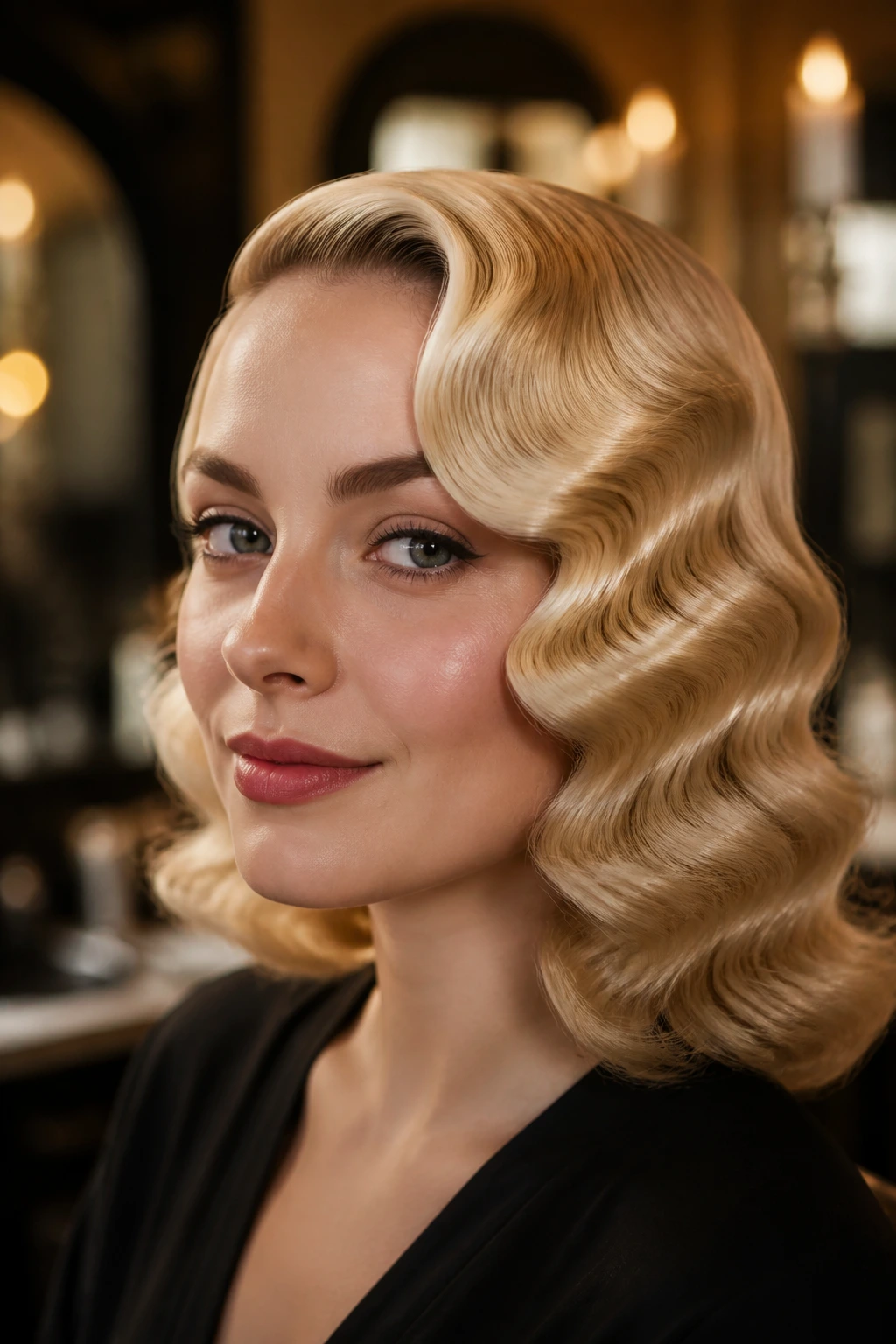
Butter blonde and finger waves are one of those pairings that never look accidental. The wave pattern gives the color a polished, almost lacquered finish, while the warm blonde keeps the whole thing from reading stiff. On curly hair, this works best when the front section is sculpted close to the head and the rest of the curl is either tucked under or set into a controlled bend.
A deep side part makes the vintage reference land fast. If your curls are looser, a setting lotion or curl foam plus a medium barrel iron on select front pieces can create that molded S-curve without flattening everything else. If your hair is tighter, a stretched set on wash day and a few pinned ridges at the hairline can deliver the same mood with less heat.
Why It Works for Curls
Butter blonde is warm enough to soften the strong lines of a finger wave. The shape stays neat, but not sharp. That matters. Too cool a blonde on this style can look chalky around the face, especially if the hairline has baby hairs and the cuticle is rough from lightening.
This one loves shorter lengths, but shoulder length can work if the perimeter is softened. The color should be brighter at the top of each wave and slightly deeper in the troughs. That tiny shift keeps the style from looking painted on.
2. Honey Ribbon Balayage with Soft Side Part
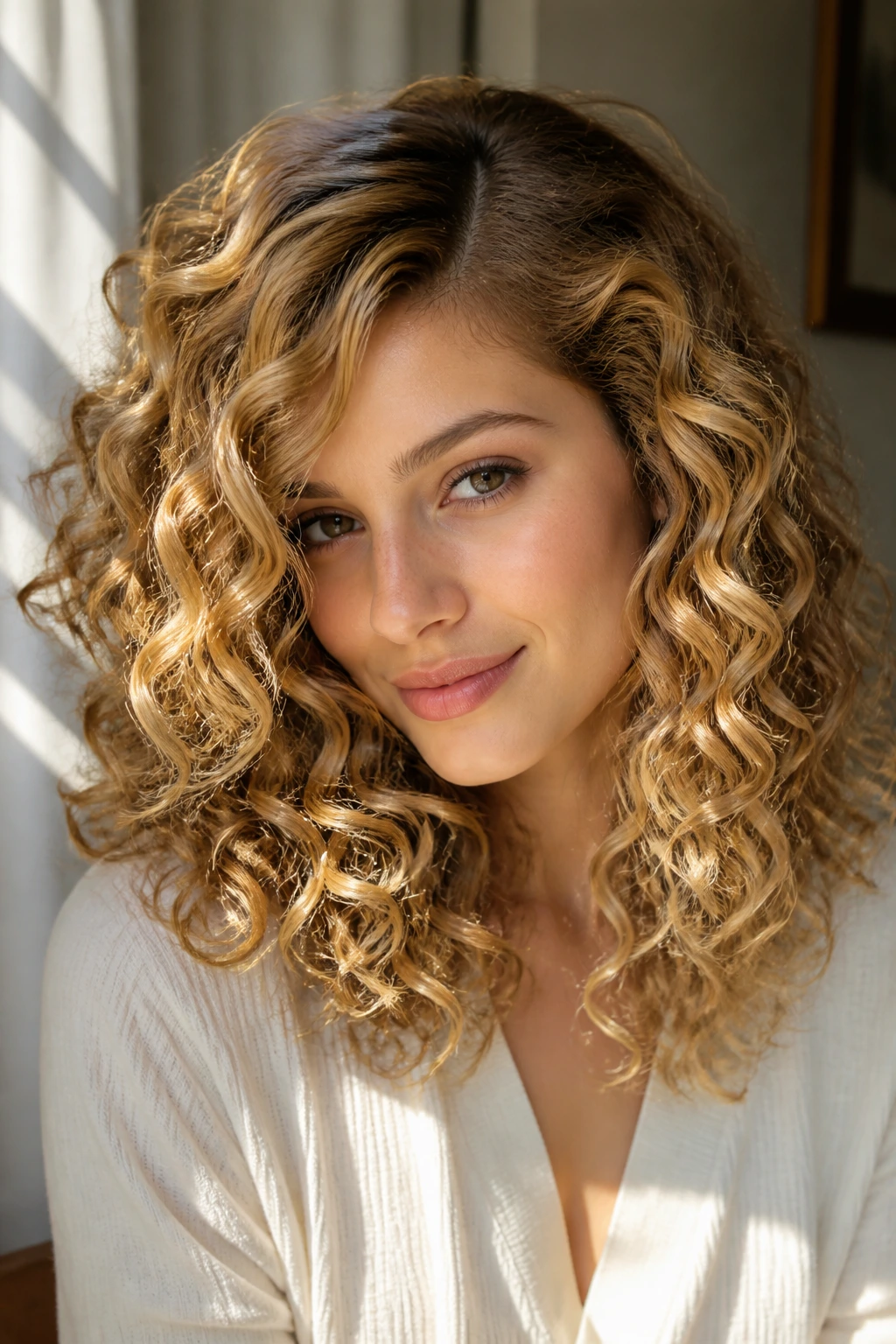
If you want movement before drama, this is the move. Honey ribbon balayage on curly hair creates those sunlit threads that show up as the curls separate, while the side part gives the whole style a vintage, camera-ready tilt. The best versions have darker roots and lighter mid-lengths, so the curl pattern does the revealing work.
This look is one of my favorites on medium to long curls because it doesn’t fight shrinkage. In fact, it benefits from it. When the curls spring up, the ribbons stack and flicker instead of disappearing into a solid block of color.
A side part matters more than people think. It shifts volume, softens the forehead area, and gives the style that slightly romantic, 1940s feel without needing a roller set. Keep the face frame a half-step lighter than the rest if you want the eyes and cheekbones to pop.
3. Champagne Ringlets and Blunt Fringe
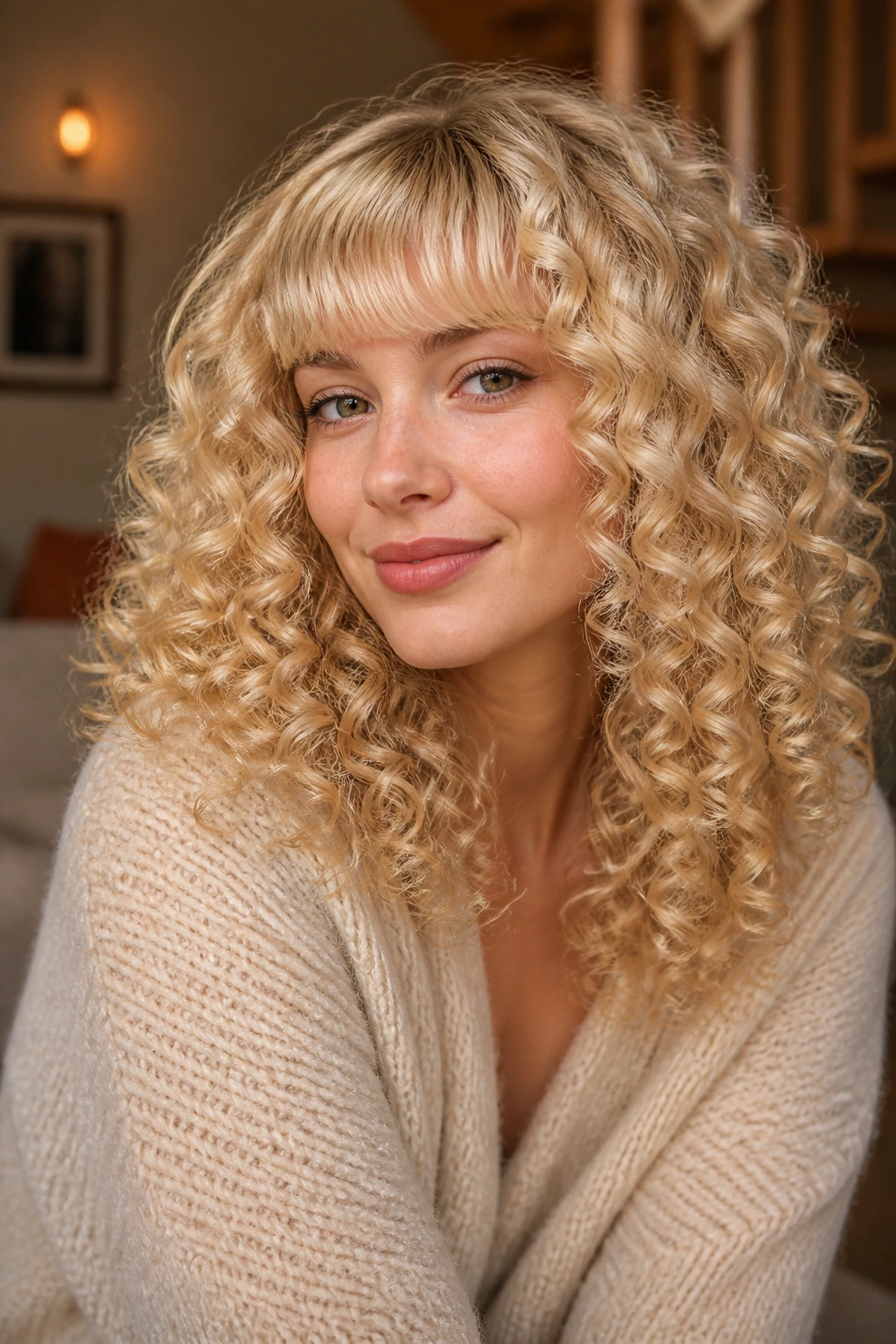
Champagne blonde and ringlets have a crisp, airy look that feels straight out of an old studio portrait. Add a blunt fringe and the style turns a little sharper, a little more fashion-forward, but still rooted in vintage shape. The trick is keeping the fringe soft at the edges so it sits with the curls rather than against them.
This look shines on springy ringlets that hold their shape when dry. The blonde tone should be pale but not icy; if it drifts too silver, the fringe can feel disconnected from the rest of the hair. A creamy champagne with a whisper of beige usually behaves better.
What Makes It Different
The blunt bang creates a visual line that the curls below can break apart. That contrast is the point. You get a strong frame at the top and texture everywhere else, which keeps the style from feeling too sweet.
If your hair is dense, ask for internal weight removal rather than a heavy layered cut. Too many short layers will make the fringe and the ringlets compete. You want the bangs to land cleanly, then the curls to tumble underneath like they’re on purpose—which they are.
4. Creamsicle Pin Curls for Short Hair
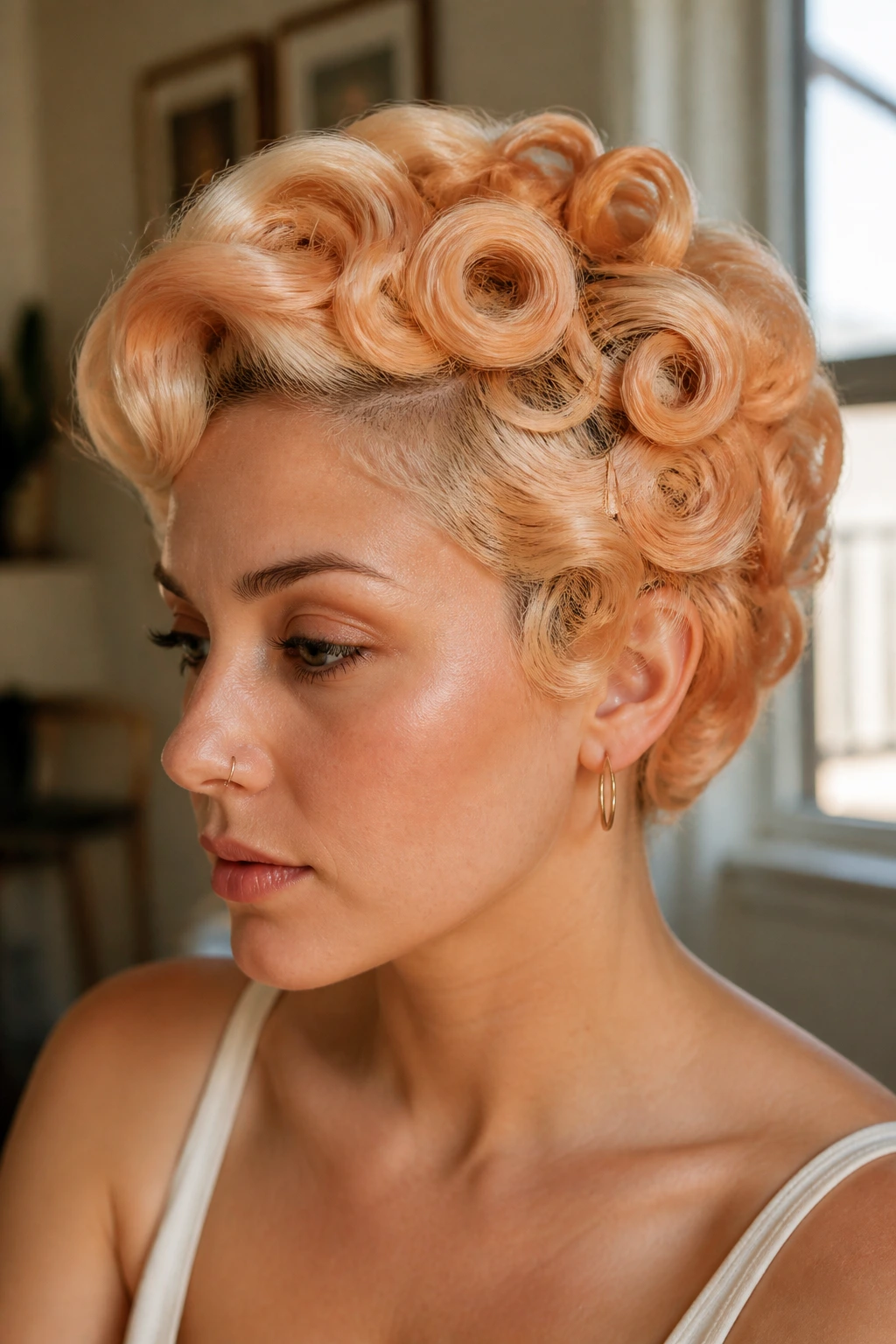
Short curls can go charming fast when the blonde is bright and the shape is controlled. Creamsicle pin curls do that without getting fussy. Think warm pale blonde, softly separated curls, and a rounded silhouette that hugs the head with just enough lift at the crown.
This style is especially good if your hair sits above the shoulders and you want it to look intentional on day two and day three. Set the curls while damp, clip or pin them into direction, then let them cool completely before touching them. That cooling time matters. Skip it, and the curl pattern loosens before it ever gets the chance to settle.
A creamsicle shade works because it has enough warmth to keep short curls from looking brassy, but enough lightness to make the texture stand out. On short hair, the light catches every bend. There’s nowhere to hide, which is why the tone has to be clean.
5. Sandy Blonde Curly Shag with Curtain Fringe
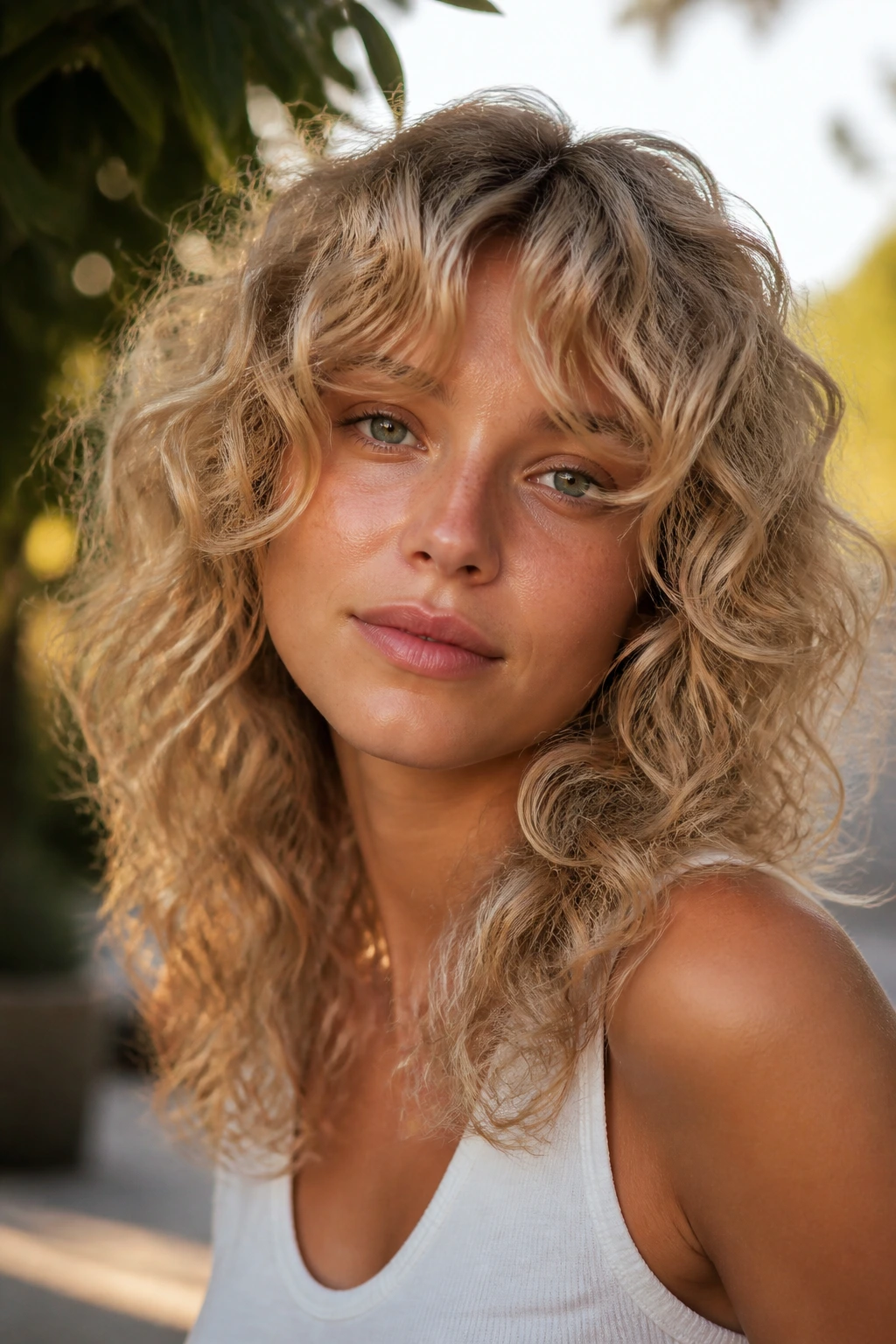
This is the easy one people underestimate. A sandy blonde shag with curtain fringe looks casual, but it’s a very specific kind of casual: the good kind, where the layers land around the cheekbones and the blonde is broken up enough to keep the hair from reading heavy. The vintage nod comes through in the fringe and the airy, lived-in shape.
On curly hair, a shag works when the layers are cut to release the curl, not carve it into triangles. Sandy blonde helps because it’s muted and soft. You get dimension without loud contrast, which suits textured hair that already has plenty going on.
The curtain fringe should split around the brow or just below it, then melt into the side layers. That face-framing move gives a slight 1970s polish. It’s one of the few blonde looks that can look relaxed and still feel styled.
6. Veronica Lake Side-Swept Beige Waves
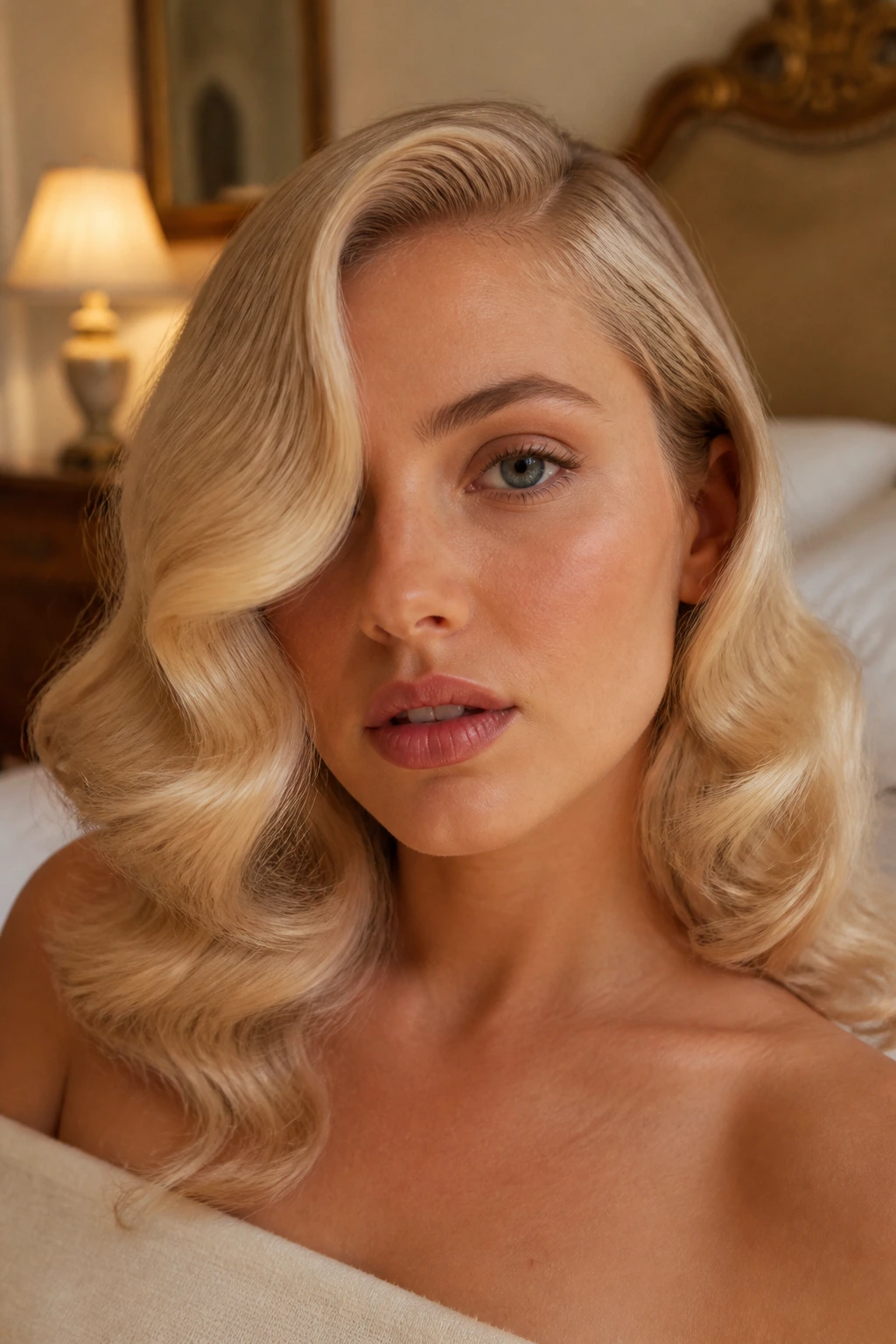
Side-swept waves are the quickest route to old-Hollywood drama, and beige blonde keeps them from tipping into costume. The style is simple on paper: deep side part, full wave on one side, softer sweep across the forehead, and ends that curve gently rather than bounce hard. On curly hair, though, the placement is everything.
Beige blonde is a smart choice here because it sits between warm and cool. That balance matters when the hair is being shaped into broad waves. Too much gold can make the wave look bulky; too much ash can flatten the shine. Beige lets the movement show.
This look works best when the wave pattern is set in one direction and the curls are brushed just enough to merge. Not too much. You still want texture, not shellacked ribbon. A light gloss spray after styling gives the surface a soft sheen without turning the style greasy.
7. Caramel-to-Buttermilk Ombre Corkscrews
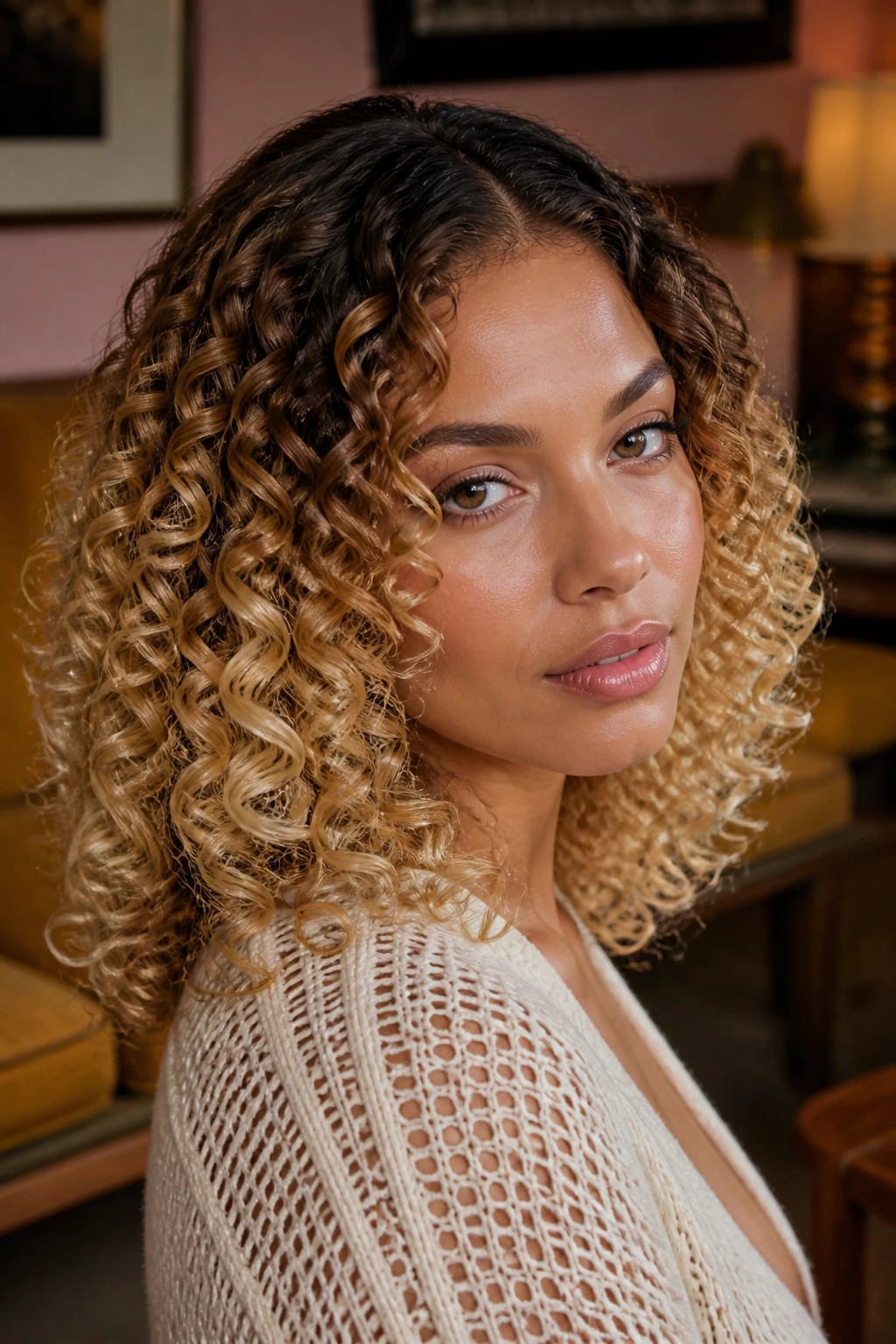
Here’s the fun part: ombre on curly hair can look richer than balayage when the curl pattern is tight and springy. Caramel at the roots fading into buttermilk blonde on the ends gives the corkscrews a vintage, almost candy-shop brightness that feels playful without losing shape. The darker top ground keeps the roots looking intentional as the color grows out.
This works especially well if your curls are medium to tight and you like seeing the blonde concentrate on the lower half of the hair. That placement allows the upper section to stay fuller and calmer while the ends catch the light. It’s a very different mood from all-over blonde. Less uniform. More motion.
I like this style with a soft center part or a very slight off-center part. It keeps the ombre from turning too harsh. The whole effect is a bit like a 1970s record-cover curl set, but with enough contrast to stay modern.
8. Platinum Pixie Curls with Lifted Crown
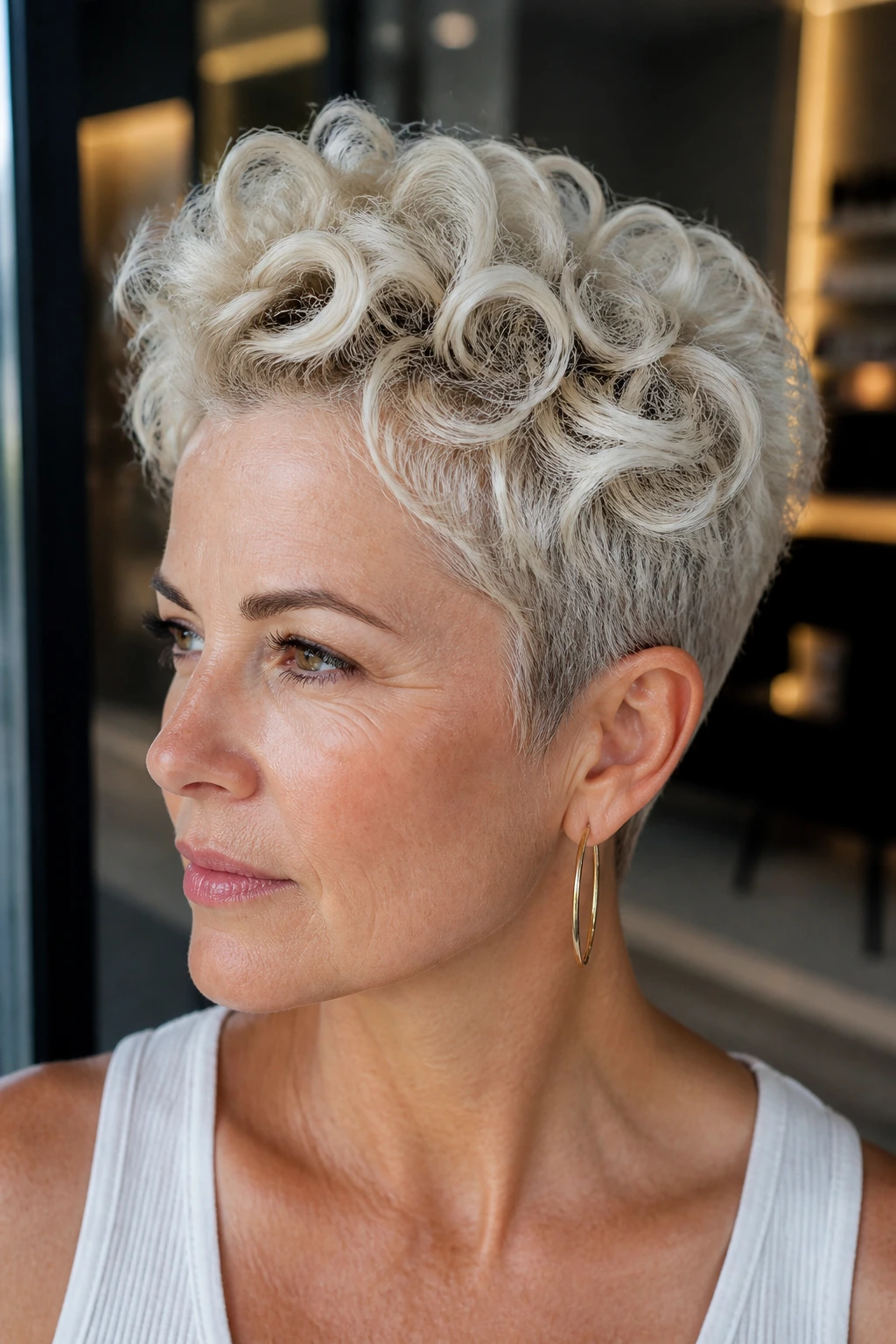
Platinum on curls sounds dramatic because it is. The reason it works on a pixie is that the shape is already cropped and sculpted, so the brightness can live at the crown and along the top without overwhelming the face. This is a bold vintage look with a clean edge.
The crown needs lift. Not helmet height, just a little airy volume so the short curls don’t lie flat and look overlightened. If the haircut has a narrow nape and a bit of length on top, the platinum can feel glamorous instead of severe. The best version has slightly darker roots or shadowing around the scalp to keep the shape readable.
This one is for someone who likes maintenance and doesn’t mind regular toning. Platinum on curly hair can go yellow faster than people expect, especially if the hair is porous. When it’s fresh, though, it has that icy, film-star snap that a lot of softer blondes can’t touch.
9. Golden Bob with Marcel-Wave Ends
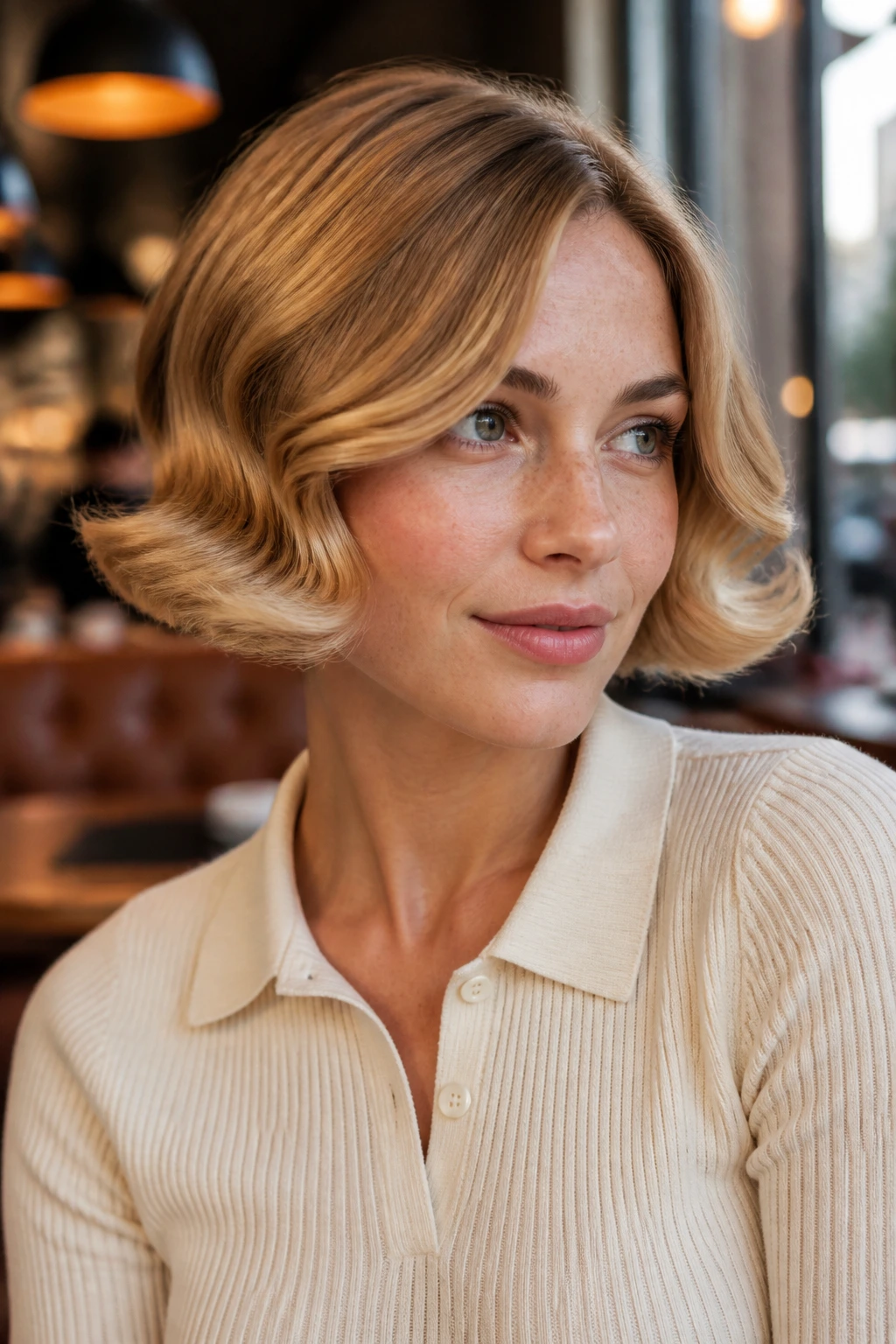
A golden bob with Marcel-wave ends has a clean, smart shape that feels very specific—like it belongs to a woman who always has lipstick in her bag and knows where the good coat hooks are. The waves at the ends give the bob a vintage bend, while the golden tone keeps the cut friendly instead of severe.
This look is particularly strong on chin-skimming or jaw-length curls. The color should be brighter through the mid-lengths and ends, with enough warmth to avoid a dull, khaki cast. A tiny bit of root shadow helps the bob stay grounded, especially if the cut is blunt.
Why This Looks So Polished
The bob frame does the heavy lifting. The Marcel-wave finish at the ends gives you that old-salon curve without needing to set the entire head in rollers. It’s a nice compromise for curly hair that likes definition but not stiffness.
If your hair is finer, keep the wave soft and close to the jaw. If it’s thicker, let the ends kick out a little more. That detail keeps the silhouette from turning boxy.
10. Vanilla Cream Ringlets and Baby Bangs
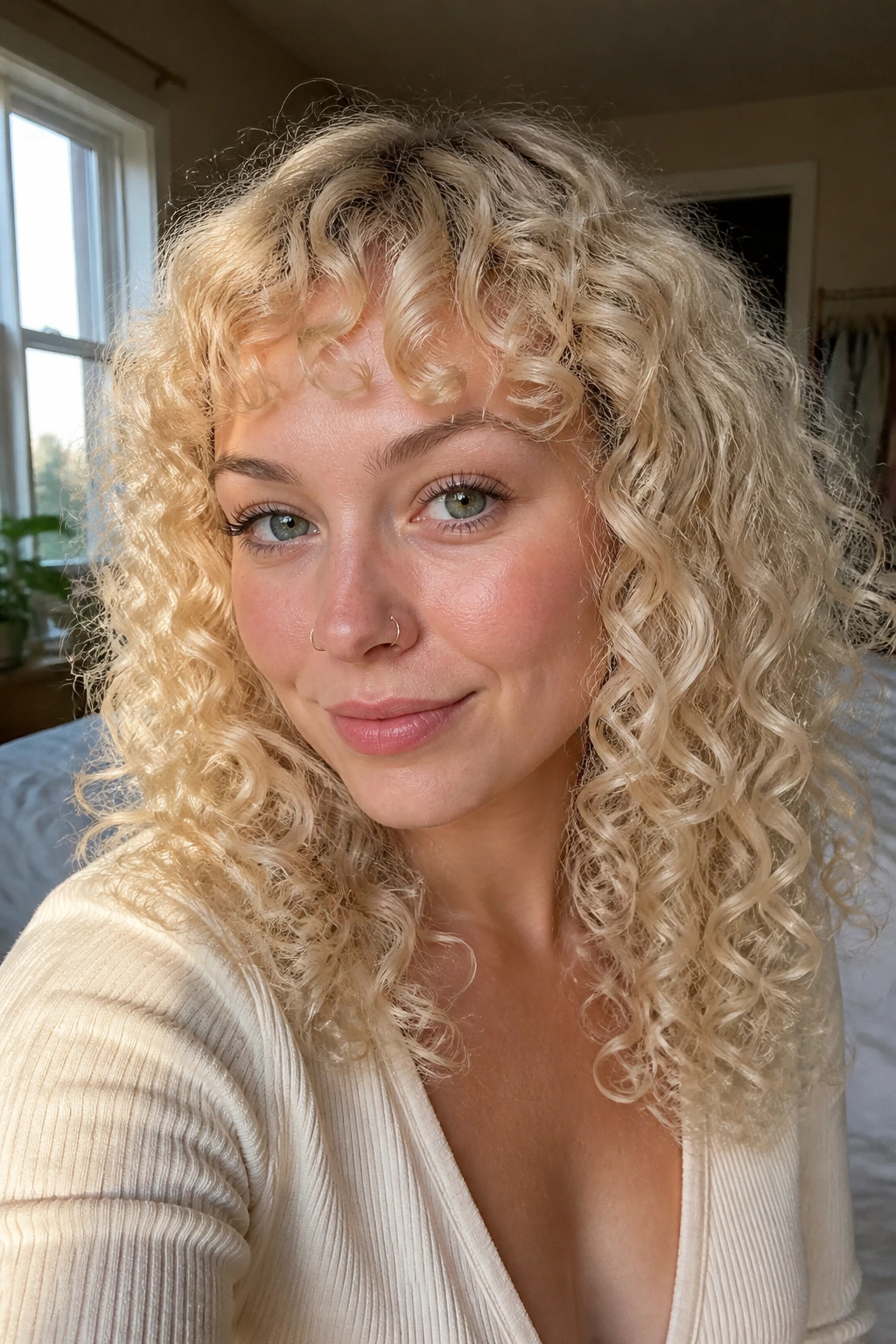
Baby bangs can be tricky, but with vanilla cream ringlets they make a very specific kind of vintage statement. The fringe shortens the face and makes the eyes feel bigger, while the ringlets below keep everything lively. The blonde tone has to stay creamy so the bangs don’t look harsh against the forehead.
This works best on curls that form tight, even spirals once styled. The shorter fringe should be cut dry or nearly dry, because curly bangs always bounce higher than the untrained eye expects. And yes, they can be washed and worn. The trick is not forcing them flat.
Vanilla cream is brighter than honey, but softer than platinum. That middle ground matters here. You want the bangs and the curls to read as one haircut, not two separate decisions made on different days.
11. Wheat Blonde Air-Dried Lob with Soft Brush-Out
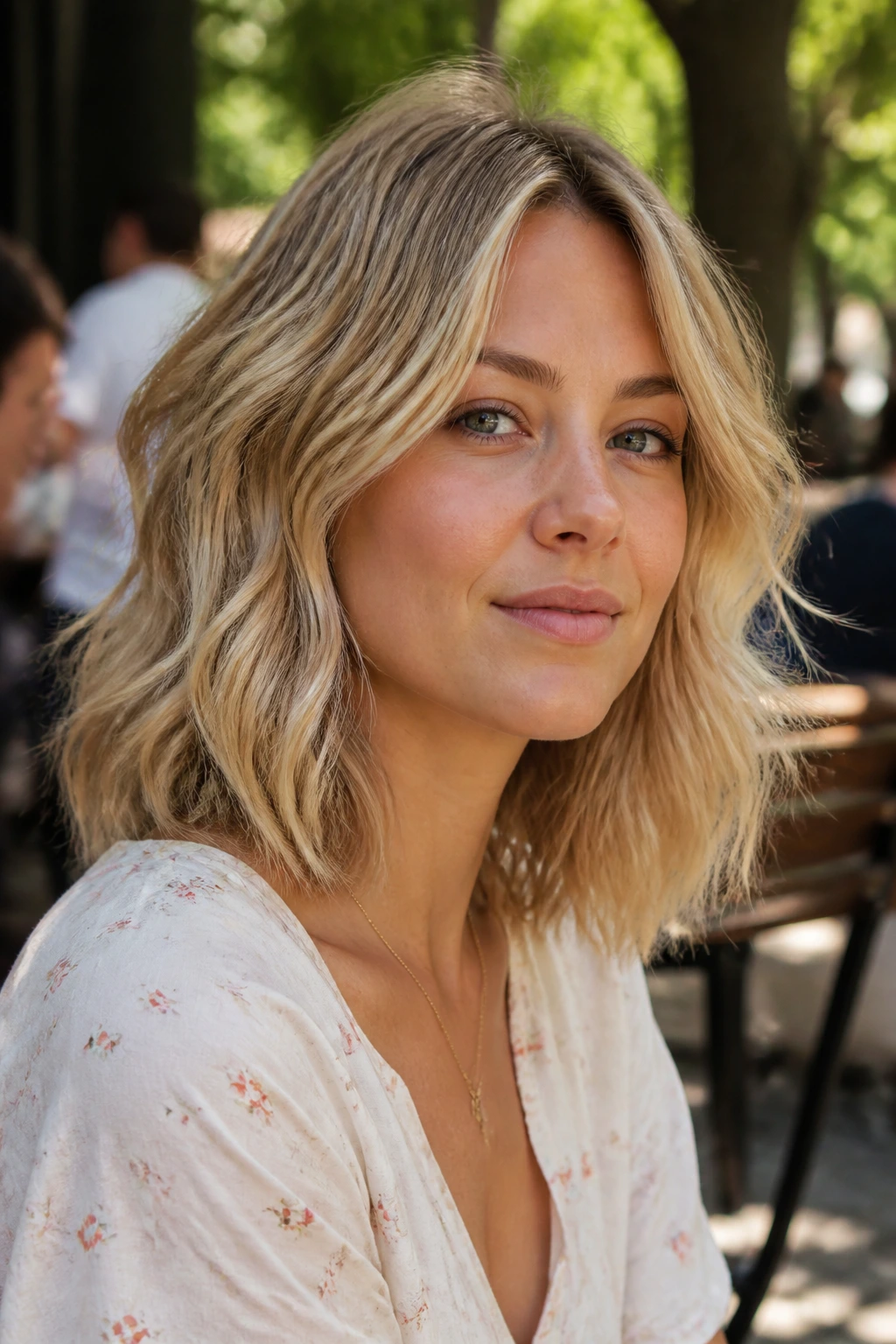
A wheat blonde lob has a quieter kind of vintage charm. It doesn’t shout pin-up or Hollywood. It murmurs it. The length gives curls enough room to settle into a shoulder-skimming shape, and the wheat tone brings a slightly sun-faded softness that feels lived-in in a good way.
This style is ideal when you want movement without a high-drama silhouette. Air-dry the curls, then brush out only the outer layer once they’re fully dry to soften the edges. That brush-out step gives the lob a 1960s record-store feel, especially if the front pieces are tucked behind one ear.
Wheat blonde is also forgiving on busy hairlines and growing roots. It’s not as demanding as platinum or champagne, and it lets the curl pattern remain the main event. Sometimes that’s the smartest choice.
12. Buttermilk Balayage on Long Coils
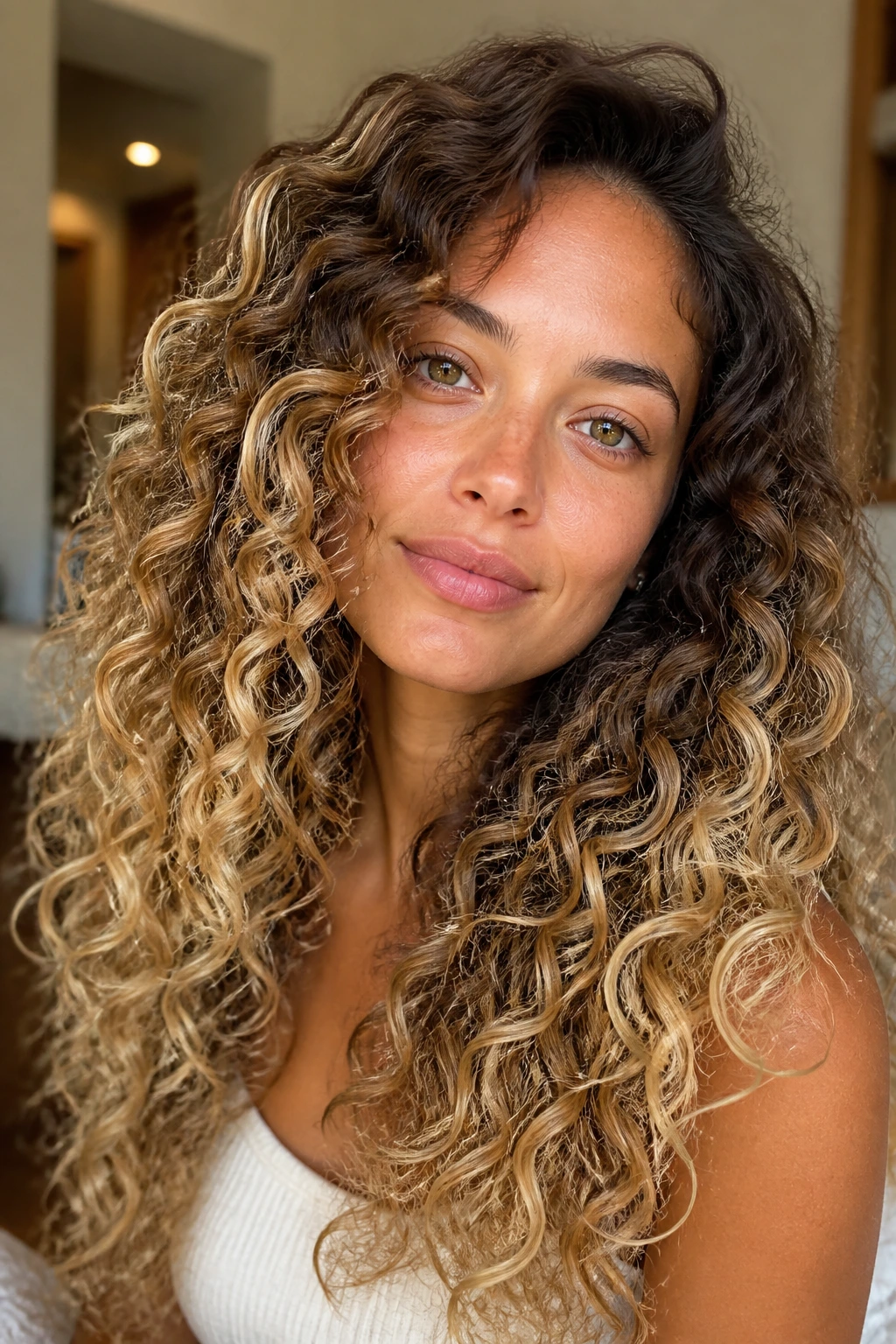
Long coils and buttermilk balayage are a beautiful match because the color can travel through the shape instead of sitting on top of it. Buttermilk is lighter than honey and creamier than white blonde, which means it reflects light without making the coil pattern look dry. On long hair, that’s a big deal.
The blonde should be concentrated on the outer ring of the coil and the surface layers that show first when the hair moves. If everything is lightened equally, the texture can disappear. If the highlights are placed with a little restraint, each coil starts acting like a tiny lamp.
This look feels vintage in a softer, more romantic way. Think old postcards, not red carpet. It’s especially good for people who want to keep length and still have dimension, because the balayage makes the ends feel intentional instead of heavy.
13. Sunlit Beehive Curls with Blonde Ends
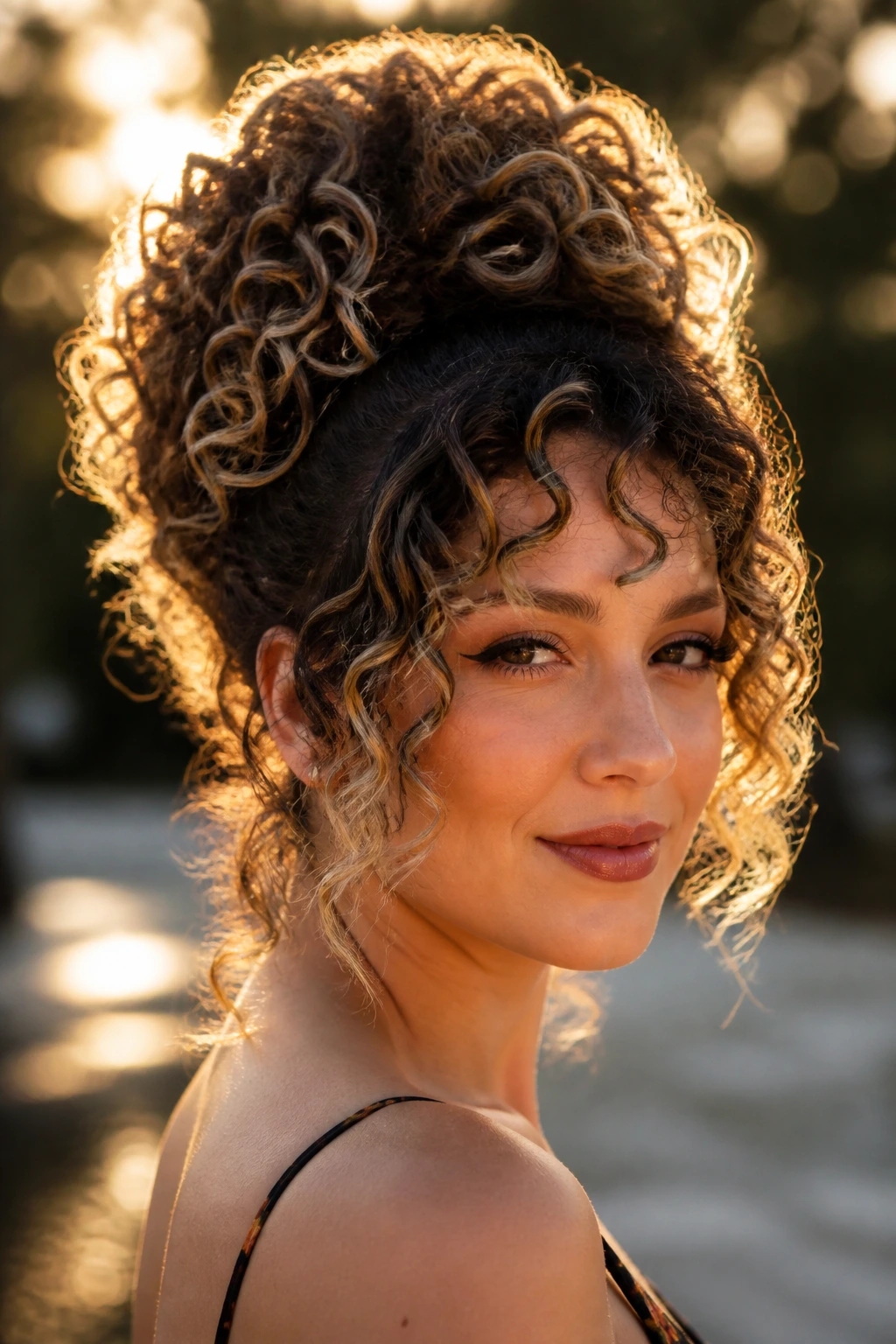
A beehive shape on curly hair sounds like a lot, but it becomes very wearable when the blonde is placed toward the ends. The height at the crown gives you that 1960s silhouette, while the lighter tips keep the shape from feeling dense. It’s theatrical in the best sense.
This style depends on pinning and support. You’re not trying to create a stiff cone. You’re building a rounded rise that lets the curls stack neatly. Blonde ends help because they create a little visual separation between layers, which makes the whole shape easier to read from the side.
If you like vintage accessories, this one loves a comb, a barrette, or a narrow satin band. Nothing too sparkly. The hair is already doing enough. A little height, a little shine, and the kind of control that only looks casual after a lot of practice.
14. Pearl Blonde Tapered Afro Curls
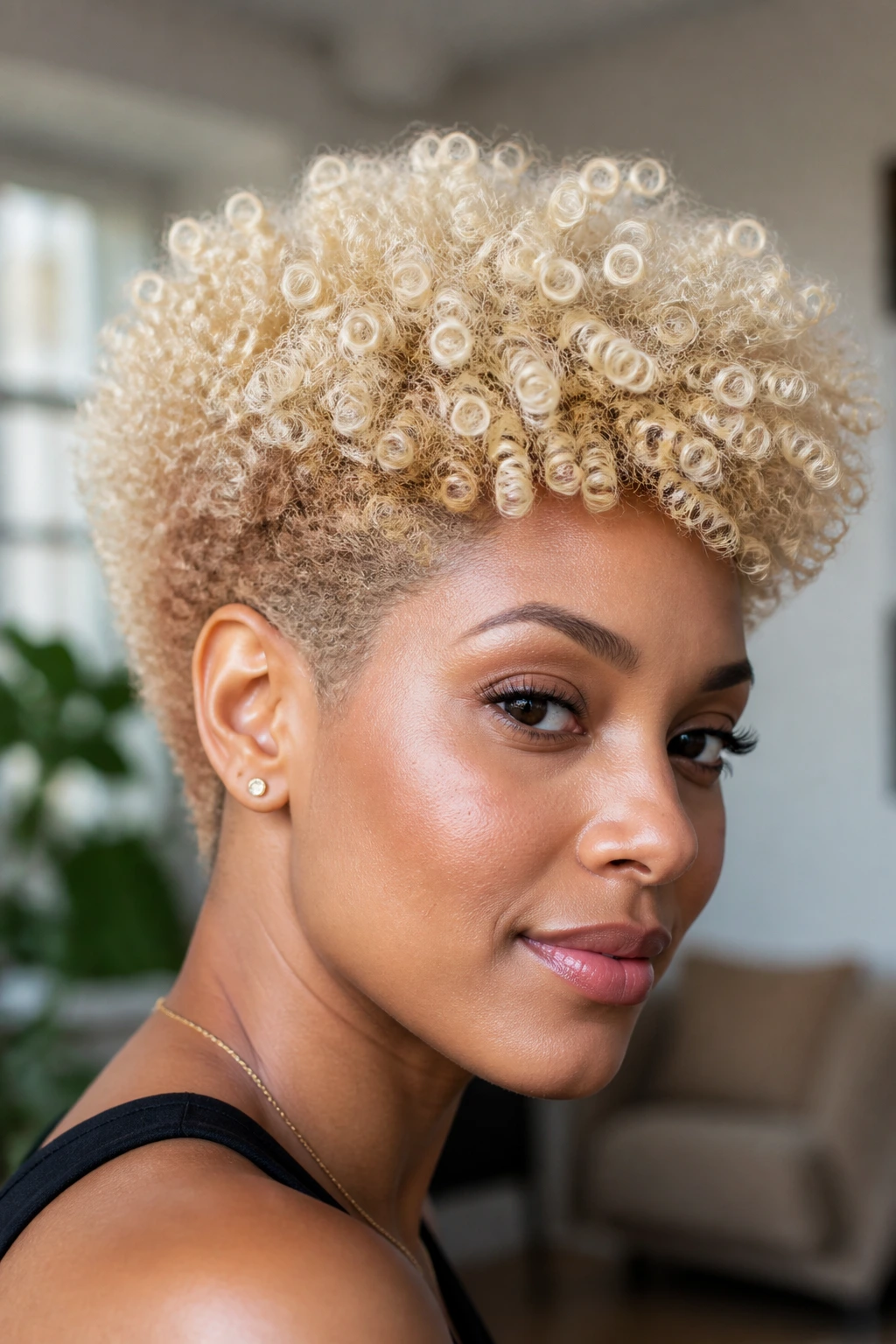
Pearl blonde on tapered afro curls is one of the most elegant high-contrast blonde looks in the bunch. The shape is rounded at the top and narrower at the sides, which gives the color a beautiful halo effect. Pearl blonde works because it’s cool enough to feel luminous, but not so icy that it drains the texture.
This style is all about the silhouette. The taper keeps the outline neat, while the blonde brightens the outer curve of the hair. If the roots stay a shade deeper, the head gets dimension and the curls don’t collapse visually.
A satin sheen finish suits this look better than a glossy, wet one. Too much shine can flatten the shape. Pearl blonde wants a soft glow, the kind that catches on the outer coils when the light shifts across the room.
15. Toasted Almond Highlights on Big Curls
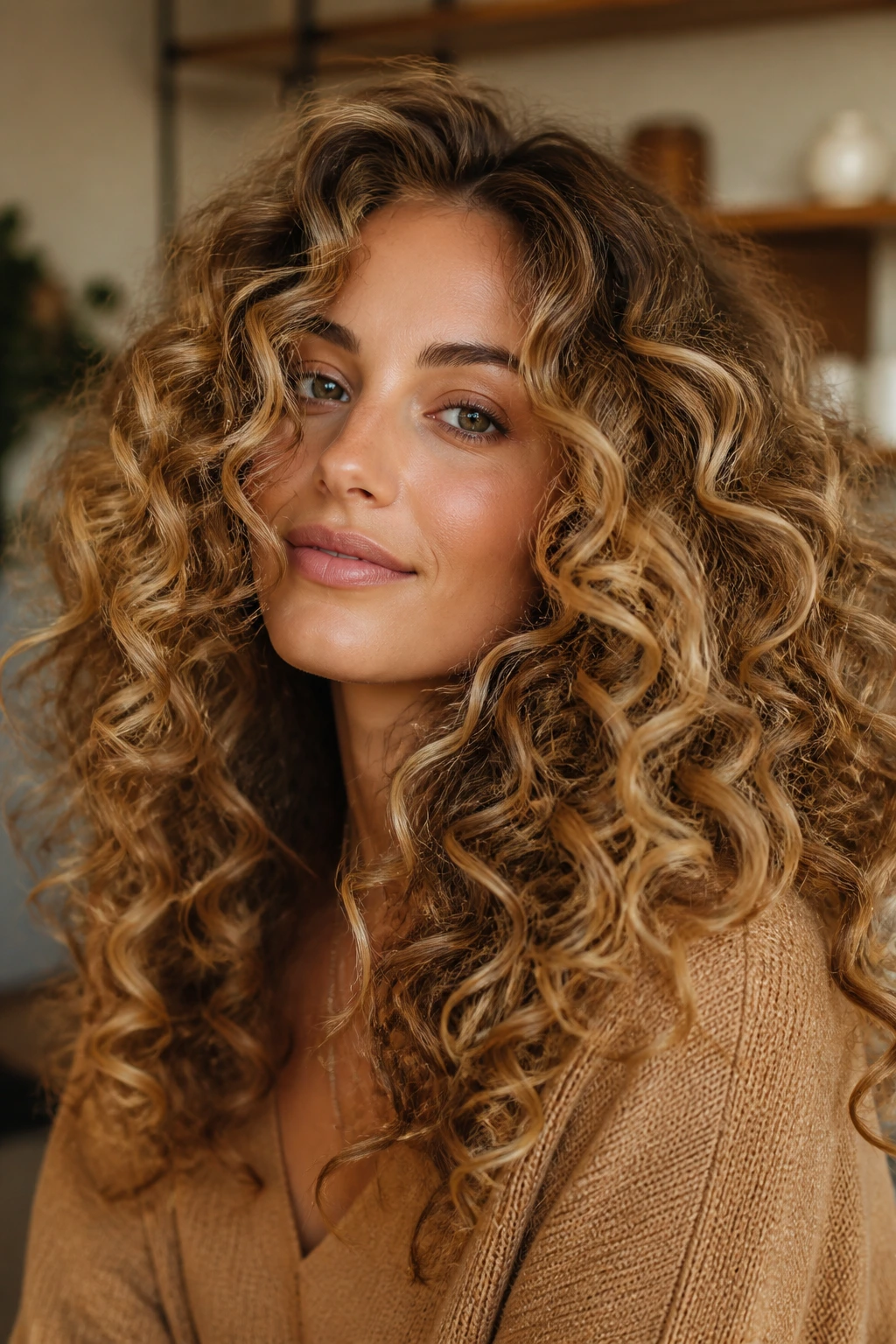
Big curls and toasted almond highlights are made for each other because both need room to breathe. The highlights are warm, narrow, and placed with enough spacing to let the curl pattern stay bold. This is not the time for heavy blonde panels. Restraint wins.
The toasted almond tone sits in that sweet spot between brunette richness and blonde brightness. On large curls, that gives a kind of vintage softness that reminds me of brushed-out 1970s editorial hair. The look has warmth without looking orange, and that’s a harder balance than people realize.
If your curls are loose but thick, this is one of the easiest ways to add blonde without losing the density you like. The highlights should follow the bends, not cut across them. That’s the difference between expensive-looking color and a streaky mess.
16. Antique Gold Glam Waves
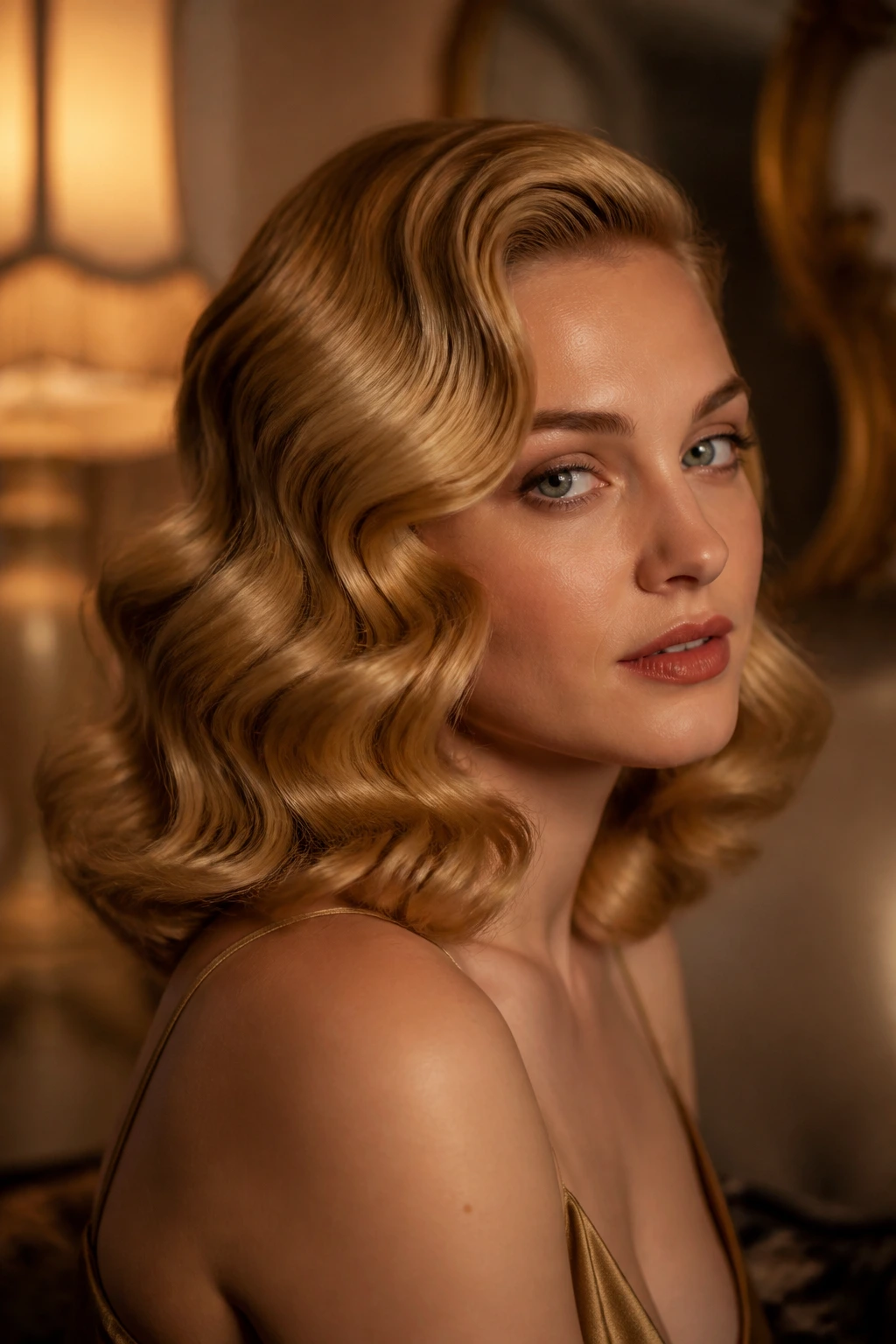
Antique gold is one of the richest blonde tones for curly hair because it has depth. It’s not pale, and it doesn’t pretend to be. Pair it with glam waves and the result feels like a dressed-up evening look from a different era, all glossy movement and warm reflections.
This is a strong choice for medium-to-dark bases that want blonde without a harsh jump. The waves should be broad and polished, then softened at the ends so they don’t look stiff. Antique gold needs shape. Without a good wave pattern, the color can feel too heavy.
I like this look for shoulder-length hair in particular. It gives enough surface area for the gold to show, but not so much length that the curls start to lose their vintage shape. The effect is bold without being loud. That’s the appeal.
17. Pale Blonde Pageboy with Curled Under Ends
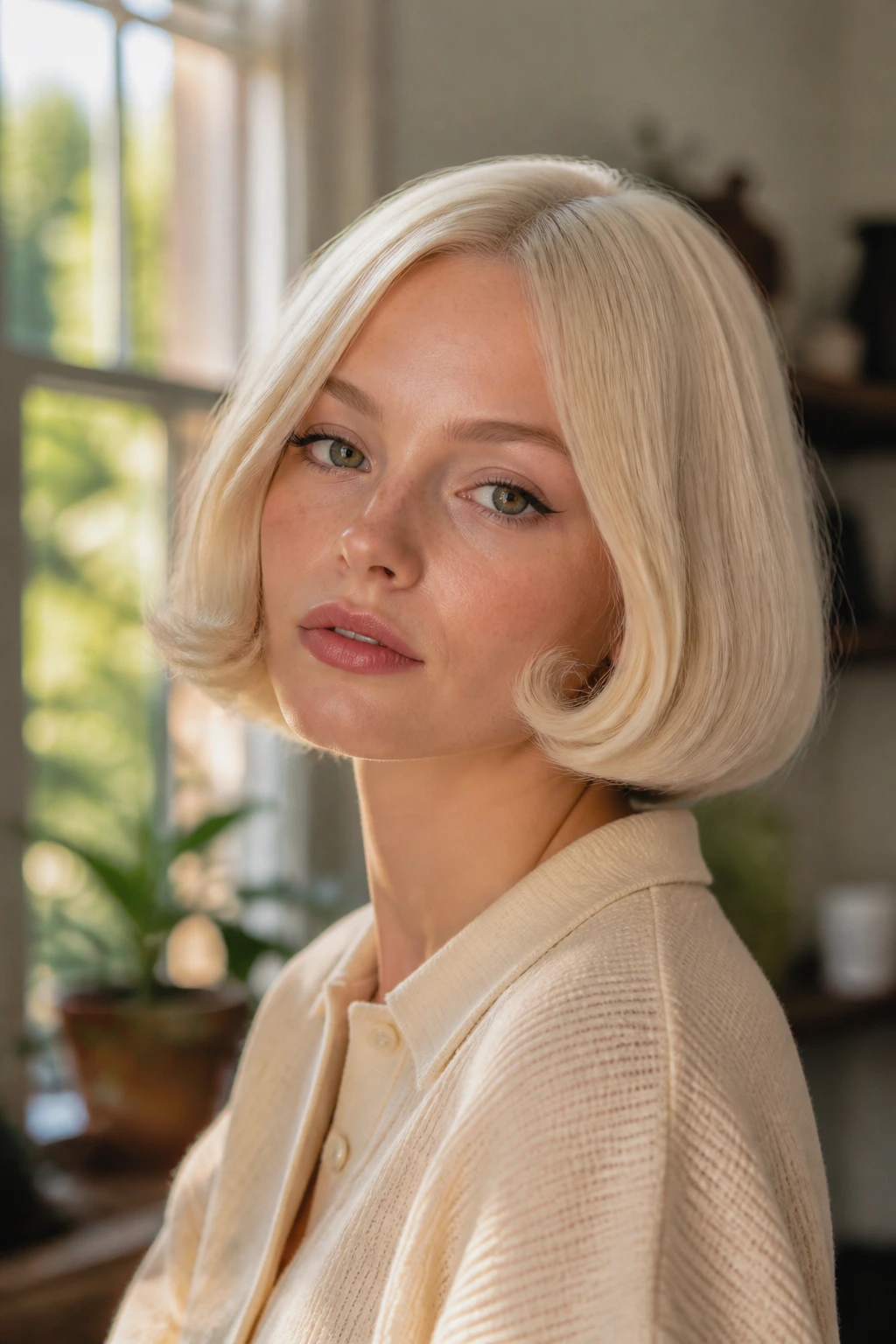
A pageboy haircut already has a built-in vintage reference, and pale blonde gives it that crisp, almost porcelain finish. The curled-under ends are the key. They keep the shape smooth and tidy, which is exactly what this cut needs on curly hair so it doesn’t puff out and lose the line.
Pale blonde works here because the pageboy silhouette is compact. Bright color at the ends and around the face creates a tidy frame that looks deliberate. If the roots are shadowed just a little, the roundness stays visible and the hair doesn’t read as a solid white block.
This is a lovely option if your curls loosen into waves when brushed out. The style can shift between neat and soft depending on how much you separate the ends. It’s one of the cleanest vintage blondes in the whole group.
18. Honeyed Poodle Curls Retro Crop
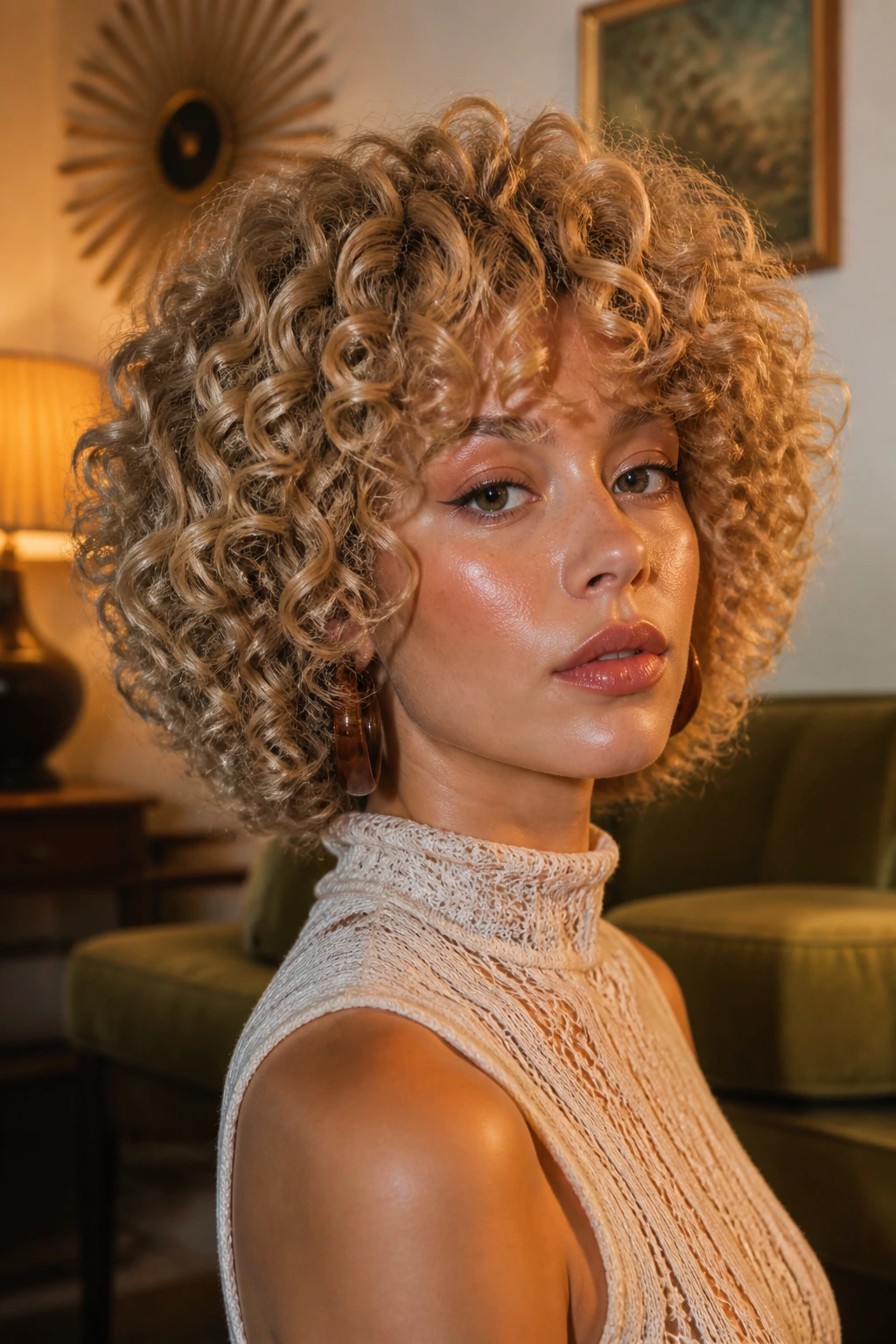
Poodle curls have a playful side that people often overlook. Pair them with honeyed blonde and the style turns sweet, punchy, and very specific to mid-century glamour. The crop keeps the curls clustered, while the warm tone makes them feel plush instead of rigid.
This look is best when the cut holds its roundness naturally. If the curls are too long, the shape loses its little cloud effect. Honeyed blonde helps because it catches the outer edge of each curl and gives the crop a soft glow.
The key here is not brushing it into submission. A little separation is fine. Too much and you lose the retro silhouette. Think tidy volume, not puffed-out chaos. There’s a difference, and it’s visible from across the room.
19. Beige Blonde Layers with S-Shaped Waves
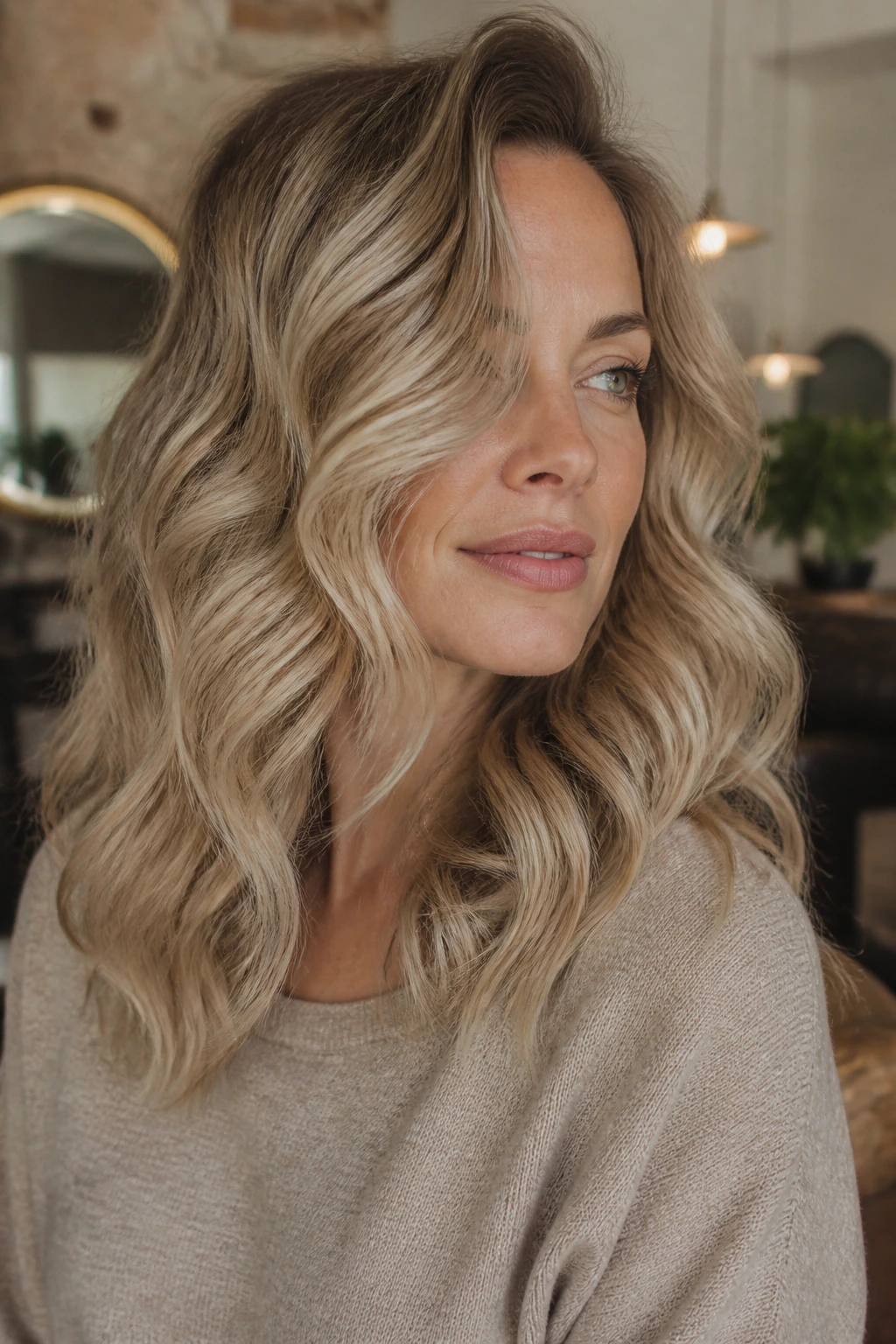
Beige blonde layers are the quiet achiever of vintage curly hair. The tone is balanced, neither too warm nor too cool, and the S-shaped waves make the style read polished without feeling over-set. It’s a very wearable look for someone who wants softness more than drama.
The layers should sit where the wave naturally breaks, not where it creates frizz. That’s especially true if your curls are looser on top and tighter underneath. Beige blonde lets the variations blend together, which keeps the haircut from looking segmented.
This look does well with a side part or a deep off-center part. The waves can be brushed out a little for a softer finish, then pinned behind one ear for a nod to old movie styling. Simple. Clean. Not boring.
20. Icy Cream Glamour Blowout on Curly Hair
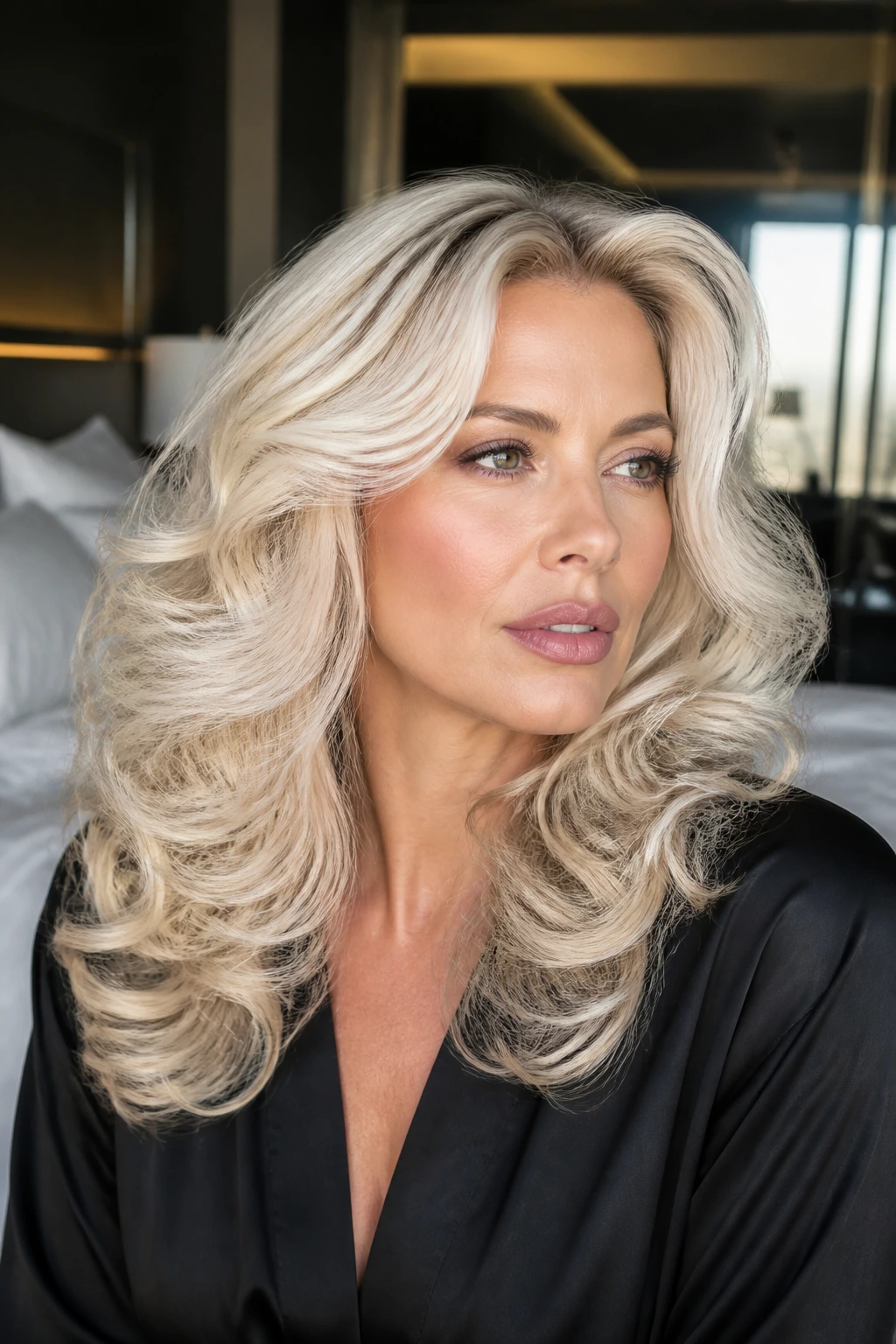
An icy cream blowout on curly hair is not about pretending the curls don’t exist. It’s about stretching them enough to create a soft, glamorous frame that still has body underneath. The blonde tone is pale and cool, but not raw white. That distinction matters because cool blondes can go flat fast if they’re too stark.
This look is at its best when the cut has long layers and the ends are beveled inward. The blowout should leave a bend, not a poker-straight finish. If you see a little curve at the bottom and a lot of movement around the face, you’re on the right track.
Icy cream wants shine, but controlled shine. A light serum on the ends and a flexible spray at the roots usually gives enough polish without making the hair collapse. It feels a little cinematic, which is exactly the point.
21. Bronde Ribbon Curls with a 70s Flip
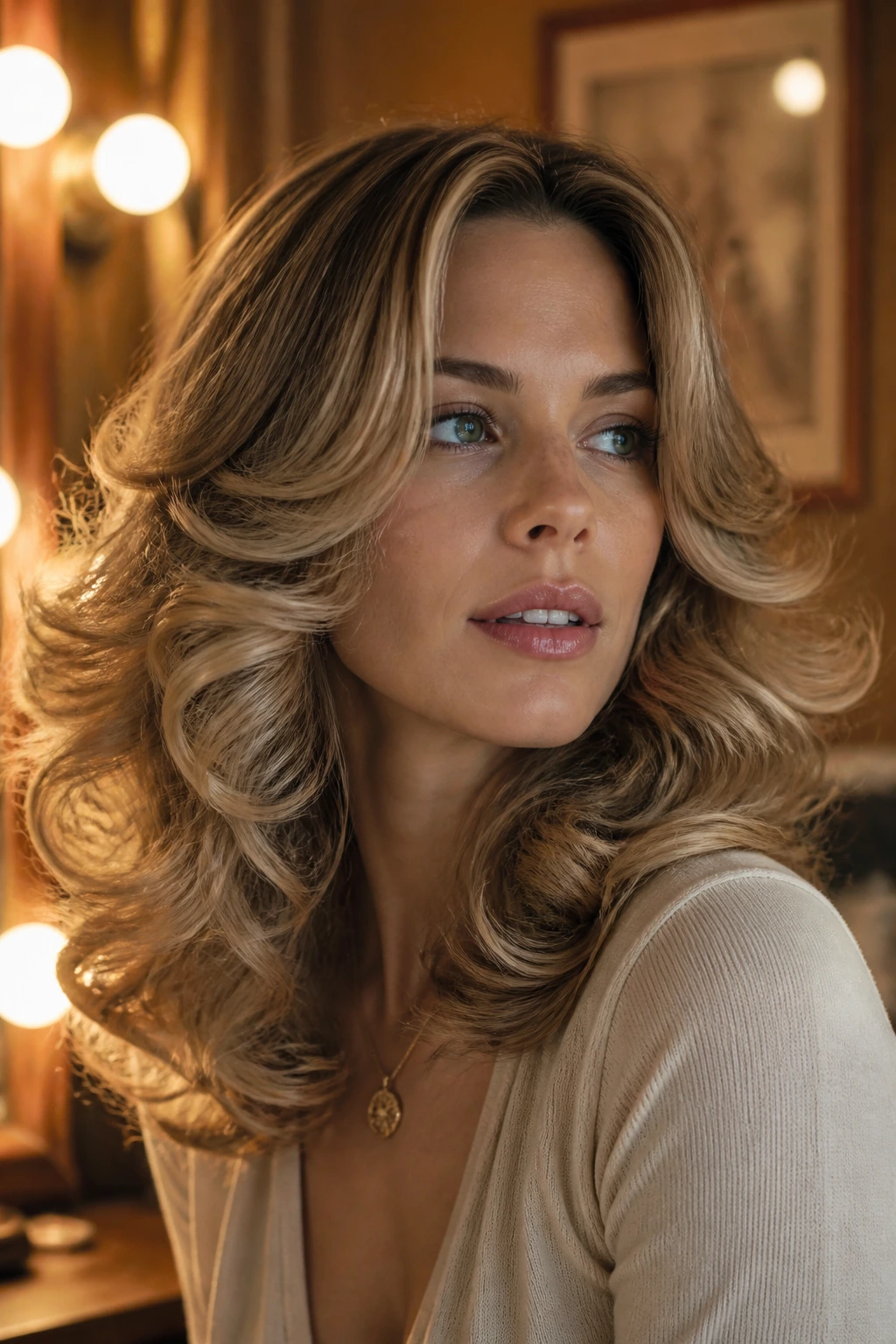
Bronde is the easiest bridge between brunette depth and blonde brightness, and ribbon curls with a flipped-out edge make that balance look intentional. The 70s influence comes through in the outward bend at the ends and the soft volume around the cheekbones. It’s a very flattering shape for medium-length curls.
This style works when the ribbons are thin enough to disappear into the curl pattern and reappear only when the hair moves. That keeps the blonde from feeling stripy. The flip at the bottom gives the cut a little kick, which stops it from looking too controlled.
If you’re nervous about going lighter, this is a smart starting point. Bronde lets you test warmth, brightness, and contrast without committing to a high-maintenance all-over blonde. The hair still reads blonde at a glance, but with a brunette backbone.
22. Custard Blonde Mid-Length Shag
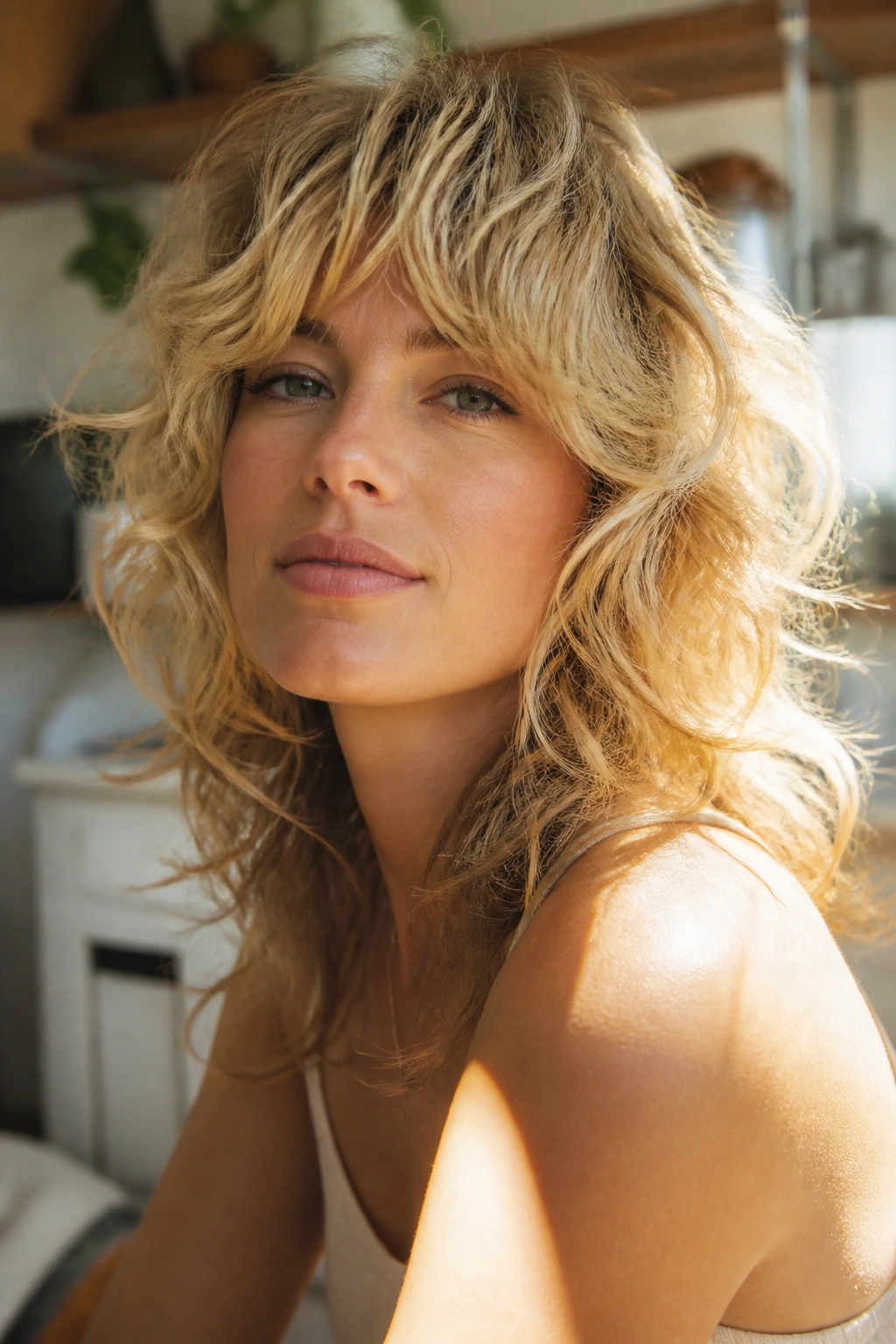
Custard blonde has enough warmth to keep a shag from looking dusty, and mid-length layers give the curl pattern room to breathe. This is the kind of haircut that looks good a little messy. Not sloppy. Messy in the way a well-loved leather chair looks better after a few years.
The shag shape lets the blonde hit the top layers, the fringe, and the outer edges, which is where the eye goes first. That creates movement even when the curl is only half-dry. If you wear it with curtain fringe, the vintage mood gets stronger.
Custard blonde is a nice choice when you want something softer than platinum and more playful than beige. It sits in the middle, which is exactly where a lot of curly-haired people live. The cut does the nostalgia; the color keeps it bright.
23. Vanilla Silk Side Part with Defined Ringlets
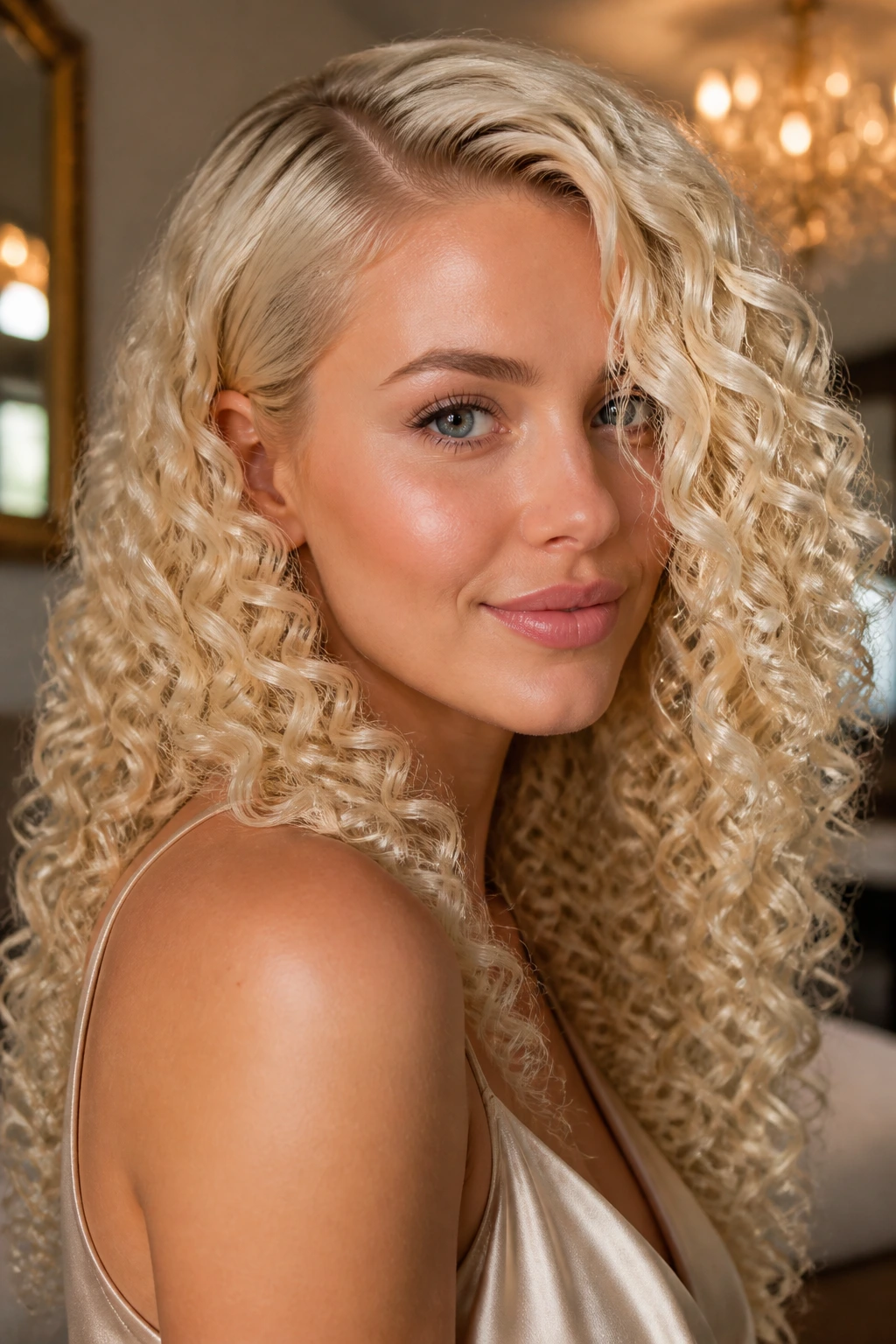
Vanilla silk is one of those shades that sounds delicate and actually is. On defined ringlets, it gives a soft sheen that makes each curl look rounded instead of frizzy. A side part adds a touch of old-glam shape, especially if the front curl is allowed to fall over one temple.
This style rewards careful definition. Use enough product to make the ringlets hold, but not so much that they clump into ropes. The blonde tone should be creamy and even, with just enough depth at the roots to keep the scalp area from looking washed out.
If your ringlets tend to shrink a lot, the side part helps stretch the silhouette visually. It’s a small move, but a useful one. The whole look feels neat, feminine, and a little formal without being stiff.
24. Lemon Chiffon Highlighted Coil-Out
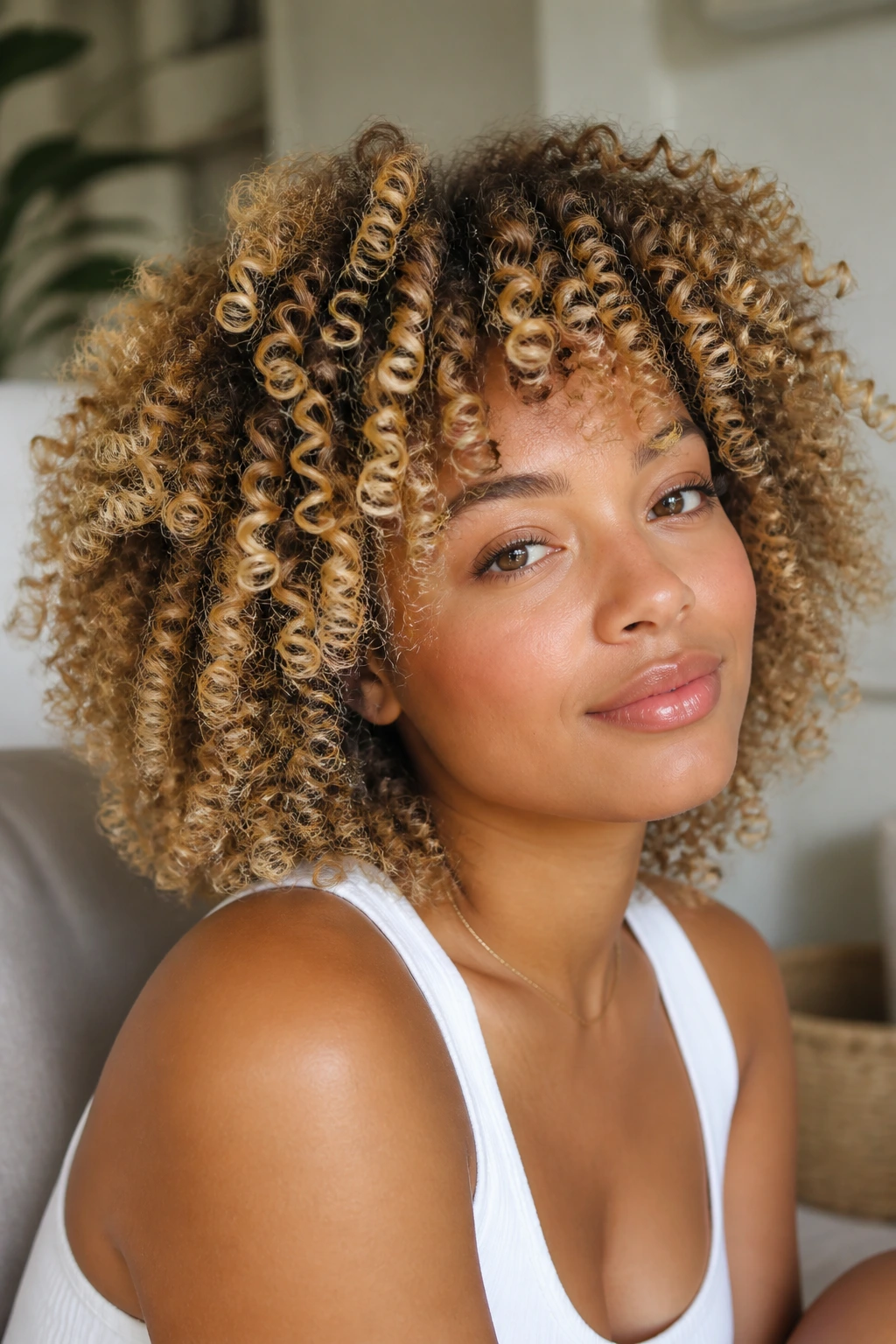
A coil-out with lemon chiffon highlights has a bright, lively feel that still nods to older styling traditions. The highlights sit on the outer surfaces of the coils and make the texture read from across the room. Lemon chiffon is warmer and fresher than icy blonde, which keeps the color from fighting the curl pattern.
The shape matters as much as the color. A good coil-out should look separated but not stringy, with enough fluff to show the rounded profile of the hair. That separation is what lets the blonde flicker instead of flattening into one block of tone.
This one is ideal if you like a little energy around the face. The highlights create a halo effect at the top and sides, which can be very flattering on fuller textures. It has the feeling of something styled for a photo, but not overdone.
25. Champagne Ribbon Bob with French Girl Bend
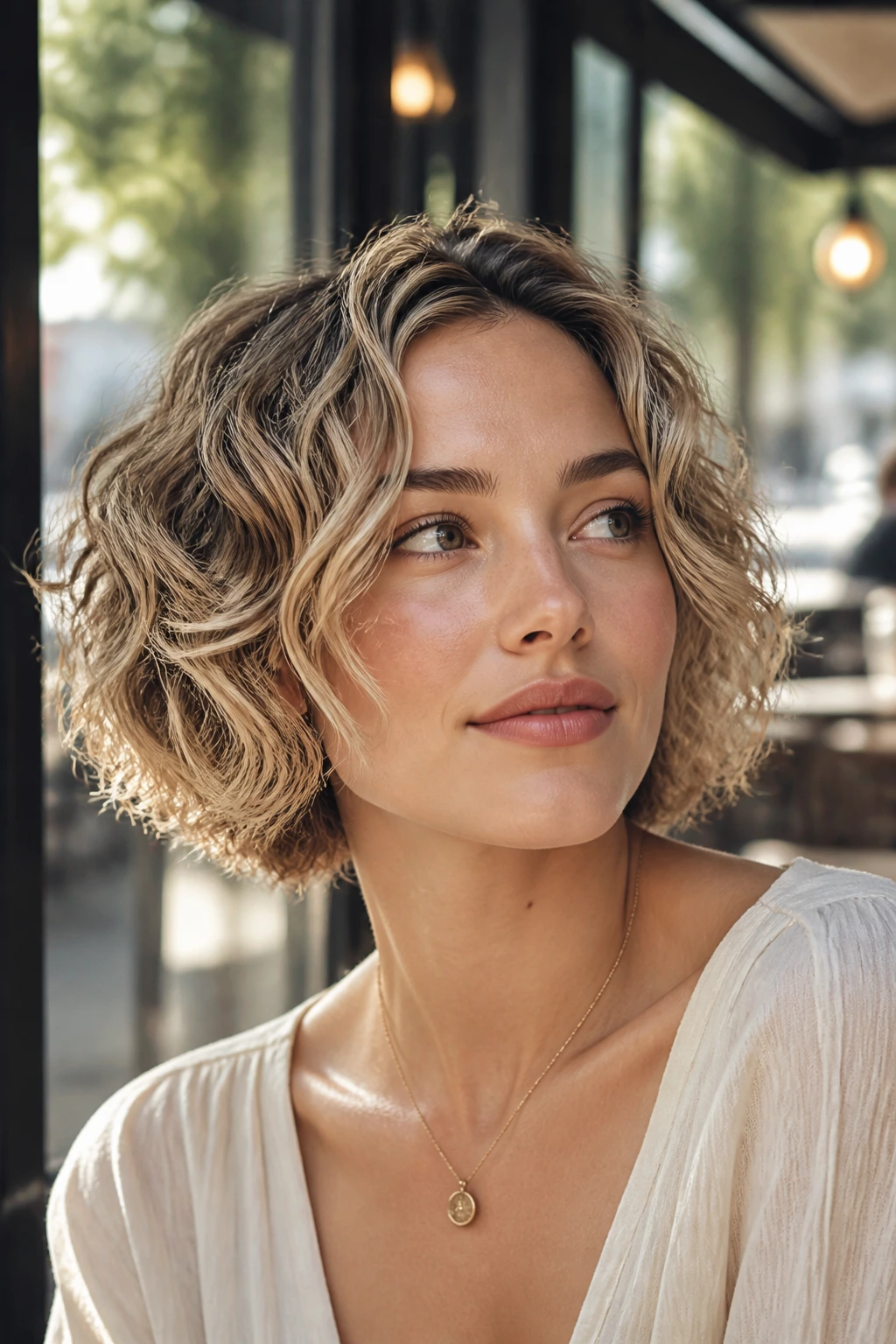
This bob is all about restraint and line. Champagne ribbons woven through a short bob create a soft shimmer, while the French girl bend at the ends keeps the style from feeling severe. On curly hair, it’s especially pretty when the curl is loosened just enough to keep the bob airy.
Champagne works because it’s light without being flat. The ribbon placement should be sparse and deliberate, with brighter pieces near the face and a few hidden underlayers for movement. That gives the haircut depth when you turn your head.
If you like small, neat styles with a little attitude, this one delivers. It’s polished, but not cold. There’s a softness at the end of the line that keeps it human, which is a nice thing to say about hair and also about people.
26. Dusty Blonde Halo Curls with Vintage Band
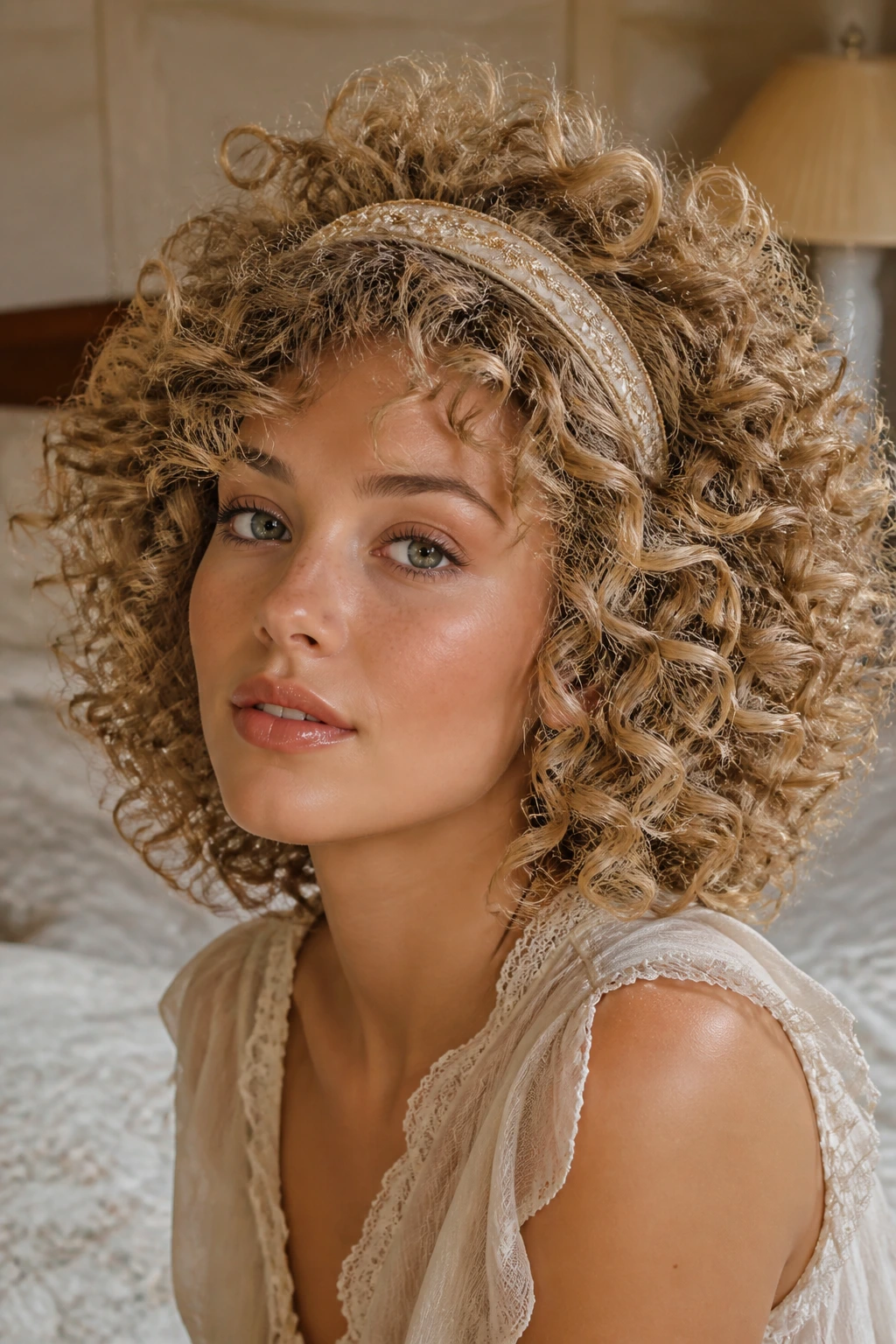
Dusty blonde has a muted, romantic quality that feels especially good on halo-shaped curls. The halo silhouette gives height and softness around the head, while a vintage band or scarf frames the face and pushes the whole look into retro territory. It’s one of the easiest ways to make curly blonde hair feel styled in a hurry.
The blonde should not be too bright here. Dusty tones work because they don’t steal attention from the shape. A little depth through the roots and a diffused lightness on the outer curls usually does the trick.
This style loves accessories, but not fussy ones. A narrow scarf, a velvet ribbon, or a slim headband is enough. Anything wider starts to fight the halo effect. Keep the curls buoyant and the accessory simple, and the look takes care of itself.
27. Creamy Blonde Crown Volume with Pin-Up Finish
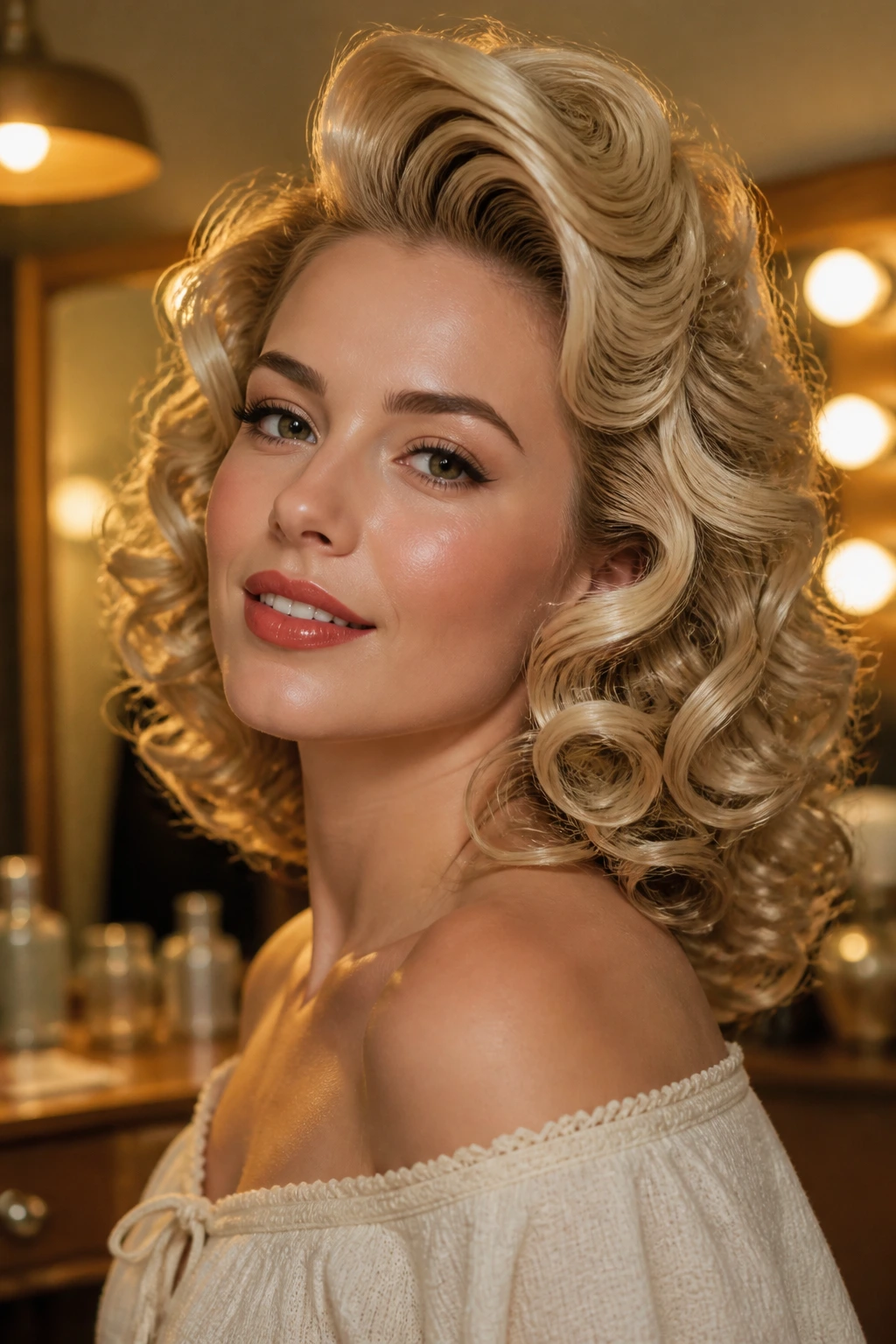
Creamy blonde with crown volume is the kind of finish that makes curly hair look expensive without saying a word. The lifted crown gives the vintage pin-up reference, while the creamy tone keeps the style soft enough for everyday wear. It’s a strong final look because it works on so many curl types if the cut has enough shape.
The crown should be built with a little root lift and a smooth surface, not teased into a nest. That distinction matters. You want height, then clean curl definition through the sides and ends. Creamy blonde reflects light beautifully across the top, which helps the shape read from every angle.
This is the look I’d choose when someone wants blonde that feels dressed up but not precious. It has polish. It has personality. And it doesn’t need a costume to make the vintage reference land.
Why Curly Blonde Color Needs a Softer Map
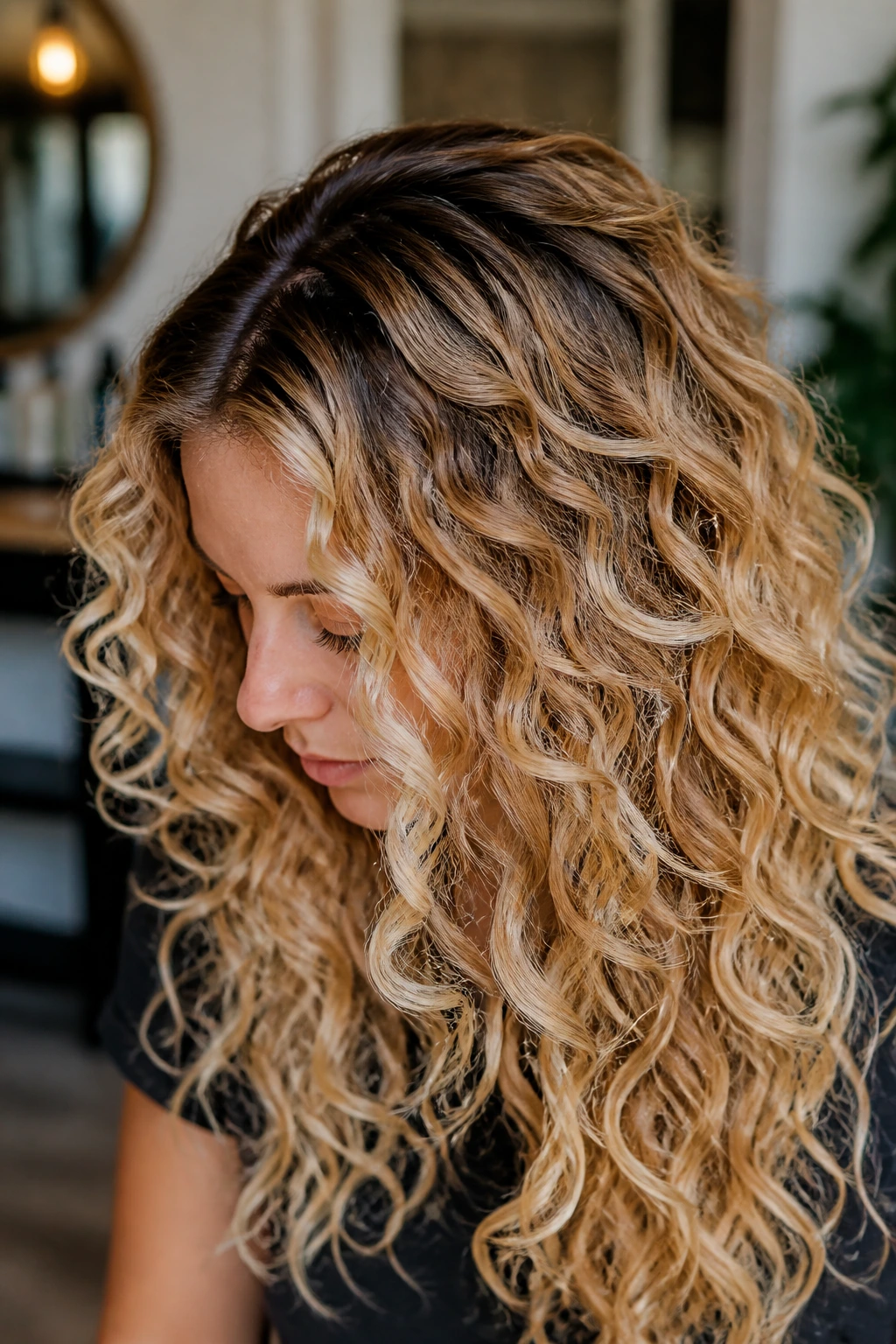
Curly hair takes color differently because the light is broken up by every bend, twist, and shrink point. That means a blonde that looks soft on a swatch can read louder, patchier, or drier on curls once it’s moved through the hair. Placement matters more than people expect. A good blonde on curls follows the curve of the strand instead of crossing it like a ruler.
The vintage vibe is useful because old-school styling already understood this. Finger waves, brushed-out sets, pin curls, Marcel waves—those shapes were built to create motion and gloss without depending on a single flat surface. Curls and blonde color thrive in that same kind of structure. You want tone that bends with the hair, not tone that argues with it.
There’s also the grow-out factor. Curly roots can look harsher if the blonde is placed in blocky sections, because shrinkage makes the line appear closer to the scalp than it actually is. Ribbons, balayage sweeps, shadow roots, and face-framing lightening soften that problem. They make the color age better, which is the boring part nobody loves talking about but everyone appreciates two months later.
The Tools That Keep the Shape and Tone Honest
- Curl-friendly sulfate-free shampoo: Helps keep the blonde from stripping out too fast and leaves the hair less squeaky-dry.
- Purple or blue shampoo: Use sparingly on porous curls; a 1- to 3-minute wait is usually enough before the tone goes dull or muddy.
- Bond-building mask: Lightened curls need something that supports elasticity after the salon chair.
- Wide-tooth comb: Better than brushing through a finished set when you want to keep the curl pattern intact.
- Diffuser attachment: Useful for building volume at the crown without blasting the hair into frizz.
- Microfiber towel or cotton T-shirt: Cuts down roughness when curls are wet and fragile.
- Heat protectant spray: Non-negotiable if you’re using irons for finger waves, bends, or brushed-out glam finishes.
- Light gloss or shine serum: A small amount on the mid-lengths and ends keeps blonde from looking chalky.
- Sectioning clips: Help when you’re setting curls, creating side parts, or shaping vintage waves.
- Silk bonnet or pillowcase: Keeps the style from puffing up overnight and dulling the blonde finish.
Choosing the Right Blonde Shade for Your Curl Pattern
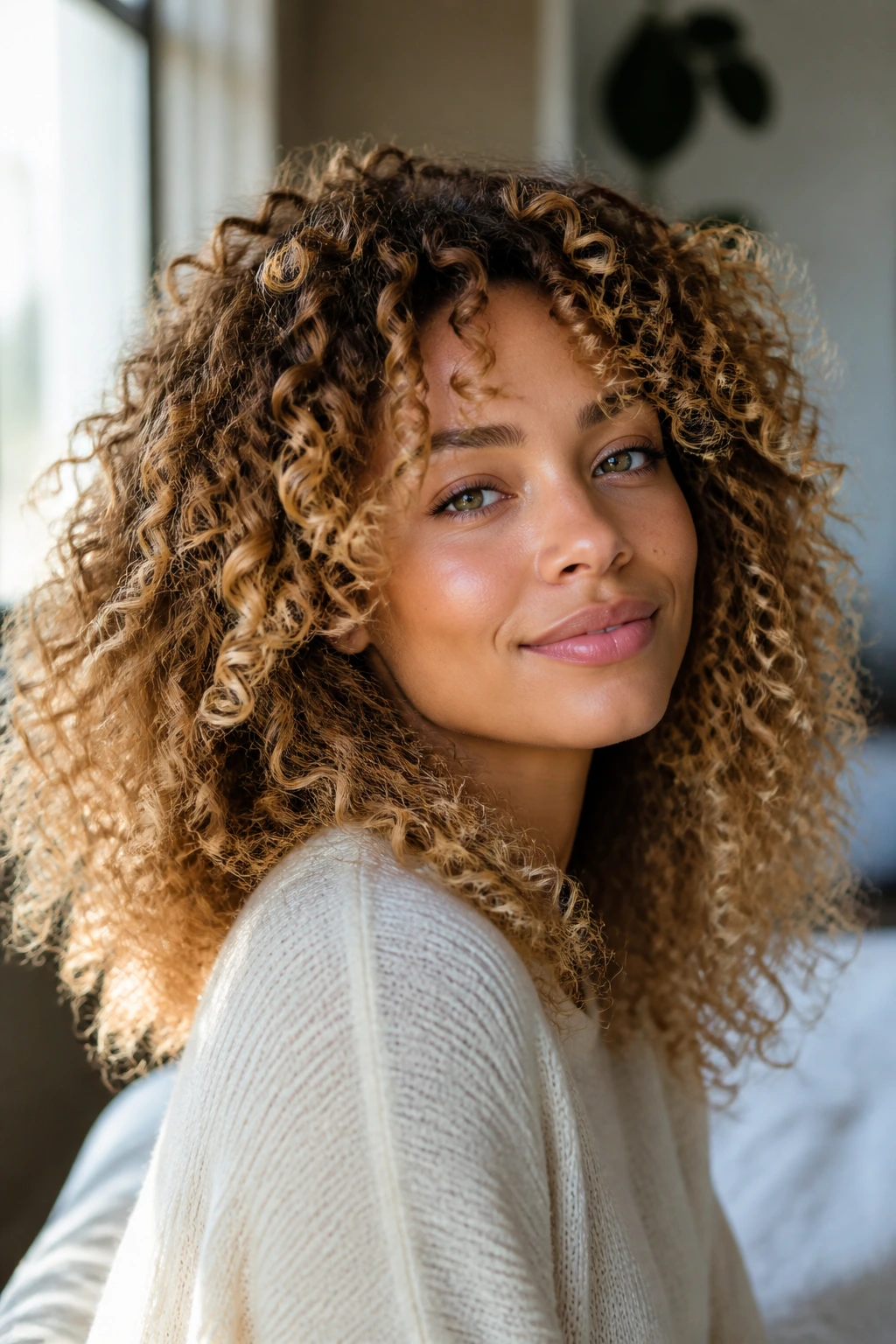
Blonde on curls is not only about how light you can go. It’s about how the tone behaves against texture. High-porosity curls tend to grab cool toner fast, which is why icy platinum can turn smoky or dull if the hair is thirsty. Lower-porosity curls, on the other hand, often need more lift or a warmer toner to look visibly blonde instead of just brown with a shine.
Warm blondes—honey, butter, toasted almond, antique gold—usually sit more easily on textured hair because they soften the contrast between highlighted and natural pieces. Cool blondes—champagne, pearl, icy cream—look sharper, but they demand cleaner lifting and more maintenance. Beige and wheat shades often win when you want something in the middle and don’t want your toner to become the whole personality of the look.
Ask for placement that makes the curl shape do something. Face frames, ribbons through the outer curve, brighter ends on longer curls, and deeper roots at the scalp all give the hair more dimension. A single flat blonde block can erase pattern. That’s the opposite of what you want here. Curly blonde hair looks best when the color seems to emerge from inside the shape.
How to Wear These Looks Without Fighting Your Natural Texture
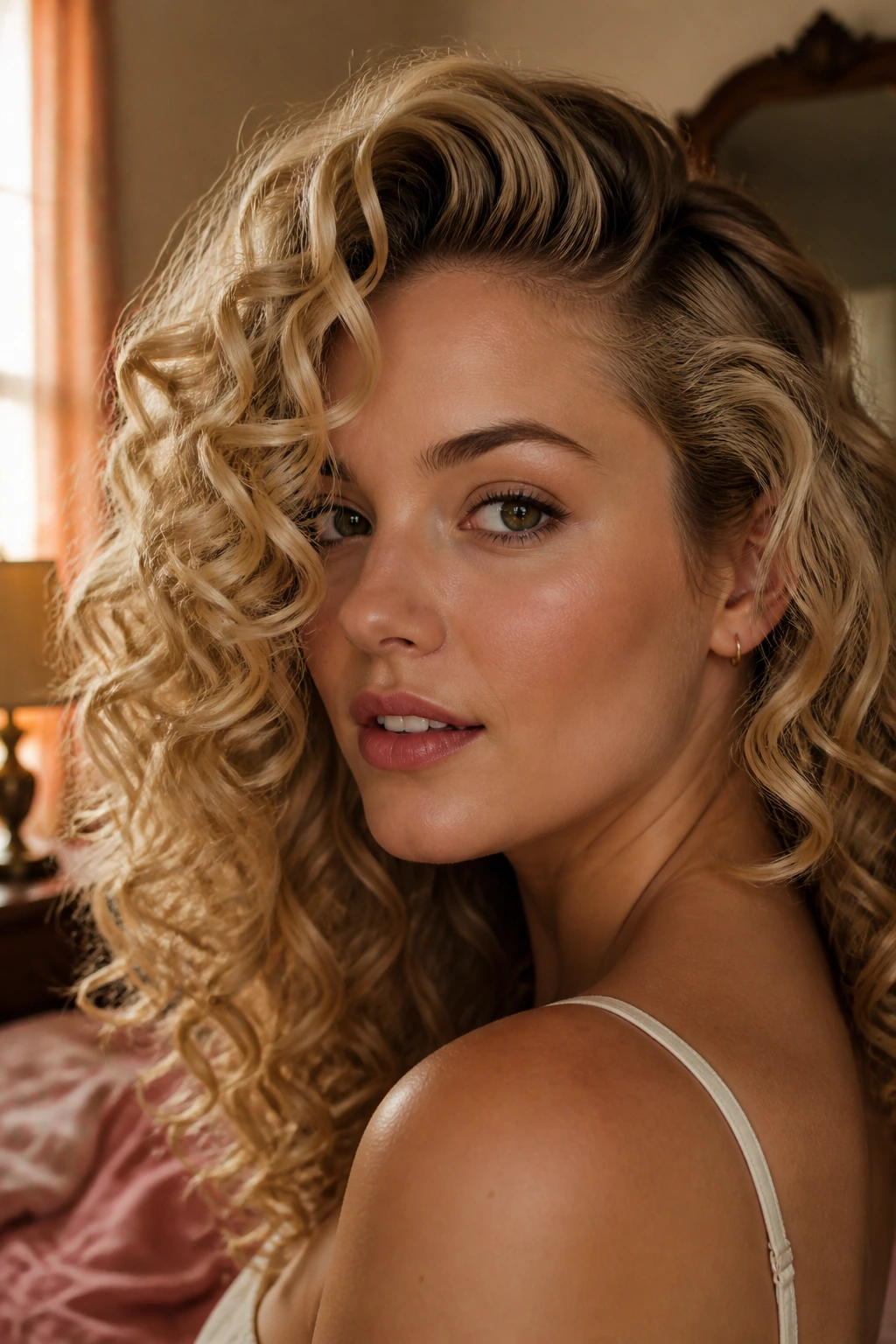
Parting: A deep side part instantly pushes several of these looks into vintage territory. Center parts feel cleaner and a little more modern, while off-center parts soften the face frame and work well on ringlets or waves that need a little asymmetry.
Finish: Brushed-out glam gives you the most old-Hollywood energy, but defined curls can be just as vintage if the shape is precise. Finger waves, pin curls, and Marcel bends look best with a smooth surface. Shags and halo curls look better with a little airy separation.
Accessories: Simple combs, satin ribbons, narrow bands, and clipped-back sides do a lot of work here. Heavy, sparkling pieces can pull the eye away from the shape and make the blonde feel costume-like. One small accessory is often enough.
Outfit Pairing: These blondes read especially well against black knits, white tees, jewel tones, satin necklines, and crisp collars. That contrast helps the hair color stand out without needing extra styling. For daytime, keep the clothes plain and let the hair bring the drama. For evening, a shoulder-baring neckline or a neat collarbone line gives the waves room to show.
Small Moves That Make the Blonde Look Expensive
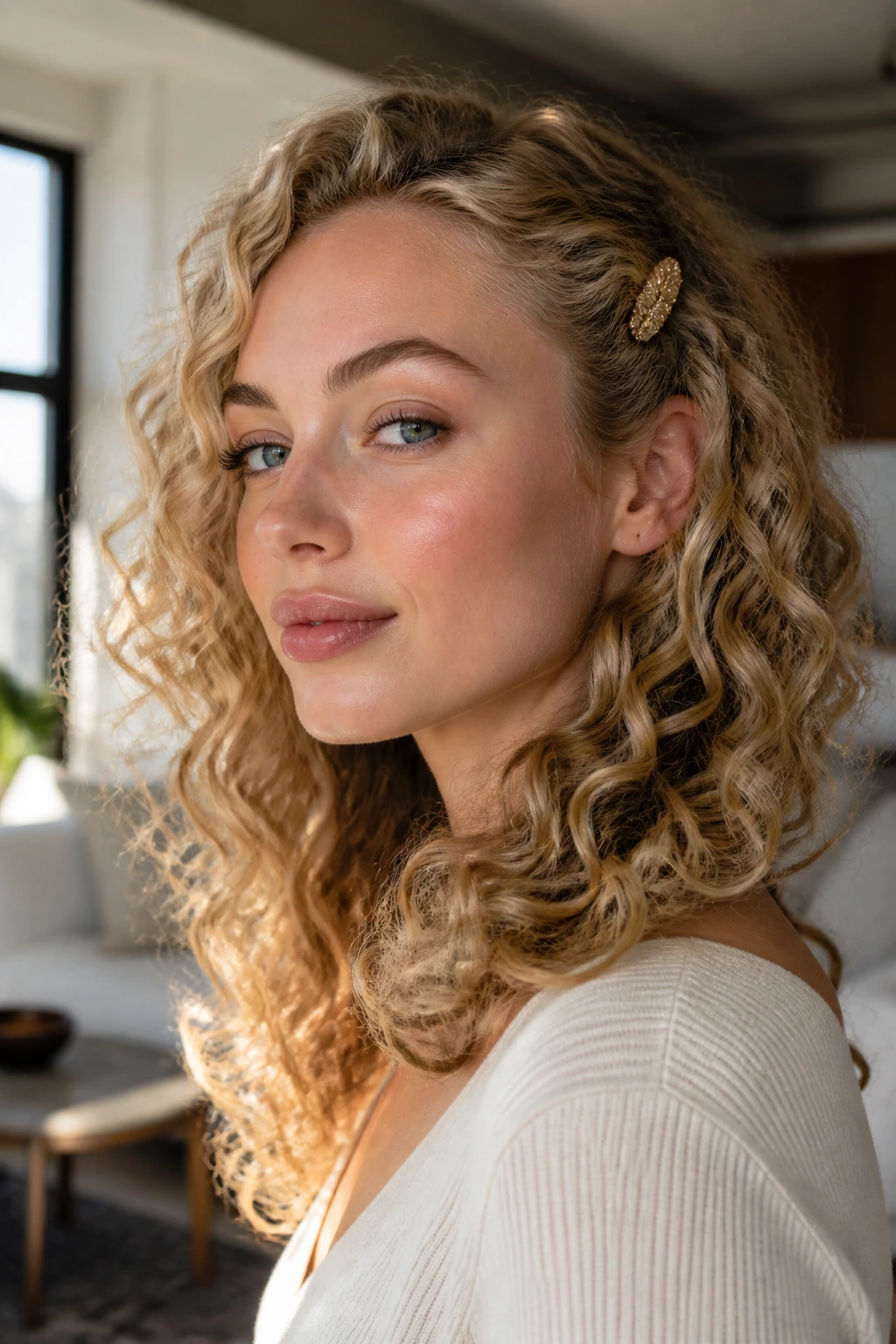
Tone Boost: A clear gloss or a beige toner every few weeks can keep the blonde from drifting dull. On curls, I’d rather see a soft, slightly warm blonde than a brittle pale one that needs constant correction.
Curl Definition: If the shape matters, use a leave-in plus a gel or cream that gives hold without crunch. The vintage look falls apart fast when the curls frizz at the outer edges.
Frizz Control: Dry the hair with a diffuser on low heat or let it air-dry until it’s 80 percent set before touching it. That one habit changes the final finish more than people think.
Accessory Move: A side clip at the temple or a narrow band at the crown can turn an everyday blonde curl set into something with a very clear era reference. Small detail. Big shift.
Make-It-Yours: Fine curls usually need lighter placement and less product. Thick curls can handle bolder ribbons and more crown height. Coils often look best when the blonde concentrates on the outer ring and the face frame, leaving the interior richer for contrast.
Keeping the Color Fresh Between Glosses and Wash Days
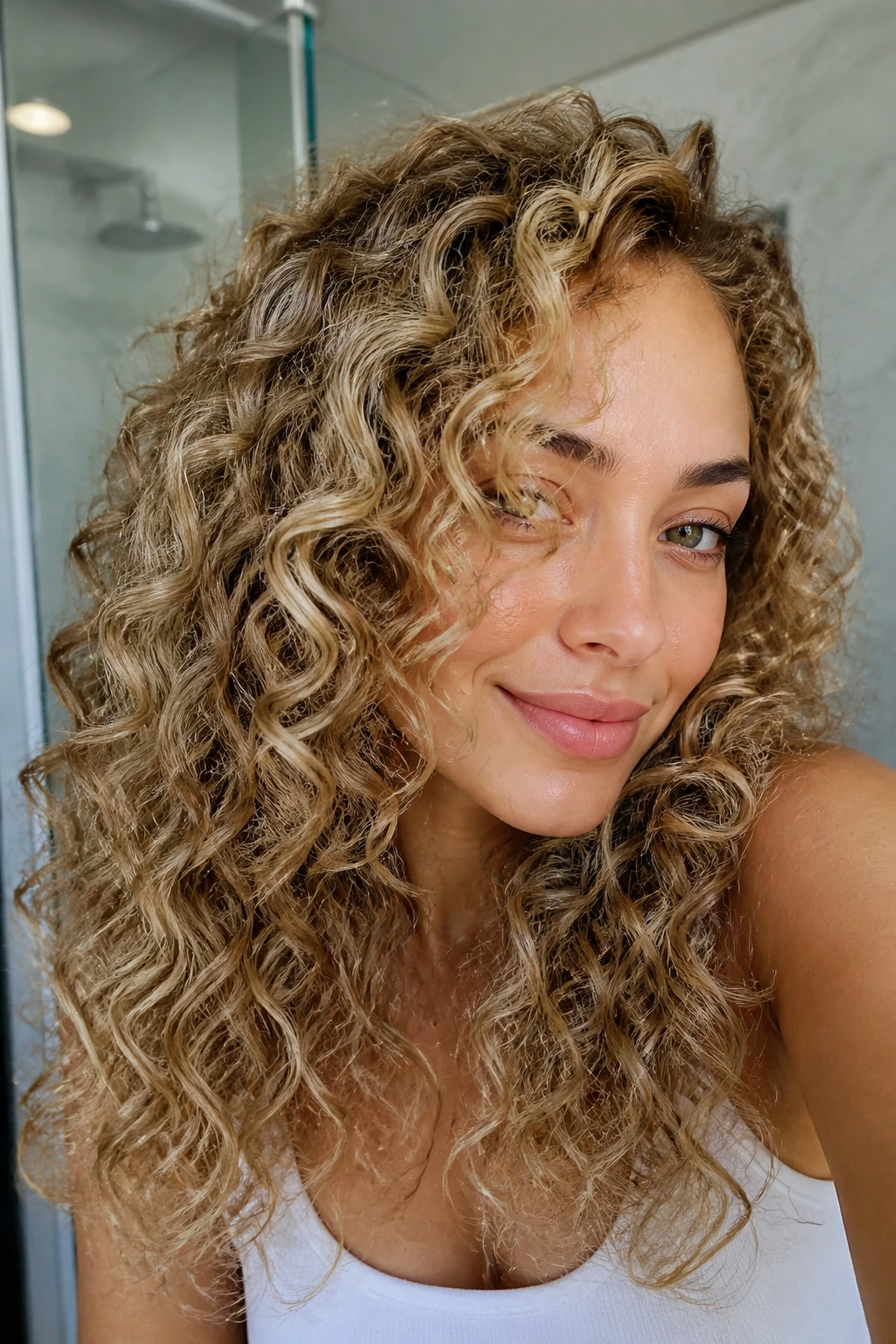
Blonde on curly hair needs a rhythm. If you wash too often, the color fades and the cuticle roughens; if you stretch wash days too far without a good refresh, the roots can get oily while the blonde ends look dull. For many curl patterns, washing every 3 to 5 days is the sweet spot. If your scalp runs dry, you can push longer. If it gets oily faster, use a gentle scalp cleanser at the roots and keep the conditioner off the lighter pieces.
Purple shampoo should be treated like medicine, not shampoo in the usual sense. Once every 1 to 2 weeks is enough for most blonde curls. Leave it on for 1 to 3 minutes, then rinse well and follow with a nourishing mask. Letting purple shampoo sit too long on porous hair can leave the ends muddy or violet-gray, which is not a fun surprise.
A toner or salon gloss usually lasts 4 to 8 weeks depending on how often you wash, how hot your water is, and whether you use heat tools. At night, a silk bonnet or pillowcase helps preserve both the curl pattern and the blonde shine. If you’re styling with heat, keep the iron around 300°F to 330°F with a protectant in place. Higher temperatures can scorch the blonde fast, and curls don’t forgive that easily.
Variations and Adaptations to Try
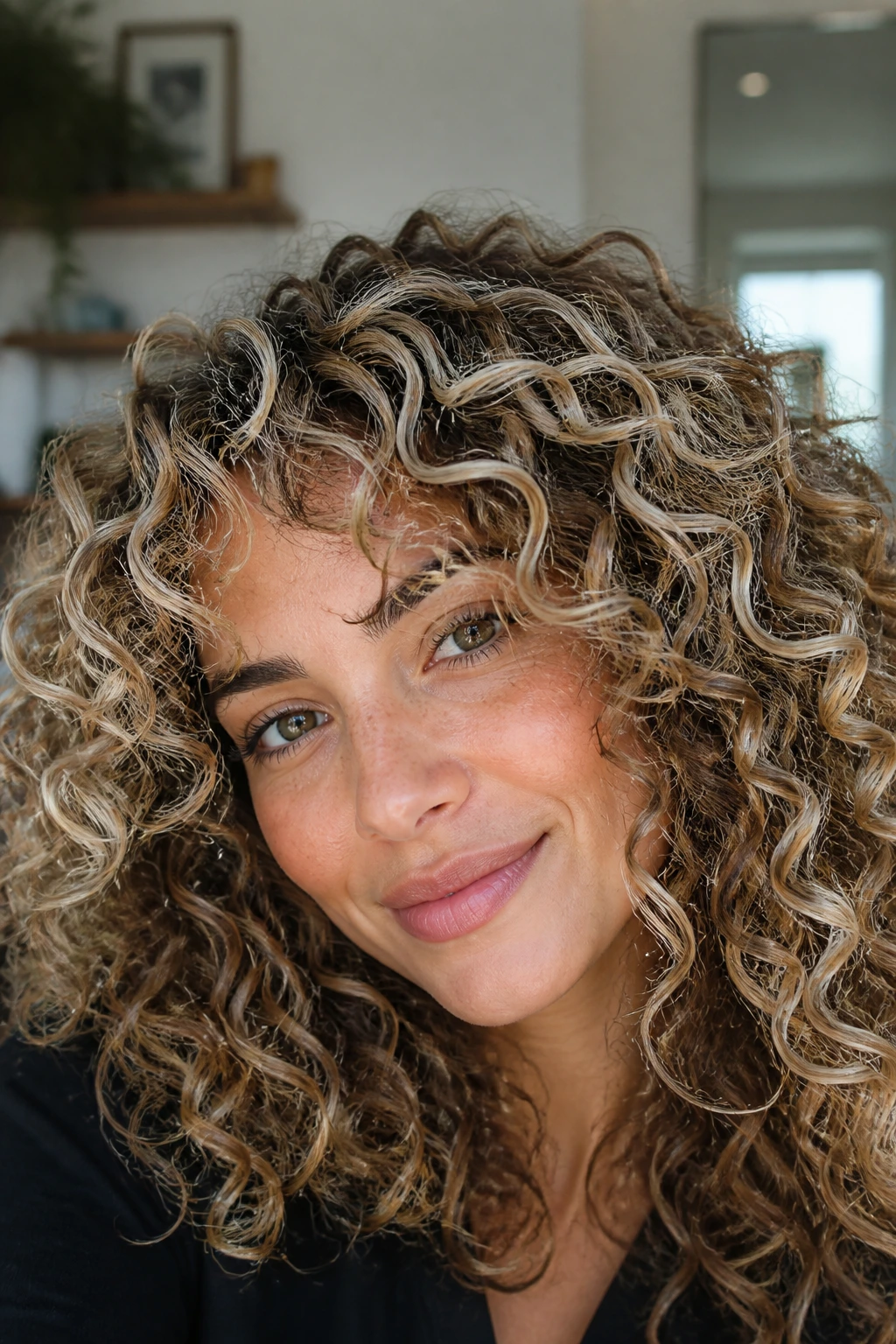
Softlift Honey Melt: Start with darker roots and a slow honey lift through the mids and ends. It’s a good choice if you want the vintage mood without the upkeep of constant toning, and it grows out gracefully on most curl patterns.
Silver-Edge Champagne: Keep the base creamy and add brighter champagne around the hairline and crown. That creates a little more drama without bleaching the entire head to the same level, which is kinder to curls that need moisture.
Curly Bang Refresh: If you love a retro finish but not a full color overhaul, add curly bangs or a softened fringe to an existing blonde. The bangs change the silhouette immediately and can make a mid-length cut feel much more vintage.
Bronde Transition Set: For darker natural bases, begin with bronde ribbons before moving toward a lighter blonde. The result looks dimensional from the start, and the hair stays in better shape because you’re not forcing a giant lift all at once.
Halo Highlight Pattern: Brighten only the outer ring of the hair and the face frame. This works especially well on coils and dense curls because the interior stays rich, which keeps the shape from disappearing under too much lightness.
Where Blonde Curly Hair Goes Wrong
Striped placement is the fastest way to kill the vintage look. If the light pieces sit in even, obvious chunks, the curls stop reading as soft movement and start looking like separated bands. Ask for ribbons, not rails.
Too much purple shampoo can make blonde curls look flat and chalky. The hair may feel clean, but the tone loses warmth and the curl pattern can look dry. Use a small amount, leave it on briefly, and stop reaching for it every wash.
Heat without protection is a bad trade on curly blonde hair. The curl can lose spring, and the blonde can pick up a rough, overprocessed look at the same time. A protectant spray plus moderate heat is the safer move.
Over-layering can make some blonde curl shapes explode outward. A shag needs movement, yes, but too many short layers on a dense head can create a triangle or halo that no amount of color can fix. The cut has to support the color, not fight it.
Brushing out curls before they cool ruins the set. The hair may look nearly dry, but the shape hasn’t locked in yet. Give it time. Vintage hair always asks for a little patience.
Questions People Ask Before They Book
Which blonde tone is easiest on curly hair?
Honey, beige, and butter blonde are usually the least fussy because they blend with the natural texture instead of shouting over it. They also tend to grow out more softly, which matters if your curl pattern makes root lines look stronger.
Do highlights or balayage work better on curls?
Balayage usually gives a softer, more lived-in result because the lightening is hand-placed and less blocky. Highlights can still work, but they need to be ribboned carefully so the curls don’t turn stripey once they dry.
Can dark curly hair go blonde without wrecking the curl pattern?
Yes, but the process needs to be slower and more careful. A staged lift, bond-building treatment, and a realistic target shade keep the hair from feeling brittle. Jumping too many levels at once is where the trouble starts.
How often should blonde curls be toned?
Most people land somewhere between 4 and 8 weeks, depending on porosity and how warm the blonde is meant to stay. If the tone turns brassy fast, it’s usually a sign the hair needs better moisture balance, not just more purple shampoo.
Why does blonde look drier on curls than on straight hair?
Because curl structure exposes more surface area, and lightening lifts the cuticle. That rougher surface catches the light less smoothly, which is why conditioning and gloss matter so much.
What’s the best vintage shape for very tight coils?
A halo shape, tapered crop, or rounded silhouette tends to be the most flattering. Those forms let the blonde sit on the outer edges where it can show without flattening the texture underneath.
Can I air-dry these looks instead of blow-drying?
Absolutely, and on many curl types that’s the better choice. Just make sure the cut is shaped well and the product gives enough hold, or the style will dry unevenly and lose the clean vintage line.
What if my blonde turns yellow fast?
That usually means the toner has faded, the water is mineral-heavy, or the hair is porous enough to grab warmth. A clarifying wash once in a while, followed by a gloss or toner, often helps more than overusing purple shampoo.
Keeping the Softness
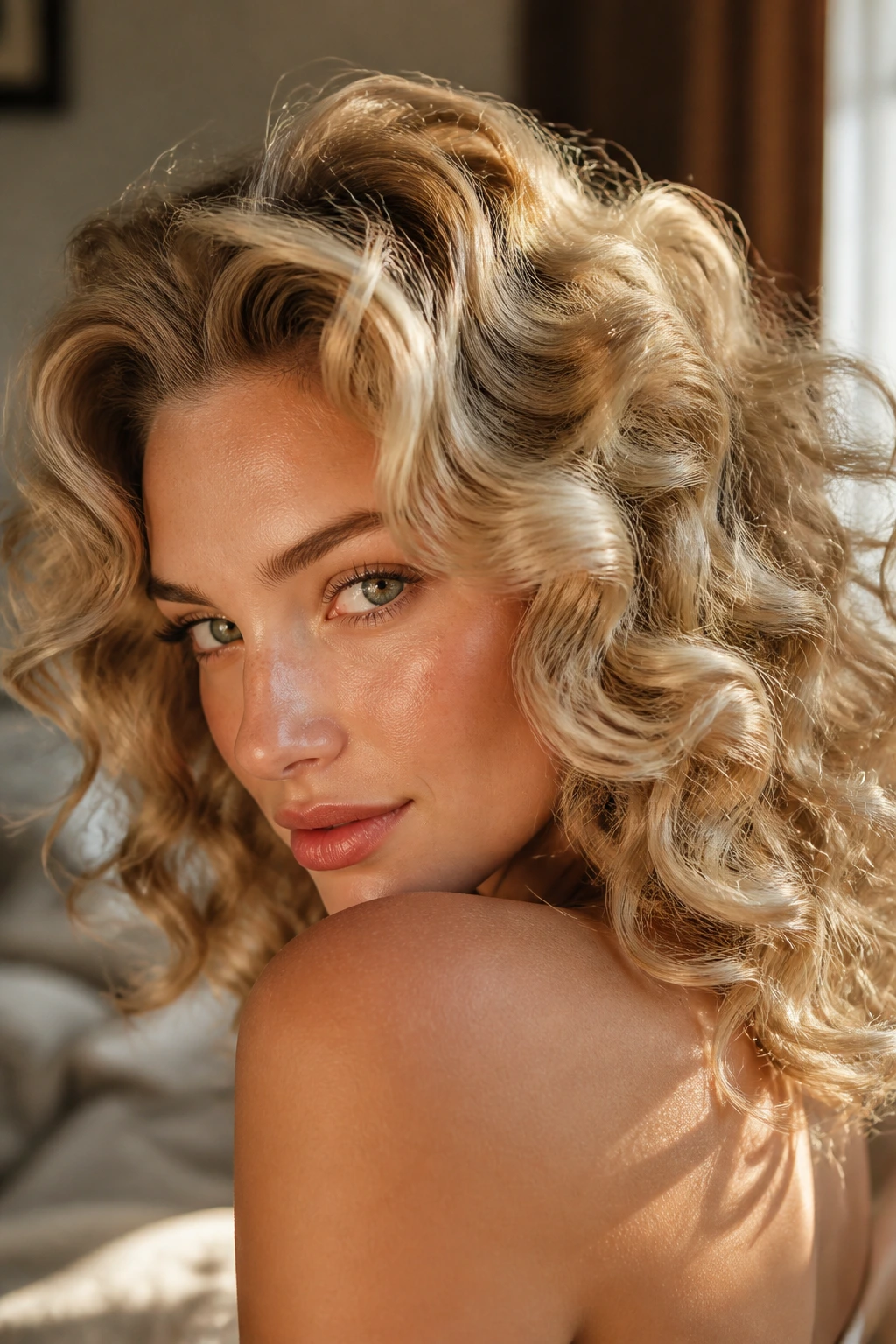
Blonde curls look their best when the color has room to move. The strongest looks in this set all share the same idea: they let texture stay visible, and they treat vintage styling as a shape problem rather than a costume. That’s why the finger waves feel polished, the balayage feels soft, and the ringlets still look like ringlets after the blonde goes in.
If you’re choosing one of these looks, start with the curl pattern you already have and the amount of upkeep you’ll actually tolerate. That’s the honest filter. A honey ribbon balayage that you can maintain beats a platinum look you’ll resent in three washes, and a good vintage shape will carry more style than a louder color ever could.
