



Red hair changes the whole mood of a haircut. A blunt bob in copper looks crisp and bright; the same bob in black cherry feels darker, heavier, and a little more expensive-looking. That’s the part people chase, and the part that gets messy fast if the shade, cut, and finish aren’t talking to each other.
The best red hair looks for women don’t rely on one flat color painted from root to tip. They use depth. A brighter ribbon around the face, a deeper root, or a glossy mid-shaft glaze can keep red from turning into a single flat block that fades in odd places after a few washes. Red is dramatic, yes, but it’s also fussy. Ignore undertone and porosity, and you end up with orange at the ends, dullness at the crown, or a color that looked rich in the salon chair and tired by the time you got home.
That’s why this list isn’t only copper and cherry and “vibrant red” repeated forty ways. It moves through short cuts, long waves, braids, curls, glossy brunettes, soft strawberry shades, and deep wine tones, because red behaves differently on each of them. Some looks are low-commitment and forgiving. Others need a sharper maintenance schedule and a little more nerve. All of them can work.
Why These 40 Red Hair Looks Stand Out
-
They cover the full red spectrum: You’ll find soft strawberry blonde, burnished copper, deep mahogany, blackberry tones, and bold scarlet, so you’re not stuck in one narrow shade family.
-
They work with real hair lengths: There are ideas for pixies, bobs, lobs, long layers, curls, braids, and protective styles, which matters because red looks very different once the cut changes.
-
They account for maintenance: Some of these shades fade softly and some need glossing every few weeks; knowing that upfront saves you from choosing a color you won’t want to keep up.
-
They make salon communication easier: A clear look name is easier to explain than “something reddish but not too red,” which is how bad appointments begin.
-
They include texture, not just color: Straight hair, curls, coily hair, and braided styles all show red in a different way, and the best ideas respect that instead of pretending one formula fits everybody.
-
They lean pretty without getting flimsy: These looks have shape, shine, and enough depth to hold up in daylight, not just in an edited photo.
1. Bright Copper Lob
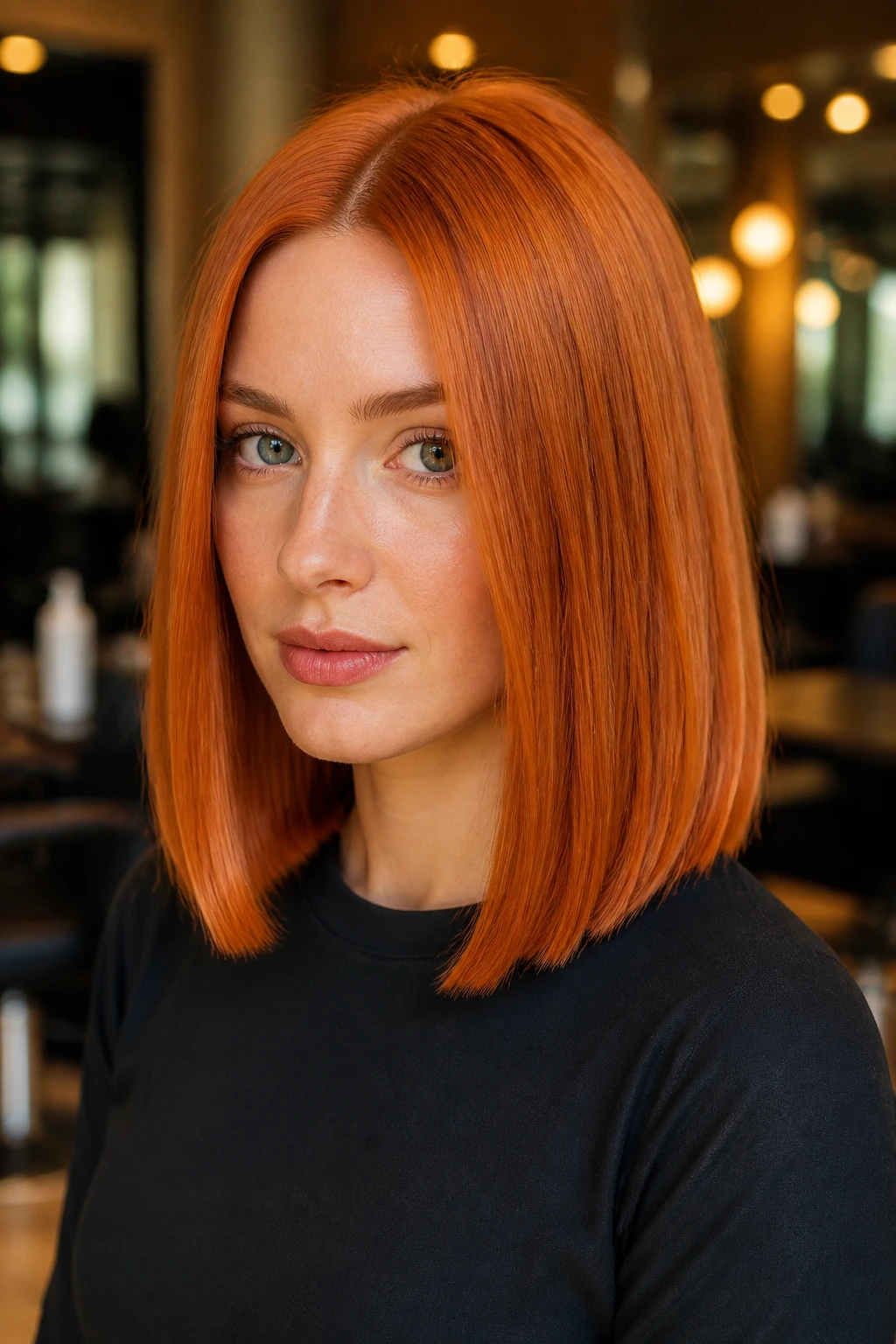
Bright copper on a lob has a clean, almost metallic sharpness that looks especially good when the ends are blunt. The color catches on every bend in the hair, so a simple shoulder-grazing cut starts to feel much more deliberate.
Why It Works
Copper is strongest when the cut does some of the work. A lob gives the shade enough length to reflect light, but not so much that it disappears into a heavy curtain. It also works well on medium to thick hair because the shape holds, and the color has room to glow instead of sinking into the background.
A center part makes this look crisp. A soft side part gives it a little more movement. Either way, keep the finish smooth with a round brush or a flat iron set on low heat, because copper loses its punch fast when the hair looks fuzzy.
Best Detail
- Best on level 6 or lighter hair that can hold copper without fighting the base.
- A gloss every 4 to 6 weeks keeps the orange-red from looking brassy.
- A blunt hemline makes the color look richer than choppy ends do.
Pro tip: Ask for a copper formula with a tiny bit of gold, not only orange. That small shift keeps the shade from reading neon in daylight.
2. Cherry Cola Long Waves
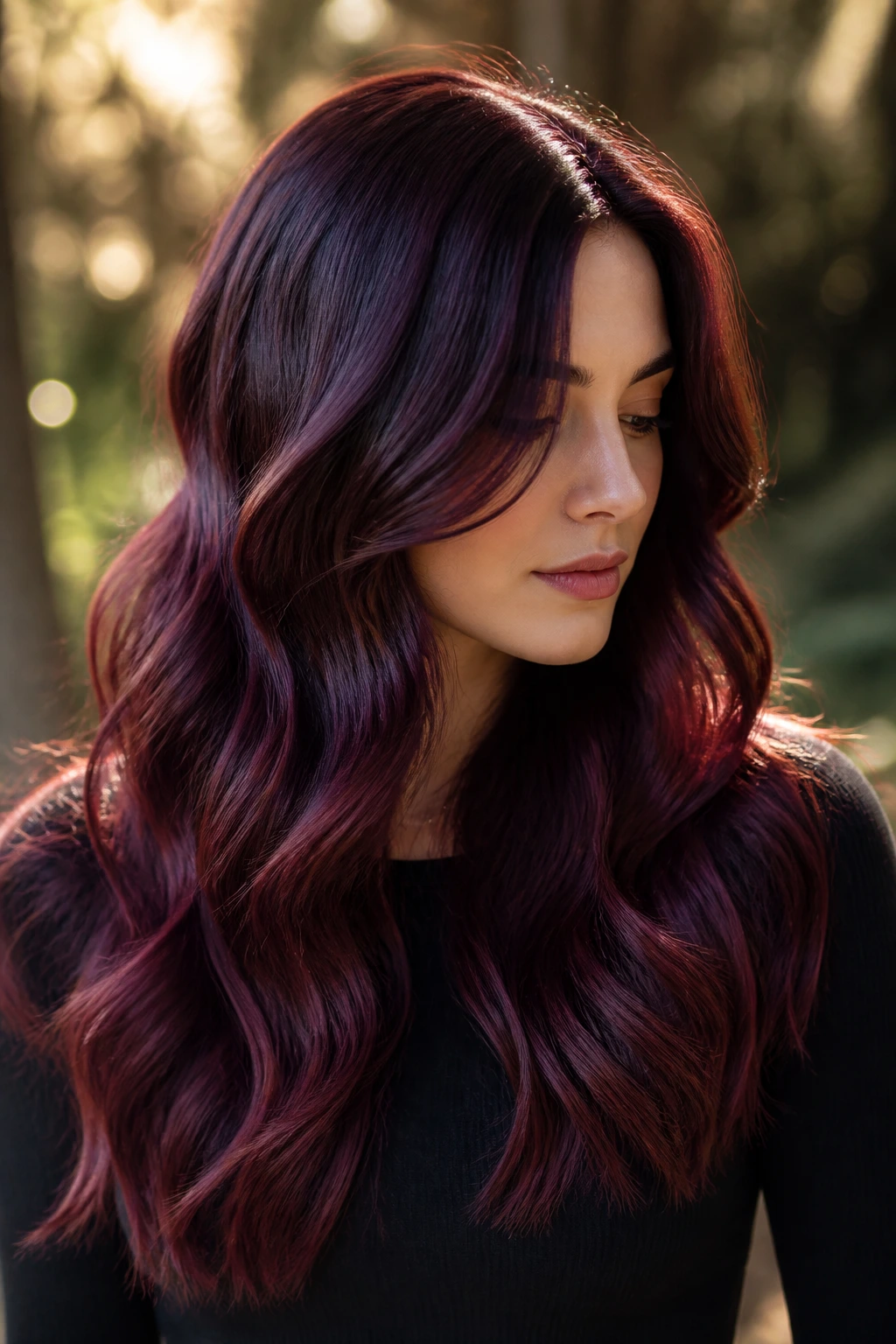
Cherry cola works because it sits in that sweet spot between brunette and red. From a distance, it can look dark and polished; up close, the red-violet shimmer shows through the waves and keeps the whole style from feeling flat.
The thing I like about this shade is that it behaves well on long hair. You get depth at the roots, then a soft red reflection as the waves break up the surface. If your hair is long and you don’t want a full high-maintenance crimson, this is one of the smarter choices.
Wear it with loose curls or heatless bends. Straight hair shows the brown base more, which can be lovely, but the wave pattern gives the red something to cling to.
3. Auburn Curtain Bangs
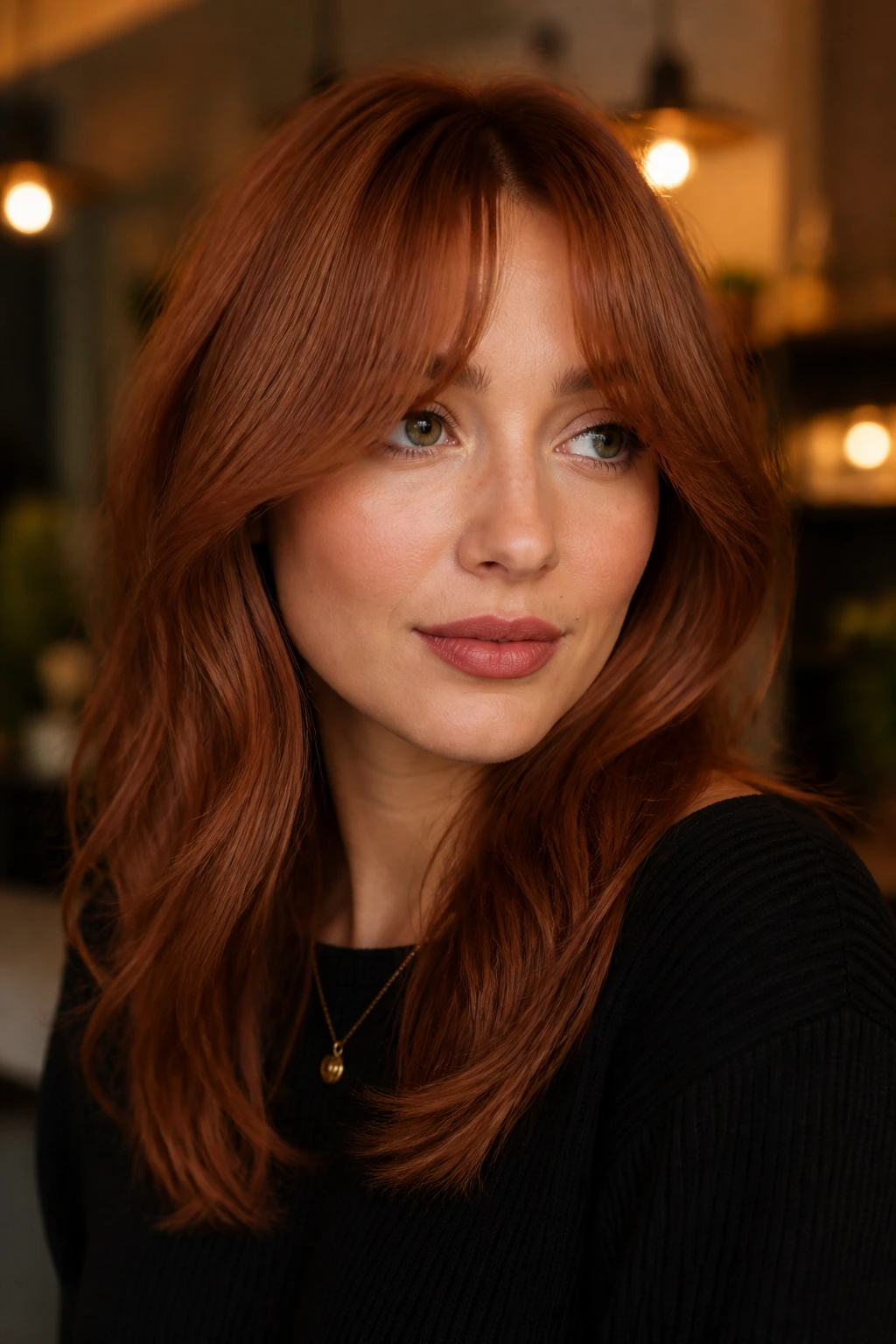
Auburn and curtain bangs are a good match because the color softens the fringe before it gets too heavy. The face opens up, the bangs feather out at the cheekbones, and the whole cut gets a little romantic without trying too hard.
Why It Works
Curtain bangs already draw attention to the face, and auburn adds warmth right where people notice it first. That matters if your complexion gets washed out by cooler reds or if you want something red-toned but not loud. Auburn also fades gracefully, which is a blessing around the fringe, where color can go stale faster than on the rest of the head.
Keep the bang area lightly layered. Too much bulk at the center makes the style collapse into the eyes. A soft blowout with a medium round brush keeps the curve loose instead of helmet-like.
How to wear it: Let the bangs skim the cheekbones and tuck the side lengths behind one ear. It gives the color a little air, and the red reads warmer when the face is framed instead of buried.
4. Strawberry Blonde Shag
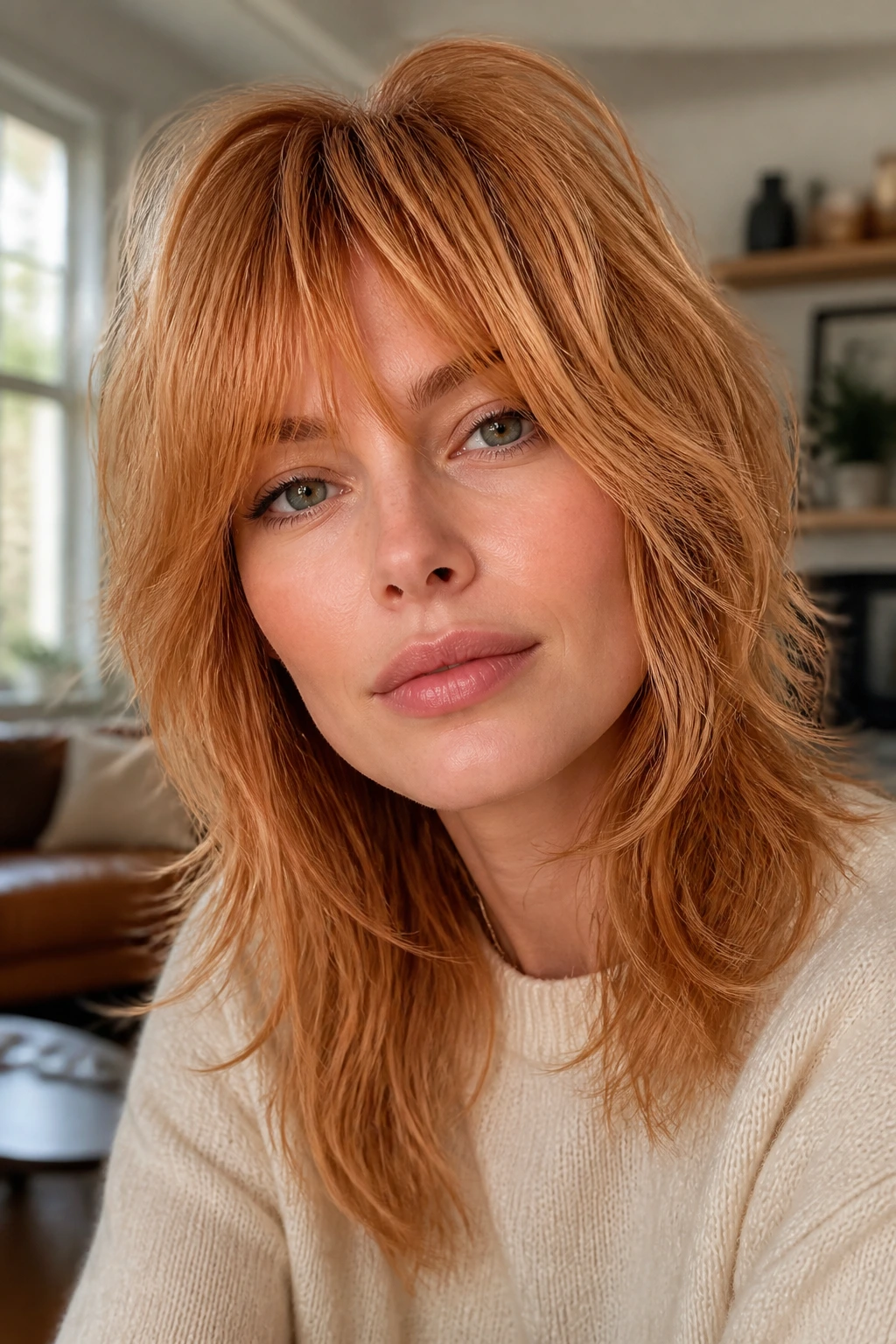
Strawberry blonde on a shag has a feather-light feel that works best when the hair has some natural movement. The layers break the color into little flashes of gold and rose, which keeps the shade from looking too sweet or too washed out.
This is one of those looks that’s more interesting in motion than in a still photo. The texture matters. If your hair is fine, the shag can give it lift; if your hair is thicker, the layers stop the red from turning into a heavy sheet. Either way, the color wants a bit of mess. Too polished, and it loses the charm.
Dry it with a diffuser or let it air-dry with a texture cream. The uneven finish is the point.
5. Ruby Red Curls
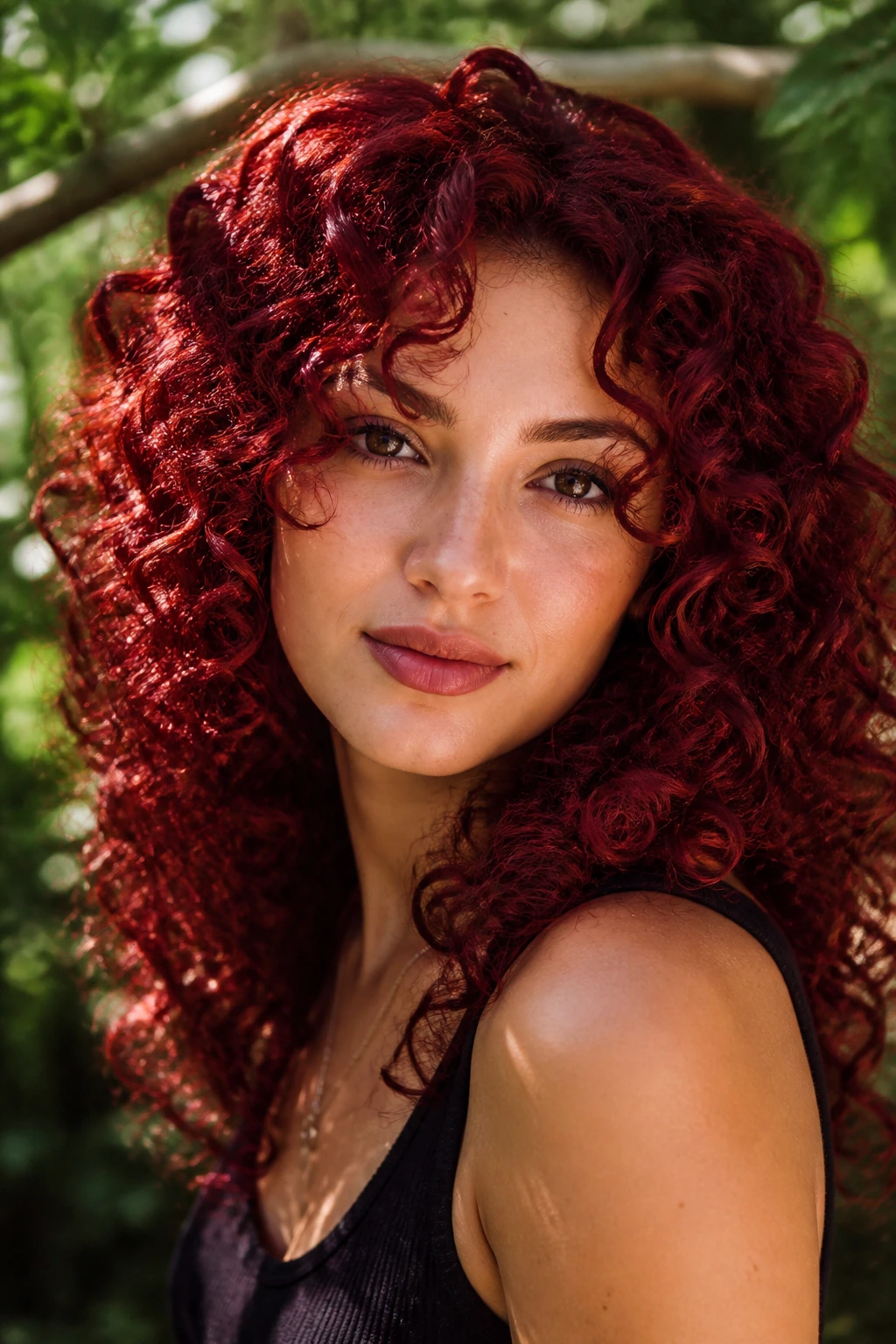
Ruby red curls don’t whisper. They bounce, shine, and pull the eye straight to the shape of the curl pattern. The color looks richest when the curls are defined but not stiff, because the movement is what gives ruby its sparkle.
What Makes It Different
On curly hair, red can go too flat if the shade is one note. Ruby solves that by sitting a touch deeper than fire-engine red while still reading vivid. It’s a smart choice if you want a bold red that doesn’t turn cartoonish under indoor light.
Use a curl cream with enough slip to separate the strands. Then finish with a light gel cast or a soft hold mousse. The red shows best when the curls have clean edges and a bit of shine.
6. Deep Mahogany Sleek Hair
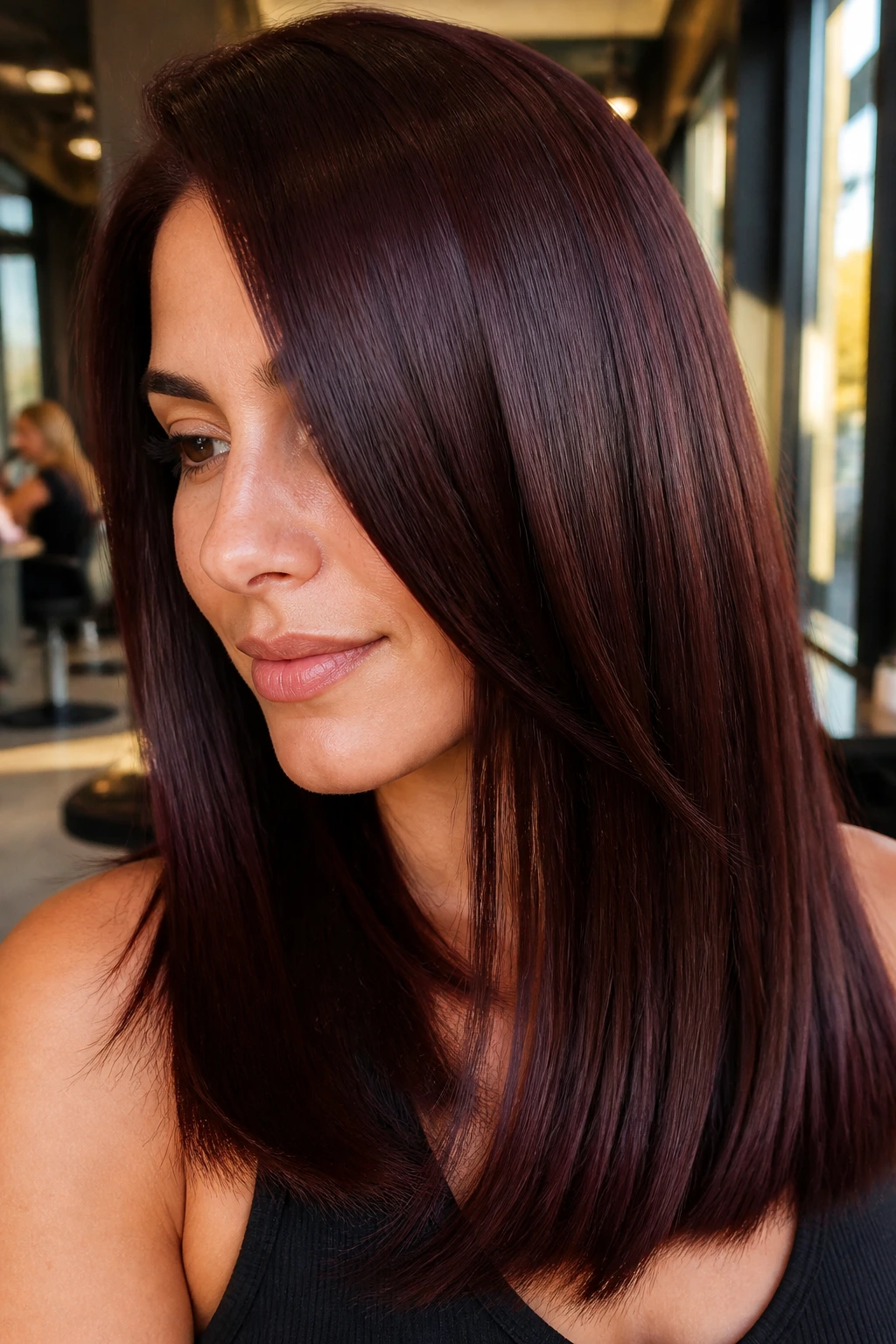
Deep mahogany is for people who like their red tucked under the surface. In a smooth blowout or pin-straight finish, it reads like a dark brunette with a red wine glow hiding inside it, which is exactly why it works so well in serious settings.
Why It Works
This shade holds its shape better than brighter reds because the darker base gives it structure. On straight hair, the color can feel almost lacquered. On layered cuts, the mahogany tones peek out when the light hits the ends or the crown. It’s subtle, but not boring.
A flat iron with a heat protectant is your friend here. Keep the pass count low. One slow pass is better than three quick ones that fry the cuticle and dull the shine.
Good for
- People who want red without a bright copper finish
- Medium to dark natural bases
- Hair that already has a smooth, reflective texture
7. Copper Balayage on a Brunette Base
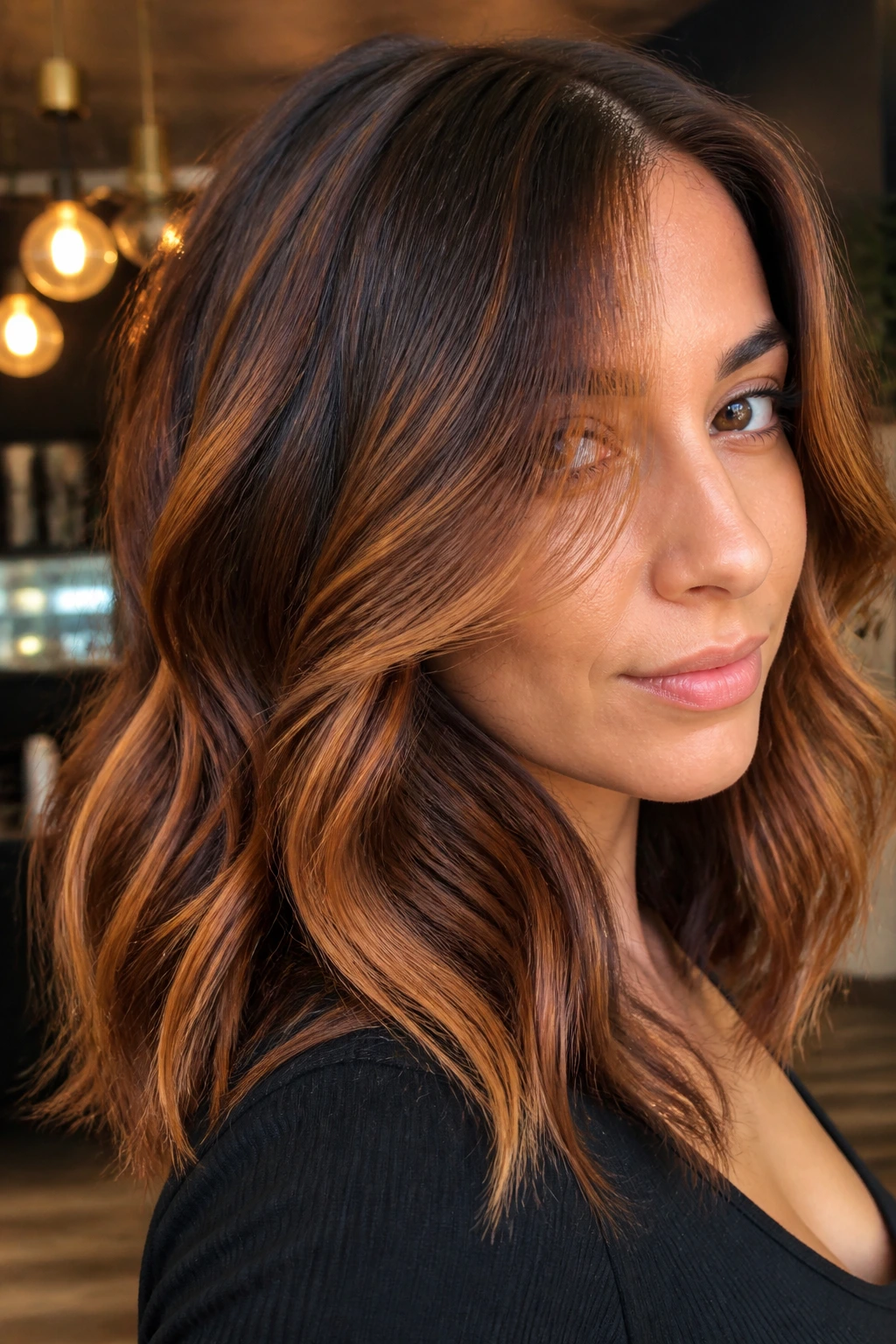
Copper balayage is the look I reach for when someone wants red but panics at the idea of roots showing every few weeks. The brunette base keeps the grow-out soft, and the copper ribbons keep the whole thing from disappearing into brown.
Balayage also gives copper some much-needed dimension. Instead of one color block, you get brighter pieces around the face, ends that catch light, and darker lowlights underneath. That stops red from looking striped or busy.
Ask for the lightest copper pieces around the front and a slightly deeper copper through the lengths. It creates movement without making the whole head look over-processed.
8. Fire Engine Pixie Cut
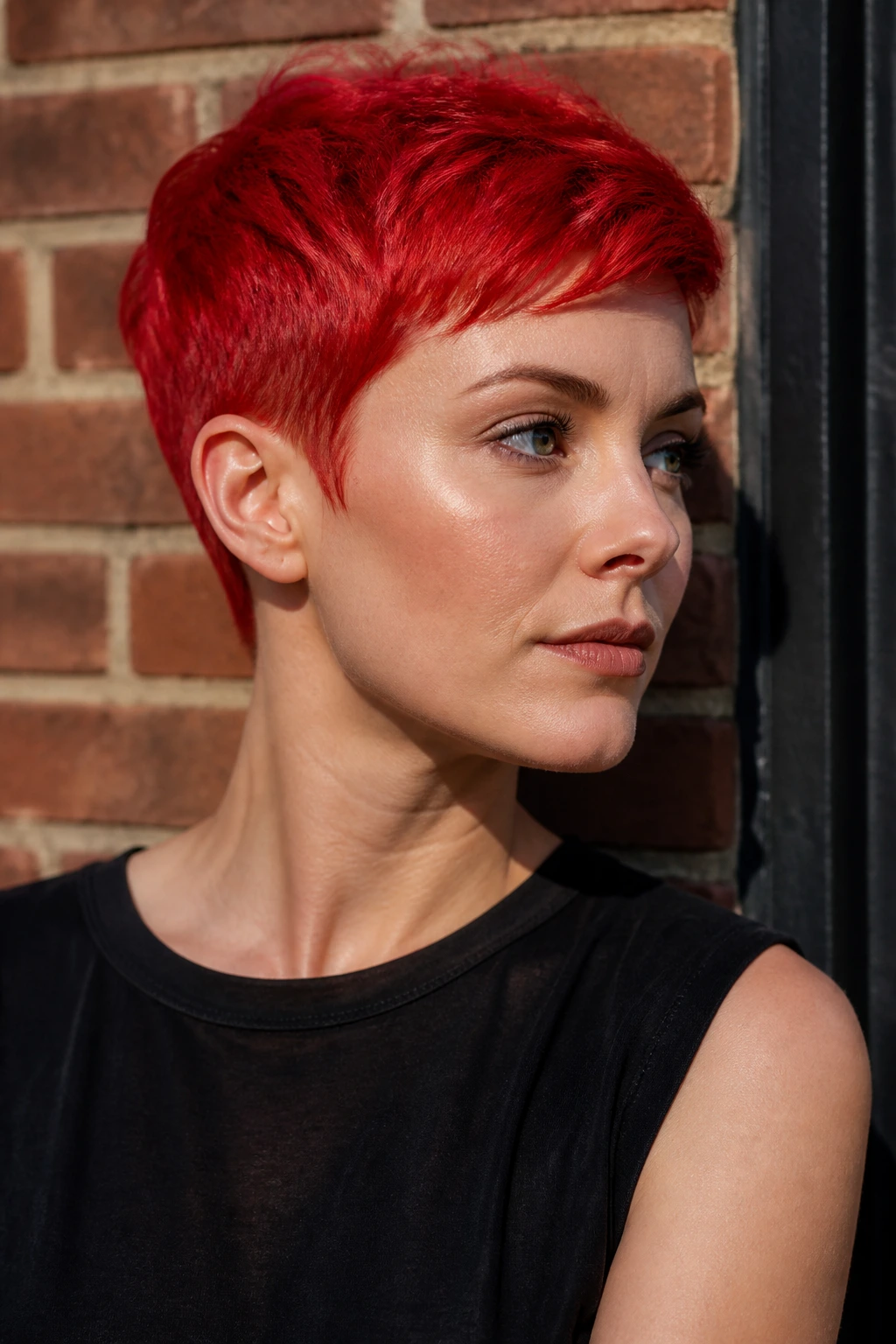
A pixie in fire-engine red is blunt, daring, and very honest. There isn’t much hair to hide behind, so the color becomes the whole point, and that’s exactly why this combo works so well.
Short cuts need clean lines, and this shade loves a clean line. The ears, neckline, and fringe all become part of the look. If the cut is a little choppy, the red sharpens it. If it’s smooth, the color gives it edge.
Keep the styling product light. A touch of pomade or a matte cream at the ends is enough. Too much product flattens the shape and turns that bright red into a greasy-looking helmet. No one wants that.
9. Cinnamon Latte Waves
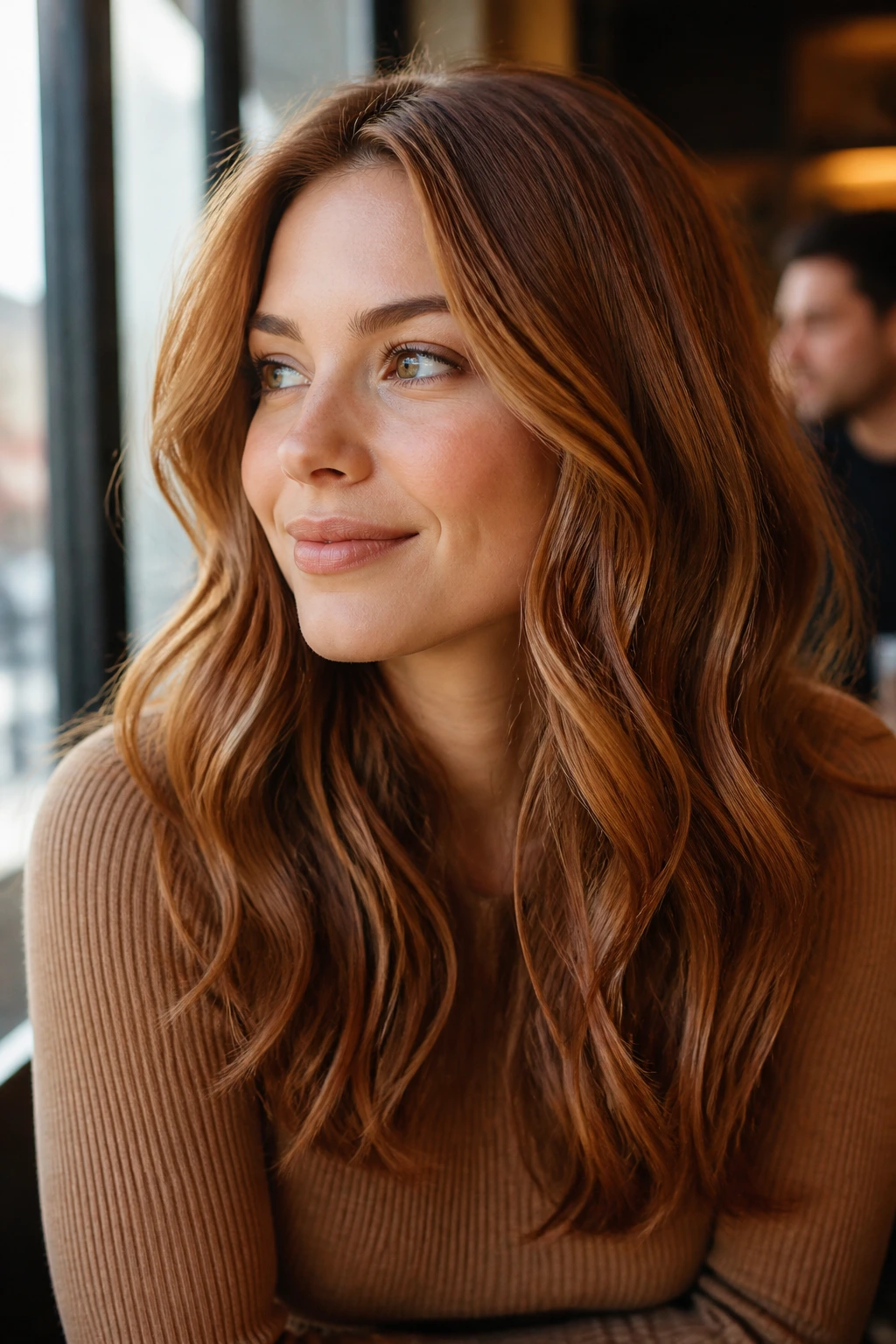
Cinnamon latte waves live in the softer corner of red hair. The mix of brown, cinnamon, and creamy warmth gives the hair a cozy depth without tipping into orange. It’s a good choice if you want red hair that feels wearable in daylight and office light.
A mid-length cut shows this shade well because there’s enough surface area for the color shift to happen. Waves matter here too. The bends create little zones of darker and lighter tone, which makes the color feel expensive rather than flat.
How to Get the Most From It
Use a glossing serum after blow-drying. Cinnamon tones can look dull if the finish is matte. A little shine goes a long way, especially at the mid-lengths where the color should look soft and dimensional.
10. Black Cherry Bob
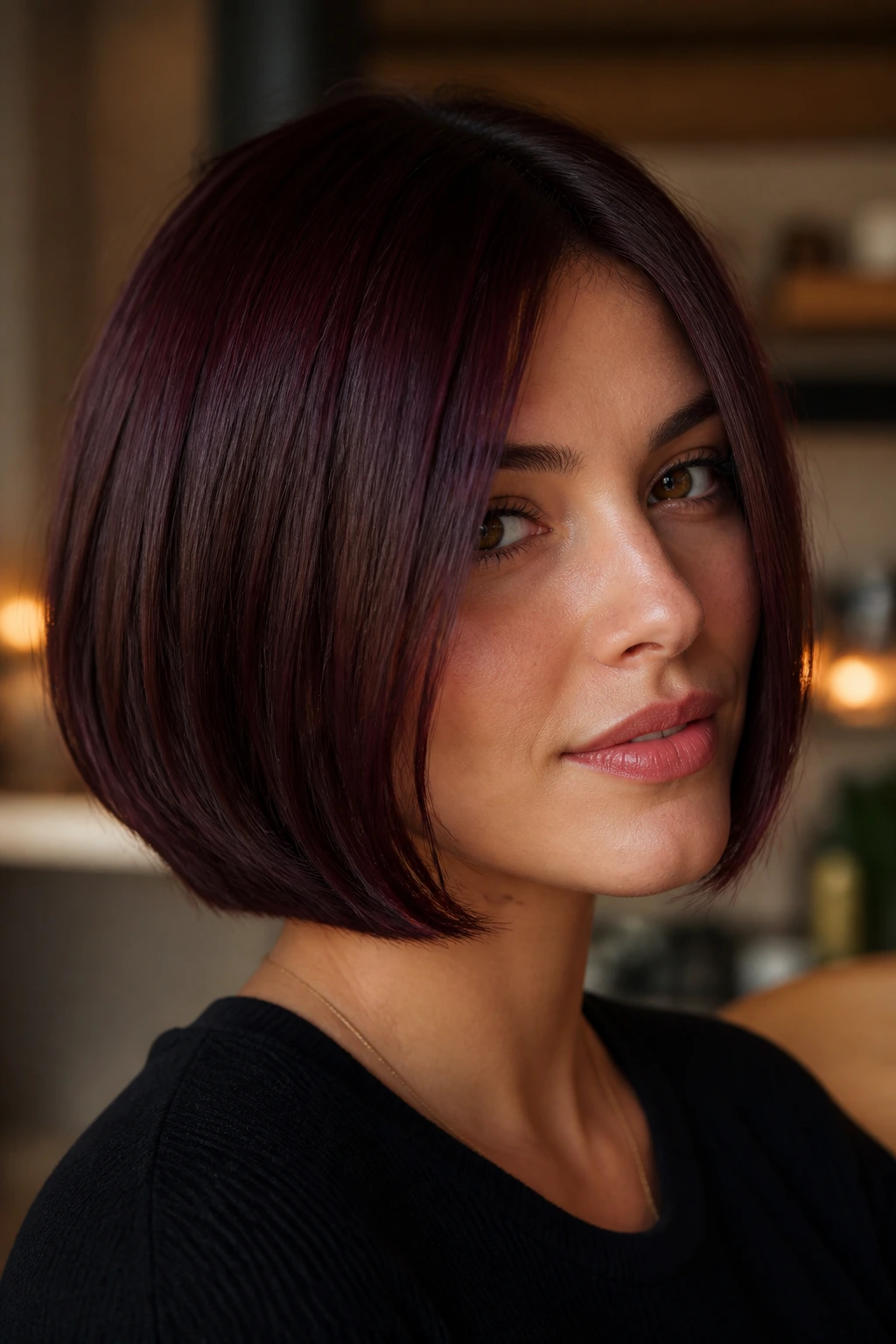
Black cherry on a bob is moody in the best way. The base stays dark enough to feel grounded, but the cherry tone flashes through the ends and around the face when the light hits. It’s a short style with a surprising amount of depth.
What makes it work is the edge. A bob already has shape, so the color doesn’t need to do all the heavy lifting. A glossy black cherry finish makes the cut look denser and more intentional, especially if the ends are tucked under slightly.
Wear it straight for a sleeker finish, or add a gentle bend at the ends if you want the red tones to show more. A chin-length bob usually gives the cleanest result.
11. Rose Gold Soft Waves
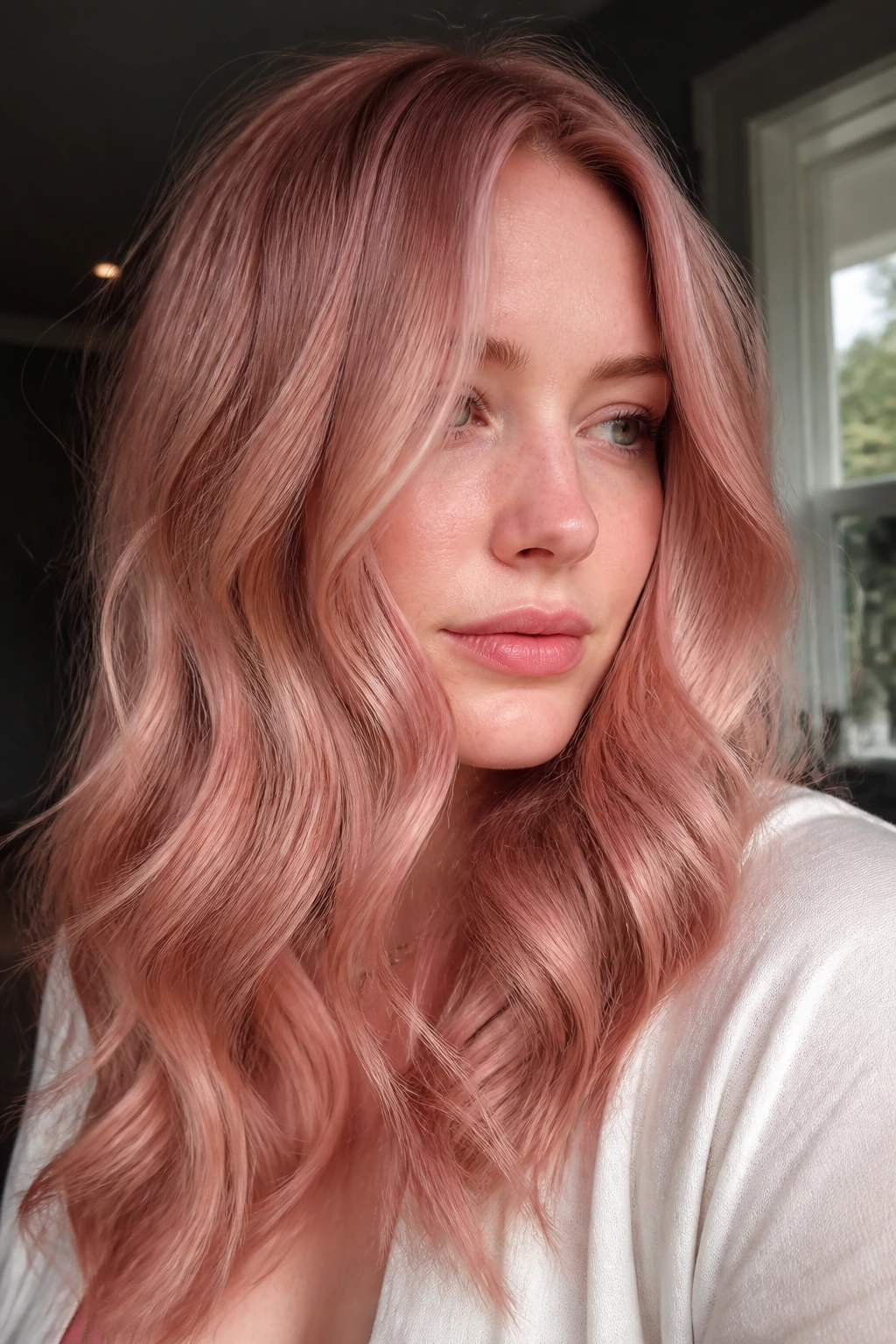
Rose gold is one of those shades that can look too sugary if the tone is pushed too pink, so the trick is restraint. On soft waves, the rose and copper tones blend into a muted shine that feels lighter than classic red but richer than blonde.
This look needs a pale enough base to hold the pastel warmth, and it’s usually happiest on hair that has already been lightened carefully. If the colorist keeps the rose gold close to the mids and ends, the roots can stay softer and the whole style avoids that “color block” effect.
A curling wand with a larger barrel makes the waves look airy instead of frizzy. Keep the products light. Heavy oils flatten rose gold fast.
12. Ginger Money Piece Highlights
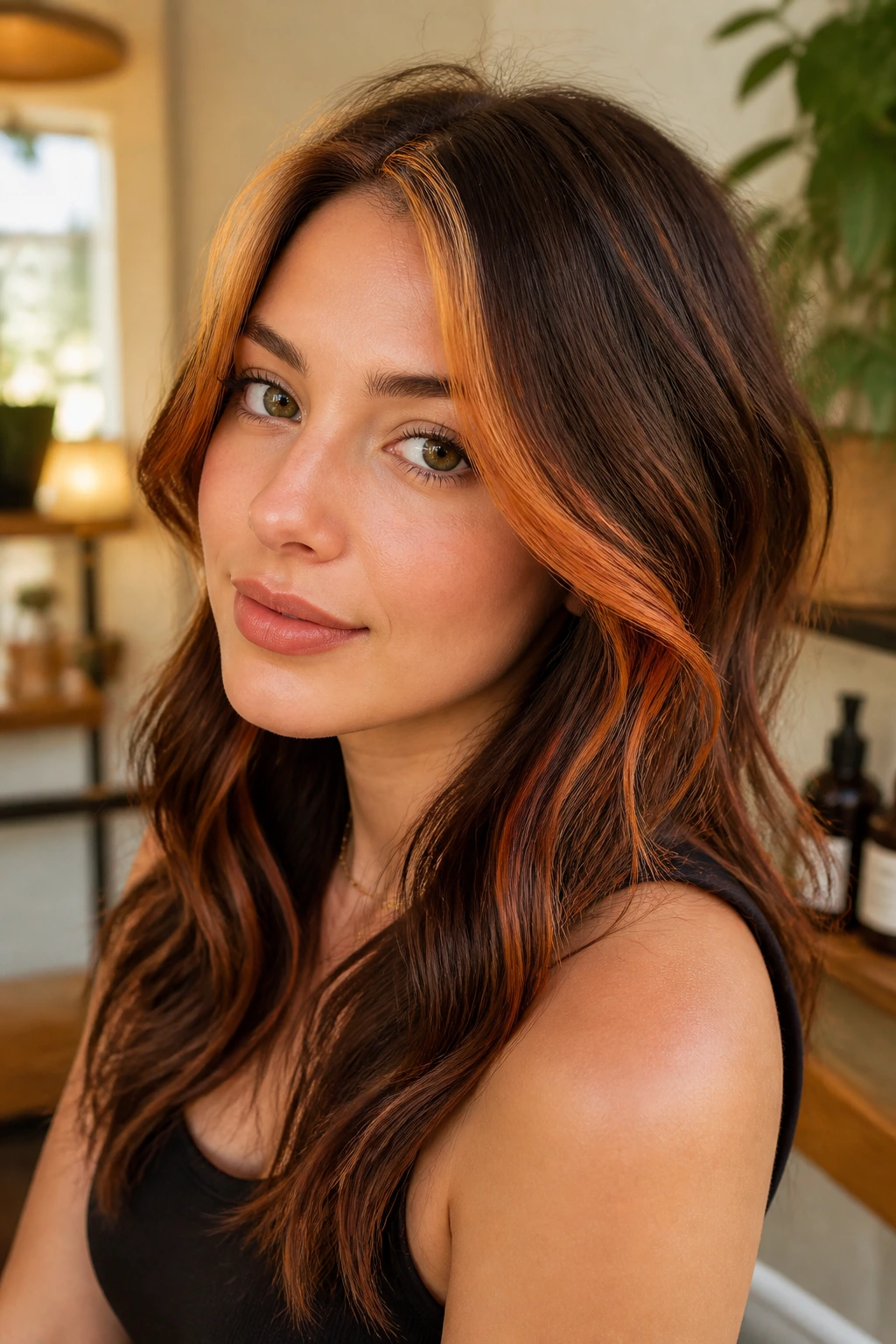
Ginger money pieces are for people who want a red accent without committing to a full head change. The lighter strands around the face act like built-in framing, and ginger gives them enough warmth to stand out against darker lengths.
I like this look on layered cuts because the front pieces already have movement. Put bright ginger at the hairline and slightly softer copper through the temple area, and the face gets a lifted look without the rest of the hair fighting for attention.
Best use
- Great on brunettes who want a visible red pop
- Easy to refresh at the salon without redoing the whole head
- Works with ponytails, buns, and loose waves
Pro tip: Keep the front pieces a shade lighter than the rest of the red. If everything is the same level, the face-framing effect gets lost.
13. Burgundy Box Braids
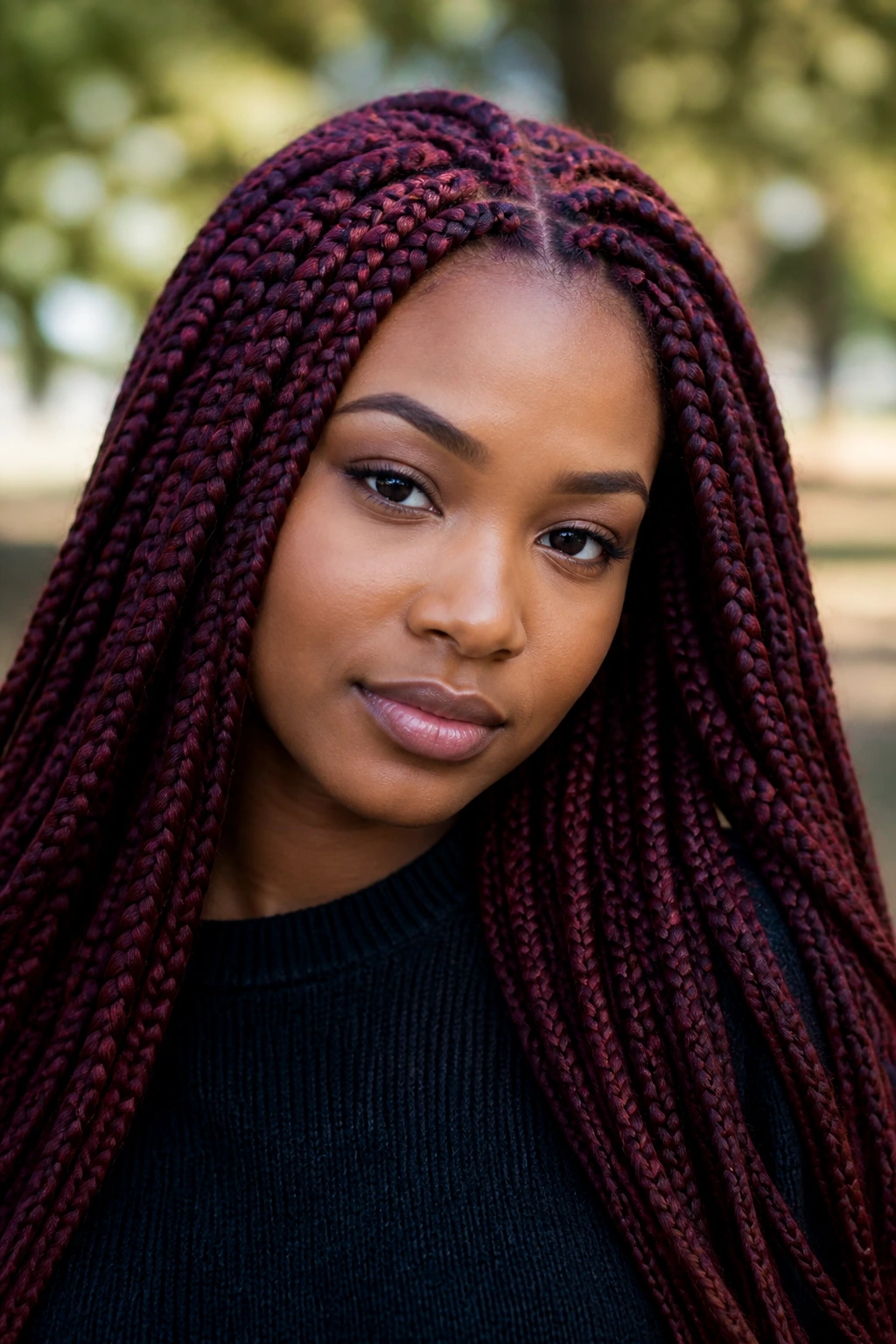
Burgundy box braids look rich because the color is visible in thickness, not just on the surface. The braided pattern gives the shade texture, and that texture makes burgundy feel deeper and more dimensional than it does on straight strands.
This is a smart choice if you want red in a protective style. The color doesn’t need constant heat styling to show up, and the braids themselves do a lot of the visual work. Burgundy can lean purple in certain light, which is part of the appeal.
Keep the scalp clean and the braids moisturized. The color may be the star, but dry hair under the braids will dull the whole look fast.
14. Toasted Apricot Ends
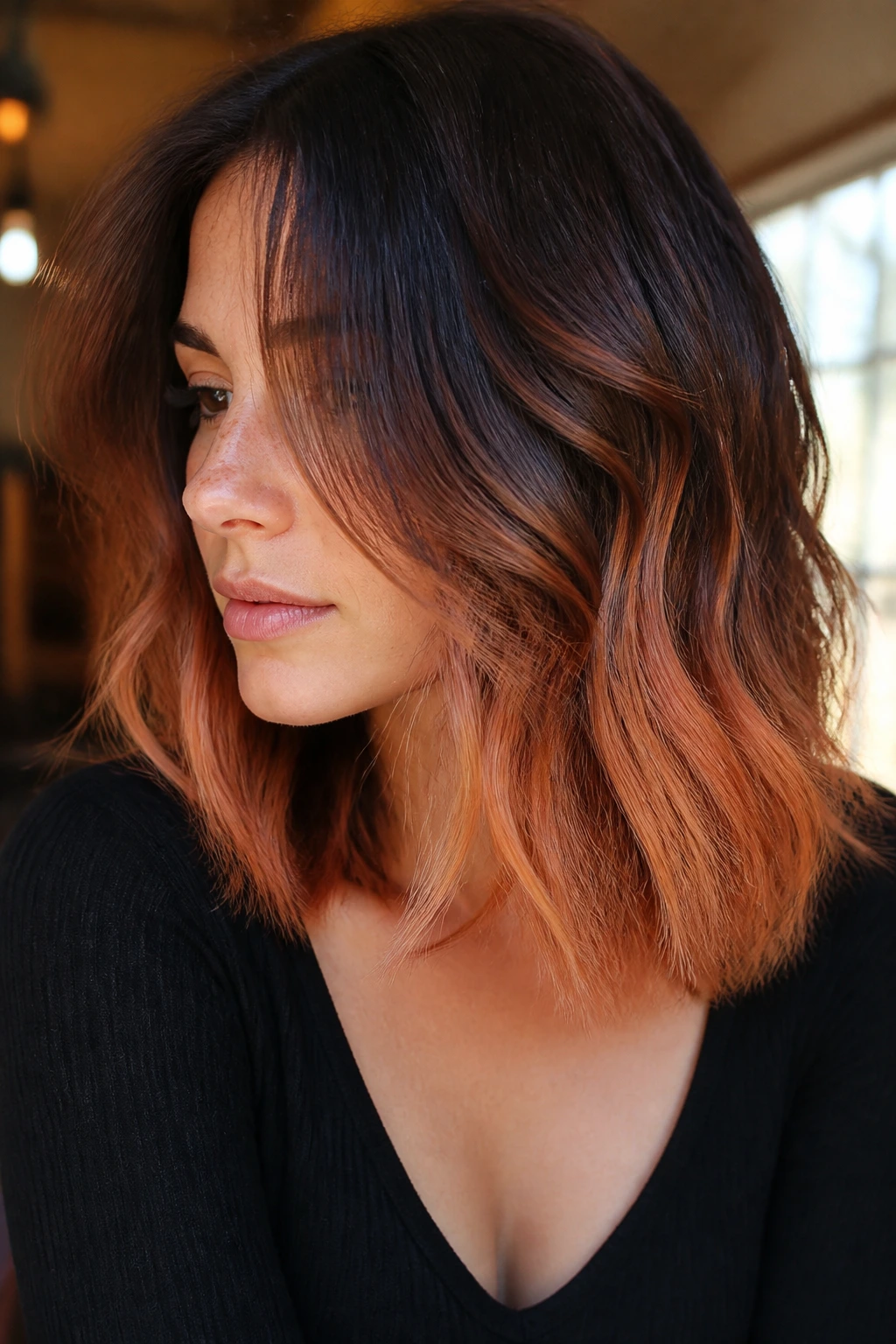
Toasted apricot ends are playful without becoming sugary. The color sits between peach and light copper, and when it’s concentrated at the ends, it gives the hair a softened dip-dye effect that feels deliberate.
This works best on hair that can hold a lighter pastel-red tone, usually blonde or very light brown. The darker the base, the more the apricot wants to read as copper rather than peach. That’s not a problem, just a different mood.
A lob or long layers keep the ends visible. If the cut is too shaggy, the apricot can get chopped up and lose its sweet little glow.
15. Spiced Wine Mid-Length Layers
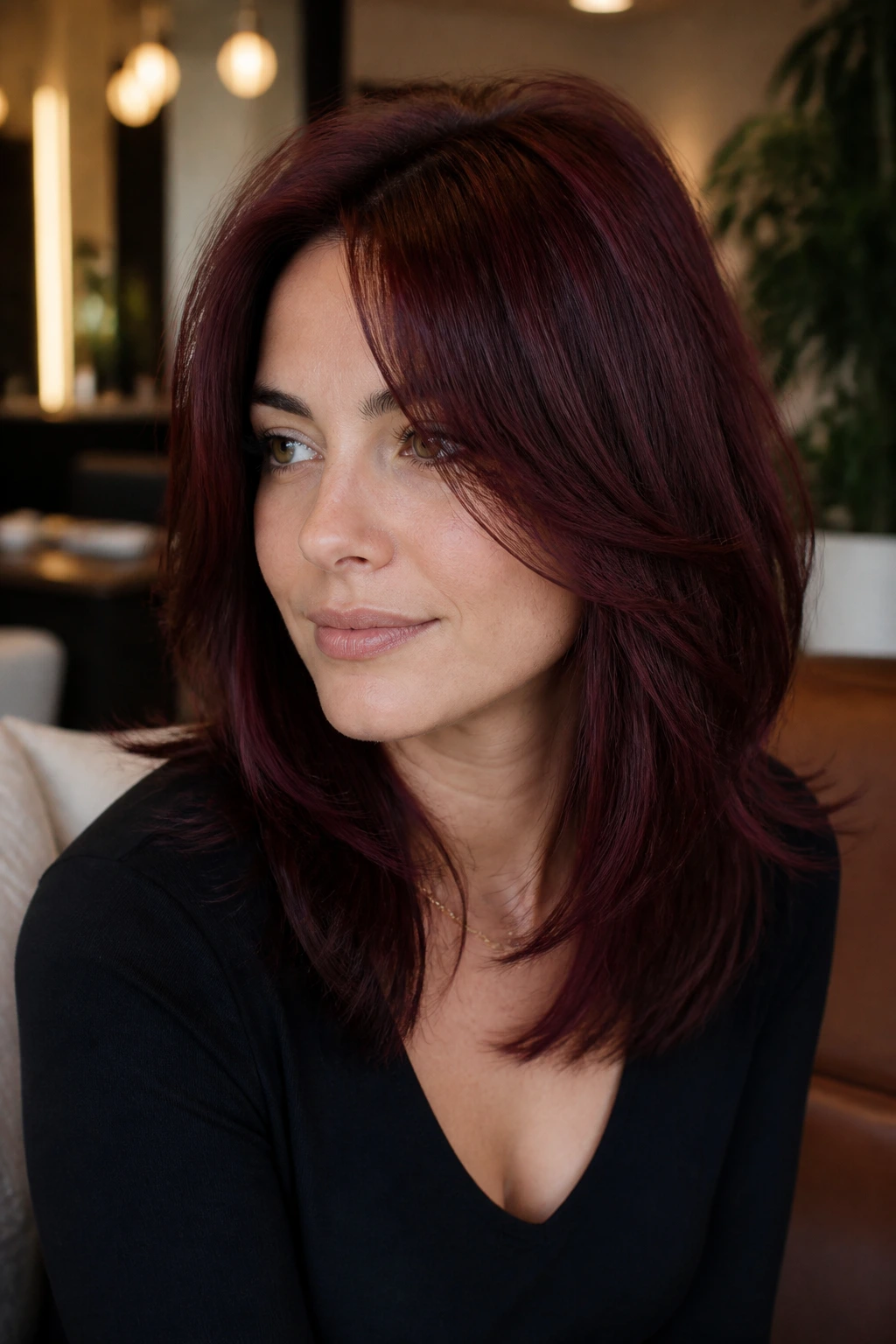
Spiced wine on mid-length layers has a little bite to it. The color is deeper than bright red but warmer than plum, and the layers let it move from burgundy to copper depending on the light.
What I like here is the balance. Mid-length hair gives enough weight for the wine tone to feel luxurious, but the layers stop it from turning into one heavy sheet. A soft blowout works better than tight curls because it keeps the color in motion without making it busy.
If your hair tends to fade fast, ask for a glaze that leans slightly red-violet. It helps the color stay plush instead of washing out to a flat brown.
16. Rusted Copper Shag
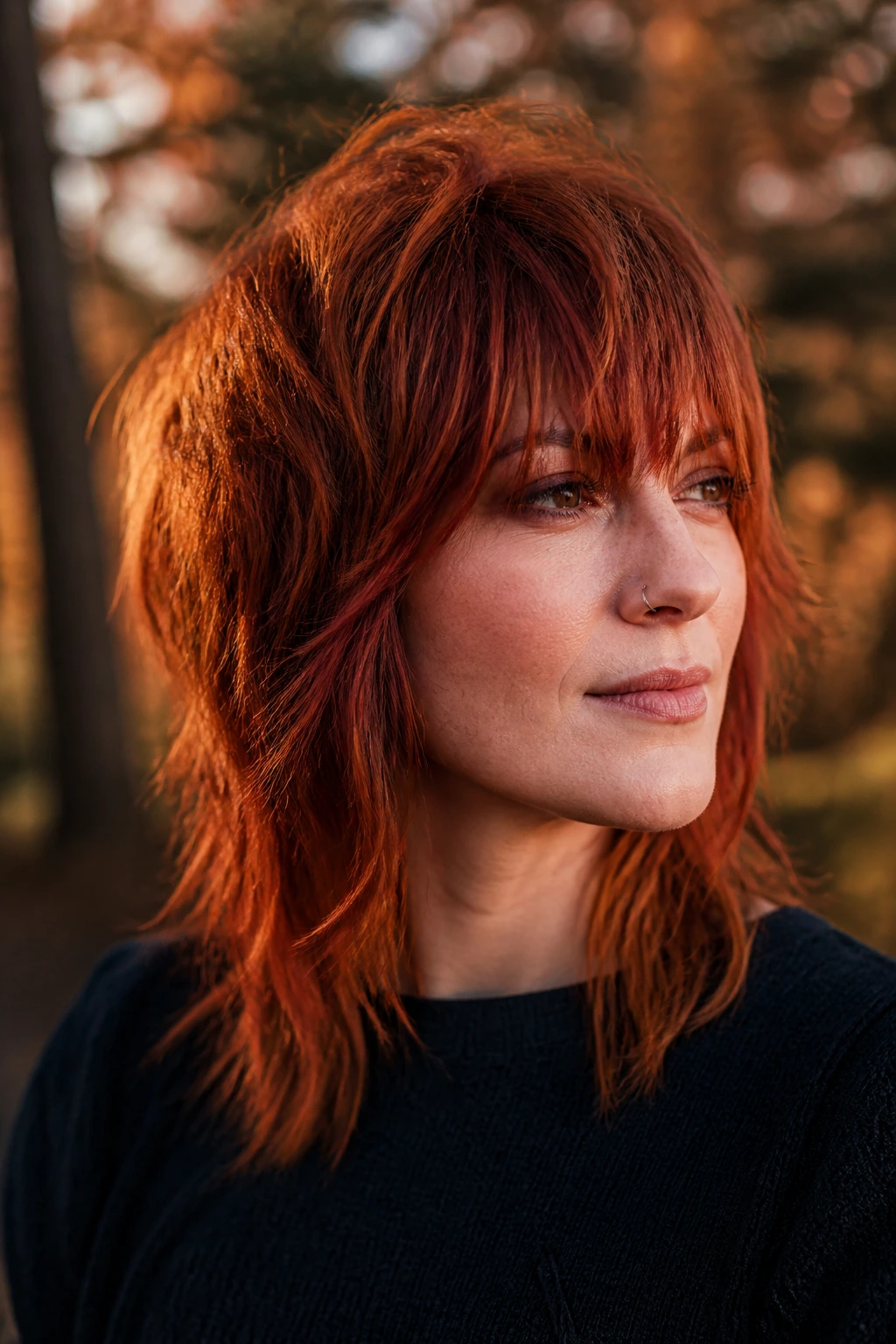
Rusted copper is the messier cousin of classic copper, and that’s a compliment. It has more earth in it, a little less shine, and a lived-in feel that looks especially good on choppy layers.
The shag cut gives the color room to break apart. That matters because rusted copper can look too uniform if the hair is too smooth. The uneven layers make the shade look intentional and a little cool, without trying to be polished all the time.
What to watch for
- Too much shine can make rusted copper look orange.
- Too many razor layers can make the cut frizz out.
- A matte texture cream can help keep the shape separated.
17. Red Velvet Blowout
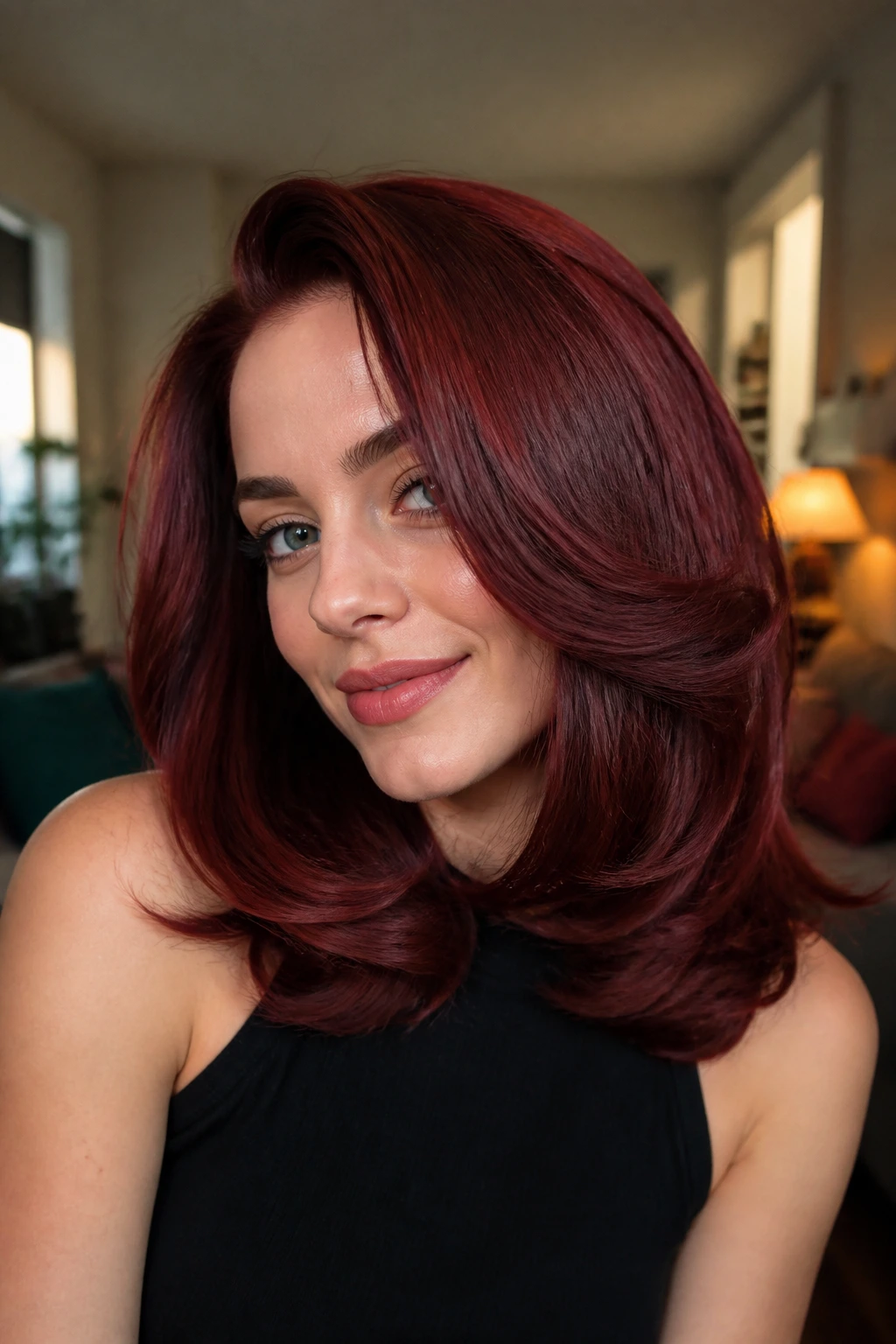
Red velvet is one of my favorite red tones for a blowout because it looks plush. The color is rich, deep, and smooth, and the volume from a good blowout gives it that soft fabric feel the name promises.
This look depends on movement at the ends. The hair should swing, not freeze. If the roots are too flat, the style loses its softness. If the ends are too curled, the whole thing reads old-fashioned instead of current. A large round brush and a little tension during drying make a big difference.
A red velvet blowout suits shoulder-length or longer hair best. There’s enough length to show the tone shift, and enough body to keep it from collapsing.
18. Mulled Wine Curls
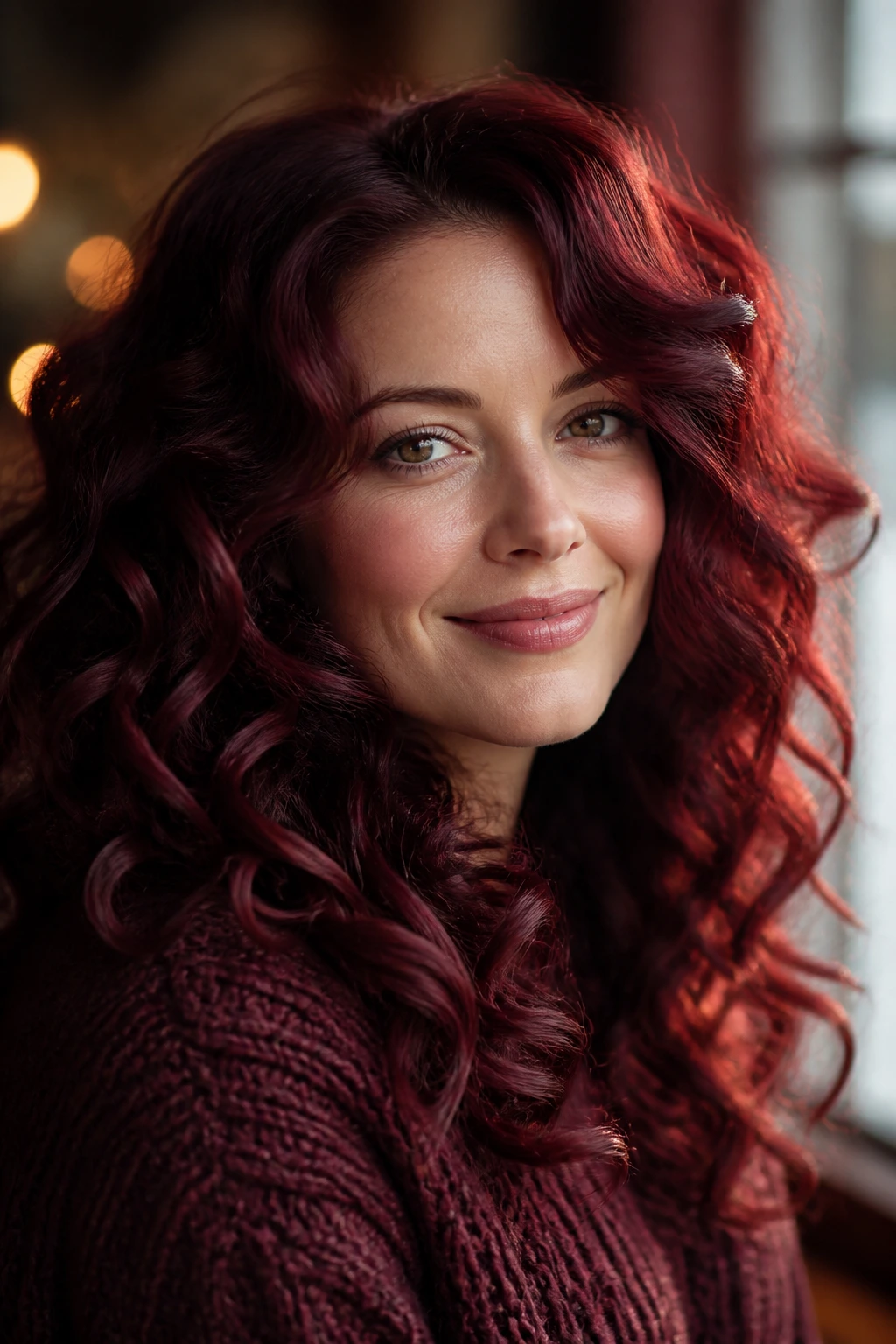
Mulled wine curls have that deep berry-red richness that looks especially good in winter light, though the shade is timeless enough to wear any time. The curls help the color move between plum, red, and dark cherry without needing flashy brightness.
This look is less about screaming red and more about depth. If your hair is naturally dark, the curls can still show the red tone as a reflection. If your base is lighter, the color becomes more obvious and jewel-like.
Use a curl-defining cream that doesn’t leave too much cast. Mulled wine needs separation, but it also needs shine. Dry ends will make the shade feel flat fast.
19. Peachy Coral Lob
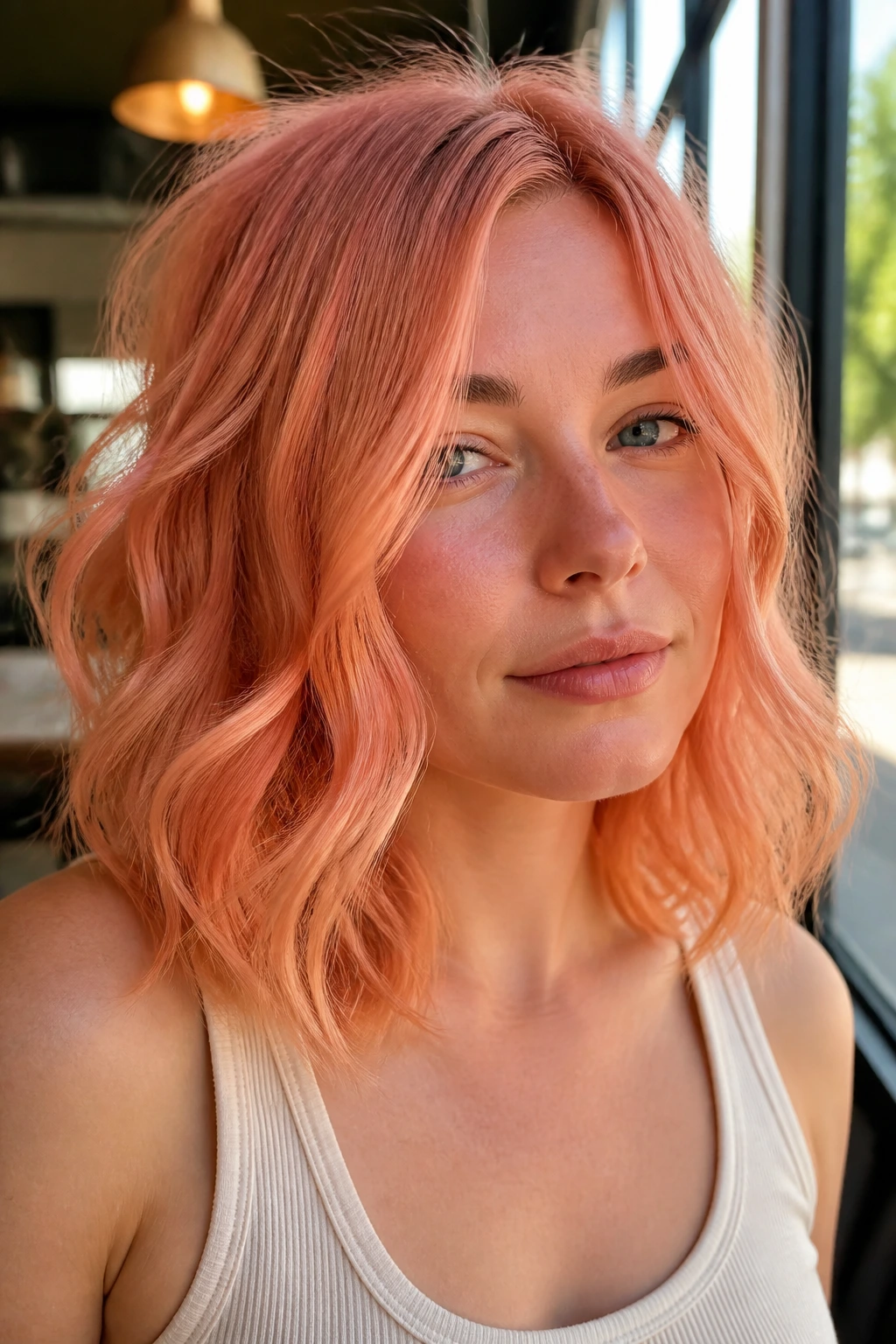
Peachy coral is one of the few red-toned looks that feels light and fresh without looking washed out. On a lob, the color gets enough structure to stay interesting, and the coral finish keeps it from going too orange.
This is a good choice for lighter bases and for people who don’t want a deep, winey red. It looks especially good with loose bends rather than polished curls. The coral tone needs a little softness around it, or it can read loud in a harsh way.
A low-heat wave pattern keeps the color looking airy. And if the ends start to look pale, a color-depositing conditioner with a soft peach or copper tint can help.
20. Cinnamon Rose Pixie
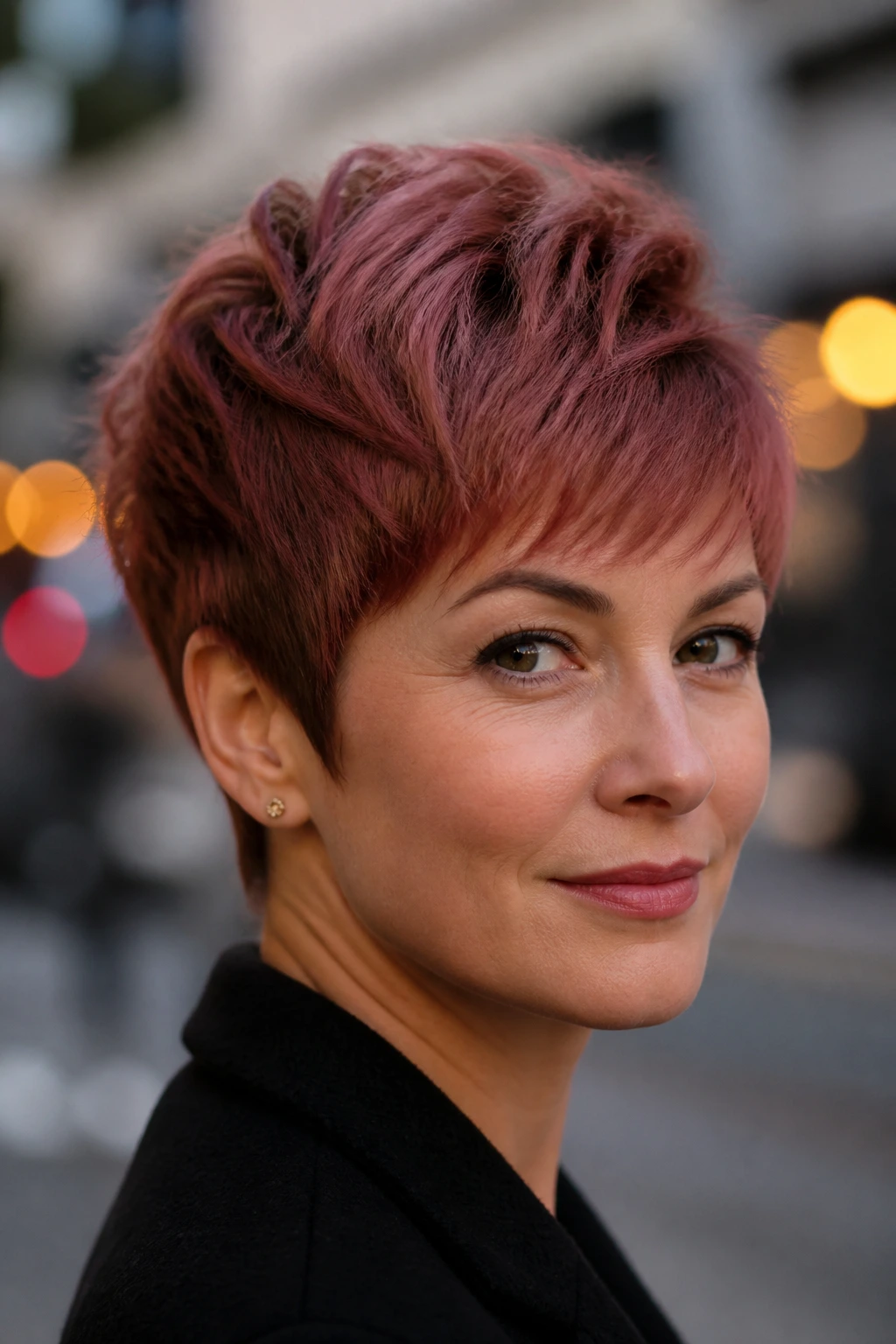
A cinnamon rose pixie has a softer edge than a true scarlet cut, which is why it feels so wearable. The rose tone takes the sting out of the red, while cinnamon adds enough warmth to stop it from leaning pastel.
Short hair shows color changes fast. That can be a gift here. The crown can hold more cinnamon depth, while the fringe carries the rose reflection, and the two tones make the cut look more expensive than one flat shade would.
Keep the texture piecey. A pixie this short needs movement at the top and a clean shape at the sides. A dab of styling cream is enough. Too much product makes the color look darker than it really is.
21. Auburn Layered Curls
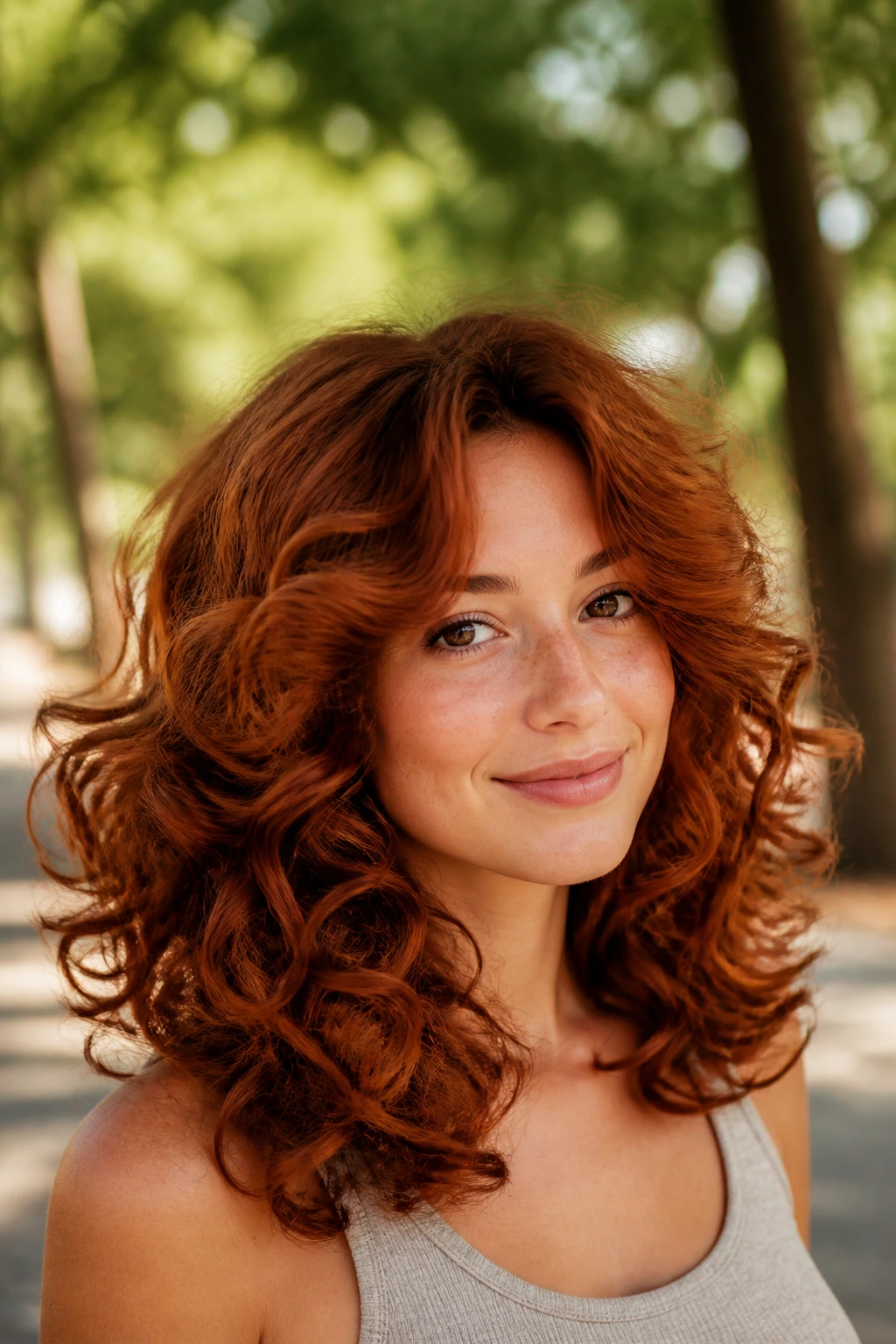
Auburn layered curls are the reliable old friend of red hair. They aren’t the flashiest look in the room, but they hold shape, flatter a lot of skin tones, and age better than some brighter reds that turn brassy fast.
Layers matter because curls need space to stack. Auburn gives the curls warmth without crowding them. If your hair is thick, the layers prevent the color from getting swallowed by volume. If it’s finer, the curl shape keeps the auburn from disappearing.
A diffuser set on low heat works better than rough drying. The curl pattern should be soft enough to show the red, not so tight that the color gets broken into tiny shadows.
22. Cherry Bomb Straight Hair
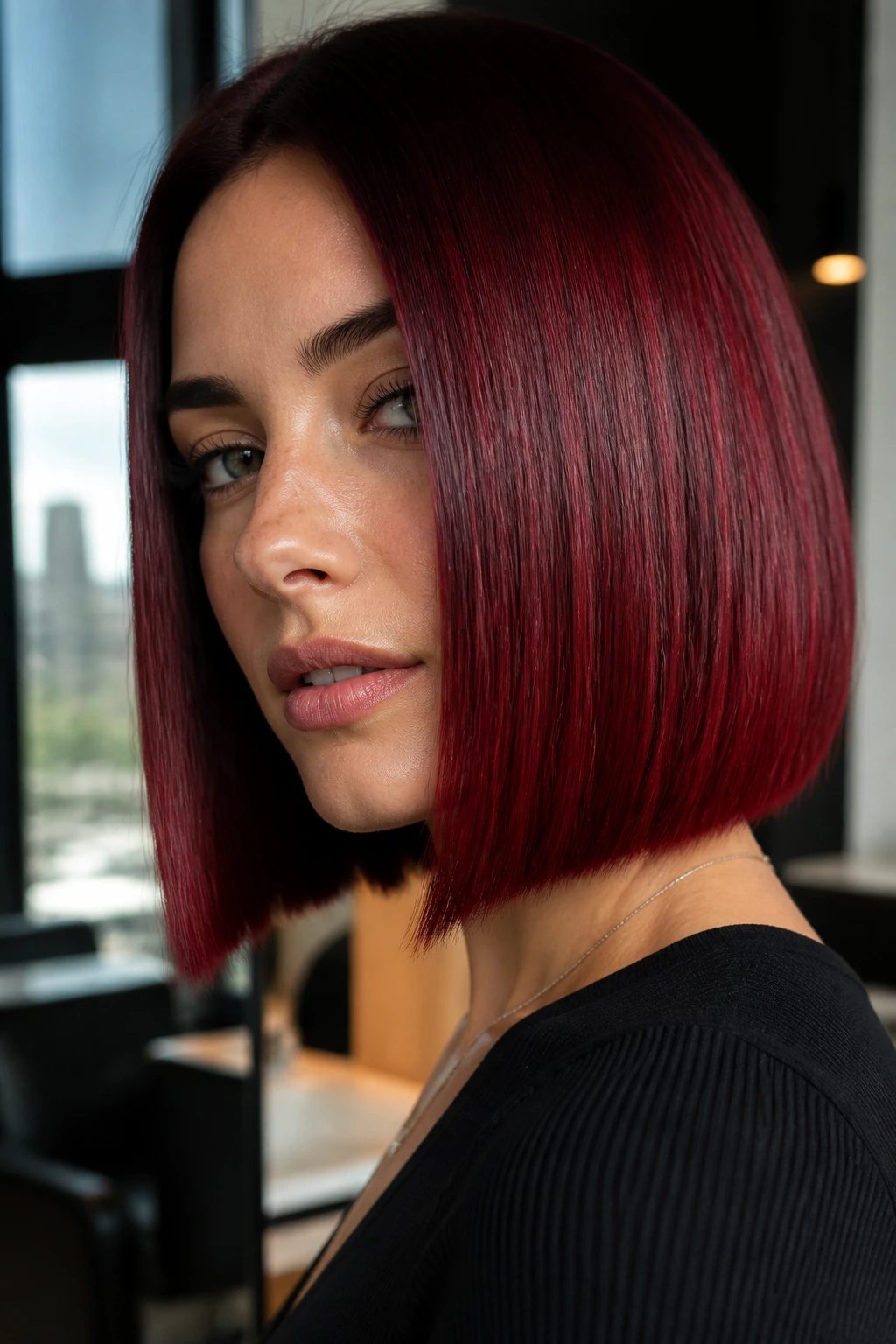
Cherry bomb on straight hair has a sharper, more graphic feel than the same shade on curls. Every line is visible. Every shine streak matters. That makes the color look cleaner, but it also means your cut has to be good.
A blunt finish helps a lot here. Straight cherry hair can turn severe if the ends are wispy. A healthy gloss is what keeps the shade from looking flat. If the surface is reflective, the cherry tone becomes richer and less neon.
This is one of the better choices if you want a vivid red and you like sleek styling. It’s not shy. It doesn’t try to be. And that confidence is half the look.
23. Sunkissed Strawberry Blonde
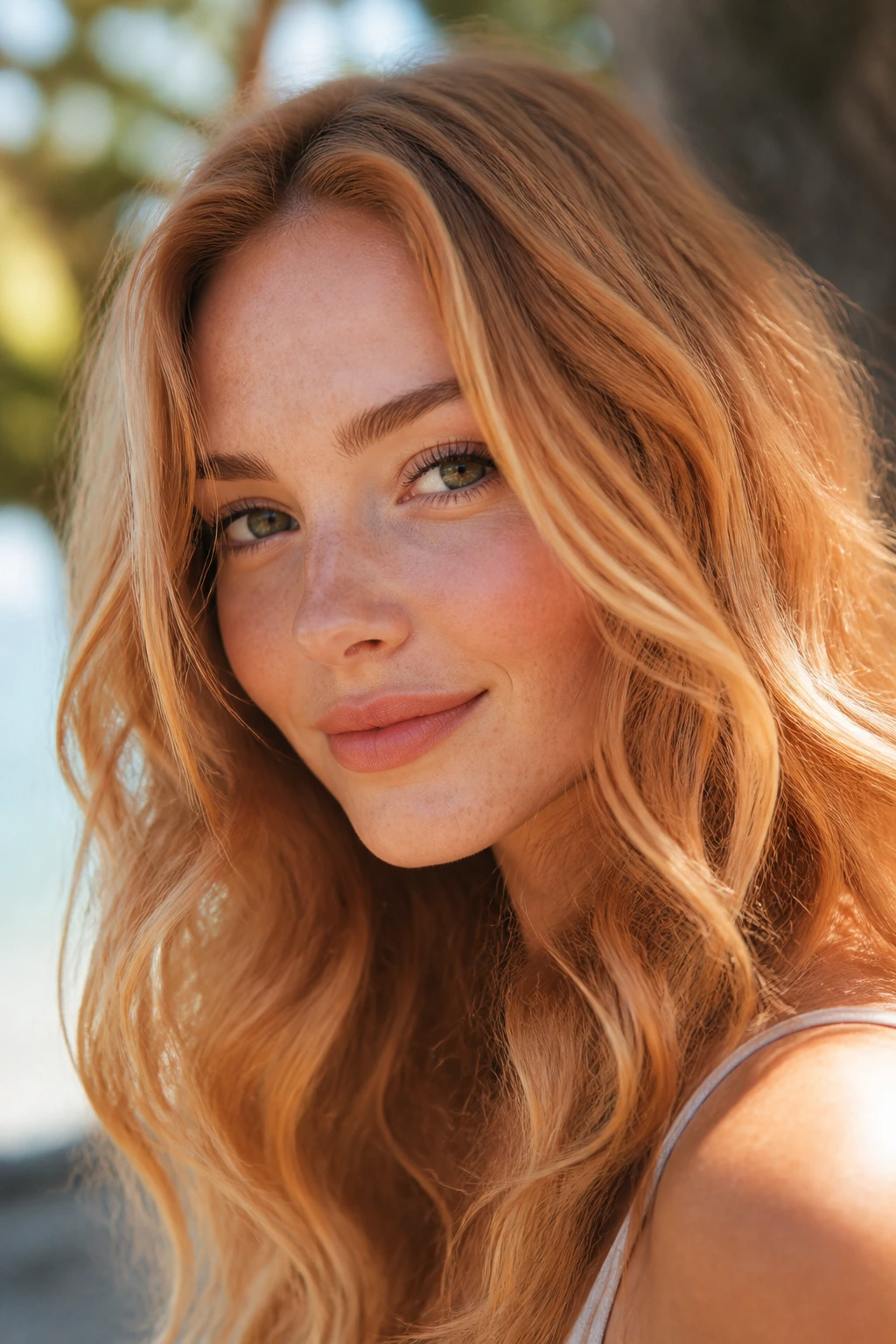
Sunkissed strawberry blonde looks like the red version of a soft summer blonde: warm, bright, and easy to wear because it never gets too dark. The red tone is there, but it sits under the blonde rather than taking over.
This shade works well on layered cuts and soft waves. The movement helps the strawberry tones appear where the light hits, and the blonde keeps the look light around the face. If you’re trying red for the first time, this is one of the least intimidating entry points.
Use a sulfate-free shampoo and keep the color fresh with a pale copper or strawberry mask every couple of weeks. The shade can fade faster than deeper reds.
24. Garnet Balayage
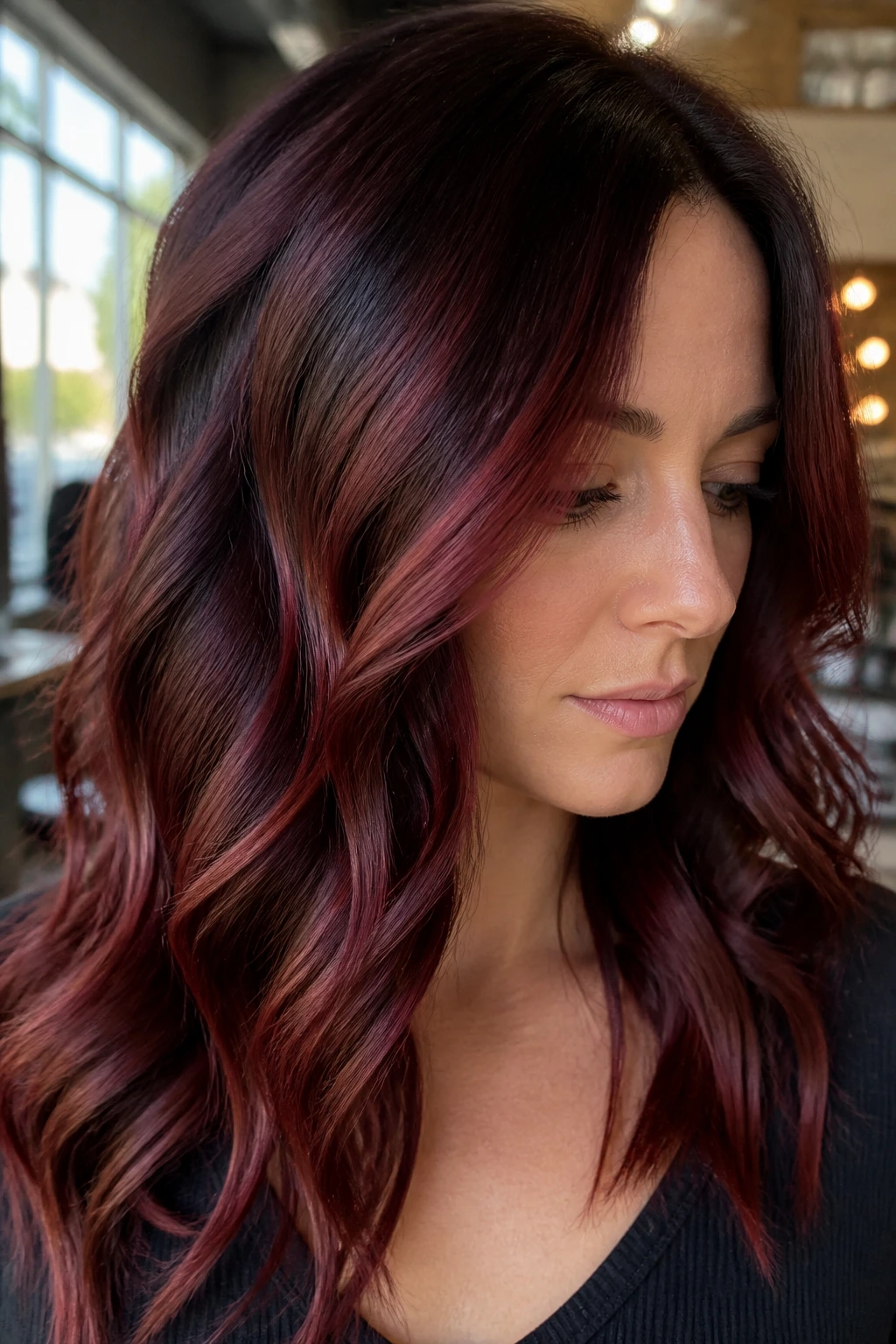
Garnet balayage gives red a jewel-box kind of depth. Instead of one solid tone, you get darker red ribbons layered over a brunette or dark auburn base, which makes the hair look rich in indoor light and even richer outside.
The balayage method is the real trick here. It softens the grow-out and keeps the red from sitting like a stripe. Around the face, a little more garnet can brighten the complexion; through the lengths, softer ribbons keep the color from becoming too intense.
Ask for a low-contrast blend if you want it elegant. Higher contrast is bolder, but it can also get stripey if the placement is too neat.
25. Copper Fro-Hawk
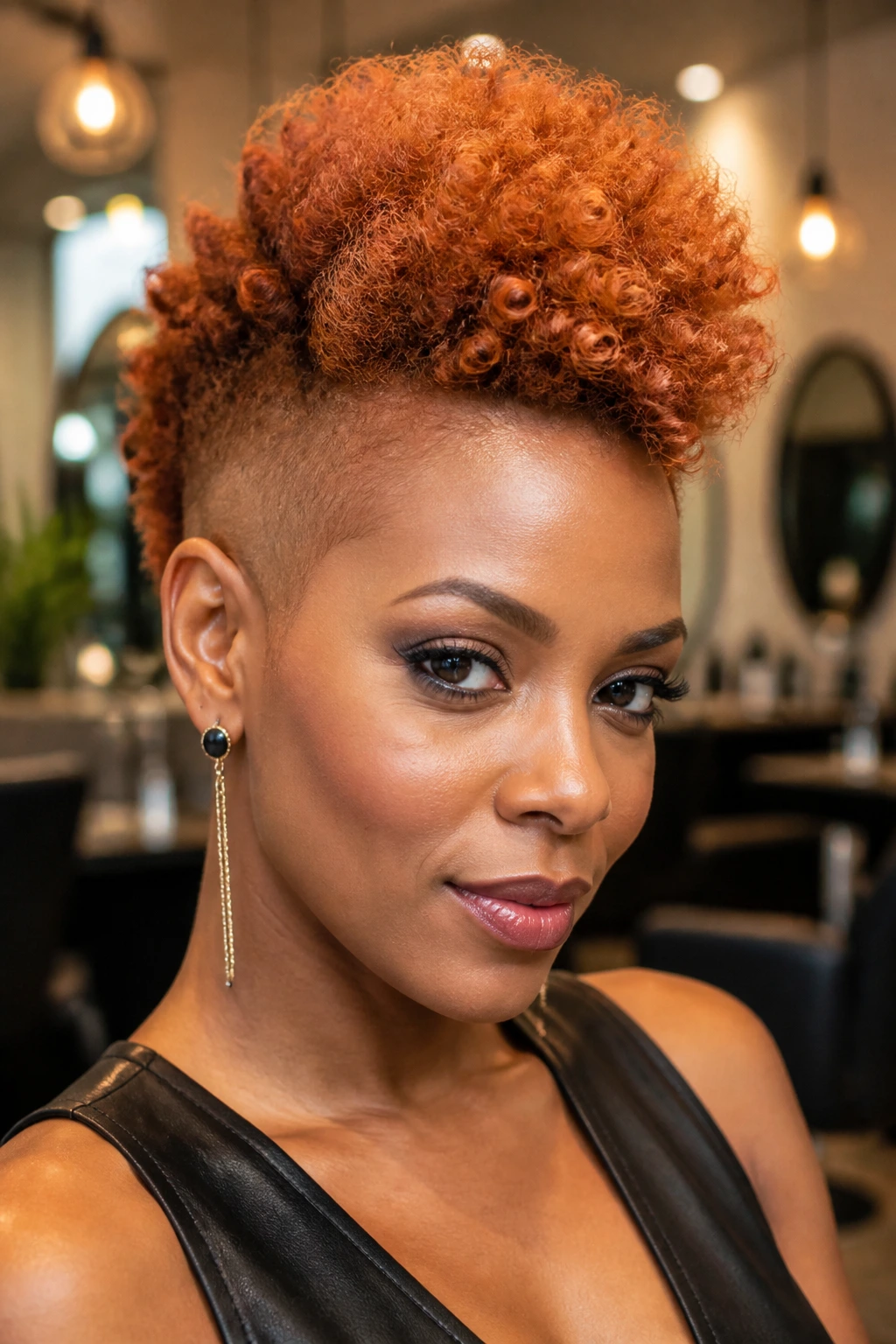
A copper fro-hawk is a bold choice, and it deserves to be. The sides stay tighter, the middle section rises, and the red color gets all the visual space it wants. On textured hair, copper can look almost electric in the best way.
What makes this look work is shape. The fro-hawk creates a strong line, and copper keeps the top section bright enough to lead the eye. If the top is elongated with coils or curls, the color shows even more texture.
Keep the sides neat and the top moisturized. Dryness shows fast on vivid copper, especially in a sculpted cut like this one.
26. Cranberry Face-Framing Layers
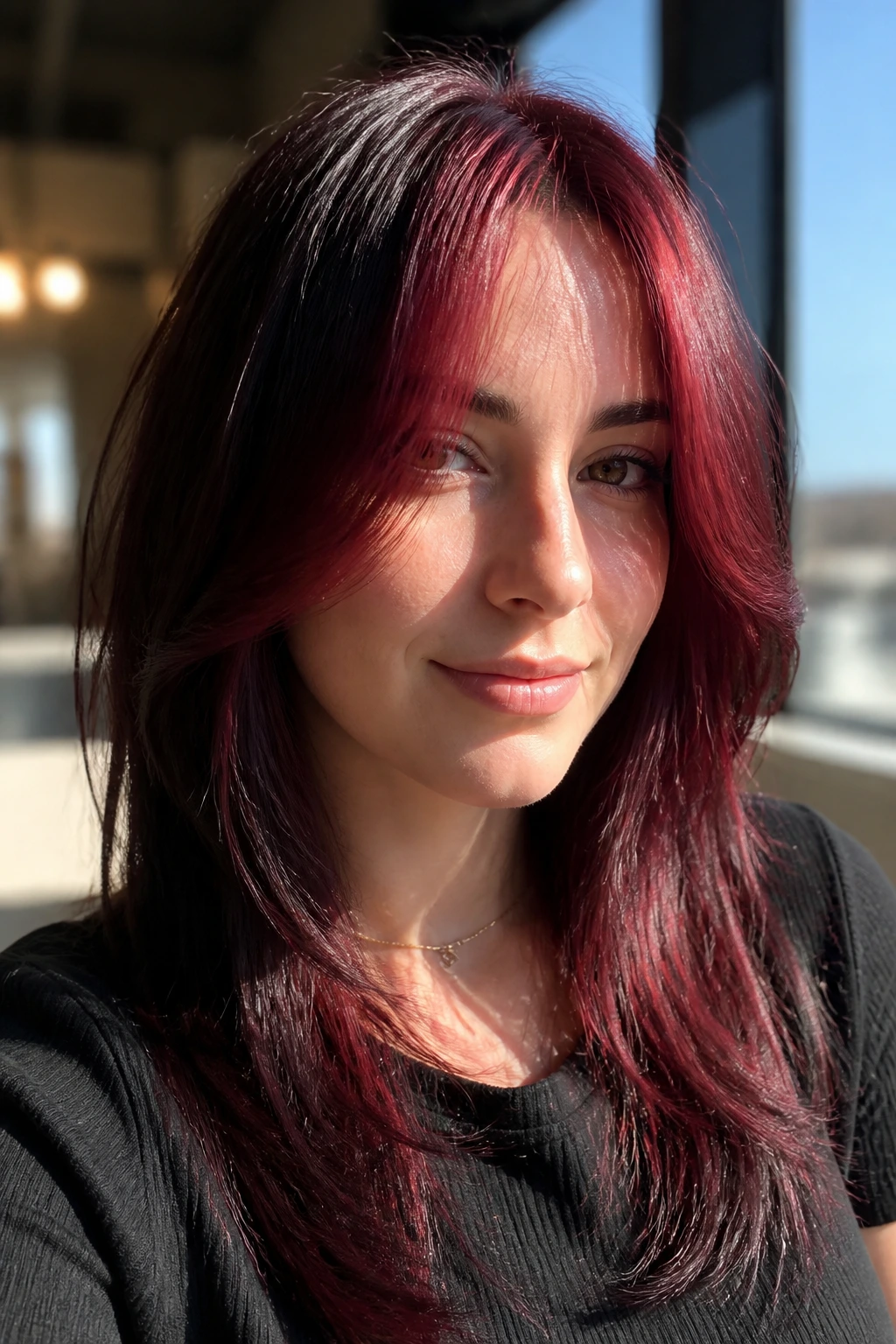
Cranberry around the face feels a little darker and more dramatic than copper, which is exactly why it works on layered hair. The front pieces pull the color forward, while the darker lengths let the cranberry settle into a deeper, wine-like red.
This is a smart style if you want a noticeable color change without making the whole head bright. The face-framing layers do most of the work. On straight hair, the cranberry reads polished. On waves, it gets more dimension.
Ask for the front pieces to be one to two levels brighter than the rest. That small difference makes the layer placement look intentional instead of accidental.
27. Pumpkin Spice Waves
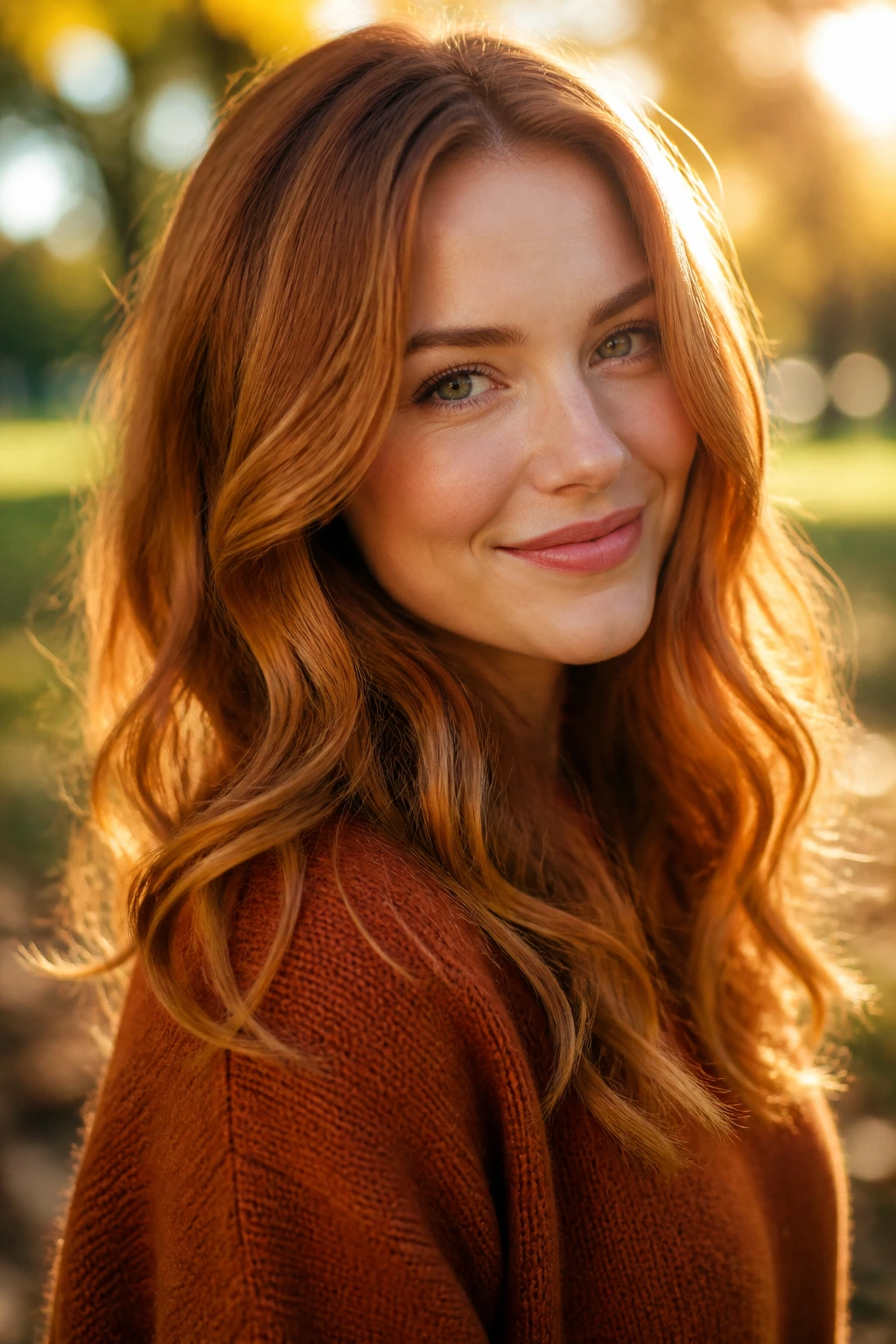
Pumpkin spice waves are warm, bright, and a little spicier than classic auburn. The orange-red undertone gives the waves a sunlit look, and the movement prevents the color from reading flat or too seasonal.
I like this shade on medium-length hair because there’s enough room for the warmth to spread without overwhelming the cut. The waves should be loose, not tight. You want the color to drift, not sit in little curls that make the orange tones louder than they need to be.
A center part can make this look polished, but a side part gives the color a little more lift around the face. Both work. The bigger issue is keeping the finish smooth enough to show shine.
28. Merlot Glossed Lengths
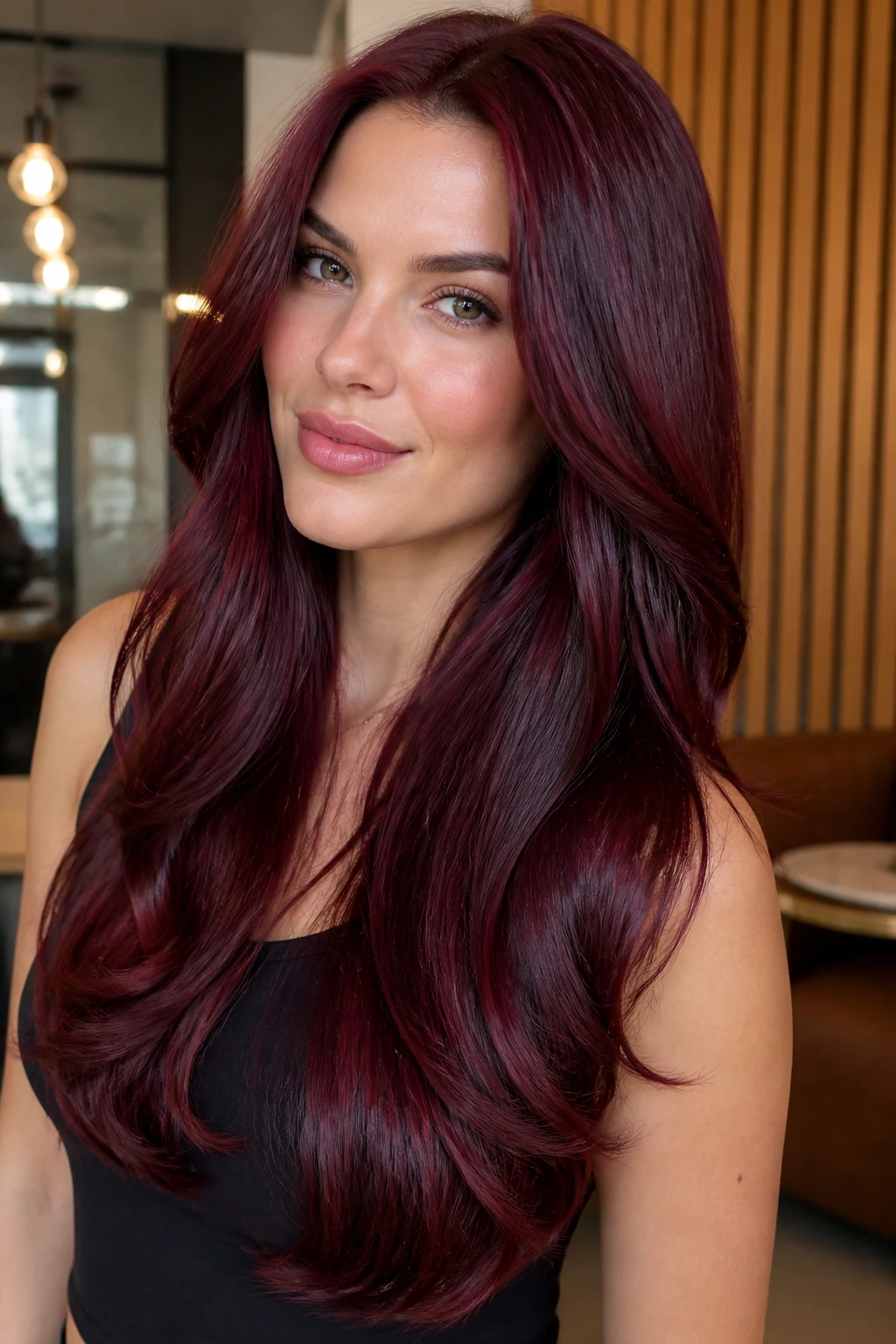
Merlot lengths have the kind of dark-red depth that makes hair look expensive without shouting. The gloss is important. Without it, merlot can turn murky. With it, the color looks like dark fruit and polished wood in the same breath.
This look suits longer hair because the color needs space to show off its depth. If the hair is all one length, the merlot can look heavy, so a few long layers help. The shine on the ends matters more than people think; that’s where the color stays visible as the hair moves.
A salon gloss every month or so keeps merlot from collapsing into brown. If you prefer a cooler tone, ask for a hint of violet in the formula.
29. Rosewood Sleek Bob
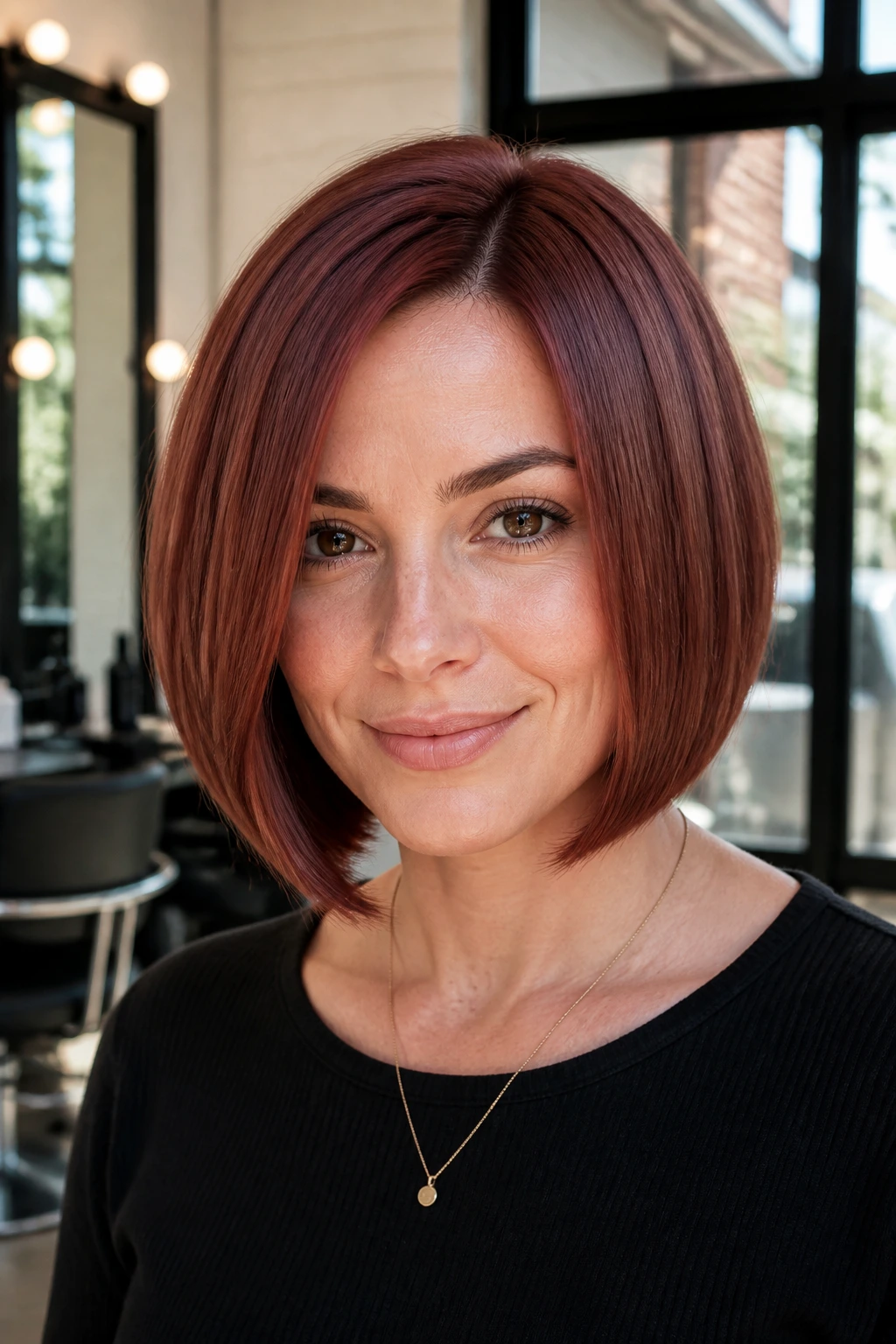
Rosewood is a softer red-brown tone that feels understated in a very specific way. On a sleek bob, it looks smooth, controlled, and just a little plush, like a polished piece of wood with warmth underneath.
The bob shape gives rosewood a crisp outline, and the color keeps it from looking severe. This is a good fit if you like clean lines but don’t want black or plain brunette hair. It also wears well with a middle part, since the color is subtle enough to stay balanced.
Use a smoothing cream before blow-drying, then finish with a light serum on the ends only. Rosewood needs gloss more than volume.
30. Scarlet Braided Ponytail
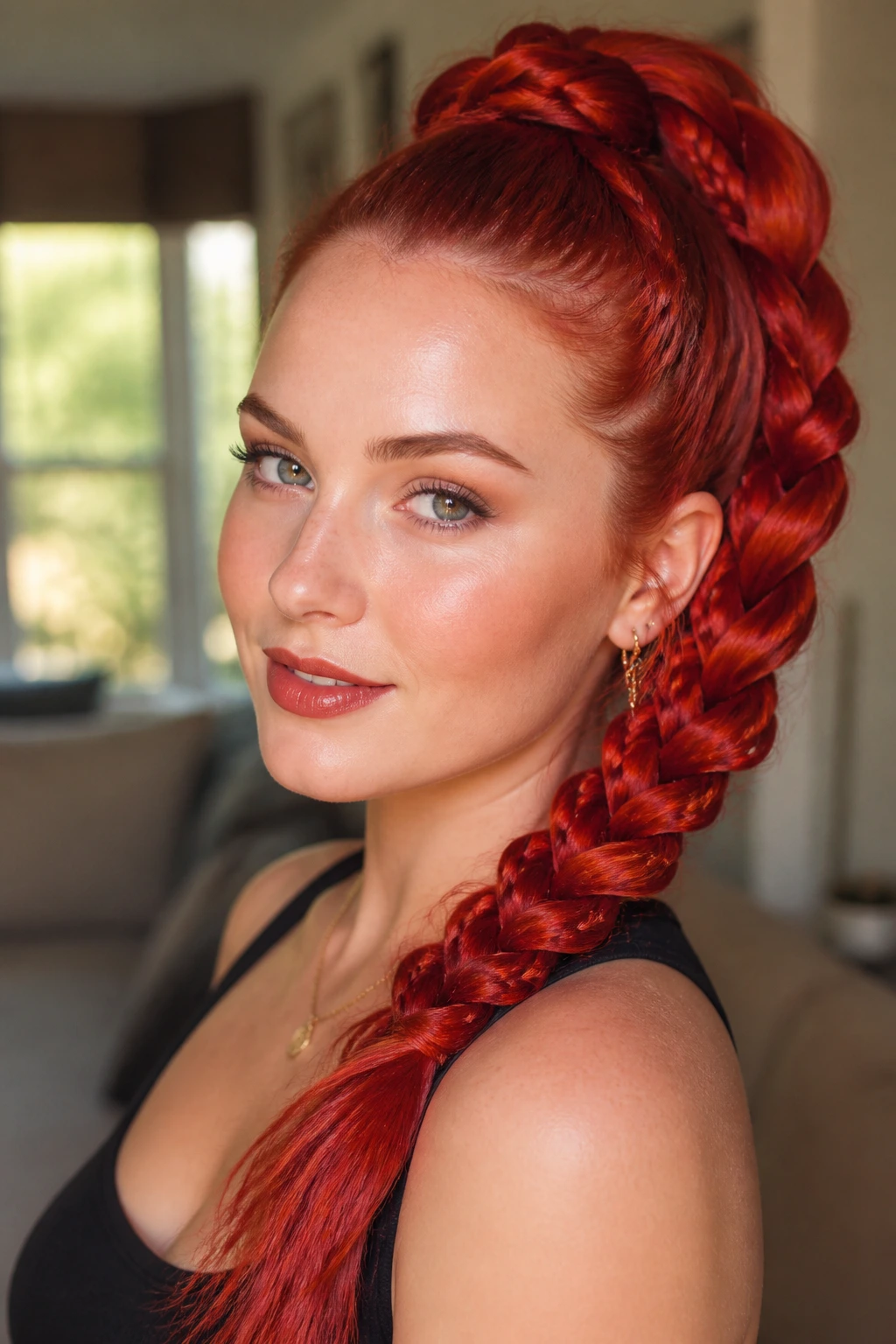
A braided ponytail in scarlet is one of the easiest ways to make red look dressed up. The braid brings texture, the ponytail keeps the length dramatic, and the scarlet color makes the whole thing feel intentional instead of sporty.
What I like here is how the braid catches the shade. The plaits create shadows between the strands, and scarlet shines against that contrast. If the hair is long enough, the ponytail can swing with real movement, which keeps the color from looking stiff.
A braided ponytail also gives you a practical benefit: it keeps the hair tucked away while still showing off the red. That’s not glamorous language, but it is the truth.
31. Rusty Ginger Curls
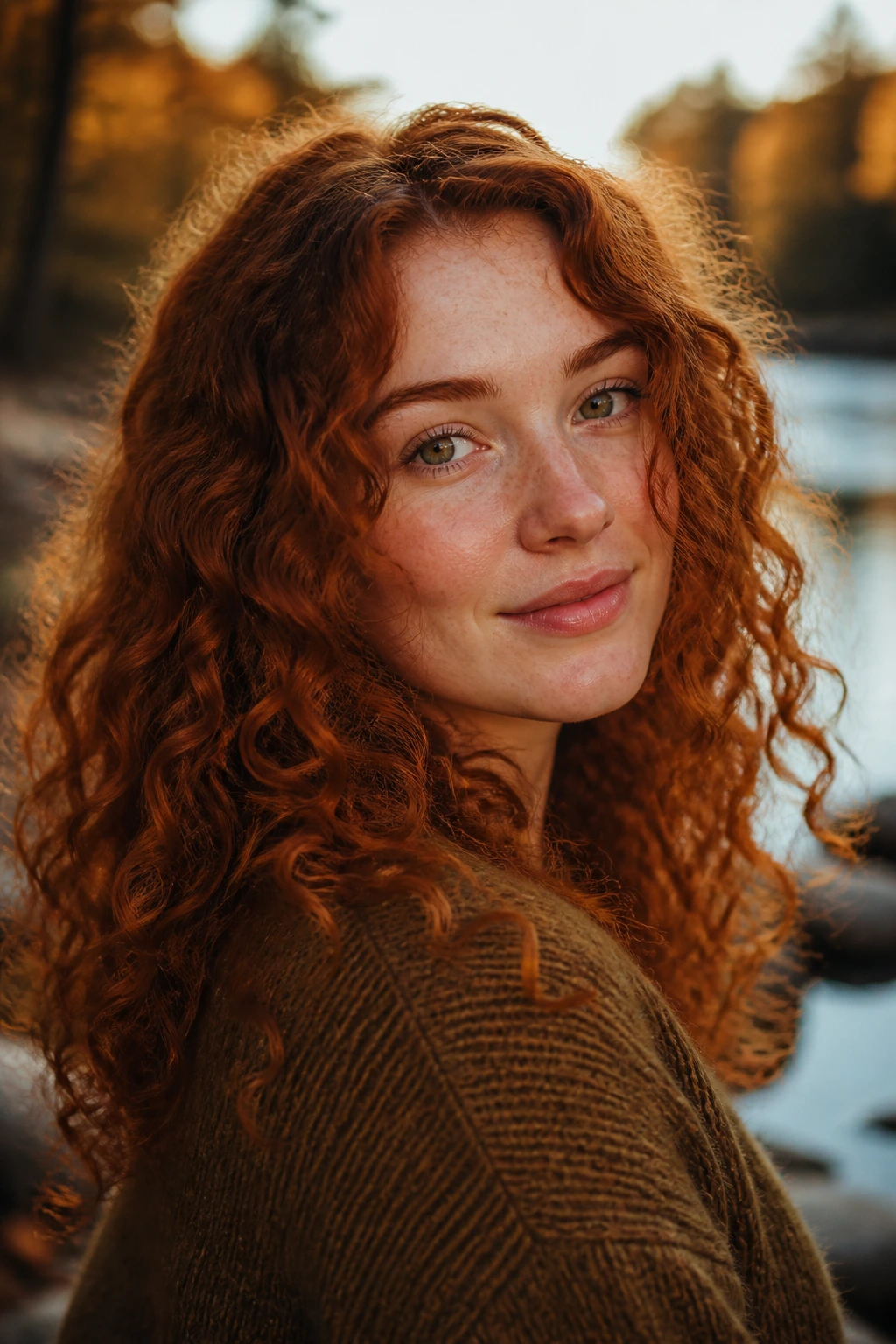
Rusty ginger curls sit closer to nature than neon. The tone has an earthy, weathered feel that works especially well when the curl pattern is soft and the finish is a little imperfect.
This is a good choice if you want red that looks like it belongs on the hair, not painted on top of it. The curls add volume, and the rusty tone makes that volume feel warm rather than loud. It’s especially flattering on medium skin tones and on people who prefer a more lived-in finish.
A curl cream with mild hold helps. You want shape and softness, not crunch. The rougher the curl, the more the rusty tone deepens.
32. Velvet Auburn Tapered Cut
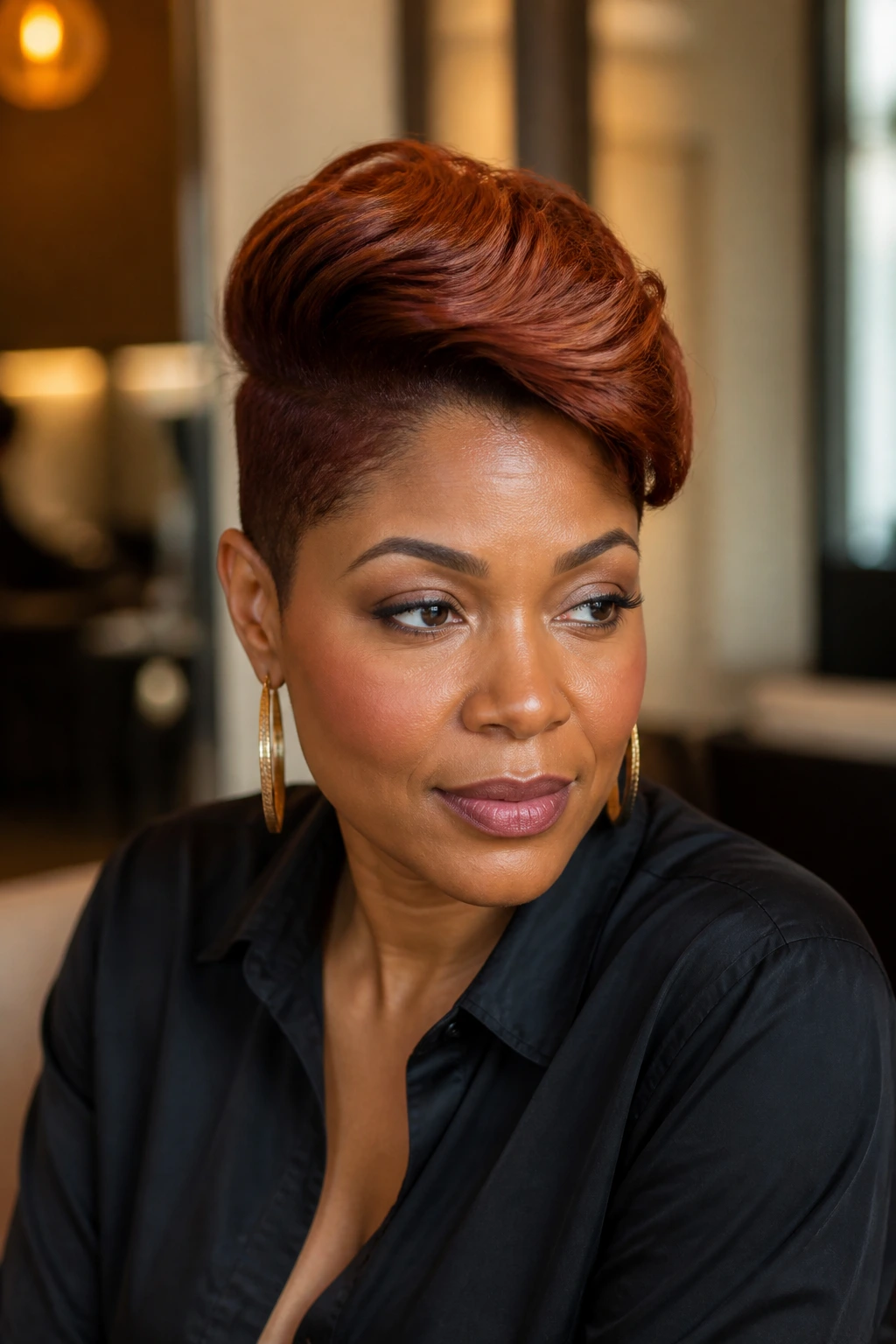
Velvet auburn on a tapered cut is sleek at the sides and rich through the top, which makes the whole silhouette look deliberate. The velvet part comes from the shine, and the auburn keeps it warm rather than flat.
This cut works because it directs the eye upward. The taper cleanly frames the face and neck, while the auburn top section carries the color. That makes it a strong option for women who like shorter cuts but still want movement and texture up top.
A small amount of molding cream goes a long way. Too much product kills the velvet finish and makes auburn look dull. Keep the top lifted and the sides neat.
33. Flamingo Rose Waves
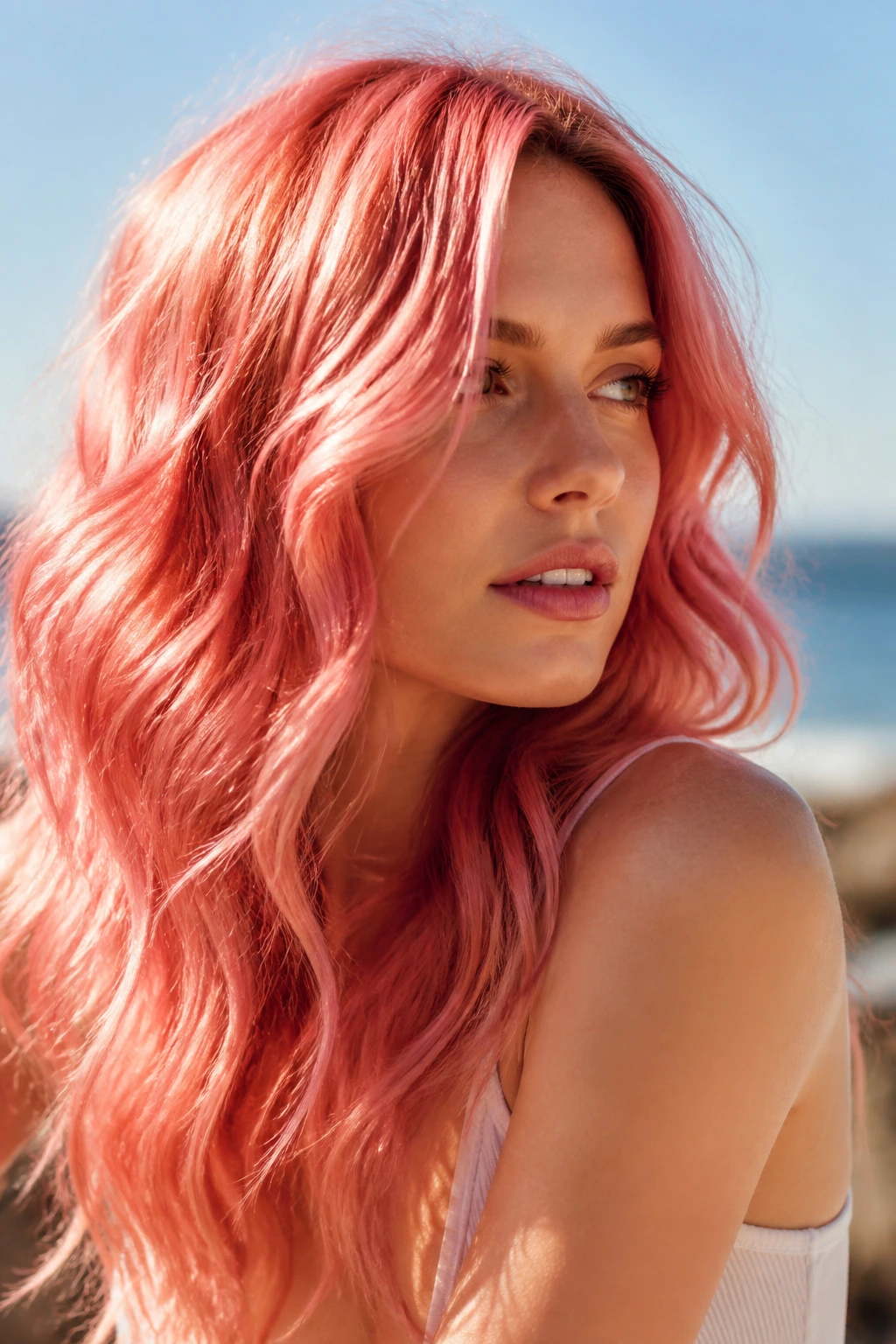
Flamingo rose is softer than cherry, brighter than strawberry, and a little playful without going full pastel. On loose waves, the pink-red blend can look airy and modern, especially when the color shifts between rose and coral.
This shade needs a light base, and it usually looks best on hair that’s been lifted carefully. The waves keep the tone from appearing too flat or too sweet. That matters. Flamingo rose can get cloying if it sits on a dense, straight shape.
Use a shine spray rather than a heavy oil. The color needs light catching it, not weight dragging it down.
34. Blood Orange Lob
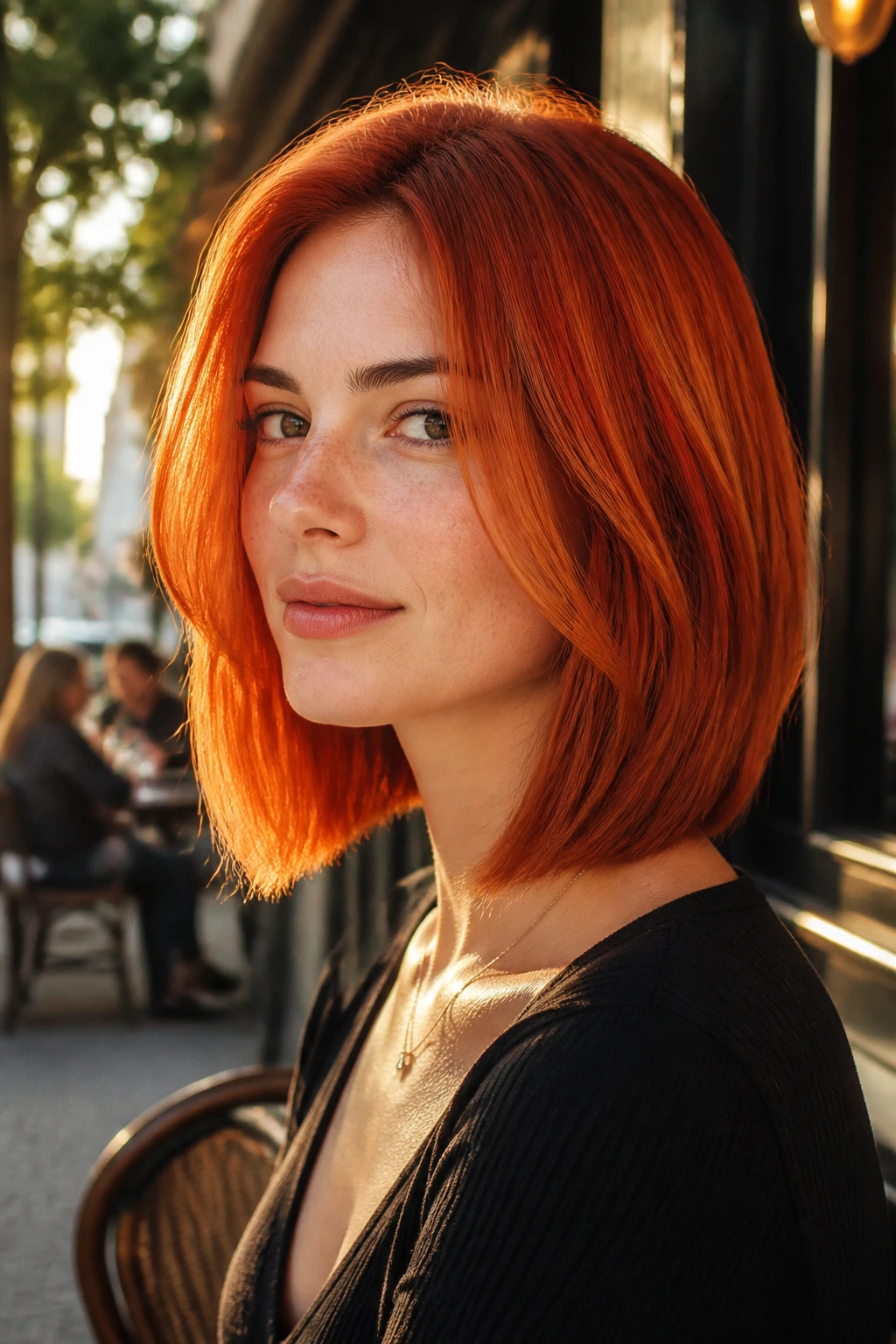
Blood orange is the loudest version of copper-orange red, and a lob gives it enough structure that it doesn’t run away with the whole face. The shape is clean, the shade is bold, and together they make a strong, graphic look.
This works best if you like a warmer red and don’t mind having people notice your hair first. The lob keeps it balanced. If the cut is too long, the shade can overwhelm the ends. If it’s too short, the color can look almost harsh. Shoulder length lands in the right spot.
A gloss with a tiny bit of gold can help the shade stay juicy instead of chalky. That little touch makes a bigger difference than most people expect.
35. Rose Copper Half-Up Style
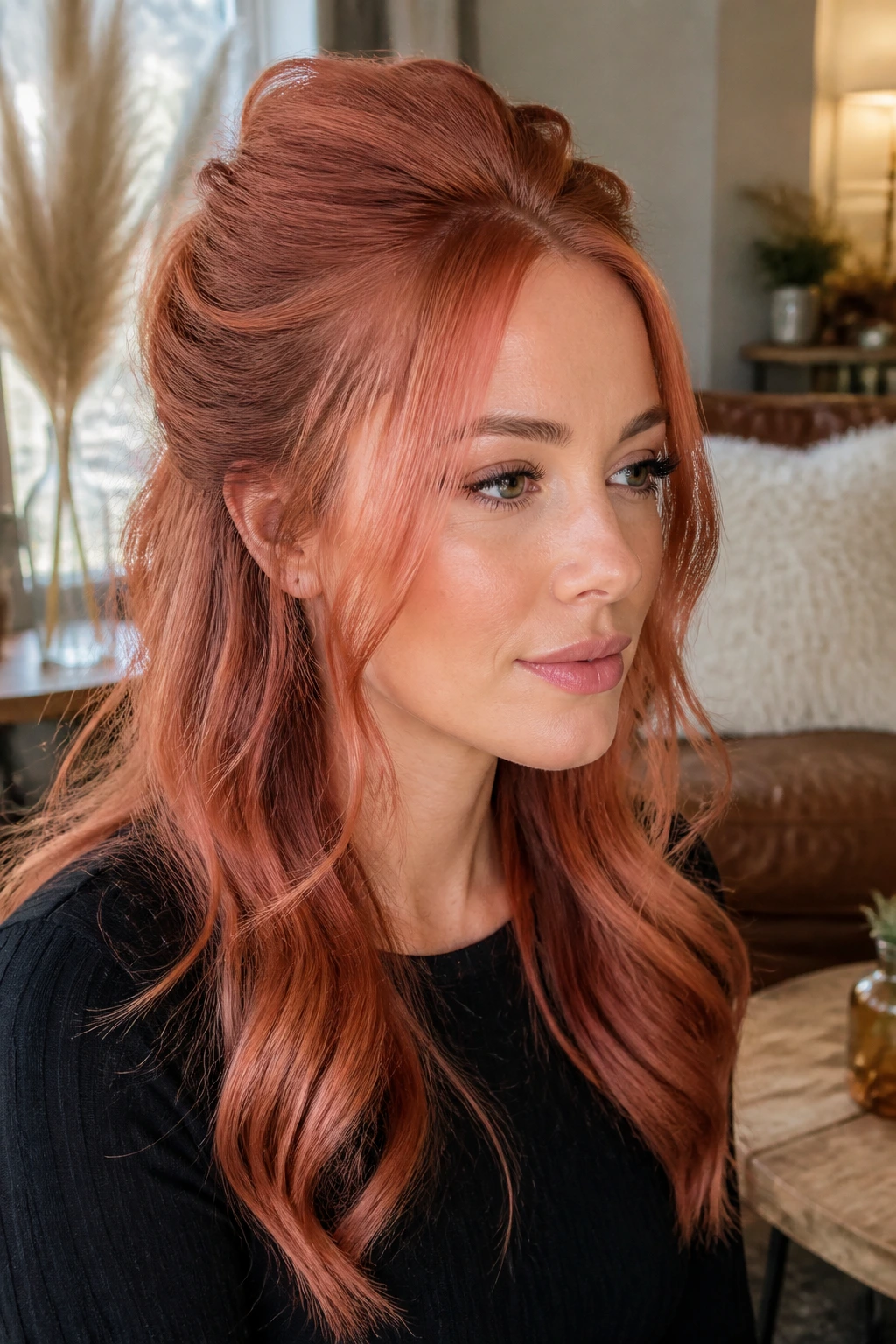
A rose copper half-up style gives you a softer way to wear red because the top section is lifted while the lengths stay loose. The rose tone softens the copper, and the half-up shape keeps the style pretty without feeling overworked.
This is a good option for wavy hair, especially if you want the color to show at the crown and around the face. The pulled-back section creates a little height, which makes the rose copper appear brighter. Leave a few face-framing pieces out if you want the shade to look less strict.
A ribbon, claw clip, or simple barrette can make the style feel finished fast. Nothing fussy. The color already does enough.
36. Mahogany Mushroom Cut
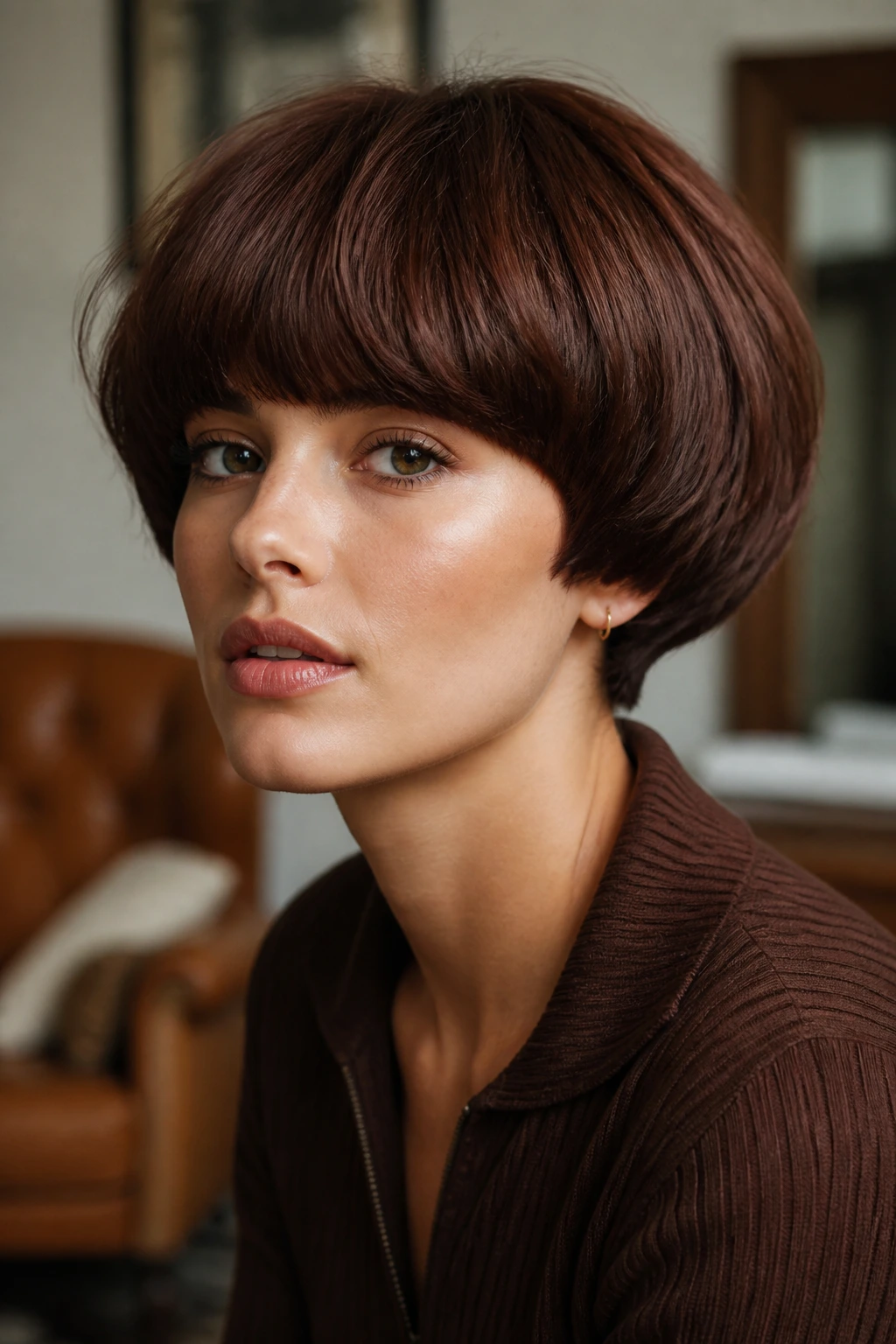
The mushroom cut has a rounded shape that looks much better with depth than with one flat color. Mahogany gives the silhouette weight, and the darker red-brown tone helps the shape feel modern instead of retro for the sake of it.
This cut suits people who want clean edges and a bit of volume at the crown. Mahogany stops the roundness from looking too soft. There’s some seriousness here, which is part of the charm. It’s a controlled look, not a wild one.
Keep the outline crisp with regular trims. Rounded cuts lose their shape fast if the neckline grows out unevenly.
37. Cherry Mahogany Locs
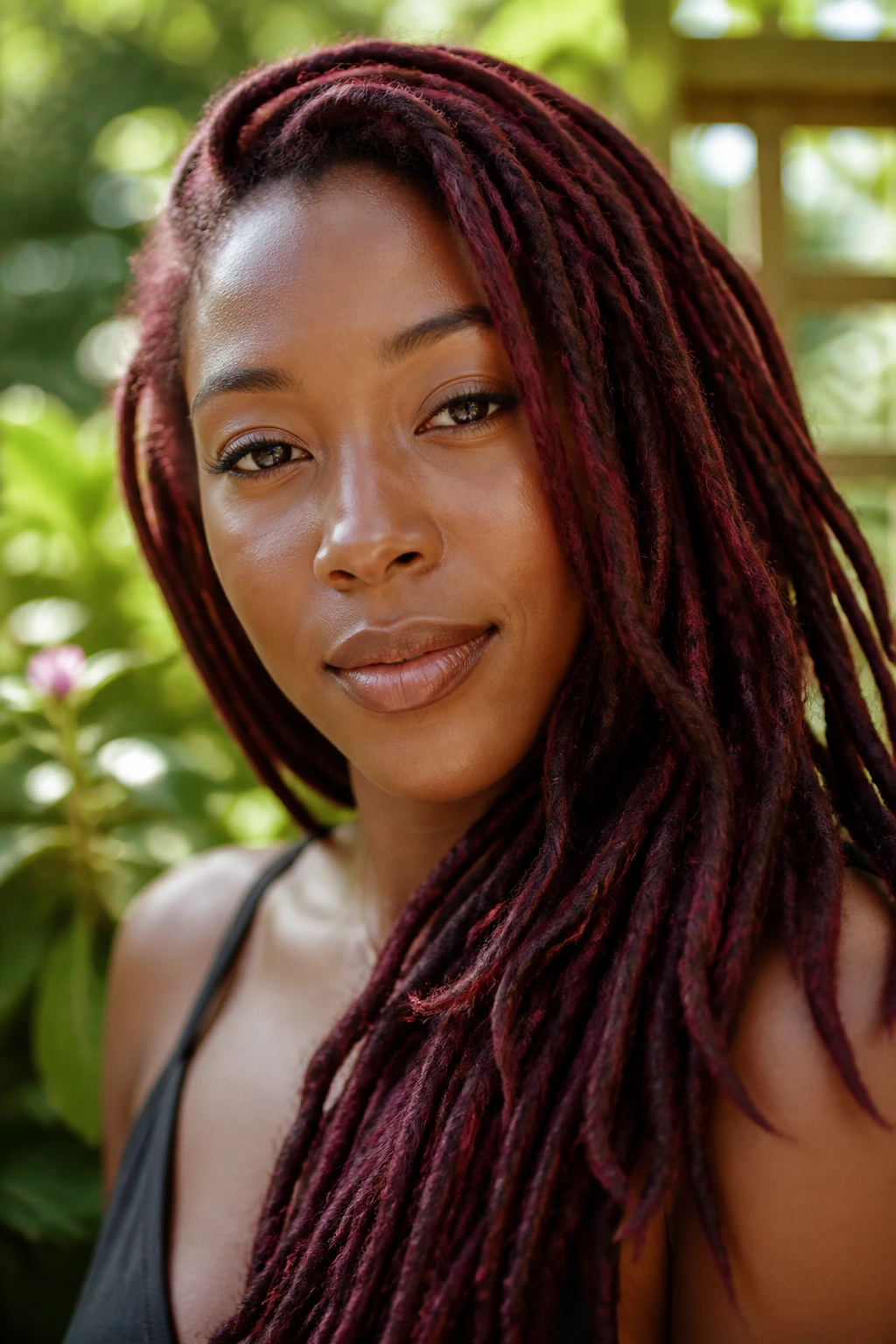
Cherry mahogany locs have a beautiful dark-red depth that shows up in the twists and shadows of the style. The cherry tone adds life, while the mahogany base keeps the look grounded and wearable.
This is one of the most practical red looks in the whole set because the color stays visible without needing constant heat styling. The loc texture does half the visual work. The red threads through the style instead of sitting on top of it, which makes the shade feel integrated.
Moisture matters here. A rich leave-in and light scalp oil will keep the locs looking clean and prevent the color from losing its sheen.
38. Copper Ribbon Highlights
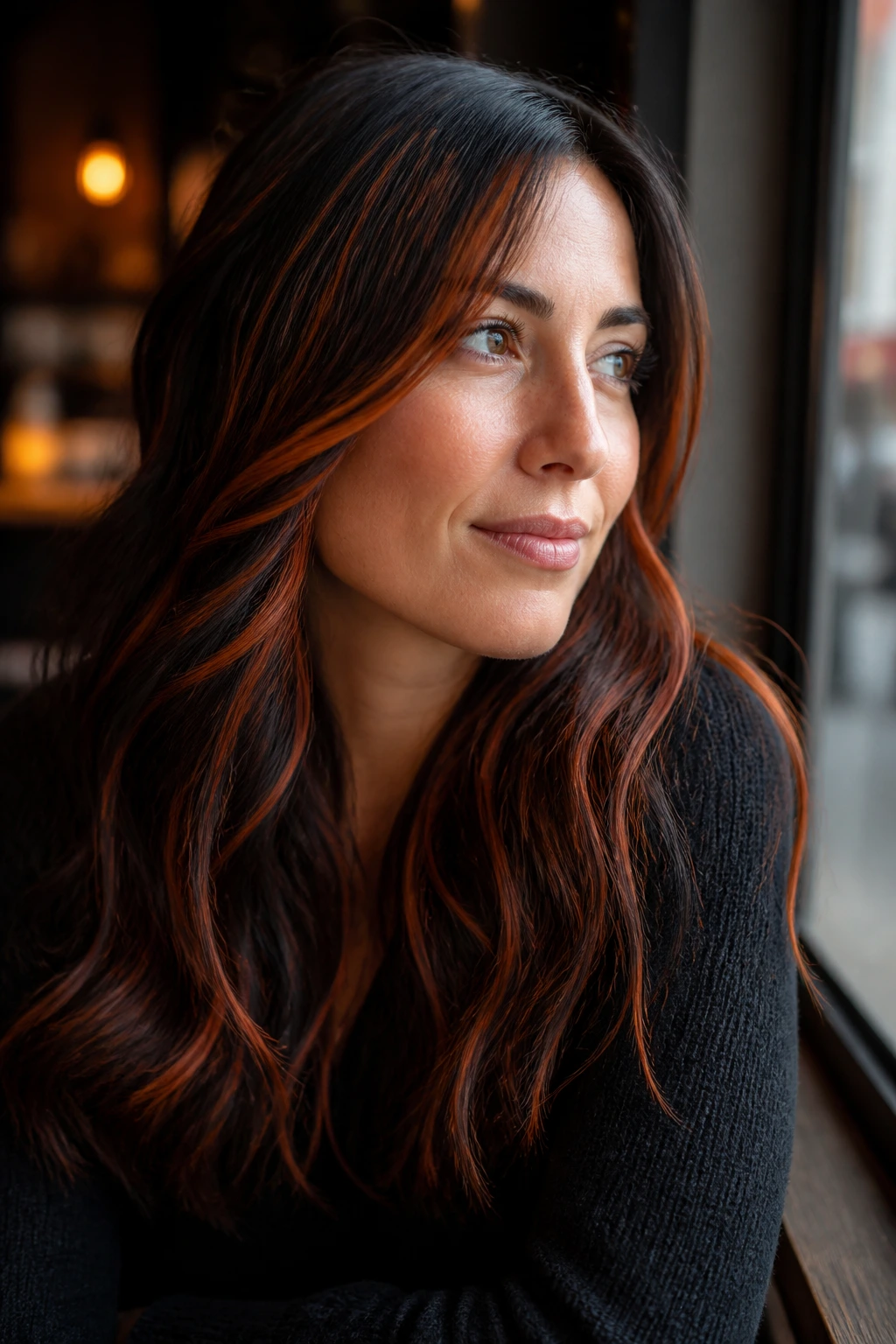
Copper ribbon highlights are narrow, intentional streaks that thread through a darker base. They’re less dramatic than a full copper dye job, but they add movement in a way that can make even a simple blow-dry look finished.
I like ribbons because they can be placed where the hair moves most — around the face, near the ends, through long layers — without changing the whole head. They’re also easier to grow out than a high-contrast all-over red. That makes them a smart pick if you like the idea of red but don’t want a hard maintenance line.
Keep the ribbons thin. Big, chunky highlights can feel dated fast. Slim copper pieces age better and look softer in daylight.
39. Mulberry Waterfall Layers
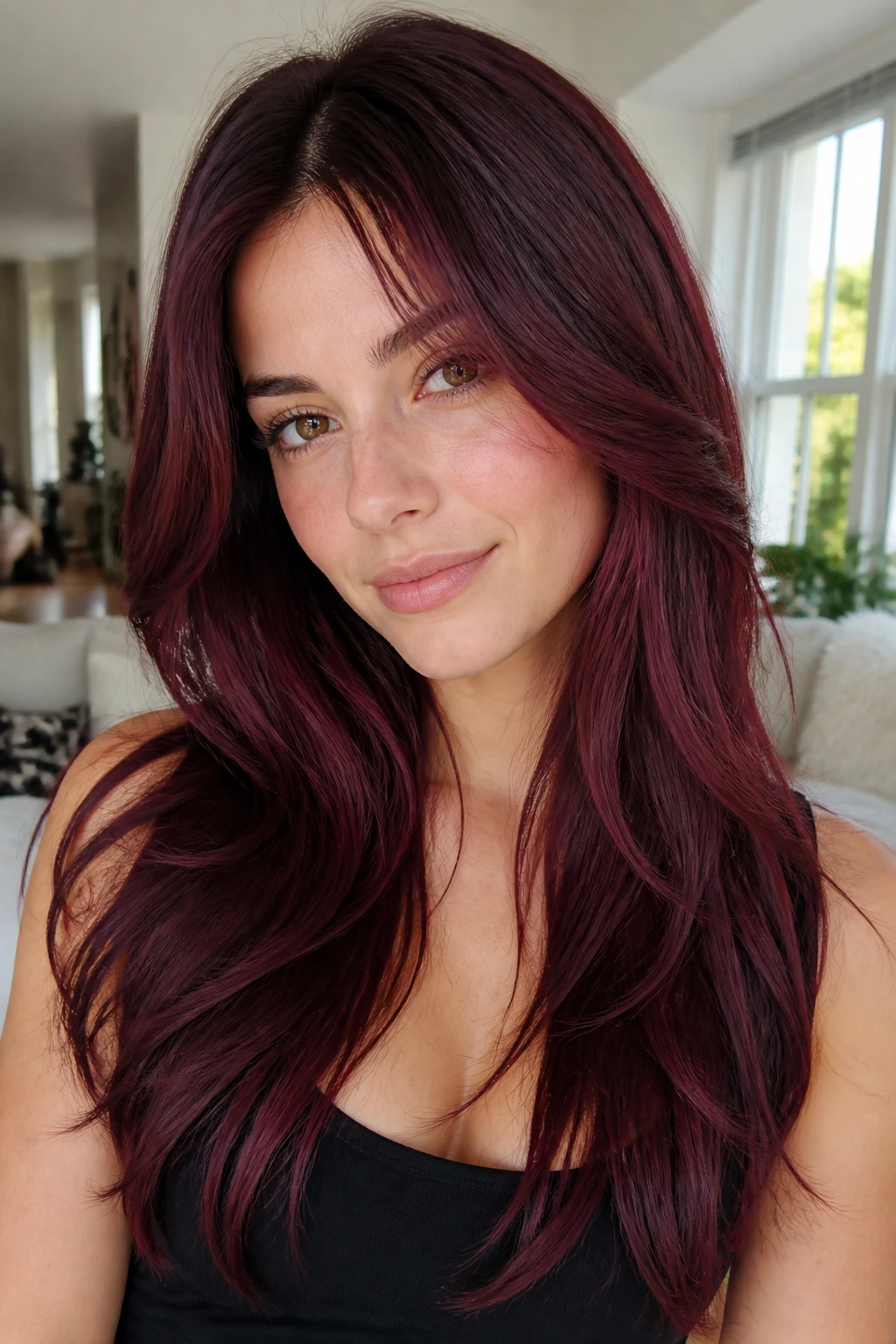
Mulberry is the darker, berry-rich side of red, and waterfall layers give it enough movement to keep the shade from sinking into the cut. The result is soft, deep, and a little moody without being severe.
This look works especially well on long hair because the layered shape creates cascades of color. The mulberry tone appears richer at the crown and more red at the ends, which gives the whole style some depth. If your hair is thick, the layers stop the color from feeling heavy. If it’s fine, they help the shade show instead of vanishing.
A light gloss keeps the mulberry from reading dull. Don’t overdo the layering, though. Too much texture and the rich tone starts to look frayed.
40. Classic Ginger with Side Part
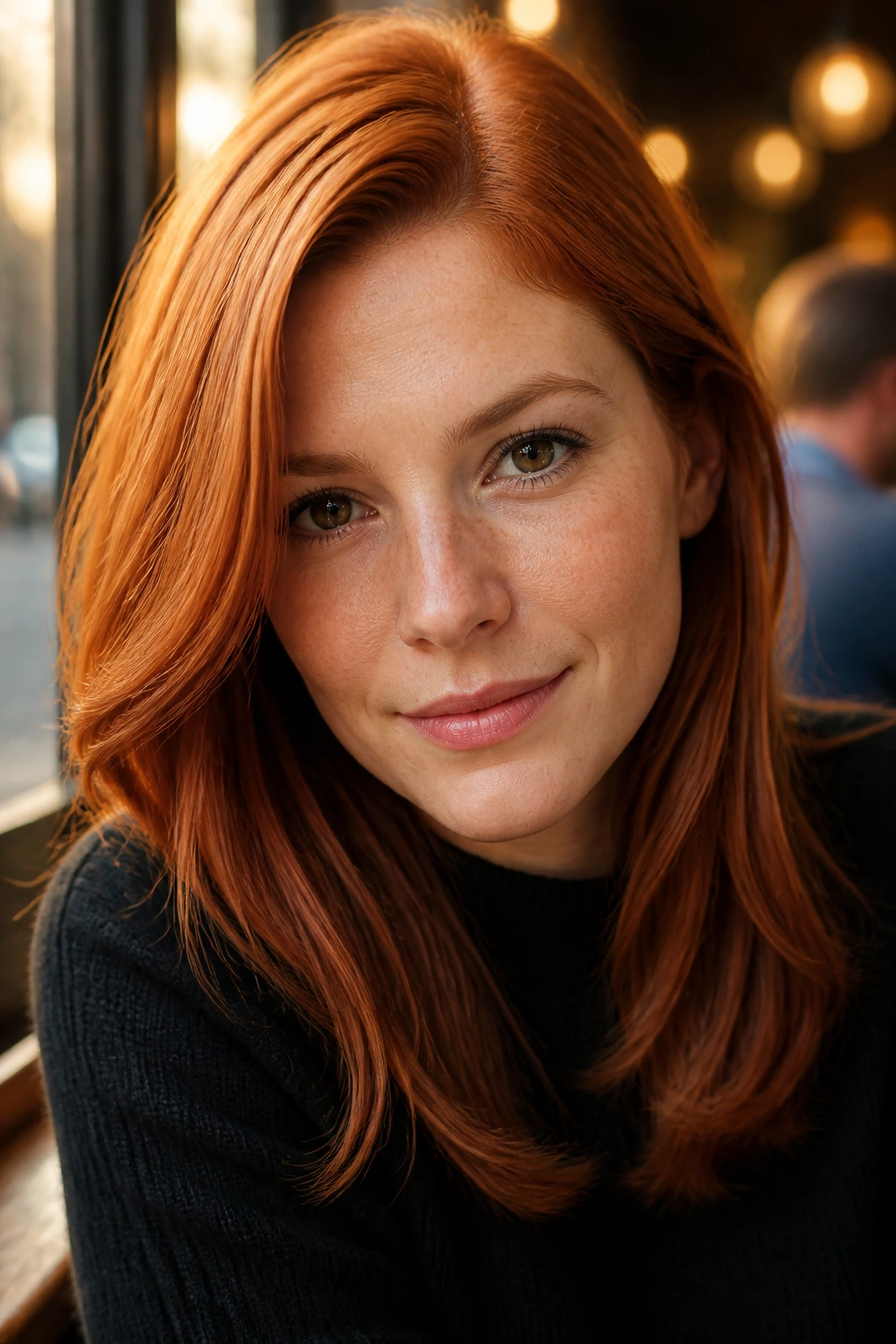
Classic ginger with a side part is the simplest look on this list, and that’s exactly why it belongs here. The color is bright enough to stand alone, and the side part gives it a little movement without asking for a complicated style.
This works across a lot of lengths, but it shines on medium hair with a little body. The side part helps ginger frame the face, and the color itself does the rest. There’s no need to pile on extra styling unless you want it. Clean, direct, and honest is the mood here.
If you want one red look that feels timeless instead of trendy, this is the one I’d point to first. It doesn’t need a gimmick.
What Red Hair Changes at the Root, the Ends, and in Different Light
Red hair looks straightforward in a photo, then quietly shifts the minute it hits daylight, fluorescent light, or a bathroom mirror with bad bulbs. That’s why the same shade can look copper at the root, auburn through the mids, and slightly pink at the ends. Porosity has a say in that. So does previous dye history, and so does the haircut.
Roots usually hold deeper, cooler color longer because they’re newer and less porous. Ends are the first to go soft, pale, or strange. If the hair was lightened before it was dyed red, the red can slide out faster and leave behind warmth that feels more orange than intended. That’s not a failure so much as how pigment behaves on damaged or porous hair.
Lighting matters more than people like to admit. A cherry shade under warm indoor light can look nearly brown. Take it outdoors, and the red-violet underneath wakes up. Copper does the opposite; it glows in daylight and can feel louder under warm bulbs. Keep that in mind when choosing a tone. You are not just buying a shade. You are choosing how it behaves in the places you actually live.
Essential Tools and Products for These Looks
-
Color-safe, sulfate-free shampoo: Helps slow fading and keeps the red from stripping out after two or three washes.
-
Deep conditioner or hair mask: Red hair shows dryness fast, especially at the ends, so a weekly mask keeps the surface smoother.
-
Heat protectant spray or cream: Necessary if you blow-dry, curl, or flat iron; heat chews through red pigment and dulls shine.
-
Wide-tooth comb: Lets you detangle without roughing up the cuticle, which matters more on processed hair.
-
Color-depositing conditioner or mask: Useful for copper, auburn, cherry, and burgundy tones between salon visits.
-
Applicator bowl and tint brush: Handy if you’re refreshing roots, glossing, or doing a toner at home under proper guidance.
-
Sectioning clips: Make it much easier to apply gloss or style waves evenly, especially on thick hair.
-
Shine serum or light oil: A few drops on mids and ends can keep red looking polished without making it greasy.
-
Salon cape or old towel: Red dye stains like a menace, and a dark towel saves your shoulders, neck, and bathroom sink.
Picking the Right Red for Your Base Color, Undertone, and Maintenance Habit
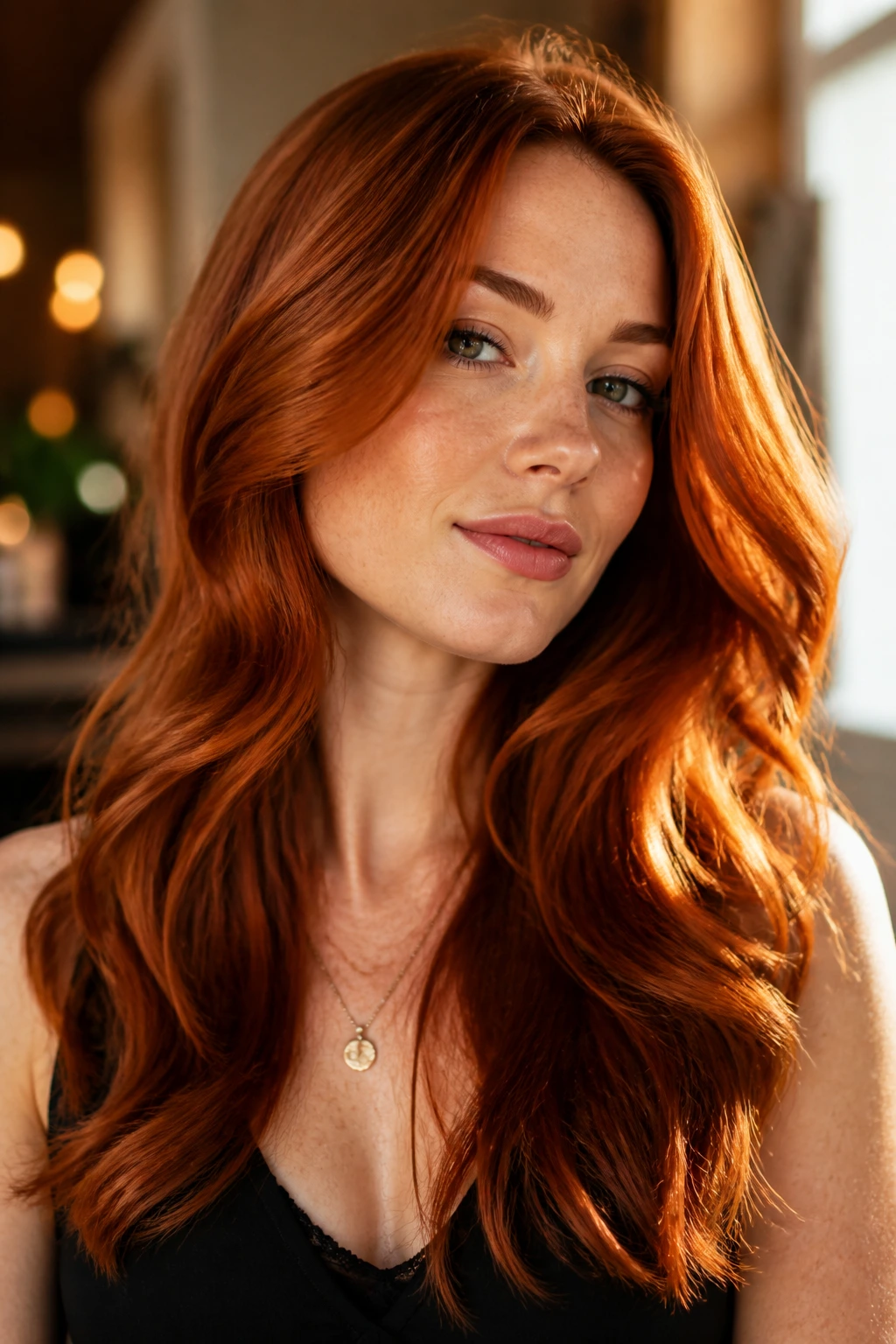
The smartest red is not always the brightest one. If your base is dark brown, a deep cherry, merlot, or copper balayage usually looks more believable than a pale strawberry tone that needs heavy lifting. If your hair is already blonde or light brown, you have room to play with rose gold, peachy coral, and strawberry blonde without fighting the base color every step of the way.
Undertone matters, but not in a rigid, one-size-fits-all way. Warm skin tones usually handle copper, ginger, apricot, and cinnamon with less fuss. Cooler skin tones often look sharp in cherry, burgundy, mulberry, and black cherry. Neutral undertones can cheat in either direction, which is a nice problem to have.
Maintenance is the part people skip. Don’t. If you wash often, choose a deeper shade that fades more softly. If you hate root touch-ups, balayage or money pieces are kinder. If you enjoy salon appointments and want the color to stay loud, go brighter and accept the schedule that comes with it. Red rewards honesty. It punishes wishful thinking.
How to Style Red Hair So the Color Shows Up
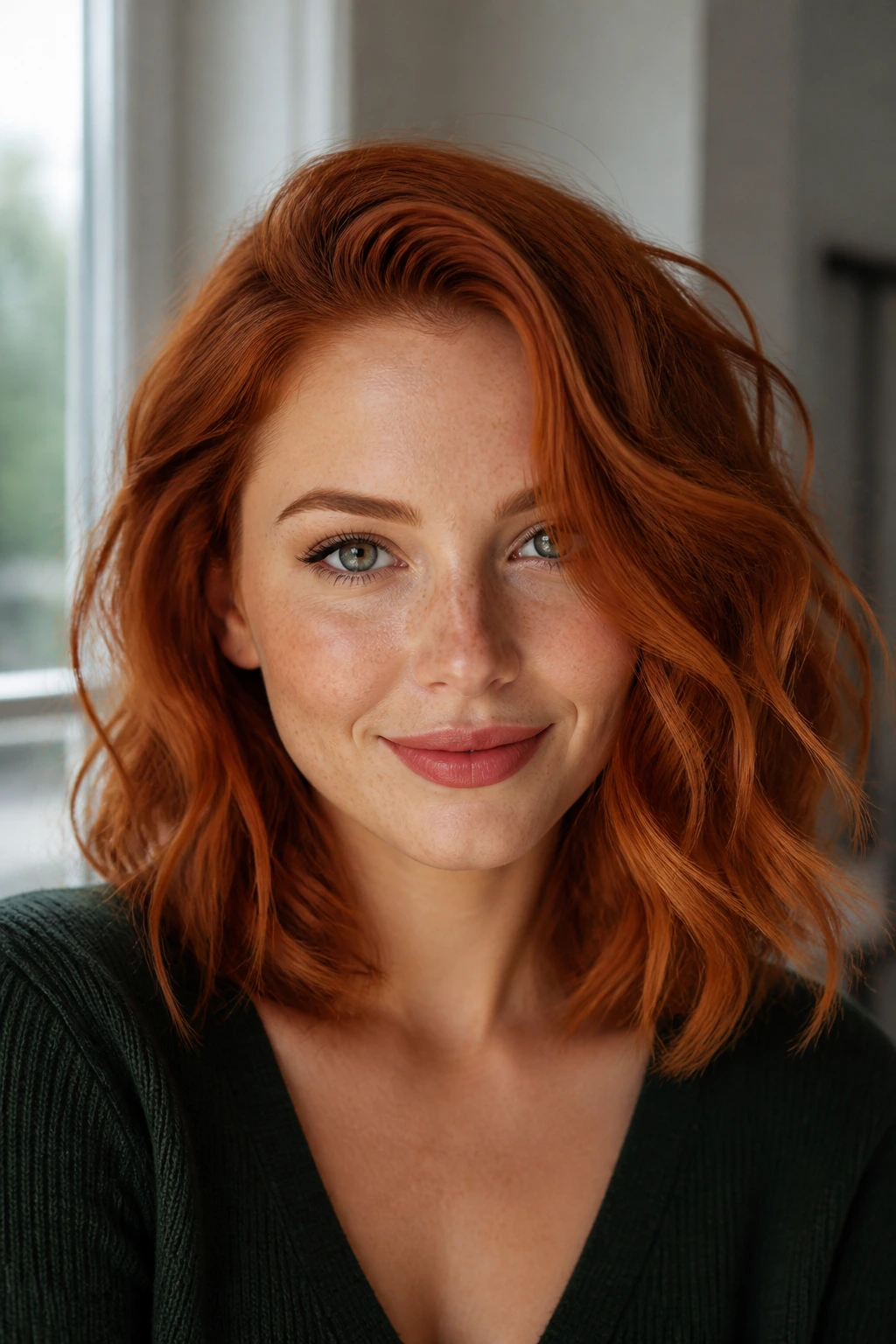
Parting: A center part gives symmetrical shades like auburn, rosewood, and merlot a clean frame. A side part lifts copper, ginger, and strawberry blonde around the face and makes the color catch more light.
Finish: Sleek styling shows off dark reds and glossed tones. Waves and curls help brighter reds break into little flashes of color. If the look is dimensional balayage, texture usually wins.
Accessories: Gold clips, tortoiseshell barrettes, and dark headbands play well with warm red hair. Silver can work on cooler cherry and burgundy tones, but too much shine near the face can compete with the color.
Makeup: A sheer tinted lip or a soft berry blush tends to sit nicely beside most red shades. Harsh, opaque makeup can fight with the hair and make the whole look feel less balanced. Keep the skin finish fresh. Red hair likes skin that looks alive.
Wardrobe: Cream, camel, deep green, navy, and black all give red room to breathe. If you wear a red top, make sure it doesn’t sit in exactly the same color family as your hair unless you’re going for a very deliberate monochrome moment.
Extra Ways to Push the Color Without Overdoing It
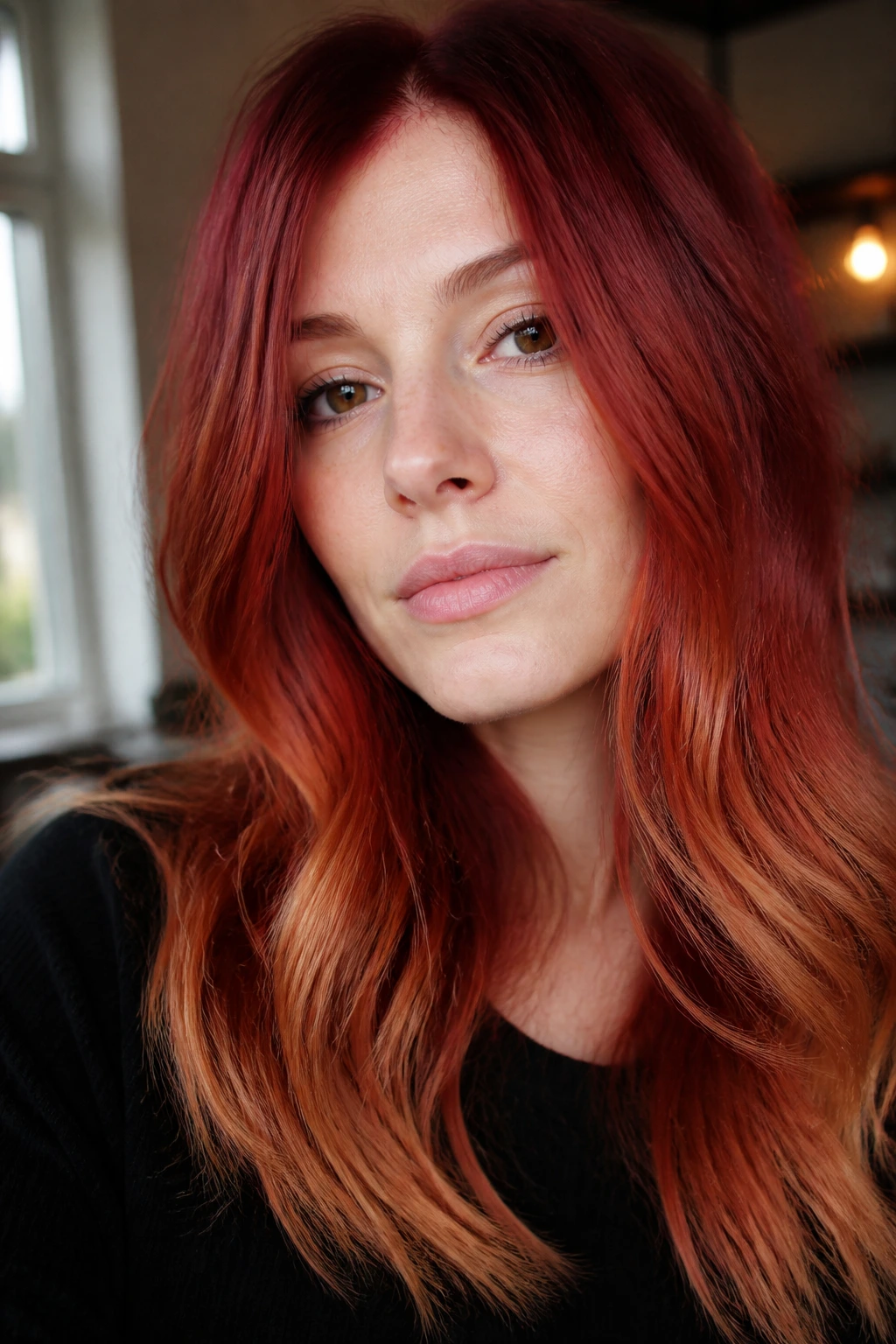
Color Boost: A gloss or clear glaze every few weeks can make copper, auburn, and merlot look richer without changing the shade family. It’s a small move with a big payoff.
Customization: Ask for brighter pieces only around the hairline if you want a red that frames the face but stays softer through the rest of the hair. That trick works especially well on brunettes.
Styling Shortcut: A loose bend at the mids and ends usually shows red better than a tight curl. Tight curls can break the color up too much and make it harder to read from a distance.
Gray-Blending Trick: For women blending gray, deep auburns and cherry-brown shades usually soften the contrast better than very bright copper. The goal is not to hide every silver strand. It’s to make the transition look intentional.
Finish Line: If your red looks a little flat, a pea-sized amount of shine cream on the ends will often fix more than another round of heat styling. Dryness is usually the real problem.
Keeping Red Hair Bright Between Appointments
Red fades faster than brown because the molecules are smaller and the pigment has a habit of slipping out during washing. That doesn’t mean the color is doomed. It means the aftercare has to be simple and consistent.
Wash red hair two or three times a week if you can. Use cooler water, not icy water, just cooler than your usual shower. Hot water opens the cuticle and lets the color leave faster. A sulfate-free shampoo helps, and a conditioner with a little slip keeps the hair surface smooth enough to reflect light instead of scattering it.
For deeper reds like cherry, burgundy, or mahogany, a color-depositing conditioner every 1 to 2 weeks can keep the tone rich. Copper and strawberry shades often need a touch-up gloss every 4 to 6 weeks if you want them to stay lively. Root retouches depend on how fast your hair grows, but most women who go full red start noticing the line around 4 to 8 weeks.
Heat styling should stay moderate. If you flat iron every day, the ends will fade and dry out first. Use protectant every single time. That part is not optional. Sun and pool water also chew through red faster than most people expect, so a hat, scarf, or UV spray is worth the tiny bit of effort.
Variations and Adaptations to Try
Soft Commit Copper: Ask for a copper gloss over your natural base instead of full permanent red. It fades more gently and is easier to grow out if you decide you want something quieter.
Dark Brunette Cherry: Keep the roots and mids deep brunette, then place cherry or burgundy only where the light hits. This works well if you want red to feel like a reflection rather than a full change.
Curly Red Dimension: Use two red tones instead of one on curls — usually a deeper base and a brighter ribbon on the outer layers. The shape of the curl pattern makes the color look more alive.
Gray-Soft Auburn: If you’re blending grays, choose auburn or cinnamon rather than very bright copper. The red tones soften the silver without making regrowth look harsh.
Bold Fashion Scarlet: For people who want a stronger statement, scarlet or fire-engine red needs regular glossing and clean styling. It’s high-maintenance, but the payoff is real.
Low-Key Strawberry: Keep the red lighter and closer to blonde if you want something airy that won’t demand constant root work. This is the easiest doorway into red hair for most first-timers.
Common Mistakes to Avoid With Red Hair
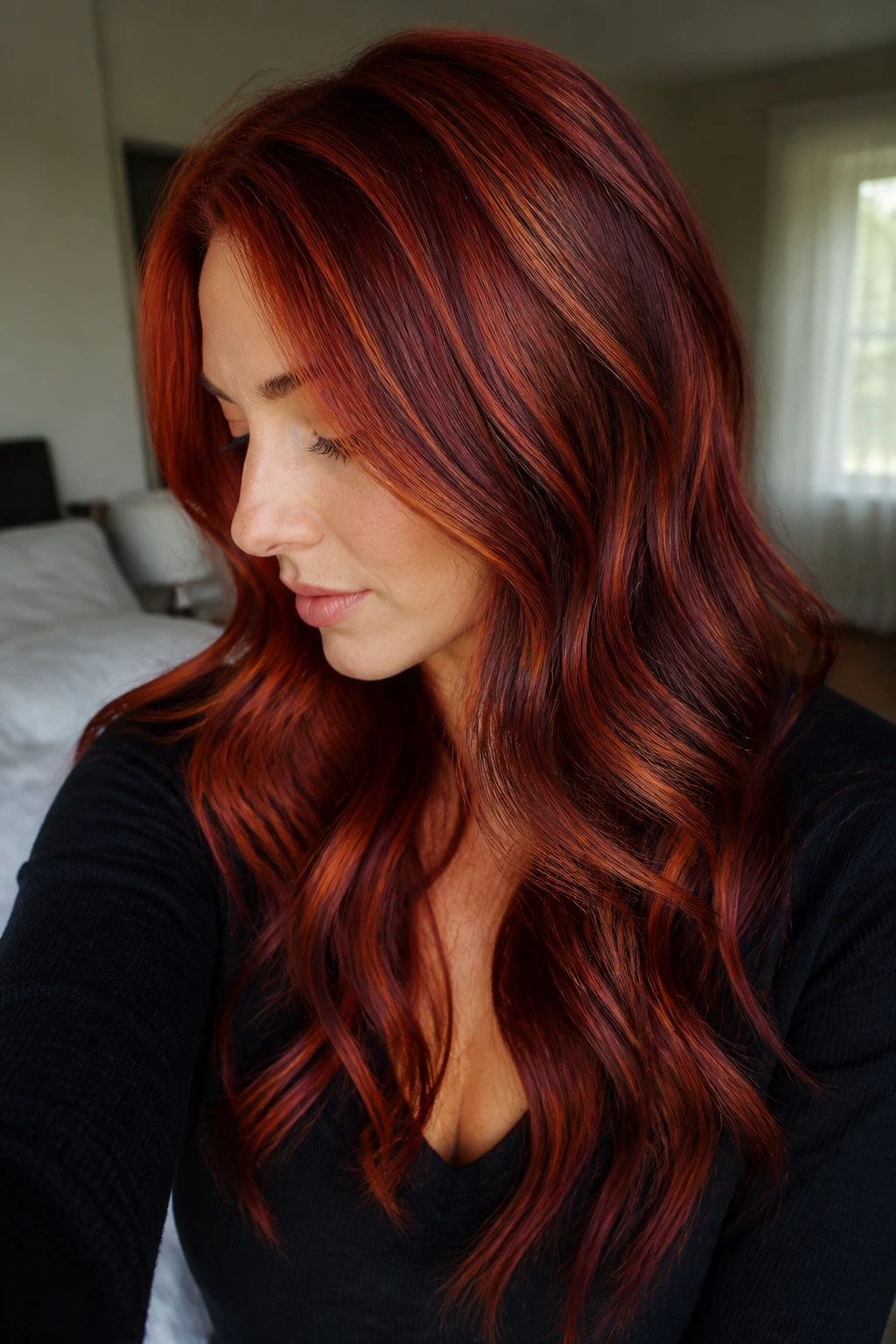
The first mistake is choosing a shade from a filtered photo and assuming it will behave the same on your hair. It won’t. A cherry bob on a level 4 brunette base and a cherry bob on light blonde hair are two different animals. Bring more than one reference photo, and bring one taken in daylight.
Another problem is over-lightening before applying red. If the hair gets pushed too pale, bright red can turn patchy or too pink at the ends. The color wants enough base to sit on. That’s why many of the richer looks here work better on brunettes or softly lifted hair, not platinum everything.
Washing too often is a quiet color killer. So is hot water. If your red looks dull after two weeks, the issue may not be the formula — it may be your shower routine.
People also forget that red needs gloss to stay rich. A color can be mixed perfectly and still fade flat if the cuticle is rough. Finally, don’t ignore undertone. Copper on a cool face can look jarring, and burgundy on a warm face can look muddy. The fix is not complicated. Shift the red warmer, cooler, deeper, or softer before you commit to a whole-head change.
Frequently Asked Questions
Can I go red without bleaching my hair?
Yes, if your starting base is light enough and you choose a shade that sits close to your natural level. Brunettes usually get the best no-bleach results with auburn, cherry cola, mahogany, or copper balayage rather than pale strawberry or rose gold.
Which red hair looks the easiest to maintain?
Balayage, money pieces, and deeper tones like mahogany or black cherry are usually the easiest. They fade more softly and don’t show roots as sharply as a bright copper or scarlet all-over color.
Does red hair fade faster than brown hair?
It usually does. Red pigment is more likely to wash out and lose brightness, especially if you use hot water or wash too often. A color-safe shampoo, cooler rinses, and a gloss schedule help a lot.
What red shade flatters cool skin tones best?
Cherry, burgundy, mulberry, and black cherry tend to work well because the cooler red-violet notes echo the skin instead of fighting it. If copper is calling your name, ask for a deeper copper with less orange in it.
Will red hair make my hair look thinner?
Not if the cut has enough shape. Sleek single-process reds can show every flat spot, but layers, waves, and dimension help red look fuller. A gloss finish also makes the hair surface read denser.
How often should I touch up red roots?
Most people notice root growth in about 4 to 8 weeks, depending on how fast their hair grows and how bright the shade is. Balayage and money pieces can stretch longer; vivid all-over red usually needs more frequent upkeep.
What if the red turns orange instead of red?
That usually means the base was too warm, too porous, or too light for the formula. A toner or gloss with a violet or berry note can pull it back, but the real fix is choosing the right depth next time.
Can I keep red hair looking good with minimal styling?
Yes. A good cut, a gloss, and a clean part can do a lot of work on their own. Rosewood bobs, deep auburn layers, and cherry balayage are especially friendly when you want color that looks finished without a long styling session.
A Red Shade Worth Wearing Well
Red hair has a way of making even a simple cut feel more specific. That’s the real appeal. A copper lob looks sharper than the same cut in brown. A cherry bob feels richer. A burgundy braid has more depth in the shadows than people expect.
If you’re choosing among these forty looks, start with the one that fits your maintenance habit first and your mood second. That order matters. The prettiest red in the room is the one you can keep looking fresh without resenting it after week three. A slightly softer shade, a smarter placement, or one extra gloss can make all the difference.
