



Long waves change blonde hair in a way straight lengths never quite manage. The bends break up the light, soften root lines, and turn highlights into moving ribbons instead of obvious stripes. The best blonde hair looks for long wavy hair use that to their advantage: they keep the color dimensional at the crown, brighter through the mids, and airy at the ends so the whole style feels alive when you turn your head.
That’s why some blondes look flat on long hair and others look like they were built for it. A heavy one-tone blonde can sit there and do nothing. A good balayage, a smart root melt, or a set of fine babylights changes every time the wave folds over itself. The color doesn’t need to shout. It just needs room to move.
There’s also a practical side people miss. Long wavy hair shows regrowth differently from a blunt bob or a straight blowout. A half-inch of root can disappear into the bend of a wave, while a harsh platinum line can jump out if the placement is wrong. Once you understand tone, placement, and how much contrast your texture can carry, the whole blonde conversation gets much easier.
Why These Blonde Looks Feel Right on Long Waves
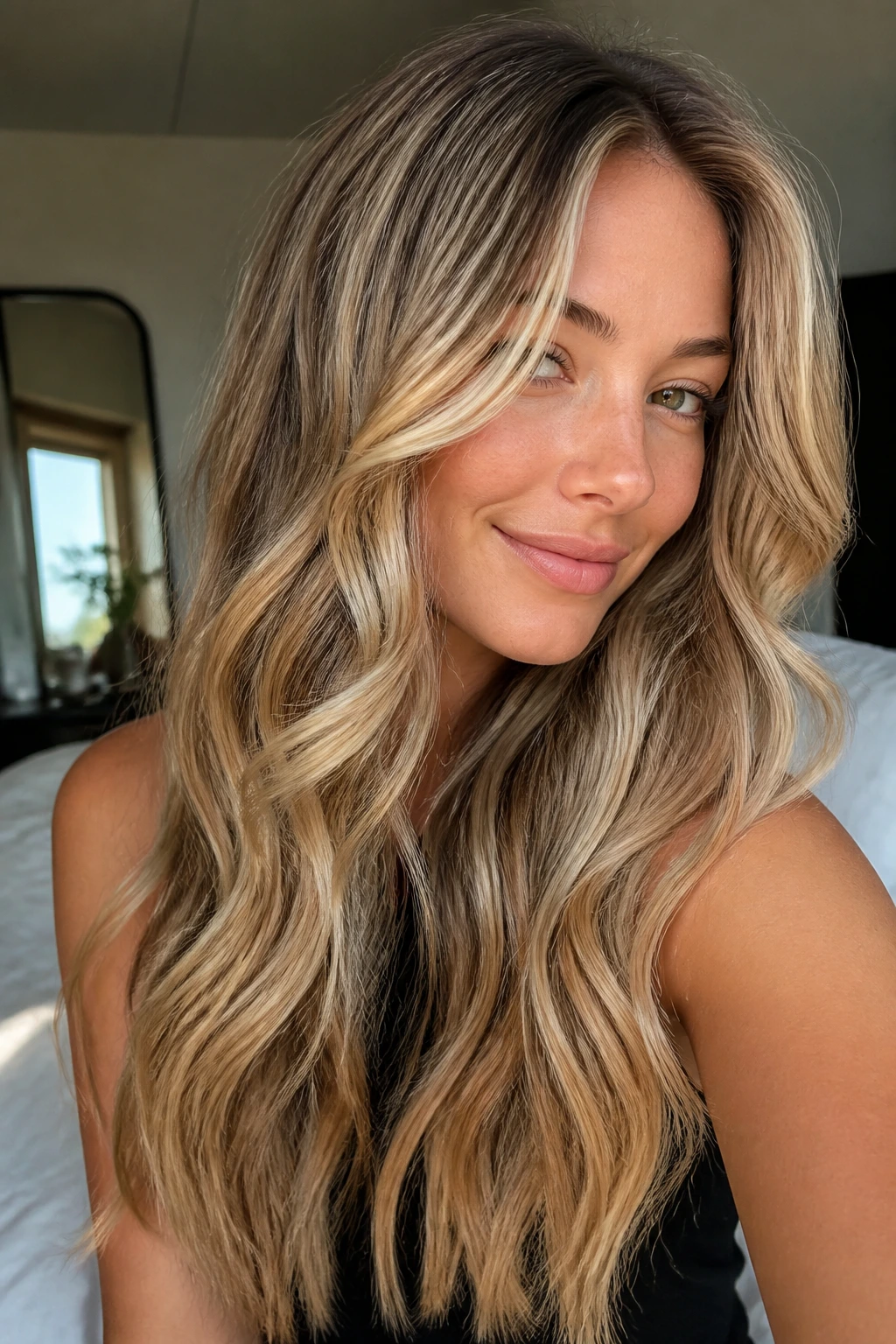
-
The wave pattern does half the work: bends and S-curves break up highlight lines, so balayage looks softer here than it does on pin-straight hair.
-
Dimension matters more than raw brightness: a mix of light and mid-tone blonde usually looks richer on long lengths than one flat pale shade from root to end.
-
Face-framing pieces change the whole read: even two brighter ribbons around the front can make long waves look lighter, taller, and more open without bleaching the entire head.
-
Root shadow buys you time: leaving the root a shade or two deeper keeps the grow-out line blurrier, which is especially useful when your hair is long enough to show every inch of regrowth.
-
Tone shifts the mood fast: honey, beige, pearl, and champagne blonde can all live on the same haircut, but each one changes how the waves land in real life.
1. Champagne Balayage With a Soft Shadow Root
Champagne balayage is the safest way to make long wavy hair look lighter without turning it brittle-looking at the ends. The shade sits between beige and soft gold, which means it reflects light well but does not go chalky or brassy the way some pale blondes do. On waves, it moves in little flashes. On straight hair, it can read a touch quiet. That’s exactly why it works here.
A soft shadow root keeps the top few inches a half-step deeper, so the blonde has somewhere to land. If your natural base is a medium brown or dark blonde, this is one of the easiest transitions to live with because the regrowth melts into the wave pattern instead of sitting on top of it.
Where It Looks Best
- Mid-to-long layers
- Loose barrel waves
- Hair with natural warmth at the root
If you like blonde that looks polished but not stiff, this is a very good place to start. It’s the kind of color that still looks decent on day four hair, which matters more than people admit.
2. Honey Blonde Ribbon Highlights
Honey blonde ribbon highlights are warmer, thicker, and a little louder than champagne balayage. I like them on long waves that need more visual density, because the deeper golden pieces catch along the curve of each bend and make the hair look fuller. The trick is placement. You want ribbons, not a uniform all-over lightening.
These are especially good if your hair already leans warm or if ash tones tend to make you look washed out. The honey shade gives the whole length a sunlit feel, but it still needs some depth underneath. Without that darker base peeking through, the highlights can blur into one big yellow blur, and nobody wants that.
Best For
- Medium to thick wavy hair
- Warm or neutral skin tones
- Anyone who wants noticeable blonde without a high-contrast platinum finish
The finish should look like strands of honey running through the wave, not like frosting spread on top.
3. Beige Blonde Face-Framing Pieces
Why do beige face-framing pieces look so clean on long wavy hair? Because the neutral tone sits in the middle of warm and cool, which lets the front pieces brighten the face without stealing the whole show. On a long cut, those lighter pieces travel down the cheekbones and collarbone before they disappear into the waves. It’s a small change that changes the whole haircut.
The rest of the hair can stay softer and a little deeper. That balance is what keeps this look from feeling over-processed. I prefer it when the front money piece is only one shade lighter than the mids, especially if the waves are loose and the hair is already layered.
A smart way to wear it
- Middle part for a modern line
- Slight off-center part if you want the front to soften
- Long curtain layers so the pieces don’t stop abruptly at the jaw
This is the blonde to choose when you want brightness at the front and less commitment everywhere else.
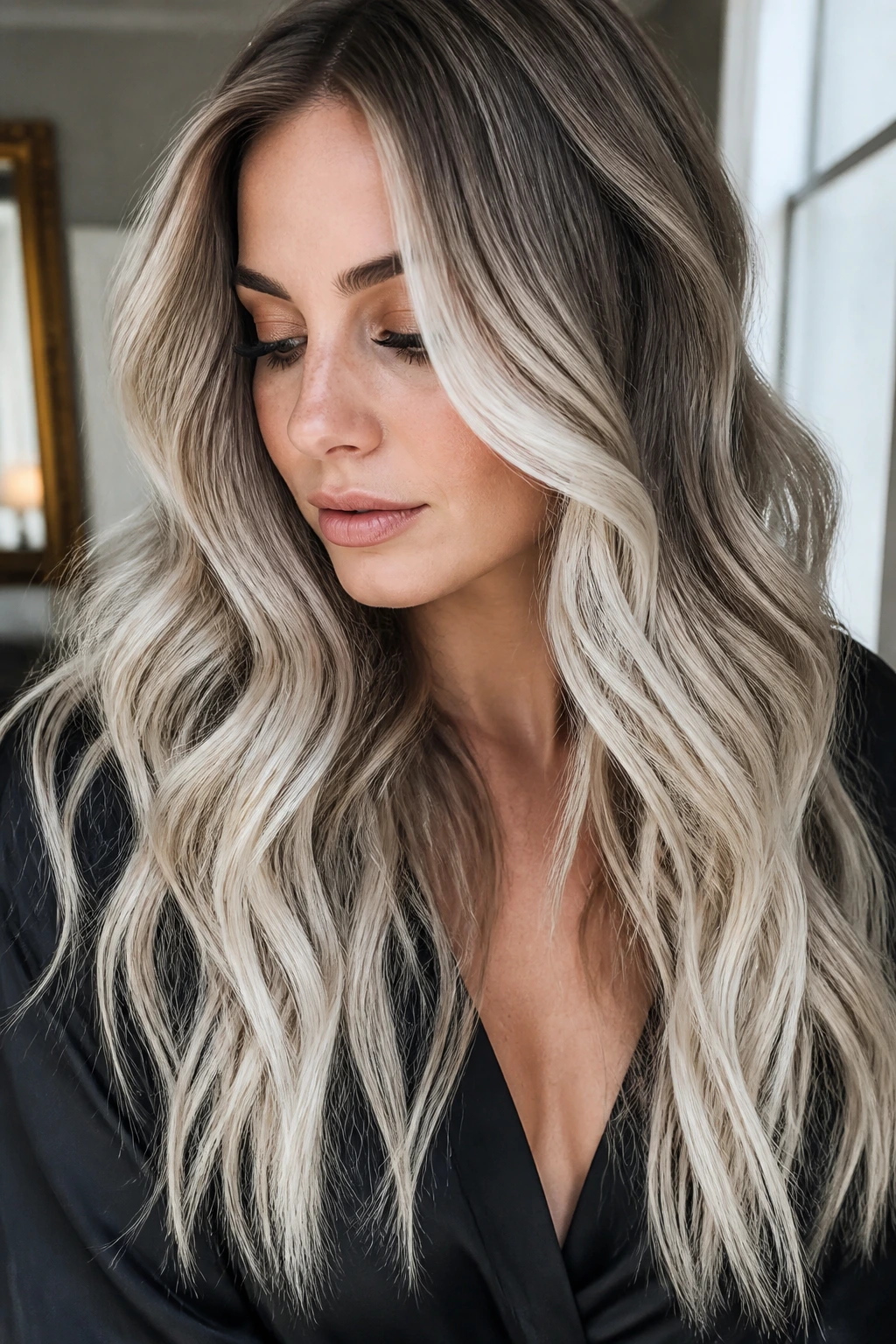
4. Icy Pearl Blonde Through the Ends
Icy pearl blonde is the one that looks almost cold in the best way — pale, clean, and slightly reflective at the ends. On long waves, it gives the style a frosted edge that photographs as crisp movement rather than flat brightness. But it asks for honesty. If your hair is porous, dry, or already lightened many times, the cool ends can turn rough fast.
The reason it works on long waves is contrast. A deeper root or mid-length keeps the pearl ends from floating away from the rest of the hair. When the wave falls over the shoulder, the darker sections below help the pale ends stand out. You get shine, but you also get shape.
H3: What makes it different
Pearl blonde is not the same as silver. It has a soft beige-pink undertone that keeps it from looking metallic. Ask for a tone that still has a little warmth under the gloss, or the color can read flat under indoor light.
5. Cream Soda Blonde Melt
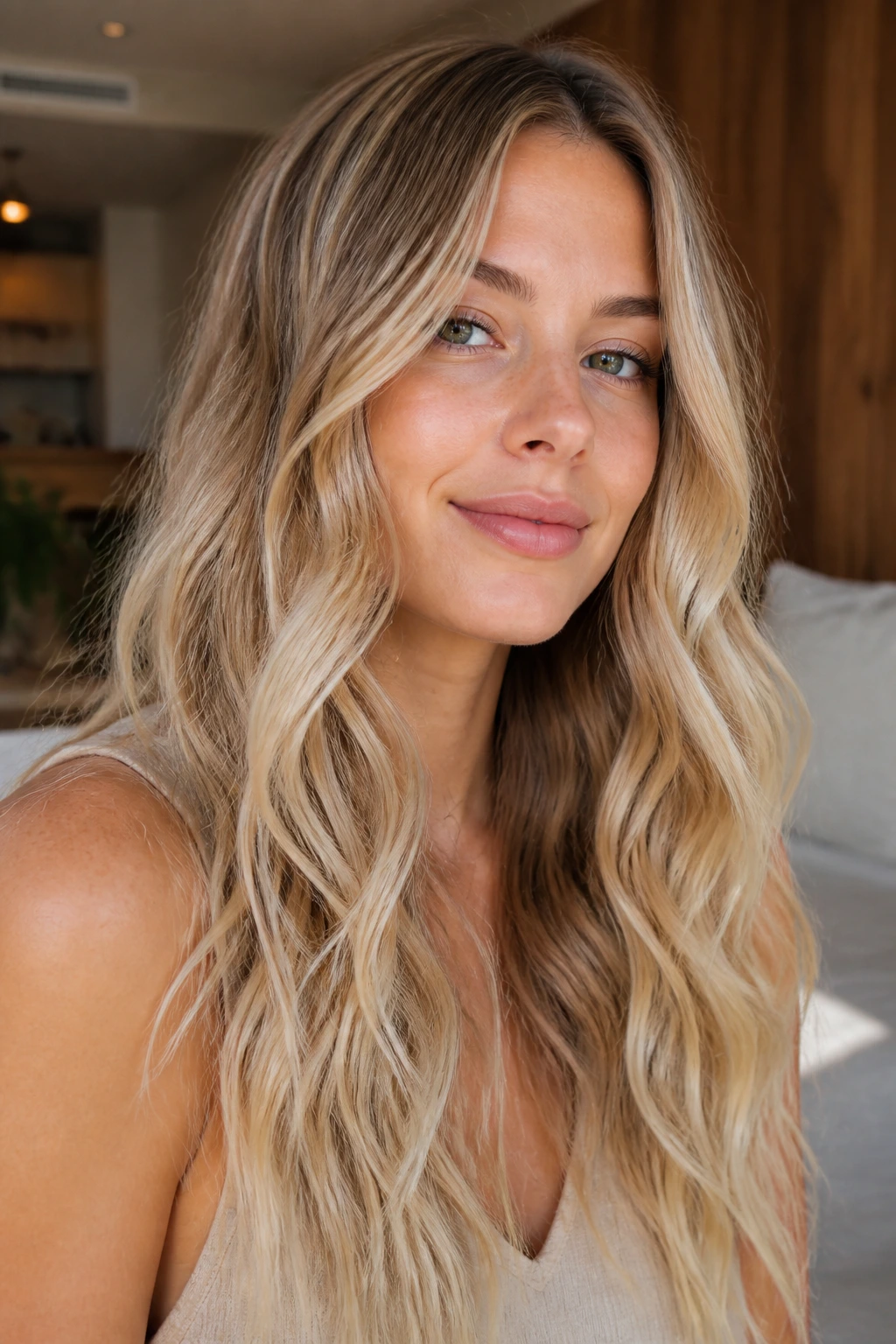
Cream soda blonde sits right between beige and pale gold, and that middle ground is why I keep recommending it for long wavy lengths. It has the plush look of a softer blonde without the sharpness that comes with an icy finish. Think creamy mids, brighter ends, and a root that fades instead of announcing itself.
What I like most is how forgiving it is as the weeks pass. When the tone softens, it usually softens in a way that still looks intentional. The waves help, too. Each bend catches a slightly different piece of the melt, so the color never reads like one uninterrupted block.
This is a good call if you want a blonde that feels lived-in but not dark. It’s also a nice bridge for someone going lighter for the first time.
6. Mushroom Blonde With Smoky Lowlights
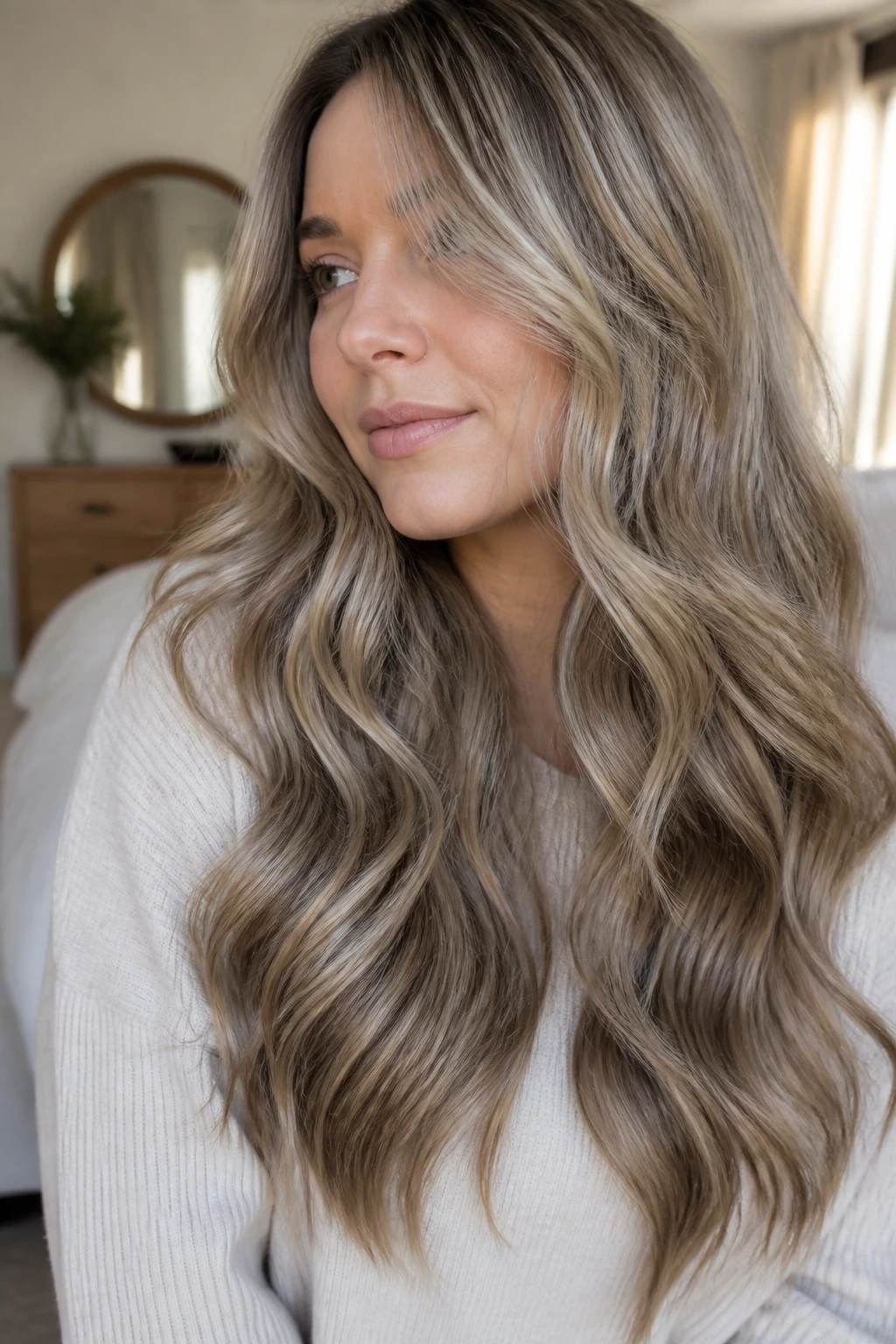
Mushroom blonde is for people who like blonde, but do not want it to look sugary. It blends beige blonde with smoky lowlights, and on long waves that extra depth can be gorgeous. The darker ribbons sit underneath the lighter surface pieces, so the hair still reads blonde, just with more shadow and less shine from a distance.
This look is especially smart if your natural hair is a dark blonde or light brown and you don’t want the grow-out to feel loud. The smoky lowlights keep the ends from looking thin, which is a real issue on long layered hair. A few strategic deeper pieces underneath the surface are better than trying to make every strand pale.
Why It Works on Waves
The wave pattern lifts the lighter pieces forward and tucks the darker ones back. That tiny shift makes the color look fuller. It’s one of the few blondes that feels calm instead of bright.
7. Butter Blonde Money Piece
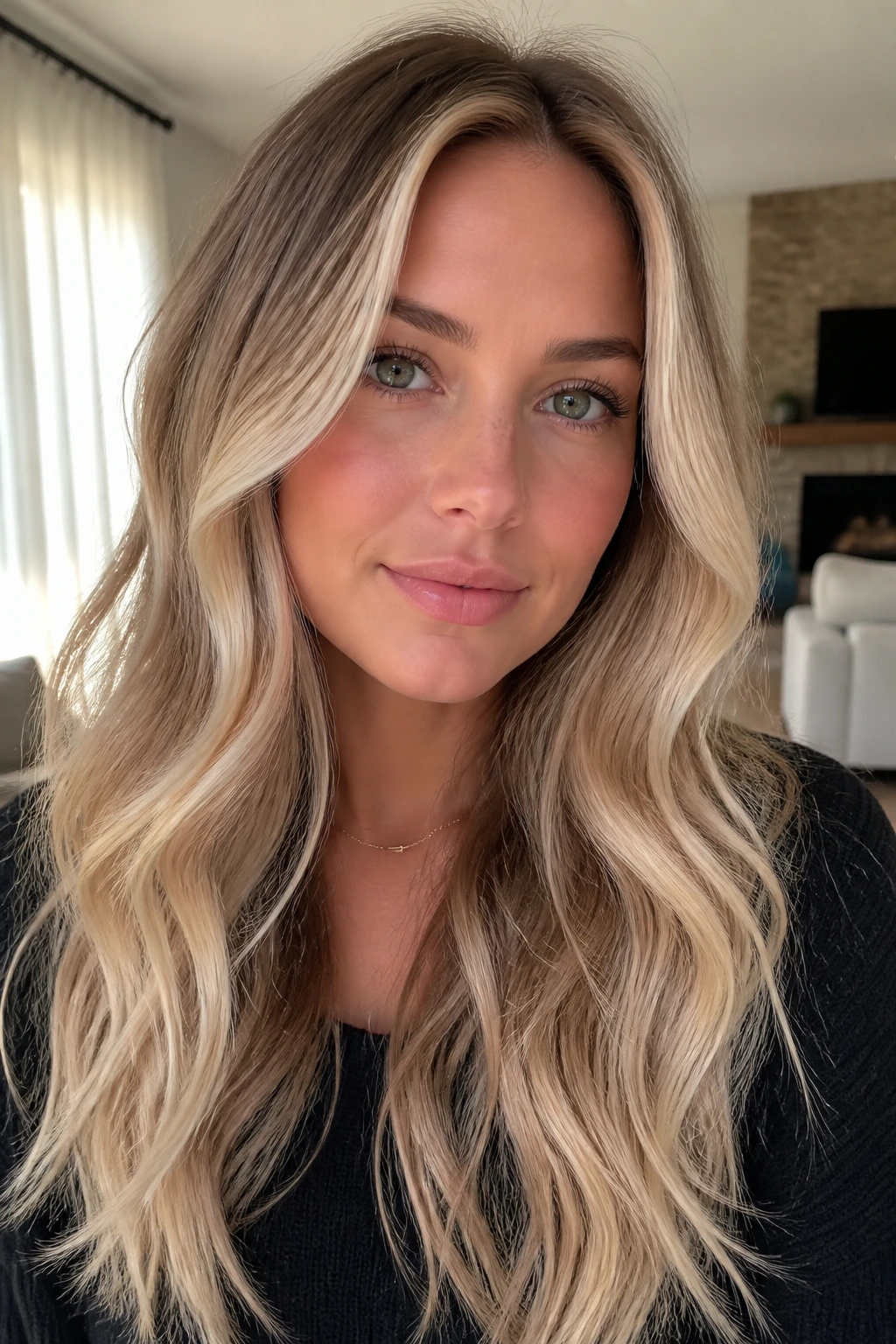
A butter blonde money piece does a lot of heavy lifting at the front of the face. It’s warmer than beige, softer than gold, and bright enough to show off loose waves without needing a full-head bleach job. On long hair, the front pieces can start near the cheekbones and drift down through the lengths, which gives you brightness exactly where you look first.
I like this look with layered cuts because the money piece gets a chance to separate from the rest of the wave. If the hair is all one length, the brighter front can still work, but the contrast is sharper. With layers, it feels stitched into the haircut instead of pasted on.
Best when you want: a brighter face frame, softer ends, and a blonde that still plays nicely with your natural root.
8. Golden Beach Balayage
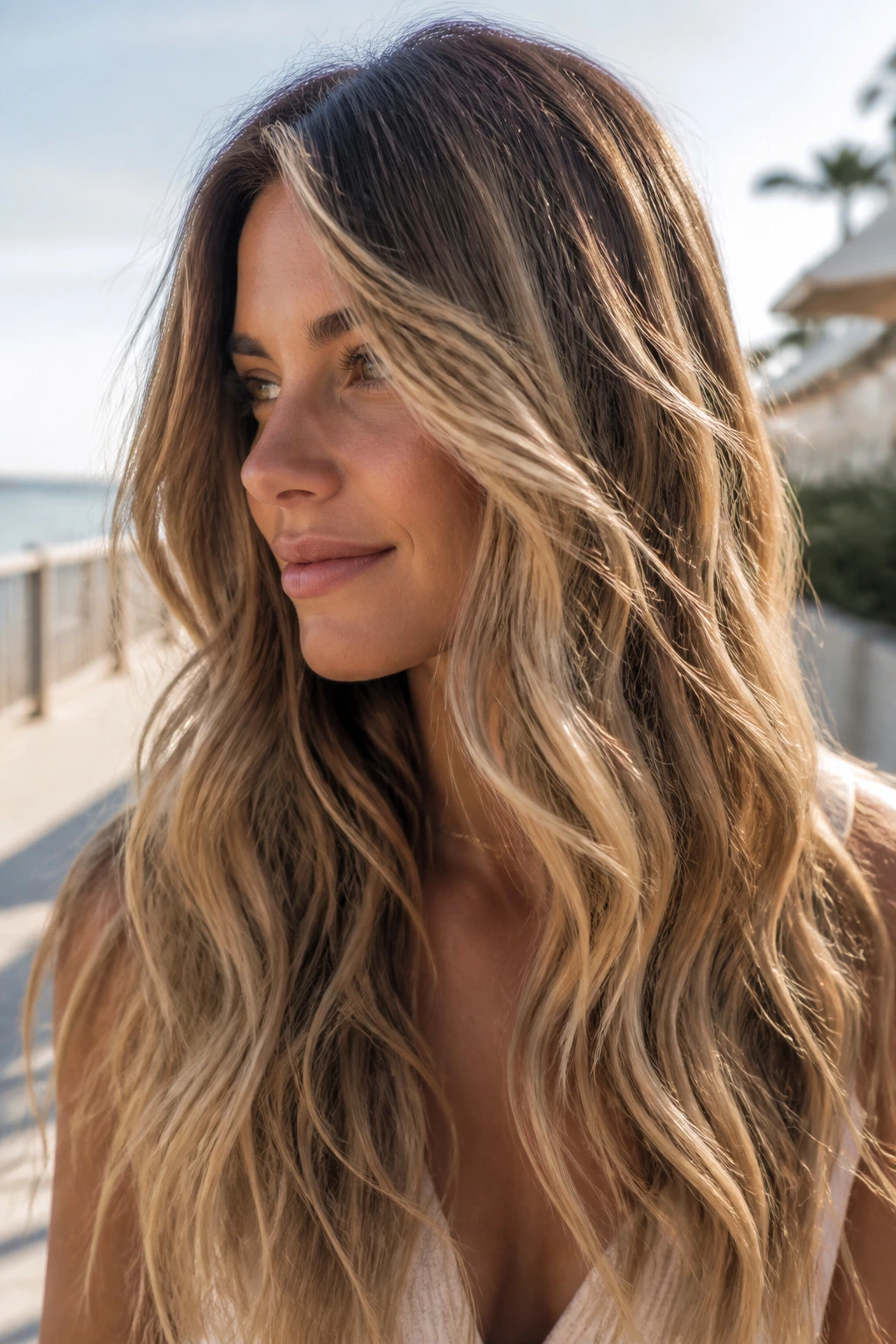
Golden beach balayage is the classic warm blonde that never really goes away because it makes sense on long wavy hair. The warmth feels sunlit, not orange, when the placement is done right. You want the lightest pieces around the surface and through the lower half, where the waves tend to open up and show texture.
This one is less about drama and more about glow. A good golden balayage should look like the hair spent time outside, not like every strand was lightened at the same speed. It works especially well if your natural color has a little warmth to it already.
A blunt, one-length cut can make this color look heavy. Long waves do the opposite. They loosen the gold so it feels softer and more expensive-looking in the old-fashioned sense of the word — not shiny for the sake of it, but well placed.
9. Vanilla Blonde With Satin Waves
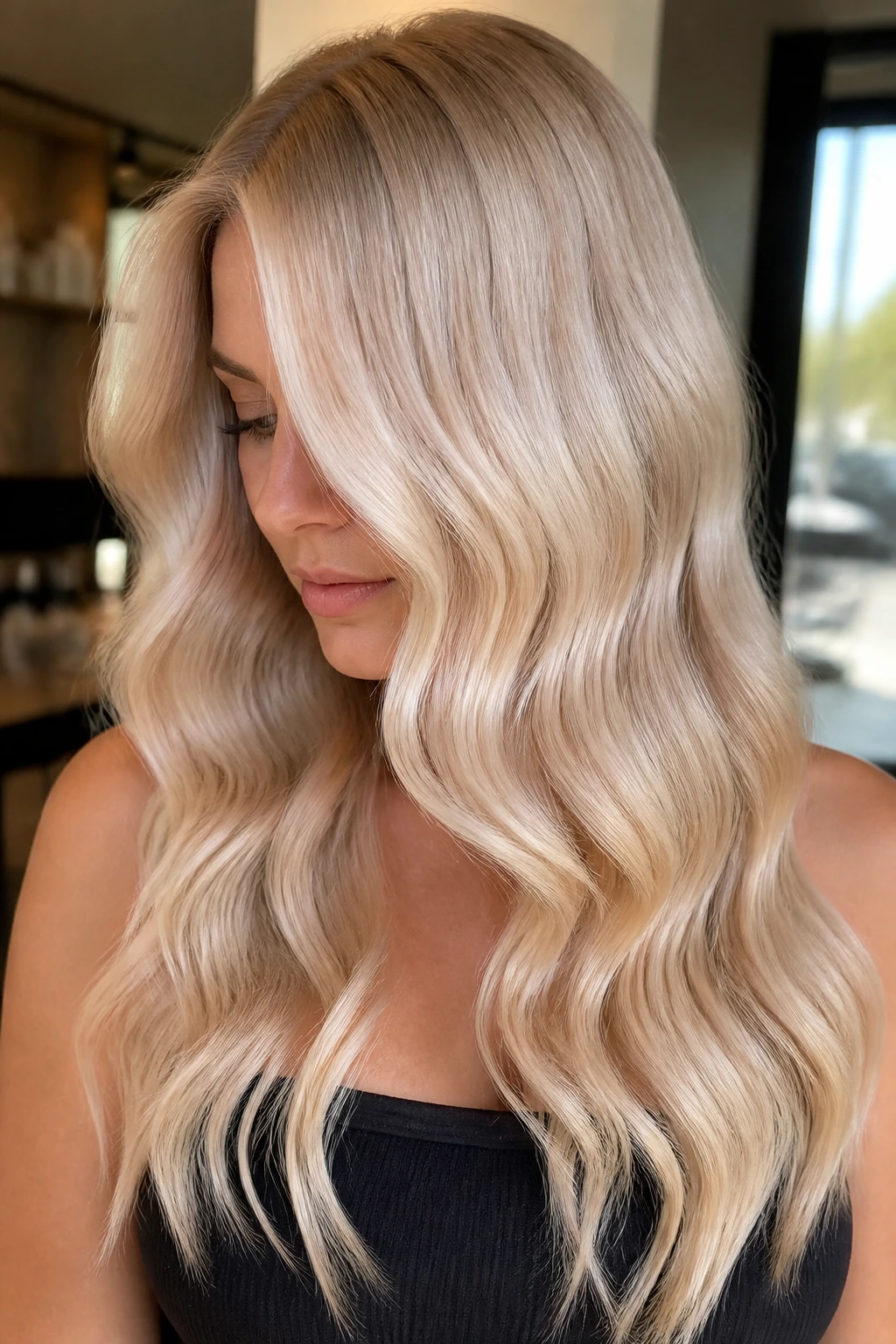
Vanilla blonde is quieter than pearl and cooler than honey. On long wavy hair, that middle position is the charm. It looks smooth, even, and a little creamy, which is useful if you want the waves to read as movement rather than chaos. The color works best when the finish is glossy, not matte.
I especially like it on hair that naturally reflects light well. Fine to medium textures can wear this shade without looking overdone, as long as the waves are soft and the ends are kept blunt enough to hold shape. Too much layering can make the color feel split apart.
What to ask for
- Soft beige-violet toner
- Gentle root melt
- Brightness focused from mid-lengths down
This is a nice choice if you want blonde that feels neat, pale, and controlled without tipping into stark platinum.
10. Old Money Blonde With a Soft Root
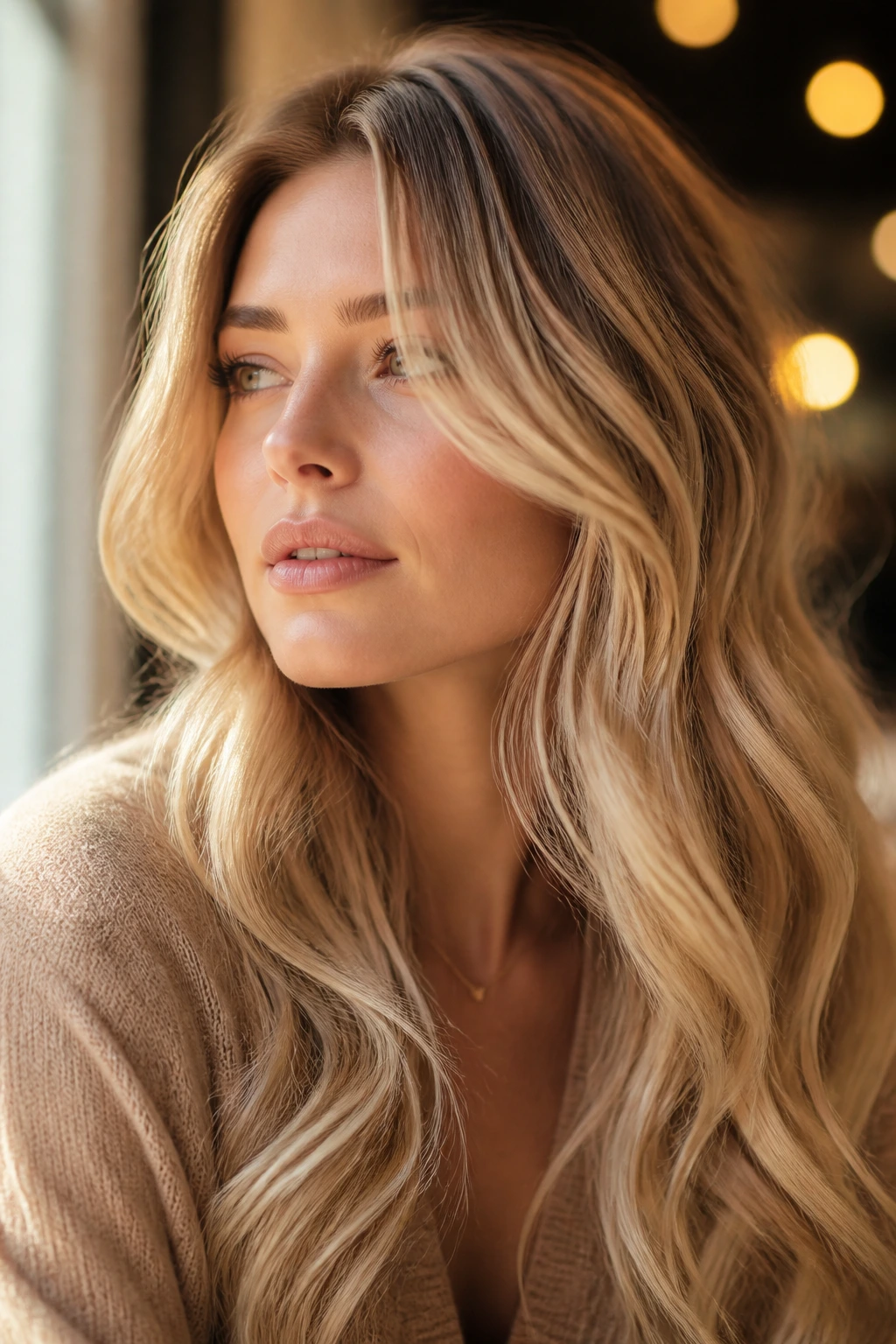
Old money blonde gets thrown around too much, but the look itself is easy to recognize: beige-gold, softly rooted, and polished enough that the waves fall in clean ribbons. On long hair, it looks best when the root is just deep enough to keep the mids and ends from looking over-lightened. That depth is not a flaw. It’s the whole point.
This is one of my favorite choices for someone who wants a refined finish rather than high drama. The tone is usually a blend of neutral blonde and soft warmth, so it plays well with layered waves and smooth blow-dry bends. If you ask for too much brightness at the bottom, the whole effect gets louder and less elegant.
The haircut matters here. A long layered cut with face framing keeps the blonde from sitting like a curtain. It should move.
11. Sand Blonde With Fine Babylights
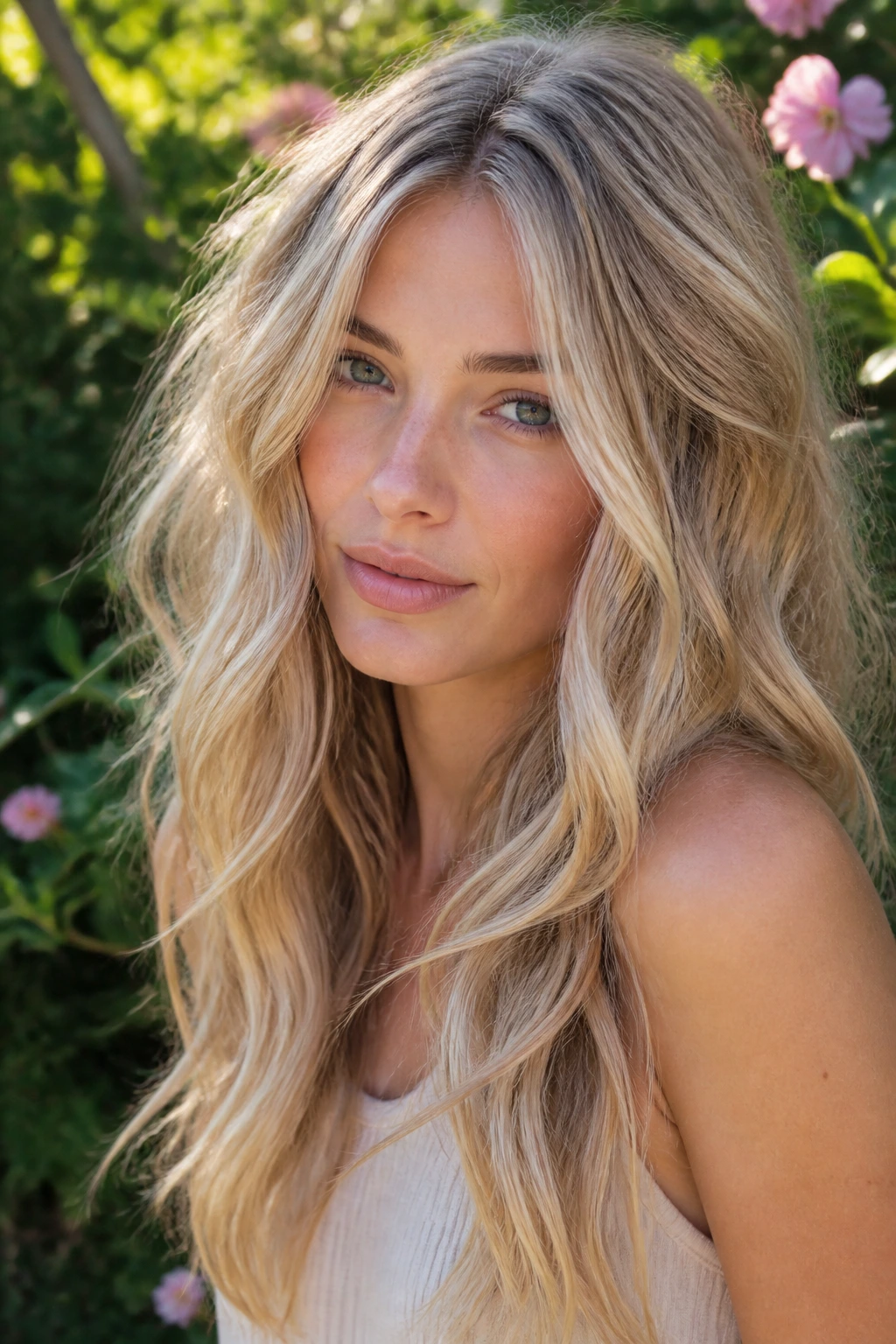
Sand blonde works because it stays airy. The tone is soft, beige, and a little muted, while the babylights are so fine they almost vanish until the waves turn. On long hair, that makes the color feel woven into the texture rather than painted on top of it.
Babylights do the quiet work
If you have fine hair, this is one of the smartest blonde looks you can choose. Tiny highlights build lightness without making the ends feel sparse. The regrowth is gentler, too, because the highlights are so narrow that the grow-out line doesn’t carve across the head.
I’d lean into this look if you want something low-contrast and touchable. It’s not the flashiest blonde on the list, but it may be the one that looks most natural after a few weeks.
12. White Gold Blonde With High Contrast Waves
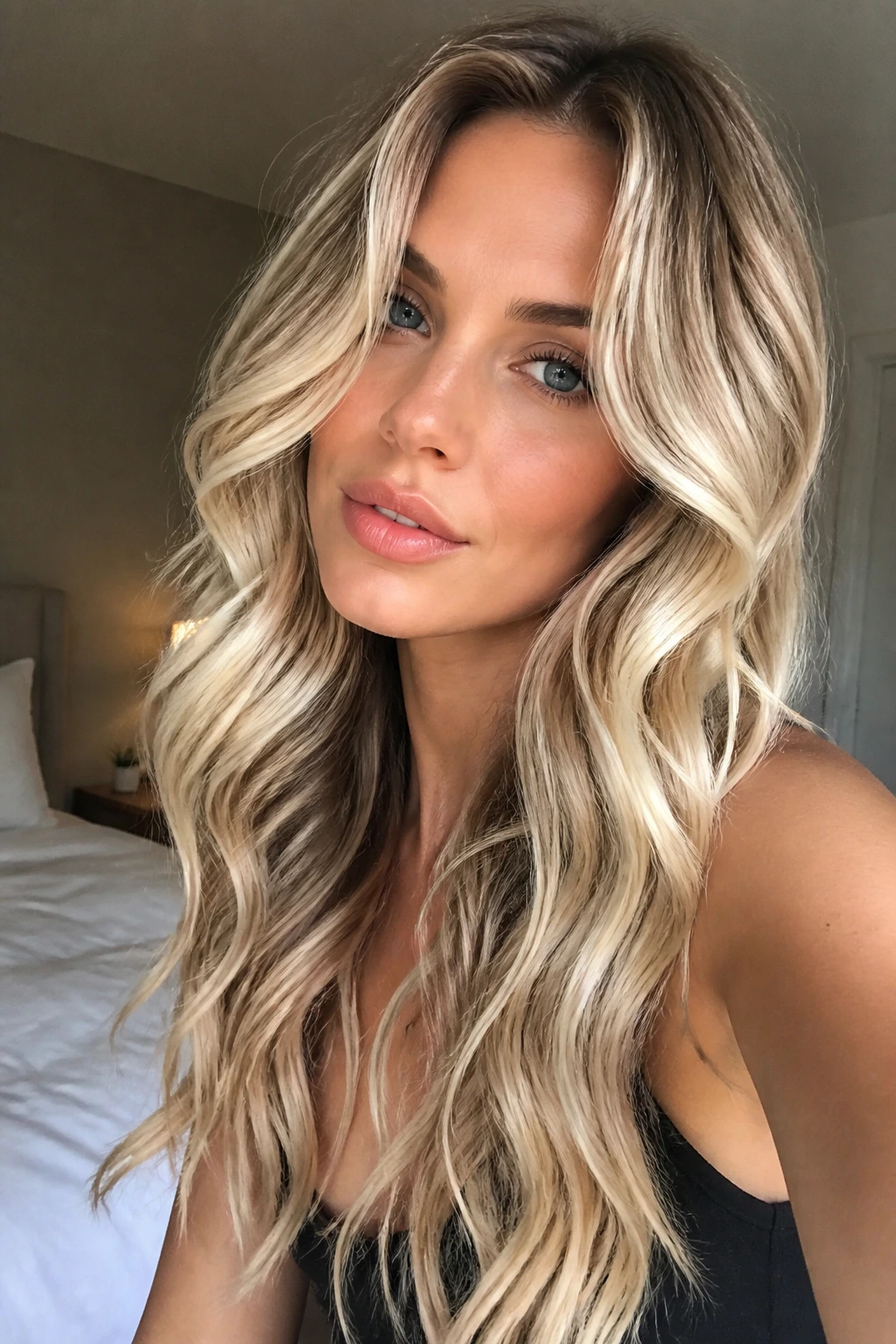
White gold blonde is brighter and sharper than vanilla or beige, but it still has a hint of warmth under the gloss, which keeps it from looking paper-white. On long wavy hair, that matters. Pure white can flatten the wave pattern. White gold keeps enough dimension that the bends still show up.
This look has a lot of contrast, so it benefits from a deeper root and very intentional toning. If the blonde lifts unevenly, you’ll see it. If the hair is damaged, you’ll see that too. That is the trade-off.
The payoff is a clean, polished finish that looks especially good with long layers and a center part. It’s not the easiest blonde to keep, but it has presence.
13. Bronde-to-Blonde Melt
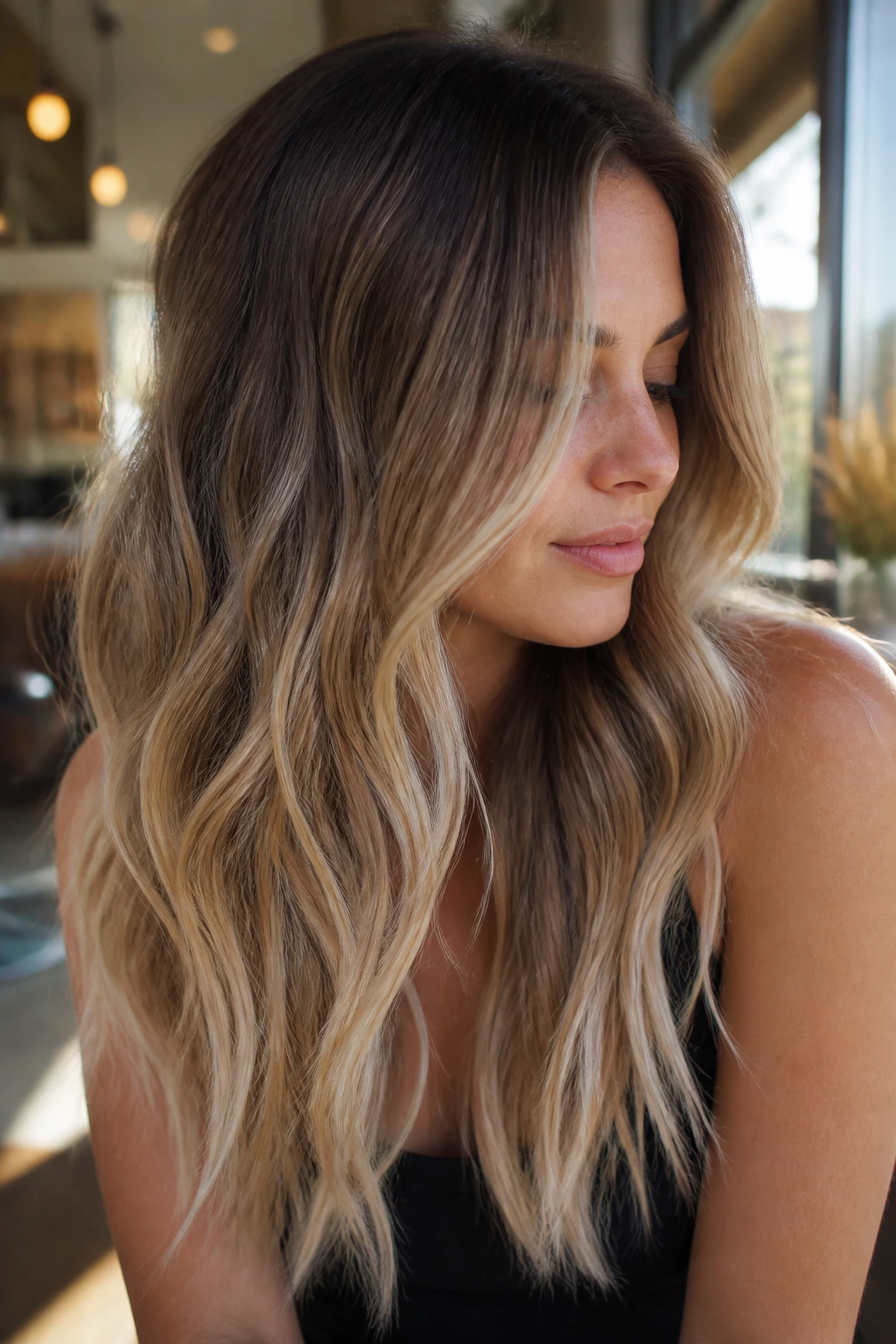
Bronde-to-blonde is what happens when you let the color move gradually from brunette at the top to blonde through the lengths without making the transition obvious. On long waves, that gradient is one of the prettiest things in color because the bends break up the shift from dark to light. You get movement first, blonde second.
I like this look for people who want to go lighter but are nervous about losing depth. The root stays closer to the natural base, the mids carry a soft brown-blonde mix, and the ends drift lighter. Nothing feels abrupt. Nothing feels patchy.
Best on hair that has
- A natural level 5 to 7 base
- Long layers
- Waves that hold shape without frizzing apart
If your hair likes to puff at the ends, keep the lightest blonde a little higher up so the bottom does not turn wispy.
14. Caramel-Drizzled Blonde Highlights
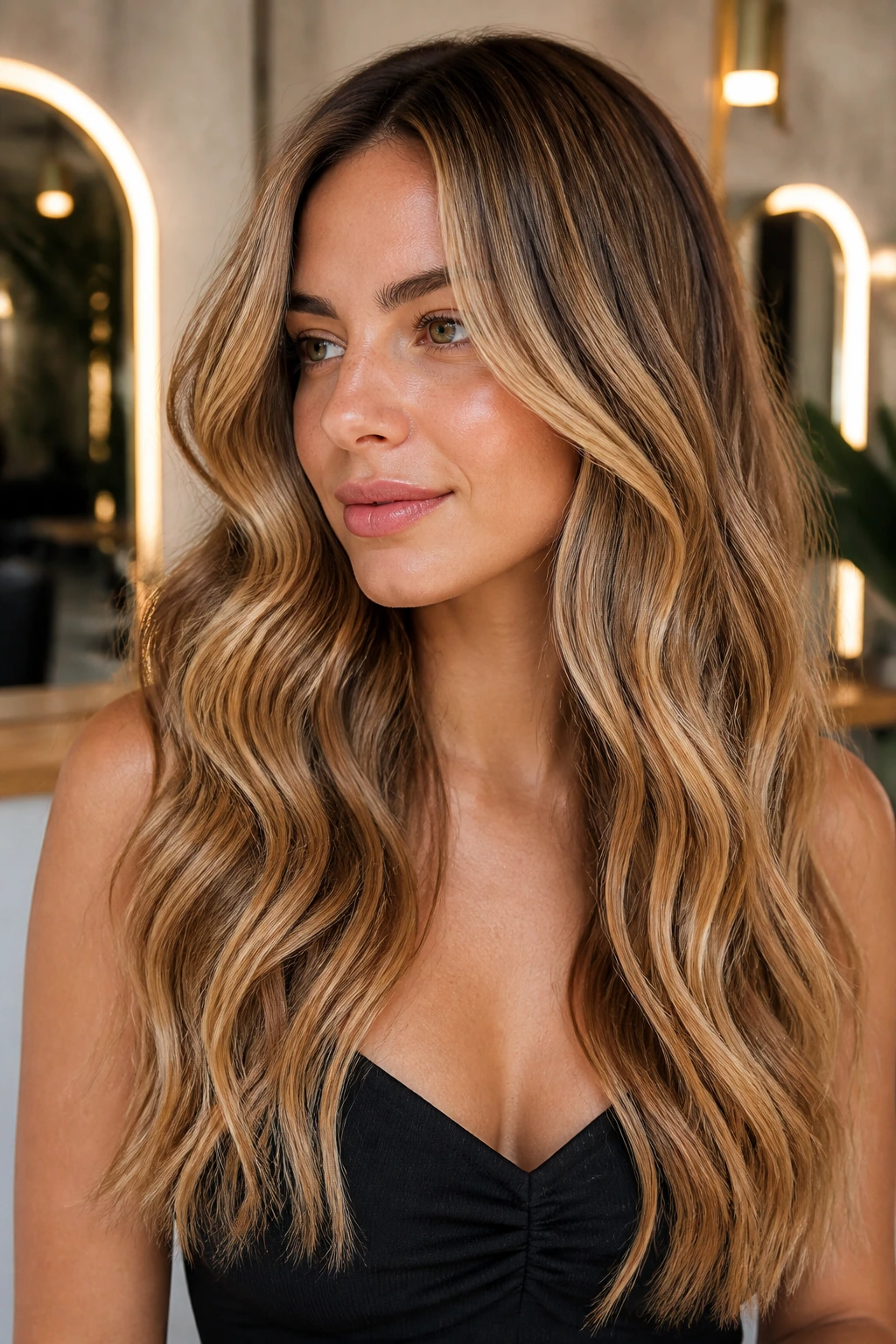
Caramel-drizzled blonde is warmer and richer than a neutral beige look, and on long waves it gives the hair a little more visual weight. The caramel pieces sit between the blonde ribbons, which means the whole style looks layered before you even pick up a curling iron. That extra contrast can be especially useful on thick hair that needs shape.
The color should not look orange. That’s the line. It should read as warm blonde with deeper undertones, not as brassy light brown. A good gloss keeps the finish soft and shiny, especially around the front where the hair often gets the most sun.
This is one of those shades that gets better when the hair is long enough for the colors to stack on top of each other. Short hair doesn’t show the depth as well.
15. Nordic Beige Blonde
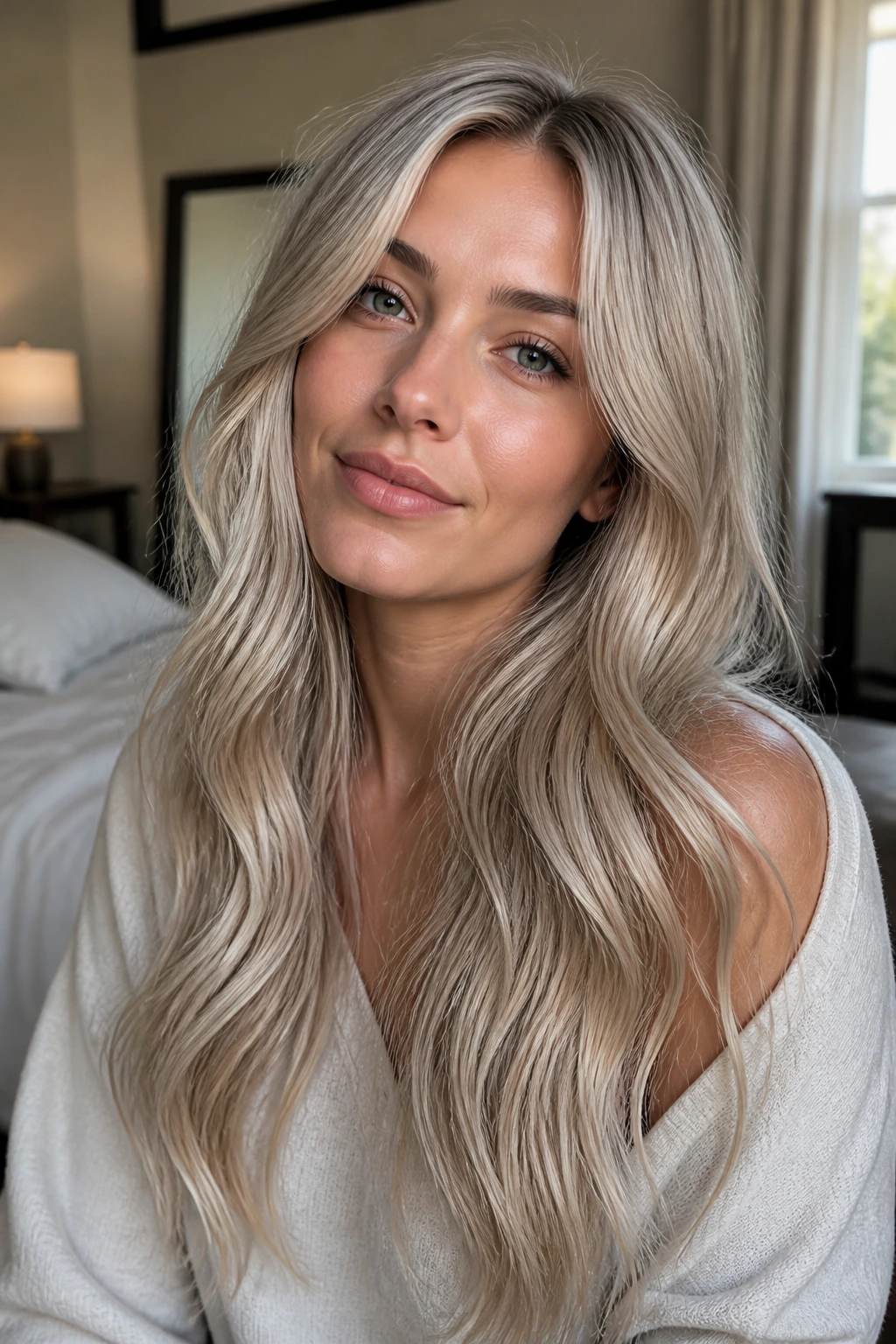
Nordic beige blonde has a cooler, cleaner finish than honey or caramel, but it is softer than full platinum. It suits long waves because the color needs movement to keep from feeling too pale. The beige base stops it from going flat, and the wave pattern stops it from looking icy in a way that can age the haircut.
Why it doesn’t read gray
The best Nordic beige blondes still have enough light warmth under the toner to reflect light. That tiny bit of warmth keeps the hair from turning dull in indoor lighting. Ask for a beige tone, not a steel tone, unless you want the color to lean very cool.
This is a good choice if gold tones fight with your skin or if you want blonde that feels clean and pale without the hardness of silver. Long waves make it friendlier.
16. Frosted Ends With a Soft Root
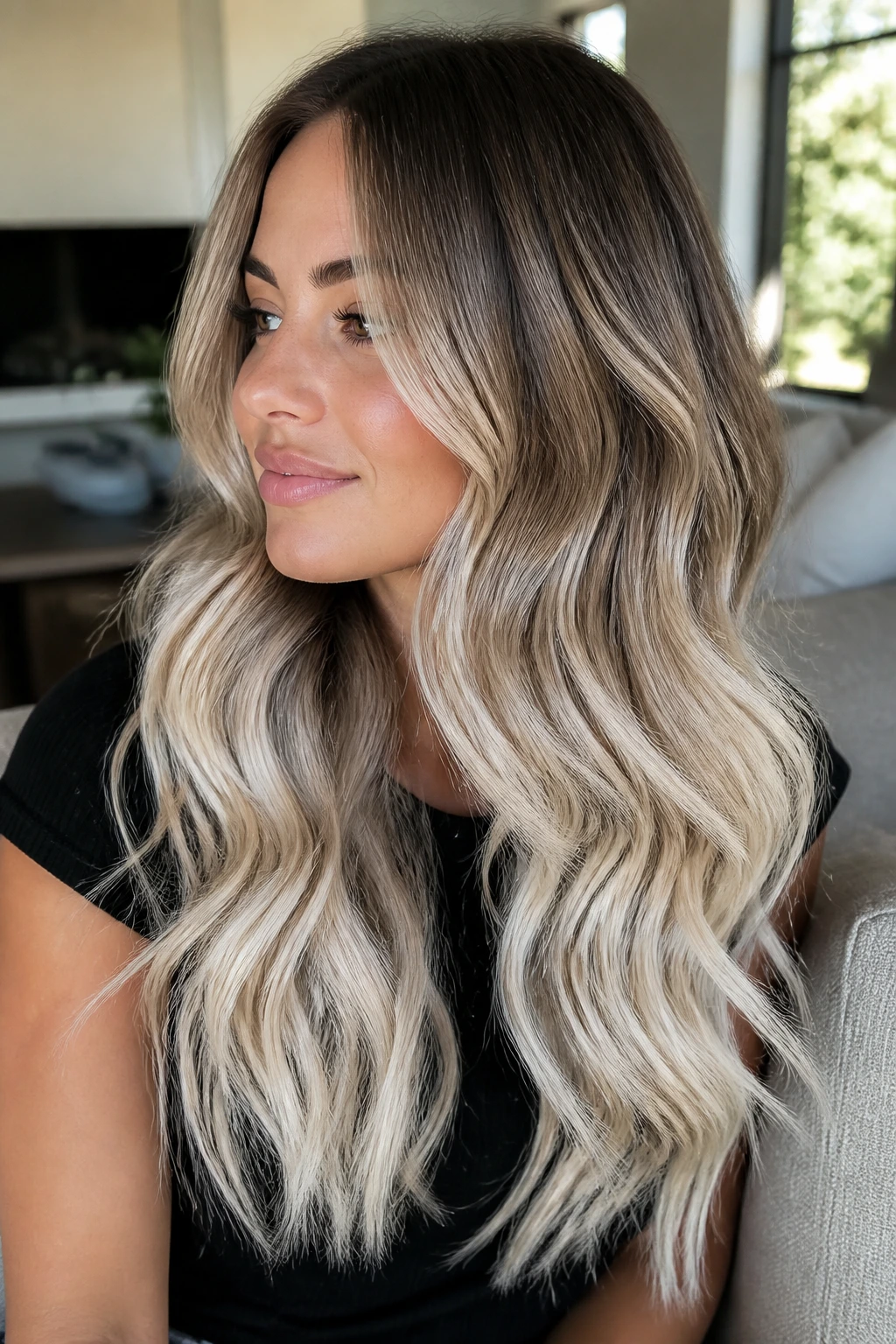
Frosted ends are one of the easiest ways to make long waves look intentionally bright without bleaching the entire head to the scalp. The root stays soft and natural, then the mids brighten, and the ends carry the frost. That shape works because long waves naturally cascade downward, so the lighter pieces collect at the bottom and catch the eye.
I like this look when the goal is contrast with control. The root keeps the style grounded, while the frosted ends give it lift. It’s especially good on layered hair, where the bottom pieces can fan out a little and show off the lighter tone.
The only caution is dryness. Frosted ends look best when the cut is healthy and the styling is gentle. Split ends make this look sloppy fast.
17. Soft Cream Blonde With Curtain Bangs
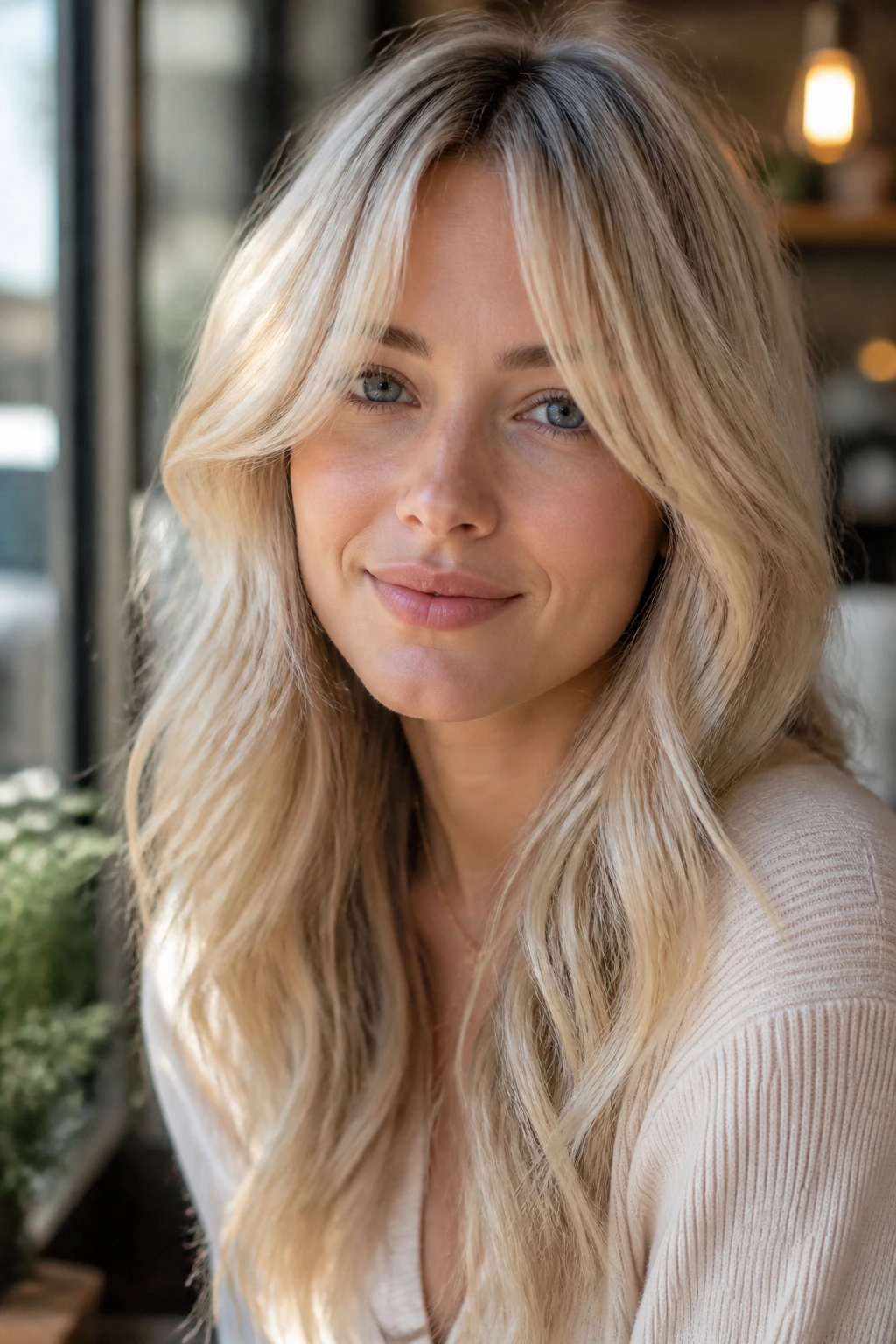
Curtain bangs change the whole feel of soft cream blonde. The front fringe opens the face, and the cream tone carries that brightness down into the waves without making the cut look over-processed. It’s a good blend of polish and ease, which is harder to pull off than people think.
The cream shade itself sits between beige and pale gold, so it reflects light cleanly while still feeling warm. On long waves, it helps the haircut look expensive in the practical sense: the color and cut are clearly working together. If the bangs are too heavy, though, the front can get swallowed by the blonde. Keep them airy.
Best pairing: long layers, a soft blowout bend at the fringe, and waves that start below the cheekbone.
18. Toasted Almond Blonde
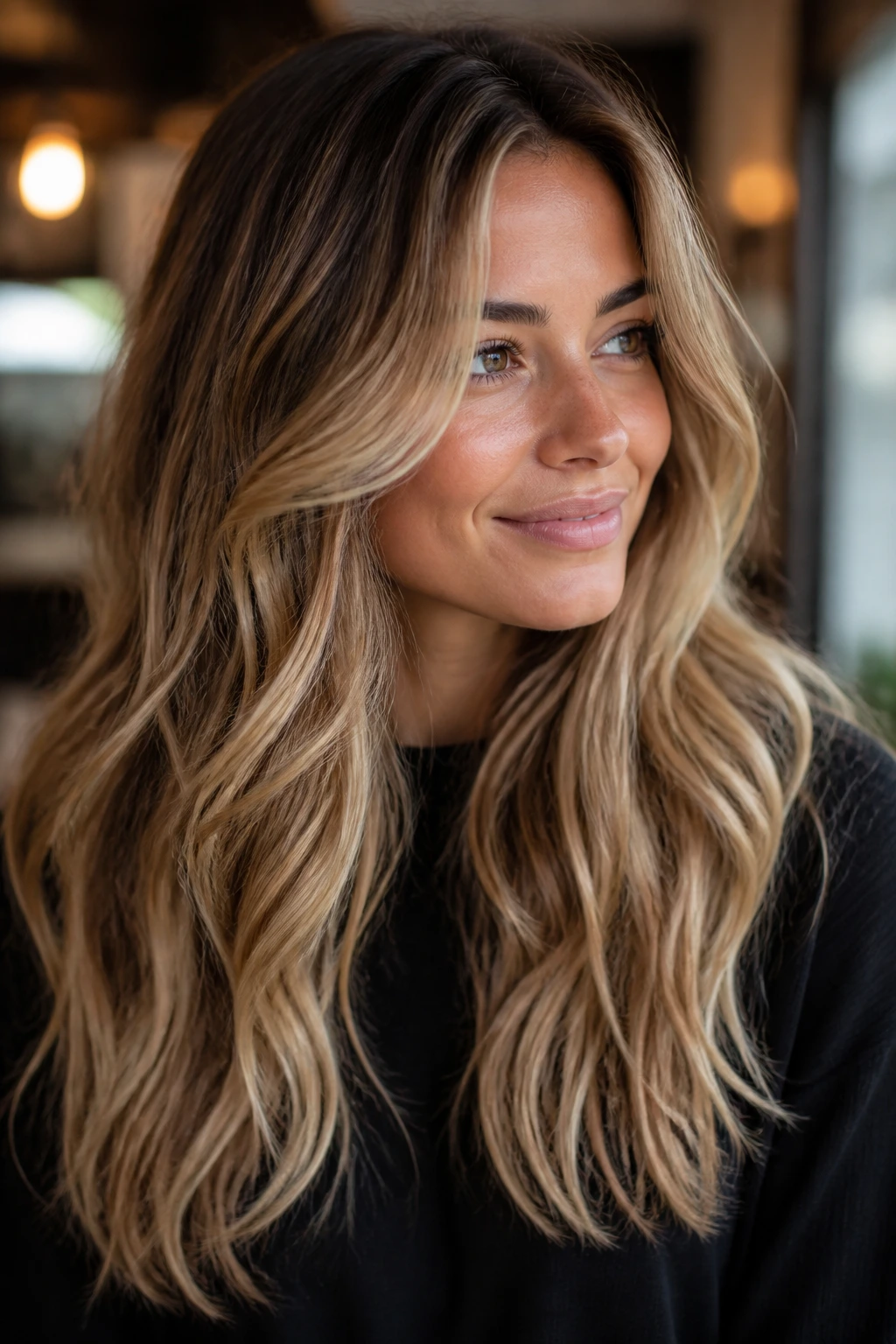
Toasted almond blonde is one of my favorite middle-ground shades because it feels warm without going full honey. The toasted tone gives the hair a little depth, and the almond finish keeps the blonde from looking flat against long wavy lengths. It’s the kind of color that looks easy but takes a careful hand.
What I like here is the balance. The roots can stay a shade deeper, the mids hold the warmth, and the ends stay light enough to move. That means the waves have shape even if you skip a full blowout and just braid-dry the hair or use a wand.
If you have naturally warm skin or hair that pulls golden when lightened, this is a safer route than ashier blonde. It works with the grain instead of fighting it.
19. Pearl Beige Blonde
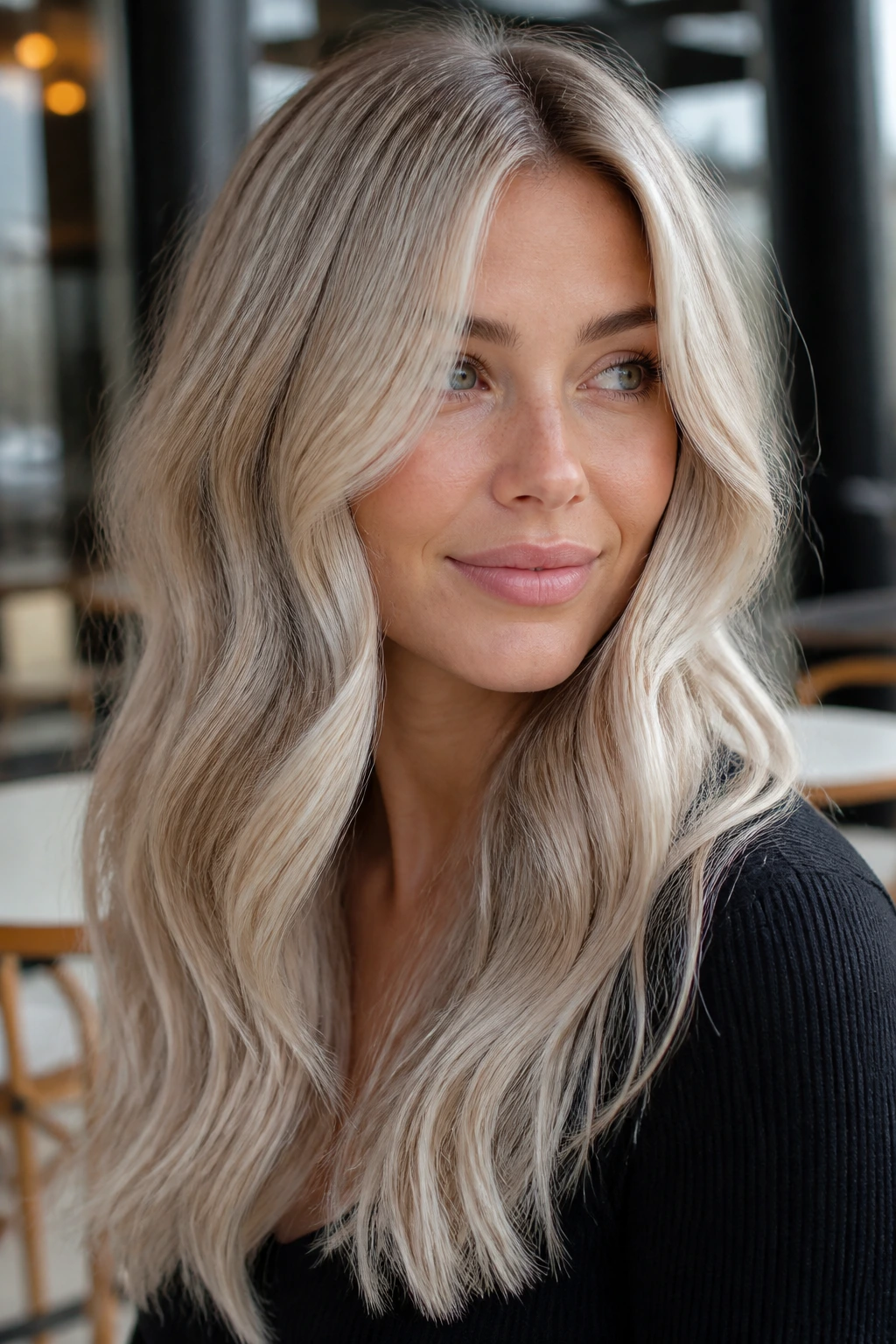
Pearl beige blonde feels smooth and cool, but not severe. On long waves, it gives a soft, milky finish that looks especially pretty when the light hits the outer curves of the hair. The beige part keeps it from going flat; the pearl part keeps it from looking too yellow.
I like this look for medium-density hair with enough length to show the tone shift. It is less dramatic than white gold and less warm than cream blonde. That middle ground can look a little quiet in photos, but in person it often reads as very clean and polished.
H3: Best for a softer finish
If you want blonde that doesn’t scream “fresh color appointment,” pearl beige is a smart pick. It softens the wave pattern just enough to feel smooth while still showing dimension.
20. Sun-Soaked Ombre Blonde
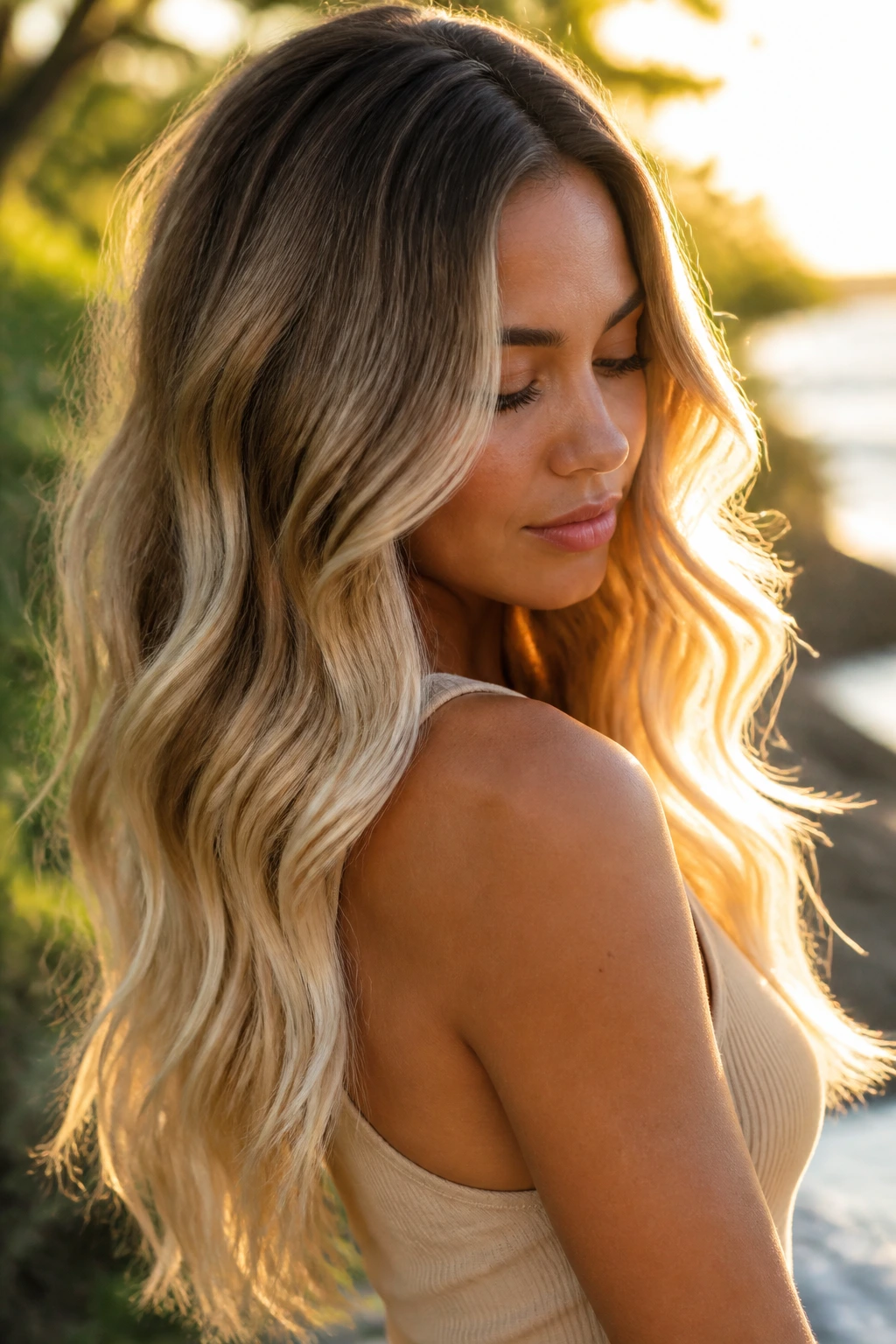
Sun-soaked ombre is the classic dark-to-light fade, and long wavy hair is where it still makes sense. The roots stay darker, the mids warm up, and the ends lighten gradually, so the whole cut looks like it spent time in the sun even if it did not. The wave pattern helps the fade look less obvious.
This is a good option if you want low-maintenance brightness and you do not want to touch the root every few weeks. The ends can be made lighter than the rest, but they should not look isolated. The transition has to stretch far enough down the hair that the eye moves with it.
A blunt line between dark and light is the fastest way to make ombre look dated. Long waves solve that, provided the transition is gradual.
21. Rooted Platinum Ribbons
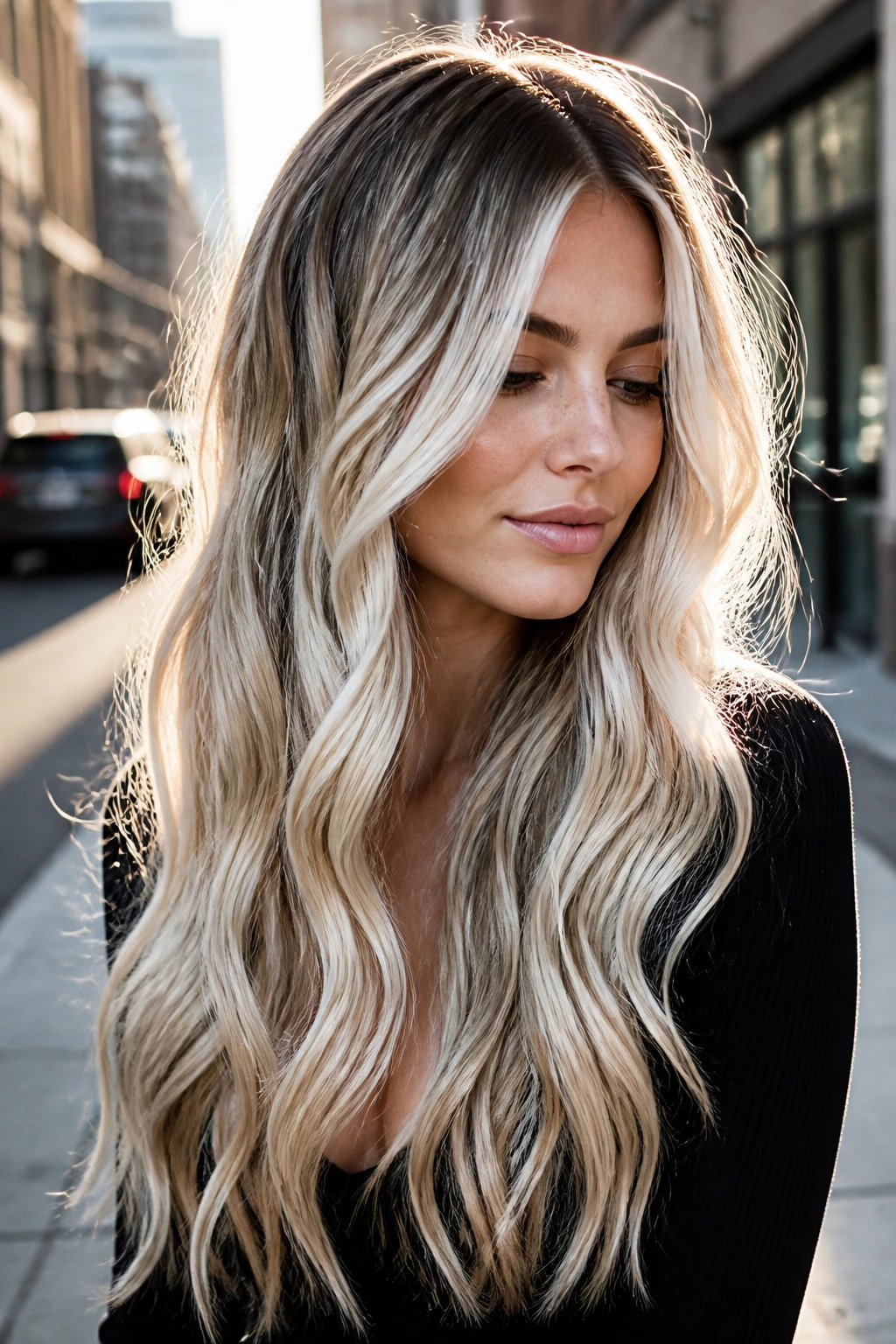
Rooted platinum ribbons are for people who want real contrast and are willing to keep up with it. The root stays deeper, then the platinum pieces slice through the length in brighter panels. On long wavy hair, this can look striking because the wave pattern prevents the ribbons from reading as blocks.
The risk is overdoing the brightness. Too many platinum pieces, and the hair starts to lose that ribbon effect. You want space between the lightest sections so the dark root and mid-tone base can keep the style grounded.
What to watch for
- Overlapping lightener on already porous ends
- A root that is too flat and too dark
- Platinum that turns yellow because it was toned too softly
This look is gorgeous when the hair is healthy and the placement is measured.
22. Wheat Blonde With Lived-In Depth
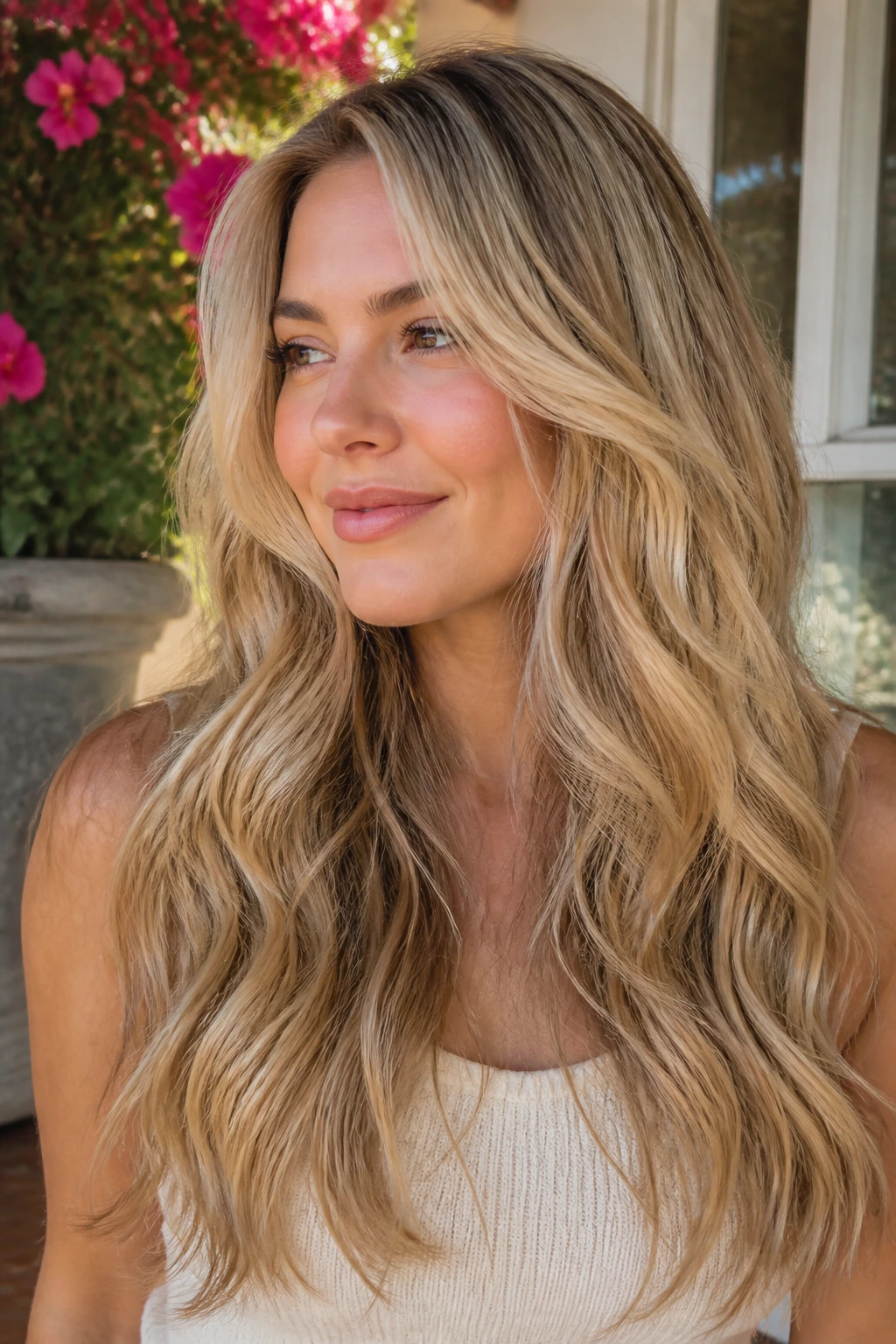
Wheat blonde is a softer, more natural blonde that pulls from pale gold and beige in equal measure. On long waves, it has a quiet depth that keeps the hair from looking washed out. The lived-in part comes from keeping a touch of darker color underneath, so the blonde is never one flat sheet.
I like this especially on hair that already has a warm, earthy base. It works with the natural undertones instead of trying to erase them. That usually means less stress on the hair and less panic when the gloss begins to fade.
It’s not a loud blonde. It doesn’t need to be. The draw is that it still looks like hair, not a color swatch.
23. Buttercream Blonde With Extra Shine
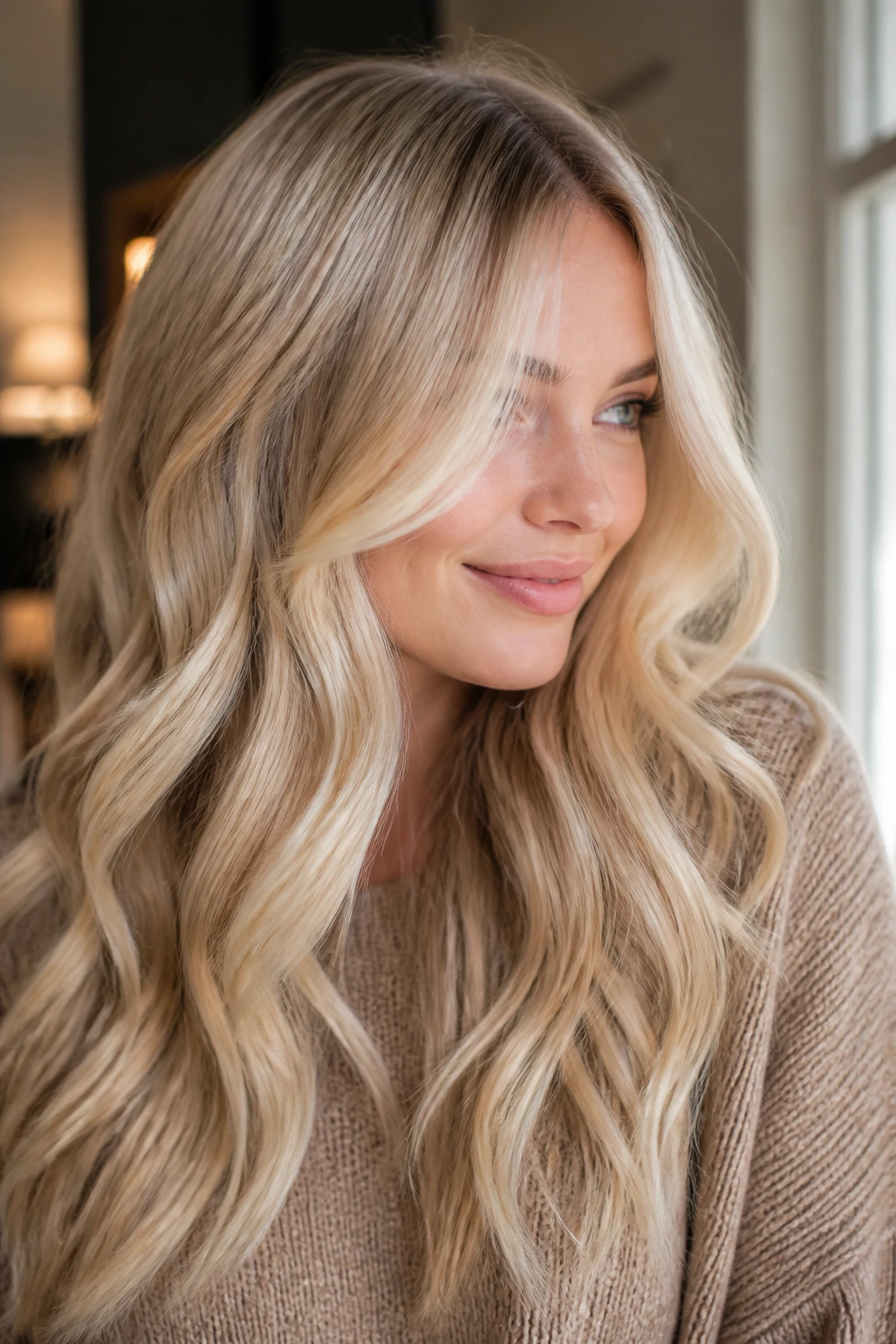
Buttercream blonde is creamy, soft, and bright enough to stand out without becoming icy. On long waves, it gets a polished finish that depends heavily on shine. If the hair is dull, the shade can look a little flat. If the hair is glossy, it looks lush and expensive in the practical sense — smooth, reflective, and carefully toned.
H3: How gloss changes the finish
A clear or beige gloss can make this shade look richer than a fresh toner alone. The shine matters because buttercream blonde has a soft color story. The brighter the reflection, the more the waves separate and show dimension.
This is a great choice if you like a creamy blonde that feels more cushioned than chalky. It suits layered lengths, especially when the bottom pieces are kept healthy and trimmed.
24. Sandy Surf Blonde
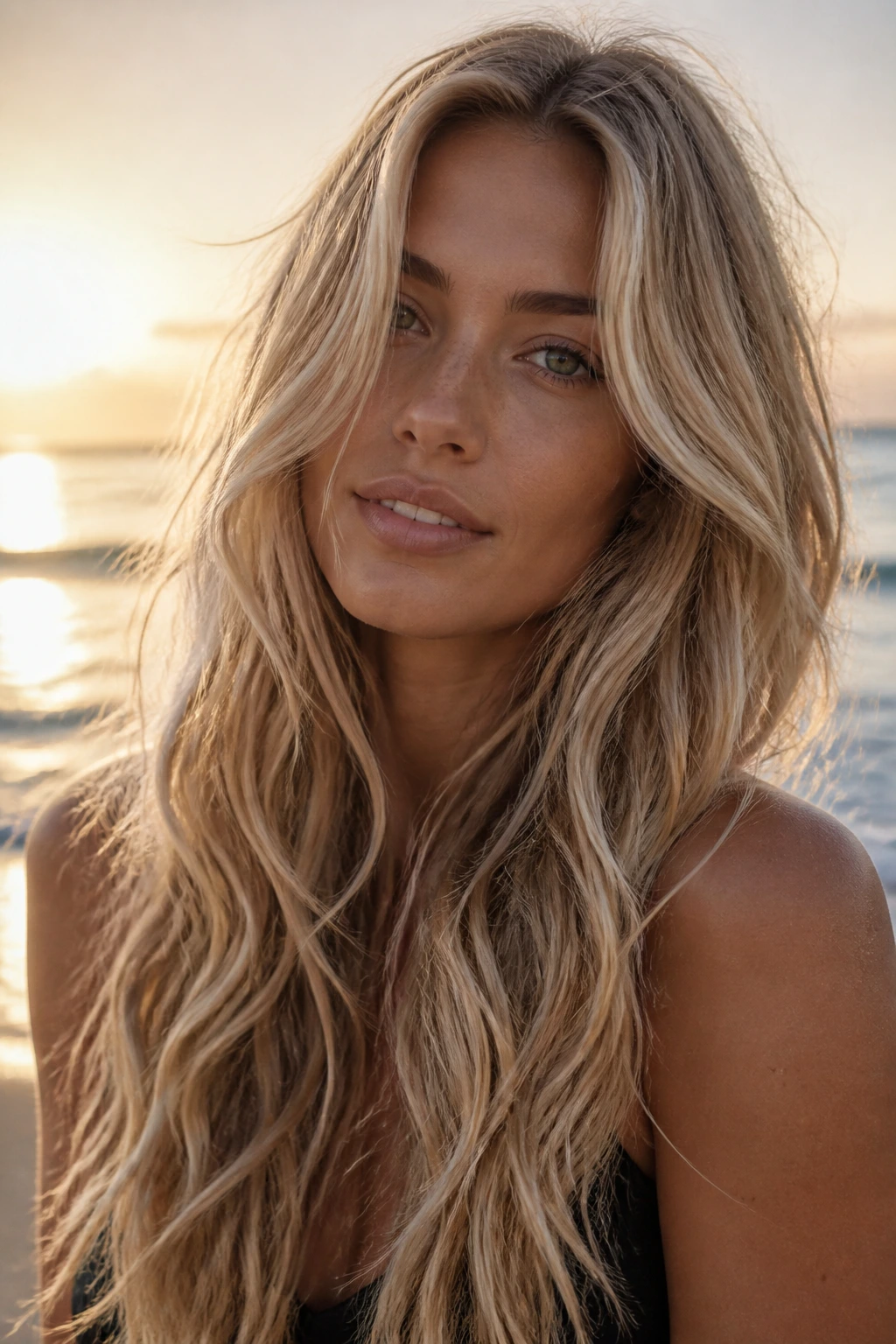
Sandy surf blonde leans beachy without going overboard on gold. The tone is a mix of beige, taupe, and soft blonde, which works well on long waves because the texture already gives the hair a breezy feel. The color should look kissed by salt air, not by a bottle of orange toner.
I like this shade on thicker hair or on cuts with lots of surface movement. The waves break up the sandy pieces so they never sit too evenly. That unevenness is the whole charm. If the color is too uniform, it starts to look dull instead of casual.
It’s one of the easiest blondes to wear year-round because it doesn’t lock you into one mood. Warm, cool, or somewhere in between — it usually sits comfortably in the middle.
25. Champagne Money-Piece Waves
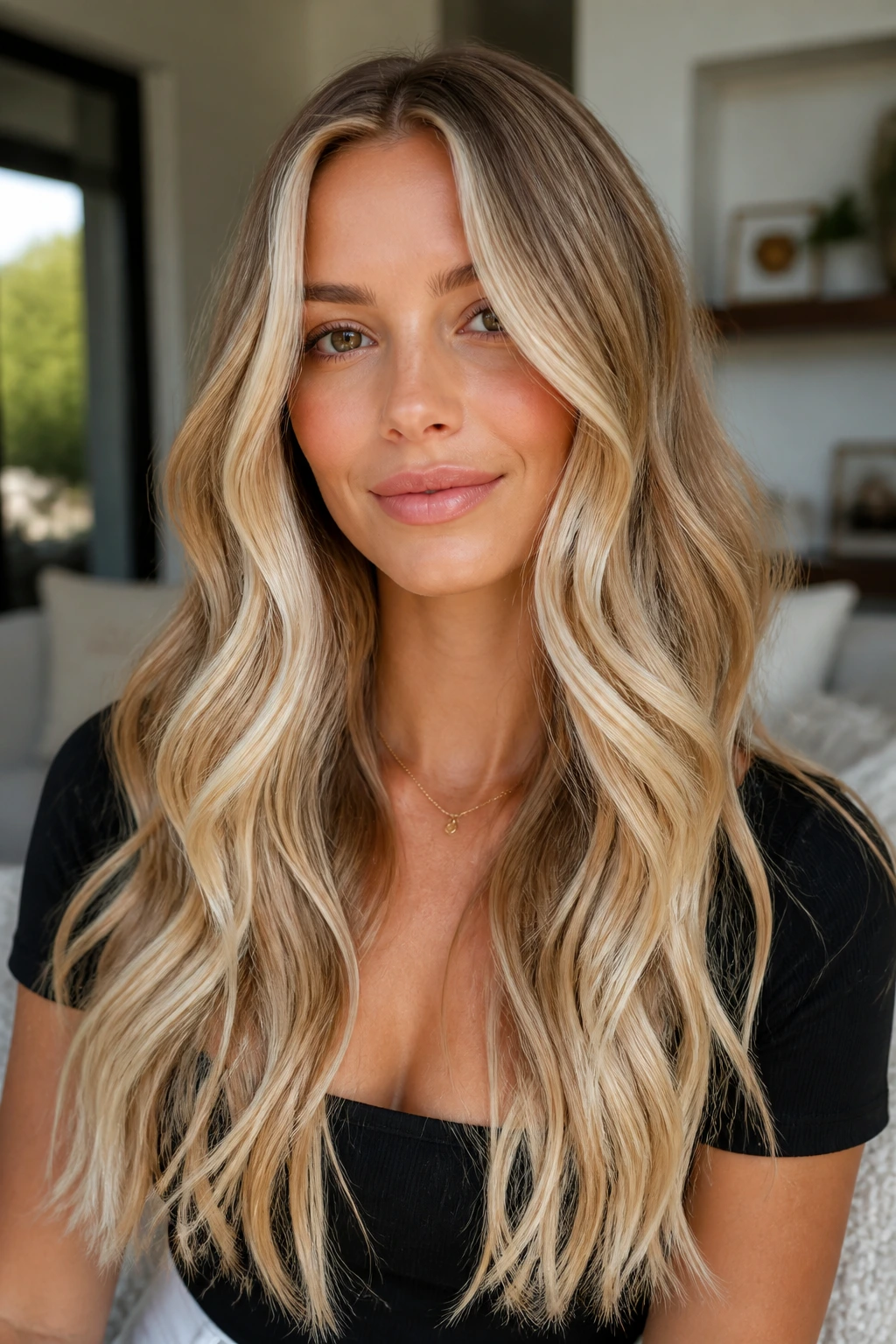
Champagne money-piece waves put the brightest work at the front and let the rest of the hair stay softer. That’s smart on long lengths because the face frame does the visual lifting while the back keeps depth. The champagne tone keeps the front from going too stark, which matters when the pieces are right next to your skin.
This look is useful if you like wearing your hair half up, clipped back, or tucked behind the ears. The front pieces still show. The rest of the blonde can remain more subtle, which makes the whole style feel easier to live with.
Best part: the money piece can make a basic wave pattern look more intentional without a full color overhaul.
26. Mocha Root to Blonde Gradient
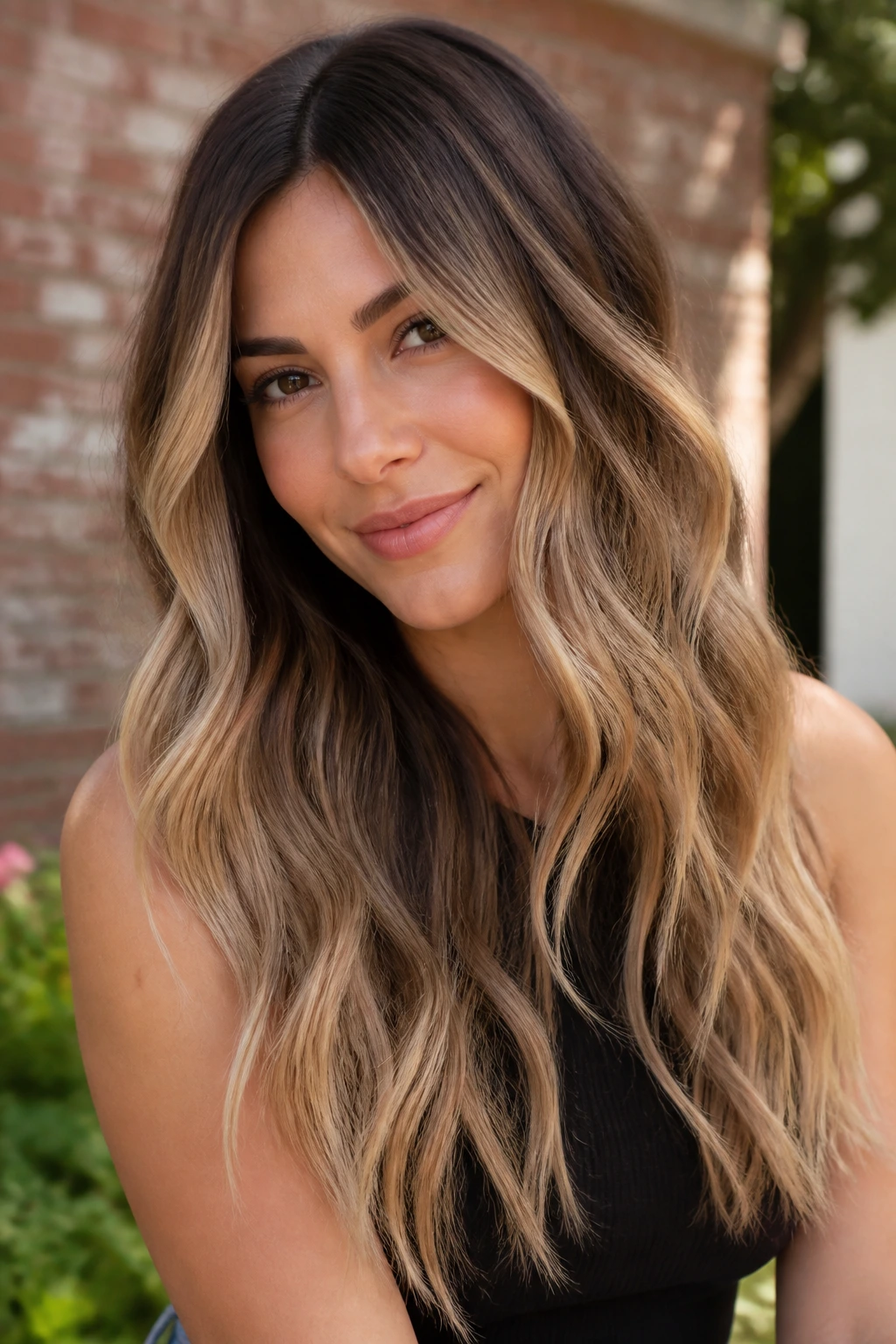
Mocha root to blonde gradient is for anyone who wants a brunette-to-blonde blend with more depth than a standard balayage. The root is richer, almost mocha in tone, then the mids move into brunette-blonde territory before the ends open up. Long waves love this because the gradient gets repeated along every bend.
I’d choose this over a softer blonde melt if your natural base is dark and you do not want the grow-out to feel stark. The darker root gives the hair weight, and the lighter ends keep it from feeling heavy. It’s a good compromise, honestly. Not boring, not fussy.
The key is keeping the transition gradual enough that the blonde never looks pasted on. Long layers help. So does a gloss that ties the shades together after lifting.
27. Frosted Beige Waves With Hidden Lowlights
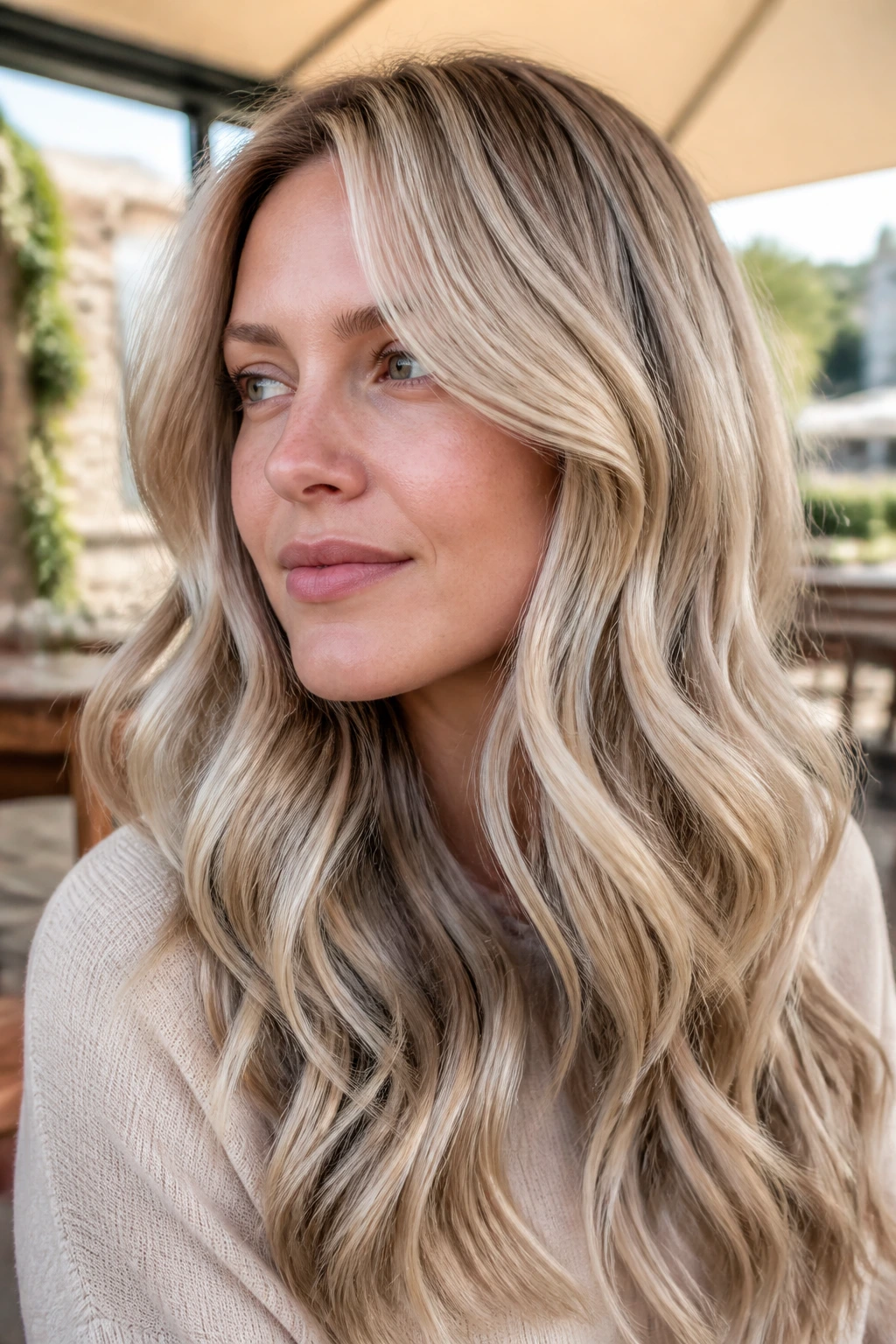
Frosted beige waves sound delicate, but the hidden lowlights are the real reason the look works. They sit under the surface and keep the pale beige pieces from floating away from the rest of the hair. On long waves, that hidden depth becomes visible only when the hair moves, which makes the color feel richer than it first appears.
This is a very good choice if you like bright hair but hate the look of striped highlights. The lowlights make the color sit closer to the hair rather than on top of it. You get softness with structure.
If you wear your hair mostly down, this can look especially pretty because the underlayers keep shifting as you move. If you wear it up a lot, the hidden depth still matters around the crown and sides.
28. High-Lift Cream Blonde
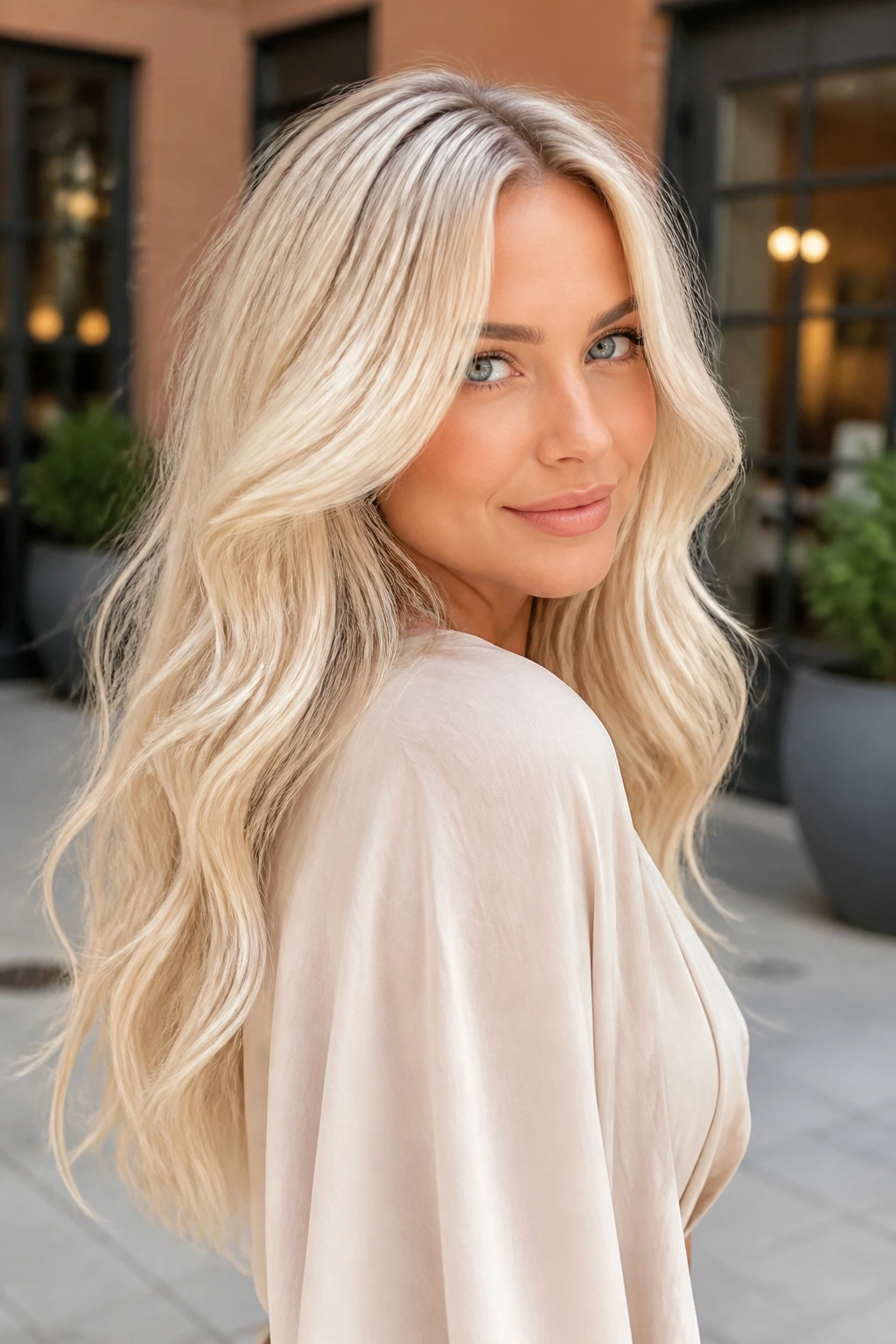
High-lift cream blonde is the brightest blonde on this list that still aims for softness. It sits just below the harshness of icy platinum and above the mellow tone of buttercream. On long wavy hair, it gives the lengths a lot of light while the waves keep the whole thing from looking like one flat pale panel.
This is not a casual color. It asks for healthy hair, careful toning, and a cut that supports movement. If the ends are damaged or the texture is too frizzy, the brightness can make every rough bit more obvious. But when it’s done well, it’s clean and luminous.
I’d pick this if you want a lighter blonde that still feels wearable rather than metallic. It has polish, but the cream tone keeps it human.
Why Blonde and Waves Keep Making Sense Together
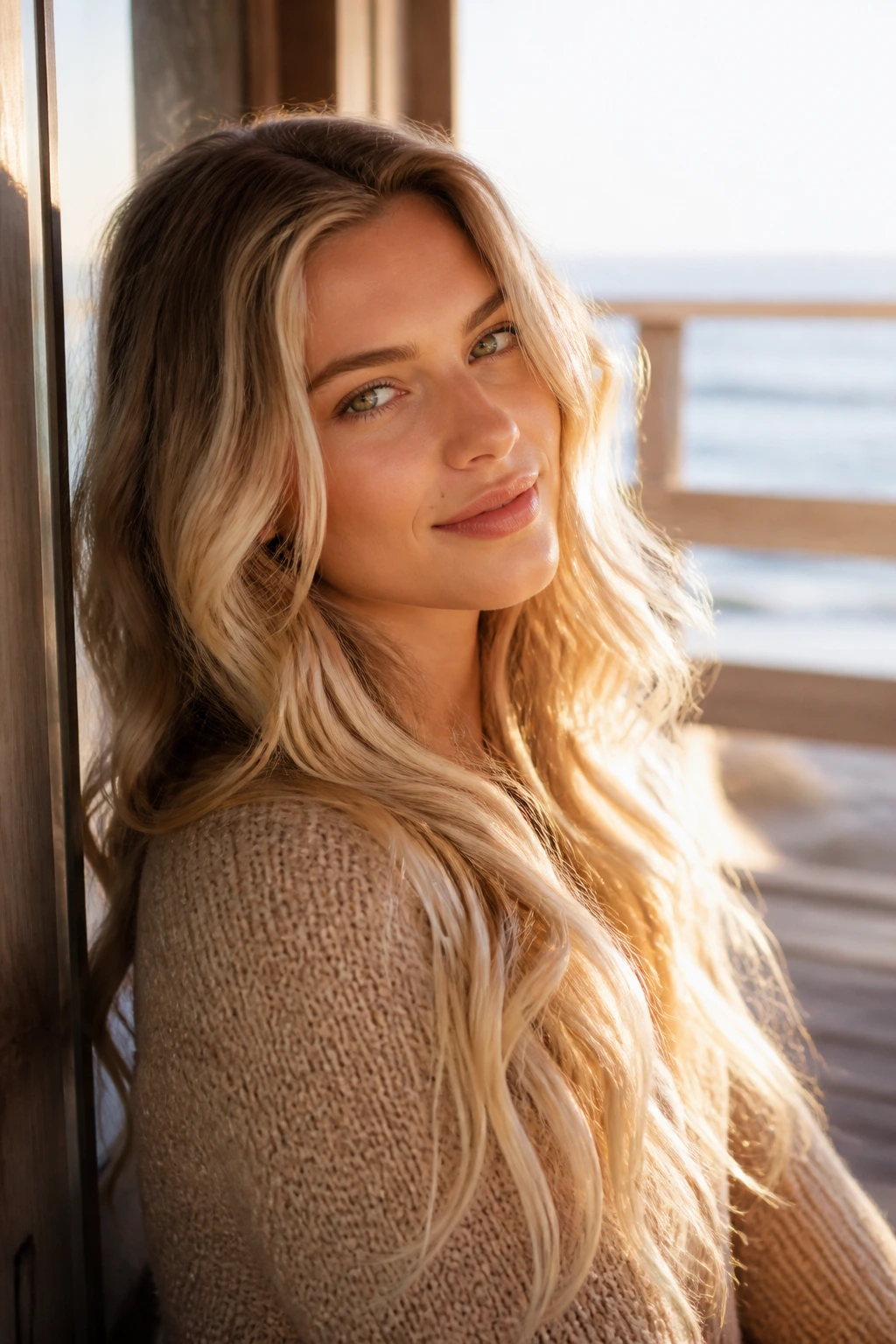
Long waves give blonde color the one thing it always wants: surface variation. Light hits the crest of the wave, slides into the dip, and lands somewhere different a few inches away. That is why balayage, babylights, shadow roots, and money pieces all look more expensive on textured lengths than they do on hair that hangs like a sheet.
There’s also a practical reason these pairings last. Waves blur the grow-out line. They soften tonal changes. They hide the fact that the root is a shade darker than the mids, which is exactly what makes lived-in blonde workable between appointments. If you’ve ever looked at a straight blowout and thought the color looked louder than it did curled, that’s not your imagination.
The smartest blonde looks on long wavy hair usually do three things at once: they keep some depth at the top, they brighten the face, and they let the ends be the lightest part without making them fragile-looking. That balance is the whole game.
The Tools and Products That Keep the Shape Clean
-
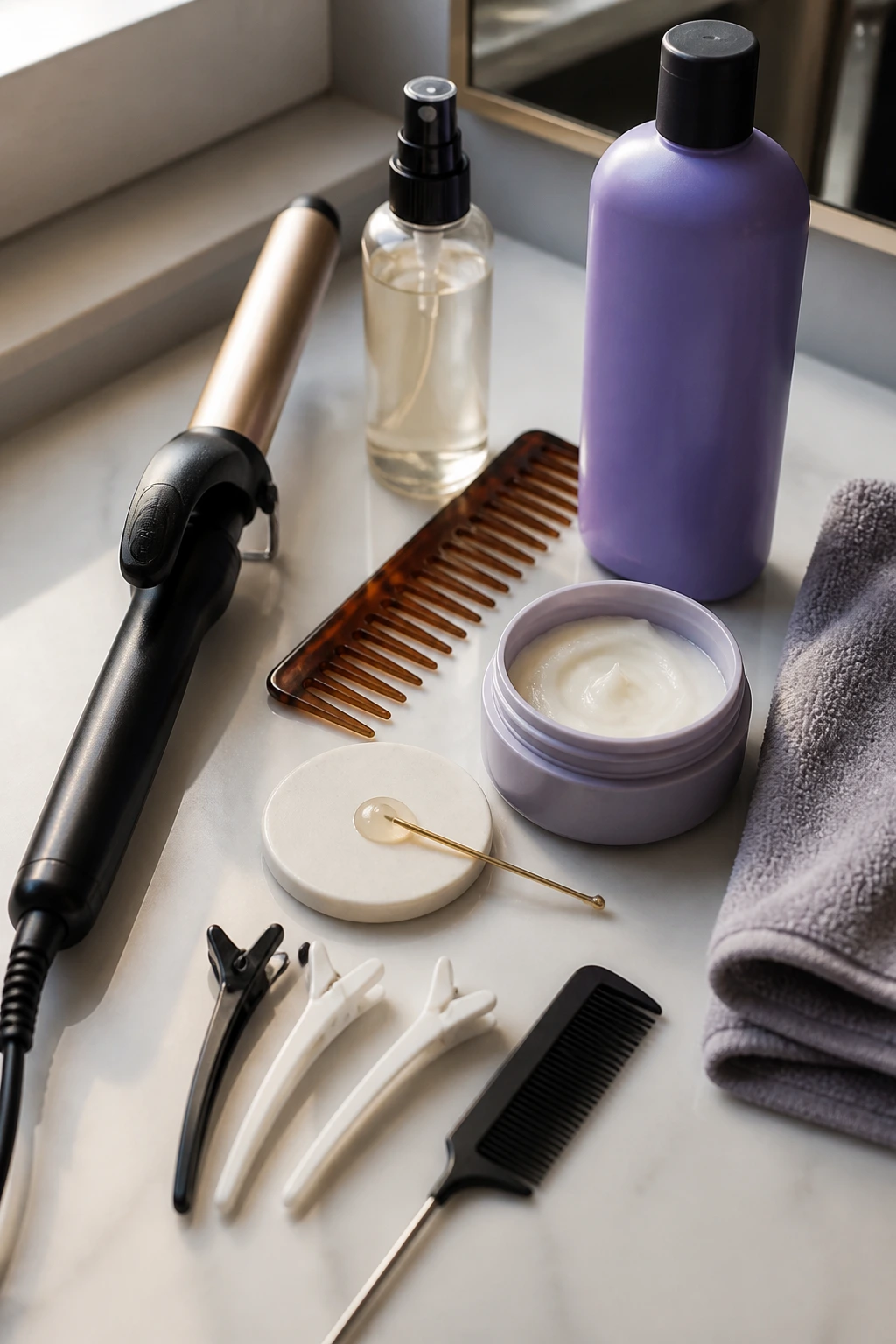
A 1.25-inch curling iron or wand: this barrel size makes soft bends that look natural on long lengths without turning the hair into tight ringlets.
-
Heat protectant spray: use it every time you heat-style; blonde hair shows heat damage faster because pale ends lose shine first.
-
Wide-tooth comb: use it to break waves apart after they cool, not while they’re hot and still setting.
-
Lightweight shine serum or oil: a pea-sized amount on the mids and ends smooths the surface without flattening the wave.
-
Purple or blue shampoo: purple helps pale blonde stay clear; blue is handy if your lightened hair pulls yellow-orange.
-
Color-safe moisturizing mask: a weekly mask keeps bleached or highlighted ends from getting straw-like after repeated styling.
-
Sectioning clips: useful when you’re curling long layers so the front pieces stay separate and do not get lost in the back.
-
Tail comb or rat-tail comb: helpful for clean parts and for placing face-framing pieces where you actually want them.
-
Microfiber towel or soft cotton T-shirt: rough drying can frizz up waves and make blonde look fuzzier than it is.
How to Choose the Right Blonde Tone and Placement
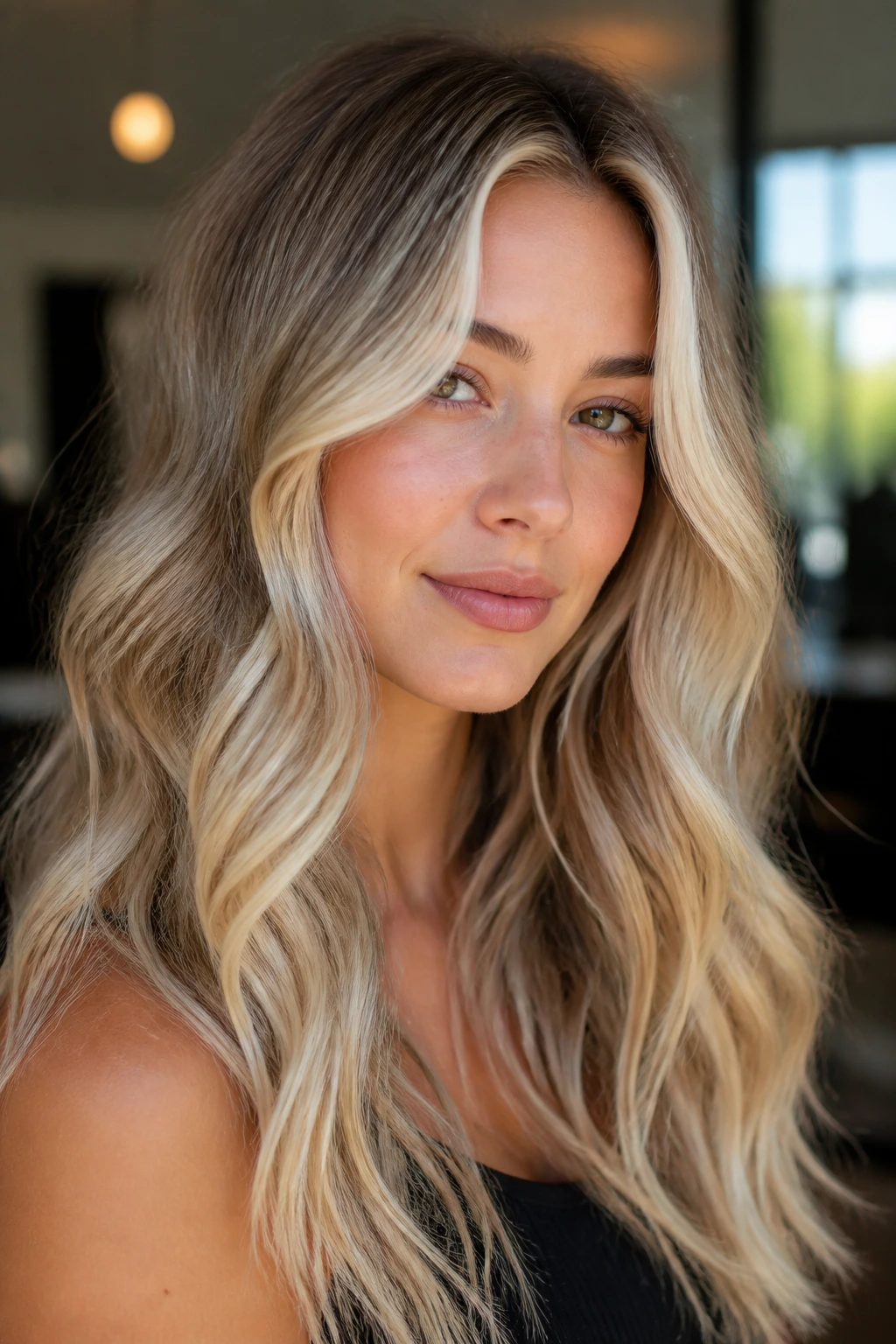
The best blonde for long wavy hair usually starts with your base color, not your inspiration photo. If your natural shade sits around a level 4 or 5 — dark blonde to medium brown — honey, caramel, beige, and cream-based blondes tend to blend more easily. If you’re starting from a level 7 or 8, pearl, vanilla, and white-gold tones are easier to wear without the whole head looking too dark underneath.
Placement matters just as much as tone. A strong money piece can open the face, but if the rest of the hair is light too, the front loses its punch. A deep root shadow can make the blonde last longer, but if it’s too heavy, the style reads muddy. On waves, I like a mix: brighter around the front and surface, softer and slightly deeper underneath, lightest on the ends where the hair naturally falls.
If your hair is fine, avoid huge chunky sections that carve the head into stripes. Fine babylights and a soft gloss usually look richer. If your hair is thick, you can handle bolder ribbons and more contrast because the density keeps the blonde from disappearing into the wave pattern.
How to Style Long Blonde Waves So the Color Shows Up
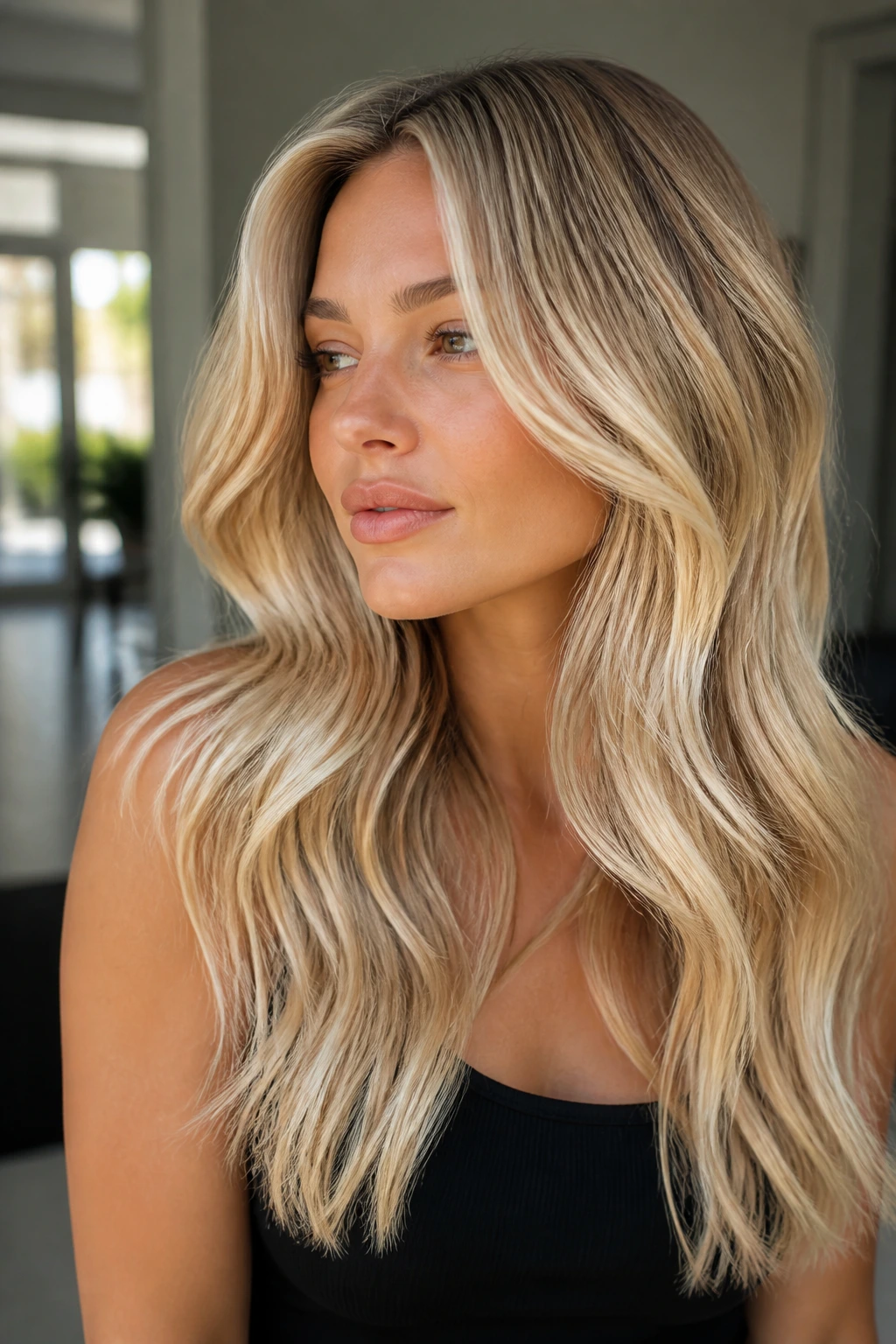
The color shows best when the wave pattern is relaxed, not cramped. Start with a heat protectant and a light mousse or wave cream on damp hair, then rough dry until the roots are about 80 percent dry. That little bit of body at the base keeps the blonde from collapsing into the scalp once the waves are set.
Curl or wave the hair away from the face in alternating directions, but leave the last inch or so straight. That trick keeps the ends from looking over-styled and helps the blonde appear longer and softer. Once the sections are cool, run a wide-tooth comb or your fingers through them — not a brush if you want the bends to hold shape.
Parting: a center part emphasizes symmetry and makes face-framing highlights obvious; a side part softens a strong money piece.
Finish: use only a small amount of shine serum on the mids and ends. Too much near the root kills the airy movement that makes blonde look expensive in person.
Best trick: tuck one side behind the ear or pin it back with a clip. The contrast between the bright front and the deeper underside makes the color read more clearly.
Common Mistakes That Make Blonde Waves Look Stripey or Dry
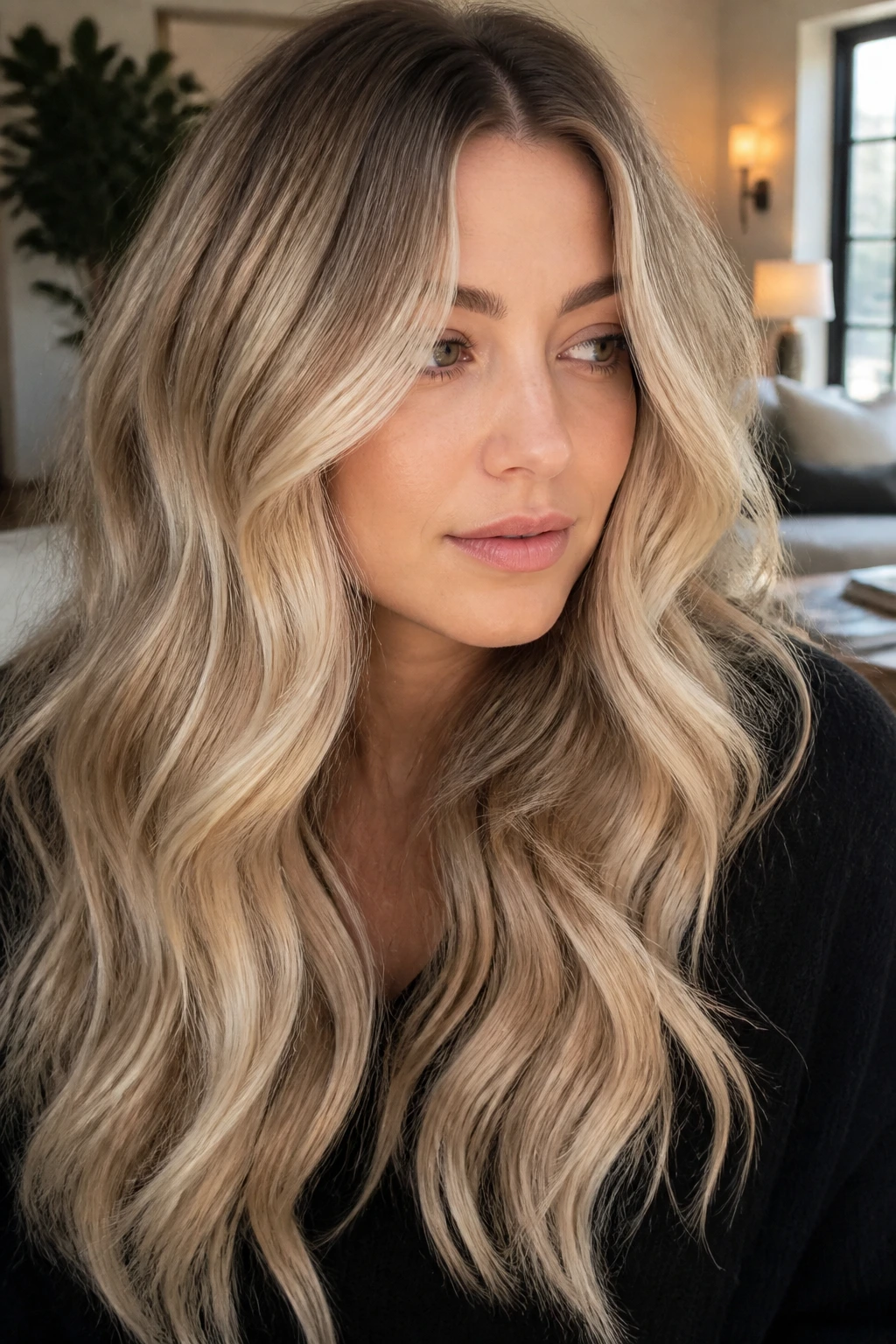
The biggest mistake is asking for too much lightness at once. On long wavy hair, that can leave the ends fragile and the color too uniform. The symptom is obvious: the blonde looks loud at the salon and flat two weeks later. The fix is better placement, not more bleach.
Another problem is choosing a tone that fights your base. A cool ash glaze over warm lightened hair can look dull; a golden toner over an already warm base can drift brassy. If the blonde looks “off,” it often isn’t the level. It’s the undertone.
Skipping depth is a sneaky one. Without a root shadow or lowlight, long waves can turn into one pale sheet. The hair may be technically blonde, but the shape disappears. A little darker color underneath gives the eyes somewhere to rest.
Heavy product is a quieter mistake, but it matters. Serum, oil, and curl cream can all make blonde look dull if they sit on the surface. Use less than you think, then add a touch more only if the ends need it.
Ways to Tweak These Looks Without Starting Over
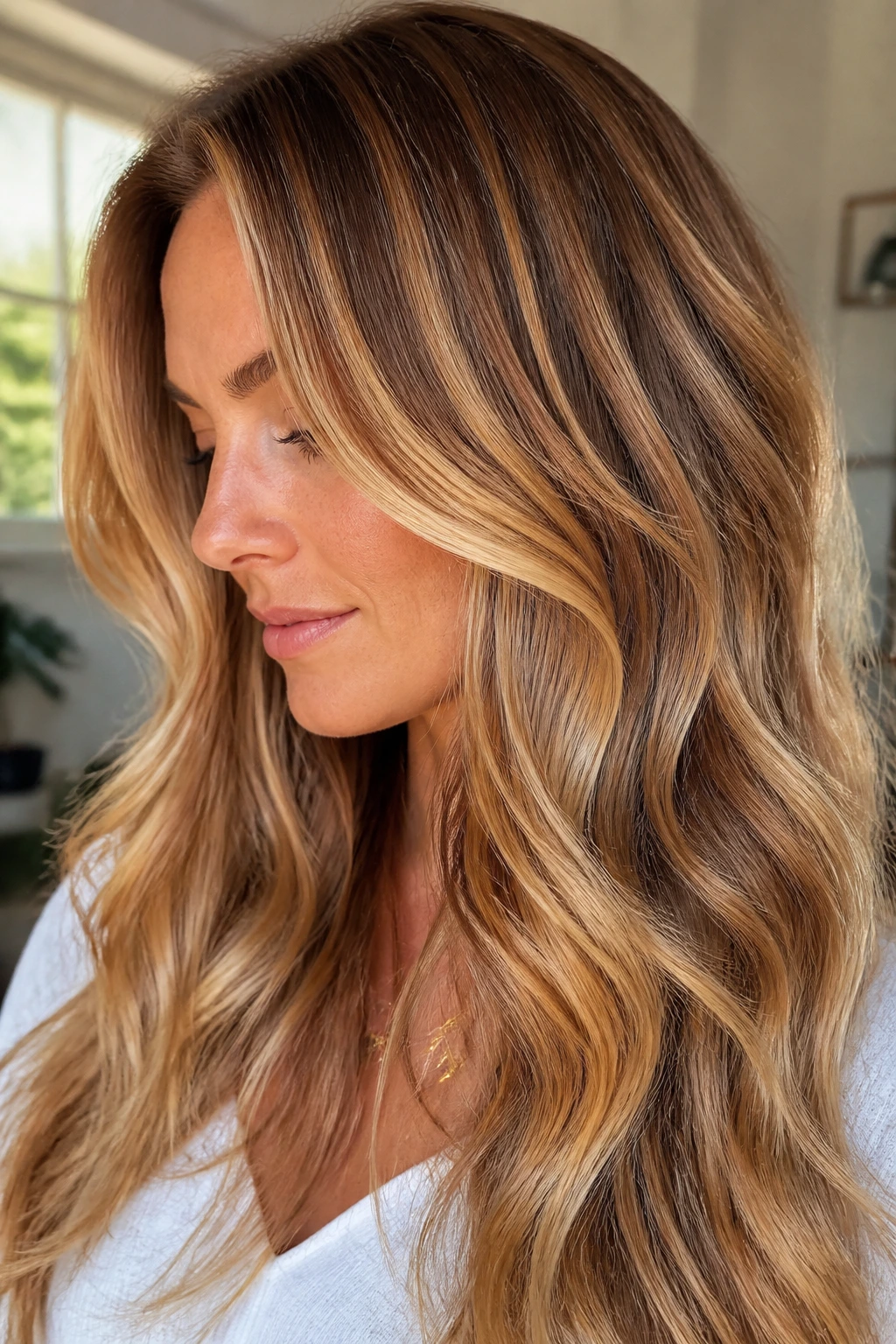
Cool It Down With a Beige Gloss: if your blonde leans too gold, a beige gloss can calm it without stripping out all the warmth. This works well on cream, champagne, and butter tones.
Warm It Up With Honey Ribbons: if a beige or pearl blonde feels too pale, add a few honey ribbons around the mids and front. The change is small, but on wavy lengths it reads immediately.
Lower the Maintenance With a Shadow Root: keeping the root one to two shades deeper makes grow-out easier and keeps long waves from looking over-lightened. It is the best move if you prefer a lived-in finish.
Add Depth Back In With Lowlights: if the hair starts looking too light or too samey, micro-lowlights can bring the dimension back. They’re especially useful on long, thick waves.
Push the Front Brighter: if the lengths are fine but the face looks closed off, brighten only the money piece and the first few inches around it. That gives the whole style lift without redoing everything.
Keeping Blonde Waves Fresh Between Salon Visits
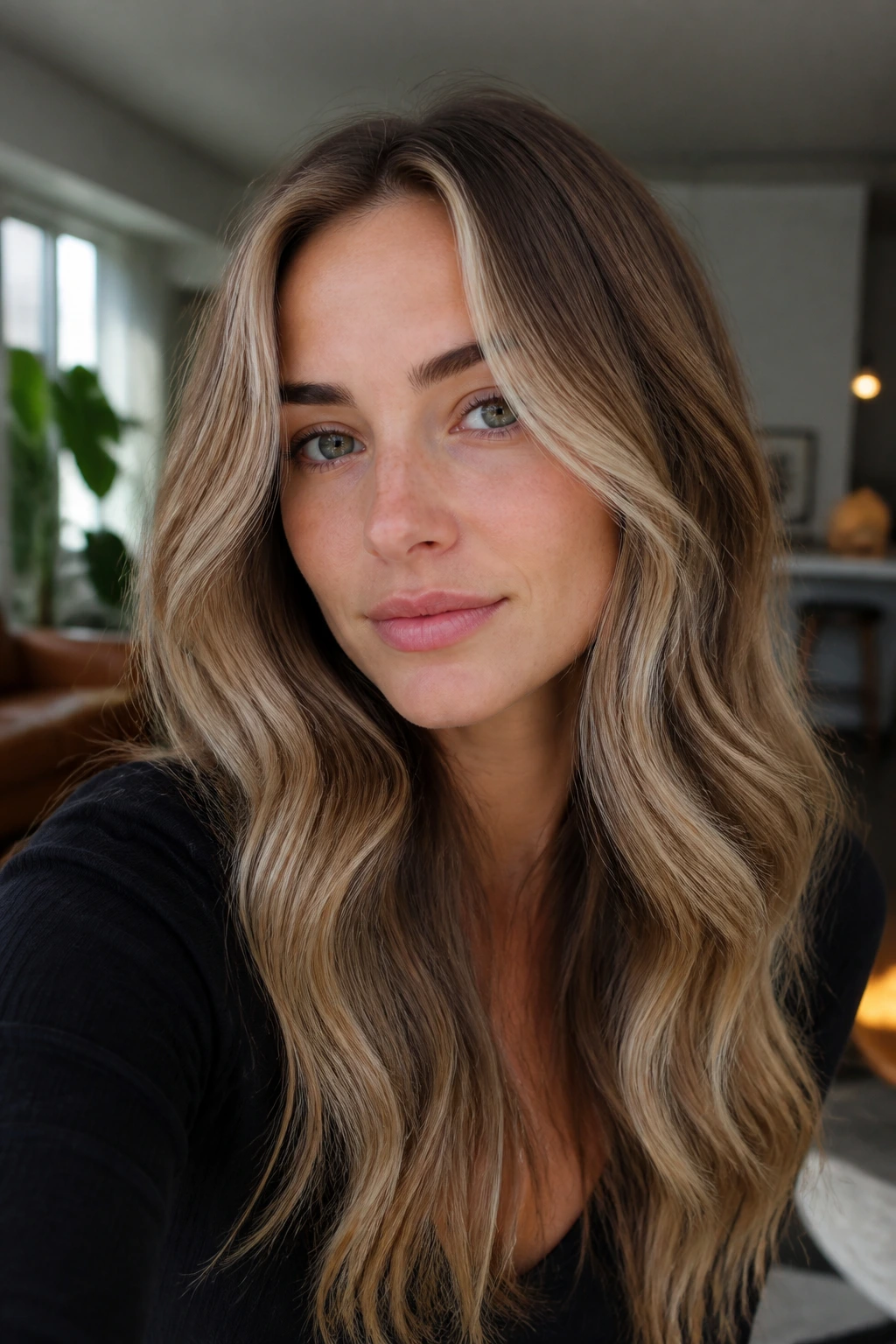
Blonde on long wavy hair stays prettier when you treat the ends like they matter more than the roots. That means fewer hot tools on the same sections, a weekly moisture mask, and a toner or gloss when the shade starts turning yellow or muddy. Pale blondes usually need more attention to tone; warmer blondes need more attention to shine.
For salon timing, root shadows and balayage can often stretch to 8-12 weeks if the placement was done well. A gloss usually wants refreshing sooner, around 4-6 weeks, because the tone is what fades first. Haircuts matter too. Long layered blondes look better with a trim every 8-12 weeks so the ends stay blunt enough to hold the wave and not fray out.
At home, use purple shampoo sparingly. Once a week is enough for many blondes; more than that can leave the hair dull or oddly tinted. If the hair is porous, alternate purple shampoo with a gentle color-safe cleanser so the blonde stays clean without becoming muddy.
Frequently Asked Questions About Blonde Hair Looks for Long Wavy Hair
Which blonde shade is easiest to maintain on long wavy hair?
Soft beige, champagne, and rooted honey blondes tend to be the easiest because they blur regrowth and hide fading better than icy or ultra-pale shades. The wave pattern helps, but a deeper root still makes life easier.
Will blonde highlights make wavy hair look thinner?
Not if the placement is done well. Fine babylights and lowlights can make waves look fuller by building texture, while huge light sections can make the ends look thinner than they are.
Is balayage better than foils for long waves?
Balayage usually gives a softer grow-out and more natural movement, which suits waves beautifully. Foils can still be the better choice if you want brighter lift or a more noticeable face frame.
How often should blonde waves be toned?
That depends on how pale the blonde is and how much heat styling you do. Many beige and champagne blondes need a gloss every 4-6 weeks, while deeper blondes can often wait longer.
Can dark brunettes go blonde without the color looking stripey?
Yes, but the transition has to be gradual. A bronde-to-blonde melt or a rooted balayage usually looks better than trying to jump straight to pale blonde in one appointment.
What if my blonde starts to look yellow?
Use a purple shampoo once a week, but do not overdo it. If the yellowing is strong or uneven, a salon gloss is often better than trying to scrub it away at home.
Do curtain bangs work with blonde waves?
They work especially well with soft cream, beige, and champagne tones. The fringe gives the face more shape, and the blonde around it keeps the front from disappearing into the rest of the length.
What if my ends feel dry after lightening?
That usually means the hair needs less heat, more moisture, and possibly a trim. A mask can soften the feel, but split ends do not heal, so trimming the worst of them is worth it.
A Blonde That Still Feels Like Hair
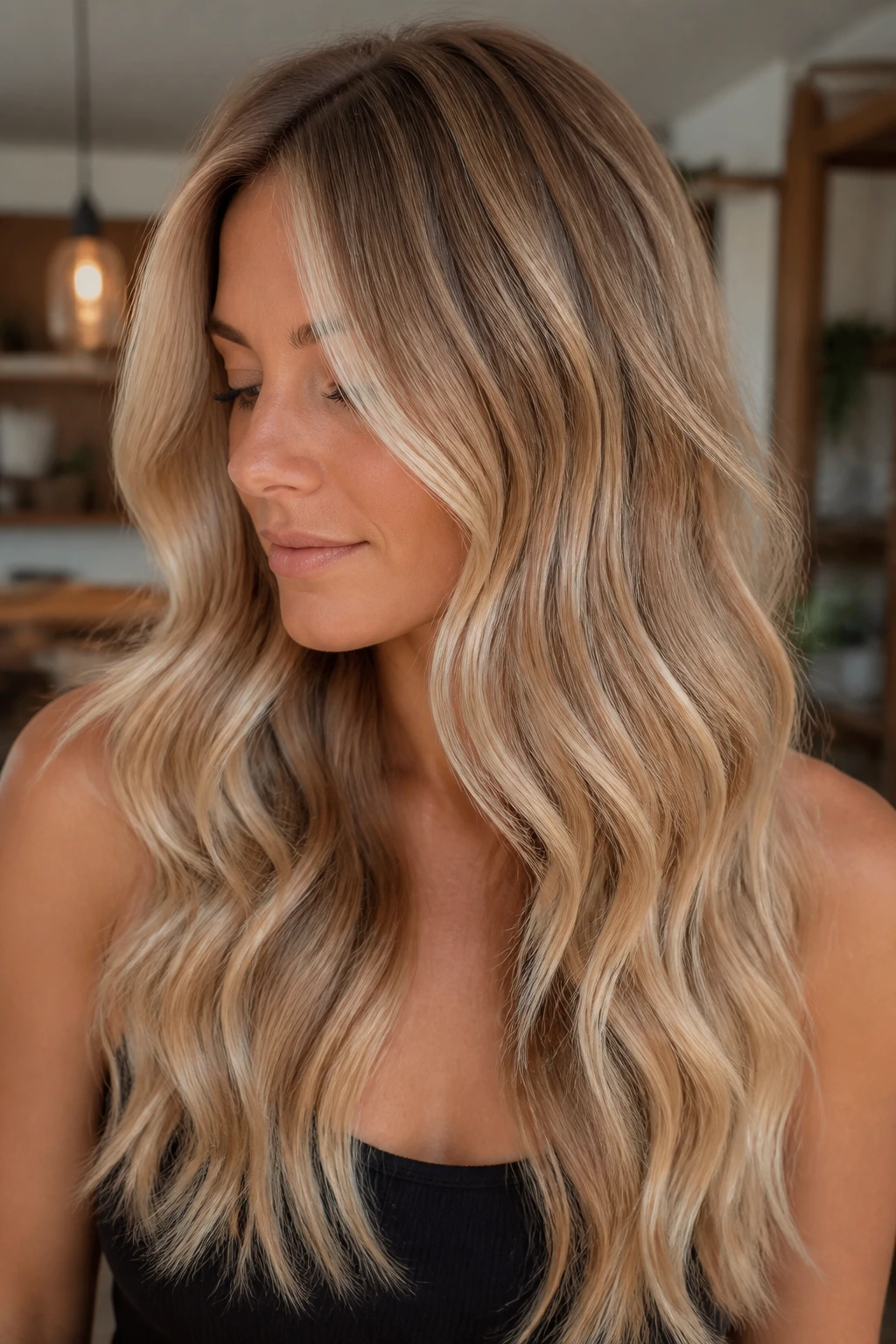
The prettiest blonde on long wavy hair is rarely the brightest one in the room. It’s the one with the best placement, the right depth at the root, and enough tone shift that every bend in the hair has something to show. That’s what makes the color feel dimensional instead of painted on.
If you’re choosing between shades, start with how much upkeep you actually want, then decide how cool or warm you want the finish to feel. The right blonde should work with the wave pattern, not fight it. When that happens, the whole style looks easier, softer, and far more expensive-looking than a one-note blonde ever could.
