



The best braid hairstyles for summer do one practical thing and one beautiful thing at the same time: they get hair off your neck, and they keep the whole look from collapsing the minute the air turns wet and sticky. That matters more than people admit. A style that looks neat at 8 a.m. and still holds its shape after a sweaty train ride, a walk in the sun, or a long afternoon outside earns its keep.
Braids are also one of the few styles that can change character fast. Tight and sculpted, they read polished. Loose and face-framing, they feel softer. Thick sections with a clean part can look sharp enough for work, while a braided bun or side braid can handle a beach day without turning into a frizzed-out shrug by lunch. The trick is choosing the right braid for the amount of heat, movement, and maintenance you’re willing to live with.
And yes, the details matter. A braid that’s too tight at the hairline will announce itself by dinner. Heavy extensions can drag fine hair down. A little planning—part size, braid tension, end finish, night care—changes everything. Some of these looks take twenty minutes. Some need a patient stylist and a steady hand. All of them can work if they fit the hair you actually have, not the hair you wish you had.
Why These Braids Earn Their Spot When the Weather Turns Sticky
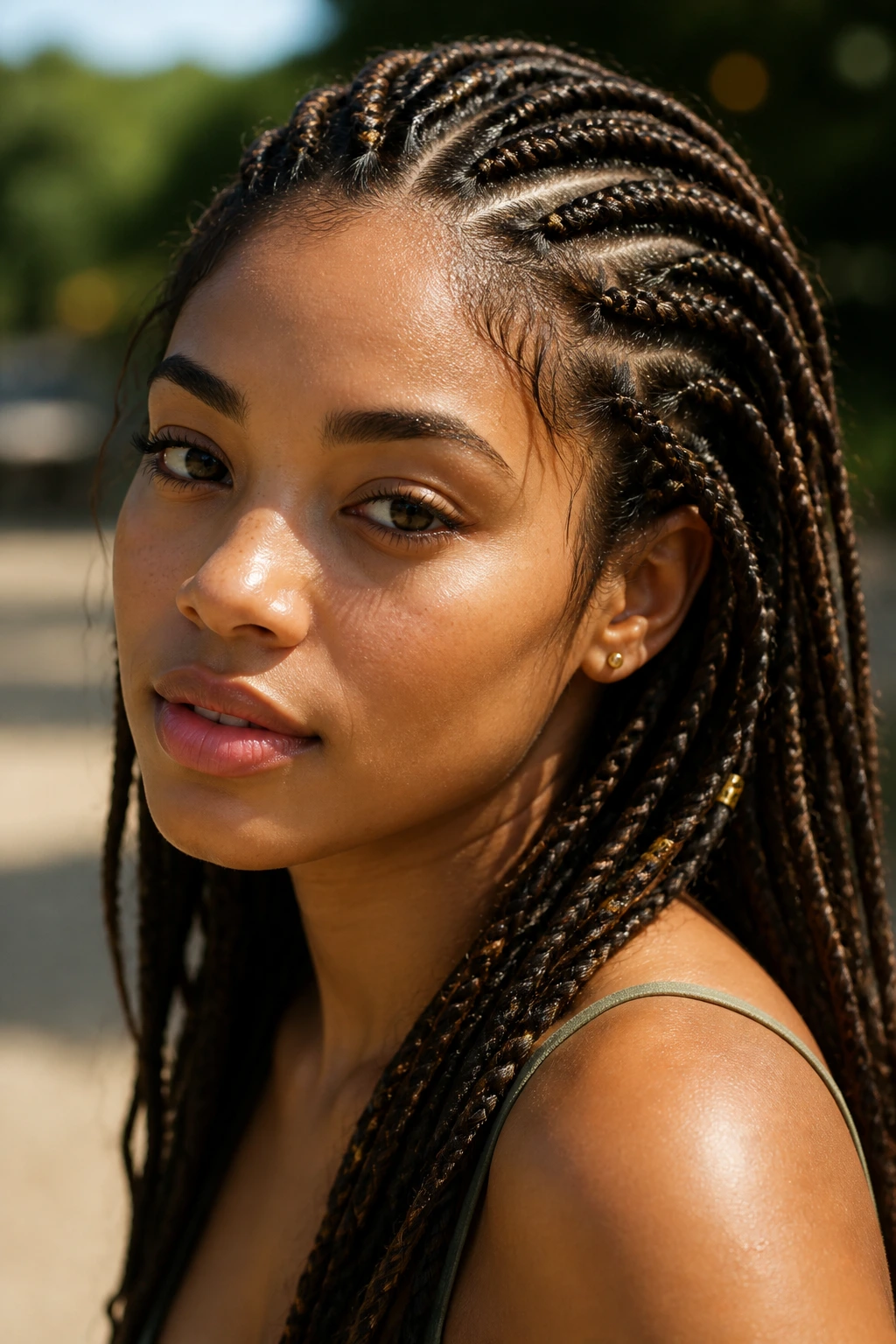
-
Less heat, less fuss: Braids cut down on flat-ironing and curling-iron work, so you’re not adding more warmth to a day that already feels hot at the scalp.
-
Cleaner-looking second-day hair: Structured braids tend to hold their shape after sleep, a workout, or a long commute better than loose styles that depend on perfect humidity.
-
They can protect the ends: Styles that tuck the ends away or keep them controlled reduce friction from collars, straps, and constant hand-styling.
-
They work at different tension levels: Knotless braids, loose crowns, and side braids can be gentler than tight styles if your scalp gets sore fast.
-
There’s a style for every hair length: Some of these need extension hair. Others work on shoulder-length natural hair with nothing more than a comb and a few pins.
-
The look is built in: A braid has shape before you add anything else. That means beads, cuffs, curls, and wraps feel like extras, not requirements.
1. Classic Box Braids With a Clean Center Part
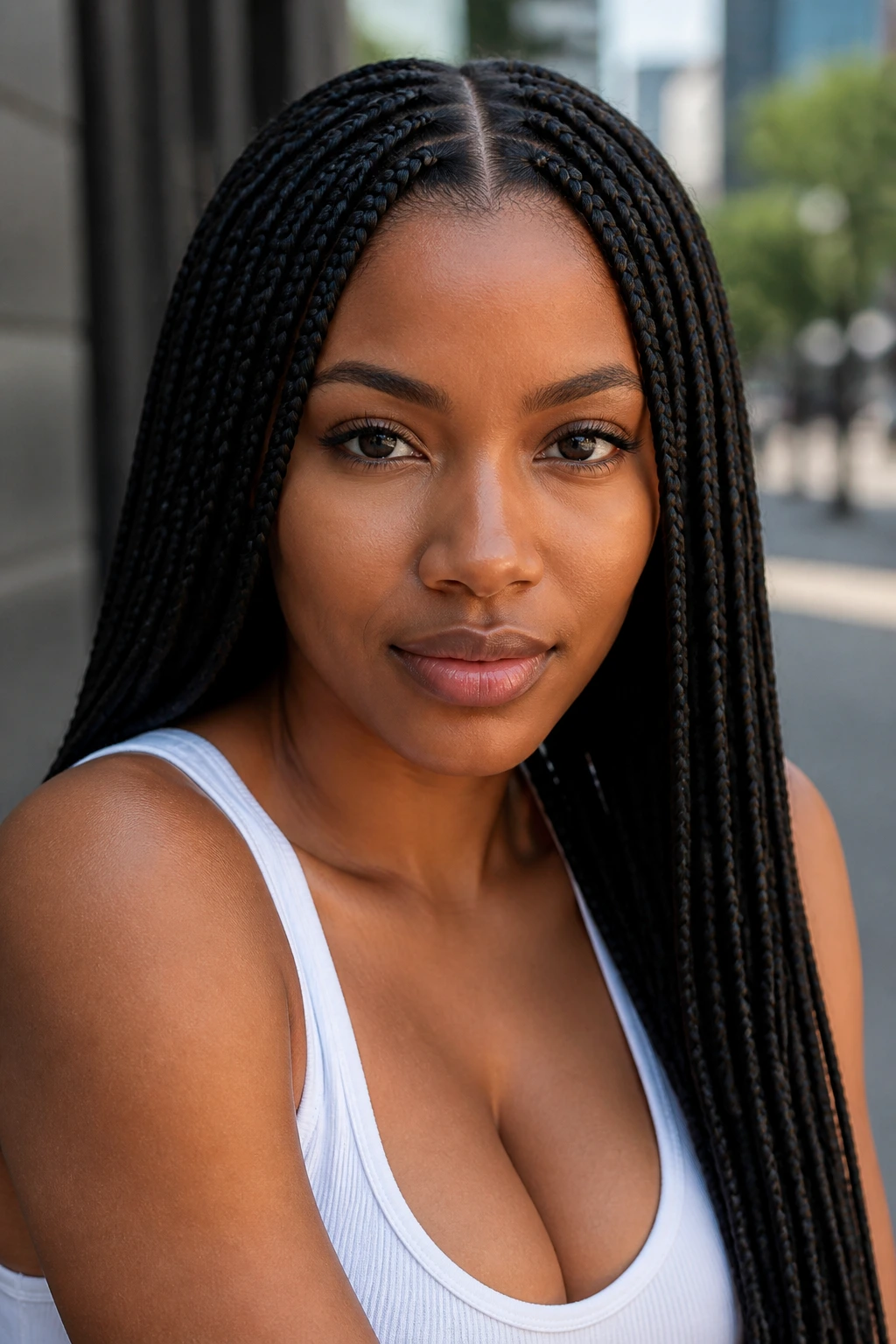
Box braids are the style people return to when they want something that looks tidy from every angle. The square parts give the hair structure, and the braids themselves move with a little swing instead of lying flat and lifeless. In summer, that movement matters. A good box braid doesn’t cling to the neck or puff out at the first hint of humidity.
The clean center part is what makes this version feel especially sharp. It draws a straight line down the scalp and lets the braids fall evenly on both sides, which is helpful if you like symmetry and a face-framing look that doesn’t try too hard. I like this one best when the parts are medium-sized—small enough to look neat, but not so tiny that the install becomes a marathon.
Why it works: box braids hold their shape because each section is defined from root to tip. That makes them one of the easiest summer braid hairstyles to dress up or throw into a high ponytail later. They also give you a lot of wiggle room with length: shoulder-skimming, mid-back, or long enough to wrap and pin.
A small warning. If the braid feels heavy on day one, it will feel heavier on day four. Weight adds up fast.
2. Knotless Braids That Sit Flat at the Hairline
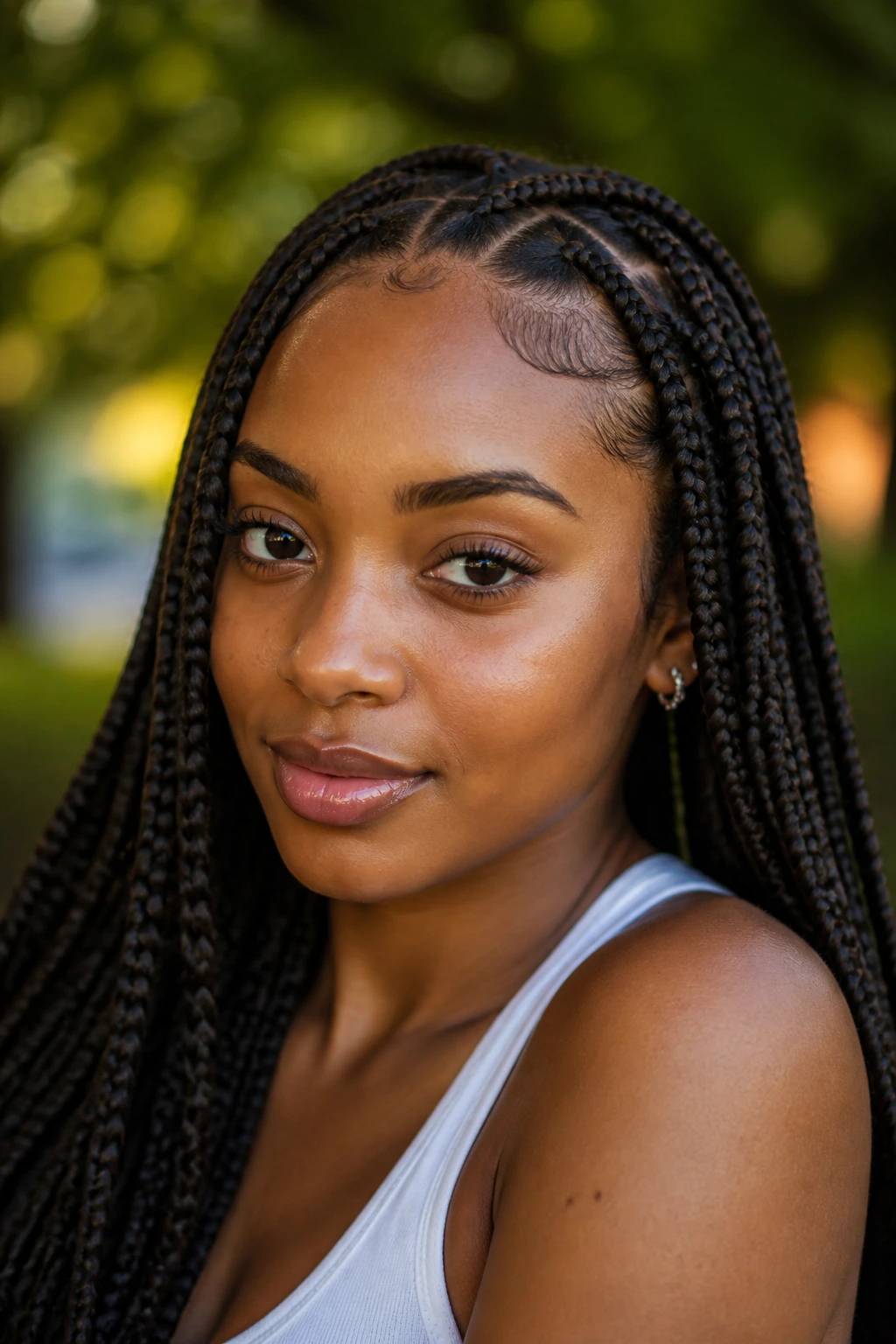
Knotless braids are the style I’d hand to someone who hates that tight, tugging feeling at the front of the scalp. Instead of starting with a bulky knot at the root, the braid feeds in hair gradually, so the base lies flatter and moves more naturally. The difference is not subtle. The whole style feels lighter in the chair and easier on the edges.
They also look softer than older-school box braids. That’s partly the flatter base, and partly the way knotless braids taper before the ends. If you want braid hairstyles for summer that can survive heat without looking stiff, this is one of the smartest choices. It’s easy to put into a ponytail, and it doesn’t scream for attention in a room full of bright clothes and bare shoulders.
I especially like knotless braids on people who wear braids often. Less tension at the root means less drama along the hairline, which is where a lot of bad braid jobs leave their mark. The style is gentle when it’s done right. That “when” matters.
3. Feed-In Cornrows Pulled Into a Low Ponytail
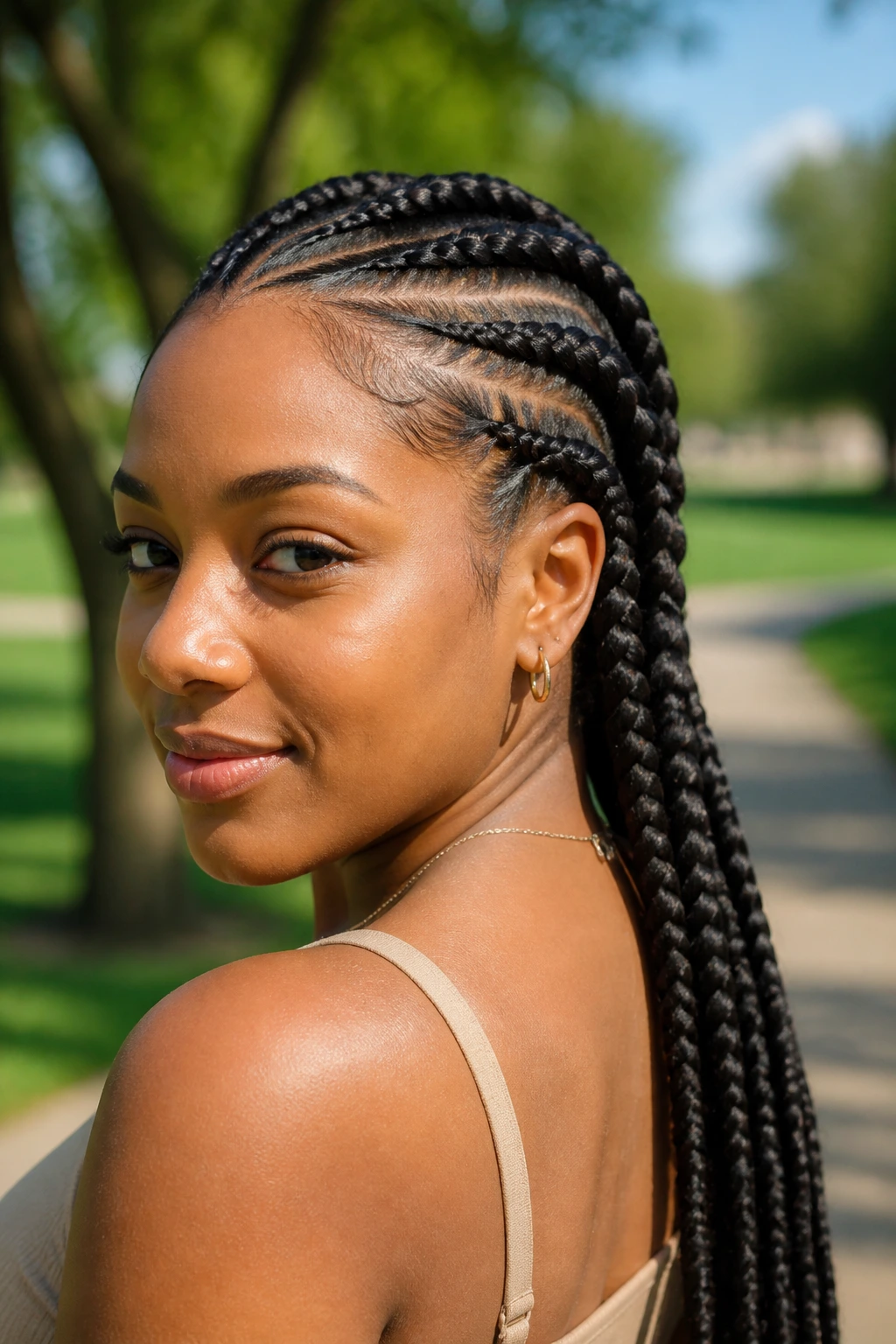
Want a braid style that stays put through heat, errands, and a full day of moving around? Feed-in cornrows into a low ponytail are hard to beat. The rows sit close to the scalp, the parting can be as simple or detailed as you want, and the ponytail keeps the whole shape controlled instead of letting it swell up at the back.
Feed-in braiding is what gives this look its smooth transition. Hair is added gradually, so the rows feel slimmer near the hairline and fuller as they travel back. That makes the style look precise without starting with a thick lump at the root. It’s a small detail, but it changes the entire finish.
This one works best when you want low maintenance during the day and minimal touching. If you’re the type who keeps reaching for a mirror to fix flyaways, the close-to-the-head layout helps. Just don’t chase sleekness so hard that you overdo the gel. The front should look neat, not lacquered.
4. Lemonade Braids Swept to One Side
Lemonade braids have a built-in point of view. The side-swept pattern gives the style motion before the hair even moves, and that makes it feel less severe than straight-back cornrows. They also create a nice line along the cheek and jaw, which is one reason they photograph so well without needing much else.
The side part does more work than people give it credit for. It shifts the weight of the style, leaves one side more open, and keeps the overall look from feeling too locked in. If you want a braid style that’s cool enough for warm weather but still has some shape and attitude, this one delivers.
A lot of people add cuffs or small beads near the ends, and that works because the braids already have direction. You don’t need to pile on accessories. One or two accents are enough. Too many, and the whole thing starts to look cluttered.
5. Dutch Braid Pigtails for Days You Want Your Hair Off Your Face
Dutch braid pigtails are the braid version of getting down to business. The braids rise off the scalp instead of sinking into it, which gives them a little more body and keeps the look from flattening out by noon. If your face gets warm easily, this style is a relief.
They’re also underrated for active days. Walking, biking, cleaning, traveling, chasing kids—whatever your day looks like, pigtails divide the weight and keep the hair from swinging around your shoulders. And because the braids start at the crown, they can be adjusted to sit high, low, or somewhere in between.
I like this style on medium-length hair because the braid tails can still feel substantial without needing a mountain of extension hair. On longer hair, it becomes more dramatic. On shorter hair, it reads playful and practical. That flexibility is the whole point.
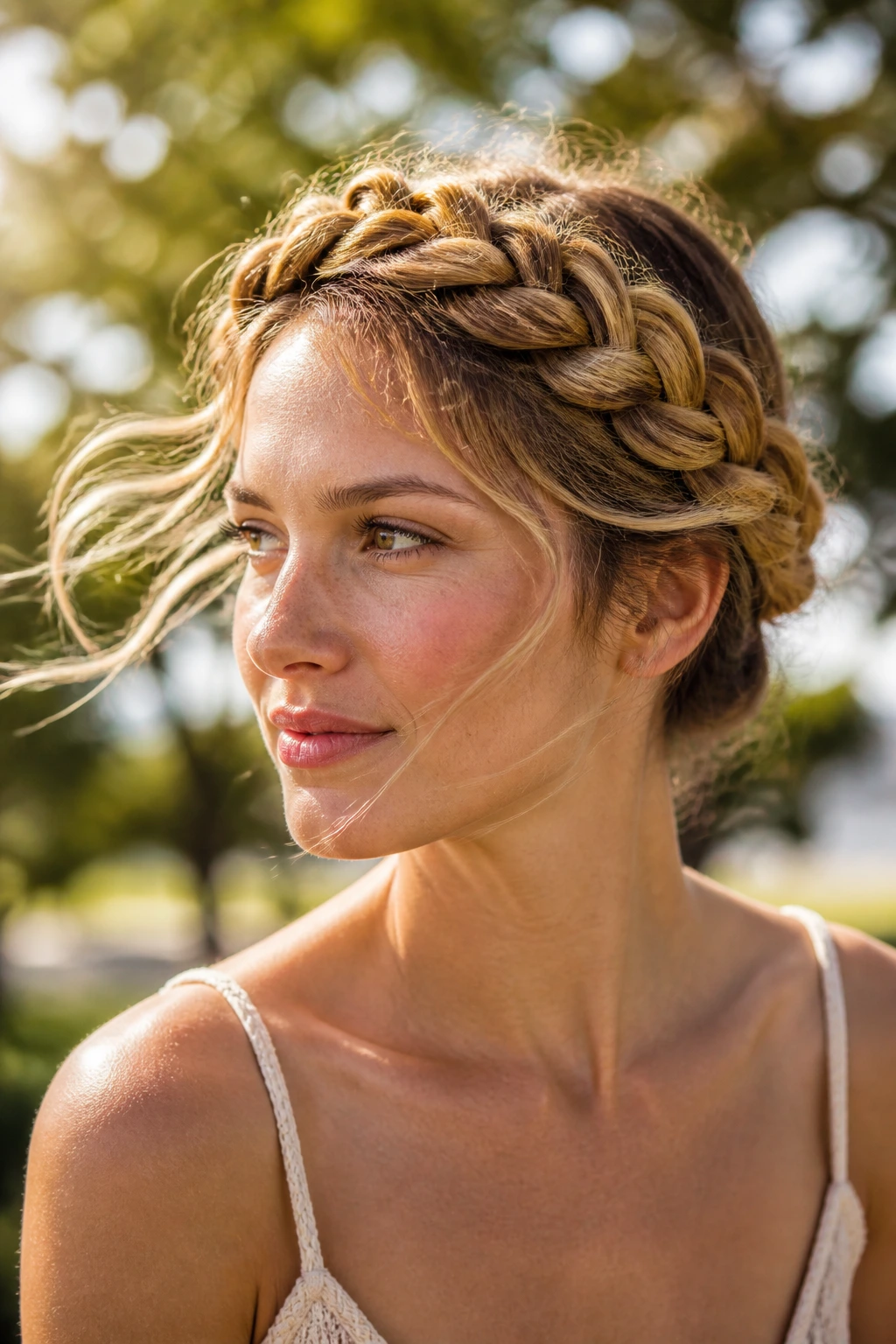
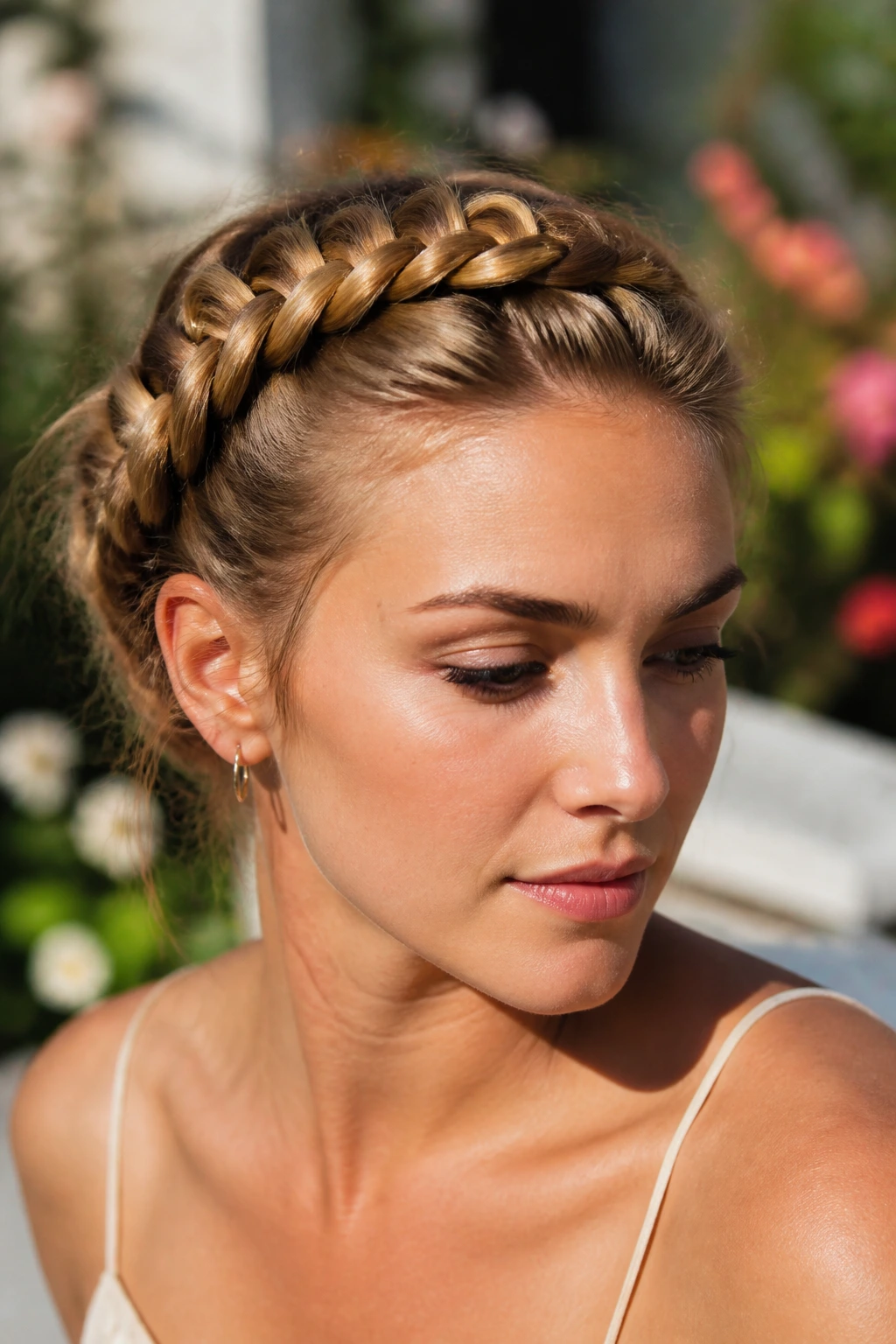
6. Crown Braid Halo for Windy Afternoons
A crown braid is one of those styles that looks more complicated than it is, which is part of its appeal. The braid wraps around the head like a halo and keeps the ends tucked away or pinned out of sight. When the wind picks up, the hair stays where you put it. That alone earns it a place in any summer braid roundup.
This is the braid I reach for when I want the neck free but I don’t want a bun sitting on the back of my head. It has a softer line than a topknot and a more finished feel than a single side braid. If you have layers or shorter front pieces, a few pins will handle the stray bits without making the style look overworked.
The best crown braids aren’t tight and shiny. They’re calm. The braid should sit close enough to stay in place, but not so tightly that the scalp looks pulled. That balance matters more here than in styles where the tension is hidden.
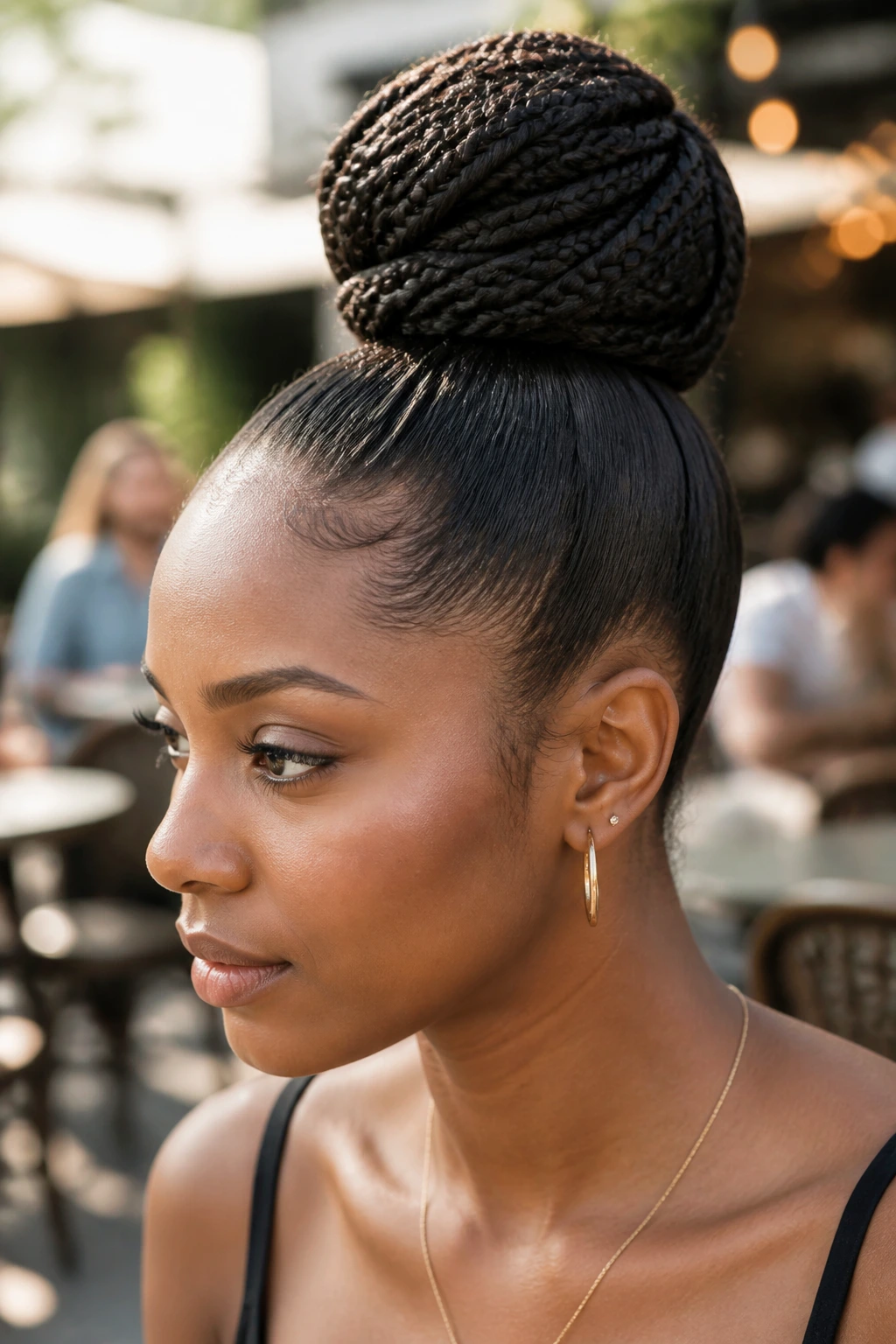
7. Braided High Bun With a Sleek Base
A braided high bun is the style I’d call the weekday uniform of summer hair. It keeps the neck clear, lifts the hair away from the face, and makes even a basic outfit look thought through. The braid can be a single large plait, a few cornrows feeding into the bun, or several smaller braids wrapped together at the crown.
The sleek base is what makes it work. A smooth section at the roots keeps the bun from looking bulky or halfway finished. I’m not a fan of drowning the hair in gel just to get that effect, though. A light hand with edge control and a firm brush usually does the job better, especially if the hair has any texture at all.
This style is also kind to mornings when you’re running late. If the bun is neat, the rest can be slightly imperfect and nobody cares. The shape carries the look.
8. Fishtail Braid Ponytail With Loose Ends
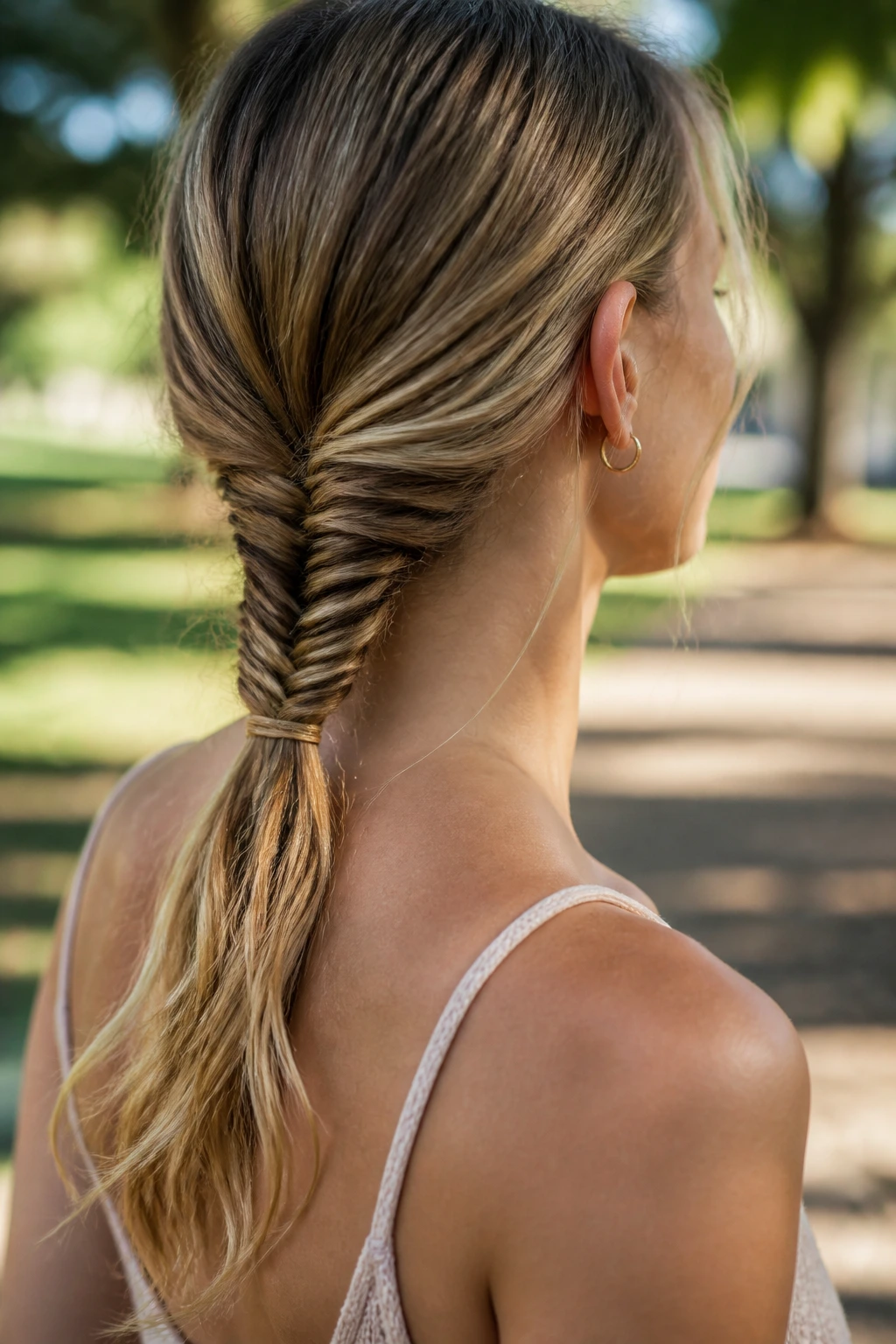
A fishtail braid looks fancier than it is. That’s the charm. It uses just two sections, but the crossing pattern creates a fine, woven texture that catches light and gives the ponytail a bit of personality. Loose ends at the bottom keep it from feeling too formal.
For summer, the fishtail braid ponytail makes a strong case for itself because it keeps hair controlled without looking stiff. It works especially well when the ponytail sits mid-back or low at the nape. A high version can feel sporty; a low one feels a little more polished.
This style likes hair with some grip. Freshly washed hair can slip apart more easily, so a tiny bit of texture spray or light mousse helps the braid hold. Not a heavy product. Heavy product makes the sections tacky in all the wrong ways.
9. Goddess Braids With Curly Leave-Out
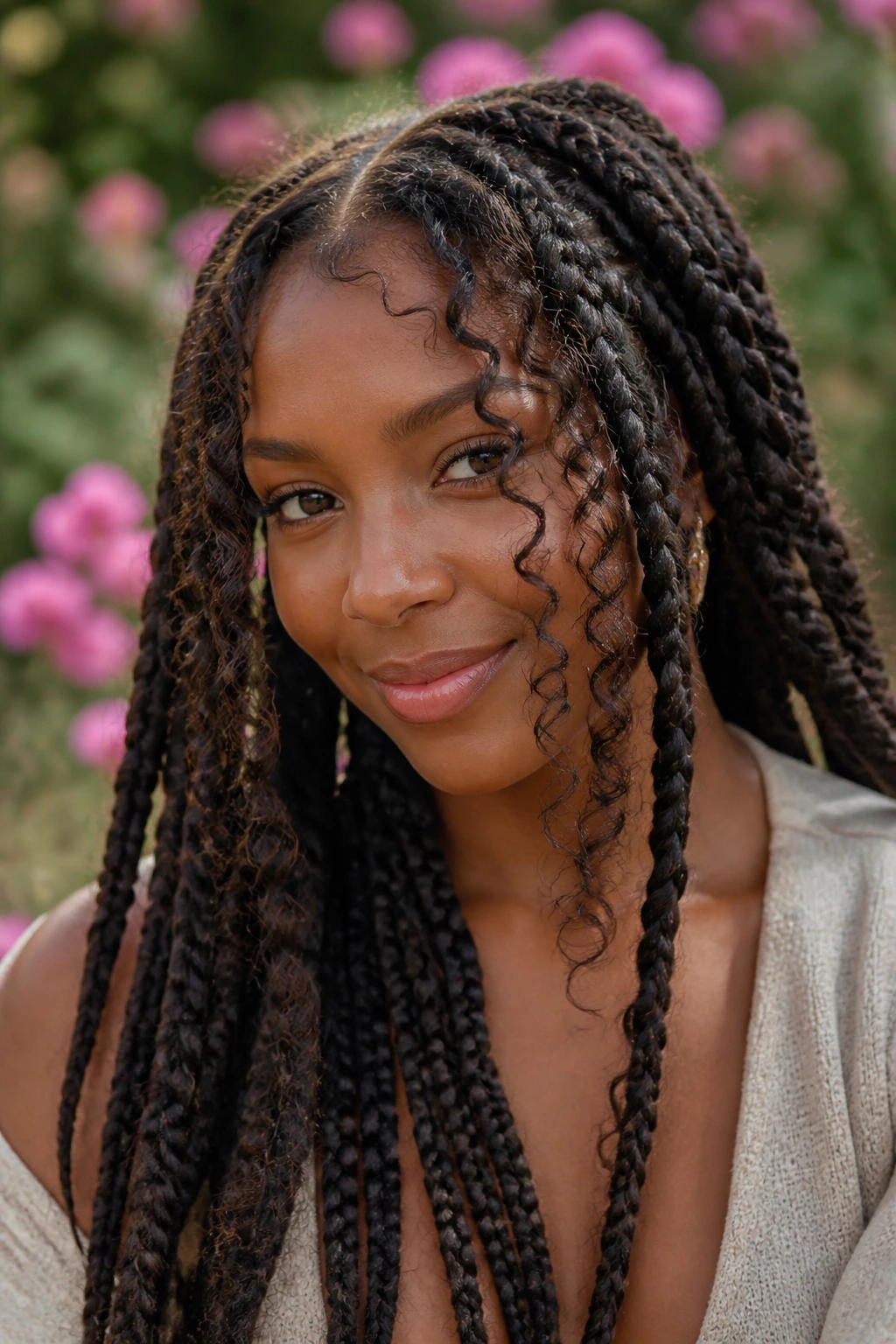
Goddess braids are the softer, more romantic cousin of straight cornrows. The braids themselves are usually thicker, and the curly leave-out adds movement around the face and through the lengths. That bit of texture changes the whole mood. The style stops feeling severe and starts looking lived-in in a good way.
I like goddess braids when someone wants a protective style but doesn’t want the finish to feel too rigid. The curls soften the edges, especially around the temples and ends, and they break up the braid pattern so it doesn’t read as one solid block. A little mousse goes a long way here. So does finger-coiling the leave-out while it’s still damp.
The catch is maintenance. Those curls need refreshing, and they frizz faster than the braids themselves. If you enjoy a neat style that stays identical for weeks, this isn’t the one. If you like a bit of movement and don’t mind a softer finish by day three, it’s lovely.
10. Stitch Braids With Sharp, Clean Parts
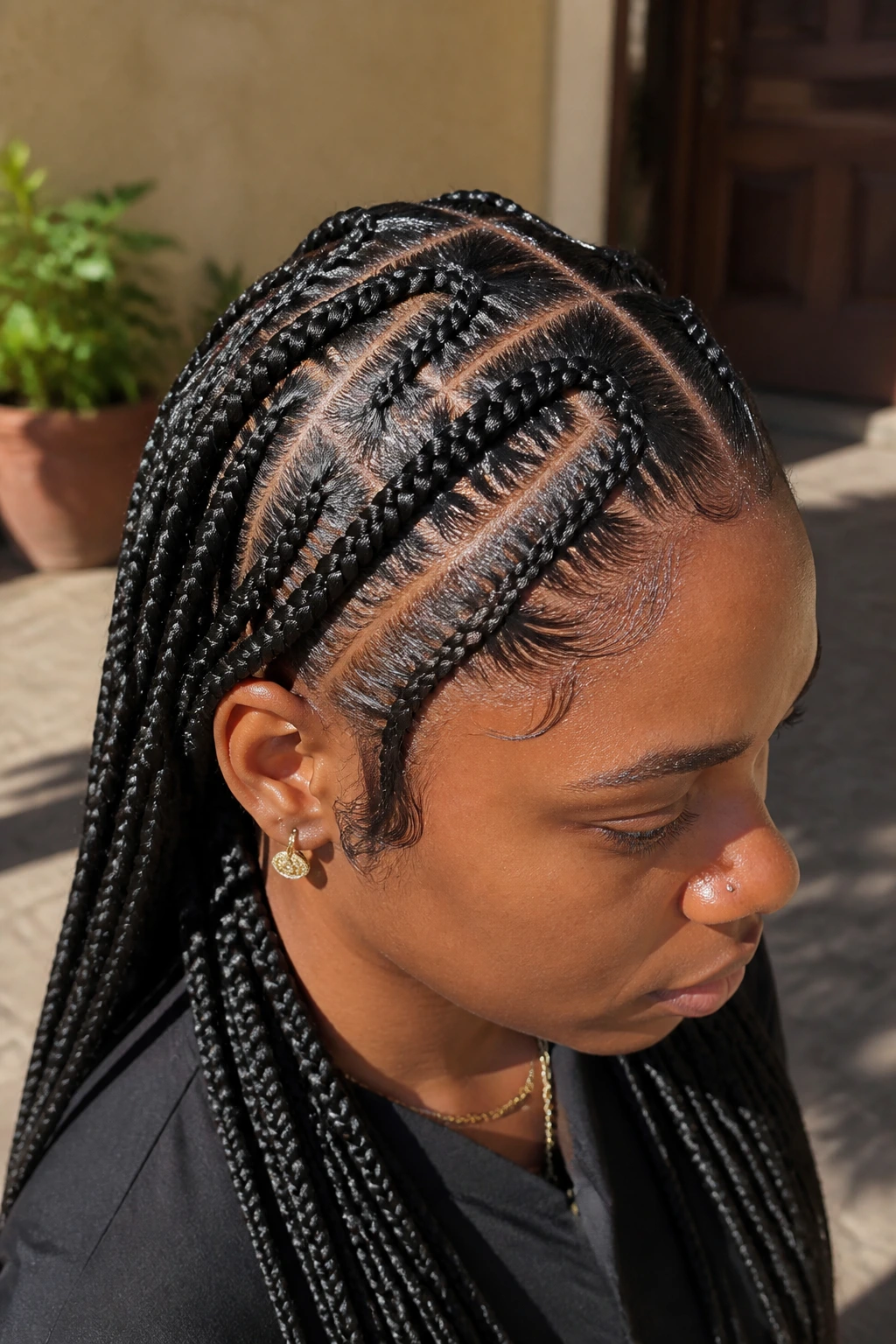
Stitch braids are for the person who likes the parting to look deliberate. The rows are built with straight, visible “stitches” of scalp showing between sections, and the effect is crisp. Almost graphic. In hot weather, that kind of structure keeps the style from feeling fuzzy before it’s even had a chance to settle.
What makes stitch braids different is precision. The braider has to keep the sections even, and the feed-in needs to stay controlled so the lines stay clean. If the parts wander, the whole look loses its edge. Done right, though, the shape can be very polished and surprisingly wearable.
This is one of those styles where less tension is better than more. Clean parting is not the same thing as tight braiding. If your temples feel pulled during the install, stop and reset the section. That tiny discomfort tends to turn into a headache later.
11. Boho Braids With Curly Tendrils
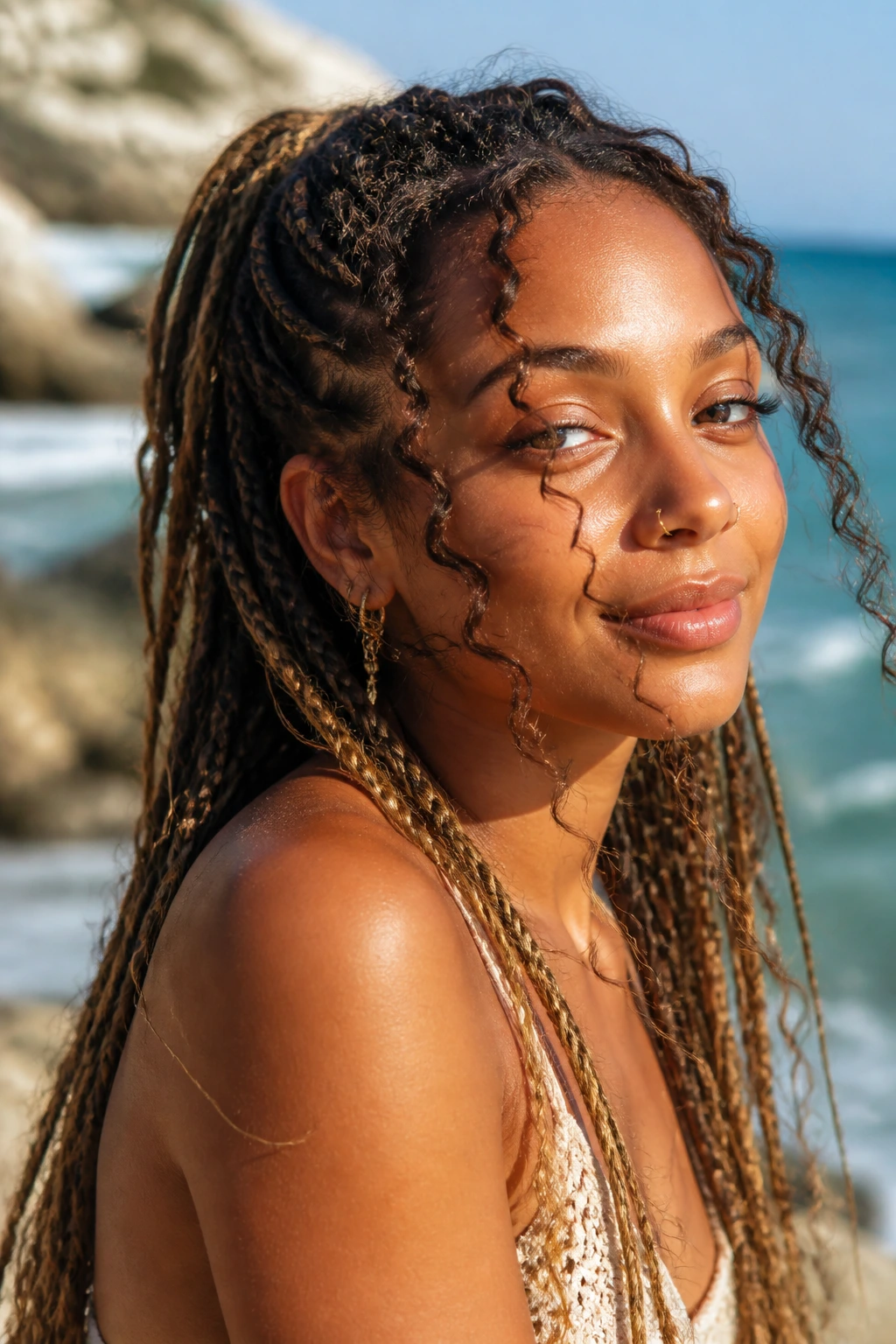
Boho braids are what happens when you want braids to feel a little less strict. Curly tendrils are left out between the braids or at the ends, which breaks up the structure and adds movement. The result is relaxed without looking unfinished, which is a harder line to walk than people think.
They’re a good pick when you want the protection of braids but don’t want the hair to read too controlled. The loose curls give the style a lived-in shape, and they move nicely when you turn your head or toss the hair over one shoulder. That movement is the whole draw.
There is a price. The loose curls frizz faster than the braids, and they need refreshing with a light mousse or curl spray. If you hate touching up your hair, you may find this style a little needy. If you enjoy a style that looks softer by design, it’s one of the nicest summer braid hairstyles out there.
12. Braided Bob That Skims the Jawline
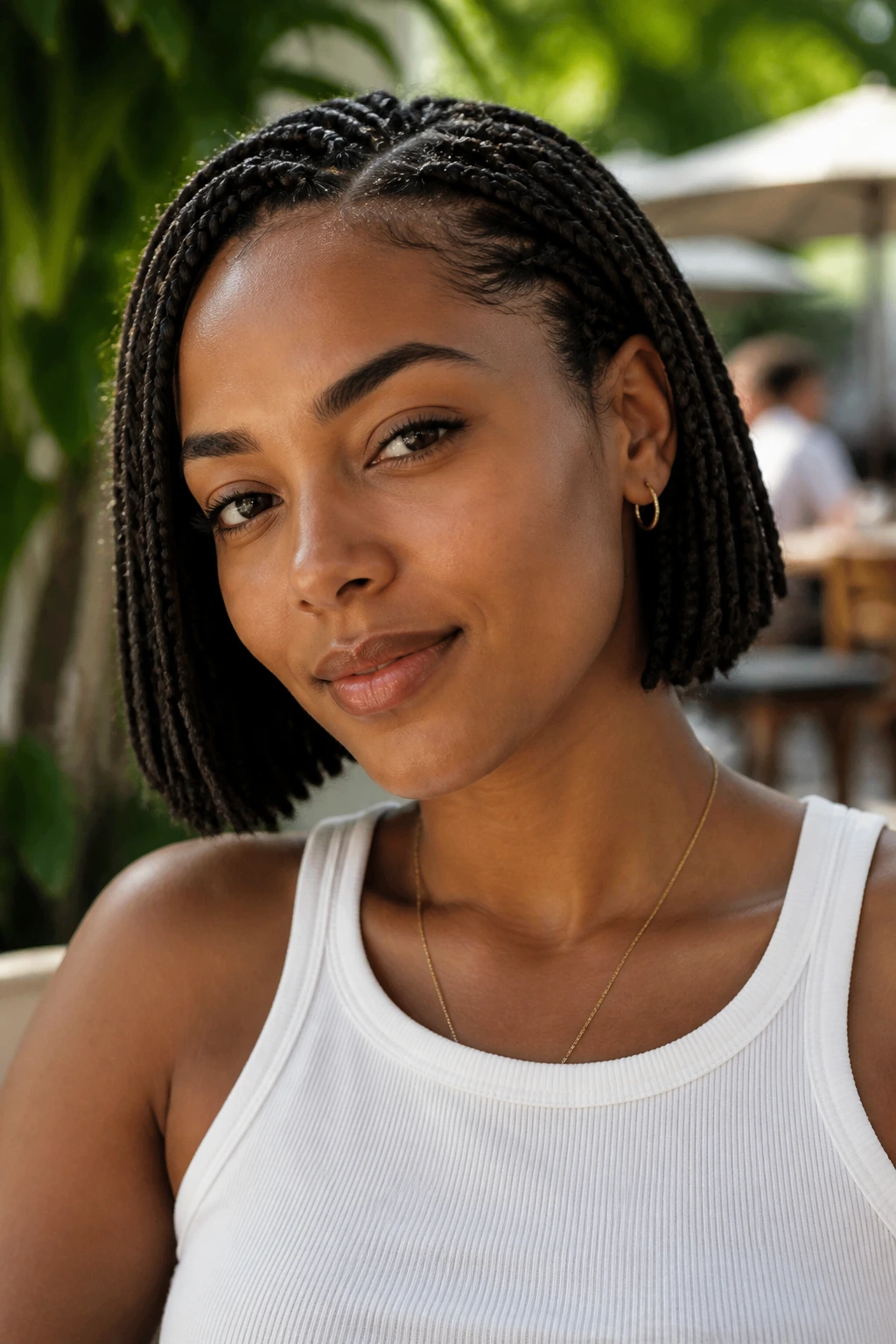
A braided bob is one of the smartest ways to wear braids when you want the look without the weight. Shorter braids sit close to the head, rest cleanly at the jaw or collarbone, and don’t drag on the neck in heat. That makes the style feel lighter before you’ve even stepped outside.
The cut of the bob matters. If the ends land exactly where the jawline ends, the shape can look crisp and modern. If they fall a little lower, the style softens. Either way, the shorter length gives the braids more bounce than long versions have. They swing instead of swish.
This is also a good option for finer hair or anyone who gets headaches from long extensions. Less length means less weight. That’s the tradeoff, and in summer it’s usually a good one.
13. French Braid Into a Low Chignon
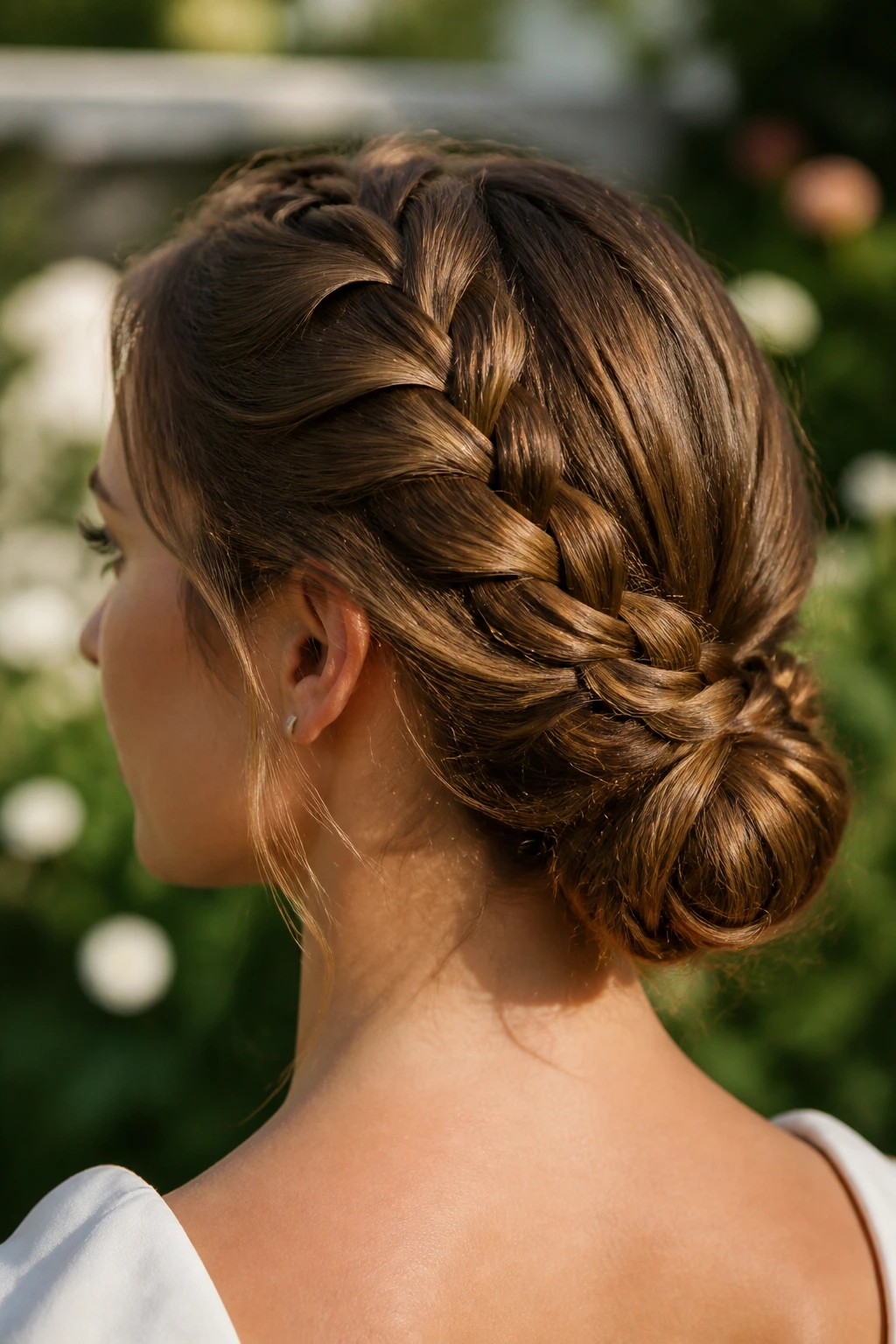
A French braid into a low chignon is the style I reach for when I want order without stiffness. The braid starts at the crown, gathers the hair neatly, and then folds into a bun at the nape. It feels more polished than a single braid and less severe than a topknot.
The low chignon is the part that saves it for warm weather. Instead of piling hair high and trapping heat, it stays near the neck but out of the way. That makes it a solid choice for dinners, interviews, or any setting where you want the hair to look considered rather than casual.
A few pins do more work here than a fistful of product. Secure the bun first, then tuck the braid tail into the shape. If the bun sits too low and loose, it can sag. If it sits too tight, the whole thing turns formal in a hurry.
14. Ghana Braids With Thick, Sculpted Rows
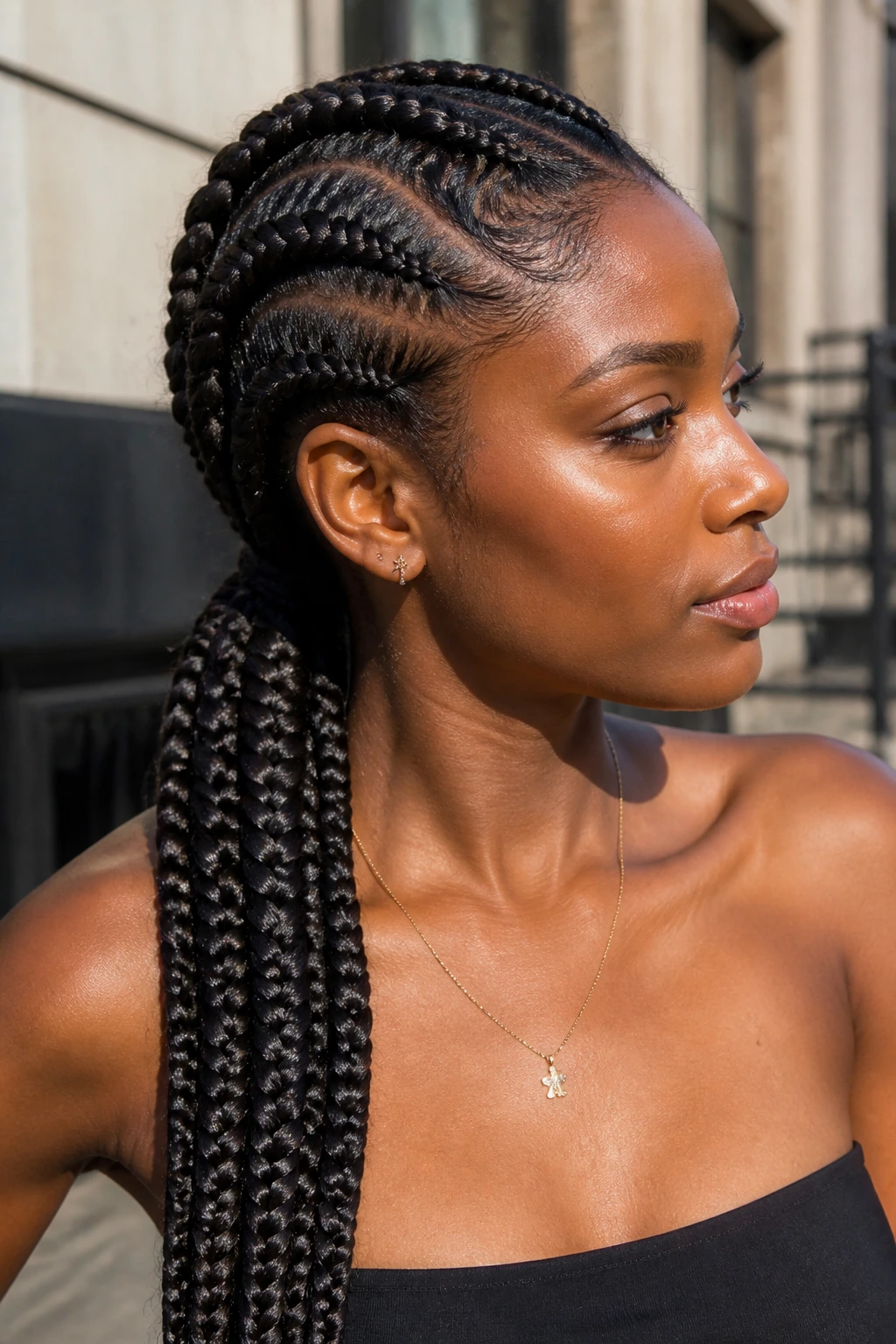
Ghana braids are bold without being fussy. The rows are thick, sculpted, and close to the scalp, which gives the style a strong shape that holds up in heat. They’re also a good reminder that fewer braids can still look substantial if the sections are thick enough.
The feed-in technique helps the rows start slim and grow fuller, so the base doesn’t look bulky right at the forehead. That matters. A heavy front edge can make the whole style feel harsh. Ghana braids avoid that when they’re installed with clean sectioning and controlled tension.
This style suits people who like a braid look with presence. It’s not shy. It takes up visual space in a good way, especially when the rows are straight and the ends are left long or gathered into a ponytail. If you want a low-maintenance install that still looks intentional, this one belongs on the list.
15. Space Buns With Mini Braids
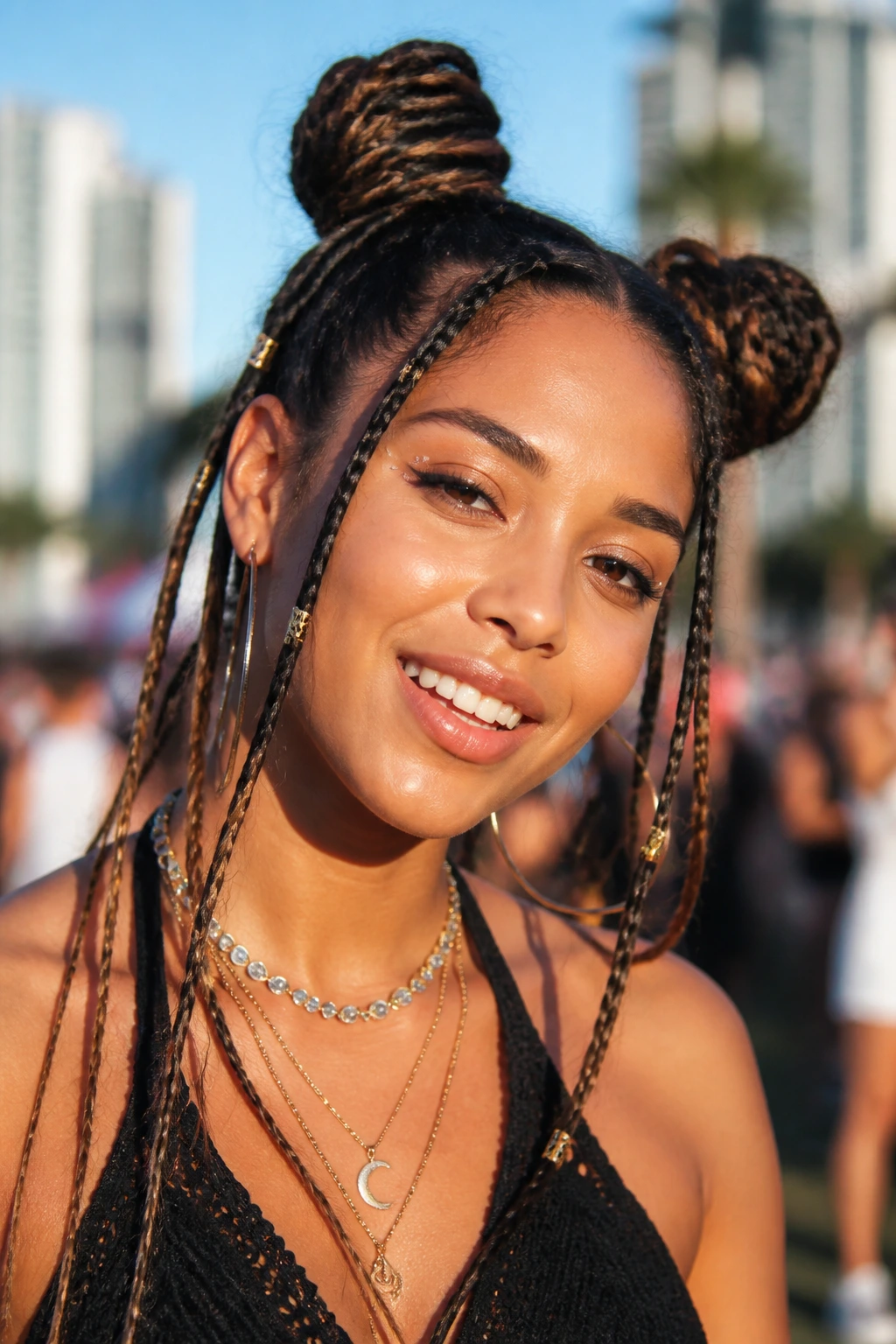
Space buns with mini braids sit in that fun spot between practical and playful. The mini braids can be built into two buns, wrapped around them, or left hanging as small details around the face. The whole style feels younger and a little less serious, which is sometimes exactly what summer wants.
They’re especially handy when you want hair up but don’t want the heavy feel of one big bun. Splitting the weight into two sections makes the style easier on the neck, and the braid detail keeps the buns from looking plain. If you like a style that can handle a concert, a road trip, or a lazy day that still needs shape, this one pulls its weight.
The best version keeps the buns balanced but not too perfect. A little asymmetry looks intentional here. Too much symmetry and the style starts to feel stiff.
16. Side-Swept Side Braid With a Deep Part
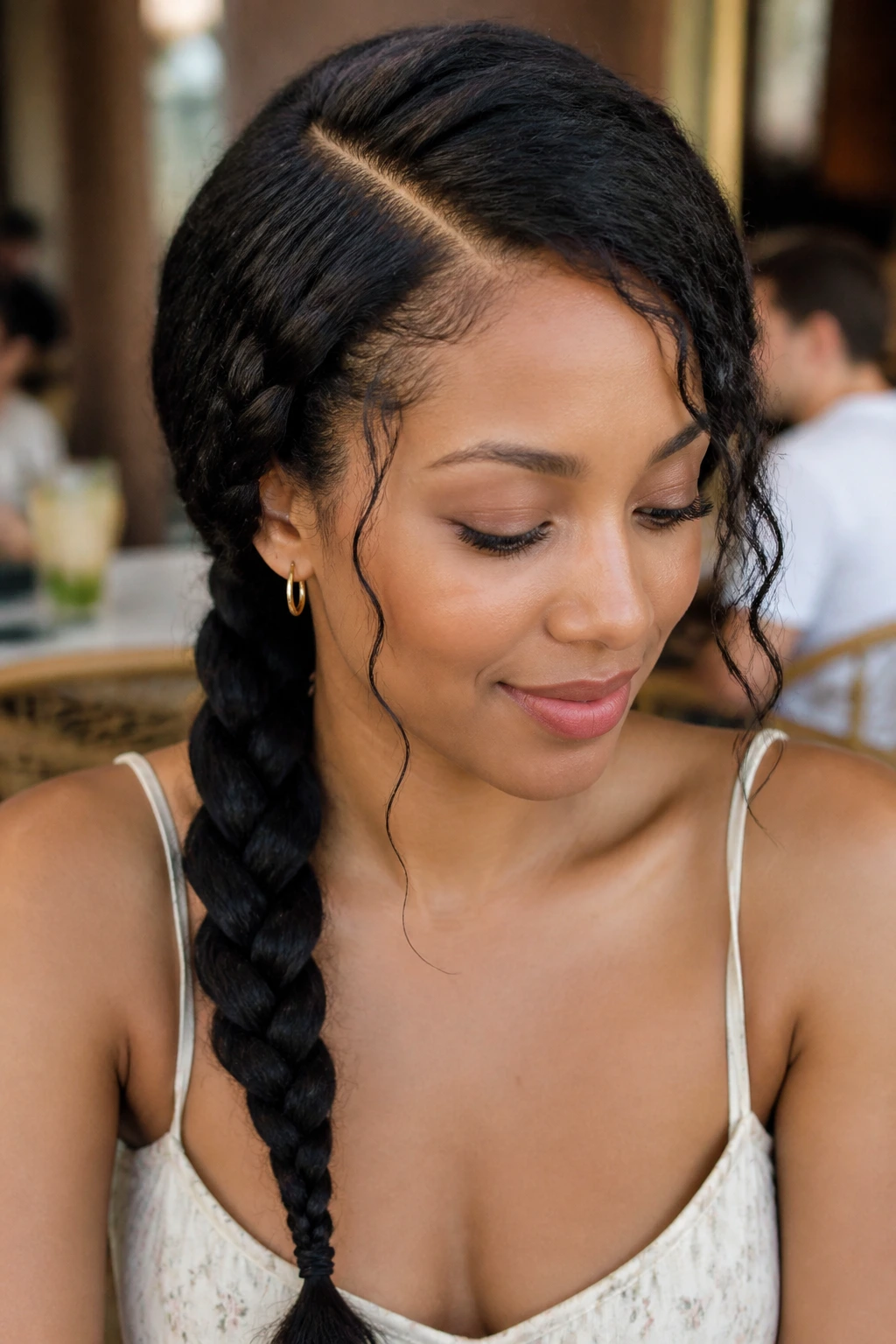
A side-swept braid is one of the easiest summer styles to wear when time is short. A deep part, one braid, and a bit of shape around the front—that’s enough. It works on straight, wavy, curly, and coily hair, and it doesn’t demand a huge amount of length to look finished.
The part changes everything. Push the hair over to one side, braid it low or mid-level, and the whole style starts to feel deliberate instead of rushed. If you want a version with more detail, add a tiny accent braid at the hairline or a wrapped section at the end.
This is a good fallback braid. Not in a boring way. In the “I need something that works and I do not want to think about it” way. That has value.
17. Micro Braids for Long Wear
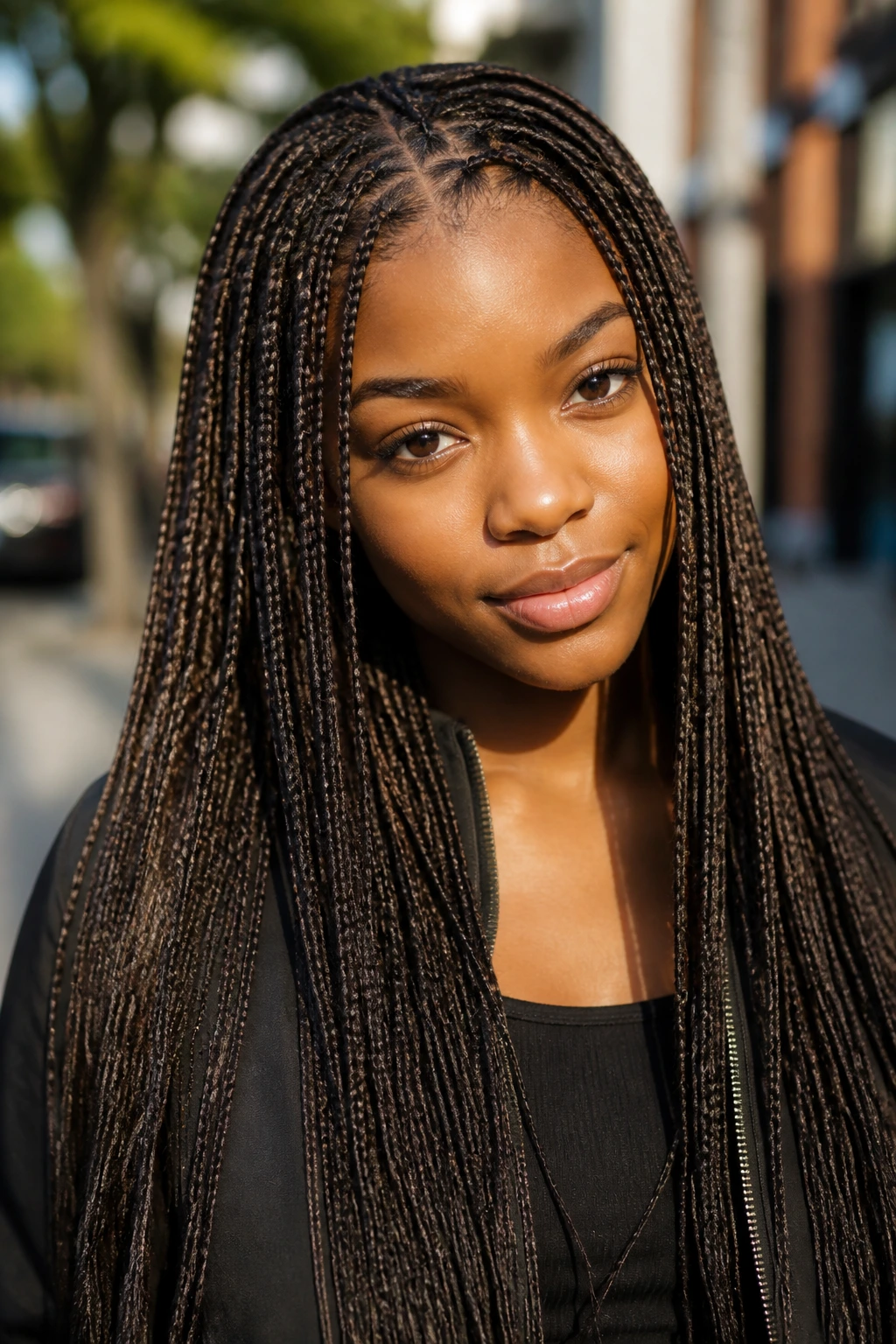
Micro braids are tiny, time-heavy, and not for the impatient. They take longer to install, but the payoff is a style with a lot of flexibility once they’re in. You can wear them down, pull them into a bun, or sweep them into a ponytail without much effort.
They’re also one of the most serious commitments on this list. Because the braids are so small, the install has to be gentle and the scalp has to be happy with the added time in the chair. If you have a sensitive hairline, this is not the place to push through discomfort. Tiny braids can still tug plenty.
What they do offer is longevity. If installed well and cared for properly, they can last longer than bigger styles, which makes them useful for anyone who wants less daily styling. They’re not the quickest path. They are a long game.
18. Waterfall Braid on Loose Waves
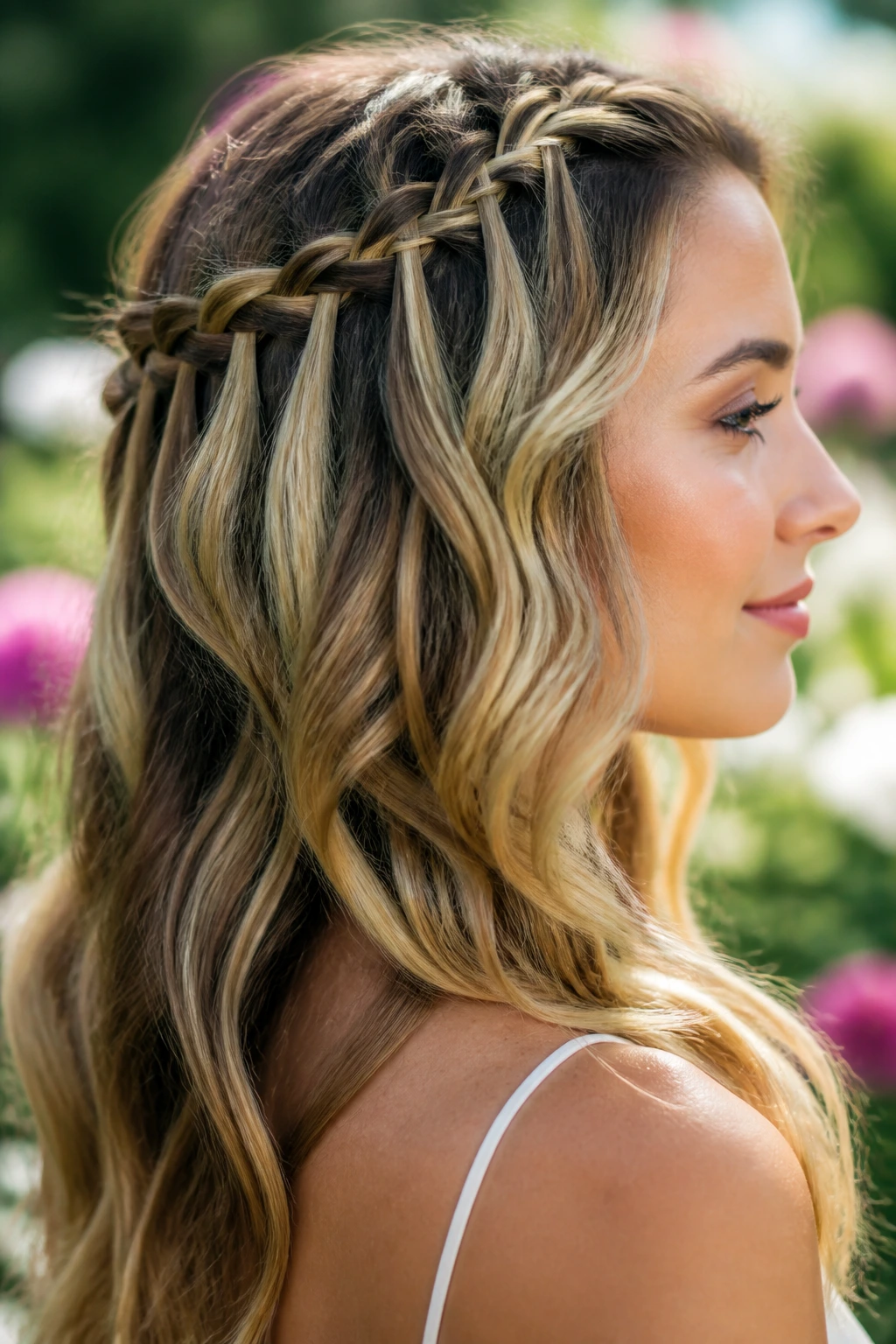
A waterfall braid is the braid equivalent of leaving one sentence open on purpose. It doesn’t pin everything down. Sections fall through the braid, which creates a soft, airy line across loose waves or textured hair. That makes it a good choice for events or days when you want one detail to carry the whole look.
It’s less protective than the tighter styles here, but it gives you that braided shape without closing off the rest of the hair. If you like the front and crown to feel styled while the lengths stay soft, this is a nice middle ground. It also works well with a few pinned pieces at the back if you want to keep hair off the neck.
The braid holds best when the hair has a little texture. Freshly blown-out hair can be slippery. A bit of wave, a soft bend, or a touch of styling spray gives the braid something to grip.
19. Wrapped-Base Braided Ponytail
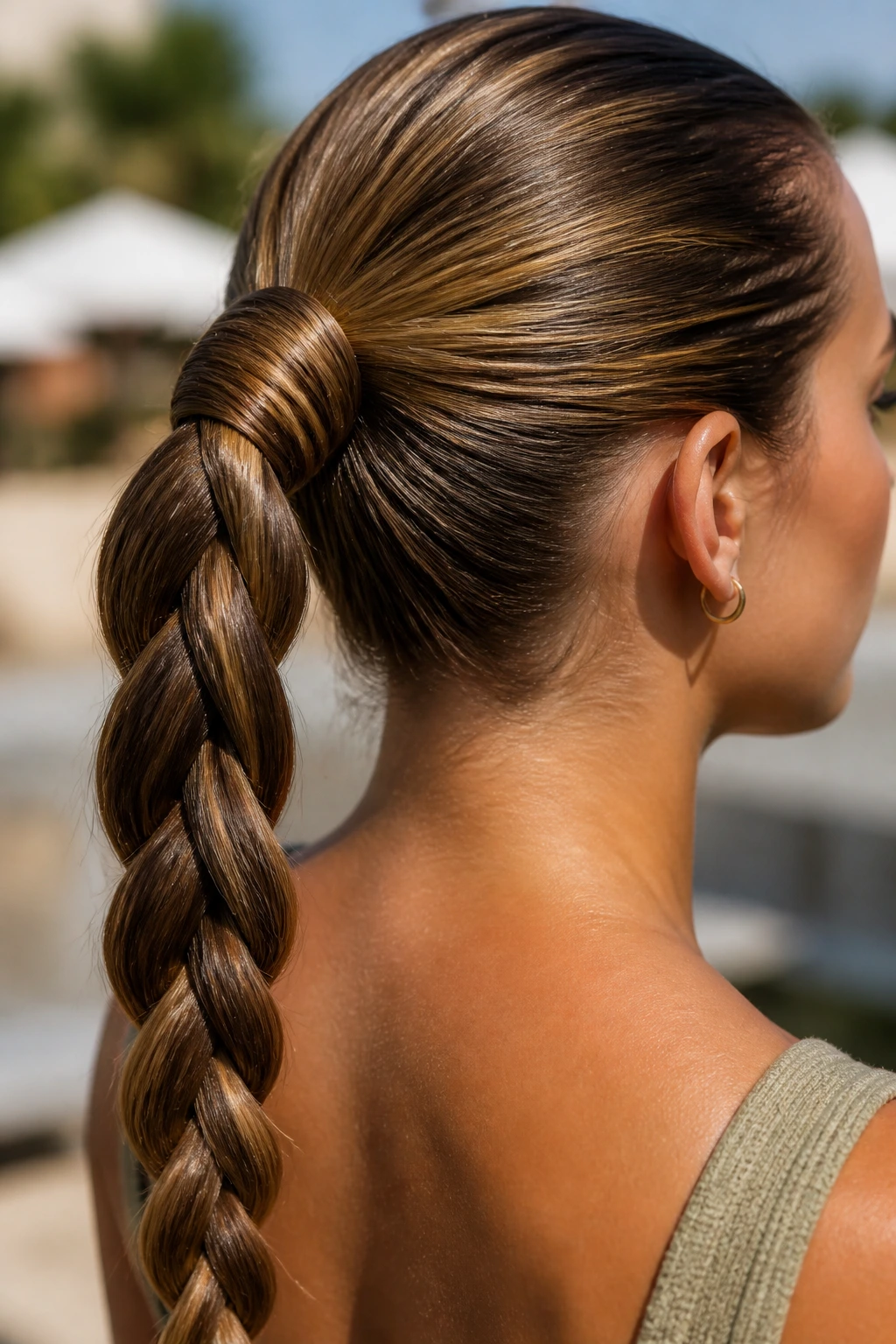
A wrapped-base braided ponytail is one of the cleanest finishes you can wear in hot weather. The braid or braids gather into a ponytail, and a section of hair wraps around the elastic so the base looks finished instead of exposed. That small wrap makes the style feel intentional from every angle.
I like this one because it works almost anywhere. You can wear it high for more lift or low for a calmer line at the nape. If the braid itself is plain, the wrapped base gives it polish. If the braid already has texture—cornrow, fishtail, or a chunky plait—the wrap acts like the final touch.
It’s also forgiving. A ponytail is easier to refresh than a full down style, and the wrap hides the hardware. That matters when the goal is something neat that doesn’t demand constant checking in the mirror.
Why Braids Win When Sweat and Humidity Start Showing Up
Braids survive summer because they change the job your hair has to do. Instead of asking loose lengths to stay smooth, bouncy, and obedient in heavy air, you give the hair a shape and let that shape do the work. That’s a relief for the scalp and a relief for your hands. Less combing. Less heat. Less touching.
The best braid hairstyles for summer also give you options when the day gets messy. A ponytail can become a bun. A side braid can be pinned tighter. A crown braid can be tucked with a few bobby pins if one piece starts to escape. That flexibility is why braids are such reliable warm-weather styles. They don’t fall apart the moment they’re nudged.
There’s also a practical side people skip over. Braids can protect the ends from rubbing on clothing, reduce how often you need to restyle, and make wash day spacing easier when you’re wearing your hair out less often. But they are not magic. Tight installs, heavy extensions, and bad night care will still cause trouble. A braid style works best when it fits the hair instead of fighting it.
Essential Tools and Hair-Prep Basics
-
Rat-tail comb: The long tail makes clean parts easier, and clean parts are half the look.
-
Wide-tooth comb or detangling brush: Use this before braiding so sections lie smooth instead of snagging.
-
Sectioning clips: They keep the hair you’re not working on from slipping back into the part.
-
Edge brush: Handy for smoothing the hairline without smearing product everywhere.
-
Spray bottle with water or leave-in mix: Light misting helps reset dry hair before braiding or refreshing a finished style.
-
Braiding hair or extension hair: Pre-stretched hair saves time and gives cleaner ends on longer styles.
-
Mousse or foam: Good for taming flyaways and helping the surface settle after installation.
-
Light oil or scalp serum: Use a small amount, not a soak. The goal is comfort, not greasiness.
-
Satin scarf or bonnet: Non-negotiable if you want the braids to survive sleep without looking ragged.
-
Small elastics and bobby pins: Needed for buns, ponytails, and any style with tucked ends or accessory work.
Choosing Hair, Products, and Accessories That Won’t Fight You
The right braid starts before the first section is parted. If you’re using extensions, pre-stretched synthetic hair usually saves the most time and gives the ends a cleaner finish. It also behaves a little better in installation because it’s already been pulled out of that blunt factory look. That matters on longer styles, where the ends can make or break the whole shape.
Product choice is where a lot of braid styles go sideways. Heavy waxes and thick pomades can make the scalp feel coated and leave residue on the braids themselves. A lighter gel at the root, a mousse for the surface, and a small amount of scalp oil are often enough. More product is not a prize.
Accessories should match the braid, not compete with it. Thin gold cuffs, small beads, a single ribbon, or a silk scarf can be enough. If the braid is already thick or highly detailed, piling on accessories starts to look noisy. I’d rather see one smart accent than five things trying to be the star.
How to Wear These Braids for Different Settings
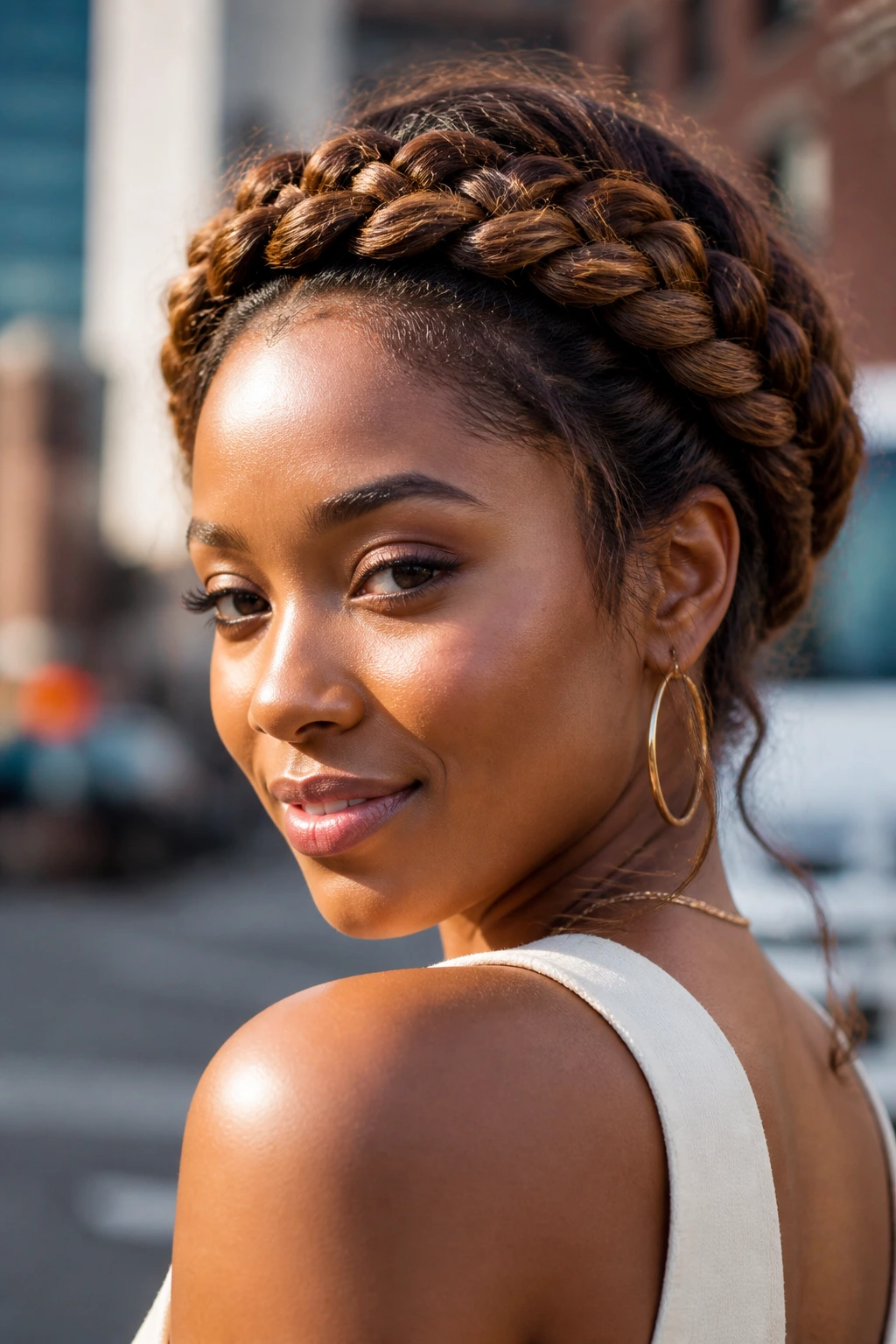
Placement: Keep the parting and braid direction aligned with the shape of your face and the amount of hair you want off your shoulders. A center part feels symmetrical; a side sweep softens the front; a high bun gives instant lift at the crown.
Accessories: Beads, cuffs, ribbon wraps, and scarves work best when they support the braid’s shape instead of hiding it. One accent near the ends or the front is often enough. Too many pieces can tug and add weight.
Best For: Box braids, knotless braids, and Ghana braids work well for everyday wear and longer stretches between restyles. Crown braids, waterfall braids, and French-braid chignons make more sense for events, dinners, and days when you want the hair to look dressed up.
Length Notes: Shorter braids sit lighter and cool faster, which helps if you get headaches from weight. Longer braids give more styling range, but they need more care at the neck and shoulders because friction adds frizz.
Extra Touches That Make the Style Feel Finished
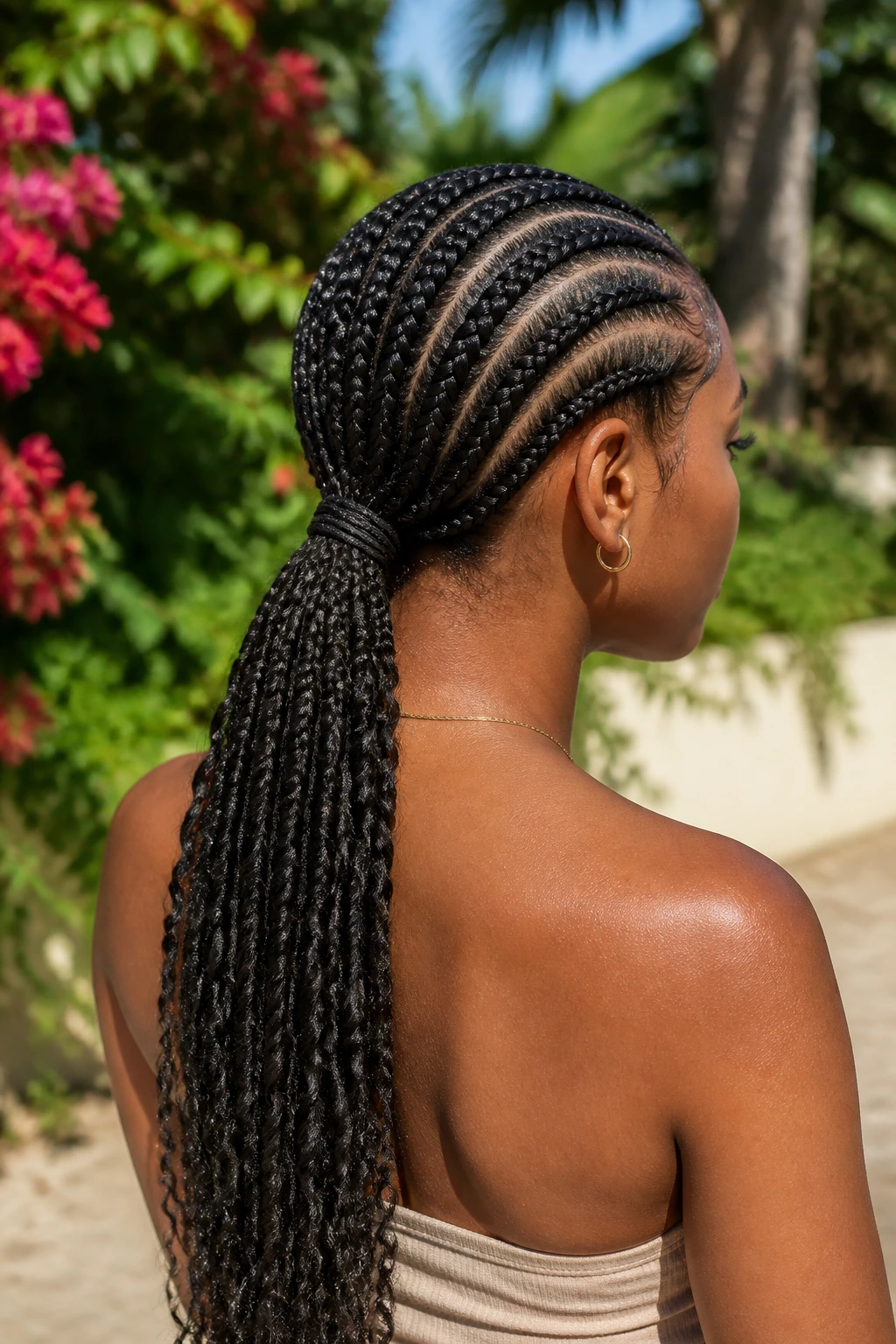
Shine: A light braid spray or a few drops of oil rubbed between the palms can keep the surface from looking dusty. Use less than you think. The hair should look cared for, not slick.
Shape: Face-framing pieces, tucked ends, or a wrapped base can change the mood of a style fast. One loose strand around the cheekbone is often more interesting than a fully pinned front.
Color: A single accent color in the extension hair can wake up a braid without making it loud. Honey-brown, copper, auburn, or soft burgundy all show movement well in sunlight.
Personal Touch: Beads, cuffs, ribbon, and a zigzag part can make a familiar braid feel yours. Choose one detail and repeat it. That repetition looks deliberate.
Keeping Braids Fresh, Clean, and Comfortable
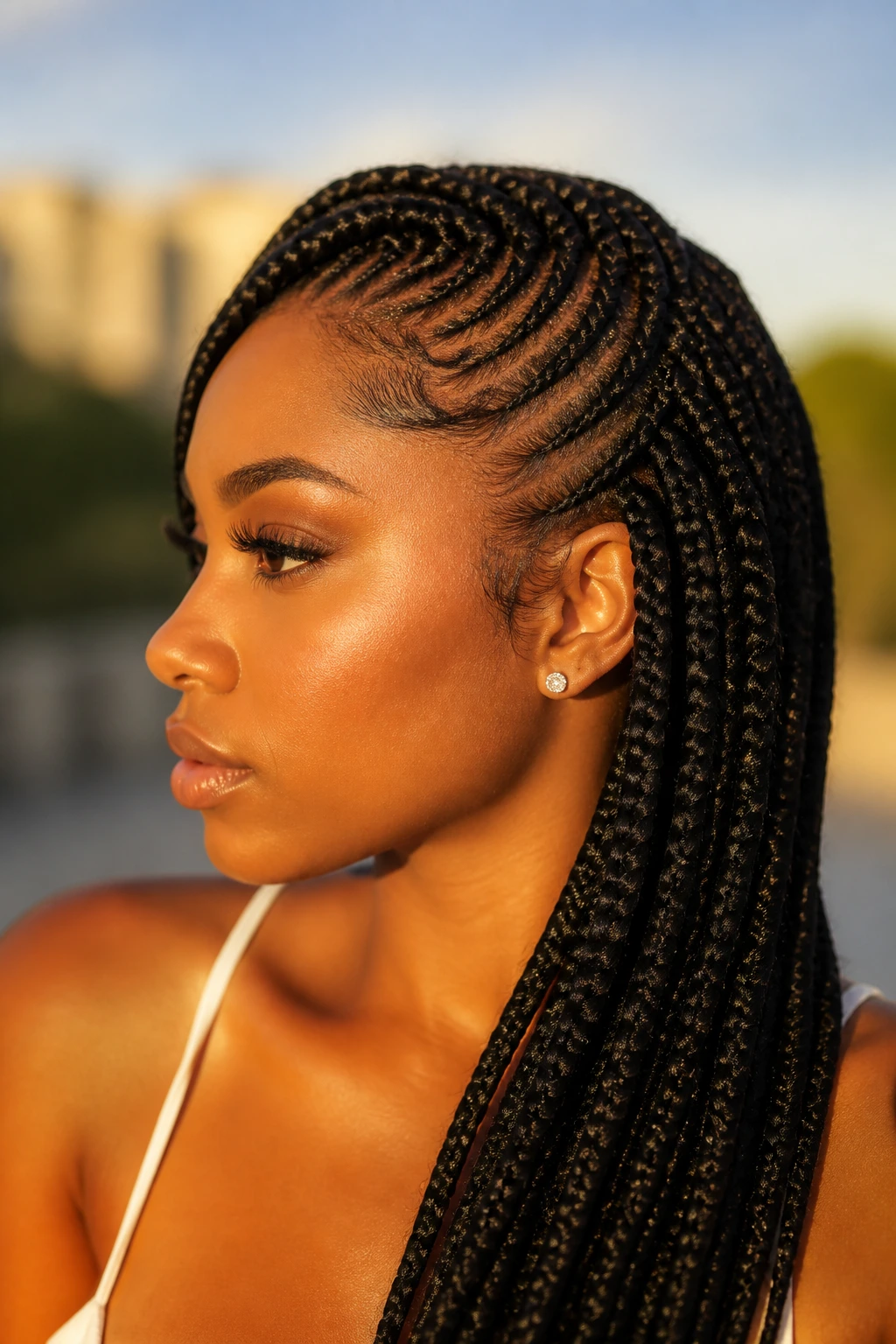
Night care is the difference between a braid that looks tidy for weeks and one that turns fuzzy by the third morning. Wrap the hair in a satin scarf or bonnet every night. If the style is long or contains curls, tuck the ends loose enough that they do not get crushed flat.
Washing depends on the style and how much product you used, but a diluted shampoo applied to the scalp every 1 to 2 weeks is a sensible rhythm for many braid styles. Rinse carefully and dry thoroughly. Damp braids buried under a scarf can hold moisture longer than you think, and that’s where odor and buildup begin.
If the scalp feels itchy, check the products first. A lot of itch comes from residue sitting on the skin, not from the braid itself. A light scalp refresh—gentle rinse, a little soothing oil, no heavy grease—usually helps more than adding another layer of product. And if the roots start to ache, do not “wait it out” for the sake of the style. Braids should feel secure, not punishing.
Most braid styles need to come down after a few weeks, not because the braid stops looking good, but because the new growth and friction start doing hidden damage. Longer-lasting styles like micro braids can stay in longer, but the scalp still sets the limit. If the edges are tender, the safe choice is to take them out sooner.
Variations and Adaptations to Try
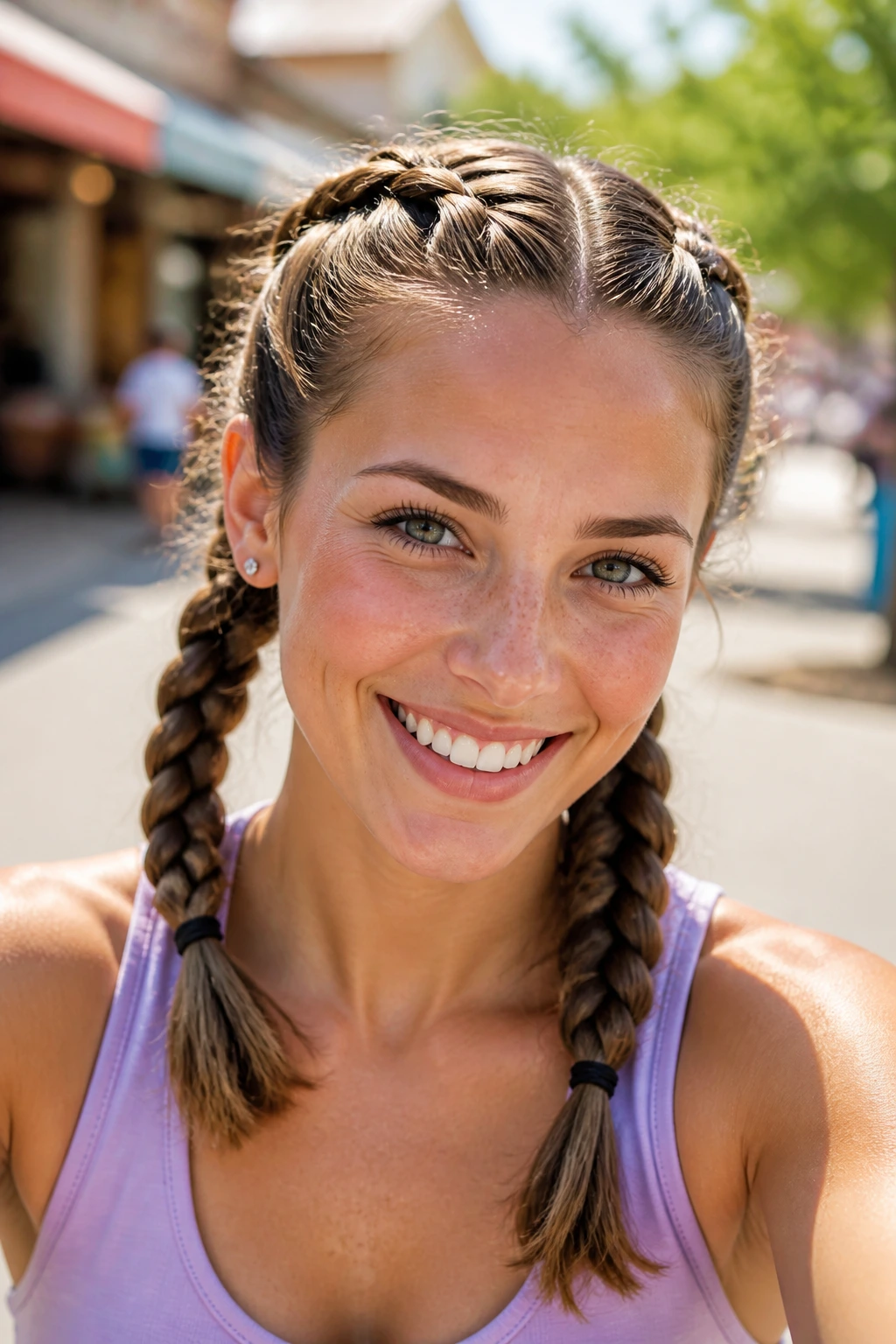
Low-Tension Everyday Version: Ask for slightly larger parts, softer tension at the hairline, and braids that don’t start too close to the edge. This works especially well for knotless braids, side braids, and low ponytail styles when comfort matters more than a razor-sharp finish.
Vacation-Proof Version: Choose a style that can be pinned up, tied back, or wrapped without collapsing—box braids, Ghana braids, or a braided ponytail are strong choices. Add one satin scarf and a few bobby pins, and you can move from poolside to dinner without rebuilding the style from scratch.
Short-Hair Friendly Version: Braided bobs, cornrow rows, and crown braids all adapt well to shorter lengths. The trick is keeping the ends controlled and not forcing a heavy extension install where the hair doesn’t need it.
Event-Ready Finish: Take a simple braid and add one polished detail: a wrapped base, small gold cuffs, or curled leave-out around the face. That’s usually enough to turn a weekday braid into something that reads more dressed up.
Kid-Safe Scale-Down: Use fewer rows, lighter extensions, and shorter lengths. A style that stays neat but doesn’t pull on the hairline is the goal here; decorative extras should be light enough that they don’t bother the scalp.
Common Mistakes That Cause Tension or Frizz
-
Braiding too tight at the root: If the hairline looks shiny, pulled, or slightly raised right after the install, the braid is too tight. The fix is simple and annoying: take it down and redo the tension before it becomes a headache or a sore spot.
-
Using too much heavy product: Thick gel and wax can leave white flakes, sticky buildup, and a dull finish on the braids. Use a smaller amount at the root and a lighter mousse on the lengths.
-
Skipping the prep work: Hair that isn’t fully detangled, stretched, or dry before braiding is harder to section cleanly and more likely to snag. Start with clean, separated hair and the braid behaves better from the first inch.
-
Choosing extensions that are too heavy: If the style looks gorgeous but your scalp feels tired, the weight is the problem. Go lighter on the next install or shorten the length.
-
Sleeping on cotton without protection: Cotton rubs the surface and roughs up the style fast. A satin scarf, bonnet, or pillowcase slows the frizz and keeps the parts looking cleaner.
-
Keeping braids in past their useful life: When the new growth gets thick and the roots start to matte, the style is done. Pushing it longer only makes removal harder.
Questions People Ask Before They Braid Their Hair
Which braid style is easiest on a sensitive scalp?
Knotless braids usually win here because the base sits flatter and doesn’t start with a tight knot at the root. Loose crown braids and side braids can also feel gentler if the tension stays light.
Can I get braids if my hair is short?
Yes, but the style has to fit the length. Cornrows, crown braids, braided bobs, and some knotless installs work on shorter hair better than styles that need long hanging lengths.
Do braids need extensions to look good?
No. Feed-in cornrows, French braids, Dutch braid pigtails, and side braids can look finished without extension hair. Extensions mainly add length, fullness, and styling range.
How long should I keep braids in?
That depends on the braid size and your scalp comfort, but many styles are happiest somewhere in the 4-to-8-week range. Micro braids can last longer, though the scalp and edges still set the limit.
Can I wash my hair while it’s braided?
Yes. A diluted shampoo or cleansing mix on the scalp works well for many braid styles, as long as you dry the hair thoroughly afterward. Letting braids stay damp for hours is a bad idea.
What if my braids get fuzzy after a few days?
Light frizz is normal. A little mousse on the surface, plus a satin wrap at night, usually helps. If the frizz is happening at the roots and the parts are disappearing, that’s a sign the install was too loose.
Are braids okay for workouts and swimming?
Yes, and they’re often easier than loose hair for both. Sweat and chlorine still need cleanup, though. Rinse the hair, dry it fully, and don’t leave braids damp under a scarf.
How do I know if a braid is too tight?
A tight braid hurts right away, not just later. Pulling at the temples, a throbbing scalp, bumps near the hairline, or a headache after the install are all warning signs.
Which style is easiest to take down later?
Larger braids and ponytail styles are usually faster to remove than micro braids or very small stitch braids. The smaller the braid, the more patience you’ll need when it’s time to take it out.
Braids You’ll Reach For Again
The best summer braid styles are the ones that fit the day you actually live in. Some mornings call for a sleek ponytail or a set of knotless braids that won’t pull. Other days want a crown braid, a fishtail, or a braided bob that sits light on the shoulders and keeps the neck clear.
What matters most is not chasing the most complicated braid on the board. It’s choosing a shape that feels good to wear, looks tidy after a few hours, and doesn’t leave you counting the minutes until you can take it down. The right braid should make summer easier, not more precious.
Pick the style that matches your scalp, your schedule, and how much upkeep you’re willing to do at night. The braid that stays neat, feels comfortable, and still looks like you on day four is the one worth repeating.
