



Bob length braid hairstyles sit in that sweet spot where the style looks sharp, but your neck does not feel like it’s carrying a brick by midday. That’s the real magic here. Braids, twists, and locs cut to bob length give you shape, movement, and personality without the tugging, swinging, and shoulder-trapping drama that comes with longer installs.
I’ve always thought bob-length braids do one thing better than almost any other protective style: they make the haircut shape part of the design. When the ends land around the jaw, chin, or collarbone, the silhouette shows up immediately. You see the line. You see the parting. You see the little decisions that make a style look polished instead of crowded.
They also behave better in real life. They slide under a jacket more easily, dry faster after a wash, and don’t spend the whole day getting caught in seatbelts, tote bag straps, or the collar of a chunky sweater. That alone sells half the appeal. The other half is how many directions you can take them—sleek, bohemian, geometric, bold, minimal, decorated, twisted, or loc’d—without losing the clean bob shape.
Why Bob-Length Braid Hairstyles Keep Getting the Call
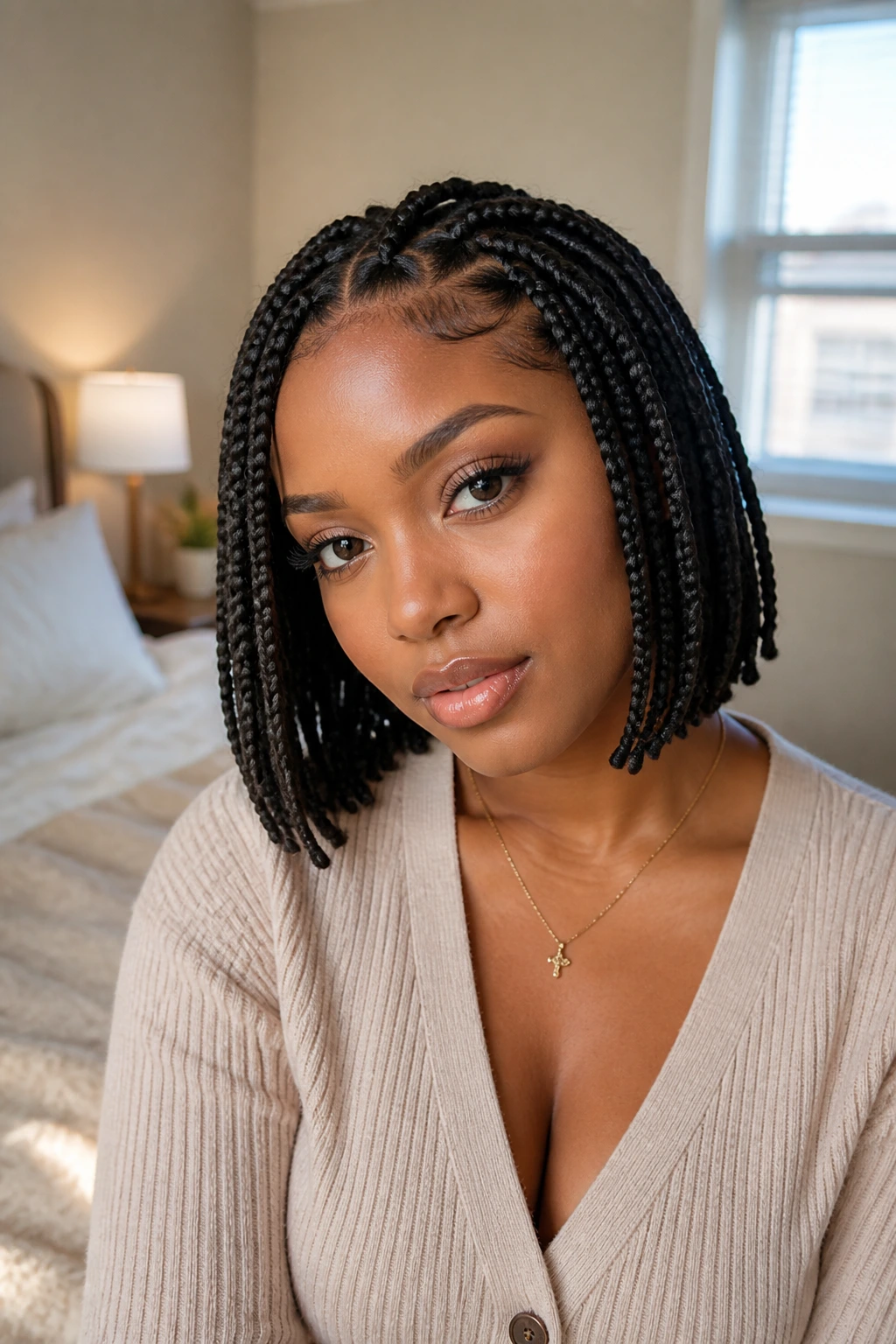
-
The weight stays manageable: A bob-length install puts less pull on the scalp and edges than a heavy waist-length set, especially when the braids are thick or decorated.
-
The shape reads fast: Even from across the room, a chin-to-collarbone cut gives the eye a clear line, which is why these styles look intentional even when the rest of the outfit is plain.
-
Nighttime is less annoying: A shorter braid set tucks into a satin bonnet or scarf without folding into a giant knot at the nape.
-
Accessories actually show up: Cuffs, beads, curled ends, and colored pieces don’t disappear the way they can on long braids. At bob length, every detail gets a little more airtime.
-
Wash day is less of a wrestling match: You can cleanse the scalp, rinse the roots, and dry the style more easily because there’s simply less hair to manage.
-
The style works in more settings: A clean bob braid can look office neat, weekend casual, or dressed up with earrings and a sharp lip. It’s one of the few protective styles that changes its mood without changing its bones.
1. Center-Part Knotless Bob Braids
A center-part knotless bob is the style I reach for when I want the braids to look soft at the hairline and tidy everywhere else. The part lands straight down the middle, the lengths usually graze the chin or the top of the shoulders, and the whole look has that calm, even rhythm that knotless braids do so well. There’s no bulky knot at the root. That matters more than people admit.
The visual payoff is in the movement. Because knotless braids start with your natural hair and then gradually feed in extension hair, the front sits flatter and the bob swings with a cleaner line. If your braider keeps the ends slightly blunt, the style reads crisp. If they let the front pieces land a touch longer, it softens the face without losing the shape.
Why it works so well
This version suits people who want a bob braid style that does not shout. It sits neatly under a scarf, parting space looks clean, and the center line gives symmetry without extra fuss. If your face is round or oval, that straight-down split can make the whole style feel balanced. If your hairline is sensitive, knotless is usually the gentler call.
Ask for a finish that sits 2 to 4 inches below the chin if you want a classic bob feel. Longer than that starts drifting into lob territory, and shorter can make the ends flick awkwardly unless the cuts are precise.
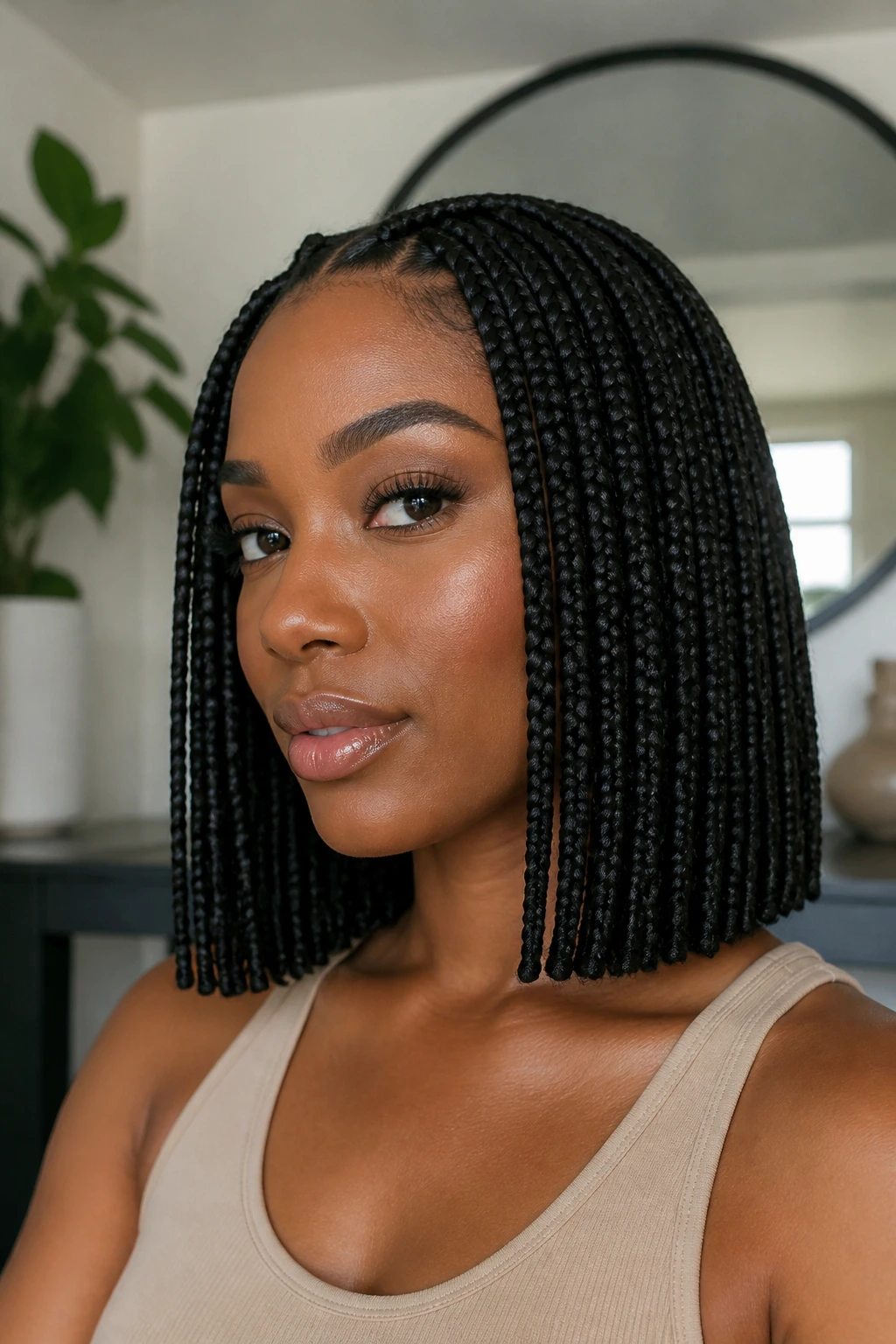
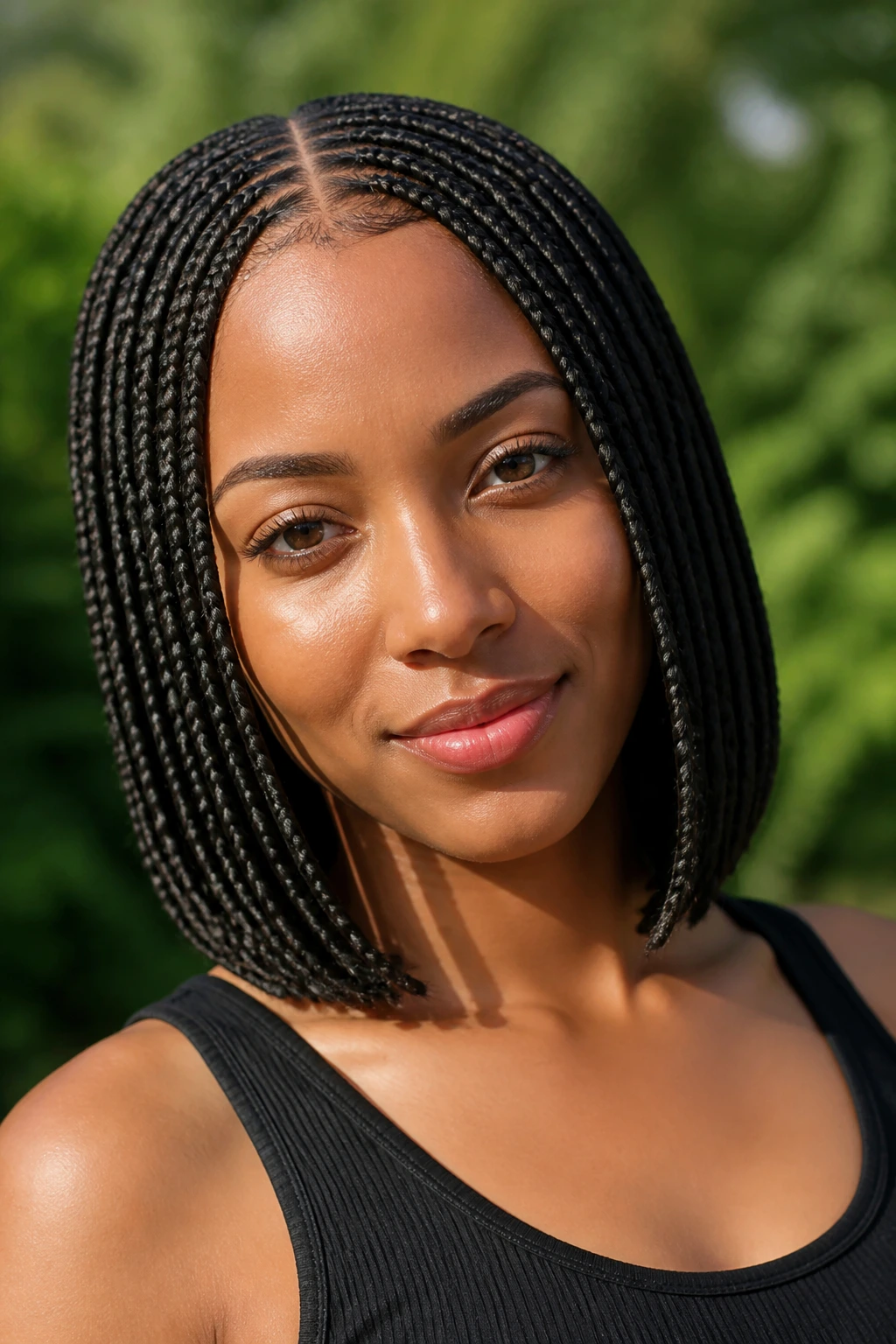
2. Blunt Box Braid Bob
A blunt box braid bob has a different attitude entirely. It’s straight-edged, a little punchy, and very specific about where it wants to live. The hemline is even across the bottom, so the braids create a clean curtain instead of a layered cloud. That sharp finish is the whole point.
This style works best when the parts are neat and the ends are trimmed with care. If the installation is sloppy, the blunt line exposes every uneven braid length. If it’s done well, though, the result is striking in the quietest way. No fluff. No guesswork.
What to watch for
- Keep the braid size consistent from front to back so the bottom line stays level.
- Ask for the ends to be sealed or dipped evenly if synthetic hair is used.
- Skip overly heavy accessories near the bottom edge; they can break the shape.
I like this version on people who wear structured clothes—collared shirts, sharp jackets, squared necklines. The braid bob and the outfit start speaking the same language.
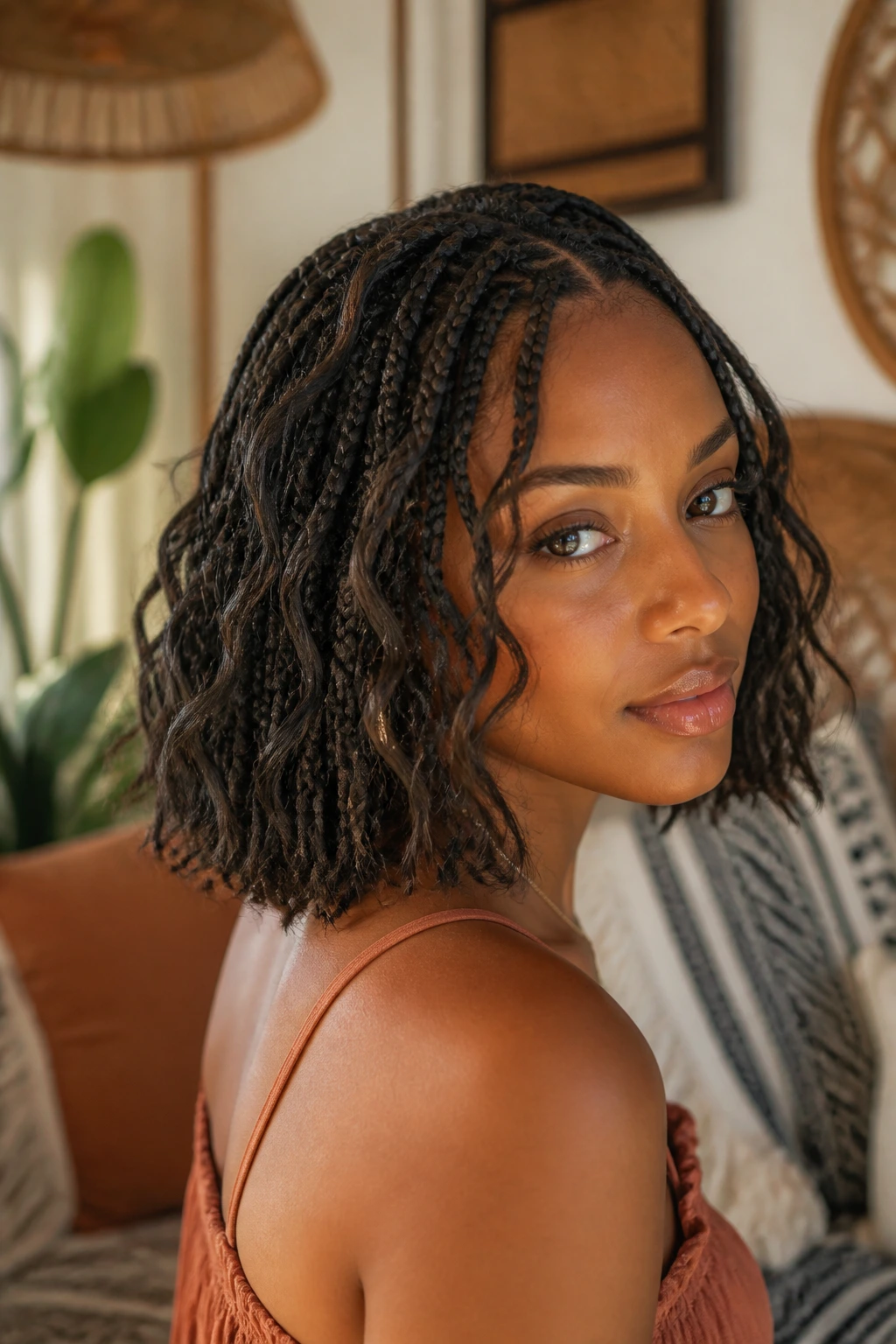
3. Boho Knotless Bob With Loose Waves
A boho knotless bob is for people who like a little movement around the face and do not want every strand locked into place. The braids are still there, but loose curly pieces slip in between them, giving the style a softer, airier finish. It looks lived-in on purpose. That’s the point.
The loose pieces do two jobs at once. They break up the straight braid rhythm, and they keep the bob from feeling boxy. If your braids are cut to jaw or collarbone length, those stray waves add enough visual texture that the style stays interesting even when the base parts are simple.
A small warning worth hearing
This look needs a bit more maintenance than a plain knotless bob. The loose curls frizz if you mist them too hard or sleep without a satin wrap. Still, the tradeoff is worth it if you like hair that moves instead of sitting there like a helmet.
Use mousse lightly on the loose pieces, not drenched. Too much product weighs the curls down and makes them look stringy by the second day.
4. Side-Swept Lemonade Bob Braids
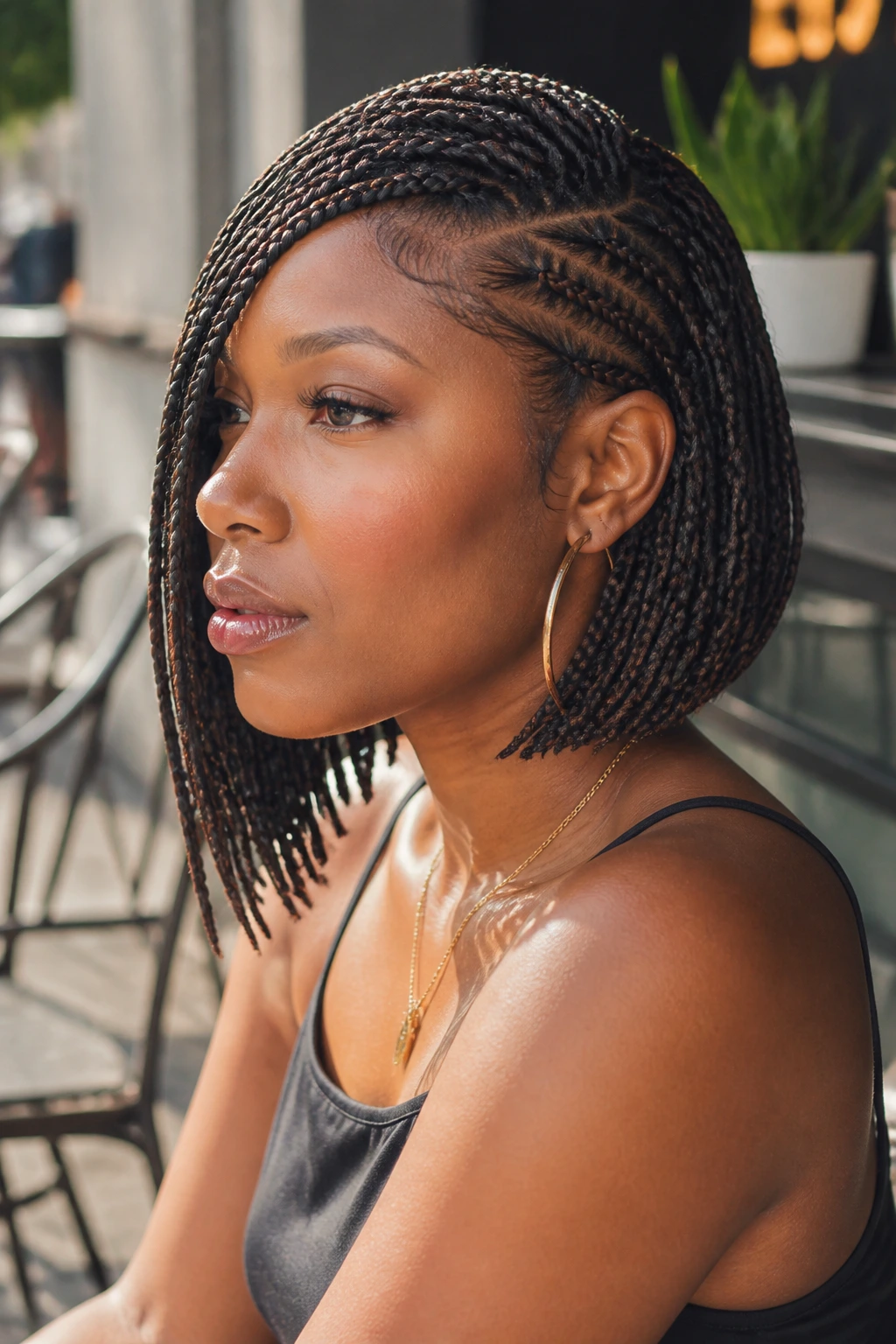
Side-swept lemonade bob braids borrow the drama of a deep side part and a little of that slanted, face-framing energy that makes the whole look feel more styled. With bob length, the side sweep doesn’t overwhelm the face. It just tips the balance. That subtle tilt is enough.
The best versions have a clear parting line, long front pieces that skim the cheek, and a back that stays compact. If the front is too heavy, the style can drag your features down. If it’s too short, the sweep loses its purpose. The sweet spot is a front section that brushes the jawline and falls in a soft diagonal.
This is the bob braid style I’d pick for someone who wants movement but not volume. It looks especially good with hoop earrings, a smooth neckline, and a little shine on the braids. If you like styles that photograph from the side better than straight on, this one earns its keep fast.
5. Fulani Bob With Cuffs and Cornrows
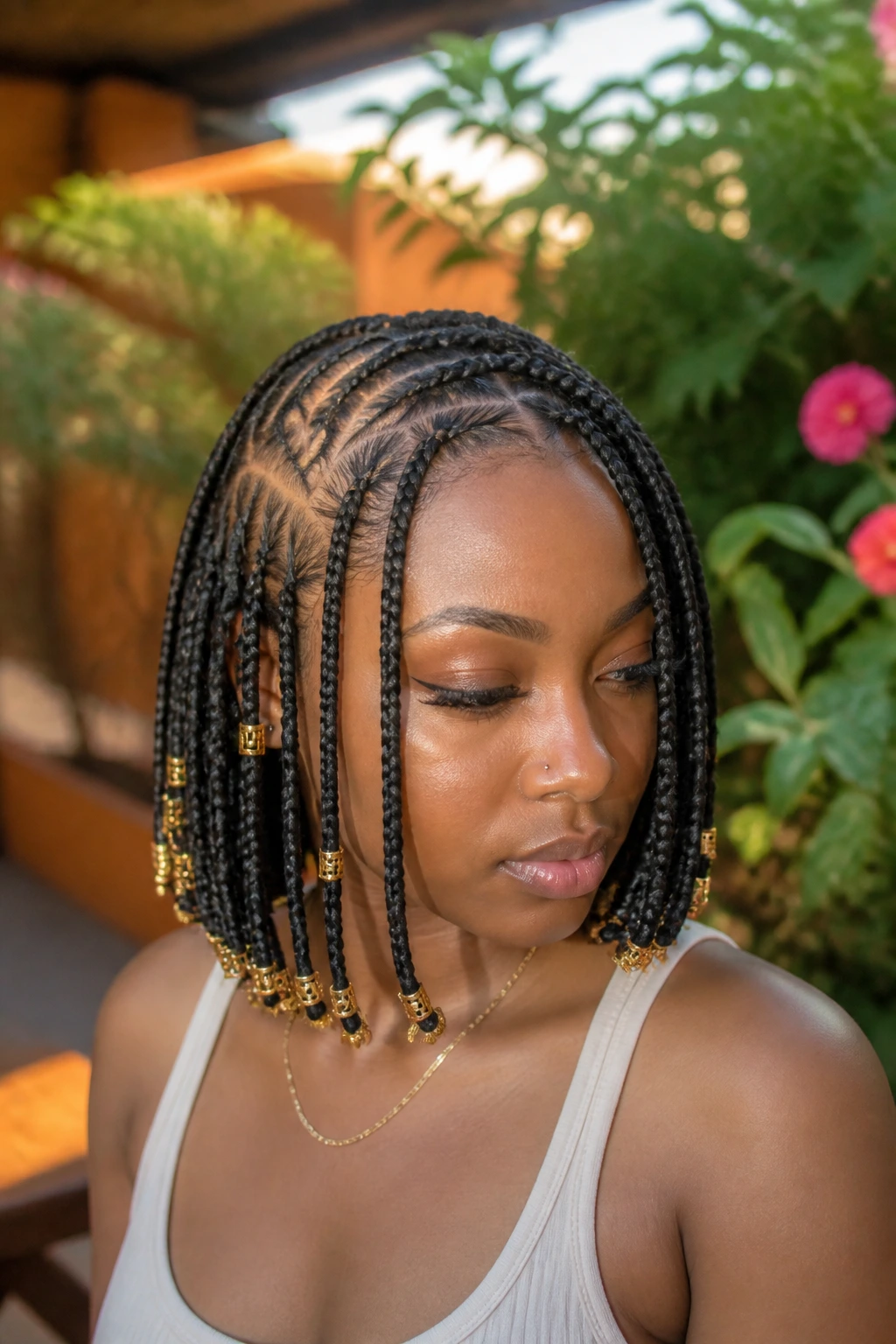
A Fulani-inspired bob has structure built into it from the start. The front cornrows, center braid or braids, and hanging bob-length lengths make the style feel patterned instead of purely freeform. Add a few cuffs or beads, and the whole thing gets sharper without needing extra length.
What I like here is the contrast. The scalp braids give you that neat, anchored look close to the head, then the bob pieces loosen the shape below. It keeps the style from feeling too heavy near the crown. With a good parting map, the face gets framed instead of crowded.
A style like this holds up beautifully for people who like accessories but don’t want them scattered everywhere. Put the cuffs near the front or at the ends of the hanging braids. That way they catch the eye without making the bob feel busy.
6. Passion Twist Bob
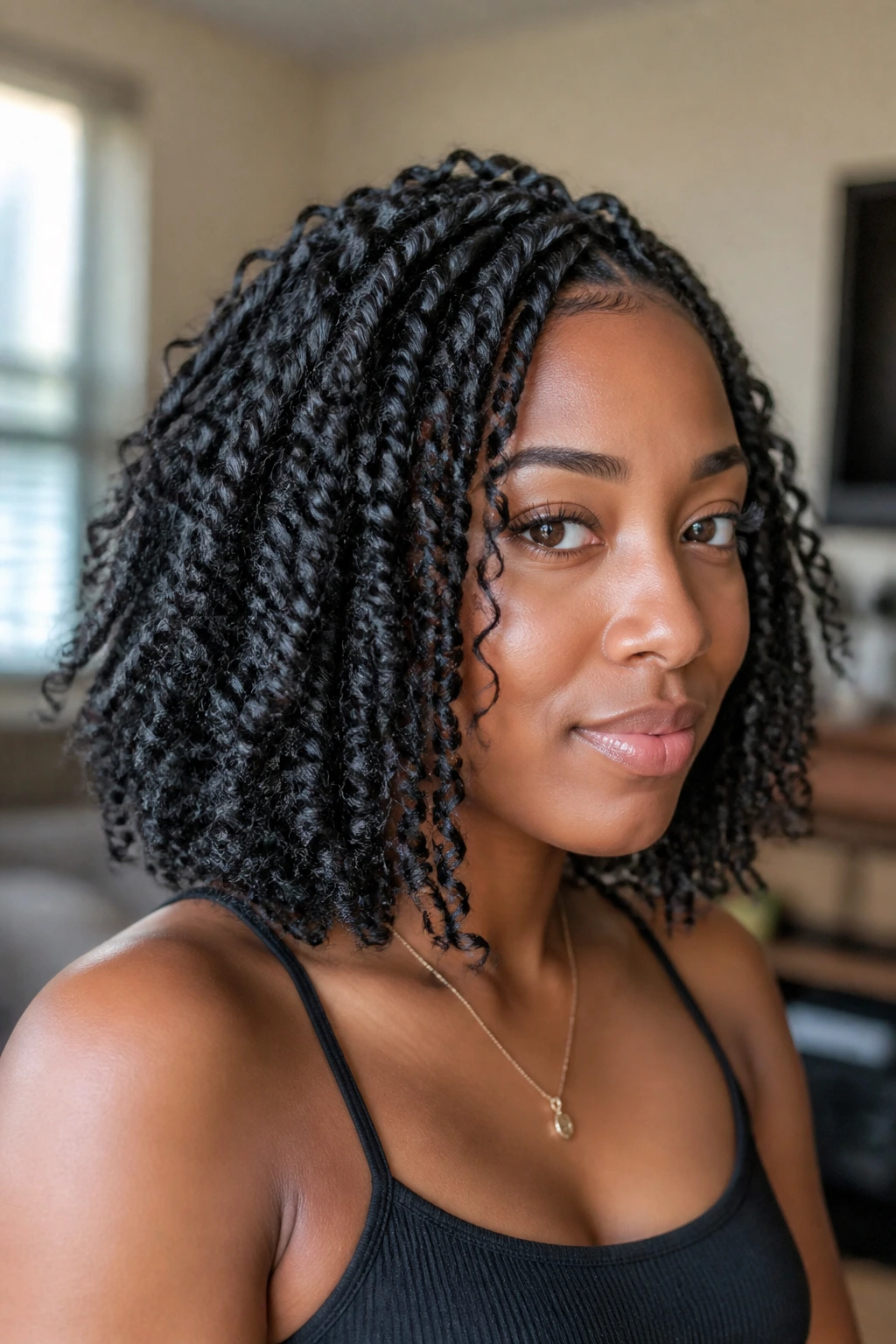
A passion twist bob has a completely different texture from a braid bob. The twists are softer, springier, and a little more relaxed, with that rope-like curl pattern that makes the style feel touched by hand instead of carved. If you want a bob that moves when you turn your head, this is a strong pick.
The shorter length matters here. Passion twists can get bulky when they’re too long, but bob length keeps the spring under control. You still get fullness, just not the drag. The ends tend to bounce against the jawline or collarbone in a way that looks casual without looking unfinished.
Best for
- People who want a softer silhouette than box braids.
- Anyone who likes texture around the face.
- Styles that need to look good even when they’re slightly messy.
Use a light mousse and separate the twists carefully at the roots if you want more fullness. Pull too hard and they frizz. Leave them too packed and they can look stiff. Somewhere in the middle is where this style lives.
7. Senegalese Rope Twist Bob
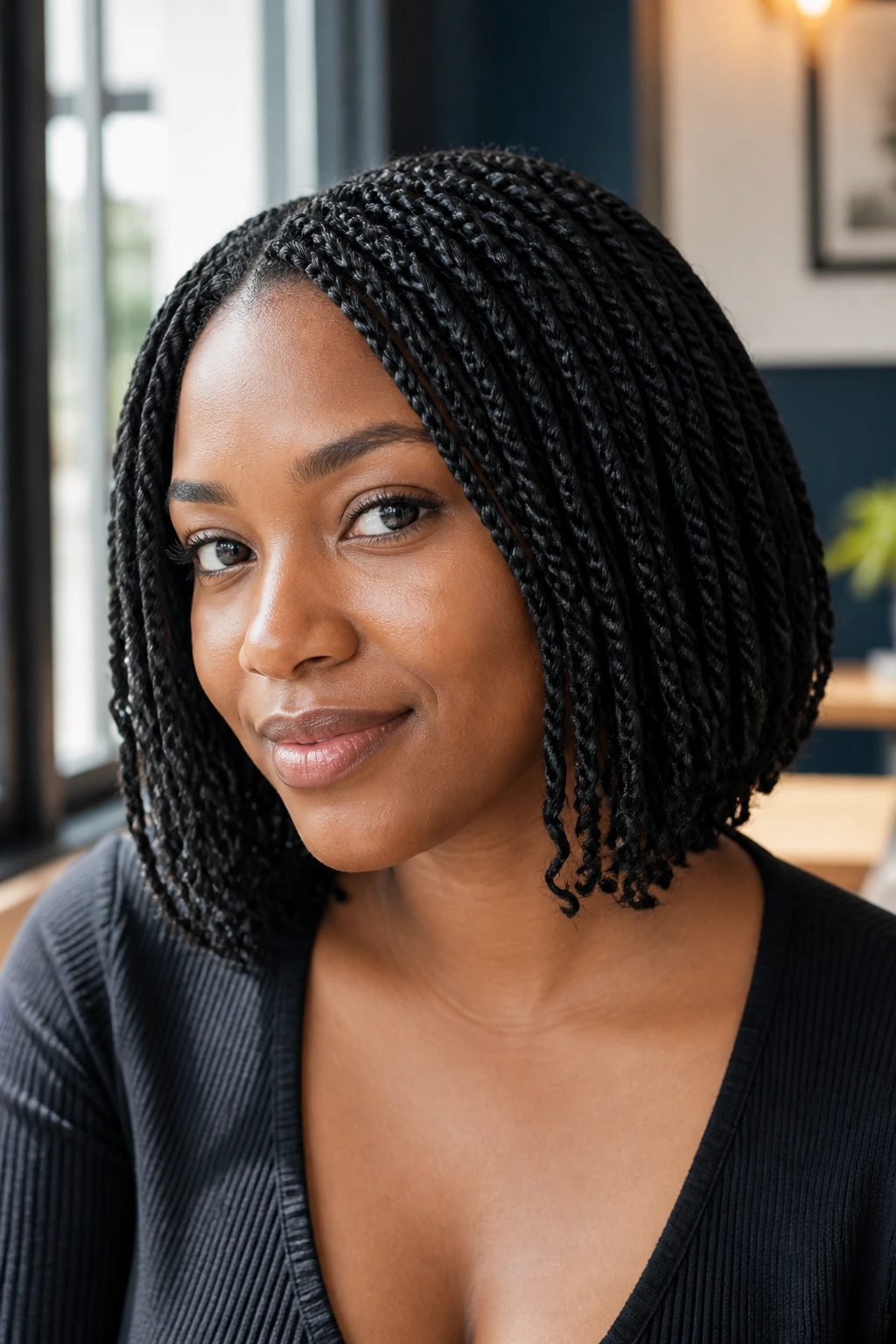
Senegalese twists at bob length lean sleeker than passion twists. The strands look smoother, the twist pattern is tighter, and the overall effect is more polished. It’s the kind of style that looks intentional even when the rest of the outfit is plain black and white.
This bob length works because the twists already have visual weight. If you make them too long, they can start to sag at the bottom and lose that crisp shape. Cut them to the chin or a little below the shoulders, and they sit with a cleaner line. The style feels neat without being severe.
I’d choose Senegalese twists for someone who wants low-frizz texture with a smoother finish. They’re good for work settings, but they also look sharp with large earrings or a strong brow. Clean hairline, clean parting, clean silhouette. Nothing fussy needed.
8. Goddess Braid Bob With Curly Ends
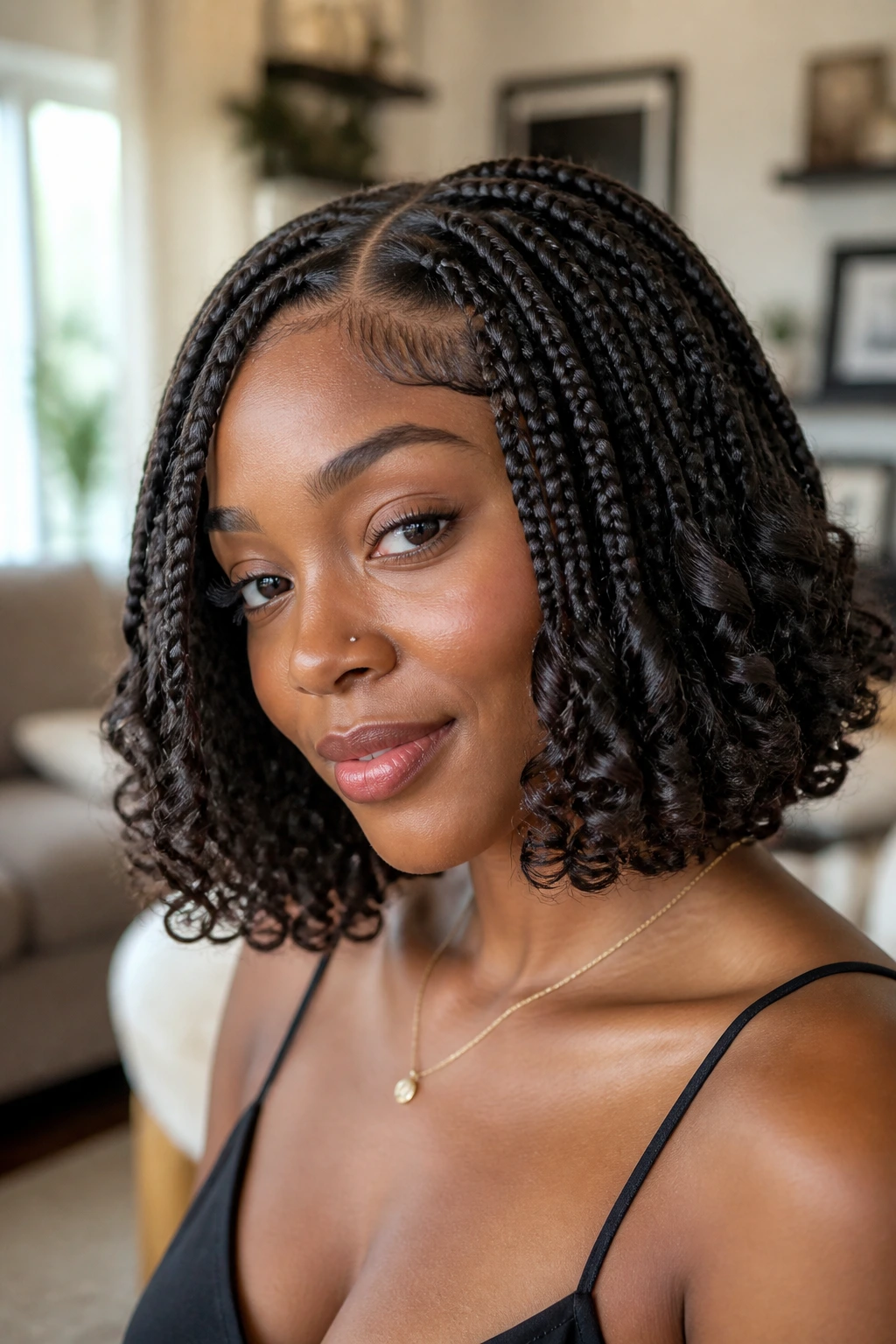
A goddess braid bob gives you the structure of braids and the softness of curly ends. That mix changes the mood immediately. The braids keep the style grounded, while the curls at the ends create movement that stops the bob from looking too squared off.
This is one of those styles that looks richer when it’s not over-styled. The curls should feel loose and springy, not teased into a puff. If the ends are tucked too tightly, you lose the whole point. The fun is in the contrast between the firm braid shaft and the open curl at the bottom.
If you wear glasses, this style tends to play nicely with them because the curls sit below the frame line instead of fighting it. And if your face needs a little softness near the jaw, the curly ends do that without adding more braids around the cheeks.
9. Triangle-Part Bob Braids
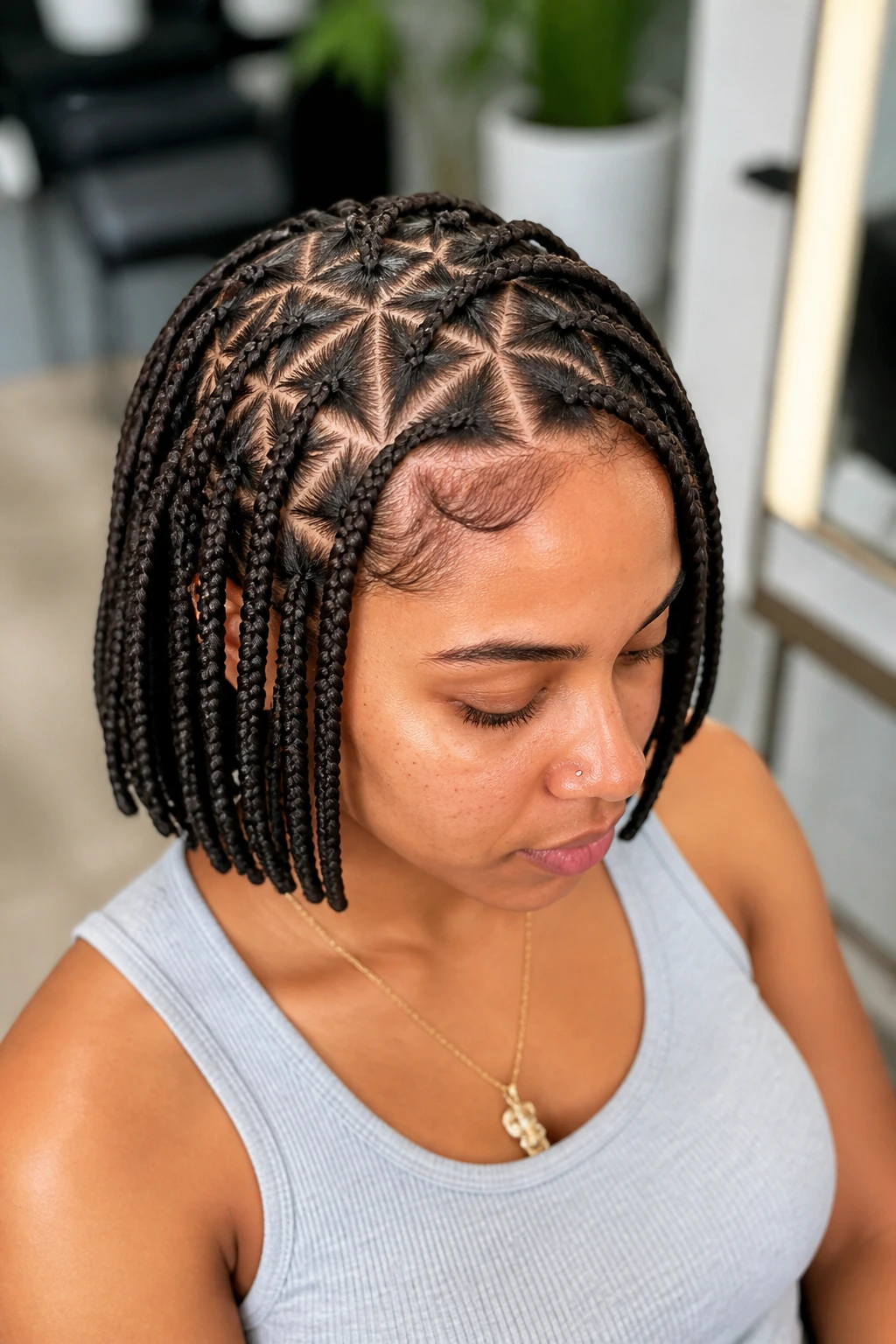
Triangle parts change the entire personality of a bob braid style. Same braids, different geometry. Instead of standard squares, the sections create a sharper pattern at the scalp, and that alone makes the style feel more design-forward.
I like triangle-part bob braids when the braids themselves are simple. You do not need extra color, cuffs, or curls to make them interesting. The parting is the ornament. That’s the whole trick. It’s cleaner than a heavily decorated style, but it still gives your braids a little edge.
What makes the pattern pop
- The scalp looks more detailed from above.
- The bob shape appears less predictable.
- Smaller triangles can make the style look denser without using heavier hair.
If your braider is good with precision, this can be one of the most satisfying bob styles to wear. Bad triangle parts, though, look warped fast. The lines need to be crisp all the way to the root.
10. Feed-In Stitch Braid Bob
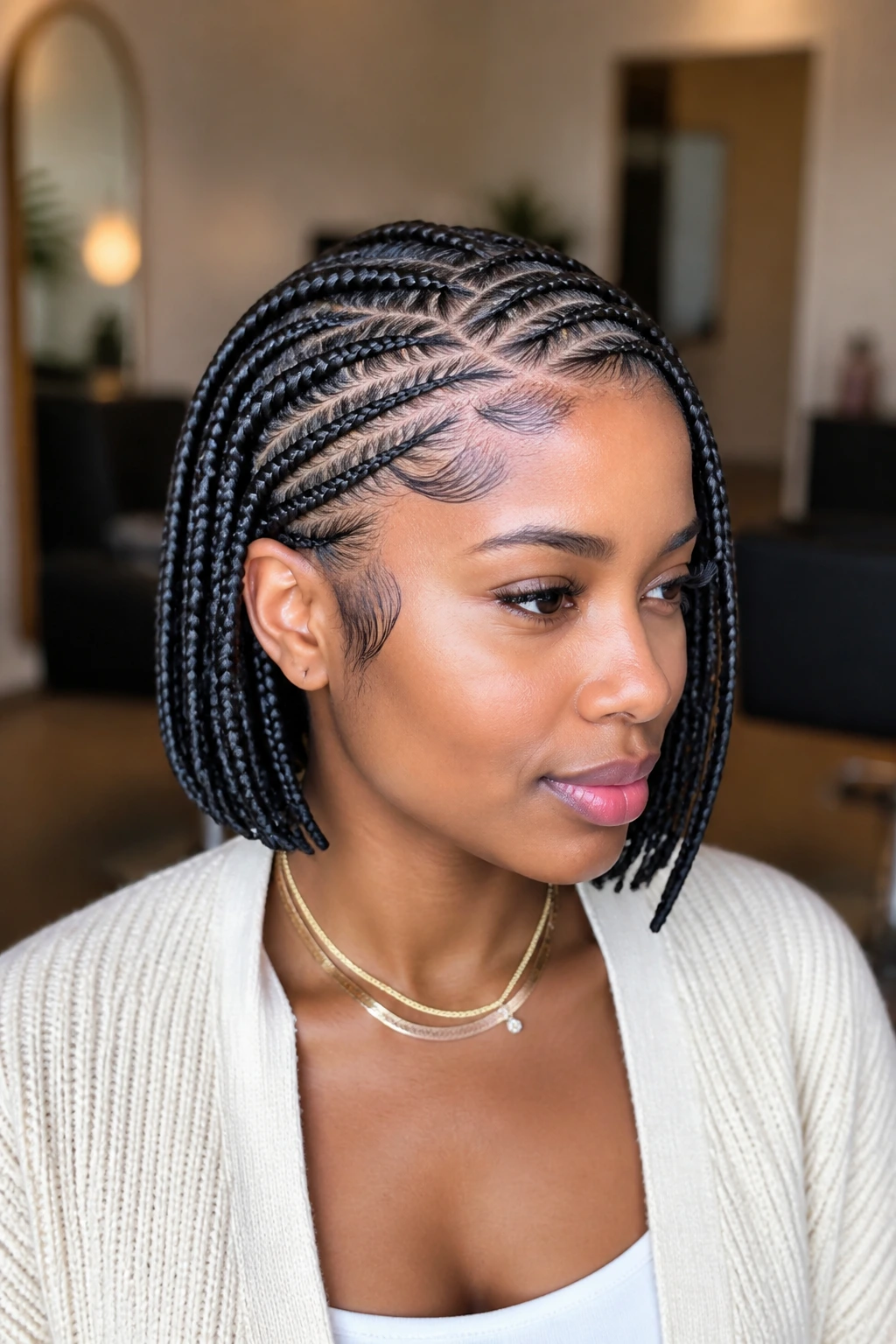
A feed-in stitch braid bob has a sculpted feel that regular hanging braids just can’t fake. The feed-in technique lays hair in gradually so the braids look clean at the scalp, and the stitch pattern gives the rows that separated, segmented look. The result is sleek, close to the head, and very deliberate.
At bob length, stitch braids stop feeling like a sports style and start feeling like a tailored haircut. The ends land with purpose. The sides can be straight back, curved, or slightly diagonal, which means the bob can read classic or sharp depending on the parting map.
This is the style I’d recommend to someone who wants the braid itself to act like the haircut. It doesn’t need loose curls or extra hair color to look finished. A neat edge, a tidy finish, and a good set of parts do most of the work here.
11. Layered Bob Braids With Mixed Lengths
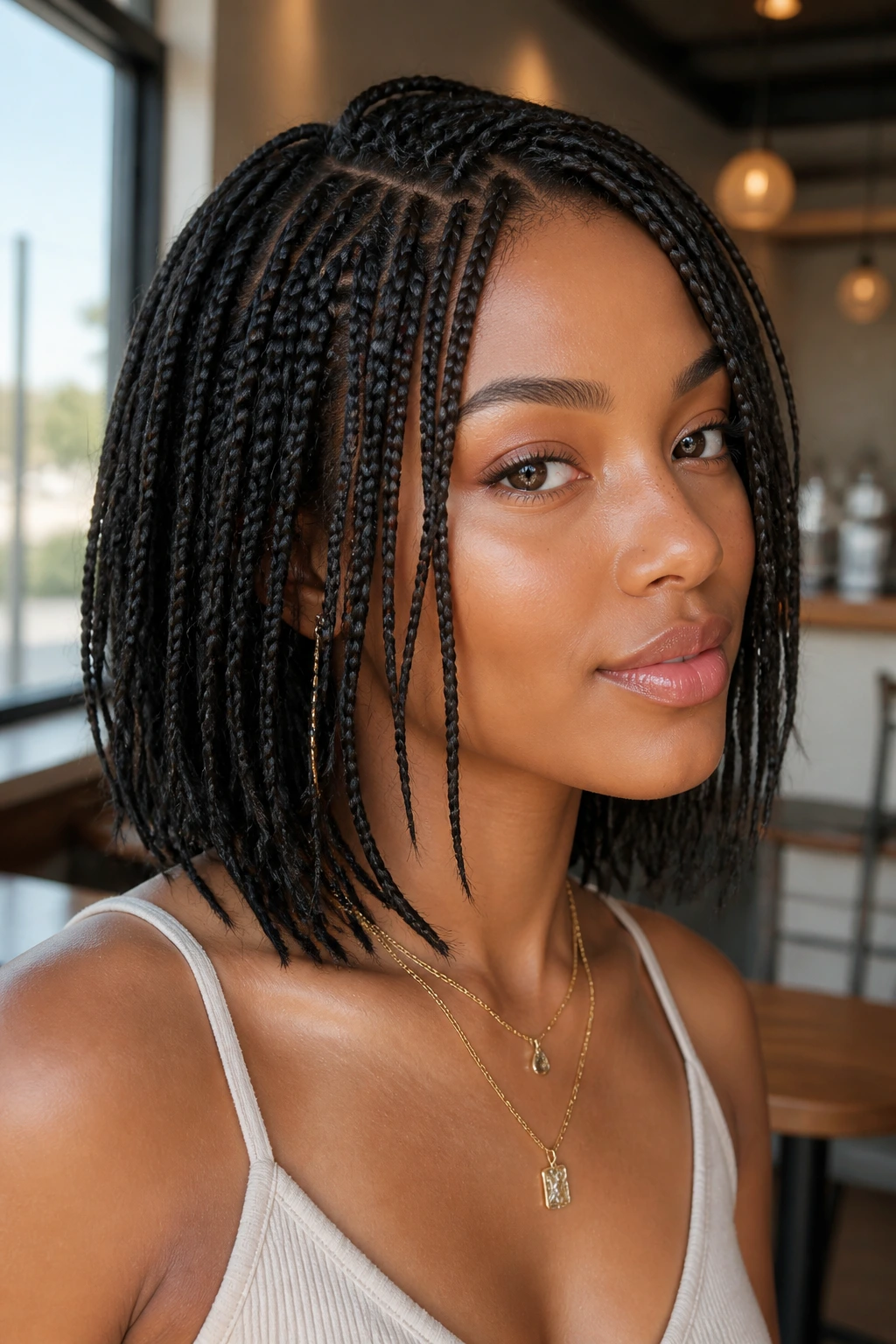
Layered bob braids are for anyone who thinks one flat line can feel a little stiff. Instead of every braid ending at the same point, the lengths stagger slightly around the face and nape. That softens the shape and gives the bob some swing.
The layering can be subtle or obvious. A gentle difference of an inch or two keeps the front pieces from sitting in a hard wall. A more dramatic difference gives you a cut that looks almost feathered, which can be useful if your face feels crowded by straight-across lines.
I prefer this version when the braid size is medium or small. Large braids can make the layers look clunky. Smaller braids let the cut feel airy, even though there’s plenty of hair in it.
12. Jumbo Bob Braids
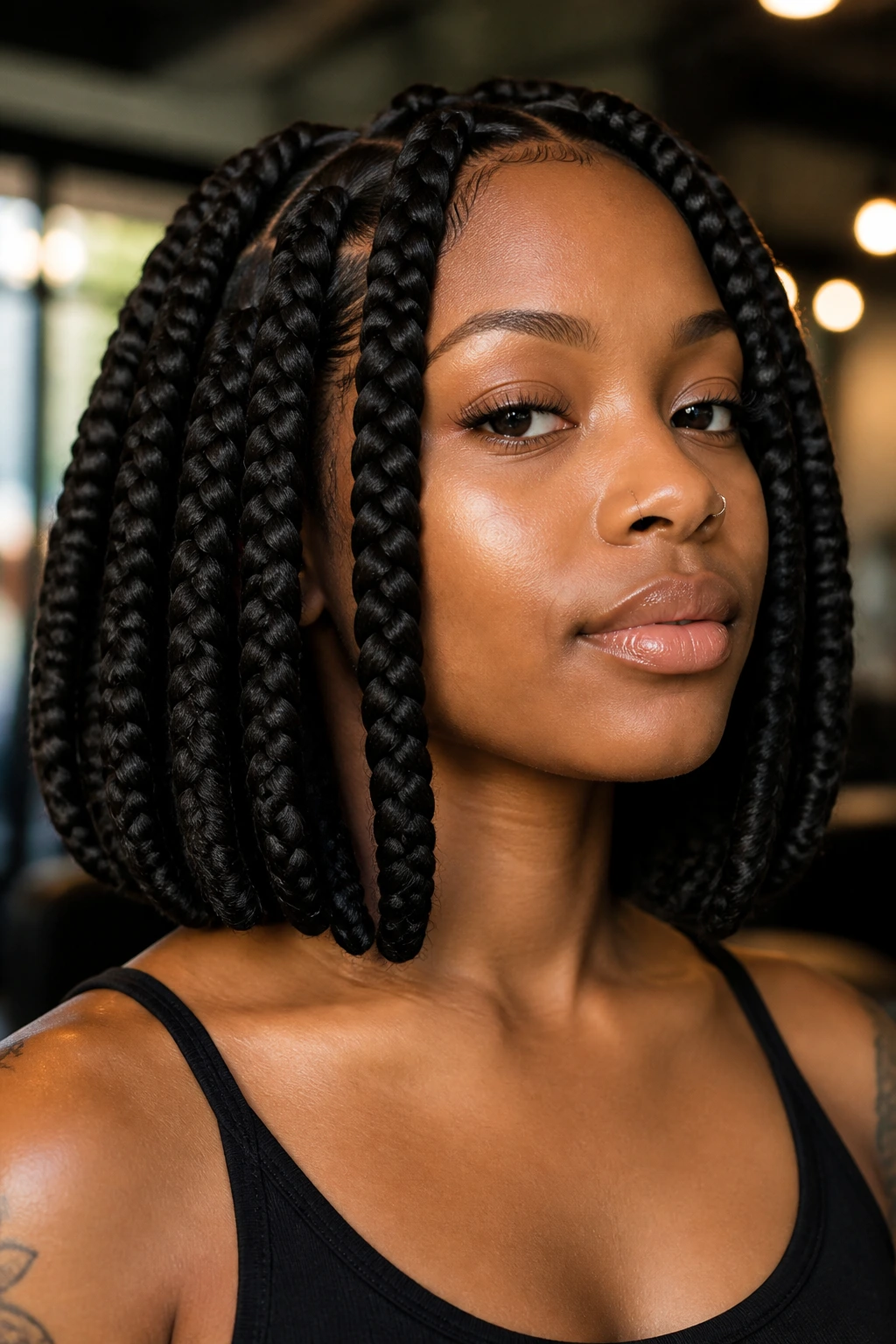
Jumbo bob braids are loud in the best way. Fewer braids. Bigger sections. Faster install. The style has a chunky, graphic feel that works especially well when you want the braid pattern itself to be the statement.
Because the braids are thicker, the bob should stay a little longer than a tiny-braid bob. If you cut jumbo braids too short, they can kick out in odd ways and make the silhouette feel boxy. Around the jaw or just below the chin tends to hold the nicest shape.
Good when you want
- A quicker install than micro or medium braids.
- A bold silhouette that shows from across a room.
- Less overall braid count to manage at night.
Be mindful of weight at the roots. Jumbo braids can tug if they’re packed too densely at the front. I’d rather see fewer well-placed jumbo braids than a full head that feels too heavy by day three.
13. Micro Braid Bob
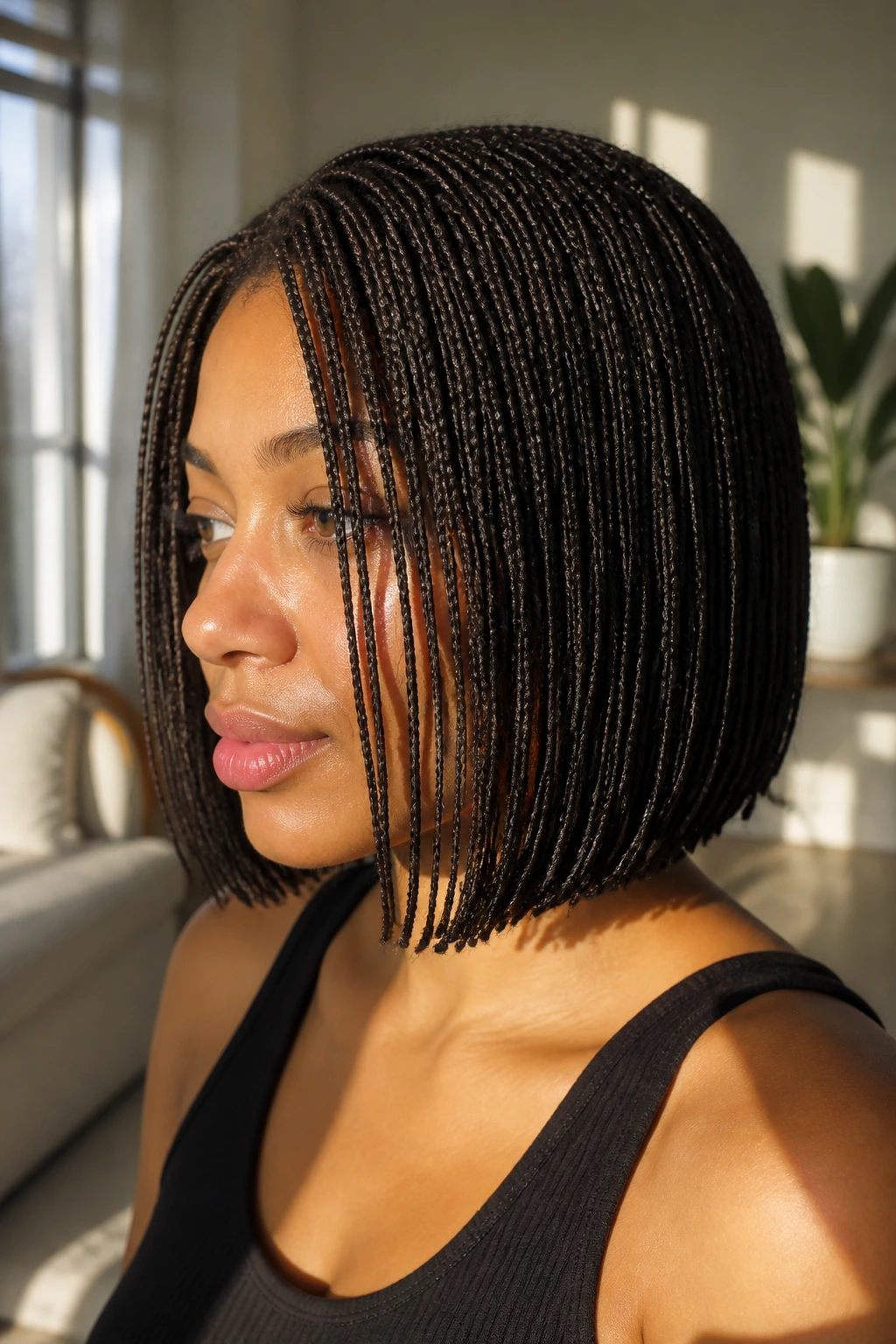
Micro braid bobs have patience written all over them. The tiny braids create a dense, flowing curtain that looks almost textile-like when the light hits it. The bob length keeps the style from going overboard, which is useful because micro braids can feel endless when they’re left long.
The big advantage here is movement. Even though each braid is small, there are enough of them that the whole style swings softly when you walk. If you want detail and a little drape without long hair in your face, this is a strong lane.
The tradeoff is install time. Micro braids take longer, and take-down matters. Still, the payoff can be worth it if you like a refined look that doesn’t shout for attention every time you move.
14. Colored Bob Braids With Face-Framing Pieces
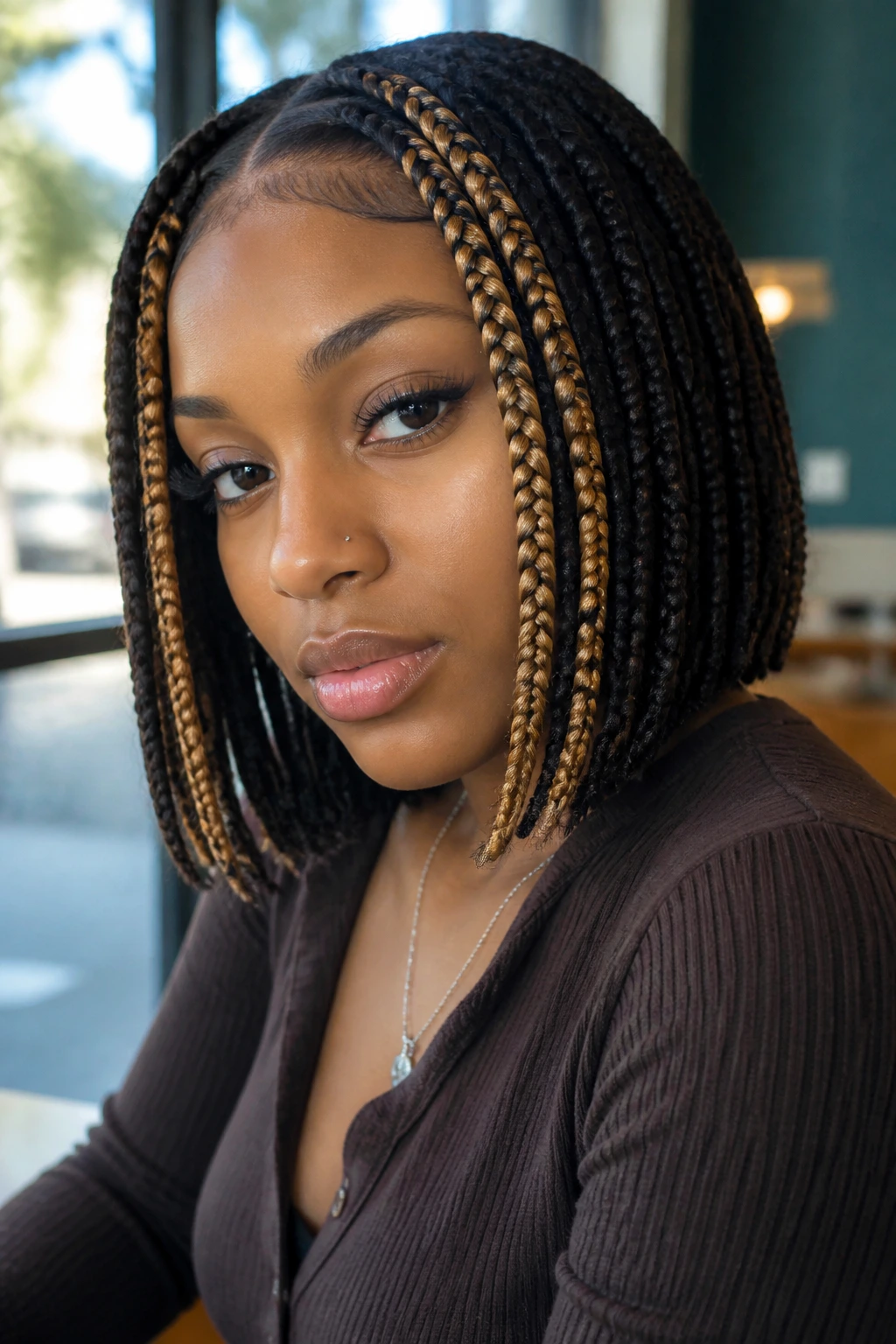
Color changes a bob braid style faster than almost anything else. You do not need an all-over bright head to make it work. Sometimes a few honey-blonde face-framing pieces or a deep auburn mix at the front and crown are enough to wake the whole style up.
Bob length makes color easier to read. A long braid set can swallow the contrast, but a shorter silhouette shows the blend right away. That means you can be more strategic: warm tones near the cheeks, darker pieces at the nape, or one bright strip along the front braid line.
If you wear a lot of black, cream, or denim, colored bob braids usually look especially crisp. The braid shape stays clean, and the color carries the mood. It’s a small shift with a big visual payoff.
15. Half-Up Bob Braids
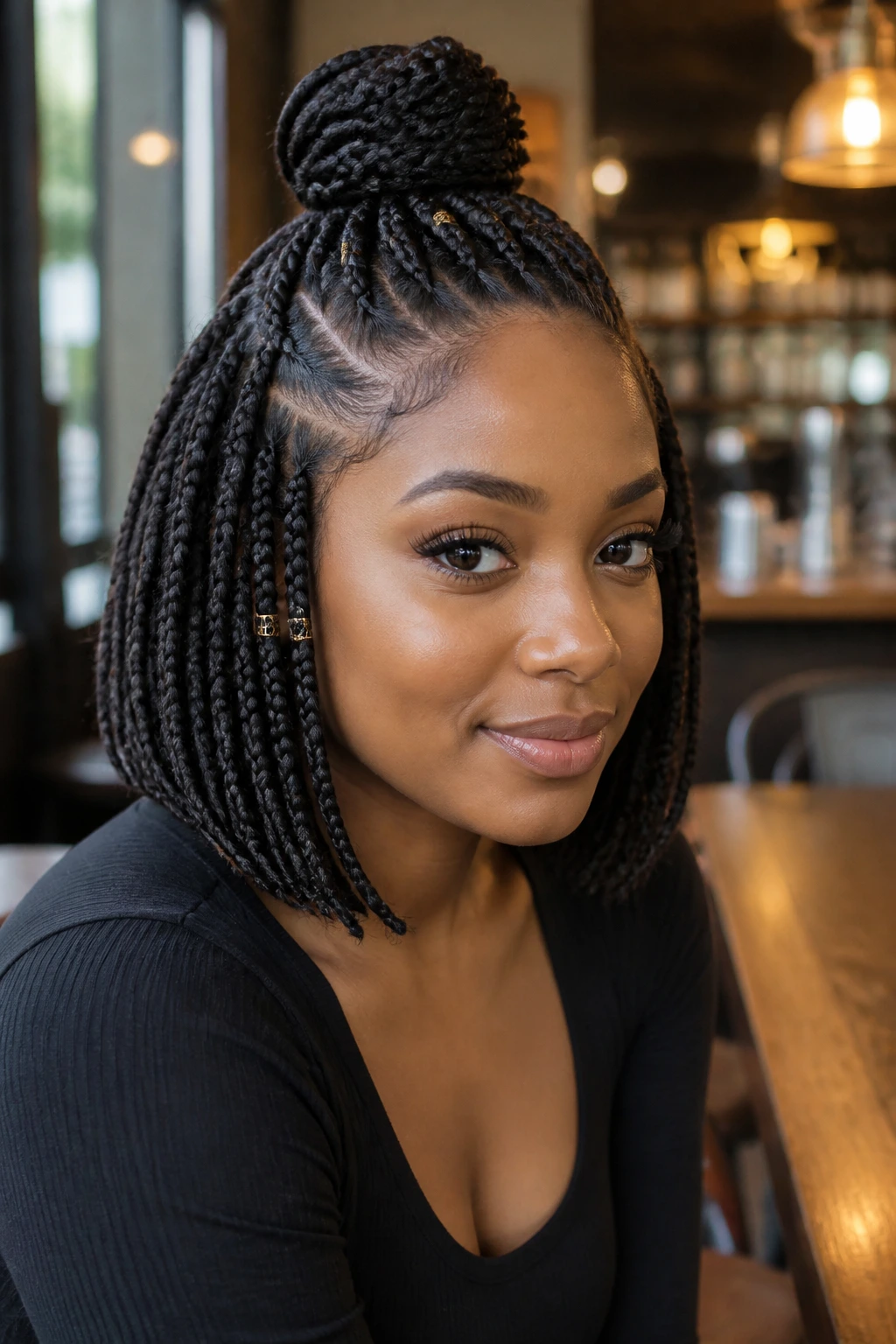
Half-up bob braids are the answer for anyone who wants the bob shape but still needs the hair off the face for part of the day. Pull the top section into a bun, a knot, or a compact pony, and let the rest hang. The result feels practical without turning plain.
This style works best when the bob has enough length to gather on top without making the crown look stretched. If the braids are too short, the half-up section can look stubby. If they’re a little longer, the crown gets height and the bottom keeps its neat bob line.
I like this on active days. Office work, errands, travel, anything where you keep lifting your hands to your face. It keeps the braids controlled and still lets the cut show.
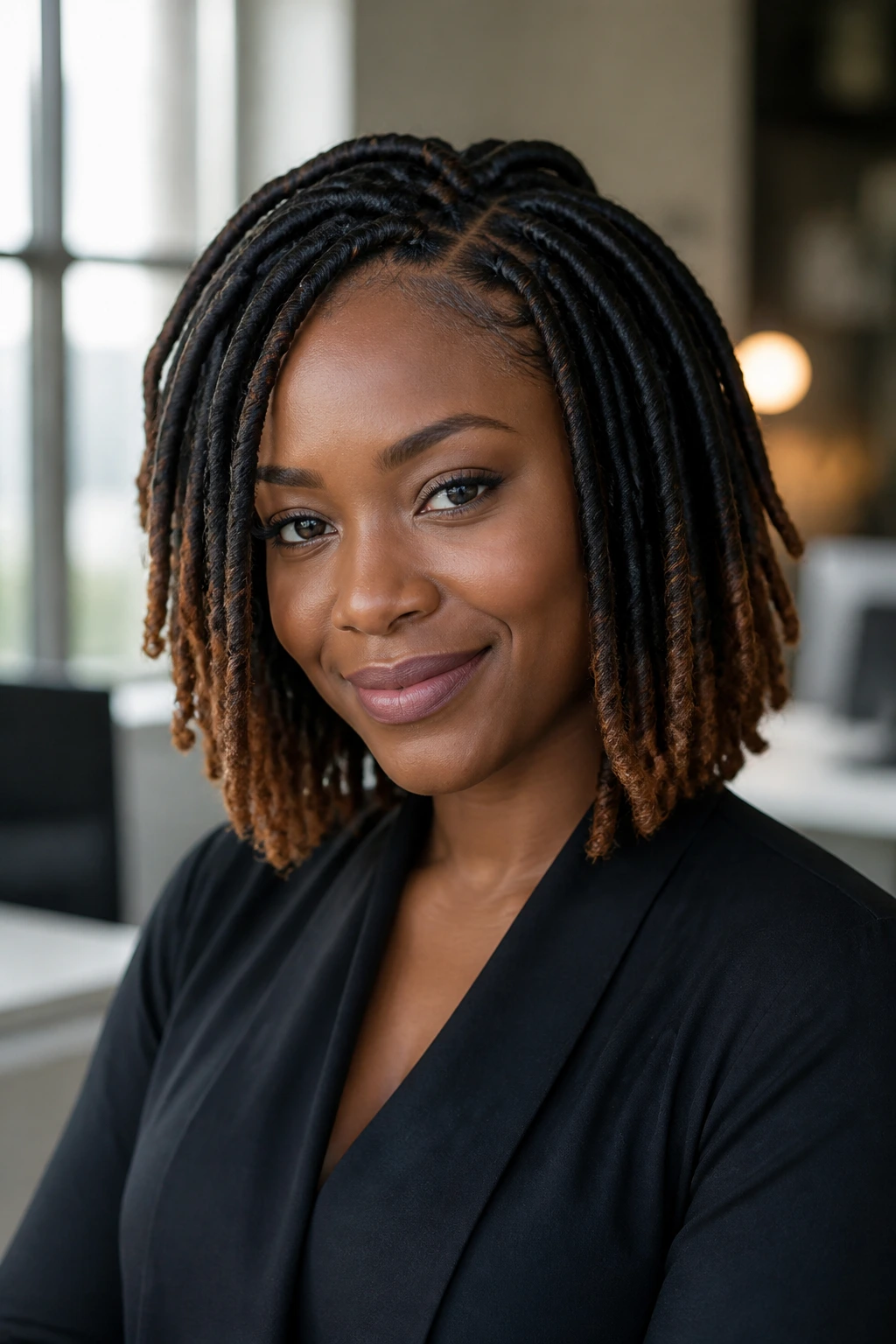
16. Faux Loc Bob
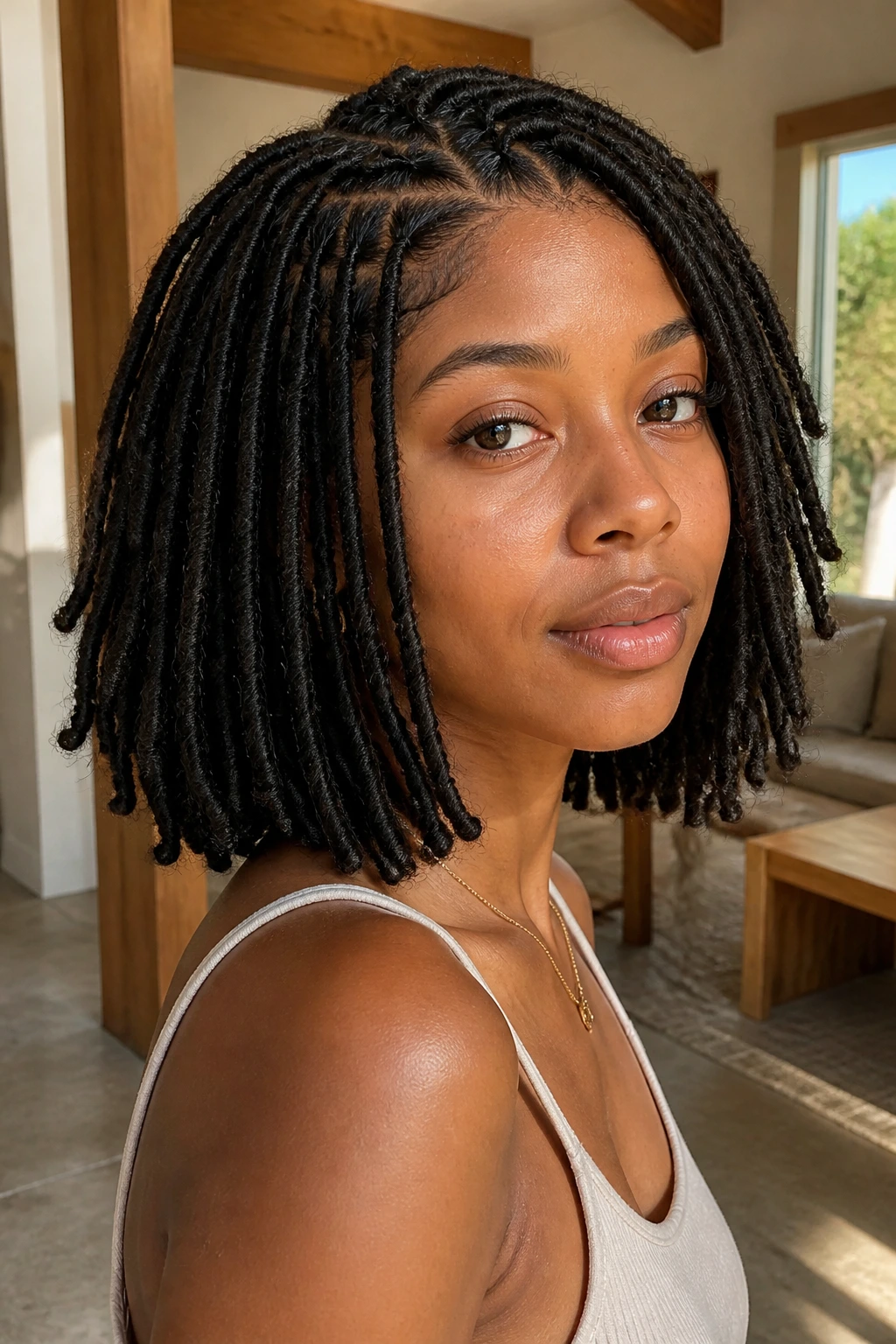
A faux loc bob gives you that wrapped loc look without the long, heavy length people sometimes associate with loc-inspired styles. At bob length, the locs sit with more shape and less drag. The wrapped texture has a worn-in feel right away, which is part of its charm.
This version tends to look best when the locs are neat at the root and slightly varied at the ends. Too much uniformity and the style can feel stiff. A little irregularity in the wrapping gives the bob more life. That’s not a flaw. It’s what makes faux locs feel believable.
If you want a protective style that leans earthy, textured, and low-key dramatic, this one has a strong case. It also pairs well with simple earrings and bare makeup because the locs already carry enough detail.
17. Butterfly Loc Bob
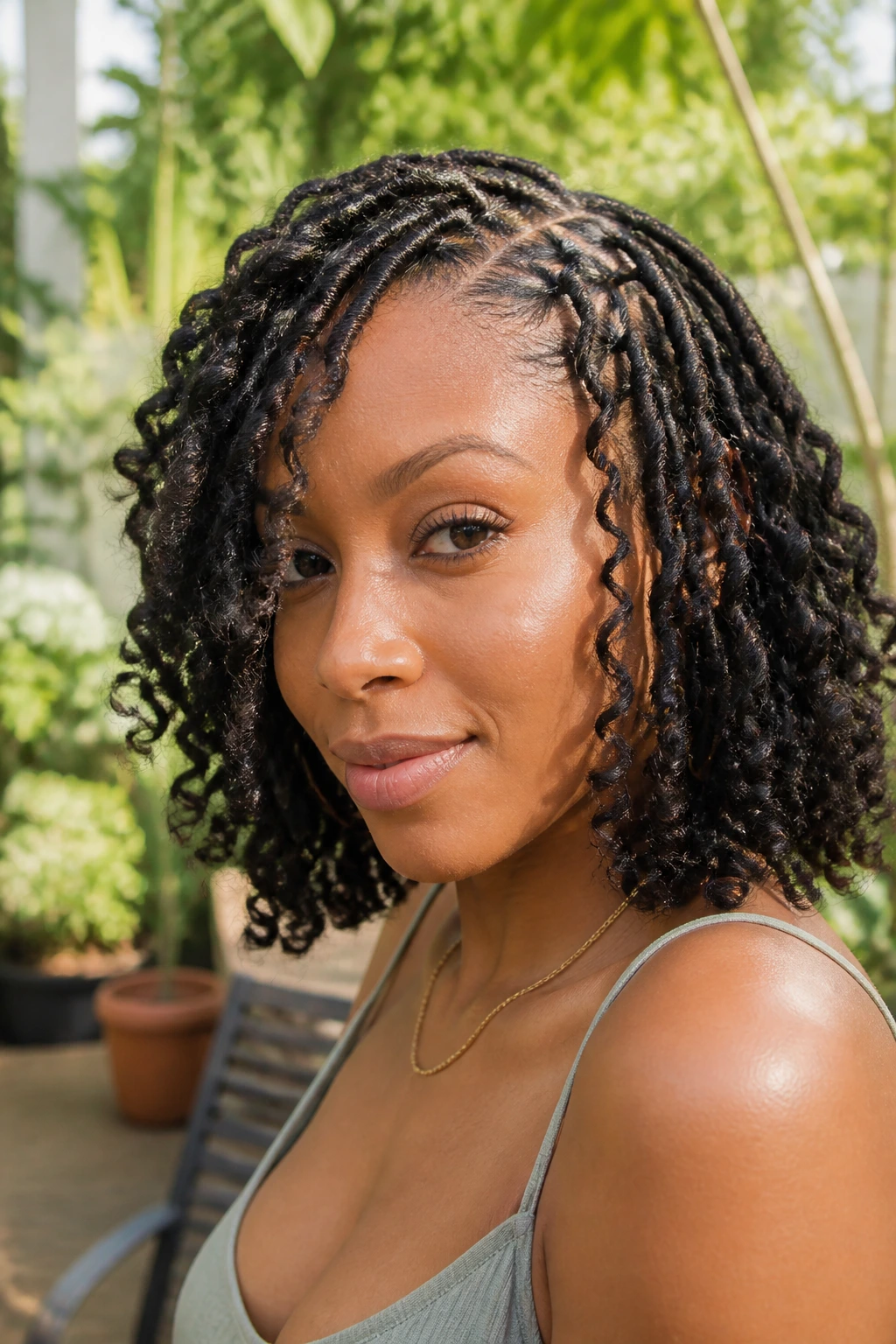
Butterfly locs are the messy cousin in the best way. The loops and rougher wrapping make the style look soft, undone, and textured, and that relaxed feeling gets even better at bob length. The style stops at a point where it still feels light enough to move, but chunky enough to keep its character.
The bob cut prevents butterfly locs from swallowing your frame. That’s a real risk with longer versions. Shorter lengths keep the loops visible and make the face stay open. If you want that carefree finish without hair hanging everywhere, this is the version to look at.
A tiny caution: butterfly locs fray into a prettier mess if they’re handled too much. Separate them gently, wrap them at night, and stop fussing with the loops every five minutes. They’re supposed to look lived-in. Let them.
18. Crochet Braided Bob
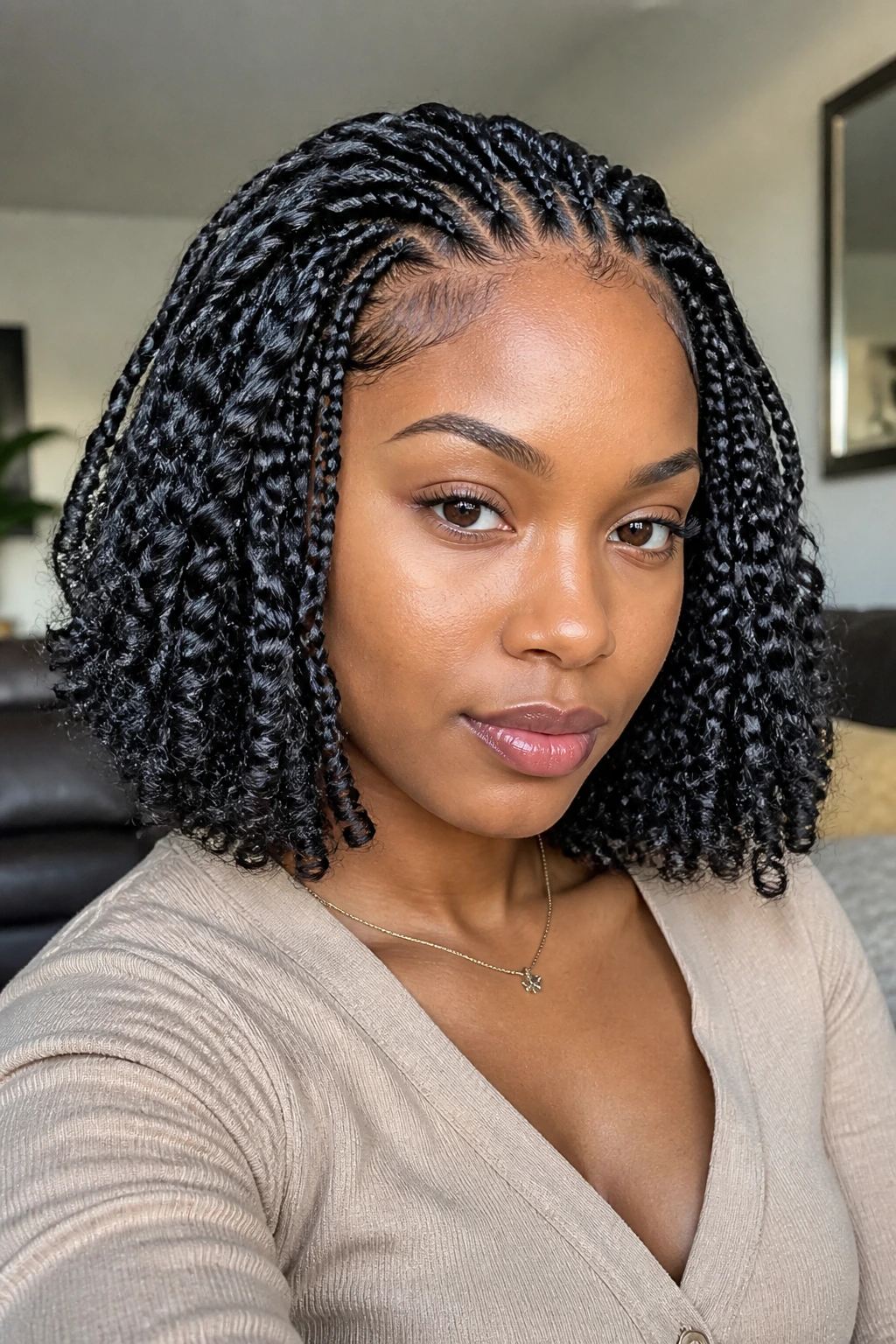
Crochet braided bobs are for the person who wants the look without the full installation marathon. Cornrows underneath, crochet pieces attached on top, and suddenly you have a bob that looks fuller than the time spent making it would suggest. That’s the appeal.
The finish can be sleek or textured depending on the hair used. Some crochet braid styles come pre-curled or pre-braided, which gives the bob a little more body at the ends. The base matters here, too. A clean cornrow foundation keeps the bob sitting where it should instead of drifting sideways after a few days.
This is one of the easiest ways to test a bob shape before committing to a full braiding session. If you’re not sure how short you want to go, crochet lets you play with the silhouette first.
19. Soft Loc Bob With Wrapped Ends
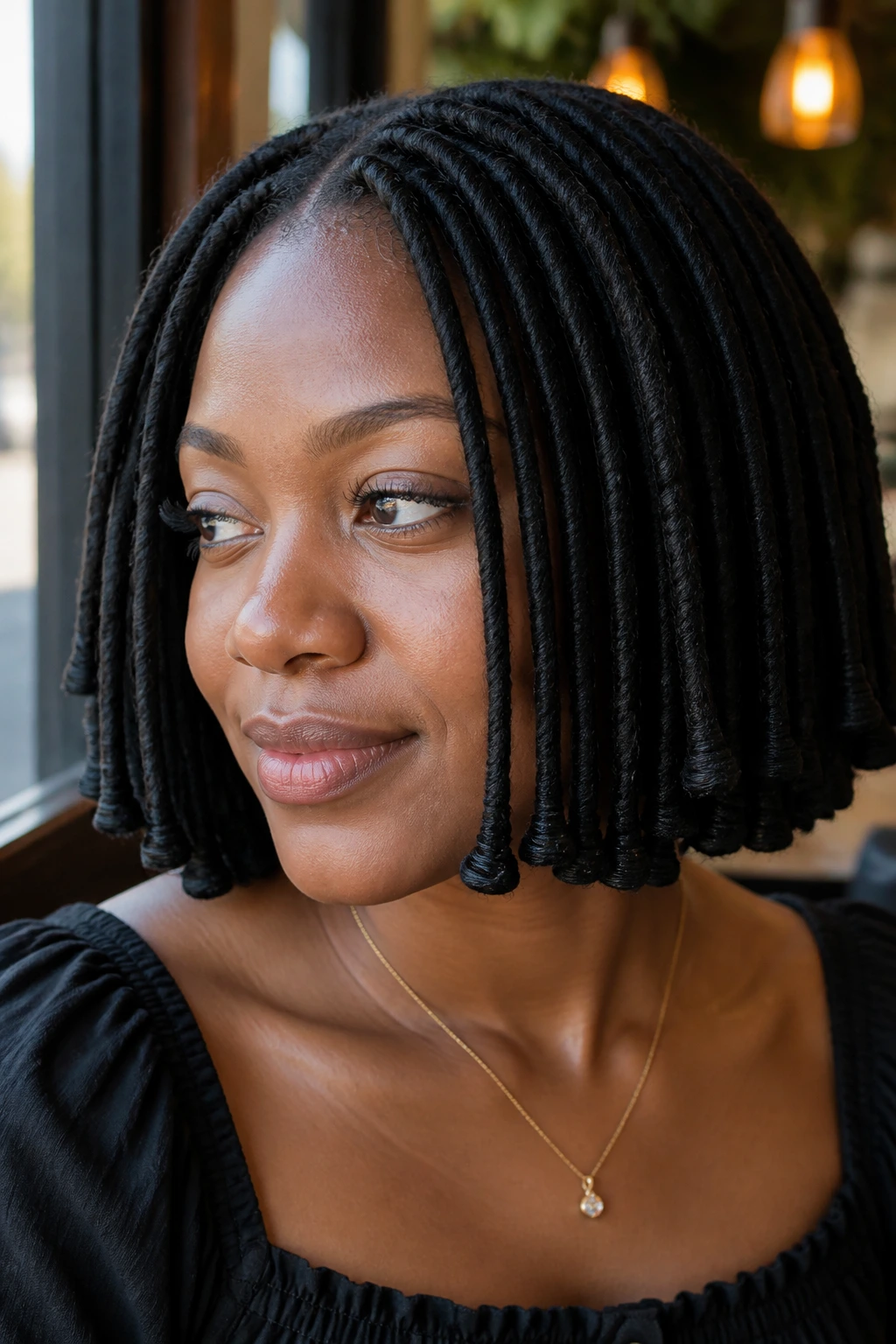
Soft locs are less rigid than faux locs, and at bob length that difference shows up right away. The texture is smoother, the silhouette feels gentler, and the wrapped ends keep the style from looking too bulky. It’s a little cleaner, a little lighter, and easier to dress up.
The wrapped ends matter. They keep the bottom line tidy and stop the locs from unraveling into a fuzzy edge. If you want a bob that feels polished but still textured, this is a strong middle ground between faux loc structure and free-form softness.
I’d pick this style for someone who wants a protective look with less visual weight around the jaw. It frames the face without boxing it in. That makes a bigger difference than people expect.
20. French Curl Braid Bob
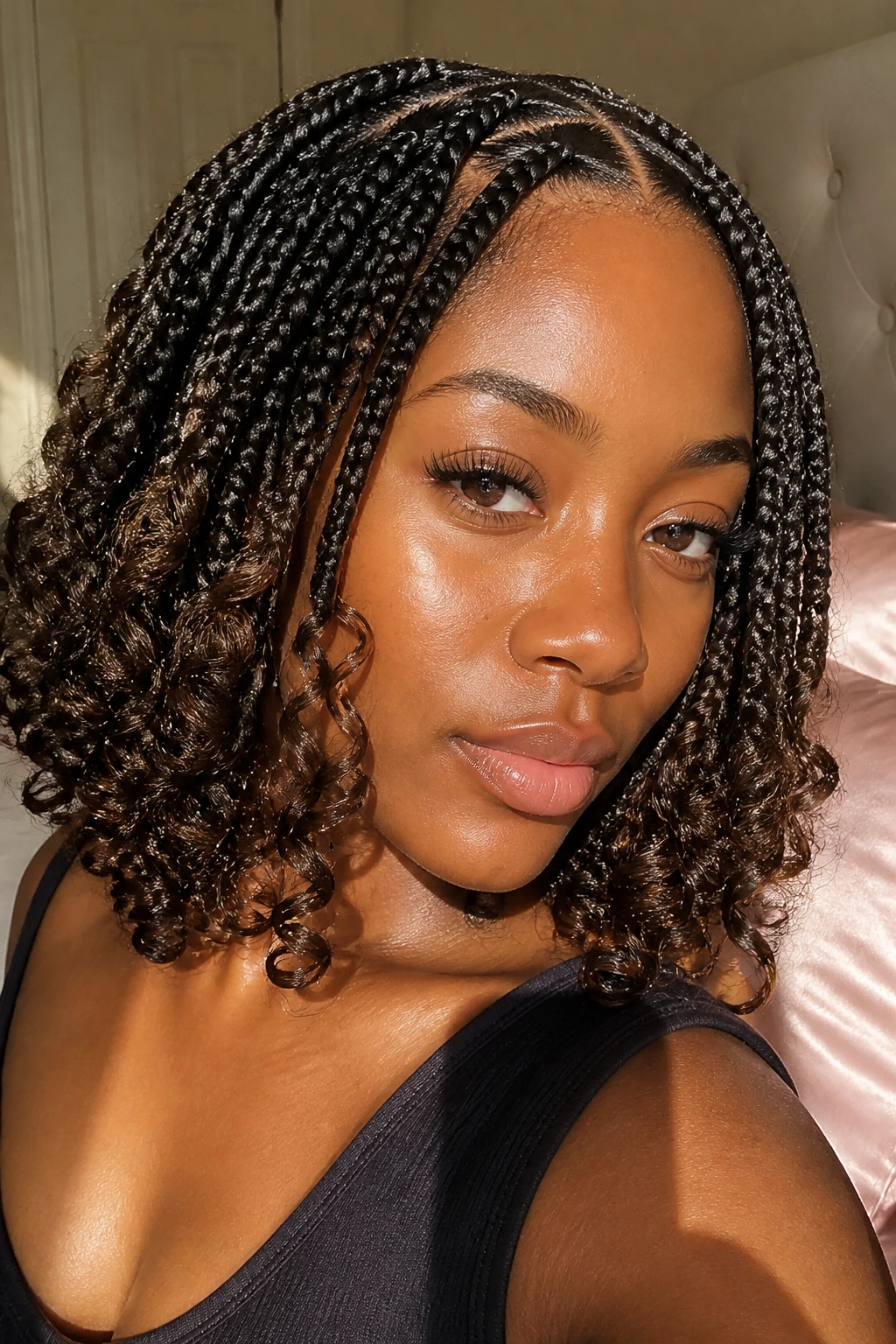
French curl braid bobs have one job: make the ends interesting. The braids themselves stay neat, but the spiral curl at the bottom introduces movement and shine. It’s a clean braid at the root, then a little flourish at the finish. That contrast is what keeps the style from feeling flat.
At bob length, French curl ends look especially good because they don’t have too much room to collapse. The curl stays visible instead of getting lost in the mass of the hair. If you like a feminine, dressy finish without turning the whole style into a formal updo, this is a smart choice.
The curls do need a gentle hand. Rough pillowcases, dry brushing, and too much oil around the ends can drag the curl pattern down. Satin at night helps a lot. So does not playing with them all afternoon.
21. Beaded Bob Braids
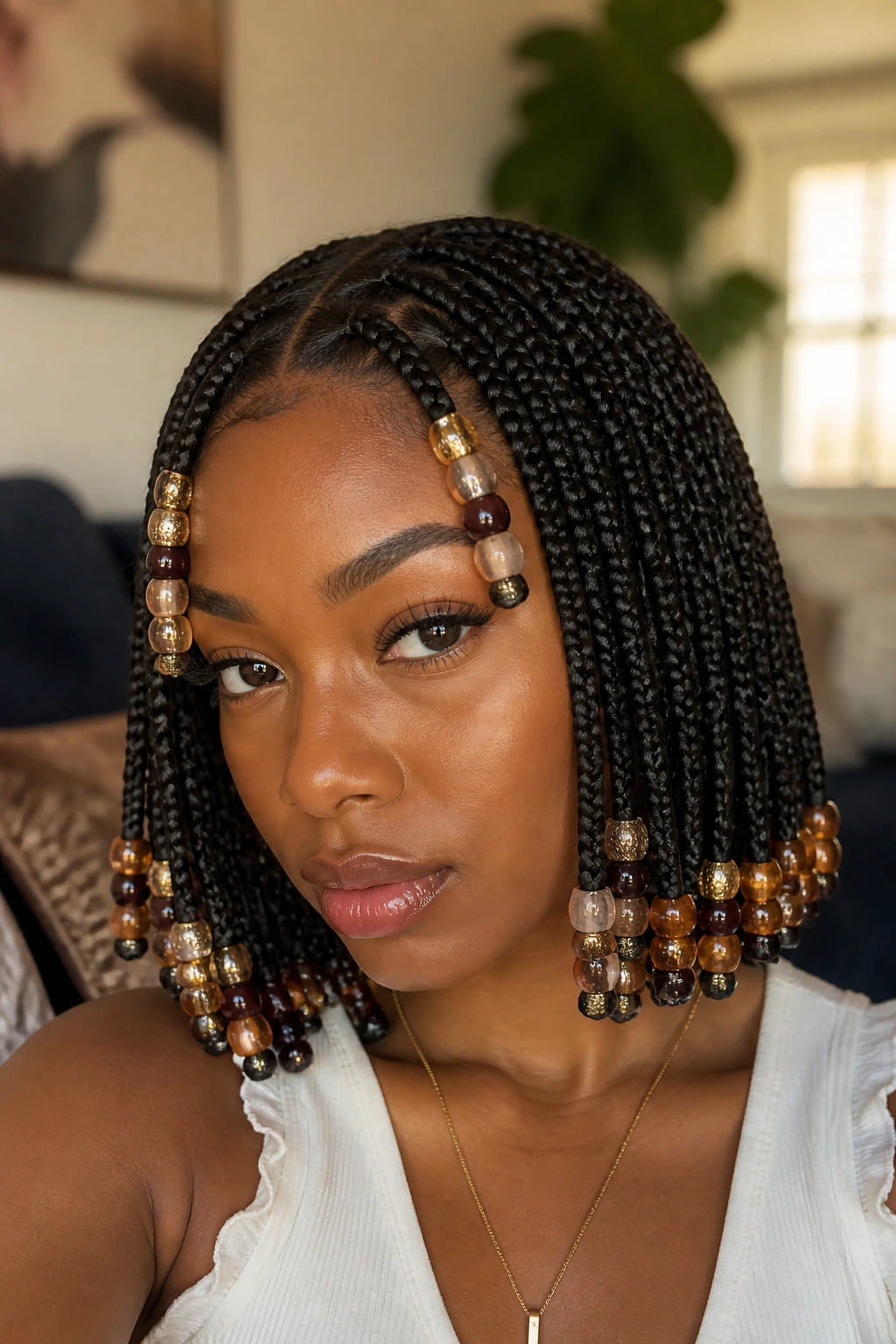
Beads on a bob braid style can be small and subtle or bold and noisy. At bob length, they show up immediately, which is exactly why this style works. The shorter the hair, the more each bead matters.
I like beaded bobs when the placement is deliberate. A few beads near the front and around the ends can be enough. Scatter them everywhere and the weight starts to compete with the bob shape. Keep the load balanced, especially near the temples and hairline, so the style doesn’t pull in one direction.
A quick practical note
If the beads are heavy, check how they sit when you tilt your head. That little detail tells you a lot. A good beaded bob should still feel wearable after an hour, not just photogenic for a minute.
22. Asymmetrical Bob Braids With Flipped Ends
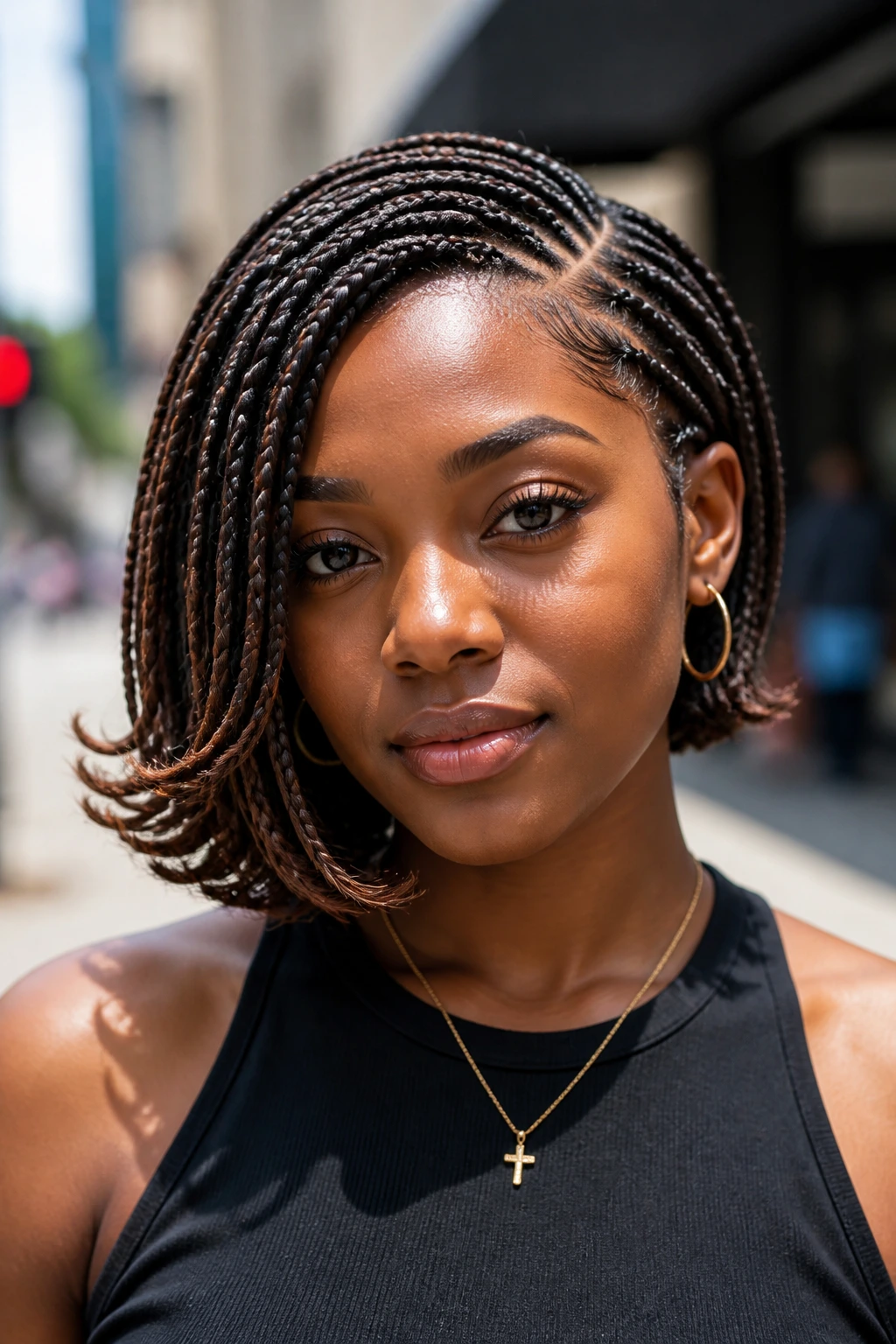
An asymmetrical bob braid style shifts the length on purpose. One side lands slightly longer, the other side sits shorter, and the whole look starts feeling a little sharper and more fashion-forward. Add flipped ends, and the shape becomes even more dynamic.
This is a smart choice if you want bob-length braids but don’t want the silhouette to look predictable. The asymmetry keeps the eye moving. The flipped ends add a bit of bounce, especially if the braid ends are sealed so they turn under or out cleanly.
It’s one of those styles that looks best when the rest of the look stays simple. A strong lip, a clean neckline, or a plain tee can make the asymmetry do all the work. No need to pile on extras. The cut already has attitude.
Why Bob-Length Braid Hairstyles Stay Comfortable and Wearable
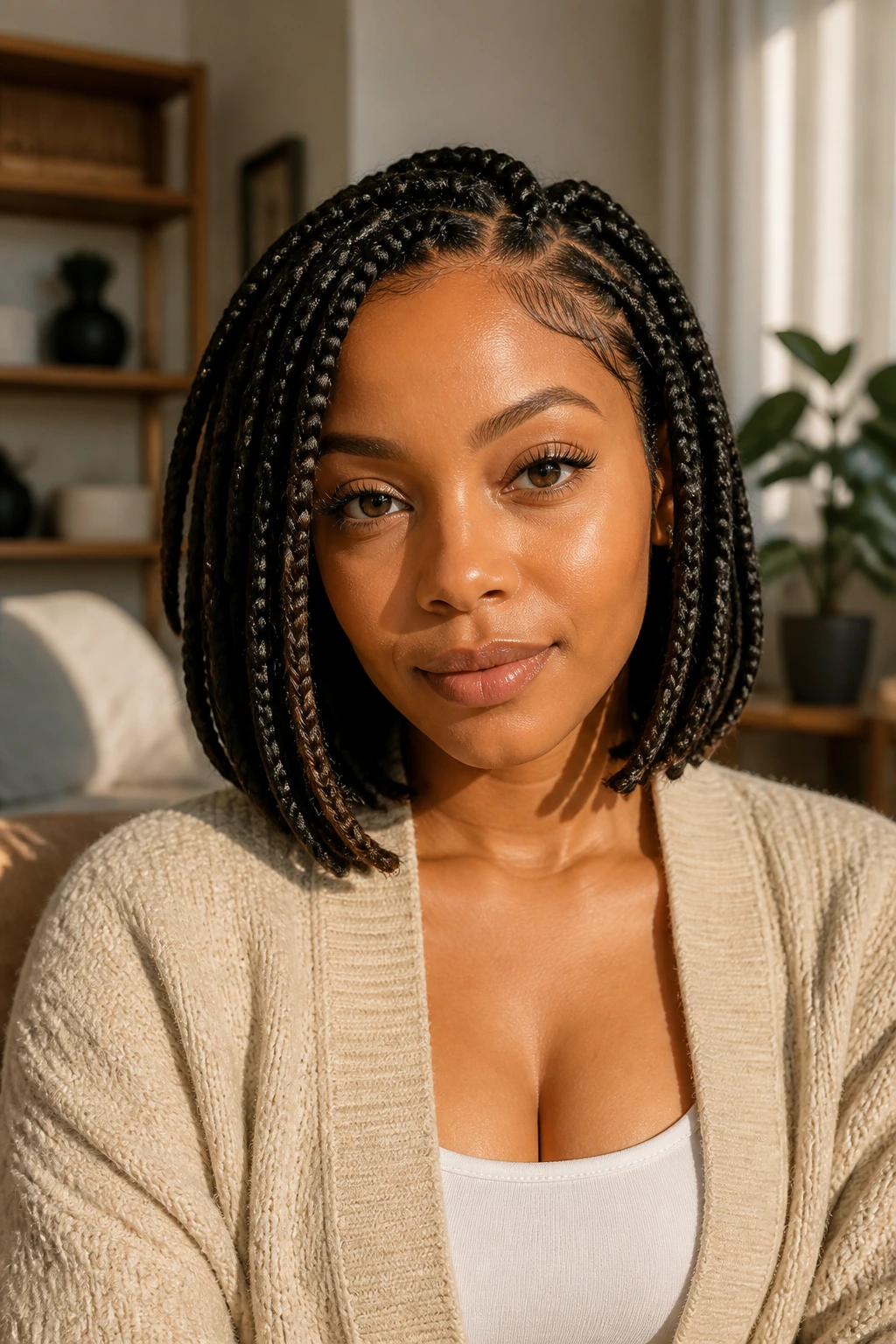
Bob-length braid hairstyles work because they solve a problem longer braids create: weight spreads out. When the style stops around the jaw, chin, or collarbone, the pull on the scalp is usually easier to manage, and the ends do not spend the day slapping your shoulders. That sounds small until you’ve worn braids through a long workday or a humid commute. Then it feels huge.
The shape also helps the style stay readable. A bob does not need much help to look finished. With the right parting and a clean bottom line, the hair itself does the framing. That is why these styles hold up so well in photos, in motion, and in plain daylight where every uneven end can be seen.
There’s another practical upside people forget. Shorter braid styles are easier to refresh. A quick mousse pass, a little scalp care, and a fresh scarf at night can keep the whole look neat longer than you might expect. Less hair means less drag, and less drag means less daily wrestling.
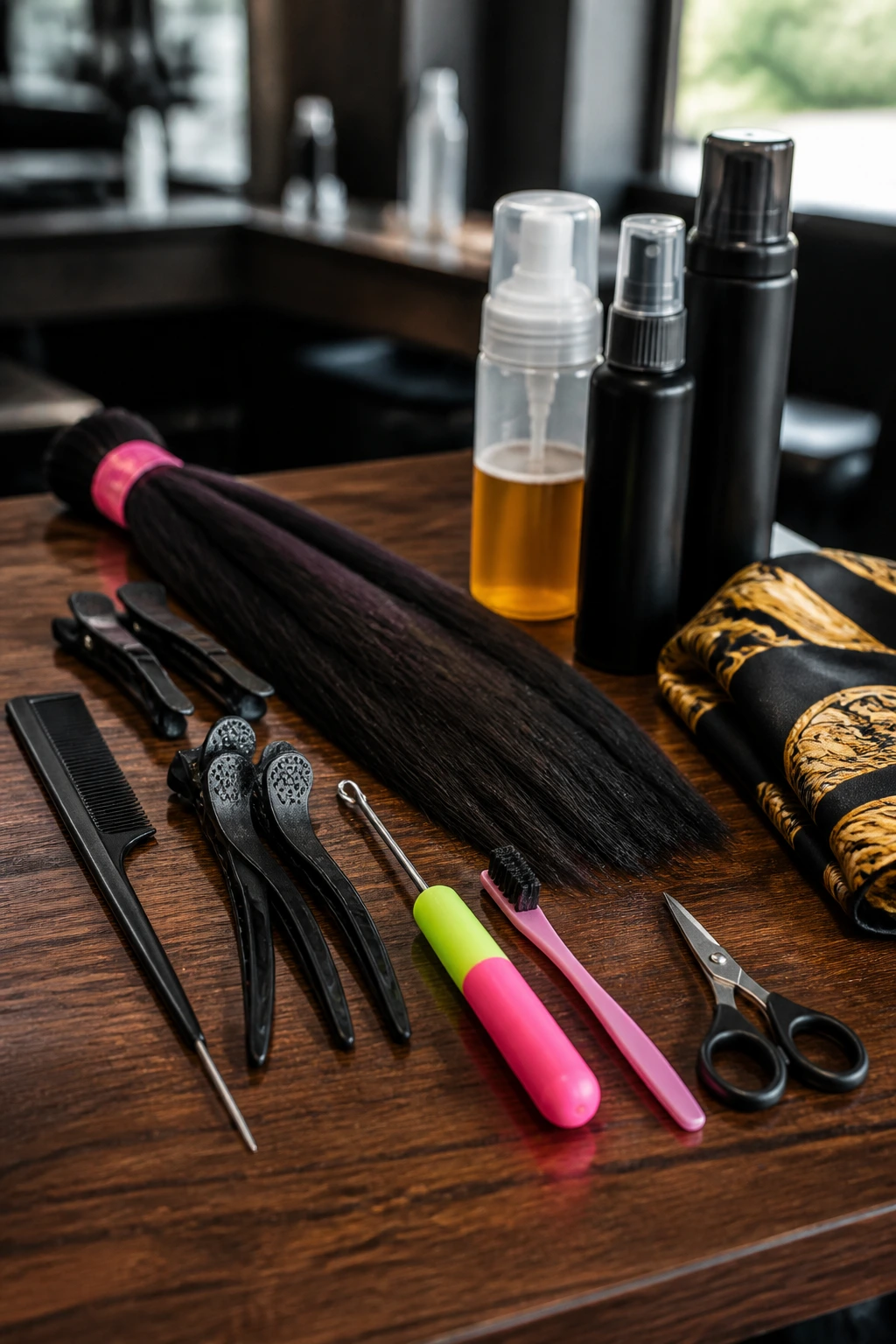
The Tools That Make Bob Braids Easier to Install and Refresh
-
Rat-tail comb: Needed for clean parts, triangle sections, and precise feed-in lines. A blunt comb won’t give you the same control.
-
Sectioning clips: They keep the back and sides from tangling while you braid. Four clips are usually enough for a full head.
-
Pre-stretched braiding hair: Saves time and gives the ends a smoother finish. It also blends more neatly into knotless and box braid bobs.
-
Crochet hook: Useful for crochet braid bobs and for pulling stray synthetic pieces into place.
-
Edge brush: Good for smoothing the hairline without laying on too much product.
-
Mousse for braids or twists: Helps settle frizz and set curled ends after installation.
-
Silk or satin scarf: Non-negotiable at night. Cotton dries the style out and roughs up the ends.
-
Braid spray or lightweight scalp mist: Better than heavy oils if your scalp gets dry. A little goes a long way.
-
Small hair scissors: Handy for trimming stray synthetic fibers, but use them carefully. One bad snip can change the whole line.
Smart Hair Shopping and Accessory Picks for Bob-Length Braid Styles
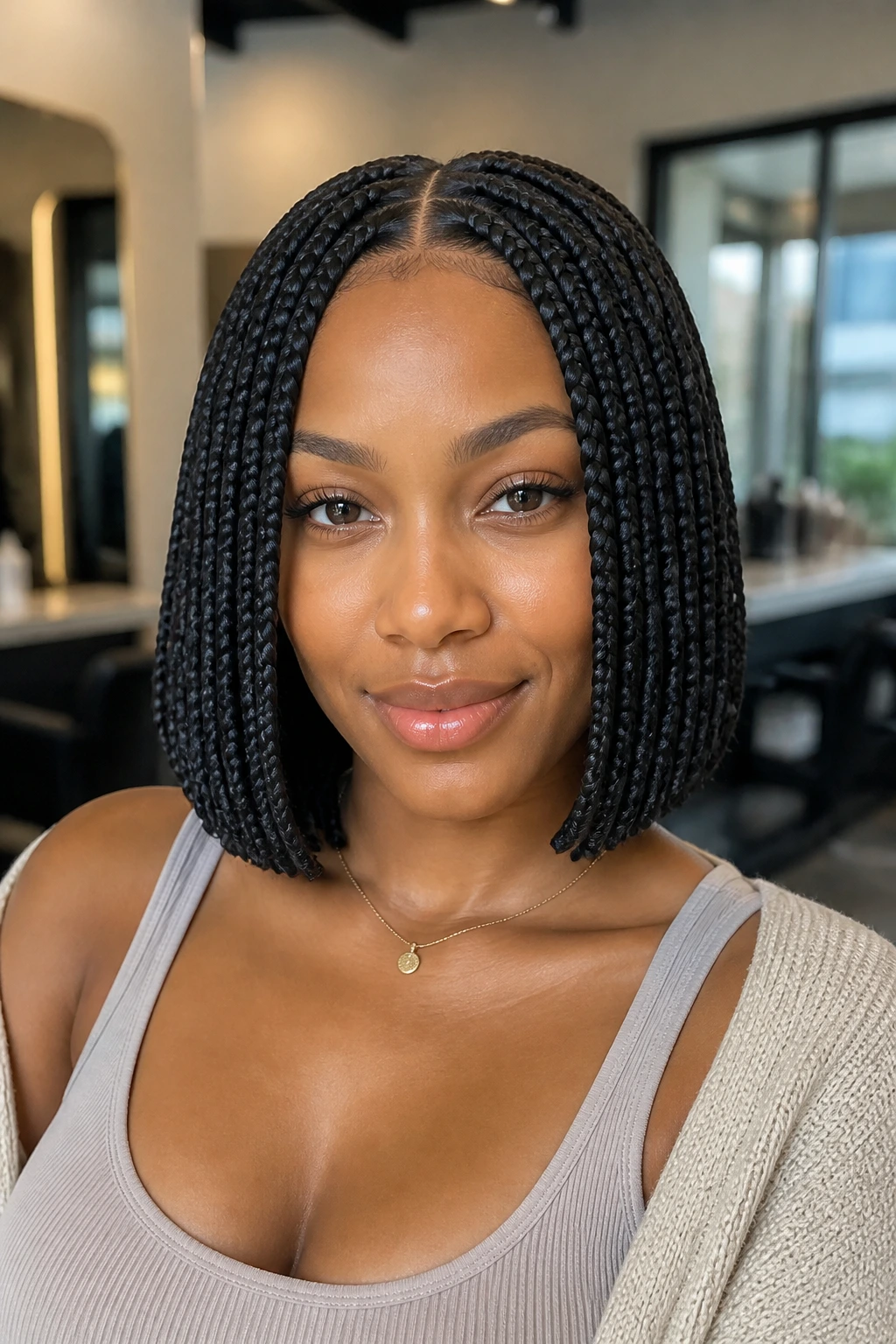
Choosing the right hair matters more at bob length than people assume. Too silky, and the braids can look slick in a way that fights the shape. Too coarse, and the ends can look fuzzy before you’ve even left the chair. For box braids, knotless styles, and Fulani bobs, pre-stretched braiding hair usually gives the cleanest finish.
Length matters too. If you want a true bob, buy hair that lands a few inches longer than the final cut so your braider has room to shape the ends. For a shoulder-grazing braid bob, many stylists work from a length that can be trimmed down cleanly after installation. If you want fullness, buy a little extra. If you want a lighter feel, don’t overpack the head.
Accessories need the same discipline. Gold cuffs, beads, and shells can look great on bob length, but they show every placement choice. Put them where the eye naturally lands—front pieces, side sweeps, or the lower half of the braids. If you decorate everything, nothing stands out.
How to Wear Bob Braids So the Shape Actually Shows
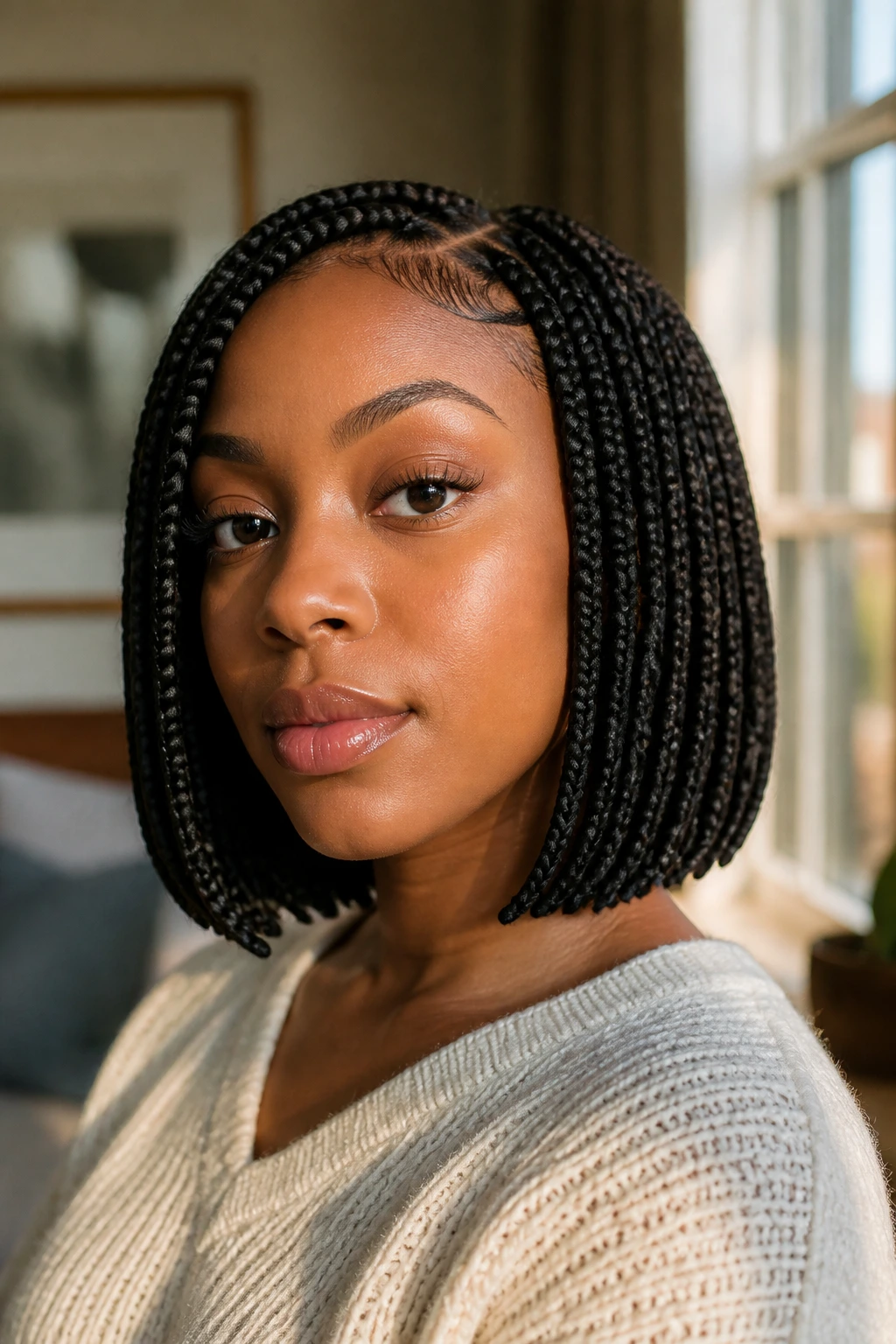
Presentation: Keep the parting clean and let the ends sit where the cut was meant to land. A bob loses its punch when it’s constantly tucked behind both ears or squashed flat under a tight hood.
Pairings: V-necks, crew necks, and open collars all work, but I think bob braids look strongest with necklines that leave a little room around the jaw. Big hoops, slim chains, and a defined brow help the style read on purpose.
Wear Time: A neat bob braid style usually holds its shape best for the first couple of weeks, then softens as the roots settle. That’s not failure. It’s the style loosening into real life.
Finish: Mousse on the ends, a light sheen spray, and a scarf at night are usually enough. Skip the heavy oils if the style already has enough shine. Grease makes the bob look weighed down fast.
Ways to Make Bob Braids Look Sharper, Softer, or More Personal
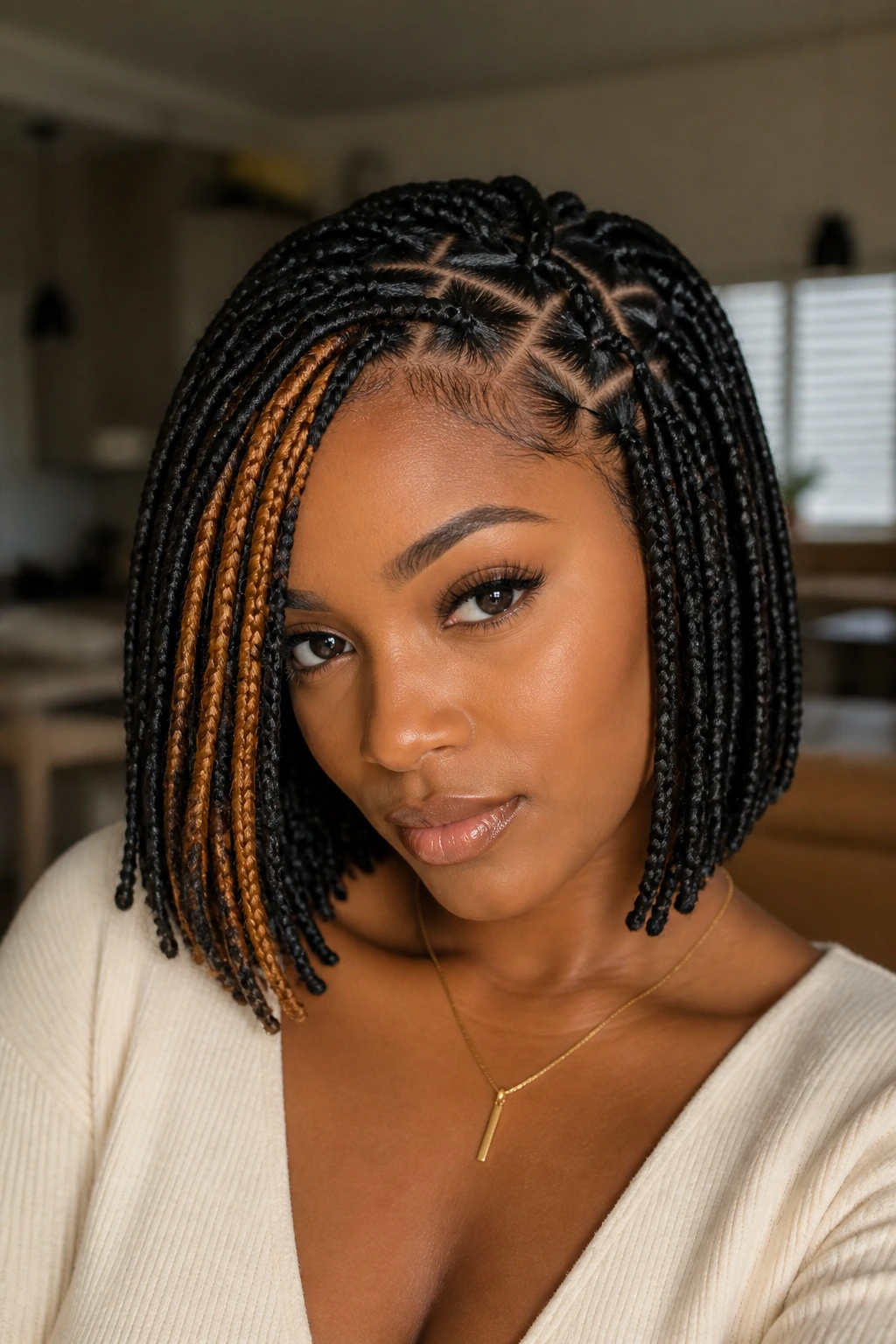
Parting Detail: A zigzag, triangle, or deep side part changes the mood without changing the braid type. If the style feels too plain, the parting is the first place I’d look.
Color Play: One warm face-framing piece, a mix of black and brown, or a few blonde braids near the front can wake up a bob instantly. You do not need a full color melt to get the effect.
Accessory Move: Put cuffs or beads only on the front few braids if you want the style to stay clean. Put them near the ends if you want movement. Keep the rest bare so the bob doesn’t turn noisy.
Texture Swap: Straight braids, twists, and locs all change the mood of the same length. If your usual bob feels flat, change the texture before you change the length.
Common Mistakes That Make Bob-Length Braids Look Off
-
Making the ends too uneven: If the bottom line is supposed to be blunt, a sloppy trim will show immediately. Fix it by having the ends cut and checked while the hair is worn down, not twisted up.
-
Packing too much hair at the crown: The bob starts to sit like a helmet when the roots are overloaded. Keep the top lighter and let the shape build through the lengths instead.
-
Letting accessories pull the sides down: Heavy beads or cuffs near the temples can drag the bob off-center. Spread the weight out or move the decoration lower.
-
Skipping nighttime wrapping: Bob styles can frizz at the ends and puff at the roots if they sleep loose. Satin scarf first, bonnet if needed. Every time.
-
Choosing a parting pattern that fights your face: A center part can sharpen one face and flatten another. If the style looks harsh, shift the parting before you assume the braids are the problem.
Variations and Adaptations Worth Trying
Office-Sleek Knotless Bob: Keep the parts straight, the ends blunt, and the color close to your natural shade. It’s a cleaner, quieter version that works when you want the bob shape without extra texture.
Boho Weekend Bob: Add loose curls, a few face-framing pieces, and a softer part. This version reads relaxed the minute it’s finished.
Statement-Cuff Fulani Bob: Load the front braids with cuffs and leave the rest plain. That keeps the style balanced and gives the accessories room to matter.
Soft Loc Bob: If faux locs feel too dense, choose a lighter wrapped texture with more movement at the ends. It keeps the loc look but takes some of the weight off the jaw.
Color-Accent Bob: Keep most of the head neutral and place color in the front or along one side. That gives you contrast without turning the style into a full color project.
How to Keep Bob Braids Fresh Between Washes
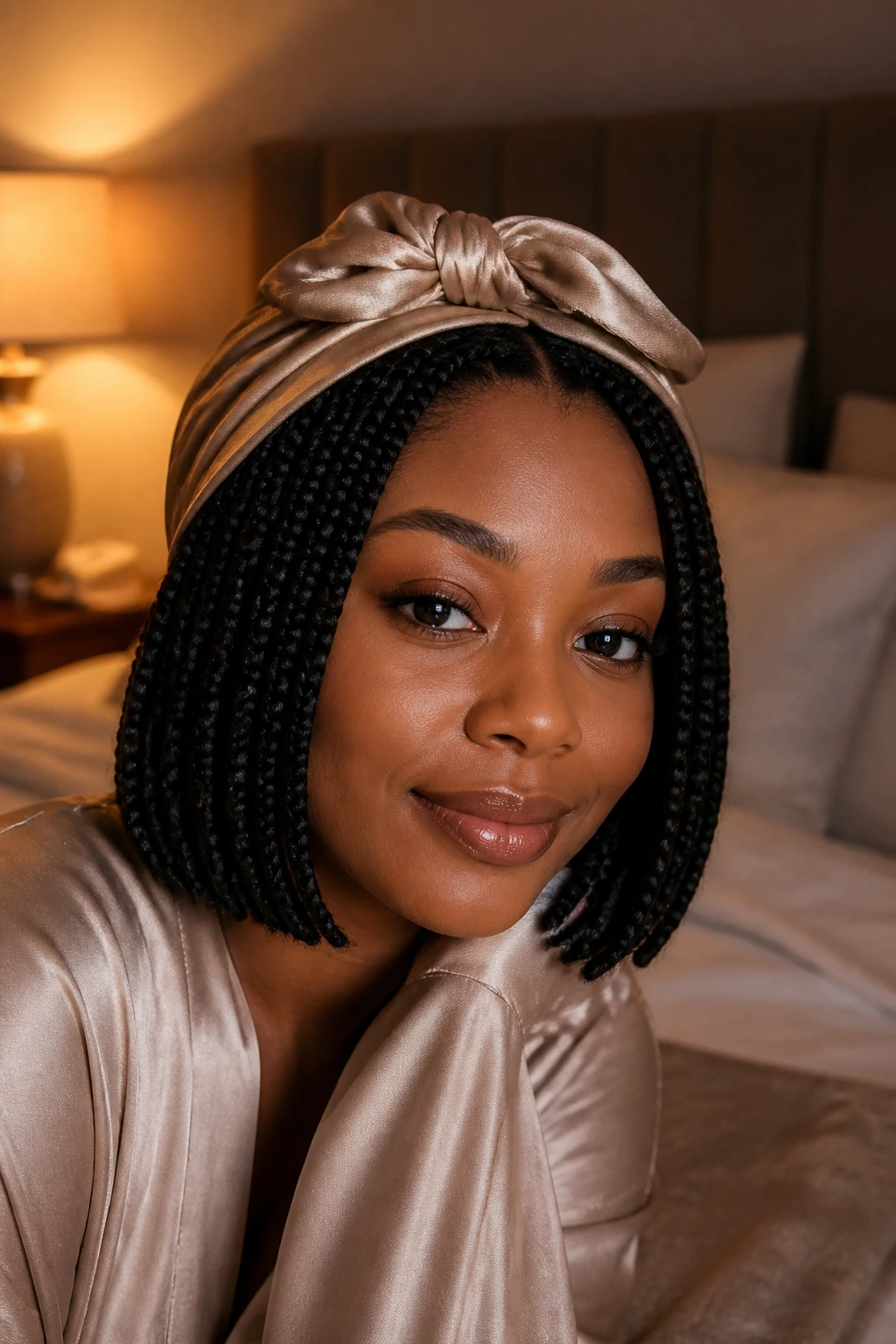
Bob braids hold up best when the maintenance stays light and regular. At night, wrap the hair with satin and tuck the ends so they don’t rub against a cotton pillowcase. If the style includes curls or loose pieces, protect those first. They fray fastest.
For the scalp, a lightweight mist or braid spray every few days is usually enough unless your scalp runs dry. Heavy oil can sit on top of the parts and make the style look dull. If you do use oil, use a small amount on the fingertips and apply it to the scalp line only.
Wash gently when the roots start to feel grimy, not when the style has already gone limp. Use diluted shampoo on the scalp, let the suds run through the lengths, and dry the braids thoroughly afterward. That last part matters. Damp synthetic hair smells off fast if you rush it.
Bob Braids: What People Ask Most
How long do bob-length braid hairstyles usually last?
A neat install often stays in the 4-to-8-week range depending on your hair growth, how tight the braids are, and how carefully you wrap them at night. The style itself may still look fine after that, but the roots and parting usually tell the truth first.
Can you do bob braids on short natural hair?
Yes, if the hair is long enough to grip safely and the stylist knows how to build a secure base. Knotless, feed-in, and crochet styles are often easier starting points because they reduce tension and can blend more naturally into shorter lengths.
How many packs of hair do you need?
That depends on braid size and fullness, but a bob usually needs fewer packs than a long install. Jumbo styles may use fewer packs; micro or layered styles may need more. The safest move is to ask your braider after the parting plan is set, because section size changes the count fast.
Which is gentler: knotless or box braid bobs?
Knotless usually feels softer at the root because it builds the braid gradually. Box braids can still work well, but if your scalp is tender or you wear protective styles often, knotless is usually the calmer choice.
Why do bob braids flip at the ends?
Synthetic hair, blunt cuts, and humidity can all make the ends turn inward or outward. Sometimes that flip looks cute. If you want a cleaner line, a light mousse pass and a careful trim usually help.
Can you swim or work out with bob braids?
Yes, but you need to dry the style properly after both. Pool water, sweat, and damp curls can make the bob smell stale if it stays wet. A quick rinse, blot, and full dry matter more than people like to admit.
Are beaded bob braids too heavy?
They can be if the beads are packed near the hairline or loaded onto every braid. A few placed near the ends usually work better and keep the style comfortable. The weight should feel decorative, not like it’s pulling the style sideways.
What bob style is easiest to maintain?
A plain knotless bob or a blunt box braid bob tends to be the easiest to live with. Both have clean lines, fewer moving parts, and less frizz-risk than styles with loose curls, beads, or distressed textures.
The Short-Shape Finish That Keeps Delivering
Bob-length braid hairstyles keep showing up for a reason: they give you the shape people notice, but they leave out most of the daily nuisance. Less bulk. Less drag. Less time spent shoving hair back into place every twenty minutes. That is a good deal.
The best part is how personal these styles can feel without needing extra length to do the work. A center part can look calm, a side sweep can look sharp, curls can soften the whole frame, and loc textures can push the style into a totally different lane. Same bob. Different mood.
If you want a protective style that still reads like a haircut, bob braids, twists, and locs are hard to beat. Pick the texture that fits your routine, keep the parting clean, and let the length do what it does best—sit neatly, move a little, and stay out of your way.
