



A boho braid hairstyle has a very specific charm: the base looks controlled, the finish looks lived-in, and the little loose pieces around the face do half the styling for you. That contrast is the whole point. A braid can be neat and still feel soft. It can be polished and still look like it moved through a long afternoon, a warm breeze, and one too many head turns.
Get the balance wrong and the style loses its nerve. Pull the roots too tight and your scalp will complain before the day is over. Leave everything too loose and the whole look starts to read as unfinished instead of intentional. The sweet spot is a clean foundation, some movement at the ends, and texture that looks chosen — not accidental.
That matters because braided styles are supposed to work with your life, not fight it. Dermatologists have long warned that repeated tension around the hairline can lead to breakage and traction alopecia, so the prettiest version is not the one that hurts after an hour. The styles here lean into softness without letting the structure collapse.
Why These Braids Read Boho Instead of Basic
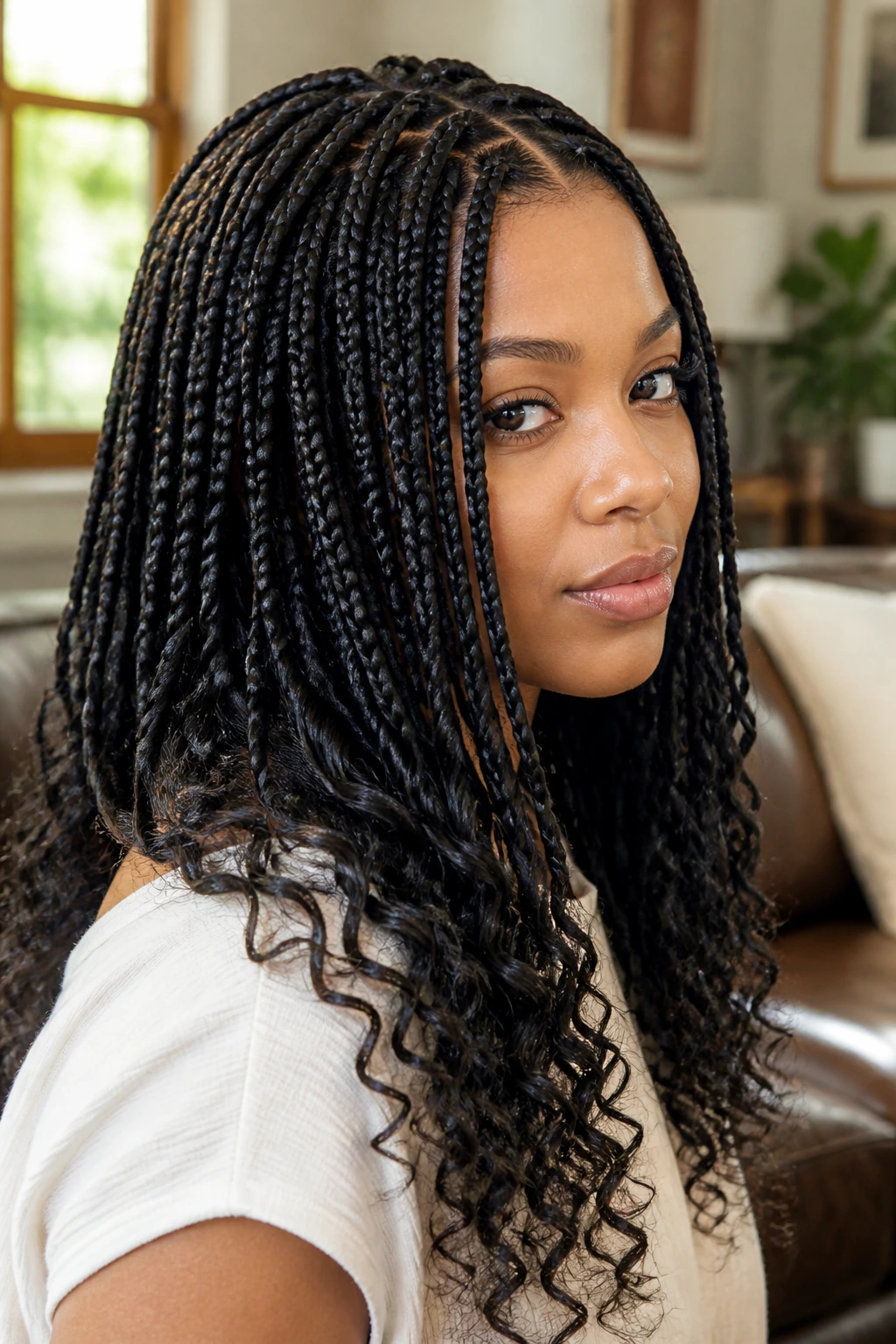
- Movement at the ends: Curly, wavy, or tucked ends keep the braid line from looking stiff or helmet-like.
- A neat base with room to bend: Clean parts and controlled tension make the style look deliberate, even when the finish is loose.
- Texture mix: Mixing braids with twists, locs, shells, or beads gives your eye somewhere to travel.
- Accessories used with restraint: A few cuffs, rings, or shells read styled; too many start to look crowded fast.
- Low-tension construction: Knotless and feed-in starts tend to sit softer at the hairline than blunt, heavy starts.
- Face-framing pieces: Even two slim tendrils around the temples can make the whole style feel lighter.
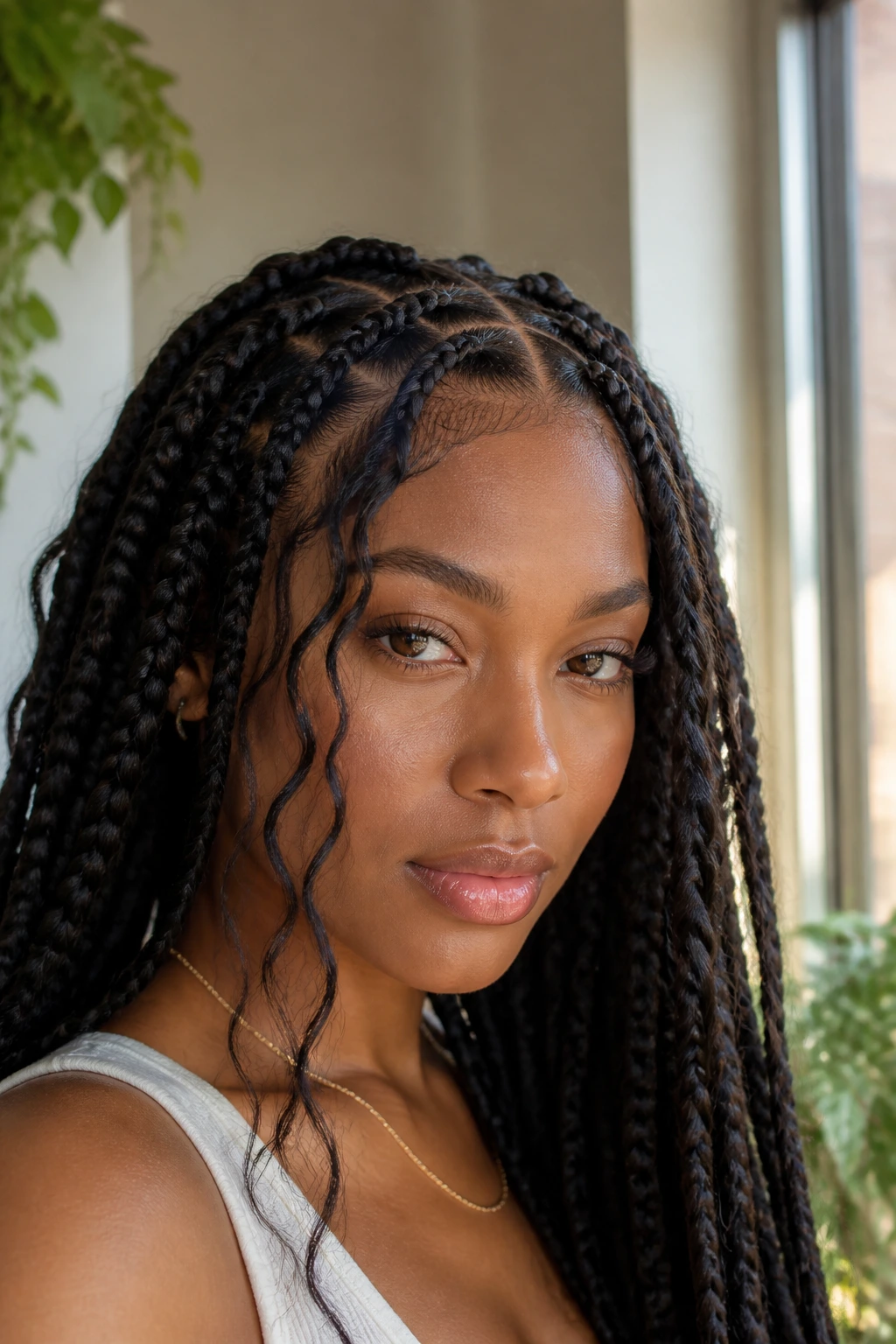
1. Knotless Braids with Curly Ends
Knotless braids with curly ends are the boho braid hairstyle I reach for when I want the look to feel finished without feeling rigid. The braid starts gently at the scalp, then opens into soft curls or waves at the bottom, which gives you that easy, floating finish people notice from across the room. The scalp line is cleaner than a classic knot braid, and that alone changes the mood.
Why the Curly Ends Matter
The curly ends do more than decorate. They keep the style from ending in a blunt block, which is often what makes braided hair look heavy. Use water-wave or deep-wave extension hair for the ends if you want that soft, springy bend that survives more than one wear. I like this version most on medium to long hair because the length gives the curls room to hang instead of bunching up at the jaw.
- Best when you want movement without too much volume
- Works especially well with medium-sized sections
- Looks better when the ends are trimmed into uneven lengths, not all one line
- Pair with 2 to 4 subtle cuffs near the front if you want a little shine
Pro tip: keep the braids at the crown neat and let the loose pieces start lower down. That tiny shift makes the style look expensive without trying to look fancy.
2. Fulani Braids with Side Cornrows and Loose Curls
This is the style people notice before they can name it. Fulani braids already have that strong center-line and side-braided rhythm, and when you add loose curls at the ends or around the face, the whole thing softens just enough to feel boho instead of severe. The structure stays visible. The finish gets air.
What I love here is the contrast. The side cornrows give you a clean frame, while the hanging curls break the symmetry in a good way. Beads, shells, or a few gold cuffs make sense here because the style already has a decorative spine. Keep the accessories spaced out. If you cluster them too tightly, the braid pattern gets lost.
This style suits people who want something more styled than plain box braids but less fussy than a fully sculpted updo. It also photographs well from the side because the curve of the braids and the loose ends work together instead of competing.
3. Goddess Braids with Face-Framing Pieces
What keeps goddess braids from looking too formal? The loose pieces. That’s the short answer, and it’s a good one. Goddess braids are built from larger, thicker braid sections, so they can read as strong or structured very quickly. Add two or four slim tendrils near the temples, and the whole look loosens up.
How to Wear It
Keep the braid lines clean and let the face-framing pieces fall a little unevenly. They do not need to be perfectly curled. In fact, slightly different curl patterns can make the style feel more natural. This version works especially well if you like your hair pulled back but hate the hard, slicked-down look that can make a style feel too formal.
If your hairline is sensitive, this is one of the better options because the braids can be spaced to reduce tension. The style still has presence. It just doesn’t shout.
How I’d wear it: medium-thick goddess braids, a center or slight off-center part, and two loose curls close to the face. That’s enough. More starts to feel busy.
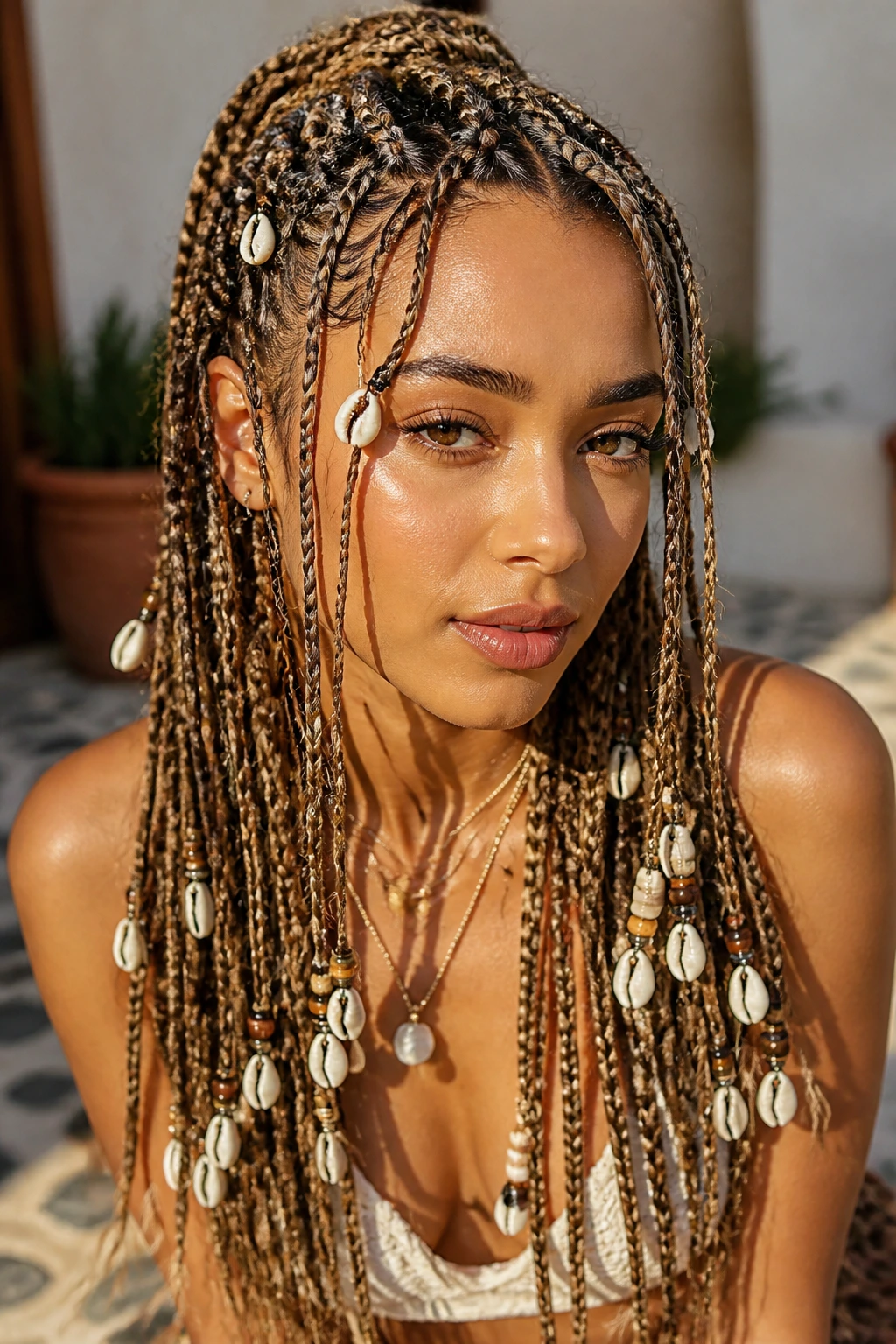
4. Tribal Braids with Shells and Beads
Picture the ends clicking softly when you turn your head. That’s the energy here. Tribal braids with shells and beads lean hard into the boho side of the spectrum, but they work because the braid pattern gives the accessories a place to live. Without the structure, the shells would look random. With it, they look chosen.
What Makes This Style Stand Out
- A mix of thin and medium braids keeps the pattern from feeling flat
- Shells belong near the front and at the ends, not scattered everywhere
- Wooden beads soften the shine of gold cuffs if you want a more earthy look
- Best on medium to thick hair, especially when the parting is clean
I like this look when the braid rows are crisp and the accessories are limited to a few key points. Think front, side, and ends. That’s enough. You want the shells to accent the braid map, not cover it up.
If you’ve ever wanted a style that reads like a vacation without turning into costume territory, this is the lane.
5. Passion Twists with Curly Tendrils
Passion twists are not braids in the strictest sense, and that is part of why they fit so well in a boho lineup. The ropey twist texture feels looser from the start, which means you don’t need to force softness later. Add a few curly tendrils around the face and the style goes from neat to airy in one move.
The texture matters here. Water-wave hair gives passion twists that springy, uneven surface that makes them look fuller without making them stiff. If the twist starts to look too perfect, it loses its charm. I prefer them slightly irregular, especially at the ends, where a little fray is not a problem — it’s the point.
This is one of the better choices if you want a style that moves when you walk. Braids can feel a little firmer. Passion twists have more swing. That difference is subtle at first and obvious by day two.
6. Butterfly Locs with Soft Frizz
Butterfly locs are for people who like texture with a little chaos in it. Not sloppy chaos. Controlled chaos. The loops, fuzz, and airy gaps in the loc create shadow and softness at the same time, which is why this style sits so nicely in the boho category. It has shape, but it doesn’t look pressed flat.
Unlike sleek faux locs, butterfly locs are supposed to have those tiny irregularities. That means you can be a little less precious with the finish. A few wisps are fine. A soft frizz halo at the roots is fine too, as long as the base stays neat. This style is especially good if you want volume around the shoulders without adding braid weight.
If you’re choosing between butterfly locs and traditional faux locs, the deciding factor is usually mood. Butterfly locs feel softer and more relaxed. Traditional faux locs feel more uniform. I prefer butterfly locs when I want hair that looks like it has a little history.
7. Half-Up, Half-Down Boho Box Braids
Half-up, half-down boho braids solve a real problem: too much hair on your neck, not enough shape around your face. The top section lifts the style off the shoulders, and the loose bottom half keeps the movement. It’s one of those styles that looks equally right with a hoodie, a long dress, or a plain white tee.
Why It Works on Busy Days
The top knot or half-pony gives you control, but the hanging braids keep the style from feeling severe. If the ends are curly, even better. That bit of extra bend at the bottom is what keeps the silhouette from looking too square. I also like this one for medium-density hair because it spreads the weight out instead of loading everything at the crown.
A soft scrunchie, a wrapped braid, or a few cuffs near the tie point are enough. Do not over-accessorize the top section. It starts to fight the shape.
Best move: leave two slim pieces out at the front, braid or twist them lightly, and let them fall beside the cheeks. That’s all the softness this look needs.
8. Lemonade Braids with Wavy Ends
Lemonade braids are side-swept for a reason. The diagonal line does a lot of work on its own, and when you finish the braids with wavy ends, the style gets a softer edge that keeps it from feeling too sharp. This is a good boho choice when you want the hair out of your face but still want motion at the bottom.
The side part matters more here than people think. A deep part gives the braids a natural cascade, and the waves at the ends stop the look from reading as severe. If the curls are too uniform, the style can look stiff. I like a slight mismatch in the wave pattern because it feels more real.
This is especially flattering if you like styles that follow the face rather than frame it evenly. The sweep creates its own line. The curls just keep that line from turning hard.
9. Jumbo Knotless Braids with Wrapped Ends
Want a boho braid style that installs faster and still has presence? Jumbo knotless braids with wrapped or curly ends hit that balance. The large sections make the style look bold, but the knotless base keeps the root area softer. Wrap the ends with a curl pattern, beads, or a bit of thread, and the whole thing starts to feel less blocky.
A Few Things to Watch
Big braids put more visual weight near the scalp, so the parts need to be clean. Sloppy sections show immediately. On the other hand, you do not need dozens of pieces to create impact. Four to six large braids on each side can already carry the look if the finish is handled well.
This style works best when you want a braid look that reads from a distance but does not demand tiny parts or marathon install time. It is not the quietest option in the group. That’s fine. Sometimes the job is to make a statement without making your scalp miserable.
Recommendation: keep the ends lighter than the roots. Heavy ends drag the style down, literally.
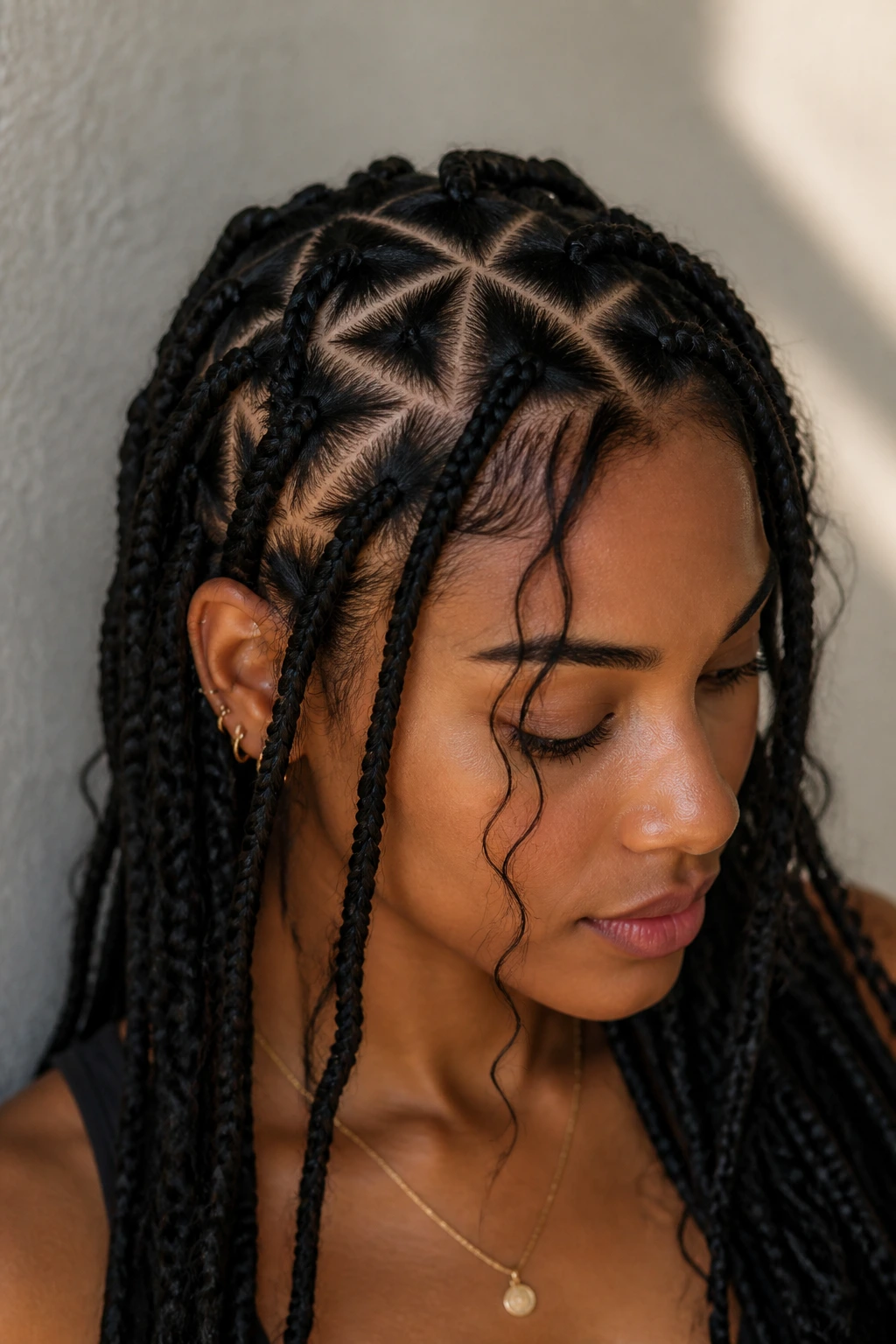
10. Triangle-Part Boho Braids
Triangle parts change everything. Same braid, different shape, and suddenly the whole look feels more deliberate. Triangle-part boho braids read as a little more styled than straight parts because the geometry catches the eye, especially when a few curly ends spill over the pattern.
The boho part here comes from the contrast between the crisp parting and the softer finish. If you have medium to thick hair, triangle parts can help distribute bulk in a way that feels balanced. On finer hair, smaller triangles can keep the scalp from looking exposed. Either way, the section shape becomes part of the design instead of a background detail.
I’d keep accessories minimal here. The triangle pattern is already doing visual work. A few gold cuffs near the front or a couple of beads at the ends is enough. Anything more starts to crowd the braid map.
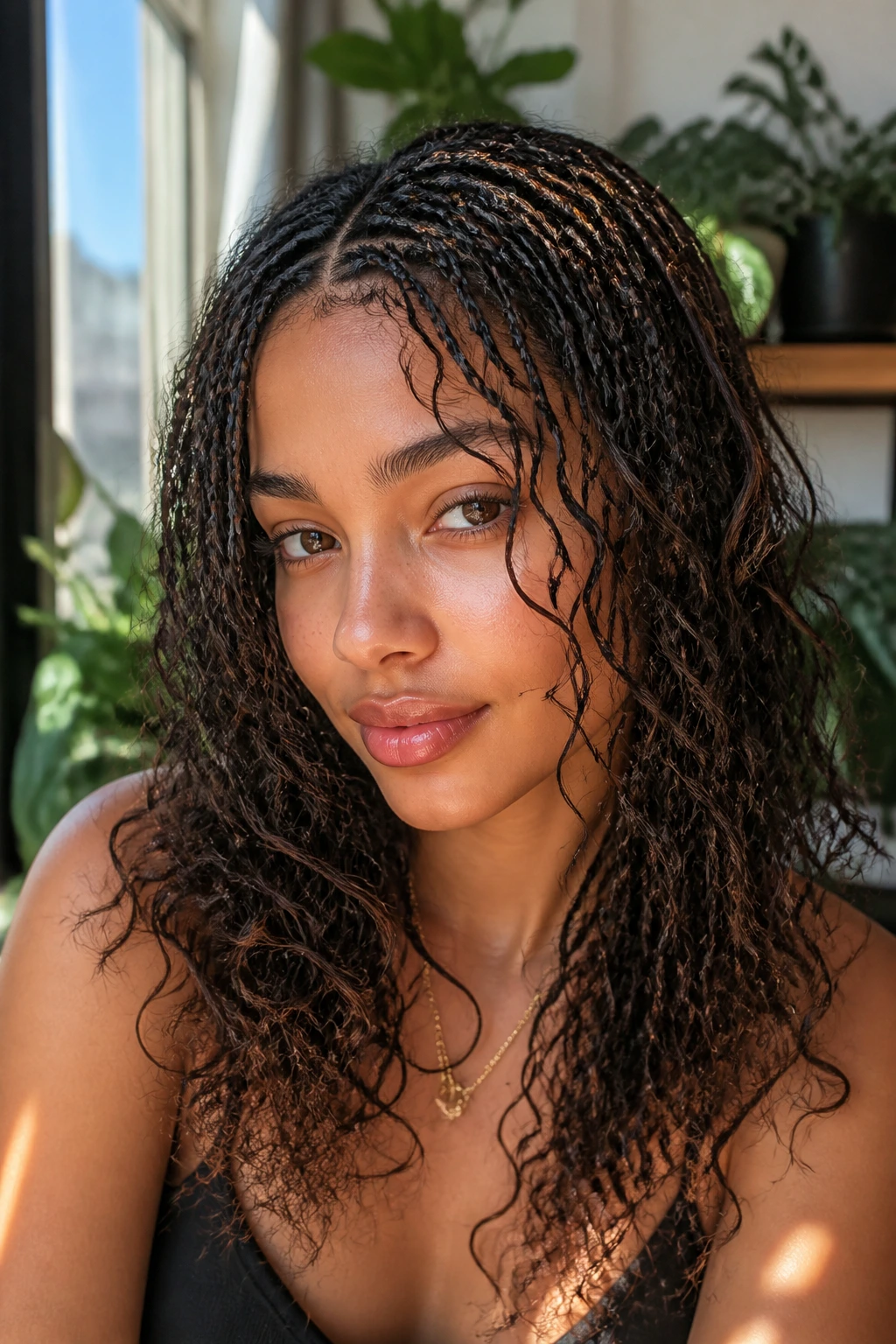
11. Micro Braids with Loose Curly Layers
Micro braids are the long-game style in this list. They take patience. They ask for care. And when they’re done well, they move like fabric. The reason they fit a boho aesthetic is simple: the small size gives you room to layer in loose curls, waves, or face-framing pieces without making the look bulky.
Purely speaking, micro braids can be maintenance-heavy. They’re beautiful, but they can tangle if you ignore them. That’s the tradeoff. Still, the soft, layered finish is hard to beat if you want hair that has a lot of movement and not much obvious structure from a distance.
I like this style most when the braids are left a touch uneven in length. Not sloppy. Just not ruler-straight. That slight variation helps the curls sit more naturally and keeps the overall shape from feeling too severe.
12. Cornrow Low Bun with Wispy Pieces
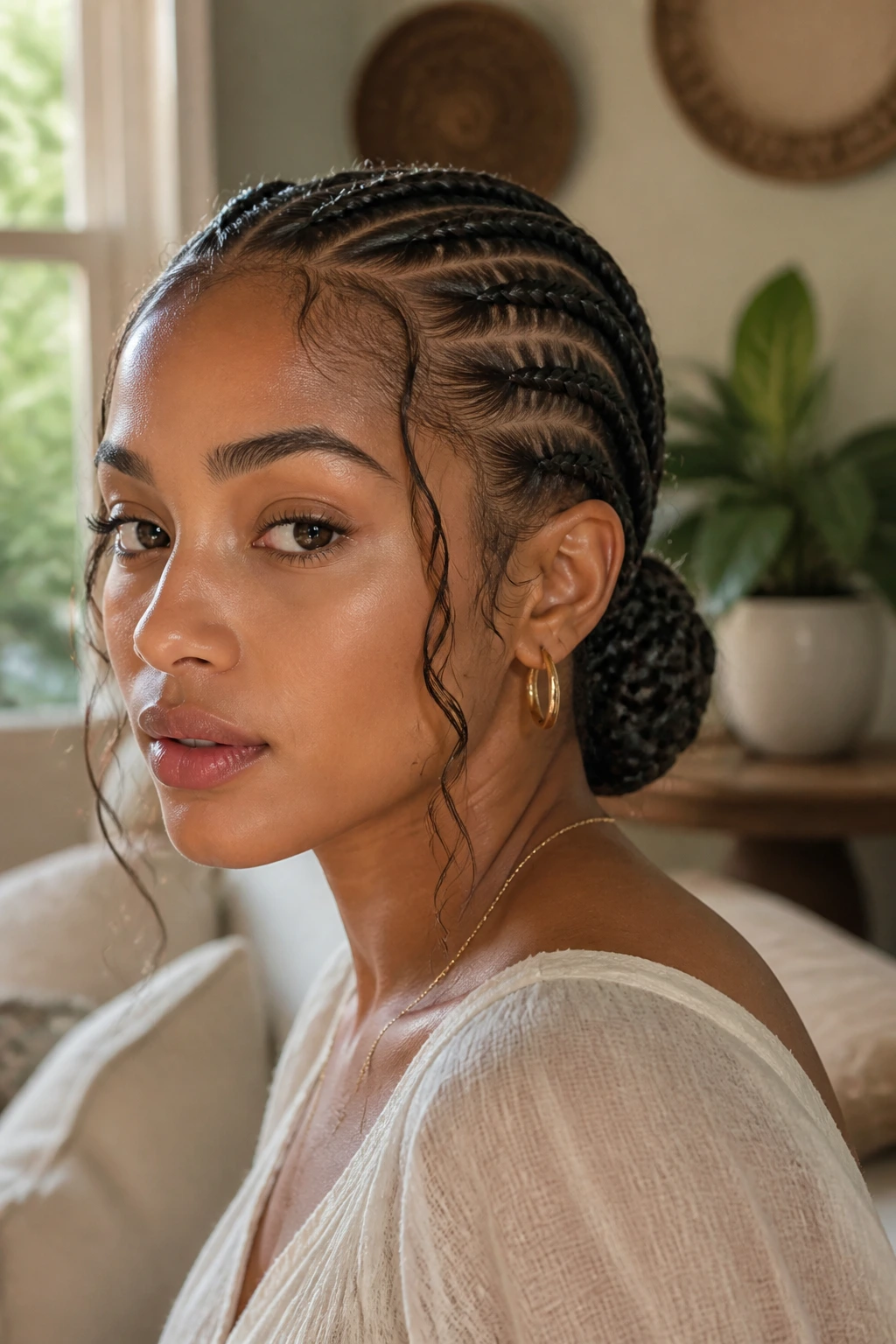
A low bun with cornrows is the opposite of flashy, which is why the boho version works so well. You get the clean lines of the cornrows, then you soften the face with wispy pieces and leave a few textured strands around the nape or temples. The bun does the practical work. The loose pieces do the mood work.
Unlike a slick low bun, this style does not need every hair flattened into submission. Let the edges stay soft. Let the bun have a little irregularity. That uneven surface reads as texture, not mistake. It’s also a smart option for formal events if you want something that stays controlled without looking overprepared.
The low placement is the thing that keeps this from feeling too severe. A bun at the crown has a different personality. Down low, it feels calmer, easier, and better suited to the boho lane.
13. Ghana Braids with Spiral Ends
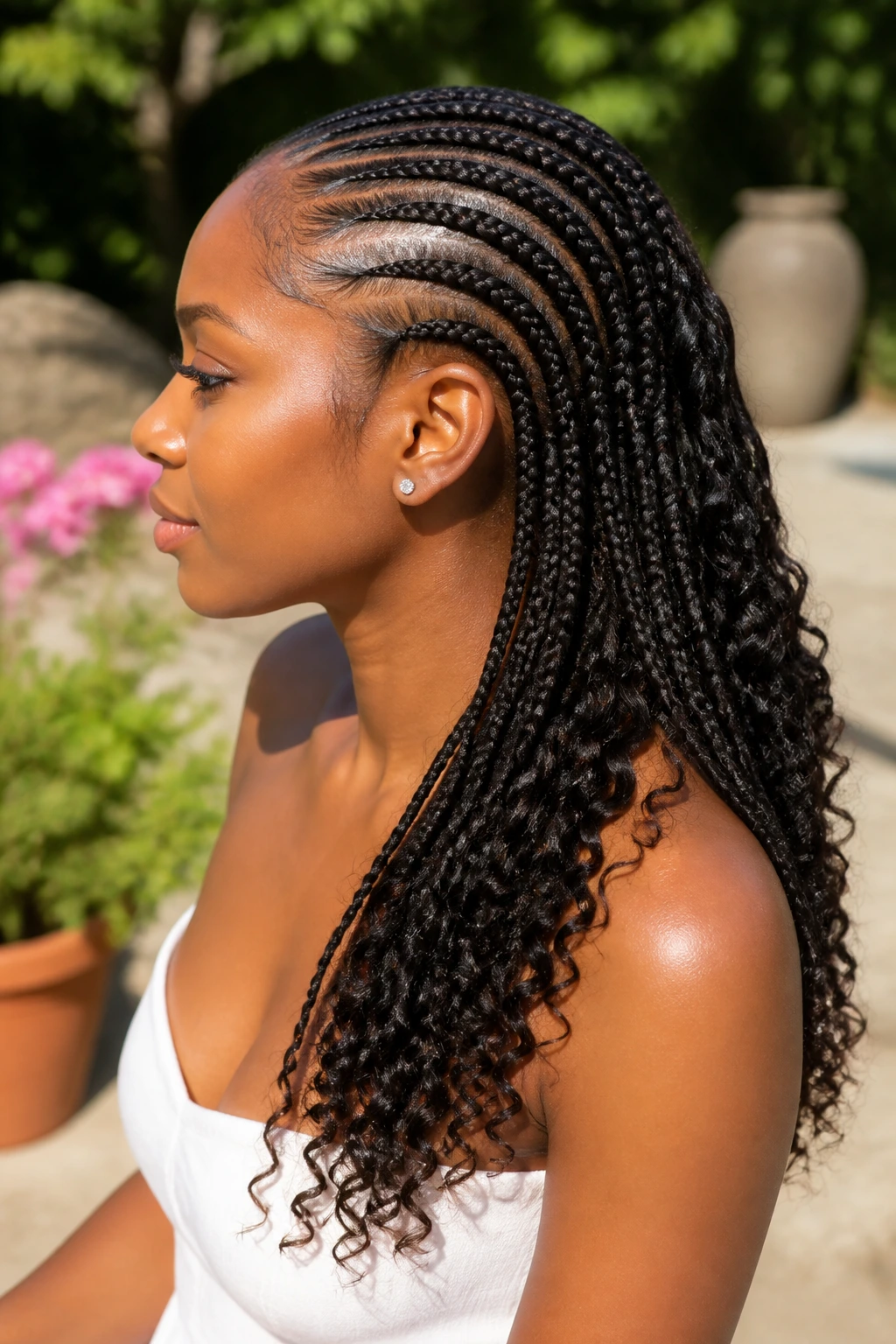
Ghana braids are built with feed-in sections, so the braid starts slim and gets fuller as it moves back. That structure already feels polished, and spiral ends give it the softness it needs to stay in the boho category. The spiral finish is especially nice when you want the braid body to stay strong but the ends to loosen up.
What the Spiral Ends Add
They break up the line. That matters. Without them, Ghana braids can end a little too cleanly, which is fine if you want sharpness but not if you want movement. Keep the spirals tight enough to hold shape, but not so tight that they bounce into little springs. A medium rod or a set of flexi-rods works well if the extension hair cooperates.
This style reads best on longer hair or on extensions that can carry the braid shape without fraying at the end. If you’re after a look that feels structured at the scalp and softer past the shoulders, this one is doing exactly that.
Best detail: let the spiral ends fall slightly unevenly. Perfect symmetry makes it less relaxed.
14. Feed-In Braids with a Curly Ponytail
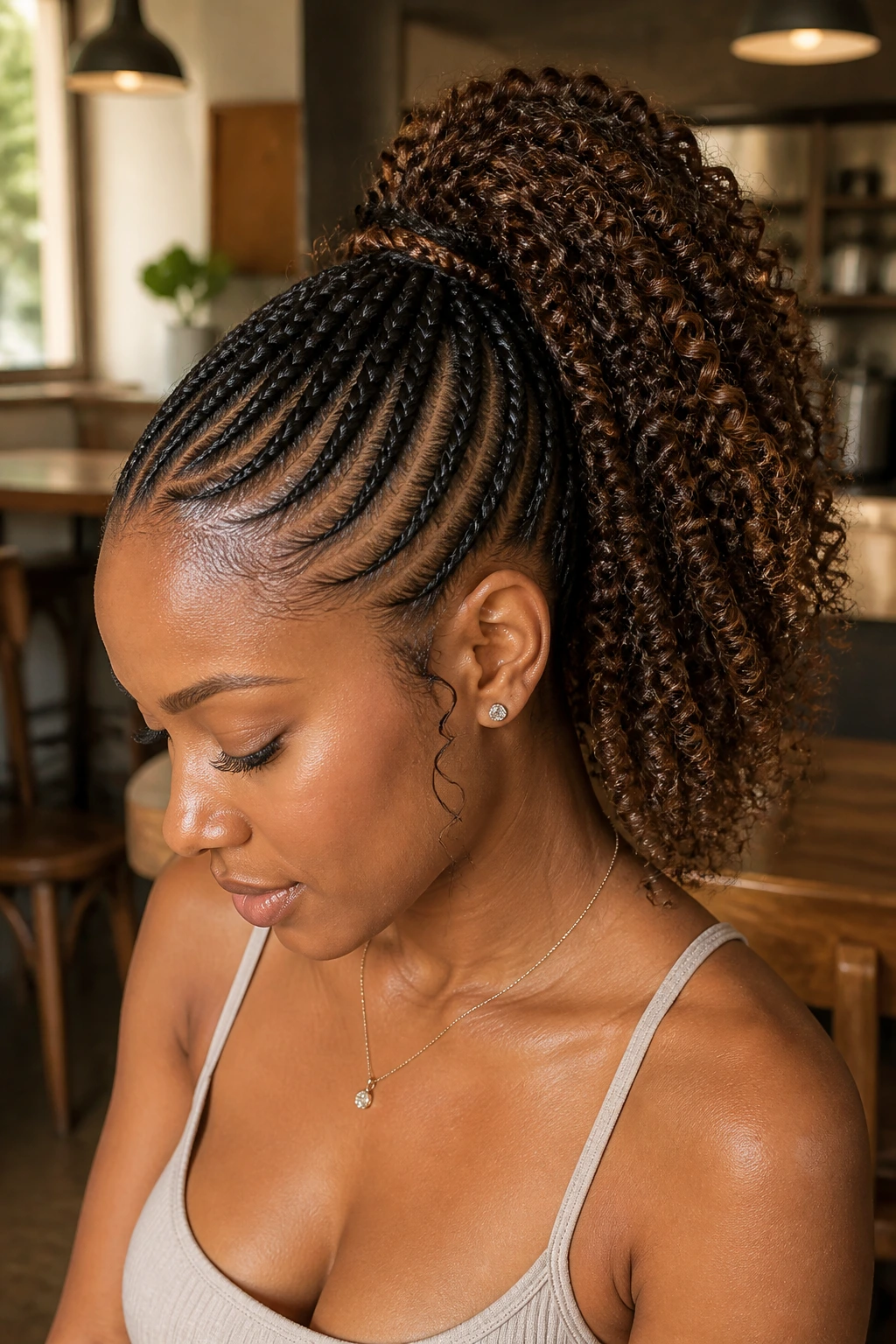
If you want height without a lot of bulk, this is the one. Feed-in braids taper from the scalp, which gives the ponytail a sleek start, and the curly ponytail adds bounce where you want it most. It is a good fit if you like the hair off your neck but don’t want the top to feel flat.
The boho element comes from the ponytail texture. A straight ponytail can look sharp and even a little formal. A curly one feels softer and has more movement when you turn. Add one or two braids wrapped around the ponytail base and the style gets a finished edge without losing its easy feel.
This works especially well for long events because the shape stays recognizable all day. You can still refresh the curls with a little foam or water on the lengths if they start to dry out and puff.
15. Braided Crown with Loose Waves
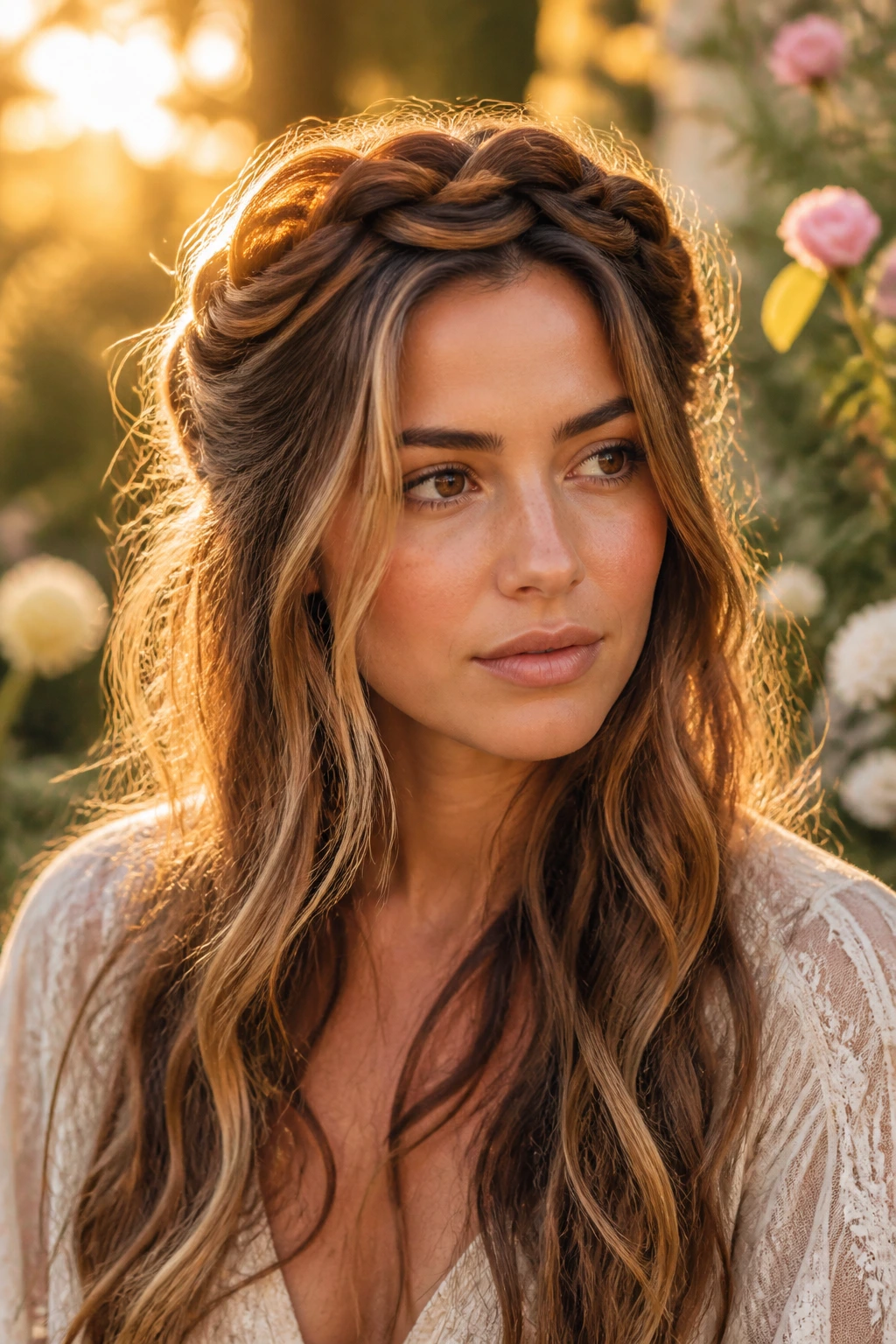
Why does a braided crown feel so different once the rest of the hair is left loose? Because the eye reads the crown as structure and the waves as release. That’s the whole charm of this style. The braid creates the frame. The loose waves stop it from feeling too princess-perfect.
How to Keep the Crown from Flattening
Keep the crown braid slightly raised when you pin it. If you flatten it hard against the head, the style loses depth and the waves look like an afterthought. A touch of texture spray or mousse at the loose ends helps the waves keep their shape, especially in humid air. I also like this one best with a side part or a soft center part — both work, but a sharp center line can make the crown too formal.
This is one of the better choices for weddings, dinners, or any day when you want your hair to look styled without being rigid.
16. Twisted Halo Braid with Beachy Texture
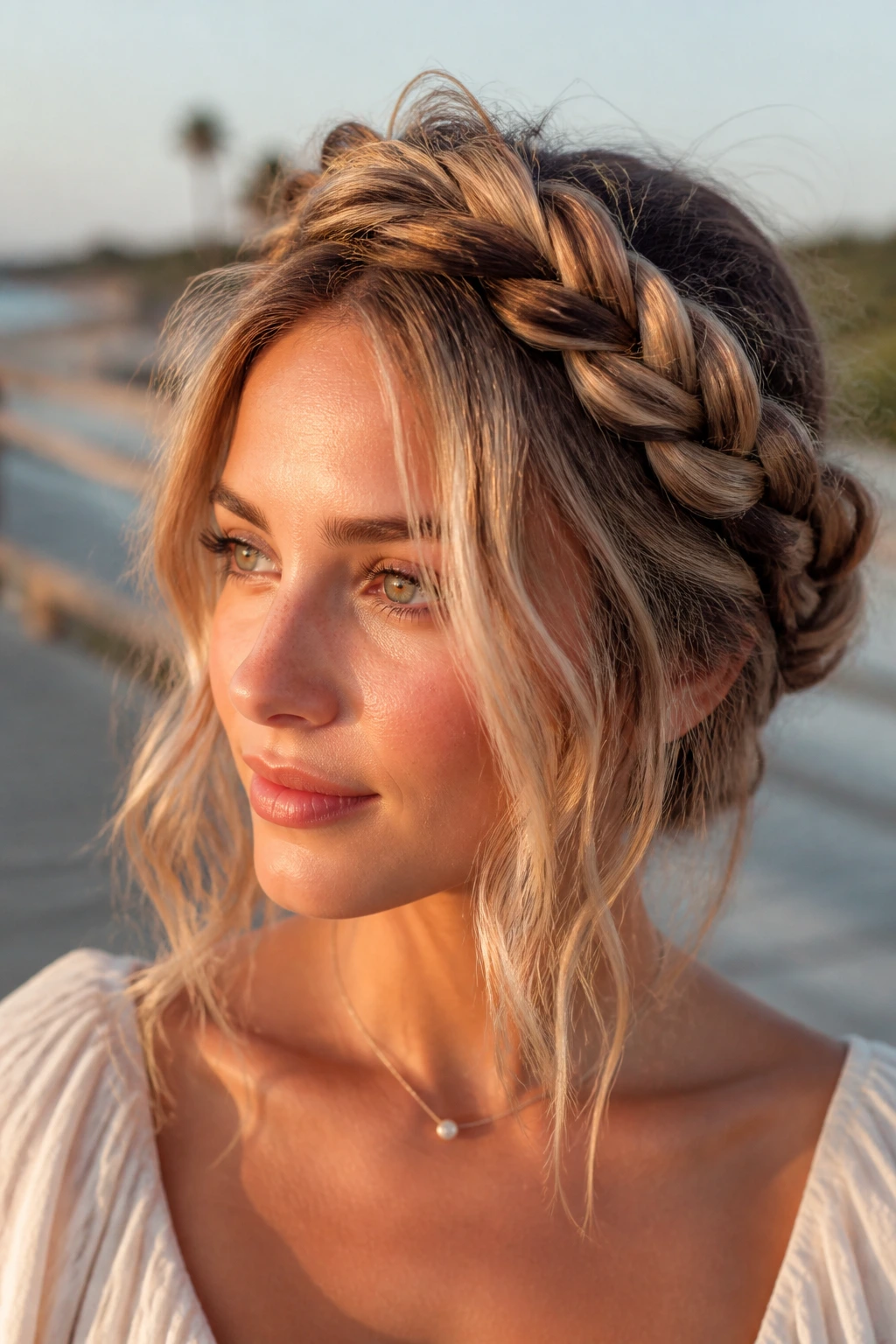
A halo braid made from twists instead of a plain braid has a softer edge right away. The twist pattern is less blunt, so the halo sits closer to boho than bridal unless you polish it too hard. Leave the loose hair around the face a little beachy and the whole style starts to breathe.
I like this on medium-length hair because the twist halo can get heavy if the length drags too much. Use a light mousse on the hanging pieces, then let them air-dry or diffuse so the texture stays loose instead of fluffy. The goal is movement around the face, not a stiff curl ring.
It’s a good style when you want the front off your forehead but still want a few pieces to fall and soften the line. Not everything has to be pinned back. That’s the point.
17. Rope Twists with Beaded Ends
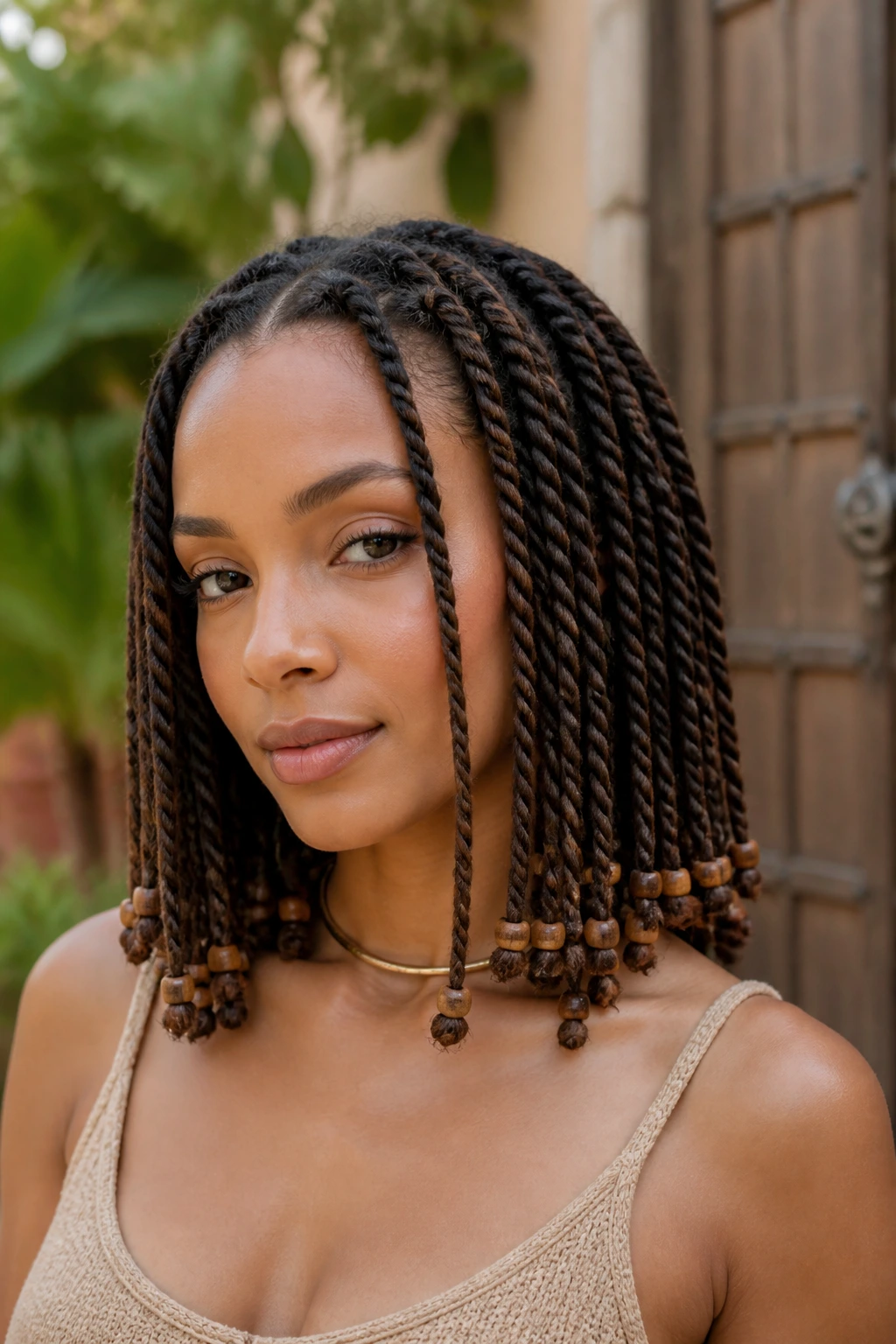
Rope twists have a cleaner spiral than many braids, and that clean line gives the accessories more room to stand out. Beads at the ends add weight in the right places, which helps the twists hang with a little swing instead of floating too much. If you prefer your boho styles to look a touch earthy, rope twists are a strong choice.
The twist pattern itself already looks deliberate, so I’d keep the bead selection simple. Wood, matte gold, or dark shell beads feel right here. Bright plastic beads can work if you want a playful look, but too many colors start to fight the twist texture.
This style is also easier to read from a distance. The rope shape is distinct. You do not need to over-style it. A center part, a few beads, and some smooth edges are enough.
18. Senegalese Twists with Curly Tips
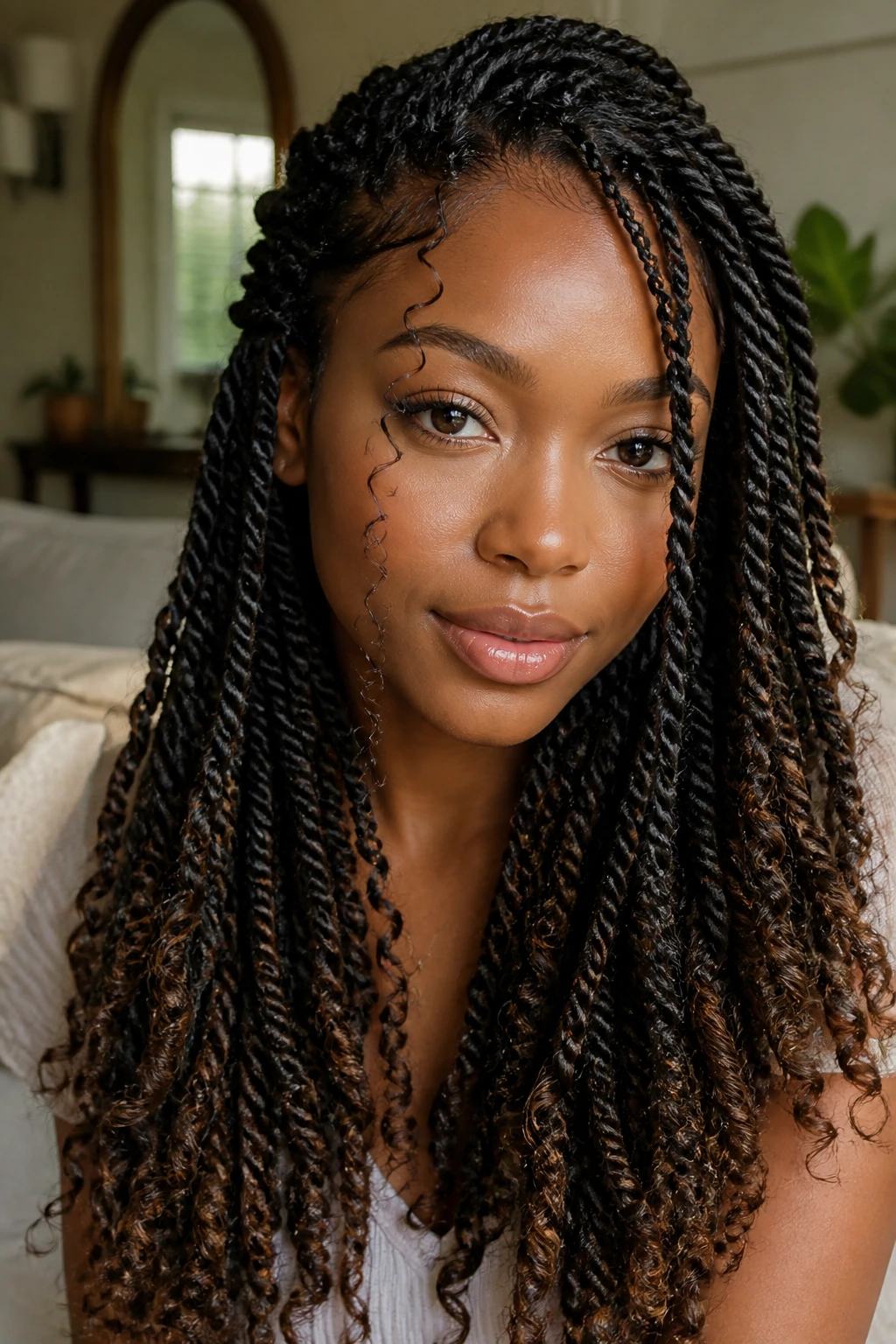
Senegalese twists are sleeker than passion twists, which makes them useful when you want the boho vibe to come from the finish rather than the body of the style. Add curly tips and a few loose front pieces, and the twist starts to feel softer without losing that smooth, wrapped surface.
Unlike passion twists, Senegalese twists hold a more polished line from root to mid-length. That means they suit people who want less frizz and a little more shine. The curly tips interrupt the sleekness at exactly the right spot. It’s a smart compromise.
If you care about low-maintenance styling, this is one of the more forgiving options. The twist itself stays orderly while the ends bring the movement. That combination can buy you a few good days before the style starts to lose shape.
19. Faux Loc Bob with Wispy Ends
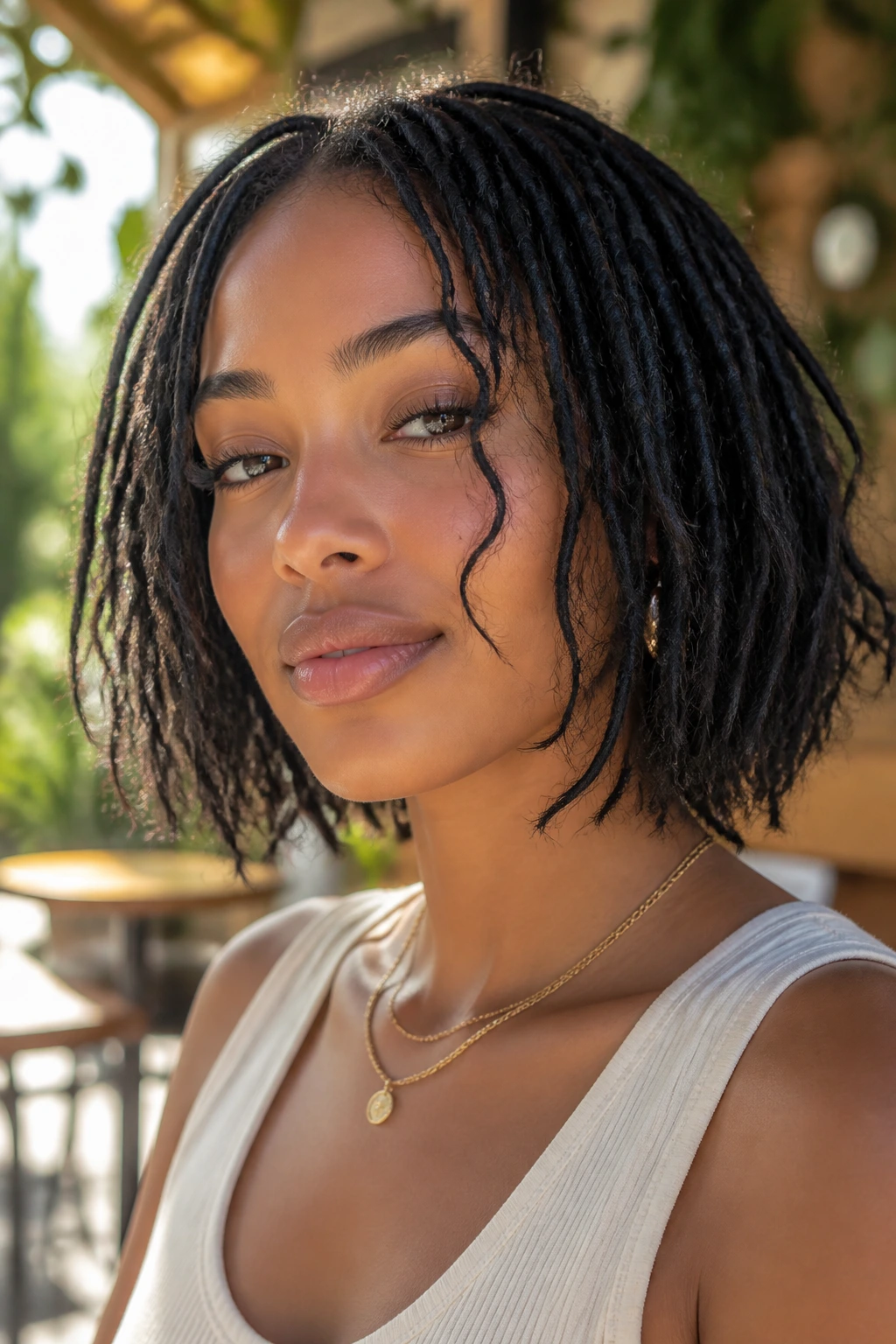
A faux loc bob has a built-in attitude because the shorter length sits right near the jaw and collarbone. Add wispy ends and the style loses the boxiness that shorter locs can sometimes have. The result feels lighter, airier, and a little more relaxed than a full-length loc set.
Why the Bob Length Works
It keeps the weight off your shoulders. That sounds small until you’ve worn long locs for hours. The bob also makes the face stand out more, which is handy if you want the style to frame your features instead of hiding behind them. A few loose strands near the temples help even more.
This is a strong choice if you want faux locs without the maintenance of long lengths. The bob version is easier to toss into a scarf, easier to pin up, and easier to live with on a warm day. That’s a practical win, not a theoretical one.
20. Criss-Cross Braids with Open Curls
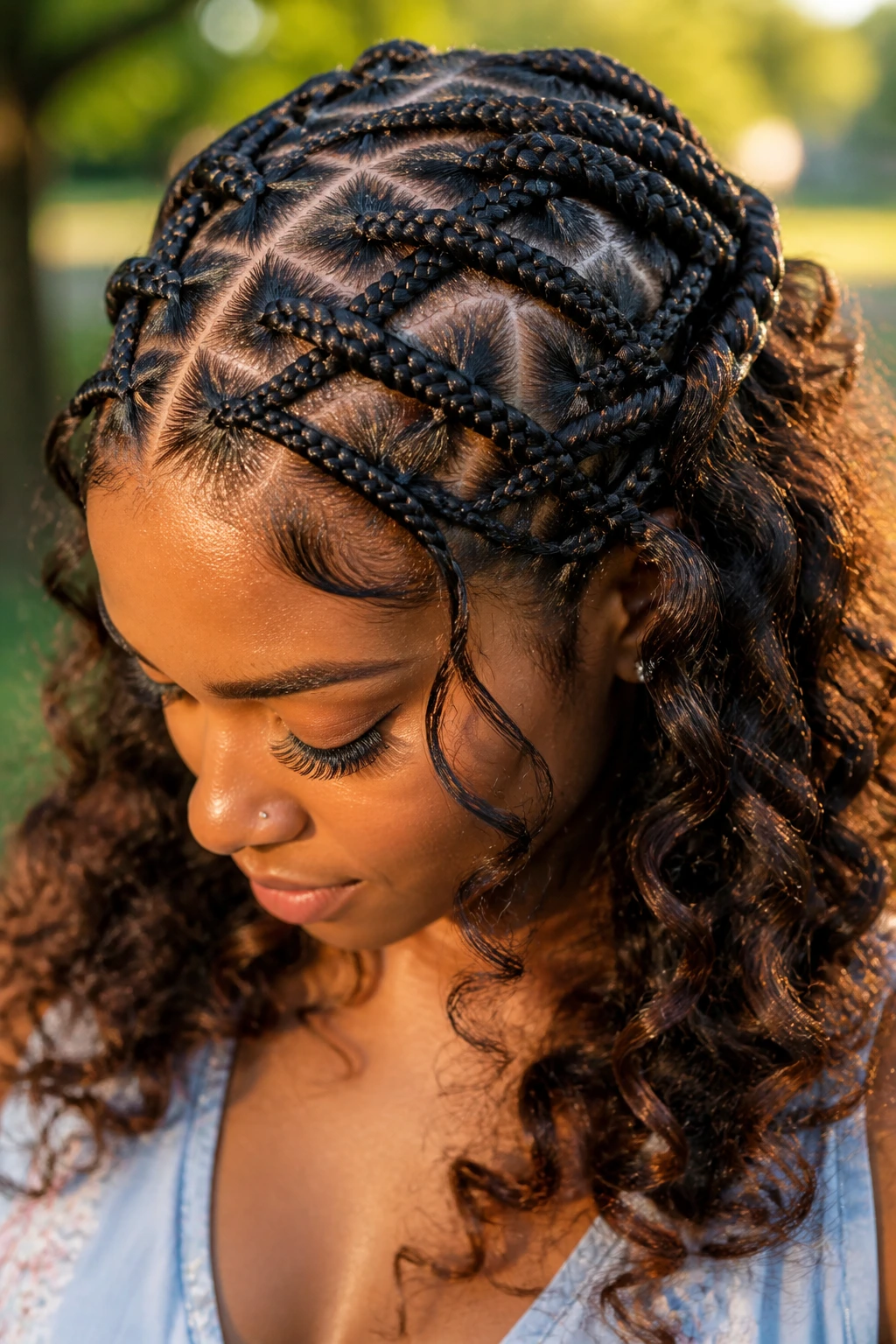
Criss-cross braids bring pattern into the forehead and crown, which makes them one of the more visually interesting boho braid hairstyles on the list. The open curls at the bottom keep the look from getting too grid-like. That’s the tension that makes it work.
If the criss-cross section is too tight, the style can feel stiff fast. Leave a little softness in the parting and let the curls fall in loose clusters. The braid detail is the focal point. The curls are the release valve.
This style is a good fit for people who like a little architecture in their hair. The criss-cross section reads as designed, and the open curls keep it from turning strict. That balance is not easy to hit. When it lands, though, it lands hard.
21. Stitch Braids with Shells and Gold Cuffs
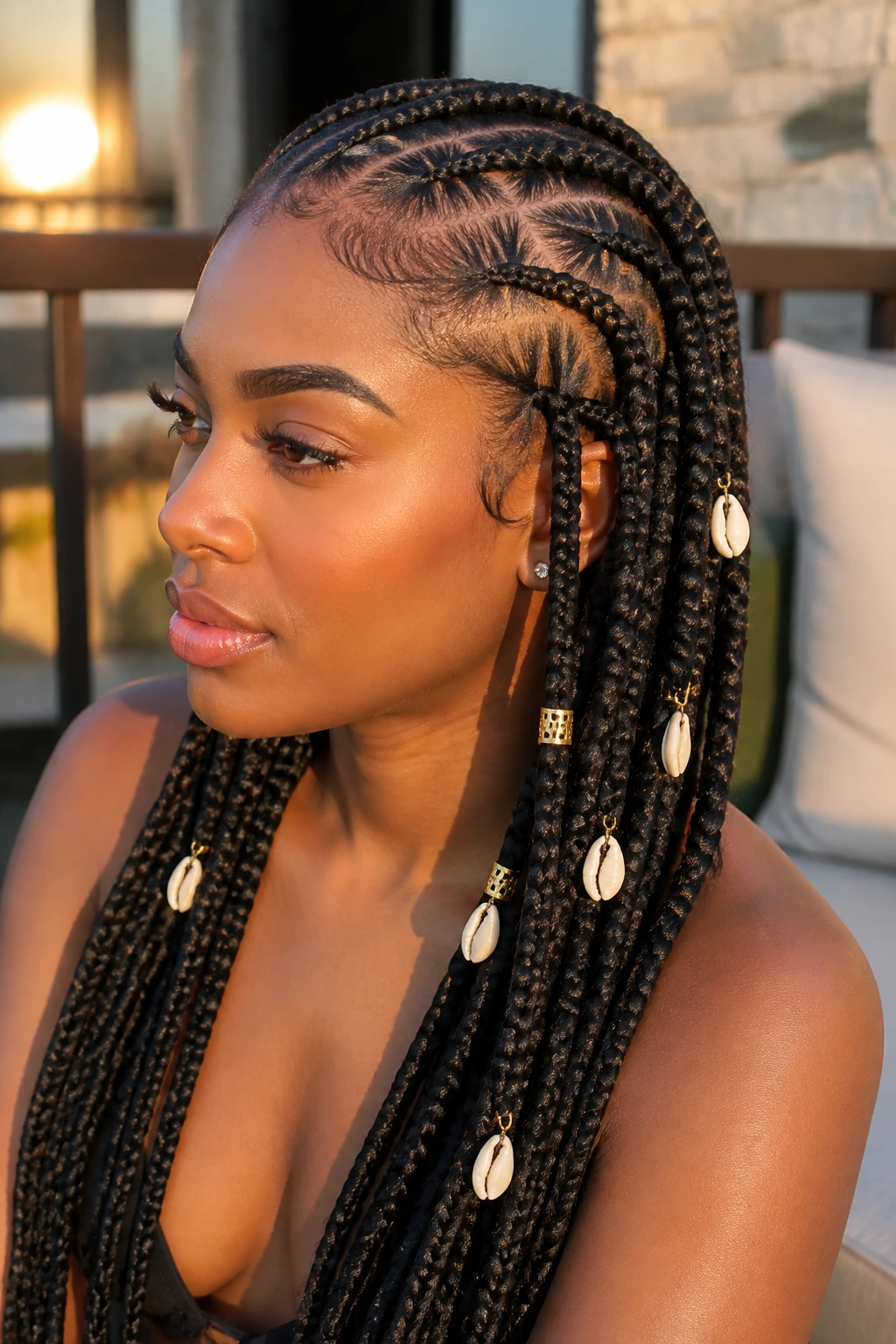
Can stitch braids feel boho? Absolutely — if you soften the finish. Stitch braids have those crisp, raised part lines that make the scalp pattern pop, and shells or gold cuffs are the easiest way to break up the sharpness. Add a few free ends or loose curl pieces, and the look shifts from sporty to layered.
What to Keep Soft
Keep the stitch lines clean and the accessories spaced. If the cuffs sit too close together, the braids start to look crowded. One shell cluster near the front and a few cuffs on the lengths are enough. You want the braid pattern to stay visible.
This style is especially good when you want durability. Stitch braids tend to hold their shape well, which means the boho extras can do their work without the base collapsing by midweek. That kind of structure matters if you’re hard on your hair.
22. Braided Pigtails with Loose Tendrils
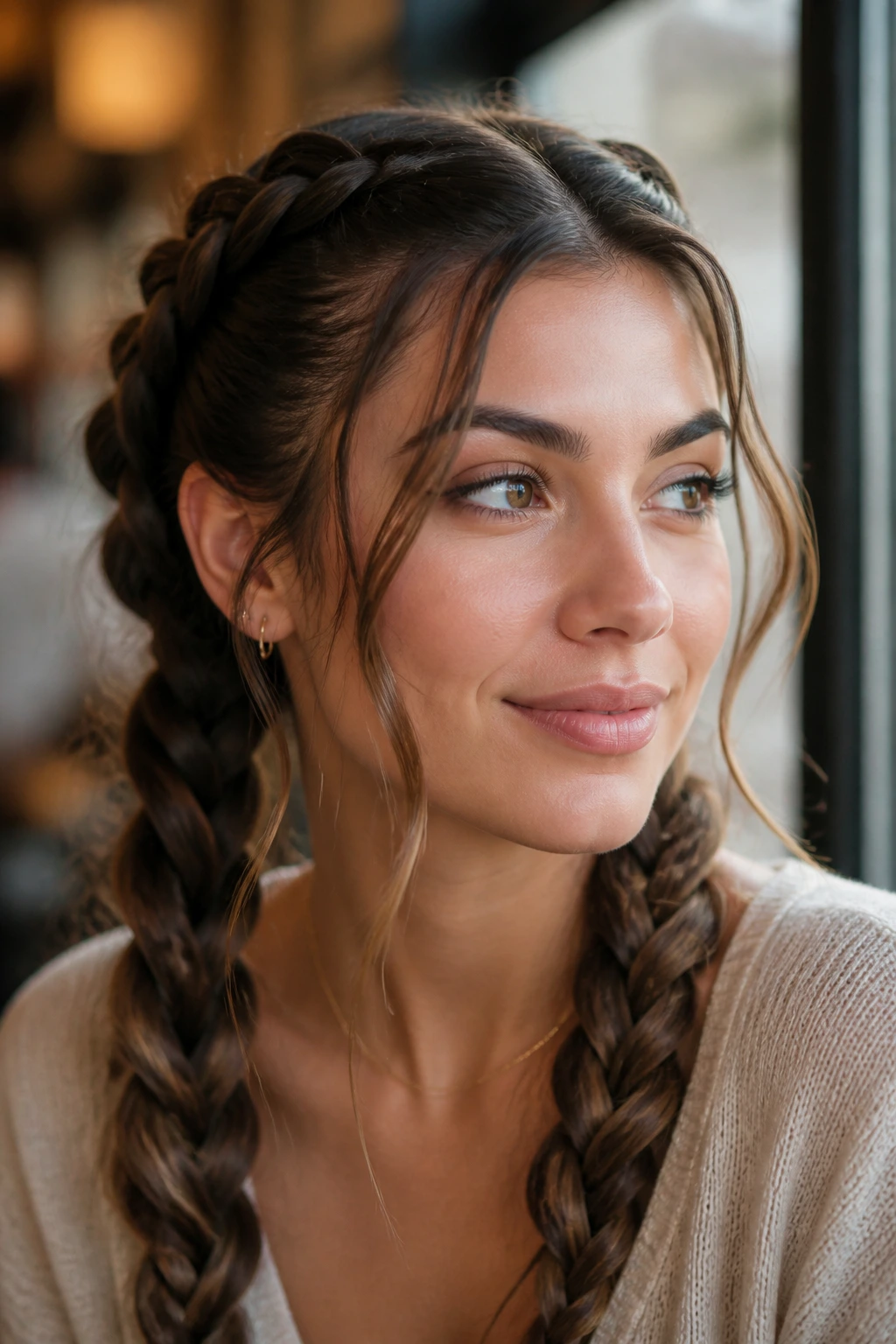
Braided pigtails are underrated. They can look playful, yes, but they do not have to look childish. The trick is in the parting, the thickness of the braids, and the loose tendrils around the face. Keep the parts neat, let the pigtails sit low or mid-height, and leave a few wisps out. Suddenly the style feels soft instead of school-uniform tidy.
I like this version when the braids are not identical in size. A tiny difference in thickness keeps the look from feeling too engineered. The tendrils matter more than people think, too. They break the symmetry and give the face a little motion.
If you want a style that feels casual but still put together, this is one of the easiest places to land.
23. Mermaid Braids with Mixed Braid Sizes
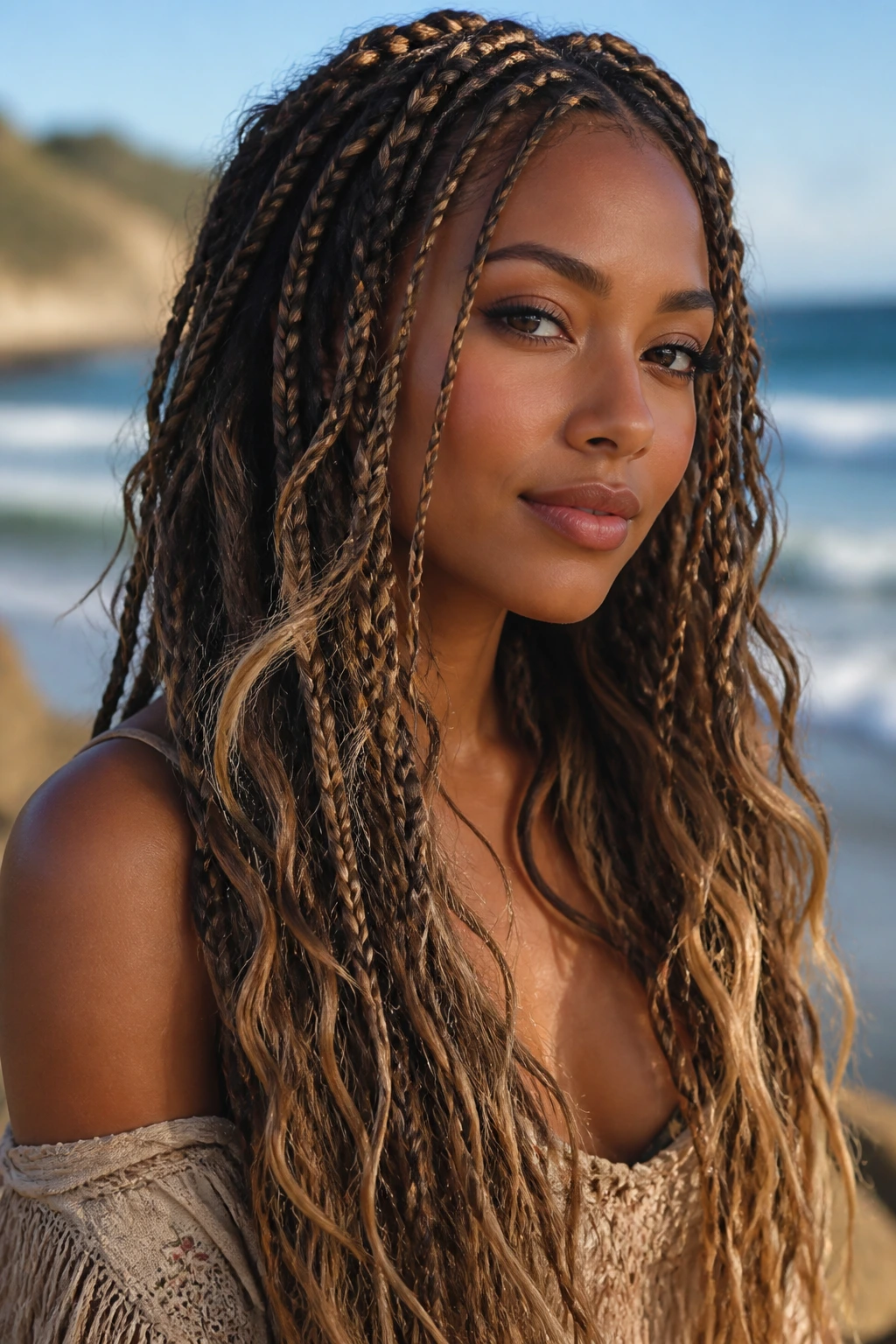
Mermaid braids are all about blended texture. Some sections are thicker, some are thinner, and that variation is exactly what keeps the style from looking plain. If you mix braid sizes and leave soft waves or curls toward the ends, the whole look gets that long, flowing shape that suits the boho mood so well.
This style works best when the braid is allowed to loosen a bit as it travels down. That creates the illusion of movement, even when the hair is pinned or tucked near the top. It’s a good option for long hair or for extensions that can carry a lot of length without getting heavy at the base.
I’d choose this one when I want the braid to feel like a shape, not just a technique. The mixed sizes are what make it interesting.
24. High Cornrow Ponytail with Curly Extension Hair
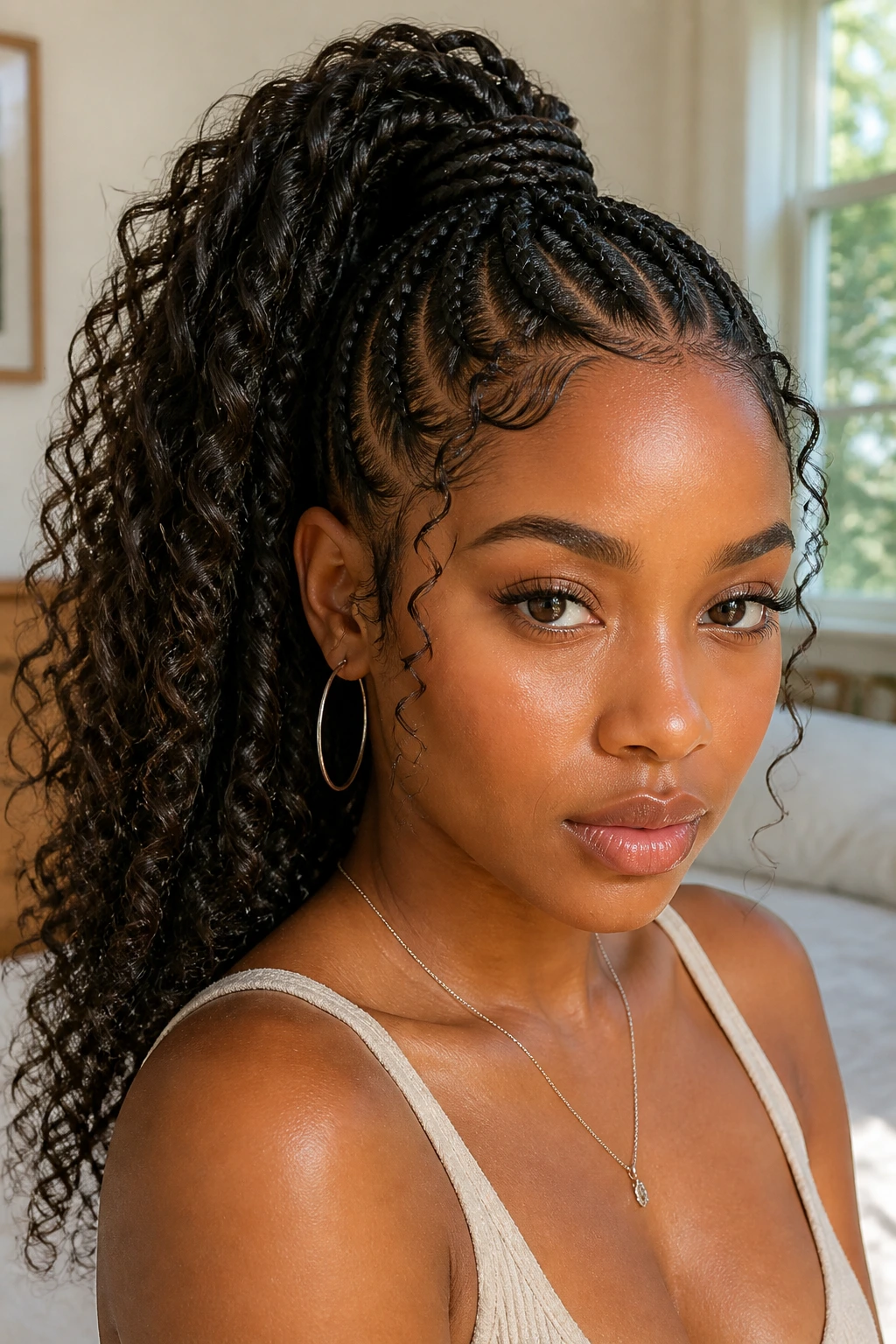
A high ponytail lifts the face, shows off the parting, and gives the curls a place to swing. With cornrows feeding into the base, you get a strong line up top and a softer finish in the ponytail itself. Add curly extension hair and the style suddenly feels lighter than the structure suggests.
Unlike a low ponytail, this one has a little drama. Not too much. Just enough. The height makes it good for people who want their features open and the neck clear. The curls take the stiffness out of the ponytail, which is exactly what keeps it in the boho lane.
If the base is too tight, though, you’ll feel it fast. A lifted style should still be comfortable at the hairline. That matters more than the pony height.
25. Side-Swept Braids with a Deep Part
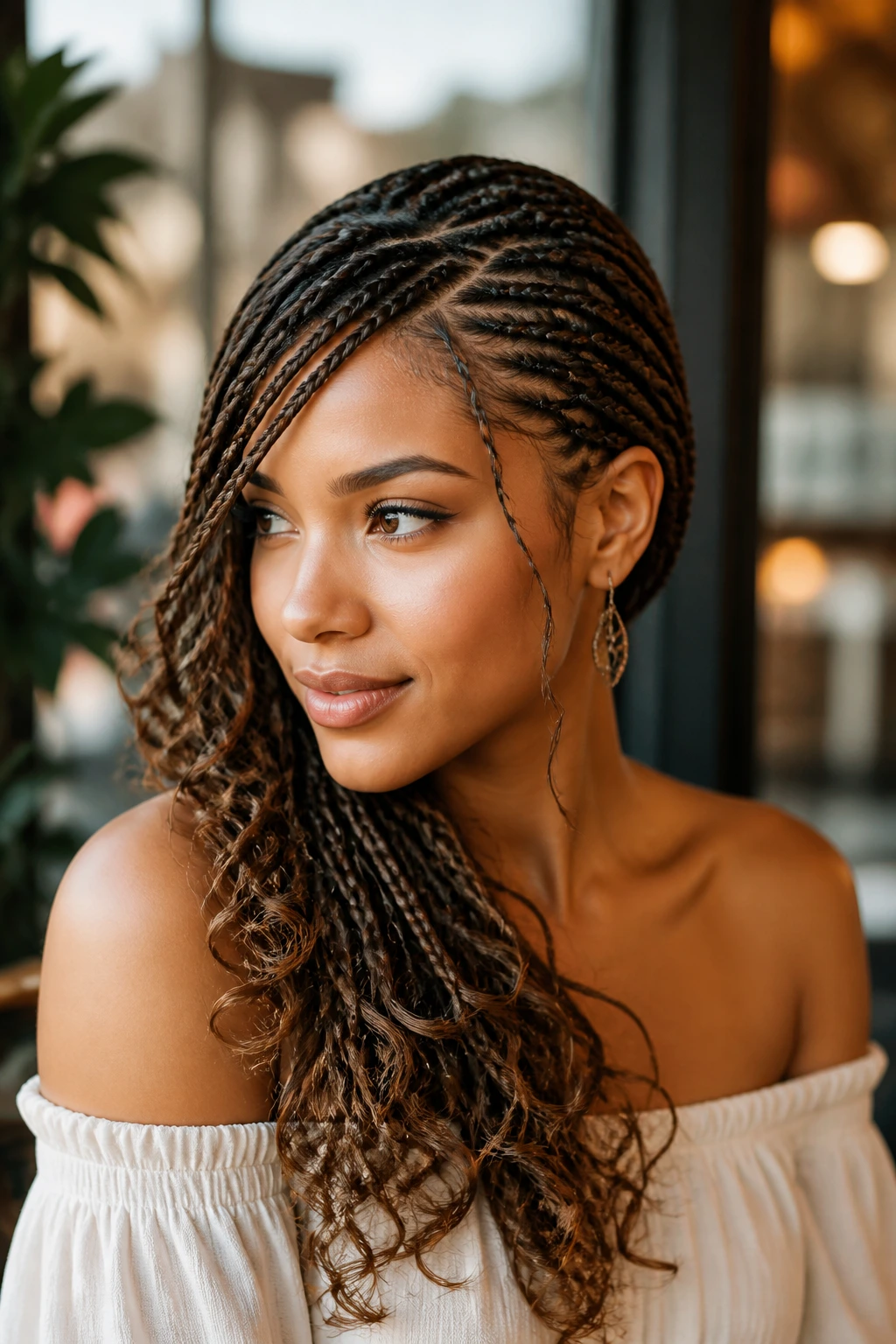
A deep side part changes the entire face frame, and side-swept braids take advantage of that immediately. The style drapes across the forehead or temple, which creates a softer line than a center-part braid set. Add loose ends or curled tips and the whole thing starts to feel romantic without getting fussy.
Why This Shape Works
The sweep creates motion before the braid even starts. That is a big deal. When the hair moves in one direction, the style feels more fluid and less rigid. It also helps if you want to create the illusion of fullness on one side without adding more hair everywhere.
I like this one for longer faces or anyone who wants to shorten the visual line across the forehead. That part placement changes the balance of the whole style. Small detail. Big effect.
26. Braided Top Knot with Hanging Curls
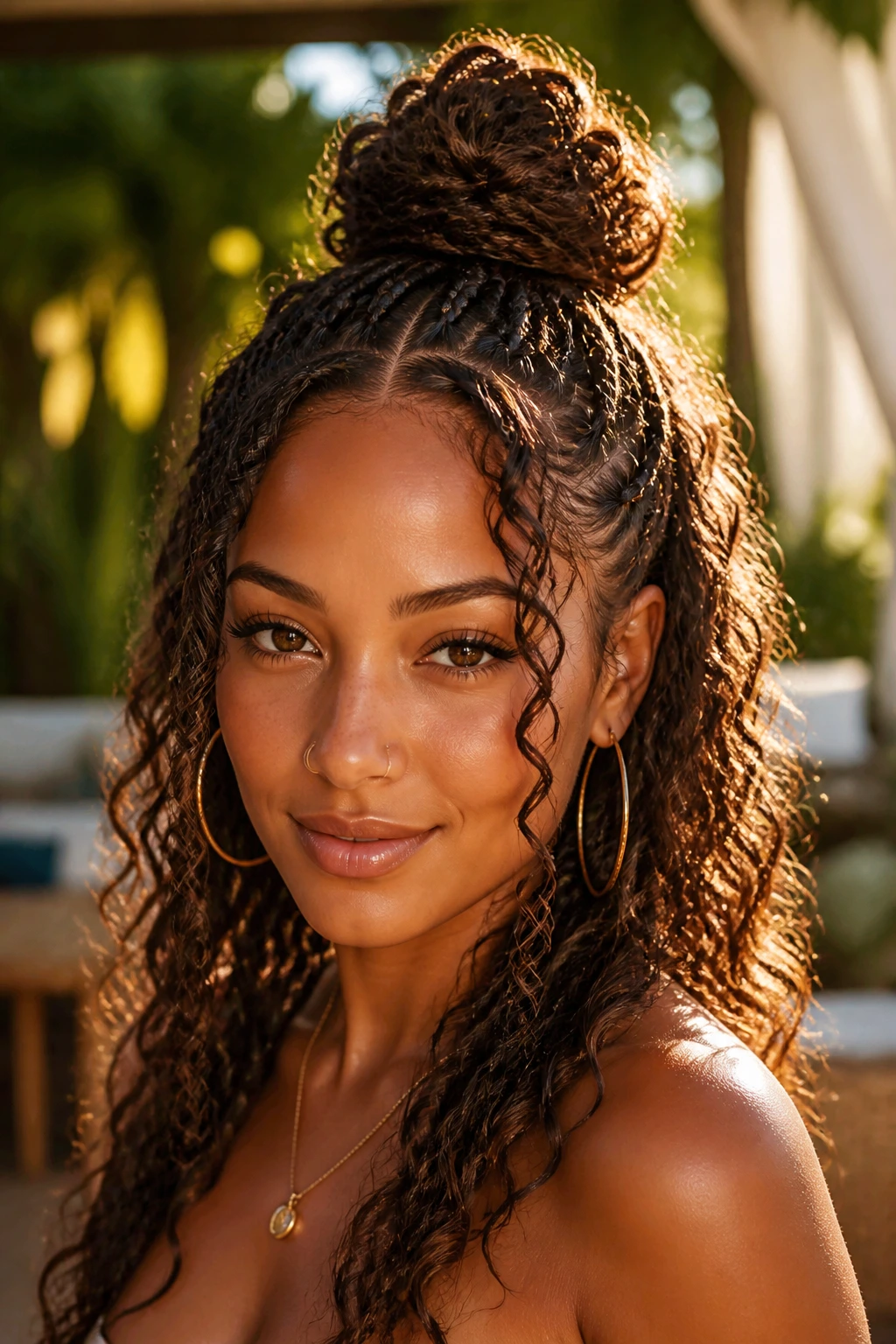
A top knot with braided structure at the base and curls hanging underneath does something smart: it keeps the hair off your neck while still leaving softness where people can see it. The knot gives you height. The curls keep it from looking severe. That’s a very useful combination when humidity is high or when you need hair out of the way.
The style reads best when the knot is not too perfect. A little looseness at the top helps the hanging curls feel like part of the design instead of an afterthought. If you’re adding cuffs or thread, place them near the base where the knot begins. They anchor the look.
This is one of those styles that can look casual in the daytime and polished at night with almost no extra work.
27. Soft Loc Updo with Braided Fringe
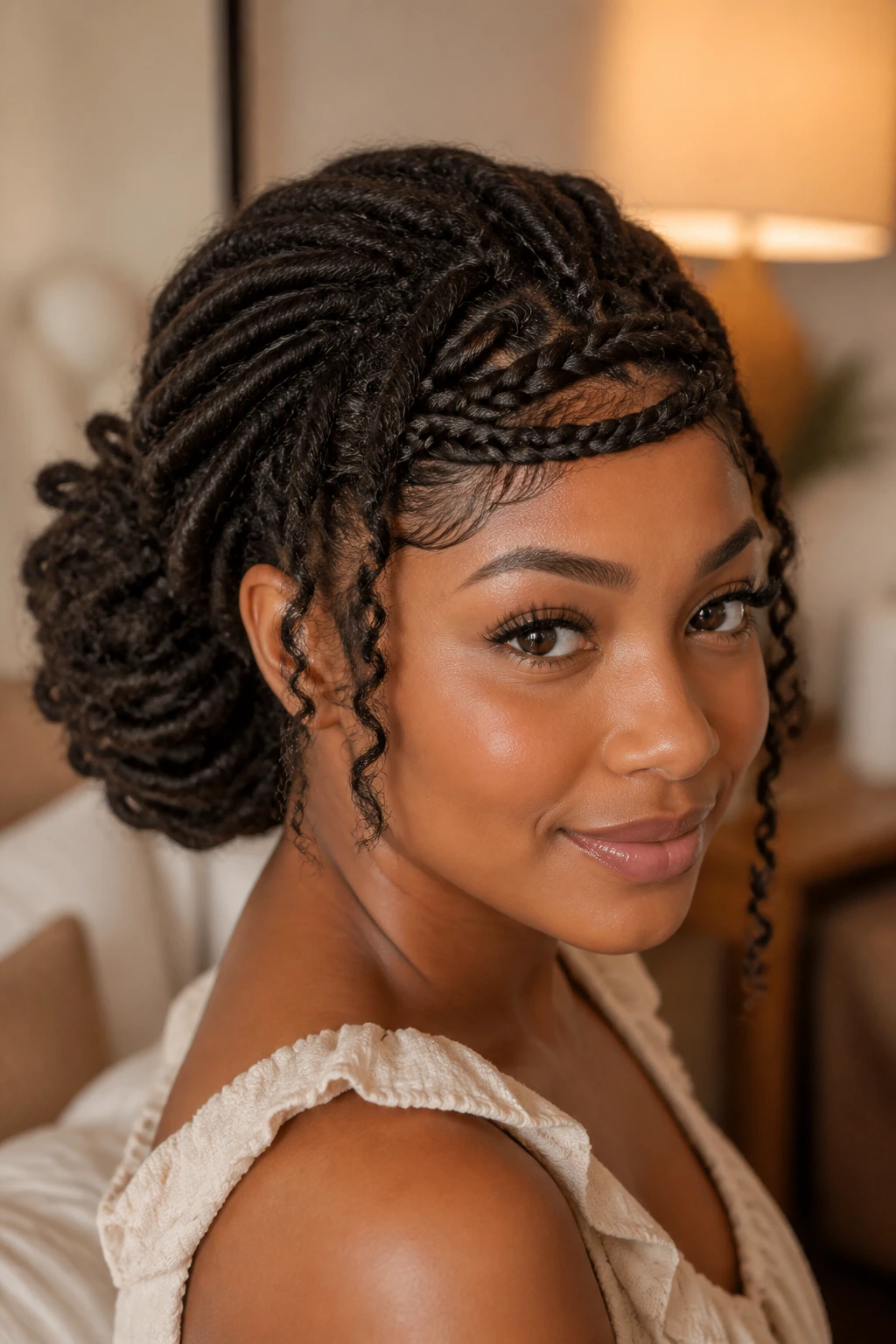
What happens when you pair loc texture with a braided front fringe? You get an updo that feels layered instead of severe. The locs give the back of the style weight and shape, while the braided fringe softens the forehead and keeps the look from feeling too closed in. A few wispy coils near the temples finish the job.
If your locs are medium weight or longer, pinning the updo low can keep the style comfortable. High pins can tug. Low pins tend to feel steadier, especially if you’re wearing the style for hours. The braided fringe is the part that makes it boho. Without that front detail, the updo can lean much neater than you want.
It’s a good final choice for someone who wants the texture story to continue all the way up to the hairline.
What Makes the Texture Look Intentional Instead of Sloppy
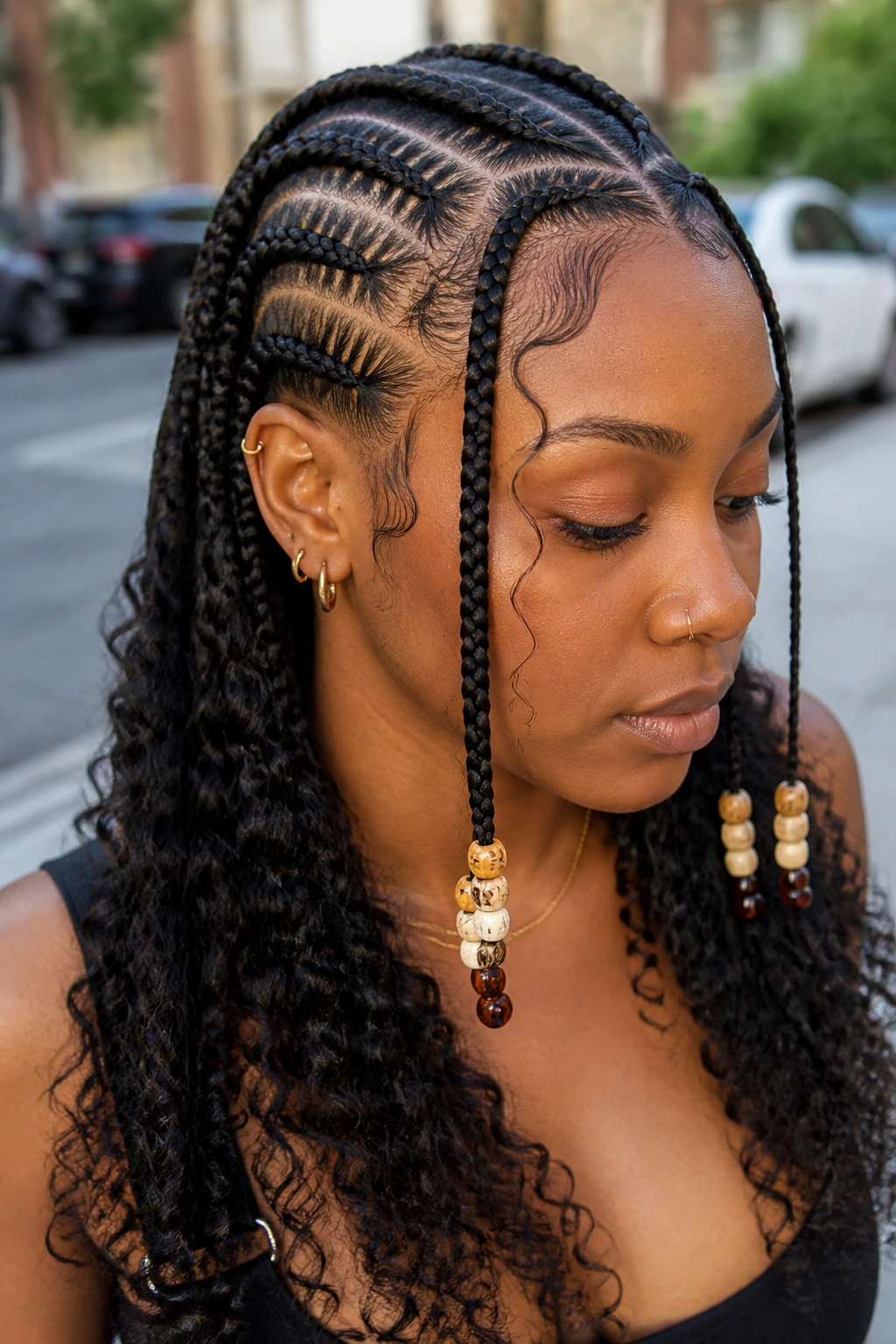
Boho braids look best when the loose pieces are planned, not improvised. That sounds obvious until you see how often the style gets pushed too far in one direction. A perfectly neat base with a few soft ends will look intentional. A messy base with a messier finish will look like you gave up halfway through the install.
Clean Base, Soft Finish
The base of the braid or twist should still be tidy. That means even parting, controlled tension, and sections that match the shape you wanted. Once the base is set, the ends can bend, curl, fray a little, or hang unevenly. That contrast is what makes the style read as boho rather than unfinished.
Curl Pattern Matters
Water-wave and deep-wave extensions give the most natural boho movement because they hold a bend without turning into a stiff ringlet. If you want more polish, use a larger flexi-rod on the ends and keep the curls looser. If you want more texture, separate the curls a little after they dry. Don’t overdo it. Too much finger-combing turns the finish into puff.
Accessories Need Breathing Room
Cuffs, shells, beads, and thread should have space to sit. Three or four accents on a side often look better than ten scattered all over the head. Let one feature lead. Maybe it’s the braid pattern. Maybe it’s the curls. Maybe it’s the beads. All three at once can start to fight each other.
Essential Tools for These Styles
- Rat-tail comb: Clean parts live or die here, especially for triangle parts, stitch braids, and feed-in rows.
- Sectioning clips: Keep the rest of the hair out of the way so your parts stay crisp.
- Edge brush or small soft brush: Smooths the front without scraping the scalp.
- Mousse or setting foam: Helps curls settle and keeps flyaways from exploding by day two.
- Light gel or edge control: Use at the hairline only; too much makes the base stiff and flaky.
- Spray bottle with water and leave-in conditioner: Useful for prep, refreshes, and taming dry lengths.
- Extension hair in the right texture: Water-wave, deep-wave, braid hair, or faux loc hair depending on the look.
- Flexi-rods or perm rods: Helpful for curly ends when the extension hair needs shaping.
- Crochet needle: Handy for adding curly pieces or faux loc accents in some styles.
- Hair cuffs, shells, beads, and thread: The boho finish, if you keep the placement controlled.
- Small scissors: Trim stray extension fibers or uneven ends carefully.
- Satin bonnet or scarf: Night protection. Non-negotiable if you want the style to last.
- Silk or satin pillowcase: Good backup on nights when the bonnet slides off.
Choosing the Right Braid Pattern for Your Hair Length and Density
Short, fine, dense, stretched, natural, relaxed — those words matter here. A boho braid style is not one-size-fits-all, and the wrong pattern can make even a pretty design sit badly. Fine hair usually does better with knotless, feed-in, or medium-sized sections because they reduce the heavy line at the scalp. Dense hair can carry larger parts, fuller braids, and more accessories without looking crowded.
Hair length changes the math too. Shorter hair can still wear boho styles, but the braid base usually needs to be more secure so the added texture has something to hold onto. Medium-length hair gives the ends room to move, which is why a lot of these styles look especially good there. Very long hair can handle heavier braid bodies, but the weight needs to be managed or the style starts to drag at the roots.
Texture matters as much as length. Coily or curly hair often gives a boho braid better grip, while smoother textures may need more careful prep or added extension hair to keep the style anchored. If your hairline is delicate, choose the style that spreads tension out — knotless braids, feed-ins, soft twists — and skip anything that pulls hard right at the front. Pretty is nice. Comfortable is better.
The Prep That Keeps Boho Styles Sitting Right
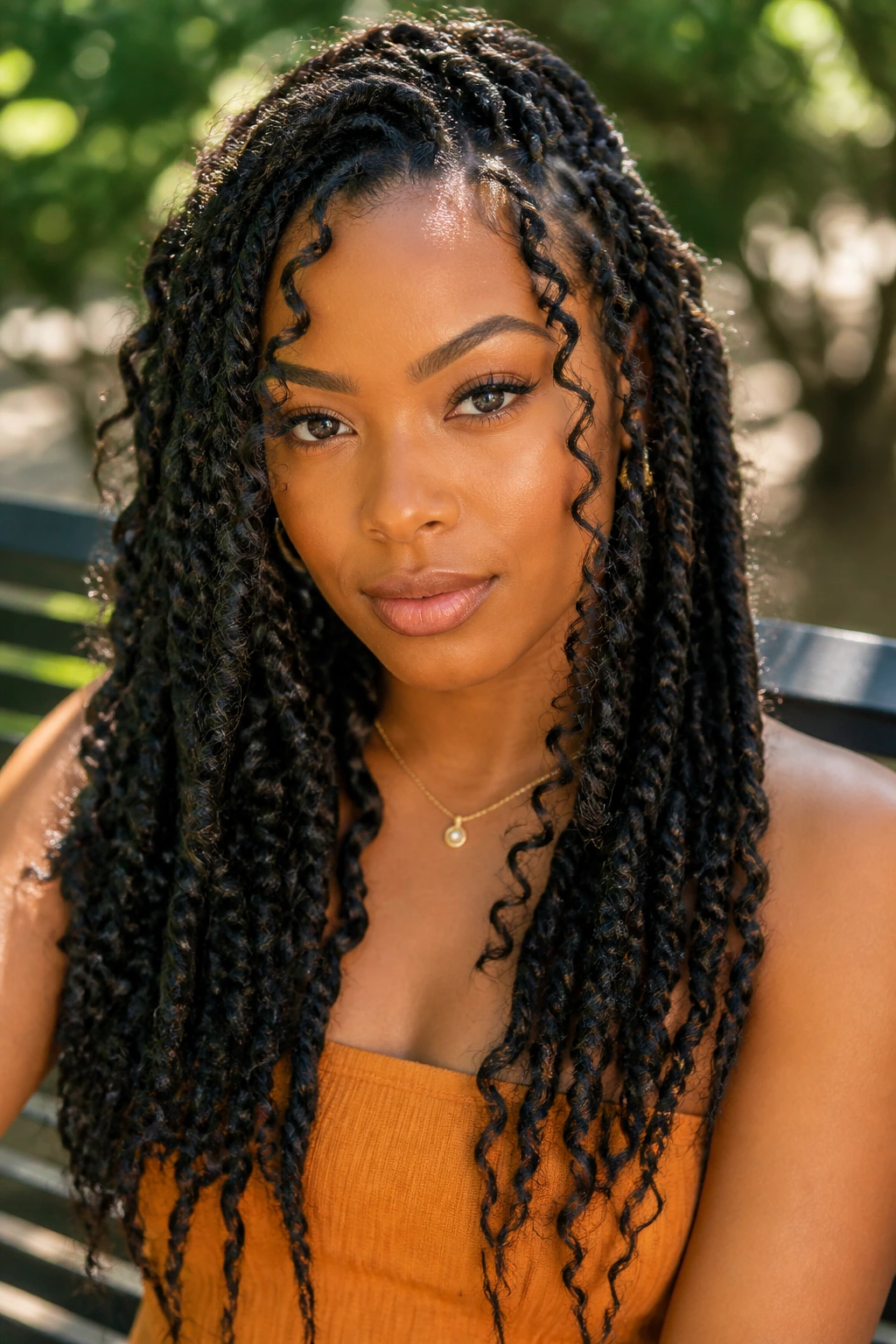
A boho braid style looks softer when the prep is cleaner. That does not mean plastered down with product. It means the hair is washed, detangled, and stretched enough that the parts sit clearly and the braids do not puff up immediately. I prefer a light leave-in on the lengths and very little oil at the roots before installation. Too much product makes the style slippery and can shorten the wear time.
Clean Scalp, Not Greasy Scalp
Start with a scalp that is clean and fully dry. If the hair is damp at the base, the style can itch, swell, or smell off later. That part is boring, yes, but it matters. A little scalp oil can be added after installation, but not before. Heavy buildup right at the start tends to show up around week two, usually at the worst possible moment.
Stretch Before You Braid
Blow-drying on low heat or stretching with banding helps the parts stay visible. It also makes the braid pattern sit smoother because the hair is not shrinking between sections. If you wear your natural texture, you can still keep it soft — just make sure the shrinkage won’t yank the braid base into a shape you didn’t ask for.
Part With a Mirror and a Composed Mood
Use a rat-tail comb, but also use patience. Triangle parts, side parts, and criss-cross layouts all look better when the parting is checked from more than one angle. A clean part is not about perfection. It’s about consistency across the head so the softness later has a solid frame.
Little Tweaks That Keep the Style Intentional
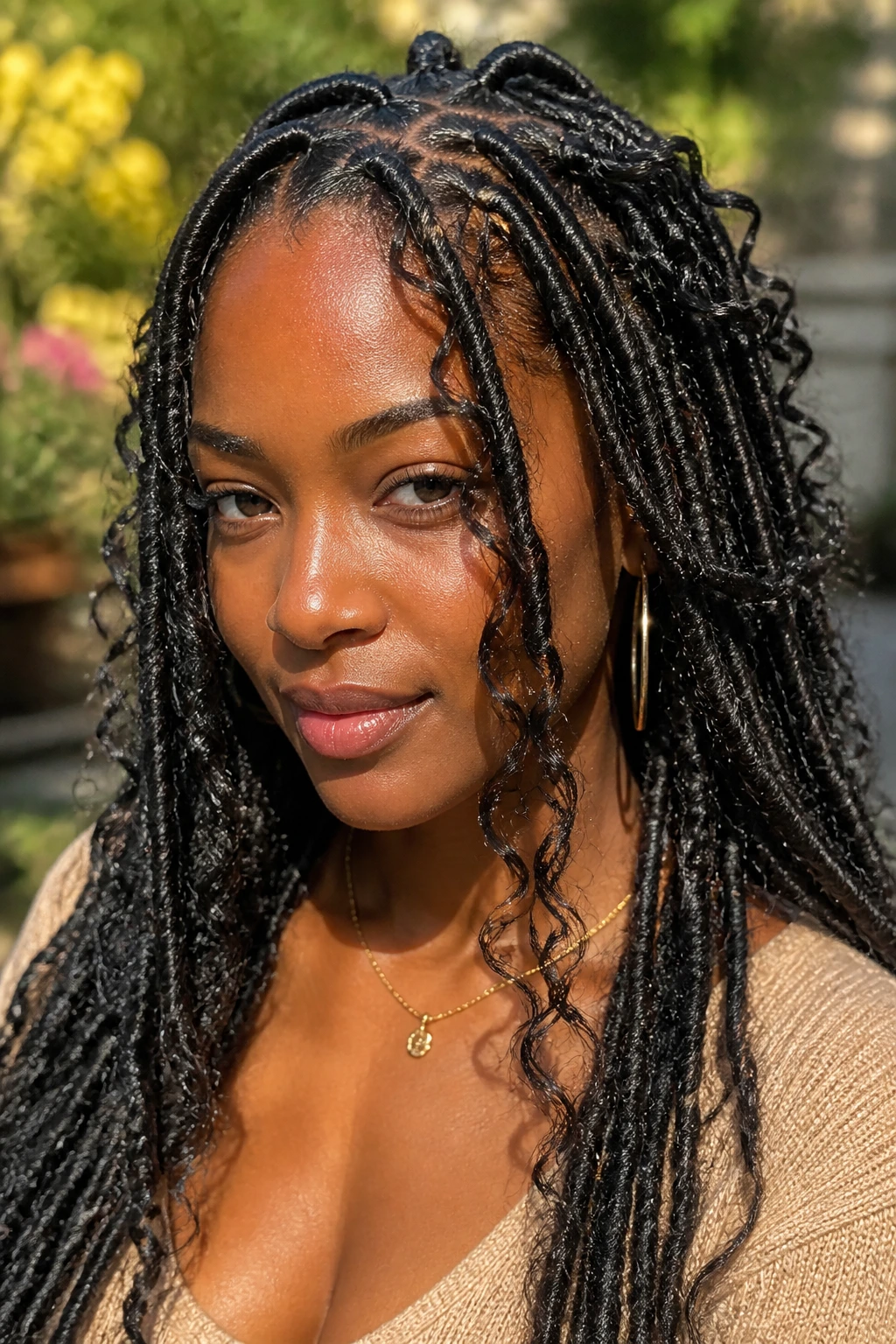
Parting: Keep the parts neat at the scalp and let the looseness begin lower down. That one move does a lot of the visual work.
Accessories: Place cuffs, beads, or shells in small clusters instead of dotting them everywhere. The eye needs a resting place.
Frizz Control: Use mousse or foam on the lengths, not the roots, and reapply lightly every few days. If you smooth the roots too much, the braid can start to look flat.
Scalp Comfort: If the style feels tight on day one, it is too tight. The American Academy of Dermatology has long warned that repeated pulling at the hairline can cause breakage over time, and that warning is worth listening to.
Finish: Trim or shape the ends only after the hair has settled. Cutting too early can make curly pieces shrink unevenly.
Common Mistakes That Make Boho Braids Look Tired Fast
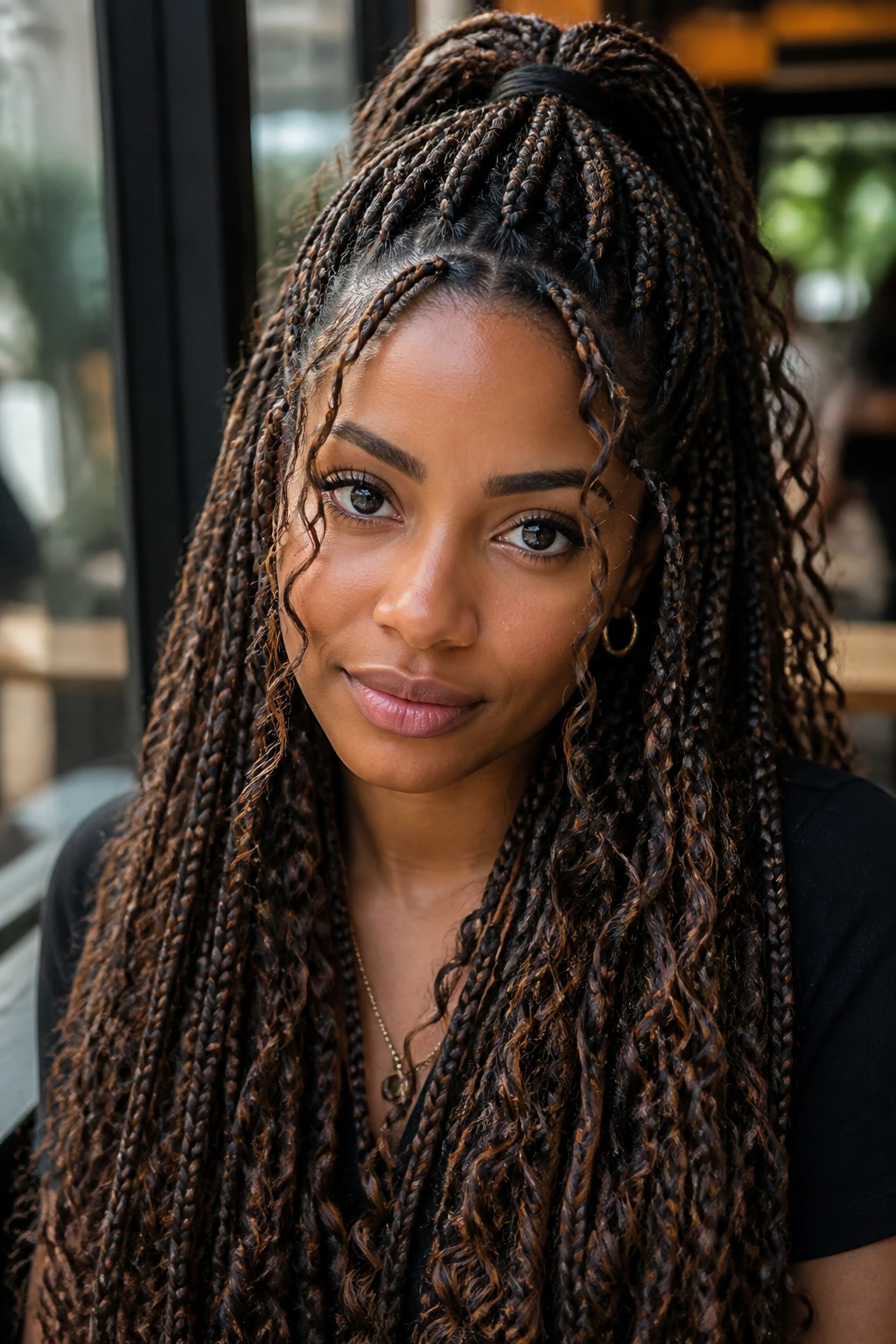
The biggest mistake is overdoing the softness. A boho braid is not a tangled braid. If the base is fuzzy, the parts are uneven, and the accessories are scattered everywhere, the look stops feeling intentional. Keep the structure clean. Let the looseness live in the finish.
Another common problem is heavy braid weight. Jumbo sections, thick beads, and long extension hair can pull down the style until it sits too low and starts straining the front. If the edges are sore after styling, the set is too heavy or too tight. Fix that before you commit to keeping it for weeks.
A third issue is ignoring the ends. Straight, blunt tips can make even beautiful braids look unfinished. Curly ends, wrapped ends, or a small braid cuff at the bottom give the style a landing point. That final shape matters more than people expect.
Finally, too much product can ruin the texture. Grease at the roots, sticky gel on the lengths, and repeated oiling can weigh the hair down and make the curls sag. Use less than you think you need. Then stop.
Variations and Adaptations to Try
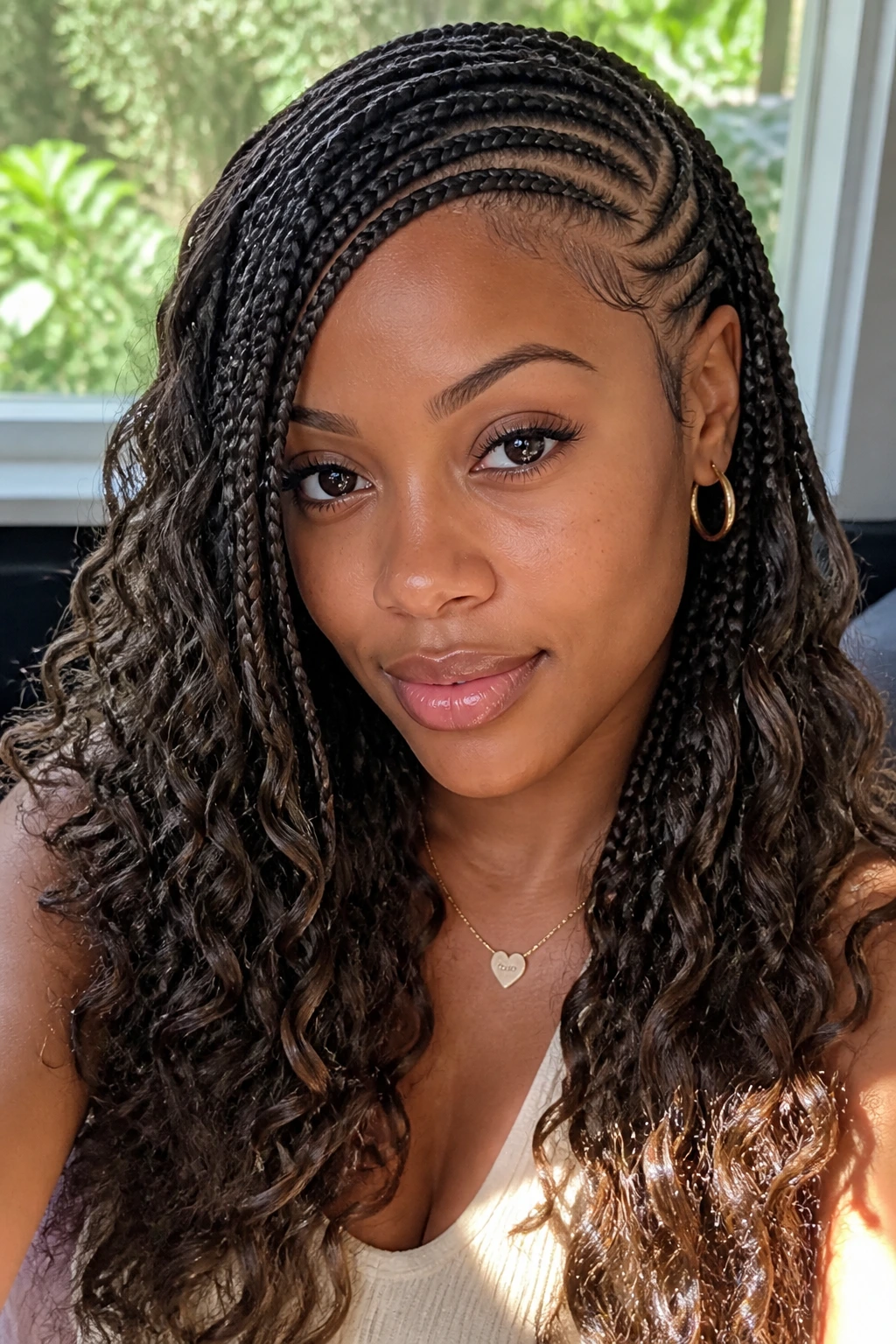
Festival Fringe: Add a few extra face-framing pieces, shells, and thread wraps, but keep the braid base clean. This version leans playful without turning chaotic.
Office-Neat Boho: Keep the parting crisp, skip the shells, and use curly ends only. You still get the soft finish, just with a quieter profile.
Low-Tension Protective Version: Choose knotless or feed-in starts, medium parts, and lightweight extensions. This is the version to pick when hairline comfort matters most.
High-Volume Weekend Look: Use jumbo braids, fuller curl pieces, and a few gold cuffs placed near the front and at the ends. It gives you more drama without requiring a full re-install.
Short-Hair Boho Set: Use bob-length faux locs, passion twists, or medium braids with layered face-framing pieces. The shorter length keeps the shape from overpowering your face.
Make-Ahead, Maintenance, and Night Care
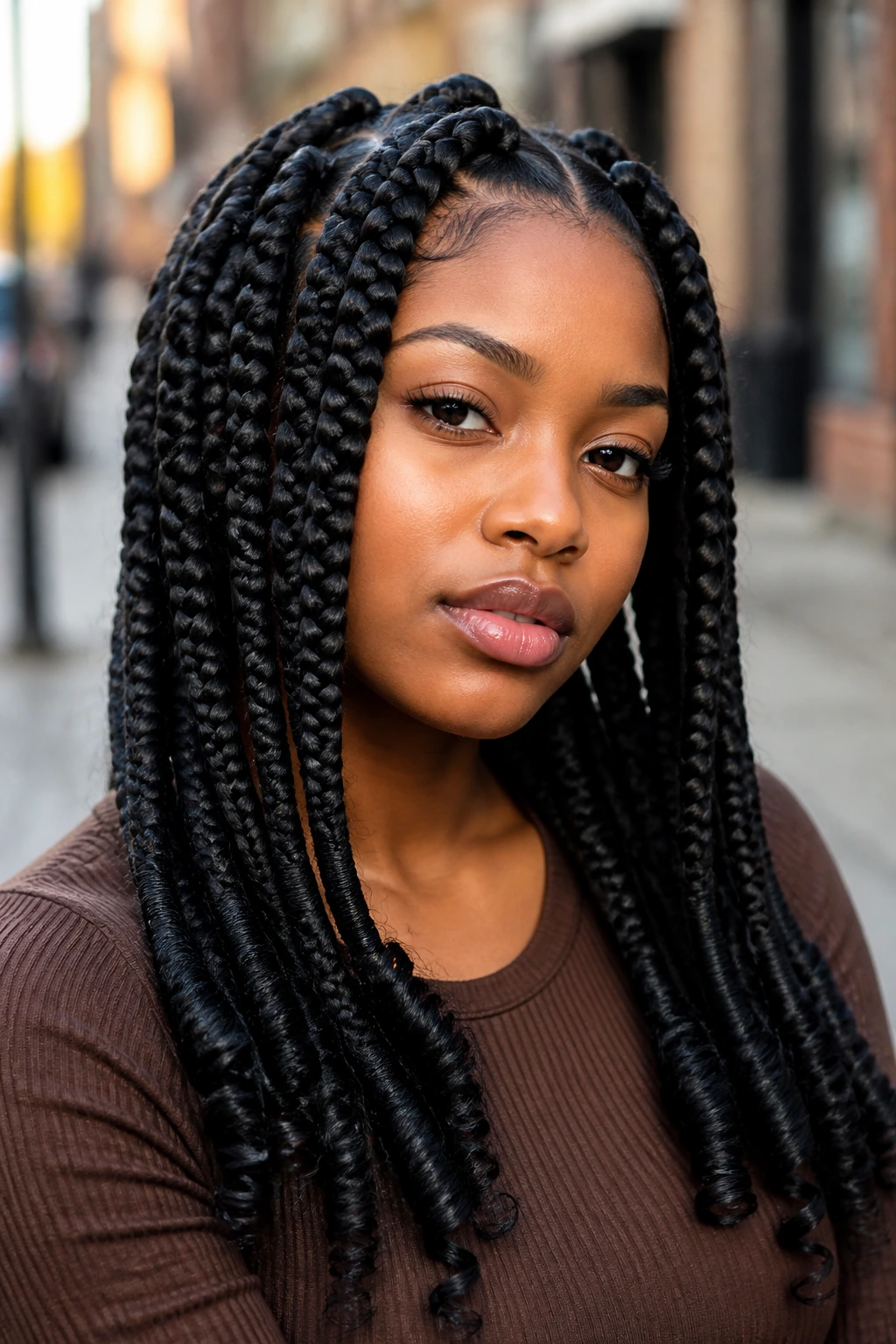
Boho braids and twists usually hold best when the first few days are handled carefully. Sleep in a satin bonnet or scarf every night, and if the style is long or layered, gather it loosely at the crown so the ends do not rub into knots. A satin pillowcase helps when the bonnet slips. That happens. Real life is messy.
For refresh work, a light mousse or foam on the curls every 3 to 5 days keeps the ends from puffing too fast. Use a spray bottle with water and a tiny bit of leave-in if the lengths start to feel dry, but don’t soak the braid base. Heavy wetting can stretch the style and make the front loosen early.
Scalp care is a balance. A diluted scalp spray or a small amount of lightweight oil every 3 to 4 days is usually enough for most people. More than that often leads to buildup, and buildup is what makes a style feel old before it actually is. If the style starts to itch badly, check tension first. Do not just drown it in product.
Most boho braid styles look best in the first 2 to 4 weeks, depending on the size, your hair type, and how much loose texture you added. Smaller braids and twists usually last longer. Bigger, curl-heavy styles need more refreshing and may be ready to come out sooner.
Frequently Asked Questions
How long do boho braid hairstyles usually last?
Smaller styles can hold for 4 to 6 weeks if the base is neat and the curls are refreshed. Larger or curl-heavy sets may look best closer to 2 to 4 weeks before the loose pieces start puffing out.
Can you do boho braids on short hair?
Yes, but the style choice matters. Shorter hair usually does better with knotless braids, passion twists, faux loc bobs, or styles that use extensions to build length at the ends.
What’s the difference between goddess braids and boho braids?
Goddess braids are usually larger and more sculpted; boho braids lean softer, looser, and more textured. The two can overlap when you leave face-framing pieces or curly ends out.
Do boho braids damage your edges?
They can if they’re installed too tight or left in too long. A comfortable braid should not pull when you open your mouth wide or raise your brows, and the front should feel secure rather than strained.
How do you keep the curly pieces from frizzing too fast?
Use mousse or foam on the lengths every few days, avoid sleeping with loose hair rubbing on cotton, and don’t keep finger-combing the curls. Once they’re separated too much, they start to puff.
Are these styles heavy?
Some are. Jumbo braids, long locs, and lots of beads can add weight fast. If you want the style to stay comfortable, choose medium sections and keep the accessory count low.
Can you wash boho braids?
Yes, but gently. Focus on the scalp with diluted shampoo or a nozzle bottle, then squeeze the lengths with a towel instead of rubbing them. Heavy scrubbing can tangle the curly pieces.
Which style is the easiest to wear for a first try?
Half-up boho braids, knotless braids with curly ends, and passion twists are usually the easiest starting points. They give you the boho texture without demanding a heavy accessory hand or an ultra-precise finish.
Soft Edges, Strong Structure
The reason boho braid hairstyles keep coming back is simple: they solve a tension most hair styles never manage to solve. You get structure without stiffness, softness without sloppiness, and enough movement that the style looks alive when you turn your head.
That only happens when the base is handled with care. Clean parts, controlled tension, the right curl pattern, and a little restraint with accessories — that is the real recipe. Pick one style that matches your length, your density, and your patience level, then let the finish do what boho hair does best: move a little, breathe a little, and look better because it isn’t trying too hard.
