



The best cornrow braid styles for Black women do something plain old loose hair never will: they give the front of your head structure, the sides a little drama, and your ends a break from daily handling. Done well, cornrows sit close to the scalp without pulling it into a headache. Done badly, they announce themselves by lunch with itching, lifting parts, and that tight, starchy feeling at the hairline that nobody needs.
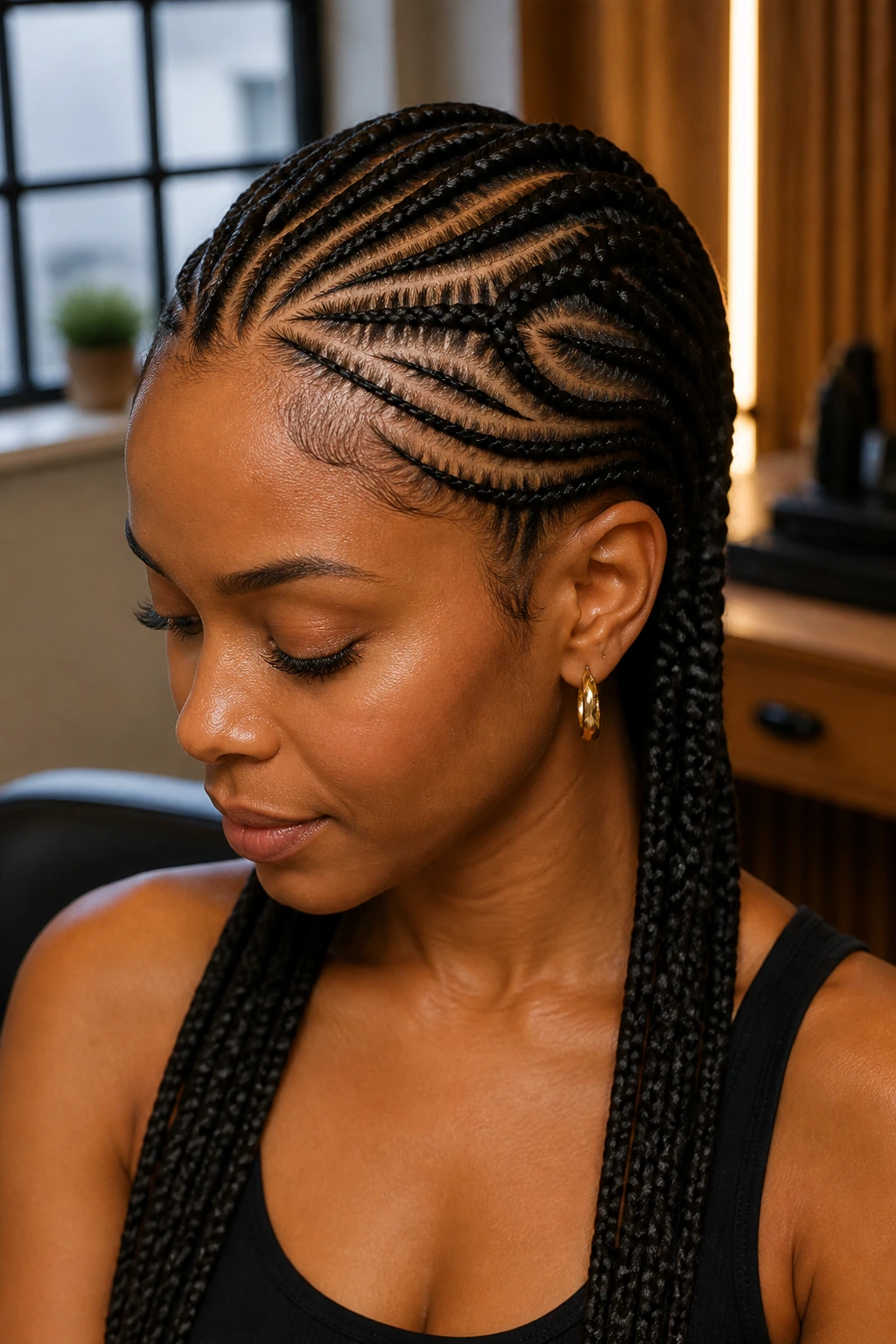
What makes cornrows so interesting is how much personality they can hold inside a very old, very practical braid pattern. One set can look neat and understated from the front, then turn into a sharp zig-zag map when you angle your head. Another can read soft and romantic because the rows curve instead of marching straight back. Add beads, cuffs, curls, or a clean low bun and the whole thing changes. Fast.
I’ve always liked styles that respect the scalp as much as the silhouette. Cornrows can do that when the parting is clean, the tension is even, and the braider knows when to stop tugging. That balance is the difference between a style that lasts and a style that has you reaching for edge control and Tylenol by day two.
Why These Cornrow Styles Deserve a Spot in Your Rotation
-
They give you real variety without changing the base technique: A straight-back set, a side-swept pattern, and a crown braid all use cornrows, but they read like different moods entirely once the parting changes.
-
They can be scaled to your hair’s condition: If your hair is freshly blown out, stretched, or fully natural with shrinkage, there’s a version here that will sit neatly without fighting your texture.
-
They work with or without added hair: Some looks stay sleek on your own hair alone; others get more length, fullness, or drama from pre-stretched braiding hair.
-
They make protective styling feel less repetitive: You’re not stuck with one “box braid person” identity for half the year. Cornrows can be sharp, soft, formal, sporty, or ornate.
-
They let the face do different work: A center part lengthens. A side sweep softens. A curved crown wraps the features in a way that can feel almost sculptural.
-
They hold up across ordinary life: School drop-offs, work, gym sessions, errands, weddings, travel days — the right cornrow braid style handles all of that with less daily fuss than loose hair.
1. Classic Straight-Back Cornrows
This is the style people picture first, and there’s a reason it keeps showing up. Straight-back cornrows create clean lanes from the hairline to the nape, which makes the head look neat in a way that reads crisp rather than busy. If your face is already expressive, this style doesn’t compete with it. It clears the stage.
The version I like best keeps the rows medium-sized, not tiny, not jumbo. Tiny rows can be gorgeous, but they take time and can start to feel fussy if you wear them too long. Medium straight-backs give you that tidy, anchored look without making your scalp feel like it’s been mapped with a ruler. They also sit well on natural hair that has been stretched with a blow-dryer or banding.
Ask for even parting, smooth feed-in at the front, and rows that don’t get so tight near the nape that your neck feels boxed in. That little detail matters more than people think. A good straight-back set should feel orderly on day one and still look calm when you throw on a hoodie or scarf.
2. Stitch Cornrows
Stitch cornrows have a sharper, more graphic finish. The parting is what makes them stand out: instead of a soft, blended section, you get little visible “stitches” laid across the scalp, which gives the whole style a deliberate, almost architectural look. I’m partial to these when I want the braids themselves to do the talking.
What makes stitch braids work so well is the contrast between the clean parting and the smooth plait. They can be straight-back, curved, or swept to the side, so the stitch detail is the star, not the route the braid takes. On thick natural hair, the style looks especially satisfying because the parts stay visible without needing a ton of product. On finer hair, a little braid gel and careful sectioning help the pattern stay crisp.
Best for a clean, polished look
- Choose them when you want the scalp design to show: The sections matter as much as the braid itself, so this style is ideal if you like detail.
- Keep the rows medium to small: The stitch pattern shows better when the parts are tight and evenly spaced.
- Expect a longer install time: Precision takes patience, and rushed stitch braids tend to wobble at the roots.
- Ask for light product at the part: Too much gel leaves flakes; too little makes the lines fuzzy.
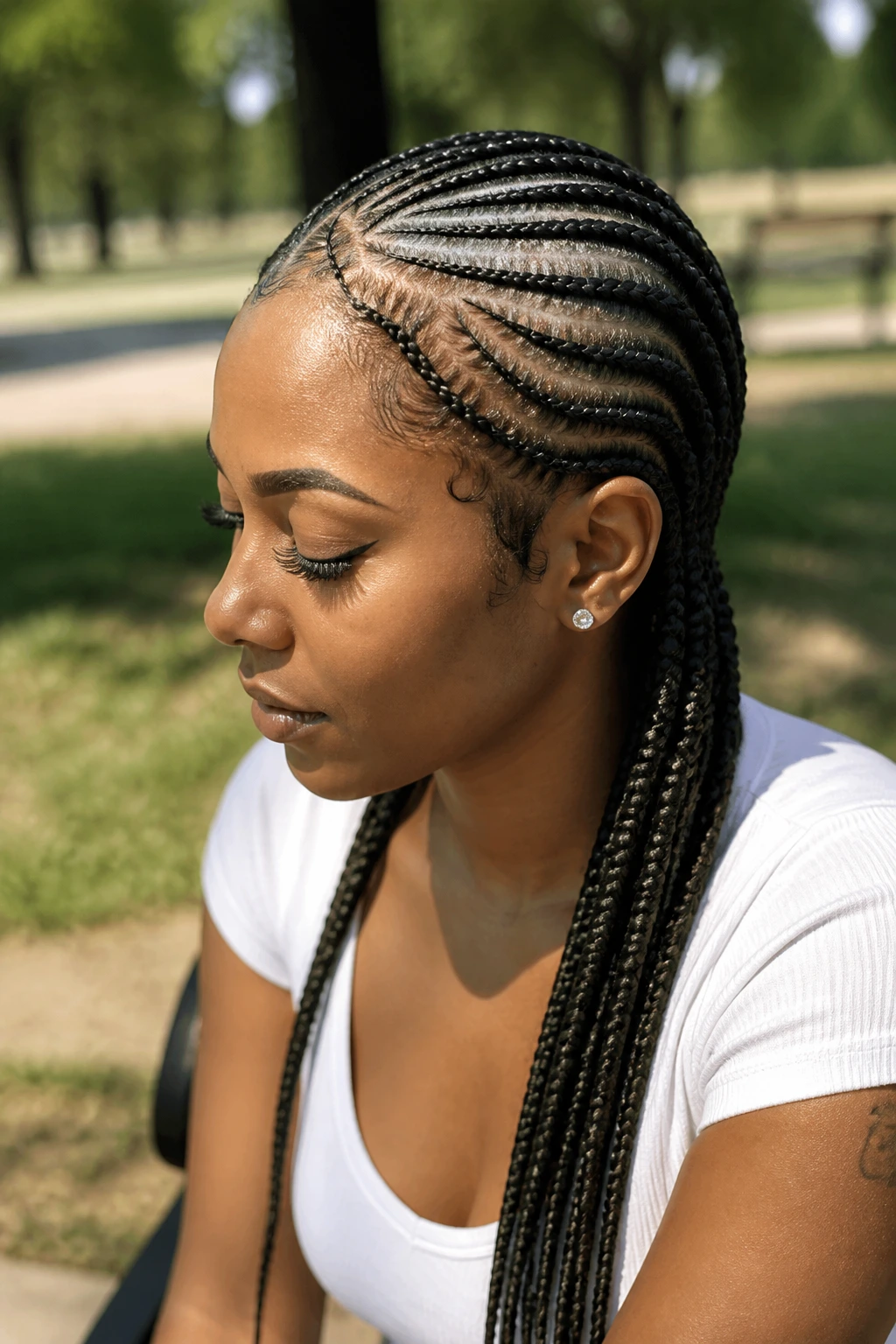
3. Feed-In Lemonade Braids
Lemonade braids bring movement to cornrows in a way straight-back styles don’t. The rows sweep to one side, usually with a deep side part that creates a strong diagonal line across the scalp. The result feels more fluid, more styled, and a little more theatrical without tipping into costume.
I like feed-in lemonade braids because they can look polished with almost no extra decoration. The feed-in method helps the braid start small and build gradually, so the front doesn’t feel bulky. That matters. The braid should seem to grow out of the scalp, not sit on top of it like a rope. If your edges are delicate, this softer start is often easier to live with than a hard, thick beginning.
These are especially good when you want the braids to frame one side of the face and leave the other side more open. They suit bold earrings, a matte lip, and a neckline with a little space in it. Crowded tops and high collars can fight the shape.
4. Center-Part Cornrows with Curly Ends
A center part changes everything. It gives cornrows a sense of balance that feels neat at the top and softer at the ends, especially when the braids finish in loose curls instead of sealed tips. This is one of those styles that looks neat in daylight and prettier at night, which is a useful trick to have.
The curls at the ends do most of the work here. They break up the strictness of the scalp pattern and keep the style from reading too severe. If your own hair curls well, your stylist can leave the ends out long enough to set on flexi rods. If you’re using extensions, ask for curled synthetic ends or human-hair pieces blended in where needed. The finish should move when you turn your head. If it stays frozen, the style loses half its charm.
This style flatters people who like a cleaner face-framing effect without giving up softness. It also works for events where you want braids that look done, not merely convenient.
5. Deep Side-Part Cornrows
A deep side part pulls the whole braid layout off center, and that shift gives the face a different kind of energy. Instead of symmetry, you get drama. Not loud drama. Just enough to make the pattern feel intentional and a little more fashion-forward than a basic row set.
The best deep side-part cornrows usually start with smaller braids near the front hairline and grow wider toward the back or vice versa, depending on the head shape. That slope matters because it keeps the braid line from looking stiff. The side part can also help if you prefer one temple area to sit flatter than the other. Glasses wearers tend to like this style because it avoids crowding the frames.
This is a good “I need my hair to look styled without looking busy” option. It pairs well with glossy lips, big hoops, or a simple T-shirt and blazer combo. The braid pattern does enough on its own.
6. Zig-Zag Part Cornrows
Zig-zag parts are for people who want their scalp pattern to be part of the design, not just the scaffolding under the braids. The parting curves back and forth instead of tracing straight lines, and that small shift gives the whole style a handmade, custom feel. You notice it when the light hits the scalp and the angles start to pop.
This look is stronger when the braid size stays consistent. If the parts are zig-zag and the rows are all over the place in thickness, the style can start to feel cluttered. Keep the rows neat and let the parting carry the visual interest. I like this style on medium to long hair because the zig-zag pattern has room to breathe before it disappears into the length.
A good zig-zag set can be playful without looking childish. That’s not easy to do. It’s one of the few cornrow patterns that looks equally good with a denim jacket or a formal dress.
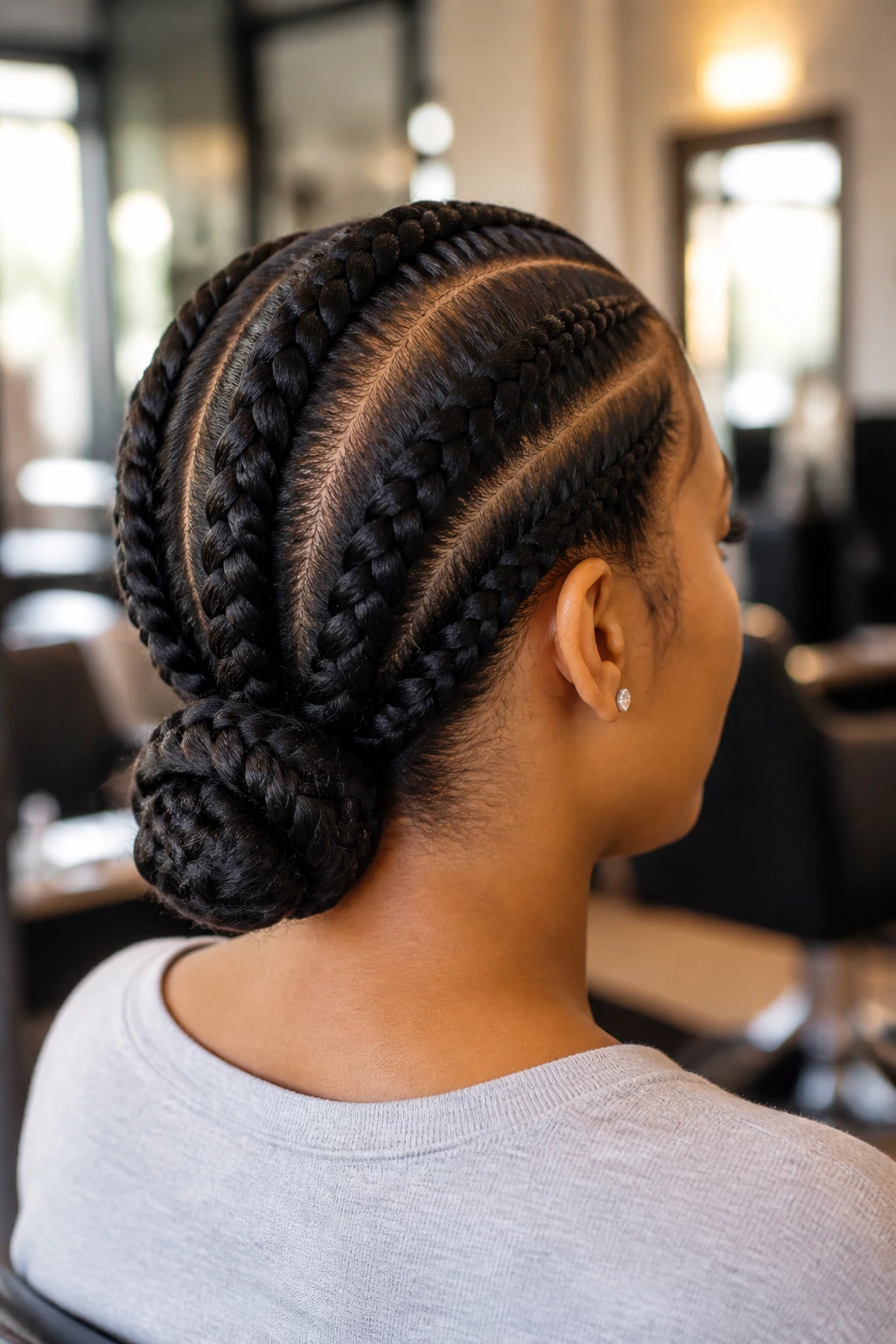
7. Jumbo Cornrows into a Low Bun
Jumbo cornrows are the style you choose when you want the install time to be shorter and the finish to feel bold right away. Fewer, thicker rows lead straight into a low bun at the nape, which gives you a strong shape and keeps the ends tucked away. I’ve always thought the low bun is the quiet detail that makes the whole style feel finished.
This version is useful when your hair is dense and you don’t want a very small braid pattern pressing all over your scalp. Bigger cornrows distribute the hair in fewer sections, which can feel lighter depending on the installation. The bun also keeps the length controlled, so you don’t have to manage swinging braids while you’re moving around all day.
Ask for the bun to sit low and centered rather than high and tight. A high bun changes the mood completely. The low version feels grounded, polished, and a bit formal without being stiff.
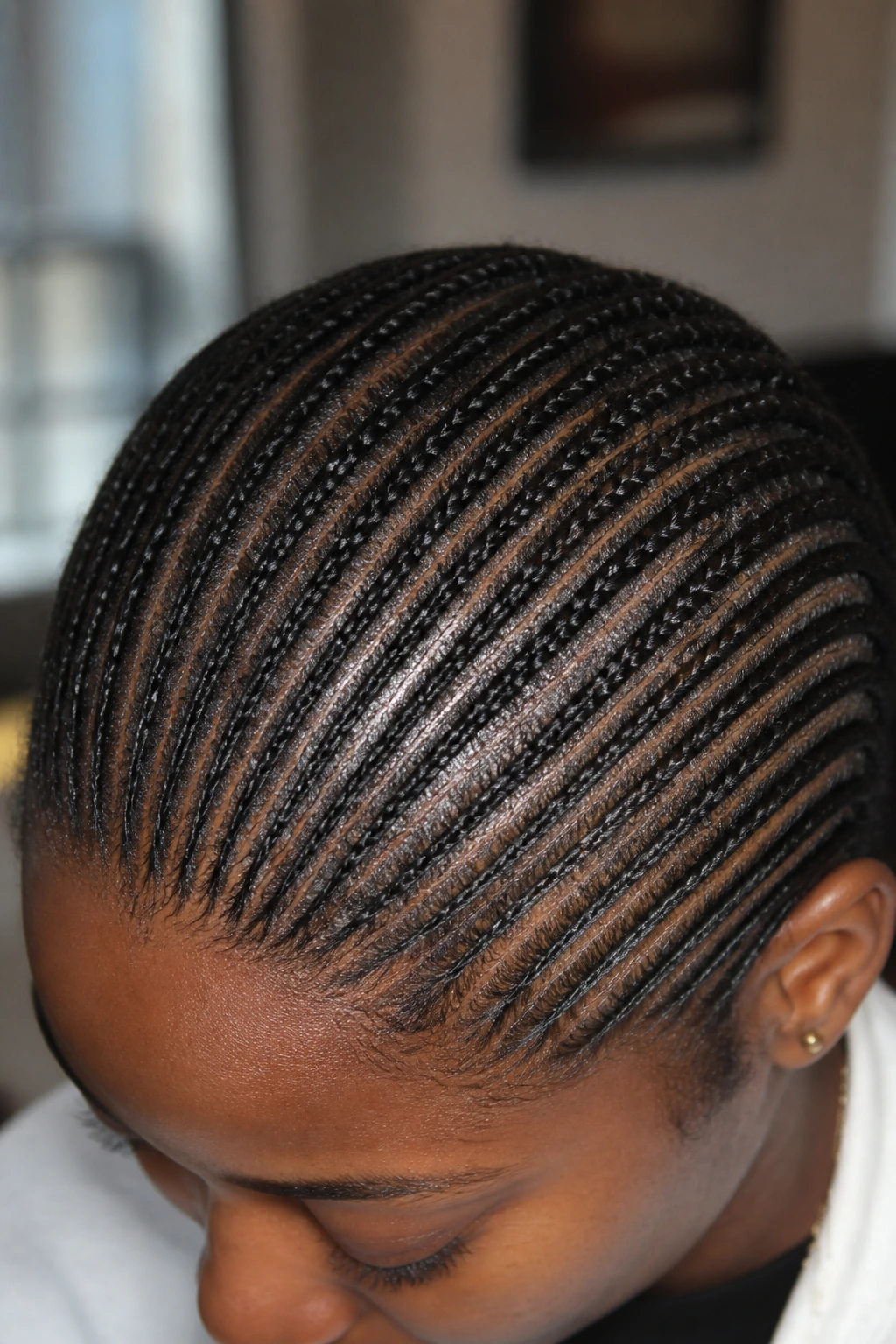
8. Micro Cornrows
Micro cornrows are tiny, detailed, and worth the time only if you actually enjoy the look of precision. The braid pattern can be gorgeous, but it’s not a casual commitment. These rows take longer to install, require more parting work, and can feel more delicate at the roots when they’re fresh.
The reward is in the detail. Micro cornrows can create intricate scalp designs, tiny curves, or layered patterns that look almost woven. They’re especially striking on shorter styles where each row has room to show. If you like hair that reads like craftsmanship, this is the one.
A little honesty here: micro cornrows are not the easiest style to keep in for a long stretch if your scalp is sensitive. The install has to be controlled, or the whole head can feel overly tight. Still, when they’re done well, they have a finesse that bigger braids can’t mimic.
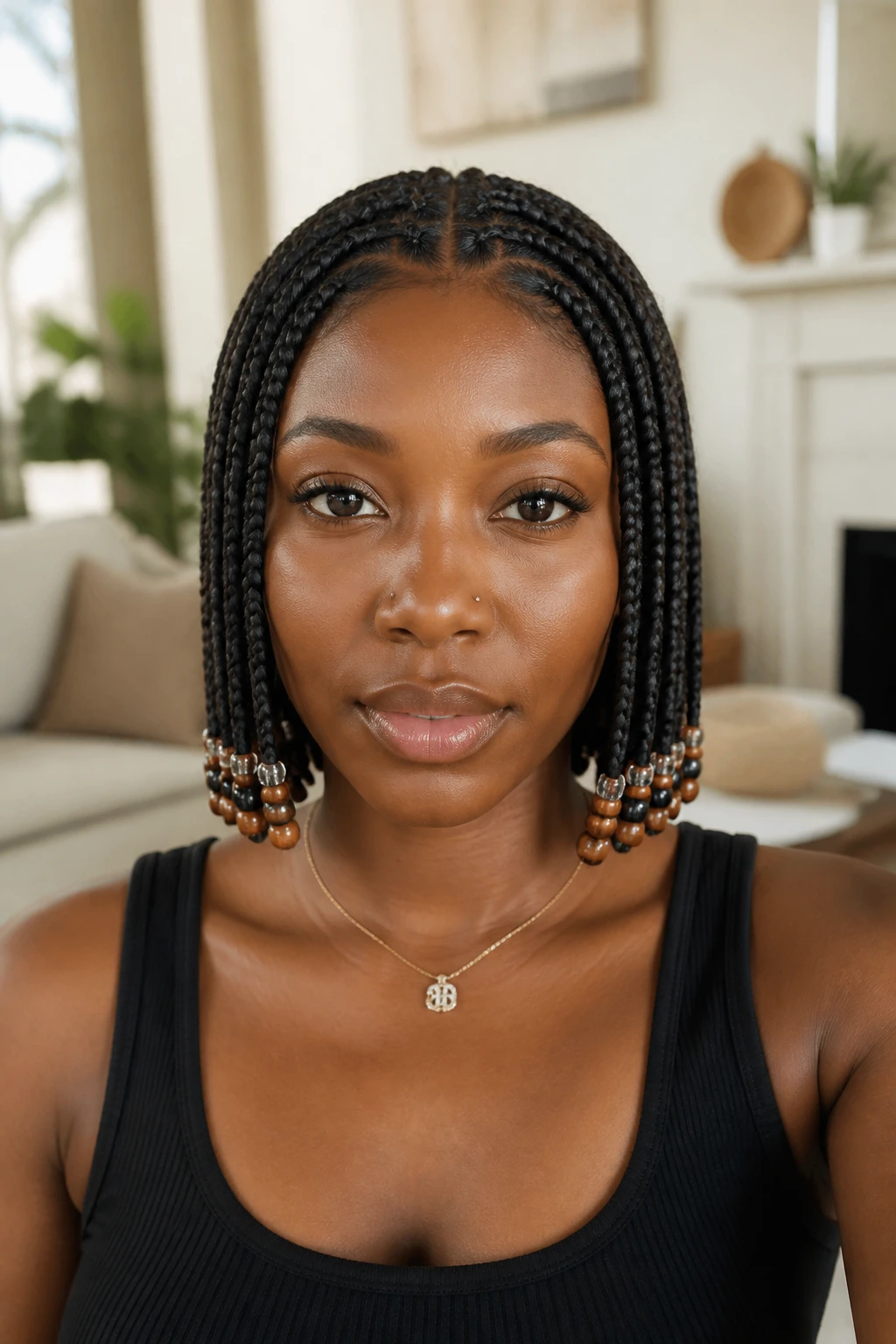
9. Bob-Length Cornrows with Beads
Bob-length cornrows have a blunt, confident shape that sits around the chin or shoulders instead of dropping long down the back. Add beads at the ends and the style gets a rhythmic little sound when you move. That sound matters more than you’d think. It changes how the style feels in motion.
This version is a sweet spot for people who want braids with personality but don’t want the maintenance of very long lengths. The shorter cut keeps the braids lighter, and the beads provide a little punctuation. Wooden beads feel earthy. Clear beads feel sharper. Gold-toned beads make the whole thing read more dressed up.
The key is balance. Too many heavy beads at the ends can pull at the braids, especially if the rows are small. A few beads placed with intention is better than covering every end just because they’re there.
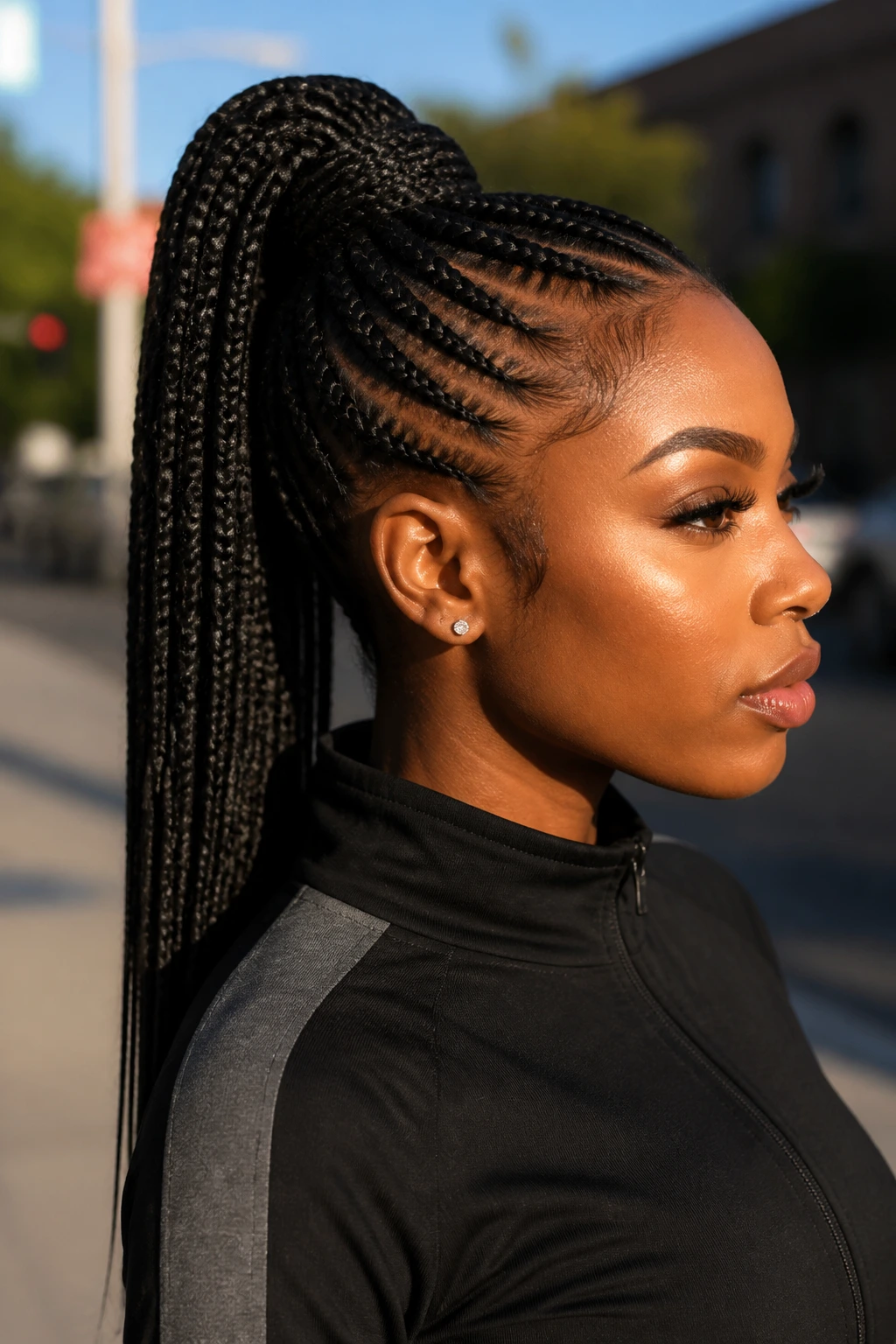
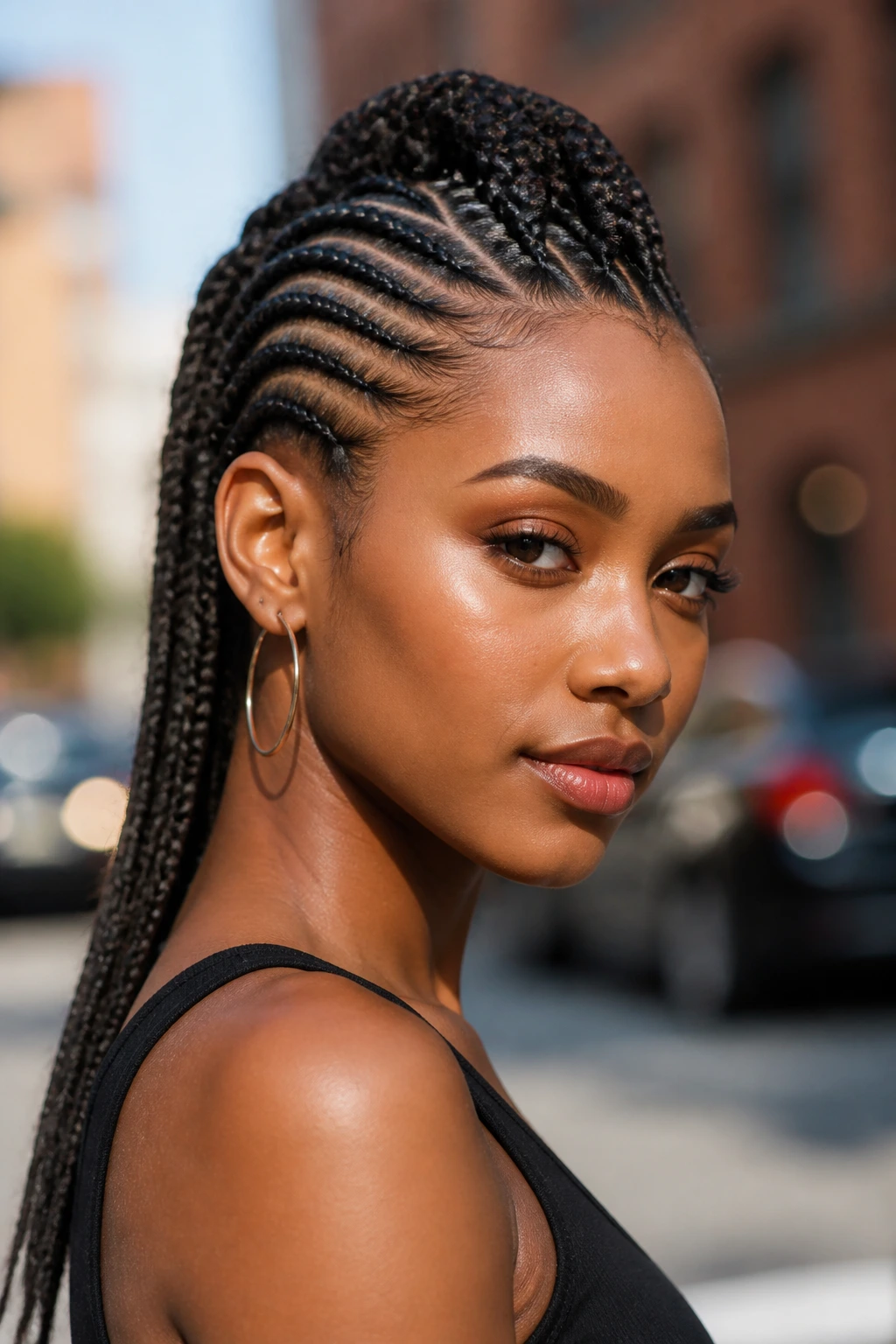
10. High Cornrow Ponytail
A high ponytail instantly changes the energy of cornrows. The base of the style stays close to the scalp, but the gathered ponytail gives height, lift, and a more athletic shape. It’s practical, yes, but it also has a very specific kind of presence. The face opens up. The neck looks longer. The whole style feels awake.
This is a smart option if you like your hair off your shoulders and out of your way. The ponytail can be braided, curled, or wrapped, depending on how much length you want to show. If you use extension hair, make sure the base is anchored securely but not jammed tight against the crown. A headache is not a cute tradeoff.
I’d pick this style for days when I want the look to move when I move. It suits strong brows, hoop earrings, and anything with a sporty edge. There’s no need to over-accessorize it.
11. Half-Up, Half-Down Cornrows
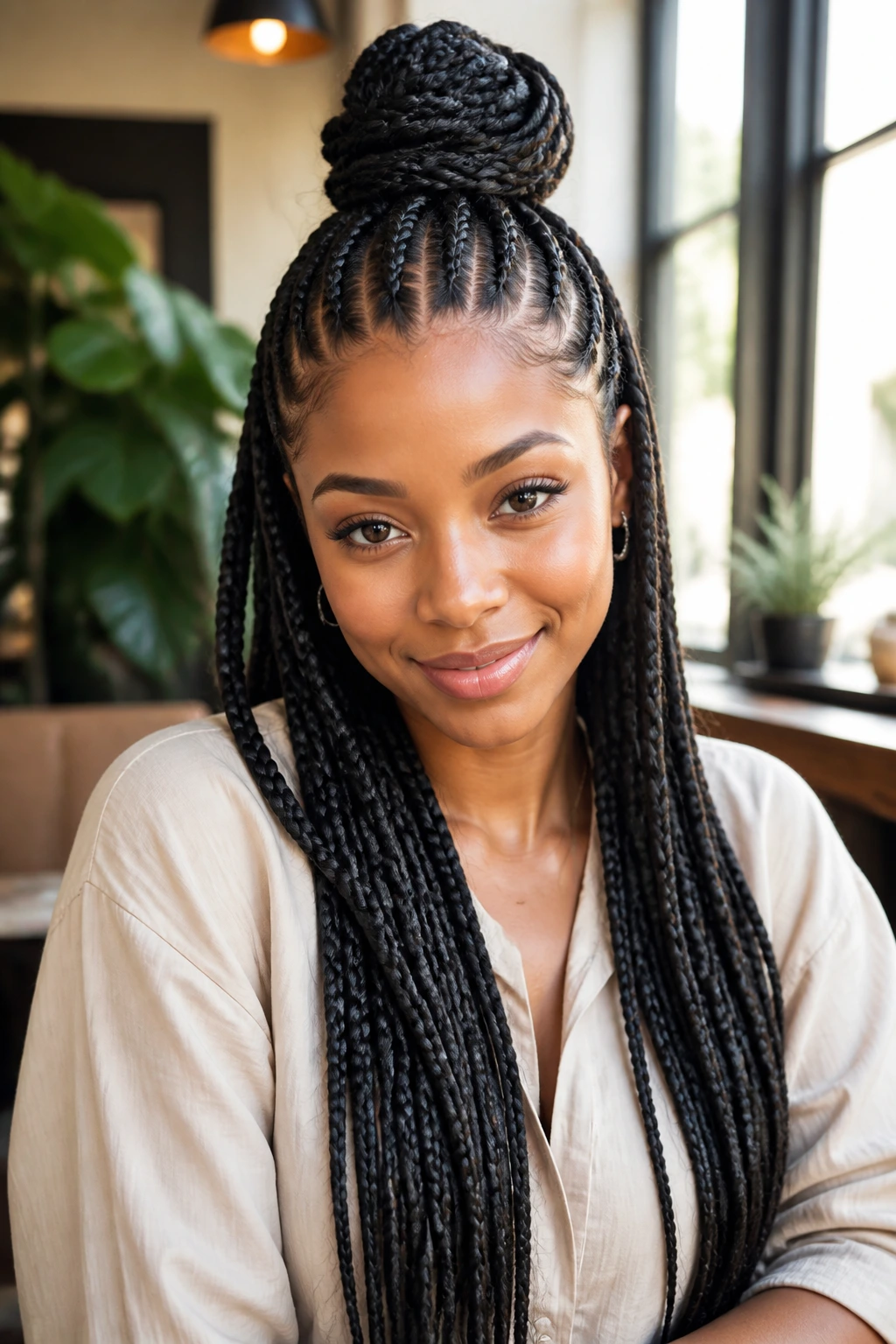
Half-up, half-down cornrows are one of those styles that solves a very specific problem: you get the control of braids near the scalp and the softness of loose length where it counts. The top section is often pulled into a bun, puff, or ponytail, while the lower rows hang free. The result feels easy to wear but still shaped.
This style works especially well when you want to show some length without having all the hair in your face. It also gives you more styling options across the week. Wear the top section neat for work, then loosen it a bit for an evening out. Small changes matter here because the structure already gives you a lot to work with.
The parting on this one needs attention. If the top section is too large, the style loses its balance. If it’s too small, the lower section can feel heavy. The sweet spot sits right in the middle, where both halves get their moment.
12. Cornrow Faux Hawk
The faux hawk version is for people who like a little edge without fully committing to shaved sides or a high punk look. The braids run upward or inward toward the center ridge, which creates lift through the middle of the head and keeps the sides sleek. It’s a good choice when you want the cornrow pattern to feel a little more daring.
What I like about this style is the shape. It gives the top of the head movement and compresses the sides, which can be flattering on rounder face shapes or anyone who likes more height. It also plays well with bold makeup because the hairstyle already has attitude.
You do need a braider who understands symmetry here. If the side rows are too loose or the middle ridge is too flat, the style loses its point. And yes, it looks cooler when the center has a little height. Flat faux hawks are a missed opportunity.
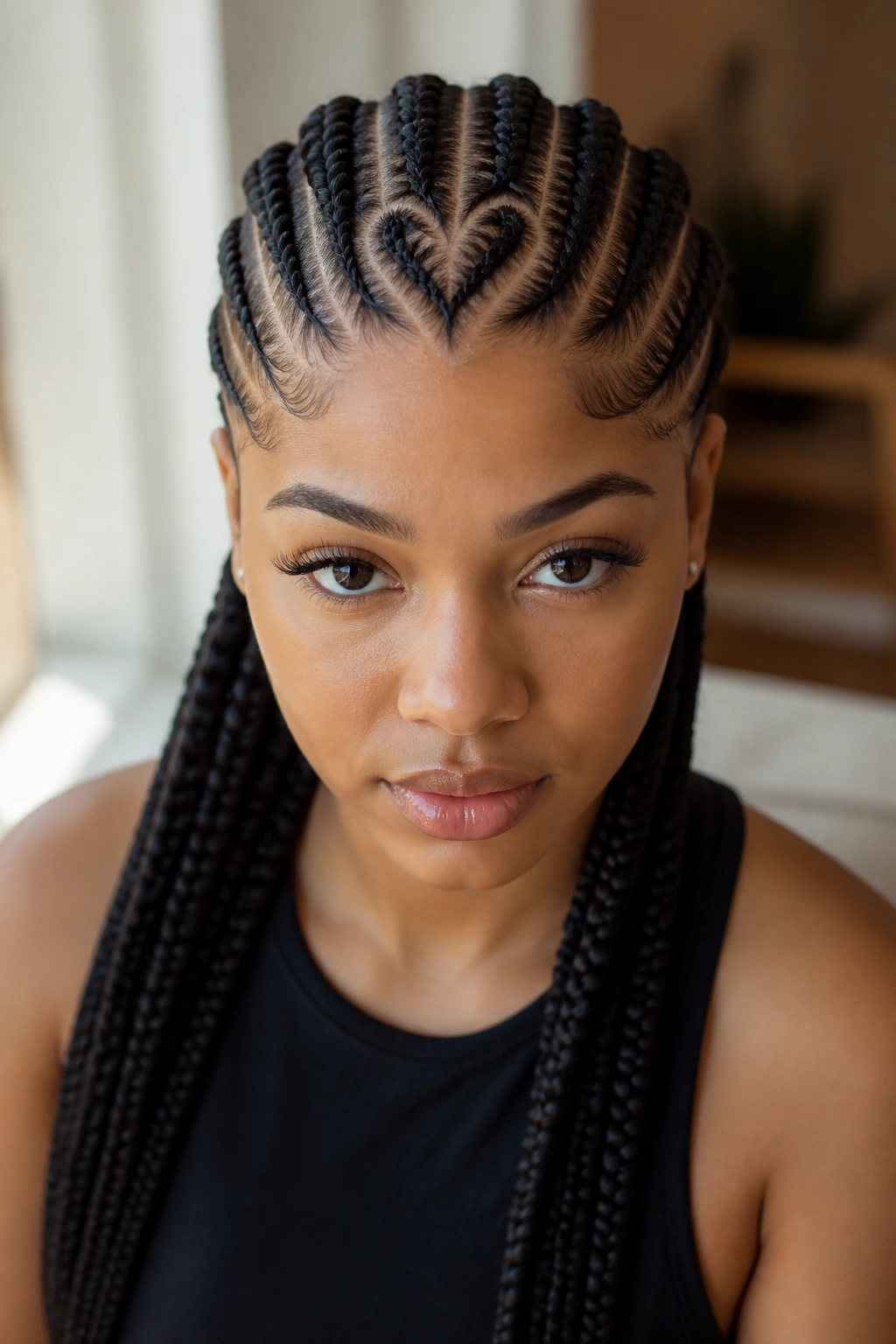
13. Heart-Part Cornrows
Heart parts are the kind of detail that make people lean closer. The shape is drawn into the scalp before the braid is installed, so the heart itself becomes part of the design instead of a random accessory. It’s a small touch, but it changes the whole mood of the style from standard to customized.
This look usually works best when paired with neat medium-size cornrows that don’t overwhelm the parting. If the rows are too thick, the heart gets buried. Too tiny, and the style can start looking busy. The sweet spot is a braid pattern that lets the scalp design breathe.
I like heart parts on younger clients, date-night braids, or any set where you want one little detail to carry the personality. It’s not childish when it’s done well. It’s just specific. And specific always reads better than generic.
14. Tribal Cornrows with Mixed Sizes
Mixed-size cornrows have a lot of life in them. Some rows are thin, some are wide, and the rhythm changes across the head instead of repeating the same width over and over. That variation gives the style a fuller, more layered look that can feel grounded and expressive at the same time.
A tribal-inspired version may also include feed-in sections, small feed-outs, curved lines, or accessories placed in a deliberate pattern. The point isn’t clutter. The point is movement. If everything is identical, the style can look flat. When the rows vary by design, the scalp becomes part of the art.
This is a good choice when you want a style that feels less corporate and more personal. It’s one of the best options for someone who likes braids but gets bored by strict symmetry. The risk, of course, is overdoing it. Keep one or two ideas strong, not seven half-ideas fighting each other.
15. Halo Crown Cornrows
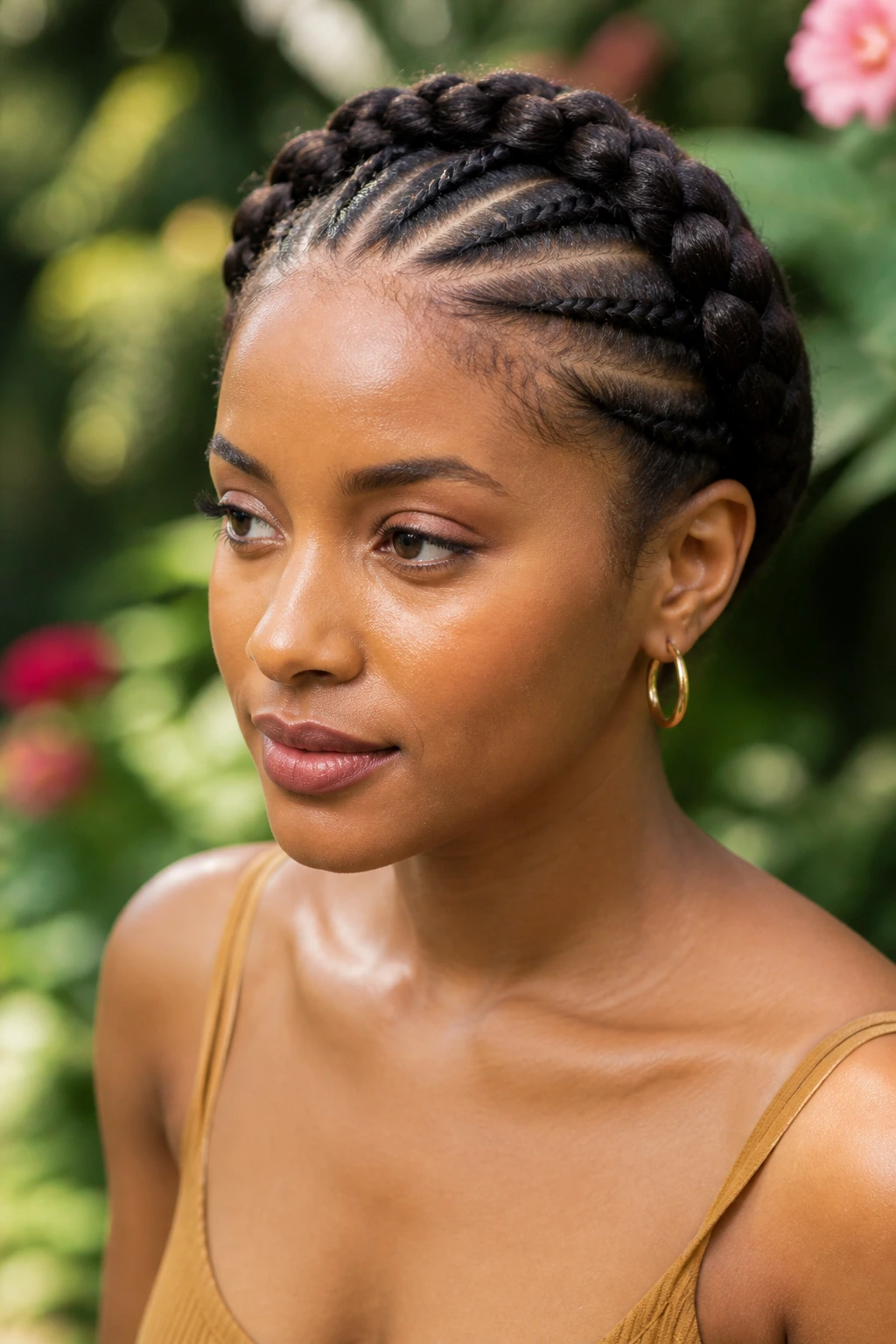
Halo crown cornrows wrap around the head like a braided wreath, which gives the style a soft, regal shape without leaning too hard into special occasion territory. The braid line curves around the perimeter instead of going straight back, and that alone changes the mood. The face gets framed in a circle rather than in lanes.
This style is especially good when you want the hair off the neck but still want a visible pattern from the front. It has a calm, balanced feel that works for both dresses and plain T-shirts. I also think it’s one of the best shapes for showing off neat parting along the hairline, because the front edge gets attention instead of disappearing.
The crown should sit flat enough to feel secure, but not so tight that it feels like a band digging into the scalp. That pressure point is where a lot of halo styles go wrong. Comfortable is prettier than forced.
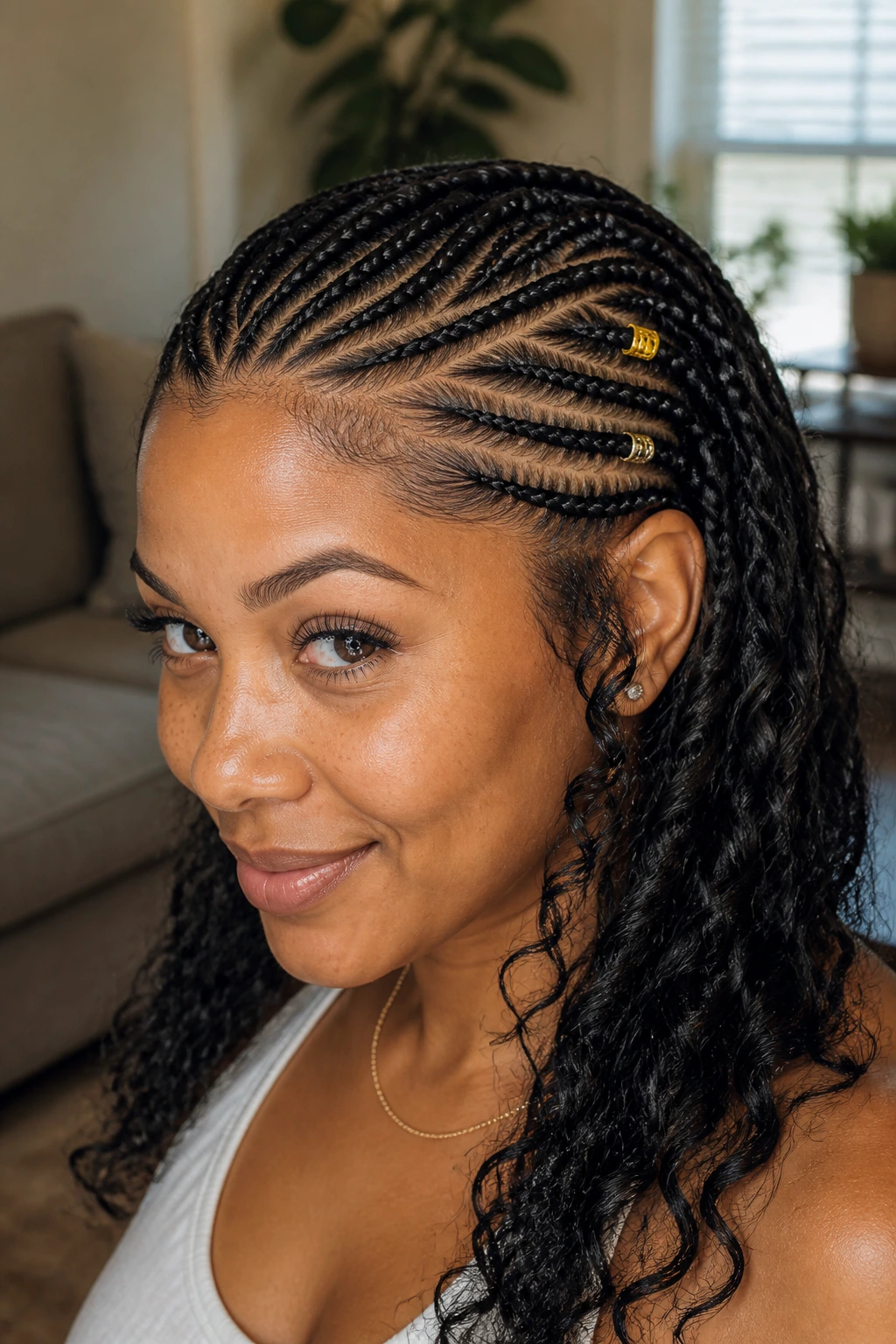
16. Cornrows with Curly Drop Ends
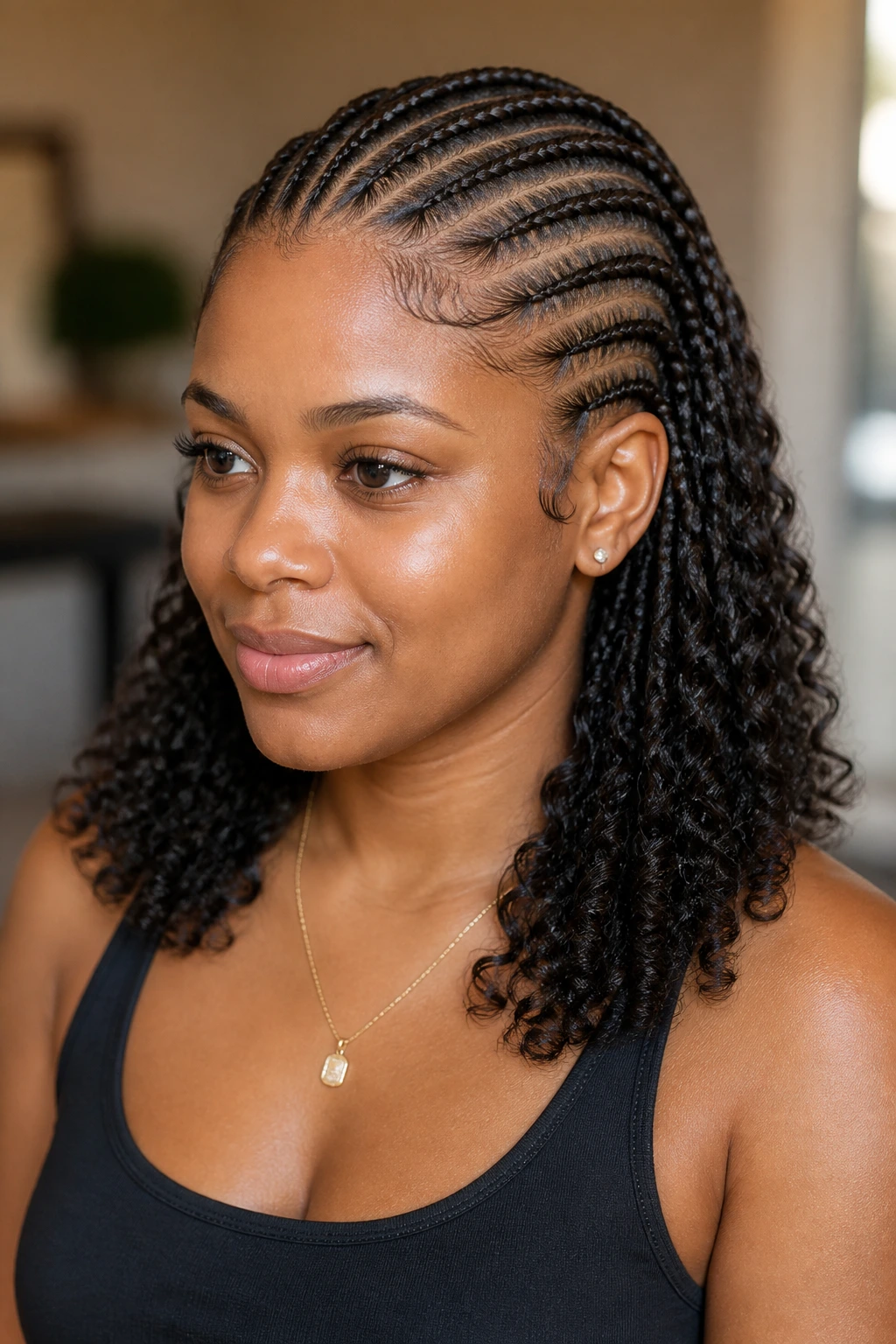
Curly drop ends are a nice way to soften a row style that might otherwise look too severe. The braids stay close to the scalp for most of the head, then release into curls at the ends. That contrast between sleek roots and loose texture gives the style motion even when you’re standing still.
This version can be worn long or shoulder-length, and it tends to work well with medium-sized braids. If the rows are too thick, the curl ends can feel disconnected. If they’re too tiny, you may lose the visual contrast that makes the style good in the first place. A braid mousse or setting foam helps the curls keep shape instead of frizzing apart by day three.
It’s a strong choice for people who want braids that feel a little softer around the edges. The curls make the style less rigid and give you a little bounce when you turn your head. Not dramatic bounce. Just enough to keep it from feeling static.
17. Triangle-Part Cornrows
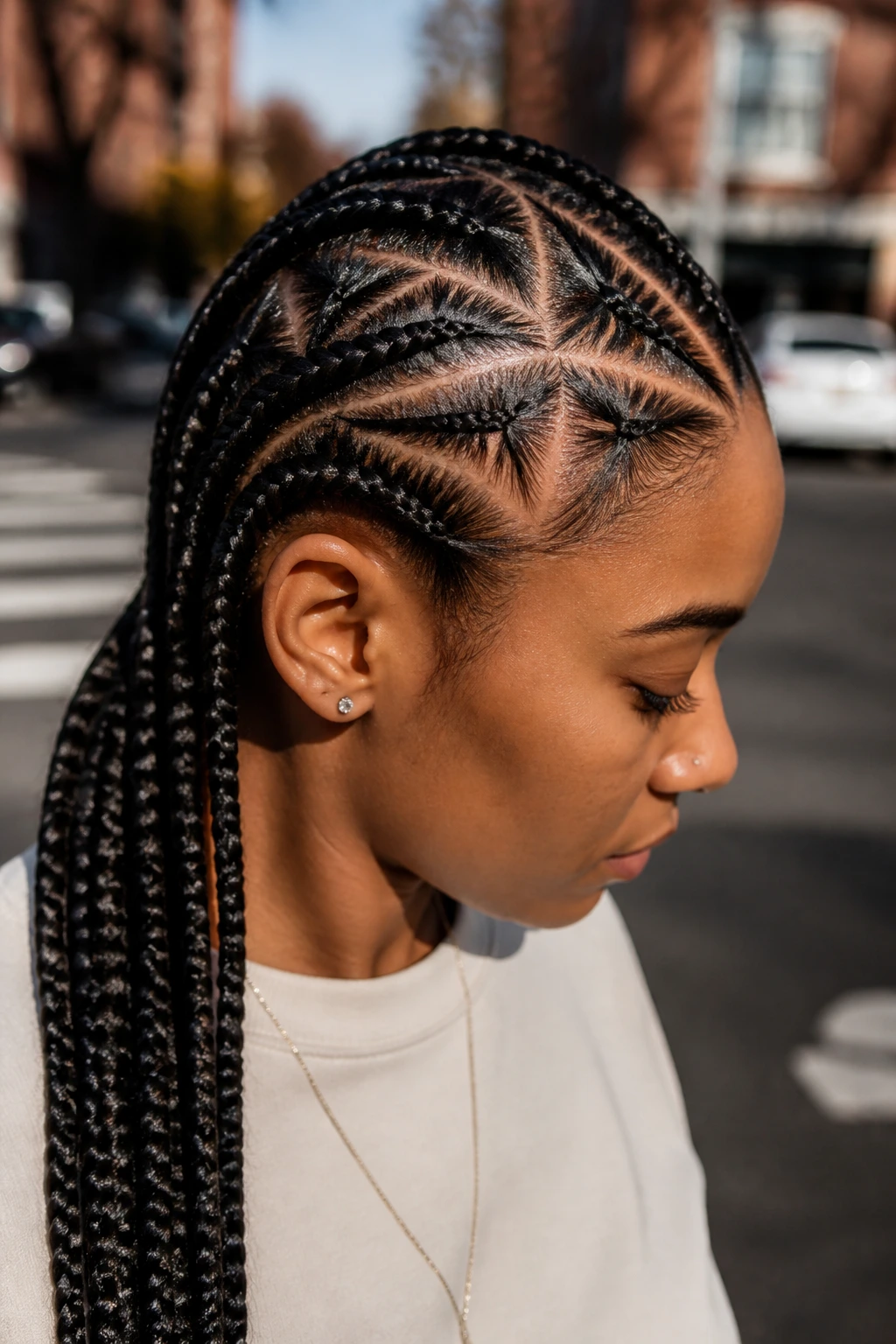
Triangle parts change the whole geometry of the head. Instead of rectangles or straight rows, each section starts from a triangle, and that gives the braid pattern a sharper, more modern feel. The parts are visible in a way that feels deliberate, almost like a design printed on the scalp.
I like triangle-part cornrows because they make even a very simple braid layout look more considered. You don’t need a complicated pattern once the parting itself has shape. That’s the charm. The braid can stay classic while the base does the styling.
This look is good for anyone who wants something different without going full art project. It still behaves like cornrows in daily life. But up close, the parting gives you a little surprise. That’s a nice payoff for all the time spent in the chair.
18. Double-Layer Cornrows
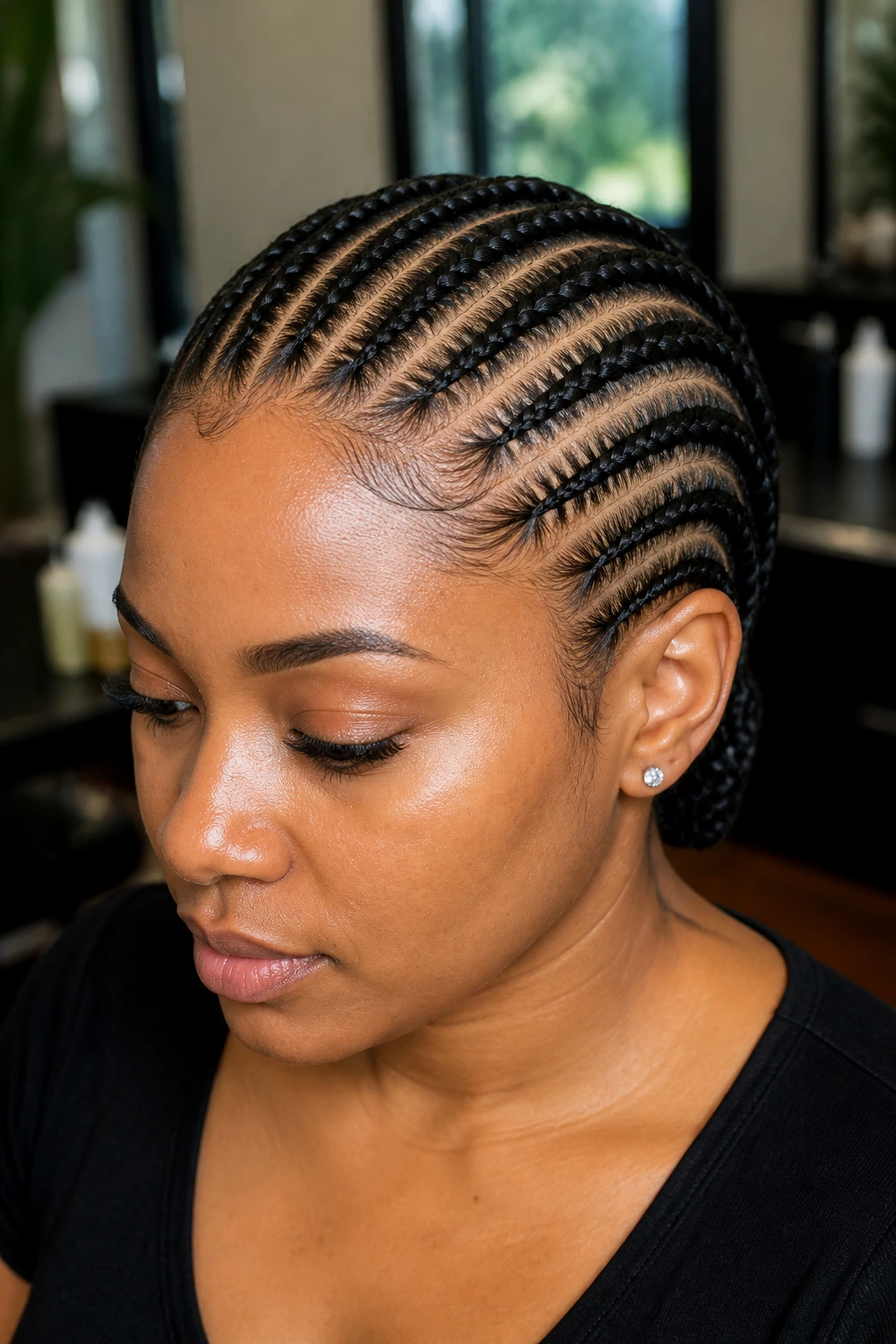
Double-layer cornrows stack the pattern so the braids appear in two visible rows of structure rather than one. Sometimes that means a top row and a lower row tucked beneath it. Sometimes the upper rows are narrow and the lower ones are fuller. Either way, the style has depth.
This is one of the better choices when you want your cornrows to feel fuller around the head without making every braid huge. The layers create dimension, but unlike loose layered hair, the effect stays neat. That makes it a good middle ground for people who want structure and density together.
Ask for the layers to be balanced around the temples and nape. If one zone gets too heavy, the style can feel lopsided. A good double-layer set should look balanced from every angle, not just straight on.
19. Diagonal Cornrows into a Side Bun
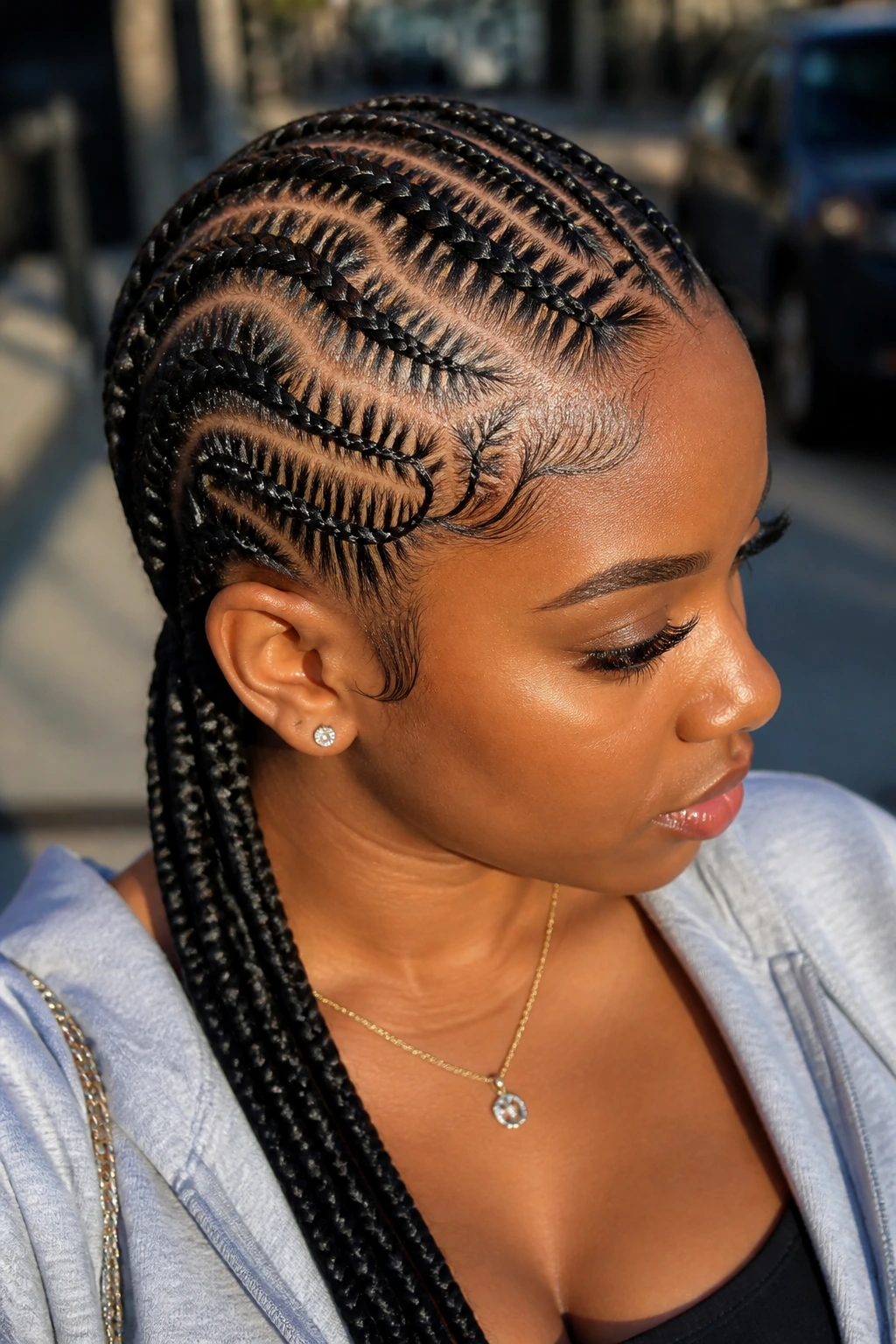
Diagonal rows have a way of making the head feel in motion before you’ve even moved. The lines angle across the scalp and guide the eye toward one side, where the braids gather into a side bun. That side placement gives the whole style an easy, almost graceful tilt.
This is a nice option if you want something elegant without going for a full updo. The diagonal pattern keeps the roots visually interesting, while the bun handles the length in a neat, controlled way. It’s especially flattering when the bun sits just behind the ear or a little lower at the nape, where it can catch the light without crowding the jawline.
The secret here is smooth transition. The rows should lead naturally into the bun, not look like they were stopped and shoved sideways at the last second. That handoff matters. It’s what makes the style feel designed.
20. Thread-Wrapped Cornrows
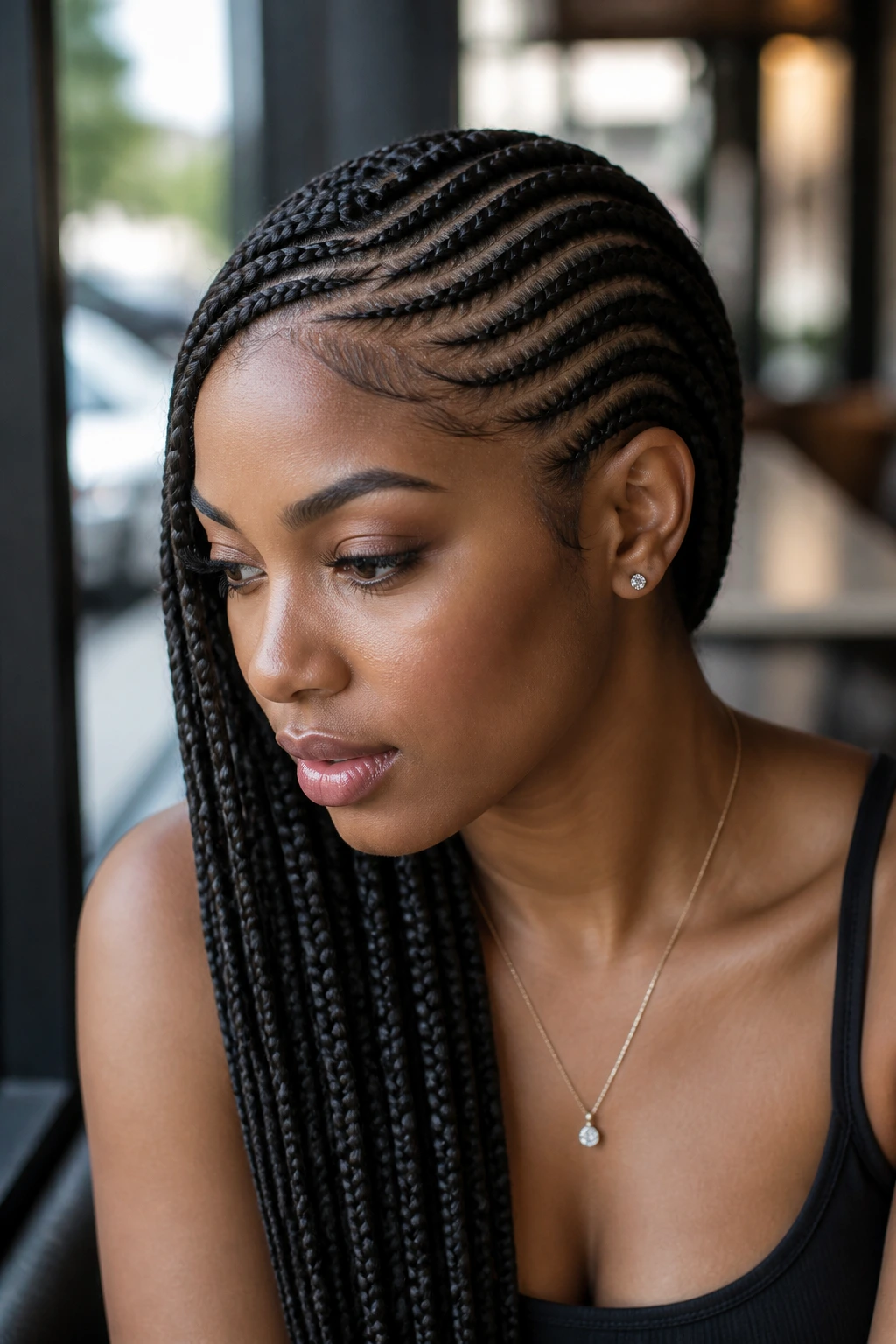
Thread-wrapped cornrows add color in the most tactile way possible. Instead of relying only on braid hair or accessories, you wrap sections with thread in stripes, bands, or small accents. The effect is simple, but it changes the surface of the braid in a way that feels handmade and personal.
This style is perfect if you like detail without bead weight. Thread gives you color and contrast while keeping the braids light. It can be done with cotton thread, satin thread, or a smooth decorative wrap, depending on the finish you want. I tend to prefer a few strategic wraps rather than covering every braid. Too much thread can start to look busy.
This look also holds up nicely if you enjoy changing the mood of a set without taking the whole style out. A few colored wraps can make old braids feel fresh again. Small change. Big difference.
21. S-Curve Cornrows
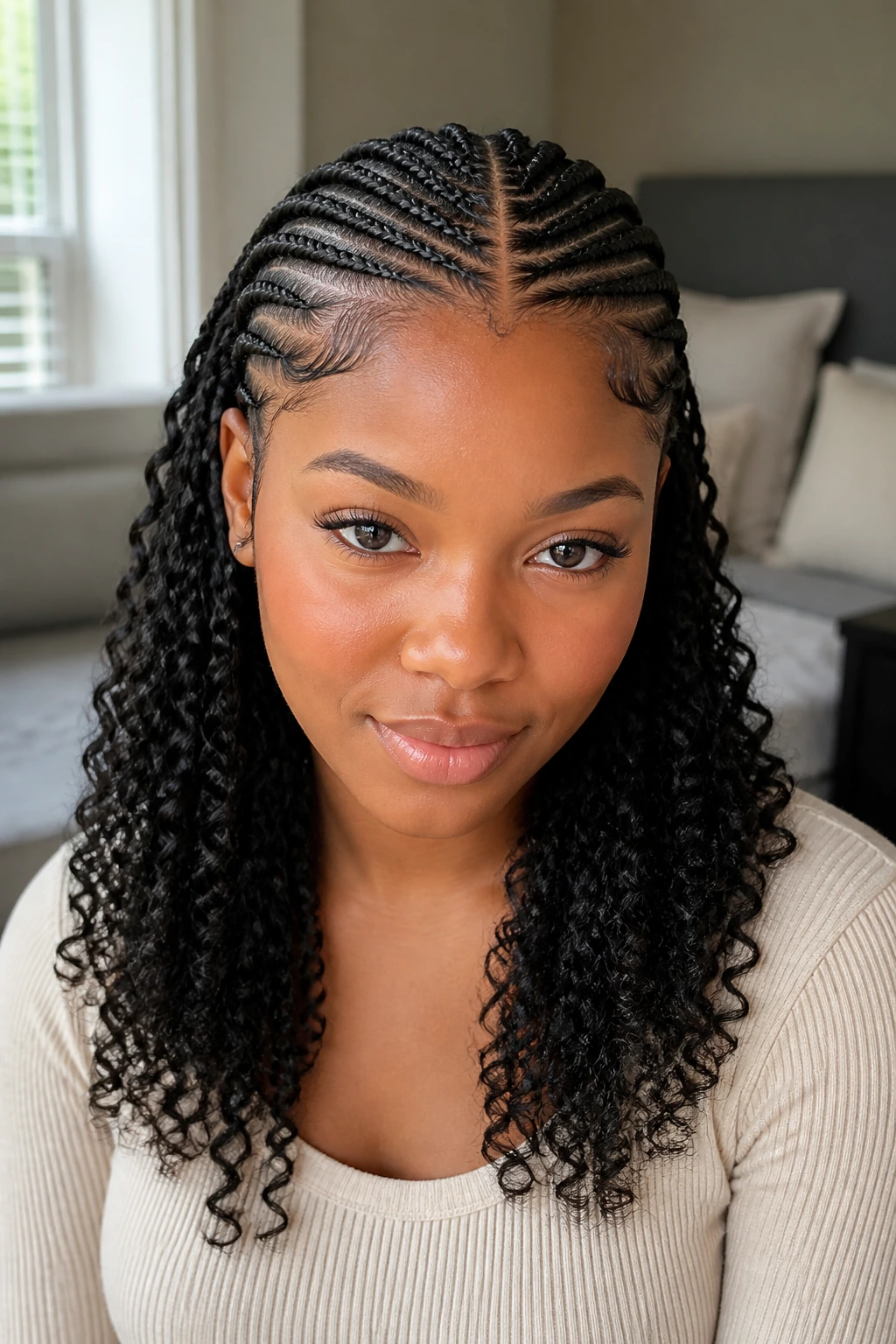
S-curve cornrows are the soft answer to sharp geometric parting. The rows bend in a gentle wave across the scalp instead of cutting hard left or right, which gives the style a smooth, almost flowing line. It’s one of the best ways to keep cornrows interesting without making them look fussy.
The curve matters because it guides the eye in a calm way. Straight rows can feel formal. Zig-zags can feel playful. S-curves sit somewhere in the middle. They’re elegant in a practical sense, not a precious one. That makes them wearable on ordinary days when you still want your hair to look considered.
I’d choose this style if you like movement but don’t want obvious drama. It reads beautifully from above, which is a nice bonus if you wear buns, jackets, or high necklines that reveal the top of the head.
22. Top Knot Cornrows
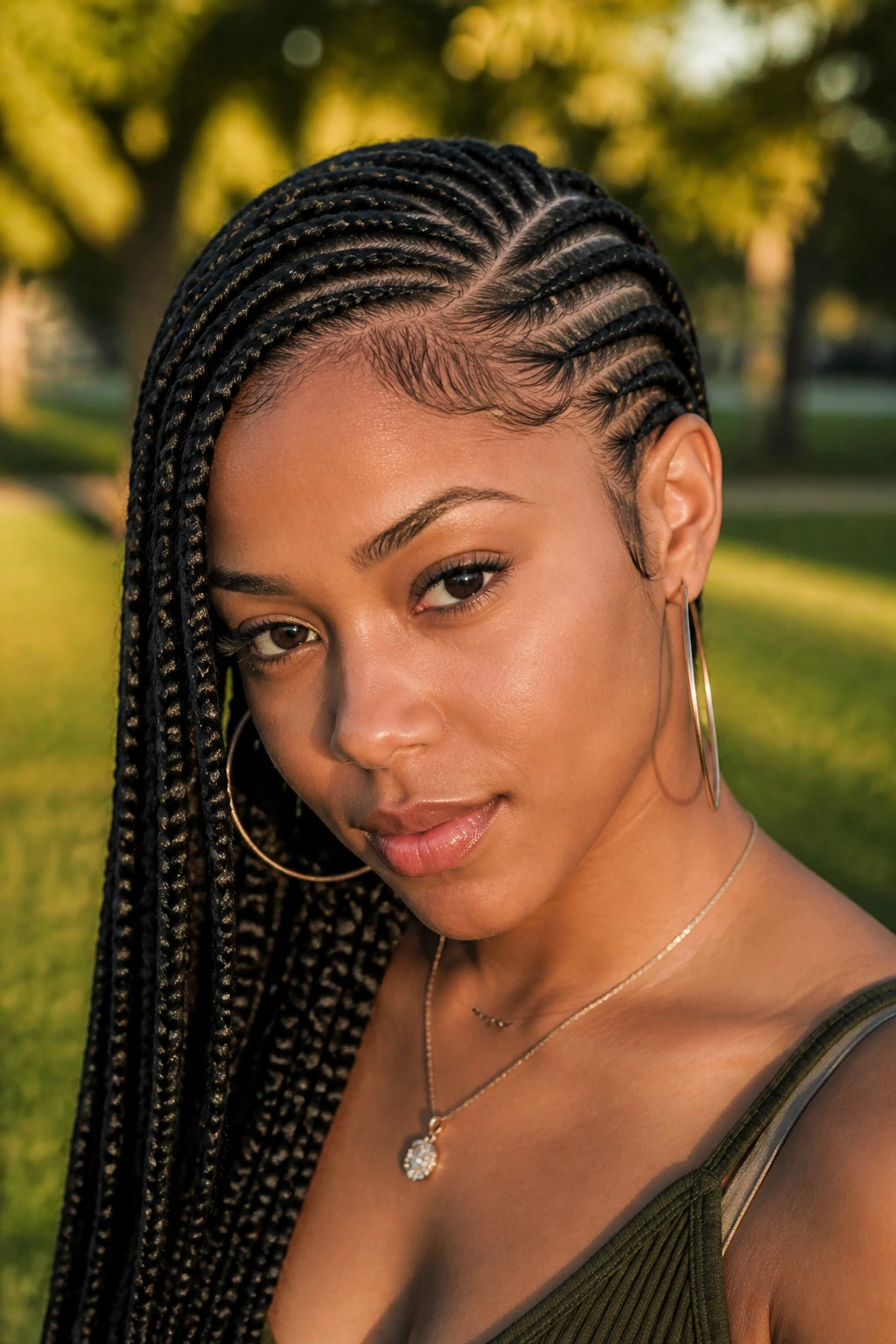
A top knot changes the profile in one motion. The cornrows rise upward, gathering into a knot right at the crown, so the head looks lifted and compact. It’s clean, practical, and a little sharp in the best way. Nothing drapes into your face. Nothing hangs at your shoulders. The whole thing stays up where it belongs.
This style is especially useful when you want a high-energy look that still feels controlled. It works on busy days, sweaty days, and days when you need your hair out of the way but don’t want a plain ponytail. If the knot is wrapped neatly, it can look polished enough for dinner or a formal setting. If it’s a little looser, it has a more relaxed feel.
The best part is how little maintenance the ends need once they’re tucked. That alone makes top knots worth keeping in rotation. Fewer loose ends, fewer tangles, less drama.
Why Cornrows Work So Well on Black Hair
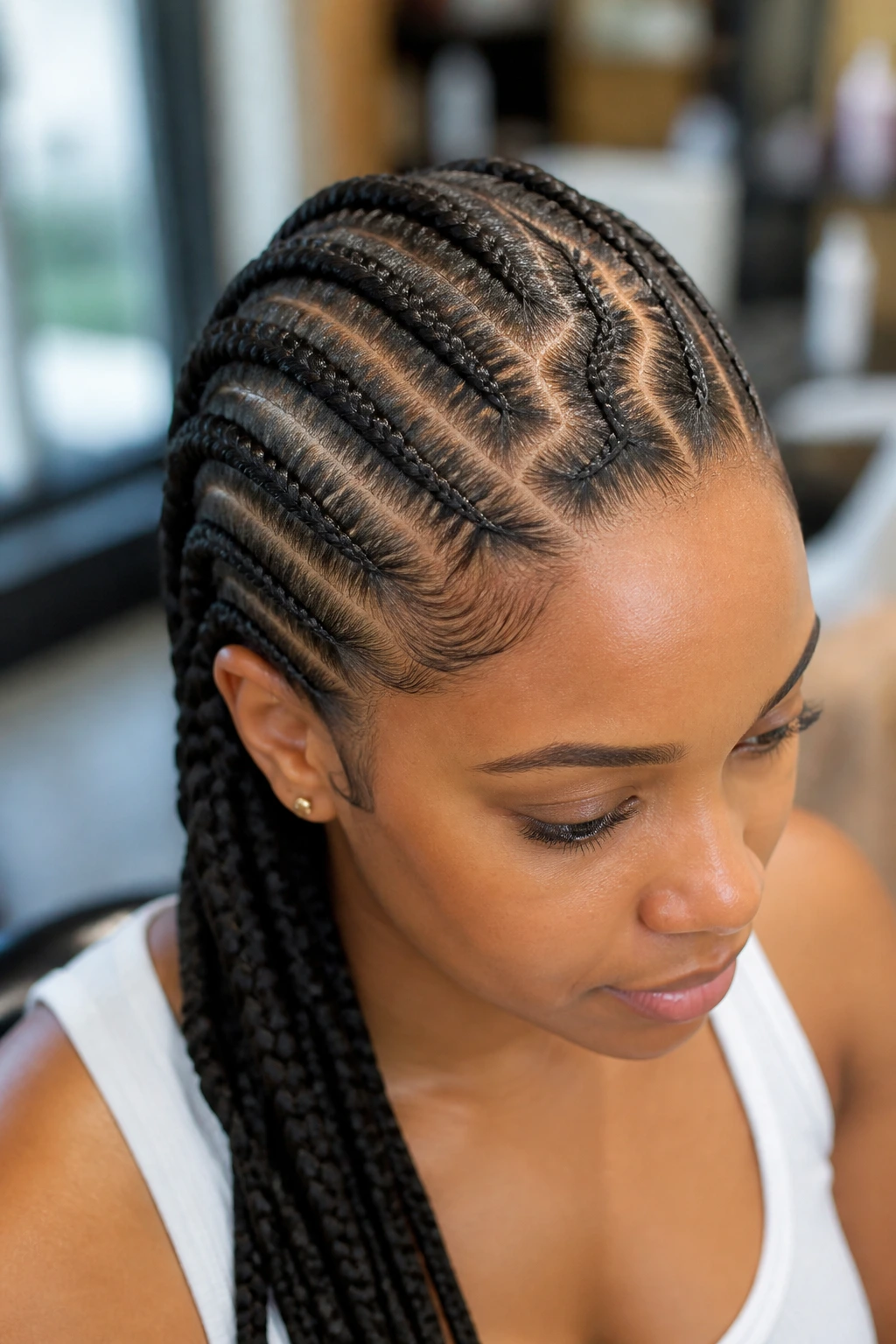
Cornrows make sense on coily and curly textures because the braid pattern gives shape to hair that naturally shrinks and springs back. That’s not a flaw. It’s the whole point. When the hair is stretched first, the rows lie flatter and the parting stays visible. When the hair is installed with sensible tension, the scalp can breathe better than it does under a style that’s been pulled too tight or overpacked with product.
A good cornrow set also keeps the ends tucked away, which cuts down on daily friction from shirts, scarves, pillows, and hands. That can be a real relief if your ends tend to dry out fast or split when left loose. The style does ask for prep, though. Clean scalp, stretched hair if needed, and a braider who knows how to avoid over-tension at the hairline are not optional details. They are the difference between a style that protects and a style that just looks protected.
I’m also a fan of how cornrows let you see the parting as part of the design. That matters on Black hair, where pattern and texture often carry the whole look. A little asymmetry. A curved line. A stitched section. It can all change the mood.
The Tools That Make Cornrow Installations Easier
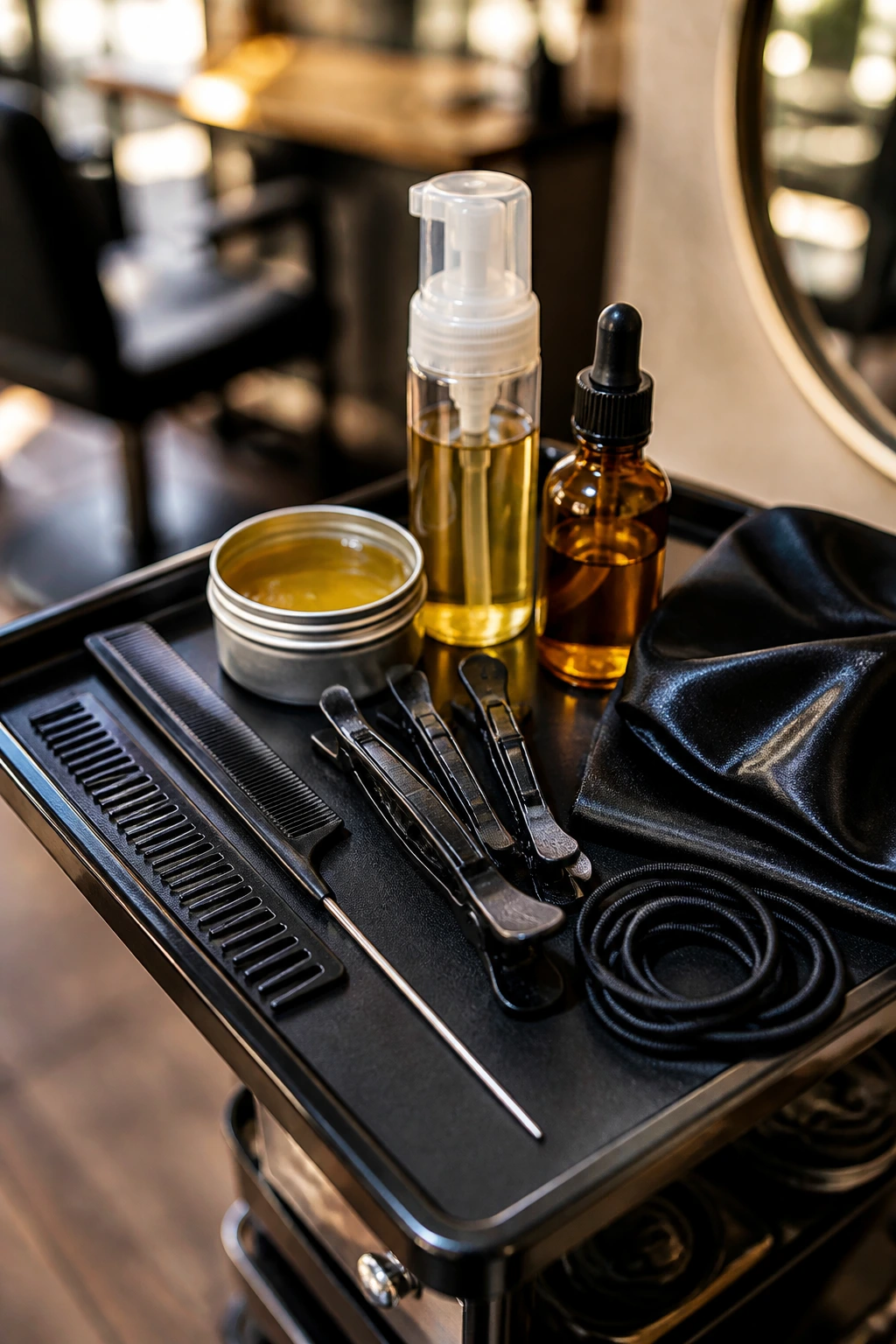
-
Rat-tail comb: The pointed end helps create clean parts, and clean parts make the braid pattern look intentional instead of fuzzy.
-
Wide-tooth comb: Use this to detangle stretched hair before sectioning so you aren’t braiding knots into the base.
-
Sectioning clips: These keep the hair separated while you work. Without them, parts collapse into each other fast.
-
Braiding gel or edge control with flexible hold: A small amount smooths the roots; too much leaves white flakes and stiffness.
-
Pre-stretched braiding hair: If you’re adding length, this saves time and gives a softer start at the root than blunt-cut extensions.
-
Foaming mousse: This helps tame flyaways after installation and keeps the rows looking smoother when they start to loosen.
-
Lightweight scalp oil in an applicator bottle: Great for getting a small amount onto the scalp without soaking the roots.
-
Satin scarf or bonnet: Non-negotiable for sleeping. Cotton pillowcases rough up the roots and make the style frizz faster.
-
Hair ties and snag-free elastics: Useful for ponytails, buns, and half-up styles; skip anything with a metal join that can catch the braids.
-
Hand mirror: It sounds basic, but checking the back of your head helps you catch loose ends, uneven rows, or product buildup early.
What to Buy Before You Sit in the Chair
The right cornrow style starts before the first part is made. If you’re using extension hair, pre-stretched synthetic braiding hair is usually the smartest buy because it blends more easily at the root and doesn’t feel blunt or bulky at the start of the braid. The cheaper packs with scratchy, heavy ends can look fine on the shelf and feel terrible against the scalp by day three. That money saved disappears fast when your head itches nonstop.
For product, think light. You want grip and neatness, not a helmet. A flexible-hold braid gel, a mousse that dries without leaving crunchy residue, and a scalp oil that comes out in small drops are enough for most styles. Heavy grease at the roots is a trap. It makes the scalp feel coated, then attracts lint, then turns into buildup that you can smell before you can see it.
Color choice matters too. If you want the added hair to disappear, match the undertone, not just the shade name on the pack. Warm brown blends differently from cool brown, and jet black can look harsher against some natural hair than a soft off-black. That’s a tiny detail, but it shows up in pictures and in person.
How to Wear These Styles Well
Presentation: Straight-back and stitch styles tend to read sharpest when the front is neat and the parting stays crisp. Swept, curved, and crown patterns soften the face more, so they suit softer makeup, side-swept brows, or bold earrings that don’t crowd the neckline. If you wear glasses, keep the front rows slightly smaller so the temple area doesn’t fight the frames.
Pairings: Medium and jumbo cornrows sit well with open necklines, denim jackets, hoop earrings, and structured tops. Bob-length braids with beads pair nicely with a clean collar or a dress that lets the ends move. High ponytails and faux hawks look best when the rest of the outfit doesn’t compete — let one thing be loud. That lesson saves people from over-styling themselves into a corner.
Scale: Tiny rows look delicate but demand patience. Jumbo rows install faster and can feel less busy, but they also need careful tension so the size doesn’t tip from bold into bulky. If your hairline is sensitive, medium-size rows often hit the best balance between neatness and comfort.
Finish: A light mousse wrap, a satin scarf for 20 to 30 minutes after installation, and a gentle edge touch-up are often enough. You do not need to drown the style in product to make it look finished. Too much shine can flatten the braid pattern instead of highlighting it.
The Small Moves That Make Cornrows Feel Personal
Shine Without Buildup: I prefer a little sheen on the braid lengths and almost nothing heavy on the scalp. A lightweight oil mist or braid sheen spray gives the hair a finished look without clogging the parts. If the scalp looks wet, you’ve gone too far.
Accessory Game: Gold cuffs, wooden beads, clear rings, or a single wrapped thread accent can change the tone of a style fast. Use one focal point, not five. A row of cuffs near the temple does more than scattering random accessories everywhere.
Color Shifts: Soft brown, honey, burgundy, or auburn extension hair can warm up the whole look without screaming for attention. If you want subtle color, choose one shade lighter or warmer than your natural hair rather than jumping to a dramatic contrast.
Make-It-Yours: If you like a cleaner face, keep the front rows narrow and the sides sleek. If you love volume, choose thicker rows and let the back gather into a bun, ponytail, or loose ends. If you wear braids for low-maintenance weeks, keep the design simple. Ornate patterns are lovely, but they do ask for more upkeep.
How to Keep Cornrows Neat Without Pulling Too Hard
The style should feel settled, not strained. That’s the line. A solid cornrow set can last anywhere from two to six weeks depending on braid size, scalp tolerance, and how much you sweat, but the install has to start with sane tension if you want to reach even the first week comfortably. Tight braids can look smooth for a day and then turn into a sore, itchy mess that ruins the whole point.
Sleep care matters more than people admit. A satin scarf or bonnet every night keeps the roots from fuzzing up, and a loose pineapple or low wrap can help longer styles keep their shape. If you wake up with frizz at the hairline, don’t panic and pile on gel. A little mousse on the braid surface, followed by a quick scarf wrap for 15 to 20 minutes, usually helps more than product overload.
Scalp care should be light and regular. A small amount of oil or scalp tonic once or twice a week is enough for most people. If you wear extensions, a diluted cleanser in a nozzle bottle can help clear buildup at the parts without soaking the whole head. After washing, dry the scalp fully. Damp braids tucked under a scarf are how musty smells start.
Cornrow Mistakes That Show Up Fast
-
Braids that start too tight at the hairline: The first symptom is a tugging sensation when you raise your brows or touch your temples. The fix is simple: ask for less tension next time, especially around the front and behind the ears.
-
Too much product at the roots: White flakes, sticky buildup, and dull-looking parts usually mean the gel went on too thick. Use less, and smooth it with a small brush or your fingertips instead of layering more product on top.
-
Extension hair that’s too rough or too heavy: If the braids itch nonstop or feel heavy by the second day, the hair itself may be the issue. Pre-stretched, low-itch braiding hair tends to behave better, and smaller sections reduce pull.
-
Sleeping on cotton: If the edges puff up overnight and the braids lose their neat surface fast, the pillowcase is part of the problem. Satin or silk cuts down on friction.
-
Leaving the style in too long: When the roots are visibly grown out, the parts are fuzzy, and the scalp starts to feel congested, the style has run its course. Don’t wait for breakage to tell you that.
-
Ignoring pain because the style looks good: Pain is not a styling phase. If your scalp throbs, itches hard, or shows bumps, take the braids down or at least loosen what can be loosened.
Cornrow Variations and Adaptations Worth Trying
No-Extension Minimalist: Keep the braids on your natural hair only, with medium or small rows. This is a smart pick if you like less weight, faster installation, and a style that feels close to the scalp from day one.
Length-Added Feed-In Version: Add pre-stretched braiding hair only where you want length or fullness. This works well for lemonade braids, ponytails, and faux hawks, especially when you want the front to stay light.
Soft-Curl Finish: Leave the ends out or attach curl pieces for a looser finish. This is the right move if you want cornrows that read softer and more romantic rather than strictly sleek.
Accessory-First Version: Build the style around one accessory choice — beads, cuffs, thread wraps, or shells. Pick one and let it carry the personality so the whole head doesn’t compete with itself.
Sensitive-Scalp Layout: Use medium rows, keep the front sections small, and avoid aggressive parting near the edges. Comfort comes first here. A style you can wear for three weeks beats a gorgeous style you want out in three days.
Keeping Cornrows Fresh After the First Few Days
A good cornrow set settles in after the first day or two. The roots stop feeling brand new, the pattern relaxes a touch, and the style starts looking like part of you instead of something you just sat through for hours. That’s also the moment when upkeep decides everything.
For most straight-back, stitch, and side-sweep styles, a nightly scarf and a light mousse refresh every few days are enough. Medium and jumbo rows usually stay neat for around two to four weeks. Tiny rows and detailed patterns can go longer, sometimes four to six weeks, but only if the scalp is calm and the parts aren’t collecting buildup. Ponytails, buns, and crown styles often need a little more edge maintenance because the front sections are working harder.
Wash days are possible, but they need restraint. Use diluted shampoo at the scalp, massage gently along the parts, and rinse carefully so you don’t flood the braids with residue. Then dry thoroughly — hooded dryer, cool blow-dryer, or a long air-dry session. Damp braids hidden under a bonnet are trouble. So are heavy oils layered on top of unwashed buildup.
If the roots puff up before you’re ready to take the style down, a mousse wrap and a brief scarf set can buy you a few more neat days. It will not fix a style that has already grown out badly, though. At that point, the clean move is removal.
Cornrow Questions People Ask All the Time
How long do cornrows usually last?
Most styles stay neat for about two to four weeks, while smaller, more detailed patterns can last up to six weeks if your scalp stays comfortable. Jumbo braids and styles with a lot of exposed scalp tend to loosen sooner than compact rows.
Can I wash cornrows without ruining them?
Yes, but keep the shampoo diluted and work gently at the scalp rather than scrubbing the braids themselves. Rinse carefully and dry the style all the way through, or you’ll end up with buildup and a damp smell tucked into the roots.
Do cornrows damage the hairline?
They can if they’re installed too tightly or left in until the roots are stressed and grown out. A good set should feel secure, not painful, and if the front is sore the day after install, something’s off.
Can short hair be cornrowed?
Short hair can absolutely work, but smaller rows usually hold better because there’s more grip. A braider may need to stretch the hair first or use a bit of added hair for support near the front.
Are cornrows better with or without extensions?
Both can work. Natural-hair cornrows feel lighter and simpler, while added hair gives length, fullness, and more styling options. The better choice depends on how much weight you want to carry.
What if my braids start frizzing fast?
A bit of frizz is normal, especially around the hairline and ends, but major fuzz usually means the style wasn’t wrapped at night or the braids were installed too loosely. A small amount of mousse and a satin wrap can slow it down.
Can I exercise with cornrows?
Yes, and that’s one of the reasons people love them. Just keep a sweat-wicking band or scarf on hand for the hairline, and don’t let sweat sit in the braids for days without a scalp clean-up.
How do I take cornrows down without breakage?
Unravel slowly from the ends upward, using a bit of conditioner or light oil on fingers if the hair feels tangled. Cutting extension hair too close to your own hair is where people get into trouble, so take your time and check each braid before snipping anything.
The Styles That Earn Their Keep
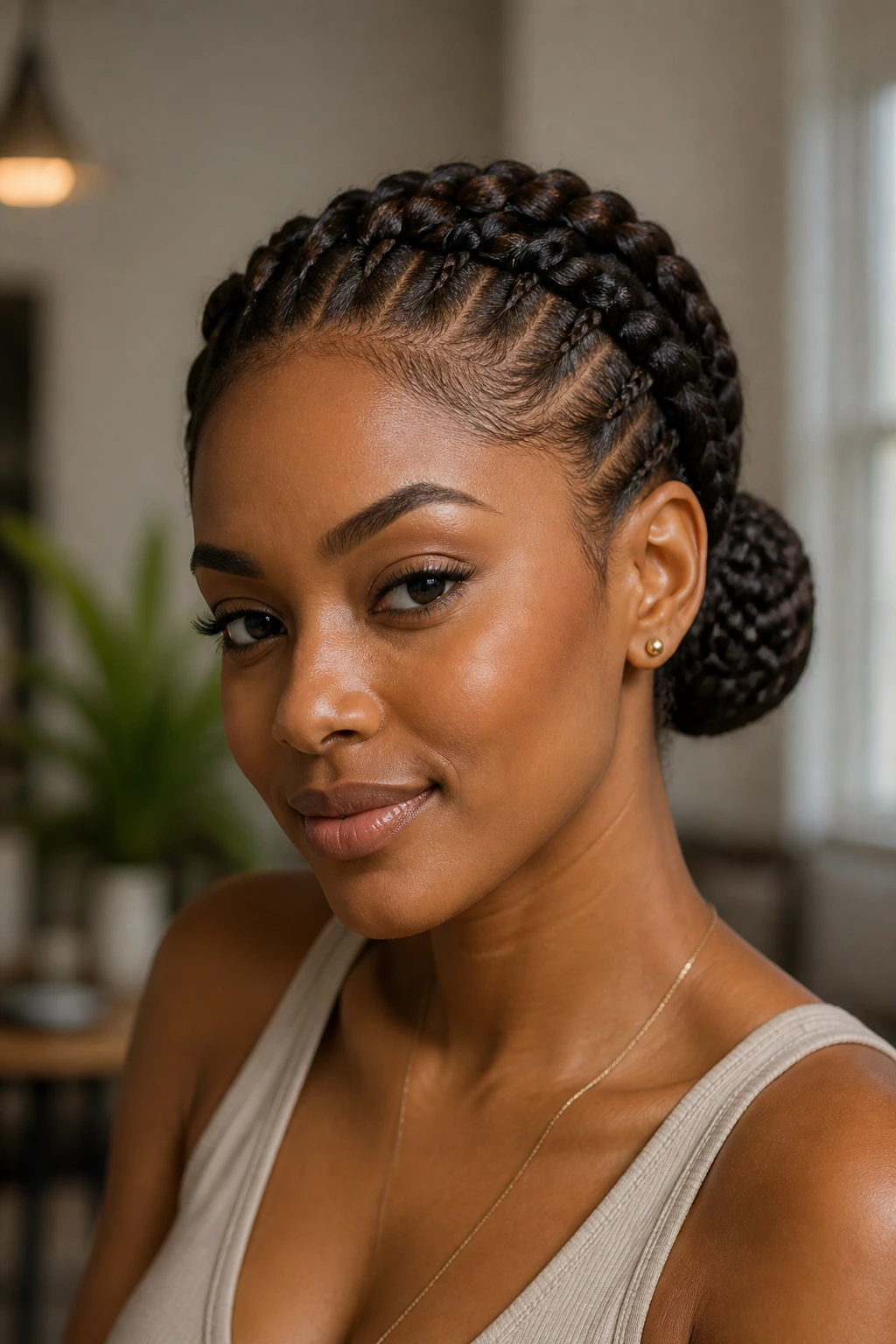
The strongest cornrow braid styles for Black women aren’t the loudest ones on the page. They’re the ones that hold shape, suit your hairline, and make your mornings easier without making your scalp miserable. A sharp stitch set, a soft side sweep, a crown braid, or a low bun can all work beautifully if the parting is clean and the tension stays respectful.
I keep coming back to that word, respectful, because it matters. Cornrows should support the hair, not punish it. When the pattern is chosen with your routine in mind, the style ages better, feels better, and looks better on day ten than on day one, which is usually the real test.
If you’re choosing a new set next time, pick the style that matches how you actually live, not the one that only looks good in the first five minutes of a mirror selfie. That’s where cornrows earn their place.
