



A shave changes the whole story.
With braids, that difference is loud. A clean buzz on the side of the head turns a familiar braid pattern into something sharper, meaner, and far more deliberate — which is exactly why braids with shaved sides keep pulling attention. The contrast does the heavy lifting. You get rope-like texture up top, bare skin or cropped stubble at the side, and a face frame that suddenly has structure.
The styles in this lineup aren’t all trying to say the same thing, either. Some lean punk and severe. Some are sleek enough to wear with a blazer. Some hide a little attitude until you catch the profile view, and then the whole thing clicks. The trick is balance: too much shave and the braids feel stranded; too little and the edge disappears. When the cut and the braid pattern talk to each other, the result is cleaner than either one alone.
Why This Collection Feels Sharper Than a Standard Braid Set
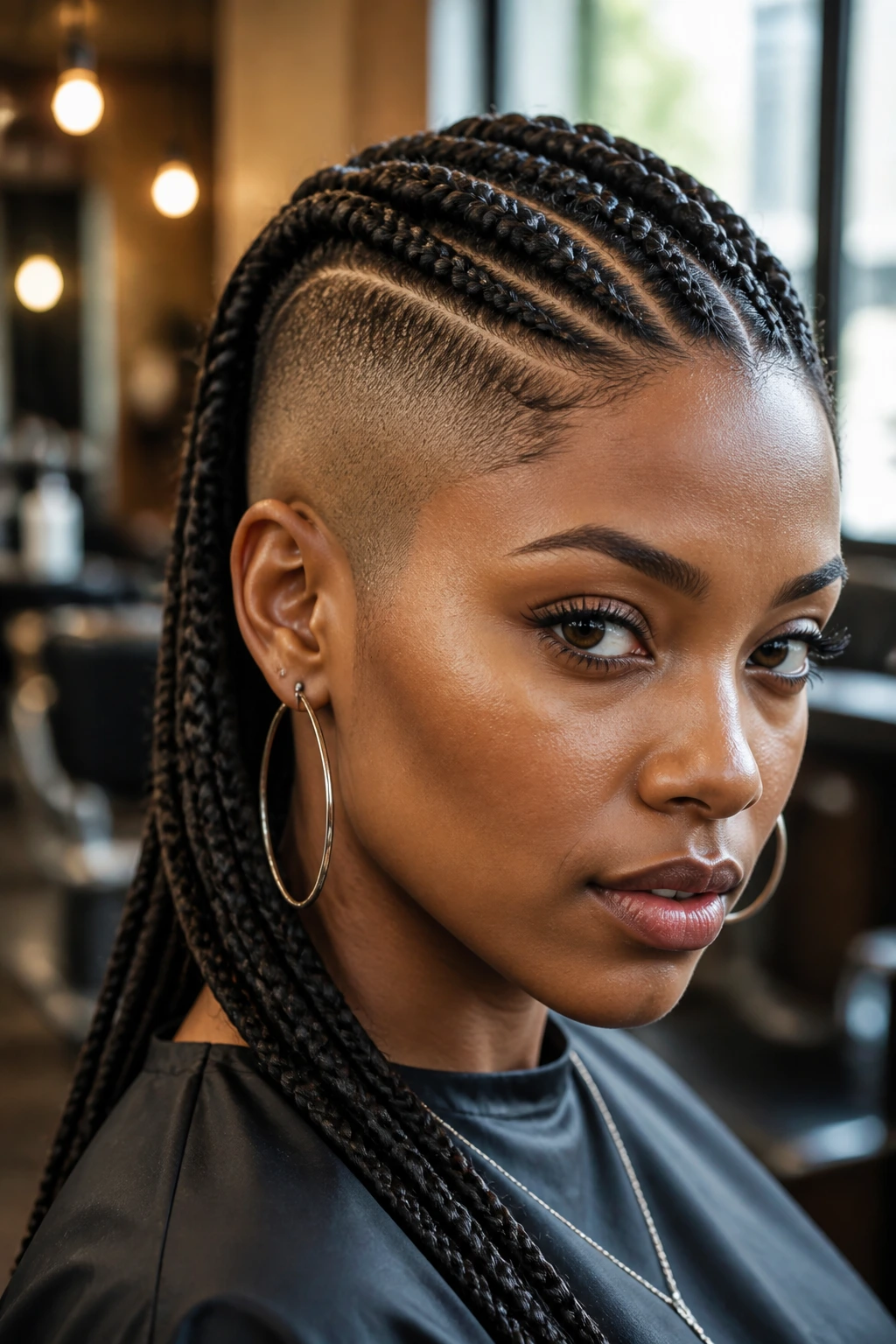
- High Contrast: A shaved panel makes the braid pattern read instantly, because the eye isn’t fighting through a wall of hair on both sides.
- Face Framing: The open space around the temple and ear gives hoops, cheekbones, and jawline a little more room to show up.
- Shape Control: You can push the mood from polished to punk just by changing braid thickness, fade height, or parting lines.
- Less Bulk at the Sides: Heavy braid sets sometimes swallow the face; a shaved side keeps the silhouette from going boxy.
- Better Accessory Play: Cuffs, beads, hard parts, and color strips stand out more when the side panel is cropped short.
- Cleaner Grow-Out Options: If you keep the shave low and tidy, you can grow it out without the whole style collapsing into fuzz.
1. High-Contrast Cornrow Mohawk
A center strip of cornrows with shaved sides is the style that announces itself from across a room. The braid rows sit tight and close to the scalp, while the buzzed panels on both sides make the whole shape feel deliberate, almost architectural. It’s the closest thing braids have to a leather jacket.
This version works best when the parts are straight and the rows are narrow enough to keep the top from puffing out. Ask for a low, even fade or a clean clipper cut on the sides — not a vague “short on the sides” request, which usually turns into surprise grow-out later. The top should feel neat, almost rigid, because that clean contrast is the point.
Best for: people who want the strongest visual edge without adding color or accessories.
Watch the balance: if the braids get too thick, the mohawk can start to look bulky instead of sharp.
2. Side-Swept Goddess Braids With a Temple Fade
Can goddess braids still feel tough? Absolutely — if you sweep them across a temple fade instead of letting them sit soft and symmetrical. The thicker braid size gives you movement, but the shaved temple stops the style from reading sweet or overly romantic. It’s a nice contradiction.
This is one of my favorite braid-with-shaved-sides looks for anyone who wants shape without committing to a full mohawk profile. The trick is to keep the braid line angled, not dead straight across the head. When the braids arc from one side to the other, the fade becomes part of the composition instead of a separate haircut.
Why It Works
The broad braid pattern adds weight on top, which balances the open temple space. That matters more than people think. If the shave is too large and the braid too thin, the style starts to feel unfinished; if the braid is too thick and the fade too high, the head can look top-heavy.
A low temple fade keeps the profile clean while still leaving enough hair to grow out gracefully. That gives you room to wear the style for a few weeks without the cut line turning muddy.
3. Feed-In Stitch Braids With a Hard Part
Feed-in stitch braids are for people who like precision. The braid starts slim, gets built gradually, and leaves behind those crisp stitch-like ridges that make the scalp pattern part of the look. Add shaved sides, and the whole style turns into clean geometry with some attitude.
What makes this version work is the hard part. A straight, visible part line near the front or side makes the shaved panel feel intentional rather than like an afterthought. I’d choose this style if I wanted the braid pattern itself to carry the drama instead of leaning on volume or color. It’s tidy, but never boring.
- Use a rat-tail comb and section carefully; sloppy parts show more when the sides are buzzed.
- Keep the feed-in sections small at the hairline so the braids lie flat instead of swelling.
- Ask for a low side shave, not a dramatic high cut, if you want the style to last past the first week.
A little shine spray on the finished rows helps the parts stay readable. Too much, though, and the scalp gets greasy fast.
4. Jumbo Box Braids With One Shaved Side
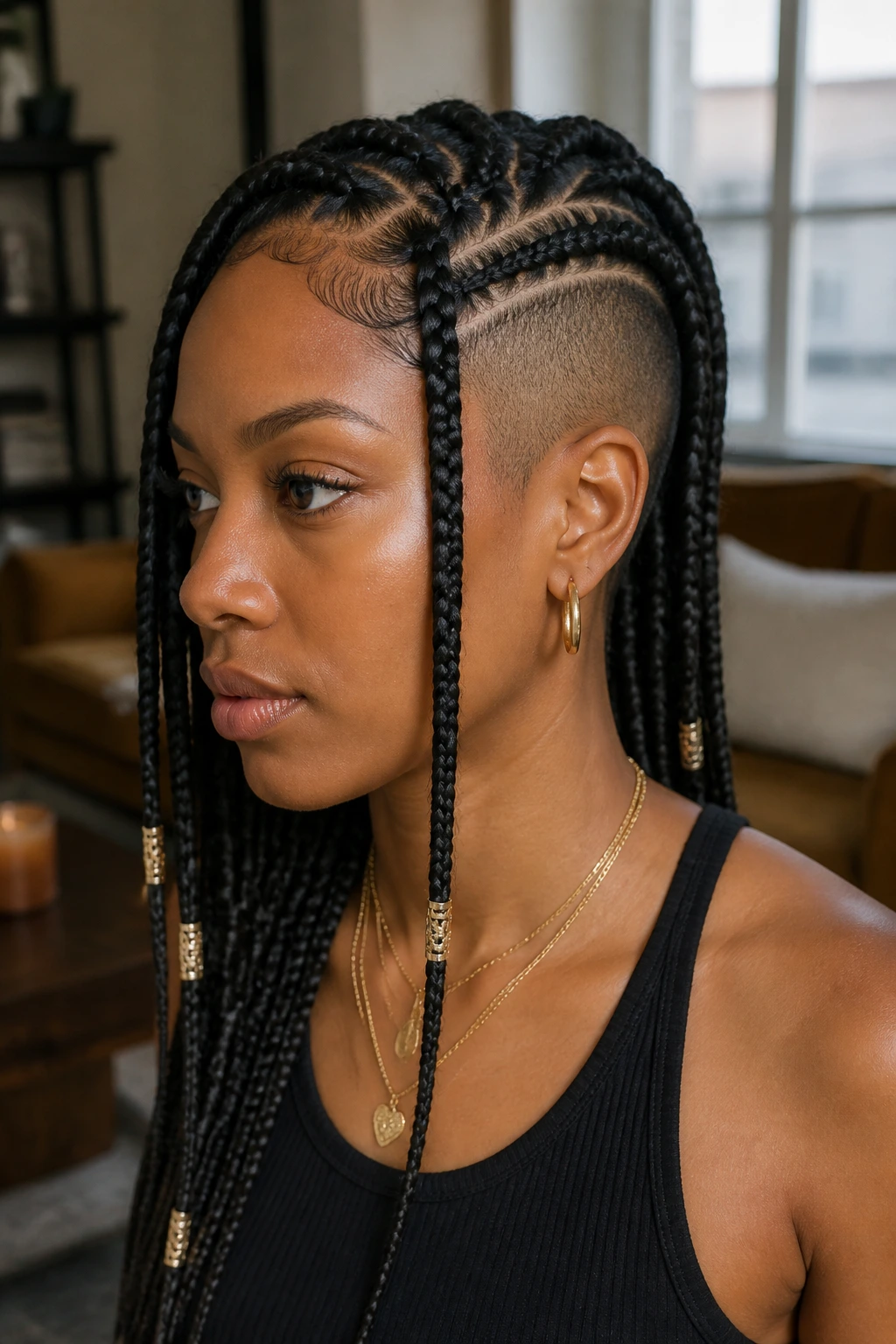
If you want asymmetry without committing to a full head shave, this is the move. Jumbo box braids on one side and a shaved panel on the other create a lopsided silhouette that feels on purpose, not accidental. The bigger braid size keeps the style from looking fussy.
This one has a nice swagger to it. The shaved side exposes the cheekbone and ear, while the larger braids pull the eye across the face. I like it most when the braids end somewhere between collarbone and chest, because ultra-long jumbo braids can overpower the cut and make the shaved side look like an afterthought.
The main thing to watch is density. Jumbo braids need space to sit without crowding the crown. If your hair is thick, keep the box sections clean and slightly fewer so the top doesn’t balloon. A one-side shave already gives you enough drama.
5. Lemonade Braids With a Low Taper Fade
Lemonade braids already have attitude because of the direction alone — they sweep across the head with that side-to-side motion that feels half glam, half grit. Add a low taper fade under them, and the style stops flirting with edge and actually lands there.
Unlike a full buzzed panel, a low taper keeps the haircut wearable if you want some softness near the neckline and ears. That’s the part people miss. A taper doesn’t erase the contrast; it just keeps the transition smoother, which helps if you’re not trying to look like you just stepped out of a band photo.
Good detail to ask for: braid ends that are cleanly tucked or lightly curled, not frayed. The whole style reads better when the finish is neat.
If you like a side part that sweeps across the forehead, this is one of the best braid styles with shaved sides for it. It gives movement first, edge second. That order matters.
6. Fulani Braids With a Clean Side Panel
Fulani braids already have rhythm built into them. The central braid line, the slim side braids, the beads if you want them — it all feels ceremonial in the best way. Once one side is shaved, that balance becomes more striking, because the braid pattern has room to breathe.
This is a style that benefits from restraint. Don’t overload it with too many accessories unless you want the side shave to disappear under decoration. A few cuffs, maybe a set of beads near the ends, and a clean temple panel is enough. The shaved side becomes the pause between the notes.
The style works especially well when the braid rows follow the head shape instead of fighting it. Ask your stylist to keep the parting clean around the front hairline and to leave the side panel low. If the shave climbs too far up, the Fulani pattern loses its grace and starts to look crowded.
7. Braided Top Knot With an Undercut
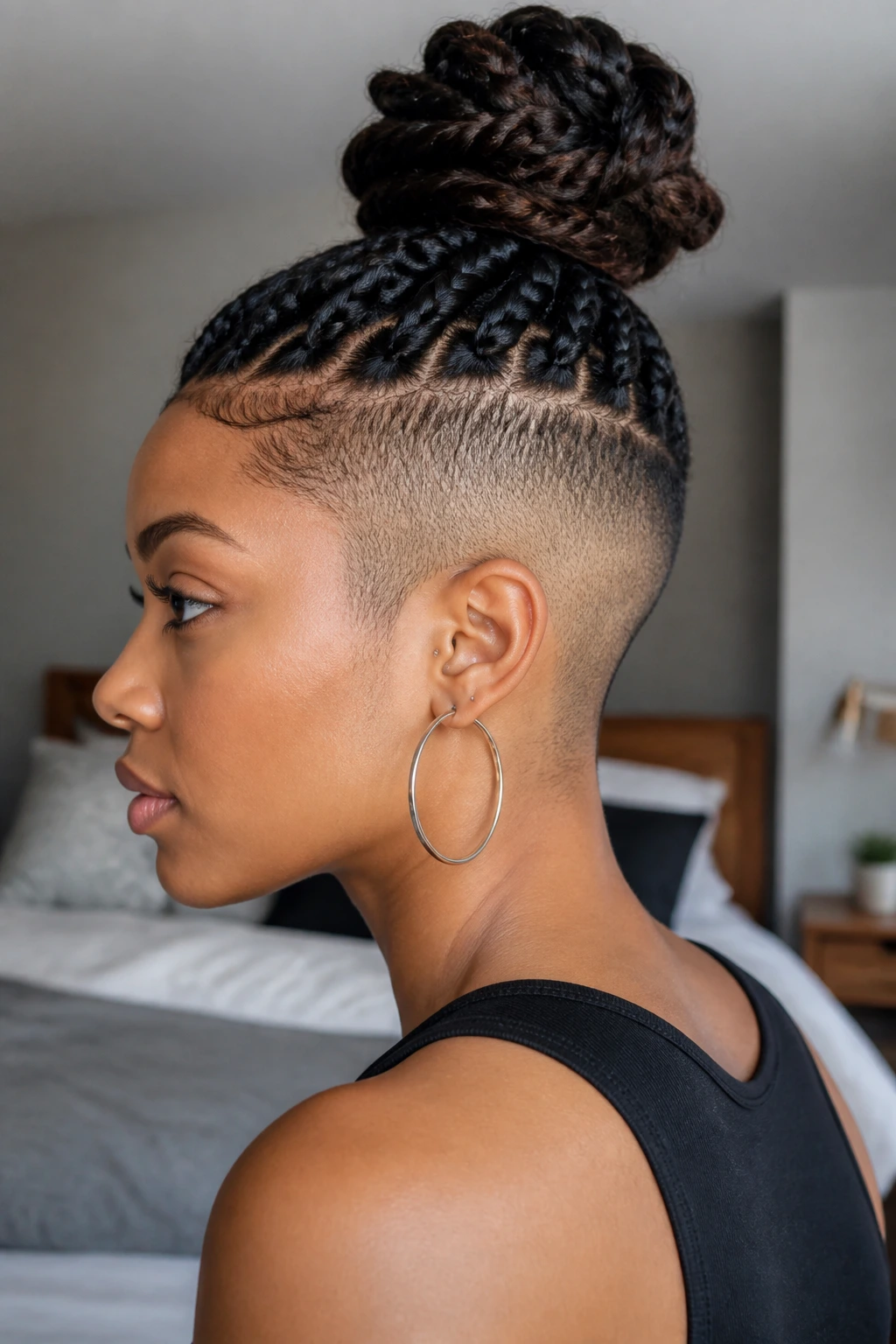
There’s something satisfying about lifting all the braids up and revealing the undercut underneath. It’s a reveal style. You wear it one way, then twist it into a top knot and suddenly the shaved sides become the whole point.
This works best with medium-length to long braids that have enough weight to coil into a secure knot. If the braids are too short, the bun gets spiky and the undercut loses its clean frame. A small amount of braid mousse on the lengths before tying them up helps the knot sit flatter and keeps the ends from snagging.
Best when you want:
- A clean neck and ears
- A strong profile view
- A style that can switch from down to up without redoing the braids
I’d keep the undercut low and neat rather than going too high. The bun already gives you height. The shave should support that, not compete with it.
8. Micro Braids With Buzzed Sides
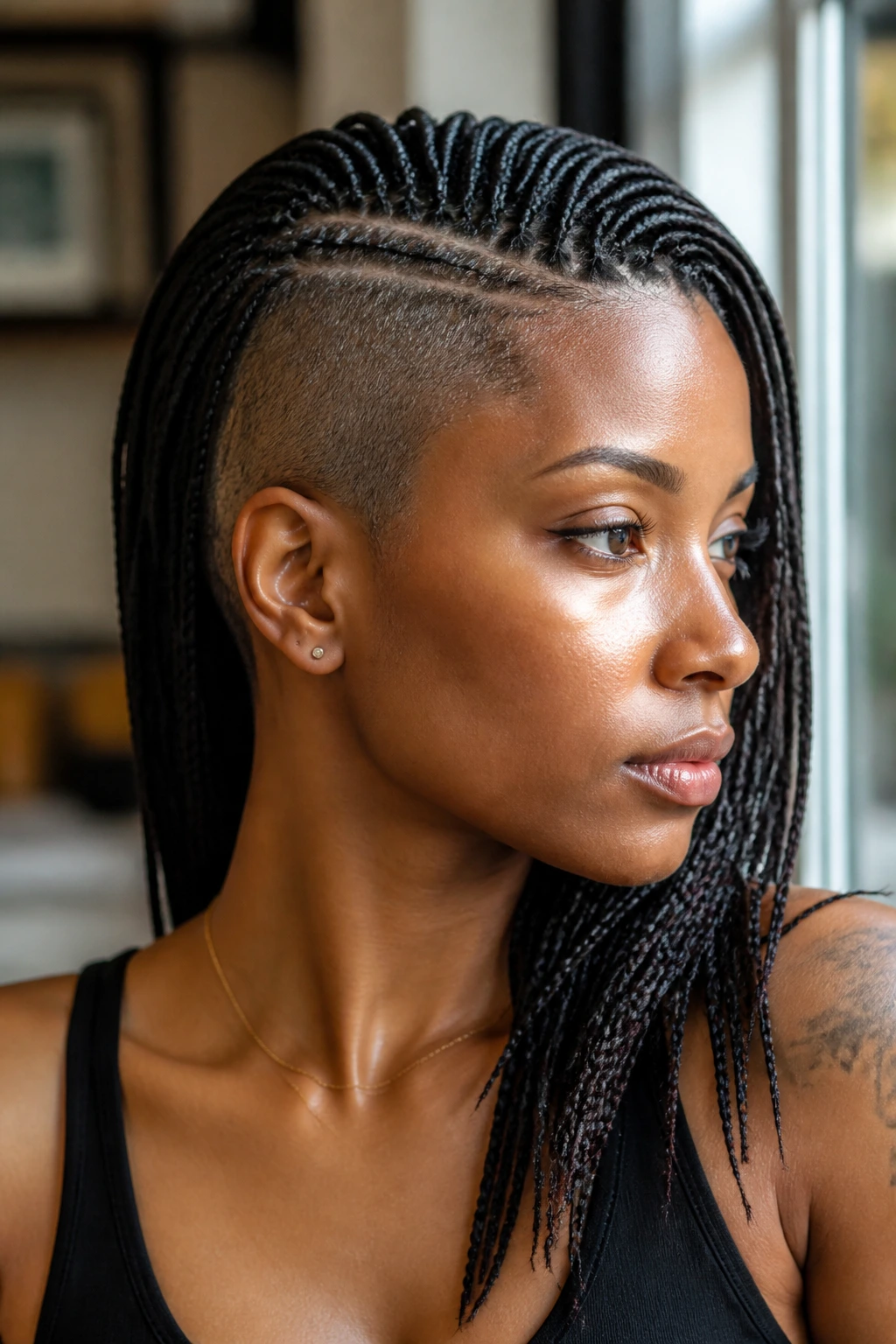
Micro braids are a long game, and shaved sides make them feel less dainty. The tiny braid size gives you texture for days, while the cropped sides keep the whole look from turning into a curtain. There’s a nice contrast there: delicate work on top, blunt shape on the sides.
This style takes patience, and I’m not going to pretend otherwise. Micro braids are slow to install and even slower to remove, so the payoff needs to be worth the hours. The shaved sides help because they let the braid field feel lighter and more open. Without that break, micro braids can read flat or overwhelming.
If you go this route, use light extension hair and avoid loading the roots with thick gel. Tiny braids already bring a lot of detail; extra product just muddies the scalp pattern. A clean buzzed side lets the braid work speak for itself.
9. Halo Braid With a Temple Shave
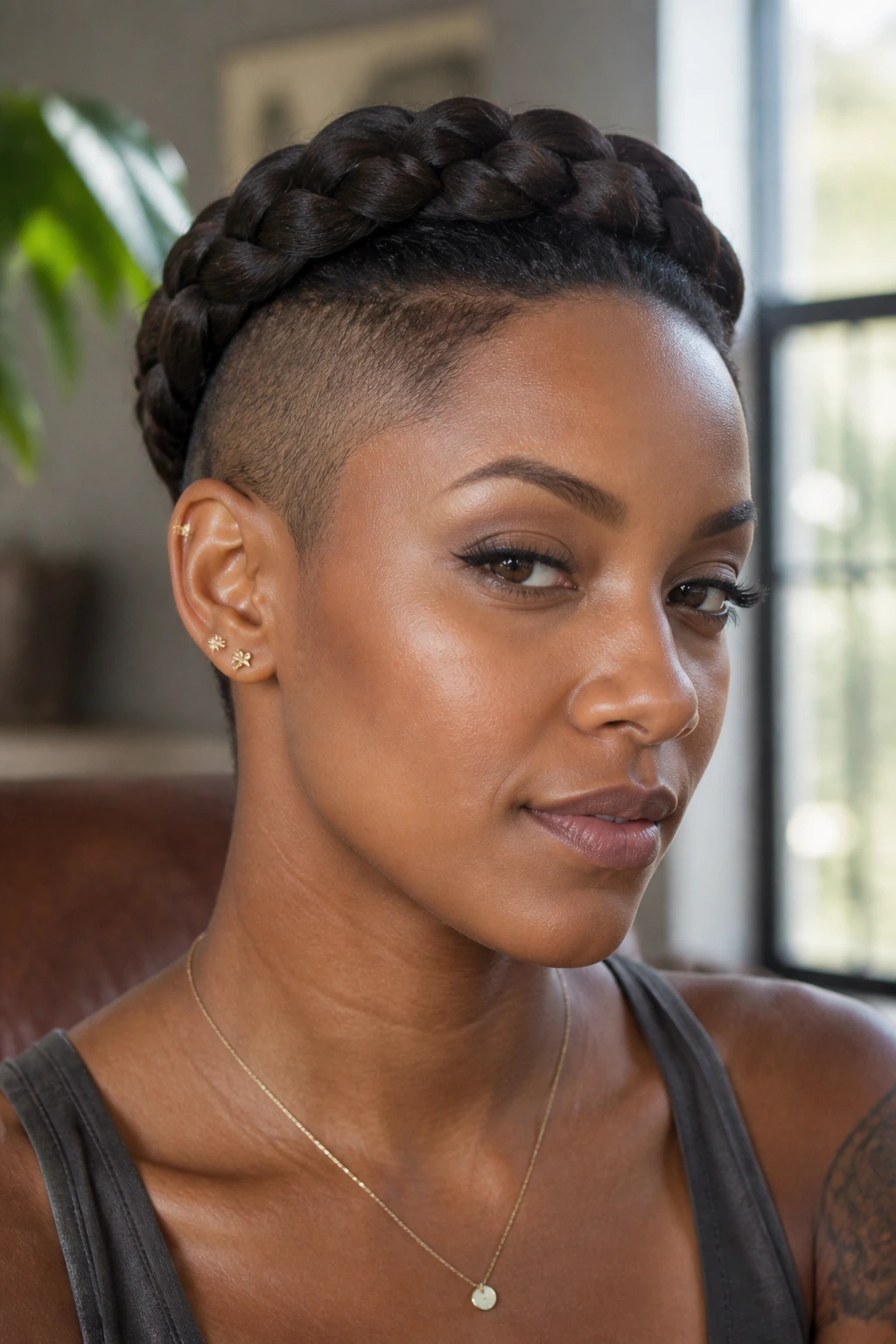
A halo braid is usually the softest thing in the room. Put a shaved temple under it, and the style gains some nerve. That single exposed panel changes the mood without breaking the elegance of the crown braid.
I like this on people who want contrast but not chaos. The halo braid wraps the head in one continuous line, which naturally draws attention to the face. The temple shave interrupts that softness just enough to keep it from drifting into bridal territory. It’s polished, but not precious.
Keep the braid close to the head so it sits like a clean frame rather than a puffed-up rope. If you’re adding a temple shave, make sure the braid starts with a crisp part on the opposite side. The asymmetry needs a reason to exist, and the parting provides it.
10. Triangle-Part Knotless Braids With a Nape Fade
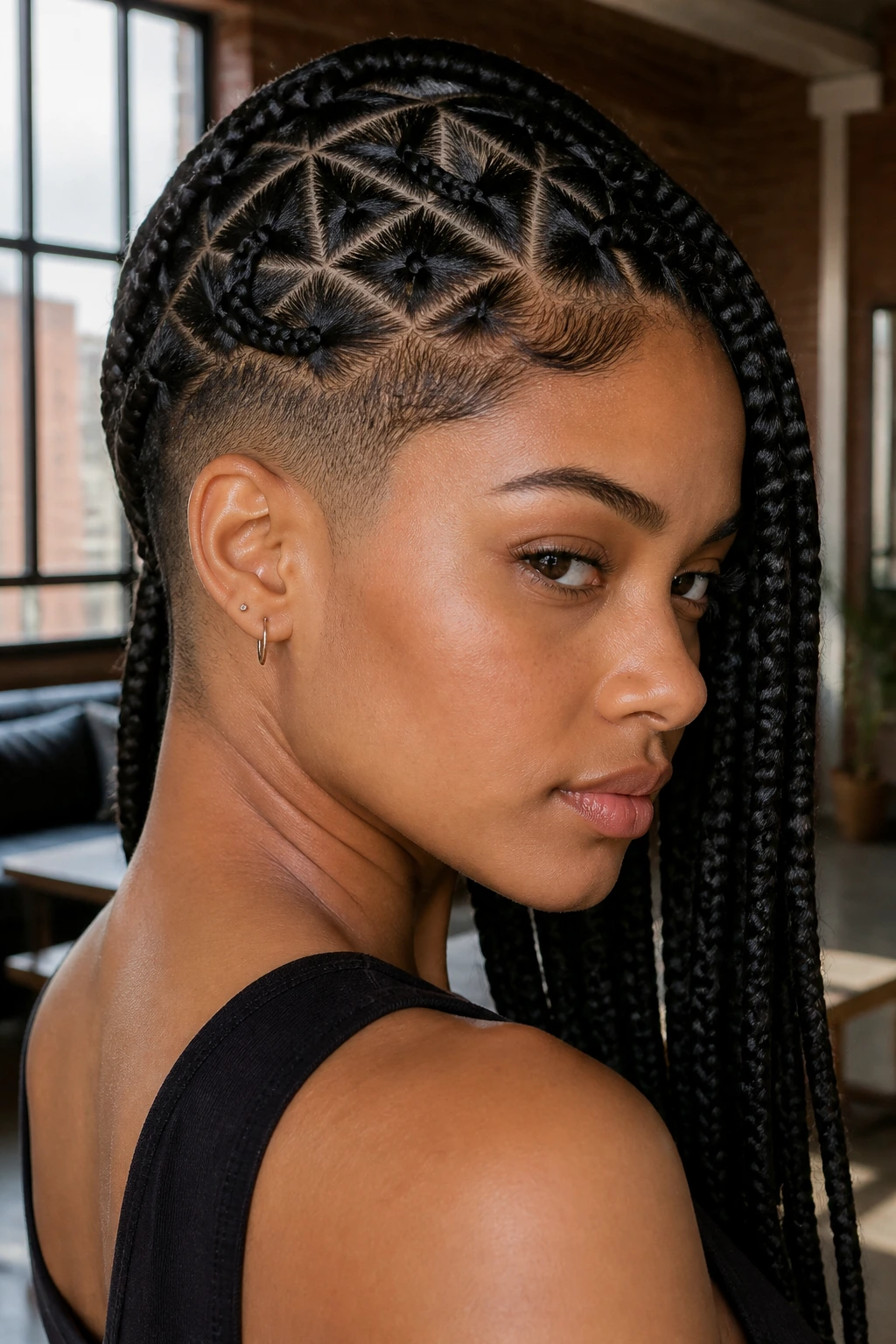
Triangle parts are one of those details that don’t sound dramatic until you see them in the mirror. The angles give knotless braids a sharper rhythm, and a nape fade keeps the back of the style clean so the geometry doesn’t get lost under bulk.
Knotless braids are a smart pick here because they lie flatter at the scalp and tend to feel lighter near the hairline. That matters when the sides are shaved; you want the whole head to feel balanced, not weighed down by thick roots and a heavy undercut at the same time.
A nape fade is a quieter kind of shave, but it does real work. It keeps the neckline from looking thick when the braids are up, and it gives the cut a crisp finish from behind. If you wear your braids in a ponytail often, this version makes sense.
11. Braided Space Buns With Shaved Temples
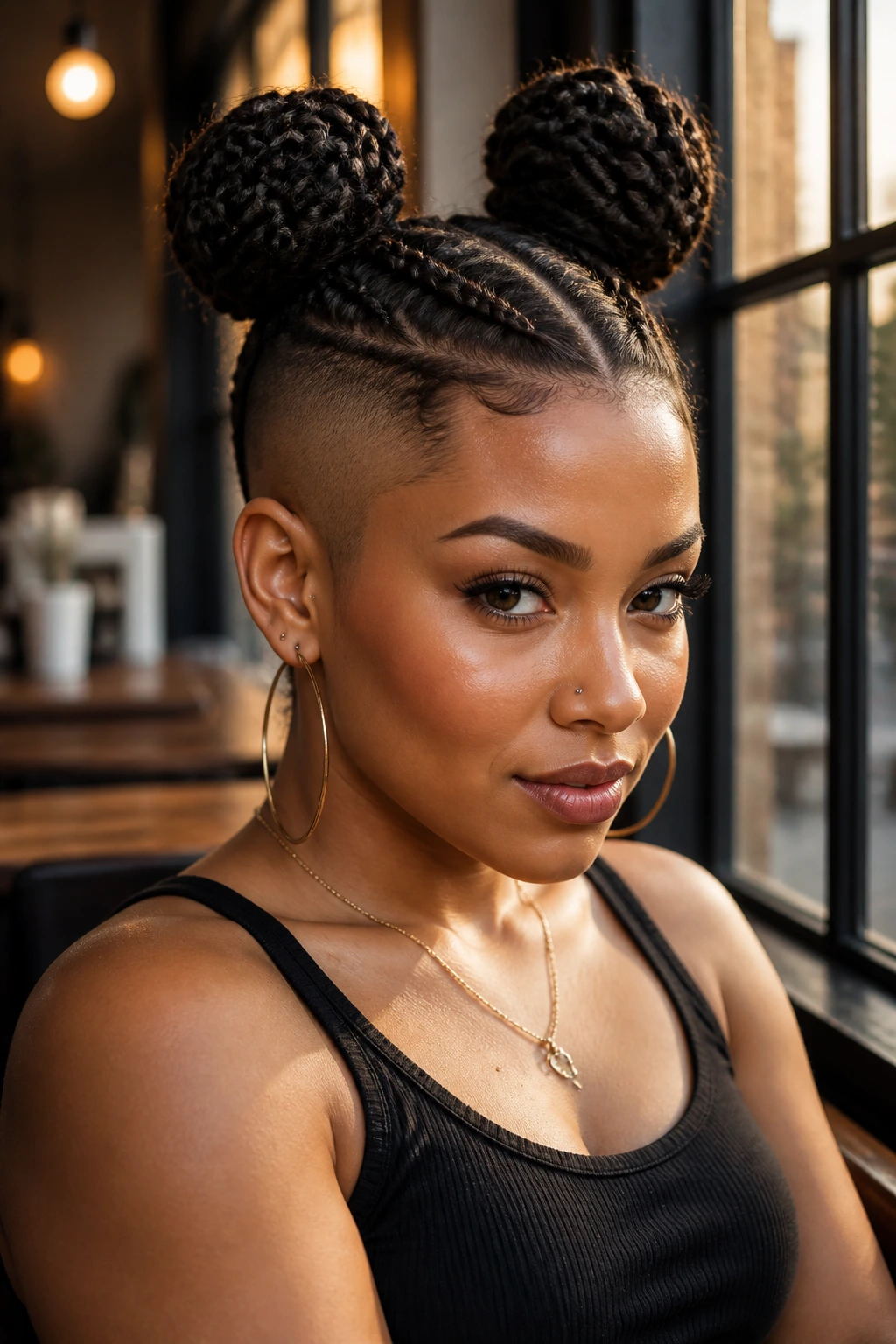
Two buns, shaved temples, and a little bit of mischief. This style has a playful shape, but the buzzed sides keep it from reading cute in a soft way. It feels sharper than the usual space bun look because the temples are open and the braid path is visible.
This is a good option if you want a style that can feel fun without losing edge. The buns should sit high enough to expose the shaved area, and the braided sections feeding into them should stay neat. If the buns are too loose, the whole look collapses into puff. Tight is better here.
A small detail makes a big difference: keep the parting crisp at the front hairline and the temple shave even on both sides. Uneven temple cuts can make the buns look off-center, even when the braids themselves are fine. The eye catches that fast.
12. Ghana Braids Into a Long Tail
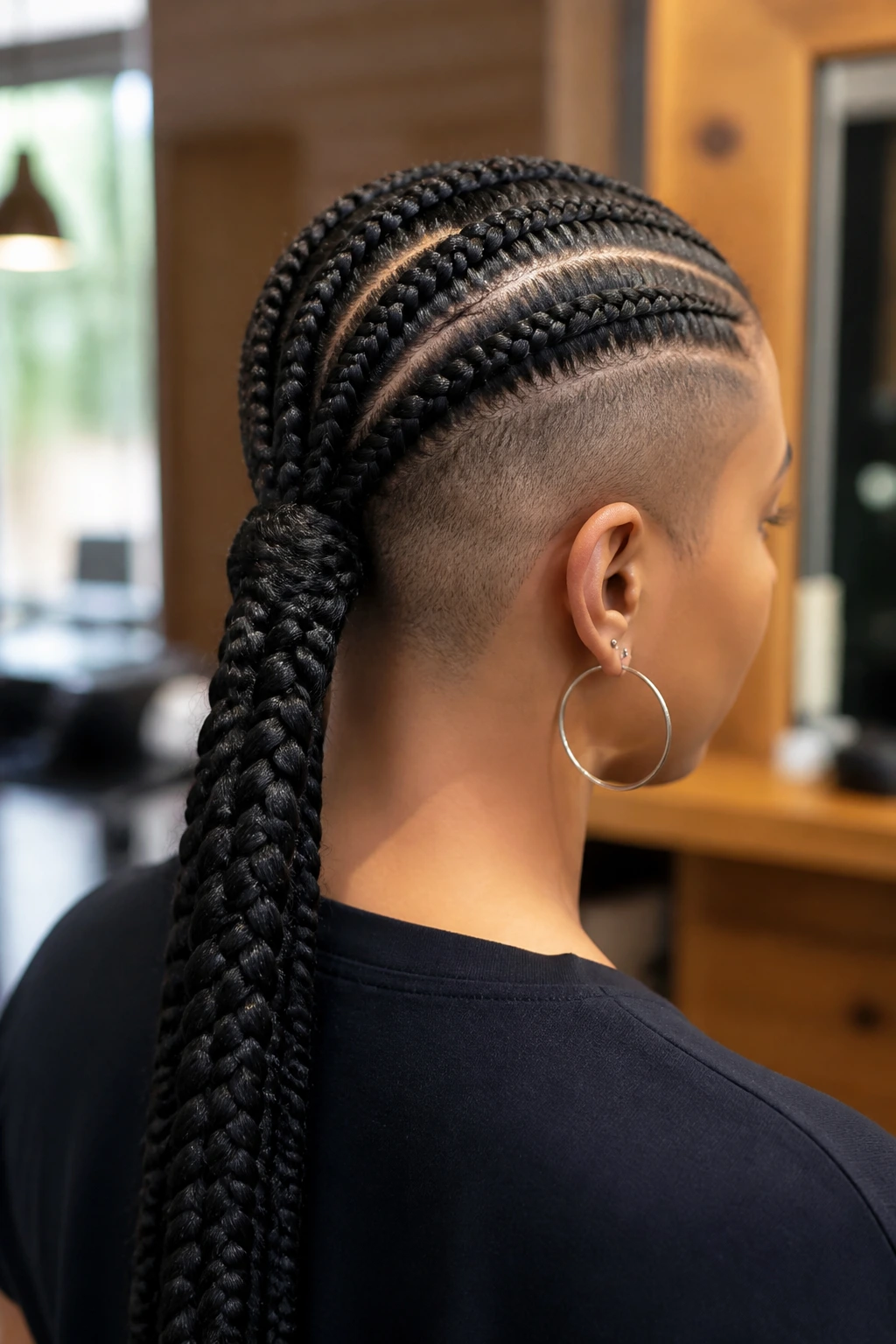
Ghana braids are thick, raised, and very good at making a statement without a lot of extra decoration. When they feed into a long tail and the sides are shaved or closely tapered, the braid line becomes the main event. There’s a sense of motion before the ponytail even starts.
This is one of the best options if you like a strong crown but don’t want your sides crowded. The braid rows can start close to the scalp, then widen as they move back, which gives the head a sculpted look. The shaved sides prevent the style from becoming too heavy around the temples.
The long tail at the back should feel deliberate, not like leftover length. A few cuffs near the base or along the tail can help, but don’t overdo it. Ghana braids already have a lot of structure; too many accessories make the style noisy.
13. Zigzag Cornrows With Graphic Side Shave
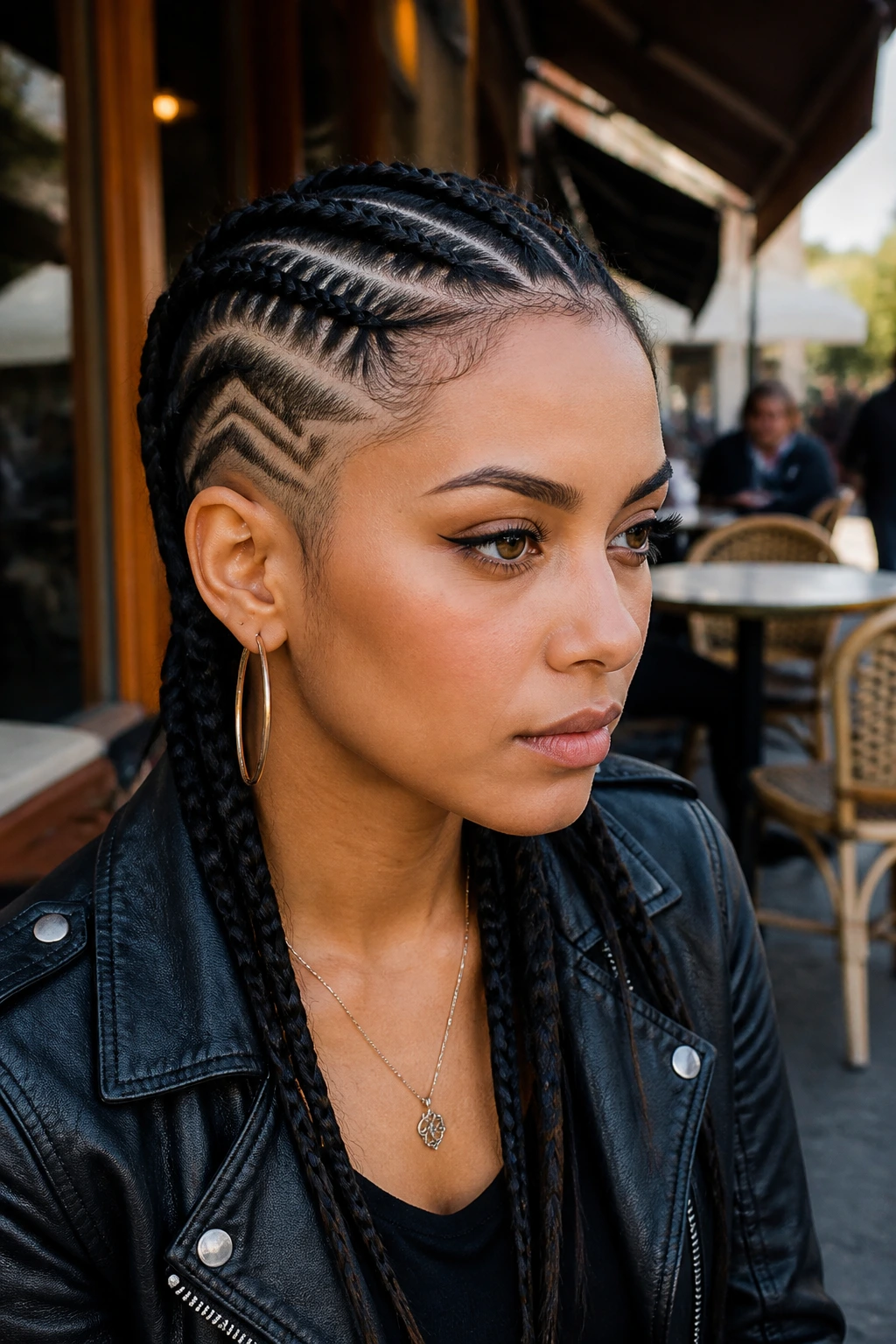
Straight parts are fine. Zigzags are louder. When you pair zigzag cornrows with a graphic side shave, the whole style starts to feel like line art on a head — all angles, no apology.
This one is for people who want the braid pattern itself to be the design. The shaved side acts like negative space, which makes every curve and turn of the parting more visible. If your stylist has a steady hand, this is one of the most satisfying braid-with-shaved-sides looks on the list because the parting is doing real aesthetic work, not just separating sections.
Keep the graphic details in one zone. A zigzag part, a crisp side shave, maybe a hard line near the temple — that’s enough. Once you stack too many shapes, the eye stops reading the design and starts seeing clutter.
14. Twist Braids With a Shaved Nape
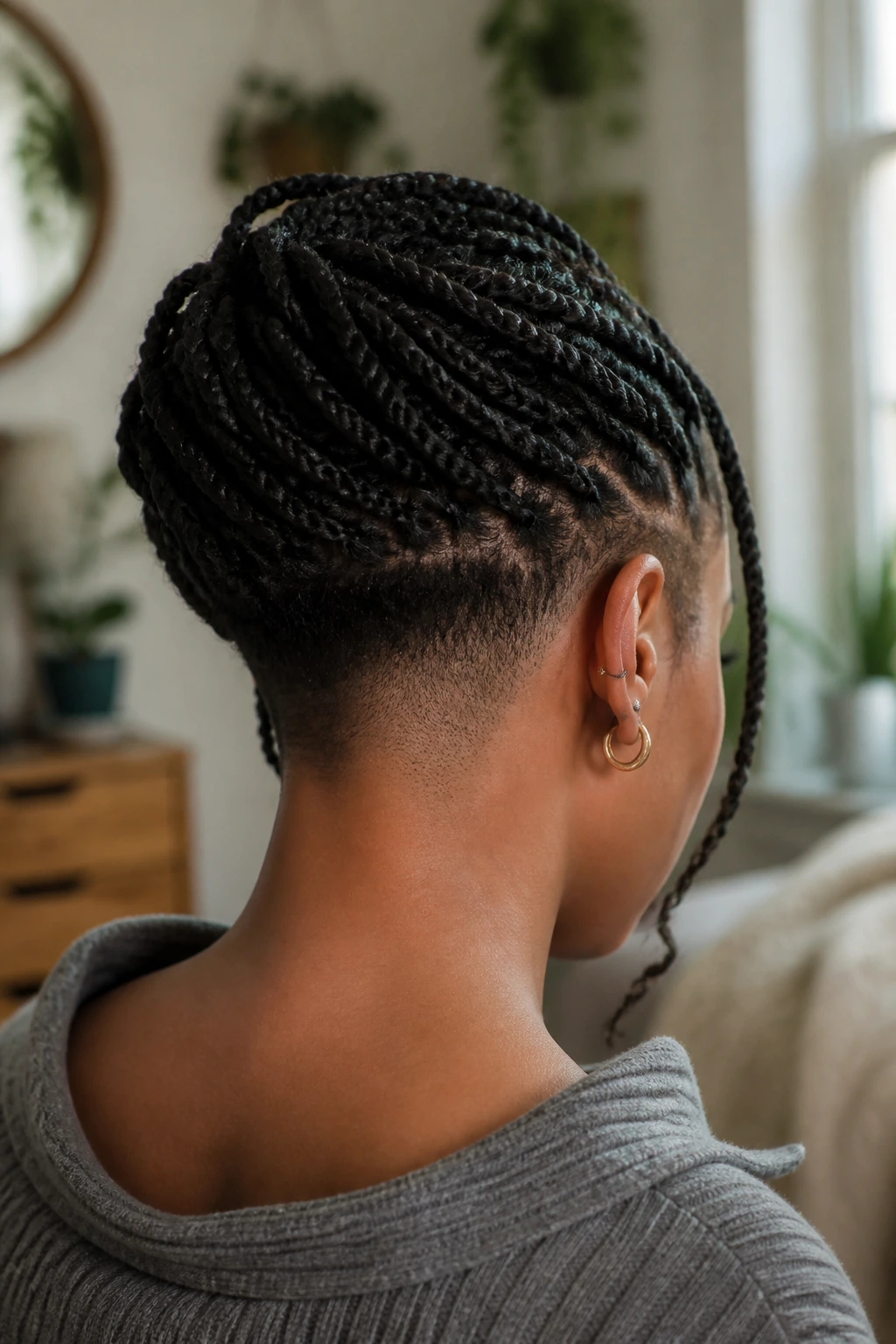
Twists soften the overall feel, which is useful if you like edge but don’t want the style to read too severe. A shaved nape gives you that clean finish from behind, and the twist pattern keeps the front and sides a little gentler than classic tight braids.
This is a practical choice if you wear your hair up often or want the neckline to stay cool and tidy. The nape usually shows wear first, so a short buzz there helps the style hold its shape longer. The rest of the hair can stay longer and looser, which gives the cut some breathing room.
A lot of people underestimate how much the back of the head matters. They focus on the front mirror view and forget that the nape is what goes soft fastest when you tie hair up, rest against a chair, or sleep on it. A clean shave there keeps the style from aging badly.
15. Faux Hawk Braid Crown With Buzzed Panels
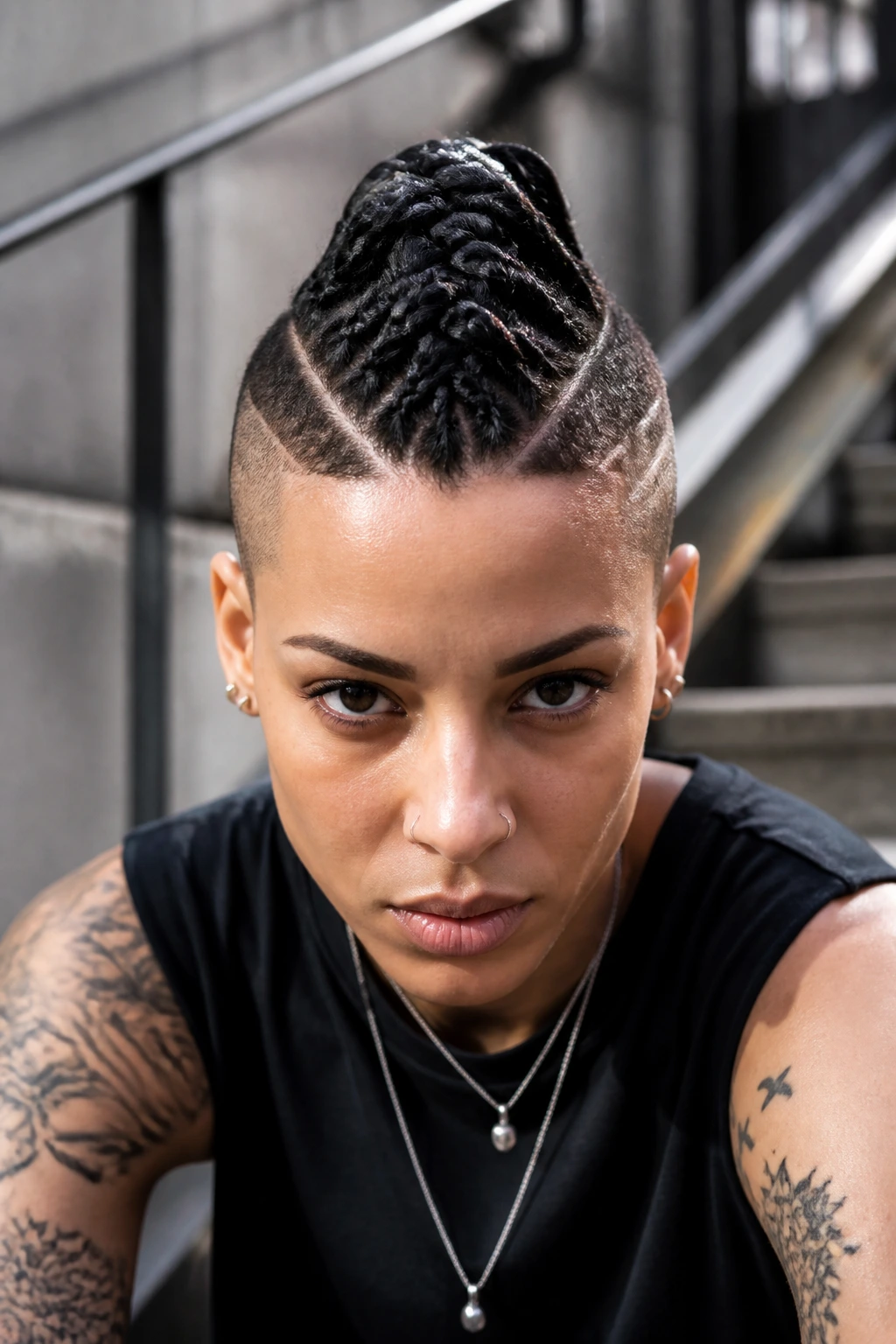
If the word “edgy” means something to you, this is probably it. Braids rise through the center like a crown, while the sides stay buzzed down into panels that make the top feel taller and more severe. It has a little punk energy, a little runway energy, and no interest in being subtle.
The faux hawk shape works because it pulls the face upward. That can be a gift if you want a stronger profile or if your jawline already has good structure. The height on top needs to be intentional, though. If the braids puff outward instead of lifting, the shape starts to look wide instead of sharp.
I’d keep the braids medium-sized here so the center ridge has enough body without becoming a lump. The side panels should be clean, even, and not too high. Too much shave and the crown looks disconnected; too little and the faux hawk disappears.
16. Single Side Braid Row With Hard Parting
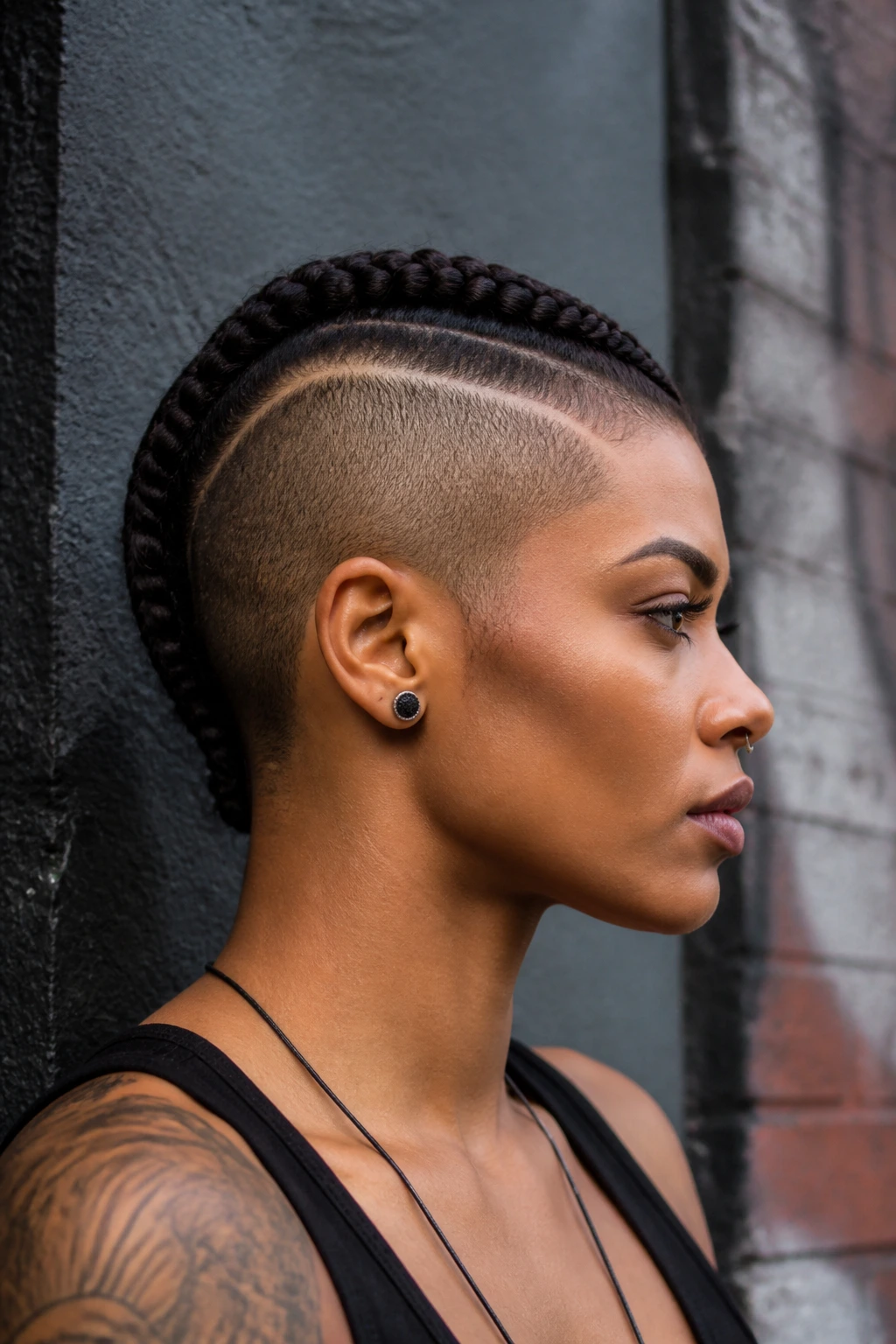
Not every edgy braid look needs ten rows and a dramatic undercut. Sometimes one thick braid row across the top, paired with a clean shaved side and a hard part, hits harder because it’s so spare.
This style is all about restraint. The braid sits like a single line of emphasis, and the shaved side gives it air. It’s a good pick if you want something architectural but low-maintenance. There’s less hair to manage, fewer sections to keep neat, and fewer places for the look to lose shape.
A hard part helps make the whole thing feel finished. Without it, the braid can look like it’s floating. With it, the style reads as intentional from the front and clean from the side. That’s the whole game here — remove anything that doesn’t support the line.
17. Bob-Length Braids With an Asymmetric Shave
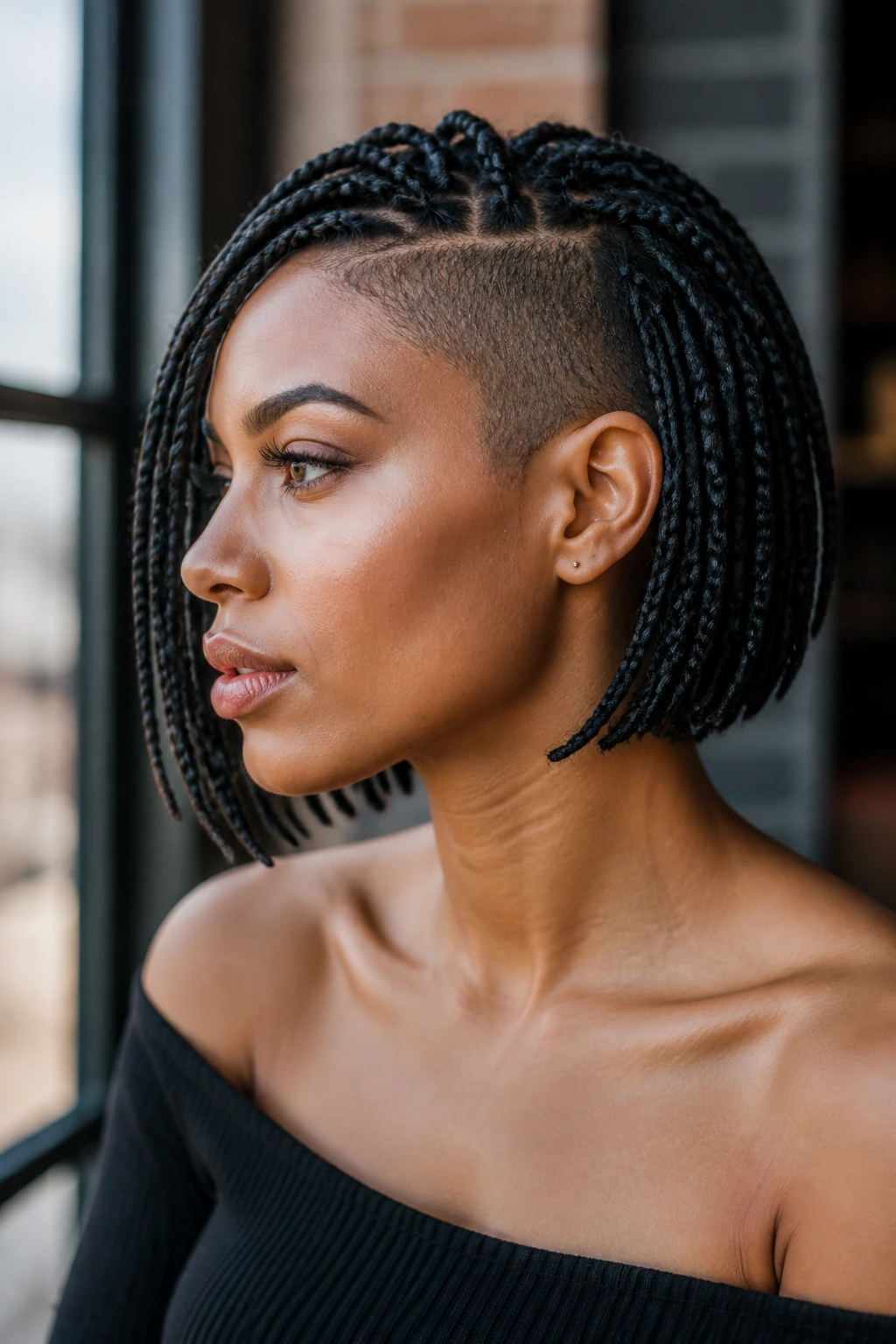
Bob-length braids are underrated. They sit at the jawline or just below it, which means the haircut has a strong, compact shape even before you add a shaved side. Pair them with an asymmetric shave, and the result feels precise, not bulky.
I like this version because it’s easier to wear than waist-length braids. The length stays out of the way, the cut shows the neck and collarbone, and the shaved side keeps the whole shape from feeling boxy. If long braids sometimes drag your features down, this is a cleaner answer.
The asymmetry matters here. One side should carry a little more weight, and the shaved side should stay visually open. You don’t want both sides competing for attention. The beauty of the bob-length braid set is that it feels finished from almost every angle.
18. Accessorized Feed-In Braids With a Skin Fade
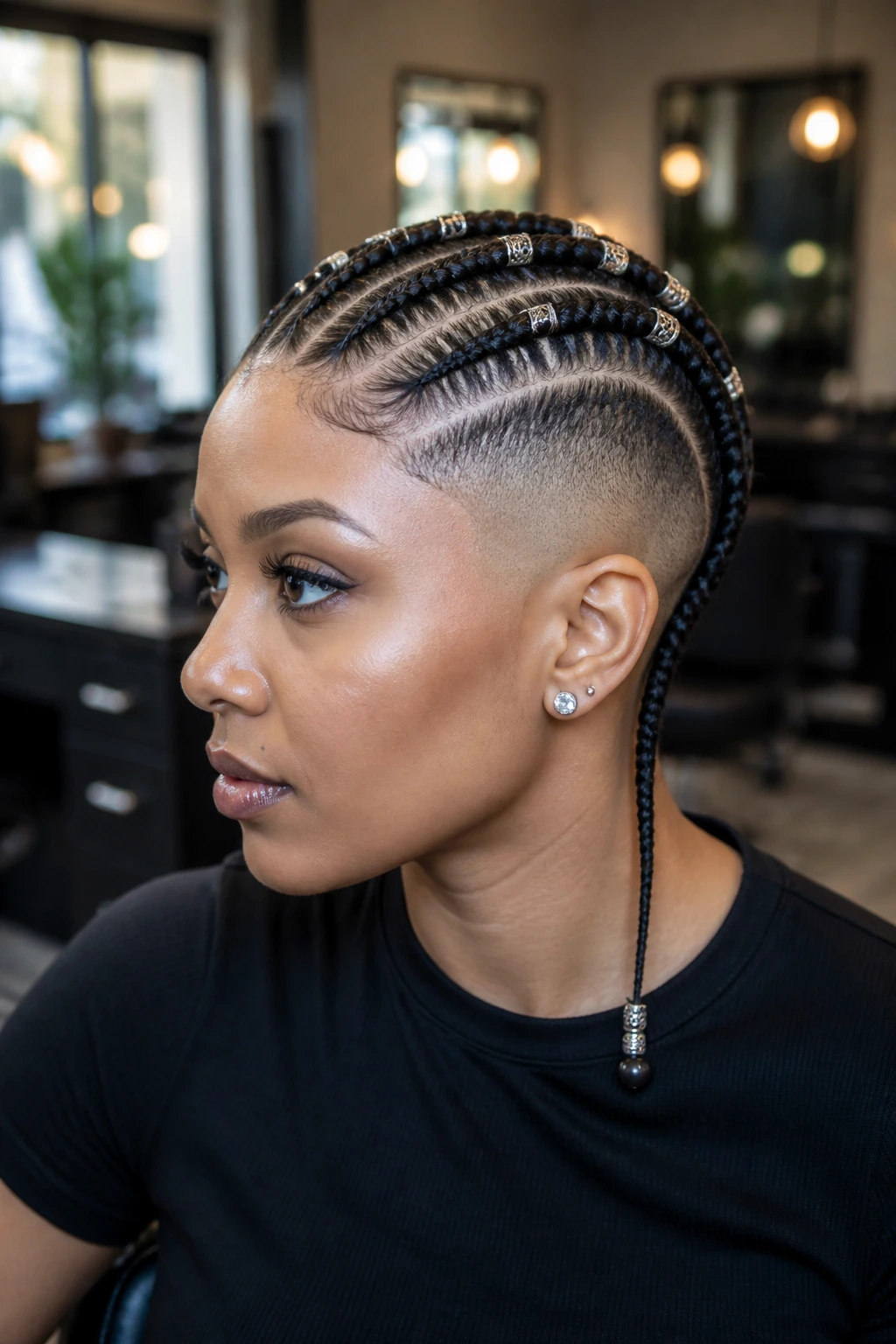
A skin fade gives feed-in braids a sharper edge than a simple clipper cut, and accessories bring the whole thing into focus. Metal cuffs, tiny rings, thread wraps, or a few beads at the ends can turn a precise braid pattern into something that catches the eye without getting messy.
This works best when the accessories are treated like punctuation, not decoration overload. Pick one or two materials and stay there. Silver cuffs on dark braids look clean. Gold threads can warm up deeper braid colors. Beads can work, but keep them controlled or the style starts to chatter.
The skin fade underneath is what keeps the look from feeling heavy. It opens the side of the head and makes the braid line seem even sharper. If you like hair that looks finished from every angle, this is one of the strongest options on the list.
19. Braided Ponytail With Tapered Sides
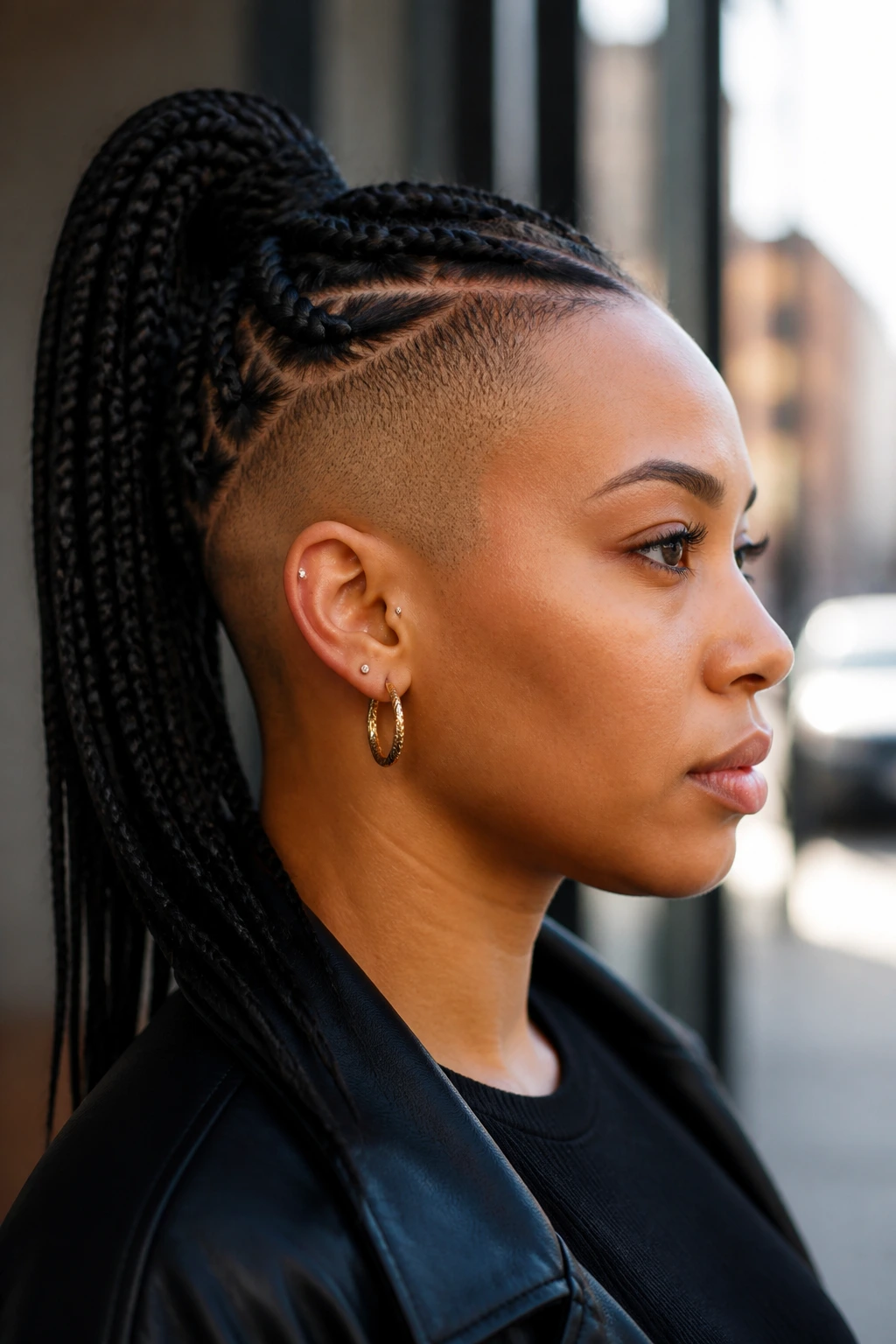
This is the style I’d pick if I wanted the cleanest face frame in the group. Braids pulled into a ponytail at the back, tapered sides, and a smooth front line give you a look that’s sharp without needing a full buzzed panel. It’s easier to wear in more settings, but it still has edge.
The tapered sides matter because they keep the hairline crisp and the ears open. You can wear the ponytail high for more lift or lower for a sleeker profile. Either way, the shape stays tidy because the sides aren’t competing with the braid tail.
If you want a version that moves from casual to dressed-up fast, this is the one. A set of braids with shaved sides can go hard in a club look, sure, but a braided ponytail with a clean taper is the style that still behaves when you need it to.
Why the Contrast Between Braids and Shaved Sides Works So Well
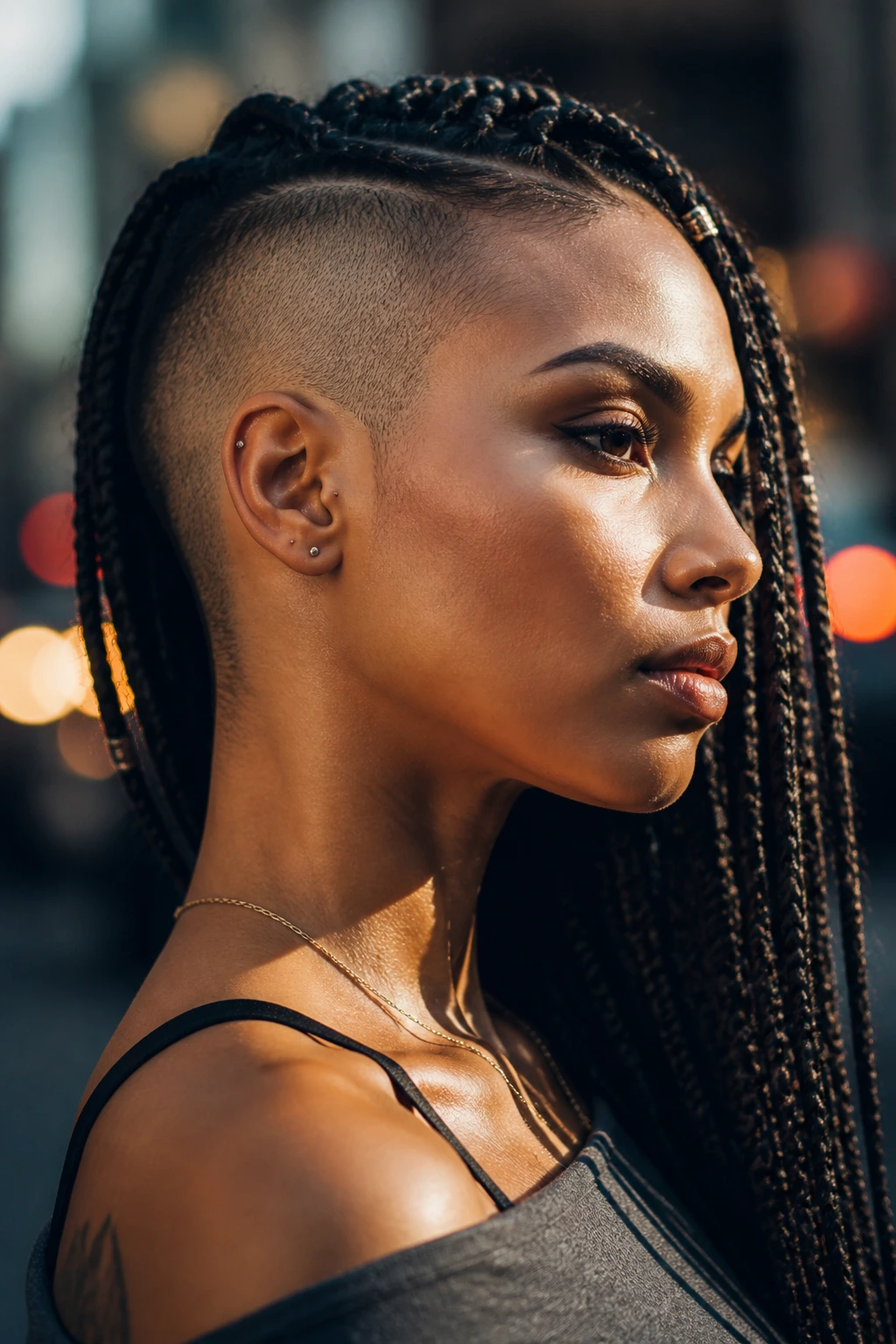
The magic is not really the shave, and it’s not really the braids. It’s the line between them. Braids bring texture, repetition, and length; shaved sides bring silence. Put the two together and the eye gets a break in the right place, which is why the style can feel bold without turning chaotic.
A good side shave changes how the head reads in profile. It trims away bulk at the temple and around the ear, so the braid pattern sits like a frame instead of a blanket. That’s especially useful if your braids are large, layered, or decorated. Without that open space, the style can get crowded fast.
The shape matters more than the label. A low taper fade feels tidy and wearable. A skin fade feels sharper. A temple shave reads lighter than a full undercut. Even the width of the shaved panel changes the mood — narrow strips look sleek, broader panels feel more dramatic, and an uneven panel can look accidental if you didn’t mean it.
What the Shave Does to the Silhouette
The shaved area acts like negative space in a photograph, only it’s not decorative fluff. It changes how tall the braids look, how wide the head reads, and how much attention goes to the jawline. That is why some braid styles feel powerful and others feel a little limp. The cut is doing part of the styling.
What the Braids Do for the Cut
Braids keep the shaved side from looking unfinished. They give the haircut a purpose. Without braids, a shaved panel can just look like a grow-out phase. With braids, it becomes part of the design — a deliberate contrast instead of a transition waiting to happen.
Tools That Keep the Parting Clean
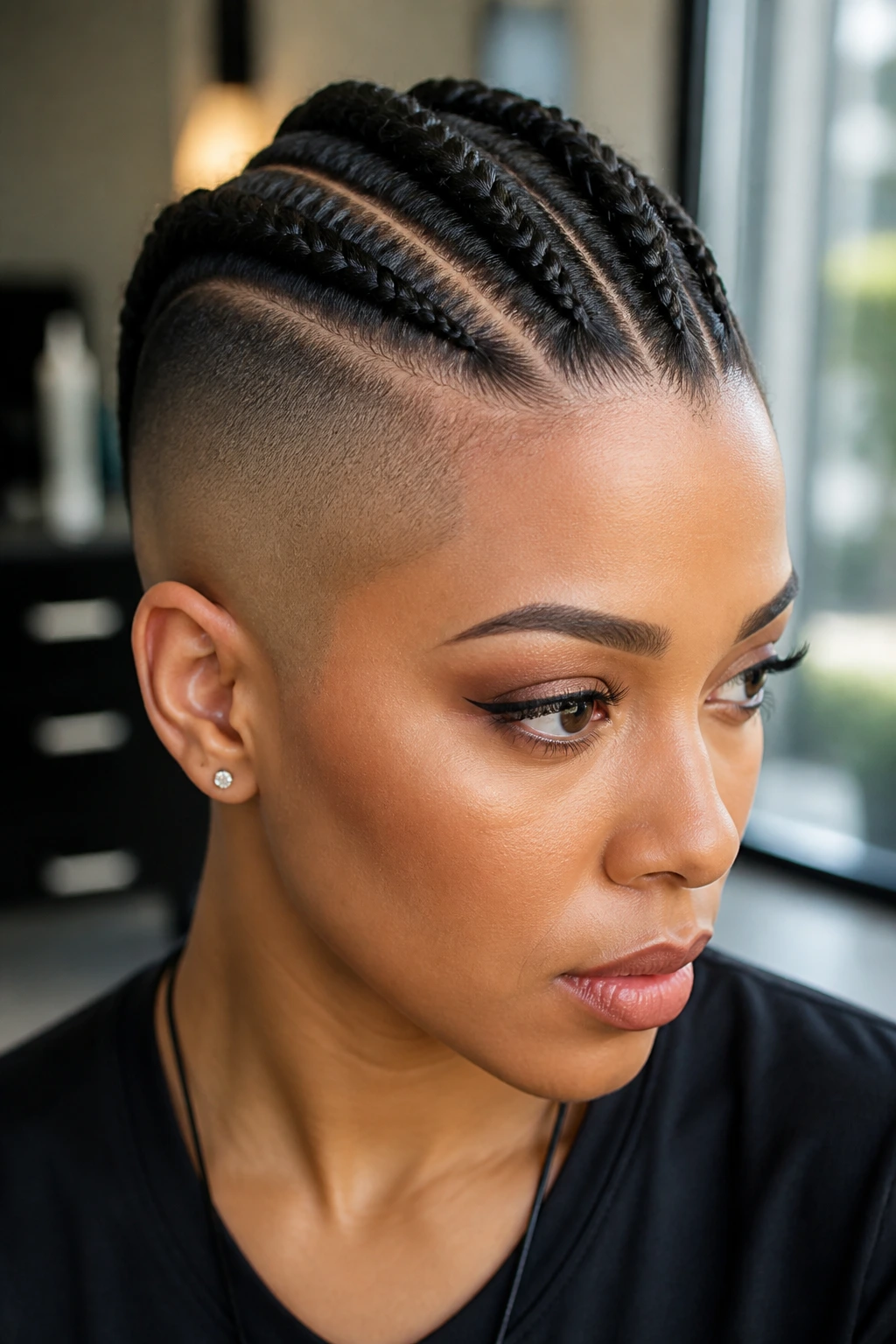
You don’t need a drawer full of fancy gear, but the right few tools save a lot of cursing in the mirror. A messy part on a shaved-side style is harder to hide than it is on a full head of loose hair. There’s nowhere for it to disappear.
- Rat-tail comb: Best for straight parting and sectioning, especially on stitch braids, feed-ins, and triangle parts.
- Fine-tooth comb: Useful for smoothing the roots before braiding so the part line stays visible.
- Duckbill clips: These keep sections separated without leaving deep dents in the hair.
- Braiding gel or styling wax: Use a thin layer at the roots to smooth flyaways; too much leaves buildup.
- Mousse or foam wrap lotion: Helps settle finished braids and reduce fuzz after the style is complete.
- Satin scarf or bonnet: Keeps the braids flat at night and protects the shaved area from friction.
- Small clipper or trimmer: Handy for maintaining a buzzed side between salon visits, if you already know how to use it.
- Light scalp oil or serum: Best for dry patches on the scalp, not for coating the whole braided head.
- Spray bottle with water: Good for refreshing natural hair before braiding, but don’t soak finished braids unless you’re washing them.
Choosing the Right Braid Size, Fade Height, and Hair Type
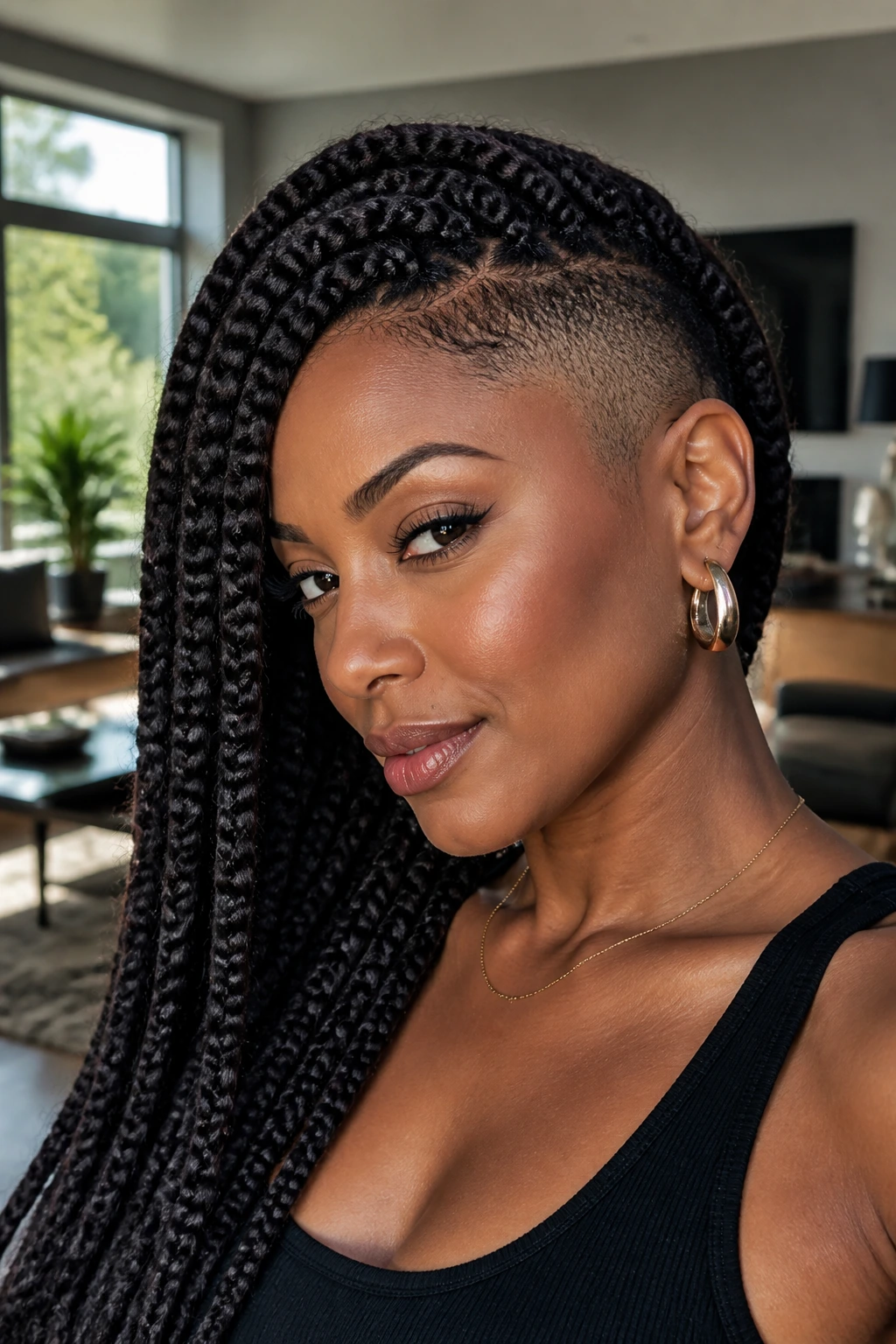
This is the section most people skip, and then they wonder why the style feels off. Braid size, fade height, and hair texture need to agree with one another. If they don’t, the whole look turns lopsided in a way that has nothing to do with fashion.
For thick hair, medium to large braids usually sit better than tiny rows that fight the bulk of the natural texture. For finer hair, smaller sections and a lower shave tend to look cleaner, because a huge braid set can swamp the head. The same goes for the fade: a low taper keeps the shape soft, while a skin fade gives you that harder line that works better with tight cornrows or stitch braids.
Hair color changes the mood too. Dark braids against a short shaved side feel classic and severe. Auburn, burgundy, copper, or blonde strands push the look louder without changing the cut. If the braid pattern is already busy — triangle parts, zigzags, feed-in ridges — keep the color calmer. If the braid pattern is simple, the color can do more.
A few practical rules:
- Pre-stretched braiding hair saves time and gives the ends a cleaner finish.
- Medium-sized braid sets usually age better than very tiny ones if you’re also maintaining a side shave.
- Low fades grow out more gracefully than high buzzed panels.
- Hard parts make asymmetry look intentional instead of random.
Ask for the haircut and the braid pattern together if you can. The two are part of the same style.
Keeping Braids With Shaved Sides Crisp Between Appointments
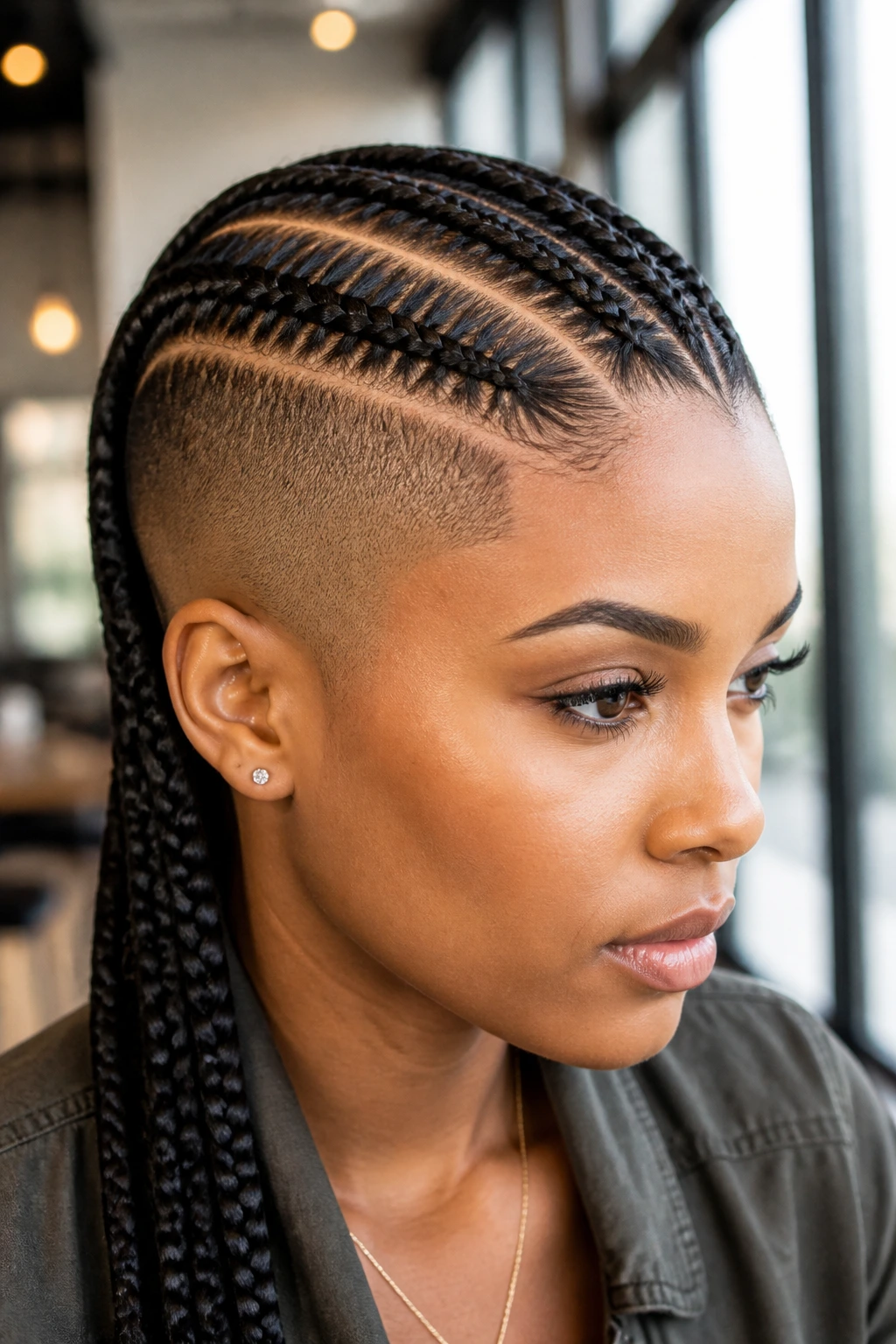
The style lasts longer when you treat the braids and the shave as two separate maintenance jobs. They age at different speeds. Braids loosen at the roots, frizz at the ends, and settle into the shape of your pillow. The shaved side grows in as stubble, then as fuzz, and then all at once you notice the clean line is gone.
Night care does a lot of the work. A satin bonnet or scarf keeps the braid surface smoother and reduces the friction that makes parts puff up. If the braids are long or heavy, a loose wrap helps hold the shape without flattening the crown into a weird dent. For the shaved side, a quick brush in the morning is enough; don’t drown it in oils or heavy cream, because that’s how buildup creeps in.
The timing matters. A lot of braid styles can stay neat for 2 to 6 weeks depending on size, tension, and how fast your hair grows. The shaved side usually needs a touch-up sooner than the braids do — sometimes every 1 to 2 weeks if you want the contrast to stay clean. If you let the side grow too far, the whole silhouette blurs.
A simple upkeep rhythm
- Every night: satin wrap or bonnet
- Every 3 to 4 days: light mousse on the braids if frizz starts showing
- Every 7 to 14 days: refresh the shaved side or line-up
- As needed: light scalp cleanse on the parts, then dry fully before rewrapping
Do not keep tightening the same front braids over and over. That’s how the hairline gets stressed.
Mistakes That Make Braids and Shaved Sides Look Sloppy
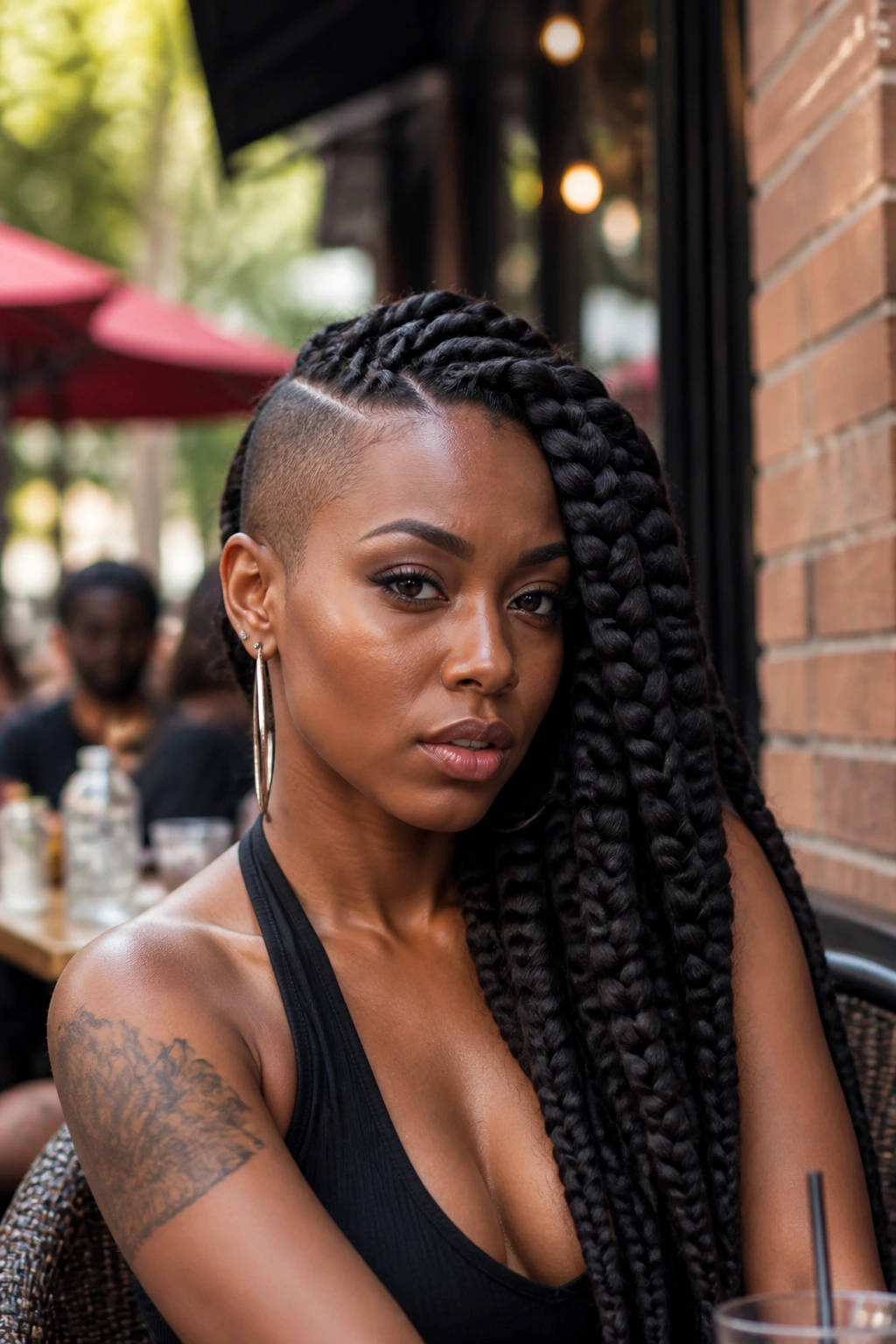
The style is sharper than a standard braid set, which means the mistakes show faster. That’s not a bad thing. It just means you have less room to wing it.
Shaving the panel too high is the first error I see. People want drama, so they take the buzz line up too far and suddenly the top braid section looks detached from the head. The fix is simple: keep the shaved area lower and closer to the ear and temple unless you truly want a full undercut or mohawk.
Letting the braid size fight the cut is another one. Tiny braids over a huge shave can look sparse. Jumbo braids over a tiny shave can look crowded. Match the braid width to the width of the open side panel so the balance feels clean.
Using too much gel at the roots leaves flakes and a crunchy halo around the parts. You want the scalp smooth, not lacquered. A thin layer brushed flat is enough.
Skipping the line-up is the problem nobody notices until it’s gone. Braids can survive a lot, but the shape around the ears and neckline needs a refresh if you want the cut to still look intentional.
Not protecting the style at night turns neat parts into fuzzy ones. Satin matters. So does not sleeping directly on the shaved side like it’s a pillow test.
Ways to Push the Look Softer, Sharper, or Louder
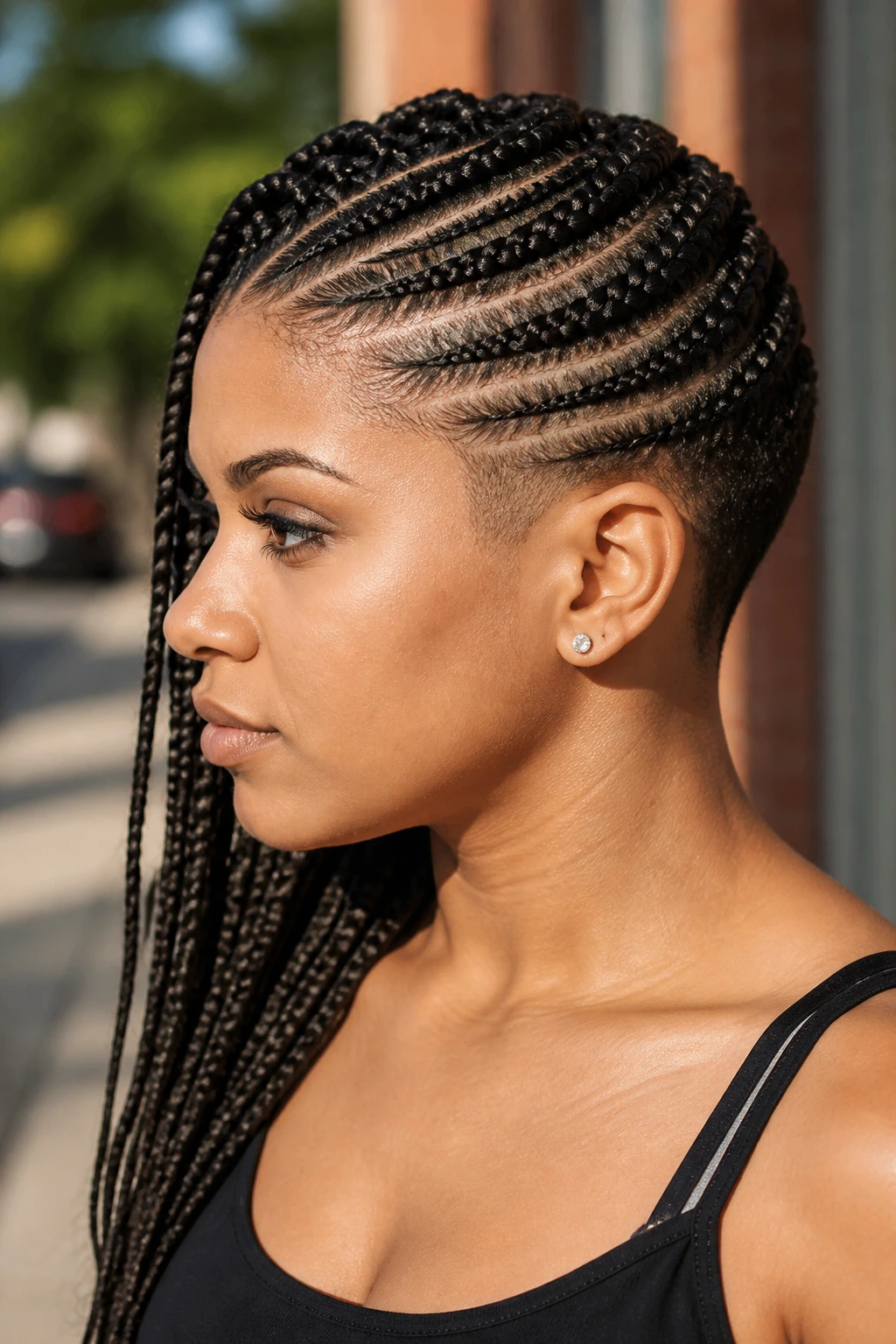
You can steer this style in almost any direction without changing the whole haircut. That’s part of the appeal. Same basic structure, different mood.
Soft Rebel Version: Keep the shaved side low, choose medium braids, and skip the hard part. The result still has edge, but it won’t feel severe in a work setting or on days when you want less contrast.
Graphic Line Version: Add a hard part, triangle sections, or one razor line near the temple. This version reads clean and modern, and it looks especially good with a skin fade.
Beaded Accent Version: Use cuffs, rings, or a few beads at the ends of the braids. Pick one metal color and stick with it. That keeps the look polished rather than noisy.
Color Statement Version: Add ombré braiding hair, a single streak of red, or warm honey ends. The shave gives the color more room to show, which is useful if you don’t want the whole head dyed.
Grow-Out-Friendly Version: Choose a low taper or hidden undercut instead of a high buzz. When the sides grow in, the style keeps its shape longer and doesn’t demand an instant reset.
Braids With Shaved Sides: Quick Questions
Will shaved sides damage my hair?
The shave itself doesn’t damage the hair, but tight braiding at the hairline can. If you feel pulling, burning, or a headache after the install, the tension is too high. A clean cut and a gentle braid are a better combo than a dramatic style that hurts.
How short should the sides be?
For most looks, a low taper or a close buzz with a guard still leaves enough softness for the style to grow out neatly. If you want the shaved panel to stay visible, shorter is better, but I’d keep the line low unless the whole point is a mohawk or skin fade.
Can I get this look with my natural hair only?
Yes, if your hair has enough length for the braid pattern you want. Smaller braids and cornrows work well on shorter natural hair, while long box braids or ponytails usually need added hair for structure and weight.
How often do I need to touch up the shave?
Most people need a refresh every 1 to 2 weeks if they want the contrast to stay crisp. Fast-growing hair will show the grow-out line sooner, especially around the temple and neckline.
What if my braids start slipping?
That usually means the roots were too slick, the sections were too large, or the braid tension was too loose. A little prep product helps, but not a greasy one. Clean sections and a firmer first stitch make a bigger difference than people expect.
Is this style good for fine hair?
It can be, but keep the braid size modest and the shaved panel narrow. A huge fade with tiny braids can make fine hair look sparse. The goal is contrast, not emptiness.
Can I wear braids with shaved sides in a formal setting?
Yes, if the parting is clean and the shave is neat. A braided ponytail, halo braid, or side-swept goddess braid with a low taper tends to read more polished than a high mohawk or oversized accessories.
How do I grow out a shaved side without looking awkward?
Let the braid pattern stay in place while the shave fills in, then shift to a low taper or hidden undercut as the hair gains length. The awkward stage is shorter if you keep the grow-out tidy instead of letting it grow wild.
A Sharp Finish
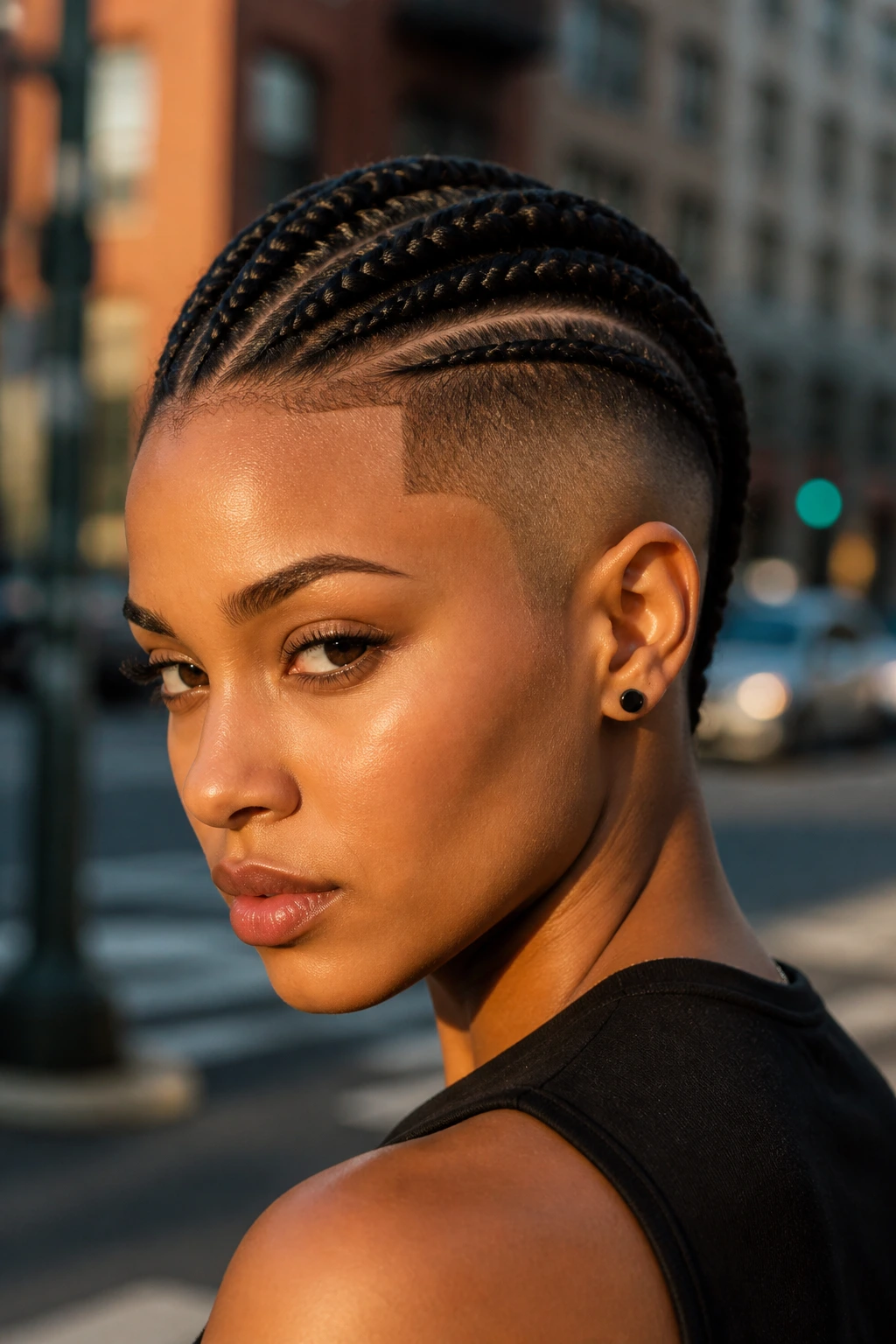
Braids with shaved sides work because they understand contrast. Texture on top, clean space on the side, and a line-up that keeps the whole thing from sliding into mess. That’s the formula, and it’s a good one.
What I like most is how adjustable it is. You can go severe, sleek, playful, or graphic without changing the basic idea. Keep the shave deliberate, keep the braid pattern tidy, and the style does the rest.
