



Wavy hair does not hold color like straight hair does, and that’s exactly why the best highlight ideas for wavy hair can look so good when they’re placed well—or so flat when they’re not. A single ribbon of light can flash honey on one bend, beige on the next, and almost disappear in the shadows in between. That movement is the whole point.
The mistake I see most often is people asking for “more blonde” when what they really need is better placement. Wavy texture already gives you built-in dimension, so the color has to work with the bends, not fight them. Put brightness on the wrong sections and you get stripes. Put it on the ridges, around the face, and through the outer curve of the wave, and the hair suddenly looks thicker, cleaner, and far less random.
That’s also why one-size-fits-all highlight advice falls apart here. Loose 2A waves, denser 2C bends, fine hair, coarse hair, dark brunettes, warm blondes—they all need different balance. The good news is that wavy hair is forgiving in a way that straight hair isn’t. You can go soft and subtle, or you can lean into contrast and get a little attitude. The texture gives you room to play.
Why These Highlight Placements Work on Wavy Hair
-
Waves break up color naturally: A highlight that looks loud on a flat blowout can read as soft and expensive-looking once it bends through a wave, so you can often go a shade brighter than you think.
-
Shadow and light do half the styling for you: On wavy hair, the darker dips between bends make lighter ribbons stand out without needing a full head of brightness.
-
Grow-out can look intentional: Root shadow, balayage, and lowlight-heavy placements blur the line between colored and natural hair, which matters if you don’t want a sharp regrowth line.
-
Fine waves need narrower pieces: Thick, chunky panels can overpower a finer wave pattern fast, while babylights and face-framing pieces keep the texture visible.
-
Thicker waves can carry more contrast: Dense or coarse waves can hold bolder money pieces, copper ribbons, or even chunky ’90s panels without turning muddy.
-
Tone matters as much as lift: Beige, caramel, ash, bronze, and champagne all behave differently on waves; the same lightness level can look warm, smoky, or icy depending on the toner and placement.
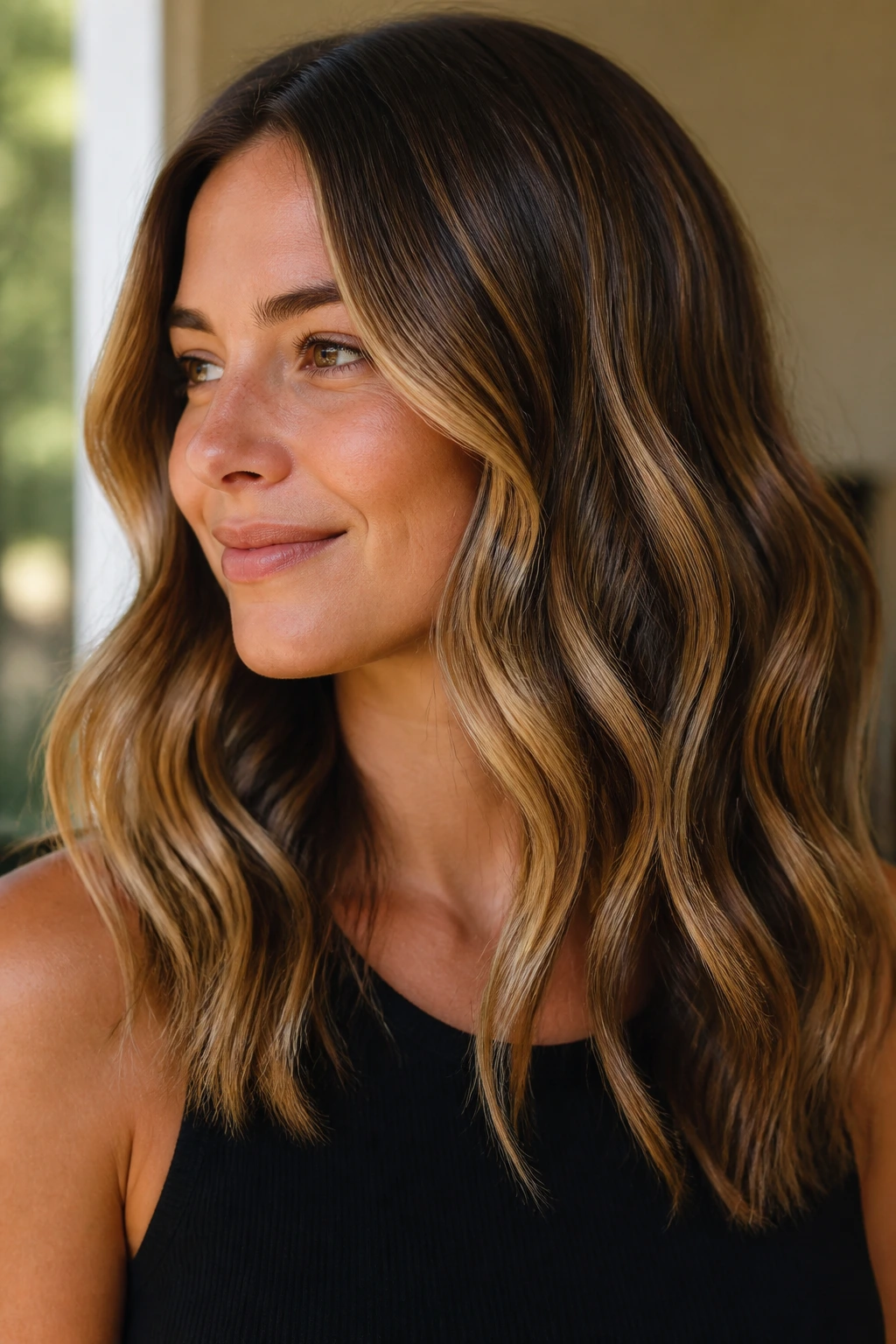
1. Caramel Ribbon Balayage
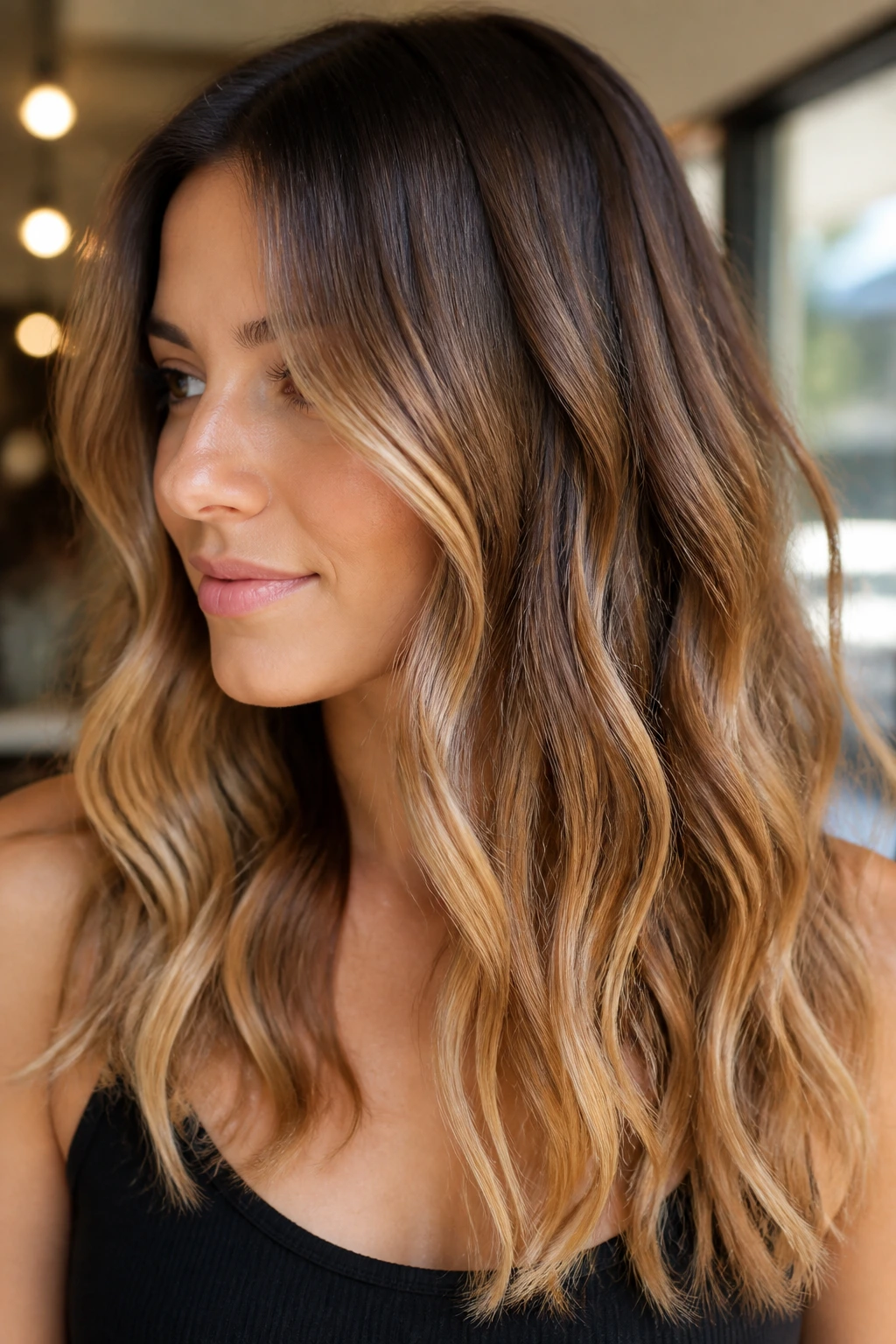
Caramel ribbon balayage is the kind of color that makes waves look like they were born with good lighting. The pieces are soft, melted, and slightly irregular—more like hand-painted strokes than tidy foils—and that looseness is what keeps the hair from looking striped. On medium brown or dark blonde bases, it gives you warmth without that chunky “striped pool hair” effect nobody asked for.
What to Ask For
Ask for hand-painted caramel ribbons placed from the mid-lengths through the ends, with a little extra brightness around the face and the top layer. A colorist will usually work between level 6 and level 8 caramel tones so the result stays dimensional instead of orange.
Why It Works on Waves
Waves love this kind of placement because the color sits on the bends and catches light in little flashes. You get that soft, sun-hit effect without needing all-over lightener. If your hair is medium density, this is one of the easiest ways to make it look fuller.
Best For
- Medium brown bases
- Loose to medium waves
- People who want softness, not sharp contrast
- Anyone who hates obvious regrowth lines
Pro tip: Keep the root area a little deeper than the ends. That dark anchor is what makes the caramel look richer instead of washed out.
2. Face-Framing Money Piece
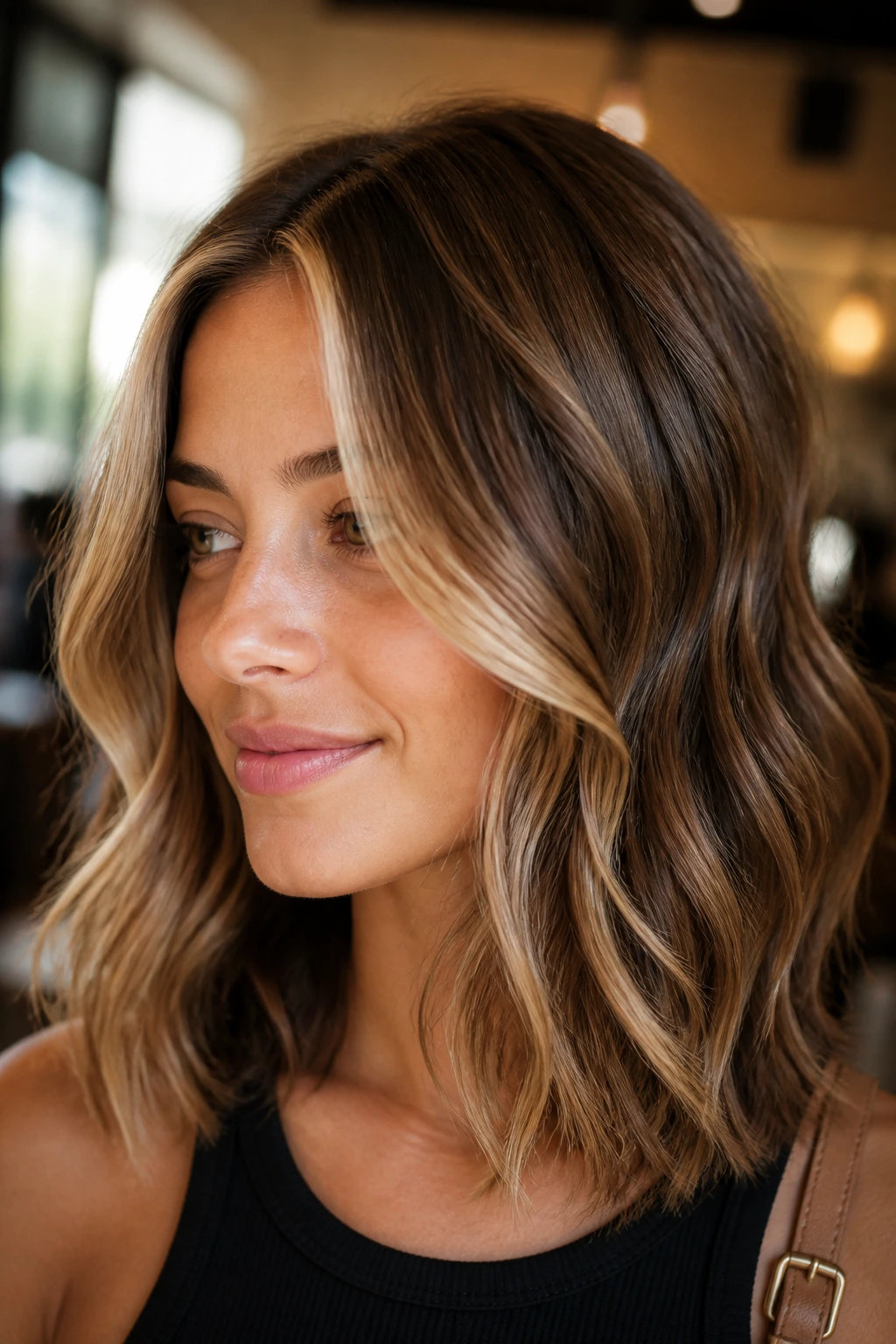
A money piece can change the whole mood of wavy hair in ten minutes flat. It’s the fastest way to make a cut feel brighter, and I like it especially on shoulder-length waves that can look sleepy when everything is the same shade. The trick is to keep it deliberate, not blinding.
The Shape Matters
The best money piece starts at the hairline and cheekbone area, then softens as it drops into the rest of the wave pattern. If the front pieces are too wide, the color starts reading like a spotlight. If they’re too narrow, you lose the point. A good colorist will usually slice just enough brightness to frame the face without turning the whole front section into a stripe.
Why It’s So Useful
Wavy hair moves, and movement means the front pieces keep coming in and out of view. That flash is flattering because it gives the eye something to land on near the face. It also helps when your lengths are still growing or your ends are a little darker than you want.
Best For
- People who want a visible change without a full color overhaul
- Wavy bobs, lobs, and long layers
- Anyone who wears a middle part or changes parts often
Skip this if you want a whisper-soft result. This one has presence. Not loud, but present.
3. Champagne Babylights
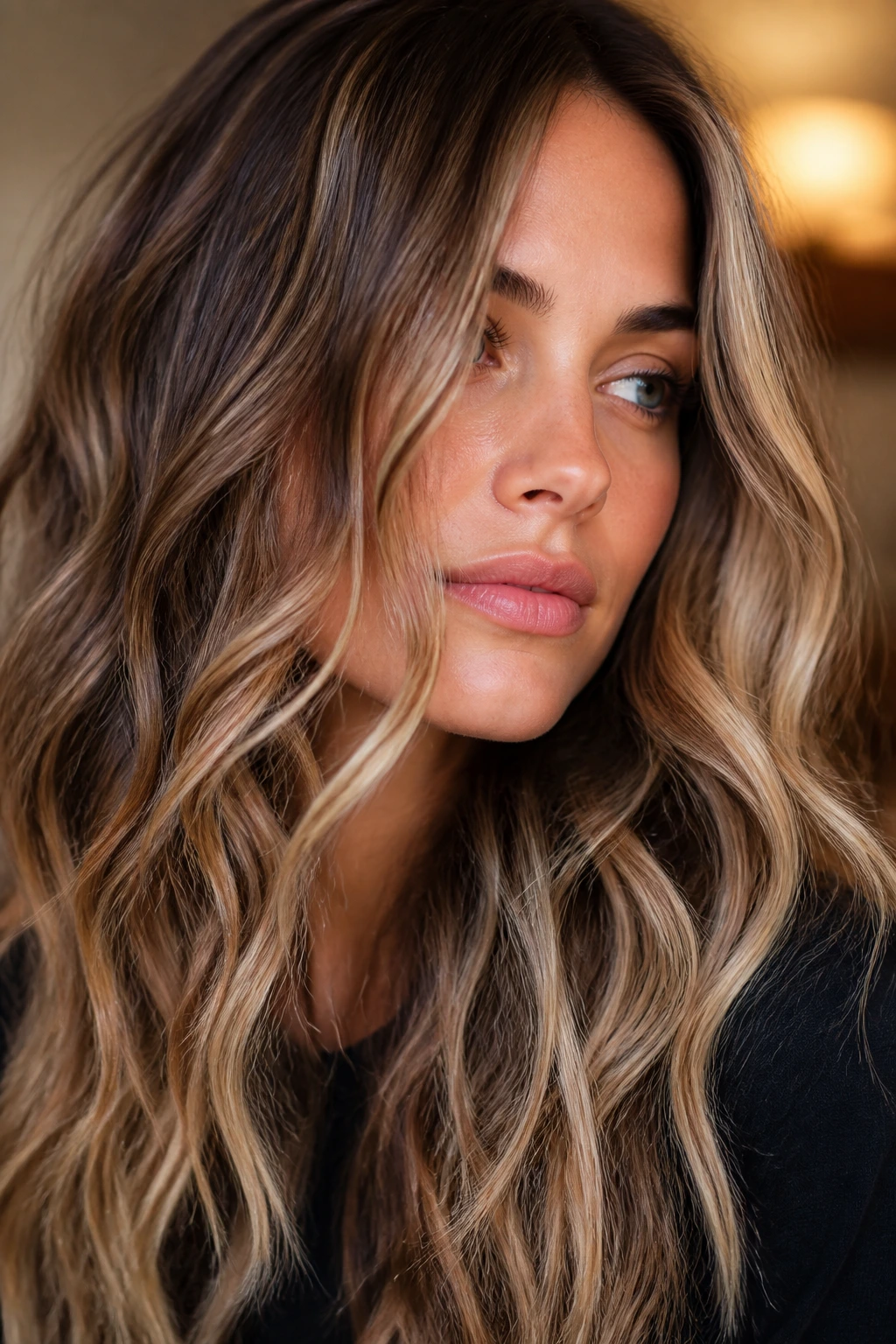
Champagne babylights are tiny, fine, and expensive-looking in the way good tailoring is expensive-looking. They’re not meant to shout. They’re meant to shimmer when the wave breaks across them. On lighter brunettes, dark blondes, and soft ash bases, champagne pieces give you brightness without the hard yellow edge that can creep into more aggressive blonde work.
Why Tiny Matters
Babylights are usually woven in very thin sections—think narrow enough that the weave almost disappears when the hair is down. That fine spacing is what lets waves keep their shape instead of turning into a patchwork of light and dark blocks. On a looser wave, the effect is almost airy. On a tighter wave, it can look like a veil of light woven through the pattern.
Best Base Colors
- Level 6 to 8 brunettes and dark blondes
- Cooler natural bases that go brassy fast
- Fine or medium-density wave patterns
What Makes the Tone Work
Champagne sits between beige and pale gold. It’s not icy, and it’s not golden-yellow either. That middle ground is useful because wavy hair often throws a little extra warmth once it dries, so a champagne toner keeps the result balanced.
Use this if you want brightness that doesn’t announce itself from across the room.
4. Honey Foilayage
Honey foilayage is a smart hybrid: the lift of foils, the softness of hand-painted placement. That combination is why it works so well on wavy hair that wants brightness but not a hard line of demarcation. You get a cleaner lift than open-air balayage, and a gentler grow-out than traditional foils alone.
Why It’s Different
Foilayage lets the stylist control how much heat the hair gets, so the pieces can lift a little lighter and a little faster. Then the hand-painted placement keeps the result from looking too tidy. Waves benefit from that unevenness. A perfectly even foil pattern can flatten movement; foilayage keeps the pattern alive.
What It Usually Looks Like
Honey foilayage tends to sit around level 7 to level 9 honey-gold, depending on the base. The pieces are usually brighter through the mid-lengths and around the face, then softer toward the ends. The result is a warm glow that looks especially good when the waves are air-dried and a bit loose.
Who Should Choose It
- Brunettes who want a brighter finish without going pale blonde
- People with thicker waves that can hold light and dark contrast
- Anyone who likes warmth but doesn’t want orange
If your hair pulls brassy quickly, ask for a beige-honey toner rather than a strong gold. That small adjustment saves a lot of maintenance later.
5. Toasted Walnut Lowlights
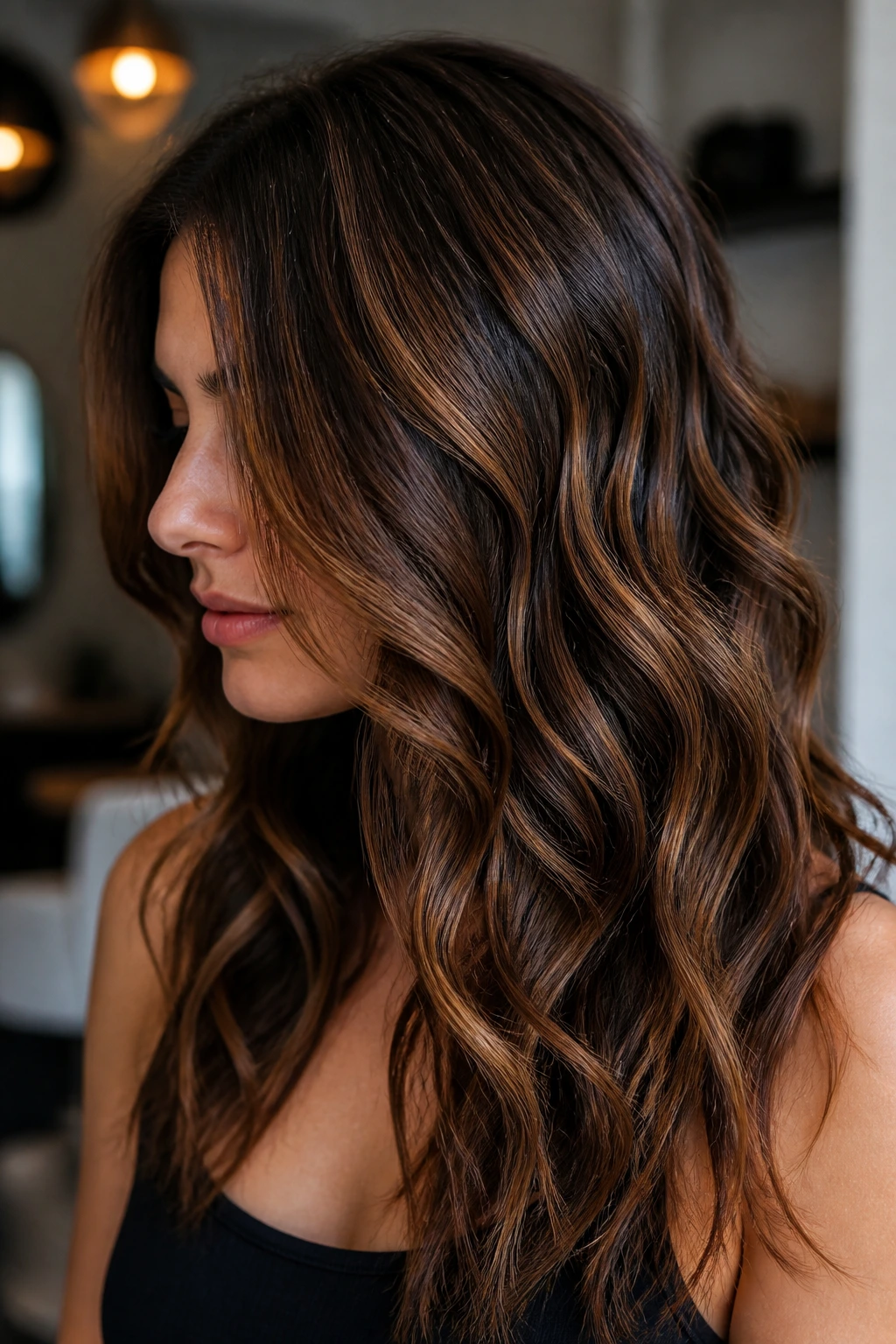
Highlights get all the attention, but lowlights are the quiet fix when wavy hair starts looking too light, too flat, or a little frayed at the ends. Toasted walnut lowlights tuck deeper brown pieces back into the hair so the brighter bits have something to bounce off of. Without them, some wave patterns start looking washed out.
Why Darker Pieces Help
A wavy cut needs contrast. If every strand sits in the same brightness band, the bends stop reading as texture and start reading as fluff. Walnut lowlights—usually somewhere around level 4 to 5 brunette—bring back depth in the mid-lengths and underneath layers, where the eye doesn’t always expect color but definitely notices when it’s missing.
Best Placement
I like these most:
- Underneath the crown
- Through the nape
- Around heavier face-framing sections
- Scattered in between brighter ribbons, not placed in big blocks
That placement keeps the waves from turning one-note. It also helps if you’ve already gone light and the color needs a little weight again.
When to Choose It
Choose lowlights if your highlights feel too bright, your ends look thin, or you want your waves to read fuller in low light. They’re also useful if your hair is porous and the blonde is pulling patchy. Sometimes the best color move is not adding more light. It’s putting the shadows back.
6. Copper Apricot Veil
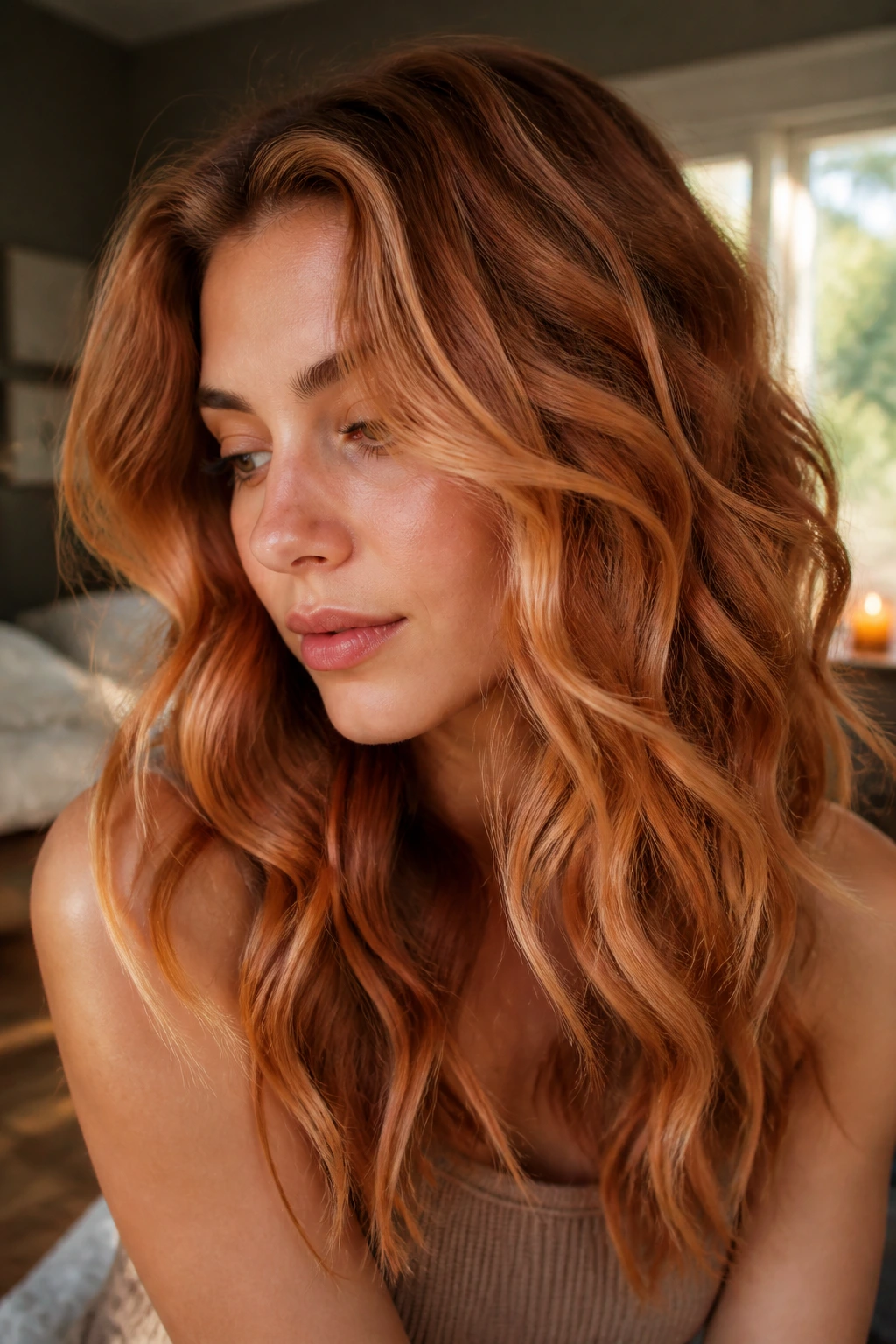
Copper apricot is for the person who likes warmth with a little bite. It’s softer than a true copper, lighter than auburn, and more interesting than plain strawberry blonde. On wavy hair, it looks like color with a pulse. The bends pick up the peach and copper tones differently, so the hair keeps shifting as it moves.
Why This Shade Works
Waves soften red tones in a way flat hair never can. That means you can wear copper without it looking harsh or costume-y. The apricot side keeps it lively; the copper side keeps it grounded. I prefer this on medium brunettes and natural redheads, but it can also work on darker blondes if the lightener is subtle and the toner is warm rather than neon.
Ask For This
Tell your colorist you want sheer copper-apricot ribbons, not a full opaque red. That distinction matters. You want pieces that glow through the wave pattern, not a single flat layer sitting on top of it.
Best For
- Hair that already has warm undertones
- People who want a bolder color without going deep auburn
- Shoulder-length waves and long shags
The upkeep is a little higher than honey or caramel because red pigments fade fast. Worth it, though. Red always costs more in attention.
7. Chunky ’90s Highlight Panels
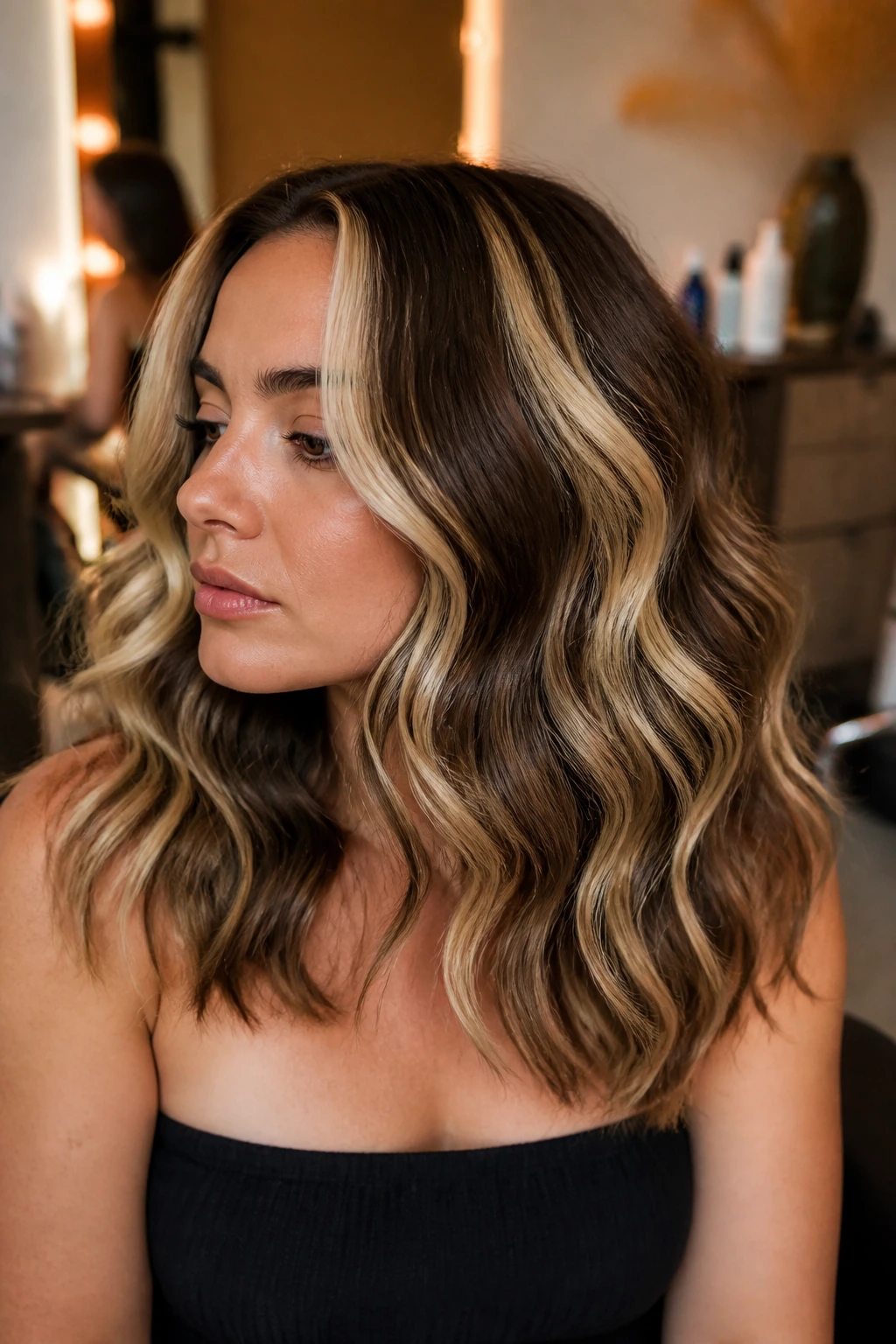
Chunky highlights are back when they’re done with discipline. The modern version on wavy hair is not the zebra stripe mess people remember from old photos. It’s about wider, intentional panels placed so the wave breaks them up instead of letting them sit there like straight lines.
The Trick
The panel width usually lands somewhere around 1/4 to 1/2 inch, sometimes wider near the face and narrower underneath. That contrast can look fantastic on thick, defined waves because the pattern gives the light pieces places to live. On fine waves, though, it can swallow the texture. That’s the line.
Why People Still Like It
A bolder panel can make layered hair look more sculpted. You see the shape of the cut faster. You also get more visible brightness in photos, which matters if your hair disappears into one color once it’s dry. This is one of those styles that looks a bit calmer in motion than it does on a hanger, and that’s a good thing.
Best Pairings
- Long layers
- A collarbone lob
- Thick 2B or 2C waves
- Confident contrast, not subtle blending
If you want this look to stay modern, keep the toner soft. Beige, honey-beige, or muted caramel works better than a harsh platinum. The contrast should come from placement, not from blinding color.
8. Beige Bronde Melt
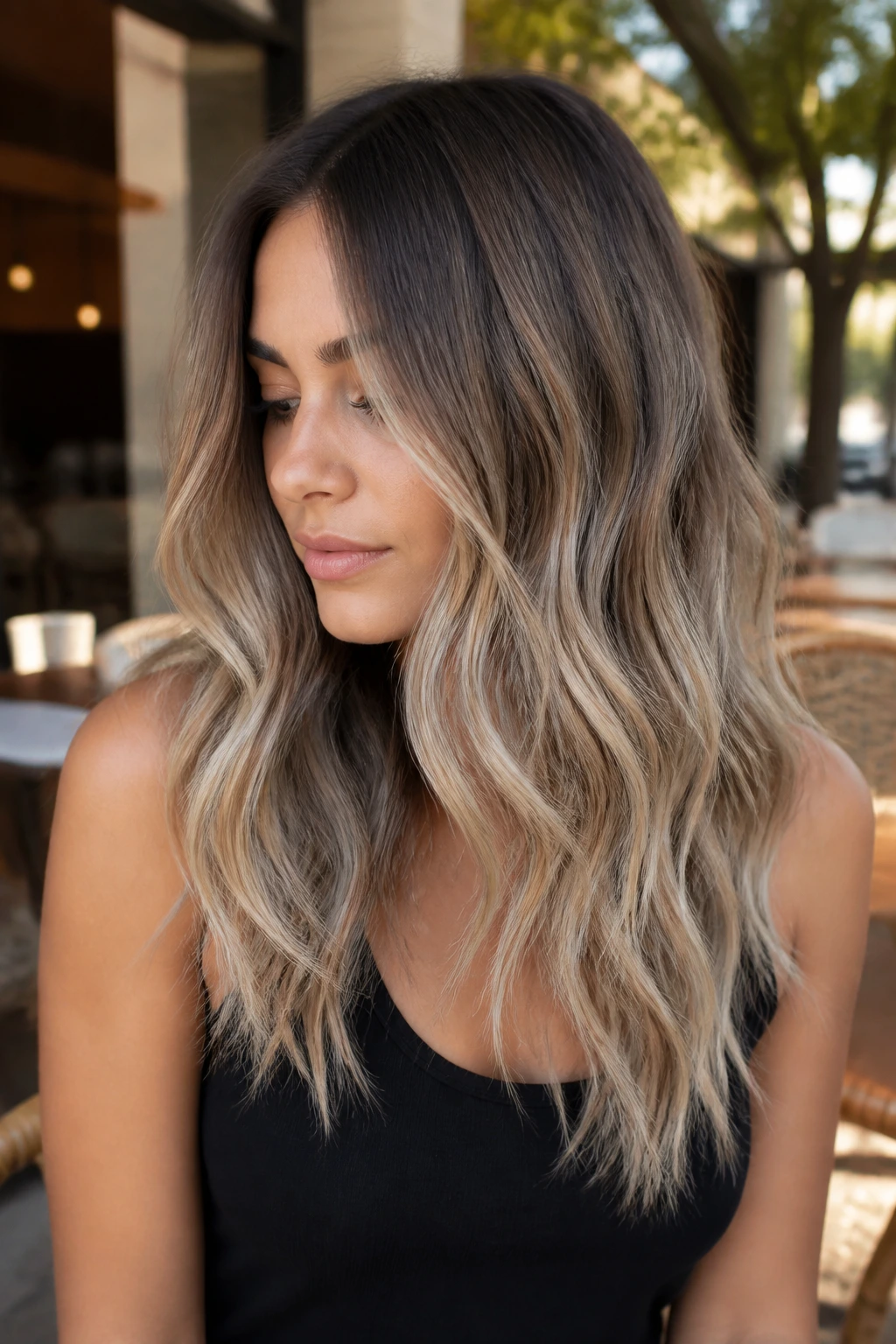
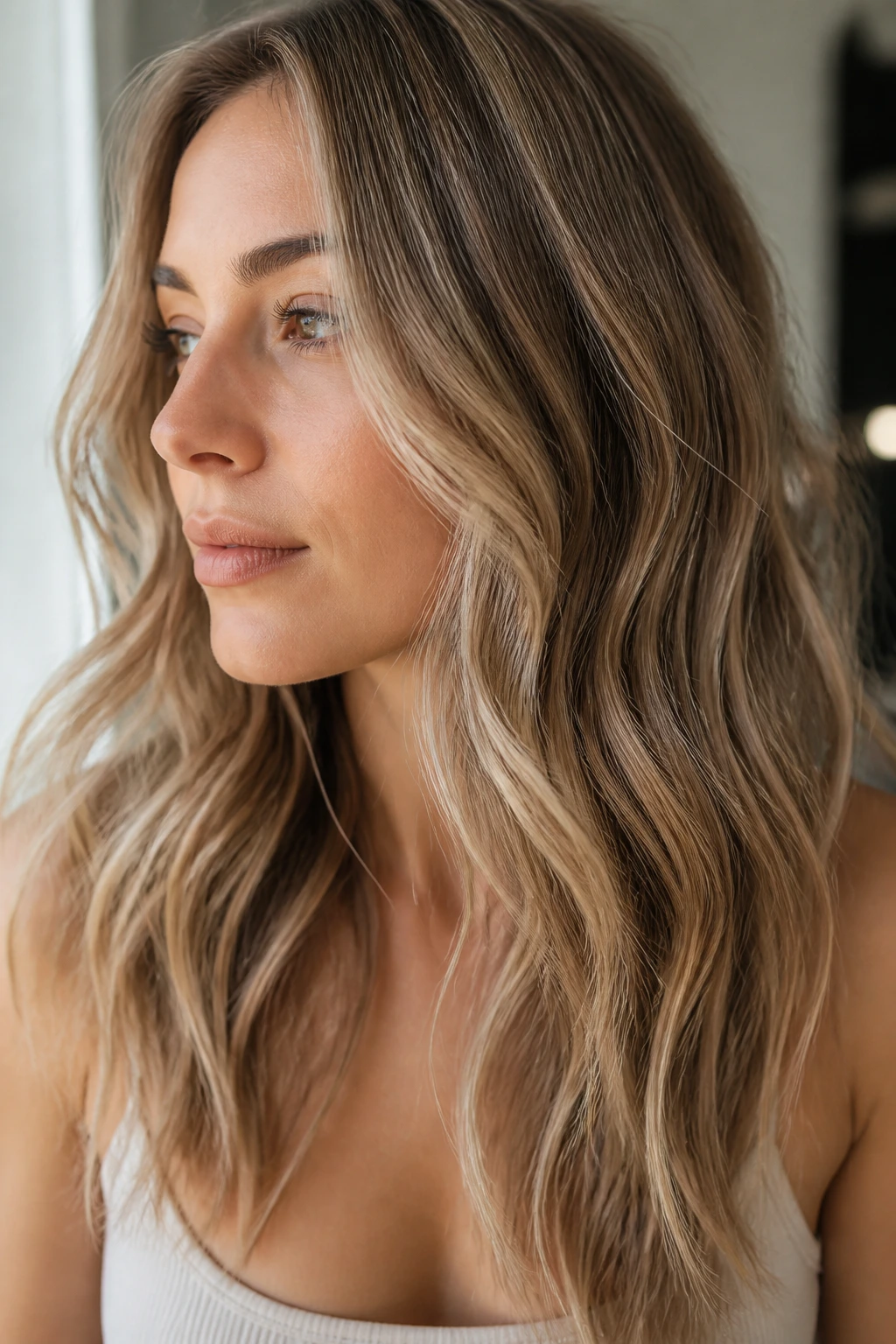
Bronde can be a boring word when people use it lazily, but a real beige bronde melt on wavy hair is one of the most useful color patterns around. It gives you a gentle transition from brunette roots into lighter beige mid-lengths and ends, without a hard stop anywhere. The whole thing should feel melted, not painted in layers.
Why It’s So Good on Waves
Waves already create shifting value—dark, light, dark, light—so a bronde melt simply extends that effect with color. Beige tones are a nice middle ground because they read clean and soft rather than orange or icy. If your natural base sits around level 5 to 7, this is one of the easiest ways to brighten without upsetting the shape of the wave.
What to Ask For
Ask for a root shadow, soft beige midlights, and lighter beige ends. That layered structure keeps the color from floating around on top of the hair. A gloss at the end is usually what makes it look finished rather than just highlighted.
Who It Suits
- People who wear their waves loose and undone
- Medium brunettes who want a sunlit look without obvious foil lines
- Hair that needs dimension more than drama
Beige is sneaky. It’s not flashy, but it’s often the shade that makes the whole head look the most polished.
9. Espresso-and-Toffee Ribbons
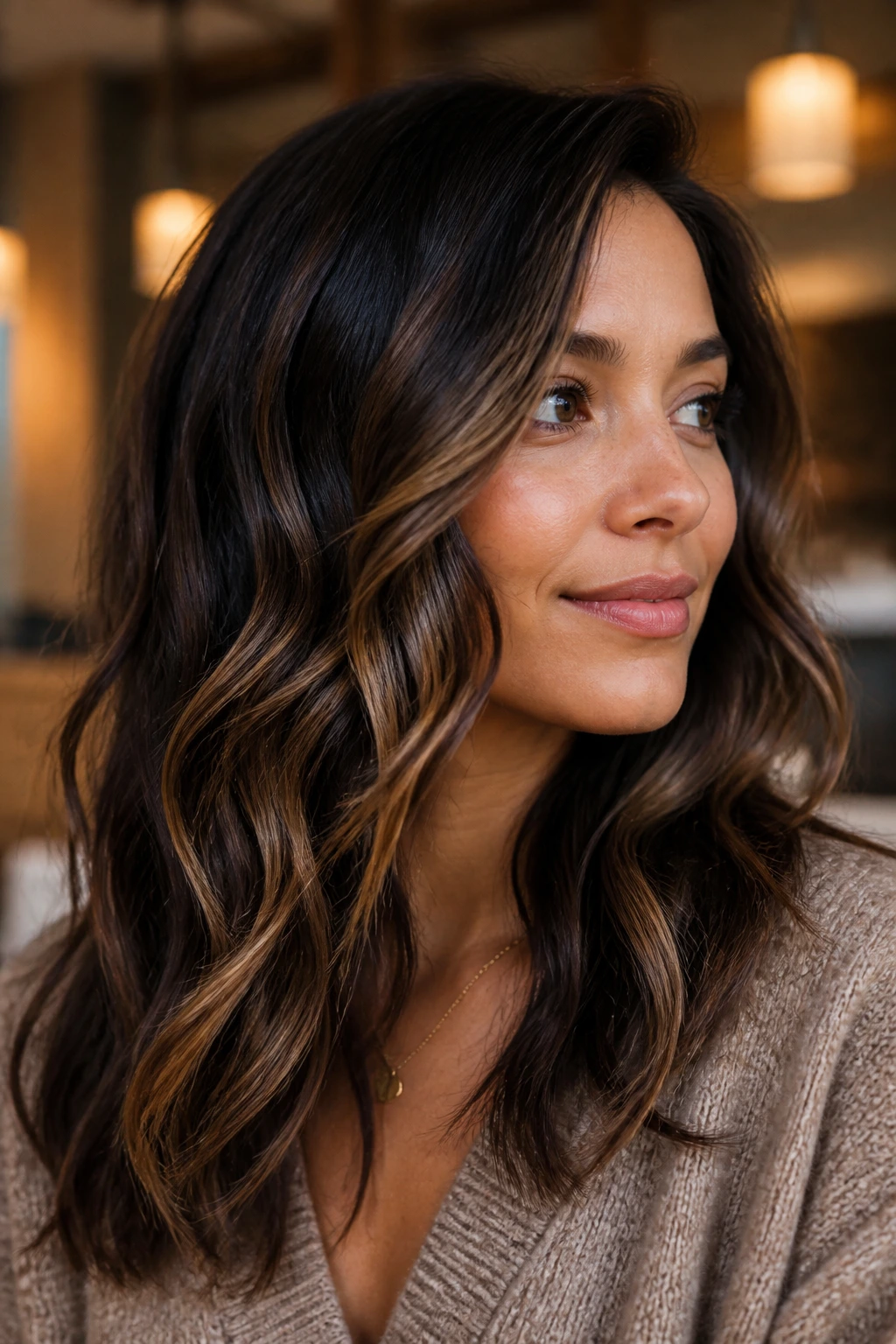
Dark waves can look incredible with highlights, but they need a gentler hand than lighter hair. Espresso-and-toffee ribbons keep the base rich while adding just enough lightness to show the bend of the wave. On very dark brown hair, a few well-placed toffee pieces are more effective than a whole head of bright streaks.
Why This Combo Works
Espresso stays underneath and through the root area, while toffee shows up in the mid-lengths and outer bends. That contrast gives the eye something to read without turning the hair into a patchwork. The result feels layered, not busy.
How to Wear It
A side part makes the ribbons more obvious. A middle part softens them. Either way, the key is to avoid too many bright pieces sitting right next to each other. Dark hair gets noisy fast when the highlights are crowded.
Best For
- Level 3 to 5 brunettes
- Medium to thick waves
- People who want subtle light without losing depth
What to Tell Your Colorist
- Keep the base rich and cool-neutral
- Place toffee pieces in the outer wave pattern
- Leave some uninterrupted espresso sections underneath
That last part matters. Darkness is not the enemy. It’s the frame.
10. Ash Brown Contour Lights
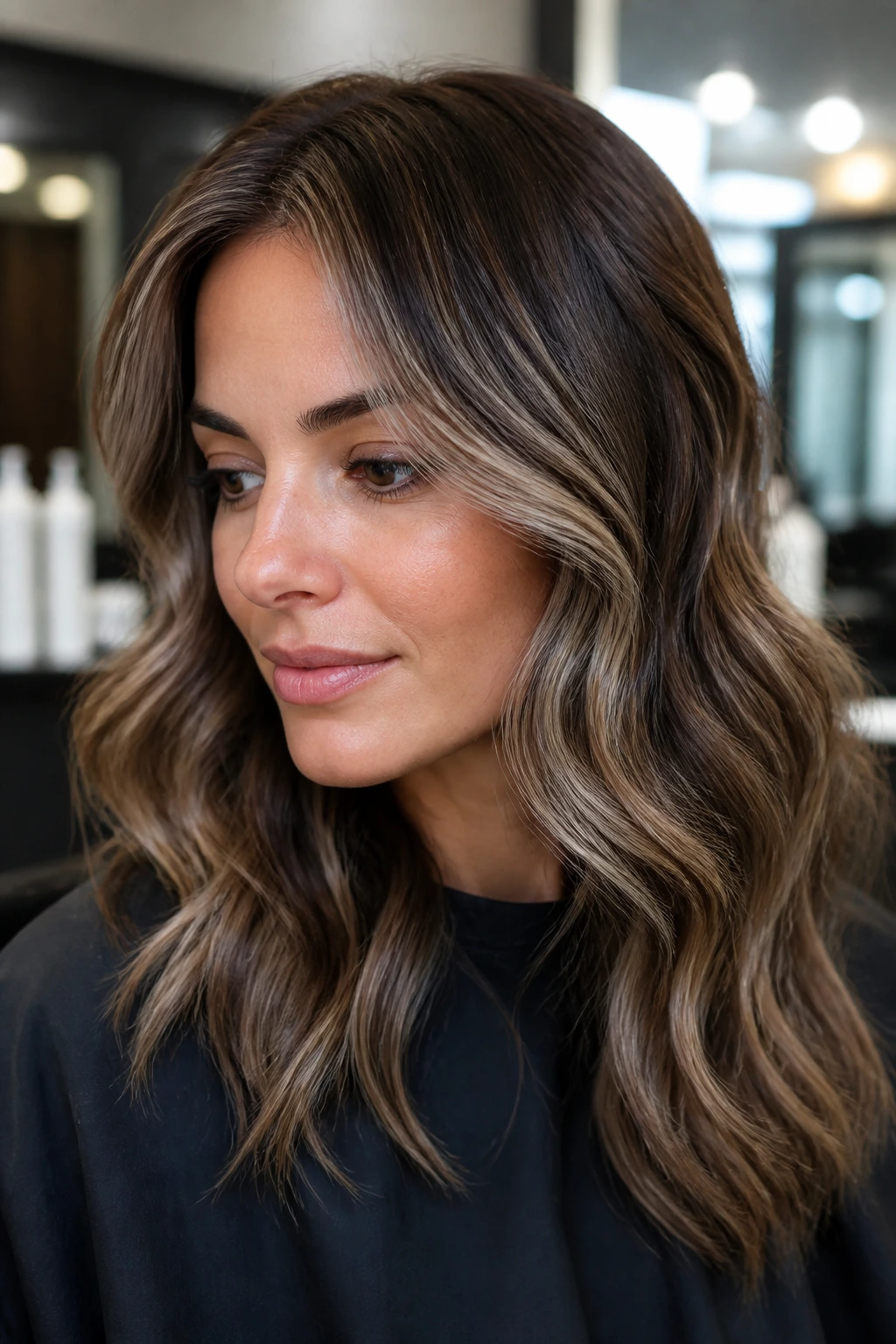
Ash brown contour lights are the cool-toned answer to face-framing highlights. They’re not about warmth or brightness for brightness’s sake. They’re about shaping the face and keeping the overall color soft, smoky, and clean. If your waves sometimes read too orange after coloring, this is the direction I’d look at first.
The Placement Idea
Contour lights sit where the face naturally needs lift: around the hairline, above the temples, and sometimes along the cheekbone level in the front layers. On wavy hair, those pieces bend enough to catch light, but they’re subtle enough that the color still feels grown-in. The trick is to keep the tone ash brown rather than silver-gray, unless you want the tone to go very cool.
Who Should Choose It
- Brunettes who dislike warm brass
- People with layered cuts
- Wave patterns that need a little structure near the front
Why It Helps the Cut
A contour highlight can make a soft shag or layered lob look more deliberate. You see the shape faster because the lighter pieces outline the movement. That’s much better than blanketing the whole head in brightness, especially when the texture already does a lot of the work.
If your hair is porous, ask for a beige-ash toner instead of a flat ash finish. Flat ash can go dull. Beige-ash keeps the shine.
11. Sandy Blonde Ends with a Shadow Root
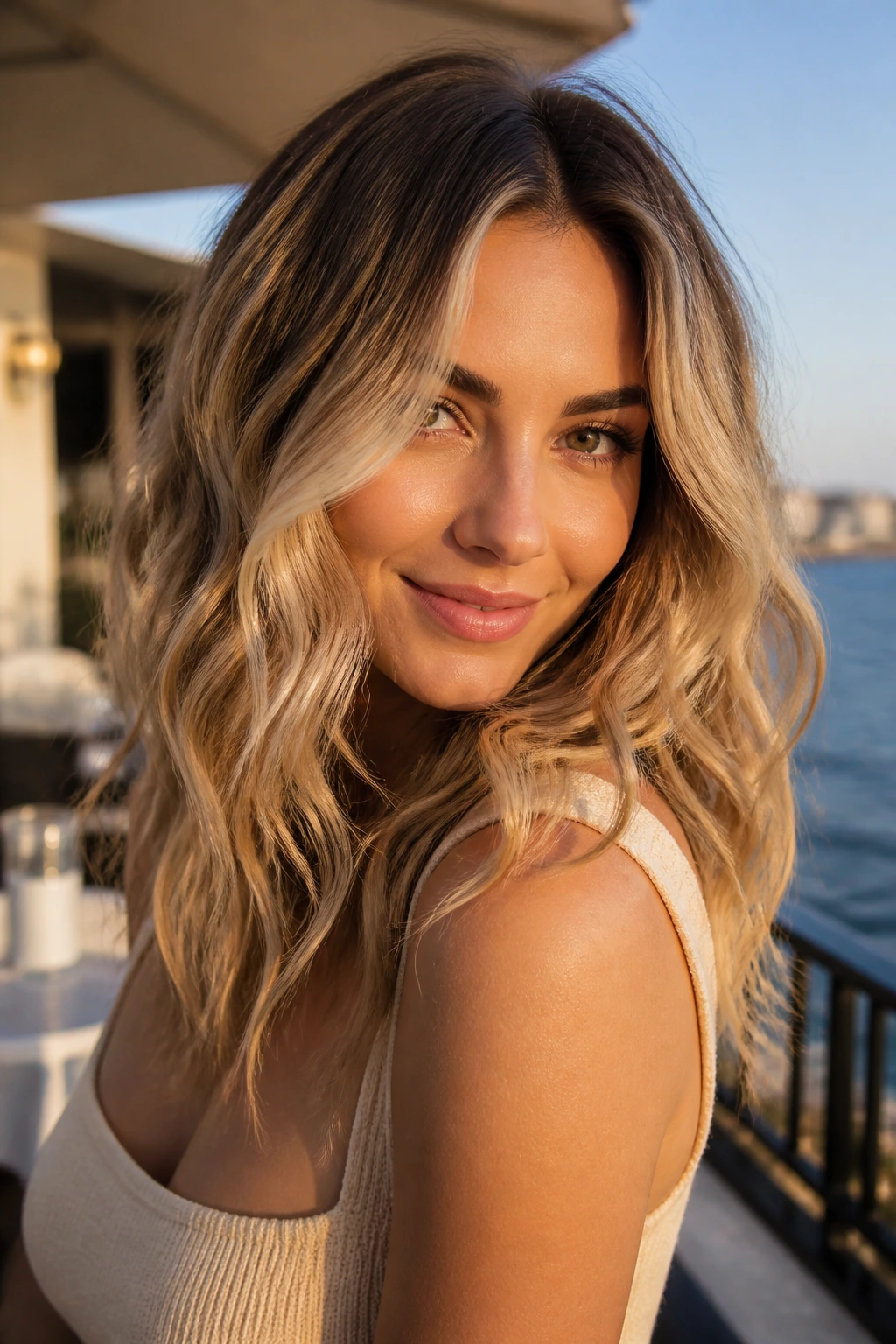
Sandy blonde ends with a shadow root are for people who want the ends to feel bright while the scalp area stays calm. On wavy hair, that shadow-root setup is one of the easiest ways to get a blonde look without making the regrowth line look brutal two weeks later. It’s a practical color choice disguised as a pretty one.
Why the Root Shadow Helps
A shadow root, usually about 1 to 2 inches deep, softens the transition from your natural base into the lighter lengths. That matters on waves because the hair lifts and falls in sections; if the root is too stark, every bend near the scalp starts shouting. Sandy blonde ends—more beige than gold, more soft than icy—keep the finish airy.
Best For
- Hair that grows fast
- People who want fewer touch-ups
- Loose waves and beachy textures
A Small Warning
The ends need enough condition to hold that sandy tone without looking dry. If the hair is already porous, lightening all the way to the ends can make it frizzy fast. A good stylist will usually stop short of the absolute ends or tone them a little deeper so they don’t look hollow.
This one is easy to wear and a little harder to keep pristine. That’s the trade-off. Still worth it.
12. Bronze Glow on Dark Waves
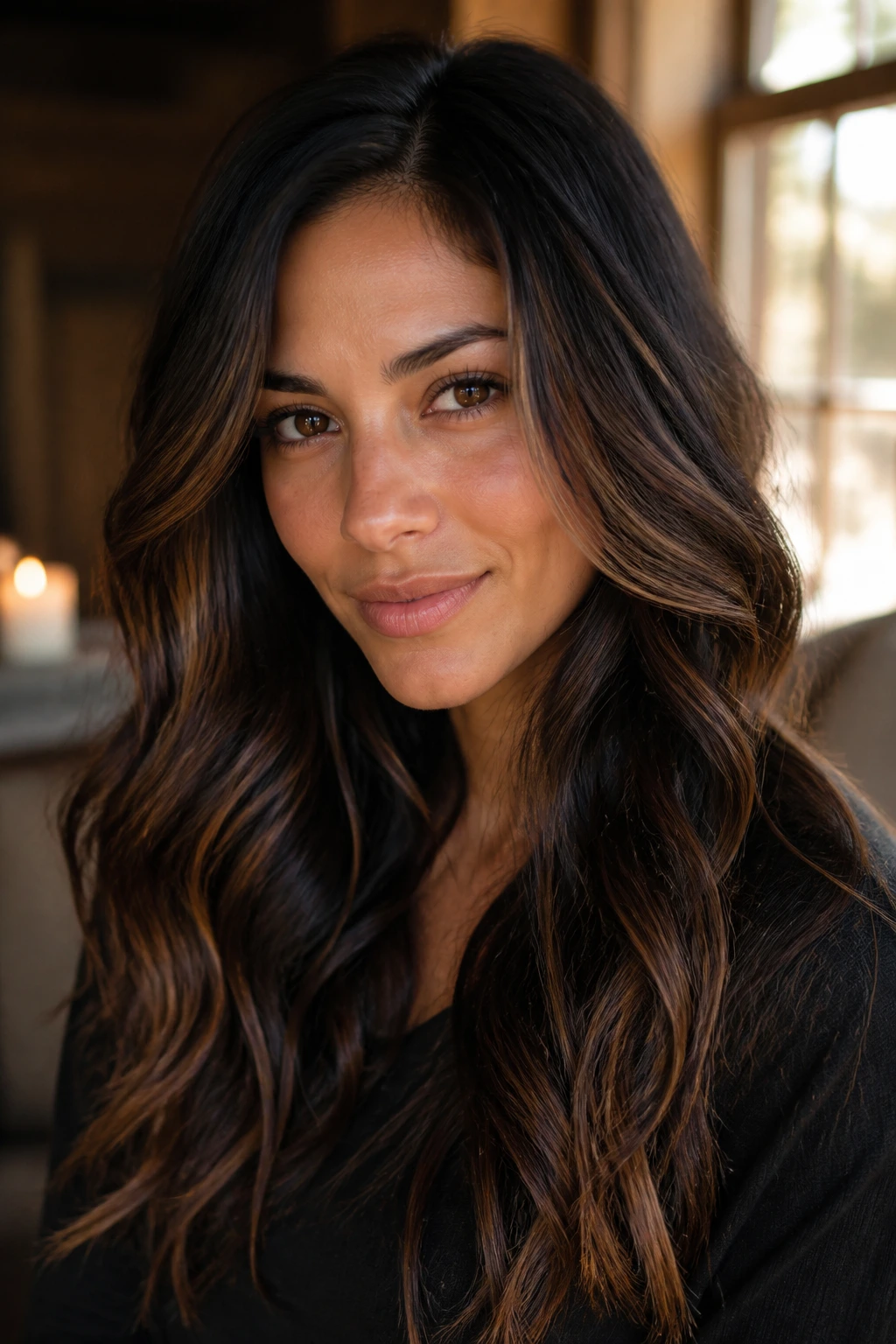
Bronze is the color people forget about when they chase blonde. Big mistake. On dark wavy hair, bronze can do more for dimension than a lighter highlight ever could, because it keeps the base rich while giving the bends a warm metallic edge. It’s especially good when you want movement to show even in low light.
Why Bronze Works Better Than Pale Blonde Here
Bronze sits in a sweet spot between gold, brown, and copper. That middle range means the pieces reflect light without jumping too far away from the natural base. On dark waves, a few bronze ribbons through the mids and around the face can make the hair look thicker, not thinner.
Best Placement
- Around the face
- Through the top layer
- Scattered in the mid-lengths
- Lightly through the ends if the cut is dense
The result should look like warmth coming through the hair, not a separate color sitting on top of it.
Who It’s For
This is a good call if you like brown hair but want it to feel less heavy. It also works on warm skin tones, yes, but more importantly it suits anyone who likes the look of soft copper-gold without going full red.
A bronze gloss every so often keeps the tone from drifting muddy. Without that, it can go flat. Bronze wants shine.
13. Peekaboo Platinum Panels
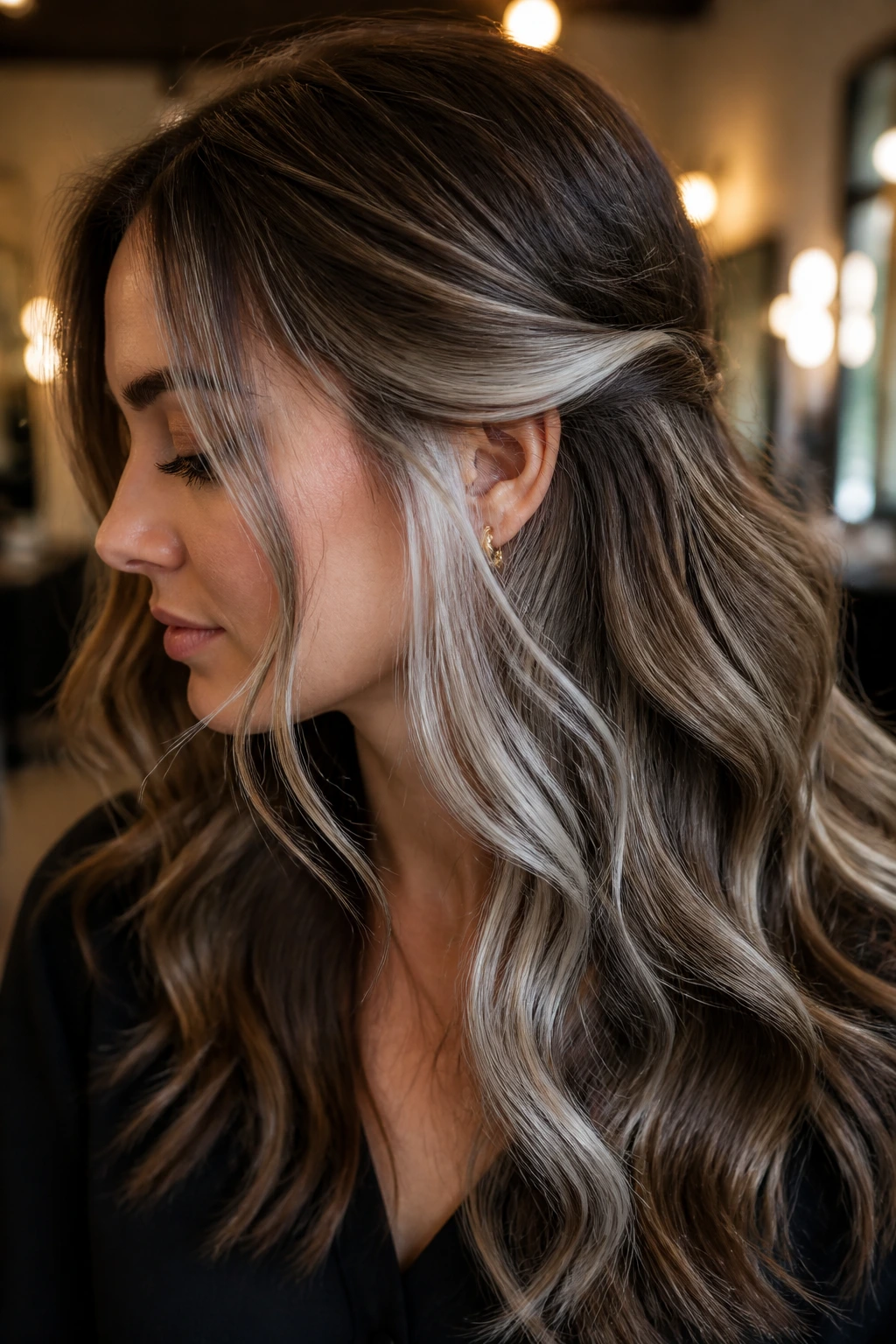
Peekaboo platinum panels are the sneaky option. The lightest pieces live underneath or inside the wave pattern, so they flash out when the hair swings or gets tucked behind the ear. On wavy hair, that hidden brightness looks far cooler than an all-over blonde because it changes every time the hair moves.
Where to Put Them
The best peekaboo placement usually starts under the top layer, near the nape or beneath the crown. Some stylists add a few narrow face-side pieces that peek through only when the hair shifts. You don’t need many. In fact, too many defeats the point.
Why It’s Smart
If you want platinum but don’t want to feel fully blonde all the time, this is the compromise. It lets you keep most of your base color intact while still getting that sharp flash of brightness. On a wave, the contrast feels even more interesting because the light pieces come in and out of sight.
Best For
- People who wear their hair half-up a lot
- Layered cuts
- Medium to thick waves
- Those who enjoy a bit of drama under the surface
This one does require upkeep. Platinum is picky. If you want the hidden pieces to stay clean, you’ll need toning attention and a little more caution with heat and sun. Still, the payoff is fun.
14. Cinnamon Spice Highlights
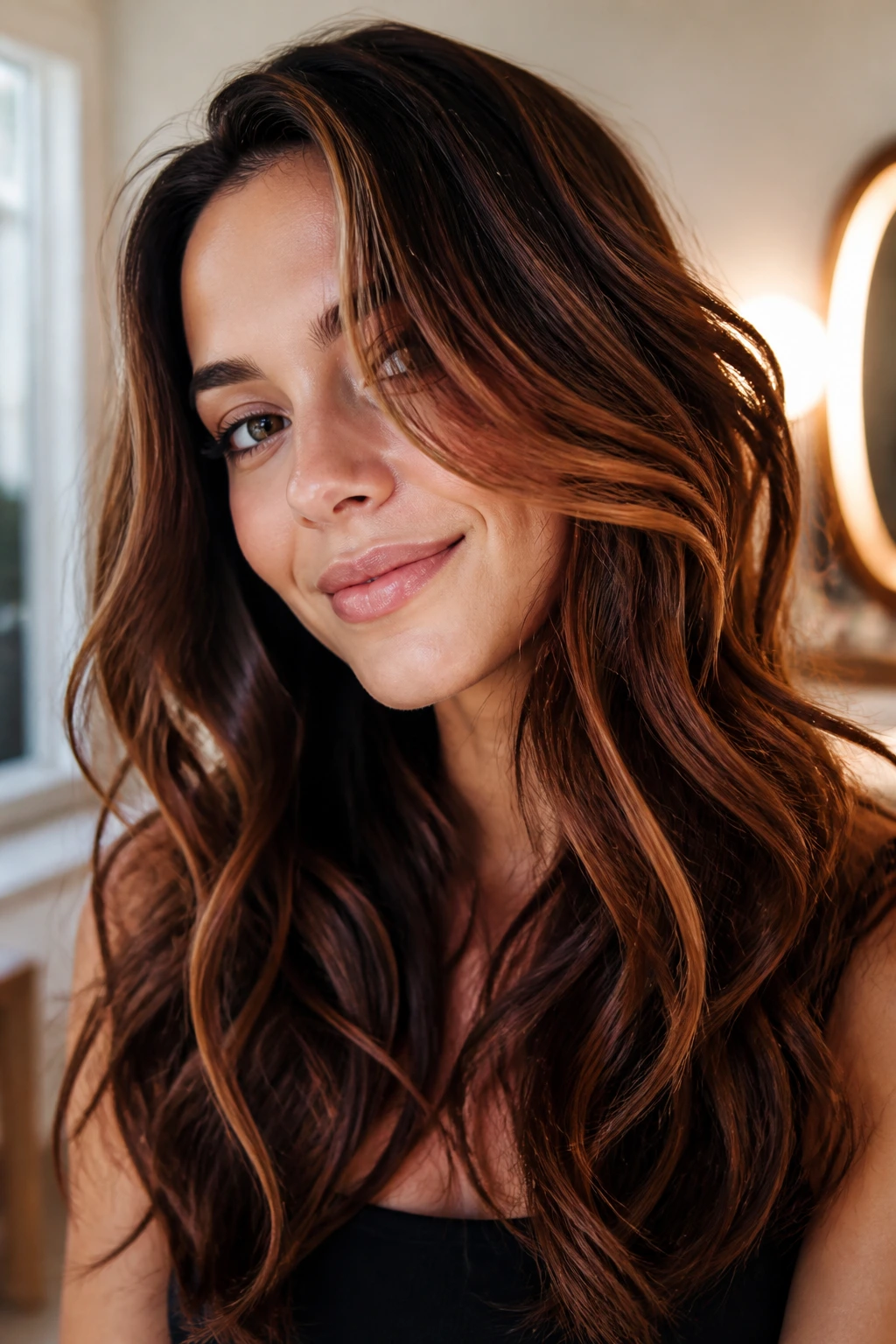
Cinnamon spice highlights are warm, dimensional, and a little richer than caramel. They sit in that red-brown zone that makes waves look deeper, not brighter. If your hair naturally has auburn or golden undertones, cinnamon can make the whole head feel more cohesive without tipping into full copper.
What It Looks Like
Think of a brunette base threaded with muted red-gold ribbons. Not candy red. Not orange. More like the color of a cinnamon stick after it’s been warmed up and rubbed into a darker base. The waves pick up that warmth in the bends, so the finish feels lively from every angle.
Who It Suits
- Medium brown hair
- Natural redheads who want depth
- People who like warm makeup and earthy colors
Why It’s Not One-Note
Cinnamon needs shadows around it. If the whole head goes the same shade, it turns flat fast. That’s why I like it mixed with deeper brunette lowlights or a slightly darker root. The color gets to breathe.
A clear gloss can keep cinnamon from looking dull. Once that warmth goes dry, it can lose its edge. Fresh gloss, soft wave, done.
15. Pearl Blonde Ribbons
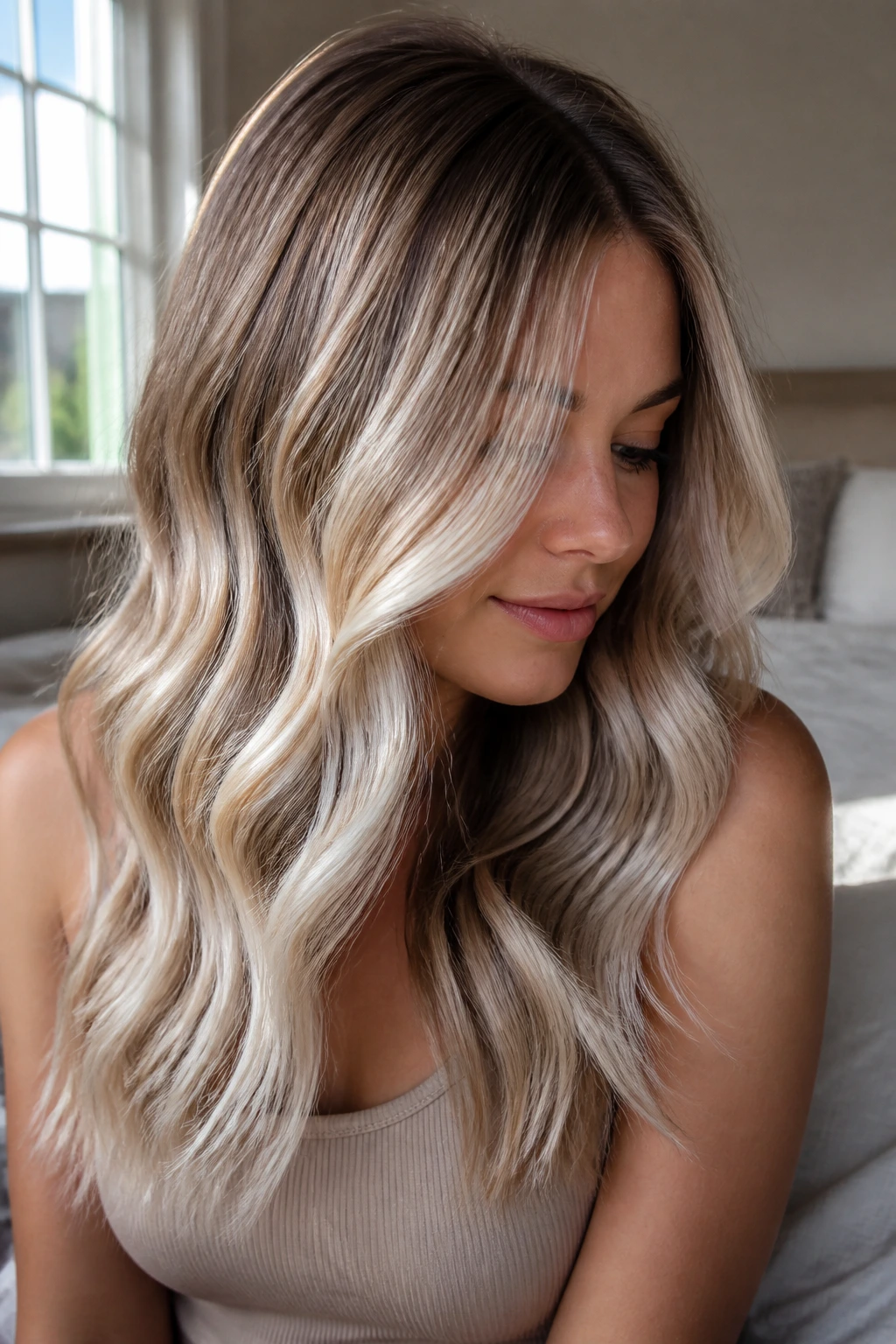
Pearl blonde is softer than icy blonde and cleaner than gold. It has that pale, almost shell-like finish that can look dreamy on wavy hair without going chalky. On a good wave pattern, pearl blonde ribbons catch light in a way that feels delicate, not harsh. On a bad placement, though, it can look washed out. So the placement matters.
Why This Tone Works
Pearl sits in a cool-beige zone with a slight reflective sheen. It’s useful because it gives you brightness while avoiding the yellow cast that sometimes sneaks into pale blonde on textured hair. Wavy hair also benefits from a slightly softer cool tone; pure ice can look stiff against movement.
Best Base Colors
- Light brunettes
- Dark blondes
- Natural blondes who want refinement rather than a big contrast
A Good Ask at the Salon
Ask for fine pearl ribbons with a soft root blur, not blunt light strips. You want the color to melt into the wave, especially around the ends where dryness can make pale blonde look brittle.
The undertone matters
If your hair pulls warm fast, ask for a beige-pearl finish rather than a blue-white one. That keeps the blonde from going flat or smoky in a bad way. Pearl should look clean and soft, not frosted.
16. Dimensional Red Copper
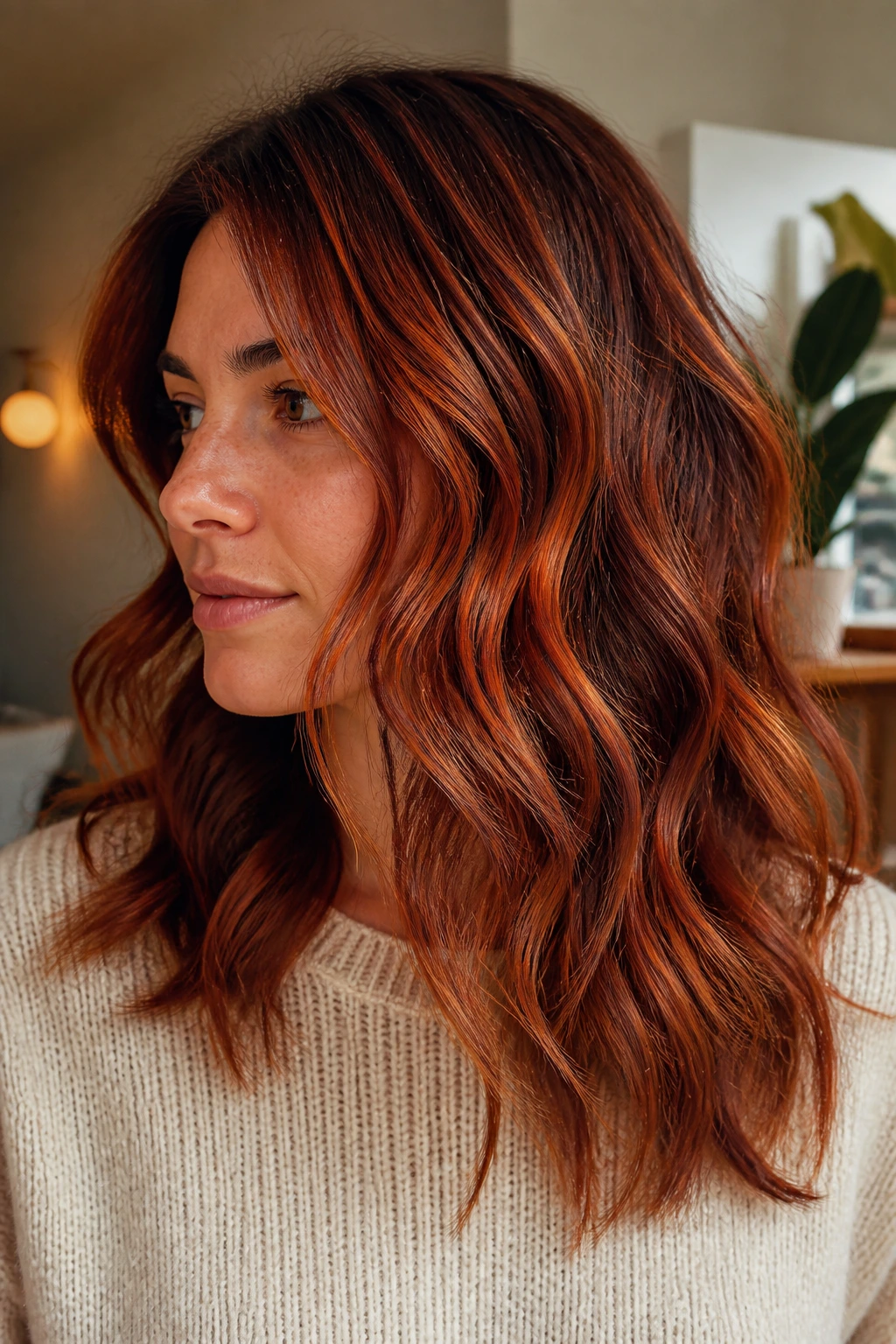
Dimensional red copper is for someone who wants the room to notice the hair, but not in a screaming way. The dimension is the secret. You get copper brightness, sure, but also deeper red-brown pieces that keep the color from looking like one flat shiny sheet. On wavy hair, that layered red effect looks especially good because each bend catches a different tone.
Why Dimension Matters in Red
Red fades faster than brown. That’s just the deal. If you color the whole head one identical red-copper shade, the fade can turn uneven and dull. Mixing brighter copper ribbons with deeper red lowlights gives the hair more depth from the start, and that depth helps the color age better.
What to Ask For
Ask for copper highlights with ruby or mahogany lowlights woven through the mids and underneath. The goal is a living color, not a helmet of red. On waves, the brighter pieces should sit where the hair bends outward, while the deeper pieces tuck in the shadow.
Best For
- Medium brunettes
- Natural redheads
- Thick, expressive wave patterns
- Anyone who likes warm color with edge
This is one of my favorites on layered cuts because the red catches in the movement so cleanly. If you ever wanted your hair to look like it had its own weather system, this is close.
17. Smoky Mushroom Brunette
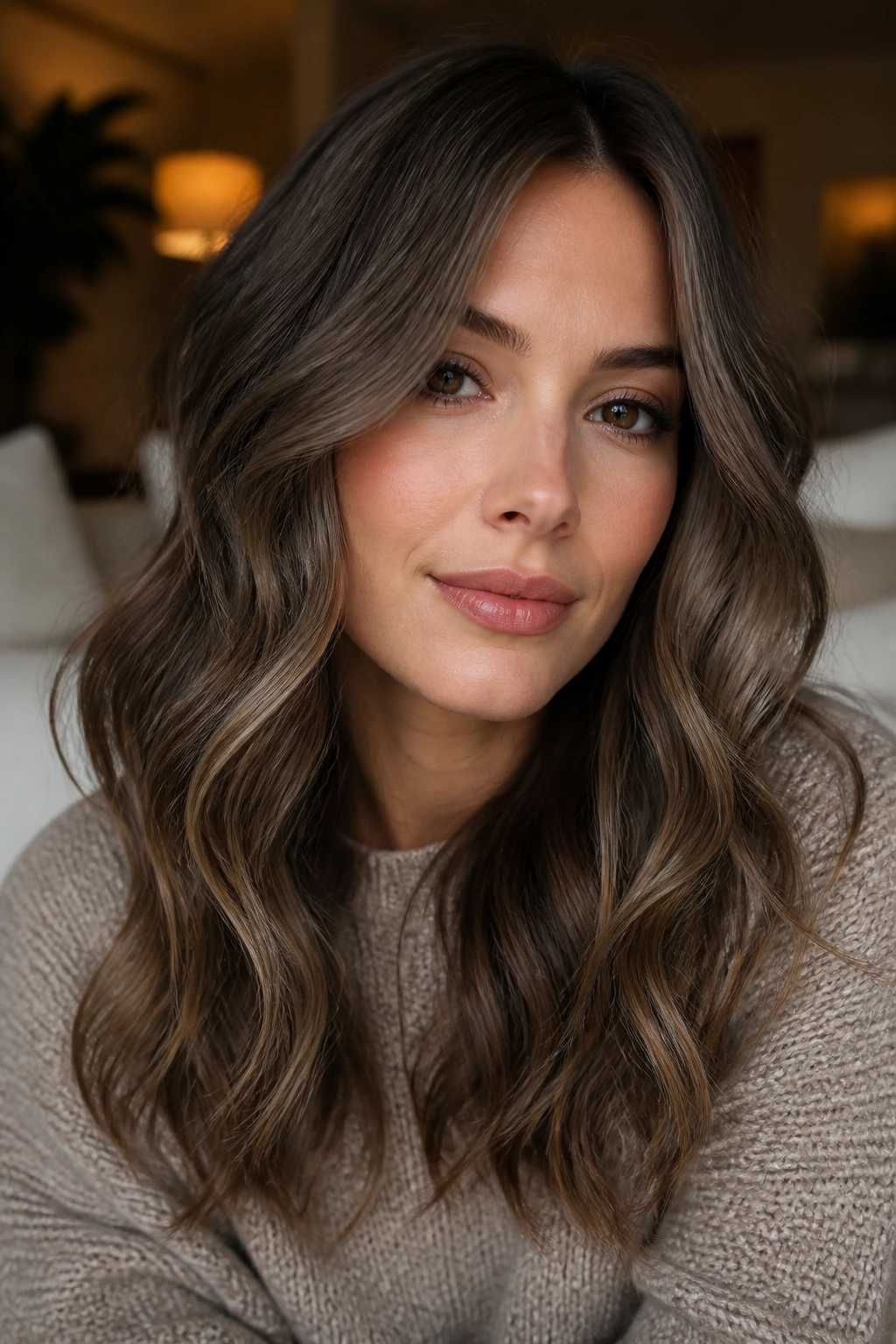
Smoky mushroom brunette is what happens when you want cool, earthy, and lived-in all at once. It’s a muted brown-beige mix with soft ash and taupe notes, and on wavy hair it avoids the harshness that some ash colors can create. It has more movement than a plain brown and more softness than a straight-up smoky brunette.
Why It’s So Balanced
The mushroom tones sit between cool and neutral, which is useful if your hair gets brassy quickly but you don’t want to look gray. Wavy hair can make this color look almost velvety because the bends catch the lighter taupe pieces while the darker sections stay tucked underneath.
Best for
- Brunettes who want a cooler finish
- Medium-density hair
- Waves that need extra texture emphasis
- People who like understated color with depth
How It Should Be Placed
You want a mix of soft highlights and deeper lowlights, not a single flat ash gloss. The deeper pieces keep the hair from going washed out, while the lighter taupe bits give the wave pattern a little lift. It’s a shade that rewards good placement and punishes laziness.
If you’re tired of warm brown but not ready for blonde, this is the cleaner move.
18. Sunlit Golden Balayage
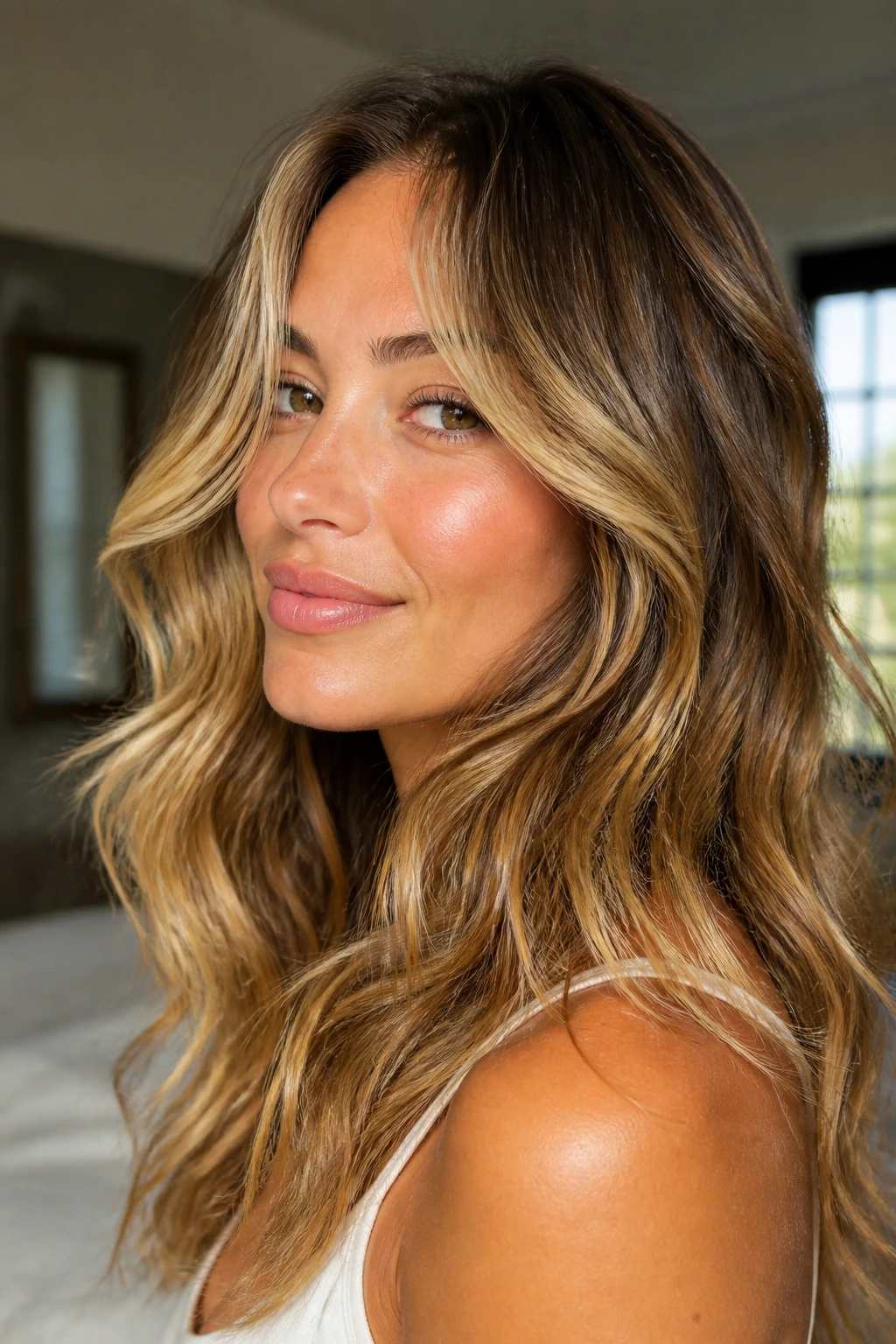
Sunlit golden balayage is the classic people picture when they think of waves and highlights, and for good reason. The warmth follows the hair’s movement in a way that feels natural, especially when the wave pattern is loose and the layers are long. It is not subtle in the same way a babylight is subtle. It’s more open, brighter, and a little beachier.
Why It Works
Golden tones reflect light hard, and that can make waves look fuller and more active. The color usually lives through the mid-lengths and outer layers, with the brightest pieces around the top and face. If you keep the root slightly deeper, the golden sections look much richer.
Who Should Choose It
- Dark blondes who want more warmth
- Medium brunettes who can handle lift
- People with wavy layers and a lot of movement
A Better Version of “Beach Hair”
This is the version I like when it’s not overdone: a few brighter pieces near the face, softer gold through the lengths, and no harsh line at the root. That combination keeps the hair from going costume-y. You still get brightness. You just don’t get that over-processed, all-over glow that can flatten the cut.
19. Cool Mocha Lattice Highlights
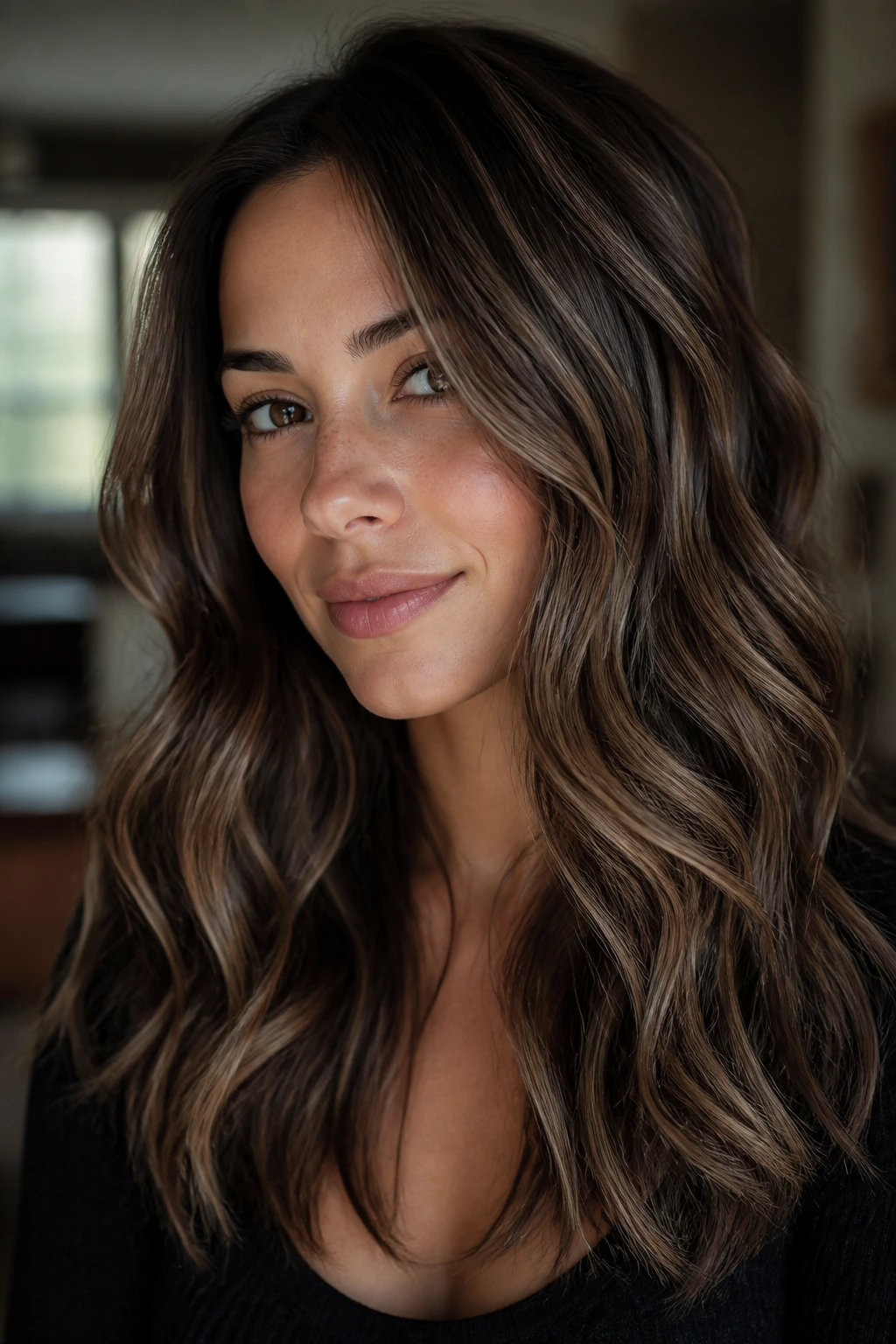
Cool mocha lattice highlights are for people who want structure more than flash. The idea is to weave fine light pieces through a dark mocha base in a crisscross pattern, almost like the strands are stitched together with light. On waves, the effect is subtle but very dimensional. It reads as expensive because it looks complicated, even when it’s quiet.
Why the Lattice Pattern Works
A lattice placement keeps the highlights from lining up in obvious rows. Instead, the pieces land at different angles, which lets the wave pattern do the rest. You get movement in the color itself, not just in the haircut. That matters on darker waves, where a straight foil pattern can start looking blocky fast.
Best For
- Dark brunettes
- Fine to medium waves
- People who want subtle brightness under indoor light and more visible dimension outside
How to Keep It Soft
Ask for mocha base depth with fine cool-beige ribbons, not stark blonde strips. The contrast should feel like texture, not stripes. A gloss every few weeks keeps the cool tone from turning flat.
If you want your hair to look layered even on the days you barely touch it, this is one of the smartest choices in the whole lineup.
Why Placement Matters More Than Brightness on Wavy Hair
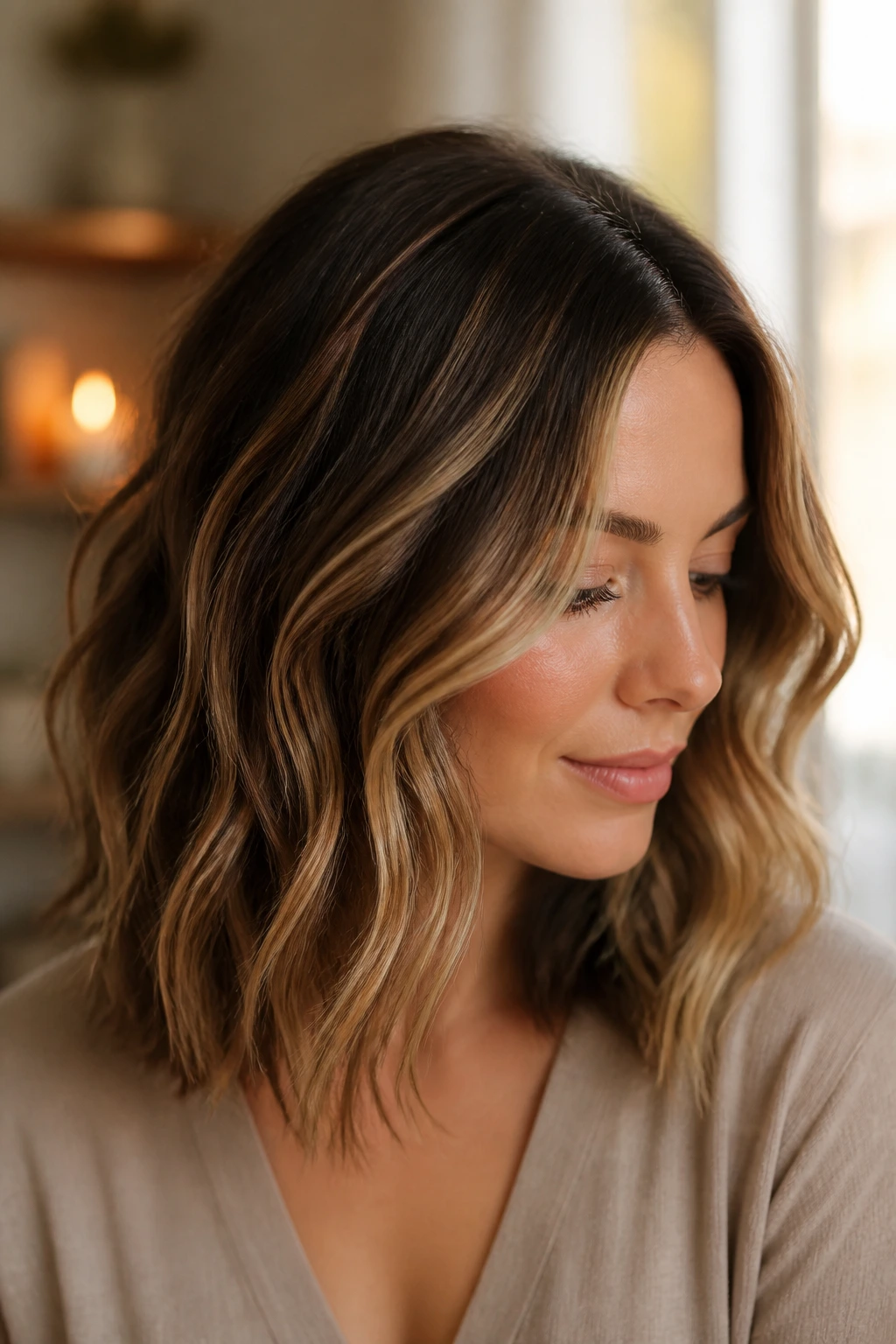
Wavy hair has a funny habit of making color look better when it’s slightly imperfect. That’s not a flaw. It’s the point. The bends create little ridges and shadows, so a highlight that sits in the right spot will flash as the hair moves, then disappear just enough to keep the look soft. That’s why a thoughtful partial can beat a bright all-over color every time.
The other thing waves do well is soften the line between shades. On straight hair, you see a highlight band exactly where it sits. On wavy hair, the curve blurs that line a bit, especially when the highlight is painted on the outside of the bend or woven through the top layer. It’s the same reason a good root shadow looks cleaner here than it does on straighter textures. The hair itself helps blend.
Essential Tools for Salon Visits and At-Home Care
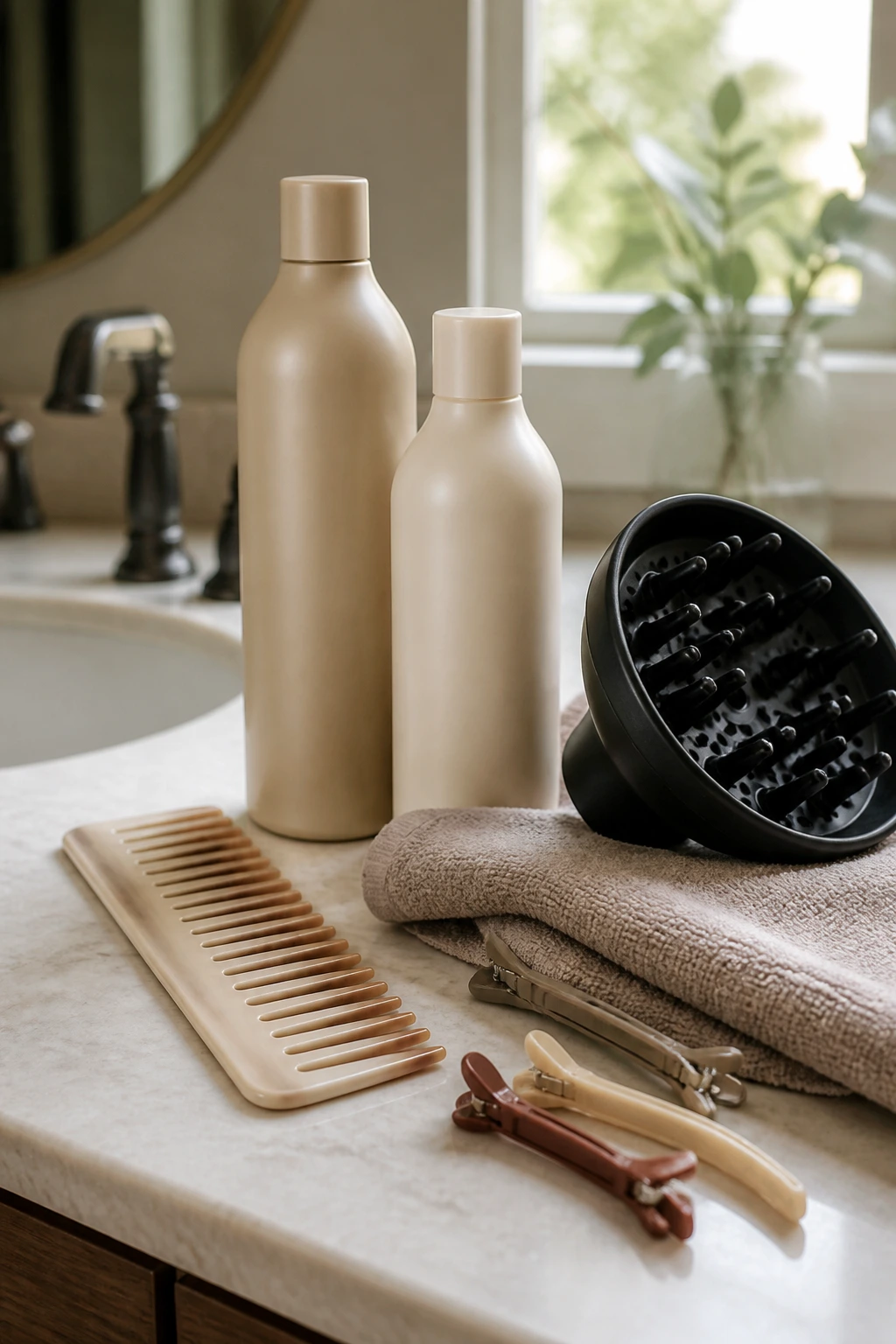
- Reference photos with good lighting: Bring 2 or 3, and make sure they show both the front and the back if possible.
- Wide-tooth comb: Keeps wavy hair from breaking up into frizz when you’re detangling color-safe products through it.
- Color-safe shampoo and conditioner: Sulfate-free formulas are usually gentler on highlighted lengths and help the tone hold longer.
- Purple or blue shampoo: Purple helps blonde and beige tones; blue is usually better for brunettes who fight orange brass.
- Heat protectant spray: Non-negotiable if you diffuse, curl, or smooth your waves with a tool.
- Microfiber towel or cotton T-shirt: Rough terry cloth can rough up lightened strands and make the ends frizzier than they need to be.
- Deep conditioning mask: Use it weekly if your hair is lightened, especially from mids to ends.
- Gloss or toner appointment: Great for refreshing beige, pearl, caramel, copper, and ash tones without re-lightening.
- Sectioning clips: Helpful if you’re wrapping waves or doing at-home toning work on very thick hair.
- Diffuser attachment: Keeps your wave pattern intact so the highlights show their shape instead of getting blasted flat.
How to Choose the Right Tone for Your Base Color
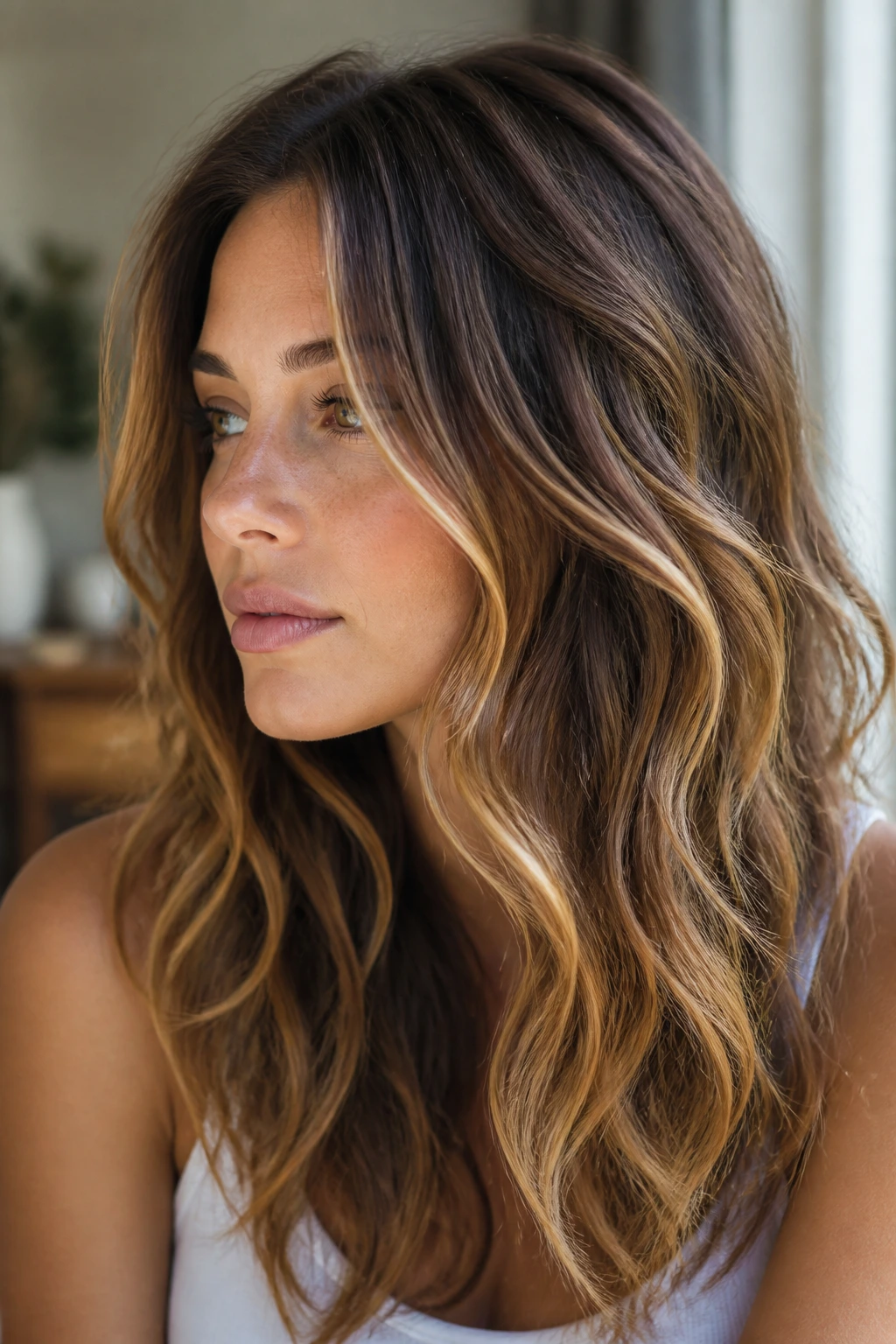
Picking the right highlight tone on wavy hair starts with your base level, not your inspiration photo. A level 4 dark brunette can wear bronze, caramel, cinnamon, or espresso-toffee pieces beautifully, but a pale champagne blonde on that base needs a lot more lift and maintenance. A level 7 dark blonde can move lighter faster, but it can also turn yellow if the toner is too warm.
Here’s the part people skip: undertone matters more than trend words. If your natural hair pulls warm, a beige, honey, or bronze family usually looks smoother than a harsh ash. If your hair goes orange the second lightener touches it, cooler glazes and lowlights help keep the finish cleaner. And if your waves are fine, I’d lean toward babylights, contour lights, or a melt rather than chunky pieces. Fine waves need space to move.
Bring photos, yes, but also be ready to describe what you do not want. “No stripey front pieces.” “No gold brass.” “I want the grow-out soft.” Those little lines save more trouble than a vague “something dimensional.”
How to Wear These Highlights So the Color Shows
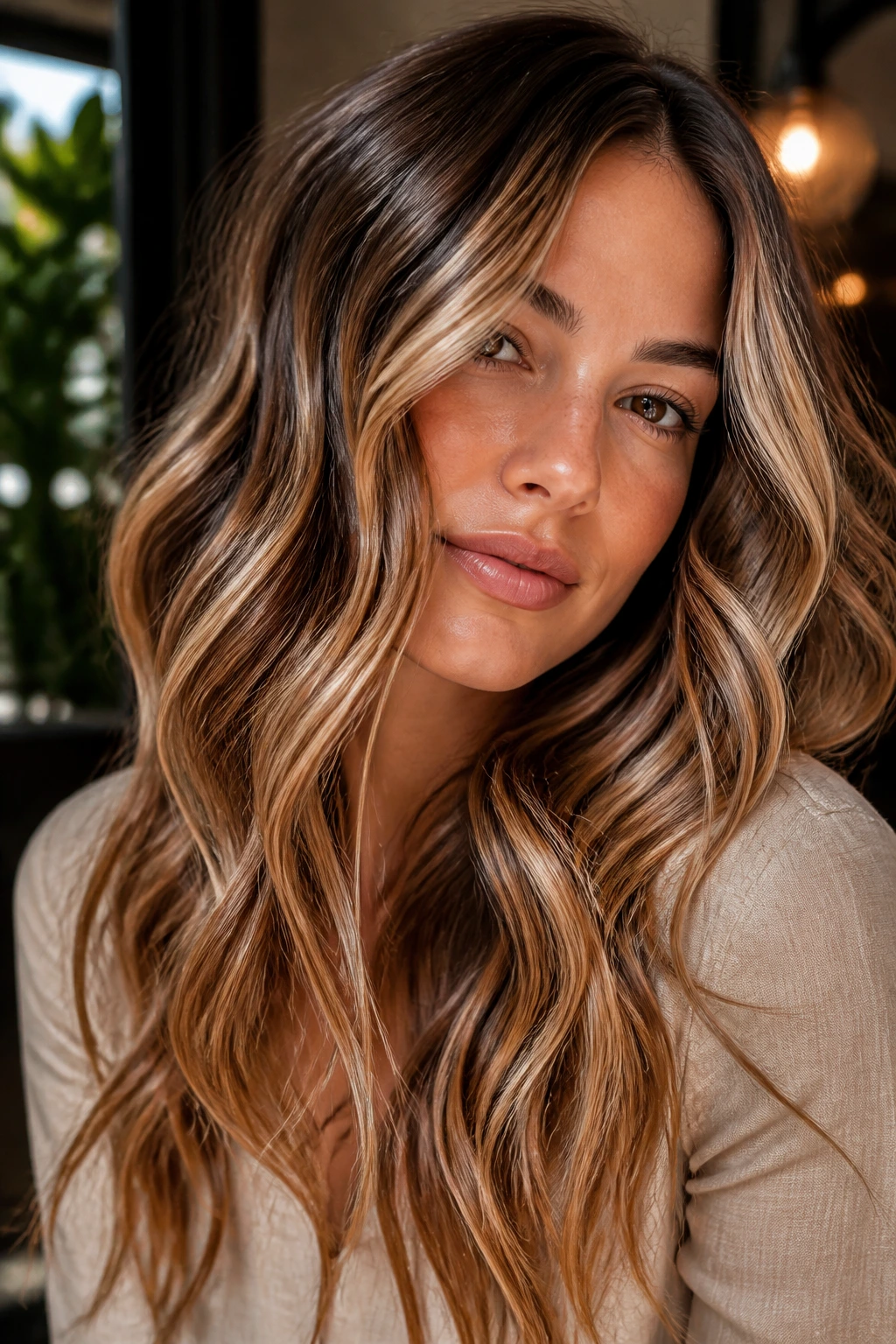
Styling: Loose bends show the most contrast. If you air-dry, scrunch a light mousse into the mid-lengths and let the wave pattern do the work. If you diffuse, keep the airflow low and stop before the hair gets puffed out at the ends.
Best Partings: A middle part makes money pieces, contour lights, and face-framing panels read right away. A side part pushes brightness off-center, which can make caramel ribbons and bronze tones look softer and more lived-in.
Cut Pairings: Long layers, shags, soft lobs, and collarbone cuts are the easiest partners for highlight work. A blunt cut can still wear them, but the color needs to be cleaner and less busy, or the finish starts to feel heavy.
Finishing Touches: Use a pea-sized serum or a light cream on the bottom third of the hair only. The goal is a touch of sheen on the lightest pieces, not a greasy seal that mutes the wave pattern. If the hair is dull, a quick gloss service can matter more than another round of lightening.
Additional Tips to Keep the Color Looking Intentional
Gloss Boost: A demi-permanent gloss 2 to 4 weeks after highlighting can tighten the tone and make caramel, champagne, pearl, or ash pieces read cleaner. It’s one of the easiest ways to keep lightened wavy hair from drifting brassy.
Texture Trick: If you want the highlights to look richer, use a styling product that separates the wave a little—mousse, lightweight curl cream, or a salt-free wave spray. Too much softness can blur the color right out of the pattern.
Face-Frame Boost: If the overall color is subtle, add just one extra slice near the cheekbone or temple. That tiny change can make the whole style feel brighter without changing the rest of the head.
Make-It-Yours: Fine waves usually look best with babylights and melts. Thicker waves can carry wider ribbons, lowlights, and stronger contrast. If you’re in between, a hybrid placement—soft around the face, a little bolder underneath—tends to land well.
Tone Shift: Warm up a too-cool blonde with beige or honey, or cool down an orange brunette with mushroom, ash brown, or blue-based brunette gloss. Don’t fight the base. Nudge it.
Maintenance, Touch-Ups, and Fading Control
Wavy hair highlights can stay flattering for a long stretch if you treat tone and placement as separate jobs. The placement lasts longer than the tone. That’s the first thing to understand. A well-placed balayage, ribbon light, or lowlight pattern can still look good months later even when the gloss has faded a bit.
Plan on a toner or gloss refresh every 4 to 8 weeks if your color leans blonde, beige, ash, or pearl. Warm tones like caramel, honey, bronze, and cinnamon can sometimes stretch a little longer, but they still fade, especially if you use hot water or a strong clarifying shampoo. Root shadows and contour pieces generally need a touch-up every 8 to 12 weeks, while full highlight refreshes can land around 10 to 16 weeks depending on how bright you went.
At home, wash with lukewarm water, not steaming hot. Hot water strips tone fast and leaves the ends rough. Use deep conditioner once a week if the hair is lightened, and don’t skip heat protectant before diffusing or curling. If you swim or spend a lot of time in sun, a UV-protecting spray is worth the bottle. Not glamorous. Useful.
Variations and Adaptations to Try
The Low-Drama Grow-Out: Ask for a deeper root shadow, softer mid-length brightness, and no hard face-framing stripe. This is the easiest route if you want color that still looks good when you miss an appointment.
The Bold Contrast Version: Keep the base dark and add brighter money pieces, platinum panels, or stronger caramel ribbons near the top layer. This works best on medium-to-thick waves that can hold shape without looking stringy.
The Cool-Toned Switch: If warmth keeps bothering you, move the whole look toward ash brown, mushroom brunette, beige blonde, or pearl ribbons. The color will feel cleaner, especially on hair that turns brassy fast.
The Warm Glow Edit: Push the palette toward honey, bronze, caramel, cinnamon, or copper apricot. This is a good fit if your natural shade already leans golden or you want the waves to look softer and richer.
The Fine-Wave Fix: Swap chunky panels for babylights, contour lights, or a clean bronde melt. Fine waves can disappear under heavy contrast, so the lighter pieces need to be narrow and evenly spaced.
The Thick-Wave Upgrade: Add lowlights under the crown and around the ends so the brighter pieces don’t float on top. Thick waves can carry more visual weight, and they usually look better when the shadows are part of the plan.
Common Mistakes That Flatten Wavy Highlights
-
Placing highlights in neat, even rows: Wavy hair doesn’t need a grid. Rows can make the color look stripy once the hair bends. Ask for staggered placement, hand-painted ribbons, or a weave that shifts in width.
-
Going too light too fast: If the base is dark and the lift jumps too far in one appointment, the hair can look brassy or brittle. A slower lift with a gloss between sessions often looks cleaner and feels safer on the hair.
-
Ignoring lowlights: Pure brightness can wash out the texture, especially on fine or medium waves. A few deeper pieces underneath or near the crown make the highlights stand up better.
-
Choosing tone by name only: “Ash blonde” and “beige blonde” are not the same thing. Bring photos and talk about undertone, not just the label. That small correction avoids a lot of disappointment.
-
Overdoing purple shampoo: Too much can dull beige, honey, and pearl tones, and on porous hair it can leave odd violet patches. Use it like a tool, not a daily shampoo.
-
Rough drying after color: Aggressive towel rubbing and high heat make the highlighted pieces puff up and fray. Pat the hair dry, use a diffuser on low, and keep the ends protected with a light leave-in.
Frequently Asked Questions
Which highlights look best on wavy hair?
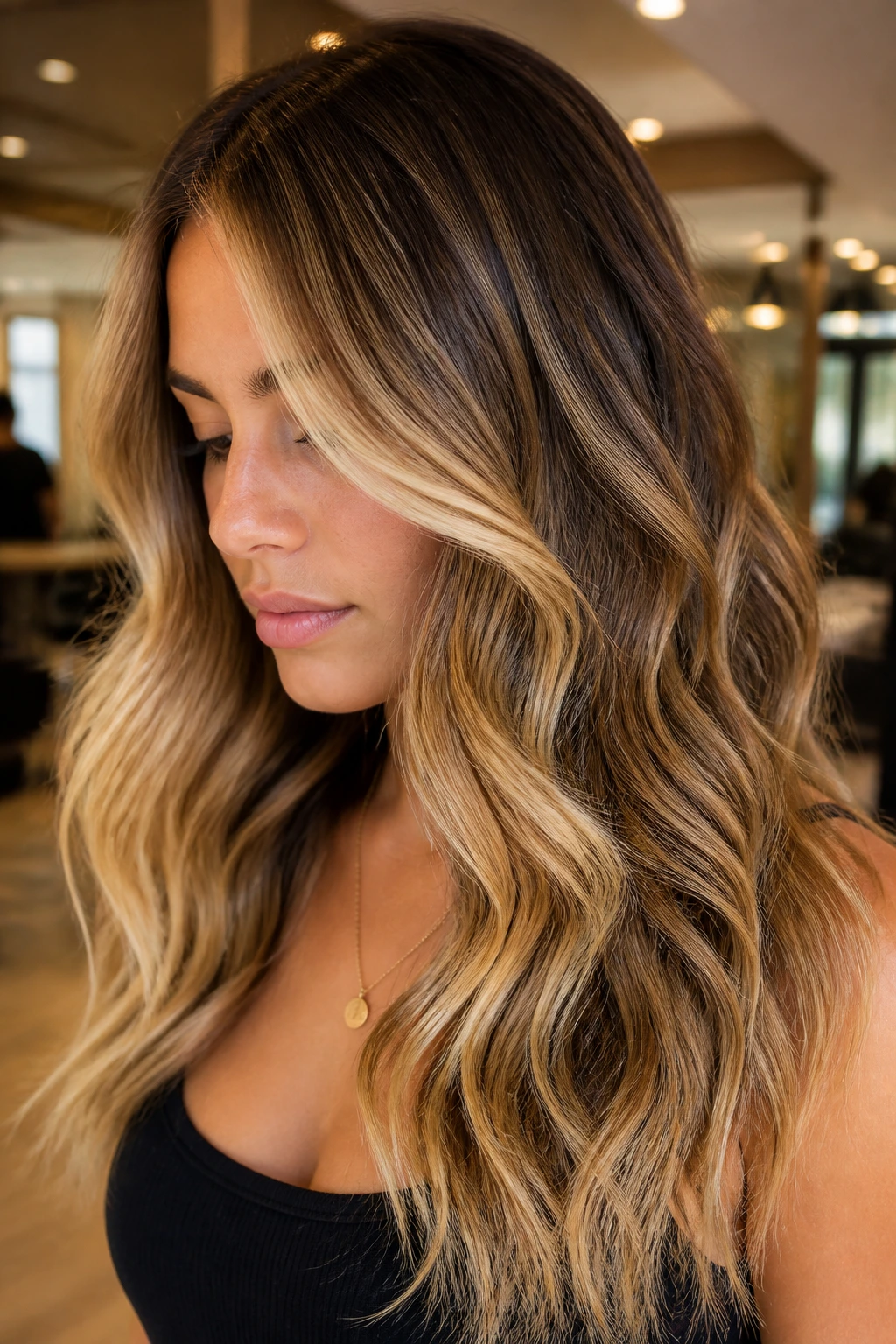
The most flattering options are usually balayage, babylights, ribbon highlights, face-framing money pieces, and soft lowlights. They let the wave pattern show instead of covering it up with one uniform shade.
Is balayage or foilayage better for wavy hair?
Foilayage often gives you a little more lift, which helps if your base is dark or resistant. Classic balayage gives a softer grow-out. If you want both brightness and softness, foilayage is usually the safer bet.
Will highlights make my wavy hair frizzy?
They can if the hair is over-lightened or dried out. The color itself isn’t the problem; the condition is. Keep the mids and ends conditioned, use heat protectant, and avoid blasting the hair dry at high heat.
What highlight tone works best on dark brown wavy hair?
Bronze, caramel, toffee, cinnamon, and espresso-ribbon placement usually look strongest. They give you visible contrast without forcing the hair into a harsh blonde place that can look patchy on dark bases.
How often do wavy hair highlights need touch-ups?
It depends on how light you go and how strong the root shadow is. Soft balayage can stretch to 3 or 4 months between bigger appointments, while platinum, pearl, and very bright money pieces may need attention every 6 to 8 weeks.
Can fine wavy hair handle chunky highlights?
Yes, but only in small doses. A few wider panels around the face or a partial set can work; too many chunky pieces can make fine waves look sparse. Babylights and contour lights usually do more for this hair type.
How do I stop highlights from turning brassy?
Use a color-safe shampoo, wash with lukewarm water, and ask for a toner that matches your undertone instead of fighting it. Blue shampoo helps brunettes. Purple shampoo helps blondes. Neither one should be used like a daily cleanser.
Can I get highlights if my hair is already color-treated?
Usually yes, but the color history matters a lot. Dark box dye, old henna, or repeated bleaching changes the plan. A strand test and an honest conversation with the colorist are the smartest first step.
The Shade That Lets Your Waves Move
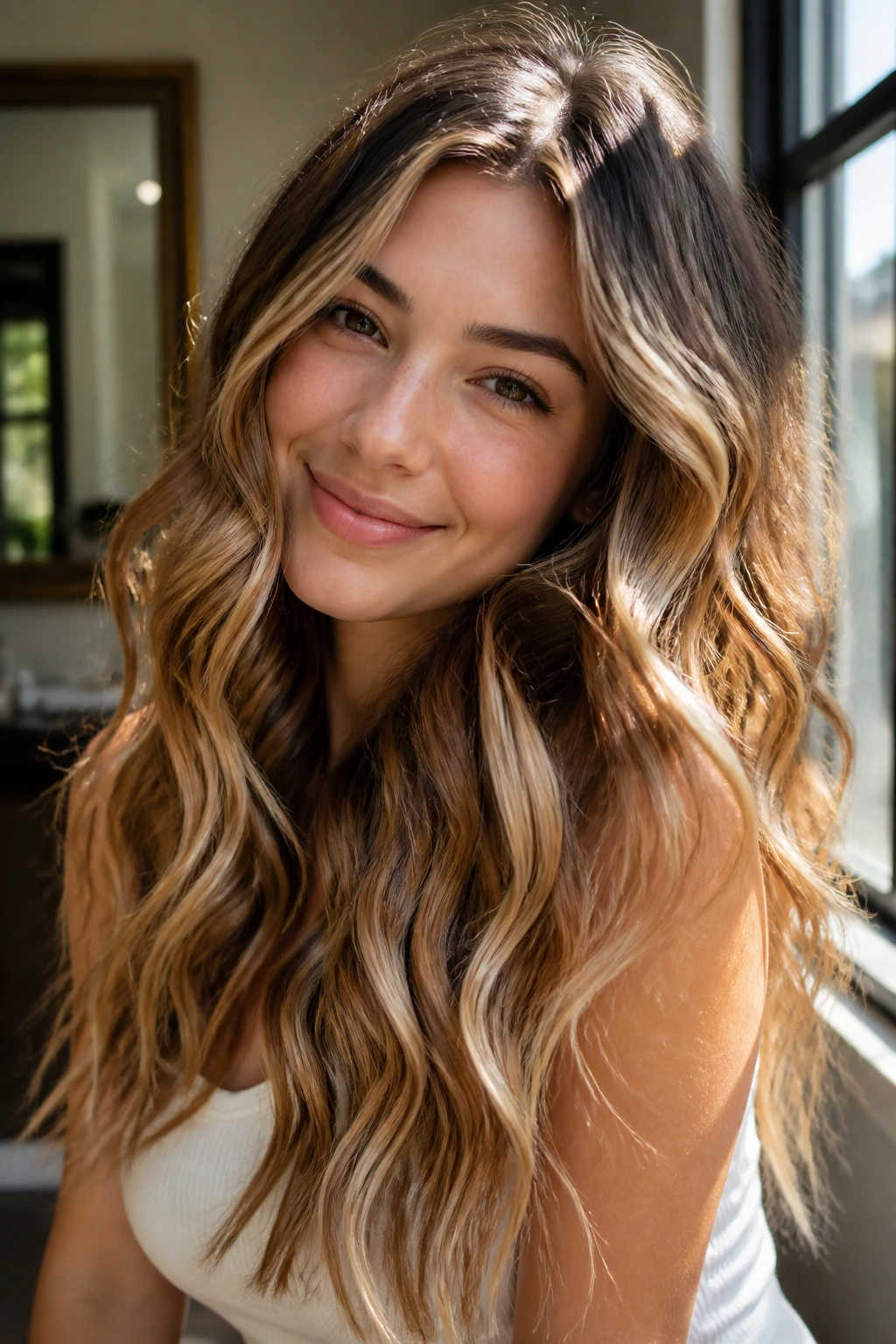
The best highlight ideas for wavy hair are the ones that respect movement. That’s really the whole game. You want light and shadow to work together so the bends in the hair do the styling for you, instead of fighting a color pattern that was never meant for texture.
Some people will be happiest with a soft caramel melt. Others will want pearl ribbons, copper apricot, or a blunt money piece that changes the whole face. There isn’t one correct answer here, and that’s a relief. The right choice is the one that makes your waves look fuller, cleaner, and more intentional when they air-dry and when they’re styled.
Bring a few reference photos, talk about your maintenance tolerance, and pay attention to tone as much as brightness. That’s where the good results live.
