



Short ginger hair color ideas work best when the cut is doing half the talking. A copper pixie, a strawberry blonde bob, or a tight auburn crop can look sharper than the same shade on long hair, because short length keeps the eye on the pigment, the shine, and the shape of the ends. If the tone is off, you see it fast. If the tone is right, the whole haircut wakes up.
Ginger on short hair is a little unforgiving, and that’s part of the appeal. There’s less length to hide uneven tone, too much red, or a muddy root area. But there’s also less hair for the color to fight with, which means a well-placed gloss, a clean money piece, or a deeper root shadow can change the whole mood without a big maintenance routine.
The looks that hold up best are the ones that respect the cut. A cropped pixie wants brightness near the crown. A blunt bob likes depth at the root and lighter edges. Curly short hair needs dimension or the red can turn into one flat block. That’s where the interesting ideas live, and the details are worth getting right.
Why Short Ginger Hair Works So Well
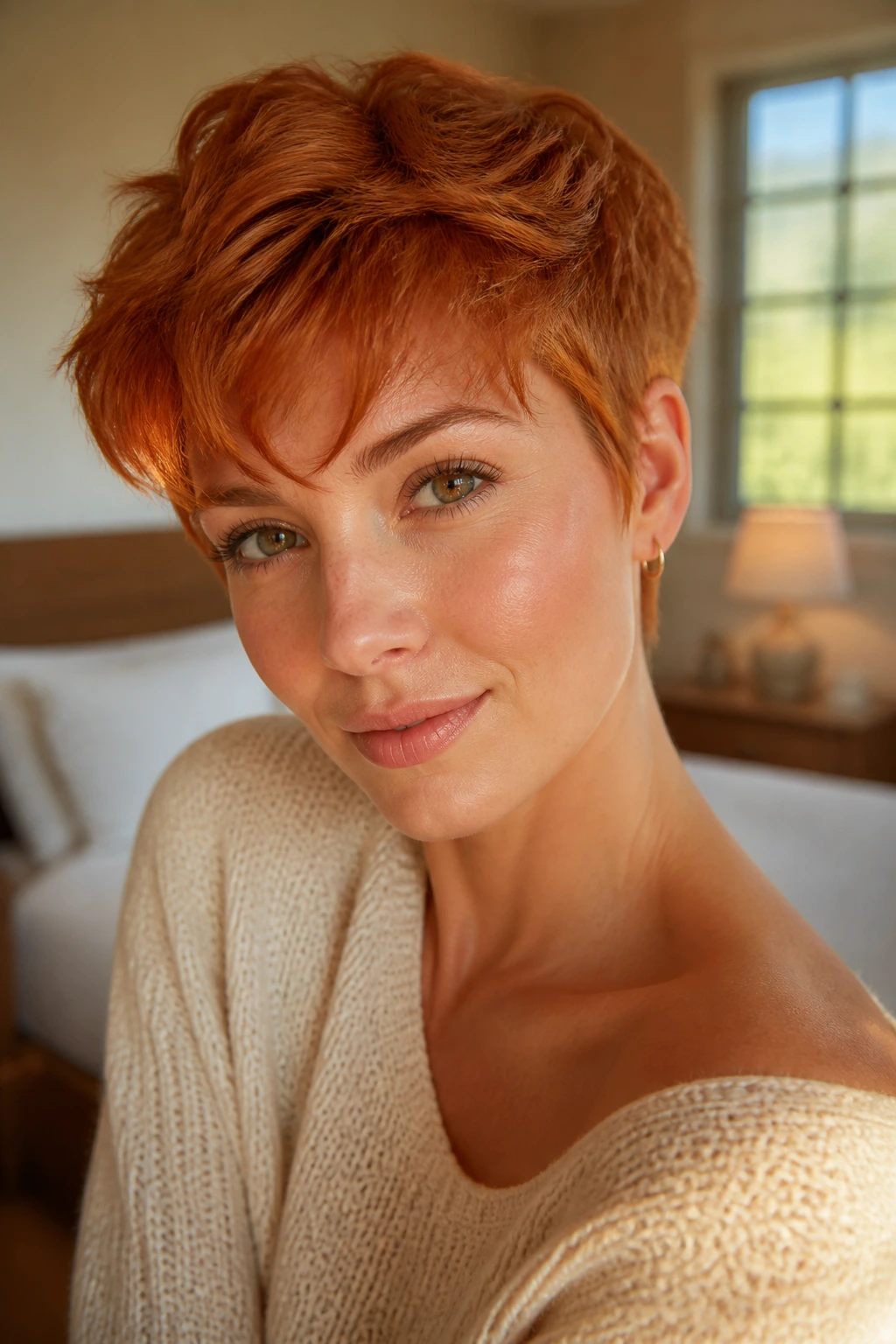
-
The color reads immediately: On a pixie or bob, copper doesn’t disappear into length; it lands right on the face, where the warmth shows up in skin, eyes, and cheekbones.
-
The shape matters more: Short cuts show off texture, so a ginger tone can make layers, bends, and blunt edges look more deliberate instead of flat.
-
Touch-ups are easier: A gloss, root smudge, or face-framing refresh takes less product and less time on short hair than on long lengths.
-
You can control the mood fast: The same cut can look peachy, auburn, cinnamon, or vivid copper just by shifting the depth and placement.
-
Grow-out can look intentional: A short cut with a deeper root and brighter ends often grows out cleaner than a single solid red block.
1. Copper Pixie Crop With a Velvet Shine
A copper pixie crop is the kind of short ginger look that turns heads because it has nowhere to hide. The finish matters here. You want shine that looks soft and expensive, not a hard, plasticky red that sits on top of the hair like paint.
Why It Works on Short Hair
The pixie gives copper a clean surface to sit on. When the layers are short and the crown has a little lift, the light catches the top first, then slides down to the fringe and nape. That movement keeps the color from looking one-note.
Ask for a level 7 to 8 copper with a slightly deeper root, especially if your cut is very close at the sides. That tiny shadow at the root stops the look from going flat. It also makes the top pieces look brighter than they really are.
Small Details That Matter
- Best finish: a demi-permanent gloss or glaze
- Best cut shape: tapered sides with a textured top
- Best styling product: a pea-sized matte cream at the ends, not the roots
- Best maintenance: gloss every 4 to 6 weeks
Pro tip: keep the fringe one shade lighter than the sides if you want the cut to read more dimensional in daylight.
2. Strawberry Blonde French Bob
This is the easiest ginger-adjacent shade to wear if you want warmth without a heavy red hit. Strawberry blonde on a short French bob feels soft, creamy, and a little romantic, but it still has enough copper in it to look intentional rather than beige.
A Color That Stays Light
The trick is to keep the base beige or gold, then tuck the red tones into the mid-lengths and ends. On a bob that hits around the jaw, that placement keeps the hair looking airy. A fully saturated copper bob can sometimes feel too dense on fine hair; strawberry blonde gives you more light bounce.
This shade also plays nicely with a blunt edge. The bob keeps the shape crisp, and the strawberry tone keeps it from looking severe. That contrast is the whole point.
Good Fit If You Want
- warmth, not neon
- a softer grow-out
- a color that works with cream sweaters, denim, and gold jewelry
- something that still looks polished when air-dried
3. Cinnamon Shag Bob
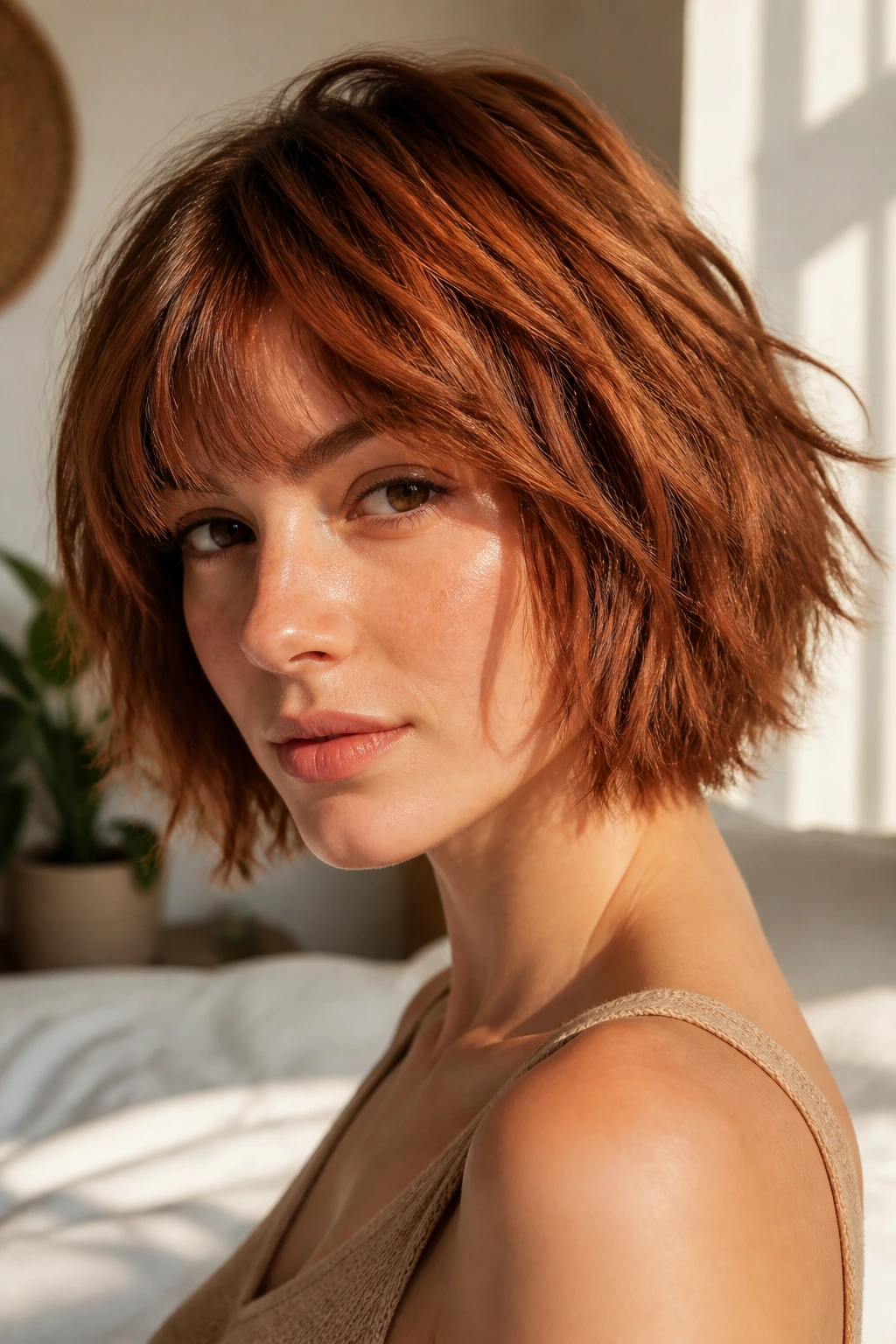
Why does a shag make ginger look so natural? Because the layers break the color into tiny moving pieces. Cinnamon tones love a shaggy bob with fringe, especially when the ends are choppy and a little undone.
The Layering Is the Point
A shag bob gives cinnamon room to breathe. The shorter layers around the crown take on a lighter glow, while the underlayers hold a deeper auburn-brown note. That means the color shifts as you move, which is exactly what keeps warm shades interesting on short cuts.
I like this look on hair that has some wave or body. Straight hair can wear it, too, but the shag starts to feel much richer once the layers bend around the cheekbone and collarbone. The fringe keeps the eyes close to the face and makes the warmth feel deliberate instead of accidental.
What to Ask For
- a bob that sits between the chin and collarbone
- soft, broken layers instead of a stacked shape
- cinnamon or auburn gloss through the mid-lengths
- slightly darker roots if your hair is fine
4. Bright Copper Buzz Cut
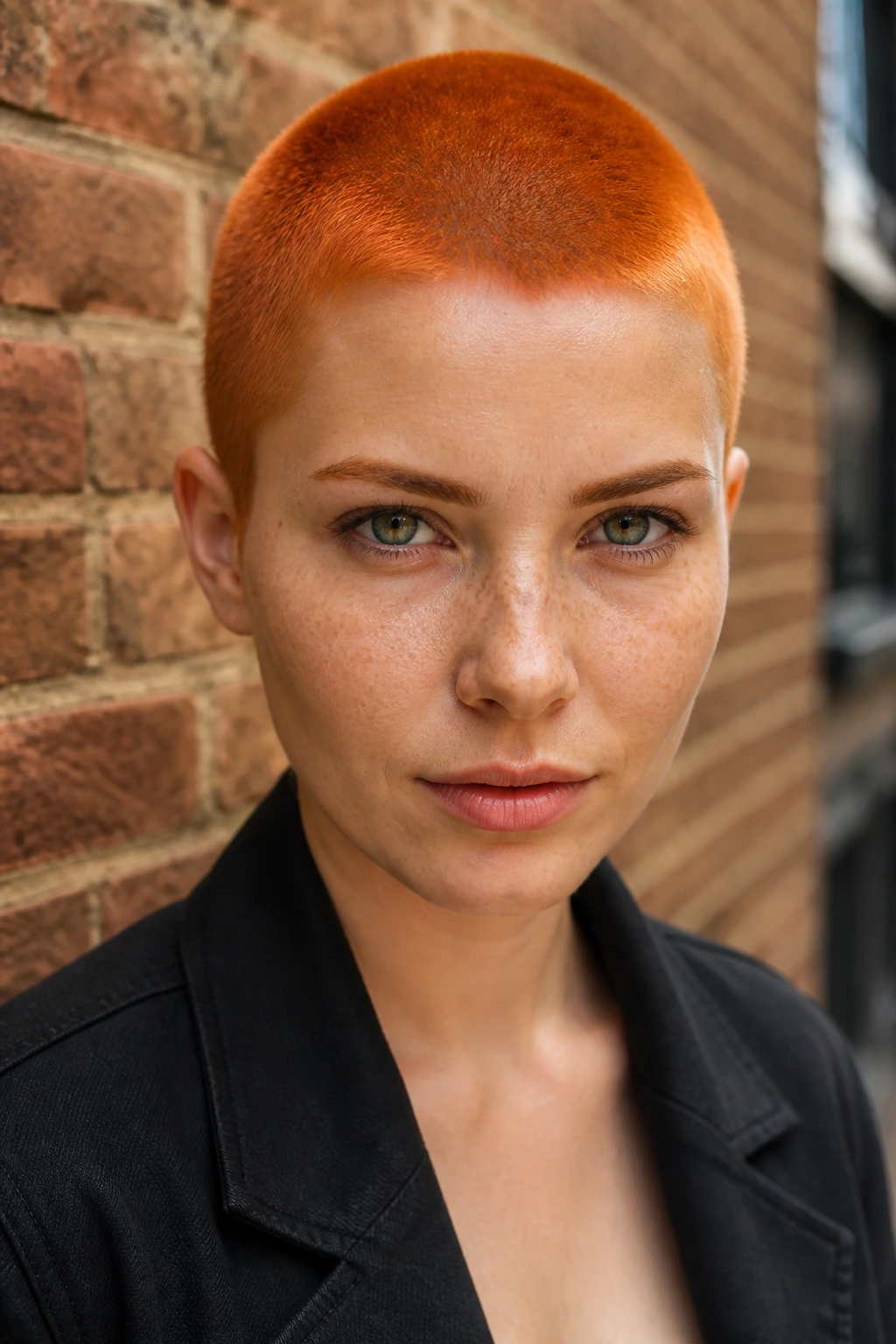
A buzz cut leaves zero room for excuses. That’s why it looks so good in bright copper. You’re not blending color into layers here; you’re putting a clean, vivid tone right on the head and letting the shape do the work.
When This Shade Hits Hardest
On a buzz, copper shows every tiny change in light. A little more gold at the temples, a touch more red at the crown, and the whole head shifts. The result is graphic, not fussy.
This is also the easiest short style to color-maintain, but only if you stay on top of it. Growth is visible fast. A sharp buzz with copper roots can start reading as a different look in two to three weeks, so this works best if you like regular upkeep or you’re fine with a softer fade.
- Best if you want: bold color with almost no styling
- Best tone: a clean copper-orange, not a brown red
- Best maintenance: touch up the scalp area often, because regrowth changes the whole silhouette
5. Auburn Curly Crop
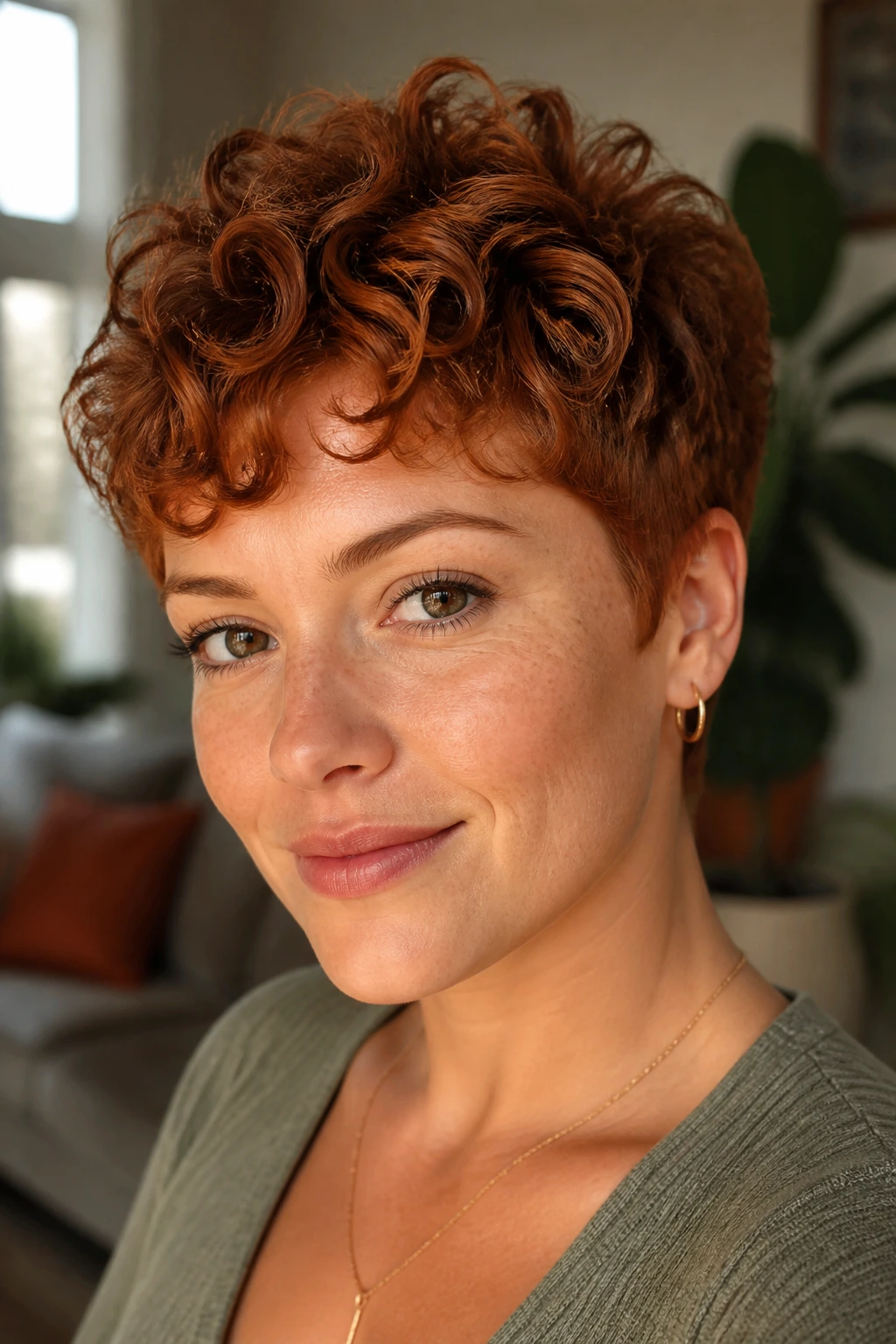
Curly hair and auburn belong together more often than people admit. The curls create pockets of shadow, and auburn gives those shadows a warm, polished look instead of a flat brown mass.
Why the Texture Helps
Short curls already have movement, so the color doesn’t need to do all the work. A richer auburn keeps the curl pattern readable even when the hair is cut close around the ears and neck. Add a few lighter copper ribbons around the outer ring of curls, and the shape suddenly has depth.
The mistake with curly ginger shades is going too bright everywhere. That can make the curls look puffy in the wrong way. I prefer a deeper base with copper peeking through the top layer and around the face. The result feels fuller, but not heavy.
Best Styling Move
Use a light curl cream and scrunch only until the curl clumps are defined. Too much product can mute the shine, and shine is half the appeal here.
6. Rose-Ginger Undercut Pixie
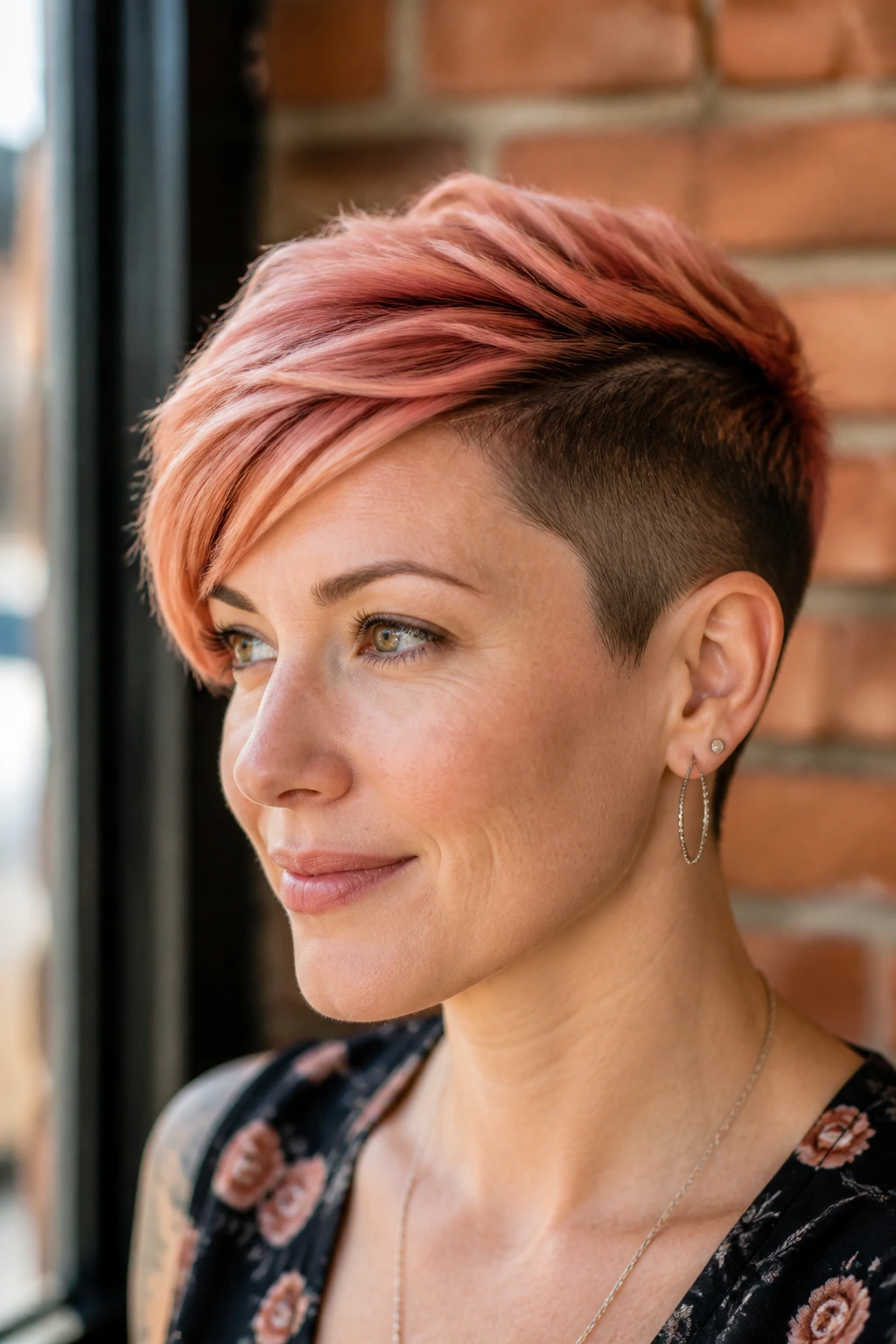
A rose-ginger pixie with an undercut is for someone who wants warmth with a little edge. The pinker copper tones on top soften the look, while the shaved or closely clipped sides keep it sharp.
Contrast Is Doing the Heavy Lifting
The undercut creates a dark frame underneath the brighter top layer. That contrast makes the rose tone read cleaner, because the eye sees a clear break between the airy top and the close sides. It also keeps the style from feeling too sweet, which can happen with pink-leaning ginger shades on very short hair.
This one works best when the top is long enough to sweep to one side or tuck behind the ear. If the top is too short, the rose tone can lose its shape. If it’s long enough to move, the color looks intentional and a little rebellious.
Best When You Want
- a soft pink-copper cast rather than orange
- a shorter style with visible edge
- a color that looks strong in natural light
- easy reset days when you can slick one side down and leave the top messy
7. Ginger Balayage on a Choppy Lob
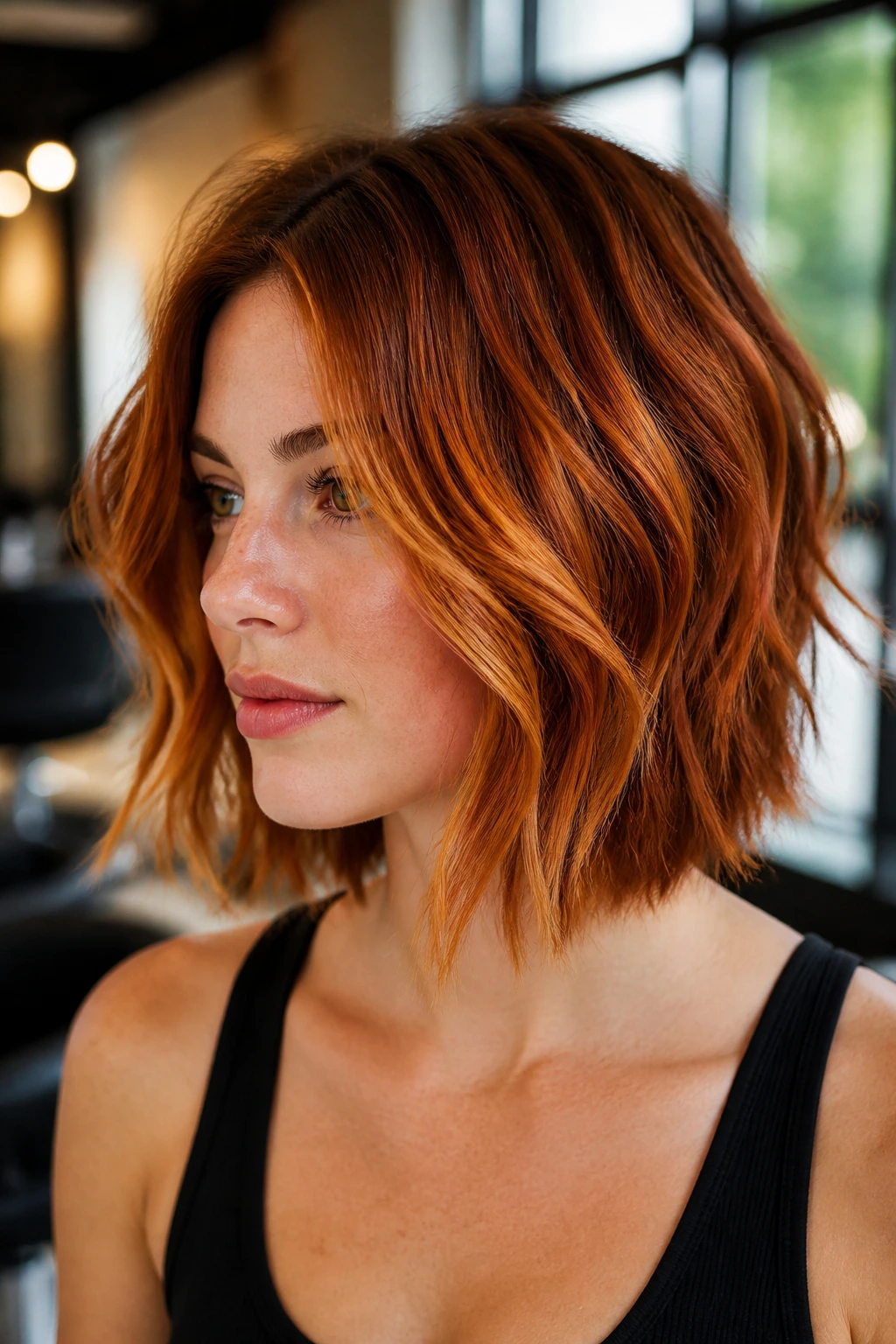
Balayage on short hair has to be more precise than people think. On a choppy lob, ginger balayage works because the hand-painted pieces sit on the bends and ends, where the light naturally lands.
Where the Bright Pieces Should Go
The brightest copper pieces belong around the face, the top layer, and the bends that hit the chin or collarbone. The deeper ginger or chestnut tone should stay under the top layer so the color has some shadow. If everything is painted equally, the lob loses its shape and starts looking puffy.
Choppy ends help a lot here. They catch the warmer tone in little flashes instead of showing one solid stripe. That’s why this style often looks richer after a wave or a rough blow-dry than it does pin-straight.
What Makes It Work
- softer grow-out than a single-process red
- a better fit for medium density hair
- room for copper, amber, and chestnut in the same head of hair
- a nice bridge between brunette and true ginger
8. Peach Copper Wavy Bob
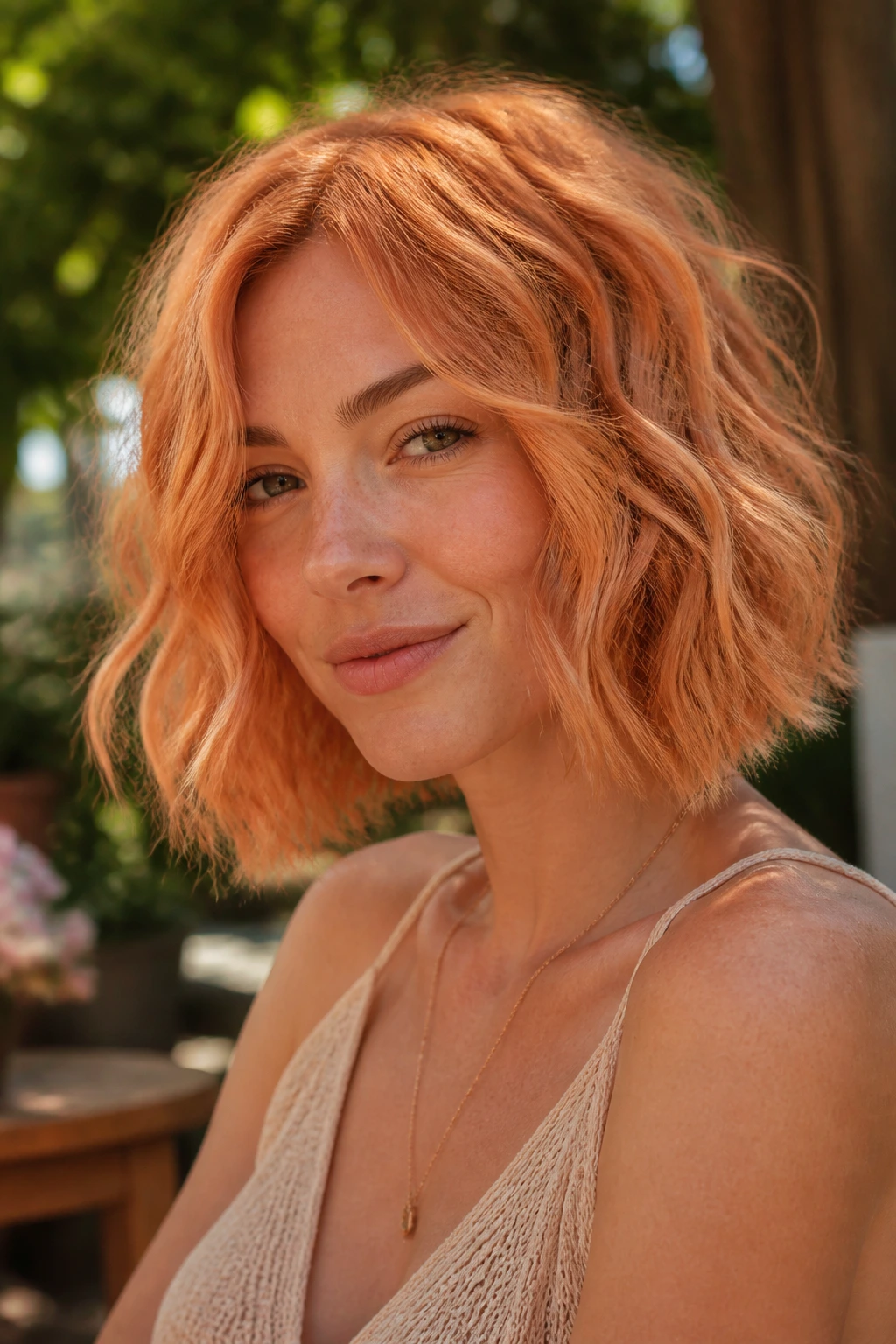
Peach copper is the lightest, airiest branch of the ginger family. On a wavy bob, it looks like warm sunlight sitting on the hair for a few seconds too long, but in the best way.
The color reads softer than standard copper because it carries more gold and a tiny bit of blush. On short waves, that creates movement without needing a lot of contrast. If you want a ginger look that feels playful instead of bold, this is the one I’d start with.
A wavy bob also keeps the peach tones from looking washed out. The bends in the hair catch the warm notes and keep them alive. On poker-straight hair, peach copper can fade into a lighter orange-beige, which is not always the point.
9. Deep Auburn Blunt Bob
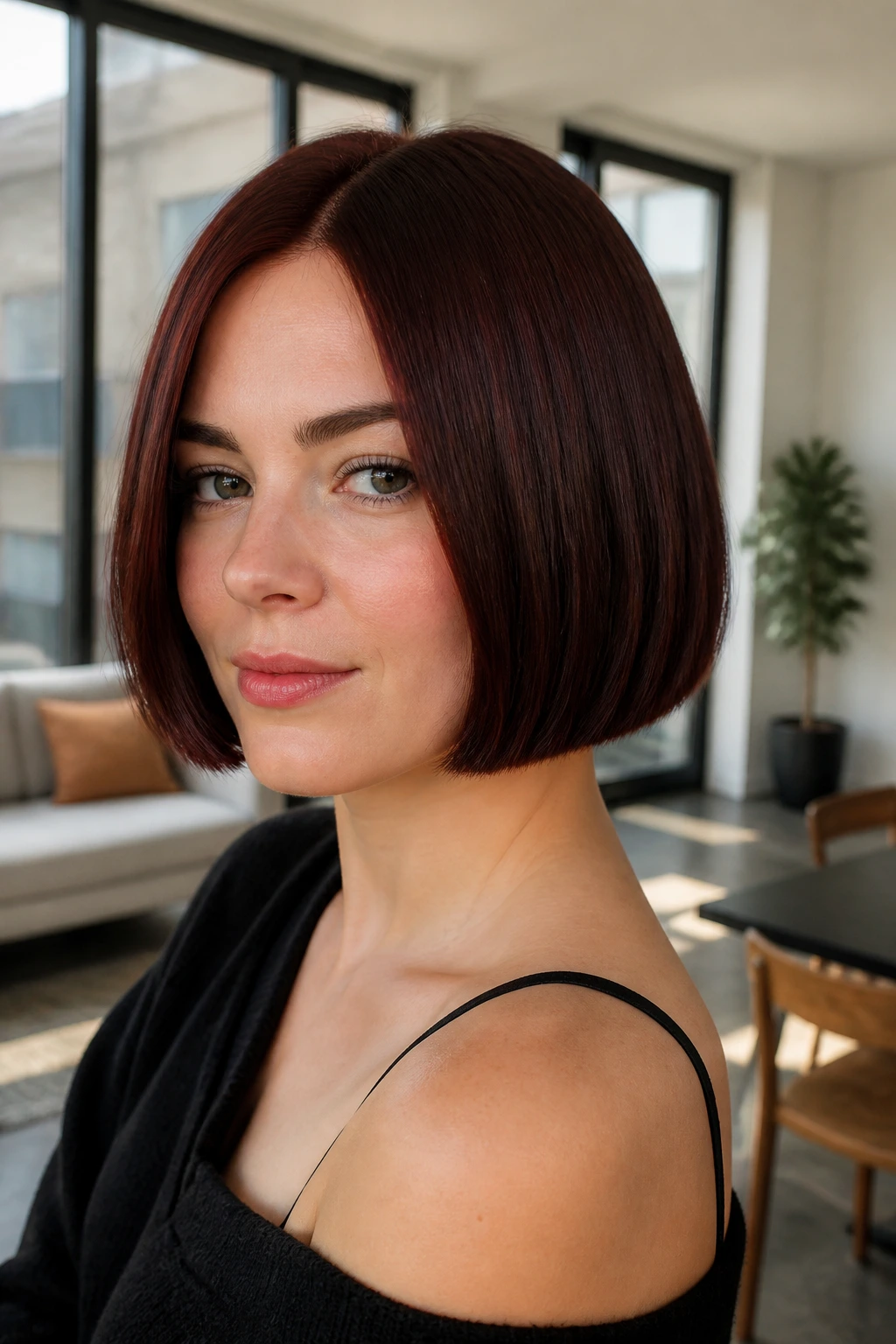
A blunt bob in deep auburn is the quiet power move of short ginger hair. It doesn’t shout. It sits there with a clean edge, a heavier base, and just enough warmth to keep the shape from feeling severe.
Why It Beats a Bright Copper for Some Hair
If your hair is fine, a deep auburn bob can make it look thicker because the darker pigment adds visual weight. A super-bright copper on a blunt cut can sometimes expose every line of the haircut, which is useful if you want precision and not so useful if you want fullness.
The blunt edge also means the color looks more polished at the bottom. That’s one reason this shade works beautifully for straight or slightly bent hair. You get a straight line, a richer tone, and a cut that looks finished even when you do almost nothing to it.
Best Pairings
- clean middle part
- tucked-behind-the-ear styling
- smooth blowout with a round brush
- a deep side part if you want a little drama
10. Tortoiseshell Ginger Mixie
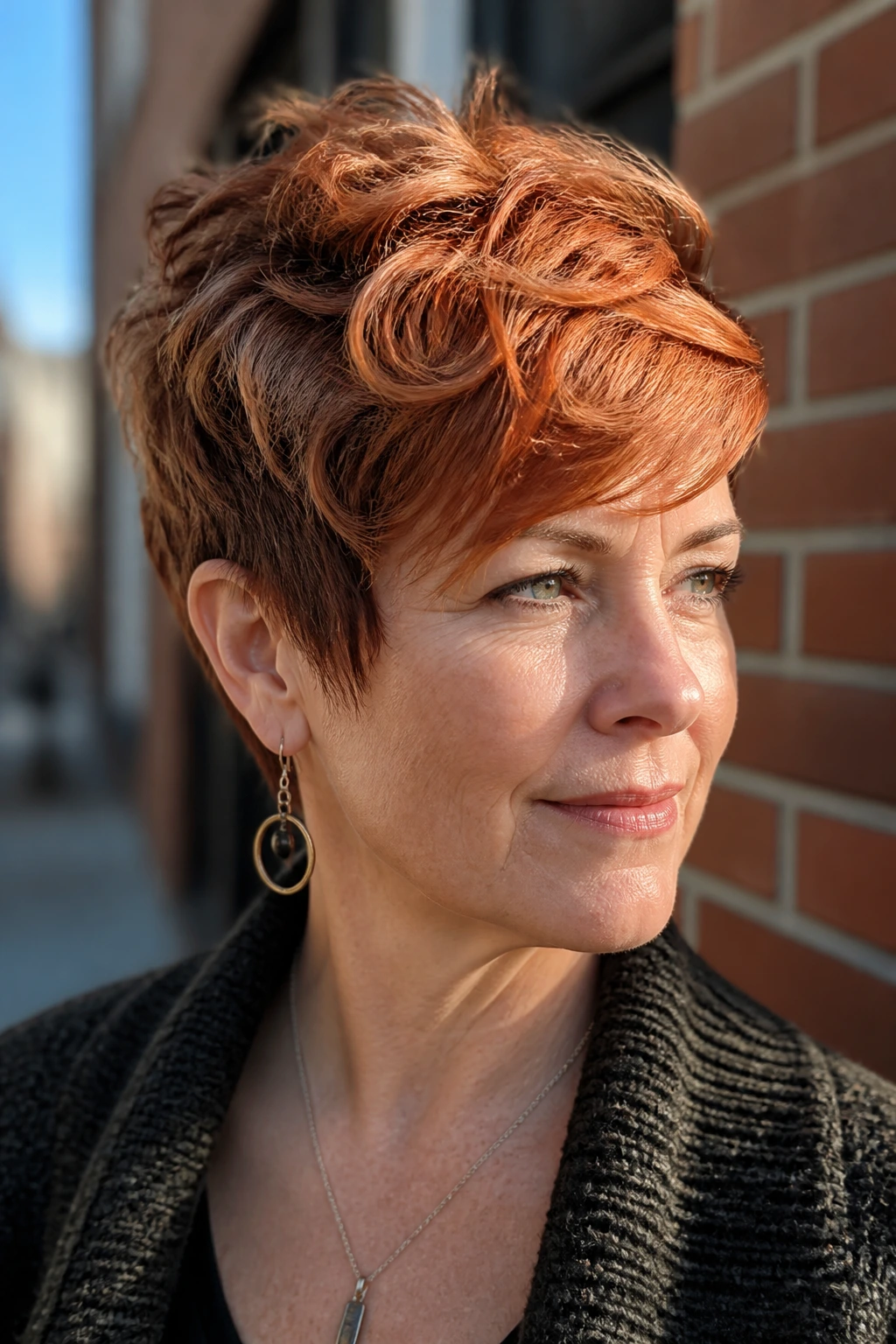
A mixie — that cross between a pixie and a mullet — needs more than one tone or it starts looking like a haircut, not a style. Tortoiseshell ginger solves that by mixing copper, chestnut, and honey-brown in small, visible shifts.
How the Color Keeps the Cut Interesting
The front stays brighter, the crown holds some warmth, and the back drops darker. That little progression makes the shape read from every angle. You want contrast, but not stripes. Think soft patches, not a checkerboard.
This is one of those cuts where placement matters more than saturation. The top should be the lightest zone because that’s where the eye lands first. The nape and lower sides can stay a shade deeper so the cut doesn’t puff out visually.
A Good Fit If You Like
- a little messiness
- short hair with shape in the back
- color that looks different from the front and side
- a warmer version of a punkish cut
11. Apricot Ginger Crop With Baby Bangs
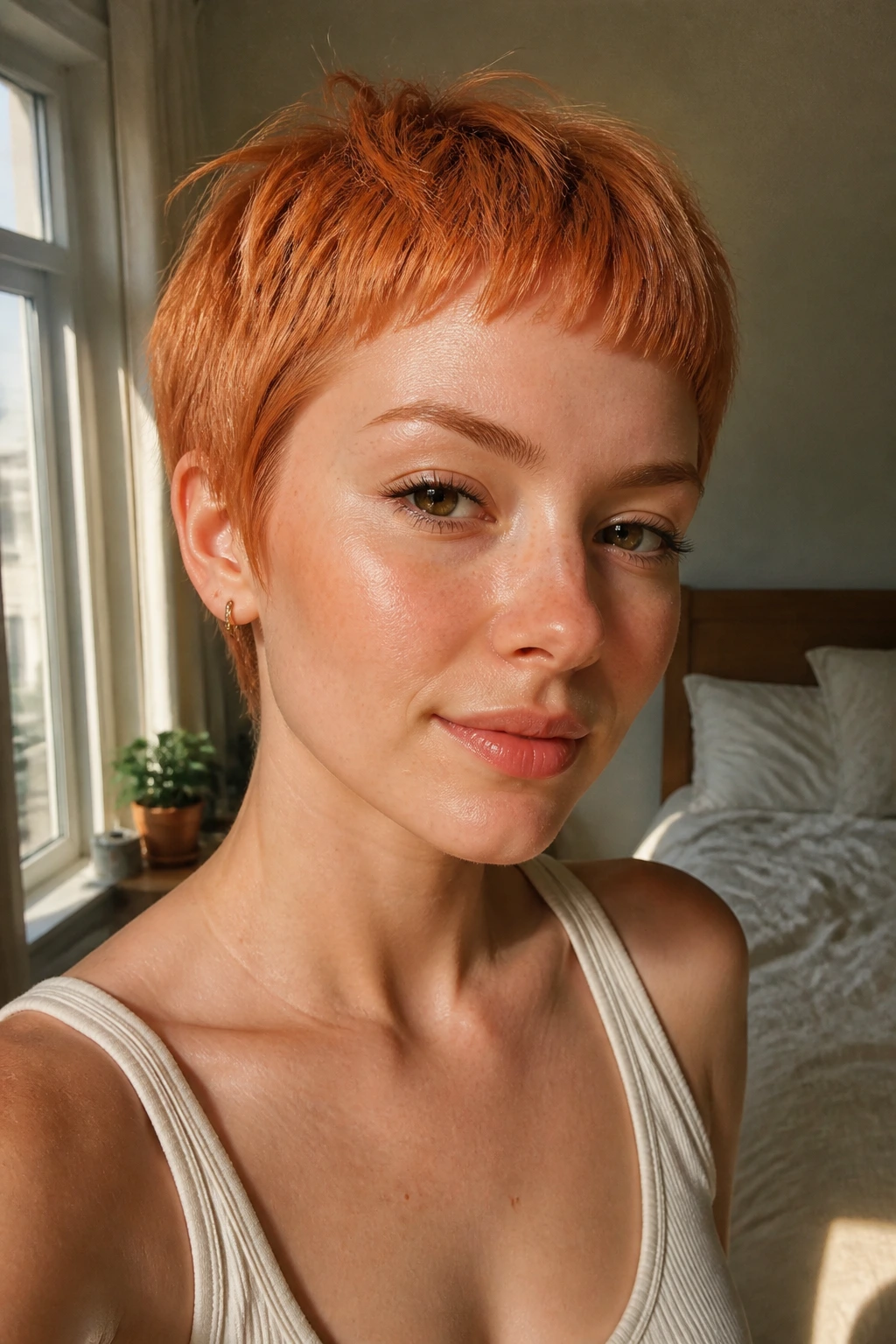
Baby bangs make apricot ginger look brighter because they expose the forehead and let the color sit close to the eyes. On a cropped cut, that can be a sharp, almost editorial effect.
Why the Bang Length Matters
Short bangs change how the warmth reads. Full fringe can soften apricot; baby bangs make it crisp. The color sits in plain view, so the whole cut feels lighter and more precise. This is a good choice if you like structured hair and you do not mind showing a little skin at the forehead.
I’d keep the apricot tone softer at the root and slightly brighter through the fringe and top. That prevents the look from turning into one solid orange block. The tiny amount of shadow at the root also makes the bangs look cleaner as they grow.
Best trick: keep the fringe piecey, not heavy. Apricot on blunt baby bangs can look too dense if the edge is packed in.
12. Burnt Copper Asymmetrical Bob
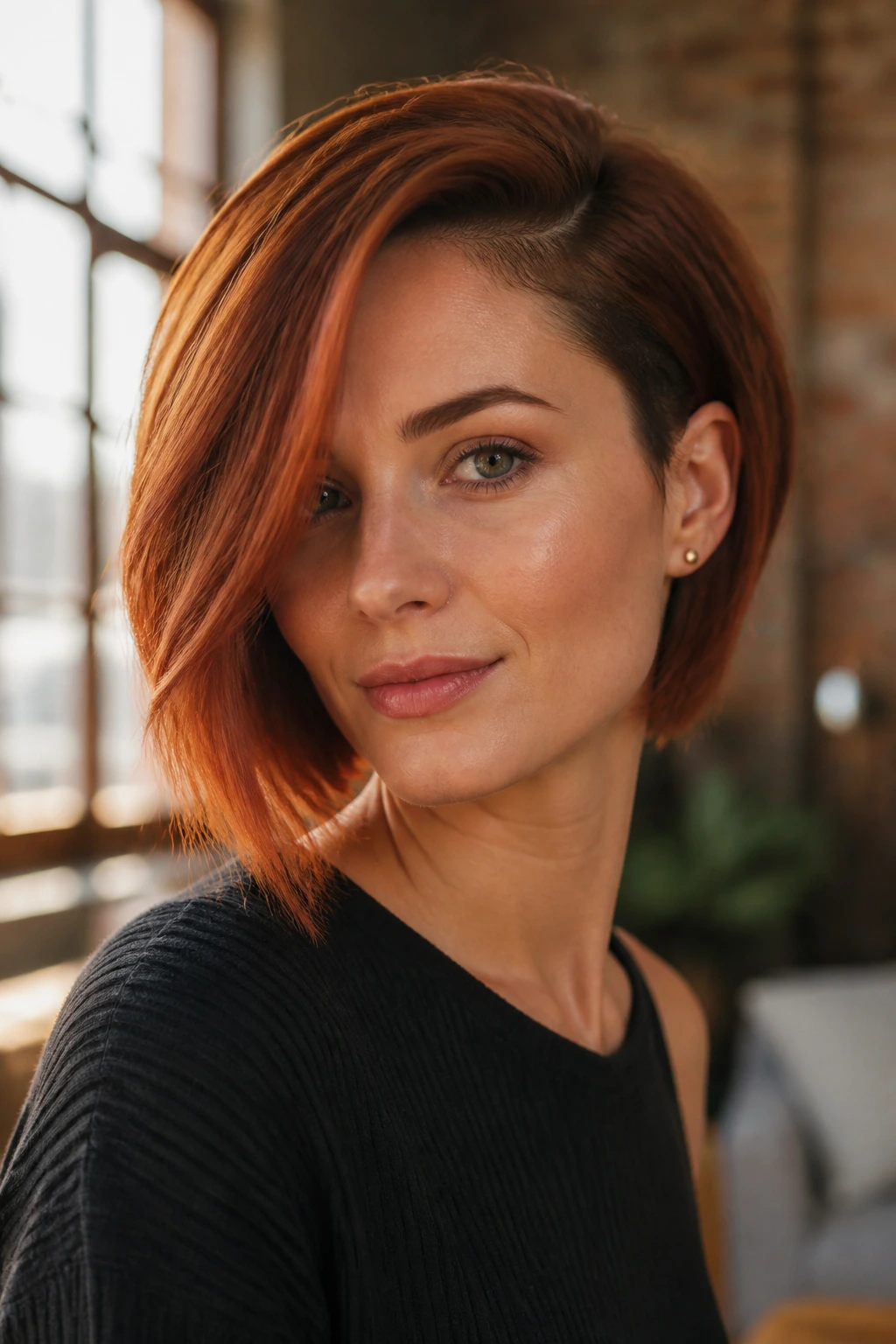
An asymmetrical bob gives copper a built-in line to follow. One side is longer, one side sits higher, and the color can slide from deeper at the shorter side to brighter at the longer edge.
Why Asymmetry Helps the Shade
A balanced bob can be lovely, but asymmetry gives the eye a reason to move. Burnt copper loves that movement. It looks richer when one side is slightly more dramatic, because the color has room to shift instead of sitting in a perfect block.
This is a good choice if your jawline is strong or your face is round and you want a little angle. The longer side draws the eye downward, while the burnt copper adds enough warmth to stop the shape from feeling severe. You can also tuck the shorter side behind the ear for a cleaner, sharper profile.
Where It Works Best
- straight to softly waved hair
- a clean side part
- copper that leans red-brown, not neon orange
- a cut with a strong perimeter
13. Metallic Ginger Gloss on a Textured Pixie
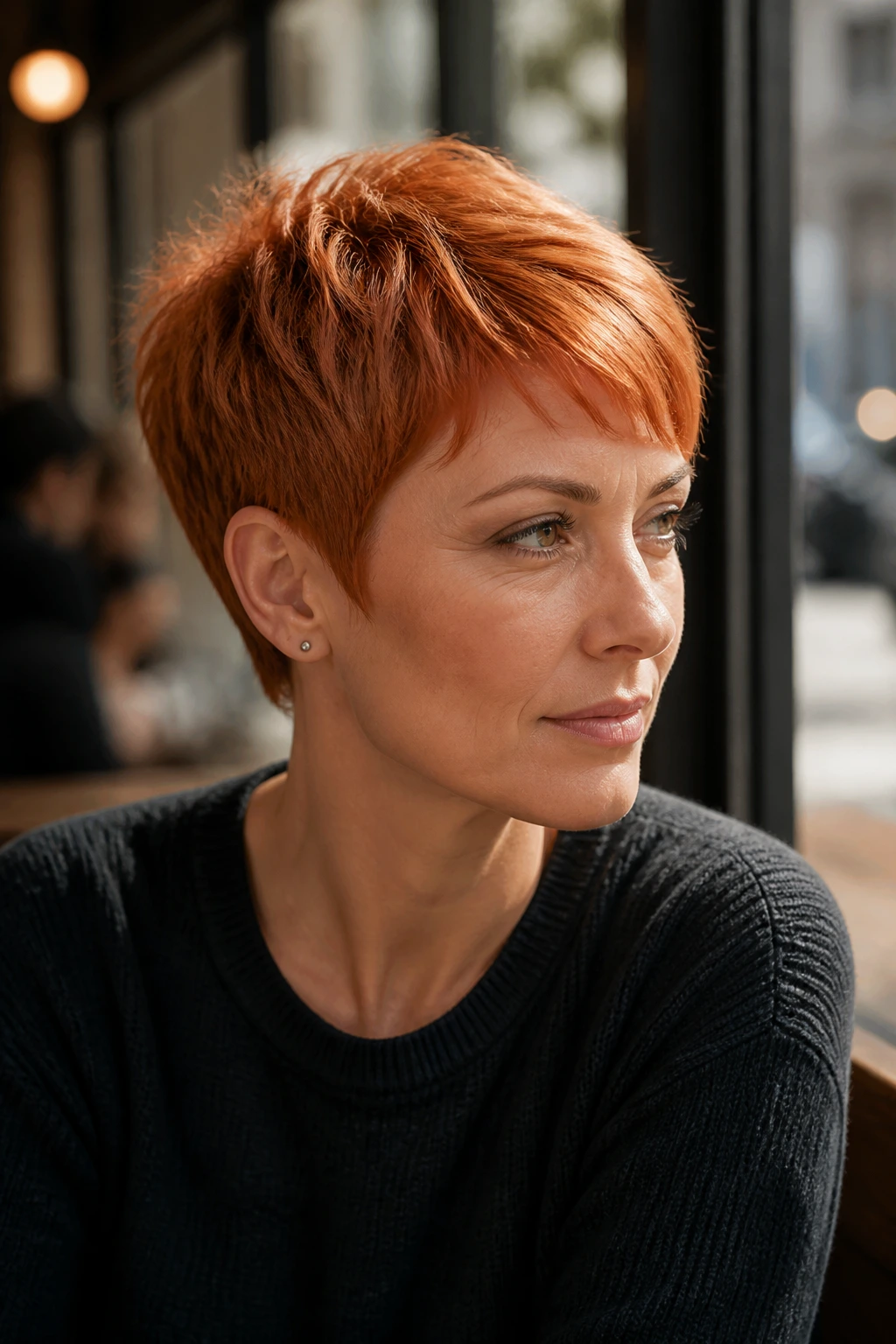
Metallic ginger is not glittery. It’s reflective. That shine lives in the glaze, not in sparkles, and on a textured pixie it can look almost liquid when the hair moves.
The Finish Does the Work
A textured pixie gives the gloss tiny planes to bounce off. Each little piece of hair catches light at a slightly different angle, which makes the metallic finish look richer than a flat color ever could. The pixie needs some separation at the crown and fringe; otherwise, the gloss just reads as one shiny cap.
The color itself should sit somewhere between copper and bronze. Too much orange and the metallic effect disappears. Too much brown and you lose the warmth that makes the look special. A clear gloss with copper pigment, or a professional glaze with a gold-red base, usually gets the right balance.
Quick Notes
- best on hair with a smooth cuticle
- needs shine serum, but only a drop
- looks strongest in direct light
- fades gracefully if the base is not over-processed
14. Ginger Halo Highlights on a Curly Bob

Curly hair loves a halo because the bright pieces can sit around the perimeter and crown, where the curl pattern naturally expands. On a short bob, that gives ginger a lifted, almost floating effect.
The highlight placement matters more than the total amount of lightness. You want a few copper ribbons near the face, some around the top layer, and softer pieces through the back so the curls don’t lose depth. If every curl is equally bright, the shape gets noisy. If the highlights are scattered with some breathing room, the bob looks lush and defined.
This is also one of the best ways to ease into ginger if your natural color is darker. The curls will hold the darker underlayer, and the halo pieces keep the face bright without requiring full-head lightening.
15. Spiced Chestnut Short Shag

Spiced chestnut is the brown-leaning cousin of ginger, and it has a cleaner, quieter feel than bright copper. On a short shag, it gives the cut a worn-in, lived-in look that still carries warmth.
When Chestnut Beats Copper
If you want the idea of ginger without the obvious red flash, chestnut is the better call. It reads as warm brown in low light and turns cinnamon-copper when the sun hits it. That makes it useful on hair that would get brassy fast with a brighter shade.
The shag shape helps because the layers stop the color from sitting too flat. A little fringe, a little broken texture, a little movement at the ends — all of that makes chestnut feel richer. On a short cut, the tone can look mature in a good way, not dull.
Best For
- people easing into red tones
- naturally medium brown hair
- low-maintenance grow-out
- short cuts that need a soft edge
16. Soft Copper Money Piece Bob
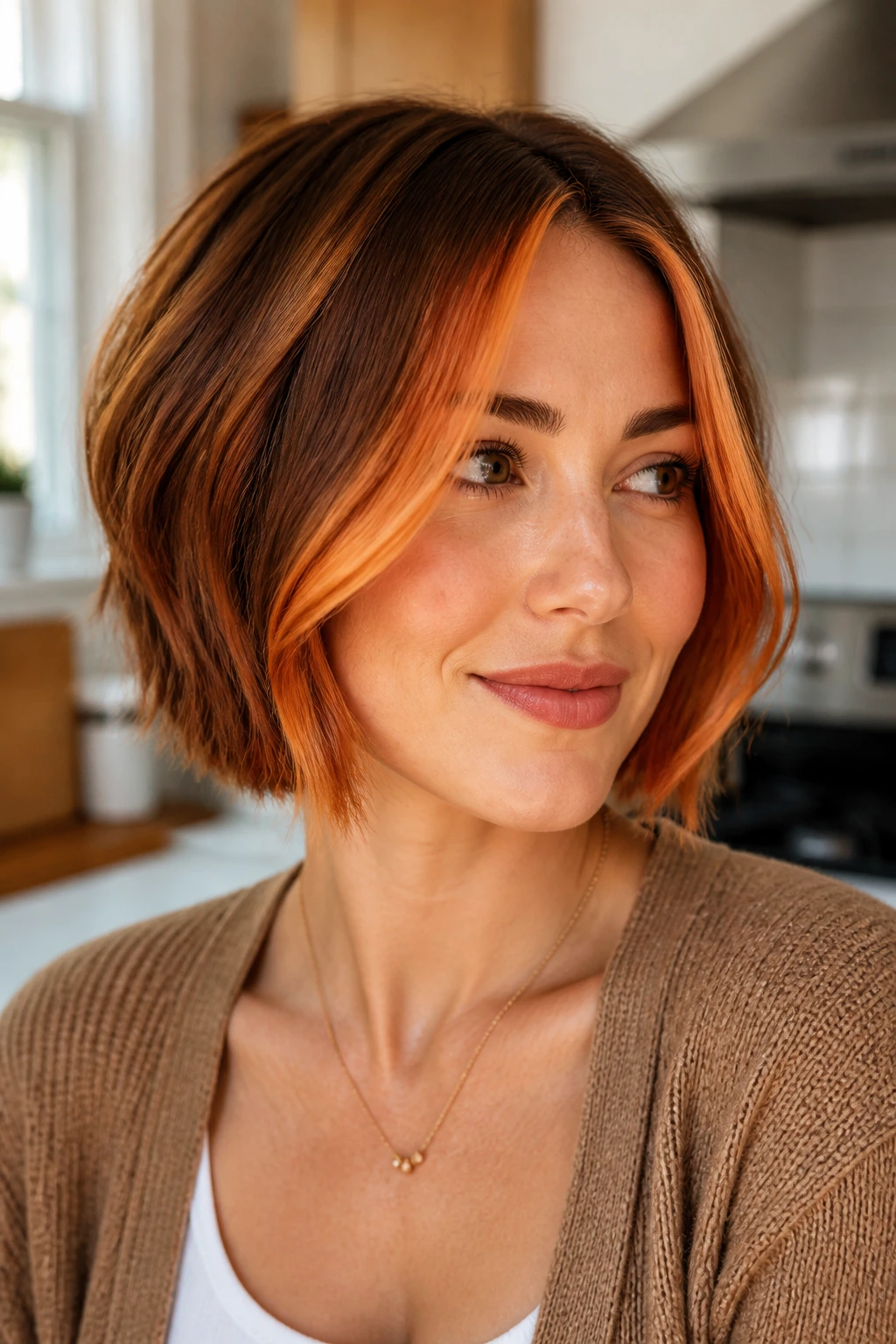
A money piece on a short bob sounds simple, but the placement has real impact. If the front two sections are softened into a copper or strawberry-copper tone, the entire cut wakes up around the face.
Why put the brightness at the front? Because short bobs grow out fast, and a bright face-framing panel gives you visible color even when the back is catching up. It also makes the cut look fresh with less total lightening, which matters if your hair is fine or delicate.
I like this with a slightly deeper base everywhere else. That contrast is what keeps the money piece from looking random. You want the front to glow, not shout.
Best When You Want
- one visible color move
- a bob that still feels easy to wear
- less commitment than a full copper head
- a shade that shows well in photos and daylight
17. Ginger-to-Auburn Melt on a Short Cut
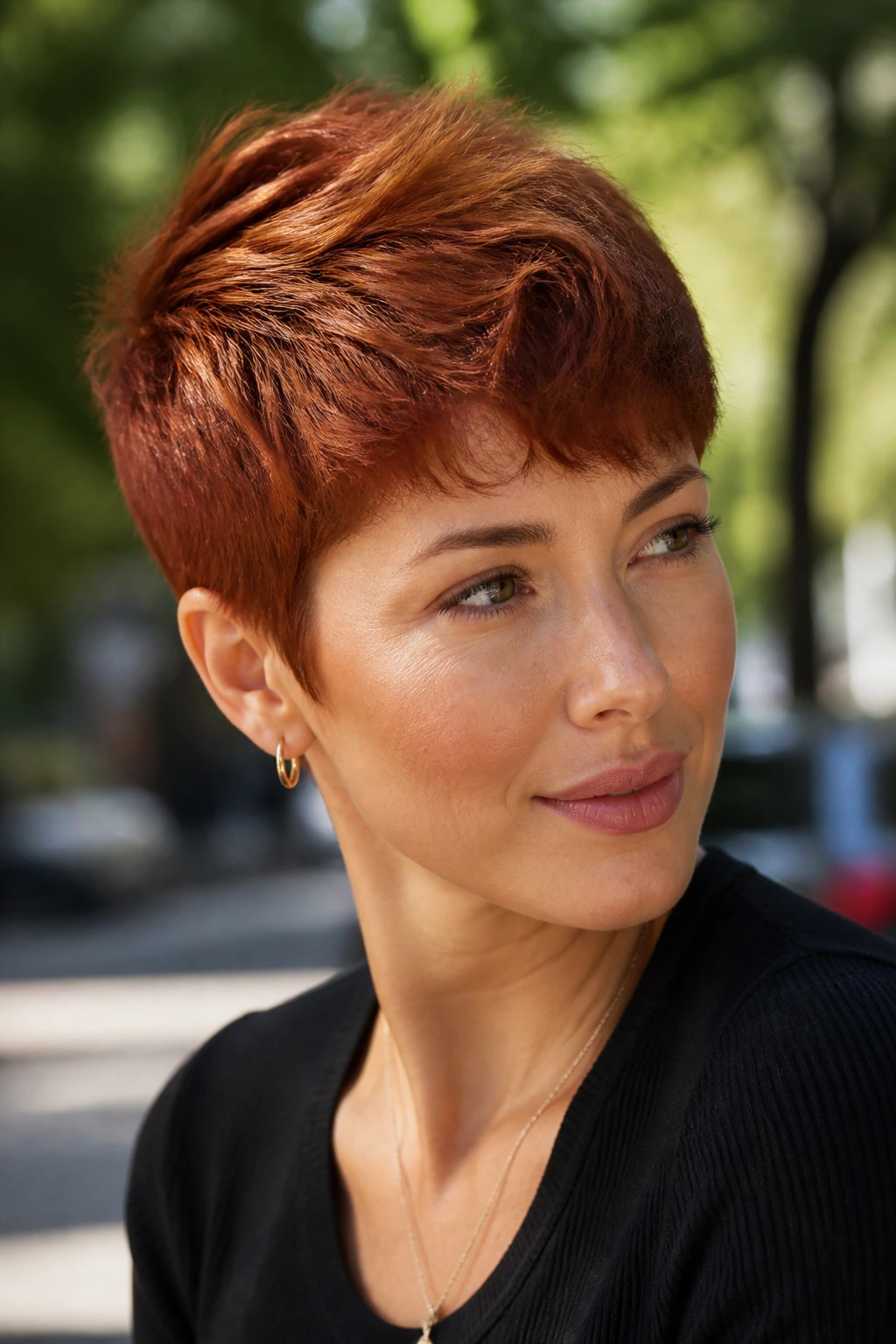
A ginger-to-auburn melt is the short-hair version of a soft color story. The roots stay deeper, the mids turn copper, and the ends land in auburn or chestnut. On a cropped cut, that shift gives the shape depth without making it fussy.
Why the Melt Works Better Than a Hard Line
Short hair can look a little harsh if the color changes too suddenly. A melt avoids that by moving gradually from root to end. That gradual shift keeps the ends from looking over-processed and lets the top stay bright enough to catch the eye.
This is a strong choice if your natural base is medium brown or dark blonde and you want a ginger result that feels grown-up. It’s also one of the easiest looks to let grow out, because the root shadow is already part of the design.
A Better Ask for Your Colorist
- deeper root at the crown
- mid-length copper
- auburn or soft chestnut on the ends
- no chunky line between the tones
18. Rosy Copper Close-Cropped Bob
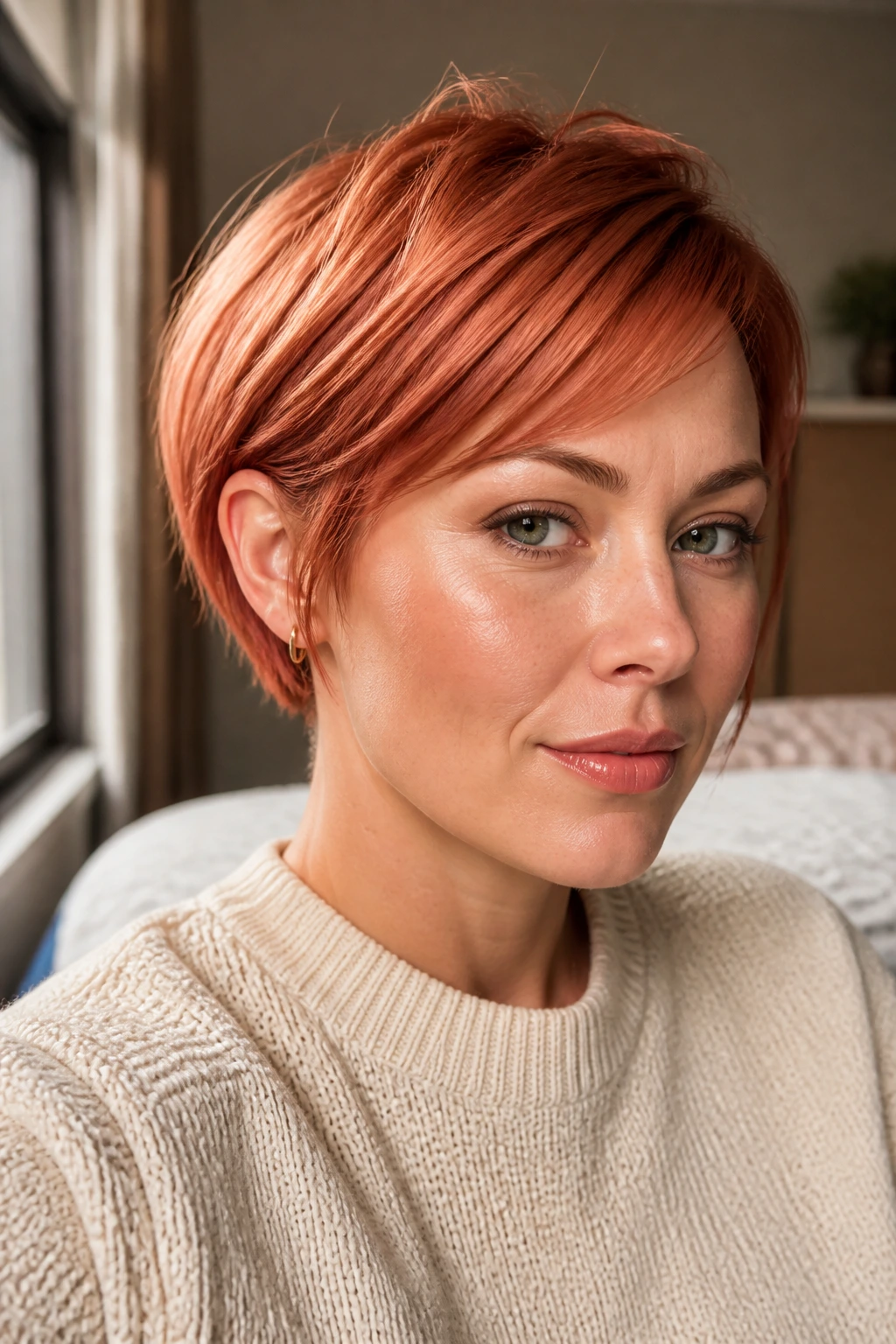
Rosy copper on a close-cropped bob has a neat, almost polished quality that still feels warm. The pink-red note softens the copper so the whole cut looks a little fresher and less orange.
Why This Shade Stands Out
A close crop gives rosy copper a clean frame. There’s no bulk to hide the tone, so the color becomes the style. That means the haircut has to be tidy. If the perimeter is blunt and the top has a bit of movement, the rosy cast looks crisp instead of sugary.
This is one of the best options if you want short ginger hair that feels modern without going aggressive. It reads softer than true copper, but it still has enough warmth to do real work against the skin.
Small Things That Keep It Sharp
- use a light gloss every month
- keep the nape clean
- avoid over-washing
- add a tiny drop of serum on the ends only
Why Ginger Color Reads So Cleanly on Short Hair

Short hair changes the whole color equation. There’s less distance between the root and the eye, which means the tone shows up fast and the haircut either supports it or fights it. Ginger shades are especially good at this because they carry both warmth and shape. They don’t sit there passively. They react to light.
A pixie can make copper look sharper than it does on longer lengths because the crown and fringe sit close to the face. A bob gives the color a more graphic outline. Curls break the tone into little shifts. That’s why short ginger color ideas often look more expensive in person than they do on a screen — the movement is real, and the shine doesn’t have to travel far to be noticed.
There’s also a practical side. Short hair usually needs less color product, fewer foils, and faster refreshes. A gloss can revive the whole look in a tiny window of time. A root shadow can make grow-out feel deliberate. And because the shape is compact, one smart decision about placement can do more than a whole bowl of extra dye.
The Tools That Make Short Ginger Color Work
-
Tint bowl and color brush: Useful for precise placement around a pixie fringe, a bob’s face frame, or a root shadow that needs clean edges.
-
Sectioning clips: Short hair still needs sections. Clean parting is what keeps copper from bleeding into the wrong spot.
-
Tail comb: The narrow end helps you carve out baby bangs, money pieces, and neat crown sections.
-
Nitrile gloves: Copper and red pigments stain fast. Thin gloves are easier to work in than bulky ones.
-
Color-safe shampoo and conditioner: Sulfate-free formulas help keep the red pigment from washing out too quickly.
-
Color-depositing mask or gloss: Handy for refreshing copper, strawberry blonde, or auburn tones between appointments.
-
Heat protectant spray: Short hair gets blow-dried and flat-ironed more than people admit. Protect it.
-
Microfiber towel: Less friction means less fade and less fuzz at the cuticle.
-
Shower filter: Optional, but useful if your water runs hard and your copper keeps turning dull.
Shopping Smart for Copper, Auburn, and Strawberry Tones
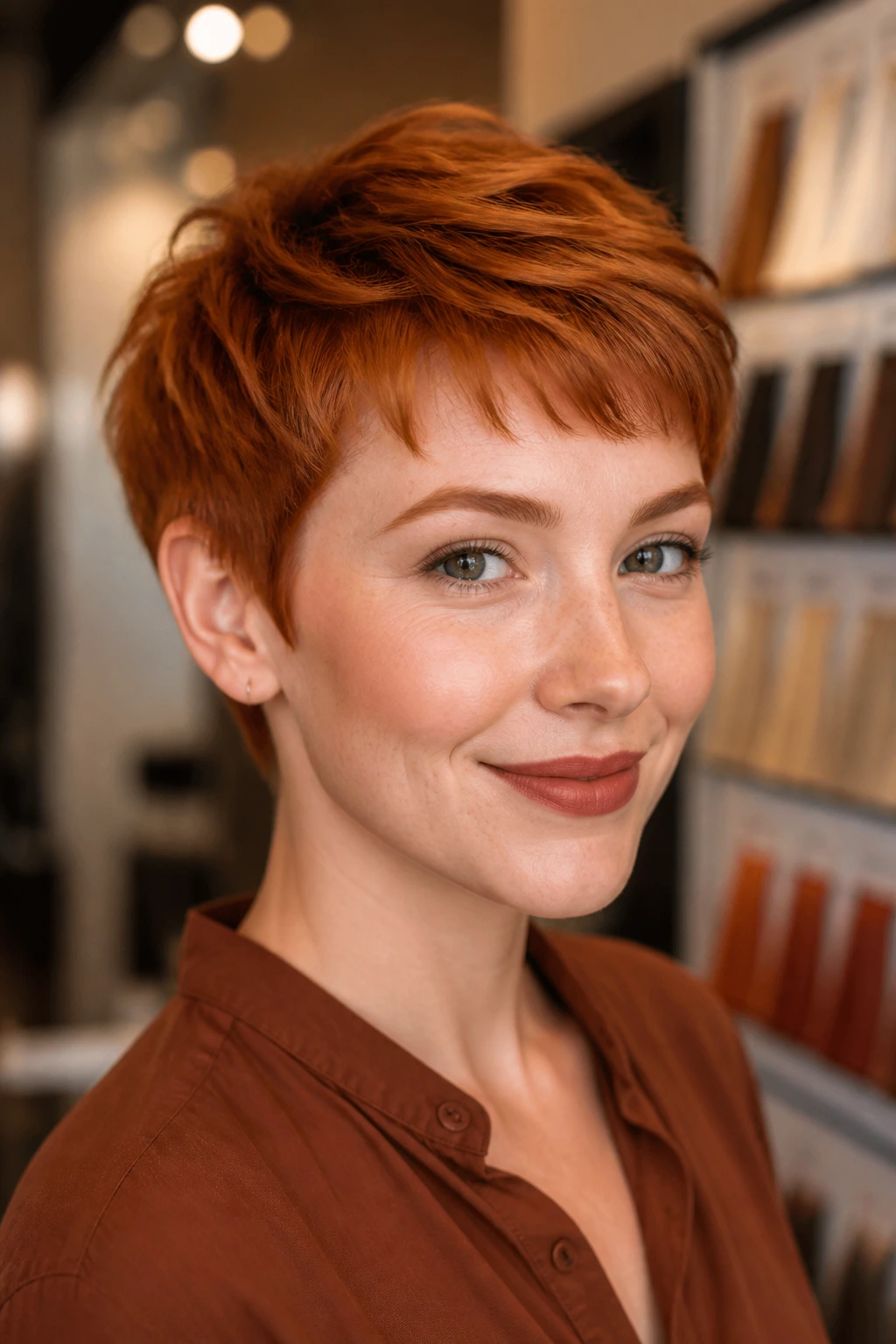
The shade name on the box matters less than the level chart. If you want bright copper, look for a level 7 or 8 base with orange-gold pigments. If you want auburn, a level 5 or 6 with red-brown depth gives you more control and less neon. Strawberry blonde lives higher and lighter, usually with beige and gold carrying the red note instead of letting it take over.
Demi-permanent color is often the sweet spot for short ginger looks because it deposits tone without chewing up the cuticle the way stronger lightening can. Permanent color makes sense if you need gray coverage or a lift from darker hair. If your hair is already light or porous, a gloss, glaze, or color-depositing conditioner may be enough to get the shade you want.
Porosity changes everything. Hair that’s been lightened can drink copper pigment fast, then drop it just as fast. That’s why a strand test is worth the time. The nape is a good place to test because it hides well and often behaves a bit differently from the front sections.
How to Wear Ginger Hair in Everyday Life

Makeup: Peach blush, bronze liner, and a muted berry lip usually sit better with ginger hair than orange-heavy makeup. If your hair is a deep auburn or chestnut ginger, a warm nude lip can keep the look balanced.
Wardrobe: Cream, camel, denim, olive, navy, and black all give short ginger cuts room to breathe. If you wear bright orange near a bright copper pixie, the hair can disappear into the outfit.
Eyebrows: Keep brows one to two shades deeper than the hair for most ginger shades. Matching them exactly can flatten the face, especially on short cuts where the hair is close to the forehead.
Accessories: Gold earrings, tortoiseshell frames, and warm-toned scarves usually work well. Silver can still look good, but it pushes the look cooler and sharper.
Texture: A little texture spray gives pixies and bobs movement. Too much stiff hairspray makes copper look hard, and ginger tones do better when the hair still moves.
Extra Ways to Push the Color Further
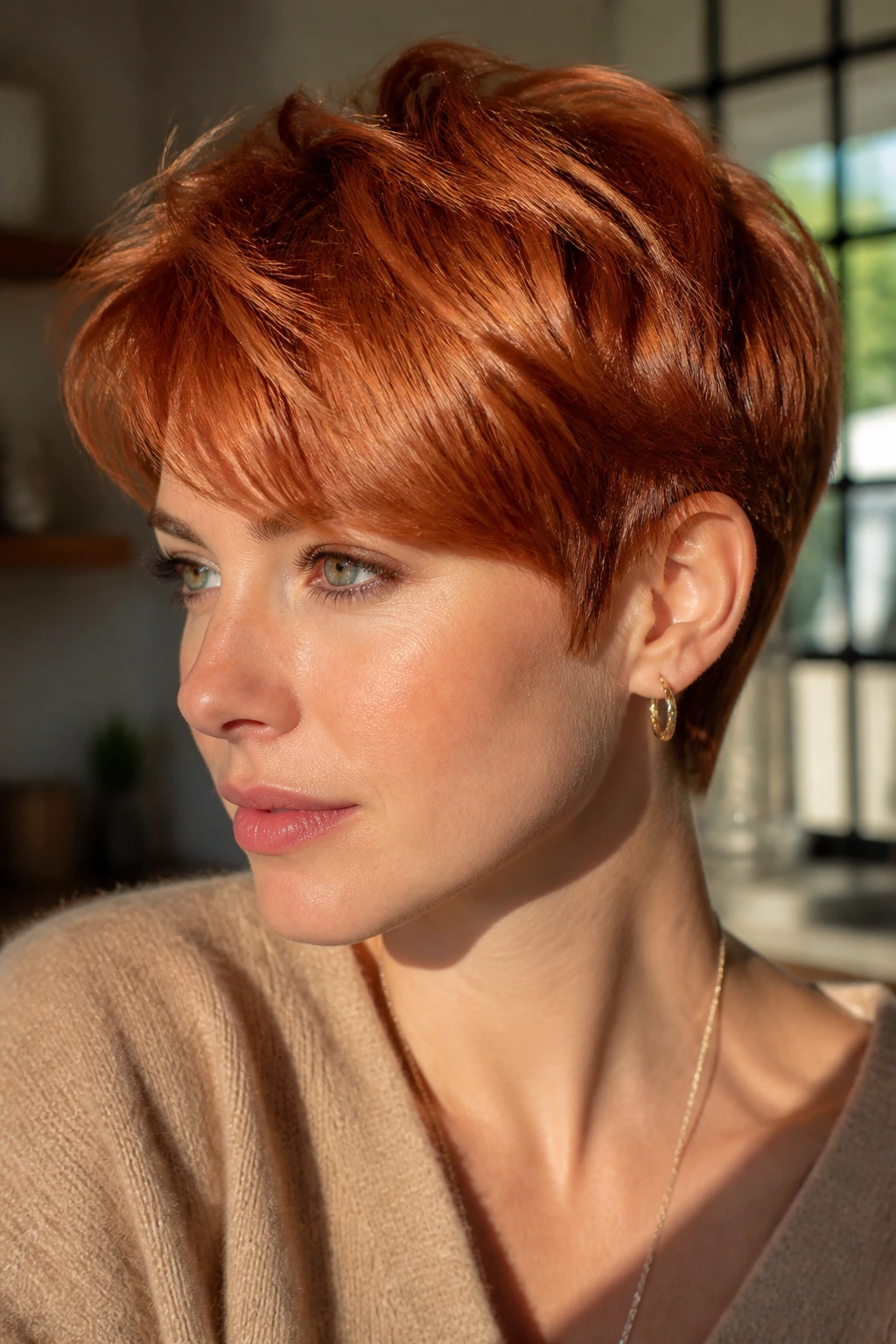
Gloss Finish: A clear or lightly tinted gloss every 4 to 6 weeks keeps copper from looking dusty. If the hair has gone dull, this is usually the fastest fix.
Root Shadow: A slightly deeper root — even half a level darker — makes short ginger color look richer and keeps the cut from turning into a solid helmet of warmth.
Face-Framing Brightness: Add a brighter money piece or front edge if you want the cut to feel fresher without changing the whole head. On short bobs and pixies, a tiny bright zone does a lot.
Texture Boost: Loose waves, soft bends, or a bit of separation in the crown make copper and auburn reflect more light. Flat, sticky texture hides all the good stuff.
Make-It-Yours: If you run cool, lean toward rose-copper and strawberry blonde. If you run warm, apricot, cinnamon, and burnt copper usually feel more natural. For low-maintenance wear, choose a shadowed root and a softer melt instead of a hard, saturated single-process red.
Mistakes That Make Ginger Hair Fall Flat
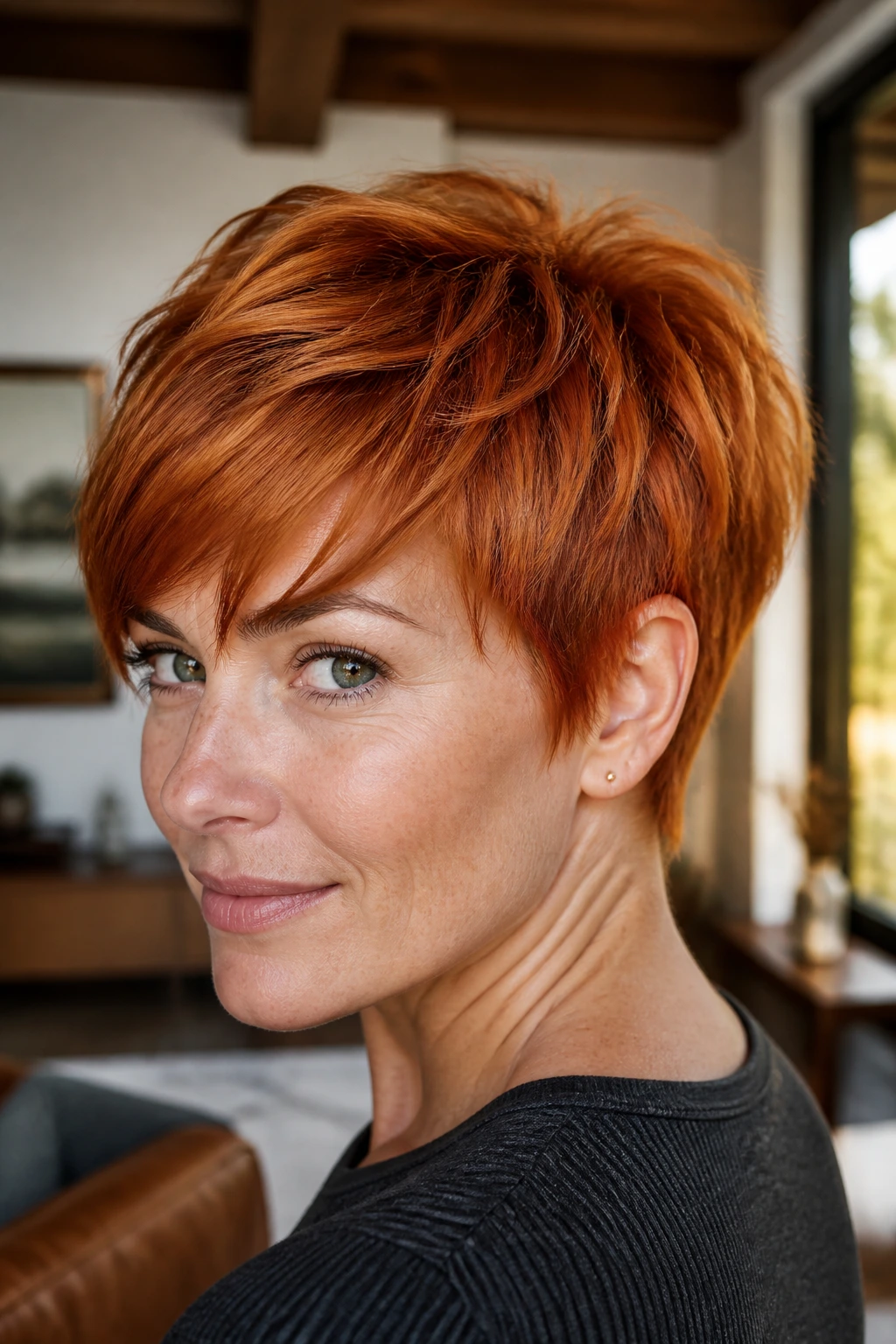
The first mistake is picking a ginger shade that fights the haircut. A vivid orange on a blunt, heavy bob can look dense in a bad way, while the same orange on a tiny pixie may be too much unless the shape is clean. The fix is simple: match the intensity to the amount of hair and the strength of the cut.
Another common one is washing too often with strong shampoo. Copper pigments leave fast when they’re hit with sulfates and hot water every day. If the hair starts looking salmon or pale after a week, cut back to lukewarm rinses and a color-safe cleanser.
Over-lightening is another trap. Short hair shows damage fast, and ginger shades need some depth to keep their shape. If the ends feel rough and the color turns airy in a bad way, the hair has probably been pushed too far.
The last one I see a lot is skipping maintenance because the style is short. Short hair does not mean low attention. A pixie or cropped bob can lose its edge faster than long hair because every inch of growth changes the outline.
Variations and Adaptations to Try
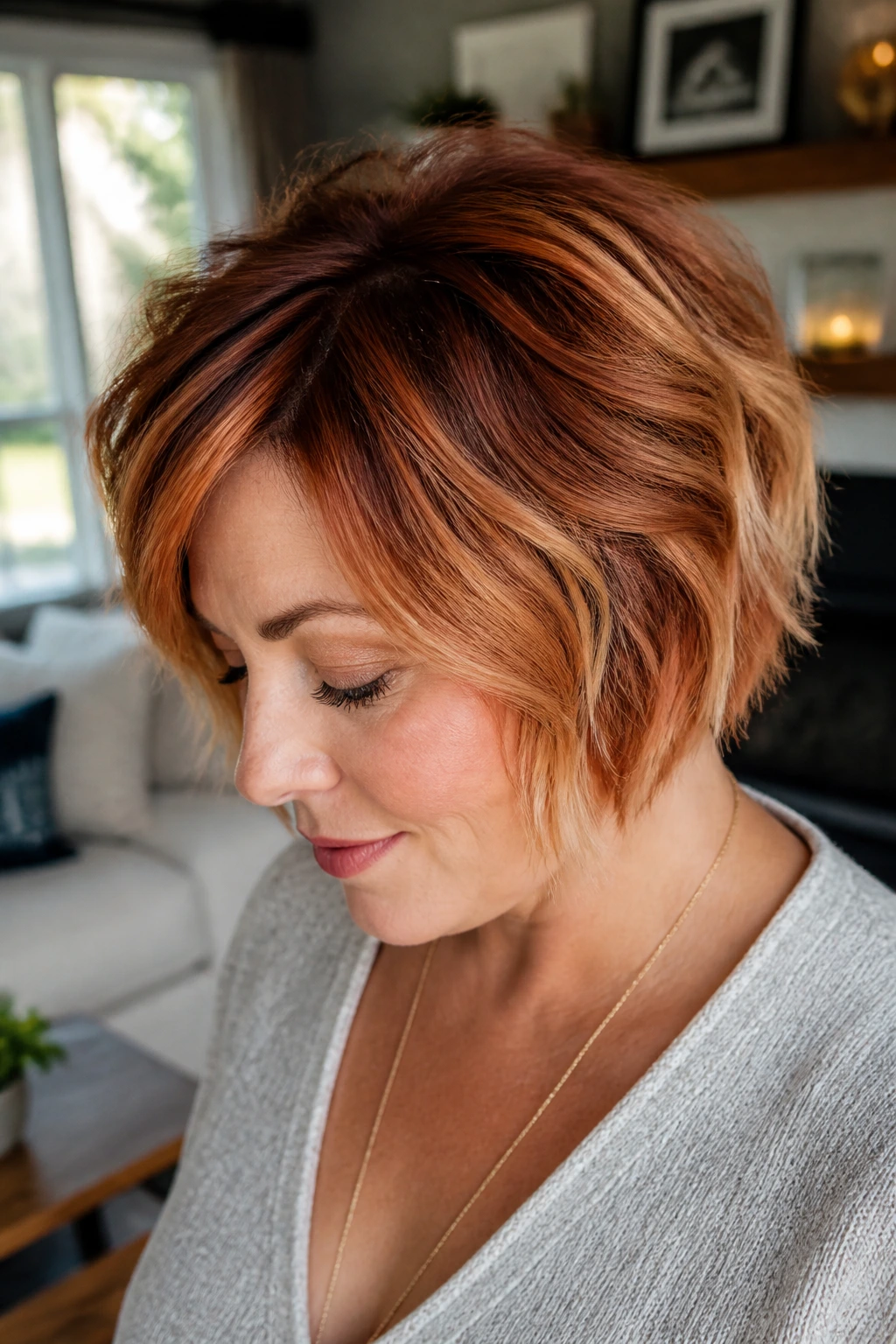
Low-Lift Copper: This version uses a demi or gloss over a lighter base instead of a full lift. It’s a solid choice if you want warmth with less commitment and less damage.
Gray-Blending Ginger: Add a soft auburn or cinnamon tone over gray for a blended effect rather than full coverage. The gray can become part of the shine instead of fighting it, especially on cropped hair.
Cooler Strawberry Copper: Pull the pigment a little pinker and less orange. This works when you want ginger hair color ideas that feel softer on fair or rosy skin.
Dark Brunette Ginger Melt: Keep the roots deep brown and move into copper only through the mids and ends. It gives short hair dimension without making the whole head bright.
Curly-First Placement: Put the lightest copper around the curl ring and face frame, then leave the interior a shade deeper. This keeps short curls from puffing out and helps each bend stand apart.
Soft Grow-Out Version: Ask for a root shadow and a gentle gloss instead of a solid red block. You’ll get a color that fades more naturally and needs fewer panic fixes between appointments.
Keeping Ginger Hair Bright Between Salon Visits
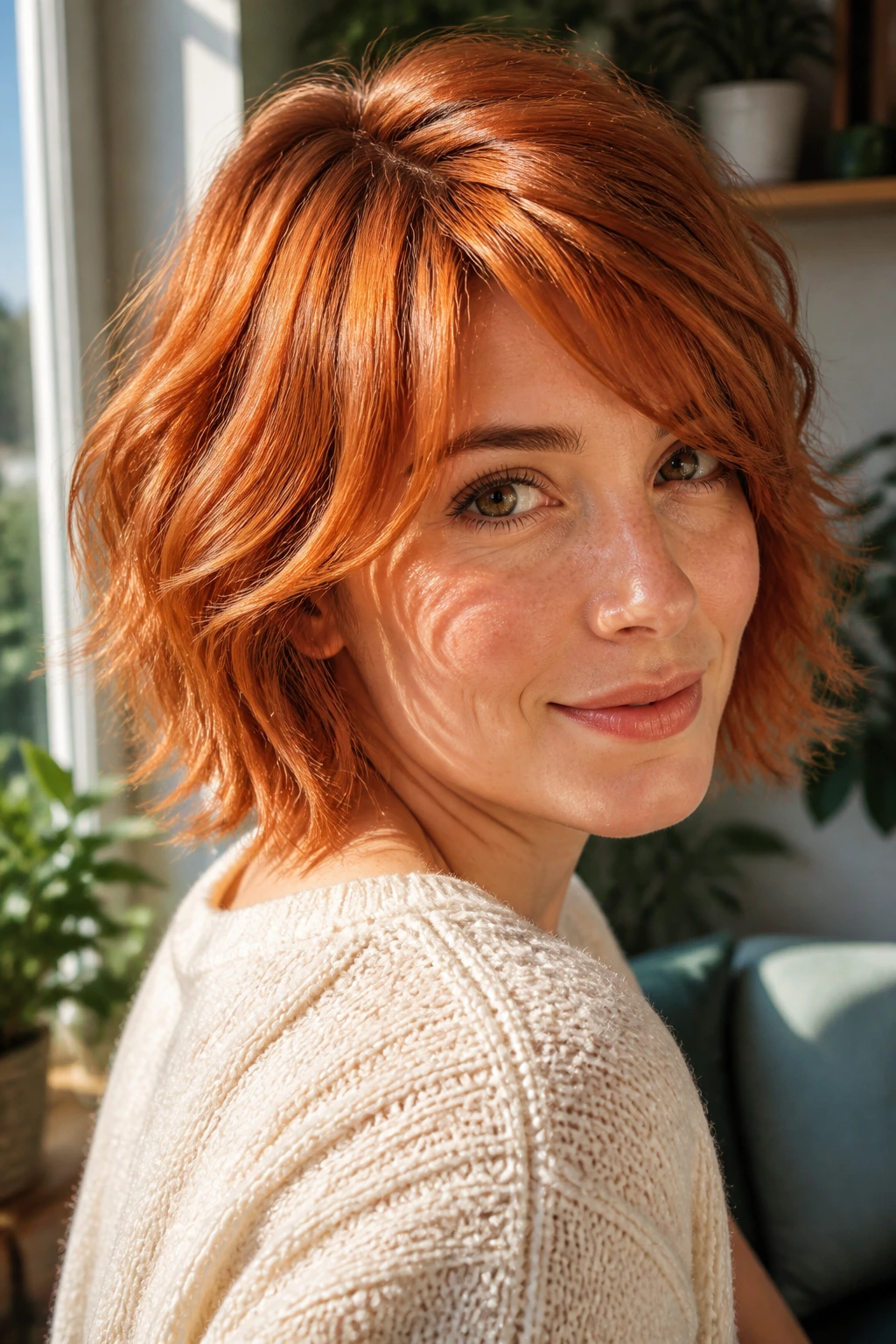
Short ginger color needs a rhythm. Wash two or three times a week if you can, and keep the water lukewarm. Hot water opens the cuticle fast, and copper pigment does not hang around for that.
A color-depositing mask once every 1 to 2 weeks can keep strawberry blonde, copper, or auburn from drifting pale. Use it on towel-dried hair and leave it on for the time the label says, then rinse well. If you go too heavy with deposit masks, the color can look muddy at the ends, so don’t overdo it.
Glosses usually land every 4 to 6 weeks for most short cuts. Root touch-ups tend to run every 5 to 8 weeks depending on how fast your hair grows and how hard the cut line is. A buzz cut or close crop may need more frequent attention because there’s nowhere for regrowth to hide.
Heat protection still matters on short hair. Flat irons and blow-dry brushes can dull the cuticle fast, which makes ginger look less lively. A light spray before styling keeps the finish smoother and helps the color hold its shine a little longer.
Frequently Asked Questions

Will ginger hair make short hair look thinner?
Not if the color has some depth. A flat, one-tone copper can expose sparse areas on fine hair, but a root shadow, gloss variation, or balayage placement usually makes short hair look fuller because the eye sees movement instead of one solid block.
Does ginger fade faster on short hair?
It can, mostly because short hair gets washed, heat-styled, and touched more often around the face and crown. A color-safe shampoo, cooler water, and periodic glossing help a lot. The good part is that short hair also takes a refresh faster.
Can I get a ginger shade without bleaching my hair?
If your hair is already light brown or dark blonde, yes, a demi-permanent copper or auburn can often add warmth without bleach. Darker hair usually needs some lift to get a true ginger result, especially if you want brightness instead of a deep red-brown.
What short cut shows ginger color the best?
Pixies and bobs tend to show it fastest because the color sits close to the face. Curls and shags can make ginger look richer and more dimensional, while a blunt bob makes the shade feel sharper and more graphic.
How do I keep copper from turning brassy?
Use color-safe shampoo, avoid heavy clarifying products, and keep a gloss or color-depositing mask in rotation. If the color starts going too orange or too dull, your stylist may need to adjust the balance with a slightly redder or browner toner.
Is ginger hair good for curly short hair?
Yes, and it’s one of my favorite pairings. Curls break up the color naturally, so copper, auburn, and chestnut tones can look layered without much extra work. The trick is keeping some depth underneath so the curls still have shape.
What if my skin looks flushed with red hair?
Choose a softer ginger — strawberry blonde, rose-copper, or chestnut-leaning auburn — instead of a bright orange copper. A deeper root and cooler makeup tones can also stop the hair from echoing redness in the skin.
How often should I touch up a short ginger cut?
For most short styles, a gloss every 4 to 6 weeks and a root touch-up around every 5 to 8 weeks keeps the shape fresh. Very short buzzed or cropped cuts may need color maintenance sooner because growth changes the silhouette so fast.
A Color That Keeps Its Edge
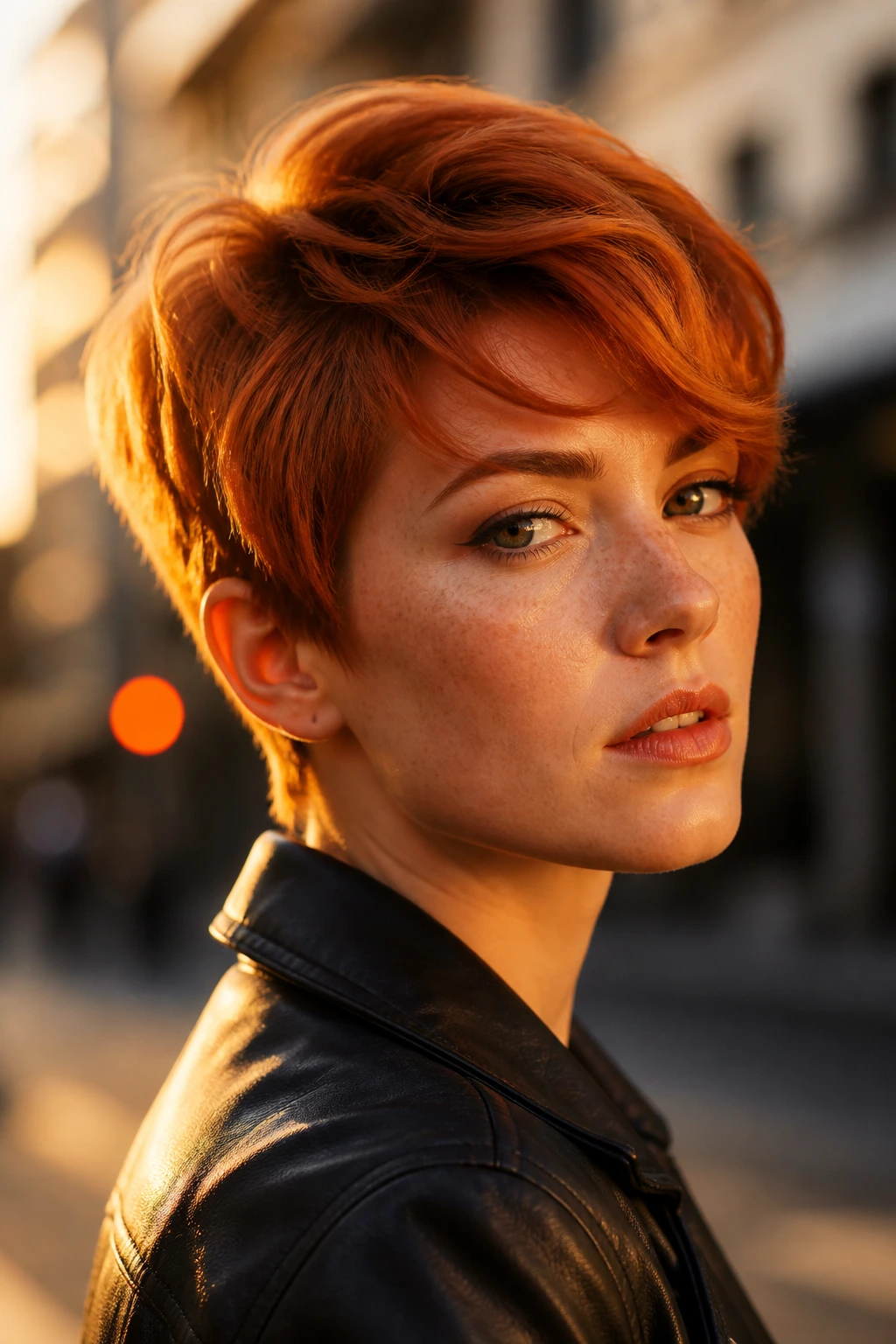
Short ginger hair works because it’s honest. The cut can’t hide the shade, and the shade can’t hide the cut. That pressure is exactly why these looks have so much life when they’re done well.
The best part is how much range sits inside the color family. Copper can be sharp, strawberry blonde can be soft, auburn can be quiet, and rose-ginger can lean almost playful. On short hair, each one changes the outline in a different way, which is why a good ginger look feels less like a trend and more like a decision.
If you’re choosing one, start with the cut you already have and let the tone work with it instead of against it. That’s where the strongest short ginger hair color ideas tend to land — right at the point where shape, shine, and warmth all agree.
