



Brown hair can look flat fast. Give it the wrong tone and it turns into one dark block under indoor light, all depth gone and no life in the mid-lengths. Give it the right warmth, though, and the whole head changes — the color starts moving. You get copper in the corners of the light, amber around the face, and that rich brunette finish that makes even a plain blowout look considered.
The trick is not “making it brown.” It’s choosing which brown, and where the warmth should sit. A milk chocolate gloss reads very differently from a chestnut ribbon balayage. A toffee money piece does a job that a full-head caramel glaze never quite can. And if your hair is already dark, the smartest move is often not more lightness, but better placement: a few warmer threads, a softer root, a gloss that catches instead of shouting.
That’s why rich warm tones keep winning. They’re forgiving, they’re wearable, and they don’t all demand the same level of upkeep. Some are salon-only. Some are easy to maintain between appointments with a color-depositing mask and a decent heat protectant. All of them depend on the same idea: brown hair looks best when it has warmth you can see, not warmth that just sits in the formula and disappears.
Why These Warm Brown Ideas Stand Out
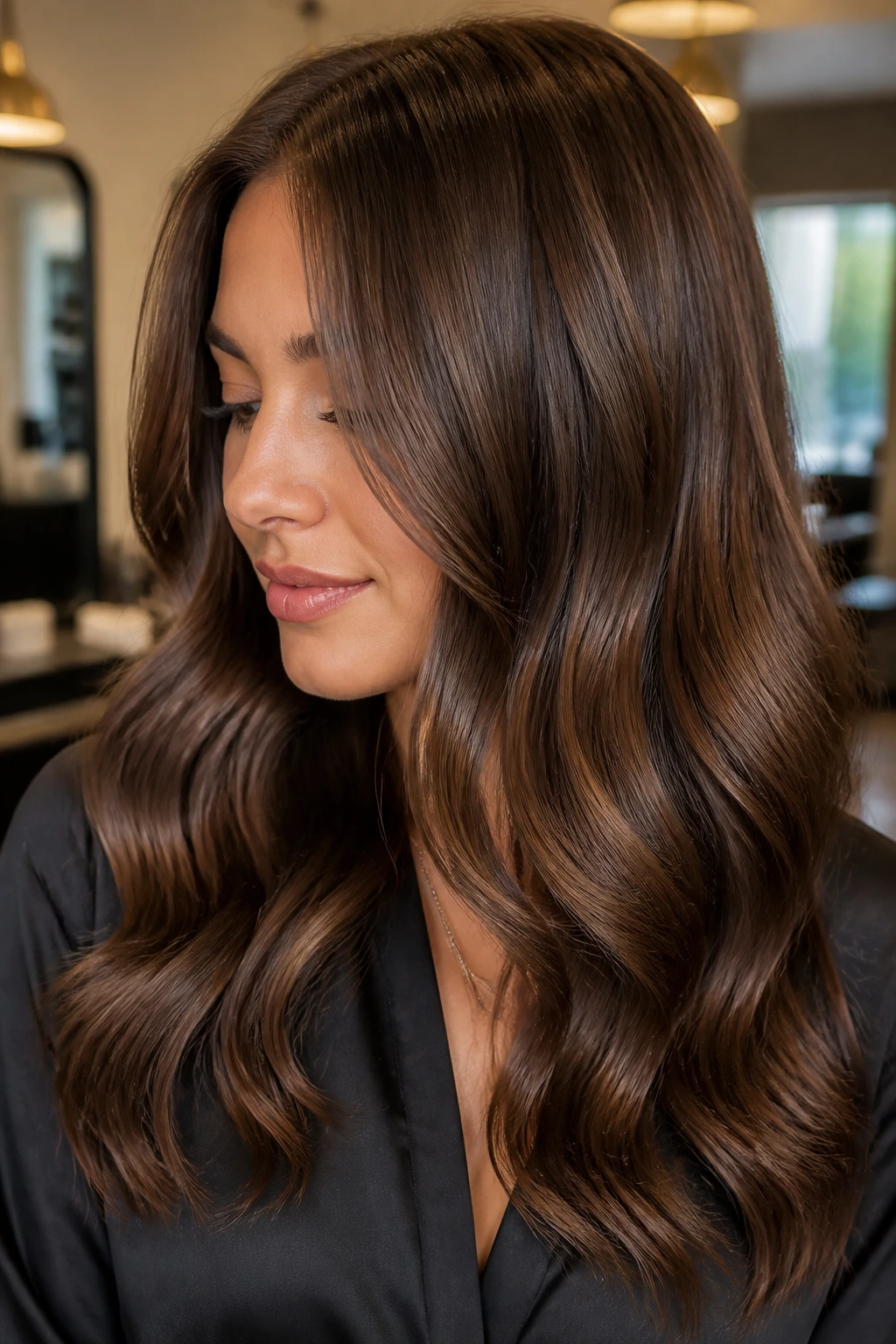
- They add depth without making hair look heavy. A warm brunette shade keeps the color from sinking into one dark note, which matters most on straight or fine hair.
- They soften grow-out. Root shadow, balayage, and lowlights can stretch your color for 6 to 10 weeks before things start looking obvious.
- They work on more than one base level. Dark blondes, medium brunettes, and deep brunettes can all wear warm brown; the placement just changes.
- They flatter waves and curls fast. A bend in the hair shows every ribbon and lowlight, so the warmth reads richer in motion than it does pinned flat.
- They’re easier to live with than high-contrast blonde. If you want color that still looks good on a rushed wash day, brunette warmth does that better than most lighter looks.
- They can be subtle or bold. A gloss gives you sheen. A balayage gives you dimension. A copper-kissed chestnut gives you more attitude without crossing into full red.
1. Milk Chocolate Gloss
Milk chocolate brown is the shade I reach for when someone wants the hair to look healthier before they want it to look different. It sits in that sweet spot between beige and cocoa, with enough warmth to reflect light and enough depth to keep the color from feeling sugary. On a level 5 or 6 base, a demi-permanent gloss can be enough to make the whole head look smoother in one appointment.
Why it works
The beauty of a milk chocolate gloss is control. It does not need a dramatic lift, and that’s the point. If the hair is already medium brown, a gloss adds shine and softens any rough-looking ends without making the root line obvious.
It’s especially good on blunt cuts and shoulder-length styles, where a plain brown can look boxy. The soft warmth breaks that up.
2. Chestnut Ribbon Balayage
Chestnut ribbon balayage has movement built into it. Instead of painting broad blonde panels, the colorist works in warmer brown ribbons that sit a shade or two lighter than the base and melt through the mid-lengths. On waves, it looks expensive. On curls, it keeps the pattern from disappearing into one dark mass.
A chestnut ribbon is the sort of highlight that shows up in daylight and still makes sense under fluorescent office lighting. That balance is why it lasts.
Ask for this if:
- Your natural hair is level 4 to 6.
- You want dimension, not streaks.
- You like wearing your hair in loose bends or curls.
- You’d rather refresh every 8 weeks than every 4.
The best version keeps the root deep and lets the chestnut start below the crown. Too much brightness at the top and the whole thing loses that rich brunette finish.
3. Cinnamon Brunette Melt
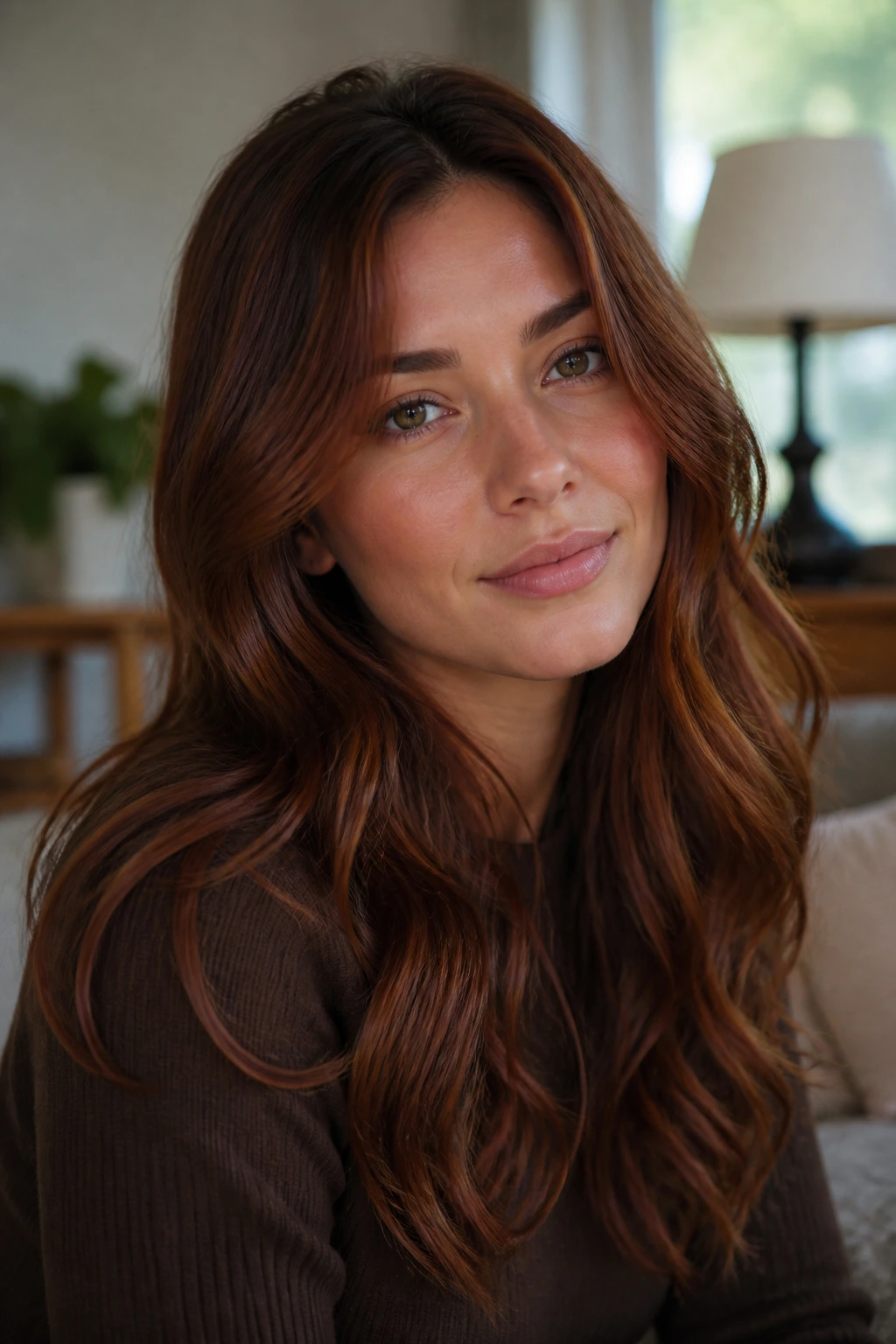
Cinnamon brunette is warm in a way that feels alive, not orange. Think brown with a red-brown whisper through the mids and ends, the kind of tone that catches in low light and looks almost velvet in the sun. It’s a smart choice if your hair has gone dull after too much ash toner or a string of cool glosses.
A melt like this works best when the transition is soft. No harsh line. No obvious stripe. The root stays deep, the cinnamon shows up gradually, and the ends get the strongest warmth. That keeps it from reading like a flat auburn.
Best for: medium to deep brunettes who want warmth without going full copper.
4. Toffee Brown Money Piece
The money piece is not subtle, and that’s exactly why it works here. A toffee-brown frame around the face pulls light forward in a way that makes the skin look fresher and the haircut look more finished. You only need the front sections to be a touch lighter — usually one to two levels up from the base.
This is the move for anyone who wants a change without committing to all-over brightness. Keep the rest of the head soft and brunette, then place the toffee around the eyes, temples, and cheekbones. It’s a small area with a big payoff.
If your hair is naturally dark, ask for a gentle lift and a warm glaze over the top. That keeps the piece from turning brassy.
5. Espresso with Caramel Veil
Espresso brown can feel too dense if every strand is the same shade. A caramel veil fixes that. The base stays deep and glossy, but a few sheer caramel threads are woven through the surface so the hair catches movement instead of sitting like one solid curtain.
This works especially well on fine hair, where heavy highlights can look stripey. The veil method keeps the color believable. You see warmth when the hair shifts, not as a loud stripe from every angle.
How to wear it
Wear this with a smooth blowout or soft S-waves. The finish matters. Straight, pin-straight hair can make the caramel disappear; movement lets it show up in flashes.
6. Maple Syrup Brunette
Maple syrup brown sits on the warmer side of brunette without drifting into copper. It has that golden-brown cast that makes the hair look sun-touched even when the color is fully done indoors. The tone is gentler than toffee and richer than plain caramel.
It’s a strong option for someone whose hair tends to go dull at the ends. The golden warmth brings the mid-lengths back to life. A gloss every few weeks keeps it from fading into a flatter brown.
If you like warm jewelry, cream sweaters, and deep lip color, this shade tends to play nicely with all of it. It has a kind of baked-in softness that makes the hair look touched by light.
7. Hazelnut Lowlights
Hazelnut lowlights are the quiet fix for hair that has gone too bright or too flat. Instead of lightening, you add warmer, deeper strands underneath and around the perimeter. The result is a brown that looks denser and more layered, not darker in a blunt way.
This is one of my favorite moves on lighter brunettes and dark blondes who want dimension but do not want to go much darker overall. The lowlights give the hair a base to sit on. Without them, warm highlights can start looking floaty.
What to ask for
- Deeper hazelnut strands placed under the top layer.
- Soft face-framing pieces left a touch lighter.
- A neutral-warm glaze to blend the pieces together.
8. Mocha Balayage with Honey Ends
Mocha balayage is a smart choice if you want brown hair that still has a little glow at the ends. The mocha base keeps the color grounded. Honey on the lower third gives the look a soft lift that shows up when the hair swings.
On wavy hair, this is a winner. The bend exposes the lighter ends and the darker roots, so the hair reads layered without looking busy. On very straight hair, it can look more understated, which is not a bad thing either.
The key is not overdoing the honey. Too much and the whole look starts drifting blonde. Kept soft, it stays in brunette territory and feels rich instead of sandy.
9. Auburn-Infused Brown
Auburn-infused brown is for people who want warmth that shows indoors as well as outside. The red-brown undertone gives the hair a firelit quality, but the brown keeps it wearable. It’s deeper than copper, less brown than mahogany, and easier to live with than a full auburn shift.
This shade is especially useful if your hair tends to look greenish or ashy after cooling down. The red warmth fixes that in one move. It also loves shine, so a glossing treatment or a smooth serum makes a difference.
Auburn-infused brown looks best when the formula is deep enough at the root that the red does not take over. The warmth should feel like part of the brown, not a separate color sitting on top.
10. Cocoa Brown with Golden Ribbons
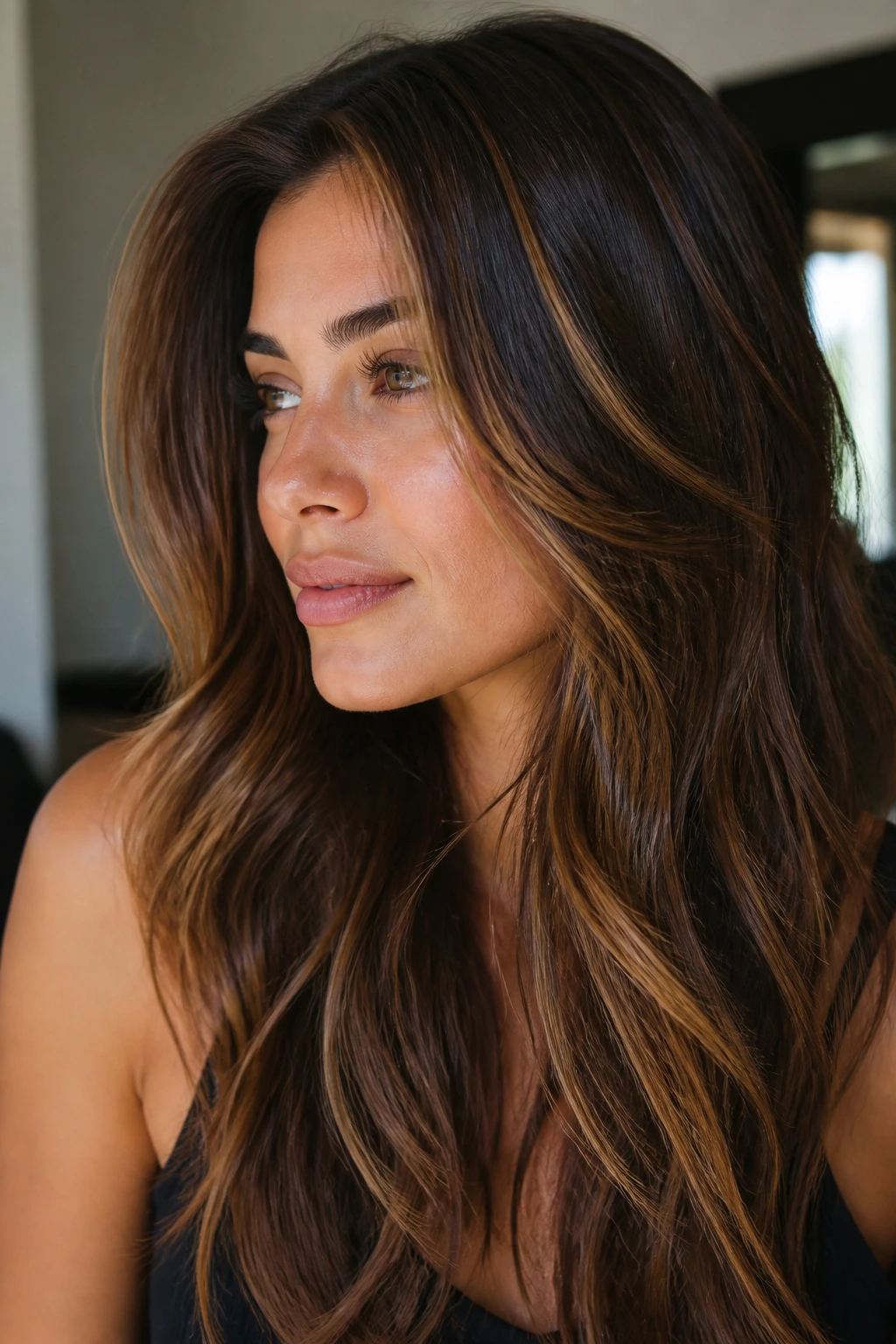
Cocoa brown is the base you reach for when you want richness first. Then the golden ribbons go in like thin flashes of light across the surface. Not chunky. Not stripey. Just enough gold to keep the brown from reading flat.
This idea works beautifully on long layers, where the ribbons can travel down the hair and catch movement. The contrast between cocoa and gold gives the style some lift without losing that brunette depth.
If you have thick hair, this is one of the better ways to keep it from looking too dense. The ribbons break up the weight visually. That matters more than people think.
11. Walnut Brown Shadow Root
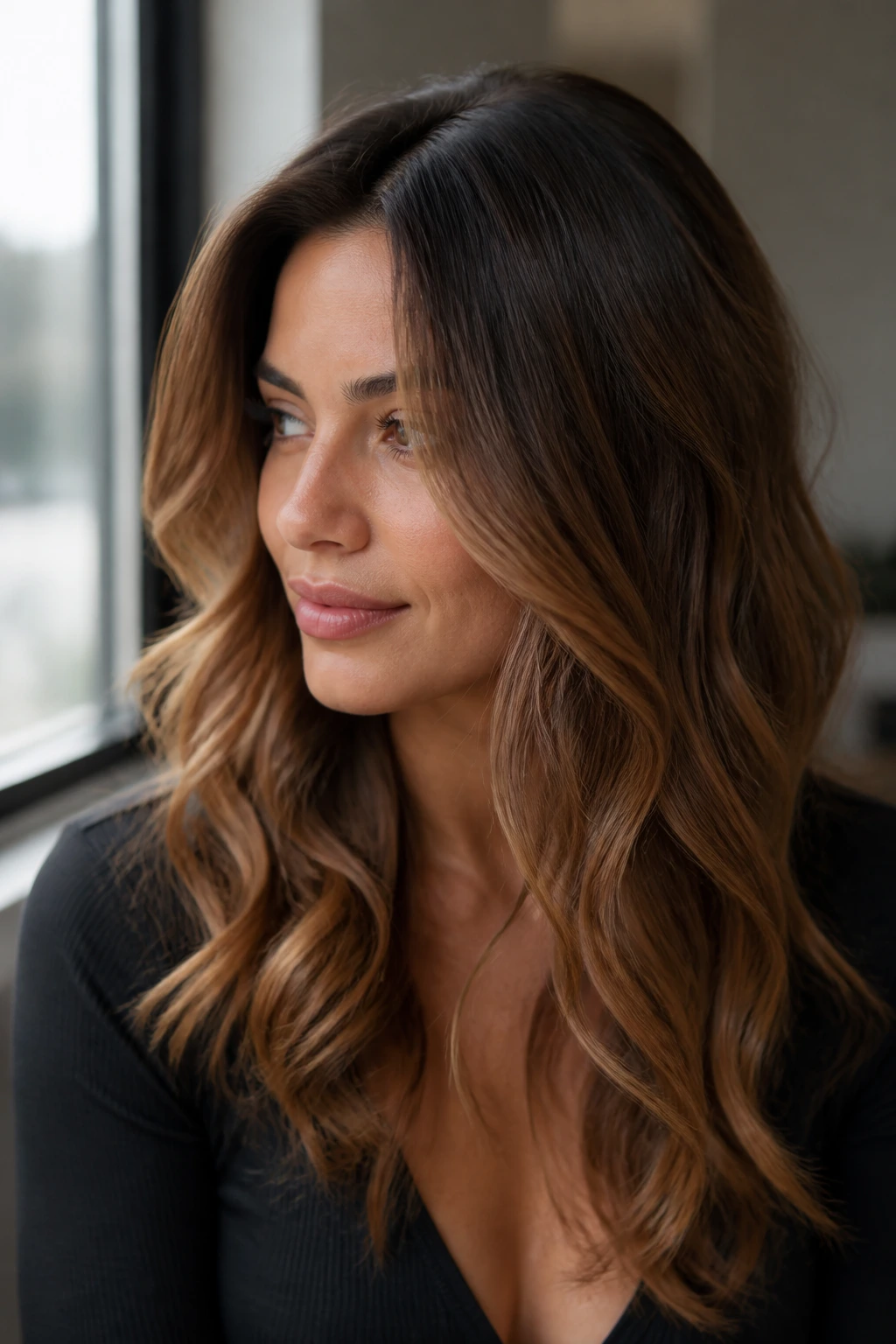
Walnut brown shadow root is a grown-out color on purpose. The root stays slightly deeper, more grounded, and the warmth lives through the mid-lengths and ends. It’s the kind of shade that lets you go a little longer between appointments without the line screaming for attention.
This is also one of the smartest options for gray blending. A soft shadow root buys you time and makes the grays look intentional instead of neglected. If the hair is naturally dark, this can be the difference between “maintenance” and “constant maintenance.”
Keep the root cool-warm rather than red. Walnut reads best when it has a toasted, nutty feel, not a mahogany edge.
12. Bronze Brunette
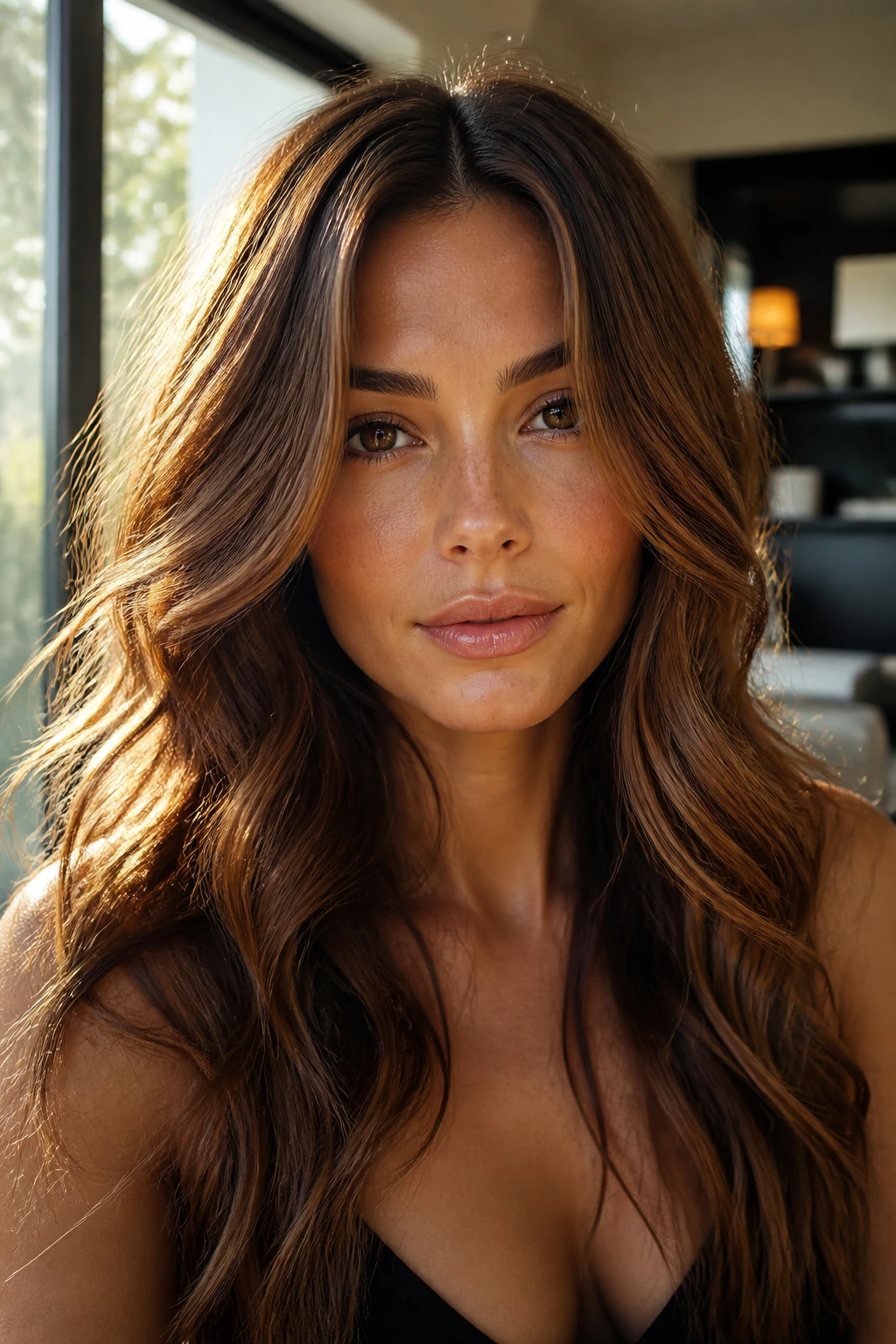
Bronze brunette has a shine factor that shows up fast on layered cuts and lobs. The warmth is a little metallic, a little golden, and that slight reflectivity makes the hair look polished even when the styling is simple. It is not a subtle color, but it is not loud either.
Ask for bronze when you want the brown to feel brighter without tipping into copper. The best versions keep the base deep and let the bronze sit in the surface layer. On hair with movement, the tone looks almost like polished wood.
A center part and loose bends make this shade shine. Tight curls can eat some of the bronze unless the highlight placement is more deliberate.
13. Truffle Brown Gloss
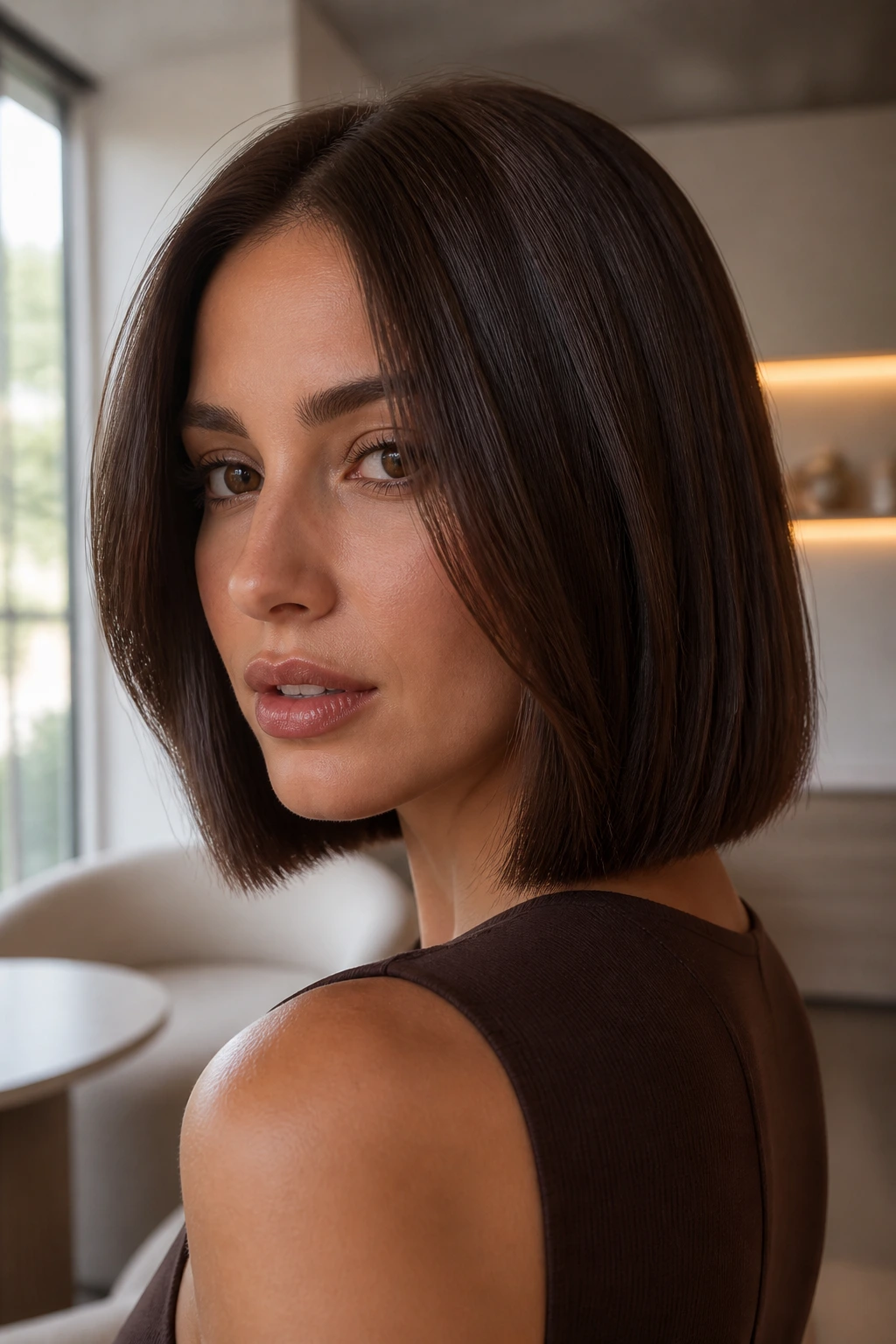
Truffle brown is the deep, velvety cousin in this group. It sits darker than milk chocolate and softer than espresso, with a warmth that comes through as gloss more than brightness. The finish matters here more than the lift.
This is a good one for hair that already has good condition and a strong cut. The color rewards smoothness. A blunt bob, a glossy lob, or a clean layered cut all make the depth feel deliberate instead of heavy.
If your hair is porous, this shade can go too dark at the ends. A colorist who understands porosity will keep the formula warmer and lighter through the lower half so the look stays dimensional.
14. Brown Sugar Highlights
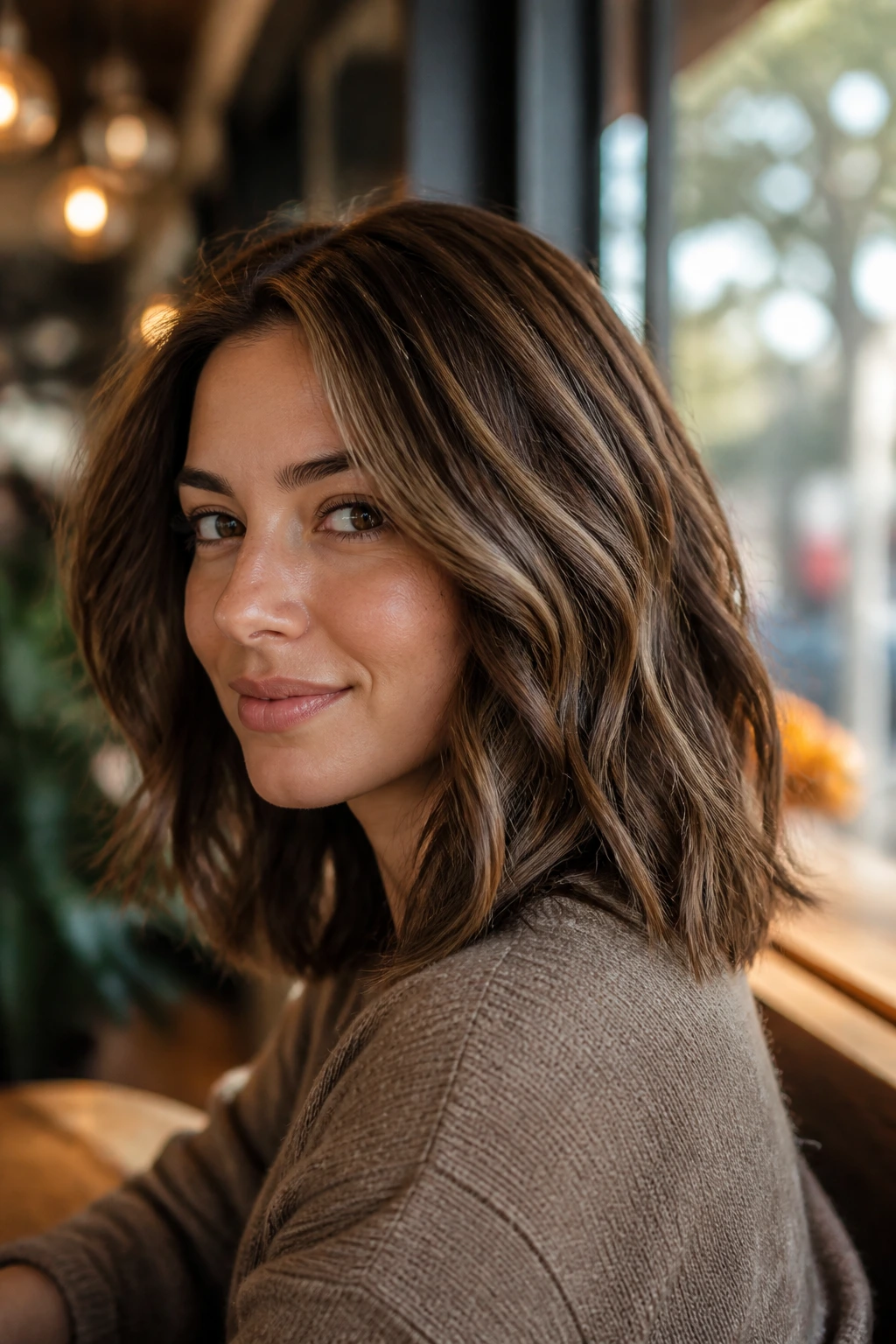
Brown sugar highlights are soft, sweet, and low-contrast. Instead of chunky brightness, you get thin ribbons of warm light woven through a brown base. The effect is less dramatic than balayage and more diffused across the whole head.
This works especially well if you want warmth that does not fight your haircut. Layers, curtain bangs, and shoulder-length cuts all benefit from these fine highlights because the color follows the shape instead of competing with it.
The trick is keeping the highlight count high and the brightness low. You want many delicate pieces, not a few loud ones. That gives the brown a sugar-kissed finish rather than a stripy one.
15. Amber Chestnut Waves
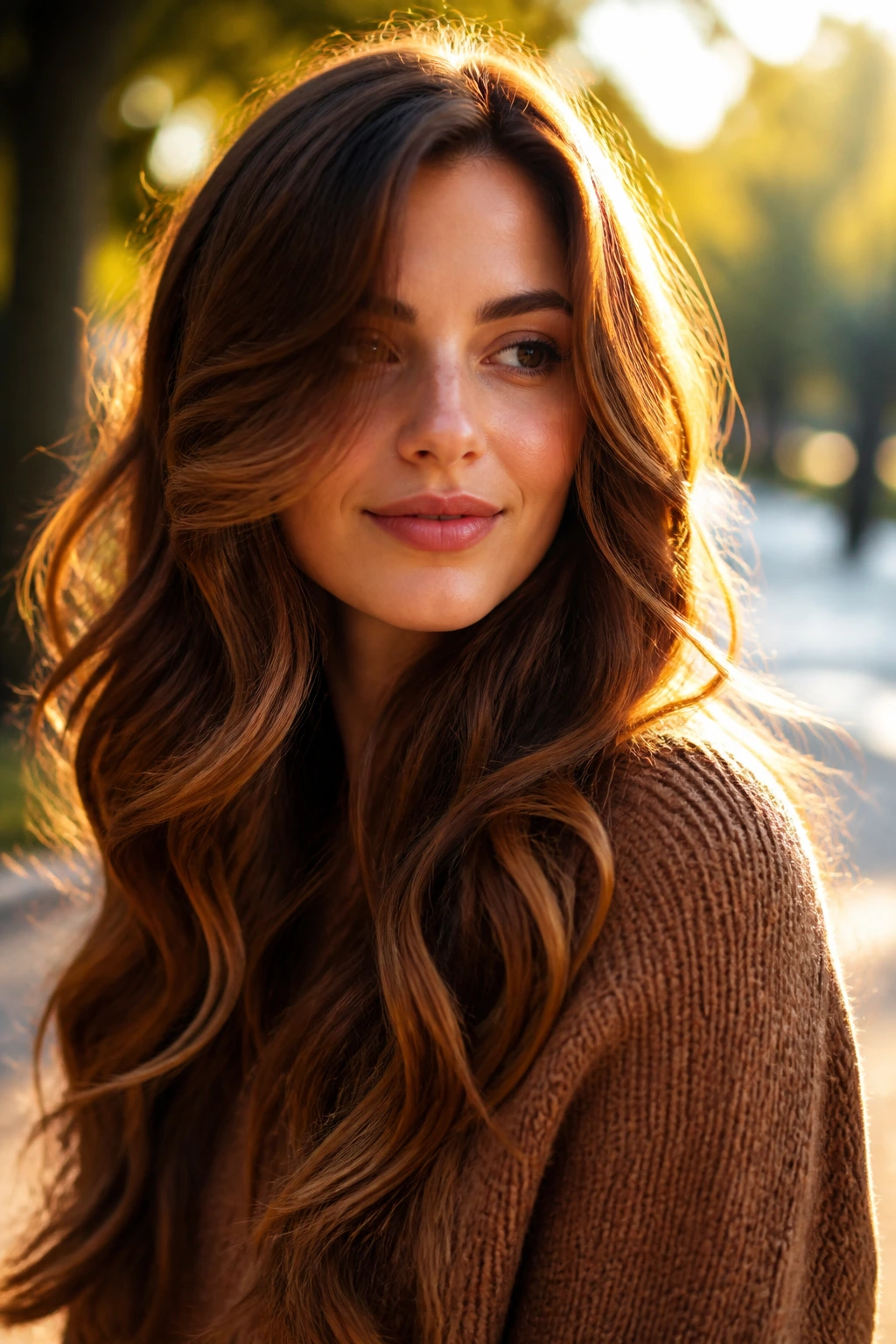
Amber chestnut waves are for hair that needs glow. The chestnut base gives structure, while the amber adds that warm, almost candlelit shift when the hair moves. It looks especially good in loose waves because the bends expose the color changes.
If your hair is naturally wavy, this shade does a lot of the work for you. The pattern brings the highlight placement to life. Straight hair can wear it too, but I’d still put a bend in the ends or a soft blowout through the front pieces.
A small amount of warmth goes a long way here. Too much amber and the color becomes orange. Kept balanced, it reads rich.
16. Pecan Brown Lowlights
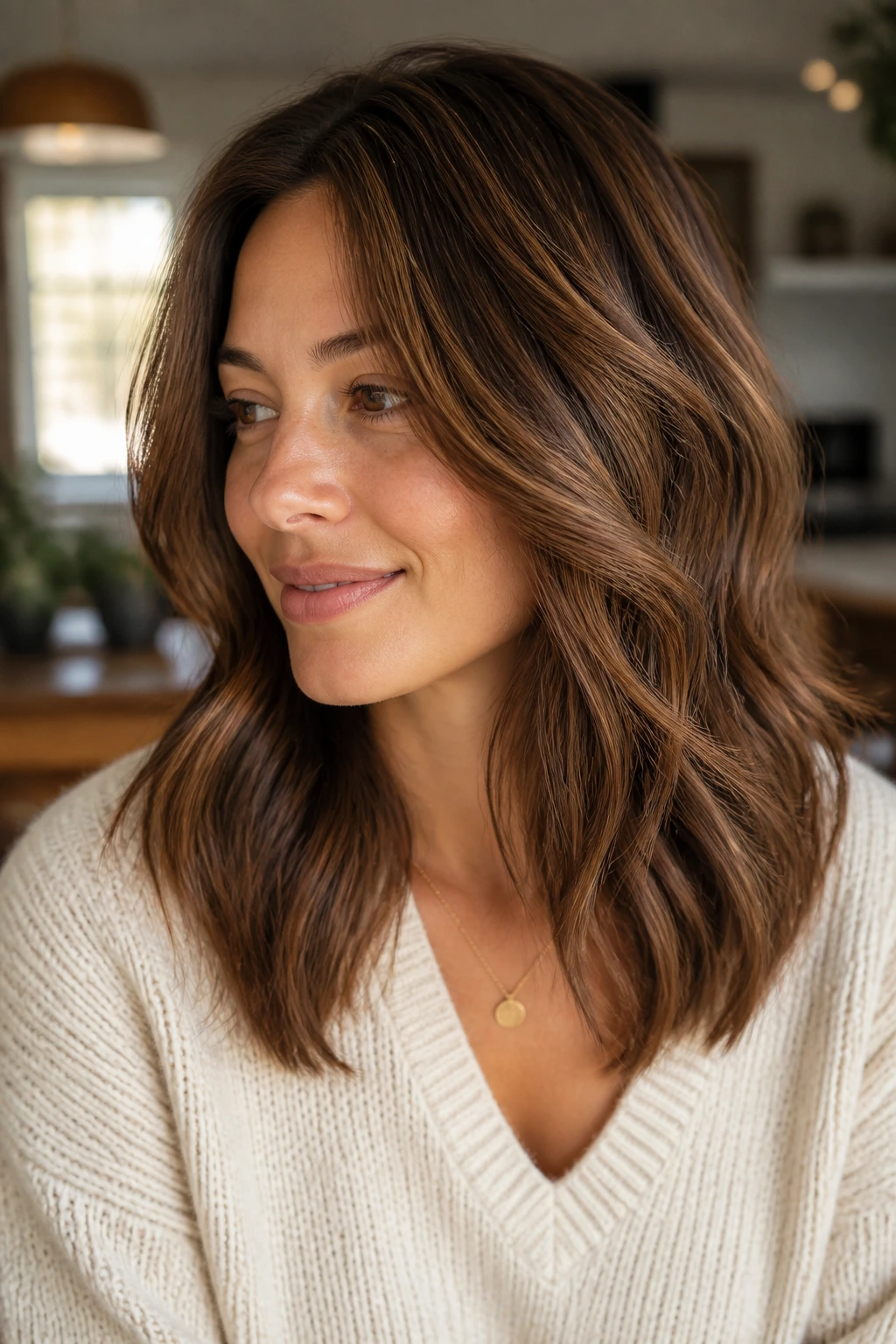
Pecan lowlights are a useful fix for overlightened brunette or dark blonde hair that feels washed out. The deeper pecan tones slide under the lighter pieces and make the whole head look denser. They also help a brighter highlight pattern look more expensive, which is a nice side effect.
This is the shade family I’d choose if the hair has lost its base after too many highlight sessions. Lowlights restore shape. They make the lighter pieces look placed on purpose, not accidental.
A good pecan lowlight should look like a warm shadow, not a muddy patch. Placement matters more than saturation here.
17. Mahogany Brown Sheen
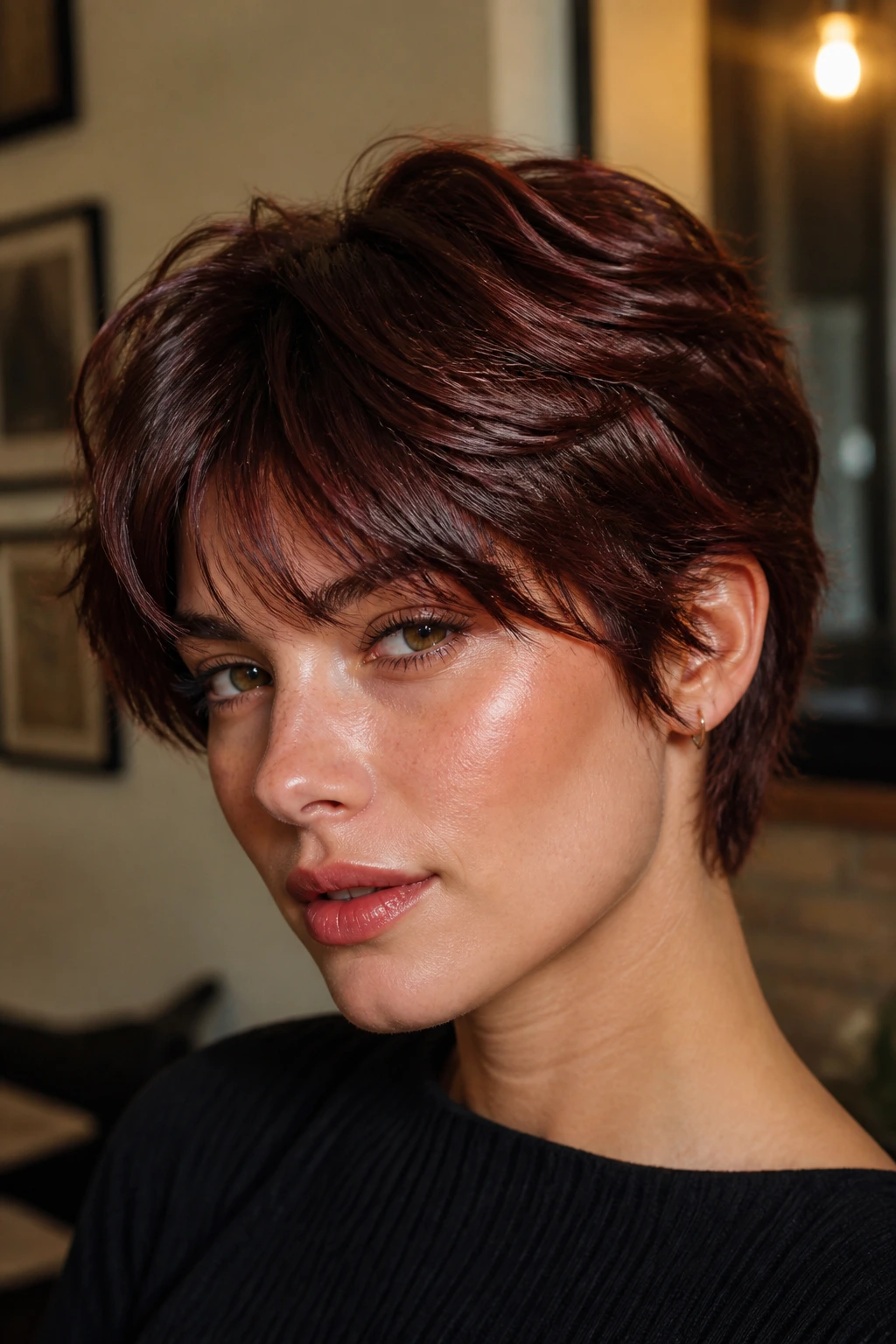
Mahogany brown carries red-brown depth with a polished finish. It’s richer than auburn and deeper than copper, which makes it a strong pick for someone who wants warmth that still feels grown up. Under indoor light, it can read as deep brown. Outside, the reddish note starts to show.
This shade likes shine. A flat, dry texture will rob it of what makes it interesting. Use a gloss, a smoothing serum, or a good blow-dry finish, and the color starts working harder for you.
It’s also a nice choice for shorter cuts. The color can move across a pixie, a bob, or a shag without needing a huge amount of dimension to stay interesting.
18. Caramel Drizzle Brunette
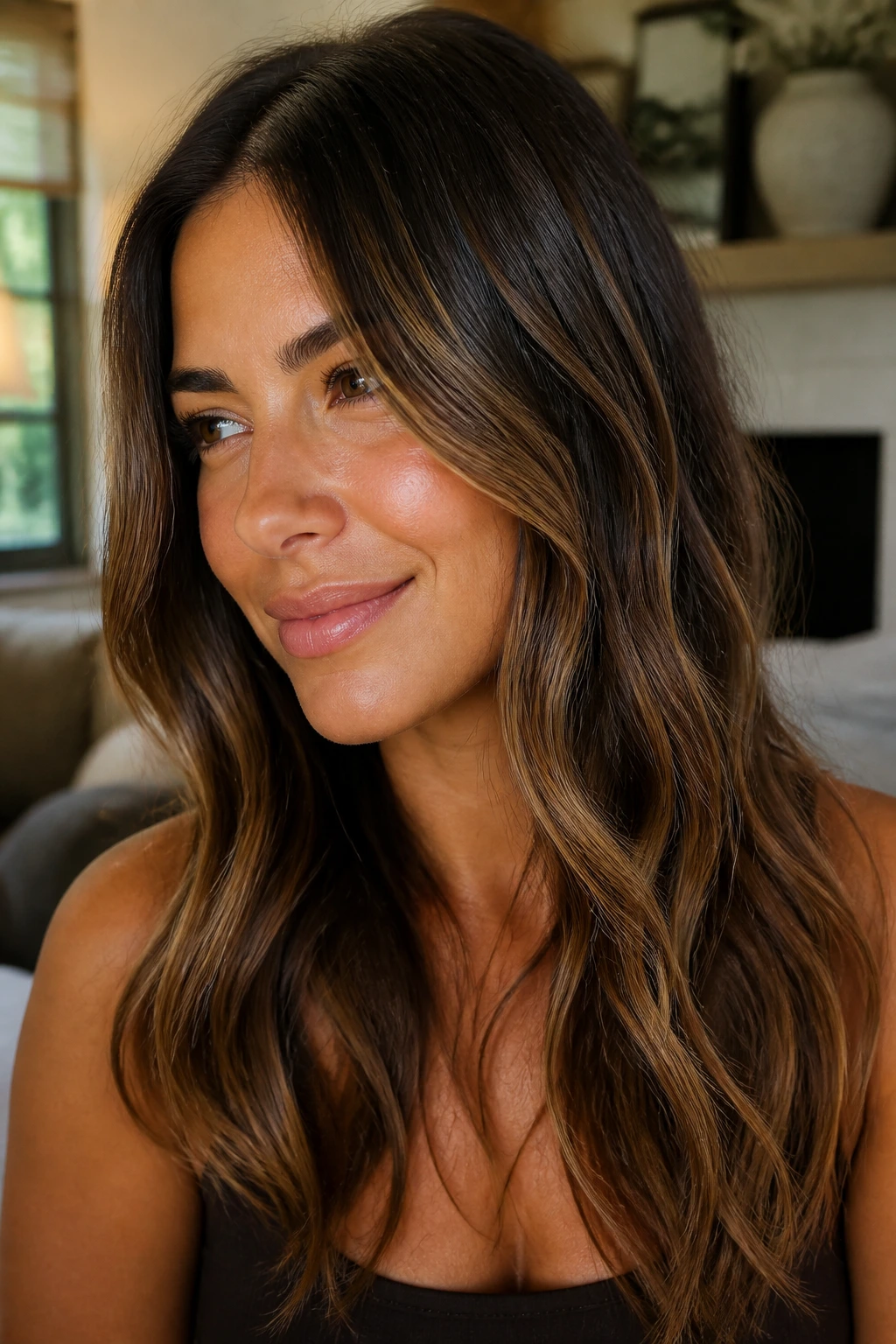
Caramel drizzle brunette is exactly what it sounds like: thin, sweet, warm pieces painted through a brunette base so the color looks draped rather than striped. The goal is not to go lighter everywhere. The goal is to make the hair look like it has been touched by light.
This one is a favorite for medium-length layers. The drizzled pieces can start around the cheekbone and continue toward the ends, which keeps the root deeper and the grow-out softer. You get the brightness without the maintenance headache of a full highlight schedule.
When the caramel pieces are thin, the color looks more expensive. Chunky slices can flatten the whole thing fast.
19. Butterscotch Brown Balayage
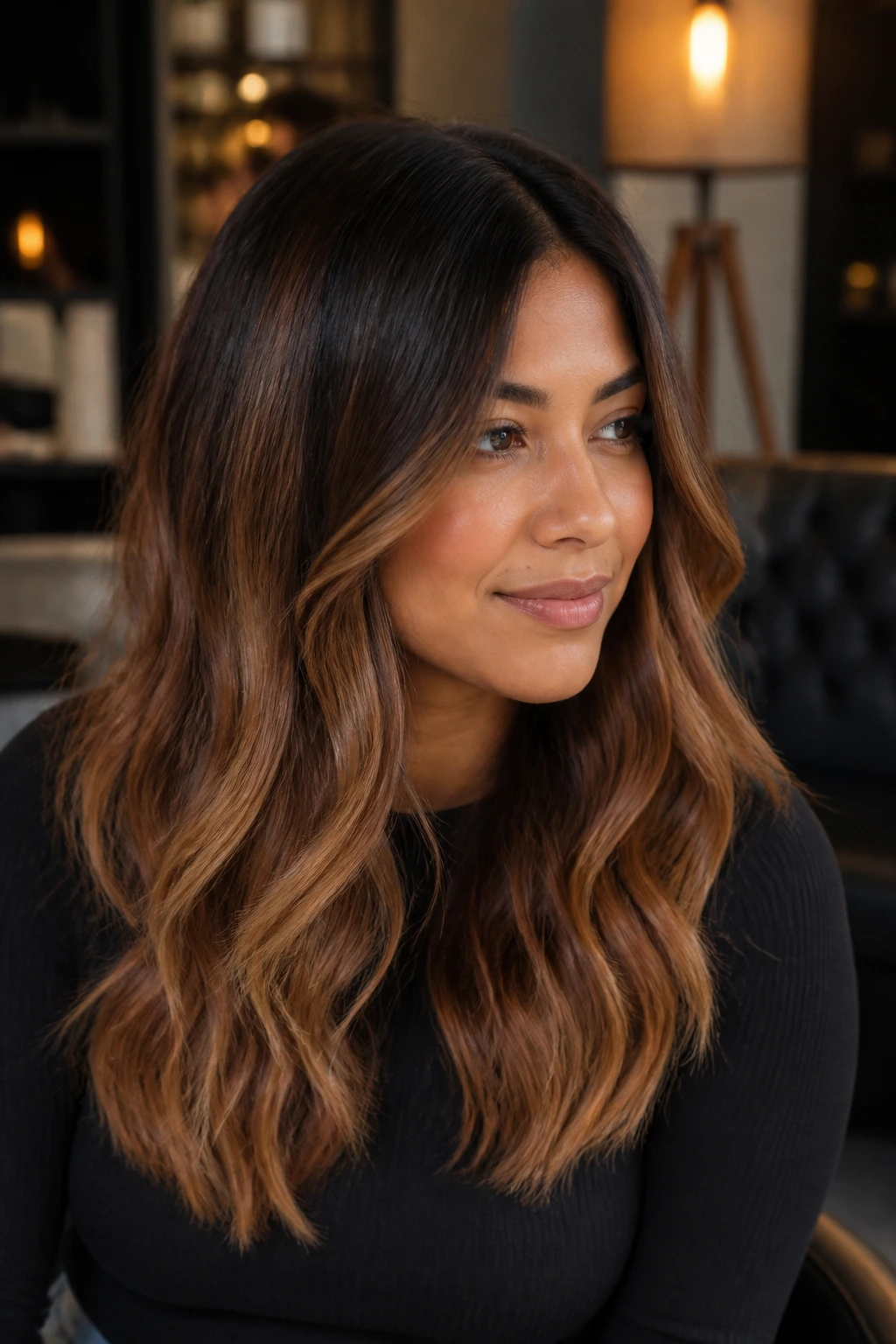
Butterscotch brown is warmer and sweeter than honey, with a slightly softer gold note. As a balayage, it sits beautifully on dark blonde and light brown bases that need a richer brunette direction without getting muddy.
This shade is a nice bridge color. If you have been blonde and want to move darker, butterscotch helps the shift feel intentional. If you already have brown hair, it adds brightness without taking the whole head into lighter territory.
The best versions keep the root shade close to your natural color and reserve the butterscotch for the mid-lengths and ends. That keeps the color smooth instead of choppy.
20. Toasted Almond Brunette
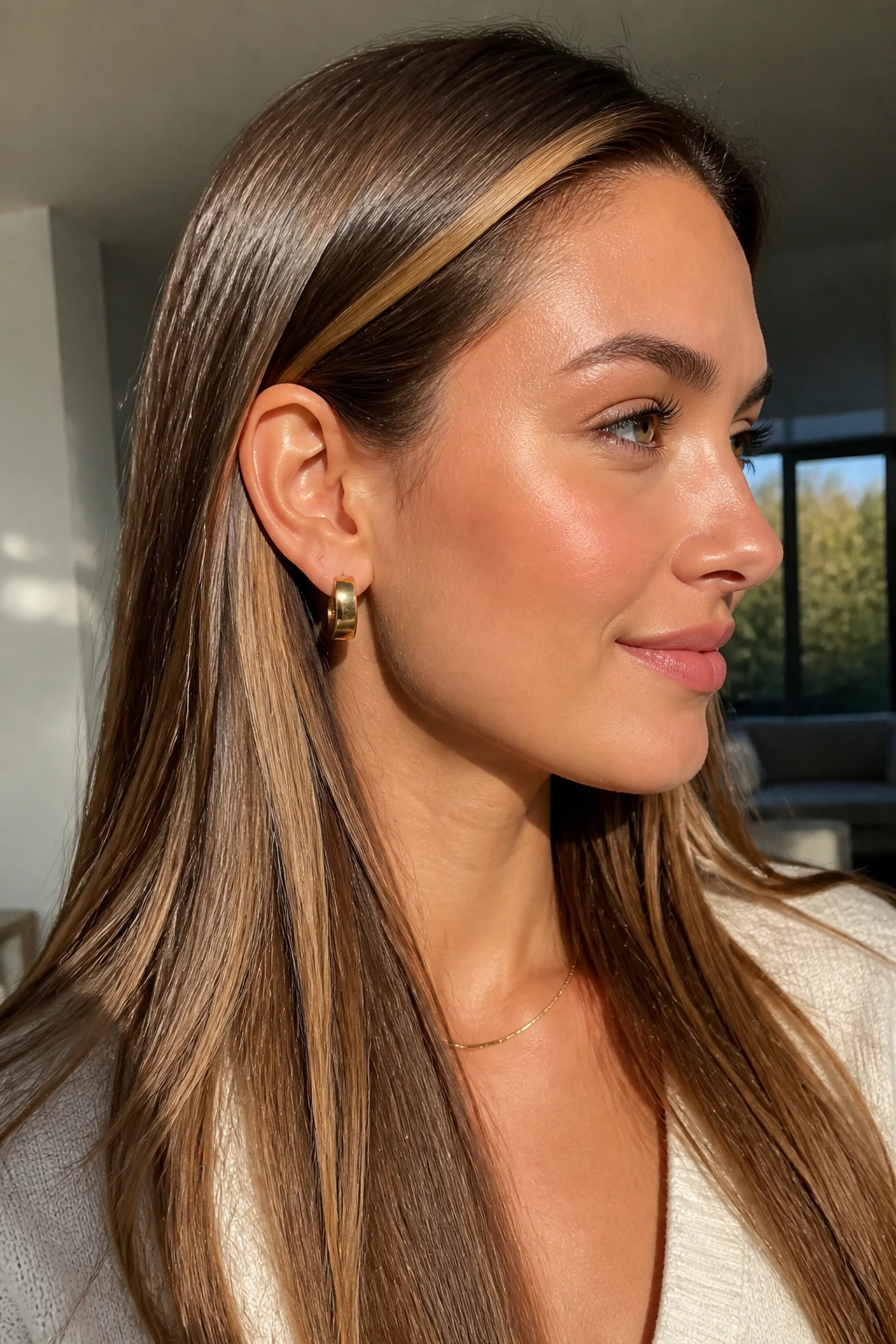
Toasted almond brown has a soft beige-gold warmth that reads clean and modern. It sits lighter than a classic chocolate shade, but it still feels brunette because the depth stays in the base. This is a strong pick for someone who wants warmth without copper or red.
I like this shade on people who wear their hair straight or tucked behind the ears a lot. The lighter, toasted finish catches on the surface and keeps the style from looking too serious. It’s a quieter color, but not a boring one.
If your hair pulls orange fast, keep the almond tone delicate. You want toast, not tan.
21. Gingerbread Brown Dimension
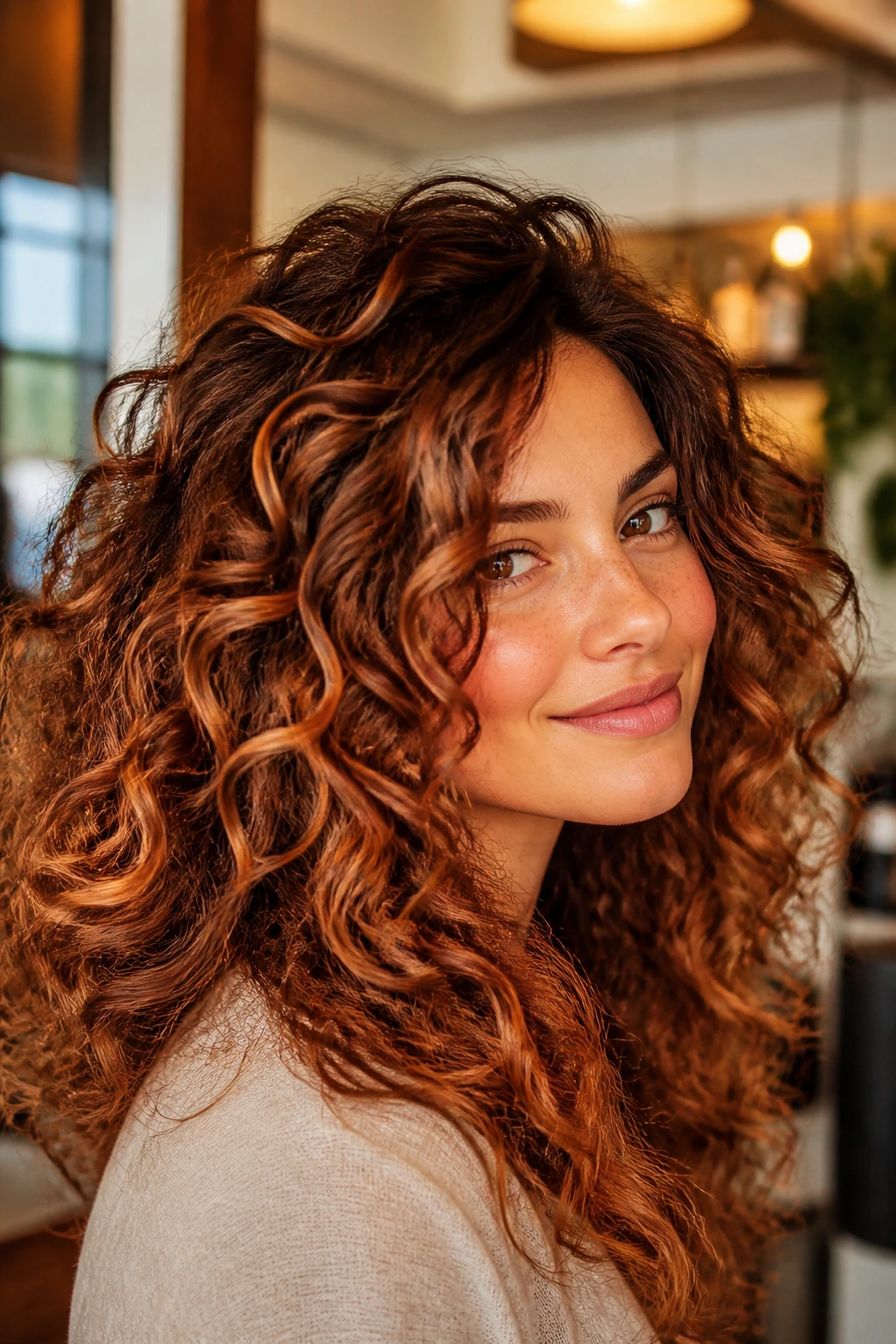
Gingerbread brown has a spicy warmth that sits somewhere between cinnamon and caramel. It works because the tone is layered, not one-note. The brown base keeps it grounded, while the gingerbread warmth adds energy through the ends and face-framing pieces.
This shade comes alive on curly or coily textures, where dimension is easy to lose if the hair is too dark and too uniform. The lighter, warmer placements help define the curl pattern. On straight hair, the same color looks sleeker and more editorial.
A gingerbread finish does not need a lot of blonde to feel bright. A few warm pieces placed well often do more than heavy lightening.
22. Rich Mocha Melt
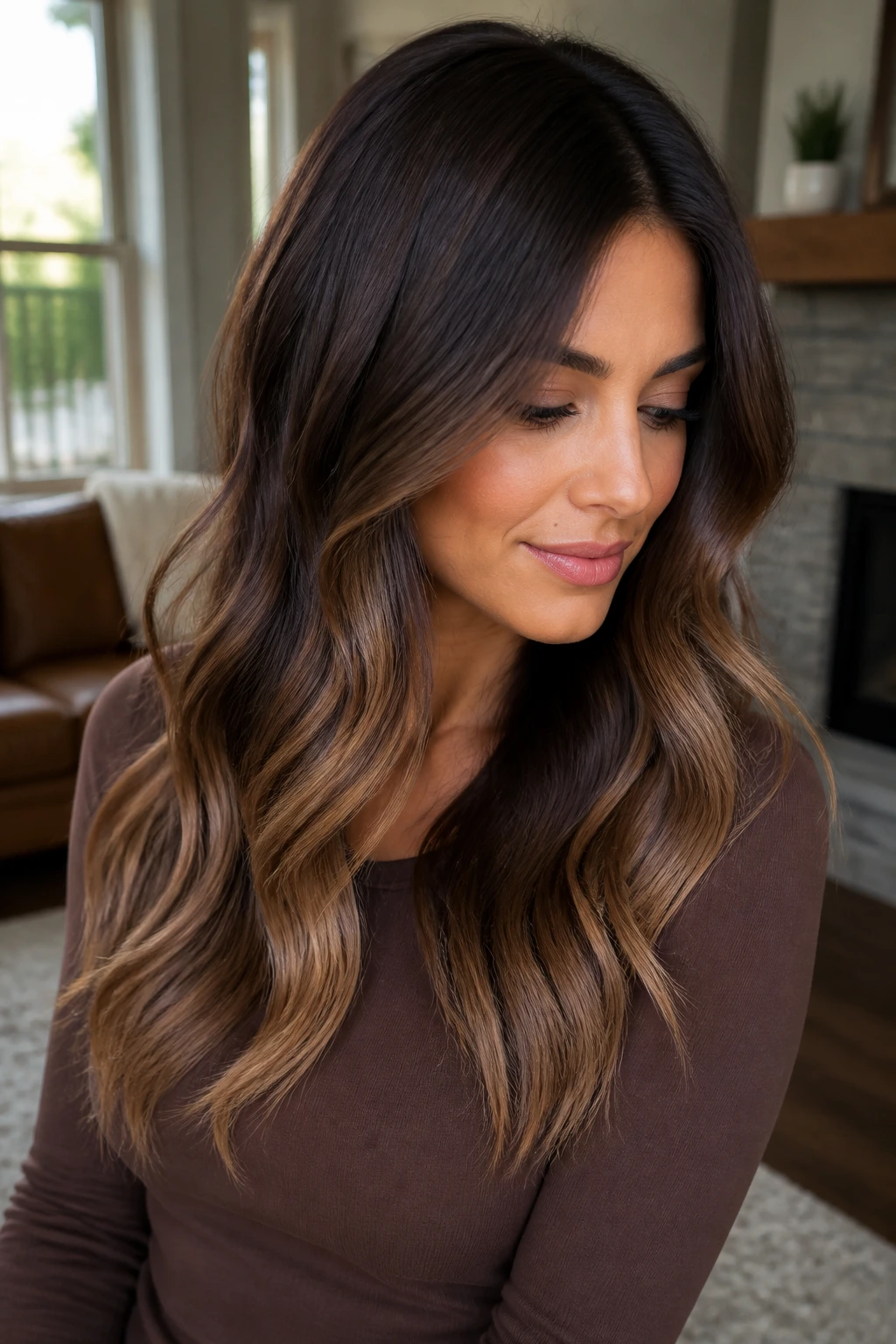
Rich mocha melt is one of the safest warm brunettes to wear if you want depth first and warmth second. The root stays dark and velvety, the mid-lengths soften into mocha, and the ends get just enough lightness to keep the whole look from sinking.
This is a good cut-and-color pairing for long hair. A gradual melt gives the lower half of the hair some movement, especially if you wear soft waves or a large-barrel curl. The transition should be smooth enough that you can’t point to one obvious line.
If you’re sensitive to brassiness, this shade is easier to maintain than lighter caramel looks. There’s less brightness to go off-tone.
23. Burnt Sugar Brown
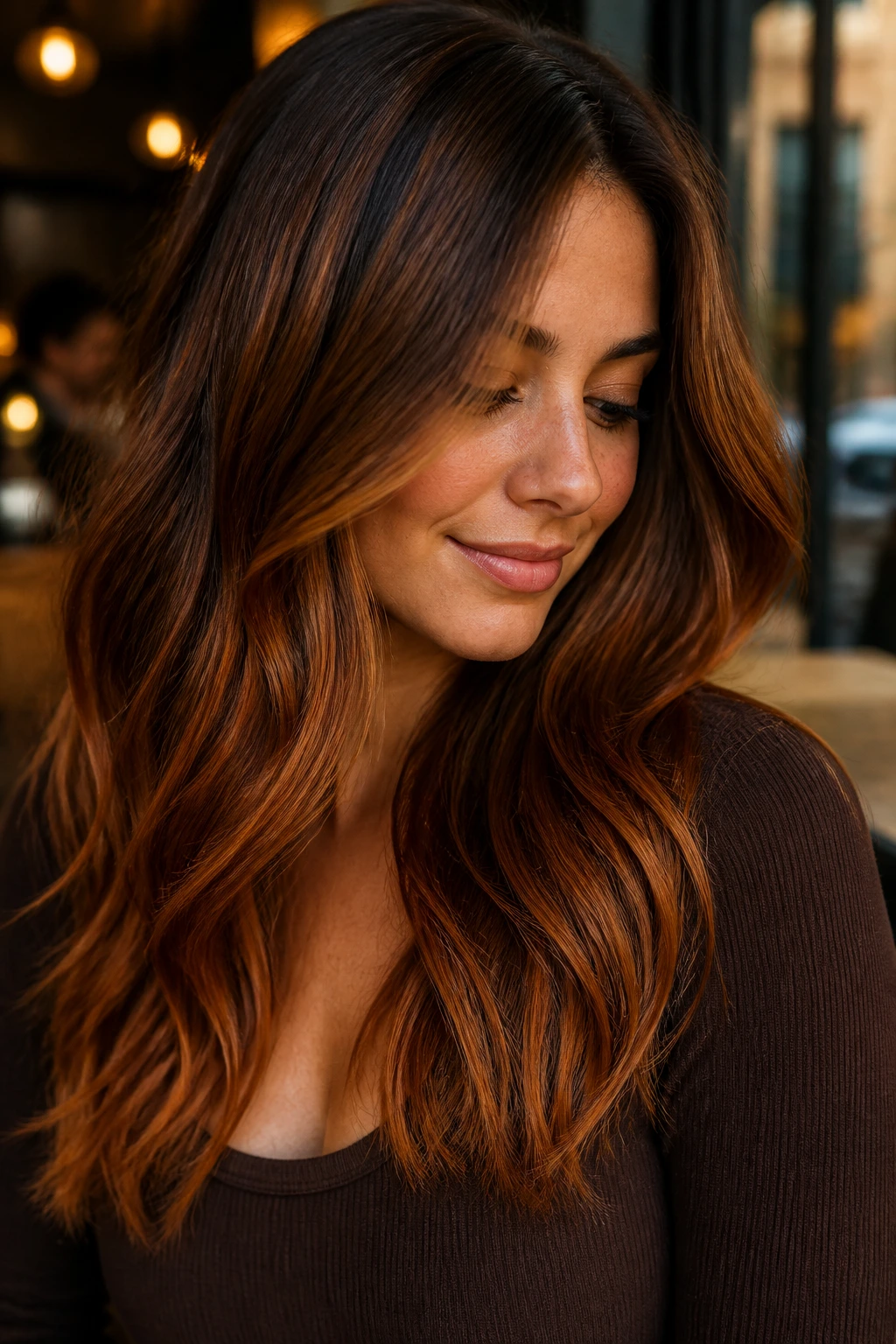
Burnt sugar brown is deeper and more dramatic than caramel, with a caramelized warmth that sits at the edge of copper. It has more attitude than a soft gloss and more depth than honey. The shade reads rich because it keeps one foot in darkness.
This is a strong choice for thicker hair or layered cuts that need stronger contrast. The color gives shape. It also looks good when the hair is tucked, pinned, or swept over one shoulder, because the warm ends catch the eye.
The trick is not to let the ends go too orange. Burnt sugar should feel toasted, not fried. That line matters.
24. Copper-Kissed Chestnut
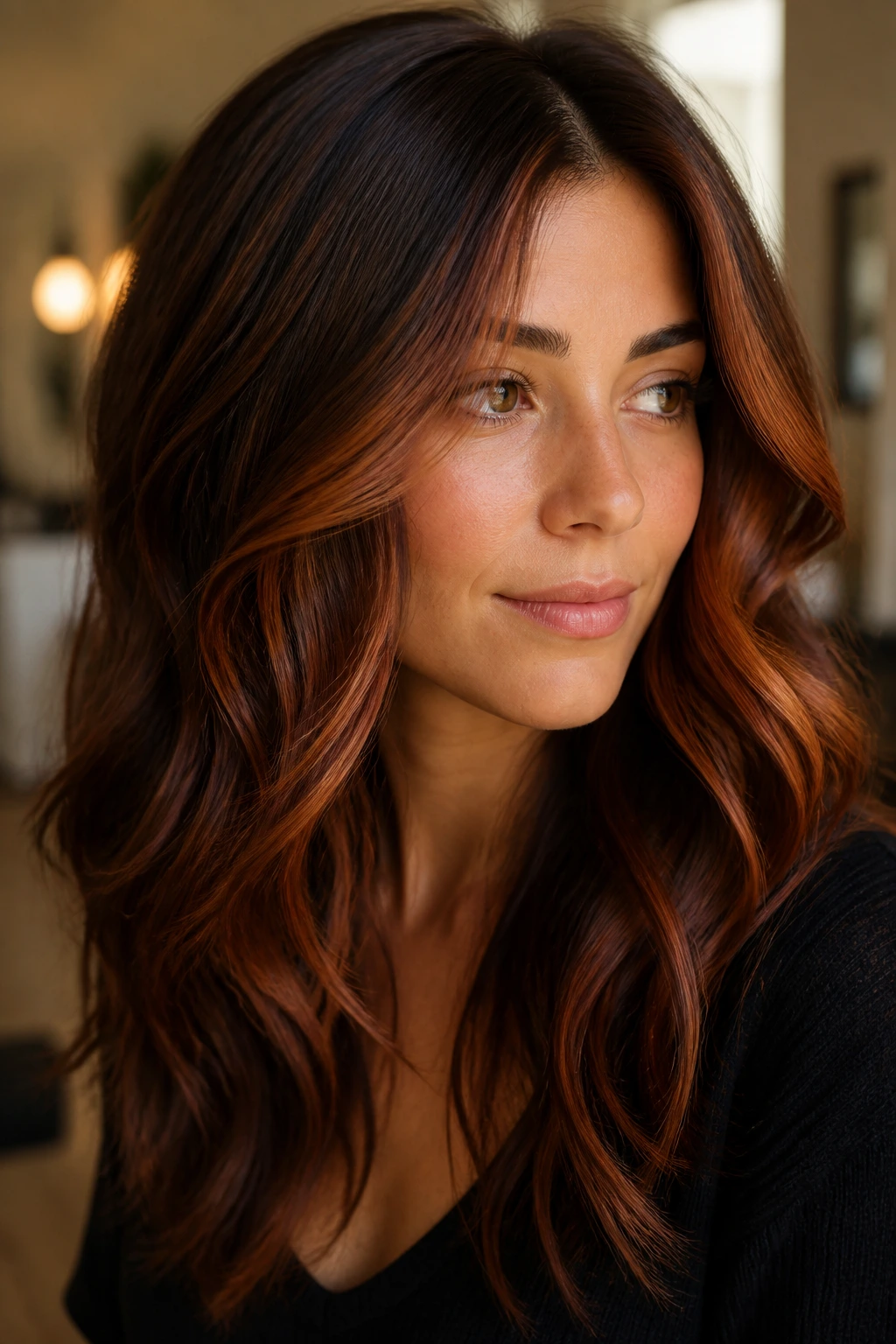
Copper-kissed chestnut is for someone who wants the warmth to show, but not take over. The chestnut base keeps the look brown, while the copper kiss lives in the front pieces, ends, or top layer. It’s a small detail that changes the whole mood.
This is one of the easiest warm brunettes to personalize. Want it softer? Keep the copper near the face only. Want more edge? Pull the tone through the ends and let it shine in waves.
It’s a particularly good match for layered haircuts, because the copper pieces can catch on the outer layers and leave the underside deeper.
25. Dark Chocolate with Cinnamon Lightening
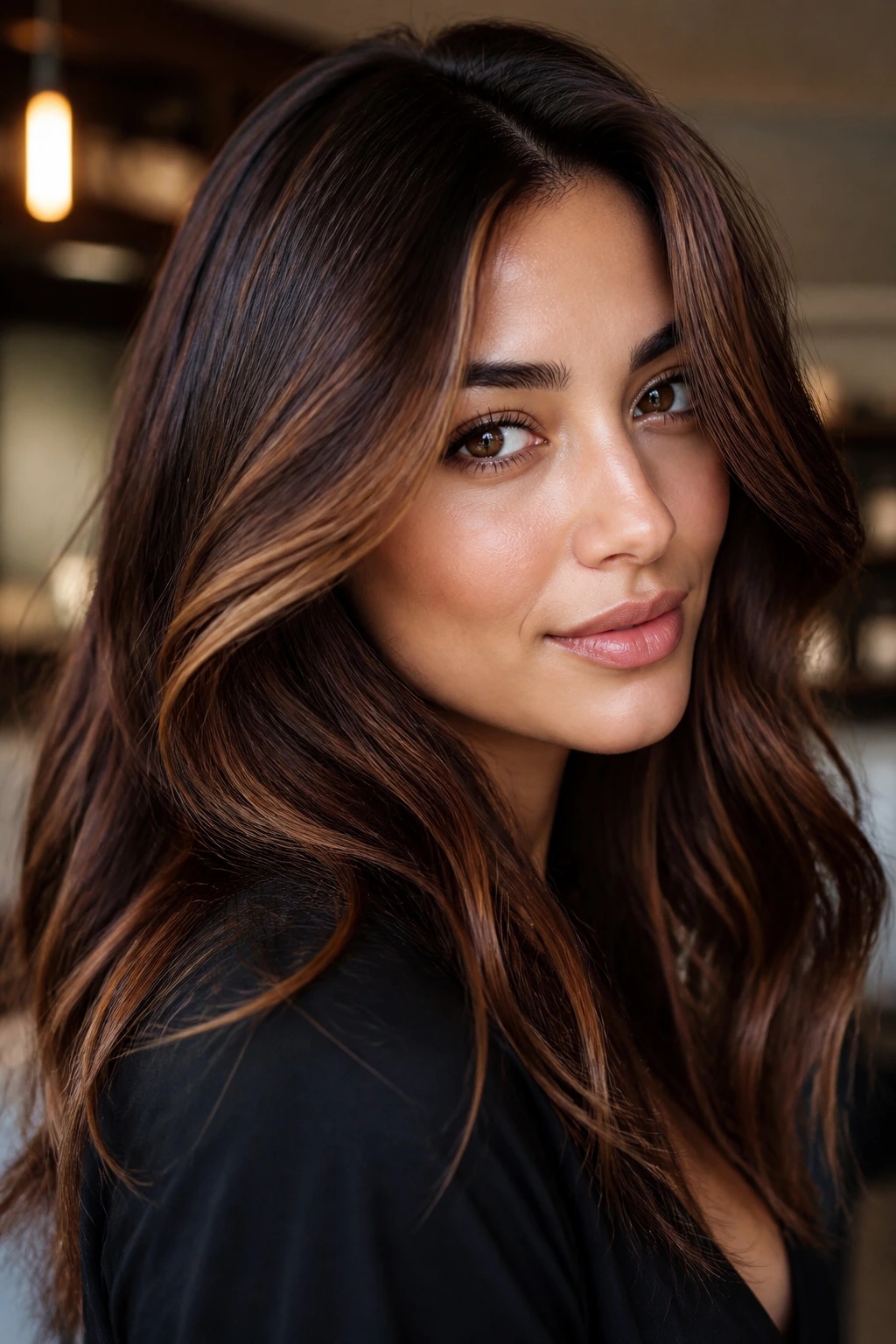
Dark chocolate with cinnamon lightening is the shade I’d point someone to when they want the safest kind of richness. The base stays deep and glossy, while very fine cinnamon pieces lighten the surface just enough to break up the darkness. Nothing about it looks loud.
This is an excellent choice if you’re coming from a dark base and do not want a huge color change. It also works when you want the hair to look warmer without losing the ability to wear dark makeup, dark clothes, or a sharp haircut. The cinnamon should feel like a flicker, not a stripe.
Keep the lightening concentrated through the top layer and around the face. That keeps the depth intact where you need it.
Why Warm Browns Read Richer Than Flat Brunette
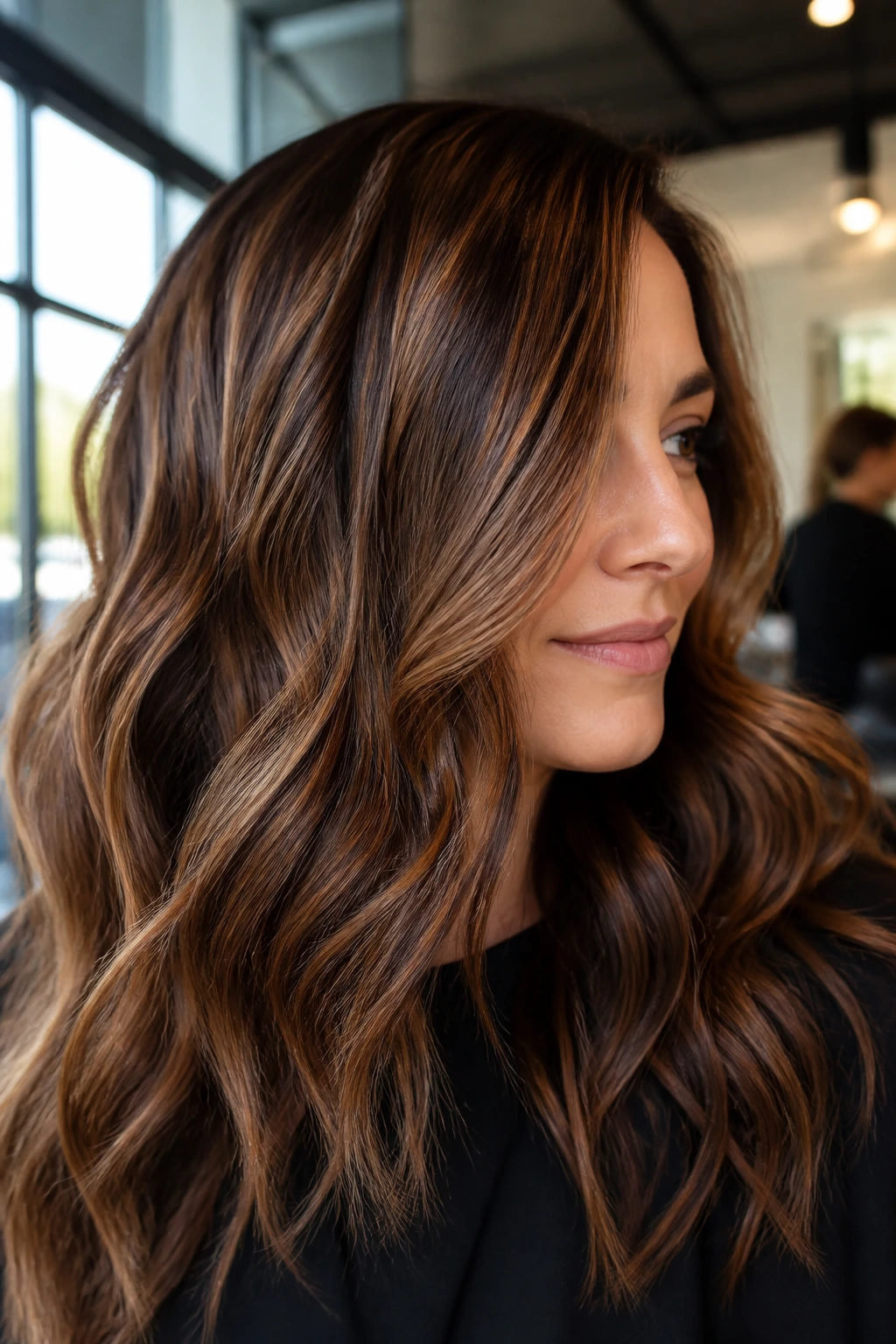
Warm brown hair works because it gives the eye something to follow. Flat brown can look like one color from root to tip, especially if the lighting is bad or the cut is simple. Warm tones break that up. A chestnut ribbon catches the light differently from a cocoa base. A golden glaze makes the ends look softer. A copper-kissed face frame does more in ten seconds than a blunt all-over color ever will.
The other part people miss: warmth changes texture visually. Hair that is colored with warm dimension tends to look softer and thicker because the eye sees movement between the tones. That is why a good brunette balayage can make shoulder-length hair look fuller without adding actual bulk. It’s also why a warm gloss on healthy hair can do more than a dramatic dye job on damaged hair. Shine matters. Tone matters. Placement matters more than either if you get one choice wrong.
I’m also a fan of warm browns because they age well between appointments. Root shadow lets the grow-out behave. Lowlights keep the color from getting washed out. You can go deep and glossy, or light and ribboned, without drifting into the harsh, stripey look that makes some brunettes panic by week three. That’s the real appeal: the color looks deliberate when it’s fresh, and it still looks deliberate when life has happened and the blowout is no longer perfect.
Essential Tools for Keeping Brown Color Glossy
- Color-safe shampoo: Keeps the warm pigment from rinsing out too fast; sulfate-free is the cleaner choice for most color-treated hair.
- Moisturizing conditioner: Brown shades look dull fast when the cuticle is rough, so a smoothing conditioner matters more than most people think.
- Wide-tooth comb: Detangles wet hair without shredding the ends, which helps the color reflect evenly instead of fraying.
- Heat protectant spray or cream: Warm brunettes look their best with shine, and heat without protection strips that shine out fast.
- Leave-in conditioner: Useful on porous or highlighted hair; it helps the lighter pieces stay soft instead of turning dry and puffed up.
- Color-depositing mask or gloss: A weekly or biweekly top-up keeps caramel, chestnut, and cinnamon tones from going flat.
- Sectioning clips: Handy for air-drying, styling, or applying a mask evenly so the warm tones stay balanced.
- Toning brush or applicator bottle: More useful for at-home glossing than most people expect; it helps the product land where the color has faded most.
- Microfiber towel or soft T-shirt: Cuts down on frizz, which matters because frizz scatters light and makes brown hair look dull.
- Round brush or curling wand: Not a color tool on paper, but it changes how the warmth shows once the hair is finished.
Choosing the Right Warm Brown Shade for Your Base
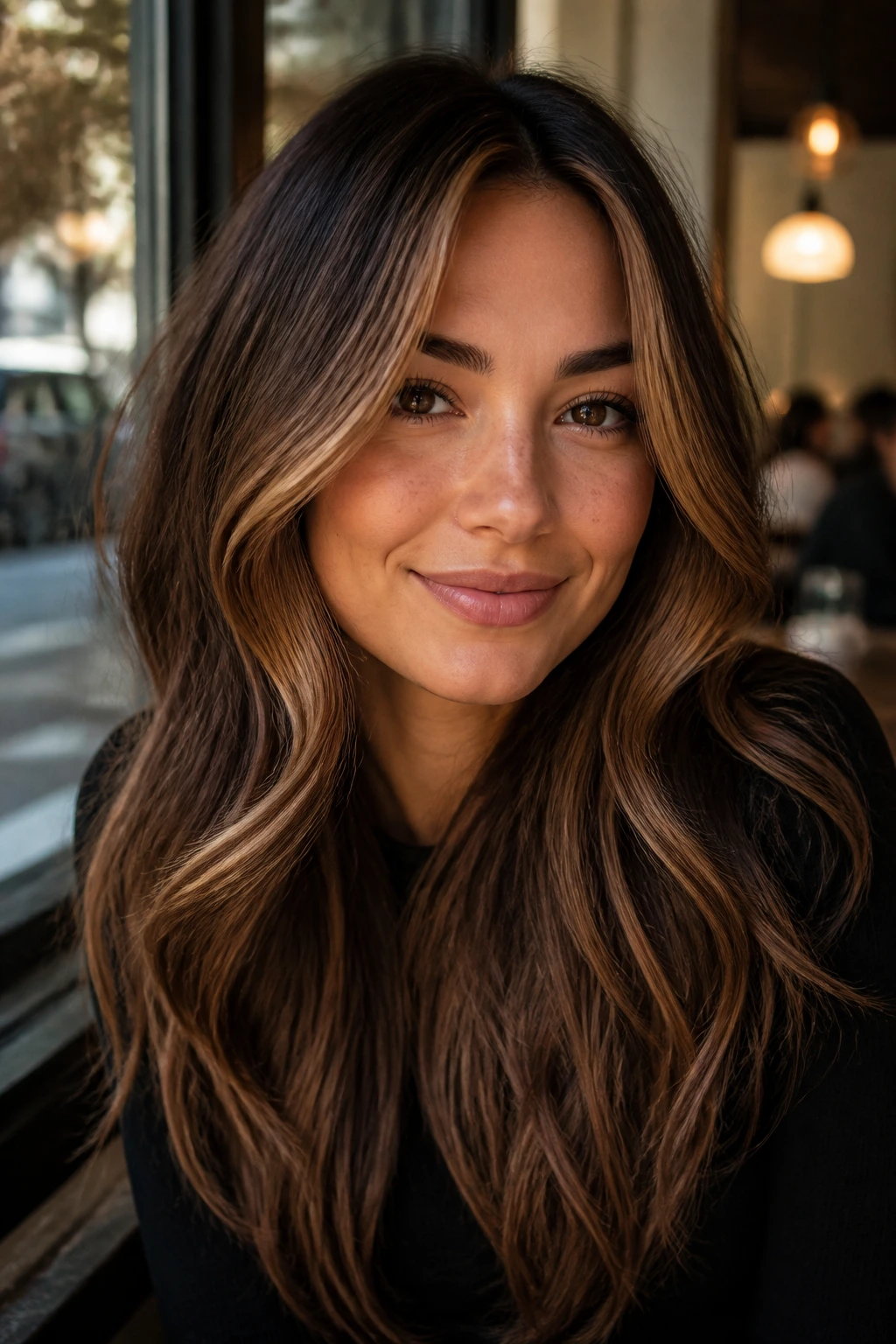
Start with your natural level, not the photo you saved. A level 3 or 4 brunette can wear chestnut, espresso, or mocha without much trouble. A level 5 or 6 base usually has more room for caramel, toffee, and honey pieces. If your hair is darker than that and you want brightness, you may need lightening first — otherwise the warm tone will just sit on top and vanish in the wash.
Previous color matters too. Hair that has been dyed black, red, or very ash brown will not behave like virgin hair. Red pigments often punch through faster than expected. Ash leftovers can mute warmth. A good colorist will test a strand or build the warmth in stages rather than forcing it all at once.
Gray coverage changes the game. If you want the grays to disappear, a demi gloss alone is usually too soft. You may need permanent color at the root, then a warmer gloss through the mids so the finished look doesn’t read harsh. If you only want to blend gray, a shadow root plus fine warm highlights often looks more believable than full coverage.
Bring photos, but bring the right ones. Choose pictures shot in the same kind of lighting you live in — office light, daylight, bathroom light. Hair in golden sunset photos has a nasty habit of lying.
How to Wear These Shades So the Warmth Shows
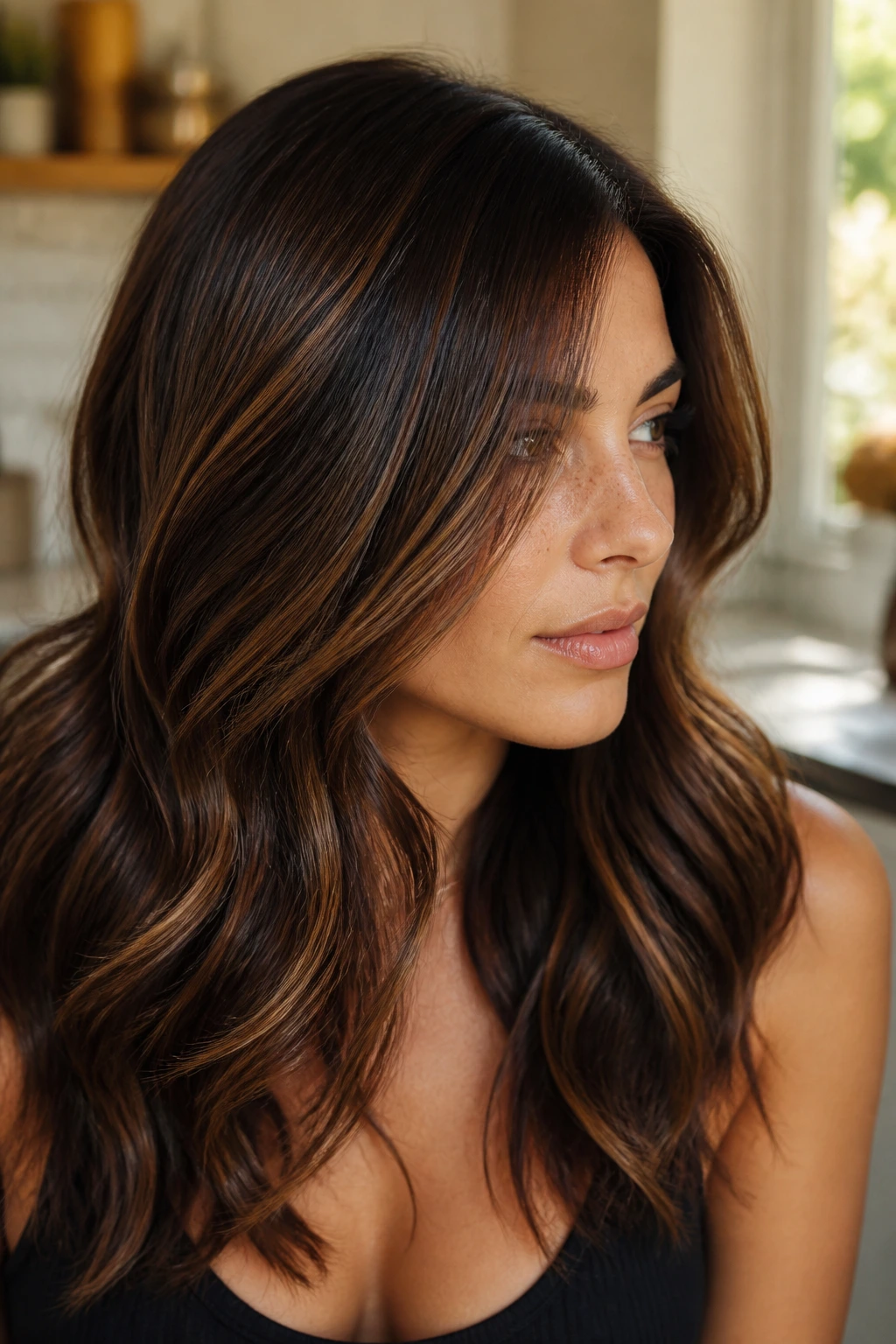
Presentation: The cut and finish matter as much as the formula. Soft waves, a rounded blowout, or even a clean air-dried bend will show off chestnut ribbons and caramel veils better than pin-straight hair with no movement. If your color is subtle, give it motion.
Accompaniments: Cream, camel, rust, olive, warm gold jewelry, and soft brown eyeliner tend to make warm brunette shades look richer. Cool silver and icy pastels can flatten them a bit, which is fine if that’s your taste, but warm tones usually look best beside other warm notes.
Portions: If you want a small change, ask for a gloss, a face frame, or 10 to 15 foils placed around the front half of the head. If you want a full switch, go for balayage, lowlights, or an all-over warm brunette formula that shifts the base by one to two levels.
Beverage Pairing: Water. Kidding. For the hair itself, the real pairing is styling product and finish. A light serum at the ends, a heat protectant through the mids, and a soft bend from a 1-inch iron keep the warmth visible instead of hidden.
Small Adjustments That Make Brown Hair Look More Expensive
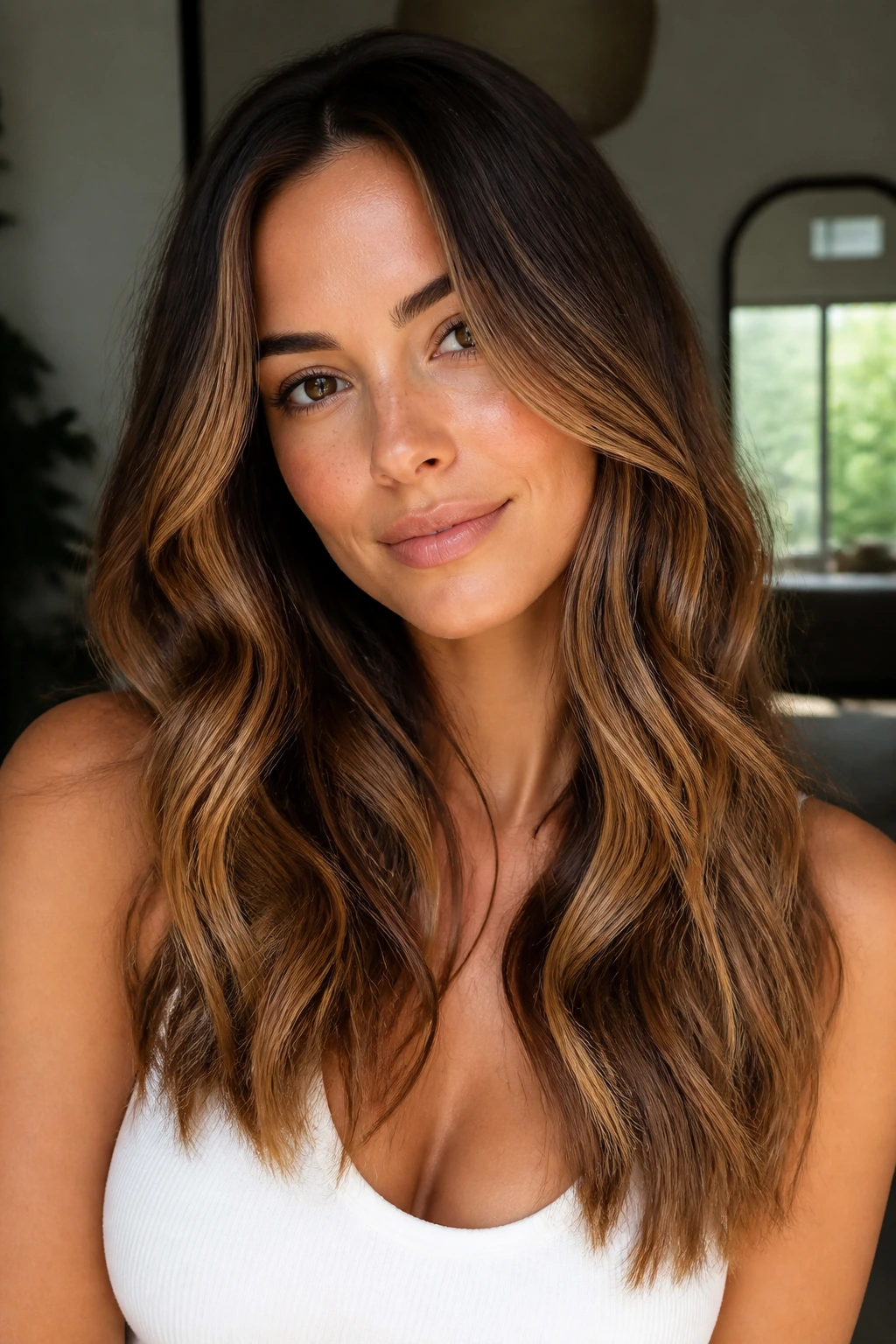
Gloss Boost: A clear or tinted gloss every 4 to 6 weeks keeps chestnut, caramel, and mocha from going dusty. If the brown has lost shine but the tone still looks right, gloss before you color again.
Dimension: Two or three tones are usually enough. Once you pile on four or five shades, the color starts to look busy. The richest brunette looks are often the simplest ones, with a deep base and only a few warm highlights where the eye lands.
Root Depth: A soft shadow root is one of the easiest ways to make brown hair feel intentional. It buys you time, softens the grow-out, and makes the lighter pieces feel placed rather than accidental.
Face Frame: Put the brightest warmth near the face and the top layer. That’s where people look first. A toffee or copper frame does more for the whole look than scattering brightness everywhere.
Texture: If your hair is poker-straight and flat, warm tones can disappear. Even a loose bend through the mid-lengths changes how the light lands. I’d take a few minutes with a styling iron over a harder color job almost every time.
Maintenance, Refreshes, and Long-Term Care
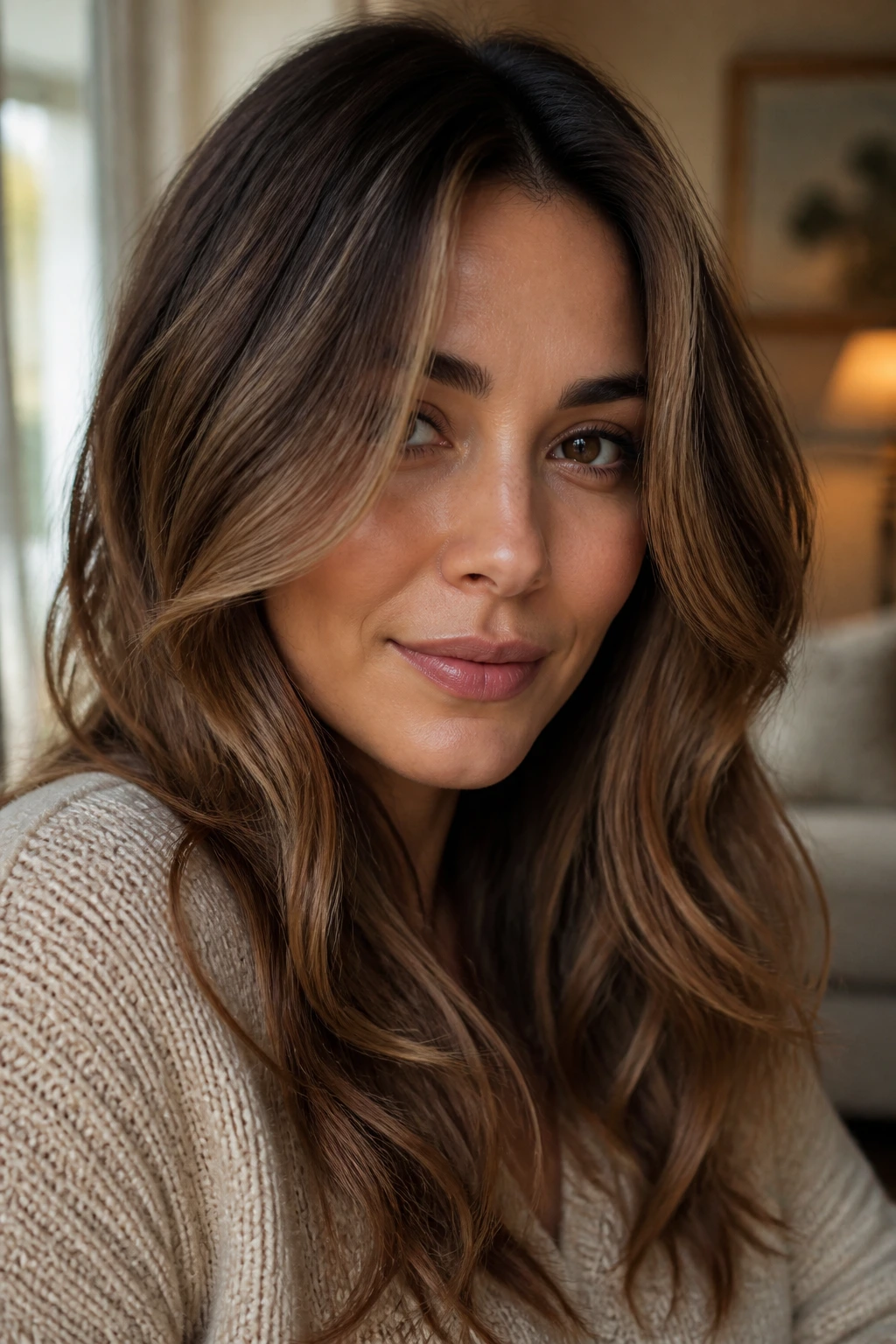
Warm brown hair is not high-maintenance in the same way blonde is, but it does need a rhythm. Wash 2 to 3 times a week if you can. More frequent washing pulls the warm pigment out faster, especially on glossed or highlighted hair. Use lukewarm water, not hot water; hot water opens the cuticle and lets the color slip.
If the hair is highlighted or balayaged, plan on a gloss refresh every 4 to 6 weeks and a root touch-up every 6 to 10 weeks, depending on how much contrast you want. Fine hair and porous ends may need a deposit mask in between, especially if the warm pieces start looking pale or rusty. The goal is to keep the tone even, not let the copper run wild.
Heat styling is where warm brunettes usually get beaten up. Keep your tools below 375°F if your hair is fine or color-treated, and use a heat protectant every time. If you straighten often, the shine layer can wear down fast, which makes the brown look dusty by the third or fourth pass of the week. A quick serum on dry ends helps, but it will not save fried hair.
Sun, pool water, and clarifying shampoo are all rough on warm tones. A UV protectant is worth using if your hair lives in strong sunlight, and a swim rinse before and after the pool can stop the color from shifting. Clarifying shampoo has its place, but not every wash. Use it when the hair feels coated or dull, then go right back to a color-safe cleanser.
Variations to Try If You Want a Different Kind of Warmth
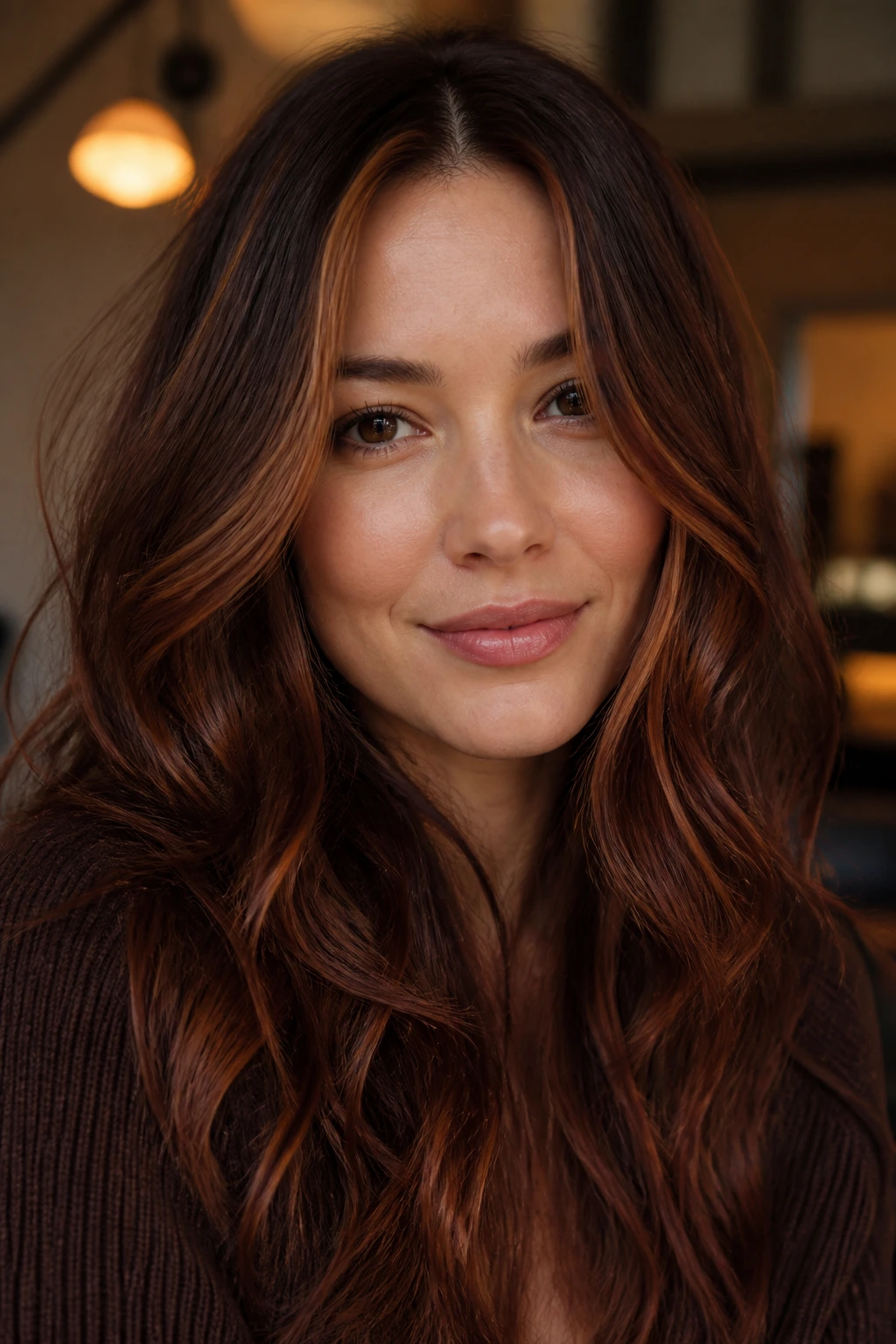
Soft Red Drift: Push the formula a touch toward auburn or cinnamon. This version suits people who like warmth they can see indoors, not just outdoors. It works especially well if your skin tends to look washed out next to ash brown.
Low-Contrast Glow: Keep the shade close to your natural base and only add a few warmer threads around the face and ends. This is the easiest route if you want dimension without a visible grow-out line. It also suits fine hair, which can get overwhelmed by heavy highlights.
Rich Gray Blend: Mix a warm shadow root with fine chestnut lowlights and a soft gloss. Gray hairs are less visible when they’re folded into a warm brunette, not painted over in one solid color. This is practical and looks good.
Brighter Money Piece: Add a toffee or caramel face frame while keeping the rest of the hair deeper. That gives you a lift near the eyes without turning the whole head lighter. Good if you want a change you can notice in the mirror immediately.
Curl-Friendly Ribboning: Use wider, warmer placements through curls and avoid over-lightening the inner layers. Curls need dimension placed where they’ll actually show. Otherwise the color disappears the second the hair dries.
Deep Gloss Only: Skip lightening entirely and lean on a chestnut, truffle, or mocha gloss. This is the best option for hair that’s fragile, heavily processed, or just tired of bleaching. You still get warmth. You just don’t pay for it with texture.
Common Mistakes That Flatten Warm Brown Hair
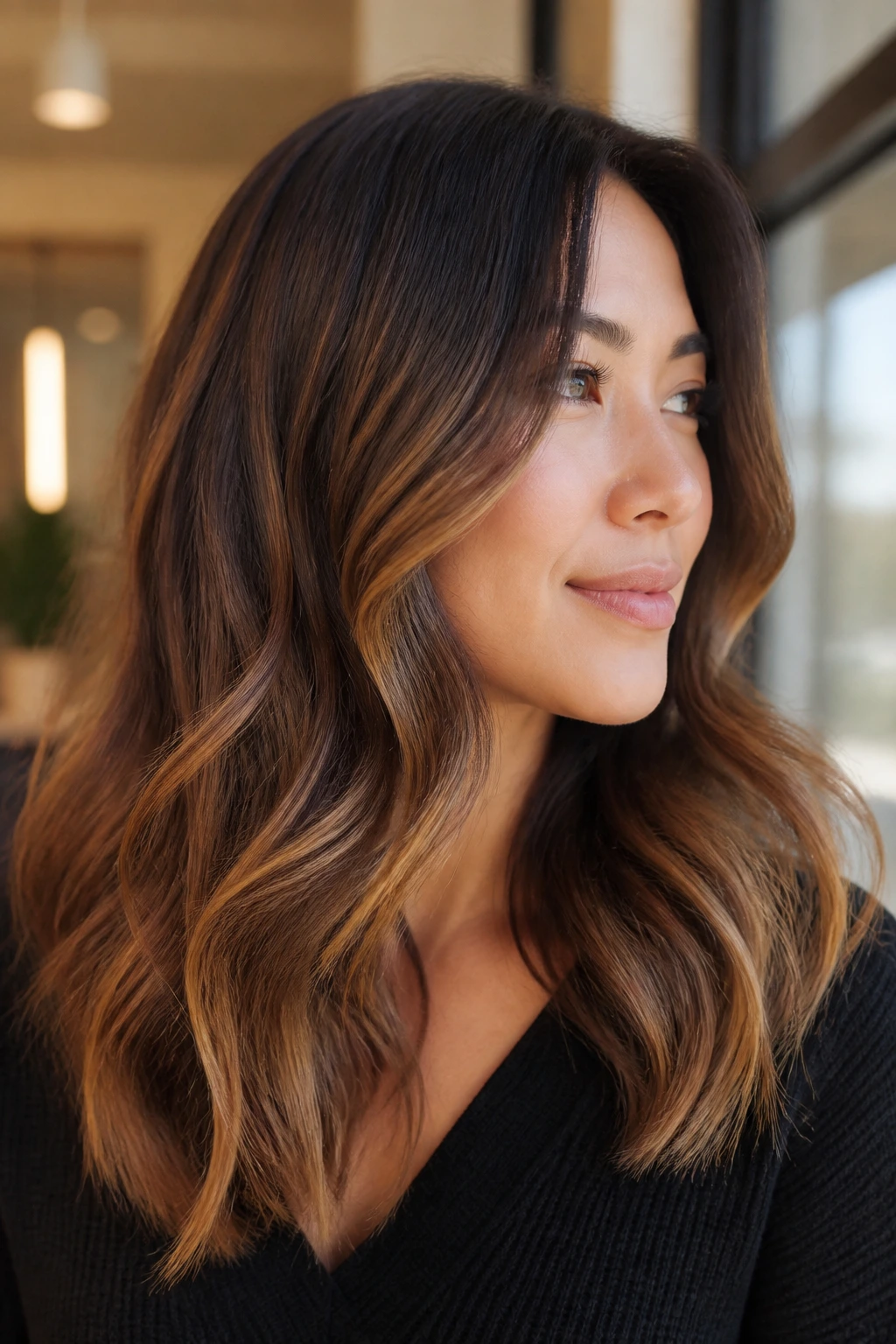
The easiest mistake is going too ash. Ash brown can be pretty in the right setup, but if you want rich warm tones, too much cool pigment kills the whole point. The hair ends up looking muddy rather than brunette. Fix it with a warmer gloss or a formula that includes gold, copper, or neutral-warm reflect.
Another trap is putting light pieces too high at the root. That gives the head a stripey, grown-out look within a few weeks. Keep the brightest pieces lower, or soften the root with shadow. The result lasts longer and looks less harsh at the scalp line.
People also underestimate porosity. Damaged ends grab warmth fast, which sounds fine until those ends go orange while the roots stay brown. If your hair is porous, the mid-lengths and ends need a gentler formula or a shorter processing time. A strand test saves a lot of regret.
Going too chunky is a real problem with caramel and honey shades. A few heavy streaks can make brown hair look dated in a hurry. Thin, deliberate placement gives you movement. Thick blocks give you zebra energy. Nobody wants zebra energy.
Skipping upkeep is the last one. Warm brunette tones fade into flatness faster than people expect, especially if the hair is washed a lot or heat-styled often. A color-depositing mask, a gloss refresh, and a little restraint with shampoo will keep the shade from turning dull in a month.
Questions People Ask About Warm Brown Hair Color
What warm brown shade looks the most natural?
Milk chocolate gloss and soft chestnut are usually the easiest to wear if you want the color to look believable. They have enough warmth to stop the hair from going flat, but they don’t lean so golden or copper that the shade starts announcing itself.
Will warm brown work on very dark hair?
Yes, but the effect is usually better with gloss, shadow, or strategic highlights than with an all-over lighter formula. If your base is near black, adding chestnut ribbons or a warm gloss around the face gives you more movement without forcing a huge lift.
How do I keep caramel highlights from turning orange?
Use a colorist who understands undertone, and do not overload the hair with warmth during the initial lift. At home, keep heat modest, avoid harsh clarifying shampoos, and refresh with a gloss that stays gold-brown rather than copper-heavy.
Is balayage or all-over color better for warm brunette looks?
Balayage gives you more visible dimension and softer grow-out. All-over color gives you more uniform depth and is better if you want the whole head to read rich and dark. The right answer depends on how much contrast you want to see from root to tip.
Can warm brown cover gray hair?
Sometimes, but full gray coverage usually needs permanent color at the root. A warm brunette gloss or demi can blend grays beautifully, though, especially when paired with a soft shadow root and a few lowlights.
What if my brown hair already looks brassy?
If the brass is orange-red, you need a cooler counterbalance and probably a lighter touch with warmth. If it is yellow-gold, a beige or caramel gloss can help. The fix depends on what kind of brass you actually have, which is why photos in natural light matter.
Should I use purple shampoo on warm brown hair?
Usually not unless you have lighter highlights that are drifting too yellow. Purple shampoo can mute the warmth you’re trying to keep. A blue shampoo is more useful for orange brass, and even then it should be used carefully.
How often should warm brunette color be refreshed?
Glosses often need a refresh every 4 to 6 weeks. Highlighted brunettes may want root maintenance every 6 to 10 weeks, depending on how soft the grow-out should be and how much contrast is in the hair.
The Warm Brown Shades Worth Saving
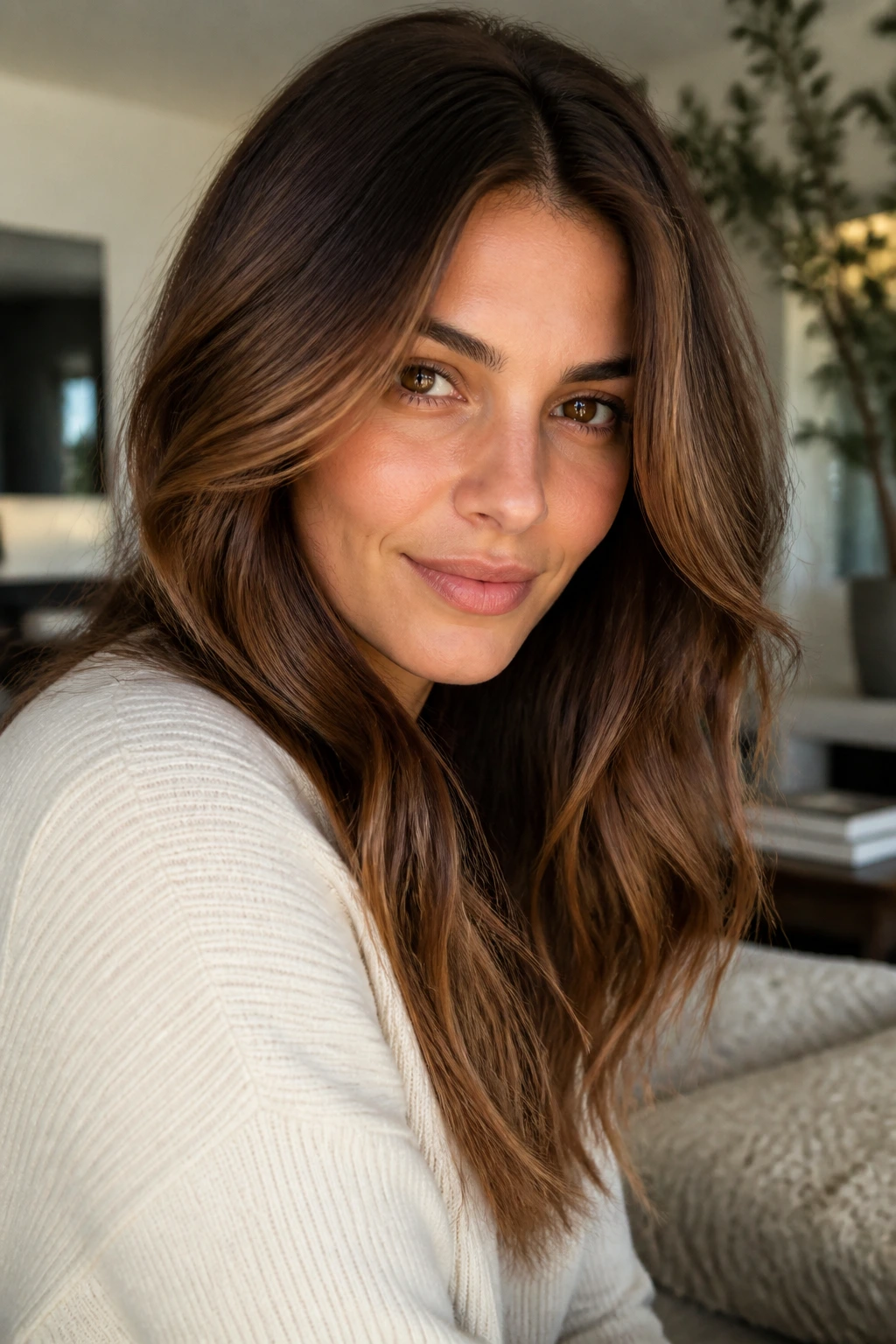
Warm brunette color has range, and that is the real reason it keeps showing up in good hair. It can be soft, glossy, spicy, golden, deep, or barely-there. It can brighten a face frame, soften a blunt cut, or keep curls from disappearing into one dark shape. That kind of flexibility is rare.
The best version is the one that fits your base and your routine. If you want low effort, a gloss or shadow root will do a lot of work. If you want more shape, ribbon balayage or fine highlights will build it. Either way, rich warm tones make brown hair look like it has dimension even before you do anything to style it.
