



Red hair looks for fall have a special kind of honesty. A copper bob against a camel coat, a cherry gloss under gray light, an auburn money piece spilling out from a knit hat — the color does half the styling for you before you touch a curling iron.
The trick, though, is choosing a red that has the right temperature and depth. Go too bright and the hair can start shouting. Go too brown and you lose the whole point. The sweet spot is usually somewhere between glowing and grounded: copper with a little smoke, auburn with a little spice, cherry with enough depth to keep it from looking costume-ish. That’s the lane this collection lives in.
And that lane is wider than people think. There are soft, low-maintenance reds that make brunette hair look richer, high-contrast reds that light up the face, short cuts that show the pigment off fast, and dimensional balayage placements that grow out without a hard line. Some of these looks are salon work. Some can be faked with a gloss, a toning mask, or a very good colorist and a calm hand with the foils.
Why This Collection Feels Different
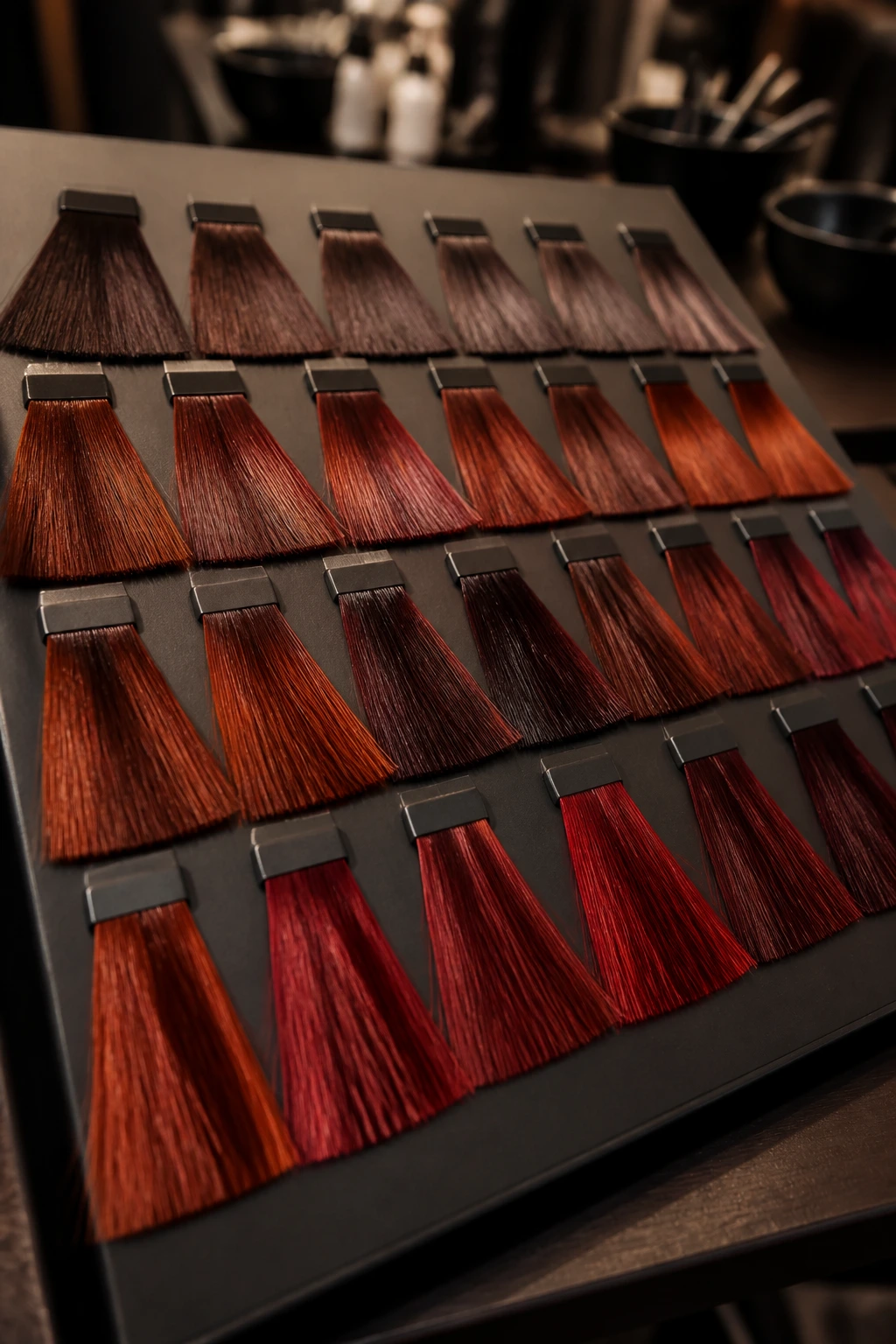
- Brunette-friendly range: These looks don’t all start from blonde hair, which matters if you’re working with level 4, 5, or 6 hair and want red to read instead of wash out.
- Low-drama options: Several of the shades rely on glosses, money pieces, or balayage placement, so you can wear red without signing up for a full-head color commitment every four weeks.
- Short and long hair covered: Pixies, bobs, lobs, curls, and layered cuts all get a place here, because red behaves differently depending on the shape of the haircut.
- Warm, cool, and in-between tones: Copper, auburn, cherry, burgundy, merlot, and rust each flatter different skin undertones and different base colors.
- Salon language included: You’ll see the phrases colorists actually use — root melt, face frame, lowlights, gloss, dimensional placement — so it’s easier to explain what you want.
- Fall wardrobe pairing built in: These shades sit well next to denim, leather, cream knits, charcoal coats, and the deeper makeup tones people reach for when the weather turns cool.
1. Velvet Copper Melt
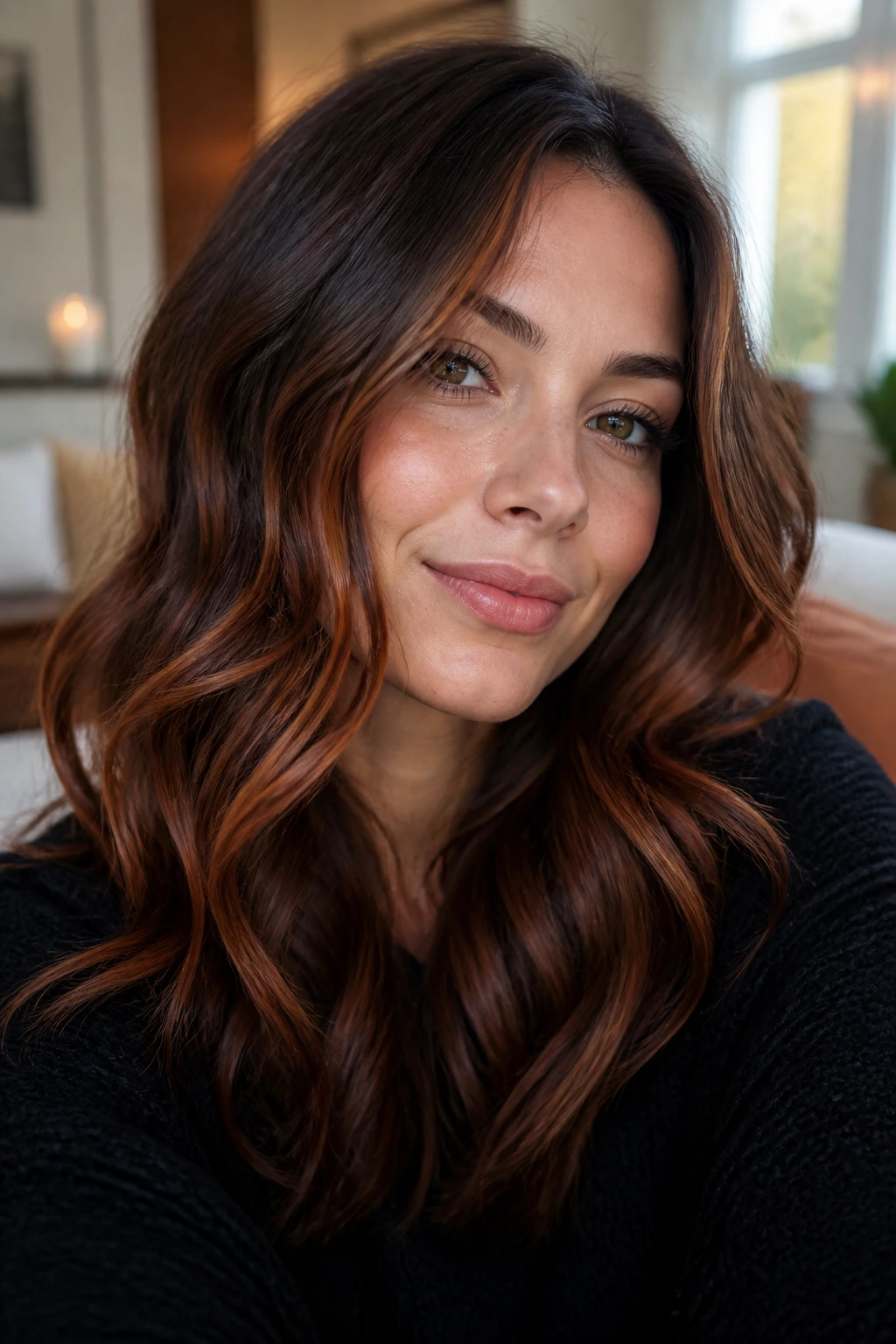
Velvet copper is the shade I reach for when someone wants red hair for fall without looking like they raided a costume box. The color starts deeper at the root and melts into a softer copper through the mids, so it has that warm, brushed-metal look instead of a flat orange block. On layered hair, the movement does half the work for you.
Ask for a root shadow at level 5 or 6 with copper ribbons through the mid-lengths and ends. If your hair is already brunette, this can usually be built with a gloss and strategic lightening instead of going full bleach. It’s the kind of red that looks good with a middle part, a loose wave, and not much else.
The best part is the grow-out. The darker root keeps the line soft, which means you’re not racing back to the salon the second a half-inch appears. If you want a red that feels polished but not stiff, this is one of the easiest places to start.
2. Cinnamon Brunette Balayage
Cinnamon brunette balayage is what happens when a dark base gets a little warmth in the right places and stops looking sleepy. The cinnamon pieces usually sit around the face, on the surface of the lengths, and at the ends, which gives the whole head a warm flicker instead of a full color shift. It reads especially well on hair with a natural wave.
This look works because the contrast stays controlled. You still see brunette depth at the root, but the red-brown ribbons catch light when the hair moves. That makes it a smart choice if you want your hair to look richer without losing the brown that makes maintenance easier.
Keep the ribbons fine if you wear your hair straight. Make them chunkier if you live in waves or curls, because the texture will break up the color and keep it from feeling stripey. A gloss every few weeks keeps the cinnamon tone from drifting muddy.
3. Auburn Money Piece
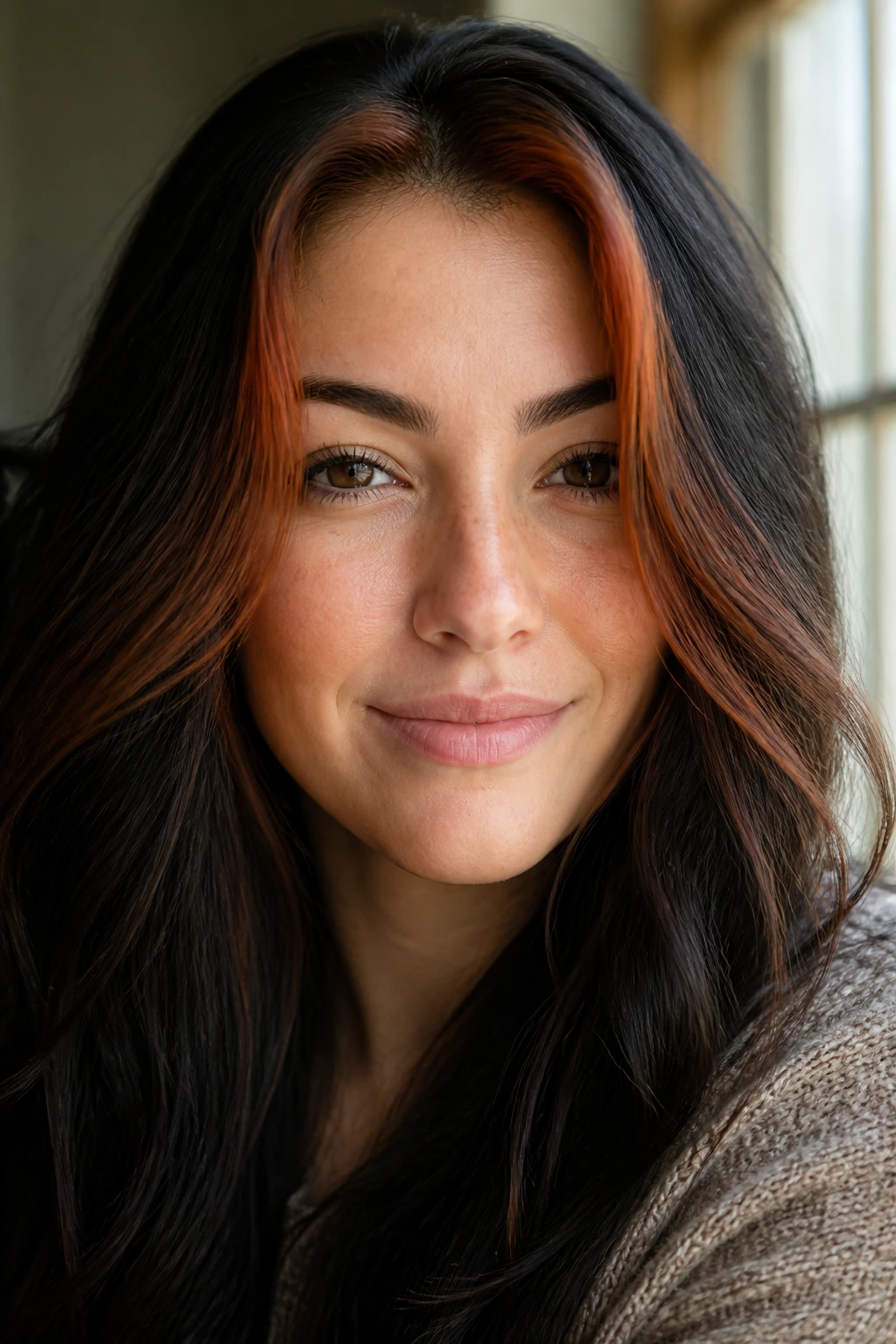
Auburn money piece is the quickest way to make red hair look intentional instead of accidental. You keep most of the hair dark or neutral, then frame the face with auburn pieces that start near the brow and drop into the front layers. It’s a face-brightening move, and yes, it works better than people expect.
The beauty of this placement is that you can make it subtle or loud. A soft auburn frame can warm up cool skin and bring life to a tired complexion. A brighter one gives you that “I changed my hair and meant it” effect even if the rest of the color stays near your natural base.
If you’re nervous, start with a demi-permanent auburn around the hairline and leave the back mostly alone. That lets you test the tone without fully committing to all-over red. It also grows out cleanly, which matters when you decide six weeks later that you miss your brunette roots.
4. Cherry Cola Gloss
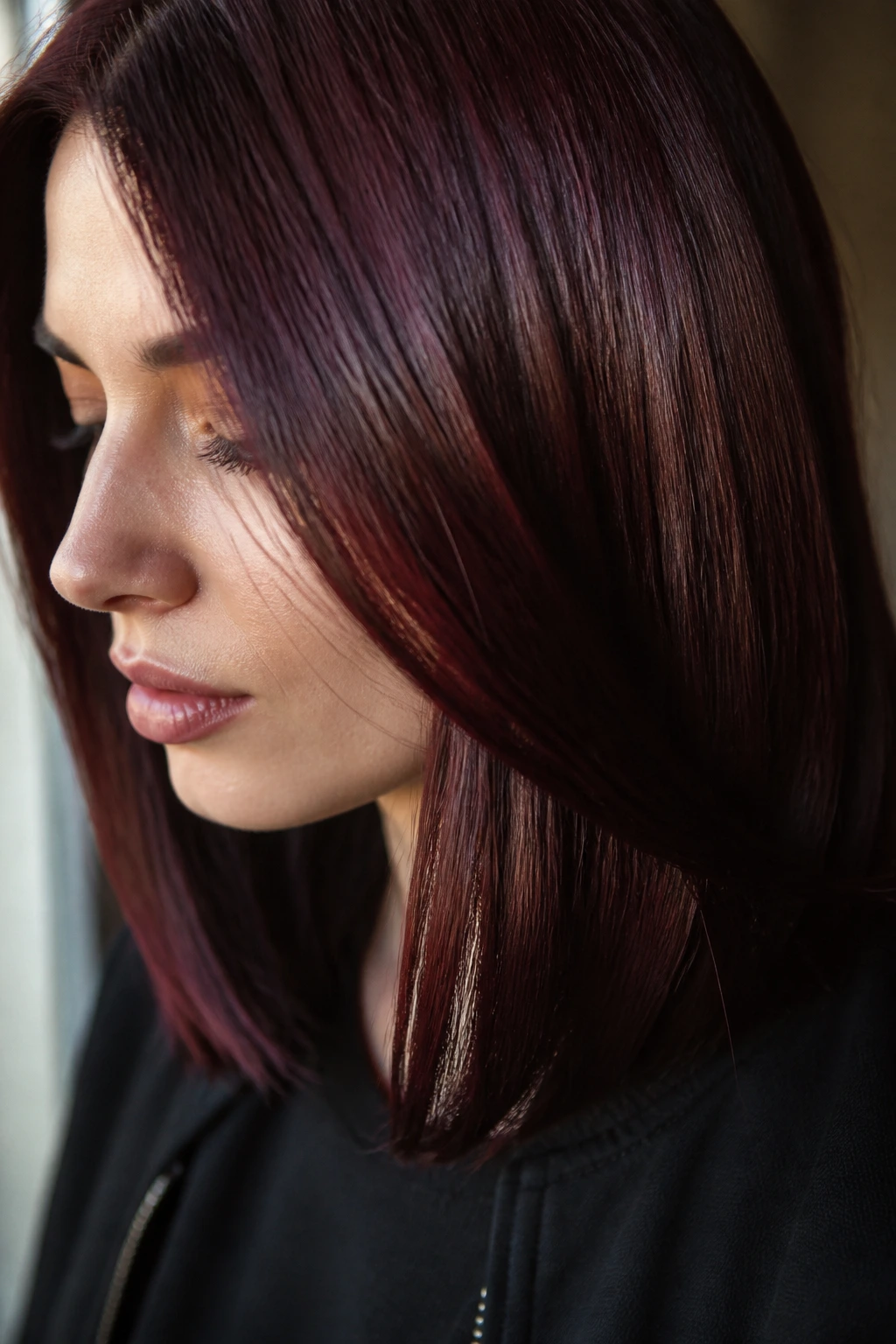
Cherry cola gloss is deep, dark, and a little moody in the best way. The color sits in that red-brown-purplish zone that looks especially good on straight hair, blunt cuts, or anything with a shiny finish. It doesn’t scream for attention. It just looks expensive from across the room.
What makes it work is depth. A cherry gloss over brunette hair gives the hair a red cast only when the light hits it, so it never feels loud or fake. On very dark bases, you may barely see the cherry indoors, then get that wine-colored shift outside near a window.
This one is a favorite if you want red hair color for fall but hate visible regrowth. Ask for a gloss or demi-permanent glaze instead of a permanent lift if your goal is tone, not brightness. The gloss fades softer than permanent color and can be refreshed without changing your whole base.
5. Strawberry Copper Lob
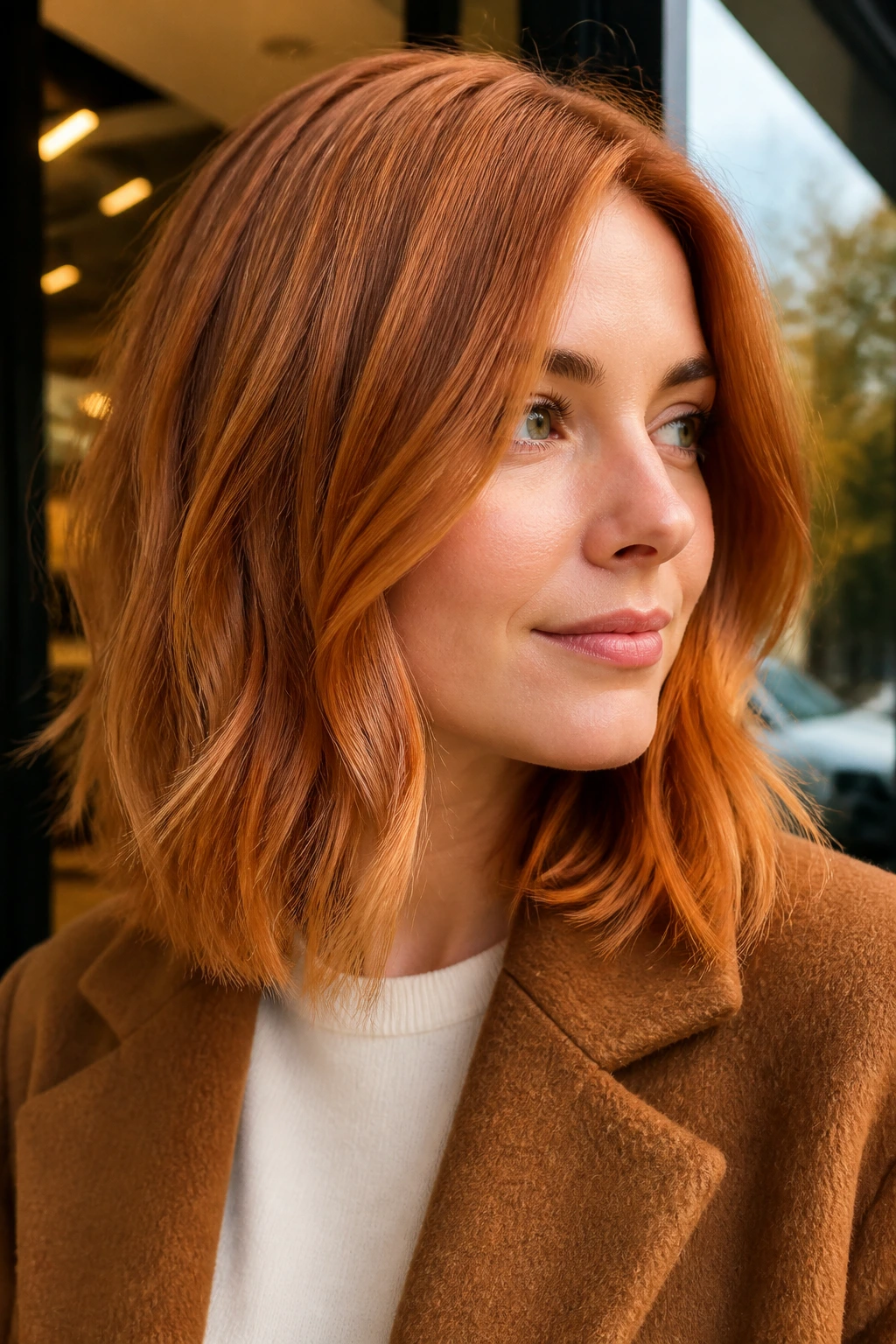
A strawberry copper lob has a lighter, airier feel than the deeper reds, which makes it a nice bridge for anyone moving from blonde into red. On a long bob, the shade looks soft around the jaw and collarbone, and the copper-strawberry mix keeps the hair from tipping too orange. It has a clean, fresh look that still fits the season.
The cut matters here. A blunt lob will make the color look sharper and brighter. A softly layered lob gives the strawberry tones a little movement, which helps them read as dimensional instead of flat. If your hair is fine, this shade can make the ends look fuller because the warmth reflects more light.
This one does ask a little more from your haircare. Lighter red tones fade faster than deeper burgundy shades, so a color-depositing conditioner or gloss helps keep the strawberry note alive. Skip scorching hot water unless you enjoy watching the tone rinse down the drain.
6. Mahogany Layers
Mahogany is the red people forget to ask for, and that’s a shame. It sits in the dark red-brown family, which means it gives you richness without the brightness of copper or the plum edge of burgundy. On layered cuts, the variation in depth makes the color look almost plush.
This is a strong choice for medium to thick hair because the darker tone can make the shape look denser. If you have a lot of movement in the cut, the ends catch a subtle red sheen that shows up when the layers separate. That effect is especially nice on blowouts and soft bends with a round brush.
Mahogany also behaves well if you need something office-friendly. It reads polished in daylight and a little more dramatic in dim indoor light. That shift is part of the appeal — it doesn’t land the same way twice.
7. Rusted Brunette
Rust red hair is not the same thing as bright copper, and I wish more people understood that. Rusted brunette keeps the base brown and adds a muted terracotta-red glaze through the lengths, which gives the hair that worn-leather, sun-faded warmth. It feels lived-in, not loud.
Why it works
The red pigment sits low enough that you don’t lose the brunette identity. That matters if you like depth at the root but want a change that looks intentional. It’s also easier to wear on longer hair because the red doesn’t fight the shape; it rides along with it.
Best ask for the salon
Request a muted red-brown balayage or a demi-permanent rust glaze, especially if your base is already medium brown. If you wear your hair in loose bends, this color will show off the warm streaks beautifully without needing heavy lightening.
8. Mulled Wine Bob
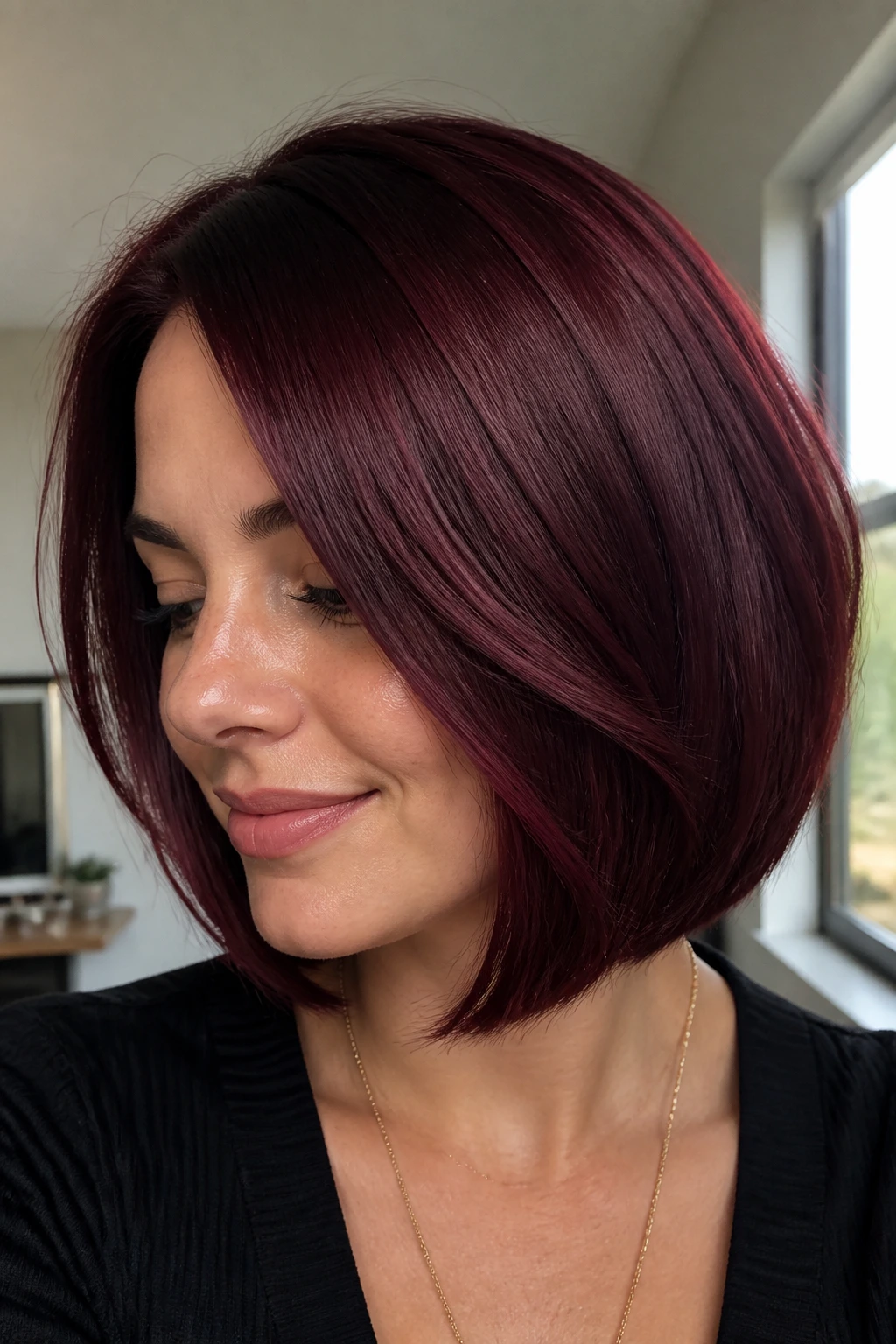
A mulled wine bob has a tiny bit of drama baked in. The tone leans burgundy with a hint of black cherry, so it feels deeper than a bright red but richer than a brown. On a bob, the color looks concentrated and clean, almost like a glossy lacquer.
Short cuts love saturated shades because there’s less hair to dilute the effect. You get a strong visual hit with less upkeep than a longer red style, and the blunt ends make the hue look denser. If your bob is straight and sharp, the color looks sleek. If it’s textured, the wine tone turns a little softer and more playful.
This is one of those shades that makes earrings and lipstick matter more. Gold hoops, berry blush, and a neutral lip can do a lot here. The hair already brings the mood.
9. Burnt Copper Pixie
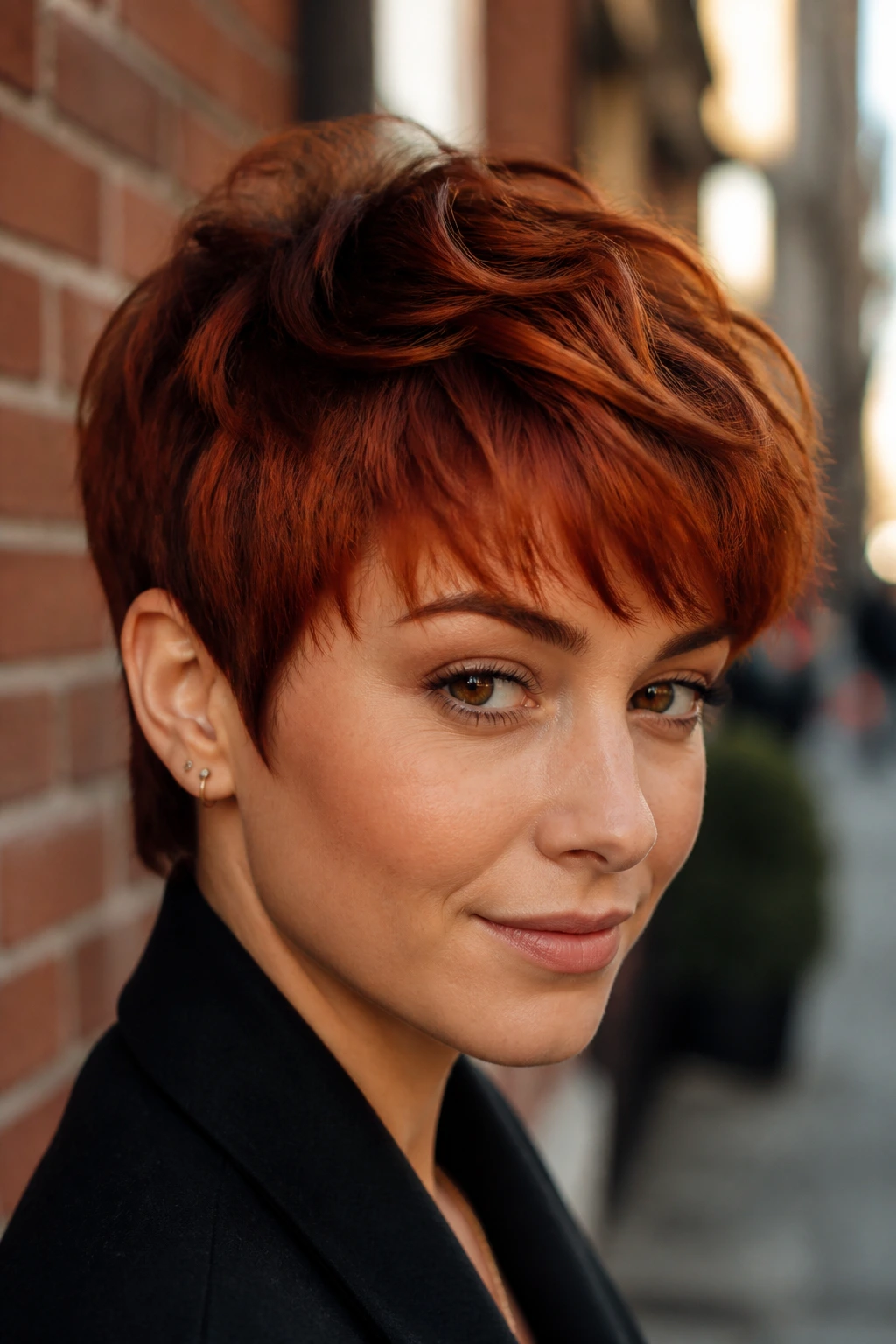
A burnt copper pixie is all about surface texture. Because the cut is short, every little shift in tone shows up fast, so the copper can be a bit brighter and still feel controlled. The result is punchy, not precious.
The best versions use darker copper near the roots and slightly brighter ends, almost like the hair caught a spark. On straight pixies, that keeps the shape from going flat. On piecey, tousled pixies, the red catches at different angles and makes the cut look more expensive than it probably was to maintain.
If you’re tired of styling long hair, this is the red to look at. A pixie can handle vivid color without becoming a high-maintenance project, as long as the cut stays neat. A trim every four to six weeks keeps the shape crisp and the color from looking overgrown.
10. Rose Gold Auburn Waves
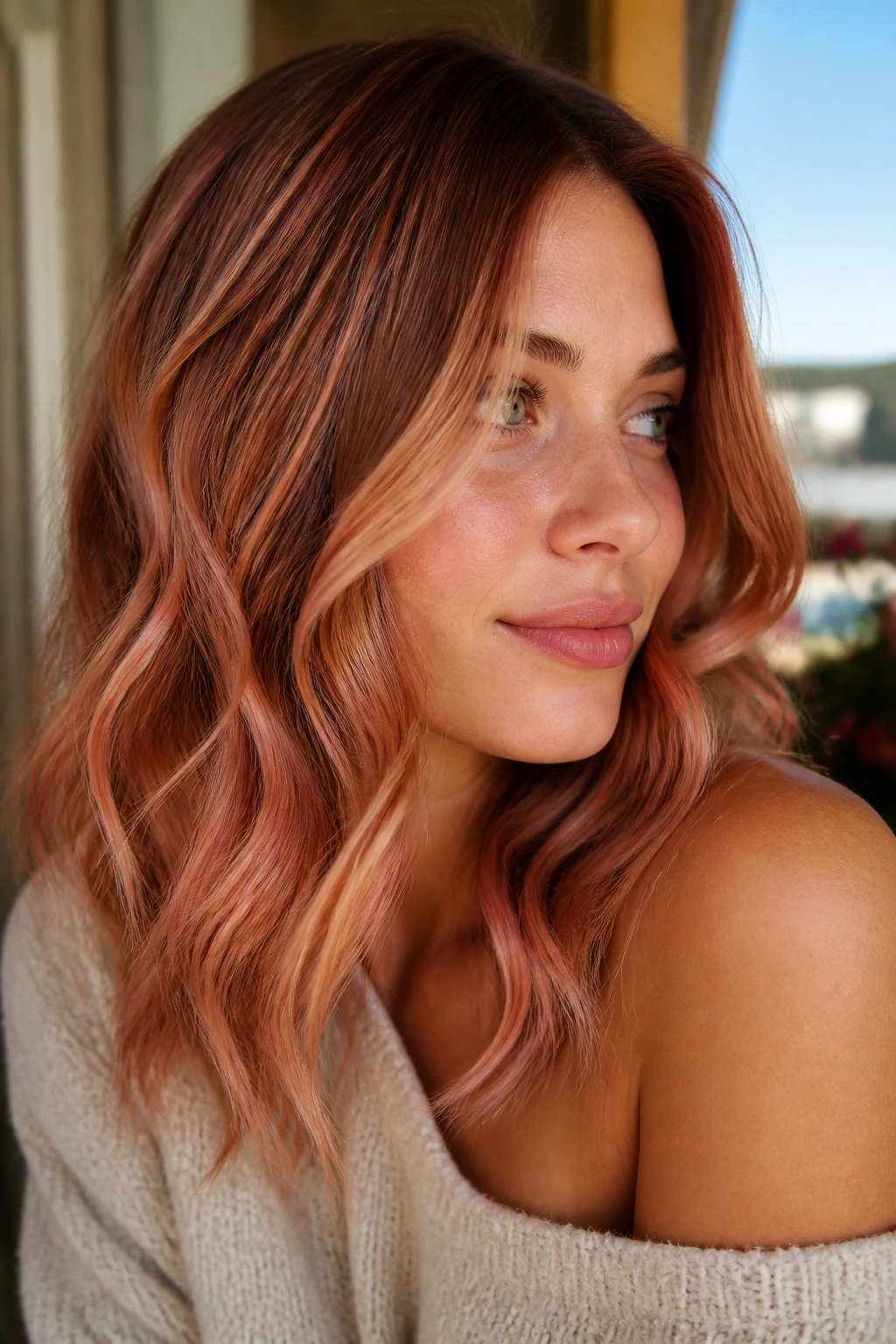
Rose gold auburn is softer than people expect, and that’s why it works. The rose note cools down the warmth a little, while the auburn keeps it grounded so the hair doesn’t veer pastel. On waves, the blend looks delicate at first glance, then more complex when the light shifts.
This shade is a good pick if you like warmth but don’t want a full copper hit. It flatters layered waves especially well because the rose and auburn tones separate slightly across bends in the hair. That separation gives the shade movement without needing obvious highlights.
Keep the finish glossy. Matte styling products can dull the rose element and make the whole color look brown-er than you want. A light shine spray on the mid-lengths usually does more here than a heavy oil.
11. Pumpkin Spice Balayage
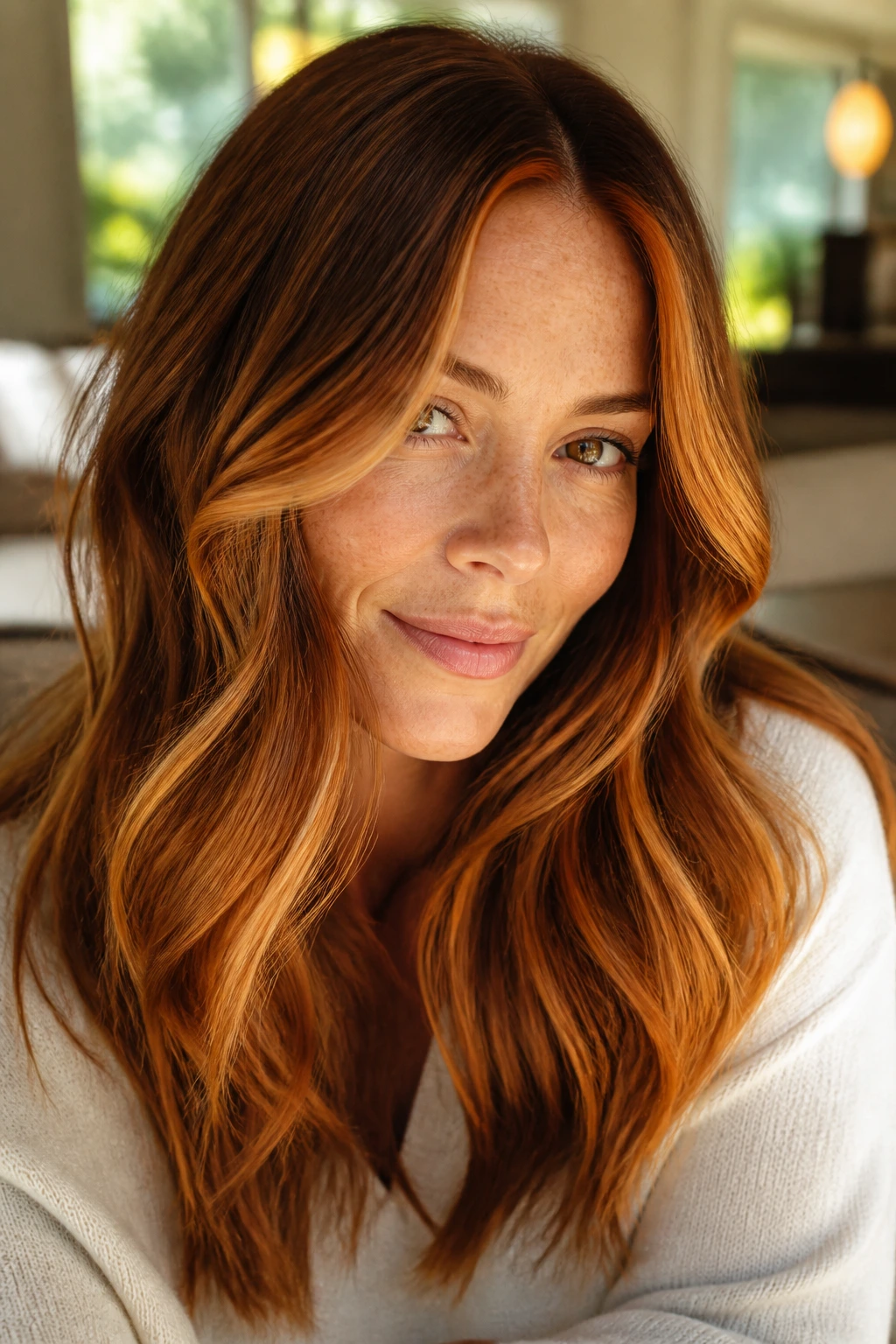
Pumpkin spice balayage gets joked about a lot, but the good versions are genuinely useful. The color usually mixes copper, cinnamon, and soft golden-red pieces over a brunette or dark blonde base. Done well, it feels warm and dimensional, not themed.
The placement is the real point. You want the lighter pieces to sit where the sun would hit — around the face, on the top layer, and through the ends. That keeps the color from turning into a helmet of orange. When you see it move, that’s when it comes alive.
This look works especially well on shoulder-length hair because there’s enough length for the different tones to show. It also grows out with a softer line than all-over red, which makes it a decent choice for people who want seasonal warmth but not constant salon trips.
12. Scarlet Peekaboo Panels
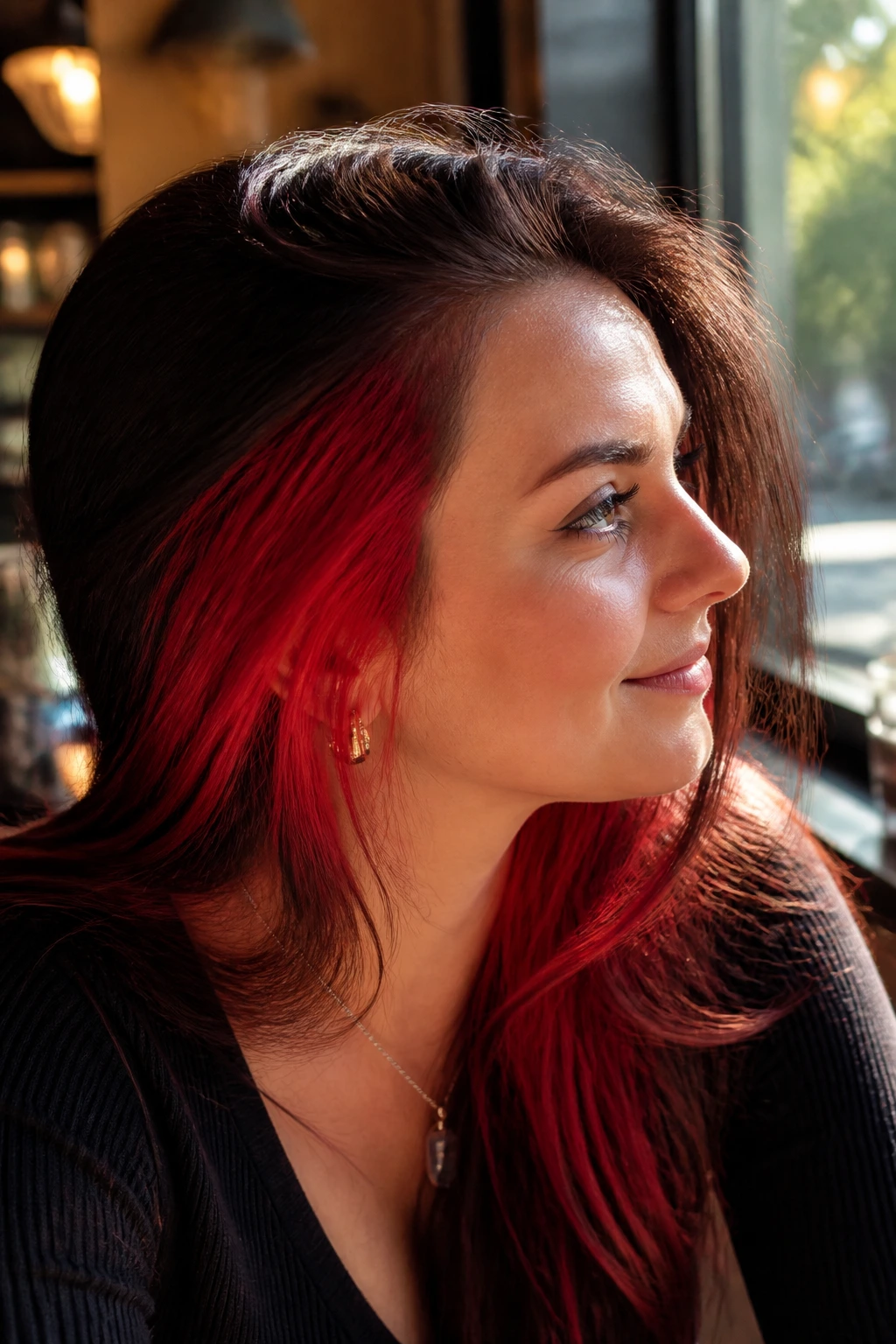
Scarlet peekaboo panels are for the person who wants red hair but also likes a little secret. The vivid red sits under the top layer or beneath the surface around the sides, so it only flashes when the hair moves or gets tucked behind the ear. It’s a layered surprise, not a full-time announcement.
This is the rare vivid red style that can still feel office-safe if the top layer stays natural. The contrast is what makes it work. When the scarlet panels appear, they look deliberate and sharp, especially under straight hair or a half-up style.
If you’re thinking about this look, be clear about placement. Too much red underneath and it loses the peekaboo effect. Too little and you’ll barely see it. The sweet spot is usually a few narrow panels under the crown and around the temple area, where movement makes the color show.
13. Ginger Root Shadow
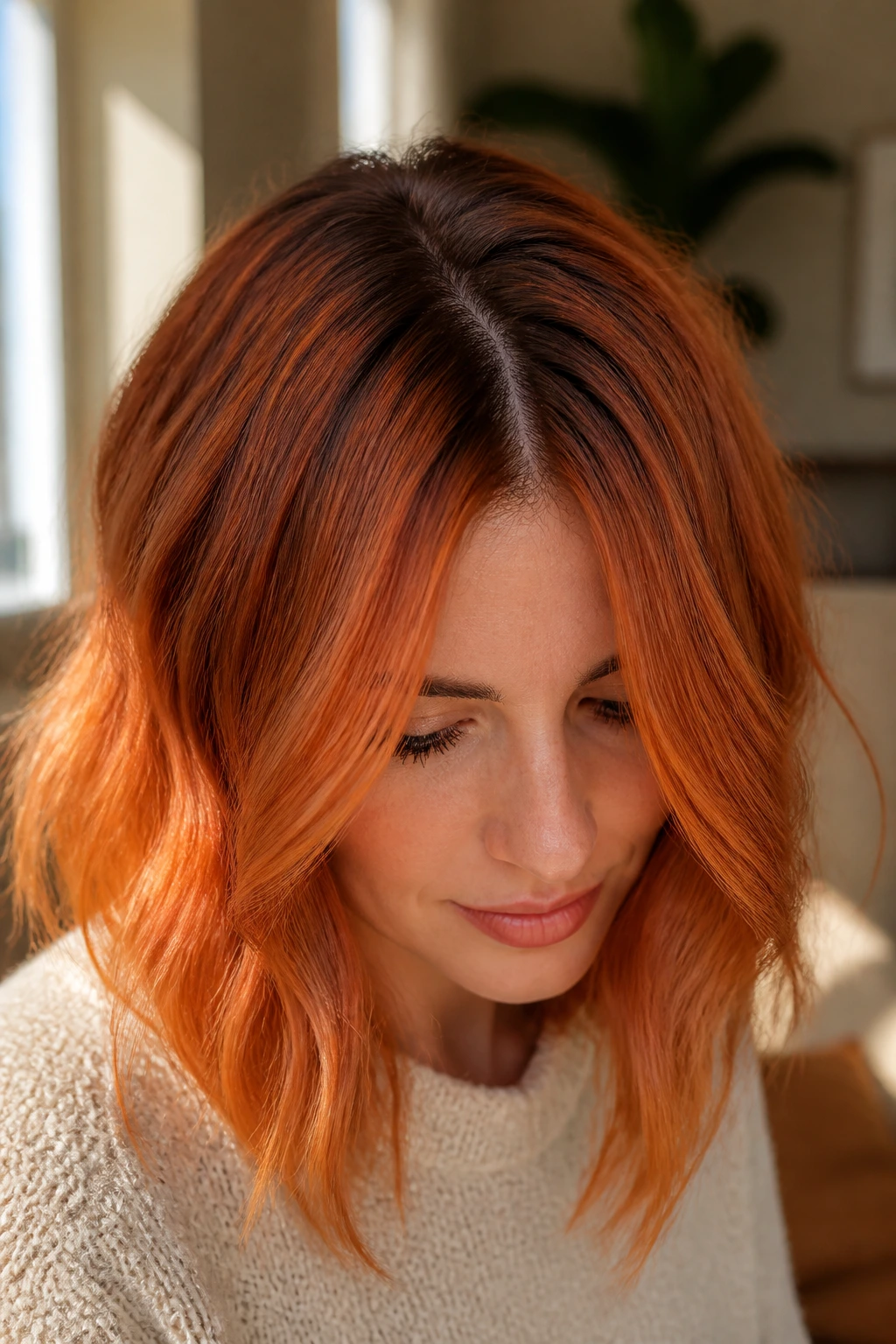
Ginger with a root shadow is one of my favorite red looks because it solves a problem before it starts. Bright ginger can be hard to wear if it begins at the scalp, but a deeper root gives your eyes somewhere to rest and keeps the color from looking too flat. It also buys you grow-out time.
The contrast between the root and the brighter mids is what gives this look shape. On wavy hair, the ginger pieces look almost sunlit. On straight hair, the deeper root stops the color from turning into one long orange sheet. Either way, the shadow root makes the red feel more wearable.
Ask for a smudged root in a level 5 or 6 brown with ginger through the lengths. That little bit of depth at the scalp is the difference between “fresh salon red” and “why does this feel like a wig?” No one wants the second one.
14. Merlot Red Lob
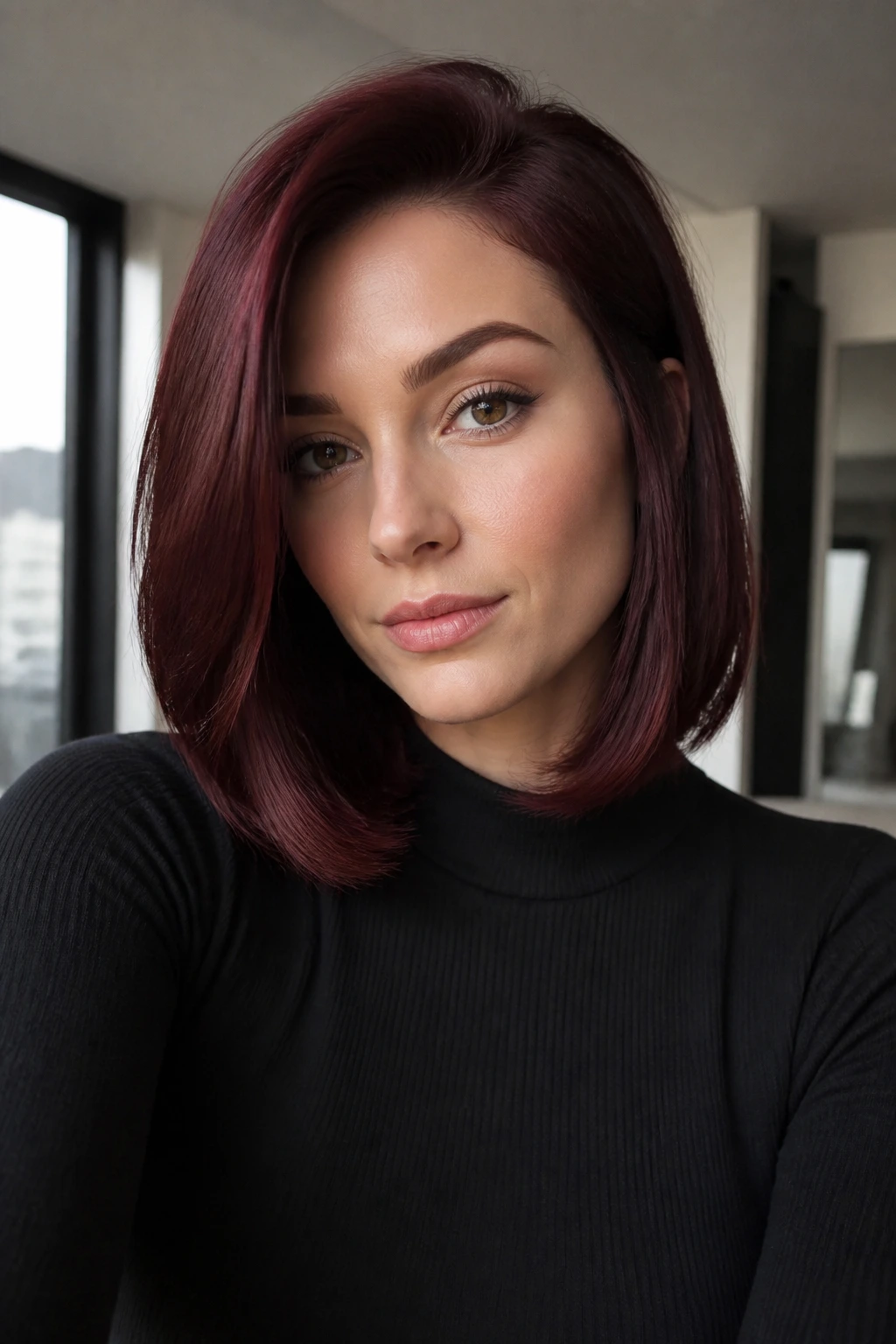
A merlot lob is dark, cool, and a little bit lush. The shade sits in the red-violet family, which gives it more depth than copper and less brown than mahogany. On a collarbone-length cut, it looks sleek and deliberate, especially with a side part or a clean blowout.
This color flatters people who like red but don’t want orange in the mix. It can also be a smart move for naturally dark hair because the merlot tone often shows best without a giant lightening session. The hue reads as wine-red in daylight and almost black cherry at night.
I like this shade with blunt ends or soft, invisible layers. Too much texture can scatter the shine. If you want the color to read richly, keep the finish smooth and use a serum sparingly on the ends.
15. Toffee Copper Face Frame
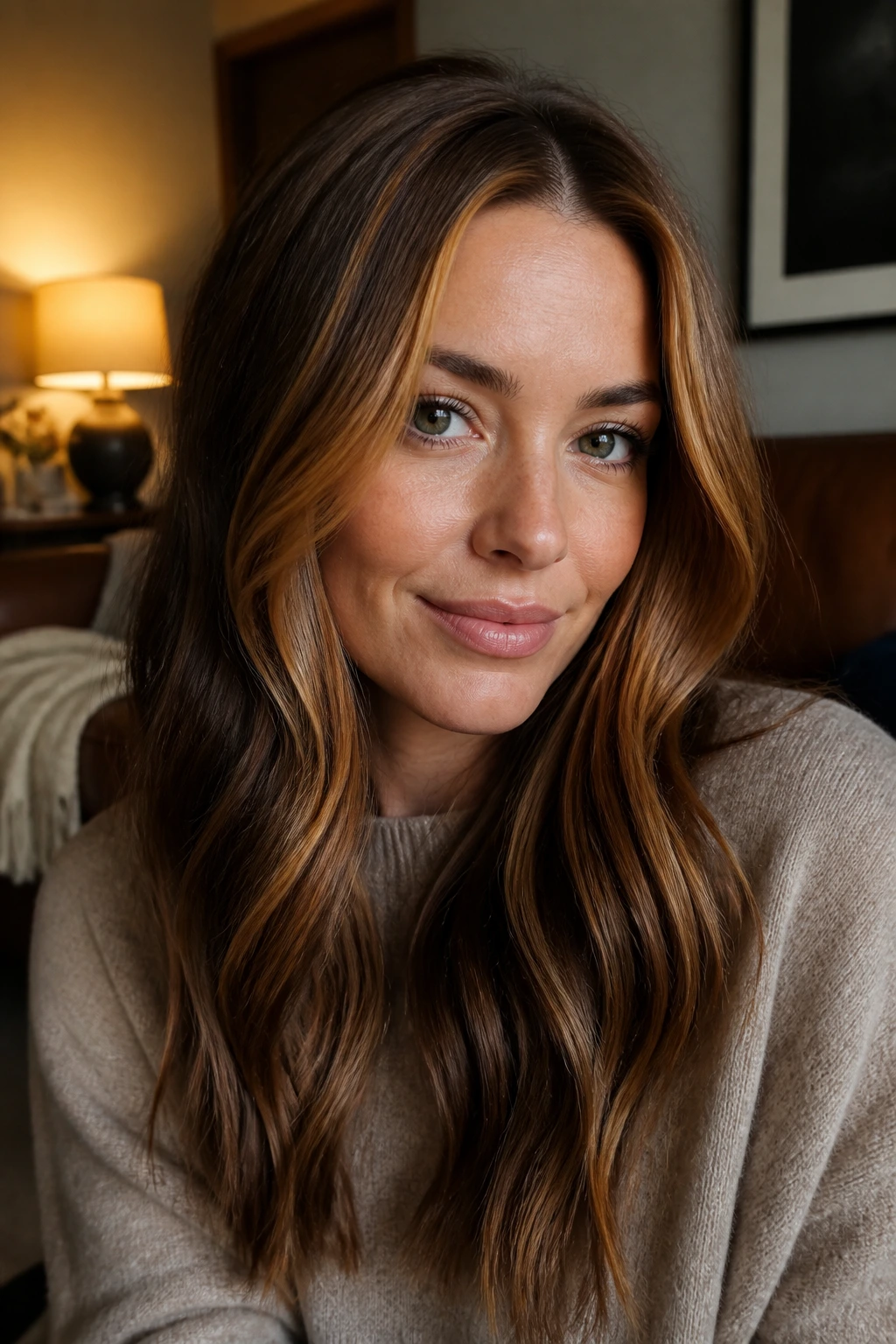
Toffee copper face-framing pieces are the easy-entry version of red hair for fall. You keep the bulk of the hair in a brown or dark blonde family, then warm up the front with toffee-copper ribbons that sit around the cheekbones and jaw. It’s subtle, but not so subtle that you’ll miss it.
The reason it works is simple: the eye goes straight to the front pieces. That means you get the feeling of red hair without changing every inch of your head. On longer hair, the frame reads soft and expensive. On mid-length cuts, it can make the haircut itself look sharper.
If you’re indecisive, this is the place to begin. It’s easier to maintain than all-over copper, and you can always add more later. A good colorist can deepen the rest of the hair with a gloss so the front pieces do their job properly.
16. Bordeaux Brown
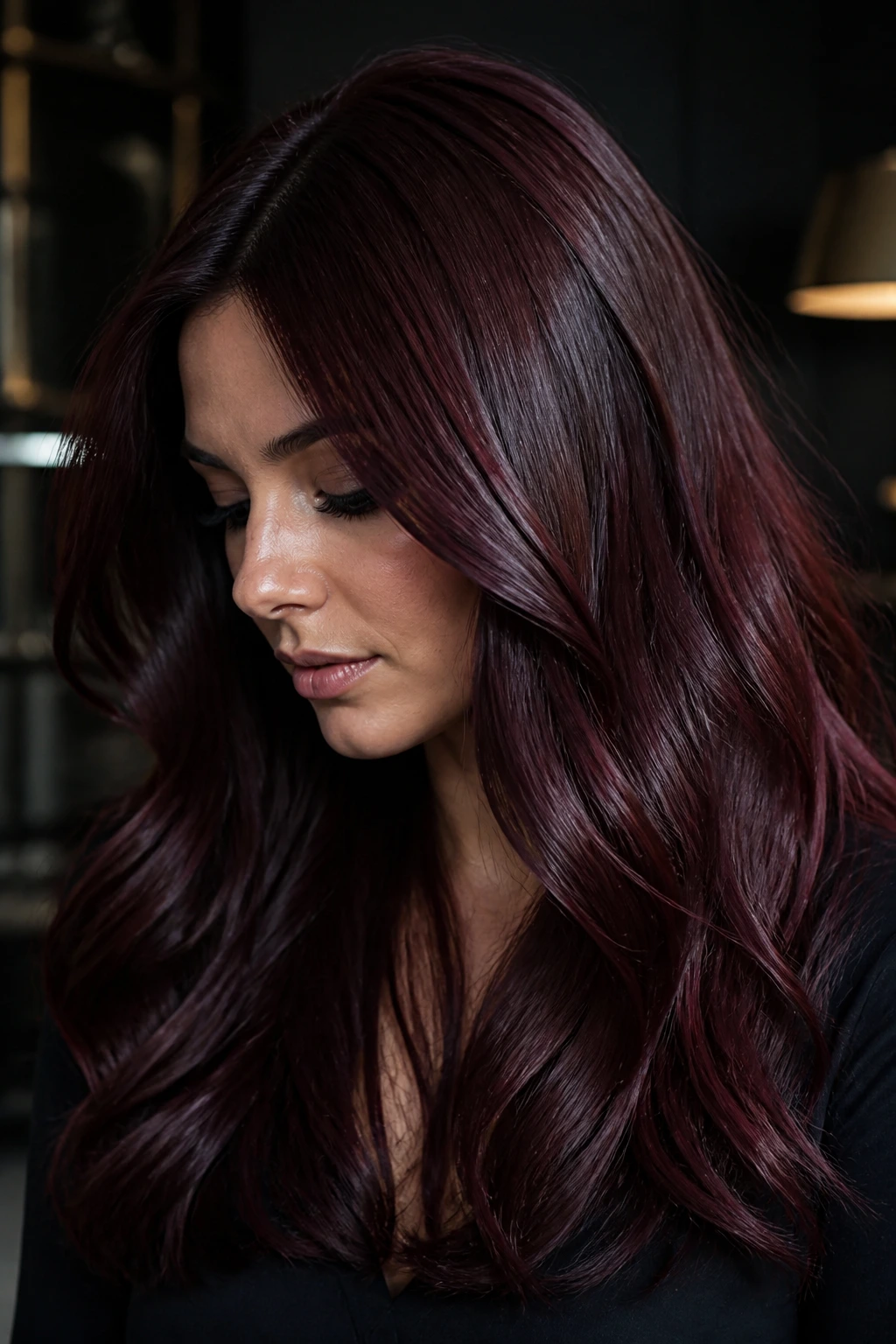
Bordeaux brown is the shade for anyone who wants a red that behaves like a dark brunette in some light and a wine-toned red in others. It’s a brown base with a cool, red-violet undertone, which makes it especially pretty on long hair because the color has room to shift as it moves.
This is not a loud look. That’s the point. It feels rich, layered, and a little mysterious, especially on hair with a glossy finish. If you’re wearing dark knits, charcoal coats, or berry lipstick, the whole look clicks without trying too hard.
A bordeaux tone can get muddy if the red pigment is too weak, so ask for a glaze or demi-permanent formula with enough depth to stay visible. The color should look like a glass of red wine, not brown paint with a thought about red in it.
17. Cranberry Ends

Cranberry ends are a sharp, modern way to wear red without giving up your natural root depth. The top can stay dark brunette or black-brown, while the last few inches move into a cranberry tone that feels vivid but contained. It’s a small placement with a big payoff.
What I like here is the edge. The ends create a deliberate finish, almost like the hair was dipped in color. On layered cuts, the cranberry shows up in the flicks and bends. On straight hair, it lands as a clean line of red at the bottom.
This look is especially smart if you’re testing whether red suits you. You’re not committing the whole head, and you can trim the color out later if you change your mind. That kind of flexibility is underrated.
18. Dark Copper Pixie Cut
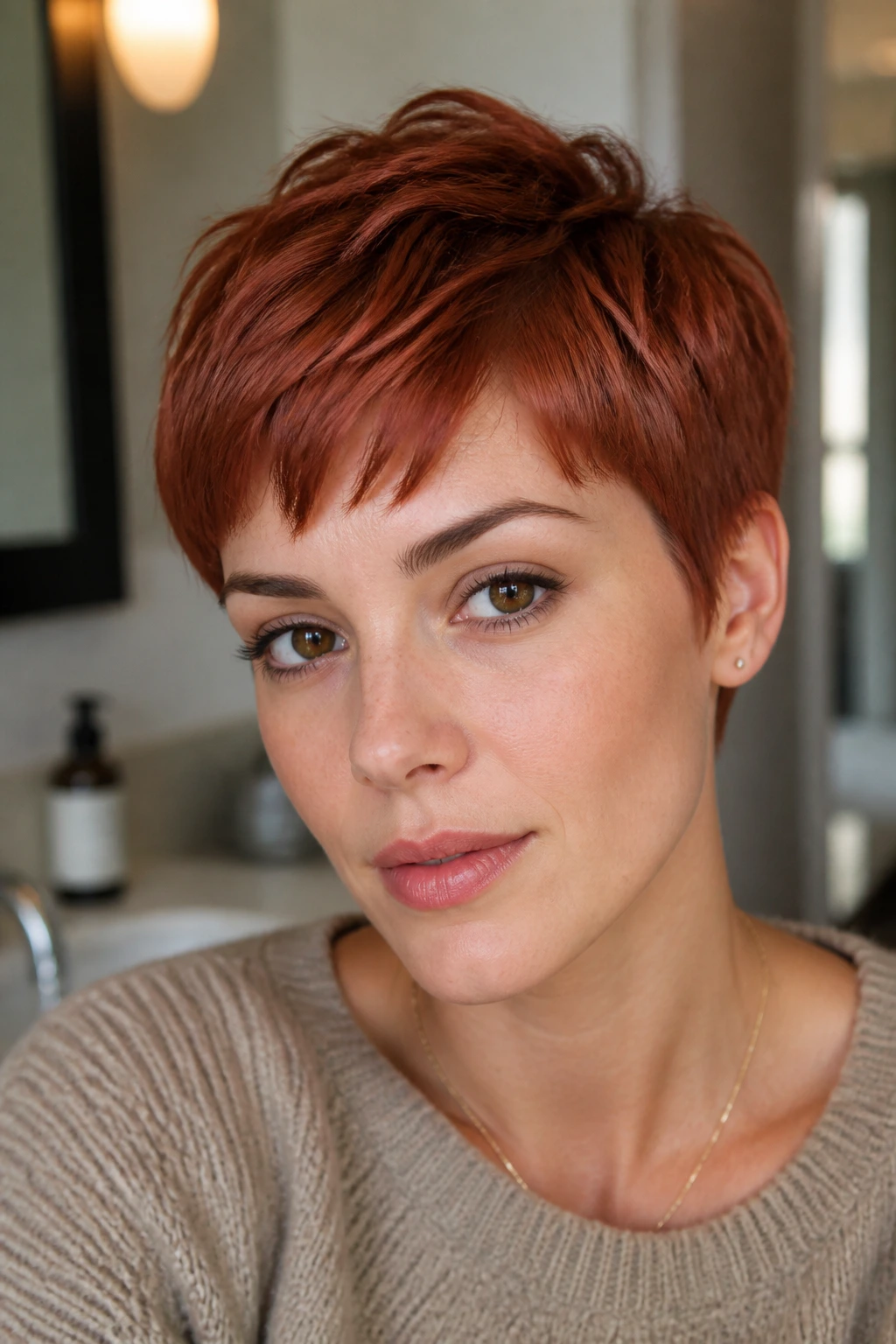
A dark copper pixie cut is one of the cleanest ways to wear red because the color sits right on the surface. The shade is deeper than bright copper, which helps the short shape look sharp instead of fuzzy. Every piece has a little shine, and the whole cut feels polished.
Short hair can handle stronger pigment because the shape is doing its own work. A pixie with dark copper doesn’t need much styling beyond a dab of cream or paste. The color itself creates enough interest, especially around the temples and fringe.
If you want this look to stay neat, book trims on a regular schedule. A short cut grows out faster than people think, and once the shape softens, the copper can start looking less intentional. Keep the edges crisp and the color will follow.
19. Ember Red Curly Shag

An ember red curly shag has movement built into the cut and warmth built into the color, which is a very good combination. The ember tone usually sits between copper and red-brown, and on curls it picks up wherever the light touches a bend. The shag layers keep the shape from becoming too round or too heavy.
Curly hair can hide color if the placement is too flat. Ember highlights need to show through the curls, not sit on top of them like paint. That’s why this look works so well with a shag — the layers lift the color and give each curl cluster a little room.
If you wear your curls natural, ask for placement around the outer layer and fringe pieces. That keeps the warmth visible even when the hair shrinks up. A diffuser and a little leave-in cream are enough to let the color do the talking.
20. Auburn Ombré Curls
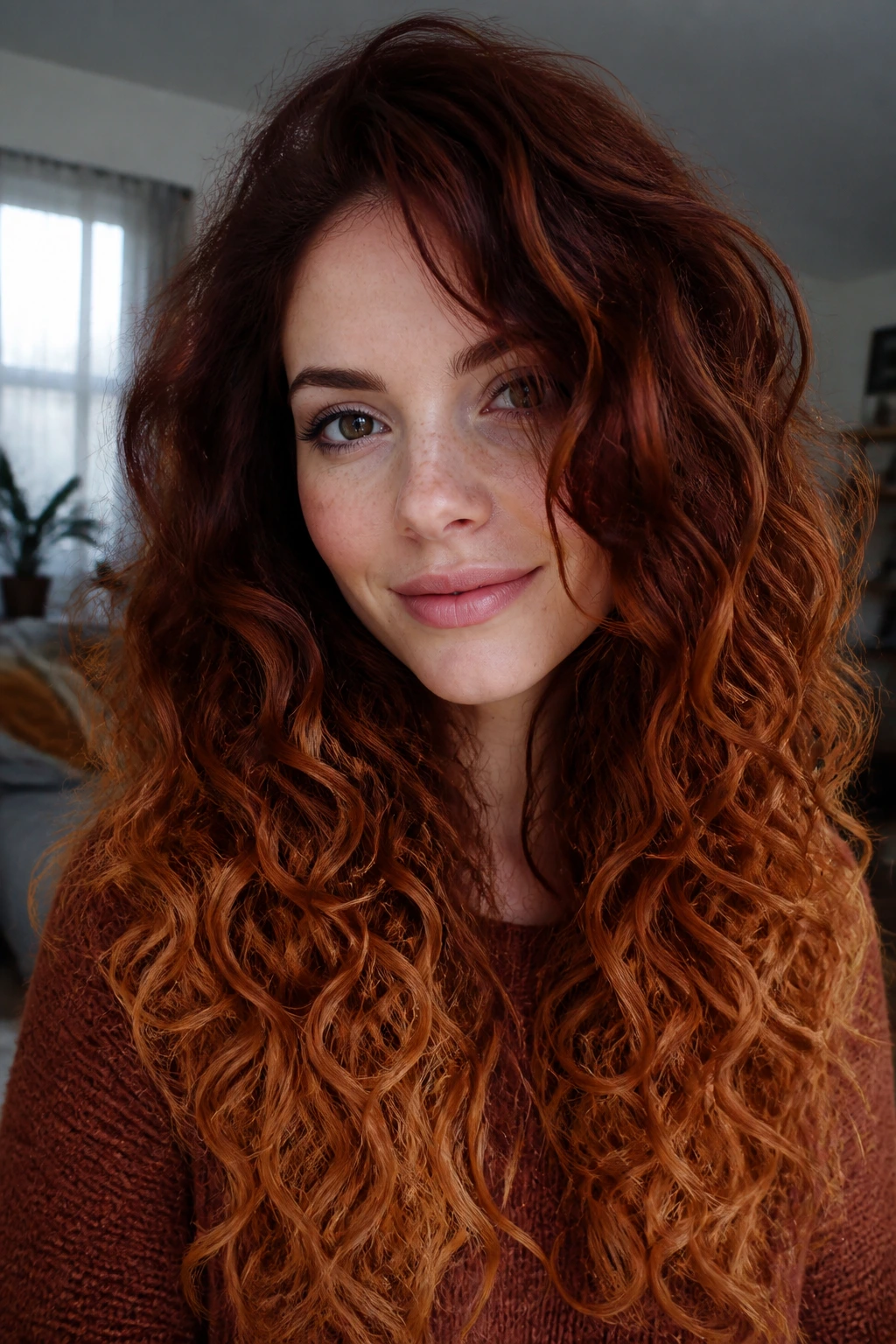
Auburn ombré curls are gorgeous when the fade is slow and the curl pattern is respected. Darker roots melt into auburn mids, then a richer, brighter auburn shows up toward the ends. On curls, that gradient looks more natural than on straight hair because the coil pattern breaks up the line.
The nice thing about this style is that it uses the curl’s own shape to make the color look dimensional. You don’t need perfect uniformity. In fact, a little unevenness is the whole point. Different curls catch different parts of the shade, so the hair looks more alive.
If your curls are dry, be careful with over-lightening the ends. Red pigments already fade faster than brunettes, and damaged curls can make that fade look patchy. A healthy trim and a good conditioner matter more here than any fancy styling trick.
21. Cinnamon-Rose Waves
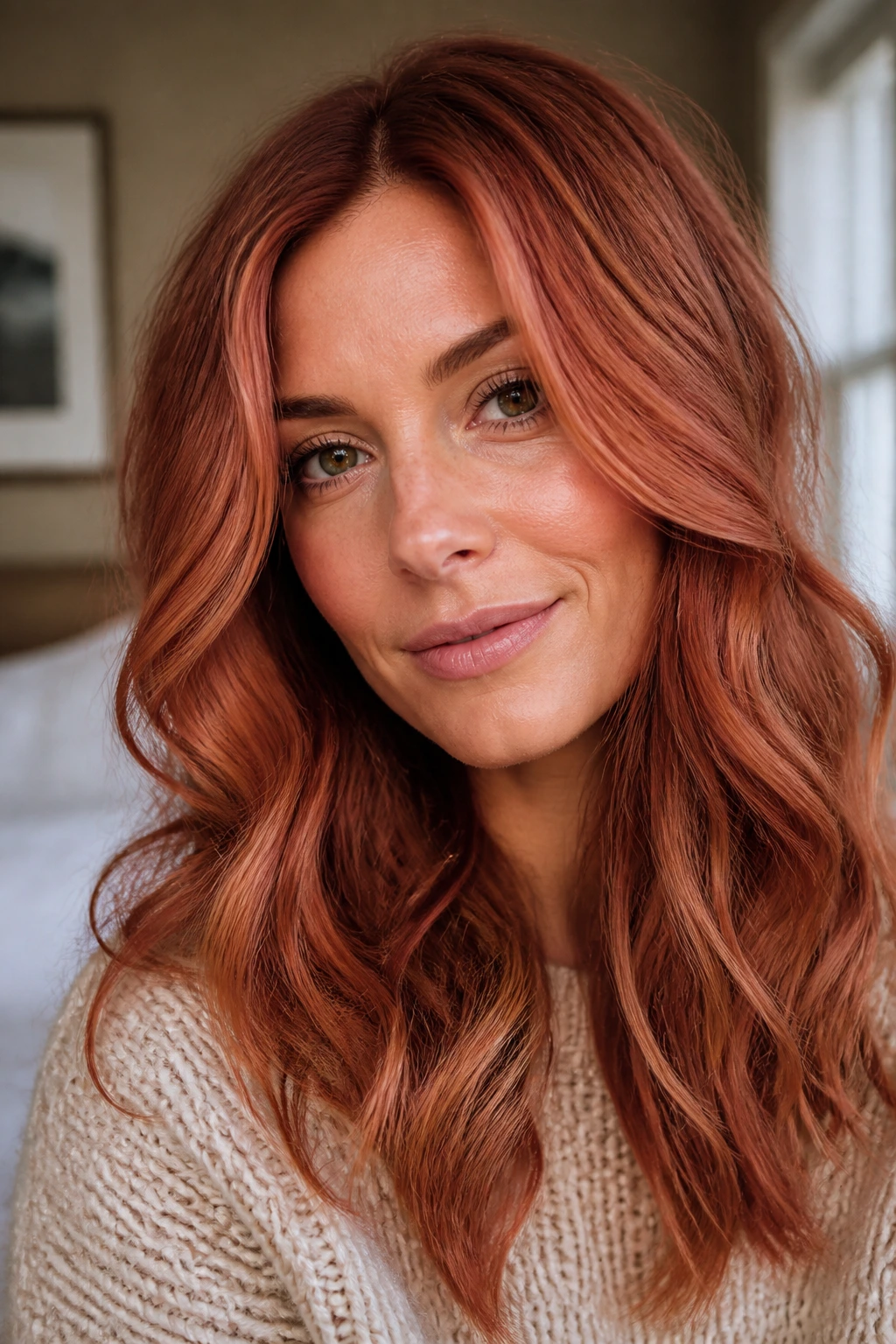
Cinnamon-rose waves live in a soft, romantic middle ground. The cinnamon keeps the warmth grounded, while the rose tint adds a little cool blush to the overall shade. On waves, that blend can look almost like fabric — warm, soft, and slightly luminous.
This is a good choice if you don’t want a hard red statement. It’s gentler than copper and more interesting than plain auburn. The combination of warm and cool tones helps it flatter a wider range of skin tones, especially when the hair is worn loose and slightly undone.
A loose wave really helps here. The tone shifts across the bends, which is what makes the color feel dimensional. If the finish is too tight or too polished, the rose note can disappear and the cinnamon takes over.
22. Brick Red Bob
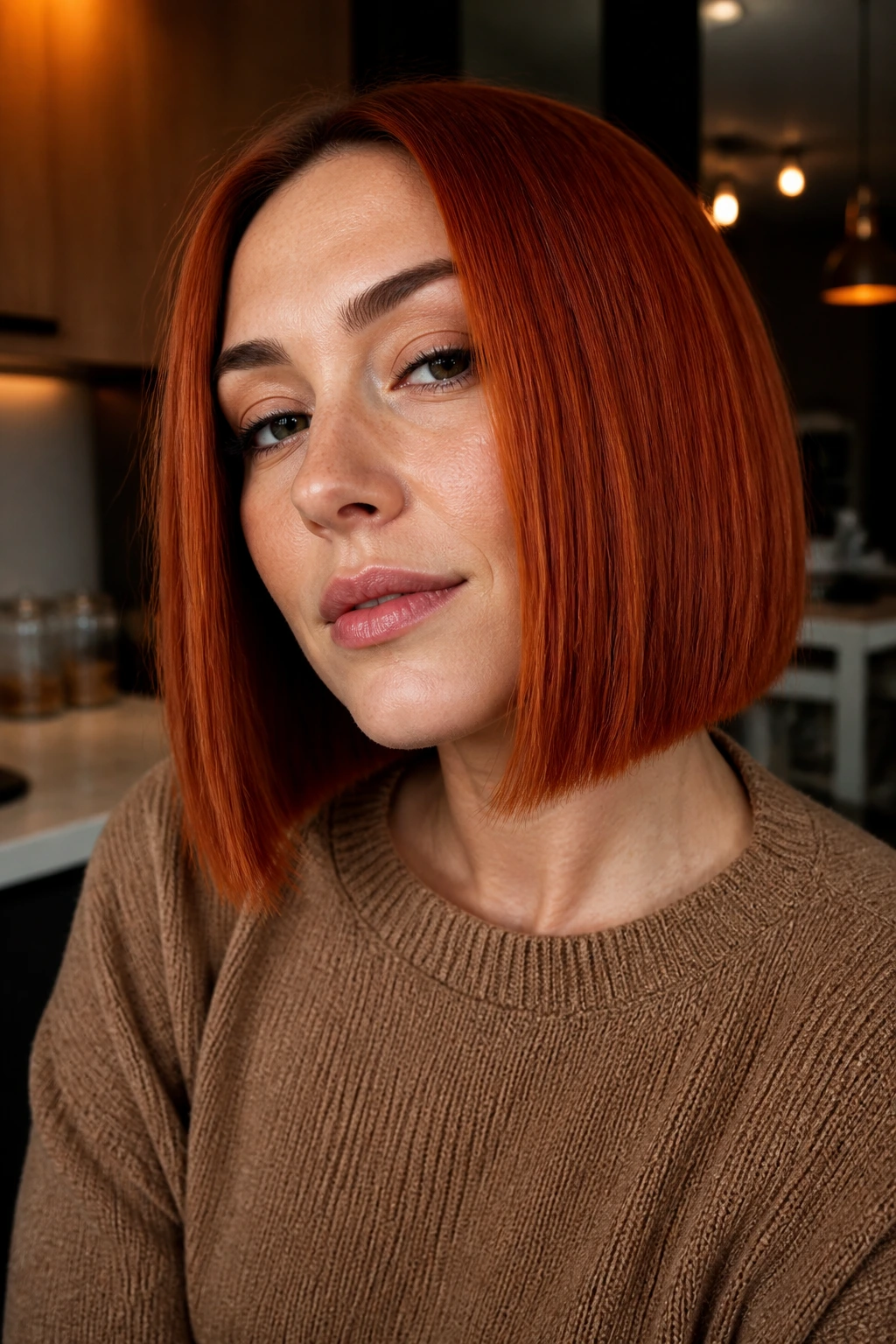
Brick red is the red for people who don’t want their hair to look sweet. It has a muted, earthy quality, almost like terracotta with a deeper red base. On a bob, that color looks strong, neat, and a little architectural.
The blunt edge of the cut pairs nicely with the grounded color. A brick red bob can feel very modern because it doesn’t depend on shine alone; the tone has enough body to stand on its own. If you wear minimal makeup, this shade does a lot of the styling work for you.
This one is less about sparkle and more about shape. Keep the cut clean. Too many wispy layers can make brick red lose its punch, while a sharper bob keeps the tone looking intentional and solid.
23. Maple Copper Layers
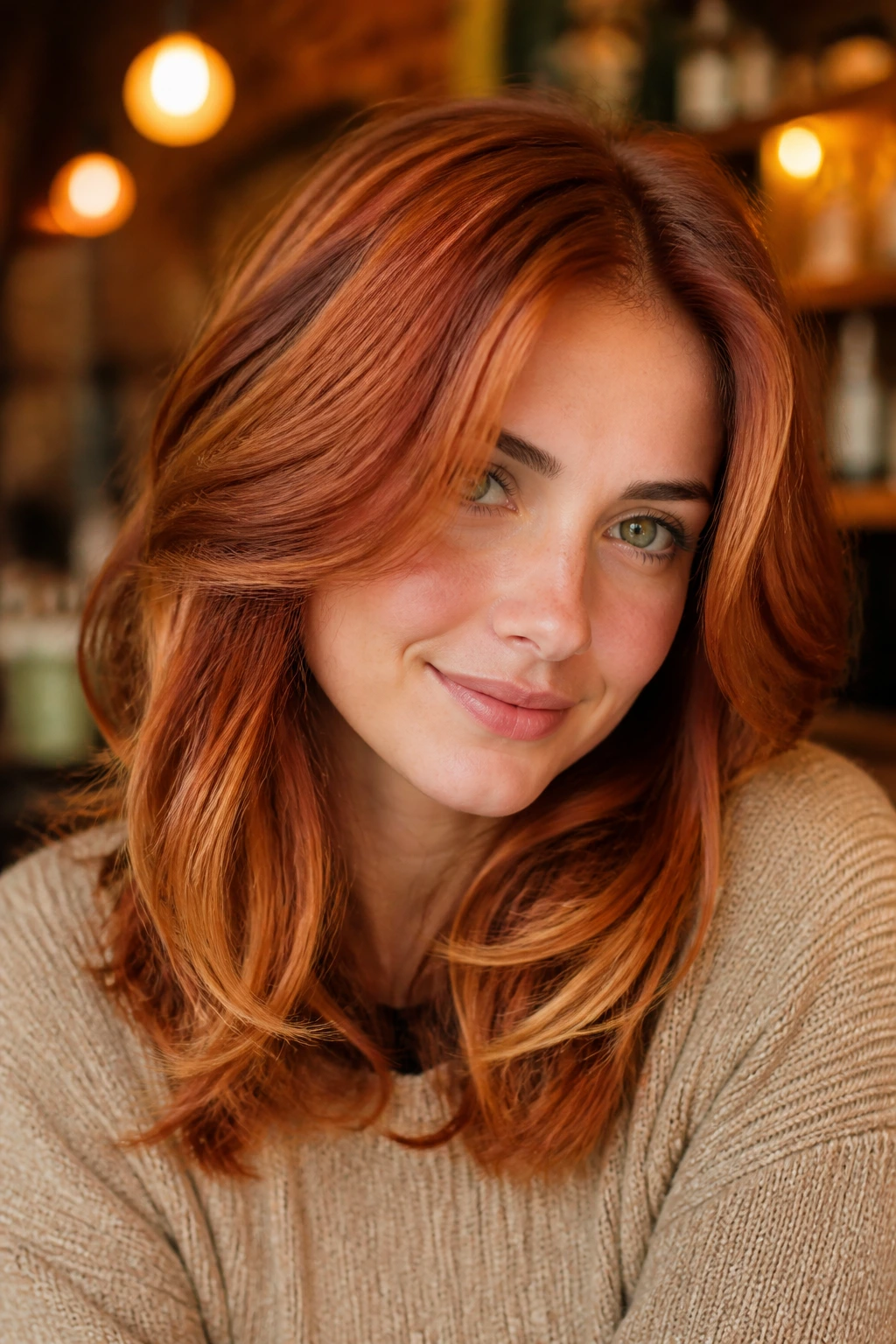
Maple copper is warm in a softer, syrupy way. It’s not as bright as pumpkin spice and not as brown as mahogany. On layered hair, the shade has a rounded look, almost like the hair is holding light instead of reflecting it back in a flash.
This works especially well if you want a red that feels expensive without screaming for attention. The layered cut gives the color places to shift, so the ends can look lighter than the crown without any obvious stripe. It’s a nice option for hair that needs a little more movement.
Ask for maple copper if your natural tone leans golden or neutral. The shade plays well with that warmth and doesn’t usually fight your base. If your hair pulls very orange, though, you’ll want a colorist to keep the formula more brown than gold.
24. Autumn Flame Highlights
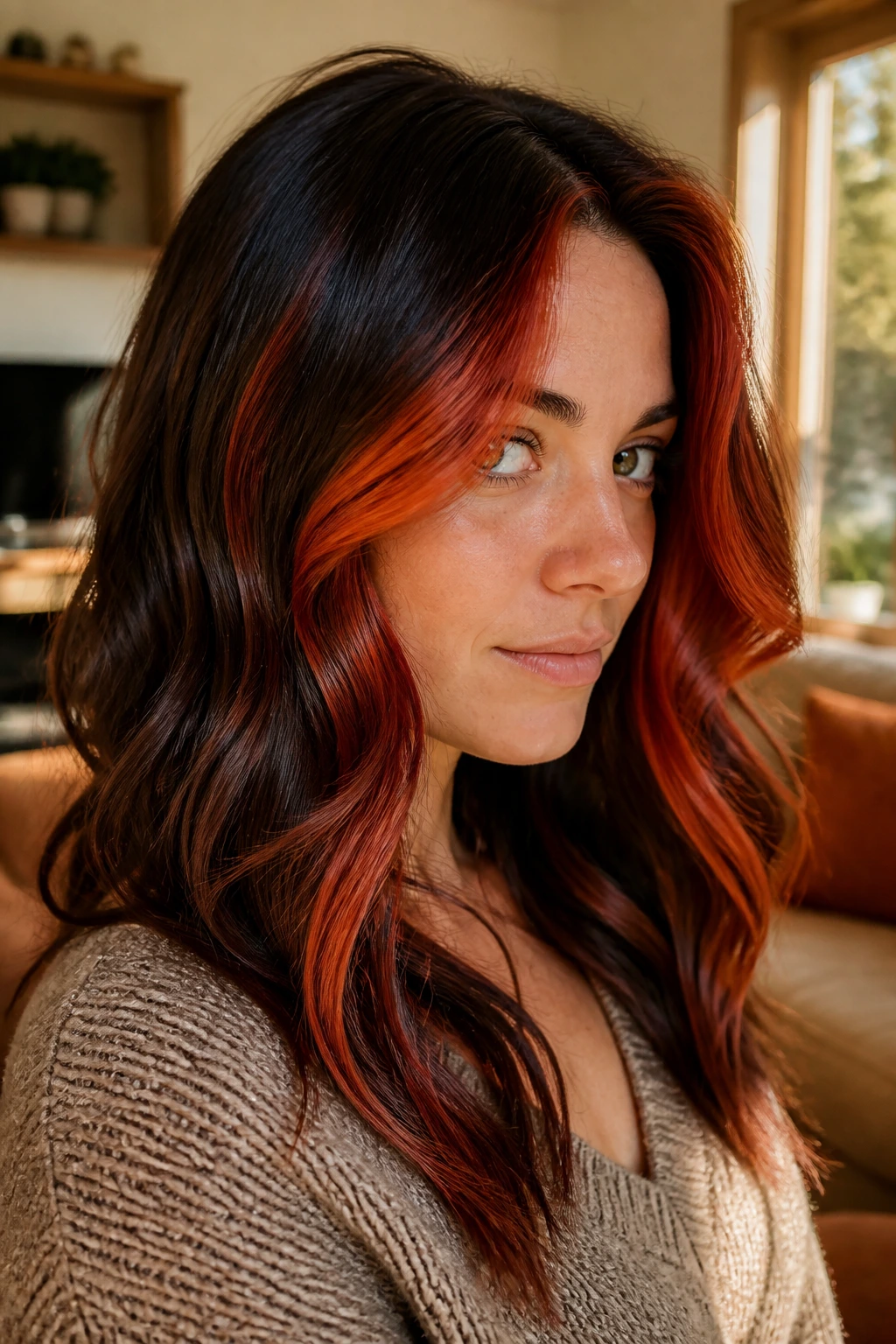
Autumn flame highlights are for the person who wants a red look that actually looks like color, not a glaze pretending to be color. These highlights are brighter, more deliberate, and often placed where the hair moves the most — around the front, on the top layer, and through the ends. The effect is bold, but it still has dimension if the placement is smart.
What makes it different
Unlike a single all-over shade, these highlights give you multiple tones in the same head of hair. That keeps the red from flattening out, especially on longer cuts. The brighter pieces catch attention; the darker base keeps the whole thing wearable.
Who should choose it
If you have medium to dark hair and want the red to show from across the room, this is a strong option. It asks for more upkeep than a gloss or a soft balayage, but the payoff is obvious. It looks especially good with waves that break up the highlight pattern.
25. Velvet Cherry Layers
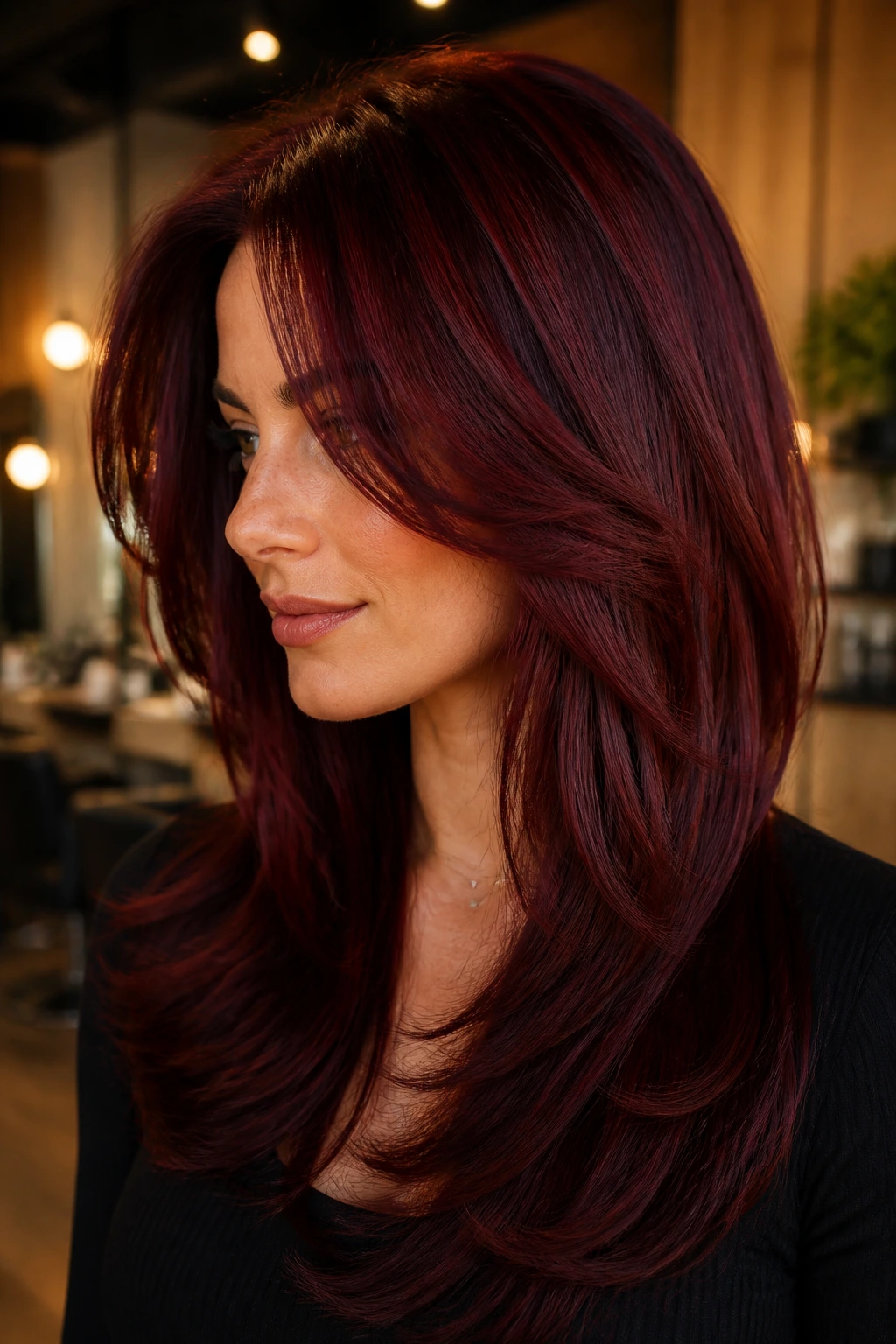
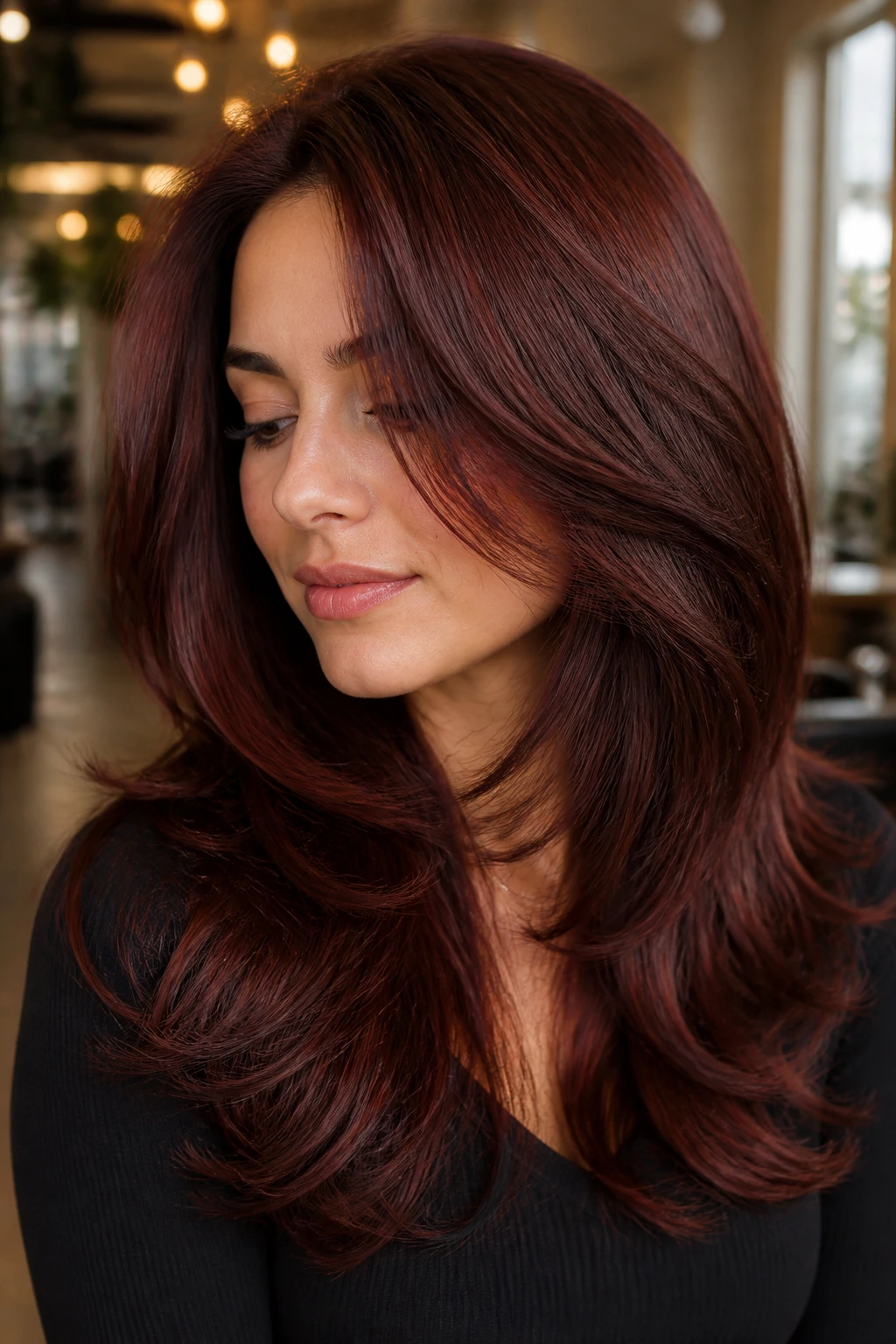
Velvet cherry layers combine depth and shine in a way that feels almost plush. The cherry tone gives the hair a cool-red edge, while the layers keep the color from sitting like one heavy block. If you want red hair that leans a little dramatic but still wearable, this is a smart lane.
The color is especially pretty on medium and long cuts because the layers let the cherry tones move through the lengths. On straight hair, it looks sleek and reflective. On loose texture, the red gets a bit softer and more dimensional.
This is one of the more forgiving vivid shades if you keep it on the deeper side. A cherry gloss can be refreshed without lifting the base again, which makes maintenance easier than a brighter scarlet. That matters if you want the color to stay rich, not patchy.
26. Rusty Ginger Wolf Cut
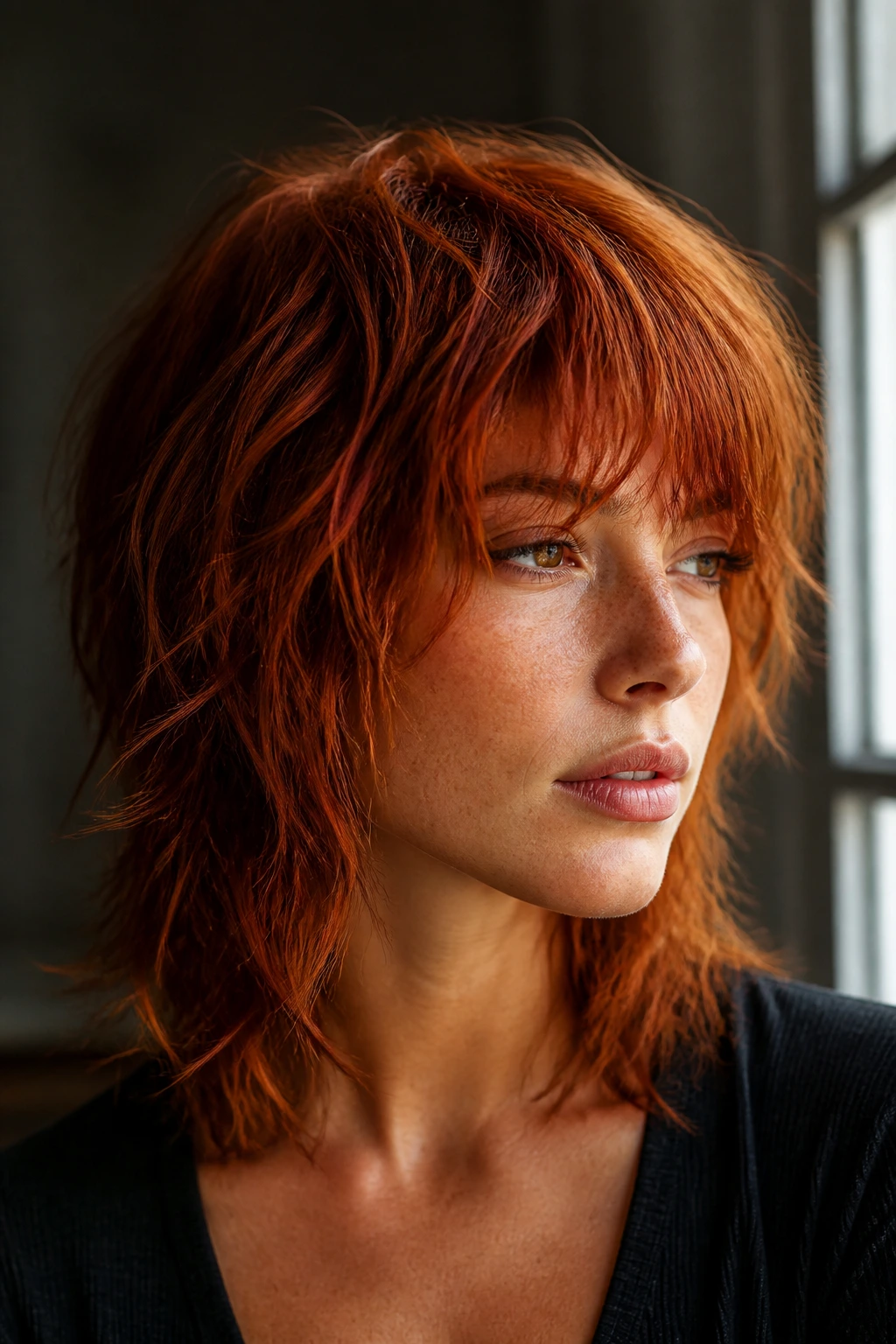
A rusty ginger wolf cut has edge built into every part of it. The wolf cut already carries a bit of mess and movement, and the rusty ginger color adds warmth without making the style look too sweet. It’s messy on purpose. Good messy.
The layers in a wolf cut break up the color in a way that helps ginger tones feel less uniform. That’s useful, because highly saturated reds can go flat if every strand reads the same. Here, the choppier shape makes the hair look fuller and more lived-in.
If you wear texture spray or dry your hair with a diffuser, this look really wakes up. The edges of the layers catch the red in different places, and the color starts to feel like part of the cut instead of a surface layer. It’s one of the most forgiving red styles for people who don’t want polish every day.
27. Sangria Streaks
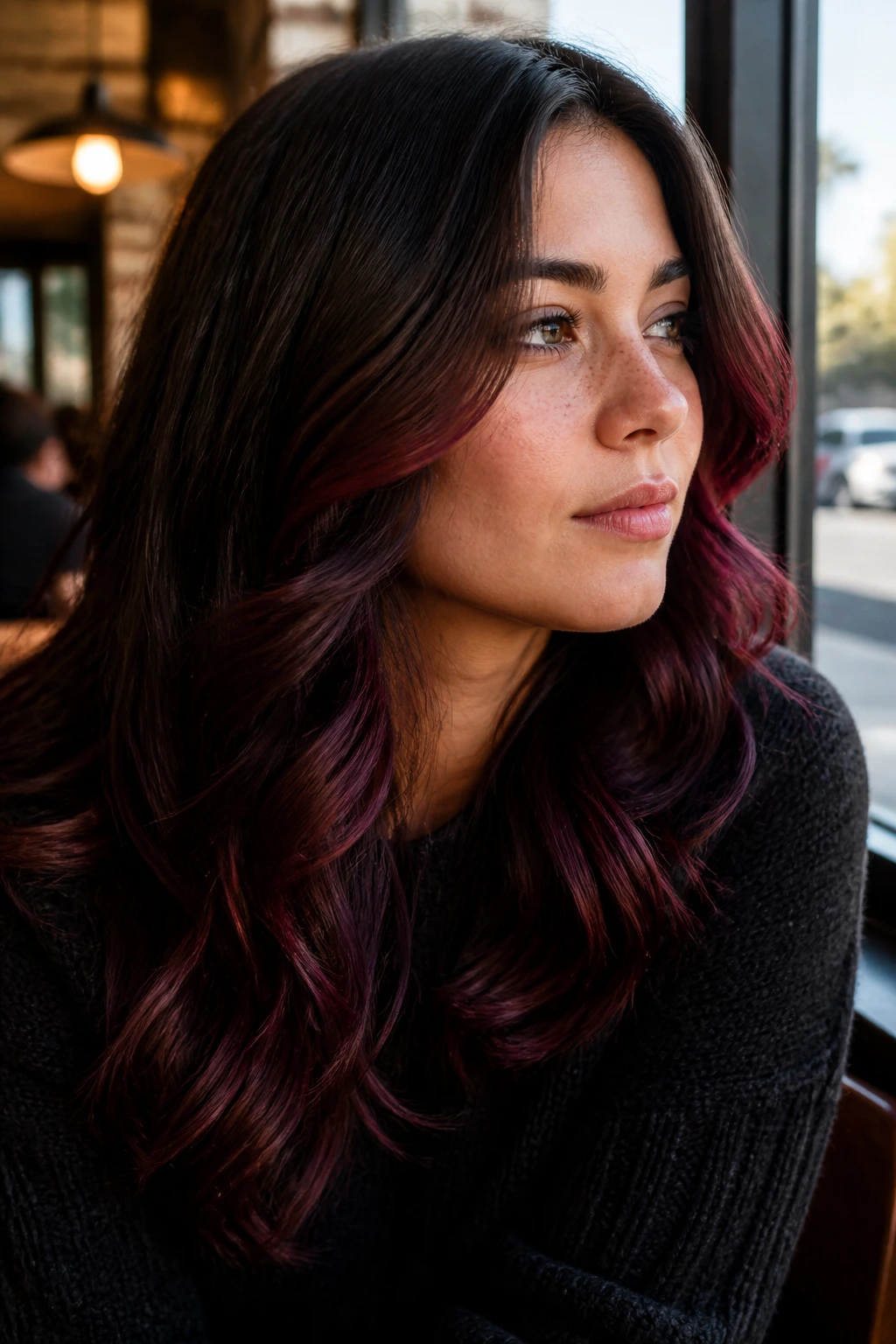
Sangria streaks sit in that deep red-purple family that makes dark hair look richer without trying to bleach it into something it isn’t. The streaks can be thin and scattered or chunkier and bolder, depending on how much contrast you want. The point is movement, not uniform coverage.
This is a good option for brunettes who like darker makeup and darker clothes. The red shows up most when the hair moves or when it’s styled with a slight bend, which keeps it from feeling too obvious. On straight, smooth hair, the streaks read sharp and intentional.
Ask for placement around the face and through the top layer if you want the color to show more. If you want it stealthier, tuck the sangria tones underneath the surface and let them peek out only when the hair flips. That quiet-versus-bold choice changes the whole vibe.
28. Spiced Copper Butterfly Cut
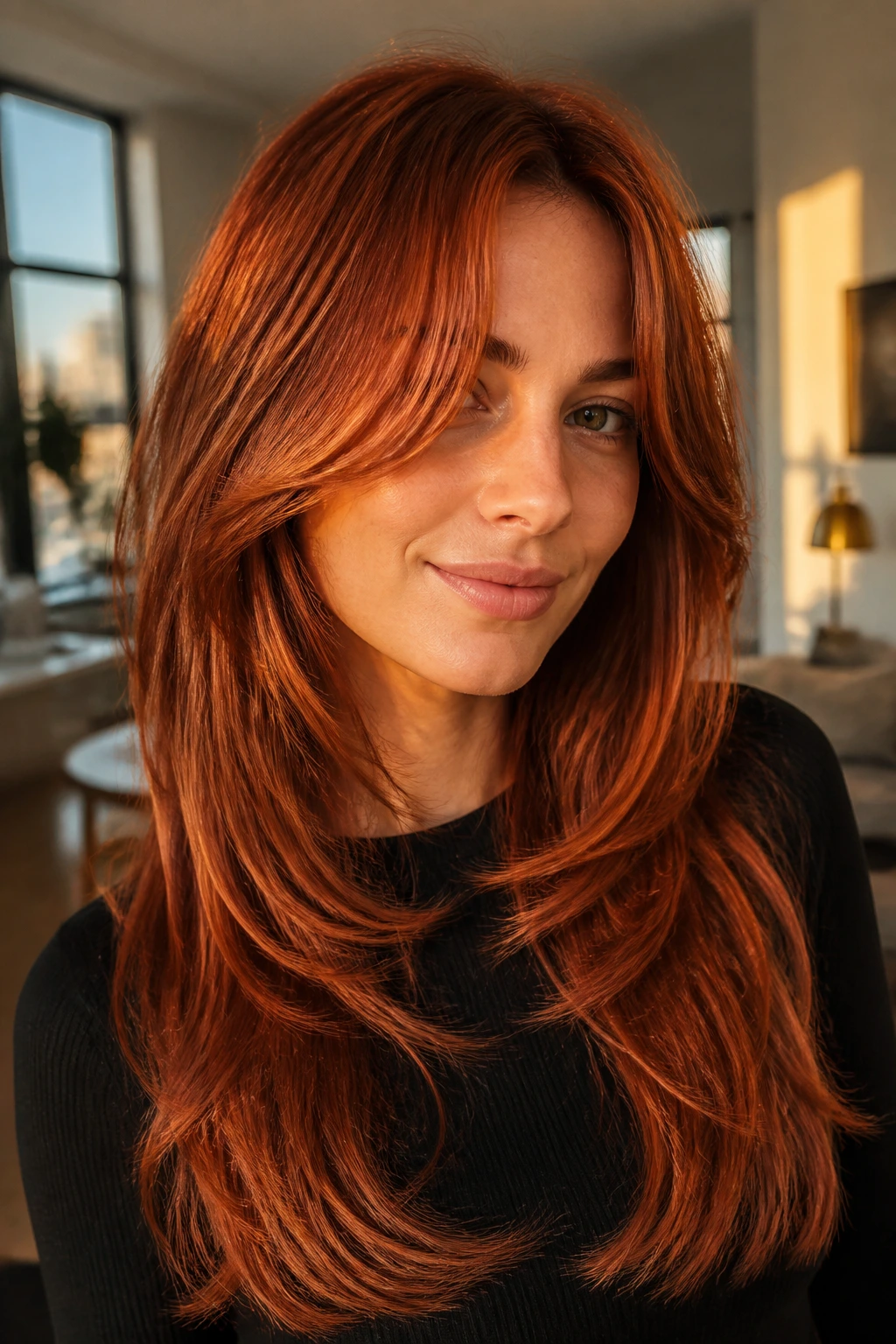
The butterfly cut gives you long layers with movement around the face, and spiced copper takes advantage of every one of them. The warm copper-red tone sits beautifully on the shorter front pieces, then flows into longer lengths that can carry a deeper version of the same shade. It has a soft, airy motion that suits the cut.
This look is especially nice if you want red hair but don’t want to lose length. The butterfly shape lets the hair swing, and the copper reads differently on the layers as they separate. On a blowout, it can look very smooth. On a round-brush bend, it gets a little fuller and warmer.
If you’re working with naturally darker hair, ask for fine copper ribbons near the front and a softer glaze through the rest. Too much saturation all at once can make the cut look heavy. A little contrast goes a long way here.
29. Garnet Gloss on Dark Hair
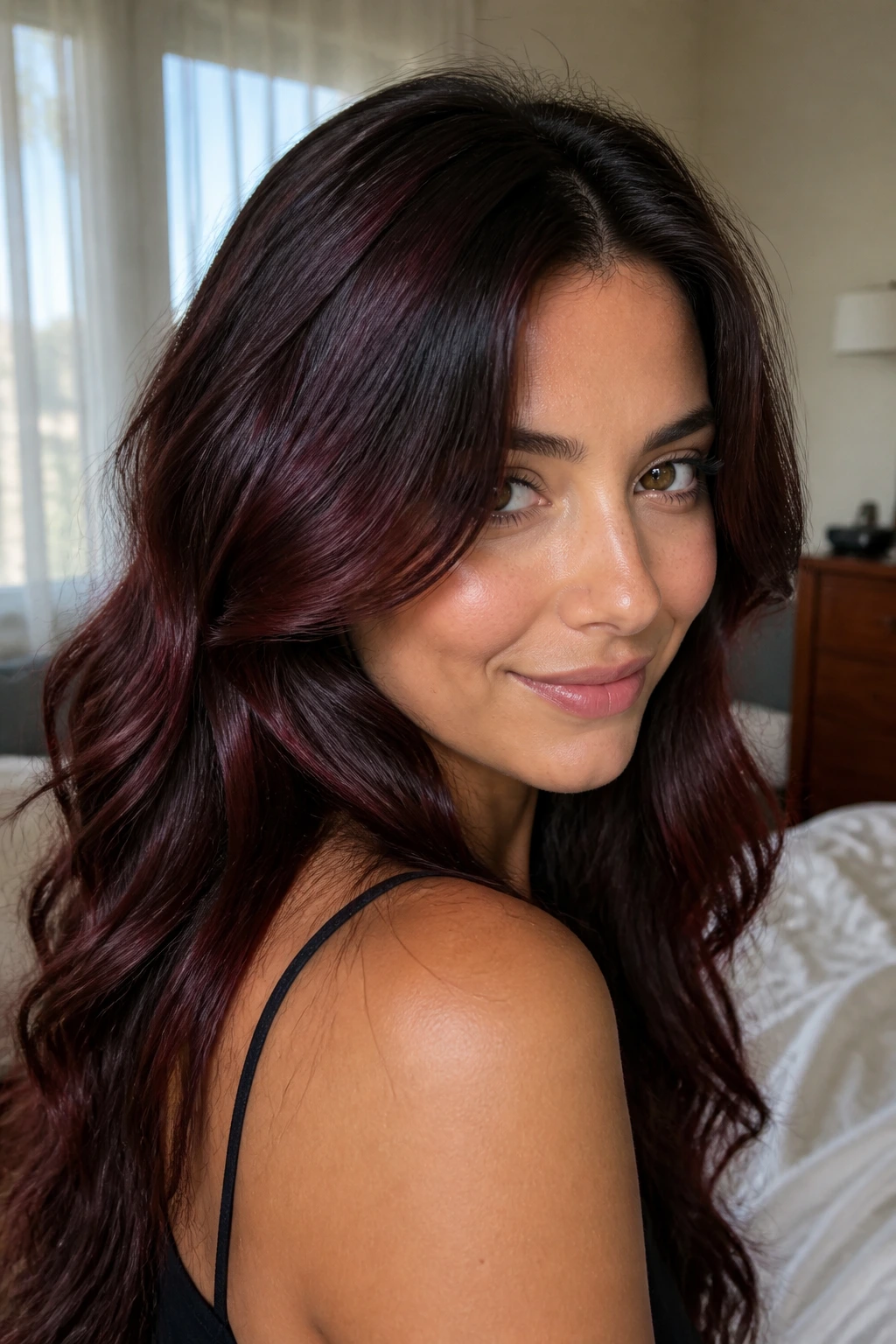
A garnet gloss on dark hair is one of the most elegant red moves you can make. It doesn’t fight the base. It enhances it. On dark brown or black-brown hair, a garnet gloss gives the surface a red wine cast that only appears when the light hits it just right.
The appeal here is restraint. You don’t need visible highlights for the color to matter. The gloss adds depth and a subtle shift in tone, which makes the hair look healthier and more polished. It’s the kind of change people notice without always being able to name.
This is a strong pick if your hair is already healthy and you want something low-key. A gloss-only approach is also easier to live with between appointments. It can be refreshed without changing the structure of the hair, which is a nice thing to say about any color plan that doesn’t involve a lot of damage.
30. Tangerine Copper Crop
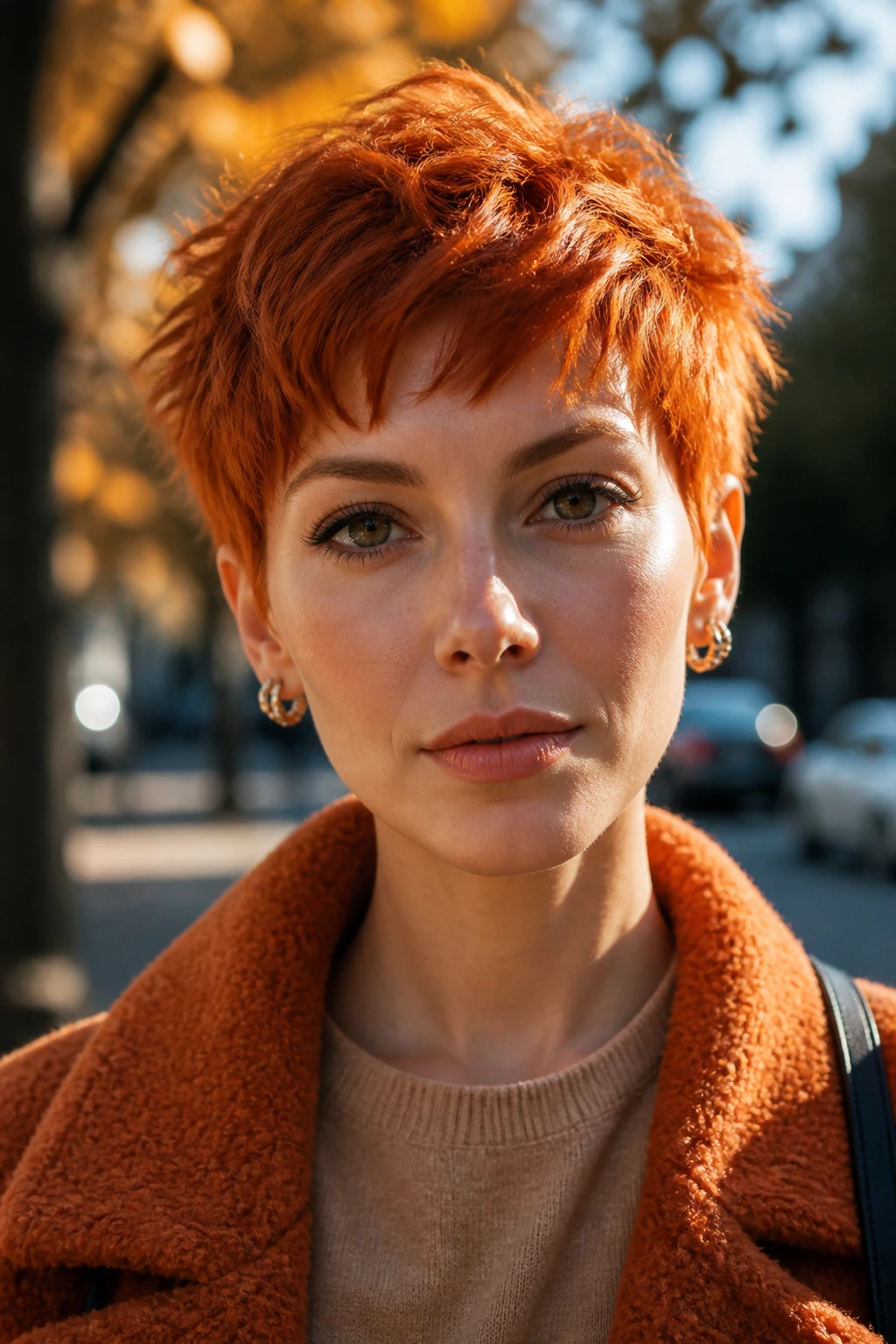
A tangerine copper crop is bright, punchy, and not shy. The color leans more orange-copper than deep red, which means it has a sharper, fresher look on short hair. Cropped cuts can handle that energy because there’s no extra length to dilute it.
This shade works best when the haircut stays clean around the ears and neckline. That keeps the brightness from feeling messy. If the cut has a little texture on top, even better — the tangerine tone can catch in the separated pieces and look more dynamic.
You do need to like attention for this one. It’s not a background color. If you want your hair to do the talking the minute you walk in, though, this is a strong, memorable choice that still feels autumnal when paired with deeper brows and neutral makeup.
31. Soft Auburn Balayage on Black Hair
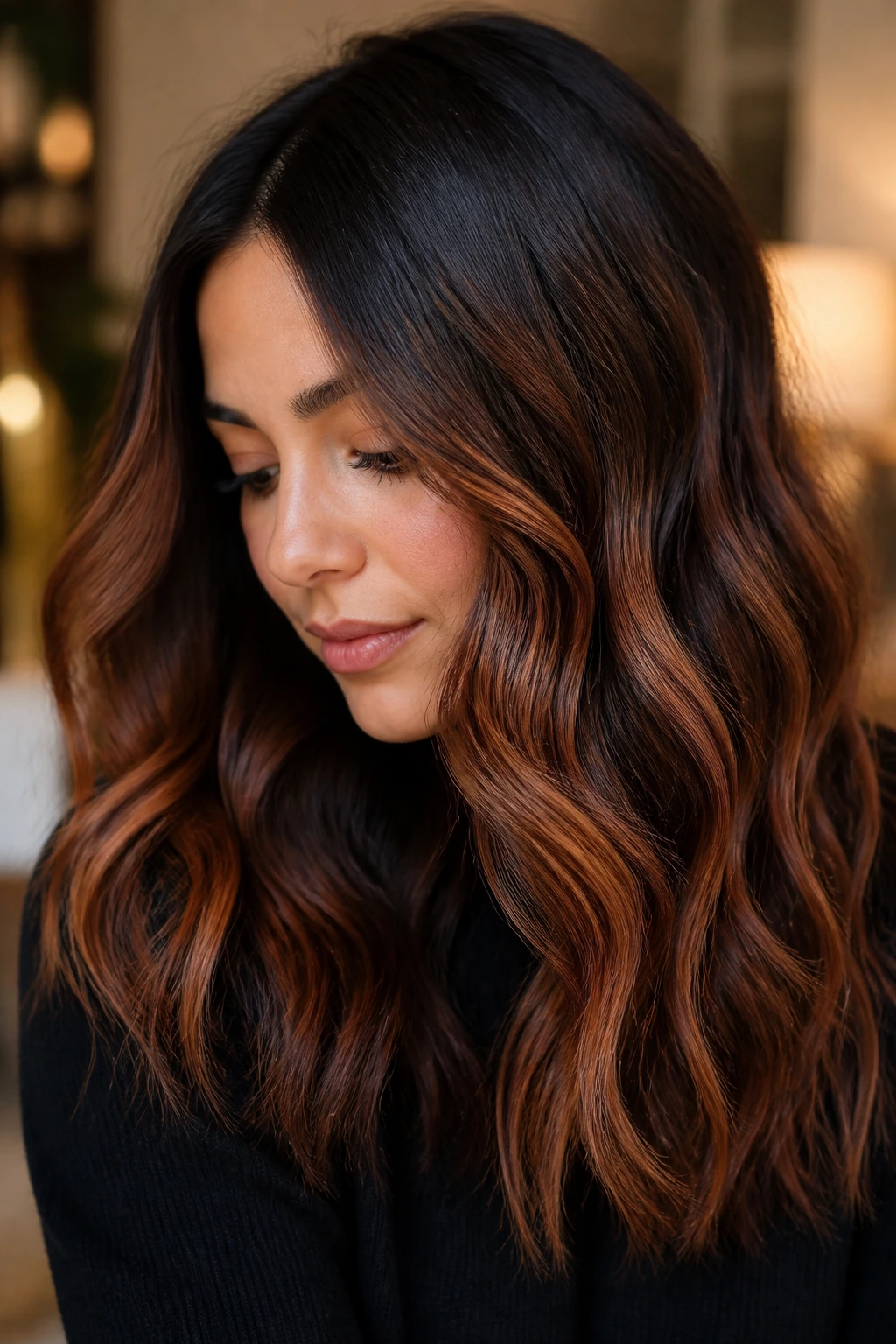
Soft auburn balayage on black hair is proof that red doesn’t have to be loud to matter. The auburn pieces sit on top of the dark base in a way that gives the hair warmth, movement, and a faint red shimmer. In low light, it can look nearly black. In sunlight, the auburn wakes up.
The placement has to be careful here. Too much lightening can make black hair lose its depth, and then the whole look starts to feel disconnected. Soft balayage keeps the base strong while adding warmth where the eye naturally lands.
This style is especially useful if you want red hair for fall but need the grow-out to stay discreet. The darker root already does half the work. A subtle auburn paint-through gives you dimension without forcing a full color change.
32. Dimensional Red Money Piece and Lowlights
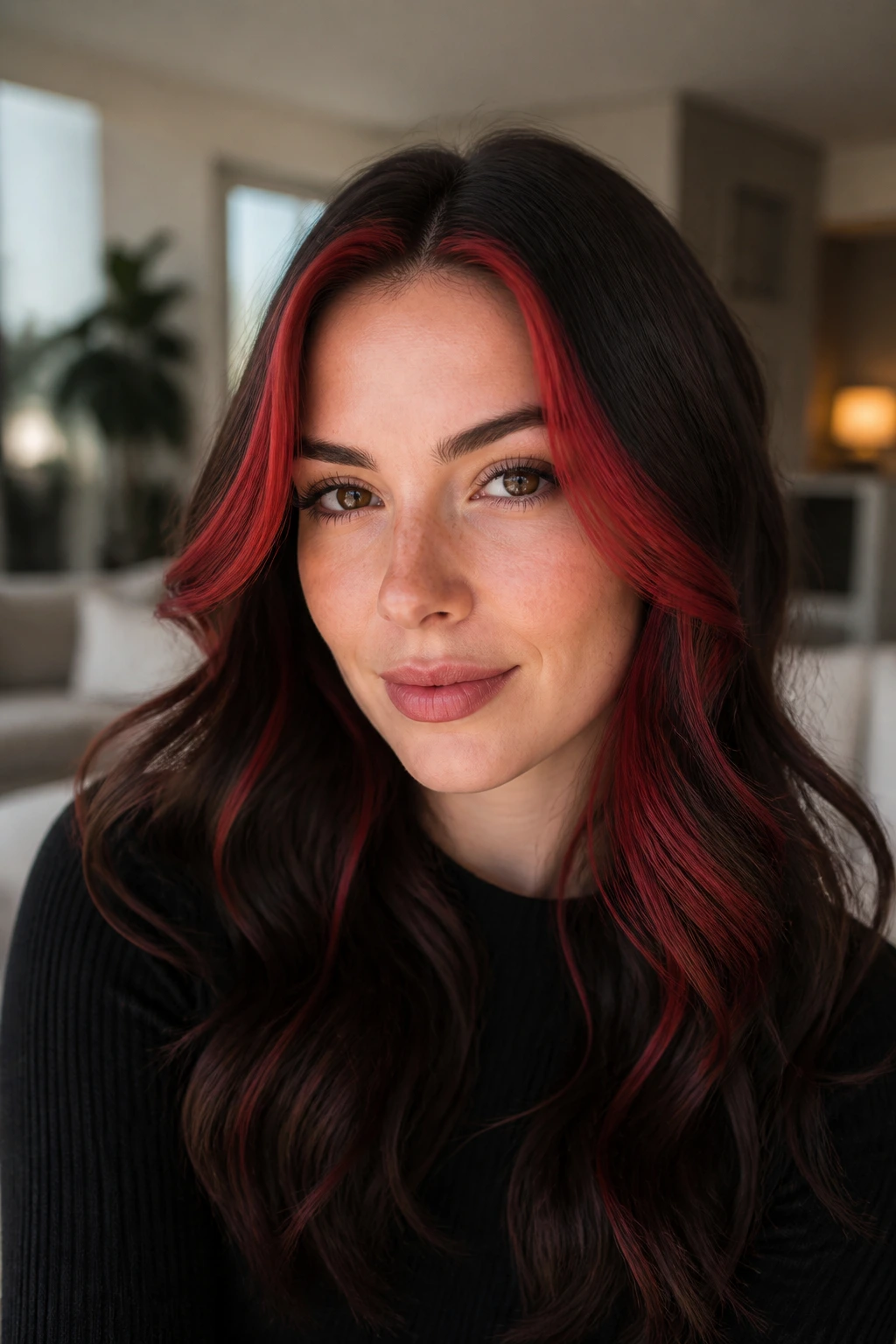
Dimensional red with a money piece and lowlights is the smartest “more is more” look in the bunch, because the contrast is doing the heavy lifting. The bright red money piece around the face pulls attention forward, while deeper lowlights through the rest of the hair keep it from turning flat or too bright. That push-pull is what makes it look expensive.
How it reads in real life
The front pieces create a quick hit of color, then the lowlights give the rest of the hair somewhere to fall back. On waves, this placement is especially strong because the red pieces separate and the darker sections add depth between them. On straight hair, it looks sharper and more graphic.
Who it suits
If you like red but want dimension instead of a single blanket shade, this is the one to study. It works on long hair, mid-length cuts, and even thick bobs. The contrast can be dialed up or down, which makes it one of the most flexible red placements in the whole collection.
Why Red Hair Feels So Right Against Fall Wardrobes
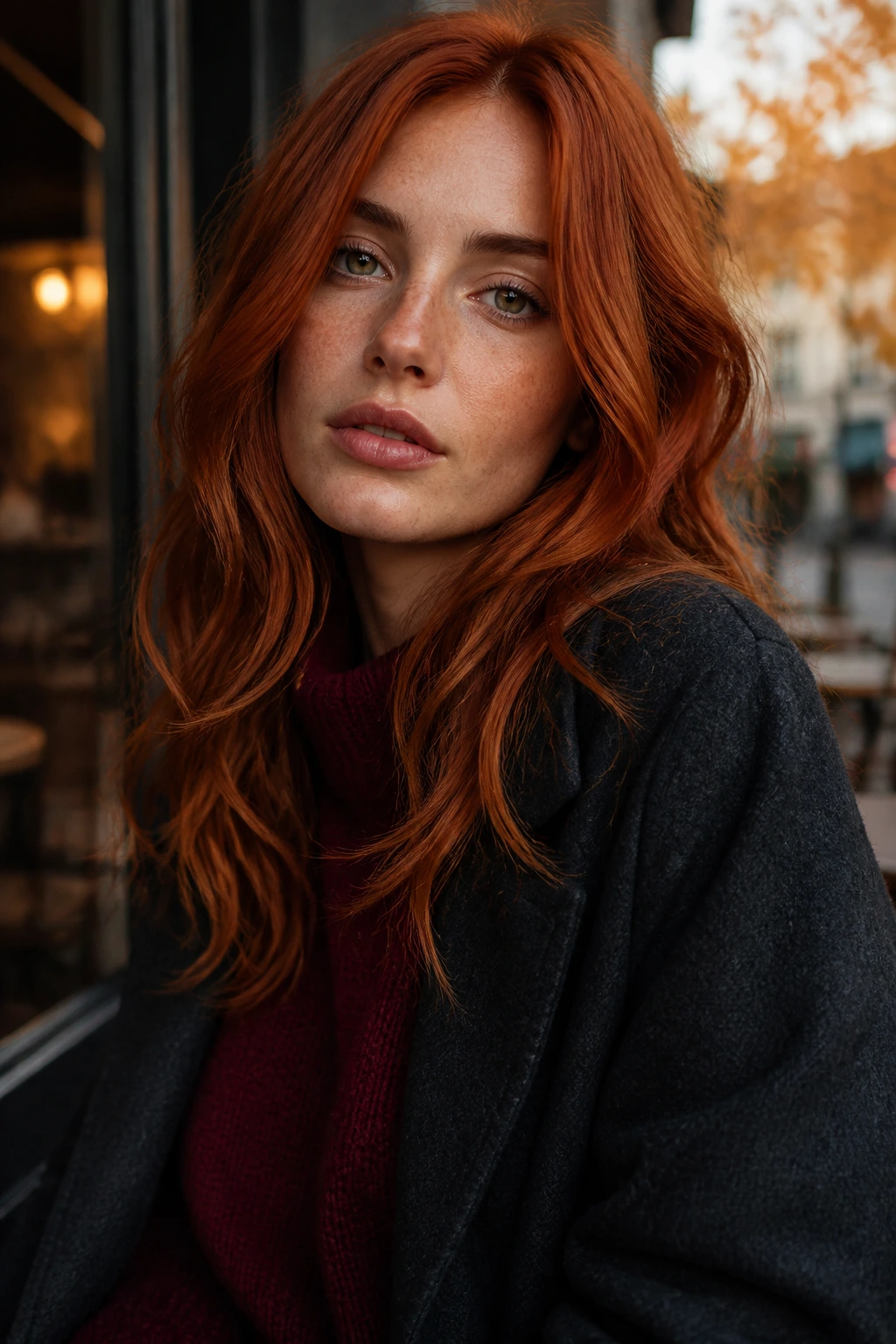
Red hair and fall clothing get along because they share the same color story: depth, warmth, and texture. Cream knits make copper look brighter. Charcoal coats make cherry and burgundy read richer. Denim keeps the whole thing from feeling too dressed up. It’s the easiest season for red hair to do its thing, because the clothes already lean into deeper tones.
There’s also a practical side to it. The lower, softer light of cooler months tends to make reds look less neon and more dimensional. A glossed auburn can read almost silky next to a wool scarf. A copper balayage can turn into a moving highlight pattern instead of one loud block of color. That’s why red hair often feels more convincing now than it does in harsh, flat light.
I like the pairing most when the hair and wardrobe don’t match too neatly. A rusty brunette against a clean white shirt. A burgundy bob with dark green knitwear. A copper pixie with black leather. The contrast makes the hair feel deliberate.
Picking the Right Red Undertone for Your Base Color
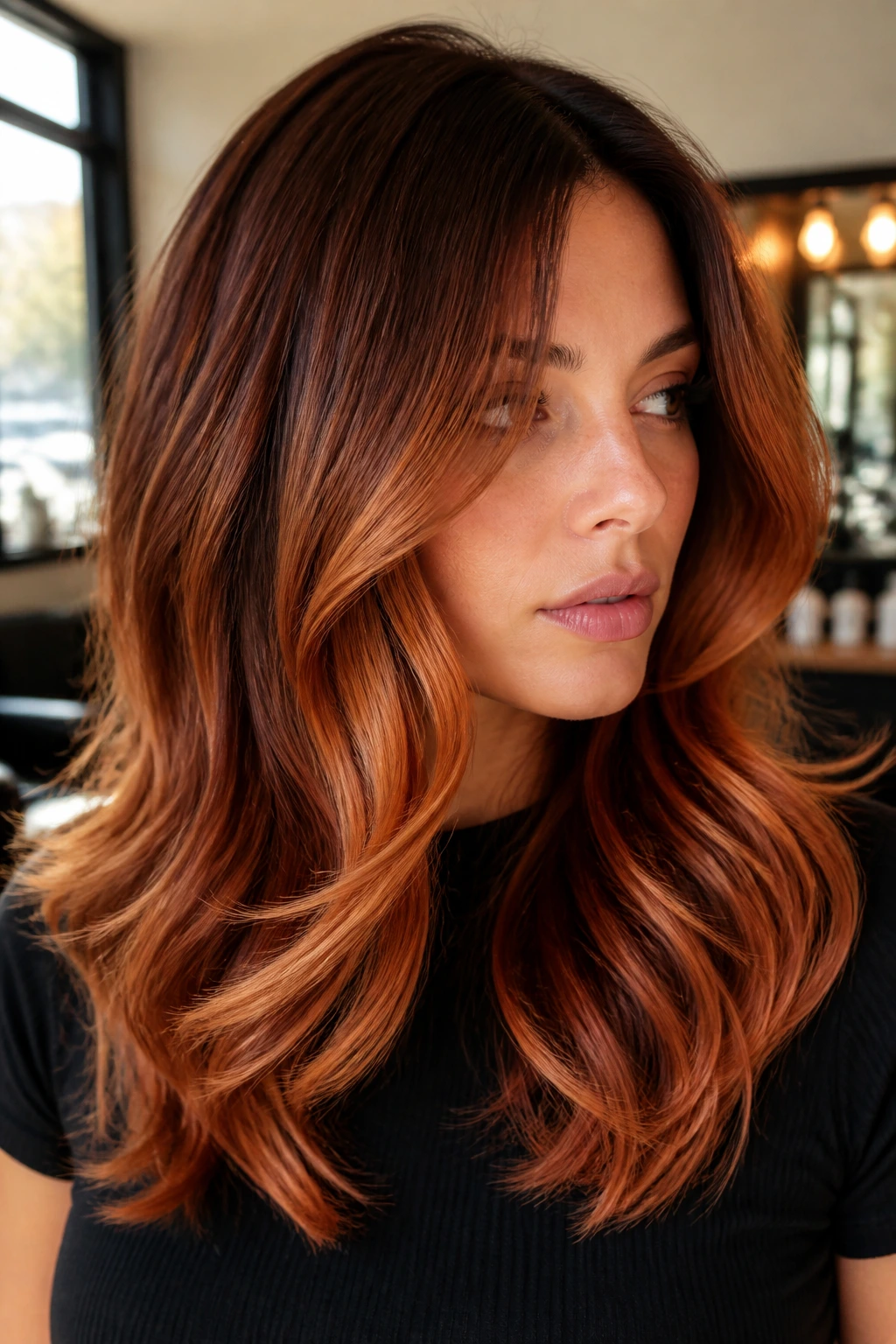
The first question to ask is not “What red do I like?” It’s “What red will stay visible on my hair?” That’s a different problem. Copper, auburn, cherry, burgundy, mahogany, and rust all behave differently depending on your base level and how much lift your hair can tolerate.
If your hair is dark brown, deeper reds — mahogany, bordeaux, merlot, garnet — usually read better than bright copper. If you’re starting from medium brown or dark blonde, cinnamon, auburn, and rust can show more clearly without fighting the base. Very light hair can hold strawberry, pumpkin, and copper pieces with less effort, but it also fades faster, so maintenance matters more.
Skin tone matters too, but not in a rigid way. Warm undertones often like copper, maple, and ginger. Cooler undertones can look striking with cherry, merlot, and burgundy. Neutral skin can wear almost any red, which is unfair but useful. The real trick is matching the color’s depth to your hair’s natural depth so the shade feels like a decision, not a patch job.
Tools, Brushes, and Color-Safe Products
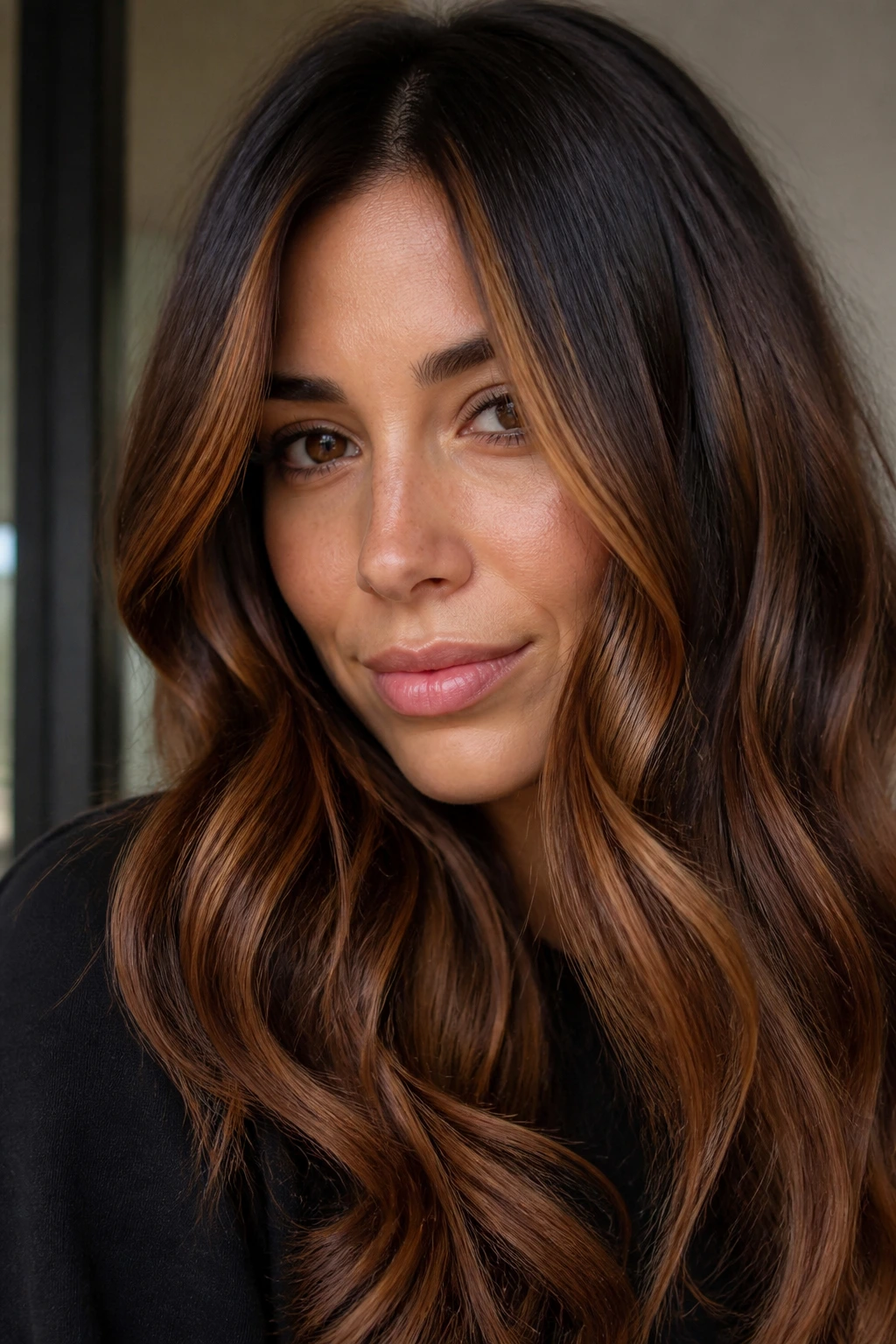
You do not need a giant bathroom shelf for red hair, but you do need a few things that keep the tone from fading into boredom.
- Color-safe shampoo: A sulfate-free formula helps slower fading on copper, auburn, and cherry tones, especially if you wash more than twice a week.
- Color-depositing conditioner or mask: Good for refreshing red between salon visits, especially on strawberry, copper, and burgundy shades that soften fast.
- Wide-tooth comb: Red hair often looks best with a little movement, and a wide-tooth comb keeps waves and curls from getting frizzed out.
- Heat protectant spray: Hot tools can dull glossed reds fast, so this is not optional if you blow-dry or curl often.
- Shine serum or lightweight oil: A tiny amount on the ends makes burgundy, mahogany, and cherry tones read richer.
- Color brush and bowl: Useful for root melts, gloss applications, or at-home touch-ups around the hairline.
- Sectioning clips: Especially handy for face-framing red placement, peekaboo panels, and balayage-style painting.
- Microfiber towel or soft T-shirt: Rough cotton can rough up the cuticle and make red look flatter after washing.
If you’re booking a salon service, bring a few reference photos with different lighting. One in daylight, one indoors, one with the hair worn straight or curly. That gives the colorist more to work from than a single filtered picture.
The Consultation Details That Save You From a Bad Red
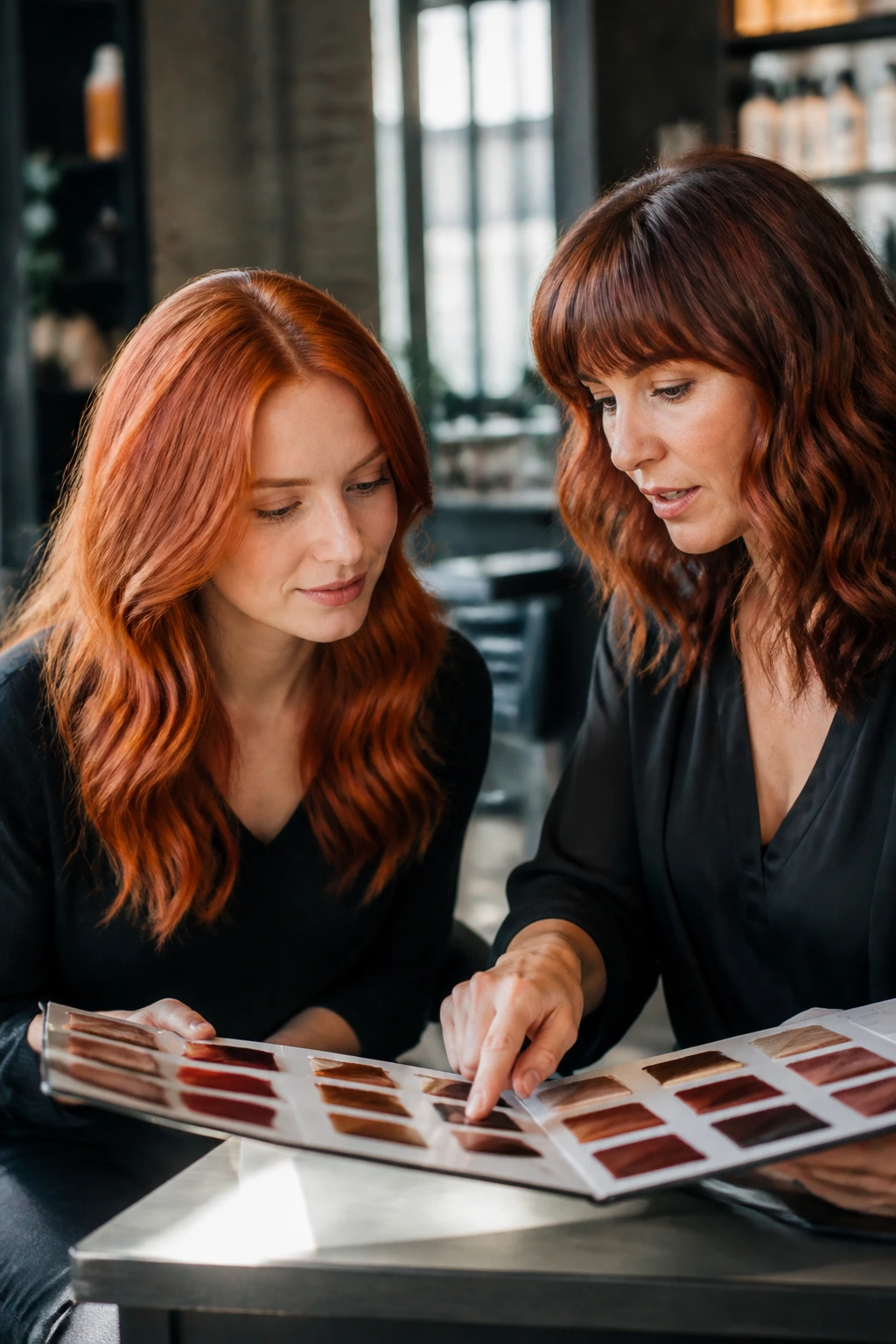
Red is not the color to wing. The consultation matters because the same shade name can land wildly differently depending on porosity, past dye history, and the level of lift already sitting in the hair. A copper gloss on healthy virgin brown hair is a different creature from copper placed over old box dye.
Start with the boring facts. Tell the colorist what’s on your hair now, what’s been on it before, how often you wash, and how much regrowth you can live with. If the ends are porous, they may grab red faster and look darker. If the roots resist color, the first inch can come out cooler or duller than expected. That kind of thing matters.
Ask whether the look should be a permanent color, demi-permanent glaze, highlights, balayage, or a root-melt plus gloss. Those are not interchangeable. A gloss gives softness and shine. A permanent formula gives staying power. Balayage gives movement. If you skip that conversation, the result can miss the mark even if the color itself is pretty.
How to Style Red Hair So the Shade Shows Up
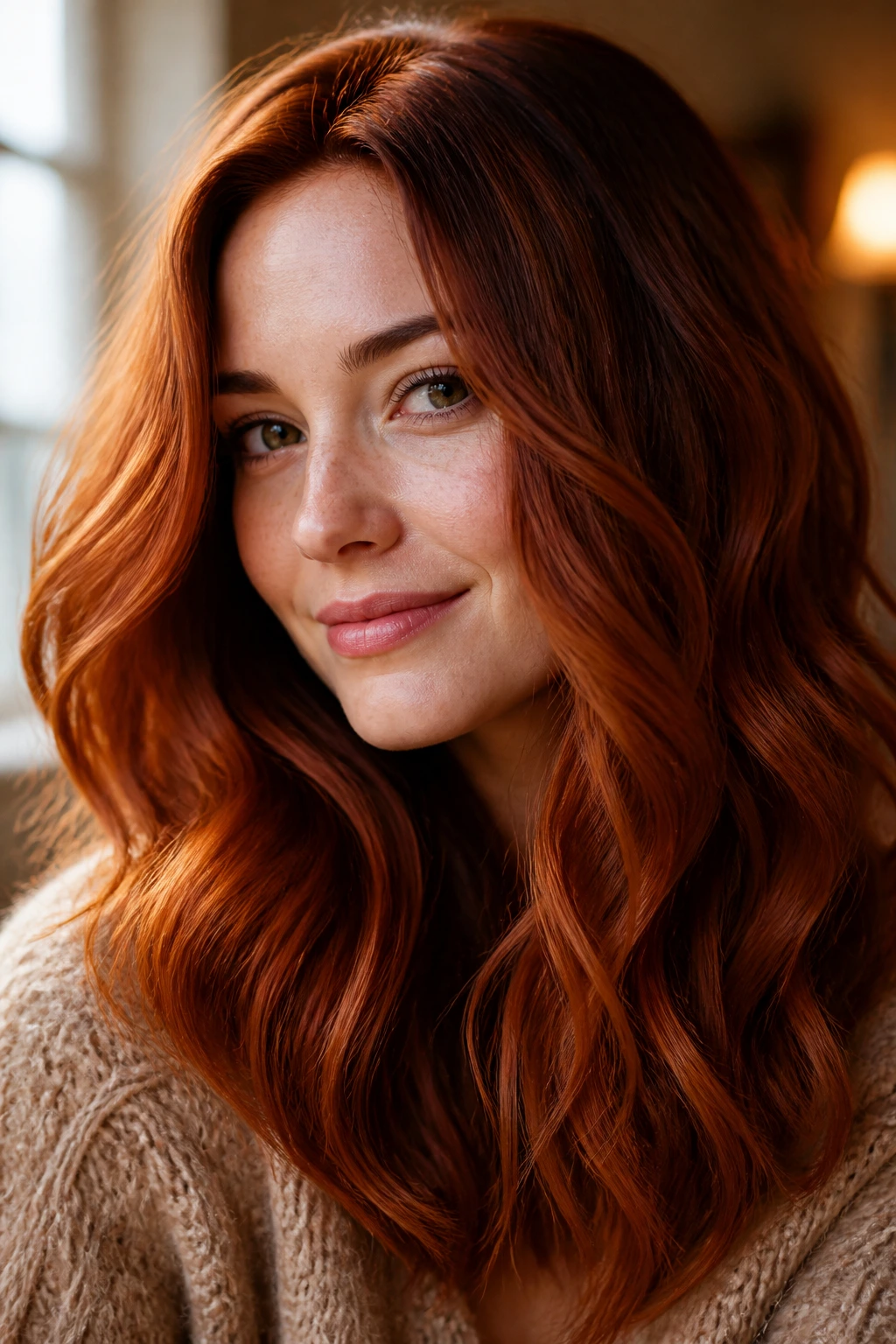
Red hair can look flat if the styling is too stiff. The shade usually reads best when the hair has some bend, some lift, or at least enough shine to let the pigment catch. That’s why loose waves, blown-out ends, and softly separated curls do so much work for copper, auburn, and cherry tones.
Try not to over-layer heavy products. A thick cream or too much oil can dull the red and make it look darker than it is. A light mousse at the roots, a heat protectant through the mids, and a touch of serum on the ends usually does more than a shelf full of styling goo. Red needs light, not sludge.
Parting also changes the look. A middle part shows off symmetry and face-framing money pieces. A deep side part gives auburn and burgundy more drama. If you want the color to look expensive, keep the finish clean and let one or two pieces sit slightly out of place. Perfect hair can look oddly static with red. A little movement helps.
Keeping Red Pigment Fresh Between Appointments
Red fades. That’s the deal. The more vivid the red, the more attention it asks for. Copper and strawberry usually soften first, while burgundy, mahogany, and garnet can hang on a bit longer. Either way, the color stays better when you treat it like a delicate finish instead of a permanent tattoo.
Wash less often if you can. Two or three times a week is easier on red than daily washing, and cooler water helps the cuticle stay flatter so pigment doesn’t rush out. If your scalp gets oily fast, dry shampoo at the roots can buy you another day. Use one that doesn’t leave a gray cast on darker reds.
Glosses and color-depositing masks are your friends here. A quick pigment refresh every few weeks can keep the tone from sliding into dull brown or pale orange. If you swim, use a conditioner barrier first. If you heat style often, lower the temperature and keep the pass count down. Repeated heat is one of the fastest ways to turn a rich red into a tired one.
Small Tweaks That Change the Whole Look
A red shade does not need a full reinvention to feel personal. Sometimes the smartest change is placement. Move the color closer to the face and the whole style feels brighter. Keep it lower and it feels more subtle. Add lowlights, and the red suddenly looks fuller. Remove them, and the color gets cleaner and more graphic.
Flavor Enhancement: A clear gloss over copper or auburn can make the cuticle look smoother and the color read deeper, especially on mid-lengths that have been lightened more than once.
Customization: If you want less upkeep, keep the red in the front and on the top layer only. If you want more drama, push the red into the underlayers so it flashes when you move.
Serving Suggestions: Yes, I’m borrowing the phrase on purpose. The equivalent here is finishing touches: a side part, a soft wave, a berry lip, maybe a gold earring. Red hair rarely needs a lot, but it does like a little framing.
Mistakes That Make Red Hair Look Flat or Muddy
The first mistake is choosing a red that’s too bright for your base. On dark hair, neon copper without enough lift can disappear into brown-orange mush. On light hair, a weak burgundy can look dusty instead of rich. The fix is to match the depth of the red to the depth of the base, not the mood board in your phone.
The second mistake is skipping maintenance on porous ends. Red grabs hard on damaged hair, so the ends can go dark, dry, or patchy while the roots still look fresh. A trim and a good conditioner are not glamour items, but they keep the color from falling apart.
The third mistake is treating every red the same in the shower. Hot water, harsh shampoo, and daily washing are hard on copper and strawberry shades in a way that a deeper merlot can sometimes survive. Use cooler water, stretch washes when you can, and assume the color needs a little help. It does.
The fourth mistake is using too much purple shampoo on a warm red. That product can cool the tone down so much that copper starts looking dead. Unless you’re deliberately trying to mute brass in a very specific way, reach for color-safe red care instead.
Variations and Adaptations to Try
Gloss-Only Red: If you want the least commitment, choose a sheer red gloss over your existing base. It adds tone and shine without changing your hair’s structure much, which makes it a smart first step for cautious clients.
Curly-Friendly Placement: For curls, ask for color painted on the outside of the curl pattern and the frame pieces near the face. That keeps the red visible when the hair shrinks and bounces.
Gray-Blending Red: Red can blend gray in a softer, more forgiving way than some brown formulas. A translucent auburn or copper glaze lets gray mix into the color instead of staring back at you in hard contrast.
Bold Vivid Red: If you want scarlet or tangerine, keep the rest of the look simple. Strong brows, clean haircuts, and minimal conflicting tones in the wardrobe make the color feel deliberate instead of chaotic.
Soft Brunette Red: For anyone who wants to stay close to brown, look at mahogany, rust, bordeaux, or garnet. These shades give you red’s warmth without a loud shift in identity.
Frequently Asked Questions About Red Hair Looks for Fall
How do I know if I should choose copper, auburn, or burgundy?
Copper is the brightest and warmest of the three, auburn sits in the middle, and burgundy leans cooler and deeper. If your base is dark and you want a noticeable change, copper or auburn on selected pieces works well; if you want depth and shine more than brightness, burgundy is the safer bet.
Will red hair fade faster than brown hair?
Usually, yes. Red pigments tend to wash out or soften sooner, especially when the shade is light or vivid, so glosses and color-safe care matter more than they do with plain brunette color.
Can I wear red hair if I have dark brown or black hair?
Absolutely, but the red has to be chosen with the base in mind. Dark hair takes deep reds like garnet, merlot, mahogany, and bordeaux more easily than bright copper, unless you’re willing to lighten first.
What if I only want a temporary change?
A gloss, semi-permanent color, or color-depositing mask can give you a red tone without a long-term commitment. These are especially useful for copper, cherry, or auburn if you want to test the waters before booking a bigger service.
Do red highlights work on curly hair?
They can look excellent on curls, as long as the placement respects the curl pattern. The color should be painted where the curls will actually show it, not just where the hair lies flat when wet.
How often do I need to refresh a red gloss?
A lot depends on how porous your hair is and how often you wash it, but many people need a refresh every 4 to 6 weeks to keep the tone crisp. If the color starts looking copper-brown instead of copper-red, that’s your cue.
Is red hard to maintain at the root?
It can be if you go all-over vivid, but root shadows, balayage, and money pieces make maintenance easier. The more of your natural depth you keep, the less obvious regrowth becomes.
What’s the safest way to go red after box dye?
A strand test first. Box dye can leave uneven pigment that changes how red takes, so a colorist needs to know what’s already in the hair before they choose a formula or lightening plan.
Red That Lasts
The nicest thing about red hair is that it doesn’t need to be loud to be memorable. A well-placed copper piece, a dark cherry gloss, a soft auburn melt — all of them change the shape of a face and the feel of a haircut before anyone can explain why.
If you want the color to work hard for you, start with the base you actually have, not the one in the photo you saved. That one detail keeps the shade wearable, and wearable red is the whole point. The right version will still look like a decision three weeks later, which is more than can be said for a lot of hair color ideas.
