



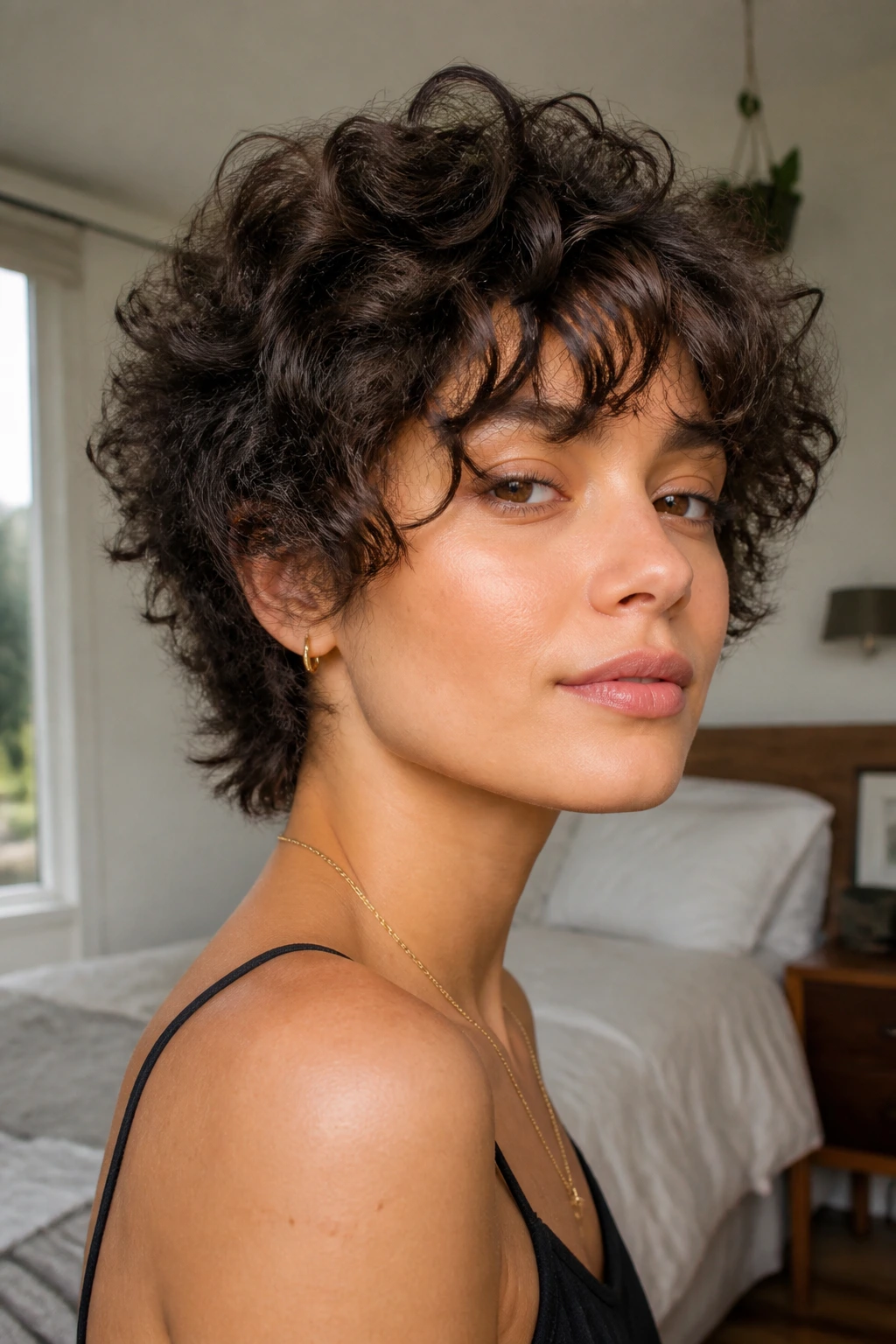
Short shag haircuts for curly hair work best when the cut respects the curl instead of trying to bully it into a blunt shape. A curl that looks neat in the chair can spring up, widen, and flip once it dries, so the real trick is shaping the hair around where it wants to live — not where it looks most obedient.
That’s why a good curly shag feels a little airy at the crown, a little broken up around the face, and a little heavier at the perimeter than you might expect. The layers aren’t there to make the hair look “messy.” They’re there to stop the outline from turning into a triangle or a helmet. Big difference.
And with shorter curls, every quarter inch matters. A neckline that’s too heavy can drag the whole cut down, while a fringe that’s cut too high can bounce straight up and leave you staring at your forehead. The styles below are built around those realities: shrinkage, density, face-framing, and the way curls behave once they’re out of the salon lights.
Why These 38 Cuts Stand Out
-
Shrinkage-Friendly Shape: These cuts are chosen because they still look deliberate after the curls dry and contract, which is where a lot of short styles fall apart.
-
Crown Lift Without the Triangle: The better versions keep volume at the top while controlling the sides, so the head reads as rounded instead of wide at the bottom.
-
Fringe Choices That Matter: You’ll see micro bangs, curtain bangs, side sweeps, and face-skimming pieces because the front of a curly cut changes the whole mood.
-
Grow-Out That Doesn’t Panic You: A smart short shag can soften for weeks without collapsing into a weird in-between shape.
-
Less Styling Tug-of-War: Some of these need a diffuser and a bit of mousse; others are happy with leave-in and air-drying. The cut decides how hard you have to work.
1. Soft Curly Pixie Shag
A soft curly pixie shag sits right on the edge between cropped and fluffy, which is exactly why it works. The crown stays a little longer, the sides are tucked in, and the nape gets cleaned up so the whole cut looks intentional instead of accidentally short. On fine curls, that extra lift at the top can make the hair feel twice as full.
Ask for this cut dry if your curls are unpredictable. Wet hair lies, and curls lie even better. A stylist who point-cuts the fringe and leaves a bit of length around the temples can keep the shape from turning into a helmet. It’s a strong choice if you want something light on the neck but still soft around the face.
2. Jawline Cloud Shag
Ever notice how some short cuts make curls puff outward at the jaw? This one avoids that by keeping the heaviest layers just below the cheekbone and letting the ends float around the jawline instead of sitting square on it. The effect is rounder, softer, and far less boxy.
It suits people who want movement without going full pixie. The cloud-like top gives lift, while the face-framing layers stop the shape from feeling severe. If your curls are medium density and you hate spending time with a round brush, this is a smart place to land.
3. Curly Wolf Crop
The curly wolf crop is for anyone who wants a little bite in the cut. It has that shaggy, slightly wild silhouette, but shorter curls make the shape less dramatic than on straight hair. The crown is lifted, the back is a touch longer, and the pieces around the face are deliberately uneven.
This cut thrives when the stylist removes bulk from the interior rather than hacking at the surface. That matters on curls. Too much surface thinning and you get frizz; too little and the shape sits heavy. If you like a cut that looks better the second day, this one tends to settle in nicely.
4. Rounded Taper Shag
A rounded taper shag is the polite cousin in the group. It keeps a soft curve around the head and narrows gently at the nape, which helps if your hair grows out like a little mushroom when it’s short. The layers are there, but they don’t scream for attention.
This is a good call for oval and heart-shaped faces, especially if you want shape control more than drama. A rounded taper also behaves well when your curls vary from day to day. Some pieces can be defined, others can go a little loose, and the cut still reads as finished.
5. Micro Fringe Shag
A micro fringe on curls is a bold move, so it helps when the rest of the cut is calm. The bangs sit high, usually above the brows, and the short layers around the crown keep the front from looking too heavy. On looser curls, it can feel playful. On tighter curls, it feels sharp.
The trick is to cut the fringe with shrinkage in mind. A micro bang that looks perfect wet can vanish once dry, and then you’re left with a surprise. I’d rather see it a little longer on day one. You can always trim it up later; you cannot glue it back.
6. Side-Swept Curly Shag
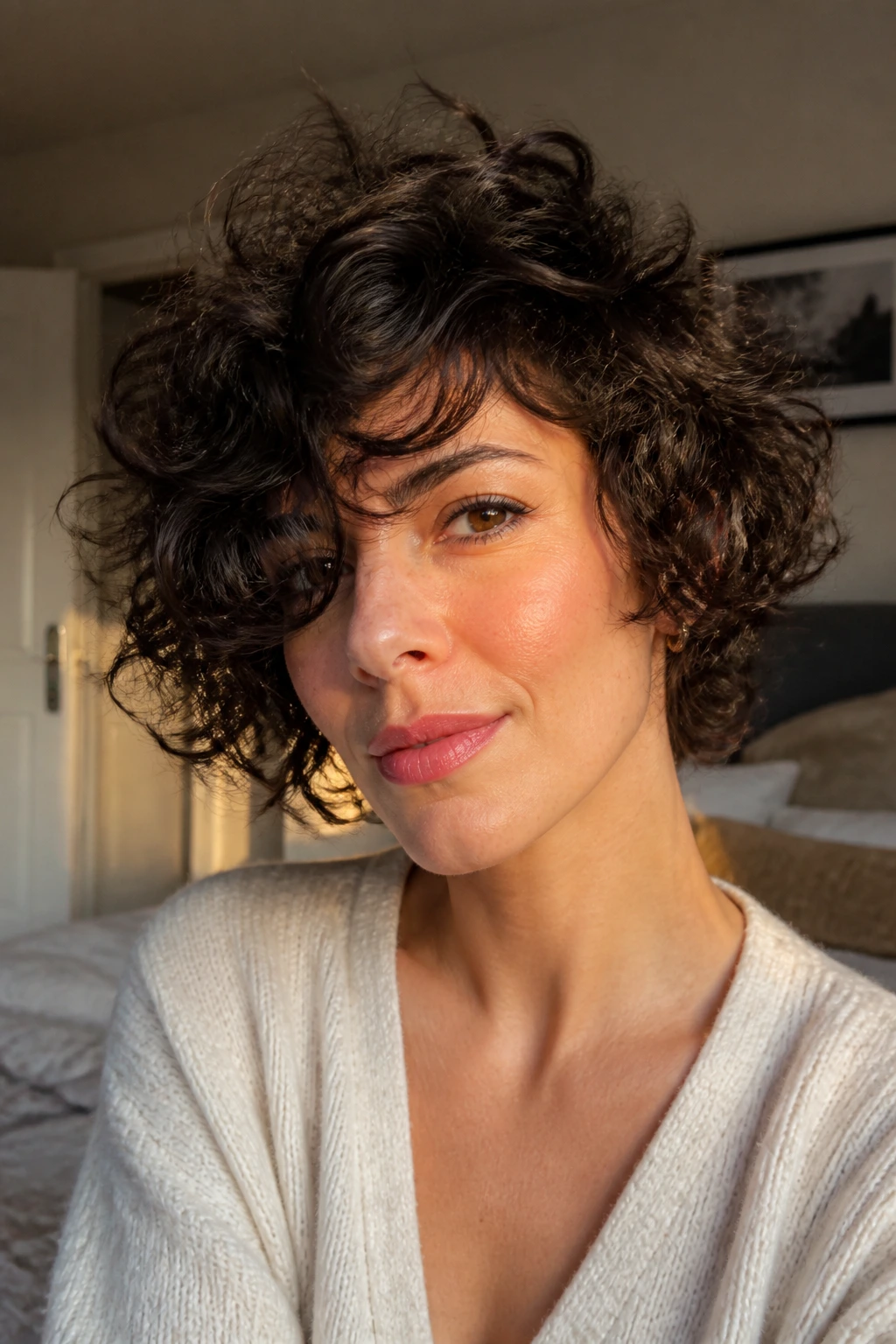
Side-swept pieces are a relief if you want fringe without the full maintenance of bangs. The front layers fall diagonally, which gives the haircut a softer line and makes the forehead feel less exposed. That also helps if one side of your curl pattern is stronger than the other.
Why the side sweep works
The diagonal line breaks up width at the temples and lets the curls settle where they want. It’s a good answer for round faces, broad foreheads, and anyone who hates having hair sitting straight across the brow. If your curl pattern twists differently from left to right, this cut can hide the asymmetry instead of fighting it.
7. Tapered Nape Shag
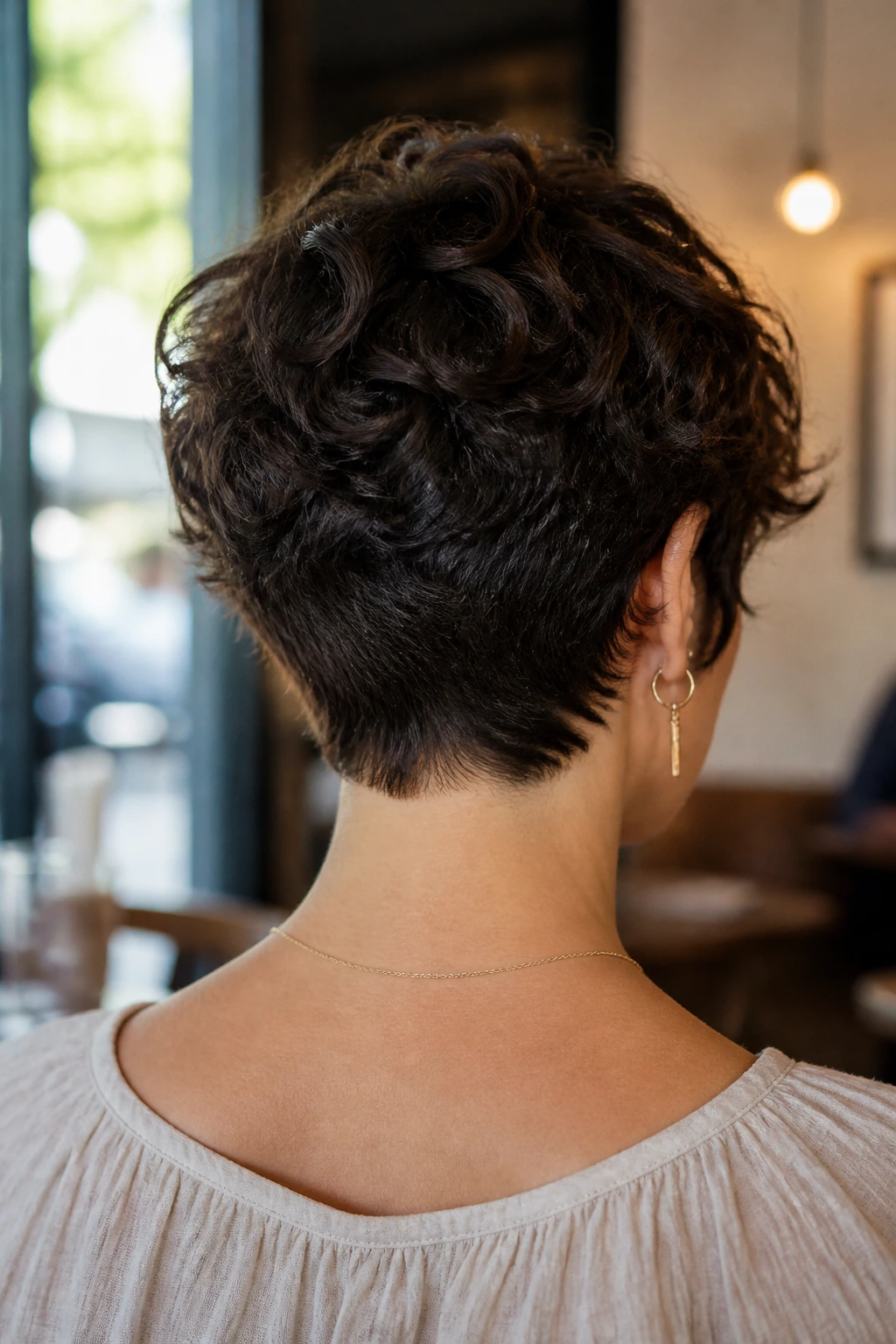
A tapered nape shag cleans up the back without flattening the rest of the hair. That little taper around the neckline makes the silhouette look sharper, especially if your curls tend to mushroom just above the collar. Up top, the layers stay loose and touchable.
It’s one of my favorite answers for thick hair that grows fast. You still get movement and shape, but the back doesn’t bunch into a fuzzy shelf. If you wear jackets, scarves, or high collars a lot, this is the sort of cut that keeps the nape from getting crushed and awkward.
8. Tousled Bob Shag

A tousled bob shag sits in that nice middle ground between a bob and a true shag. The perimeter stays bob-like, usually around the chin or a touch below, while the top and face layers get broken up for movement. That keeps the cut from feeling too formal.
It’s a strong choice if you want something short but not cropped. The bob base gives structure, and the shag layers stop the shape from going flat at the roots. On curls with a lot of bounce, this cut looks especially good when it’s air-dried and left a little piecey instead of overdone.
9. Cheekbone Frame Shag

The whole point of a cheekbone frame shag is where the shortest face-framing pieces land. They hit right where the cheekbone starts to push forward, which sharpens the face without making the ends look too choppy. It’s a small detail, but it changes the haircut.
This works beautifully on faces that need a little lift in the middle rather than more width at the jaw. The crown can stay moderate, the back can stay short, and the eye naturally goes to the cheek area. That makes the cut look sculpted, not random. The better the face frame, the less styling you need to do around it.
10. Airy Crown Shag
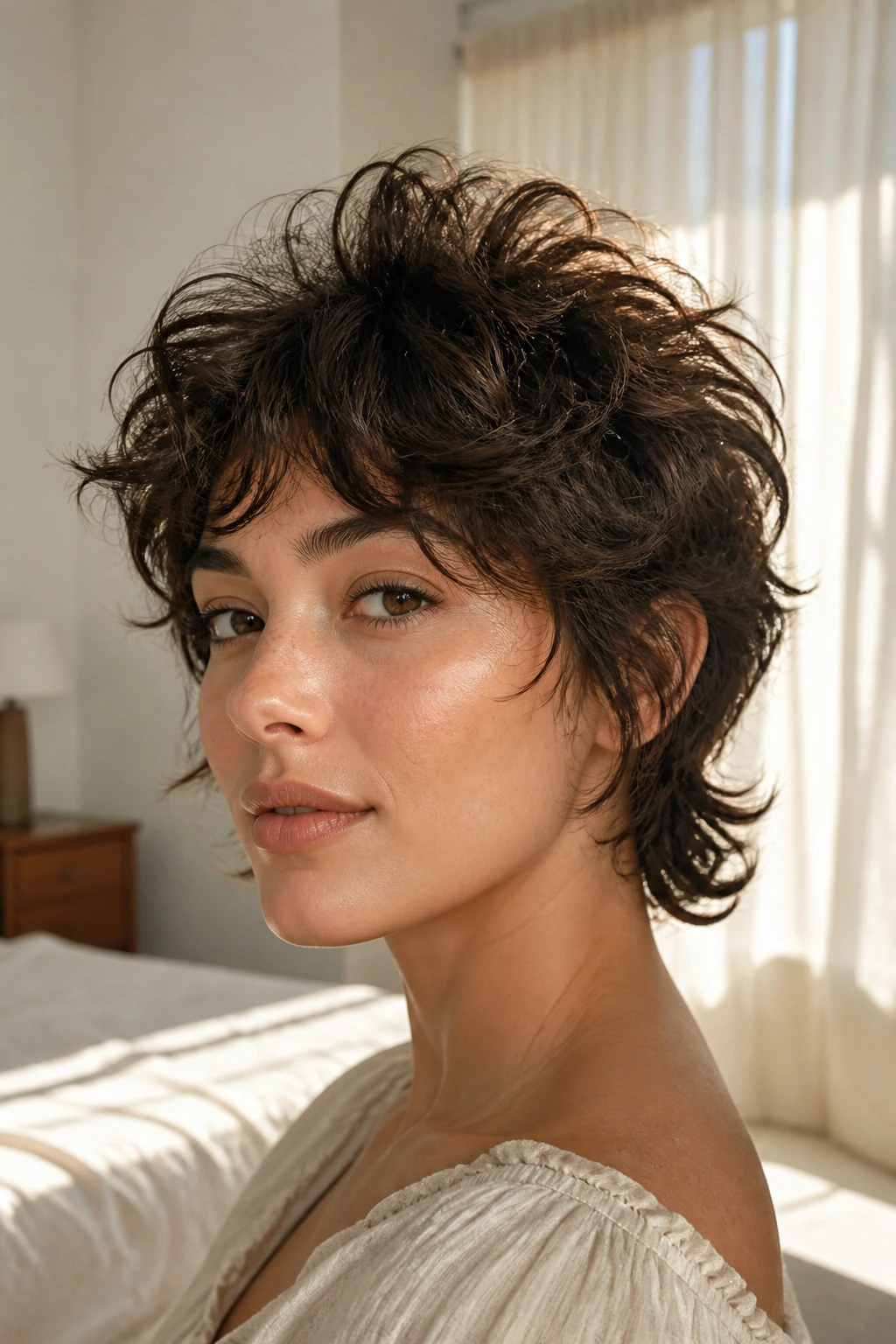
An airy crown shag is built for height. The weight gets removed high on the head, which lets the curls at the top spring up instead of collapsing under the rest of the cut. If your hair tends to lie flat at the roots and explode at the bottom, this is worth a serious look.
Best on dense crowns
Thick, dense curls often need the interior opened up more than the ends trimmed. That’s what gives the top room to move. A diffuser on low heat helps, but the shape starts with the cut. If the crown is too heavy, no amount of mousse will save it from slumping by lunchtime.
11. Curly Mixie Shag
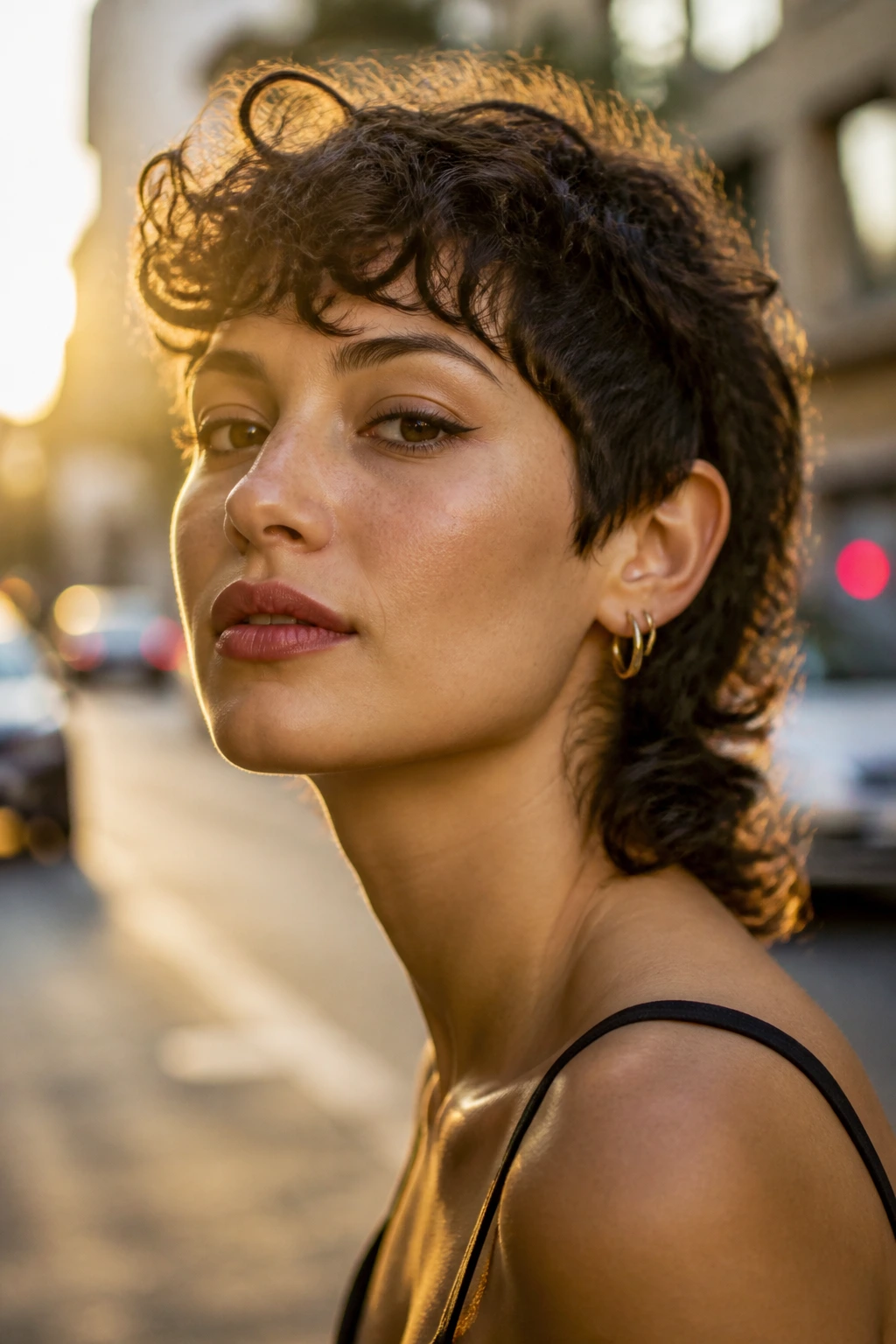
The mixie is the in-between cut that sits between a pixie and a mullet, and on curls it gets a little softer and less severe. The front stays short enough to keep the face open, while the back keeps enough length to give the cut a tail. It has attitude without looking carved.
This is a good pick if you like short hair but hate the idea of a uniform silhouette. The uneven balance lets curls stack in a way that feels modern without being fussy. Ask your stylist to keep the corners soft, not razor-thin, or the back can start looking too spiky.
12. Piecey Razored Shag
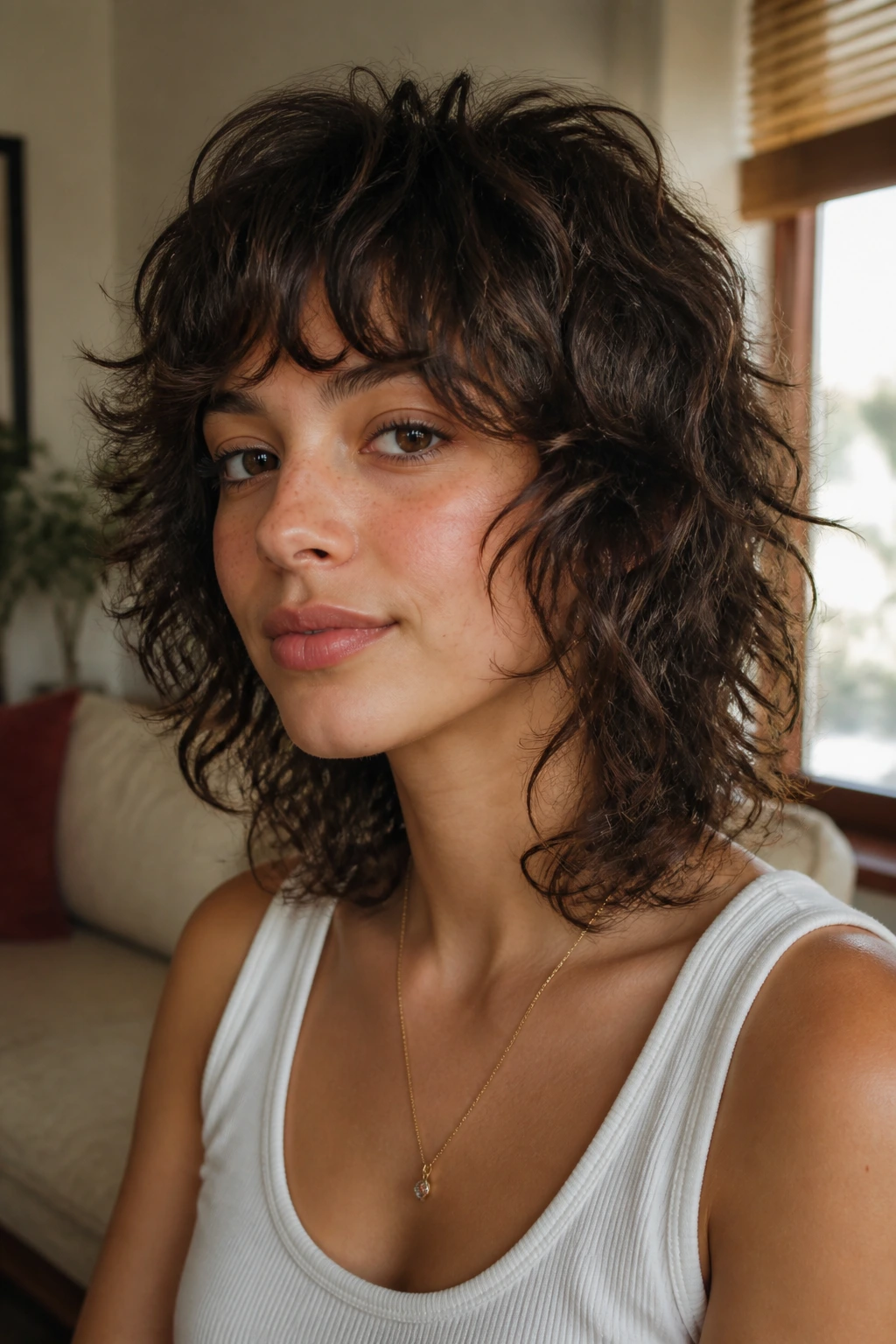
Piecey razored shag cuts rely on texture more than bulk removal, and they work best on curls that are loose enough to tolerate a razor. Think 2C to 3A territory, where the ends can be softened without turning fuzzy. The finish looks lightly separated rather than dense and round.
A stylist needs a steady hand here. Too much razor on tight curls and the ends can fray. Too little and you lose the airy look. If you like pieces that move around your face instead of one solid curtain of hair, this shape gives you that without needing a lot of daily fuss.
13. Grown-Out Mushroom Shag
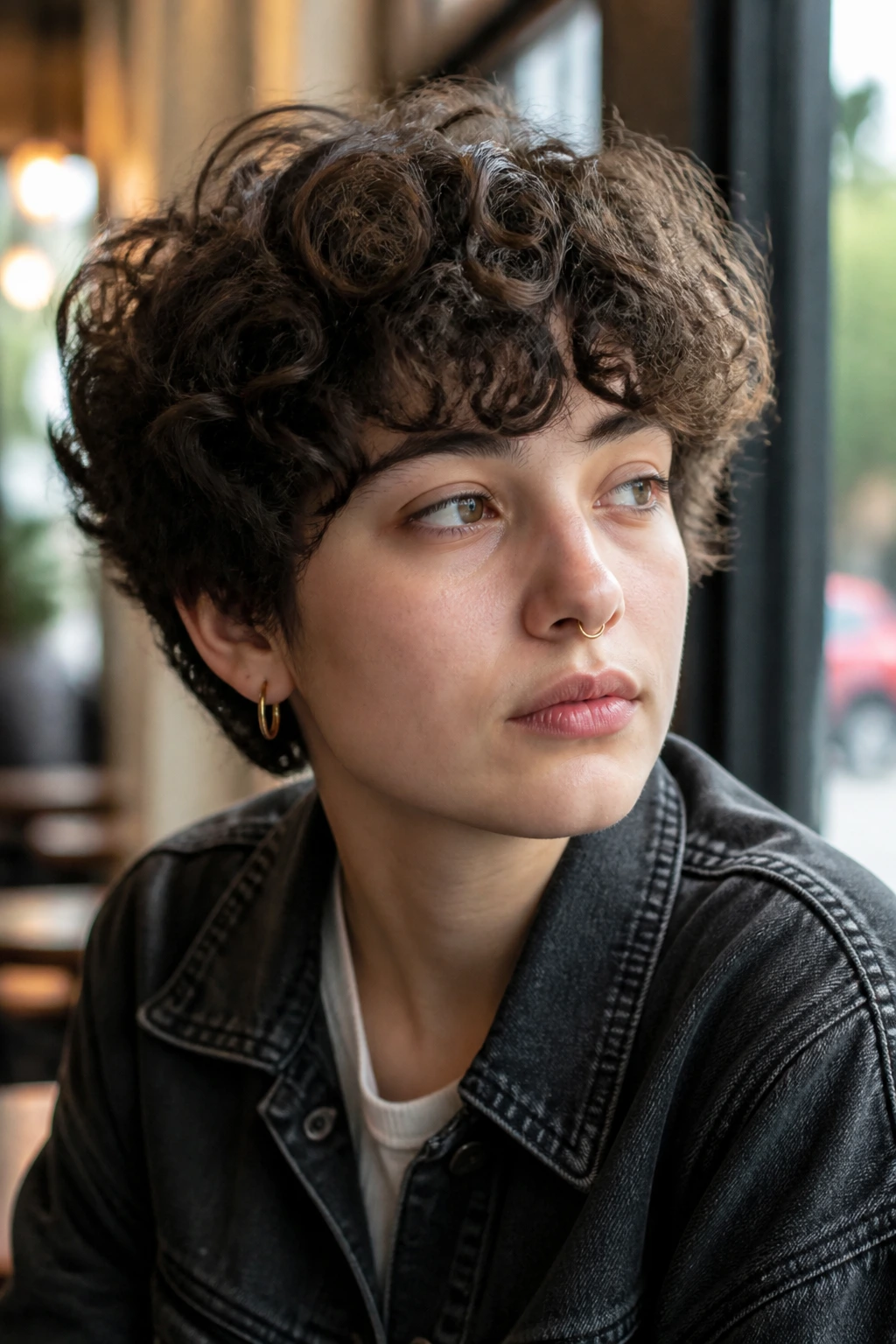
A grown-out mushroom shag sounds odd until you see the balance: rounded on top, shorter around the perimeter, and soft enough that it doesn’t look like a retro joke. On curly hair, the mushroom influence gets broken up by texture, which makes the shape feel more wearable.
This cut works best on hair with real density. Thin curls can lose too much presence at the sides and start looking wispy. Dense curls, though, can keep the cap shape full while the layers underneath stop the whole thing from sitting like a dome. It’s a little quirky, and that’s the charm.
14. Collarbone Fringe Shag
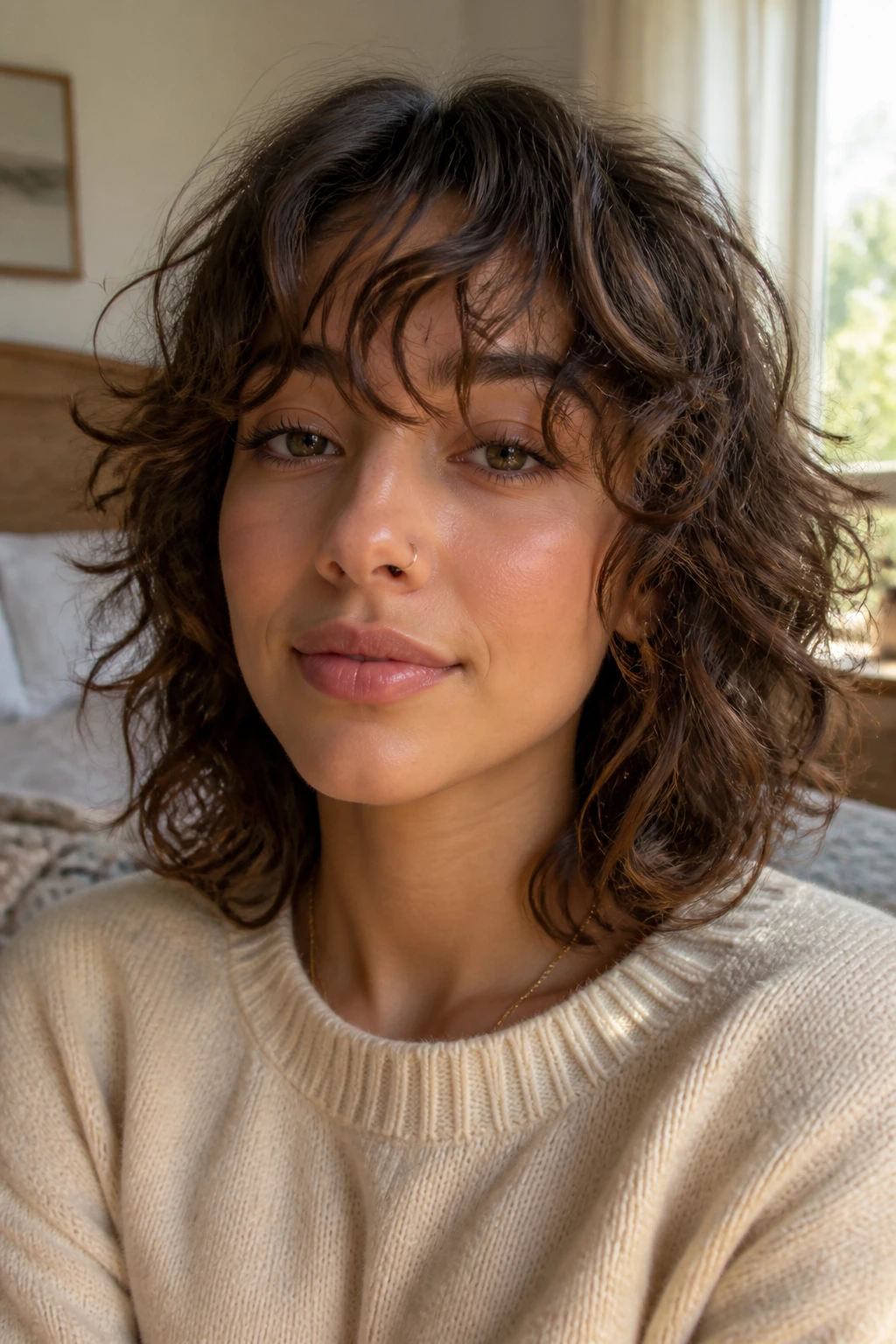
A collarbone fringe shag stretches the idea of “short” just enough to give you breathing room. The bulk of the hair sits at or above the collarbone, while the fringe or front layers do the heavy lifting around the face. That makes it a nice bridge cut if you’re nervous about going shorter.
The extra length also helps if your curls shrink a lot. You can keep some shoulder-skimming movement without losing the shag identity. It’s one of the more forgiving options on this list, especially if you want to test short layers before committing to a crop that exposes every edge.
15. Volumized Halo Shag
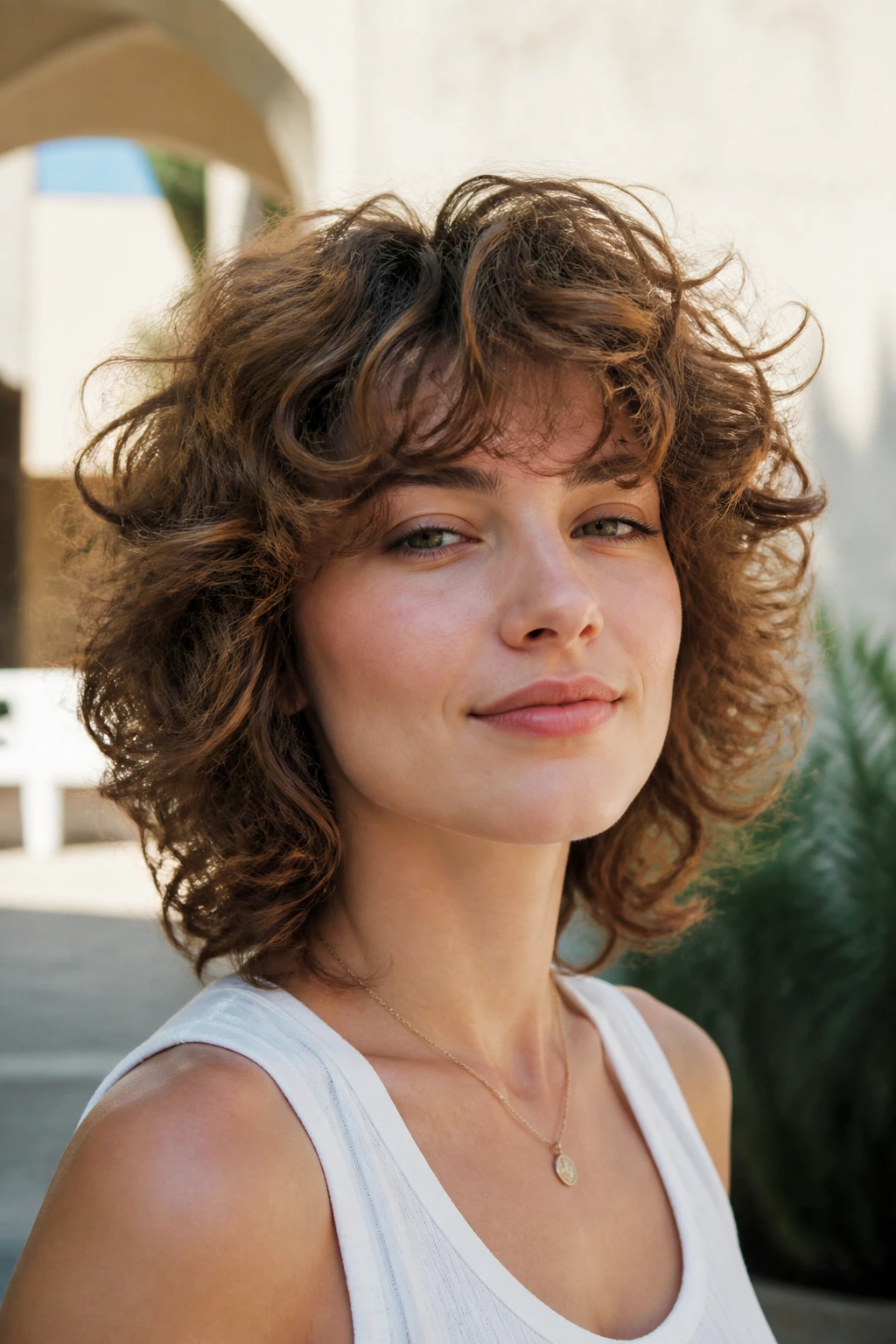
A volumized halo shag builds shape around the whole head instead of concentrating lift only at the crown. The result is a rounded, airy outline that feels balanced from every angle. It’s especially good when your curls are dense enough to hold shape but not so dense that they need aggressive thinning.
The cut reads almost soft and circular in profile, which is flattering if you want the hair to frame the face without hanging straight down. A little mousse at the roots helps, but the real story is the layer map. If the halo is too short, the cut puffs. If it’s too long, it collapses. That in-between is the sweet spot.
16. Curly French Shag
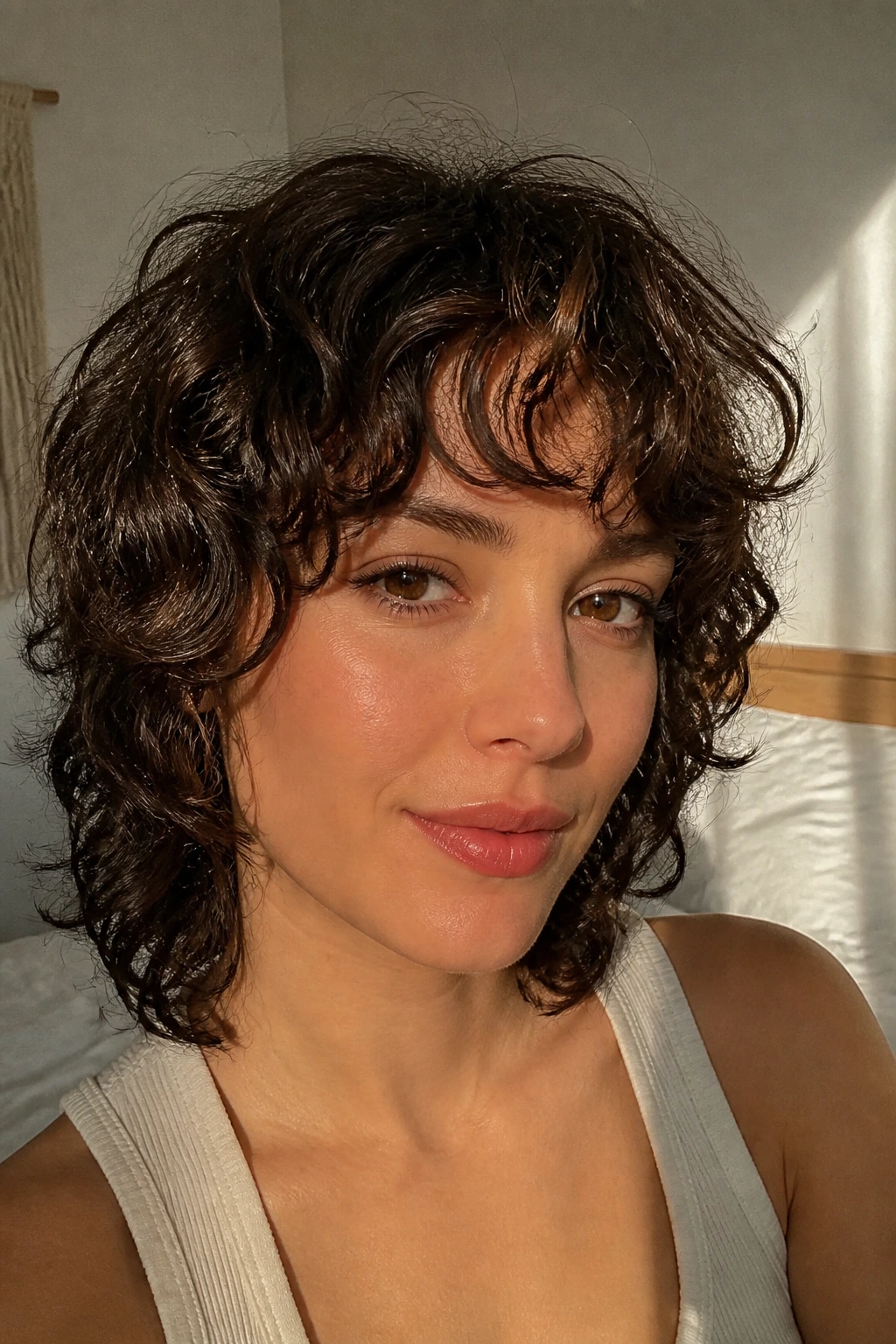
A curly French shag has that easy, slightly undone feel people usually want from French-inspired cuts, but the curl texture keeps it from looking overly polished. The fringe is often wispy or curtain-like, and the layers around the cheeks stay soft enough to move when you turn your head.
This cut is good if you like hair that looks better with a bit of softness at the ends. It doesn’t need to be perfectly defined. In fact, too much definition can make it feel stiff. A little mousse, a little air-drying, and a little mess around the edges is the right mood here.
17. Short Wolf Cut With Bangs
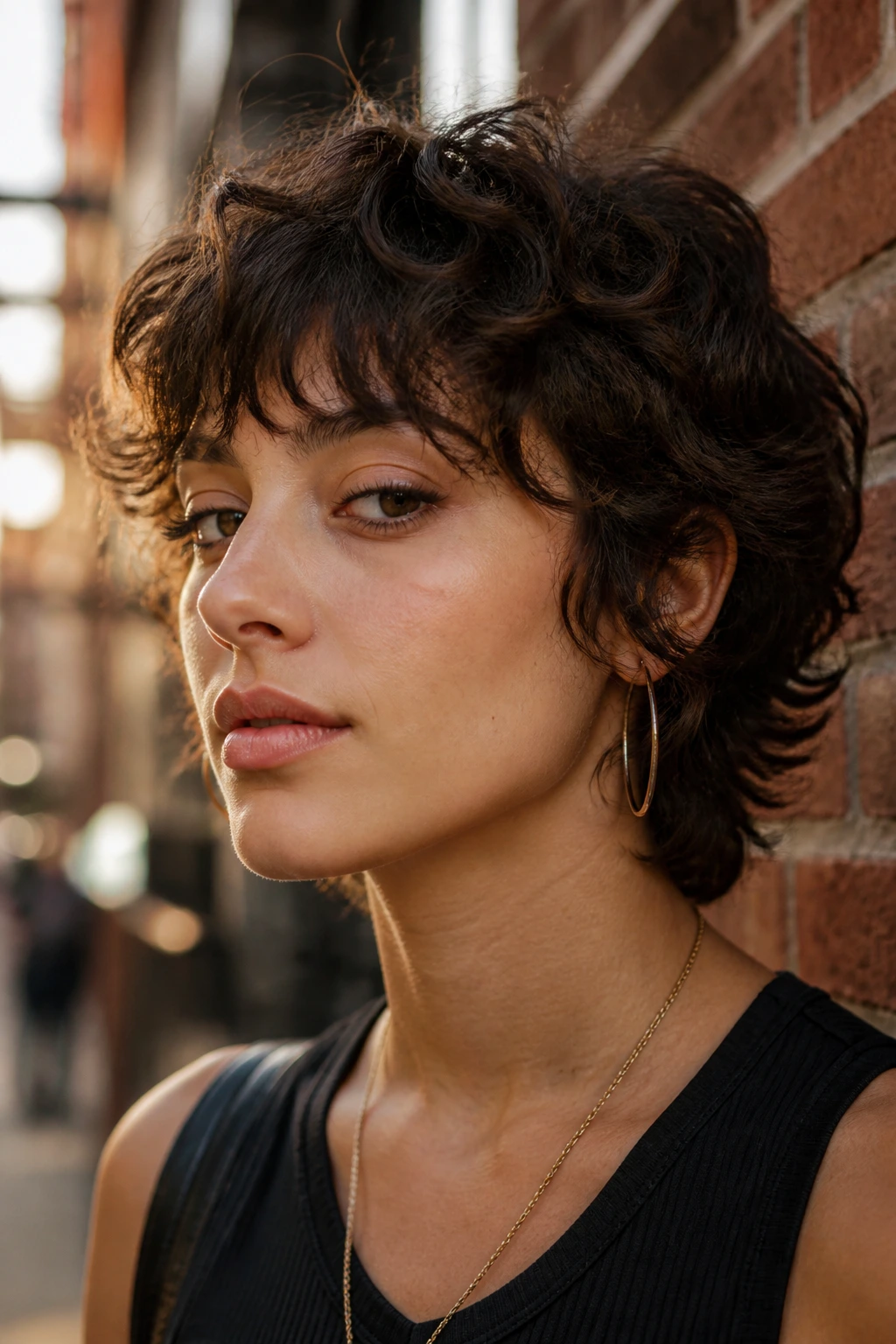
The short wolf cut with bangs leans harder into the shag side of the family. The crown is lifted, the back has a hint of length, and the bangs give the whole haircut a sharper front line. On curly hair, the contrast feels lively instead of severe.
Ask for the bangs to sit longer than you think. Curly bangs shrink, and a too-short fringe can jump up in a way that’s hard to soften. The cut looks best when the top has enough height to keep the bangs from stealing all the attention. Otherwise, the front can overpower the rest of the shape.
18. Curly Undercut Shag
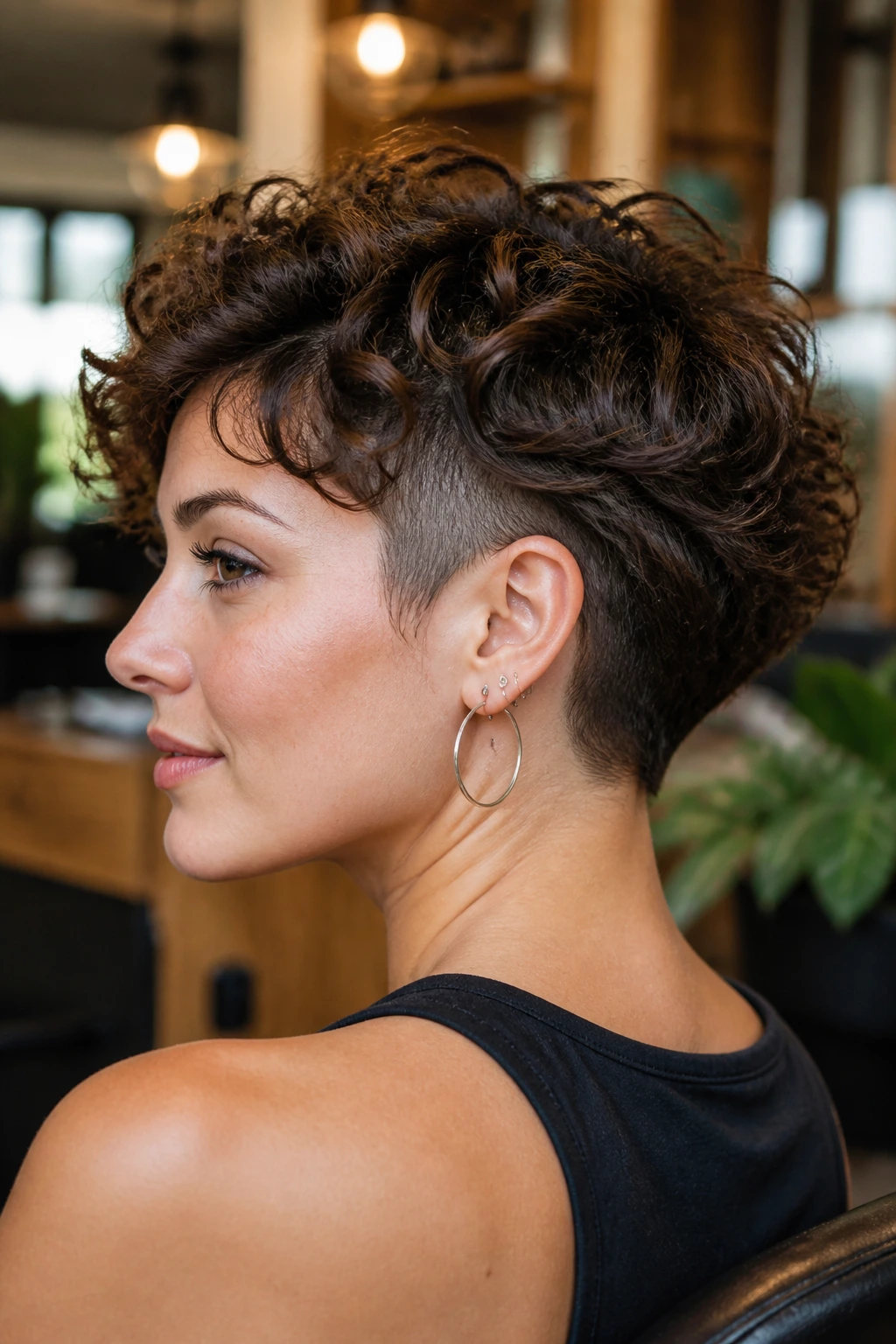
A curly undercut shag solves one of the biggest curly-hair problems: bulk in the wrong place. The undercut removes hidden weight around the lower back or sides, while the top layers keep the shaggy movement. That means the shape feels lighter without losing texture.
Ask for this if you want more air
This is the cut for people who heat up easily, wear scarves a lot, or simply hate that bulky feeling at the nape. It’s also useful if your curls are dense enough to swallow the shape of a regular shag. Just be honest with the stylist about how much contrast you want. A hidden undercut can be subtle or dramatic, and those are not the same haircut.
19. Chin-Length Spiral Shag
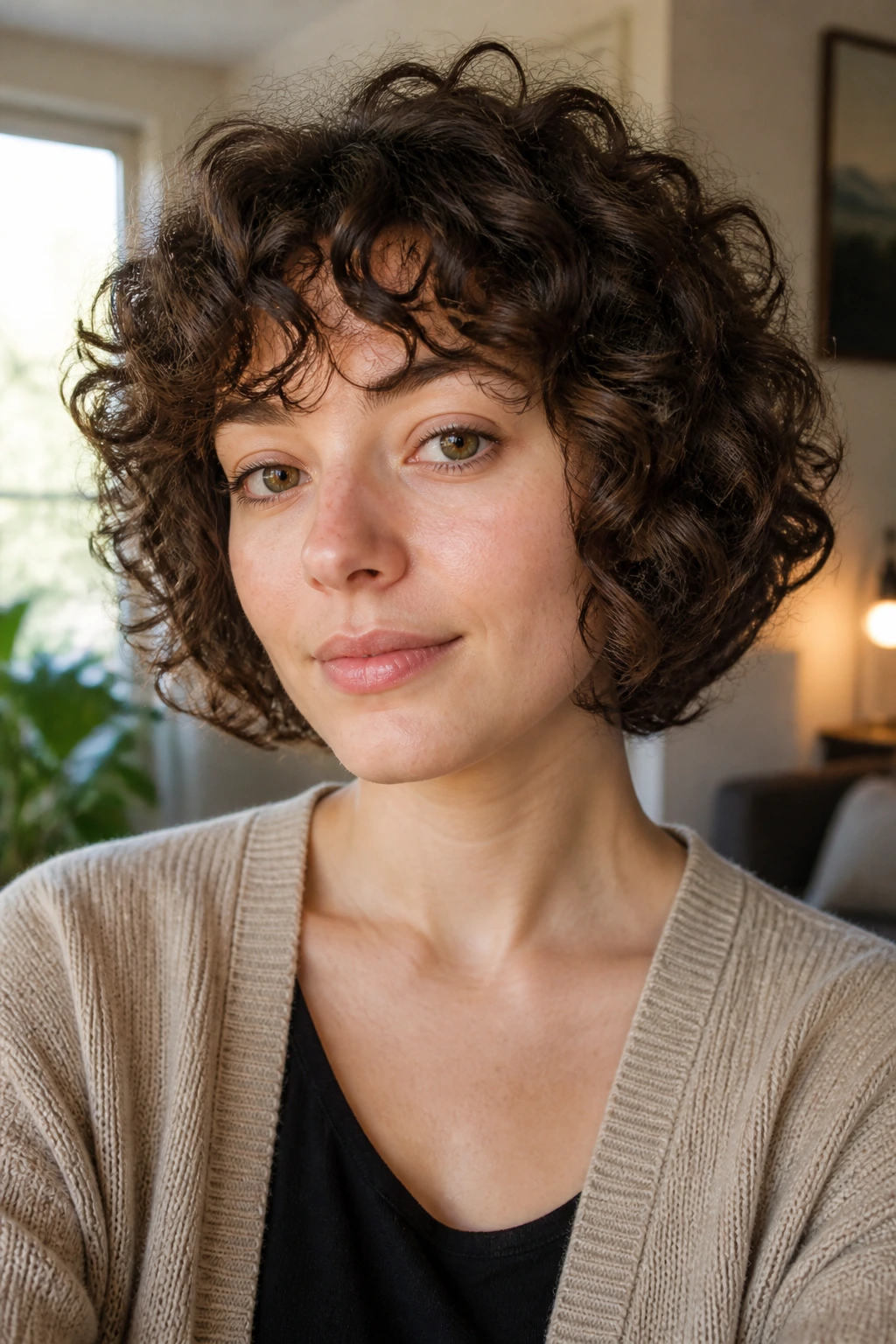
A chin-length spiral shag works best when your curls already form neat spirals and you want to show them off instead of stretching them out. The chin line gives the cut a clear boundary, and the layers break up the lower half so the shape doesn’t feel blocky.
This one is cleaner than some of the wilder shags. It still has movement, but the silhouette stays readable. If your curls cluster into little ringlets rather than loose waves, chin length is a sweet spot because the curls can sit on themselves without getting lost in too much length.
20. Square-Softening Shag
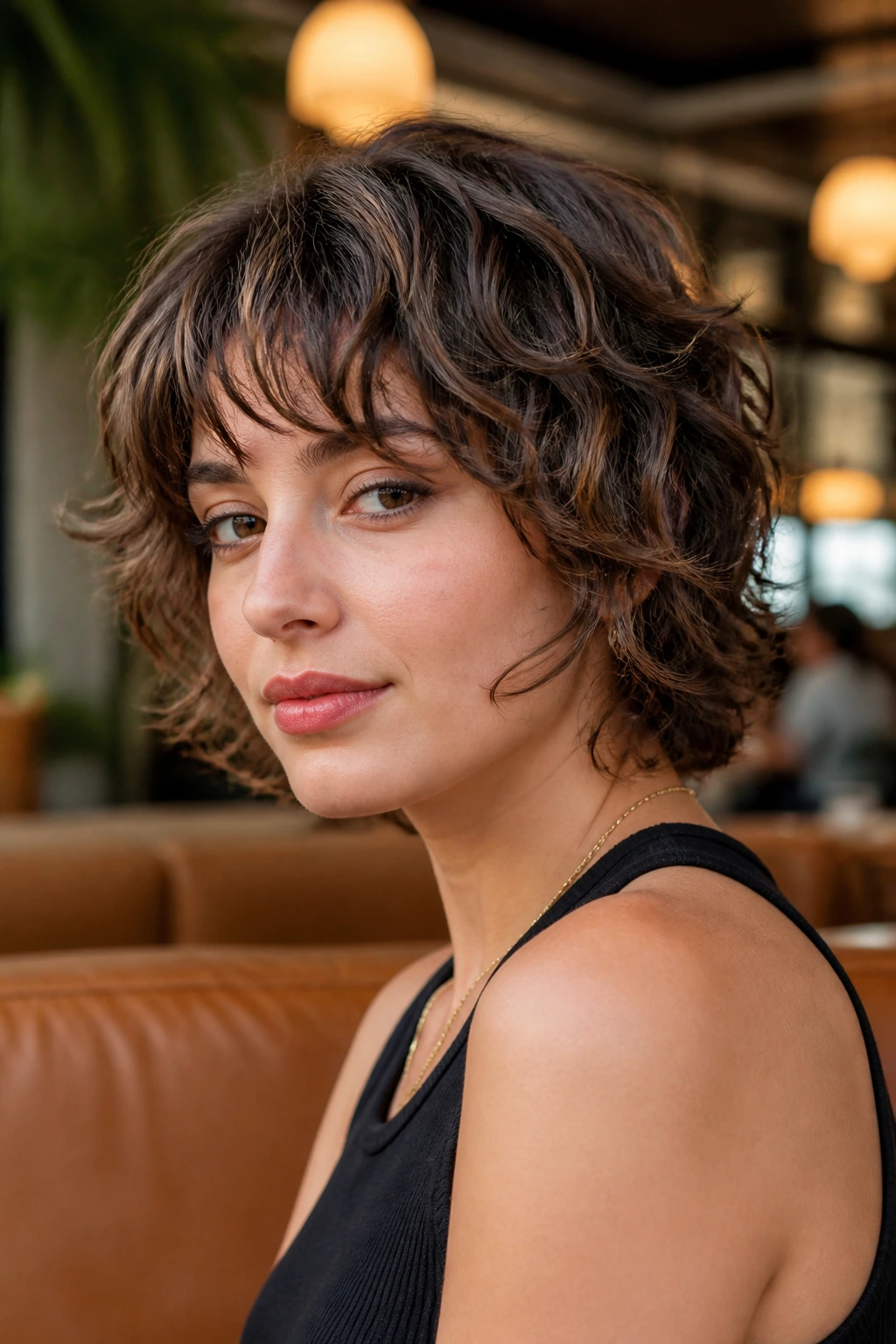
Square faces do well with a cut that takes the edge off the jaw, and that’s exactly what this shag does. The shortest pieces land above or below the widest part of the jawline, not right on it, so the face doesn’t look boxed in. The rest of the layers keep the hair moving.
The best versions use soft curves around the cheeks and a little lift at the crown. Straight-across lines are the enemy here. If you want the cut to feel flattering without turning into a face-hiding curtain, ask for broken-up layers that skim the face rather than stop dead at the jaw.
21. Botticelli Bob Shag
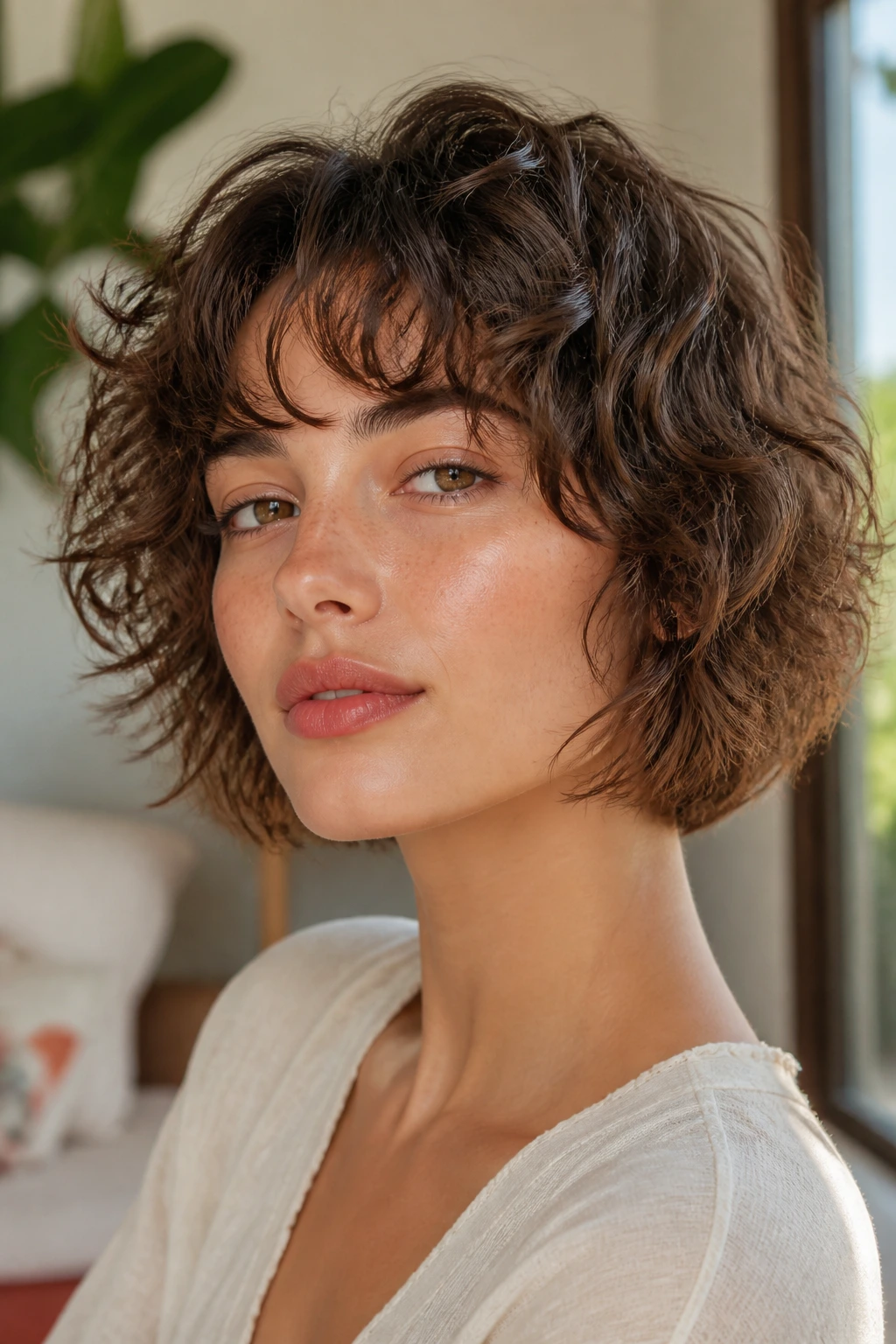
A Botticelli bob shag is softer and more romantic than the rougher shags on this list. It still has layers, but they’re feathered and airy instead of chopped into obvious pieces. On curls and strong waves, that creates movement that feels almost painted on.
This is a good option if you dislike hard edges. It keeps enough bob structure to stay neat, but the layers around the front and sides keep it from reading stiff. I’d call it the most graceful version of a curly short shag — less punk, more soft-focus.
22. Asymmetrical Curly Shag
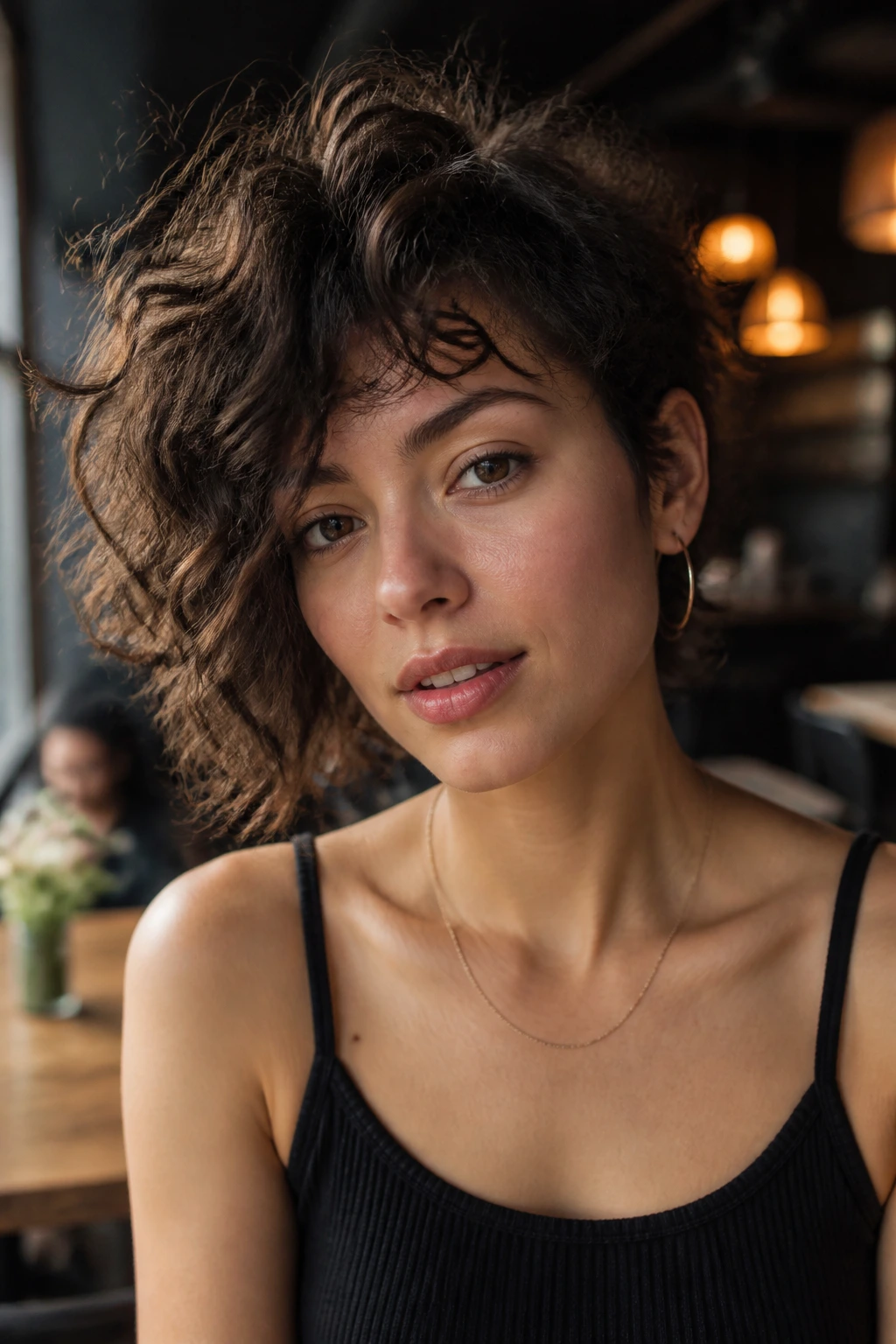
An asymmetrical curly shag keeps one side a little longer or heavier than the other, which gives the cut a deliberate off-center feel. On curls, that imbalance looks modern without needing a lot of extra styling. The shape itself does the work.
It’s especially useful if one side of your curls falls better than the other. Instead of trying to force symmetry, the cut makes room for the difference. That honesty can be a relief. Curls are never perfectly identical from side to side, and this haircut stops pretending they are.
23. Soft Mullet Shag
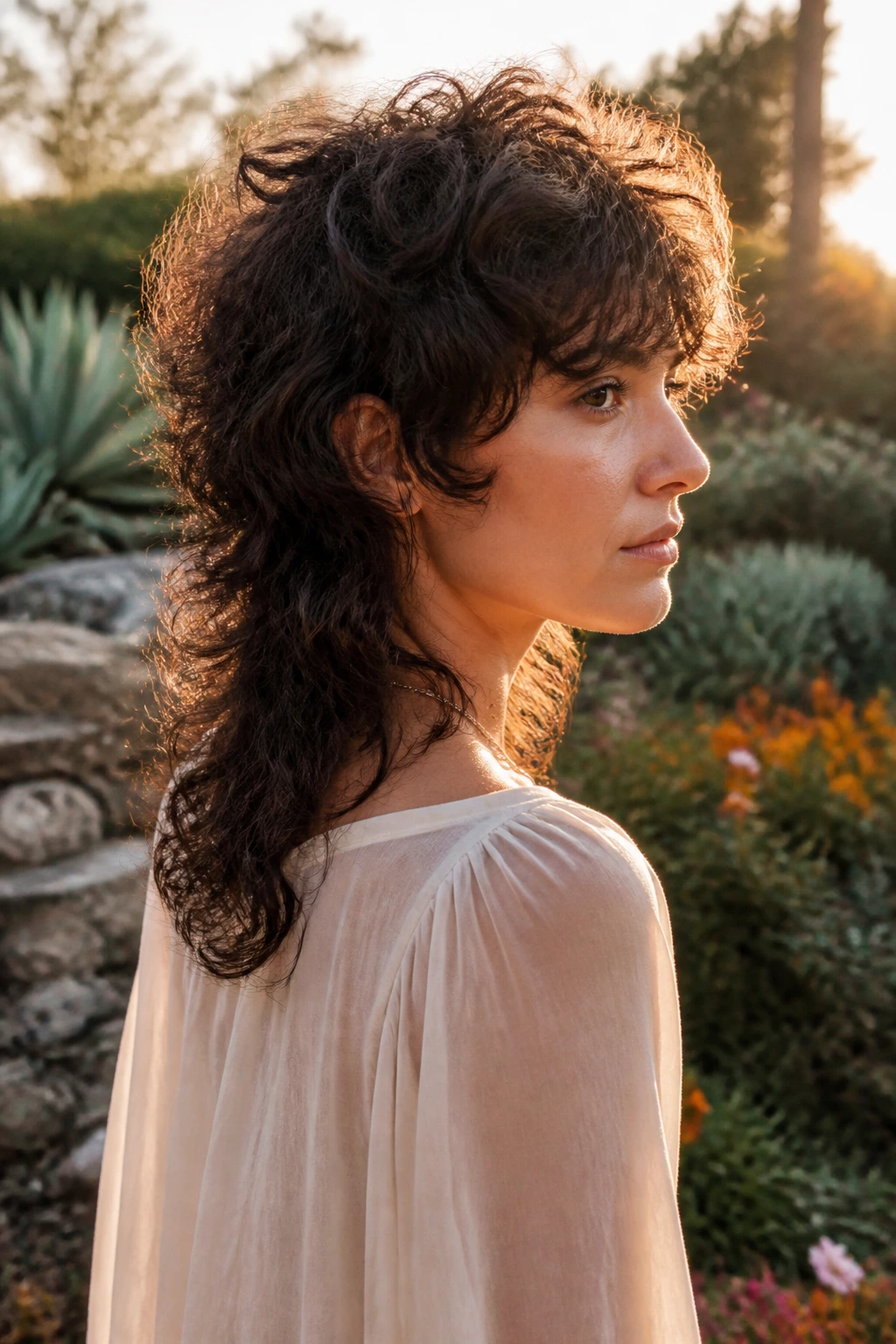
A soft mullet shag leaves a little more length at the back, but the transition is smooth enough that it doesn’t feel like a costume. The front and crown stay lifted, the sides stay soft, and the back creates a quiet tail of movement. The whole thing can look surprisingly elegant when the curls are healthy.
This cut suits people who like a little edge but don’t want a hard disconnect. It also buys you grow-out time because the back can lengthen before the shape starts to look awkward. If you’ve ever regretted a short cut too quickly, this version is a safer bet.
24. Layered Afro Shag
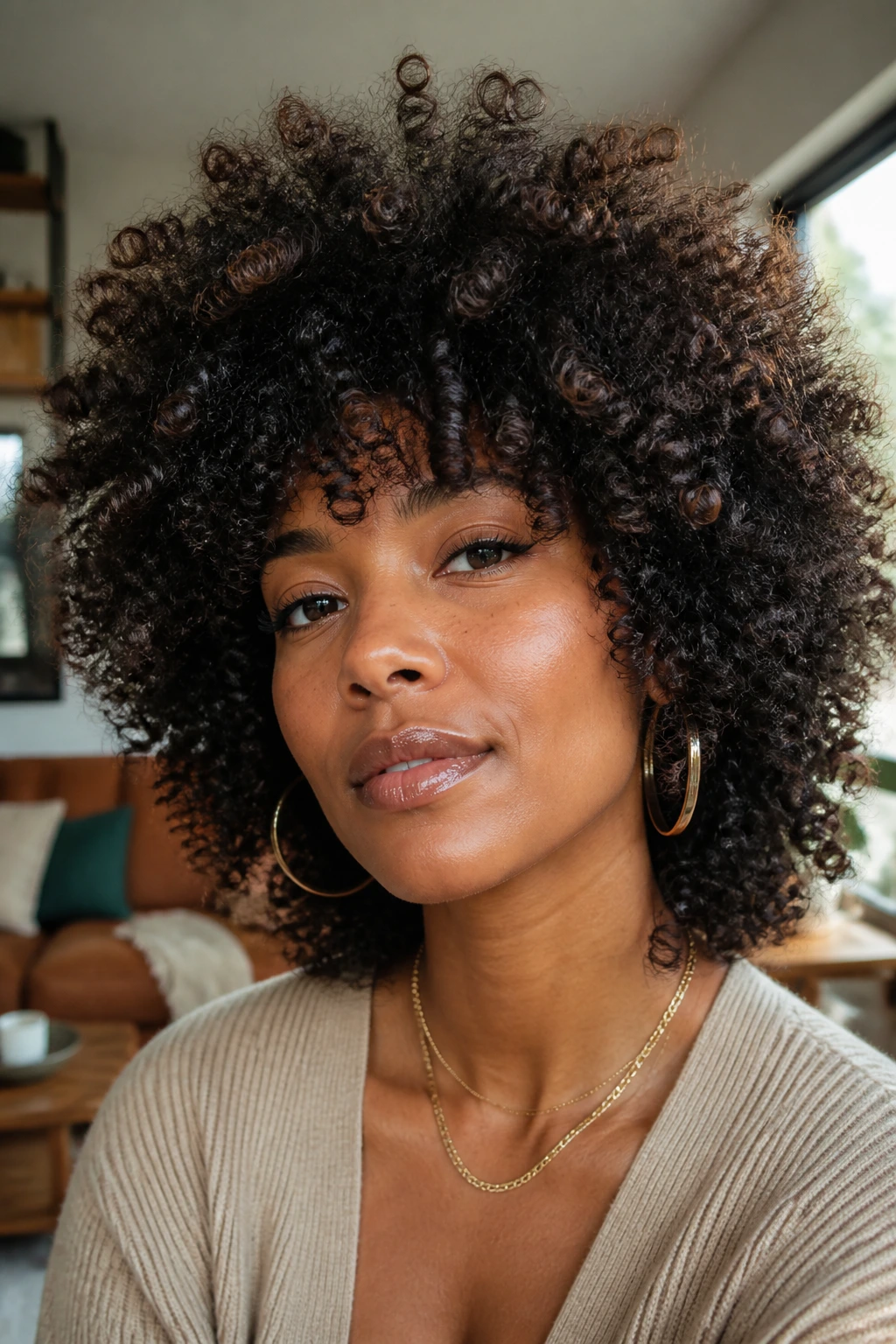
A layered afro shag is all about preserving volume while making room for shape. The curl pattern stays full, but the layers stop the silhouette from becoming a single block. That matters if your hair has density and a strong natural outline that needs a little direction.
Keep the outline full
The mistake with Afro-textured hair is often over-thinning, which leaves you with frizz and not much shape. A better cut removes bulk where the head needs movement while keeping enough mass to let the curl pattern do its thing. I’d rather see a rounded, lifted outline than a cut that looks “light” only because half the curl disappeared.
25. Curly Crop With Baby Bangs
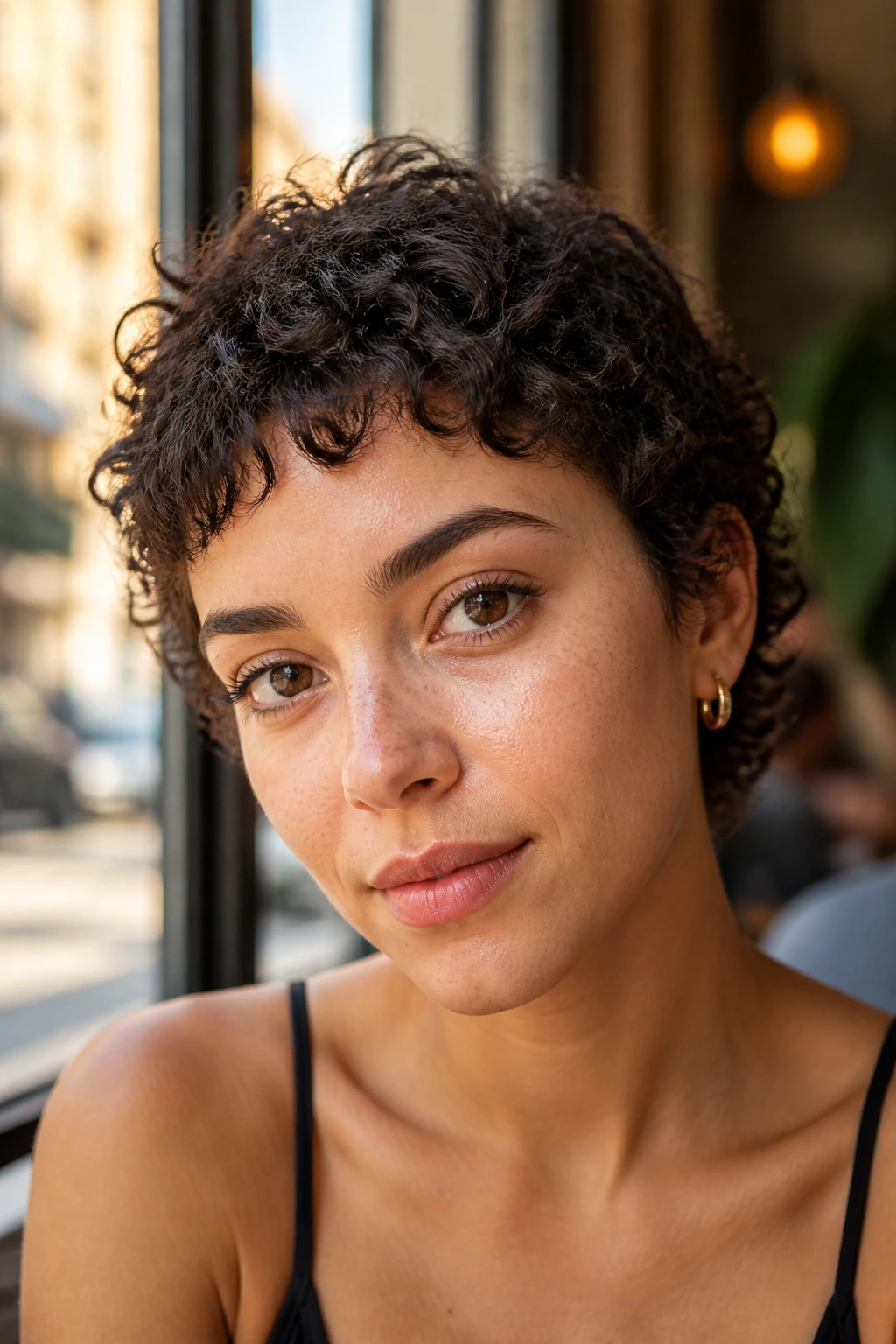
Baby bangs on curls are not for the timid, but they can look sharp when the rest of the crop is kept clean. The fringe sits high on the forehead, the sides stay short, and the top has enough texture to keep the cut from feeling too severe. It’s tiny, but it makes a statement.
This cut works best on people who actually want the bangs to be the point. If you want them to hide, soften, or disappear, this is the wrong move. The curls need to be cut with shrinkage in mind and shaped so the bangs don’t spring too high. Leave them longer than your first impulse.
26. Wash-and-Go Shag
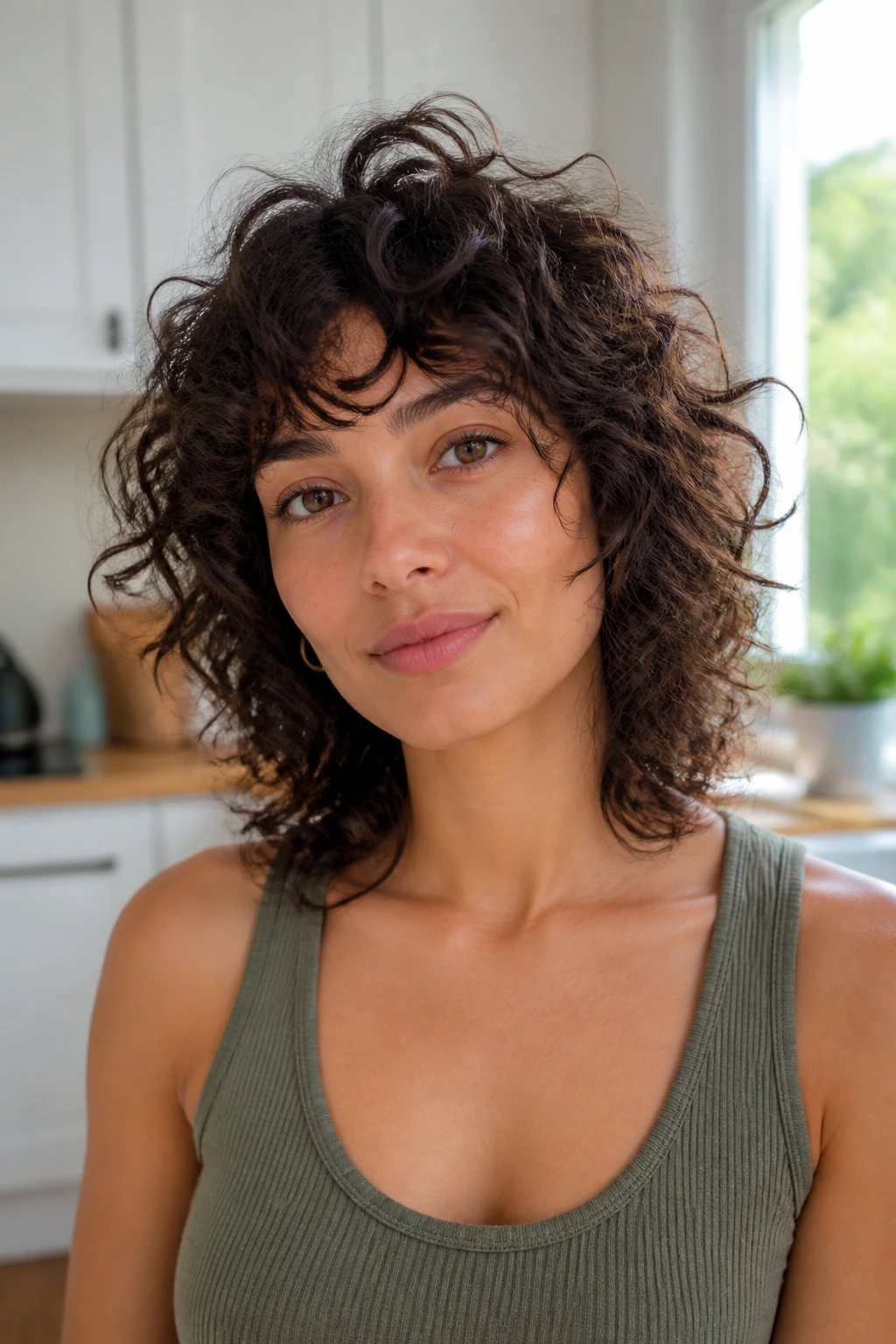
A wash-and-go shag is for people who want the cut to do most of the talking. The layers are placed so the curls can fall into place with minimal manipulation, and the front is broken up enough that you’re not forced to carve it every morning. That makes it a practical shape, not a lazy one.
The best wash-and-go shags are built on predictable curl behavior. If your pattern changes wildly from root to tip, a stylist should keep the layers a touch longer. You want the cut to dry into shape, not into a series of surprise pockets. That’s the whole game with this one.
27. Long-Top Short-Side Shag
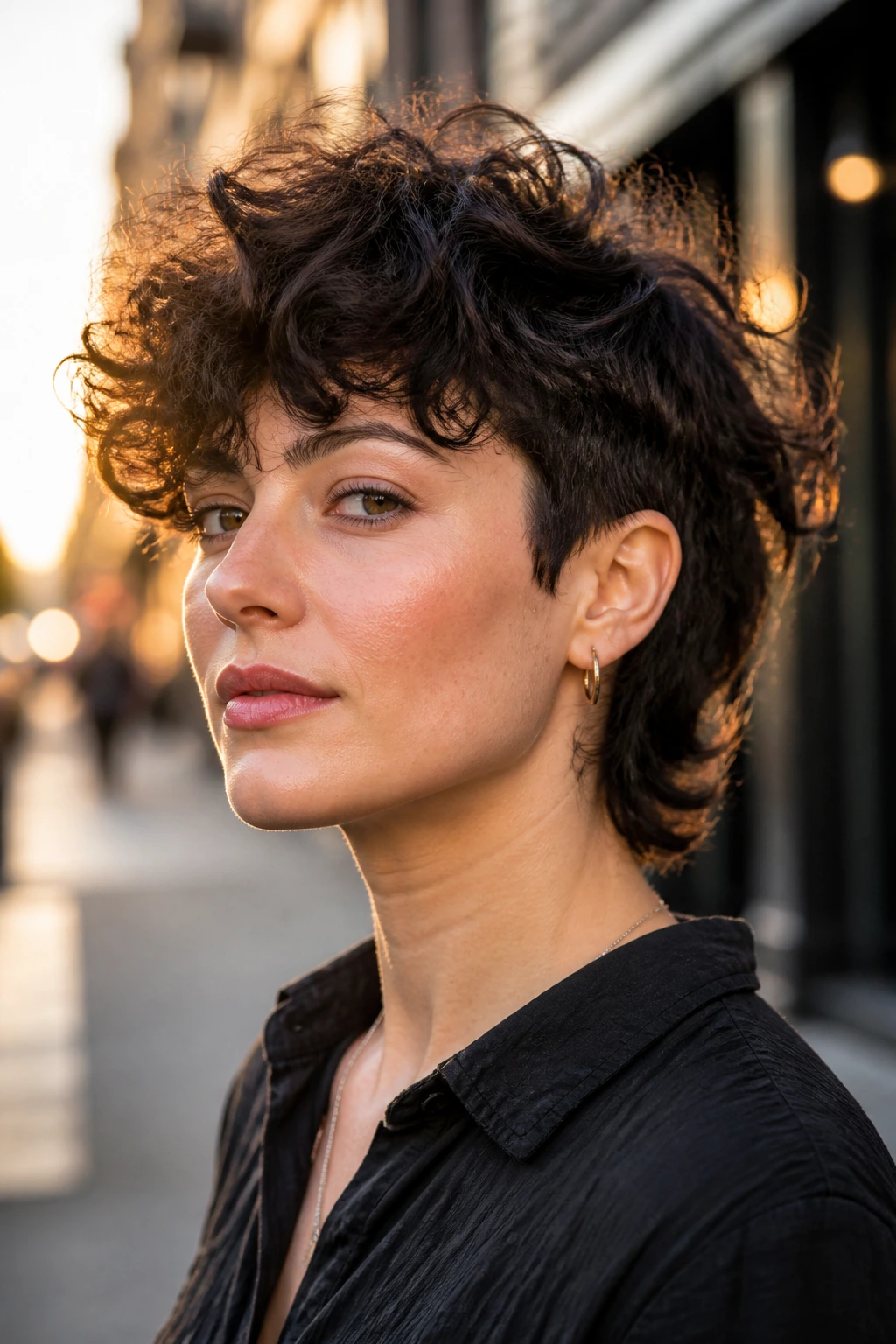
A long-top short-side shag creates a strong contrast between the crown and the sides. The top gets the freedom to lift, while the sides are kept tighter so the silhouette doesn’t get wide. It’s a useful shape if your hair likes to billow around the ears.
The cut can look sharp without being harsh. A side that’s too short can expose the ears and make the haircut feel severe, so the best version still leaves enough curl around the temples. If you like a bit of geometry in your hair, this one gives you that structure without flattening the curls.
28. Feathered Ringlet Shag
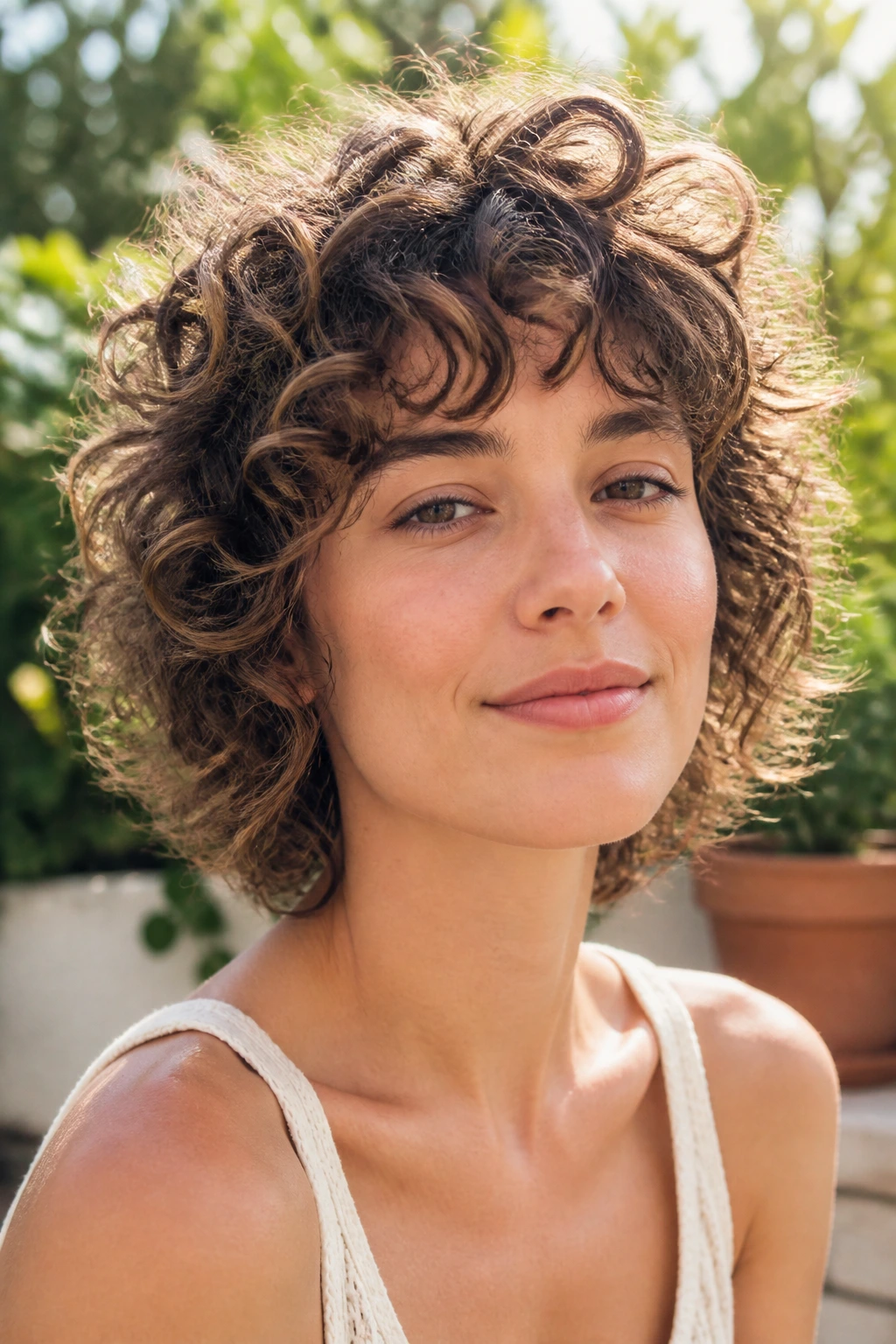
Feathered ringlets look their best when the layers are soft enough to let each curl land separately. The feathering lightens the edge of the cut, so the curls don’t stack into one heavy line. That gives the hair a lighter, more floating finish.
This is especially nice on ringlet patterns that hold shape well but can get heavy at the bottom. The feathering keeps the ends from clumping. It also makes the face frame less blunt, which is a relief if you’ve ever cut curly hair too straight across and watched it form a shelf.
29. Neck-Hugging Shag
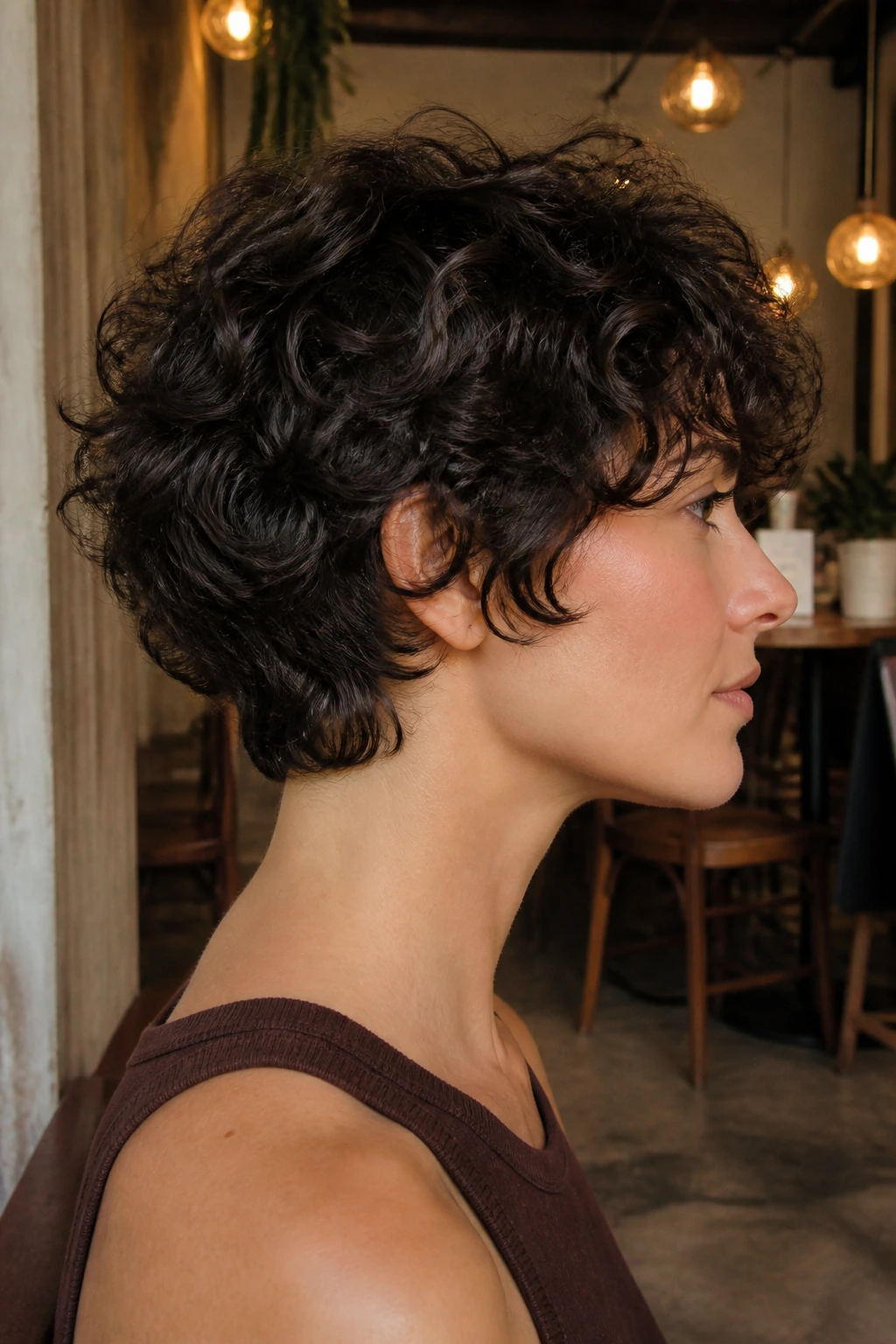
A neck-hugging shag keeps the back short enough to sit close to the nape, which makes the cut neat from behind and easy under collars. The crown still gets lift, but the outline around the neck is controlled. That’s a real comfort feature if you hate hair catching on sweaters.
It’s also one of the better shapes for hot, humid stretches because the nape doesn’t carry as much bulk. The cut still needs layering, though. If the neck area is too blunt, the whole shape stiffens up. The best version feels soft and close, not clipped to the scalp.
30. Curtain-Bang Curly Shag
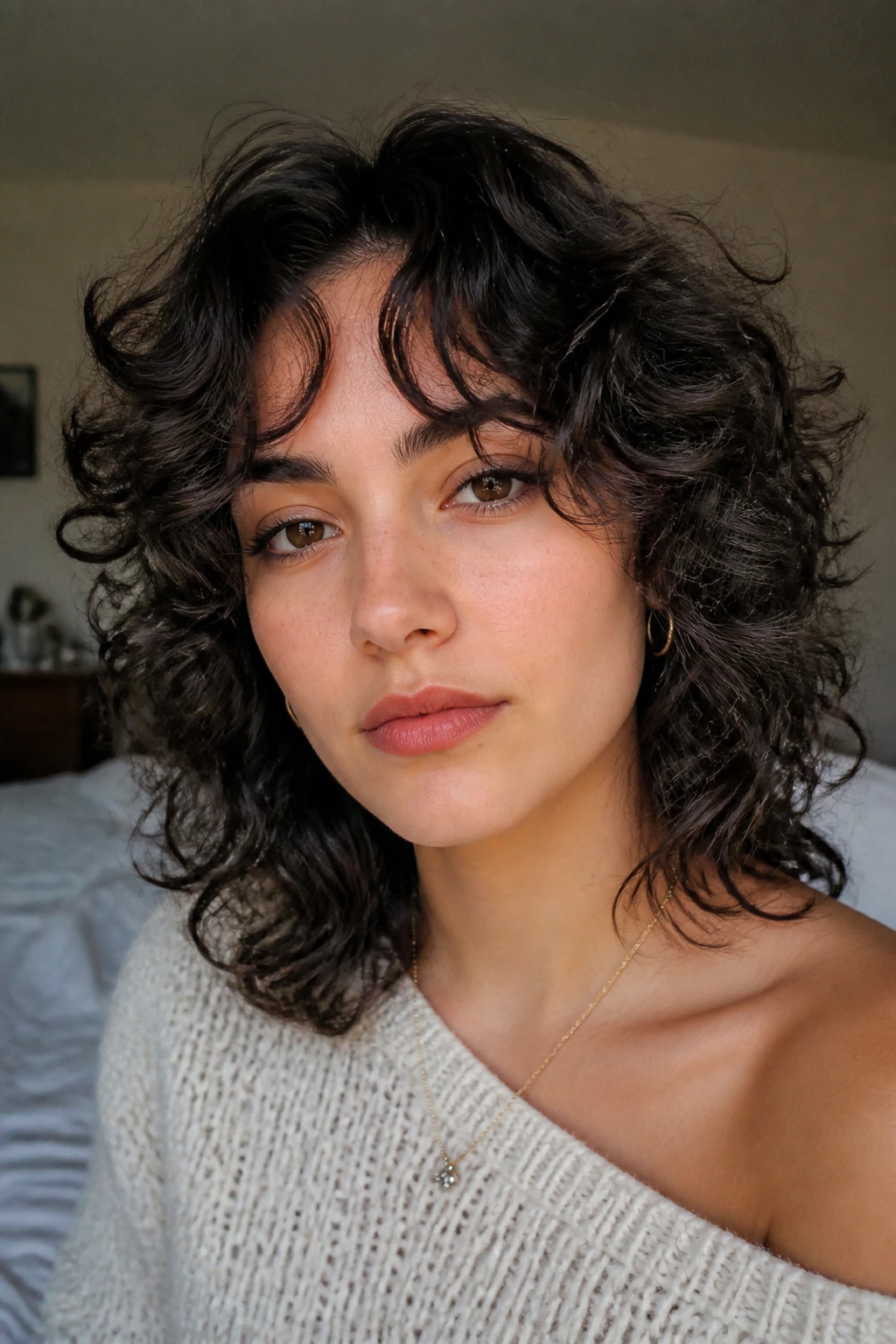
Curtain bangs on curls can be a little dramatic in the best way. They part near the center, bend away from the face, and blend into the front layers so the haircut feels open rather than boxed in. On short hair, they keep the shape from looking too round.
The fringe rule
Curtain bangs need room to shrink and swing. If they’re cut too short, they can sit awkwardly above the brows and refuse to blend. The sweet spot is a little longer than your first instinct, especially if your curl pattern is springy. Once they dry, the split fringe should frame the eyes, not camp out on the forehead.
31. Low-Maintenance Loft Shag

A low-maintenance loft shag keeps the layers simpler and the bulk control gentler. That means the hair has room to move, but you’re not constantly fighting little chopped pieces that frizz up on day two. It’s the calm version of the shag family.
This is one I’d recommend to people who want shape more than drama. The cut gives enough lift at the roots and enough movement at the sides to stay interesting, but it doesn’t demand a full styling ritual. A little leave-in, a little scrunching, and you’re out the door.
32. Sliced-Layer Shag
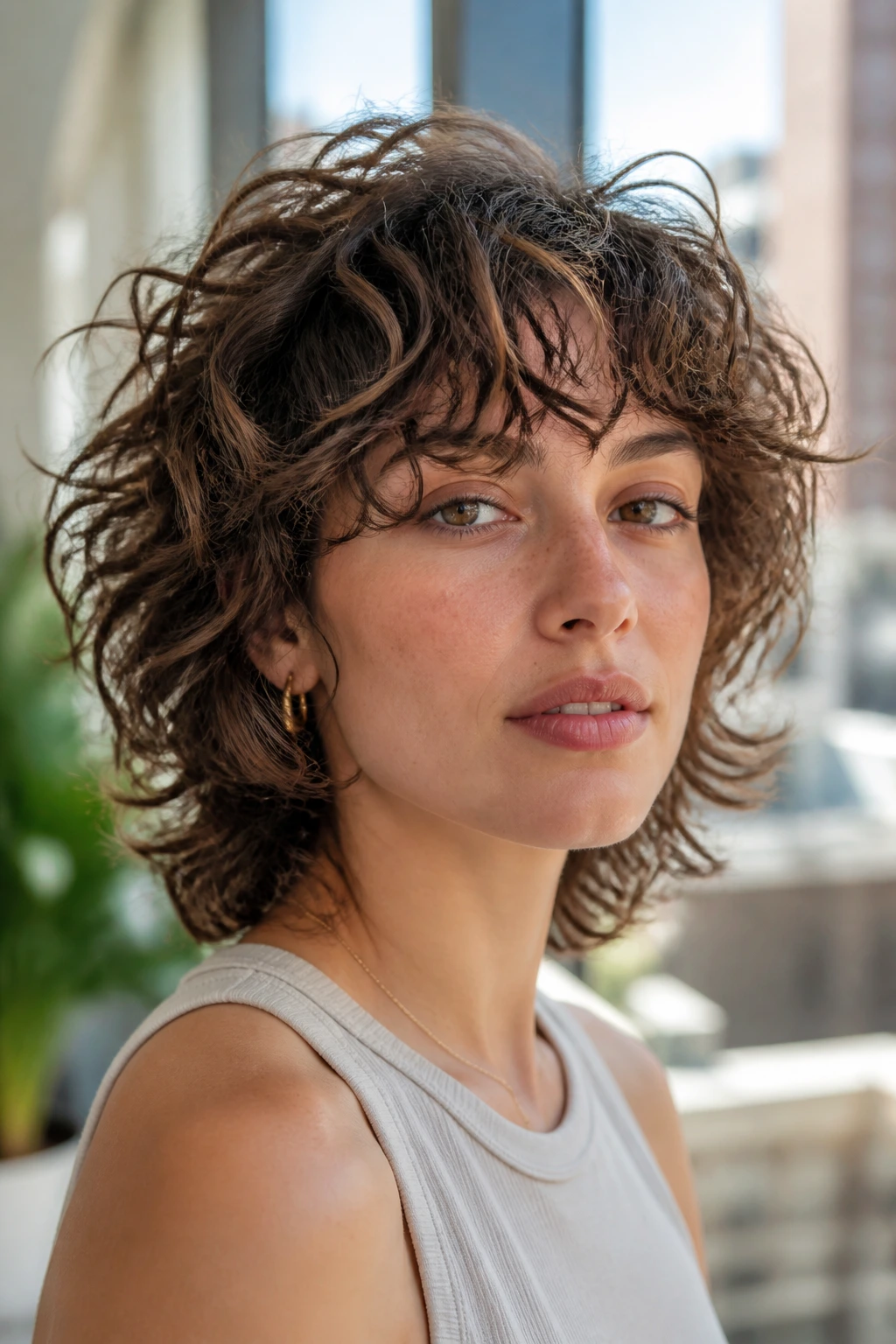
Sliced layers create separation without making the cut look overly chopped. On curls, that can be useful if you want each section to move independently instead of forming one thick block. The shape stays light, but the ends don’t look too wispy.
This works best when the stylist knows how much slice the hair can take. Too much and you lose fullness. Too little and the layers don’t show. If your hair is medium density and you want a cut that reads clean even when it’s not perfectly styled, sliced layers are a good middle path.
33. Brushed-Out Glam Shag
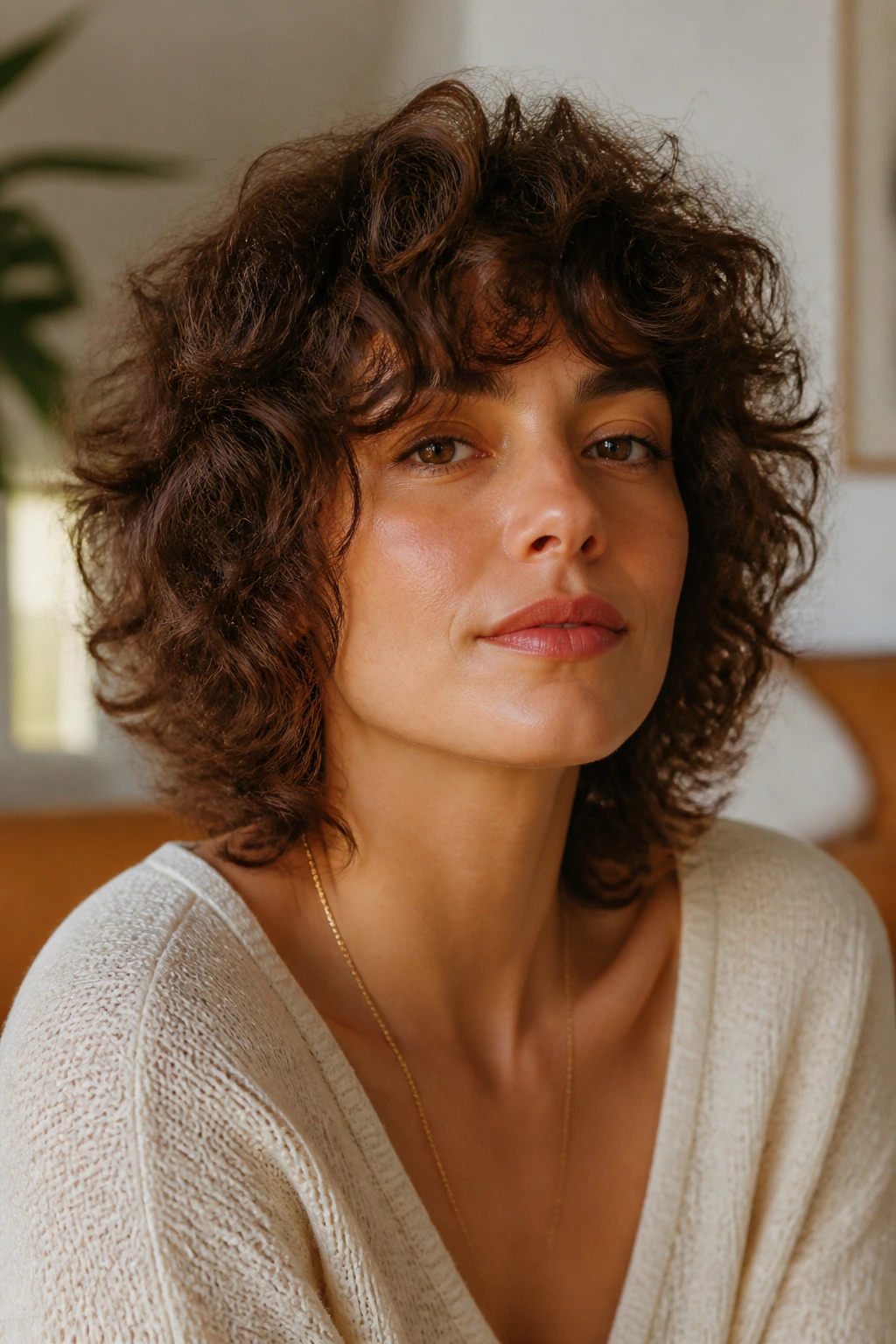
A brushed-out glam shag is the softer, bigger cousin of the defined curly shag. It’s designed to look good when the curls are gently stretched or brushed for volume, so the layers need to be placed carefully. The result can feel airy and a little old-school in the best way.
This cut isn’t for people who want every curl to stay perfectly separated. It’s for those who like softness and fullness together. Use a wide brush only after the hair is mostly dry, or you’ll create a halo of frizz. Done right, the shape feels loose and elegant without becoming stiff.
34. Tapered Temple Shag
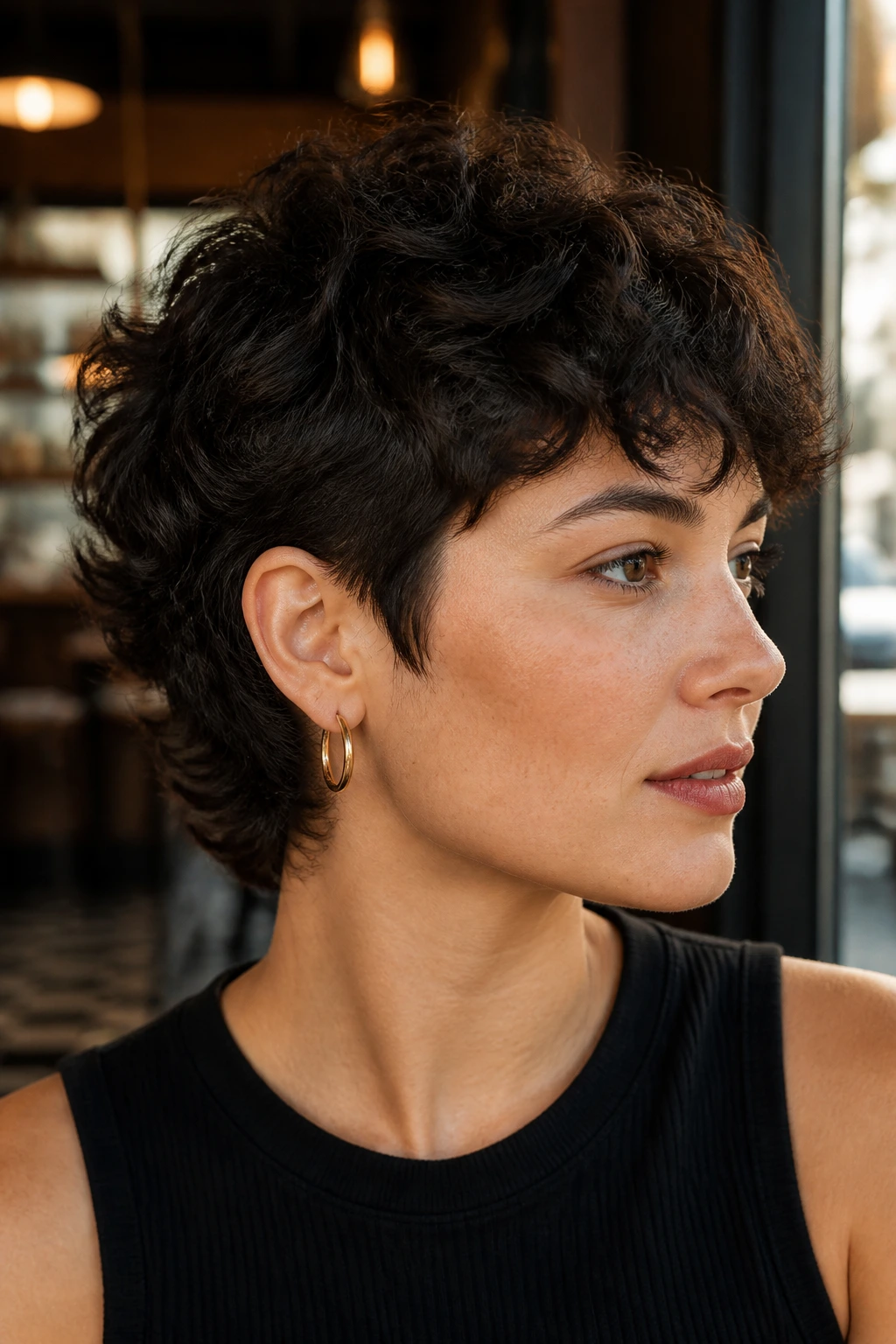
The tapered temple shag cleans up the sides around the temples and ears, which is where curly cuts often get too wide. The taper keeps the outline tidy while the crown and back keep their shaggy lift. It’s a small adjustment, but it sharpens the whole haircut.
Temple cleanup matters
Curls at the temples can puff out in a way that throws off the balance of the face. Trimming that area a little shorter brings the eye upward. If you wear glasses, this is especially useful because the temples and frames won’t fight each other. I like this cut when I want the hair to feel deliberate without looking overworked.
35. Softly Stacked Shag
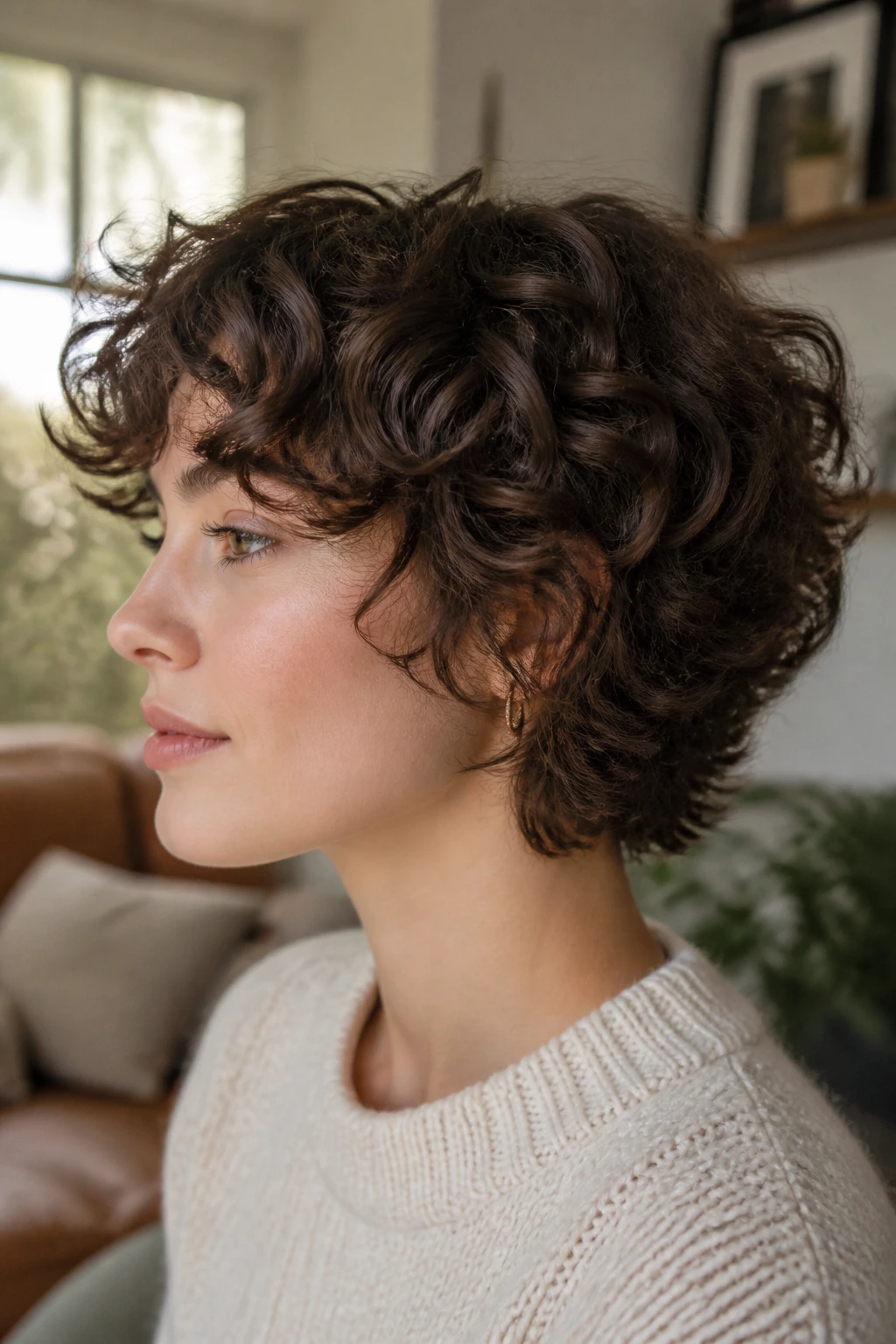
A softly stacked shag borrows a little from the stacked bob, but it keeps the layers loose enough to stay curly. The back has a gentle rise, which helps support volume without creating a hard shelf. That makes it useful if the back of your hair usually collapses first.
This cut is tidy in profile and lively from the front. It’s a good match for people who like structure but don’t want their curls pinned into place. The stack should be soft. If it’s too strong, the back can look wedge-shaped, which is not the goal here.
36. Messy Oval-Frame Shag

A messy oval-frame shag uses longer face pieces to build an oval around the features, which tends to flatter a lot of face shapes. The messiness is controlled, not random; the layers sit at different lengths so the hair moves instead of hanging in one line.
This is a forgiving shape if you don’t know exactly how much fringe you want. The oval frame keeps the cut soft around the front, while the rest of the layers stop it from looking flat. It’s the kind of shag that can be styled loosely and still look finished, even if the day gets away from you.
37. Big-Shape Curly Shag
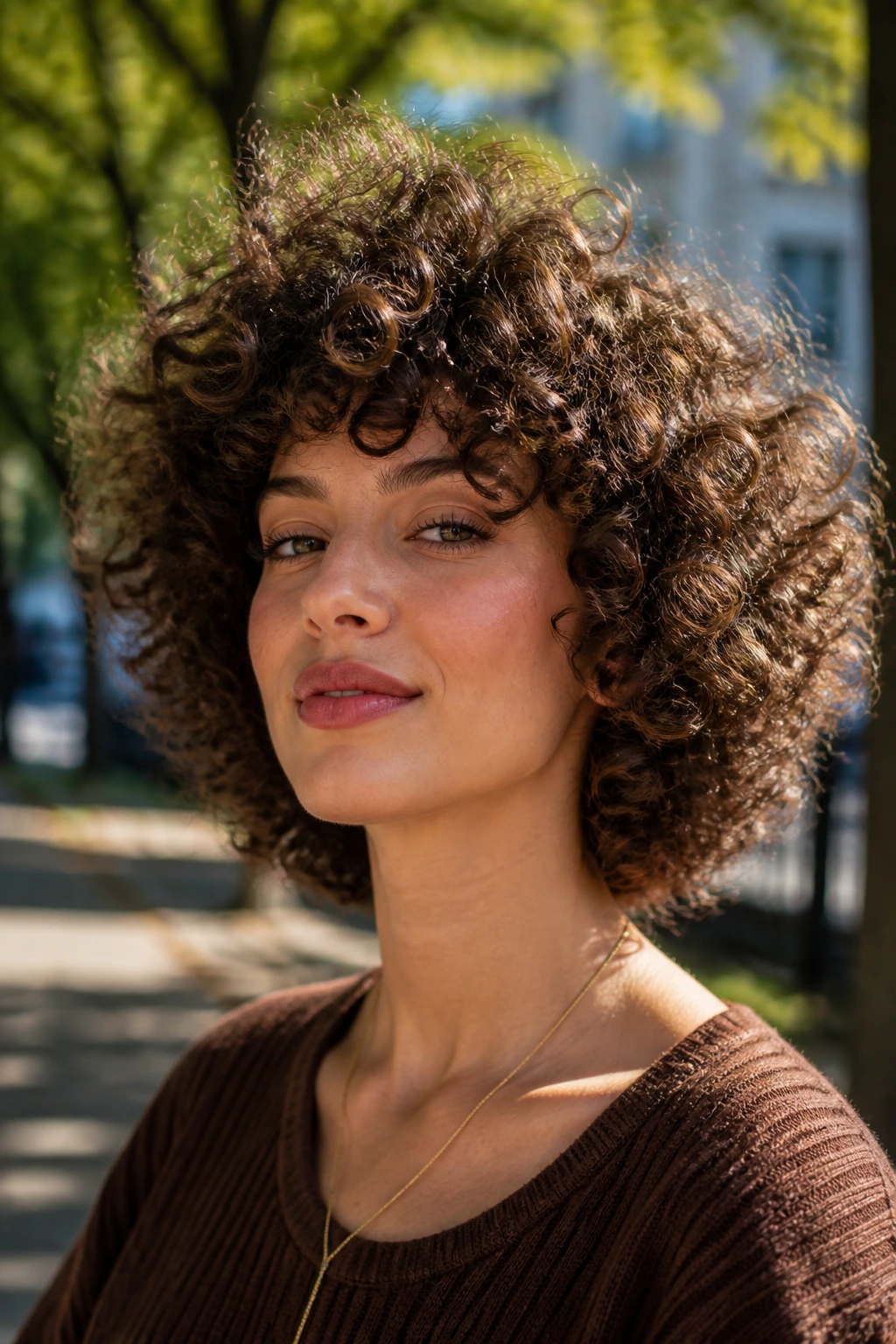
A big-shape curly shag is for people who want volume to be part of the design, not a problem to solve. The layers are placed so the curls stack upward and outward in a rounded way, rather than being flattened into a narrow outline. It looks confident. No apology needed.
This cut works best on hair with enough density to support the shape. Fine curls can wear it, but they may need more root support from mousse or foam. Dense curls, though, can turn this into a really strong silhouette. If you like your hair to have presence, this is the one that gives it permission.
38. All-Over Layered Curly Shag
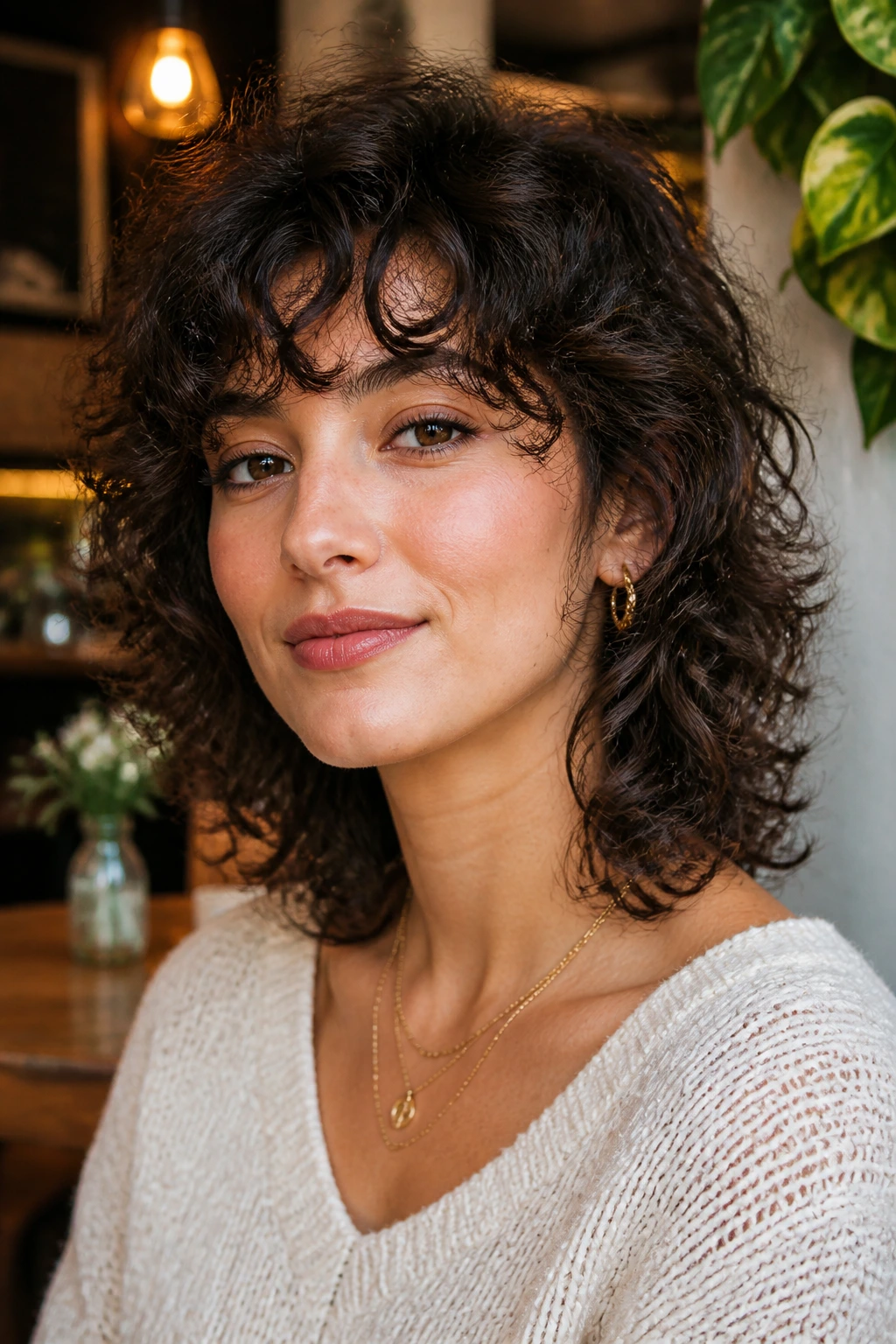
An all-over layered curly shag is the classic answer when you want the shape without a lot of gimmicks. Layers move through the crown, sides, and back, and the cut stays balanced from every angle. It’s the version that tends to age well as it grows.
The appeal is simple: it gives curls room to spring without carving too much into the outline. That makes it a smart starting point if you’re unsure how edgy you want to go. A good stylist can nudge it softer, shorter, rounder, or more dramatic, but the base shape stays solid. That matters more than people think.
Why Short Curly Shags Work So Well
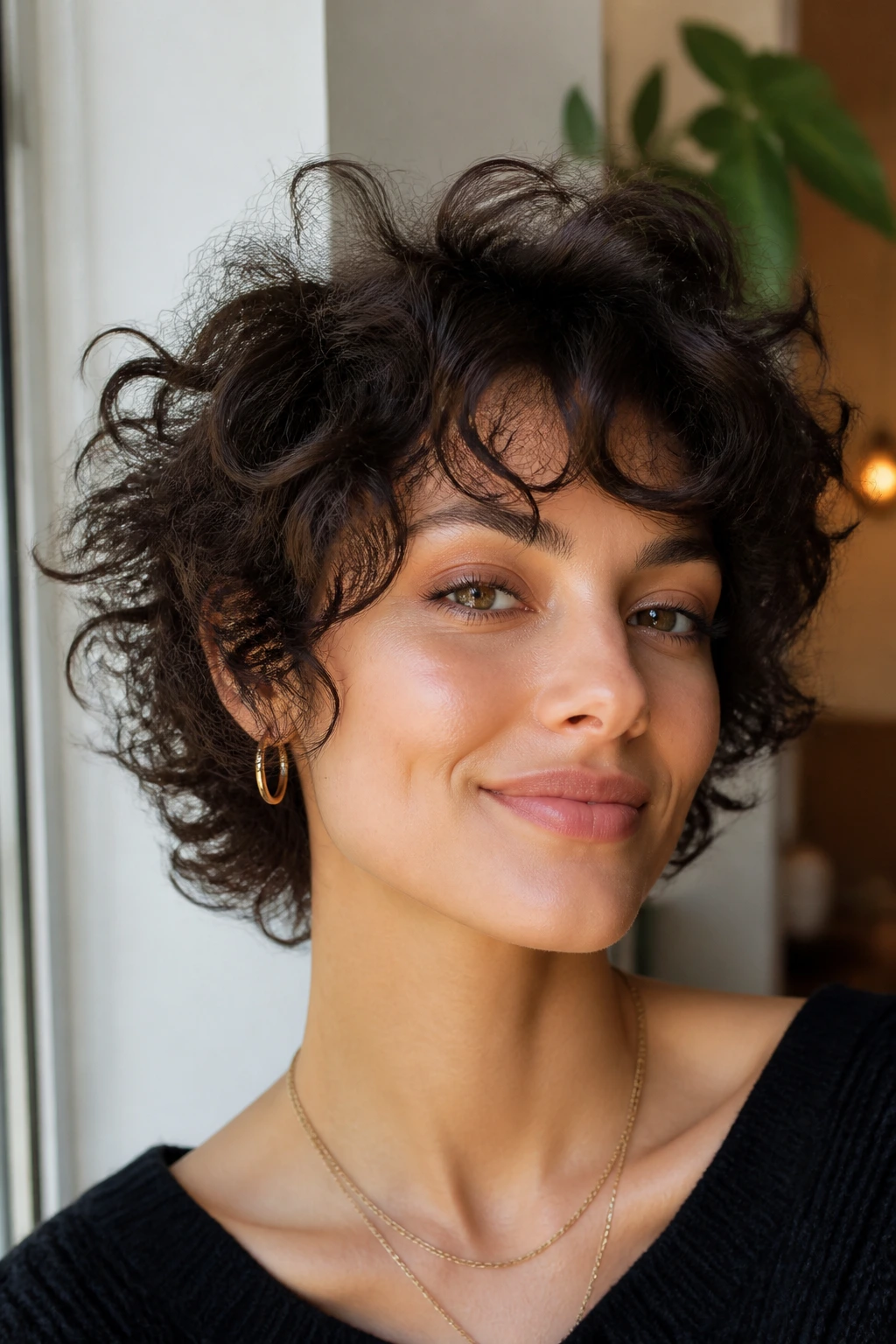
The short shag works on curls because it gives the hair somewhere to go. Without layers, curls often collect at the bottom and form a heavy triangle. With the right layers, the bottom still has enough weight to anchor the shape, but the crown and face pieces can move separately. That’s what keeps the cut from feeling stiff.
Dry cutting matters here. Wet curls can look cooperative right up until they dry and spring two inches higher. A stylist who knows curly hair will usually check the shape as it dries, then refine the face frame or neckline once the pattern shows itself. That’s not a luxury. It’s the haircut.
There’s also a texture reason these cuts look good. Curly hair already has built-in movement, so the shag doesn’t need to force it. It just removes the dead weight that makes the curl clump in the wrong spots. Done well, the result feels lighter without looking thinned out.
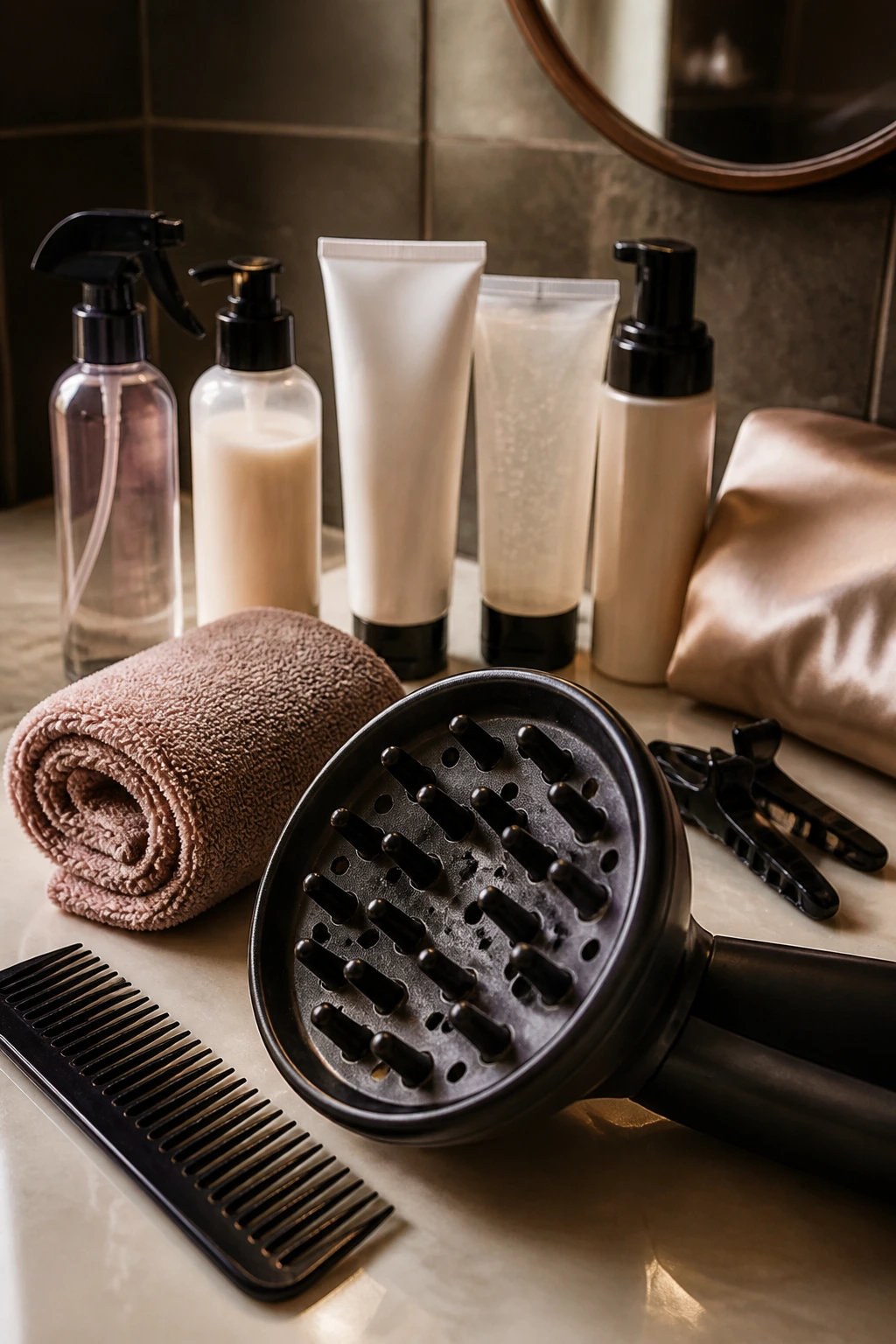
Essential Tools for Styling and Maintenance
-
Diffuser attachment: This is the easiest way to dry curls without blasting the shape apart.
-
Spray bottle with water: A few spritzes revive flattened areas, especially around the fringe and crown.
-
Leave-in conditioner: Use a light layer on damp hair so the curls don’t drink themselves dry before the day starts.
-
Curl cream or foam: Cream gives slip; foam gives lift. Many short shags like a mix of both.
-
Gel with a flexible cast: A little hold helps the layers keep their shape instead of puffing into fuzz.
-
Microfiber towel or cotton T-shirt: Regular bath towels rough up the cut and can wreck the fringe.
-
Wide-tooth comb or fingers: Use these to detangle while preserving clumps and avoiding frizz.
-
Duckbill clips or section clips: Handy for setting the fringe or drying the crown separately.
-
Satin pillowcase or bonnet: Short curls get crushed faster than long ones, so sleep protection matters.
How to Brief Your Stylist for the Right Shape
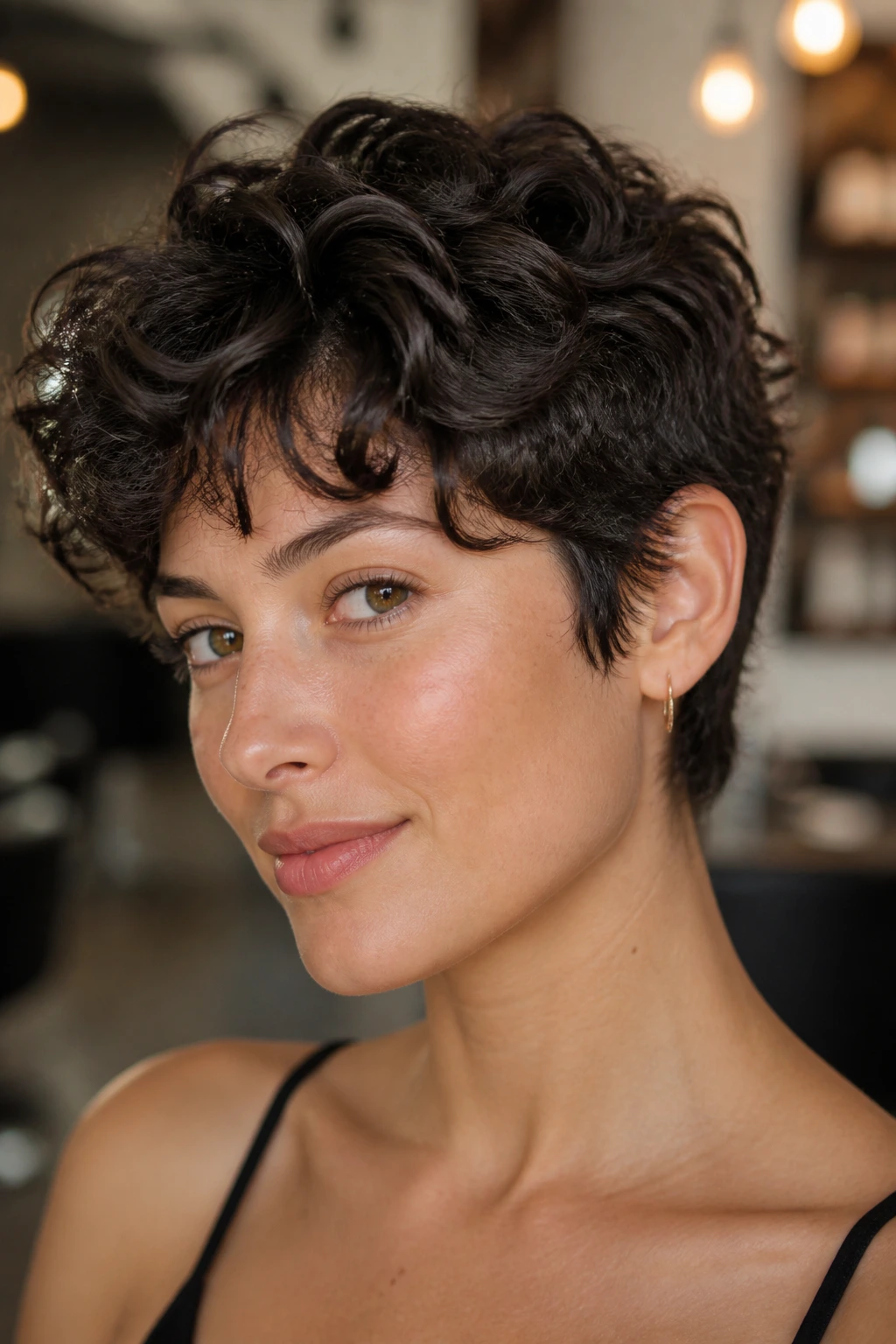
The best short shag starts with a clear conversation, not a vague “make it shaggy” request. Tell the stylist how much shrinkage your curls have, where the bulk lives, and whether you want the front to open up or stay soft across the forehead. Those details matter more than the name of the cut.
A few lines help a lot:
-
“Please cut this with my curls dry, or mostly dry.”
That tells them you care about how the shape sits in real life, not just on the cape. -
“The crown needs lift, but I don’t want the sides to balloon.”
That narrows the layer pattern. -
“My fringe shrinks a lot, so I need it a little longer than it looks.”
That one saves you from surprise bangs. -
“I want the neckline cleaned up, but I still need some softness around the ears.”
That keeps the back from turning too severe.
Bring a photo if you can, but choose one with the same curl pattern and density as yours. A loose wave and a tight coil do not behave the same way, even in the same haircut.
How to Wear These Cuts From Wash Day to Day Three
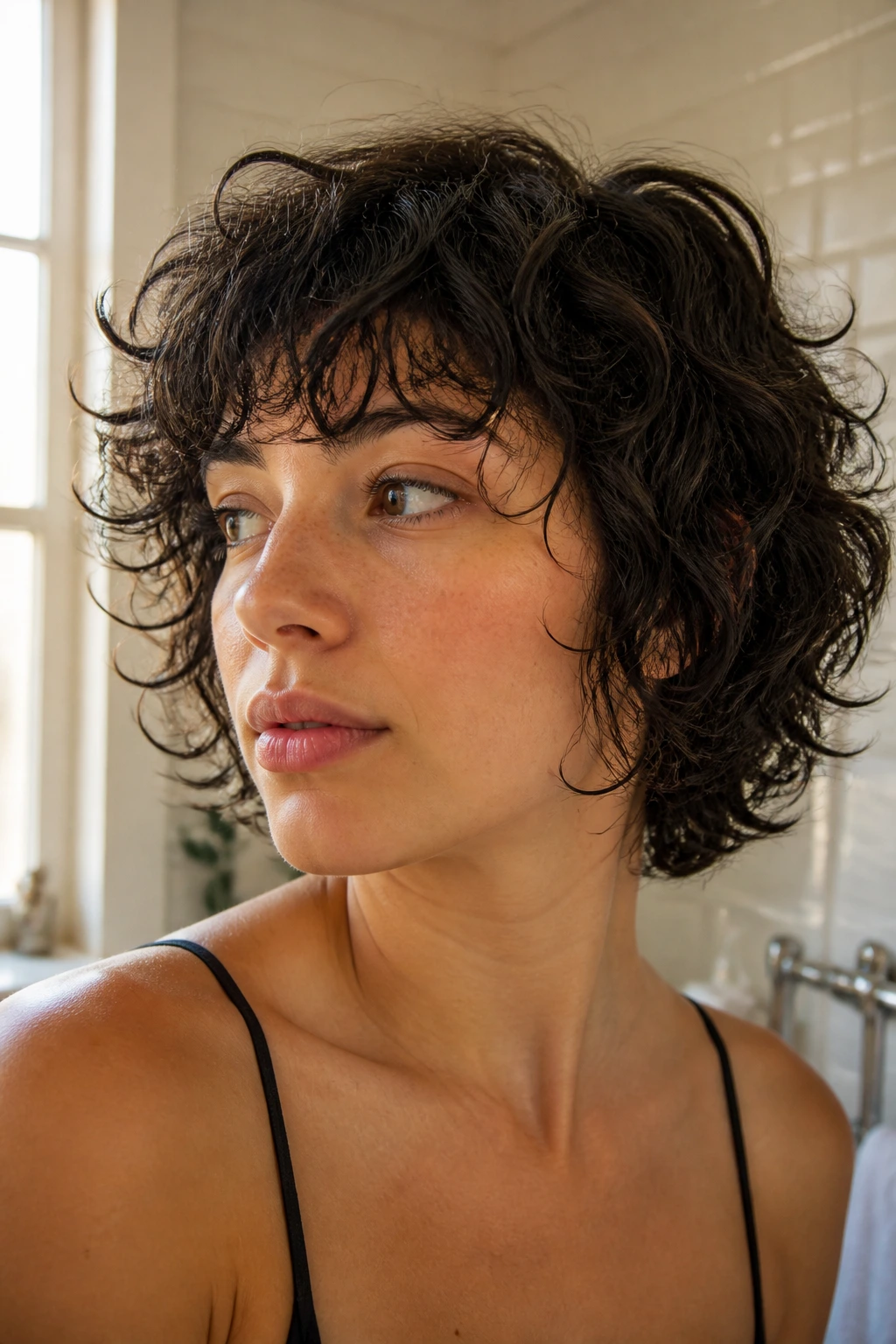
Wash Day: Start with leave-in on soaking-wet curls, then scrunch in a small amount of mousse or cream, depending on how much hold your hair likes. Diffuse on low heat until the roots are set and the surface feels dry to the touch. If you touch the curls too much before they’re dry, the layers puff.
Second-Day Reset: Mist the roots and face frame with a spray bottle, then smooth a pea-sized amount of gel or curl cream over any frizzy ends. Don’t soak the whole head. The point is to wake up the shape, not restart the wash day from scratch.
Third-Day Stretch: Pin the fringe back loosely at night or clip the front pieces up while you sleep. In the morning, shake the roots, tap a little water onto the crown, and twist the front sections with your fingers if they’ve gone flat. Short shags often look best with a little unevenness. Over-fixing them is how they lose their charm.
If You Want More Polish: Define the front pieces around the face with a bit of gel on wet fingers. That tiny move is enough to make the whole cut look intentional.
Practical Tips for Better Shape and Less Frizz
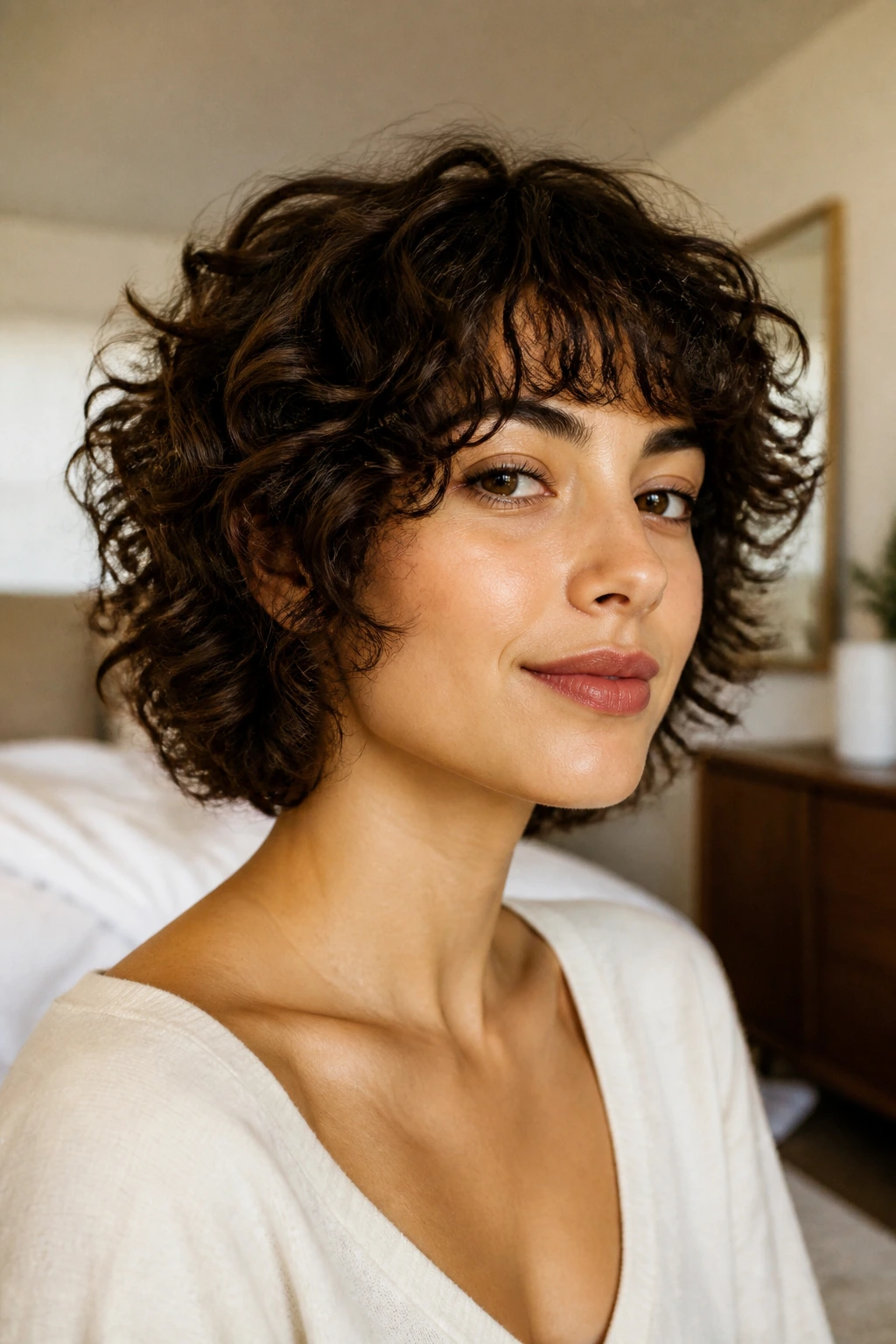
Flavor of the cut: Yes, I’m borrowing a food word on purpose — the “flavor” here is texture, and the texture looks better when you stop overloading it. Use less product than you think on the crown and a little more around the ends. That balance keeps the top from getting heavy.
Root lift: Clip the crown while the hair dries if your roots collapse easily. Two or three duckbill clips at the root line can buy you lift without teasing, and teasing curly hair is a bad habit that tends to leave broken, fuzzy sections behind.
Fringe control: If bangs puff up, dry them separately. Hold the diffuser below them, not on top of them, and stop when they’re about 90 percent dry. The last bit of moisture lets them settle instead of standing straight up like a little antenna.
Bulk management: On dense curls, ask for internal debulking, not aggressive thinning. Thinning shears can leave the ends looking torn and frizzy, while interior weight removal keeps the surface smoother. That distinction matters more than the average salon brochure admits.
Night care: A short curly shag can flatten fast on a cotton pillowcase. A satin pillowcase or bonnet is the cheapest way to keep the front pieces from turning into a wreck.
Common Mistakes That Flatten or Puff Curly Shags
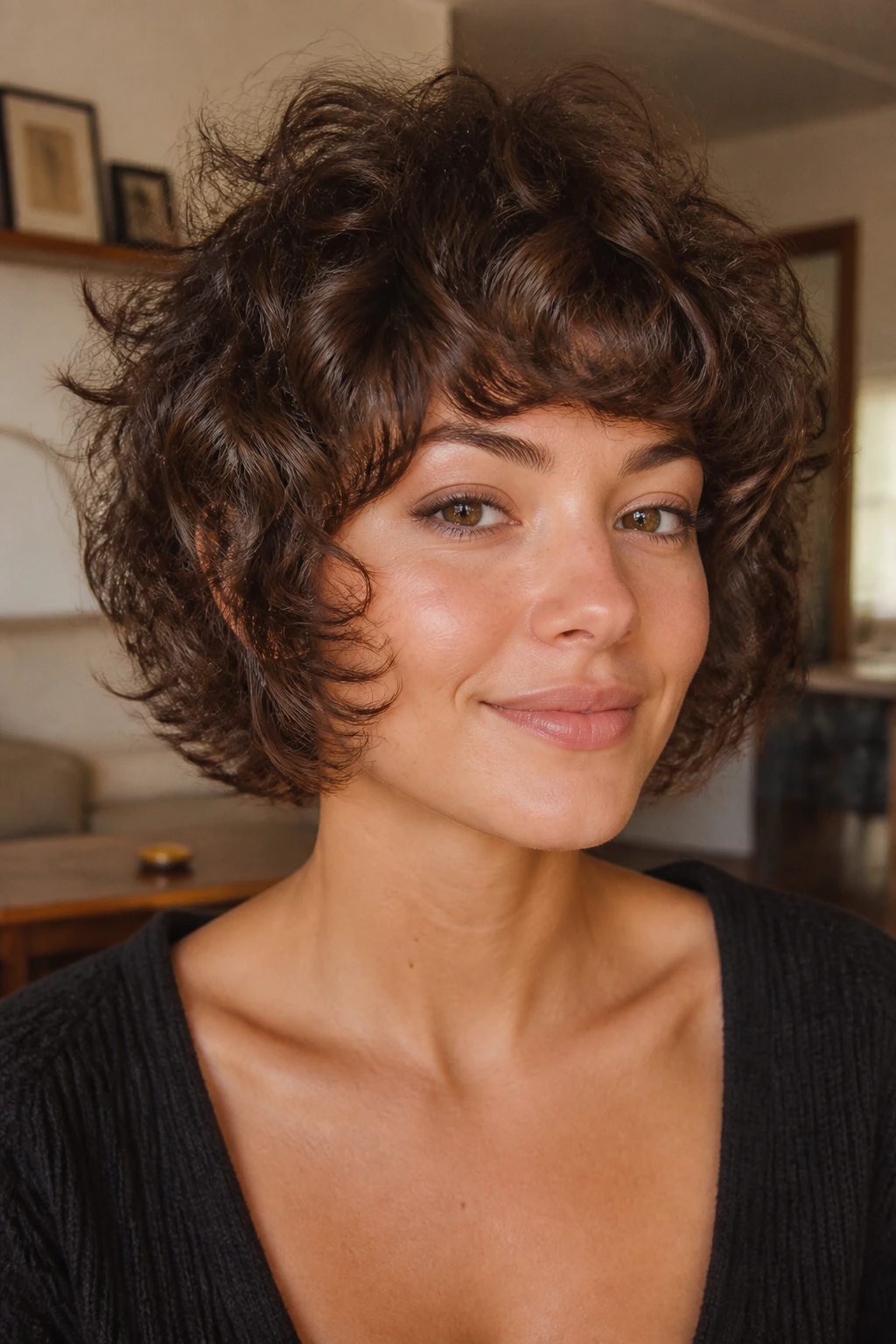
The biggest mistake is cutting the fringe too short. Curly bangs shrink hard, and once they spring up, they can dominate the face frame in a way you did not ask for. The fix is simple: leave more length than feels safe, then trim after the curls settle.
Another problem is over-layering the top while leaving the bottom too blunt. That gives you volume at the crown and a heavy shelf below. The shape starts to read as a helmet. Ask for a balanced layer map, not just “more layers.”
A third mistake is using too much heavy cream. Short curls don’t have the length to hide product buildup. When the hair looks greasy at the roots but frizzy at the ends, you’ve used too much and probably put it too close to the scalp.
And then there’s the rough towel habit. Scrubbing curly layers with terry cloth breaks up the curl clumps and turns a shag into fuzz. Pat, squeeze, or T-shirt dry instead. Your haircut will look cleaner almost immediately.
Variations and Adaptations to Try
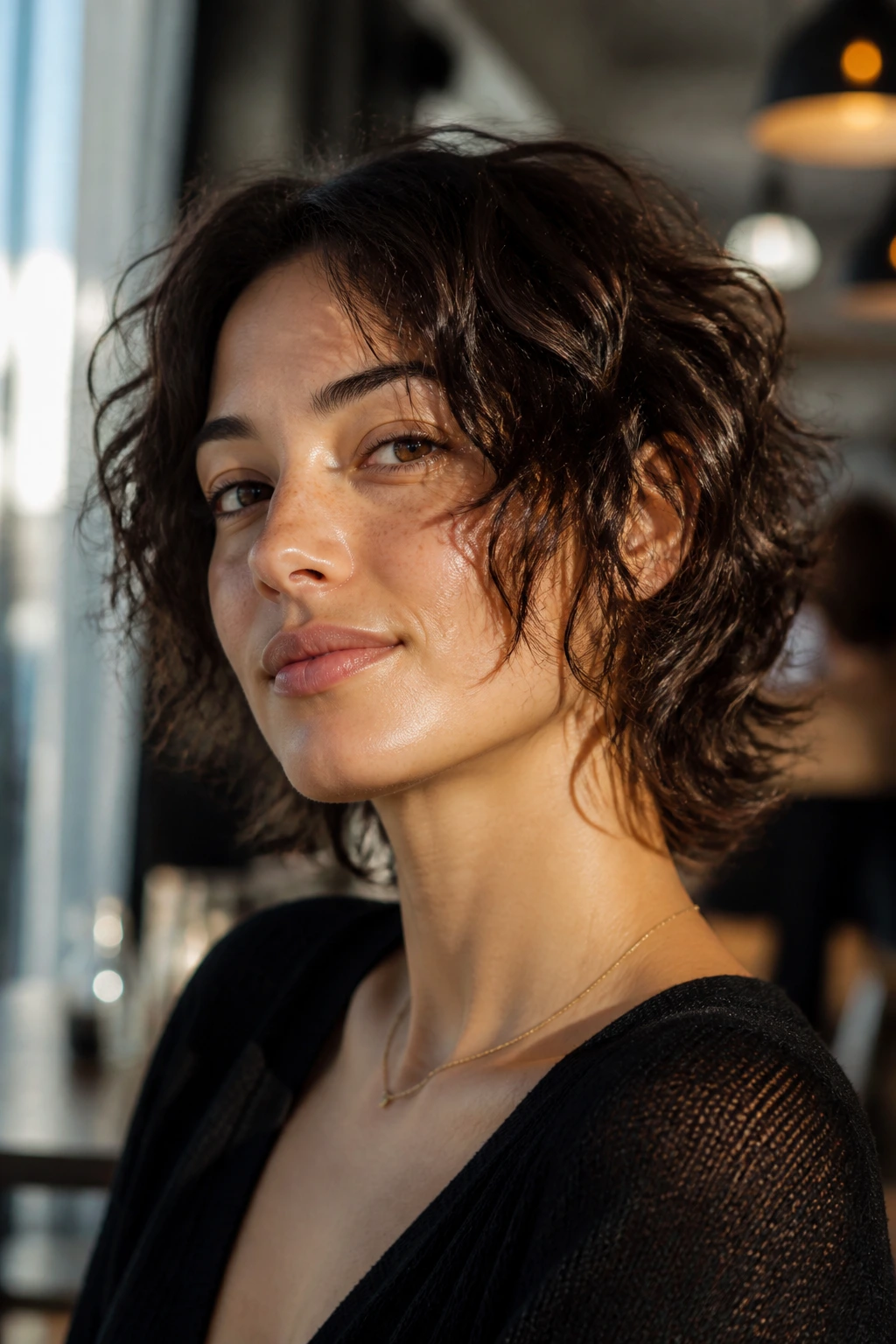
Fine-Curl Lift-Up: Keep the perimeter a touch longer and use foam instead of heavy cream. Fine curls need movement, but they also need enough weight to avoid looking wispy.
Dense-Curl Debulked Shape: Ask for interior removal at the crown and nape while keeping the outline softer. This keeps the hair from exploding outward the moment humidity shows up.
Fringe-Free Soft Shag: If bangs sound like too much work, replace them with long side pieces that skim the cheekbones. You still get face framing, just without the daily forehead maintenance.
Tighter-Coil Taper: On Type 4 hair, keep the silhouette rounded and let the taper happen subtly at the sides and nape. The goal is shape, not skinny ends.
Edgy Disconnect: For a more dramatic feel, keep the top fuller and the lower sections tighter, especially around the back. The contrast gives the cut a sharper profile without losing curl texture.
Maintenance, Refreshing, and Grow-Out
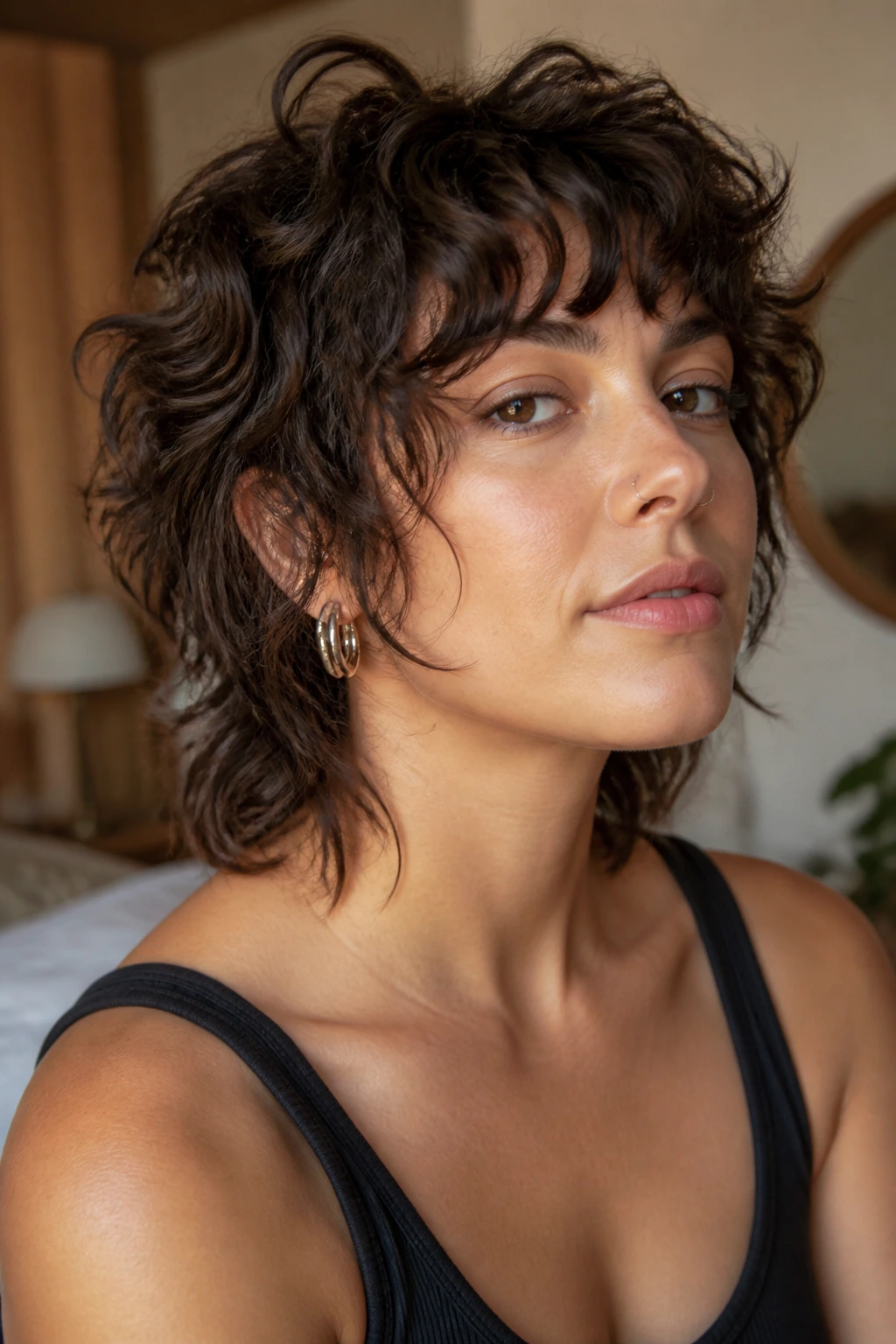
A short curly shag needs shape trims more often than a long layered cut. For very cropped versions, a cleanup every 6 to 8 weeks keeps the neckline and fringe from wandering off. Bob-length versions can usually go 8 to 10 weeks before the shape starts to soften in a way that’s hard to ignore.
Between trims, refresh the cut with water first, product second. That order matters. A light mist reactivates old product, and then a pea-sized amount of foam, leave-in, or gel can re-form the clumps that flattened overnight. If you pile on more product without water, the hair tends to go sticky at the roots and dry at the ends.
Sleep care is a big deal on shorter shapes. Use a satin pillowcase or bonnet, and if the top is losing lift, clip the fringe and crown loosely before bed. You don’t need perfection. You just need to stop the cut from getting crushed.
As the haircut grows out, the best versions shift into a softer, fuller shape instead of turning into one blunt mass. That’s the real test. If the silhouette still has a little movement after a month or two, the cut was built well.
Frequently Asked Questions
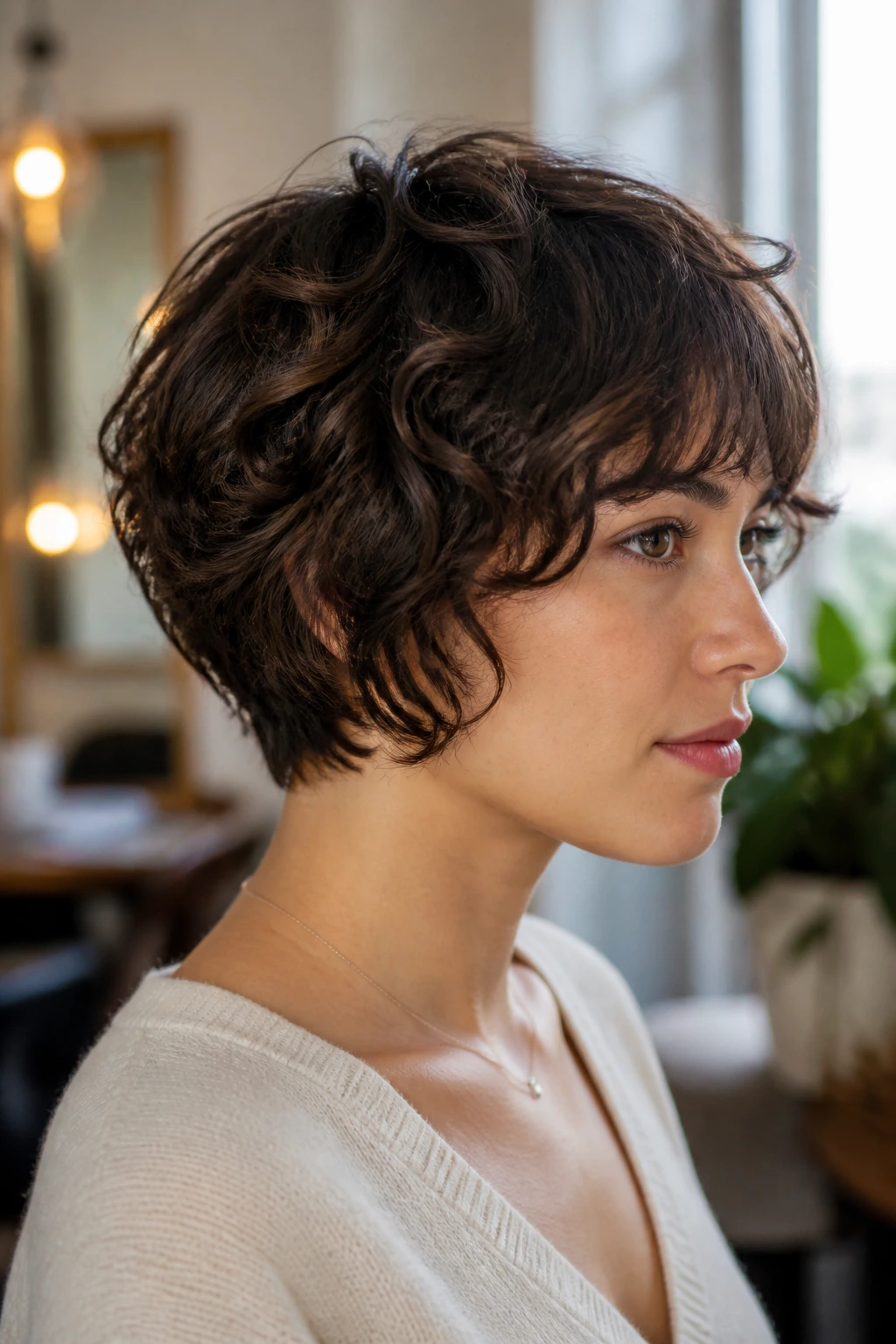
Do short shag haircuts work on all curl types?
Mostly, yes, but the shape changes. Loose waves can handle razored texture and piecey fringe, while tighter coils usually need more careful shape building and less aggressive thinning.
Should a curly shag be cut wet or dry?
Dry, or at least partly dry, gives the safest read on length and shrinkage. Wet cutting can work as a rough starting point, but the curl pattern should be checked again once the hair dries.
Will a short shag make my hair look thinner?
Not if the cut is balanced. The wrong layers can strip too much bulk and leave the ends stringy, but a good shag often makes fine or medium curls look fuller because the crown gets lift.
How do I stop my curly shag from puffing out at the sides?
Keep the perimeter a little heavier, use less product near the roots, and avoid over-diffusing the sides. Side puff usually means the haircut lost too much weight at the edges.
Can I still wear bangs with a short curly shag?
Yes, but the fringe has to be planned around shrinkage. Curtain bangs and side-swept pieces are easier to live with than a blunt bang that sits exactly where your curls decide to misbehave.
What if one side of my curls grows differently from the other?
That’s normal. A slightly asymmetrical shag can hide the difference better than trying to force perfect symmetry. Curl pattern differences are a shape issue, not a flaw.
How often should I trim a short curly shag?
Usually every 6 to 10 weeks, depending on how cropped the neckline and fringe are. The shorter the cut, the sooner the outline starts to lose its crispness.
Can a short shag be low-maintenance?
It can, but only if the cut is tailored to your curl pattern. A good low-maintenance shag is one that dries into shape with minimal touching, not one that depends on luck.
Why These Cuts Keep Working
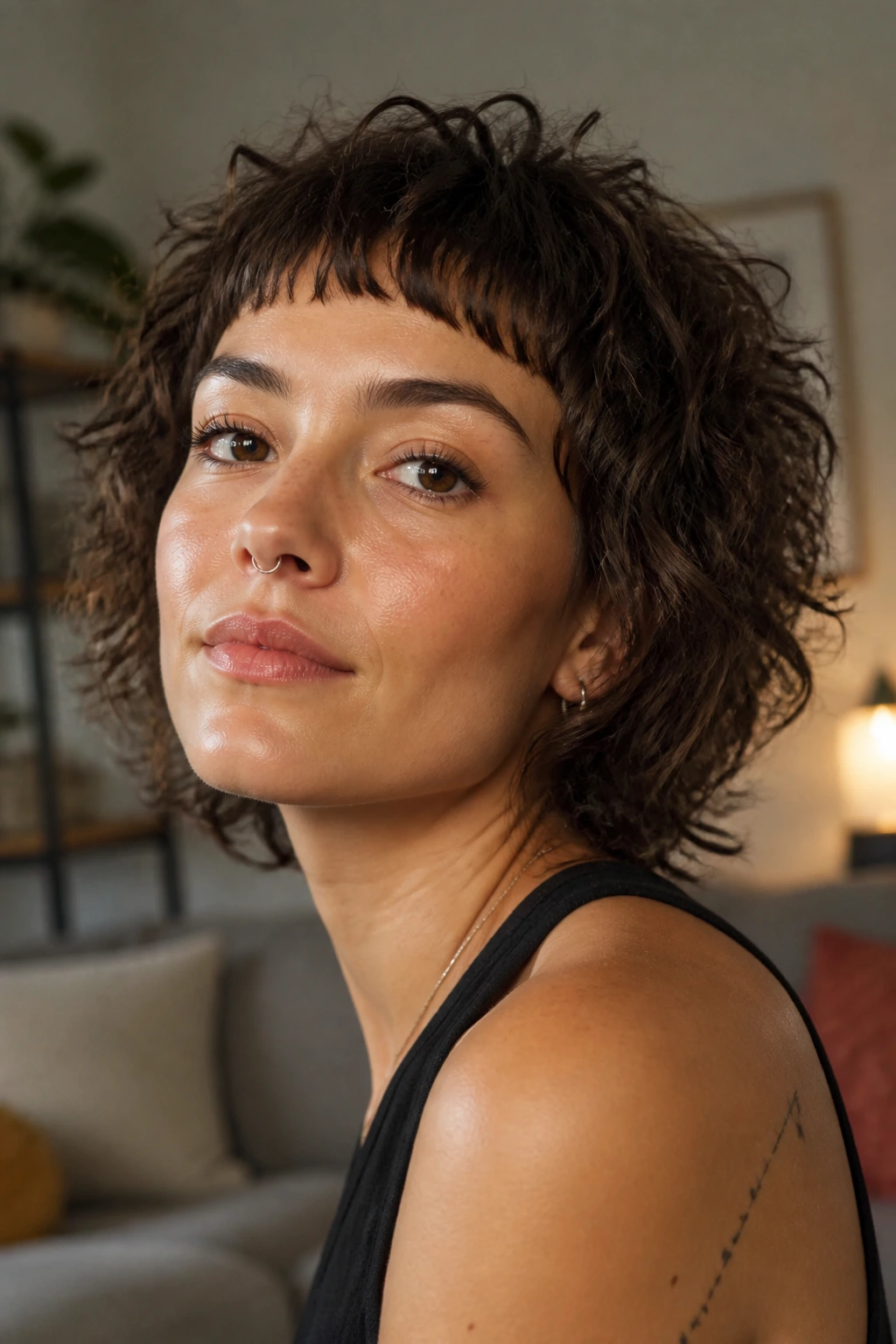
A short curly shag succeeds when the shape and the curl pattern are allowed to meet halfway. That’s the whole secret, if there is one at all. The cut should give the curls structure without sanding off their personality.
What I like about this family of cuts is how honest it is. It doesn’t pretend curls are straight, and it doesn’t pretend short hair can be left alone forever. It asks for a little attention, a little shape knowledge, and a stylist who understands shrinkage. In return, it gives you movement that’s hard to fake with one blunt length.
If you’re picking one from the list, choose the one that solves the part of your hair you complain about most — crown collapse, side bulk, forehead exposure, or a neckline that keeps puffing up. That’s where the right shag earns its keep, and that’s usually the cut you’ll keep coming back to.
