



Thick, frizzy curls can look like they have a life of their own in the mirror. One day they’re springy and defined; the next, they’ve puffed out around the head like they’re trying to make a point. That’s exactly why curly shaggy haircuts work so well here. They don’t fight the bulk. They break it up.
A good shag gives curls room to stack, bend, and fall in different layers instead of forcing every strand into one blunt wall. That matters a lot when your hair has density, coarse texture, or a little humidity-driven mischief baked into it. A heavy one-length cut can make thick curls look boxy at the bottom and wide at the sides. A shag changes the silhouette, and shape is everything with textured hair.
The trick is choosing the right version of the shag. Some cuts keep the weight low and long. Others push the crown up, carve in the cheeks, or let fringe do the heavy lifting. The 32 ideas below cover the full range, from soft and wearable to bold and deliberately messy.
Why These Curly Shaggy Haircuts Work So Well
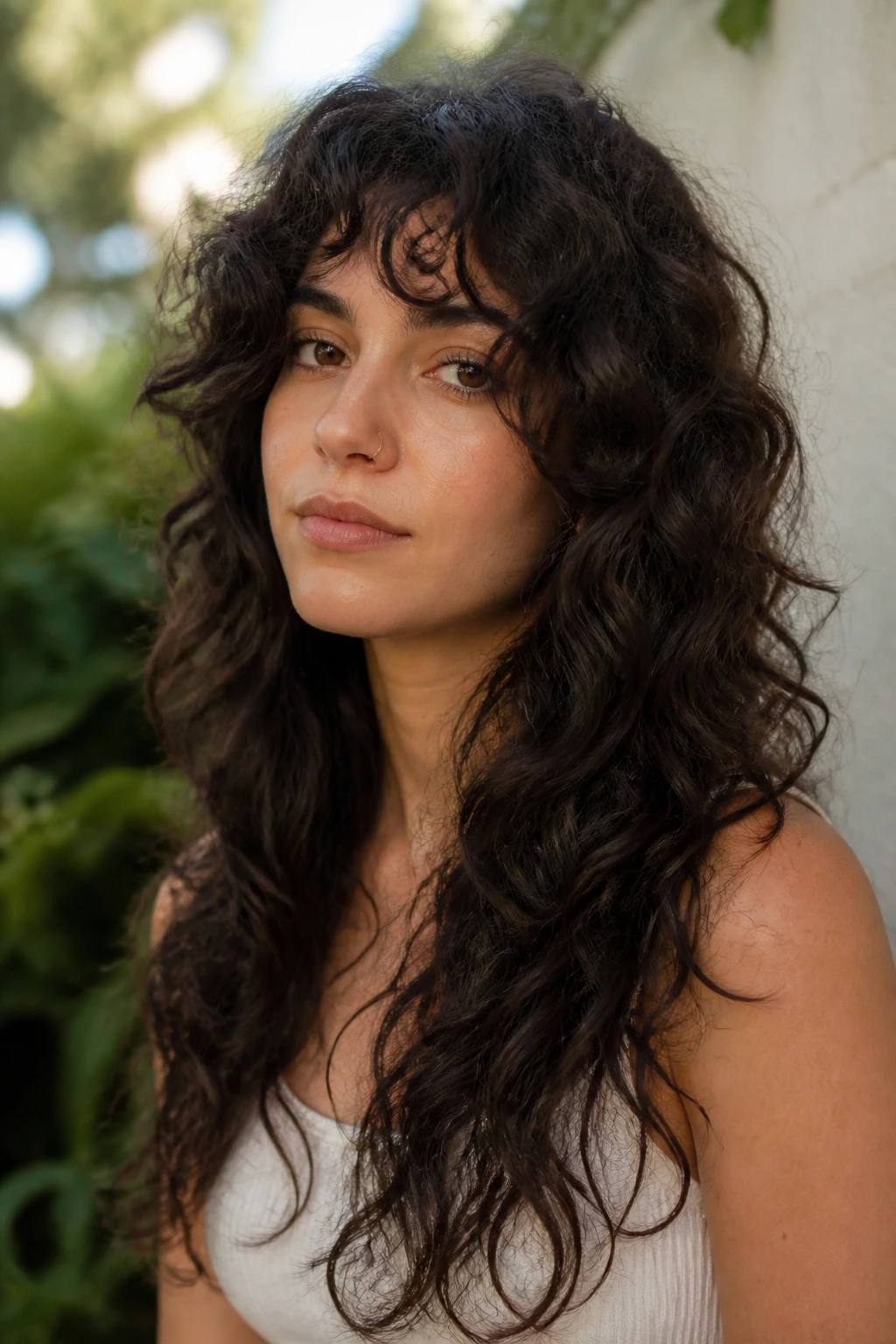
- They break the triangle shape: Thick curls often widen at the bottom when all the length sits in one line, and shag layers pull that bulk upward so the ends do not feel like a shelf.
- They turn frizz into texture: Instead of trying to flatten every flyaway, these cuts let a little halo live where it belongs, which looks better on dense curls than over-slicked hair ever does.
- They keep movement at every length: You can wear a shag at chin length, collarbone length, or past the shoulders and still get that airy, piecey shape.
- They make styling faster: Once the cut is balanced, you spend less time fighting the root area and less time trying to rescue the ends with product.
- They grow out with less drama: A shag usually softens as it grows, so you are not stuck with a hard line that suddenly looks wrong after three weeks.
1. Soft Shoulder-Length Shag
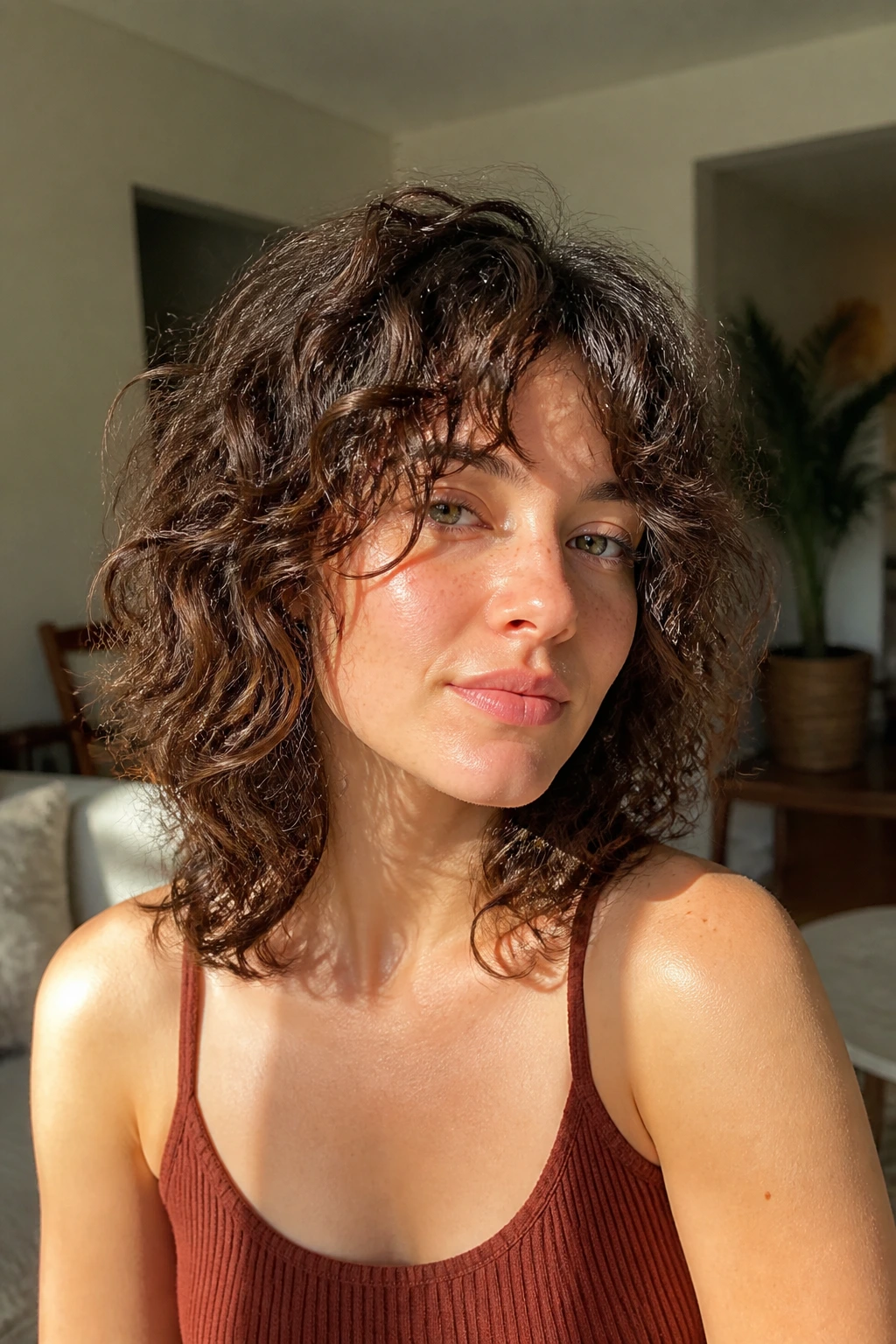
A shoulder-length shag is the easiest place to start if you want shape without losing too much weight. The ends still have enough mass to hang down, which matters when your curls are thick and want to balloon out the second they lose support. The layers should sit softly through the mid-lengths, not hacked into the hair like you are trying to remove every ounce of bulk.
Why it works: The shoulder point gives the cut a stable base, while the internal layers stop the bottom from turning into one heavy rectangle. It is especially good if your hair expands in humidity, because the weight at the ends keeps the outline from floating off the head. Ask for face-framing pieces that start around the cheekbone so the front opens up a little.
Styling cue: Use a light curl cream and a medium-hold gel, then diffuse only until the roots are mostly dry. Stop touching it. Seriously. Thick curls need time to set.
2. Curly Wolf Cut with Long Crown Layers

Want something with more edge? The curly wolf cut is a shag’s wilder cousin, and on thick frizzy hair it can look fantastic when the crown is left longer than people expect. The top gets enough lift to avoid that flat, heavy cap effect, while the back keeps some length so the shape does not tip into mullet territory unless you want it to.
What to Ask For
- Longer crown layers that start around the top of the ear, not at the part.
- A soft, shattered perimeter at the back.
- Front pieces that blend into the rest instead of dropping as separate curtains.
The key is restraint. If the layers are too short, thick curls can puff straight out and refuse to settle. A better wolf cut looks shaggy, not clipped into bits. It should feel a little rebellious, but still wearable at the office or on a school run without looking like a costume.
3. Rounded Midi Shag

A rounded midi shag is for the person who wants volume, but not chaos. The silhouette stays curved from the crown through the sides, which keeps thick curls from exploding wide at the cheeks. It is one of my favorite versions for frizzy hair that behaves better when it has a shape to follow.
The important part here is balance. The layers should be distributed in a soft arc, not stacked all over the head like a pyramid. That arc helps the curls fall into a halo rather than a box. If your hair shrinks up a lot when dry, tell your stylist to check the perimeter while your curls are in their natural state, not stretched flat.
Best for: medium-to-high density curls that need control around the jaw and a little lift at the crown. Add a side part if you want the whole cut to feel less symmetrical and more lived-in.
4. Face-Framing Shag with Curtain Bangs
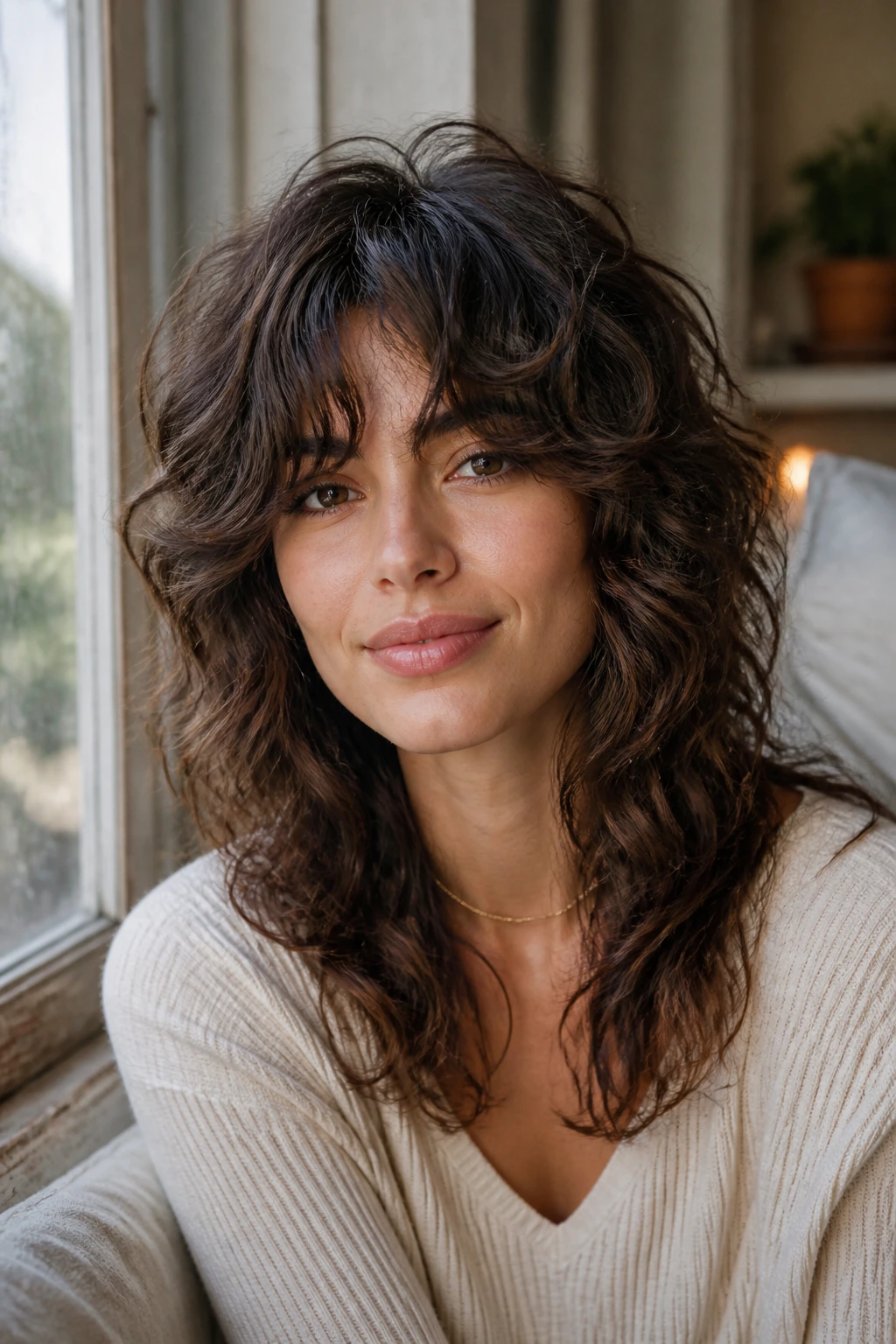
Curtain bangs change everything here. They pull attention straight to the face and cut a little of the weight that thick curls can build around the front. On frizzy hair, they also soften the line between “styled” and “not trying too hard,” which is a useful thing when your hair has a mind of its own.
The face frame should start longer than most people think. If the shortest pieces sit too high, they spring up and sit away from the forehead like little horns. Ask for the first bend of the curtain bang to land near the cheekbones, then let the rest drift into the side layers.
Styling note: Clip the bangs away from the face while they dry if they collapse too fast. That tiny move helps them form that open, split shape instead of sticking to the brow line.
5. Long Cascade Shag
This is the cut for people who love their length and do not want to sacrifice it just to get some shape. A long cascade shag keeps the bottom layers long enough to retain weight, while shorter internal layers create movement from the crown down. Thick curls love this because the hair still looks full, but not bulky.
The beauty of this cut is how it behaves in motion. When the curls are defined, the layers show up as soft ripples through the length. When the hair is frizzier or the weather is damp, the shape still reads as intentional. That is a rare thing. A lot of long curly cuts either look too stiff or too big. This one sits in the middle.
Use a little more hold than you would with a shorter shag. Long layers need a gel cast to keep the ends from ballooning apart.
6. Chin-Length Curly Shag Bob
Shorter shags can be risky on thick curls, but a chin-length version works when the layers are handled with care. The trick is keeping enough weight at the perimeter so the bob does not turn into a puffball. The shag element comes through in the internal layers and fringe, not in shaving half the shape away.
This cut gives a lot of personality fast. It exposes the jawline, brings the cheeks forward, and makes the curl pattern look denser and more sculpted. If your curls are coarse, this can be a strong choice because the texture itself becomes part of the haircut’s structure. Just do not let the stylist over-thin the ends. That is where bob-shaped regret begins.
Good for: dense 2C–3B curls, strong jawlines, and anyone who wants a cut that feels fresh without needing constant heat styling.
7. The Crown-Heavy Volume Shag
If your curls go flat at the roots and explode halfway down, the crown-heavy shag is worth a serious look. The top is layered enough to encourage lift, while the lower sections keep some solidity. That balance keeps the style from collapsing on top or widening too much at the base.
A lot of thick-frizzy hair needs this kind of architecture. Not more product. Architecture. The crown layers should be short enough to move, but not so short that they stick straight up on day one and day two and day three. Ask your stylist to check the shape with the hair in its natural curl pattern, because shrinkage at the crown changes everything.
Styling cue: Root clips and a diffuser at low heat can keep this shape from sinking before it sets. Skip rough towel drying; it crushes the crown and wakes up frizz.
8. Side-Part Sweep Shag
A deep side part gives a shag a little swagger. It also helps thick curls fall diagonally across the face, which can be a nicer shape than a center part when the hair tends to spread wide. The sweep softens the forehead and gives the cut a bit of asymmetry without making it dramatic for the sake of drama.
This version works especially well when one side of your hair wants to behave better than the other. Most curly heads have a stronger side anyway, and a side part lets you use that to your advantage. Ask for a longer fringe that can be tucked back or worn forward, because the front needs flexibility if you switch parting directions.
There is also a practical bonus: a side-part shag is easier to refresh on day two. Flip it, mist the flatter side, scrunch, and move on.
9. Layered Lob Shag
A lob shag sits right at the collarbone and feels tidy even when the texture is not. That length is useful for thick hair because it keeps enough weight to stop the curls from splaying out, but the layers still give the shape that airy, shaggy movement people want.
The collarbone is a smart stopping point. It lets the cut swing a little, it flatters a lot of face shapes, and it avoids the awkward “too short to tuck, too long to style” zone. If your hair tends to frizz at the ends first, this length can be kinder than a shorter chop, because the longest pieces are still heavy enough to hang.
Best for: people who want the shag look but need enough length to pull it back on bad-hair days.
10. Deva-Cut-Inspired Shag
A Deva-cut-inspired shag is all about shaping the curls where they live, not where they look in a blown-out state. That matters because thick frizzy curls can look a full inch or two longer when stretched wet than they do after drying. Cutting curl by curl helps the stylist see the real line.
The result is usually softer and more customized than a generic shag. Each curl family gets a bit of attention, and the layers are placed to support the natural bend instead of forcing a single blueprint onto every section. If your curls clump differently from one side of your head to the other, this kind of cut can make that imbalance feel more intentional.
Why It’s Worth Asking For
- The shape is built around your real curl pattern.
- The layers tend to settle better after washing.
- It usually reduces that weird over-layered look on one side and heavy on the other.
11. Razor-Softened Tousled Shag
A razor can be useful on thick hair, but only in the right hands. A razor-softened shag has ends that look slightly feathered and airy, which helps if your curls hold a blunt edge like a broom. Done well, it makes the cut feel loose and lived-in.
Done badly, it frays the perimeter and makes frizz worse. That is the catch. On coarse hair, I usually prefer a stylist who uses a razor only to soften select spots around the face and interior, not to shred the whole head. The goal is movement, not wispy bits that split apart every time the humidity rises.
This version suits hair that feels dense but not fragile. If your ends are already dry or porous, point cutting is often the safer move.
12. Full Fringe Shag
Full fringe on thick curls is a commitment, but it can be gorgeous when the rest of the haircut is layered to support it. The fringe draws the eye straight to the eyes and makes the whole cut feel more graphic. On frizzy hair, that bold shape can be a real advantage because the bangs take attention away from the bits that do their own thing.
The fringe should not be too short. That is the trap. Curls bounce upward, and a bang that looks eyebrow-length wet can end up halfway up the forehead when dry. Ask for a longer starting point and let the stylist check how much your hair shrinks before they finish. You can always trim more later. You cannot glue it back.
Style note: A little gel on the fringe and a quick finger coil at the front pieces can keep the bang from separating into five tiny ropes.
13. Halo Shag for Dense Curls
This one is all about the outline. A halo shag keeps the volume distributed around the head in a soft circle, which is a smart move when your hair is thick enough to create a lot of width on its own. Instead of flattening the sides and overbuilding the crown, the cut lets the whole shape feel balanced.
It is especially good for people whose curls puff out at the temples and nape at the same time. The halo shape softens both zones and gives the hair a round, cloudlike silhouette without losing definition. If you want a cut that reads polished without being stiff, this is one of the best shags to ask about.
A few well-placed interior layers do the work here. Too many, and the shape gets airy in the wrong way.
14. Mid-Length Boho Shag
The mid-length boho shag lives in that easy zone just below the shoulders, where it can be worn loose, clipped half up, or thrown into a messy knot without losing its shape. Thick frizzy curls do well with this length because there is enough hair to show off the pattern, but not so much that the ends weigh the whole thing down.
The boho version should feel relaxed, not over-structured. Think soft bends, long face-framing pieces, and a fringe that can sit off the brow or be tucked behind the ear. It is a good pick if you like a little softness around the face and do not want a haircut that looks too engineered.
Styling cue: A diffuser on low heat and a dab of lightweight oil only on the very ends keeps the shape from getting fuzzy without flattening the mid-lengths.
15. Big Volume Shag with Crown Lift
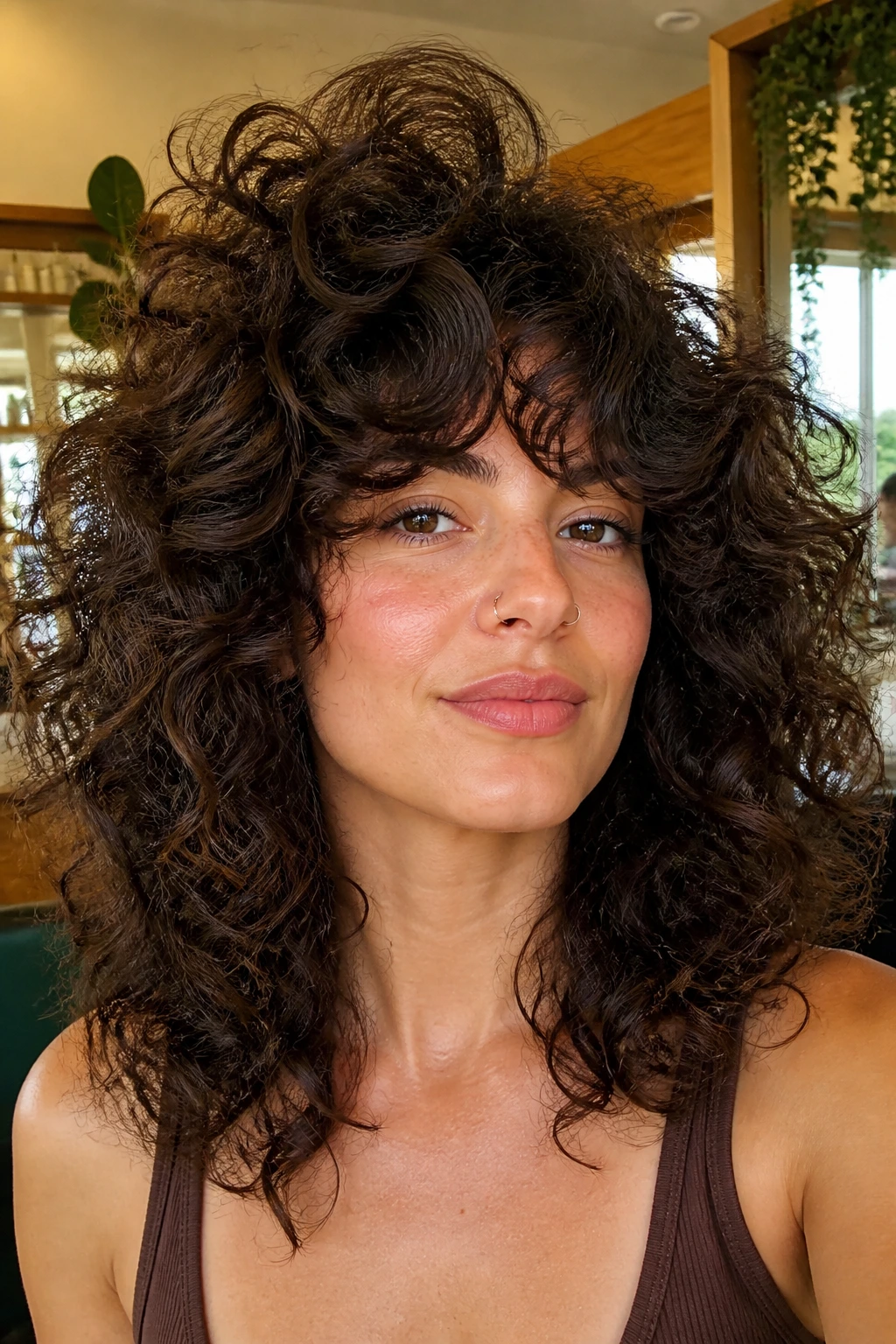
Some people do not want to tame volume. They want to shape it. That is where the big volume shag comes in. The crown layers encourage lift, the side layers keep the width from feeling square, and the length stays full enough to show off the density.
This cut works best when you embrace the fact that thick curly hair will not sit close to the head all day. It should not. The goal is a controlled cloud, not a pressed-down helmet. Ask your stylist to leave enough length in the back so the silhouette stays balanced when the top starts to expand.
Best for: curl patterns that shrink hard, especially if your hair gets bigger as it dries and you want that volume to look deliberate.
16. Dry-Cut Low-Maintenance Shag
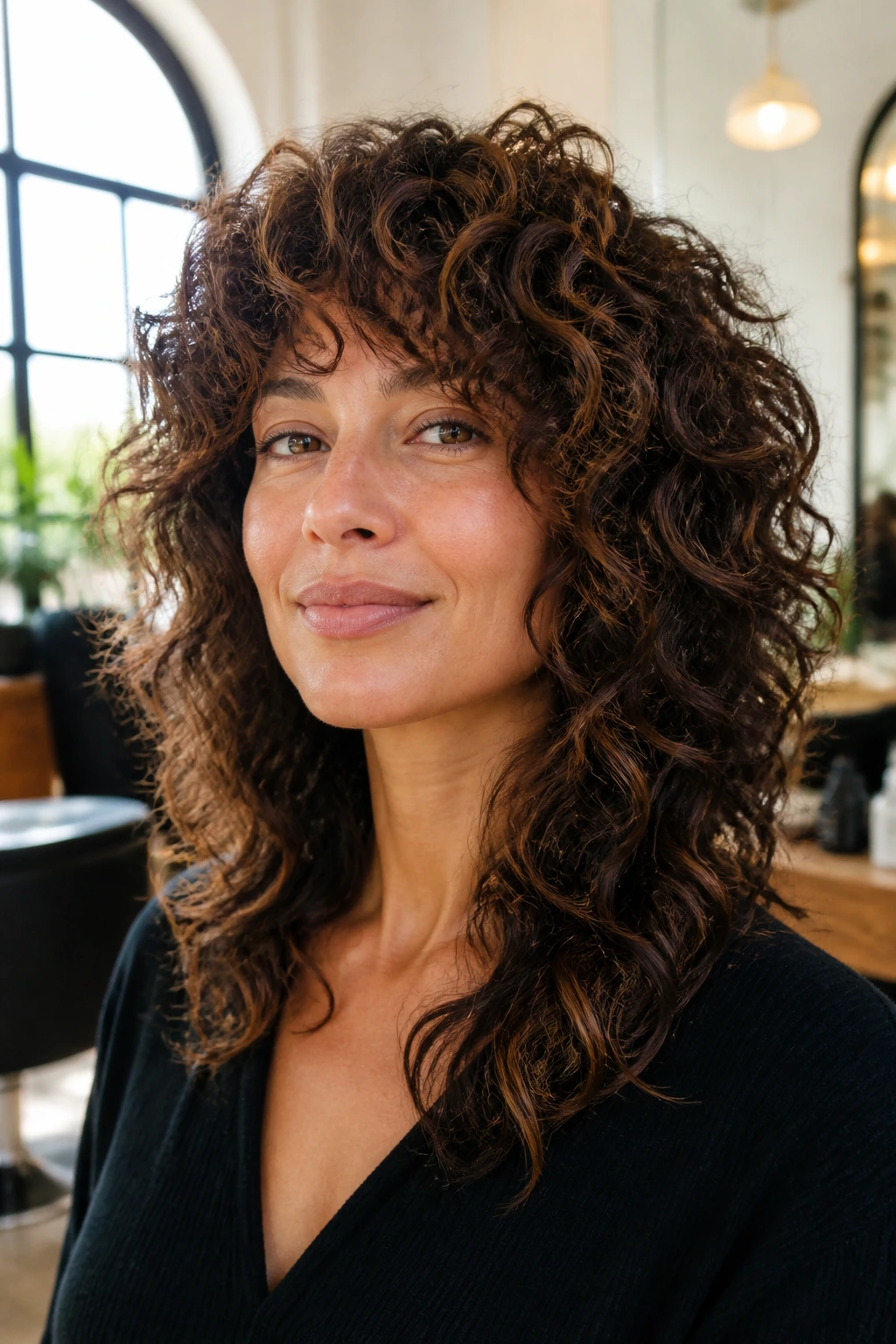
A dry-cut shag is one of the best options for thick frizzy hair because the stylist sees the real shape before making the first snip. Wet curls can hide weight, stretch too long, and lie to everybody in the room. Dry cutting takes that guesswork out.
The finished cut usually looks more natural from day one. The layers fall where they belong, and the stylist can trim around the perimeter without accidentally creating a lopsided shape that only appears after wash day. If your curls have strong shrinkage or uneven density from front to back, dry cutting is worth asking for.
A dry cut is not magic, though. It still depends on the stylist reading your curl pattern well. Bring photos of cuts on similar density and texture, not on fine hair that will never behave the same way.
17. Piecey Collarbone Shag
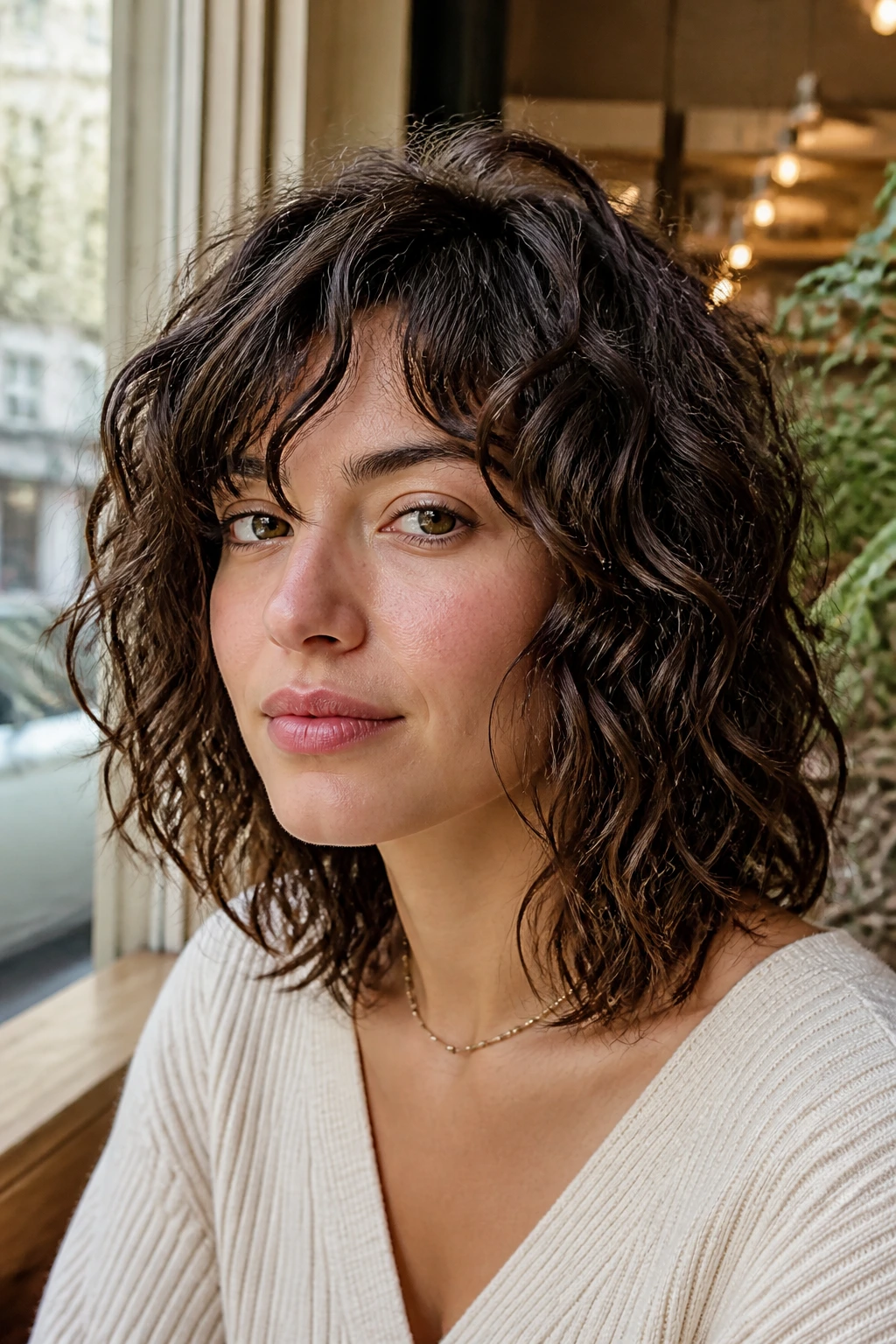
Piecey ends give thick curls a lighter finish without taking away the full body people usually want. This collarbone shag keeps enough length to feel feminine and wearable, but the ends are separated into visible pieces so the whole thing does not read as one giant block.
That piecey finish is especially useful if your hair frizzes at the bottom first. A little separation makes the frizz look like texture instead of damage, which is a nice shift in perspective. The key is not to overdo the thinning. You want definition through the ends, not see-through strands that look tired by lunchtime.
A curl cream plus a soft hold gel can help preserve those separated pieces. Scrunch gently and leave the hair alone while it dries. Touching the ends too much turns the good kind of separation into fuzzy static.
18. Bottleneck Bang Shag
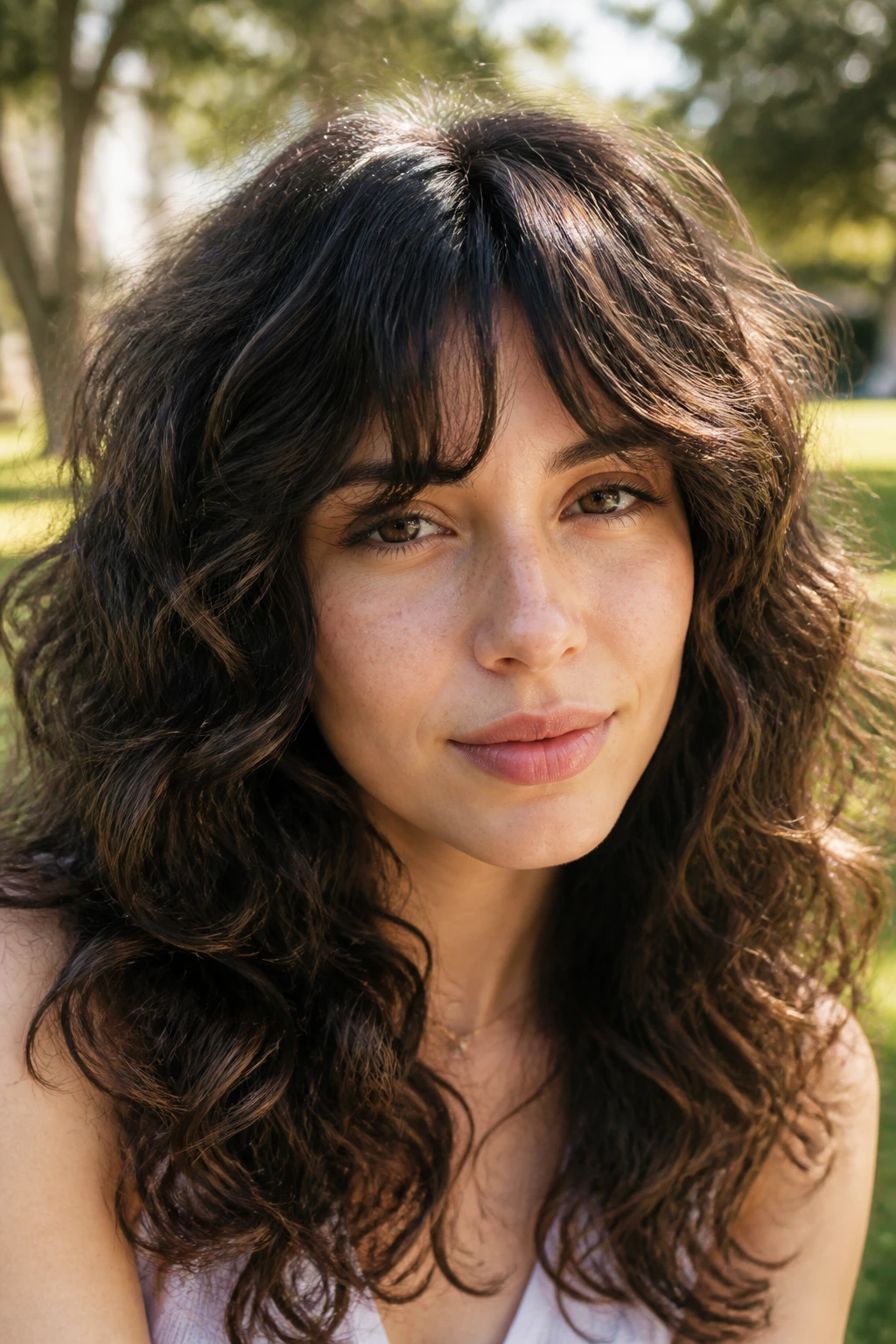
Bottleneck bangs are one of the smartest fringe choices for curly shaggy haircuts because they start narrow at the center and open wider as they move outward. That shape lets thick curls sit around the face without swallowing your forehead whole. On frizzy hair, the softer center helps the bangs blend instead of sitting like a hard curtain.
The bangs need enough length to curve. If they are chopped too short, the shape loses the whole point. Ask for the shortest section to live well below the brows when dry, then let the stylist taper out toward the temples. The side pieces should feel like part of the cut, not an afterthought.
This is one of those styles that gets better once it settles for a week or two. Fresh bangs can look a bit too neat. Then the curl pattern relaxes, and the shape starts to make sense.
19. Asymmetrical Curly Shag
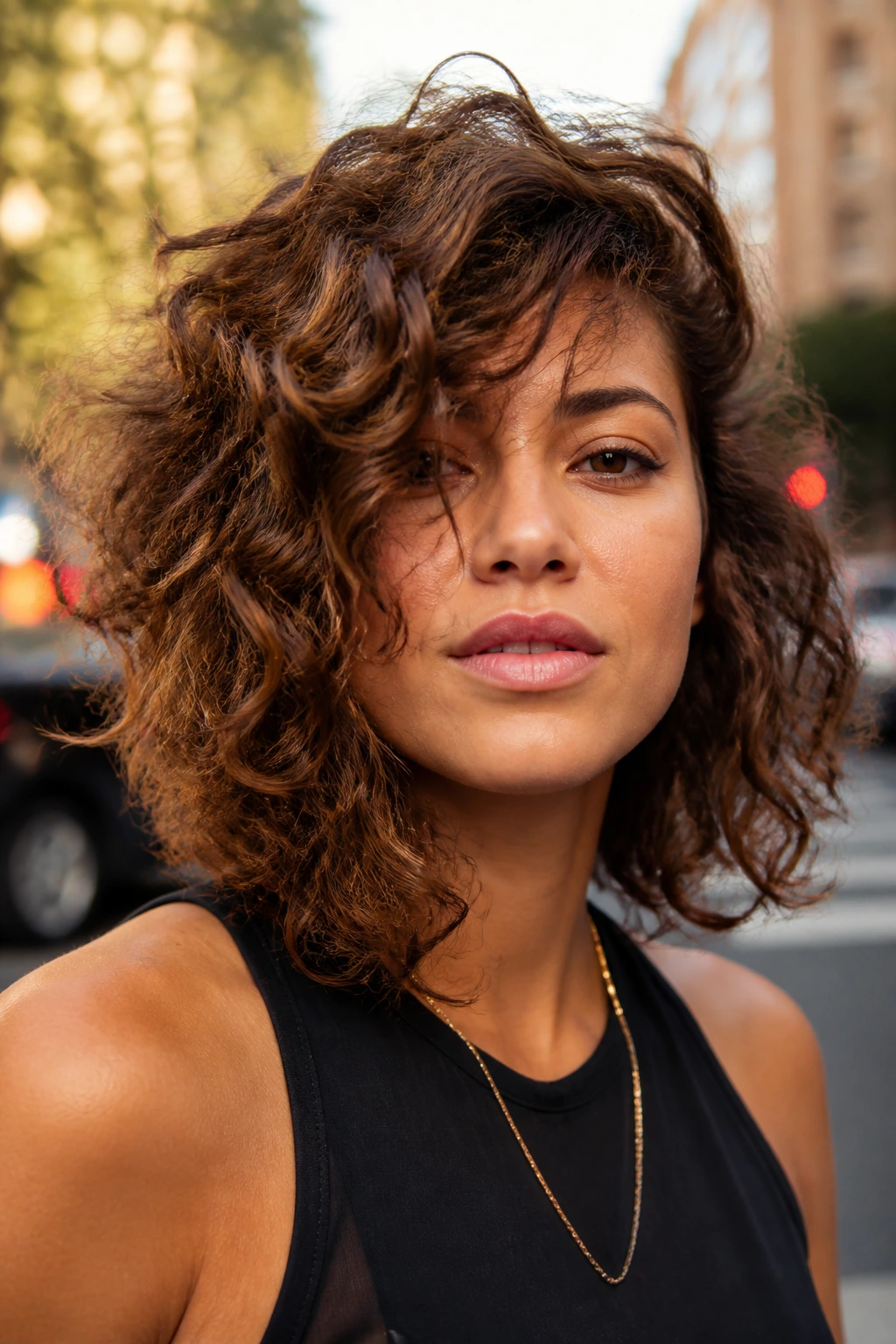
A little asymmetry goes a long way on thick curls. One side slightly longer, or one front section slightly heavier, can stop the cut from feeling too symmetrical and boxy. On frizzy hair, asymmetry also distracts the eye from the inevitable bits that dry at different speeds.
The best version does not scream “asymmetrical” from across the room. It just feels off-center in a good way. If your face is very round, a longer side can create a slimmer line. If your hair flips one way all by itself, use that. Fighting natural direction is a losing game.
Styling note: Part the hair slightly off-center and let the longer side fall forward. A tiny shift in parting can make the whole haircut look more expensive than it is.
20. Long Face-Frame Shag
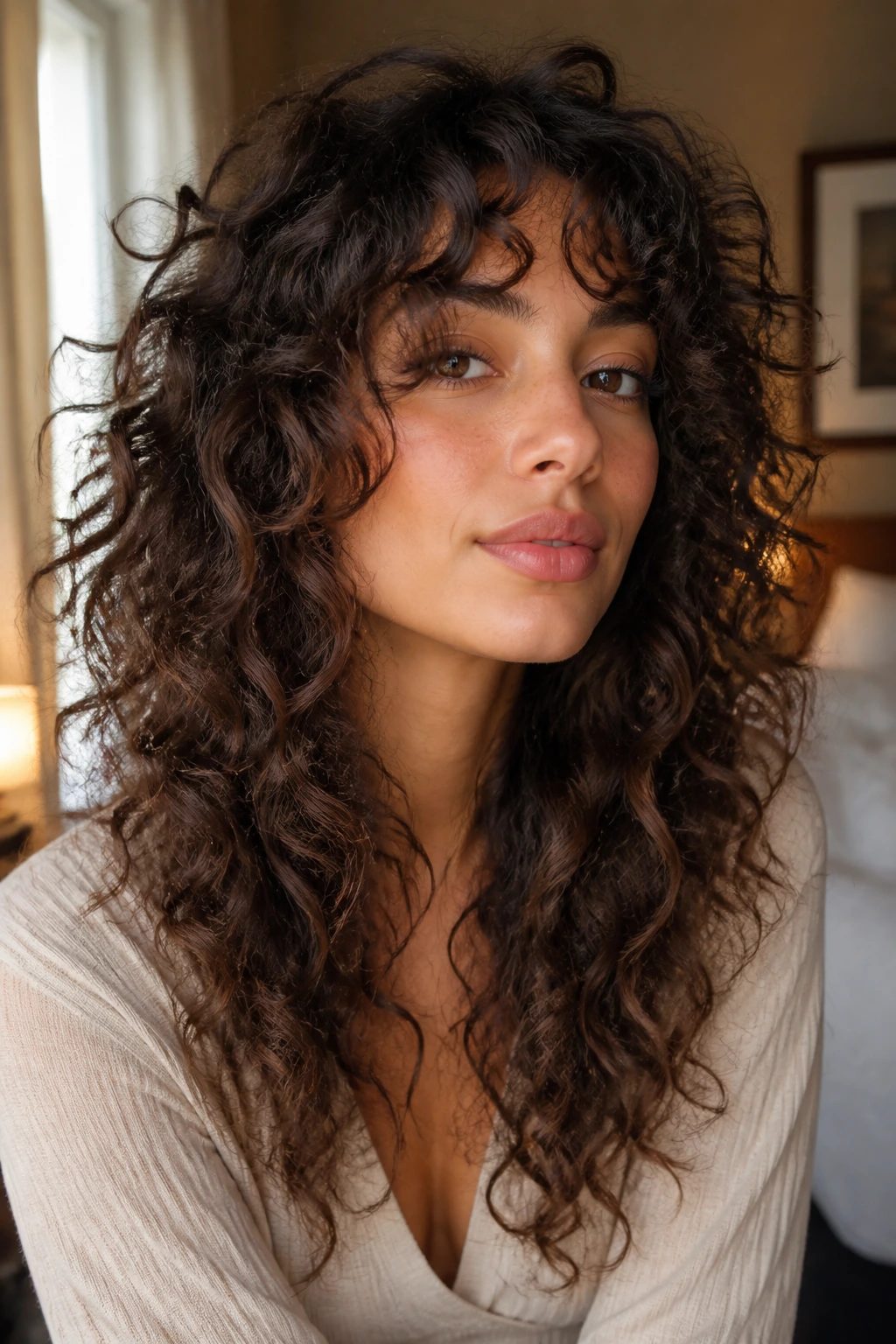
Long face-frame layers are the gentlest way to add shag energy without changing the overall length much. That matters if you have thick hair and you are attached to every inch. The shorter pieces still bring movement around the eyes and jaw, but the rest of the hair stays substantial.
This shape is especially kind to frizzy curls that go wide at the cheeks. The face-framing layers pull the eye downward and inward, which keeps the sides from dominating your reflection. Ask for the shortest pieces to start around the nose or lip area if you want a softer effect, or around the cheekbones if you want more lift.
It is a smart choice for people who wear their curls half up a lot. The front layers stay interesting even when the back is tied away.
21. Curly Pixie Shag
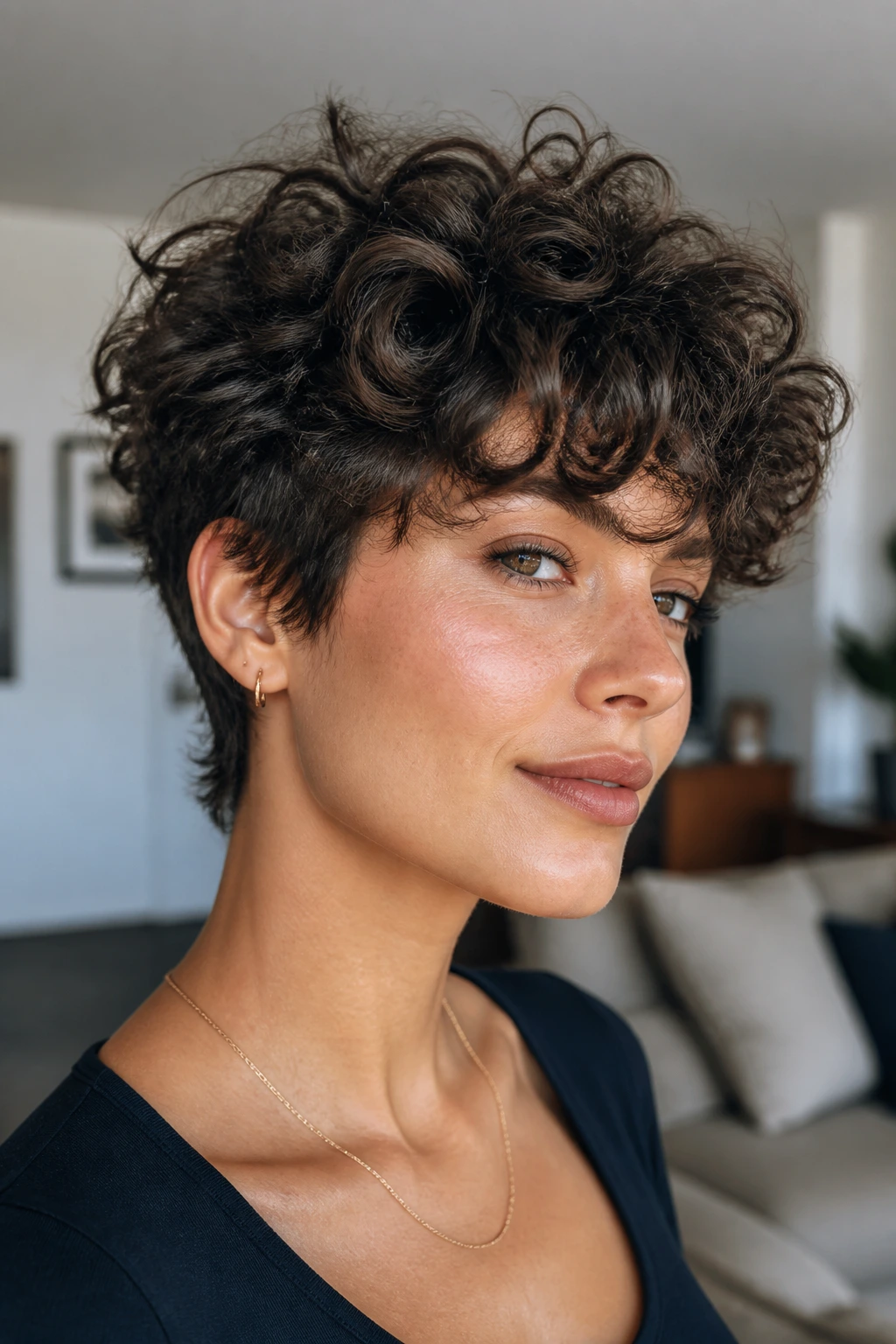
A pixie shag on thick curls is not for the timid, but it can be a fantastic cut if you want the curls to become the whole statement. The shape is cropped at the sides and back, then left a little longer on top and in the fringe area. That means the texture gets to show off instead of hiding under weight.
The main challenge is balance. Too much length on top and the cut can mushroom. Too little and it turns into a short puff with no shape. The best version has soft, broken layers that follow the head shape. If your curls are very dense, this can remove a lot of bulk while keeping enough softness around the face.
This cut needs regular trims. No way around that. A short shag grows out fast, and once it loses its shape, it starts to look accidental.
22. Shaggy Mullet
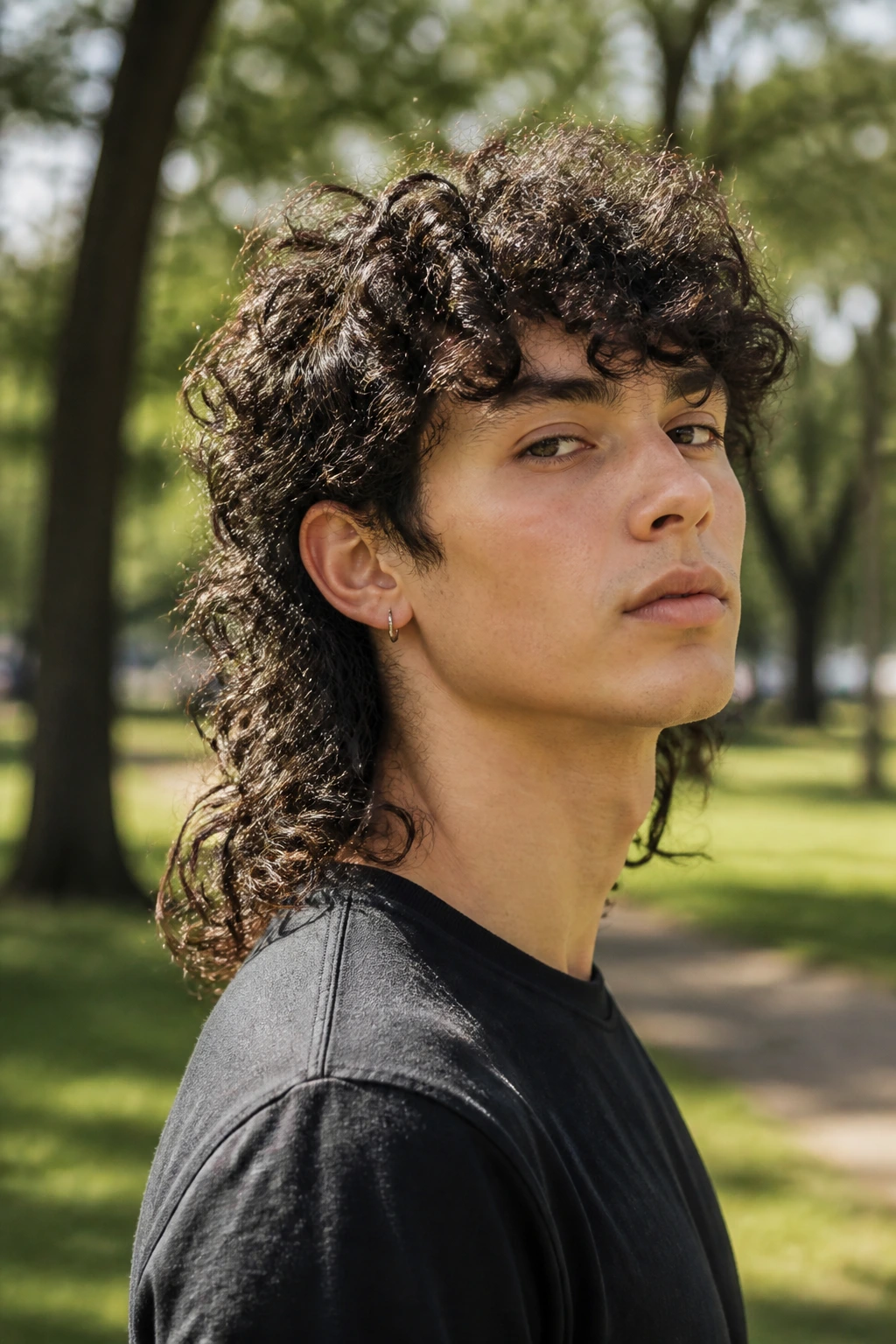
Yes, the shaggy mullet still has a place, and on thick curly hair it can be a lot of fun. The front and crown stay active and layered, while the back keeps length and movement. It is bolder than a classic shag, which makes it a good choice if you want the haircut to do some of the talking for you.
The curly texture keeps this from looking too severe. The softness of the curls rounds off the shape and makes the transition from short to long feel less harsh. If you want a mullet-inspired cut without getting locked into a hard-edged style, this is the version to ask for.
It works best when the layers are blended carefully through the sides. A blunt disconnect can feel harsh on frizzy hair. A soft one feels intentional.
23. Grown-Out Gentle Shag

Sometimes the best shag is one that already looks a little grown in. A gentle shag uses soft, spaced-out layers that do not scream for attention. It is excellent for people who do not want to return to the salon every few weeks or who have curls that shift a lot from one wash to the next.
The advantage here is flexibility. You can wear it polished, messy, clipped back, or stretched out with a diffuser. It never looks too rigid. That makes it a strong choice if your hair changes with weather, water quality, or product choice. Some cuts fall apart when the curl pattern changes. This one usually bends with it.
Styling cue: Let the hair air-dry partway, then diffuse just the roots and the longest layers. That keeps the shape from getting too big while preserving softness.
24. Ringlet-Defined Shag
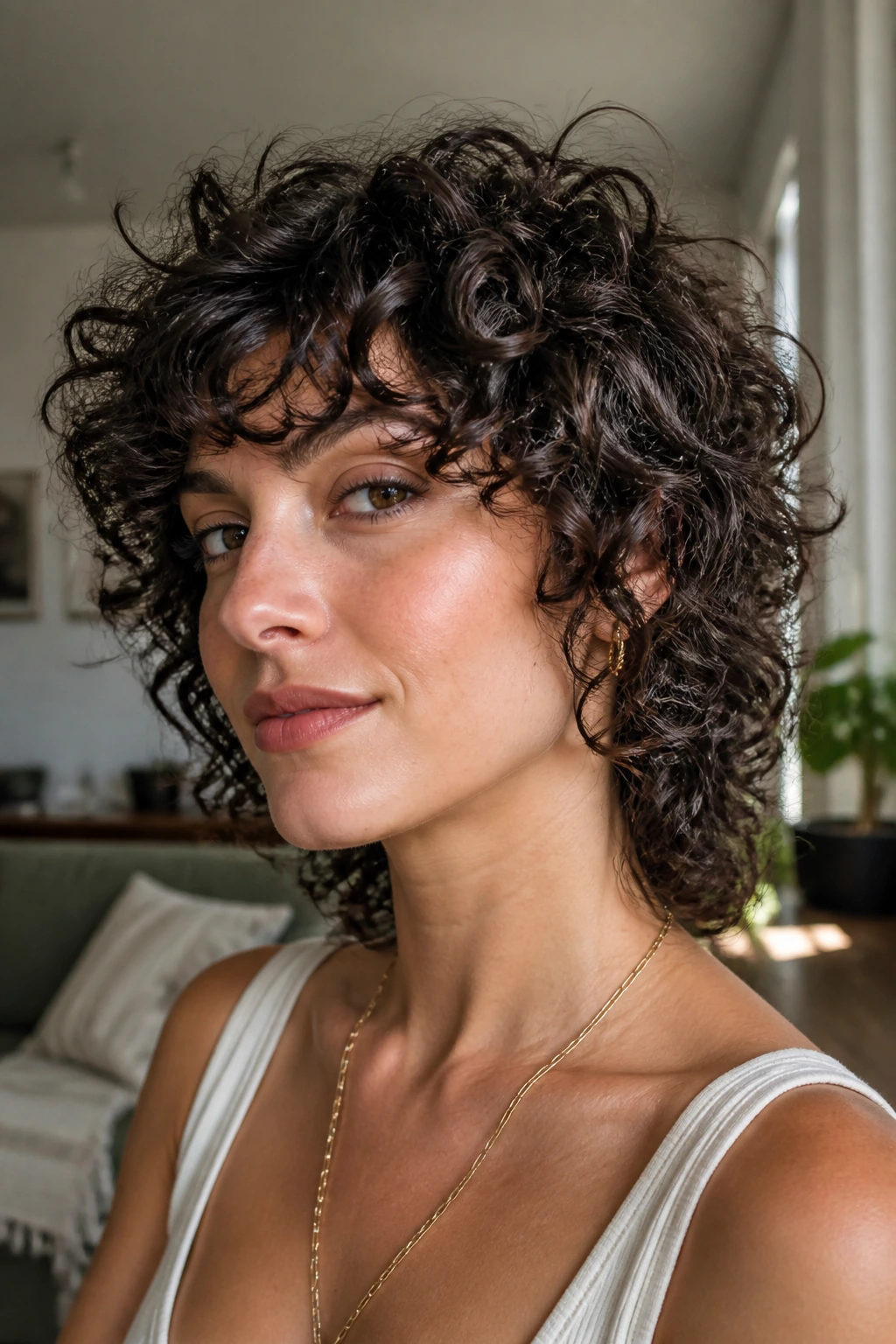
If your curls form clear ringlets, this version lets those coils be the star. The layers are placed to support the ringlets rather than break them up, which means the cut looks neat even when the texture is loud. Thick hair can carry a lot of visual information; this haircut helps it all land in the same place.
The key here is precision around the ends. Too much thinning and the ringlets lose their shape. Too blunt and the bottom gets heavy. Ask for point cutting or curl-by-curl refinement so the edge looks soft but still full. It is a very good choice if you like defined curls and want the haircut itself to be part of that definition.
When this works, it really works. The curls stack into a shape that looks almost sculpted, but not stiff.
25. Deep Side-Part Volume Shag
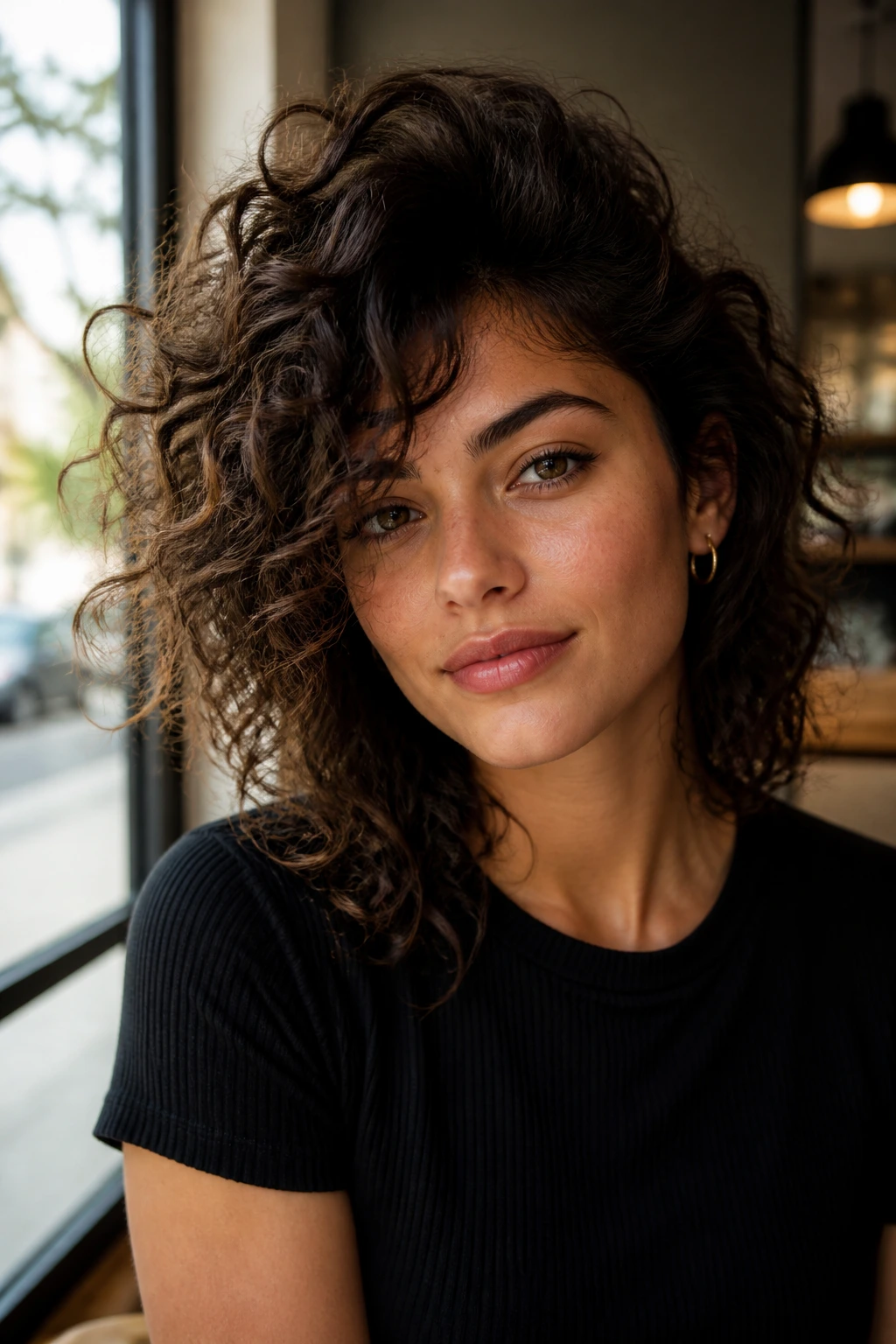
A deep side part can make thick curls look instantly more styled. It pushes volume to one side, which creates lift at the crown and keeps the hair from sitting evenly in a way that sometimes reads flat or square. On frizzy hair, the off-center shape also distracts from any patches that dry unevenly.
This cut is especially good if your face suits asymmetry or if you like your hair to have a bit of drama without any extra length. The parting does a lot of the work, so the layers can stay soft and wearable. Ask for a long sweep at the front so the side part has enough hair to hold the shape.
It is a strong “second-day hair” cut, too. Flipping the part and misting the roots can freshen it fast.
26. Jaw-Length Soft-Edge Shag

Jaw-length shags can look sharp on straight hair and surprisingly soft on curls. The trick is keeping the edges rounded and the layers light enough that the cut does not fan outward too much. Thick hair at this length can feel bold. Softening the perimeter makes it wearable.
This version is nice if you want to show off earrings, necklines, or a strong jawline. The shape sits close to the face but still has some movement, so it does not read as a helmet or a triangle. It is also a good option if your curls are very springy and you want a shorter style that still has a bit of bounce.
Best for: people who want a shorter haircut that still feels feminine, soft, and easy to style with fingers instead of a brush.
27. Shag for 3A–3B Curls
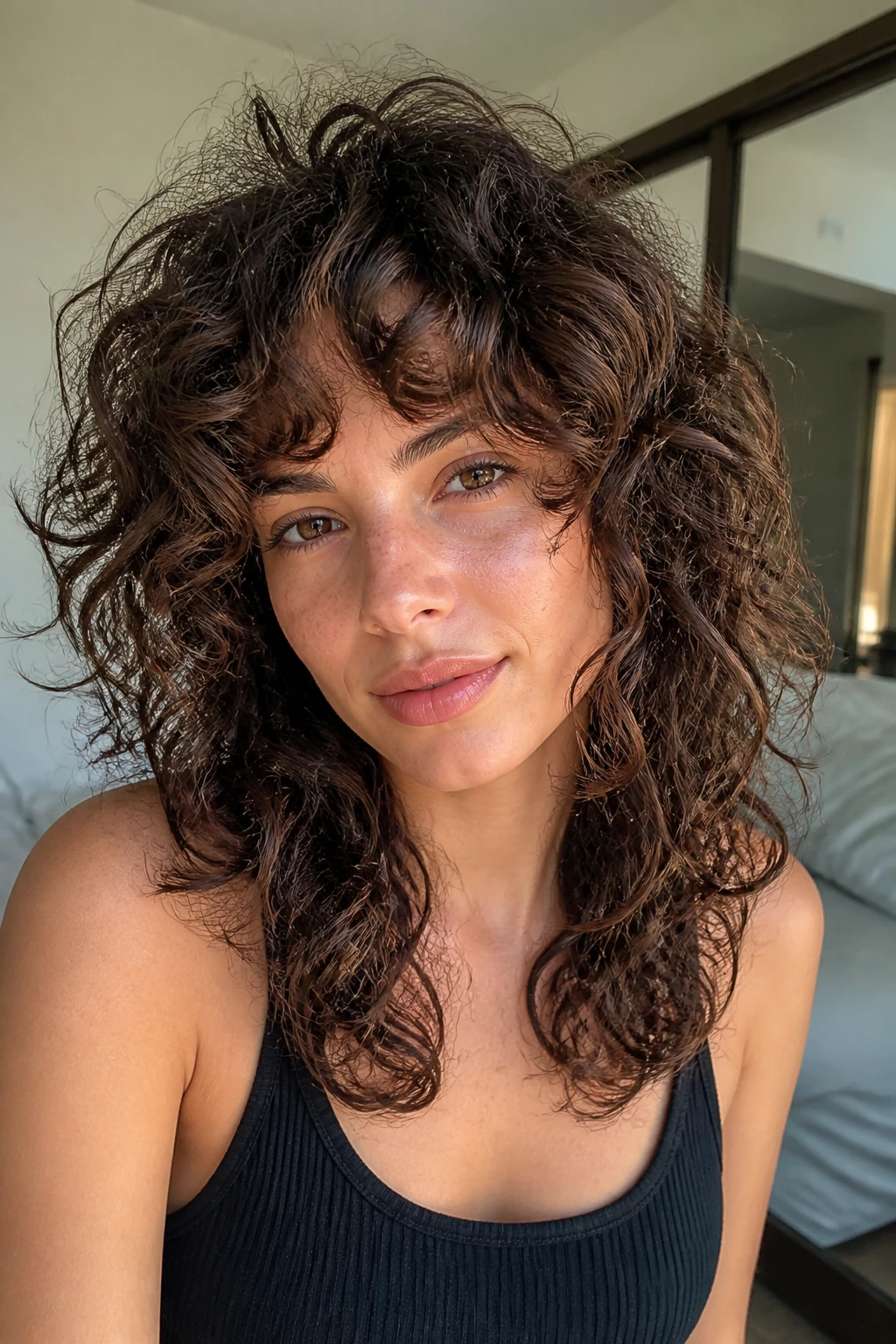
For looser curls, the shag often needs a little more layering than people expect. 3A and 3B curls can look weighed down if the interior is too dense, but they can also go fluffy if the layers are too high. The sweet spot is soft graduation through the mid-lengths, with enough perimeter left to keep the shape grounded.
This pattern usually likes face-framing pieces and a little crown lift. The layers should open the curls up, not separate them into a thousand small sections. If your hair frizzes more when it gets brushed, avoid over-brushing once the cut is set. Hands and a wide-tooth comb are usually enough.
A 3A–3B shag tends to look best with medium hold. Too much cream and the curl falls. Too little and the frizz takes the wheel.
28. Shag for 3C–4A Curls
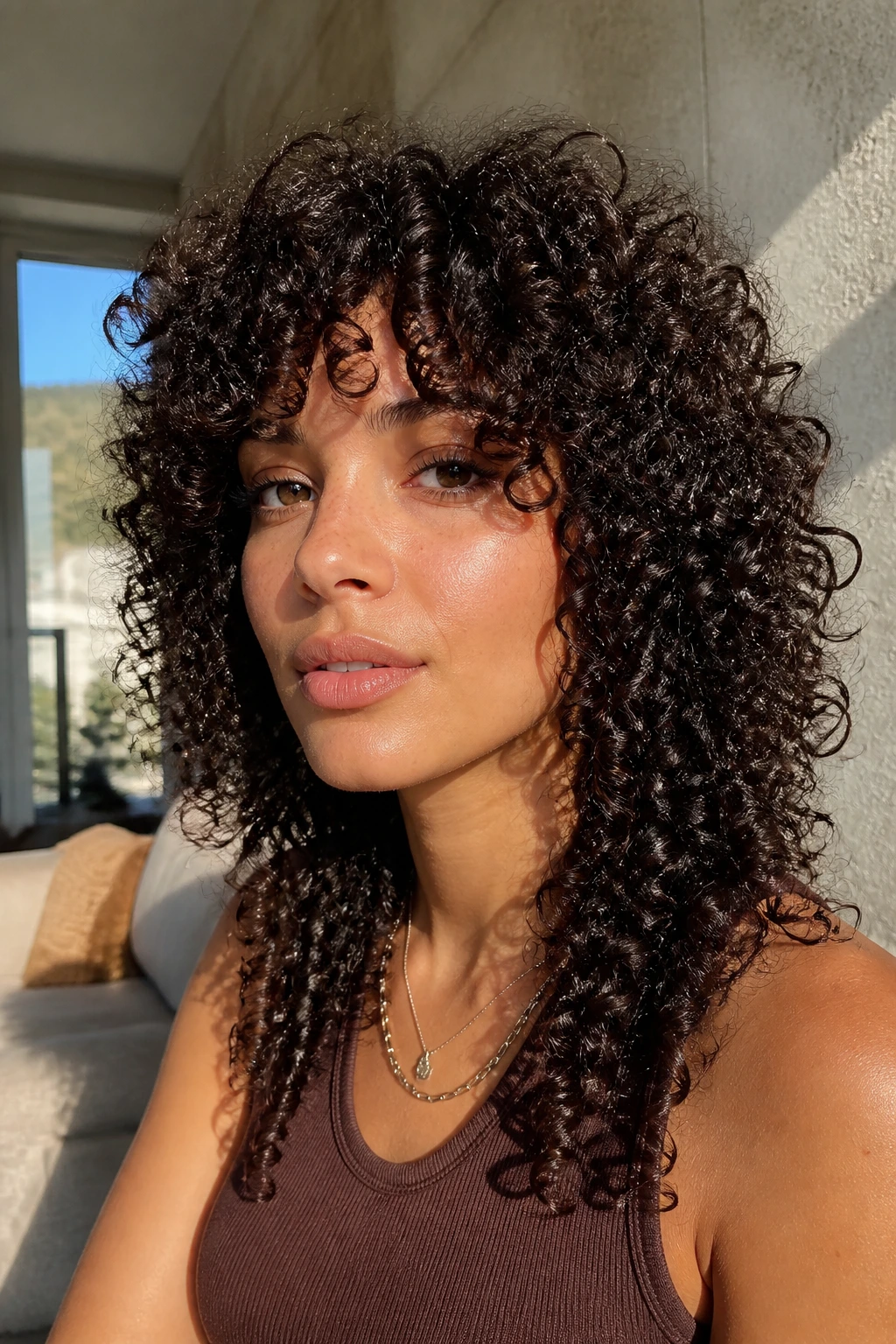
Tighter curls need a different kind of shag. The layers should respect shrinkage and keep enough weight in the hair so it does not spring up too far. With 3C and 4A curls, the wrong shag can turn into a rounded puff that is hard to shape, so the cut has to be carefully planned.
I like this version when the stylist works section by section and checks how the curls stack as they dry. The goal is controlled fullness with movement, not a carved-up silhouette that only looks good in one lighting setup. Longer face-framing pieces help a lot here, because they open the style without removing too much density from the whole head.
If your curls tighten hard after washing, ask for length to be kept a little longer than your first instinct says. Shrinkage is real. It has opinions.
29. Thick Coily Shag with Stretch
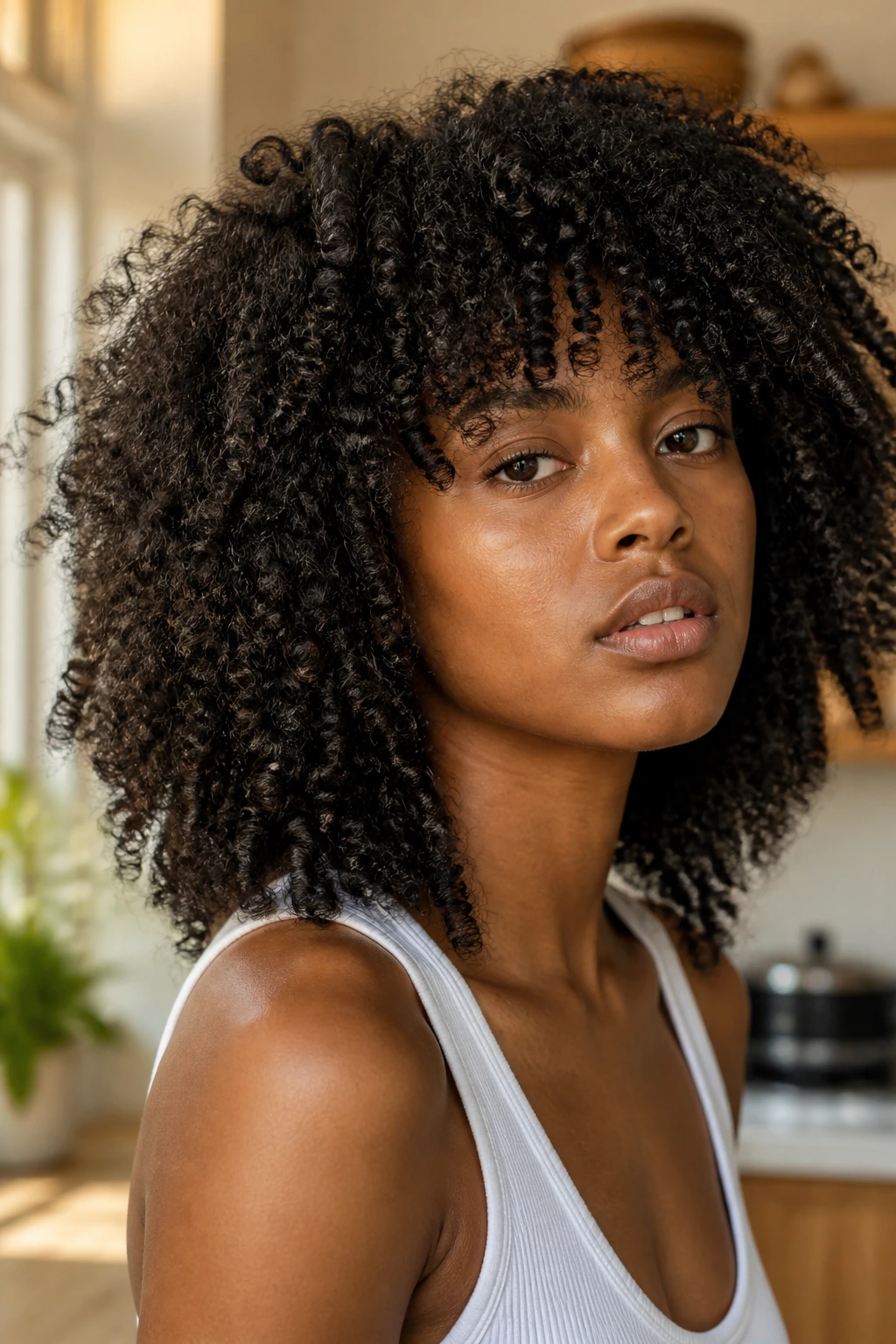
Coily hair can wear a shag beautifully when the layers are set up to keep shape after shrinkage. The cut should leave enough length in the lower layers so the hair does not puff straight out from the head. Stretching the hair a bit while cutting can help the stylist see the natural fall, but the final shape still needs to respect the coil pattern.
This version is best when you want fullness with a little movement around the face and crown. It works with twist-outs, wash-and-gos, and stretched styles, which makes it flexible in a way some short cuts are not. Ask for a stylist who has worked with coily density before. That is not optional. The wrong hand can turn a good idea into a lopsided headache.
The cut should feel shaped, not stripped. That distinction matters.
30. Frizz-Friendly Wash-and-Go Shag
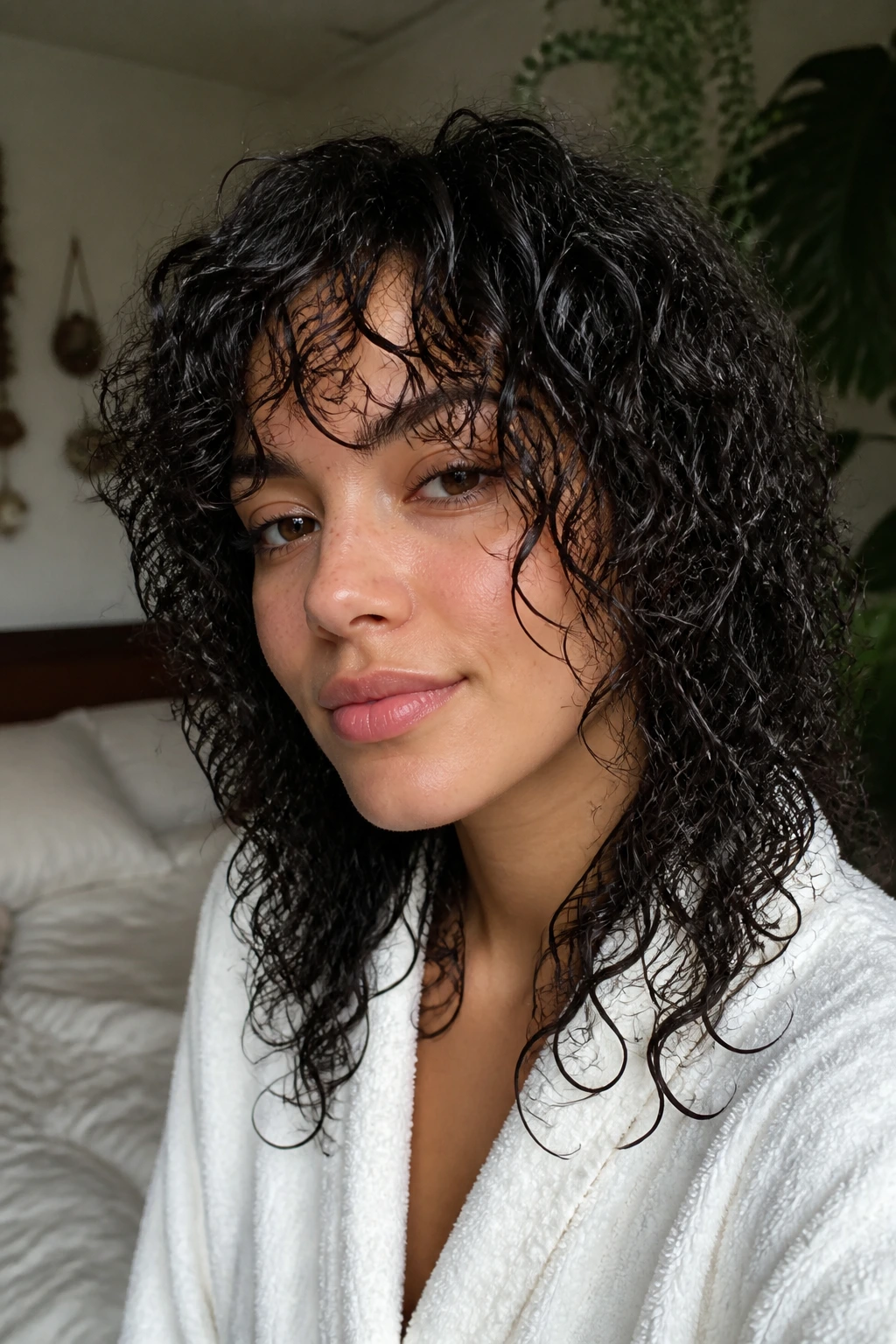
A wash-and-go shag is for people who want the haircut to do the heavy lifting. The layers are arranged so the curls fall into place after a simple routine: cleanse, leave-in, stylers, diffuse or air-dry, done. Thick frizzy hair often needs exactly this kind of low-drama structure, because if the cut is right, the styling can stay simple.
The shape usually includes moderate face framing, soft layering through the sides, and enough length at the bottom to keep the outline smooth. It is a practical cut. Not boring. Practical. There’s a difference. You can wake up, refresh with water, squeeze in a little gel, and move on with your day without rebuilding the whole style from scratch.
It’s a strong choice if you live in a humid place or if you hate spending half your morning on your hair.
31. Round-Face Balancing Shag
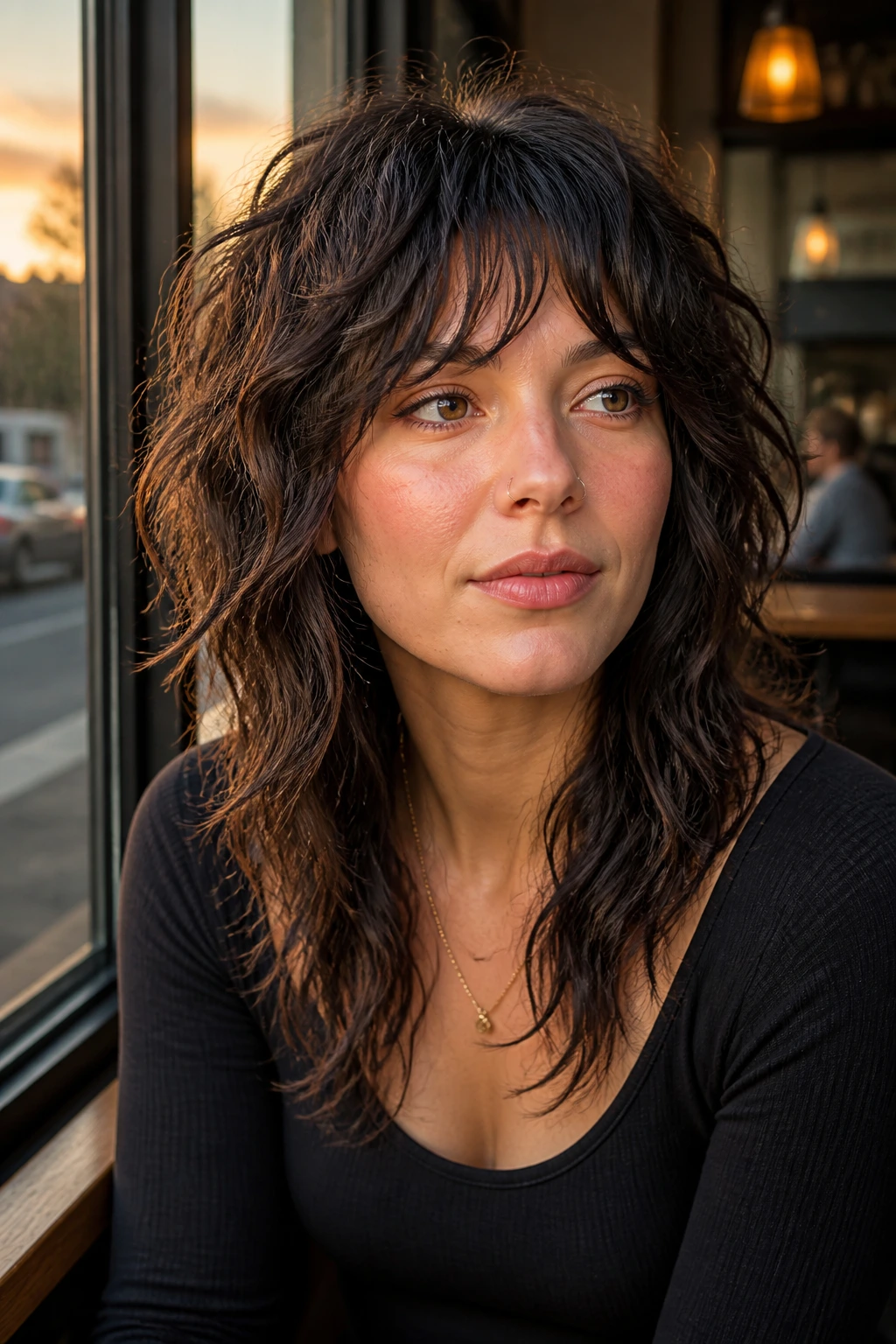
A shag can slim the face or widen it, depending on where the layers sit. For round faces, the best versions pull the eye downward with longer front pieces and keep too much width from building at the cheek line. Thick curls have a habit of spreading across the sides, so the haircut needs some vertical movement.
The layers should start low enough to avoid a mushroom shape. A deep side part or a long curtain fringe helps too. I like this cut when the bottom layers are a little longer than the sides, because that creates a soft taper instead of a perfect circle. It still has body. It just points that body in a nicer direction.
This is one of those cuts that becomes more flattering once the curls settle. Fresh from the salon, it may look big. After a day or two, the shape usually makes sense.
32. Oval-and-Long Face Shag
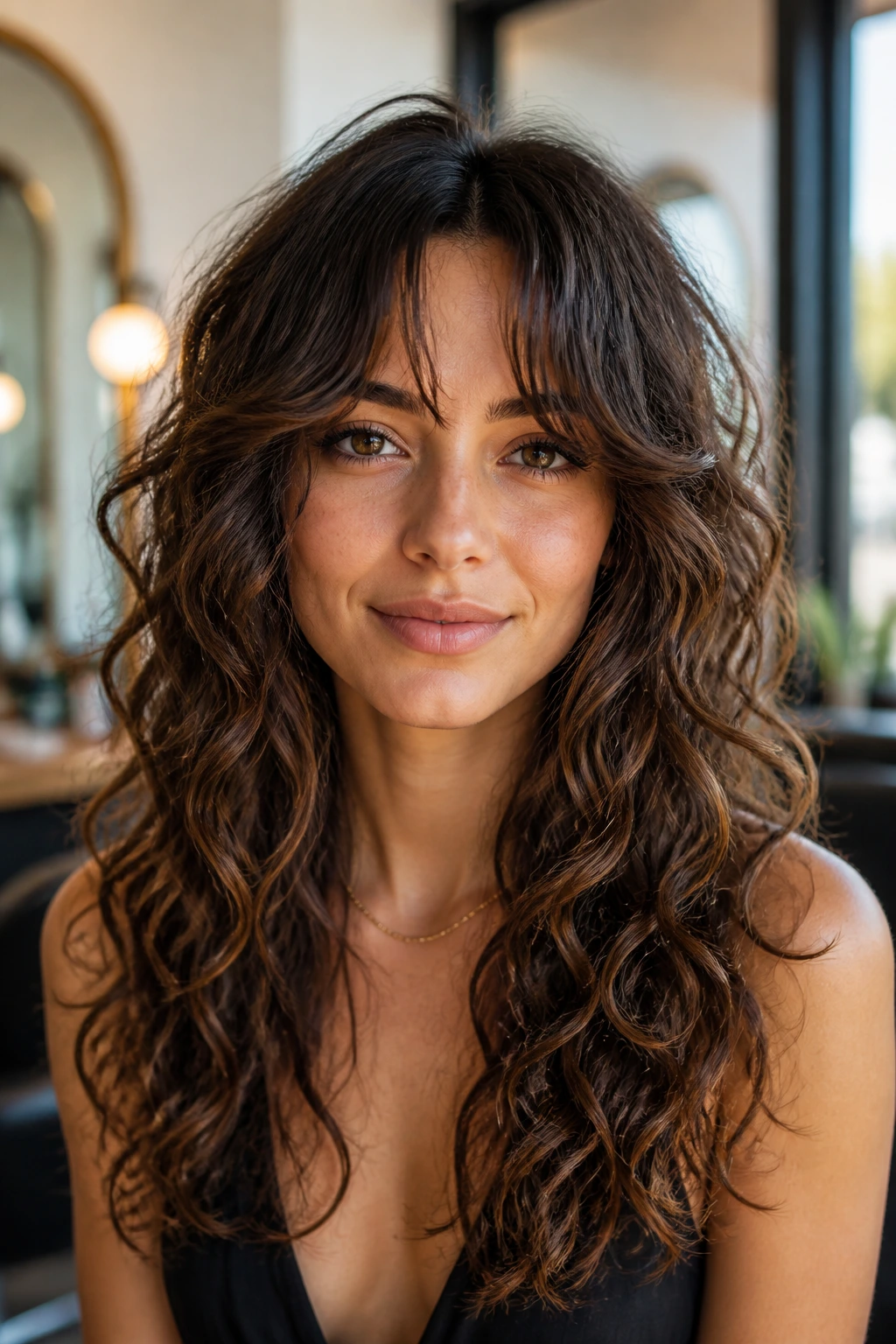
Longer faces often need width added back in the right places, and a shag can do that without looking bulky. The trick is to keep some fullness around the cheekbones and not let all the layers drag straight down the head. Thick curls are useful here because they can create width naturally, if they are cut to support it.
Curtain bangs or bottleneck bangs are especially good with this shape. They shorten the look of the face a little and give the haircut a stronger frame. If you have an oval face, you get more flexibility, so you can choose a softer version with longer layers or a bolder one with shorter front pieces. Either way, the cut should keep the top from going flat.
A good shag on a longer face looks balanced from the front and has enough movement from the side to avoid looking narrow.
Why the Shag Shape Wins on Thick, Frizzy Curls
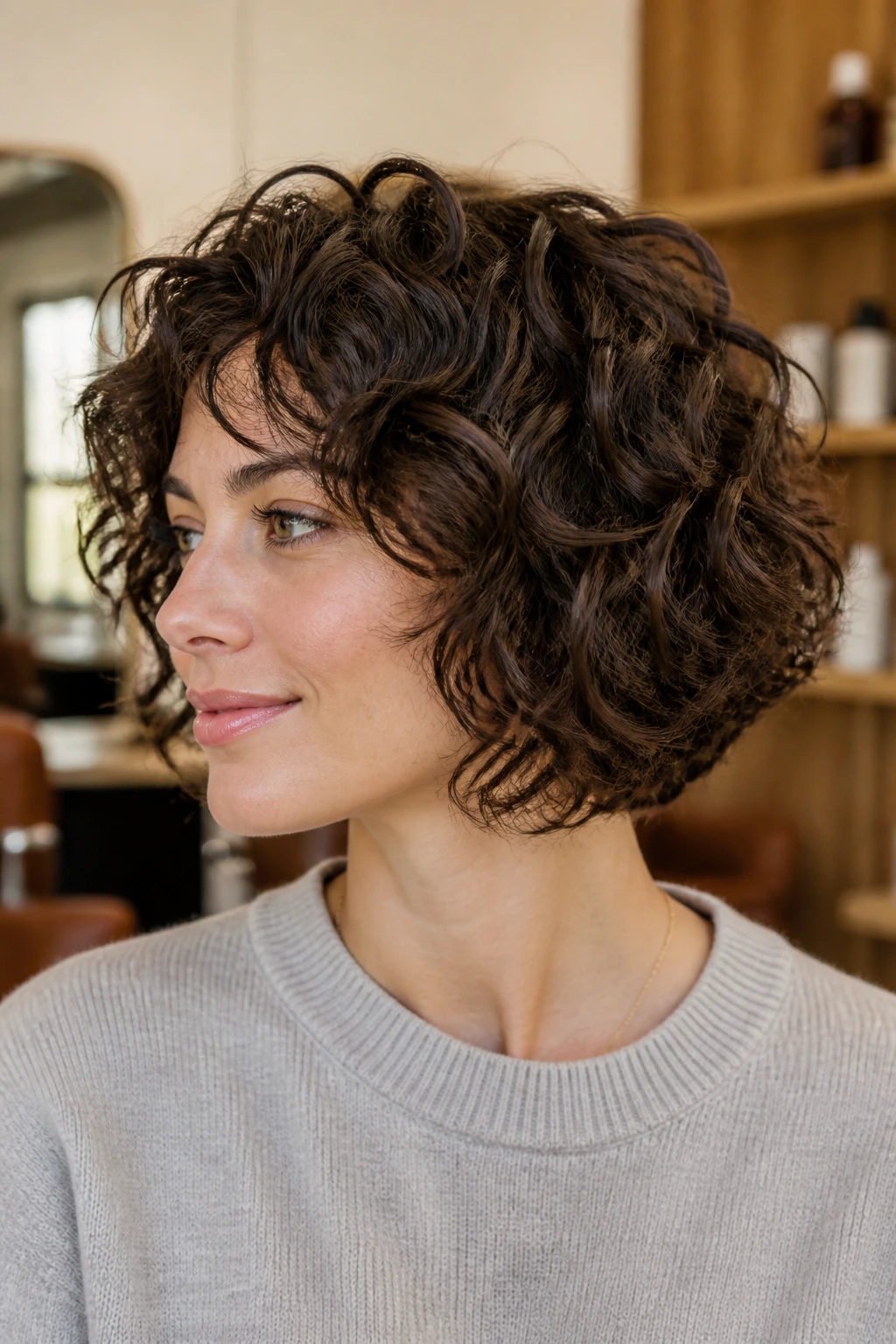
Thick, frizzy curls do not usually need to be “controlled” in the way blunt-hair advice loves to pretend. They need structure. That is a different thing. A shag gives the hair places to sit, bend, and break up the bulk so the cut has motion instead of just width.
The biggest mistake with dense curls is cutting them into one hard line and hoping the texture will behave. It won’t. Not for long. The weight shifts, the humidity changes, the ends puff out, and suddenly the silhouette turns into a triangle with feelings. Shag layering solves that by removing bulk in strategic spots while leaving enough length in the perimeter to keep the whole shape grounded.
The other reason this works is simple: curls like space. When the layers are placed well, the individual curl groups can form without smashing into one another. That gives you better definition, less mushrooming at the sides, and a softer finish around the neck and jaw. If a cut is making your hair look bigger while also making it flatter, something is off. A good shag fixes both at once.
Tools That Make Styling Easier at Home
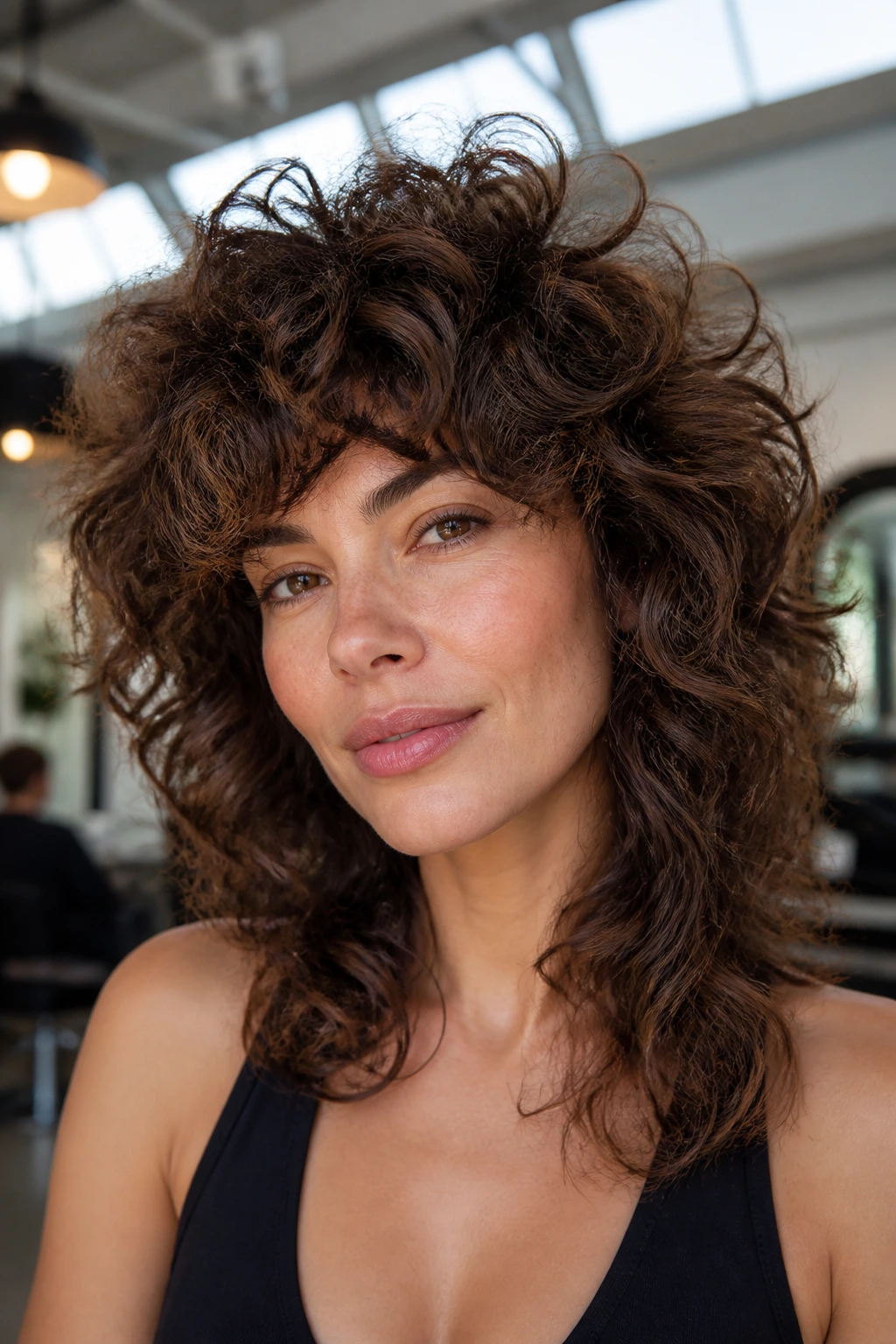
- Wide-tooth comb: Best for detangling in the shower or on soaking-wet hair without ripping apart curl clumps.
- Microfiber towel or cotton T-shirt: These dry the hair without roughing up the cuticle the way a bath towel does.
- Diffuser attachment: Useful for setting the root lift and keeping the layers from drying in one heavy clump.
- Duckbill or root clips: Great for lifting the crown while the hair dries, especially if the top wants to lie flat.
- Spray bottle: Handy for refreshing the front pieces and reactivating curl cream on day two.
- Curl cream: Helps thick curls clump and reduces the fuzzy halo that appears when the hair is too dry.
- Medium- or strong-hold gel: Keeps the shag shape from expanding too much as it dries.
- Satin bonnet or pillowcase: Cuts down on friction overnight, which matters when you’ve got layers that love to frizz apart.
Product Ingredients That Calm Frizz Without Flattening Curls
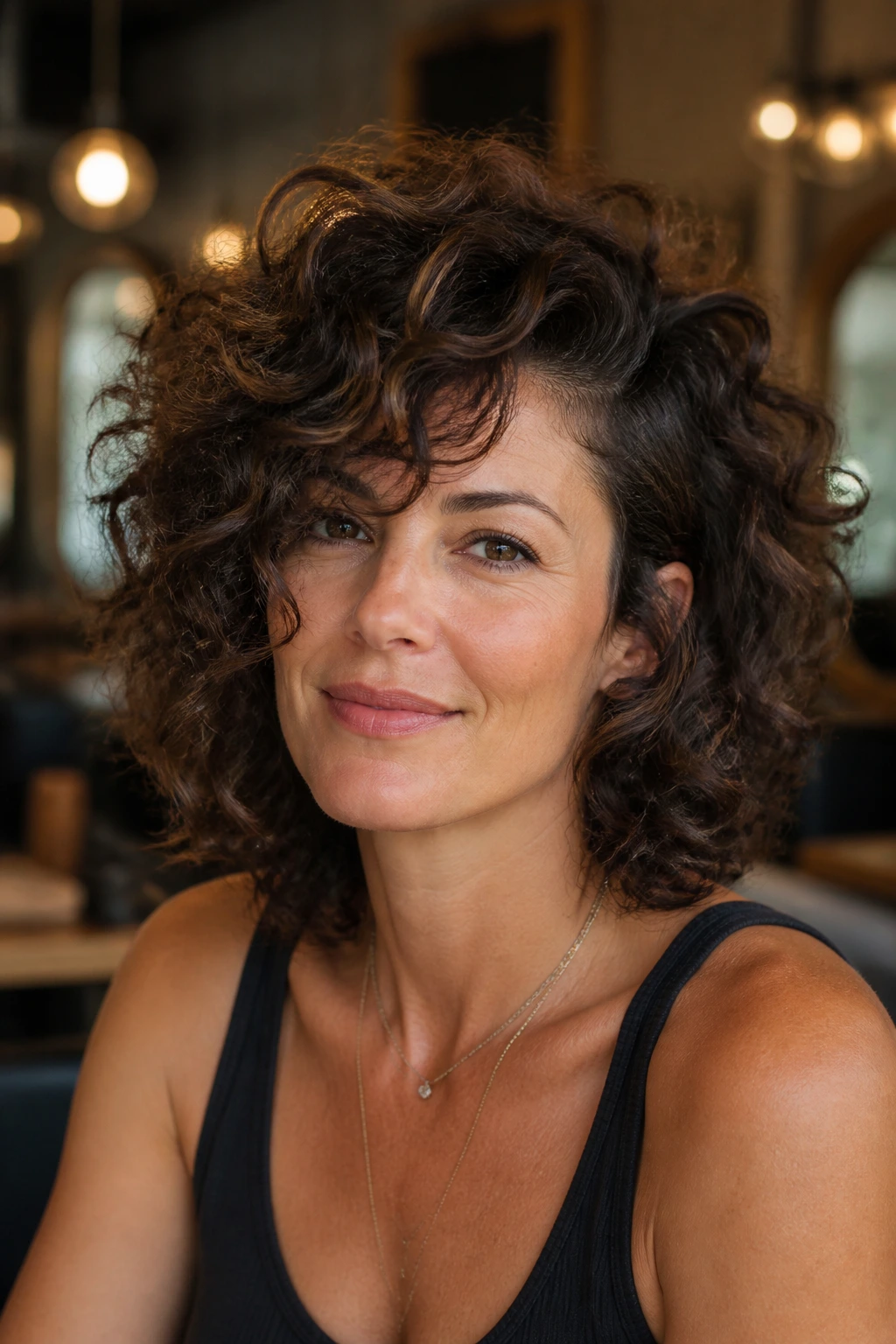
A lot of people buy hair products by scent or packaging and end up with a shelf full of pretty bottles that make their curls limp. Read the ingredient list instead. Thick frizzy hair usually does best with products that add slip and hold at the same time.
Look for glycerin, aloe, panthenol, and lightweight oils if your curls feel dry and need help clumping. Those ingredients can keep the hair from feeling crisp or brittle. If your hair is coarse or porous, a little butter or richer cream can help seal the rougher surface, especially on the ends where frizz shows first. Just do not pile heavy product onto the roots unless you want the top to go flat by noon.
Protein is useful too, but only when the hair feels mushy, stretchy, or weak after washing. Too much protein on already dry hair can make the curls stiff and thirsty-looking. On the flip side, if you live in humidity and your hair poofs the second you step outside, a stronger gel with a clean hold often beats a moisturizing cream by a mile. Frizz is not always a moisture problem. Sometimes it’s a hold problem.
How to Wear the Cut So the Layers Show

Shape: Let the haircut dry in a way that preserves the silhouette. If the crown is meant to lift, clip it. If the fringe is meant to split, part it while damp and leave it alone.
Styling: Start with leave-in on soaking-wet hair, add curl cream to the mids and ends, then seal with gel. Scrunch, but do not crush the layer pattern into one blob. Diffuse on low heat or air-dry until the cast forms.
Accessories: Claw clips, silk scarves, and small barrettes work well with shags because they can pin one side back without flattening the whole cut. Heavy headbands tend to fight the layers unless they’re worn loosely.
Best wear days: Day one usually has the most structure. Day two often has the nicest softness. Day three is where a good shag proves itself, because the layers should still look shaped even after a little sleep, misting, and your usual morning impatience.
Practical Tips for Getting the Right Shape in the Chair
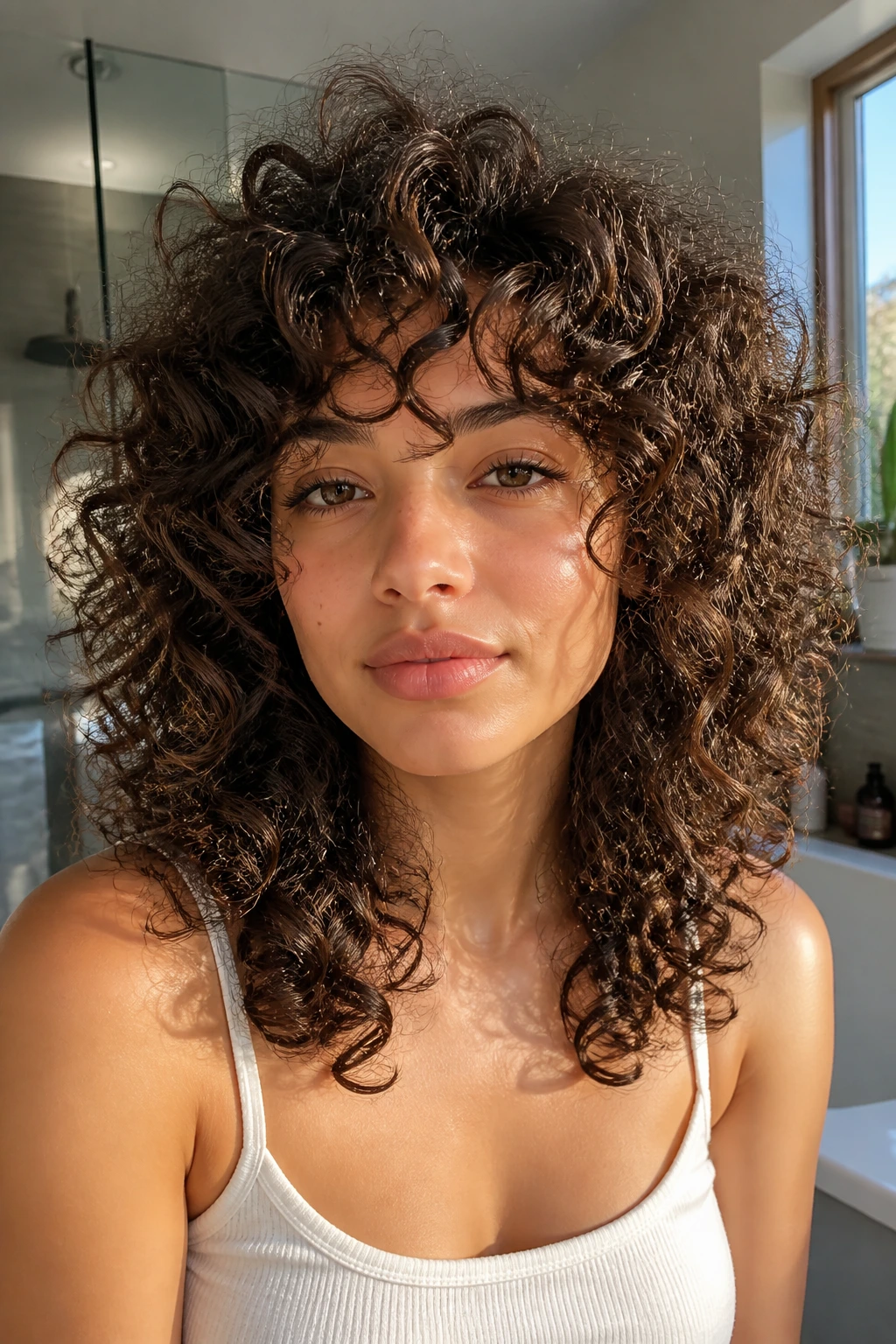
Bring photos that match your density. A picture of a fine-haired shag does not help much if your hair is thick enough to need real weight removal. Look for hair that behaves like yours.
Ask where the shortest layers begin. That one question matters more than “Do you like shags?” Short layers at the wrong height can make thick curls stick out from the sides.
Say how much shrinkage you get. If your hair springs up three inches when dry, the stylist needs to know. Otherwise the fringe and crown can end up way shorter than planned.
Tell them how you wear your hair most days. If you air-dry, say so. If you diffuse, say so. If you throw it in a clip half the week, that matters too.
Do not over-trust thinning shears. They can be useful in the wrong place and disastrous in the wrong hands. Point cutting or curl-by-curl shaping is often safer on frizzy density.
Common Mistakes That Make Thick Curls Puff Out
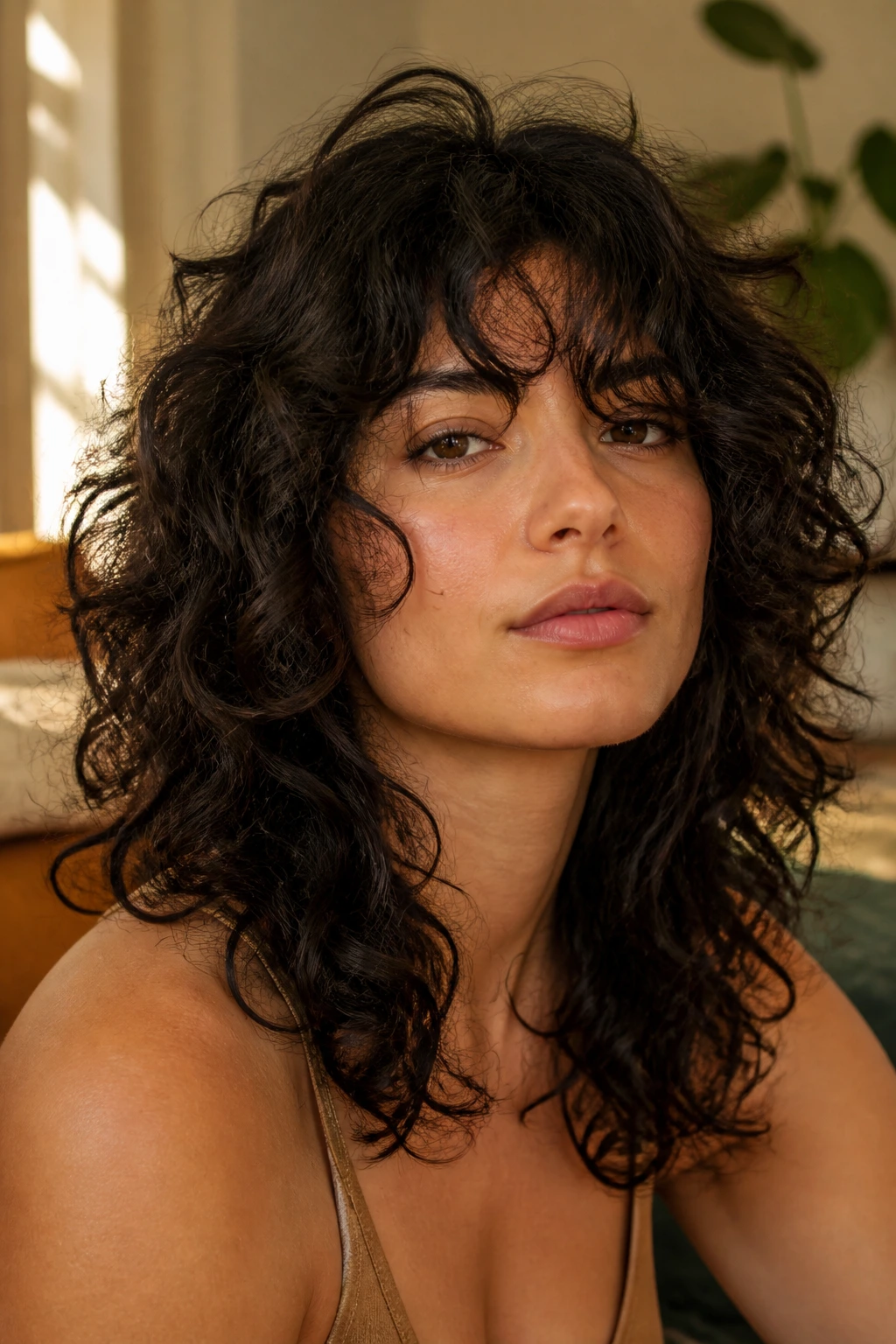
The first mistake is taking out too much bulk at the top. The result is a cut that looks flattering wet and enormous dry. The fix is to leave some crown weight so the layers have something to sit on.
Another one is cutting the fringe too short. Curls bounce upward, and a bang that looked neat in the chair can land nowhere near the face once it dries. Ask for a longer starting point and trim slowly.
Then there’s overloading the hair with cream. Thick curls need moisture, yes, but too much soft product can smear the curl pattern and leave the layers looking limp. If the cut is right and the frizz still wins, switch some of that cream for a better gel.
Finally, ignoring the nape can wreck the whole silhouette. Dense hair often mushrooms there first. A good shag should have a plan for the back of the neck, not just the front of the face.
Variations and Related Shapes to Ask Your Stylist For
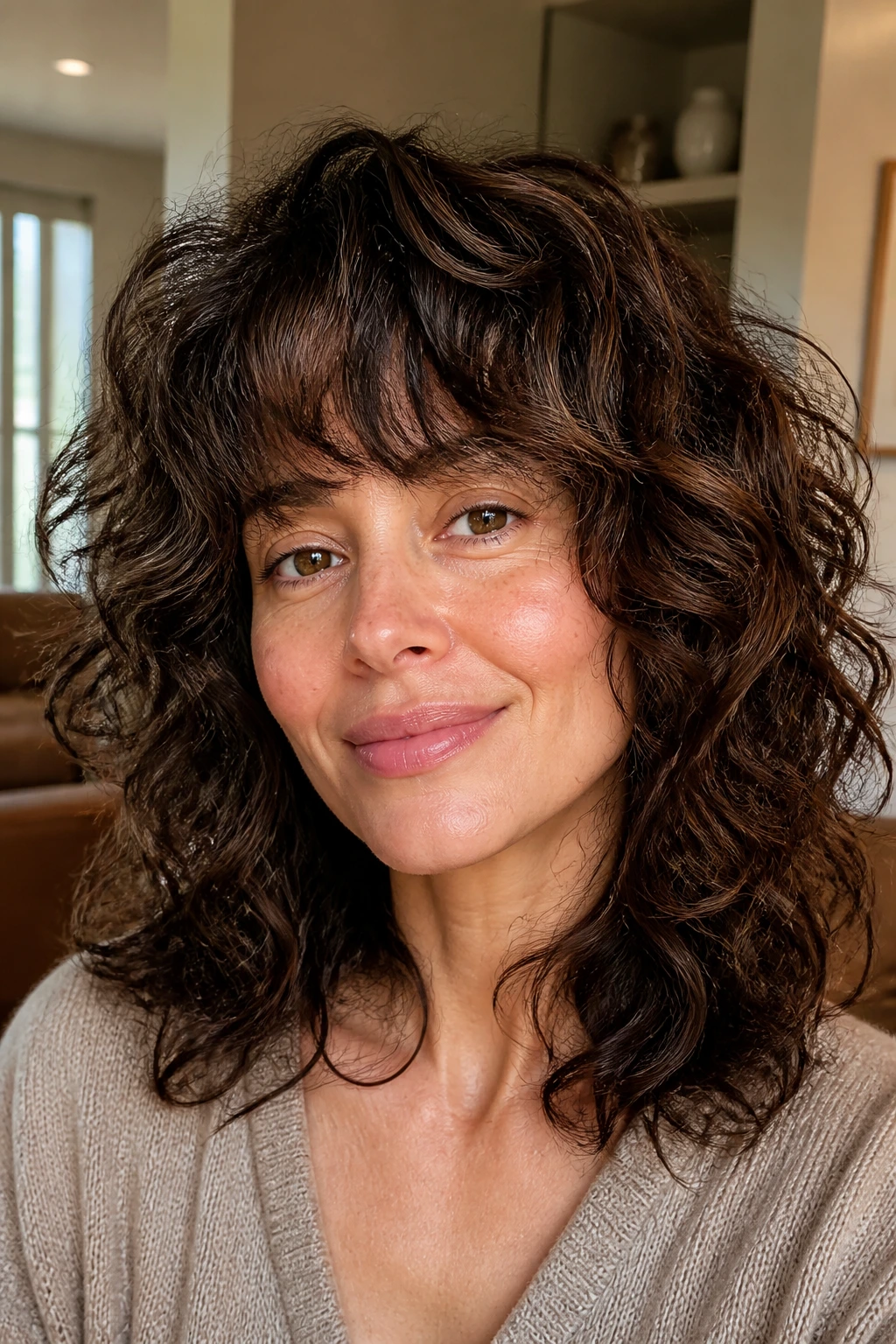
Softer Shag, Fewer Layers: Keep the outline long and make the interior layers subtle. This is the safest choice if you want movement but hate a choppy look.
Bold Wolf Version: Shorten the crown a bit more and let the back stay long. This gives the haircut more edge and works well if you like a stronger shape.
Fringe-Forward Shape: Build the cut around curtain bangs or bottleneck bangs. Good when you want the front to carry the style and the rest to stay easy.
Rounder Halo Cut: Ask for layers that create a soft circle around the head. This suits dense curls that spread wide and need a more even outline.
Grow-Out Friendly Shape: Keep the shortest layers low and the fringe long enough to tuck. It looks neat for longer between trims and does not fall apart the second it grows.
Keeping the Shape Fresh Between Salon Visits
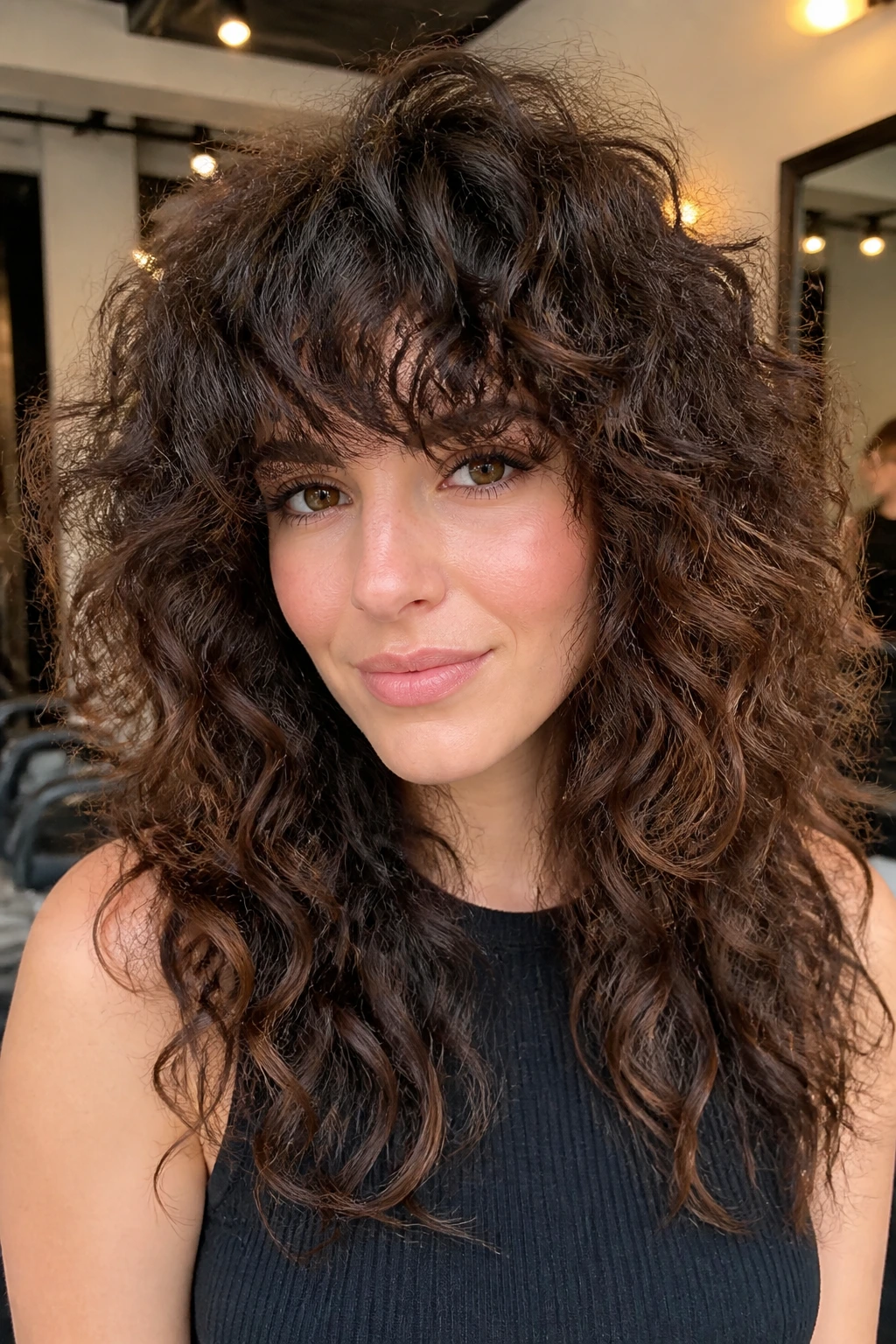
Thick curly shaggy haircuts usually look best after they’ve had a little time to settle. The first day can be a bit too polished or too full depending on how your hair dries. After that, the layers loosen into something more natural. That is one of the nicest things about this kind of cut.
Night care matters more than people think. Sleep on a satin pillowcase or tuck the hair into a bonnet if the layers tangle easily. If the shape is long enough, the loose pineapple method works well too: gather the curls high and soft, not tight. In the morning, mist the front pieces, reshape the fringe with wet hands, and add a pea-sized amount of product only where the frizz starts.
Trim schedule depends on the style. Shorter shags and fringes usually need a clean-up every 4 to 6 weeks. Shoulder-length and longer versions can often go 8 to 12 weeks before the layers start losing their line. If the nape balloons out or the face frame stops doing its job, that is usually your sign.
Frequently Asked Questions
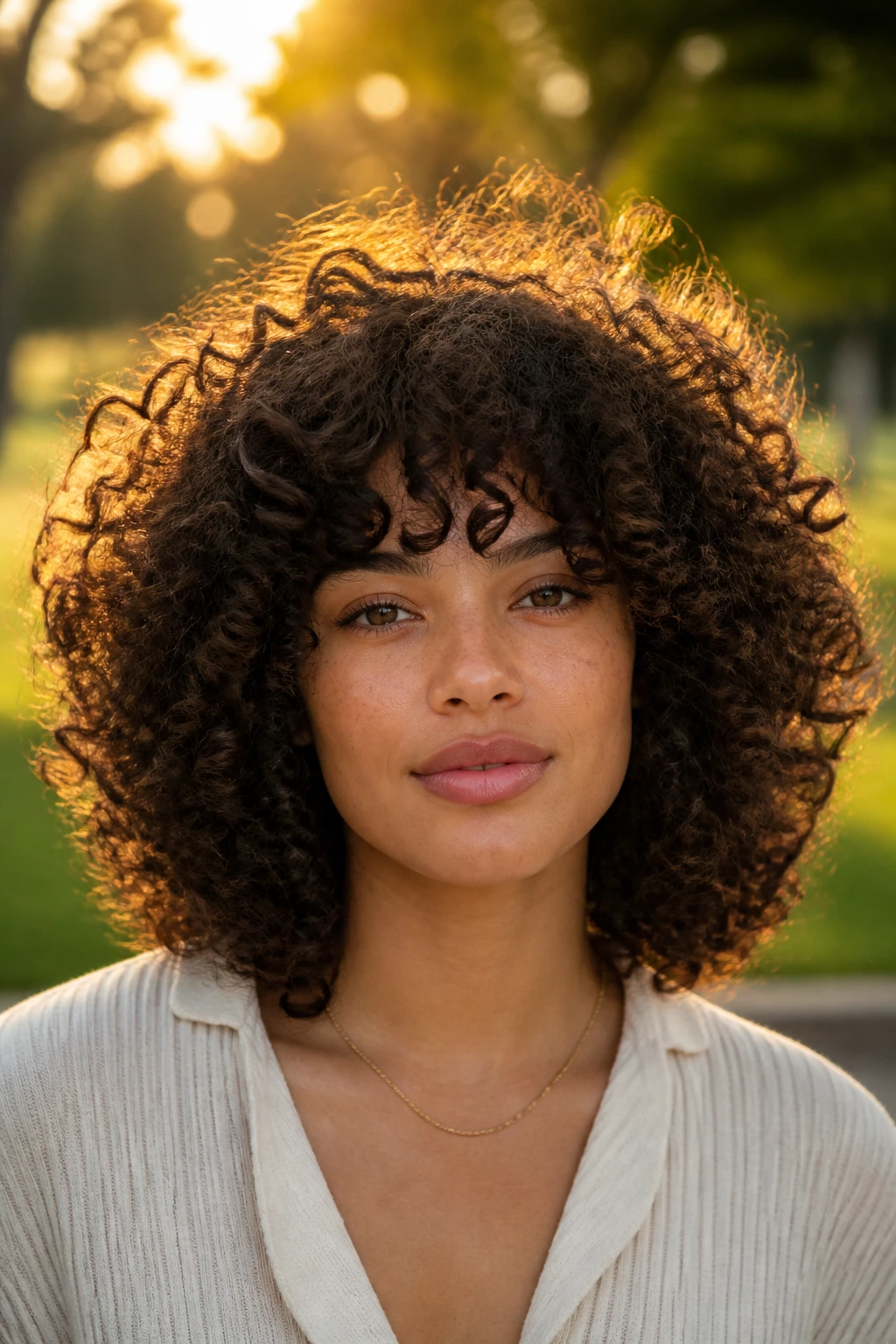
Can curly shaggy haircuts work on very thick, coarse hair?
Yes, and they often work better than blunt cuts. The key is keeping some weight in the perimeter so the hair does not turn into a wide triangle, and making sure the layers are placed with shrinkage in mind.
Are shags a bad idea if my curls frizz a lot?
Not at all. Frizz becomes more manageable when the haircut has a shape underneath it. A shag lets you see texture as part of the style, instead of a problem sitting on top of a bad cut.
How often should I trim a shag haircut?
Bangs and very short layers usually need attention every 4 to 6 weeks. Longer shags can stretch to 8 to 12 weeks, especially if the grow-out still follows the same general shape.
Should I ask for a dry cut or a wet cut?
If your curl pattern changes a lot when wet, a dry cut or a dry refinement is often safer. That said, some stylists use both methods well. What matters most is that they understand how your hair behaves when it’s fully dry.
Do bangs work on thick curly hair?
They do, but they should usually start longer than straight-hair bangs. Curtain bangs, bottleneck bangs, and long fringe tend to be the least frustrating because they can move with the curl instead of fighting it.
What if my hair looks too big after the cut?
Wait for one full wash-and-style cycle before panicking. Thick curls often settle after the first day or two. If it still feels too wide, the issue is usually layer placement or product choice, not the idea of the shag itself.
Can I wear a shag both curly and straight?
Yes, but the cut will always be designed around one main texture. If you heat-style often, ask for slightly longer layers so the shape still looks balanced when you wear it stretched or blown out.
Which shag is best if I want low maintenance?
Look for a grown-out gentle shag, a shoulder-length version, or a collarbone cut with soft layers. Those shapes hold up well when you skip a wash day and do not need constant reshaping.
The Shape That Keeps Curl Volume Honest
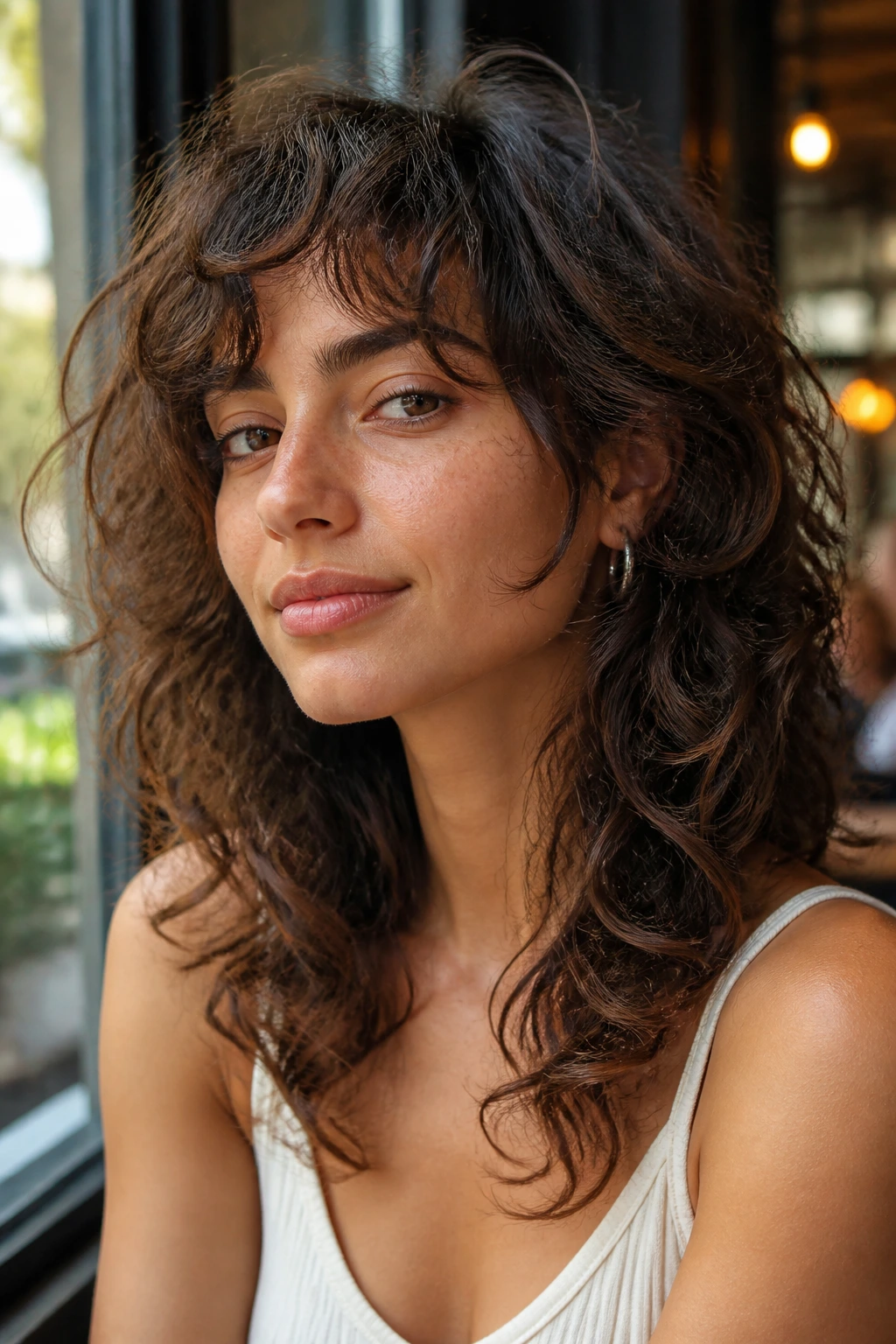
The best curly shaggy haircuts do one useful thing: they make thick, frizzy hair look deliberate. Not controlled. Deliberate. That’s a better goal, and a more realistic one. When the layers are placed well, the frizz stops looking like a problem and starts looking like texture with a shape.
If you’re taking one idea from this whole stack of cuts, make it this: the right shag respects weight. It does not strip the hair bare. It gives dense curls enough room to move while still leaving the outline intact, which is why the cut holds up better on actual busy mornings than a lot of polished salon photos ever admit.
Pick the version that fits your curl pattern, your shrinkage, and your patience for trims. The rest is just details, and the good kind of haircut always gets those right.
