



Round faces do not need to be hidden; they need a haircut that understands geometry. Short curly shag cuts for round faces work when the shape opens the middle, lifts the crown, and keeps the widest curls from camping right at cheek level. That sounds simple. It isn’t. Curly hair shifts as it dries, bends where it wants, and can turn a careful shape into a puffball if the layers are placed lazily.
The trick is to make the eye travel upward and diagonally. A good shag does that with crown height, face-framing pieces, and enough irregularity to break the circle without making the cut look choppy for the sake of it. I’m picky about this part because I’ve seen too many curly shags that look adorable in a salon chair and then turn into a sideways mushroom by the next morning. The issue usually isn’t the curl. It’s the silhouette.
Some of the best versions here are barely above the ears. Others skim the chin, keep a little tail in back, or use bangs to carve out a stronger front shape. A few lean soft and airy. A few lean bold and jagged. The differences matter a lot more than the trend label, and the right one depends on where your curls sit, how much shrinkage you get, and how much daily styling you’re willing to do.
Why This Collection Is Different

-
Built for real curl movement: These cuts are chosen for how curls fall after they dry, not how they look in a flat, wet comb-out.
-
Made to break up the circle: The best versions keep width off the cheek line and push more visual weight up toward the crown or down past the jaw.
-
Works across curl types: Loose waves, springy ringlets, and tighter coils all get their own version of the shag instead of one generic shape.
-
Actually grows out in a usable way: The layers soften as they grow, which matters because a short curly cut can go sideways fast if the shape is too blunt.
-
Gives you room to choose your vibe: You can go soft, punky, wispy, shaggy-bob, wolfy, or almost pixie without losing the round-face-friendly structure.
How Short Curly Shag Cuts for Round Faces Change the Outline
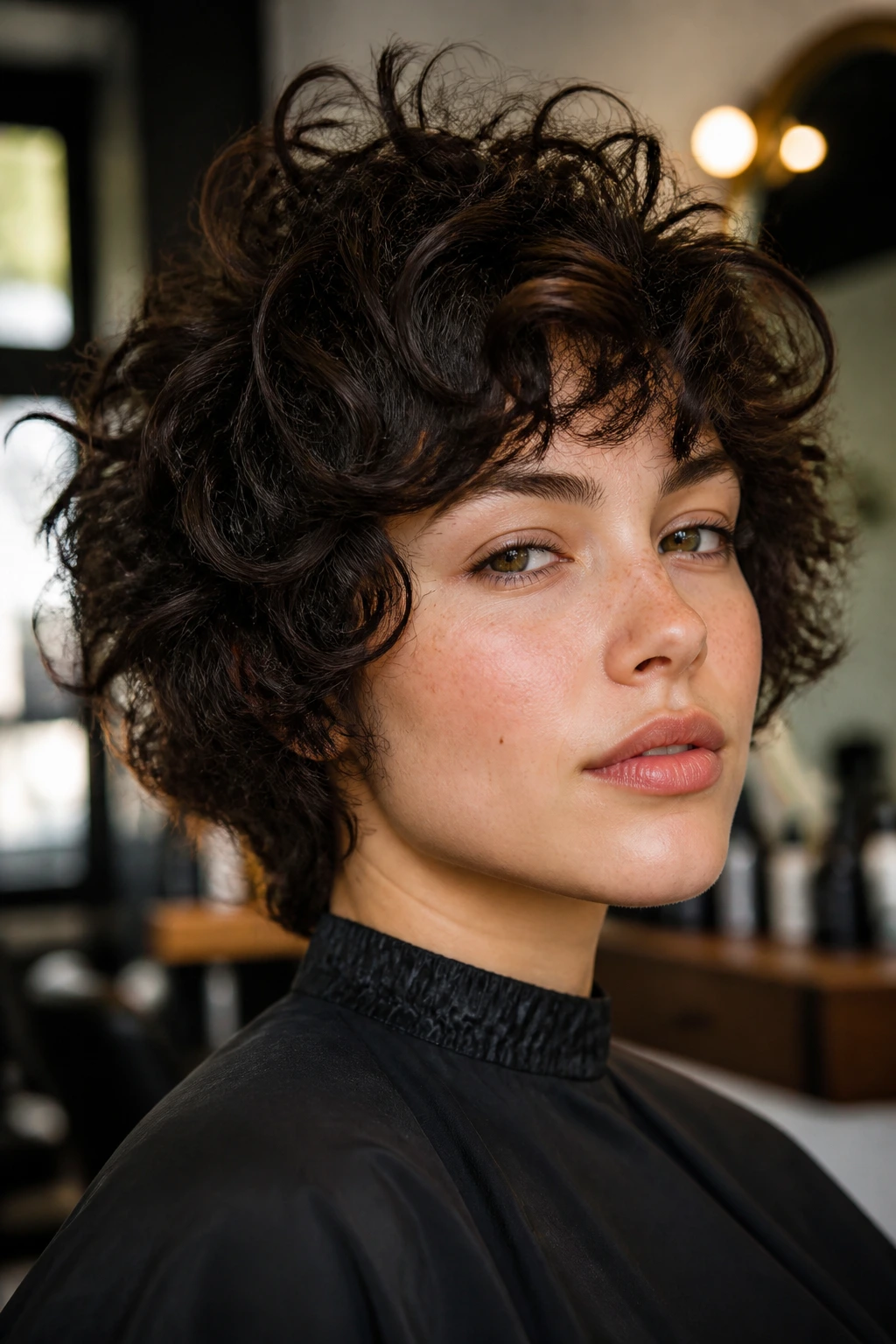
A round face usually has its widest point around the cheeks. That means any haircut that stacks bulk right there can make the face read wider, even if the curls themselves are gorgeous. The smarter move is to build height above the widest point and let the sides move in a more broken, uneven way.
Curls make this trick both easier and harder. Easier because texture naturally softens lines; harder because shrinkage can shrink the front pieces right back up to the cheekbones if the stylist cuts too conservatively. Dry shaping helps. So does point cutting, internal layering, and a stylist who understands that a curly bob and a curly shag are not the same animal.
Where the width should sit
You want some fullness at the crown and some softness along the jaw, not a clean, horizontal shelf at the apples of the cheeks. That shelf is the enemy. It creates a little halo right where a round face is already broadest.
Why shrinkage changes the plan
A curl can lose an inch, two inches, sometimes more. That’s why chin-length on wet hair may land higher once it’s dry. If you know your curls bounce up aggressively, ask for a small amount of extra length in the front and a final dry check before the shears come out again.
1. Jawline-Skimming Curly Shag
This is the first cut I point people toward when they want shape without drama. The longest pieces land just under the jaw, which gives the face a clear vertical edge instead of letting the curls stop right at the cheeks. The crown stays shorter, so the eye lifts before it widens.
Ask for face-framing layers that begin a little above the cheekbone and a perimeter that stays soft, not blunt. If your curls are springy, leave the front a touch longer than you think you need. That half-inch matters once the hair dries.
2. Chin-Length Shag With Curtain Fringe
Why does this one work so well? Because the curtain fringe creates a center opening, and that opening stops the face from reading as one smooth circle. The chin-length perimeter gives you length below the cheeks, which is the whole game with a round face.
Keep the fringe light. You want it to sweep from about the pupil area into the cheek line, not sit heavy across the forehead. If the bang line gets too thick, it starts stealing space from the top of the face and the whole cut feels boxed in.
3. Ear-Grazing Mini Shag
If you hate hair brushing your neck, this is the clipped, airy version that still keeps enough curl to feel like a shag. The sides sit close to the ears, while the top stays longer and broken up, so the shape rises instead of ballooning out. It’s a sharp little cut.
Best for people with confident curls and not a lot of patience for all-day styling. The key is keeping the side pieces soft and slightly longer toward the front so the cut doesn’t look like a helmet. Tiny shape. Big attitude.
4. Tapered Nape Shag
A tapered nape gives the back of the head a clean finish, which matters more than people think on round faces. It stops the cut from turning into a round blob from every angle. The front can stay a bit longer, and that forward drag adds length without losing the shag feel.
This one behaves nicely on thick hair, especially if the nape tends to puff. Ask for the back to be compressed with short internal layers rather than thinned out randomly. Random thinning is how you get frizz where you wanted polish.
5. Side-Part Shag With Long Fringe
A deep side part is one of the simplest ways to interrupt a round face’s symmetry. The long fringe falls on a diagonal, which makes the face look more oval without screaming about it. That diagonal line does a lot of quiet work.
I like this version for people who don’t want full bangs. The long fringe can skim the cheekbone on one side and tuck behind the ear on the other, which gives you room to play with your styling mood. It’s less fussy than it sounds.
6. Bottleneck Bang Curly Shag
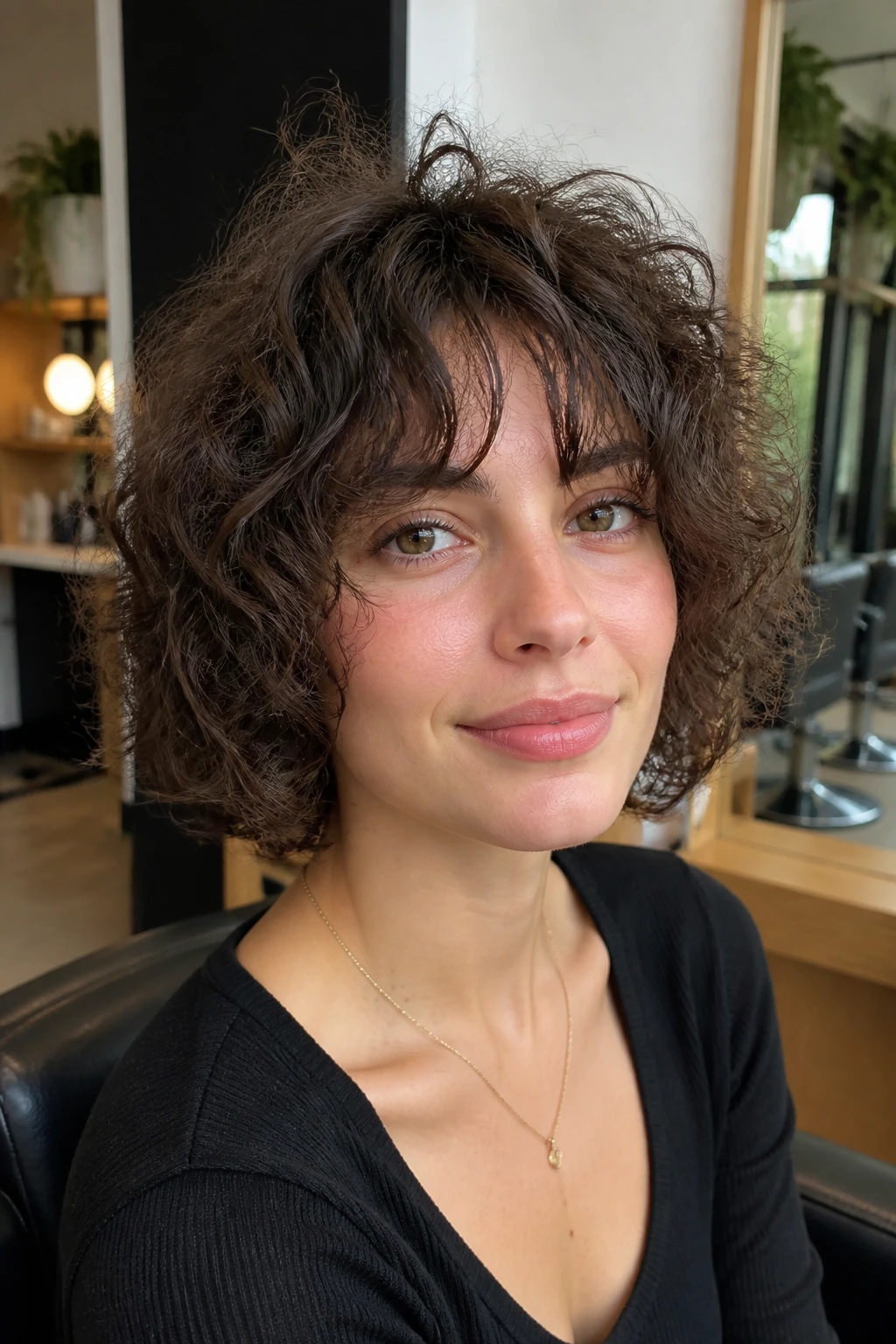
Unlike blunt bangs, bottleneck bangs start narrow at the center and widen a bit as they move out toward the temples. That shape is useful on a round face because it opens the forehead in the middle and keeps the sides soft instead of square. The rest of the shag can stay light and messy.
This cut is especially good if you like a little face drama without committing to a hard fringe line. Ask for the center to start shorter and the outer corners to blend into the front layers. If the bang is too dense, it loses the narrow middle and starts feeling heavy fast.
7. Micro-Fringe Curly Shag

A tiny fringe changes the whole mood. It puts the emphasis high on the face, which pulls attention away from the width at the cheeks and toward the eyes and brows. The rest of the layers should stay loose and moveable so the fringe gets to be the sharp part.
I’d call this one bold but useful. It works best when the curls in the bangs are not too springy, or you’ll get a little tuft that sits higher than expected. If your curl pattern is tight, ask for a slightly longer micro-fringe that can shrink into place without disappearing.
8. Feathered Bob Shag

This is the softest bob-shag hybrid in the bunch. The perimeter stays close enough to feel tidy, but feathered layers break up the mass so the hair doesn’t sit as one heavy shape on a round face. You get movement without a lot of bulk.
It’s a strong choice for fine or medium-density curls that need help looking fuller. The layering should be light and directional, not hacked apart. A feathered edge gives the cut some lift, while too much slicing can make the ends go wispy in a sad way.
9. Rounded Crown Shag

Crown volume is the whole point here. The top is cut to sit higher and spring upward, which gives the face more height at the exact place a round face needs it. The sides can stay modest, almost restrained, so the silhouette reads taller than it is wide.
This one is good if your hair tends to collapse at the roots. Ask for the crown layers to be shorter than the sides by a small but visible amount, then finish with root clips or a diffuser. If the top is too long, you lose the lift and the style flattens.
10. Wolfy Shag With Soft Tail
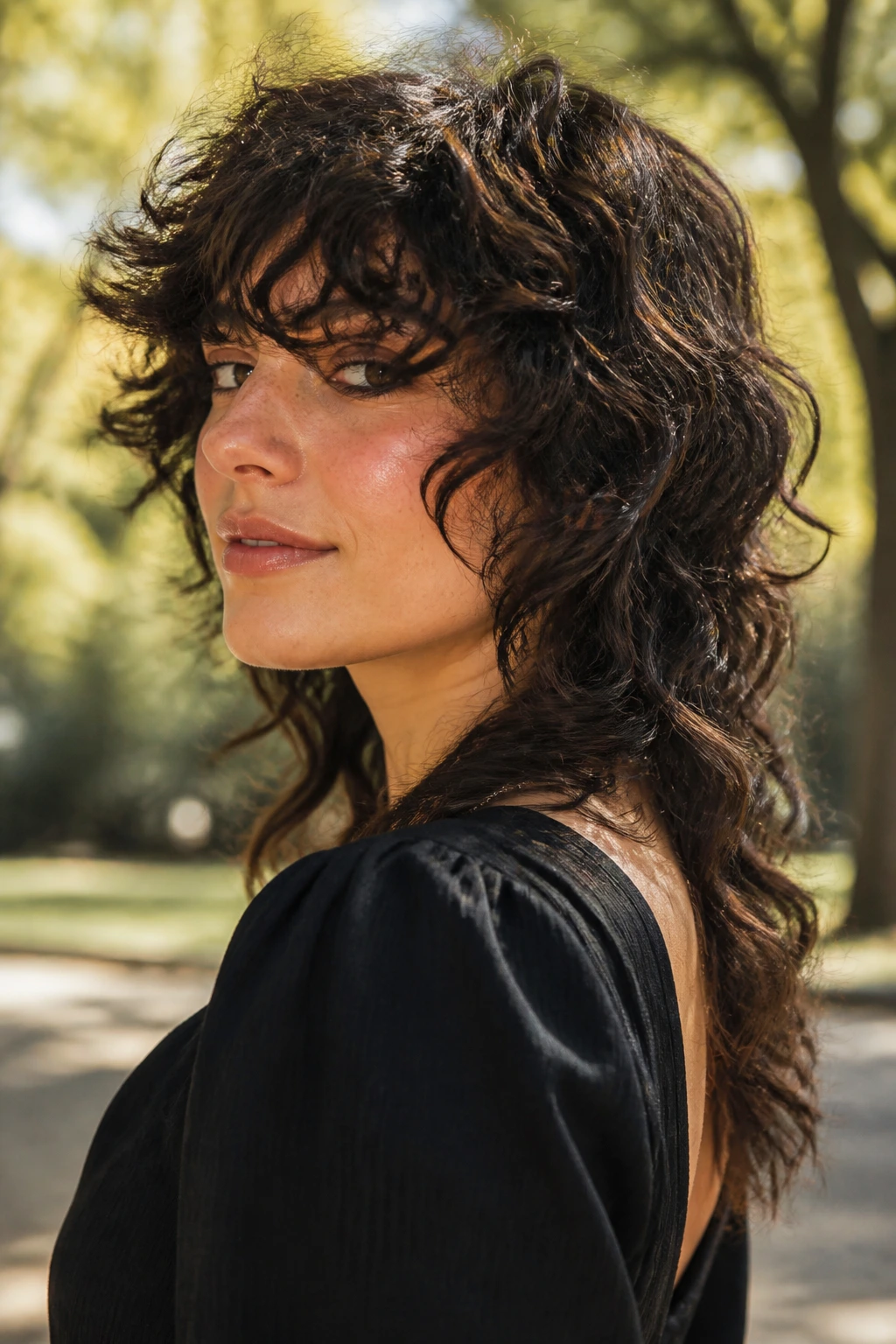
Why does a soft-tail wolf shag work? Because the back keeps a little more length, and that extra length draws the eye down instead of straight out. The front stays broken and airy, so you get edge without that hard, mullet-heavy line some people hate.
This is for someone who likes shape but doesn’t want a precious haircut. It looks best when the transition from short top to longer back is gentle, not abrupt. The tail should feel like a whisper, not a warning sign.
11. Rezo-Lift Curly Shag
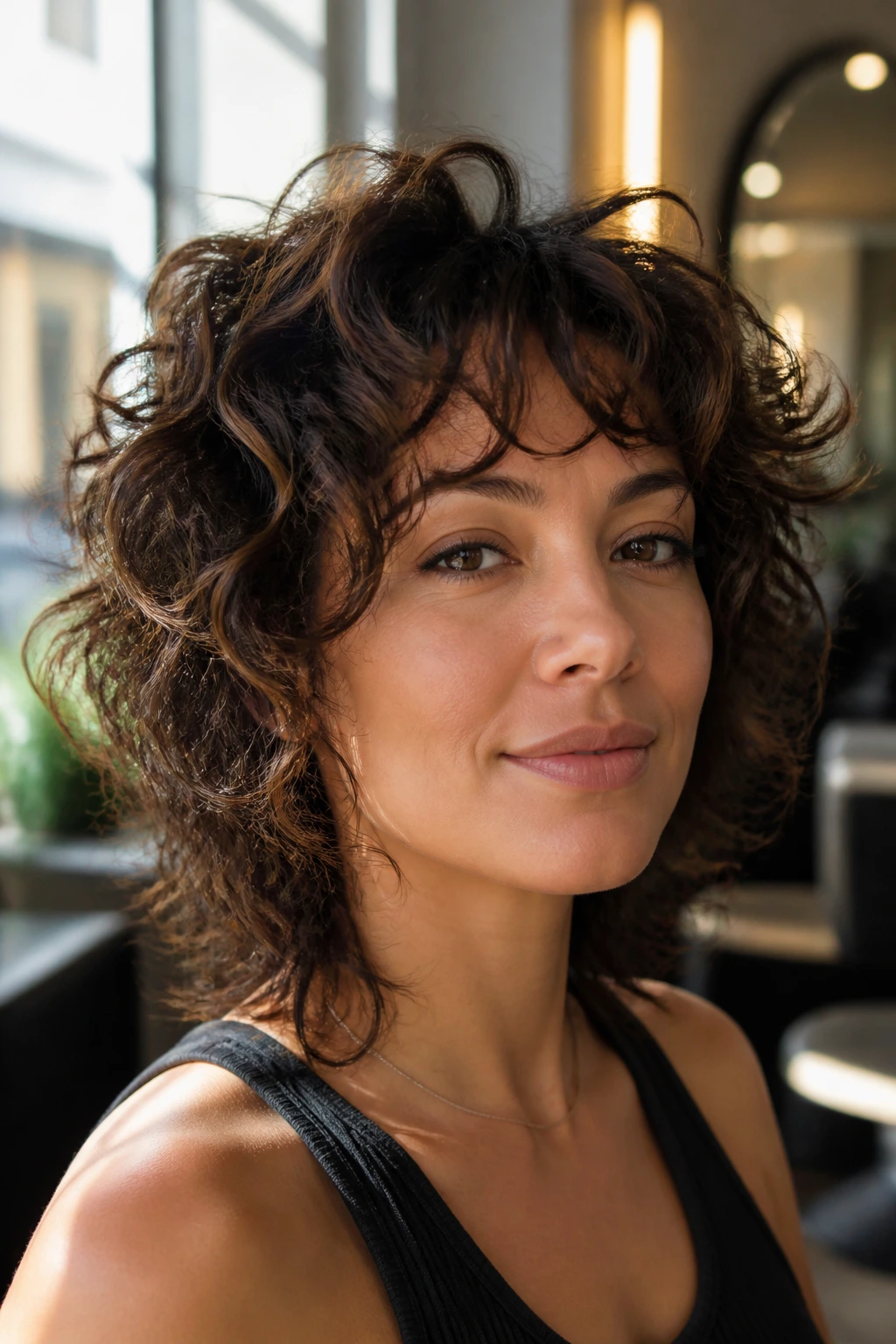
A Rezo-inspired cut uses vertical balance instead of horizontal shelves, which is exactly why it plays so well with round faces. The layers move up and down in a way that keeps the sides from puffing out at one fixed line. The shape feels lighter, even on dense hair.
If your curls stack up like little springs, this one can be a lifesaver. Ask your stylist to keep the perimeter intact enough to hold weight while carving the inside for movement. Too much removal on the outside makes the cut frizzy fast.
12. Piecey Pixie Shag
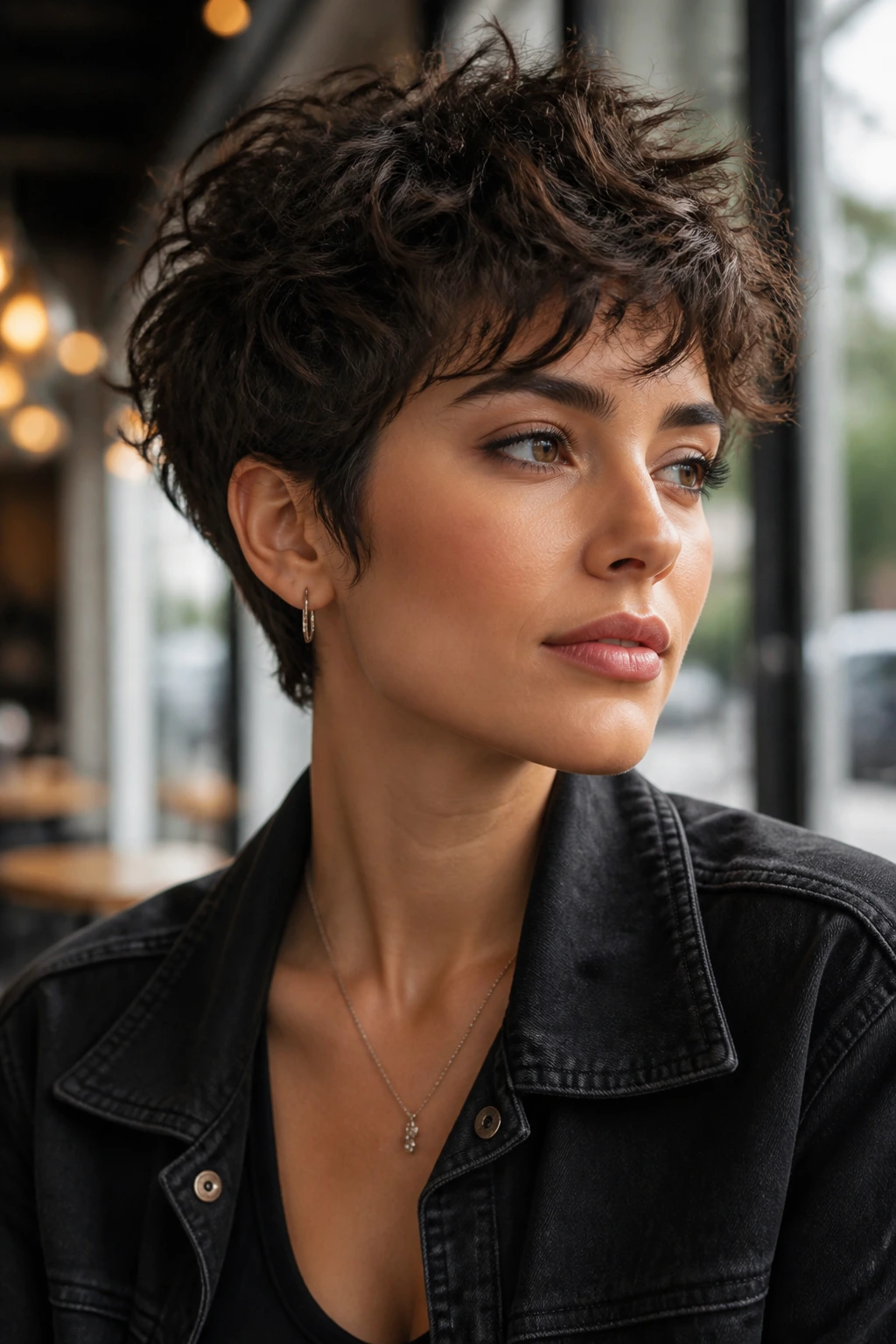
Unlike a classic pixie, this version keeps enough shag texture on top to stop the head from looking too round. The sides are cropped, the crown is broken apart, and the finish is piecey instead of smooth. That texture gives the cut a little attitude and a lot of vertical lift.
It’s especially good if you want your cheekbones to do the talking. Keep the top layers separated with a small dab of paste or mousse rather than a heavy cream. Heavy cream makes the pieces clump and can drag the whole shape down.
13. Cheekbone-Frame Shag

This cut uses the cheekbones as the anchor point, but not by sitting right on top of them. The front pieces start just above or beside the bone and slide down toward the jaw in soft, broken steps. That movement makes the face look longer without taking the shape too far away from your features.
It’s one of my favorites for people with round faces and strong eyes. Ask for the shortest front frame to land around the high cheek area, then let the rest taper out in a jagged but soft line. The effect is quieter than a bang, which is often a good thing.
14. Temple-Release Shag
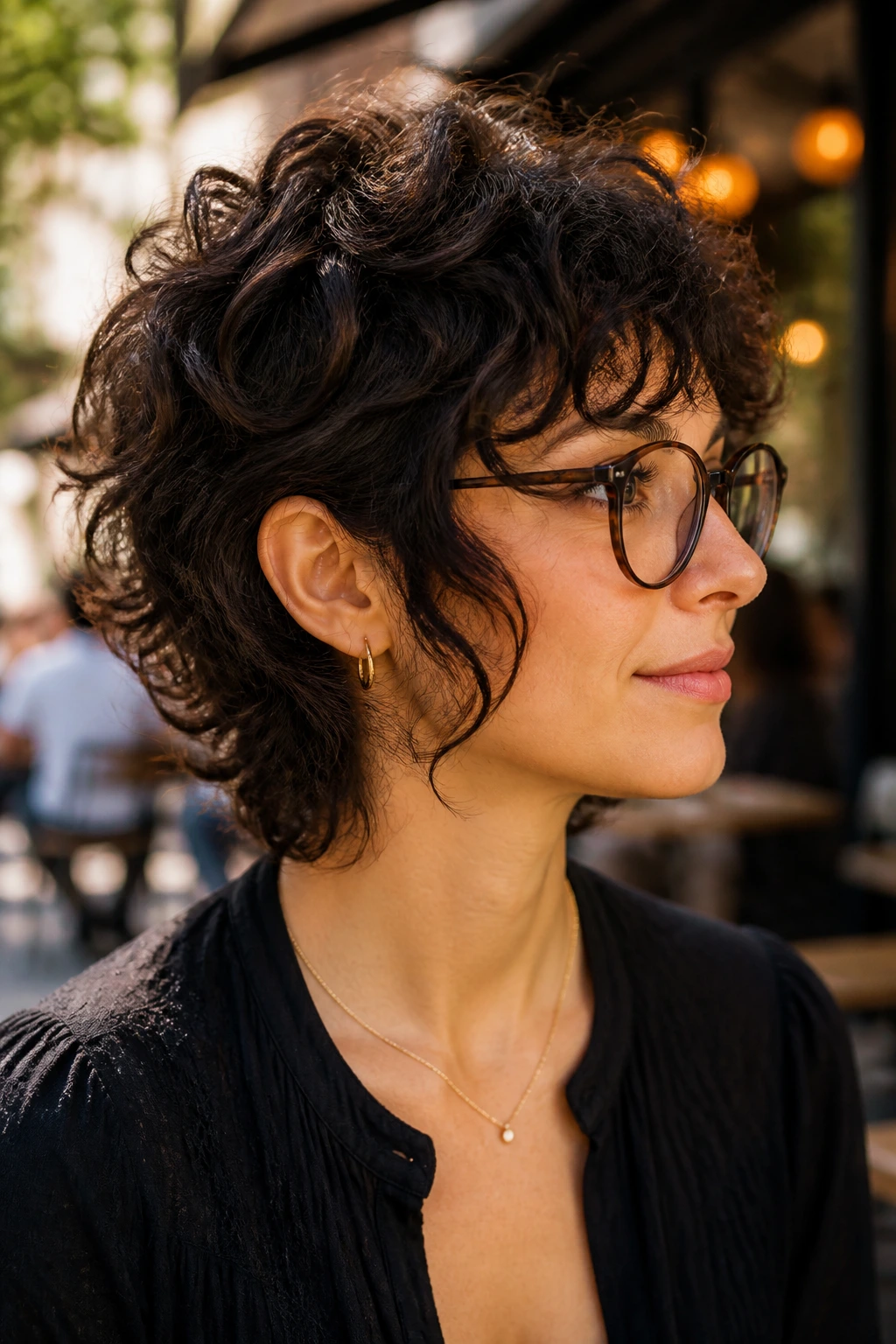
The temple area gets too little attention in haircut conversations. Here, the side layers start higher up near the temple and release downward, which opens the middle of the face instead of crowding the cheeks. It’s a subtle fix, but it changes the whole read of the cut.
This shape is nice if you wear glasses, because the temples and frames can work together instead of fighting. Keep the side pieces light enough to move behind the ear. If they’re too dense, the cut loses that open, lifted feeling.
15. Scoop-Back Shag
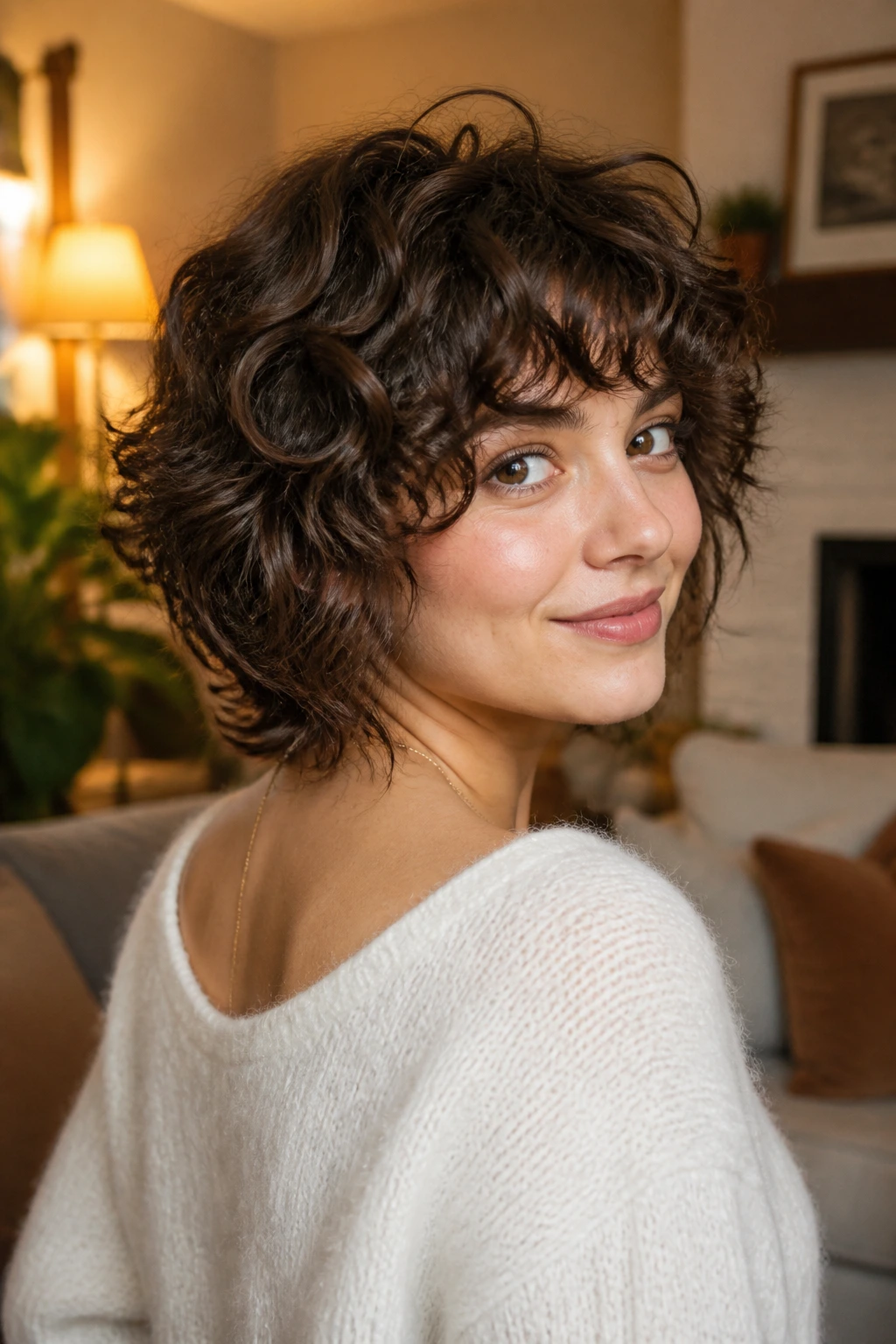
A scoop-back shag feels a little like the haircut is leaning forward on purpose. The back is cleaner and slightly shorter, while the front carries more movement and length. That forward bias helps a round face because it adds directional lines instead of a perfect circle.
This is a smart choice if you want your hair to feel lively from the profile. The back should hug the nape without getting shaved too tight. If the back is over-compressed, you’ll lose the softness that makes the shag feel expensive rather than severe.
16. Tousled Ringlet Shag
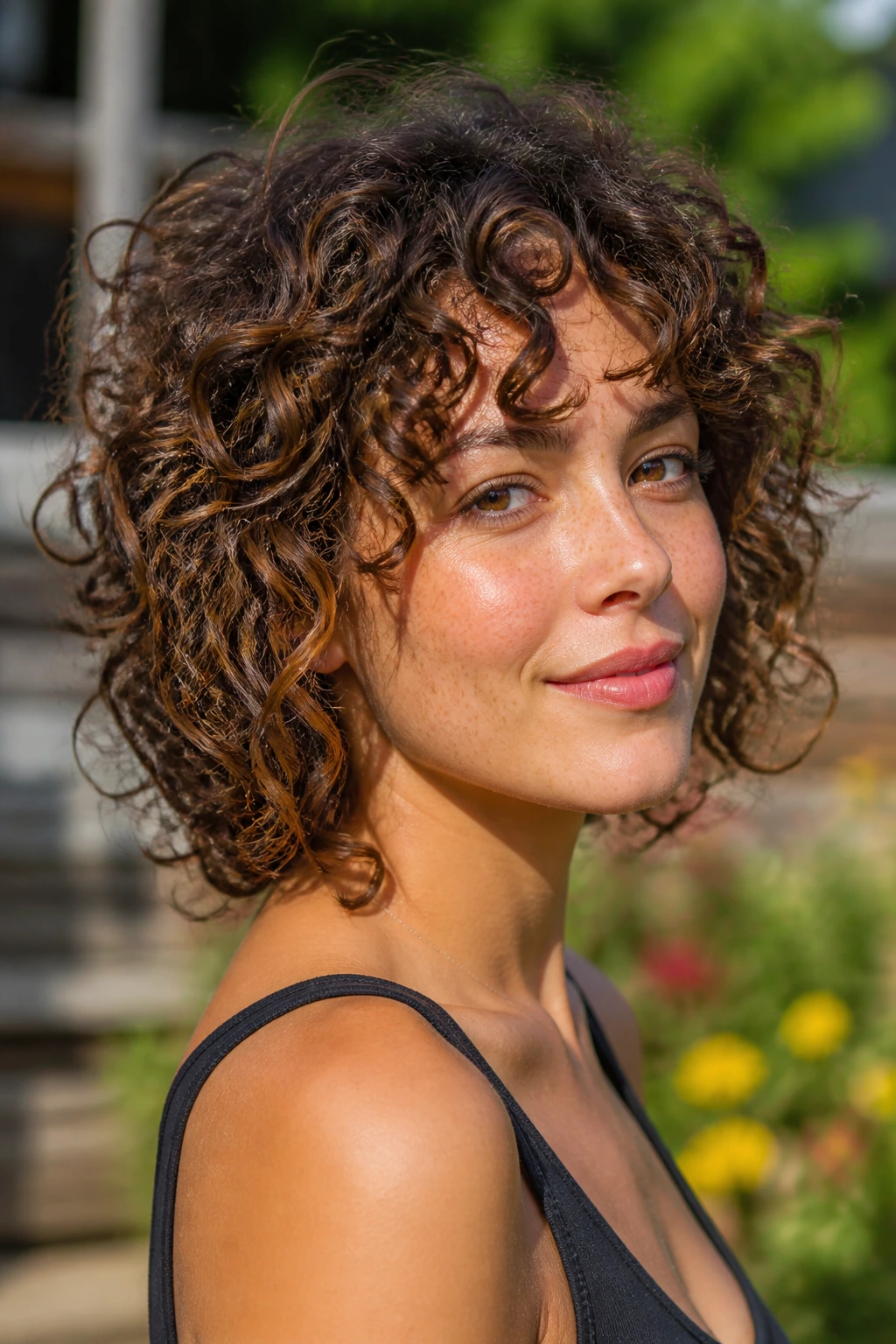
What if your curls already make neat ringlets? Then this cut lets them show off without building a bulbous silhouette. The layers are spaced so the ringlets fall in little clusters, not one thick dome. That keeps the face open around the sides.
I like this with a light gel cast and a gentle scrunch once it dries. The ringlets keep their shape, but the overall finish stays airy. If you rake too much through the curls while styling, you’ll separate the clumps and lose the clean, shaggy definition.
17. Corkscrew Shag

Tighter curls need room, but they also need direction. A corkscrew shag uses internal layers and a little perimeter length to keep the hair from standing out in a triangle. The result is springy, vertical, and far less wide than a one-length crop.
This cut is great if your curls love to coil and bounce all day. Ask your stylist not to over-thin the ends with a razor. Corkscrew curls do better with thoughtful carving than with aggressive texturizing that turns the fringe into fuzz.
18. Loose Wave Shag

Loose waves don’t need as much structural help, which gives this cut a softer mood. The layers can start lower, the fringe can stay longer, and the finish can be a little undone. On a round face, that softness is useful because it doesn’t add hard edges or heavy width.
The danger is laziness. If the layers are too even, the waves expand sideways and make the cut feel boxy. Keep the front a bit longer than the sides and let the wave pattern do the rest.
19. Dense Curl Shag With Internal Layers

Thick curls love to turn into a triangle if nobody has the nerve to remove bulk from the inside. This version does that job quietly. The outer shape stays soft, but the hidden layers take weight off the middle so the sides don’t flare out at cheek level.
This is the place to ask for precision, not random thinning. A good stylist will carve bulk where it’s needed and leave enough length to keep the curl pattern coherent. If the interior gets hacked too hard, the surface frizzes and the shape loses its spine.
20. Fine-Hair Airy Shag

Fine curls and waves need a different kind of respect. Too many layers can make the ends look see-through. This shag keeps the layering light and uses movement, not removal, to create shape. The result is airy rather than wispy in the sad sense.
Use mousse at the root and a small amount of cream through the ends. Heavy products flatten fine hair fast, and then you’re back to square one. A light shag with a little root lift is much kinder to this texture.
21. Side-Swept Fringe Shag

A side-swept fringe is one of the easiest ways to angle the face without a big commitment. The fringe crosses the forehead and falls into the front layers, which creates a diagonal line from brow to jaw. That line is flattering on round faces because it keeps the eye moving.
This cut also grows out better than a blunt bang. You can push the fringe flatter, fluffier, or farther to the side depending on the day. If the part gets too stiff, mist the roots and redirect the fringe with your fingers, not a brush.
22. Curly French Bob Shag

This is the polished cousin in the family. The perimeter sits around the jaw, the layers stay soft, and the finish reads chic rather than wild. On a round face, the French-bob shape gains a little structure from the shag layers, which helps stop the cheeks from taking over the frame.
It’s a good option if you want something short enough to feel deliberate but not so chopped that it looks edgy. Keep the ends airy and slightly irregular. The charm of this cut comes from a little looseness around a very clear line.
23. Stacked-Crown Shag
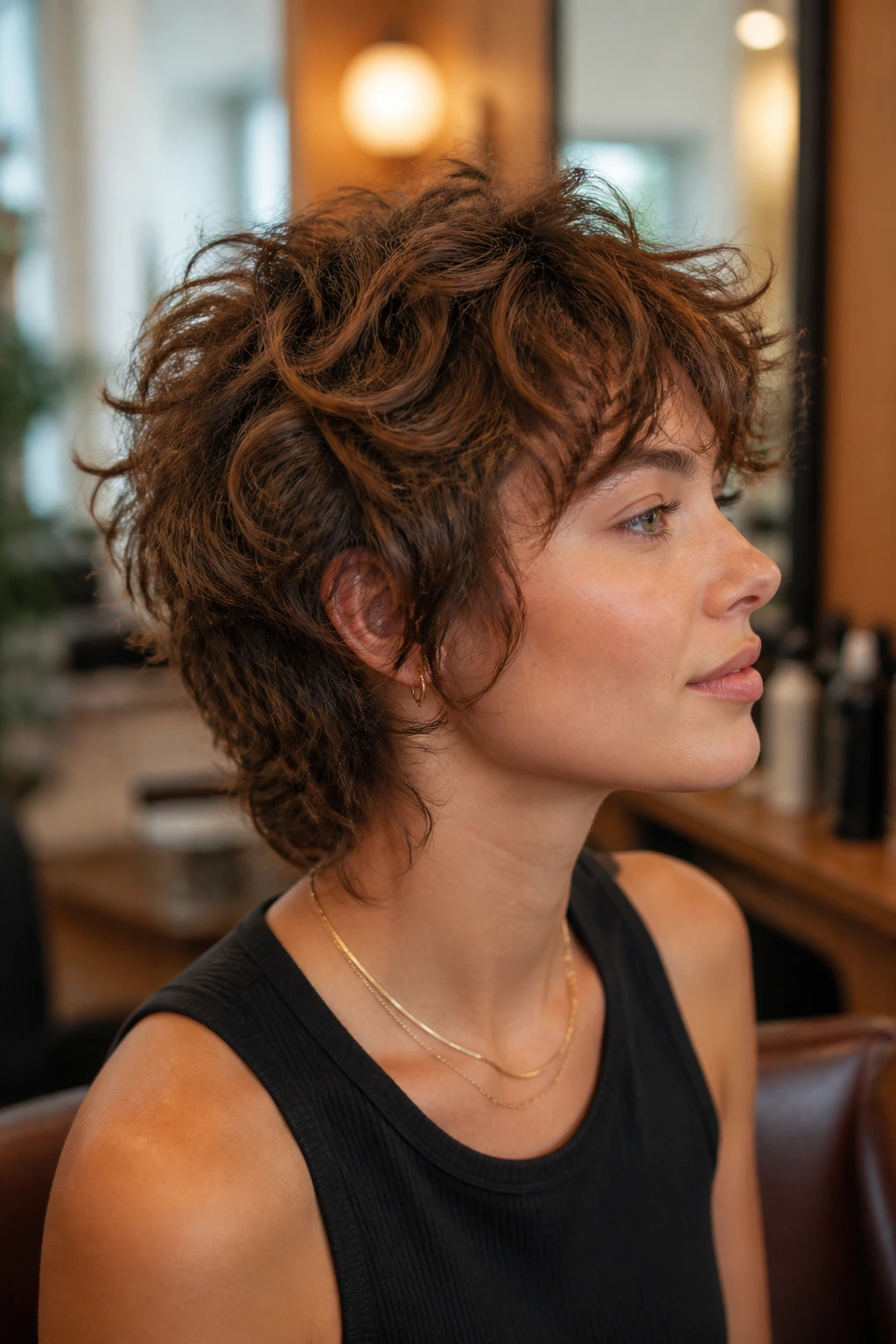
Stacking the crown gives you height where round faces need it most. The back is built a bit shorter underneath, which lets the top puff up and fall forward in light layers. This is the sort of cut that looks especially good when you turn your head.
It’s one of the most structural shags in the list. You need enough density for the stack to show, but not so much that it creates a helmet. Ask for the stack to be soft, not architectural.
24. Hidden Undercut Shag
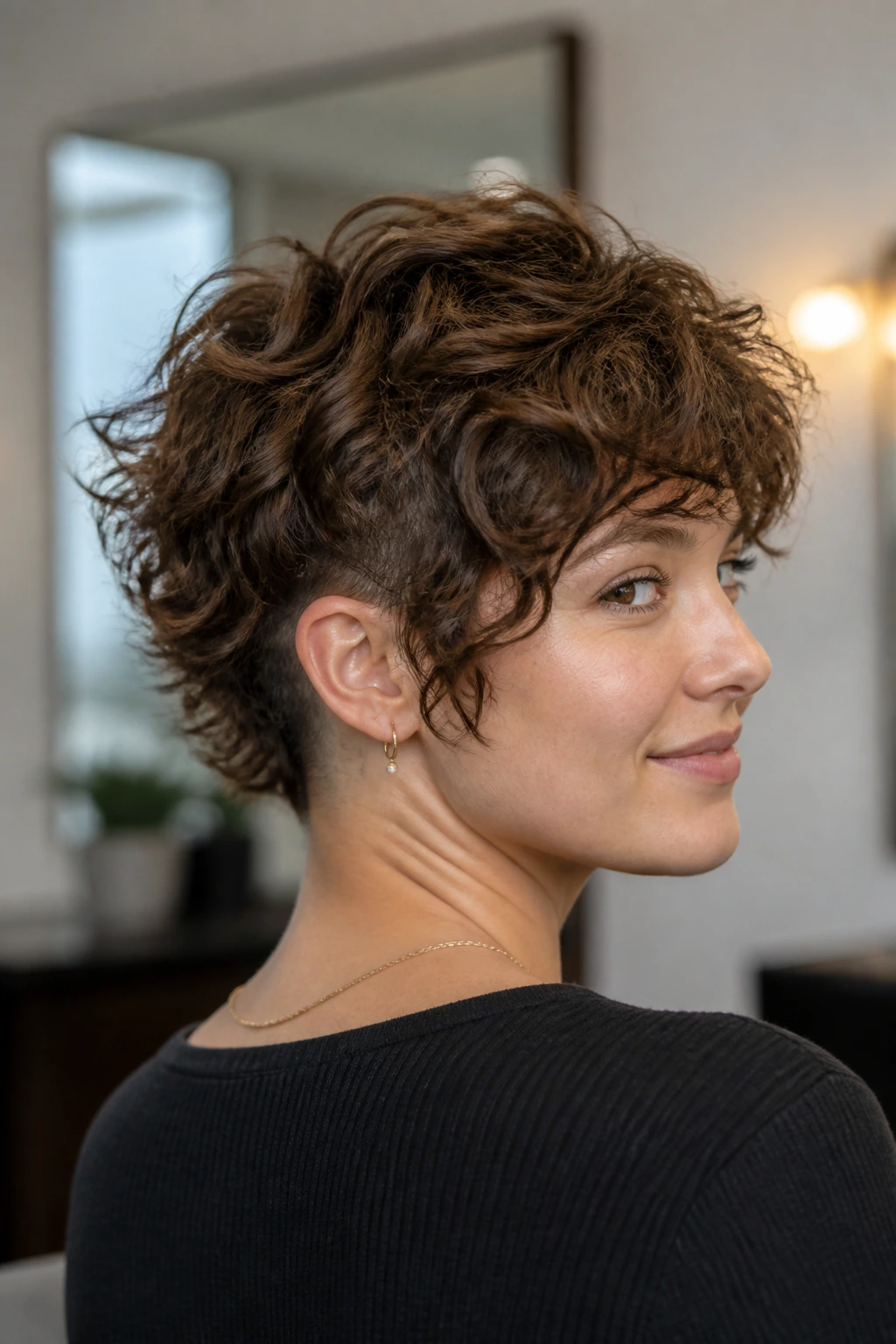
A hidden undercut is the quiet fix for hair that explodes underneath. By removing weight at the nape or behind the ears, the top curls can sit more lightly and the sides stop pushing out. The cut still looks full from the outside.
This is a strong move if your hair is thick, humid, or both. The trick is restraint. You want the undercut to solve bulk, not leave obvious gaps that show when you tuck your hair behind your ears.
25. Graduated Neck Shag
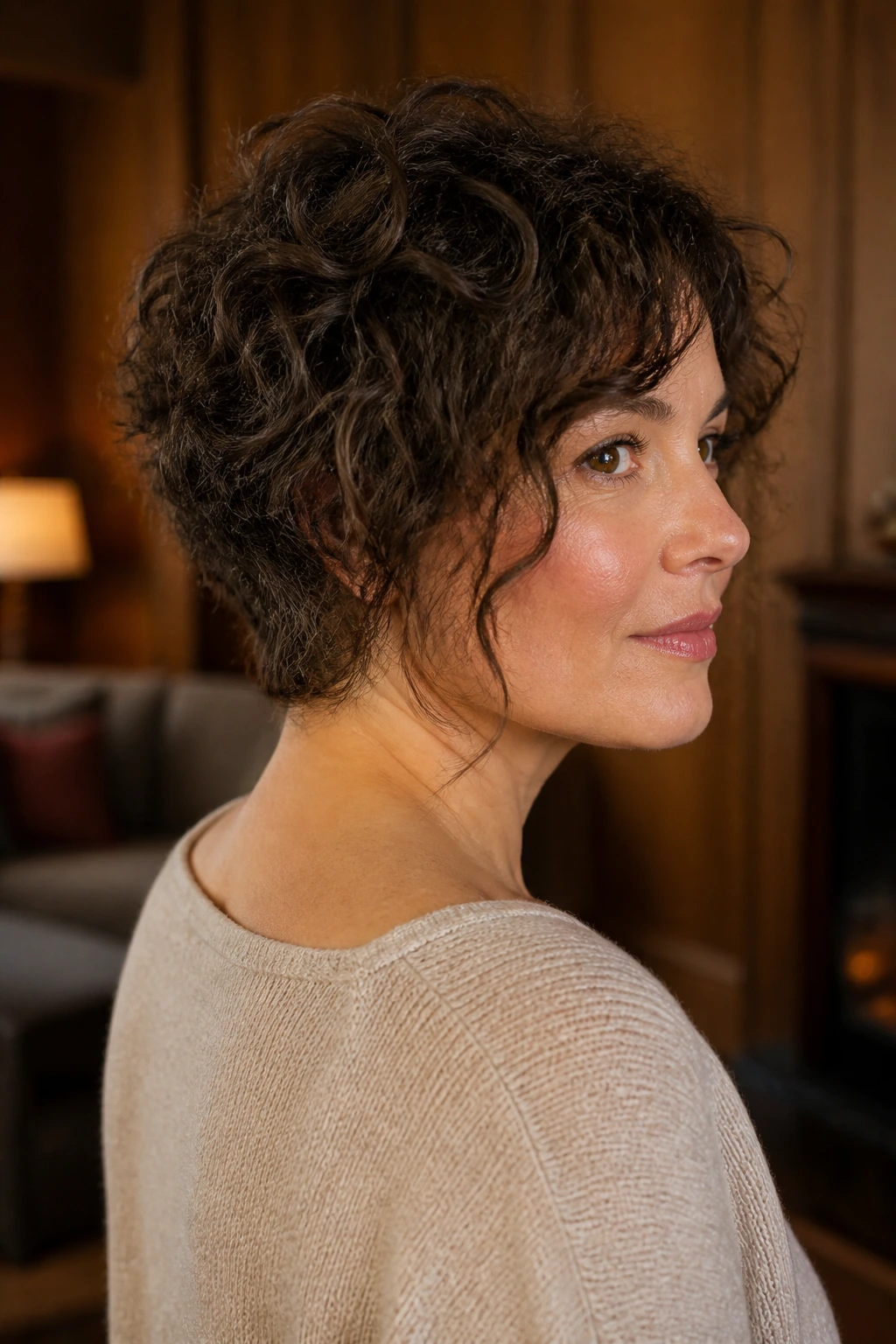
The graduated neck shag works because the back is not one flat wall. It starts shorter at the nape and gradually lengthens toward the front, which gives the head a cleaner shape in profile. Round faces benefit from that line because it stretches the silhouette.
I’d recommend this if you like your hair to rest neatly on the neck without sticking out. It’s tidy, but not stiff. A little curl at the neckline keeps it from turning severe.
26. Center-Part Face-Rail Shag

A center part can be tricky on a round face if the sides are too full. Here, the front pieces act like face rails, falling from the part down toward the jaw in two clear lines. That creates length down the center and keeps the cheeks from feeling boxed in.
This cut needs enough front length to do the job. If the rails end too high, they become little wings and widen the face. Keep them long enough to move past the cheekbone and let the layers beneath stay softer.
27. Asymmetrical Shag
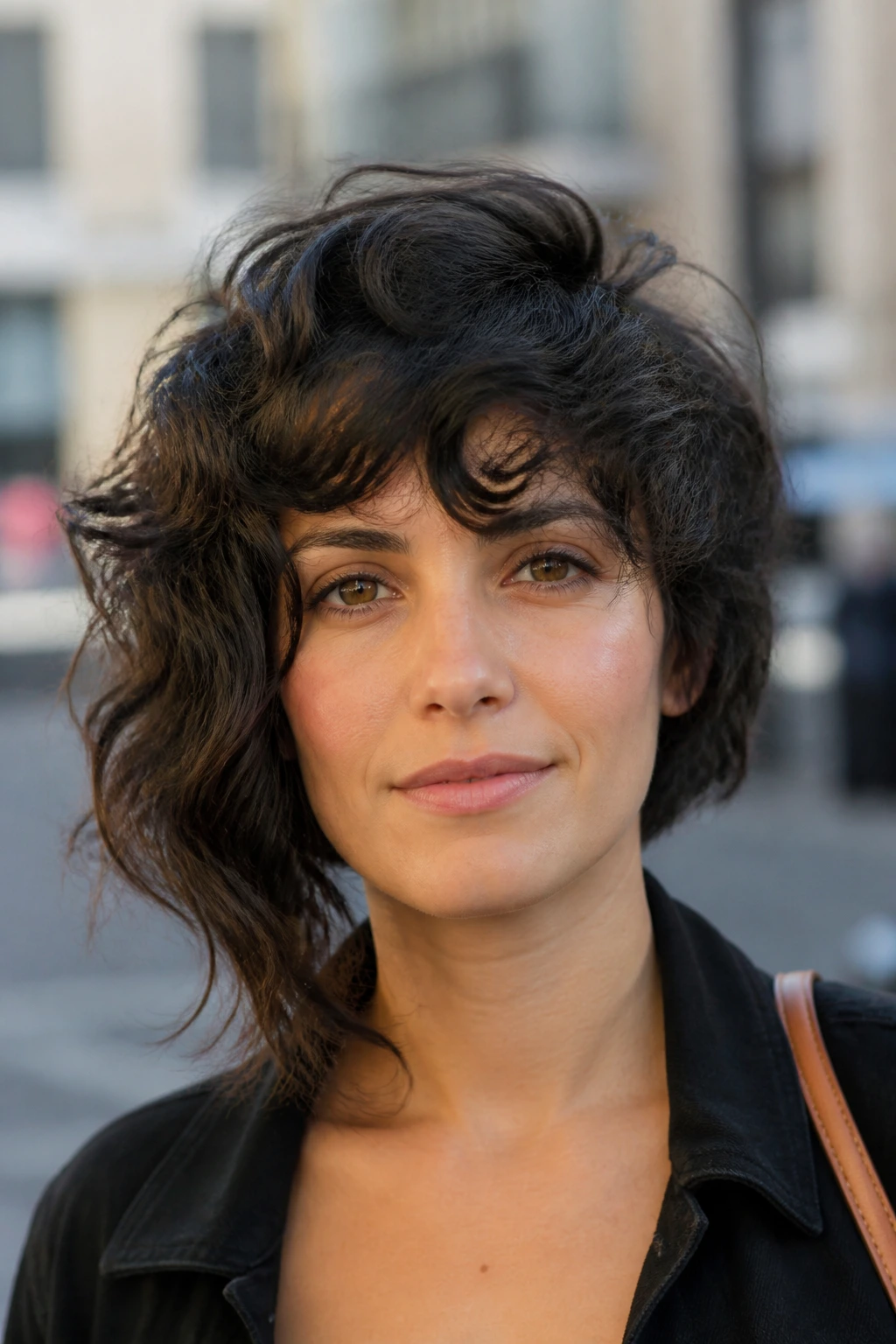
A small imbalance can be your friend. One side sits slightly longer or fuller than the other, and that tiny shift keeps the eye from settling on a perfect circle. On a round face, asymmetry can be the difference between cute and flat-out forgettable.
The key is control. You do not want one side to look accidental. Ask for a deliberate difference, maybe a half-inch to an inch, and keep the transition soft so it reads like movement rather than a mistake.
28. Soft Mullet Shag

If you want edge but don’t want to look like you borrowed a haircut from a concert flyer, this is the one. The front stays short and fluffy, the back keeps a little more length, and the overall line stays rounded enough for a round face. The contrast adds lift without a hard wall.
This version needs softness at the temples and jaw. Too much sharpness makes the face feel boxed. A soft mullet shag should look like it has opinions, not aggression.
29. Bouncy Halo Shag

This cut is all about circular motion that doesn’t widen the cheeks. The layers are arranged so the curls lift around the head in a halo shape, but the sides are kept lighter and broken up. The round face gets framed, not mirrored.
It’s a pretty shape when the curls are healthy and springy. If the hair is damaged or frizzy, the halo can blur into fuzz. A little gel at the surface and a clean curl pattern help keep the outline readable.
30. Wet-Set Defined Shag
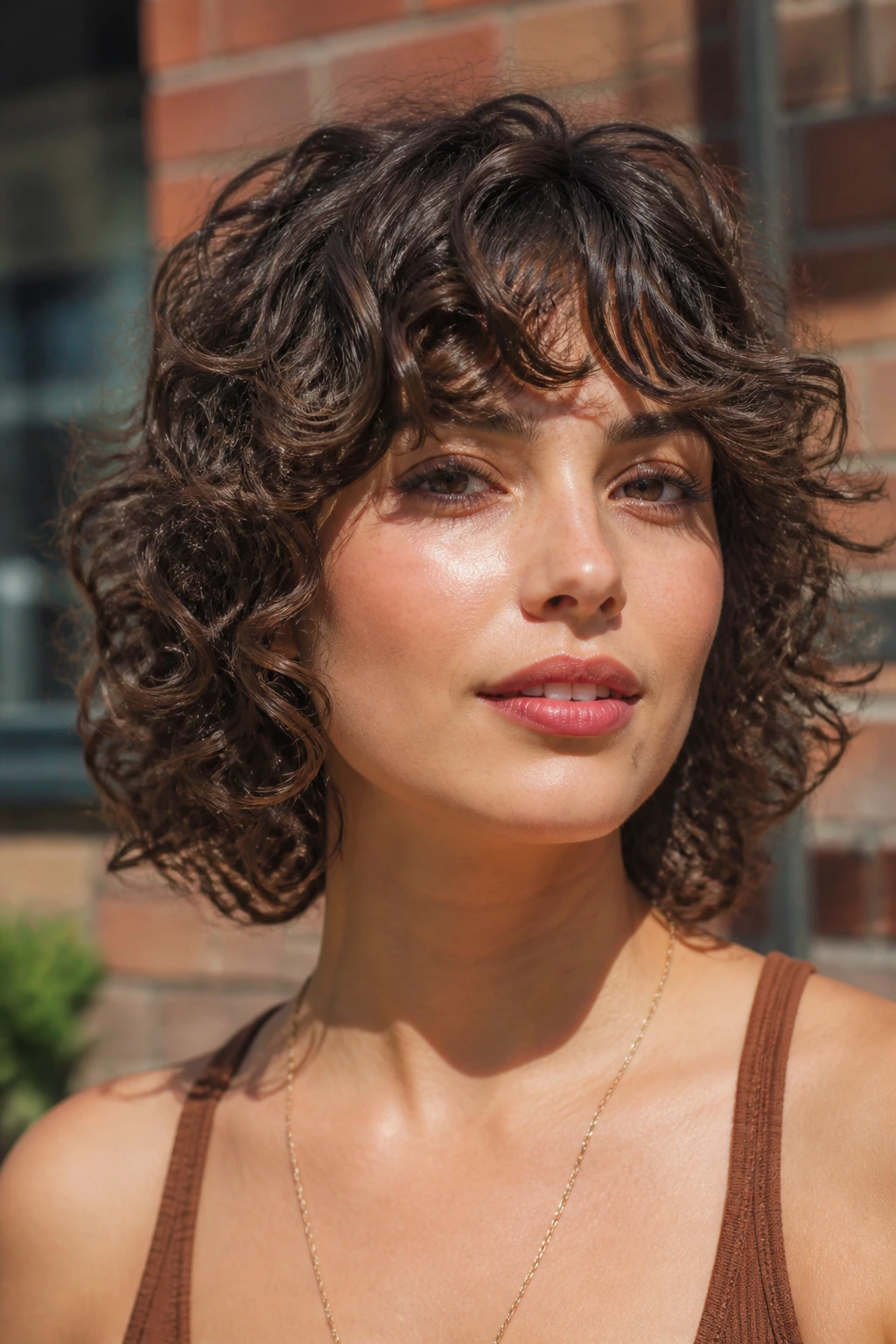
Unlike a fluffy air-dried shag, this one is set with intention. The curls are shaped with more control, so the ends sit where you want them and the fringe behaves. On a round face, that precision helps because the outline stays open instead of expanding sideways.
Use this if you like clean curl clumps and a bit of polish. Flexi rods, finger coils, or a gel cast can all do the job. The important part is not brushing the structure apart once it dries.
31. Diffused Volume Shag

Big root lift is the star here. The diffuser pushes the crown upward, while the layers keep the sides from becoming one heavy block. The result is volume with direction, not volume with fluff.
This version is for people who enjoy hair that has a little presence. If you diffuse, lift at the root first and let the ends stay relatively calm. Hammering the sides with heat or airflow will just widen the face line.
32. Brushed-Out Romantic Shag

A brushed-out shag sounds risky, and sometimes it is, but on the right curl pattern it gives you soft, cloudlike movement. The trick is to brush only enough to loosen the clumps after the hair has fully dried, then stop before the shape goes puffy. You’re after softness, not frizz.
I like this on looser curls or waves that collapse if left too defined. The round face gets a gentler outline, and the hair looks a little more old-Hollywood than surf-girl. Keep a curl refresher nearby because this style is less forgiving by day two.
33. Silver Shag With Soft Layers

Gray and silver hair can hold a shag beautifully because the color makes the texture look crisp. Soft layers keep the ends from getting too ragged, while the crown and fringe can stay lively enough to frame a round face without adding bulk. The shine is half the appeal.
This cut looks especially good when the silver has dimension. Use a purple shampoo only when needed; overtoning can make the hair look flat. A shiny silver shag needs movement more than toner drama.
34. Big-Texture Disco Shag

This is the loud one. The layers are placed to encourage volume, separation, and movement that feels a little retro and a little rebellious. On a round face, the success comes from keeping the biggest expansion above the cheeks, not at them.
It’s not for someone who wants subtle. But if your curls are healthy and you like the shape to have presence, this cut can be a lot of fun. The styling should stay loose at the ends and higher at the root.
35. Soft Spiral Shag

Soft spirals sit in that useful middle ground between ringlets and waves. The shag layers should be gentle enough to preserve the spiral shape but broken enough to keep the sides from reading as one clean oval. On a round face, that broken line helps a lot.
This is one of the easiest versions to live with if you air-dry a lot. A light cream, a bit of mousse, and patience usually do the job. If you pile on too much product, the spirals lose bounce and the haircut starts behaving like it’s tired.
36. Cropped Shag With Soft Sides
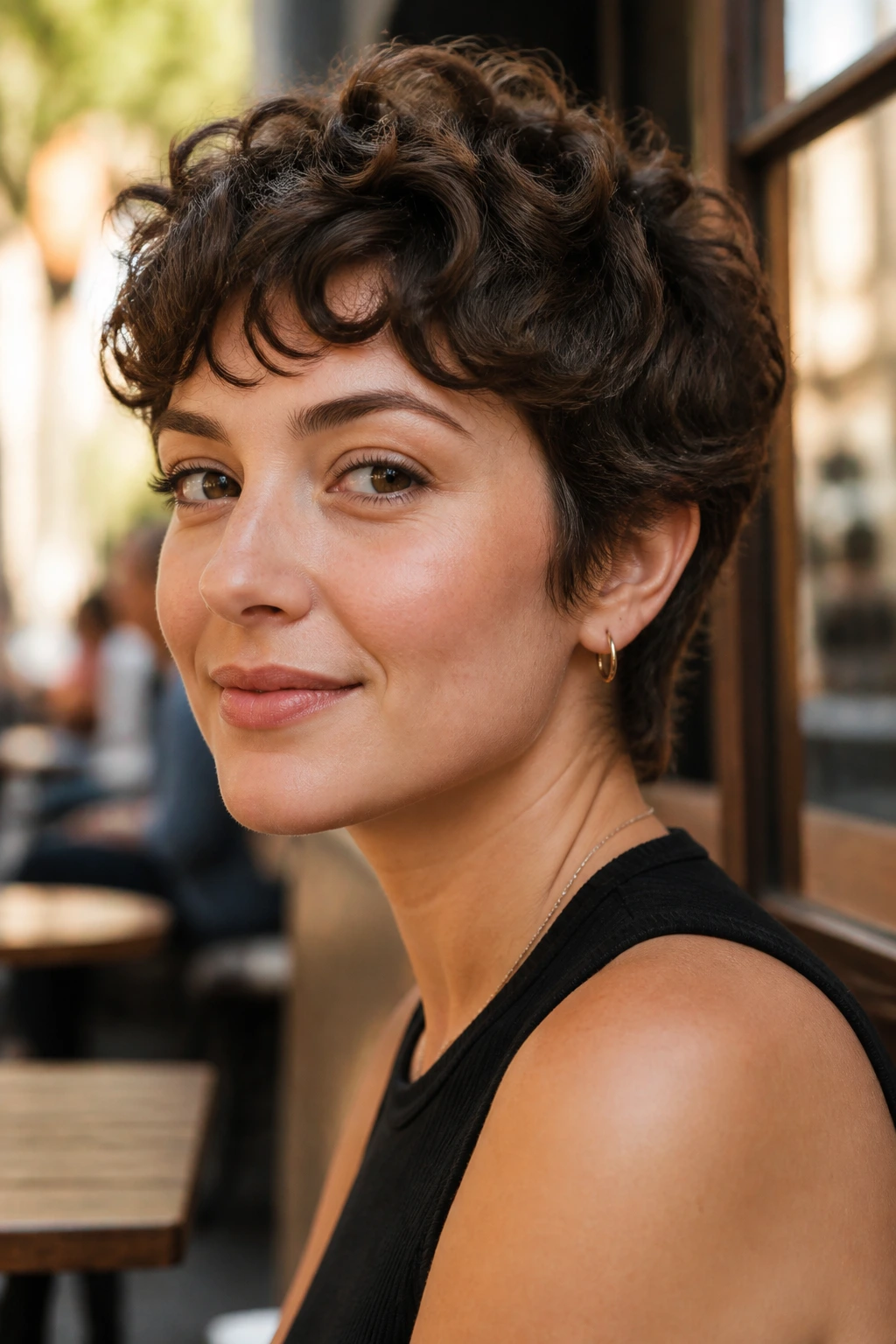
A cropped shag can go wrong fast if the sides get too hard. The better version keeps the sides soft and slightly longer than the top buzz of the style, which lets the face stay open without losing the cropped feel. It’s neat, but not severe.
This is a nice pick for people who want short hair without a close-clipped finish around the ears. Keep the soft sides flexible so the cut can be tucked behind one ear or worn forward. That flexibility matters more than people think.
37. Layered Curly Crop Shag
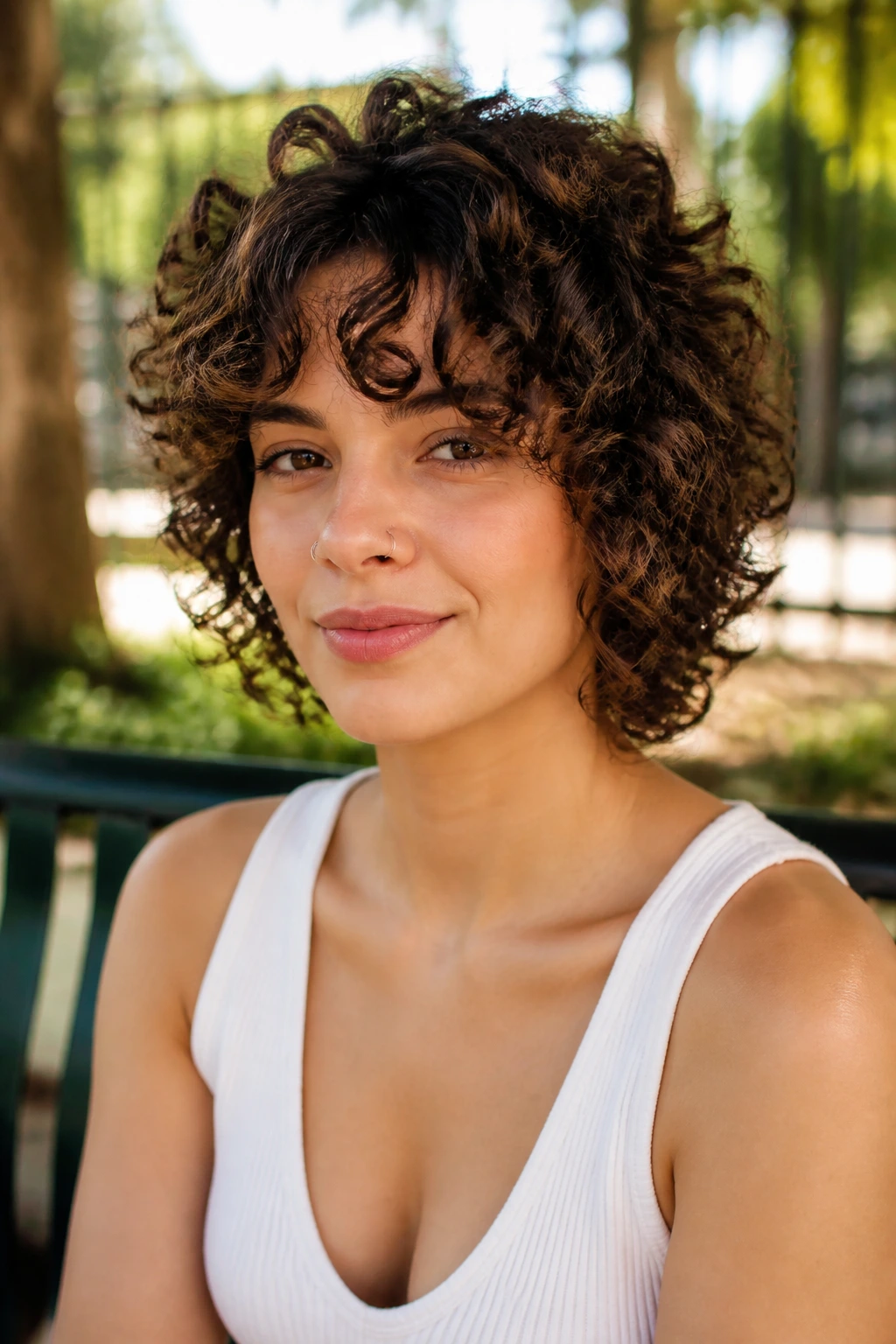
This cut sits between a pixie and a bob, which is a sweet spot for a lot of round faces. The layers are short enough to create lift, but there’s still enough length to frame the lower face and avoid a pure top-heavy look. It feels youthful without being fussy.
If your curls are dense, ask for the layers to be staggered rather than chopped all at once. A little irregularity keeps the shape moving. Too much sameness makes the crop sit like a cap.
38. Sculpted Edge Shag
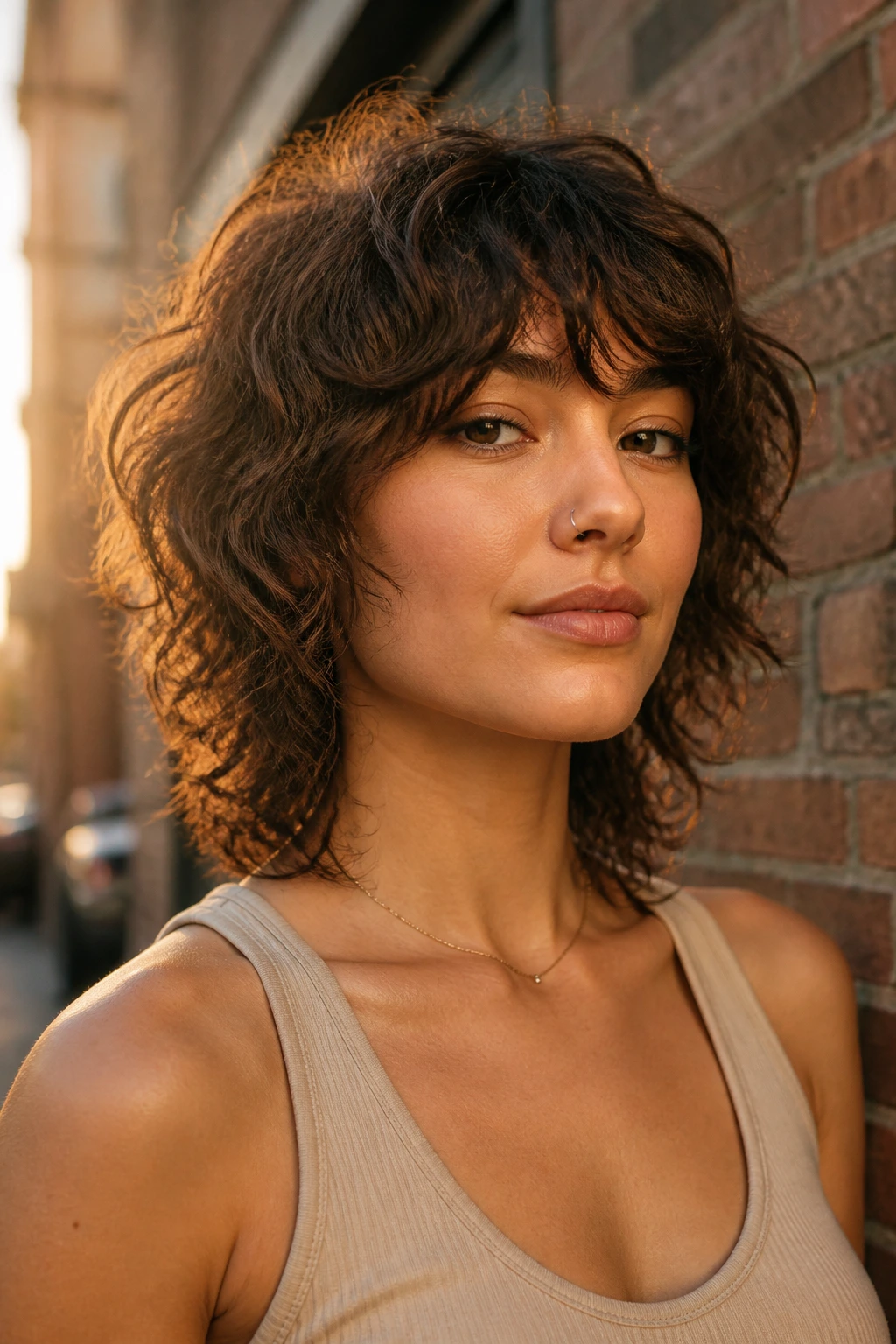
A sculpted edge shag has cleaner lines than the messier versions, which makes it a smart choice if you like shape with a sharper outline. The edges are still soft enough to suit curly hair, but the silhouette is more deliberate. On a round face, that deliberate line can be a lifesaver.
This is the cut for someone who wants the shag concept without the boho feel. Keep the front slightly longer and the corners slightly broken so it doesn’t turn blunt. The best sculpted shags look considered, not carved to death.
How to Brief a Stylist So the Shape Lands Right
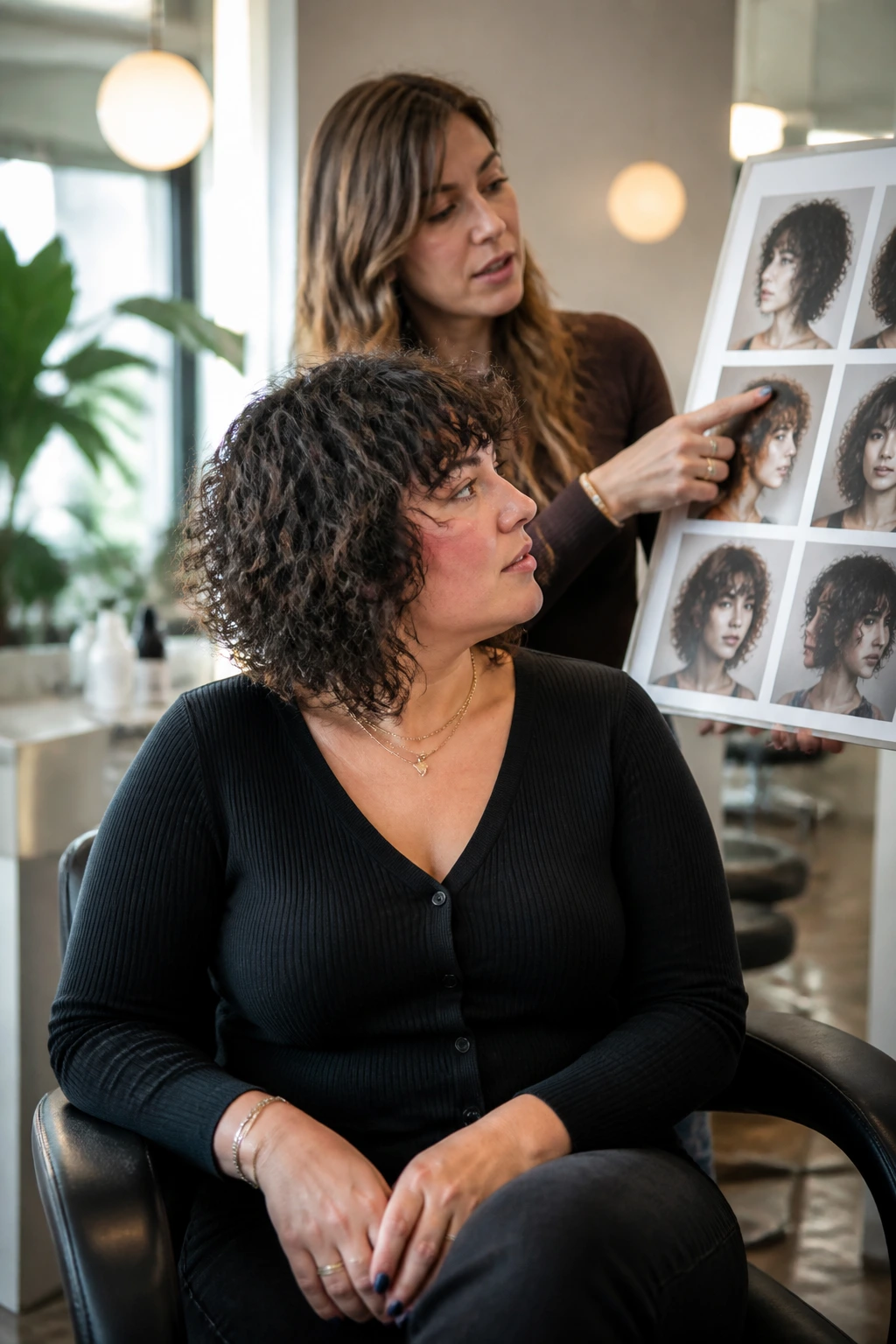
A good curly shag starts before the scissors. Bring photos, yes, but bring the right photos: hair with your curl pattern, not just your favorite silhouette. A chin-length shag on 2B waves does not behave like the same cut on 3C coils, and that mismatch is where disappointment starts.
Tell the stylist where you wear your part, how far your curls shrink, and whether you air-dry or diffuse. If you hate volume at the sides, say so plainly. If you love lift at the crown, say that too. Keep the language boring and specific. “I want the shortest layers above the cheekbone, and I don’t want a wide shelf at the sides” is worth ten vague sentences.
What to say out loud
- My face is widest at the cheeks, so I want the layers to start above or below that line.
- I wear my hair air-dried most days, so the cut has to look good without major styling.
- My curls shrink about [two inches / one inch / more than that], so I need the length planned for dry hair.
- I like fringe, but I don’t want heavy bangs that close off my forehead.
What to bring with you
Bring one photo of the silhouette, one of the fringe, and one of the texture. Three photos is enough. Ten photos just turns the appointment into a scavenger hunt.
Styling Moves That Keep the Crown Up

Short curly shag cuts for round faces live or die on how you style the top. If the crown collapses, the whole cut can read wider than it should. Start with water only where you need it, then work product upward from the roots rather than slapping it all on the ends first.
I’m a fan of mousse at the root and cream through the mid-lengths, followed by a diffuser on low heat. Cup the curls gently and stop touching them once the cast begins to form. If you keep scrunching forever, you’ll break the curl clumps and make the sides puff.
Three things that matter
-
Root clips: Use them at the crown for 10 to 15 minutes while the hair starts drying. They help the top stay lifted before gravity wins.
-
Side control: Aim the diffuser upward under the front layers, not straight out to the sides. Straight-out drying is how you widen the silhouette.
-
Finish last: Once the hair is dry, separate only the pieces that look stuck together. Don’t rake through everything. That’s a quick route to fuzz.
If you like day-two hair, use a spray bottle with water and a drop of leave-in, then scrunch the perimeter back to life. Wetting the roots all over usually makes the cut collapse more than it refreshes.
Shape Boosters and Easy Tweaks

Root Lift: A couple of duckbill clips at the crown can change the line of the whole haircut. Put them in while the roots are damp and remove them after the hair has set enough to hold its own.
Bang Rescue: If your fringe feels too short or too heavy, twist the front pieces while they dry instead of blasting them straight. That little twist softens the line and keeps the bangs from sitting like a shelf.
Side Balance: If one side tends to explode, pin it up for the first half of the dry time and release it later. You’re not training the curl forever. You’re nudging it.
Texture Choice: A matte curl cream gives a softer finish; mousse gives more lift; gel gives more hold and a cleaner edge. Pick the one that matches the shape you want that day, not the one you used last time by habit.
Common Mistakes That Make the Face Look Wider
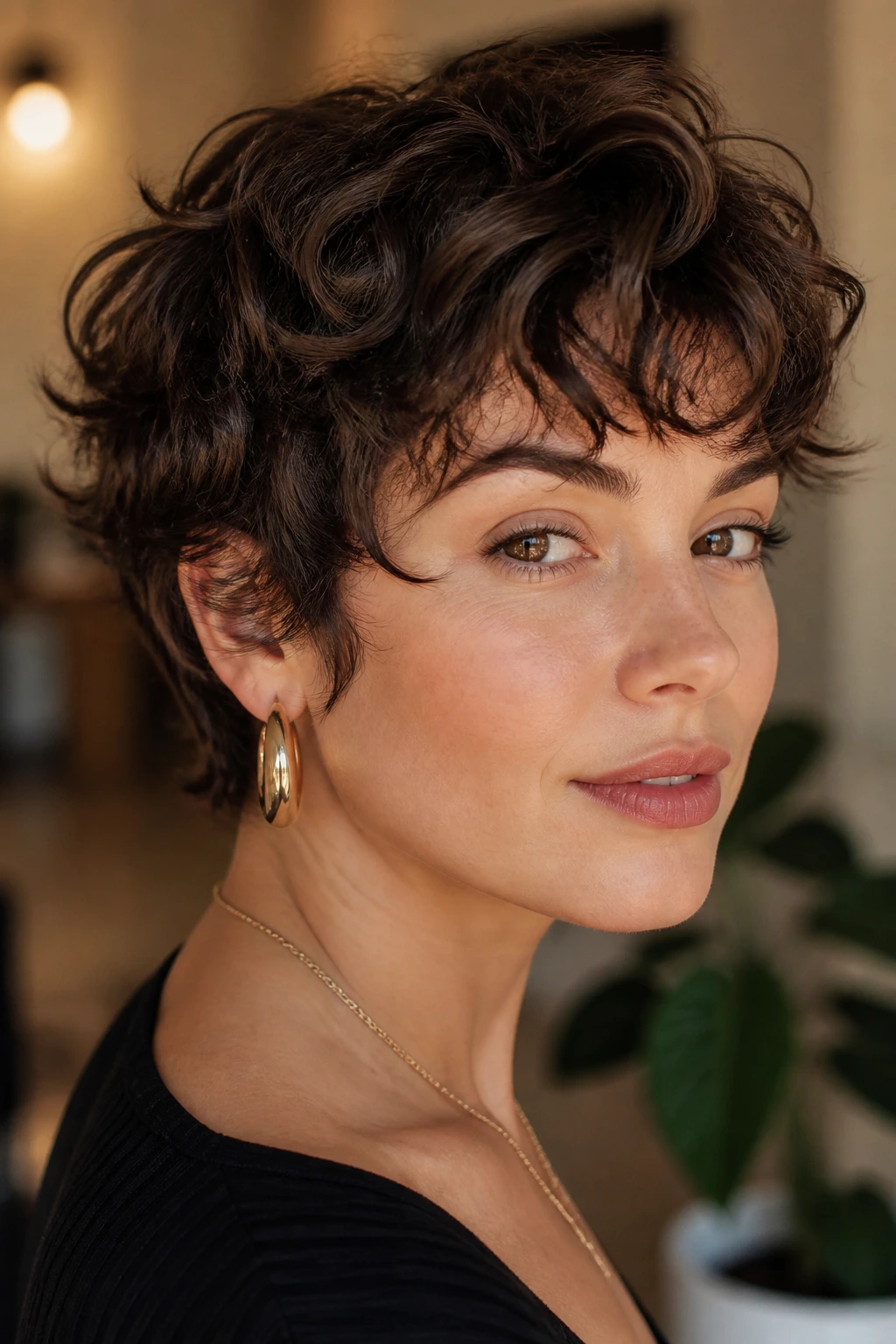
Cutting the widest layer at cheek height is the classic mistake. The hair lands exactly where the face is broadest, and suddenly the whole cut feels circular. The fix is to move the shortest face-framing point higher, toward the temple or lower, toward the jaw.
Over-thinning thick curls is another one. The ends look airy for a day, then the curl pattern frizzes and expands. Ask for internal weight removal instead of random razor damage.
Choosing blunt bangs with no blend can close off the forehead and box in the face. If you want fringe, keep the corners soft or go for curtain, bottleneck, or side-swept shapes.
Diffusing the sides too hard will widen the silhouette even if the crown looks great. Aim your airflow down and in, not out to the ear line.
Skipping trim maintenance on the fringe makes the whole cut drift. Bangs grow fast in curly hair because shrinkage hides the length until one morning they suddenly don’t sit right.
Variations and Alternatives to Try

Soft Cloud Version: Keep the layers gentle, the fringe long, and the finish fluffy rather than defined. This is the easiest pick if you want movement without a hard edge.
Sharper Edge Version: Ask for a cleaner perimeter and more deliberate face-framing pieces. It gives the shag a fashion-y feel and keeps the outline crisp.
Coil-First Version: Built for tighter curls and coils, this version uses internal shaping and a little extra length in front. It keeps the shape from ballooning out at the cheeks.
Lazy Air-Dry Version: Let the cut do most of the work. Minimal product, soft layers, and enough structure at the crown to look intentional even when you do almost nothing.
Longer Grow-Out Version: Keep the back and front a touch longer so the shape survives six to ten weeks without looking unruly. This is the one to choose if you hate constant salon visits.
Tools Worth Having by the Mirror

-
Diffuser attachment — The easiest way to lift the crown without blasting curls flat.
-
Microfiber towel or T-shirt — Better than a bath towel for keeping frizz down while you scrunch.
-
Duckbill clips — Useful for root lift and for controlling a stubborn side while it dries.
-
Wide-tooth comb — Good for distributing product through wet curls without tearing the pattern apart.
-
Curl cream or leave-in conditioner — Gives slip and keeps the layers from feeling dry.
-
Mousse — Helps a shag hold shape at the root, especially on fine hair.
-
Gel — Handy if you want more definition and less side width.
-
Hand mirror — Sounds obvious, but it helps you check the back and nape so the cut doesn’t puff in hidden places.
Trim Cycles, Night Care, and Refresh Days
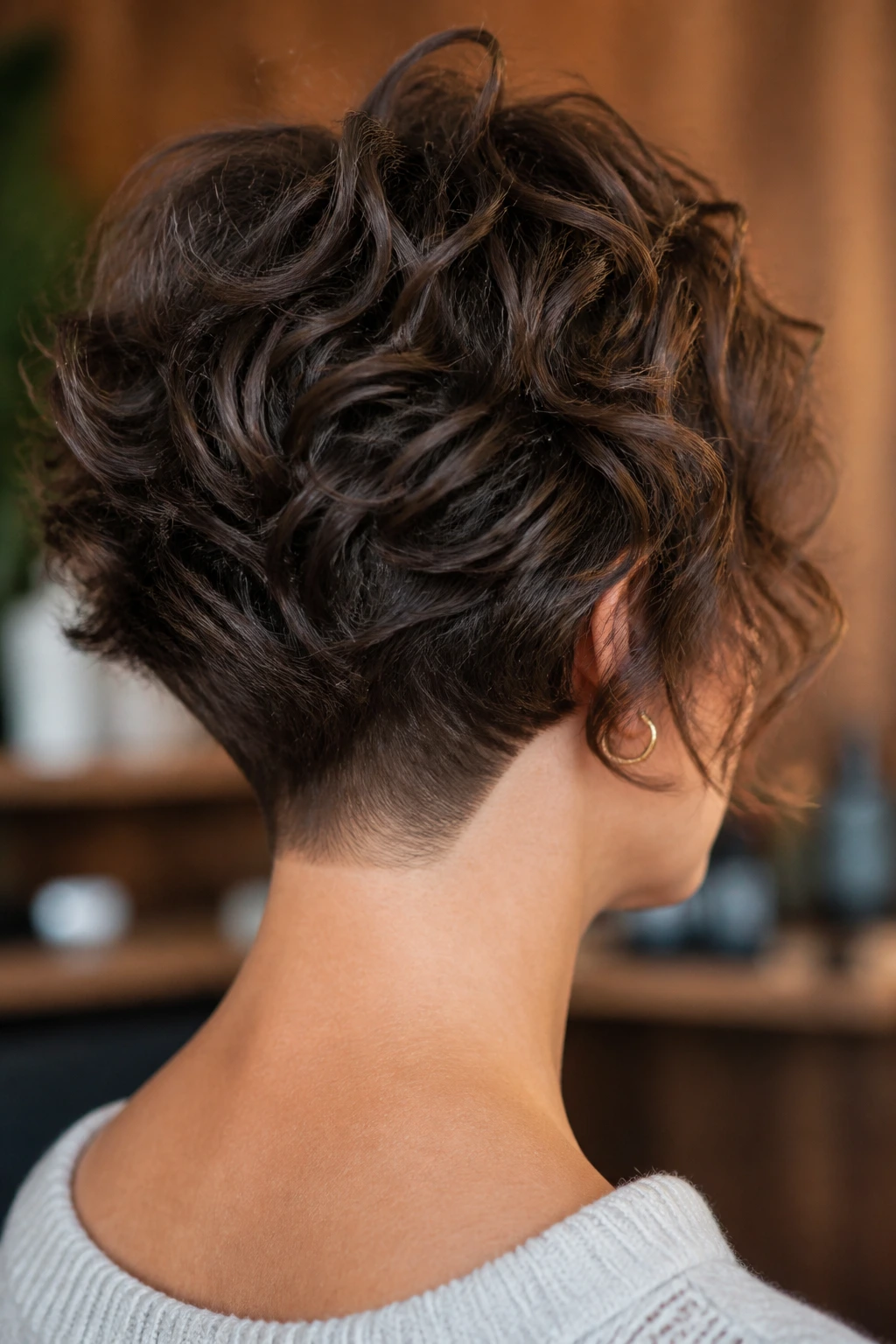
Short curly hair grows out in a way that feels fast and slow at the same time. The fringe may want a shape-up every 4 to 6 weeks, while the body of the cut can usually go 8 to 12 weeks before it starts losing its line. If you wait too long, the crown loses height and the cheeks start getting more visual weight than they should.
At night, a satin pillowcase or bonnet helps preserve the curl clumps and keeps the shag from collapsing at the sides. If your hair is long enough to pineapple, do that loosely. If it’s too short, just protect the front fringe and crown pieces so they don’t get mashed flat.
For refresh days, mist lightly and re-activate only the parts that went limp. A small amount of leave-in on damp hands can bring the front layers back without soaking the whole head. If the roots are the issue, refresh there first. Don’t drown the ends when the problem is really at the crown.
Questions People Ask Before They Book the Cut
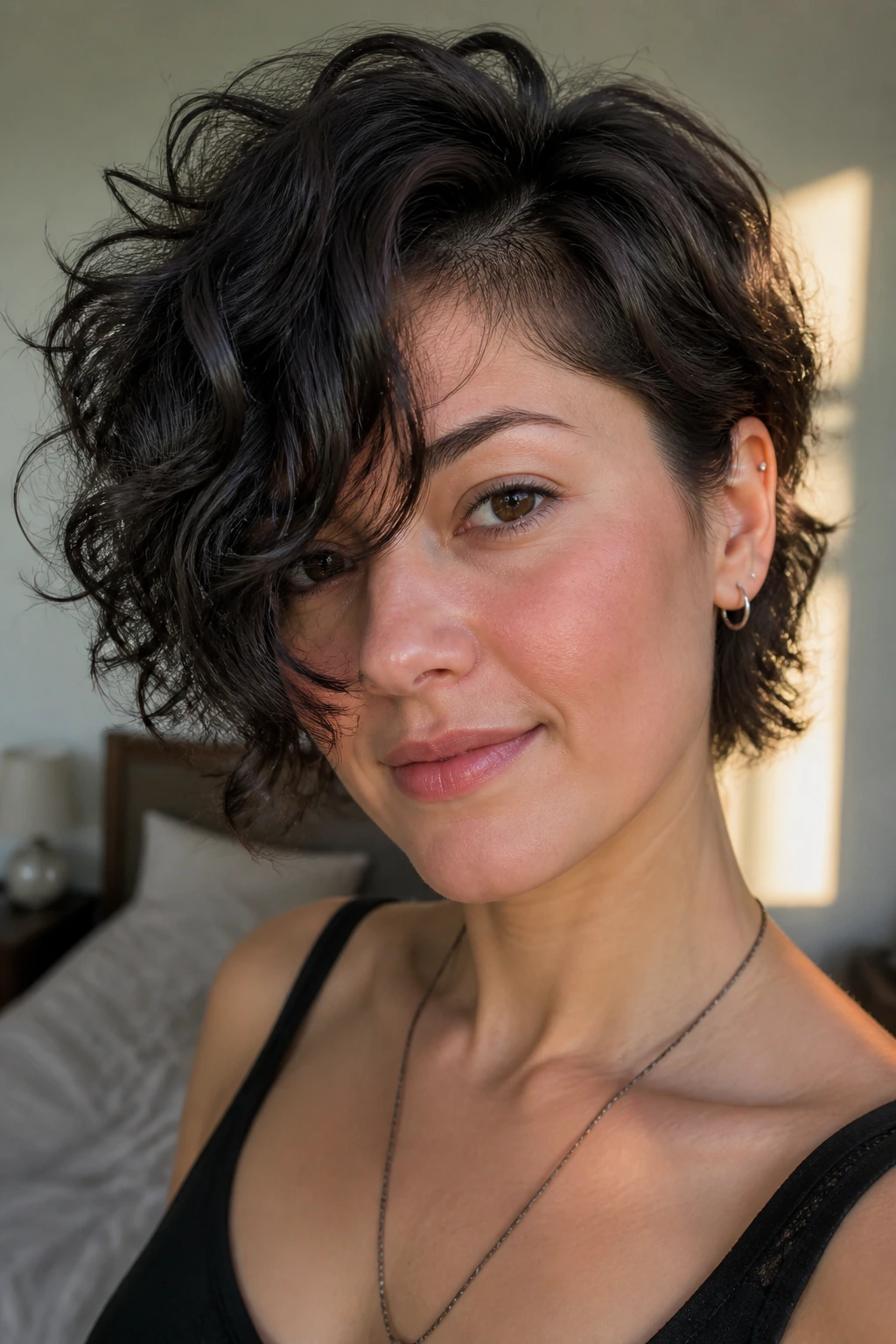
Will a short curly shag make a round face look wider?
Only if the layers sit right at cheek level and the sides get too bulky. The better versions create height at the crown and keep the widest curls below the jaw or above the temple line.
Should my stylist cut it wet or dry?
A dry check matters a lot with curls because shrinkage changes everything. Many stylists start wet, then refine dry, which is the safest mix when you want the shape to land in a specific place.
Can fine hair wear a curly shag on a round face?
Yes, but the layering has to stay lighter. Too many short layers can make the ends look sparse, so ask for lift at the root and movement at the perimeter, not endless thinning.
What if my curls are thick and fluffy?
Then you want internal weight removal and a cleaner nape. Thick curls need room, but they also need someone to prevent the side line from ballooning out.
Can I wear bangs with a round face?
Absolutely, if the fringe is soft enough to open the forehead or sweep diagonally. Curtain, bottleneck, and side-swept bangs usually play nicer than blunt, heavy bangs.
How short is too short?
If the cut stops at the fullest part of the cheek and has no crown lift, it can get wide fast. Shorter can still work, but the front and top need some direction.
What if my hair shrinks more than I expect?
Ask for the front to be left a little longer than the final target and request a dry refinement before you leave. That one step prevents a lot of surprise bangs.
Is this cut high-maintenance?
Some versions are, some aren’t. A soft air-dry shag can be pretty lazy, while a sculpted fringe or defined ringlet version asks for more shaping and refresh time.
A Shape That Keeps Changing
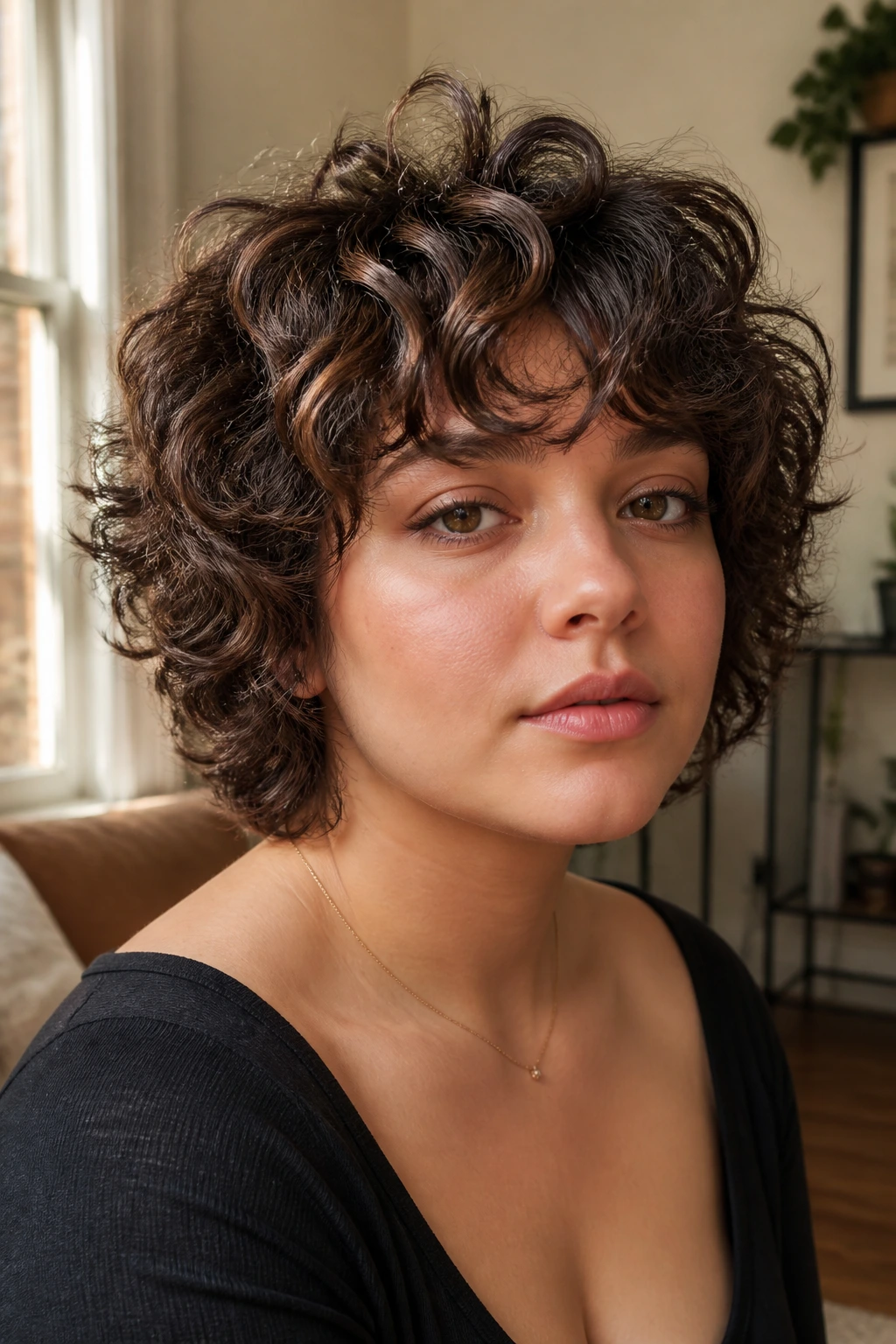
The best part about short curly shag cuts for round faces is that they are not one note. You can keep them soft, edgy, tidy, airy, wild, or polished, and the geometry still matters more than the trend label. That’s what makes the shape useful. It keeps doing the job even when the curl pattern changes its mind.
If you take one thing from all this, make it simple: move the visual weight away from the cheeks, give the crown some height, and ask for a cut that still makes sense on day three. Bring a photo, speak plainly, and let the curls do what they already want to do.
