



The best mohawk hairstyles for women over 40 are the ones that know when to stop. You do not need a shaved strip, neon color, or a helmet of spikes to make the shape work. A good frohawk is really hair architecture: narrower sides, a lifted center line, and enough control at the temples that the eye goes where you want it to go.
That is why this look keeps coming back in so many different forms. On fine hair, it gives the crown a little backbone. On curls, it lets texture do the heavy lifting. On silver or salt-and-pepper hair, it can look sharp instead of trying too hard. And if your hair has changed in density, softness, or patience level — which is a polite way of saying “it has a mind of its own now” — the right mohawk shape can make that change work for you instead of against you.
What matters most is balance. A mohawk for a woman in her 40s, 50s, 60s, or beyond does not have to shout to get attention. Sometimes the smartest version is the one that sits close at the sides, lifts just enough at the top, and leaves you looking polished without spending half the morning wrestling a brush. That’s the sweet spot, and it’s a good place to start.
Why These Cuts Feel Fresh Without Looking Forced
-
Lift without the drama: A center ridge pulls attention upward, which gives the face a cleaner line and keeps the style from looking flat at the temples.
-
Soft edges matter: You can keep the shape edgy and still skip the severe, over-shaved look that can feel hard around the jaw.
-
Gray hair looks intentional here: Silver, white, and salt-and-pepper strands catch light along the center much better when the sides are controlled.
-
Curls and coils get to stay themselves: Instead of flattening texture into submission, these styles use curl pattern as the structure.
-
Grow-out is kinder than people think: Even when the sides soften a bit, the shape still reads as a mohawk or frohawk instead of a failed haircut.
-
You can dress it up or down: The same cut can look sharp with a blazer, loose with a sweater, or polished enough for an evening event with a few pins and a little shine.
1. Soft Curly Frohawk
This is the style I recommend to women with curls who want shape without losing their own texture. The sides are smoothed back with gel or curl cream, while the center stays full, defined, and slightly lifted. It looks best when the curls are not brushed out into fluff; keep the ringlets or coils together so the hawk line stays readable.
The trick is to let the curls do the work. Scrunch a palmful of mousse into damp hair, diffuse at the roots for a few minutes, then pin or smooth the sides close to the head. A soft curly frohawk has movement, not stiffness. If your curls sit around chin length or longer, the result has a nice vertical line without feeling severe.
2. Tapered Pixie Mohawk
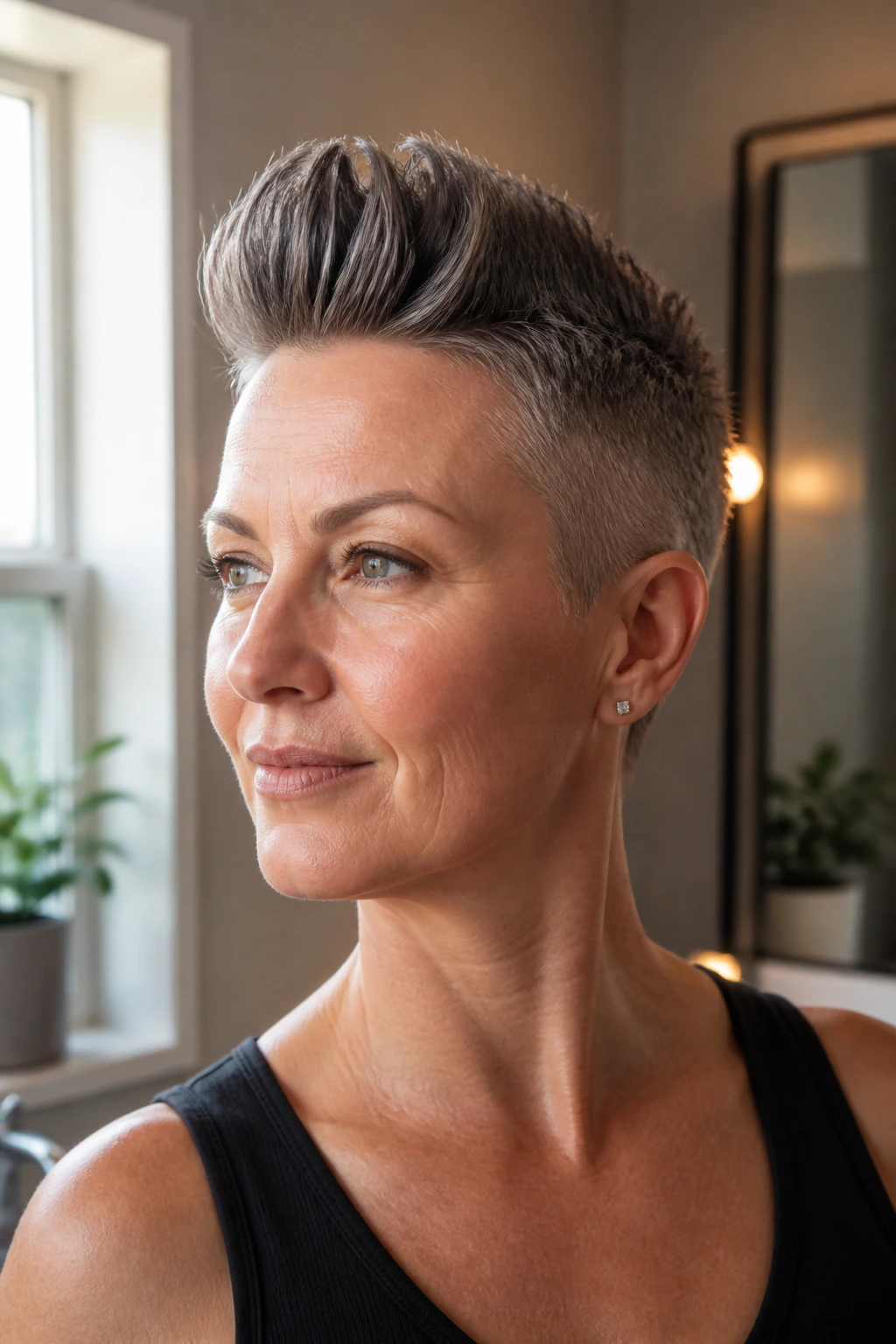
Short hair can do a lot here, especially if the cut is tight at the nape and ears but left a little longer through the center. This version works beautifully on fine hair because the shorter sides remove bulk while the top gains height with almost no effort. It is neat, sharp, and easy to wear with glasses or strong brows.
Ask for a tapered pixie with enough length on top to push forward, back, or slightly up. Then work a pea-size amount of matte paste through dry hair and pinch the crown upward with your fingertips. No shine helmet. No crunchy finish. Just enough lift to show the shape.
3. Swept-Back Faux Hawk
If you want mohawk energy without committing to a bold cut, this is the safest place to land. The sides stay soft and brushed back, while the top gets swept away from the face in a smooth ridge. It reads polished at work and still has enough edge to feel modern at dinner.
A round brush and blow dryer are your friends here. Blow the front section up and back first, then smooth the sides with a little pomade or styling cream. You do not need the top to stand straight up; you just need it to travel in the same direction. That shared direction is what makes the style look intentional.
4. Silver Stripe Side-Textured Mohawk
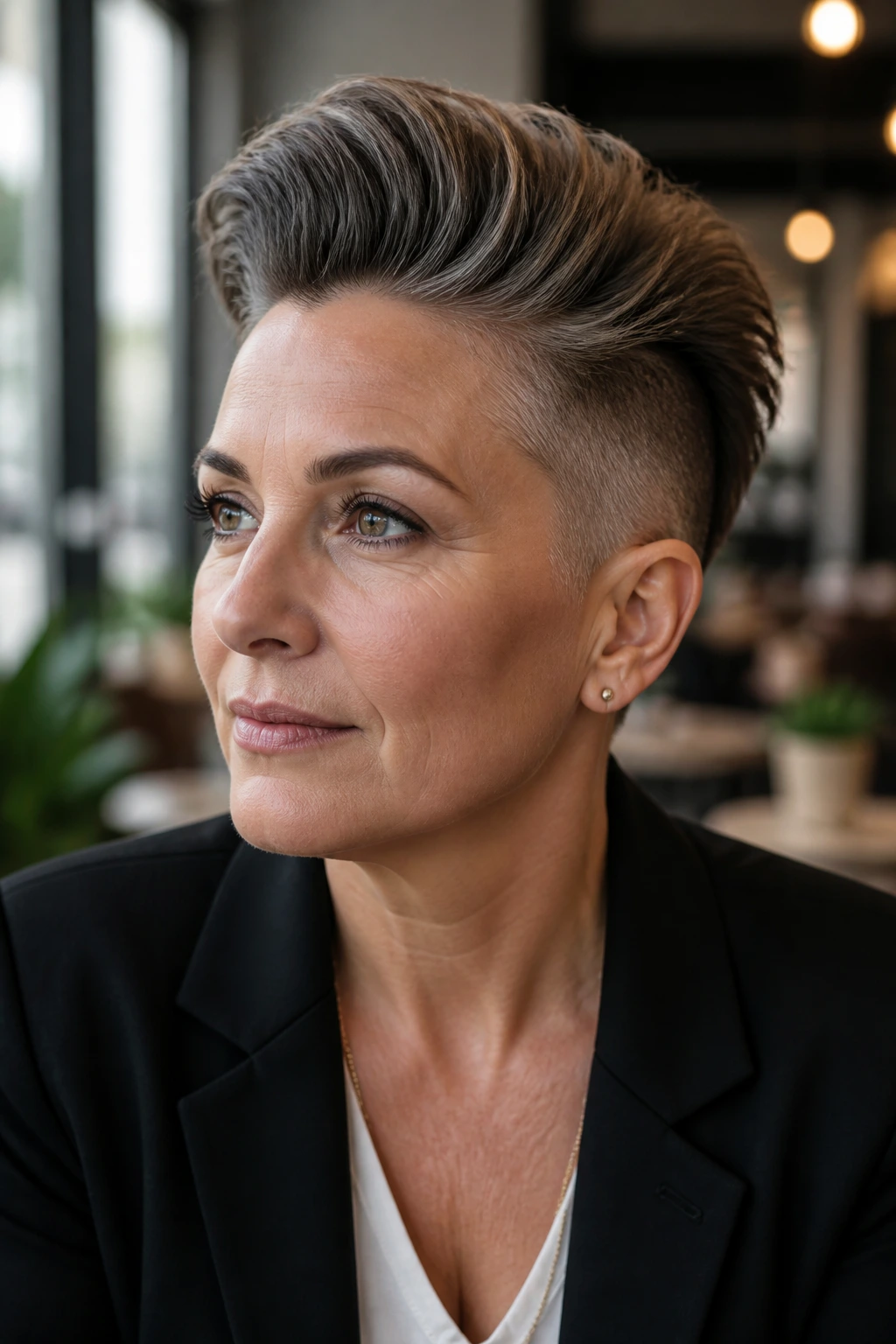
Gray hair loves a clean shape. When the color is already doing something interesting, the cut should not fight it. This version leaves the natural silver or white running through the center while the sides stay closely cropped, tucked, or slicked down. The result can look striking in a quiet way, which is my favorite kind of statement.
If your hair has a mix of silver, dark, and white strands, add a little shine serum to the top so the texture catches light instead of looking dry. A tiny bit goes a long way. Too much and the whole thing gets greasy fast, especially near the crown.
5. Braided Center Mohawk
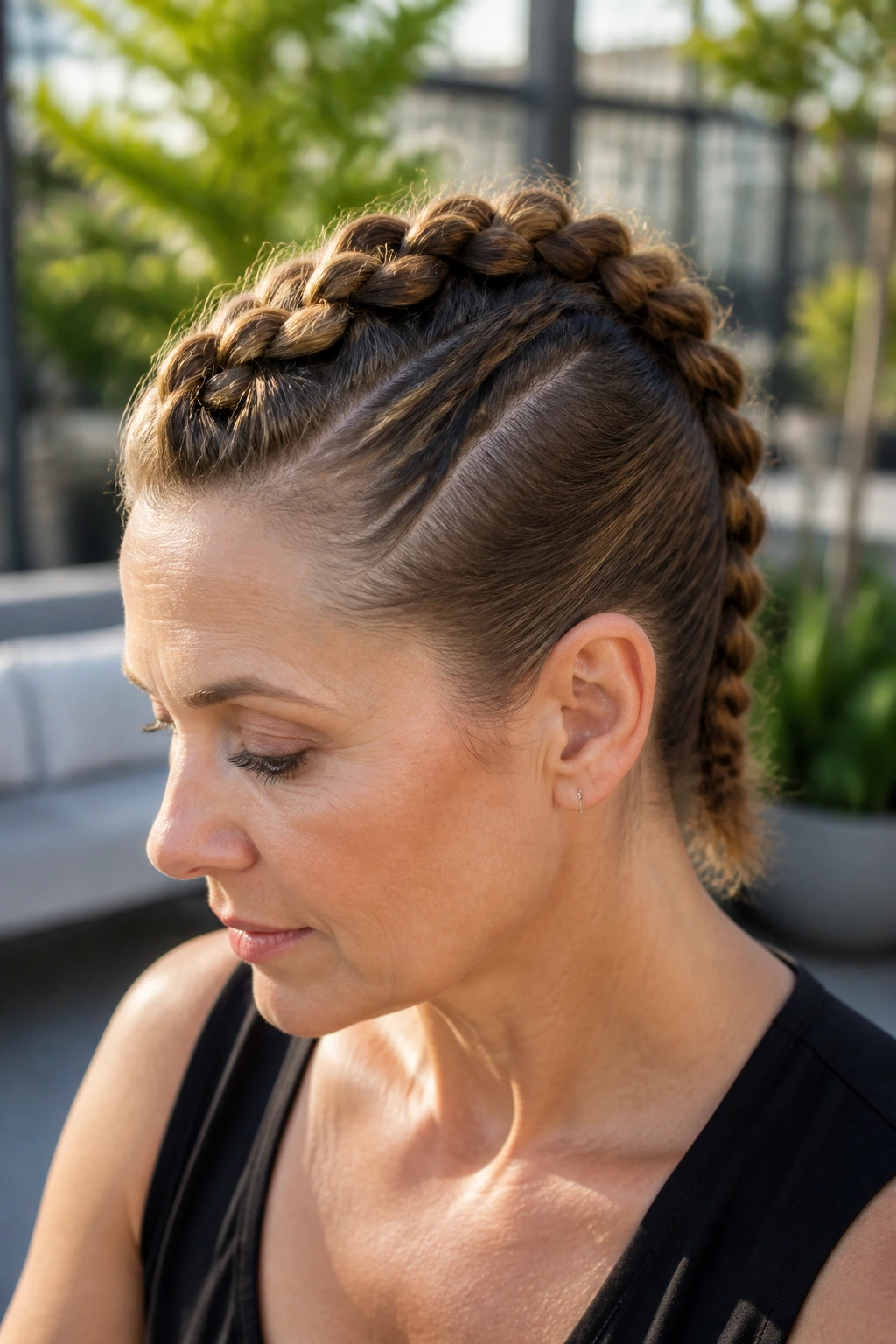
Braids give the hawk shape a built-in line, and that line makes everything easier. You can braid the sides tightly back and leave the center loose, or build the whole center into one raised braid that runs from hairline to nape. Either way, the braid becomes the ridge, which means less daily styling.
This works well if you like your hair out of the way but do not want it pinned flat. It is also one of the better choices for humid weather, because the structure does not collapse the second the air turns soft and damp. Add a few subtle cuffs if you want a little shine; keep them small if you want the style to stay grown-up rather than costume-y.
6. Pompadour Frohawk
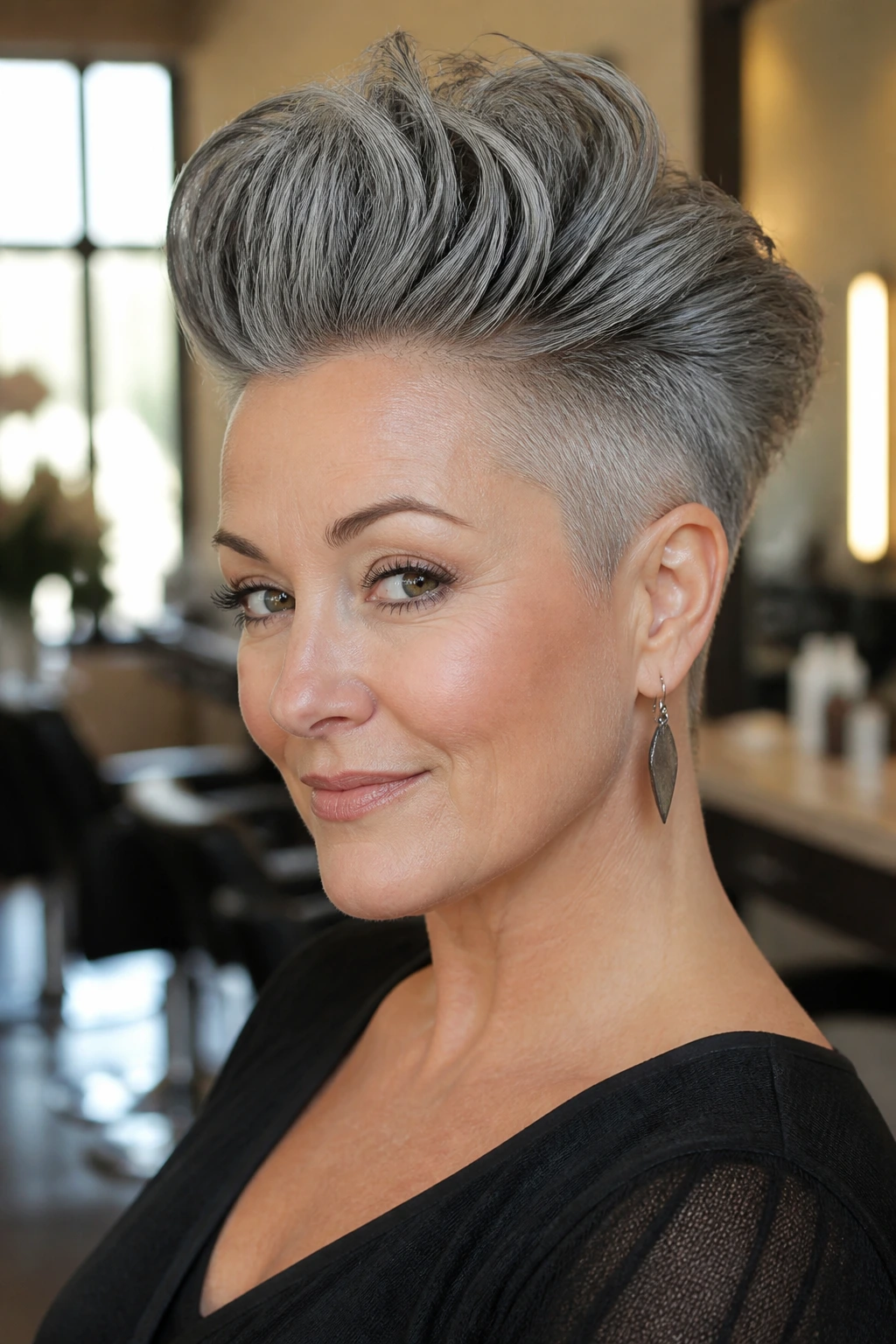
A pompadour frohawk is for anyone who likes a little old-school glamour with the edge dialed down. The front lifts up and back, the crown stays high, and the sides are kept neat so the top can do the talking. It has presence. It also plays well with medium-length hair that needs help getting off the scalp.
How to style it
Start with volumizing mousse at the roots and blow-dry with a round brush, directing the front section backward. Once it cools, pinch the crown with a small amount of paste and mist lightly with flexible hold spray. You want shape, not helmet hair. The whole point is to keep the front soft enough that it still moves when you do.
7. Asymmetrical Undercut Hawk
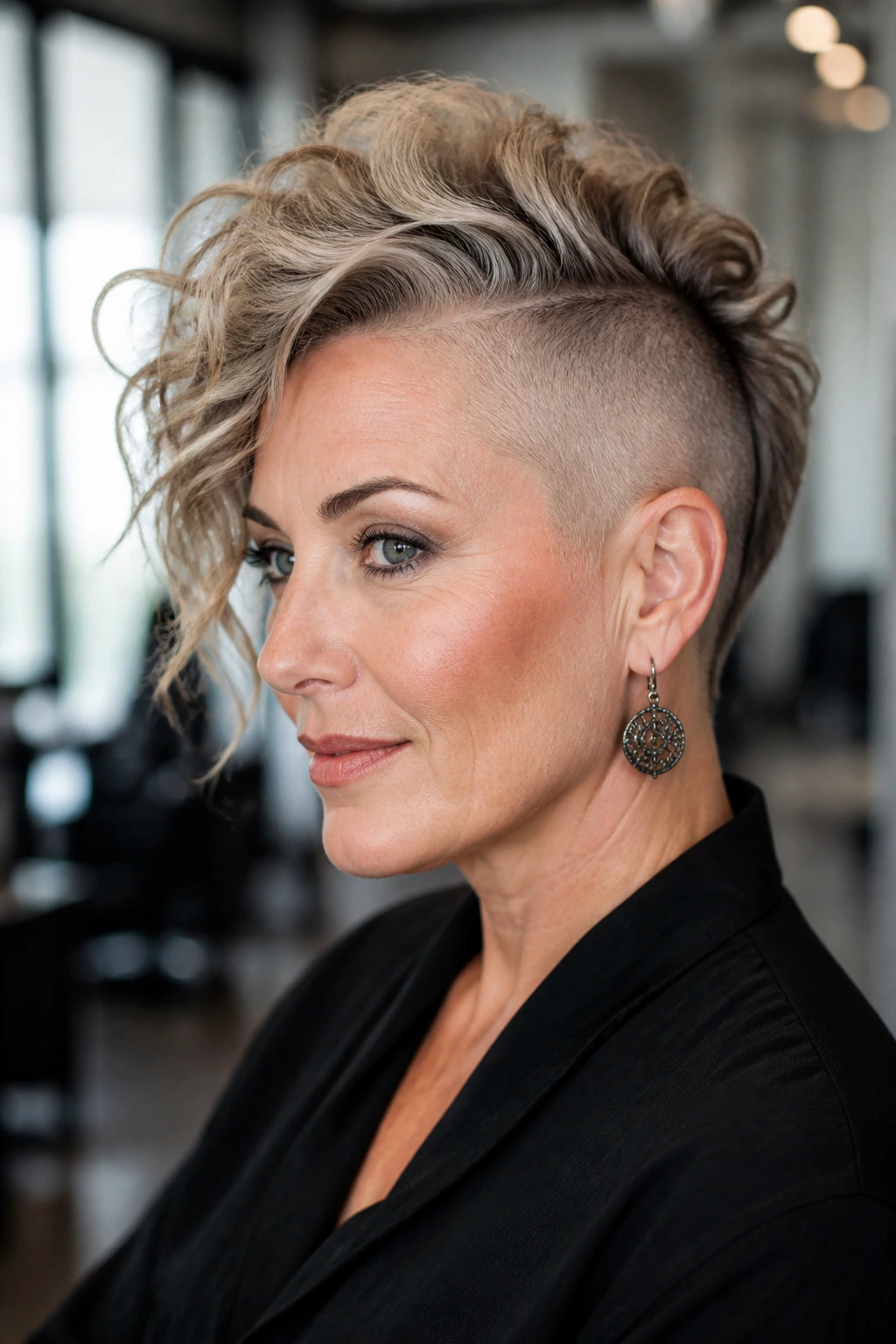
This is the bolder cousin in the group. One side is shaved or clipped shorter, the other stays longer and softer, and the center ridge bridges the difference. It gives the face an angle and makes cheekbones look sharper without needing much decoration.
I like this style best when the undercut is not taken too high. Keep the short section low enough that the cut still has some softness as it grows out. If you are nervous about the commitment, ask for a hidden undercut under the longer layers. Same attitude, less drama at the salon sink.
8. Twisted Crown Mohawk
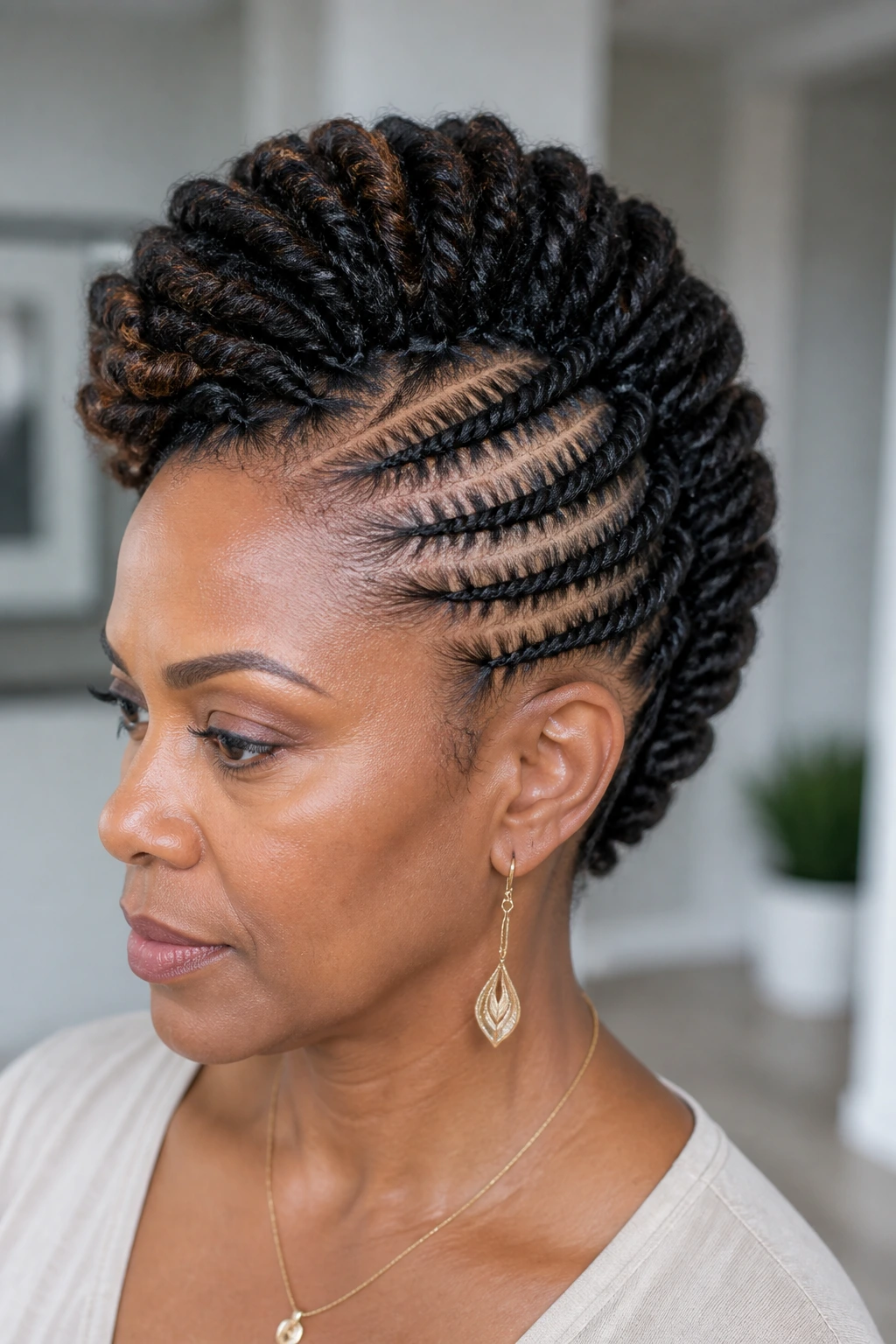
Twists make the whole thing feel calmer and more refined. Instead of spikes or big height, you get texture arranged in a clean line from front to back. That makes this version especially good for natural hair, coily hair, or anyone who wants a protective style that still has shape.
Two-strand twists on the sides, a fuller twist-out or puff through the center, and a few pins near the back can turn a regular wash day into something that lasts. The finish does not need to be glossy. What it needs is clean parting and enough tension to hold the ridge in place without making the scalp feel tight.
9. Natural Hair Puff Hawk
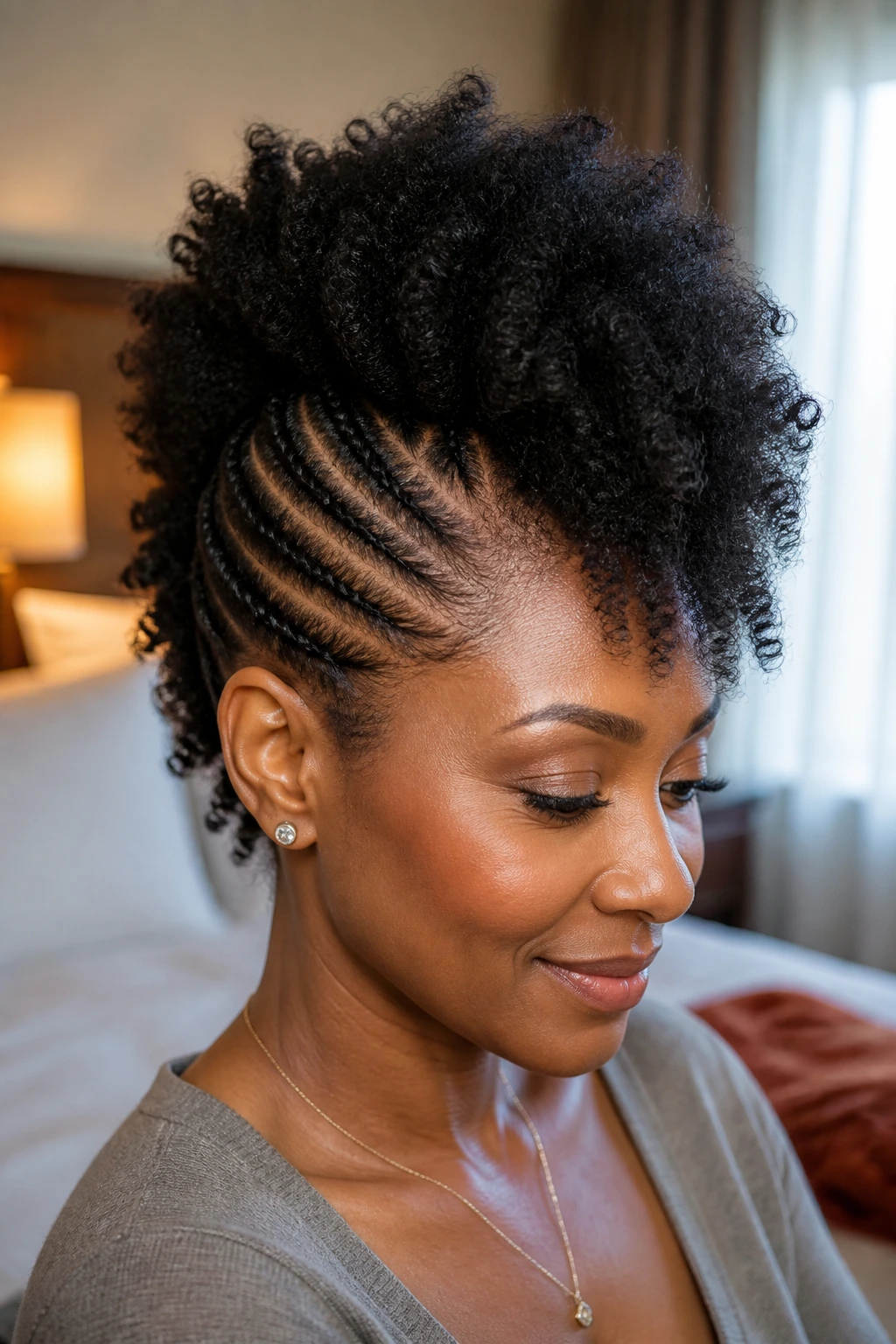
This one has a little play in it, and I mean that as a compliment. The sides are smoothed or braided down, while the center is gathered into one or more puffs that rise along the head. It gives the mohawk shape without forcing the hair into a hard shell.
The best versions use the natural shrinkage of coils and curls instead of fighting it. A bit of edge control around the hairline, a few bobby pins where the sections meet, and a pick to fluff the puffs once they are dry are usually enough. It is cheerful, flattering, and far easier than people expect.
10. Slick Sides with Voluminous Top
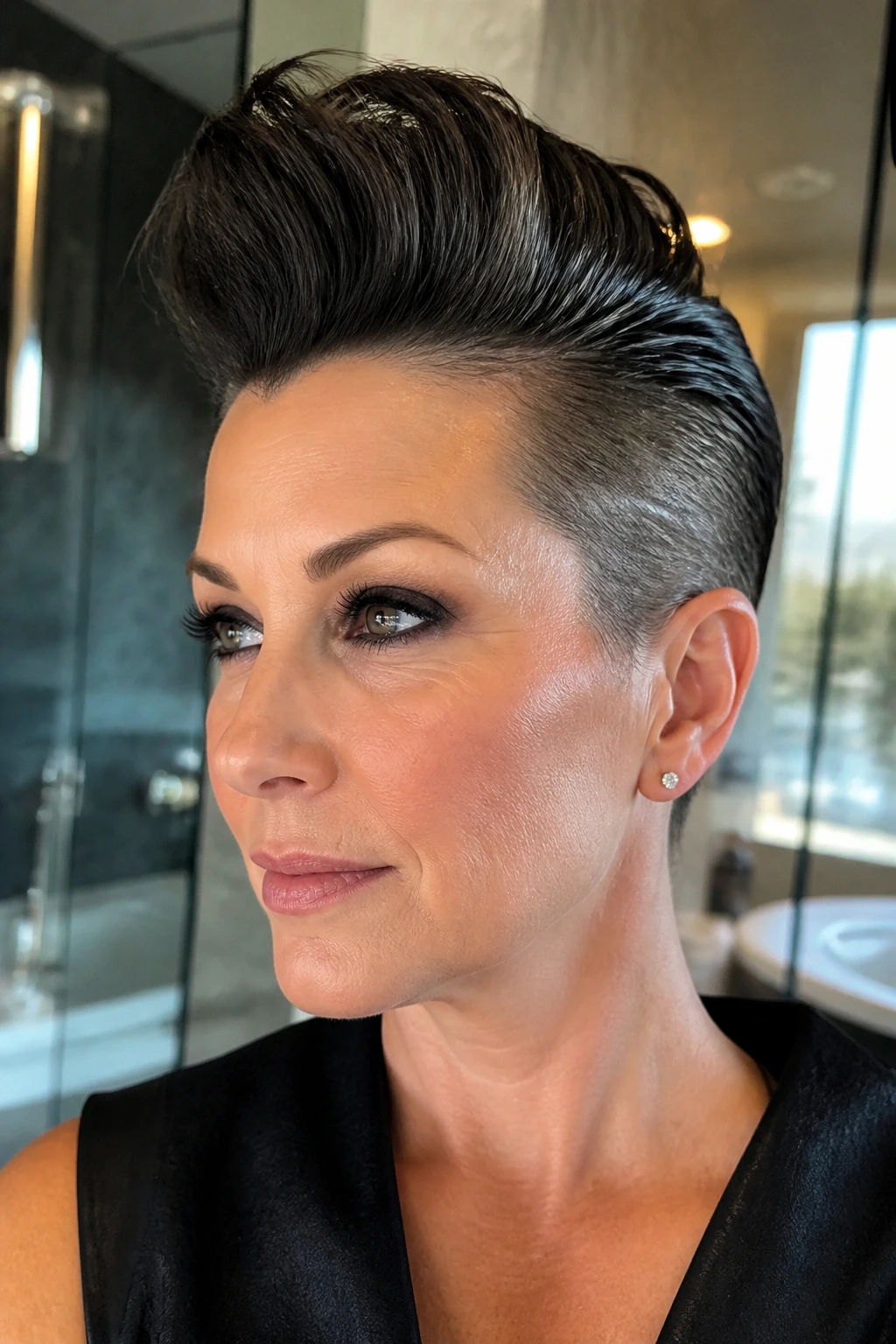
This is the sleek one. The sides are brushed tight and smooth, often with gel or styling cream, while the top gets lifted, teased, or curled into a fuller ridge. It looks clean from the front and a little dramatic from the side, which is exactly the point.
If your hair is straight or only slightly wavy, this shape can be built with a flat brush, a blow dryer, and a small round brush at the crown. The contrast is what makes it work: glossy sides, airy top. If both parts are equally puffy, the whole style loses its edge. Keep the sides disciplined.
11. Low-Commitment Clip-In Mohawk
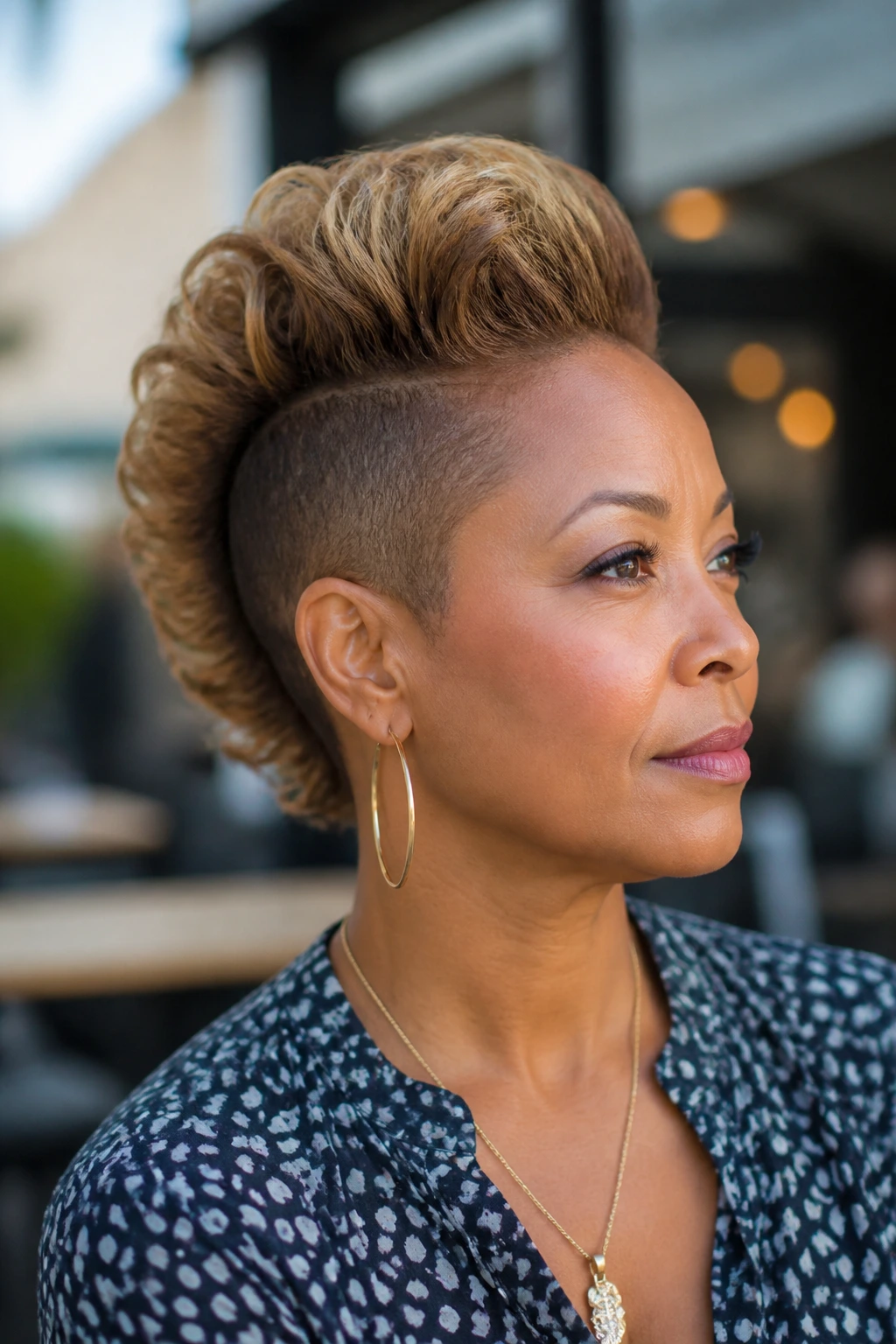
Not everyone wants to cut into a mohawk shape, and honestly, that is sensible. Clip-in extensions or a temporary hairpiece can build the center ridge for a night out, a photo shoot, or a stretch when you want to test the silhouette before making it permanent. It is a good option for women with shoulder-length hair who want height without a barber visit.
Tease the roots slightly where the clips will sit, then anchor the pieces under the top layer so the attachment points disappear. The goal is for the eye to see volume, not hardware. Keep the sides smooth and the color match close enough that the ridge reads as hair, not costume fiber.
12. Choppy Layered Hawk on Shoulder-Length Hair
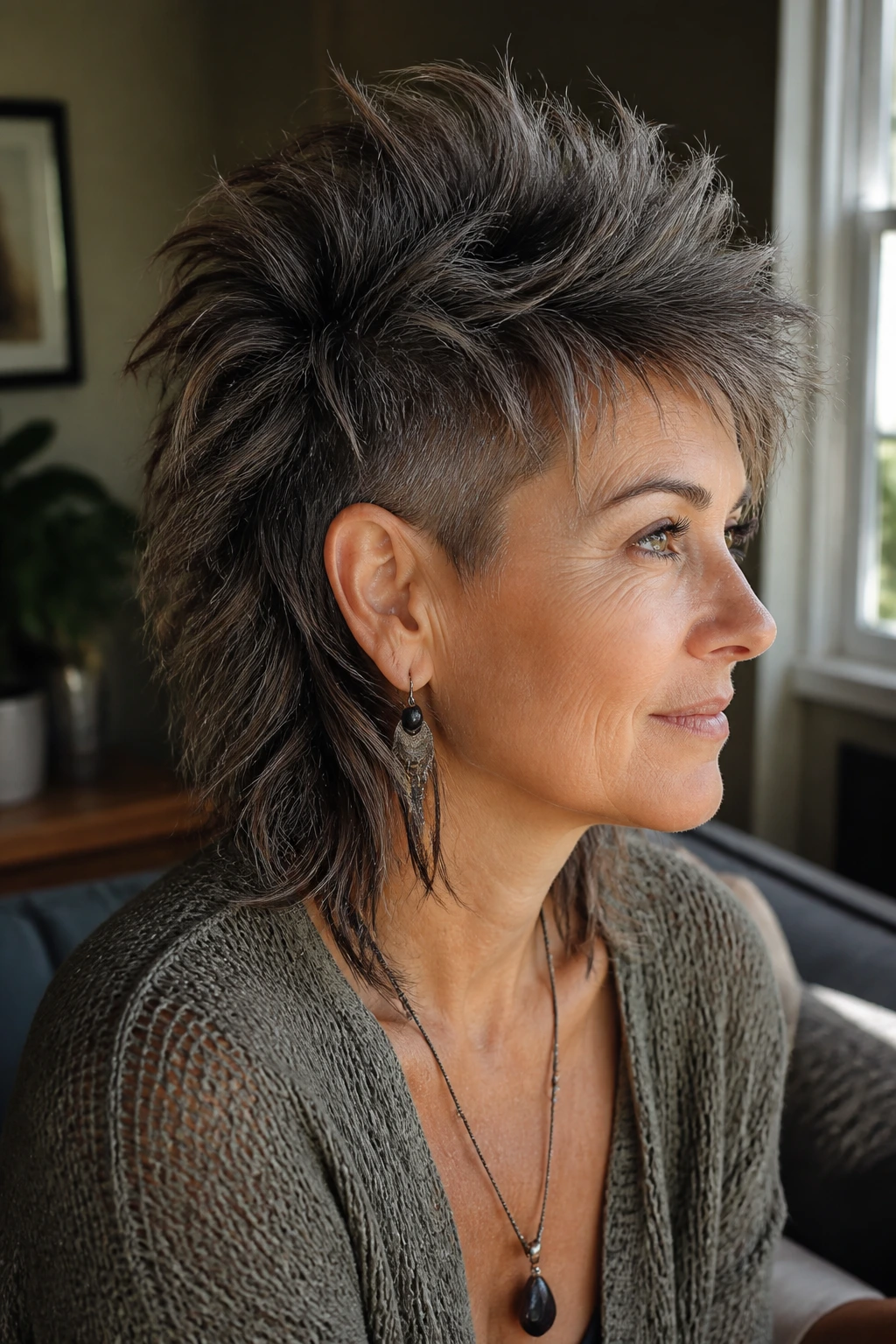
Shoulder-length hair is a sweet spot for a choppy hawk because it has enough weight to move, but not so much that it falls dead. The layers do most of the work here. They create a broken, piecey line through the center while the sides stay tucked in close.
This version is especially nice if you like a little messiness. Spray texture mist through damp hair, rough-dry it with your fingers, then twist or scrunch the crown in place. You do not need every strand to behave. A few uneven pieces are what keep it from looking overstyled.
13. Undercut with Side-Swept Bangs and Peak
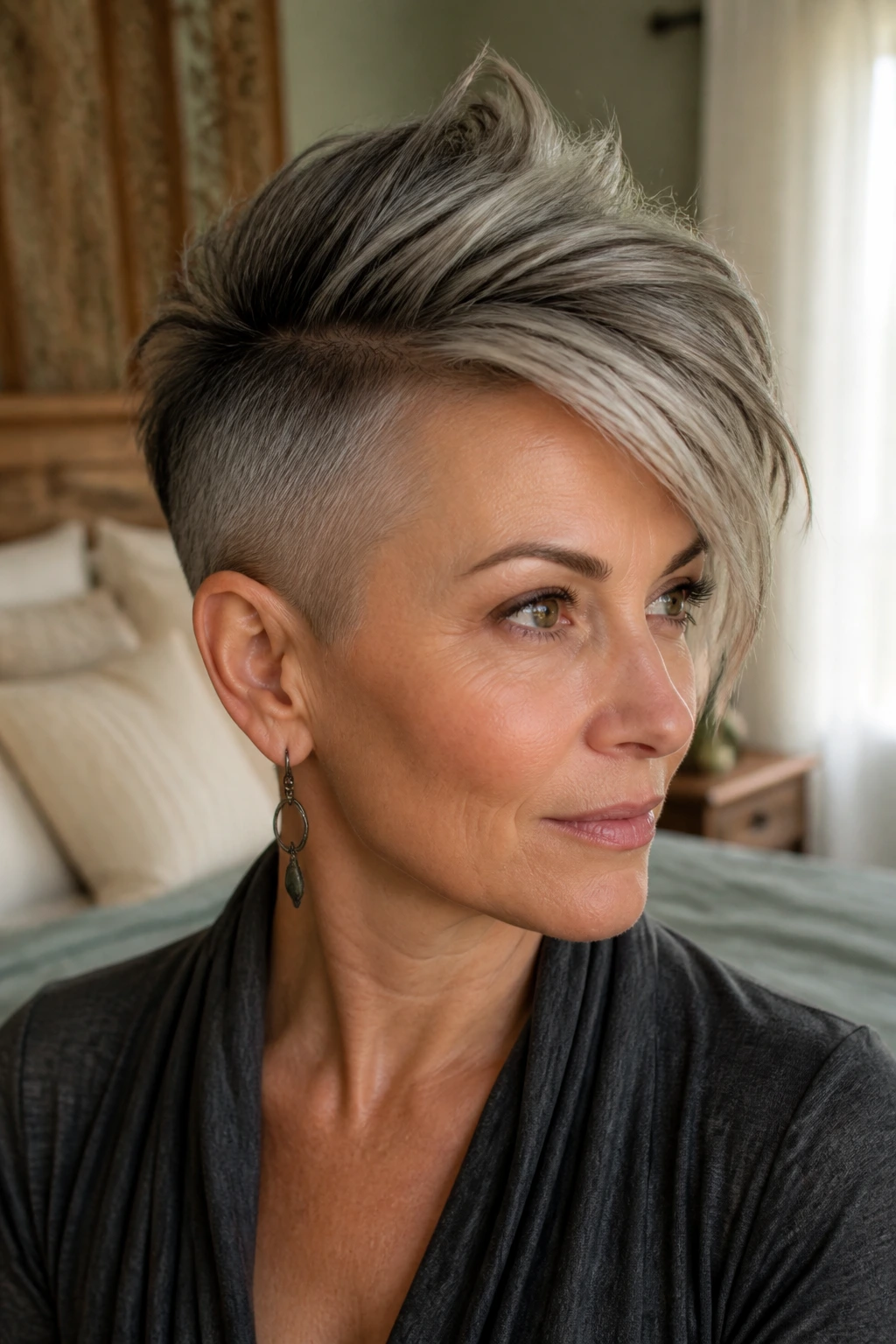
This one balances softness and edge better than almost any other cut in the group. The undercut removes bulk where it tends to puff out, while side-swept bangs soften the forehead and the peak through the center gives the style its mohawk line. It is one of the easiest ways to keep the look flattering rather than severe.
If you have a high forehead or like your bangs to do some face framing, this version is worth a look. The bangs should be long enough to sweep across the brow, not chop it in half. A little dry shampoo at the roots helps the front stay lifted instead of collapsing into the eyes by lunchtime.
14. Braided Feed-In Hawk for Natural Hair
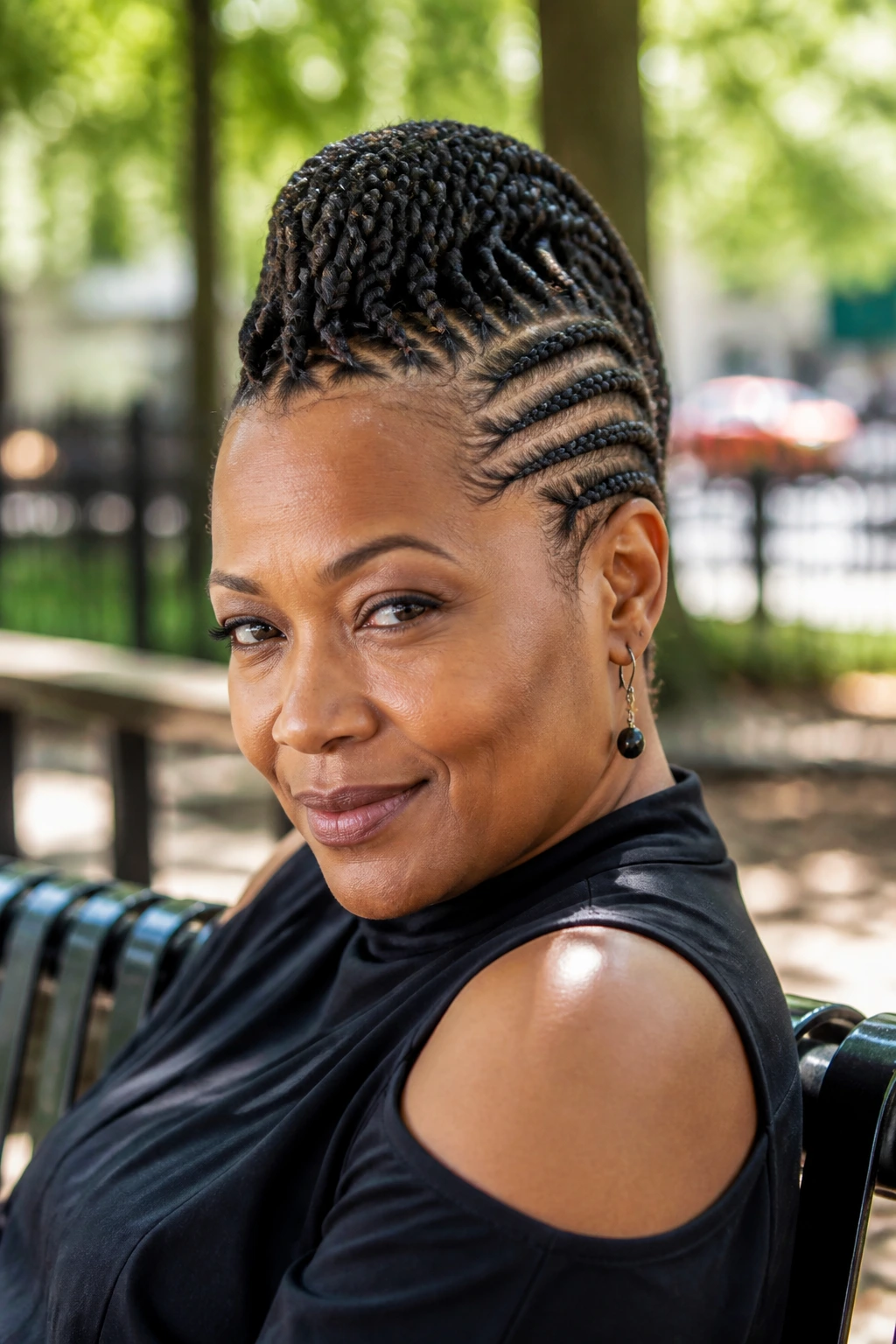
Feed-in braids turn the hawk shape into something architectural. The sides braid close to the scalp and feed into a raised center line, which means the shape holds neatly and can last well past a single outing. It is protective, neat, and very good at making the head look longer without adding bulk.
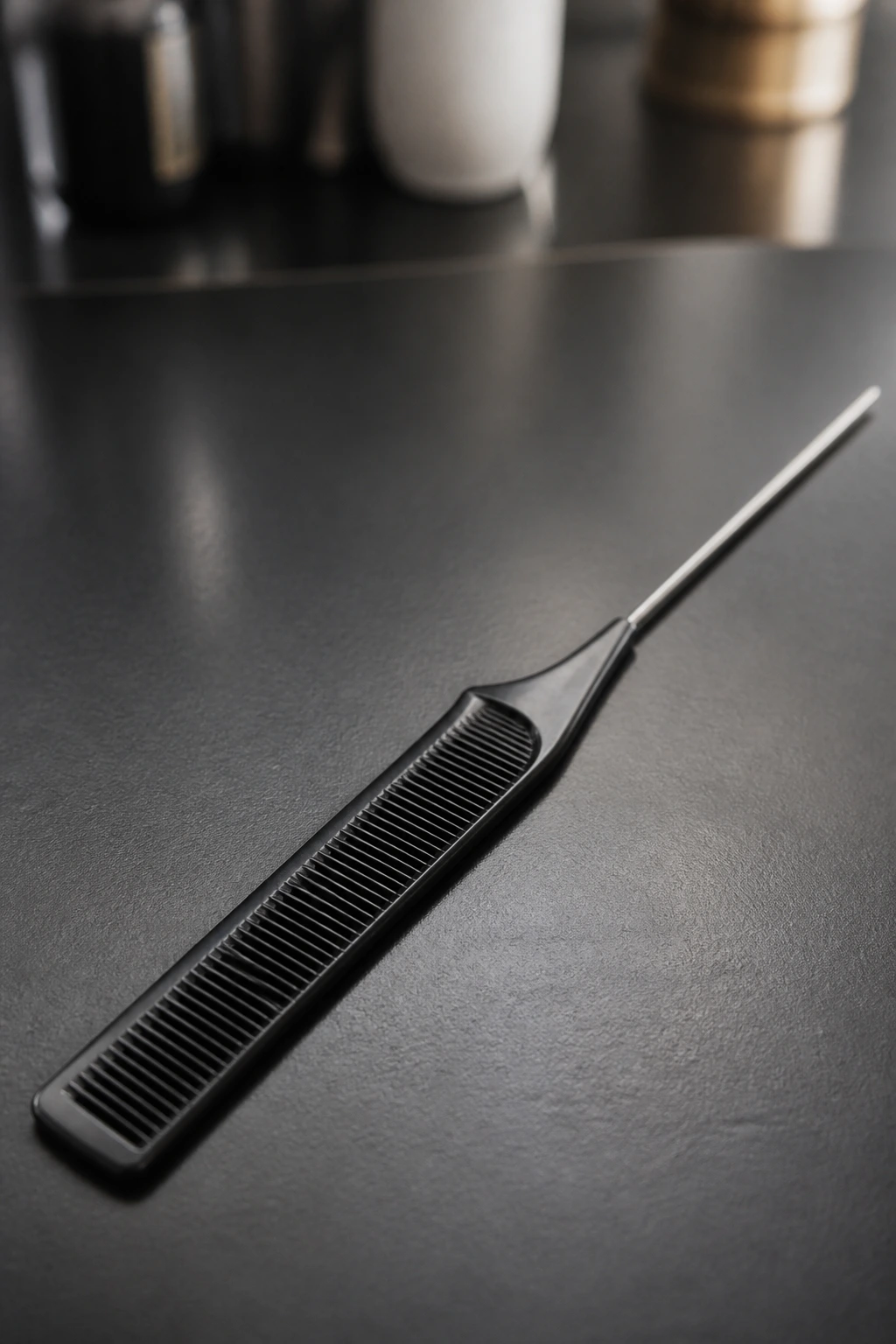
The clean parting matters here more than almost anywhere else. Use the tip of a rat-tail comb and take your time. If the sections are crooked, the whole thing reads sloppy. If they are clean, the style has that crisp, sculpted look people keep trying to get with products alone.
15. Messy Bedhead Faux Hawk
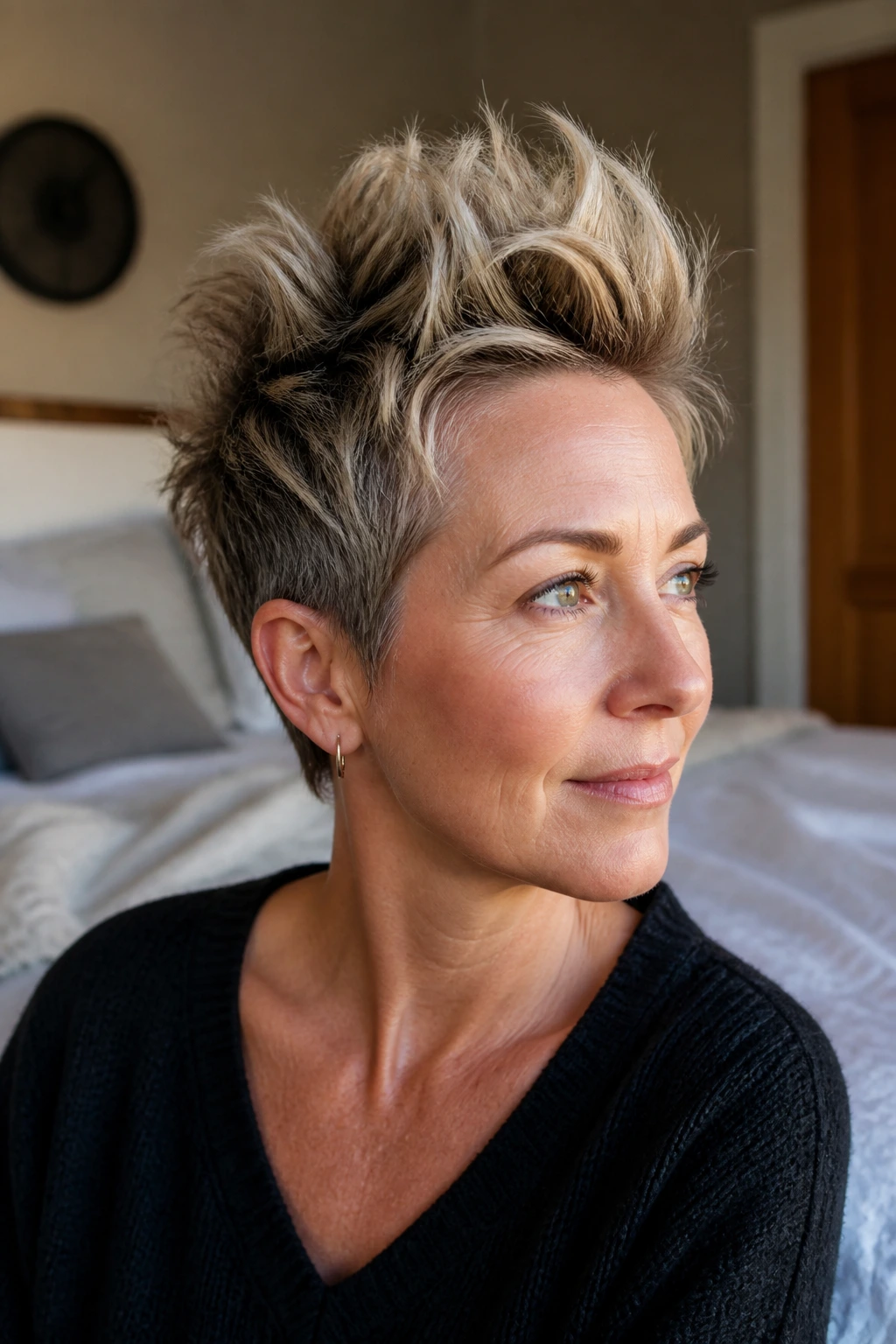
This is the easiest-looking style in the group, which is not the same thing as being lazy. The sides are nudged back, the top is roughed up with texture spray or dry shampoo, and the center gets just enough height to suggest a hawk without going full performance mode. It looks good when it is slightly imperfect.
The best thing about this version is that it does not ask for perfection. If the front falls a little, that can work. If the crown gets airy instead of tall, that can work too. Keep the ends piecey with a dab of paste, and stop fiddling once the shape is there.
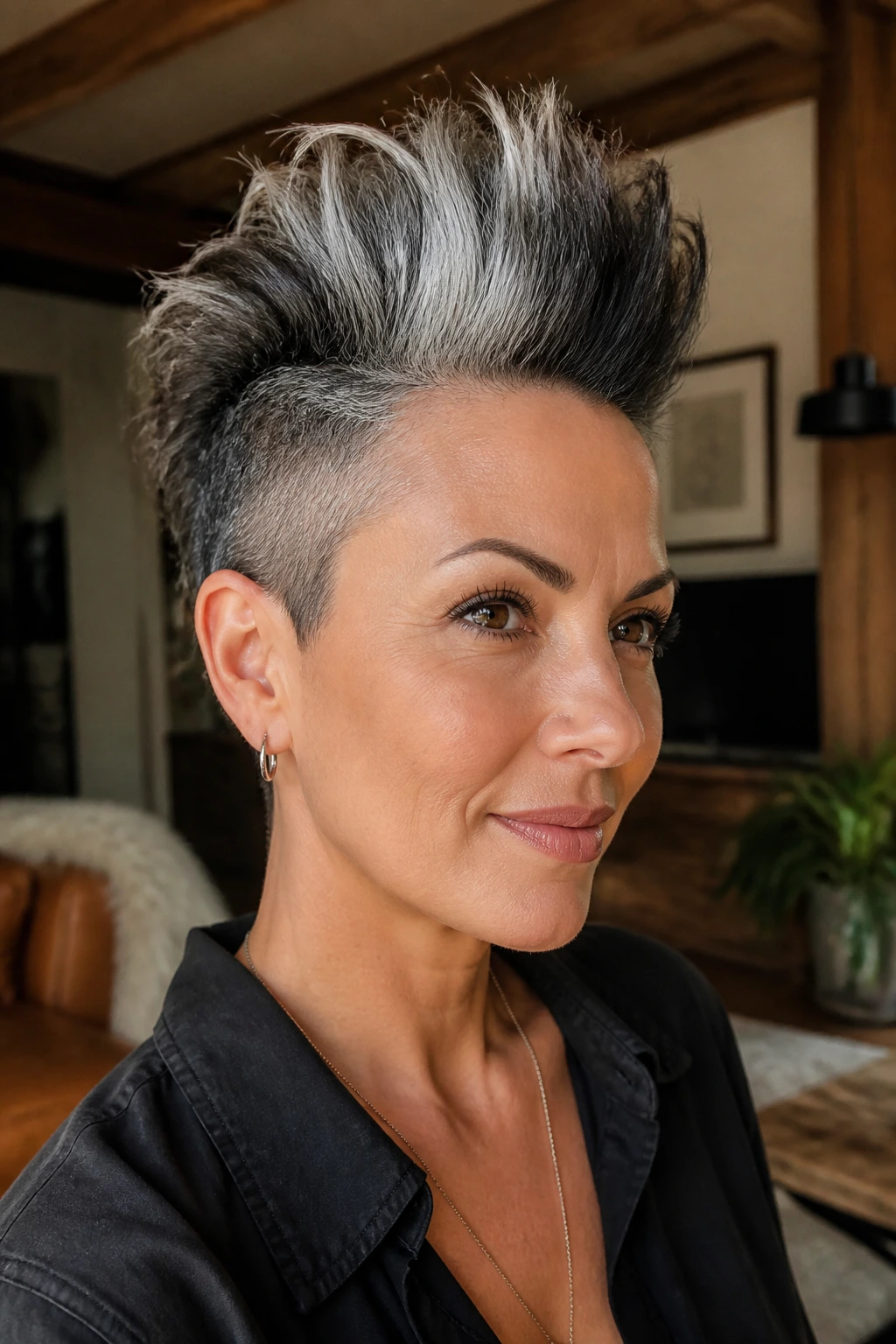
16. Short Spiky Salt-and-Pepper Mohawk

Short hair with salt-and-pepper color has a kind of natural grit that works well here. The cut is clipped close on the sides and left short enough on top to pinch into small spikes or ridges. It is not delicate. That is part of its charm.
Use a matte wax on dry hair and push the top upward in small sections rather than all at once. A little lift at the front and a little roughness at the crown are enough. If the hair is too shiny, the spikes sink; if it is too wet, the shape goes limp. Dry, then mold.
17. Curly Mohawk with Face-Framing Pieces
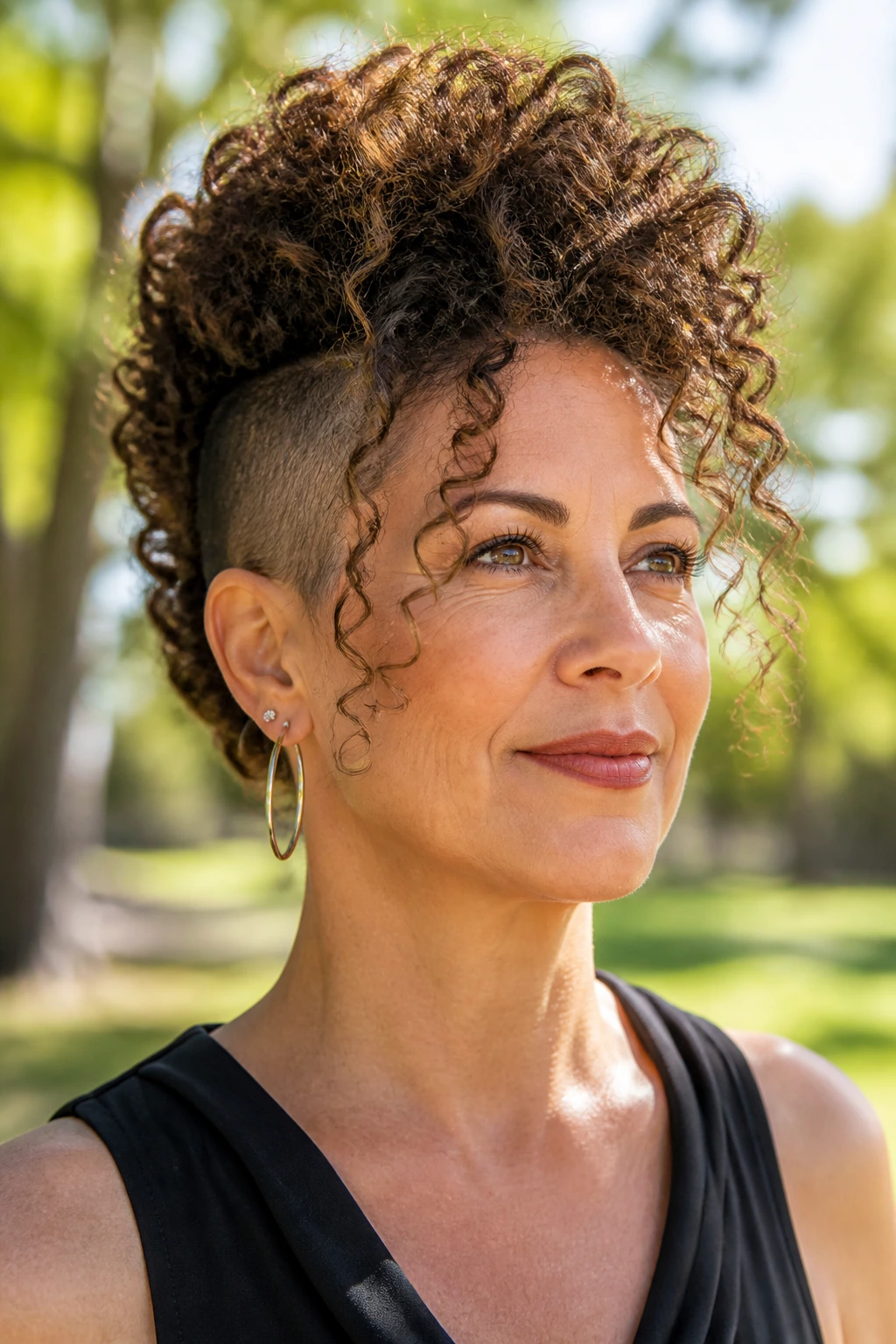
If you want the hawk shape without exposing the temples too much, leave a few curly pieces loose around the face. That softens the line near the cheek and makes the whole cut feel less severe. The crown still rises, but the front has a little movement around it.
This is one of the more forgiving options for women who do not want every strand pinned away. It also photographs well in real life because the face-framing curls break up the shape just enough. Keep the sides tight, let the top spring, and leave two or three curls forward. That’s usually enough.
18. Elegant Evening Frohawk
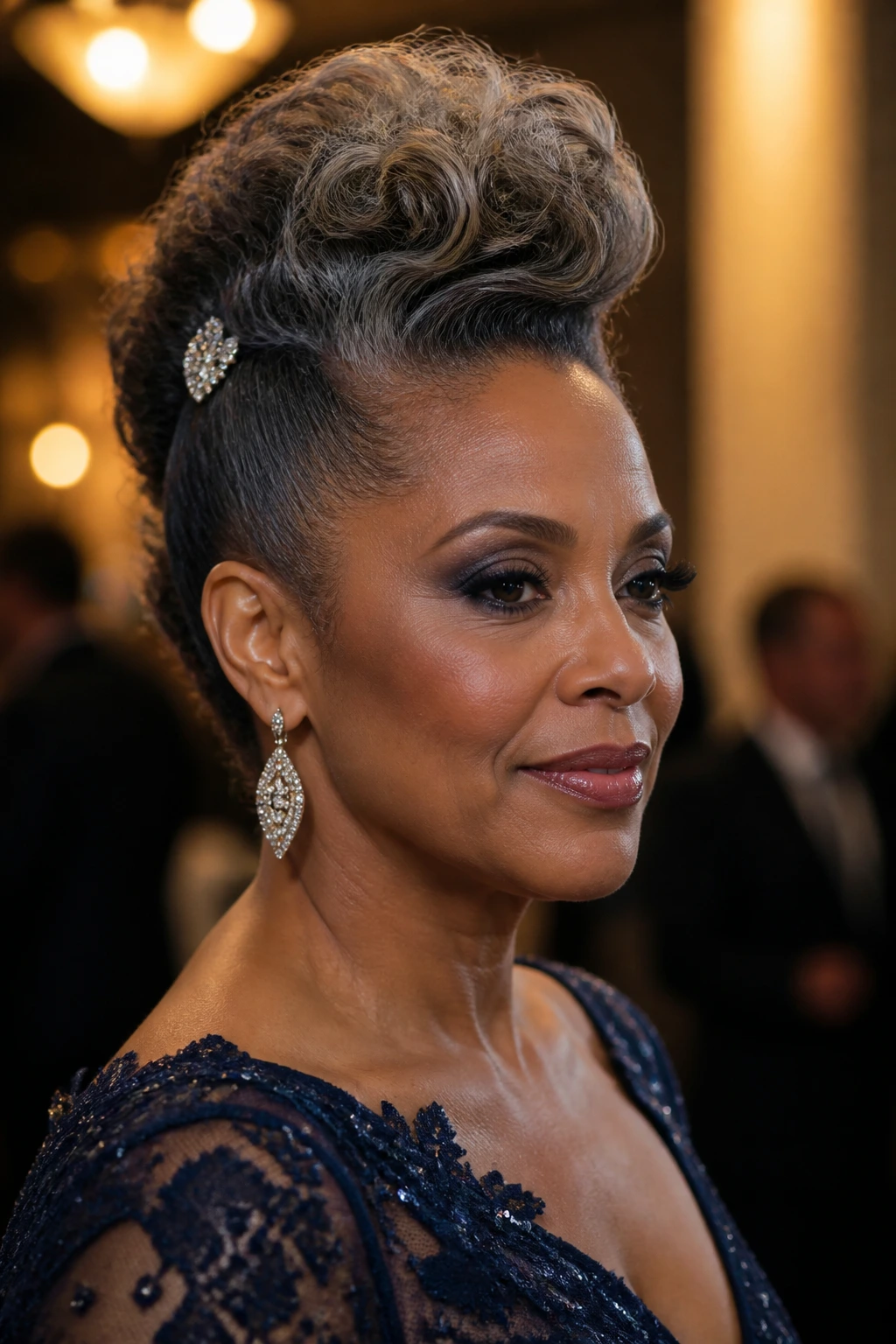
For a night event, a frohawk can look much more refined than people expect. Curl or smooth the center ridge, tuck the sides tight, and add a glossy finish with serum or shine spray. A jeweled pin, a small comb, or a pearl clip can make the whole thing feel deliberate without tipping into fussy.
This is the version I’d pick for a wedding, a dinner, or any event where you want the haircut to do some of the work for you. The secret is restraint. If you add too many accessories, the style loses its clean line. One good pin beats three average ones.
19. Soft Feminine Mohawk Bob

A bob can absolutely join the party. Keep the length around the chin or just below, add lift through the crown, and tuck the sides so the middle reads as the high point. It is a mohawk shape in bob clothing, which is a good disguise if you want the silhouette without the attitude of a full crop.
This works well on women who are not ready to go short but want something sharper than a standard layered bob. A little bend at the ends and a slightly raised top section make a big difference. You still get movement. You just do not need to commit to a shaved side to get it.
Why the Center Ridge Works So Well on Grown Hair
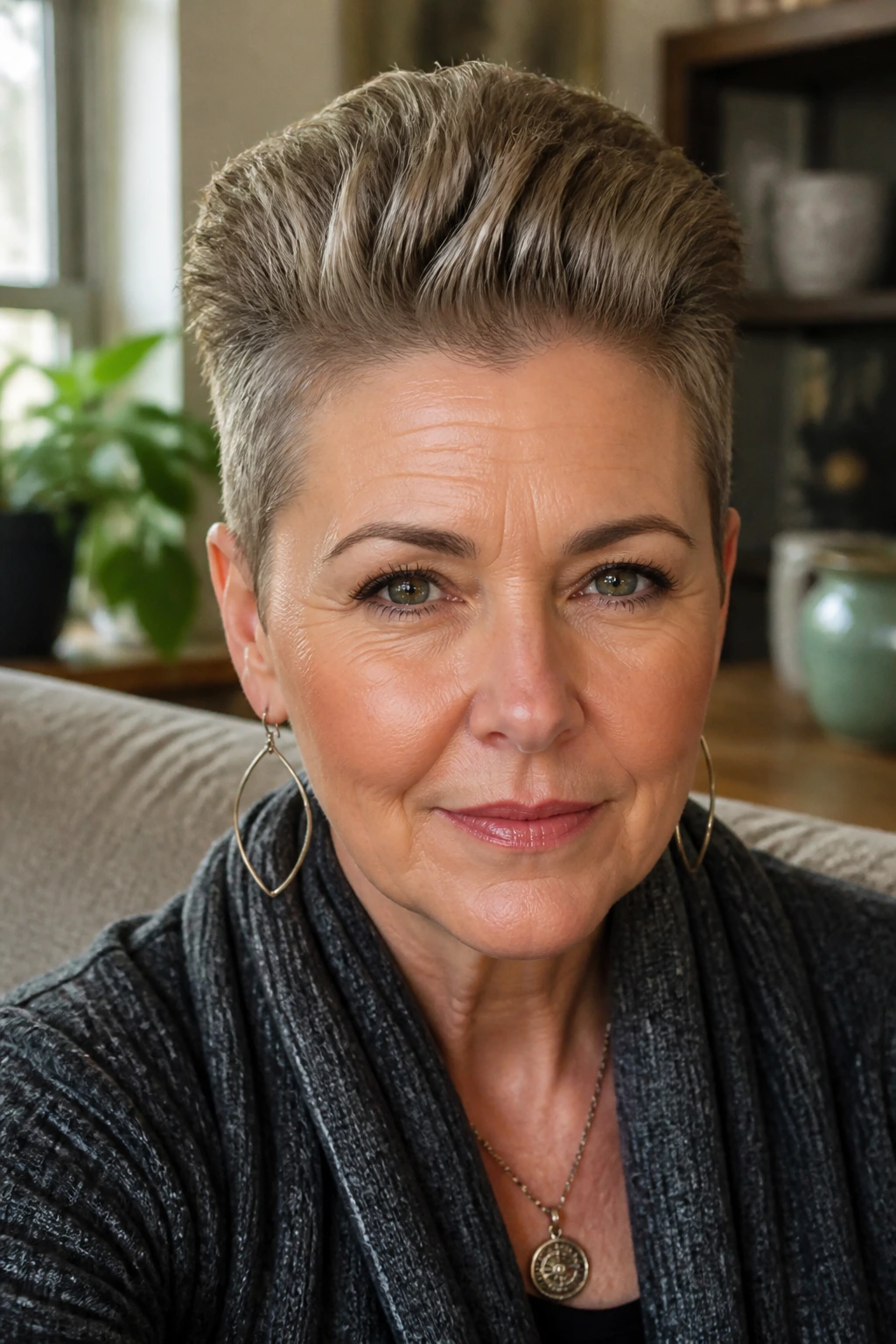
The mohawk shape has one job: pull the eye where you want it. That sounds simple, but it is the whole trick. If your hair has thinned at the crown, if your temples have softened, or if your curls expand sideways when you would rather they rise, the center ridge gives the style a built-in direction.
Shape matters more than severity
People get stuck on the word “mohawk” and picture something loud. In practice, the useful version is often much softer. A narrow center line, controlled sides, and enough lift at the top can create a sharper face frame than a fully shaggy cut ever will.
The grow-out is part of the design
That’s the part most salons skip over. A good frohawk or faux hawk should still look decent three weeks later, not only on the day you leave the chair. Tapered sides, blended length, and texture through the top make the grow-out behave instead of collapsing into a triangle.
Texture decides the method
Curly hair usually needs less teasing and more control. Straight hair often needs more root lift and product support. Coily hair can carry height naturally, which is half the battle already won. So the best cut is the one that matches how your strands move when they are clean, slightly dry, and left alone for ten seconds.
Tools That Make the Shape Easier
-
Rat-tail comb: Clean parting and sectioning make the ridge look sharp instead of accidental.
-
Blow dryer with concentrator nozzle: Directs airflow where you need lift and keeps the sides from frizzing out.
-
Round brush: Best for building root volume at the front and crown on straight or wavy hair.
-
Diffuser attachment: Helps curls and coils dry in place without blasting them into fuzz.
-
Bobby pins and duckbill clips: Essential for pinning the sides flat or holding a faux hawk while it cools.
-
Edge brush: Useful for smoothing the hairline on curly, coily, or braided versions.
-
Matte paste or wax: Gives short and medium hair grip without the shiny, wet look.
-
Mousse: Good for lift at the root and for keeping softer textures from falling flat too fast.
-
Flexible-hold hairspray: Holds the shape without turning the top into a stiff cap.
-
Satin scarf or bonnet: Helps the shape survive overnight and keeps the sides from puffing up in sleep.
Product Choices and Cut Notes That Matter Most
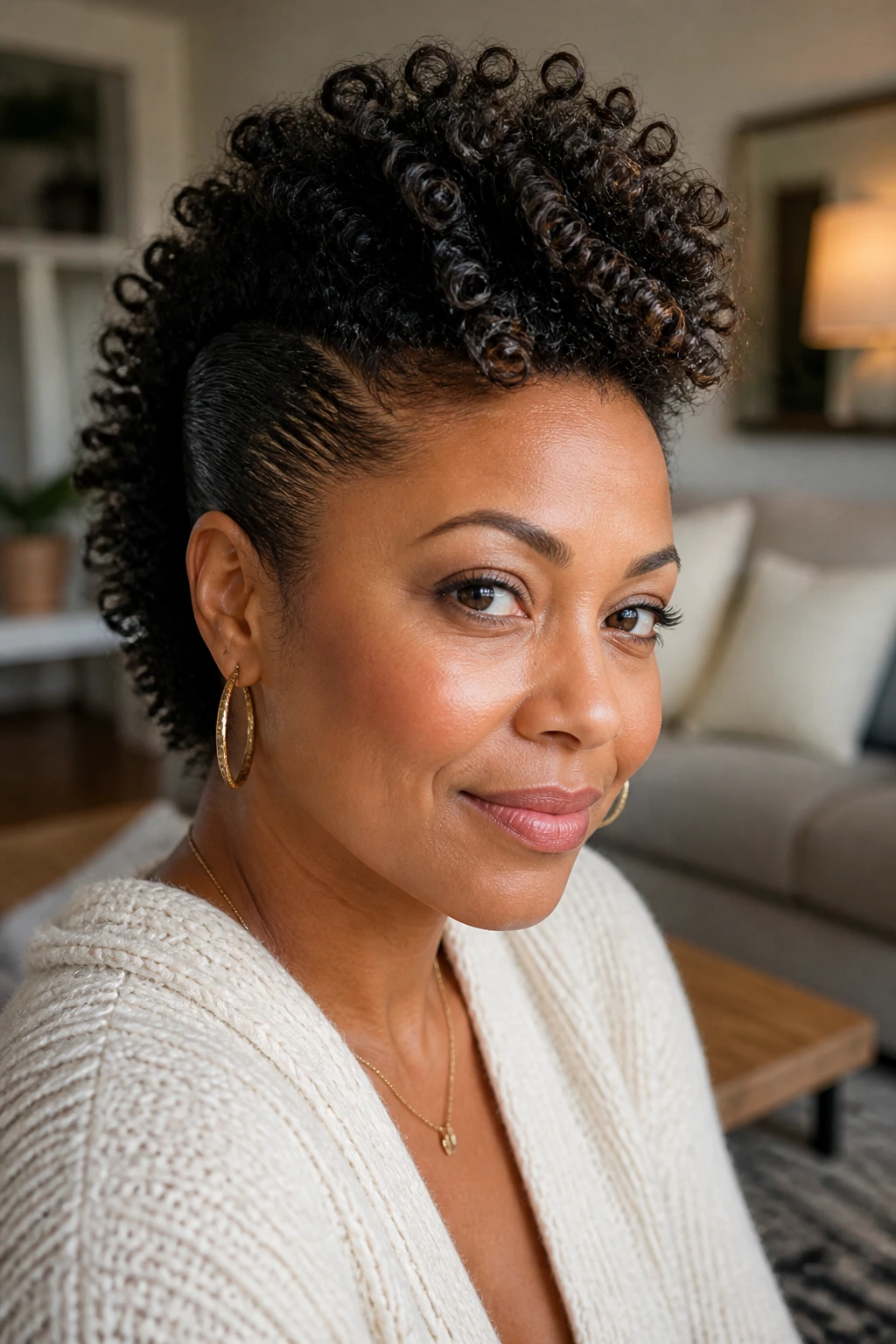
If your hair is fine, start with lightweight mousse at the roots and skip heavy creams near the crown. Fine hair gets sleepy fast when you pile on rich product. A clean, airy blow-dry and a little dry texture spray usually do more than a thick wax ever will.
Curly and coily hair need a different approach. Creams that define without coating the strands, a gel with a firm but not crunchy finish, and a diffuser can save you time and frizz. If you are getting the cut shaped in the chair, ask for more length through the ridge than you think you need. Curls shrink. They always do.
Gray or silver hair benefits from shine, but not from oil everywhere. A drop of serum on the outer layer keeps the color from looking dry, while a matte product at the roots prevents the whole shape from going limp. That balance is small, but it matters.
How to Wear These Styles in Real Life
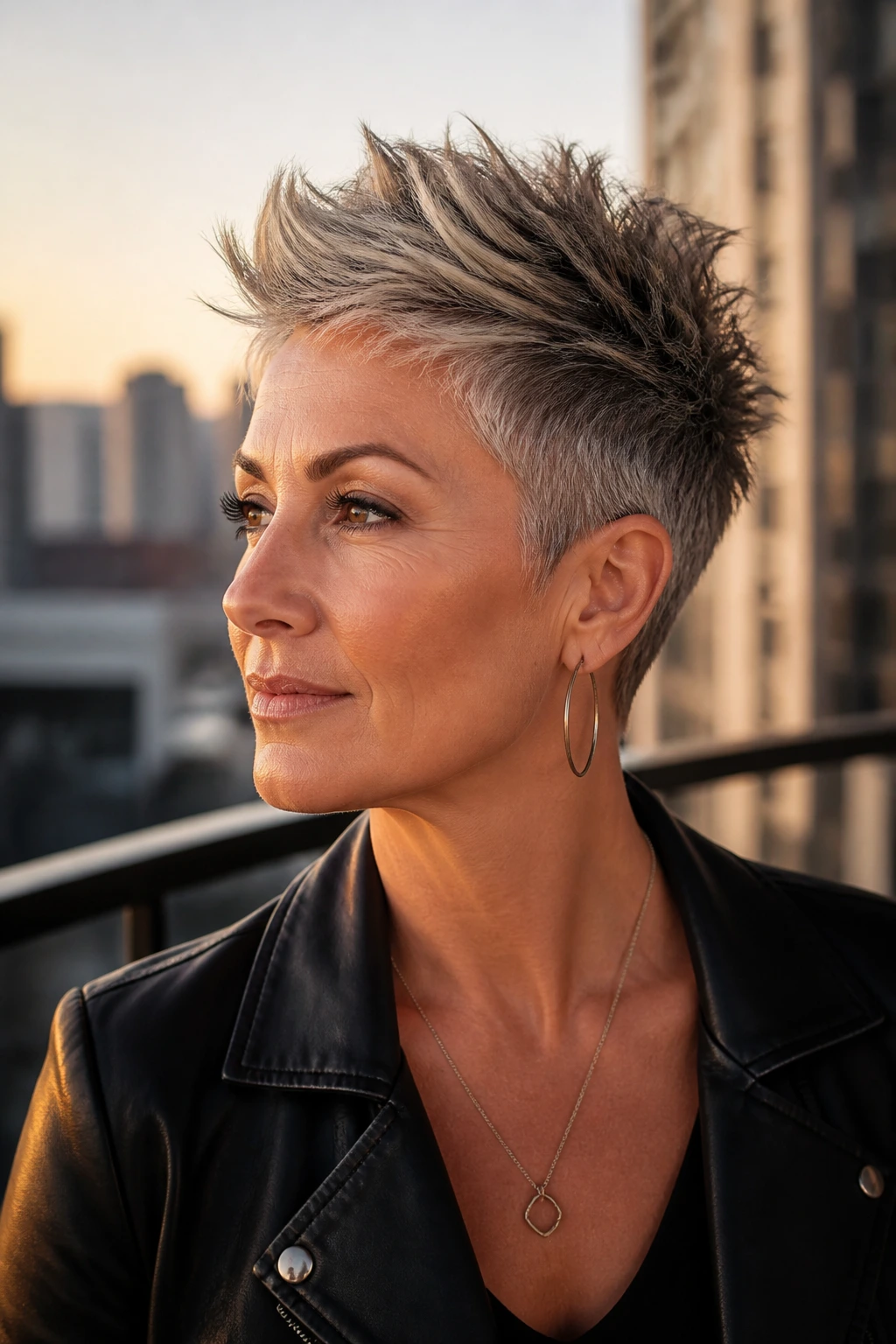
Polished version: Keep the sides closer and smoother, leave the top narrower, and use shine only on the outer layer. This is the version that works with a structured jacket, a crisp shirt, or a more tailored dress.
Loose version: Let the center ridge stay a little messier, pull a few pieces forward, and use texture spray instead of slicking everything down. It feels relaxed without losing the shape.
Dressy version: Add a little height at the crown, pin one side tighter than the other, and finish with a subtle accessory. One pin, one comb, one point of shine. That’s enough.
Fast version: Build the mohawk line in under ten minutes by pinning the sides first, then roughing up the center with mousse or paste. It’s the kind of style that can survive errands, school pickup, and a last-minute dinner without a reset.
Small Styling Moves That Make a Big Difference
Lift at the root: Blow-dry the first inch or two of hair away from the scalp before you shape the rest. That one move gives you the ridge without needing a ton of product.
Press, don’t smear: Warm a pea-size amount of paste between your palms and press it into the top section. Smearing only makes the strands clump in the wrong places.
Keep the sides honest: If the sides puff out too much, the shape turns round instead of sharp. A brush, a dab of gel, and a flat pin or two usually fix it.
Use color on purpose: If you have gray streaks, silver bands, or highlights, place the ridge where the color shows best. The cut looks more intentional when the eye can follow the light.
Common Mistakes That Flatten the Shape
-
Teasing the crown into a nest: The hair looks big for five minutes, then collapses and frizzes. Use mousse, controlled backcombing, and a light spray instead of roughing it up until it feels fuzzy.
-
Leaving the sides too puffy: A mohawk needs contrast. If the sides expand as much as the top, the style turns into a round blob instead of a center-focused shape.
-
Using the wrong finish for the texture: Shiny gel on short, thick hair can look wet in a bad way. Heavy cream on fine hair can make the whole style sink. Match the product to the strand.
-
Skipping the salon conversation: “Mohawk” means different things to different stylists. Bring a photo and describe how short you want the sides, how high you want the ridge, and how much grow-out you can live with.
-
Forgetting maintenance on undercuts: A clipped side can look crisp one week and fuzzy the next. Plan trims every 3 to 5 weeks if you want the shape to stay clean.
Variations and Adaptations to Try

The Softer Office Hawk
Keep the sides tucked and the ridge narrow, with no visible shave. It gives you the shape without the hard edge, which is a good fit if you want something sharp enough for work but not so bold that you have to explain it to everyone.
The Coil-First Frohawk
Let natural coils build the height, and only smooth the perimeter. This version is all about respecting the curl pattern instead of flattening it, and it holds up well when you’d rather not restyle every morning.
The Silver Statement Hawk
Lean into gray, white, or salt-and-pepper color and keep the finish sleek. The contrast between shine and structure does a lot of the visual work, so you do not need extra accessories or color tricks.
The Protective Braid Hawk
Use braids or twists on the sides and a raised center line. It’s the style to choose when you want low manipulation, longer wear, and a shape that stays put for more than one day.
The Short Spiky Hawk
Go tighter, shorter, and more textured through the top. It works well for women who want a low-maintenance cut with attitude and no daily blow-dry routine.
Keeping the Shape Between Wash Days
A mohawk or frohawk usually looks best on day one and day two, then needs a small reset rather than a full rebuild. At night, a satin scarf or bonnet helps keep the sides from puffing out and keeps the top from getting crushed. If you sleep rough, pin the center ridge loosely before wrapping it.
Dry shampoo is useful for straight or fine hair, but do not spray it right against the scalp and walk away. Work it in with fingertips or a brush so the roots still move. For curls and coils, a little water mixed with leave-in or mousse can bring the shape back faster than dry product alone.
If the style has shaved or tightly clipped sides, book trims every 3 to 5 weeks. If it’s a faux hawk or a more layered version, a shape refresh every 6 to 8 weeks usually keeps it from sliding into generic short hair. And if color is part of the look, silver, highlights, or brightened ends will need their own maintenance rhythm, because nothing ruins a crisp hawk faster than a tired finish.
Questions Women Ask Before Trying It
Do I need shaved sides for a mohawk to work?
No. A faux hawk, frohawk, or tapered version can give you the same center-focused shape without a true shave. If you want less commitment, ask for clipped sides or a hidden undercut instead.
Will this look too harsh on a woman over 40?
Only if the cut is too severe for your face and hair texture. Softer sides, a narrower ridge, and a little movement through the top usually keep the style sharp without making it feel hard.
Can fine hair pull this off?
Yes, but the cut needs lift, not weight. Shorter sides, mousse at the root, and a matte paste on dry hair usually work better than heavy creams or glossy gels.
What if my hair is curly and frizzes easily?
Use curl cream or gel while the hair is still damp, then diffuse with as little touching as possible. Frizz often shows up when people keep reshaping the hair after it has started to dry.
How do I make the style look polished instead of punk?
Keep the sides smooth, reduce the height a little, and add shine only where the hair needs it. A polished mohawk is about clean lines, not maximum drama.
How often do I need to trim it?
If the cut includes an undercut or close taper, every 3 to 5 weeks keeps the shape crisp. If it’s a faux hawk or layered version, you can usually go a bit longer before it loses its line.
What if my crown falls flat halfway through the day?
That usually means the roots were not dry enough or the product was too heavy. Next time, dry the roots longer, use less cream, and finish with a flexible spray instead of a wet gel.
Can I wear one with gray roots or a grow-out phase?
Absolutely. In fact, gray can make the shape look cleaner because the color change helps define the ridge. A frohawk often looks better with visible dimension than with an overprocessed, one-tone finish.
A Shape That Carries Its Own Attitude
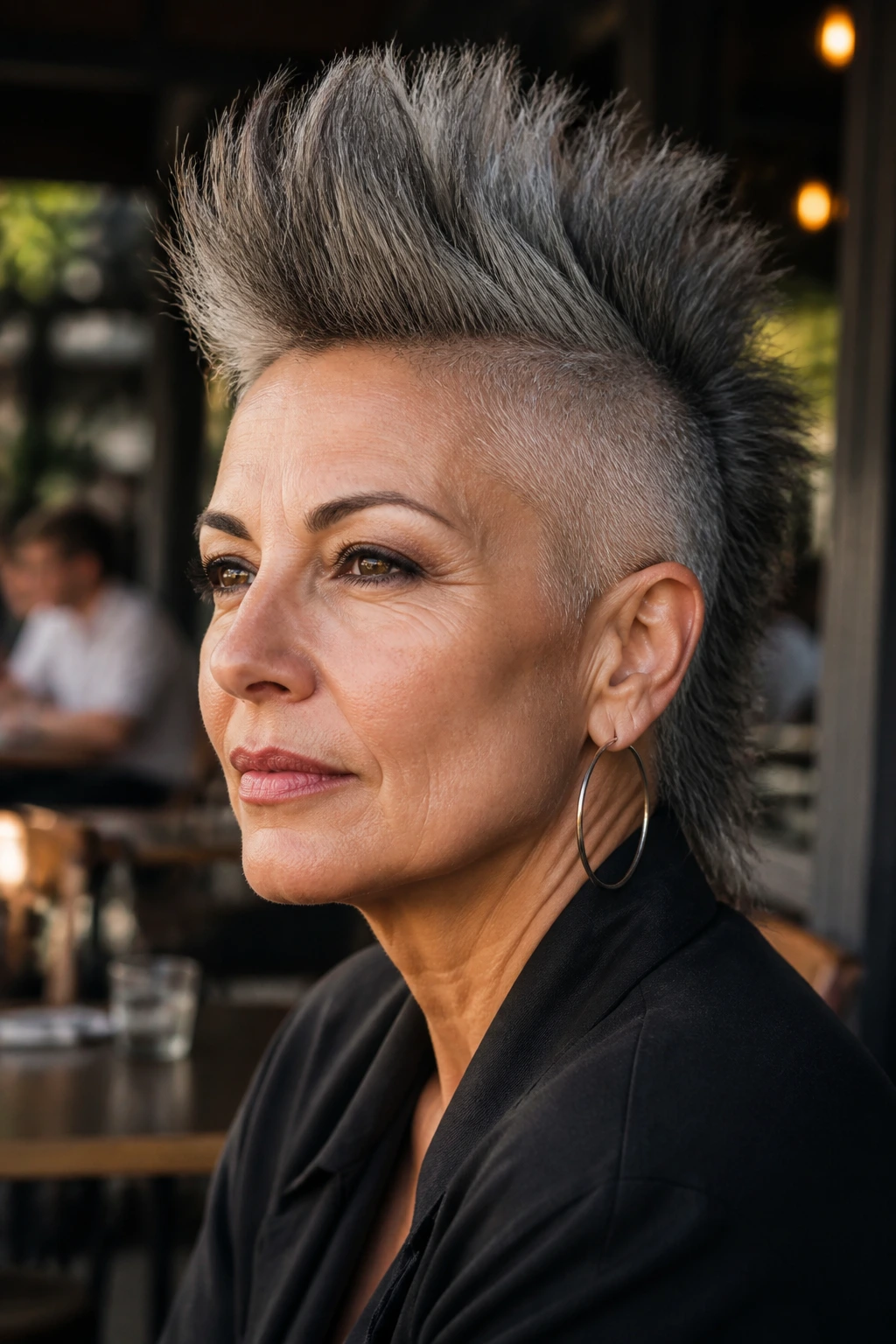
A good mohawk hairstyle does not have to announce itself from across the room. The strongest versions have cleaner lines than people expect, a little restraint at the sides, and enough lift through the middle to make the face look more awake. That combination is why the style keeps finding its way back into grown-up hair closets.
If you want to start gently, begin with the softest version that fits your texture. Pin the sides, build a little height, and see how much shape you actually need before you reach for the clippers or the strongest wax on the shelf. Most women are surprised by how little it takes.
The cut is not about acting younger. It’s about using structure well, and that still feels sharp no matter what the mirror says about your birthday.
