



A mohawk on Black hair has a particular kind of presence. It doesn’t creep into a room; it arrives with shape. Mohawk hairstyles for Black women work because they play with contrast in the smartest way possible: tight sides, lifted height, and texture that can be soft, sharp, glossy, fluffy, braided, or all of those in the same style.
That contrast is the whole trick. On coily and curly hair, the center ridge can look like a sculpted strip of fabric one day and a cloud of curls the next. The sides can be sleek enough to sharpen your cheekbones or braided down so cleanly they almost disappear. And because Black hair holds so many forms well — stretch, twist, braid, coil, puff, loc, fade — the mohawk shape has more range than people expect.
I like this category because it does not force one look. It lets you choose how much edge you want, how much maintenance you can tolerate, and how much length you want to keep visible. A mohawk can be a protective style, a weekend style, a formal style, or a short-hair statement that needs almost no apology. The useful part is knowing which version fits your hair, your schedule, and your tolerance for standing in front of a mirror with a rattail comb.
Why This Collection Works So Well
- The silhouette does the heavy lifting: The raised middle strip creates instant height, so you do not need inches of extra length to get a strong shape.
- Short hair is not a problem: Tight tapered sides and a textured crown can make a cropped cut look deliberate instead of “in-between.”
- Braids and twists buy you time: Feed-ins, flat twists, locs, and two-strand twists keep hands off the ends and stretch the style far longer than loose curls alone.
- You can go soft or sharp: Gelled sides and clean parts read polished; fluffy curls and rounded puffs read softer and more relaxed.
- The same shape suits a lot of settings: Swap the finish, the jewelry, or the part pattern and the whole mood changes.
- It’s a good use of Black hair texture: Coils, curls, and locs hold the mohawk ridge better than straighter textures do, which is why the style looks so natural on us.
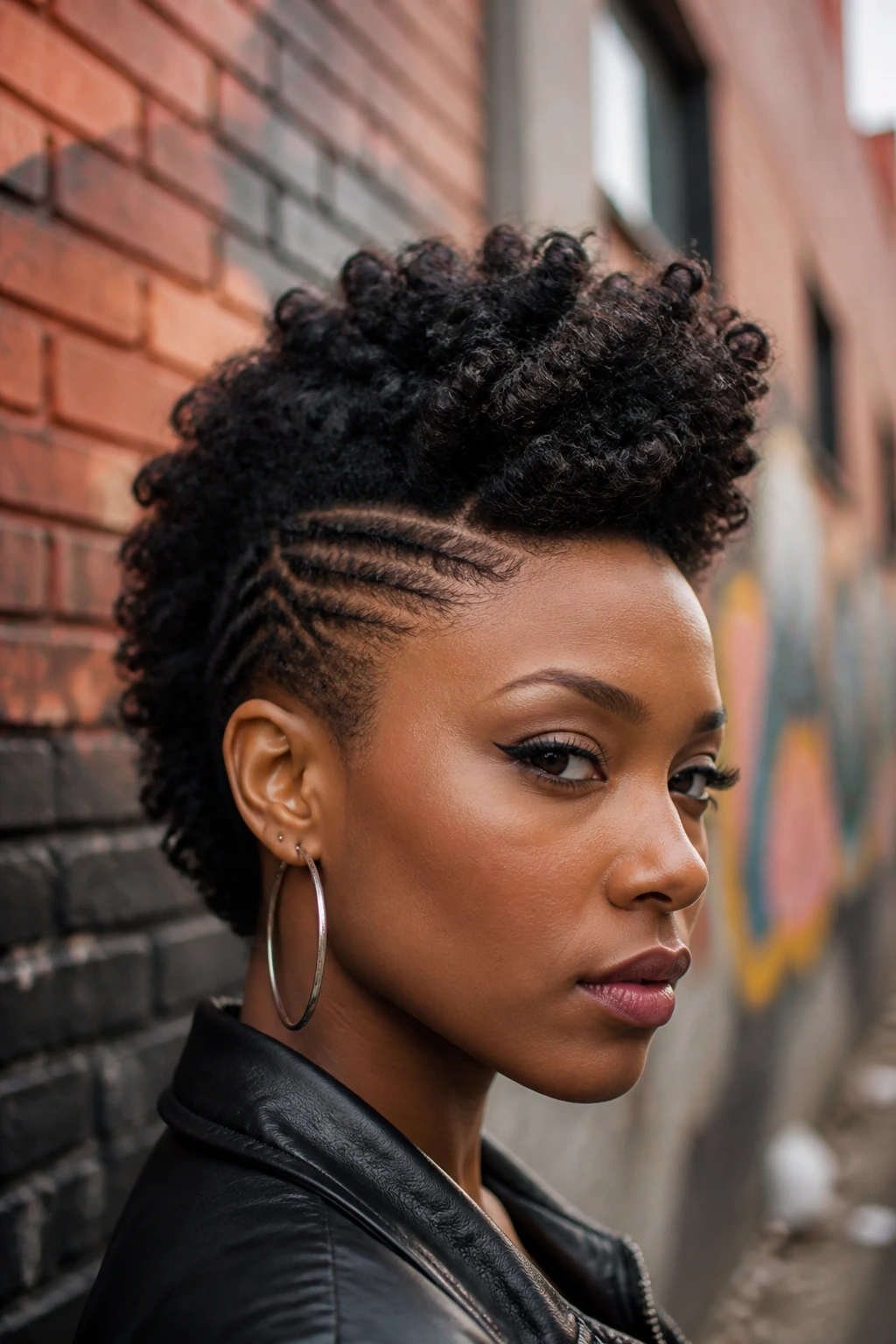
1. Tapered Natural Frohawk
This is the one I reach for when the goal is shape without fuss. A tapered natural frohawk keeps the sides neat and lets the center curl mass sit up with real personality, especially on 4A to 4C hair that has a little stretch in it. The result is soft at the edges but still bold enough to read across a room.
Why it works: The taper gives the eye a clean line to follow, and the fluffy ridge makes the whole style feel fuller than it really is. If your hair shrinks hard, stretch the top with banding or a twist-out first. Otherwise, the center can collapse into a short puff by lunchtime.
Best for: Short-to-medium natural hair, low-maintenance weeks, and anyone who wants the mohawk look without braiding every section flat.
Styling note: Use a light leave-in and a touch of oil on the ends only. Heavy creams can weigh the ridge down and make it look sleepy.
2. Sleek Sides, Soft Curls Mohawk
A little shine on the sides changes everything. When the edges are smoothed and the crown is left in loose curls, the style feels cleaner and more polished than a fully fluffy frohawk. It’s a good middle ground if you want movement up top but still like a crisp outline around the face.
The trick is restraint. Use gel only where the hair needs to lie flat — usually the temple area, behind the ears, and the nape — then let the curls stay airy. If you drench the entire head in product, the top loses bounce and starts looking greasy instead of sculpted.
Ask for this if: you like styles that can move from daywear to evening without a full redo.
Watch for: humidity. A satin scarf for 10 minutes after styling helps the sides set down instead of puffing back up the second you step outside.
3. Cornrow Center Ridge Mohawk
Cornrows make a mohawk feel engineered in the best way. The braids pull the eye straight down the center, and the open sides make the ridge look longer than it is. It’s one of those styles that can go from sporty to formal depending on how tight the parts are and how you finish the ends.
I like this on medium to long hair because the braid pattern stays visible. If the braids are too thick, the whole thing loses that sharp middle-line effect. Keep the sections neat, and if you’re adding extensions, match the braid hair to your texture so the ridge does not look stiff or disconnected.
Best on: 3C to 4C hair, especially when you want a protective style that still shows off the mohawk shape.
Small detail that matters: braid the center with steady tension, not a death grip. Too tight at the scalp turns a clean style into a headache.
4. Feed-In Braid Mohawk
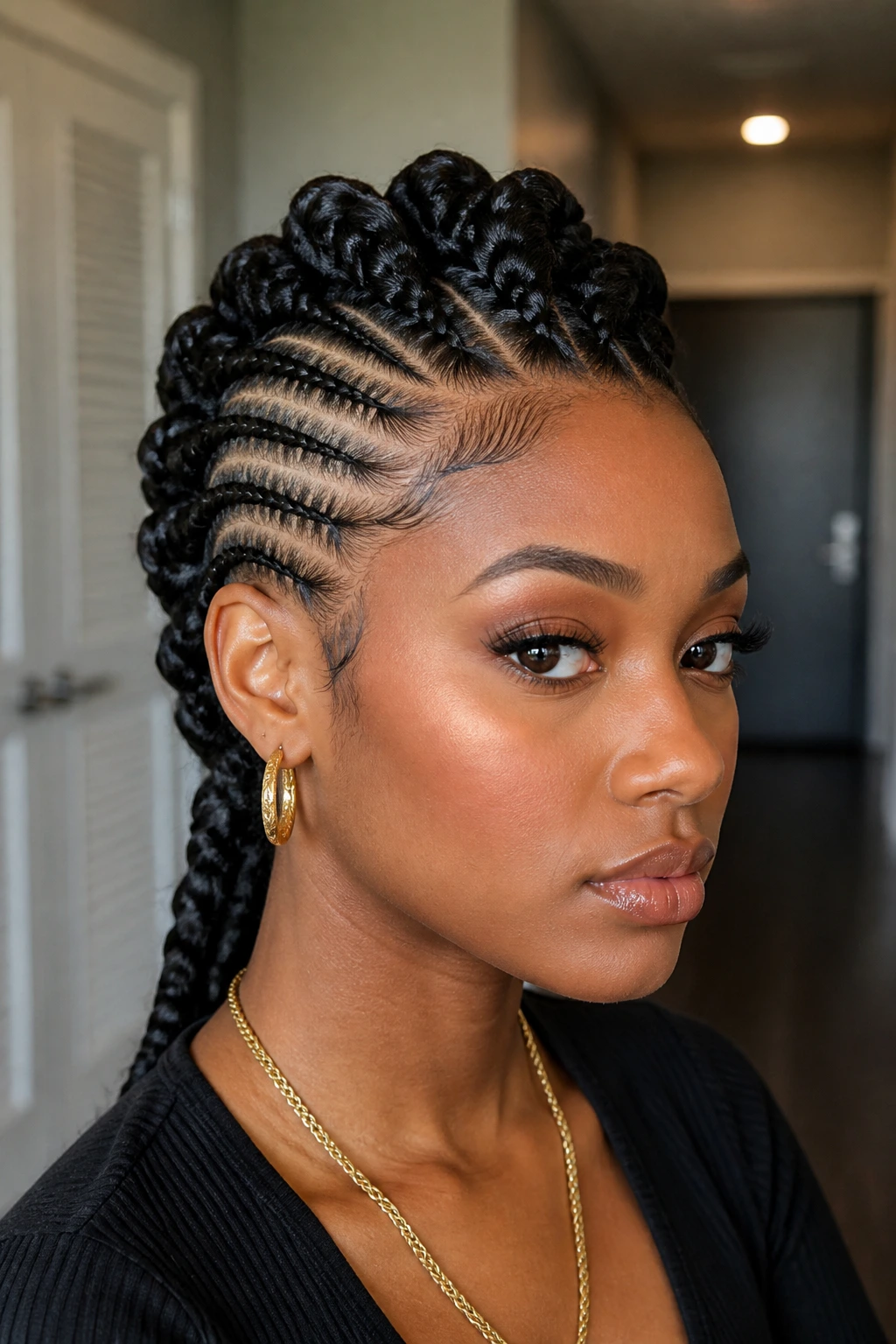
Feed-in braids give you a mohawk with a gradual build, which looks smoother than jumping straight from scalp to bulk. The braids start thin, then thicken as they travel toward the crown, so the style has a nice taper even before the center section is finished.
This is one of the easiest ways to get height without a pile of loose hair. If you want the mohawk to feel sleek and controlled, feed-in braids are your friend. They also hold up well when you need the style to last through a few days of real life — work, errands, a windy walk, the whole mess.
What to ask for: narrow parts at the front and a stronger braid density through the center strip.
Good to know: feed-ins look best when the edges are not overloaded with gel. Keep the hairline tidy, not shellacked.
5. Goddess Braid Mohawk
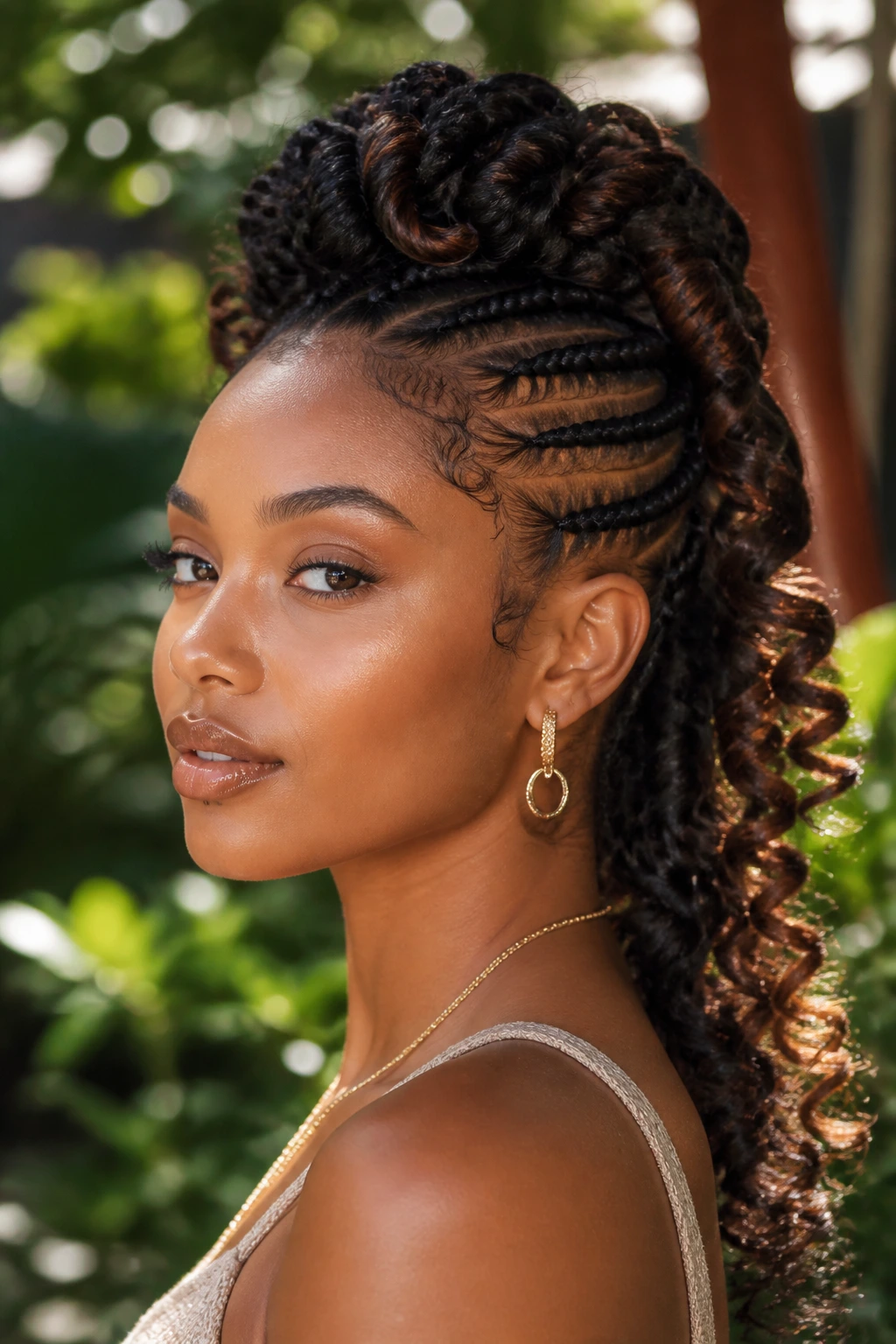
The goddess braid version has a softer, more decorated feel because the braids are often paired with loose curls or wavy pieces. The braid structure gives the style a spine, while the curled ends keep it from looking too severe. I like it when you want something pretty but not delicate.
Why it stands out: the contrast between the braided base and the airy ends makes the mohawk look fuller around the shoulders. That’s handy if your hair is medium density and you want the style to read large without piling on too much extension hair.
A few cuffs or gold rings can change the whole look. So can the length of the curled ends — shorter curls feel neater, while longer ones bring more drama and need a little more finger-combing to keep them separated.
6. Flat-Twist Frohawk
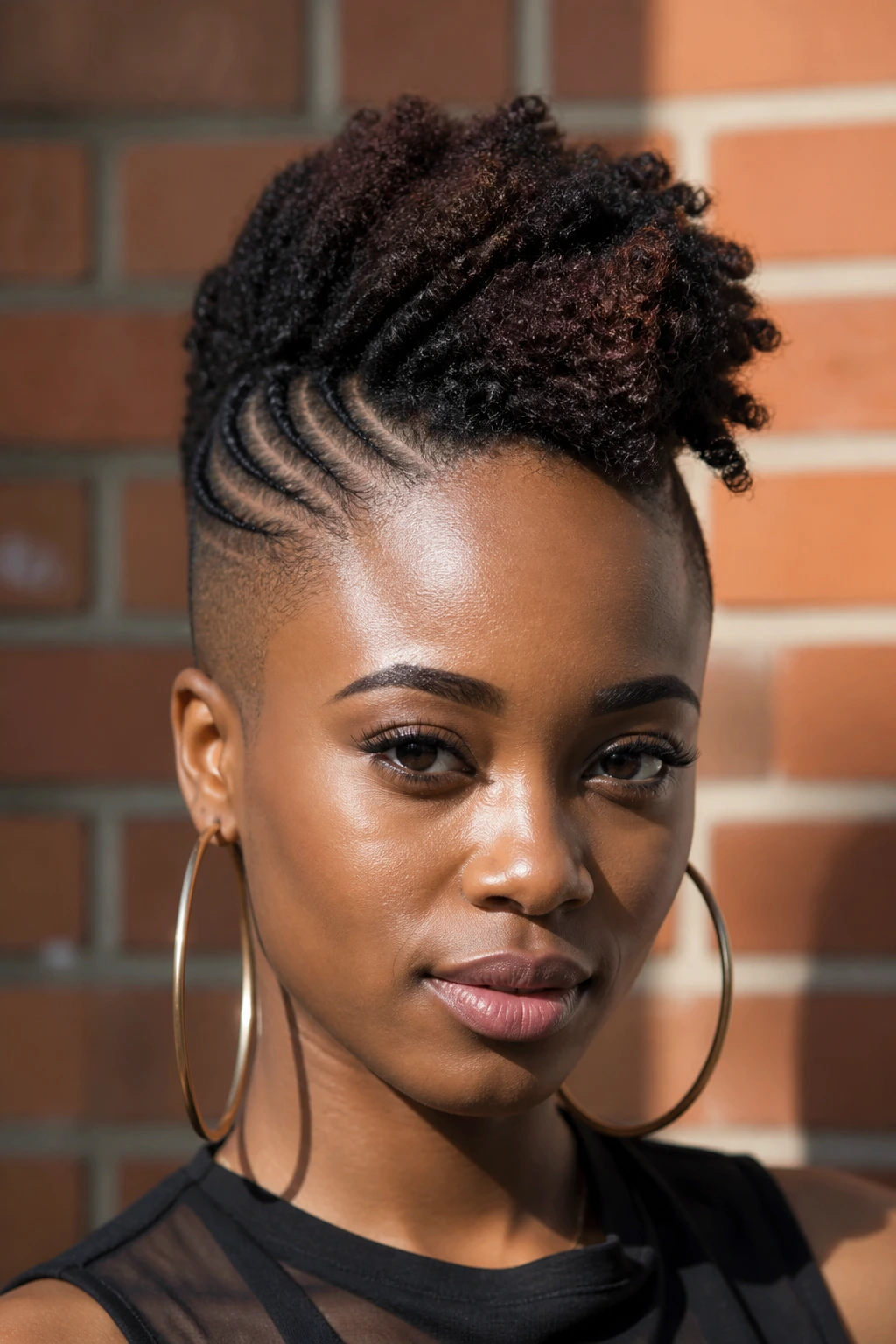
Flat twists are underrated because they create a clean surface without the stiffness of cornrows. A flat-twist frohawk looks especially good on natural hair that you want to protect while still showing off some texture through the middle. The sides stay close to the scalp, and the top can be puffed, coiled, or left in small twist-outs.
This style is a smart choice if your scalp gets tender from tighter braids. Flat twists usually feel gentler when done correctly, and they’re easier to take down if you want a fluffy twist-out afterward. That dual-use aspect matters more than people admit.
Best for: medium-length natural hair and anyone who wants a low-tension style with clean lines.
Tip: seal the ends with a tiny amount of cream or butter. Not a blob. A tiny amount. Too much product makes the twist pattern slide apart.
7. Two-Strand Twist Hawk
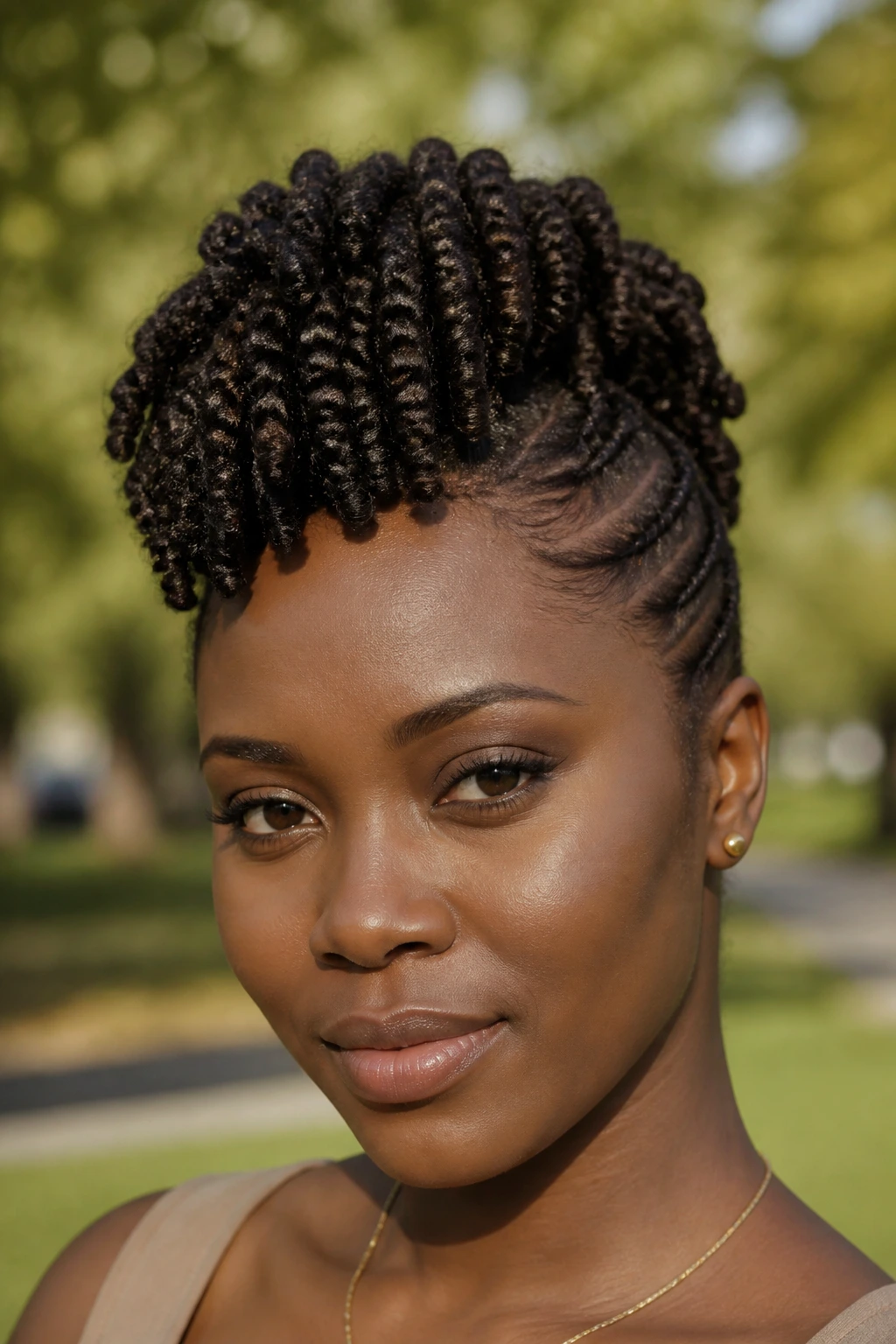
Two-strand twists make the mohawk feel a little more relaxed and organic. The twist texture gives the ridge some movement, and the sides can be pinned flat or braided down for contrast. It’s a good style when you want something protective that still looks touchable rather than rigid.
Twists also age nicely. On day one they look neat and defined. A few days later they soften, which can be a good thing if you like a fuller, less formal finish. I prefer this with medium-sized twists instead of micro twists; tiny twists can make the top look stringy if your hair density is low.
Best on: natural hair that shrinks a lot, because twists hold shape better than loose curls in humid weather.
Small warning: do not twist the base too tight. The style should sit on the scalp, not pull at it.
8. Bantu Knot Mohawk
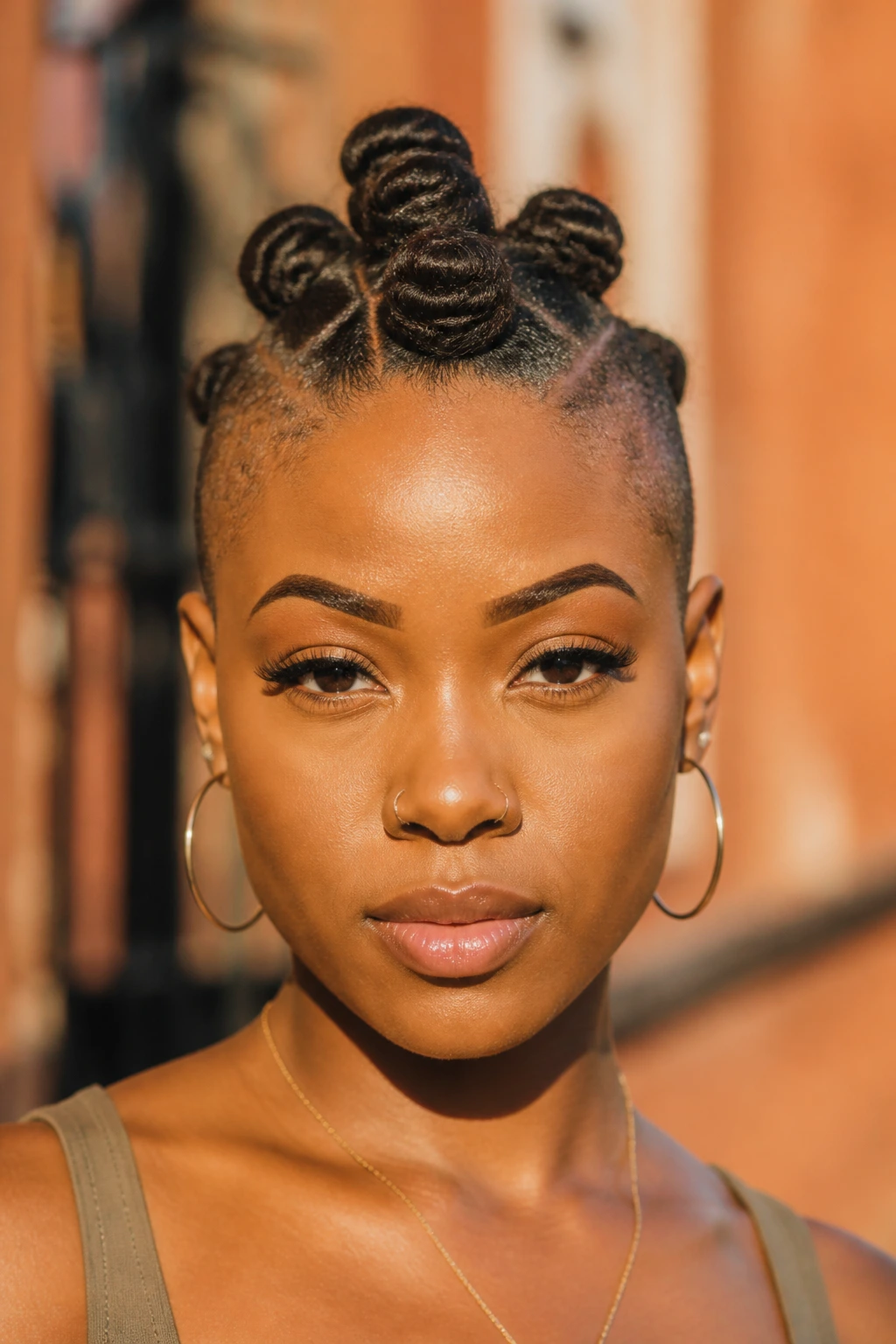
Bantu knots turn the mohawk into something geometric and playful. The row of knots running down the middle looks almost architectural, and the shape is strong enough that you do not need much else. If you leave the knots in, the look is compact and crisp; if you take them down later, you get a soft knot-out with serious volume.
It’s a style with two lives, which I love. Wear it as a mohawk for a few days, then unravel it for a second look if you don’t mind the extra fluff. Just know that the longer the knots stay in, the more they set the hair in a tighter curl pattern.
Ask for this if: you like styles that feel playful but still polished enough for a dressier outfit.
Watch for: uneven knot size. If one knot is twice the size of the others, the ridge starts looking lopsided fast.
9. Bubble Braid Mohawk
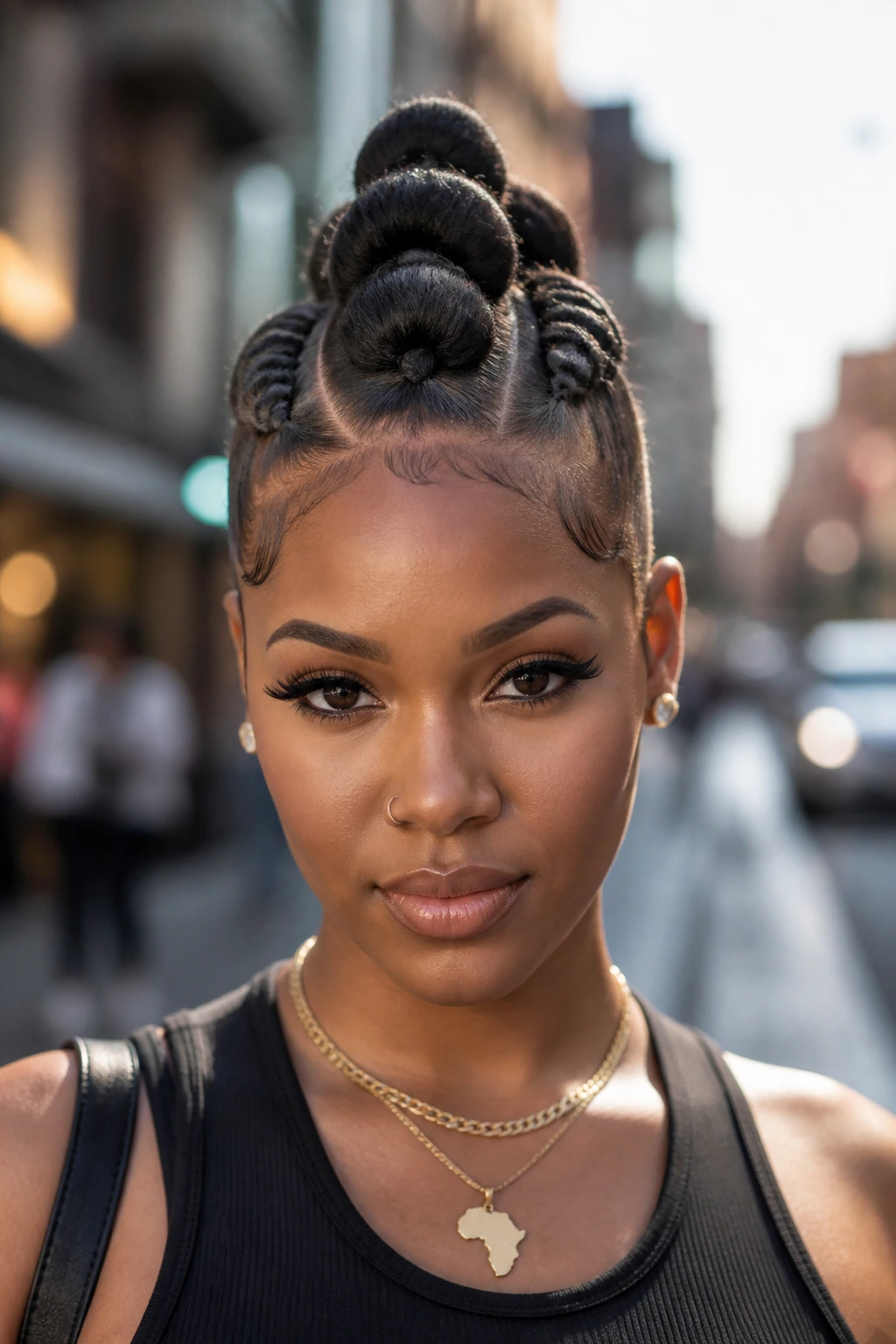
A bubble braid mohawk has a little attitude and a lot of shape. Instead of a flat braid line, the hair is sectioned into rounded “bubbles” down the center, which gives the style a sculptural look without requiring complex braiding. It’s especially fun when you want height but don’t want to commit to full cornrows.
The bubbles read best when each section is evenly spaced. Use small elastics and gently tug each segment outward until it puffs a bit, but stop before the braid starts looking frayed. Too much pulling and the whole thing loses its clean silhouette.
Best for: medium to long hair, or extension hair blended with natural hair.
My opinion: this one looks best with a crisp part on the sides. A messy base and a bubble braid in the middle can feel unfinished in a hurry.
10. Curly Puff Mohawk
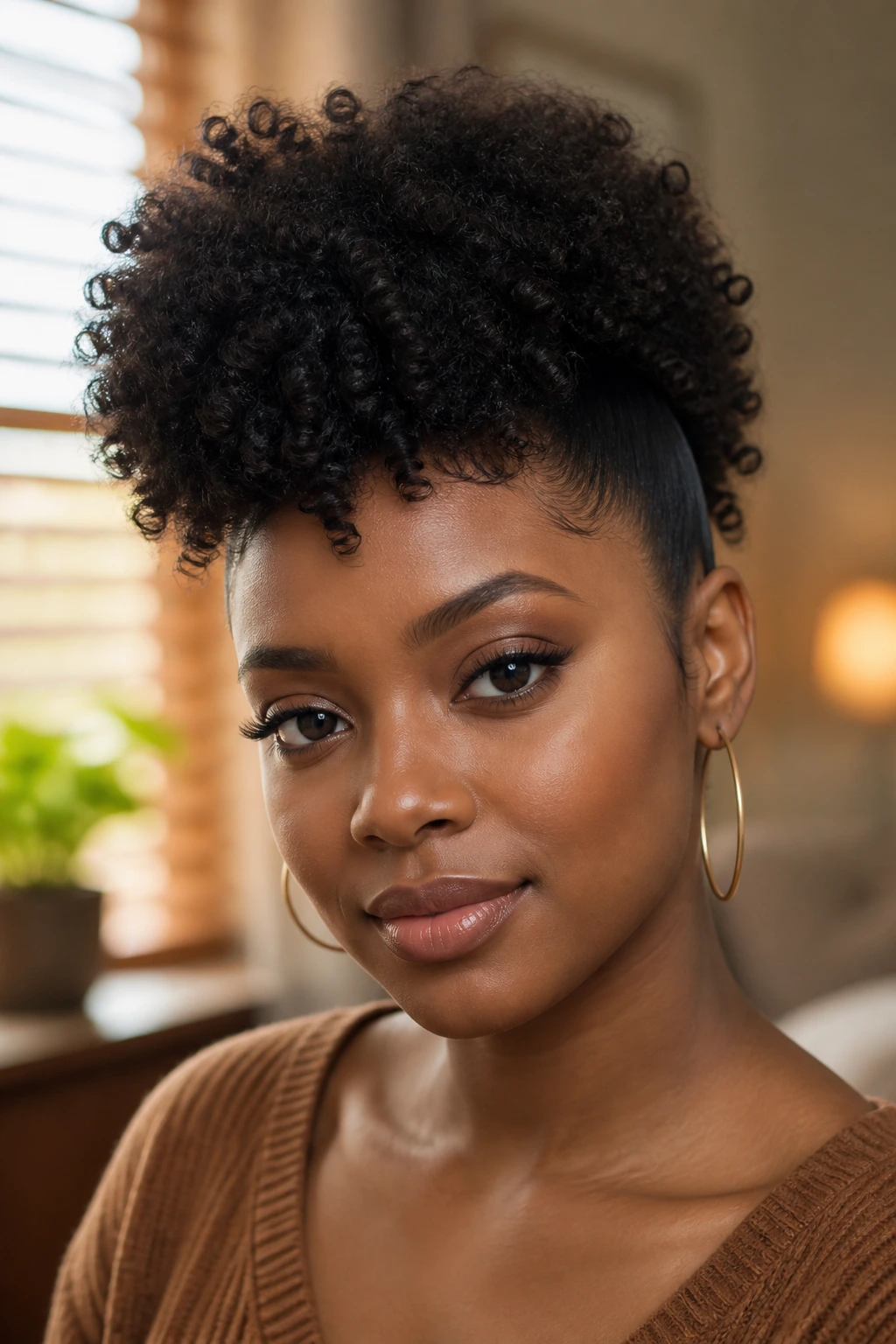
If you want the mohawk shape with the least amount of struggle, a curly puff version is hard to beat. The sides can be slicked, braided, or flat-twisted, while the center is left in one big puff or a stack of smaller puffs. It’s casual, but not lazy. There’s a difference.
The best part is the silhouette. A high puff at the crown makes the face look lifted, and a second puff lower down can create a more dramatic ridge without extra length. If your curls are dense, separate them with your fingers first so the puff doesn’t become one heavy lump.
Best for: wash-and-go hair, stretched curls, and quick styling days.
Tip: set the sides with a satin scarf for at least 15 minutes. If you skip that, the puff can look great while the sides puff out like they never heard the plan.
11. High Pineapple Mohawk
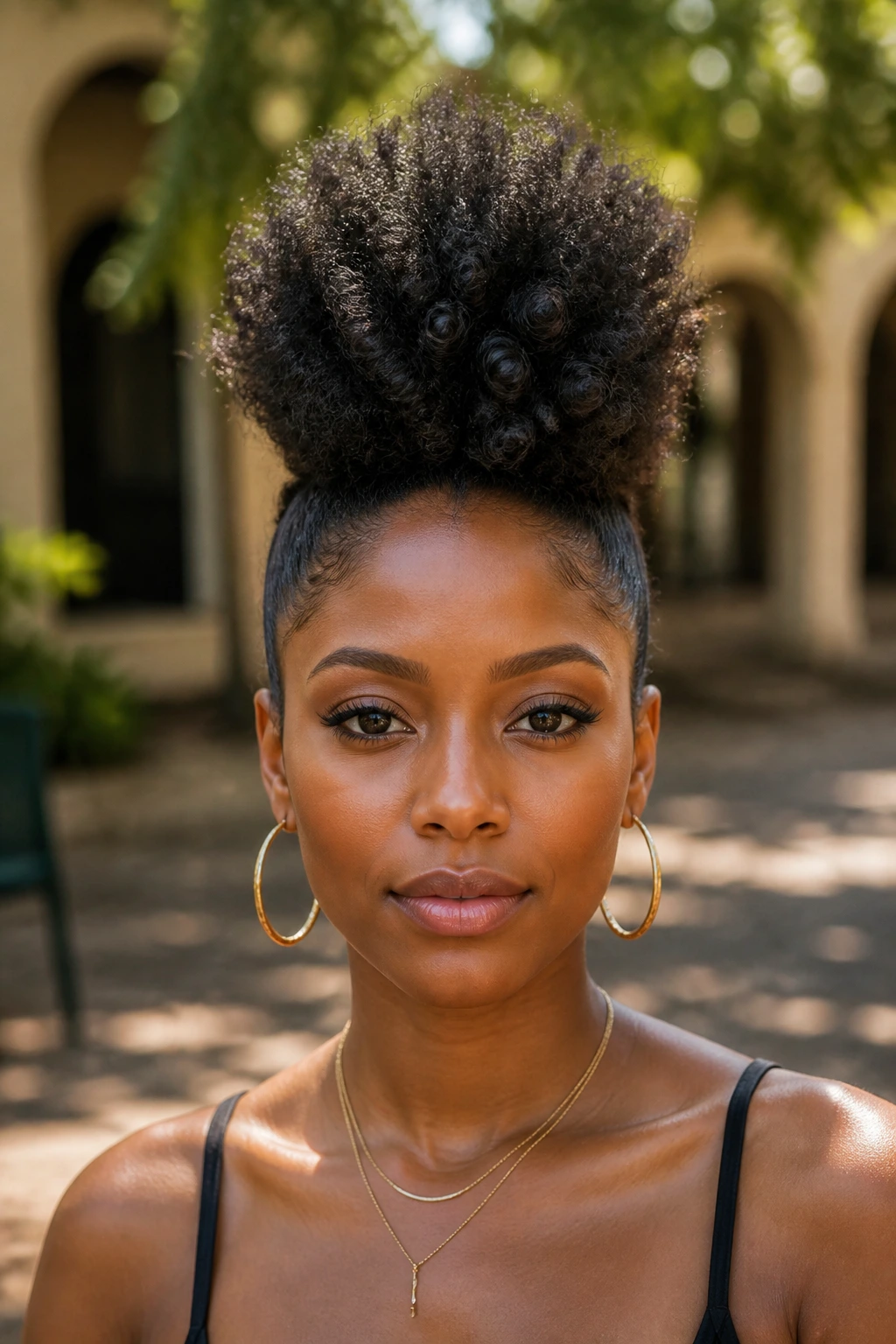
A high pineapple mohawk gives you a tall, loose center section that sits almost like a crown. It works especially well on curls that already have bounce, because the shape doesn’t need to be forced. The sides can be smoothed down, twisted, or pinned beneath the pineapple so the center gets all the attention.
I like this for second- or third-day curls. The texture is usually a little bigger, a little drier, and that makes the height look better. Freshly washed hair can be too soft and slippery for the style to hold the way you want.
Quick thought: this is one of the easiest mohawk shapes to dress up with earrings and a bold lip. The hairline stays clean, so the face becomes the main focus.
Small fix: if the pineapple leans backward, secure it with two invisible pins crossed at the base.
12. Loc Hawk with Tapered Sides
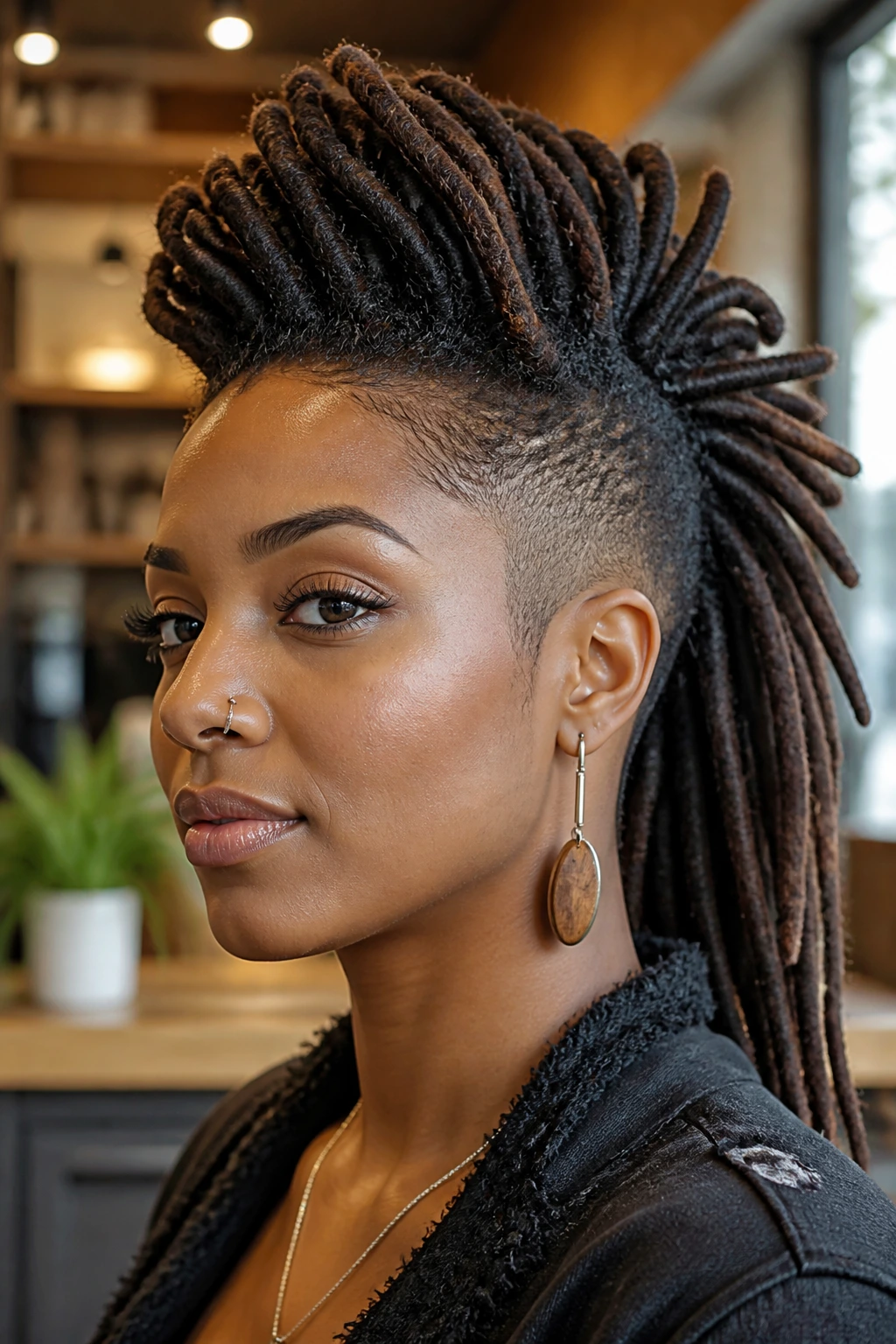
Locs and mohawks make sense together. The heavy texture of locs naturally wants to stack and fall in a strong line, which makes the center ridge look rich and full without much effort. If the sides are tapered or closely braided down, the loc hawk becomes the kind of style that looks intentional even when it’s been worn for days.
What I like here is the balance. Locs bring weight, but the mohawk shape keeps them from looking bulky all over. A few locs pulled up and a few left free can make the whole style feel less uniform, which is usually where the charm lives.
Best for: medium to long locs and anyone who wants a protective style with a lot of presence.
Tip: wrap the sides at night. Locs can tug at flattened hair around the temples if you let everything rub loose on a cotton pillowcase.
13. Marley Twist Faux Hawk
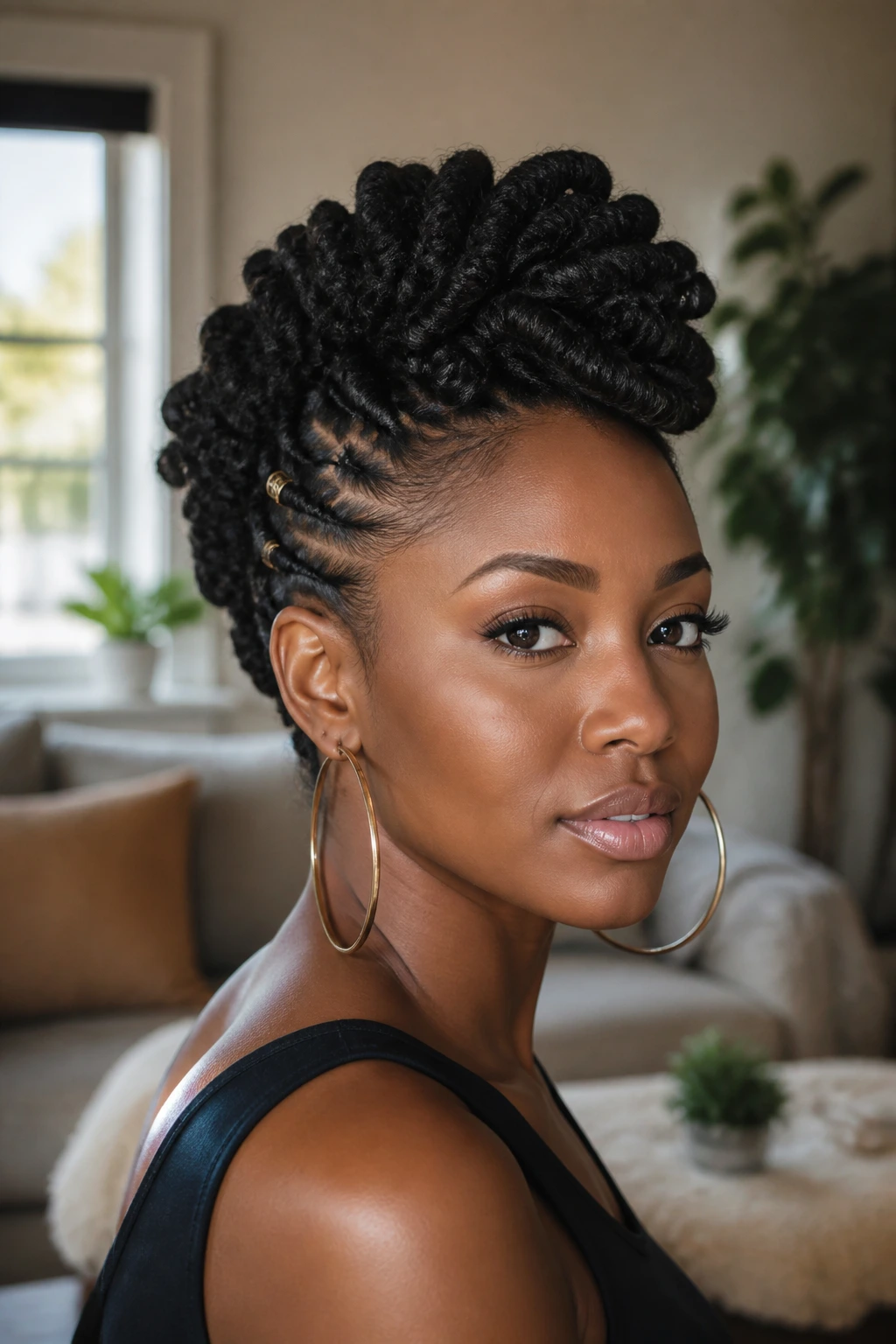
Marley twists create a plush, ropey texture that makes the mohawk feel fuller than it really is. The fibers have a matte look that blends well with natural hair, so the ridge doesn’t look too shiny or artificial. This is one of the better options if you want a protective style with thickness at the center and a softer edge around the face.
The texture matters here. Use Marley or kinky-textured braiding hair instead of silky braid hair if you want the style to blend rather than shine. The ridge will sit more naturally, and the twists will keep their shape longer with less slipping.
What makes it different: the finish is softer than box braids and more substantial than regular twists.
Watch for: too much added hair near the front. If the top starts getting heavy, the mohawk loses height fast.
14. Finger-Coiled Mohawk
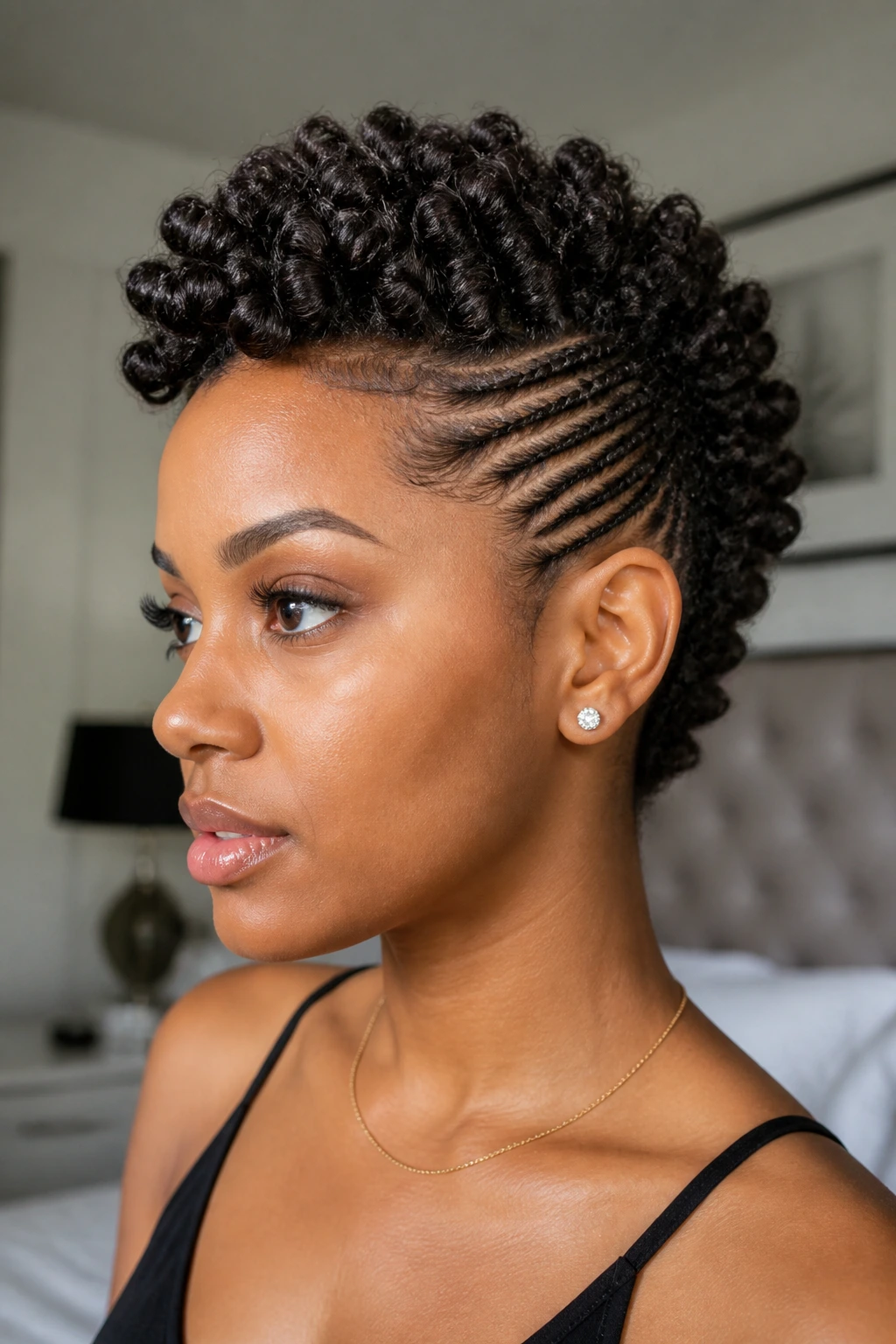
Finger coils can make a short mohawk look almost tailored. The curls sit in little spirals that give the center strip a precise, tidy surface, and the sides can be slicked down or lightly braided. On short natural hair, this is a nice way to get structure without trying to fake length you do not have.
It’s a good style for hair that needs definition more than volume. Use a curl cream with some hold, then coil small sections around your finger until they spring back into place. The look is neat on day one and slightly fuller by day three as the coils loosen.
Best for: short cuts, tapered sides, and people who like detail.
My take: finger coils look much better when the parts are small and consistent. Big, uneven coils can make the ridge look patchy instead of sculpted.
15. Senegalese Twist Mohawk
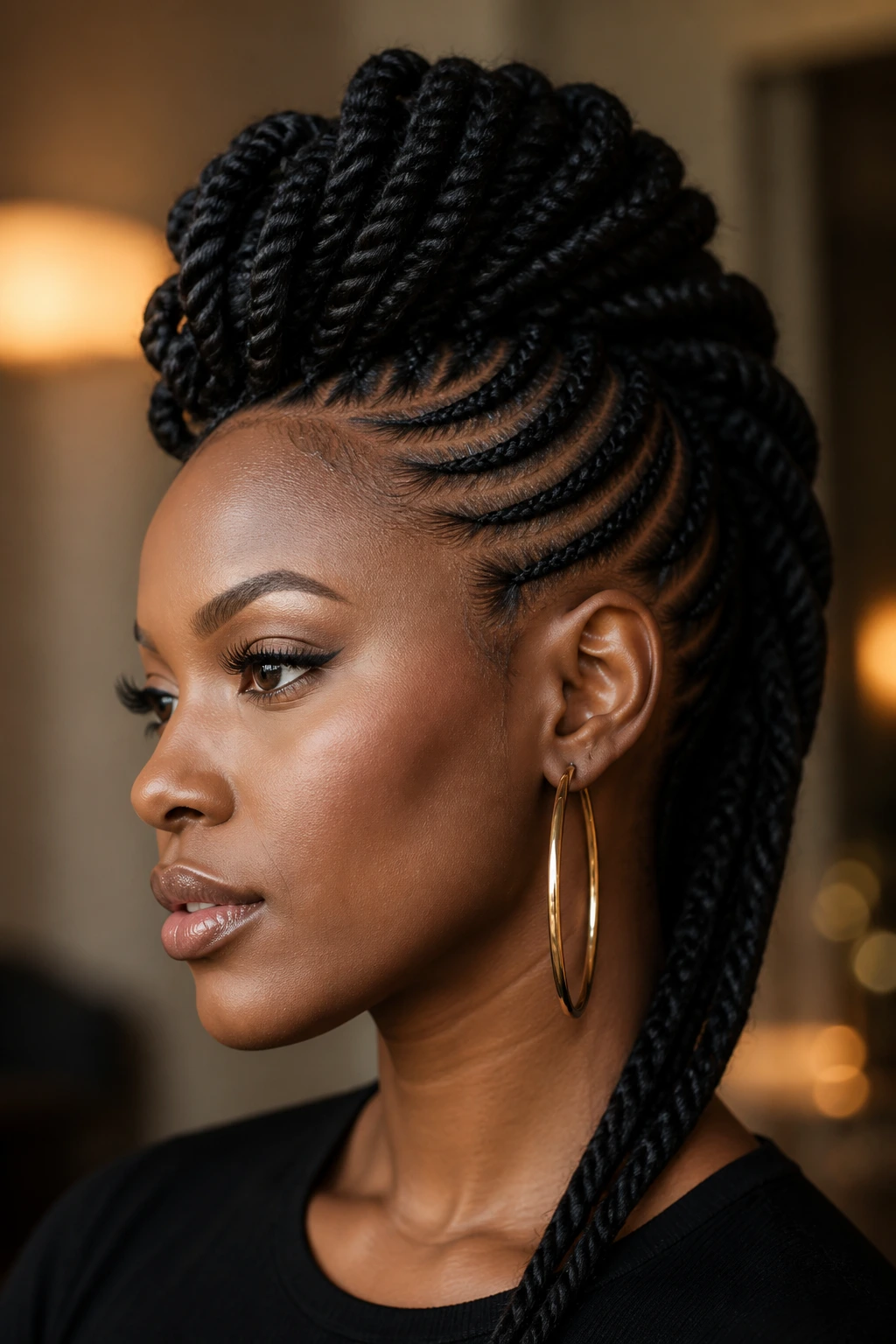
Senegalese twists give the mohawk a glossy, rope-like finish that looks clean from every angle. They’re smoother than Marley twists, which means the style reads a little sleeker and a little more refined. If you want a center ridge that sways instead of puffing, this is a strong choice.
Because the twists are smoother, they’re good for formal wear and for longer styles that need movement. Add a few gold cuffs near the top if you want a little sparkle; the twists already create a clean line, so the accessories don’t have to do much.
Best on: medium to long hair with extension support.
Small caution: the smoother fiber can slip if the base is too oily. Keep the scalp clean and the parting dry before installing.
16. Rolled-Side Updo Mohawk
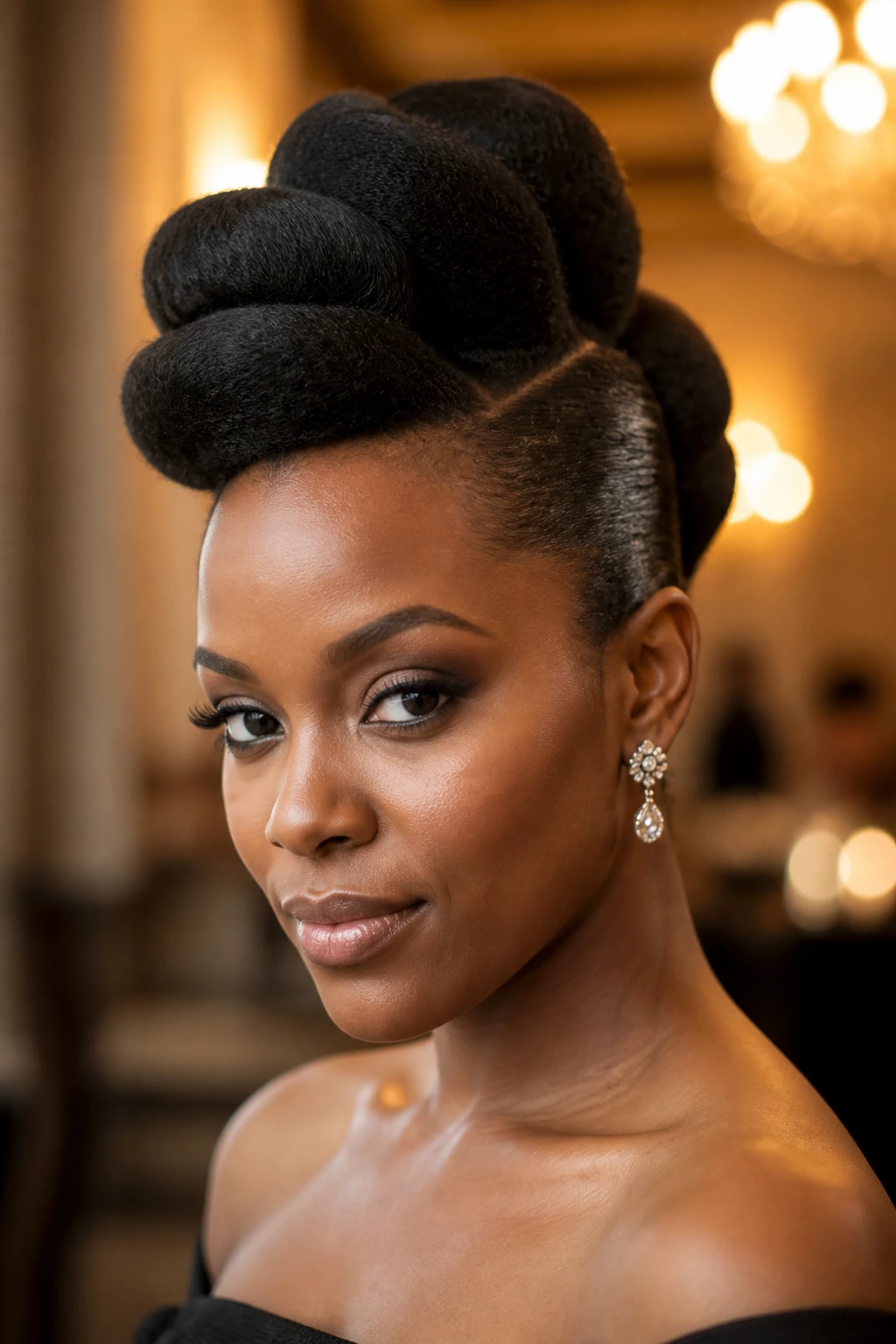
The rolled-side updo is the elegant cousin in the family. Instead of braids or dramatic curls, the sides are rolled inward and pinned so the center ridge can rise like a soft shell. It’s the style I’d choose for a wedding guest look, a formal dinner, or any event where you want height without shouting for attention.
The rolls should stay close to the scalp and disappear into the shape, not look like separate lumps pinned on as an afterthought. Use enough pins to secure the structure, then hide the hardware under the hair. You want smooth lines, not visible bobby-pin archaeology.
Ask for this if: you need a mohawk that feels polished and controlled.
Tip: a light mist of setting lotion or foam before rolling helps the shape hold better than dry pins alone.
17. Half-Up Mohawk with Wand Curls
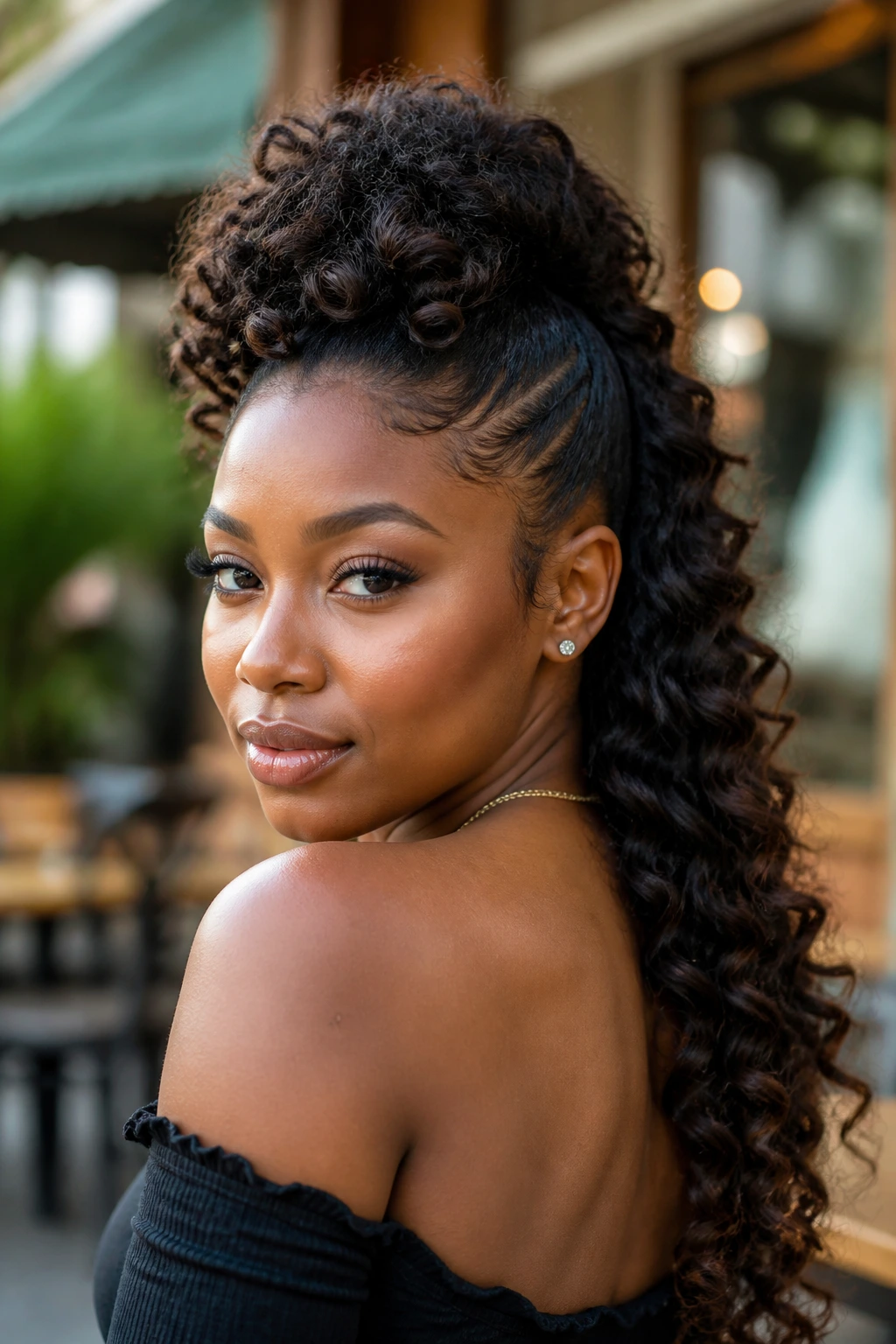
This version feels softer and more romantic than a hard-edged mohawk. The top half is gathered into a ridge, then the loose lengths are curled with a wand or curling rod so the ends fall in polished spirals. It works beautifully on relaxed hair, blown-out natural hair, or stretched extensions.
The nice part is movement. The top gives you the mohawk line, but the loose curls keep the style from looking boxy. I’d keep the curls large and deliberate — around 1-inch sections — so the finish reads smooth rather than frizzy.
Best for: shoulder-length and longer hair.
Watch for: over-curling the top section. If the crown is too tight, the shape gets smaller instead of taller.
18. Braided Crown Mohawk
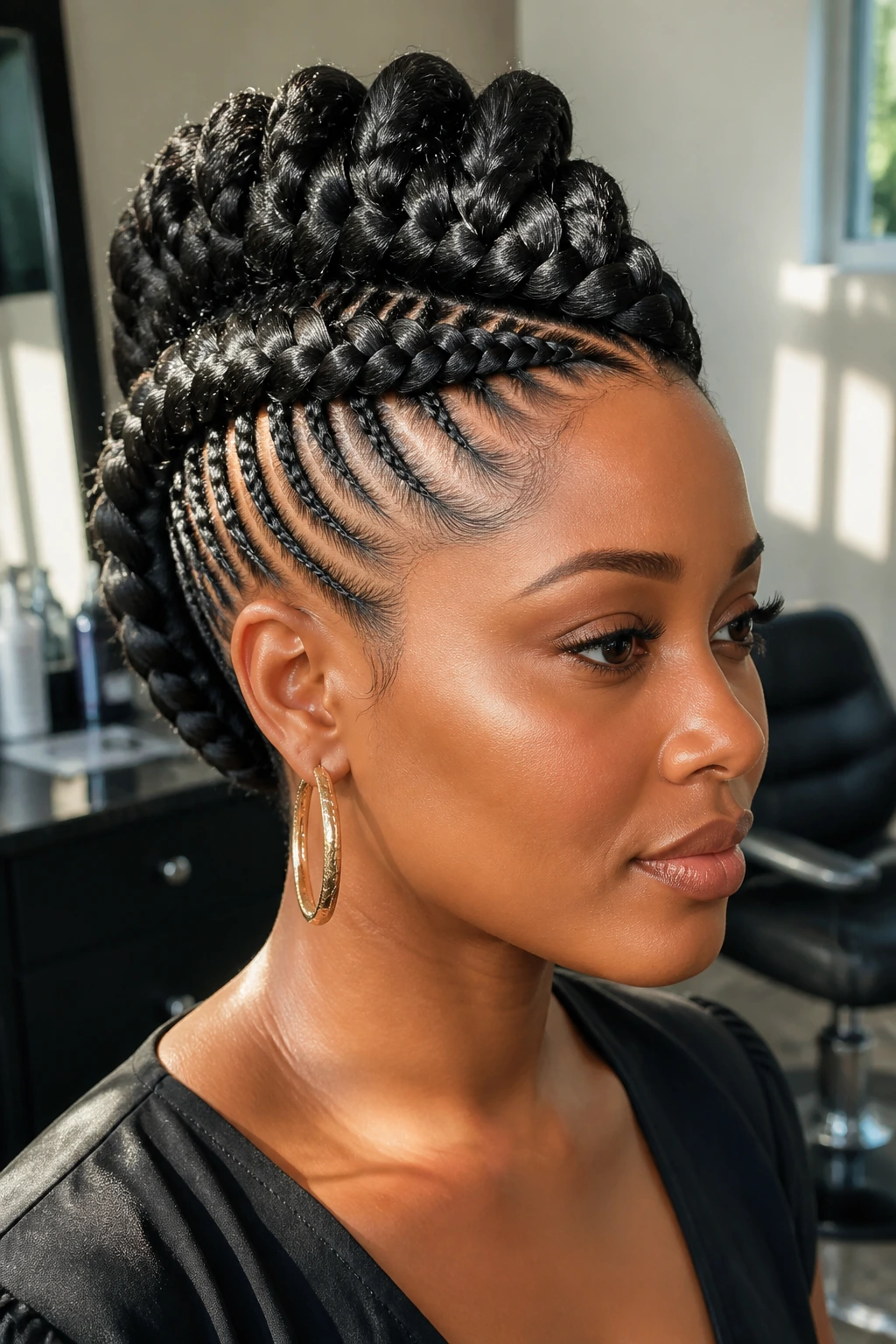
A braided crown mohawk wraps around the head while still leaving a center strip open for height or texture. It has a regal feel without becoming stiff, which is a nice balance. The braid line can sit closer to the hairline for a softer frame or higher up for a sharper profile.
I like this style because it frames the face without swallowing it. If you have strong cheekbones or like wearing earrings, the braid crown gives the face a clean border and keeps the focus right where you want it. It also travels well. Once it’s set, it doesn’t ask for much.
Best for: medium to long hair, especially when you want the style to stay neat for several days.
Small note: braid the crown in the direction the hair naturally wants to fall. Fighting the grain makes the roots fight back.
19. Wet-Look Sculpted Mohawk
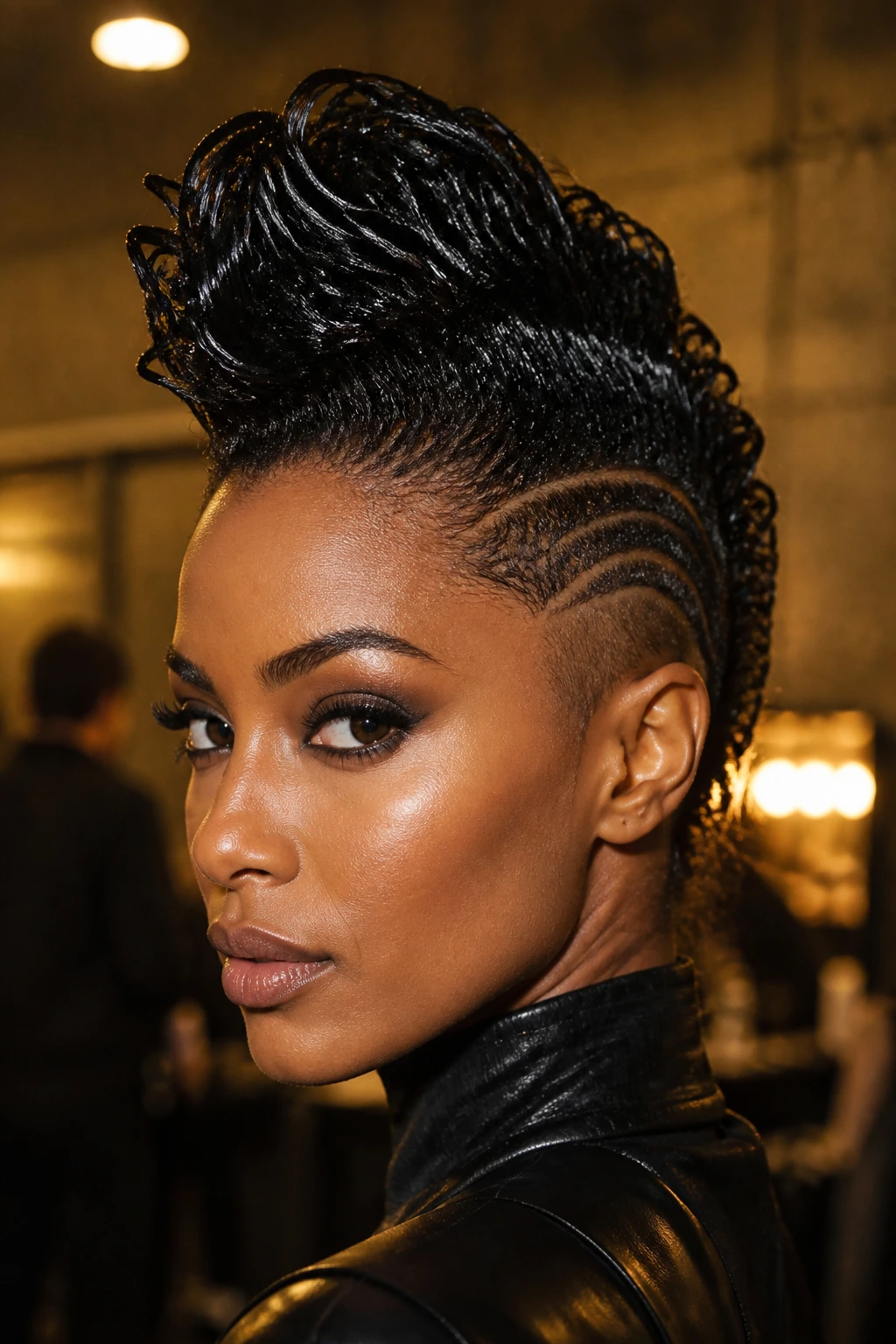
The wet-look mohawk is slick, glossy, and not shy. The hair is shaped close to the scalp with gel or styling foam, then lifted through the center so it keeps that damp, carved finish. It’s one of the boldest options here, and on Black hair it can look particularly striking because the texture still shows through the shine.
The key is control without crunch. Too much gel turns the style into a hard helmet. Too little, and the ridge loses its clean line by the time you leave the house. A fine-tooth comb and a lot of patience help more than brute force ever will.
Best for: short to medium hair and special occasions.
My opinion: this style looks best with minimal jewelry and strong makeup. Let the hair do the talking.
20. Crisscross Cornrow Hawk
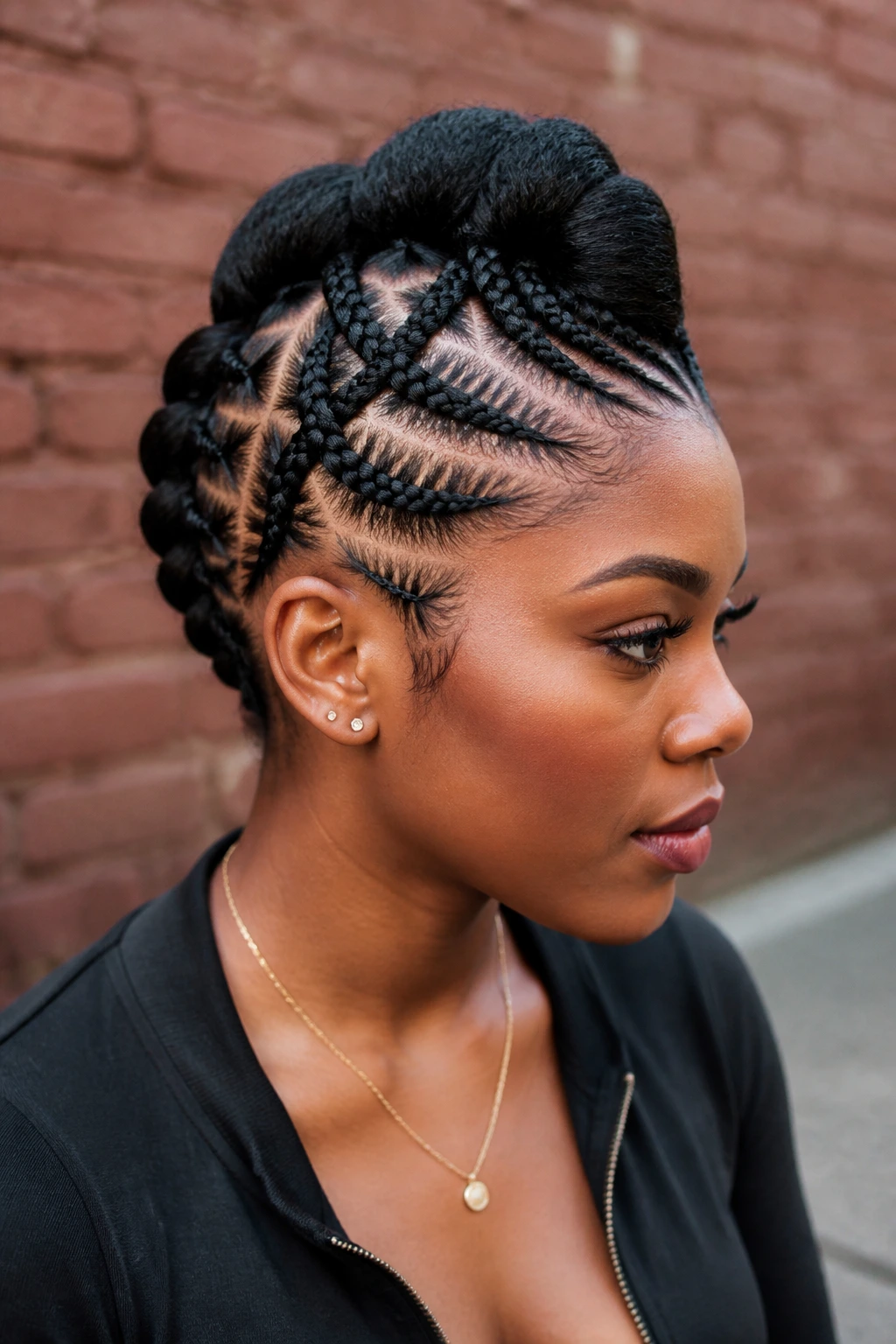
Crisscross cornrows give the mohawk a design element that plain straight-backs just do not have. The braids cross over each other in the center or along the sides, which adds pattern before you even get to the ridge itself. That makes the style feel more deliberate and a lot less basic.
It is a smart choice when you want a mohawk that holds attention from the front and the side. Keep the parting crisp, because the design relies on clean geometry. If the sections get muddy, the whole effect gets lost.
What to ask for: a tight but not painful braid pattern with clean spacing between each cross.
Tip: if you plan to keep it up for more than a few days, sleep with a satin bonnet that is roomy enough not to crush the raised center.
21. Wash-and-Go Afro Hawk
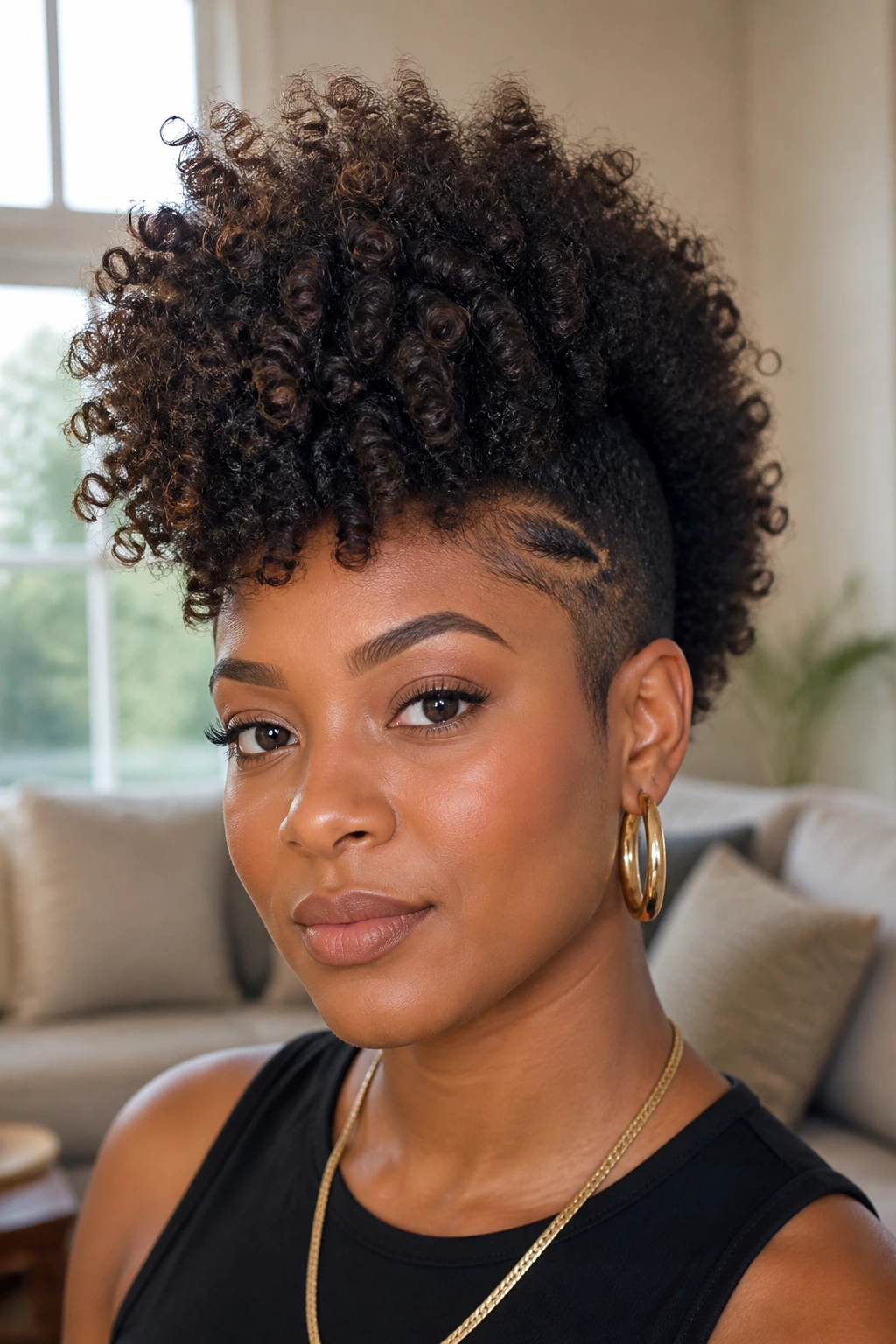
This is the freest version in the bunch. The sides are controlled somehow — pinned, braided, or slicked — and the center stays in its full wash-and-go glory. The result is a frohawk that looks alive, airy, and very much like hair that wants room to breathe.
It works best when curls are defined but not overworked. A strong gel cast can help the pattern hold, but break the cast gently once the hair is dry so the center does not feel stiff. The shape should stay rounded, not stuck together like a single block.
Best on: dense curls and coils that can hold volume without falling flat.
Small warning: if you run too much oil through the top, the curls lose their spring and the hawk starts to sag.
22. Extended-Length Mohawk Ponytail
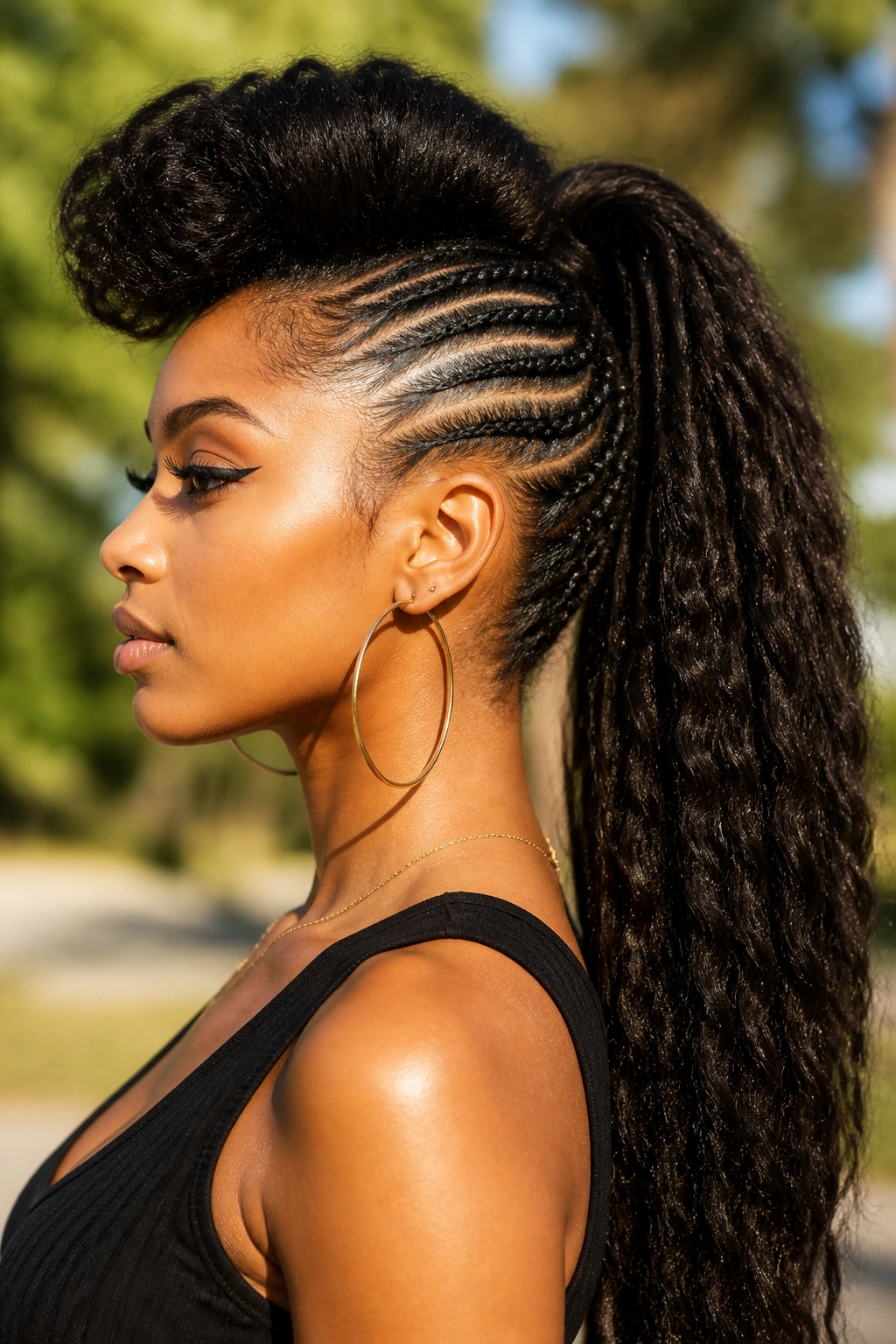
Think of this as the long-hair version of a mohawk, with the center pulled into a high ponytail or ponytail-like ridge that can trail down the back. It’s sleek at the base and dramatic where the length drops, which gives you a lot of swing. On added hair, the ponytail can reach almost anywhere you want it to.
This style is good when you want the mohawk line but also want the motion of a ponytail. The base has to be secure; if the pony is too loose, the center collapses. Use a strong elastic and wrap a small piece of hair around the base if you want a cleaner finish.
Best for: extensions, long hair, or blowout-stretched natural hair.
Tip: keep the ponytail high enough to preserve the ridge. Too low, and you’ve just made a regular ponytail with a big part.
23. Deep Side-Part Mohawk
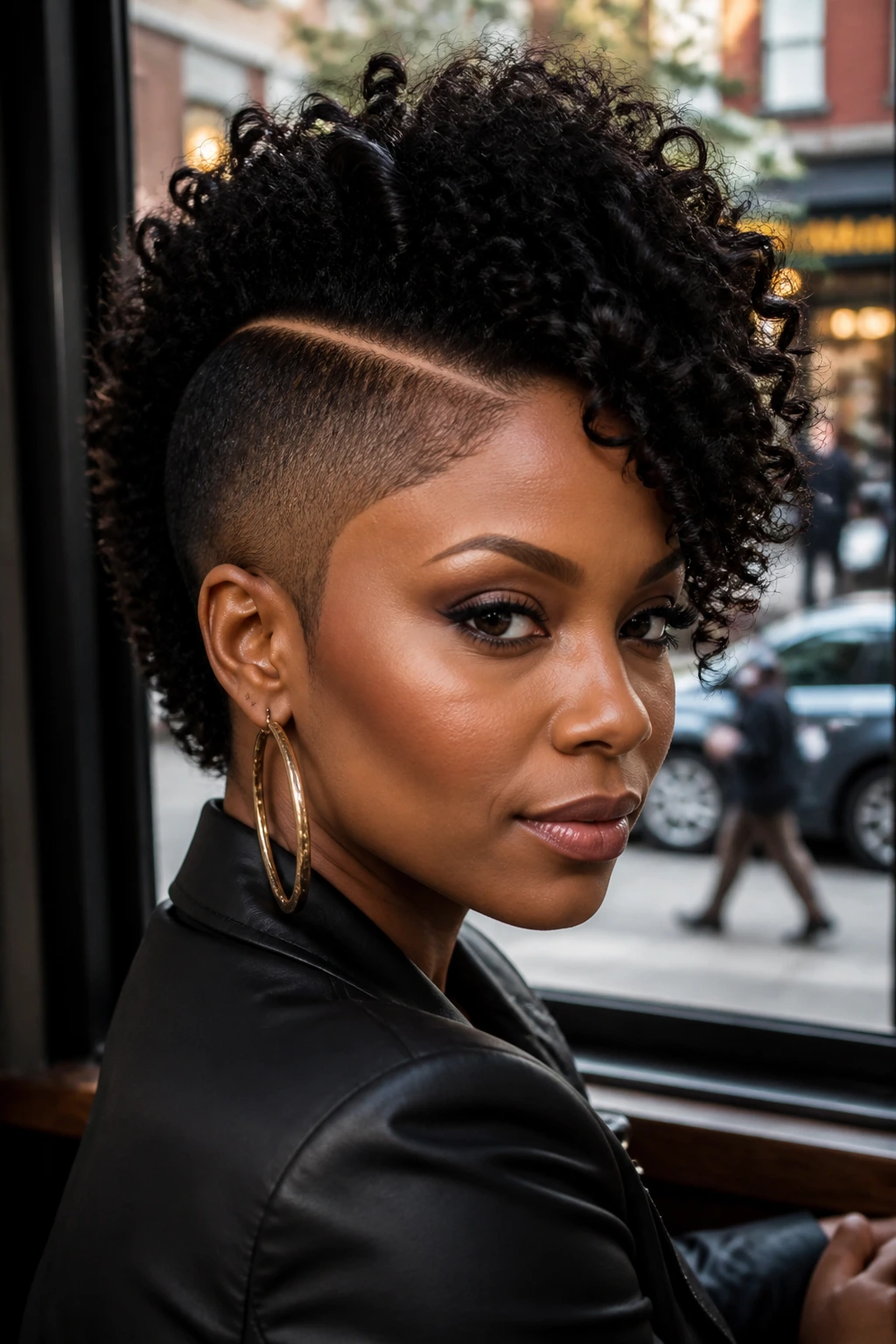
A deep side part changes the mood immediately. Instead of a perfectly centered ridge, the hair sweeps from one side into a mohawk-like lift, which softens the look and makes it feel a little less rigid. I like this when a straight center part feels too severe for your face or outfit.
The part should be dramatic, not uncertain. Put it far enough over to create real asymmetry, then use the longer side to feed the eye toward the center ridge. It’s a nice option for round faces or anyone who likes a little visual slant in their hairstyle.
What makes it different: the shape is less symmetrical, so it feels modern without trying too hard.
Watch for: a weak part line. A hesitant side part just looks like a mistake that hasn’t been fixed yet.
24. Curly Bang Mohawk
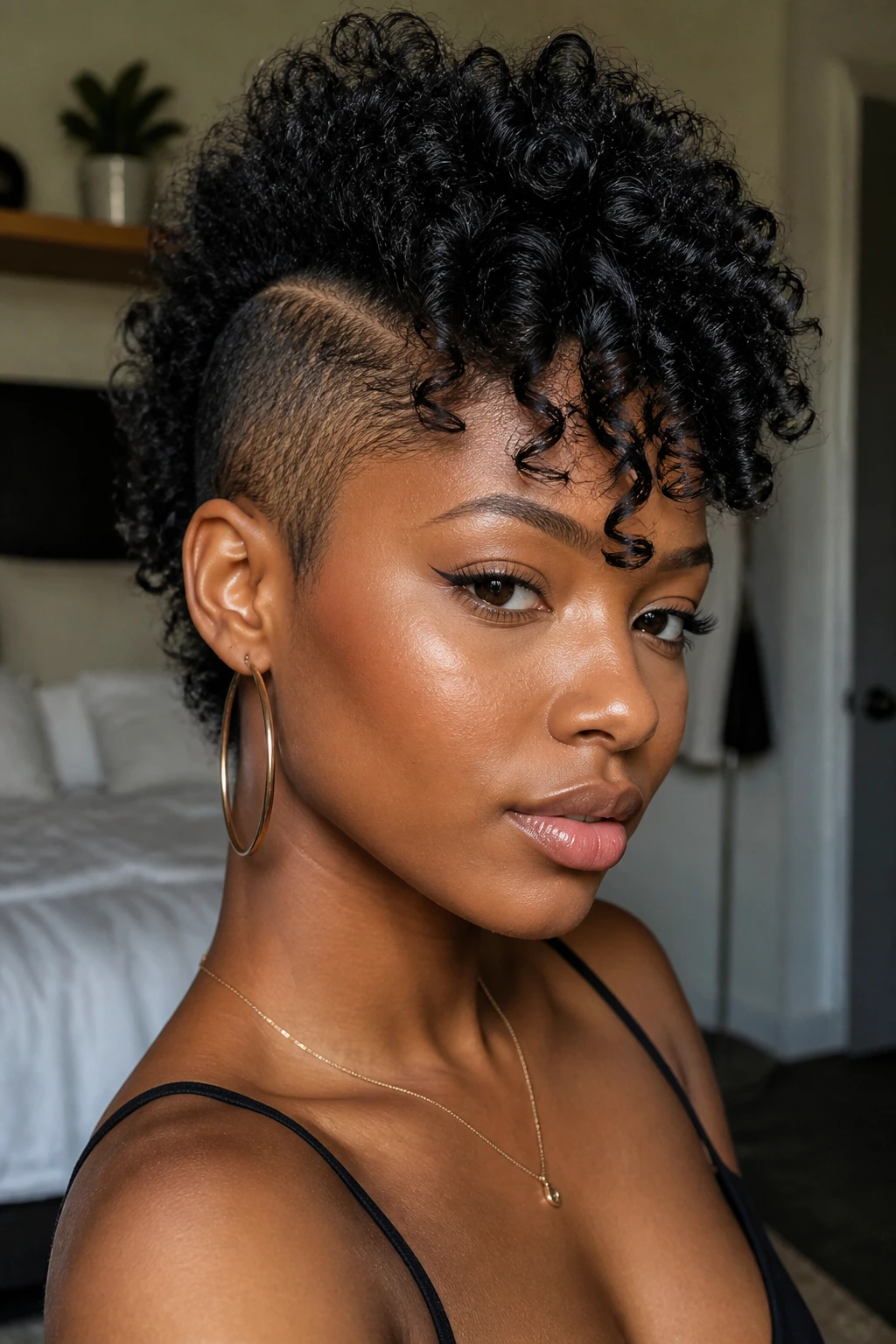
Curly bangs bring softness to a style that can easily go hard. The front section is lifted, but the curls drop forward a little, which frames the forehead and balances out a strong mohawk ridge. It’s a flattering choice if you want height without exposing the entire face.
I especially like this on medium-length natural hair because the bangs and the ridge can share the same curl family. The style feels cohesive instead of split into separate parts. Keep the bangs light and airy, though; heavy fringe can drag the center down.
Best for: people who want a mohawk shape but prefer some softness around the eyes.
Small tip: separate the curls around the fringe with oil on your fingers, not a brush. Brushes can puff the front too much.
25. Colored Extension Mohawk
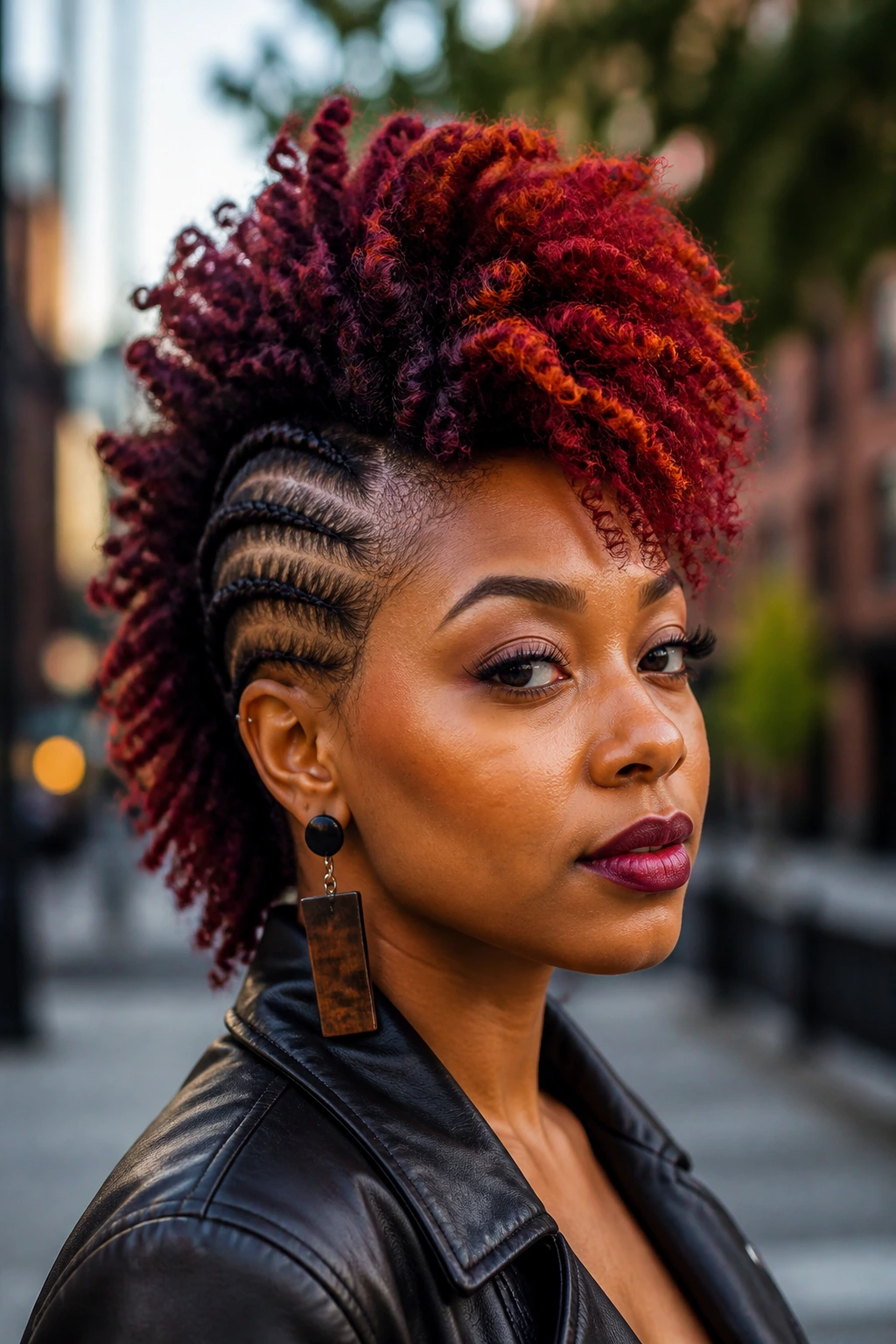
Color changes the whole mood. A mohawk built with burgundy, copper, honey blonde, or even a deep plum extension can make the shape stand out before anyone notices the parting. On Black women, richer jewel tones usually look especially good because they still show depth in low light.
The trick is choosing a color that works with the style’s density. If the mohawk is already large, a color with dimension — not a flat neon block — tends to look better. Ombre braid hair or mixed-tone twists can keep the center from looking too painted-on.
Best for: protective styles, event looks, or anyone who wants the shape to read with more drama.
Tip: match the makeup to the undertone of the color. Warm copper and gold cuffs play nicely; cool plum likes silver.
26. Short Taper Fade Mohawk
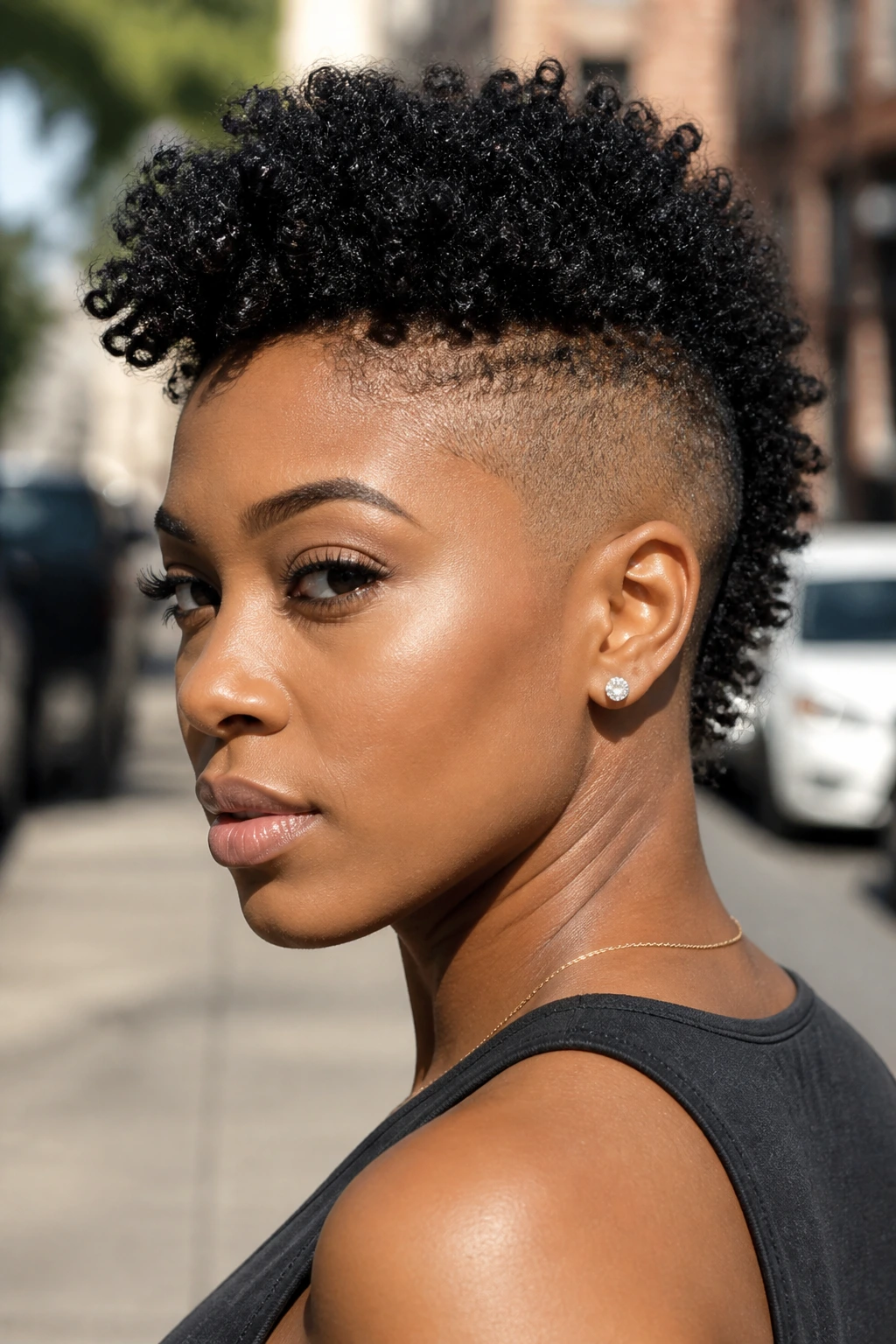
This one has no patience for fluff. A taper fade mohawk is sharp, cropped, and very clean around the sides and back, with the center left longer so the contrast does the work. On short natural hair, it can look incredibly strong because the line between faded sides and textured top is so crisp.
Maintenance matters here. The fade needs to stay tidy, which means a touch-up every week or two if you want the outline to remain clean. If you let the sides grow too long, the style loses the whole point.
Best for: women who like structure, short cuts, and minimal daily styling.
My take: this is the best choice when you want the mohawk shape without depending on length at all.
27. Box Braid Mohawk
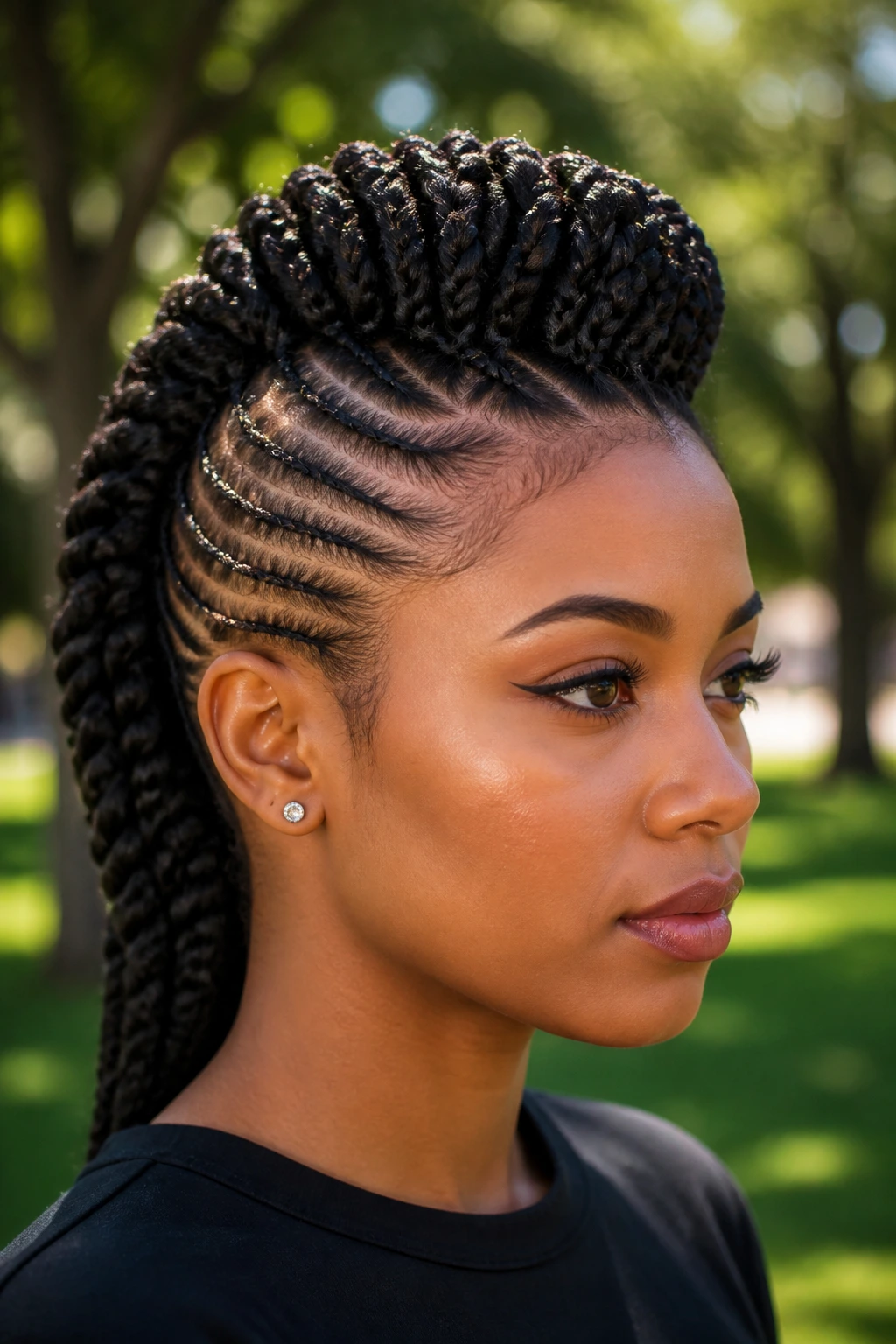
A box-braid mohawk gives you all the convenience of braids and all the shape of a mohawk. The braid rows can run up the sides, leaving the center strip fuller, or they can be gathered into a raised ridge that sits almost like a braid crown. Either way, the structure stays visible.
I prefer medium-sized braids here. Tiny braids can make the center look too busy, while oversized braids can feel heavy and pull the mohawk shape down. The balance point is usually somewhere in the middle, where the style looks full but still lifts at the crown.
Ask for this if: you want a style that can last and still look intentional after several days.
Tip: braid cuffs near the front can pull the eye upward. Place them sparingly, not on every single braid.
28. Cornrow-and-Puff Combo
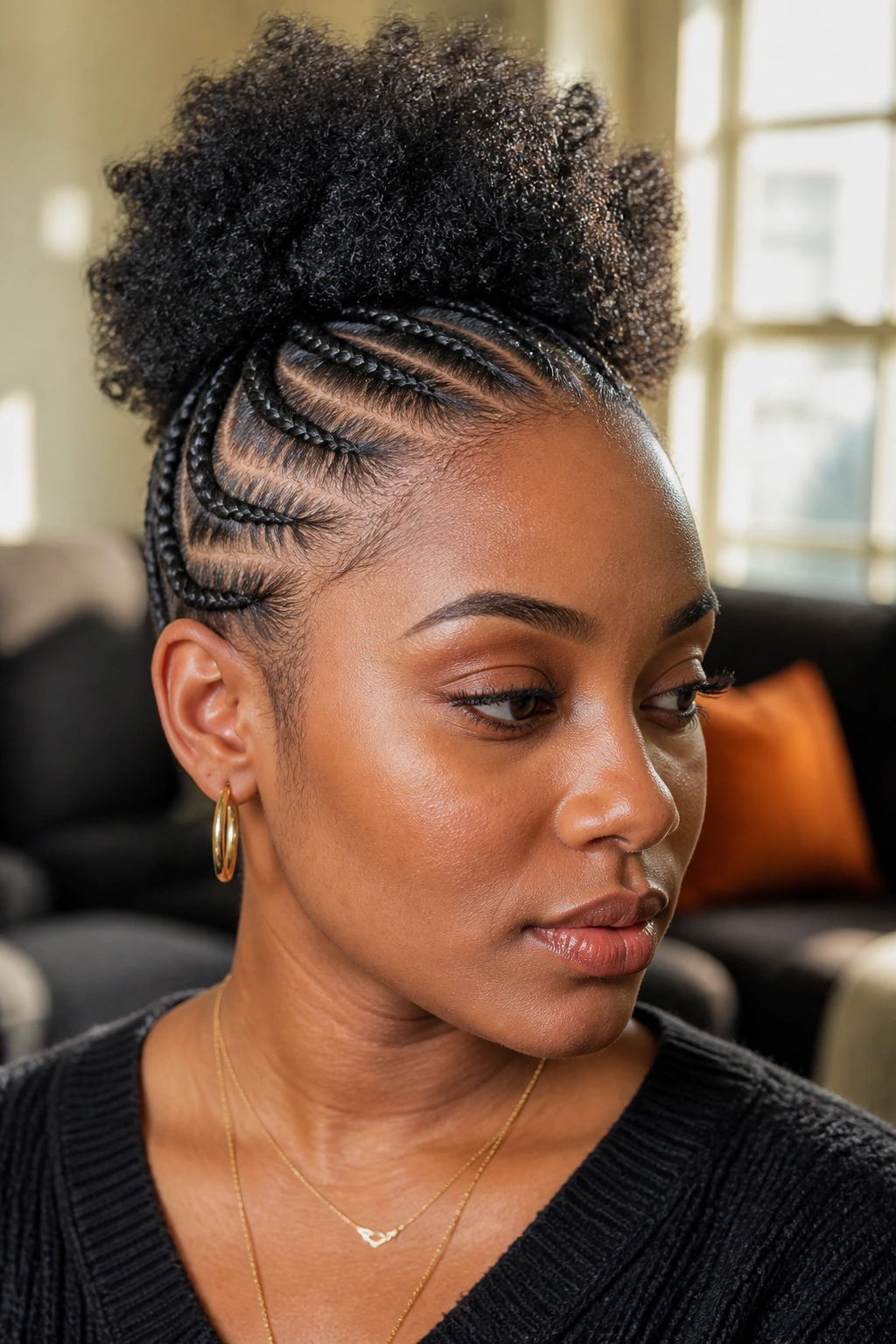
This style is one of the smartest blends in the whole set. The front or sides are cornrowed flat, then the center opens into one or more puffs that give the mohawk a soft finish. It’s practical, flexible, and not as heavy as a full braided hawk.
The combo works because it solves two problems at once: control at the scalp and volume where you want it. If your curls are dense, one large puff can make the center look dramatic; if they’re finer, two smaller puffs can keep the ridge from drooping. The style can lean sporty or pretty depending on how neat the cornrows are.
Best for: natural hair that wants a protective base without giving up texture.
Small detail: keep the puff elastic hidden under a small wrap of hair. A visible band can make the whole style feel unfinished.
29. Claw-Clip Roll Mohawk
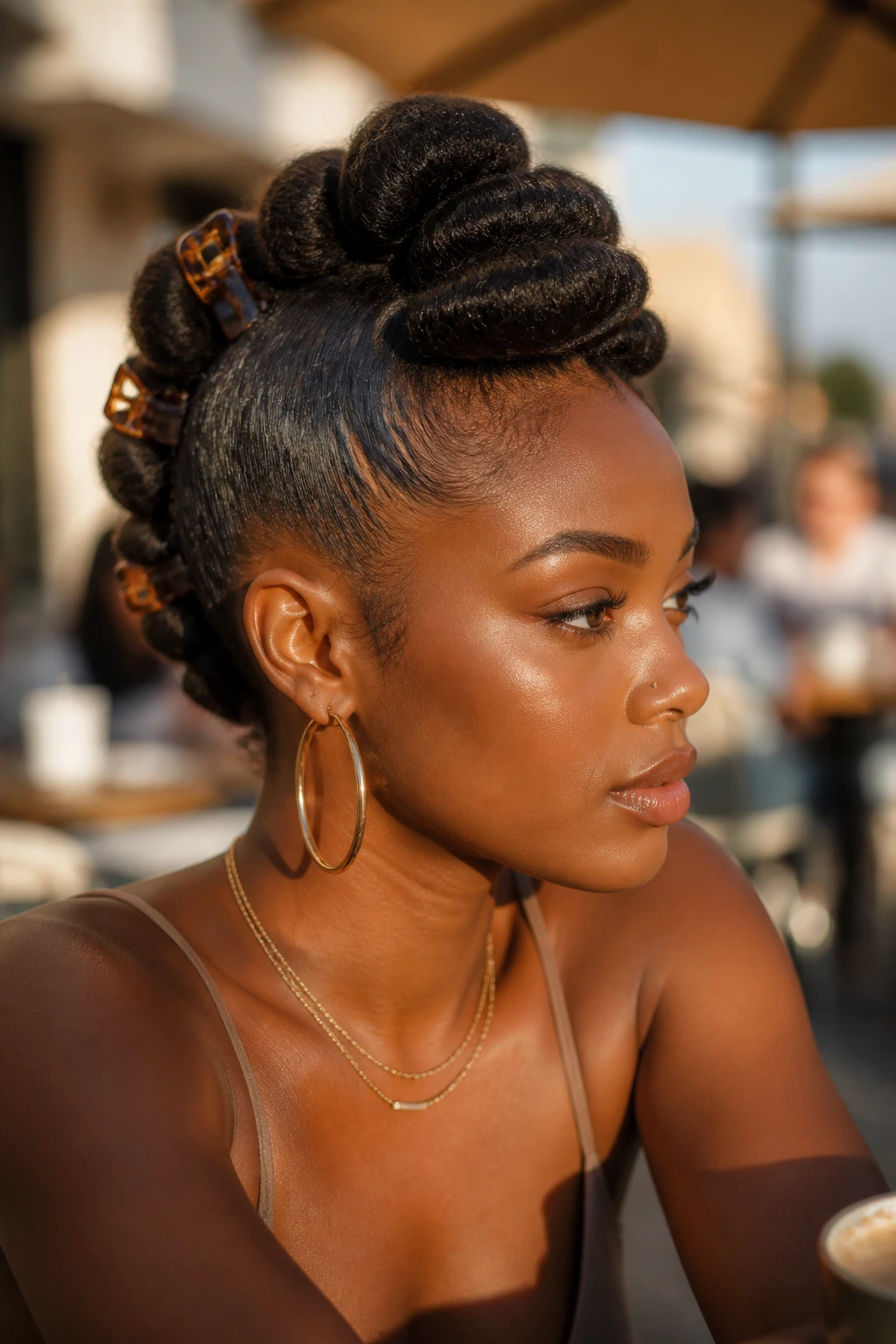
A claw-clip roll mohawk is fast, easy, and far more polished than people give it credit for. The hair is rolled upward in sections and caught with clips, creating a ridge that looks deliberate without requiring braids, extensions, or a full styling session. It’s the kind of style that saves a bad hair day.
What I like about it is the looseness. The roll can be neat or a little messy depending on how tightly you tuck the hair, and both versions work. Use strong clips with good teeth, though. Cheap clips slide on dense hair and leave you fixing the style every hour.
Best for: medium to long hair, especially stretched hair or blowouts.
Tip: pin the base first, then clip the top. If you try to do everything with one clip, the roll will sag.
30. Braided Top Knot Mohawk
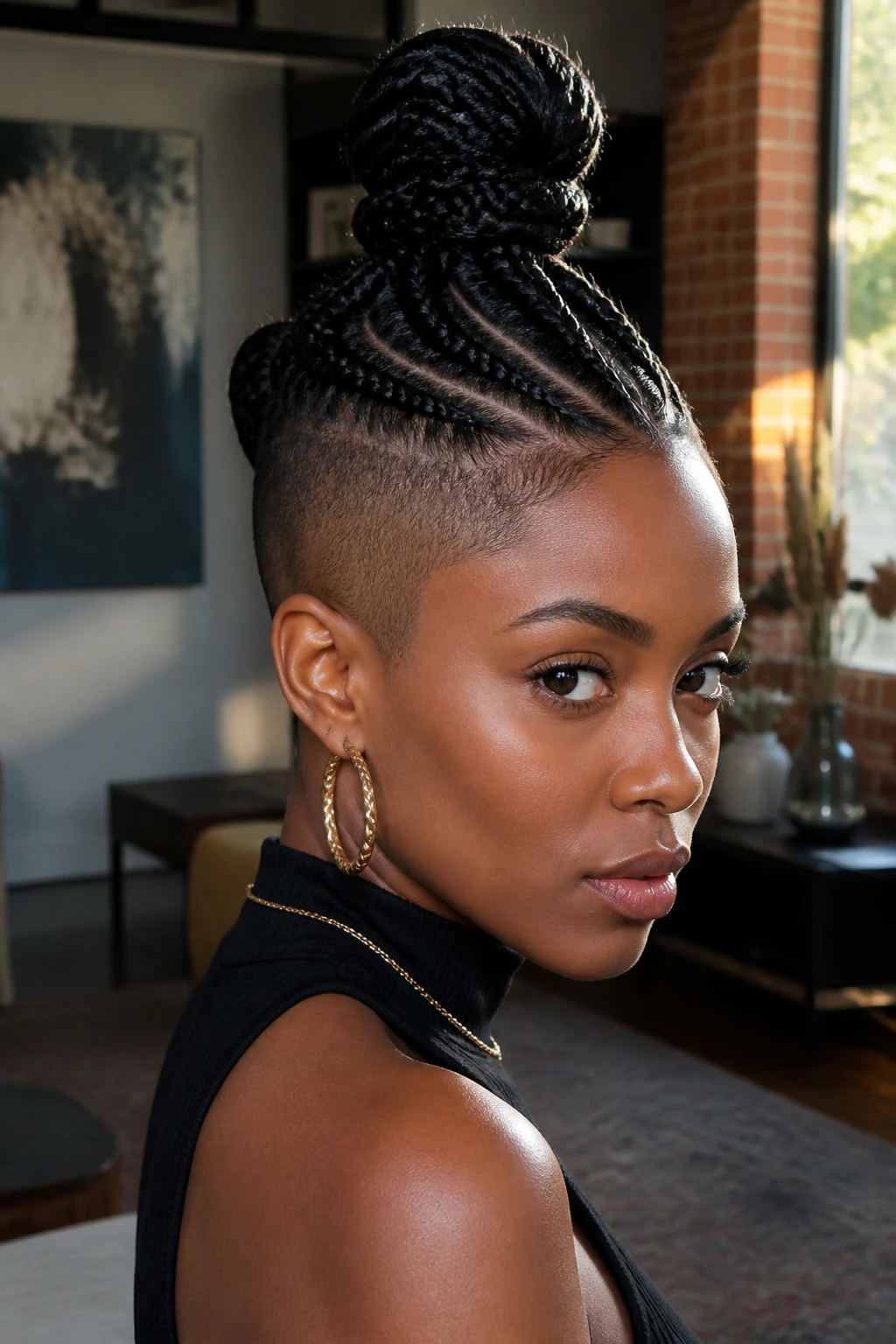
This is mohawk energy with a little extra lift at the crown. The braids sweep upward into a top knot, leaving the sides clean and the center all the attention it can handle. It’s a good answer when you want height that stays out of your face.
The knot should sit high enough to keep the mohawk line visible from the front and the side. If it droops too low, you lose the shape and end up with a regular bun wearing a mohawk costume. Add wraparound braids or feed-ins for even more structure if your hair is shorter.
Best for: formal and semi-formal looks, especially with earrings that show off your neck.
Watch for: tension at the crown. A knot that feels like it’s dragging on your scalp is too tight.
31. Side-Parted Frohawk for Round Faces
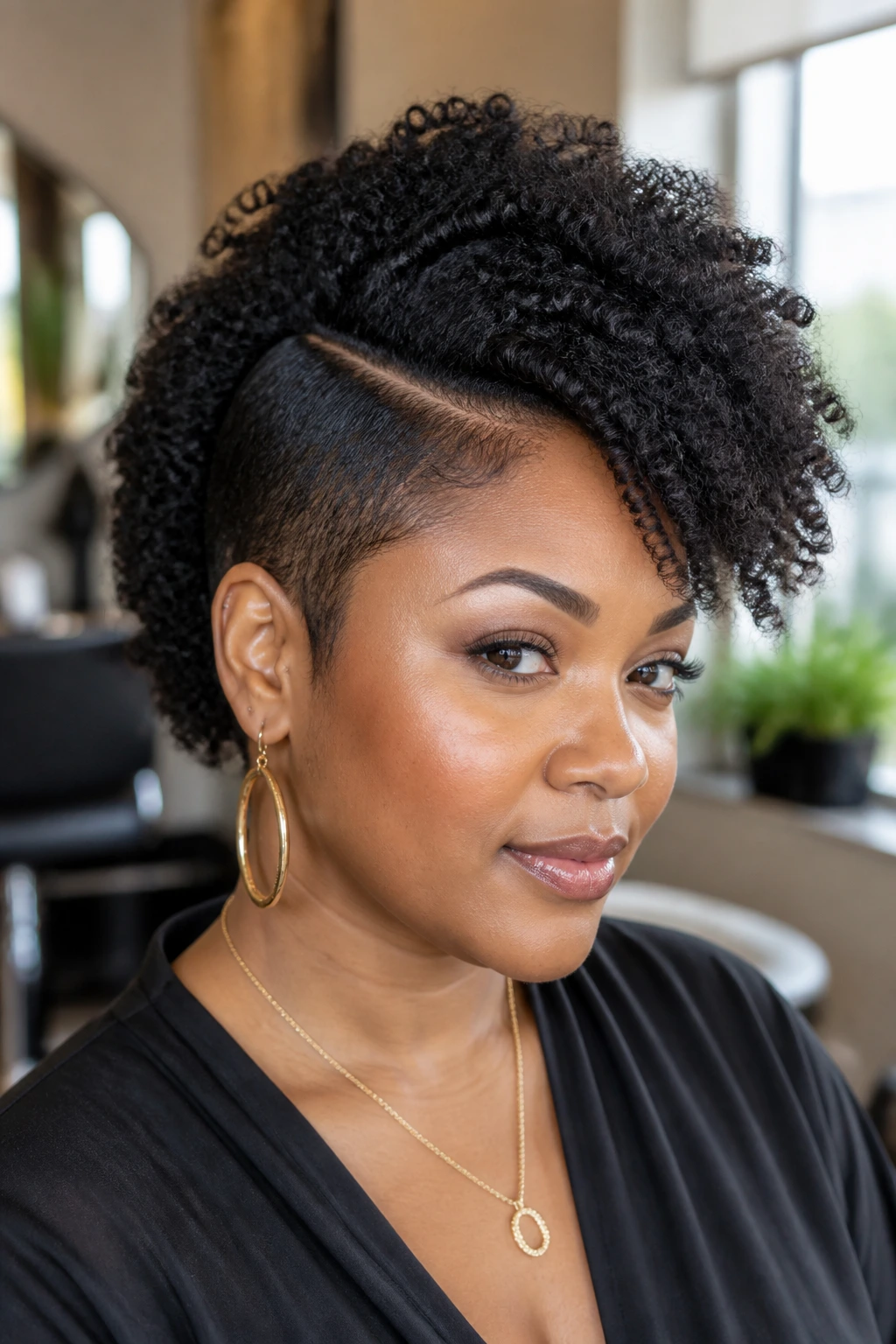
A side-parted frohawk is one of the most flattering shapes for rounder faces because it adds vertical line without making the style too symmetrical. The side part pulls one side inward, while the center ridge stays tall and soft. That slight angle changes the whole balance of the face.
The beauty here is softness. You do not need razor-sharp parts or stiff edges. A little asymmetry can be enough, especially if the curls are stretched enough to create height but not so stretched that they lose body. It is a gentler mohawk, and sometimes that is the smarter choice.
Best for: natural curls and coils when you want lift without hard geometry.
Tip: keep the side with the part flatter and let the opposite side carry more volume. That contrast does the face-framing work for you.
32. Havana Twist Protective Hawk
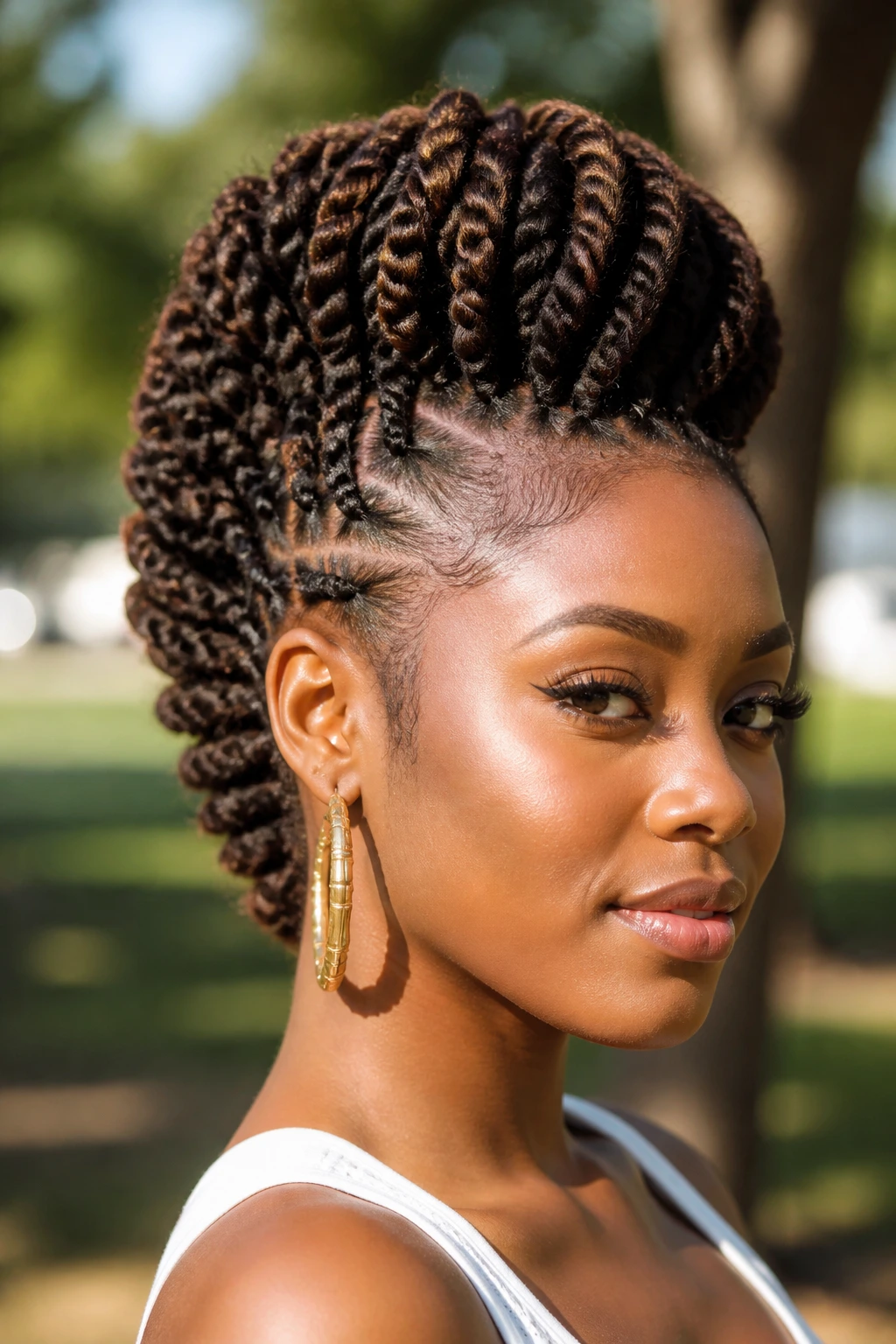
Havana twists bring size. They’re thicker and chunkier than many other twist styles, so the mohawk looks plush and full right away. That makes them useful when you want a protective hawk that has presence even if your own hair is not very long.
Because the twists are big, the style has to be planned carefully. Too many thick twists around the face can crowd the head and make the ridge feel heavy. Keep the center focused and the sides clean, and the whole look stays balanced. The payoff is a soft, textured mohawk that feels luxurious without needing much daily work.
Ask for this if: you like chunky texture and a style that reads from far away.
Small warning: big twists can strain the scalp if they are installed too tightly. Comfort matters more than a perfect photo.
33. Sculpted Finger-Wave Mohawk
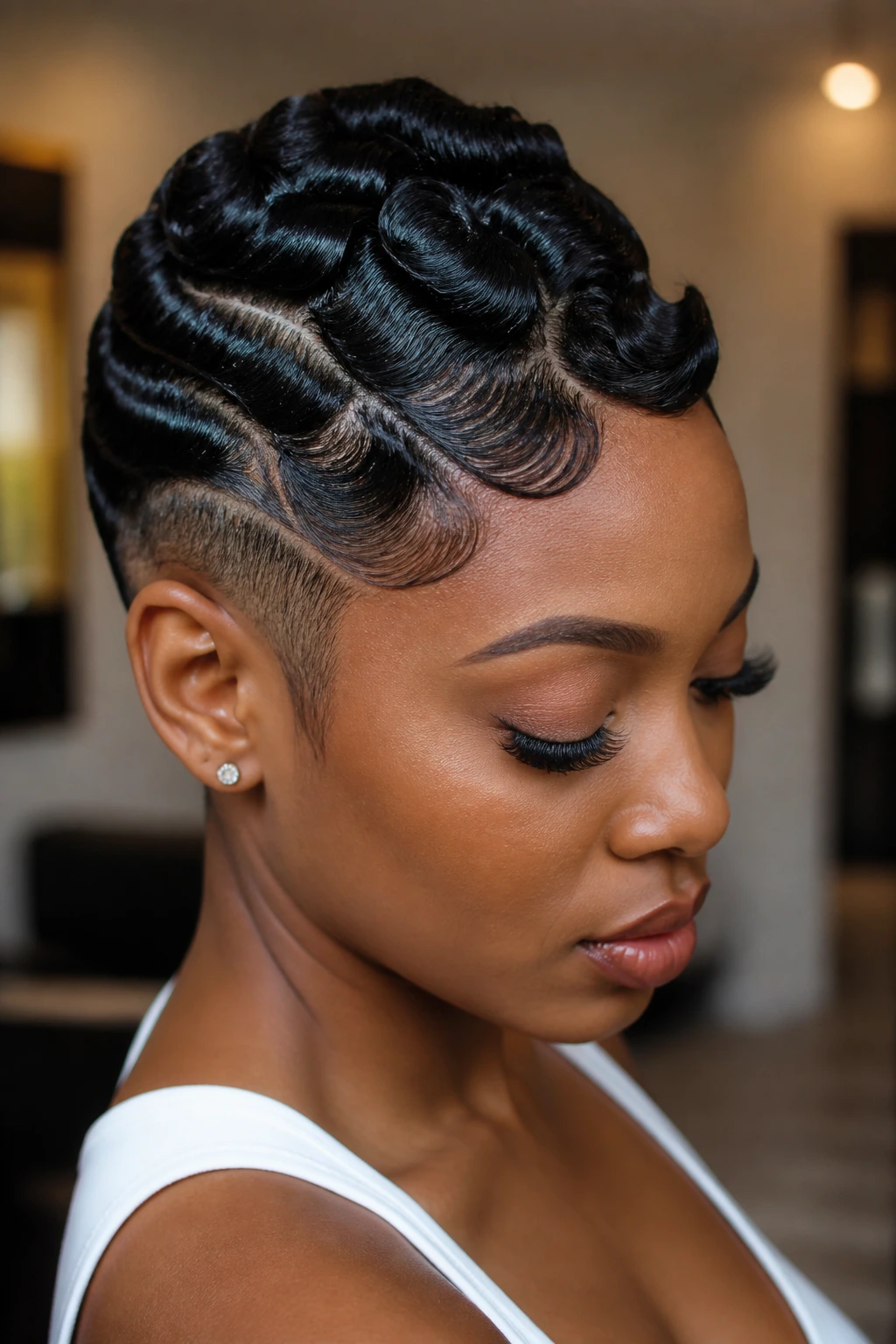
The sculpted finger-wave mohawk is for the days when you want polish with a little old-school drama. The waves are molded close to the scalp, then swept into a ridge that feels sleek, precise, and unmistakably styled. It’s one of the most elegant options in the set, and it works especially well on short hair.
This style takes patience, because the waves have to be shaped while the hair is damp and held in place until they set. A good mousse or setting lotion helps the wave pattern stay visible. The result is worth the effort: a mohawk that looks smooth from every angle and doesn’t need much jewelry to feel complete.
Best for: short relaxed hair, short natural hair, or any cut with enough length to finger-wave.
Tip: wrap it down completely before bed. Even a little friction can flatten the wave ridge and make the whole shape lose its crispness.
What Makes a Mohawk Shape Work on Black Hair
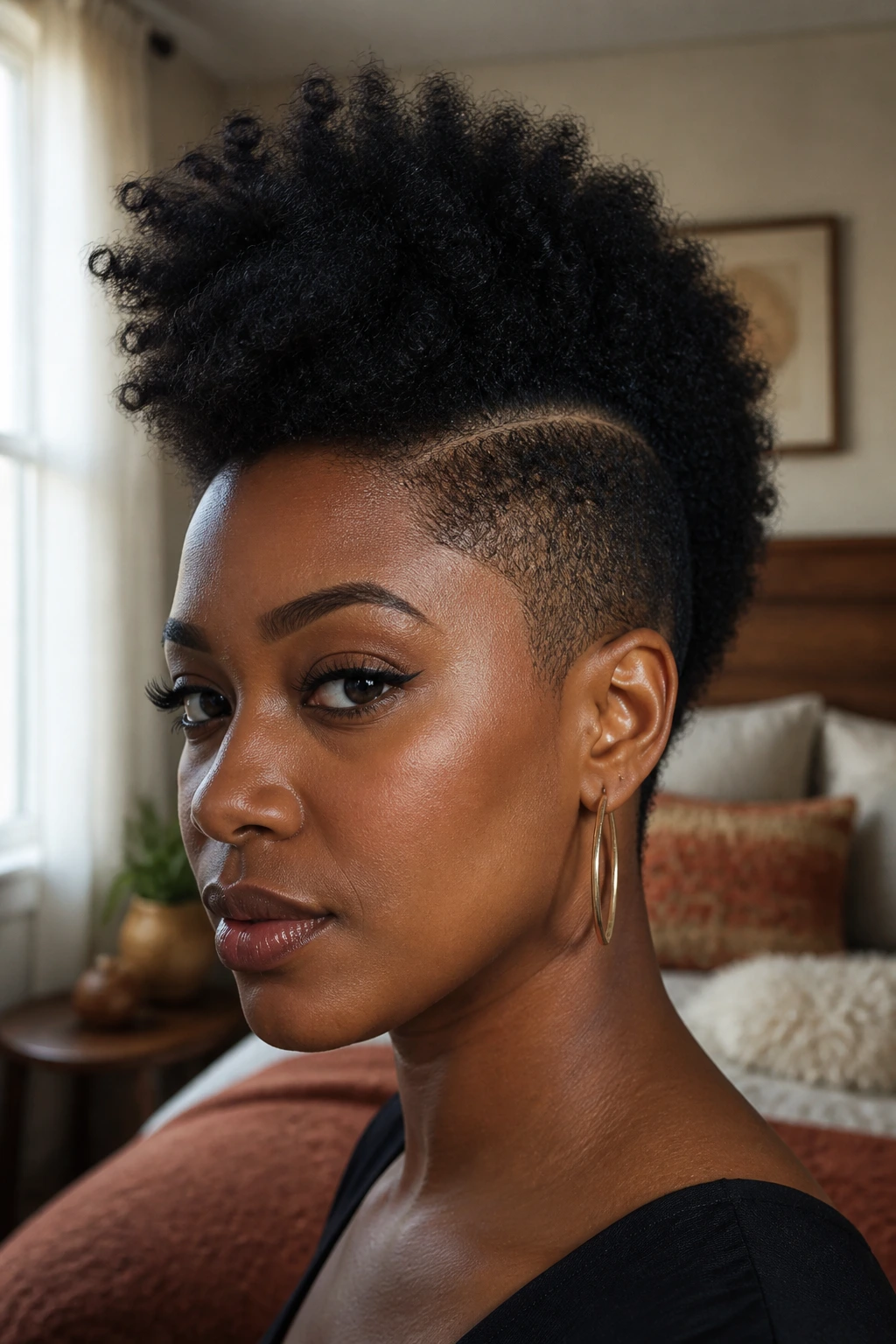
A good mohawk on Black hair is less about copying a cut and more about managing contrast. The sides need to be low enough — braided, slicked, tapered, pinned, or faded — so the center ridge can take over visually. If the sides are too puffy, the style stops reading as a mohawk and becomes just a full head of hair with optimistic intentions.
The best versions also respect shrinkage. Coily hair can look twice as short after it dries, which means a ridge that seems tall when wet may flatten out by the time you’re dressed. Stretching the hair first, or building the style from braids, twists, or extensions, gives you more reliable height. That is why some mohawks hold shape for five minutes and others hold shape for five days. Structure. Always structure.
A final thing people miss: the mohawk doesn’t have to be loud to work. A soft frohawk with rounded edges can look stronger than a stiff one because the texture still breathes. The style lands when the silhouette is clean and the finish matches the hair’s natural behavior.
The Tools That Make These Styles Easier
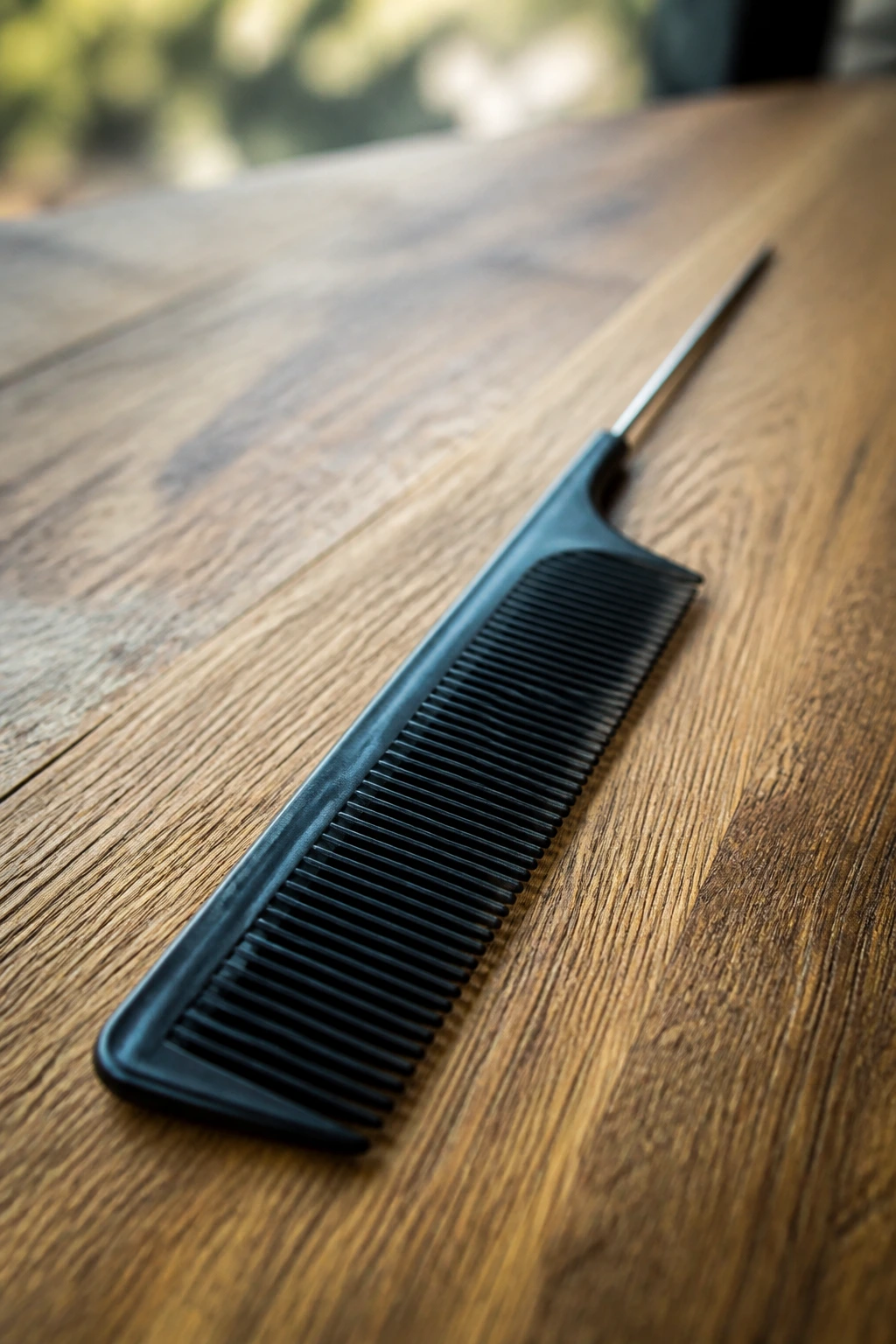
- Rat-tail comb: Best for clean parts, braid sections, and sharp center lines.
- Edge brush: Useful for smoothing hairlines without drowning them in gel.
- Styling gel or edge control: Choose one with hold, not a sticky jar that flakes after an hour.
- Setting mousse: Helps twists, waves, and slicked sections dry in place.
- Bobby pins and U-pins: Essential for rolls, top knots, and hidden structure.
- Small elastic bands: Good for bubble braids, pony ridges, and sectioned puffs.
- Satin scarf or bonnet: Keeps the sides and edges from frizzing overnight.
- Blow dryer with diffuser: Handy for stretching curls before shaping the hawk.
- Braiding hair or Marley hair: Needed for feed-ins, twists, loc-inspired styles, and bigger mohawks.
- Light oil or shine spray: Use sparingly; too much turns a clean style greasy fast.
Choosing the Right Hair Products and Add-Ins

Product choice changes the whole mood of the style. If you want a sleek mohawk, look for a gel that dries clear and a mousse that does not leave white dust on dark hair. For braided or twisted versions, kinky-textured braid hair usually blends better than silky hair because it moves like natural hair and does not look slippery at the scalp.
Match the product to the style, not the other way around. A finger-wave hawk needs setting lotion and patience. A fluffy frohawk needs a lightweight cream and a bit of stretch. A loc hawk or twist hawk can take a little oil, but not so much that the parts start sliding apart before bedtime.
Extensions deserve the same care. Choose a length that matches the shape you want, not just the length you wish you had. Very long hair can drag the ridge down if the base is too small. And if you are adding color, pick tones that still show texture in low light — deep copper, burgundy, honey brown, and plum usually look richer than loud flat colors.
How to Wear These Looks
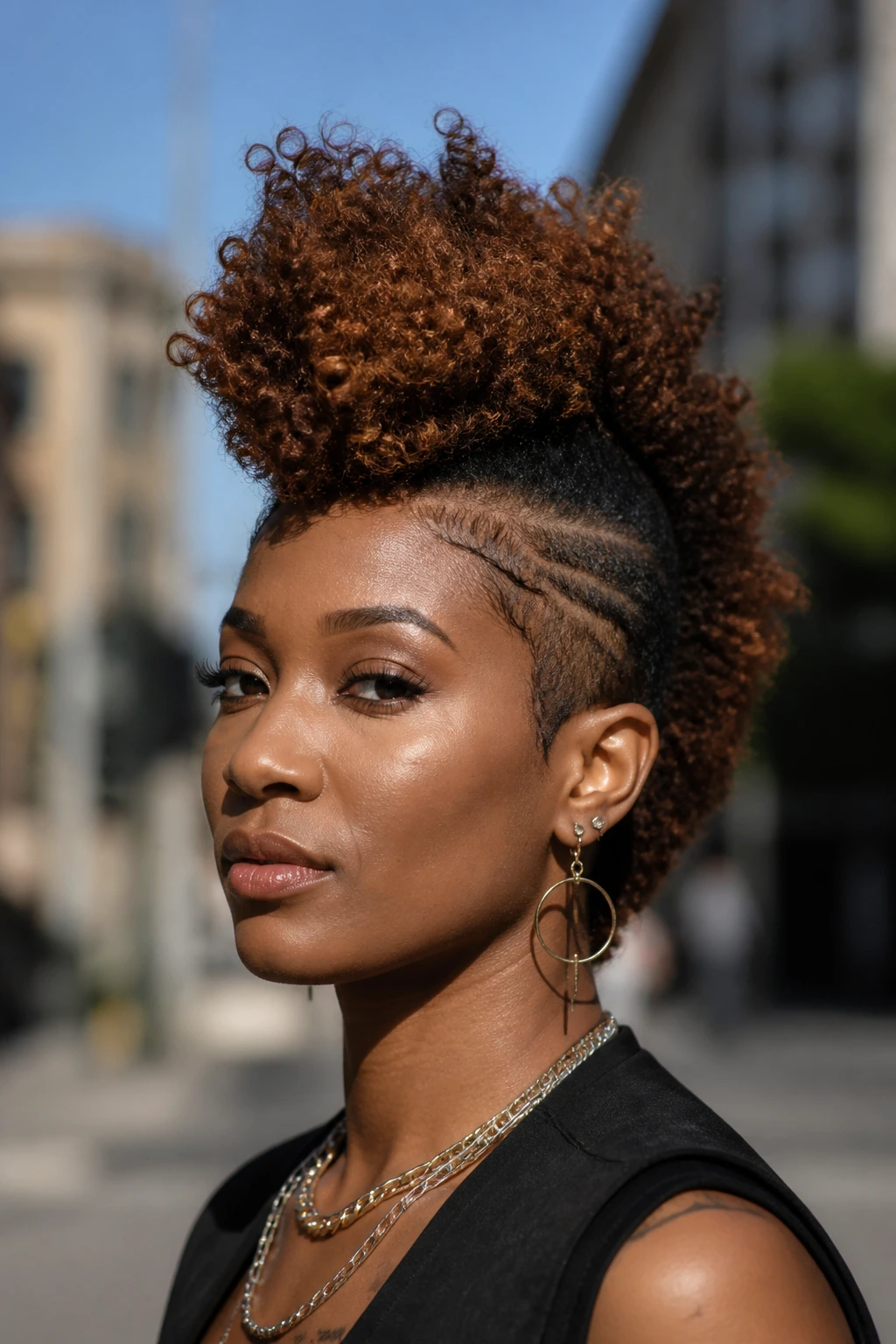
Presentation: Keep the ridge visible from the front and the side. A mohawk that only looks good head-on is missing half its job. The best versions have a profile with a clean rise through the crown, then a tidy descent at the nape.
Accessories: Gold cuffs, hoop earrings, hair rings, or a satin scarf at the base of the ridge all work, but don’t pile on every detail at once. A sculpted hawk already has shape; the accessories should frame it, not compete with it.
Length Balance: Short cuts need more height at the crown, while longer braided styles need more control at the sides. If the top feels too heavy, reduce bulk near the front and move the visual weight toward the center. That little shift can save a style.
Occasions: Sleek braids, rolls, and finger waves lean formal. Frohawks, puffs, twists, and claw-clip versions feel more casual. And yes, some styles sit right in the middle, which is useful when you want one look to survive a workday and still look good at dinner.
Small Changes That Make These Styles Better
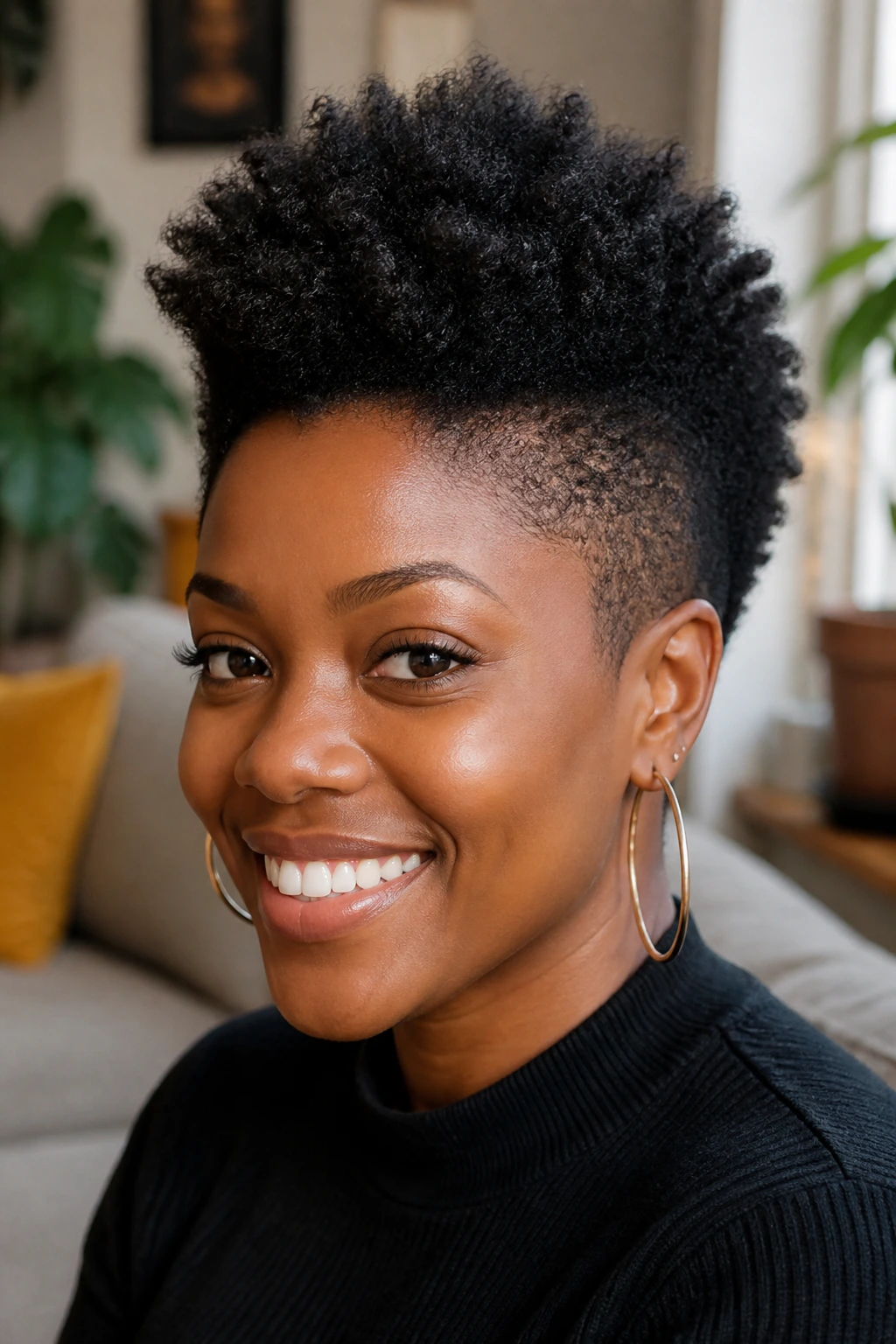
Edge Control Without the Helmet Look: Use gel only where the hair truly needs help. If you coat the whole hairline thickly, the edges can flake, shine too hard, or form a stiff rim that ages the style fast.
Texture Boost: For natural styles, stretch the center section the night before with banding, twists, or a loose braid-out. That extra bit of length gives the mohawk more shape and keeps the ridge from shrinking into a stub.
Color and Shine: A few well-placed braid cuffs, a satin ribbon, or a subtle colored extension can wake up a style that feels plain. I’d rather see three good details than fifteen random ones.
Make It Yours: If you like low-maintenance, keep the sides braided down and the top in twists or puffs. If you like drama, raise the ridge higher, add length, and keep the profile sharp. The same mohawk base can live in both places.
Common Mistakes to Avoid
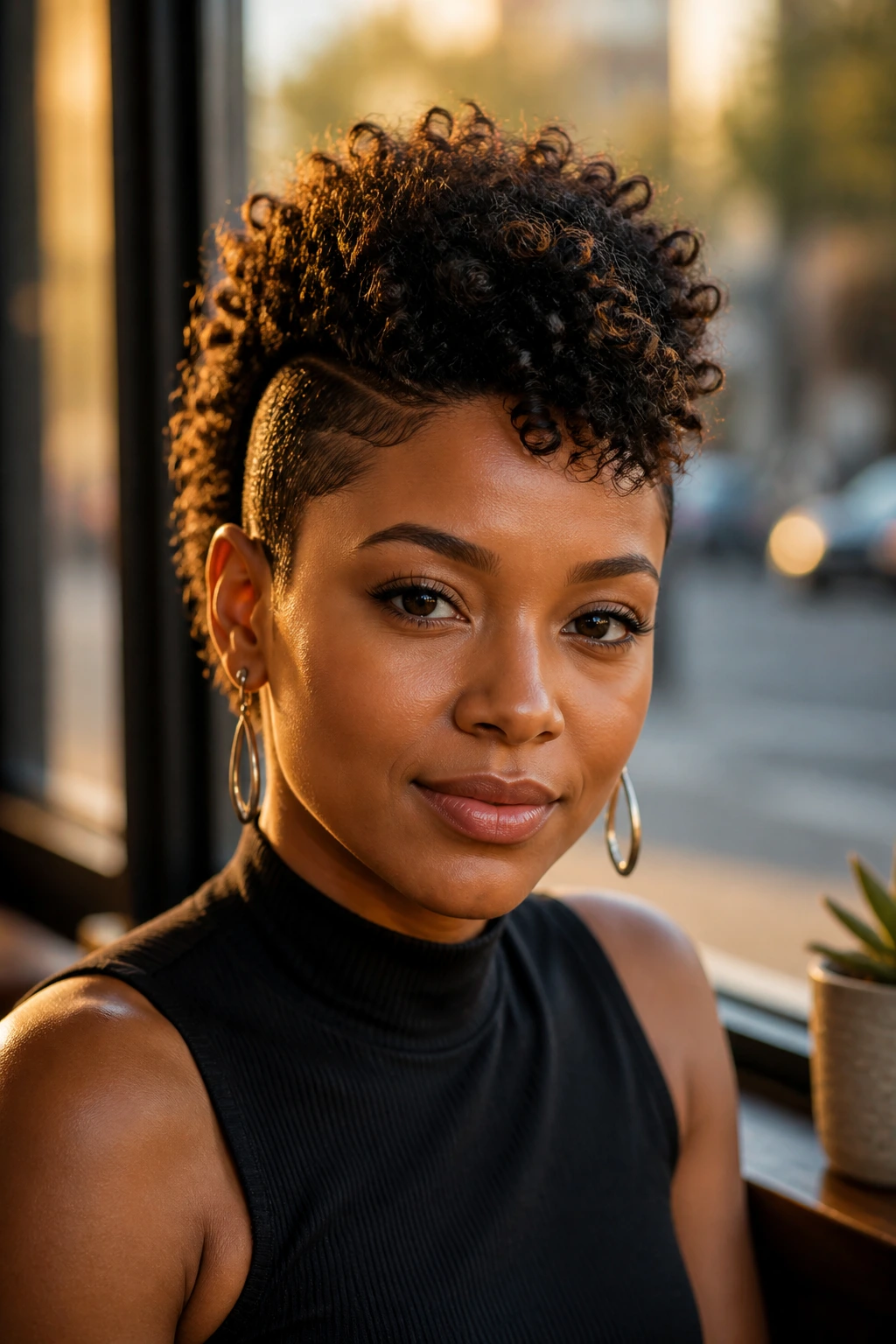
The first mistake is overloading the hair with product. Heavy gel can make the sides crusty, and too much cream can flatten the center ridge before the day is over. Use enough to control the shape, then stop. More is not better here.
Another one: tight tension at the temples and nape. Mohawks already concentrate stress in the same zones over and over, and edges do not love being pulled like they owe money. If your scalp tingles, burns, or feels sore by the end of styling, the style is too tight.
Shrinkage gets people too. A mohawk that looks tall when wet may shrink into a much shorter shape after it dries, so plan for more height than you think you need. Stretch first if the style depends on length. Otherwise you are building a look for the mirror, not for the street.
And please do not skip the night wrap. Satin matters. Cotton steals moisture and roughs up the sides, which is how a crisp hawk turns into a fuzzy halo by morning.
Variations and Adaptations to Try
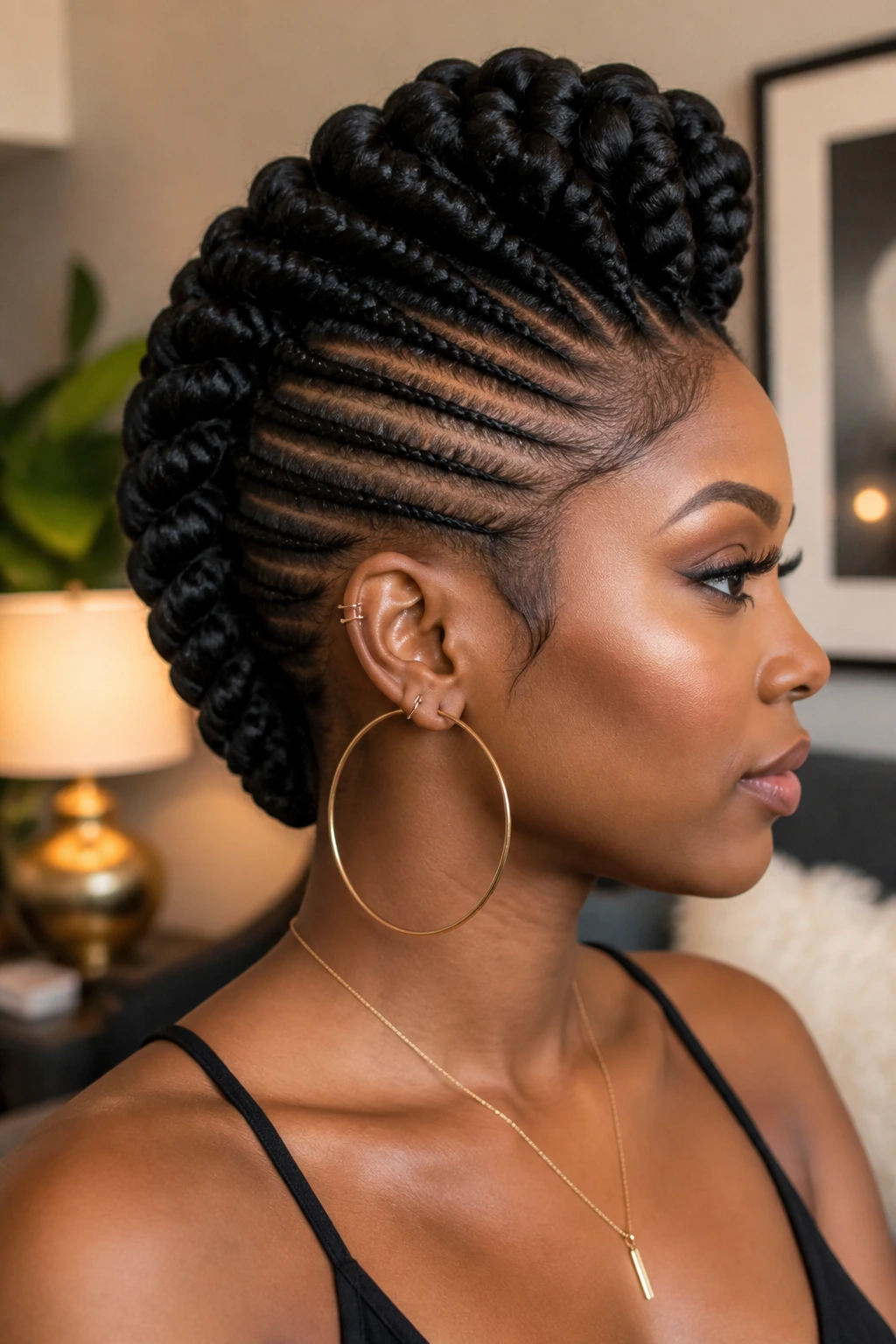
The Gym-Day Hawk: Keep the sides in cornrows or twists and let the center stay compact. It’s easier to refresh, and sweat does not ruin the shape as fast.
The Wedding-Guest Hawk: Use braided crowns, rolled sides, or soft wand curls. Add cuffs or pins sparingly, and keep the finish smooth enough to look intentional in formal light.
The Protective-Style Hawk: Lean into twists, locs, feed-ins, or Marley hair. This version keeps manipulation low while still giving you height and presence.
The Short-Cut Hawk: Use a taper, finger coils, or a sculpted wet look. When length is limited, the haircut’s line matters more than volume.
The Bold-Color Hawk: Build the style with auburn, burgundy, copper, or blonde extensions. Let the color sit mostly in the center ridge so the shape stays readable.
The Soft Frohawk: Keep the sides low but not razor-flat, and let the center stay fluffy. It reads less severe and tends to suit everyday wear better than a harder sculpted look.
Keeping the Style Fresh
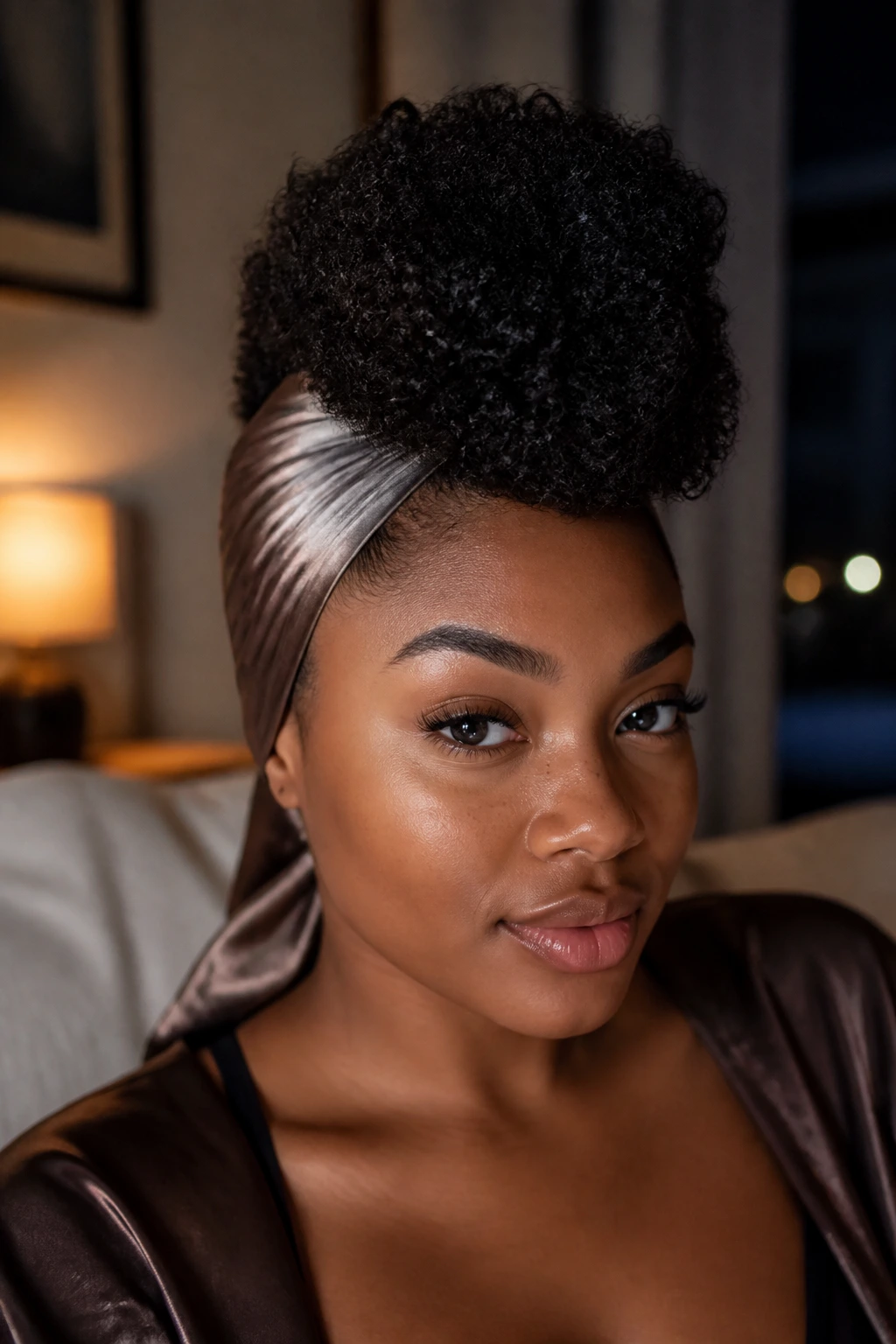
Most loose natural mohawks look best for about 2 to 4 days before they need a real refresh, while braided, twisted, or loc-based versions can hold 1 to 3 weeks if the scalp stays clean and the edges stay wrapped. The exact window depends on how much manipulation the style took at the start and how much humidity you’re dealing with, but those ranges are a solid place to plan from.
At night, wrap the sides with a satin scarf and use a bonnet if the center ridge is tall or braided. If the style has curls, pineapple the top loosely or pin it in a way that won’t crush the pattern. A mist of water mixed with leave-in can revive a dry frohawk, while a light pass of mousse helps reset braids, twists, or finger waves without soaking the whole head.
If the scalp gets oily before the style is ready to come down, use a small amount of dry shampoo or a cotton pad with cleanser on the part lines only. Don’t scrub the style. That usually creates more frizz than freshness. Braided and twisted versions can often be cleaned around the edges and rewrapped for another few days; loose curly versions usually need a fuller refresh sooner.
Questions People Actually Ask
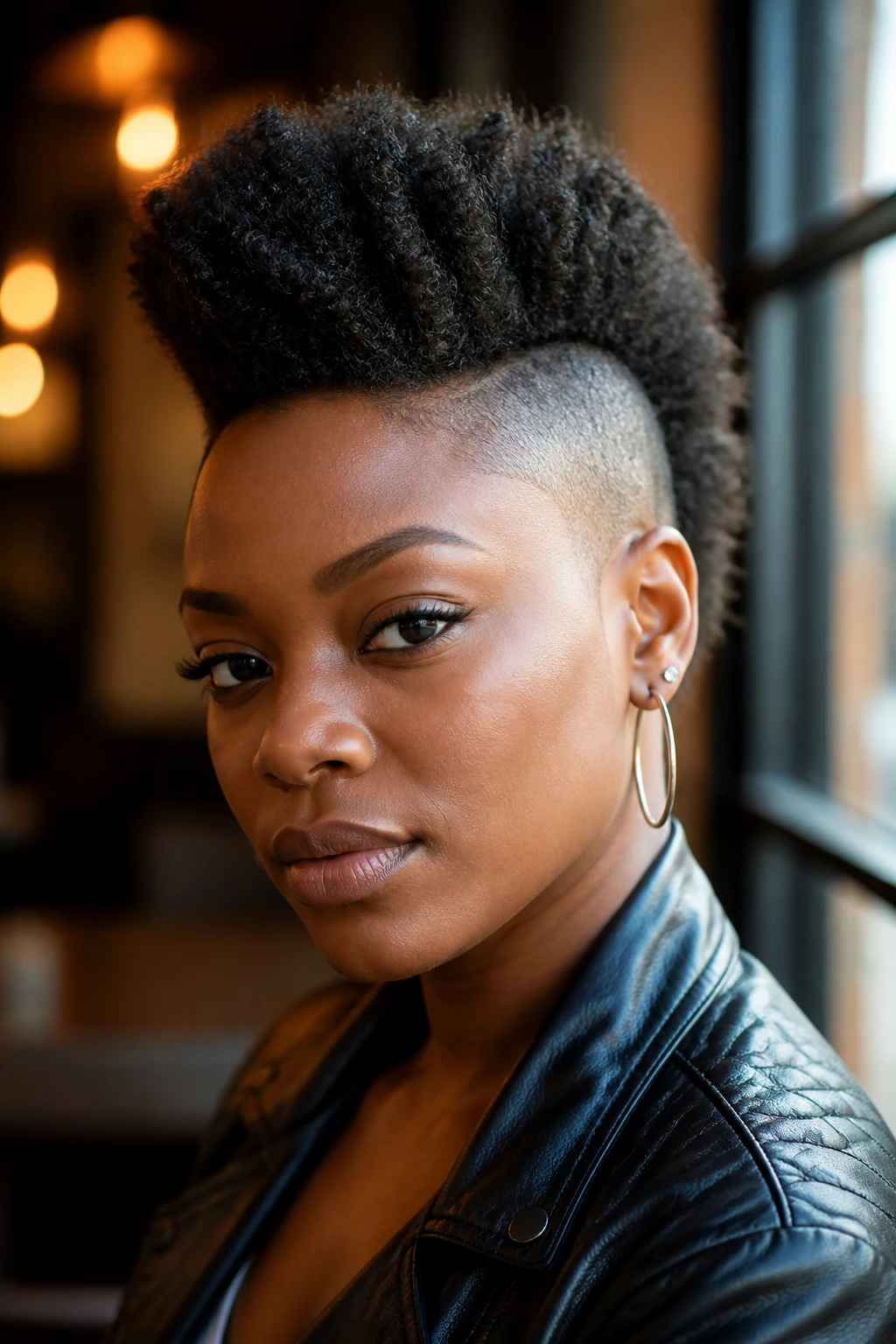
Can you wear a mohawk if your hair is short?
Yes. Short hair often works better than people expect because the shape depends on contrast, not just length. A taper fade, finger coils, or a wet-look sculpted ridge can make a short mohawk read clearly without extensions.
What’s the difference between a frohawk and a mohawk?
A frohawk keeps more of the natural texture visible and usually feels softer around the sides. A mohawk can be sleeker, sharper, or more structured. In practice, people use the words loosely, but the frohawk usually leans fluffier and more textured.
Which of these styles is the most protective?
Braided and twisted versions are usually the safest bet for protection because they reduce daily handling. Feed-ins, flat twists, Marley twists, loc hawks, and box-braid mohawks keep the ends tucked and the hair mostly out of the way.
Can relaxed hair pull off a mohawk?
Absolutely. Relaxed hair can do sleek sides, rolled updos, wand curls, and finger-wave hawks especially well. The main thing is not to overload the style with heat or product, because relaxed hair can show breakage more quickly if it’s overworked.
How long do braided mohawks last?
A well-installed braided mohawk can last about 1 to 3 weeks, sometimes a bit longer if the parts stay neat and the scalp is cared for. The edges and nape usually give out first, so those are the places to watch.
What if the sides puff up by the second day?
That usually means the sides were not set firmly enough or your wrap came off overnight. Smooth them with a tiny bit of mousse or gel, then wrap with a satin scarf for 10 to 15 minutes. If the style keeps puffing, the hair may need a tighter braid base or a stronger hold product.
Are mohawks good for work settings?
Some are, some are not. A rolled-side updo, braided crown hawk, or sleek cornrow ridge usually reads more polished than a very tall frohawk or a bright-color extension style. The line between edgy and office-friendly is mostly about finish.
Can you add extensions to make the ridge taller?
Yes, and extensions are often the easiest way to build height without stress. Just match the texture and weight to your hair so the style doesn’t drag at the crown. Kinky or Marley-textured hair usually blends better than silky braiding hair for this shape.
A Shape That Carries the Room
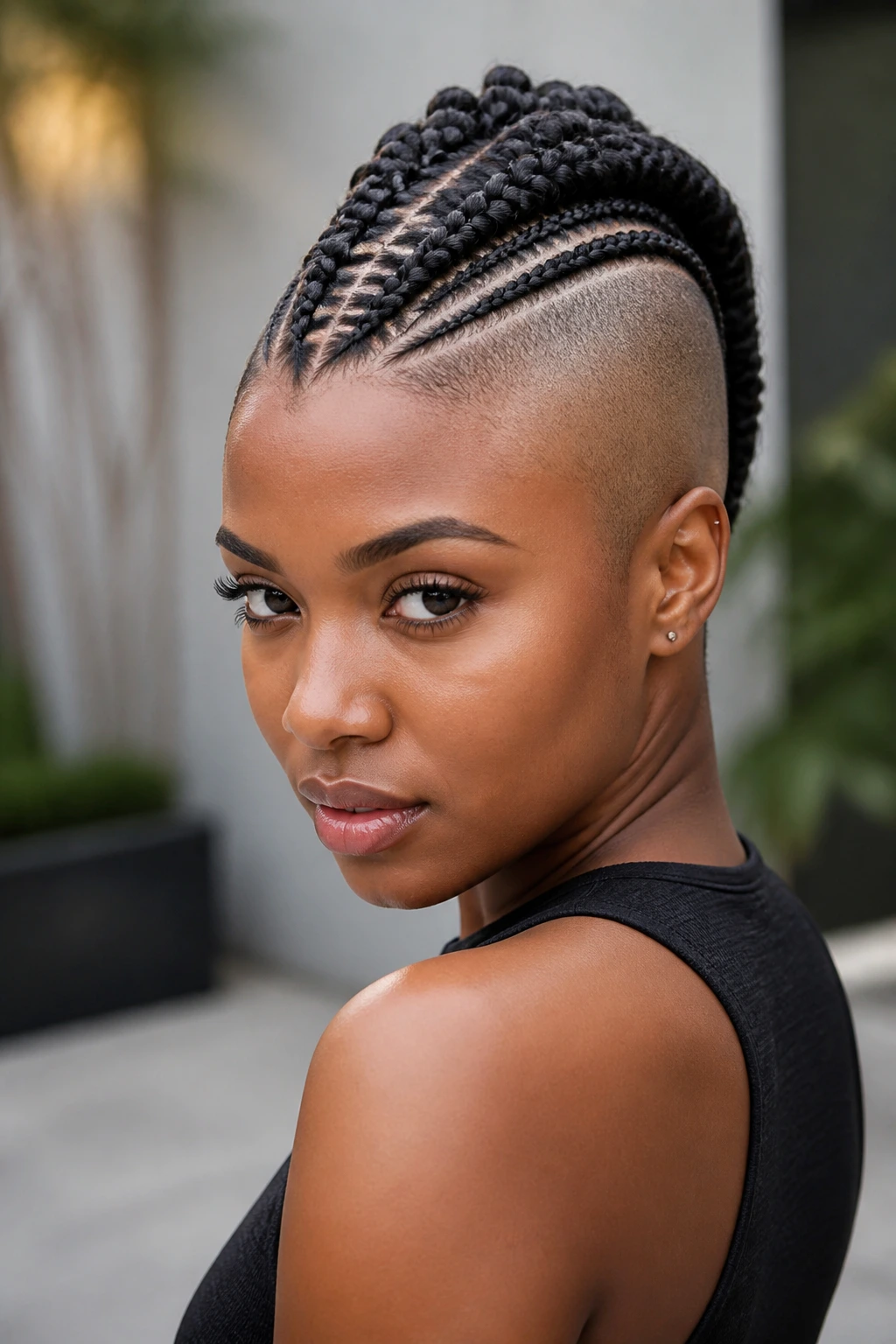
The best thing about mohawk hairstyles for Black women is that they refuse to be one-note. They can be soft and protective, sharp and sculpted, playful and loud, or quiet enough to wear with a blazer and still feel like yourself. That range is the point. Not every style has to announce itself the same way.
If you choose well — by texture, by time, by the amount of tension your scalp can live with — the mohawk shape does a lot of work for you. It frames the face, lifts the crown, and gives ordinary texture a little architectural drama. That’s why this style keeps coming back in new forms. It has room left in it.
