



A good shag doesn’t sit still.
That’s the first thing I love about short shaggy brown haircuts for older women: they don’t freeze the hair into a single opinion. They move. They soften a jawline. They break up a hard part. They keep brown hair from looking like one flat, heavy curtain that hangs there and gives up by noon.
Brown is doing a lot of work here. Chestnut, mocha, espresso, walnut, mushroom brown — those shades pick up light in a way that makes layers look fuller, even when density has started to thin at the temples or crown. And a short shag is smart about that. It doesn’t pretend hair is still 20 and thick as rope. It builds shape where the hair still has muscle, then lets the ends flick and feather instead of collapsing into a blunt block.
I think that’s why these cuts keep getting asked for in salons. They feel lived-in without looking sloppy. They have edge without shouting. And, most important, they tend to grow out with some manners, which is a gift when you don’t want to race back for a trim every few weeks. The right shag can make brown hair look brighter, lighter, and a little more expensive than it has any right to.
Why These Short Shaggy Brown Haircuts Work So Well
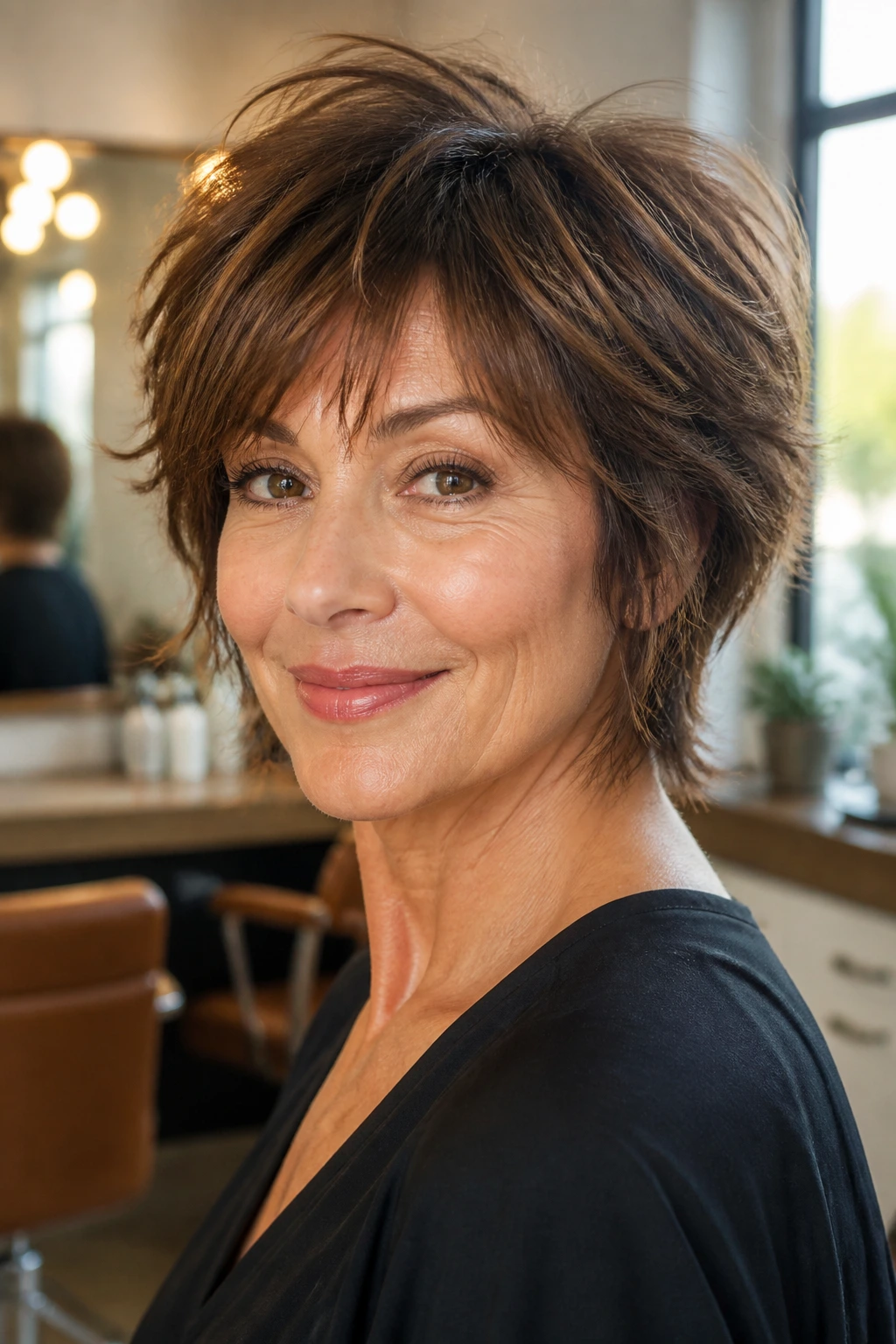
-
They lift where hair tends to sag: The shorter interior layers push the crown up and keep the top from sinking flat against the scalp by lunchtime.
-
They soften the face without hiding it: Feathery fringe and cheekbone layers blur harsh lines around the jaw, mouth, and forehead in a way that blunt cuts rarely do.
-
They make brown hair look dimensional: Even one shade of brown looks richer when the ends are textured and the front pieces are a touch lighter or warmer.
-
They grow out in a forgiving way: A shag doesn’t turn awkward the second it loses its crisp edge; it usually just gets a little softer, which is often a win.
-
They work with fine, medium, or thick hair: The same haircut can be adjusted by changing how much weight gets removed inside the shape.
-
They suit glasses, earrings, and a simple routine: A good shag leaves room around the face, so frames, hoops, and a quick blow-dry all have space to do their job.
1. Chin-Length Chocolate Shag Bob
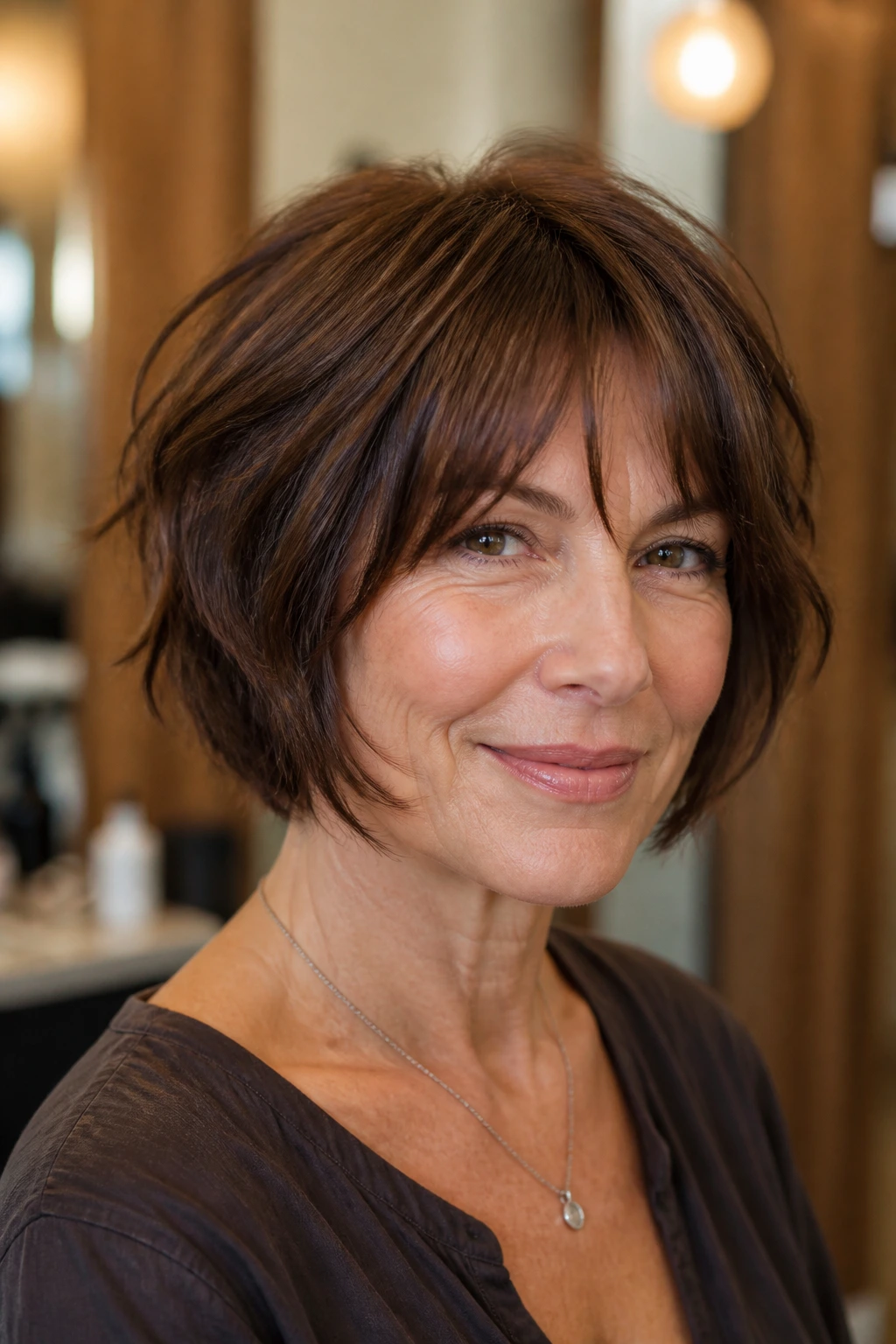
A chin-length chocolate shag bob is the haircut I reach for when someone wants movement but doesn’t want to feel like they’ve signed up for a dramatic reinvention. The line sits right at the jaw, which gives the face a neat edge, and the shag layers keep it from becoming boxy. On brown hair, especially a rich chocolate shade, the texture shows up like brushstrokes instead of frizz.
Why it works
The chin length is doing the balancing here. It gives the hair enough weight to settle, but the shorter face-framing layers stop the ends from hanging like one heavy sheet. That matters on hair that has thinned a little around the hairline, because the cut keeps the perimeter from looking sparse.
A light bend at the ends makes this one sing. A 1-inch iron or a round brush used only on the front pieces is enough. You do not need to curl the whole head; that usually makes the shape too sweet and too polished.
What to ask for
Ask for a soft perimeter, short internal layers, and a little extra length in front. If the stylist reaches for thinning shears like a magician pulling out a rabbit, slow that down. Fine hair needs texture, not shredding.
The best version of this cut still has some density at the bottom edge. That bottom line keeps the bob from looking wispy in strong light.
2. Wispy Chestnut Pixie Shag
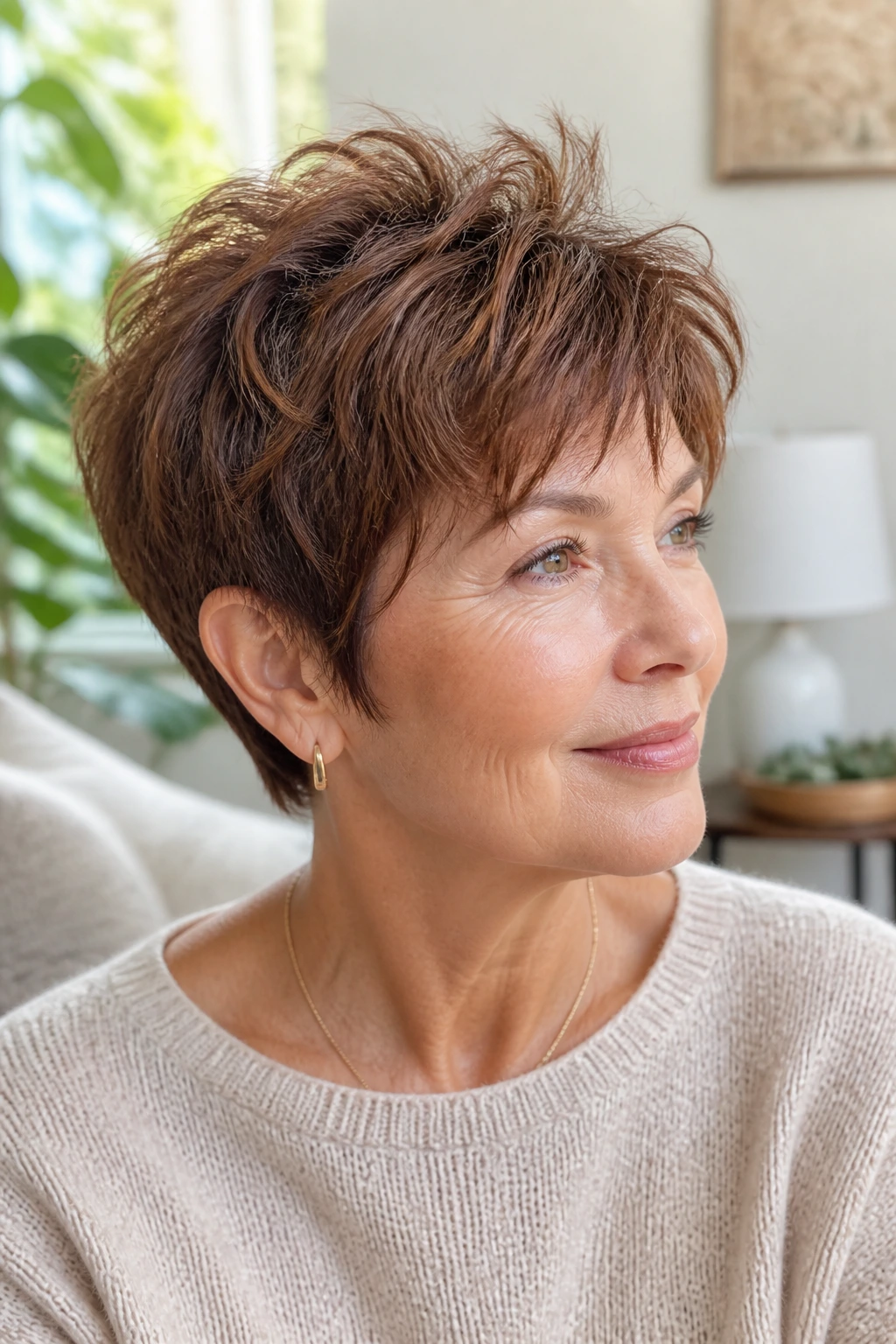
Can a pixie still feel soft? Absolutely — if it has shaggy pieces instead of a stiff helmet shape. A wispy chestnut pixie shag keeps the sides neat, but the top is airy and broken up, so the hair looks lifted instead of cropped down to the scalp. Chestnut adds warmth near the face, which matters when skin tone has started to look a little less even than it used to.
This cut is especially good if the hairline has started to recede at the temples or the crown wants to lie flat. The point is not to hide those spots. The point is to make them part of a cleaner shape. Shorter layers at the crown and slightly longer pieces around the fringe make the whole head read fuller.
Best for
- Fine hair that needs height without a lot of product
- Women who want the ears mostly exposed but not naked
- Anyone who likes to run fingers through their hair and be done
A pea-sized amount of styling cream or paste is enough. More than that, and the piecey texture turns greasy fast.
3. Piecey Espresso Bixie
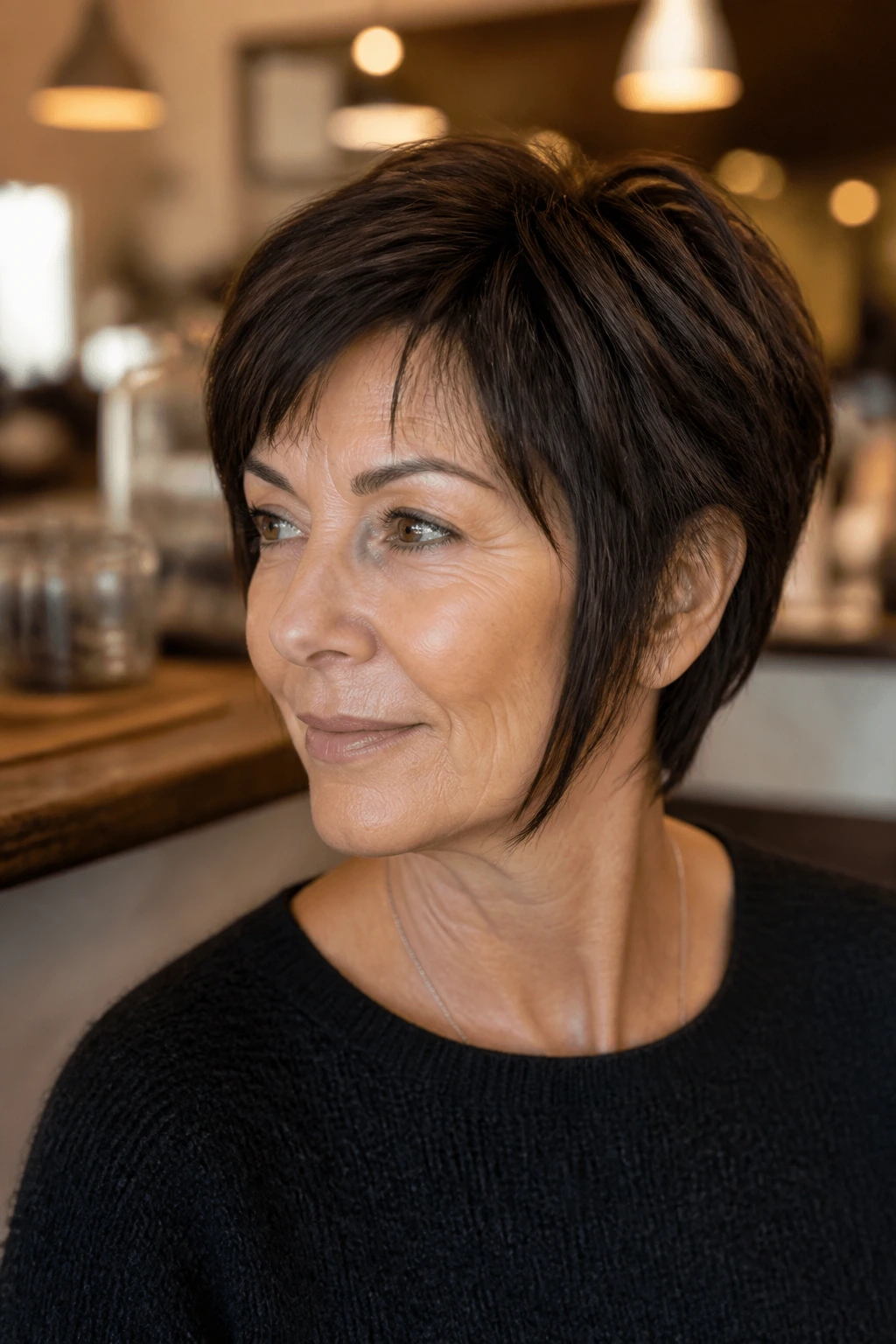
A bixie is what happens when a pixie and a bob stop arguing and decide to work together. In espresso brown, it looks sharp without feeling severe. The top is short enough to feel easy, but the sides and nape keep a little length, which gives the cut a swinging, slightly undone edge.
That extra length matters. It means you can tuck one side behind the ear, sweep the fringe forward, or let the crown lift a little when you blow-dry it. The haircut changes character with almost no effort. I like this on women who want short hair but don’t want to lose all softness around the cheeks.
How to wear it with glasses
If you wear frames, keep the front pieces just long enough to skim the brow or cheekbone. Anything shorter can clash with the frame line and make the face look chopped up. A side part helps too. It gives the fringe somewhere to go instead of dropping straight into the lens line.
A dab of matte paste on dry hair gives this cut its best life. Work it through the ends, not the roots. Roots need lift, not wax.
4. Curtain-Bang Mocha Shag
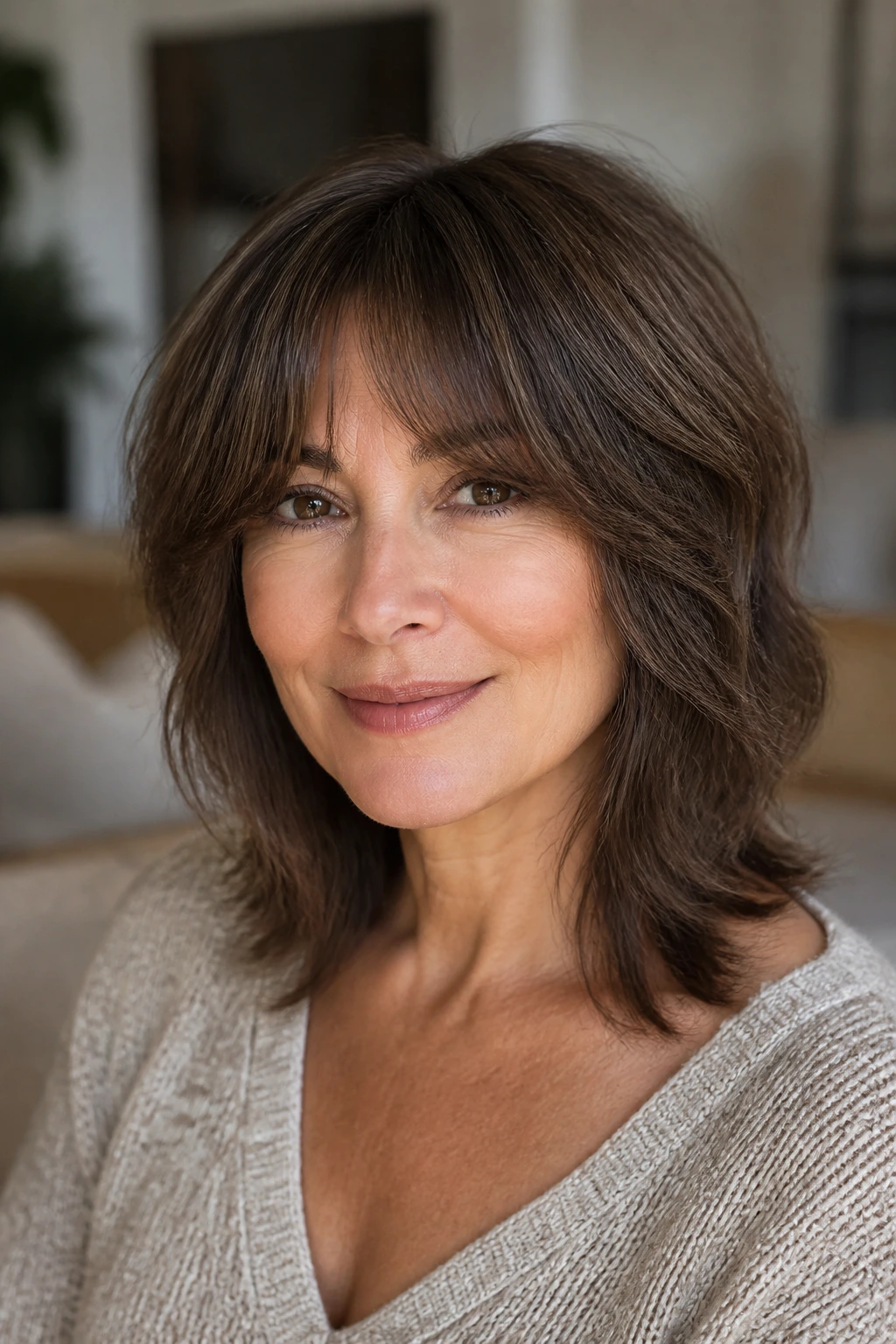
If you want bangs without the punishment of a heavy fringe, this is the one. Curtain-bang mocha shag gives you that soft split at the front — usually around the bridge of the nose or a touch lower — and the brown tone keeps the whole shape from looking over-textured. Mocha is especially kind to hair that has gone a little dull; it has depth without looking flat.
The magic is in the way the bangs open. They frame the forehead, then fall into cheekbone-length layers that narrow the face gently. That makes this cut a good choice for women who feel their face has gotten a little shorter or fuller over time and want some vertical line back.
A small but important note
Curtain bangs need a touch of styling. Not a lot. Just enough to bend them away from the center and keep them from splitting too high on the forehead. If the bang starts too short, it can fight you. If it starts too long, it looks droopy.
Tell your stylist you want the fringe to move, not sit there like a curtain rod. That single word changes the whole outcome.
5. Mushroom Brown Layered Crop
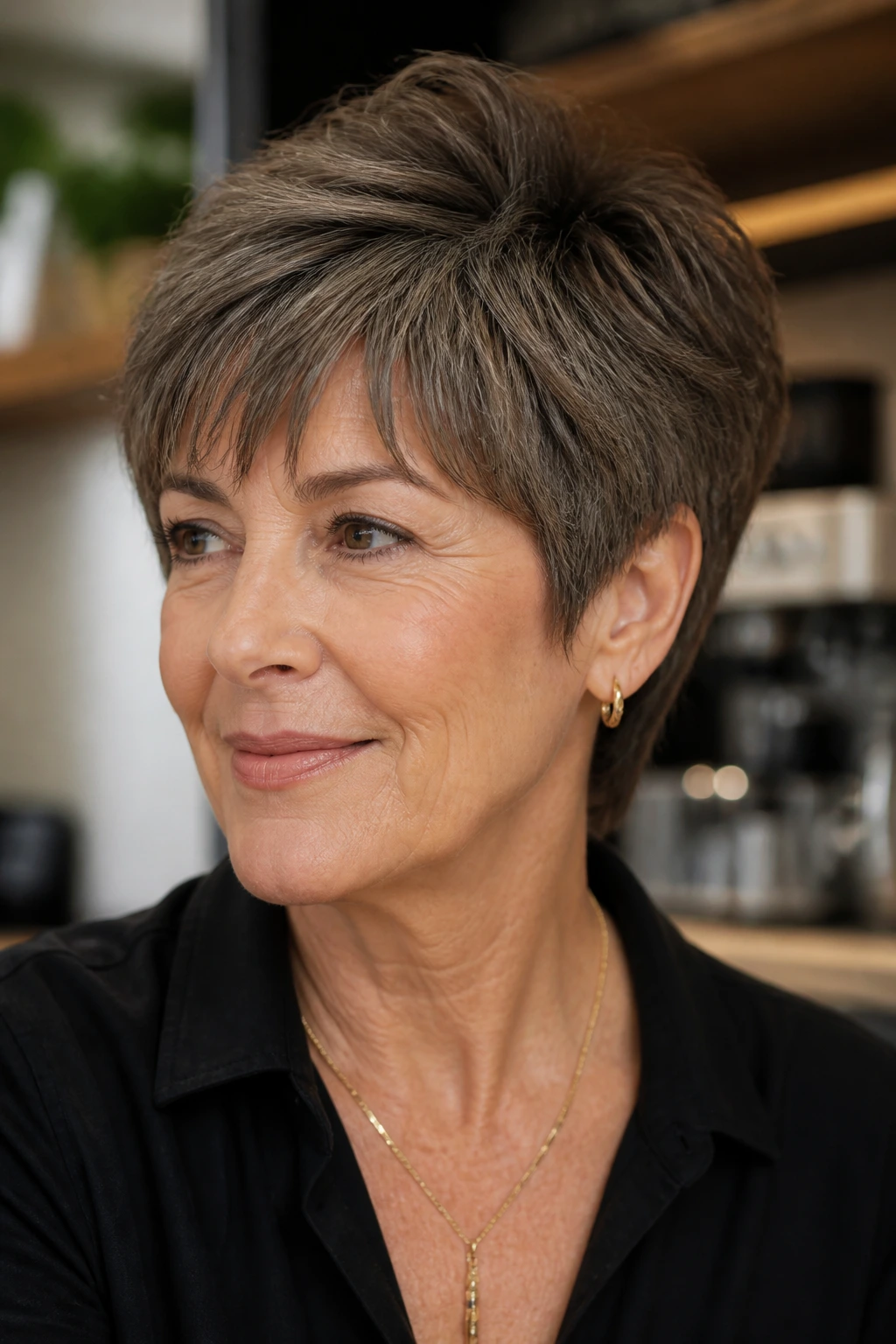
Mushroom brown is one of those shades that sounds odd until you see it on layered hair. Then it makes complete sense. It’s cool, soft, and a little smoky, which means the layers show up without the hair looking warm or brassy. On a short shaggy crop, that cooler tone creates a quiet contrast between the light-catching top pieces and the deeper underlayers.
I like this look for women whose natural hair has gone peppery or silver at the temples. The cooler brown can sit beside gray without yelling about it. It softens the transition, which is often better than trying to cover every silver strand with one flat color.
The haircut itself should stay compact. Think cropped, not choppy for the sake of it. A little internal texture is enough. If the layers get too short all over, the silhouette can turn fuzzy instead of airy. That’s a fine line, and it’s worth keeping.
6. Feathered Caramel Crop
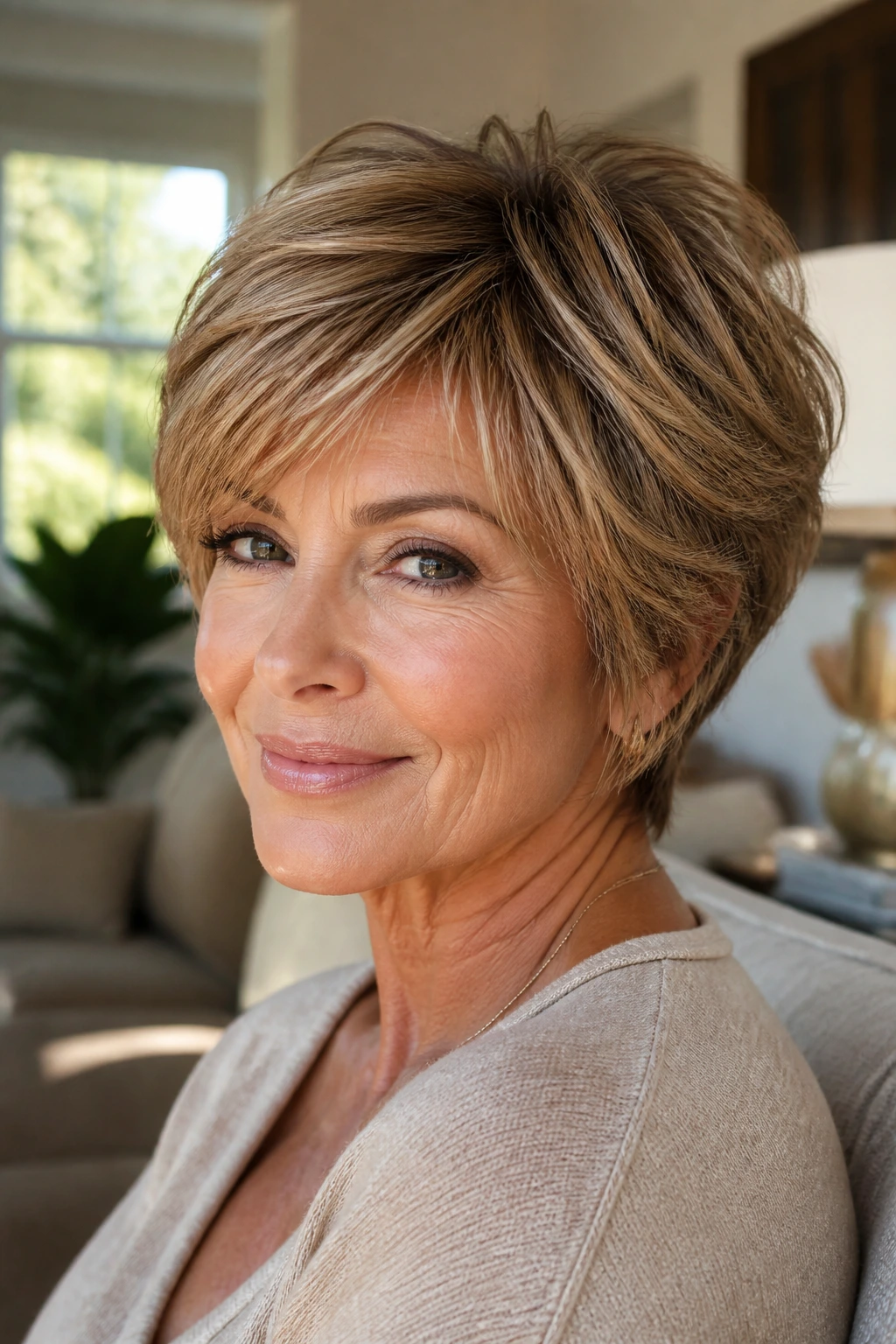
Caramel brown changes the whole mood of a short shag. It warms the skin, brightens the eyes, and takes the edge off strong layers. On thick hair, a feathered crop in this shade can be a relief because the layers remove bulk while the color keeps the haircut from looking severe.
The feathering should start around the cheekbone and continue through the crown, not all the way to the ends. That keeps the shape light on top and a little sturdier near the jaw. If the hair is coarse, this is the version that gives movement without turning the whole head into fluff.
I’d use this cut on someone who likes a soft blowout more than a messy finish. The caramel tone looks especially good when the hair has a slight bend, not a tight curl. A medium round brush and a quick lift at the roots are enough.
7. Curly Cocoa Shag
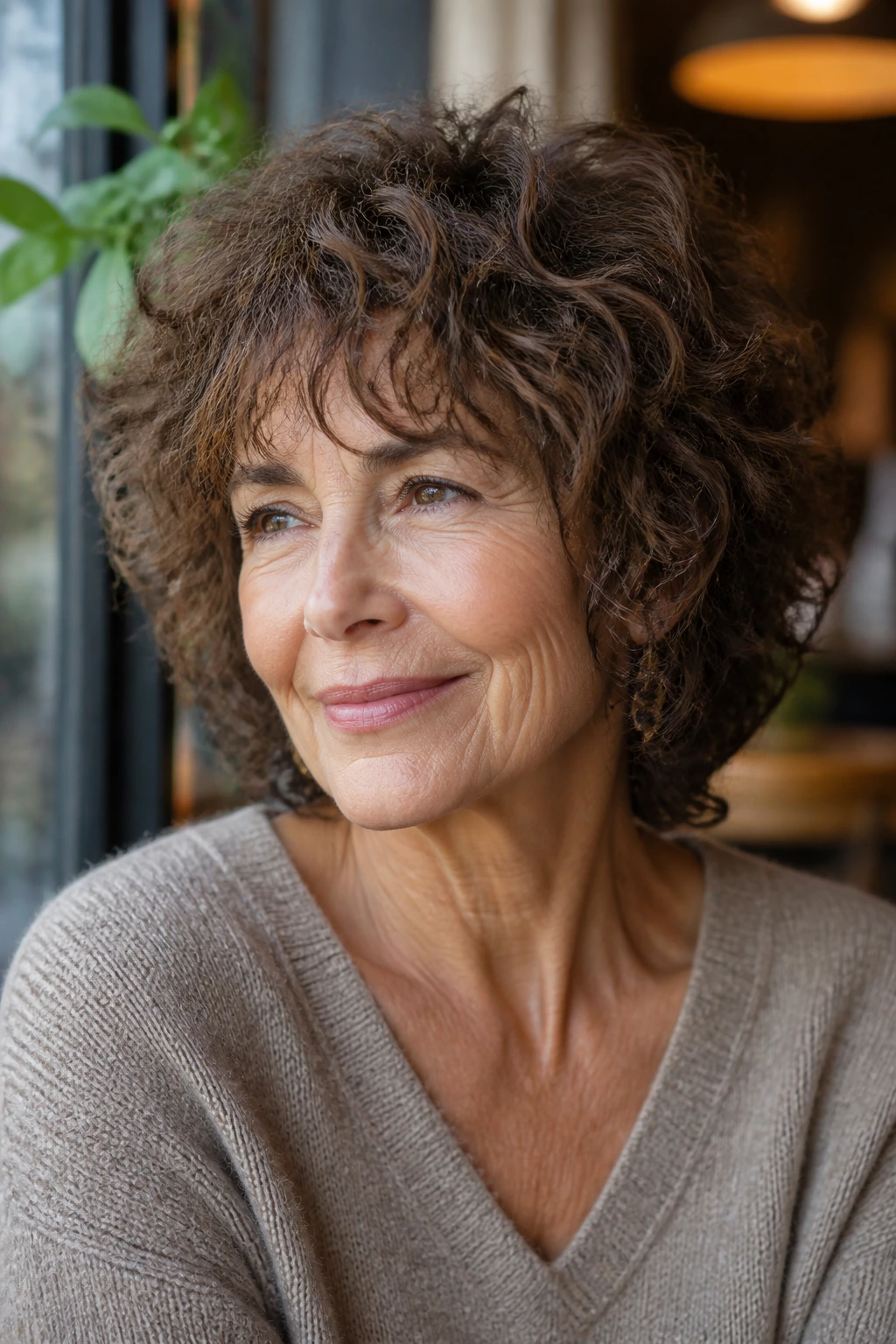
Curly hair and shag layers are a strong pair when the cut respects the curl pattern. A cocoa shag lets the curls stack without turning into a triangle. The layers remove weight, but they don’t bulldoze the curl into submission. That’s the difference between a good curly shag and a bad one. Big difference.
One rule: cut it where the curl lives
If your curls shrink a lot, the cut should be shaped on dry hair or at least partially dry. Wet curls lie. They tell lies in several directions. Once they dry, the true length shows up, and a layer that looked perfect in the chair can jump too high.
Ask the stylist to avoid aggressive thinning near the ends. Curly hair usually needs clean sectioning and careful point-cutting instead. A diffuser on low heat, plus a little leave-in cream, keeps the cocoa shade looking glossy instead of puffed out.
This is one of the few cuts that can look better on day two. The curls settle, the layers separate, and the shape gets a little easier.
8. Tapered Walnut Shag with Side Bangs
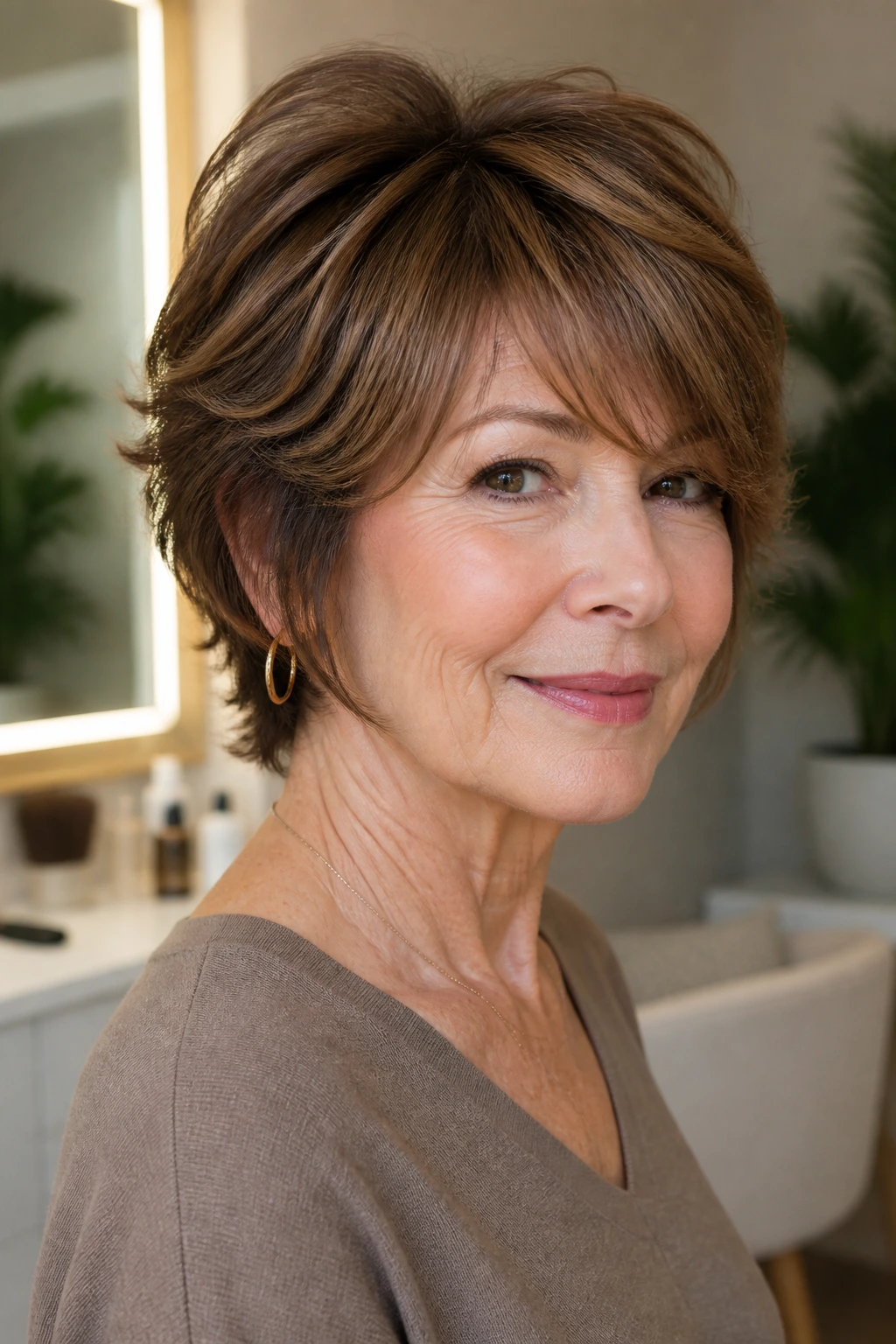
A tapered walnut shag with side bangs is a very useful haircut when you want the sides to feel neat but not severe. The taper at the nape keeps the back close to the head, while the side bangs soften the front and create a diagonal line that’s flattering on most face shapes. Walnut brown gives the whole thing a grounded, natural finish.
This style is especially good for women who dislike hair touching the neck too much. The nape stays lighter and cooler, which is practical and flattering. The side bangs also help if one temple has a little less density than the other. They give the eye a cleaner place to land.
The key is balance. If the side bang gets too heavy, the cut starts to look dated. If it’s too short, it loses the softness that makes the shape work. The sweet spot is somewhere between the outer corner of the eyebrow and the cheekbone.
9. Rounded Mocha Bob Shag
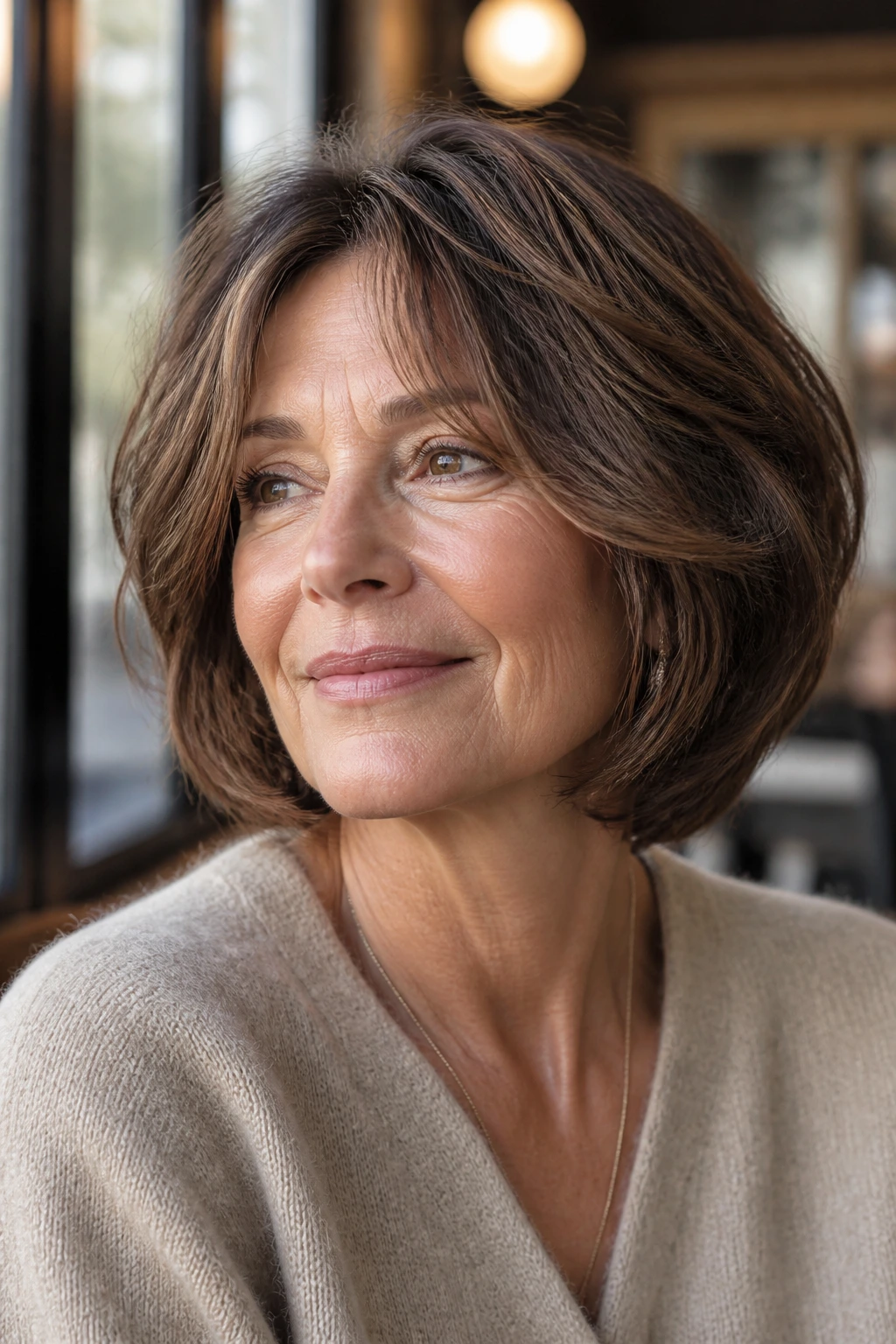
A rounded mocha bob shag is for the woman who wants a soft outline, not a spiky one. The silhouette curves around the head instead of sticking out in sharp directions, but the shag layers keep it from feeling stiff. On mocha brown hair, that rounded shape looks rich and calm, which is a nice shift if your previous haircut felt a little too loud.
This cut is a smart choice when you want the ends to behave. A round shape tucks neatly under a jawline or just brushes the neck, so it doesn’t kick out wildly on humid days. The layers should be gentle here. You want movement, not chopped bits flying around the face.
A side part helps the roundness. So does a quick blast of the dryer at the roots. The result is soft, but not limp. There’s a difference, and it matters.
10. Soft Wolf Cut in Deep Brown
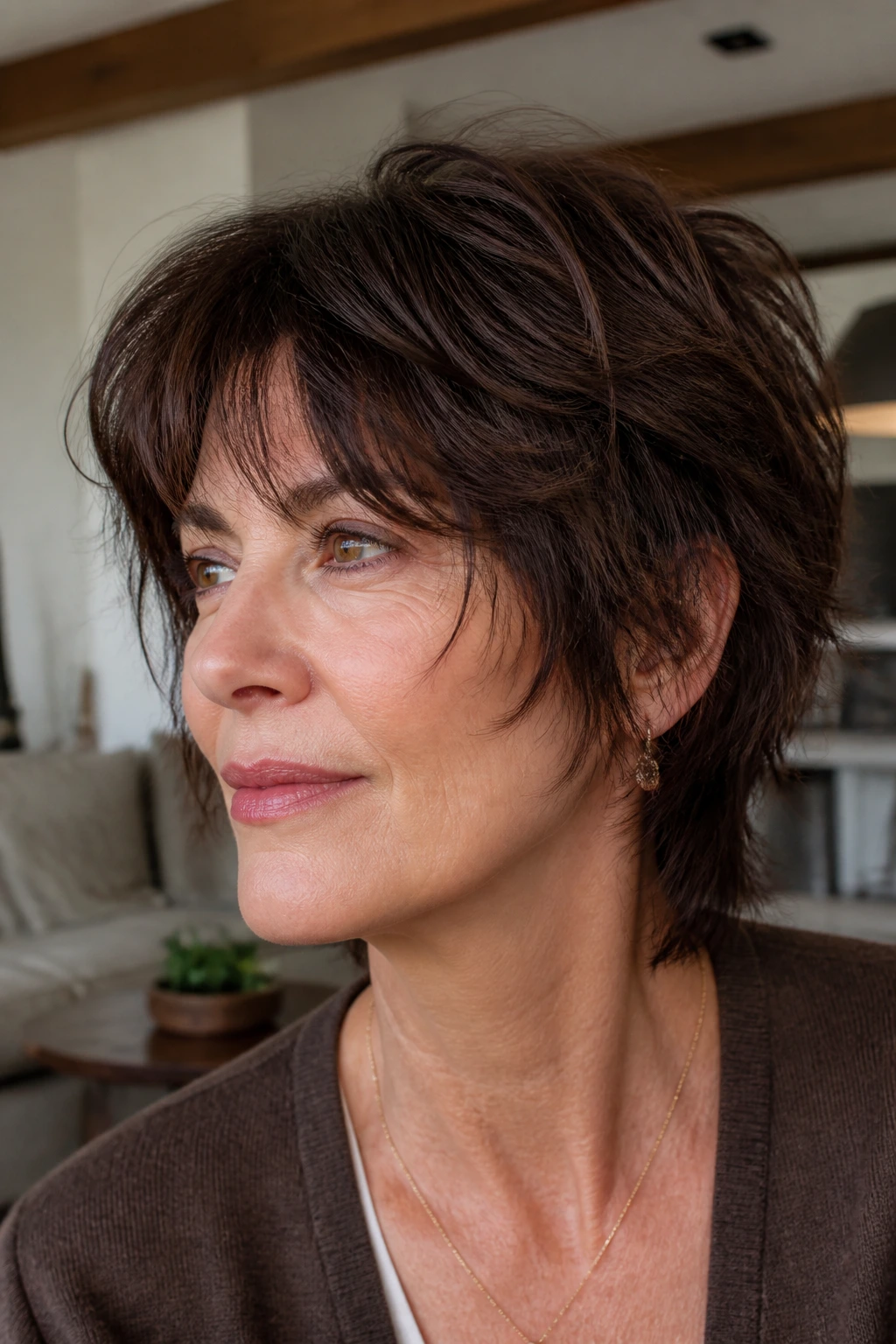
A wolf cut can get too aggressive fast. This is the softer version. In deep brown, the layers feel modern and a little rebellious, but the shape stays wearable because the length is kept short around the ears and jaw rather than pushed into a heavy mullet line. That distinction matters more than people think.
The best soft wolf cuts use longer top layers and a broken fringe, then keep the back from getting too long. If the back grows past the neck and the crown gets too short, the haircut starts looking like a costume. A good one still moves like a shag; it just has more attitude.
This is the cut for someone who wants visible texture and doesn’t mind a bit of edge. A sea-salt spray or lightweight mousse gives it the right roughness. The shine should still be there, though. Deep brown hair needs that sheen, or the layers disappear into the shape.
11. Face-Framing Cinnamon Shag
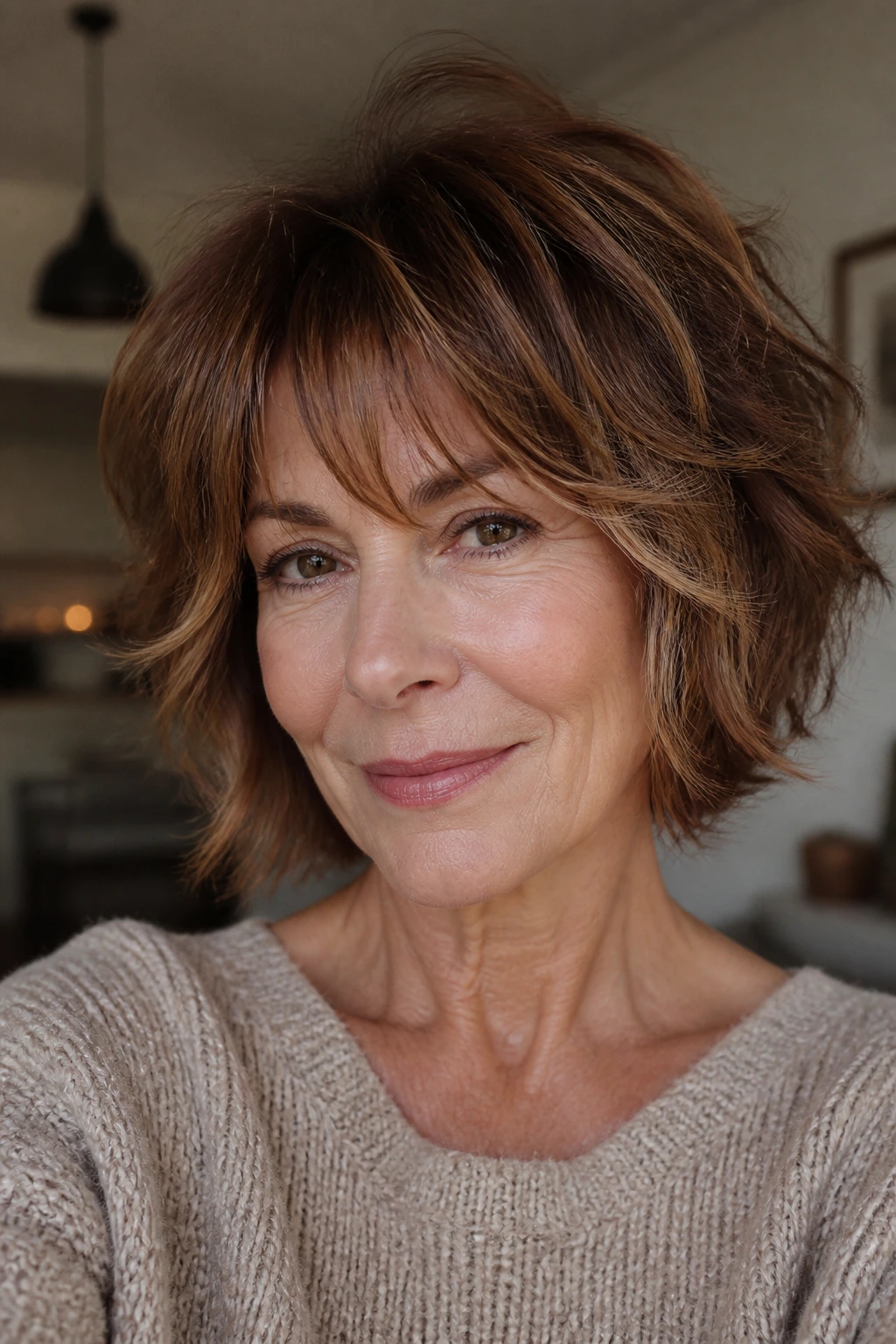
Cinnamon brown has warmth in it, and that warmth can be a blessing around the face. A face-framing cinnamon shag uses lighter, warmer pieces near the cheekbones and jaw to open the face without making the haircut look streaky. It’s one of my favorites for women whose skin tone looks better with a little warmth near the front.
The haircut itself should stay short enough to feel fresh, but the front layers need room to fall. Those pieces should almost graze the cheek, not sit on top of it. That little bit of length gives the cut movement every time you turn your head.
A cinnamon tone also makes the texture easier to read. Shadows and highlights show up more clearly than they do in a one-note brown. If your hair tends to look flat in photographs or under indoor light, this shade can fix that without much styling.
12. Salt-and-Pepper Brown Balayage Shag
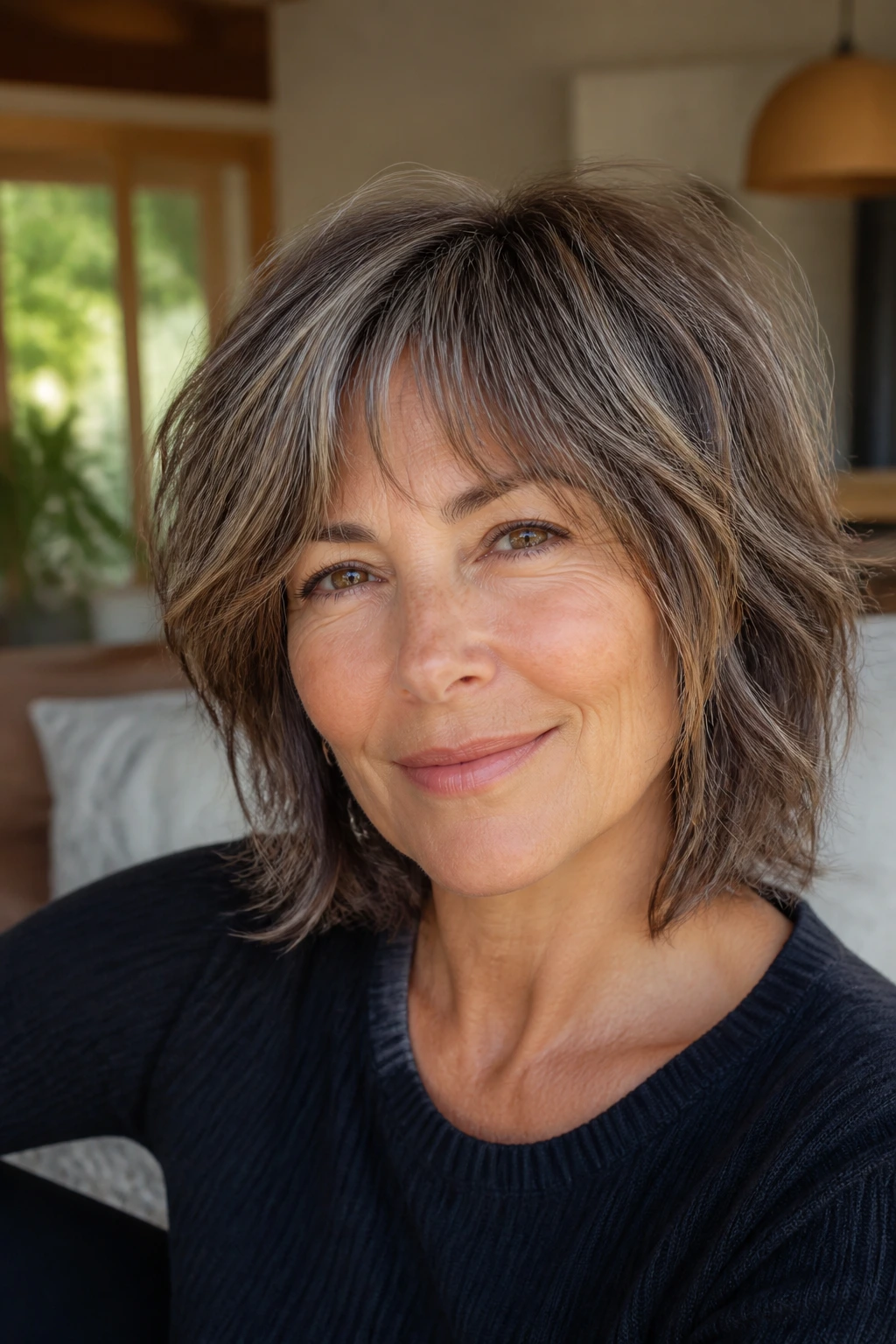
Salt-and-pepper hair does not need to be hidden to look good. A brown balayage shag lets the silver and brown strands live together instead of fighting over the same space. The balayage softens the line between regrowth and color, and the shaggy layers keep the mix from looking striped.
This is one of the smartest options for women who want to stretch time between color appointments. The grow-out is forgiving because the dimension is built into the haircut and the color placement. The front pieces often benefit from a slightly lighter brown, while the interior can stay deeper and more natural.
Why it looks better than flat coverage
Flat, one-color brown can make gray roots look harsher when they come in. Balayage breaks up that line. It also keeps the style from looking like a solid block, which is a common problem when hair gets shorter and denser color starts reading darker than intended.
A gloss every so often helps. Not because the cut demands it, but because silver strands can go dull if you ignore them. A soft shine keeps the whole thing from turning dry.
13. Razored Espresso Crop
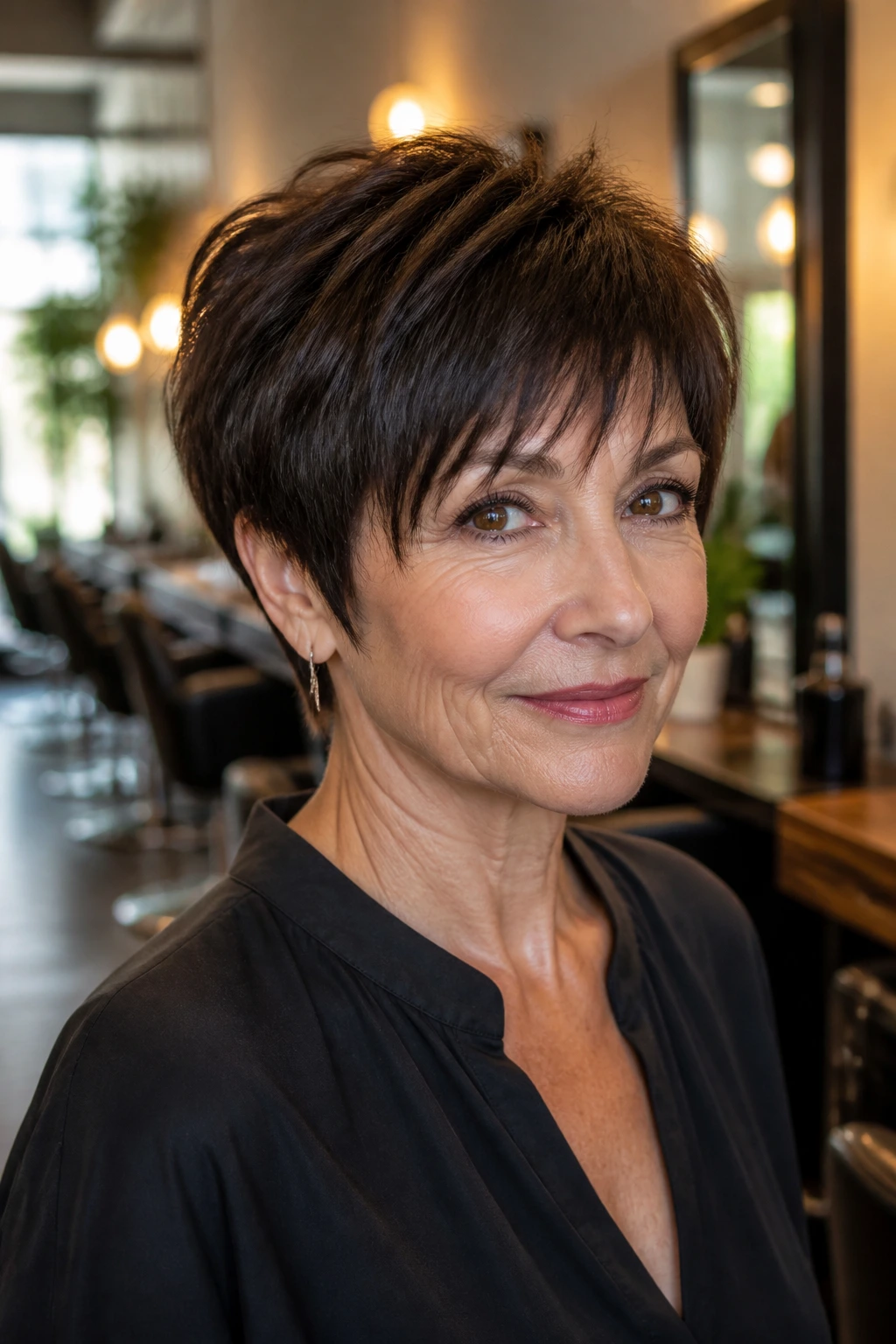
Straight hair can go limp in a hurry, which is why a razored espresso crop has such a place in this lineup. The razor gives the ends separation, and the espresso tone keeps the cut looking sleek rather than spiky. If your hair is naturally straight and stubbornly obedient, this is a good way to make it look less like a sheet.
The cut should be precise around the perimeter. Too much razor work, and fine hair can fray at the ends. Too little, and the whole thing sits there like a blunt cap. That middle space is where this haircut lives.
I like this on women who want a short shape that still feels a touch sharp. It needs a little styling paste or spray to keep the strands separated, but not enough to make it crunchy. The goal is airy definition. Not crunch.
14. Airy Teddy-Brown Bob
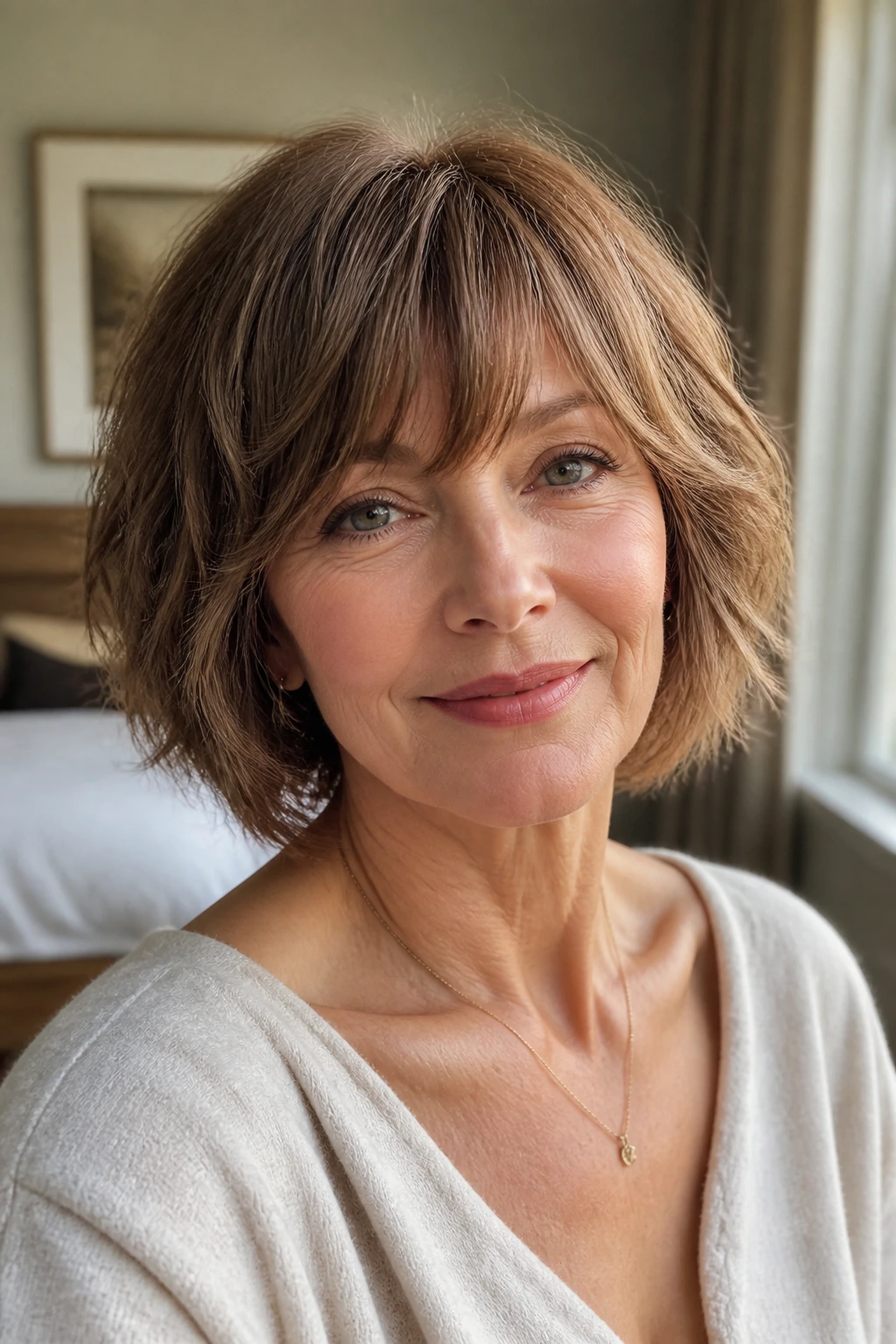
Teddy brown is one of those shades that feels soft before you even look at the haircut. It has a plush, warm quality that works beautifully with a bob that’s been lightly shagged out. The result is gentle, not puffy. The hair looks touched, not overworked.
This cut usually sits a little below the ear or around the jaw, with layers that keep the ends from taking over. It’s a nice option for women who want a soft frame around the face and don’t want the more obvious choppiness of a classic shag. The shape should still move when you shake your head. If it doesn’t, it’s too blunt.
A quick round-brush pass under the ends gives this one its best version. The bend should be subtle. You’re looking for lift, not curl. That little detail keeps the bob youthful without making it look like it’s trying too hard.
15. Side-Part Chestnut Shag with Crown Lift
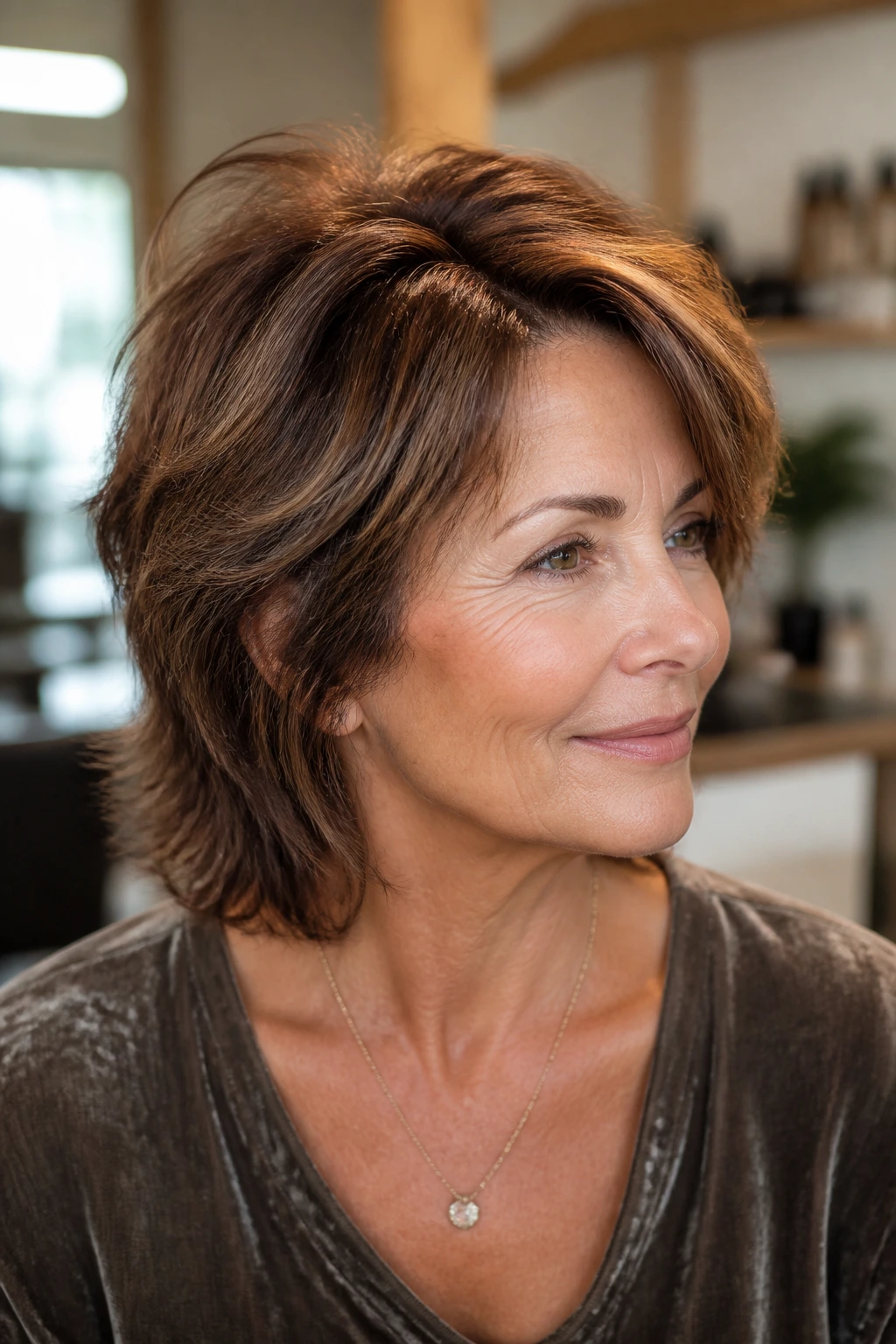
What if the crown is the problem? Then this is the cut to look at first. A side-part chestnut shag with crown lift uses the part line and short top layers to create height where hair tends to lie flat. The side part also makes the face look a little longer, which can be useful when the haircut sits near the ears and jaw.
Chestnut is a forgiving shade for this shape because it catches light near the top. When the crown lifts, the color movement becomes visible too. That makes the whole cut look more expensive, if I can use an honest word for it, and more alive.
Blow-dry the crown in the opposite direction first, then sweep it back into place. That old salon trick still works. It lifts the roots without making the front look puffy.
16. Tousled Walnut Crop with Swept Fringe
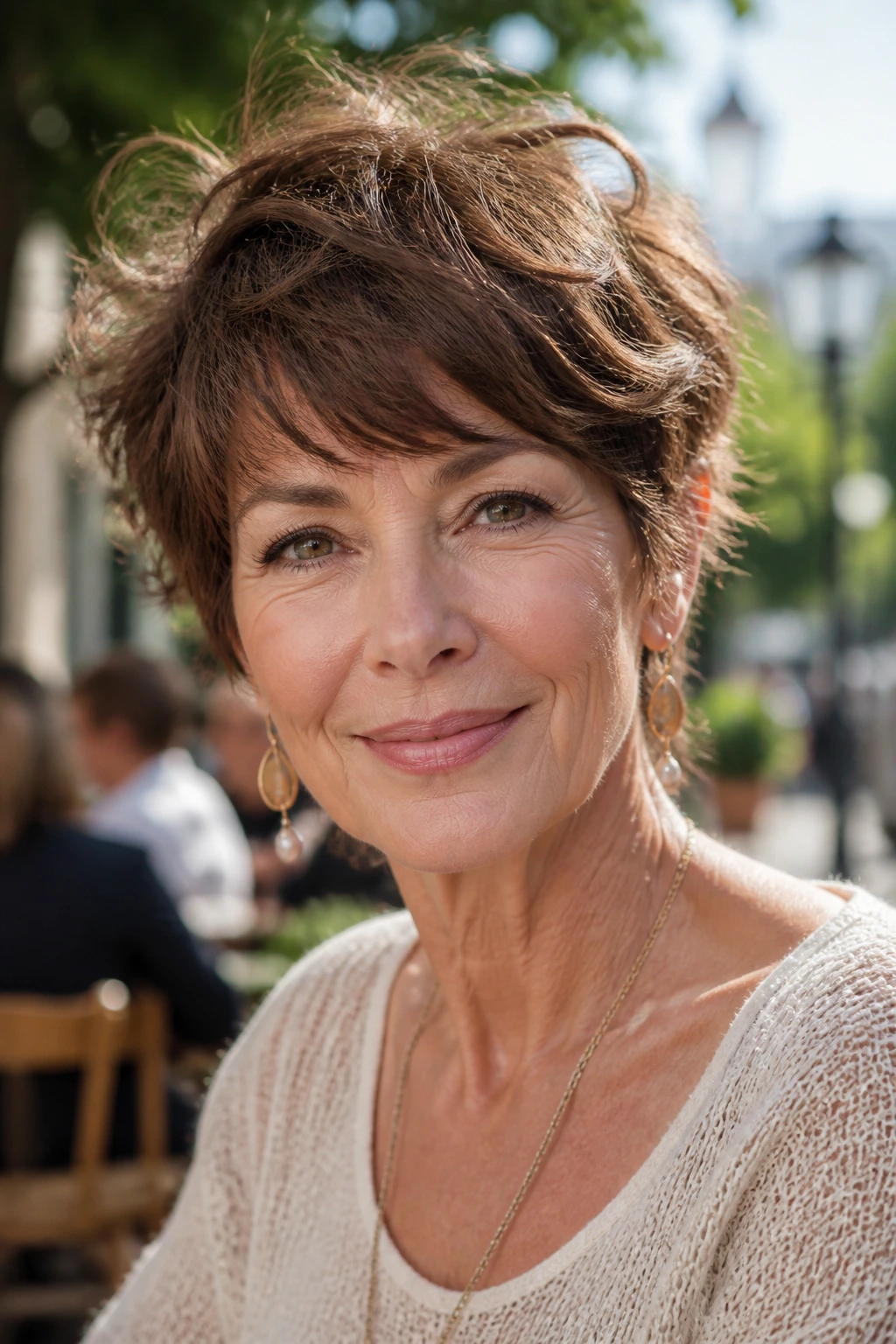
This is the low-effort cut in the group, and I mean that in the best way. A tousled walnut crop with a swept fringe looks good with a rough blow-dry, a bit of mousse, and maybe ten seconds of finger-combing. The fringe does the softening, while the crop keeps the neck and ears clean.
Walnut brown has enough depth to make the texture visible, but it isn’t so dark that every strand disappears into a single mass. That matters on short hair. Texture needs contrast to show up. A few broken pieces around the crown are enough to keep the cut from going stiff.
This one is ideal if you want hair that can take a nap in the car, get a little windblown, and still look intentional. The fringe should sweep across the forehead rather than hang straight down. Straight down is where short crops often lose their charm.
17. Short Brunette Shag with Bottleneck Bangs
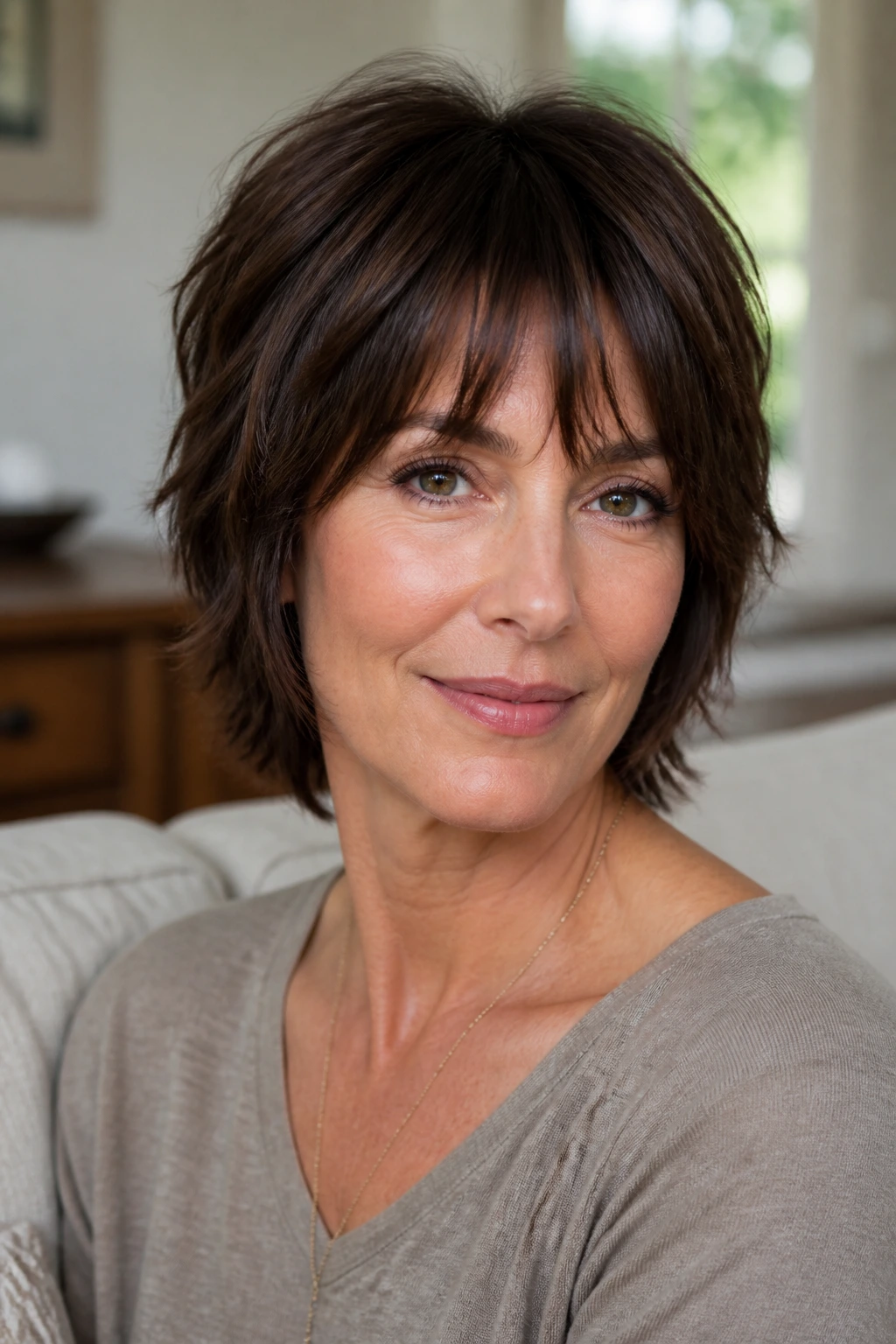
Bottleneck bangs give a short shag a surprisingly graceful front. They start a little shorter in the center, then open wider toward the cheeks, which makes them softer than a blunt fringe and more controlled than curtain bangs. On brunette hair, especially medium brown, the shape looks tailored without feeling stiff.
This is a smart cut for women who want to keep some forehead coverage but don’t want bangs that need a full styling ritual every morning. The bottleneck shape grows out well, too. That alone makes it worth a look.
The cut around the sides should stay slightly longer than the bang itself so the whole thing blends instead of looking like two separate haircuts. That’s the trap with bangs on older faces: if the front is cut too hard, the style can feel disconnected. Bottleneck bangs avoid that by easing into the rest of the layers.
What Makes a Short Brown Shag Move So Well
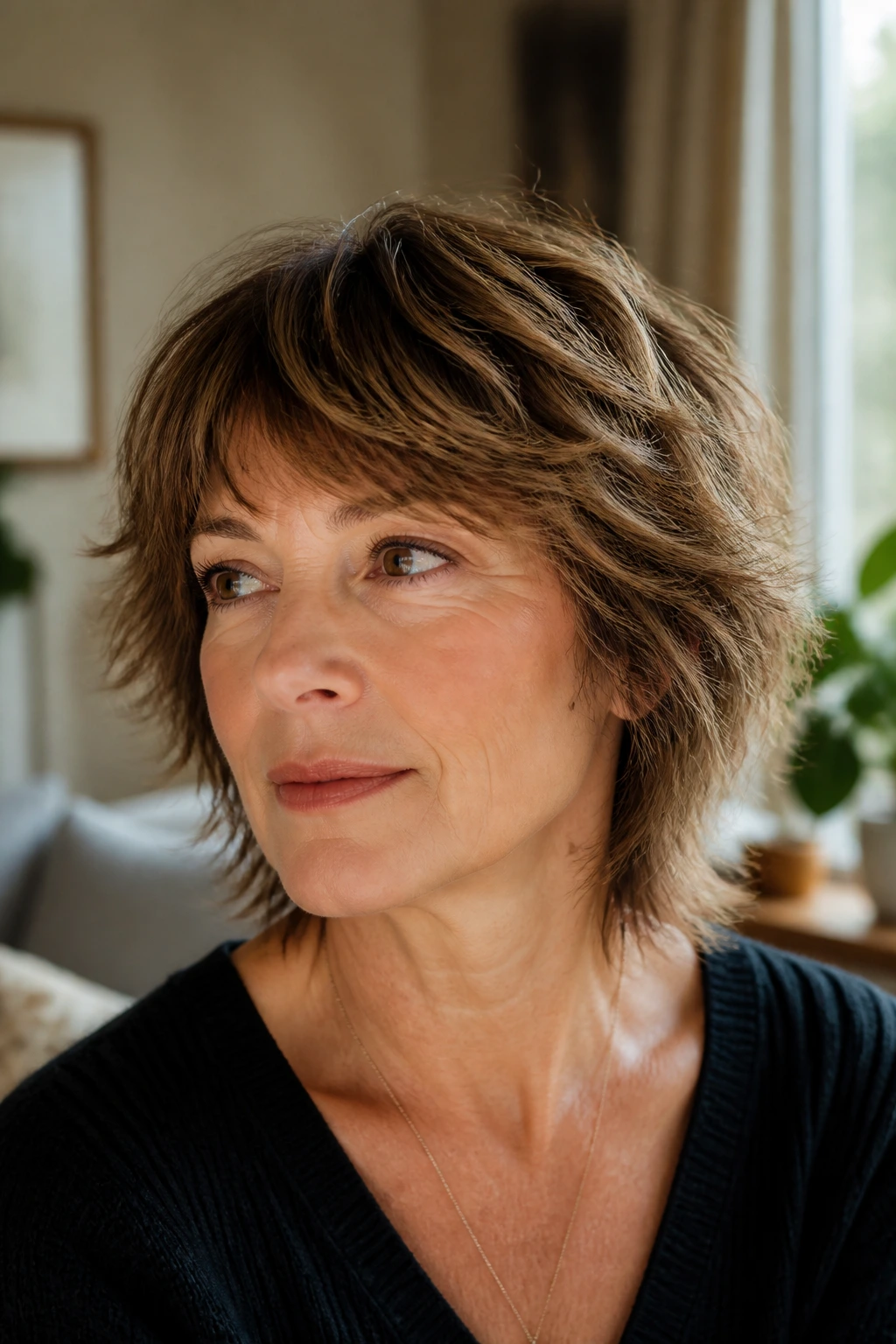
The short answer? Weight removal in the right places.
A shag works because the layers interrupt the way hair falls. On brown hair, that interruption becomes visible in a good way. Light catches the top pieces, shadows sit underneath, and the haircut looks fuller because it has visual depth. That’s why brown shags often look better than the same cut in one flat, solid tone. The texture has something to bounce against.
There’s also a practical reason these cuts suit older women. Hair often gets a little finer at the crown, a little softer at the front, and sometimes a little more stubborn in the nape. A shag lets the stylist adjust each of those areas separately. Shorter layers can give lift up top. A softer perimeter can keep the jawline from looking harsh. A little longer fringe can hide a cowlick or a high forehead without dragging the whole style down.
The best part is the grow-out. A tidy bob can look blunt after a month. A short shag usually just relaxes. The shape gets softer, the layers settle, and the haircut keeps its interest. That’s not an accident. It’s the whole point.
What to Ask for in the Salon Chair
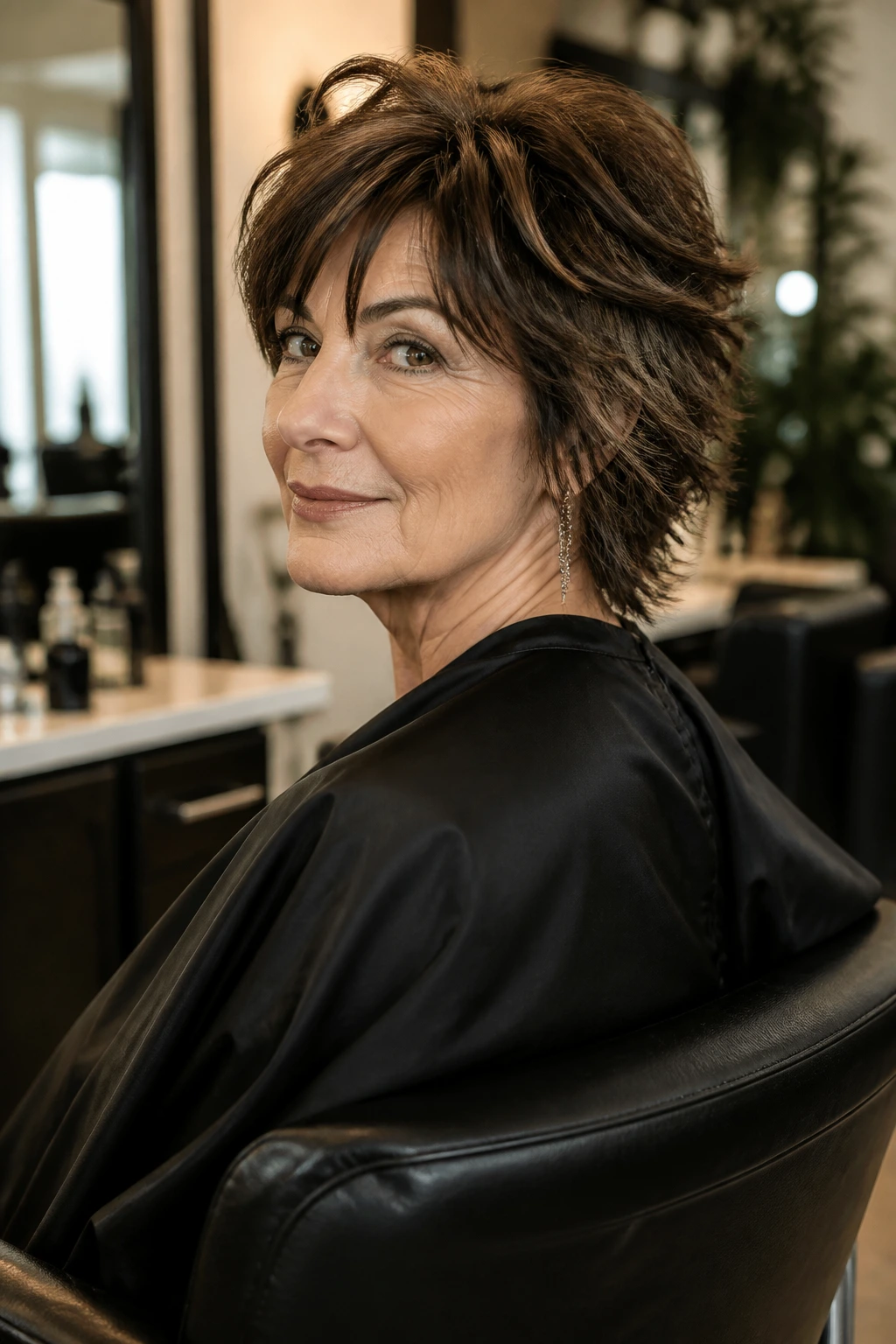
Bring photos. Two is better than one. One shows the shape you want, and the other shows the kind of bangs, length, or texture you do not want. That second photo saves a lot of awkward nodding.
Ask your stylist for internal layers, a soft perimeter, and face-framing pieces that match your styling routine. If you air-dry most days, say that plainly. If you blow-dry with a round brush, say that too. A shag cut changes character depending on the finish, and the chair conversation should reflect that.
Be blunt about density. If your hair is fine, say so. If it’s thick and puffy, say so. If the crown cowlick spins your part like a weather vane, mention that before the cape goes on. Those details shape the haircut more than your face shape does in many cases.
And please, do not ask for “lots of layers” as if that solves everything. It doesn’t. A good shag is controlled chaos. A bad one is just chopped.
Essential Tools for Styling at Home
-
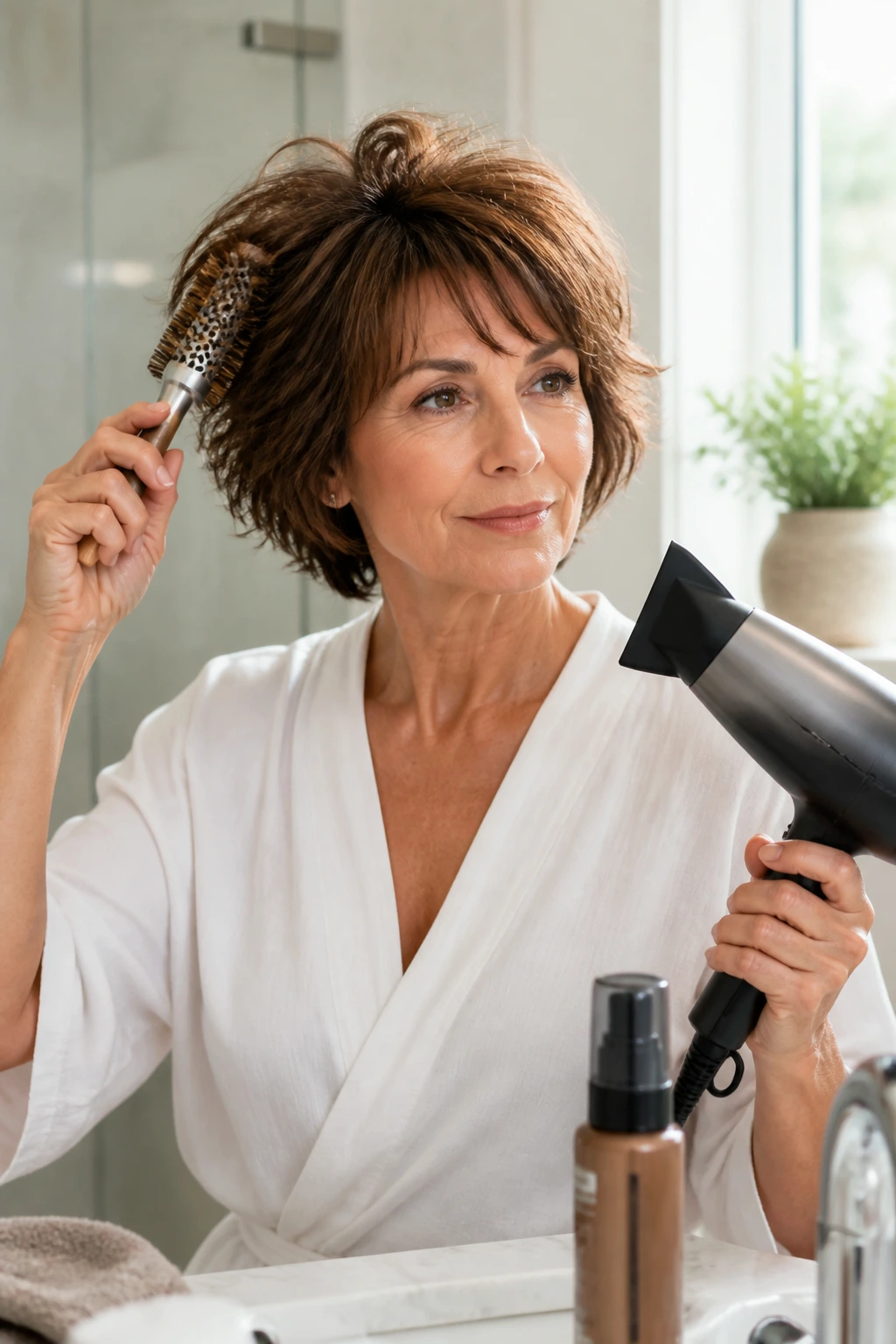
A blow dryer with a narrow nozzle — Helps direct the roots and keeps the crown from puffing in random directions.
-
A small round brush, about 1 to 1.5 inches — Best for lifting the fringe, bending the front, and turning the ends under just a bit.
-
A diffuser attachment — Worth having if your hair is wavy or curly and you want the layers to dry without frizzing out.
-
Lightweight mousse — Gives the top some memory without coating the hair like old-school foam used to.
-
Texturizing spray — Useful on day two when the layers need a little grit and separation.
-
A pea-sized styling paste or cream — Good for piecey ends, especially on pixies and bixies.
-
A tail comb or sectioning clip — Makes it easier to set the fringe and find the part cleanly.
-
A 1-inch curling wand or iron — Optional, but handy if you want to add a bend to the front sections only.
Brown Shade Choices That Keep the Cut from Going Flat
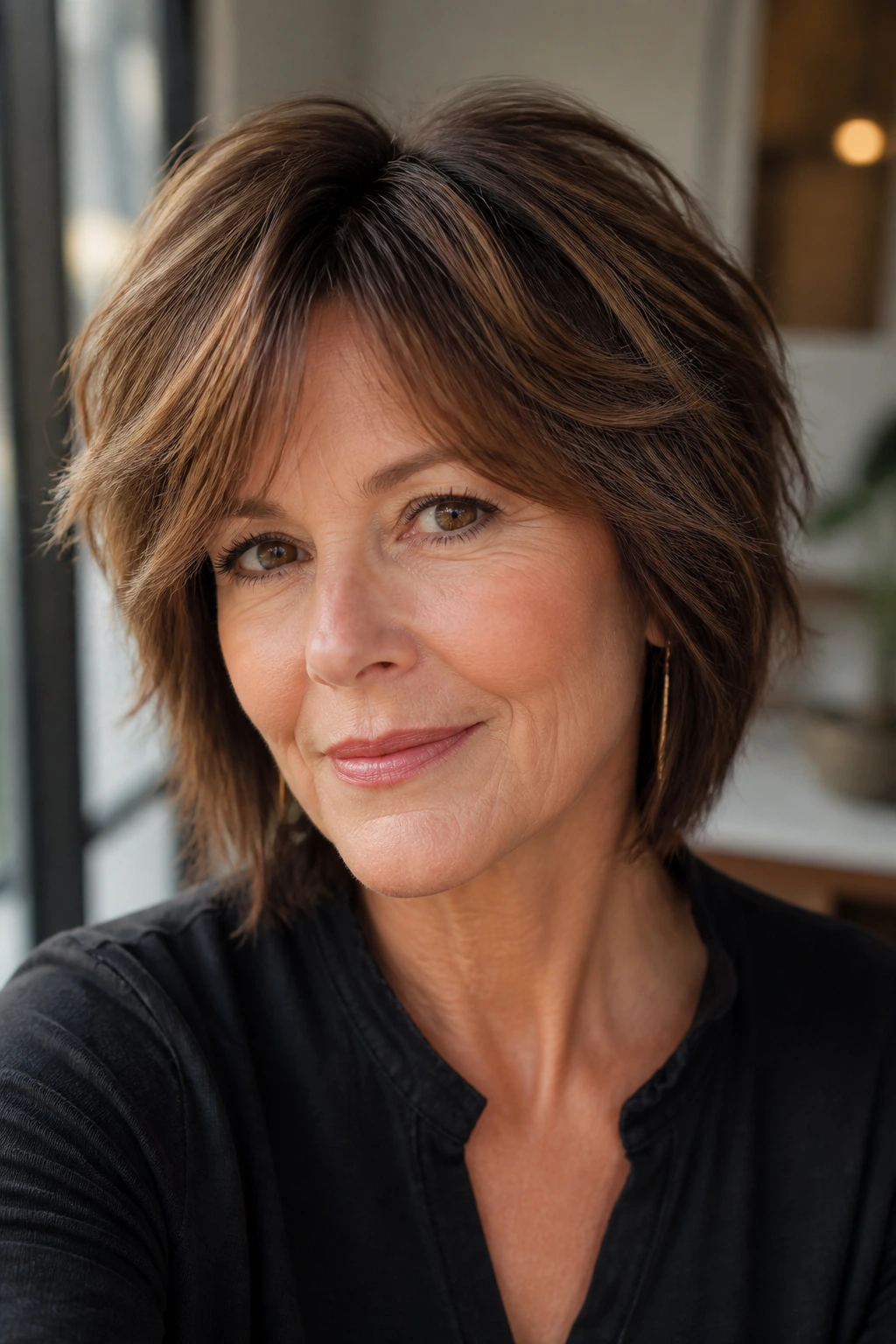
A short shag and a flat brown color can work against each other. The haircut wants movement; the color should help, not smother. Chestnut brown gives a warm, soft glow that flatters skin with a little redness or peach. Mocha sits in the middle and plays well with most complexions. Espresso is stronger and looks sharp when the haircut needs a cleaner edge. Mushroom brown leans cool and is useful if you want gray blending without brass.
The smartest brown jobs for this kind of cut usually have some dimension. That can mean lowlights under the crown, lighter pieces around the front, or a gloss that keeps the tone rich instead of dusty. A single flat all-over shade can make texture disappear under indoor lighting. Add a little variation, and the layers start speaking.
If your natural color is more salt than pepper, ask for a brown that doesn’t fight the silver. Soft lowlights near the part line and hairline can help the grow-out look intentional. That matters more than covering every strand.
How to Wear a Short Shaggy Brown Cut on Busy Mornings
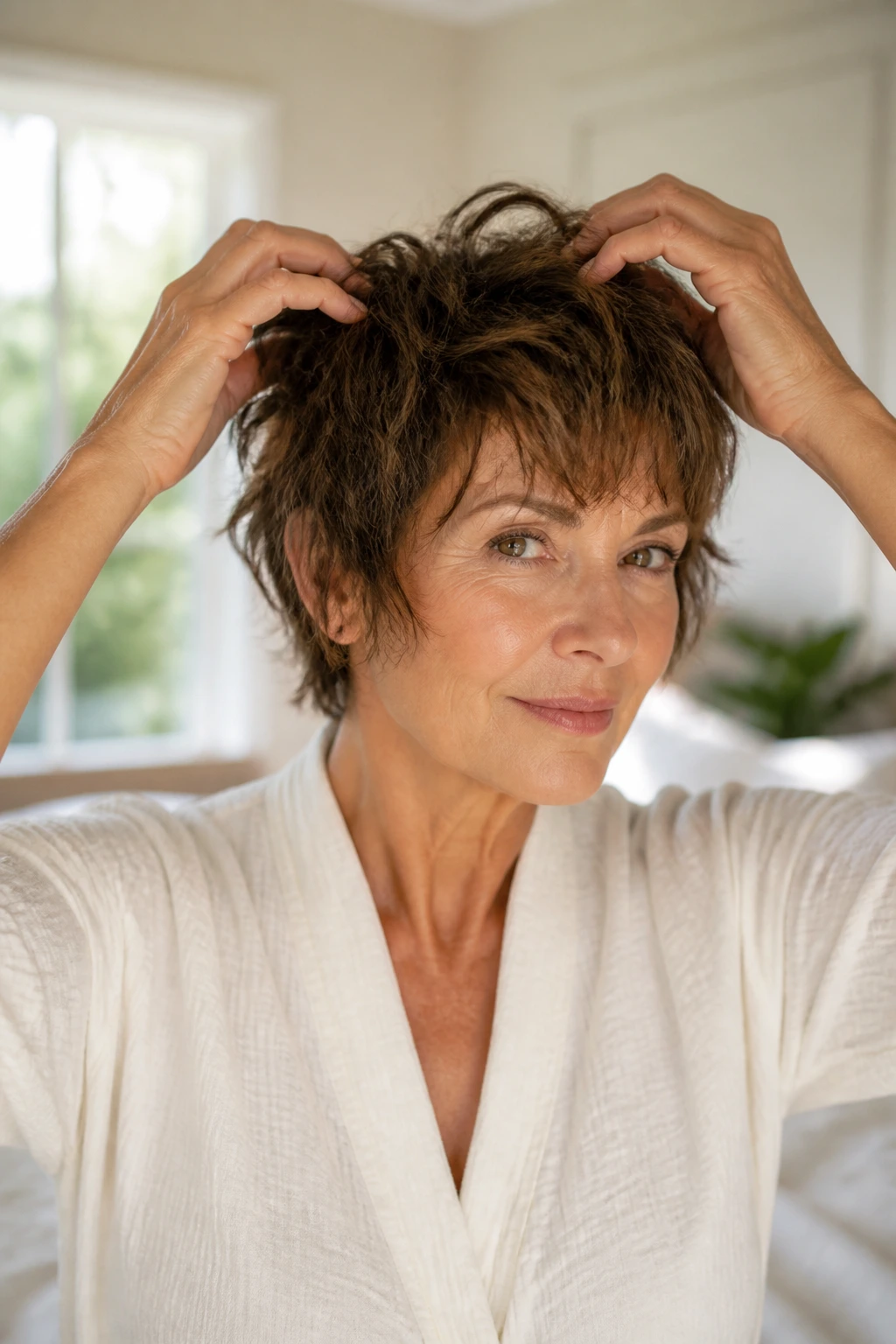
Quick Air-Dry: Work a light mousse through damp hair, scrunch the ends, and let the crown dry with a little lift from your fingers. If the front tends to split oddly, clip the fringe to one side for 10 minutes while it sets.
Fast Blow-Dry: Dry the roots first, directing the hair away from the part, then switch to the round brush just on the front pieces and top layers. The whole process can take less than ten minutes once you’ve done it a few times.
Piecey Finish: Use a tiny bit of paste on the fingertips and pinch the ends of the layers. The goal is separation, not shine everywhere. Too much product turns the cut sticky fast.
Second-Day Rescue: Mist the roots with water or dry shampoo, then rough-dry for 30 seconds. Short shags often look better on day two because the layers settle into place instead of floating.
Common Mistakes That Flatten the Shape
A shag can go wrong in a few familiar ways, and they all have the same annoying symptom: the cut loses its lift and starts looking confused.
Over-thinning the ends is a big one. The hair looks airy for a week, then the perimeter turns stringy and weak. The fix is to keep some weight at the bottom edge so the haircut has a base.
Using heavy cream on fine hair is another. It makes the layers clump together and steals the separation that makes a shag look alive. If your hair is fine, stick with mousse, mist, or a very light paste.
Making the bangs too short can throw off the whole face. Short fringe on mature hair can pull attention straight to the forehead and make the haircut feel severe. Leave enough length for the bangs to bend rather than sit upright.
Skipping the crown is sneaky. If the top stays flat, the entire haircut looks heavier than it is. Root lift matters more here than people expect.
Cutting curls the same way as straight hair usually ends badly. Curly hair needs room for shrinkage. If the stylist ignores that, the layers can pop up too high and make the shape uneven.
Variations and Adaptations to Try
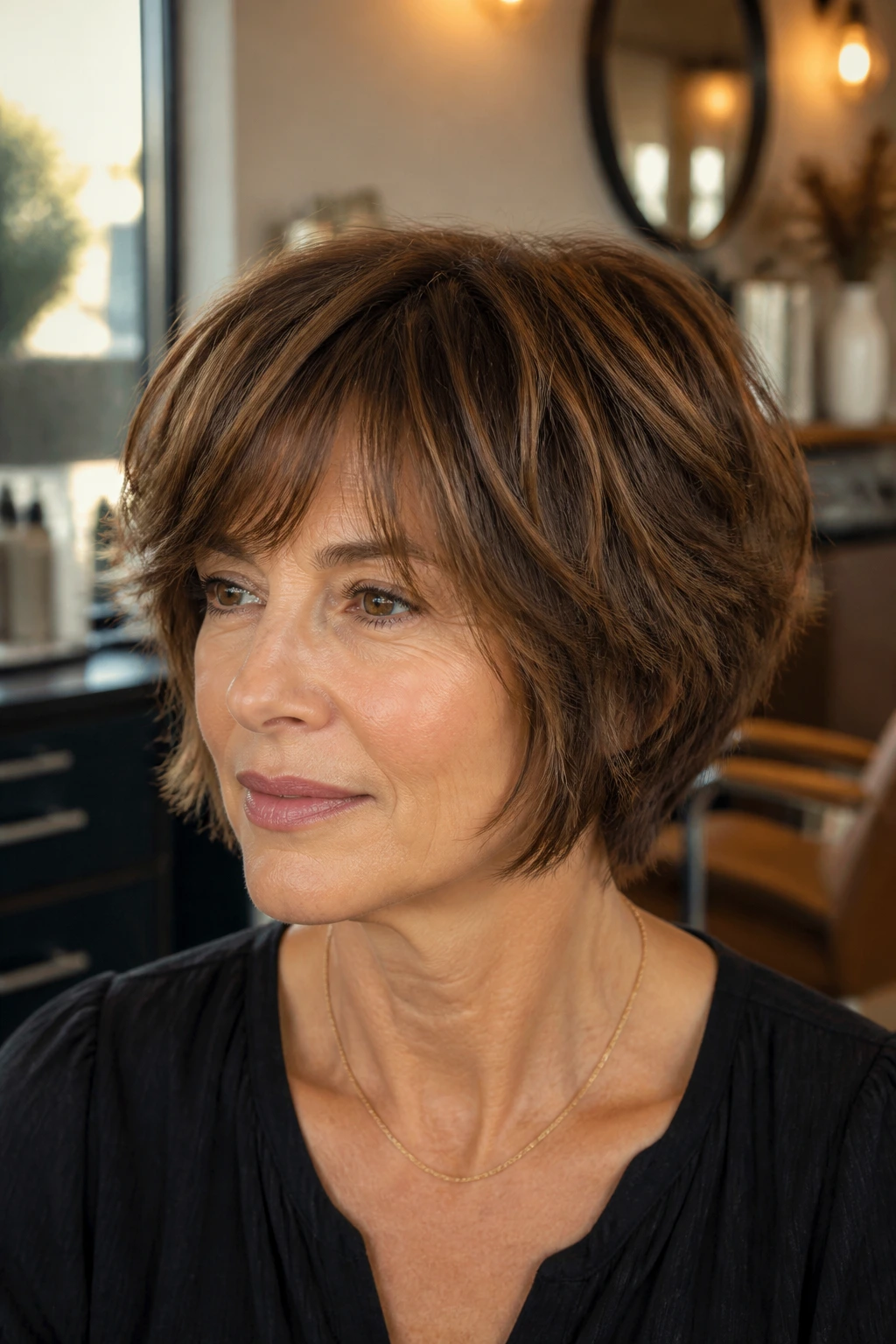
Fine Hair Rescue Shag: Keep the layers soft and avoid heavy razoring. A chin-length or bixie shape usually works best because it gives the illusion of fullness without removing the bottom line that fine hair needs.
Thick Hair Control Shag: Ask for internal weight removal, not just surface texture. Thick hair needs a haircut that takes bulk out from inside the shape so the ends don’t balloon.
Wave-Friendly Shag: Keep the layers long enough for the wave pattern to sit naturally. A diffuser and a little mousse will usually do more than a hot brush ever will.
Glasses-Friendly Shag: Leave the fringe slightly longer and use a side part or curtain bang shape. The goal is to frame the frames, not fight them.
Gray-Blending Shag: Choose chestnut, mushroom brown, or soft mocha with lowlights. The cut and color should work together so the regrowth line melts instead of shouting.
Low-Maintenance Shag: Keep the fringe longer, the perimeter soft, and the texture loose. That version can be air-dried and still look deliberate on a rushed morning.
How to Keep the Shape Sharp Between Cuts
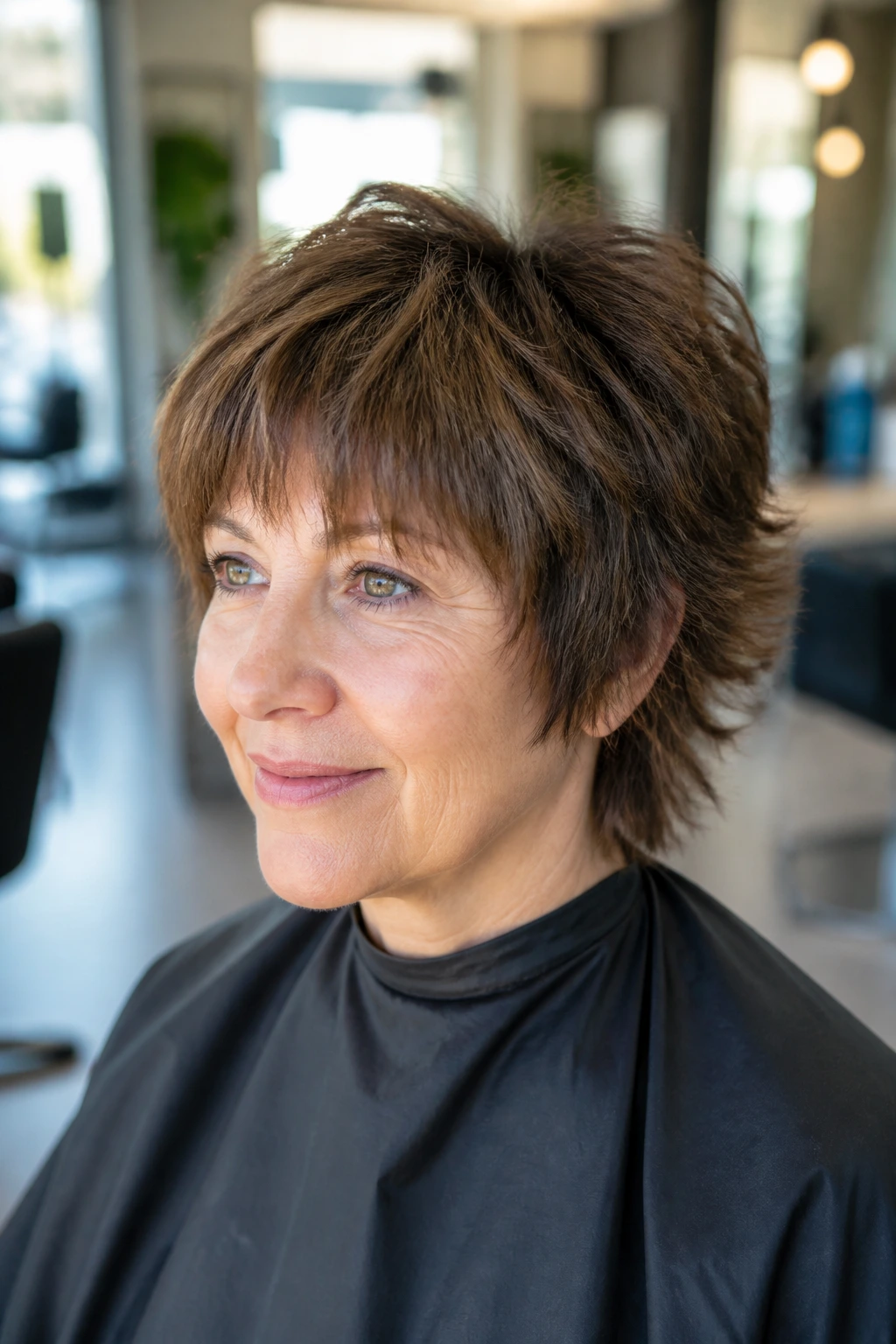
Short shaggy brown haircuts do not need babying, but they do need a little attention. Most of the shape comes back to the same three things: the fringe, the crown, and the ends. If the fringe drops into the eyes, the haircut starts looking tired. If the crown goes flat, the whole style loses lift. If the ends get scraggly, the shag turns mushy.
For many women, a trim every 6 to 8 weeks keeps the front and outline honest. If the hair is very short — pixie shag or bixie territory — the bangs may need a touch-up sooner. The color usually lasts longer than the shape, but a gloss or tone refresh every 6 to 10 weeks can keep brown from looking muddy.
Use clarifying shampoo sparingly, maybe once or twice a month if you rely on texturizing sprays or dry shampoo. Product buildup is the enemy of movement. It makes short layers stick together in clumps, and then the haircut stops doing the one thing you paid for.
Frequently Asked Questions
Will a shag haircut make thin hair look thinner?
Not if it’s cut with restraint. The danger is too many short layers and too much thinning at the ends, which can expose the scalp or make the perimeter look weak. A good shag keeps some weight at the bottom and concentrates the texture where the eye wants movement.
What brown shade is best if I have gray at the temples?
Chestnut, mocha, and mushroom brown are the safest bets. They soften the contrast between natural gray and dyed hair, especially around the hairline. A few lowlights near the part can make the grow-out look more blended.
Do short shaggy cuts work with glasses?
Yes, and often better than blunt cuts. The trick is keeping the fringe long enough to sit above or beside the frames, not directly into them. Side bangs and curtain bangs usually behave well here.
How often do I need to style a shag like this?
Not every day, which is the nice part. Many versions can be revived with a little water, dry shampoo, or a quick blow-dry on the roots. The less precise versions often look better after they’ve had a little sleep on them.
Can curly hair handle a short shag?
Absolutely, but it needs a curl-aware cut. The hair should be shaped with shrinkage in mind, and the stylist should avoid over-thinning the ends. A diffuser and a light leave-in usually give better results than a lot of brushing.
Are curtain bangs or side bangs better for older women?
Curtain bangs are softer and more forgiving if you want the forehead to feel open. Side bangs are easier if you want less maintenance and a cleaner sweep near glasses or one-sided facial asymmetry. Both can work; the better choice depends on how much styling you’re willing to do.
How do I stop the cut from looking frizzy?
Don’t overload it with dry texture products. Frizz usually gets worse when the hair is dry, roughened, and then attacked with too much spray. Use a light cream on damp hair, dry the roots first, and finish with only a tiny bit of paste at the ends if needed.
The Cut That Keeps Its Shape
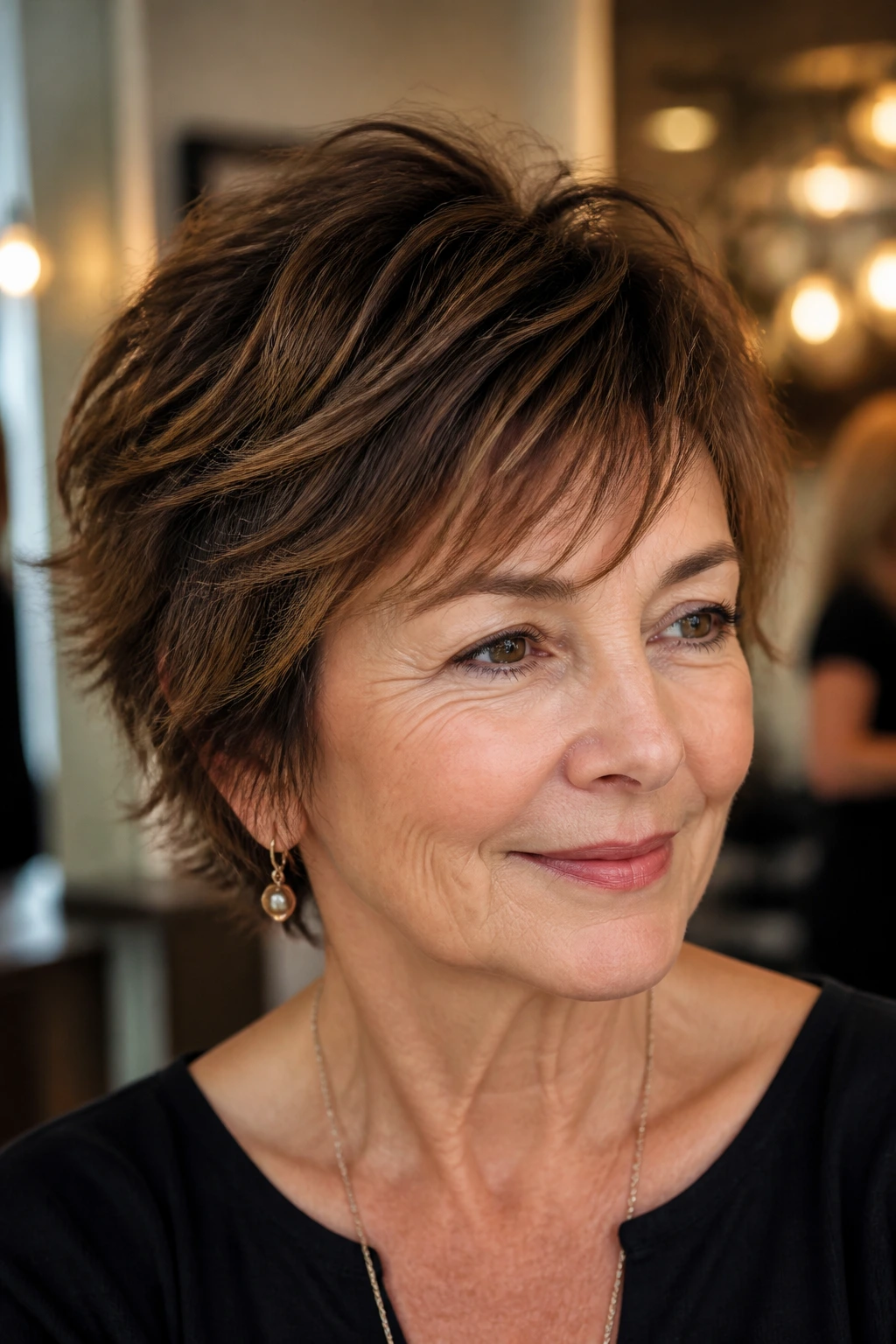
The best short shaggy brown haircuts for older women have a practical kind of beauty. They lift where hair gets tired. They soften where faces need a little mercy. They make brown color look deeper, not duller, and they keep working even after the sharp edge has grown out a bit.
That’s why this family of cuts is worth a serious look. Not because it’s trendy. Because it solves real problems: flat crowns, blunt lines, heavy ends, and color that has lost its spark. A good shag handles all of that without turning hair into a project.
If you want a haircut that still feels alive on day three, and still looks like it belongs to you after a few weeks, this is the shape I’d bet on.
