



A short mohawk can do a lot of heavy lifting on Black hair. The clean sides sharpen the face, the center ridge keeps the texture in view, and the whole shape can look polished with ten minutes of product and a decent edge brush. Short mohawk hairstyles for Black women sit in that sweet spot between bold and practical — not because they hide the hair, but because they frame it.
What makes the style so useful is how well it plays with shrinkage and density. Tight coils give the hawk lift without much effort. Softer curls read airy and rounded. And if the sides are tapered low, even a very short top can still look intentional. Miss the shape, though, and the cut turns boxy fast. That is usually where people get frustrated: the top is pretty, but the outline is fighting them.
The best versions of a mohawk on Black hair are never random. The curve of the taper, the width of the center strip, and the way the edges are laid all matter. Get those three things right, and even a simple frohawk can look like you had an extra hour in the chair. Get them wrong, and the whole thing slumps. So let’s start with the looks that actually hold their shape.
Why These 33 Looks Stand Out
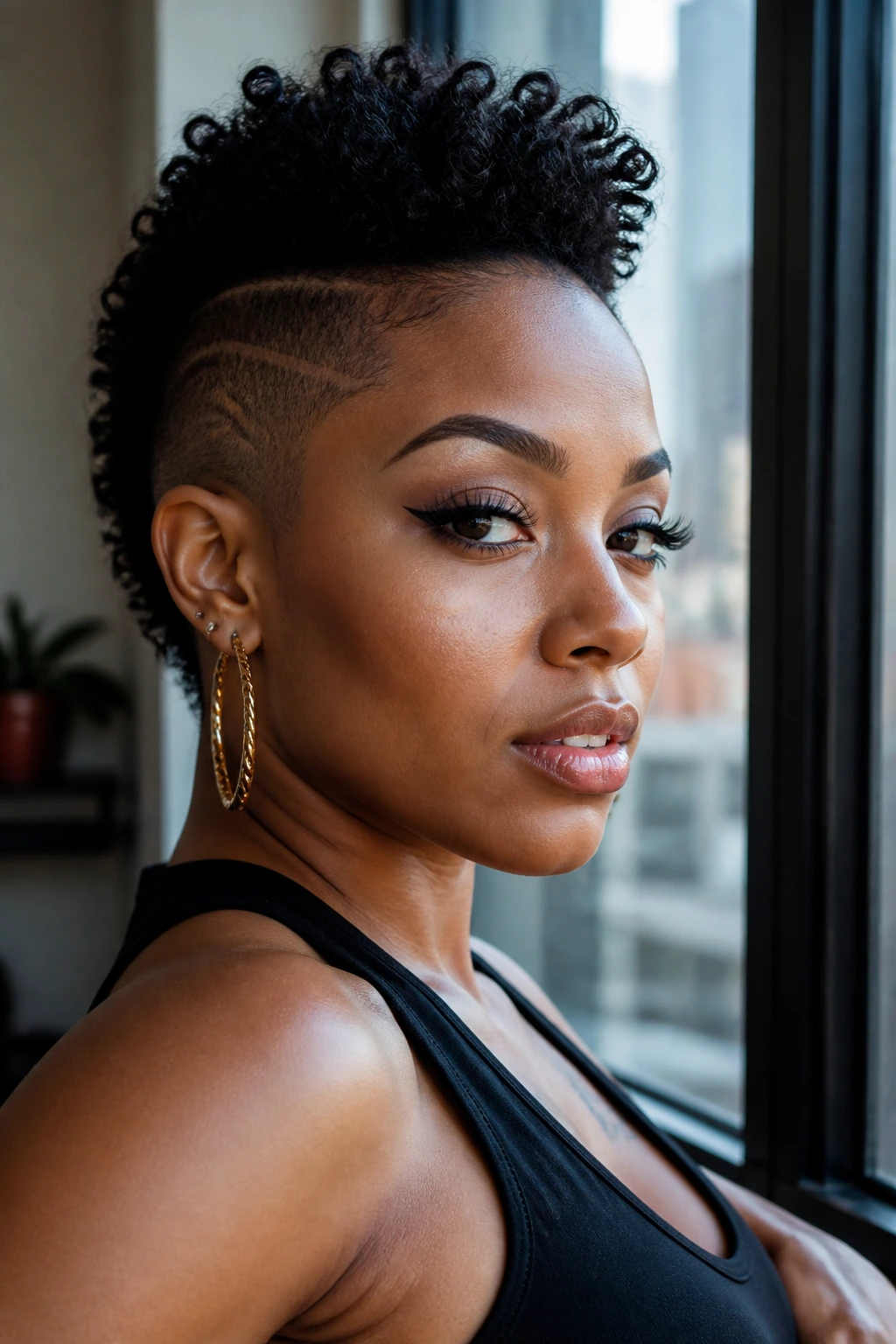
-
Short sides keep the shape honest: A tight taper or clean shave stops the style from ballooning out at the temples, which is what makes a mohawk read as a mohawk instead of “just hair up.”
-
Texture does the styling work: Coils, curls, twists, locs, and braids all create height without forcing the hair to fight itself.
-
The center ridge can stay small: You do not need a long top to make this cut work; 2 to 4 inches of length can already create a strong silhouette.
-
Many of these cuts are easy to refresh: A spritz bottle, a pick, and a scarf can bring the shape back without rebuilding the whole style.
-
The look moves from casual to dressed-up fast: Change the edge finish, add color, or pin one side flatter, and the same cut can feel completely different.
1. Tapered Frohawk with Soft Coil Definition
A tapered frohawk is the one I keep coming back to when someone wants shape without drama. The sides stay low and neat, while the middle strip keeps enough length to show off the coil pattern. It looks especially good when the top sits around 3 to 4 inches long after shrinkage, because the height reads clean instead of puffy.
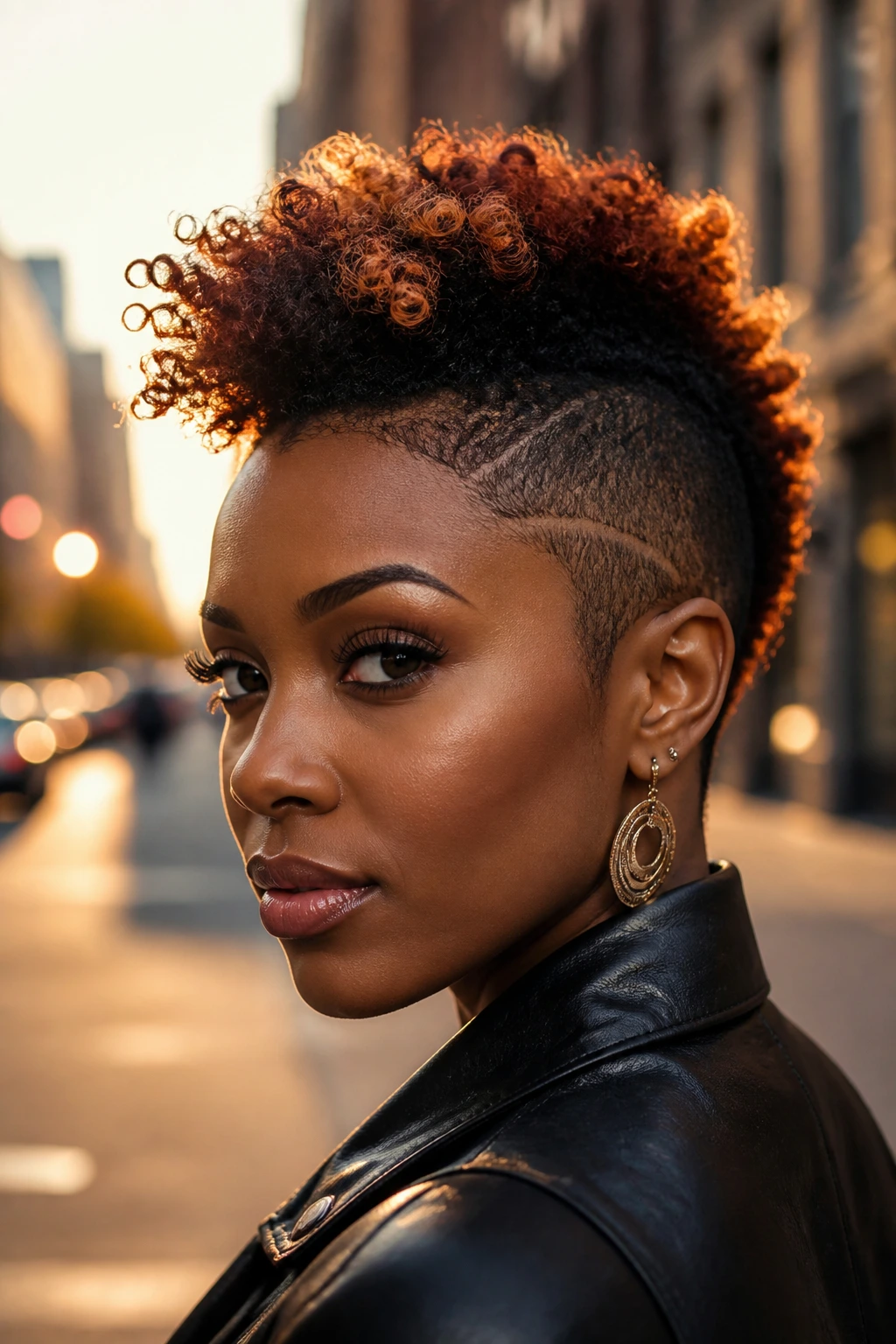
How the taper does the heavy lifting
The taper keeps the line close to the head, so the center ridge becomes the star. That matters on short natural hair, where too much bulk on the sides can make everything look round instead of sharp. If you want the style to stay crisp, ask for the sides to be blended down to a low taper rather than taken up too high at the temples.
Use a curl cream plus a light gel on damp hair, then finger-coil or pick the top when it dries. The coil definition gives this frohawk a soft, touchable finish. No helmet effect. No stiff shell.
- Best for: Dense coils and tight curls that spring back after drying.
- Watch for: Heavy butter creams that flatten the top.
- Finish with: A small pick at the roots and a dab of edge control along the hairline.
2. Side-Shaved Curly Mohawk
This one has attitude, and it knows it. One side is shaved lower than the other, which gives the curls in the middle a sharp lean and a little asymmetry. It is a strong look on women who like clean contrast — skin-close on one side, soft curls on top.
The trick is balance. If the shaved side is too wide, the style starts to feel lopsided. Keep the center ridge tight and rounded, then let the curls on top sit a little forward instead of all the way back. That small shift keeps the face open and stops the cut from looking harsh.
This style shines with defined curls and a crisp line-up. A curl-defining mousse works well if you want movement, while a gel cream gives the top more control. Either way, let it dry fully before touching it.
3. Flat-Twisted Crown Hawk
A flat-twisted crown hawk reads polished from across the room. The sides are twisted flat against the scalp and directed upward, which creates a neat frame around the center strip. On short hair, that upward direction does a lot of visual work. It pulls the eye right to the ridge.
Best on stretched or freshly washed hair
If your hair is very short, stretch it a little first with a blow-dryer on low or a loose banding method. The twists grip better, and the finished style sits smoother. I like this cut for anyone who wants a protective look that still feels shaped, not hidden.
Keep the part lines clean and small. Flat twists lose the whole point if the sections are too chunky. A little mousse on the hands before twisting helps the surface lie down without frizzing up by the second day.
4. Finger-Coiled Hawk with Clean Edges
Finger coils on a short mohawk are one of those styles that look delicate until you see them close up. Then you notice the work. Each coil gives the center strip a tight, springy texture, and the sides stay close enough to keep the whole thing neat. It works especially well on a TWA or a cropped natural cut.
The key is patience. Coil small sections on damp hair with a curl cream or gel cream, then leave them alone until they dry all the way through. If you separate too soon, the curls fray and lose the whole point. A hooded dryer or diffuser saves time, but air-drying works if you do not mind waiting.
Pro tip: keep the edges soft, not over-drawn. A hard, shiny line can fight the gentle coil texture.
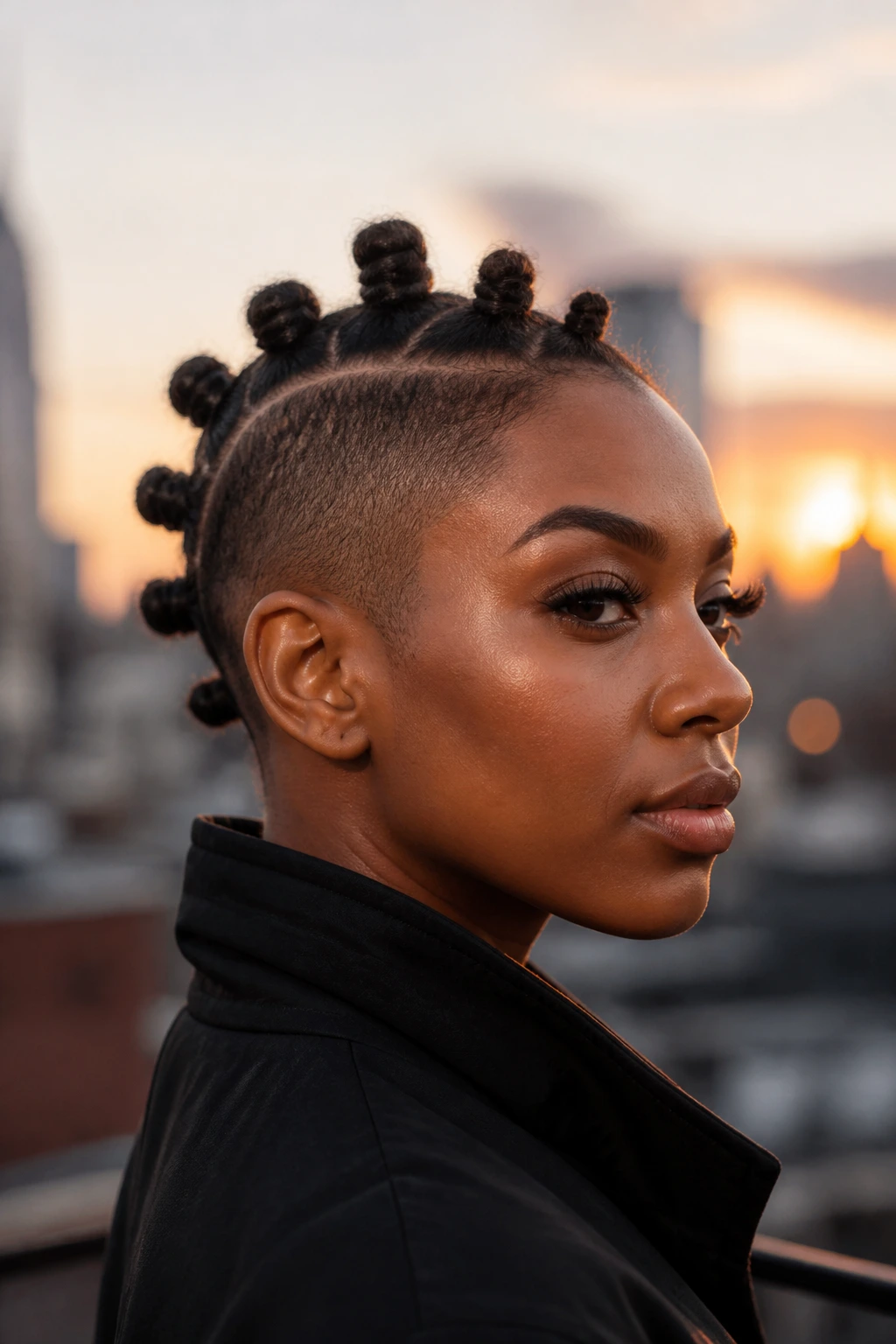
5. Bantu Knot Hawk
Bantu knots in a mohawk shape give the style a little sculpture. You can place them in a straight center row, stagger them slightly, or make the front knot larger so the line rises as it goes back. On short hair, even 6 to 10 small knots can make a strong shape.
This is one of my favorite options when someone wants a style that can change later. Wear the knots as-is for a few days, then take them down for a knot-out with soft spiral curls. That two-in-one value matters more than people admit. A style that can be worn one way and released into another is doing real work.
Use small elastics only if your hair slips easily. Otherwise, a good twisting cream and careful palm rolling are enough. Tight knots are the enemy here. The style should sit snug, not yank at the scalp.
6. Two-Strand Twist Mohawk
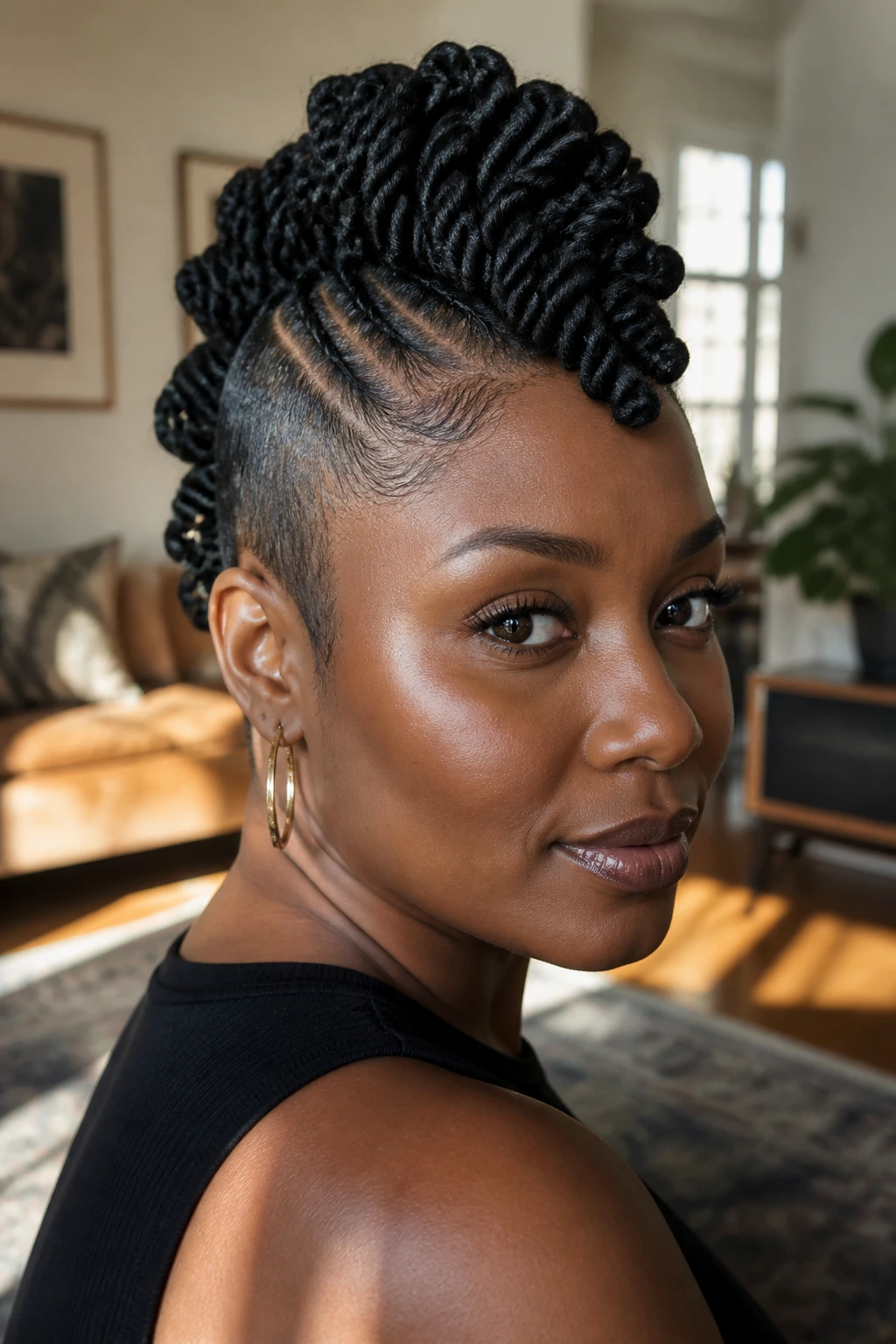
Two-strand twists give a mohawk more movement than braids and more control than a loose frohawk. The center ridge can hold anywhere from a dozen tiny twists to a handful of thicker ones, depending on how much fullness you want. The sides stay low, often slicked or lightly braided down.
This style is a good middle ground if you want protection without losing the twist pattern. Wear it in the twist state, then take it down after a few days for a fluffy twist-out hawk. That second life is half the appeal. It is a mohawk with an encore.
Use a creamy leave-in and a twisting butter or gel-cream blend. Too much oil here makes the twists slide apart. Too little, and they come out rough. The sweet spot is tacky at the start, smooth once set.
7. High-Top Frohawk with Tapered Sides
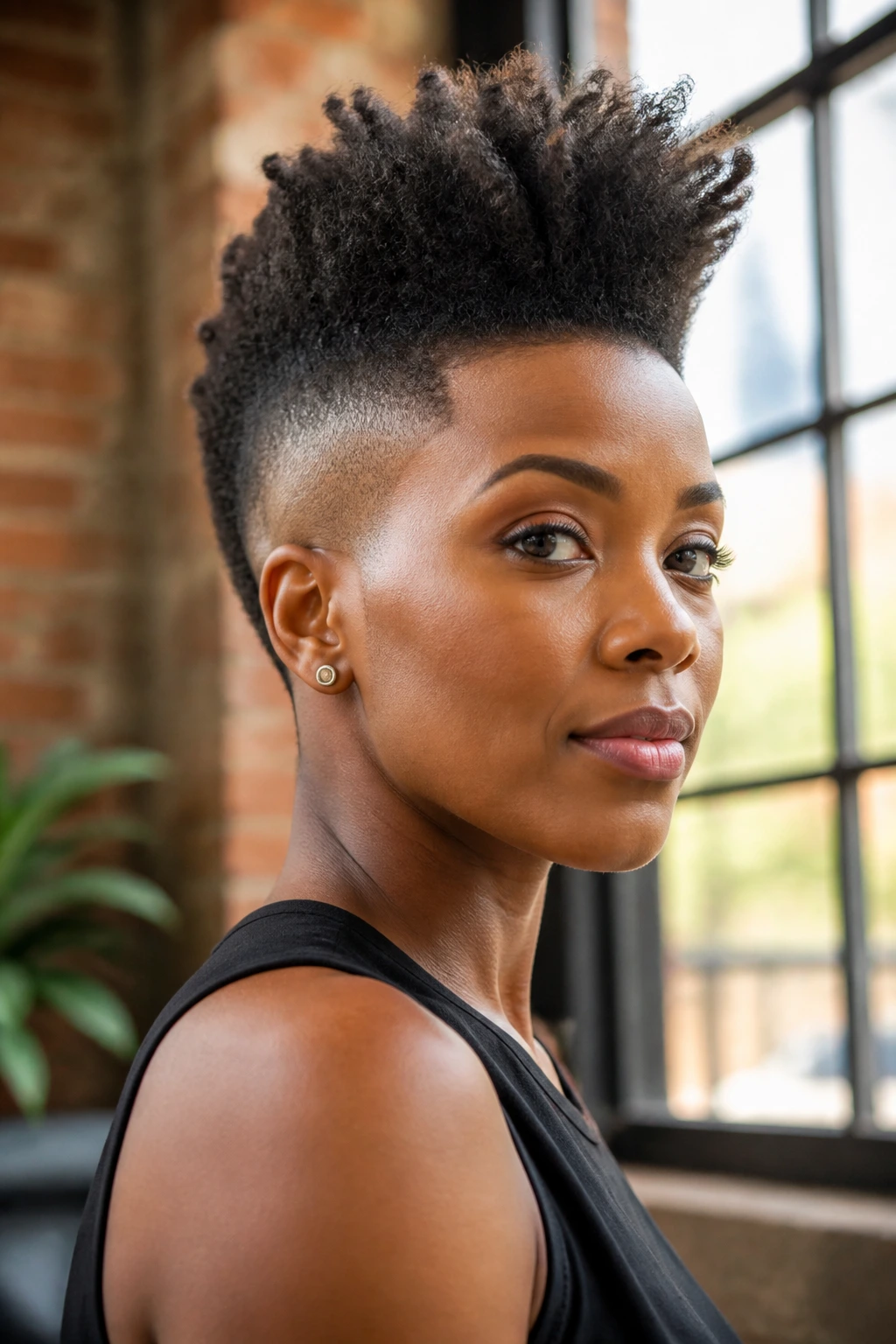
The high-top frohawk is all about height. The center strip stands taller than the rest, which gives the style an almost architectural shape. It works best when the top has enough density to rise without collapsing, and the sides are tapered tight so they do not steal the show.
What to ask the barber for
Tell the barber you want the sides low and blended, with the middle kept wide enough to support the height you want. If your hair shrinks hard, ask for the top to be left a little longer than it looks in the chair. That way it still reads tall once it dries.
A pick at the roots can lift the crown, but don’t overdo it. The style should look rounded and full, not teased into a cone. If your hair texture is dense, this cut can hold shape for days with nothing more than a quick edge refresh.
8. Cornrow Panel Hawk
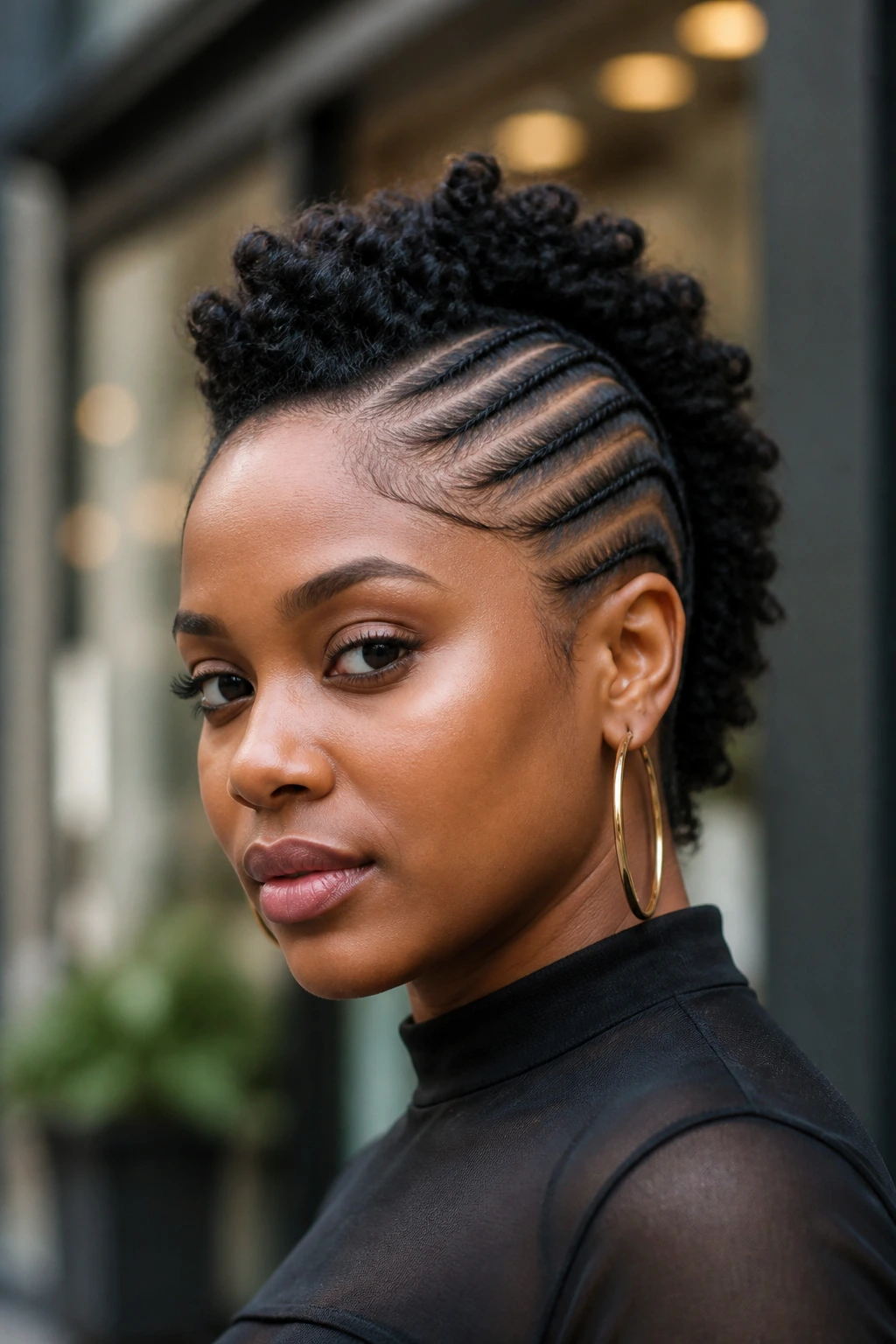
Cornrows on the sides give a mohawk a clean frame and a little edge detail without making the style too busy. The rows can feed toward the center ridge or angle back and disappear into a puff, twist, or braid. I like this look when the goal is tidy, not fussy.
The neatness is the point. Keep the parts crisp, and keep the tension moderate. Cornrows pulled too tight around the hairline are not worth the sharp finish. Short hair needs enough grip to stay in place, but not so much that the scalp feels angry by hour four.
This style works especially well if you want to pair a simple outfit with one strong hair statement. The hair does the talking. Everything else can stay quiet.
9. Curly Puff Mohawk
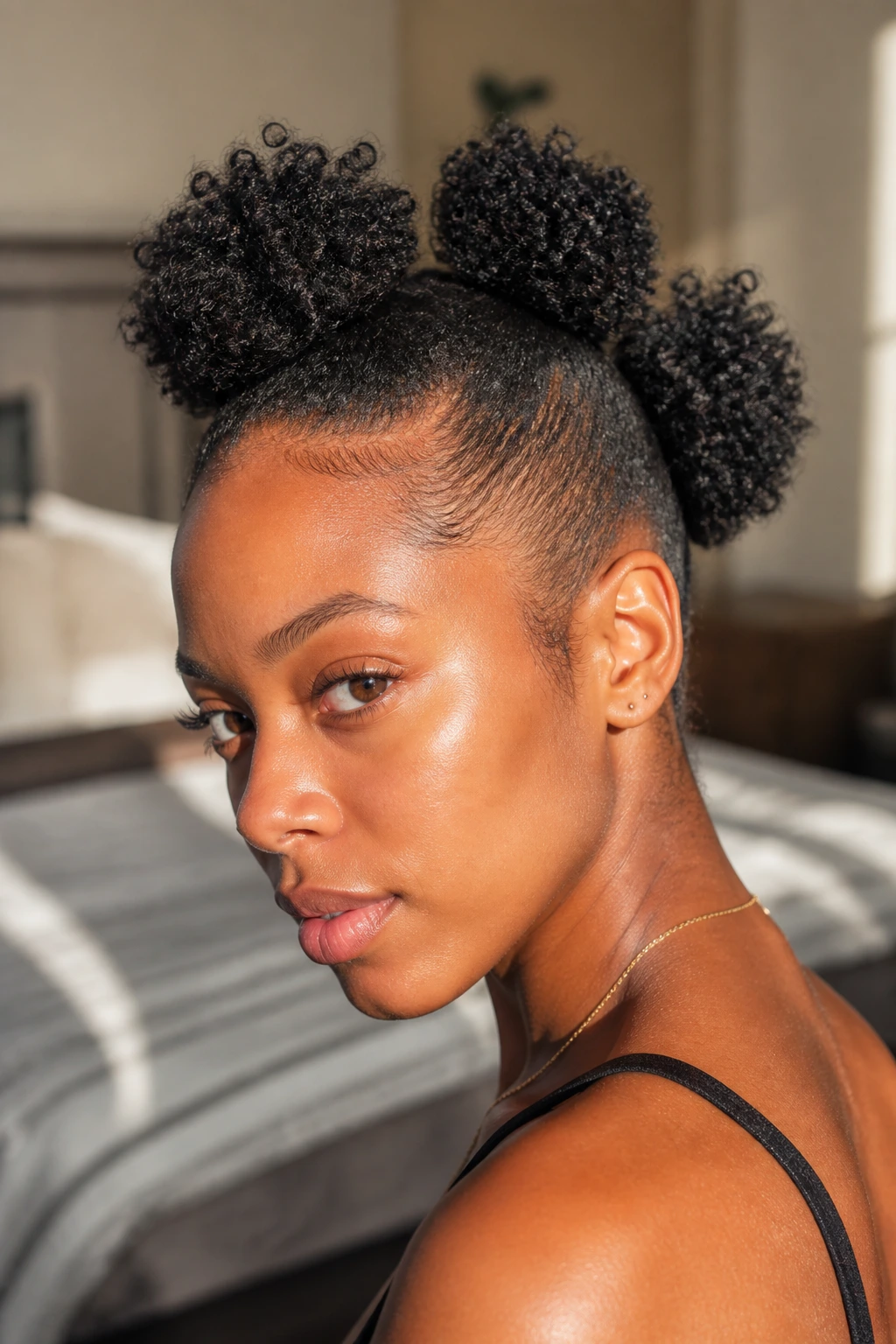
A curly puff mohawk is playful without looking childish, which is harder to pull off than people think. The center strip usually becomes two or three small puffs, depending on how much length you have. On short natural hair, that shape gives you lift in sections instead of one lump in the middle.
It is easy to build, too. Gather the hair into little ponytails along the ridge, fluff each section with your fingers, and let the ends spring where they want. The trick is not to over-smooth the base. If the roots are laid too flat, the puffs lose their shape.
This is one of the few styles where a bit of unevenness can help. Slightly different puff sizes make the mohawk feel lively, not stiff. It looks best when the hairline is neat but the center has movement.
10. Feed-In Braid Hawk
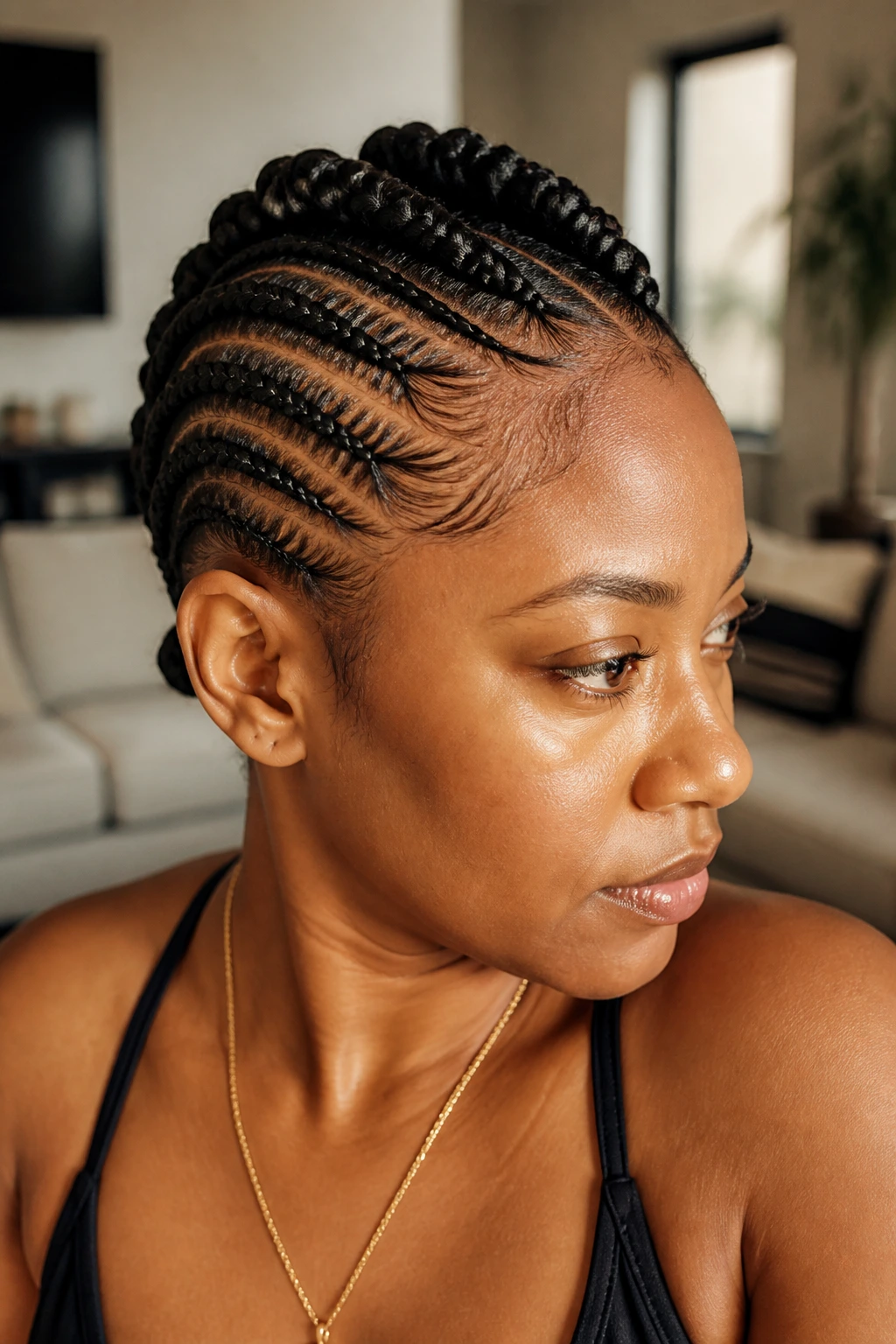
Feed-in braids turn a short mohawk into something longer and more dramatic without asking your natural hair to do all the work. The braids start slim at the scalp, then build as hair is added, creating a ridge that can run straight back or arc slightly upward. It is a smart choice when you want length but not loose ends flying everywhere.
The feed-in method matters because it keeps the base flatter. That smooth start helps the style sit closer to the head, which is a big deal on short hair. Too much bulk at the root and the look turns heavy fast. The braid should feel supported, not stuffed.
Best details to notice
- Keep the braid size consistent so the ridge stays even.
- Choose braiding hair that matches your texture closely if you want a natural finish.
- Finish with mousse and a light wrap so the braids settle down overnight.
11. Sponge-Curl Hawk
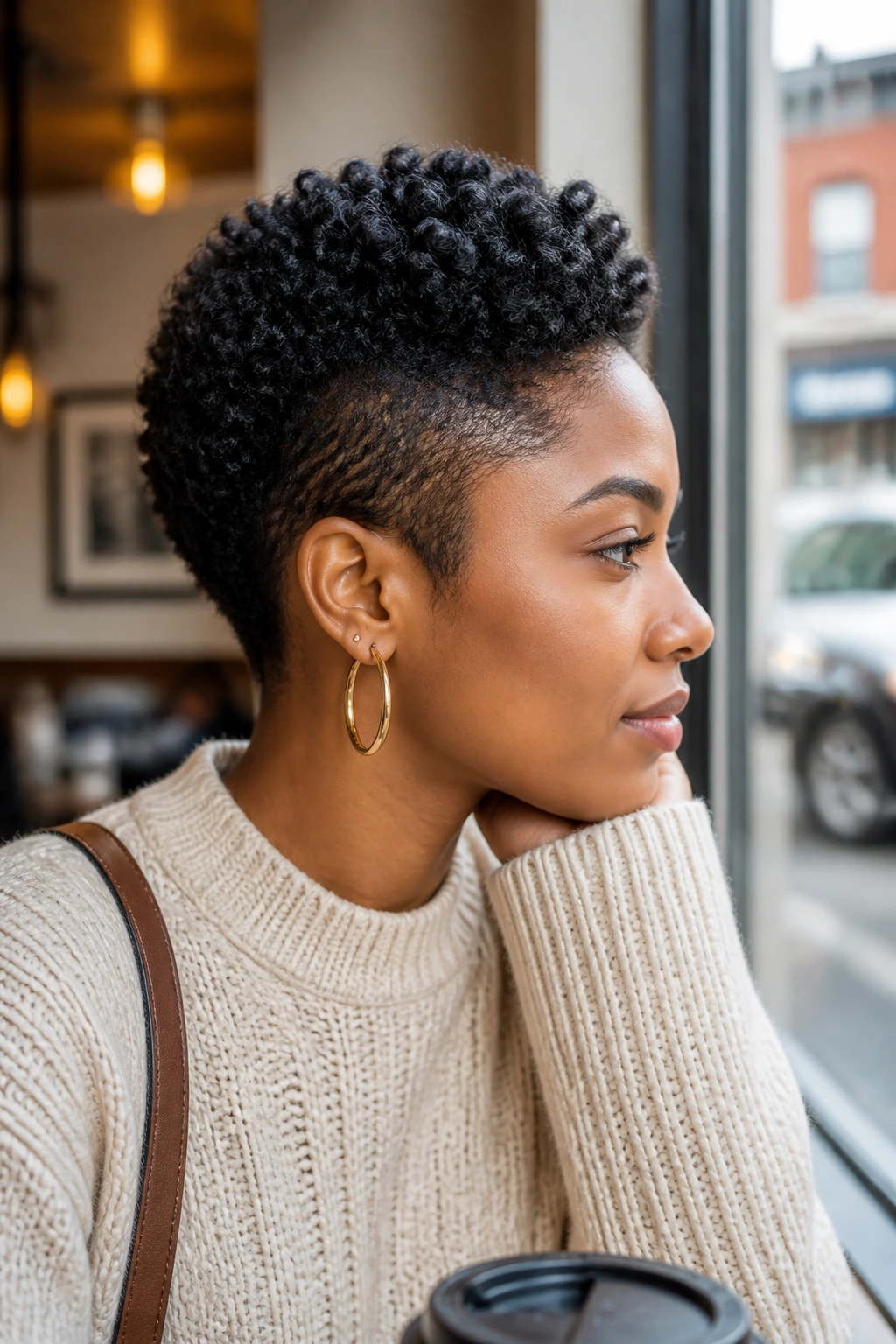
A sponge-curl hawk is the shortcut style that still looks intentional. It works on very short natural hair, especially when the top has enough length for the sponge to catch. The sides stay low and clean while the center takes on that tight, textured swirl that looks good from every angle.
Use the sponge on damp, product-coated hair, moving in one direction and not scrubbing all over the scalp. That creates more control. A small circular motion can help, but too much pressure roughs up the cuticle and makes the curls fuzzy instead of defined.
This one is best when you want low effort and a sharp outline. It is not the style for a sleek event look. It is the style for a morning when you want the hair to do its own thing and still look styled.
12. Side-Part Tapered Hawk
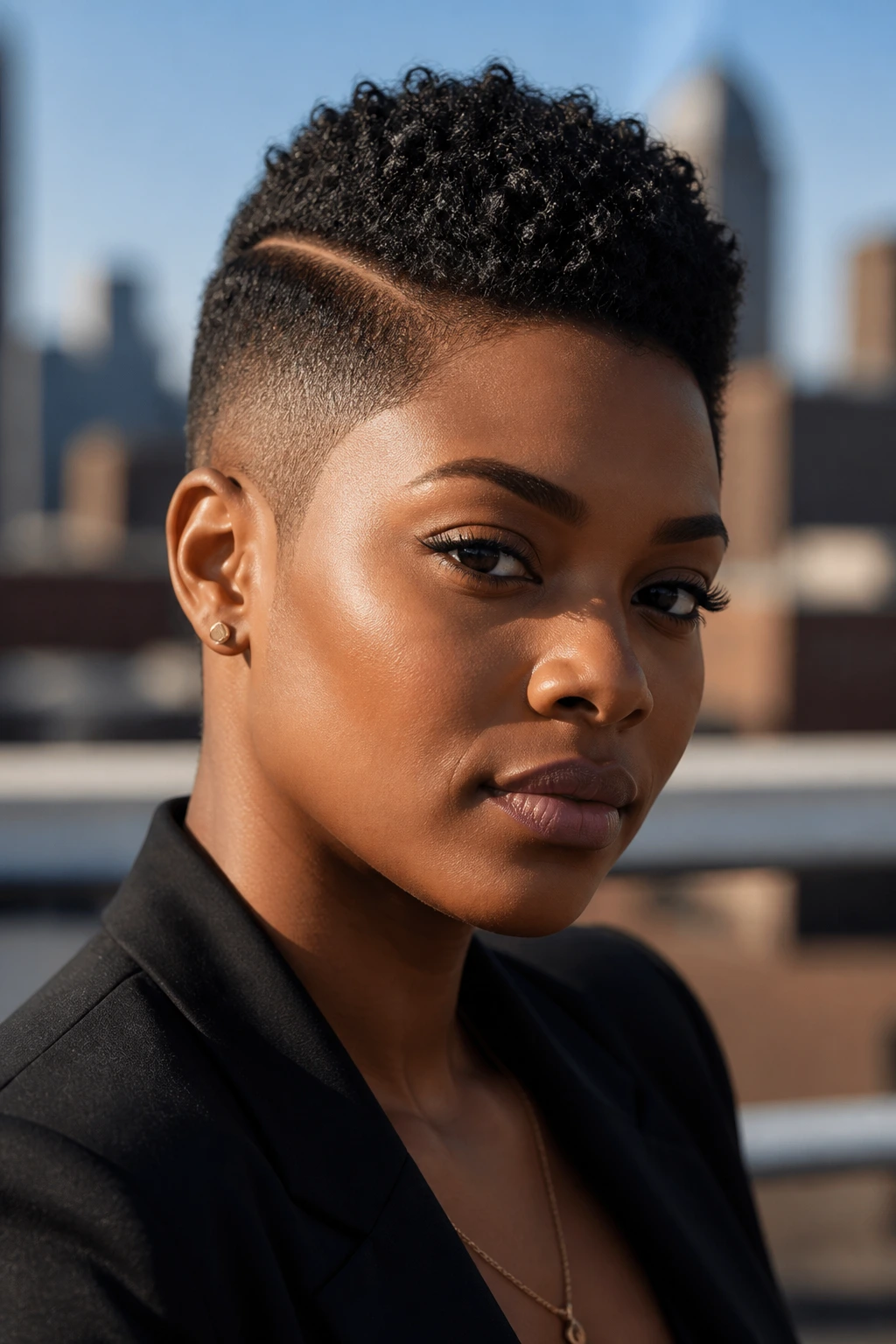
A side-part tapered hawk gives the classic mohawk shape a calmer attitude. The part shifts the center line a little off axis, which makes the style feel deliberate rather than stiff. With the sides cut low and the top brushed over just enough to show the part, the whole thing reads clean and mature.
I like this one on women who want a mohawk silhouette without the full drama of a tall center ridge. The part softens the shape. The taper keeps it grounded. It can be a good choice for work settings where you want personality, not noise.
Use a rattail comb for the part and keep it sharp. Once the hair starts to puff, the part gets lost and the style loses its quiet edge. A little holding spray at the roots helps.
13. Loc Hawk with Loose Ends
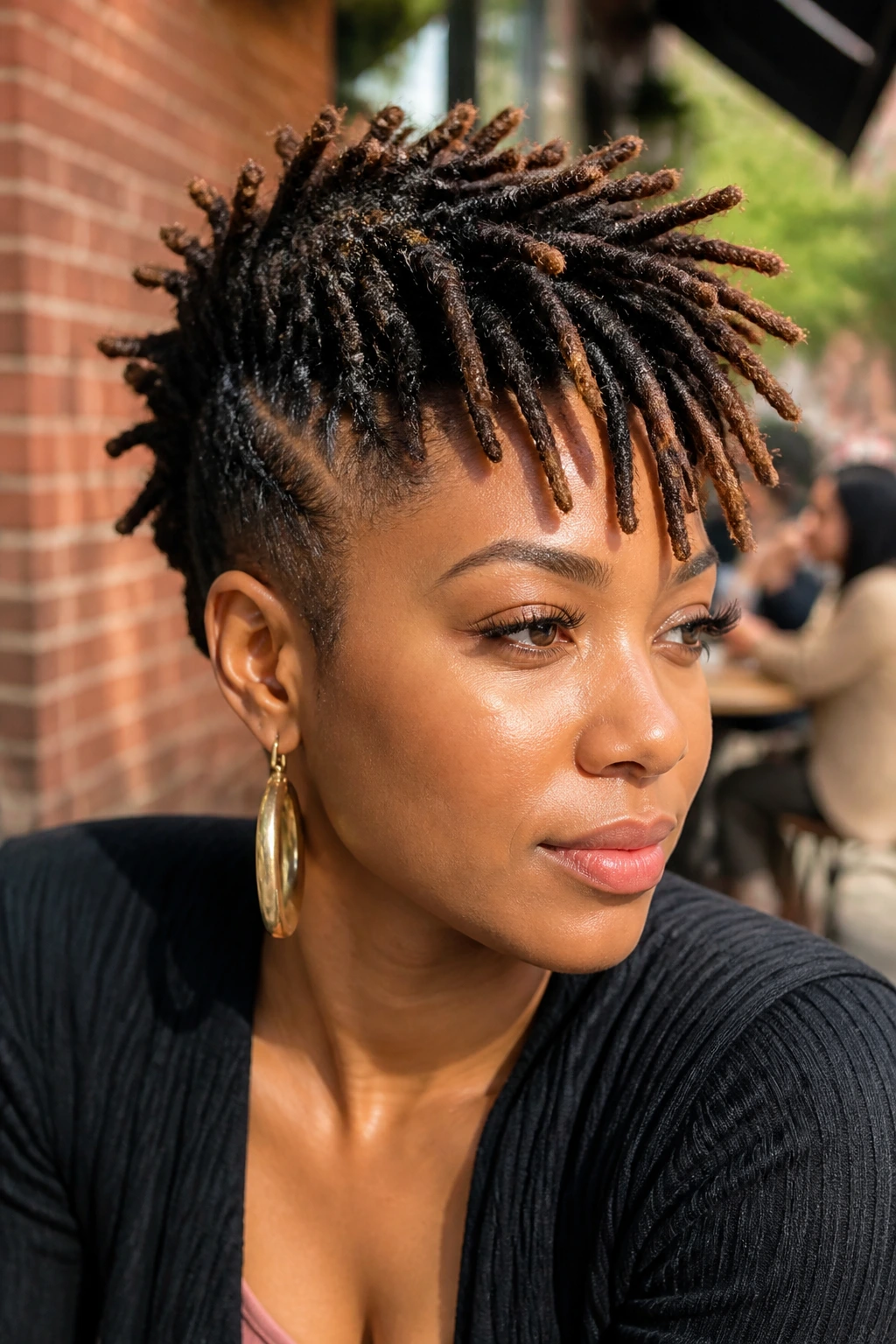
If you have short locs, a mohawk shape can make them look lighter and more sculpted. Pull the locs toward the center ridge and let the ends stay loose or tuck them under for a cleaner finish. The shape frames the face in a way that works especially well when the sides are kept low or tapered.
This style does not need much convincing. Locs already bring texture and weight, so the mohawk shape just gives them direction. A few well-placed pins can change the entire outline.
Styling note
Keep the base secure but not packed tight. If the locs sit too low at the back, the shape can sag by the end of the day. A light wrap at night helps the ridge keep its line without frizzing up at the edges.
14. Marley Twist Faux Hawk
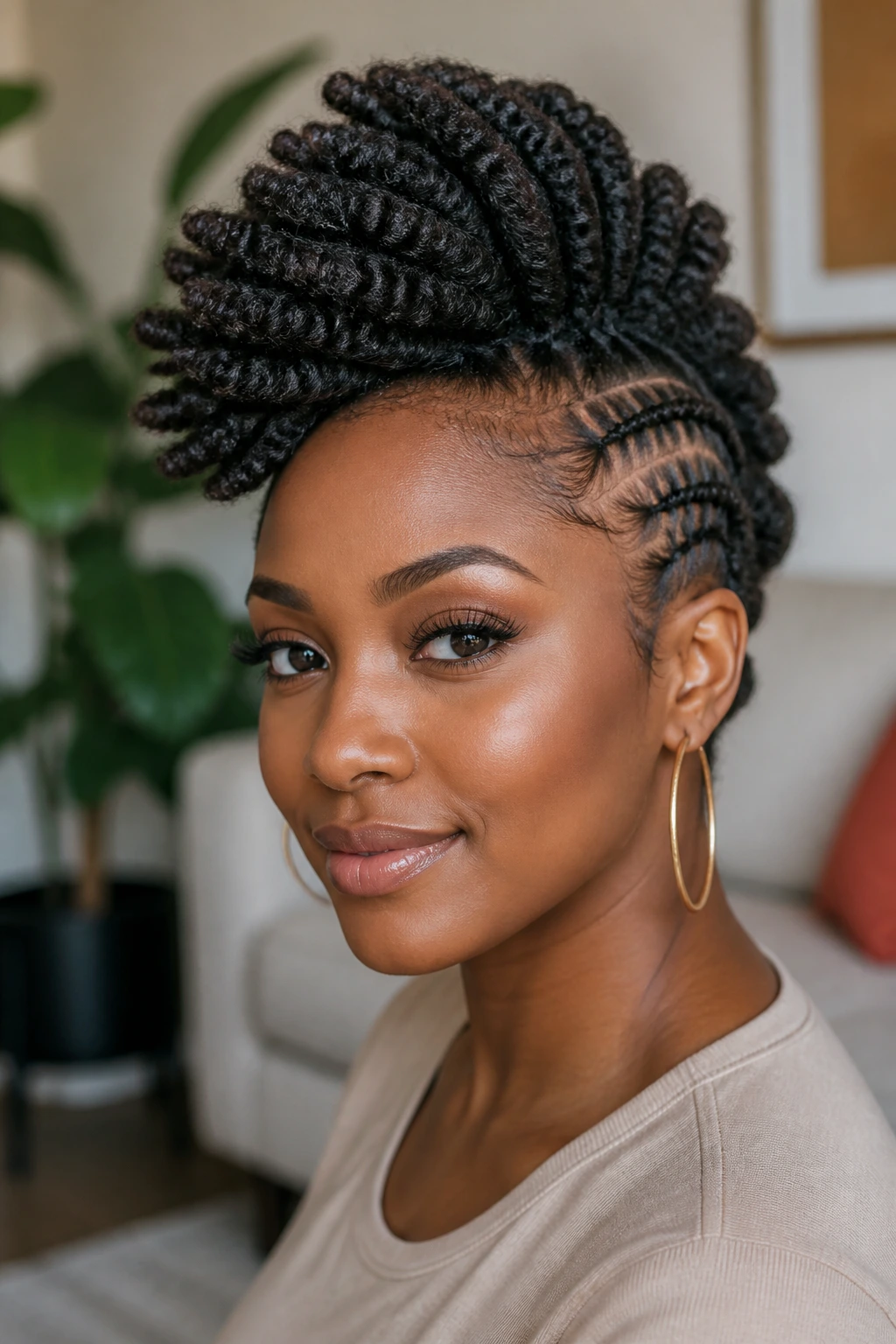
A Marley twist faux hawk gives you bulk without asking your own hair to be long. Marley hair adds matte fullness, which makes the center ridge look plush and soft rather than shiny and stiff. It is a smart option for dressier days, photo sessions, or any moment when you want the mohawk to read bigger.
The style works best when the twists are pinned upward in a staggered line. If every twist sits at the same height, the look can feel flat. Give the front a little lift, then let the back settle slightly lower. That tiny slope keeps the eye moving.
Use lightweight pins and hidden anchor points. If the hair feels too heavy by midday, there is too much extension hair in the pile. Better to build a slim, stable ridge than a bulky one that slides around.
15. Teeny-Weeny Afro Hawk
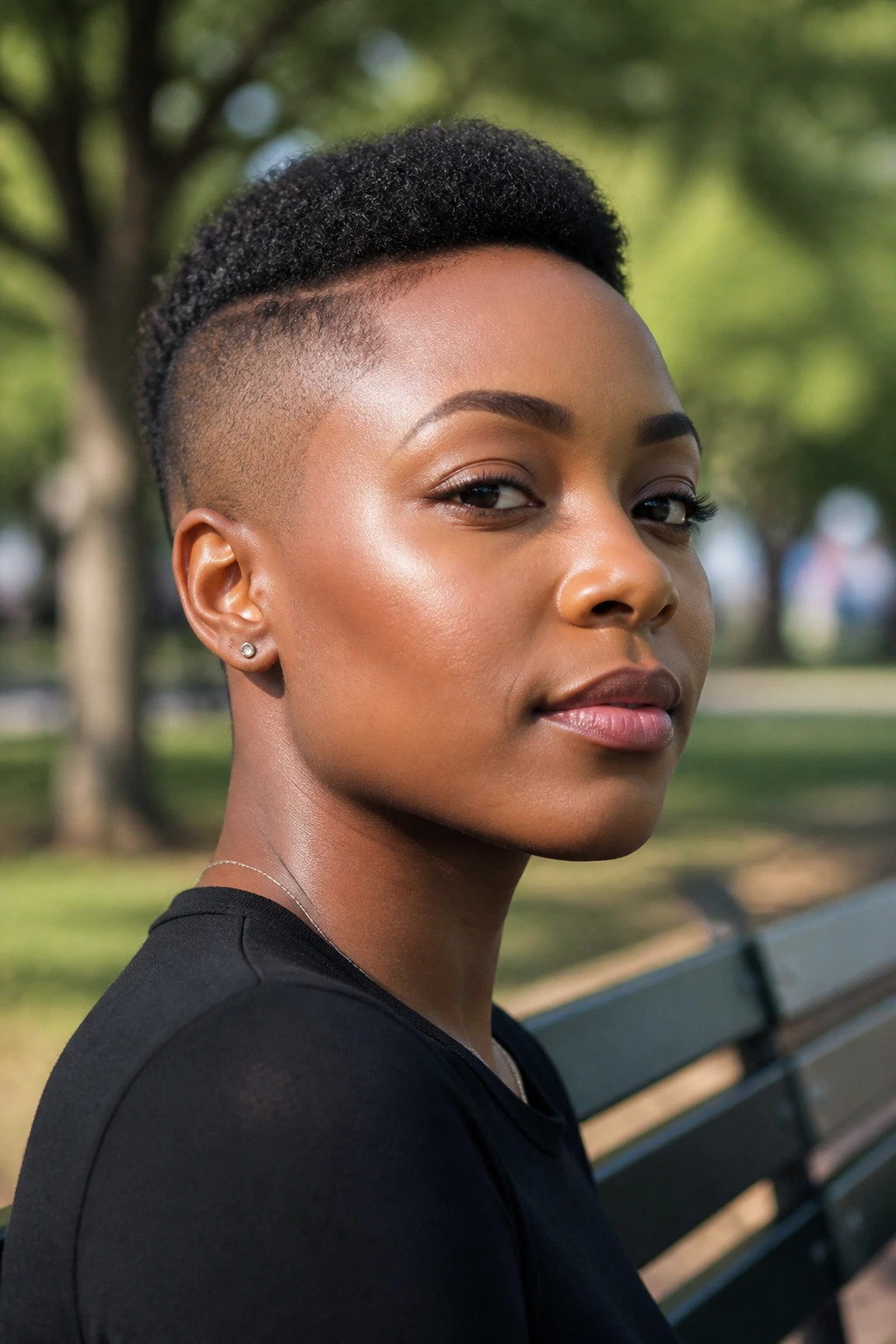
A teeny-weeny afro hawk is proof that you do not need much length to get a mohawk shape. With the sides shaped low and the center left slightly fuller, the silhouette reads immediately, even on a short crop. It is neat, minimal, and easier to maintain than most people expect.
This style depends on the line around it. The hair itself can be short, but the edges, temple fade, and neckline need to be clean. That outline is what sells the shape. If the perimeter is fuzzy, the whole style feels unfinished.
A small pick at the top or a bit of styling foam can lift the center just enough. Don’t chase height that the hair does not want to give. A modest hawk with a great shape usually looks better than a forced one.
16. Copper-Tipped Mohawk
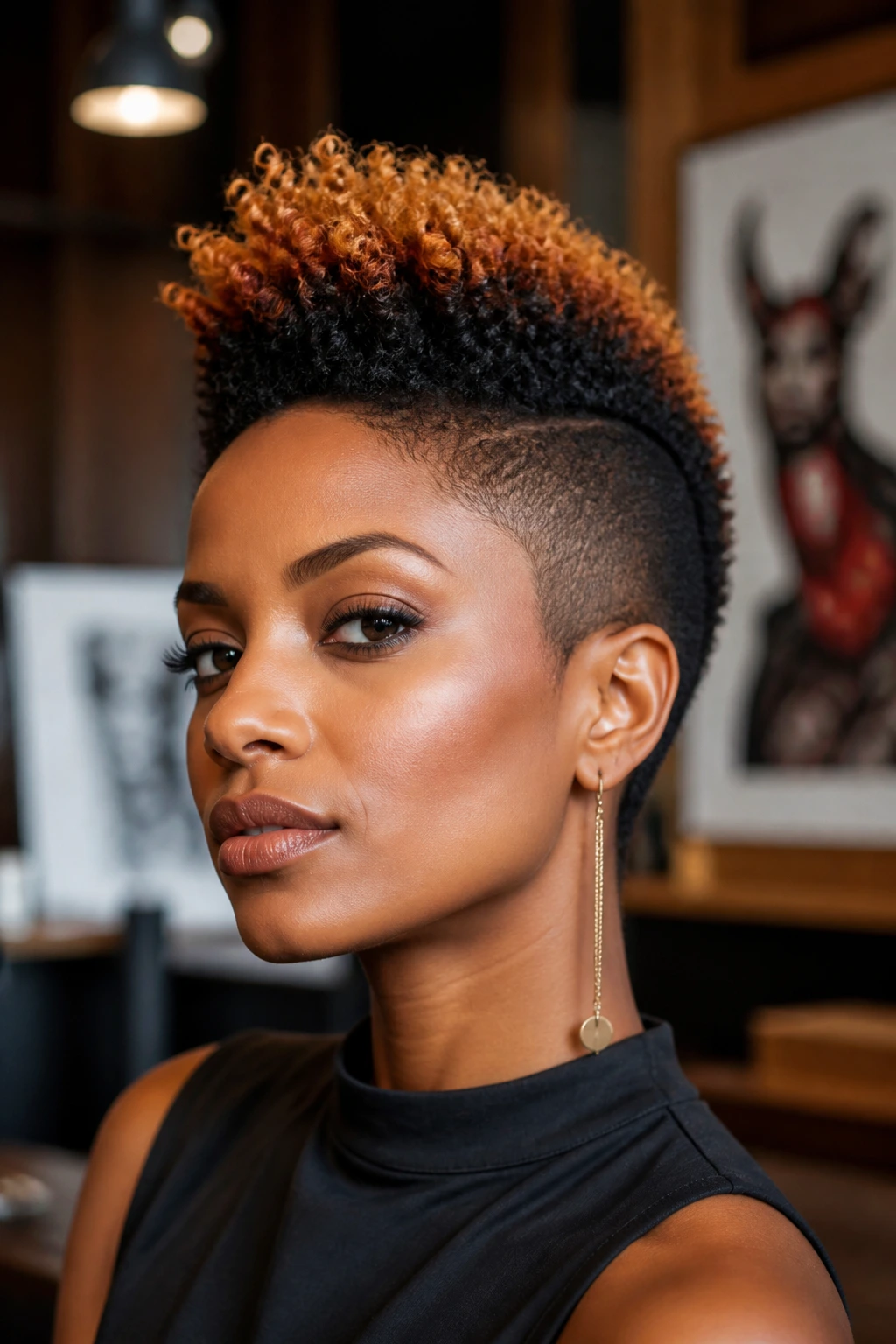
A little color changes the whole attitude of a mohawk. Copper tips on a short frohawk or twist hawk can make the texture pop, especially when the top catches light and the sides stay dark and close. You do not need full-head color to get a strong effect. Sometimes the ends are enough.
Temporary color wax, semi-permanent dye, or a few strategically lightened tips can all work. The useful part is restraint. A mohawk already has shape; color should underline it, not swallow it. Too much contrast can make the style look costume-like.
Do a strand test first. Color on textured hair can shift faster than you expect, and the curls may dry out if you skip conditioning. A moisture mask after coloring is not optional. It is the price of keeping the top soft.
17. Undercut Curly Hawk
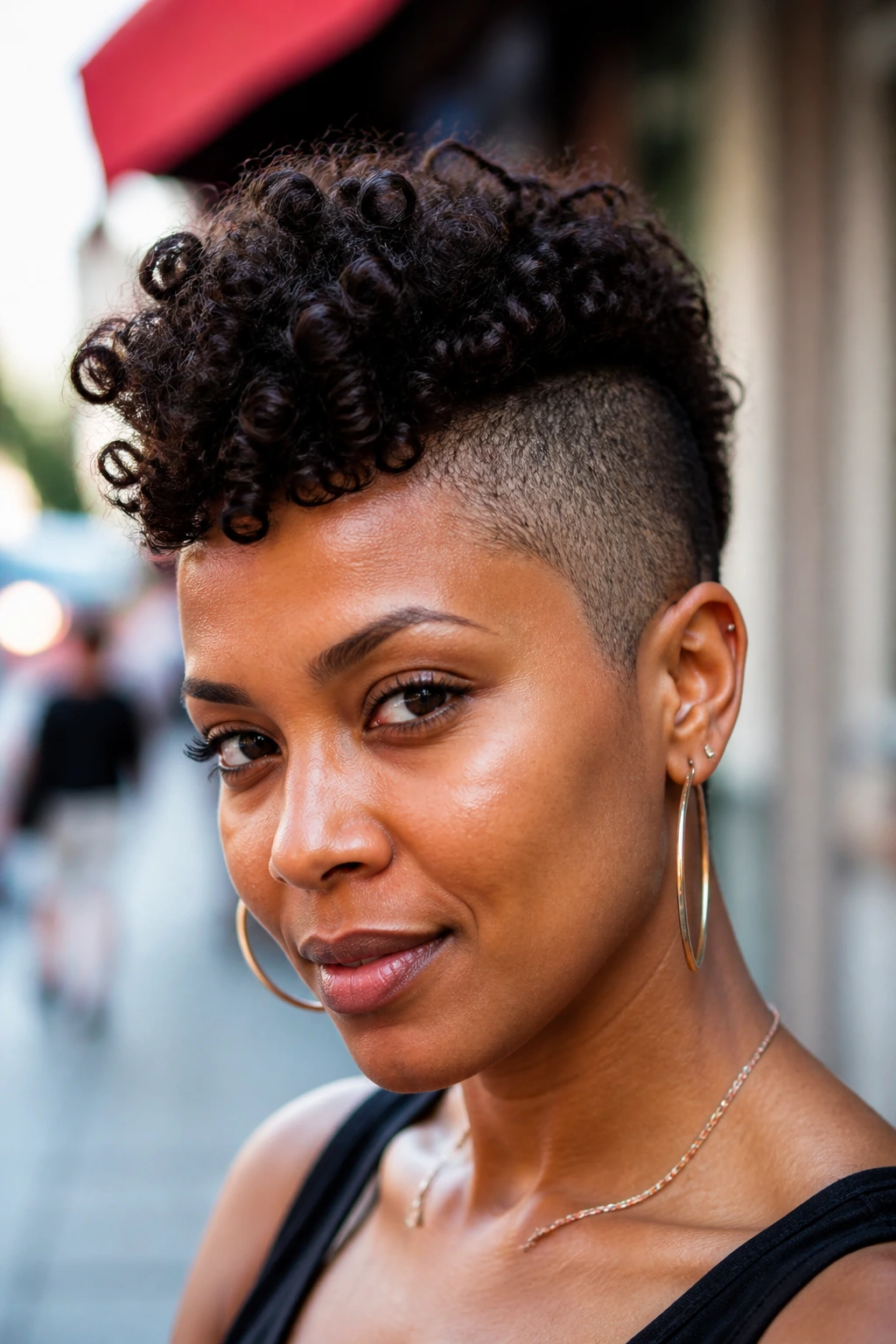
An undercut curly hawk is sharper than a taper and cleaner than a loose frohawk. The sides are cut close enough to make the top feel suspended above them, which gives the curls a strong outline. If you like contrast, this is a good one.
It works especially well on short curls with enough density to stand up on their own. A diffuser helps, but the haircut does most of the heavy lifting. The undercut turns the center strip into a real focal point, and that is the whole point of the style.
Keep the undercut line fresh. Once the sides grow in too much, the style loses its bite and starts looking like a regular rounded crop. This one looks best when the barber’s work stays visible.
18. Mohawk with Shaved Designs
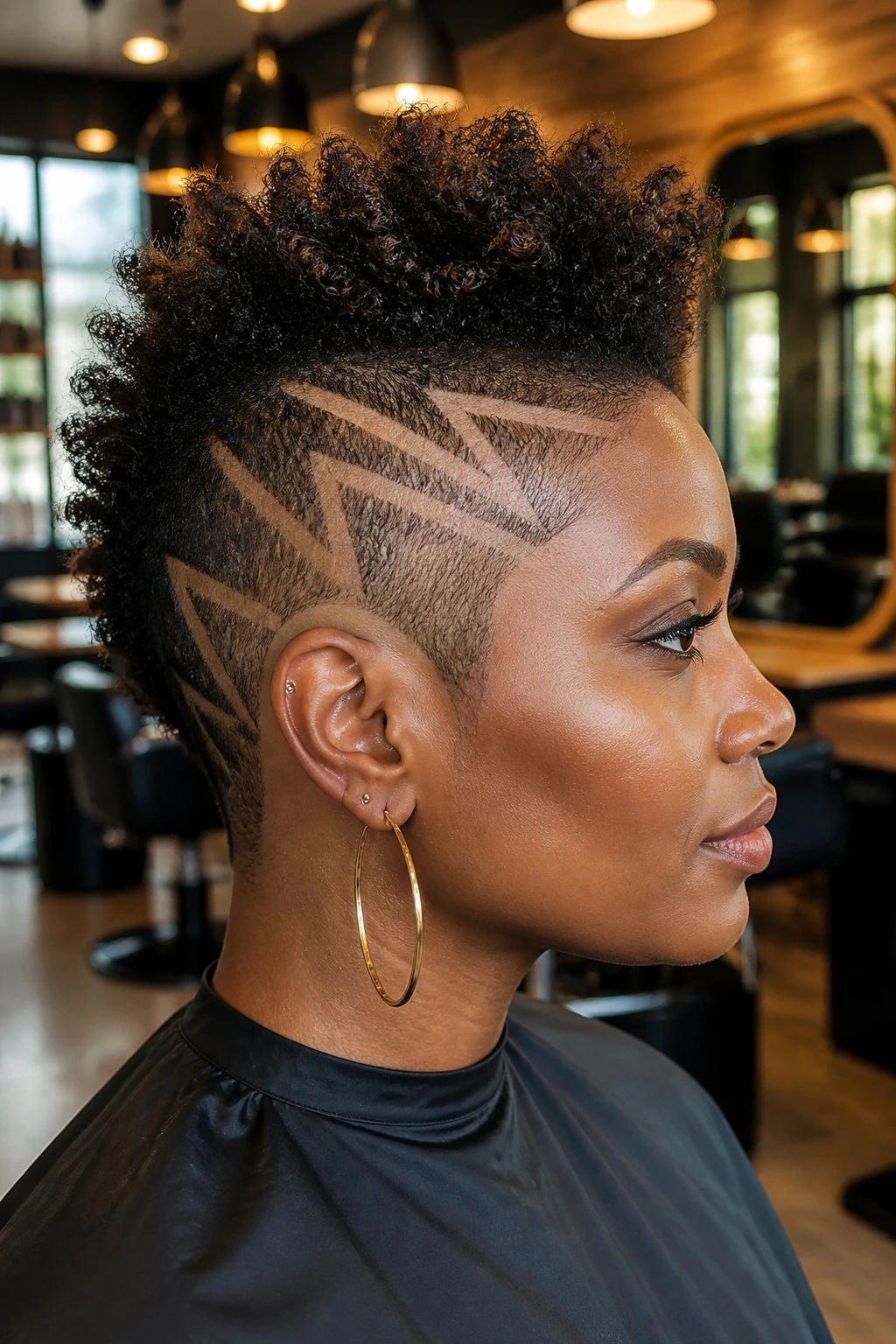
Shaved designs turn the sides into part of the hairstyle instead of the background. Lines, curves, zigzags, stars, or a single crisp slash can all work, as long as the design fits the hair length and density. On very short hair, a simpler design often reads stronger.
The best version of this style is neat enough to hold up close and bold enough to notice from a distance. That balance matters. Too much detail on a short hawk can get messy fast, especially once the sides begin to grow in.
Ask for a design that can survive a week or two of growth without looking broken. Thin lines usually do better than elaborate patterns. The cut should still look good if you miss your next appointment by a few days.
19. Short Twist-Out Hawk
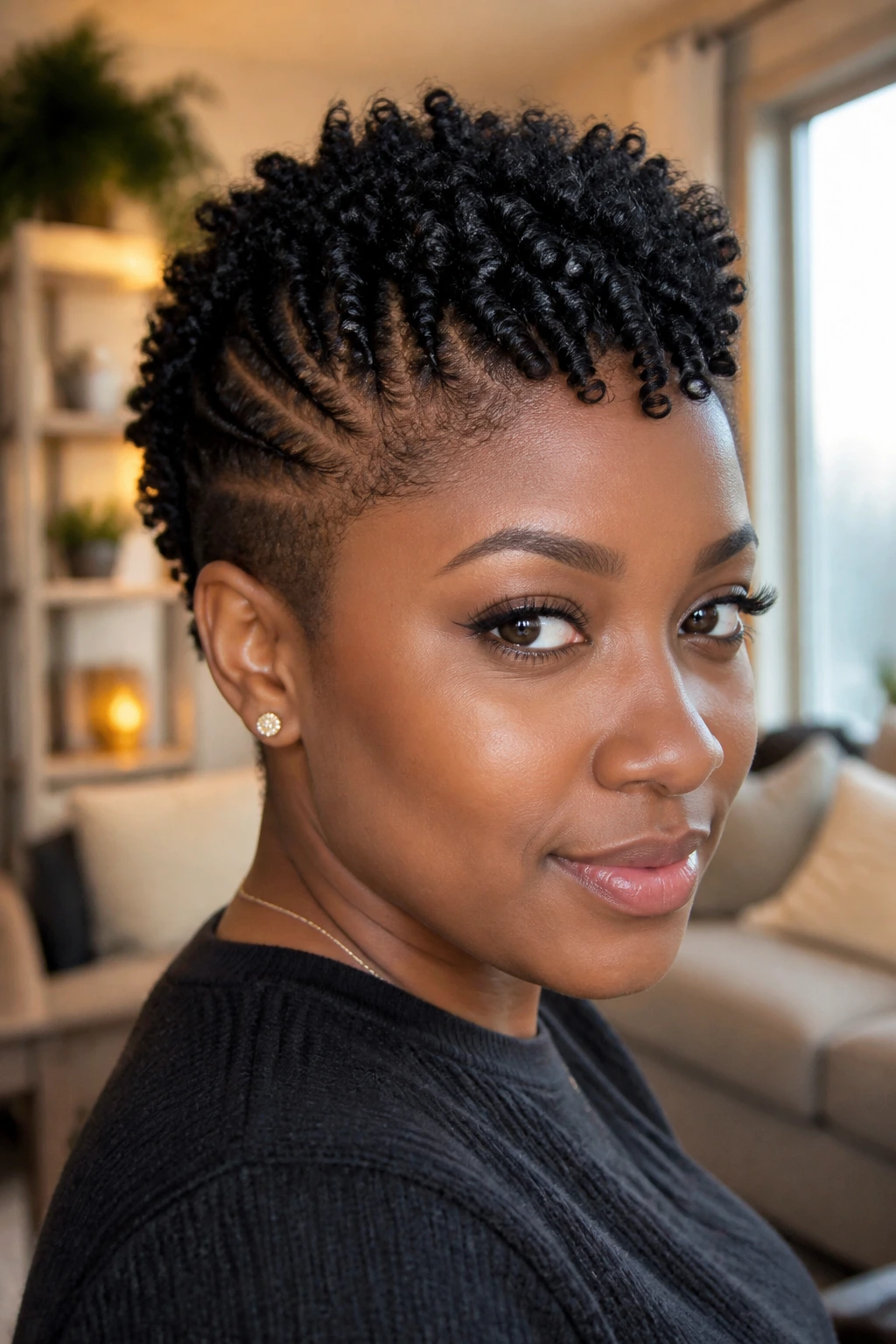
A short twist-out hawk gives you a softer ridge than a puff or a slicked style. Twist the hair in small sections, let it dry completely, then separate it gently so the center forms a fluffy line. The shape is loose, but not lazy.
This style is great when your hair wants body. The twist pattern stretches the curls just enough to show length, and the twist-out adds a bit of lift at the roots. If the top sits around 2 to 4 inches, the result can look surprisingly full.
Do not unravel while the hair is still damp. That is how you end up with frizz instead of definition. A little patience here pays off fast, because the final texture is the whole point of the style.
20. Wash-and-Go Mohawk
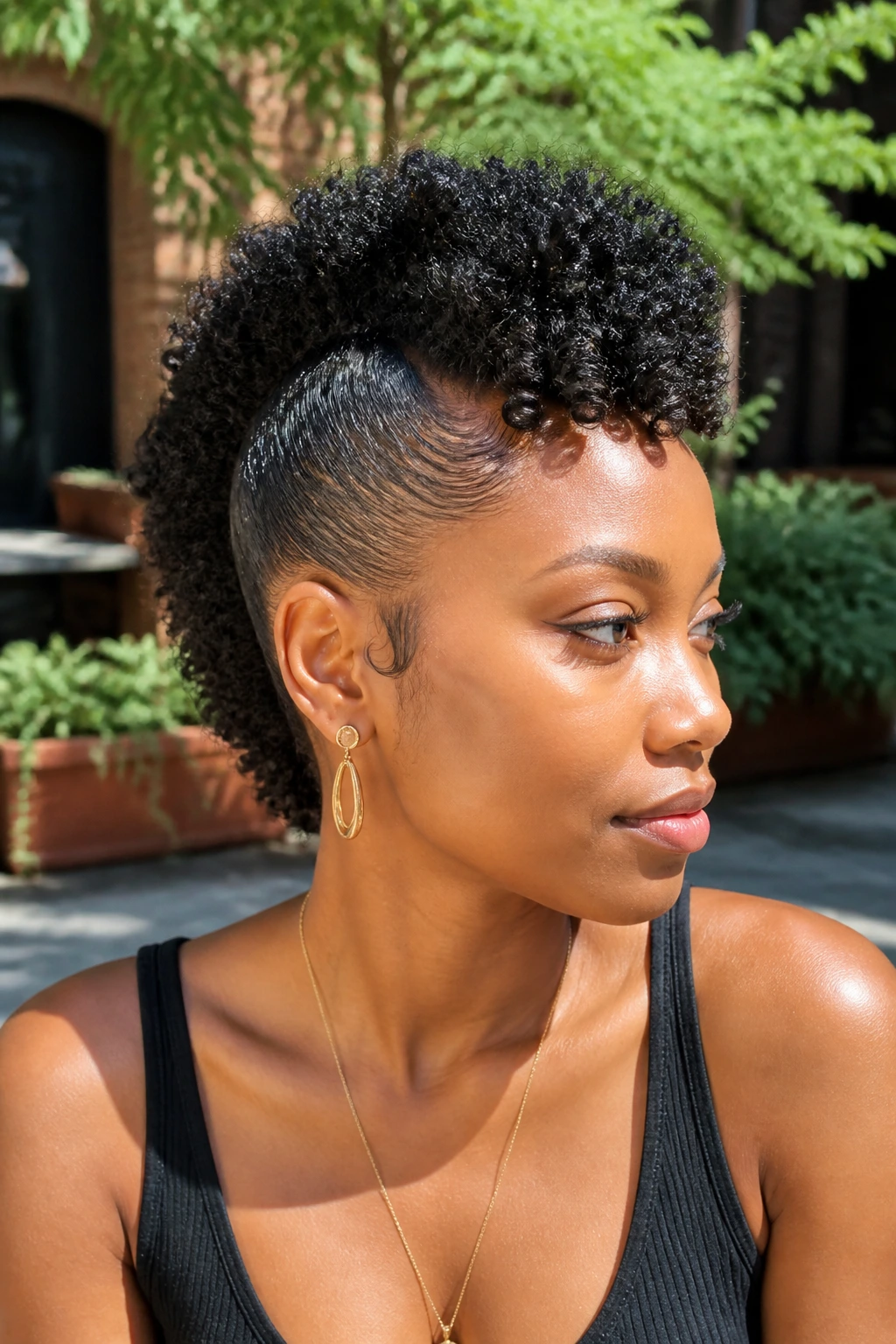
A wash-and-go mohawk is the style for days when you want your curl pattern to do the talking. The top stays defined and hydrated, while the sides are slicked or shaped low so the center strip reads clearly. It is simple, but simple done well is not easy.
The curl product matters more here than almost anywhere else. You want a styler that gives hold without turning the hair into a stiff shell. If your curls clump well, a gel with medium hold and a diffuser can give you a clean ridge. If they frizz easily, layer a light cream under the gel.
Humidity can change this style fast. That is why the sides need to stay neat. If the top expands a little, the contrast still keeps the mohawk readable.
21. Rod-Set Hawk
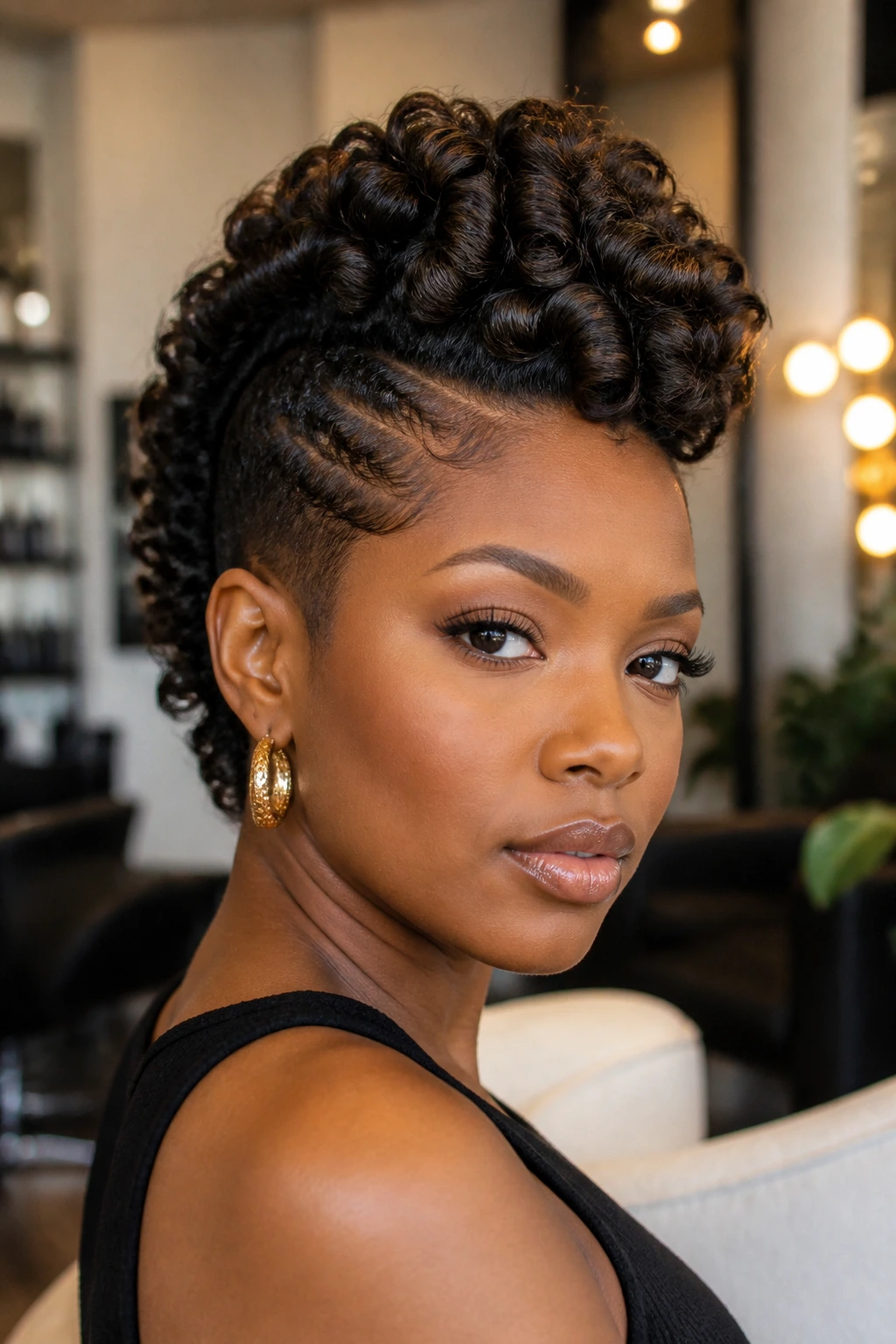
Rod sets give a mohawk a springy, polished curl that looks a little more finished than a plain wash-and-go. The rods can sit only on the center strip, which keeps the sides smooth and the top clearly defined. Smaller rods create tighter curls; bigger rods give a softer bend.
How to get the shape right
Set the rods in clean, even rows so the curl direction does not fight itself. If the sections are uneven, the center ridge can look crooked once the rods come out. Full drying is non-negotiable here. If the hair is still cool or damp at the core, the curl will collapse early.
This one is especially good when you want a style that can last through a couple of events. The curl pattern stays tidy. The silhouette stays tall. And the photo-friendly finish is a nice bonus.
22. Roller-Set Hawk
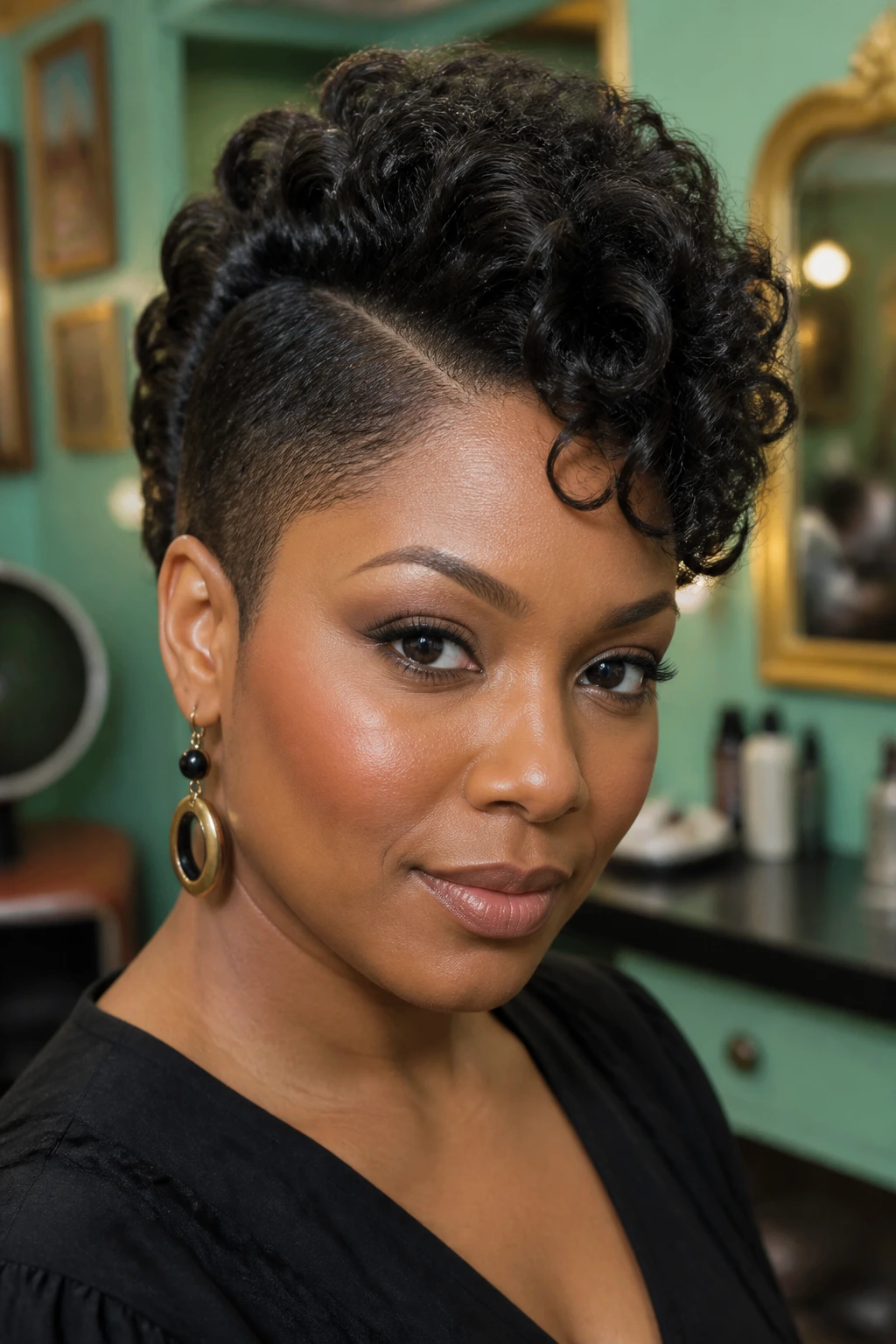
A roller-set hawk gives you smoother, rounder curls than rods, which can be a better match if you want the style to look soft instead of springy. The rollers lift the center and shape it into a clean ridge, while the sides stay low and close. It has a slightly old-school feel, and I mean that in a good way.
The larger the roller, the looser the curl. That matters because the hawk should match your face shape and your mood. A set that is too tight can make the style look busy. A moderate curl on top keeps the whole thing readable.
Sit under a dryer if you can. Roller sets reward patience. If you take them down too soon, the curls droop and the style loses its clean line.
23. Mohawk with Bangs
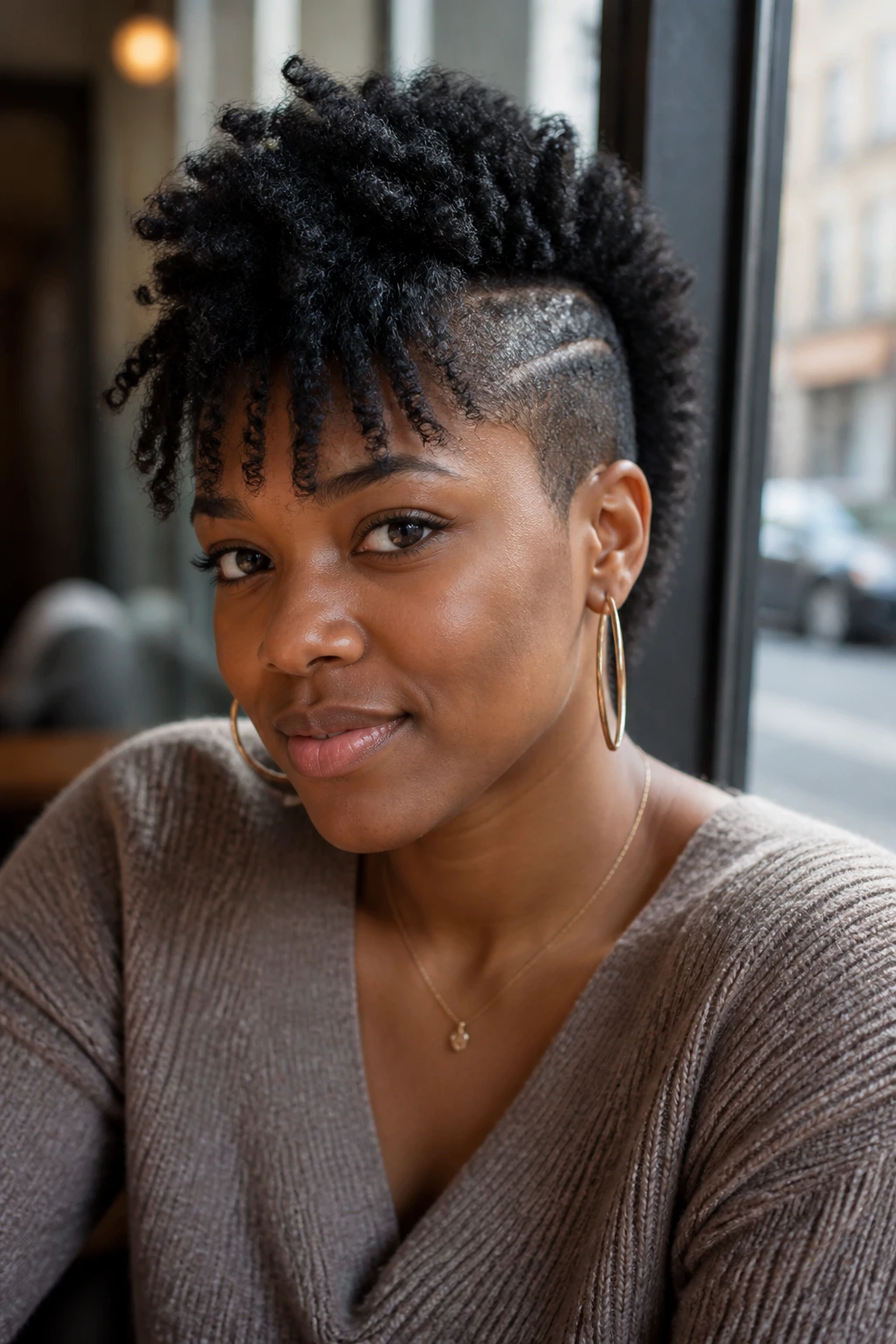
A mohawk with bangs softens the front of the face without giving up the shape in the middle. The bangs can sit curly, brushed to one side, or slightly tapered so they blend into the top. That front detail matters if you do not want the forehead to feel too open.
This style is a good fix for a hawk that needs a little balance. If the top is tall, bangs bring the eye forward. If the ridge is short, bangs add enough visual weight to make the cut feel finished. They also help when you want the look to read softer than a classic spiked mohawk.
Keep the bangs light. Heavy bangs can fight the center ridge and make the whole style sink. A little movement in the front usually looks better than a dense curtain.
24. Asymmetrical Hawk
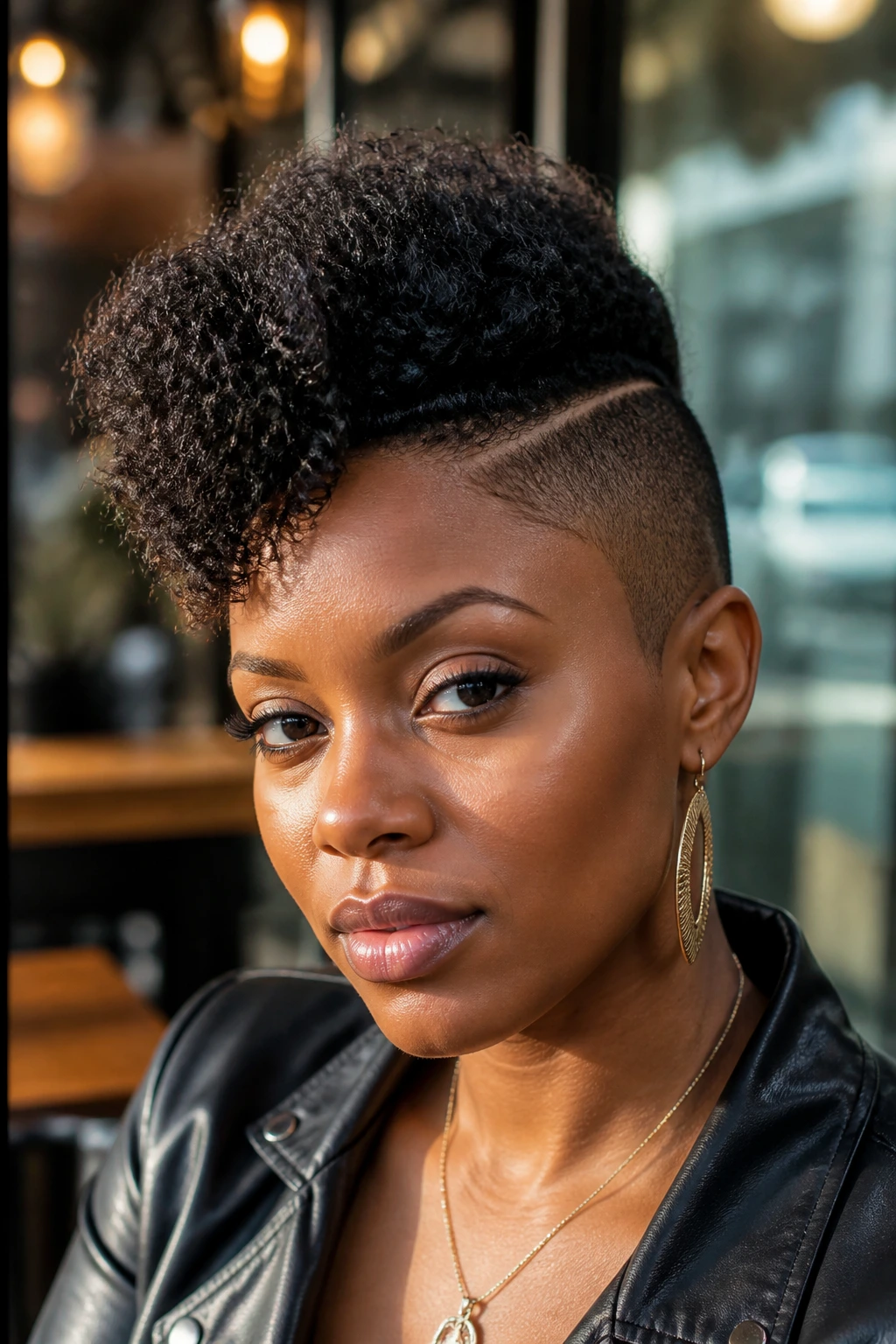
An asymmetrical hawk is for the woman who likes her hair a little off-center on purpose. One side can sit higher, fuller, or more textured than the other, and that imbalance becomes the design. Done well, it feels stylish rather than messy.
The important part is intention. If one side is fuller, the other side has to be cleaner. If one side has more height, the opposite side needs a sharper taper or a smoother laydown. That contrast is what makes the shape work.
This is not the cut for someone who wants symmetry and calm. It is the cut for someone who likes movement. If you lean into that, the style has a lot of personality without needing extra decoration.
25. Protective Updo Hawk
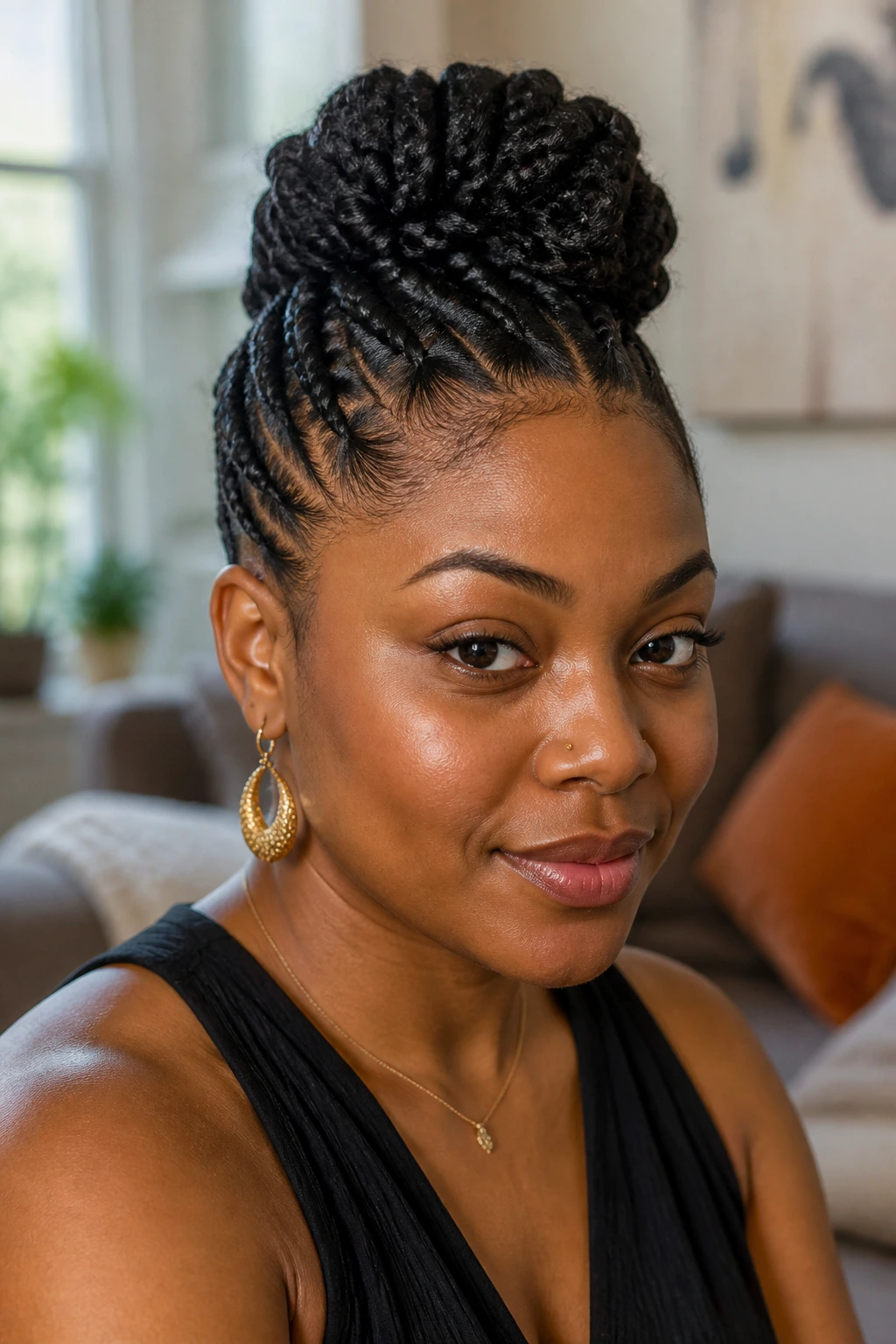
A protective updo hawk gives the center ridge a rest while still looking styled. Braids, twists, or pinned sections are stacked upward so the ends stay tucked away and the sides stay neat. It is one of the most practical mohawk shapes when your hair needs less daily handling.
The look can be very simple or a little more elaborate, depending on how many sections you build. Short hair makes the pattern visible fast. That means you do not need a lot of pieces to get a clean result. In fact, too many small parts can make the style feel busy.
This is a strong choice for travel or busy weeks. The style keeps its shape, and the ends stay protected. That combination is hard to beat when you need hair that cooperates.
26. Pompadour Hawk
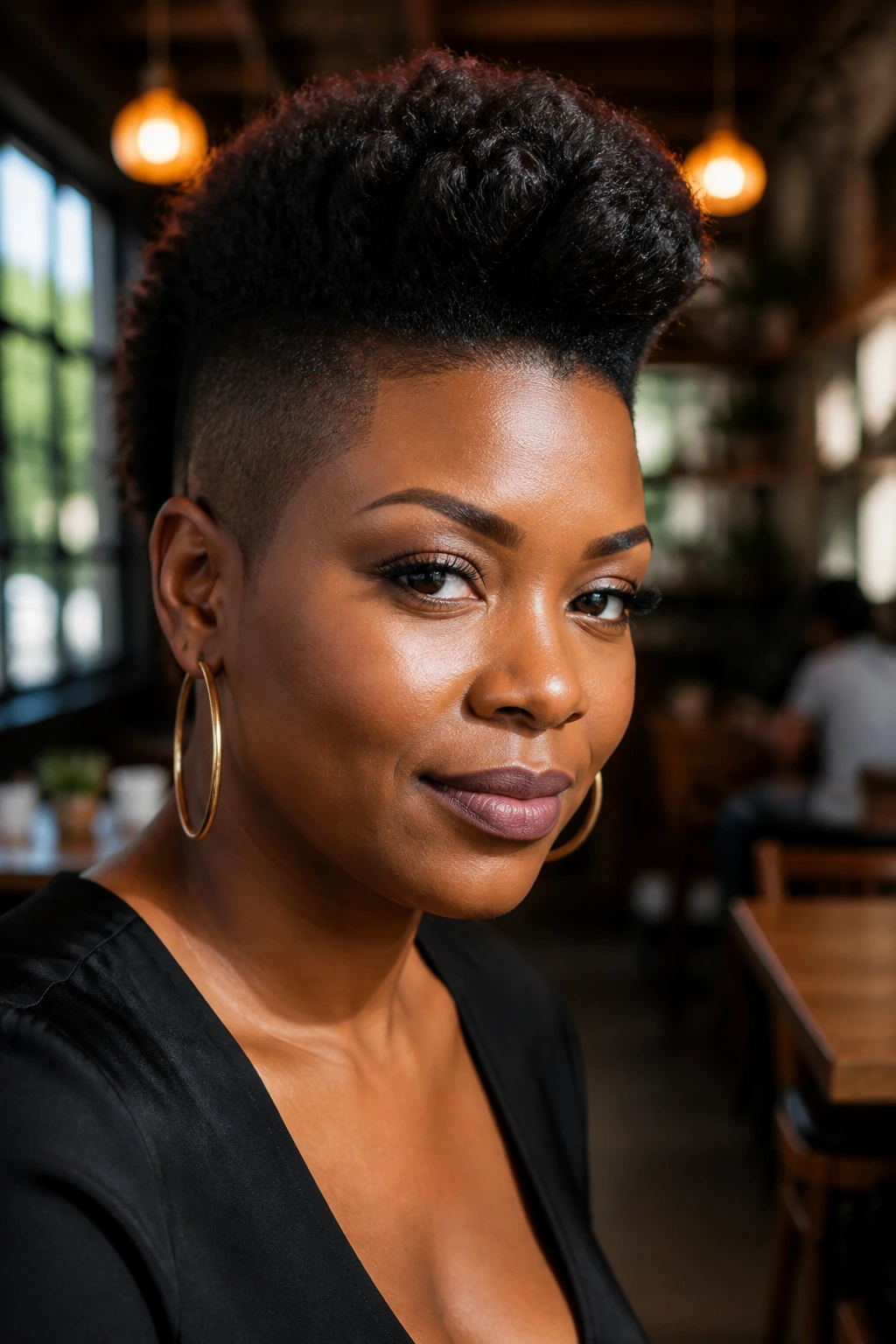
A pompadour hawk pushes the front section up and back, giving the style a lifted, almost vintage shape. On Black hair, the look can be soft and rounded rather than stiff, which is what makes it interesting. The sides stay low, and the front becomes the focal point.
This style benefits from a little root prep. Blow-dry the front on low heat with a round brush or stretch the hair before styling so the lift holds better. If the front is too short or too shrunken, the pompadour loses its curve.
It is a strong event look, but not a fragile one. A good pompadour hawk can survive a long evening if the base is secure. Use pins where the hair hides them, not where they can poke through.
27. Sculpted Gel Hawk
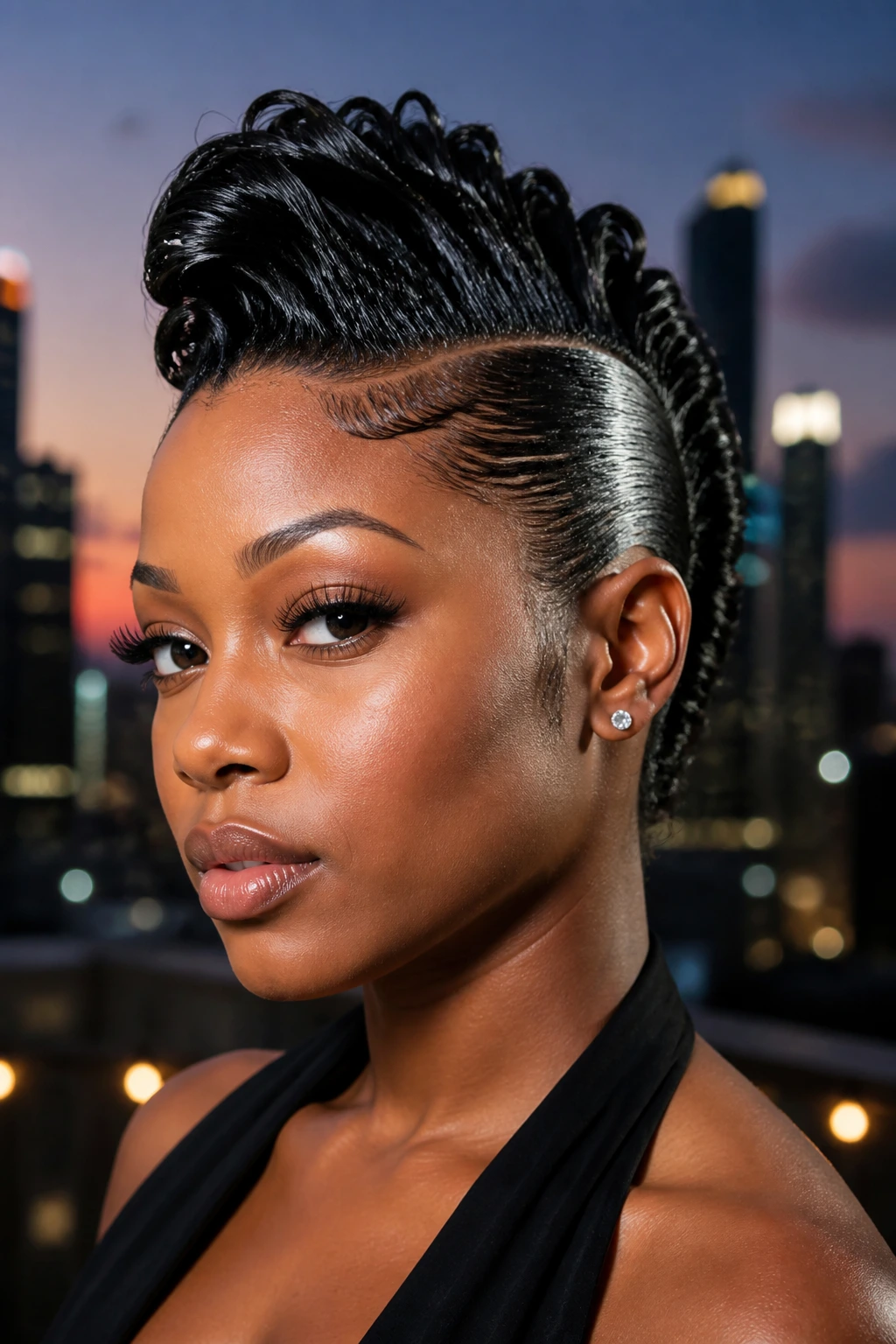
A sculpted gel hawk is the wet-look version of the style. The hair is brushed and molded into ridges or lifted waves, then left to dry into place. It is sleek, sharp, and a little dramatic — which is exactly why it works when you want a stronger finish.
What makes it different
The shape comes from the gel, not just the cut. That means the product choice matters more than usual. Go for a strong-hold, flake-resistant gel, and apply it to hair that is clean and not overloaded with oils. Too much oil underneath makes the style slip.
This is the mohawk I would pick for a night out or a photo-heavy event. The shine reads clean, but only if you keep the edges tidy. Once the top starts to dry unevenly, the sculpted lines go soft fast.
28. Scarf-Wrapped Hawk
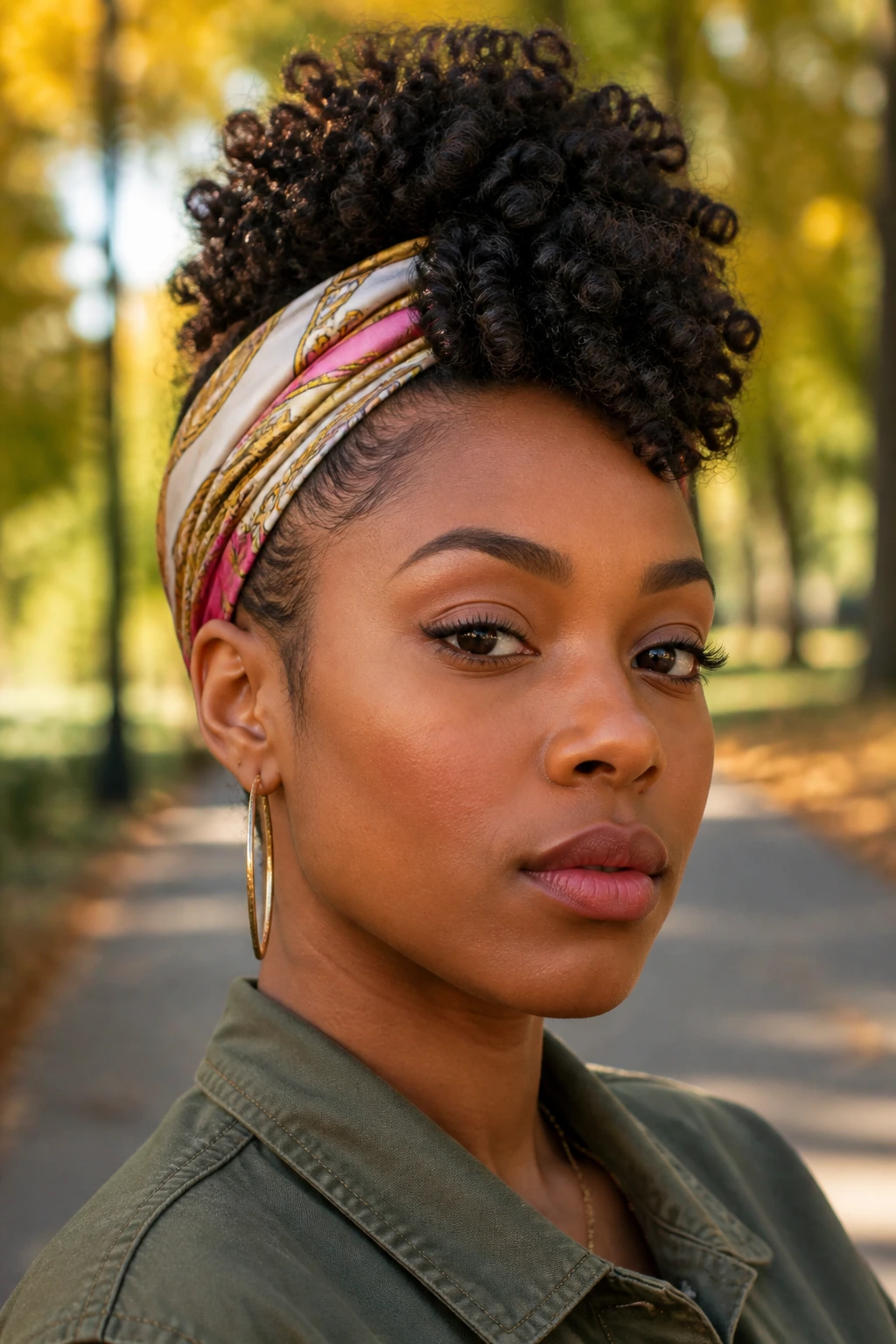
A scarf-wrapped hawk is less about changing the cut and more about finishing it with intention. A silk or satin scarf can be tied around the base, wrapped across the sides, or used to hold the front flat while the top keeps its height. It is practical and pretty, which is a rare and useful combination.
This style is especially handy when the hair needs a reset. A scarf can flatten frizz, preserve a twist-out, and hide parts that are growing out a little unevenly. It also gives the mohawk a styled look even on low-effort days.
Choose a scarf that feels smooth against the hairline. Rough fabric can snag coils and raise the cuticle. The scarf should help the shape, not fight it.
29. Side-Swept Frohawk
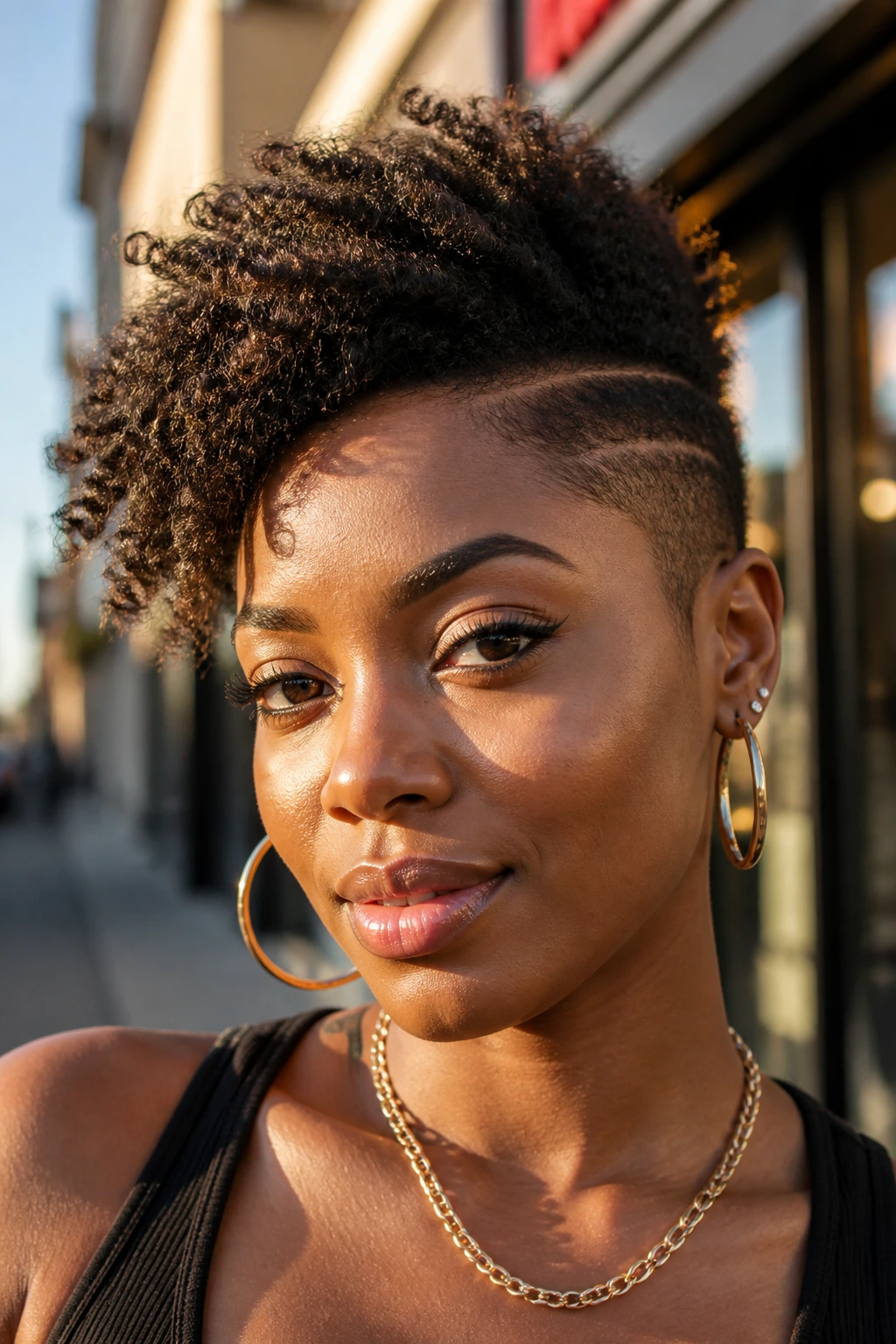
A side-swept frohawk leans into movement instead of straight-up height. The center hair is brushed diagonally, which creates a softer line across the head and gives the style a looser feel. It still reads as a mohawk, but the mood is gentler.
This shape works well when you want volume without too much drama. The side sweep can hide a little uneven growth, and it looks good on hair that has some length but not enough for a tall ridge. A pick at the roots and a light cream are usually enough.
The danger here is over-brushing. If you flatten the top too much, the style loses its lift and just becomes a side-swept puff. Keep the movement, but keep the shape.
30. Sisterloc Hawk
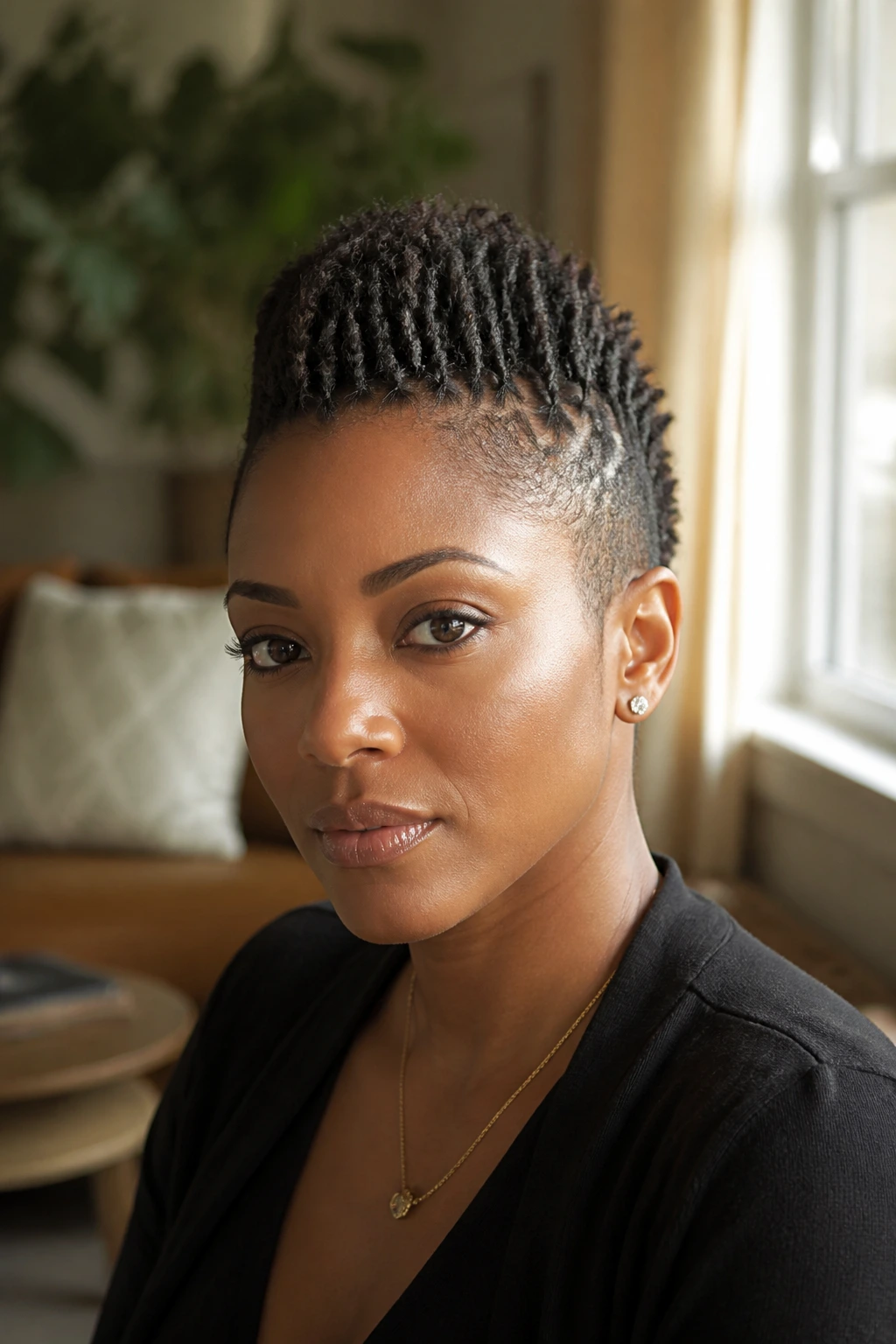
A sisterloc hawk is slim, neat, and surprisingly refined. The locs are gathered into a narrow ridge, which makes the silhouette long and clean. Because sisterlocs are lightweight, the shape often sits closer to the head than a larger loc style, and that gives the mohawk a very tidy profile.
This is one of those looks where restraint pays off. You do not need a massive pile of locs to make the hawk visible. A simple center line with a crisp base can look finished on its own.
Decorative cuffs or tiny pins can add detail, but don’t overload it. Sisterlocs already have a clean structure. Too many extras can make the style feel crowded.
31. Zigzag-Part Hawk
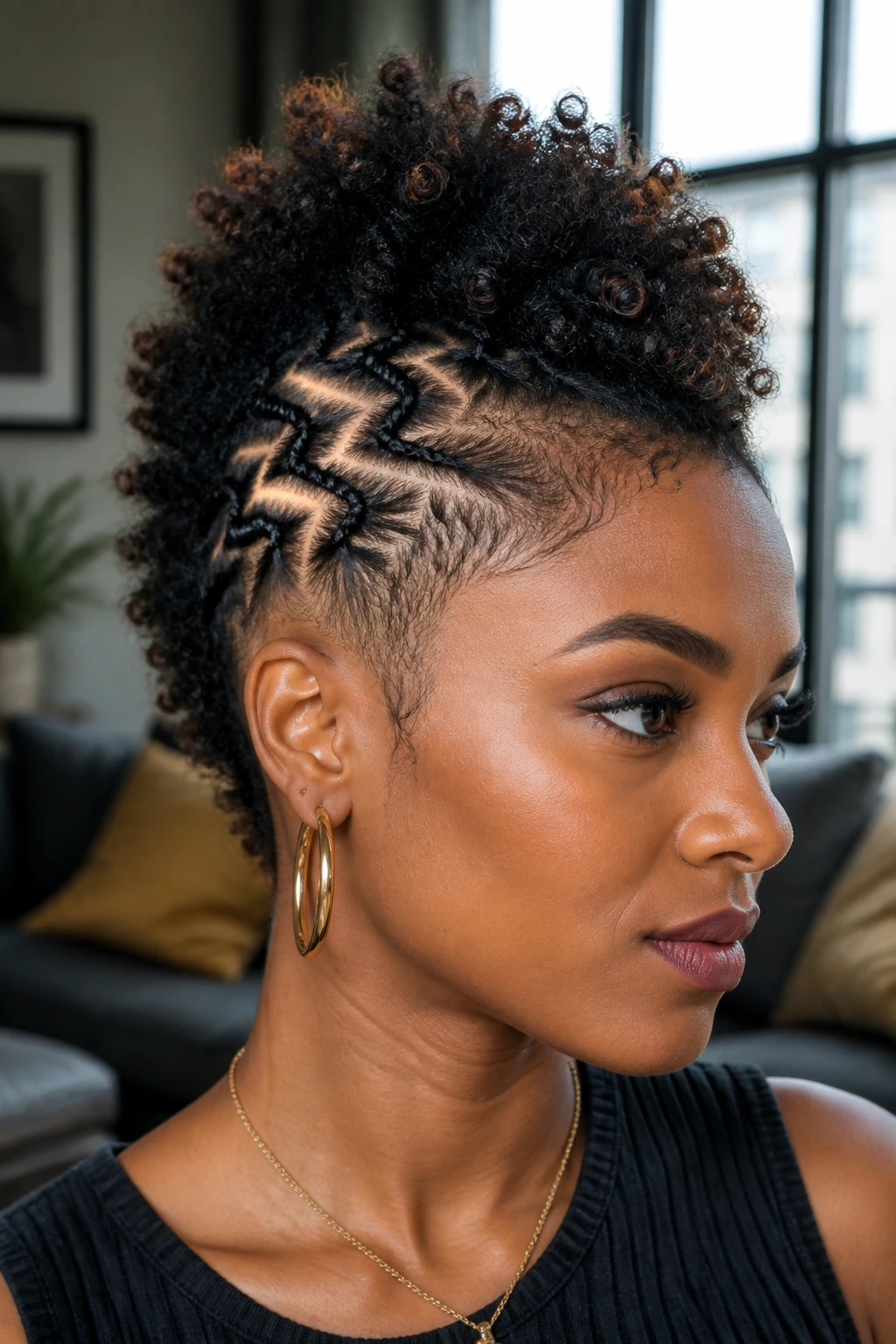
A zigzag-part hawk adds visual interest before the hair even moves. The parting on the sides creates a line that feels deliberate and a little playful, while the center ridge stays the main event. It is a smart way to upgrade a simple braid, twist, or puff mohawk.
The zigzag does need clean sectioning. If the parts wobble, the whole style looks rushed. A rattail comb and a steady hand matter here more than fancy product. Once the sections are set, the rest of the styling can stay pretty simple.
This is a good option when you want the style to show personality without relying on color or extra hair. The part alone can carry the look. That is a nice trick on short hair.
32. Layered Hawk with Taper Fade
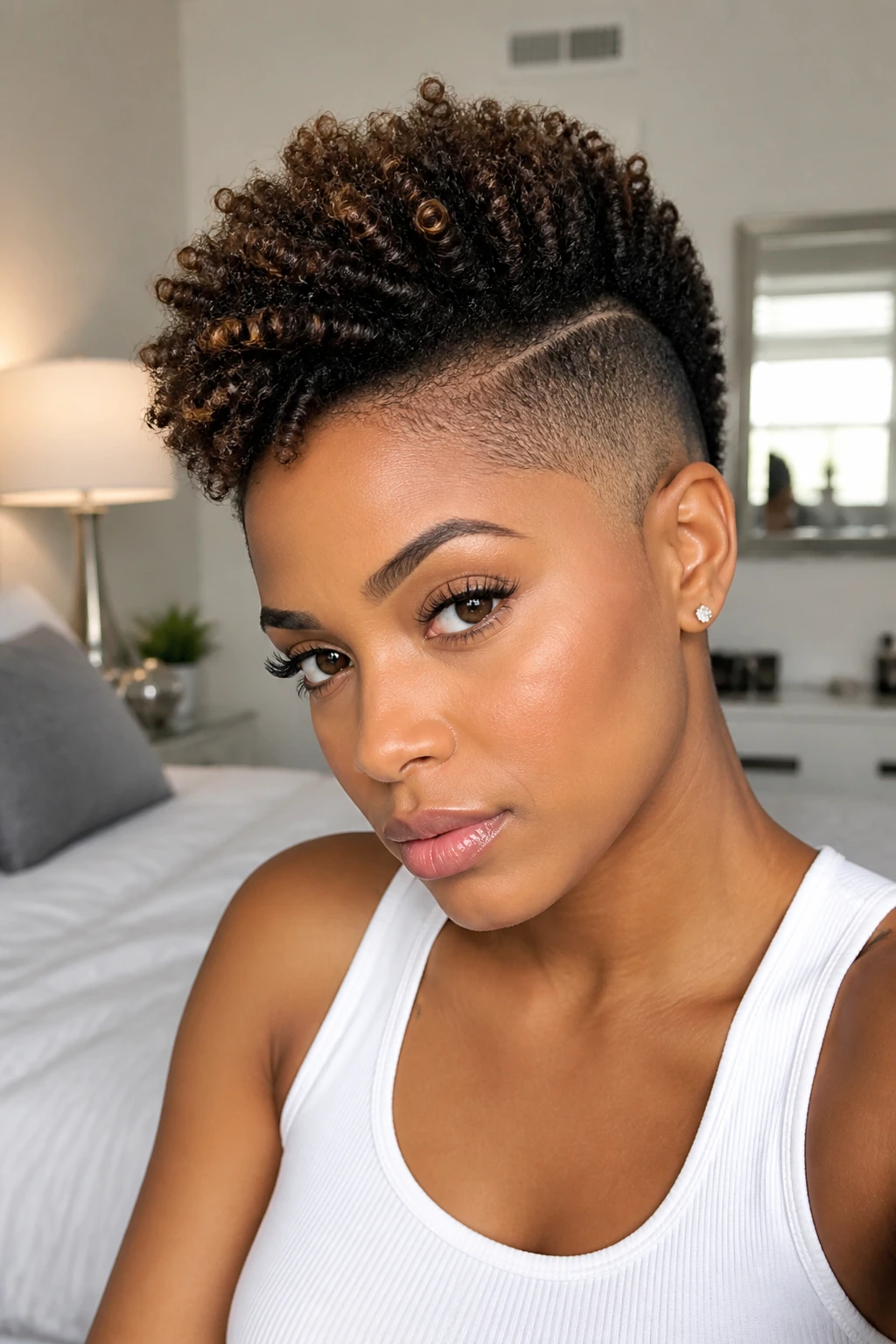
A layered hawk with a taper fade gives the top more movement and the sides a cleaner drop. The layers stop the center from looking blocky, while the fade keeps the whole style tight around the ears and neckline. It is one of the cleanest short mohawk shapes around.
Why layers matter
Layers help textured hair fall in a better line. Without them, the top can puff out all at once and lose its ridge. With them, the hawk gets a little shape and swing. That makes it easier to wear every day without constant fussing.
This style suits women who want something modern but not flashy. It looks good with a simple curl cream, a small pick, and a fresh lineup. No special tricks. Just good shape.
33. Micro-Braid Hawk
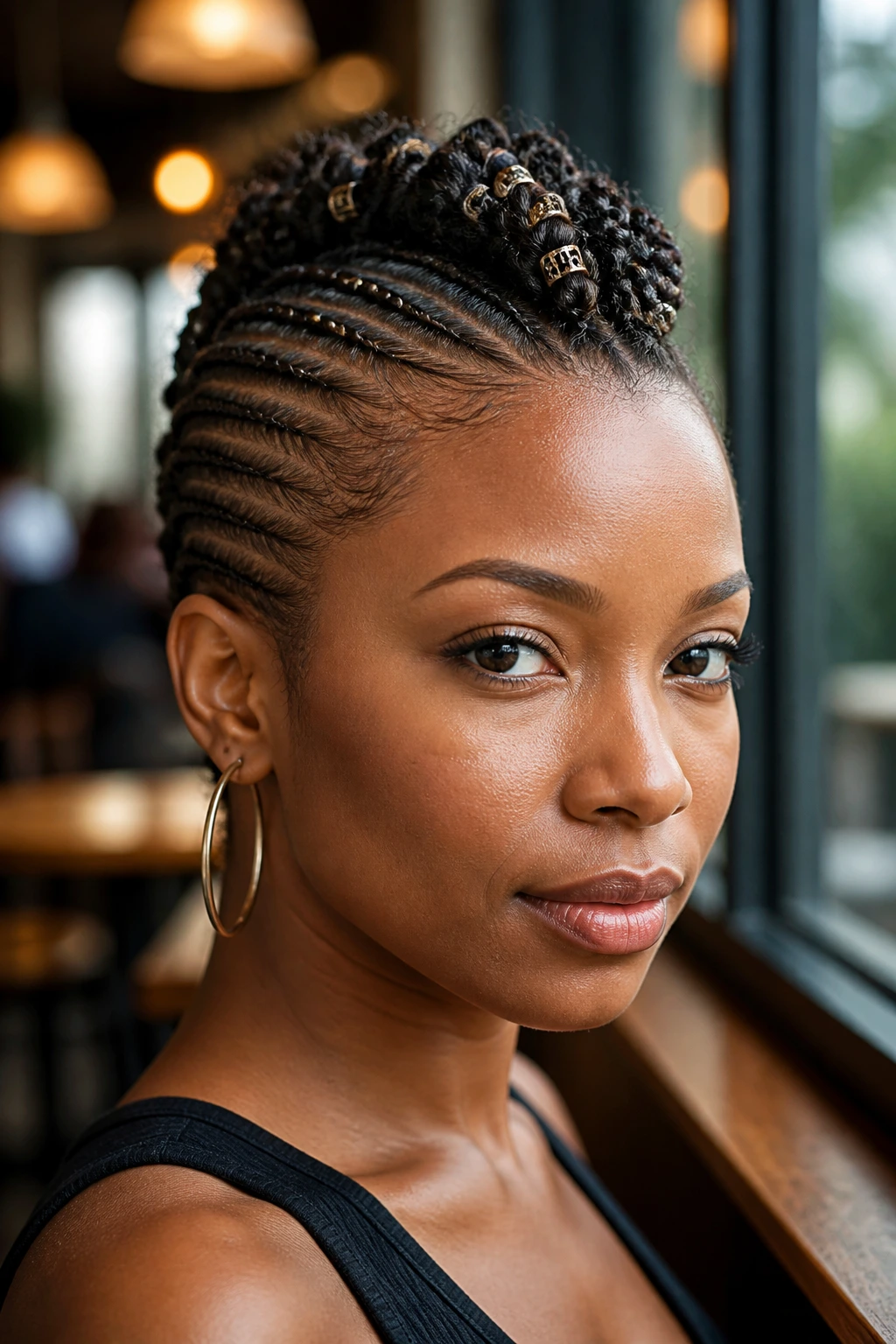
Micro-braids turned into a mohawk give you long wear and a very clean center ridge. The braids are small enough to sit close, which helps the style keep its narrow mohawk shape instead of ballooning out. It is a smart choice if you want a style that can last and still look neat.
The parting has to be tidy. Micro-braids show every crooked section, and short hair makes that even more visible. If you keep the base clean, the style pays you back with a crisp outline and less daily maintenance.
A few beads or cuffs can be added, but the braid pattern itself already does enough. This is a style that looks good because it is structured. Let the structure work.
Why the Shape Works So Well on Short Coiled Hair
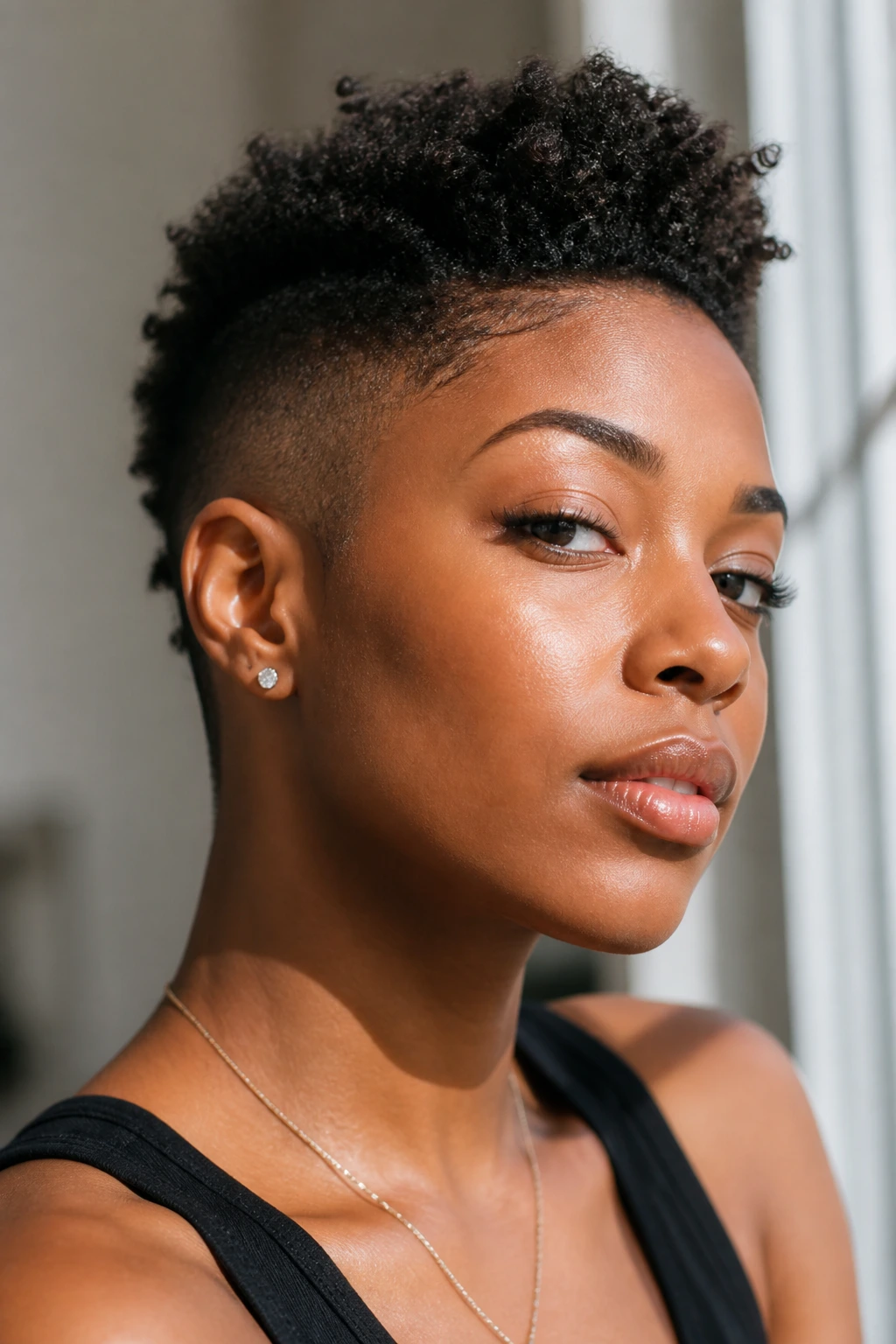
Short mohawks fit Black hair because the haircut and the texture pull in the same direction. The sides can be clipped low, faded, or shaved close, while the top uses the coil pattern to create lift without a lot of effort. That contrast is the whole trick. It makes the style look sharp even when the hair is short, and short is exactly where a lot of people stop too early.
Shrinkage is not the enemy here. It is part of the design. A style that looks 4 inches tall when wet may settle into 2.5 inches once it dries, and that smaller shape can still read bold if the sides are tight enough. I think that is why the best short hawks on Black women rarely look overworked. The hair already knows how to sit up.
There is also a practical angle that gets overlooked. A shorter center strip means less time detangling, less product sunk into the ends, and less weight dragging the shape down. That matters on busy mornings. It also matters when you want a style that can survive wind, humidity, and the general nonsense of a full day.
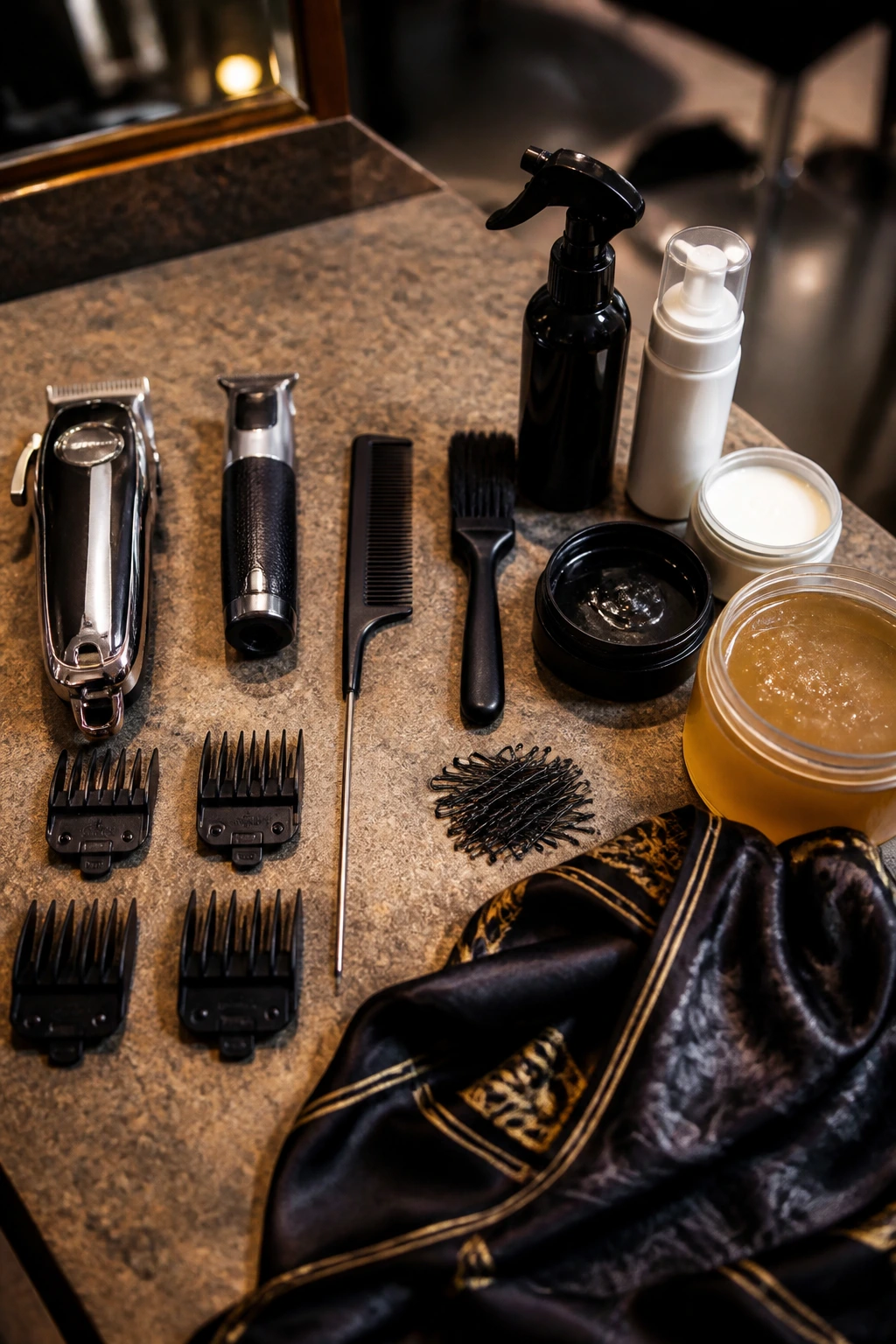
Essential Equipment for These Looks
-
Clipper set with guards: Useful for tapering, undercuts, and keeping the sides consistent on repeated shape-ups.
-
Detail trimmer: Clean lines around the hairline, temple area, and neckline make the mohawk read finished.
-
Rat-tail comb: Handy for parts, sectioning, and lifting the center strip without flattening it.
-
Edge brush: Best for smoothing baby hairs and laying the front without overloading the hairline.
-
Spray bottle with water: Dampen short natural hair before twist-outs, coils, sponge styling, or gel application.
-
Curl cream or leave-in conditioner: Gives textured styles slip and keeps the top from feeling dry or brittle.
-
Mousse or wrap foam: Good for twist hawks, rod sets, and styles that need hold without a hard shell.
-
Strong-hold gel or edge control: Use sparingly for the sides and hairline when you want a clean outline.
-
Bobby pins and small hairpins: Essential for faux hawks, pinned loc looks, and updo styles that need hidden support.
-
Satin scarf or bonnet: Keeps the shape from frizzing overnight and protects the edges from rough pillow friction.
Smart Product and Shopping Notes
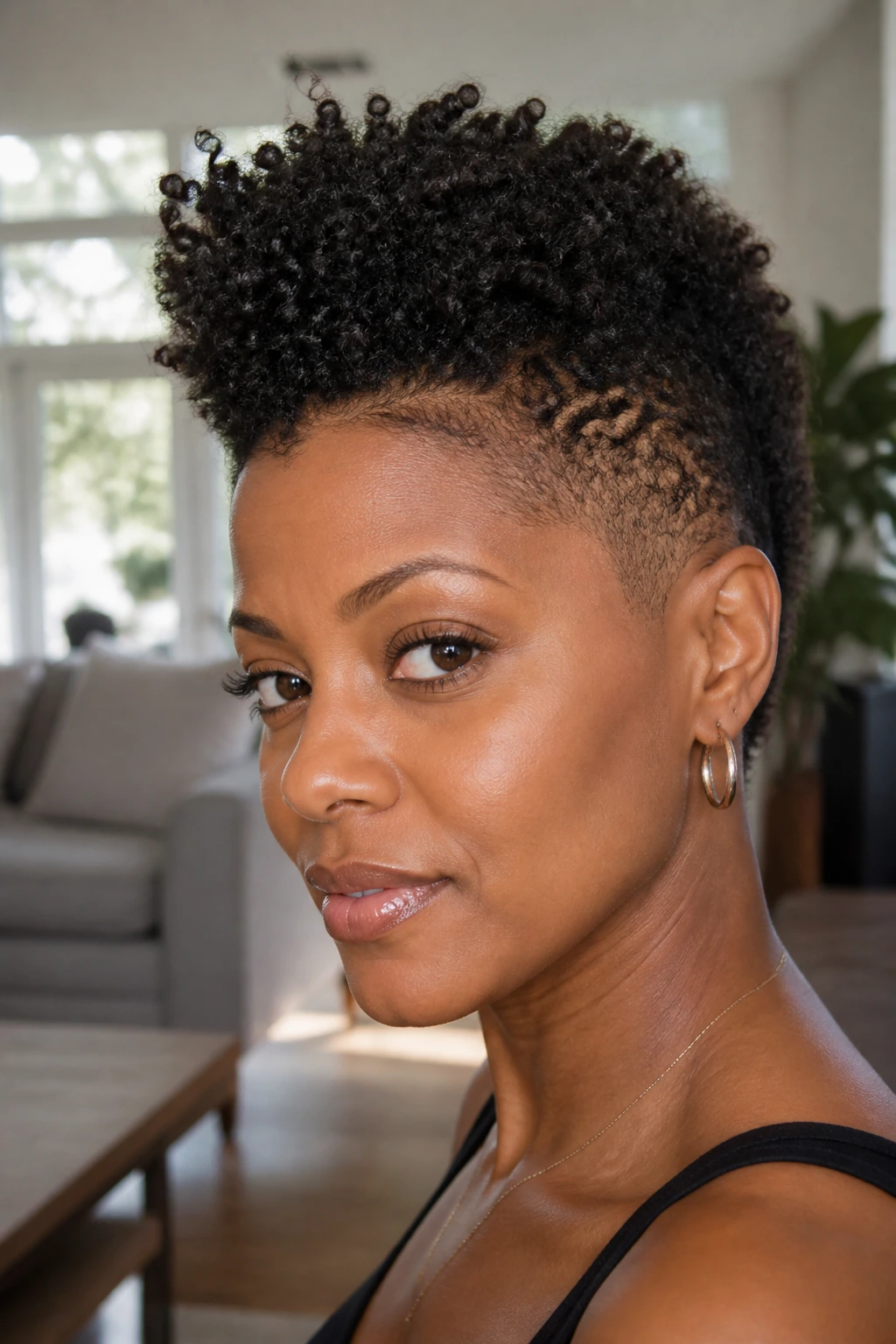
The first thing I look at is hold. A short mohawk needs a product that can keep the outline in place without turning the hair into a crunchy helmet. Water-based creams, wrap foam, and gels with a medium-to-strong hold are usually enough. If a product feels greasy in your hands before it even reaches your hair, it will probably flatten the ridge by midday.
For natural styles, lighter creams usually work better than thick butters on the top. Heavy products can keep coils soft, but they also pull the shape down. If your hair is dense and dry, use moisture first, then add hold on top. The order matters. Load the hair backwards and the style loses lift.
If you are adding braiding hair or Marley hair, buy by texture, not by color alone. Matched texture looks calmer and blends better at the base. For color, temporary wax or semi-permanent shades are easier to live with than a full chemical change if you only want a small accent. And if your scalp is sensitive, patch test anything that sits near the hairline. That tiny step saves a lot of irritation later.
How to Wear These Styles With the Rest of the Look
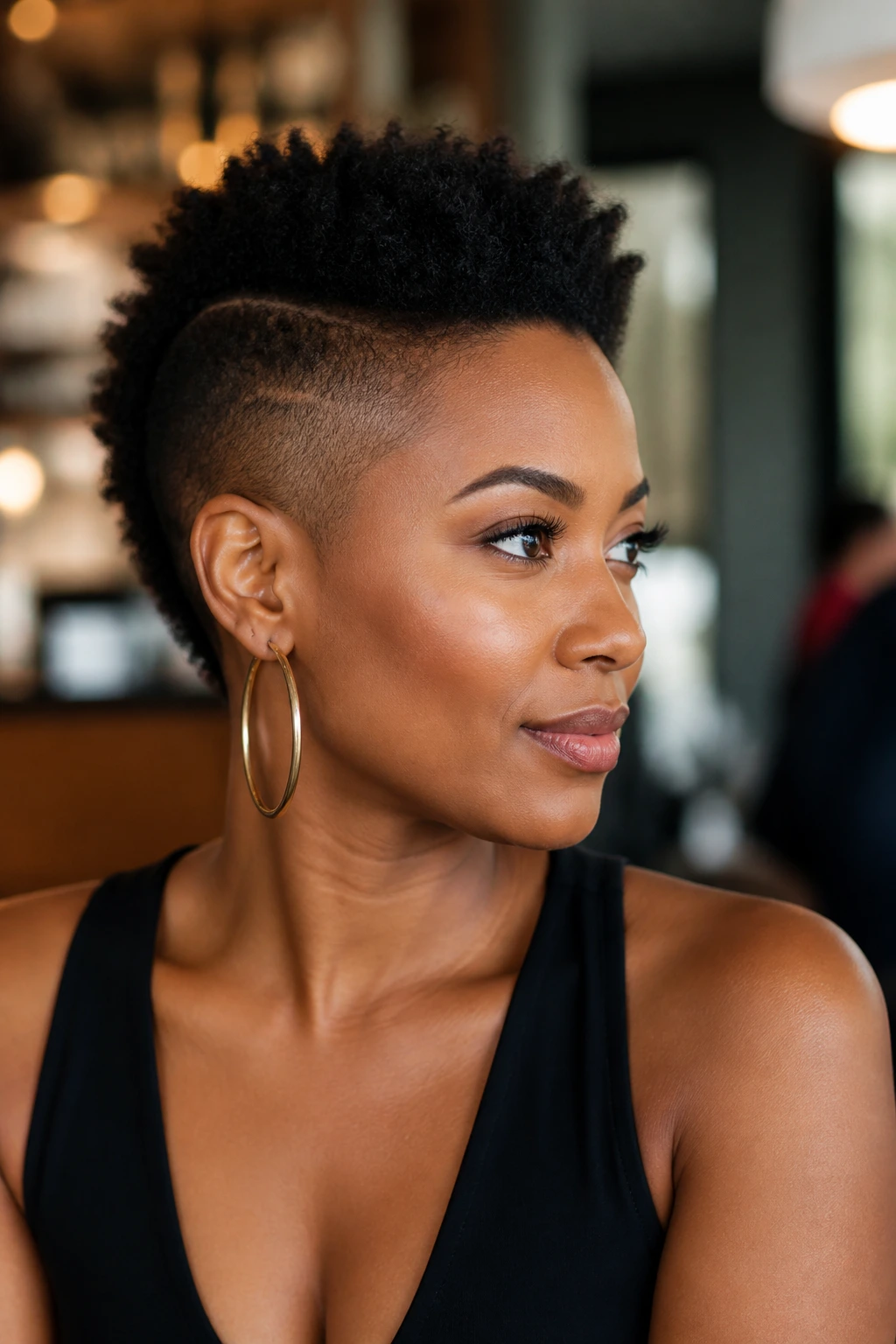
Presentation: Keep the mohawk visible by choosing necklines and earrings that echo the shape. Hoops, studs, off-shoulder tops, and clean collar lines make the hairline and ridge stand out without competing with them.
Accompaniments: The best pairing is usually simple. A sharp liner, brushed brows, a fitted jacket, or a soft lip color can support the hair instead of crowding it. If the hawk is highly textured, I like clothes with cleaner lines. If the hawk is sleek, a little texture in the outfit keeps the whole look from going flat.
Portions: A narrow ridge feels subtle and polished; a wider strip with more height reads bold and theatrical. If you want something wearable every day, keep the center strip closer to 1.5 to 2 inches wide on the scalp. If you want more drama, let the ridge expand to 3 inches or a bit more.
Beverage Pairing: A lidded bottle of water, iced tea, or coffee in a cup with a straw sounds almost silly, but it matters if you are stepping out right after a fresh shape-up. Nothing ruins a neat hairline faster than a careless splash.
Small Tweaks That Change the Mood
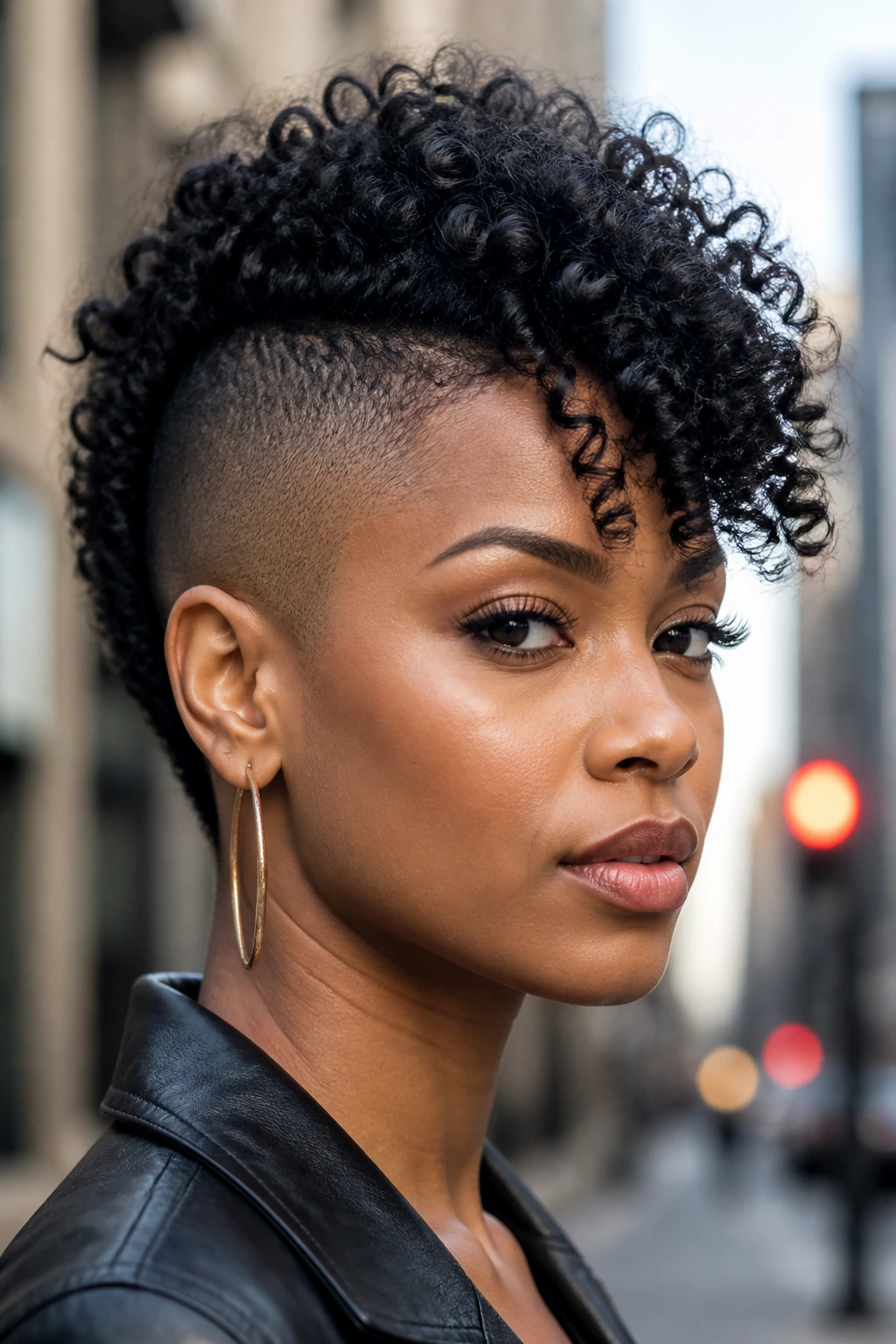
Texture Boost: A little mousse scrunched into the center strip can wake up a flat frohawk fast. Use it when the curls need separation but not stiffness.
Color Accent: A copper tip, burgundy rinse, or temporary gold piece in the front can shift the whole vibe of the hawk. Keep the color focused in one place so the shape still leads.
Shape Shift: Push the center slightly forward for a softer look, or lift it straight up if you want more edge. That tiny angle changes the mood more than most people expect.
Make-It-Yours: If you wear glasses, keep the sides tighter so the frames and the hawk do not crowd each other. If you like big earrings, leave a little more space around the temples. If you want a gentler finish, let a few curls fall forward near the forehead instead of pulling everything back.
Common Mistakes That Flatten a Short Mohawk
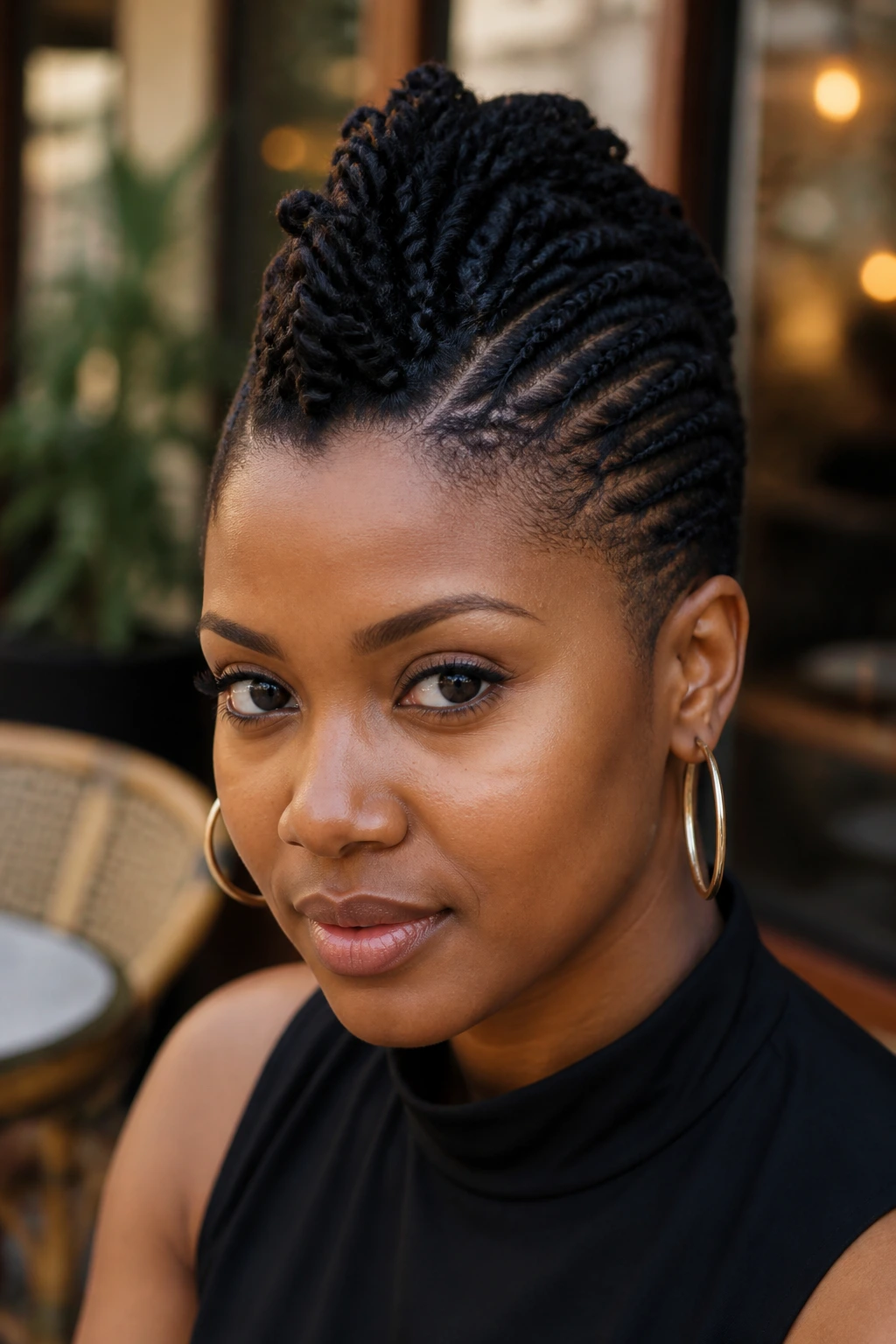
-
Cutting the sides too wide: If the fade starts too high or the sides stay bulky, the style loses its mohawk line and starts reading like a rounded crop. Keep the outline narrow.
-
Using too much heavy product: Thick creams and oily butters can collapse the top, especially on fine or medium-density hair. Use a light base first, then add hold only where you need it.
-
Styling before the hair is dry: Twist-outs, rod sets, and coils need full drying time. If you take them down early, the style frizzes and falls before lunch.
-
Ignoring the hairline and neckline: Even a great center ridge looks unfinished if the edges are fuzzy. A quick trim or line-up changes the whole look.
-
Forgetting shrinkage: Wet hair lies. Dry hair tells the truth. Leave enough length on the center strip so the final shape still has presence after the curls contract.
Keeping the Style Fresh Between Wash Days
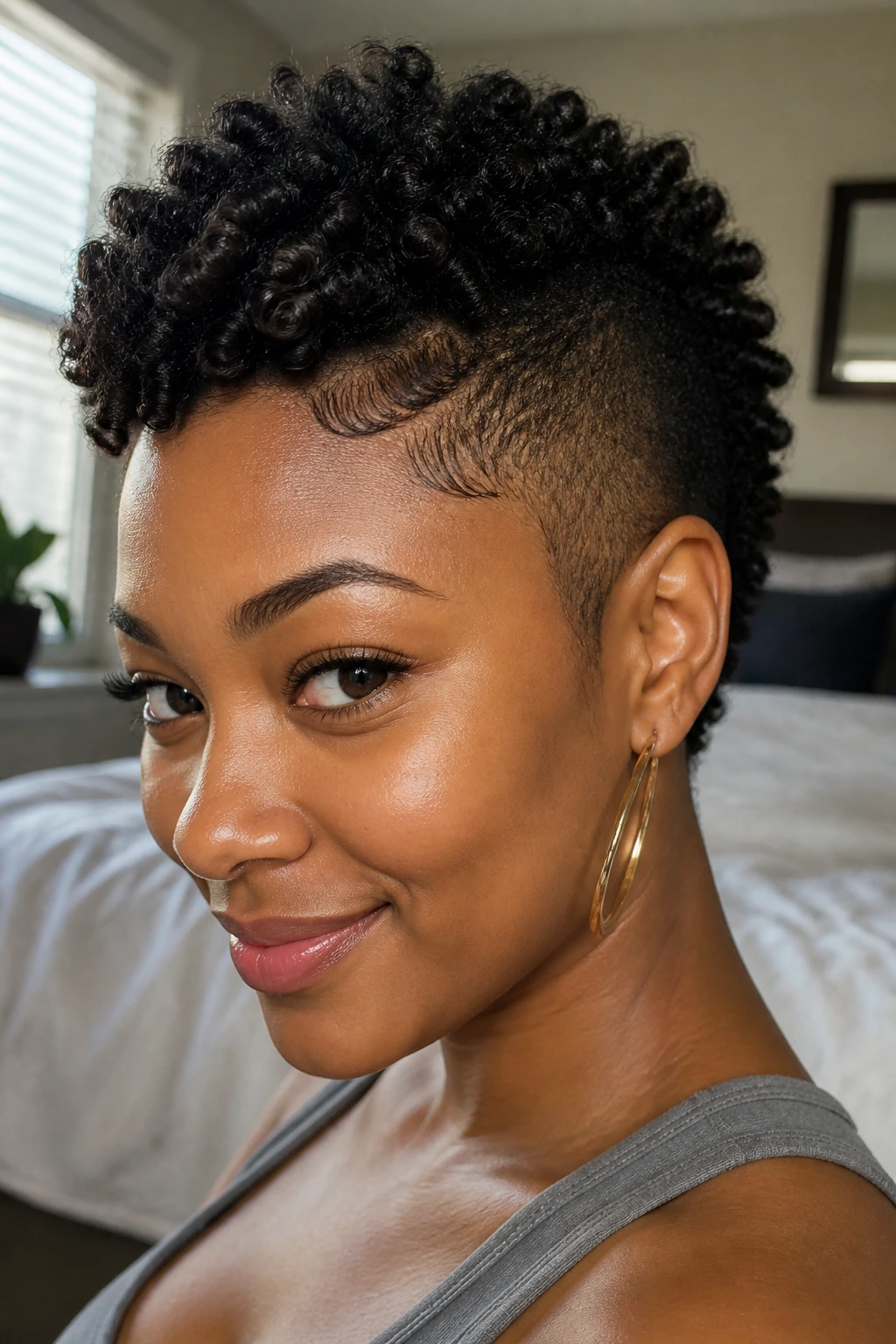
Short mohawks are easiest to maintain when you split the routine into pieces. The center strip usually needs the most attention, while the sides only need a quick tidy. A satin scarf or bonnet at night helps keep the shape from rubbing out, and that matters more than people think. Friction is sneaky.
For slicked styles, you can usually get 1 to 2 days before the shape needs a reset. Twist-outs, rod sets, and curl-defined hawks usually hold 3 to 5 days if you wrap them properly and avoid over-touching. Braided mohawks and loc mohawks last longer — often 1 to 2 weeks before they need a fuller refresh, depending on growth and edge neatness.
A light mist bottle is your friend. Do not soak the whole head every morning. That only encourages frizz and shrinkage in the wrong places. Instead, rework the top with a little water, a touch of leave-in, and your fingers or a pick. If the sides start to puff, smooth them back down with a soft brush and a tiny bit of product rather than rebuilding the whole style.
Trim schedules matter, too. A taper or fade usually wants a shape-up every 2 to 4 weeks if you want it looking sharp. Let it go longer and the silhouette softens fast.
Variations and Adaptations to Try
Soft Office Hawk: Keep the sides low, the top medium, and skip the most dramatic height. This version reads neat in a meeting and still gives you a mohawk shape without shouting.
Weekend Statement Hawk: Add color, bigger curls, or a taller center ridge. It is the right move when you want the haircut to carry the whole look.
Protective Twist Hawk: Build the ridge from two-strand twists or flat twists, then wear it for several days before taking it down. The style stays tidy and gives your hair a break.
Sleek Event Hawk: Use gel, a strong edge brush, and a dry set or molded finish. This works best for photos, parties, or any place where the outline needs to stay crisp.
Textured TWA Hawk: Keep the top short but defined, and let the shape come from the cut rather than from added length. This is the easiest version to live with if you want low maintenance.
Common Questions People Ask Before They Cut the Sides
Can a short mohawk work on very tight coils?
Yes, and tight coils usually make the shape easier to read. The shrinkage helps the top sit up, while the sides keep the outline clean. A good taper matters more than extra length.
Do I have to shave the sides all the way down?
No. A low taper or close fade gives you the mohawk silhouette without going skin-close. That is a better fit if you want flexibility later.
What if my top is thin?
Choose a narrower center ridge and keep the sides tighter. A wide hawk with thin top hair can look sparse, but a slim shape reads deliberate and clean.
Which styles are best for short natural hair that shrinks a lot?
Finger coils, sponge curls, twist-outs, and tapered frohawks tend to work well because the shape still reads after shrinkage. Leave the top a little longer than you think you need.
How do I ask for this at the barber?
Bring a photo, then describe the side length, the width of the center ridge, and whether you want a taper, fade, or full shave. Those three details matter more than fancy words.
Can I wear a mohawk without heat?
Absolutely. Most of these looks work with damp-set styling, twisting, braiding, or finger shaping. Heat is optional, not required.
How often will I need to maintain it?
A clean fade or taper usually needs a shape-up every couple of weeks if you want the outline to stay crisp. Protective braid or loc versions last longer, but the edges still need care.
The Shape That Keeps Returning
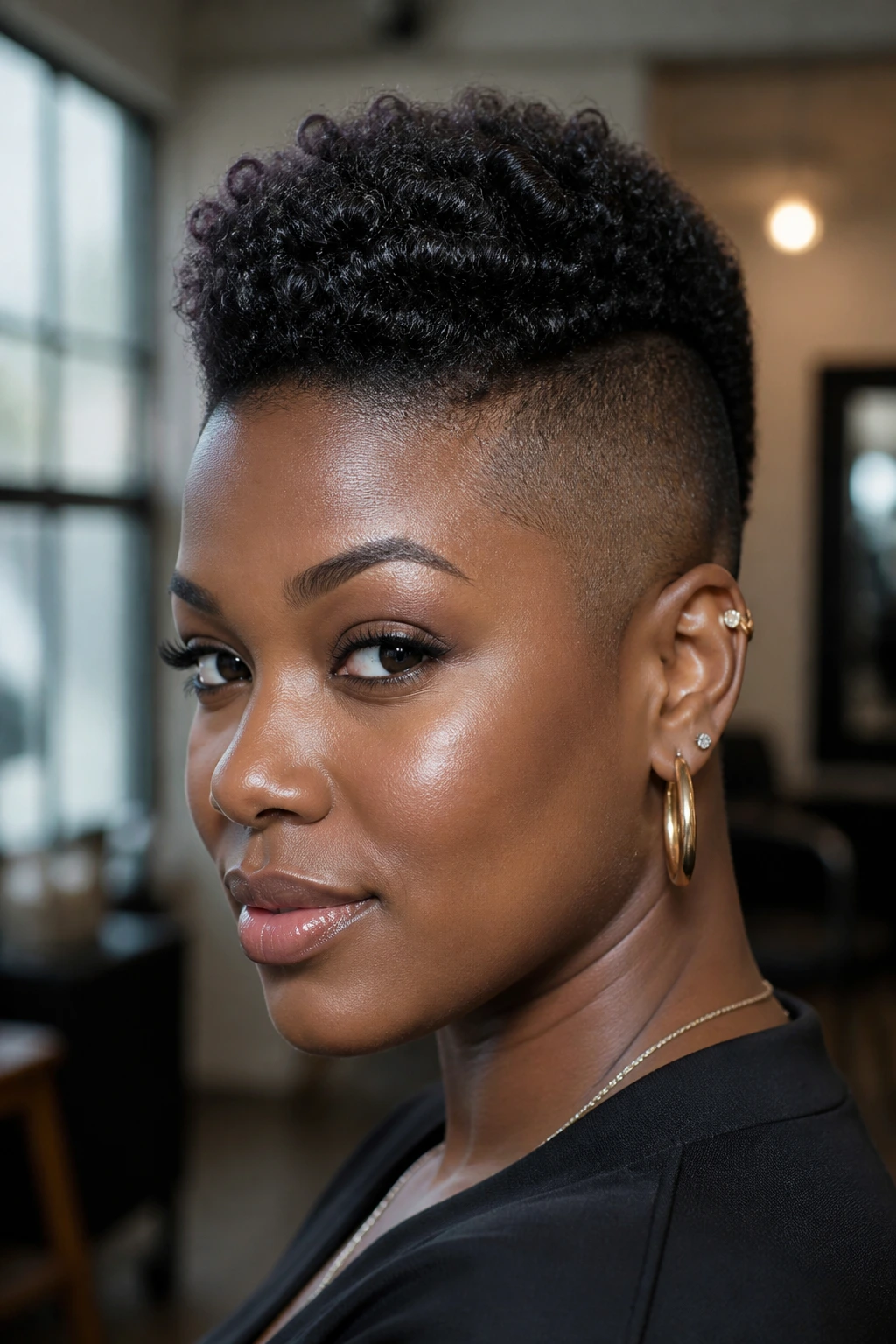
Short mohawks keep showing up for a reason. They give Black hair a frame that actually respects texture instead of fighting it. Clean sides, a shaped center, and a little intention around the edges can turn a short crop into something that looks sharp from every angle.
The best part is how many directions the style can go. Soft coils, braids, locs, puffs, rods, twists, color, design lines — the cut can carry all of it without losing its core shape. Once you know how wide you want the ridge, how low you want the sides, and how much hold your hair likes, the rest becomes a matter of taste.
Pick the version that fits your texture and your routine, then keep the outline neat. That is where the style really starts to shine.
