



Three hours before the ceremony, the hairline is already under more pressure than the bouquet.
Pins are lined up on the vanity. A veil comb is waiting to be placed. Someone is asking whether the curls should sit at the clavicle or skim the shoulders, and the real answer is usually hiding in the details: the weight of the dress, the texture of the hair, the weather outside, the shape of the face, and whether the bride wants to touch her own hair all night or leave it alone.
Wedding hairstyles for Black brides are not a one-shape-fits-all situation, and that is the whole point. Coils, braids, locs, blown-out texture, silk-pressed lengths, natural volume, and extension work all behave differently under lights, hugs, dancing, tears, and a veil clip. A style can look gorgeous in a chair and still be wrong for the day if it pulls at the edges, fights the neckline, or collapses the minute the room gets warm.
The best bridal hair on Black women usually does something smart: it gives structure without stiffness. It respects texture instead of flattening it into something else. And it holds up long enough that the last photo still looks intentional, not tired.
Why These Styles Earn Their Place
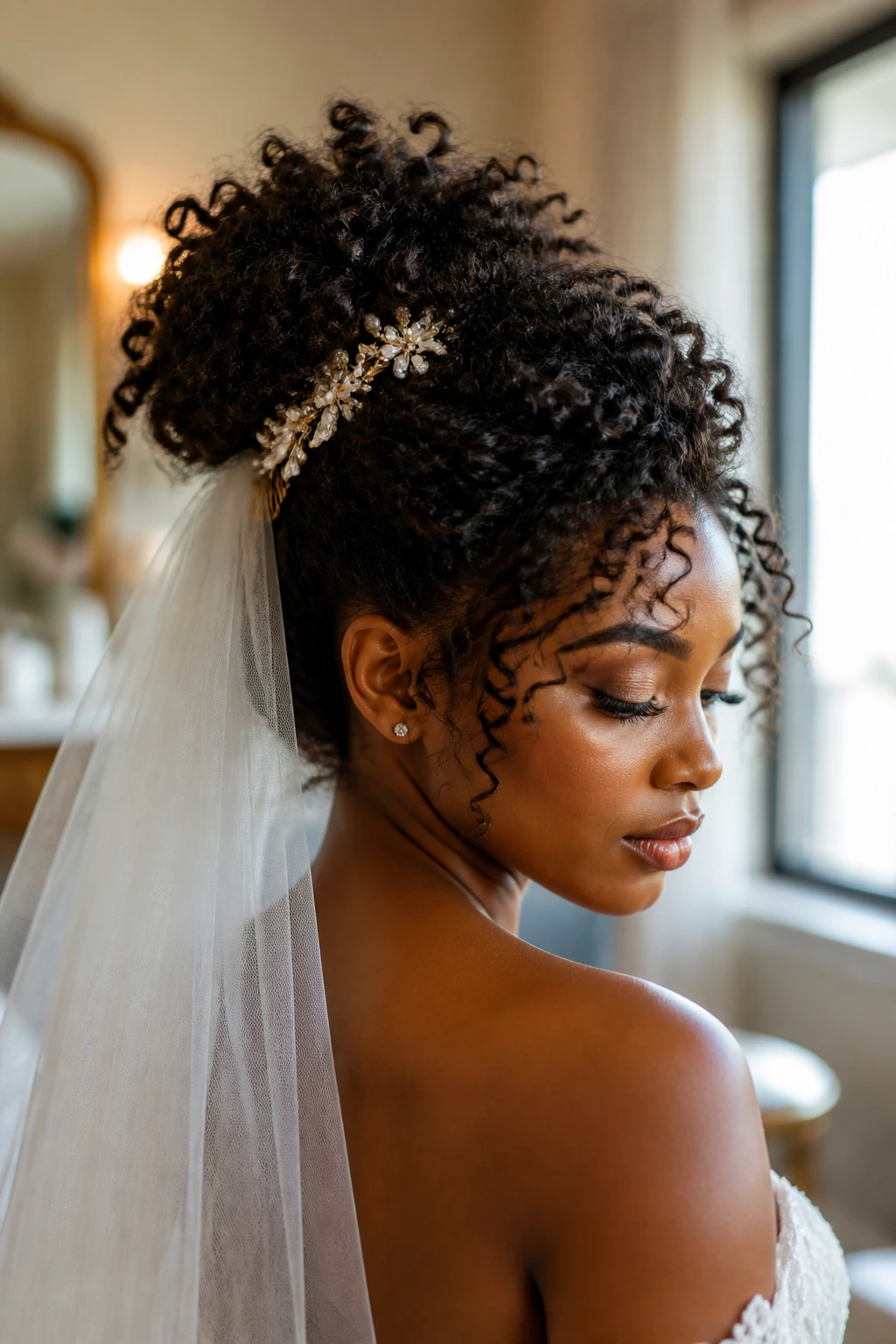
-
Texture-first: Every style here is built for coils, curls, locs, braids, pressed hair, or added hair, not a one-texture fantasy that only works on a mood board.
-
Veil-friendly: These looks leave room for combs, clips, and placement tricks so the veil sits where it should instead of fighting the hairstyle.
-
Tension-aware: The good versions keep the weight where it belongs, which matters if you’ve ever taken down a tight style and felt your scalp complain for two days.
-
Photo-ready: Parts, sheen, crown height, and curl placement are chosen for flash and side angles, not just the front-facing mirror test.
-
Long-day friendly: Ceremony, cocktail hour, reception, and after-party are all in play here. These styles are built to survive movement.
-
Flexible: Short hair, medium hair, long hair, natural texture, relaxed hair, and extension hair all get a lane.
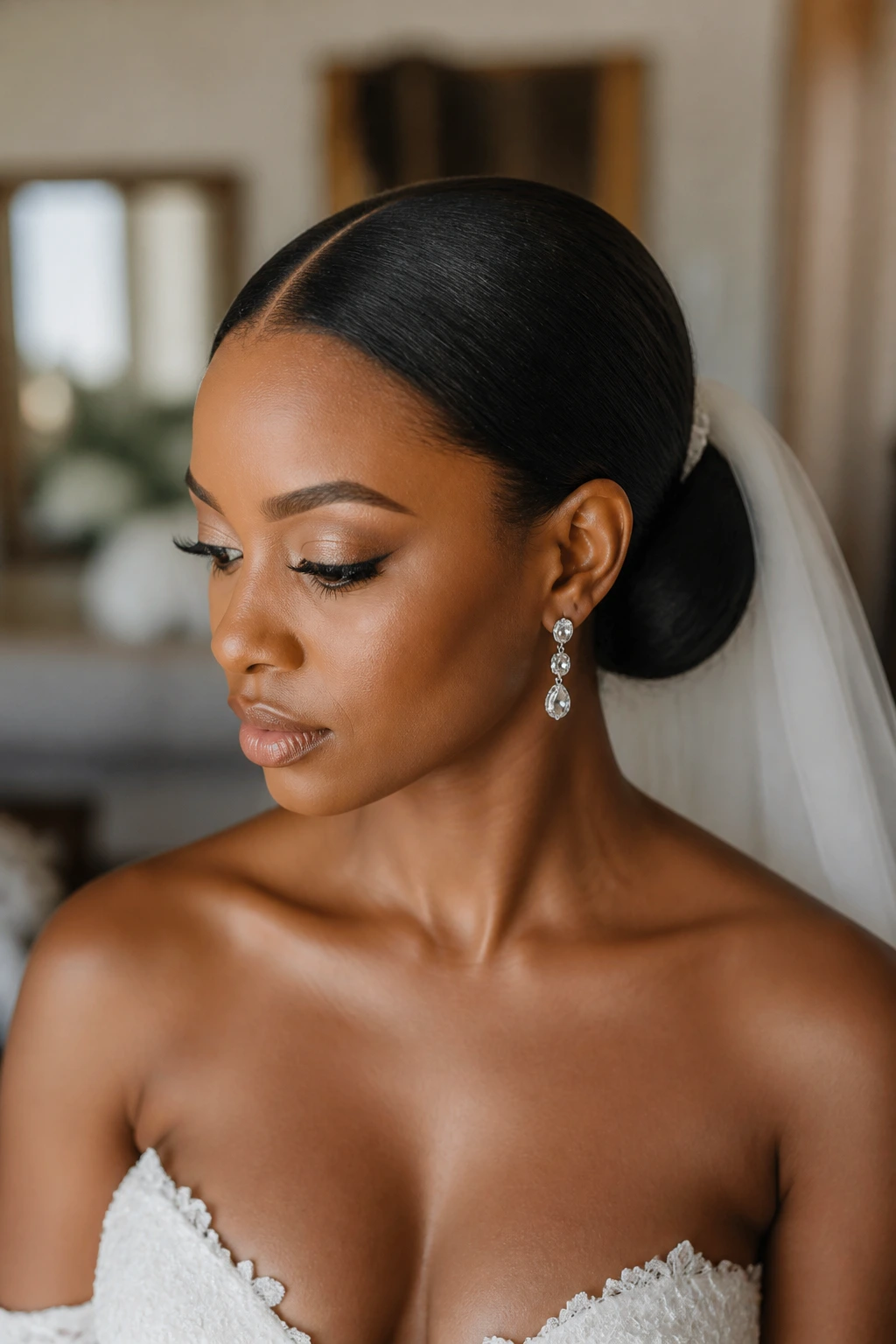
1. Sleek Low Chignon with Center Part
If your dress has a sharp neckline, a lot of beadwork, or a cape that already does the talking, a sleek low chignon gives the outfit room to breathe. The clean center part makes the face look intentional, and the bun at the nape keeps the whole look quiet in the best way. There’s no fluff here. That’s the appeal.
A good version starts with a smooth base, not a greasy one. The hair should be brushed flat with a light styling cream, then sealed into a low bun or rolled knot with enough pins to hold it without turning the back of the head into a metal cage. I like this style because it leaves space for a veil comb to anchor just above the bun or tuck cleanly underneath it.
Why It Works
The low placement keeps the silhouette elegant and stable, especially if the bride plans to hug a lot of people or dance without thinking about her hair every five minutes. A soft shine spray can finish the surface without making it look wet or crunchy. Use a middle part if you want symmetry, or move the part by half an inch if you want to soften a strong jawline.
A neat chignon also photographs well from the side and back, which matters more than most brides think. Those are the angles everyone sees while you’re walking, turning, and sitting down.
2. Sculpted Side-Part Hollywood Waves
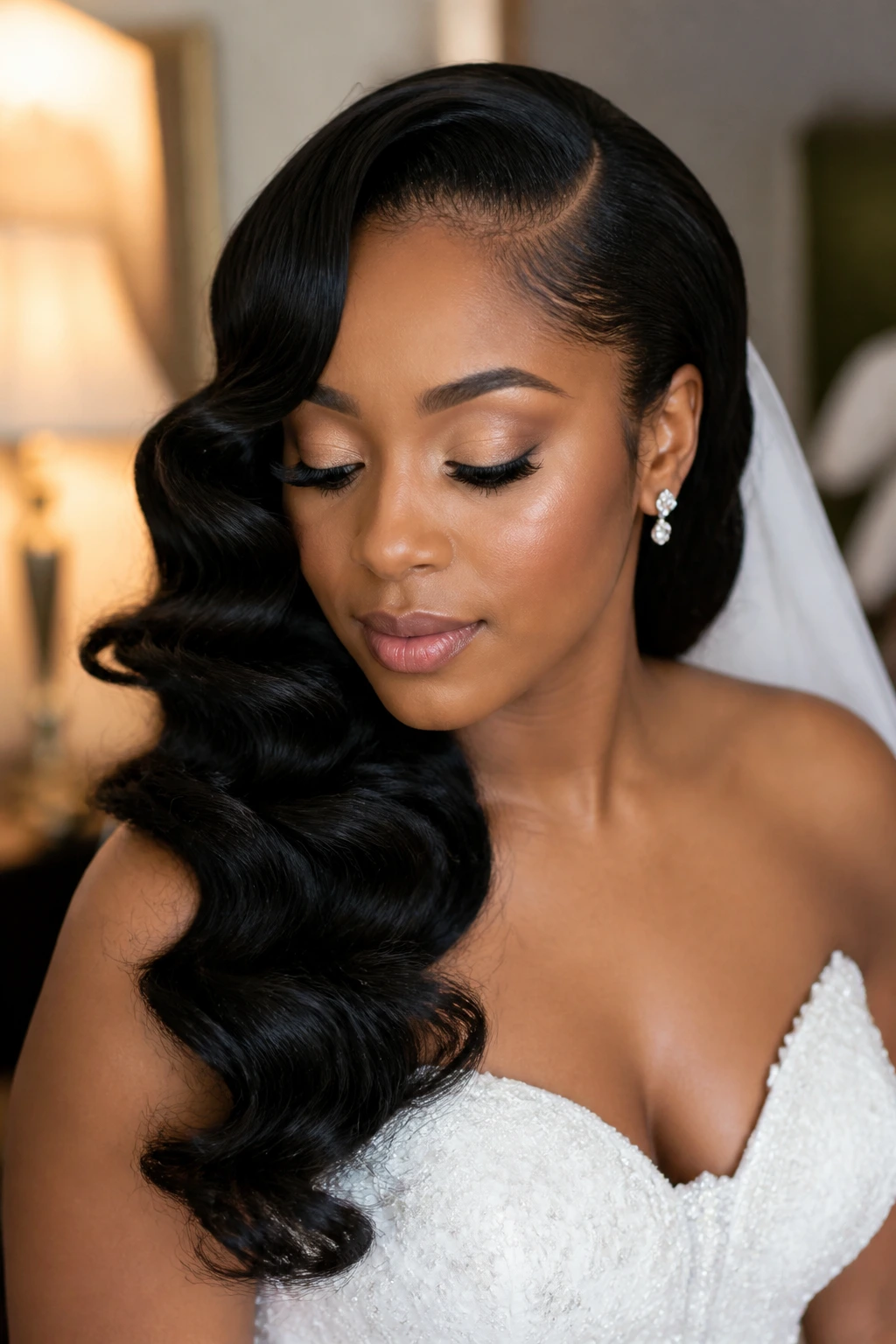
Side-swept waves do one thing better than almost any other bridal style: they make movement look deliberate. The deep side part gives the face instant drama, and the smooth wave pattern brings just enough old-school glamour to work with satin, sequins, or a clean sheath dress.
The trick is to build the wave pattern carefully and brush it only after it cools. If the hair is pressed or naturally straightened, a 1-inch curling iron creates a tighter set that loosens nicely. If the hair has extensions, the curls should be wrapped in the same direction so the brush-out stays even, not lumpy at the ends.
Best For
- Brides who want one shoulder to stay open
- Dresses with asymmetrical necklines
- Shoulder-length to long hair
- A veil that clips in low and comes off after the ceremony
The style works because it gives you softness without losing shape. Too many wedding waves go fuzzy by the first dance; these should hold a clean bend near the face and a looser swing toward the ends. A light-hold spray, not a stiff shell, is the move.
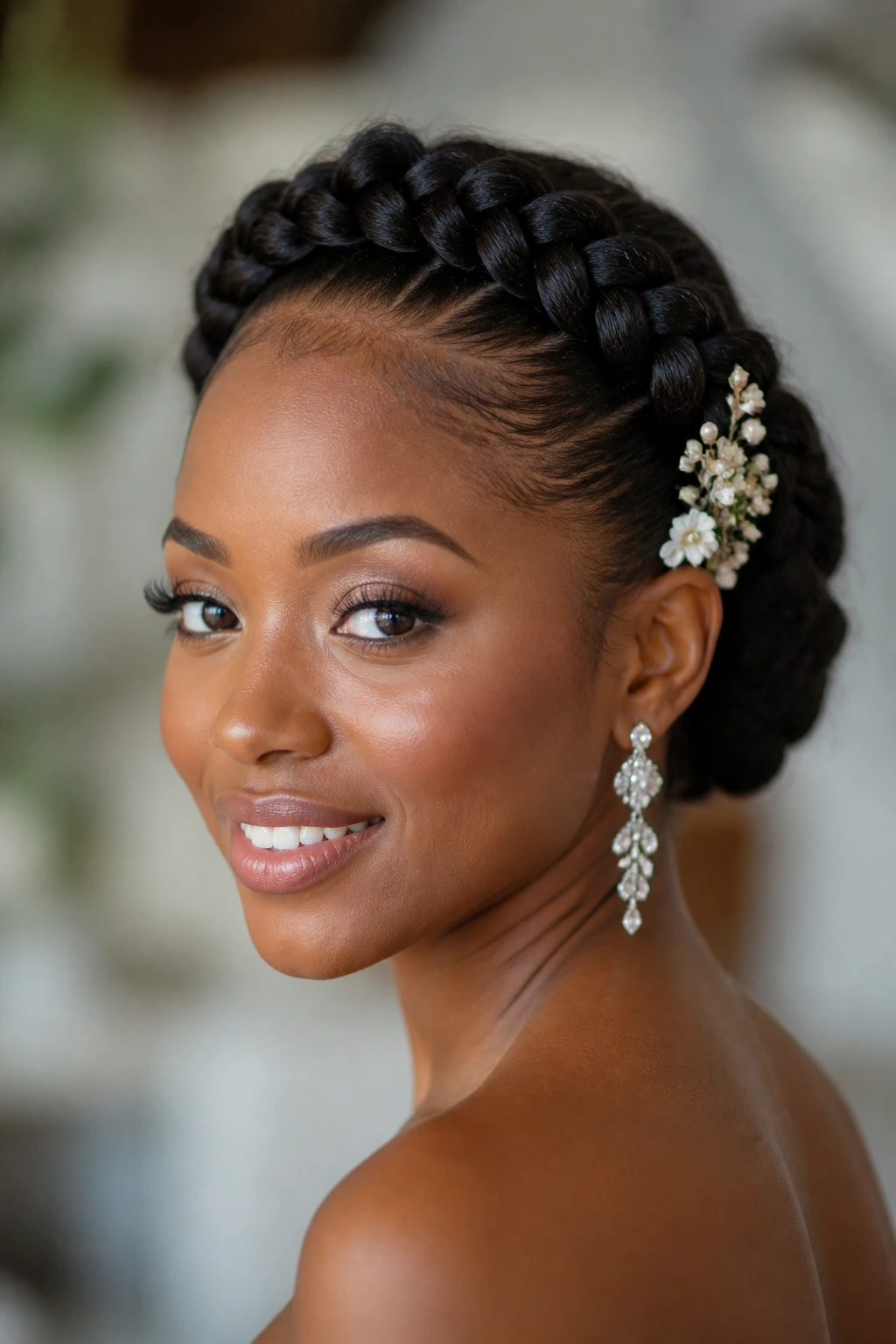
3. Crown Braid Halo
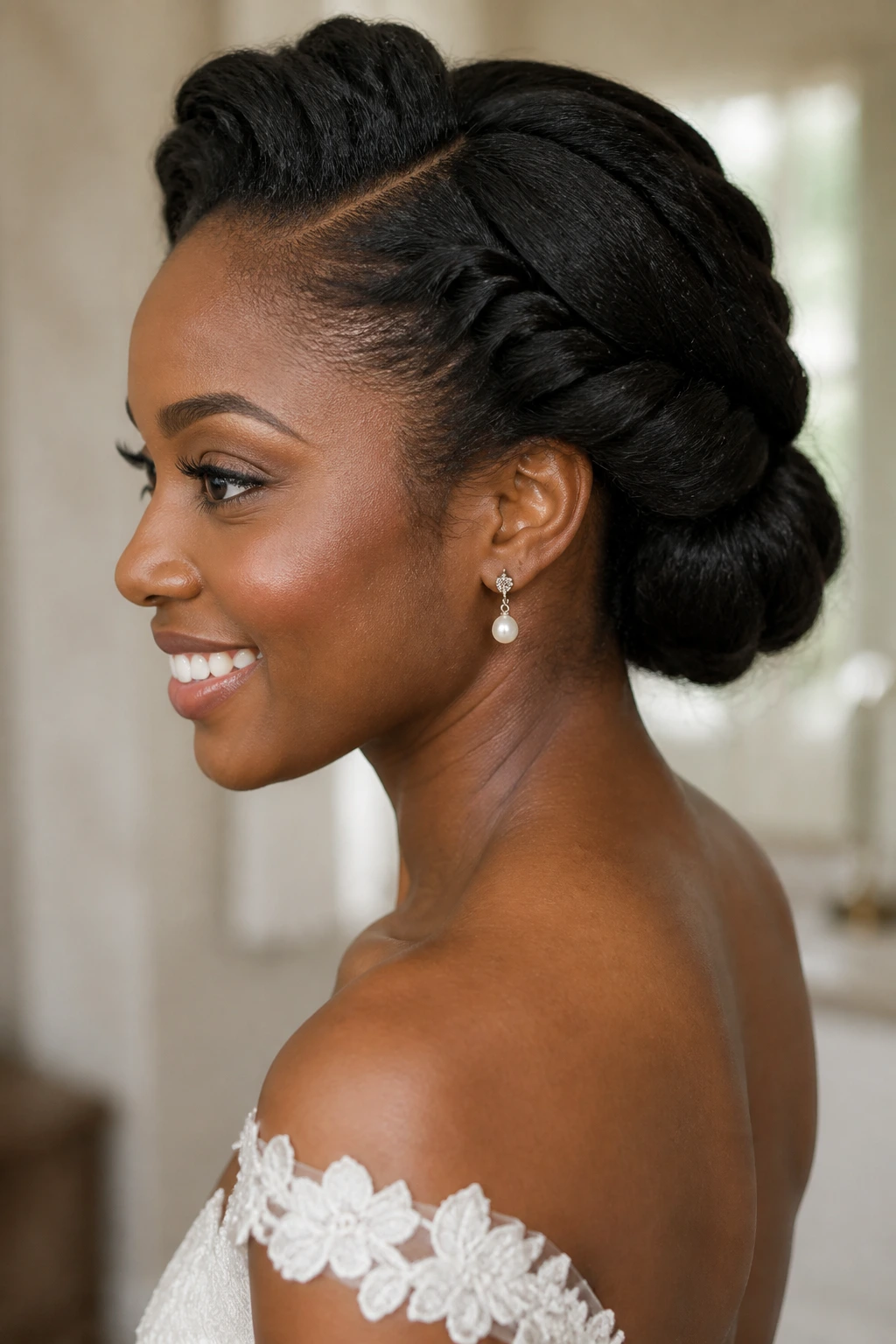
A crown braid is the style I reach for when the hair needs to stay put from the first photo to the last dance. It wraps around the head like built-in jewelry, and on textured hair it has real presence. Not fake fullness. Presence.
The braid can be done as a traditional braid, a Dutch braid, or a stitched feed-in braid depending on the bride’s hair length and density. The edges should not be pulled until they ache. That tight, severe braid look may read polished in the salon chair, but by reception time it can feel like punishment. A braid with a little softness at the hairline looks better anyway.
The halo shape also plays well with floral pins or small pearl accents tucked just above the ear. You do not need much. One well-placed accessory beats a handful of shiny extras every time.
4. Twisted Low Bun with Tucked Ends
There is a reason low twisted buns show up in so many bridal trial runs. They are calm, they are neat, and they let the dress stay in charge. With textured hair, the twist pattern adds visual interest even when the overall shape is minimal.
This version works especially well if the bride wants a low-maintenance finish that still feels formal. The hair is split into sections, twisted back toward the nape, and tucked into itself or into a compact bun. On dense hair, the structure can look almost sculptural. On finer hair, a few hidden extensions add shape without crowding the crown.
The best part? It ages well during the day. A twist that softens a little after three hours does not ruin the style. It makes it look lived-in, which is a better bridal finish than shellacked perfection.
5. Goddess Loc Updo
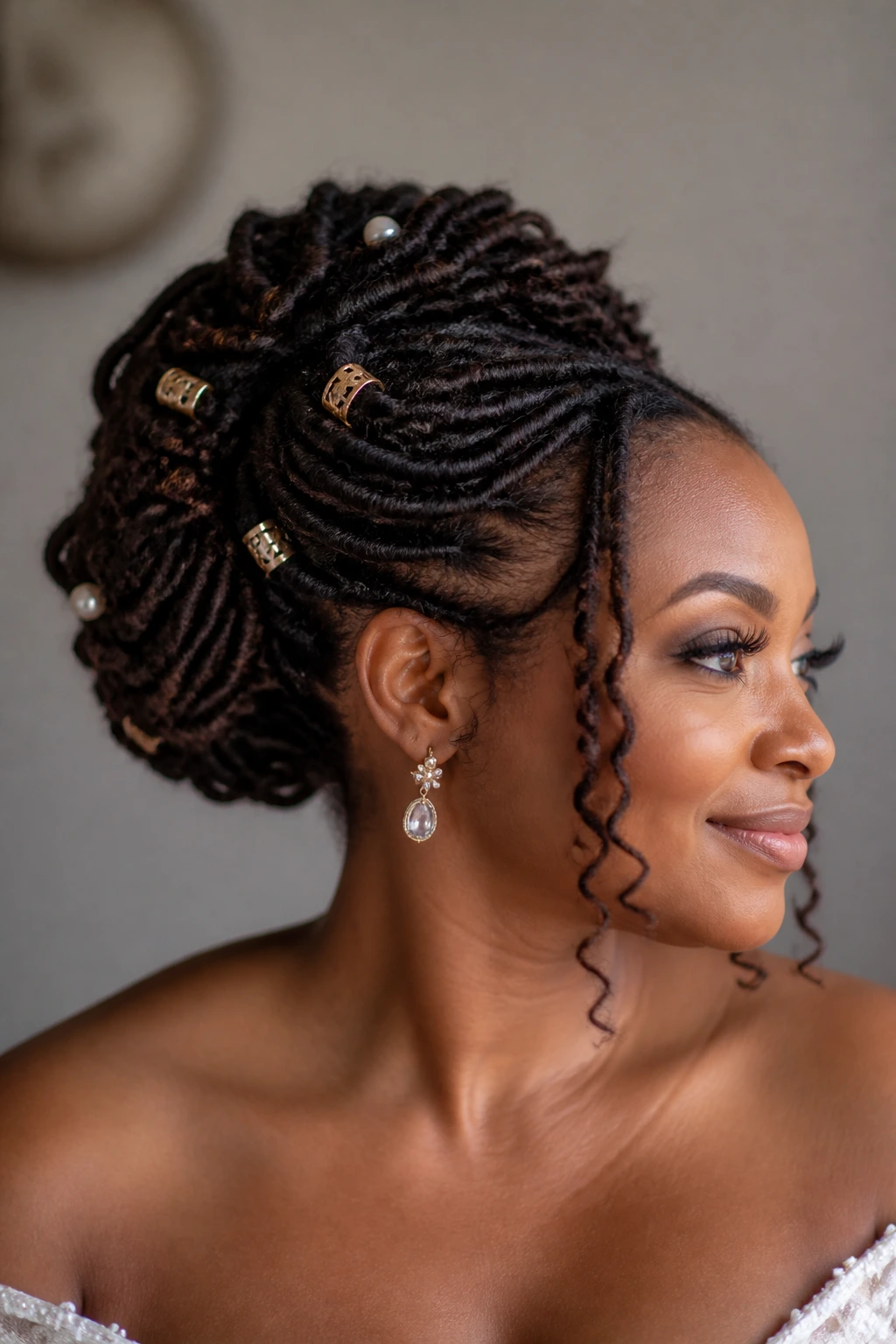
Locs can do formal without looking forced, and a goddess updo proves it. The style pulls the locs up and back while leaving a few face-framing pieces or curled ends loose enough to keep the silhouette from feeling too severe. I like this one for brides who want height, but not the headache that comes with a giant bun sitting high on the crown.
The locs can be coiled into a low rose, tucked into a side roll, or pinned into a rounded shape with the ends pointing softly outward. Small gold cuffs, shell accents, or pearl pins add detail without hiding the loc texture. That texture is the whole point. Don’t smother it.
This style is especially good when the wedding dress has sleeves or a dramatic back. It keeps the neckline clear and gives the locs enough structure to look carefully styled rather than simply pinned up.
6. Fulani-Inspired Braid Crown
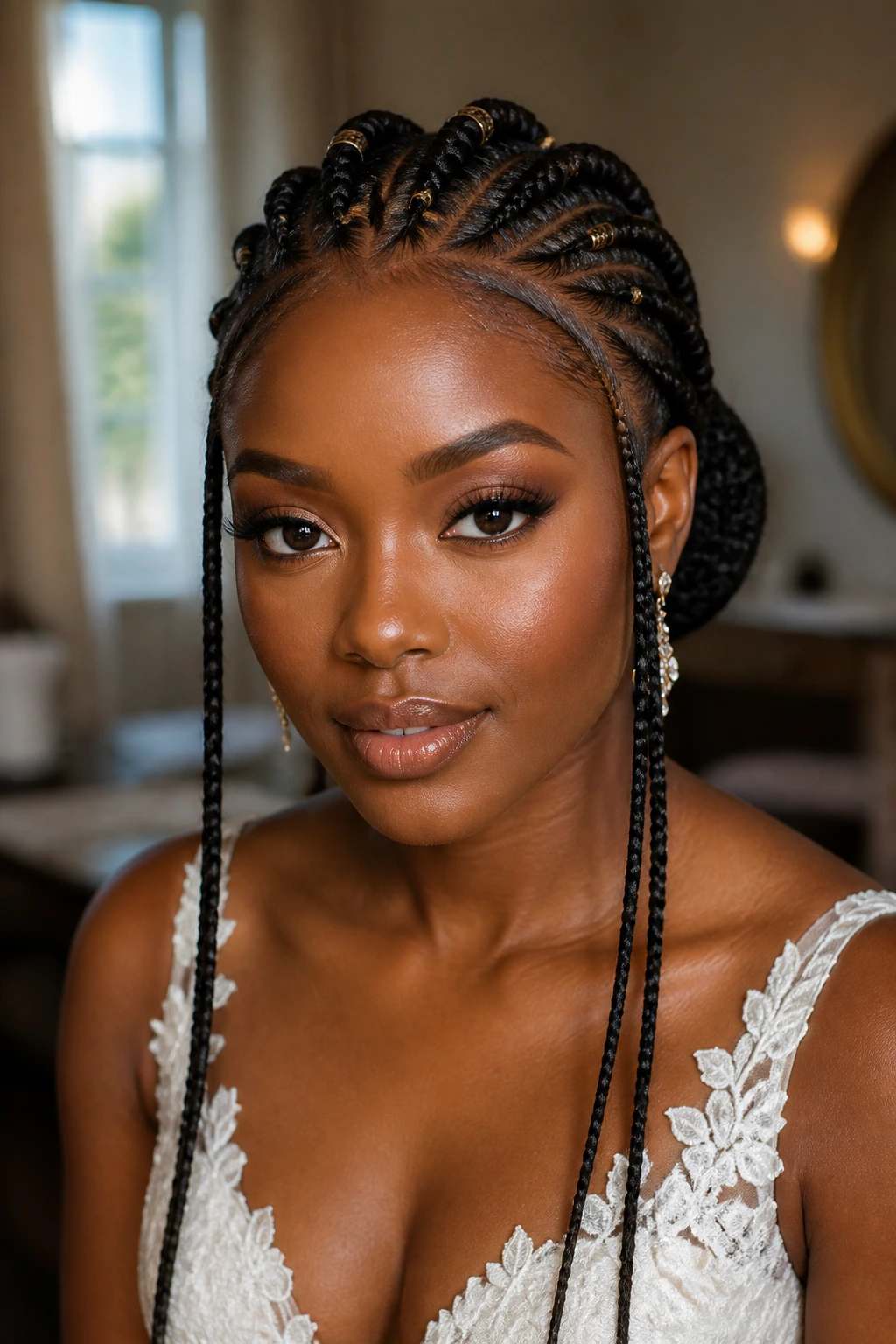
Want braids that feel polished rather than crowded? A Fulani-inspired crown braid gives you that balance. The front cornrow pattern creates shape near the hairline, while the longer braids can be gathered into a bun, braid, or low tail at the back.
The beauty of this style is the architecture. The braids draw the eye upward and across the face, which is useful if the bride wants definition without losing softness. Add cuffs sparingly. Two or three well-spaced pieces are cleaner than a pile of metal scattered across the head.
This style works best when the parting is crisp and the scalp is moisturized before installation. Dry, flaky roots and tight braids are a bad pairing. The cleanest versions have a soft sheen at the scalp, but never a greasy one.
7. Half-Up, Half-Down Curls
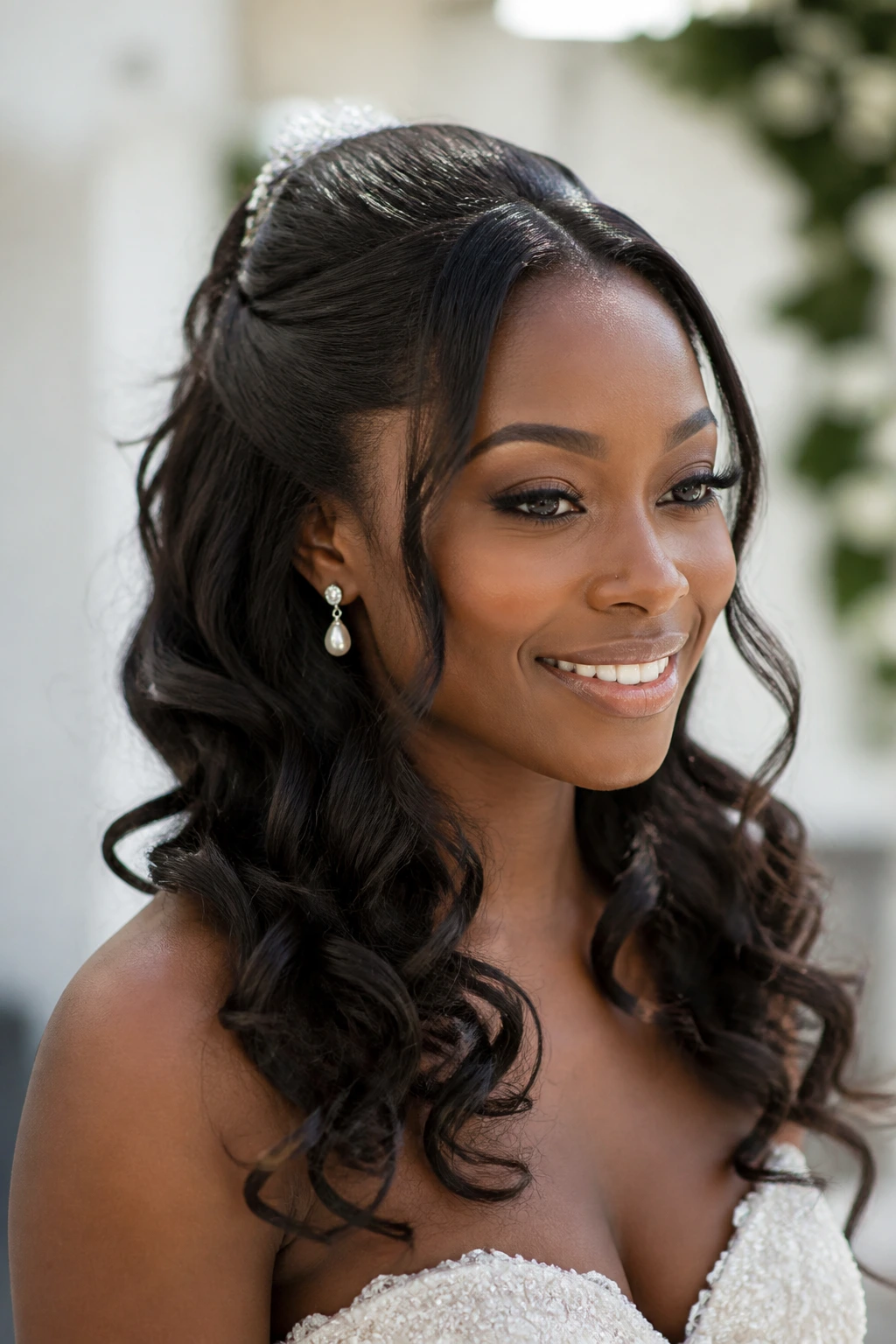
Half-up hair earns its keep when you want curls and structure in the same look. The crown gets the security of pins or a small braid base, while the rest of the hair stays loose and full through the shoulders or down the back.
This is one of the easiest wedding hairstyles for Black brides to tailor. Natural curls can be defined with mousse and a diffuser. Pressed hair can be curled in sections and brushed into softer bends. Extensions can be blended in for length without making the top bulky. The top section should hold the veil comb if you’re wearing one, which keeps the accessory off the loosest part of the hair.
It’s a good choice for brides who want movement in their photos. The loose hair swings. The pinned crown keeps things tidy. Both things can be true at once.
8. Puff with Braided Base
A puff with a braided base is one of those styles that looks bigger in person than it does on a mood board. That’s the good news. The shape has lift, texture, and a little bit of swagger, which makes it a smart option for brides who want their natural hair to stay natural.
The base can be a single braid, several narrow cornrows, or a sleek wrap that feeds into the puff. The puff itself should sit where the head naturally rounds out, not shoved too high just to create drama. A soft, plush puff looks richer than a hard, over-stretched one.
This is also one of the more comfortable styles for long events. The crown stays light, the ends aren’t pinned into submission, and the overall effect can be very elegant when the front is smoothed properly.
9. Finger Waves with a Deep Side Part
Finger waves have a crisp, almost sculpted quality that flatters a beaded veil like nothing else. They sit close to the head, which makes them ideal for brides who want the hair to behave no matter what the weather is doing outside.
The wave pattern takes patience. It should look glossy and controlled, with ridges that are smooth but not helmet-hard. On natural hair, this usually means a well-prepped press or molded set. On relaxed or straightened hair, the waves can be pin-set and shaped with gel and a fine comb. Either way, the lines need to be clean.
This style leans formal. There’s no pretending otherwise. If the dress is already ornate, the waves can be the one polished, architectural element that keeps the whole look grounded.
10. Knotless Braid Ponytail
A knotless braid ponytail keeps the head light and the silhouette long. That’s the draw. It gives the bride the cleaner feel of a ponytail without the bulky knot at the root, and the result looks smoother near the scalp.
The braid can be thick and dramatic or medium and neat depending on the dress. I prefer a version that starts sleek and stays balanced all the way to the end. If the hair is long enough, the natural ponytail can feed directly into the braid; if not, added hair gives the braid more swing. Wrap a small section around the base to hide the elastic, then pin it under the braid.
This is the kind of style that looks great with a backless gown because it clears the shoulders and lets the line of the dress stay visible. It also survives movement better than a loose ponytail, which tends to frizz at the nape first.
11. Soft Afro with Crystal Pins
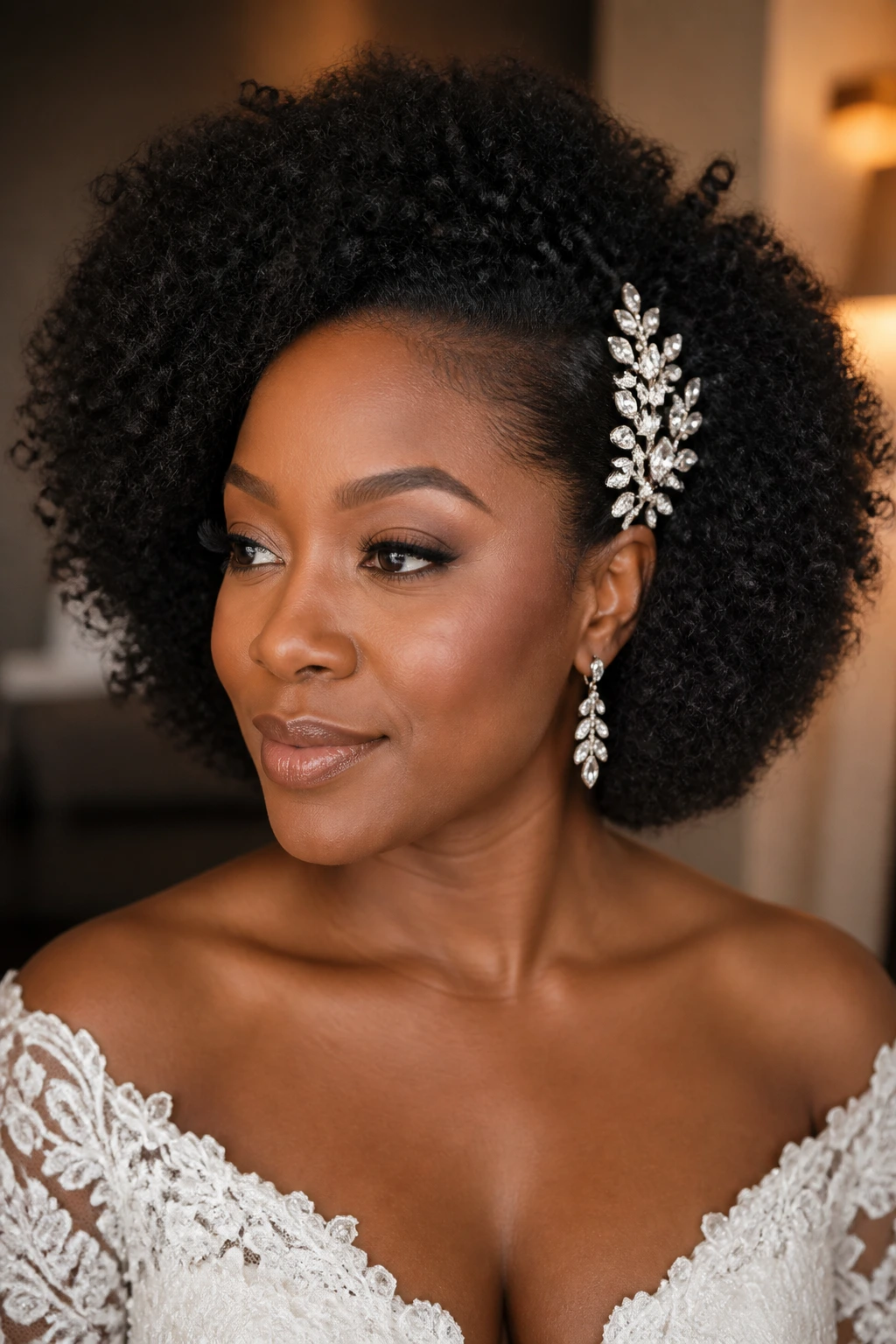
A soft afro framed with pins is the rare bridal style that looks richer the closer you stand. It does not need to be overmanaged. The shape matters more than the absence of every flyaway.
The cut should already be shaped before the wedding so the afro has a rounded silhouette, not a vague cloud. A light pick at the roots, a little moisture, and carefully placed crystal or pearl pins near one temple are enough. The pins should look like accents, not restraints. That distinction matters.
This is a strong choice for brides who want to honor their own texture in a way that feels current and intentional. It also lets the face stay open, which is useful when the dress, earrings, and makeup already do plenty of work.
12. Tapered Twist-Out with Side Sweep
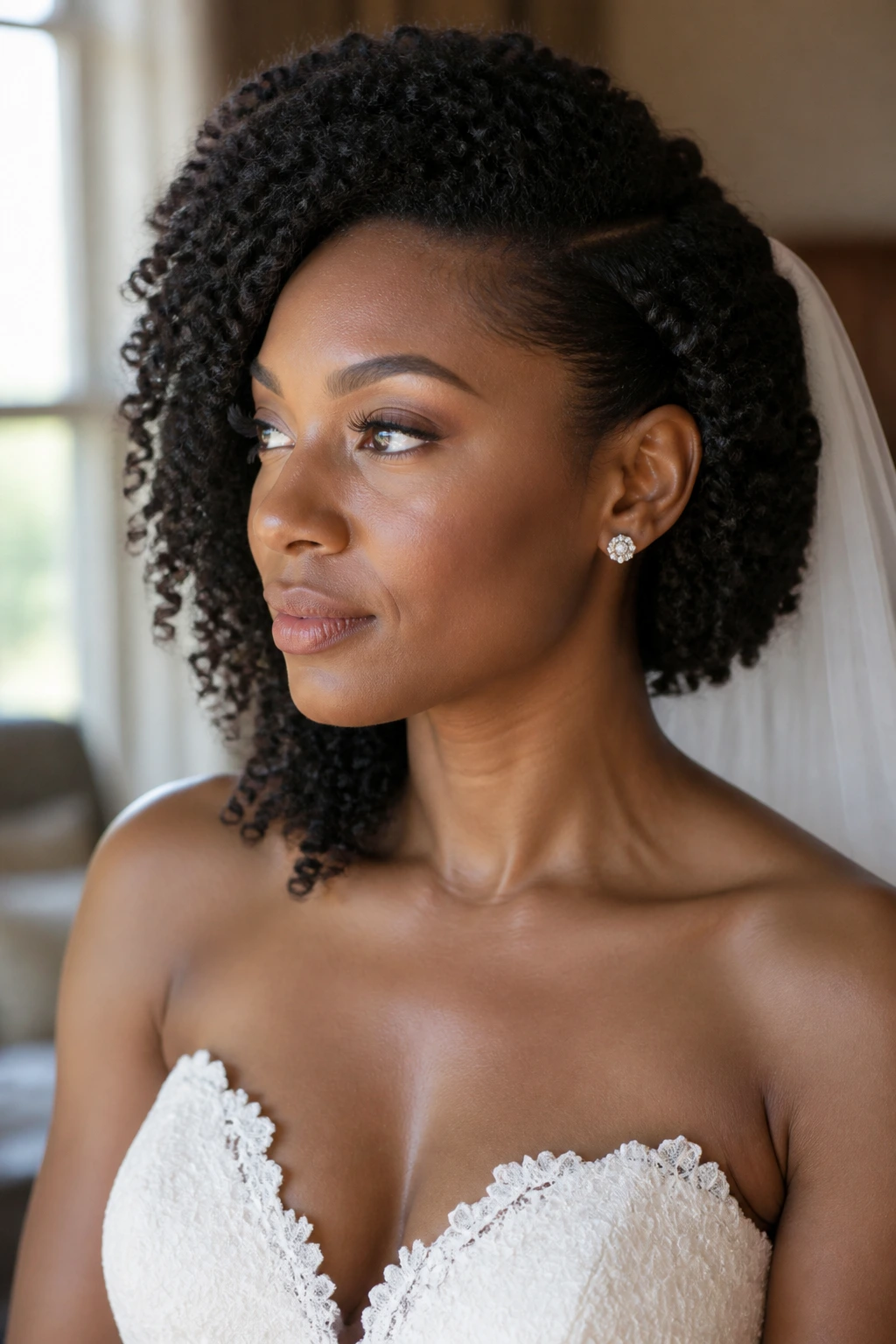
Twist-outs deserve a seat at the bridal table. A good one has definition at the ends, airy volume through the crown, and enough control near the sides that the shape looks designed rather than accidental.
The twist-out should be set the night before or earlier, then separated gently with a little oil on the fingertips. For a wedding, the side sweep makes the style feel more formal. One side can tuck behind the ear with a comb or pin, while the other side keeps soft volume near the cheekbone. It’s an easy way to make natural texture feel dressy without making it stiff.
This style is especially useful if the bride wants her hair out of the face but refuses to flatten it. Good decision.
13. Roll-and-Tuck Bun
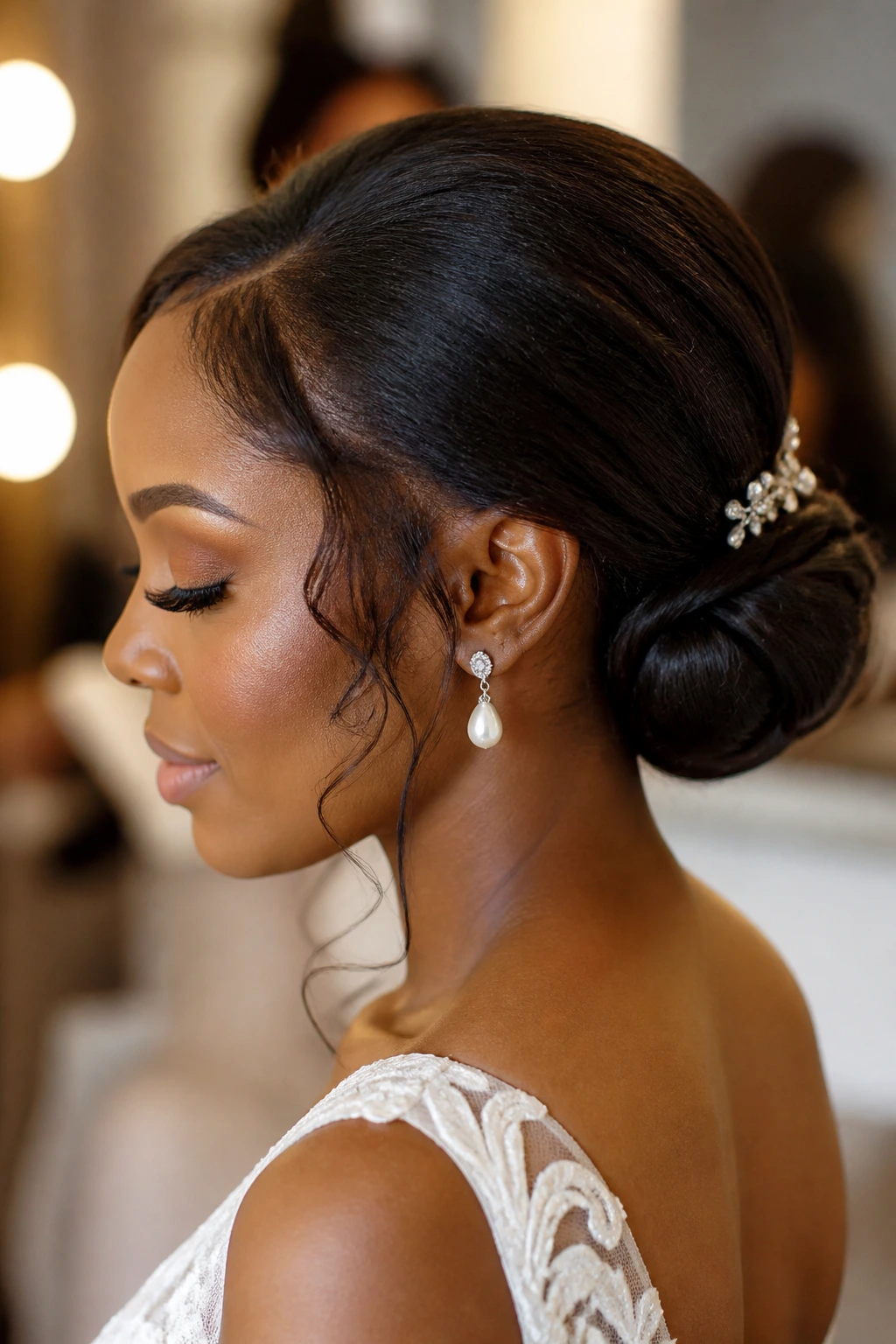
Roll-and-tuck buns are the quiet workhorses of textured wedding hair. They sit low, they stay compact, and they can be built from natural hair, stretched hair, or braids depending on the bride’s length and density.
The appeal is not flash. It is stability. Sections are rolled inward and tucked with pins or hidden combs, which keeps the surface smooth while still letting the hair show off some texture at the edges or base. A pearl comb can sit just above the bun if the bride wants a tiny bit of shine.
I like this style when the bouquet is large, the dress is detailed, and the bride wants the hair to stay out of the way without looking like an afterthought. That is harder to do than people admit.
14. Faux Loc Updo
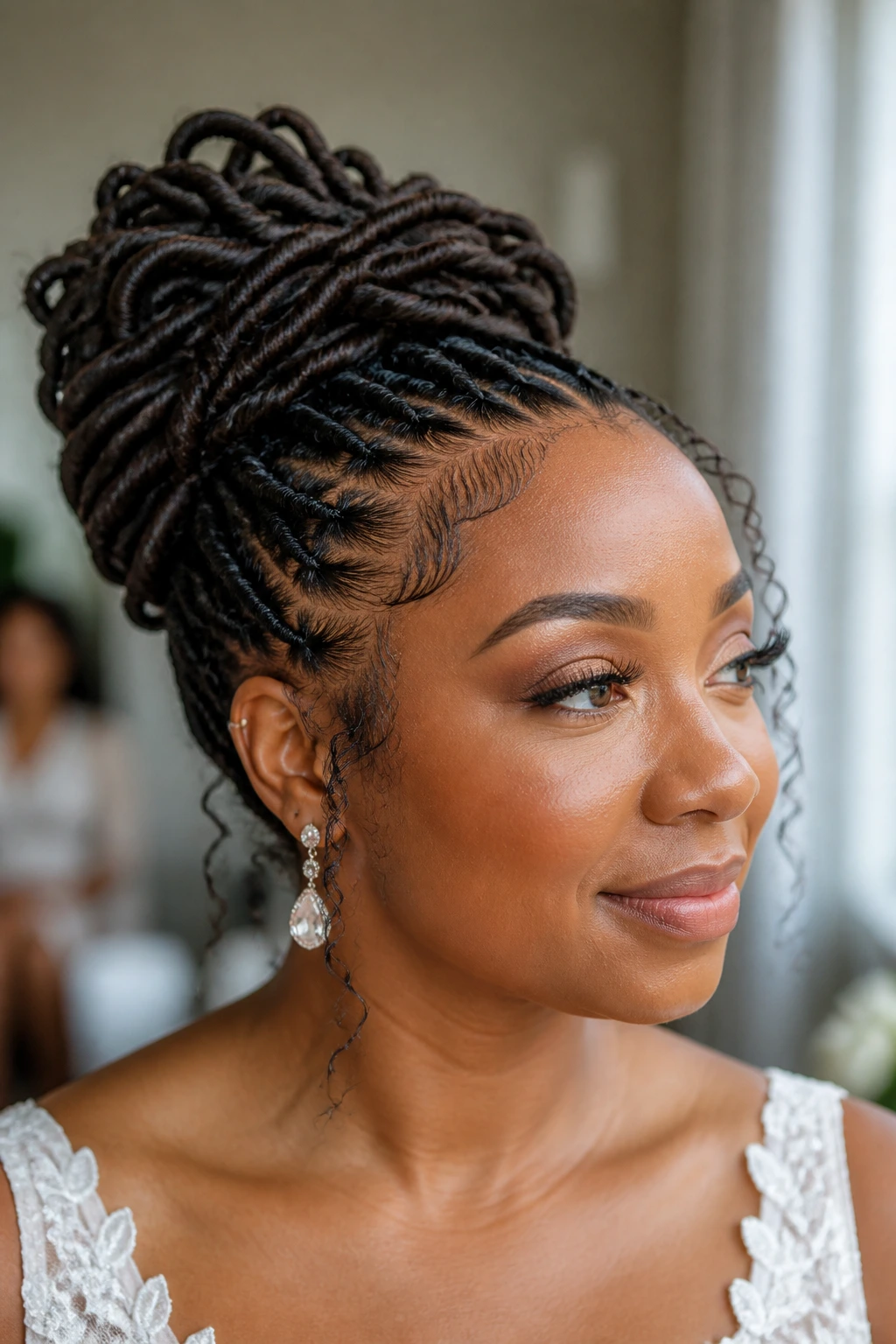
Faux loc updos bring shape and length without asking your own hair to do all the work. They can be swept into a low bun, rolled into a side knot, or pinned into a crown-like shape with the loc ends tucked to create a softer outline.
What makes this style useful is the texture. Faux locs already have visual weight, so the updo reads full even when the actual structure is simple. The bridal version works best when the locs are neat at the root and the edges are smoothed just enough to frame the face, not slicked into a hard line.
Small hair jewelry works nicely here. One cuff near the front, one pearl pin at the side, and stop. Extra accessories can make faux locs look busy instead of elegant.
15. Side-Swept Curls with Veil Comb
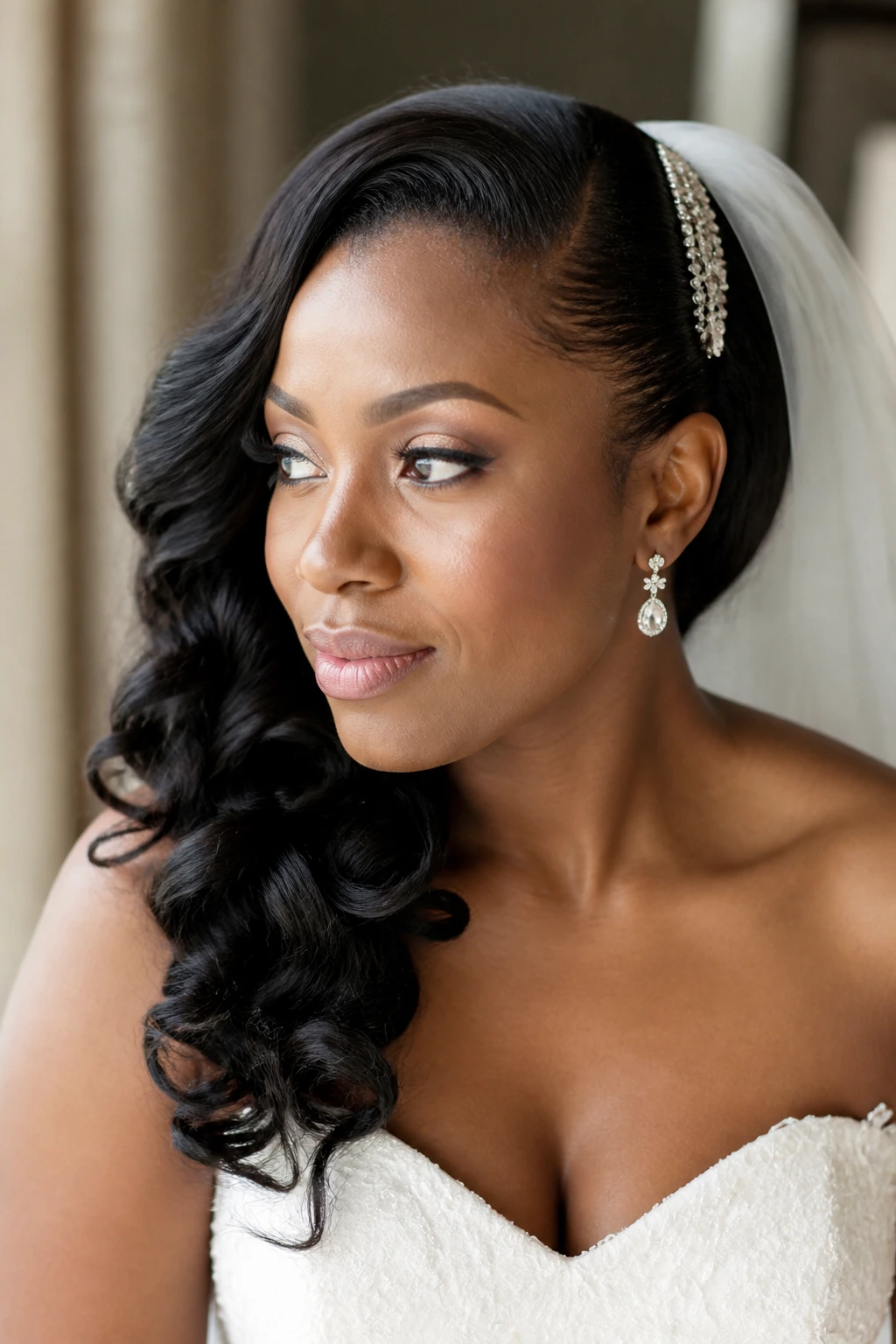
Side-swept curls are for brides who want movement, but not chaos. The curls fall over one shoulder in a controlled cascade while the opposite side stays pinned back, which gives the face a clear outline and leaves space for earrings to show.
The veil comb can sit on the pinned side, hidden just above the ear or a little farther back near the crown. That placement keeps it secure without burying the curls under hardware. If the hair is textured, the curl pattern should stay uniform enough that the sweep feels deliberate all the way through the ends.
This style benefits from a brush-out only after the curls cool. Rush that part and you get frizz, not softness. A little restraint goes a long way here.
16. Braided Mohawk with Three Buns
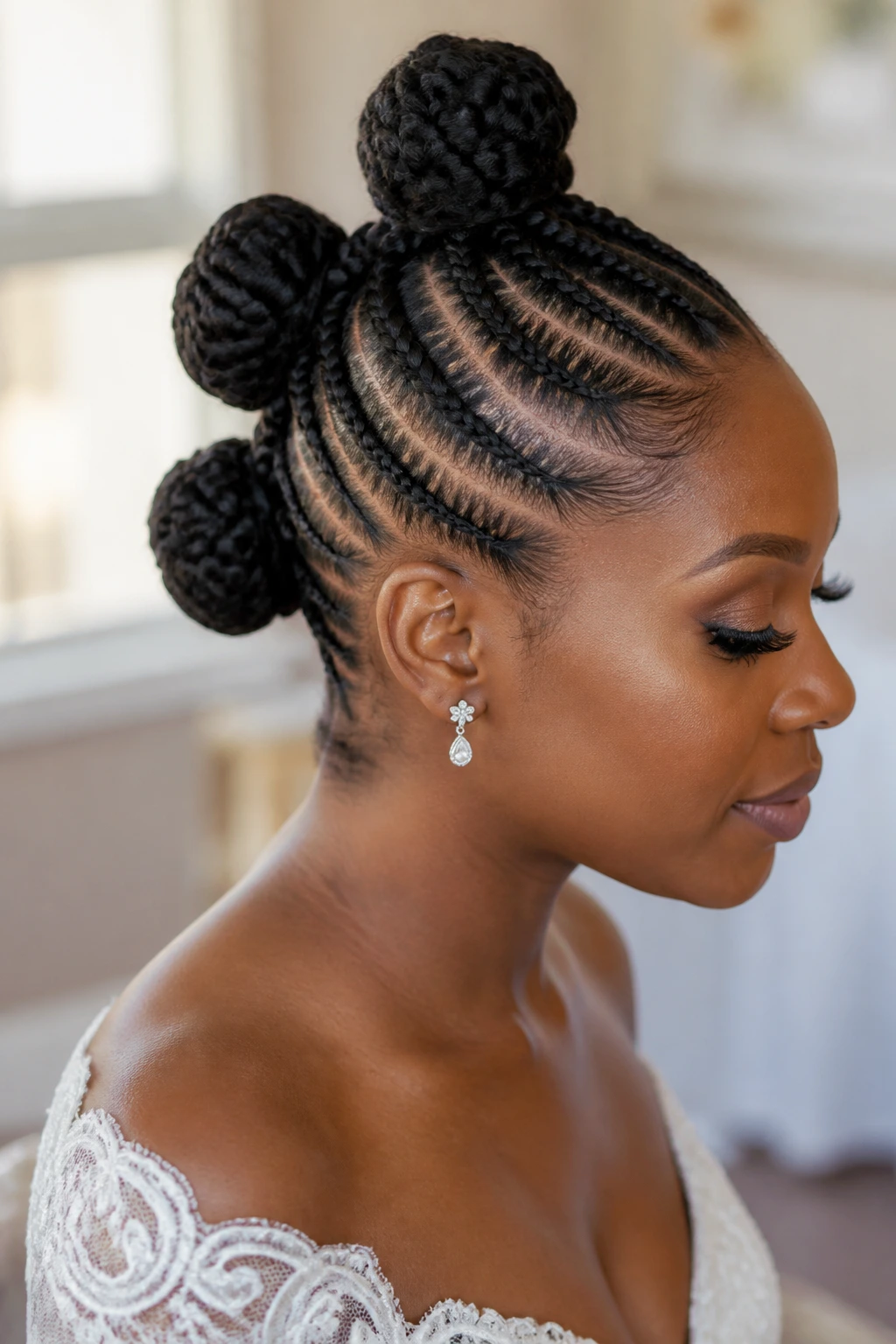
Braided mohawks are not shy, and that is the point. The center braid or braid track creates a clean spine down the head, while the sides stay smooth or cornrowed tight enough to emphasize the shape. Three buns along the ridge make the whole look more bridal and less street-styled.
I like this on brides who wear strong jewelry or a dramatic gown. The hairstyle can carry visual weight, so the rest of the look does not have to work as hard. You can add metallic cuffs, fresh flowers, or tiny beads between the buns, but the braid pattern should stay readable.
The style does ask for skill. The parting has to be straight, the buns have to be evenly spaced, and the tension needs to be comfortable. If one section feels tighter than the others, the imbalance will show.
17. Bantu Knot Updo
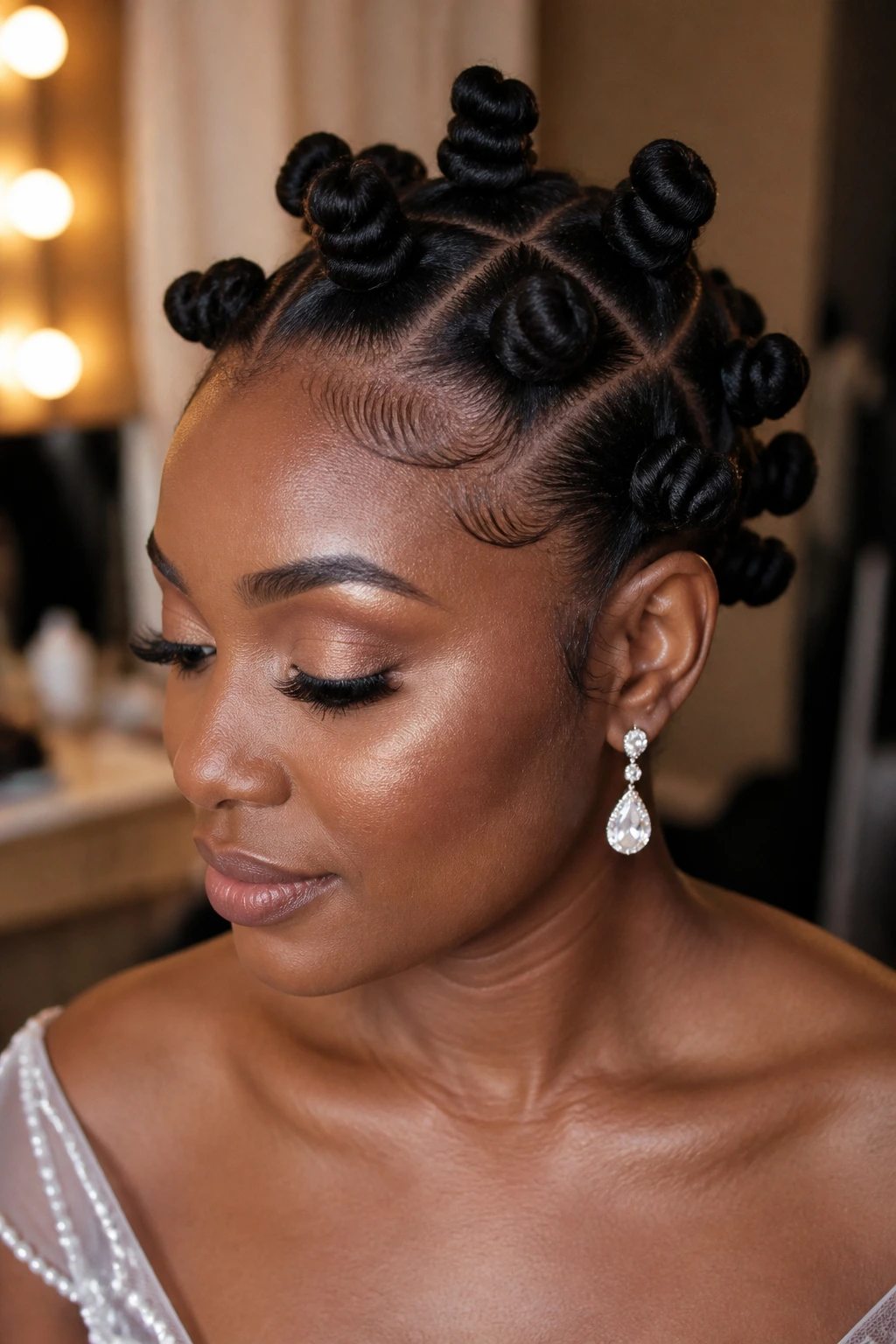
Bantu knots in bridal form need clean parting and a steady hand. They can be small and numerous or larger and sculptural depending on the dress and the bride’s taste. Done well, they look architectural, not costume-like.
The key is balance. The knots should follow a pattern that feels deliberate around the head, and the edges around the forehead should stay neat without being pressed flat to the point of discomfort. A few tiny gold cuffs or pearl pins can turn the style into something formal without overwhelming the structure.
This is not a style for a bride who wants to disappear into the background. It is for the bride who wants the hair to be part of the statement. Own that.
18. Low Braided Ponytail
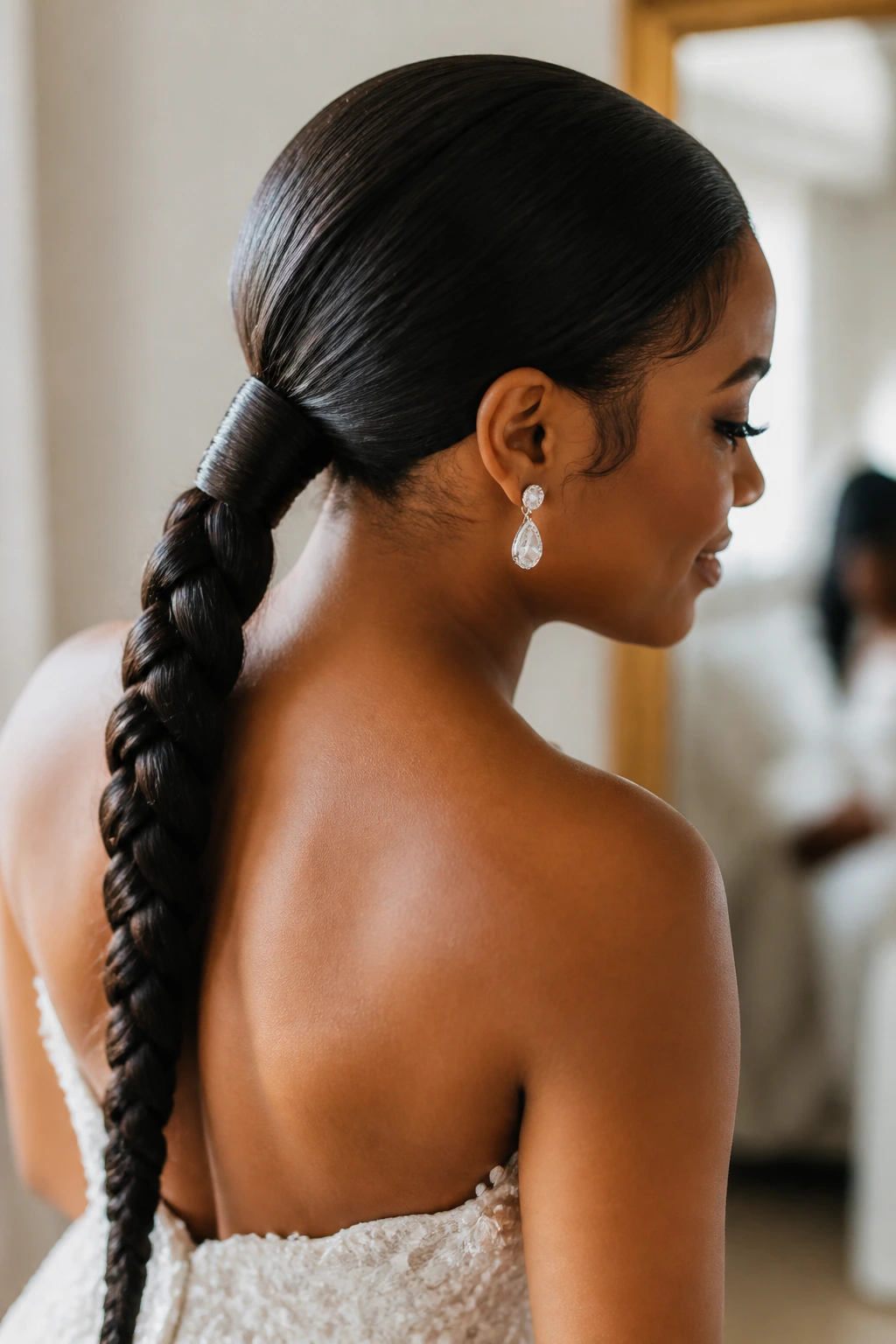
A low braided ponytail can read minimalist or dramatic depending on the thickness of the braid. That flexibility makes it one of the better choices for brides who want something polished and straightforward, with enough length to swing after the first dance.
The base should be smooth and low at the nape. From there, the braid can stay tight and thin or become a chunky rope with added hair. A wrapped base gives the finish a cleaner edge, especially if the bride plans to wear drop earrings or a long veil.
This style is underrated because it clears the neck while still giving movement. The braid moves when you move, which can look gorgeous in candid photos. It also tends to hold better than loose curls in humid venues.
19. Curly Bob with a Deep Side Part
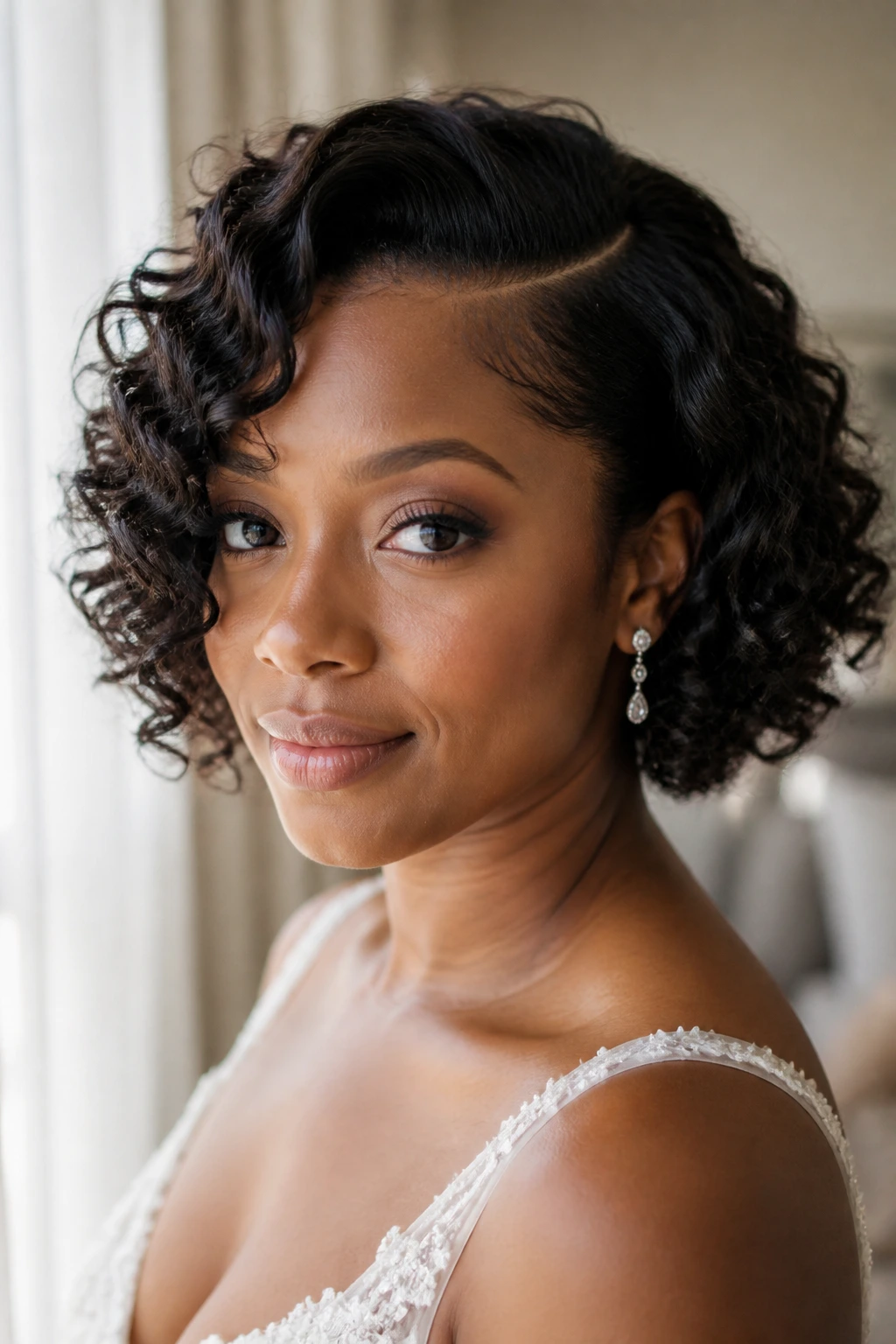
A curly bob makes a small face look sharper and a gown neckline look more open. That’s the simple reason it keeps showing up in bridal folders. It frames the jaw, gives the cheeks some softness, and never asks for more length than the cut already has.
The deep side part matters more than people think. It gives the bob direction and a little asymmetry, which keeps the look from feeling too neat. The curls should be defined, not crunchy, and the ends need enough spring that the shape stays lively all day.
This one works especially well for brides wearing shorter veils or birdcage pieces. The shorter length keeps the silhouette light, and the side part makes room for a comb or jewel pin without flattening the whole look.
20. Crochet Curls Pulled Back
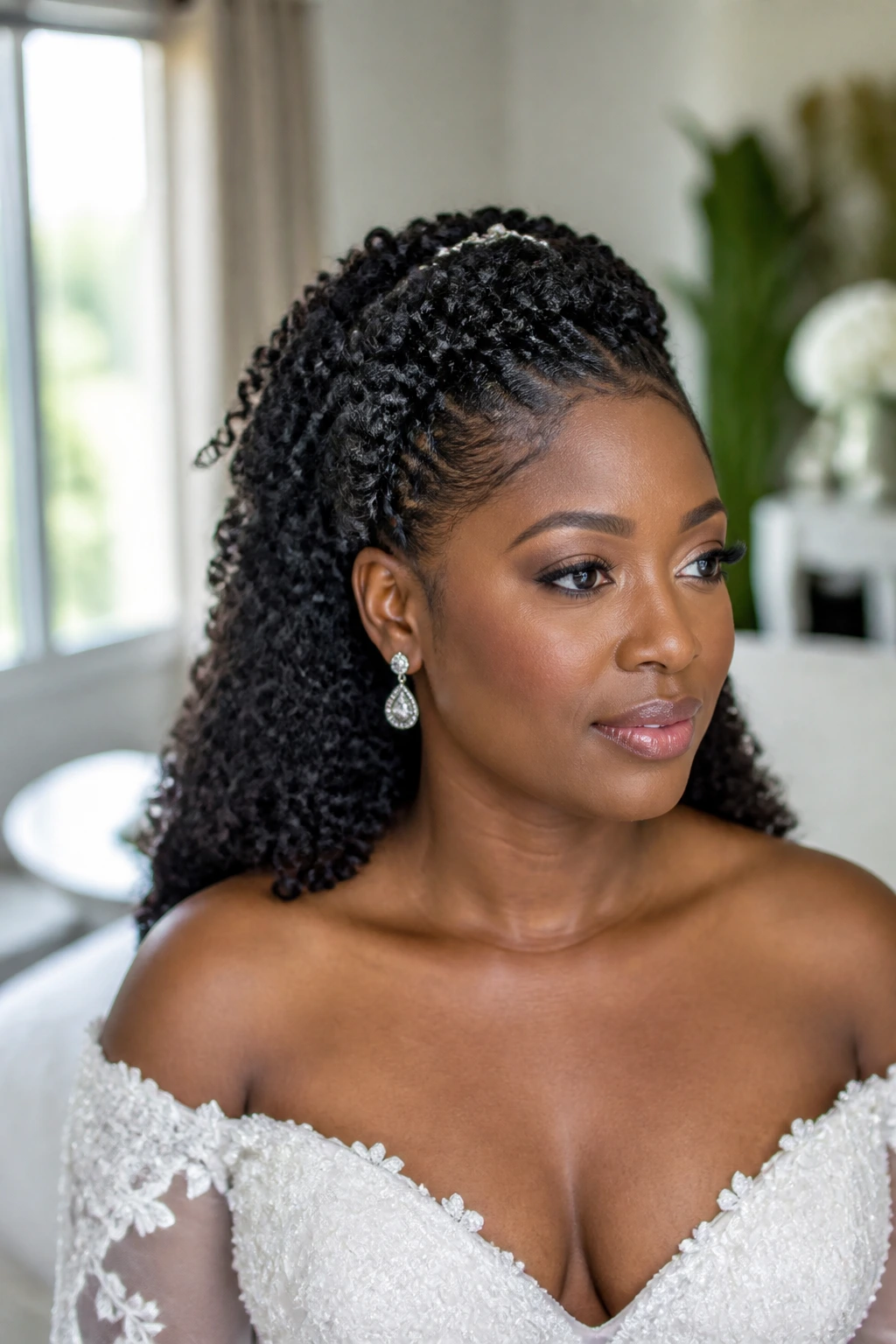
Crochet curls are a smart move when time matters and fullness matters even more. They give you the volume of a big curl set without requiring every strand on your own head to do the heavy lifting.
The bridal version is often styled half pulled back, with the front section smoothed into a small pouf, a pin, or a narrow braid that holds the face open. That keeps the hair from hiding the makeup or swallowing the neckline. If the crochet texture is a loose curl or water wave, the result can look lush without tipping into too much.
The biggest advantage is consistency. The curl pattern stays the same across the head, which makes the style easier to manage in photos and less likely to collapse before the reception starts.
21. Halo Twist with Pearl Pins
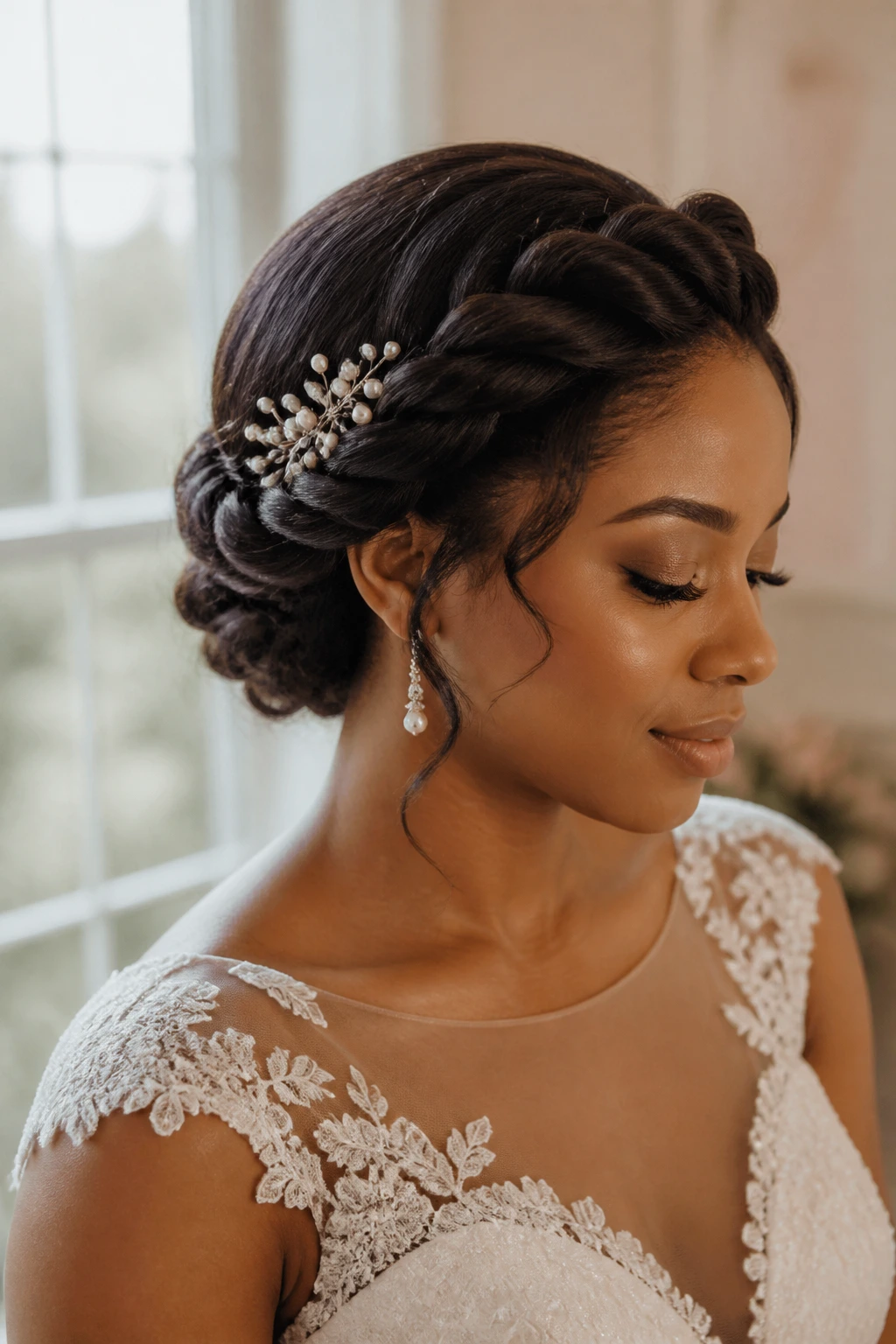
A halo twist feels softer than a crown braid and less formal than a full updo, which is why so many brides like it once they see it in motion. The twisted band circles the head and can be tucked with pearl pins at the temple or crown.
The shape is gentle. Not weak, gentle. There’s a difference. The line around the head creates a pretty frame without the heavy visual weight that some braided crowns bring. I especially like this with lace or chiffon dresses, where a hard-edged hairstyle can feel out of place.
The pins should be spaced with intention. One at the side, one at the back, maybe a third if the twist needs a little extra security. More than that can start to look cluttered.
22. Sculpted Top Knot with Sleek Edges
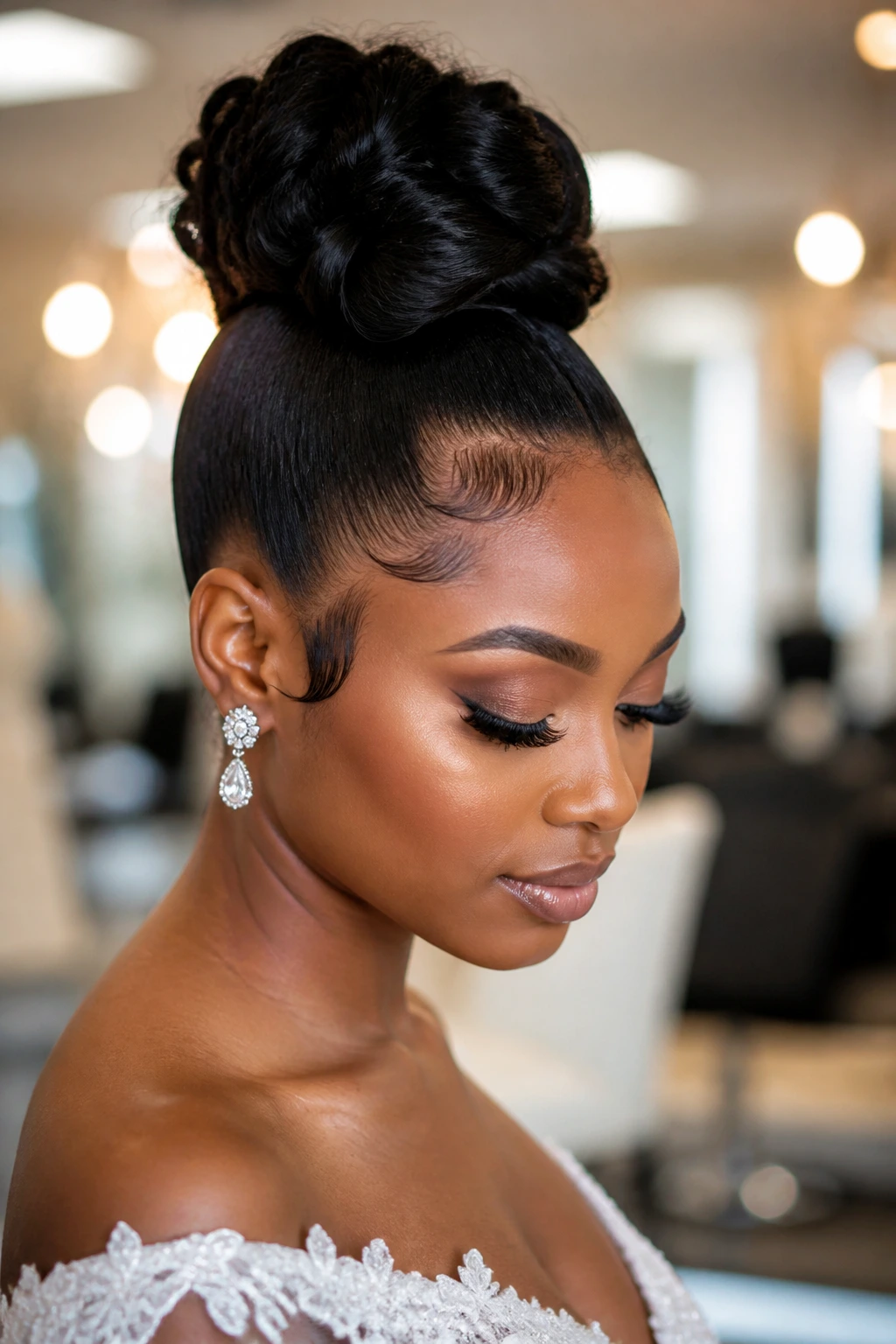
The top knot gets a bad reputation when people think of gym hair, which is a shame. A bridal version changes the whole attitude by making the knot compact, high enough to lift the face, and smooth around the base so it feels finished instead of casual.
This style works best when the front is brushed into a clean curve or center part and the knot itself is built with enough hair to feel deliberate. If the bride has dense hair, that knot can be a real shape. If the hair is finer, added hair or padding helps keep the profile strong without making the top heavy.
I’d use this for a bride who wants statement earrings, a bare neckline, and a little edge in the overall look. It’s a clean silhouette with a little bite.
23. Defined Wash-and-Go with a Hair Vine
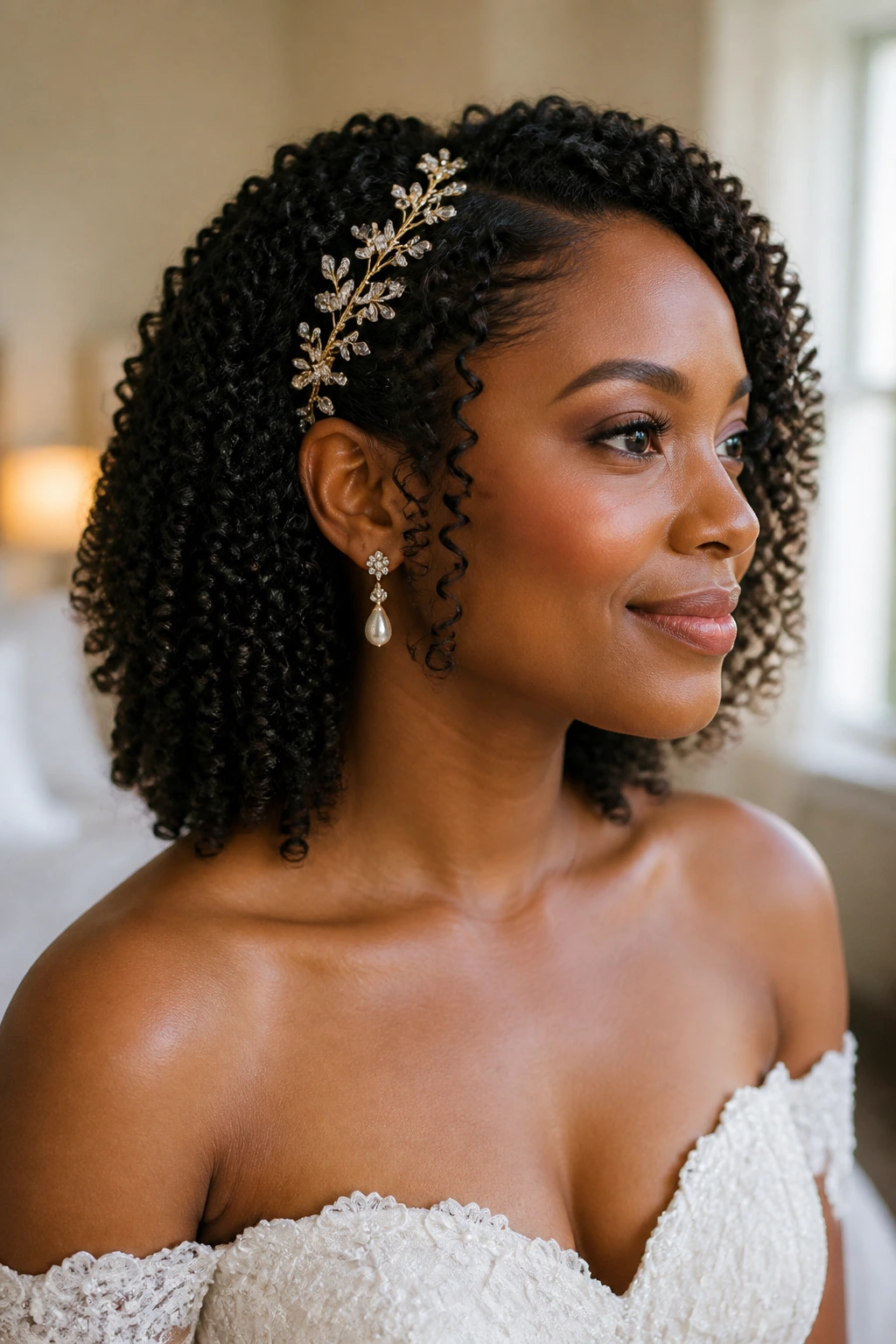
A defined wash-and-go can absolutely work for a wedding if the cut is shaped well. The trick is definition, not control for control’s sake. You want the curls to hold their pattern, frame the face, and move lightly without frizzing into a puff by noon.
A hair vine, especially one that bends with the shape of the head, can sit along the hairline or above one ear and give the style some ceremony. The key is to keep the curls hydrated enough that they stay clumped and glossy, but not so saturated that they go limp. A good gel-and-cream combo, dried fully, tends to do the job.
This is a great option for brides who want to look like themselves, only dressed up. And honestly, that is often the smartest bridal decision in the room.
24. Senegalese Twist Crown
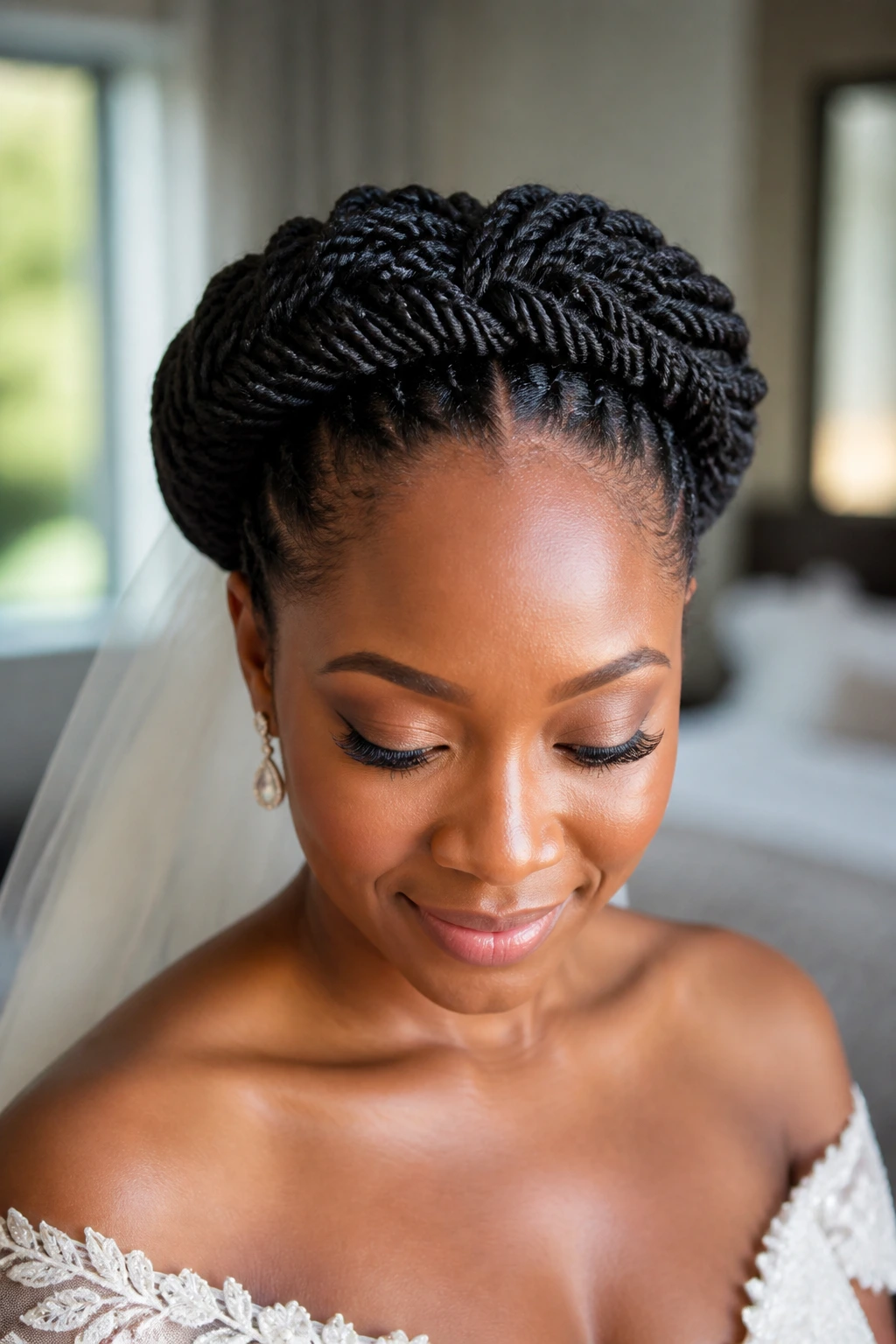
Senegalese twist crowns are all about symmetry. The twists have a rope-like finish that catches the light in a different way than braids do, and when they’re wrapped into a crown shape, the result feels clean and layered without getting busy.
The style can be left smooth at the top or dressed up with tiny accessories tucked into the twists. What I like most is the predictability. The twists keep their shape better than loose textured styles, so the bride doesn’t spend the evening wondering whether the back has started to loosen.
This is also a useful choice when the wedding is moving from outdoor to indoor spaces. Twists tend to tolerate a little weather better than hair that depends on a perfect curl set.
25. Asymmetrical Updo with Loose Curls
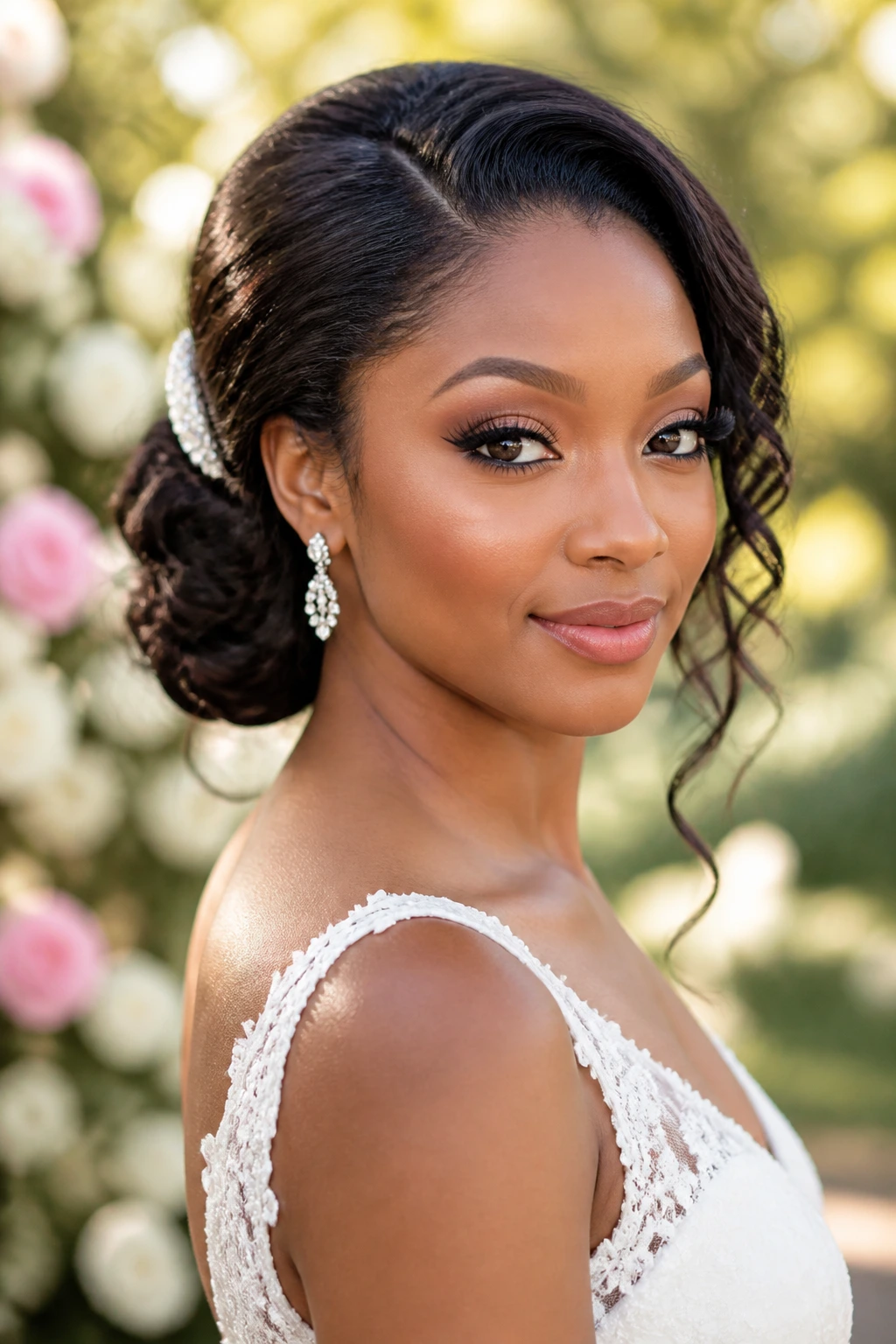
An asymmetrical updo gives the face one clean side and one soft side, and that contrast is the whole appeal. One side can be pinned into a low roll or tucked twist, while the other side leaves a few curls loose near the ear and jawline.
It’s a good match for brides who want visual interest without a giant hairstyle sitting on the head. The asymmetry makes the style feel custom. It also helps if the dress has an off-shoulder sleeve, a one-strap neckline, or a detailed shoulder that should stay visible.
The loose curls should not be random. A few deliberate pieces are better than a scatter of half-frizzed tendrils. The whole look gets stronger when the soft side is controlled.
26. Soft Cornrow Feed-In Bun
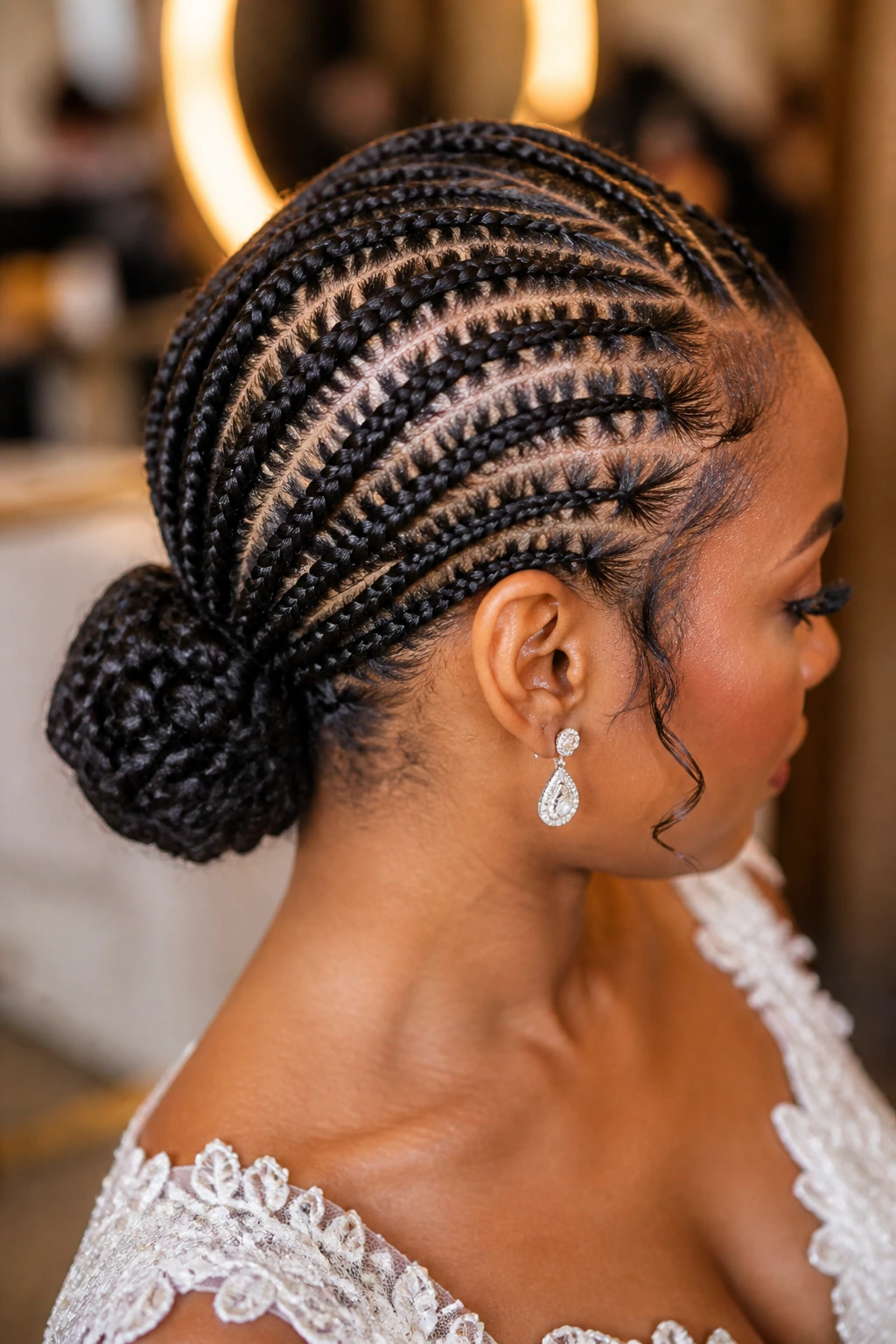
Feed-in cornrows are the most underrated bridal base in textured hair. They let you shape the hair close to the scalp, then gather it into a bun that can sit low, mid, or slightly high depending on the dress.
The feed-in method matters because it creates a smoother part line and a less abrupt start to the braid. That is easier on the scalp and cleaner in photos. The bun itself can be sleek or slightly textured, but I’d keep the overall shape compact if the bride plans to wear a veil or heavy earrings.
This is a workhorse style. It is practical, yes, but it can still look expensive when the parting is sharp and the finish is soft.
27. Bridal Faux Blowout with Flipped Ends
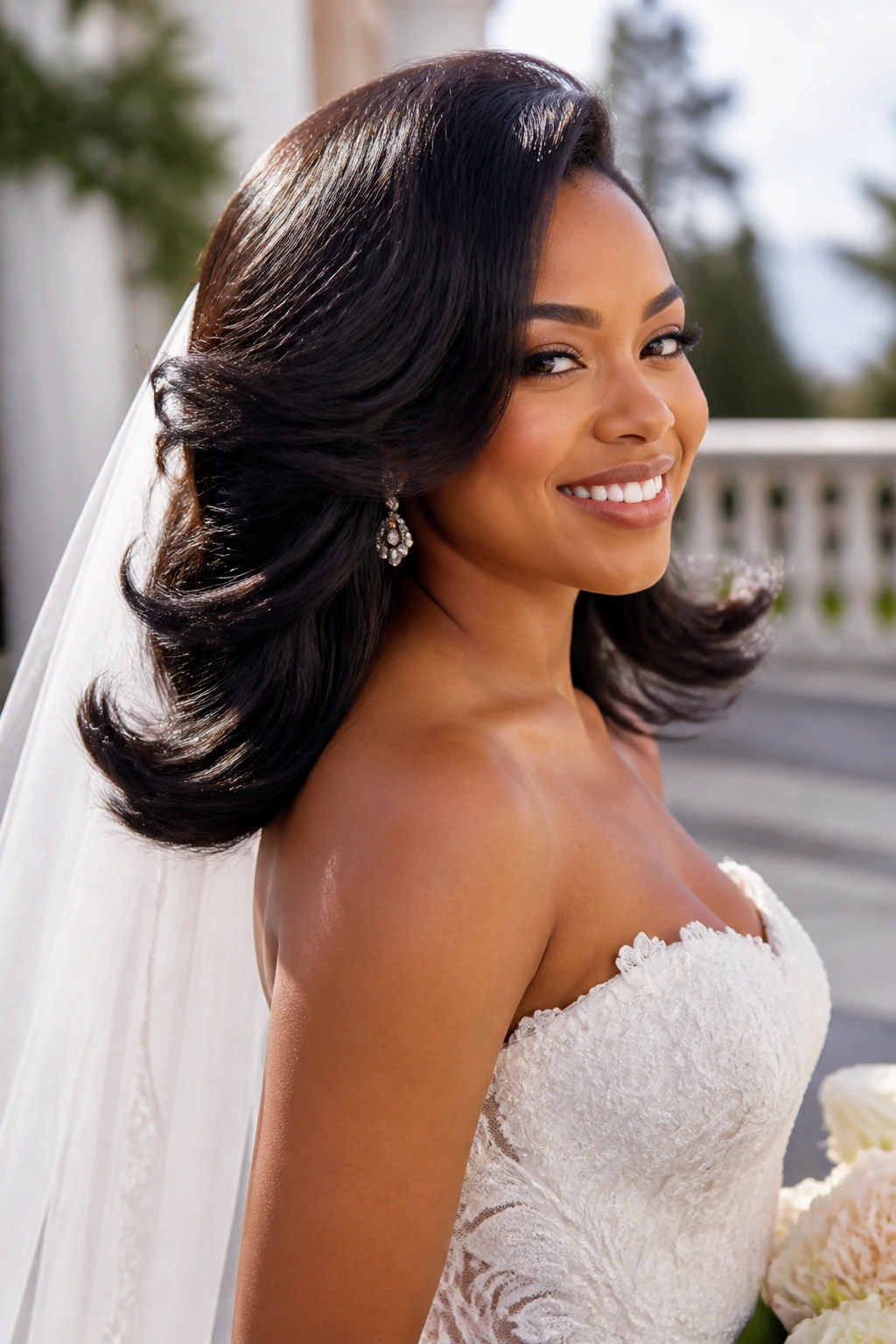
A faux blowout makes sense when you want movement that still holds structure. It gives the impression of a big, blown-out shape without forcing every strand into a pressed finish. The ends can flip outward slightly, which keeps the style from feeling too serious.
This look is especially useful for brides with natural texture who want to stretch the hair without flattening all the life out of it. The blowout effect can be created with a stretch method, a gentle press, or extension pieces blended with the natural hair. The goal is airy fullness, not stiff volume.
If the dress is simple, the hair can be the part that feels full and alive. If the dress is detailed, keep the flip softer and the part cleaner.
28. Lace-Front Wig Bob with Soft Waves
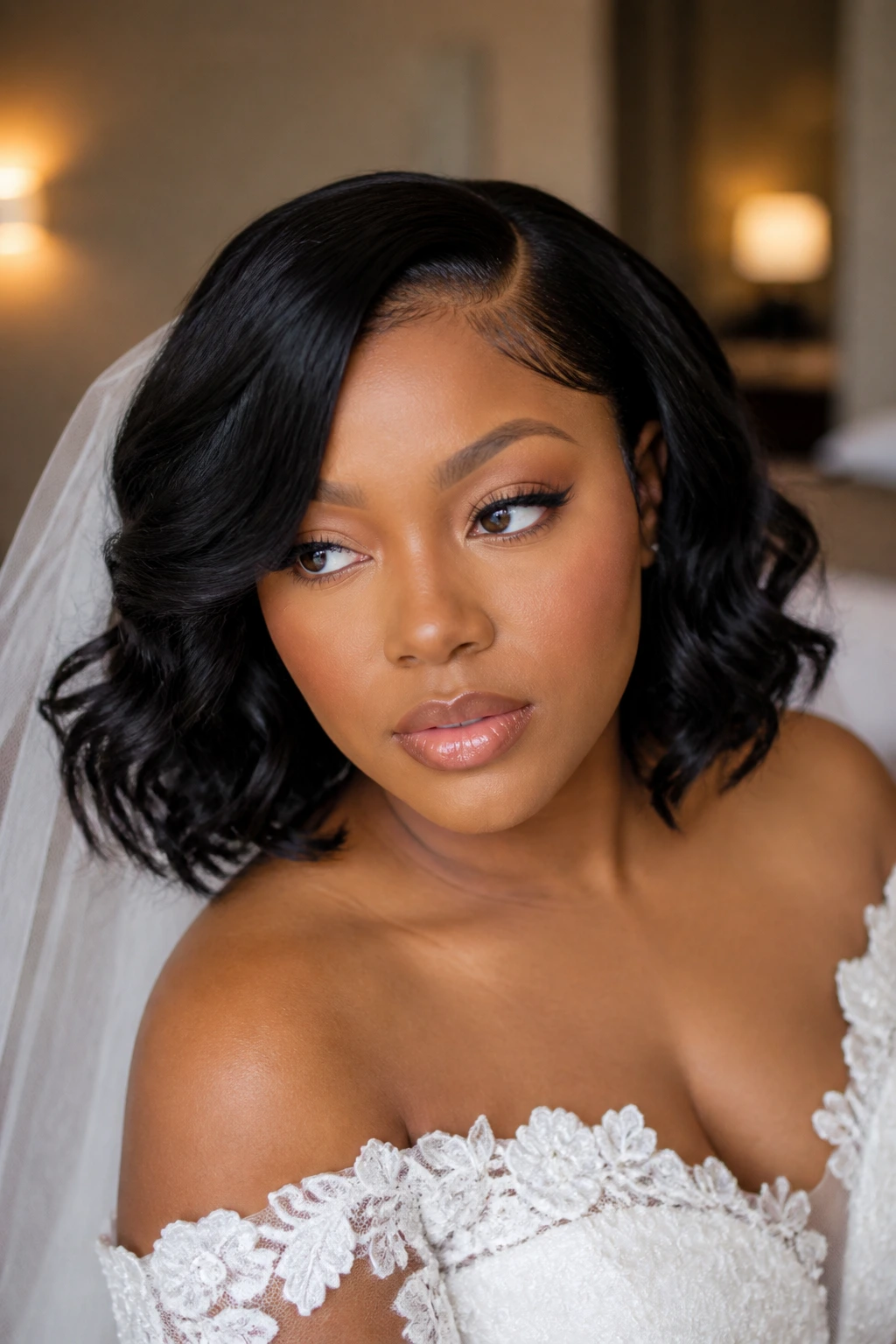
A lace-front wig bob can save a lot of styling time, but only if the fit is handled carefully. The lace needs to match the scalp line, the hairline should not sit too far forward, and the waves need to be brushed enough to look soft but not puffed out.
A chin-length or jaw-length bob frames the face fast. It also keeps the neck clear, which is handy with high collars, long earrings, and layered necklaces. The wave pattern should be subtle enough that it doesn’t fight the cut. Too much curl on a short bob can make it look busy in photos.
This is one of the easiest ways to switch from ceremony neatness to reception ease. The style stays light on the head and can be reset with a little misting if needed.
29. Loc Petal Bun with Ornament Pins
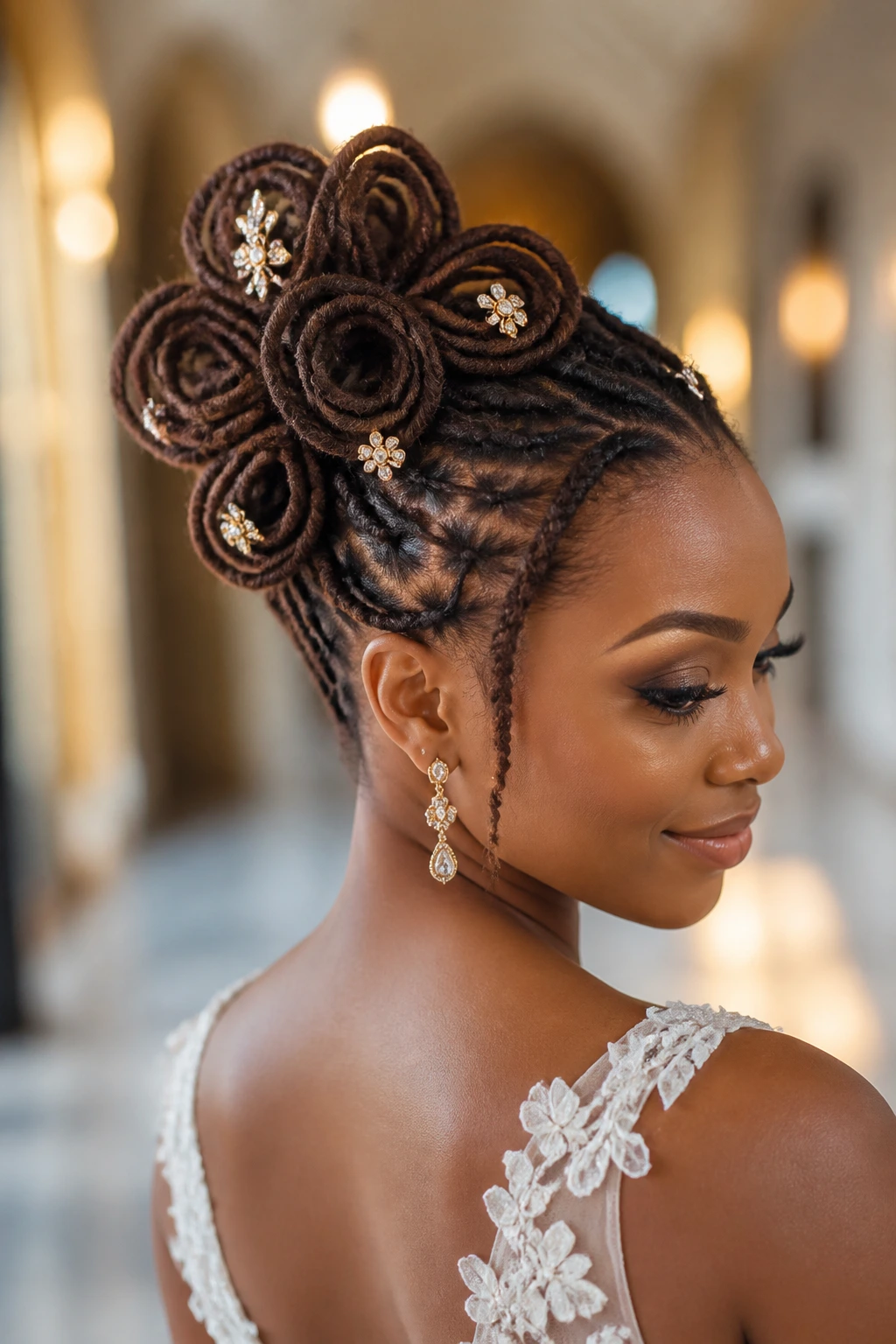
A loc petal bun looks elaborate because the locs fan outward like loops of ribbon. That floral shape makes it one of the prettiest options for brides who want their locs to stay center stage but still need a formal silhouette.
The bun works best when the locs are gathered in overlapping sections so the loops have dimension. Small ornament pins can sit between the petals, but the placement should be careful. If the pins are too clustered, the shape gets lost. If they’re too sparse, the bun can read unfinished.
This is a strong veil alternative too. Some brides skip the veil entirely and let the bun do the visual work. That can be the right call when the locs themselves are already a statement.
30. Short Coils with a Crystal Side Comb
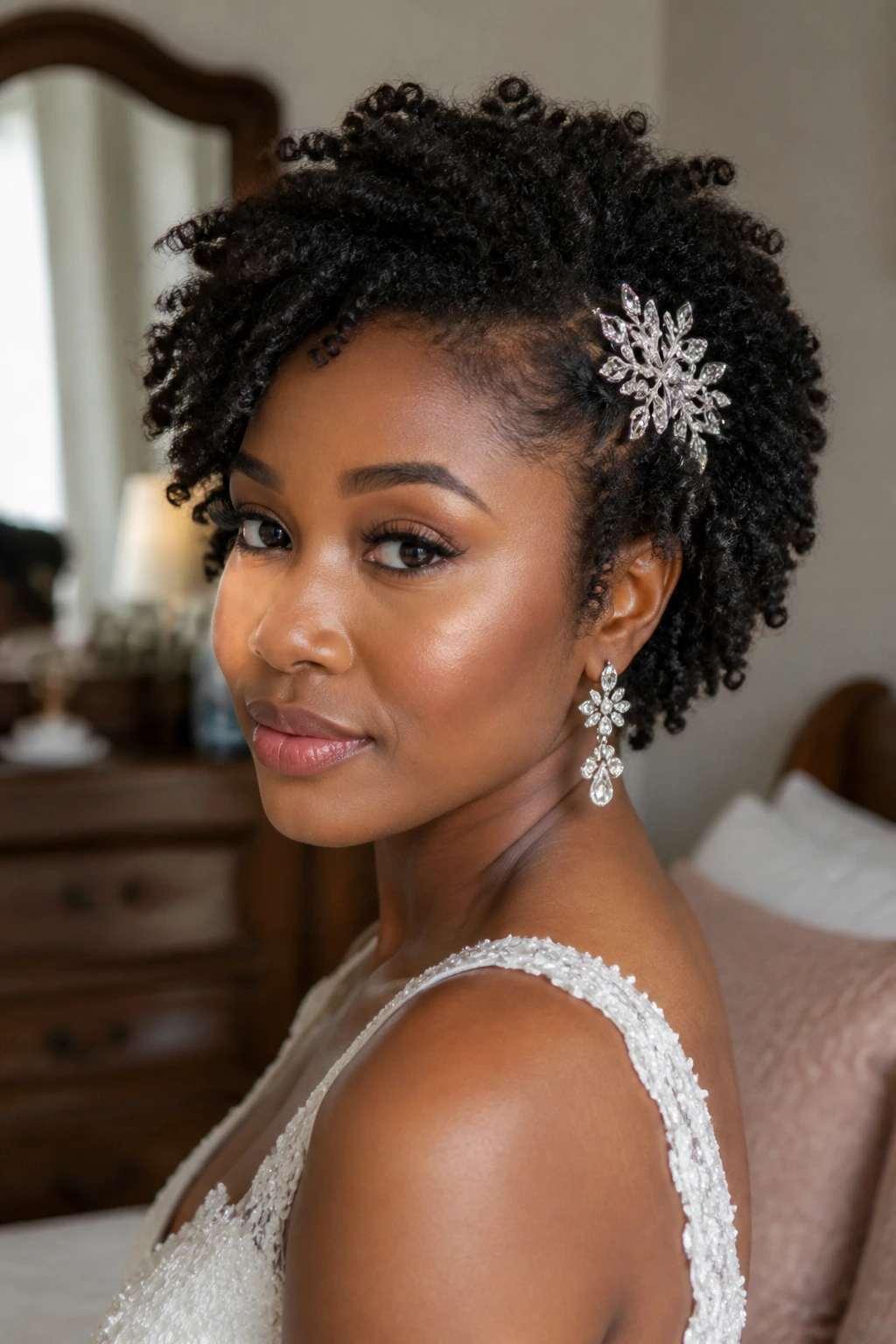
Short coils do not need length to look finished. They need shape. A crystal side comb gives the hair just enough bridal punctuation without hiding the cut or pretending the hair is longer than it is.
This style is ideal for tapered cuts, short natural curls, or a wash-and-go that’s been shaped close to the head. A deep side part or slight sweep can direct the eye, while the side comb sits where the hair naturally curves. The result feels polished and confident.
Short hair can be the smartest bridal hair in the room because it does not compete with the dress. It frames the face, keeps the neckline clean, and lets the bride move without thinking about a pin disaster.
What Makes Bridal Hair Hold From Vows to Last Dance
The hairstyle that survives a wedding day usually wins on engineering, not luck.
A good bridal style starts with a clean scalp and a prep routine that matches the final finish. Sleek styles need product order discipline: heat protectant, smoothing cream, gel where needed, then a firm brush-down before pinning. Curly and textured styles need moisture and definition first, then shaping. If you reverse that order, the style can look dry at the roots and soggy at the ends, which is a terrible trade.
Tension is the other big piece. Tight braids and pinned styles may look neat for ten minutes, but a style that pulls at the edges or the temples is not wedding hair; it is a future problem. Dermatology guidance has been blunt about this for years: repeated pulling can stress the hairline. If the scalp hurts in the chair, it will probably feel worse after the ceremony.
Humidity, heat, and long wear change the game too. Outdoor ceremonies can loosen curls faster. Air-conditioned rooms can flatten a fluffy shape. Strong flash can expose flakes from overloaded edge control. The fix is not more product in every case. Sometimes it is smarter product, better sectioning, and a trial run that uses the same tools the wedding day will use.
Essential Equipment for These Styles
-
Rat-tail comb: For crisp parts, clean sections, and teasing out precise lines.
-
Wide-tooth comb: The safer choice for detangling curls, twist-outs, and locs without wrecking definition.
-
Boar-bristle brush or smoothing brush: Best for sleek bases, ponytails, and molded styles.
-
1-inch curling iron or wand: Useful for waves, side sweeps, and loose bridal curls.
-
Tail comb with a metal tip: Helps create a sharp center part and smooth gels into place.
-
Strong bobby pins and U-pins: Choose hair-colored pins so they disappear into buns and twists.
-
Setting foam or mousse: Essential for molded waves, twist-outs, and curly sets that need hold without crunch.
-
Heat protectant: Non-negotiable for pressed hair, silk presses, and any hot-tool work.
-
Lightweight edge control or styling gel: Use sparingly; too much leaves flakes or a hard, brittle line.
-
Veil comb, hair vine, pearl pins, or floral clips: Pick accessories with flat backs and secure prongs.
-
Diffuser or hooded dryer: Handy for natural styles that need full drying before the ceremony.
-
Satin scarf and bonnet: Protect the finished style while getting dressed or sleeping after the wedding.
Smart Shopping and Hair-Prep Tips
The smartest bridal shopping choice is not the flashiest product on the shelf. It is the one that matches the style you actually want to wear for eight to twelve hours.
For sleek looks, buy products that dry clear and hold without turning the hair white under flash photography. Strong gels can work, but they need a light hand and a clean brush line. For curly styles, choose mousse or foam that sets the curl before you break it apart. If you can’t tell whether a product leaves residue, test it on a small section two weeks before the wedding and take a photo with flash. That saves headaches.
Hair additions deserve the same care. Braiding hair, bundles, twists, and wig pieces should be matched to the texture and density of the finished style, not just the color. If the hair is being left out, the extension texture should blend once both are styled. If the hair is being pinned up or braided in, the extension color can be off by a shade or two and still look fine, because the shape matters more than perfect color.
Accessories need to be bought with the dress in mind. A heavy comb can drag on fine or short hair. Large floral clips can swallow a small head. Pearl pins look gorgeous in clusters of three, but they can feel fussy if the dress already has beading near the neckline. Bring the actual veil, earrings, or headpiece to the trial if you can. The style will change once the hardware is in place.
How to Wear These Styles With the Dress, Veil, and Jewelry
Presentation: Put the hairstyle in the same visual conversation as the dress, not next to it like an afterthought. A low bun clears a high neckline; a side sweep softens a strapless dress; a crown braid can hold its own beside a dramatic back.
Accessories: Use one strong accessory story. Veil comb, pearl pins, floral comb, or a jeweled headband can each work, but piling all four into the same look starts to feel busy. If the dress is already ornate, keep the hair accents small and spaced out.
Comfort: The best style is the one you can wear while eating, hugging people, and sitting through photos without touching every five minutes. If the hair hits your shoulders and you want to keep wearing lipstick, choose a shape that won’t smear against your face all night.
Best Match: High-neck gowns usually like low styles or clean updos. Off-shoulder dresses can take a fuller curl shape or asymmetry. Minimal dresses can handle more hair drama, which is where braids, loc petals, and sculpted puffs start to shine.
Additional Tips and Finishing Touches
Humidity Shield: A light anti-humidity spray on the finished style can help, especially for outdoor ceremonies or summer heat. Don’t soak the hair. A few passes are enough.
Photo Check: Take pictures from the front, side, and back in natural light and with flash. The back of the head matters more than brides expect because people see it during the processional, hugs, and dance floor moments.
Comfort First: Wear the style around the house for at least 20 minutes during the trial. If the pins pinch, the bun slides, or the veil comb shifts when you move your head, it will do the same on the wedding day.
Face-Frame Fix: A single curl at the cheekbone or a small braid tucked near the temple can change the whole balance of the look. Tiny adjustments matter more than another layer of hairspray.
Make-It-Yours: Fresh flowers, pearl pins, gold cuffs, or a satin ribbon can personalize a style without rewriting it. Pick one finishing note and stop there. The hair should look styled, not decorated by committee.
Make-Ahead, Trial Runs, and Maintenance Guidance
Bridal hair is one of those things that rewards planning in a very unromantic way.
If the style is sleek, silk-pressed, or heat-shaped, the hair is usually happiest when it’s done one to two days before the wedding, depending on humidity and the bride’s own texture. That window gives the roots time to settle and keeps the finish looking fresh rather than overly soft. A natural style like a twist-out or rod set often looks best when it’s set the night before or two nights before, then separated gently on the final day. Braids, loc styles, and wigs can be fitted earlier, but the final polish still belongs close to the ceremony.
For install-based styles, book the trial with the actual veil or hairpiece. Not a copy. The real thing. That sounds fussy until the veil comb refuses to sit where the stylist planned. Better to learn that in the trial than in the bridal suite.
After the wedding, protect the style before you take a thousand selfies with half the room. Wrap it in satin, pin down loose pieces, and avoid yanking out accessories too fast. Braids and loc styles can be refreshed with a little mousse or a damp cloth around the hairline the next morning. Silk-pressed or curled styles usually need a quick rewrap or pineapple before sleep, and they hold better if you keep your head off cotton pillowcases.
Variations and Adaptations to Try
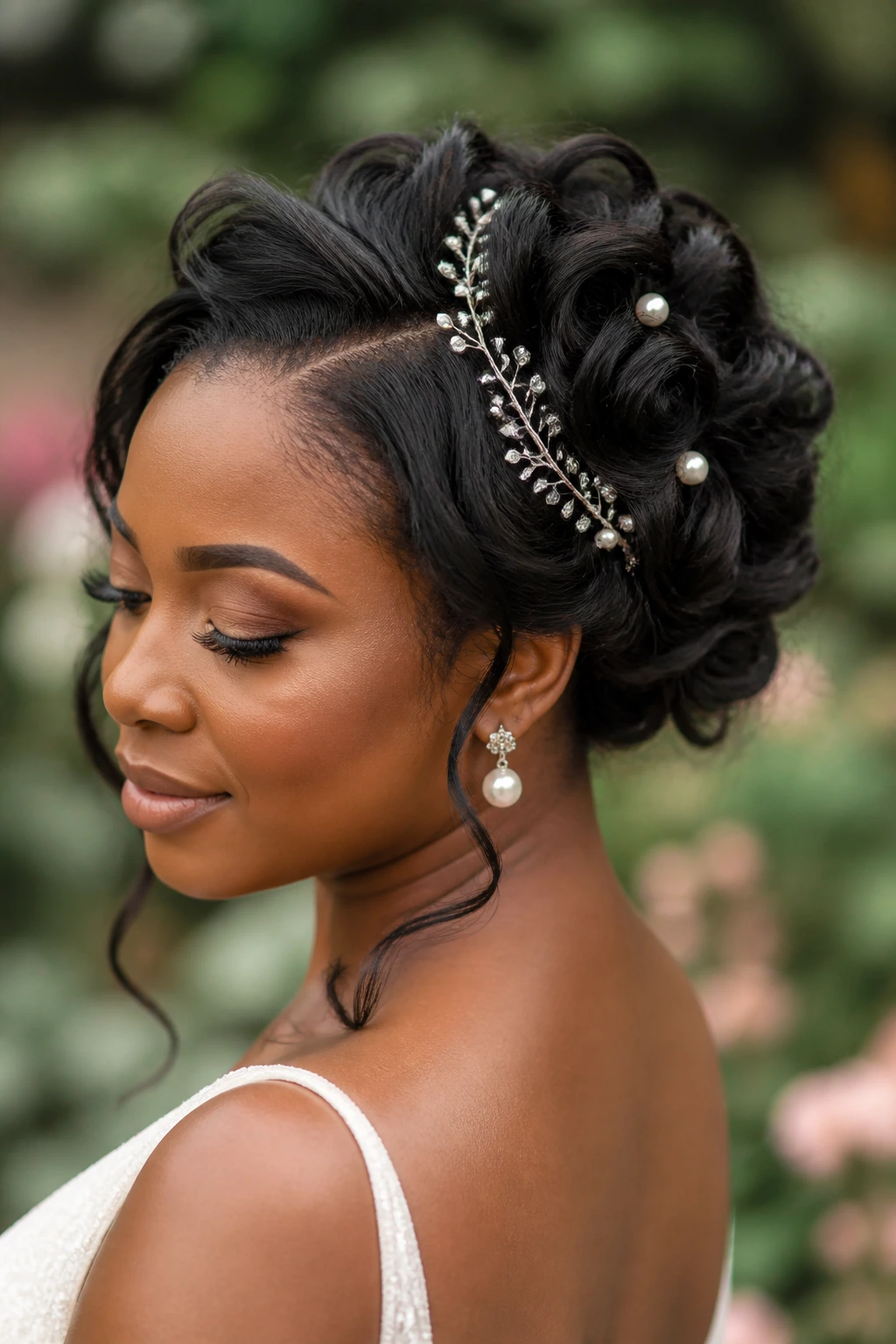
No-Veil Version: Skip the veil entirely and lean on hair jewelry instead. Pearl pins, a comb, or a slim vine can give the same bridal feeling without hiding the style.
Outdoor Ceremony Edit: Choose tighter anchors, more pins, and a less fluffy finish if the wedding will happen in wind or humidity. Loose pieces look romantic until the breeze gets involved.
Short-Hair Translation: Short coils, tapered cuts, and cropped natural hair can still carry bridal shape with a crystal comb, a sculpted side part, or a polished finger-wave set. Length is not the only thing that reads formal.
Protective-Style Finish: Braids, twists, locs, and faux locs can all be dressed up with small cuffs, hidden pins, and a carefully shaped hairline. The bridal feel comes from the finish, not from forcing the style into a different category.
Full-Volume Statement: If the dress is simple, go bigger with the silhouette. More height at the crown, more width at the back, or more curl around the shoulders can give the look some real presence.
Minimalist Gloss Version: Strip the style down to one clean part, one neat anchor, and one accessory. This works especially well with sleek buns, low ponytails, and short cuts where shape does the heavy lifting.
Common Mistakes to Avoid
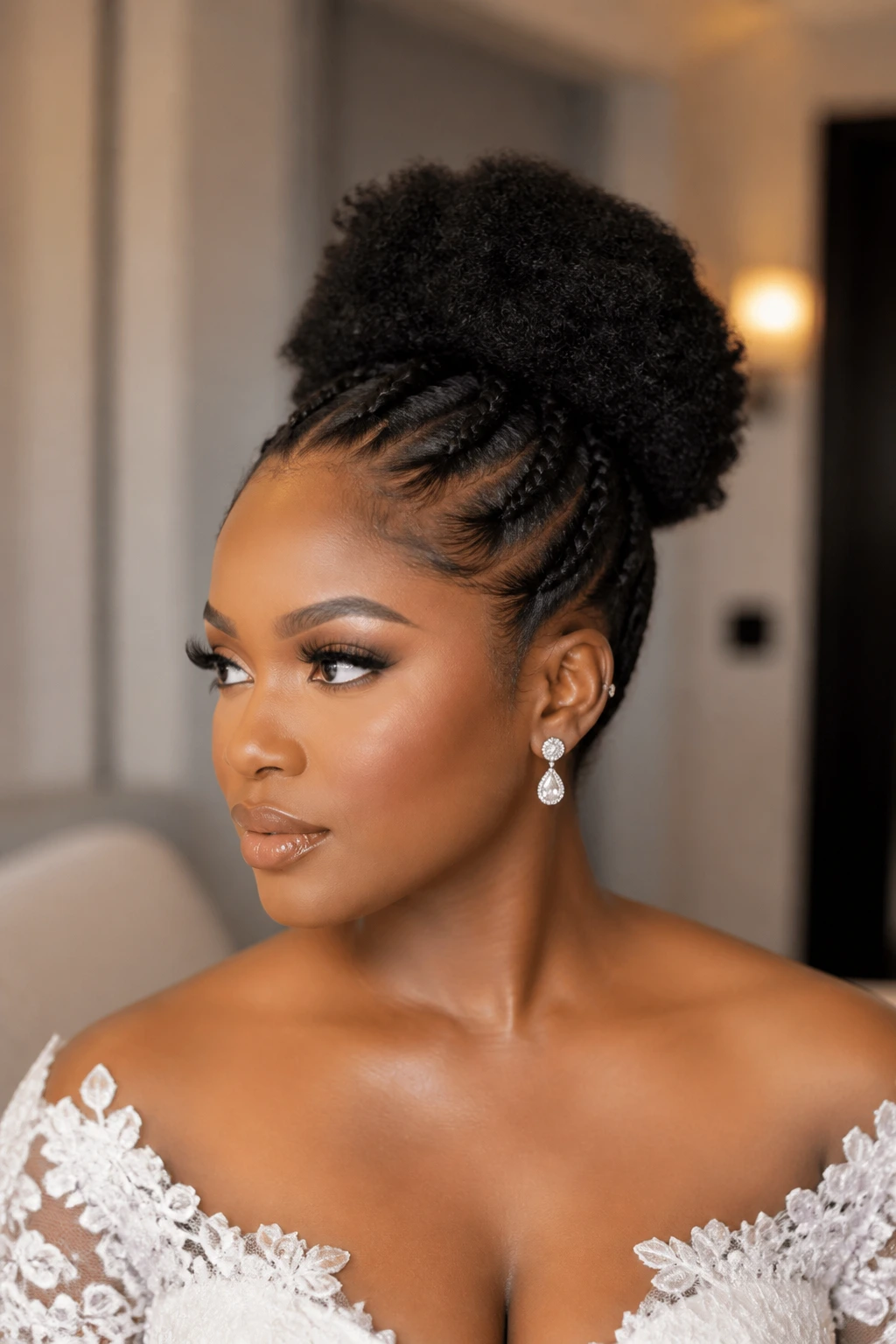
The biggest mistake is tension. Too tight at the hairline, too tight at the nape, too tight everywhere. If the bride leaves the chair with a headache or a sore scalp, that style is already starting on the wrong foot. A polished finish should not hurt.
The second mistake is skipping the trial with the real accessories. A veil comb can change the whole center of gravity. So can a heavy headpiece or a pair of earrings that pull attention away from the hair. Bring the actual pieces and test them together. Paper plans are cheap. Hair revisions on the wedding morning are not.
Product overload causes its own kind of mess. White flakes under flash, sticky edges, stiff curls, dull braids. It happens fast. Use the least amount of product that still gives hold, and test how it looks under flash before the wedding day. A style that looks smooth in warm bathroom light can look dusty in photos if the gel or foam dries badly.
And then there is the mistake of choosing a style that fights the venue or dress. Big hair under a very high collar can feel crowded. A soft curl set in heavy wind can collapse before vows. A long veil on loose curls can tangle in minutes. Match the hairstyle to the environment, not just to the Pinterest photo. That part saves regrets.
Frequently Asked Questions
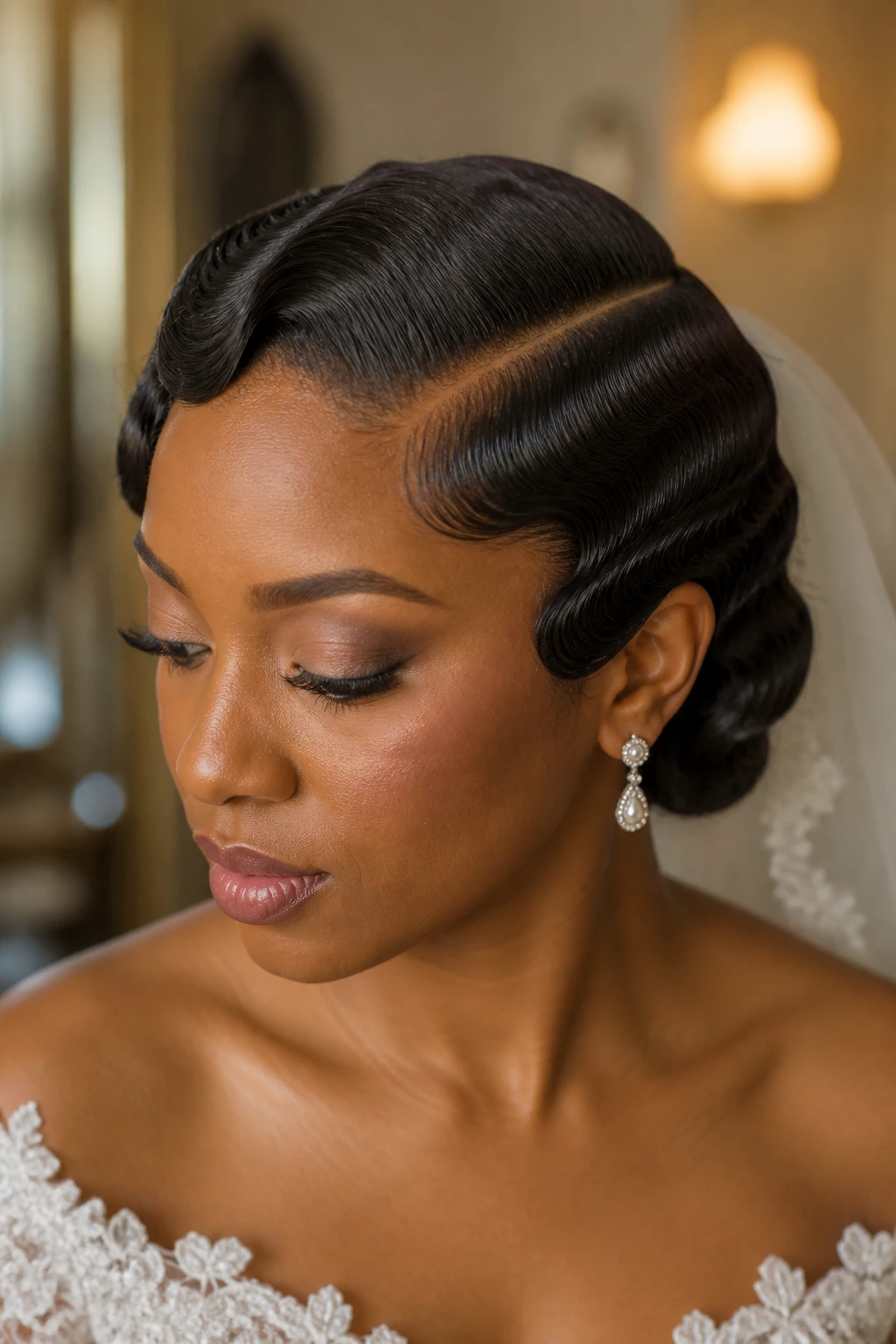
What wedding hairstyle works best for Black brides with a veil?
Low buns, crown braids, and smooth ponytails usually make the easiest homes for a veil comb. They give the comb something secure to grip without burying it in loose curls or shifting the shape of the style.
How far in advance should I do a bridal hair trial?
A few weeks before the wedding is usually enough time to test the final shape, the accessories, and the hold. If extensions, color, or a wig are involved, give yourself a little more room so there’s time for small adjustments.
Can I wear my natural hair without heat?
Yes, and plenty of these styles are built that way. Twist-outs, puffs, wash-and-go shapes, halo twists, and braided bases can all look formal without a silk press.
Which styles hold up best in humidity?
Braids, loc updos, cornrow bases, and low buns usually tolerate humidity better than loose curls. That doesn’t mean curls fail, only that they need a stronger set and a backup plan for touch-ups.
Is a wig a bad idea for a wedding?
Not at all, if the fit is right. A lace-front bob or longer unit can be a smart choice when you want a precise shape and predictable volume, but the hairline and securing method need to be handled carefully.
What if my hair is short?
Short hair has more options than people think. Crystal combs, sculpted finger waves, tapered curls, tiny braid accents, and polished side parts can all look intentional on a shorter cut.
How do I keep my edges from looking stiff or flaky?
Use less edge control than you think you need, and smooth it with a small brush rather than piling it on. If the product dries white or crusty in your test run, switch brands or use less of it.
Can I mix braids and curls in one bridal style?
Absolutely. In fact, a lot of the strongest Black bridal looks do exactly that. A braided crown with loose curls, a cornrow base with a puff, or a braid leading into side waves gives the style structure and softness at the same time.
The Style That Fits the Dress First
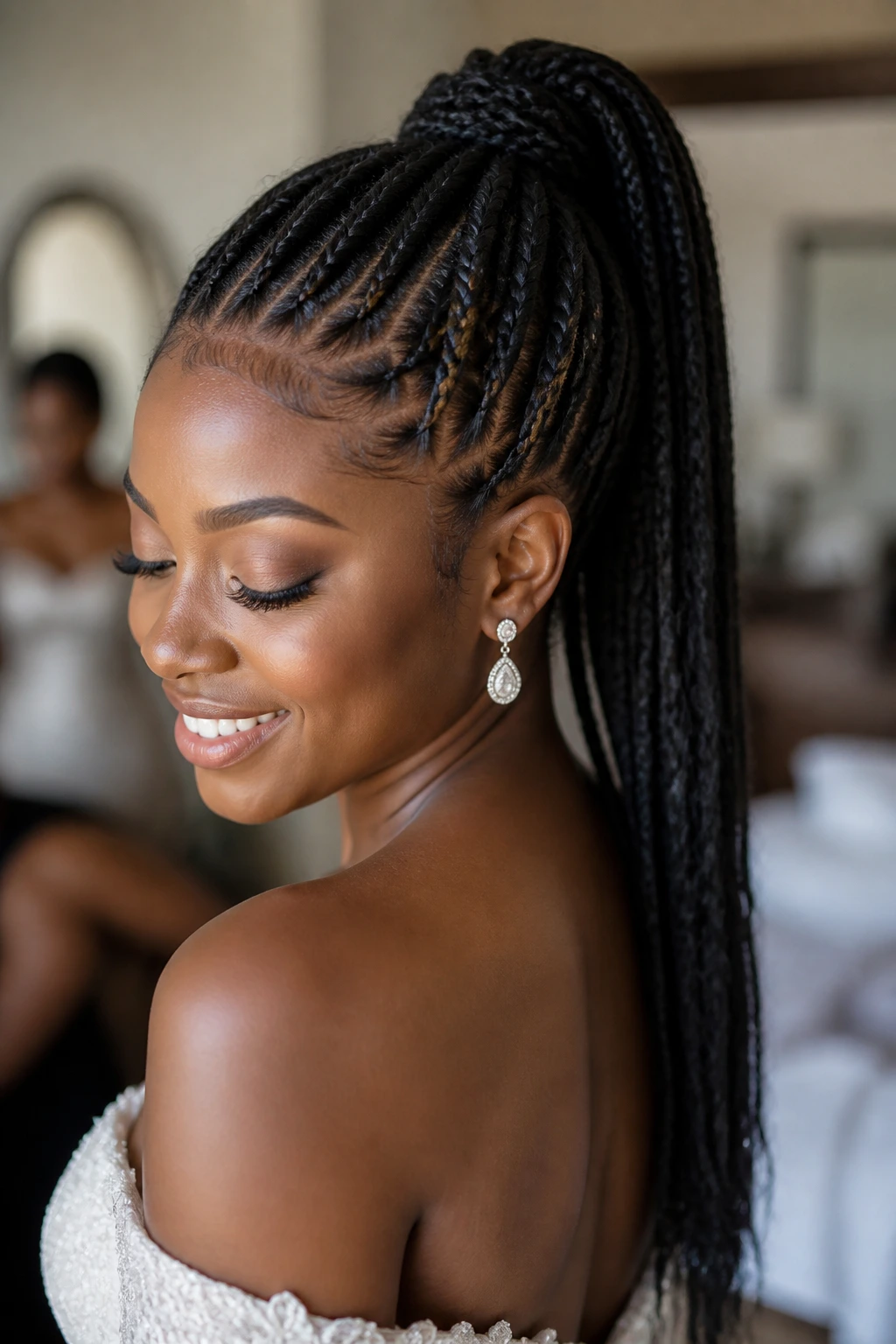
The prettiest bridal hair is not always the loudest one. Sometimes it is the low chignon that lets the neckline speak. Sometimes it’s the twist-out that keeps its shape through dinner. Sometimes it’s the loc petal bun, the side sweep, or the short coil set with one crystal comb and no extra fuss at all.
What matters is not forcing the hair to behave like someone else’s. It is choosing a shape that respects the texture underneath, the dress on top, and the long, slightly chaotic day in between. When those three things line up, the style stops feeling like a decision and starts feeling like part of the bride herself.
Pick the silhouette that makes sense from the back, not only the front. That’s the part people remember.
