



Thick hair and a shag haircut get along better than people think—when the layers are placed with a little restraint. Too much thinning and the ends go wispy in the wrong way. Too little, and the whole shape sits like a heavy curtain that never quite wakes up.
The best shag haircuts for thick hair do something more useful than just “add texture.” They take that built-in density and give it a direction. The hair still feels full, but it moves. It bends around the jaw instead of boxing it in. It falls with some swing at the ends instead of puffing out in a hard line the second humidity shows up.
That’s why this haircut family keeps winning with dense, heavy hair: the shag can remove bulk where it matters, keep weight where it helps, and make room for fringe, face-framing pieces, and airy layers without turning the whole cut into a frizz problem. Some versions are soft and wearable. Some are sharper and a little messy on purpose. The good ones never look random. They look edited.
Why These Shag Haircuts Keep Thick Hair From Bulking Up
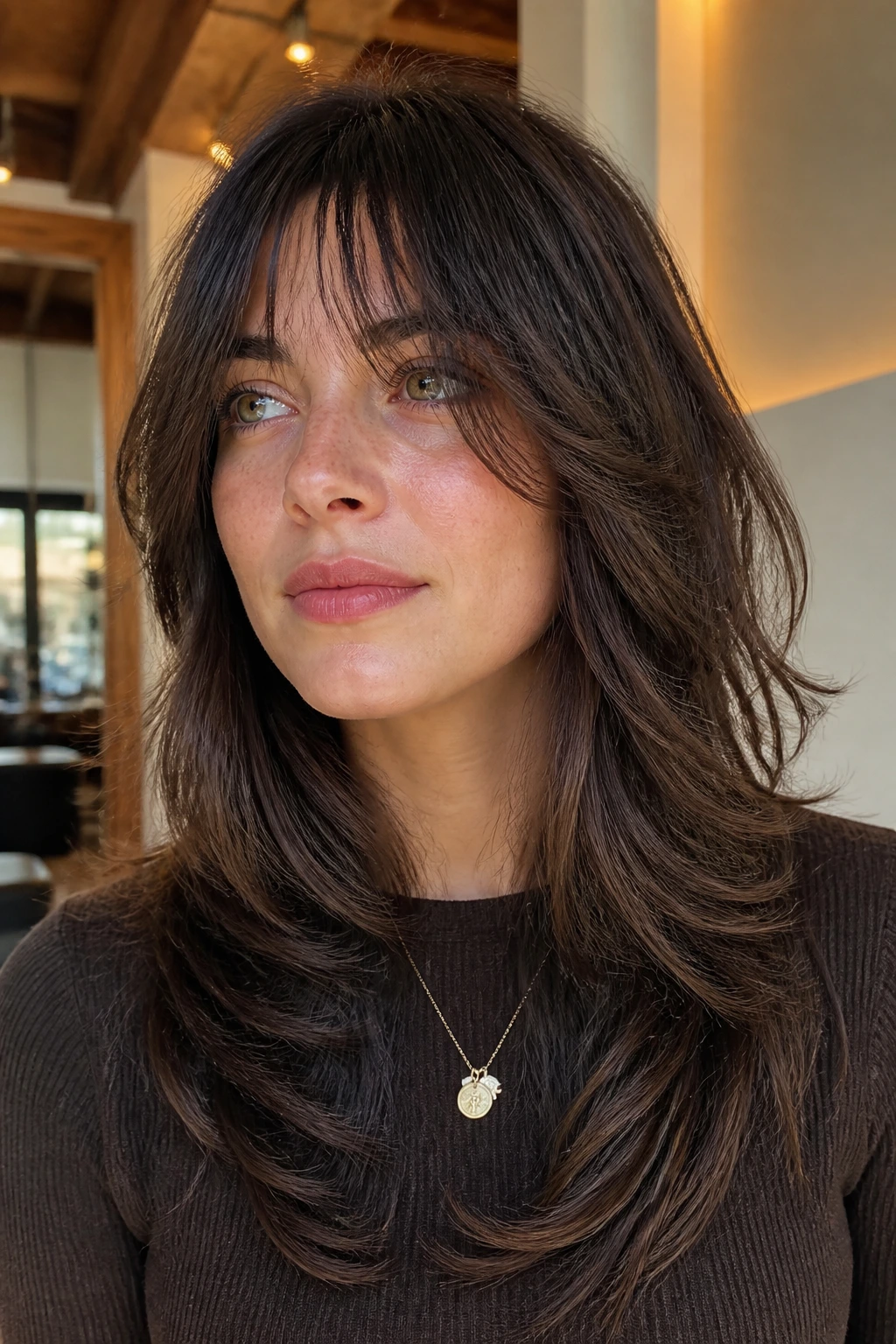
Weight comes off the right places. Thick hair needs internal movement, not just surface texture, or the ends start to swing outward like a triangle. A proper shag removes density through the crown, sides, or mid-lengths while leaving enough perimeter to keep the silhouette grounded.
The cut still has shape on day three. Dense hair can handle a little grow-out without collapsing. That matters. A shag with good layering keeps its outline longer than a blunt cut, and the fringe or face-framing pieces keep doing some visual work even when you skip a wash.
It gives you styling options. Air-dried waves, blown-out volume, soft bends with a flat iron—those all work if the layers are placed well. The haircut does not force one finish.
It plays nicely with bangs. Thick hair can support curtain bangs, bottleneck bangs, heavy fringe, or no fringe at all. There’s enough hair to build a real shape around the face without leaving those pieces stringy.
It’s kinder to the ends. A dense head of hair can hide a lot of damage. A shag lets you trim off tired ends while keeping length somewhere else, which is why the haircut often feels fresher than a straight trim.
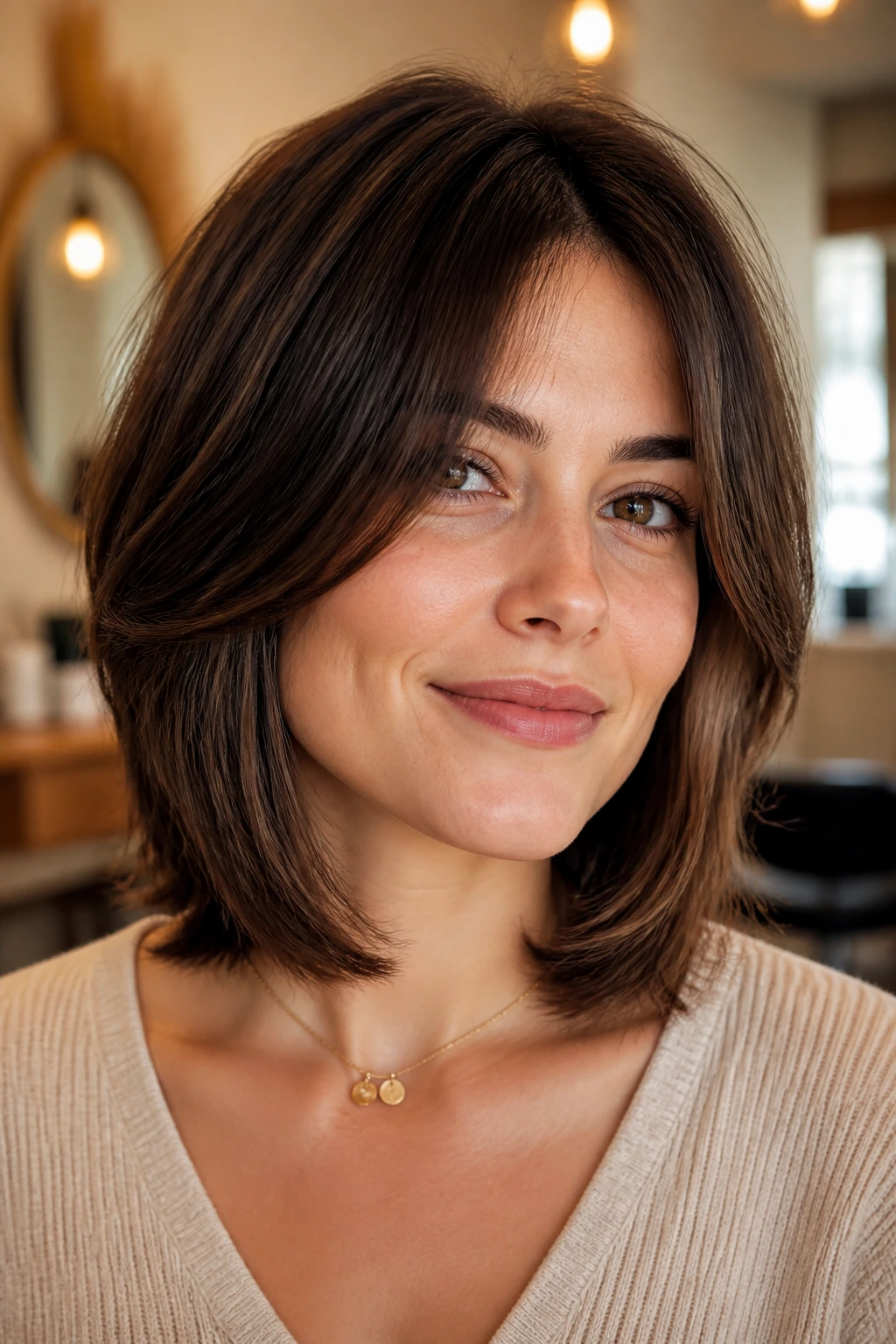
1. Rounded Collarbone Shag
This is the shag I recommend when someone says they want movement but does not want to look like they raided a rock photo shoot. The length sits around the collarbone, and the layers curve inward just enough to keep thick hair from flaring out at the sides. It has softness. It has shape. It doesn’t scream for attention.
Why It Works on Thick Hair
Ask for the shortest layers to land around the cheekbone or a touch below, not up near the temples. That keeps the crown from getting too fluffy while still opening the face. If your hair is dense in the nape, a rounded collarbone shag keeps the bottom from feeling like a brick.
The best version has a perimeter that’s still visible. That part matters. I like this cut because it leaves enough weight to look polished, but the hidden layering stops the whole shape from feeling stale.
What to Tell Your Stylist
- Keep the length at the collarbone.
- Build soft internal layers, not choppy steps.
- Blend the front pieces into the jawline.
A tiny amount of point cutting at the ends can keep the edges from looking too blunt. You want a clean swing, not a jagged outline.
Best for: thick straight hair, thick wavy hair, and anyone who wants a shag that can still be tucked behind the ears without turning into a puffball.
2. Curtain-Bang Shag
Curtain bangs do a lot of quiet work here. They split the front of the haircut into soft panels, which helps thick hair feel lighter right where people look first. The effect is flattering without being fussy, and that’s the whole charm.
The bang section should start around the cheekbone, then graze down toward the mouth or chin. If the fringe is cut too short, thick hair tends to spring up and sit in your eyes. Longer curtain pieces move better and give you room to style them forward or away from the face.
I also like this version for people who hate committing to one bang look. You can blow them under with a round brush, part them wider, or let them fall in a soft split. They do not behave like blunt bangs, which is a blessing on dense hair.
3. Long Wolf Shag
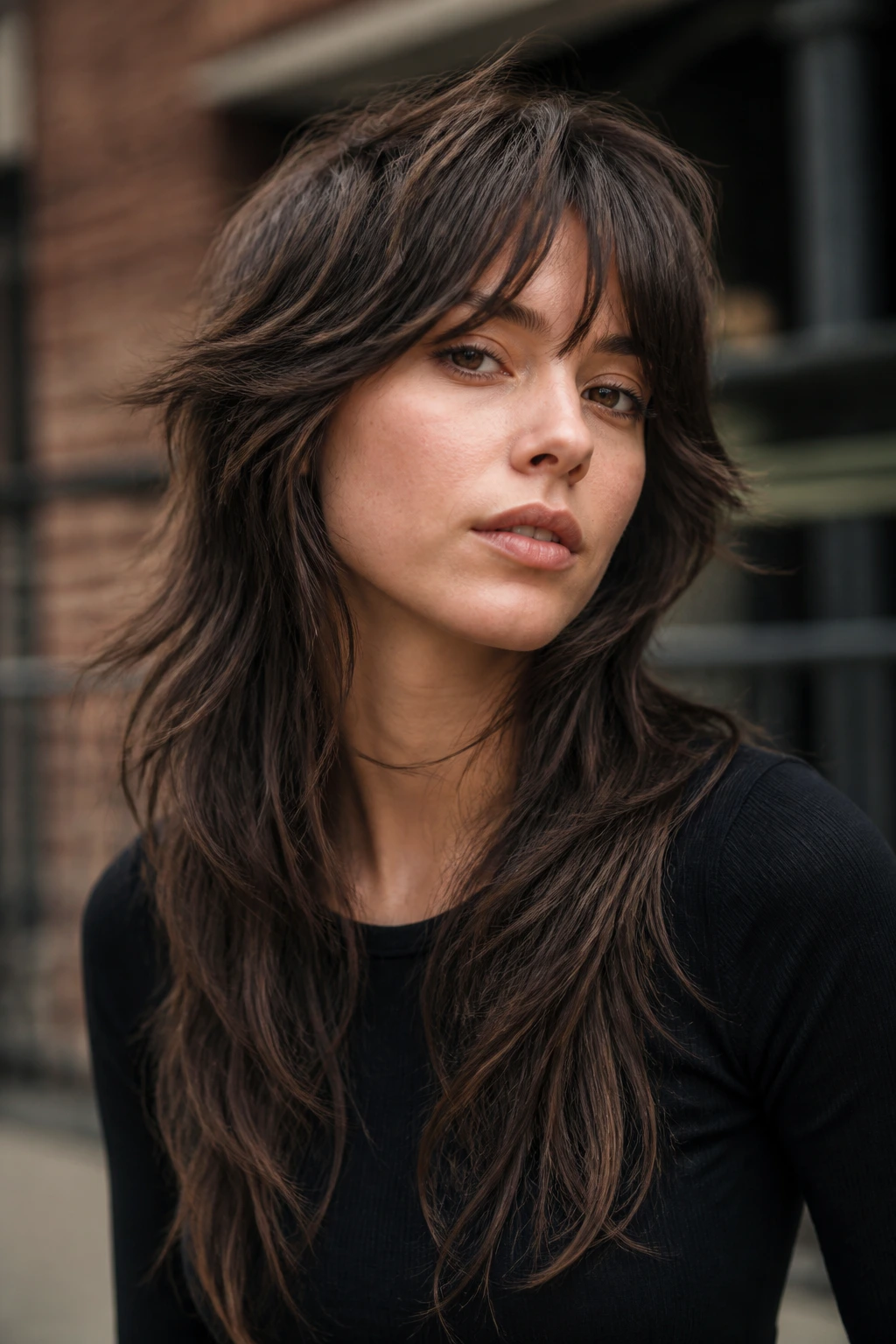
Why does the long wolf shag work so well on heavy hair? Because it breaks up bulk without making you lose the long-line drama that thick hair can hold. The crown is slightly shorter, the back tapers a little, and the sides keep enough length to avoid that mullet-y leap some people worry about.
The Shape in Practice
This cut is happiest when the top layers are clearly shorter than the bottom, but not wildly disconnected. Think energy, not chaos. Thick hair gets its movement from contrast between the crown and the ends, especially if the hair naturally bends or waves.
Ask For These Details
- Shorter crown layers for lift.
- Longer perimeter pieces for length.
- Soft taper through the nape.
A good long wolf shag should look playful when it air-dries and still hold together when you smooth it with a brush. If your hair is very dense, this version can take weight off without making the ends look thin.
4. Razor-Cut Midlength Shag
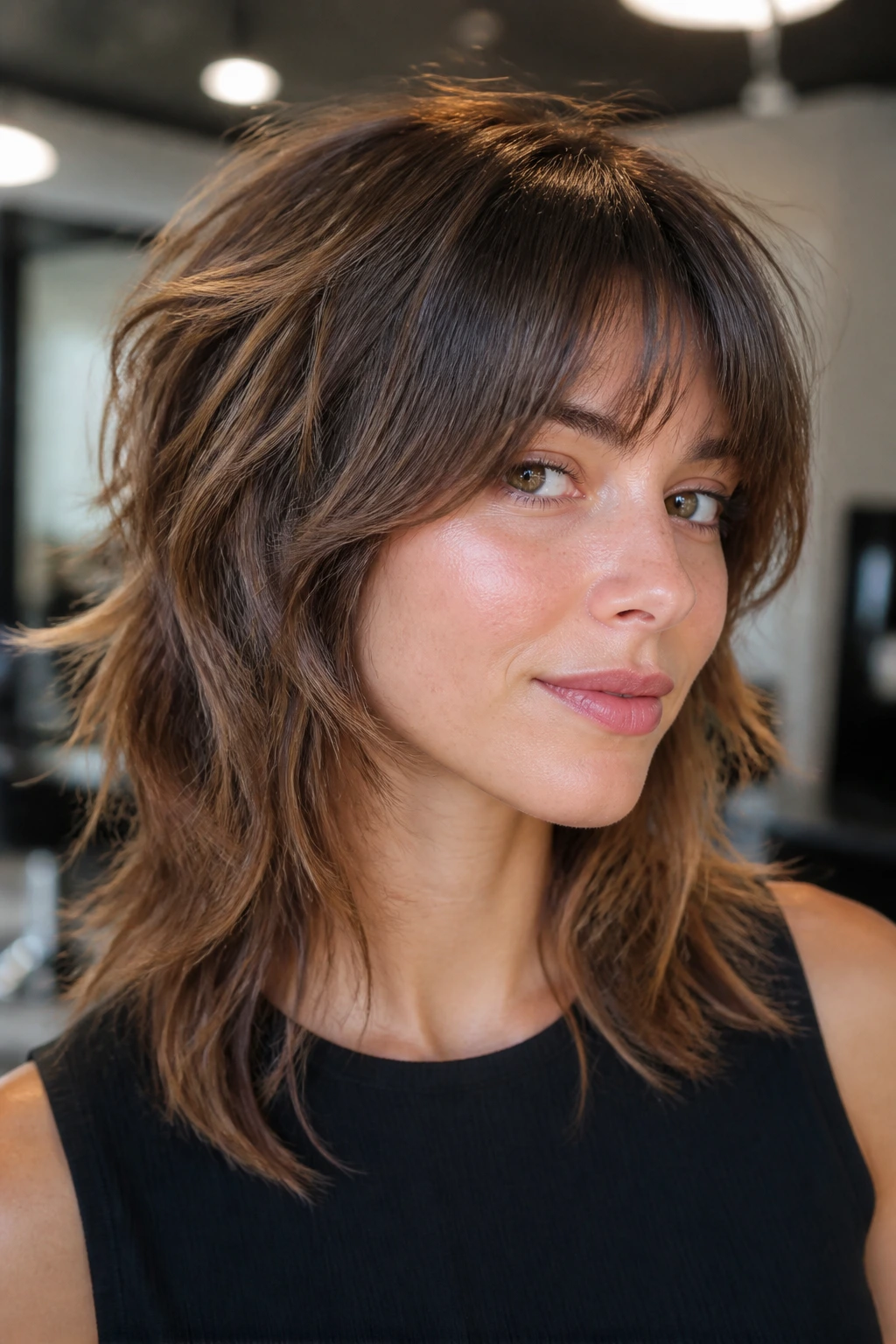
A razor-cut shag is not a free pass to texture everything to death. On thick hair, a razor can soften the edges fast, which is useful when the hair feels chunky or square. Used badly, it can also rough up coarse ends and make them expand.
That’s why this cut works best when the stylist uses the razor in controlled passes through the mid-lengths and keeps the perimeter clean. The result has a little edge, a little movement, and less of that dense bluntness that thick hair sometimes gets after a straight scissor cut.
I’d pick this version for hair that already has some natural bend. Straight, coarse hair can handle it too, but only if the stylist knows when to stop. The line between “piecey” and “fried” is not wide.
5. Curly Cloud Shag
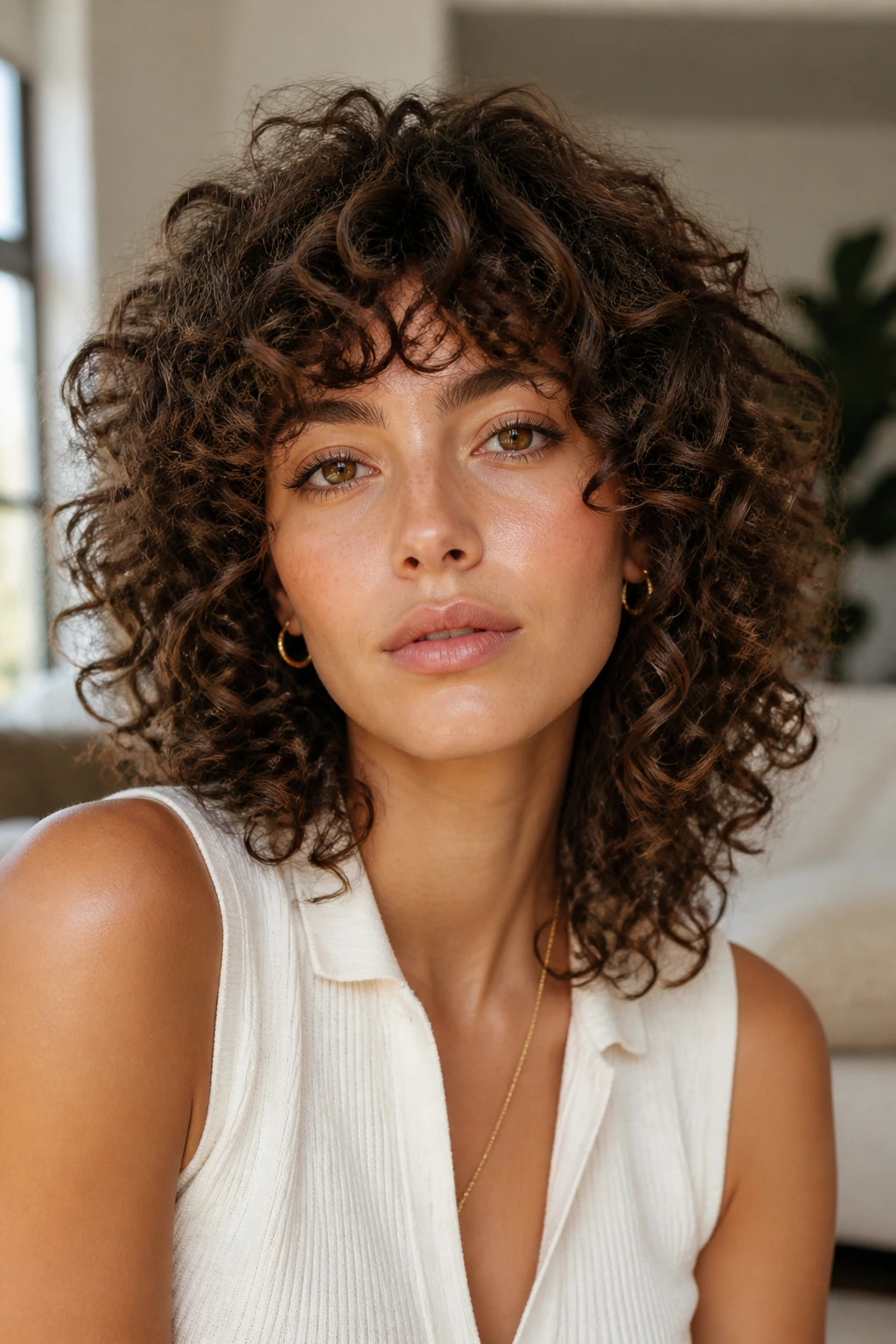
Thick curly hair and a shag can be magic together, but only if the cut respects the curl pattern. The best curly shag is usually shaped dry or nearly dry, because wet curls lie about their length. A curl that looks tame in the chair can spring up hard once it dries.
What Makes It Different
The layers should follow the curl’s natural spring, not fight it. If the curl is tight, the top layer might need to sit longer than you expect. If the curl is looser, you can build more visible face-framing without the shape exploding outward.
Good Product Pairing
- Leave-in conditioner for slip.
- Light curl cream for definition.
- Diffuser if you want lift without a halo of frizz.
This is the version I recommend when the hair has real density and real curl. The layers create pockets of air between the curls, which gives you shape without flattening the pattern. Good curly shag, bad triangle. The difference is placement.
6. Chin-Grazing Shag Bob
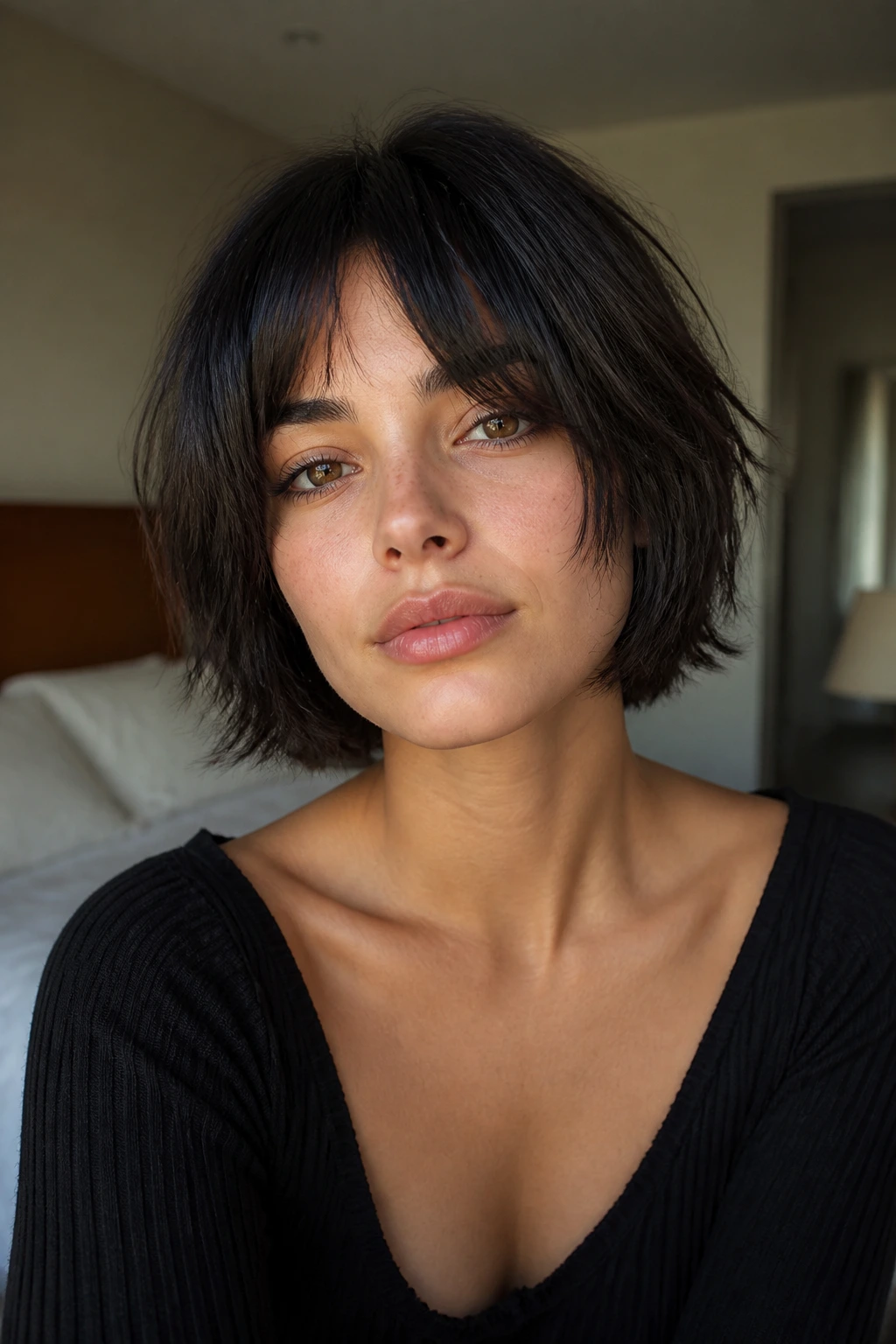
Shorter shags on thick hair are bold in the best way. A chin-grazing shag bob keeps the volume close to the head, which means the cut can feel lighter instantly. It also keeps the ends from splaying out at chest level, where thick hair can get huge fast.
The length is doing a lot here. At the chin, the hair can swing around the face instead of building a wide shelf. That’s why this version works so well for people with strong jawlines or those who want the haircut to show off earrings and necklines.
If you like a blunt bob but hate the weight, this is the compromise I reach for. You still get structure. You just get it with movement.
7. Heavy Fringe Shag

A heavy fringe changes the whole personality of a shag haircut. Curtain bangs whisper. A dense fringe speaks up. On thick hair, that front section can be cut full enough to feel deliberate instead of wispy, and the rest of the layers can stay softer so the look doesn’t tip into costume territory.
The trick is balance. If the fringe is heavy, the layers around the face should be a little quieter. Otherwise the haircut starts competing with itself. Thick hair can carry a strong fringe, though, and I like that honesty. You know immediately what the cut is doing.
This version suits people who want the eyes to be the center of the haircut. It also works well if your forehead is a little broader and you want the front to feel grounded without dragging everything downward.
8. Soft Mullet Shag

A soft mullet shag is the version for people who like a little attitude but don’t want the hard edges of a classic mullet. The crown stays fuller and shorter, the sides sweep softly, and the nape tapers without going cartoonish. Thick hair makes this cut look even better because the shape has enough body to read from every angle.
The reason it works is simple: the disconnect is controlled. You get the lift up top and the tail at the back, but the transition is feathered instead of abrupt. That means it can still feel wearable at work, not just on a mood board.
If your hair is heavy in the back, this cut can be a lifesaver. The shorter top sections stop the head from looking boxy, and the longer back keeps the silhouette from getting too round.
9. Air-Dry Layers Shag
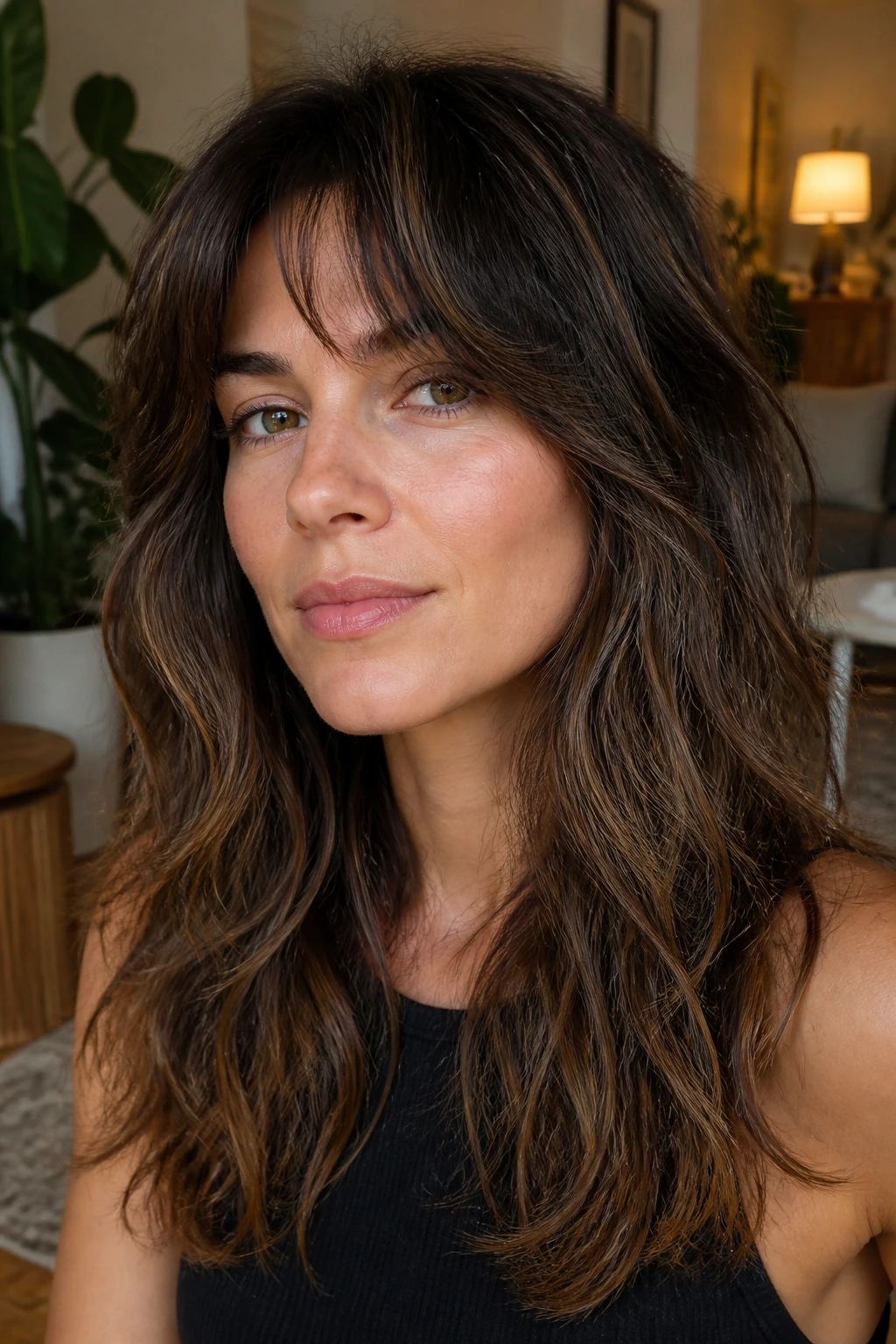
If you hate heat tools, this is the shag to pay attention to. The air-dry layers shag is cut so the bends and waves fall into place with minimal help. It relies on shaping, not styling wizardry.
The layers should be softened enough that they don’t create sharp shelves once the hair dries. On thick hair, that means the stylist needs to think about how the hair expands as it loses water. Wet hair lies flat. Dry hair does not. So the cut needs enough slack to settle nicely on its own.
A little leave-in cream, a touch of mousse, and a scrunch are usually enough. Sometimes less. If your hair dries in a predictable wave, this version gives you the cleanest route to movement without standing over a mirror with a round brush for twenty minutes.
10. Feathered Long Shag

Long feathered shags have a nice old-school feel, but they’re not dated when they’re cut well. Thick hair loves this treatment because the feathering takes weight off the ends without stripping away the length you’ve spent time growing. The layers slide together instead of stacking into visible steps.
I like this version when someone wants their hair to look lighter but not shorter. There’s a difference. The perimeter still lands far enough down the back to feel substantial, yet the upper layers keep the shape from becoming a solid block.
If you wear your hair mostly down, the feathered long shag gives you movement around the shoulders and collarbone without forcing you into a high-maintenance finish. It’s one of the calmer choices in the family, which is probably why it stays useful.
11. Face-Framing Shoulder Shag
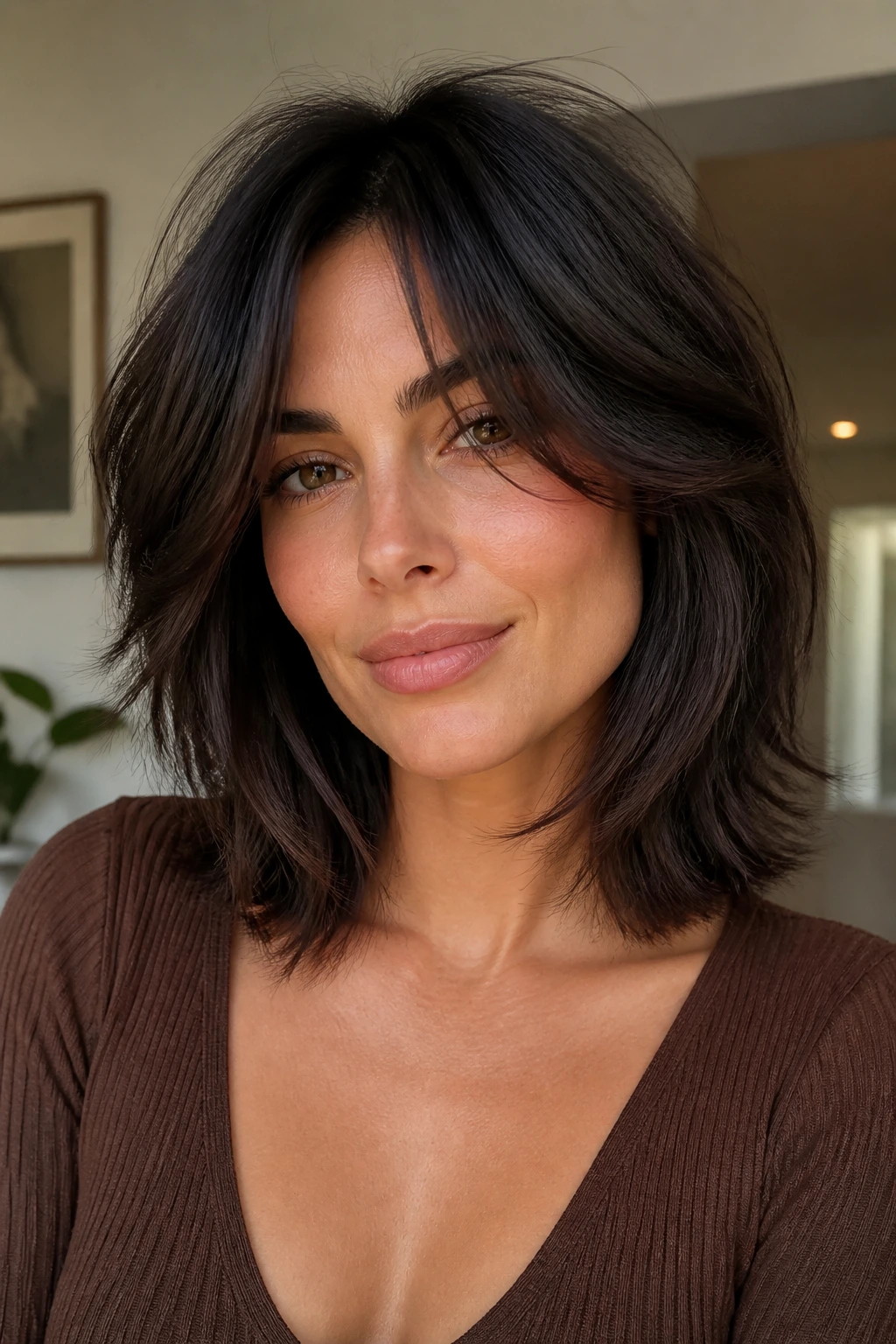
Shoulder-length thick hair can turn into a wall if the cut is too blunt. This version keeps the shoulders in play but adds face-framing layers that break up the width. The effect is cleaner than it sounds.
Why It Flatters Dense Hair
The front pieces should sweep from the cheekbone toward the collarbone, with the shortest bits landing where the face needs lift. That changes the outline in a useful way. Instead of hair sitting all one length, the eye gets pulled inward toward the face.
Small Details That Matter
- Keep the front a little longer than the back.
- Use soft layering around the jaw.
- Leave enough weight at the ends to stop puffing.
This cut works especially well if your hair grows out fast and you do not want a severe maintenance schedule. The shape stays readable even when the layers relax a bit.
12. Choppy Pixie Shag
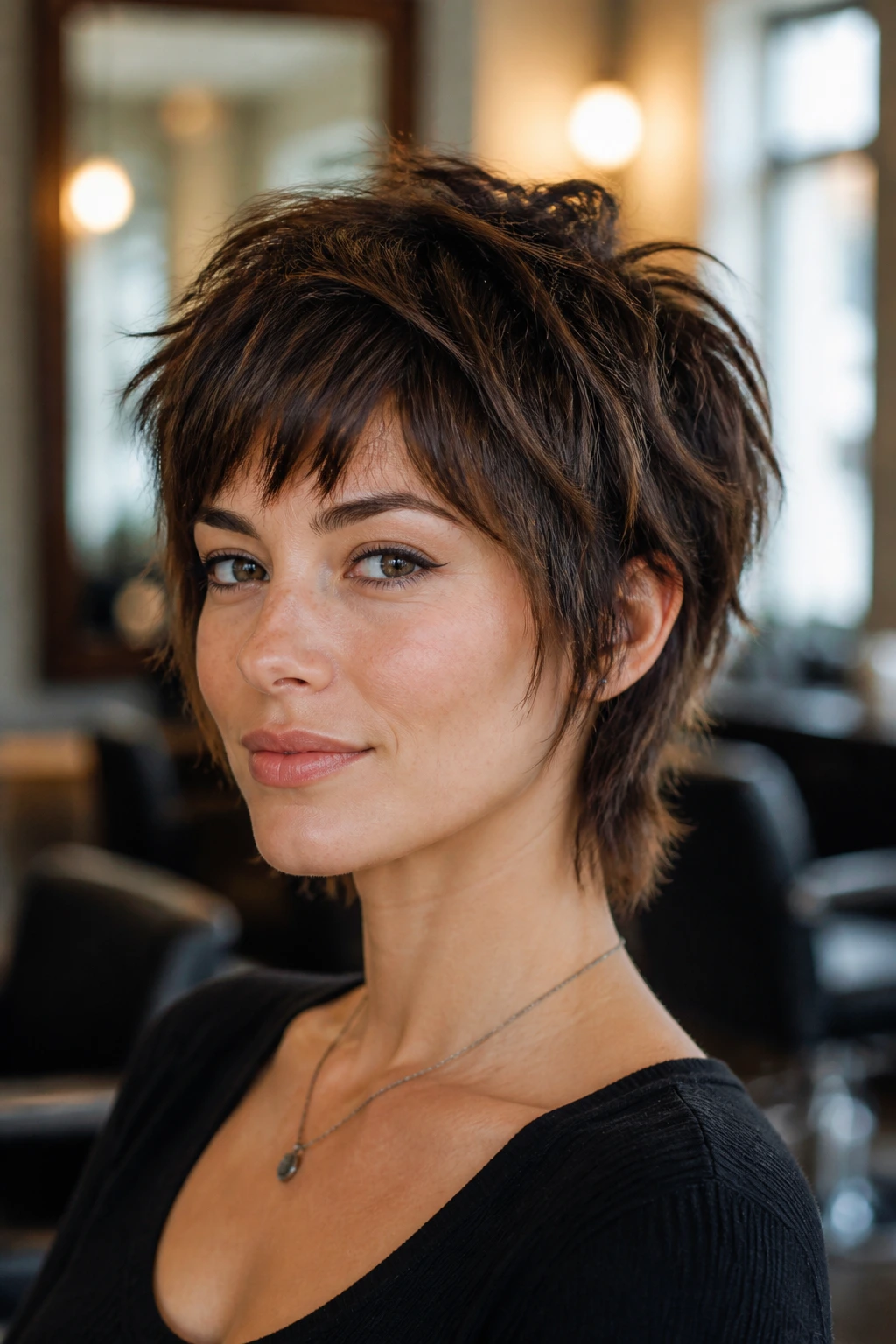
A choppy pixie shag is a very different animal, and thick hair is one of the few textures that can make it look intentional instead of stubby. The density gives the cut enough substance to hold the choppy top and tapered sides without looking underbuilt.
A classic pixie can sometimes feel too neat on thick hair. This version keeps the crown a little longer and the top more piecey, which means you can rake it forward, sweep it back, or let it fall where it wants. It reads modern without needing much styling.
I’d choose it when someone wants a major change but still wants some hair to play with in the morning. Short does not have to mean flat. Not here.
13. Glam Volume Shag
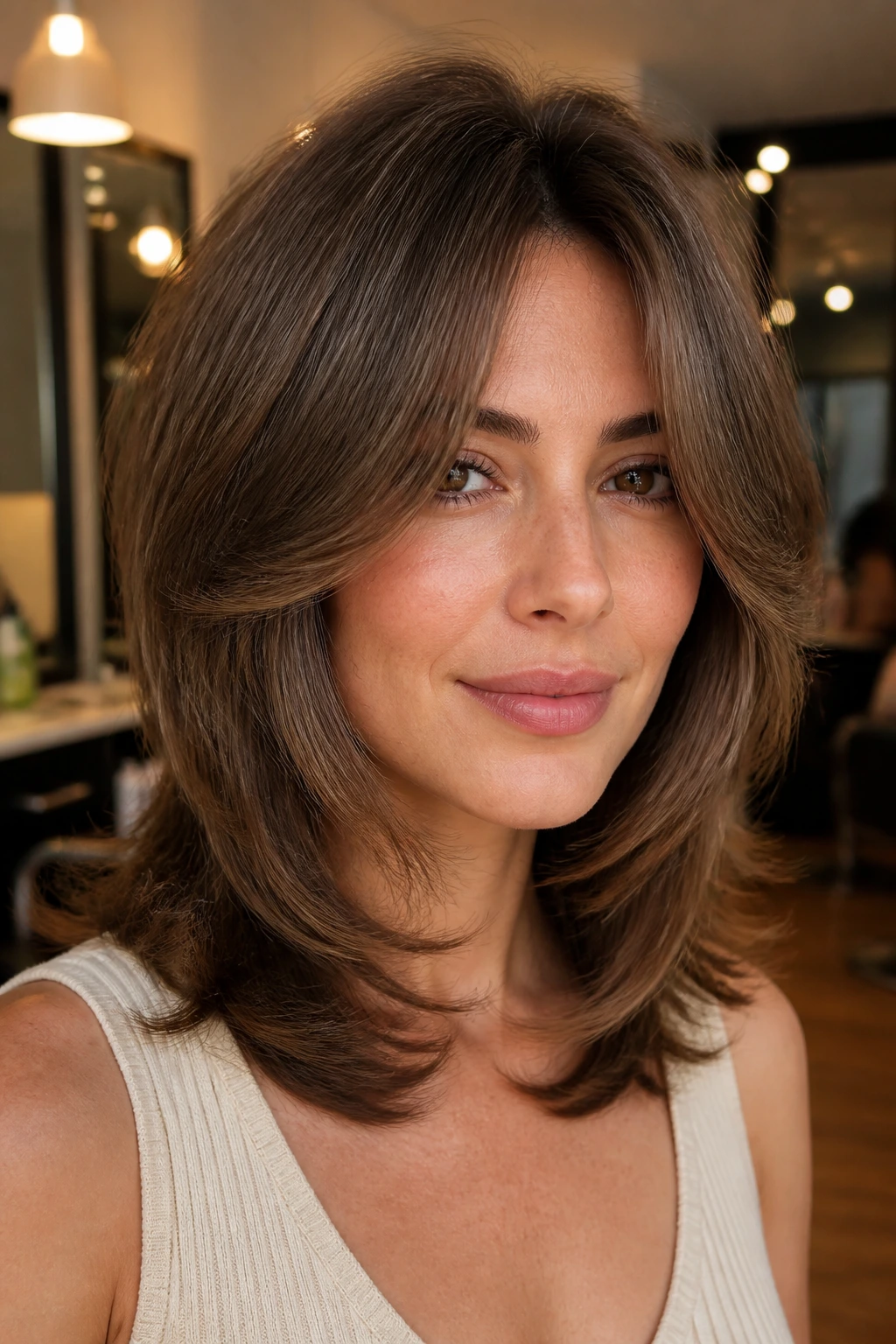
A glam volume shag is for the person who likes the word “shag” but still wants a smooth blowout. The layers are there, but they’re polished into a soft bend instead of left rough. Thick hair can look expensive with this finish because the body of the hair supports the volume instead of fighting it.
The key is where the lift happens. You want volume at the crown and through the mid-lengths, not all the way out at the ends. If the ends puff, the cut reads old-fashioned in a bad way. If the crown lifts and the lengths tuck under slightly, it looks intentional.
This version is especially good for someone with a round brush and a little patience. It gives you that salon movement that still holds shape by lunchtime.
14. Piecey Lob Shag

A piecey lob shag is what I suggest when someone wants the lob shape but thinks it feels too safe. The layers are sliced to separate the ends, which keeps thick hair from landing as one heavy sheet. It’s still long enough to tuck, tie back, and pin up, which matters in real life.
Why does it work so well? Because a lob already has a strong perimeter. Add controlled layering, and the hair suddenly has direction. The ends move instead of hanging like a curtain rod.
This is a smart choice for straight or slightly wavy dense hair. You get a clean outline, but the texture keeps it from looking flat on day one and puffy on day three. That’s a nice bargain.
15. Wispy Bang Shag

Wispy bangs can sound flimsy on paper, but on thick hair they often land better than full blunt fringe. The extra density lets the bangs look airy without disappearing. The rest of the shag can stay soft and layered, which keeps the forehead area from feeling boxed in.
The trick is length. Wispy bangs should skim the eyebrows or sit just below them, not stop high on the forehead. Thick hair likes a little room to move, and these bangs need enough length to separate instead of clump.
When This Version Makes Sense
- You want fringe without a hard line.
- You like pulling some pieces off the face.
- You want the haircut to grow out quietly.
It’s one of the easiest ways to try bangs if you’ve been nervous about them.
16. Textured Curls Shag
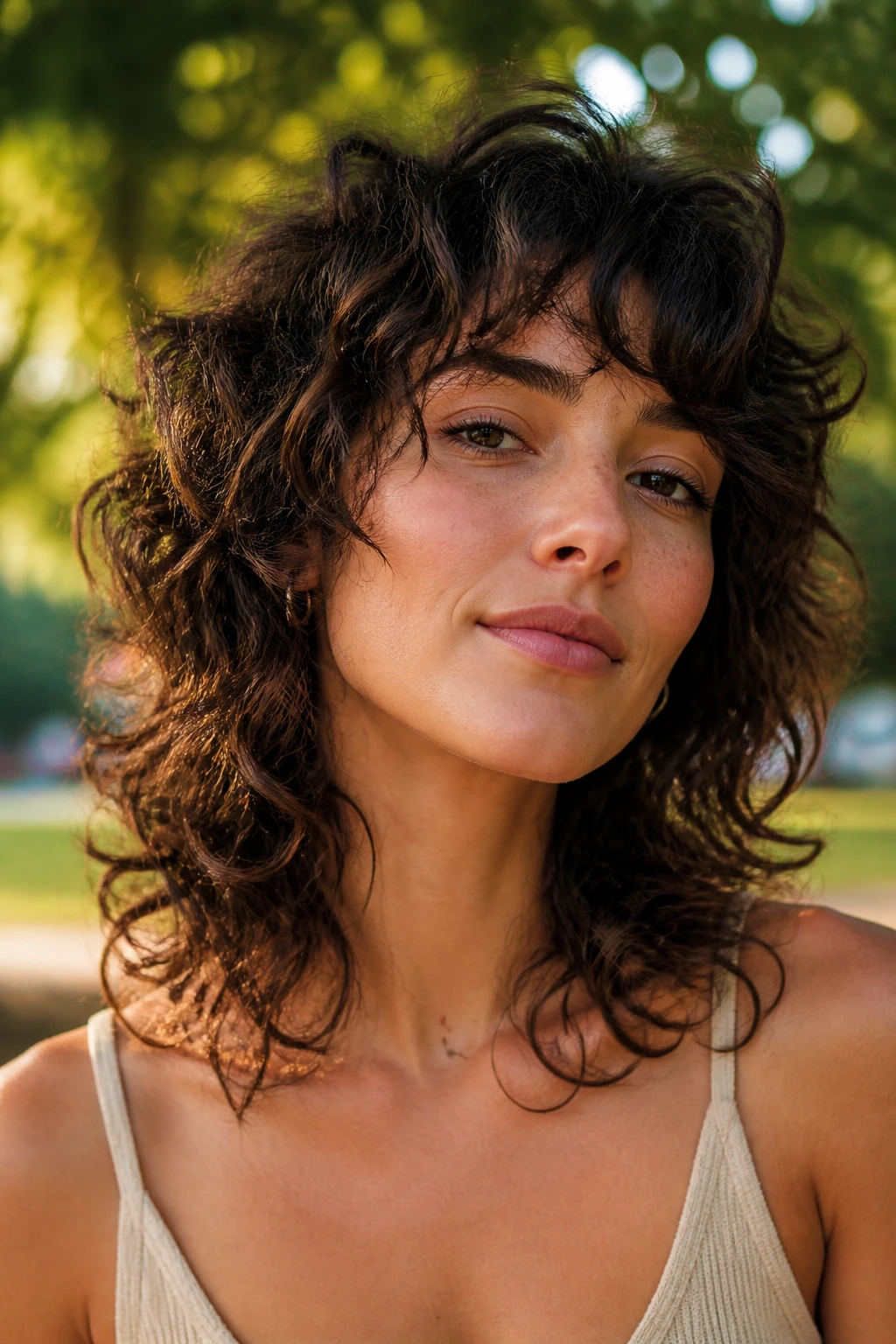
Textured curls and shag layers can look incredible together, but the cut has to be built around the curl pattern, not the scissors alone. A good curly shag lets the curls stack in a way that shows off shape without giving you a pyramid. That means more thought around the crown, less random thinning through the middle.
The Curl Map Matters
Tighter curls often need longer top layers than people expect, because shrinkage changes everything. Looser curls can take shorter face-framing pieces, especially if they spring away from the cheekbones well. A dry cut or a cut on very nearly dry hair gives the cleanest read on how the curl sits.
If you wear curls most of the time, this cut can be a relief. It gives the hair room to breathe and stops the ends from dragging the whole shape down.
17. Low-Maintenance Salon Shag
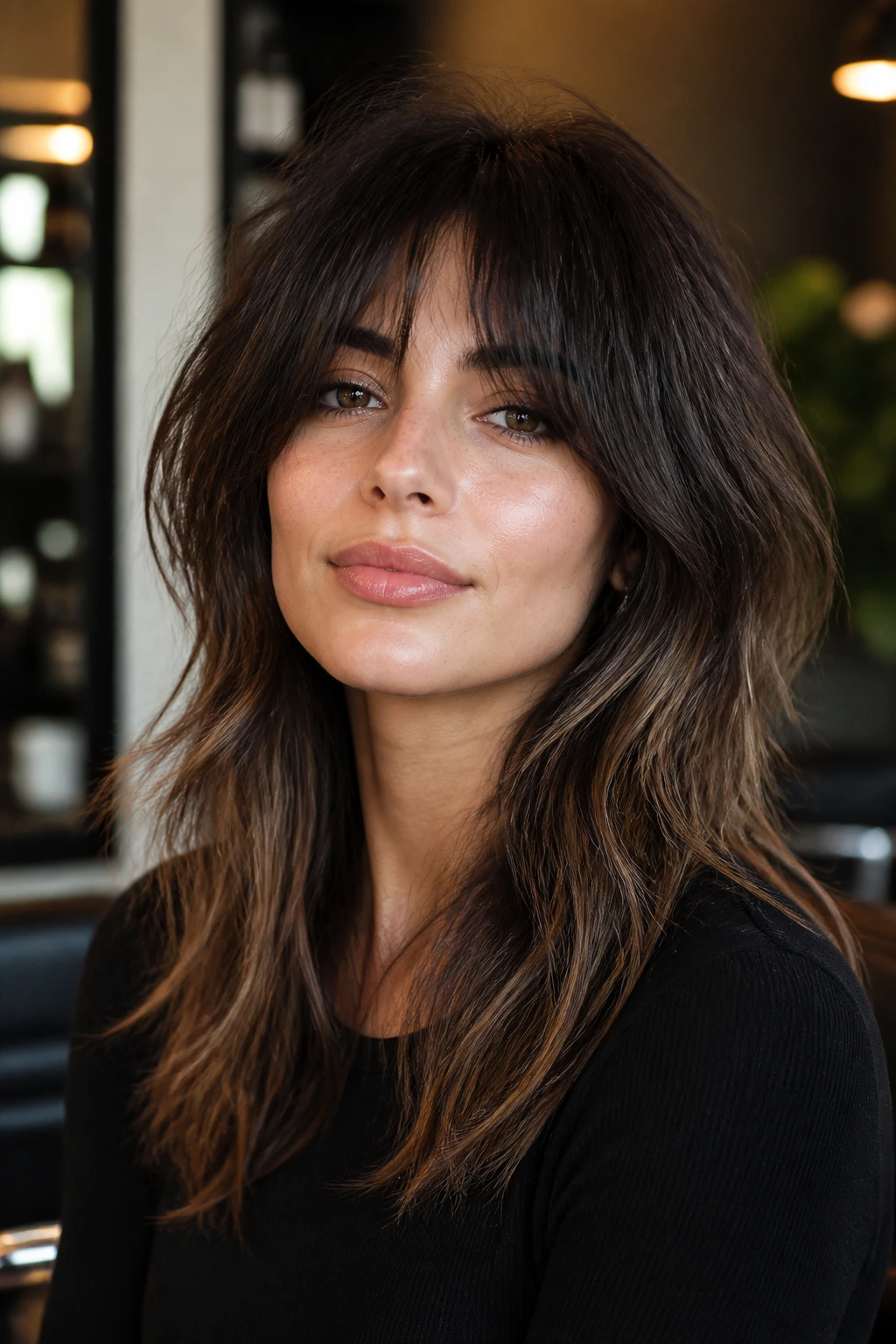
Not every shag needs to look wild. A low-maintenance salon shag keeps the layering soft, the perimeter tidy, and the grow-out friendly. Thick hair often benefits from exactly that because the cut still moves, but it does not demand a fresh blowout every morning.
I like this one for people who want their hair to look good in a ponytail, a claw clip, or loose waves. The layers are placed so the hair still falls naturally when it’s half-dry or a little slept on. That matters more than most people admit.
The cut should not be so layered that it turns wispy at the ends. A little structure keeps thick hair from growing into a triangle, and a little restraint keeps it from looking overworked. Simple. Harder to execute than it sounds.
18. Bouncy Blowout Shag
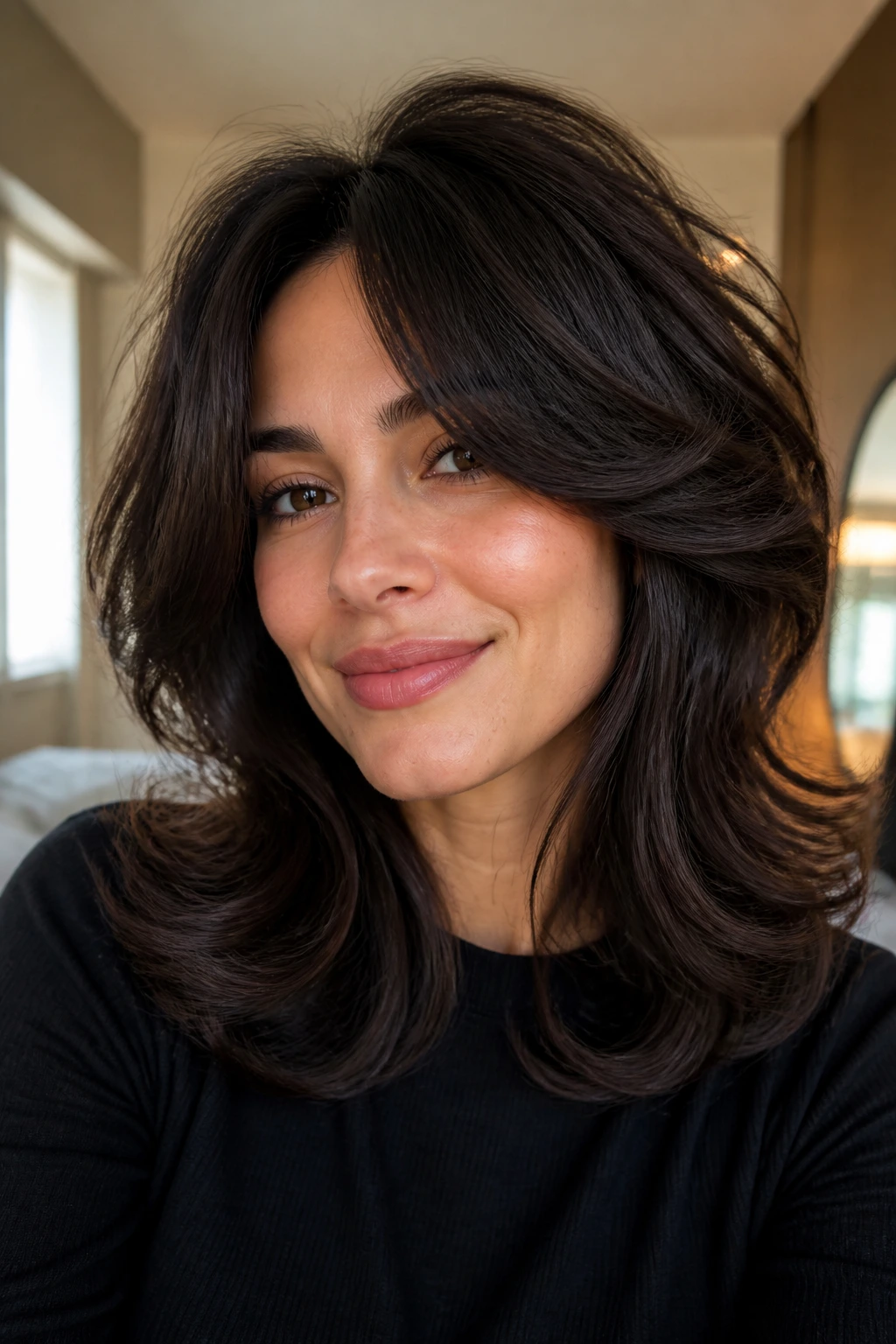
If you like the kind of movement that brushes off the shoulders and swings at the jaw, this is your version. A bouncy blowout shag leans into round-brush styling, with layers placed to catch air and roll under at the ends. Thick hair can hold that shape better than finer hair, which is why it looks rich rather than fluffy.
The difference between this and a plain layered cut is the top section. The crown needs enough lift to prevent the hair from sitting flat, and the side pieces need to be shaped so they don’t collapse into the cheekbones. A good blowout shag turns that density into a finish.
This one is worth it if you actually enjoy styling your hair. If not, skip ahead. It asks for a little more effort, and the payoff is that polished swing.
19. Razorless Scissor Shag
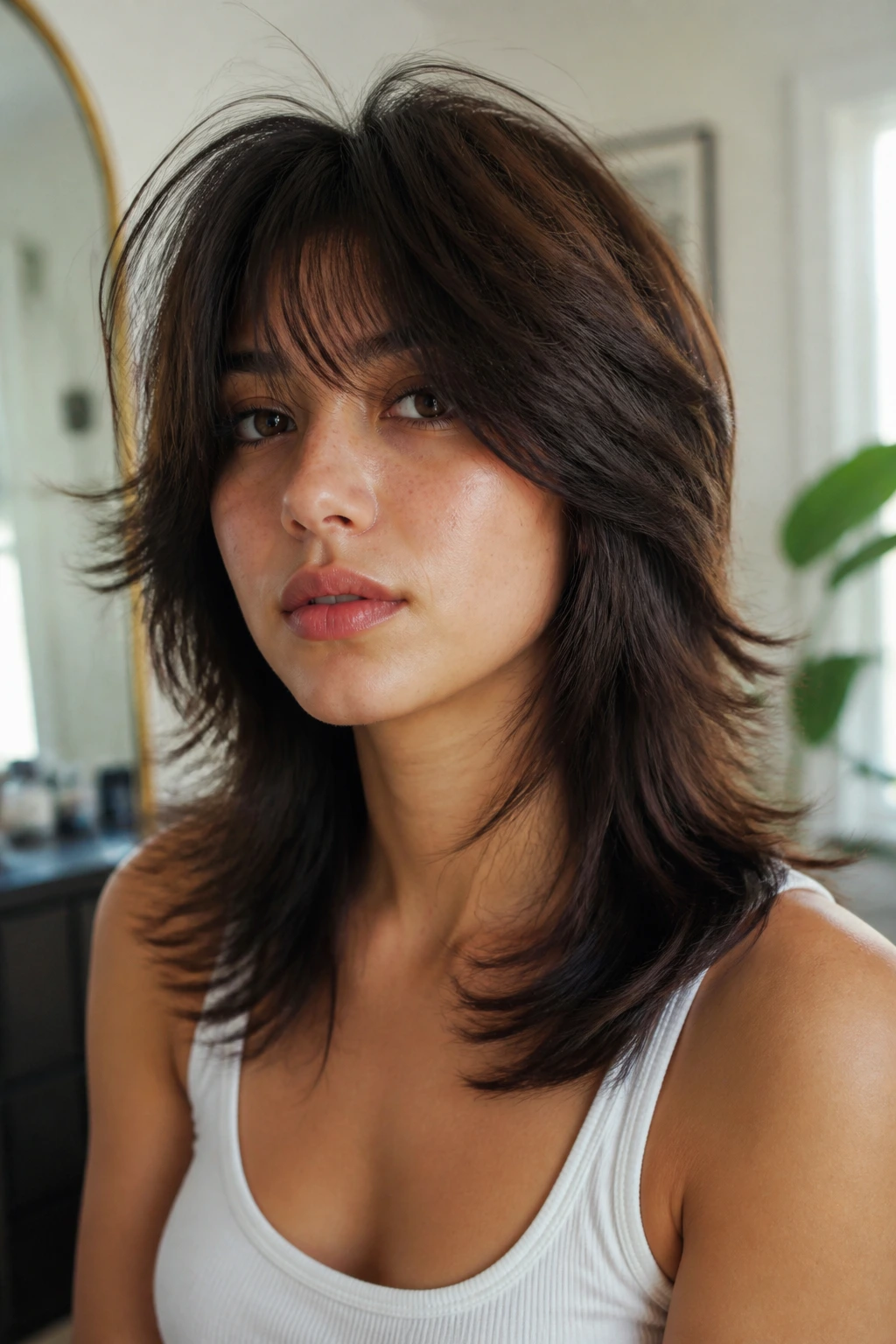
Some people simply do not want a razor anywhere near their thick hair, and I get it. A razorless scissor shag uses point cutting, slide cutting, and careful layering to shape the hair without roughing up the ends. That makes a big difference if your hair is coarse, dry, or prone to frizz.
What It Looks Like in the Chair
The stylist keeps more control over each section, which helps preserve shine. The layers still create movement, but the finish is a little cleaner and a little smoother than a razor-heavy cut. On thick hair that already tends to expand, that can be the safer call.
Best Fit
- Coarse thick hair.
- Fragile ends.
- Anyone who wants shape without a shaggy halo.
It’s one of those cuts that looks modest on paper and expensive in motion.
How Shag Layers Change the Shape of Thick Hair
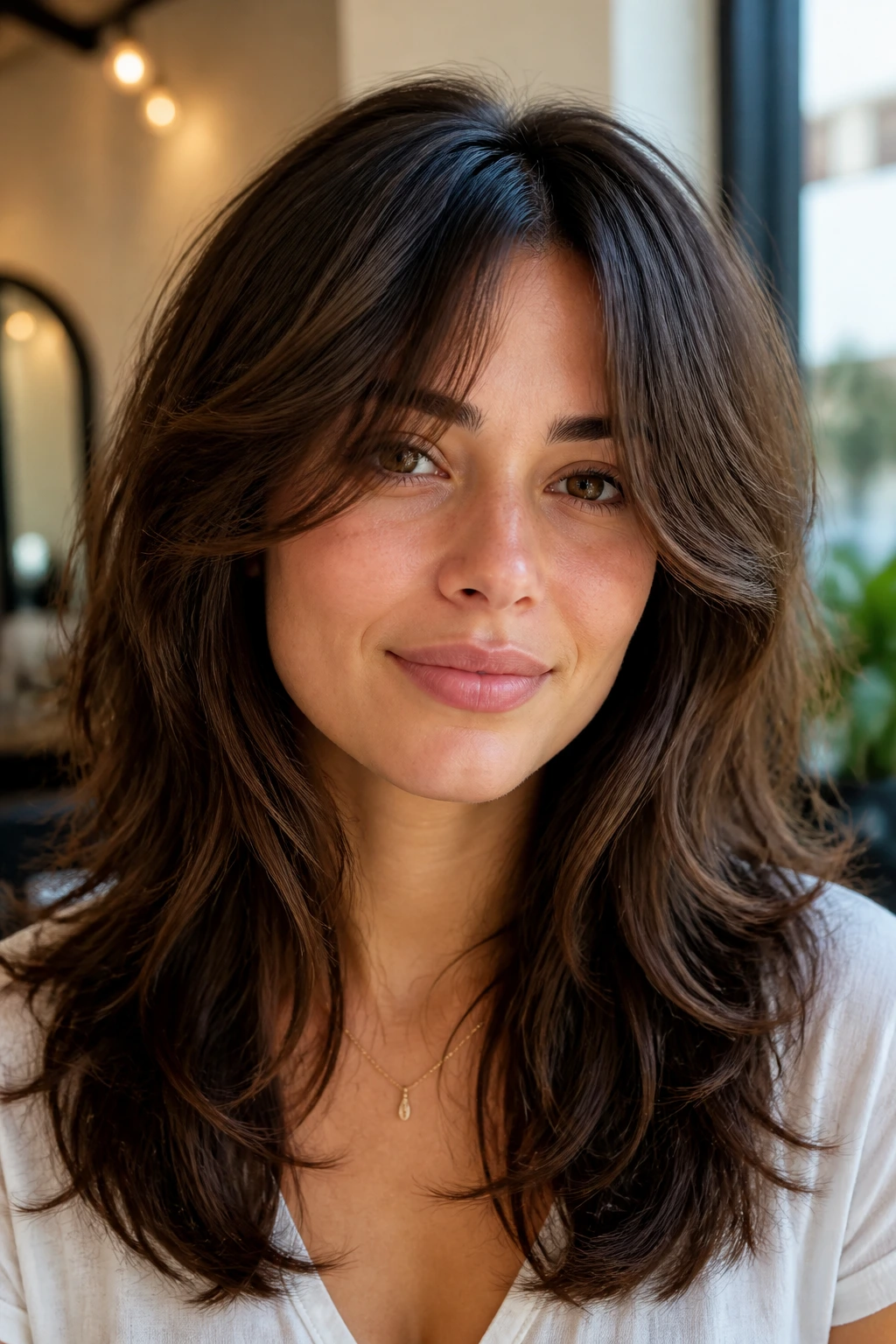
A good shag on thick hair is less about the number of layers and more about where those layers start and stop. That’s the bit that gets missed. People often ask for “more texture” when what they actually need is a smarter shape at the crown, a lighter face frame, or less weight through the bottom third of the haircut.
Thick hair can hold volume in places you do not want it. At the sides, that means width. At the crown, that means a helmet shape. At the nape, it means a bulky shelf that refuses to lie flat. Shag layers let the stylist shave down those problem zones while leaving enough mass to keep the cut from looking thin.
The best ones also work with the way thick hair moves when it dries. If your hair swells as it loses moisture, the layers have to be cut with some slack. If it falls flatter than expected, the crown may need more elevation. That’s why a shag is not a generic haircut. It’s a shape decision.
Essential Tools and Products for Styling These Cuts
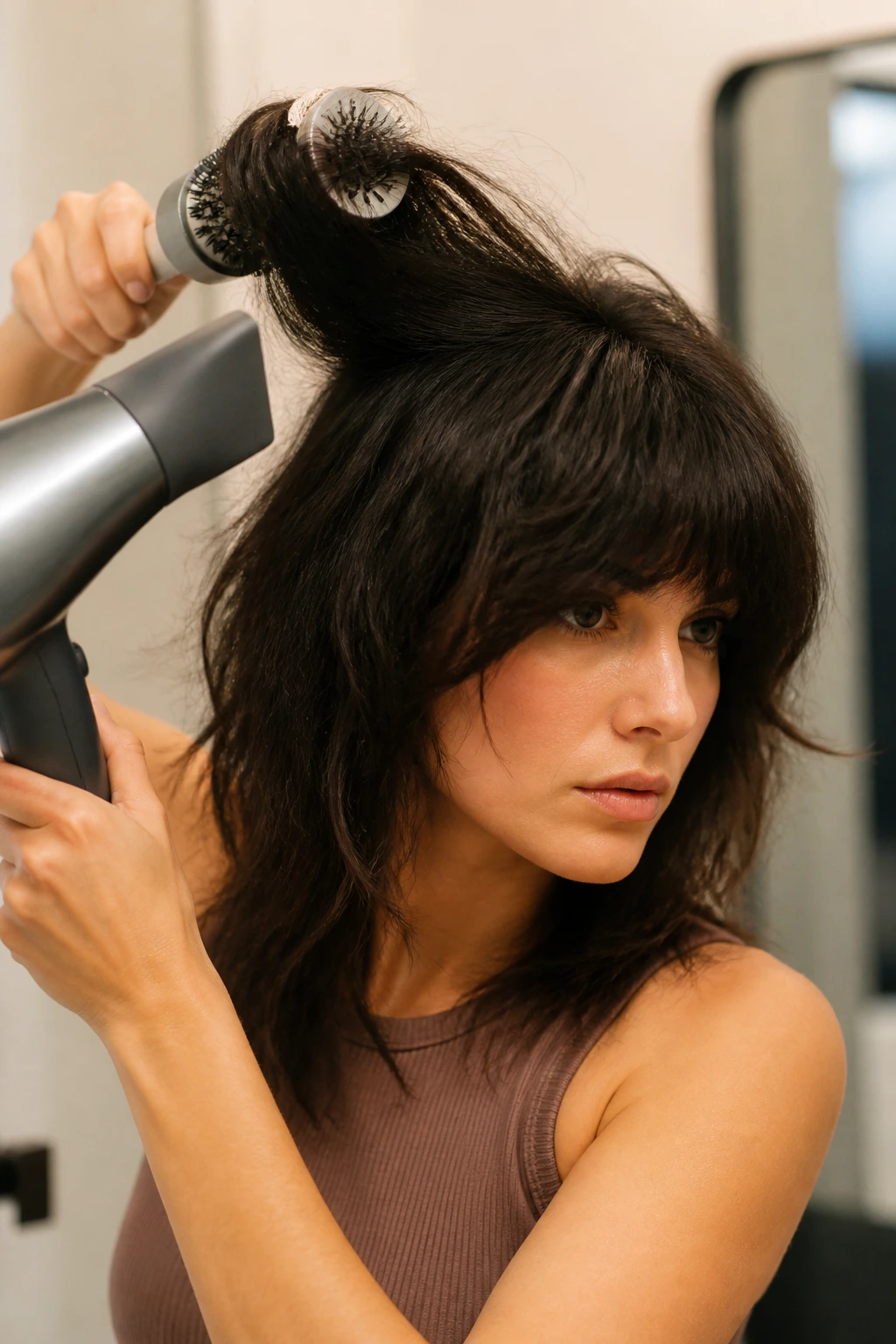
- A 1.25-inch round brush — Useful for bending curtain bangs, face-framing pieces, and the ends of a blowout shag without making the layers puffy.
- A diffuser attachment — The easiest way to dry thick waves and curls without blasting the pattern apart.
- A wide-tooth comb — Better than a fine comb for detangling thick hair once conditioner or leave-in is in.
- Heat protectant spray or cream — Use it any time you touch hot tools to the hair; thick hair can hide heat damage until the ends start feeling rough.
- Lightweight mousse — Gives lift at the roots without turning the cut sticky.
- Texturizing spray — Best on the mid-lengths and ends, not the roots, if you want separation in the layers.
- Curl cream or leave-in conditioner — Handy for curly shag versions that need definition more than hold.
- Dry shampoo — Helpful for the second day when the roots start to collapse but the ends still look decent.
- Sectioning clips — Makes blow-drying much easier when the hair is dense and hard to manage in one go.
- A hand mirror — Useful for checking the back and nape, especially with mullet-influenced shapes.
How to Choose the Right Shag Before the First Snip
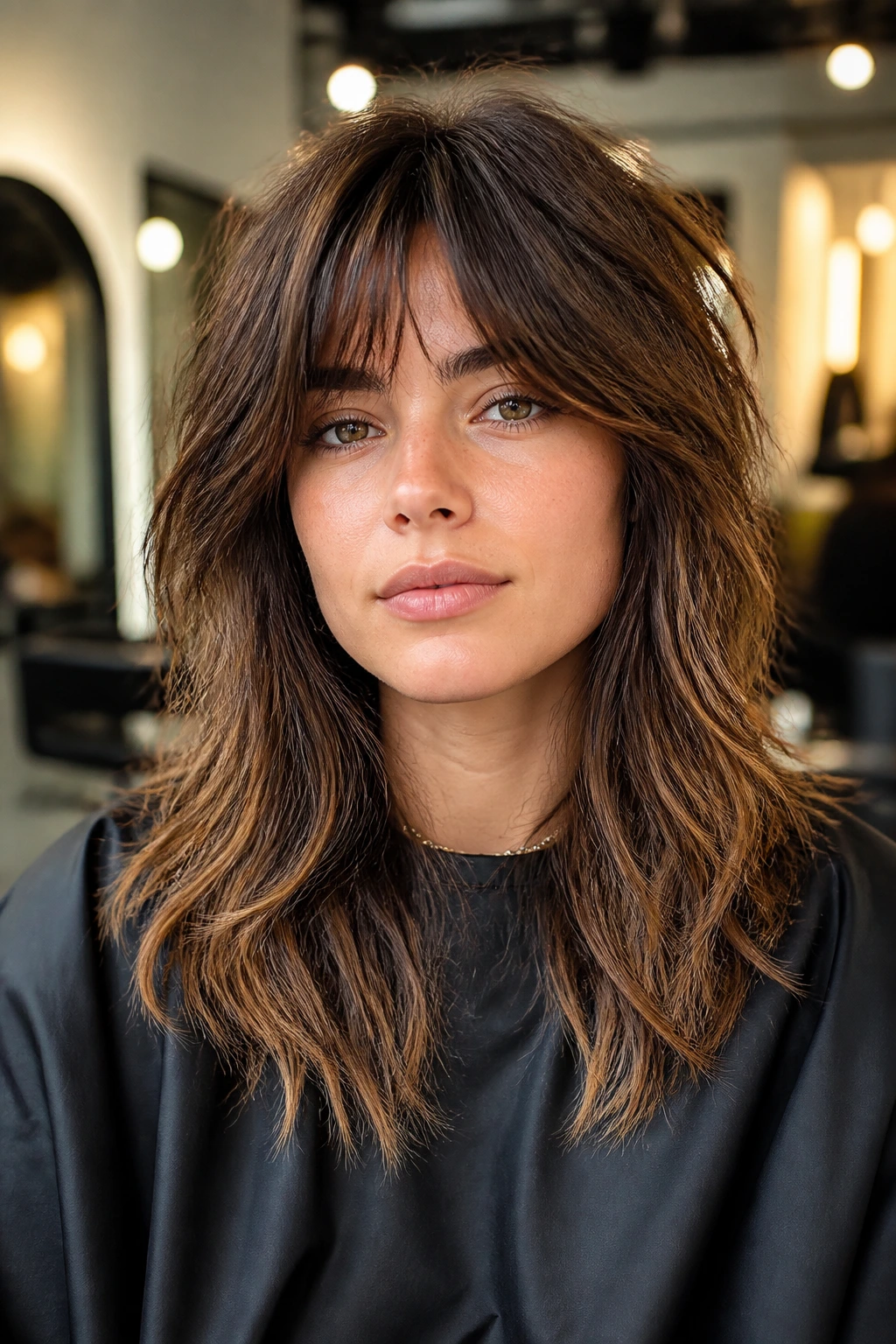
Thick hair does not need the same shag on every head. That’s the mistake people make. A fine-haired shag and a dense-haired shag are cousins, not twins, and the difference shows up fast once the hair dries.
Start with your texture. Straight thick hair usually needs more deliberate internal layering or the haircut can sit as one giant block. Wavy thick hair can take softer, more blended layers and still move. Curly thick hair often needs the most shape planning, because shrinkage can turn a cute idea into a triangle if the top is too short.
Then look at your face and neck. If you want length around the jaw, a collarbone or lob version usually behaves better. If you like fringe, decide whether you want curtain bangs, wispy bangs, or something heavier. If you wear your hair up a lot, keep the shortest layers long enough to escape the elastic without sticking out like antennae.
The last question is practical. How much styling will you actually do? Be honest. A bouncy blowout shag is lovely, but it asks for a brush, heat, and a few extra minutes. A low-maintenance shag is less dramatic at first glance, but it earns its keep on a messy Tuesday.
Practical Ways to Get the Most From the Cut

Root lift first. If thick hair falls flat at the crown, start styling there before you worry about the ends. A little mousse at the roots, then rough-drying with your fingers, gives the shag the lift it was built for.
Don’t drown the ends. Heavy creams can weigh thick hair down fast, especially on the bottom layers. Use enough to tame the frizz, not enough to smother the movement.
Dry the fringe separately. Bangs and face-framing layers dry at a different speed than the rest of the cut. Clip the bulk away and finish the front pieces with a small brush so they don’t kink in odd directions.
Refresh with a mist, not a soak. A light water spray plus a touch of leave-in is enough for day two. If you hose the hair down, you’ll have to rebuild the shape from scratch.
Keep the nape honest. Thick hair tends to bulk up at the back first. If the nape starts to feel heavy, that’s your clue that it’s time for a cleanup, not a full redesign.
Common Mistakes That Make Thick Hair Fight the Shag
The first mistake is over-thinning the interior. You can spot it when the ends start looking see-through while the root area still feels bulky. Thick hair does not need to be carved into ribbons. It needs careful weight removal, or the cut gets frizzy and weak at the same time.
Another one is cutting the layers too high around the crown. That often gives you a mushroom shape: flat at the top, wide through the sides. The fix is to keep the top long enough that the silhouette stays connected, then build lift in small, intentional steps.
People also forget bang shrinkage and dry behavior. Thick bangs usually spring up more than expected once they dry, especially if the hair has any wave. If you cut the fringe too short in the chair, you may spend the next month pushing it out of your eyes.
Then there’s using heavy styling cream on every inch of hair. The root area gets sticky, the crown drops, and the shag loses all the movement you paid for. Work product through the mid-lengths and ends first, then use leftovers on the front.
Finally, a lot of people skip maintenance cuts. Thick hair can grow into a new shape fast, and shags depend on layers staying in relationship to each other. Wait too long, and the cut turns lopsided or bulky at the bottom.
Variations and Alternatives Worth Trying
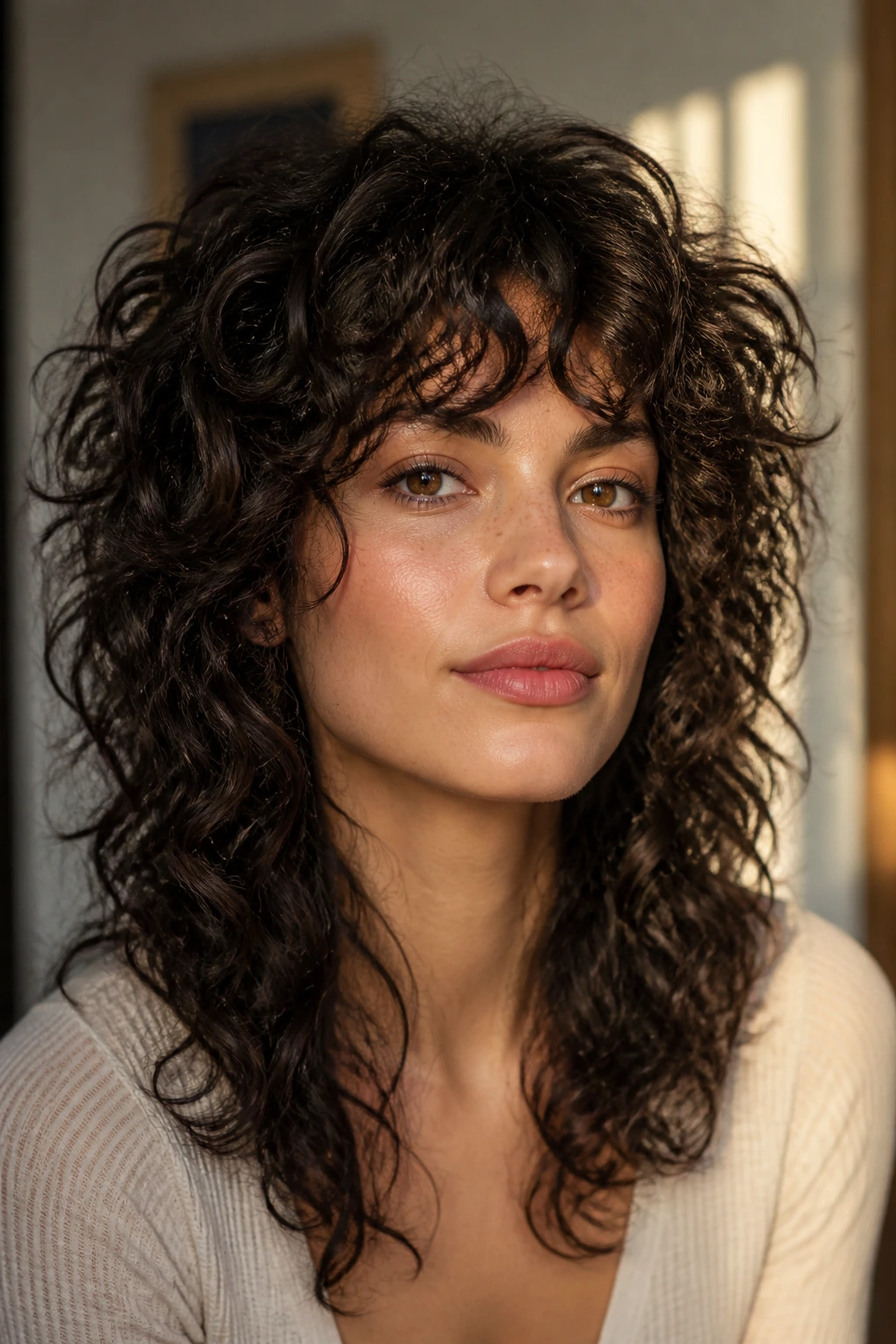
Curly-First Shag: Built around natural curls, this version keeps the perimeter longer and shapes the crown only where the curl pattern can support it. It works best when the stylist cuts with the curl’s spring in mind, not straightened length.
Salon-Polished Shag: This is the smooth, blowout-ready version with softer ends and more blended layers. It suits thick hair that you like to wear sleek or softly bent rather than wild.
Wolf-Inspired Shag: Shorter at the top, a little tapered through the back, and more edgy at the ends. It’s a better choice if you want visible contrast and a little attitude in the shape.
Fringe-Forward Shag: Built around bangs first and layers second. Curtain bangs, bottleneck bangs, or a heavier fringe can steer the whole haircut, especially on dense hair that needs a focal point.
Length-Preserved Shag: A lower-risk option for people who want movement without sacrificing inches. The layers stay softer and start lower, which keeps the hair looking full down the back.
Maintenance, Trims, and Day-To-Day Care
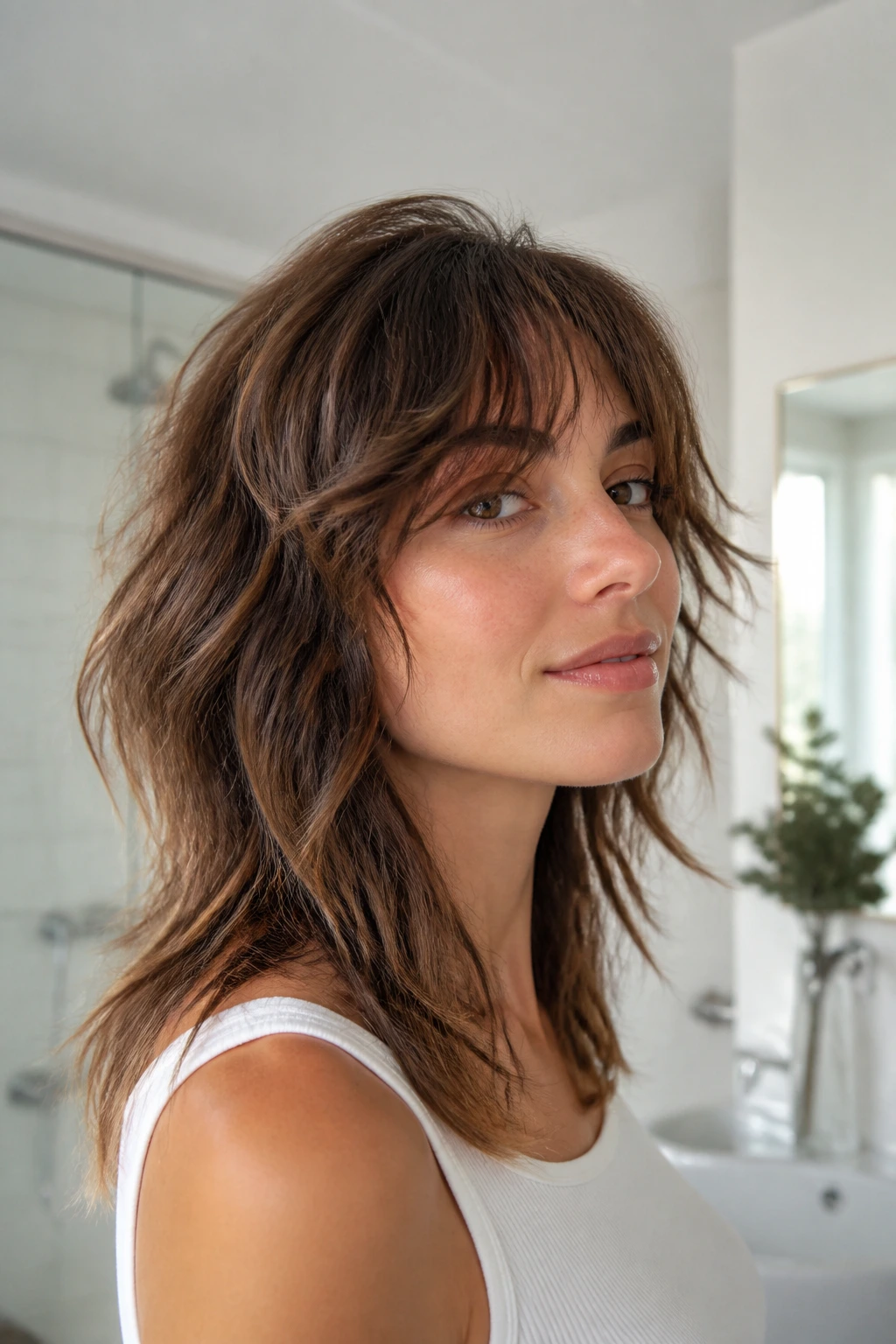
Thick hair grows into a shag in two different ways: it gets softer, and then it gets bulky. The first stage is fine. The second one starts to mess with the shape. That’s why most shag haircuts need a trim every 8 to 12 weeks, even if the rest of the hair still looks healthy. Bangs may need a touch-up sooner, especially if they’re curtain-heavy or wispy.
The daily routine is not hard, but it does need a little rhythm. Thick hair often likes a shampoo that clears the scalp without stripping the ends, followed by conditioner from the ears down. If product builds up, a clarifying wash every 1 to 2 weeks can keep the layers from feeling limp or coated.
Sleeping matters more than people admit. A loose braid, a silk pillowcase, or a large soft clip can keep the layers from getting matted at the crown. If your shag relies on fringe or a face frame, that front section can flatten overnight, so a quick mist and finger re-shape in the morning saves a lot of irritation.
For heat styling, don’t blast the hair until it’s bone dry if you want movement to last. Leave a little bend in the ends, then finish with a cool shot. That small step helps the shape set instead of puffing up an hour later.
Questions People Ask Before Cutting Thick Hair Into a Shag
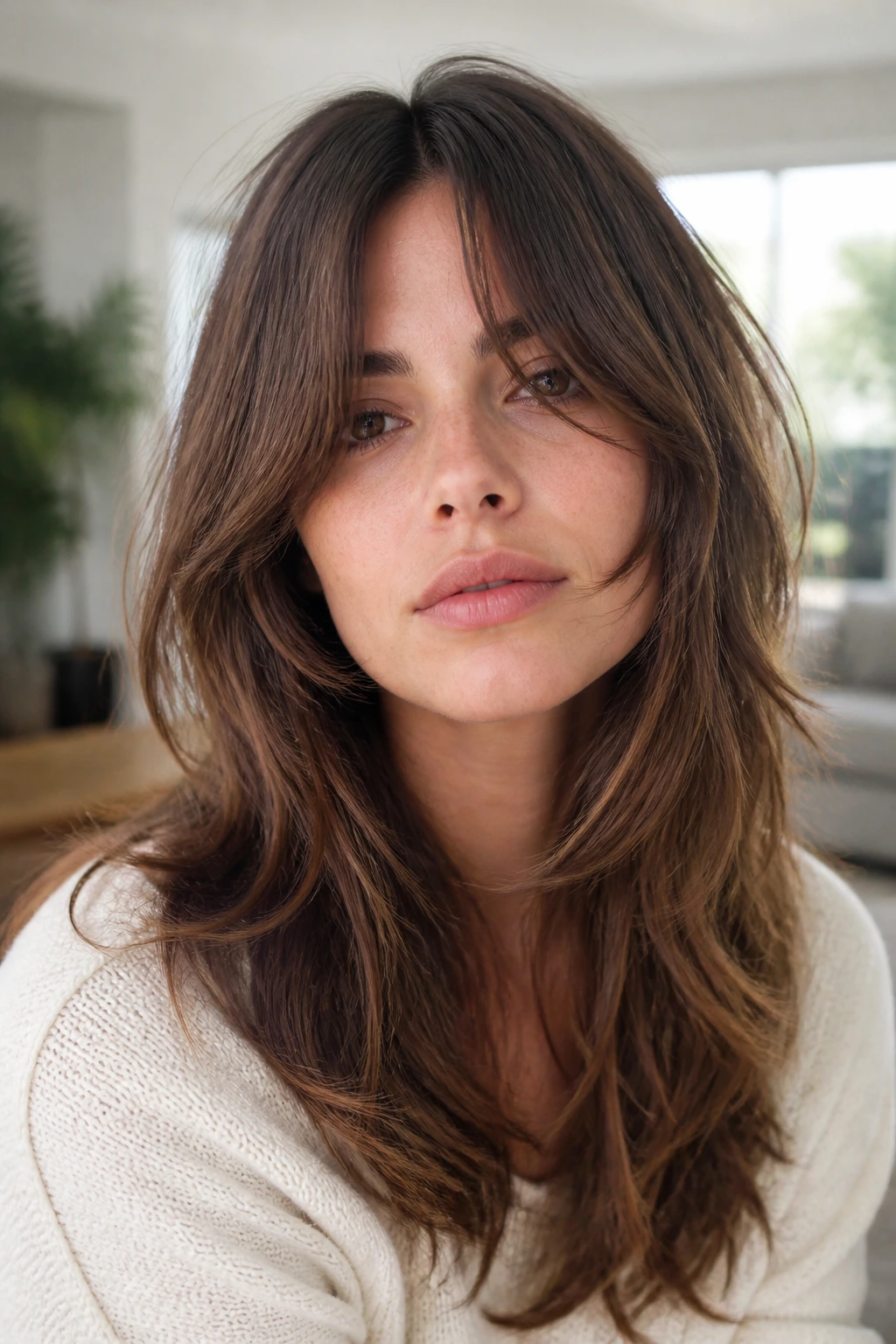
Will a shag make my thick hair look thinner?
It can make the hair look lighter, yes, but that is not the same as making it sparse. The right shag removes bulk and builds movement while keeping enough density at the perimeter to avoid see-through ends.
Should I ask for a razor or scissors?
If your hair is coarse or prone to frizz, scissors or very controlled point cutting are usually safer. Razor work can soften thick hair fast, but it can also rough up the ends if the hair already feels dry.
Can thick curly hair get a shag without turning into a triangle?
Yes, if the layers follow the curl pattern and the top is not cut too short. Dry cutting or near-dry cutting helps the stylist see how much each curl springs up.
Do shag haircuts need bangs?
No. Bangs can make the cut feel more obvious, but they are not required. A good face frame can do the same job if you do not want fringe on your forehead.
How often do I need to trim a shag on thick hair?
Most thick shags look best with a clean-up every 2 to 3 months. Bangs and face-framing pieces may need attention sooner, especially if they hit the eyes or start collapsing into the cheeks.
What if my hair poofs out at the sides?
That usually means the weight line is sitting in the wrong place. Ask for more internal reduction through the sides and a cleaner perimeter so the shape falls inward instead of kicking out.
Can I wear a shag straight, or does it have to look messy?
You can wear it smooth. In fact, a smooth shag often shows the cut better because the layers sit in clear relation to one another. A messy finish is only one option.
What should I bring to the salon?
Bring 2 or 3 photos that show the same length and general shape, not just the same vibe. Then tell the stylist how you wear your hair on a normal morning, because that matters more than a dramatic picture with perfect lighting.
The Cut That Gives Thick Hair Room to Move

A good shag on thick hair is not about chasing chaos. It’s about giving dense hair a structure that can breathe. The best versions keep the weight where the shape needs it, trim away the heaviness where the hair fights back, and leave you with movement that still looks intentional on day one and day three.
That’s the real reason this haircut keeps coming back: it makes thick hair feel workable without sanding off what makes it interesting in the first place. If your hair tends to sit heavy, puff wide, or go flat under its own weight, a well-cut shag can change the conversation fast. Bring a clear idea, ask about the layer placement, and let the shape do what it does best.
