



A round face does not need to be hidden. It needs a shape that keeps the eye moving, and curtain bangs for round faces over 40 do that better than most fringe styles because they work with length, angle, and softness instead of fighting them. The best versions start a little lower than people expect—usually around the cheekbone, sometimes even lower—and they drift away from the widest part of the face instead of sitting right across it like a shelf.
Over 40, hair often changes in ways nobody warns you about at the salon sink. The front can get finer, the crown can flatten faster, and the old “just cut bangs and hope for the best” approach starts to feel lazy. A fringe that looked cute at 32 can puff, split, or shorten itself by noon if the cut is too blunt or too short. That’s why the curtain shape matters so much here: it bends, opens, and grows out with a little grace.
And there are more versions of this cut than most people realize. Some are airy and barely there. Some are fuller and polished. Some are friendly to glasses, some are brilliant on curls, and some are the exact answer for anyone who wants their cheeks to look less prominent without going into stiff, fussy territory. The right one depends on your hair density, your part, your forehead, your frame, and whether you like spending five minutes or fifteen on your hair.
Why These Curtain Bangs Earn Their Keep

-
Face-Framing Payoff: The split opens at the center and slides past the cheekbones, which pulls attention vertically instead of letting the width of the face do all the work.
-
Age-Friendly Softness: A longer curtain fringe softens the forehead without boxing the face in with a blunt line that can feel harsh.
-
Grow-Out Grace: Most curtain bangs still look deliberate when they get a little long, which matters when you’re not living on trim appointments.
-
Texture Friendly: Fine, thick, wavy, and curly hair can all wear some version of this shape if the ends and density are handled correctly.
-
Glasses Compatible: The right curtain bang can sit above or beside frames instead of collapsing into them by lunchtime.
-
Low-Drama Styling: A good cut only needs a brush, a dryer, and a minute or two of cooling time to hold the bend.
1. Soft Cheekbone Curtains
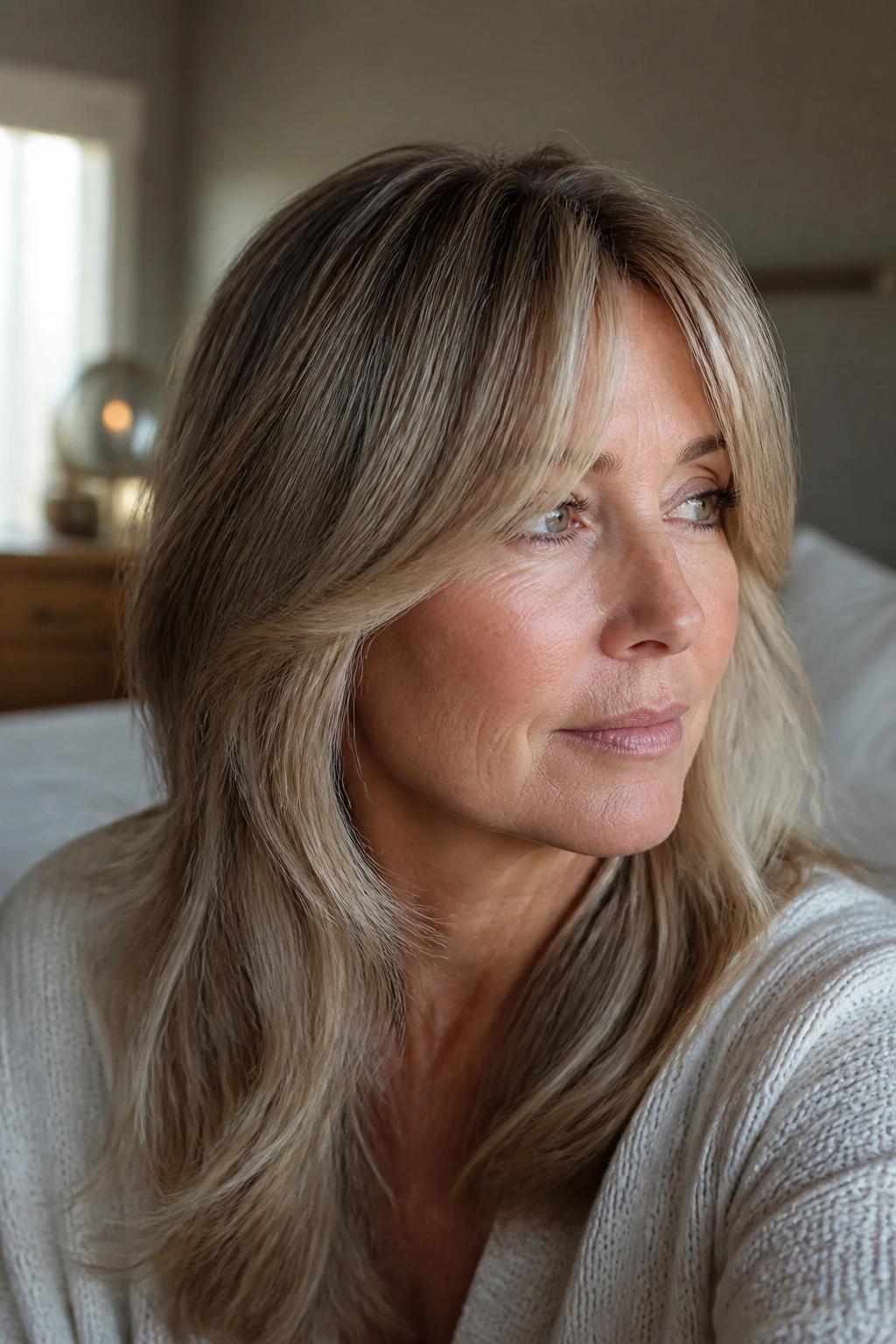
This is the version I’d hand to someone who wants the safest bet. The center pieces sit just below the brows, then fall quickly toward the top of the cheekbone before tapering into the rest of the cut. On a round face, that diagonal line does the useful work: it narrows the visual width without screaming for attention.
What to Ask For
- The shortest point should land around the outer iris or upper cheekbone.
- Keep the side pieces long enough to brush the mouth corner or the top of the jaw.
- Ask for point-cut ends, not a blunt snip.
- Leave enough density that the fringe bends instead of splitting into see-through strands.
A good cheekbone curtain does not feel heavy. It feels intentional. The center gives you the frame, and the outer pieces do the shaping, which is why this style works so well if you’ve got soft cheeks, a slightly wider smile line, or hair that needs a little help staying off the face. I like this cut because it doesn’t depend on a perfect blowout. If you’re running late, it can still look like you meant to wear it that way.
Pro tip: If your hair flips out at the ends, ask your stylist to keep the fringe a touch longer than your first instinct. The extra half-inch usually saves you from a stubborn puff.
2. Brow-Skimming Feathered Fringe
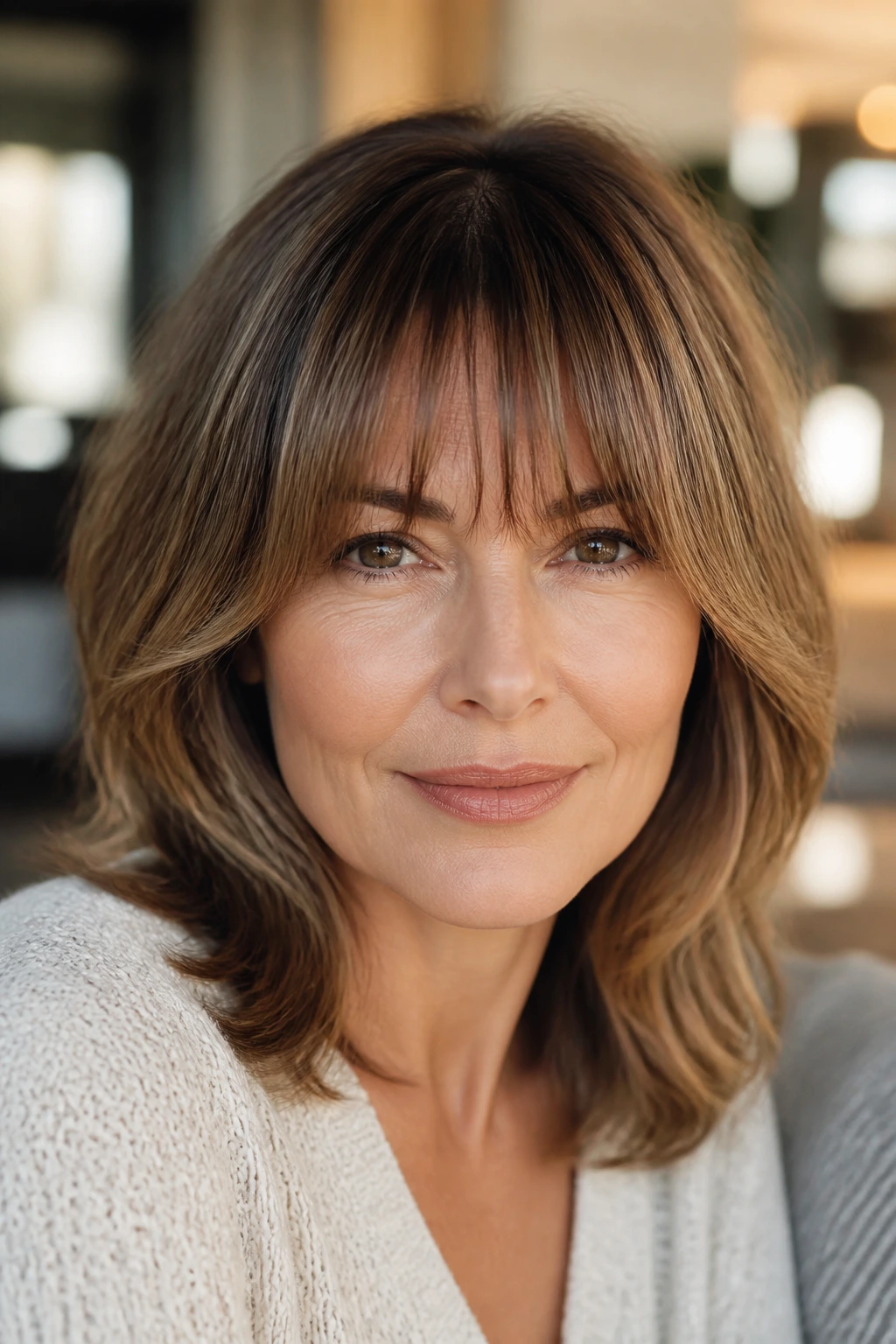
If you want the eyes to do more of the talking, this one delivers without turning into a hard bang. The middle section barely skims the brows, then the sides soften out almost immediately. That feathered finish is what keeps a round face from feeling boxed in.
The trick is restraint. Too many people ask for “wispy” and get something so thin it disappears after one brush-through. Better to keep a little structure in the center and feather only the outer thirds. That way the bang still has shape when you tuck one side behind the ear or let it fall over a cheek that needs softening.
This look has a nice effect on fuller cheeks because it keeps the attention higher on the face. And yes, it can make the eyes stand out more, but not in a dramatic, costume-y way. It just gives you a cleaner line right where the forehead meets the brow.
3. Collarbone-Length Curtain Layers
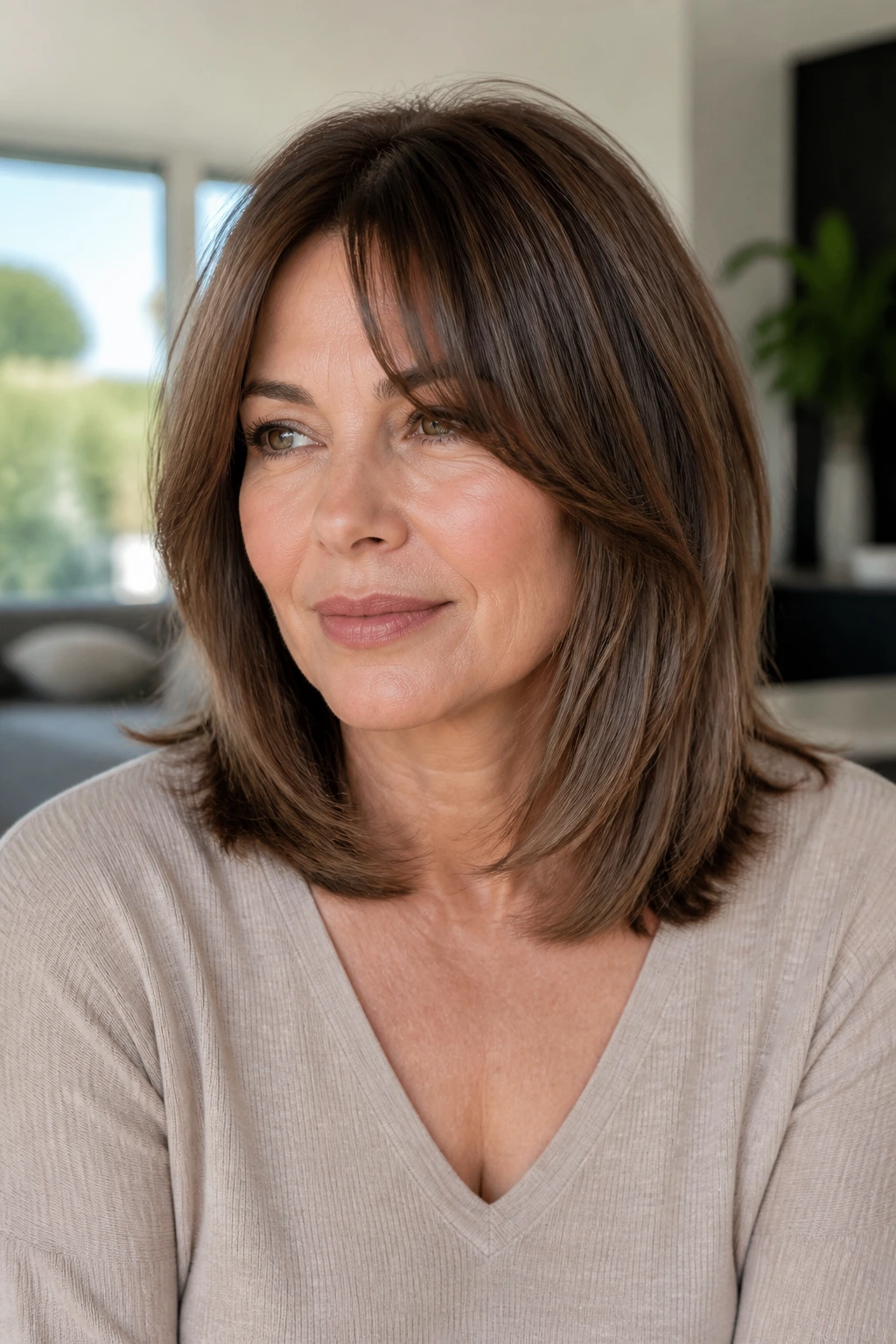
What if the bangs are only half the story? That’s the whole point here. The fringe is still present, but the real lifting comes from longer front layers that start around the chin and continue toward the collarbone. On a round face, those longer pieces draw the eye down and create a narrow corridor through the front of the cut.
This is one of my favorite choices for women who don’t want a “bangs moment” every morning. The fringe blends into the rest of the haircut, so it feels like part of the shape rather than a separate little project sitting on the forehead. If your hair is shoulder-length or longer, it can be especially flattering because the curtain pieces connect the face to the rest of the cut instead of stopping short at the cheeks.
The downside? It takes a little more forethought from the stylist. If the front layers are too short, they can balloon at the sides and make the face look wider. If they’re too long and flat, you lose the bend that makes the cut work. The sweet spot is a front line that falls, turns, and disappears.
4. Side-Swept Split Bangs
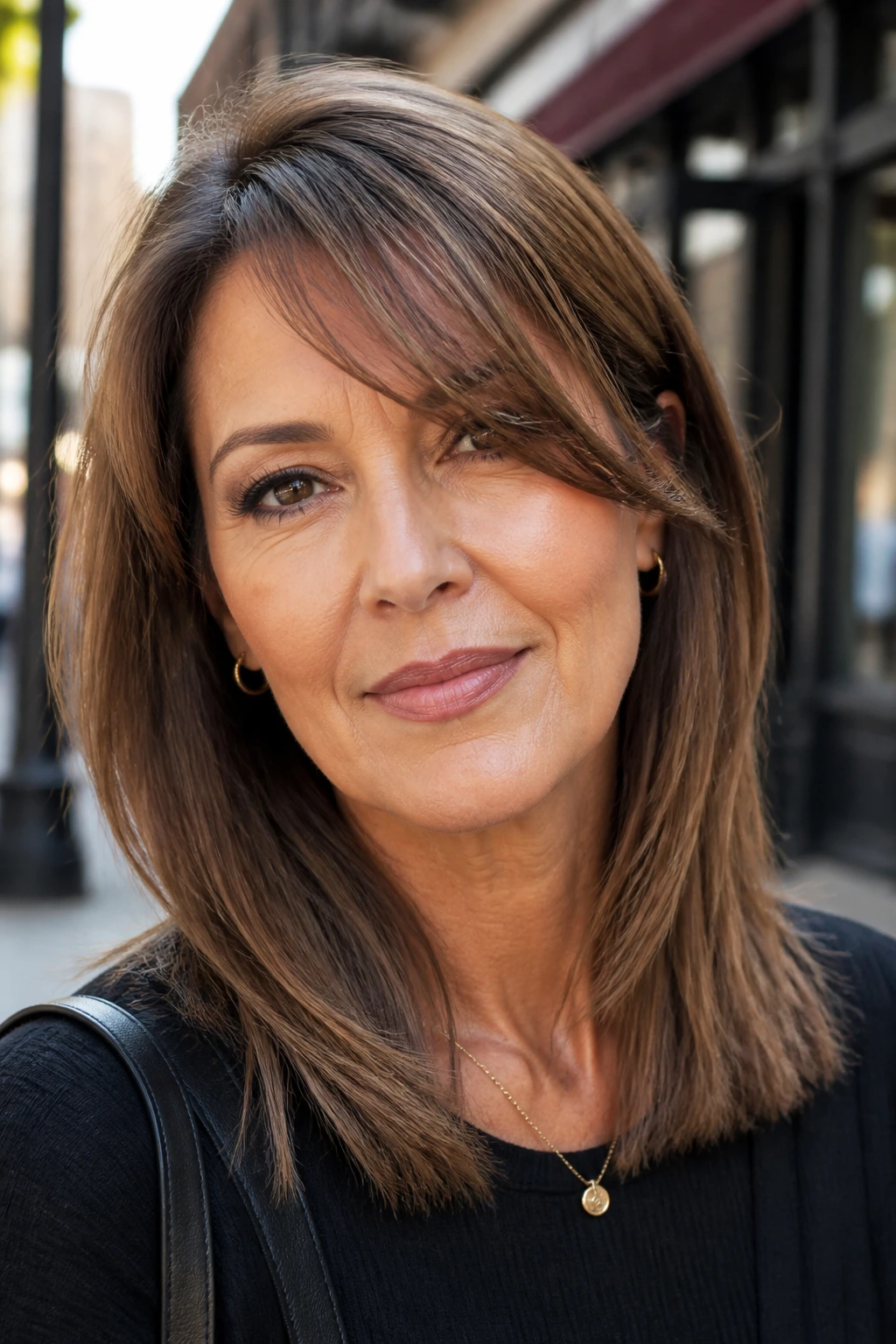
Picture this: you part the bangs slightly off-center, one side tucks behind the ear, and the other side falls forward in a soft diagonal. That little shift breaks up the symmetry that can make a round face look broader than it is. It’s not a harsh side bang. It’s a split curtain with a bias toward one side.
This is a smart choice if your hair naturally wants to go one way anyway. Fighting the part is a waste of time, and honestly, a lot of bad fringe cuts come from pretending the cowlick does not exist. A side-biased curtain bang can work with your growth pattern instead of wrestling it. That usually means less puffing, less training, and fewer mornings spent muttering at the mirror.
Key Details
- Keep the shorter side long enough to clear the brow.
- Let the heavier side graze the cheekbone.
- Use a round brush only at the roots if you want lift.
- Don’t over-layer the ends; they need a little weight to swing.
5. Long Bottleneck Curtain Bangs
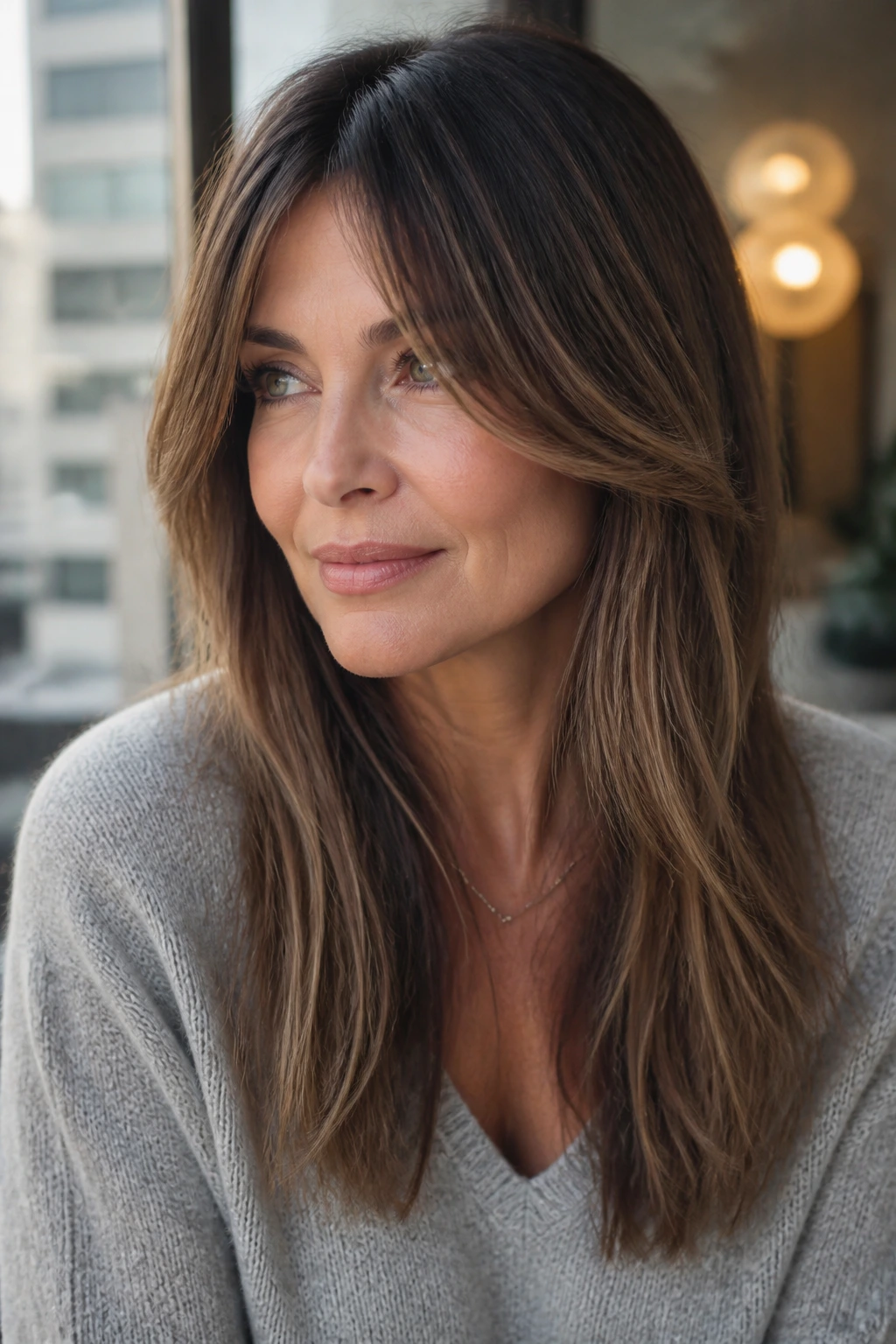
Unlike blunt bangs, long bottleneck curtains start narrow in the middle and widen gradually toward the sides. That narrowing at the center is the point. On a round face, it creates a vertical cue first, then opens out where the face can handle it—near the cheeks and jaw, not across the widest area.
The name sounds fussy. The cut isn’t. It’s one of the cleanest ways to wear fringe if you want softness but not fluff. The center can sit around the bridge of the nose or just below the brows, then the sides can taper out to the lip line or lower. That keeps the forehead from feeling crowded and the cheeks from feeling emphasized.
I’d reach for this shape if you like a polished blowout, wear glasses, or want a fringe that still looks okay on day two. It’s also a good choice if your hair has some density and you don’t want to sacrifice too much of it to the front.
6. Wispy Airy Fringe with Layers
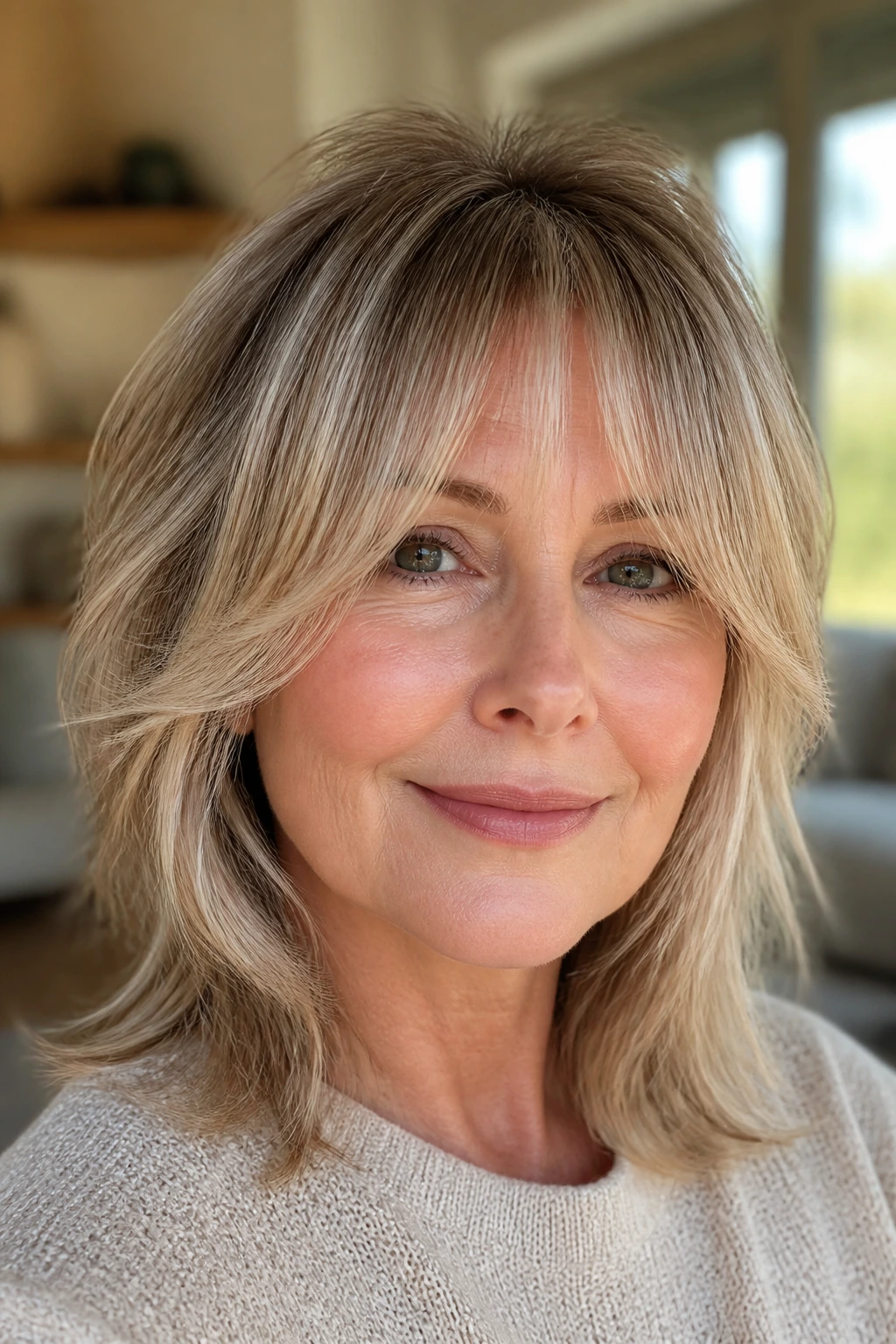
This one works when you want a touch of fringe without committing to a heavy front block. The key is keeping the center soft and the ends broken up, then pairing it with layers that move away from the cheeks. On a round face, that movement matters more than the bang length itself.
Why It Behaves Well
A wispy fringe is easier to live with if your hair tends to lie flat at the roots. The texture stops the front from clinging to the forehead, which can make the face look wider than it is. It also grows out with less drama because the edges are already broken up.
How to Keep It From Going Limp
- Use a pea-sized amount of lightweight cream, not a heavy balm.
- Blow-dry the roots side to side before shaping the fringe.
- Finish with a soft mist of hairspray only at the ends.
- If the fringe turns see-through, you’ve thinned it too much.
This is not the cut for someone who wants a bold statement. It’s the cut for someone who wants softness, movement, and enough fringe to feel current without having hair fight their eyebrows all day.
7. Choppy Shag Curtain Bangs

This is the version that handles imperfect hair better than perfect hair. A shaggy curtain fringe uses broken ends, internal layers, and a little messy texture to make the whole front of the haircut feel lighter. On a round face, that matters because heavy, uniform bangs can add visual width fast.
The style is especially useful if your hair gets bigger in humidity or you never quite master the round brush. The choppiness gives it a little forgiveness. The ends don’t need to sit in a perfect curve; they just need to move away from the cheeks and create a bit of vertical motion.
But there’s a line here. Too much texturizing can make the fringe flimsy, and flimsy bangs on a round face usually mean the same thing every time: split pieces, frizzy ends, and a forehead that looks wider because the hair has no body. Ask for choppy, not shredded. There’s a difference.
8. Blunt Ends with Soft Curtains

A blunt perimeter with soft front pieces is one of my favorite cheats for round faces. The straight edge through the rest of the haircut gives the shape structure, while the curtain fringe keeps the front from feeling severe. You get a little polish at the bottom and a little give at the top.
This works well if you like a bob, a lob, or shoulder-length hair that feels clean rather than layered to pieces. The blunt ends hold their line, which can keep the face from reading too soft or too full. Then the curtain bangs break up the width right where you want the eye to move.
The mistake is making the fringe as blunt as the rest of the cut. That can turn the whole style into a block. Keep the front pieces feathered and let them angle toward the jaw. The contrast is what makes this one look smart.
9. Glasses-Friendly Lifted Bangs

If you wear glasses, you already know the wrong fringe can crowd the frames by noon. This cut avoids that problem by keeping the shortest pieces high enough to clear the top edge of the lenses, then letting the sides sweep down outside the frame line. It’s a small adjustment, but it changes everything.
The lift matters too. A curtain bang that lies flat behind the glasses can make the middle of the face feel compressed. A bit of root bend opens the forehead and gives your frames a cleaner line to sit under. That’s the whole game.
What to Request
- Shortest point just above the frame line.
- Side pieces that hit below the frame, not into it.
- Soft point-cutting around the temples.
- A little internal weight so the fringe doesn’t fly apart.
This is one of those cuts that looks easier than it is. When it’s done well, the frames and the fringe feel like they belong together. When it’s done badly, you spend your day nudging hair out of your lenses.
10. Silver-Blending Face-Framing Fringe
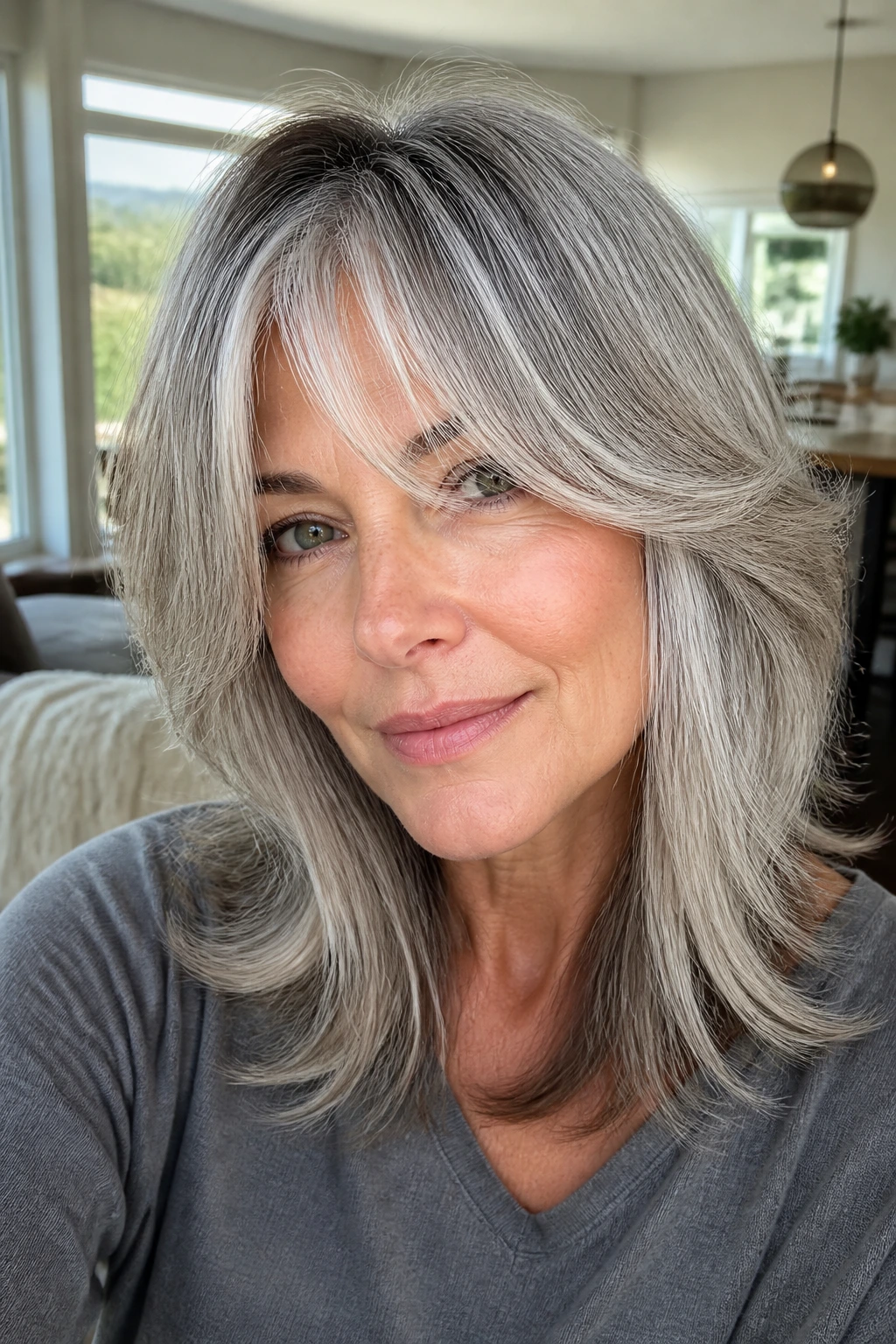
Gray hair changes the math a little. It’s often more coarse in some places, finer in others, and the front can go translucent if the stylist thins it too aggressively. A silver-blending curtain fringe works because it keeps enough body at the front to show off the color while still shaping the face with softer lines.
I like this option for women who are letting gray streaks do their thing instead of covering everything. The lighter pieces around the face can look sharp when they’re cut into a tidy curtain shape, especially if the fringe falls around the cheekbone and not just across the brow. The color reads better when the cut gives it room.
A plain, over-thinned fringe can make silver hair look sparse. This one does the opposite. It keeps the density where you need it and lets the tonal variation show through in the bend of the pieces.
11. Fine-Hair Feathered Curtains
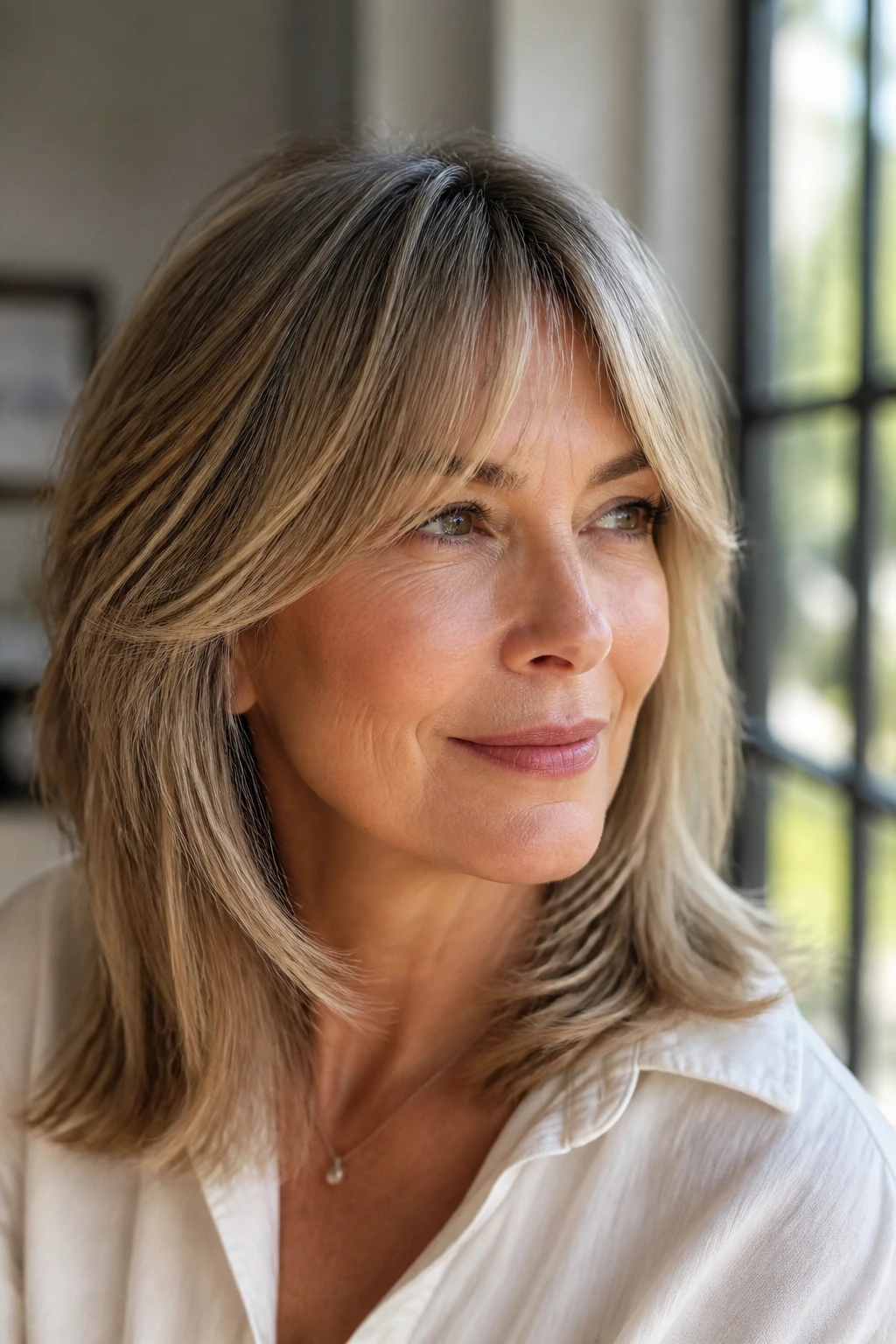
Why Fine Hair Needs a Different Plan
Fine hair does not need more thinning. It needs shape. If the front is cut too wispy, it loses the little bit of body it has and hangs like thread, which is the fastest route to a limp fringe on a round face.
The best version starts with slightly longer center pieces and a soft taper at the sides. That gives the fringe enough weight to swing. A round brush and a shot of cool air help, but the cut has to carry the load first.
Keep It Full Without Making It Heavy
- Ask for point-cut ends, not aggressive razoring.
- Keep the shortest piece near the brows, not above them.
- Use root lift spray only at the front half-inch.
- Avoid heavy oils on the fringe; they collapse fine hair fast.
I’m blunt about this because I see the mistake all the time: people think fine hair needs to be “airy” when what it really needs is controlled. Airy can turn sparse in a second. Controlled looks intentional.
12. Thick-Hair Razor-Soft Curtains
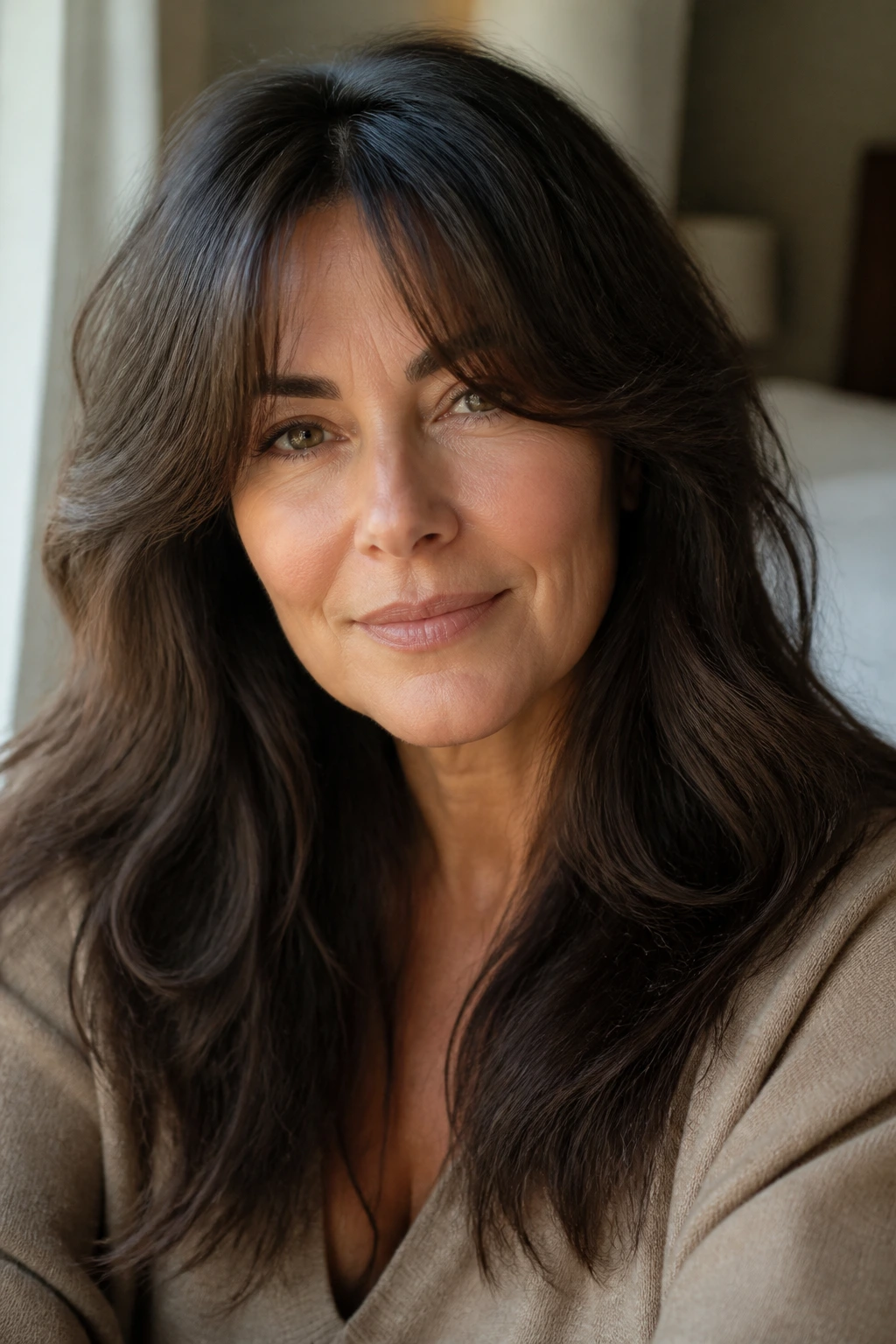
If your hair puffs the minute it meets humidity, this is the calmer version you want. Thick hair can carry a curtain bang, but it needs internal weight removal and soft edges so the front doesn’t look like a curtain in the literal, heavy sense. Too much bulk at the sides makes a round face look wider, not slimmer.
The useful thing about thick hair is that it holds shape well once it’s cut correctly. You can get a soft bend, a bit of swoop, and enough structure to last a day without the fringe disappearing. The key is to remove weight from the inside, not just chop the ends and hope for the best.
I prefer this cut with a slight center part and a blow-dry that starts at the roots. If you try to flatten it with product alone, it will fight back by lunchtime. Hair this dense usually likes direction more than cream.
13. Shoulder-Length Lob with Curtains
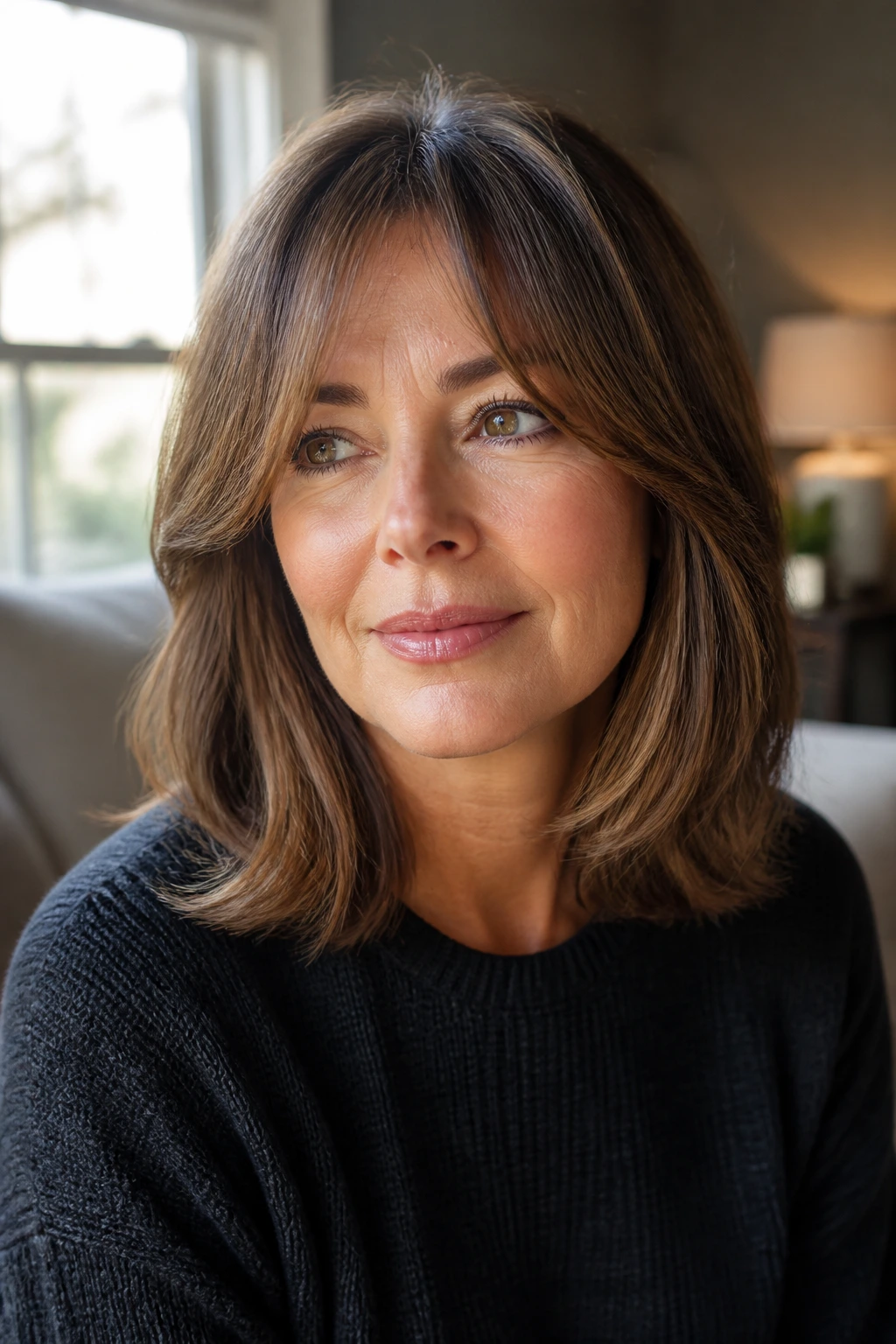
A shoulder-length lob can be one of the best companions for curtain bangs on a round face because it keeps the jawline open while still giving the front enough length to fall in a slimming line. It’s shorter than a shag, but it has more movement than a blunt bob. That middle ground is useful after 40, especially if you want shape without a lot of fuss.
The curtain fringe should connect to the lob rather than sit on top of it. When the front pieces flow into the shoulder line, the face reads longer and the haircut feels deliberate. If the bang is too short against the lob, the front can look chopped off. Not flattering. Not subtle.
This is also a good choice if you like tucking one side behind the ear. The long front pieces still frame the face, but they don’t trap it. You get air around the cheeks, which is the whole point.
14. Mid-Length Waves with Face Frame
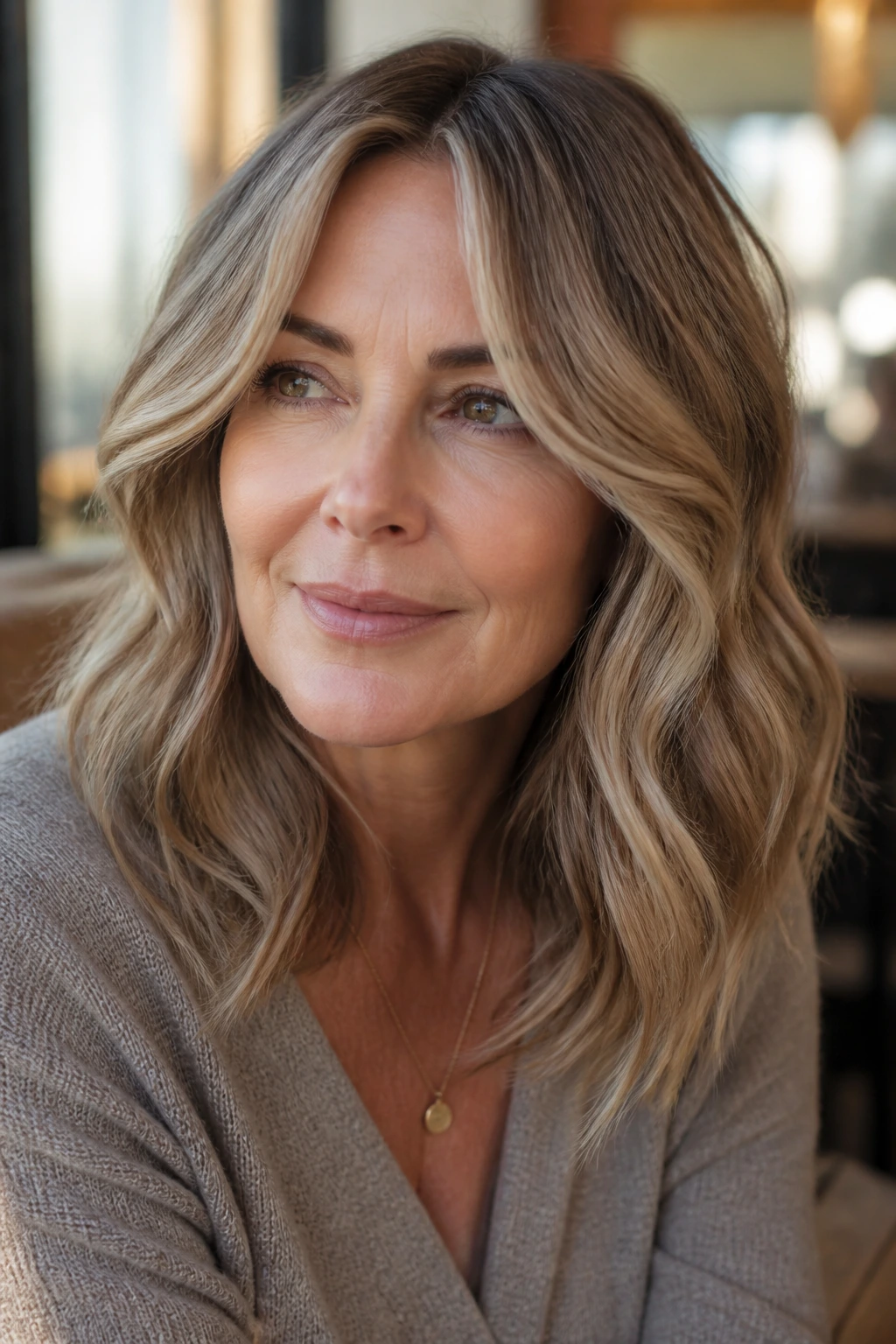
What this cut does well is rhythm. The waves break up the roundness of the face, and the curtain pieces add a vertical path through the front. It’s especially nice if your hair already wants a soft bend and you don’t want to fight your texture every morning.
The face frame should not start too high. If the shortest piece sits right at the cheekbone and the waves begin below that, you can accidentally add width where you were trying to subtract it. Better to let the front move from brow to cheek to jaw in one long line.
Good Choices for This Shape
- Medium-to-long front layers.
- A side that can tuck easily.
- Light styling cream for wave definition.
- A soft center part, not a razor-straight one if your hair fights it.
This style feels relaxed without being messy. That balance is hard to fake.
15. C-Cut Layers and Curtain Bangs
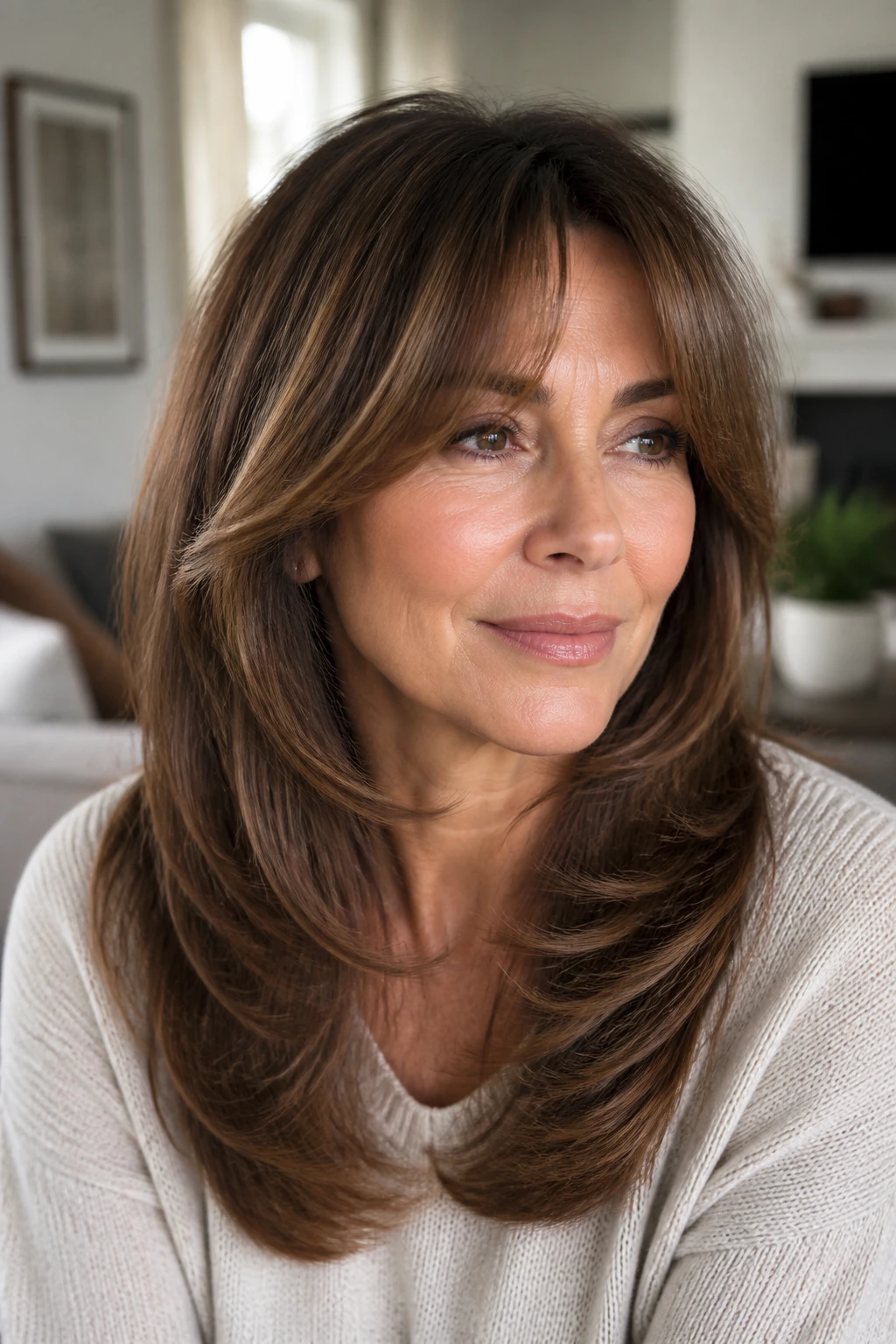
Compared with a one-length cut, C-shaped layers curve around the face in a way that flatters rounder cheeks. The front pieces sweep down and inward, so the eye doesn’t stop at the widest point of the face. Curtain bangs fit into that shape naturally, which is why this combo looks so finished when it’s done right.
The C-cut is a nice answer if you want movement without a lot of broken layers everywhere. It has enough shape to keep the hair from ballooning at the sides, but not so much that you spend every morning styling ten different pieces. The fringe and the front layers work like one unit.
I’d choose this over a heavily layered cut if your hair is already textured enough on its own. Too many layers can make the face frame too busy. The C-shape keeps the line clean.
16. Soft Wolf Cut with Curtain Fringe

How Much Edge Is Enough?
A wolf cut can work on a round face after 40 if you keep the edges soft and the layers controlled. The problem with the classic version is that it can get too short and too wide through the sides, which is not the move if your goal is a leaner front.
The soft version keeps the crown lifted and the curtain fringe long enough to bend past the cheekbone. That creates height up top and movement at the front without adding bulk at the widest part of the face.
This is a good choice if you like texture and a little attitude, but not the “I got my hair attacked with a razor” look. There’s a big difference between lived-in and overdone. The good version has shape. The bad version looks like you gave up halfway through a haircut.
17. Low-Maintenance Grow-Out Fringe

This is the fringe for people who want shape without babysitting it. The center starts long enough to skip the awkward eyebrow stage, and the sides are cut with enough length that they can tuck, bend, or fall forward depending on the day. A round face likes this because the visual line stays soft even when the bangs get a little late on their trim.
The real charm here is that it grows out looking like part of the haircut, not a failed experiment. That matters more than people admit. If you’re the kind of person who stretches salon visits, a grow-out-friendly curtain bang saves you from the between-stage nonsense where the fringe is too short to style but too long to ignore.
I would pair this with face-framing layers that start around the jaw, not the cheek. It keeps the whole front from looking crowded.
18. Chin-Grazing Piecey Curtains
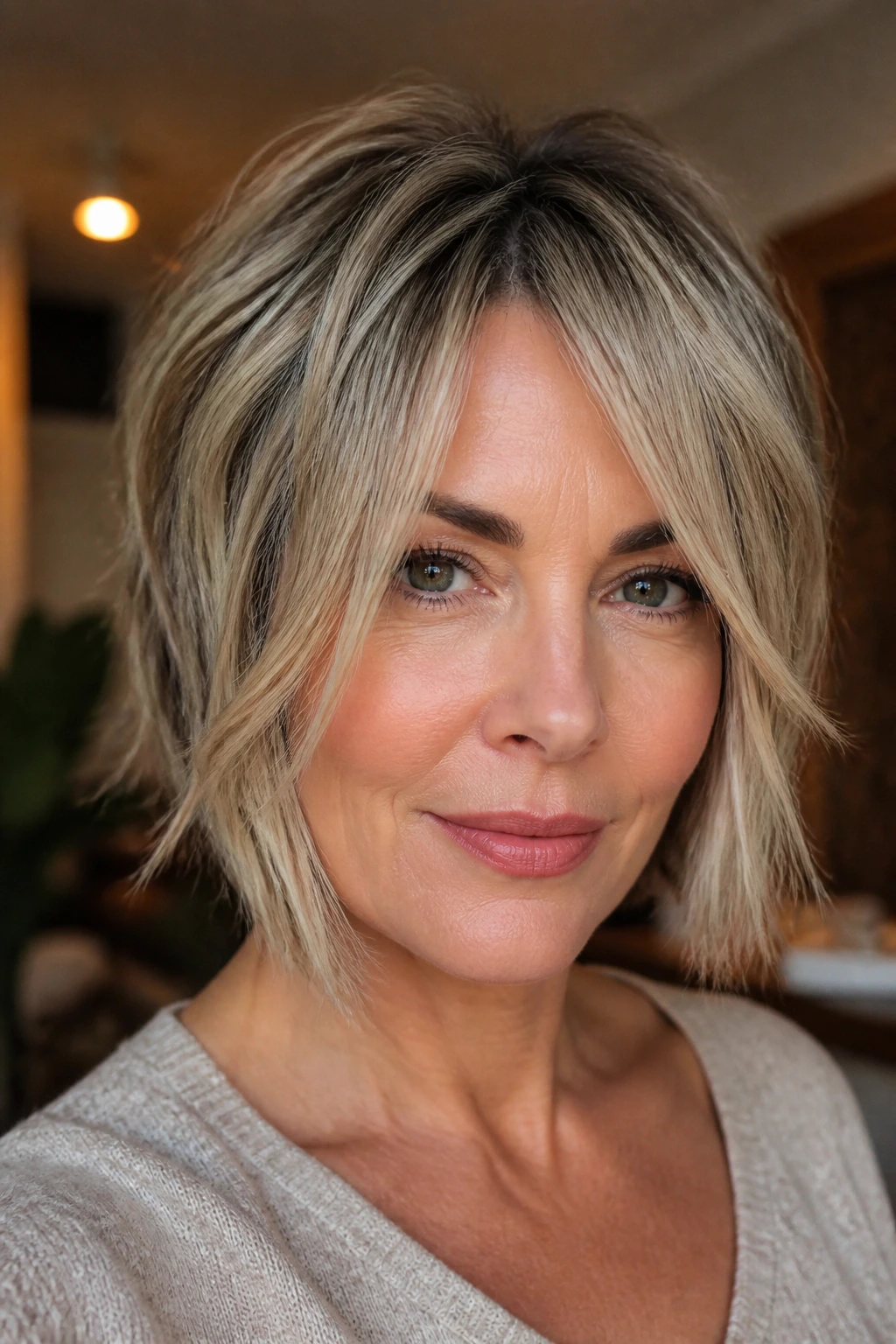
What makes this one special is the length. The center pieces don’t stop at the brows; they drift all the way down toward the chin, with the shortest point still soft enough to keep the fringe recognizable. That extra length can be a gift on a round face because it creates a downward line through the front.
The piecey finish helps too. If every strand sits in one perfect sheet, the style can feel too broad. Breaking the ends keeps the front light and makes the jawline look a little more structured.
This is one of the better options if you’re nervous about bang commitment. The pieces can live as fringe one day and face-framing layers the next. That flexibility is worth a lot when you’re testing how much forehead you want to show.
19. Deep Center Part Curtain Bangs

A deep center part can be a smart move on a round face because it creates asymmetry and shifts the attention off the widest mid-face area. The curtain bangs follow that line, with one side falling more forward and the other side opening more cleanly. The result is less “perfect symmetry,” more motion.
Watch the Balance
- Keep volume at the roots, not the cheeks.
- Let one side fall lower than the other.
- Avoid puffing both sides outward at once.
- Use a flat brush at the crown if your hair gets too round.
I like this approach when the face is soft but the hair has enough body to hold the part. If the part is too deep and the fringe is too short, the look can turn severe fast. The trick is keeping the bang long enough to move.
20. Soft Micro-Curtain Bangs
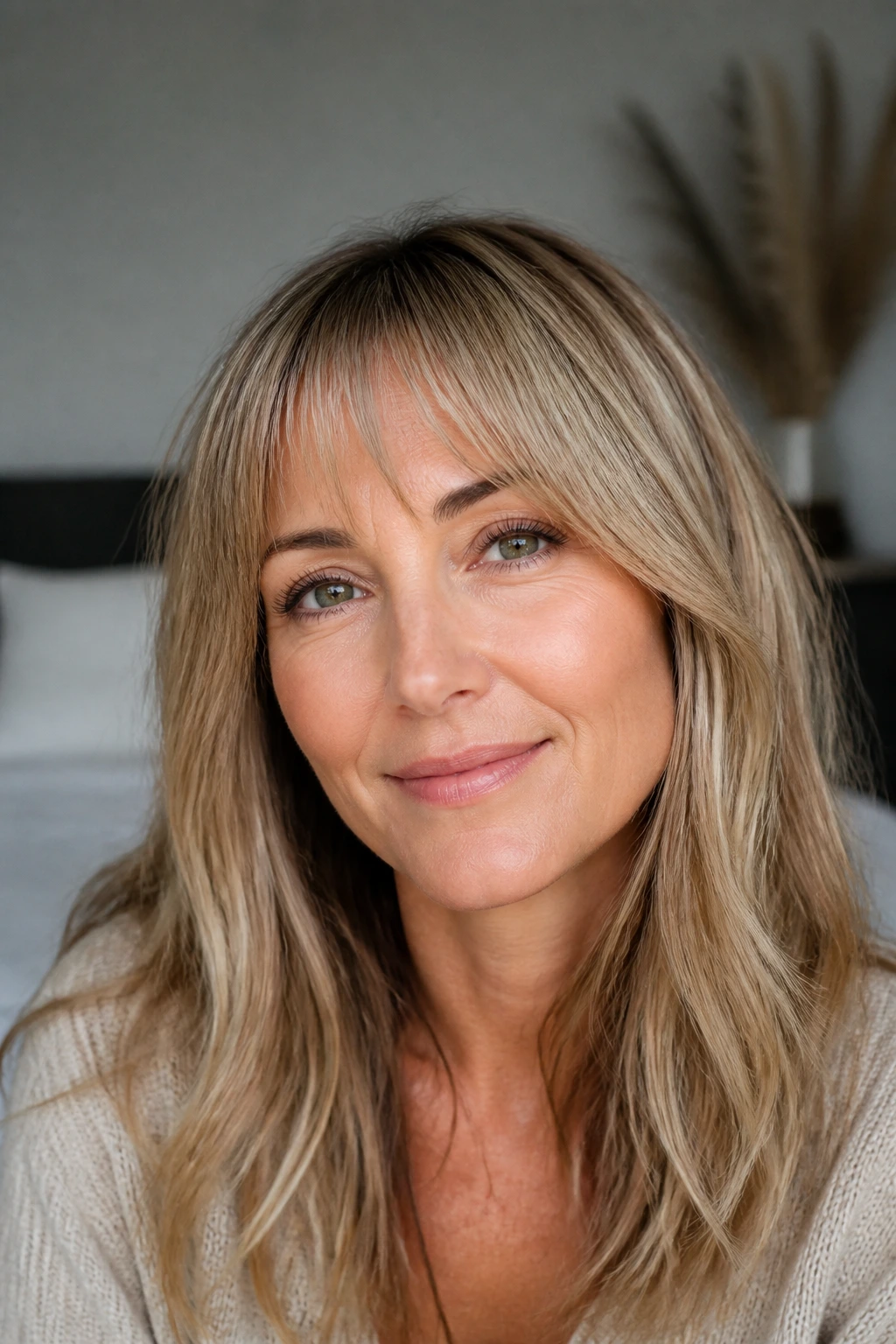
A micro-fringe can be tricky on a round face, but a soft version works when the center stays short and the sides stretch out into curtain pieces. The shape is what saves it. Without the longer edges, a micro-bang can chop the face in half and make it look broader.
This cut suits people who like a little forehead showing and don’t want a lot of hair sitting on the face. It also works well if your hairline is low and a full fringe feels too crowded. The softened curtain sides stop it from feeling severe.
The catch is maintenance. A true short fringe grows fast, and even a “soft” version needs trims sooner than the longer looks in this list. If you want low upkeep, keep scrolling past this one.
21. Curly Curtain Bangs
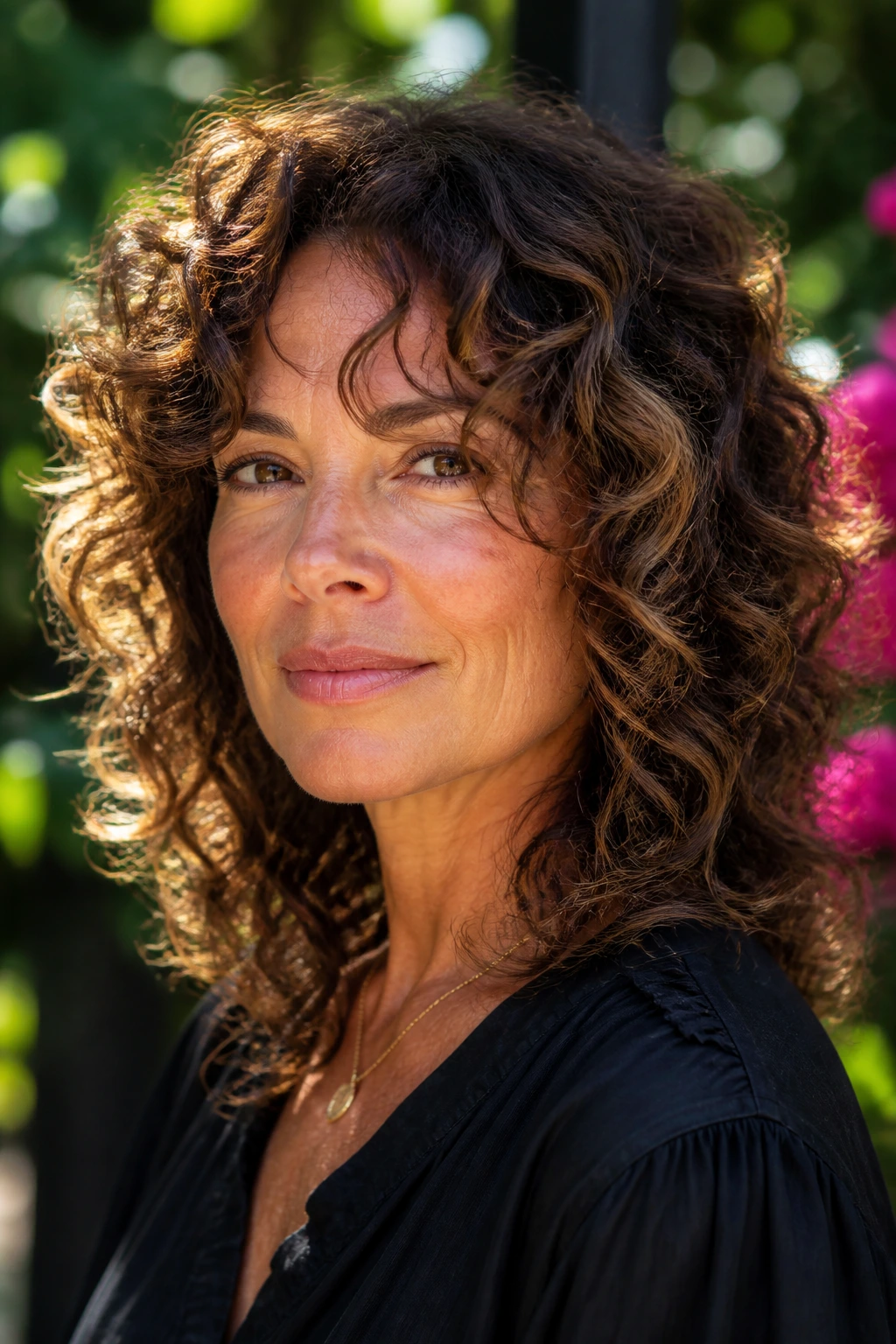
Shrinkage Changes Everything
Curly hair should be cut with shrinkage in mind, or the curtain fringe will bounce up and sit way shorter than intended. On a round face, that can make the front feel too open and expose the widest part of the cheeks.
The best curly curtain bang is cut longer than you think, then shaped so the curls fall apart from the center and frame the face instead of puffing outward. It helps to leave the outer pieces long enough to reach the cheek or jaw when dry. Curly bangs should be judged in motion, not straight out of the clip.
Best Practices
- Cut them dry or nearly dry if your curl pattern is tight.
- Leave extra length at the center.
- Use a curl cream that defines, not a heavy butter.
- Don’t over-diffuse the fringe unless you want more volume.
This look can be gorgeous. It just needs respect for the curl pattern.
22. Wavy Air-Dry Curtain Fringe
This is the easiest-looking version, which is not the same thing as easiest to cut. Wavy hair can do a lot on its own, and the fringe should just guide that movement. On a round face, the goal is a clean bend that breaks at the cheekbone and drifts toward the mouth, not an overstyled wave sitting on the forehead.
If you air-dry, the root pattern matters. I like a quick clip at the center while the fringe is damp, then a loose twist at each side for the first ten minutes. That helps the hair learn the direction before it dries into a puff or a split.
This is a nice option if you hate heat styling. It doesn’t need a barrel curl. It needs a little direction and a little patience. Those are different things.
23. Sleek Blowout Curtain Bangs
Can a curtain bang look polished without feeling stiff? Yes, if you keep the brush moving and let the hair cool in the bend. This version is for people who like a finished front shape and don’t mind spending an extra few minutes with a round brush.
The sleek blowout works especially well on round faces because it stretches the line of the face downward. The center piece sits softly, then the outer pieces curve around the cheek and jaw. The important part is the root lift. Flat roots make the fringe spread. Lifted roots make it open.
I’d call this the best version for dinners, photos, or any day you want your hair to look a notch more refined. It’s not fussy if you know the move: dry the roots first, bend the ends second, and let the shape cool before touching it.
24. Layered Bob with Split Fringe
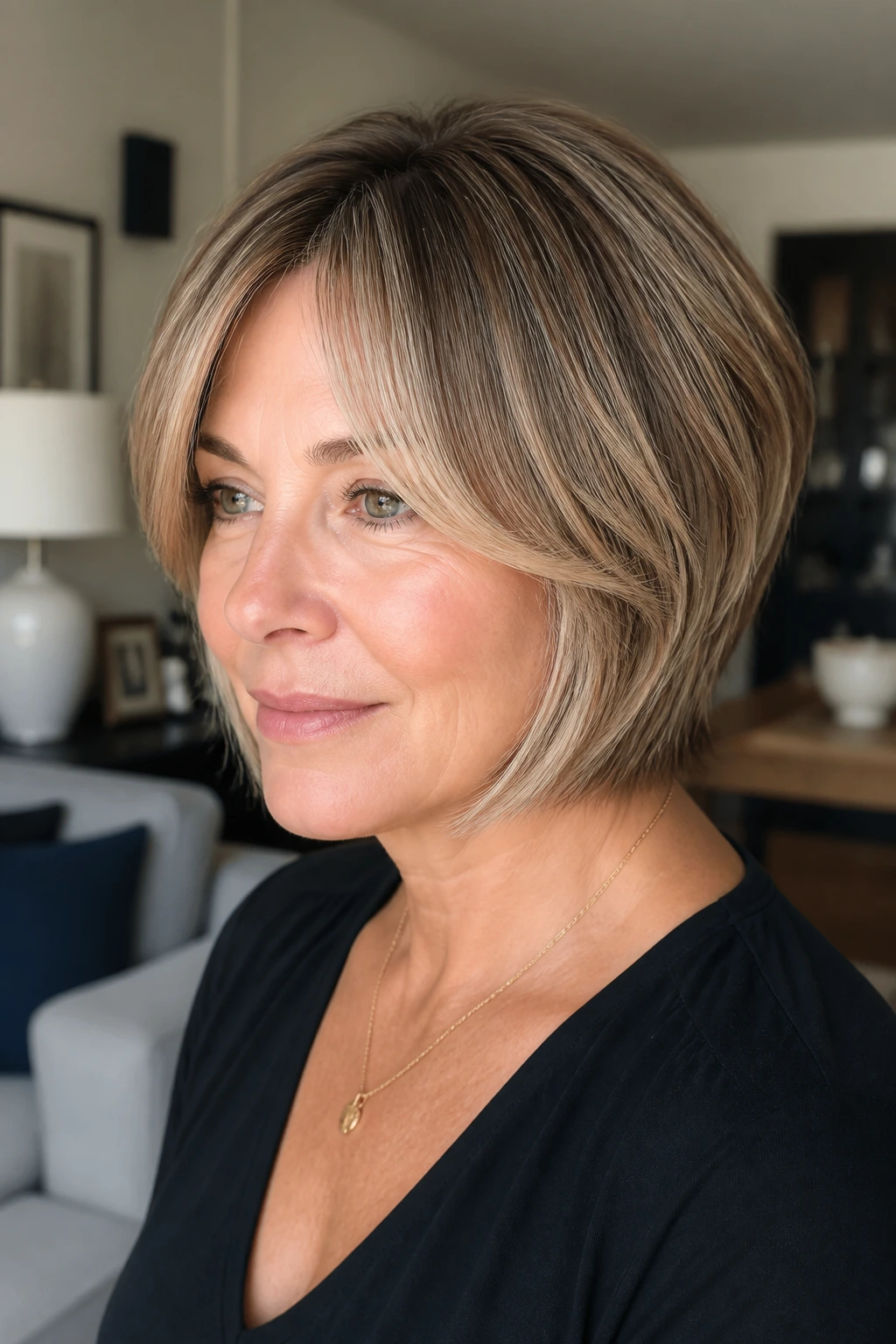
A layered bob can easily flatten a round face if the front is too blunt. Add a split curtain fringe, though, and the whole thing gets more interesting. The fringe opens the center, the layers stop the bob from sitting as one solid block, and the jawline gets some breathing room.
This cut is especially good if you want shorter hair but do not want the face to look wider. The front pieces should connect to the bob’s outer layers rather than stop abruptly at the cheek. That connection is what gives the haircut its vertical line.
Best Fit Notes
- Works well around chin to jaw length.
- Needs enough layering to avoid a helmet shape.
- Better with a side bend than a dead-straight center part.
- Looks strongest when the fringe is soft, not razor-short.
It’s a tidy look, but not severe. That’s the sweet spot.
25. French-Inspired Curtain Bangs
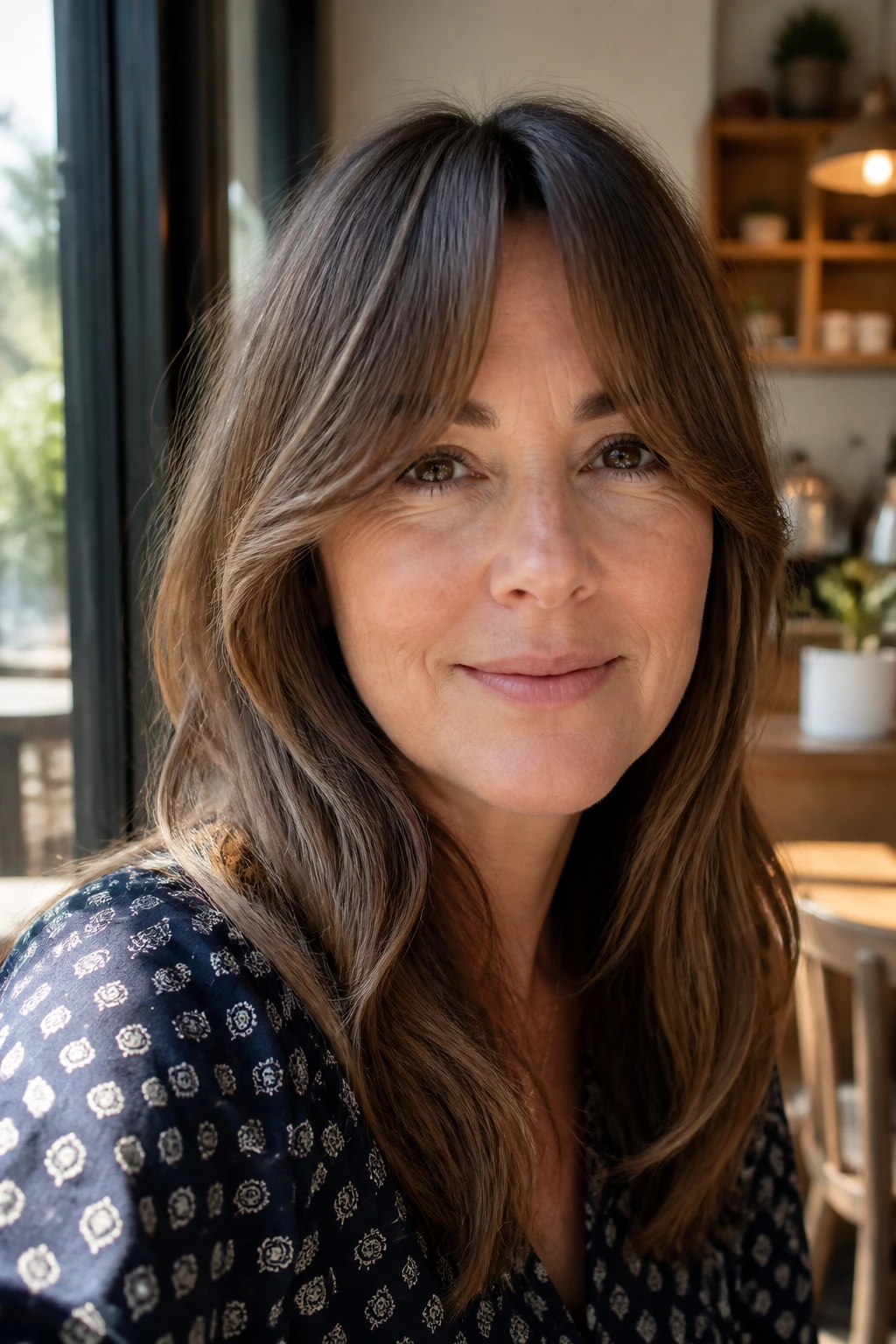
People use “French” to mean a lot of things they can’t quite define. Here, it usually means a fringe that looks lightly broken up, a little imperfect, and not over-polished. On a round face, that looseness keeps the forehead from feeling boxed in.
The pieces are usually longer through the sides and a touch shorter in the center, but the ends are soft enough that the cut never reads as stiff. I like this one for hair that has a bit of bend already. It gives the style that easy swing people chase after spending forty minutes trying not to look like they spent forty minutes.
The risk is overdoing the texture. If you piece it out too hard, the front looks stringy. Keep the shape gentle and let the cut do the work.
26. Highlighted Face-Framing Curtains
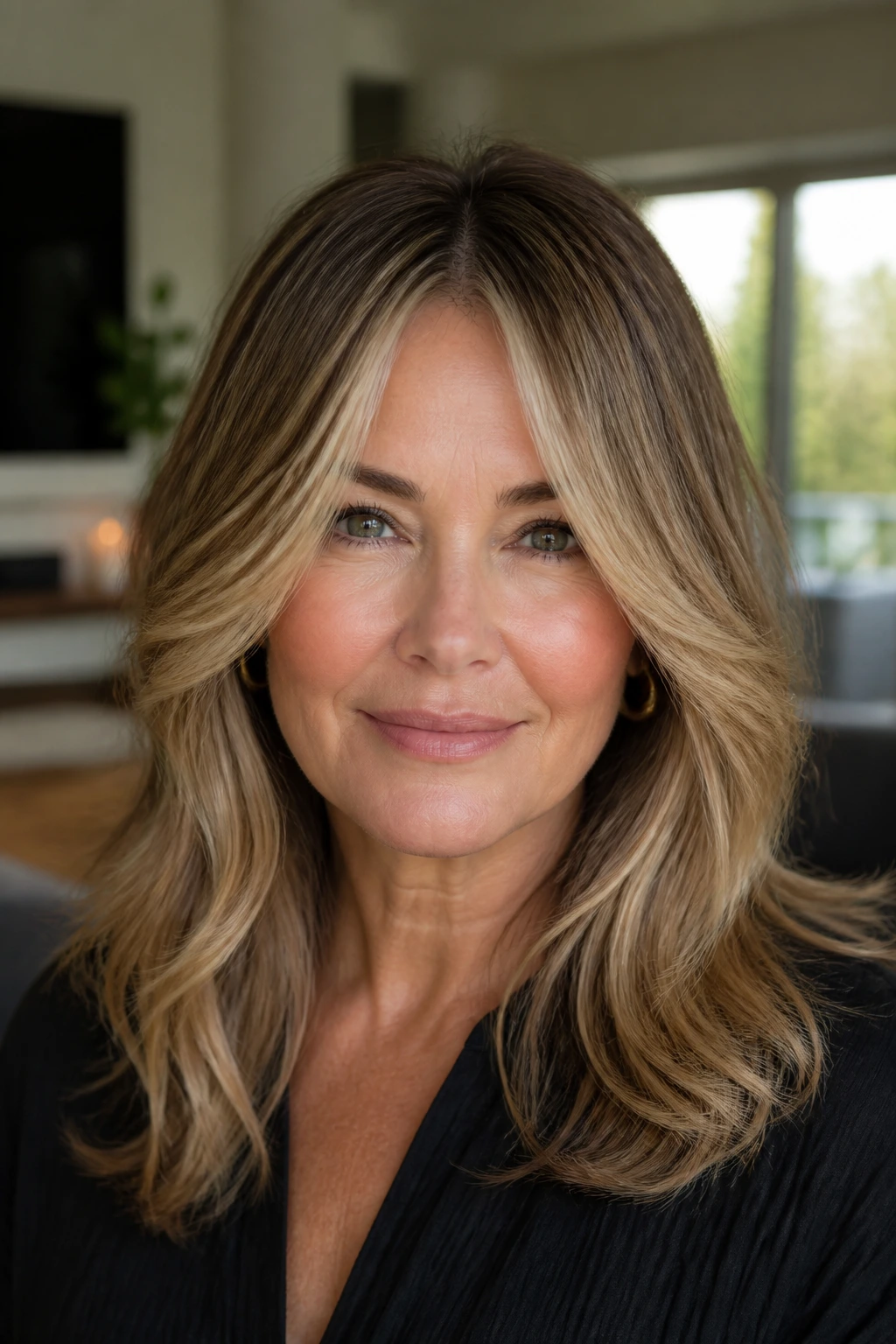
Color Can Shape the Fringe
A bright piece around the face changes how the eye reads the cut. On a round face, highlights placed through the curtain pieces can create a vertical stripe of light that narrows the front visually without making the haircut itself any harsher.
This works especially well if your base color is darker and your front pieces need help standing out. The lighter strands show off the bend, and the curtain shape looks more deliberate when there’s contrast. The trick is to place the color where the fringe opens—at the cheekbone, not just at the roots.
What Makes It Work
- Keep lighter pieces through the front third only.
- Avoid over-lightening the shortest bang pieces.
- Pair the color with a soft layer or two around the jaw.
- If you wear glasses, keep the brightest pieces outside the frame line.
I like this one because it adds shape without extra length. Color can do some of the heavy lifting.
27. Long Sweeping Side Curtains
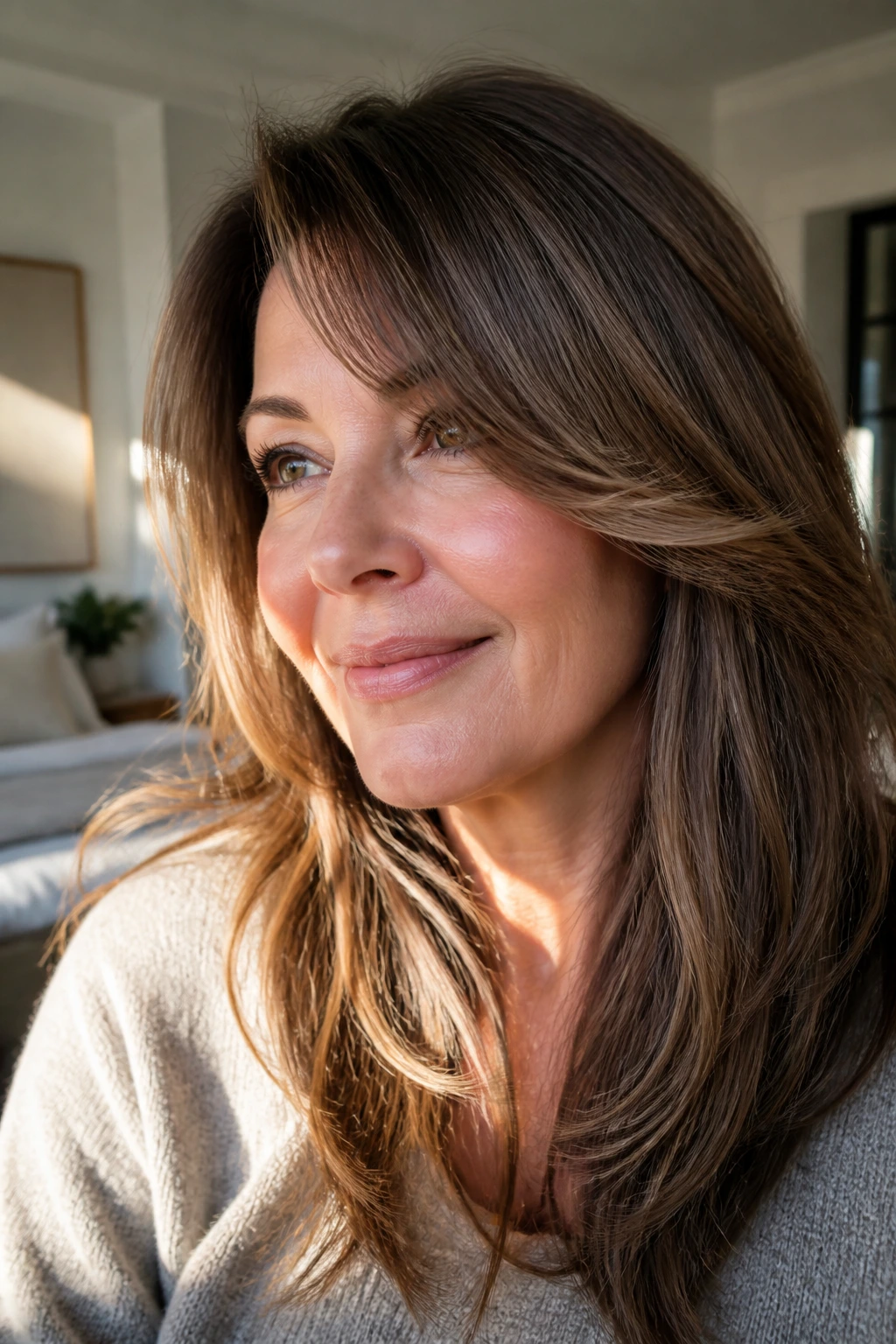
If you’re nervous about bangs, start here. The center is long enough to feel safe, the sides sweep with enough length to blend into the haircut, and the whole thing can be tucked, bent, or worn loose depending on the day. On a round face, that long diagonal line gives you the softest version of face-framing shape.
This is also the easiest curtain bang to live with when your hair has a mind of its own. It can take a rough blow-dry, a quick twist, or even a simple air-dry and still look like part of the haircut. That matters. A cut that needs perfect behavior from your hair is a bad haircut in disguise.
I reach for this version when someone wants the effect of bangs without the daily maintenance. It’s not a no-commitment look, but it’s close enough that most people stop worrying after the first week.
Why Curtain Bangs Need Length and Lift on Round Faces
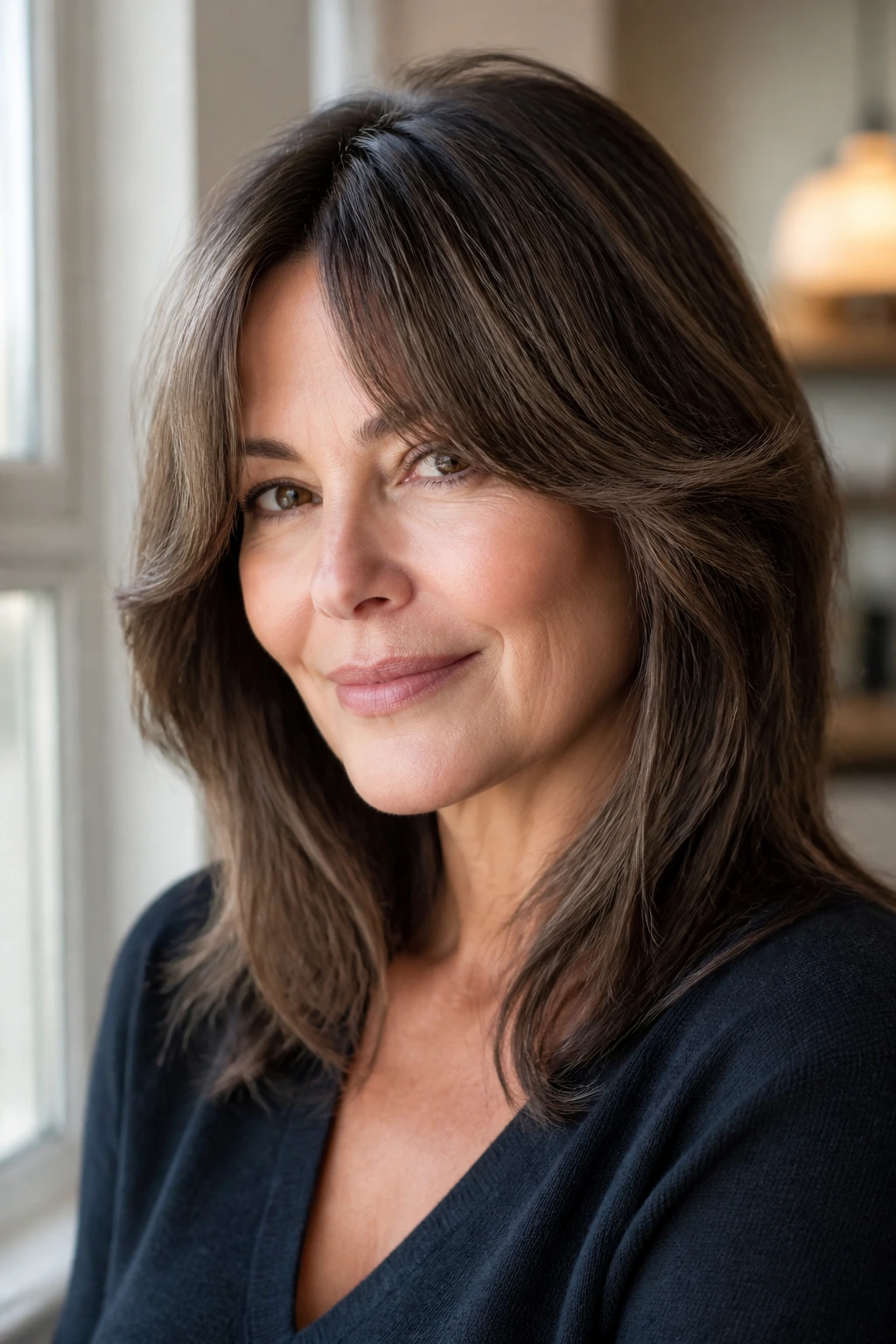
Round faces have soft curves in the cheeks and jaw, and that softness is exactly why the fringe has to be cut with a little intention. A curtain bang that sits too high or too wide can widen the face right where you do not want it. A good one keeps the center open, drops the sides lower, and creates a subtle diagonal line that guides the eye down instead of across.
That’s also why the over-40 part matters. Hair often changes texture at the front first. You may find the fringe wants to separate more, lie flatter, or puff up faster than the rest of the haircut. A curtain shape handles those changes better than a straight-across bang because it doesn’t need perfect symmetry to look right.
I also think the movement matters more than people admit. Round faces usually look best when the front has some bend near the cheekbone and some release near the jaw. If the bang stops right at the widest point of the face, it can act like an underline. If it goes past that point, it starts acting like a frame. That difference is small on paper. It’s huge in the mirror.
What to Tell Your Stylist Before the Scissors Come Out
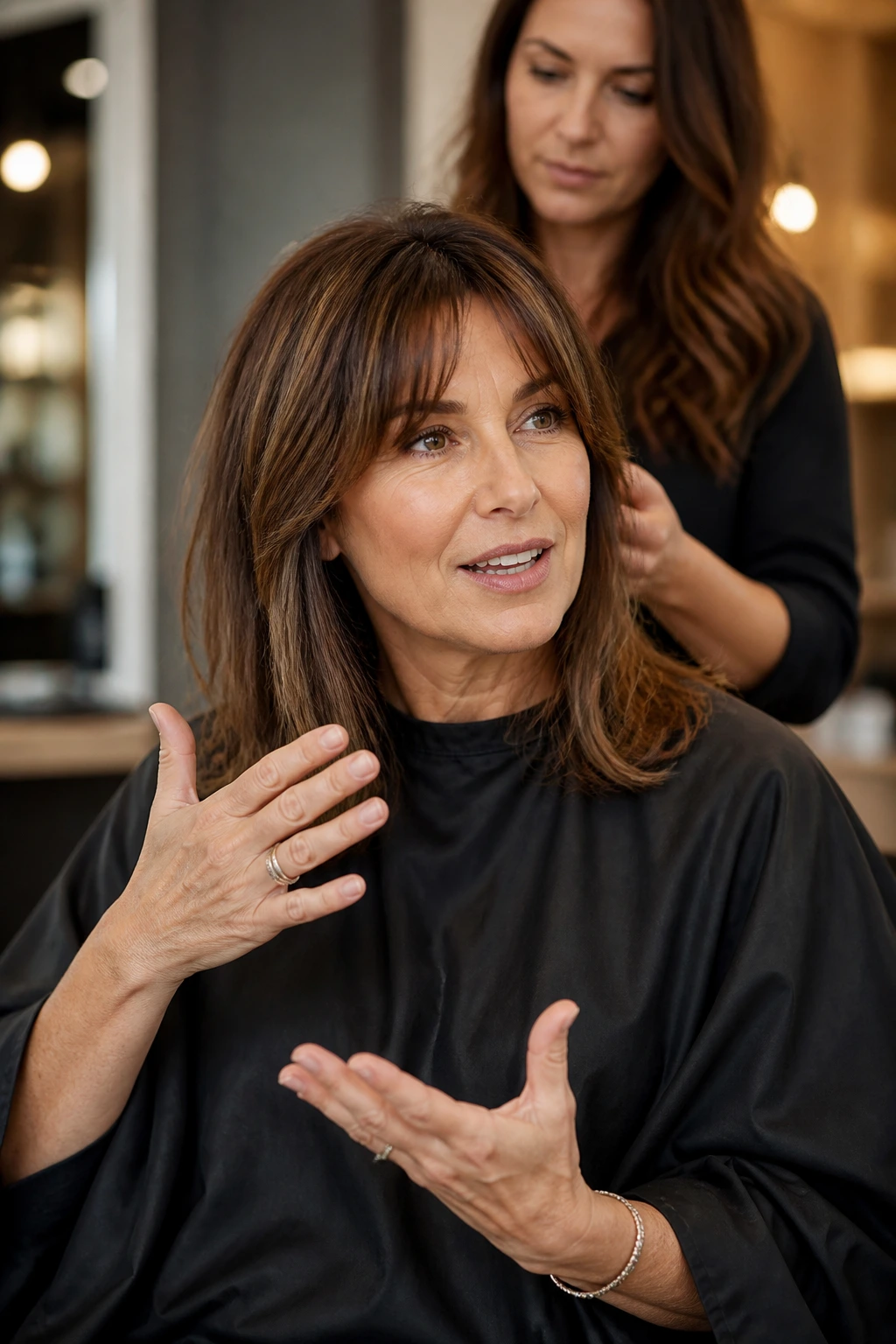
Bring more than one photo, and bring photos that show the front of the hair in motion, not only the front-on salon pose. A good stylist can read density, growth pattern, and length, but they cannot guess whether you wear your hair air-dried, brushed, pinned back, or flat-ironed every morning. Tell them how much time you actually want to spend styling. That answer matters more than the reference picture.
For curtain bangs for round faces over 40, ask for the shortest point to land around the outer brow, iris, or cheekbone depending on how soft you want the opening to be. Then ask where the sides should blend—lip, chin, or collarbone are all different jobs. If you wear glasses, mention the frame height. If you have a cowlick, say so out loud. Seriously. That one piece of information saves more fringe disasters than any inspirational photo ever will.
The Two Questions That Save Bad Haircuts
- “Where will this sit when it air-dries?”
- “How long will this still look good when it grows out half an inch?”
If the stylist answers with a shrug, keep talking. Ask whether they plan to point-cut, slide-cut, or razor the ends. Ask how much weight they’re leaving in the front. A round face does not need a bulky curtain. It needs a controlled one. And if you want this to feel like your haircut instead of a borrowed trend, the consultation is where that happens.
How to Style Them So They Bend Instead of Puff
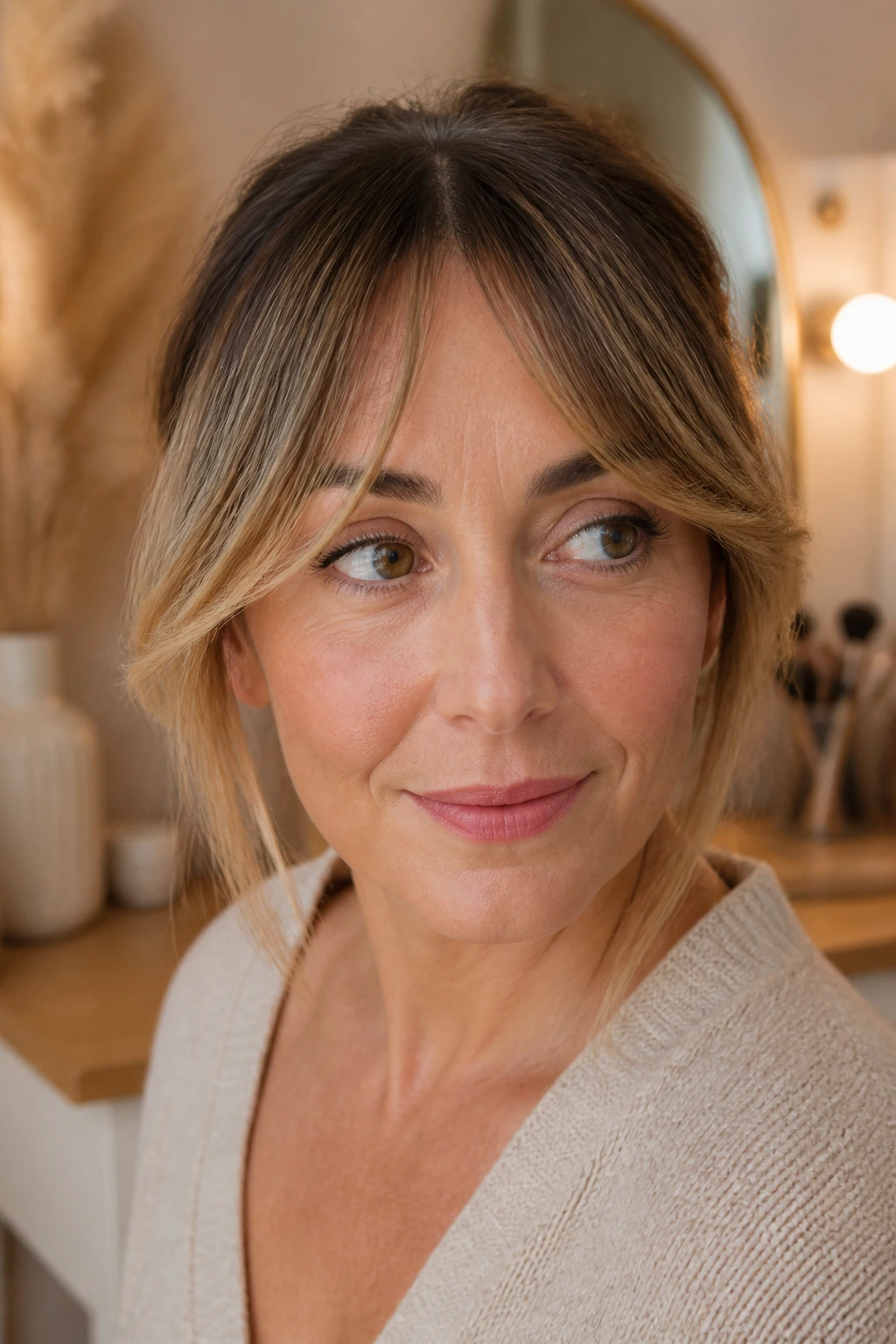
The safest rule is simple: dry the roots first, shape the middle second, and cool the fringe before touching it. If you start with the ends, the roots can dry in the wrong direction and the whole thing will puff out like it’s trying to escape. A small round brush—about 1 to 1.25 inches for most people—lets you bend the front without overcurling it.
I like to split the fringe in two, dry each side away from the face, and then roll the ends under just slightly. You do not need a perfect barrel curl. You need a soft arc. After that, clip the bangs in place for two or three minutes while they cool. That cooling step is boring, but it matters. Hair remembers shape when it cools, not when it’s hot.
A Good Daily Routine
- Mist the fringe lightly with water if it has gone flat.
- Use heat protectant every time you redo the front.
- Aim the dryer nozzle downward at the root so the bang doesn’t frizz up.
- Finish with a touch of dry shampoo at the roots if the front gets oily fast.
The less product you use, the better this usually looks. Heavy cream can make curtain bangs separate into greasy ropes, especially on finer hair. If you need hold, use a light spray, not a thick paste.
Common Mistakes That Make the Fringe Wider Instead of Slimmer
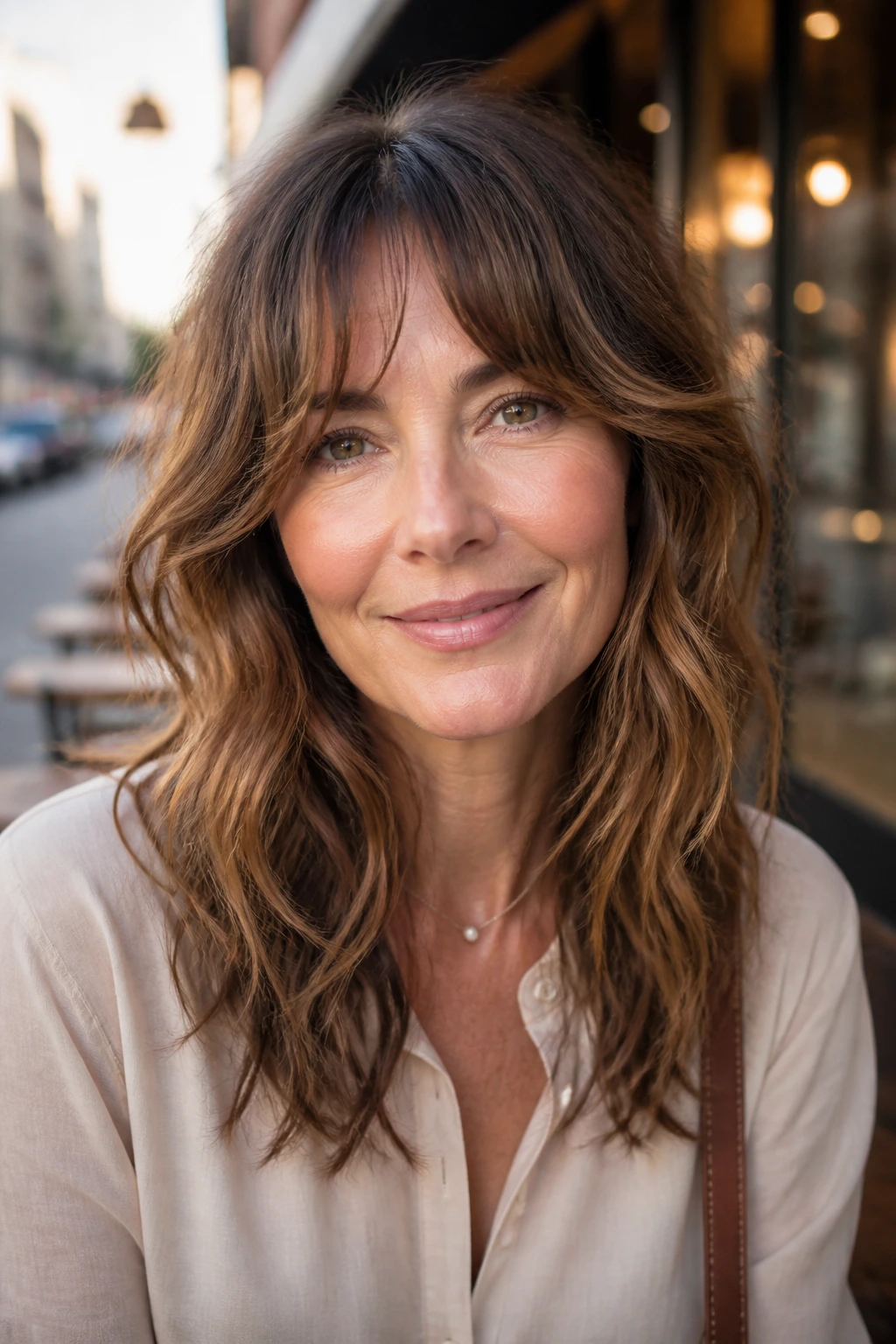
The first mistake is cutting the center too short. On a round face, that can expose too much forehead and make the cheeks feel wider by comparison. The fix is simple: leave the shortest piece long enough to skim the brow or sit just above it, then let the sides do the shaping.
The second mistake is thinning the fringe until it looks delicate in the chair and weak by noon. Thin bangs sound flattering, but if they lose density, they stop framing and start floating. That makes the face look bigger, not smaller. Better to keep some body and use point-cutting for softness.
Third, people ignore their part. If your hair naturally splits one way and you force a dead-center part, the fringe may separate in weird places or stick up at the crown. Work with the growth pattern first, then train it with clips if needed.
Fourth, heavy products. Oil, balm, and thick cream all weigh the front down and cause pieces to cling together. A fringe that clumps on a round face usually looks narrower in the wrong way—more limp than slim. Use light hold and less of it.
Variations and Alternatives to Try

The Glasses Gap: This version leaves a small clear space above the frame line so the fringe doesn’t sit on top of your lenses. It’s useful if you wear glasses all day and hate constant nudging.
The Air-Dry Curve: Built for wavy or curly hair, this one keeps the center longer and the sides softly broken up. It looks best when the natural texture is doing most of the work, not a round brush.
The Silver-Skimming Sweep: A nice option if you’re transitioning to gray or embracing it fully. The fringe stays dense enough to show the color contrast, and the front layers help the silver look intentional instead of sparse.
The Grow-Out Buffer: This is the safest version if you’re not ready for a strict trim schedule. The pieces start a little longer and are cut so they still frame the face after a month or two.
The Polished Lob Pairing: If you like shoulder-length hair, pair the curtain bang with a lob that hits around the collarbone. It keeps the face open and gives the fringe somewhere clean to land.
Tools That Make the Shape Easier
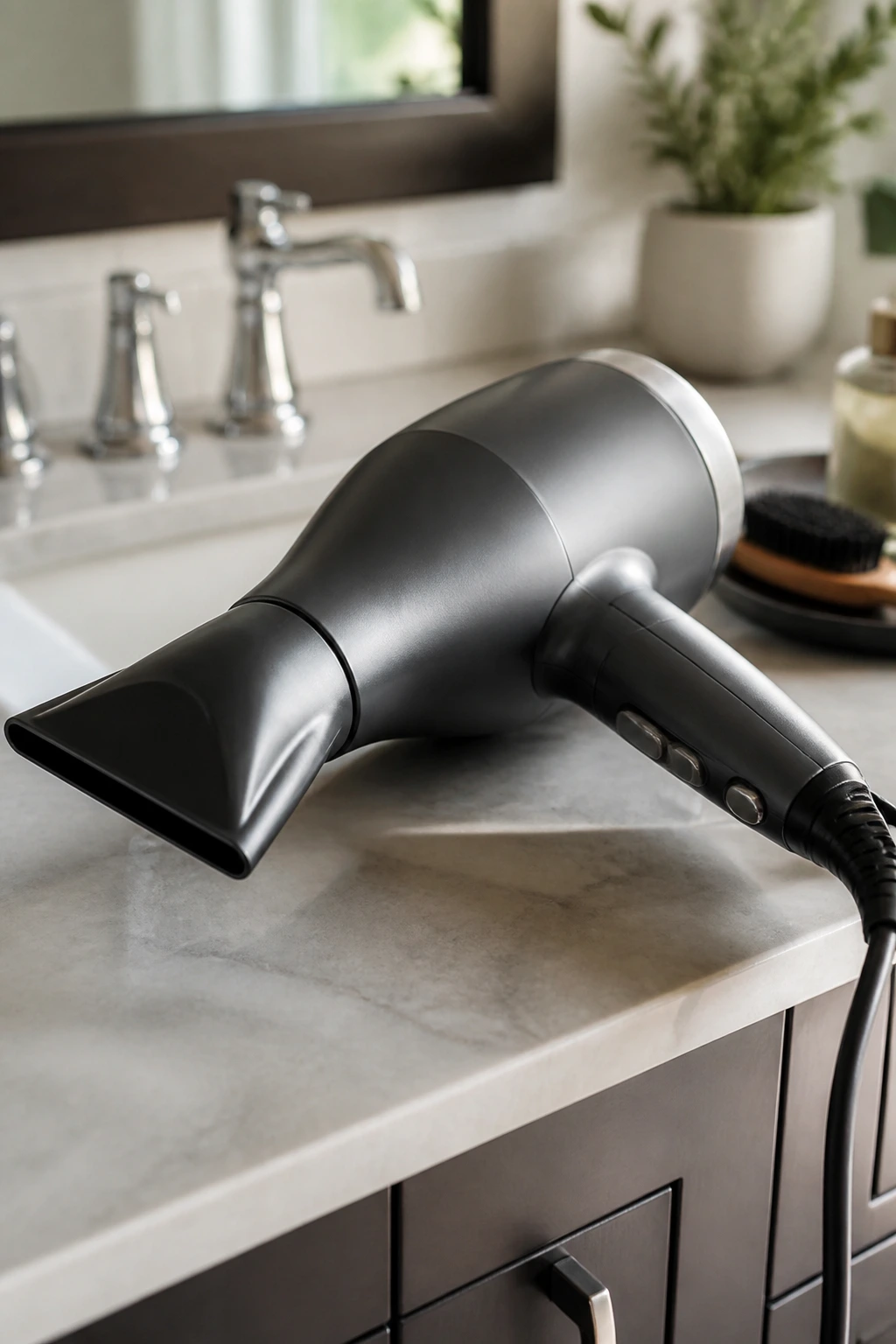
- Blow dryer with a concentrator nozzle: Keeps the airflow narrow so the fringe bends where you want it.
- Small round brush, 1 to 1.25 inches: Best for creating a soft curve without making the bangs too curly.
- Duckbill or sectioning clips: Hold the rest of the hair out of the way while you dry the front.
- Heat protectant spray: Use it on damp bangs before any blow-drying.
- Lightweight mousse or root spray: Helpful if the front falls flat quickly.
- Dry shampoo: Great for fringe that gets oily at the forehead line.
- Mini flat iron: Handy for stubborn cowlicks or a quick bend at the ends.
- Velcro roller: Useful if you want the fringe to cool into a smoother shape.
Keeping Curtain Bangs in Shape Between Salon Visits
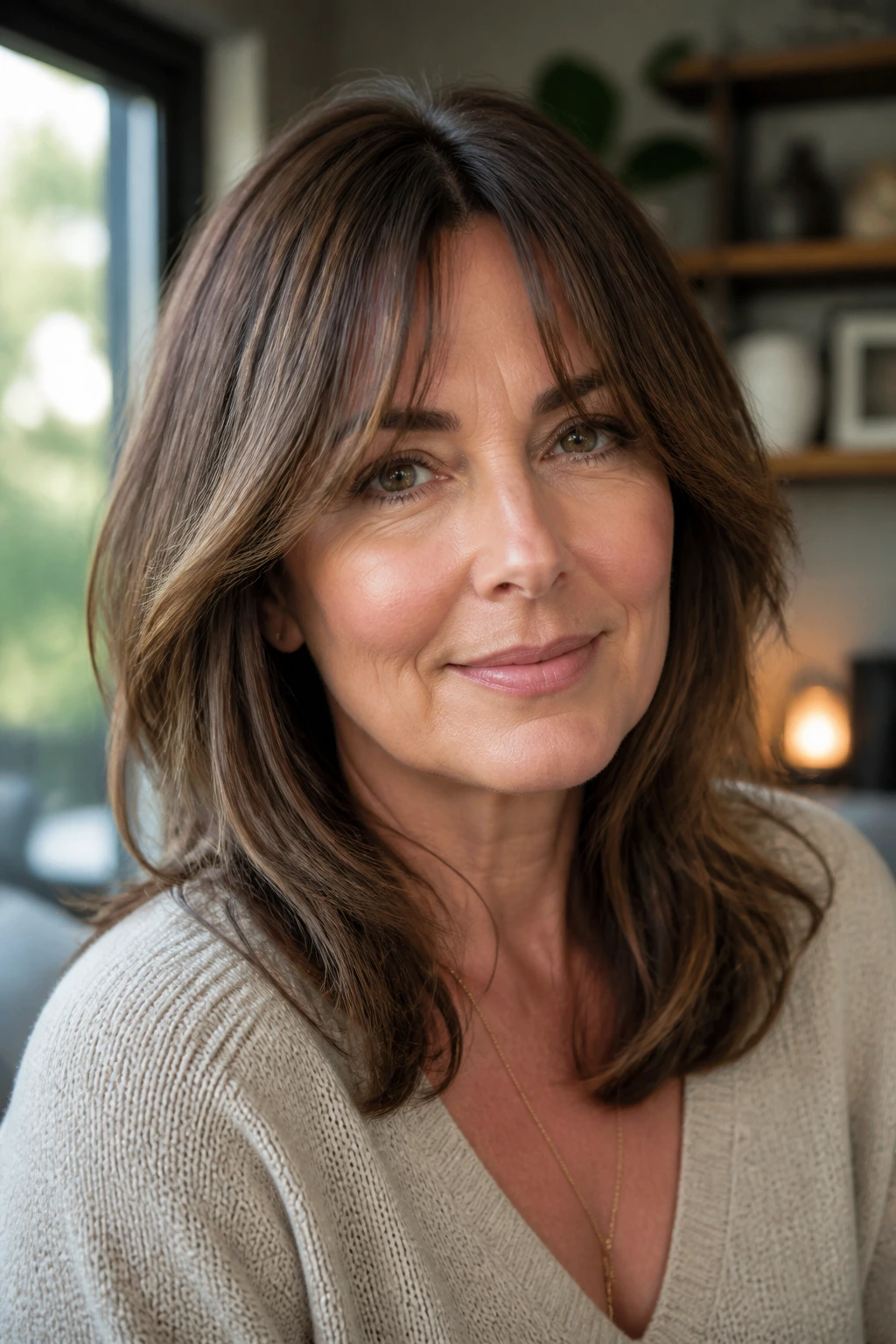
Curtain bangs ask for more frequent front trims than the rest of the haircut, but not every version needs the same schedule. If you like a sharper shape, plan on a fringe dusting every 3 to 4 weeks. If you’re wearing a longer, softer version, 6 weeks is usually fine. The rest of the cut can often stretch to 8 to 12 weeks depending on your length and texture.
For daily upkeep, wash or refresh only the front if it gets oily fast. A lot of people overwrite the whole head just because the bangs look tired. That’s overkill. A damp cloth, a spritz bottle, and a quick blow-dry on the front area can buy you another day or two. If you sleep badly on them, clip the fringe to the side or set it on a large Velcro roller before bed. That sounds fussy until you realize it takes less time than redoing the whole front in the morning.
Humid weather and active days call for light product, not more product. Dry shampoo at the roots, a tiny bit of smoothing cream on the ends, and a cool blast from the dryer are usually enough. If the fringe starts to split, don’t drown it in oil. Reset the roots first. The roots are where the shape lives.
Frequently Asked Questions
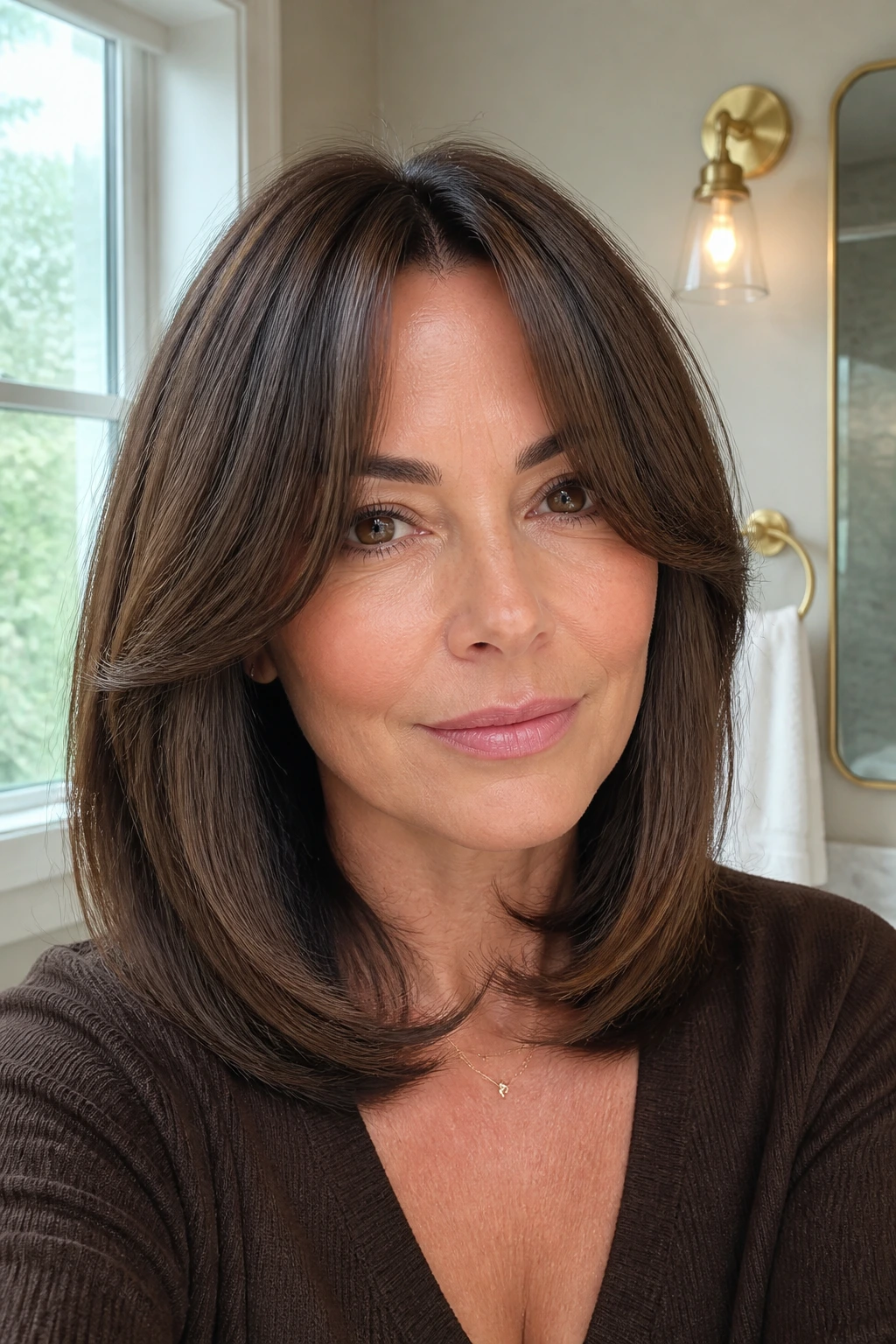
Will curtain bangs make my round face look wider?
Not if they’re cut with enough length and taper. The fringe gets into trouble when it sits across the broadest part of the cheeks or is cut too short in the center.
How short should curtain bangs be on a round face over 40?
For most people, the shortest point works best around the brow, outer iris, or cheekbone. Shorter than that can feel choppy unless the hairline and face shape are very forgiving.
Do curtain bangs work with glasses?
Yes, but the bang needs to clear the frame line. Ask for the shortest point to sit above the glasses, and keep the side pieces long enough to fall outside the frames.
Can fine hair wear curtain bangs?
Yes, but keep the fringe full enough to hold its shape. Too much thinning makes the front look sparse, which is the opposite of what you want on a round face.
What if my hair is curly or wavy?
Cut it with shrinkage in mind and leave the center longer than you think. Curly curtain bangs work best when the shape is built around the curl pattern instead of against it.
How often do curtain bangs need trimming?
Shorter versions may need a trim every 3 to 4 weeks. Longer, grow-out-friendly versions can usually go 6 weeks or more before they start to lose the shape.
What should I do if the bangs split in the middle too much?
Check the root pattern first. A cowlick or natural part may need a little training with clips and a quick blow-dry rather than another haircut.
Can I get curtain bangs if I wear my hair up a lot?
Yes. Longer curtain pieces are actually useful for ponytails and clips because they leave some soft shape around the face instead of disappearing into the updo.
The Fringe That Moves With You
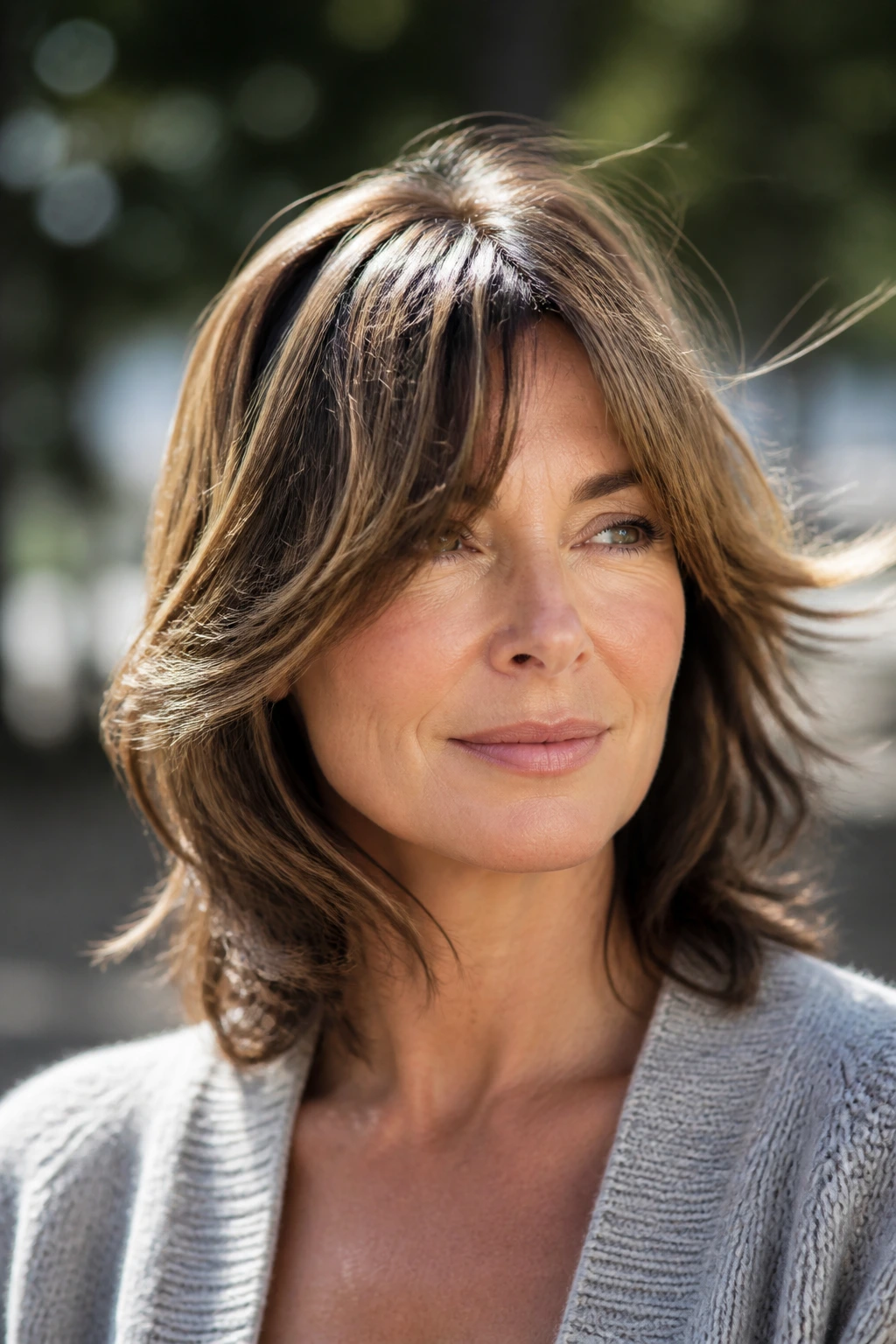
The best curtain bangs for a round face are the ones that keep the eye moving without making the front of the haircut feel heavy or fussy. That usually means a little more length than you expect, a little less thinning than you think you need, and a cut that respects the way your hair actually grows. The goal is not to hide your face. It’s to give it a better line to follow.
If you’re over 40, that line matters even more. Hair changes, faces soften, and the wrong fringe can suddenly feel like extra work. The right one does the opposite. It gives shape back to the front of the haircut, and it does it in a way that still looks good when you leave the salon and live your life.
A good curtain bang should feel like part of your hair, not a project. When it does, you stop thinking about it by lunchtime—which, in my book, is the best sign of all.
