



Curly shag haircuts for shoulder-length hair have a useful kind of attitude. They make curls look intentional even when you air-dry in a hurry, and they keep enough length around the face that the cut feels feminine, edgy, or polished depending on how you style it that day.
Shoulder length is the sweet spot. Go shorter and some curl patterns spring up into a puff you didn’t ask for. Go longer and the shape can sag, especially if your curls are dense or your hair carries weight at the ends. At shoulder length, the shag gets room to move: layers pop, fringe behaves, and the whole cut can bend toward soft, messy, romantic, or sharp without fighting your texture.
The part that gets missed most often is this: a good curly shag is not one haircut. It’s a family of haircuts that all share the same idea—remove weight, keep movement, let the curl pattern do part of the work. The fun is in choosing the version that fits your density, face shape, shrinkage, and tolerance for bangs. Some of these cuts are a little wild. Some are understated. A few are practically civilized. That range is the reason people keep coming back to the shag.
Why This Stack of Curly Shags Earns Its Keep
- Shape without a helmet: Shoulder-length layers take bulk out of the midsection, so thick curls stop sitting like one heavy block.
- Better grow-out: A shag softens as it grows, which means you do not get the brutal shelf line that a blunt cut leaves behind.
- Bang choices matter: Curtain bangs, bottleneck bangs, and short fringe all change the mood fast, even when the length stays the same.
- Works with real curl behavior: Shrinkage, spring, and frizz all show up in the final shape instead of being treated like mistakes.
- Style time drops: A curl-friendly shag usually needs less brush work and less precision, which is a gift on busy mornings.
- The collarbone zone is flattering: Shoulder-length curls skim the neck and shoulders, so the cut reads as light even when the hair itself is dense.
1. Curtain-Bang Curly Shag
Curtain bangs and curls get along better than most people expect. The split fringe opens at the center, bends around the cheekbones, and lets the rest of the shag sit at shoulder length without swallowing the face. On looser curls, it feels airy. On tighter ones, it creates a soft frame instead of a hard line.
Why It Works
The curtain shape gives the top layers a job to do. Instead of hanging flat, the front pieces sweep back and out, which keeps the haircut from looking bottom-heavy. If your curls shrink a lot, this version is forgiving because the shortest pieces still blend into the rest of the cut.
Best For
- Round or oval faces
- 2C to 3B curl patterns
- Hair that needs face-framing without losing much length
Pro tip: Ask for the bangs to be cut dry, curl by curl, so the stylist can see where each one wants to land once it springs up.
2. Rounded Cloud Shag
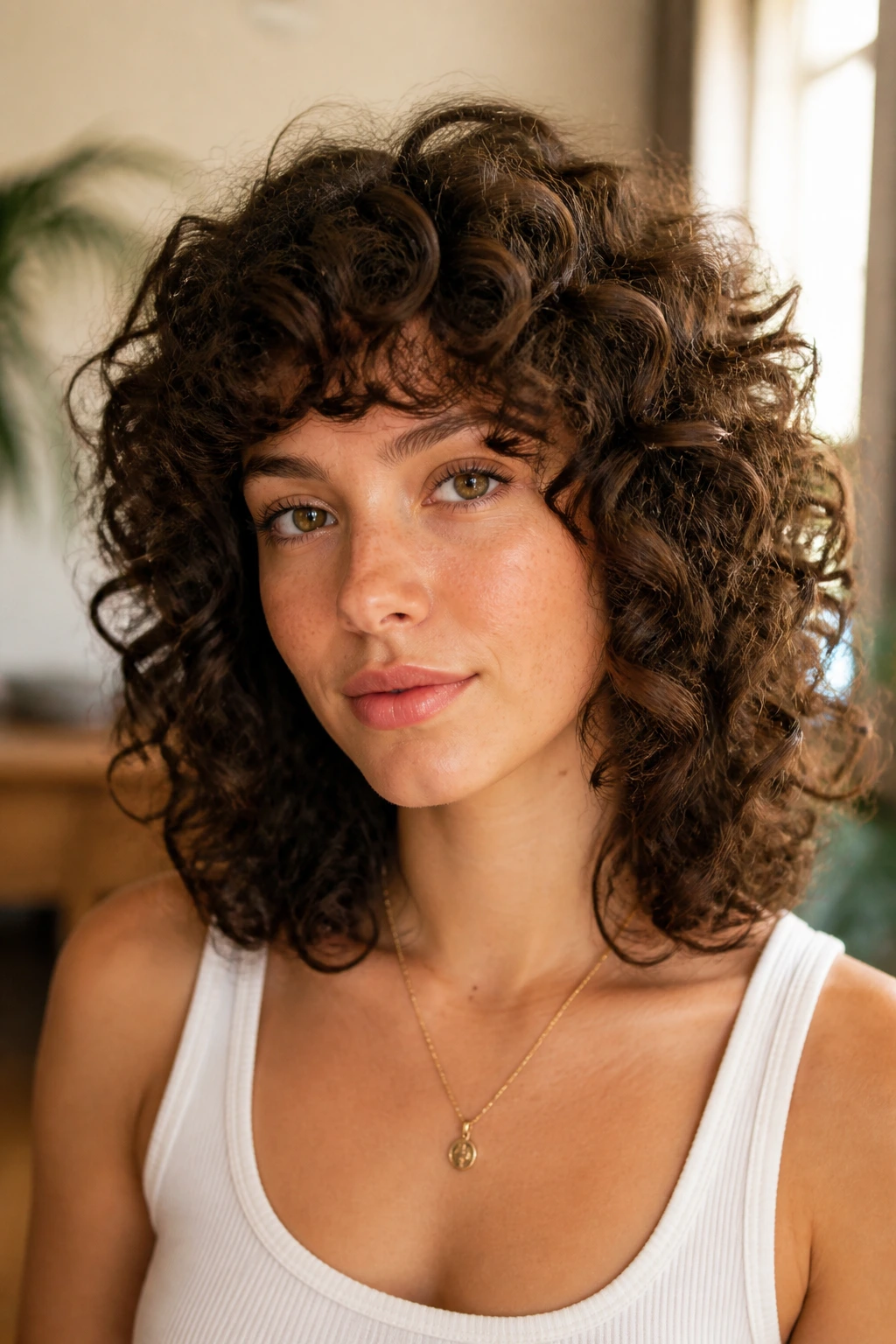
This is the shag for curls that want to be big without looking chopped. The silhouette stays rounded through the crown and temples, so the haircut has that soft halo effect instead of a triangular outline. It’s one of my favorites for dense curls at shoulder length because it makes volume look deliberate.
The trick is balance. Too many short layers at the top, and the shape puffs out like a mushroom. Too few, and the weight drags the whole cut downward. The rounded cloud shag sits in the middle and lets the hair move as a unit.
What Makes It Different
The side layers are kept just long enough to curve inward. That keeps the outline plush, not bulky. If your curls are coarse, this version can handle the texture without turning into a stack of separated ends.
3. Bottleneck Fringe Curly Shag
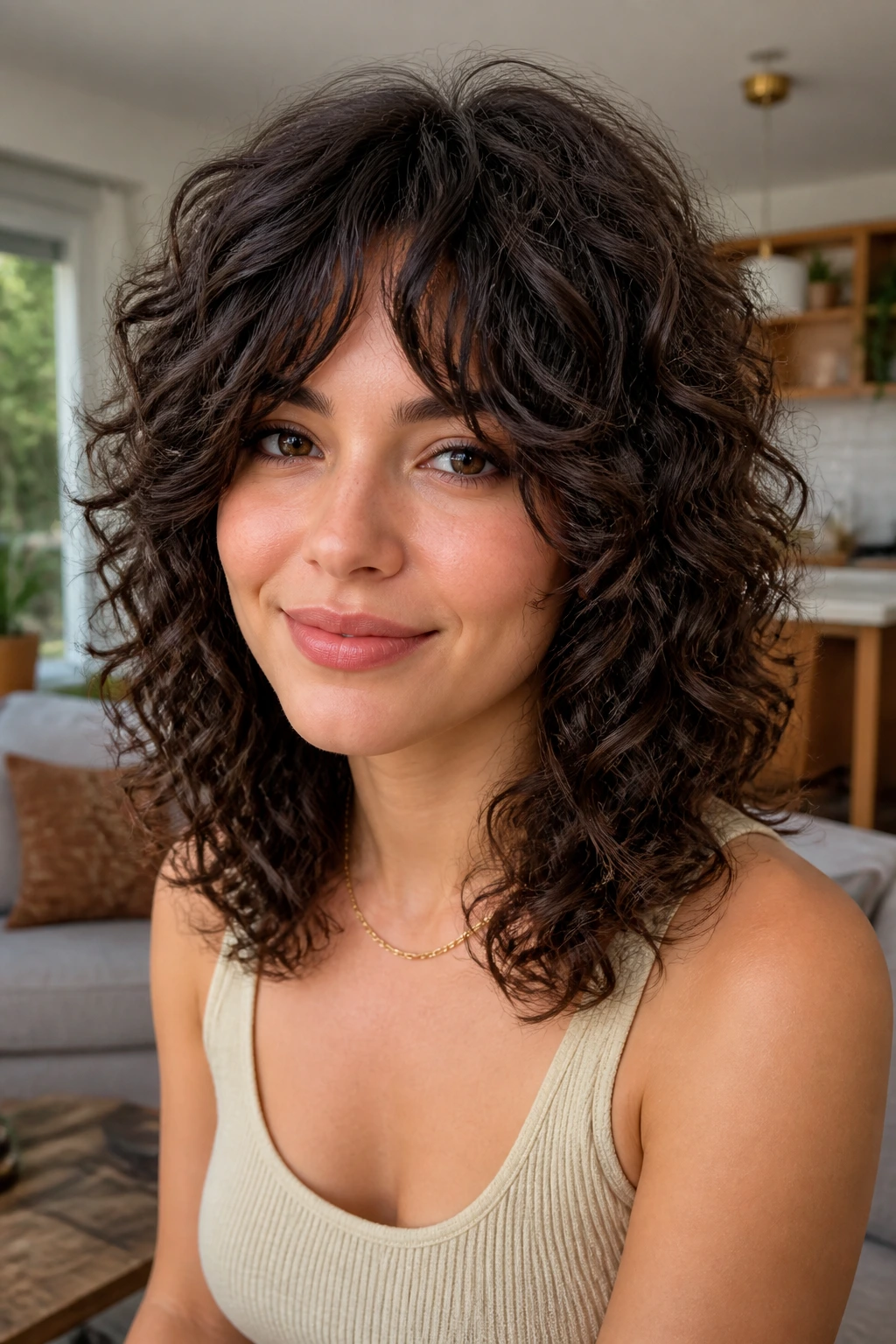
Bottleneck bangs are the cool cousin of curtain bangs. They start narrower at the center, then widen as they skim the cheekbones, which gives shoulder-length curls a sharper face frame without going full rock poster. The result feels a little more styled than a standard shag.
Why does this cut work so well? Because the fringe controls the front of the haircut while the layers take care of the rest. You get structure near the eyes and movement everywhere else. That’s a smart trade on curly hair, where too much frontal width can blur the face.
How to Style It
- Diffuse the fringe first so it doesn’t get flattened by the rest of the drying process.
- Use a dime-sized amount of gel on the front pieces.
- Scrunch upward, then leave the fringe alone until it sets.
4. Wolfy Shoulder-Length Shag
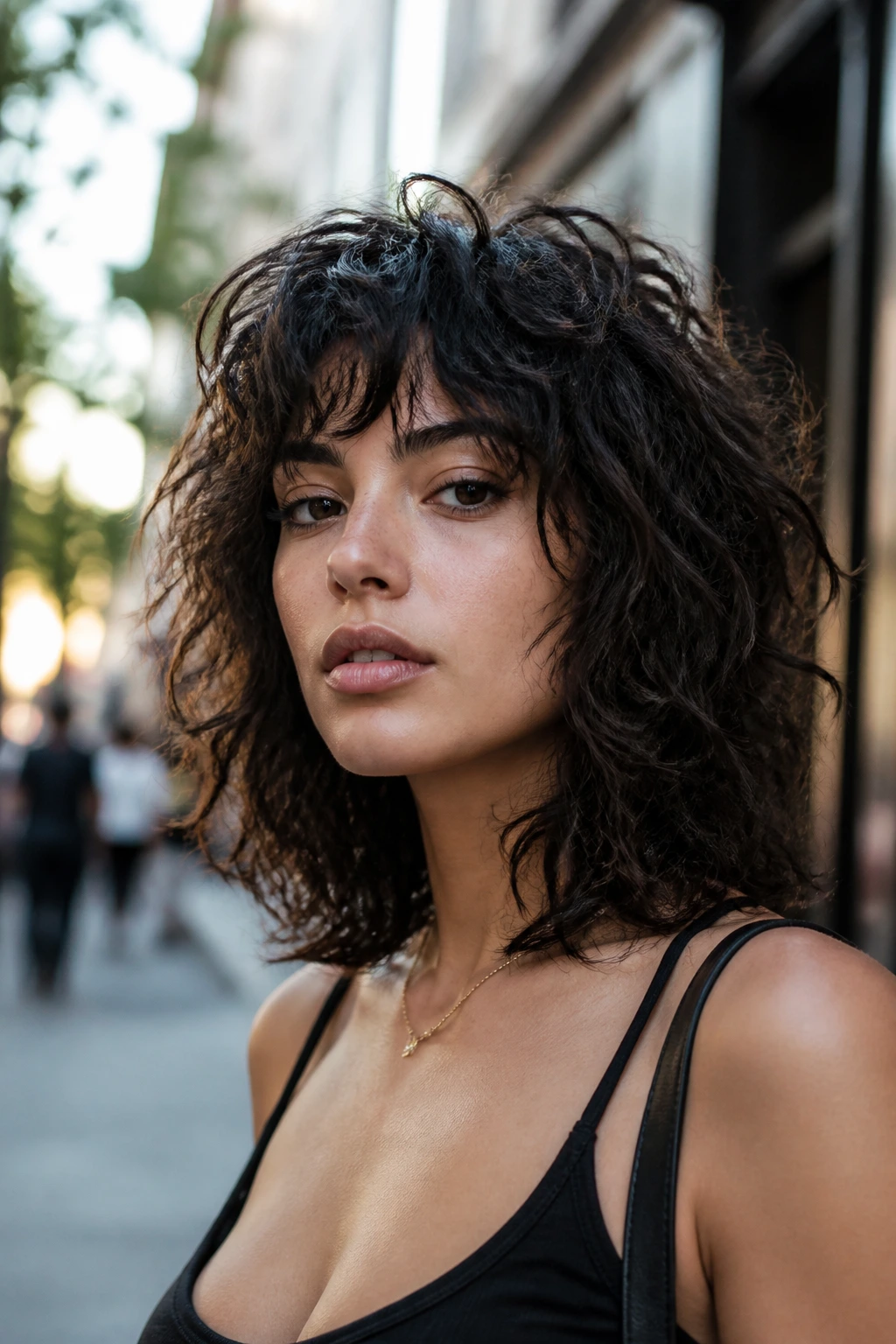
A wolfy shag sits closer to the wild side of the family. The crown is a little shorter, the layers are more obvious, and the ends feel piecey instead of soft. At shoulder length, it lands in that fun middle ground where you get edge without the maintenance headache of a short wolf cut.
I like this version on curls that already have a bit of attitude. The cut leans into volume at the top and around the crown, then loosens toward the shoulders. If your hair tends to sit flat at the roots, this one gives it a real lift.
The warning is simple: keep the layers connected. If the top is too short and the bottom too long, the shape breaks apart and the cut looks accidental. A good wolfy shag still has a plan.
5. Collarbone Flip Shag
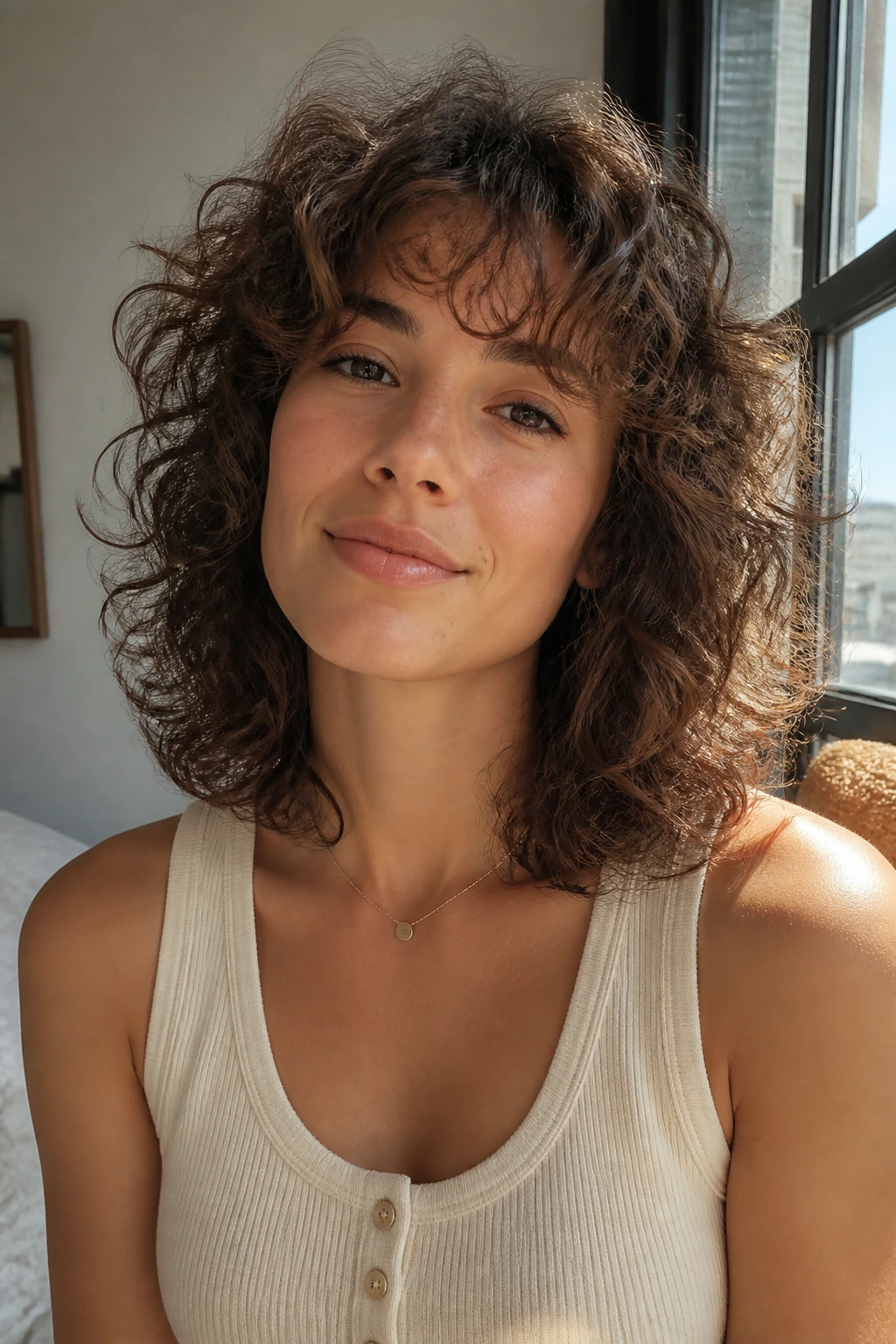
The collarbone flip shag is all about movement at the perimeter. The layers are long enough to flip out at the ends, which gives the haircut a lighter, more playful shape. Shoulder-length curls look especially good here because the ends can hit the collarbone and bounce away from the neck.
This cut suits people who want a shag without a heavy fringe. The front can stay open, with the face frame starting around the cheekbone or jaw, then the rest of the cut gets its personality from the flipped ends. It’s less dramatic than a wolf shag and easier to grow out.
When I see this cut at its best, the ends don’t all curl in the same direction. They kick out, turn under, and catch light in different places. That unevenness is the charm.
6. Razor-Layer Shag for Heavy Hair
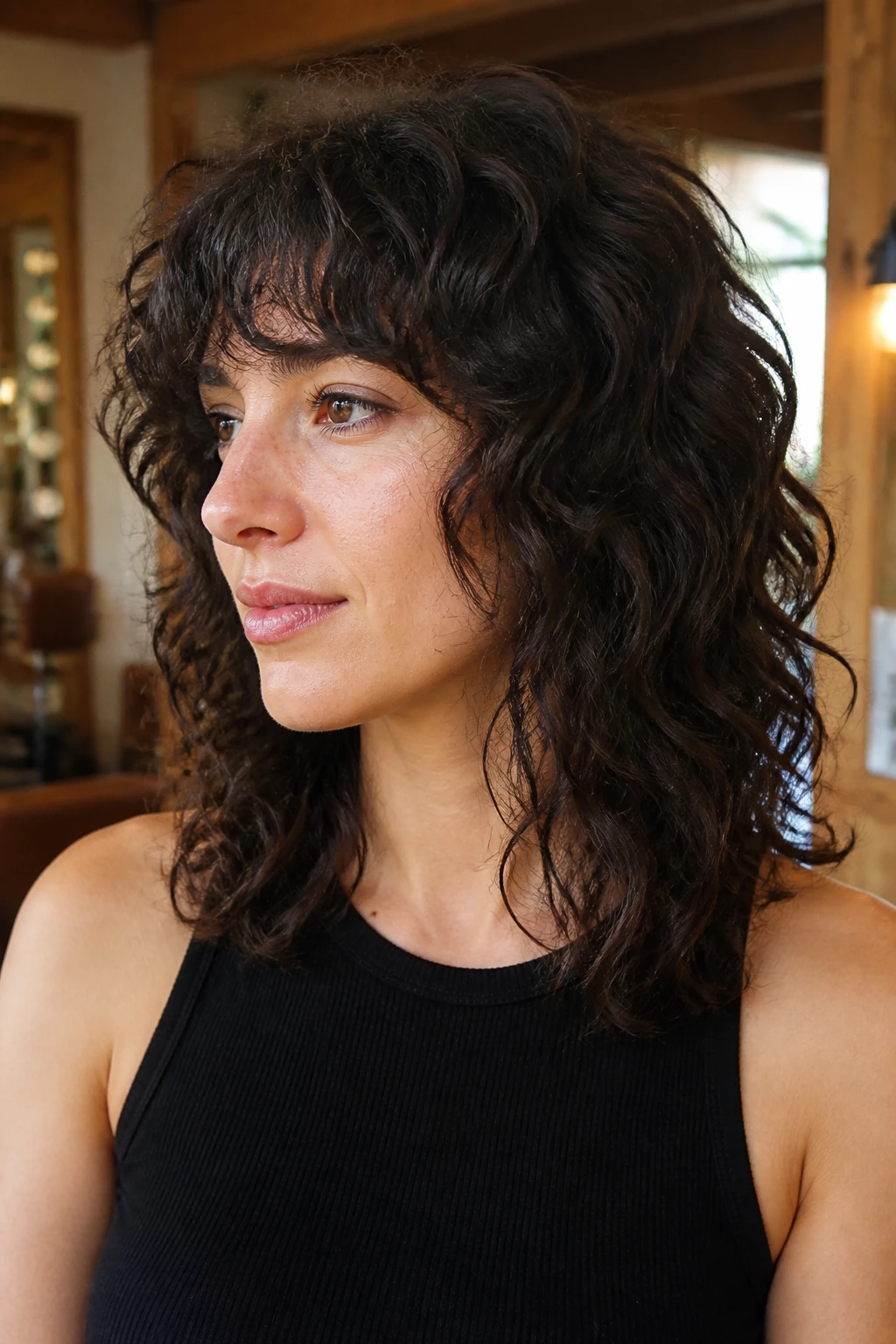
Razor layering changes the whole mood of a shag. Instead of blunt, square ends, you get wispy edges that collapse more softly into the curl pattern. For thick hair at shoulder length, that means less bulk and more air between the curls.
Why It Beats a Heavy Blunt Cut
A blunt shoulder-length cut can turn curly hair into a shelf. Razor layers break up that shape and let the curl clumps separate naturally. The cut feels lighter, but it also needs a stylist who knows where to stop—too much razor work and the ends can fray.
Best Move
Ask for internal weight removal, not just shorter pieces everywhere. You want movement, not chaos.
7. Side-Part Curly Shag

A side part changes the whole personality of a curly shag. The volume shifts to one side, the fringe falls with a little more drama, and shoulder-length hair gets a cleaner line around the face. If your curls tend to puff symmetrically and you want a little asymmetry, this is the easiest place to start.
The side-part version is especially nice for people who wear glasses or have strong brows. It opens one side of the face and lets the other side carry some visual weight. That keeps the haircut from reading too centered or too static.
Style-wise, the side part needs root lift at the part line. Clip the roots while the hair dries, or use a diffuser to push the curl pattern up and away from the scalp. Otherwise the part can go flat fast.
8. Micro-Fringe Curly Shag
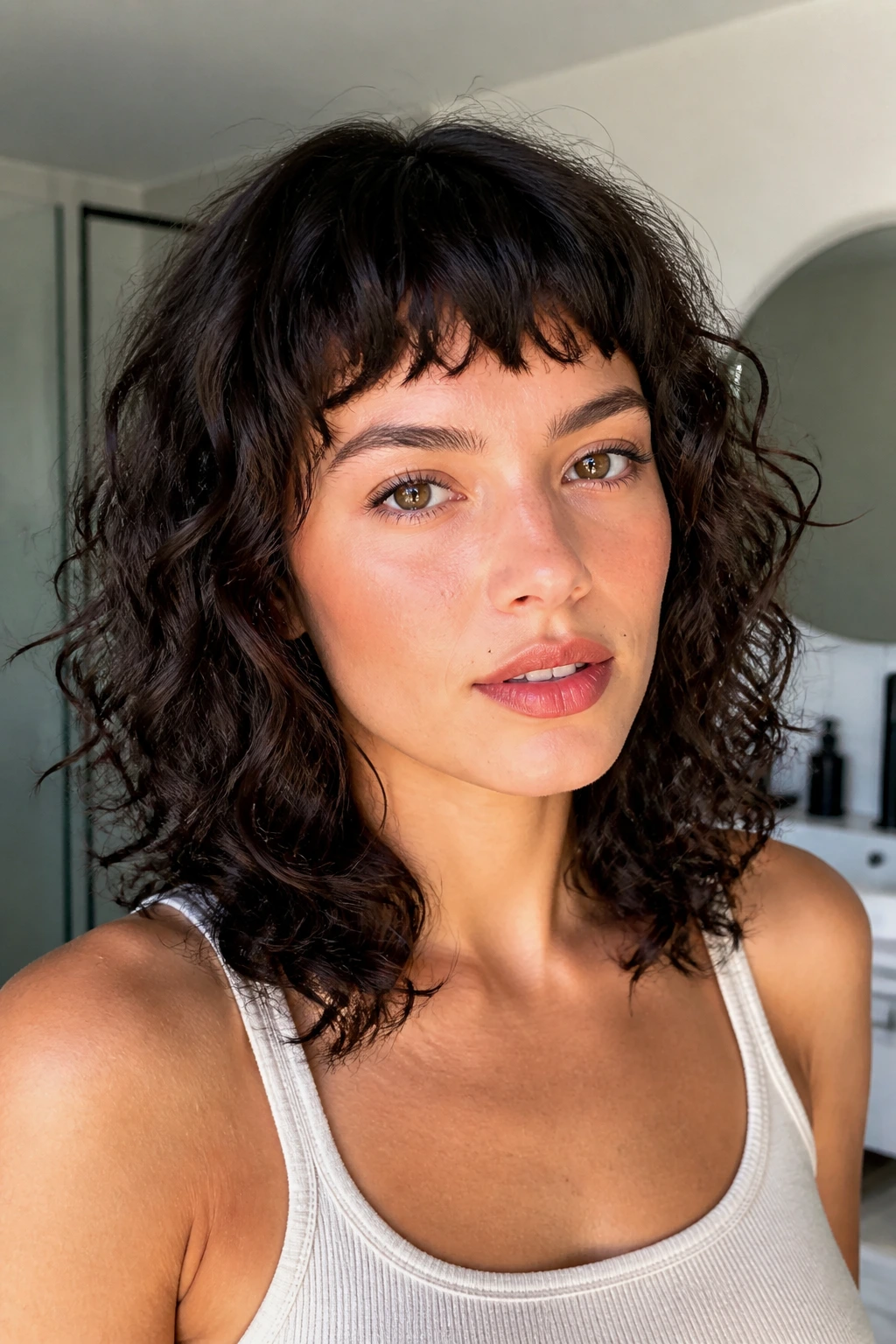
Micro fringe on curly hair is not subtle. That’s the point. It pulls attention straight to the eyes and brow line, then lets the shag do the messy work below. At shoulder length, the shorter fringe keeps the cut from feeling too sweet or too safe.
Is this for everyone? No. But if you want a shag with personality, micro fringe delivers it in one shot. The shoulder-length layers below should stay a little softer so the fringe doesn’t dominate the whole head.
How to Wear It
Keep the front pieces separated and lightly styled with gel or cream. If the bangs merge into the rest of the curl mass, the fringe loses its sharp little punch.
9. Long-Top Mullet Shag
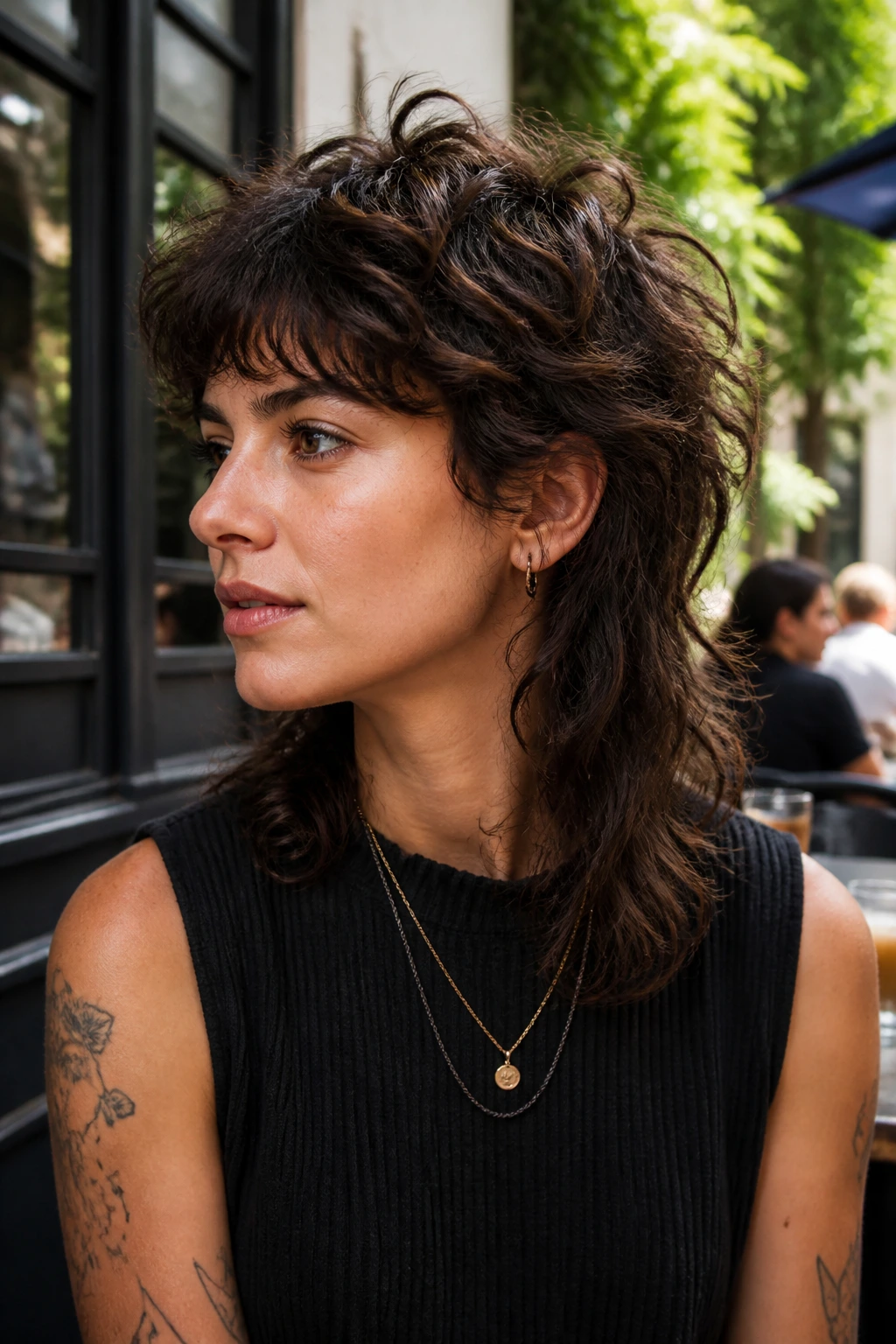
This is the cut for people who want edge but not a full commitment to the wolf cut. The top stays a touch longer than a classic shag, the crown gets lift, and the back drops enough to keep the shoulder-length line visible. It has that borrowed-from-the-punk-scene feel without looking costume-y.
The real advantage is shape retention. Because the top isn’t chopped too short, the grow-out is easier and the curl pattern has room to settle. The back can brush the shoulders and still keep a sense of movement instead of becoming a triangle.
Think of it as a shag with a stronger backbone. It’s sharper than the rounded versions and a little more deliberate than the messy ones.
10. Fine-Hair Lift Shag
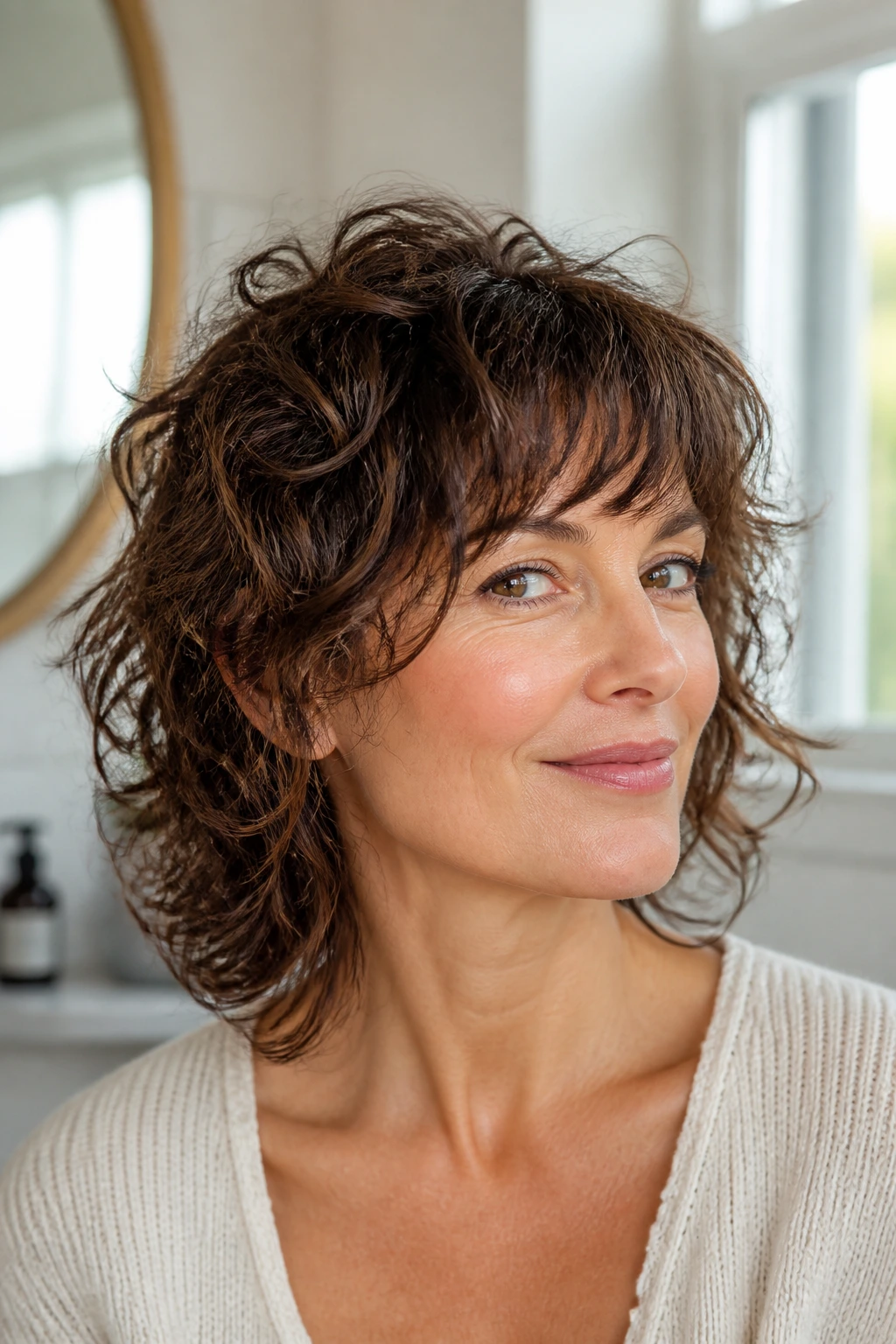
Fine curly hair loves a shag when the layers are placed with some restraint. Too much thinning, and the shape goes wispy in a bad way. Done well, though, this cut builds the illusion of density by stacking lightweight layers around the crown and cheekbones.
The shoulder-length perimeter helps because it leaves enough hair at the bottom to anchor the shape. That anchor matters. Fine curls can lose their outline fast when the cut is too short or too aggressively shredded.
Use light stylers here. A foam or airy curl mousse usually beats a heavy cream. Fine curls collapse under too much product, and then the whole haircut looks smaller than it really is.
11. Thick-Curl Weight-Removed Shag
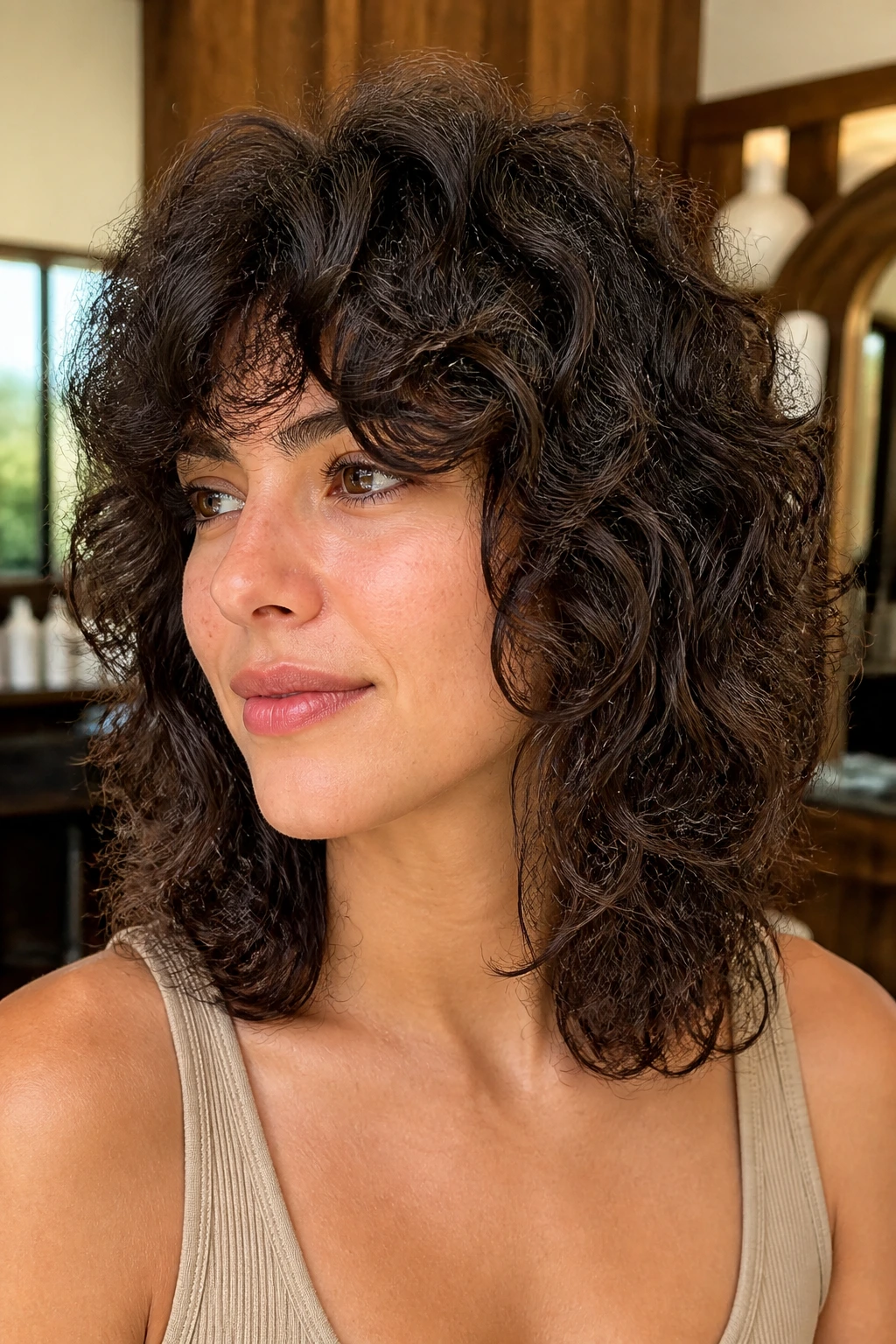
If your hair is thick enough to eat combs for breakfast, this is your lane. The cut removes bulk in the right places so the curls don’t balloon outward at the sides. Shoulder length keeps the mass manageable while the layers stop the bottom from turning into a brick.
Why It Wins on Dense Hair
- It lets curl clumps separate instead of fusing into one giant shape.
- It keeps the crown from becoming too wide.
- It helps the ends curl with more bounce instead of dragging down.
The key is not to carve away too much. Thick hair can handle layers, but it still needs structure. A good weight-removed shag looks full, not feathered to death.
12. Air-Dry Wash-and-Go Shag
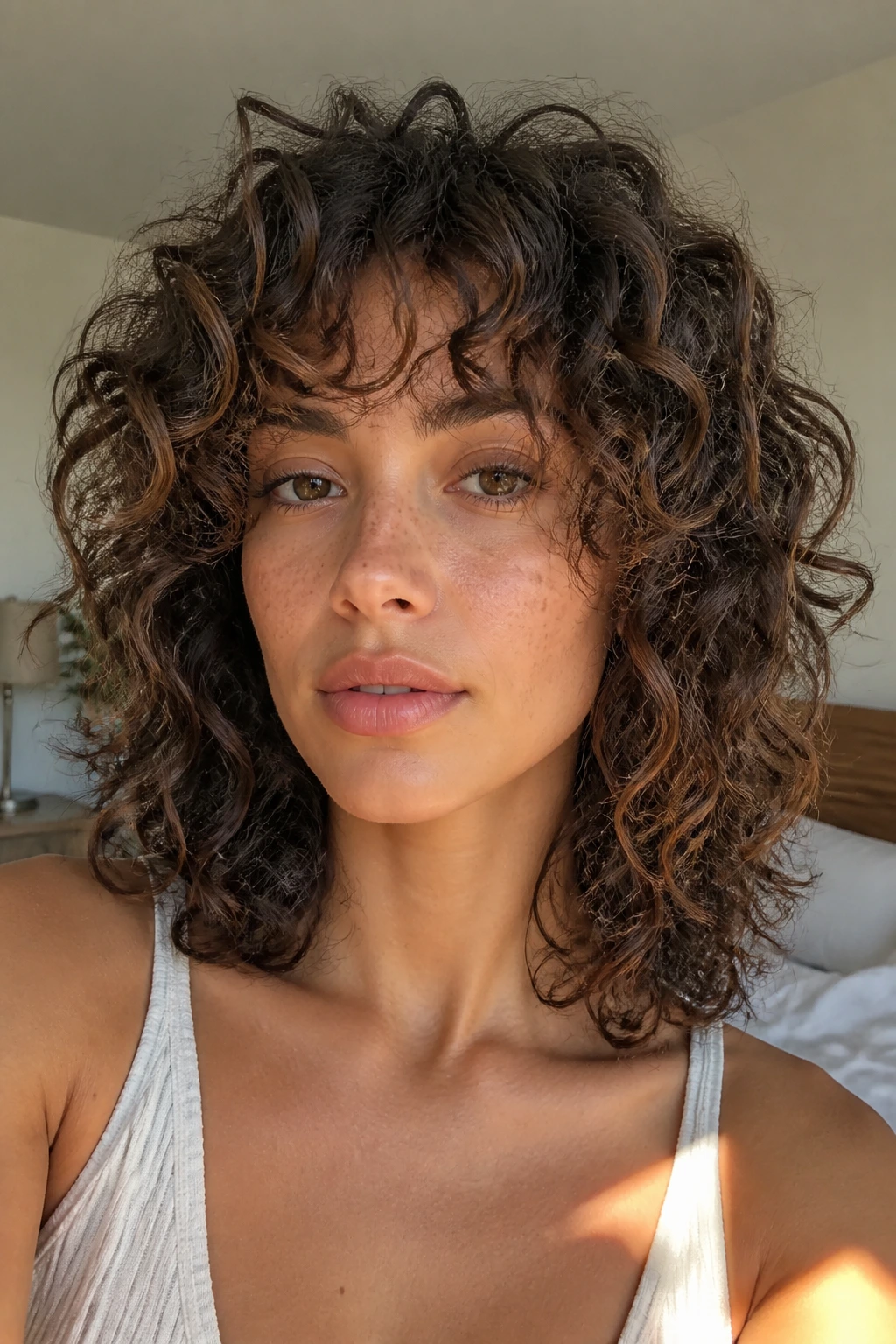
Some haircuts are built for elaborate styling. This is not one of them. The air-dry wash-and-go shag is for curls that look better when you leave them alone after scrunching in product and letting gravity do half the work.
The shoulder-length shape helps the cut dry with enough body to avoid that limp, still-wet feeling that longer curls can get. Layers help the top dry faster too, which means less chance of the roots lying flat while the ends are still damp.
The Best Part
You can keep the styling simple: leave-in conditioner, curl cream, then a strong enough gel to hold the shape. Scrunch once, then stop fussing. That last part matters more than people admit.
13. Diffused Volume Shag
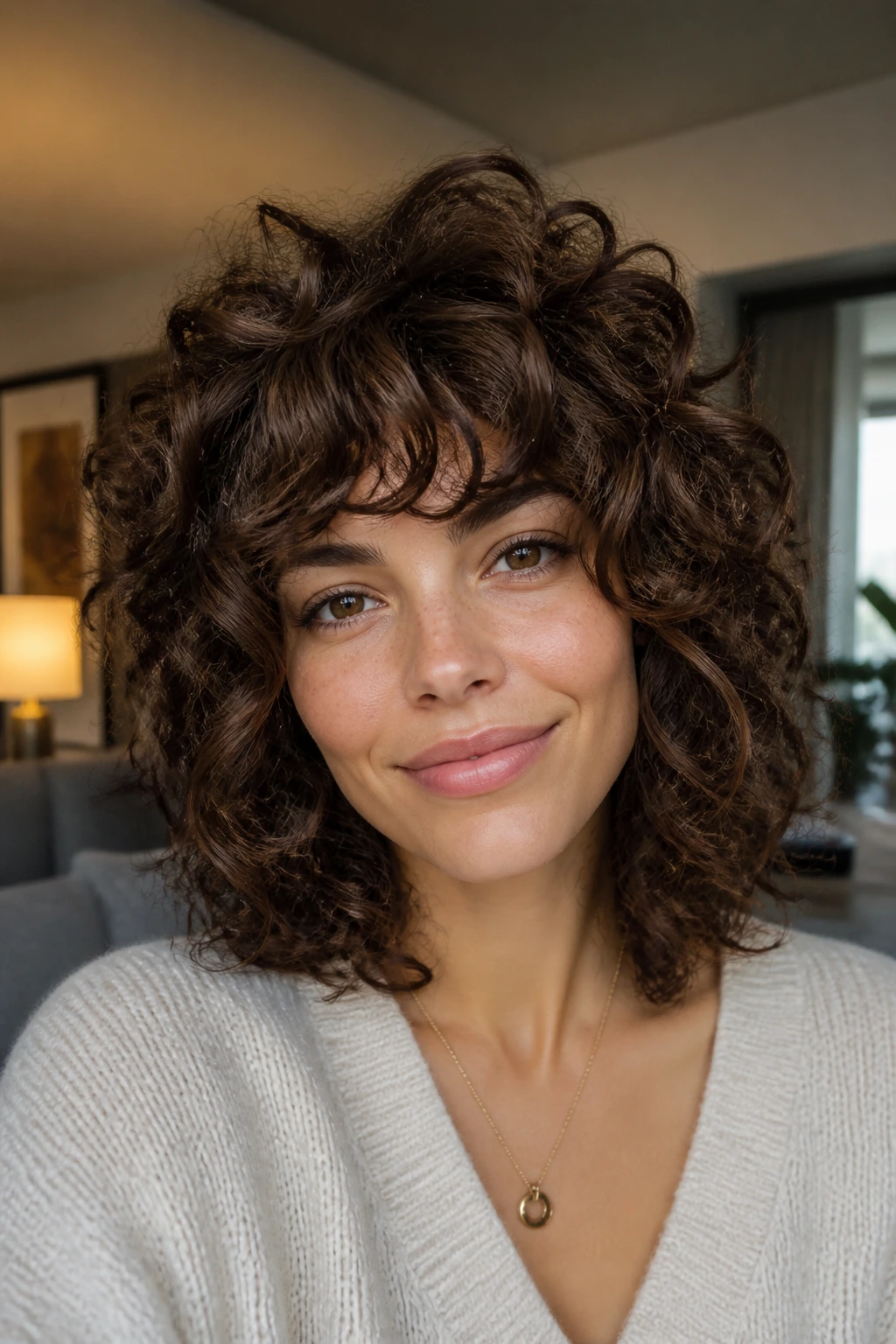
This version is for people who like big, rounded curls and don’t mind a little heat. A diffuser lifts the roots, sets the curl pattern, and keeps the shag looking plush at shoulder length. It’s a good match for hair that loses its shape when air-dried flat.
The haircut itself should support that volume with layers that release the crown and mid-lengths. If the layers are too blunt, the diffuser just makes a heavy shape bigger. If they’re too short, the result gets frizzy. The sweet spot is somewhere in the middle, and yes, that takes a stylist who understands curl behavior.
A soft cast from gel or foam helps here. Scrunch it out once the hair is dry and the shape will still hold, just without the crunchy edge.
14. Face-Framing Spiral Shag

This one is all about the front pieces. The layers are cut to encourage spirals to turn around the cheekbones, jaw, and collarbone, which creates a very flattering frame without needing a heavy fringe. Shoulder length gives those spirals somewhere to land.
I like this cut on people who want their curls to do the talking near the face. The rest of the hair can stay a little looser and softer, while the front pieces carry the shape. It’s a smart way to make the shag look styled even on a simple day.
What to Ask For
Tell your stylist you want the front layers to hit different points: cheekbone, lip, chin, and collarbone. That staggered length keeps the frame from looking blunt.
15. Asymmetrical Curly Shag
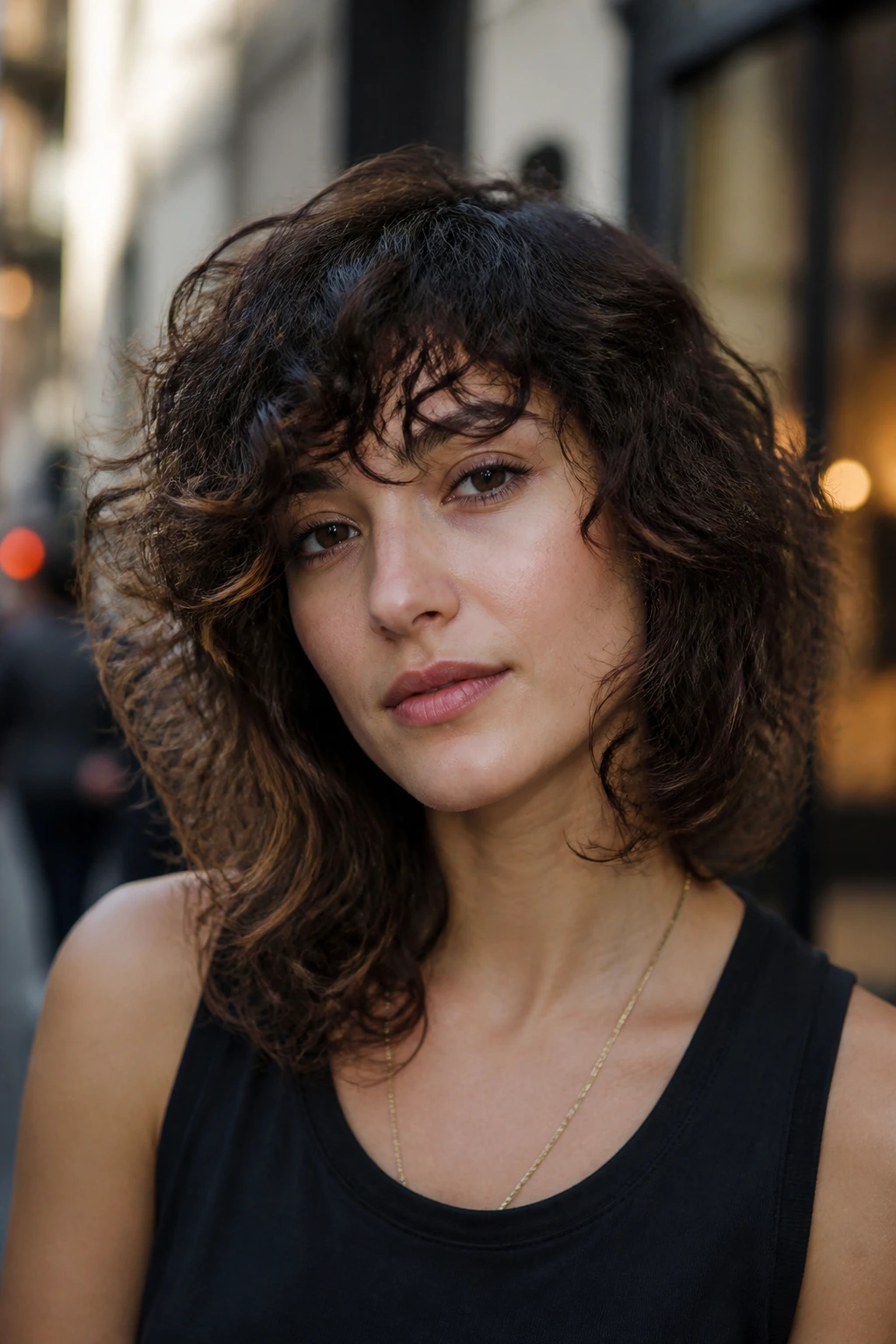
A little imbalance can be a good thing. The asymmetrical shag uses one side slightly longer or fuller than the other, which gives shoulder-length curls a sharper silhouette. It feels modern without needing anything extreme.
Why choose asymmetry? Because curls already move unevenly. When the haircut acknowledges that, the result looks deliberate instead of fussy. This is especially useful if one side of your hair grows faster, or if your part naturally lives off-center.
The haircut should still be soft enough to move. If the asymmetry is too obvious, it starts to look like a mistake after the curls dry and shrink.
16. Copper Glow Curly Shag
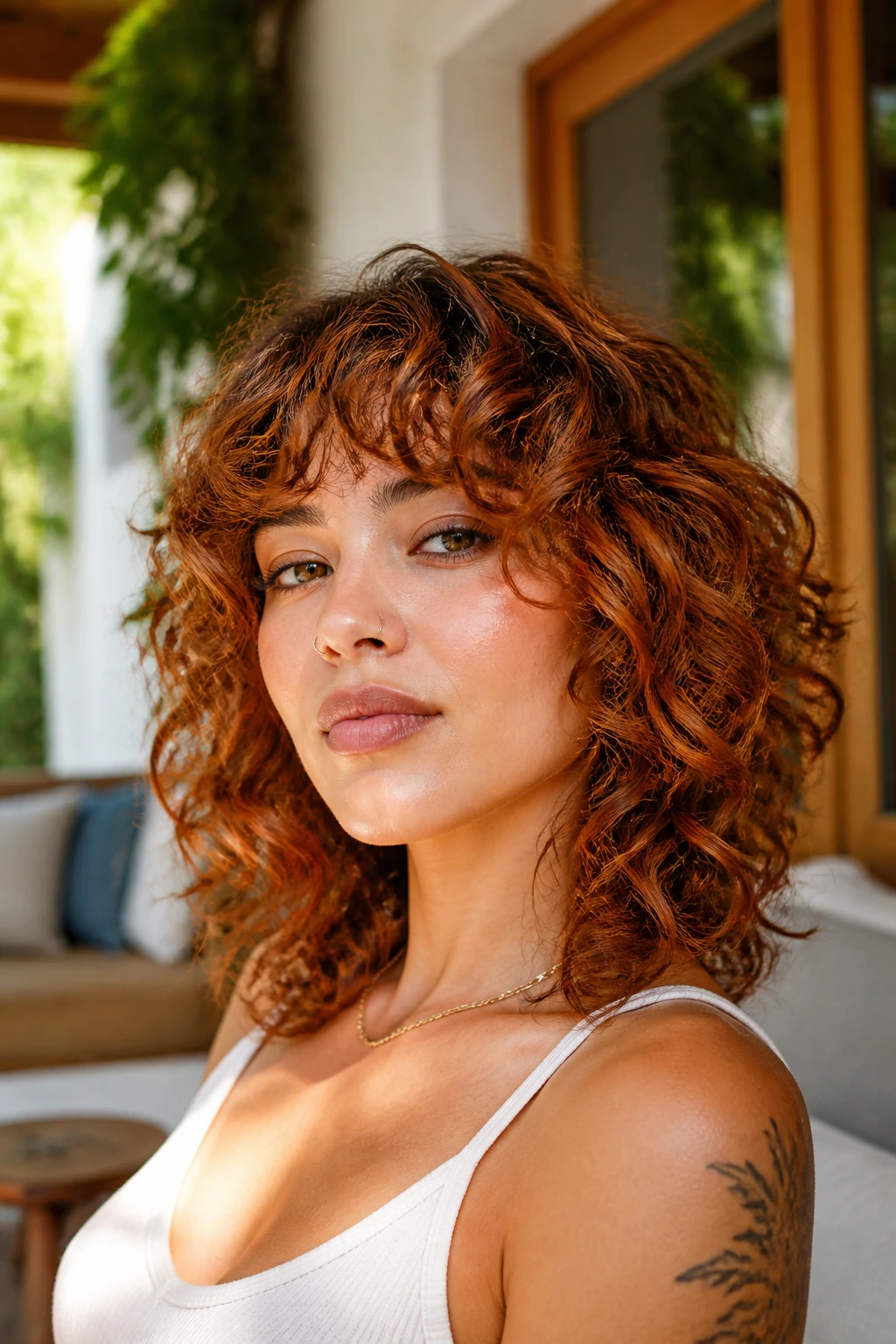
Color changes a shag more than people expect. Copper tones, whether they’re subtle or loud, make the layers stand out because warm light catches the bends in the curls. On shoulder-length hair, that means the cut looks more dimensional even when the styling is simple.
This version is a smart choice if your curls can disappear into a single dark shape. A copper gloss, auburn glaze, or warm face frame gives the layers a reason to show up. The haircut doesn’t have to be louder; the color does some of the visual work.
Best Pairing
Soft curtain bangs plus a copper finish is a strong combination. The fringe keeps the face frame lively, and the color keeps the layers readable.
17. 3A Ringlet Shag
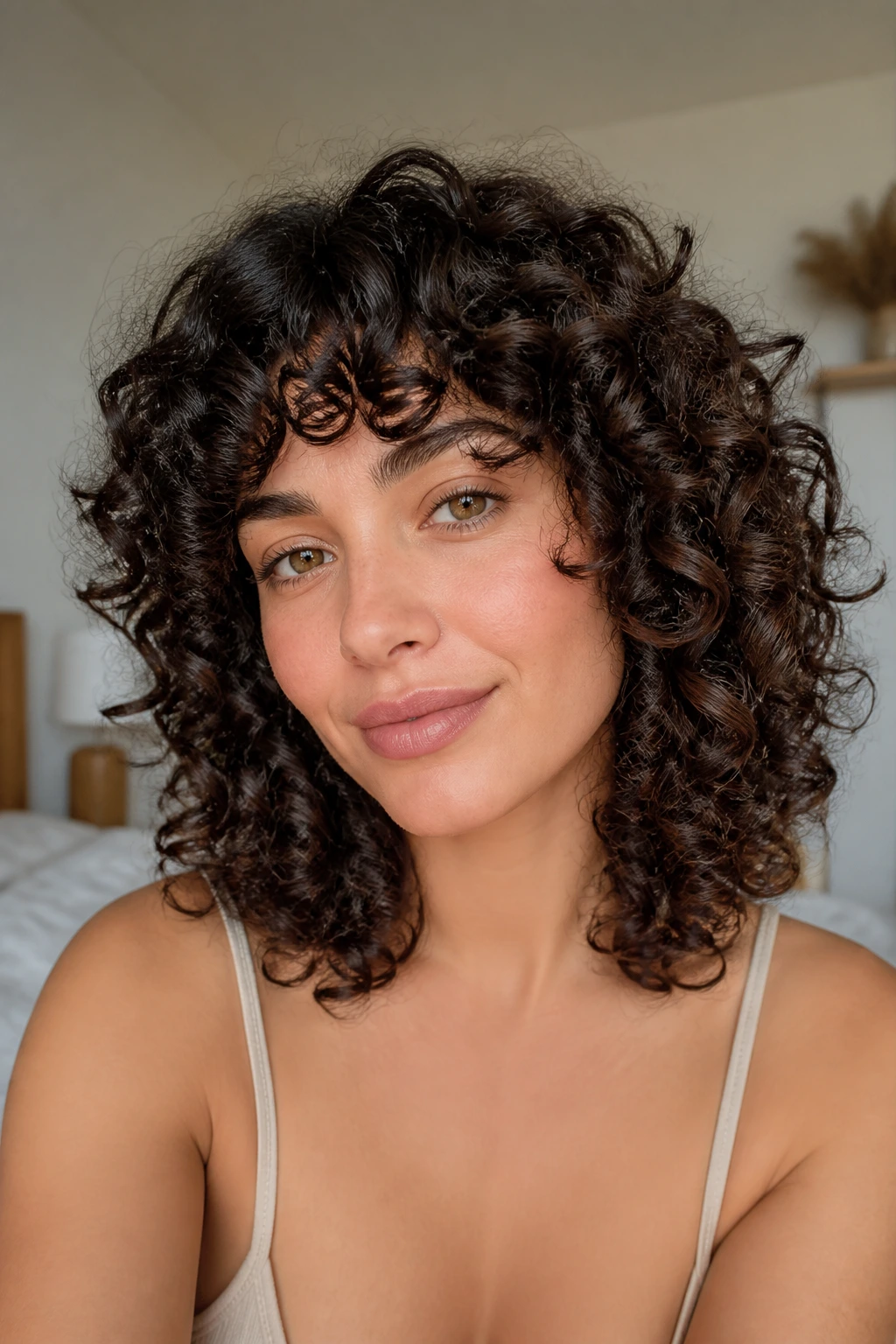
3A curls usually want a haircut that respects their spring without making them feel overloaded. The ringlet shag keeps the layers long enough to preserve spiral definition, but short enough to lift the hair off the shoulders and neck. It’s neat without being stiff.
This cut does especially well with a clean perimeter. Too many choppy short layers and the ringlets can separate into odd little puffs. Too few, and the whole shape gets dense at the bottom. Shoulder length lets the curls stack in a tidy way while still looking airy.
Leave-in plus gel is usually enough. Ringlets do not need much help once the shape is right.
18. 3B Corkscrew Shag
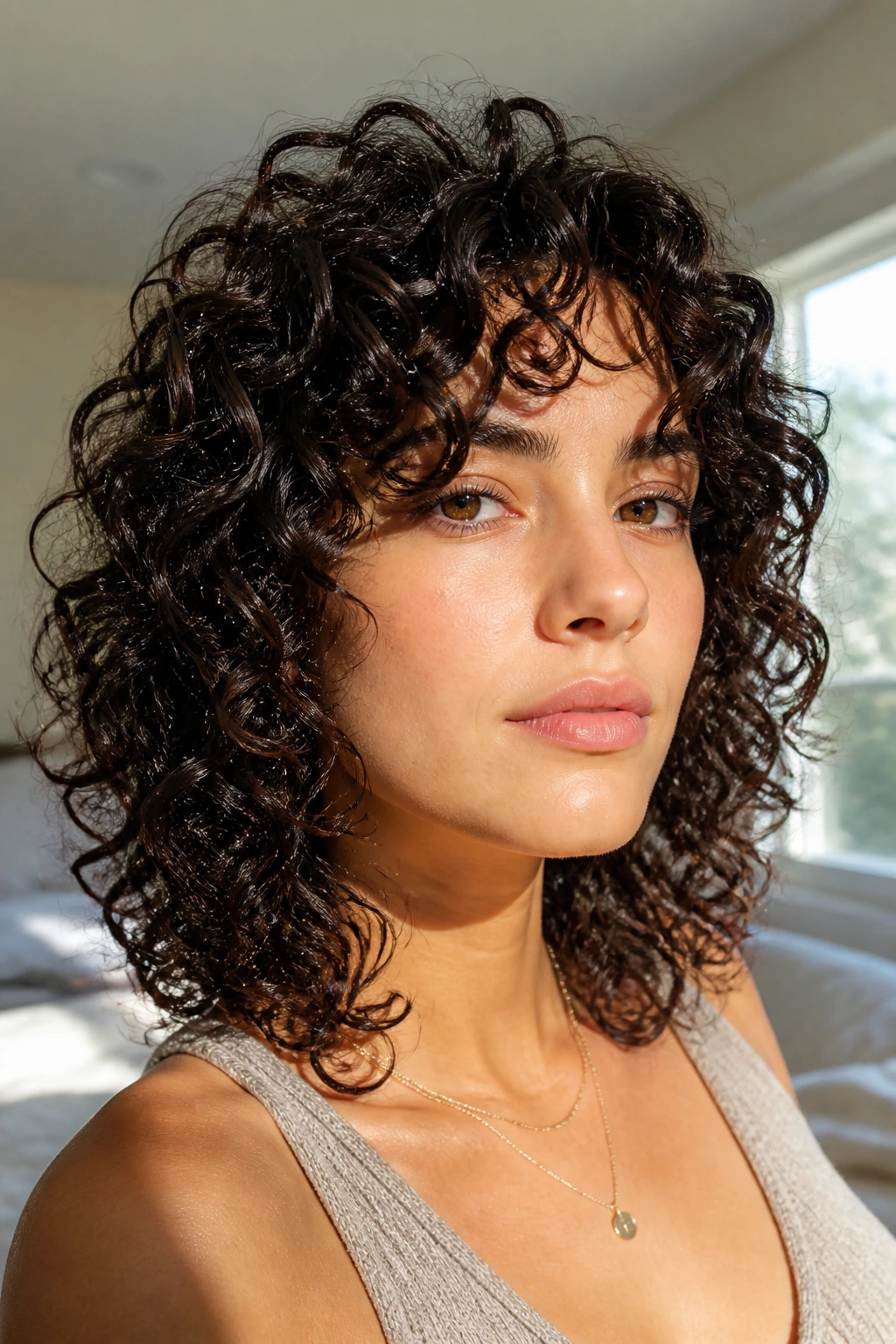
3B curls love a shapely shag because the curl pattern has enough spring to show off layers without flattening. The cut should be a little deeper through the crown and face frame than a 3A version, because 3B texture can carry more movement and still hold form.
The best version of this cut has visible structure when wet and soft volume when dry. That’s the sweet spot. If the layers disappear completely after styling, they’re probably too long. If the crown flares out too hard, the layers went too short.
What Makes It Different
3B hair often looks best when the stylist cuts for curl clumps, not for straight strands. That sounds obvious. It isn’t.
19. 3C Plush Shag
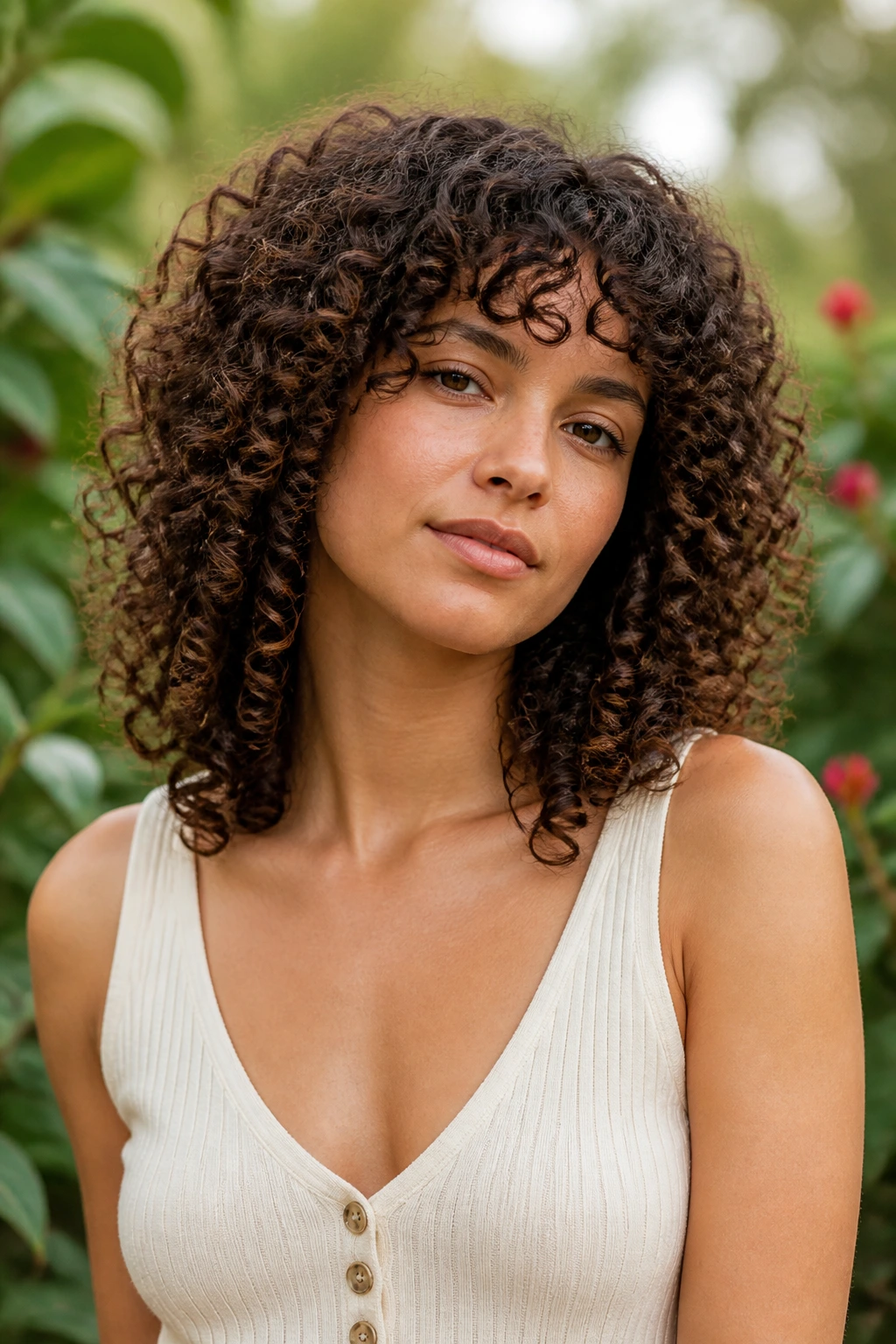
3C curls bring texture with weight, and the shag can either free them up or make them explode. The good version trims the bulk while keeping enough length for each curl to form its own shape. Shoulder length helps because it gives the curl pattern room to spring without becoming a tiny froth.
This cut tends to look richest when the layers are long enough to stay connected. Short, disconnected layers can make 3C curls stack too high and too wide. A plush shag keeps the silhouette rounded and soft at the ends.
A little mousse under gel works well here. The mousse gives lift, the gel keeps the curl clumps together.
20. Low-Porosity Lightweight Shag
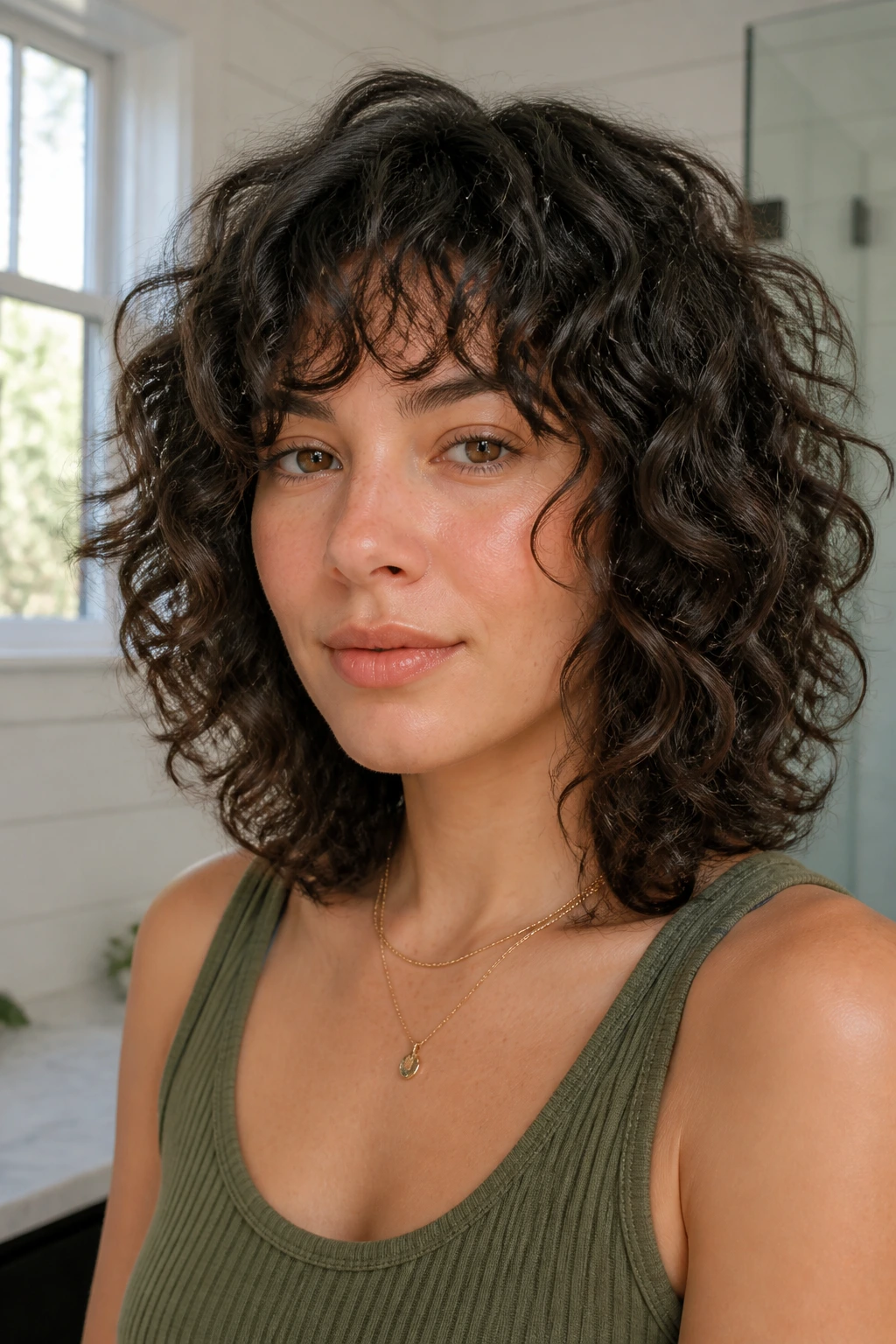
Low-porosity curls can be stubborn. Product tends to sit on top of the hair instead of soaking in, and heavy creams can leave the shag flat by noon. This version uses lighter layers and lighter styling so the cut doesn’t feel coated.
The haircut should have enough movement to keep the hair from lying in one dense block. Shoulder length is helpful because low-porosity hair often needs some airflow around the strands to dry cleanly. If the cut is too long and too heavy, the moisture hangs around too long and the shape suffers.
Styling Notes
- Use a water-based leave-in.
- Keep oils light or skip them at the root.
- Diffuse on low heat if the hair dries slowly.
21. High-Porosity Curly Shag
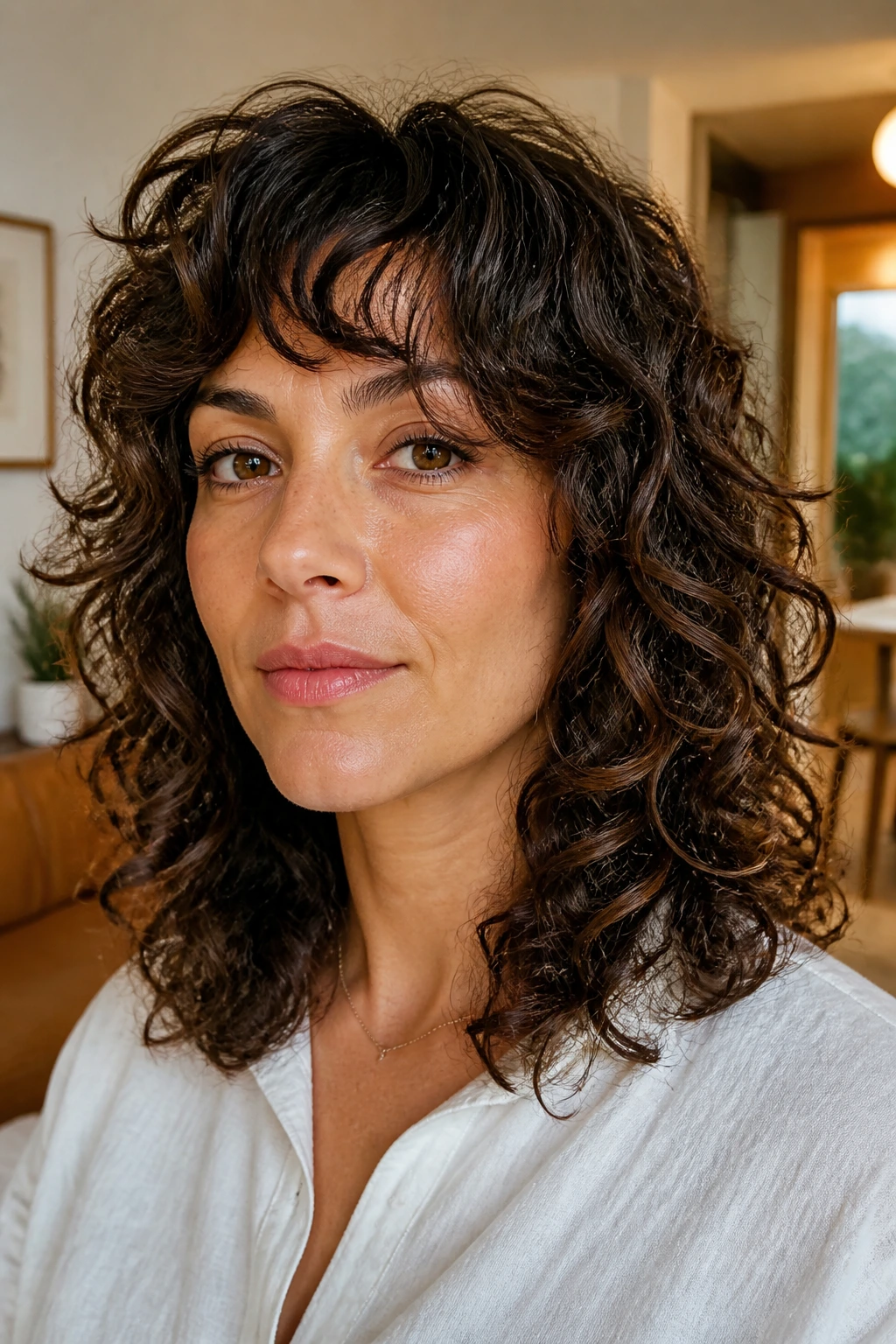
High-porosity curls drink in moisture fast and lose it just as fast. A shoulder-length shag for this texture should protect the ends and keep the shape soft, not shredded. Too much layering can leave the porous ends looking frayed.
What helps most is slip. Conditioner with good glide, a leave-in that smooths the cuticle, and a gel that forms a gentle cast all make the layers behave better. The haircut itself should still have movement, but the styling has to support it or the ends go fuzzy by afternoon.
This is one of those cuts that benefits from regular deep conditioning. Not because it’s needy. Because porous hair shows neglect quickly.
22. Humidity-Ready Curly Shag
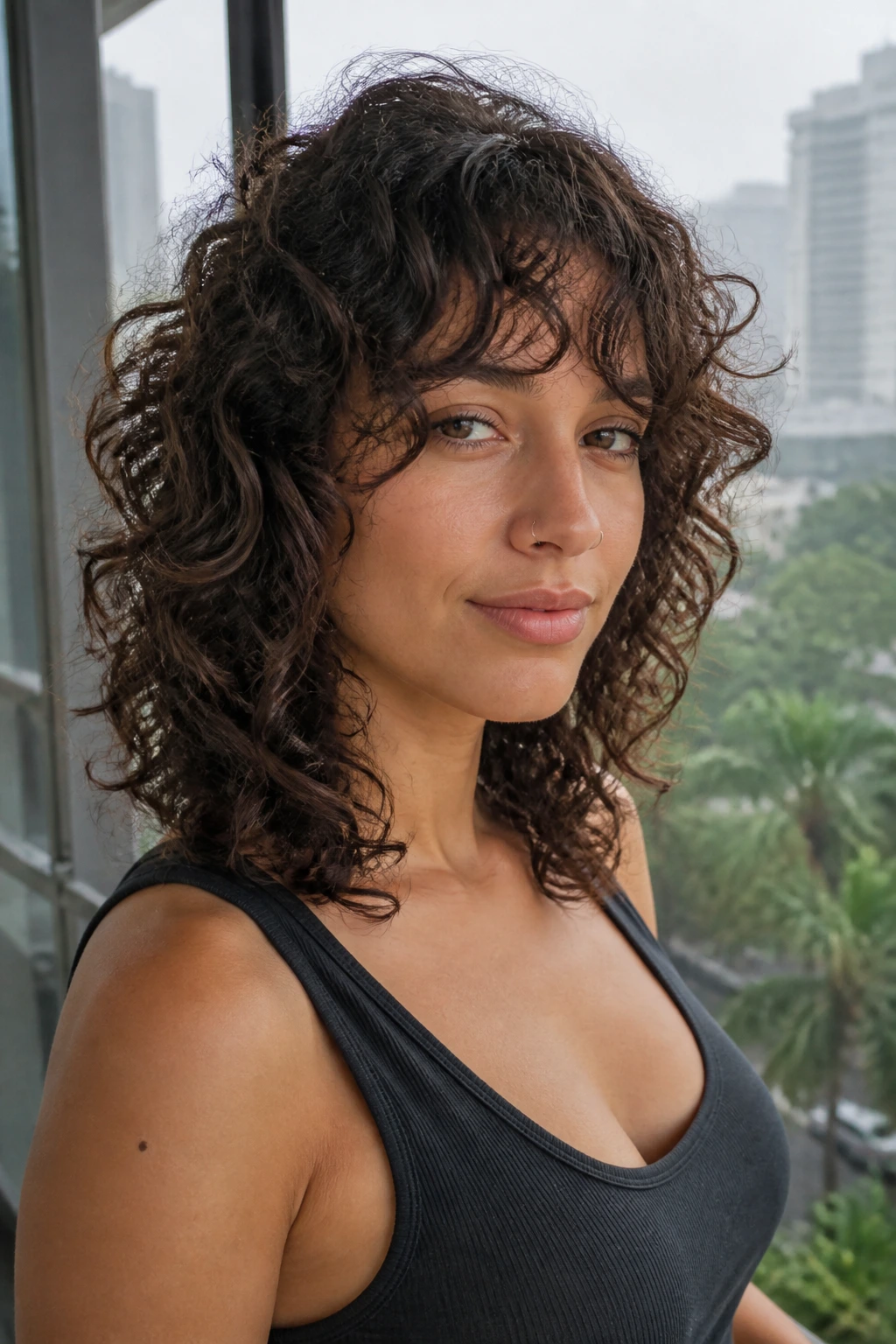
Humidity hair needs a plan. A shag can handle it if the layers are placed with enough length to keep the shape from ballooning. At shoulder length, the cut has a chance to stay recognizable even when the air gets sticky and the curl pattern loosens a bit.
The main rule is to keep frizz in the style, not on the crown. Use enough hold to define the curl clumps, then stop touching the hair. The shag will always look better with slightly separated pieces than with fingers dragged through it five times before noon.
Best Products
Think strong-hold gel, a light leave-in, and a diffuser if you need root control. Heavy butters are not your friend here.
23. Office-Friendly Curly Shag

Not every shag has to look like it came off a backstage pass. The office-friendly version keeps cleaner edges, softer fringe, and a more controlled outline around the shoulders. It still has movement, but the shape reads polished instead of unruly.
This is the cut for people who want texture without hair that feels too loud in a blazer or button-down. The layers should blend more than they spike. A side part or soft center part keeps the front calm, which helps the whole haircut look intentional in low-styling situations.
It’s a nice reminder that curly hair does not need to be wild to be interesting.
24. Messy Weekend Piecey Shag
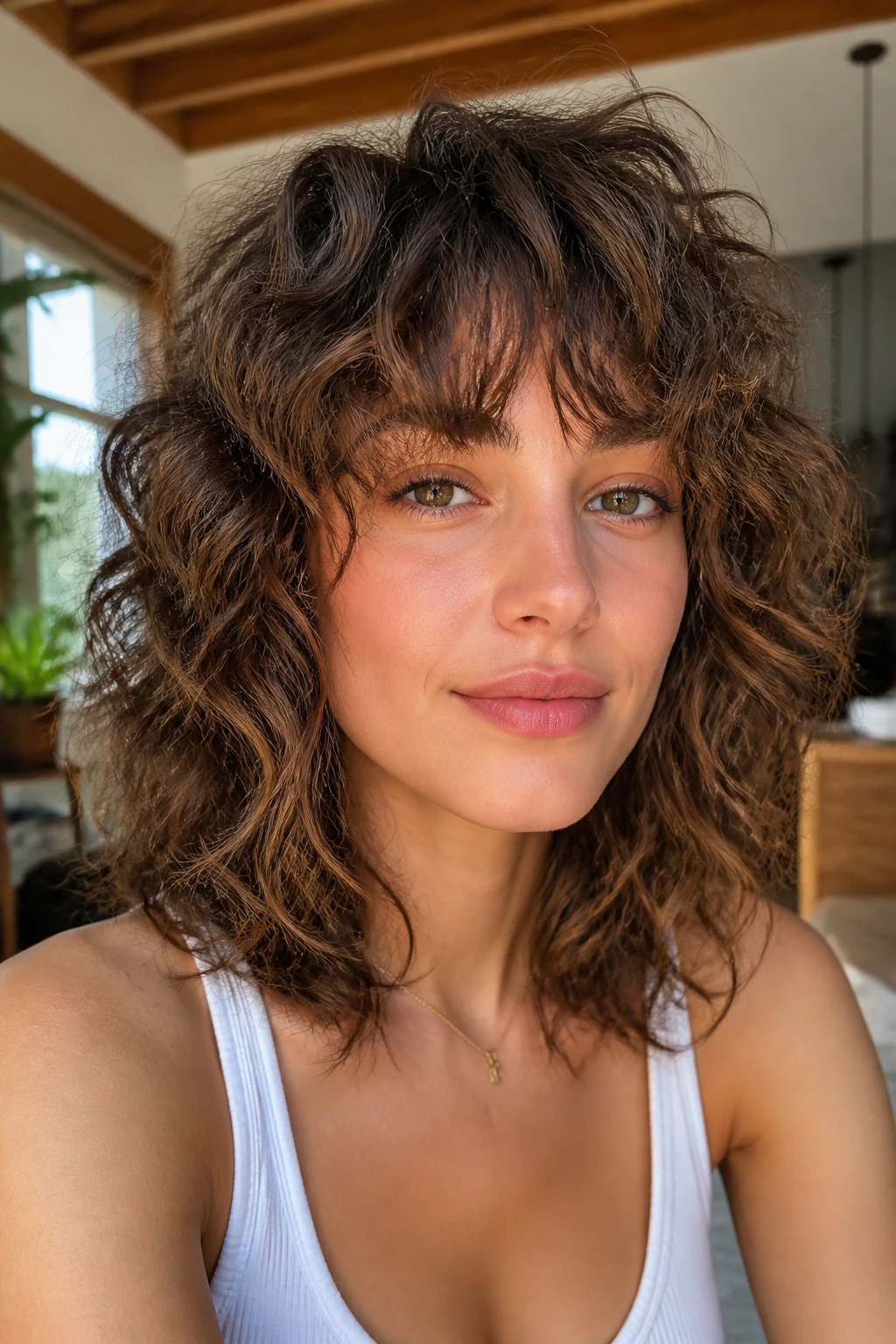
Some cuts want to be neat. This one wants to be touched and then left alone. The piecey shag uses separation and texture to give shoulder-length curls a lived-in look, with the ends falling in irregular little groups that catch the eye.
I like this on hair that naturally breaks into curl clumps. If your curls tend to form chunky pieces without much coaxing, this cut celebrates that. If your hair is very uniform, you’ll need a bit more styling product to keep the piecey effect visible.
A touch of pomade or lightweight cream on the ends can define the separate curls. Don’t overload it. The whole point is movement, not slickness.
25. Bob-to-Shag Grow-Out
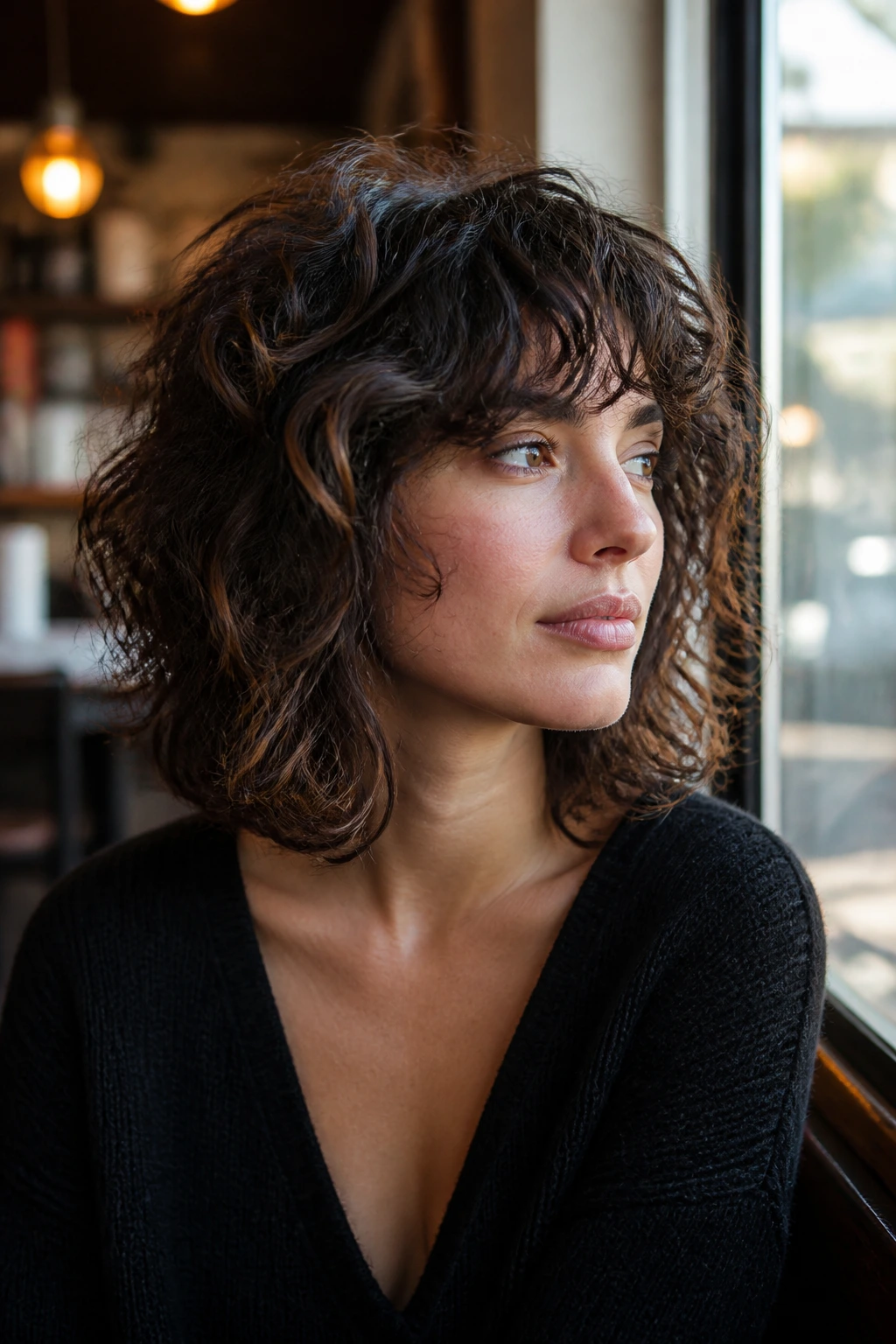
Growing out a curly bob can get awkward fast. The bob-to-shag version solves that by adding layers that help the in-between length look intentional. Shoulder length is the perfect landing zone, because the cut can keep some bob structure while the shag layers soften the shape.
This is one of the most practical versions on the list. You can move from chin-length to shoulder-length without waiting for a blunt line to behave itself. The layers hide the grow-out, and the curl pattern does the rest.
If you’re in that awkward stage where your hair keeps flipping out in weird places, this cut can make the process look like a choice.
26. Jaw-Softening Curly Shag
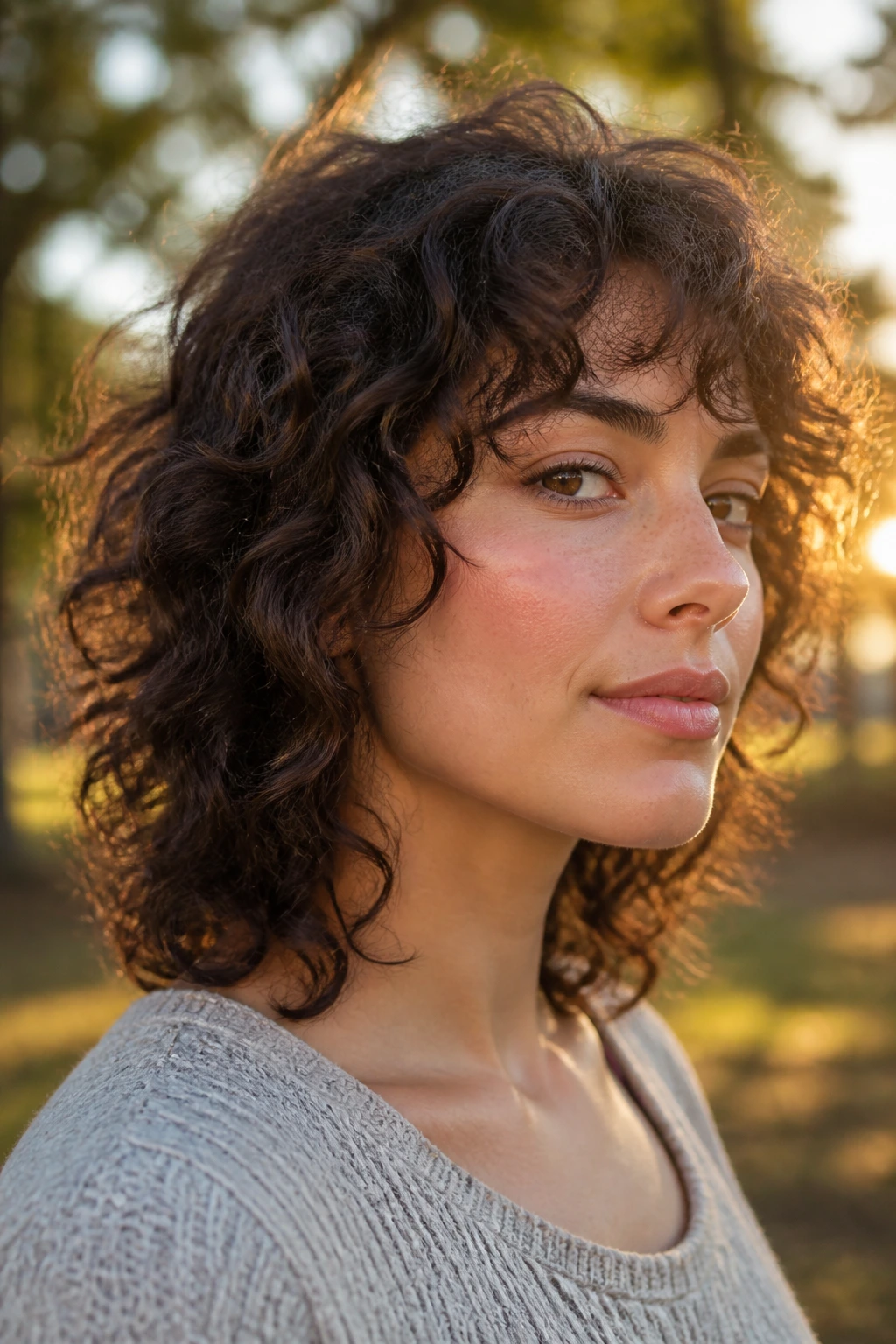
Strong jawlines and square faces can take a curly shag beautifully, but the layers need to do some softening work. The best version keeps the shortest face-framing pieces around the cheekbone rather than the jawline, so the eye goes up first and the haircut feels balanced.
A little fullness near the temples helps here. It draws attention to the middle of the face instead of letting the jaw carry all the weight. Shoulder length is useful because it gives enough length to blur the bottom edge without hiding the neck entirely.
Good Signs in the Mirror
- The cheekbones look lighter.
- The jaw doesn’t feel boxed in.
- The hair moves when you turn your head.
27. Bang-Free Curly Shag

Not everyone wants fringe. Fair enough. The bang-free shag keeps the face open while using layers and texture to create interest around the crown and sides. On shoulder-length curls, that can look cleaner than a fringe-heavy cut, especially if your curls shrink unevenly.
This version is underrated because it lets the shape breathe. Without bangs, the front can be long enough to tuck behind the ears or swing across the cheek. That makes it easier to wear glasses, hats, and earrings without fighting the haircut.
If you’ve always liked shags but hated the maintenance of bangs, start here.
28. Glasses-Friendly Side-Lift Shag

Glasses can change how a curly shag sits, and not always in a bad way. The right version builds lift at the temples and keeps the front layers from crowding the frames, so the curls and the glasses work together instead of wrestling for space.
The side-lift approach also helps shoulder-length hair avoid the “everything lands on the cheek” problem. The cut opens slightly above the frame line, then drops into soft layers below. That makes the face look visible, not buried.
This is the kind of detail a lot of haircut lists skip. They shouldn’t. If you wear glasses every day, the placement of the front layers matters just as much as the overall shape.
What Makes a Curly Shag Work at Shoulder Length
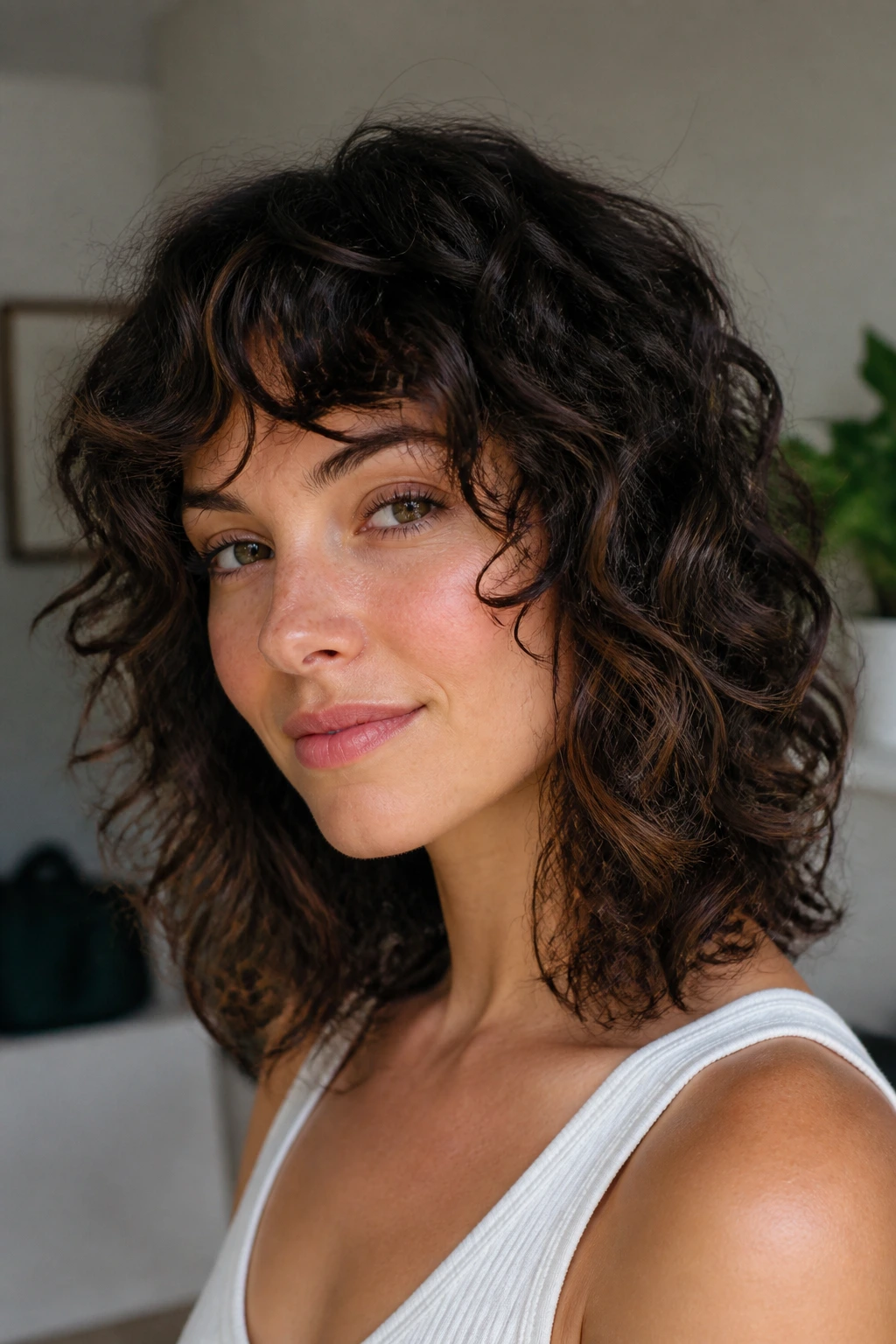
A shoulder-length shag succeeds because the length gives curls enough weight to behave, while the layers remove just enough bulk to keep the shape alive. That sounds simple. It isn’t. Curl patterns spring up unpredictably, and shoulder length sits right in the middle of that action, so the haircut has to account for shrinkage, density, and where your curls naturally cluster.
The cleanest-looking shags usually rely on three things: a controlled perimeter, layers that match the curl pattern, and a front shape that does something on purpose. If one of those pieces is missing, the haircut still works, but it loses that easy, finished look.
Dry cutting helps a lot here. So does a stylist who understands that curly hair does not fall like straight hair. A curl can look long when it’s wet, then jump two inches higher once it dries. If the cut ignores that, the whole shape can land in the wrong place.
What to Tell Your Stylist Before the First Snip
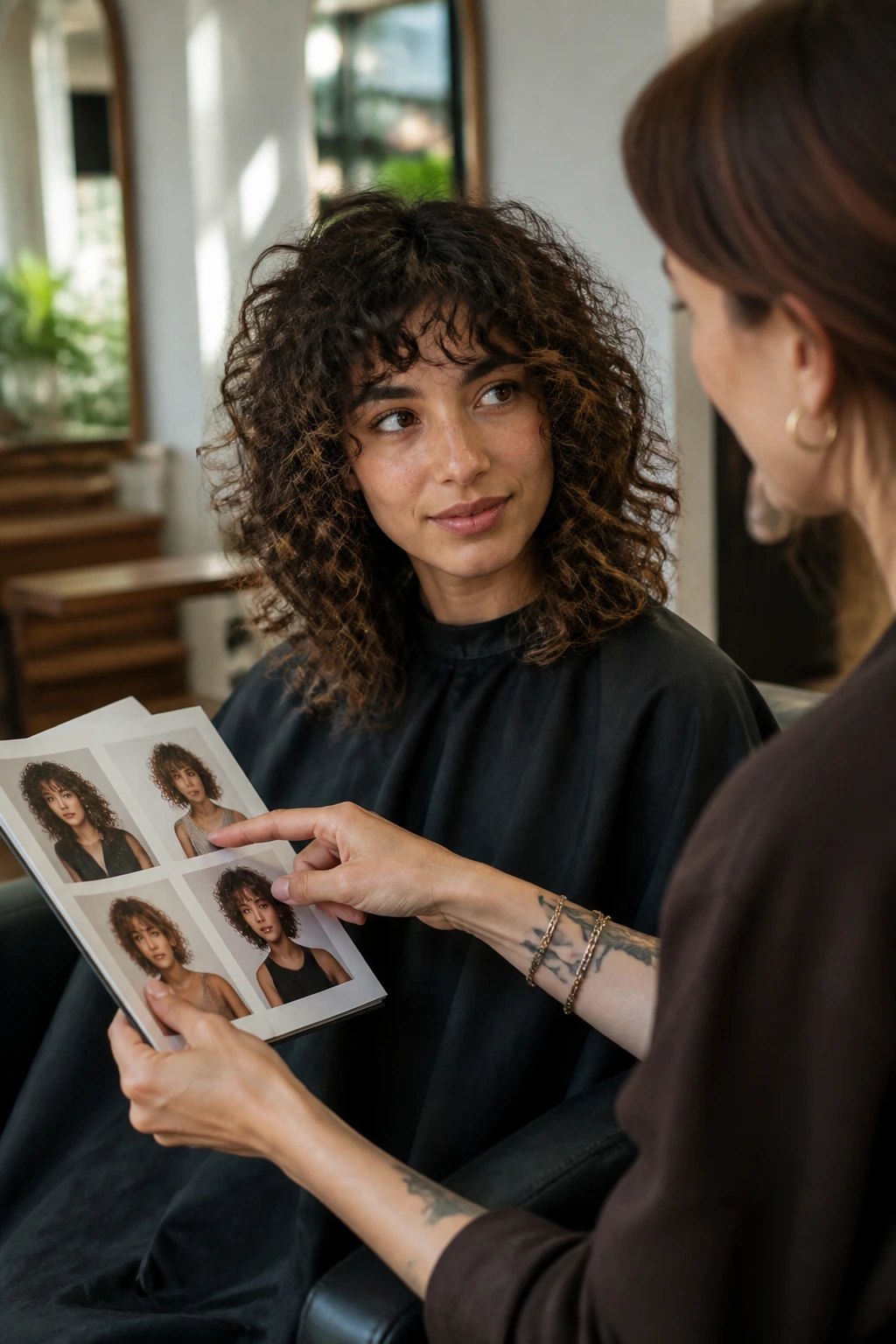
Bring photos, but bring context too. A picture of a shag on loose waves is not useful if your curls are dense 3C coils and your hair shrinks hard. Tell the stylist how your hair behaves on day one, day two, and day three. That’s the stuff that matters.
Say where you want the shortest pieces to live. Around the cheekbone? Just below the eyes? At the jaw? Those choices change the entire cut. Also say how much fringe maintenance you’ll actually do. A gorgeous bang you never trim becomes a nuisance fast.
Ask whether the cut will be done wet, dry, or both. For curly shags, a dry finish is often the difference between “nice” and “this finally fits my head.” If your stylist reaches for thinning shears without explaining why, ask questions. Thick curly hair sometimes needs weight removal, but random thinning can turn into frizz with scissors.
Tools That Make Styling Easier
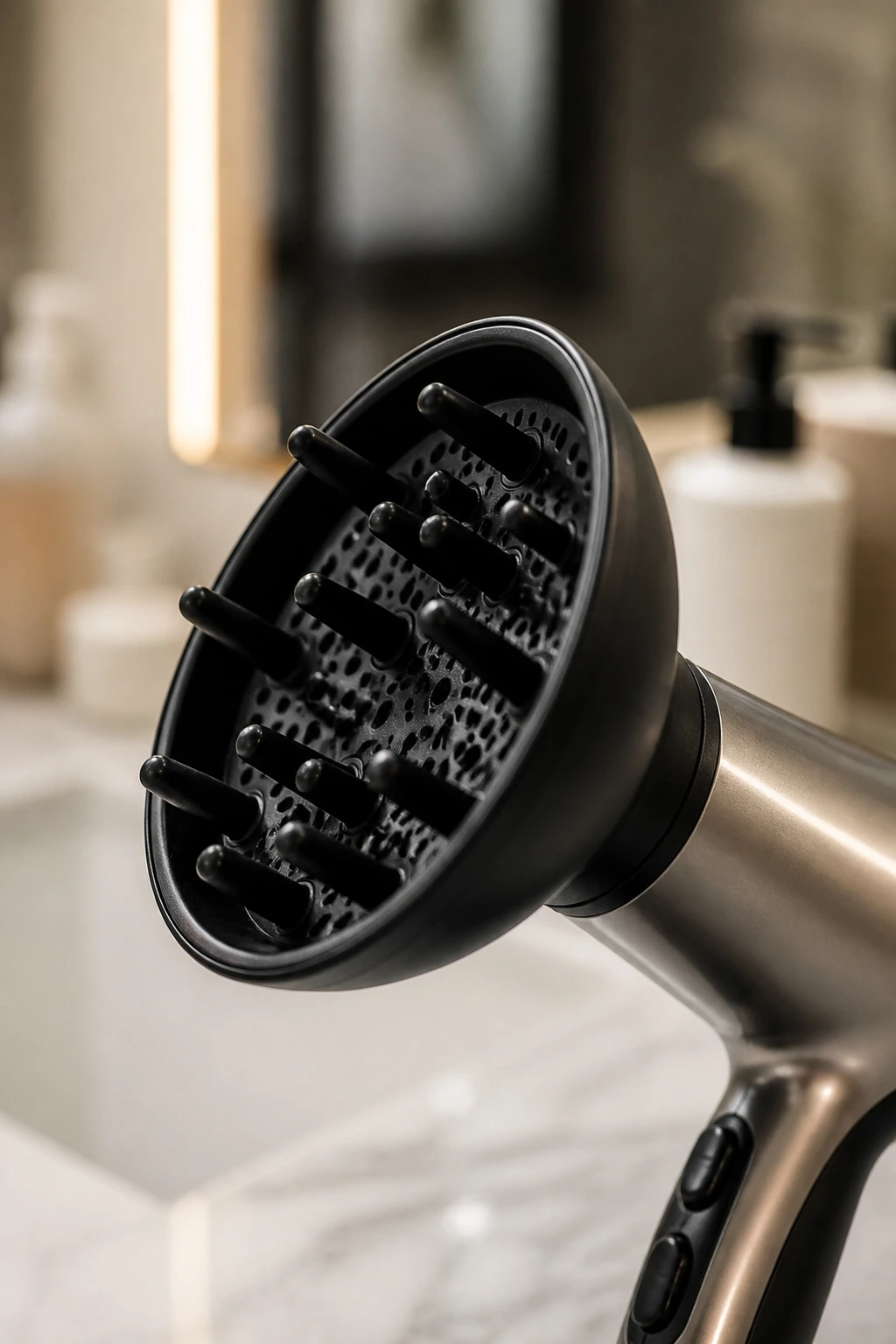
- Diffuser attachment: Lifts the curl at the root and keeps the shag from drying flat.
- Microfiber towel or cotton T-shirt: Cuts down on friction when you squeeze out water.
- Wide-tooth comb: Detangles without dragging the curl pattern apart.
- Sectioning clips: Useful for clipping crown roots up while the hair dries.
- Spray bottle: Helps refresh day-two curls without soaking the whole head.
- Curl brush or detangling brush: Optional, but helpful for defining clumps before styling.
- Satin bonnet or pillowcase: Keeps the shape from getting crushed overnight.
- Hand mirror: Sounds basic. Still useful when you want to check the back without guessing.
What to Buy for the Cut, and What to Skip
If your shoulder-length curly shag keeps falling flat, the product lineup is probably too heavy or too random. Start with a light leave-in that gives slip, then choose either a curl cream or a mousse based on density. Fine hair usually likes mousse more; coarse hair often wants cream before gel. A strong-hold gel matters more than people think, because the layers need something to lock onto while they dry.
Clarifying shampoo earns its place too. Curly shags can get weighed down at the crown by leave-in, oils, and hard-water buildup, and the top layers show that first. A clarifying wash every 2 to 4 weeks usually keeps the lift from disappearing.
Skip anything that leaves your roots greasy before the hair has even dried. Heavy butters, thick oils at the scalp, and rich masks used too often can flatten the entire silhouette. If your hair is fine or low density, even a small amount of the wrong product can bury the layers.
How to Style and Wear These Cuts
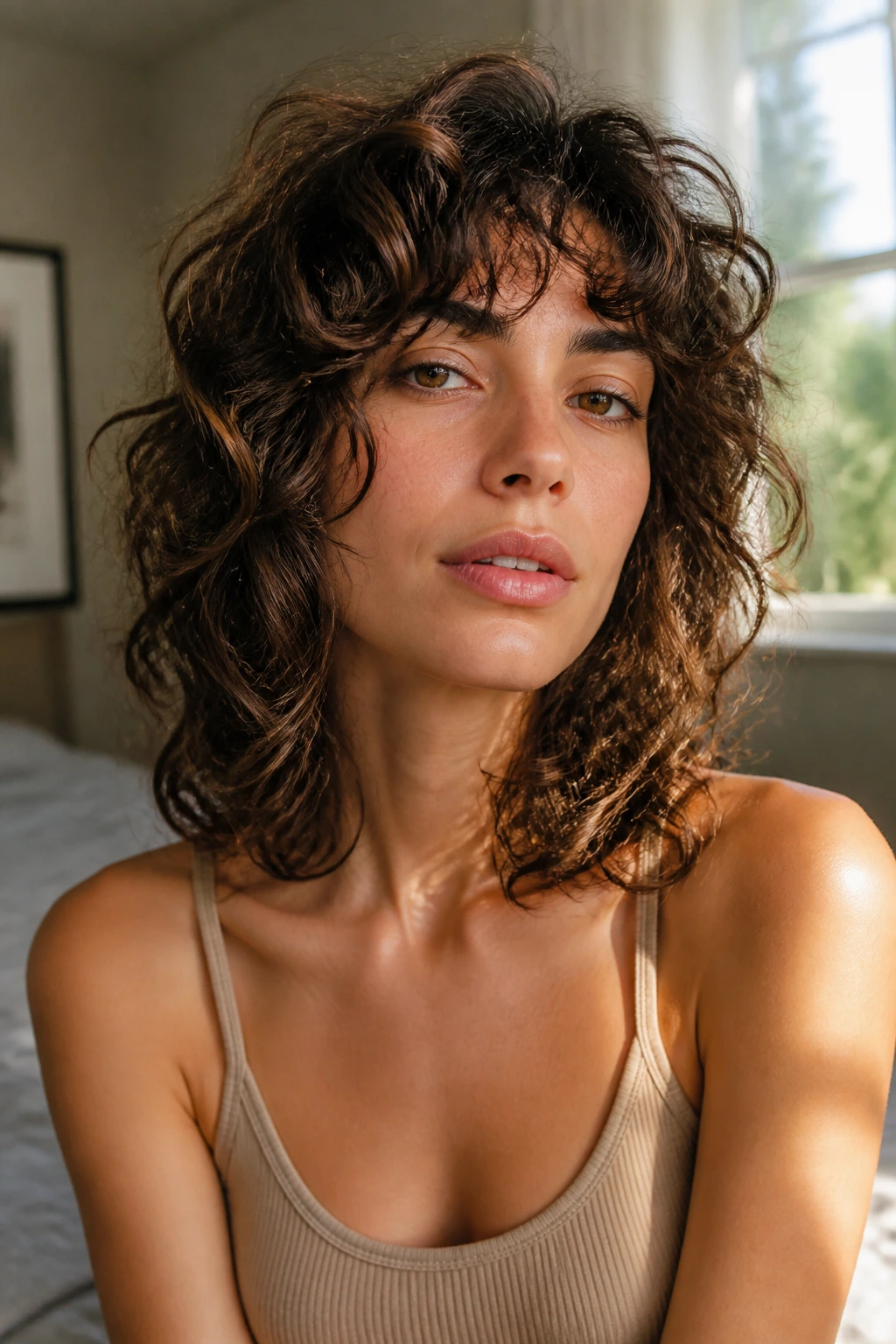
Presentation: The whole point of a curly shag at shoulder length is movement, so let the crown breathe. Side parts add lift, curtain bangs open the face, and a soft scrunch at the ends keeps the layers visible instead of fused together.
Pairings: These cuts look good with open necklines, hoop earrings, and glasses that have some shape to them. High collars can work too, but they change the balance, so it helps if the layers start above the shoulders rather than sitting right on them.
Scale: If your hair is fine, keep the shape lighter and the root lift closer to the scalp. If your hair is thick, let the bottom layers be a touch longer so the cut doesn’t puff out past your shoulders.
Finish: Some curls want a soft cast you can scrunch out. Others look better with a slightly fluffy finish that still shows the individual clumps. The finish should match the mood of the cut, not fight it.
Extra Tips for Better Shape and Less Fuss
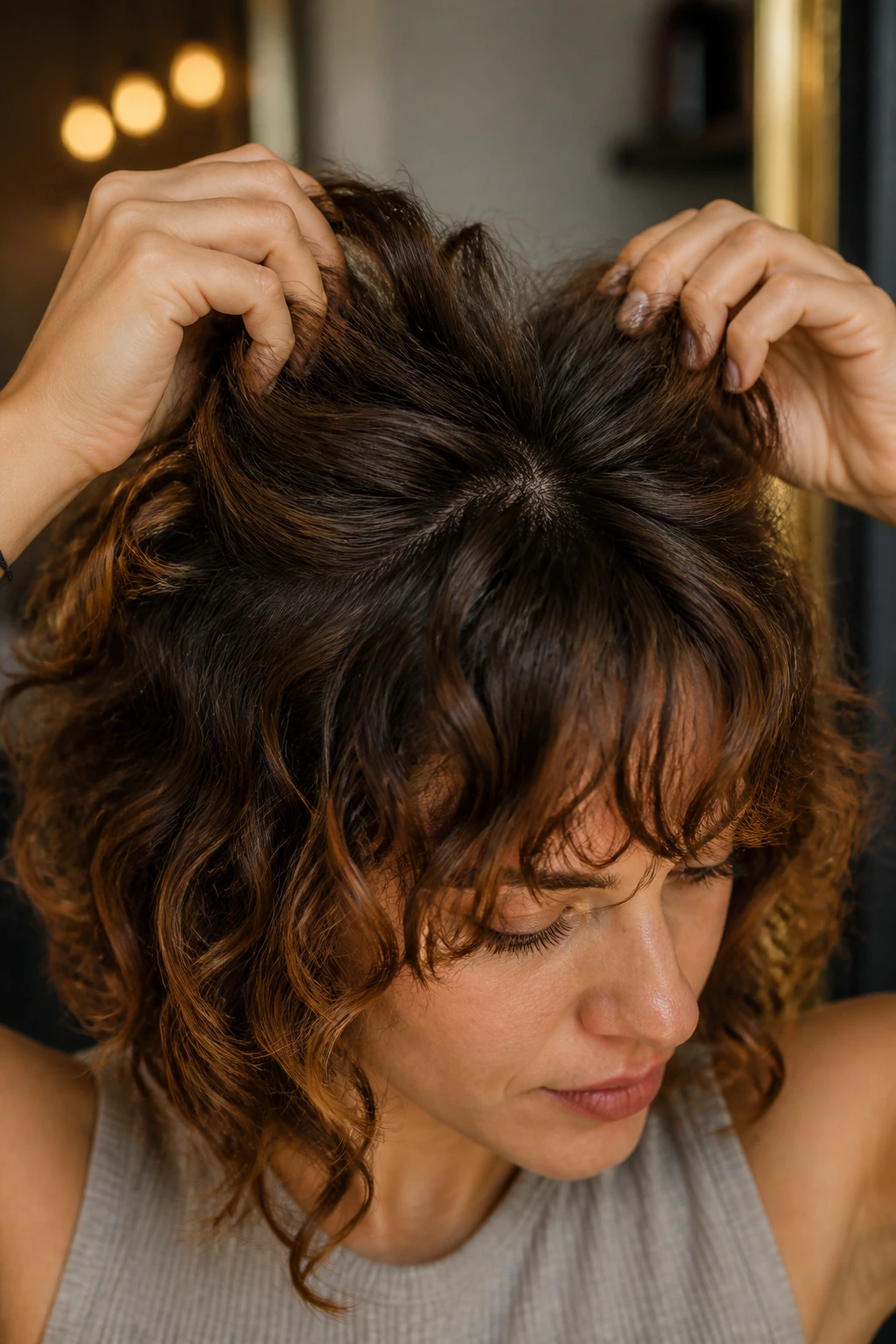
Root Lift: Clip the crown up while it dries if your hair likes to collapse at the roots. Even 10 to 15 minutes of clipping can change the whole outline.
Fringe Control: Cut bangs dry and trim them when they start touching your lashes. Curly fringe grows out fast in the mirror and even faster in real life.
Density Management: Ask for internal layers if your hair is thick, not random thinning. Internal layers remove bulk where you need space, while keeping the outside shape intact.
Color Trick: A few face-framing highlights or a glossy toner can make the layers easier to read. The haircut looks more dimensional when the bends and turns catch the light.
Mistakes That Flatten a Curly Shag
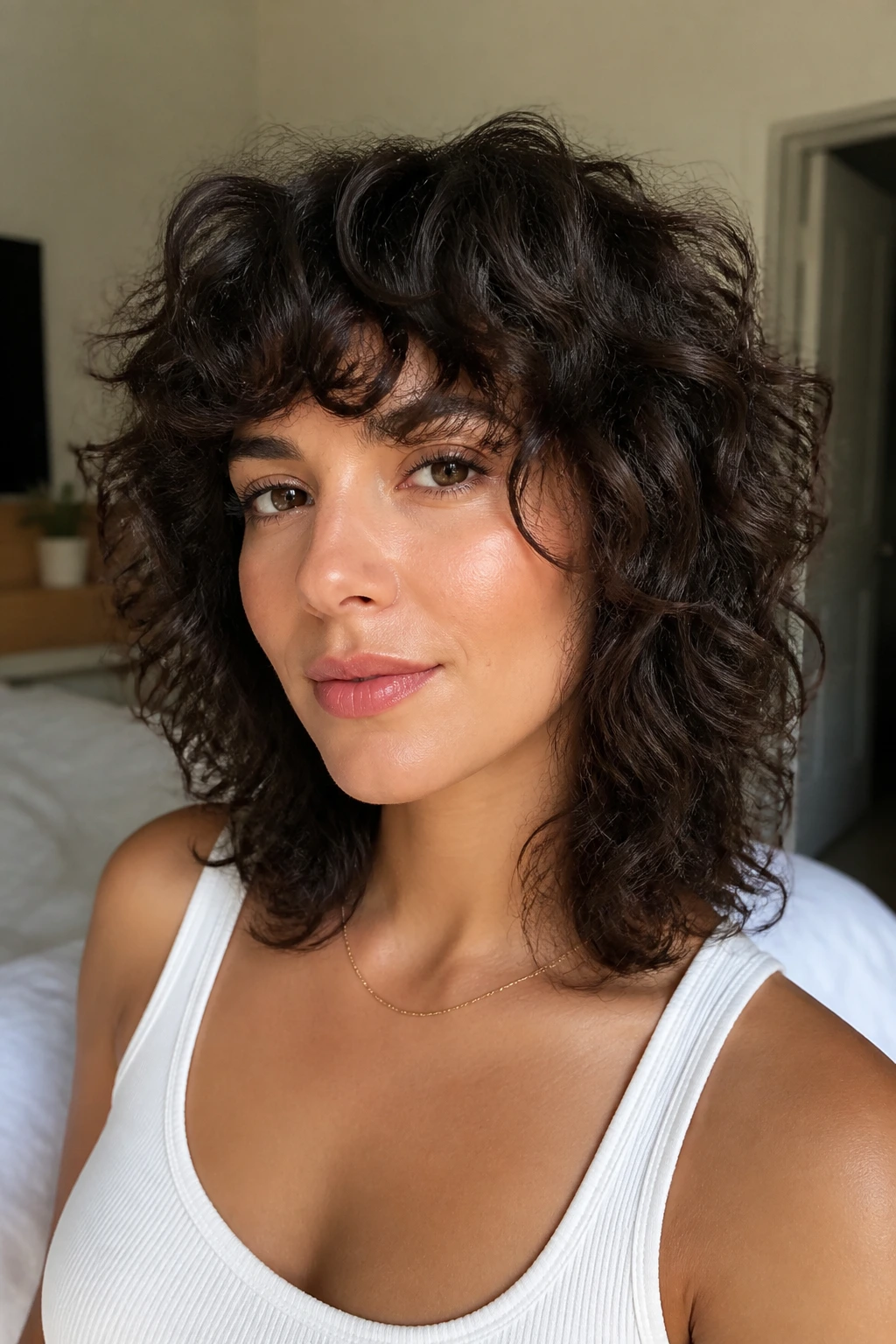
The biggest mistake is cutting the layers too short near the crown. The symptom is obvious: a halo of volume on top and thin ends below. The fix is to keep the shortest pieces connected to the rest of the cut instead of carving them out on their own.
Another common miss is using too much cream or oil. The hair feels soft, but the shape disappears. If your layers look sleepy by lunchtime, cut the product amount in half and add gel for hold instead.
People also forget shrinkage. Shoulder-length curls can jump upward two or three inches after they dry, especially near the face. That’s why a dry check matters. A cut that looks perfect wet can land way too short once it sets.
Last one: over-blending everything. A shag needs some contrast between layers. If the stylist blurs every line, the haircut loses its personality and turns into a vague medium-length cut.
Variations and Adaptations to Try
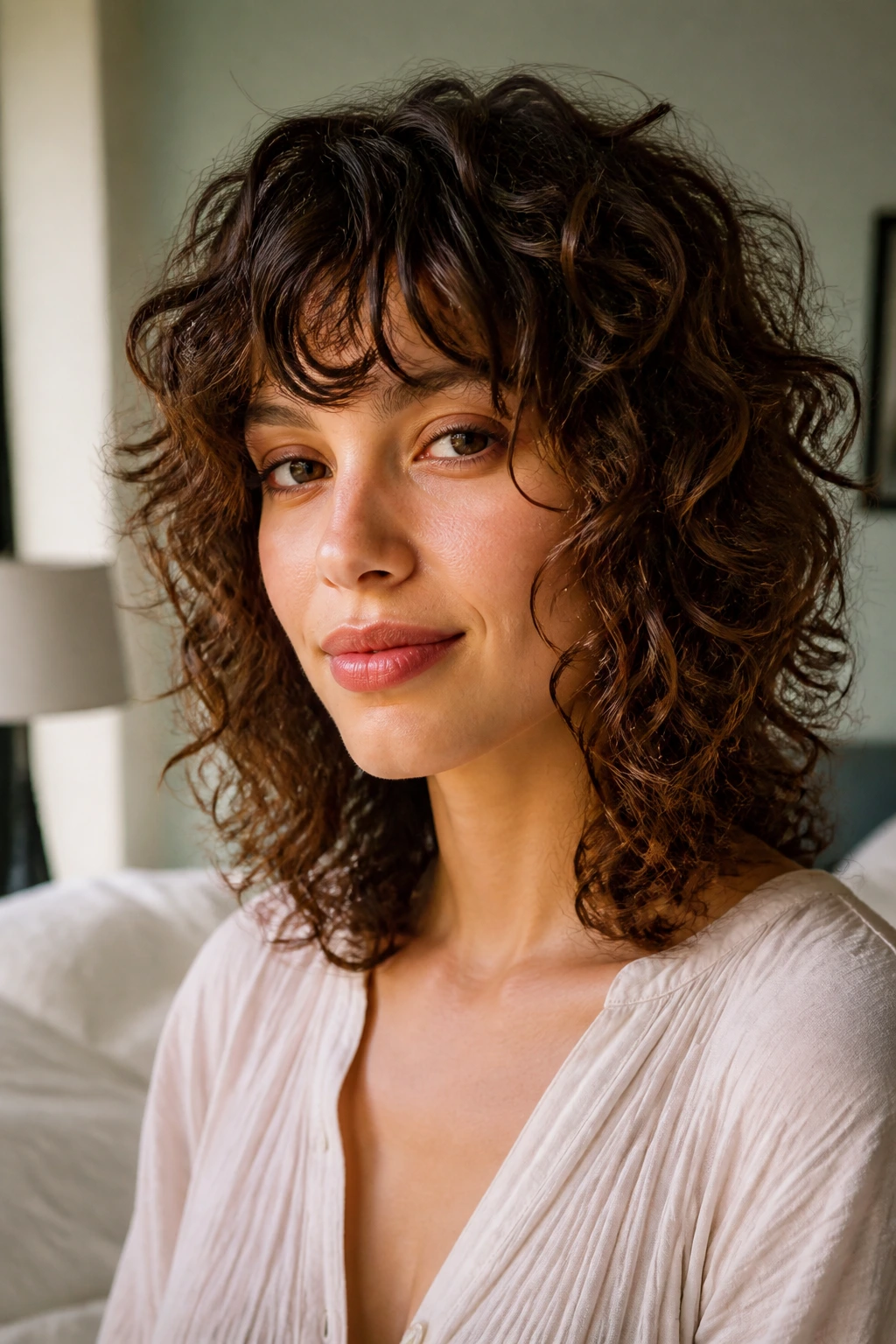
Soft Romantic Shag: Keep the layers long, the fringe light, and the finish fluffy. This version suits oval and heart-shaped faces and works well if you want movement without a lot of edge.
Rock-Heavy Wolf Shag: Push the crown shorter, keep the perimeter a little ragged, and wear the fringe with more separation. It gives shoulder-length curls a rougher, more fashion-forward shape.
Humidity Shield Shag: Use longer face-framing layers, strong-hold gel, and a diffuser on low heat. The structure stays visible longer when the air turns sticky.
Fine-Hair Float Shag: Reduce internal thinning, add root clipping, and use mousse instead of heavy cream. The goal is lift, not bulk.
Thick-Hair Halo Shag: Leave the perimeter a touch fuller and remove weight inside the shape. The cut keeps density but stops the sides from turning into one big mound.
Trims, Refresh Days, and Long-Term Care
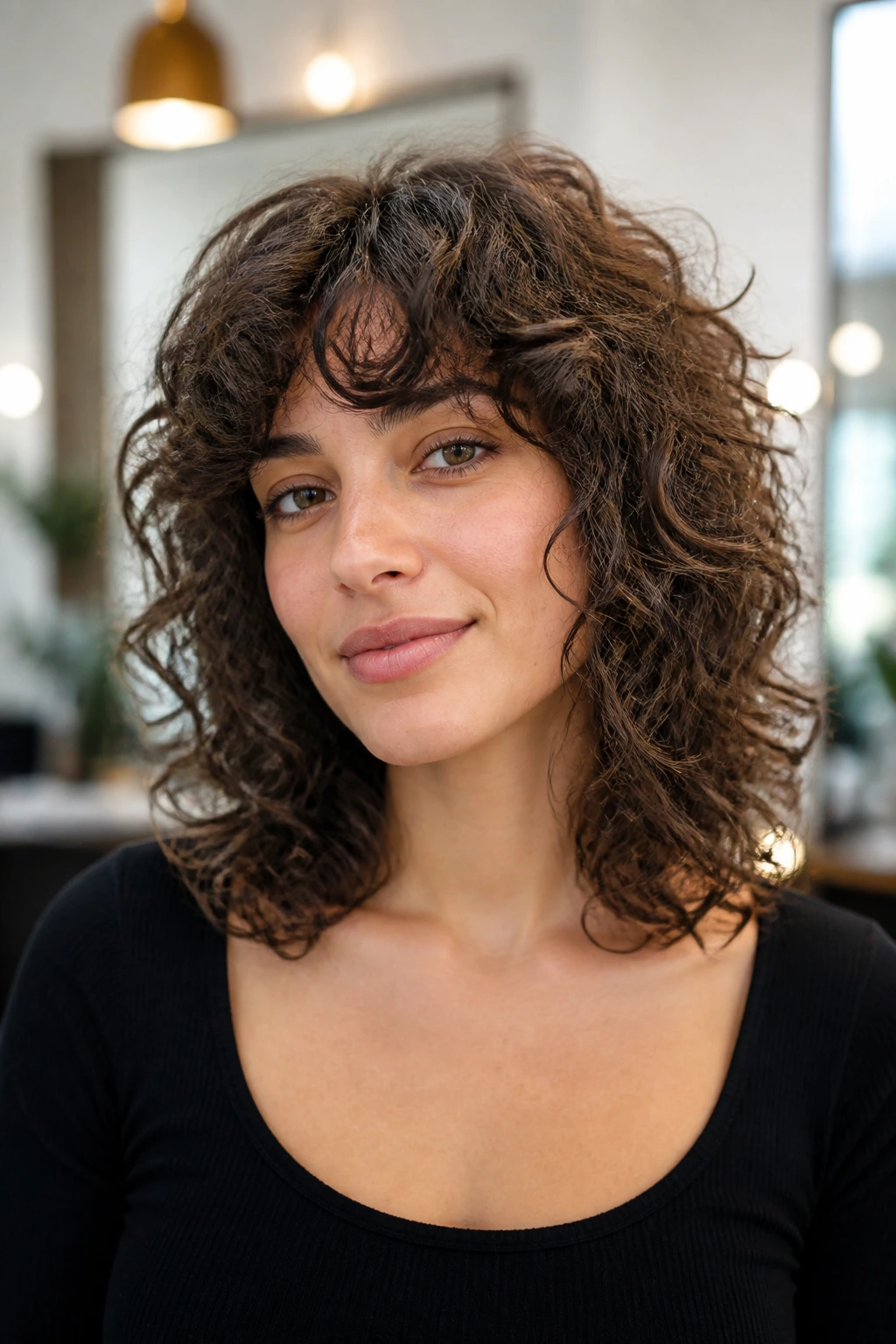
A curly shag at shoulder length usually needs a trim every 8 to 12 weeks if you want the layers to stay readable. Bangs often need attention sooner, sometimes every 4 to 6 weeks, depending on how fast your curls spring up. If you like a softer grow-out, you can stretch the schedule, but the fringe and face frame will start to change first.
Refresh days are their own skill. Mist the hair lightly with water, add a pea-sized amount of leave-in to the driest sections, then scrunch the curls from underneath. If the roots collapsed overnight, clip them up for 10 minutes or give them a quick pass with the diffuser on low heat. Don’t soak the whole head unless you want to restart styling from scratch.
Sleep matters too. A satin pillowcase or bonnet keeps the layers from getting mashed flat, especially around the crown and fringe. If your shag is piecey, that protection makes a bigger difference than most stylers do.
Clarify every 2 to 4 weeks if your scalp and strands start feeling coated. Deep condition every 1 to 2 weeks if your hair is porous, color-treated, or prone to rough ends. That rhythm keeps the cut looking springy instead of tired.
Frequently Asked Questions
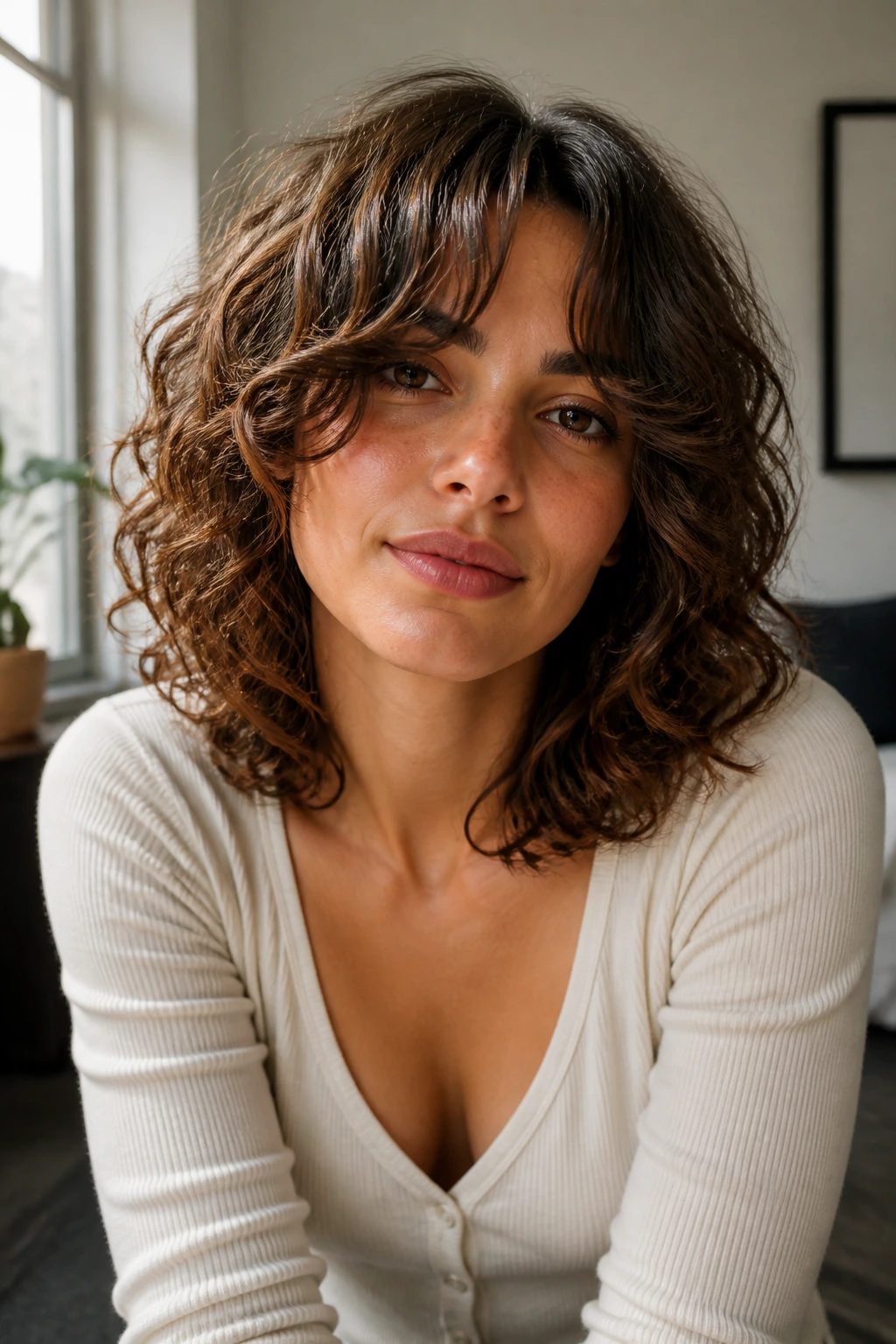
Will a curly shag work if my hair is more wavy than curly?
Yes, especially if your waves bend more at the ends than the roots. A shag can make 2B to 2C texture look fuller and more defined, but the layers need to be longer so the hair doesn’t puff into a triangle.
Can fine hair wear a shoulder-length curly shag without looking thin?
It can, if the stylist avoids over-thinning and keeps enough length in the perimeter. Fine curls usually do better with light layers, root lift, and a mousse or foam instead of heavy cream.
Should curly shag layers be cut wet or dry?
Dry cutting usually gives a better read on curl spring, especially for bangs and face-framing pieces. Some stylists use both methods, which can work well if the dry finish is used to refine the shape after the wet cut.
How do I keep the fringe from shrinking too far?
Ask for the fringe to be cut longer than you think you need, then test it dry before taking more off. Curly bangs always bounce higher than the eye expects.
What if one side of my curl pattern is tighter than the other?
That happens more often than people admit. The fix is to shape each side separately and avoid forcing both sides into the same length. A good curly shag can accommodate asymmetry without looking uneven.
Can I air-dry this cut, or does it need a diffuser?
You can air-dry it, and many shags look best that way. A diffuser helps when you want more root lift, faster drying, or a softer cast from styling products.
How do I grow out a curly shag without the awkward phase?
Keep the layers connected with small trims every few months and avoid cutting the shortest pieces too aggressively. A grow-out plan that protects the fringe and crown tends to look far better than letting everything run wild.
Will this haircut work with glasses?
Yes, if the front layers are cut to avoid crowding the frames. A side-lift or glasses-friendly shape keeps the curls from sitting right on the lenses and makes the whole cut feel lighter.
The Shape That Keeps Curling Back

The nicest thing about a shoulder-length curly shag is that it rarely needs to look perfect to look good. The layers do enough work on their own. The curls do the rest. That’s why the cut feels fresh even when it’s a little messy, a little flattened, or slightly overdue for a trim.
Start with the version that matches your curl pattern and your tolerance for fringe. After that, the cut can be tuned. A few inches here, a little root lift there, and suddenly the whole shape starts to look like it was built for your head instead of borrowed from a salon mood board.
If your curls have been sitting in the same heavy shape for too long, this is the haircut family worth trying next.
