



Round faces do not need to be hidden. They need a haircut that makes the eye travel.
The best short wavy shag cuts with bangs for round faces do that with almost rude efficiency: they lift at the crown, break up the cheek line, and leave the fringe soft enough that the forehead never turns into one solid bar. When the cut is done well, the hair moves in little bends and flicks instead of sitting in one heavy curve. That matters more than people think, because a round face usually reads widest through the cheeks, and a blunt line right there can make the whole shape feel broader than it is.
The trouble starts when a shag gets cut like a shortcut. Too much width at the sides, bangs cut too thick, layers that begin at the cheekbone, and suddenly the shape goes from airy to puffy. The good versions look loose, but they’re placed with care: enough texture to keep the silhouette open, enough fringe to soften the forehead, and enough length around the jaw to keep the face from feeling boxed in.
These 17 cuts are the ones I’d actually hand to someone with a round face and natural wave. Some are soft and wearable. Some lean sharper. A few have a little bite. All of them are built to work with fullness in the cheeks instead of fighting it.
Why These Cuts Work So Well on Round Faces
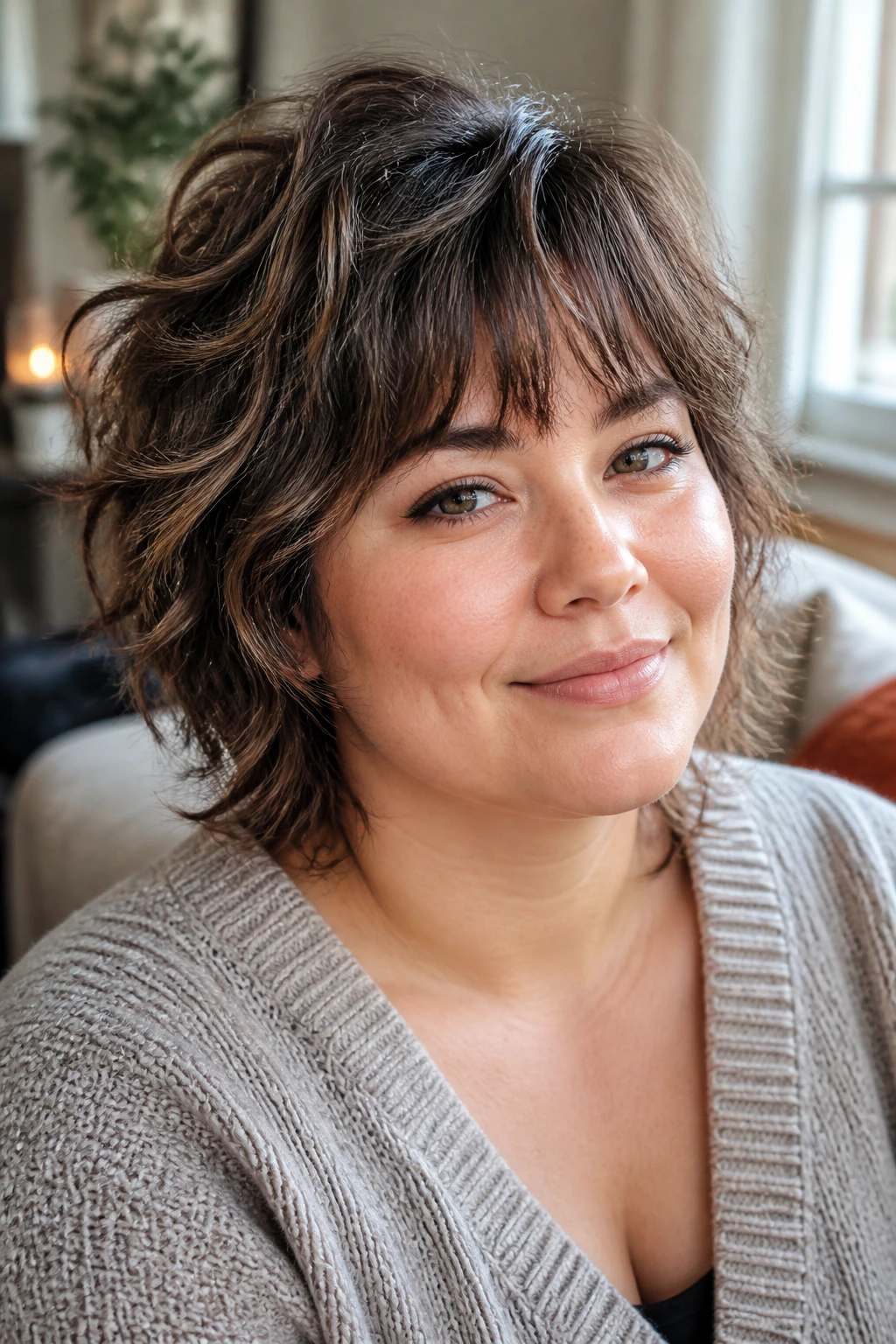
-
They add vertical movement where you need it most. A short shag creates broken lines that pull the eye up and down instead of letting it sit on one wide horizontal shape.
-
They keep the widest part of the hair away from the widest part of the face. That sounds fussy, but it’s the whole game: if the volume sits at the cheeks, the face looks wider; if it sits above or below, the shape reads cleaner.
-
The bangs interrupt the forehead in a soft way. Curtain bangs, bottleneck bangs, and piecey fringe all shorten the upper third without drawing one hard line across the face.
-
Waves do the heavy lifting. Natural bend keeps the cut from feeling stiff, and a soft curve through the ends helps the haircut move instead of balloon.
-
The grow-out is kinder than a blunt bob. When the layers are cut well, the shape still looks deliberate three or four weeks later, which is a nice change from the usual awkward bang phase.
The Shape Rules That Keep the Cut From Puffing at the Cheeks
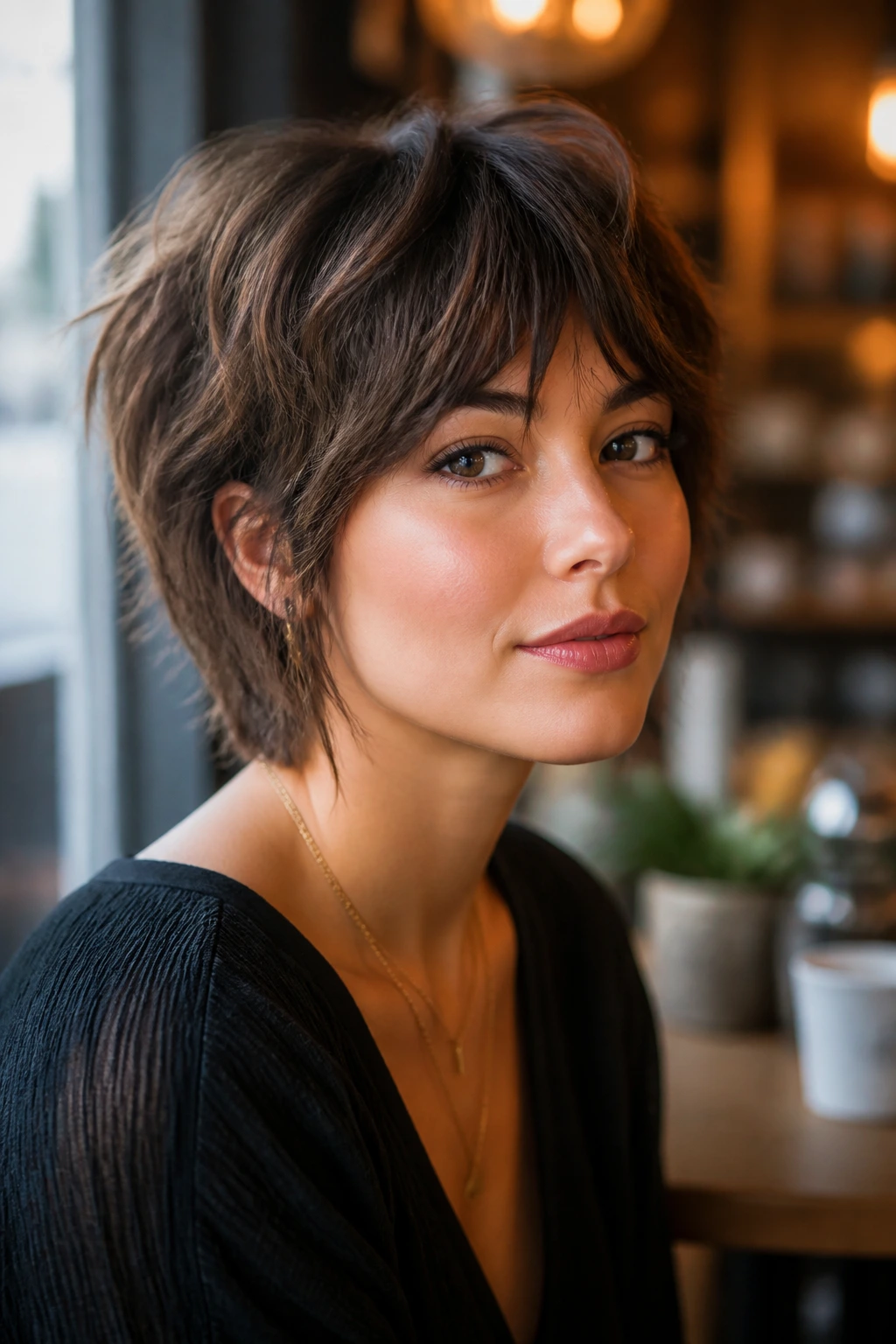
A round face usually has the same general width and length, with softer angles at the jaw. That does not mean you need to chase length for the sake of length. It means you need a haircut that creates direction. A shag does that by stacking interest in the right places: lift near the crown, controlled pieceiness through the sides, and fringe that breaks up the forehead without building a heavy bar across it.
Where the volume should sit
The smartest place for volume is usually the top third of the head, or down near the ends—not right at the cheekbone. That’s why a shag with a little height at the crown tends to read better than one that flares out at the temples. You want shape, not width for width’s sake.
What bangs should do
Bangs on a round face work best when they either open in the center or bend diagonally. Curtain bangs, bottleneck bangs, and side-swept fringe all make the face look a touch longer because they guide the eye toward the center and then down. Thick straight bangs can work, but only when they’re broken up enough that they don’t feel like a lid.
Why length still matters
Even a “short” shag can sit at the jaw, chin, or collarbone, and that difference changes everything. If your cheeks are full, a cut that ends exactly at the widest part of the face can feel boxy. A better choice is often a line that lands a little above or a little below that point, with wispy layers that keep the edge from looking heavy.
1. Curtain-Skimming Shag with Brow-Grazing Bangs
This is the safest entry point if you want texture without drama. The layers are soft enough to move, and the bangs sit just at the brows, which keeps the forehead from feeling too exposed while still leaving space around the eyes. On a round face, that tiny bit of openness matters. The face gets shape, not a curtain wall.
Best for: people who want a first shag, or anyone who likes wearing hair with a middle or slight-off-center part. The shorter layers should start around the cheekbone area, but not sit so full there that the sides puff out. Ask for the ends to be point-cut so they flick instead of sitting blunt.
One thing I like here: it grows out politely. The fringe can be pushed apart on tired hair days, and the whole cut still looks on purpose. That’s not always true with bangs.
2. Chin-Length Razor Shag with Bottleneck Fringe
This one has a little edge, but not in a costume-y way. The razored ends keep the cut light around the jaw, which helps if your hair tends to swell outward when it dries. Bottleneck bangs—shorter in the center, longer toward the temples—give the forehead a narrow opening that plays nicely with rounder cheeks.
The key is restraint. If the razor work goes too far, the ends can look stringy, especially on fine hair. But when the cut is balanced, the shape feels cool and slightly undone, like you didn’t overthink it even if you absolutely did.
If you have thick wavy hair, this is one of the best short shag options because it removes bulk without turning the whole head into a triangle. Keep the bangs soft and separated. Hard, solid fringe kills the effect.
3. Cropped Wolf Shag with Wispy Micro Fringe
A cropped wolf shag has more bite than most people expect, and that’s exactly why it works. The crown is short, the back is a touch longer, and the fringe is kept wispy instead of dense. On a round face, the short crown adds height fast, which gives the face a longer read almost immediately.
Don’t confuse wispy with weak. The fringe still needs structure; it just shouldn’t sit like a solid sheet. If the bangs are too thick, the whole cut can feel boxed in. If they’re soft and broken, the style looks sharp without making the forehead feel crowded.
This is the cut for someone who likes a little attitude and doesn’t mind using texture spray. It looks best when the pieces are separated, not combed into obedience.
4. Collarbone Shag with Split Curtain Bangs
If you want a version that feels a little more grown-up and a little less rebellious, this is the one. The length grazing the collarbone gives the face a vertical line, and the split bangs create a soft center opening that stops the haircut from reading heavy at the cheeks. It’s the kind of shape that looks calm even when the wave pattern is doing its own thing.
Why it helps a round face: the length pulls the silhouette downward, while the bangs pull the eye inward. That combination is sneaky. It does a lot without screaming about it.
This cut also gives you room to tuck one side behind the ear without wrecking the shape. If your hair is medium density, that tiny asymmetry can make the whole style feel more deliberate.
5. Piecey Pixie Shag with Side-Swept Bangs
Shorter than most shags, but not so short that it loses the wave. A piecey pixie shag keeps the top airy and leaves enough fringe to sweep across the forehead. That side movement is the whole trick. It takes the eye off the widest part of the face and sends it diagonally instead.
This is a good cut if you like low-fuss styling and your hair already bends easily. On a round face, a heavy fringe cut straight across would fight the shape. A side-swept bang, though, gives a nice soft angle and keeps the front from looking blocky.
Nope, this is not the one for someone who wants neatness. It wants a finger-dried finish, a little grit, and maybe one or two sections bent with a tiny iron if you care about polish.
6. Feathered Bob Shag with Soft Arc Fringe

A feathered bob shag sits in that sweet spot between tidy and tousled. The perimeter is still bob-like, but the layers are sliced and feathered enough that the ends don’t hang in one solid line. The soft arc fringe curves just enough to break the forehead, which is helpful when you want bangs but don’t want a blunt curtain.
The shape is especially kind to fine hair. Feathering gives the illusion of more movement without chopping the density too hard. With a round face, that matters because a thick, blunt bob can pull the eye straight across the cheeks. This version keeps things lighter.
It also plays well with air-drying. A touch of mousse at the roots and a little scrunching at the ends usually does more than a full blowout.
7. Curly Crop Shag with Long Frayed Bangs
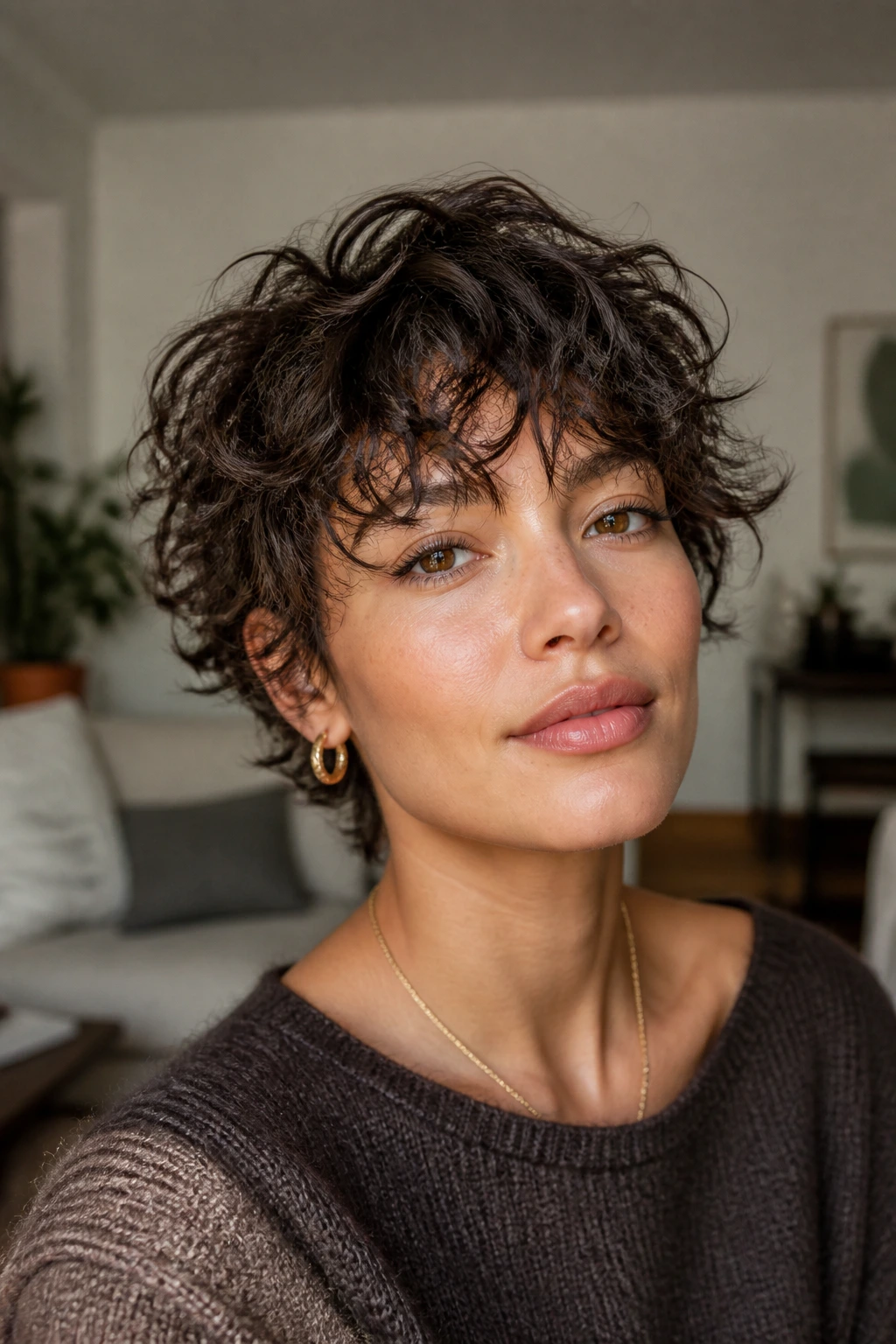
If your wave pattern is closer to loose curls, this cut gives you room to breathe. The crop stays short, but the bangs are left longer and frayed so they can shrink up naturally without looking accidental. That little bit of length keeps the fringe from jumping too far up the forehead once it dries.
The best part is the face shape balance. Curly hair can pile outward fast, so the cut has to be shaped with intention around the cheeks and temples. Long, softened bangs help pull the focus toward the center while the curl pattern adds vertical movement.
Ask for this one dry or nearly dry if your texture is unpredictable. Curly hair lies. Wet curls lie even more.
8. Choppy Lob Shag with See-Through Fringe
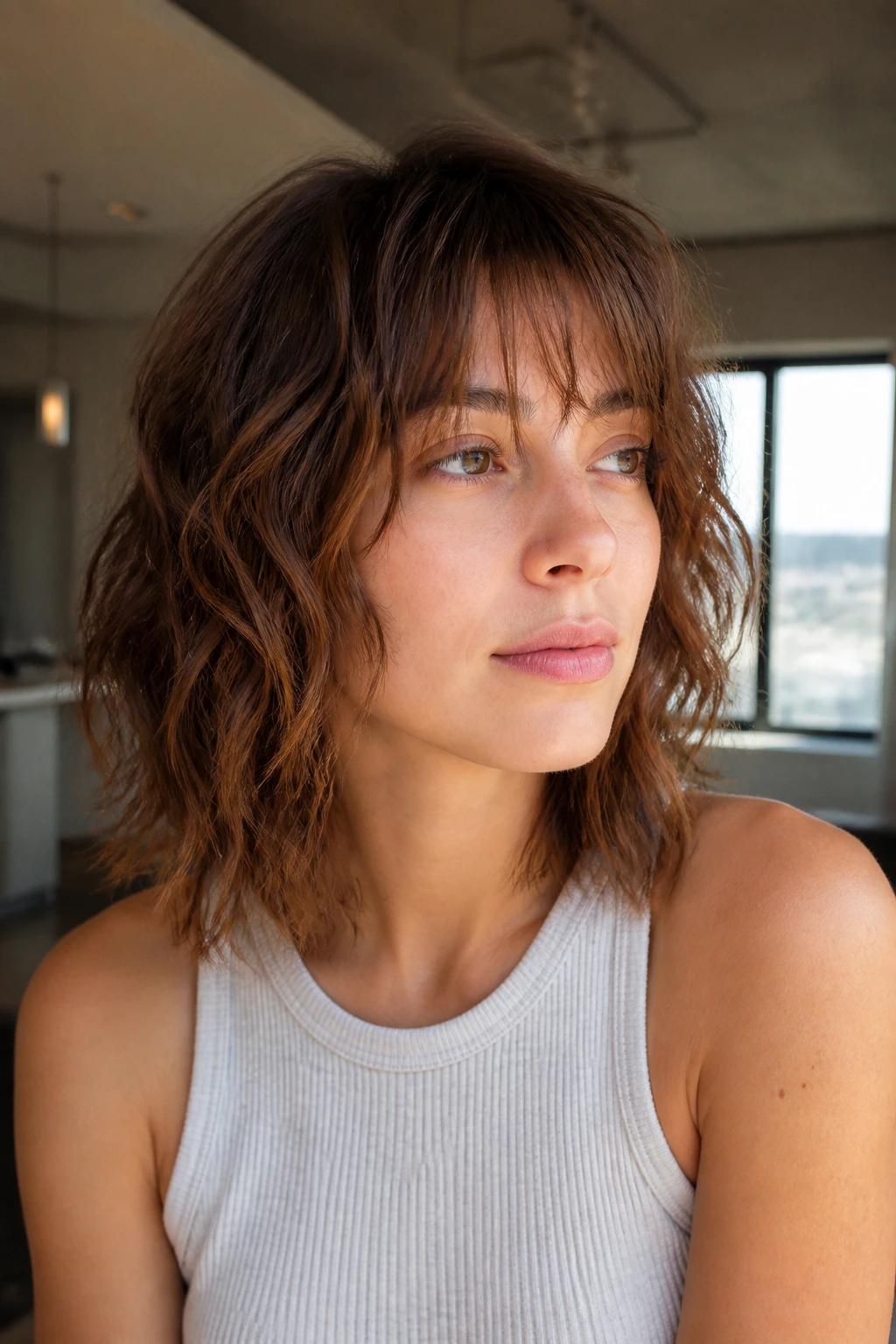
This is the cut for people who want a short-ish shag without going too short. The lob length gives the face room to stretch, and the see-through fringe keeps the forehead open instead of boxed in. It’s airy, a little cool, and easy to wear on a day when you do not have the patience for heat styling.
The bangs are the quiet hero here. A see-through fringe means the forehead still shows through in places, which stops the front from feeling heavy. On a round face, that transparency matters. Solid bangs can make the upper face feel compressed; broken fringe keeps the proportions lighter.
This one works especially well if your waves are loose and you like a side part one day and a center part the next. It can handle both without collapsing.
9. Feathered Mullet Shag with Jagged Bangs

This is the bold cousin in the group. The front stays feathered, the crown is choppy, and the back carries a little more length so the silhouette has a clear direction. Jagged bangs keep the front from feeling sweet or too polished. The whole cut has movement with a bit of grit.
Round faces benefit from the mullet-shag shape because it creates contrast. The short pieces lift the face, while the longer back prevents everything from ballooning at the sides. That back length is doing more work than people think. It gives the haircut a tail, so the eye keeps moving.
It is not the softest option here. That’s the point. If you want something that looks a little rebellious but still flattering through the cheeks, this is a strong pick.
10. French Shag with Gentle Crescent Bangs

This one leans softer and a little more polished, though not in a stiff way. The layers are light, the fringe curves in a gentle crescent, and the overall effect is relaxed without looking sloppy. On a round face, that curved bang is useful because it opens the center while keeping a little frame at the sides.
I like this cut on hair that falls somewhere between fine and medium. It does not need a ton of density to look good. What it does need is a clean perimeter and enough texture near the front to keep the bangs from sitting like a shelf.
It’s also a nice option if you wear glasses. The fringe can sit above or around the frames without crowding the face, which is harder to pull off than people think.
11. Angle-Forward Shag with Face-Slimming Bangs
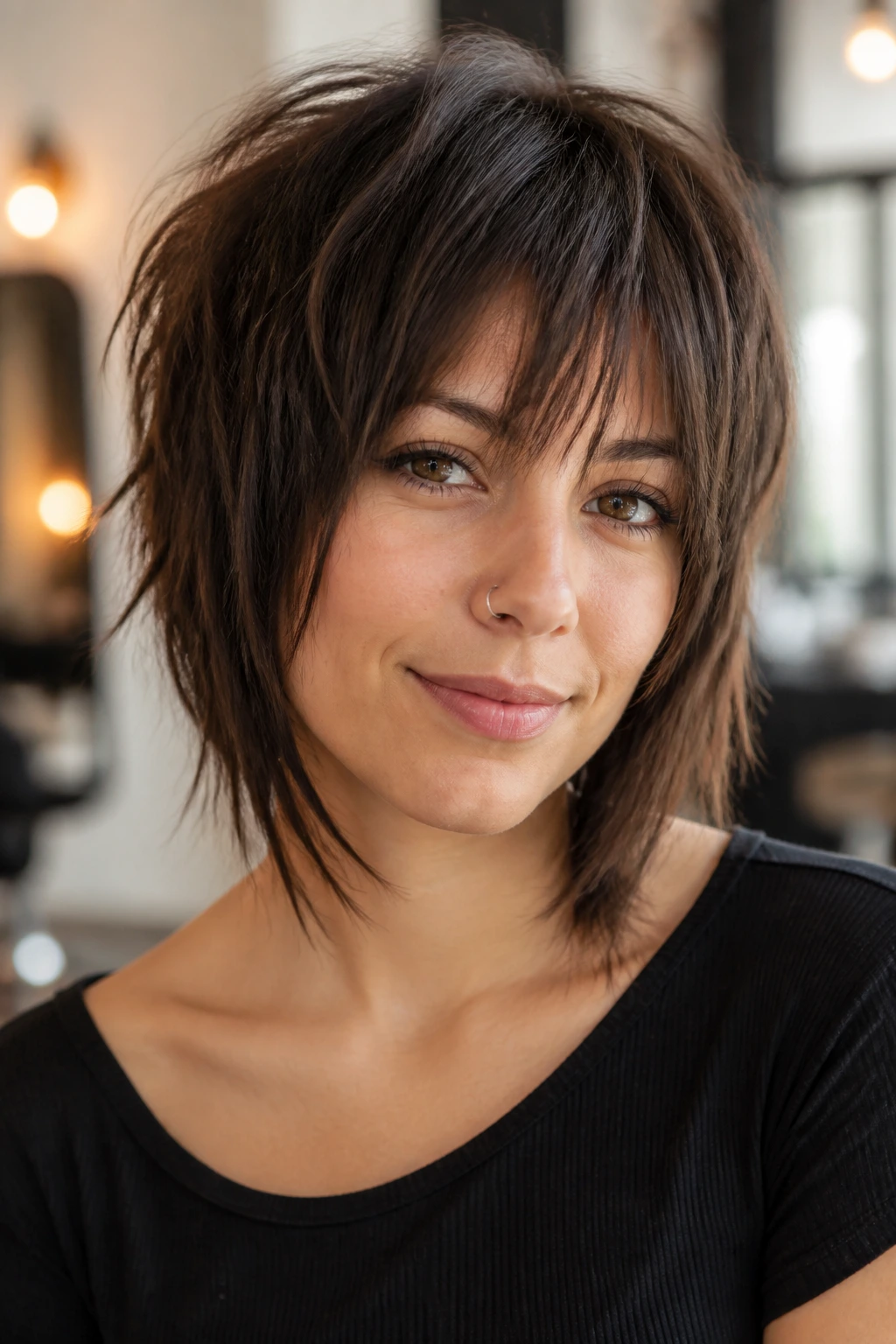
The name sounds a little extra, but the cut earns it. Everything in this shape is nudged forward at a slight angle: the fringe, the front layers, even the way the ends are carved. That angled movement gives the face a longer read, especially if your cheeks are full and you want to soften the width without losing short hair.
This is one of the better choices for thicker waves because the angle helps remove bulk where it piles up first. The bangs should be broken, not straight. You want a diagonal flow, not a rigid line. If the front sits too flat, the whole trick disappears.
A small push from a round brush at the roots can change the entire mood of this cut. Not much. Just enough to keep the front from collapsing toward the cheeks.
12. Textured Mushroom Shag with Broken Fringe
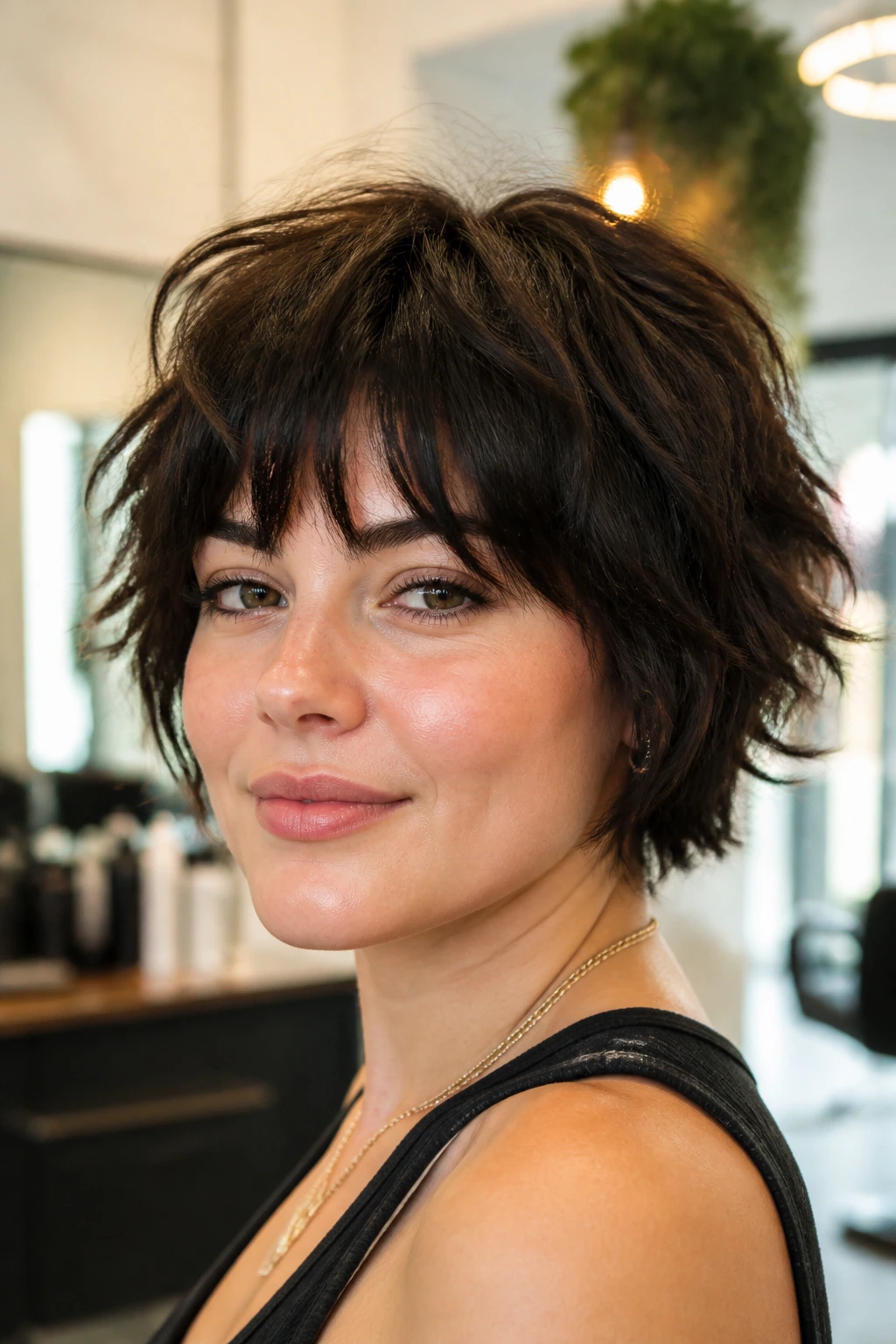
A mushroom shape on a round face sounds risky, and honestly, it can be. But when the edges are broken up and the internal texture is controlled, it becomes a very interesting choice. The key is to avoid the old-school bowl feeling. This version should have lift, separation, and a fringe that looks chipped apart rather than cut in one row.
The reward is shape. A textured mushroom shag puts the attention on the crown and creates a neat frame around the face without adding bulky width at the cheeks. That makes it one of the more unusual options here, but also one of the most useful if your hair is dense and hard to tame.
If you like architecture in a haircut, this is the one that gives it to you. Just make sure the stylist understands “rounded” does not mean “helmet.”
13. Salt-Spray Shag with Long Tapered Bangs

This cut belongs to the air-dry crowd. The layers are chopped for movement, the bangs taper longer at the sides, and the whole shape gets better when texture spray or salt spray roughens it up a little. On a round face, those longer bang edges act like little brackets that guide the eye downward.
What works here: the bangs are long enough to bend around the temples, which keeps the sides from looking too wide. The rest of the shag should stay loose and slightly uneven. If it gets too neat, the shape loses its point.
This is one of those cuts that looks slightly better on day two. The wave settles. The fringe falls into place. It feels lived-in in the best possible way.
14. Asymmetrical Shag Bob with Deep Side Part
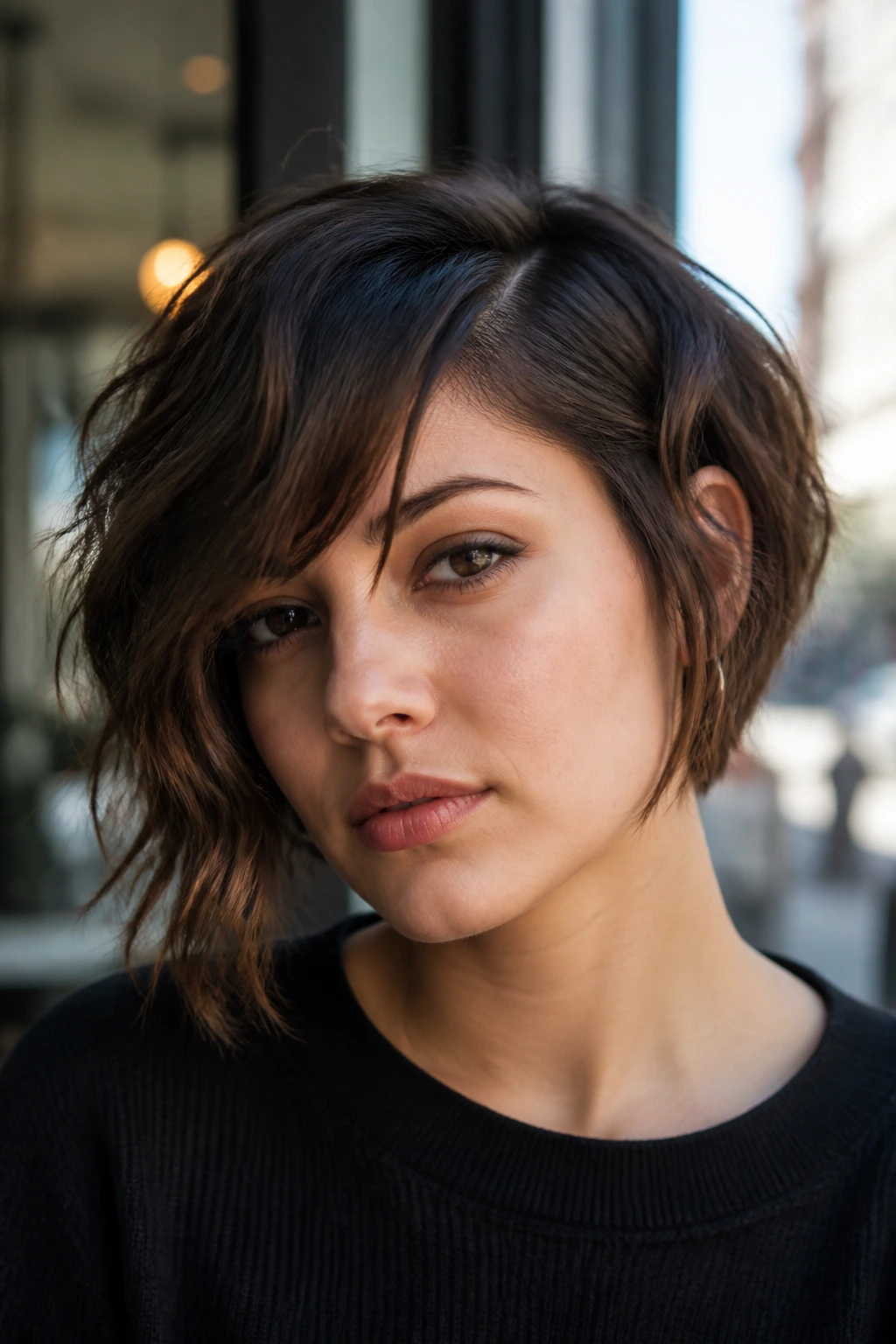
If symmetry makes your face look wider than you want, asymmetry is the answer. A deep side part breaks the roundness instantly, and the shaggy bob length keeps the hair from puffing at the jaw. One side can sit a touch fuller, while the other tucks in tighter and creates a line that feels sharper through the face.
This is a strong option for anyone who hates middle parts but still wants bangs. The fringe can sweep from the heavier side and fall into the eye line without blocking the forehead completely. That gives you movement and a little drama without the heaviness of a full fringe.
It’s also one of the easiest ways to make a short wavy cut feel less predictable. Some mornings it looks polished. Some mornings it looks like you woke up with the right kind of chaos.
15. Shattered Crop Shag with Baby Bangs
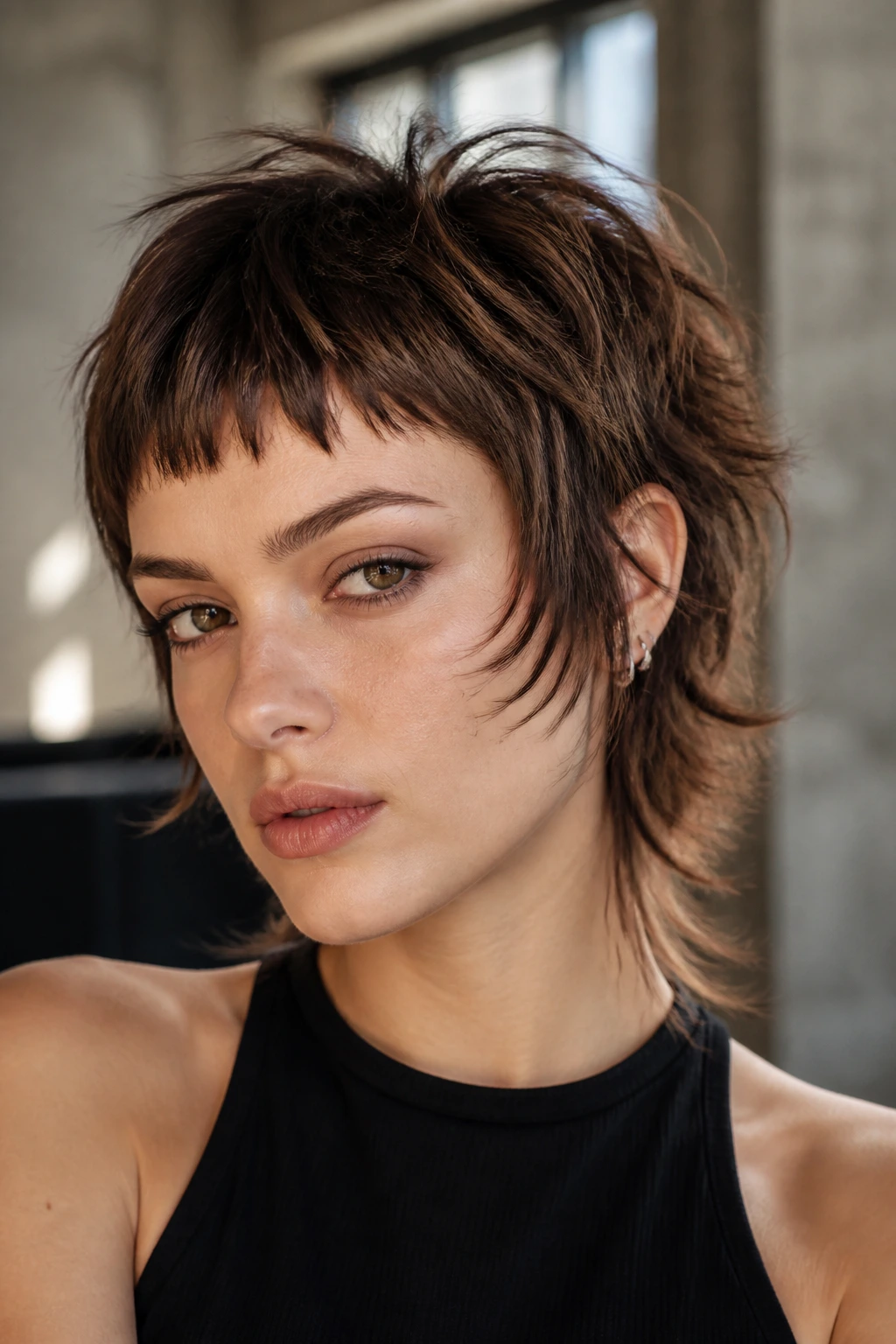
Baby bangs are not subtle, and that’s why they can work. The trick is to keep them shattered and soft rather than thick and hard. On a round face, a solid micro fringe can make the upper third feel closed in. A broken one leaves enough space that the forehead still breathes.
The crop underneath should stay textured and loose, never plush. Too much fullness around the temples will fight the short fringe. The best versions of this cut look angular and a little art-school, with the crown lifted and the sides kept light.
If you want low-maintenance, skip this one. If you want a haircut that looks like it has a point of view, this is it.
16. Grown-Out Shag with Cheekbone Bangs

This is the cut for people who hate the awkward between stages and want something that already looks halfway there. Cheekbone bangs are long enough to blend into the front layers, which means you can wear them open, tucked, or pushed to the side. That flexibility is gold on a round face, because the fringe can shorten the face one day and soften it the next.
The grow-out version of a shag is not a compromise. Sometimes it’s the nicest version. The layers sit a little longer, the waves fall with less force, and the face frame lands exactly where it needs to: around the cheekbone, not on top of it.
If you’re growing out bangs or a bob, this cut is the bridge that keeps everything looking deliberate.
17. Soft Deconstructed Shag with Swept Fringe
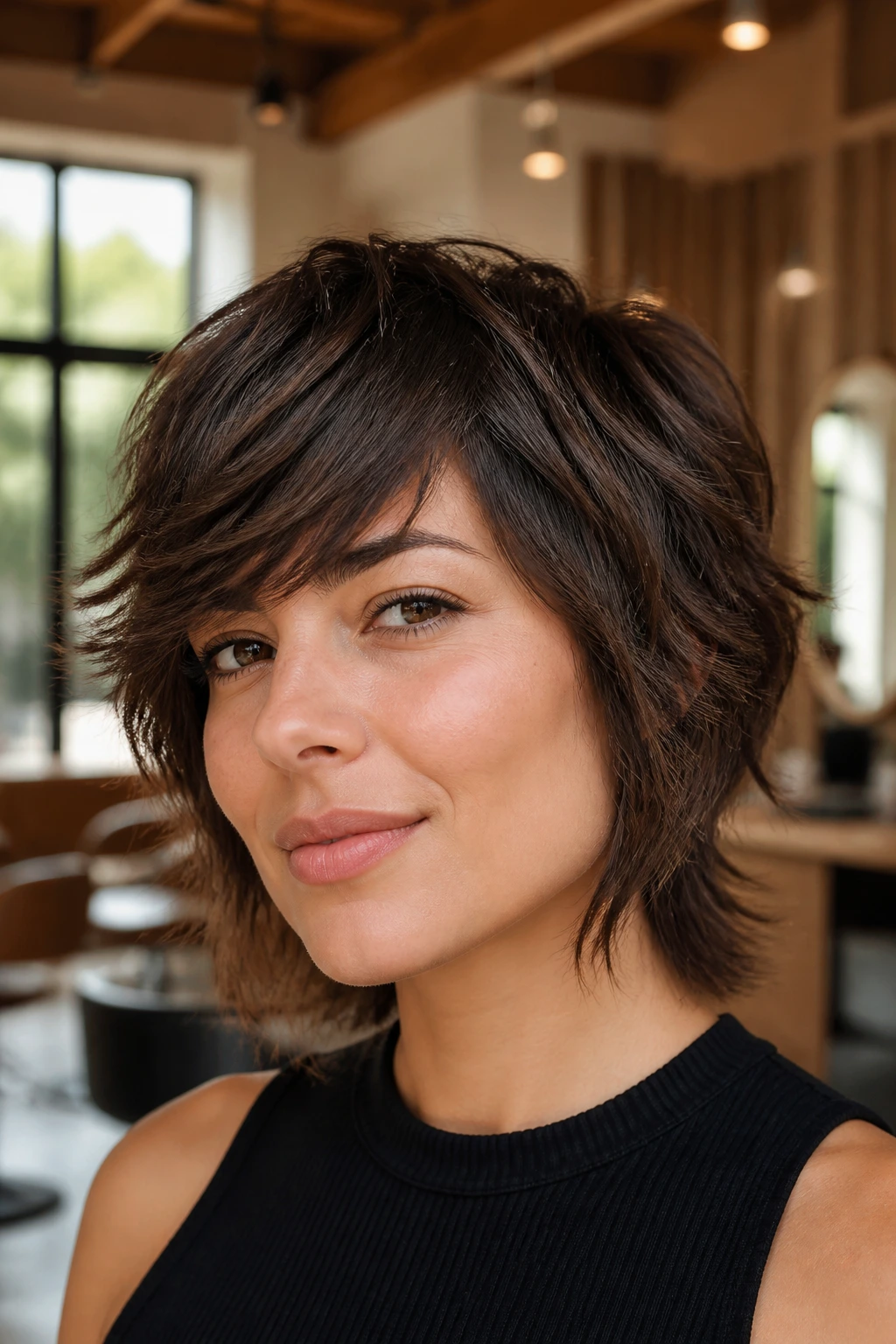
This is the easiest cut to live with and probably the one I’d point to first if someone asked for a no-fuss answer. The layers are deconstructed enough to keep movement in the ends, but soft enough that the haircut never turns spiky. The swept fringe bends across the forehead and then drops into the side lengths, which keeps the face open without exposing the whole hairline.
It works because it refuses to sit still in one shape. Round faces usually look best when the haircut changes direction a little—up at the crown, across the forehead, and then downward through the sides. This cut does all three without making a scene.
You can wear it messy. You can wear it slightly polished. You can probably sleep on it and still leave the house.
How to Ask for the Cut Without Losing the Shape
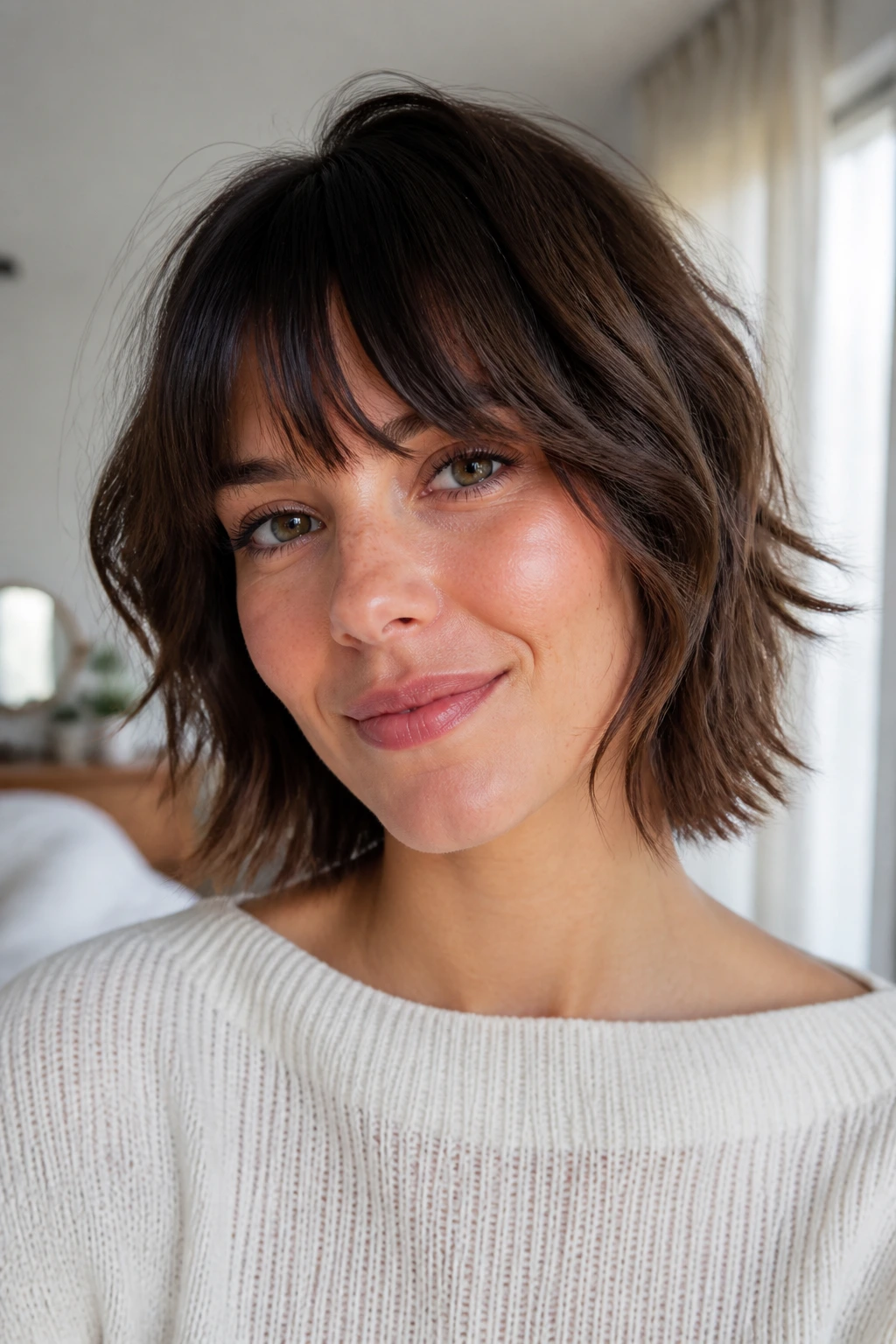
Bring photos, yes, but bring the right photos. Show your stylist at least one picture from the front and one from the side, because a shag can look flattering head-on and wrong in profile. A side view tells the truth about where the layers start, how heavy the fringe is, and whether the back is doing anything useful or just hanging there.
Say where your part lives. Say how much forehead you want to show. Say whether you style with a round brush, a diffuser, or nothing at all. Those details change the haircut more than a vague “I want texture” ever will. Texture is not a plan. It’s a result.
Tell them where you do not want the widest part to hit. That sentence helps more than almost anything else. If the stylist knows your cheeks are the widest point, they can keep the bulk above or below that zone instead of landing layers right there and creating a puffed-out triangle.
Dry cutting can be a smart request if your wave pattern is unpredictable, especially around the bangs. Wet hair lies, curls shrink, and a fringe that looks polite in the chair can sit much shorter once it dries.
How to Style It So the Waves Still Move

The easiest mistake with a shag is overworking it. Shags are built to look like they have some life in them, so if you blast every piece straight and then scrape it into submission, you erase the whole point. Start with a light mousse at the roots if your hair is fine, or a small amount of curl cream through the mid-lengths if your wave is thirstier and needs softness.
Dry the bangs first. Always. They are the part most likely to go weird if you leave them for last. Use your fingers, a small round brush, or a flat brush depending on the finish you want, and keep the airflow moving side to side so the fringe does not set into one hard bend.
For the rest, rough-dry until the hair is about 80 percent dry, then stop touching it. If you like a more defined finish, wrap random pieces around a 1-inch curling wand for five to eight seconds each, then shake them out with your fingers. You do not need perfect curls. You need bends. Big difference.
A little texture spray at the ends goes a long way. Too much at the roots can make the haircut feel dusty and heavy. That’s the trap.
What Usually Goes Wrong With This Kind of Cut

The most common mistake is bangs that are too blunt and too dense. On a round face, heavy fringe can make the forehead feel smaller in a bad way, and it often pushes the eye sideways instead of downward. The fix is a softer center, broken edges, or a longer side taper.
Another problem: layers that start too high at the cheeks. That’s how you get the mushroom or triangle effect, which is almost always the opposite of what people wanted. Ask for the shortest pieces to be placed with purpose, not randomly carved around the widest part of the face.
Over-thinning is its own mess. Fine wavy hair can lose its shape fast if a stylist gets enthusiastic with the texturizing shears. The cut may look airy in the chair and limp at home. If your hair is not thick, ask for selective removal, not a full thinning job.
And then there’s styling too much volume into the sides. A round face usually needs lift at the crown, not puff at the temples. If your blowout is widening the hair around the ears, stop and rethink the brush direction.
Variations for Fine, Thick, and Curly Hair
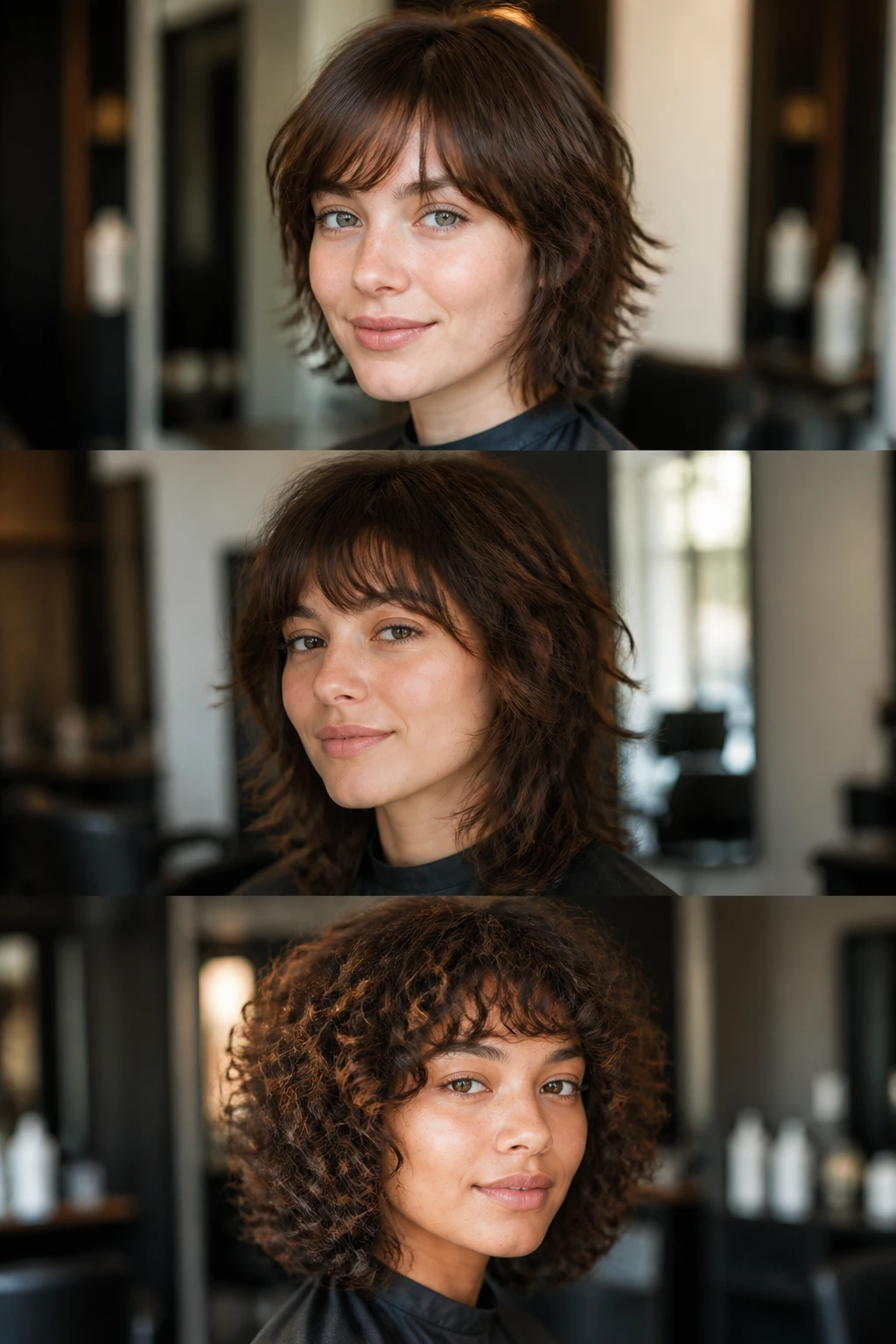
The Airy Fine-Hair Version: keep the fringe light, skip heavy razoring, and ask for soft point-cut ends. This gives you motion without chewing up the density. A tiny bit of root lift spray is enough; too much product will drag the shape down.
The Debulked Thick-Hair Version: this is where internal layering matters. Ask your stylist to remove weight inside the shape, but leave the perimeter soft so the cut doesn’t turn into a shelf. Thick hair can handle sharper bangs, but they still need movement through the center.
The Curly-Wavy Hybrid: if your pattern is inconsistent, let the bangs stay longer than you think. Shrinkage is real, and a fringe that lands at the brows wet can jump to mid-forehead dry. Better to start long and refine later.
The Low-Styling Version: keep the layers longer and the fringe more side-swept. This one should look decent with air-dry cream and a scrunch, which is a very different promise from a polished salon finish.
The Edgier Razor Version: if you like a bit more bite, use razor work only on the ends and not everywhere. That keeps movement but avoids making the hair look frayed in a bad way.
Tools and Products That Earn Their Place

- 1-inch round brush — useful for bending bangs away from the cheeks and giving the front a little lift.
- Small flat brush or paddle brush — better for side-swept fringe and for smoothing the top without flattening the wave.
- Diffuser attachment — keeps wavy hair from blowing into a frizz halo while drying.
- Heat protectant spray — worth using anytime a wand or flat iron touches the fringe or front layers.
- Mousse — good for root lift on fine hair without the sticky feel of heavy creams.
- Curl cream — helps wavy or curly shags hold their shape and keeps the ends from getting dry and fuzzy.
- Texture spray — adds separation to the layers, especially around the crown and face frame.
- Fine mist spray bottle — handy for resetting bangs without soaking the whole head.
- Sectioning clips — make the fringe easier to manage while drying.
- Small trimming scissors for fringe only — optional, but useful if your bangs need tiny at-home cleanups between salon visits.
How to Keep the Shape Between Salon Visits

Short wavy shags usually look best with a trim every 6 to 8 weeks, and bangs often need attention sooner than that. If your fringe sits on your eyebrows or in your eyes, expect to tidy it every 3 to 5 weeks. That does not always mean a full salon appointment. Sometimes a fringe-only cleanup is enough.
The first sign the shape is slipping is not usually length. It’s weight. If the sides start to puff at the cheekbone or the bangs begin sitting like one solid block, the cut has lost its air. A little texture spray can help on a rough day, but a trim is the real fix.
Air-dry shags tend to hold their personality for a few days, then lose edge if you keep piling on dry shampoo. Use it sparingly at the roots and shake it through with your fingers. If the bangs start to separate into pieces, that’s fine. If they start sticking up, you’ve gone too far.
Growing the cut out is easiest when you keep the front soft. A blunt fringe is the thing that dates first. A broken fringe just turns into face-framing layers and keeps going.
Questions People Ask Before Cutting It

Will a short wavy shag make my round face look wider?
Not if the layers are placed well. The width problem usually comes from volume sitting right at the cheeks, not from the shag shape itself. A good cut keeps the fullness above, below, or slightly off to the side.
Are curtain bangs better than blunt bangs for a round face?
Usually, yes. Curtain bangs open the center and taper at the sides, which keeps the forehead from feeling boxed in. Blunt bangs can work, but they need texture and they need to be cut with the rest of the face shape in mind.
Can fine hair pull off a shag with bangs?
Yes, but the cut has to be light. Fine hair does better with controlled layers and soft fringe than with heavy razoring or too much thinning. The wrong version can look stringy by noon.
What if my waves are uneven?
Then the stylist should cut the hair in a way that respects the stronger and weaker bends instead of forcing both sides to match perfectly. Uneven wave patterns are normal, and a shag can handle them if the cut is shaped dry or with the natural bend in view.
Do I need heat styling to make this work?
No, but a little shaping helps. Even a quick bend with a brush or wand on the bangs can make the whole cut look cleaner. If you air-dry, use product with a light hand so the layers stay separate.
Which part is better: center or side?
A center or slightly off-center part usually works best for curtain and bottleneck bangs. A deep side part is useful when you want more asymmetry or when the hair needs a quick fix to avoid sitting flat.
How do I stop the bangs from shrinking too short?
Cut them longer than you think you need, especially if your hair waves or curls once dry. That extra half inch can disappear fast once the hair settles. Better to trim again later than to spend a month wishing for a clip.
What should I bring to the salon besides photos?
Bring one honest note about your routine. Say whether you style daily, air-dry, diffuse, or mostly let it do its own thing. A great haircut that only works with a 30-minute blowout is not a great haircut for most people.
The Shape That Keeps Moving
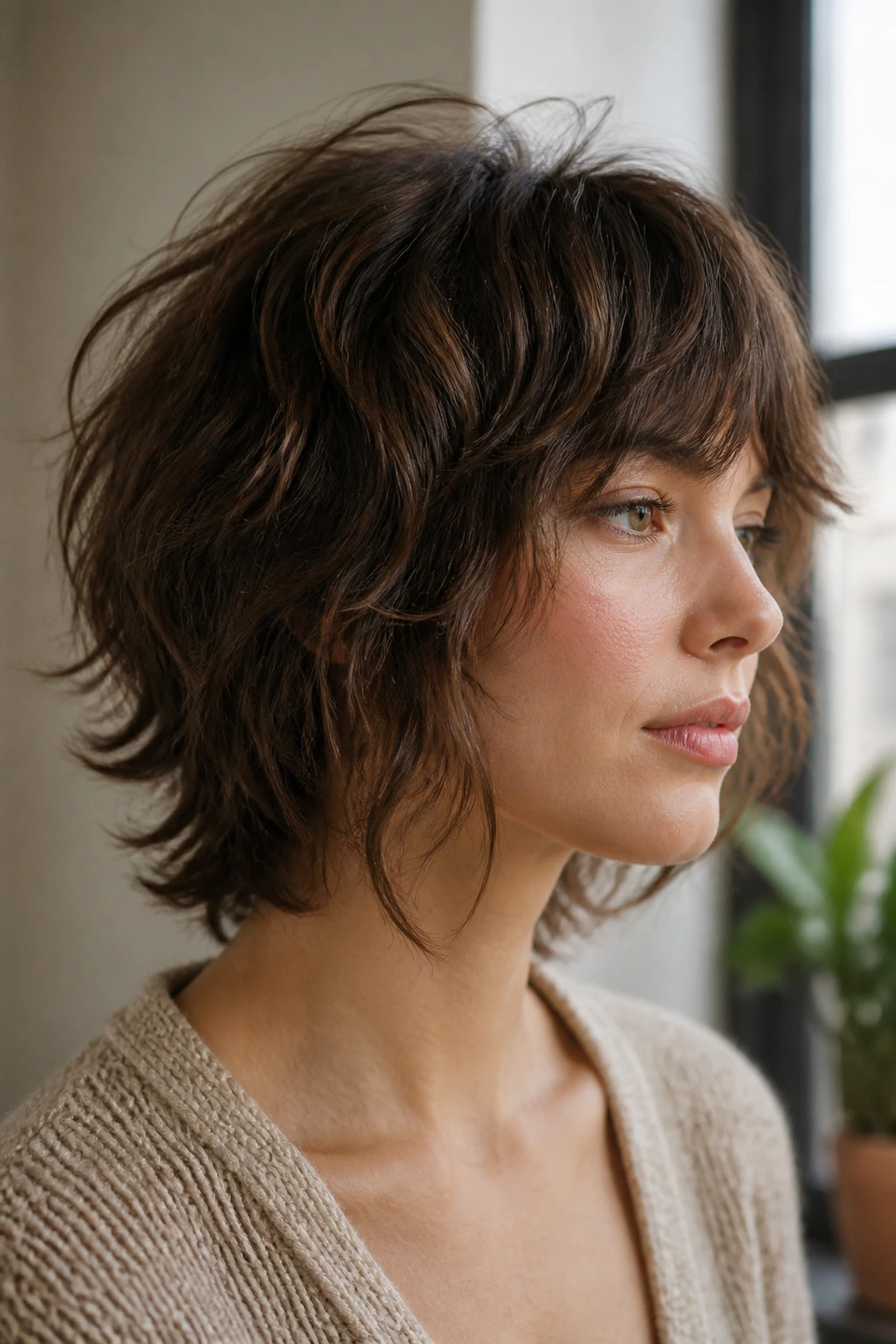
The reason these cuts hold up is simple: they give a round face more direction without turning the whole head into a geometry lesson. That balance is the hard part. Too much softness and the shape disappears. Too much structure and the hair starts fighting your features instead of working with them.
Pick the version that matches your texture, then make peace with a little movement. Shags are supposed to shift. That’s the charm. If the layers lift in the morning and fall into a softer shape by evening, that’s not failure — that’s the haircut doing its job.
