



Fine straight hair can look sharp in the mirror and limp by the time you’ve put your shoes on. That’s the problem shag haircuts for fine straight hair solve when they’re cut well: they make the shape move without asking the hair to do something it can’t do on its own. The best versions don’t rely on fluffy styling tricks or a mountain of spray. They use the cut itself.
A good shag on this hair type has to walk a narrow line. Too many short layers and the ends start to look see-through. Too few, and you get a flat sheet that clings to the head like it’s been ironed there. The sweet spot is a cut that keeps enough perimeter weight to read as fuller, while breaking up the top and front so the hair doesn’t collapse into one boring line.
That’s why this haircut family is so useful. Some versions lean soft and French-girl, some have curtain bangs and cheekbone pieces, some borrow from the wolf cut without going full shaggy rat tail. The right one depends on how much length you want to keep, how much forehead you’re comfortable showing, and whether you want the cut to air-dry with a little bend or look more polished with a brush and dryer. The useful part is knowing which silhouette earns its keep on hair that’s fine, straight, and a little stubborn.
Why These Shag Haircuts Work on Fine Straight Hair

-
They keep movement where straight hair usually goes quiet: The best shags add breakup through the crown and face frame, so the cut looks alive even when the hair falls smooth.
-
They protect the ends from looking sparse: Fine hair can look thinner fast if the layers are too aggressive. These cuts keep enough shape at the bottom to avoid that stringy, stretched-out look.
-
They give you bang options without swallowing your face: Curtain bangs, bottleneck bangs, and long fringe pieces can make the hair feel fuller up top without committing to a heavy fringe that needs constant trimming.
-
They work with a light styling routine: A quick blow-dry with a round brush, a little root lift spray, and a touch of dry shampoo usually goes farther than a drawer full of potions.
-
They can be soft or edgy: Same haircut family, very different moods. You can keep it airy and polished, or push it into a more choppy, modern shape.
1. Collarbone Shag with Curtain Bangs
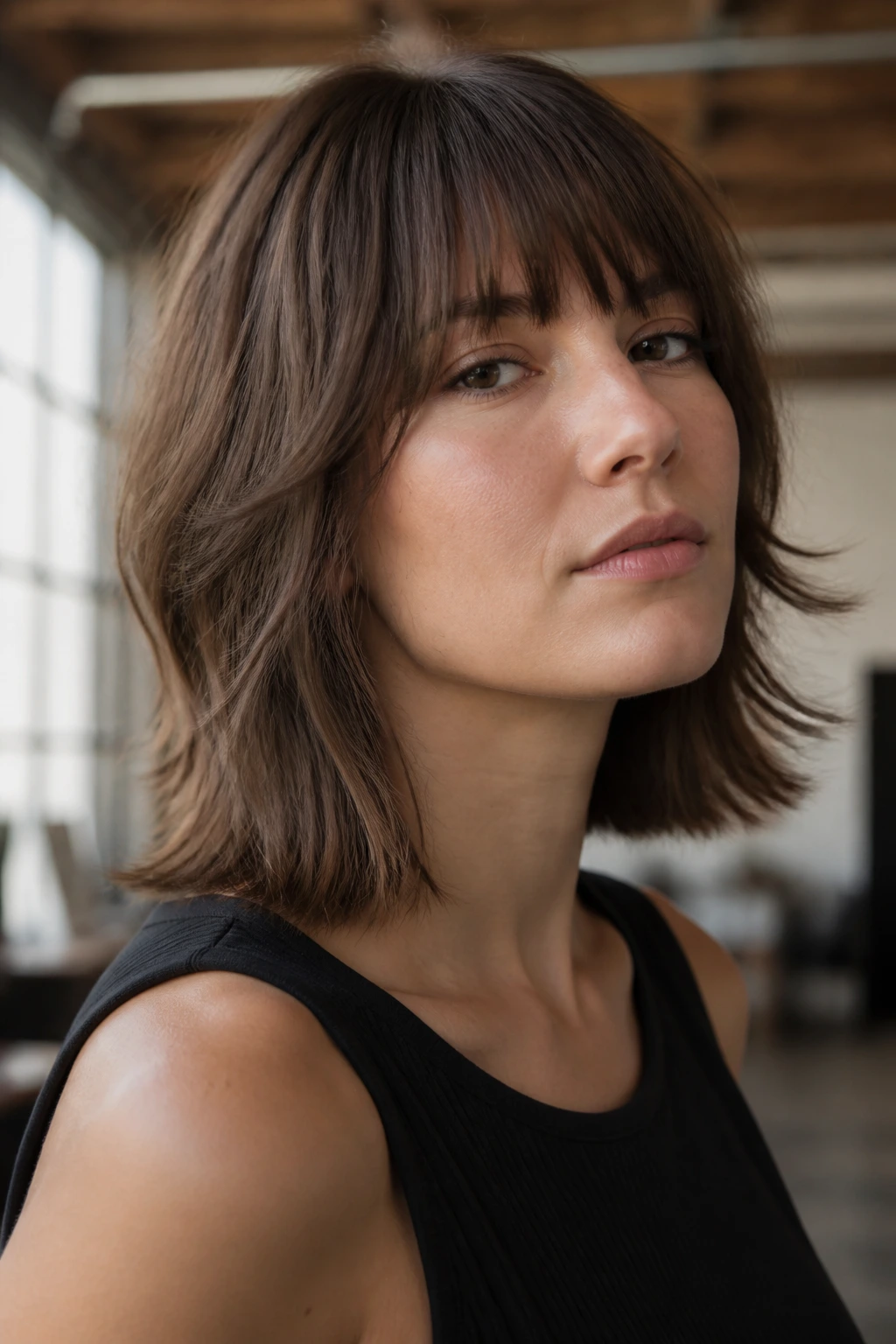
This is the shag I recommend to people who want movement but don’t want to look like they’ve joined a rock band on purpose. The collarbone length gives fine straight hair enough weight to sit neatly, while the curtain bangs split the front and create a little lift around the eyes and cheekbones. It’s a smart place to start if you want texture without losing your sense of order.
The cut works because the shortest pieces live in the front and top, not all over the head. That means the sides still read as full, and the ends don’t fray into wisps. On straight hair, that matters. A collarbone shag that’s cut too high can start to look thin at the bottom fast. This one stays grounded.
A soft blow-dry with a medium round brush makes the shape open up at the face. If you want the fringe to sit properly, bend the curtain pieces away from the center while they’re still warm. They’ll settle with that easy split that makes the whole cut feel less severe.
2. Chin-Grazing Shag Bob
A chin-length shag bob is for the person who wants the shag attitude but not the long, layered softness. The line around the jaw gives fine straight hair a blunt base to lean on, which helps the cut look thicker from the front. Then the layers around the crown and cheekbones keep it from feeling like a helmet. That’s the whole trick.
This version has a little edge. The bob line keeps the silhouette tidy, while the internal layers stop the shape from turning boxy. If your hair tends to fall flat against the sides of your face, this cut gives it a better frame without asking you to curl anything every morning.
Why it stands out
The chin length makes the hair look denser than a longer shag, especially if the ends are cut with a slight point rather than a hard edge. It’s also one of the easier cuts to style with a quick bend from a flat iron or round brush. Two passes. Done.
3. Long Feathered Shag with Invisible Layers
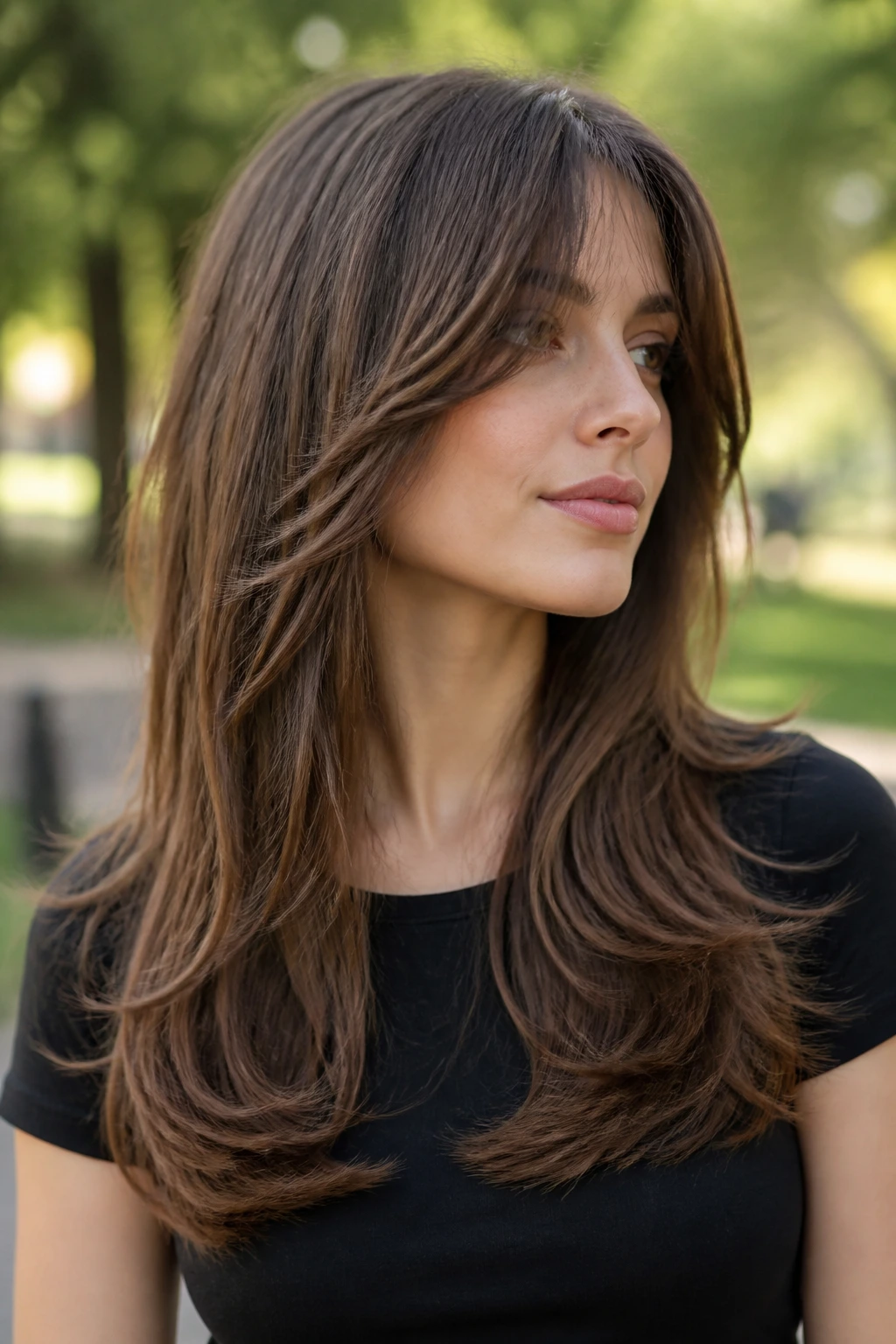
If you’re not ready to part with length, this is the low-drama answer. A long feathered shag keeps most of the hair below the shoulders, then sneaks movement into the top and mid-lengths with layers so soft they barely show unless the light hits them. On fine straight hair, that subtlety is the point. You get motion without exposing too much scalp through the ends.
This cut is especially useful if your hair grows out fast and you hate obvious chop lines. The layers blend, the perimeter stays soft, and the overall effect is more swing than separation. It looks best when the ends are healthy, because long fine hair will tell on itself if the bottom is fried or see-through.
Best for: anyone who wants shape but still likes to tuck hair behind one ear, wear it half-up, or throw it into a loose clip without the cut fighting back.
4. Side-Parted Shag with Cheekbone Pieces
A deep side part changes everything on fine straight hair. It creates a natural lift at the root before you even touch a styling tool, and that’s half the battle. Add cheekbone pieces to a shag cut and you’ve got a shape that gives the face structure while keeping the back light and moveable.
The side part also breaks the symmetry that can make straight fine hair look flat and over-groomed. A center part can be lovely, but it also exposes the fact that the hair wants to lie in two neat curtains. A side-parted shag feels looser. Slightly undone. Better, in my opinion, when the hair is particularly fine and lacks body at the crown.
A round brush on the front sections makes the cheekbone layers lift instead of sitting flush against the face. If you want a more modern finish, tuck the heavier side behind the ear and let the shorter pieces fall out around the temple. That tiny messiness helps.
5. Razor-Lite Lob Shag
A razor-lite lob shag is not the same thing as a heavily razored cut that frays the ends into dust. That distinction matters. On fine straight hair, a gentle razor approach can give the ends a softer, less blocky look while still leaving enough body in the bob-length silhouette to feel full.
The lob length sits in that useful zone between short and medium. It gives the hair movement around the shoulders, where fine straight hair often starts to kink or flip in annoying ways. With soft layers through the interior, the whole cut gets a little air around it.
Skip heavy oils on this one. They make the ends separate too fast. A lightweight cream on damp hair and a quick rough-dry usually gives you enough texture without flattening the shape.
6. Bottleneck Bang Shag
Bottleneck bangs are one of those details that can change a haircut more than a full set of layers. They start narrow near the center, then widen around the brows and taper into the face frame. On fine straight hair, that shape gives the front some density where you need it, without dropping a heavy curtain across the forehead.
This shag works because the bangs do part of the lifting for you. The rest of the cut can stay fairly soft and wearable. If your hair falls flat at the front but the lengths are fine, bottleneck bangs give the illusion of more hair up top. It’s a neat trick. Not magic. Just smart cutting.
Ask for the bang to be cut long enough to blend with the front layers once it grows out a touch. If it starts too short, it can feel fussy. If it starts a little longer, it settles into that lived-in shape people always chase and then overstyle.
7. Soft Wolf Cut with a Blunt Base
Not every wolf cut needs to go full shaggy and wild. On fine straight hair, a softer wolf cut with a blunt base gives you the shape of a trendier cut without sacrificing the illusion of thickness at the bottom. That blunt base is doing serious work. It keeps the ends from looking wispy, and fine hair loves any help it can get there.
The layers stay concentrated around the top and crown, where they create lift and movement. The lower half remains more solid, which is exactly why this version works. You get the slightly rebellious shape, but your hair still looks like it has substance.
What makes it different
A traditional wolf cut can lean very layered from root to tip. This version is more controlled. It’s for someone who wants edge in the silhouette but doesn’t want to spend time coaxing dozens of separated pieces into behaving.
8. Full Fringe Shag with Airy Ends
A full fringe on fine straight hair sounds risky until you see it with the right cut. The key is to keep the fringe airy, not blunt and heavy. A feathered full fringe gives the forehead coverage and adds a sense of density at the front, while the shaggy ends prevent the whole style from feeling too tidy or severe.
This cut makes the hair look more intentional than a loose layered style alone. There’s a little French, a little retro, a little “I threw this on and it worked.” It’s also a good way to hide a flatter crown because the eye goes straight to the fringe.
The downside is maintenance. Full fringe bangs need regular trimming, and on fine straight hair they can separate in weird ways if the roots get oily. Dry shampoo at the roots near the fringe helps. So does blow-drying the bangs first, before the rest of the hair has time to dry into the wrong direction.
9. Flipped-Out 90s Shag
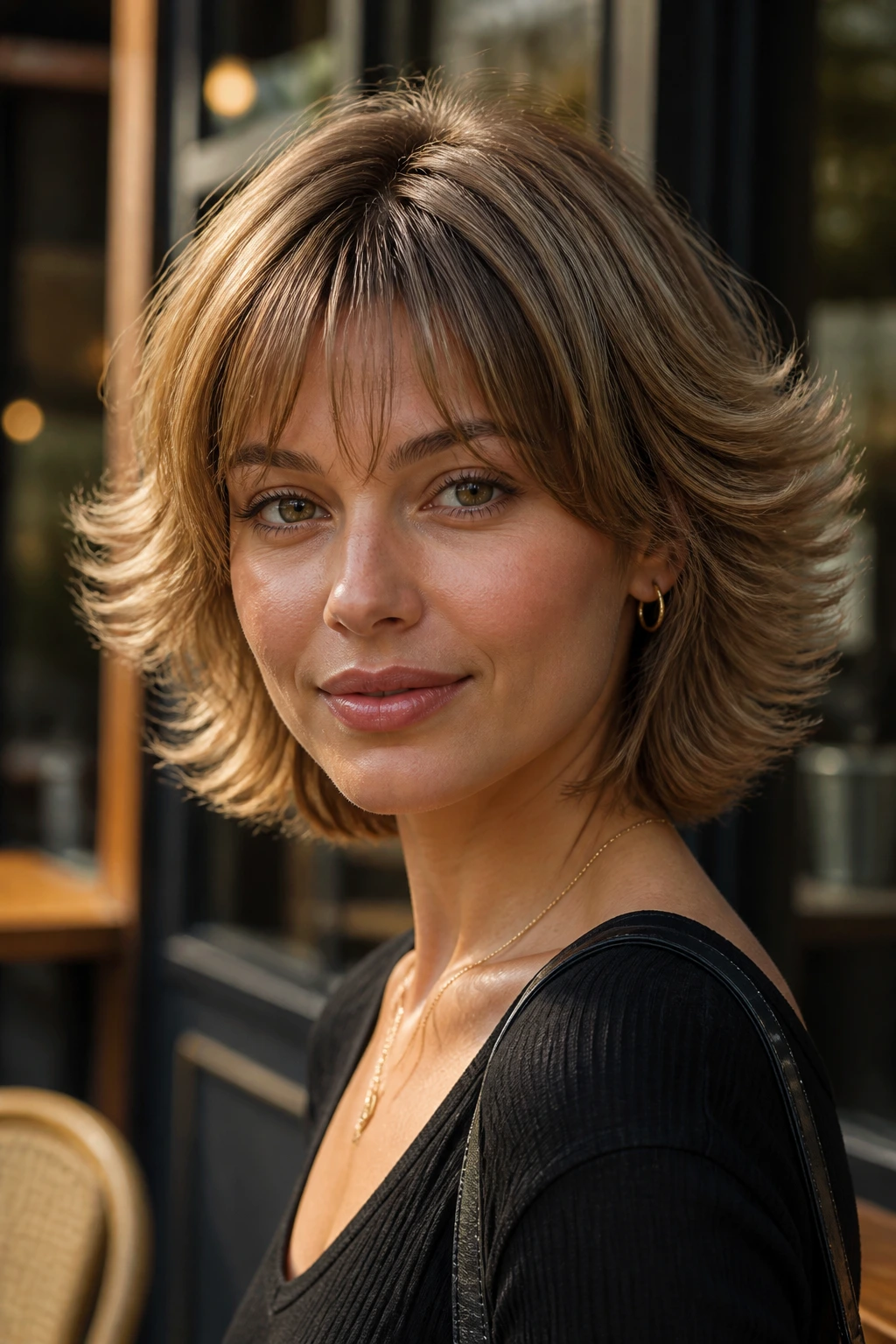
The flipped-out shag is for anyone who likes a bit of attitude at the ends. On fine straight hair, the outward bend creates the illusion of fuller width, especially around the collarbone and jaw. It’s a shape that works because it uses the hair’s own straightness and then interrupts it just enough to avoid a flat fall.
This cut is especially good if your hair tends to tuck inward and hang limp. A blow-dry with a round brush, or a quick pass with a flat iron turned slightly outward at the ends, gives the layers a lift that feels deliberate. No one needs a crunchy, over-sprayed finish here. You want movement, not stiffness.
The 90s influence shows up most at the ends, not in the whole silhouette. That’s the part worth copying. The rest should stay soft and modern.
10. Neck-Length Shag with Tucked Layers
A neck-length shag gives fine straight hair a compact, tidy shape that still has texture. The shorter length means the hair doesn’t have as much room to droop, which can be a blessing if your strands are fine and your hairline around the nape gets wispy at longer lengths. The tucked layers around the neck keep it from reading as too blunt.
This is a sharp-looking cut on the right face shape. It frames the jaw, opens the neck, and feels lighter than a classic bob because the layers break up the outline. If you like putting hair behind the ears, this cut makes that habit look intentional instead of like damage control.
It’s also a surprisingly good cut for glasses wearers. The shorter shape keeps the hair out of the frame line, and the soft layering prevents the sides from puffing out in a weird triangle.
11. U-Shaped Long Shag
A U-shaped long shag is one of the kinder options for fine straight hair because it keeps length in the center while gently shortening the sides and top. That U shape helps the cut hold together visually. If you go too flat and straight across the bottom, the ends can look thin. The U gives the silhouette a little more fullness.
This version is especially nice if you wear your hair down often. The front layers taper back from the face, then the longest point lands in the center of the back. It creates a long line that still feels soft, not severe. The hair can move without looking chopped into separate bits.
How to wear it
A middle part emphasizes the U shape and makes the face frame fall cleanly. A side part gives it a more relaxed feel. Either way, keep the layers soft enough that the cut still looks like one shape rather than a pile of disconnected lengths.
12. Minimal-Layer Shag for Maximum Thickness
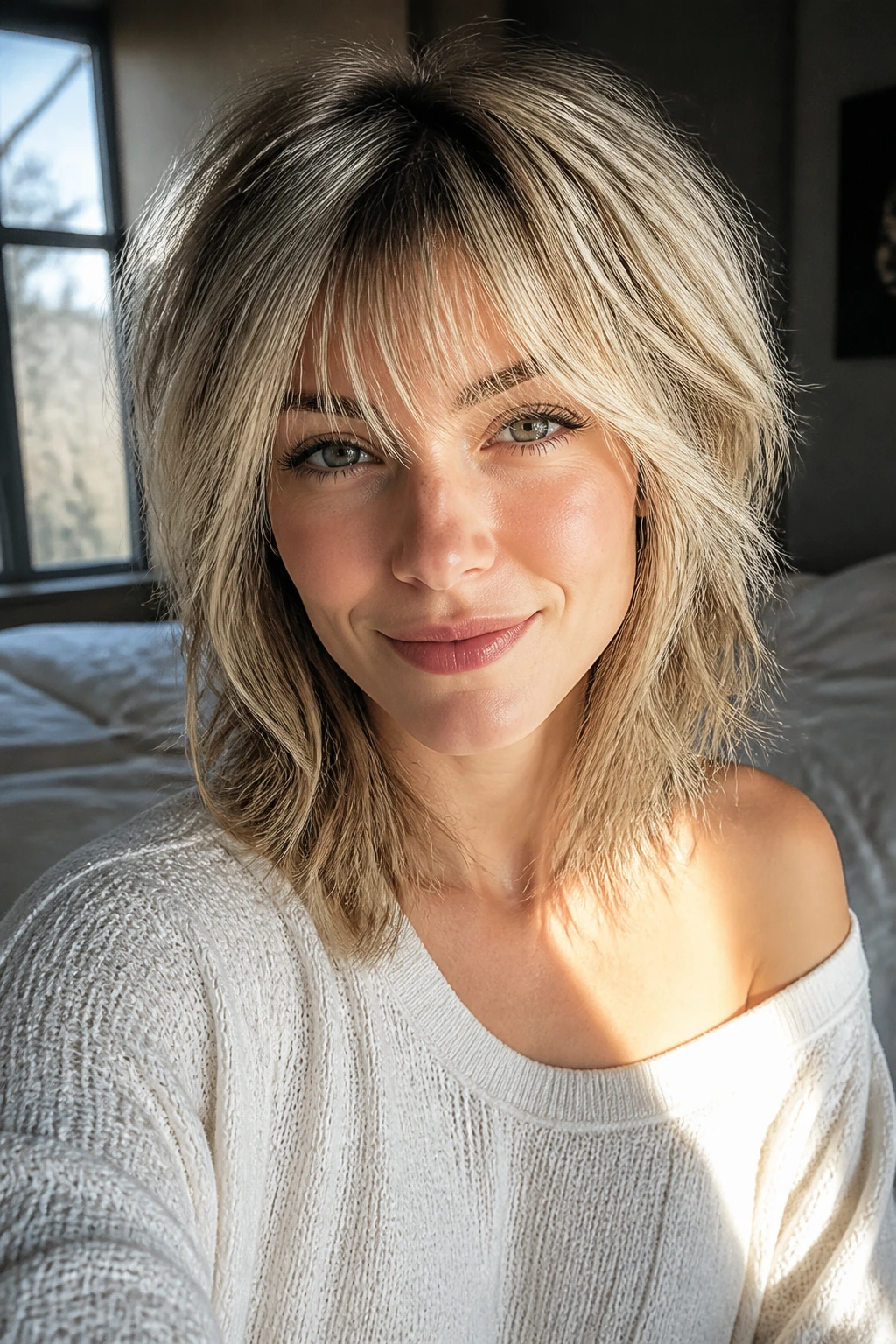
This one is for people who are nervous about layers because, frankly, they’ve probably seen what a bad layered cut can do to fine hair. A minimal-layer shag keeps the internal shaping light and strategic. You get just enough breakup around the crown and face frame to keep things from lying like a sheet, but the bulk stays where you need it.
It’s not a dramatic shag. That’s the point. The result looks denser than a heavily layered cut because the outline is cleaner and the ends still carry weight. If your hair is fine and pin-straight, this can be the smartest version in the room.
The styling is almost laughably easy. A little root mousse, a fast round-brush pass at the front, and you’re done. It’s the cut I’d send someone toward if they want to flirt with shag territory without giving up the comfort of a fuller-looking finish.
13. Deep Side-Part Shag with Swoopy Bangs

A deep side part with swoopy bangs gives fine straight hair a built-in lift that doesn’t depend on texture spray alone. The bangs sweep across the forehead and into the side layers, which helps the top half of the cut feel bigger and less uniform. There’s a bit of old-school glam here, but not in a stiff way.
This cut is useful if you want your hair to frame the face more than it frames the neck. The side sweep softens sharp features and gives a little bend around the eyes. On straight hair, that bend matters more than people think. Without it, the whole look can go flat and severe.
A note: keep the bangs long enough to tuck behind the ear on rough days. Short swoopy bangs are fussy. Long swoopy bangs give you options. Options are good.
14. Rounded Shag with Crown Lift
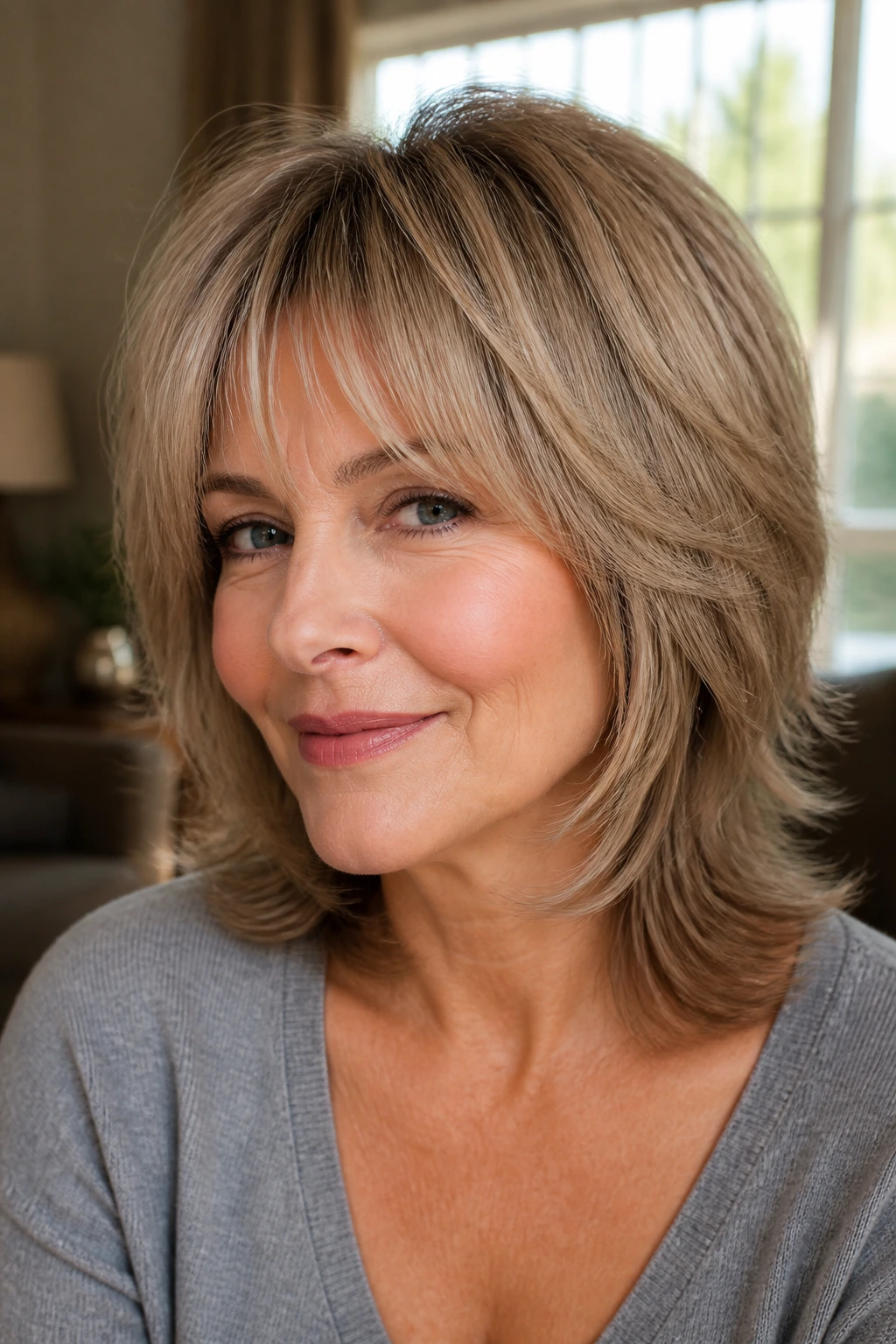
A rounded shag makes the top of the head feel fuller without turning the cut into a helmet. The crown lift is the main event here. It creates a soft dome of volume that fine straight hair usually can’t fake for long on its own. If your hair collapses the minute humidity or sweat enters the room, this shape helps.
The rounded outline is flattering because it avoids the narrow, stringy silhouette that some long layers can create. The hair comes away from the head just enough to create space, then falls back in a soft curve around the cheeks and neck. The look is controlled, but not stiff.
This is one of my favorite shags for people who want polished movement. It behaves better than the messier versions, and it still gives you lift at the roots where straight fine hair often needs it most.
15. Piecey Shag with Micro Bangs
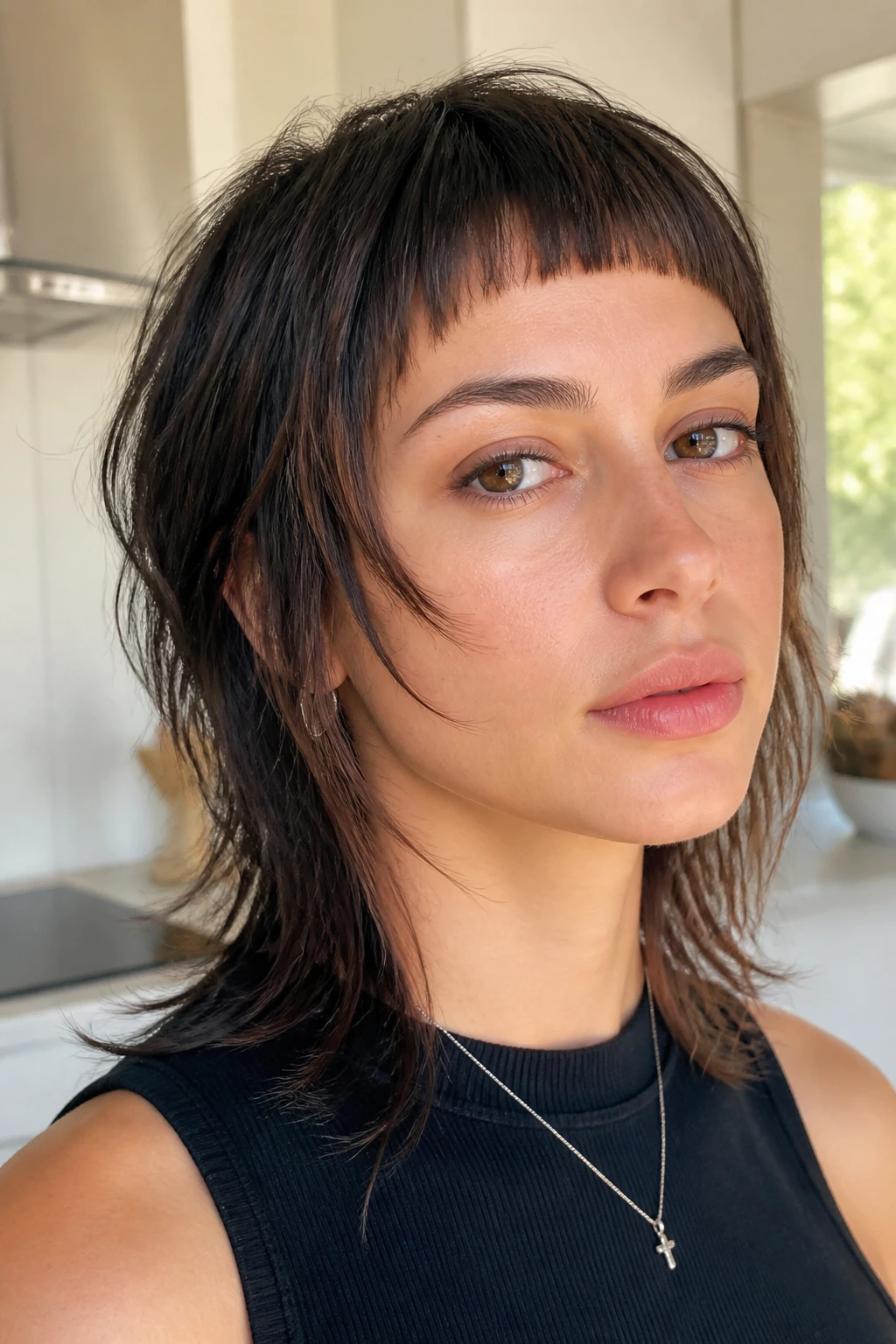
Micro bangs are not for everyone, and that’s putting it politely. On fine straight hair, they can work because the hair naturally sits smooth, which keeps the fringe from puffing out into a fuzzy cloud. Pair them with a piecey shag and the whole cut reads deliberate rather than accidental.
The catch is proportion. Micro bangs pull the eye hard to the face, so the rest of the cut needs enough movement to balance them. That means visible texture through the layers, a bit of swing at the ends, and no heavy bulk at the sides. If the cut is too flat elsewhere, the bangs take over the whole look.
Best for: someone who likes a sharper, slightly editorial edge and does not mind keeping the fringe trimmed often. These grow out fast, and the shape gets awkward when they land halfway between micro and normal.
16. Long Face-Frame Shag
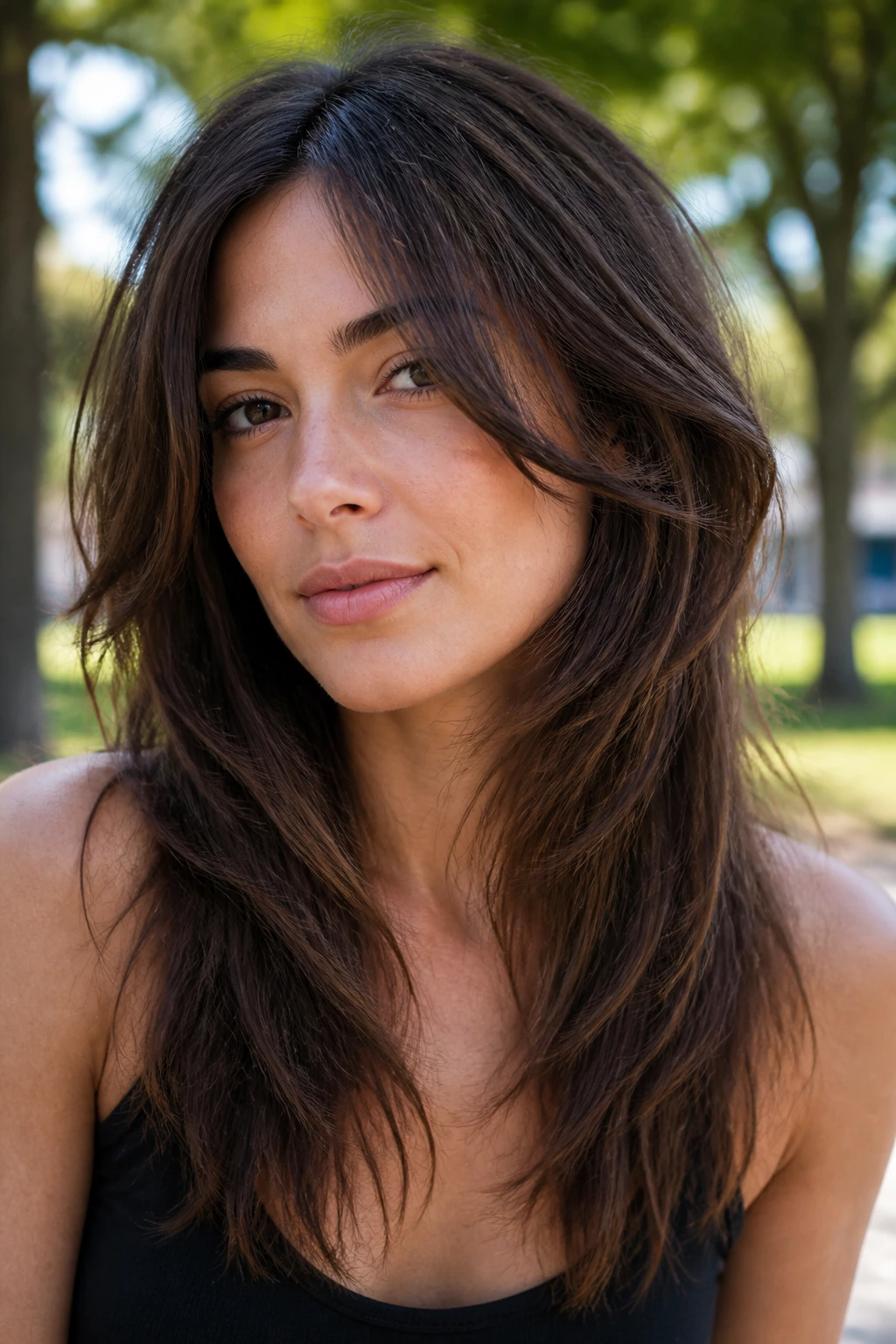
A long face-frame shag keeps the drama near the front and leaves the rest of the length mostly intact. That’s a very useful setup for fine straight hair, because the face frame can create movement without stripping density from the bottom. The front pieces start around the cheekbone or jaw, then drop into the longer lengths in a soft slope.
This cut is a nice answer to hair that feels heavy but not thick. It gives the illusion of shape around the face while the back stays full enough to look healthy. I also like it for anyone who wears hair up a lot, because the front pieces fall out of clips in a way that looks intentional instead of messy.
If you want the least risky entry into shag territory, this is one of the easiest calls. It changes the silhouette without forcing a big style shift.
17. Short Shag with Neck Taper
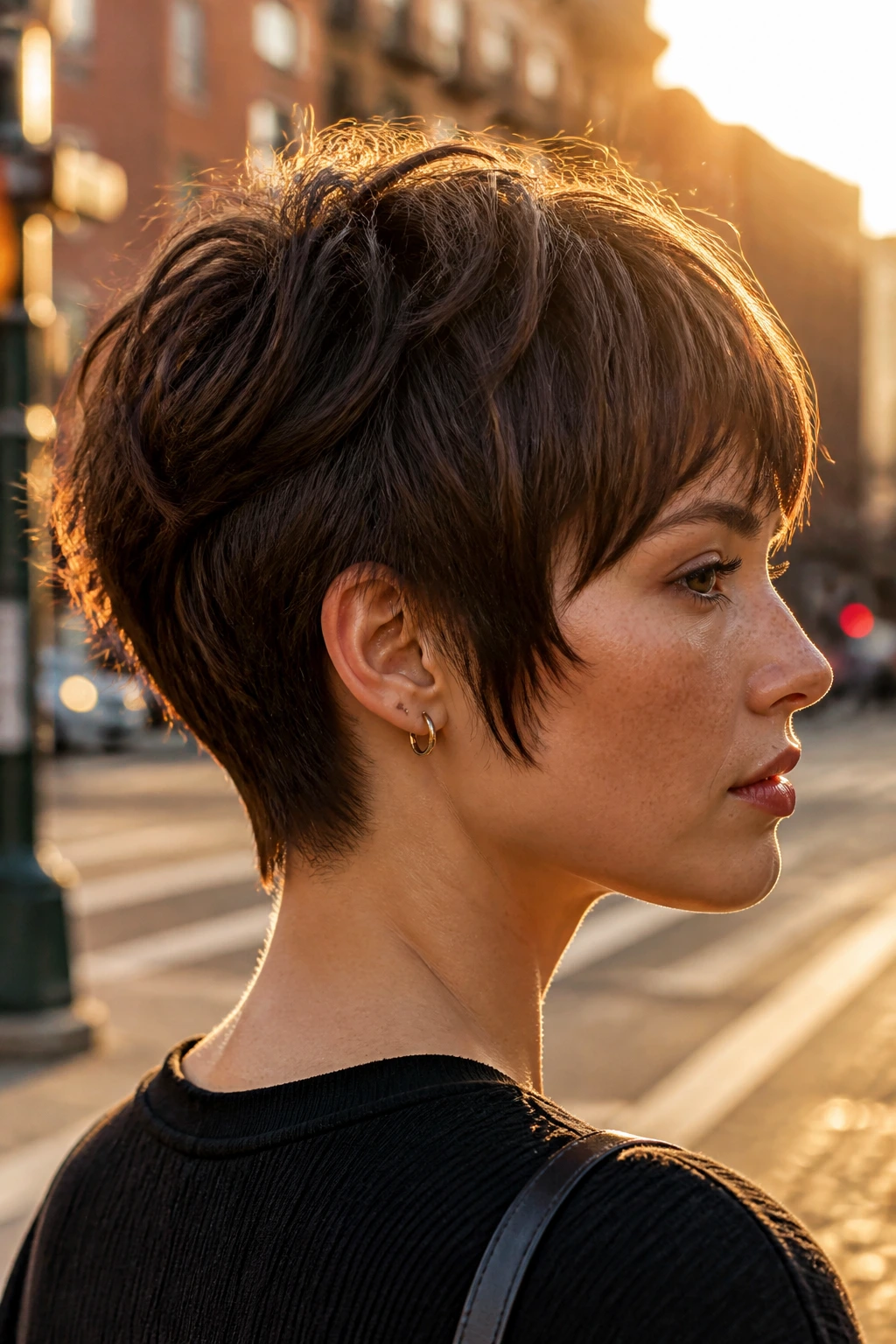
A short shag with a neck taper trims away some of the bulk at the nape while keeping softness around the face. Fine straight hair often gets a little awkward at shorter lengths because the ends can flip in strange directions. A tapered neck helps the back sit closer to the head, which makes the whole cut feel cleaner.
This cut has edge, but it’s neat edge. The crown gets enough texture to avoid a flat cap effect, the sides stay light, and the nape is shaped so it doesn’t hang limp against the collar. It’s a practical cut if you hate hair brushing your neck but still want a style with movement.
It also grows out in a decent way. The taper softens the transition, so you don’t wake up one day with a shelf at the back. That alone makes it worth a look.
18. Modern Mullet Shag for Straight Hair
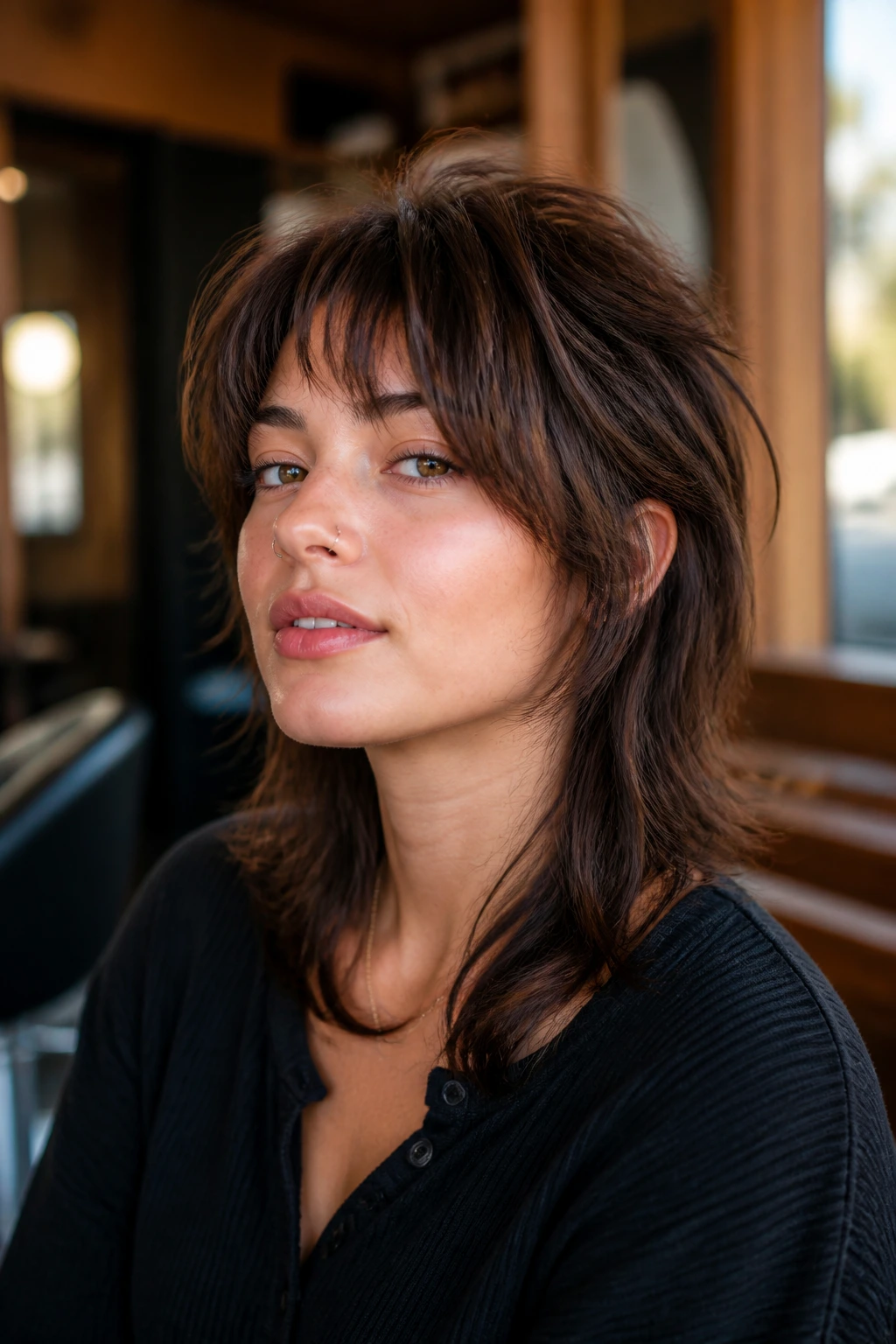
A modern mullet shag on fine straight hair has to be handled carefully. Done badly, it looks like you forgot a haircut appointment. Done well, it gives you a strong silhouette with soft length through the back and enough texture on top to keep the crown from collapsing.
The reason it can work on fine straight hair is the contrast. Shorter layers at the crown create lift, while the longer back keeps the overall shape from looking sparse. Straight hair shows the line cleanly, which can be a good thing here. There’s nowhere for the cut to hide.
This version suits people who like visible shape and don’t mind a little maintenance around the fringe and top layers. It’s not the quiet choice, but it’s a good one if you want the haircut to do more of the talking than the styling products.
19. Blunt-Perimeter Shag
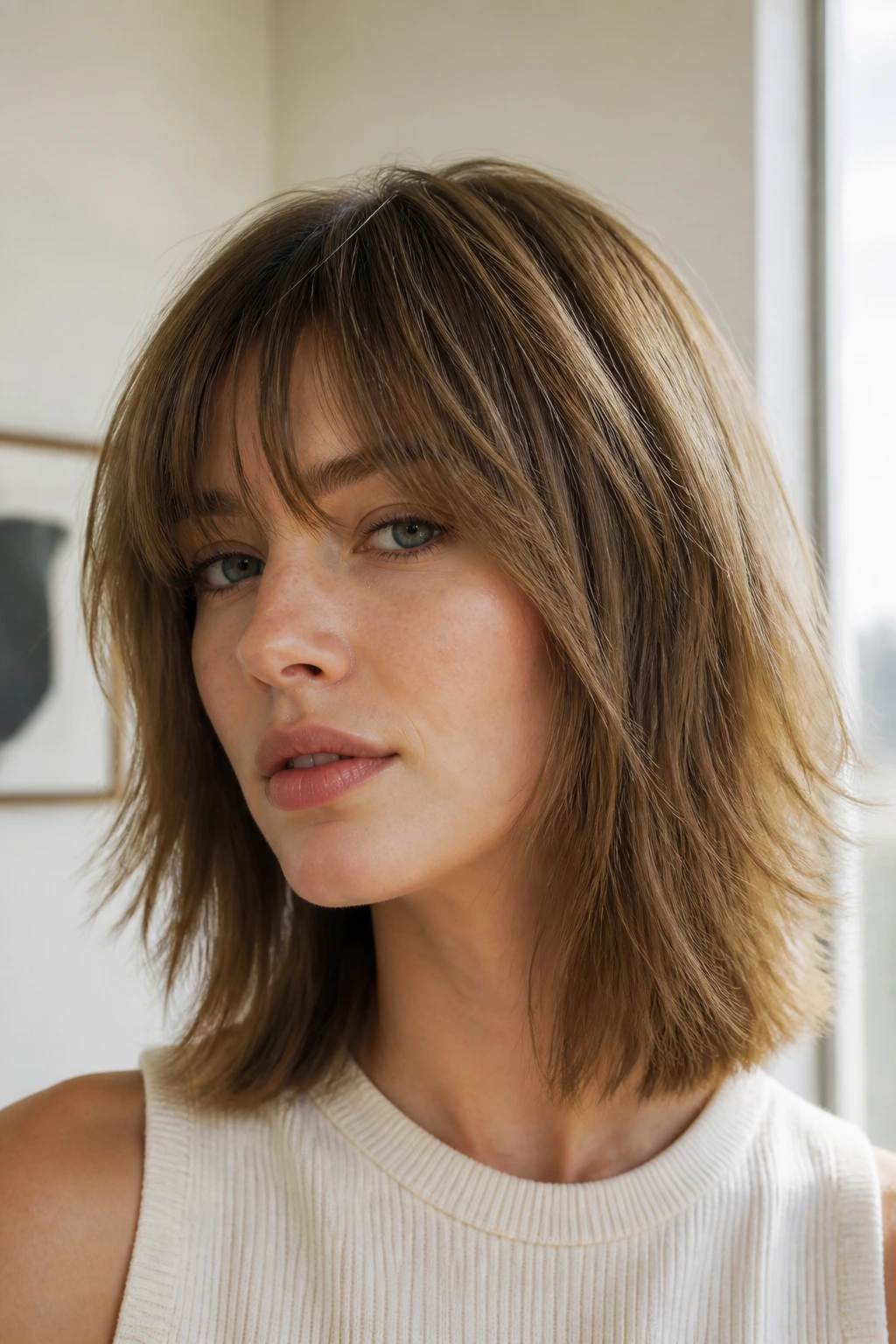
If you’ve ever watched a heavily layered fine haircut lose all sense of structure after a few weeks, you already know why a blunt perimeter matters. This shag keeps the bottom line strong and adds texture mostly above it. The result is a haircut that looks thicker from the outside while still moving through the interior.
The blunt edge gives the eye a place to land. That’s valuable. Fine straight hair can disappear visually when every edge is chipped and wispy. A cleaner outline makes the hair read as denser, especially in daylight and especially in photos, where thin ends get exposed fast.
When it fits
Choose this if you want shag softness without the fragile look that can happen when too much weight gets removed. It’s also easier to maintain between trims because the overall shape stays readable longer.
20. Soft S-Bend Shag

A soft S-bend shag is less about curl and more about direction. The hair bends gently around the face and through the lengths, creating movement that looks natural rather than styled to death. Fine straight hair can hold this shape with a blow-dryer and a medium brush, or even with a flat iron if you’re careful and patient.
The beauty of the S-bend is that it breaks up the straight line without making the hair look short or choppy. That matters if you like long hair but hate how it lies flat against the chest. The bend gives dimension, but the length still feels intact.
Keep the ends soft and the layers subtle. Too much texture spray turns this into frizz. A little goes a long way.
21. Tapered Lob Shag with Wispy Ends

A tapered lob shag lands at that sweet spot where the haircut feels modern but not fussy. The ends taper gently toward the shoulders, which makes fine straight hair look lighter without shredding the outline. Wispy ends at the bottom add movement, but the lob length keeps enough density to stop the cut from feeling fragile.
This one is good if you want the shoulders to do some of the work. Hair at this length has a natural bounce when it swings, and the taper lets that movement show. It’s especially nice on straight hair that tends to flip outward at the ends; here, that flip becomes part of the style instead of an accident.
A center part makes it cleaner. A soft side part makes it looser. That flexibility is half the charm.
22. Air-Dry Shag with Soft Fringe

An air-dry shag sounds lazy, and sometimes that’s exactly why it works. Fine straight hair often looks worse the more you fuss with it. A cut designed to dry with a soft fringe and light layers can settle into a shape that looks better with a little natural bend than with a perfect blowout.
The fringe should be long enough to split and move. If it’s too short, it hangs there like a hard line. If it’s a little longer, the hair can dry around it and give you a more relaxed front shape. The rest of the layers should be loose enough that the hair doesn’t puff up at the sides while it dries.
This is the cut for people who want low effort, but not no effort. You still need a decent cut. The difference is that the haircut does more of the work when you leave it alone.
23. Layered Shag with Peekaboo Pieces
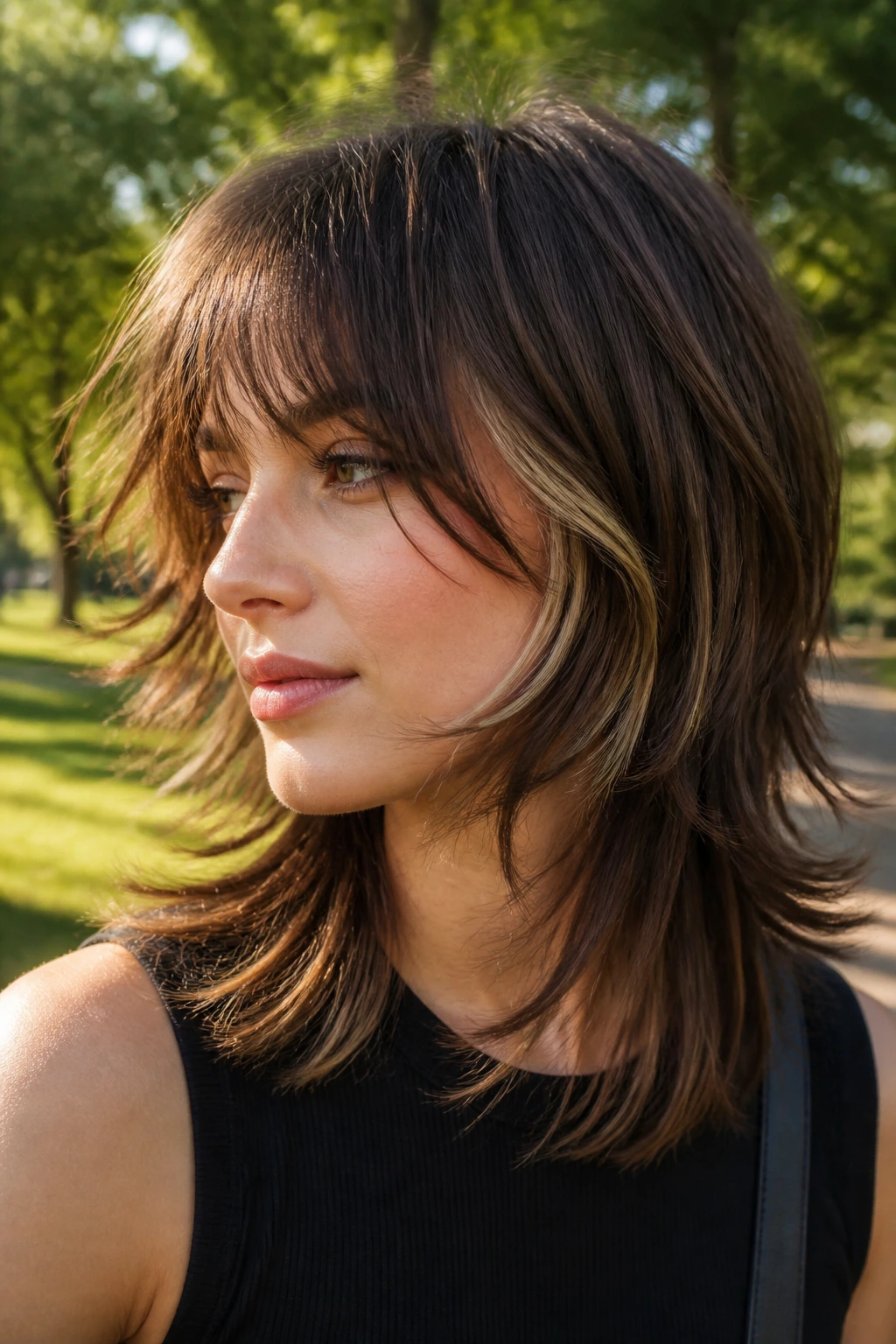
Peekaboo pieces are those little longer strands that show up when the hair moves, usually around the cheek, jaw, or temple. On fine straight hair, they keep the cut from looking static. A layered shag with those hidden bits has more life than a blunt layered shape because the movement shows up gradually, not all at once.
This style is especially good if you like wearing hair half-up. The longer face-framing pieces fall out around the sides and make the style look softer. The shorter crown layers keep the top from sitting flat against the scalp, which is the usual complaint with fine straight hair anyway.
The best part is how it grows. Those peekaboo pieces stay useful even as the cut gets a little longer between trims. That makes the style forgiving, which is a rare and welcome thing.
24. Center-Part Shag with Long Bangs
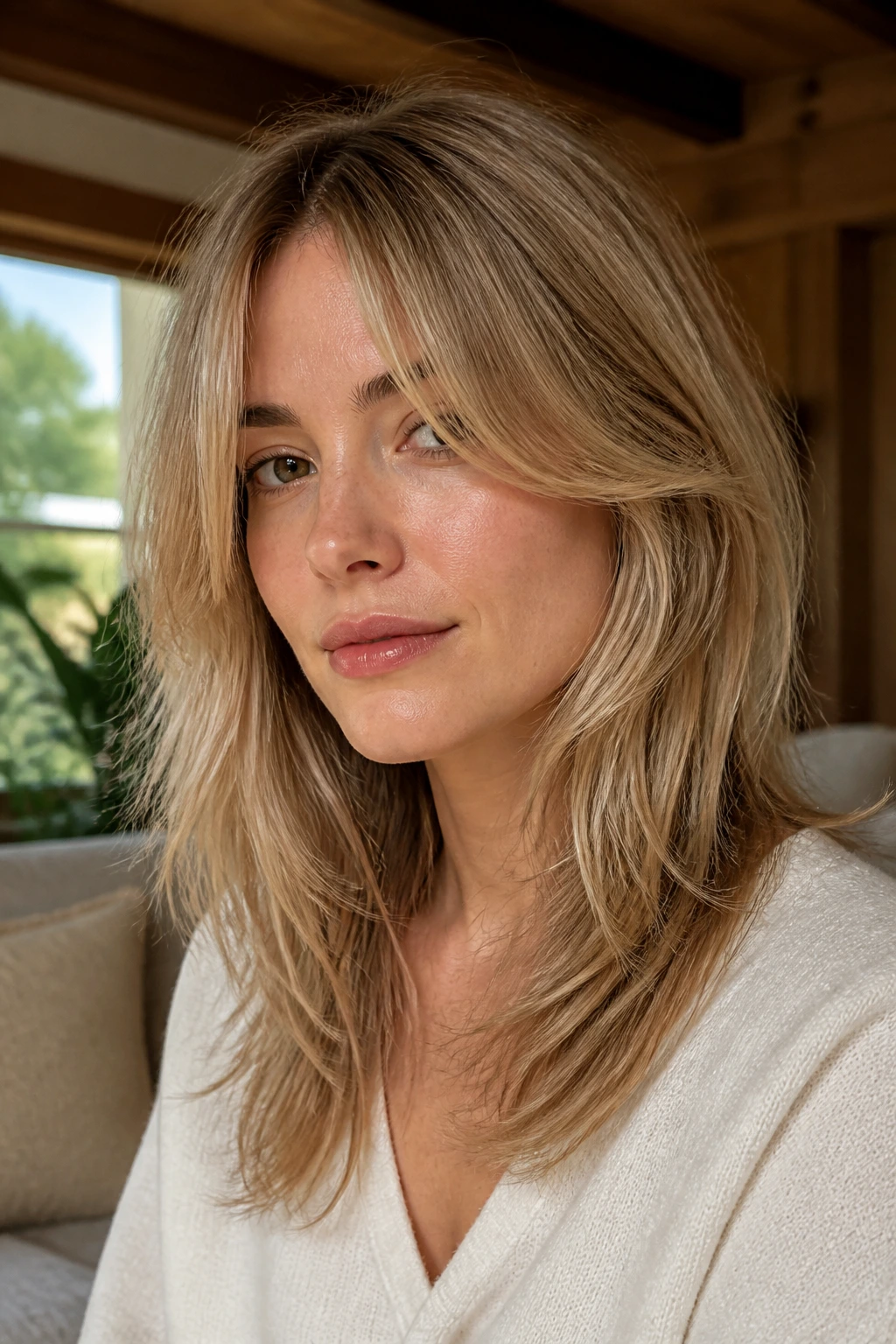
A center-part shag is clean, but it can go flat fast if the layers are wrong. Long bangs fix that. They create movement on either side of the part and give the front some shape without hiding the face. On fine straight hair, long bangs are a safer bet than blunt fringe if you want a middle part that still feels soft.
The long bangs should be cut to graze the cheekbone or lip line, not stop awkwardly at the nose. That length lets them merge into the rest of the haircut and keeps the front from feeling chopped into a separate section. The overall result is calm, not overdesigned.
If your face is on the narrow side, this cut is especially useful because the long bangs widen the frame a bit. The center part stays sleek, but it does not go severe.
25. Full Fringe, Light Layer Shag
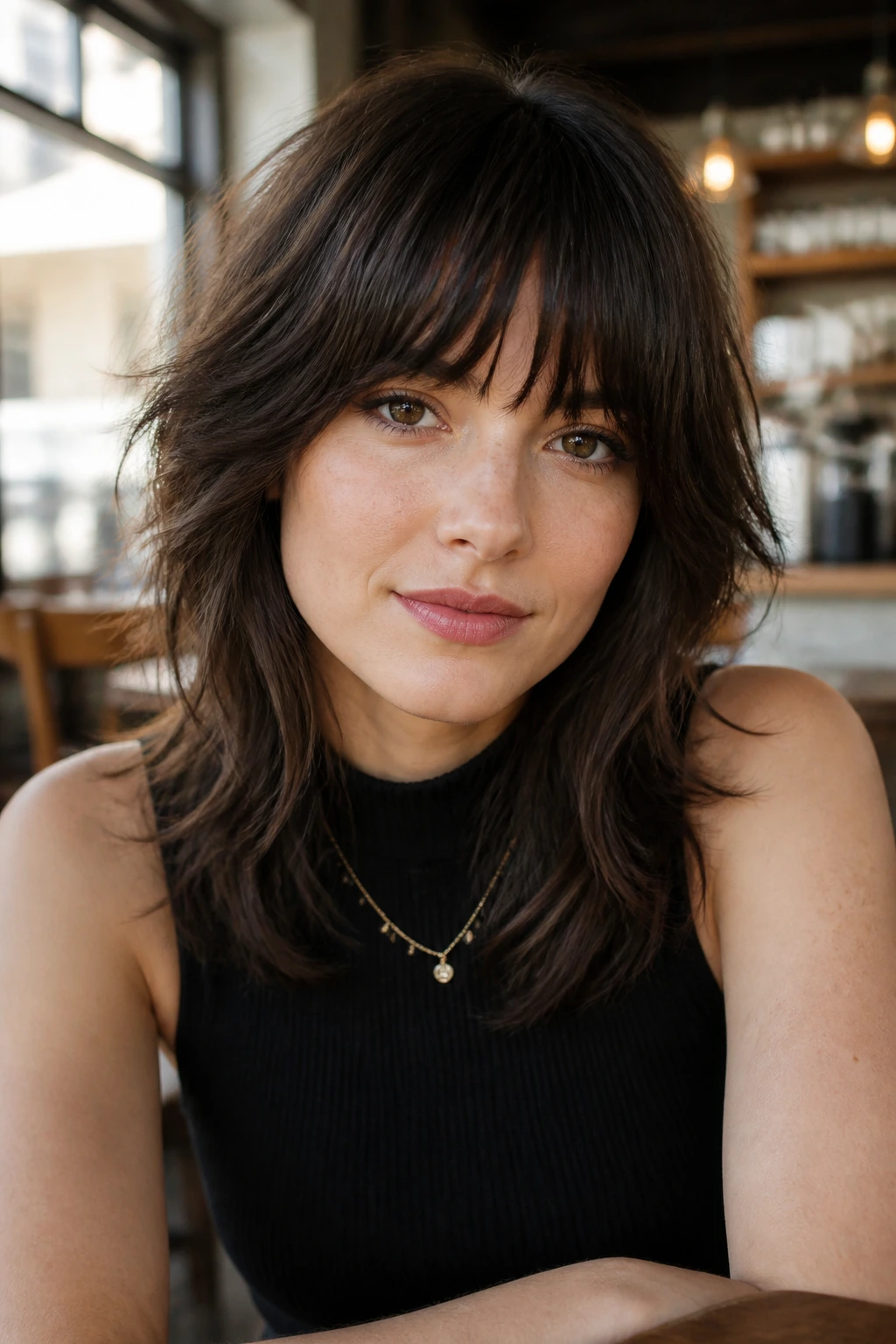
A full fringe with light layers is the last stop for people who want the face-framing drama of bangs and the softness of a shag, but not a lot of visible chopping through the lengths. Fine straight hair can handle this combination well because the fringe creates density where the hair naturally lies flat, and the light layers keep the rest of the cut from losing too much body.
This is one of those cuts that looks more expensive than it is, if that makes sense. The fringe gives a strong line at the top, the layers whisper instead of shout, and the lengths still hang together as a single shape. It’s balanced. That’s the word.
Keep the fringe clean and the ends soft. If the bangs get greasy, the whole haircut loses its point. A quick wash of the front sections or a bit of dry shampoo near the roots usually fixes that before it spreads.
How a Shag Keeps Fine Straight Hair From Falling Flat
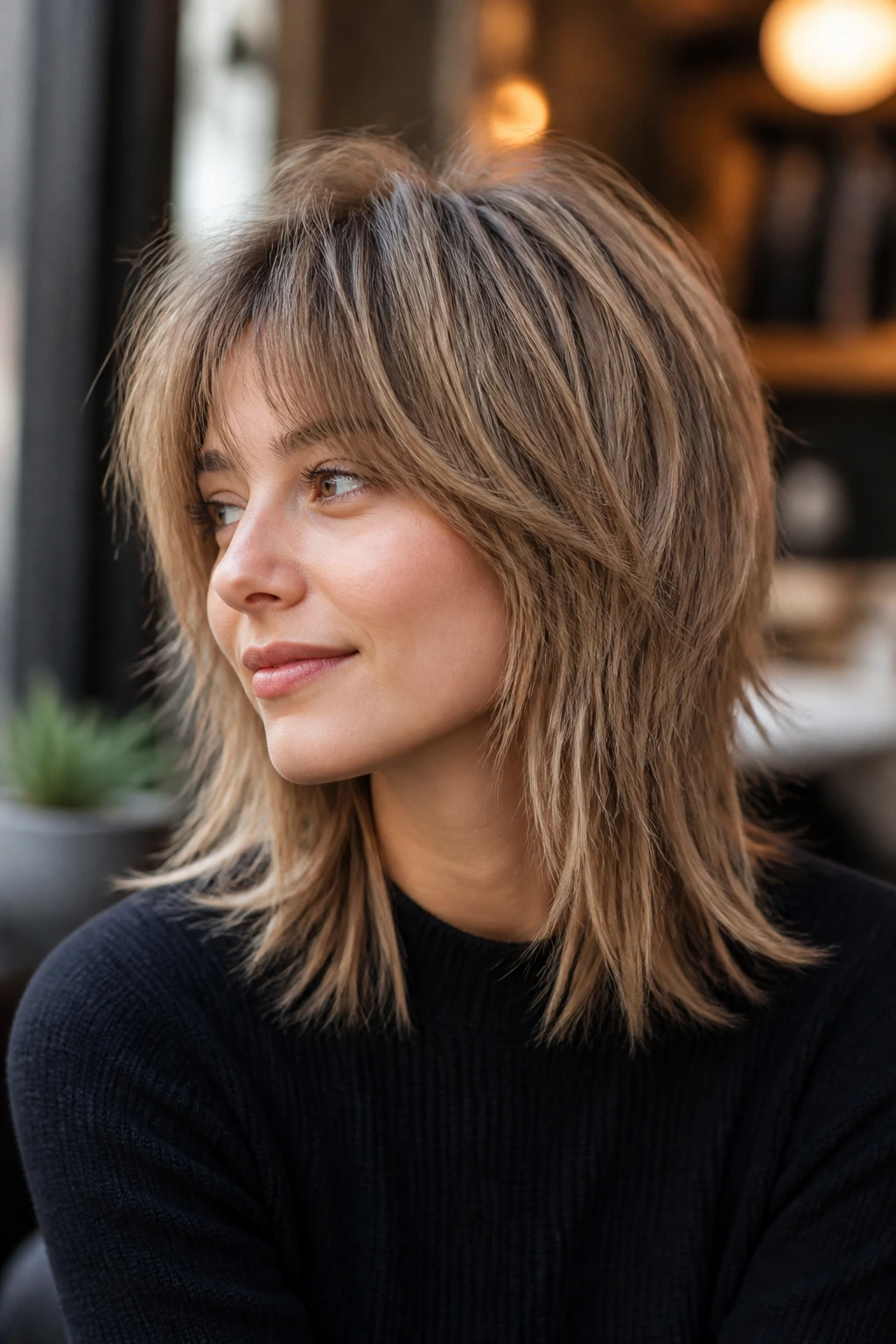
A shag works on fine straight hair when the layers are placed with restraint, not enthusiasm. That’s the part many cuts get wrong. If the stylist removes too much weight from the underside, the hair may look airy in the chair and skinny by the next morning. The better shags keep a visible perimeter, then carve movement into the crown, temples, and front.
The most useful thing a shag can do is change where the eye lands. Straight fine hair naturally draws attention to the ends because that’s where it’s most likely to look sparse. A well-cut shag redirects that attention upward with bangs, face-framing pieces, or a lifted crown. Suddenly the hair looks like it has shape, not just length.
There’s also a practical upside. Because the cut already has movement built in, you don’t need to force texture with big curl patterns or a heavy arsenal of hot tools. A little bend at the front, some root lift, and a clean finish at the ends are often enough. That’s the kind of haircut that earns a place in a real routine.
What to Tell Your Stylist Before the First Snip
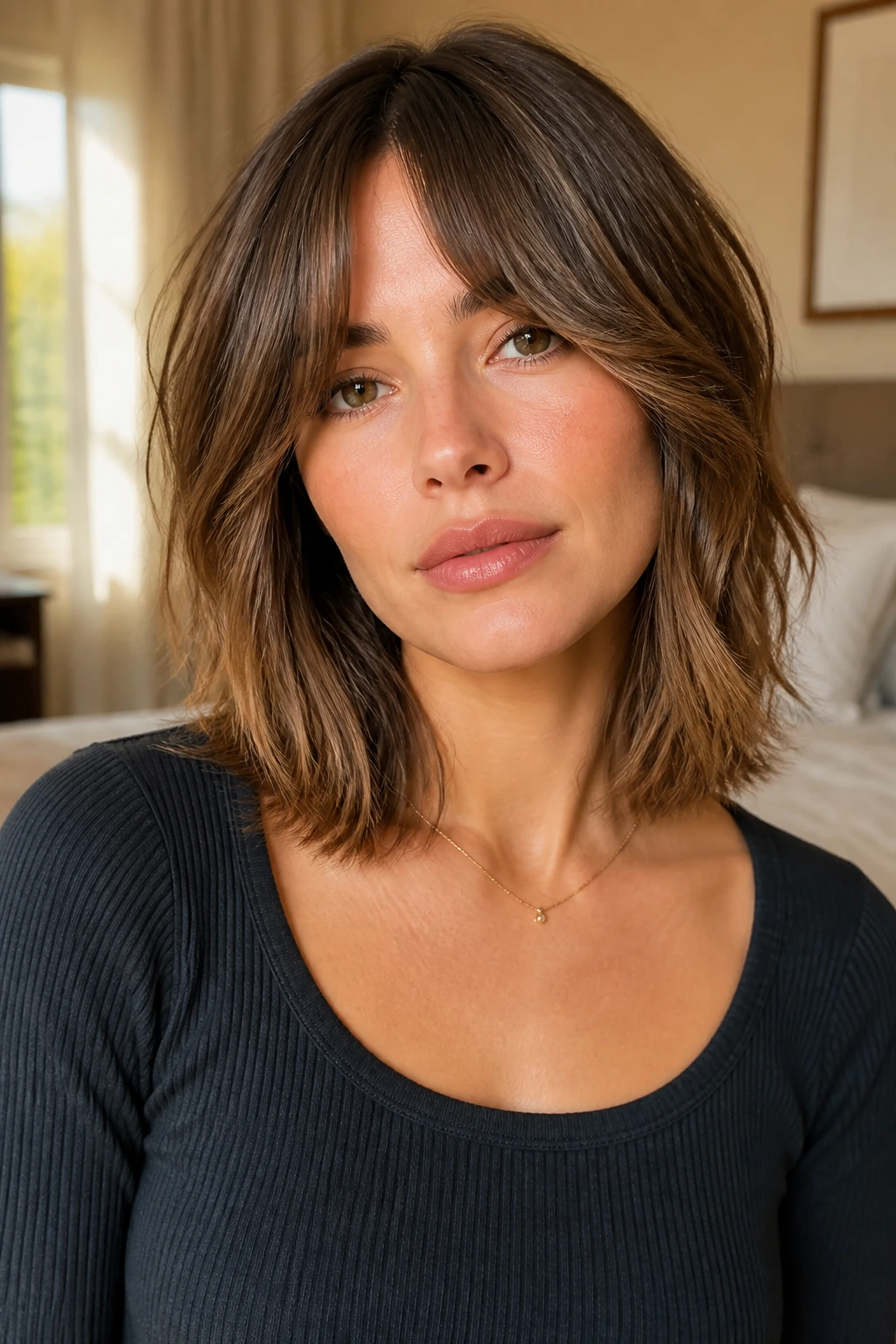
The salon conversation matters more than people admit. Fine straight hair punishes vague instructions. If you say “I want a shag,” you may get anything from soft layers to a too-short, over-thinned mess. Be precise. Tell them how much length you want to keep, whether you want bangs, and how much lift you actually need at the crown.
A good sentence to use is this: “Keep the perimeter full, add movement mainly through the top and face frame, and don’t thin the ends too much.” That one line says more than ten minutes of uncertain nodding. If you want curtain bangs, say where you want them to start. If you wear a side part, say that before the cut begins, not after.
Here’s the useful part: ask for the haircut to be checked dry before the stylist finishes. Fine straight hair can look very different wet versus dry, especially if layers are short. A quick dry check often catches the pieces that are too aggressive around the face or too sparse at the ends.
Styling Tools That Earn Their Keep

The best styling tools for shag haircuts on fine straight hair are the boring ones that work every time. A blow dryer with a concentrator nozzle matters more than a fancy attachment you’ll use twice. So does a medium round brush with enough grip to lift the roots without tangling the ends. If the brush is too large, it won’t get under the hair well enough at the crown.
A small flat iron can help shape the front pieces or create a soft bend through the mid-lengths, but it should not be your main strategy. Straight fine hair gets limp if you keep ironing over it to force volume. That kind of overworking leaves the hair hot, soft, and a little too obedient.
What’s worth having nearby:
- Blow dryer with nozzle: Helps direct the roots up and away from the scalp.
- Medium round brush: Useful for shaping curtain bangs and lifting the face frame.
- Velcro rollers or root clips: Good for setting crown volume while the hair cools.
- Light texturizing spray: Adds a bit of grip without turning the hair gritty.
- Dry shampoo: Keeps the roots from going greasy and collapsing the whole cut.
Products That Give Fine Straight Hair Grip
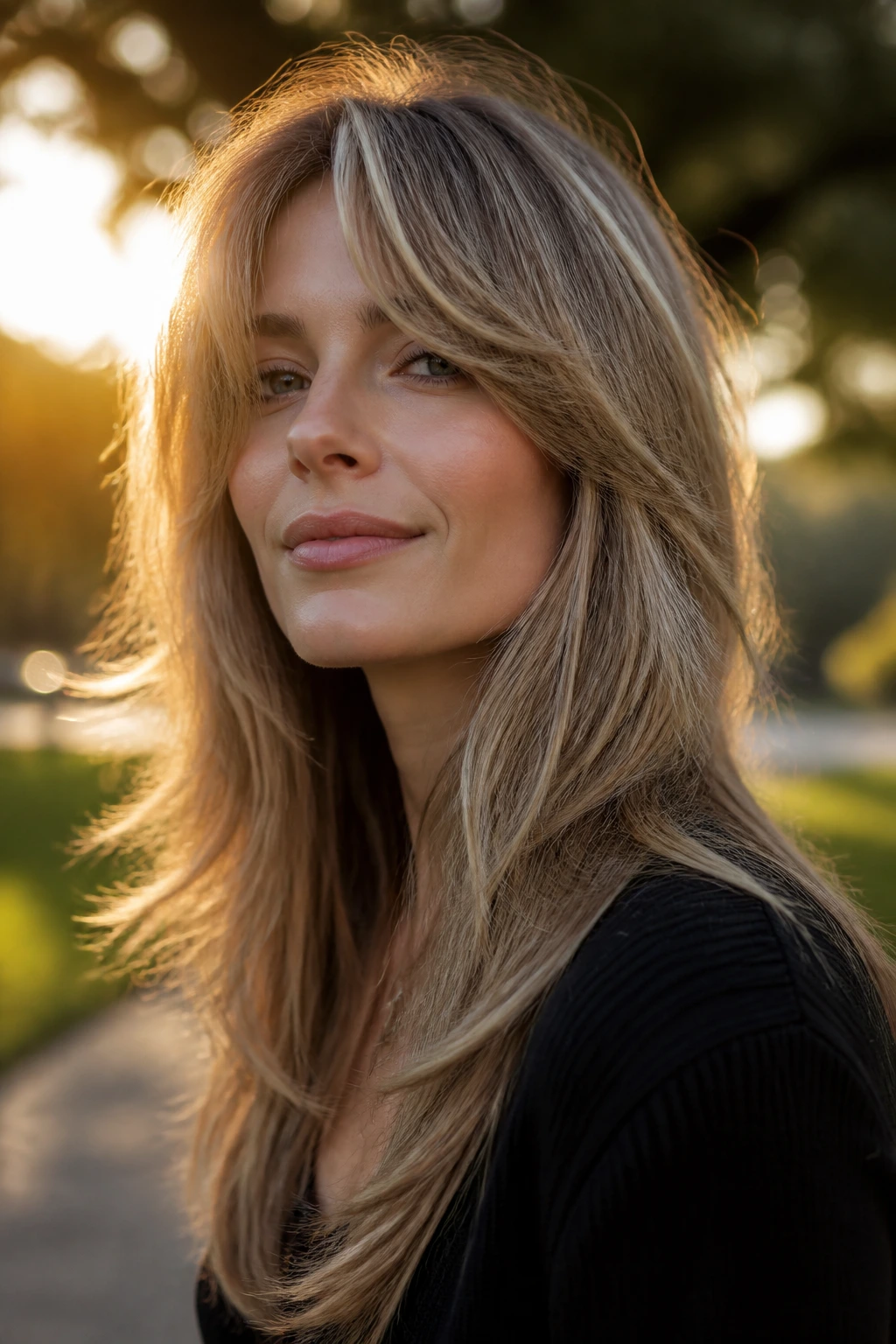
Product choice makes or breaks this haircut. Fine straight hair does not need heavy cream through the mids and ends unless the cut is very dry or damaged. What it needs is grip. Light mousse at the roots, a texture spray through the lower layers, and a dry shampoo that can absorb oil without leaving a chalky cast usually does the job.
A root-lift spray can be useful if your crown is especially flat. Use it on damp roots only, not all over the head. Then blow-dry by lifting sections with the brush and aim the airflow from underneath the roots for a few seconds. That small change matters more than most people expect.
Heavy oils are the usual mistake here. They can make fine hair look sleek for thirty minutes and then drag it down into a shiny, separated mess. If you want shine, use the tiniest amount on the very ends after styling. Think drop, not drizzle.
Daily Styling Tricks That Make the Shape Last
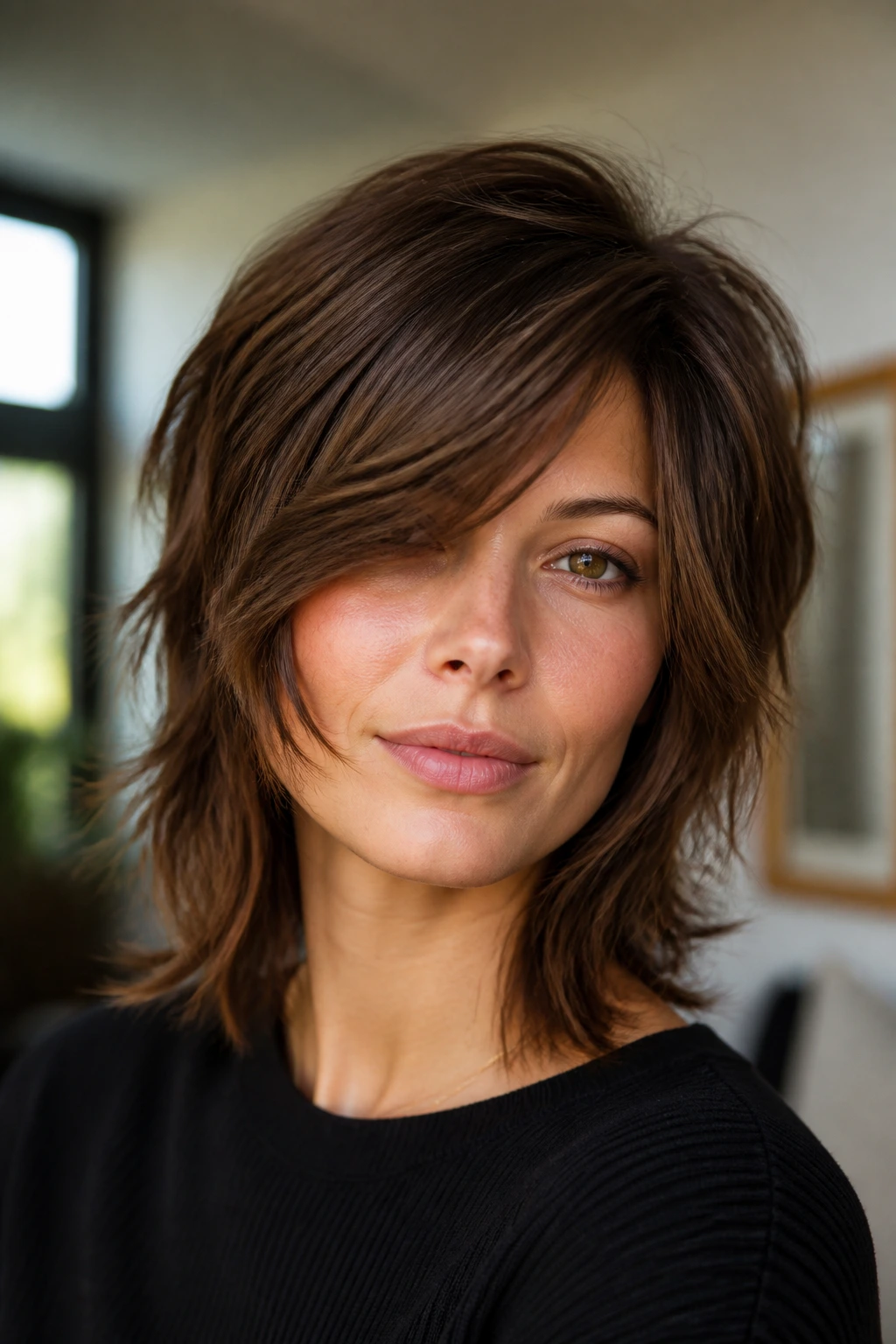
Root Lift: Clip the crown with one or two root clips while the hair cools after blow-drying. Ten minutes is enough to train a little extra height at the top, and it helps the shag keep its shape longer.
Texture: Mist texture spray under the top layer, not all over the surface. Fine straight hair can go fuzzy fast if you coat every strand.
Day Two: Refresh the roots with dry shampoo before you touch the lengths. If you wait until the hair is already greasy, you’ll end up overloading the style trying to save it.
Heat-Free Shortcut: Twist damp front sections away from the face and let them set while you do your makeup. It’s a tiny move, but it gives curtain bangs or face-framing layers a softer bend without a full blowout.
Common Mistakes That Flatten the Shape
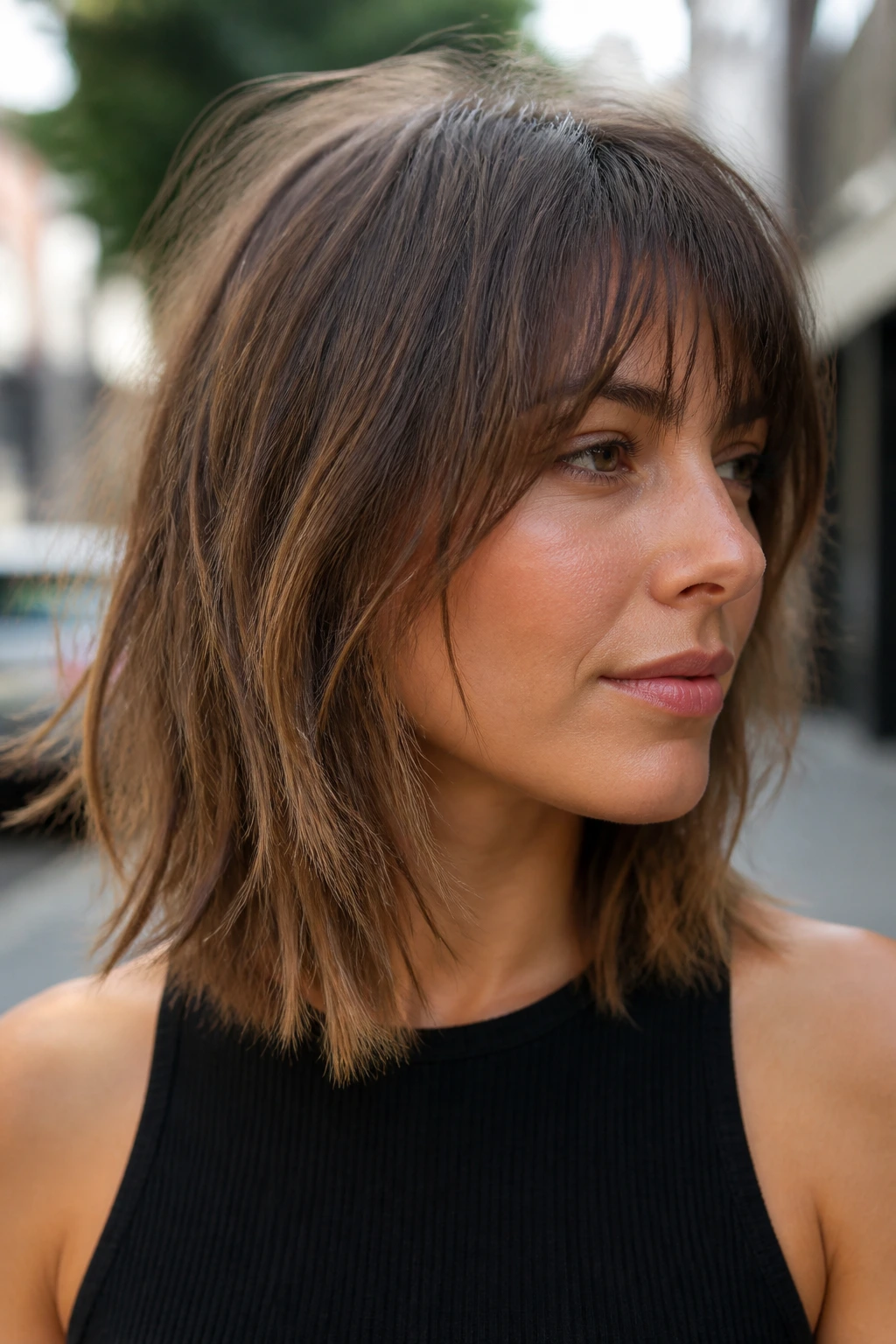
The first mistake is over-layering the ends. Fine straight hair loses its backbone fast when too much weight comes out of the bottom. The symptom is a see-through perimeter that looks great for a week and then starts hanging limp. The fix is simple: keep the bottom line fuller and put most of the movement higher up.
Another mistake is cutting the fringe too short on day one. Short bangs can work, but they also leave no room for growth or adjustment. If the fringe is too high, it can feel like a shelf sitting on the face. Ask for a longer starting point if you’re unsure. You can always shorten it later.
A third problem is using heavy smoothing products. Straight hair already lies close to the head. Add a thick cream or too much oil and you’ve got flat roots plus separated ends. Use lightweight formulas and keep the richer stuff to a minimum.
Then there’s ignoring the part line. A shag cut changes dramatically depending on where you part it. If you always wear a center part but your stylist cuts the fringe as if you’ll side-part it, the shape won’t sit right. Say how you actually wear it. Not how you think you might wear it.
Variations and Alternatives to Try
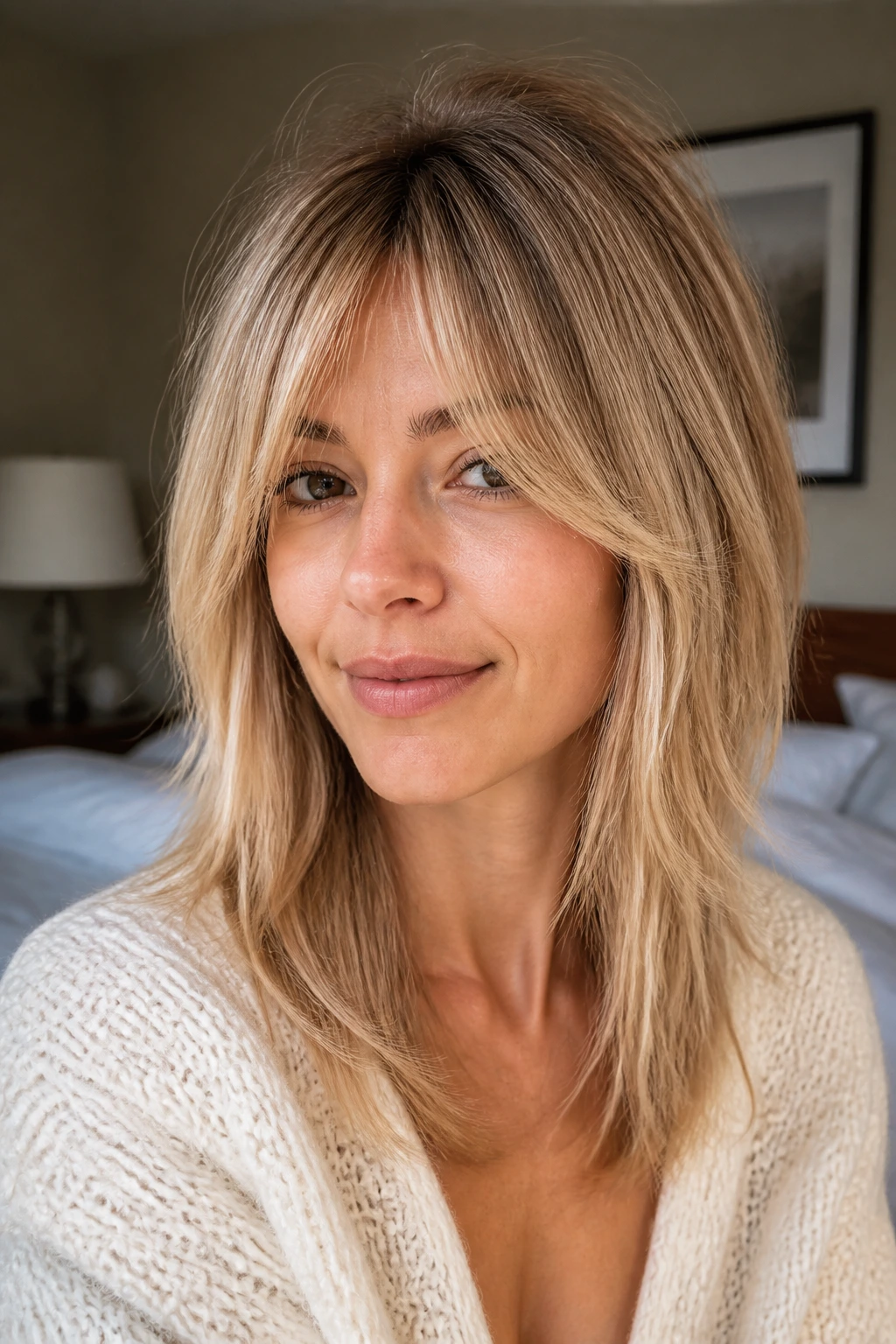
The Soft French Shag: Keep the layers gentle, the fringe airy, and the perimeter full. This version is best if you want movement that feels polished rather than messy.
The Edgier Wolf-leaning Shag: Add more crown texture and a little more disconnect between the top and the lengths. This suits someone who wants visible shape and doesn’t mind styling the front pieces into place.
The Low-Maintenance Long Shag: Leave the lengths intact and keep the layers minimal. It’s the calmest choice for fine straight hair that gets thin-looking when overcut.
The Short, Swingy Shag Bob: Go chin-to-neck length with a strong outline and soft layers around the top. It’s a clean way to get shag texture without relying on extra length for movement.
The Bang-Free Shag: Skip fringe entirely and build the shape through face-framing layers and crown lift. Good if you hate trimming bangs every few weeks or if your forehead already sits proportioned the way you like.
Tools and Equipment You’ll Want on Hand
- Blow dryer with a nozzle attachment: Directs airflow where you need lift, not fuzz.
- Medium round brush: The workhorse for curtain bangs, side pieces, and crown shape.
- Fine-tooth tail comb: Handy for clean parting and lifting sections at the roots.
- Root clips or duckbill clips: Help set volume while the hair cools.
- Light mousse: Gives fine straight hair some memory without stiffness.
- Dry shampoo: Useful for root reset and oil control between washes.
- Light texturizing spray: Adds grip to mid-lengths and ends.
- Small flat iron: Optional, but useful for bending the front pieces or smoothing a stubborn fringe.
- Heat protectant: Not optional if you use hot tools, even lightly.
How to Keep the Cut Fresh Between Trims

Fine straight hair grows out in a way that can change the whole vibe of a shag faster than you’d expect. Bangs start splitting, the crown loses its lift, and the face frame drifts past the cheekbone into a less flattering length. A trim every 6 to 8 weeks keeps the shape honest. If you have a fringe, you may want a cleanup sooner.
Between appointments, focus on the parts people actually see first: the front, the crown, and the perimeter. A quick dry-shampoo refresh at the roots can buy you another day or two of shape. If the ends start to look ragged, a tiny amount of cream just on the last inch can stop them from sticking out in separate strands.
Sleep matters too. A silk or satin pillowcase reduces the rough, flattened look fine hair gets after a night of friction. It won’t replace a trim, but it does help the cut stay soft around the edges. Small things. Annoyingly small, sometimes. Still worth it.
Frequently Asked Questions
Is a shag haircut good for very fine straight hair?
Yes, if the layers are kept controlled. The cut needs a solid perimeter and targeted layering, not a lot of aggressive thinning through the ends.
Should I ask for razoring or scissors?
Both can work, but scissors are safer if your hair is extremely fine or fragile. A light razor technique can soften the ends, but too much can make them fray.
Can I get a shag without bangs?
Absolutely. Face-framing layers and crown lift can create the same general effect without fringe. That’s a good option if you hate bang maintenance.
How do I keep the crown from going flat?
Lift the roots while blow-drying, then clip the top section until it cools. A little dry shampoo the next day helps keep that volume from collapsing.
Will a shag make my hair look thinner?
It can, if the layers are too short or too numerous. A good shag keeps density at the bottom and uses layers to add motion, not to strip away the whole outline.
Can I air-dry this cut?
Yes, especially if the layers are soft and the fringe is long enough to settle naturally. You may still want to set the front pieces with a brush or clips so they don’t dry in a weird direction.
What if my hair grows out quickly?
Choose a version with a fuller perimeter and longer face-framing pieces. Those grow out more gracefully than very choppy shapes.
Is this cut hard to style every day?
Not if the cut is done right. Most fine straight hair needs only a quick lift at the roots, a bend at the front, and a light finishing product.
Keeping the Shape Fresh Between Cuts

A shag on fine straight hair lives or dies by its outline. Let the fringe grow too long, let the crown flatten out, and the whole cut starts acting heavier than it should. That doesn’t mean you need constant salon trips. It means you need to trim the parts that control the shape before they quit doing their job.
The smartest versions of this cut are the ones that still look like hair, not a styling project. That’s the standard I’d use. If the cut gives you movement when you do almost nothing, it’s working. If it only looks good after twenty minutes with hot tools and a can of spray, the haircut needs another pass.
Final Thoughts
The best shag haircuts for fine straight hair don’t fight the texture. They give it a better outline, a little lift, and a front that does some real work instead of just hanging there. That’s why the cut can look soft, sharp, or slightly rebellious without becoming high-maintenance.
If you take one thing from all of this, make it the perimeter. Keep enough weight at the bottom, place the layers with intention, and choose bangs or face-framing pieces that suit the way you actually wear your hair. Do that, and the shag stops being a trend haircut and starts being a shape that makes sense every morning.
