



The fastest way to make short hair look sharper is often not adding more length. It’s taking weight out of the places that drag the shape down. On Asian women with short hair, that matters a lot because dense, straight strands can sit like a curtain at the nape and around the ears if the cut isn’t planned with a little nerve.
That’s where an undercut earns its keep. Not as a gimmick. Not as a loud statement for the sake of being loud. The good versions are quieter than that. They make a pixie stop puffing out at the sides, help a bob lie closer to the head, and give a crop enough movement that it doesn’t feel helmet-like by the second day.
And yes, there’s room here for every lane: hidden nape shaves, temple fades, soft disconnects, full wraparound crops, and the cleaner, more precise shapes that sit beautifully on thick, straight hair without turning the whole cut severe. Some are office-friendly. Some lean fashion-forward. Some are the sort of haircut that looks almost plain from the front and then turns around and surprises you.
Why These Undercut Styles Earn Their Keep
-
They remove bulk where short hair usually misbehaves: a nape shave or temple cut stops the sides from puffing out and turning a neat shape into a triangle by lunch.
-
They keep the front soft when you want it soft: you can leave fringe, face-framing pieces, or a jaw-length line in place while clearing out the heaviness underneath.
-
They work with the way dense hair grows out: if your hair grows fast and straight, a hidden undercut often looks intentional for longer than a blunt, all-over crop.
-
They make short hair easier to style with less product: once the hidden bulk is gone, a tiny bit of paste, cream, or smoothing serum goes farther.
-
They let you tune the vibe without changing the whole cut: the same undercut can read polished, edgy, or minimal depending on how high the shave goes and how much of it you show.
1. Temple-Fade Pixie Undercut
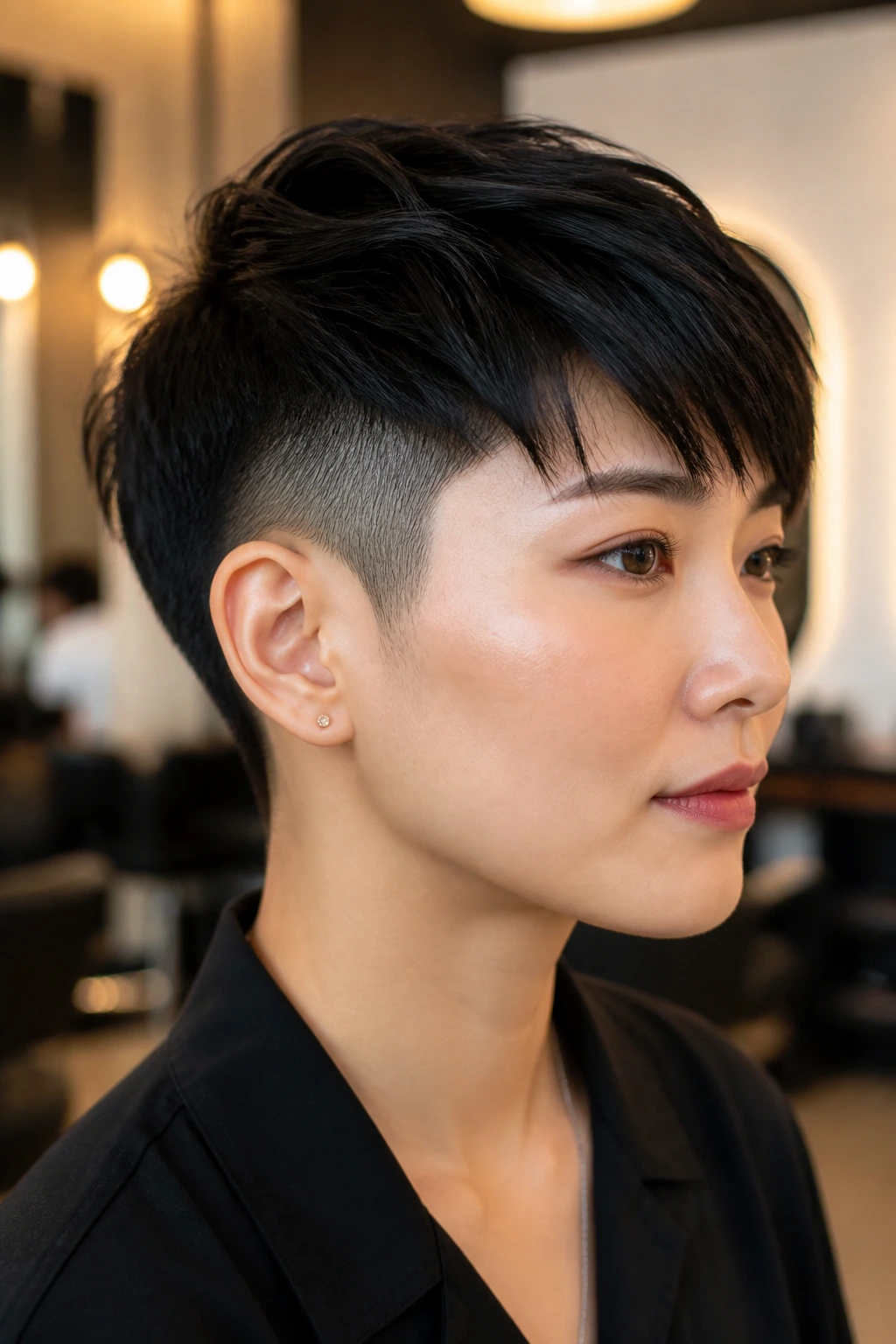
A temple-fade pixie is one of those cuts that looks small on paper and sharp in real life. The sides are taken tight at the temples, the crown stays a little longer, and the fringe gets just enough softness to keep the whole thing from going rigid.
Why it works so well
The temple area is where thick short hair often starts to bulk up first. Once that weight comes off, the cheekbones show more, glasses sit better, and the haircut stops ballooning around the face. I like this one for women who want a clean outline without showing a lot of scalp.
Ask for the top to stay around 2 to 3 inches so you still have room to sweep it forward or sideways. If your hair grows straight and heavy, a #1 or #2 guard at the temples usually gives enough contrast without making the cut feel abrupt.
A matte paste or light clay is enough. Warm a pea-sized amount between your fingers, work it through the crown, and leave the fringe slightly broken up. Too much product here makes the pixie look glued down, and that defeats the point.
2. Hidden Nape Undercut Bob
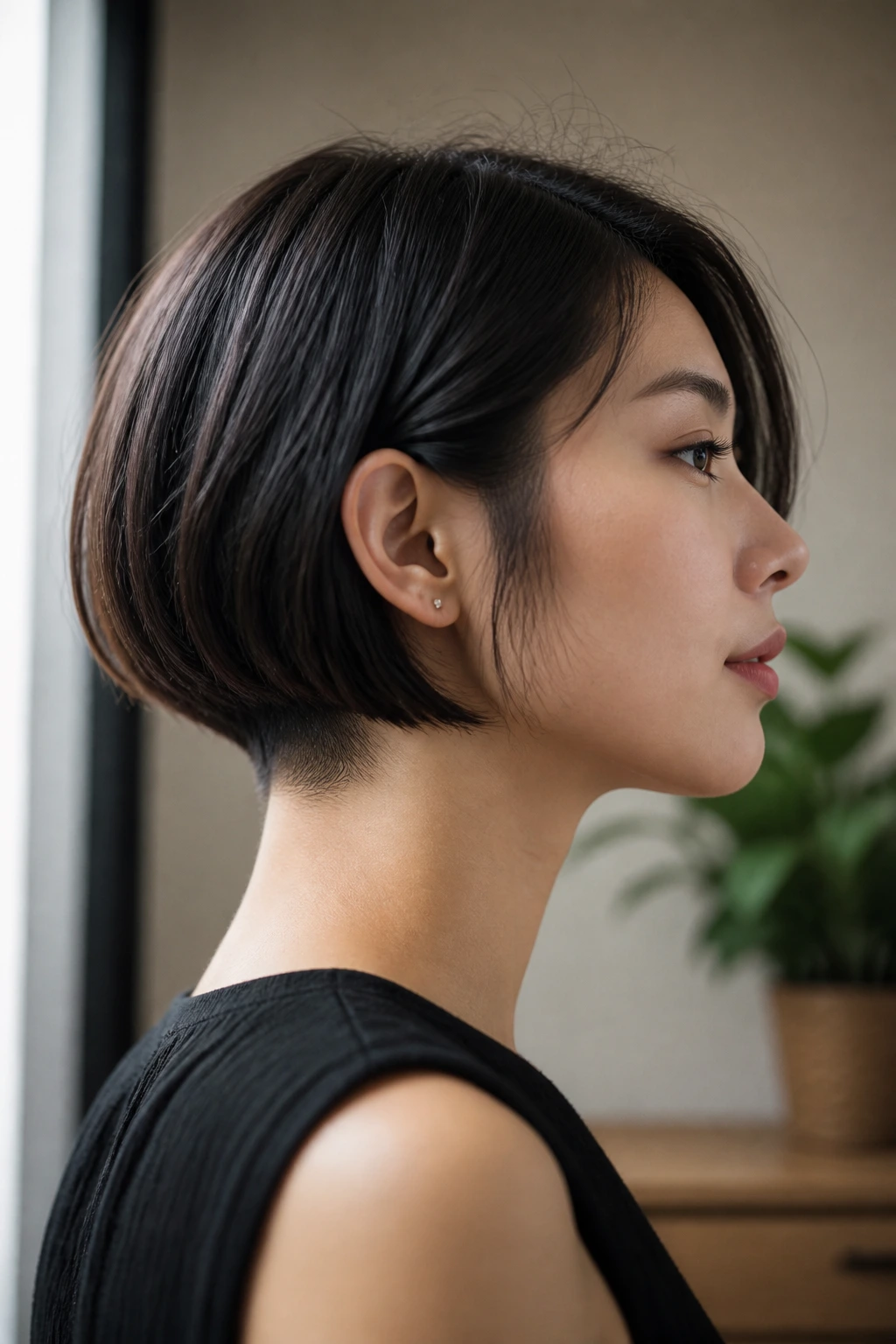
What do you do when a bob looks good from the front but turns into a block at the back? You stop the bulk at the neckline.
The hidden panel matters
A hidden nape undercut is the cleanest answer for women who want a bob that lies flatter without broadcasting the shave. The outer shape stays at jaw or cheekbone length, while the hair underneath the occipital area is clipped short enough to remove that thick shelf that short straight hair loves to build.
This cut is quietly brilliant on dense hair. The front still reads as a bob, but the back gets air. That means less flipping, less puffing under scarves or collars, and a lot less wrestling with a round brush in the morning.
If you wear your hair tucked behind the ears, this shape is especially good. The undercut stays hidden until you move, and that little reveal feels more polished than dramatic. I prefer this version for people who want an office-safe cut that doesn’t behave like one of those overbuilt salon bobs that look fabulous for exactly six hours.
3. Two-Block Crop
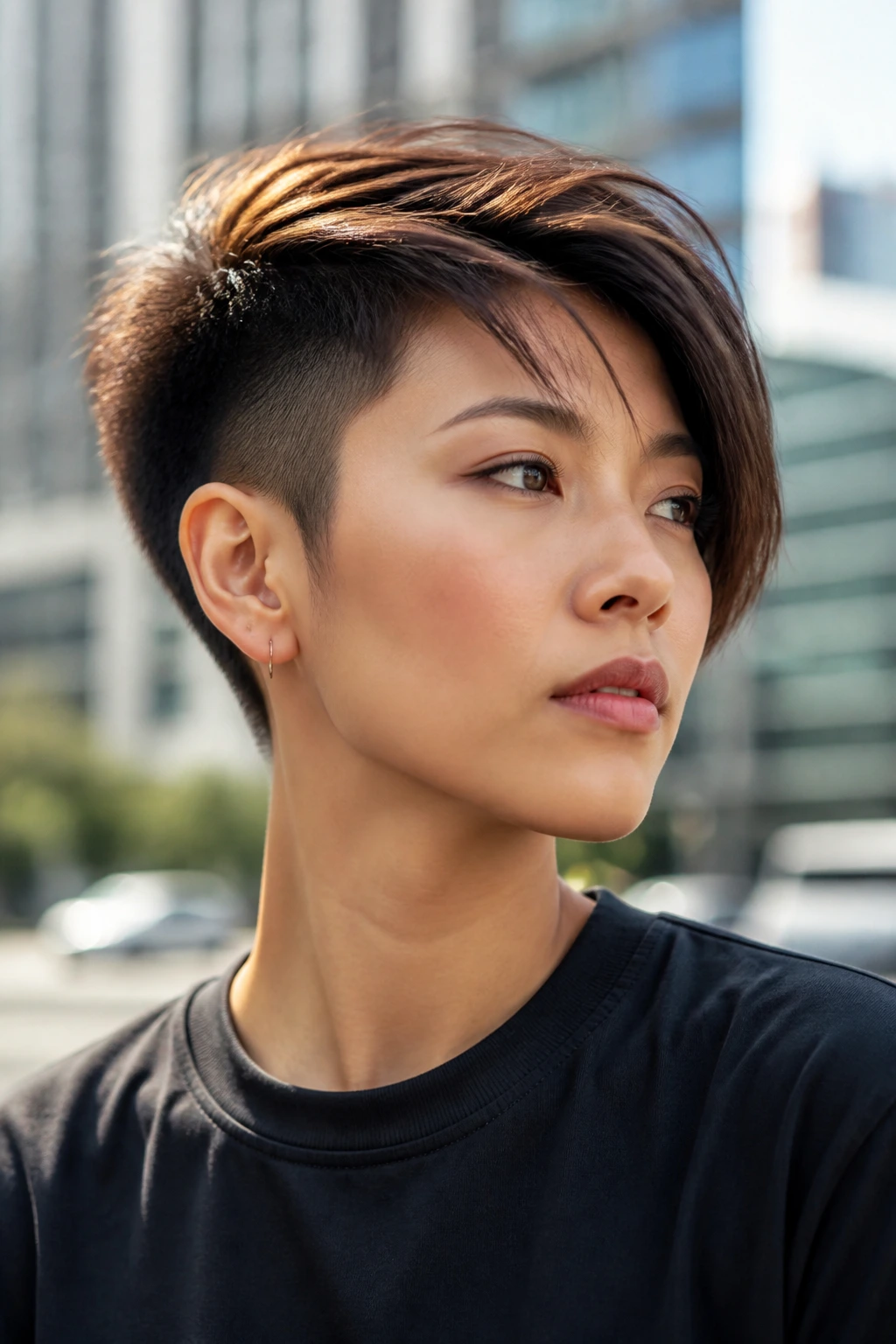
The two-block crop has a cleaner, sharper attitude than most short cuts, and that’s exactly why it suits thick Asian hair so well. Shorter sides and back, longer top, clear disconnect. No fuss.
A cut with room on top
This shape borrows from the kind of cropped silhouettes you see in Korean salons: the lower section is cut short enough to free the neck, while the top is left longer so it can fall forward, part to one side, or sit with a soft bend. The contrast is what makes it work.
The trick is not to over-thin the top. Leave enough weight to move, because super-thin layers on straight hair can look wispy in a bad way. A good two-block crop still has body on top; it just doesn’t carry unnecessary bulk around the ears.
If you want a little personality without going full punk, this is one of my favorite places to land. It’s crisp, but not harsh. The shape looks deliberate even when you barely touch it with product.
- Best for: thick, straight, or slightly wavy hair that puffs at the sides
- Ask for: shorter sides and back with a longer crown and fringe
- Style with: blow-dry cream or lightweight wax
- Trim timing: every 3 to 5 weeks if you want the disconnect to stay clean
4. Asymmetrical Side-Shave Bob
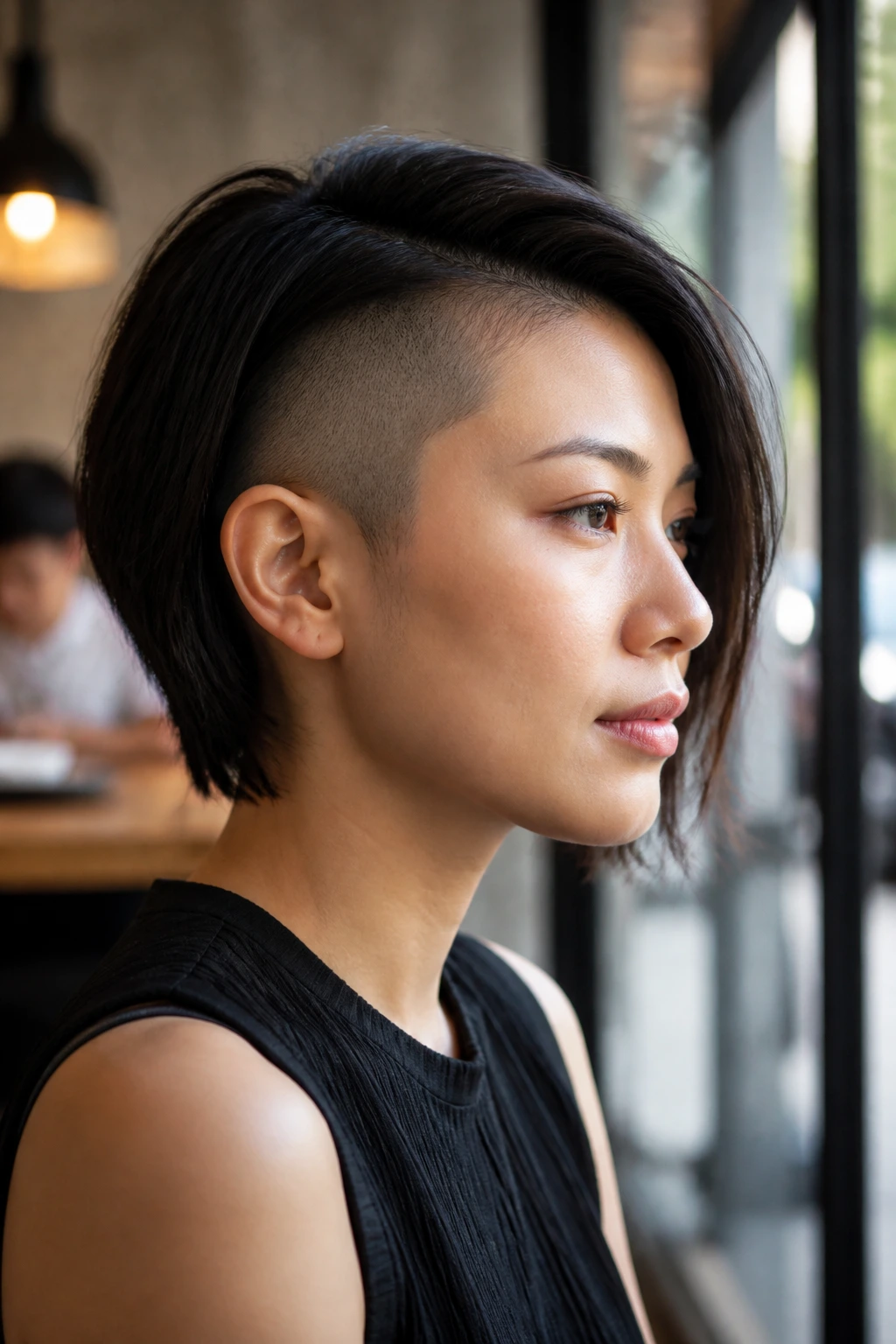
A side shave does not have to shout. Sometimes it just changes the balance of the whole haircut.
One side shaved close and the other left longer gives a bob some movement, especially if your hair has a strong fall pattern or a stubborn part line. The longer side can skim the jaw or collarbone, while the shaved side keeps the profile from feeling bulky.
Where this cut gets interesting
This is a strong choice if you like to tuck one side behind the ear or wear statement earrings. The asymmetry frames the face in a way that feels intentional rather than accidental, and it works particularly well when the longer side is cut with a little texture at the ends instead of a hard blunt line.
I wouldn’t push this shape too high if you want it to stay versatile. A low to mid side shave is easier to grow out and easier to hide under hair when you want to dial it back. If you go higher, you get more edge — and more maintenance.
There’s a nice tension here between polished and sharp. That’s the charm.
5. Soft Bowl Cut with a Hidden Undercut
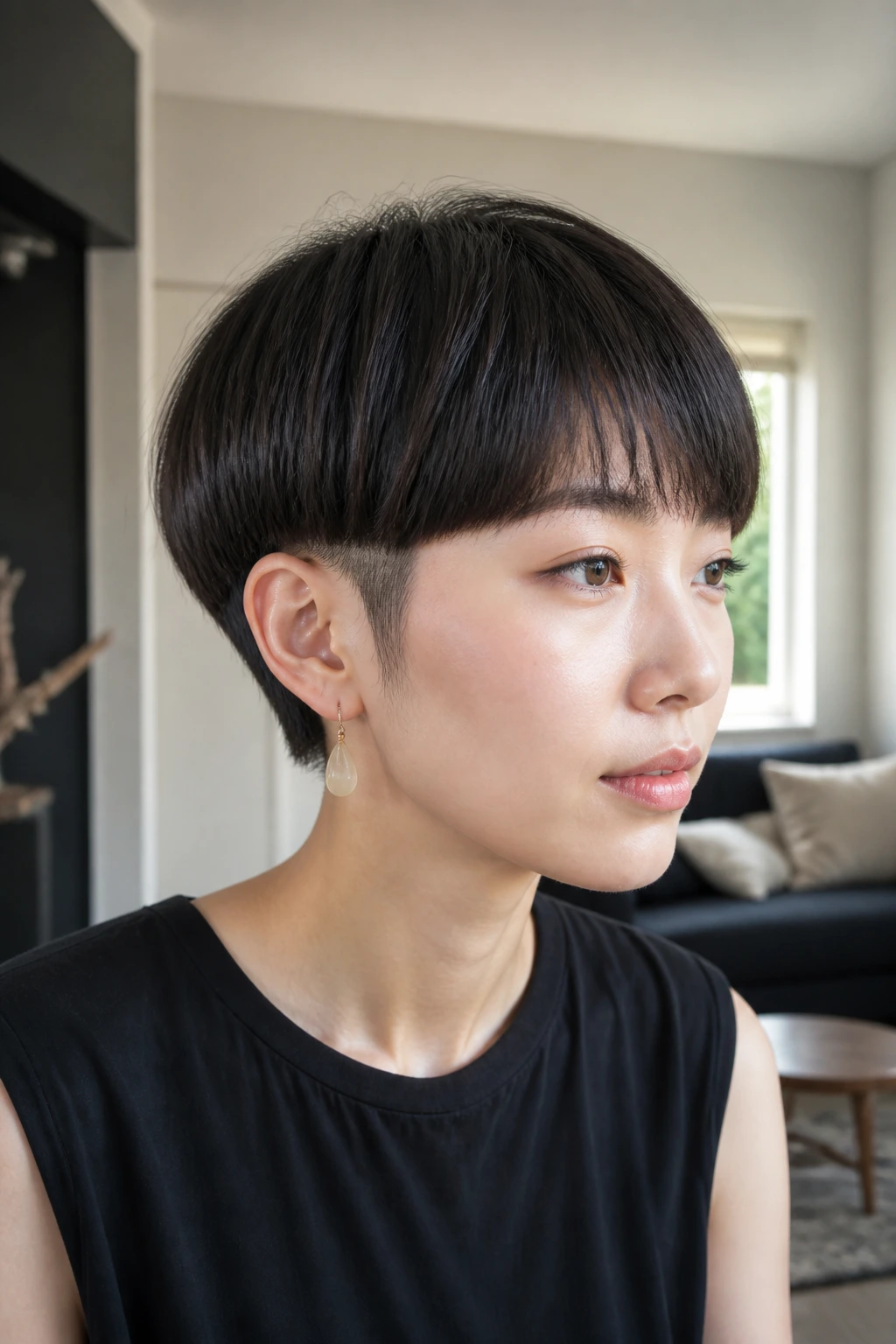
The modern bowl cut is usually misunderstood. People hear “bowl” and picture something severe, but the good version is rounded, airy, and much lighter than it looks.
The hidden undercut is what makes it wearable on thick short hair. The visible line stays smooth and curved around the head, while the inner layer at the nape is clipped shorter so the shape doesn’t mushroom out from underneath.
That’s the whole trick. Remove the weight from under the line, and the line suddenly looks expensive instead of stiff.
This cut is especially good if you like graphic hair but not a hard, edgy finish. Keep the fringe blunt or slightly arched, and ask for soft point cutting at the ends so the perimeter doesn’t feel boxy. A shine cream or light serum makes the top layer sit like a clean cap, which is exactly the effect you want.
6. Textured Pixie Mullet
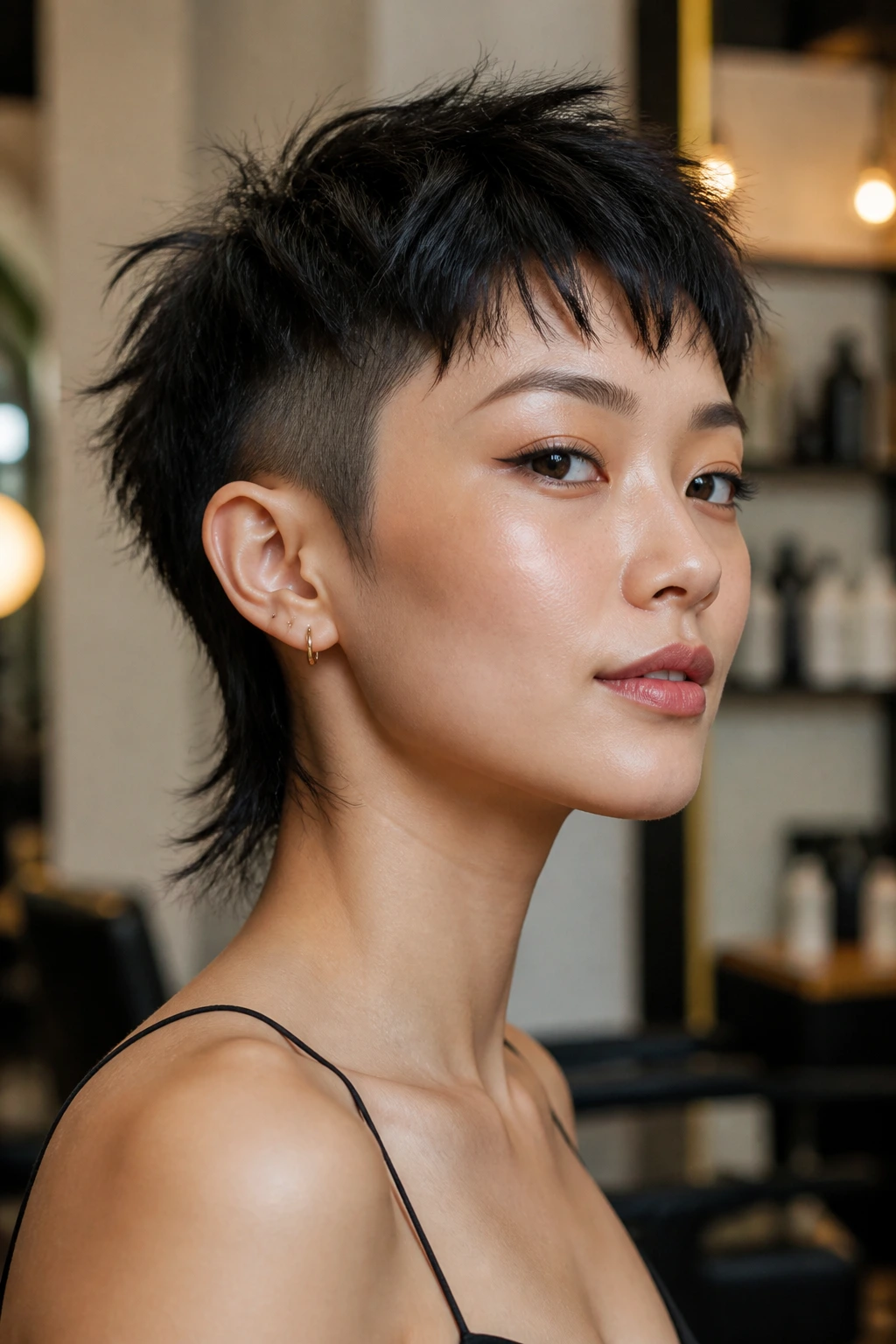
If a classic pixie feels too neat and a mullet feels too loud, the textured pixie mullet sits in the middle and does a better job than either extreme.
Shorter through the front and sides, longer through the nape, and shaved or tapered underneath where the bulk would otherwise pile up — that’s the structure. It gives you movement at the back without turning the neckline into a heavy curtain.
Why it behaves better than a stiff pixie
This shape works because it lets short hair move instead of locking it into one flat direction. On hair that’s straight and dense, the extra length at the nape can look sleek rather than shaggy if the undercut underneath removes the bulk first.
I like this version when the wearer wants a little edge but still wants to tuck the hair behind one ear or style it forward on tired mornings. It doesn’t ask for perfect styling. Finger-dried texture, a little paste, maybe a pinch of spray. That’s enough.
It grows out decently too, which matters more than people admit. A cut that looks terrible after 10 days is a bad investment, no matter how good the first day was.
7. Slicked-Back Cropped Undercut
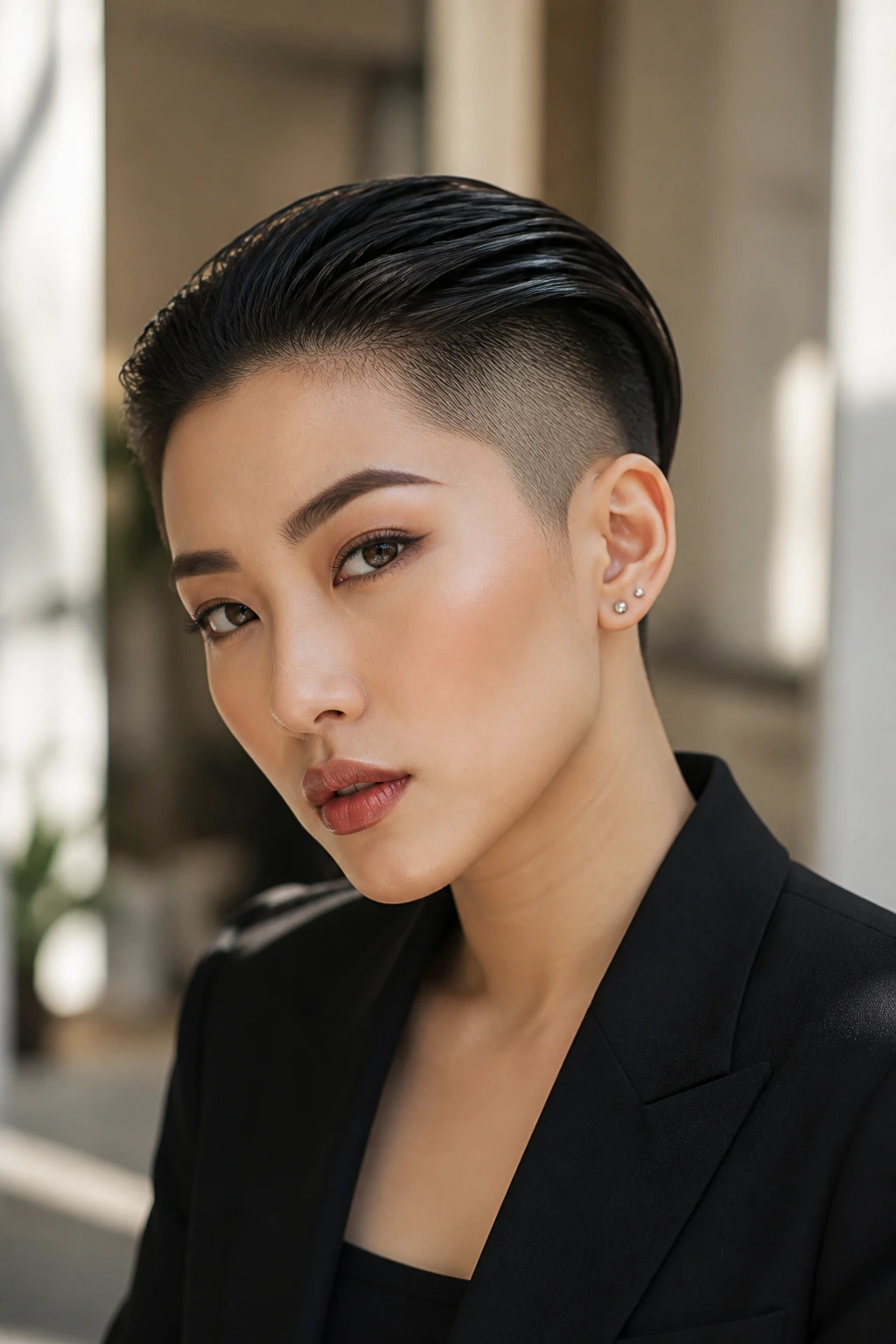
Want a cut that gets your hair off your face and stays there? This is the blunt answer.
The sides and nape are clipped short, sometimes down to a #1 or even tighter depending on the desired contrast, while the top stays long enough to comb straight back. The result is crisp, narrow, and a little severe in a good way.
The styling is the whole point
You need a styling gel or strong-hold pomade here, not a fluffy cream. Work it through damp hair, comb the top back with a fine-tooth comb, and let the sides stay tight to the head. If you want a softer finish, break the front with your fingertips after it dries so it doesn’t read too rigid.
This one looks especially good when you want to show off brows, earrings, or strong makeup. It also behaves well in humid air because the sides are already short, so there’s less hair fighting to puff up around your face.
I’d choose this over a rounded crop if you like direct lines and you do not want to spend time reshaping the front every day. It’s a haircut with a clear opinion.
8. Ear-Opening French Bob
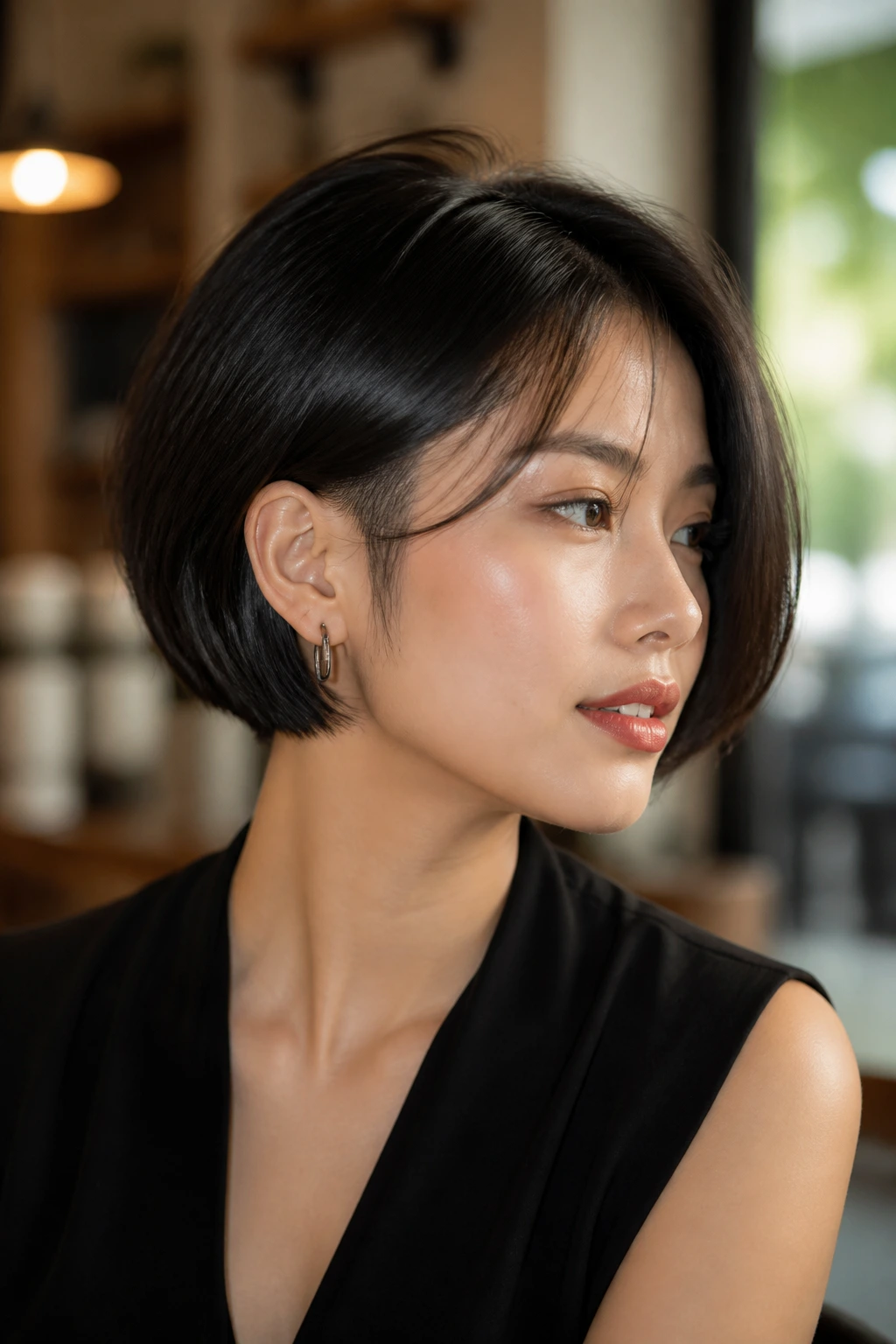
A French bob with a hidden undercut is one of the most elegant short cuts on this list. It keeps the blunt, chin-skimming shape at the front, but the hair around the ears and nape is trimmed underneath so the silhouette stays close and clean.
Subtle, not dull
The best version doesn’t look shaved. It looks precise. Hair can still swing slightly at the cheek and jaw, but it no longer catches and flares out around the ears every time you turn your head.
This is a strong option if you like a neat line and want to keep earrings visible. It also works beautifully when the hair is tucked behind one ear, because the undercut stops the side from bulking up into a round puff. That detail matters more than people think.
I prefer this cut on straight or slightly wavy hair that sits heavy at the bottom. A round brush and a small bend at the ends are usually enough. You do not need a full salon blowout every day — thank goodness.
9. Wolf Cut with a Shaved Nape
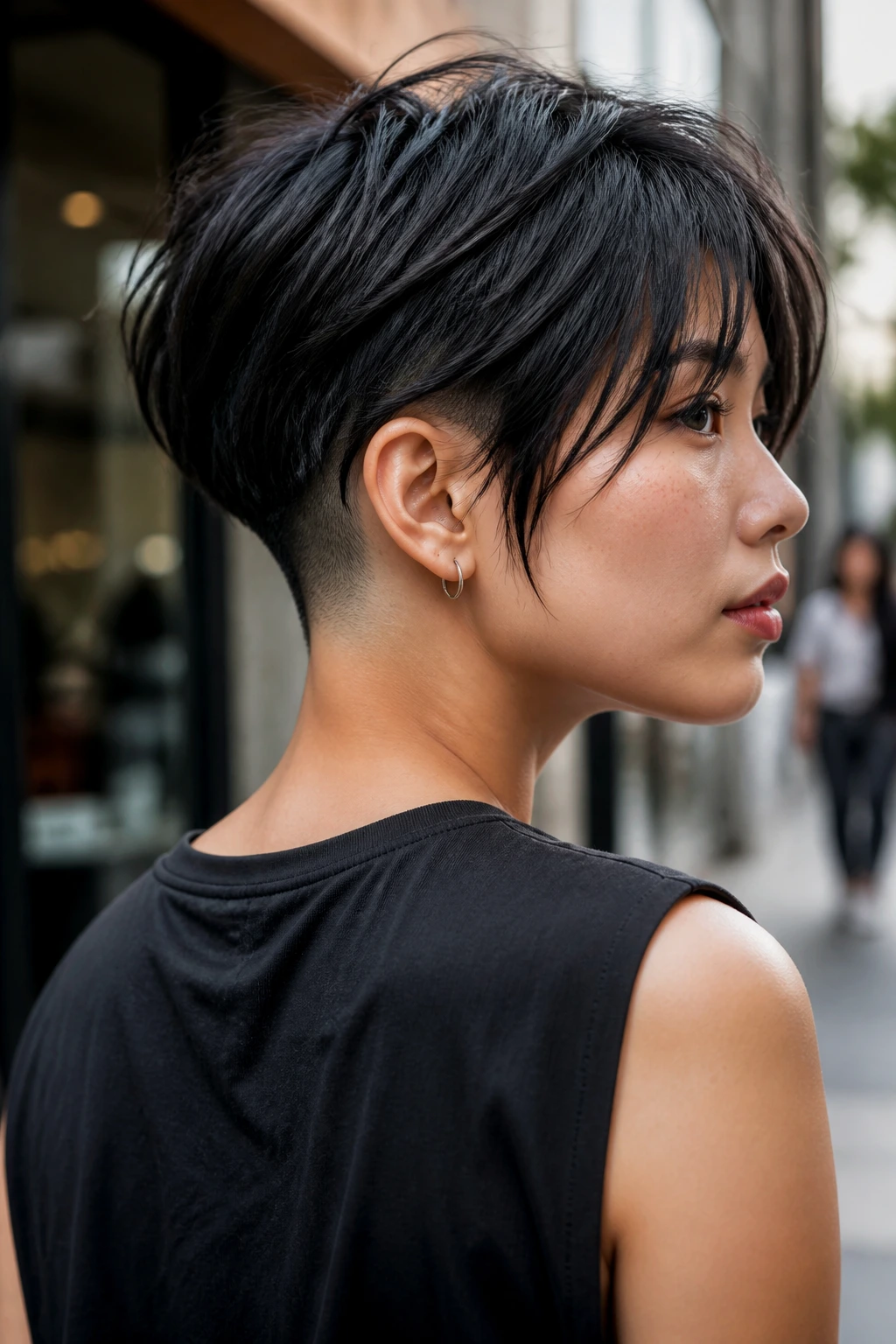
A short wolf cut can turn sloppy fast if the back is too thick. A shaved nape fixes that problem before it starts.
The top keeps the choppy, layered texture that gives the wolf cut its messy energy, while the nape is cut close so the back doesn’t form that familiar triangle shape. If your hair has a lot of density, this makes an enormous difference.
What I like most here is the movement. The layers at the crown can be rough-dried with a bit of texture spray, and the nape stays neat enough that the whole style still feels intentional. It’s a good choice if you want softness up front and a little attitude behind the ears.
If you air-dry a lot, ask for the top layers to be cut with the way your hair naturally falls, not against it. That tiny bit of planning saves you from a haircut that only looks right when you stand in one exact position.
10. Hime Cut with a Hidden Nape Undercut
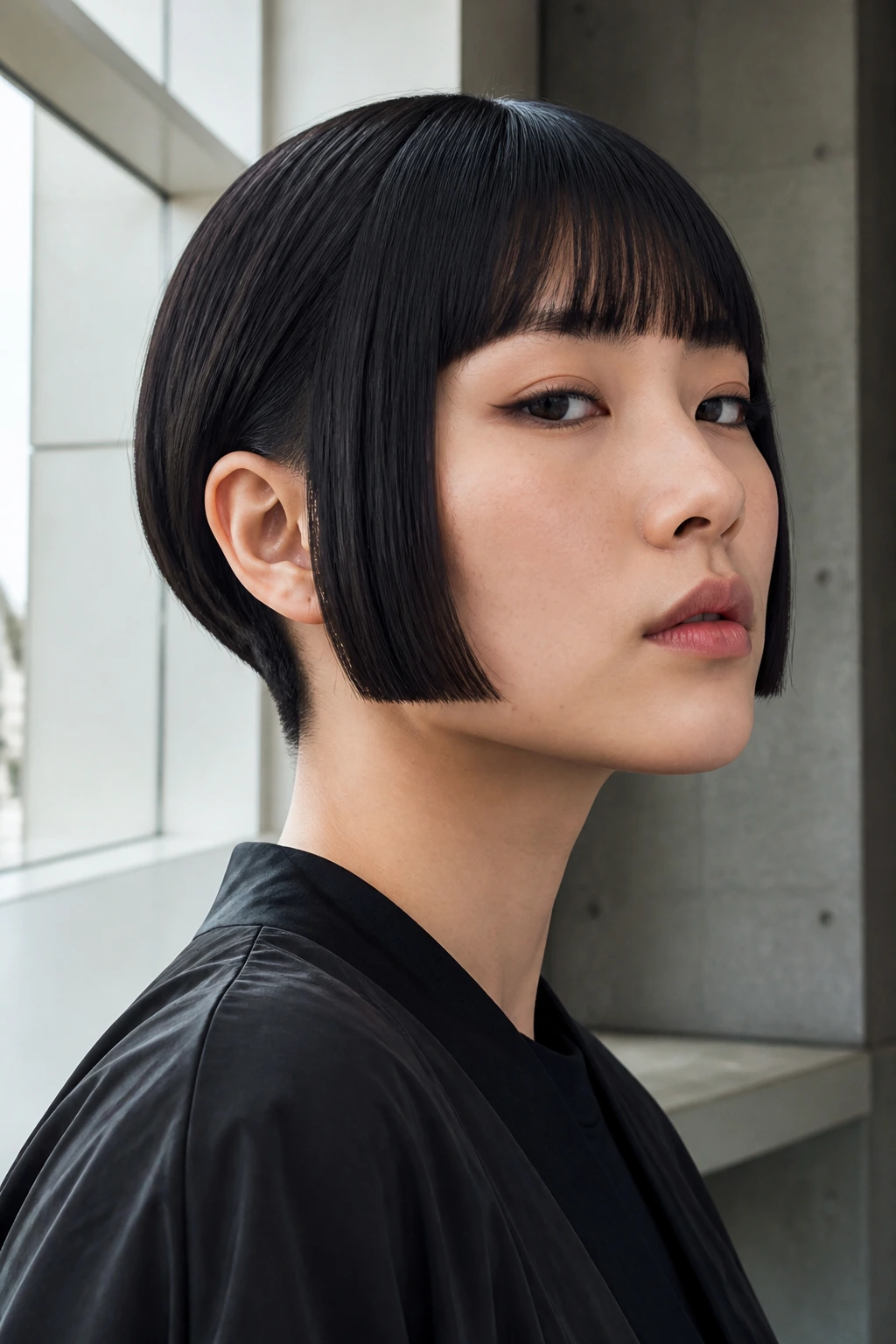
The hime cut has a strong shape, so it needs precision more than volume. Blunt front pieces, cheekbone or jaw-length side locks, and a clean fringe can look stunning on short hair — as long as the lower section isn’t too bulky.
Straight lines, controlled weight
A hidden nape undercut keeps the back from widening under the hard edges. That matters because the hime cut’s charm comes from its geometry. If the underneath stays too heavy, the silhouette loses that sharp, deliberate feel and starts looking accidental.
This is one of the rare cuts where I’d urge you to bring very specific photos. The length of the side pieces, the thickness of the fringe, and the depth of the undercut all change the result. A few centimeters matter here. A lot.
It suits people who like a clean, structured look and don’t mind maintaining the fringe. If your hair is straight and reflective, the effect can be almost architectural. If it’s more textured, the same cut softens a bit, which can be lovely too.
11. Buzzed Nape Bixie
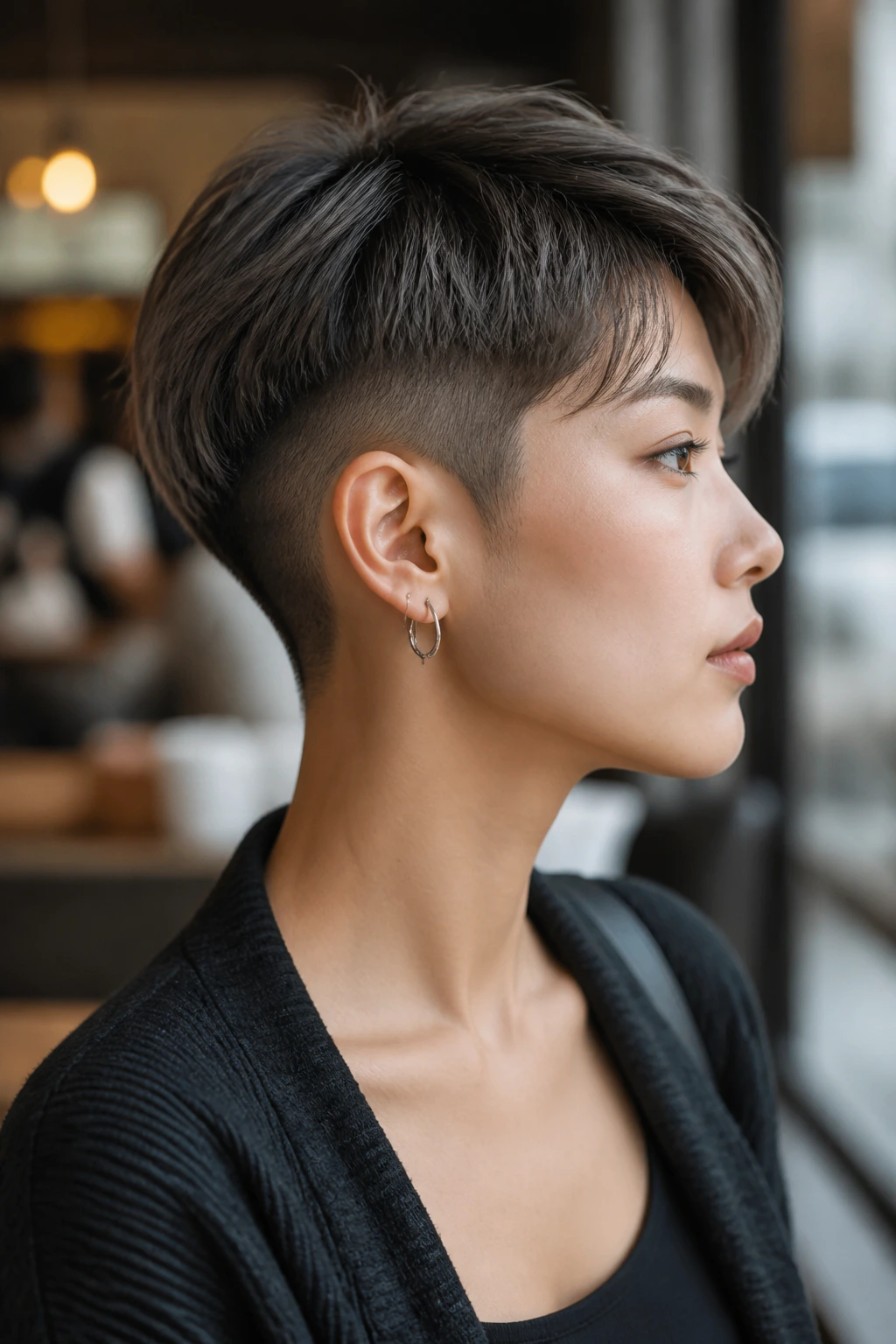
A bixie is already a useful haircut — part bob, part pixie, never as fussy as it sounds. Add a buzzed nape, and it gets lighter where short hair usually starts to misbehave.
The top stays a touch longer than a classic pixie, the sides taper in, and the back is clipped close enough to stop the neckline from bulking up. That makes this a nice bridge cut if you’re growing out a pixie or trimming down a bob.
It’s easy to style. A small amount of mousse on damp hair gives the crown a little lift, and then you can rough-dry with your fingers or let it air-dry if your texture allows. The cut does the work, which is the part I always trust most.
This is a smart option if you want short hair but not a strict silhouette. It reads soft from the front, sharper from the back, and that little contradiction keeps it interesting.
12. Side-Part Crop with a Disconnected Panel
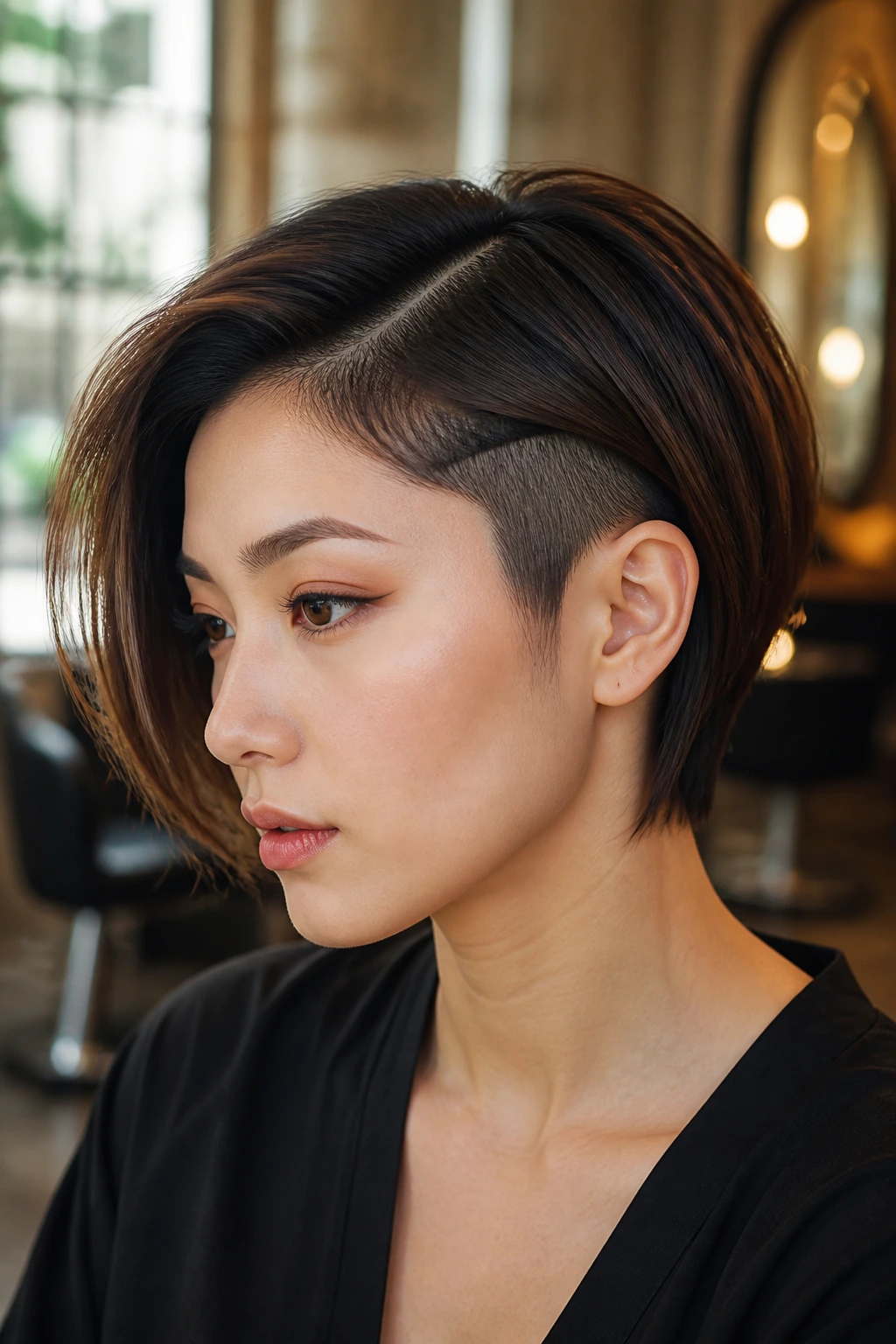
Sometimes the smallest hidden detail makes the biggest difference. A side-part crop with a disconnected panel is built around that idea.
The hidden panel does the heavy lifting
The top is kept longer and parted deeply, while a shorter section underneath is clipped or tapered away so the hair falls over it in a clean sweep. When you tuck the longer side back, you get a flash of edge. When you wear it down, it looks polished and compact.
This works especially well if you want a short cut that still behaves in conservative settings. The visible shape is tidy. The hidden side is where the personality lives. That balance is hard to beat.
I’d ask for the panel to stay low enough that it doesn’t peek out every time the wind moves your hair. Nothing kills the effect faster than an undercut that keeps shouting when you wanted it to whisper.
13. Feathered Shag Pixie
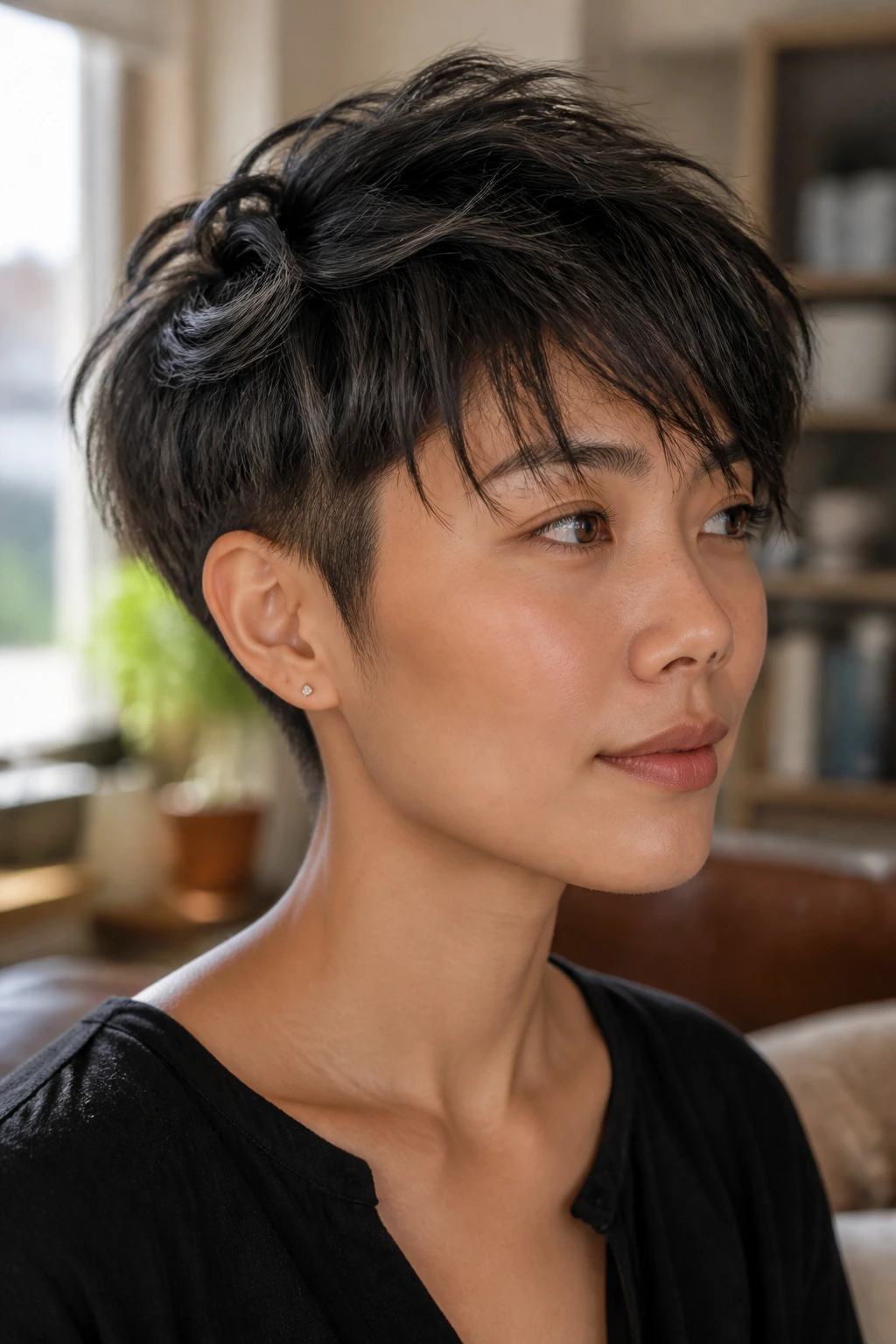
A feathered shag pixie is softer than a sharp undercut crop, but don’t confuse soft with boring. The layers can move a lot, especially when the nape is thinned out underneath.
This is a good cut for hair that has a bit of wave, or for straight hair that goes flat unless you coax it. The feathered layers stop the top from looking too solid, while the undercut underneath removes the dead weight that would otherwise keep everything stuck to the head.
Best for hair that needs air
- If your hair is fine: keep the fringe lighter and the nape very clean so the top doesn’t collapse.
- If your hair is thick: ask for feathering, not blunt stacking, so the layers don’t build a shelf.
- If you air-dry: use a light cream and let the texture settle on its own.
- If you blow-dry: lift the roots at the crown with your fingers, not a giant brush.
This is one of the easiest cuts to wear when you want movement without too much styling commitment. It has shape on bad days and still looks deliberate on good ones.
14. Curved-Edge Blunt Bob with a Hidden Undercut
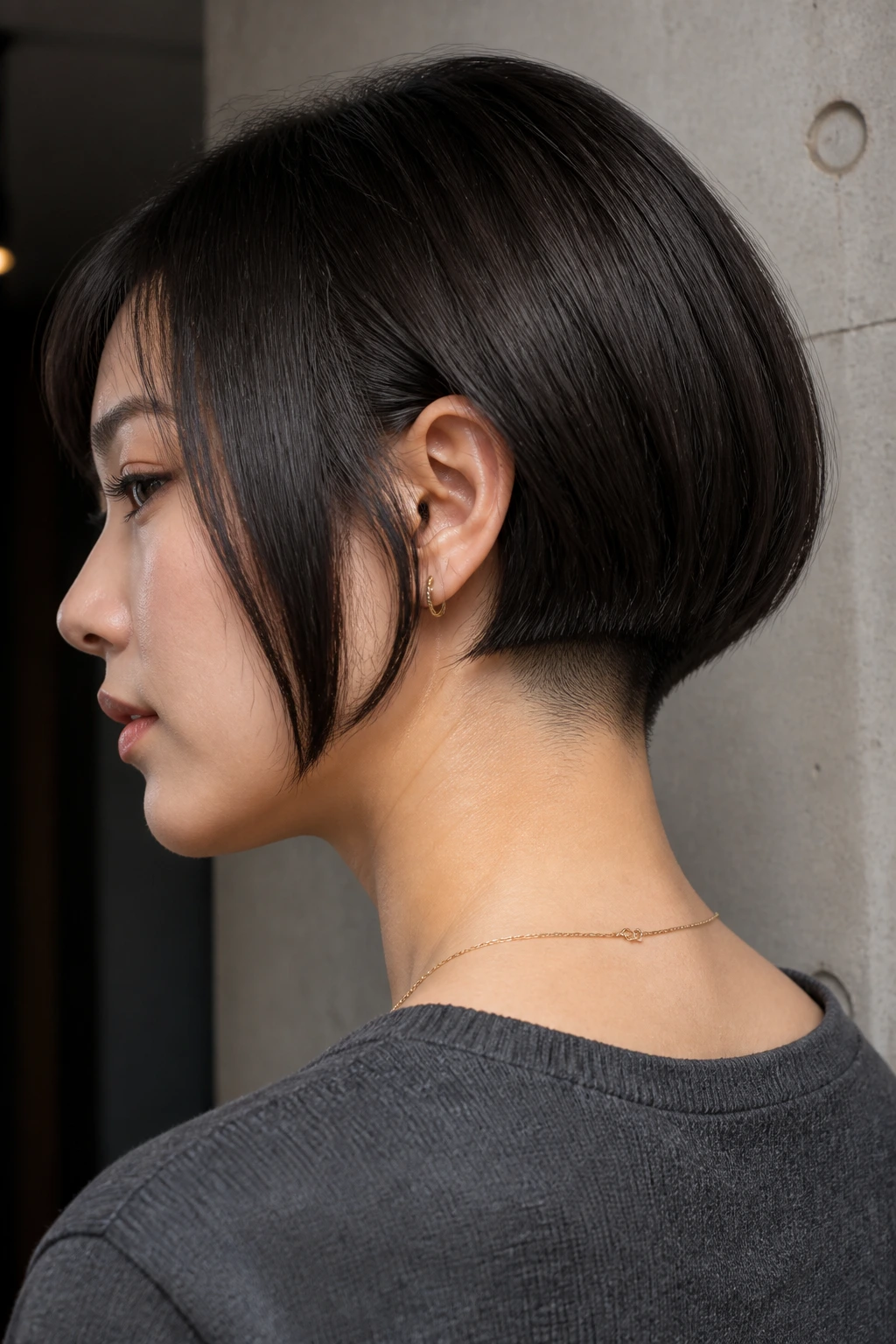
If your bob keeps flipping out at the bottom or feeling too heavy around the neck, this is the fix that usually works first.
The visible edge stays blunt and curved, which gives the haircut that clean, tucked-in line. Underneath, though, the nape is reduced so the back doesn’t stack into a bulky block. The result is a bob that looks fuller than it feels.
There’s a nice contrast here. The top line says “polished.” The hidden undercut says “I’m not carrying extra hair just because I can.” That is a very practical kind of vanity, and I support it.
This shape likes a smooth finish. Blow-dry with a paddle brush or a flat brush, aim the nozzle downward, and let the ends settle inward. If you use too much round-brush curl at the ends, you lose the sleek line that makes this cut worth wearing.
15. Faux Hawk Pixie
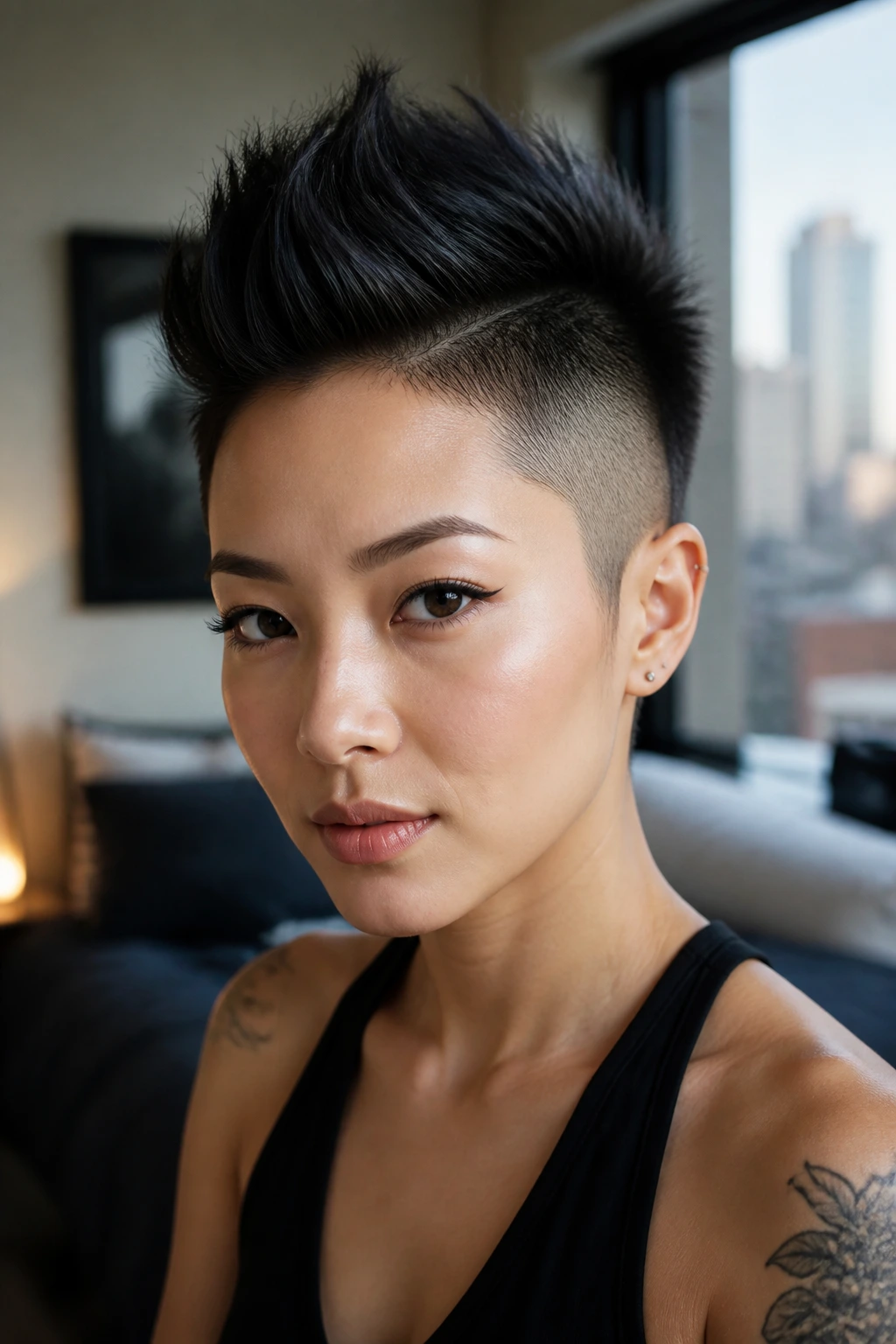
A faux hawk pixie is one of the most direct undercut styles on short hair, and I mean that in the best way. The sides are clipped close, the center strip stays longer, and the shape runs from the forehead back toward the crown with a little lift.
Where it gets its personality
The magic is in the contrast. With the sides tight, the center has room to rise without looking like it’s fighting the rest of the cut. On thick, straight hair, that matters because the side bulk usually steals the attention first.
Style it with paste or matte clay if you want separation, or with a gel-cream mix if you want a sleeker, more sculpted finish. Either way, you’re building a line down the center and keeping the sides obedient. There’s no point pretending otherwise.
This is the cut I’d recommend to anyone who likes short hair with a little defiance. Not every haircut needs to whisper.
16. Graduated Bob with a Shaved Underlayer
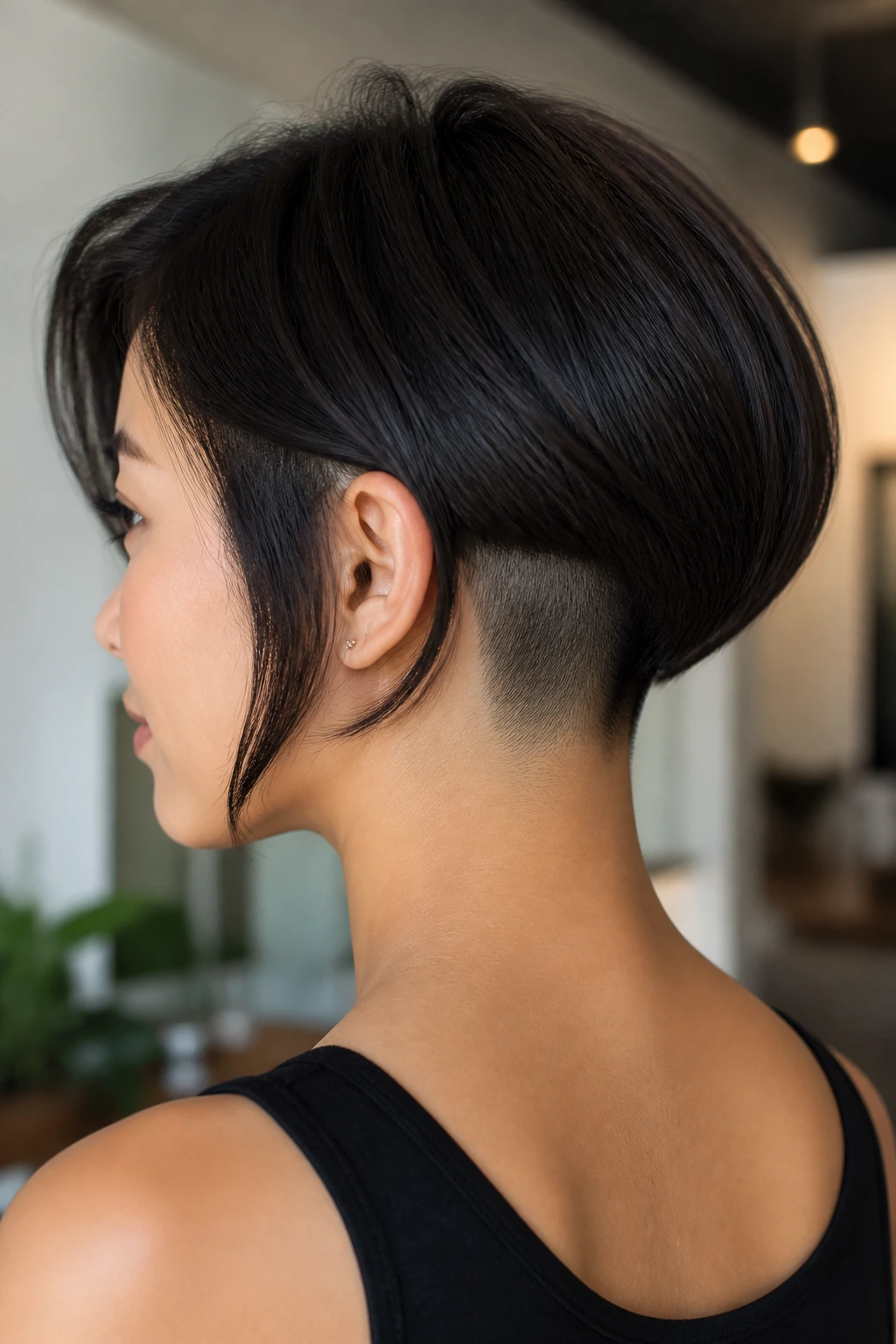
A classic graduated bob can get too stacked if the back keeps building weight. A shaved underlayer changes the whole equation.
The top section keeps that curved, lifted shape in the back, but the inner layer is clipped or tapered close enough to remove the extra density. That means the bob still has structure at the neckline without becoming bulky.
This is especially useful if your hair is dense and straight, because graduated bobs can look a little helmet-shaped when the lower layers are too heavy. The underlayer takes the pressure off. You still get the shape, but the back sits cleaner and moves better.
I like this cut for people who want something polished rather than edgy. It’s a clean bob, just with better engineering underneath.
17. Tapered Crop with a Micro Fringe
A micro fringe can be brilliant or brutal. The difference usually comes down to the sides.
With a tapered crop and a hidden nape undercut, the fringe gets to stay the focal point while the sides stay tight enough to support it. That keeps the haircut from spreading outward and turning square.
The tiny fringe needs balance
A short fringe draws attention fast, so the rest of the cut has to stay neat. If the nape is too thick or the sides too puffy, the fringe looks disconnected from the haircut and not in a chic way. A taper softens that transition.
I’d choose this if you like sharp features, glasses, or a face-framing cut that doesn’t need much daily styling. A tiny bit of wax through the fringe is usually enough. You’re aiming for separation, not spikiness.
The grow-out is a little tricky, yes. But when it’s fresh, this shape has a crispness that bigger, safer cuts rarely match.
18. Ear-Tucked Lob with Temple Undercuts
If you want to keep a little more length while still getting the benefits of an undercut, this is the one to watch. The lob sits around the jaw or just below it, and the temples are trimmed enough to let the hair tuck cleanly behind the ear.
That tiny removal of bulk changes how the whole cut moves. Instead of flaring out every time it meets the cheek, the hair falls in a smoother line and stays closer to the head. It’s subtle, but that’s the point.
This style works especially well if you need a haircut that can look neat in a meeting and still feel easy with a T-shirt and earrings. It doesn’t demand attention. It just makes the hair behave.
I’d call this the practical choice for women who want short hair but aren’t ready to give up the option of a little face-framing length.
19. Full Wraparound Undercut Pixie
If your hair is thick, straight, and stubbornly determined to take up space everywhere at once, this is the cut that finally argues back.
A full wraparound undercut pixie takes the sides and nape down close, leaving only the crown and fringe with enough length to play with. The perimeter becomes lighter, the silhouette gets narrower, and the whole haircut sits closer to the head without feeling flat.
Why this one stays sharp
The cut works because it removes bulk on every side that usually competes with the shape. That means the top can be styled upward, forward, or slightly sideways without fighting a heavy base underneath. On dense hair, the difference is dramatic.
This is the most committed option in the list, so I’d only choose it if you like clean lines and you’re comfortable with frequent cleanups. But when it’s done well, it’s excellent. The shape looks tidy even on day three, and the neckline stays neat instead of widening out like a halo.
A small amount of pomade or paste is enough. Keep the crown piecey, let the front fall where it wants, and let the undercut do the hard work.
What to Tell Your Stylist Before the Clippers Start
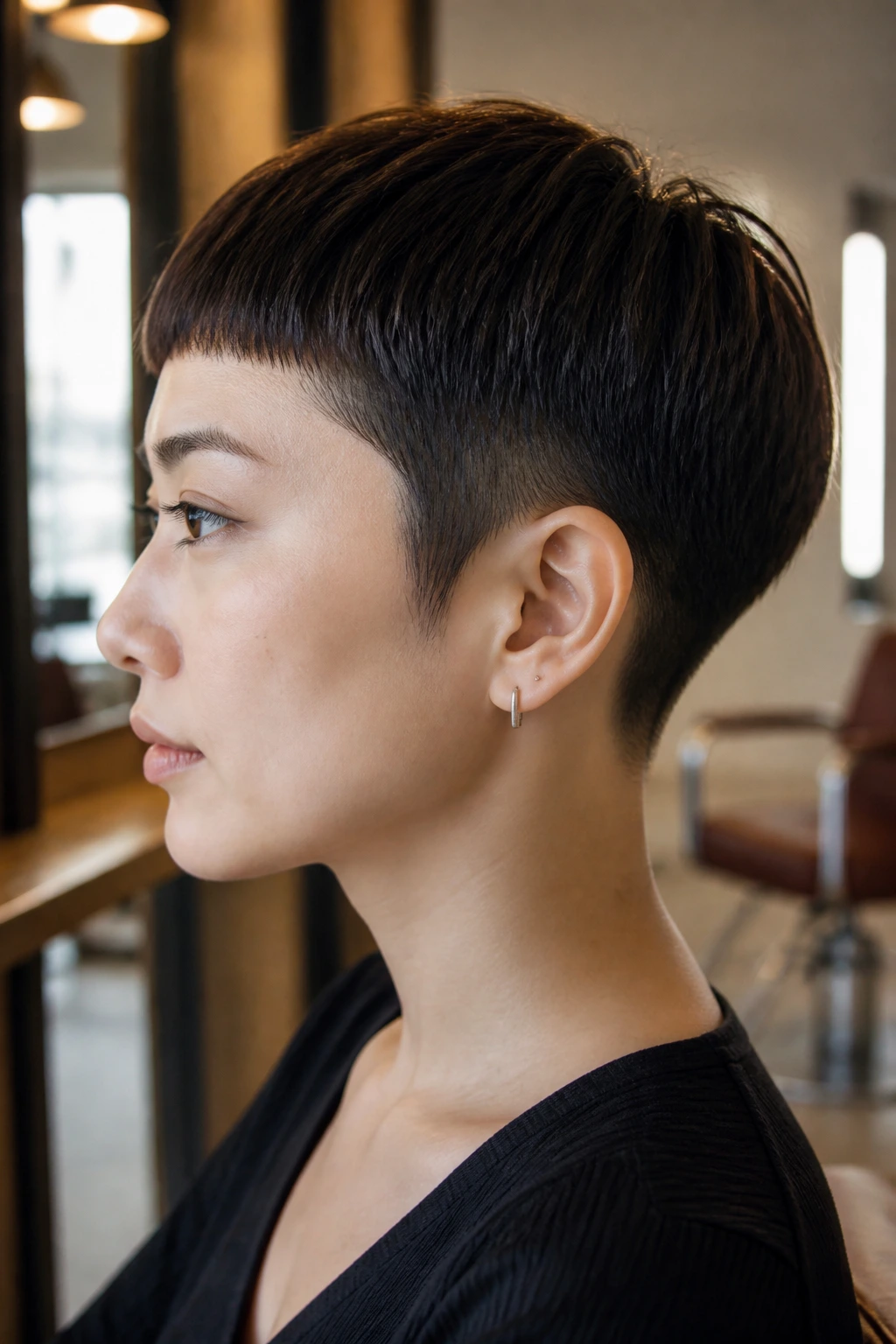
A good undercut begins before the first snip. The conversation matters. More than people think.
Bring photos from the front, side, and back if you can, because the same haircut can look completely different depending on where the shave sits. Then say what you do not want: too high, too exposed, too much scalp, too much volume at the nape, too much heaviness around the ears. That part saves time.
If your hair is dense and straight, ask the stylist to check the shape both wet and dry. Wet hair can lie flatter than the real life version, and a cut that seems balanced at the bowl may puff up once it dries. I also like to ask for the neckline to be cleaned in a way that fits the natural hairline instead of cutting a hard line across it. That little choice makes grow-out less awkward.
A few useful phrases help:
- “Keep the undercut low and hidden.”
- “Leave enough length on top to tuck behind the ear.”
- “I want the sides lighter, but not bare.”
- “Please show me where the disconnect starts before you cut higher.”
That sounds fussy. It is fussy. Good haircuts usually are.
Essential Tools and Products for Styling These Cuts
-
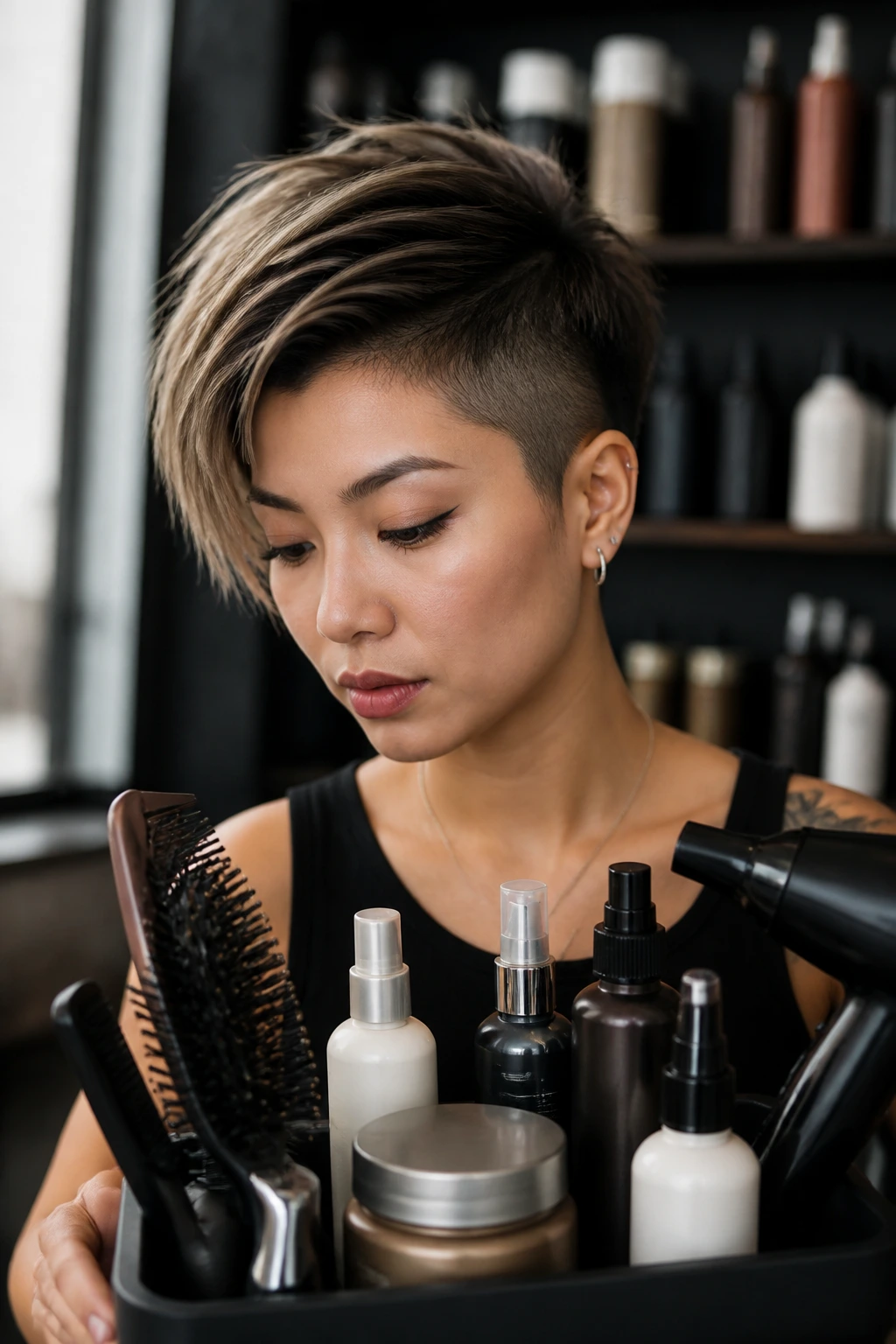
Fine-tooth comb: helps define part lines, slick back short layers, and keep temple areas tidy.
-
Flat brush or paddle brush: useful for bob shapes, French bobs, and any cut that needs a smoother surface.
-
Round brush, medium barrel: helpful if you want bend at the ends of a bob or a little lift in a graduated shape.
-
Blow dryer with concentrator nozzle: keeps the airflow controlled so short hair doesn’t frizz or scatter.
-
Matte paste or clay: best for pixies, crops, and textured looks that need separation without shine.
-
Lightweight smoothing serum: good for blunt bobs, hime-inspired shapes, and polished finishes.
-
Texturizing spray: useful for wolf cuts, shag pixies, and faux hawks when you want controlled messiness.
-
Styling gel or gel-cream: the choice for slicked-back looks and sharper temple shapes.
-
Sectioning clips: keep the top out of the way while you dry the nape or shape the fringe.
-
Small trimmer or detail clipper: optional, but helpful for neckline cleanups between salon visits if you know what you’re doing.
How to Keep the Shape Sharp Between Salon Visits
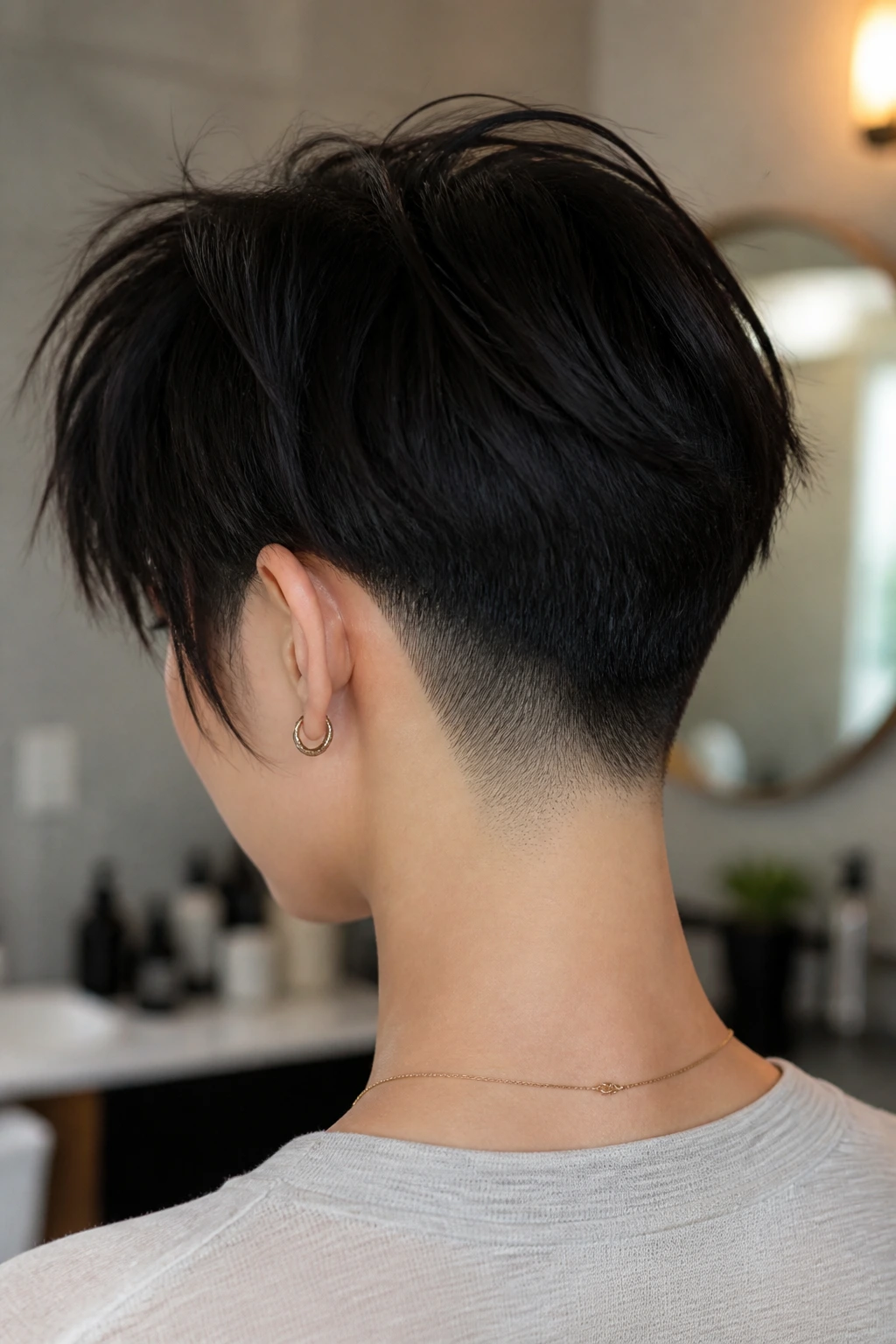
Short undercuts live or die by maintenance. That’s the honest part.
The nape grows fastest in the places you feel first: around the collar, behind the ears, and at the corners where the hairline changes direction. If you want the shape to stay crisp, plan on a trim every 2 to 4 weeks for visible undercuts and about 4 to 6 weeks for hidden ones. The more exposed the shave, the shorter the schedule.
A dry shampoo at the crown can help if the top starts to collapse while the undercut stays neat. That sounds backward, but it works. The hair above the undercut often needs a little lift once the lower section is gone, especially on straight hair that likes to lie flat after one night of sleep.
Wash routines matter too. Heavy conditioners at the nape can make the cut sit limp, and styling cream that’s too rich will erase the texture you paid for. Use the smallest amount you can get away with. Add more only if the hair truly needs it.
If you trim the neckline at home, use a guard longer than you think you need and stop before you chase perfection. Uneven home cleanup is the fastest way to turn a neat undercut into a patchy one. A small correction is fine. A full salvage job is usually not.
Common Mistakes That Make Short Undercuts Look Harsh
-
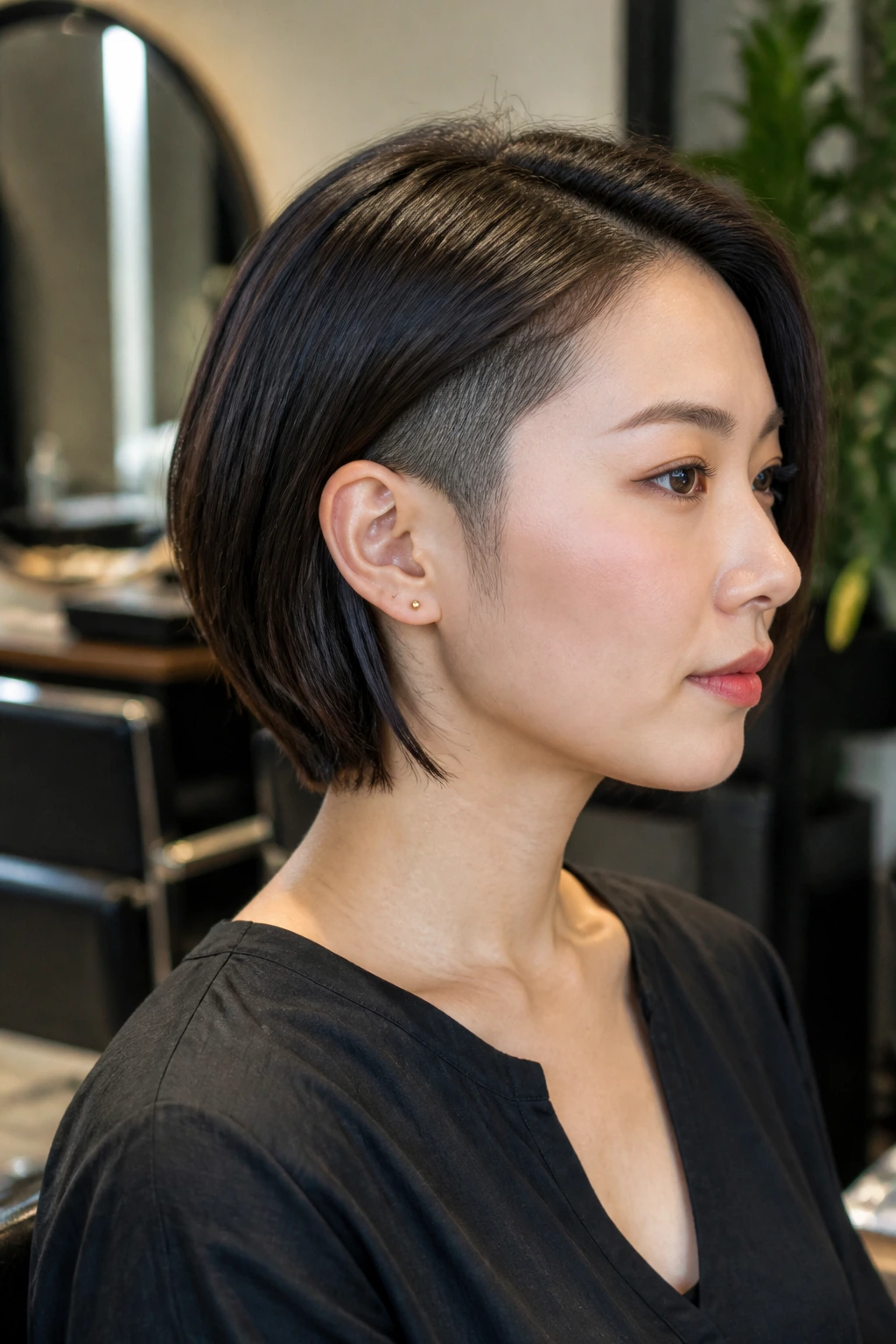
Taking the shave too high, too fast: the cut starts exposing scalp from the front and the whole style can look severe in a way you may not want. The fix is simple — start lower, then climb only if you still want more contrast.
-
Leaving the top too short to move: if the crown is cut down to the same length as the sides, there’s no shape left to style. You end up with a very short haircut, not an undercut with a point of view.
-
Ignoring the hairline behind the ears: that little area swells more than people expect, especially on dense straight hair. Clean it up, or the haircut will puff out every time you tuck it.
-
Using heavy cream on a cut that needs lift: the hair looks greasy or collapses by midday. Use a lighter paste, mousse, or spray depending on the shape.
-
Forgetting about growth pattern and cowlicks: the nape can kick out in odd directions if the cut fights the natural swirl. A good stylist should map that before shaving.
-
Choosing a style that clashes with your glasses or earrings: this one gets overlooked constantly. Temple cuts and side shaves need to sit where your frames and jewelry won’t bully them.
Variations and Adaptations to Try
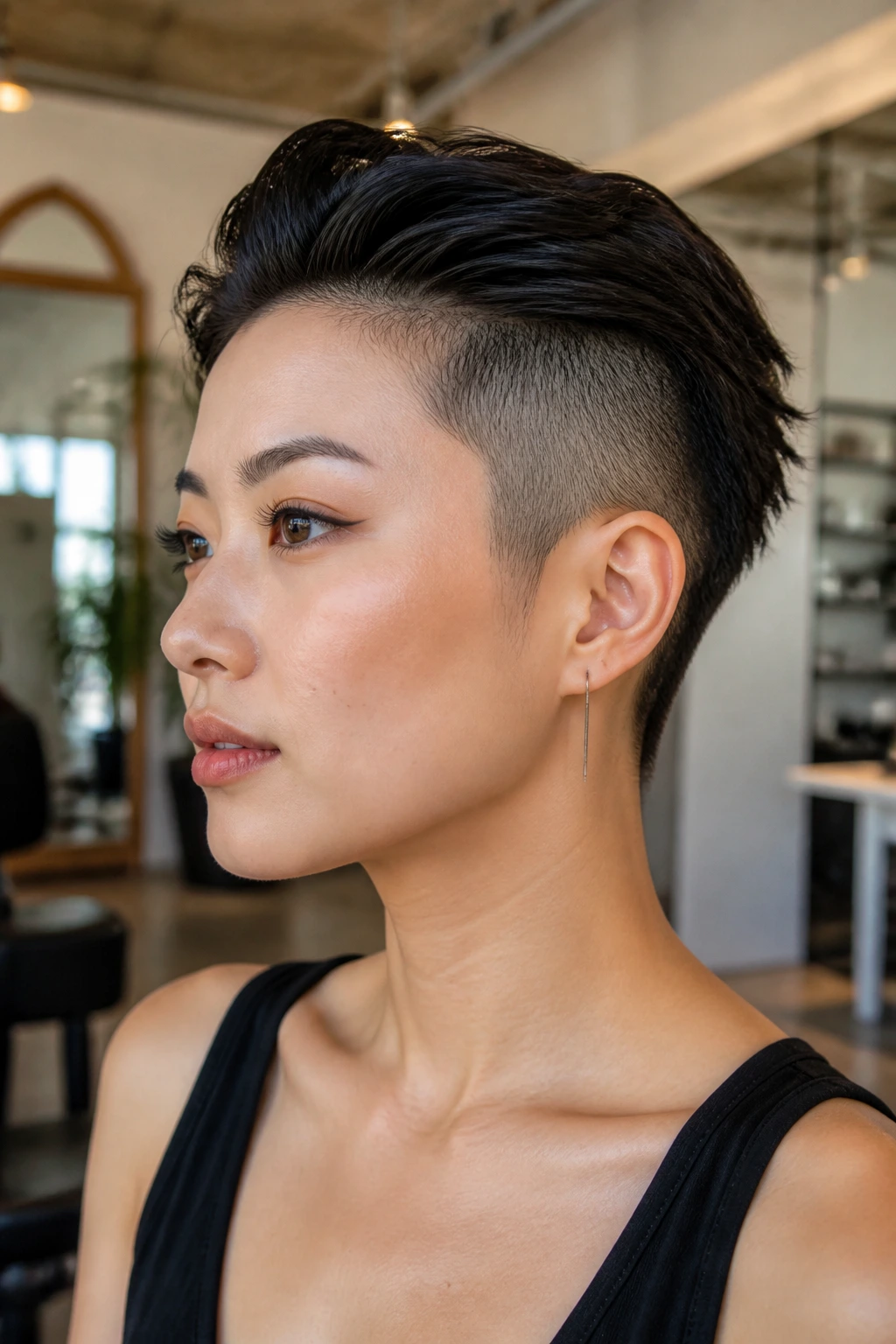
The Office-Quiet Version
Keep the undercut low and hidden, then leave the top in a smooth bob or bixie line. It reads polished from every angle, and the shaved section only shows when you tuck the hair or lift the crown.
The High-Contrast Version
Raise the disconnect, sharpen the side shave, and keep the top piecey or slicked back. This version suits people who want the haircut to be visible even from across the room.
The Air-Dried Version
Leave more texture on top, ask for soft point cutting, and keep the undercut low enough to remove bulk without forcing shape. A little leave-in and a dab of cream are enough.
The Glossy Version
This one leans smoother: blunt edges, serum through the ends, and a controlled side part or comb-back. It works especially well on hime-inspired cuts, French bobs, and curved blunt bobs.
The Soft Grow-Out Version
Instead of a hard shave, ask for a taper around the nape and temples. It grows out with less of that abrupt “I need a trim yesterday” line and is the version I’d recommend if your schedule is unpredictable.
The Texture-First Version
Keep the perimeter light and the crown choppy, then use paste or spray to break up the finish. This is the best route for pixies, shag cuts, and faux hawks that need movement more than polish.
Frequently Asked Questions
Will an undercut make my short hair look thinner?
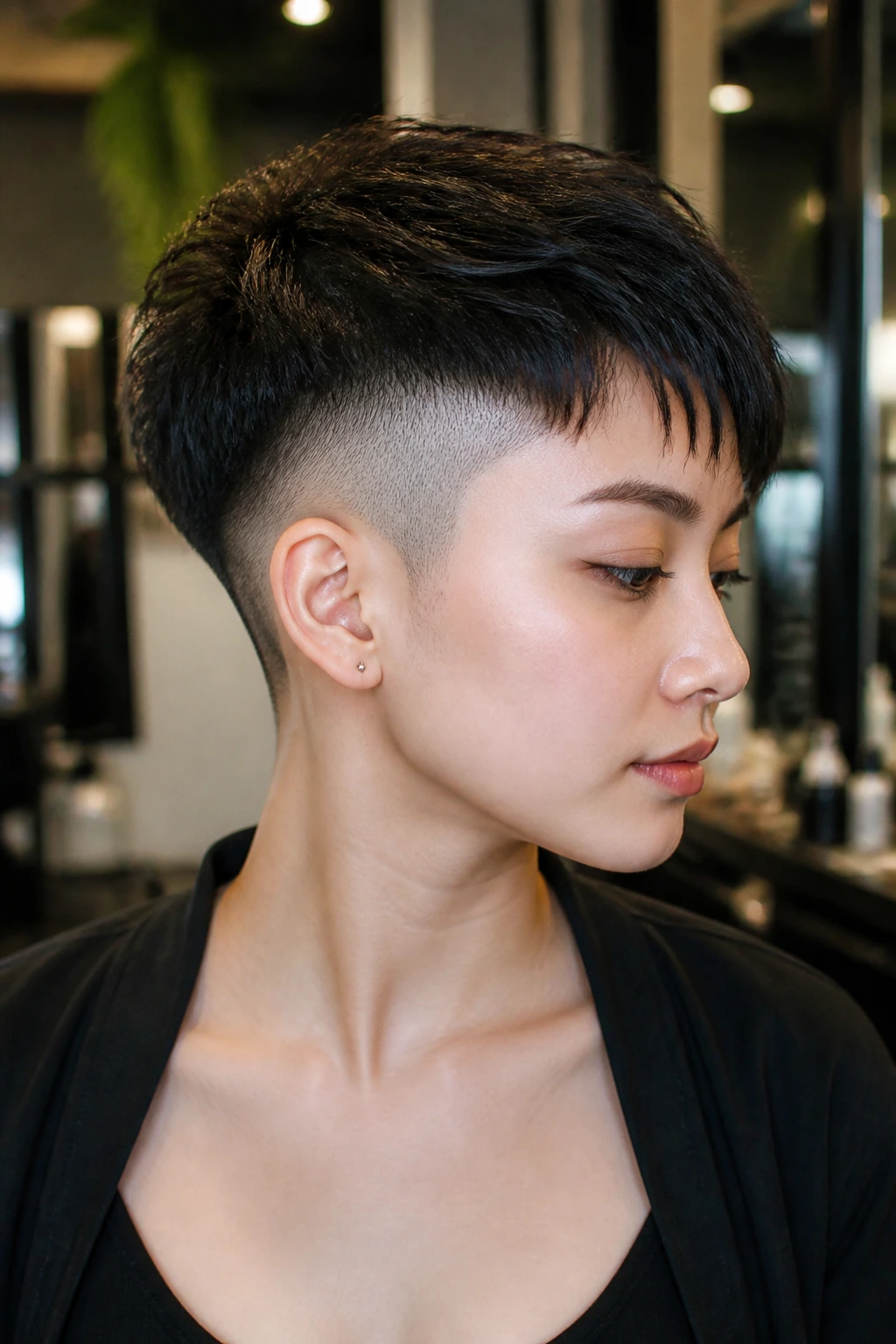
Not if it’s done with balance. Removing bulk underneath usually makes the top look fuller because the hair can sit closer to the head without spreading outward. The only time it looks thin is when the top is over-thinned or the shave is taken too high.
How often do I need to trim an undercut?
Visible shaves usually need a cleanup every 2 to 4 weeks. Hidden nape or temple undercuts can often stretch to 4 to 6 weeks, depending on how fast your hair grows and how crisp you want the outline to stay.
Can fine hair wear an undercut too?
Yes, but the approach should be softer. Fine hair often looks better with a low hidden undercut or a gentle taper rather than a dramatic buzz, because you want to remove bulk without stripping away the little bit of body you have.
Is a hidden undercut professional enough for work?
Usually, yes. Hidden nape and temple cuts stay out of sight most of the time, so the haircut reads as a neat bob, pixie, or crop until you tuck the hair back. If your workplace is conservative, that’s the version I’d start with.
What if I wear glasses?
Then the temple area matters a lot. Make sure the cut clears the arms of your frames and doesn’t puff up around them. A temple fade, ear-opening bob, or low side shave can work beautifully if the stylist leaves enough space.
Can I ask for an undercut if I still want to tie my hair back sometimes?
Absolutely. Ask for a low nape shave rather than a high or wraparound cut, and leave enough length on top and at the sides to pull into a small ponytail or clip. You sacrifice a little slickness, but you keep more styling options.
What do I do if the grow-out looks awkward?
Let the top gain a little extra length and ask for the sides and neckline to be cleaned up into a taper rather than a fresh shave. That softens the contrast. A good grow-out is usually about blending, not starting over.
Should I bring photos from real people or salon boards?
Both help, but real-life photos are better because they show how the cut sits after a day of movement. Salon photos can be too perfect. Bring one that shows the front, one that shows the back, and one that shows the side you actually care about.
The Shape That Keeps Working
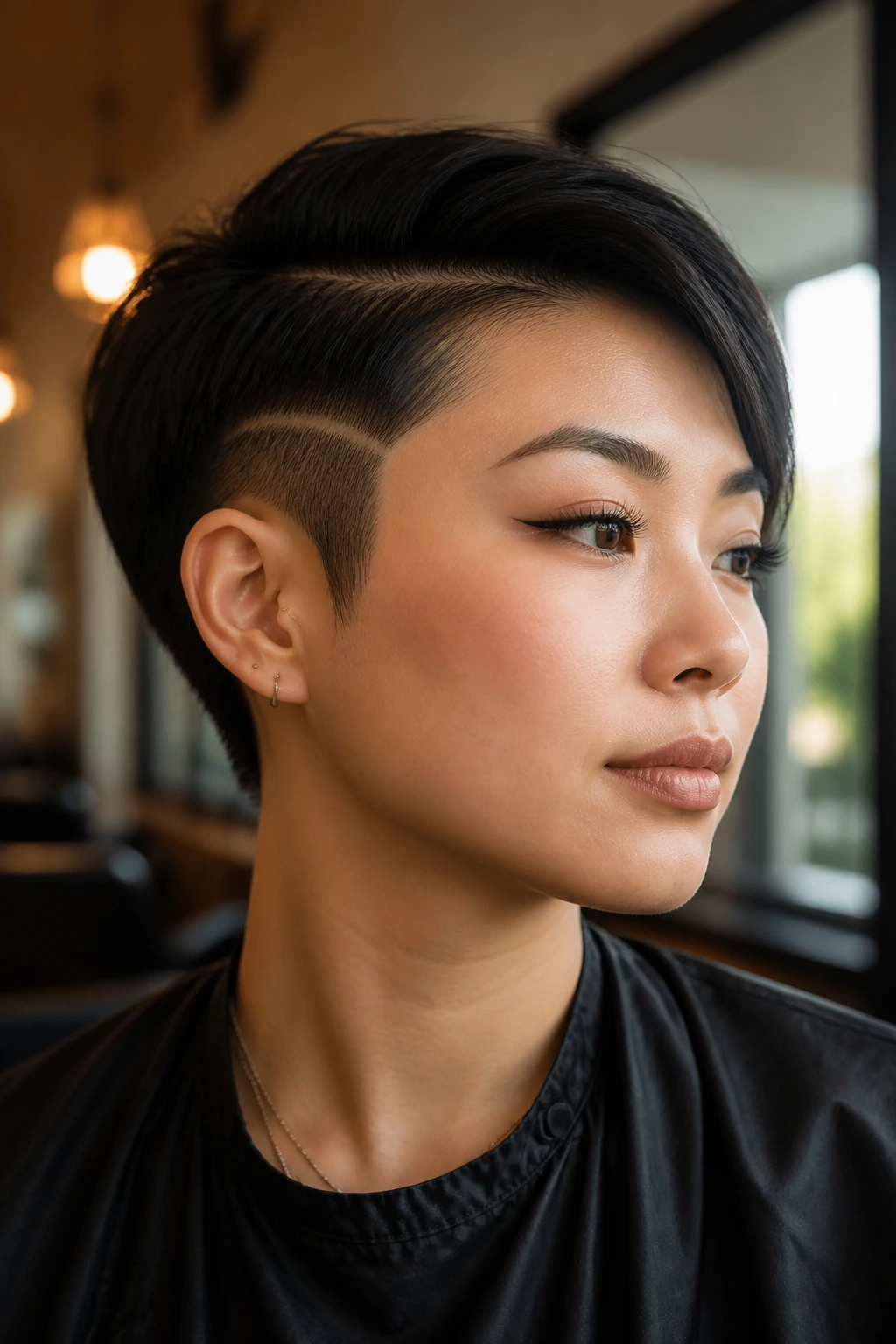
The best undercuts don’t look like they’re trying too hard. They look like the hair finally stopped fighting itself. On Asian women with short hair, that can mean a sharper bob, a lighter pixie, or a crop that keeps its line even when the morning has already gone sideways.
That’s the part I love most here: the haircut is not doing extra work. It’s removing the work that should never have been there in the first place. Once the bulk comes out of the nape, around the temples, or under a blunt perimeter, the whole shape starts behaving with less effort and more intent.
Bring a few good photos, be specific about how much scalp you want to show, and be honest about whether you want polish, edge, or something in between. The right undercut makes short hair feel cleaner from day one — and a lot less annoying by day three.
