



Round faces get misread all the time. People see softness and assume the answer is to hide it under length, which is how you end up with hair that hangs there like a curtain or balloons at the cheeks. A well-cut lob haircuts for round faces does the opposite: it creates a clean vertical line, leaves room around the jaw, and lets the hair skim past the widest part of the face instead of stopping right on it.
A lob is one of those cuts that can look sharp, soft, airy, blunt, shaggy, or polished depending on where the ends land and how the front is built. Hit the collarbone and you get length without drag. Add a side part, and the whole thing shifts. Add curtain bangs, and the face gets a little frame without losing that long line I care about so much on round shapes.
What matters most is placement. A chin-length bob can be lovely, but on a round face it needs almost fussy precision; a lob gives more room for error, more room for movement, and more room for texture that does not puff out at the sides. The 28 cuts below are not variations on a single idea—they use angle, fringe, crown lift, color, and texture in different ways so you can pick the one that actually fits your hair, not just the photo. That’s the useful part.
Why These 28 Lobs Work Harder Than a Random Shoulder-Length Cut
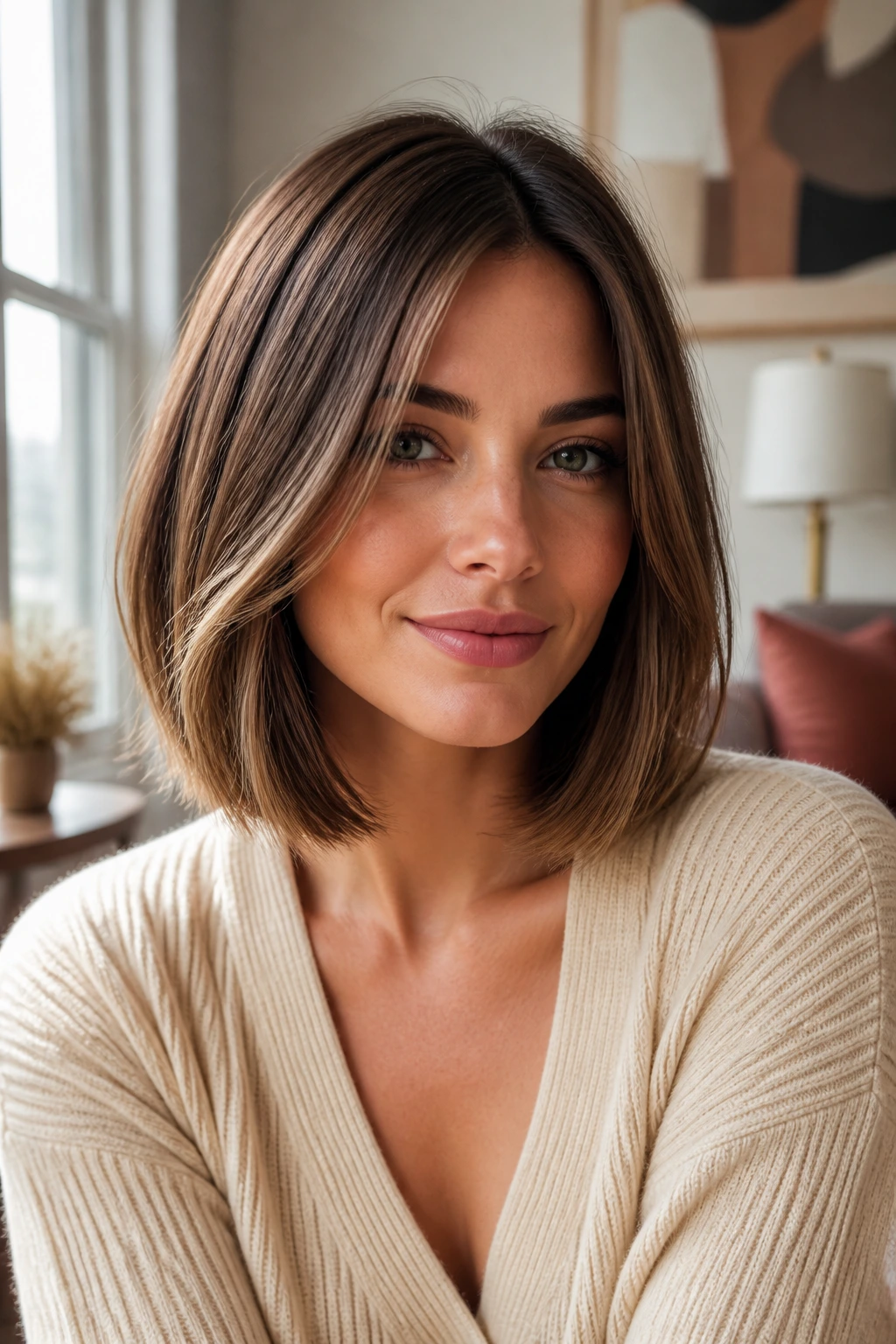
Length Below the Jaw: When a lob lands at the collarbone or just below it, the eye travels down instead of stopping at the cheekbone, which is the simplest way to keep a round face from looking wider.
Asymmetry Helps Quietly: A deep side part, a longer front corner, or a slight angle breaks up the circle without making the haircut look fussy or overstyled.
Texture Needs Direction: Soft bends and piecey ends work best when they fall lower on the face; big side volume at the temples is the thing that usually backfires.
Fringe Can Work: Curtain bangs and side-swept bangs can soften the forehead and pull attention toward the eyes, but they need to stay long enough to keep the line open.
The Cut Has to Fit Your Hair Type: Fine hair needs a cleaner perimeter, thick hair needs weight removal in the right spots, and curls need room for shrinkage. One shape does not solve everything.
Why Lob Haircuts Suit Round Faces So Well

A lob works on a round face because it draws the eye along a line instead of across a curve. That sounds simple, but the details matter more than the headline. If the ends stop at the chin, the cut can widen the face. If they land around the collarbone or just below it, the hair starts pulling the eye downward, which gives the face more length even when the texture is soft.
I like lobs that keep most of the weight below the jawline. That placement stops the sides from flaring out at the cheekbones, which is where many round-face cuts go wrong. Too much volume at the temples or mid-cheek makes the face feel broader. Volume at the crown, though, is a different animal. A little lift up top gives the illusion of height without adding width.
Where the Best Length Usually Lands
The safest zone is usually between the collarbone and the top of the shoulders. Shorter than that can work, but it needs more angle or more face-framing to keep the shape from puffing out. Longer than that can be lovely too, though you start losing the crispness that makes a lob feel purposeful.
Why Parting and Fringe Matter
A center part is not off-limits. It just needs help. Curtain bangs, a slight off-center part, or front pieces that drop below the cheekbone keep the look from turning into a round frame around a round face. Side parts are the easy button, but I do not think every round face needs one all the time. Sometimes a soft center part with the right length is more modern and easier to live with.
1. Collarbone Blunt Lob
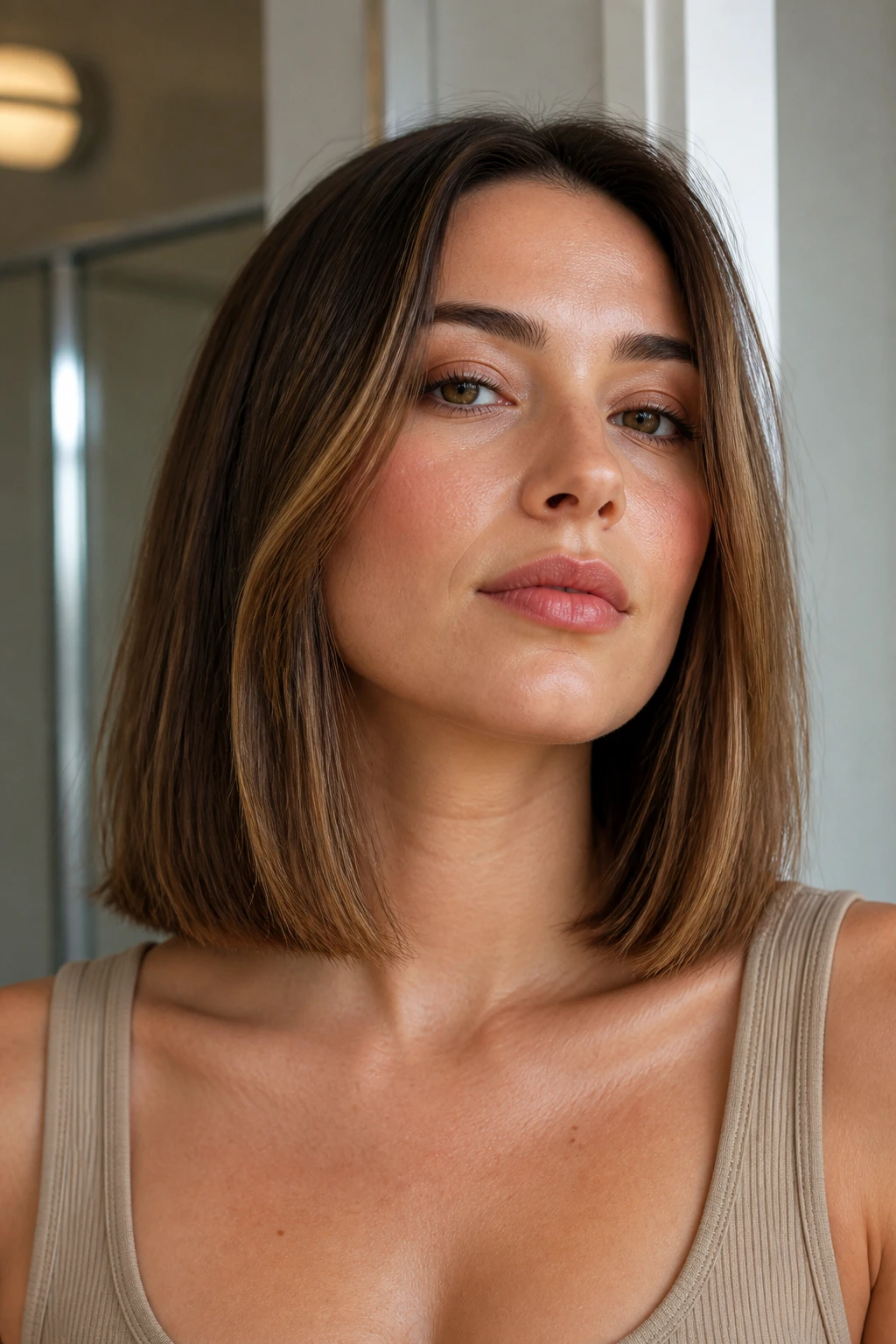
This is the cleanest shape in the whole set. A blunt edge at the collarbone gives the face a straight vertical pull, and that matters when you want to keep the cheeks from becoming the main event. On fine hair, the blunt line makes the ends look fuller. On thick hair, it keeps the shape from fanning out.
- Best for: fine to medium hair that needs a stronger outline.
- Ask for: a blunt perimeter with minimal layering and no chin-grazing front pieces.
- Style it with: a 1.25-inch round brush or a flat iron bend at the ends, not a full flip.
Skip heavy layering here. A collarbone blunt lob works because it looks controlled. Too much internal texturizing turns it fluffy at the sides, and that is the exact thing you do not want on a round face.
A single tuck behind one ear can change the whole silhouette.
2. Slightly Angled Lob
Compared with a blunt cut, this one moves. The back sits a touch shorter, and the front drops forward in a soft diagonal that narrows the face from cheek to chin. I like this version for round faces that need a little edge but not a dramatic A-line. If the angle is too steep, it starts to feel dated and overly graphic.
The front should skim the collarbone while the back clears the nape. That tiny shift creates a visible line without building width. It is especially good for thicker hair, because the shape removes some bulk at the back while keeping the outline strong.
Use this if: you want a cut that looks polished even on a rough blow-dry day. Skip it if: you hate any sense of asymmetry. There is no middle ground there.
Ask your stylist to check the front pieces dry; angle reads differently once the hair settles.
3. Deep Side-Part Lob
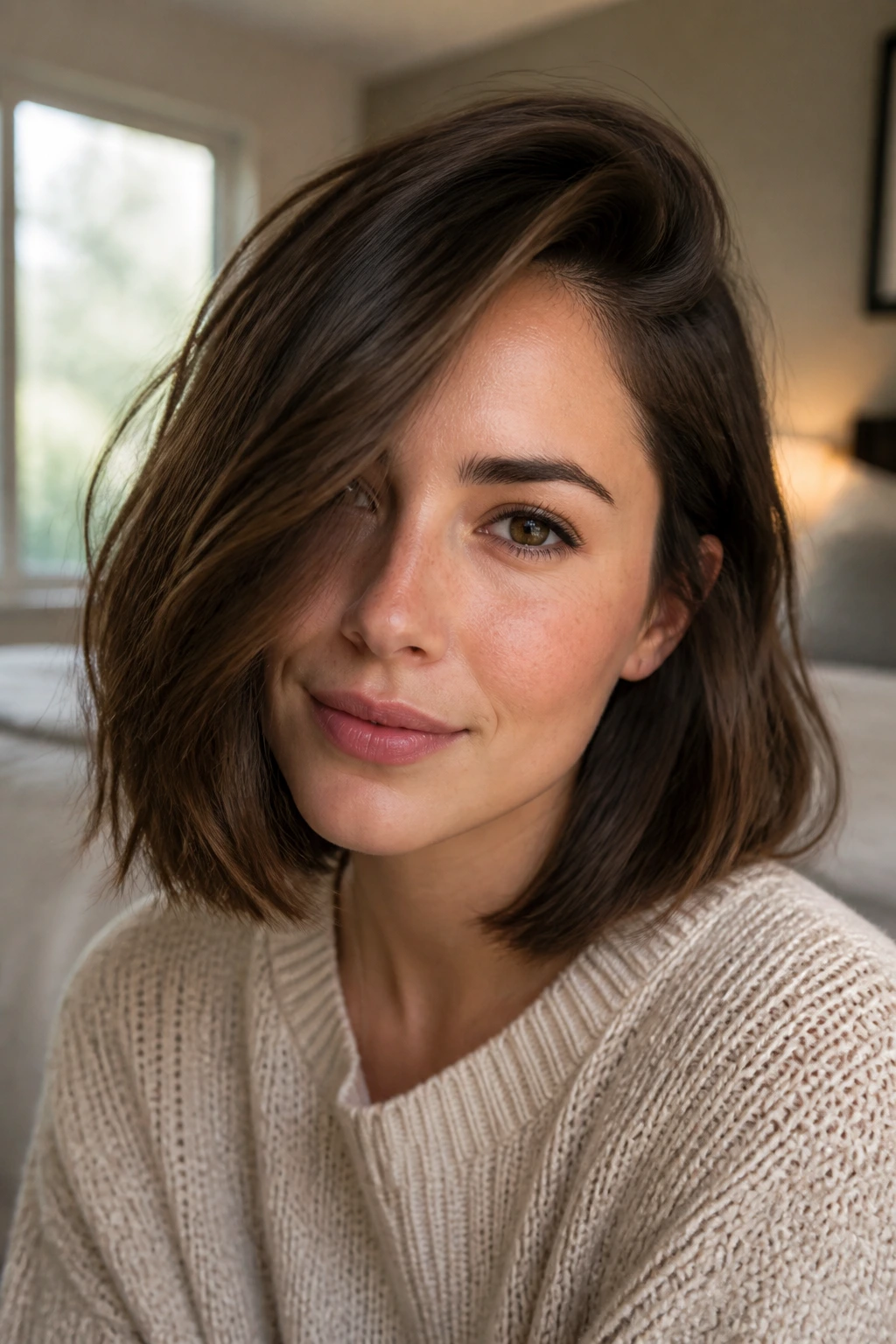
Why does a side part matter so much? Because on a round face, the extra height at the crown and the diagonal line across the forehead change the whole read of the cut. A lob with a deep side part stops being symmetrical in the best way. One side drops forward, the other lifts, and that tiny imbalance takes pressure off the widest part of the face.
How to wear it
The best version is not stiff. Blow-dry the roots at the part with a nozzle, then curve the front sections away from the face with a round brush or large Velcro roller. If you wear waves, make them bend from mid-length down so the top stays smooth and the volume does not sit right at the cheeks.
This is the cut I recommend to people who keep saying, “I don’t want to look too styled.” That is fair. A deep side part can be casual, but it still gives the face shape. If your hair falls flat in five minutes, pin the heavy side behind one ear for an hour. It resets the whole line.
The side part does the heavy lifting; the rest can stay easy.
4. Textured Lob with Choppy Ends
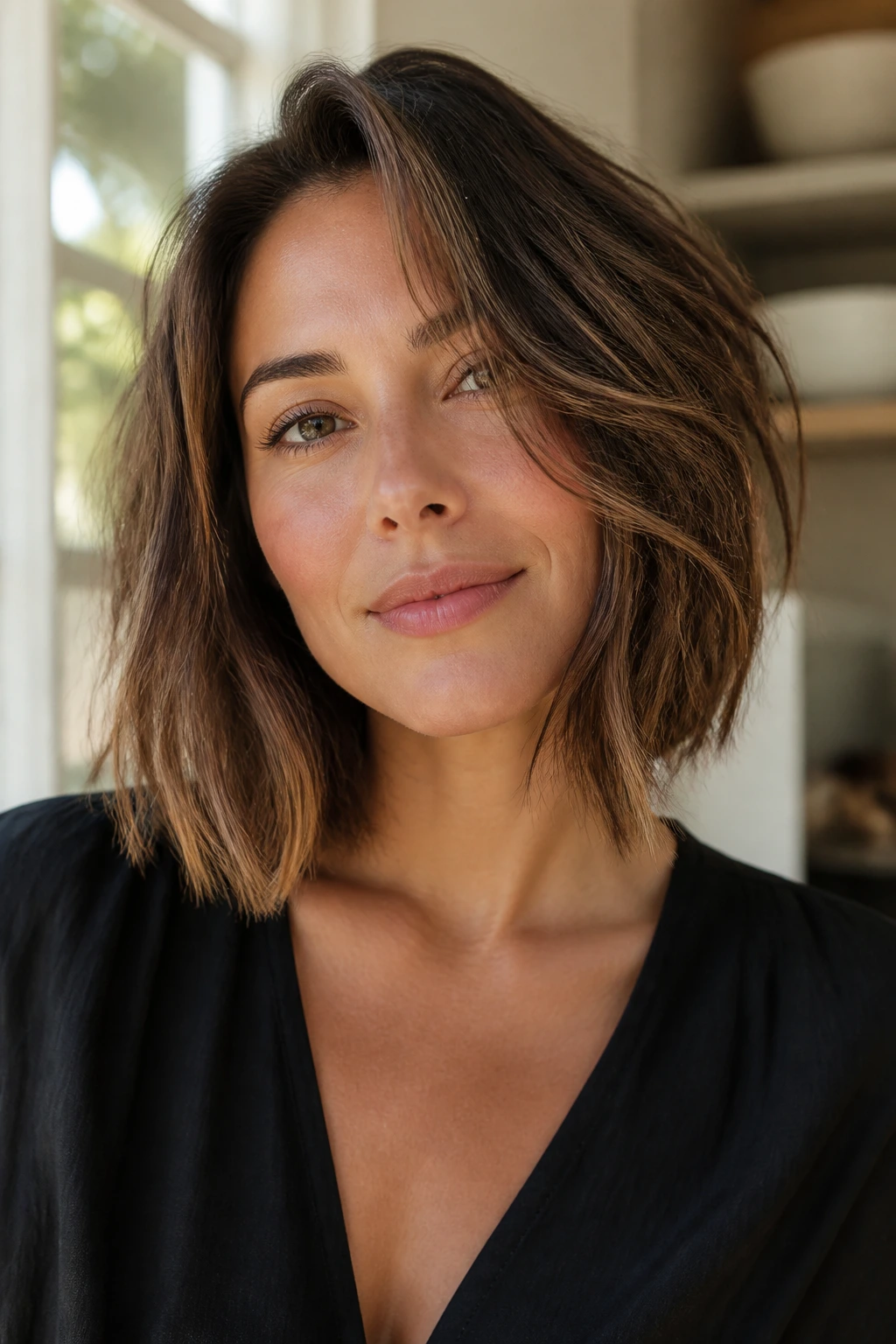
Picture hair that moves when you turn your head, not hair that sits like a shelf. That is the difference here. Choppy ends break up the perimeter so thick or medium-thick hair does not balloon at the shoulders, and the looseness keeps a round face from looking boxed in.
- Best for: thick hair that gets bulky fast.
- Ask for: point-cut ends or light texturizing through the last 1 to 1½ inches, not aggressive thinning through the sides.
- Style note: scrunch in a light mousse and dry with a diffuser or rough-dry with fingers.
The mistake with a textured lob is thinking more texture is always better. It is not. Too much razoring around the sides creates frizz and makes the outline fuzzy, which widens the face rather than sharpening it. Keep the bulk under control, then let the movement happen in the lower half of the cut.
The goal is movement below the face, not around it.
5. Curtain Bang Lob

Curtain bangs can be a gift on a round face, but only if they start in the right place. I like them when they open at the center, then sweep out and down to the cheekbones instead of stopping high on the forehead. That creates two long diagonal lines, and diagonals are your friend here. They break the circle without making the haircut feel rigid.
The rest of the lob should stay fairly clean. If you pile on short layers and fluffy bangs at the same time, the whole cut can get too wide across the top. Keep the fringe soft, keep the ends around the collarbone, and let the face-framing pieces blend into the main length. The result feels relaxed, not costume-y.
This one also has a nice grow-out. When the bangs get longer, they just become front pieces. No awkward shelf. No panic trim. That makes it a sensible choice for anyone who wants shape without babysitting the fringe every two weeks.
6. Layered Lob with Crown Volume
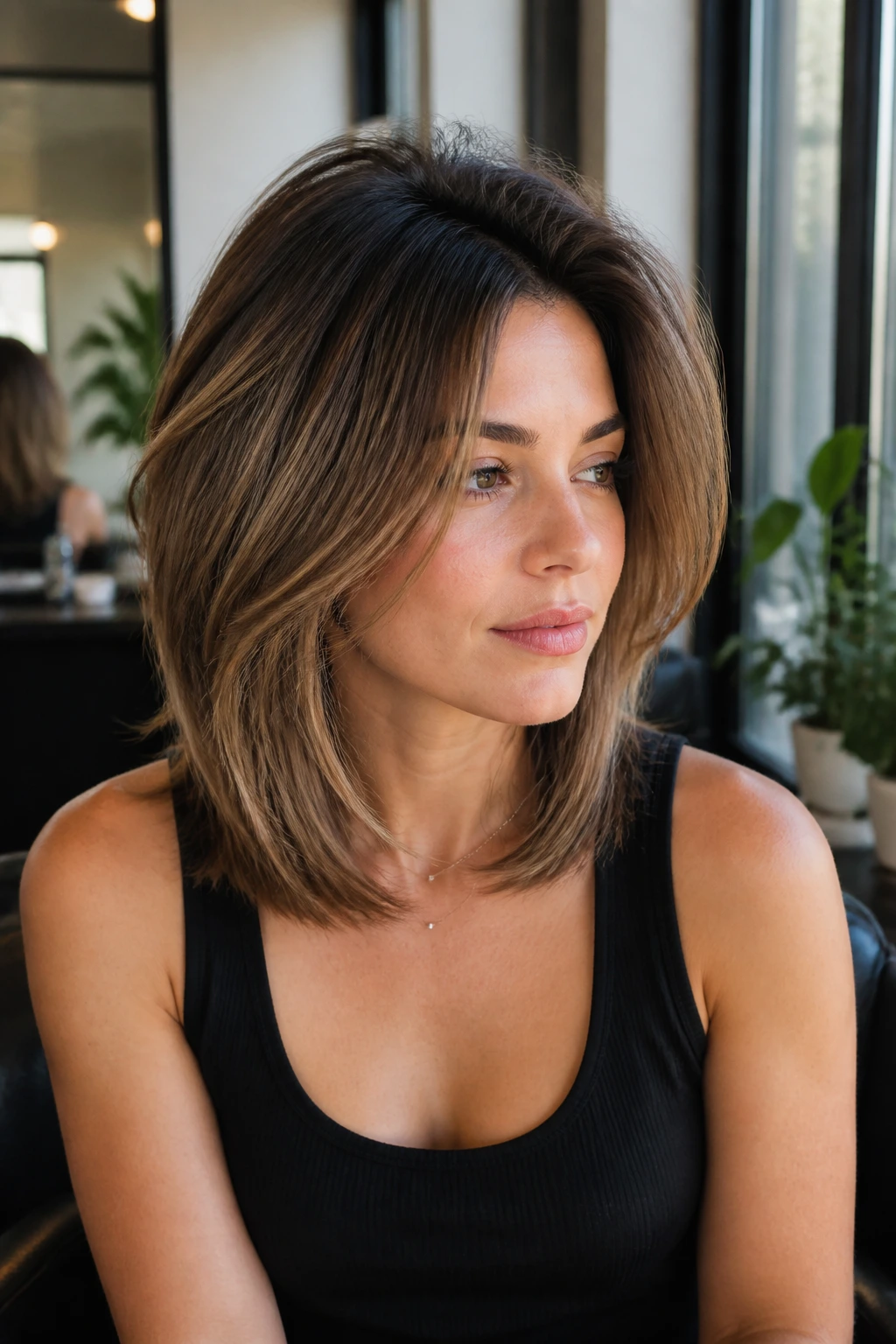
If your hair lies flat at the top, this cut earns its keep fast. The layers live mostly around the crown and upper back of the head, so the silhouette rises before it drops to the shoulders. That extra height stretches a round face without forcing the sides outward.
Why the layers belong up high
You do not need layers starting at the jaw. That is where the shape gets sloppy. Ask for internal layering that supports lift at the crown and movement through the back, while the perimeter still keeps enough weight to hang straight.
- Good fit: fine or limp hair that needs a little body.
- Styling move: blow-dry the roots upward with a small round brush, then mist a light volumizing spray at the crown.
- Avoid: short side layers that puff next to the cheeks.
A layered lob should look like the hair is gently bent, not teased. If it looks airy at the top and clean at the sides, you’ve got the right balance. If it explodes around the ears, the layers are too high or too short.
7. Off-Center Part Lob

This is the cut for people who want balance without symmetry. An off-center part shifts the weight just enough to break the roundness, but not so much that the style becomes dramatic. It sits nicely between a strict middle part and a full side part, which is why I recommend it to people who get bored fast.
The beauty of this version is that it works with almost any finish. Straight and sleek? Fine. Soft bend? Also fine. A tiny tuck behind one ear? Even better. The part keeps the top from widening, while the collarbone length handles the vertical line.
If you are not sure what your face wants, start here. It is low-drama, and low-drama is underrated. A lot of round faces look better when the hair does not try too hard to “fix” them; it just shifts the geometry a little and leaves the rest alone.
That small offset can do more than a heavy layer ever will.
8. Face-Framing Lob with Long Layers
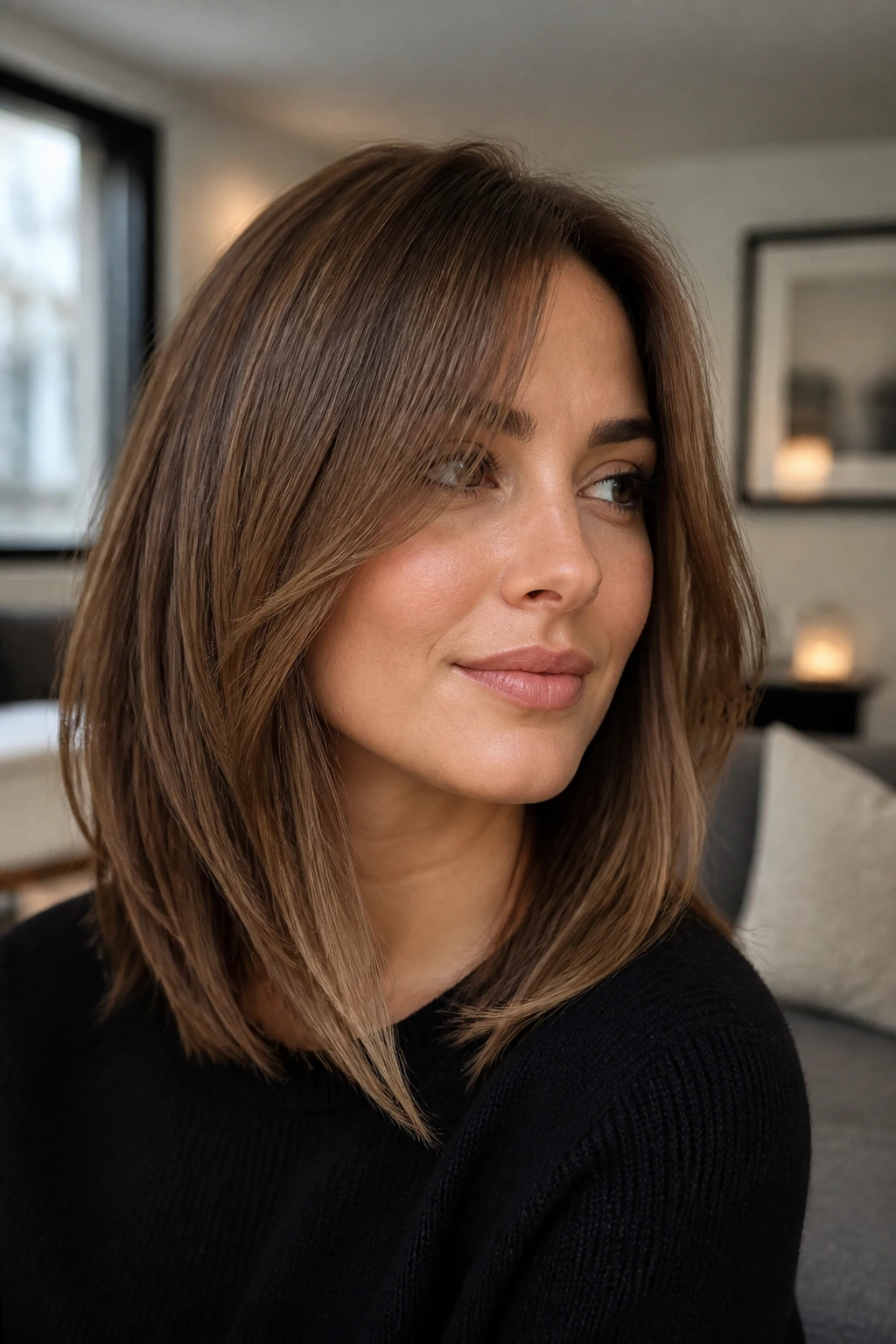
Unlike curtain bangs, long face-framing layers do not interrupt the front of the hair; they slide into it. That matters on a round face because the line stays long even as the front gets softer. The best version starts below the cheekbone and angles toward the collarbone, which keeps the widest part of the face from being the focus.
This shape is the one I recommend when a client wants movement but hates bangs. It lets the front soften without creating a shorter visual line across the forehead. Keep the layers long enough to tuck behind the ears. If they stop too high, they can puff outward at the cheeks and the whole point is lost.
Best for medium to thick hair. On fine hair, it needs restraint. One or two face-framing pieces are enough; five or six start to look wispy in a bad way.
9. Wavy Lob with Soft Bends

Why do soft bends look better than big beach waves on a round face? Because chunky waves can widen the sides if they start too close to the cheek. Soft bends keep the texture moving downward, which gives the face a longer read without looking stiff or overworked.
How to wear it
Wrap sections around a 1.25-inch curling iron, leave the ends out on purpose, then brush the wave apart once it cools. The wave should begin below the cheekbone and loosen as it drops. If the bend starts at the temple, it can puff right where you do not want it.
This is one of my favorite everyday lob shapes because it looks intentional even when the styling is rough. You do not need perfect curls. You need a bit of lift at the root and movement through the lower half. A little sea-salt spray at the mids, a few bends with a flat iron if the ends need help, and you are done.
A round face loves length, but it loves direction more.
10. Sleek Glass Lob
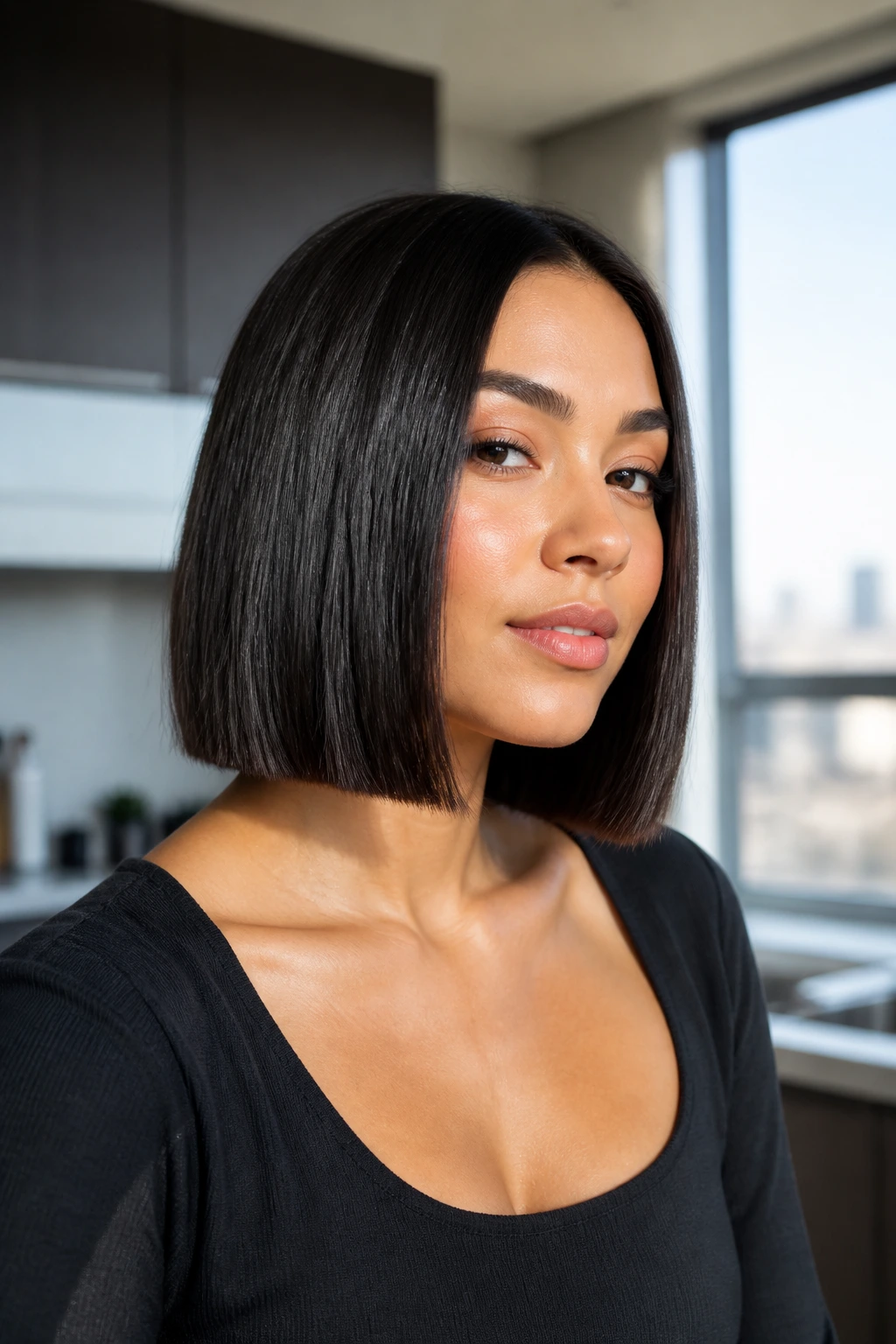
Imagine the opposite of fluffy. That is this cut. A sleek glass lob gives a round face a crisp edge because the hair reflects light in a clean sheet and the ends sit flat instead of rolling outward. On straight hair, it can look almost architectural. On wavy hair, it takes a good blowout or flat iron pass, but the result is sharp in a way that can be very flattering.
- Best for: dense, straight, or straightened hair.
- Ask for: a blunt perimeter with minimal layering and soft point-cutting only at the ends.
- Styling tool: flat iron, one-inch sections, and a heat protectant that does not leave a greasy film.
The catch is maintenance. Sleek hair shows every uneven bit of the cut, so this one needs a precise trim and a smooth finish. But when it is done well, it gives a round face a long, clean line that does not depend on bangs or heavy layering.
11. A-Line Lob
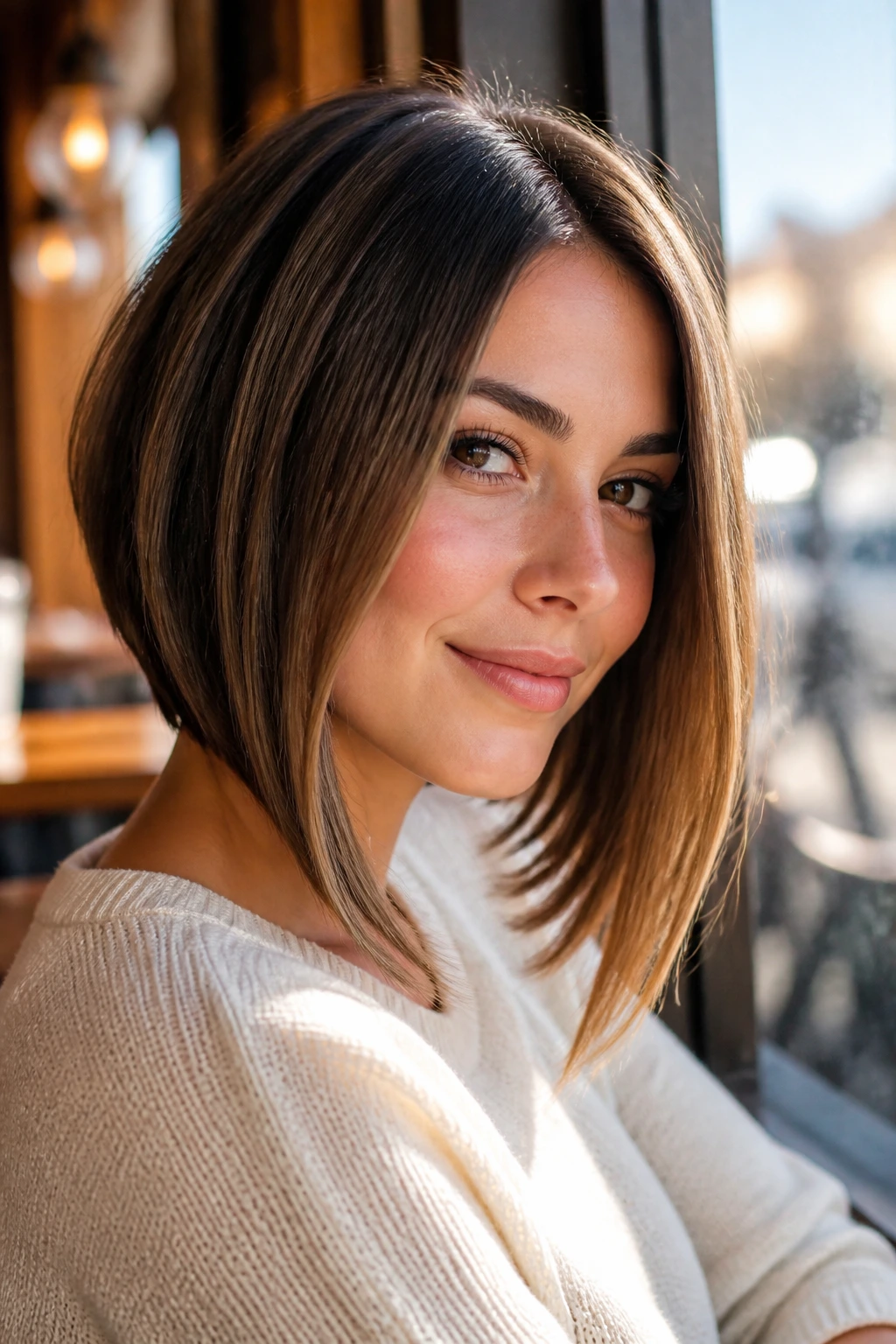
The A-line lob is the cousin of the blunt collarbone cut, but with a little more attitude. The back sits shorter, the front drifts longer, and that forward slope pulls the eye down and out instead of straight across the cheeks. On a round face, that small shift can make the whole cut feel lighter.
I like the A-line when someone wants shape but not a severe angle. The difference between flattering and fussy is usually not the idea itself; it is the degree. Keep the front pieces only an inch or two longer than the back, not six. If the slope gets too dramatic, the cut starts shouting. A round face needs a line, not a warning sign.
This one also works well with a side part or a tucked side. The asymmetry stacks neatly. And if you wear glasses, the front length can sit just below the frames, which keeps the hair from competing with your face.
12. French-Girl Lob

This cut lives in the messy middle between polished and undone. It usually sits around the collarbone, carries a little bend, and keeps the ends soft rather than razor sharp. For a round face, that softness matters because it keeps the haircut from making a hard horizontal line across the jaw.
The unfinished rule
The best French-girl lob never looks overblown. A quick bend with a large curling iron, a bit of texture cream, and a center or off-center part are enough. The fringe, if you wear one, should stay airy and long enough to split rather than sit in one flat curtain.
- Works best on: medium-density hair with natural movement.
- Ask for: soft internal layers, not choppy layers all over the sides.
- Avoid: volume that starts at the cheekbones.
I like this cut on round faces because it looks relaxed without losing shape. That is a harder balance than it sounds. The hair should look touched, not fussed over. A few bent pieces around the face and a cleaner outline underneath do the job.
13. Shaggy Lob

A shaggy lob can be magic on a round face, but only if the layers stay under control. The point is movement, not fluff. Done right, the shag adds vertical texture and keeps the hair from sitting as one wide block at the cheeks.
The danger is obvious: too many short layers around the sides make the head look wider. Keep the shortest layers below the eyes, let the ends stay a little uneven, and avoid a huge amount of volume near the temples. A round face needs the piecey feel lower down, around the jaw and collarbone, where it can thin the outline rather than widen it.
I’d suggest this cut to anyone with wavy or thick hair who likes a bit of edge and does not want a neat, corporate-looking finish. It looks best with a little bend and a little mess. Clean it up too much and you lose the point.
14. Invisible Layer Lob
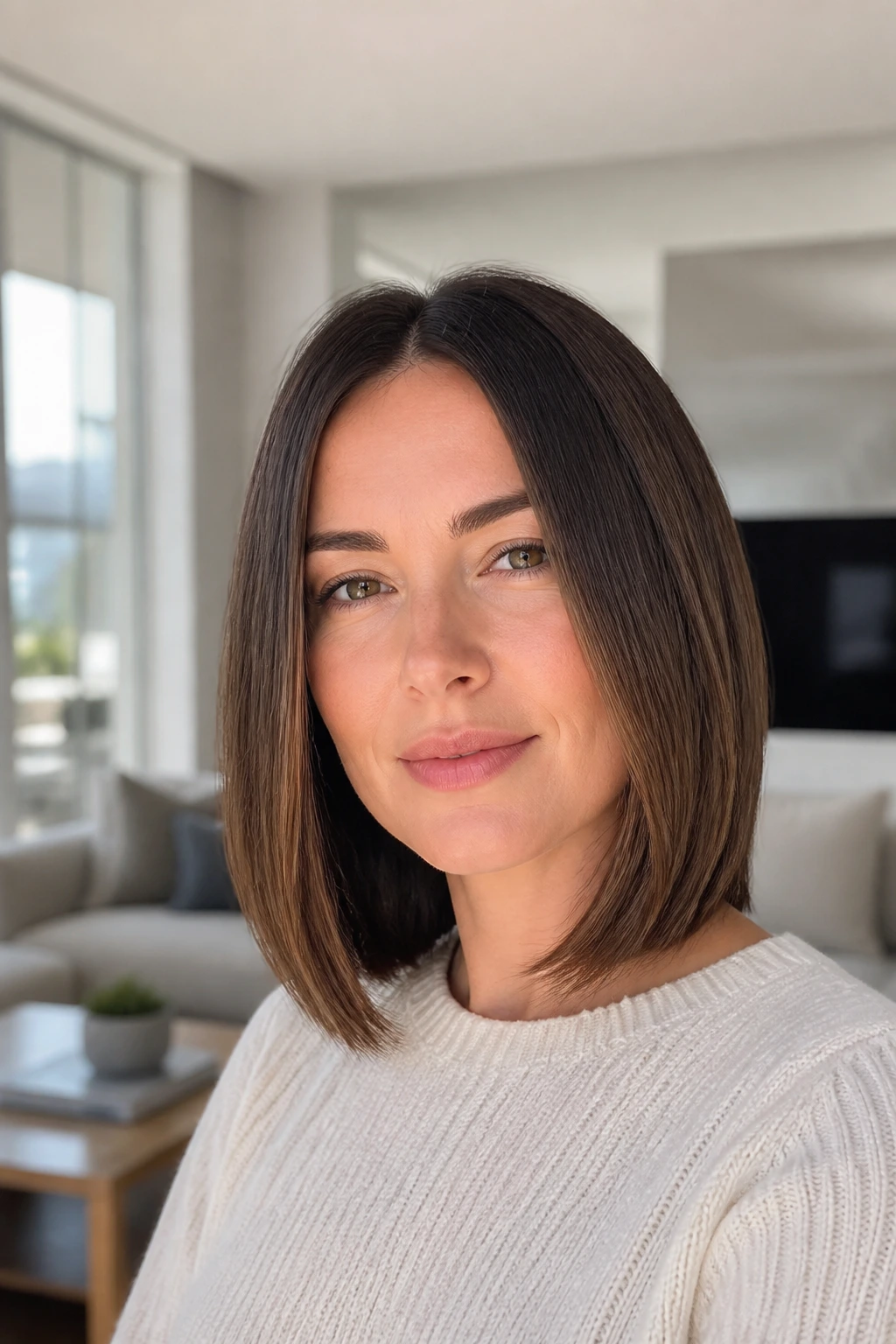
Unlike a choppy layered lob, this version hides the movement inside the shape. The perimeter still looks clean, which is why I like it for fine hair that needs body without obvious steps. You get lift and air, but the outline stays smooth enough to slim a round face instead of fanning out.
This cut is a good answer when someone says they want volume but hate seeing separate layers. The stylist removes weight from the interior, usually with subtle point cutting or slide cutting, while keeping the outside line long and tidy. That means the face gets the benefit of softness without a stack of short pieces at the sides.
Best for people who wear the hair straight, blow-dried, or softly waved. If you air-dry it with no product, the hidden structure can disappear. The cut still works, but it needs a little help.
15. Side-Swept Bang Lob
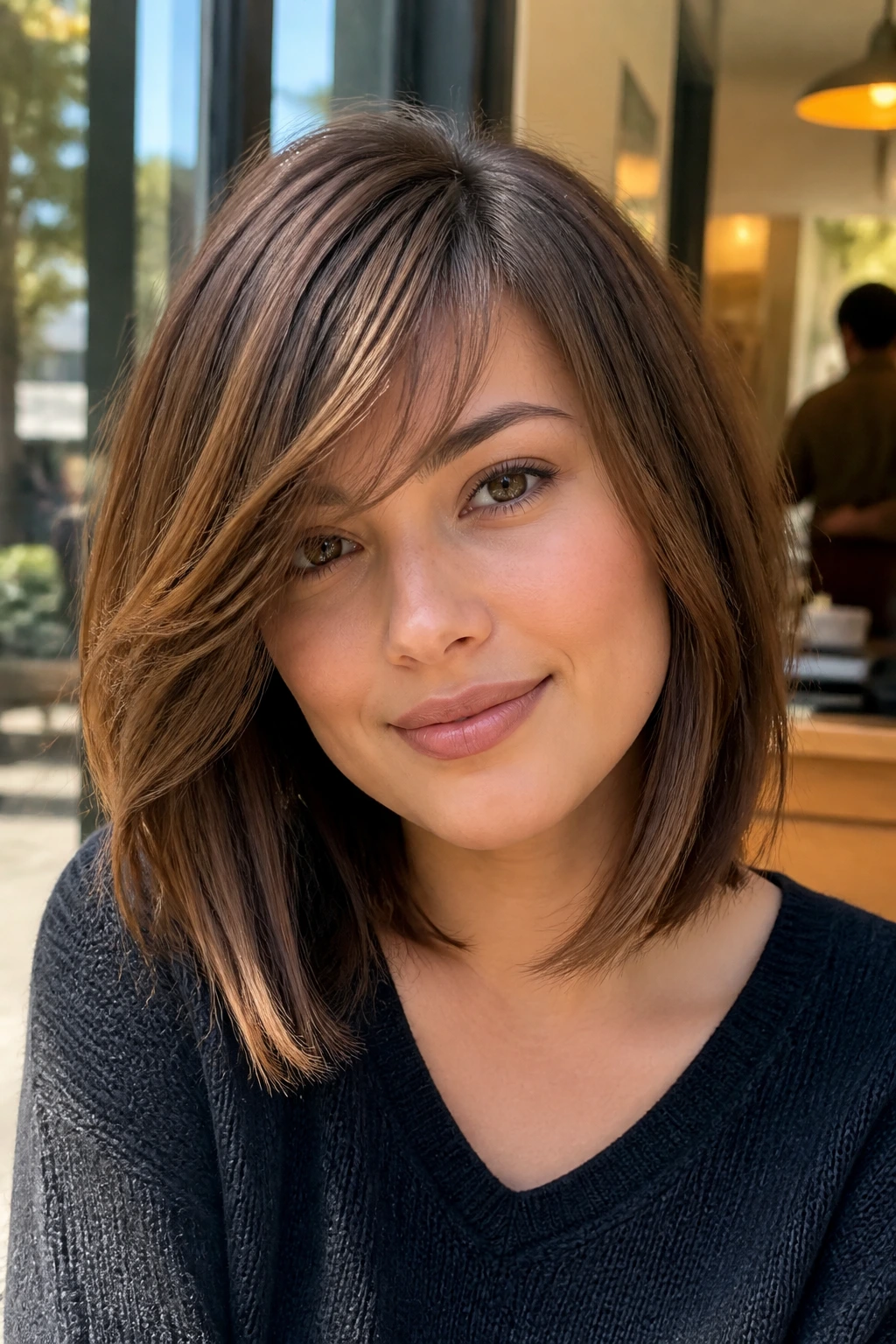
Can side-swept bangs slim a round face? Yes, if they are long enough. The trick is to let the fringe sweep diagonally across the forehead and blend into the front pieces instead of stopping mid-forehead like a hard cut. That diagonal line pulls the eye up and across, which breaks the circle of the face in a pretty quiet way.
How to wear it
Keep the shortest piece around the brow or a touch below it, then let the long side reach the cheekbone or chin. Style the bang with a round brush while the hair is still damp so it bends naturally instead of sticking out. If the bang gets too short, it loses the diagonal and starts widening the face.
This is a strong choice for people who like a little softness near the eyes but do not want full curtain bangs. It also grows out more gracefully than a blunt fringe. The longer side can tuck into the lob, and that gives the whole cut a nice sense of flow.
Short side-swept bangs are a trap here; long ones are the point.
16. Curled-Under Lob
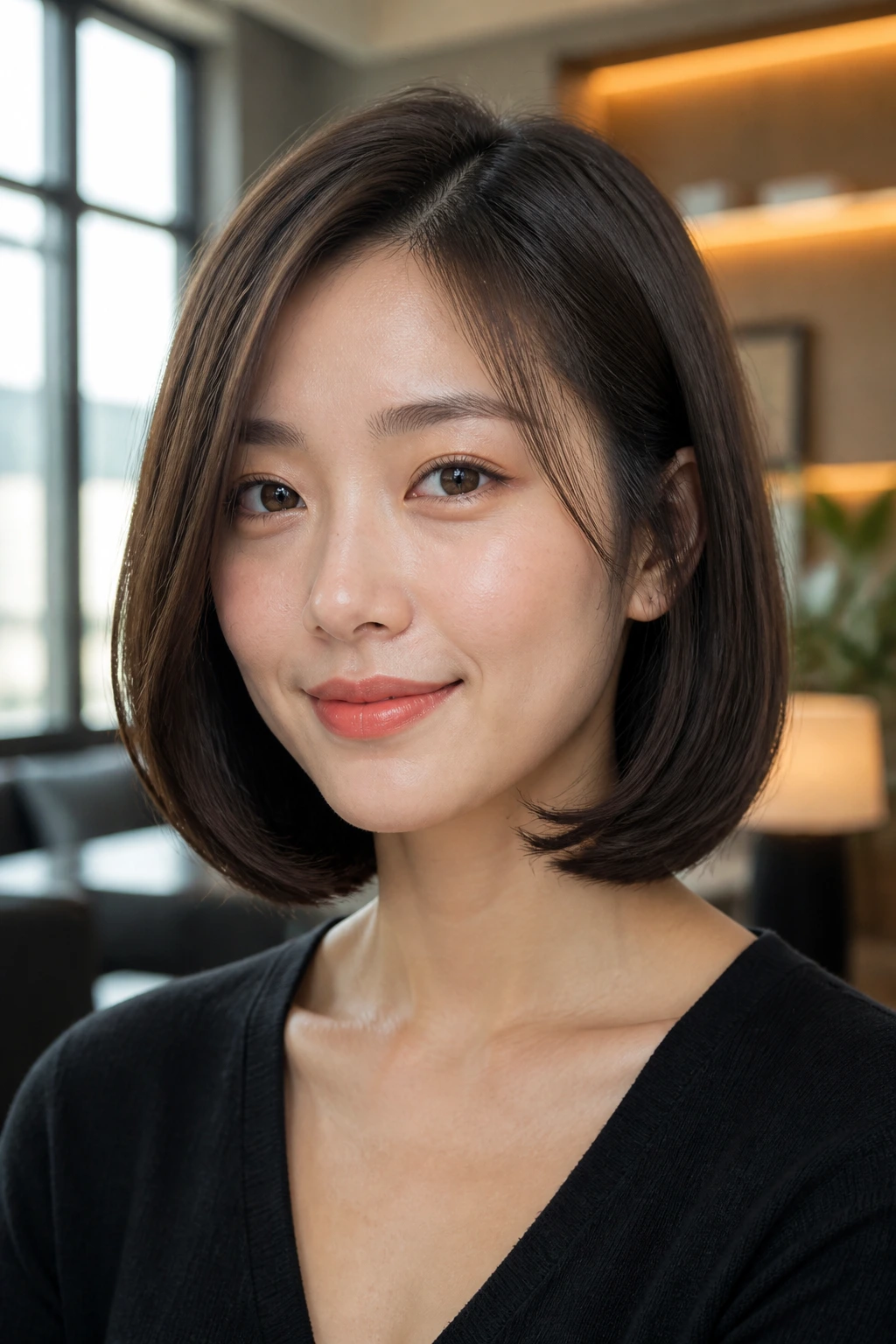
Think polished, not precious. A curled-under lob bends the ends in toward the neck, which keeps the outline neat and helps the cut hug the collarbone instead of kicking out at the sides. On a round face, that inward curve makes the whole shape feel narrower and longer.
- Best for: office days, events, and anyone who likes a blowout finish.
- Ask for: a blunt or lightly layered lob that can hold an inward bend.
- Styling tip: use a medium round brush and finish with the dryer nozzle pointed downward to keep frizz down.
The risk is overcurling the ends too high. If the bend starts right at the jaw, it can create a helmet effect. Keep the curve low and soft. The ends should skim, not flare.
This is one of those styles that looks more expensive than it is, mostly because the line is controlled. It also looks clean from the side, which matters more than people admit.
17. Razor-Cut Lob
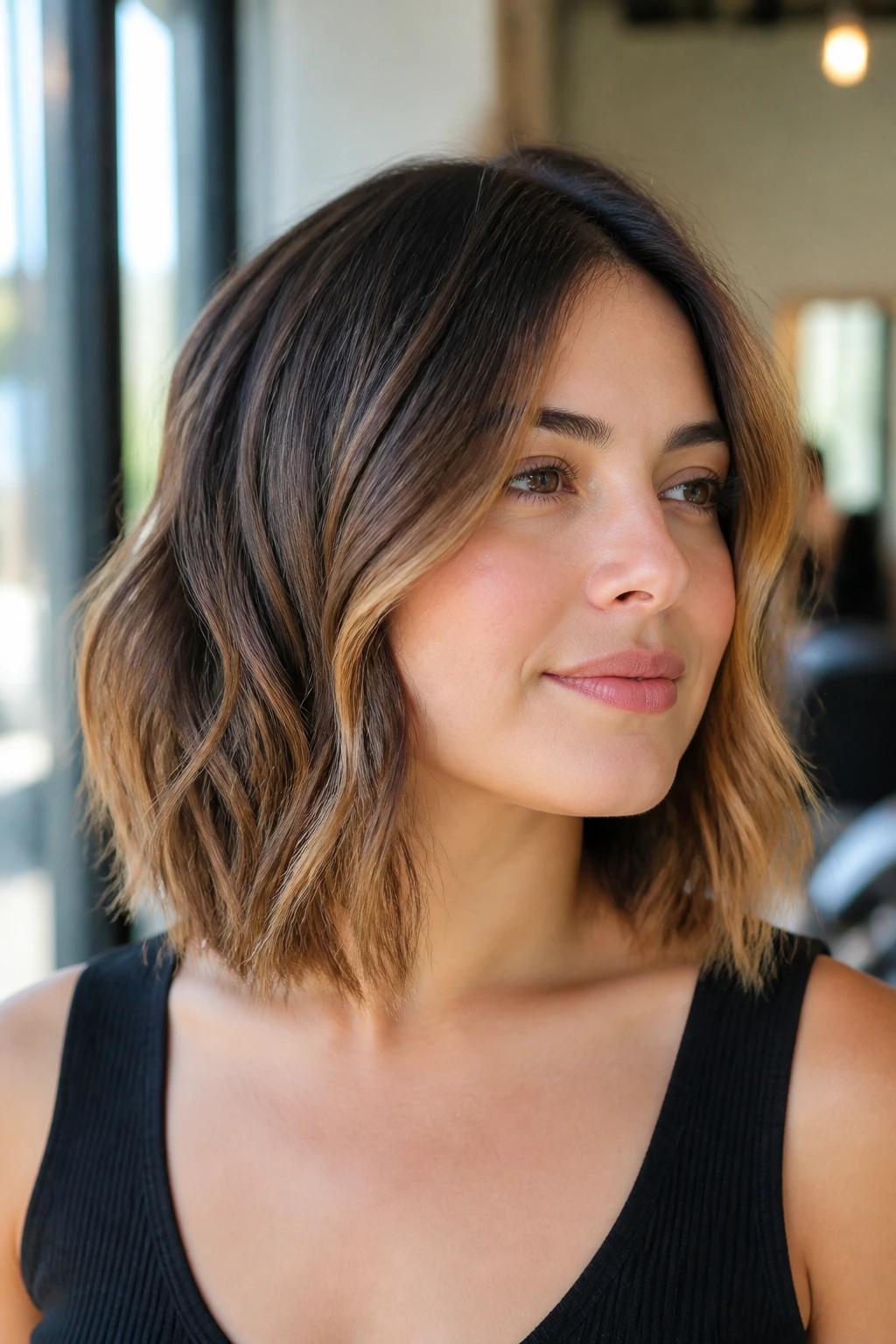
A razor-cut lob has a looser edge than a blunt one, and that looseness can help a round face because it removes the hard horizontal line. The hair feels airier, the ends sit lighter, and the cut moves more when you turn your head. I like it on medium-density hair with a bit of natural bend.
The downside is frizz. Razor cutting can be rough on very dry or highly textured hair if the stylist goes too far, especially around the sides. So the request matters: keep the razor work at the ends, not through the whole body of the cut. You want soft movement, not shredded width.
If you like a more lived-in shape and do not want a sharp bob line, this is the one to try. It pairs well with a middle part, a slight off-center part, or a tuck behind one ear. The main thing is keeping the front long enough to keep the roundness from taking over.
18. Air-Dried Natural Lob
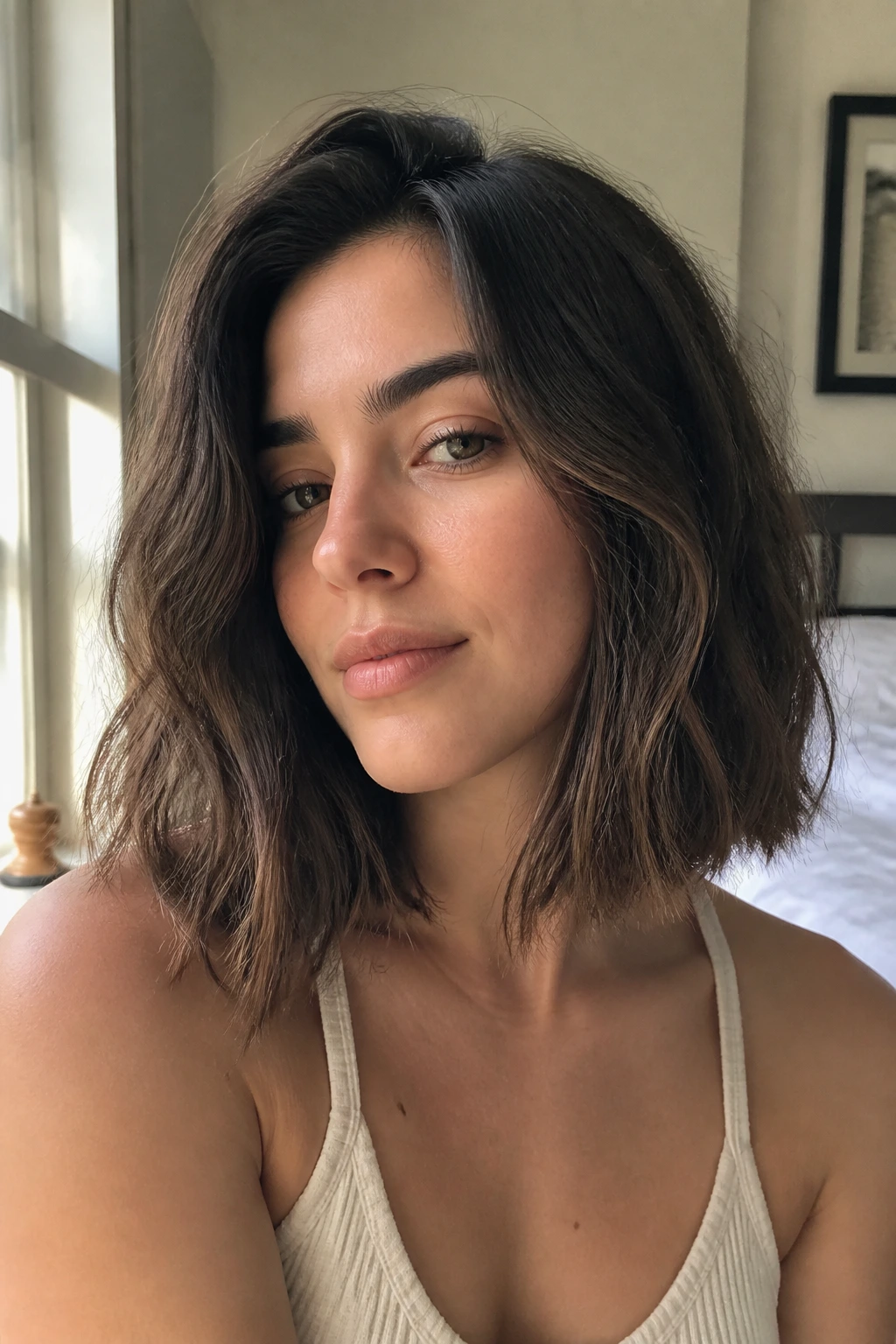
Some hair looks best when you stop fighting it. An air-dried lob can be a gift for round faces because the shape stays soft and not overbuilt. The trick is letting the texture fall in a controlled way, with the length staying below the cheekbones so the volume lives low instead of wide.
The texture has to lead
Use a light leave-in and a curl cream or wave foam, then scrunch or rake the hair into place. If your hair is wavy, keep the top smooth and let the bend show from mid-length down. If your hair is curly, ask for a dry shape that respects shrinkage, because a wet cut can land way too short once it dries.
- Best for: wavy, curly, and coily textures.
- Avoid: too much layering around the temples.
- Finish with: a diffuser on low heat or a few minutes of hands-off air-dry time.
This cut is forgiving in the right way. It does not need a perfect blowout to look finished, but it does need a shape that was cut with the natural texture in mind. That part matters more than the product.
19. Dimensional Balayage Lob
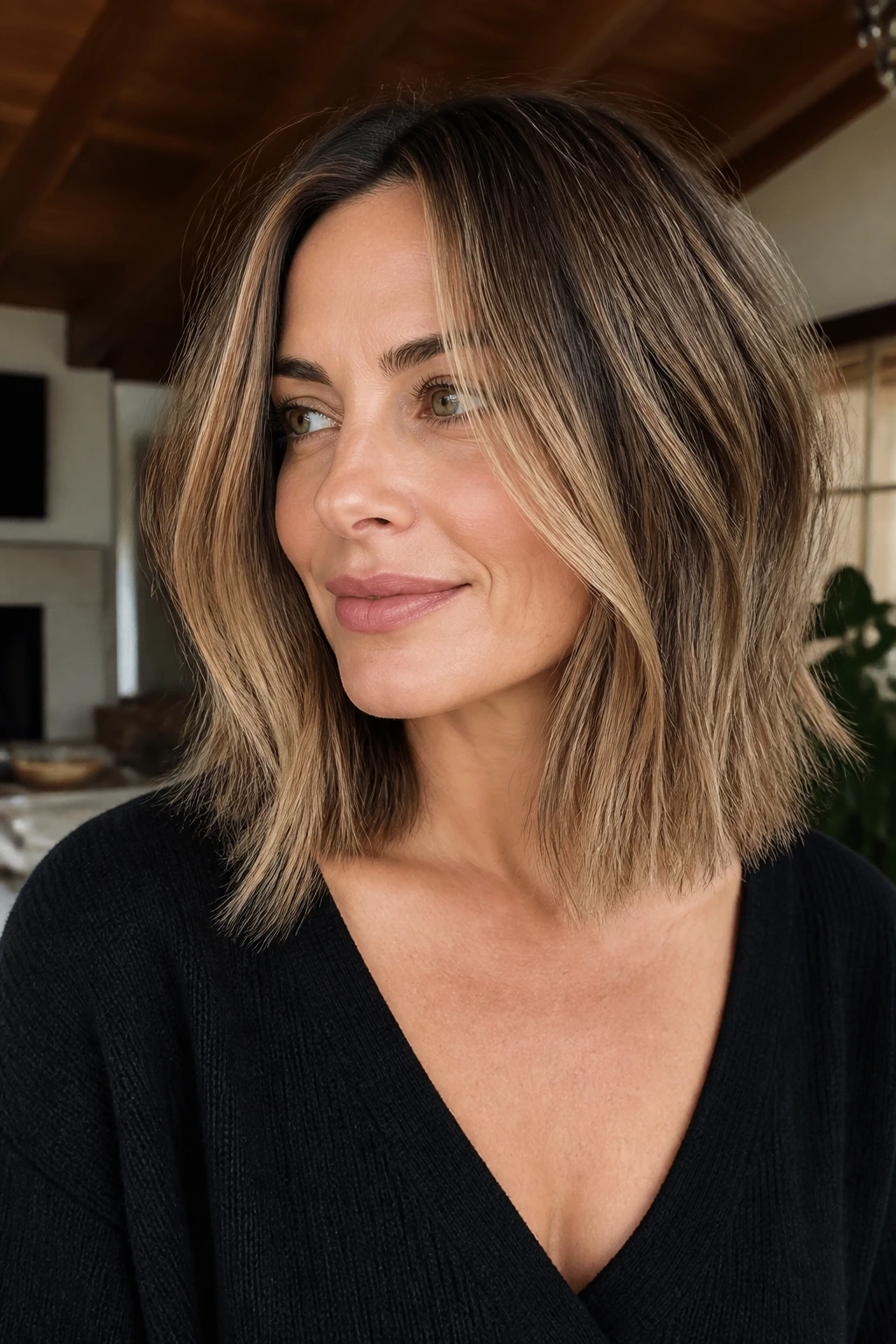
Color can change how a lob reads on a round face, and that is why this one earns a place here. Balayage places lighter pieces where the eye should travel, often around the face and through the ends, which creates a longer visual line. The cut itself can stay fairly simple. The dimension does the work.
If the highlights are placed well, the face looks a touch longer because the brighter pieces pull attention downward. I like this especially on medium or dark hair where a blunt one-tone lob can feel heavy. With balayage, the cut looks lighter around the ends, and that softness keeps the sides from feeling boxy.
The stylist matters here too. Ask for brightness that starts below the cheekbone, not a bright stripe right at the widest point of the face. Done badly, balayage can widen the face. Done well, it gives the lob movement even when the cut is plain.
It is shape by light, not scissors.
20. Piecey Lob with Micro-Layers
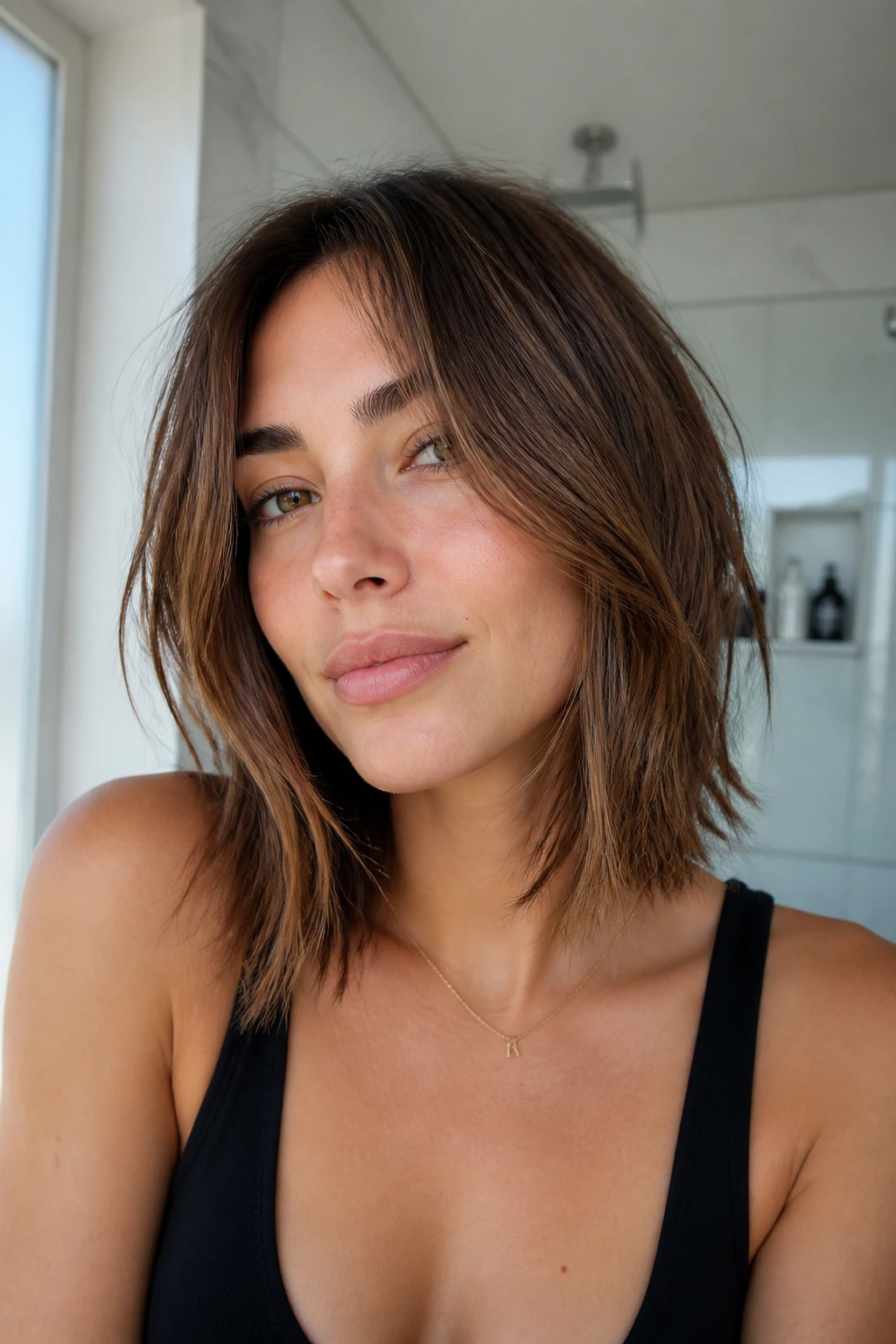
Unlike a shag, a piecey lob with micro-layers keeps the outline controlled. The layers are tiny, often hidden near the ends or just inside the cut, so the hair separates into pieces without turning fuzzy. That makes it a good fit for fine hair that needs a little life but not a full layer parade.
This cut is best for people who like movement and hate that solid helmet feel some one-length cuts get. The micro-layers let the front pieces swing a bit, which is useful on a round face because it keeps the cut from sitting as one broad block. The length should still stay at the collarbone or just under it.
If you ask for too many layers, you lose the point. The whole idea is subtle separation. Think of it as texture with discipline.
21. Shoulder-Skimming Lob

Why do shoulder-skimming cuts feel so easy on round faces? Because they avoid the jawline trap. The ends sit just below the widest part of the face and above the full weight of longer hair, which creates a longer outline without making the style feel dragged down.
How to wear it
A small bend at the ends keeps the cut from flipping outward onto the shoulders. If your hair naturally hits the shoulders and kicks out, ask your stylist to slightly adjust the front length or add a touch of angle so it falls cleanly. That one detail matters more than people think.
This is the lob I recommend when someone wants a reset but not a dramatic haircut. It plays nicely with straight textures, soft waves, and even loose curls. The silhouette is simple. The effect is not.
22. Center-Part Lob with Long Curtain Fringe

Imagine the neatness of a center part, then break it with fringe that drifts away from the face. That is this cut. The long curtain fringe softens the symmetry enough to keep a round face from looking overly circular, while the center line keeps the whole style modern and clean.
- Best for: medium-density hair that can hold a smooth top.
- Ask for: curtain fringe that starts around the cheekbone and blends into the front lob pieces.
- Styling note: blow-dry the fringe away from the face first, then set the rest of the lob.
The danger is short fringe. If the curtain pieces stop too high, the center part ends up emphasizing width instead of length. Keep the bang long, airy, and separated in the middle. It should feel like an opening, not a wall.
I like this cut on people who wear glasses or statement earrings, because the hair frames them without crowding them out. Good balance. Clean line, soft front, done.
23. Asymmetrical Lob
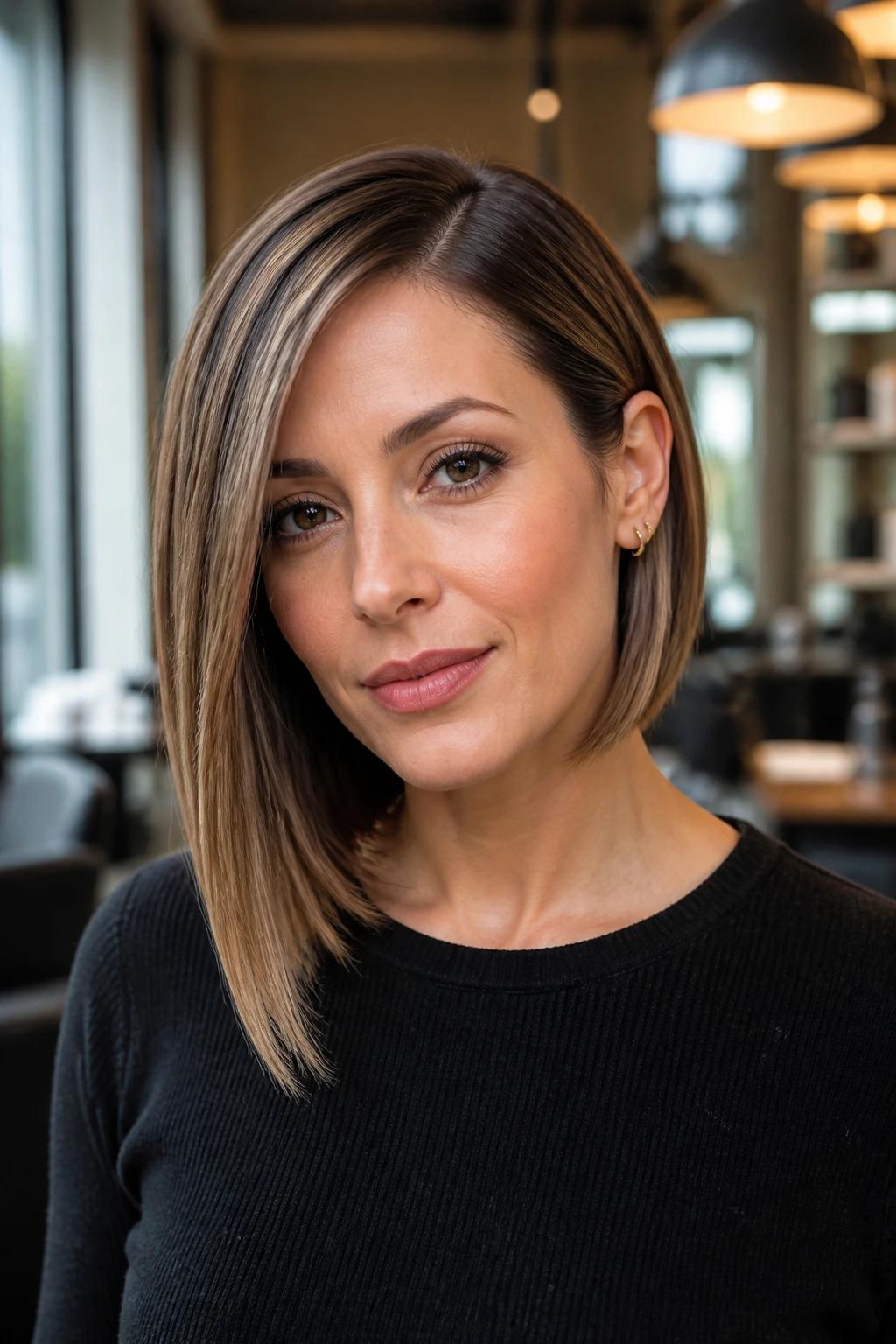
An asymmetrical lob is not about being loud. It is about breaking the face’s symmetry just enough to make a round shape look less circular. One side sits longer, usually by an inch or two, and the eye follows that drop. That diagonal fall is doing the heavy lifting.
This cut can be very sharp on straight hair, especially when the longer side is tucked behind the ear. It can also work with waves, though the wave pattern needs to stay soft or the asymmetry gets lost. I would not push this shape too hard on very curly hair unless the curl pattern is loose enough to show the line.
Keep the difference between sides modest. If the longer side is too long, the haircut stops reading as a lob and starts looking like a correction. A subtle asymmetry is enough. The point is to create motion, not a stunt.
24. Inverted Lob
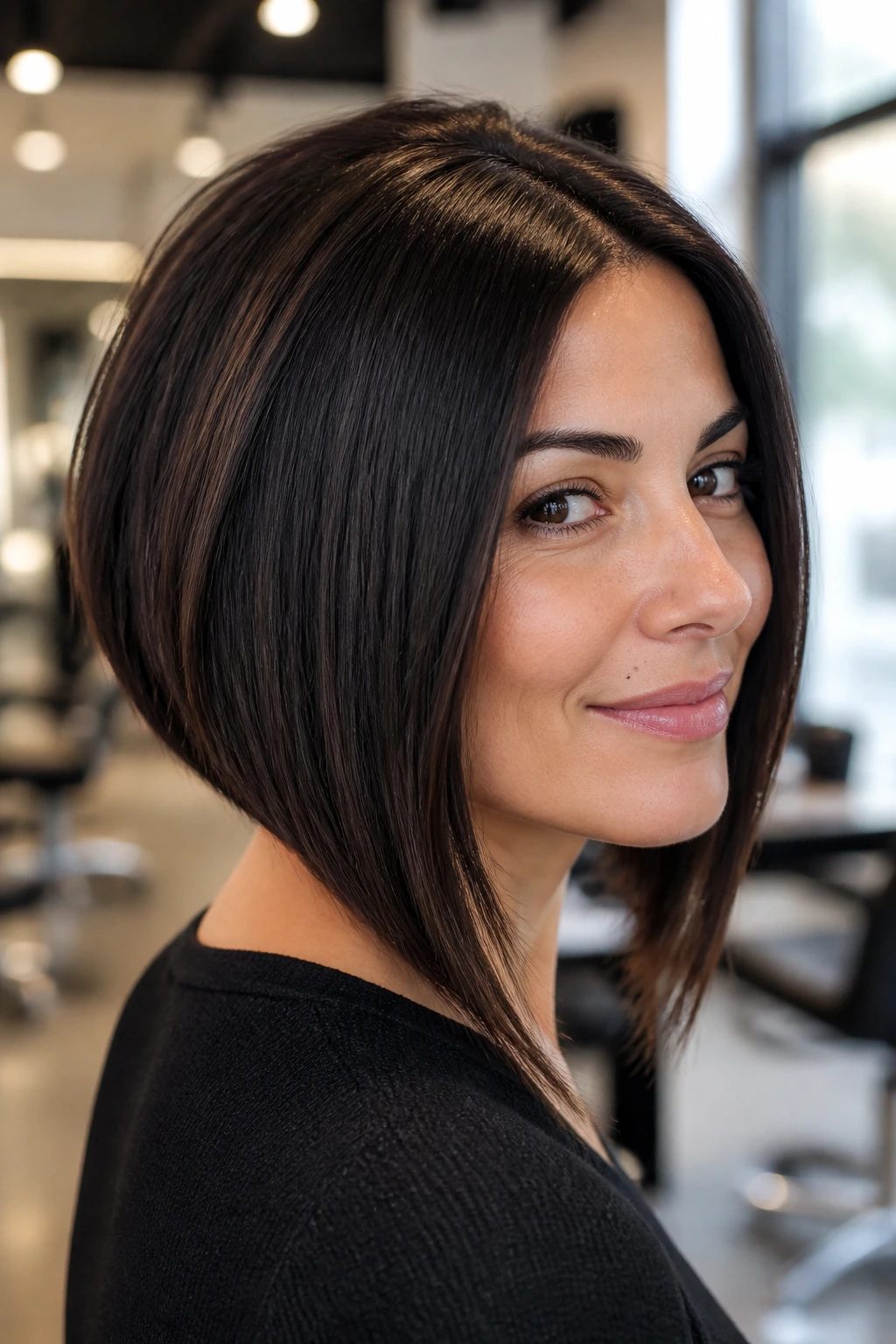
The inverted lob is the sharper cousin of the A-line. The back is shorter, the front is longer, and the whole shape stacks slightly toward the nape. On a round face, that stacked back gives lift without building width at the cheeks, which is why it can work so well on thick hair.
What makes it useful
The shorter back removes bulk where hair tends to puff against the neck, while the longer front draws the eye downward. Keep the stack subtle. Too much graduation can make the crown tall in a way that feels dated.
- Good for: dense hair that needs weight removed.
- Best styling move: blow-dry the crown smooth and bend the front pieces forward.
- Avoid: rounding the front too much, or the shape turns boxy.
This is a cut with opinions. You either like the cleaner back or you don’t. But if you want a lob that feels precise and still softens a round face, it deserves a look.
25. Old-Hollywood Lob
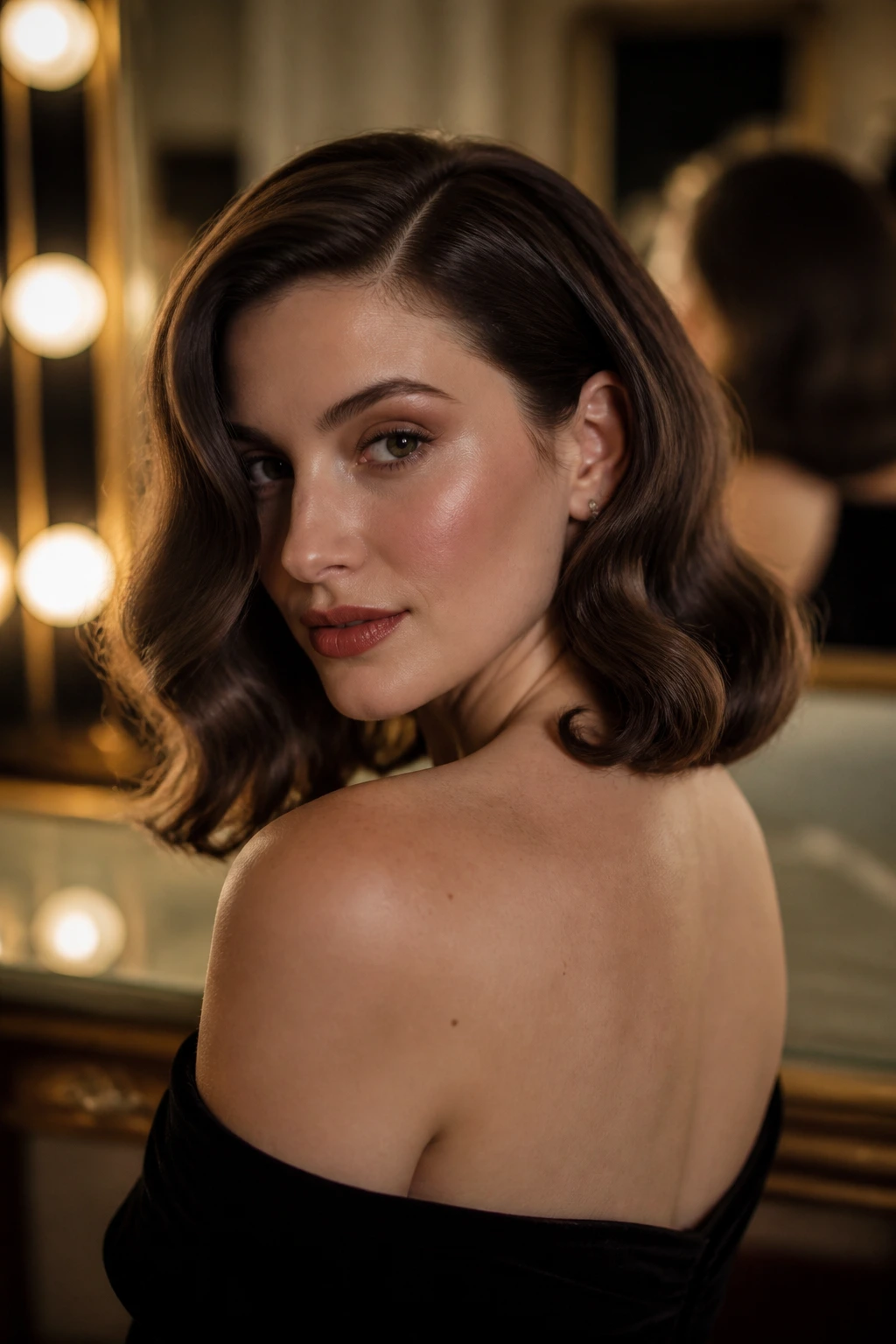
If you like a little polish, this one can look sharp on a round face. Think side part, brushed-out waves, and ends that sit around the collarbone with enough weight to keep the silhouette smooth. The curls are broad, not springy, which matters because tight ringlets at the cheeks can widen the face.
The shape works because the wave is controlled and the volume lives low and long. It has a classic feel, but it is not stiff if you brush the waves out after they cool. That soft brush-through makes the line flow from forehead to jaw to collarbone instead of breaking into separate curls.
This is a smart option for formal events, but it also holds up on ordinary days if you keep the wave loose. A round face often looks best when the hair has one clear direction. This style gives you that direction in a polished way.
26. Platinum Blunt Lob
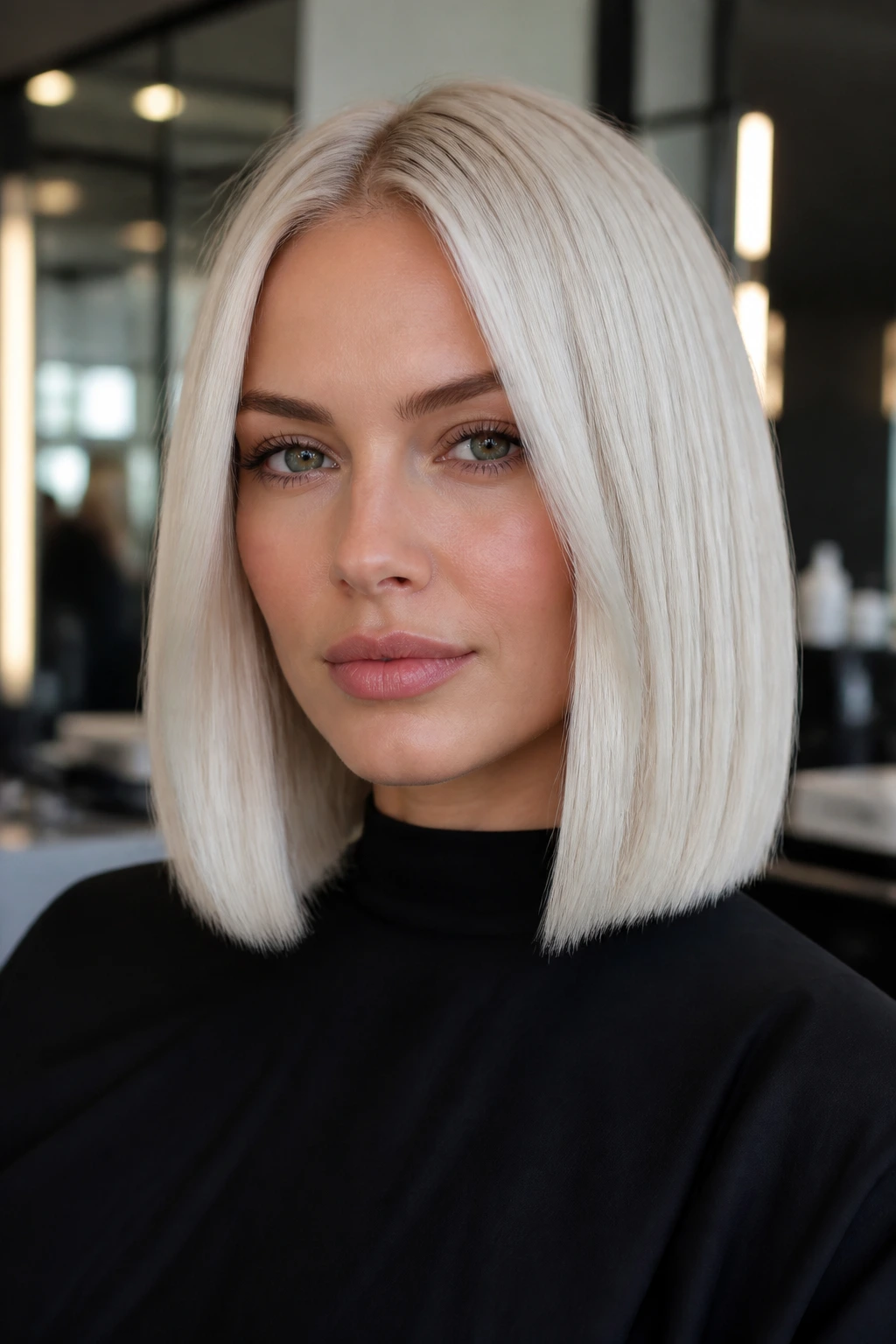
Unlike a soft textured lob, this version relies on contrast. The blunt line is crisp, and the platinum color makes that line stand out even more. On a round face, the combination can be excellent if the length sits low enough to avoid widening the cheeks. The bright color draws attention upward, while the solid hem keeps the shape grounded.
This is not a lazy cut. Every edge shows. The root shade matters, the tone matters, and the ends have to be blunt enough to hold the shape. If the hair is damaged or frizzy, platinum plus blunt can turn into a rough outline fast, so it needs maintenance.
Best for people who like a bold, clean finish and do not mind regular toning and trim appointments. If your hair is smooth and dense, it can look sharp without trying hard. If not, there are easier ways to flatter a round face.
27. Beachy Lob with Root Lift
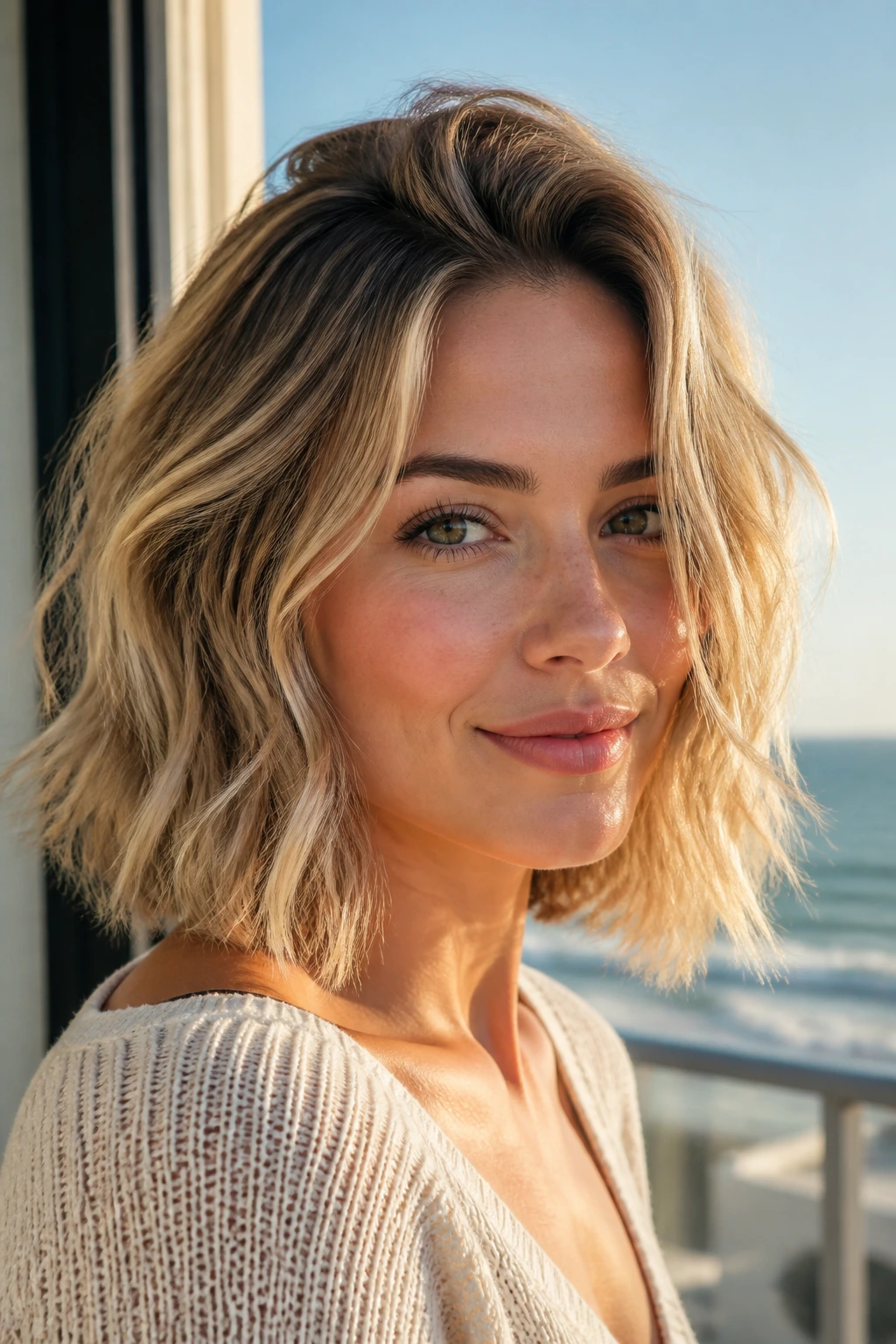
Why does root lift matter more than extra wave here? Because height at the crown stretches a round face, while wide waves at the sides can do the opposite. This lob keeps the texture loose but sends the energy upward first, which is why it works better than a heavy mermaid wave around the cheeks.
How to wear it
Work a mousse or root spray into damp hair, then rough-dry the roots with your fingers before adding a few bends with a curling wand. Leave the ends a little uneven. The goal is movement, not uniform curl. If every wave is identical, the style can get rounder than you want.
This is the cut for people who like hair that looks a bit sun-tossed but still has shape. It is casual, but it is not shapeless. The crown lift is the part that earns the round-face flattering effect. Keep that piece strong and the rest gets easy.
28. Curly or Coily Lob Shape
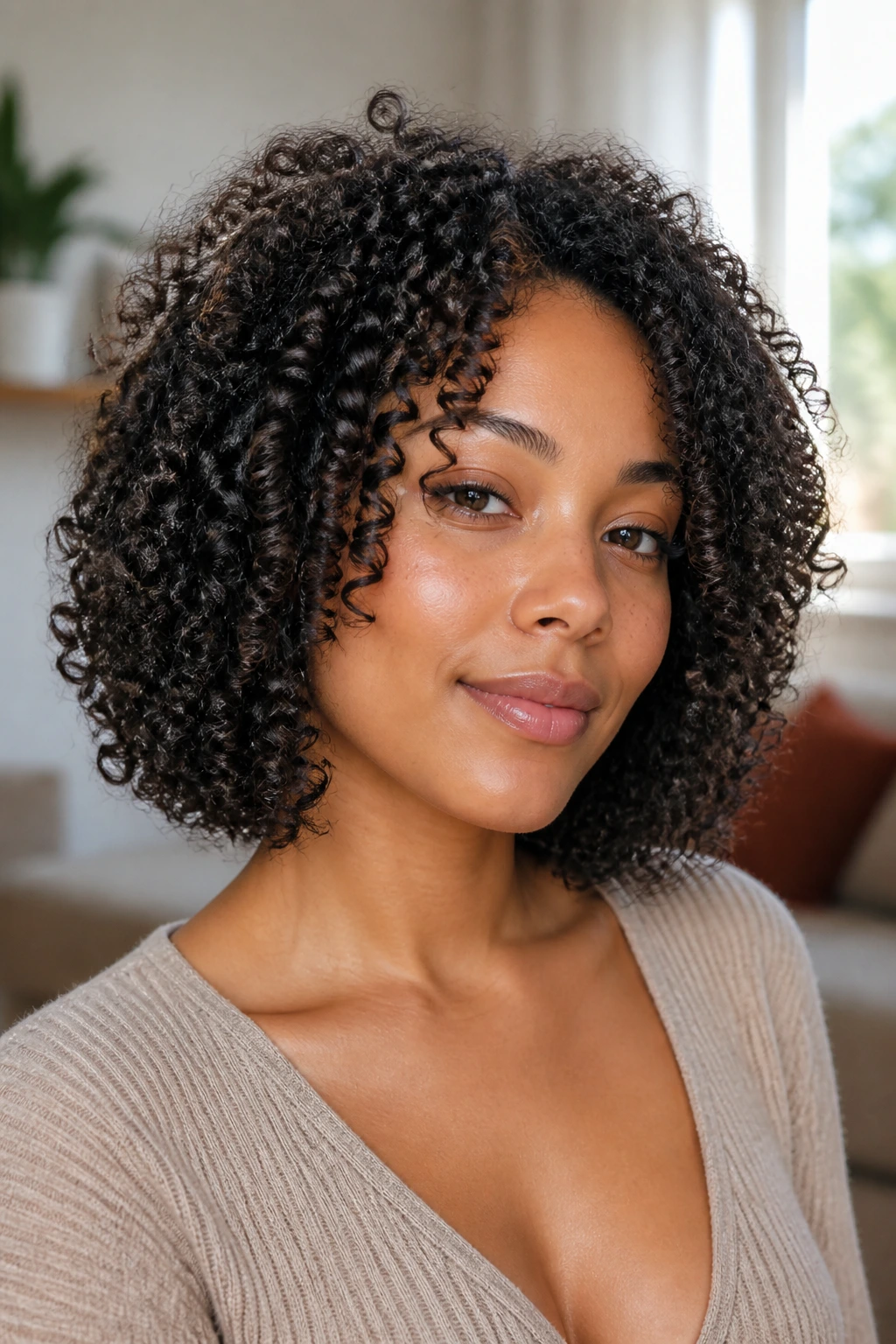
Round faces and curls can be a very good match if the shape is cut with shrinkage in mind. A curly lob should not be judged by the wet outline alone. It needs room at the crown, enough length to fall below the cheekbones once dry, and side shape that tapers instead of ballooning.
- Best method: dry cutting or curl-by-curl shaping with the natural pattern visible.
- Ask for: length left below the chin when stretched, because curls spring up more than people expect.
- Styling tip: use a diffuser on low heat or let the hair air-dry with the curls set in place.
The biggest mistake is cutting curls as if they were straight. That is how a lob becomes a chin-grazing puff once it dries. Curly and coily hair needs the same face-shaping logic, just handled with more respect for shrinkage. When it is cut right, the result has lift, movement, and a line that does not stop at the widest part of the face.
What to Tell Your Stylist at the Chair
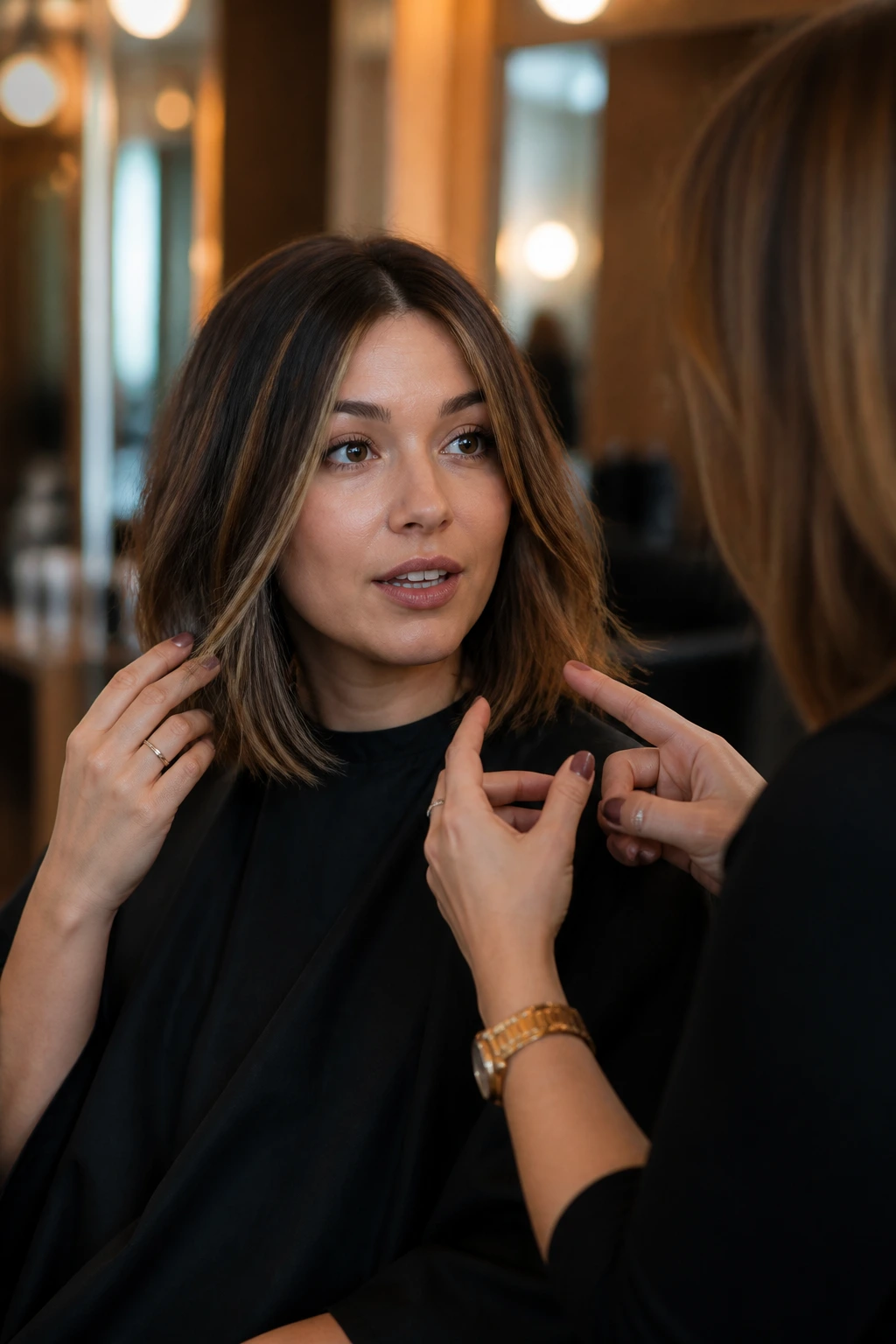
The haircut request matters more than the inspiration photo. Round faces need precise length placement, and the difference between “nice” and “why is this widening my face?” is often just an inch or two. Walk in with a clear idea of where you want the hem to land, where the front should fall, and how much movement you want around the cheeks.
Length: ask for the longest pieces to hit the collarbone or slightly below it. If you want a shorter lob, have the stylist keep the front longer than the back so the face keeps a vertical line.
Shape: say whether you want blunt, angled, layered, or softly textured. If you are not sure, ask for the least aggressive version first. You can always cut more off later. You cannot easily put it back.
Parting: tell them if you wear a middle part, side part, or off-center part most days. A cut should support your habits, not fight them.
Texture: explain whether your hair is fine, thick, straight, wavy, curly, or coily. That changes where the weight should sit. A good stylist will cut the same lob differently on two different heads.
If you wear bangs, mention the fringe length you can live with on day one and day thirty. That part saves everyone a headache. Bring photos of people with similar texture, not only similar face shape.
Essential Tools for Styling a Lob at Home
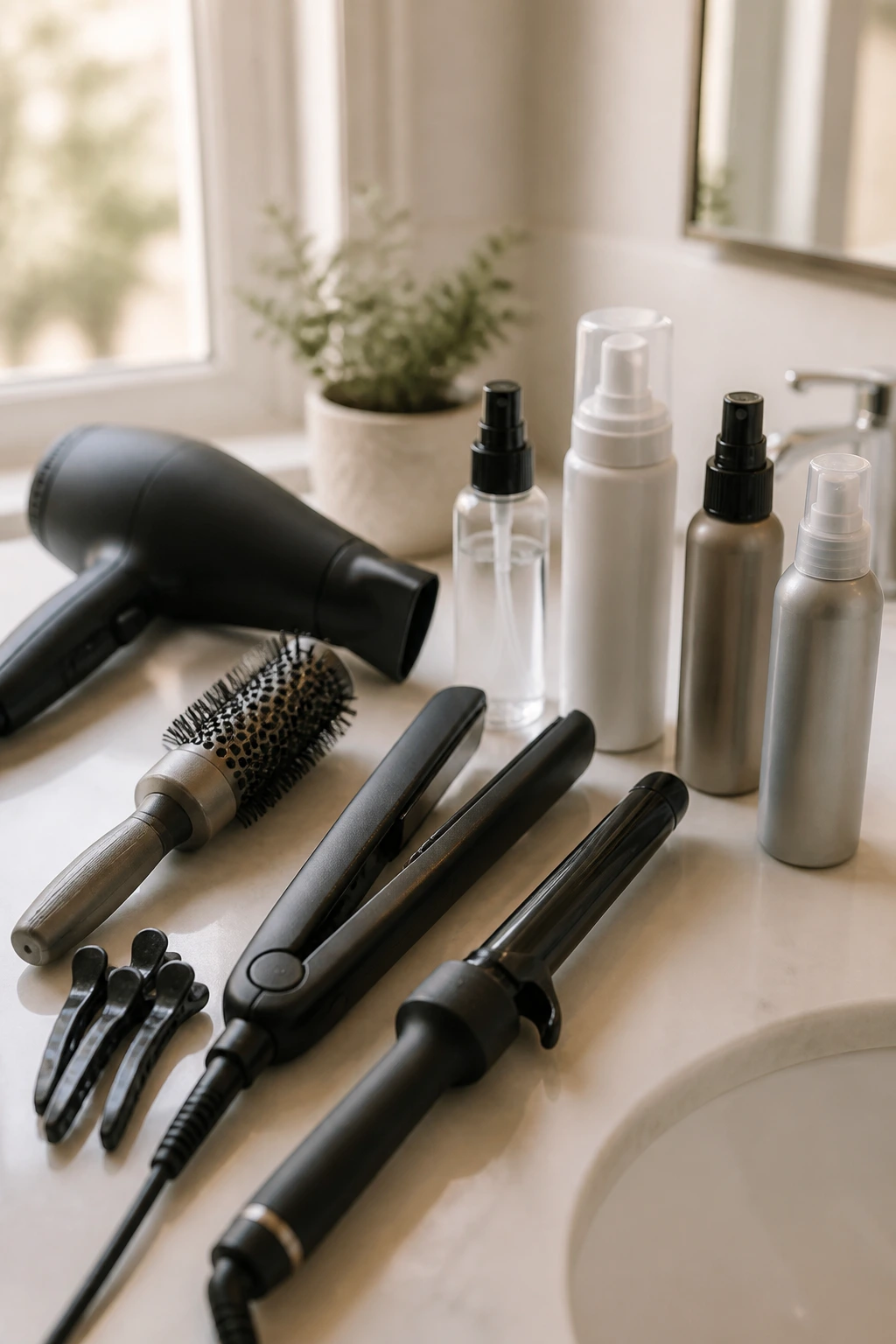
- Blow dryer with a nozzle attachment: The nozzle gives you direction, which matters when you want the roots smooth and the ends controlled.
- 1.25-inch round brush: This size bends the ends without making them curl too tightly around the face.
- Flat iron, 1-inch plates: Handy for a slight bend, a clean tuck, or smoothing a blunt lob.
- Curling wand or iron, 1 to 1.25 inches: Best for soft waves that start below the cheekbone.
- Sectioning clips: Keep the top and sides organized while you style, especially if your hair is thick.
- Heat protectant spray: Use it before any hot tool. It should protect without leaving the hair sticky or dull.
- Root-lift mousse or spray: A small amount at the crown helps a lob sit higher, not wider.
- Texture spray: Good for piecey finishes and lived-in bends on straighter hair.
- Diffuser: Useful if your hair is wavy, curly, or coily and you want to keep the shape from ballooning.
- Wide-tooth comb: Better than a brush for curls and softer waves when you want to keep the outline intact.
How to Style the Shape So It Opens Up the Face
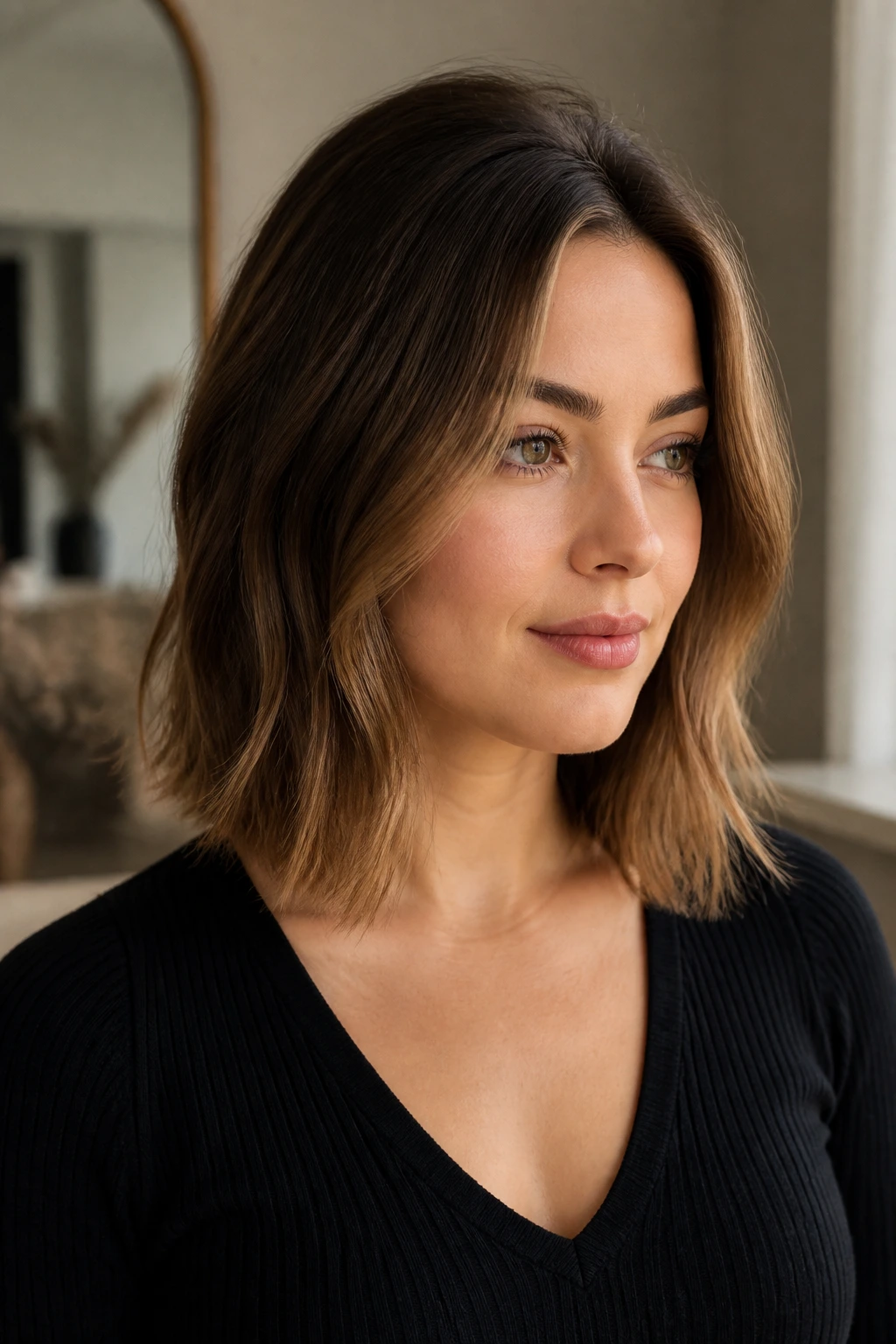
Root Lift: Start with the crown. That sounds boring, but it changes everything. Blow-dry the roots up and away from the scalp, especially near the part line, so the top of the head gains height before the sides start to move. If the lift sits at the temples instead, the cut can get wider. Crown height is the point.
Parting: Pick one part and set it early. On damp hair, make the part, clip the heavier side, and let it dry with direction. That gives the front a cleaner fall and keeps the lob from drifting into a fluffy triangle by noon. A middle part can work, but it usually needs better front length and a little crown lift.
Ends: Keep the ends simple. A soft bend inward, a straight finish, or a loose wave is enough. The bottom 1 to 2 inches should guide the eye down. If the ends kick outward at shoulder level, the shape starts to widen.
Second-Day Reset: Skip the temptation to pile on more dry shampoo all over the head. Put a bit at the roots, mist the mids with water, and re-bend the front pieces with a flat iron or large brush. A second day lob looks best when the shape is refreshed, not rebuilt from scratch.
Additional Shape Boosters and Personal Tweaks
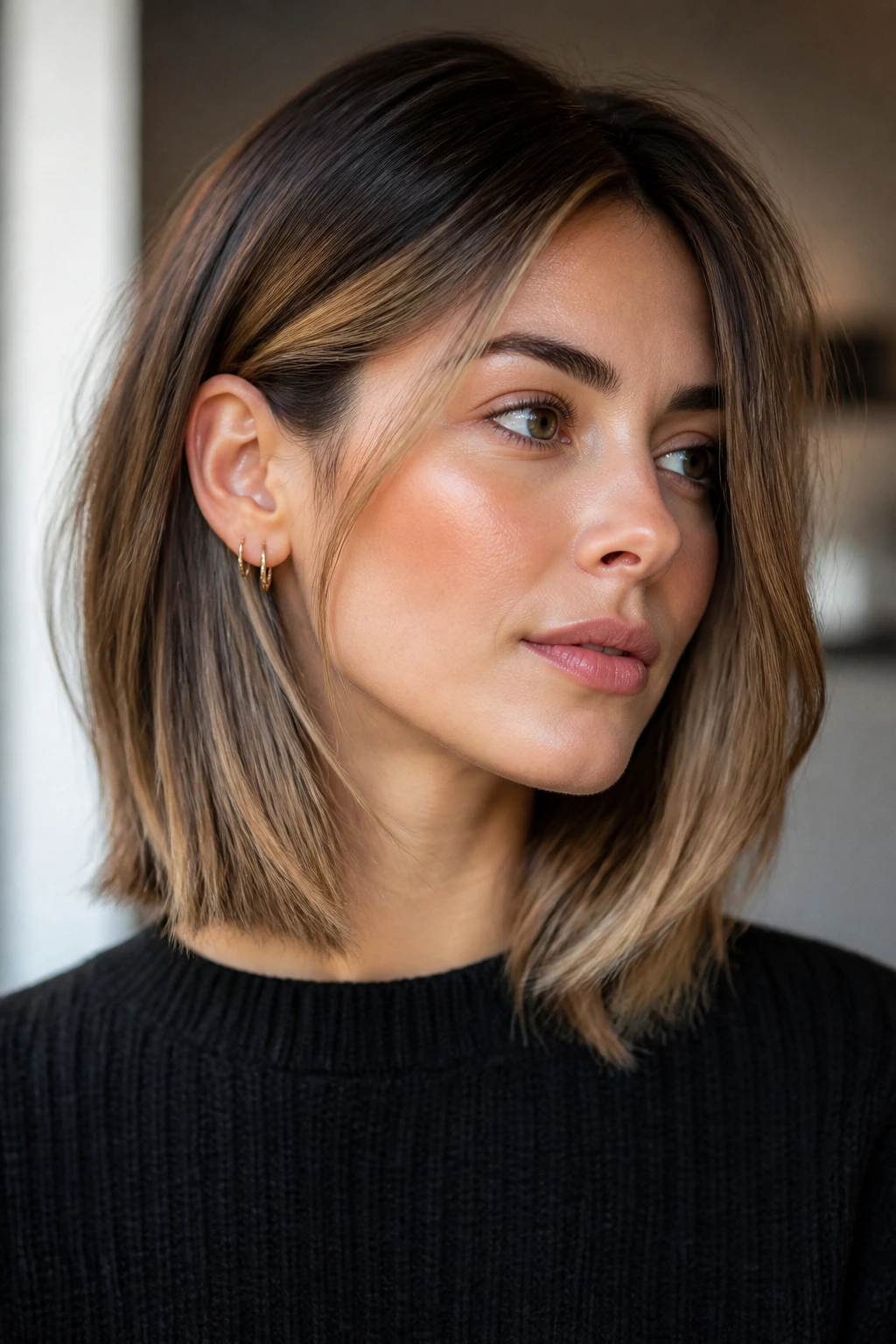
Face-Framing Highlights: A few lighter pieces around the front can pull the eye down the hairline and toward the collarbone. Keep the brightness below the cheekbone if you want the color to support the cut instead of spreading light right where the face is widest.
Bang Length: If you want fringe, keep it long. Curtain bangs, side-swept bangs, and cheekbone-grazing pieces usually play nicer with round faces than short, blunt bangs. Long fringe keeps the forehead open and the face from feeling boxed in.
Ear Tuck: Tucking one side behind the ear can sharpen the silhouette in a way that costs nothing. It breaks up width instantly and shows off the jawline without making the haircut look overdone.
Density Adjustments: Fine hair usually benefits from a cleaner perimeter and fewer short layers. Thick hair usually needs some internal weight removal so the sides do not puff. Curly hair needs the shortest length checked dry, because shrinkage can change the whole line.
Make-It-Yours: If you wear glasses, keep the front pieces below the frames. If you like low maintenance, choose a shape that still looks good air-dried. If you need polish for work, lean toward blunt or softly angled. The cut should fit the way you move through the day, not just the way it looks in the mirror.
Common Mistakes That Widen the Face
-
Cutting it at chin level: A lob that ends right at the chin can make a round face look broader. The fix is simple: move the length down to the collarbone or add a gentle angle through the front.
-
Building too much side volume: Big puff at the temples or cheeks pushes the eye outward. Ask for lift at the crown instead, then keep the sides smoother and closer to the head.
-
Going too short with bangs: Blunt bangs or tiny curtain pieces can shorten the forehead and make the face feel wider. Keep fringe long enough to blend into the lob and stay part of the vertical line.
-
Over-layering fine hair: Too many short layers can make fine hair fray outward like a halo. A better move is a cleaner edge with only subtle internal shaping.
-
Ignoring shrinkage on curls: Curly and coily hair often springs up above the length people expected. Cut with the dry shape in mind or the lob can land too high and sit at the cheeks.
-
Letting the ends flip outward: If the collarbone keeps kicking the hair out, the style can gain width fast. A small angle, a different drying direction, or a better finishing brush usually fixes it.
Variations and Adaptations to Try
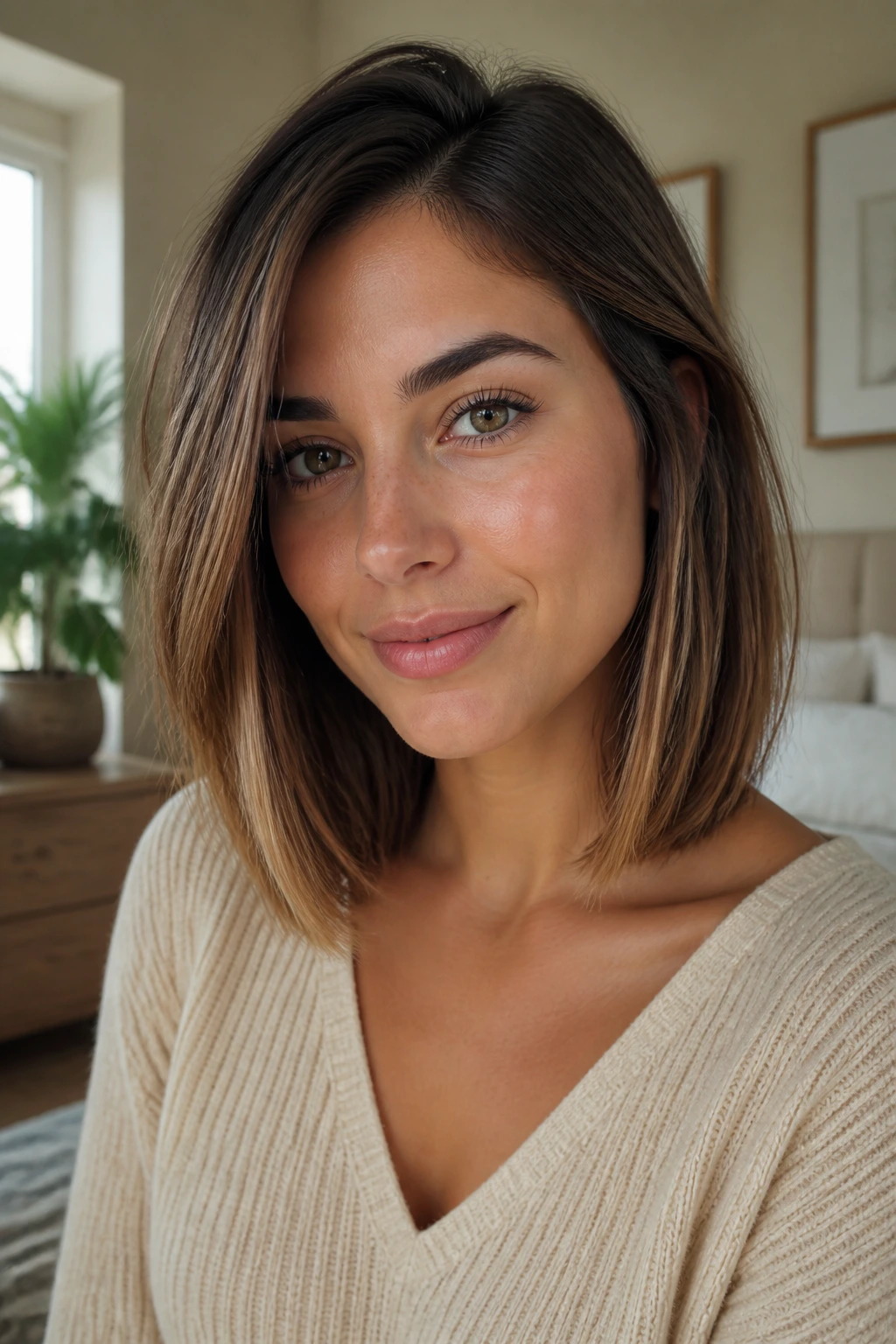
The Soft-Everyday Lob: Keep the length around the collarbone, add one or two long face-framing pieces, and wear it with a slight off-center part. This version is low-drama and works with a rough blow-dry.
The Sharp Blunt Lob: Choose a clean hem, minimal layers, and a smoother finish. This is the one for people who want structure first and movement second.
The Curly-First Lob: Ask for the cut to be shaped dry with shrinkage in mind, then keep the crown higher and the sides tapered. This is the best route if your natural texture is doing most of the styling already.
The Fine-Hair Lift Cut: Use a blunt perimeter with invisible layers and a bit of crown volume. Fine hair looks fuller when the outline stays strong and the top gets a touch of height.
The Thick-Hair Tamer: Go for an angled or inverted lob with controlled weight removal through the back. Thick hair usually needs room to move, or it turns into a triangle at the shoulders.
The Grow-Out-Friendly Lob: Keep the front long enough to survive a few months, then add curtain bangs or side-swept fringe only if you like frequent touch-ups. This version stays flattering as it gets longer, which is useful if you do not live in the salon.
Keeping the Cut Sharp Between Trims
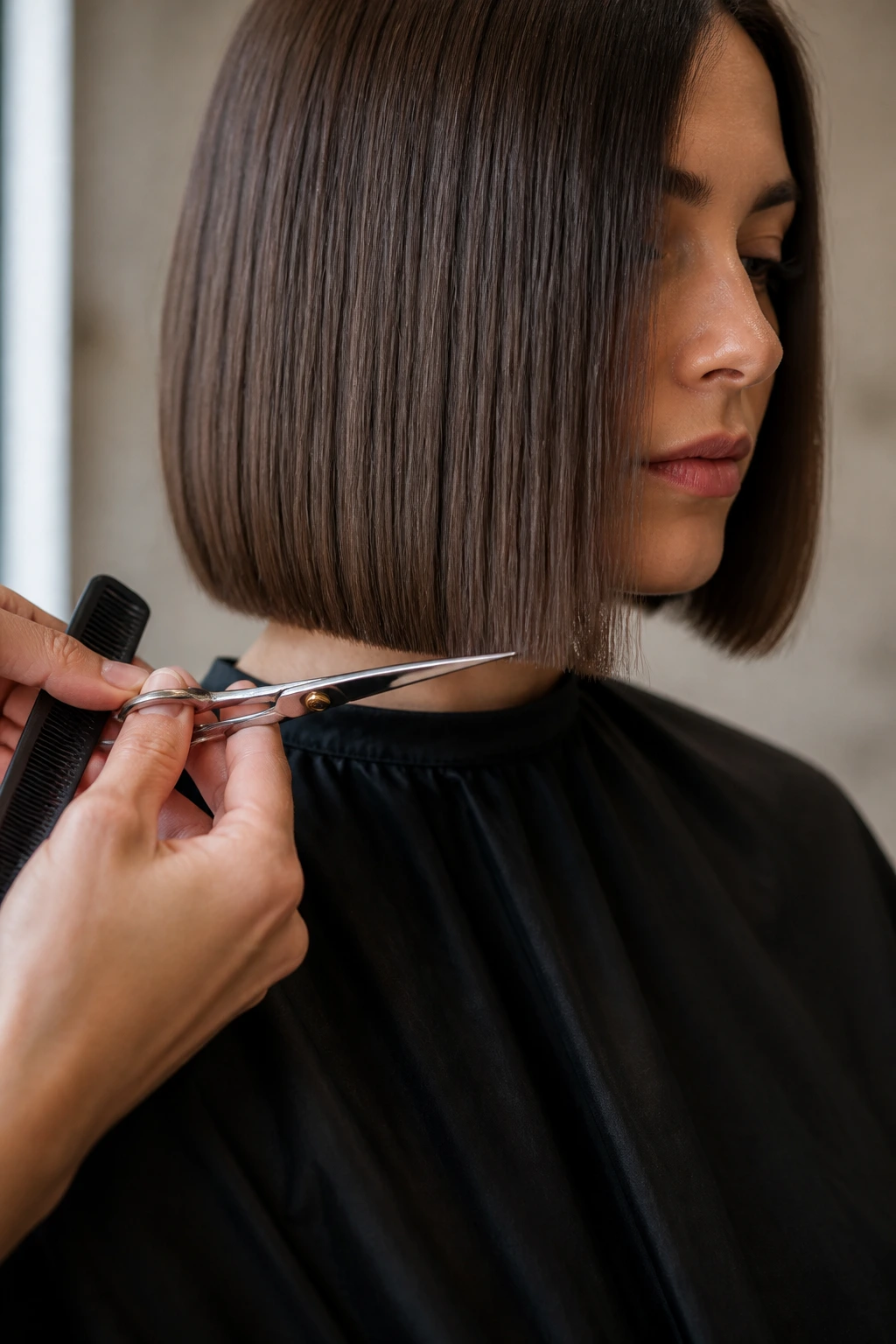
A blunt or angled lob usually needs a trim every 6 to 8 weeks if you want the edge to stay clean. Once the ends start to feather out, the haircut loses the strong line that helps a round face. Layered, shaggy, or invisible-layer lobs can stretch a little longer, often 8 to 10 weeks, but the face-framing pieces still need a check before they start falling into the cheeks.
Product buildup matters too. If your hair starts looking heavy, dull, or strangely puffy by day two, use a clarifying shampoo about once a month and reset the shape with a light conditioner. Too much residue can make a lob collapse at the crown and widen at the sides, which is the opposite of what you want.
For curly and wavy versions, refresh the shape with water, leave-in, or a small amount of curl cream rather than piling on dry product every morning. That keeps the ends from getting crunchy and prevents the haircut from turning into a fuzzy outline. If your hair flips outward at the shoulders, the issue is usually either length placement or a drying habit that needs changing.
The grow-out phase is manageable when the front stays longer than the back. That small detail lets the cut drift without losing its face-shaping job.
Lob Haircut FAQ
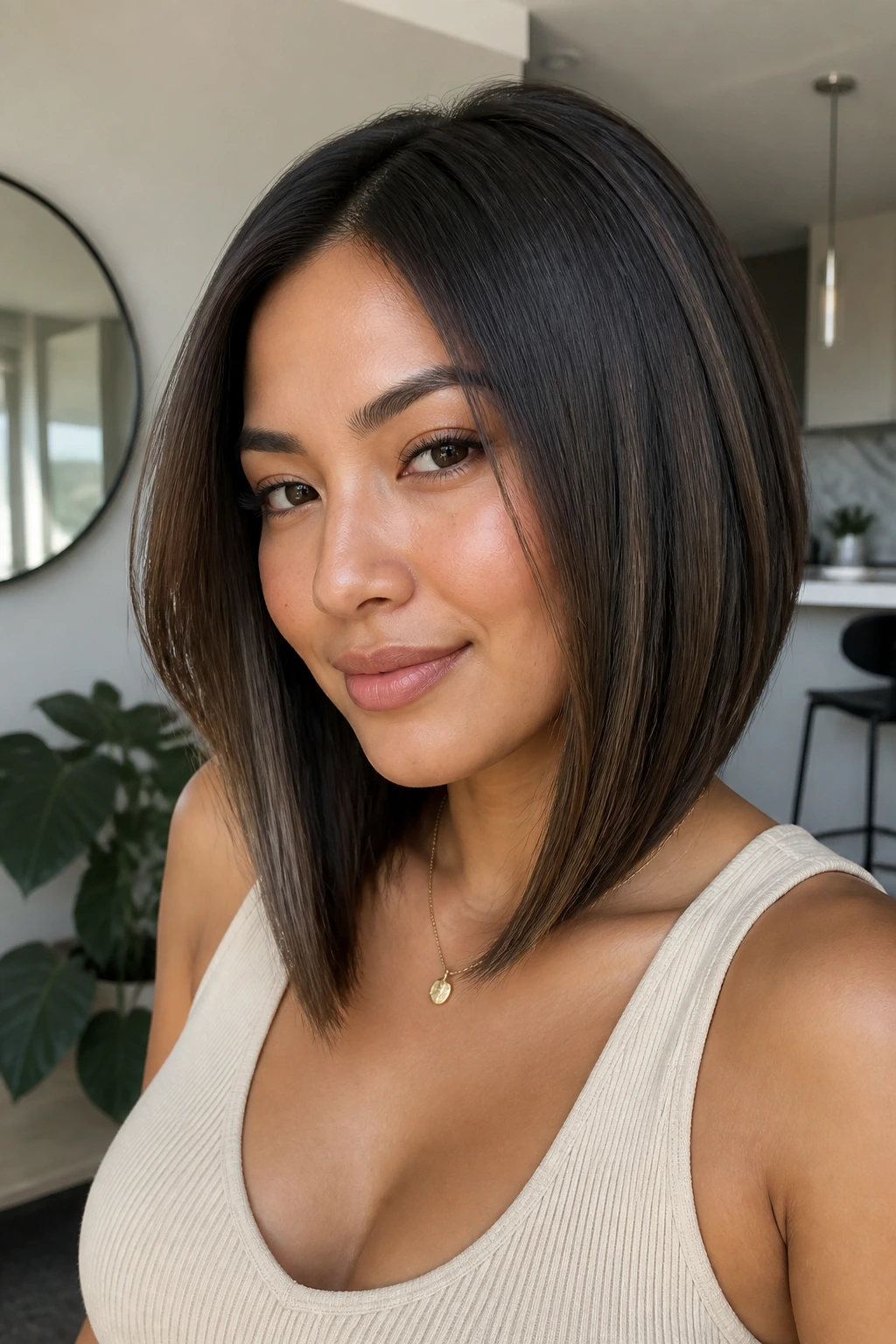
Does a lob really flatter a round face?
Yes, when the length sits below the chin and the sides do not puff out at cheek level. The shape works because it creates a vertical line and gives the face room to look a little longer.
Is a blunt lob or layered lob better for a round face?
A blunt lob is usually cleaner on fine hair and gives the face a strong line. A layered lob works better if your hair is thick, flat at the crown, or naturally wavy and needs movement.
Can I wear curtain bangs with a round face and lob?
You can, but keep them long enough to split and sweep past the cheekbones. Short curtain bangs tend to shorten the face and can make the cut feel wider.
What is the safest lob length if I’m nervous?
The collarbone is the easiest place to start. It gives you length, flexibility, and enough room for parts, waves, or a tuck behind the ear.
Will a center part make my round face look wider?
Not if the cut has enough length and a little crown lift. A center part only becomes a problem when the ends stop too high or the sides build too much volume.
Can curly hair wear a lob on a round face?
Yes, and it can look excellent. The important part is shaping for shrinkage so the cut does not land too short once the curls dry.
What if my lob flips out at the ends?
That usually means the length is hitting a shoulder point that kicks it outward. A tiny bit more angle, a blow-dry with the nozzle pointed down, or a larger brush can fix it.
How often should I trim a lob?
Most blunt or angled versions need a trim every 6 to 8 weeks to keep the line crisp. Softer, layered lobs can go a little longer, but once the shape loses its edge, the face-flattering effect weakens.
The Shape That Sticks
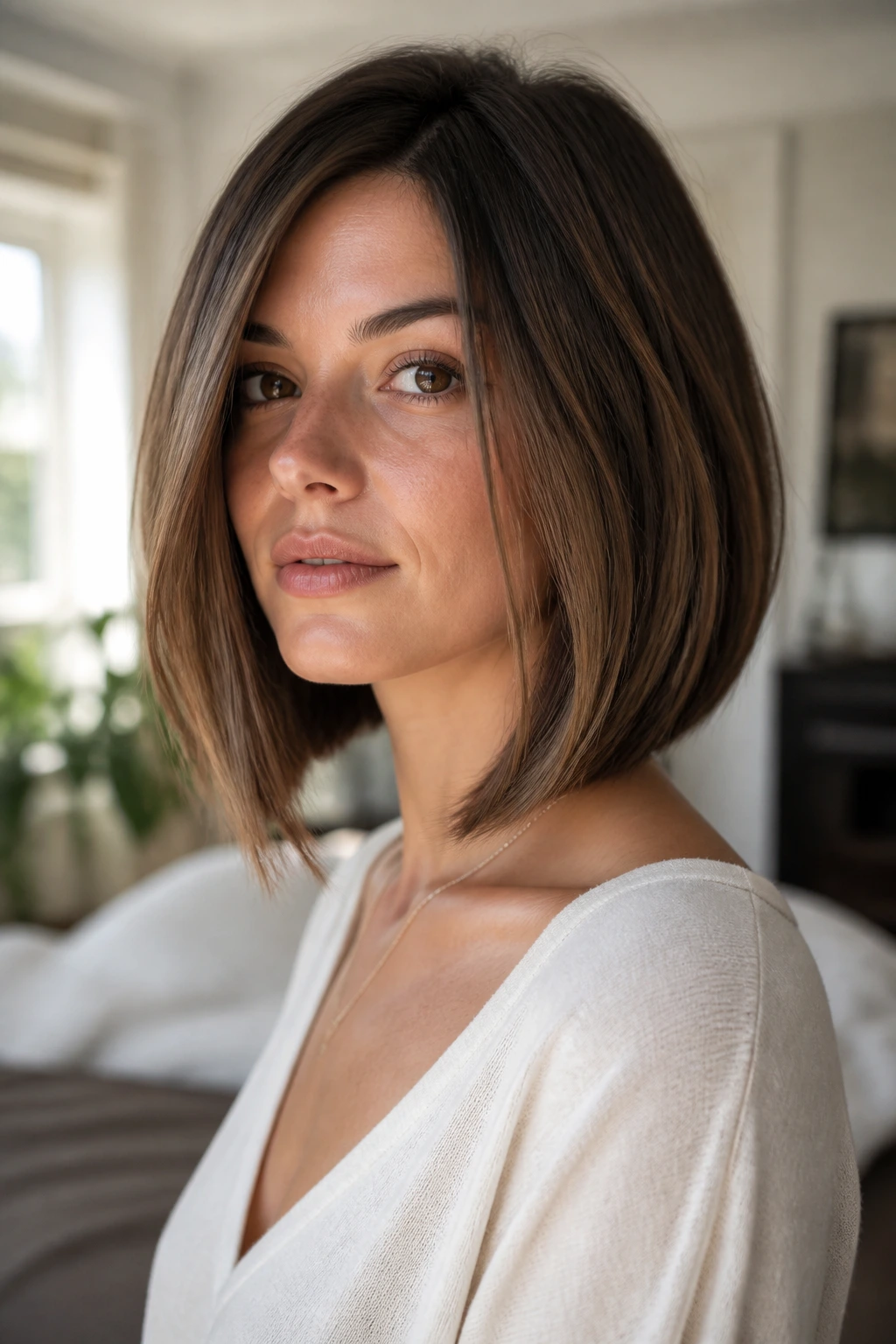
The best lob for a round face is not the one that tries to erase the face. That never works. The better cut uses length, angle, or texture to guide the eye where you want it to go, then leaves the cheeks alone.
That is why lobs keep winning. They can be blunt without being harsh, soft without going puffy, and tailored without looking overworked. Pick the version that matches your hair density and the way you actually style it, and the cut does the heavy lifting for you.
If you are booking the appointment, bring a photo that matches your texture, not just your dream. That one decision saves a lot of chair-side guesswork.
