



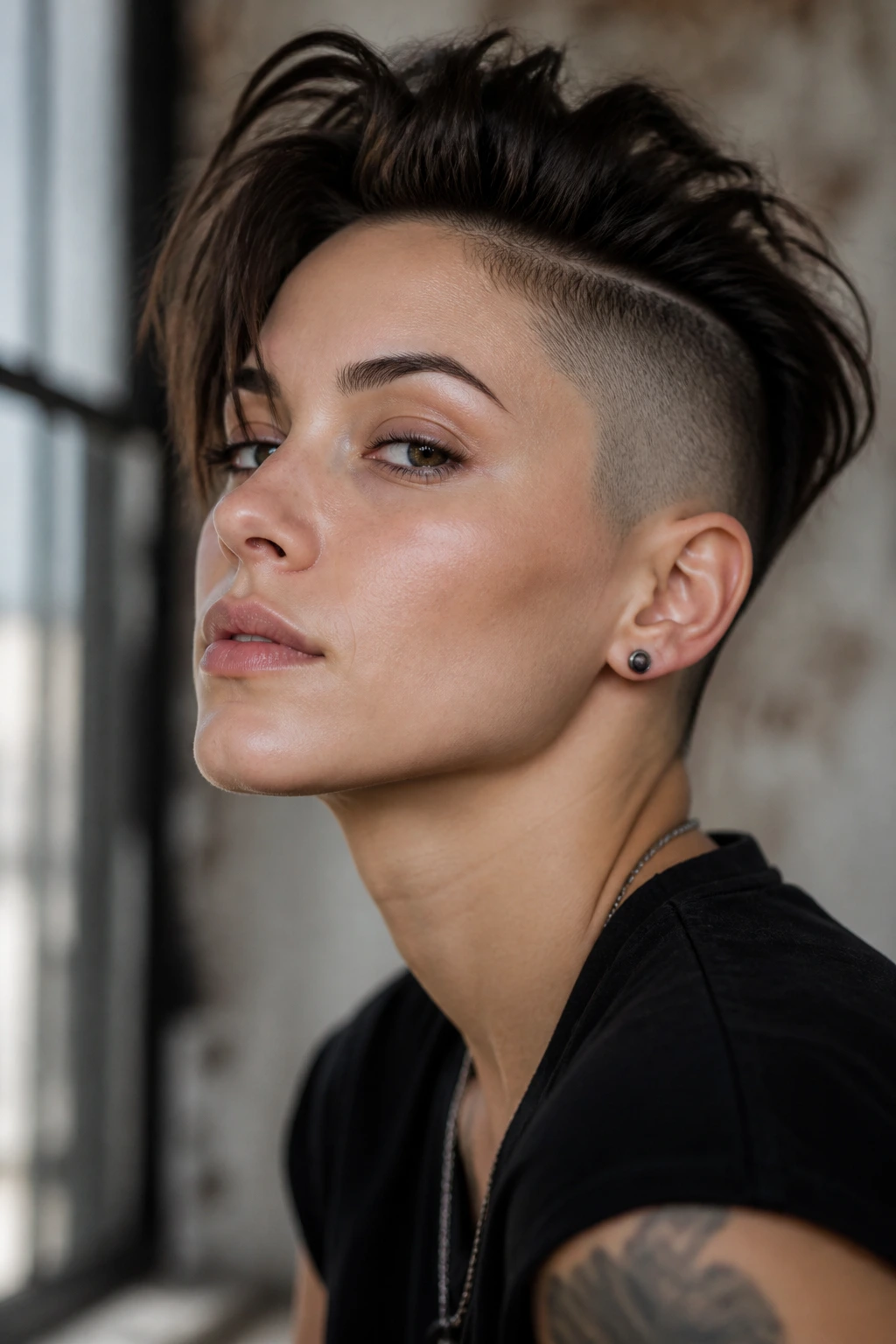
Masculine female haircuts work best when the shape is blunt about one thing: line. A shaved temple, a tight nape, a clipped side, or a buzzed crown changes the whole read of the face, even when the top stays soft or a little messy. That contrast is the point. It’s what turns short hair from “fine” into something with teeth.
The strongest versions don’t lean on length at all. They lean on geometry. A clean fade can make cheekbones look higher. A cropped fringe can make a forehead look intentional instead of something you’re trying to hide. A buzz cut can be almost stark in the mirror, then oddly elegant once the outline is clean and the neckline is tidy.
And there’s a practical side people forget. These cuts let you spend your energy on shape, not fuss. A good barber or stylist can move the weight around by a quarter inch and change the whole mood — more severe, more athletic, more punk, more polished. That’s why the best masculine-leaning short haircuts don’t all look the same. They use the same tools, but they say different things.
Why These Cuts Earn Their Edge
-
The sides do the talking: When the temples and ears are opened up, the jawline gets more visual space and the face reads sharper from every angle.
-
Short hair shows bad cutting fast: A buzz, crop, or undercut leaves nowhere to hide crooked lines, which is exactly why a clean perimeter matters so much here.
-
They grow out with attitude: Even when the fade softens or the top gets a little shaggy, these cuts usually look deliberate instead of neglected for at least a few weeks.
-
Texture changes the mood fast: The same cropped shape can look sporty with matte paste, sleek with gel, or punk with piecey separation and a little lift at the front.
-
They work hard on busy mornings: A proper short cut can be dried with fingers, reset with water, and still look intentional without a long styling routine.
-
The haircut can carry the outfit: When the cut has enough structure, a plain tee, a sharp blazer, or a leather jacket all read more confidently because the hair already has a point of view.
1. Temple-Fade Buzz Cut
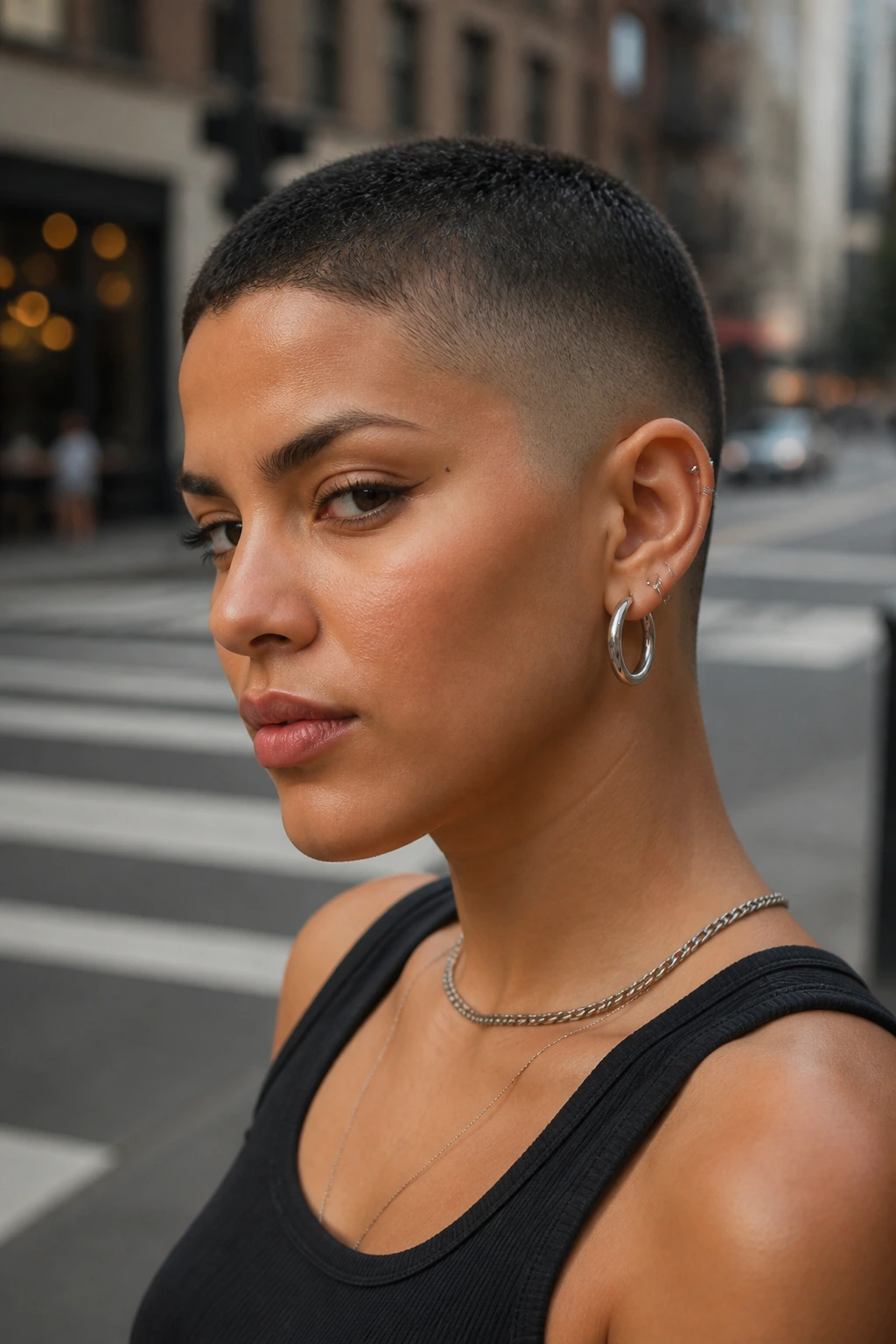
A temple-fade buzz cut is one of the cleanest ways to go hard without looking fussy. The top usually sits somewhere around a #1.5 to #3 guard, then the fade disappears around the temples and sideburns so the cut hugs the head instead of floating over it. It’s spare. It’s direct. And when the neckline is squared off neatly, the whole thing looks sharper than most people expect from something this short.
Ask for: a soft or mid temple fade with a slightly longer top if your head shape needs a little softness. If your hairline is uneven, do not ask for a harsh line-up unless you want that to stay visible.
Best on: strong brows, clear cheekbones, or anyone who wants the haircut to show the face instead of competing with it.
2. Classic Crew Cut
The crew cut sits in that sweet spot between military-short and actually styled. The top stays just long enough to brush forward or up — usually about 1 to 1.5 inches — while the sides taper down cleanly so the shape doesn’t balloon out near the ears. It’s one of those cuts that looks almost boring in theory and then quietly excellent on the right head.
The trick is keeping the crown slightly longer than the front. That tiny difference gives the style some lift without needing product to do all the work. If your hair is thick, ask for a little point-cutting through the top so it doesn’t sit like a helmet.
3. Textured French Crop
A textured French crop has a blunt fringe, choppy top layers, and sides that can be tapered or faded depending on how severe you want it. The fringe usually lands just above the brows or right into them, which makes the cut feel compact and deliberate. It’s a good one if you like structure but do not want the scalp-shiny effect of a buzz.
The texture matters. If the top is cut with duller, heavier ends, the fringe can droop; if it’s point-cut or razored too hard, it can get wispy. Ask for piecey, not fluffy. That’s the difference between a sharp crop and a sleepy one.
4. High-and-Tight Pixie
This is the cut for people who want a pixie that has been stripped of sweetness and cleaned up at the edges. The sides and back are taken very close, often with clippers, while the top is left just long enough to push forward, spike slightly, or sweep over one side. The silhouette is small, but it doesn’t feel soft.
What makes it work is the vertical contrast. The cut sits tight at the ears and nape, then lifts a little at the crown, which keeps the head shape from looking flat. If you have a strong jaw or a narrow face, this one can look almost tailored.
5. Undercut Pixie with Long Top
An undercut pixie with a long top gives you room to play. The underlayer is clipped short, sometimes close enough to show scalp, while the top can stay 2 to 4 inches long and move in any direction you want. That longer top is the whole story here — combed forward, flipped to the side, pushed back, or roughed up with paste.
It’s a smart option if you want something masculine-leaning but still like a little styling drama. The long top means you can shift the mood without changing the cut. One day it reads sleek. The next day it looks a little unruly. Both work.
6. Side-Swept Ivy League Crop
The Ivy League crop is a quieter cousin to the crew cut, but it has enough polish to feel intentional. The top is long enough for a side part, usually around 1.5 to 2 inches, and the sides taper in without going skin-short. The result lands somewhere between preppy and sharp, which sounds tame until you see it on someone with a strong brow or a clean jawline.
If your hair naturally falls forward, this cut works with it instead of fighting it. A touch of matte cream or a light pomade is enough. No heavy sculpting. The shape is doing most of the work.
7. Soft Mohawk Fade
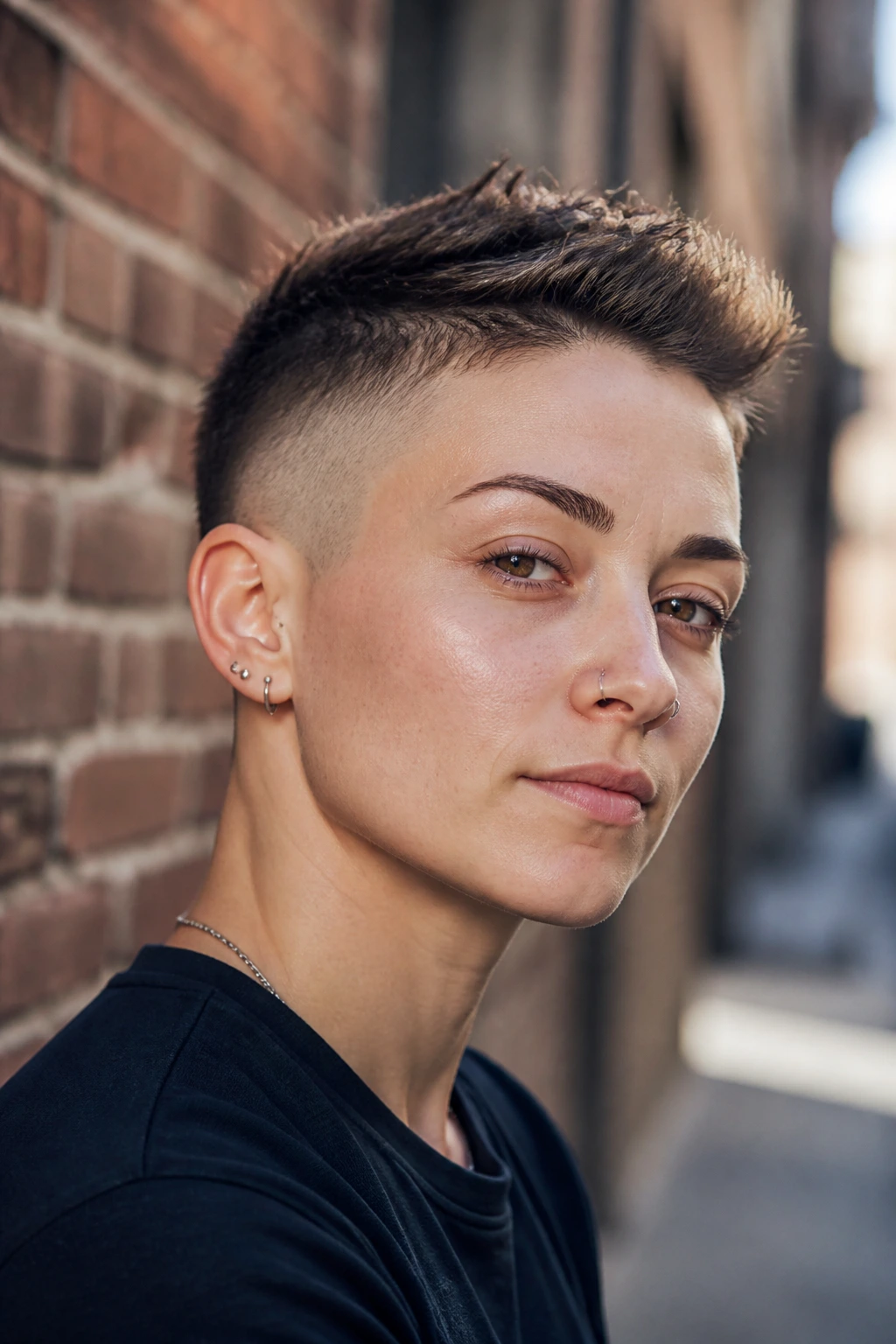
A soft mohawk fade keeps a narrow ridge through the center of the head while the sides are faded down so the silhouette feels athletic rather than theatrical. The middle doesn’t need to stand straight up. In fact, it usually looks better if it’s only slightly raised or brushed forward in short texture.
This cut has attitude even when it’s worn low-key. It’s the kind of shape that looks good with a denim jacket, a plain tank, or a sharp blazer because the cut already brings contrast. If you want edge without a full punk shout, this is a good lane.
8. Skin-Fade Buzz Cut with Line-Up
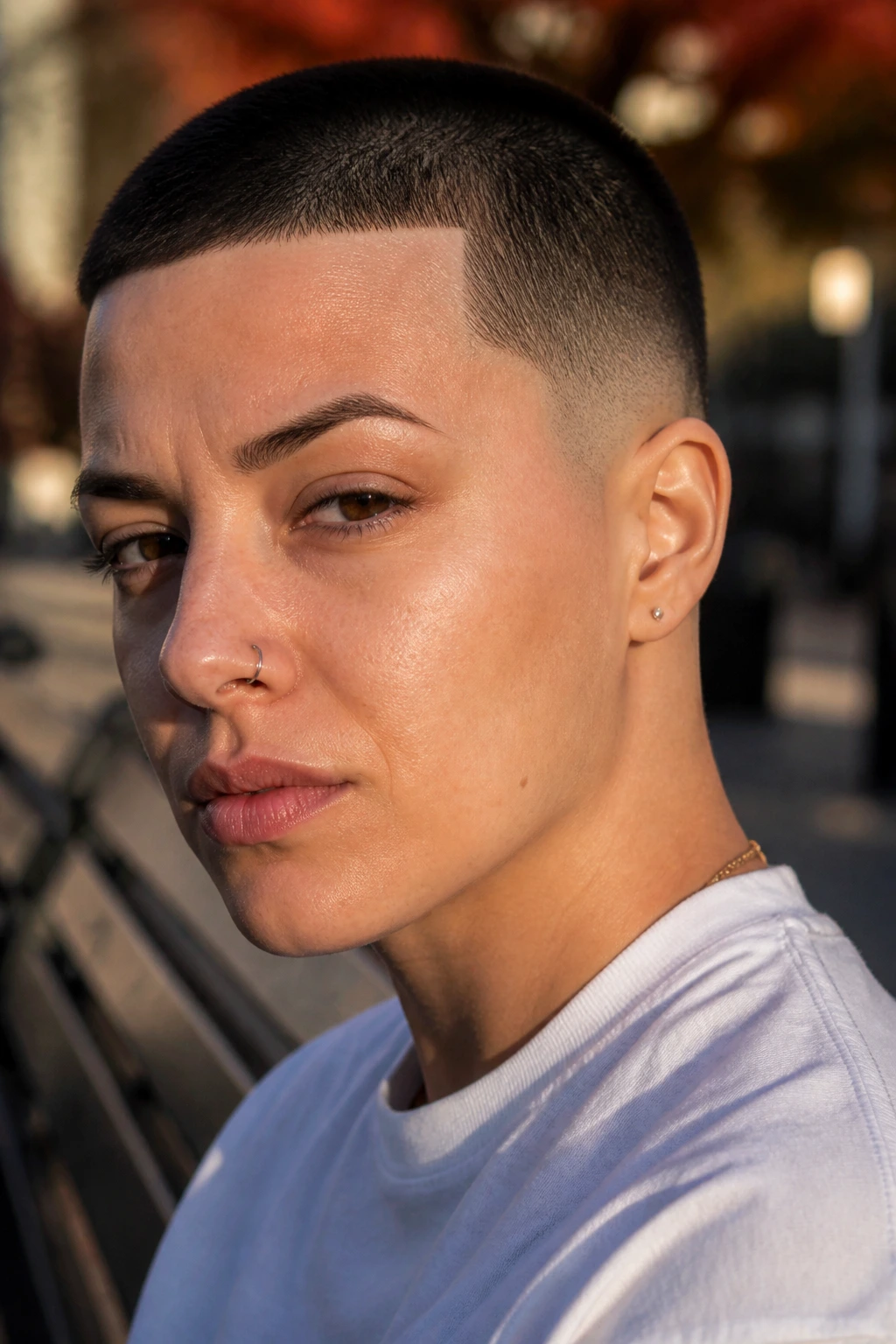
A skin-fade buzz cut with a line-up is unapologetically crisp. The sides drop all the way to the skin, then the edge around the forehead, temples, or sideburns is cleaned up into a hard perimeter. On the right face, it looks almost architectural.
The catch is upkeep. A skin fade grows out fast, and the line-up loses its bite after a couple of weeks if your hair grows quickly. If you like that fresh-barber look, this is a strong choice. If you hate frequent touch-ups, you may want a taper instead.
9. Razor-Edged Caesar Crop
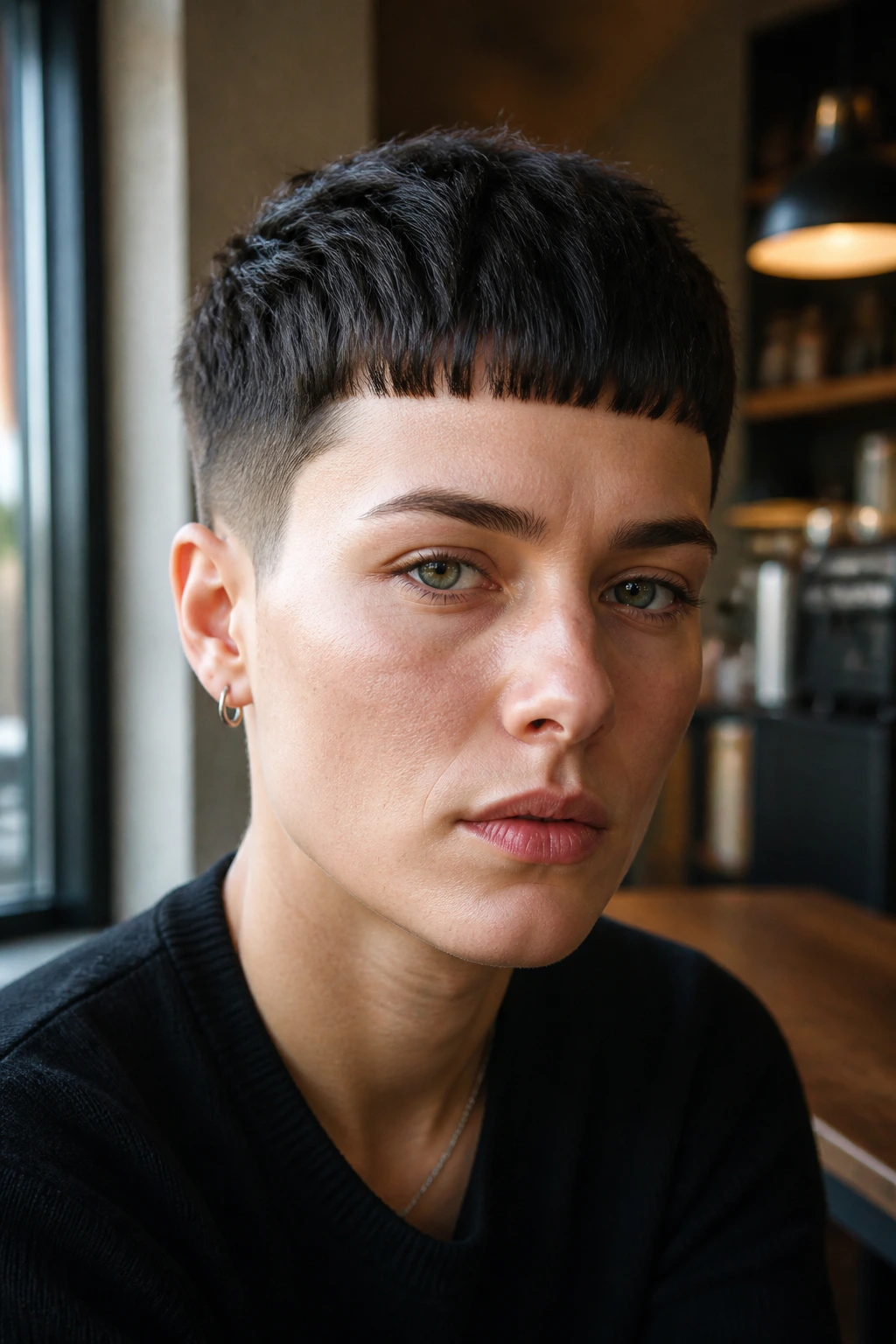
The Caesar crop is short, frontal, and blunt in the best way. The fringe is cut straight across or only slightly textured, and the rest of the top stays compact so the whole shape feels controlled. It’s a nice answer for anyone with a cowlick at the front, because the fringe can work with the growth pattern instead of fighting it every morning.
A razor edge can make the line too soft if the hair is fine, so ask your stylist to balance bluntness with texture. You want a line that looks deliberate, not pasted on. That line at the brow is the whole point.
10. Choppy Bowl Cut with Sharp Fringe
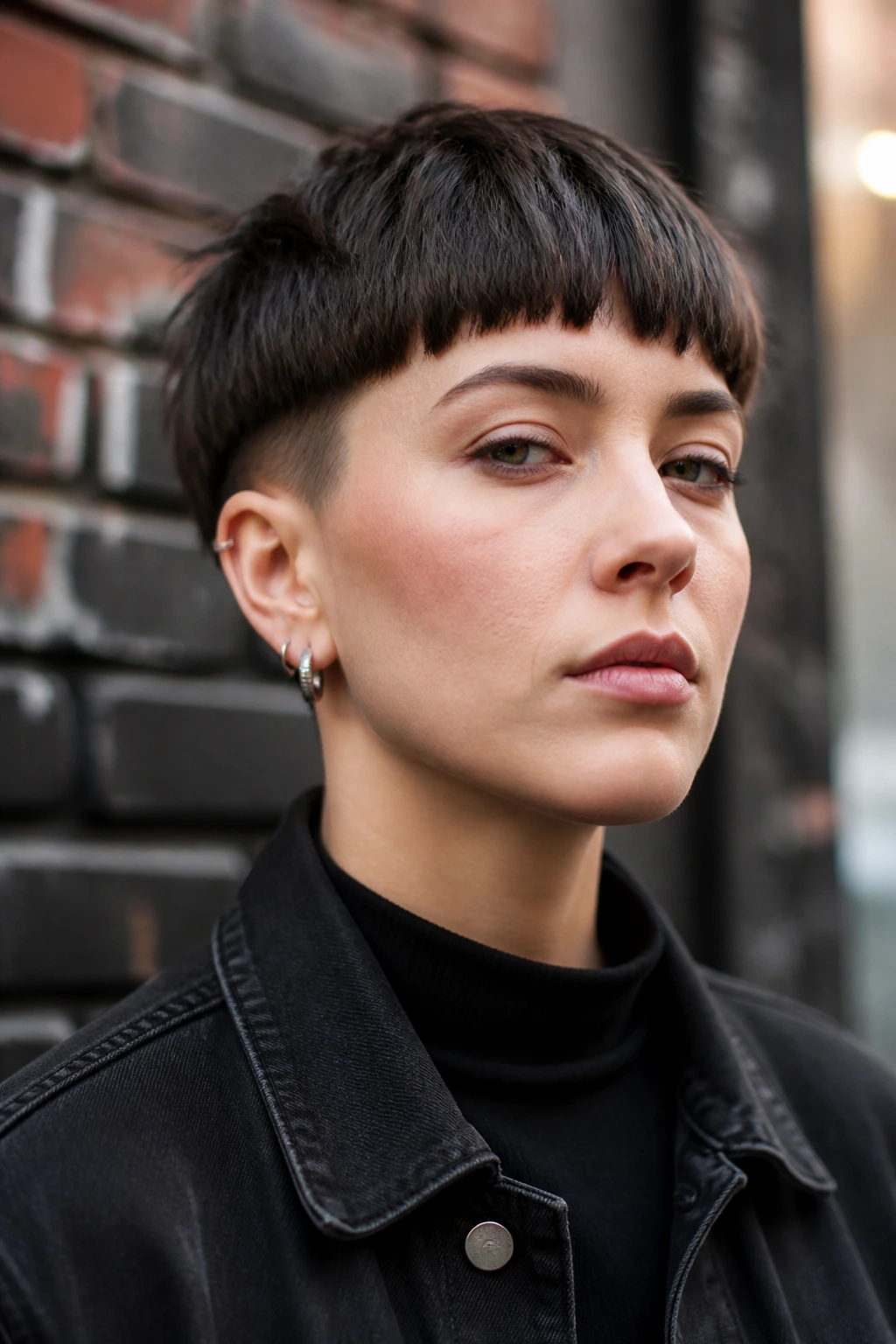
Forget the old childhood bowl shape. A modern choppy bowl cut can look severe, cool, and very intentional when the perimeter is broken up with texture and the sides are kept close enough to avoid mushrooming. The fringe stays heavy, but the ends aren’t a solid curtain. They move.
This one has a strong editorial feel because the line is unusual. It works especially well if your hair is straight and dense, since that gives the rounded shape more substance. If your hair is fine, ask for softer layers under the top so the cut doesn’t collapse.
11. Tapered Quiff Crop
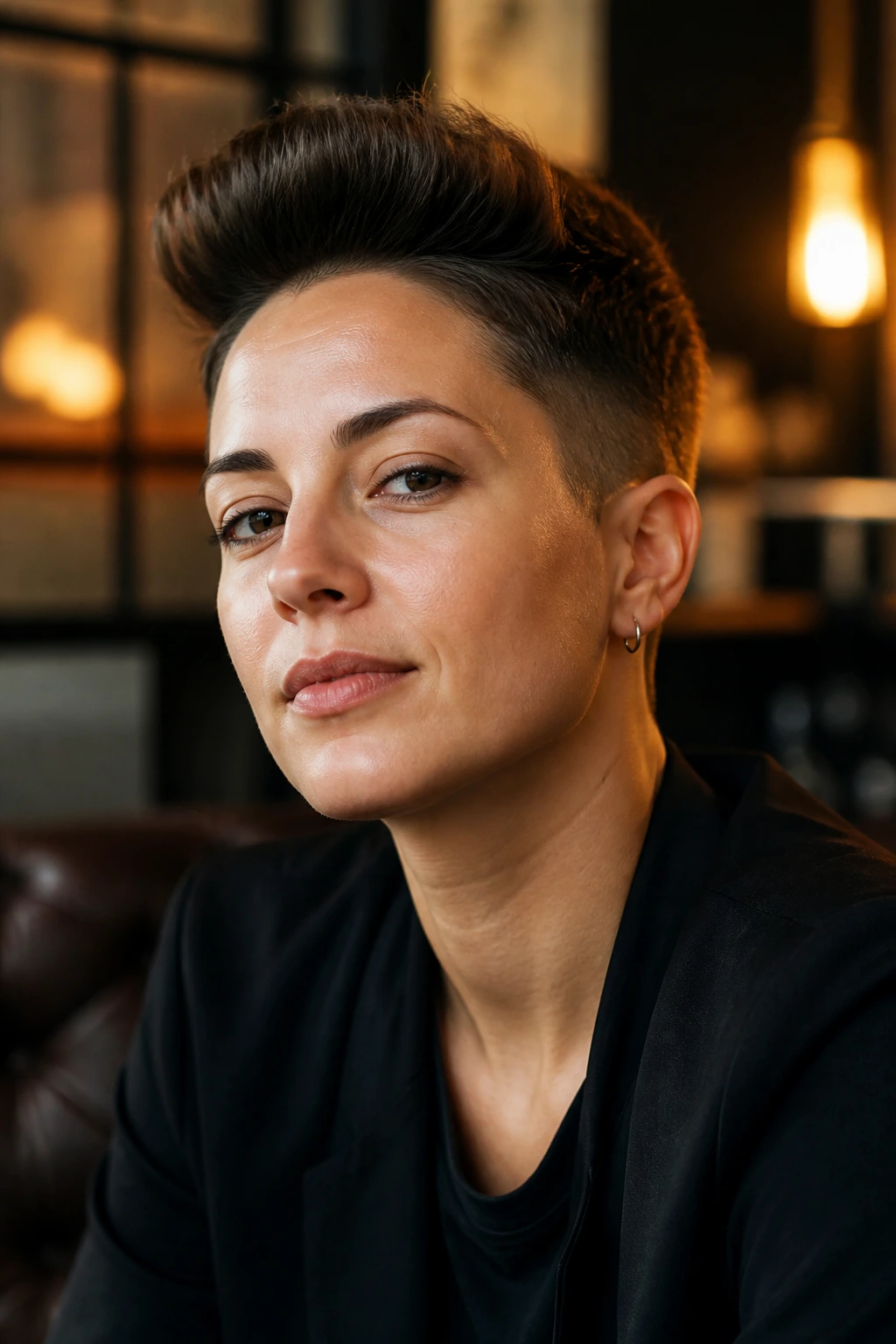
The tapered quiff crop takes a little front height and trims the rest of the sides down so the top can stand up without getting clownish. The quiff here isn’t big. It’s controlled. Think one to two inches of lift, not a full rockabilly wave.
A blow-dryer matters on this cut. Aim the nozzle up and back while the hair is damp, then pinch the front with a matte paste or clay once it’s cool. The taper keeps the shape clean around the ears, which is what stops the style from reading too old-school.
12. Disconnected Pixie
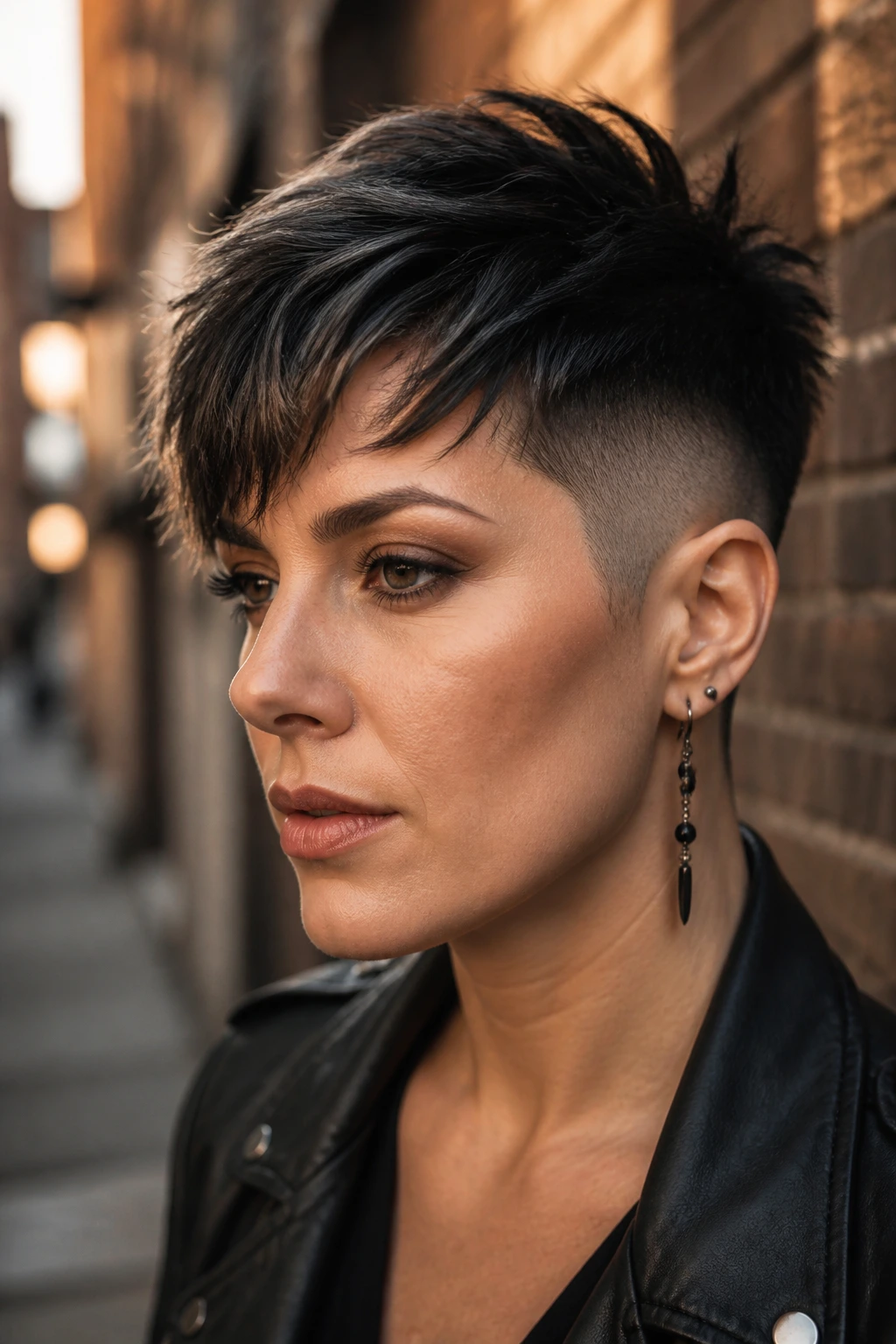
A disconnected pixie makes the contrast obvious on purpose. The top stays long enough to fall forward, sweep sideways, or spike a bit, while the sides are clipped down so short that the two zones do not blend into each other. That hard break is what gives the cut its bite.
It’s a strong choice if you like dramatic shapes and do not mind your haircut being noticed first. The separation looks especially good when the top has a little texture in the ends. Flat, smooth hair can make it feel harsher than it needs to be.
13. Mullet Fade
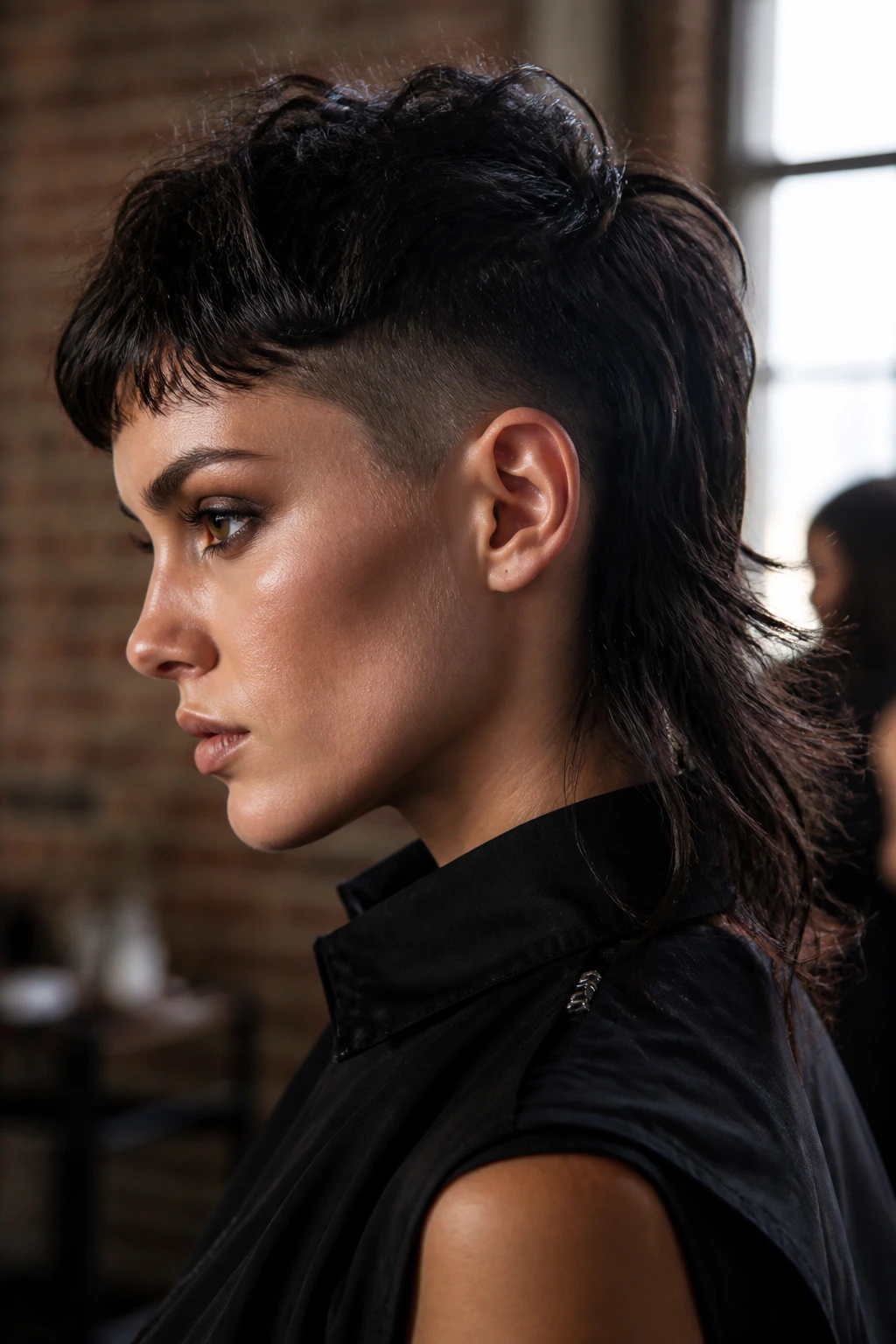
The modern mullet fade is not the shaggy joke people still think it is. Shorter sides keep the haircut clean near the face, while the back stays long enough to swing a little at the collar. That rear length is the twist that gives the shape movement and a bit of menace.
This cut works best when the transition is controlled. If the top and sides are too long, it turns floppy; if the back is too short, you lose the point. The sweet spot is usually a clear fade at the temples and a back that brushes the nape.
14. Curly Buzz Cut
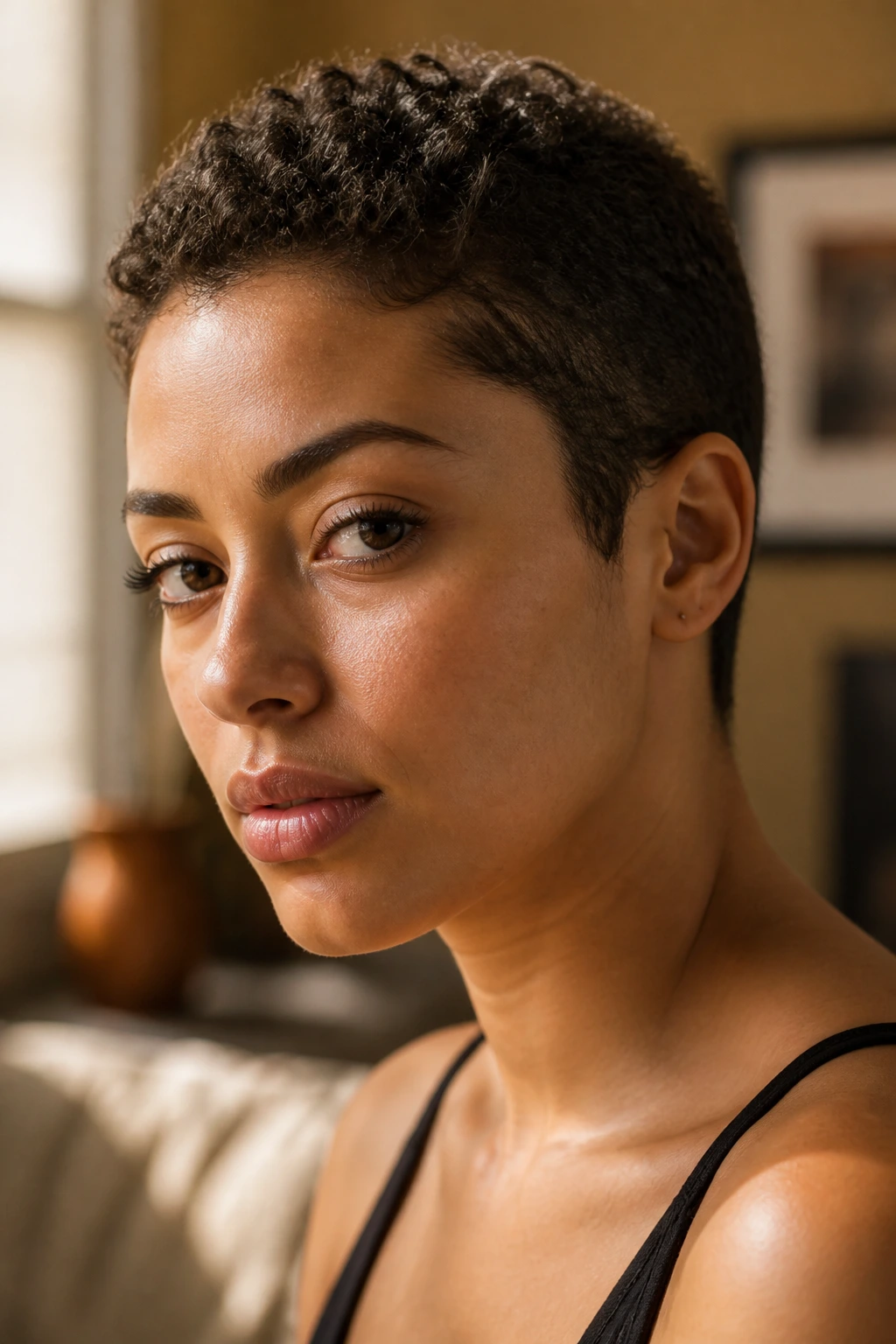
A curly buzz cut is one of the smartest short options for textured hair because it doesn’t try to erase the curl pattern. Instead, it compresses it into a close, even shape that still shows a little natural movement. On dense curls, a #2 or #3 guard can leave enough pattern to make the cut feel alive rather than shaved flat.
The mistake is going too short too fast. If you take curls down to the scalp without testing first, you can get more scalp visibility than you wanted. Start a little longer, see how the texture settles, then shorten it later if you want a cleaner result.
15. Hard-Part Crop
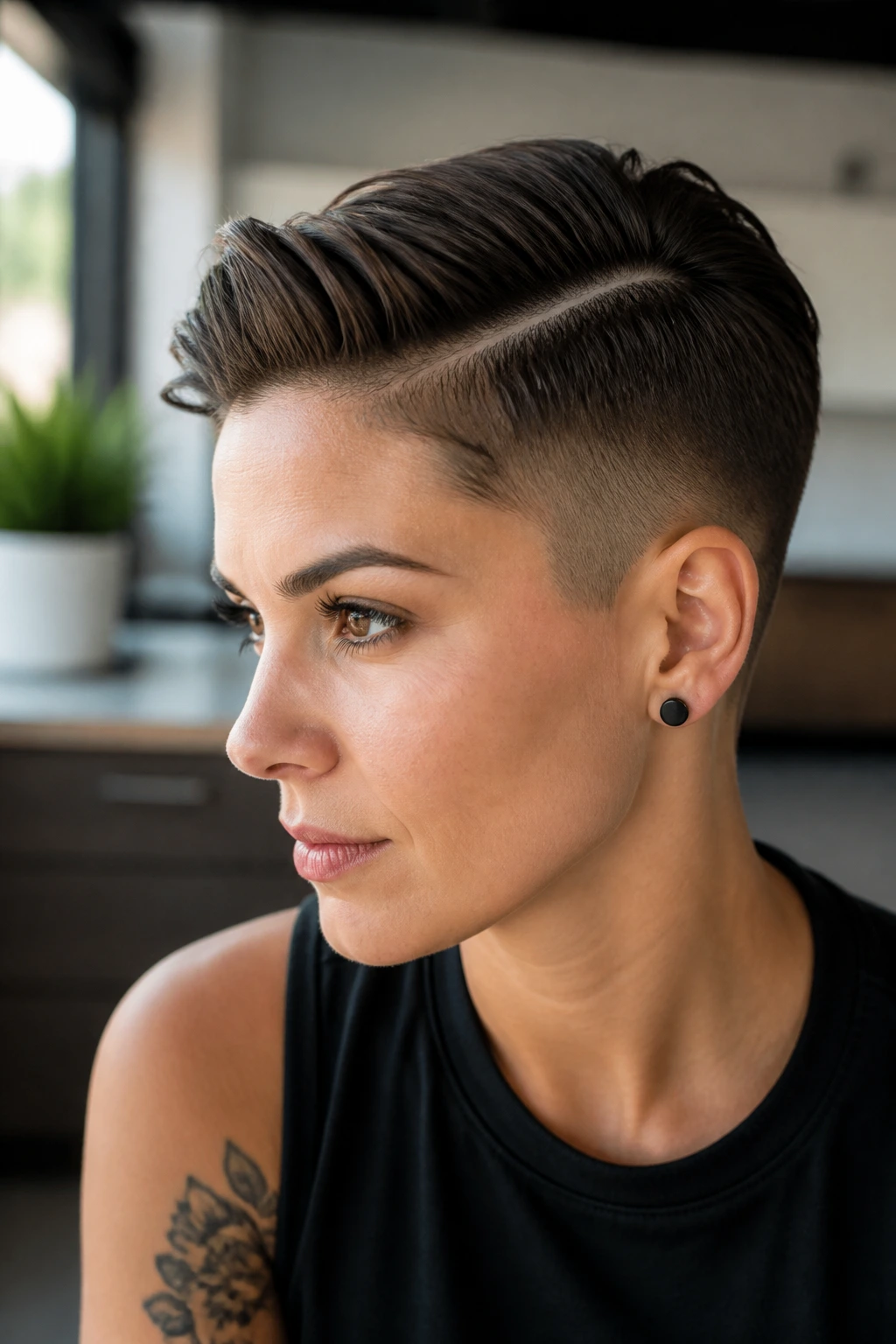
A hard-part crop adds a visible line carved into the side part, which instantly makes a short cut look more deliberate. The top can be brushed over, slightly lifted, or left piecey, but the etched part is the detail that gives the style its frame. It’s a tiny thing with a big visual effect.
This cut is good when you want structure but not a full fade. It reads neat, masculine, and a little polished in a way that suits sharp collars, straight lines, and simple clothes. The part does need maintenance, though. It fades fast.
16. Slicked-Back Undercut
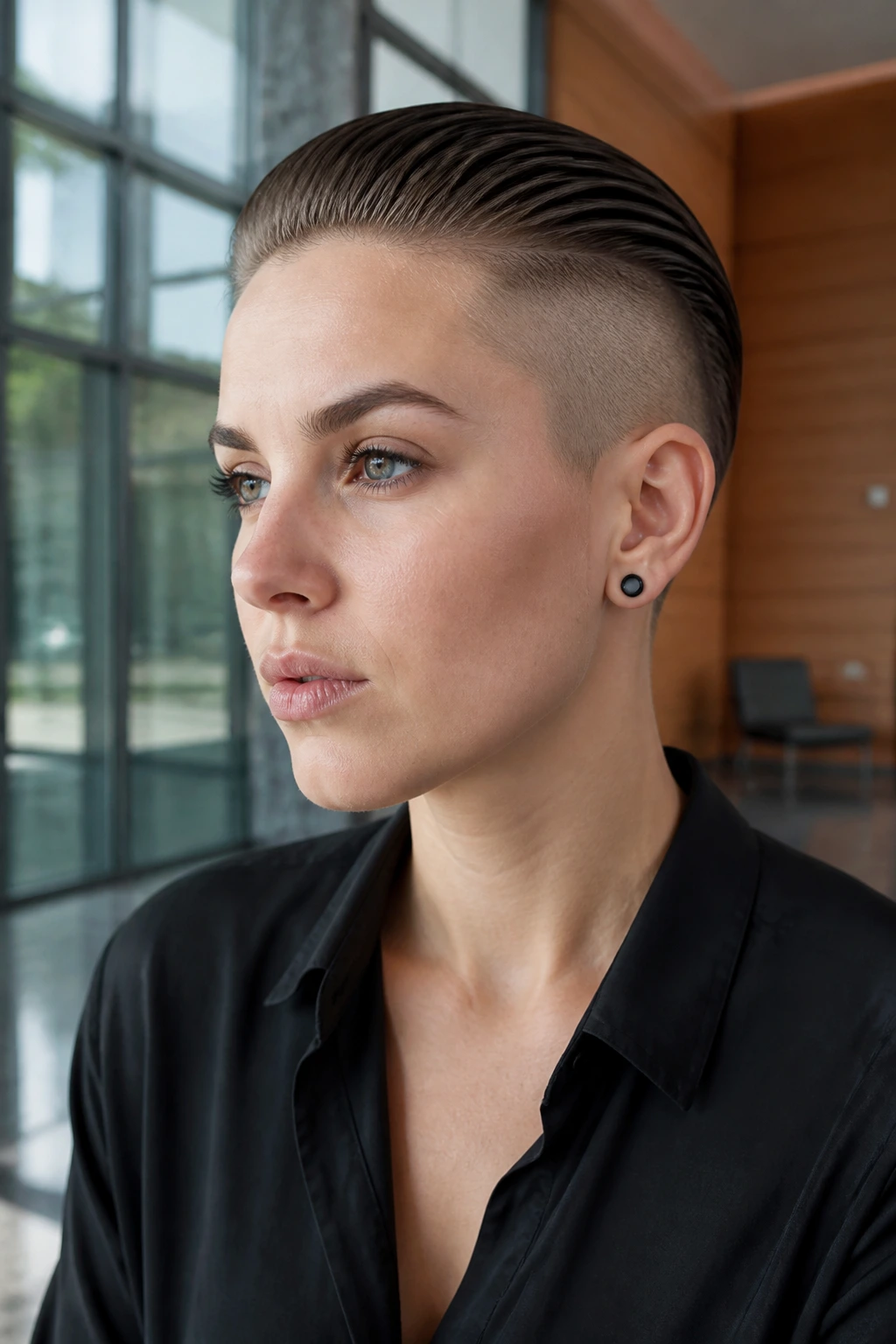
A slicked-back undercut depends on contrast. The sides and back are cut short enough to stay out of the way, while the top is left long enough to comb straight back and hold with gel, cream, or a flexible pomade. The look can go glossy or matte, but the shape stays the same: pulled back, firm, controlled.
This one is excellent for straight or slightly wavy hair because the direction is easy to set. On very thick hair, it helps to blow-dry first, then apply product in small amounts so the top doesn’t puff up. Use too much, and it can look greasy fast.
17. Short Spiky Crop
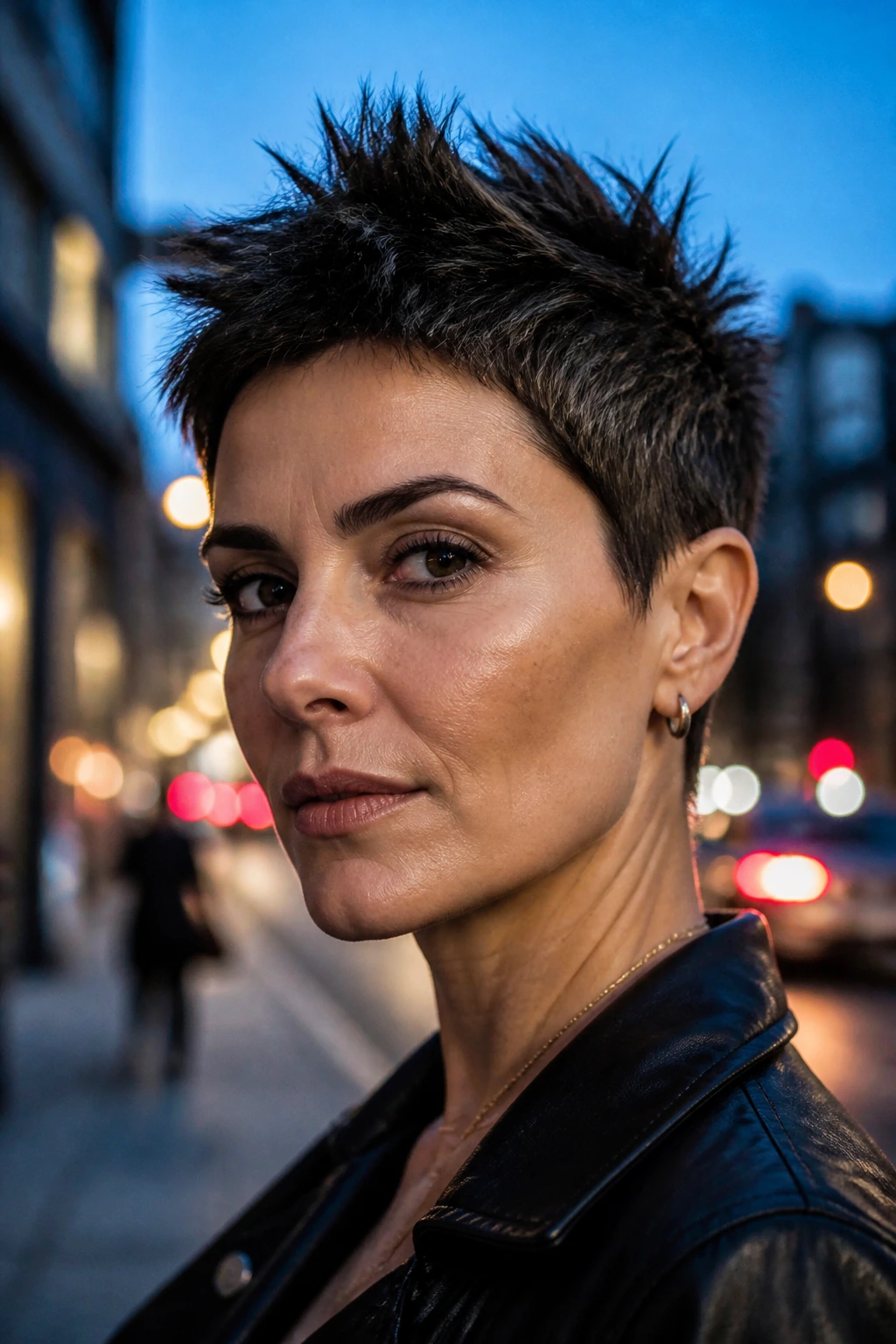
A short spiky crop is all about small, uneven points standing up from a tight base. The top usually stays around 1 to 2 inches, cut choppy enough that it separates when you work a matte product through with your fingers. It’s a good choice if you want something energetic without making the haircut tall.
The style looks best when the spikes are irregular, not evenly arranged like a toy brush. Push some forward, some up, some slightly sideways. That messiness is what keeps it from looking dated.
18. Graduated Nape Crop
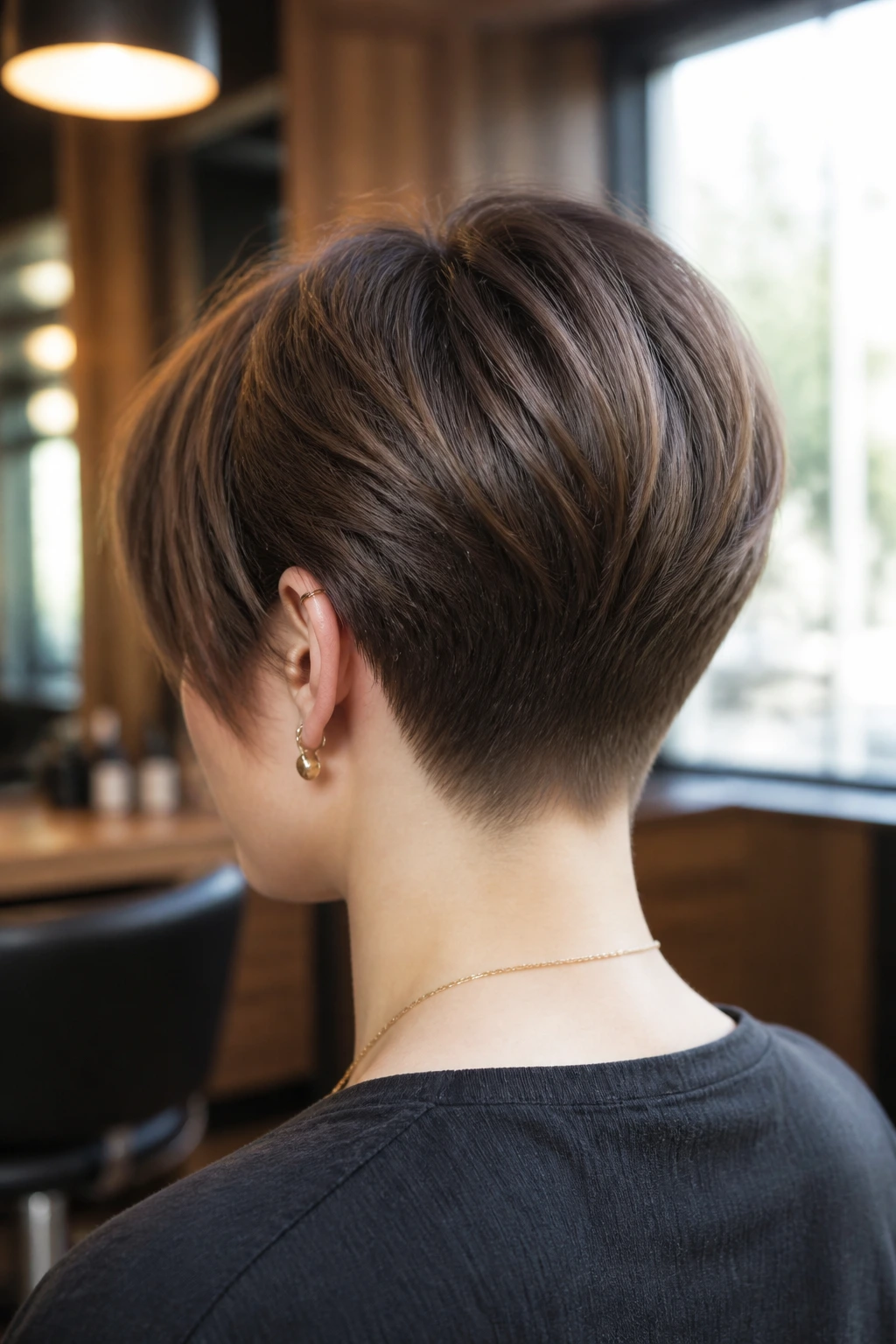
The graduated nape crop is one of the smartest ways to make short hair look clean from the back. The layers stack a little at the nape, then soften as they move upward, which creates a neat curve instead of a blunt shelf. From the front, it can look understated. From behind, it looks expensive even when the finish is simple.
This cut helps fine hair because the graduation creates the illusion of density. It also keeps the neckline from puffing out as the haircut grows. If you want something that stays shaped longer between salon visits, this one deserves a serious look.
19. Two-Block Cut
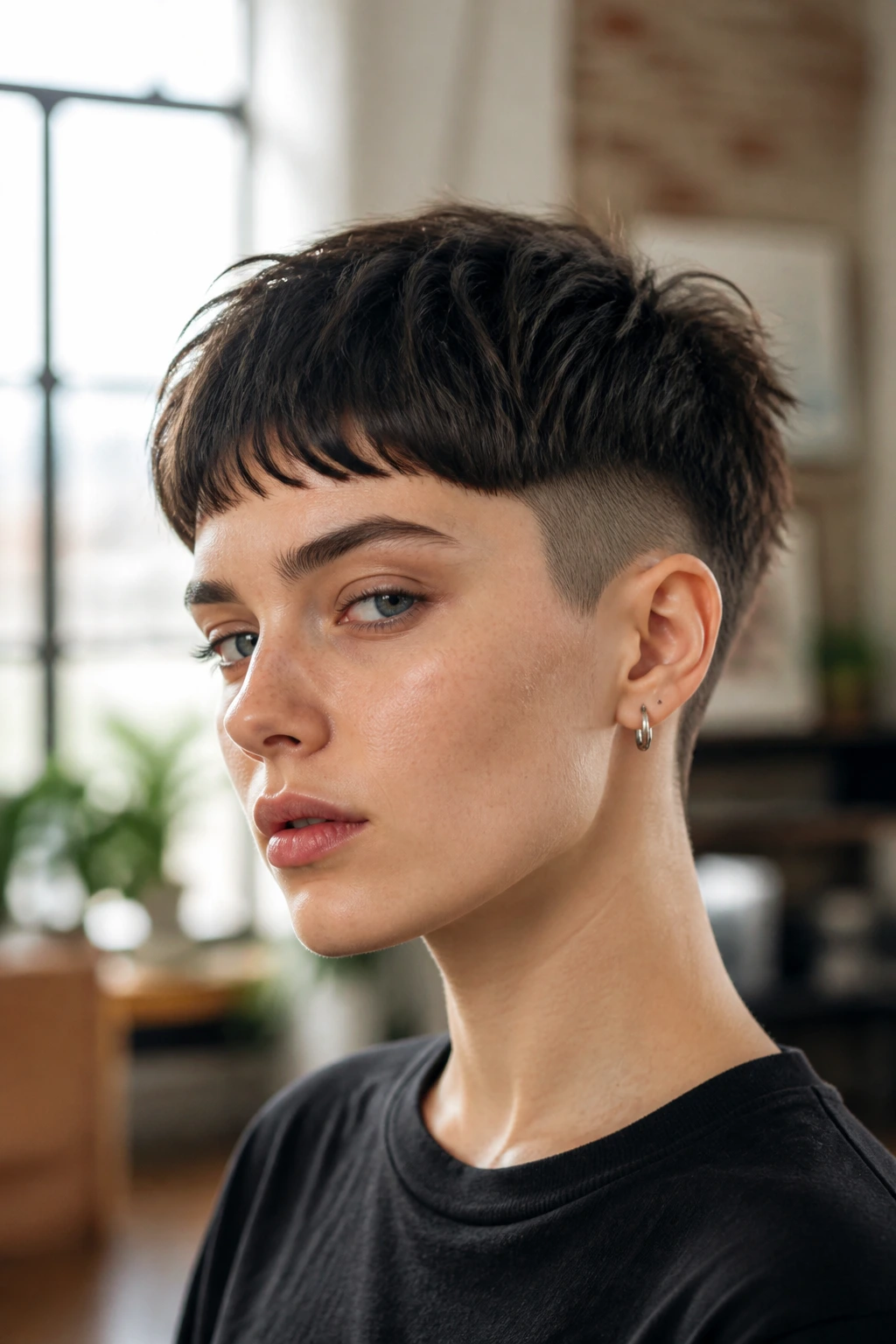
The two-block cut keeps the top section noticeably longer than the sides and back, which gives it a clean split without looking overworked. It’s popular for a reason: the contrast is sharp, the styling options are wide, and the outline can be tailored to straight, wavy, or thick hair.
What gives this cut its edge is the bluntness at the seam. The longer top sits over the shorter sides almost like a lid, and that visual block makes the face look framed. If you like a little softness around the forehead, let the fringe fall forward a touch. If you want it harsher, push it up and back.
20. Wolf Cut with Undercut
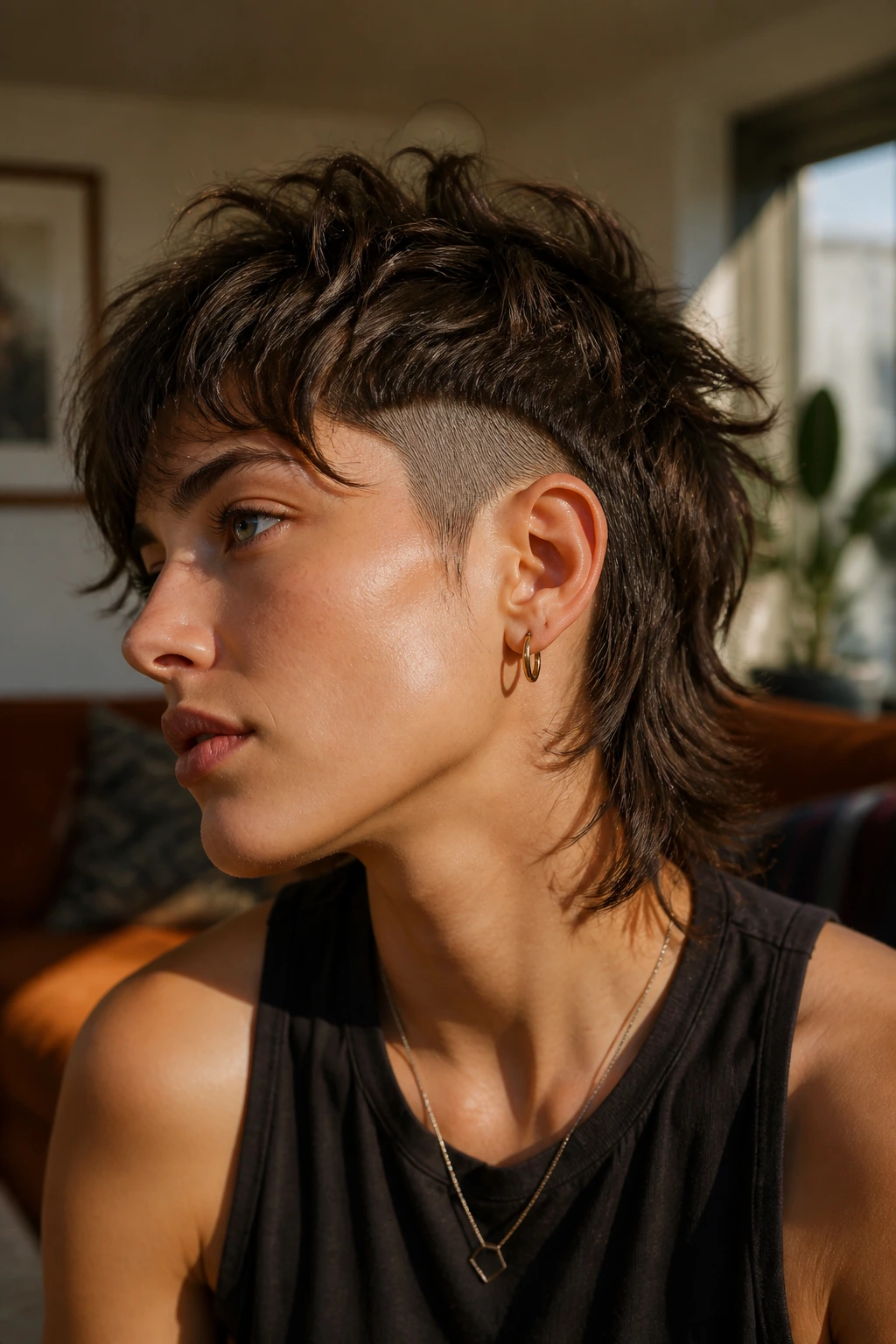
A wolf cut with an undercut is for people who want mess and structure in the same haircut. The top and crown stay shaggy, with visible layers and broken ends, while the underlayer is clipped down to remove bulk. That gives you movement without the triangle shape that can happen when thick hair grows too wide at the sides.
This cut looks best when the texture is allowed to do some work. Air-dry it with a little cream or mousse, then scrunch or finger-comb it into place. The contrast between the wild top and the tight underlayer is what makes the shape feel deliberate instead of just overgrown.
21. Asymmetrical Undercut Pixie
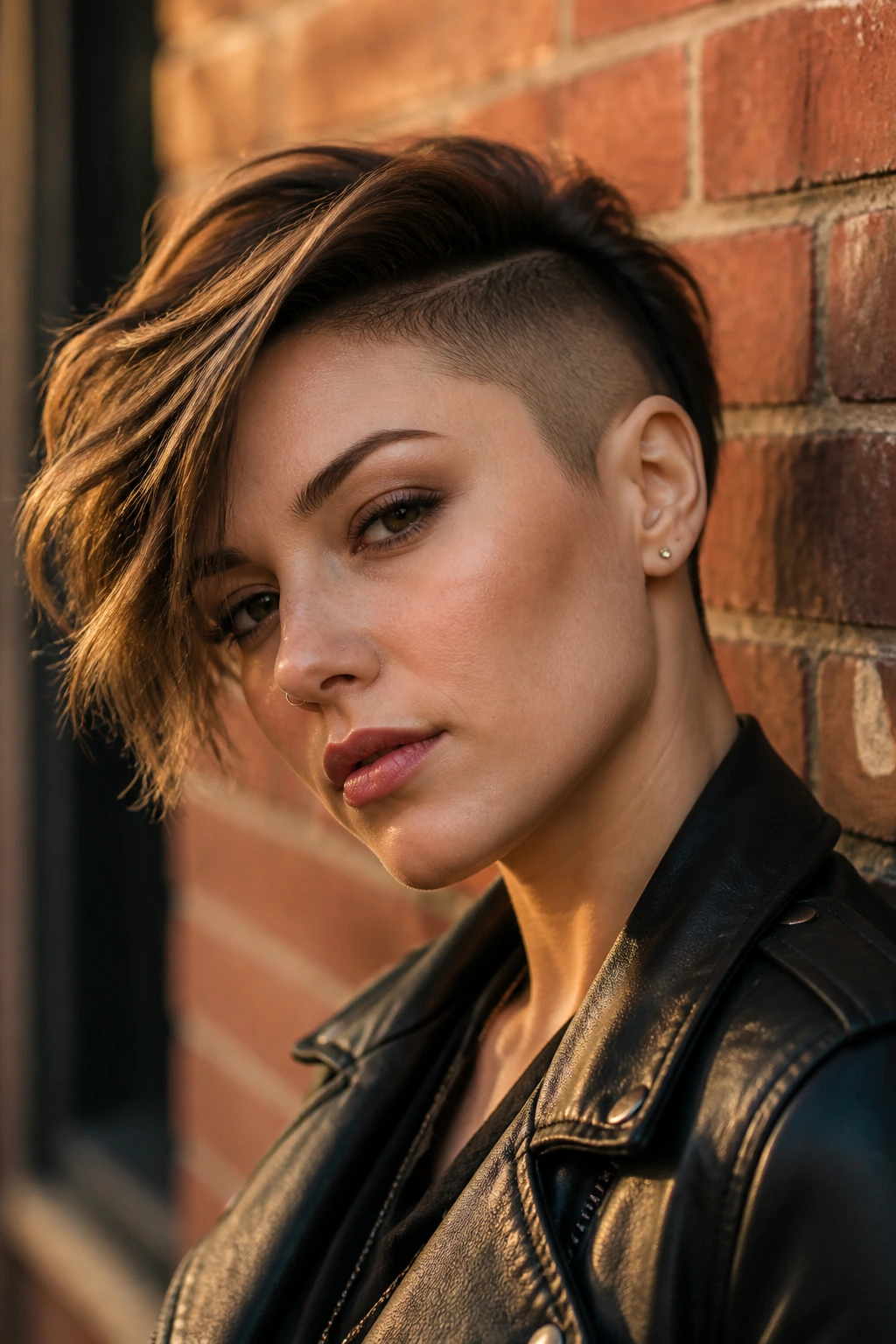
An asymmetrical undercut pixie leans into imbalance on purpose. One side stays longer and swings across the forehead or cheek, while the other side is cut tighter and cleaner. The line is dramatic, which is exactly why it works.
It’s a good cut if you like an angular profile. The longer side can soften a strong jaw or spotlight one eye, while the short side keeps the haircut from feeling heavy. Keep the longer side textured rather than blunt unless you want the shape to read harder.
22. Burst Fade Faux Hawk
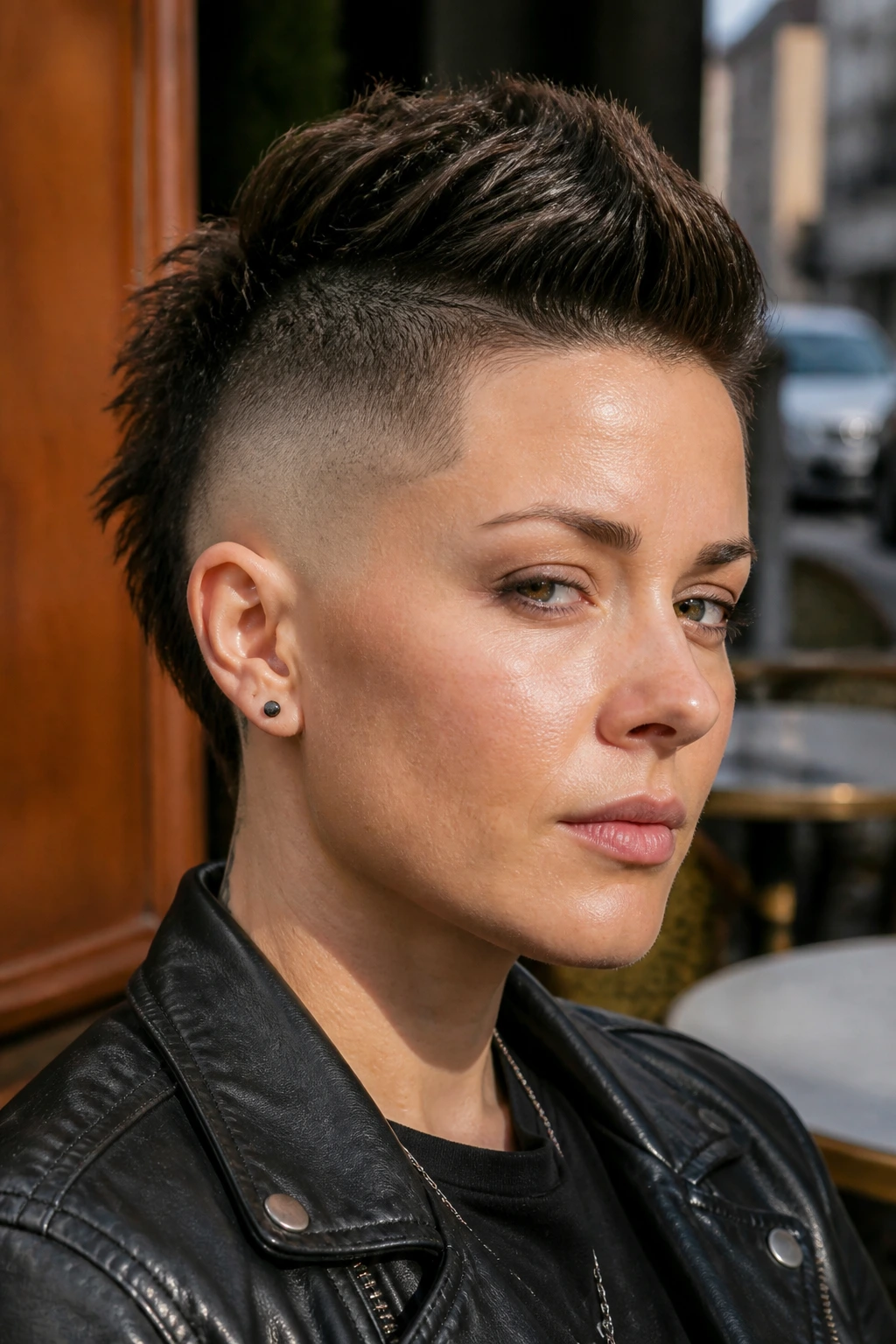
A burst fade faux hawk curves around the ear and leaves the center strip longer from front to back. The fade “bursts” outward near the ear, which gives the haircut a rounded, sporty shape instead of a straight-edged mohawk line. It’s one of the easiest ways to get height without turning the whole haircut into a statement piece.
This style works especially well if you want some lift at the crown. A little mousse at the roots and a blow-dry upward can make the center stand better. The sides stay tight, so even a small amount of height feels deliberate.
23. Cropped Fringe and Side Fade
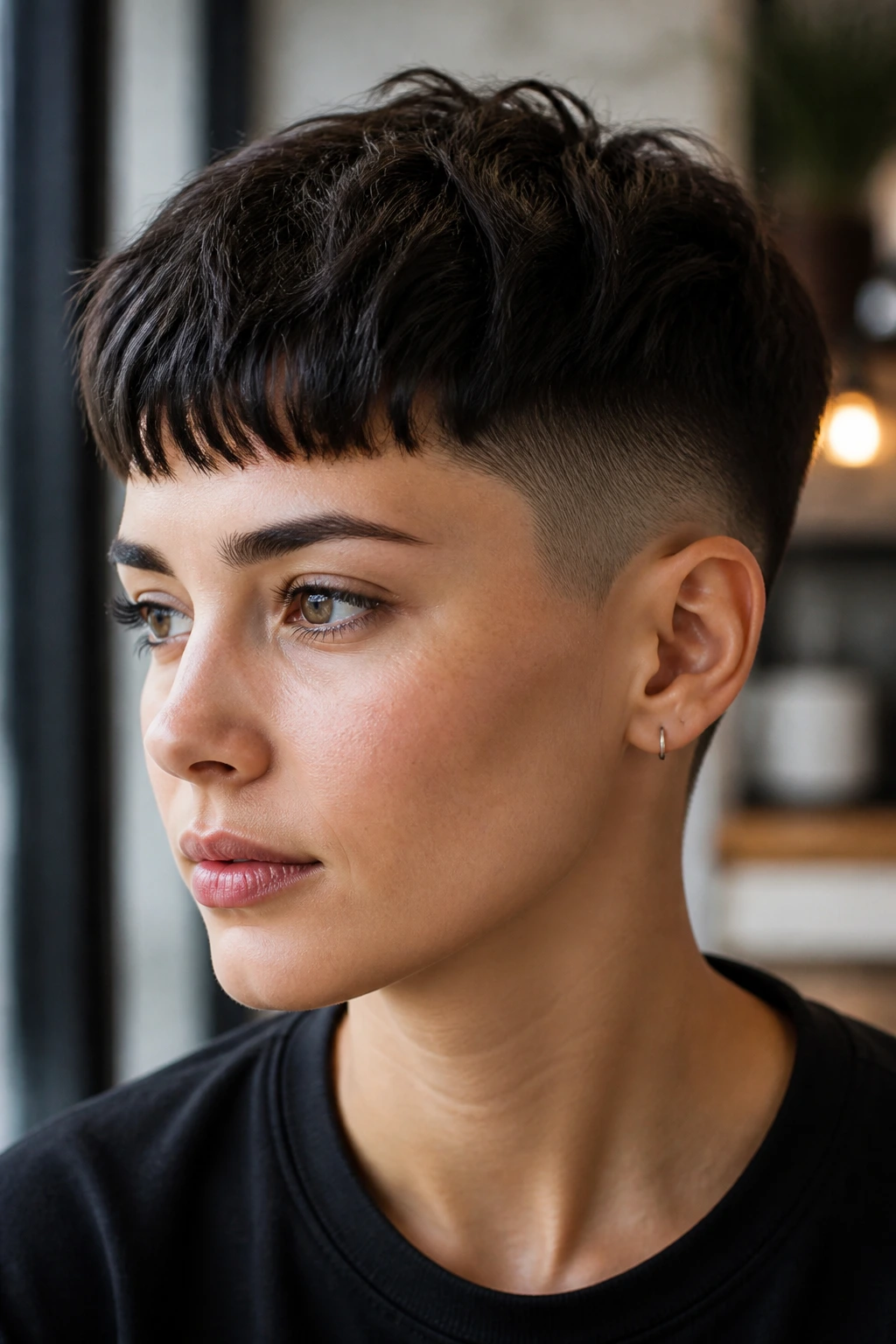
A cropped fringe and side fade puts the emphasis right where the face meets the haircut. The bangs stay short enough to fall just over the forehead, while the sides are faded or tapered down to keep the shape narrow. That makes the cut feel compact and sharp, especially on straighter hair.
It’s a practical move if you like a fringe but hate maintenance around the ears. The fade clears out the bulk, and the front gives you one strong visual line. If your forehead is high, this can take the edge off without hiding your whole face.
24. Sideburn Undercut Crop
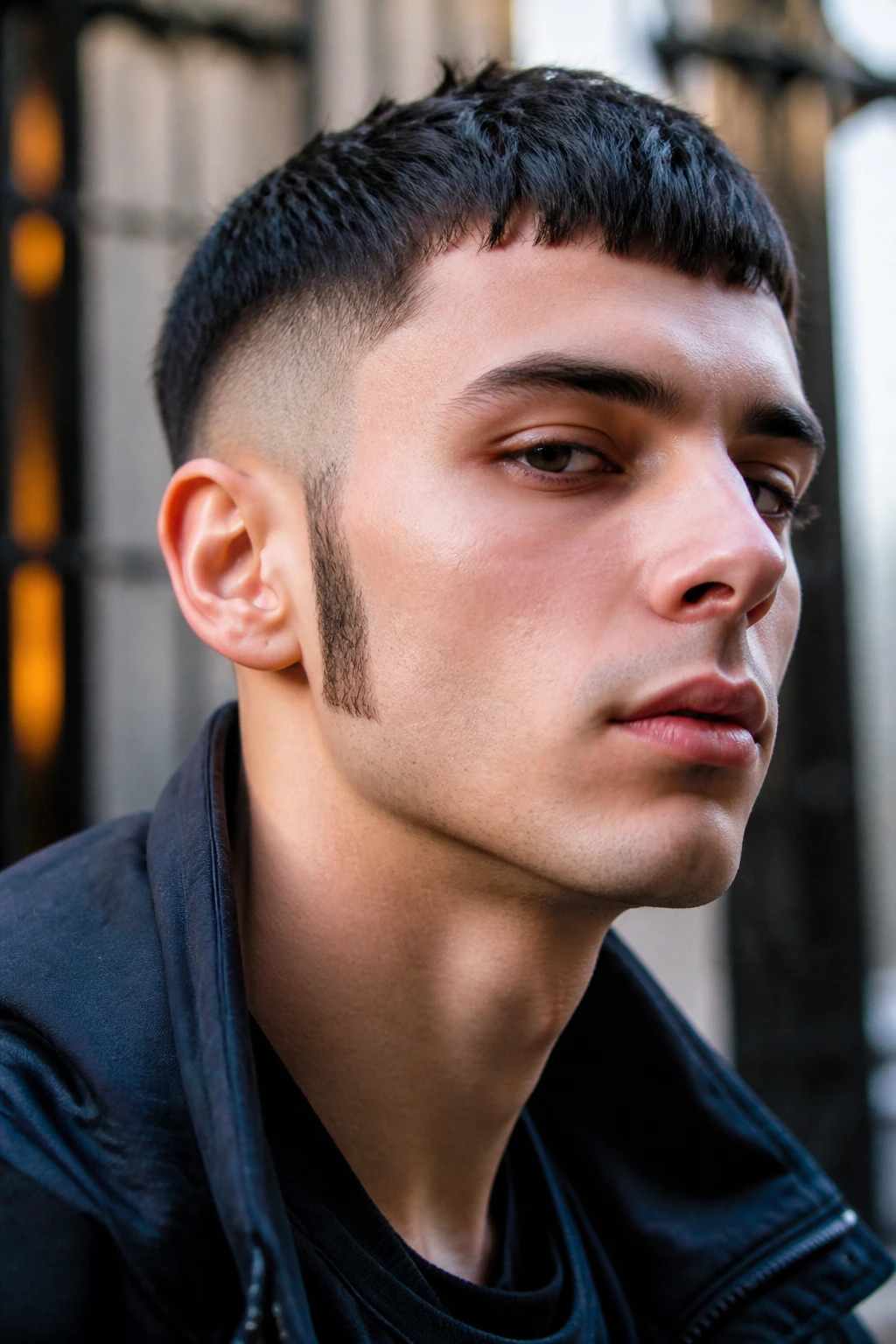
This cut makes the sideburn area part of the design instead of just trimming it away. The undercut clears most of the side, but the sideburns are left with enough presence to frame the cheek and jaw. It sounds tiny. It changes the whole face.
That extra detail works because it keeps the cut from feeling too abrupt. The shape still reads masculine and tight, but the sideburn area gives you a little softness where many ultra-short cuts go too bare. On strong cheekbones, it looks especially good.
25. Flat-Top Inspired Crop
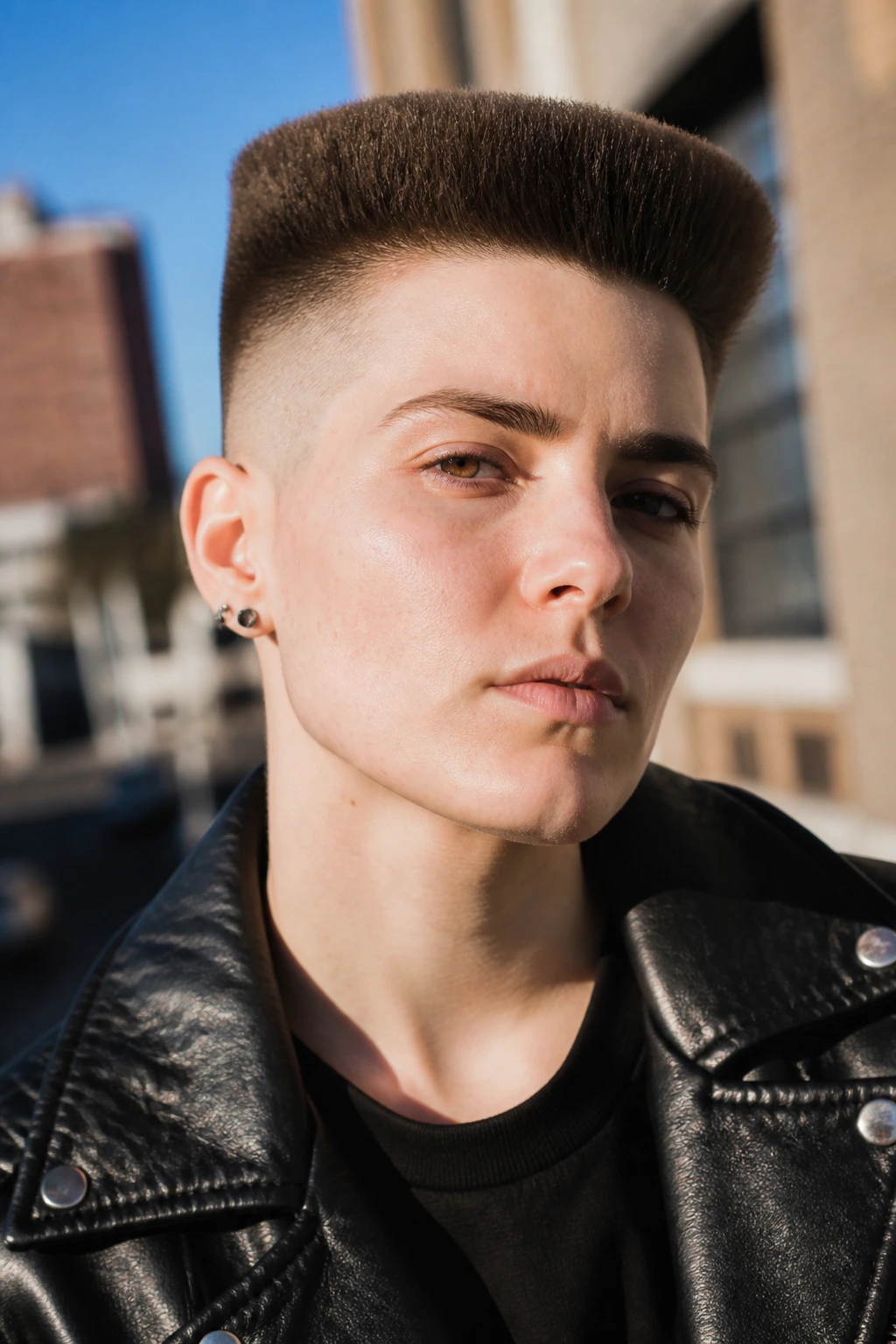
A flat-top inspired crop has a squared-off top that stands above the sides with a firm, graphic edge. It’s not a full retro flat top unless you want it that way. Often it works better as a softened version with enough height to show the shape but not enough to feel theatrical.
Dense hair helps here. Fine hair can do it, but you’ll need more product and a careful blow-dry to keep the top from collapsing. The appeal is the silhouette. It looks bold from a distance and very precise up close.
26. Baby Mullet
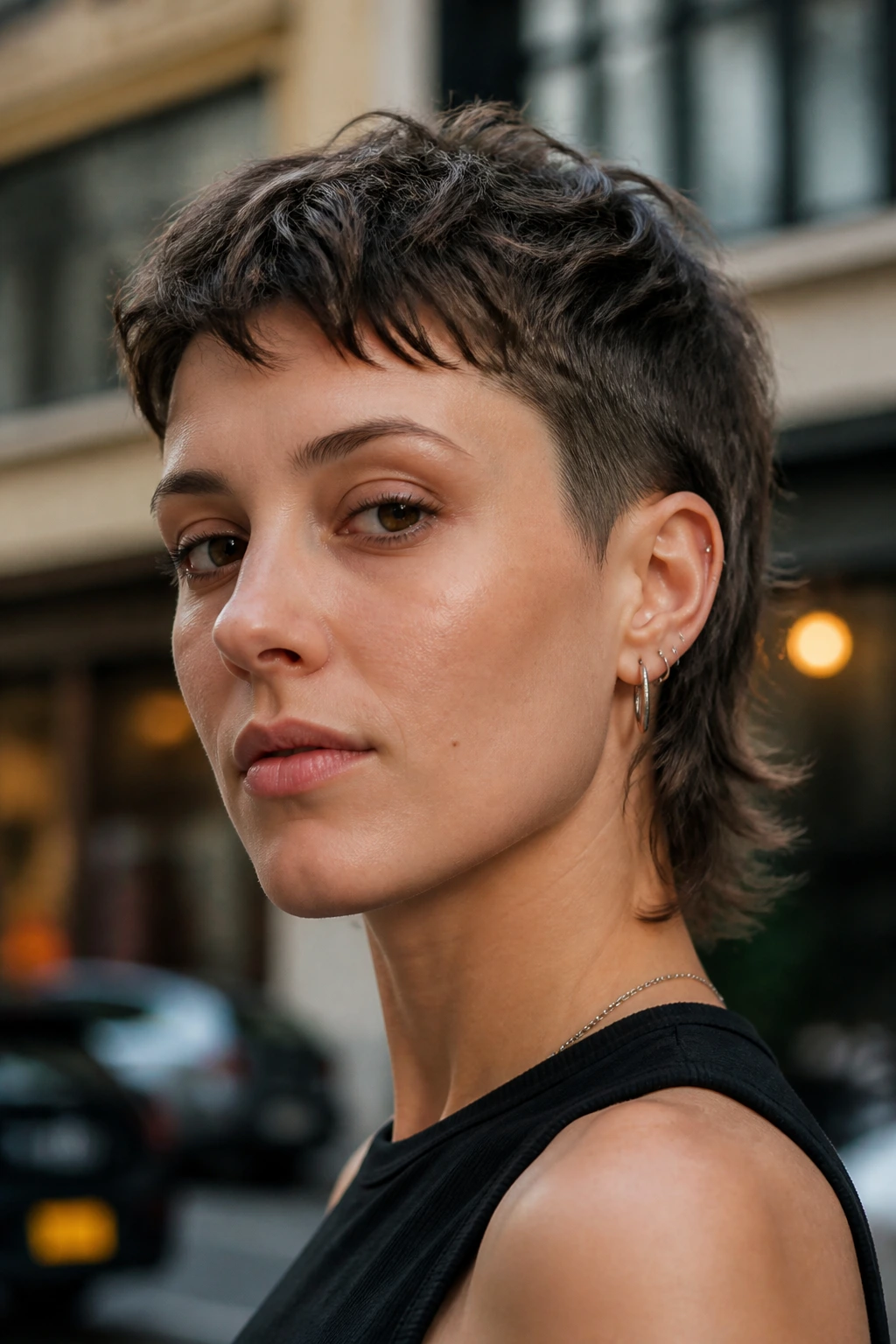
A baby mullet is the easier, less aggressive version of a true mullet. The back is only a little longer than the front, and the sides stay cropped so the difference shows without becoming a full retro statement. It’s a good gateway cut if you want movement at the neck but don’t want a big top-heavy shape.
Because the contrast is subtle, the texture matters a lot. A little choppiness through the top and crown keeps it from looking like you simply forgot to cut the back. This one grows out in a forgiving way, which helps.
27. Textured Taper Fade
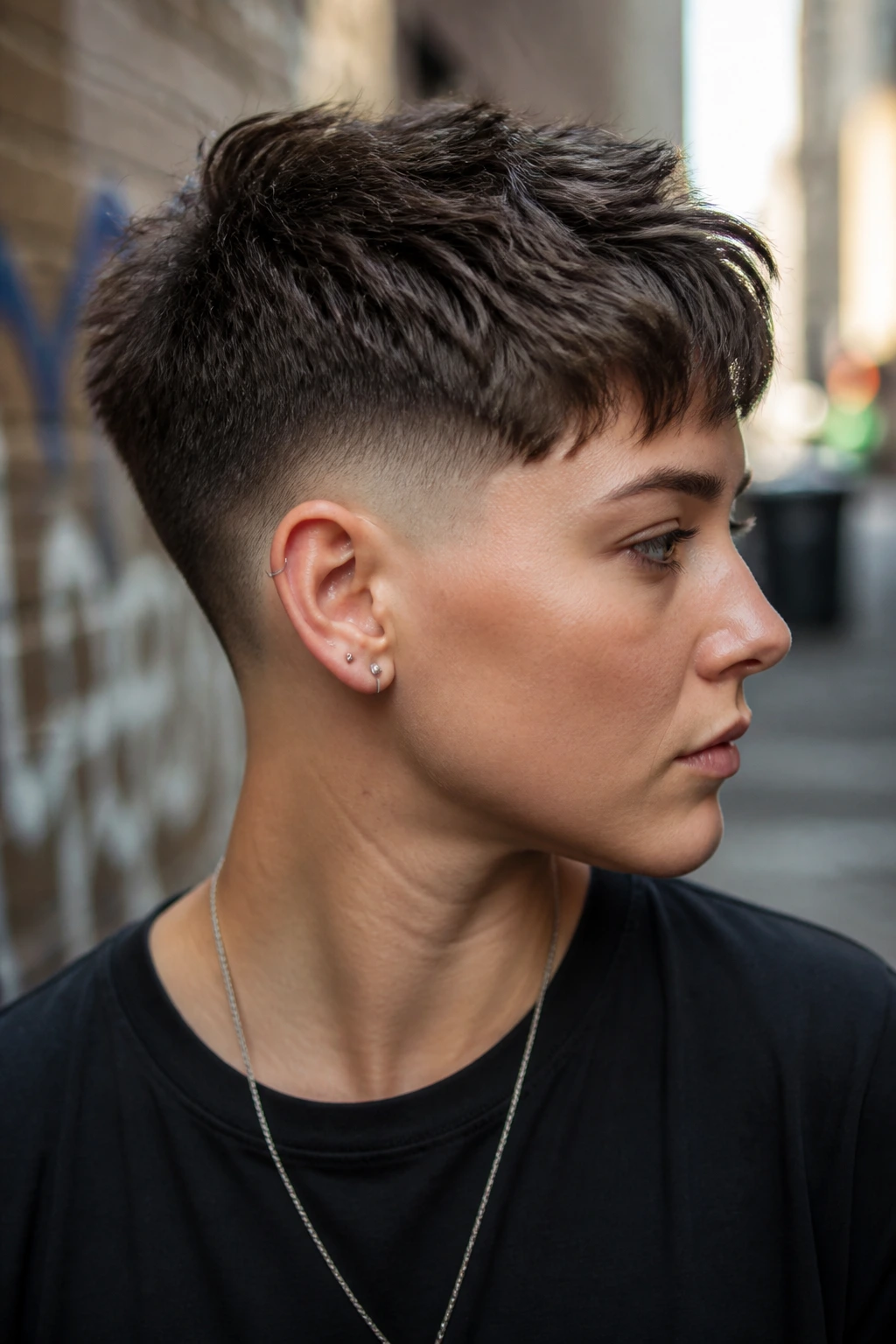
A textured taper fade is one of the most wearable short cuts in the set because it keeps the edges clean without going all the way to skin. The fade melts down around the ears and nape, while the top stays broken up with short texture. It’s crisp, but not severe.
If you want a short haircut that still looks good after a couple of weeks, start here. The taper grows out softer than a skin fade, and the texture on top keeps the style from going flat. It’s also one of the easiest shapes to tweak later if you decide you want more length or more edge.
28. Short Mohawk with Soft Width
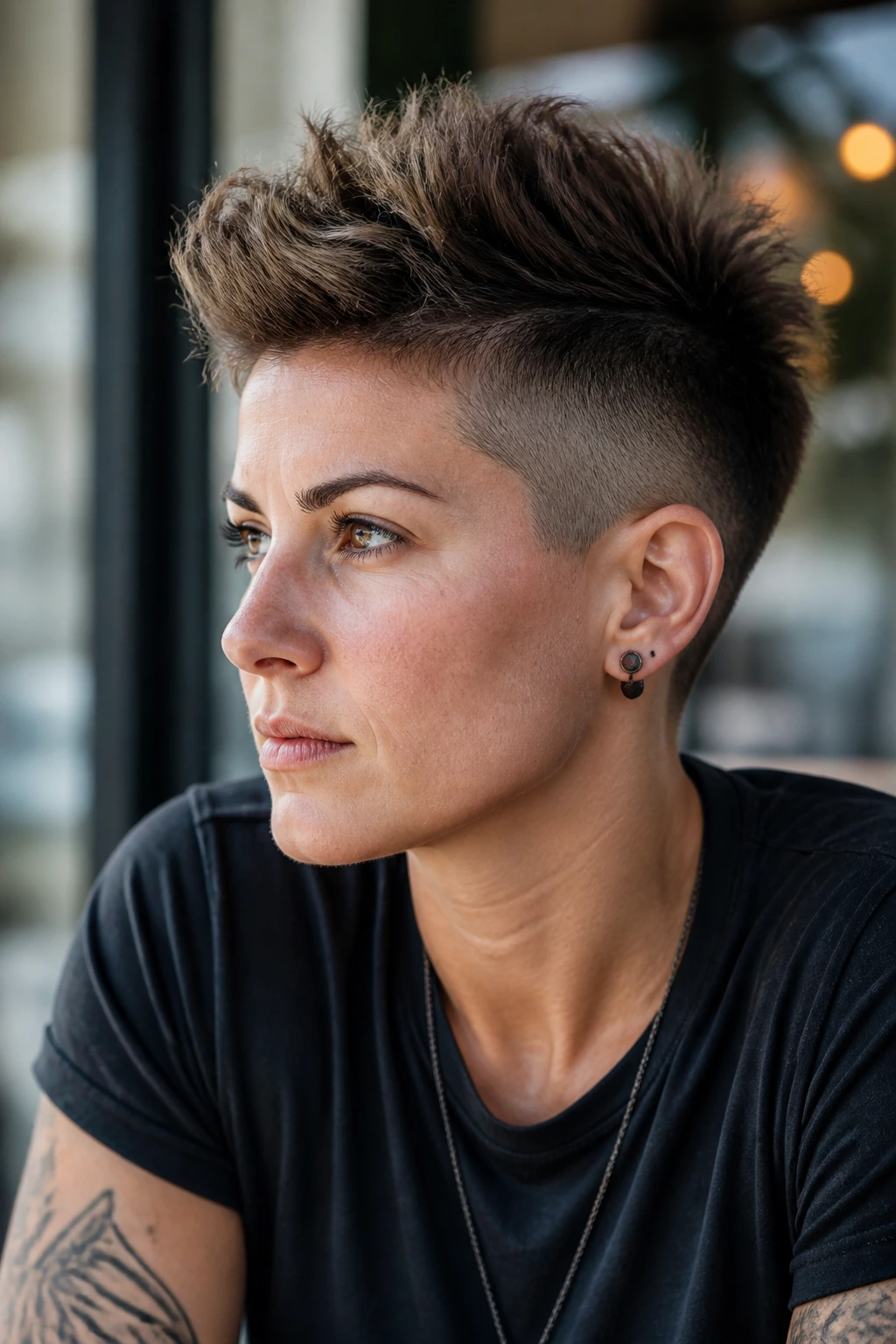
A short mohawk with soft width keeps the center strip broader than a classic punk mohawk, which makes it more approachable and easier to wear every day. The sides are still clipped down, but the middle doesn’t need to be narrow or spiky. It can lie forward, lift a little, or stay tousled.
This cut suits people who want energy without the shock factor of a razor-thin crest. The wider strip gives the hair more body, especially if it’s fine or slightly wavy. A matte paste keeps it piecey. Too much gel makes it look stiff.
29. Military-Inspired Cut
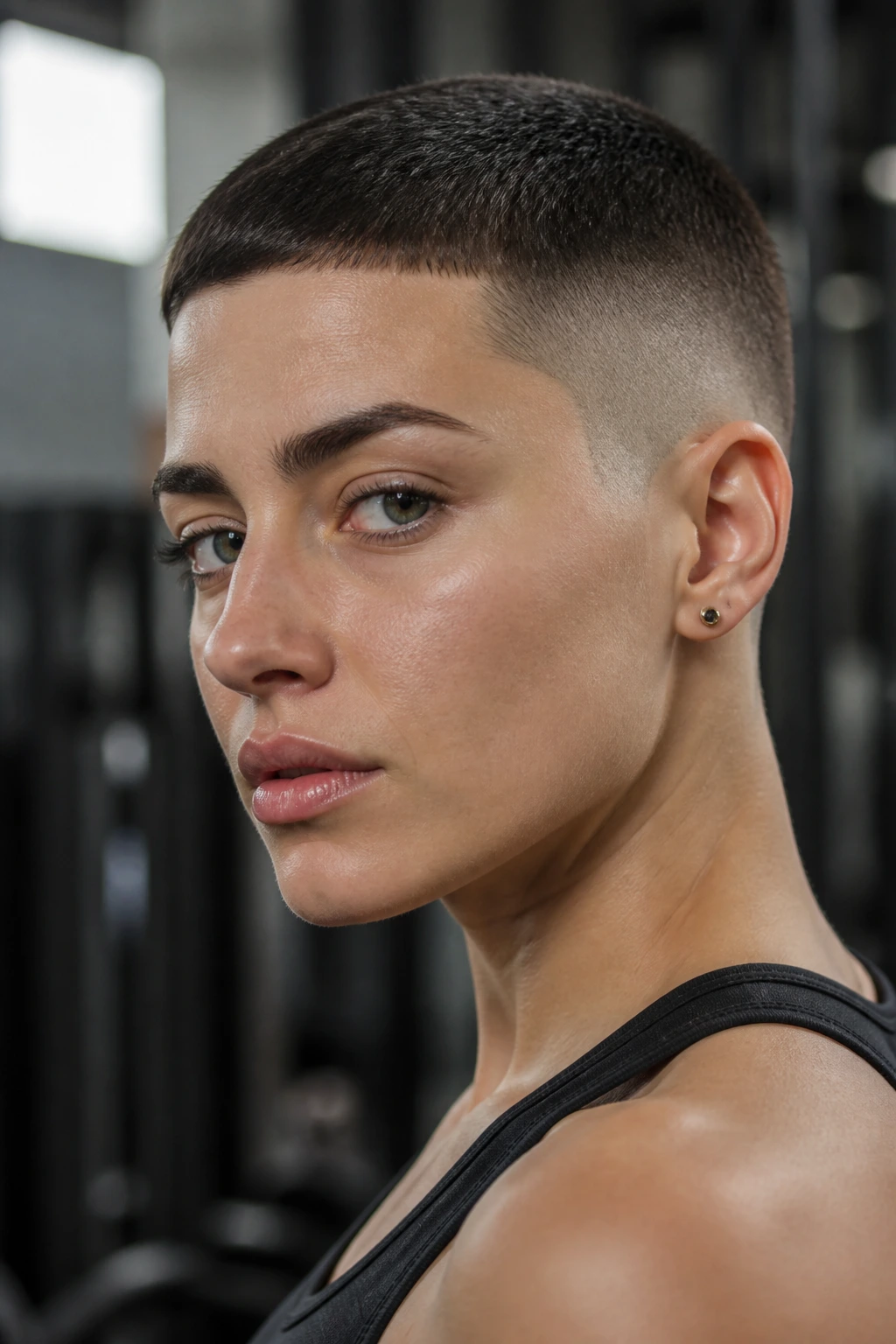
A military-inspired cut is about discipline in the outline. The sides are short, the top is short, and the neckline is usually clean enough to look freshly trimmed even when the texture is simple. It can be a buzz, a close crop, or a taper, but the common thread is precision.
This is one of the easiest cuts to live with if you want almost no daily styling. The edge comes from the finish, not the product. If you like minimalism and dislike hair in your face, it’s hard to argue with.
30. Razor-Shaved Side Sweep
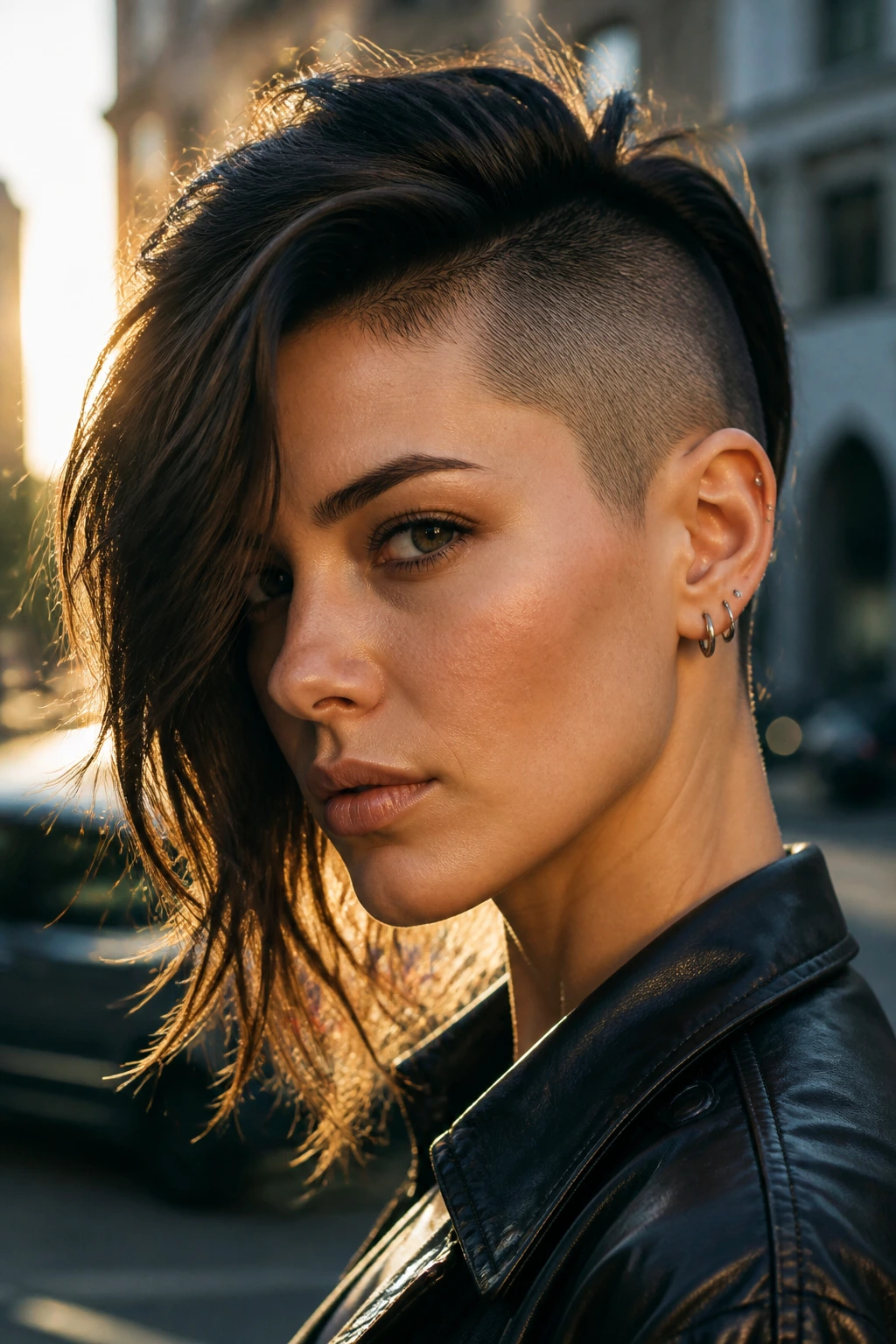
A razor-shaved side sweep pairs one long swath of hair with a nearly bare side. The long section can sweep across the forehead, tuck behind the ear, or fall diagonally over one eye, which makes the cut feel dramatic in a very specific way. There’s no hiding the contrast. That’s why it works.
The shave should be clean enough to make the longer side pop, but not so high that the whole cut loses balance. If your hair is fine, keep the long side textured so it doesn’t fall flat against the head. If it’s thick, the razor side can help remove the bulk that usually gets too wide.
31. Brushed-Up Top with Tapered Sides
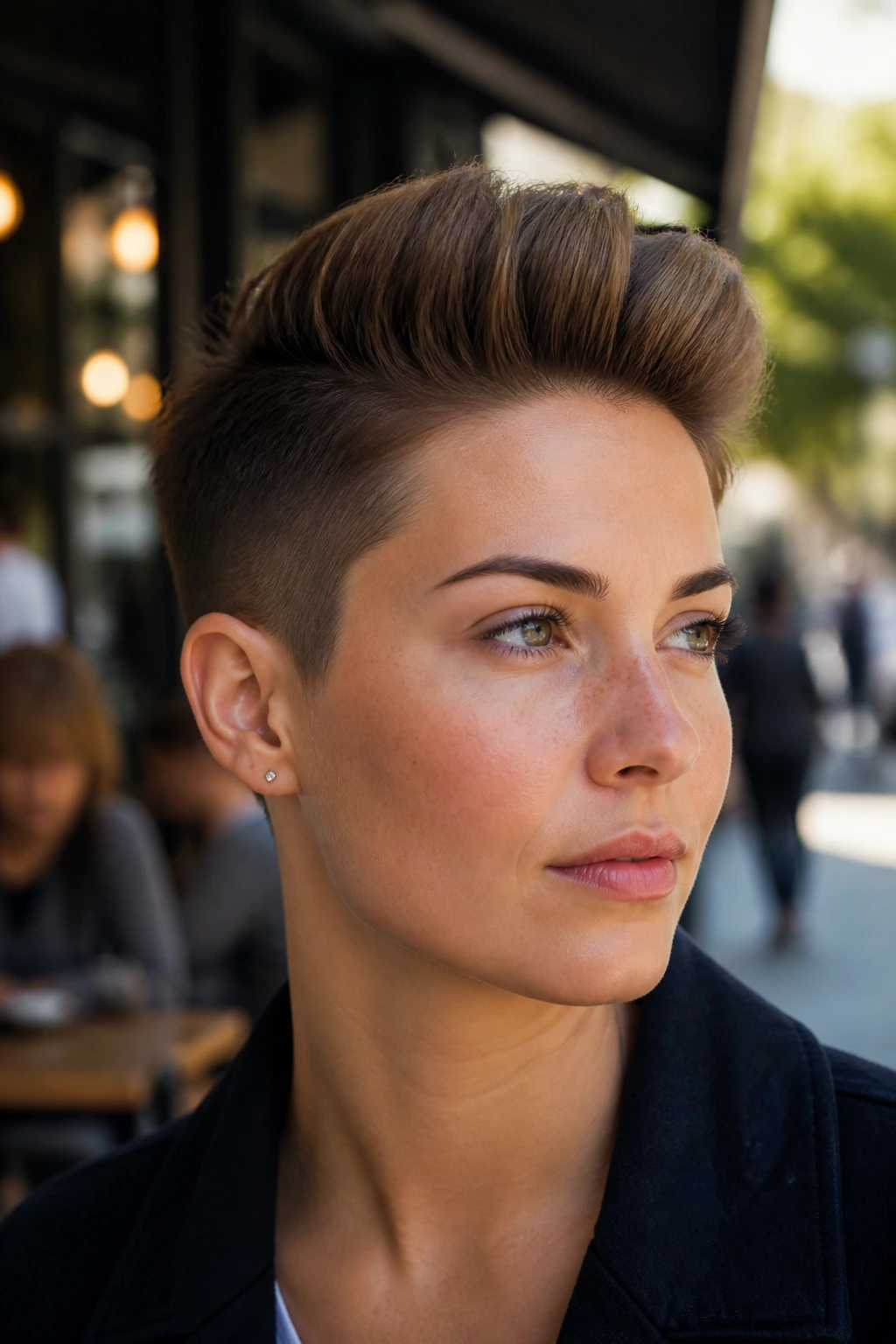
A brushed-up top with tapered sides is the practical cousin of the quiff. The front and crown are left long enough to lift with a blow-dryer, while the sides taper down gradually so the style stays tidy. It reads masculine, but not loud.
This shape likes medium-density hair. Too sparse, and the lift looks thin; too heavy, and it wants to collapse. A light matte clay at the roots and a quick blast of heat is usually enough. Don’t chase sky-high volume. The strength is in the outline.
32. Curly Top Undercut
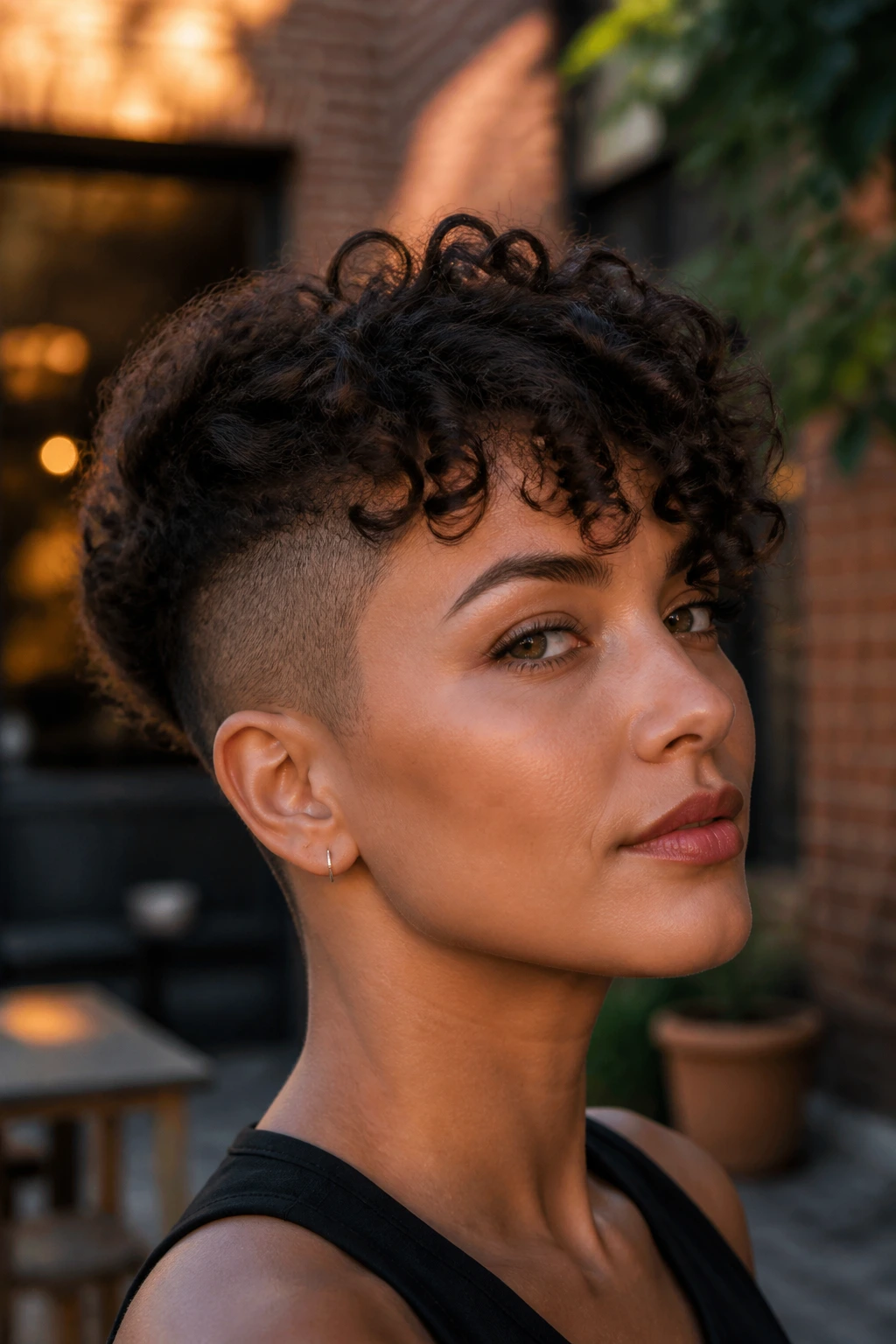
A curly top undercut gives the curl pattern the top billing and gets the sides out of the way. The undercut removes bulk around the ears and temples, while the curls stay long enough on top to show shape and spring. It’s a sharp way to wear natural texture without letting the sides puff out.
This cut can look wildly different depending on curl size. Tight curls make it compact and dense; looser curls make it softer and more lifted. Either way, leave enough length on top for the curls to coil. Too short and you lose the point of the style.
33. Short Pompadour Crop
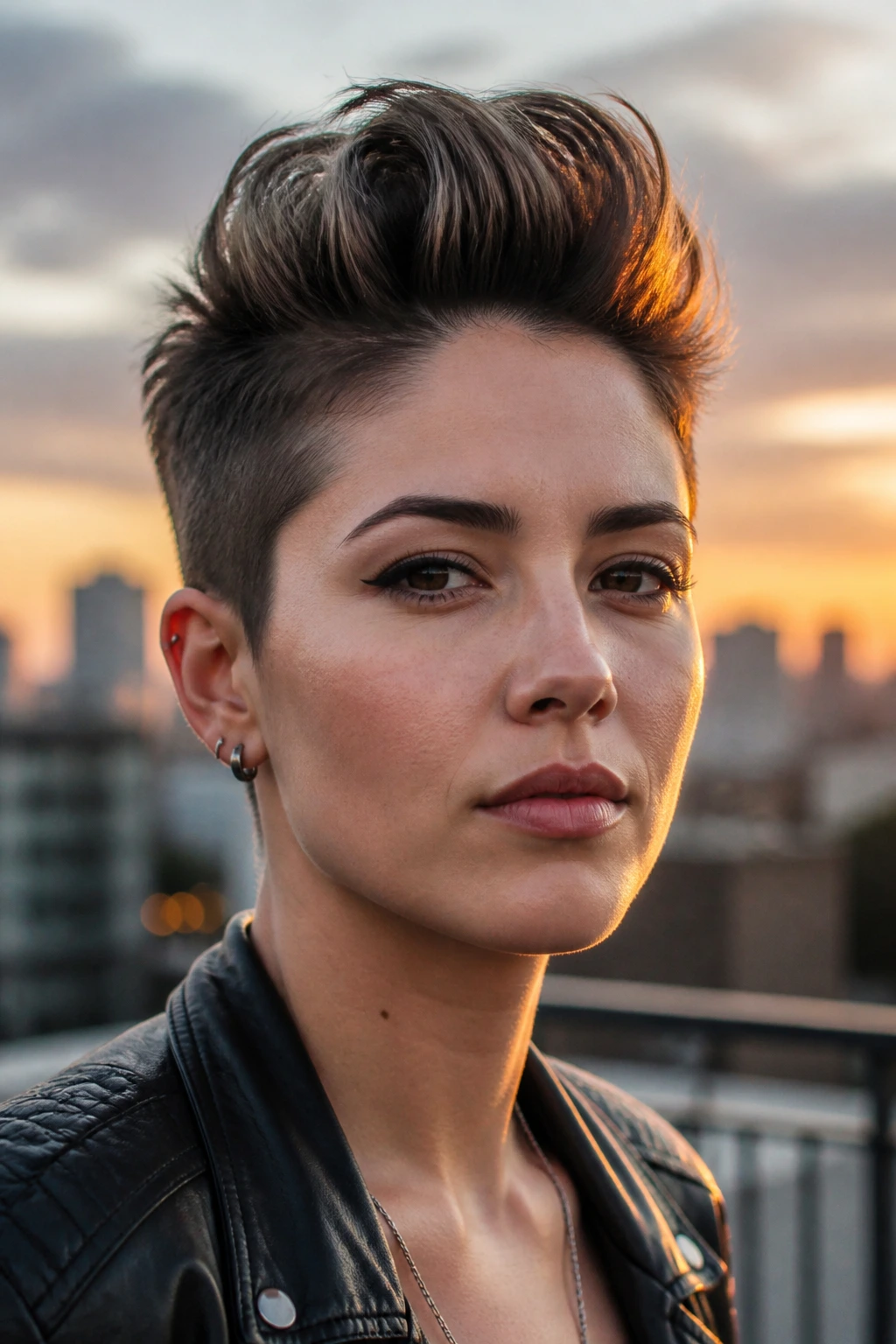
A short pompadour crop borrows the sweep and lift of a pompadour, then pares it down so it stays wearable. The front rises a little, the crown follows, and the sides stay shorter to keep the shape clean. It’s a strong choice if you want something polished with a masculine backbone.
The front should not turn into a big shell. That’s the mistake. Keep the lift controlled, almost tight, and let the contour do the work. A blow-dryer and a light pomade are usually enough to shape it.
34. Micro-Fringe Disconnected Crop
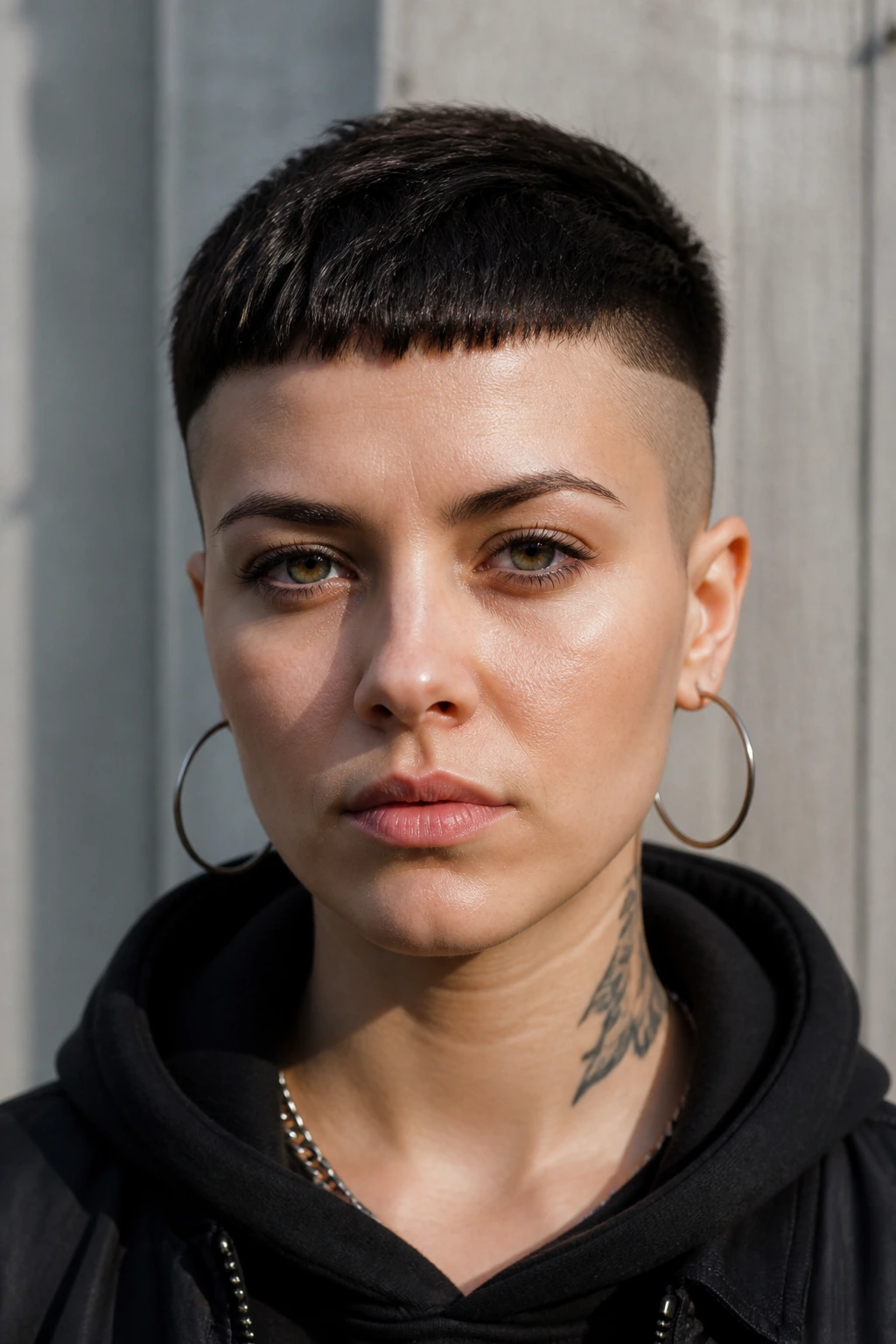
A micro-fringe disconnected crop is severe in the best way. The fringe is cut very short, almost like a line, while the sides are taken down so the cut has a hard break between top and side. It has a fashion edge that can look almost graphic in profile.
This one is for people who like strong shapes and don’t mind a haircut that gets noticed. Because the fringe is so short, it puts more attention on the brow and eyes. If you’ve got a strong brow line, this can look terrific. If your forehead is very high, it may feel too exposed.
35. Bald-Fade Pixie
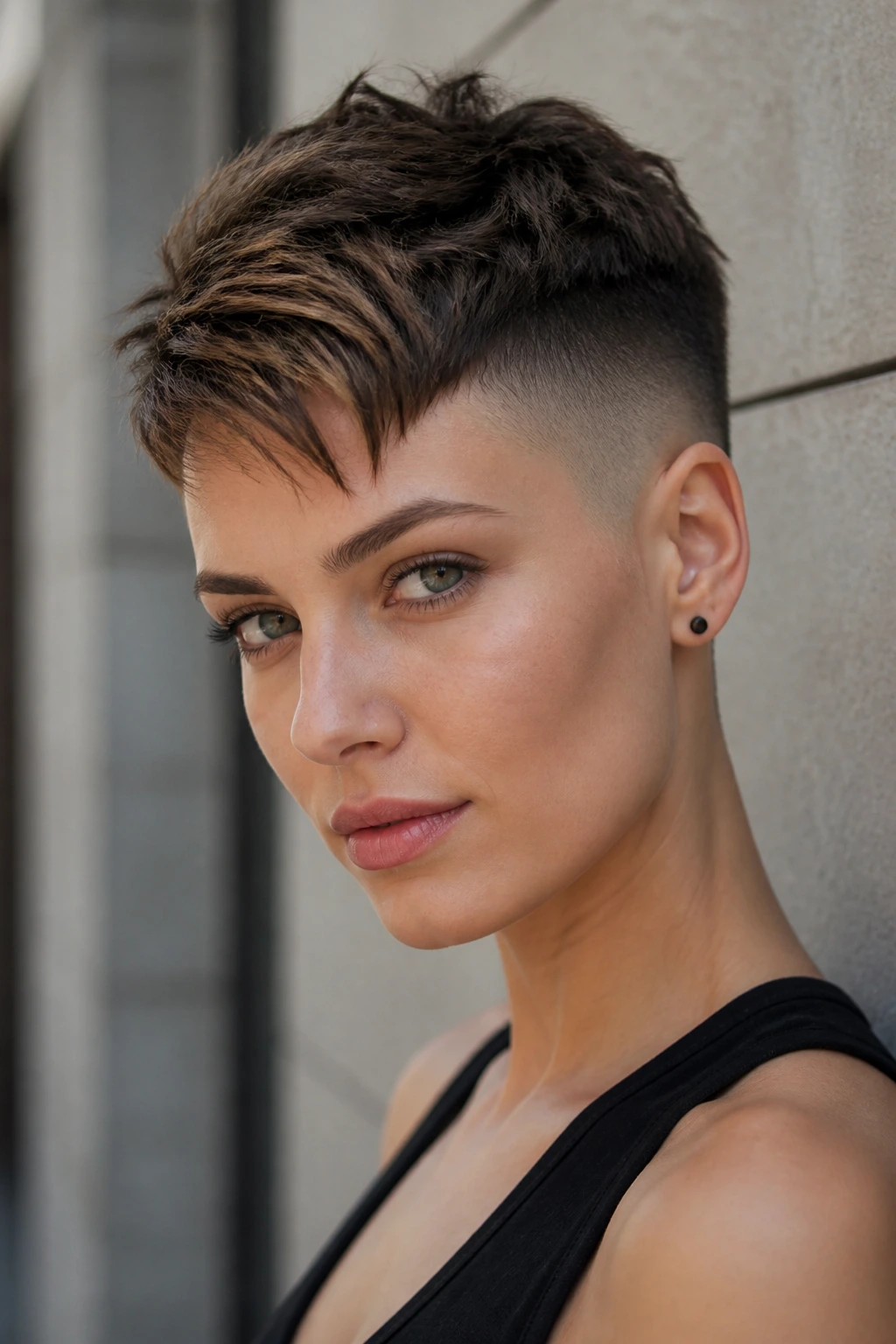
A bald-fade pixie pushes the sides all the way down to the skin while leaving enough length on top to keep the cut from reading as a full buzz. The result is crisp, bold, and clean around the ear line. It’s one of the most striking cuts in the group because the fade and the top never compete.
The key is balance. Keep some softness or texture on top so the haircut still has movement. Otherwise it can look too severe around the face. If you like high contrast, this one delivers it fast.
The Shape Beneath the Edge
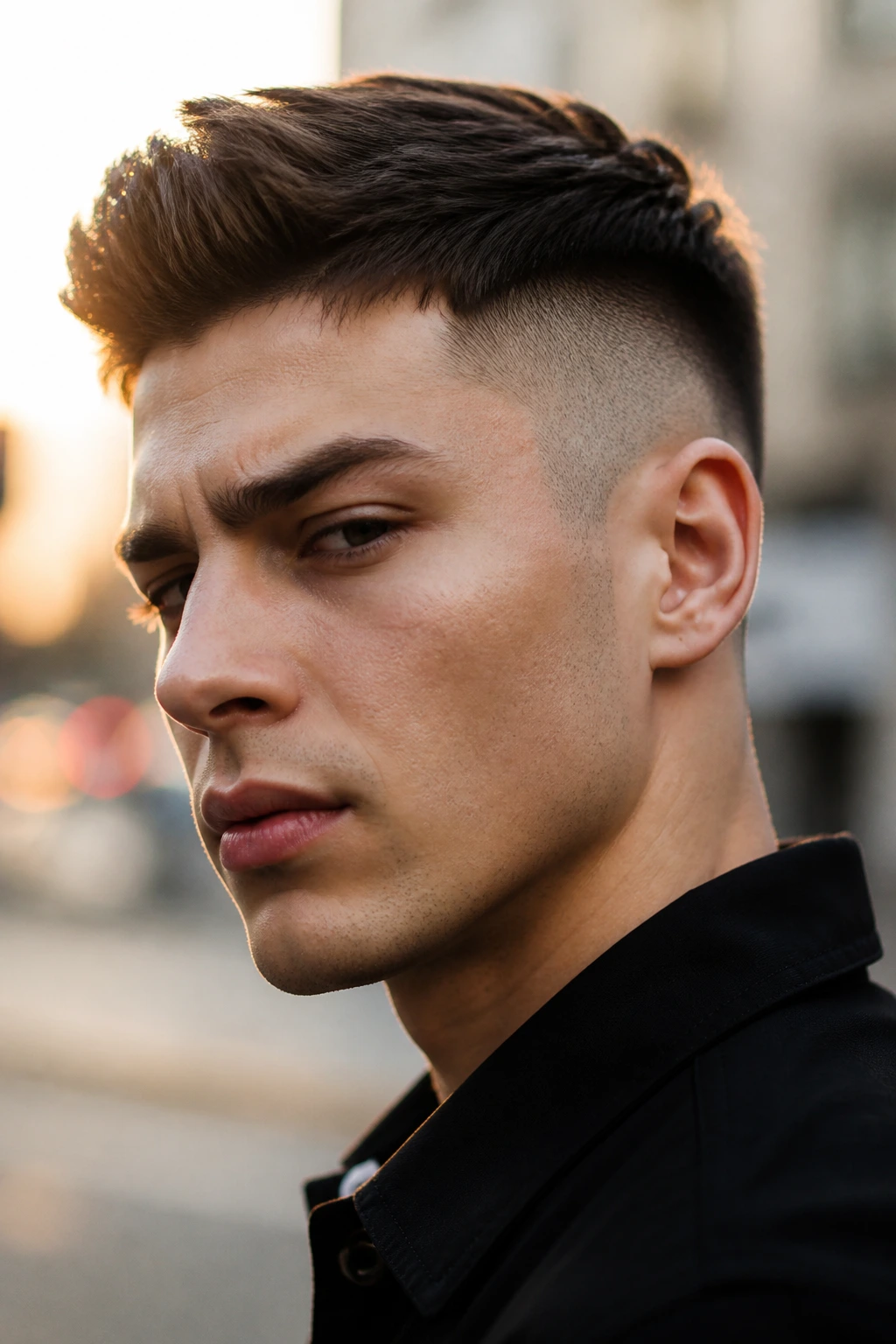
The best short masculine-leaning cuts are not random close-crops with attitude. They’re shape decisions. A shaved side can sharpen a jaw. A longer crown can keep the head from looking too flat. A fringe can change the whole expression in the mirror before you’ve even touched product.
That’s why these cuts hold up better than a lot of trendy short styles. They are built on contrast, and contrast is forgiving when it’s cut well. A strong outline keeps doing work even on days when the styling is nothing more than water, fingers, and ten seconds in the mirror.
Essential Tools for Styling and Maintenance
-
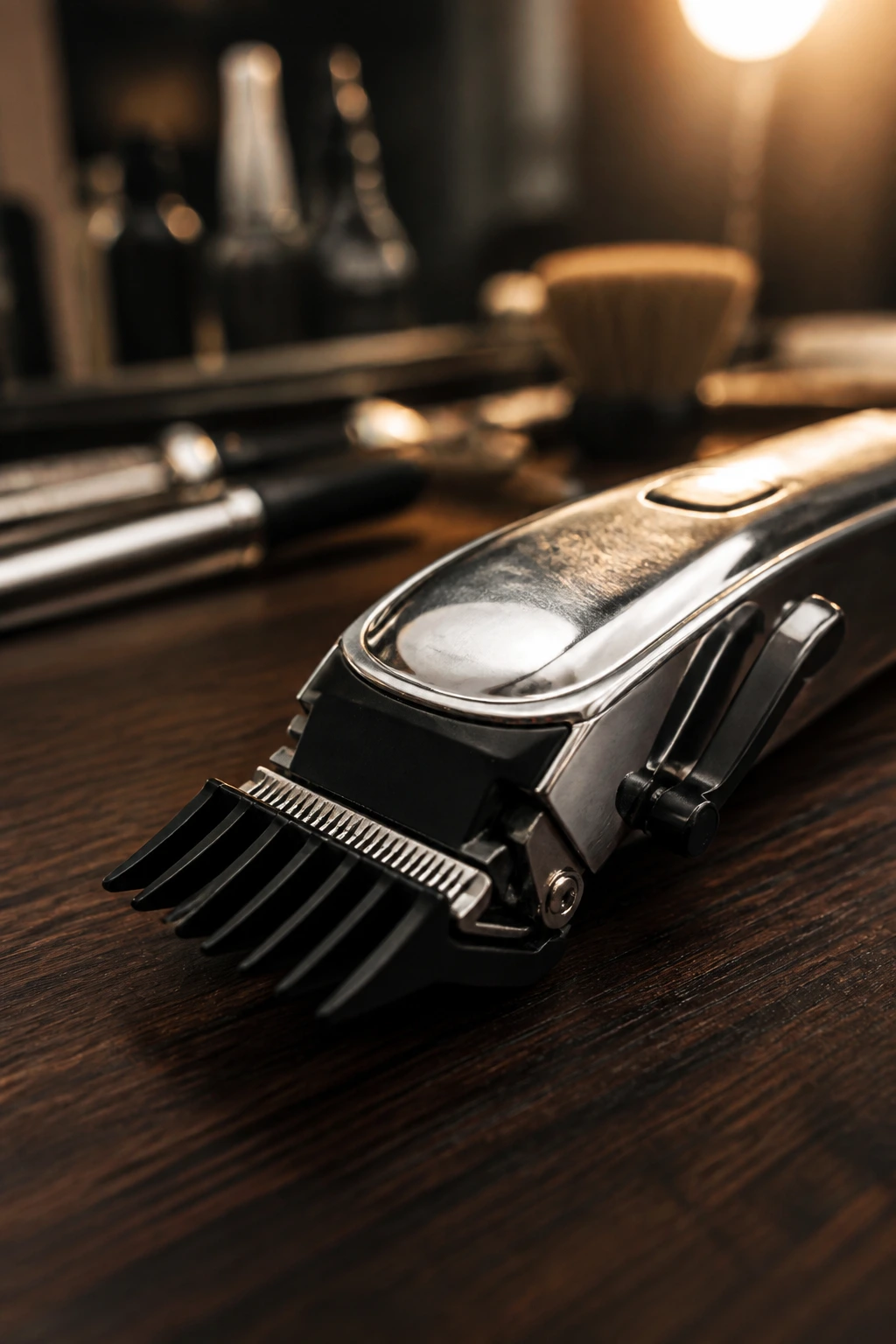
Clippers with guard sizes #0.5 through #4: These matter for keeping fades, buzzes, and neck cleanups consistent between appointments.
-
Detail trimmer: Use this for sideburns, neckline edges, and the crisp line around a hard part or shaved design.
-
Fine-tooth comb: Helpful for sectioning short tops, setting a side part, or pulling a quiff into place before blow-drying.
-
Blow-dryer with a narrow nozzle: Short hair still benefits from directed heat, especially on crops, quiffs, and brushed-up styles.
-
Matte clay or paste: Best for textured crops, short spikes, and anything you want to look piecey instead of shiny.
-
Light pomade or gel: Better for slicked-back undercuts, polished Ivy League crops, and harder, more defined lines.
-
Spray bottle with water: Short hair resets fast with a little moisture; you usually do not need to rewash it.
-
Hand mirror: Necessary for checking the back of the head, neckline, and temple fade at home.
-
Neck duster or soft brush: Keeps trimmed hair from clinging to the skin after touch-ups.
How to Talk to Your Stylist Without Getting a Guess
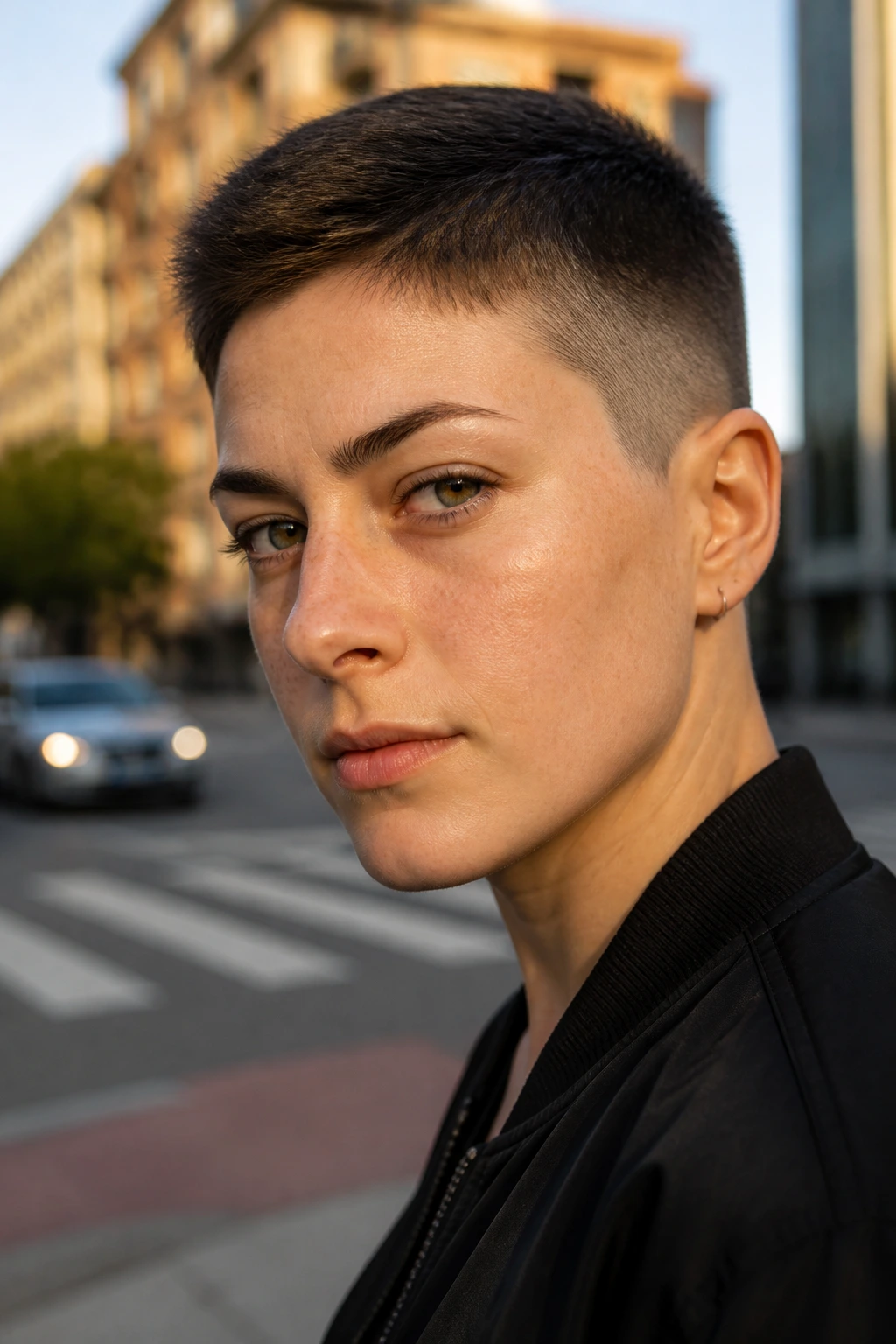
Bring photos. Not one. Three is better. One should show the front, one the side, and one the back if you can find it. A lot of short cuts look similar from the front and completely different from behind, and that’s where the surprise usually lives.
Be specific about length. “Short on the sides” is vague. Say “skin fade,” “taper fade,” “#2 on top,” “1 inch through the crown,” or “keep the fringe at eyebrow level.” Those numbers help more than adjectives ever will.
Talk about your problem spots before the scissors start moving. Cowlick at the front? Uneven hairline? Thick crown? High nape? Say it out loud. A good stylist can work around those things, but only if they know they’re there.
How to Wear These Cuts Day to Day
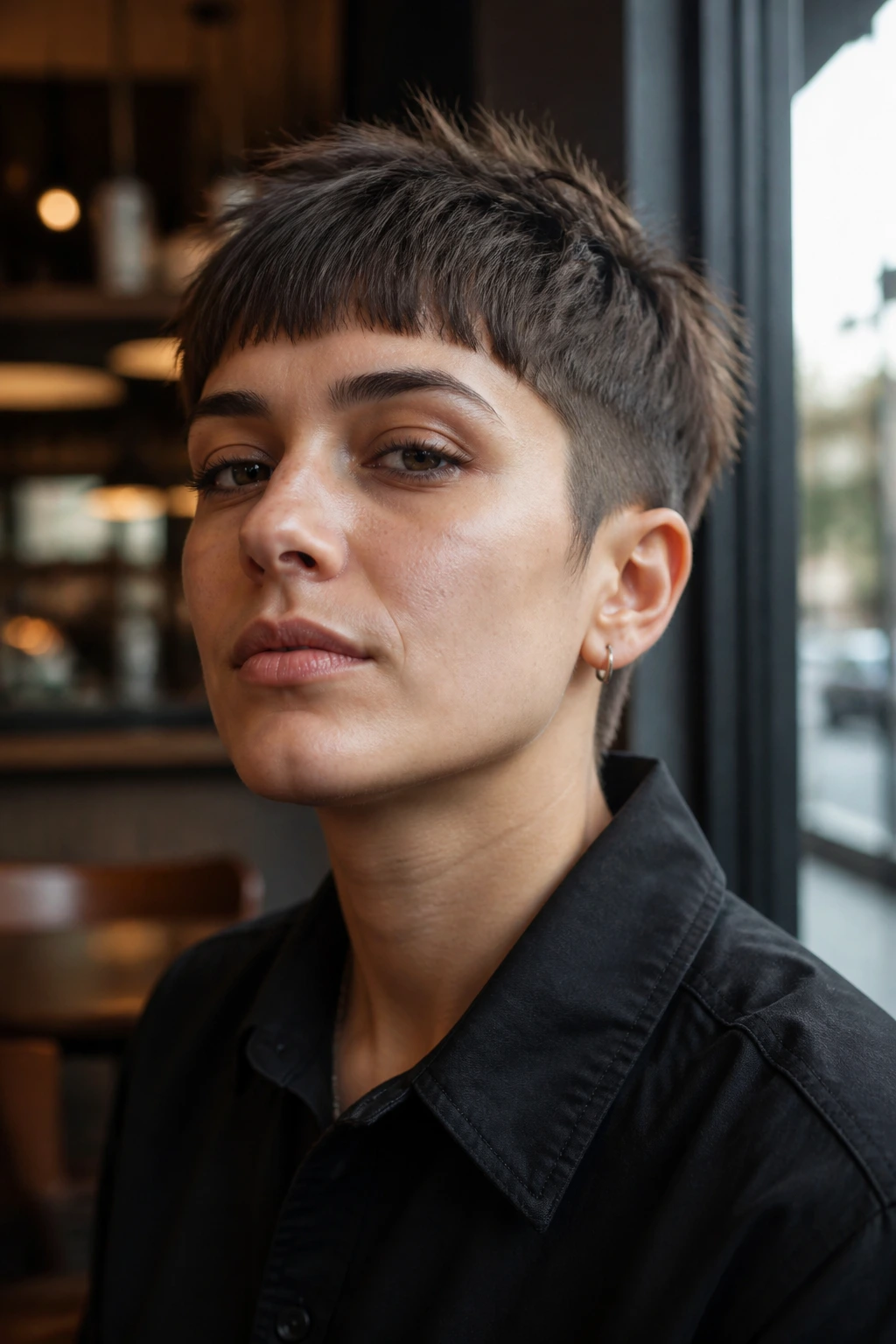
Texture: Use matte paste, clay, or a pea-sized amount of cream when you want the top to look broken up and a little rough. Short hair needs less product than most people think, and too much will make the sides collapse.
Finish: Reach for gel or a light pomade when the goal is slick, defined, or sharper around the fringe. On short undercuts and hard-part crops, a comb can give the front more order in under a minute.
Hold: A quick blow-dry on damp hair changes the shape more than a handful of product. Lift the roots on quiffs and brushed-up crops, and blow the fringe forward on Caesar-style cuts.
Fast fix: If the cut starts to look flat halfway through the day, a little water on your fingertips can wake it up. Short hair responds fast. That’s one reason these cuts stay useful.
Common Mistakes That Flatten the Whole Look
-
Going too short too soon on thick hair: The result can puff out at the sides or stand up in awkward spots. Start with a slightly longer guard and shorten later if needed.
-
Asking for a skin fade when you hate upkeep: Skin fades look fresh fast, then lose their crispness fast. If you can’t get back to the chair often, a taper is safer.
-
Ignoring the crown and cowlicks: A cut that fights your growth pattern will stick up, split, or collapse in weird places. Show your stylist exactly where the hair swirls.
-
Using too much product on short hair: Heavy paste on a 1-inch crop turns it greasy and dull. Start with less than you think you need, then build.
-
Leaving the neckline untouched too long: Even a sharp buzz cut starts looking unkempt when the nape fuzz creeps down. Clean the neck line every 1 to 2 weeks if you can.
Variations and Alternatives to Try
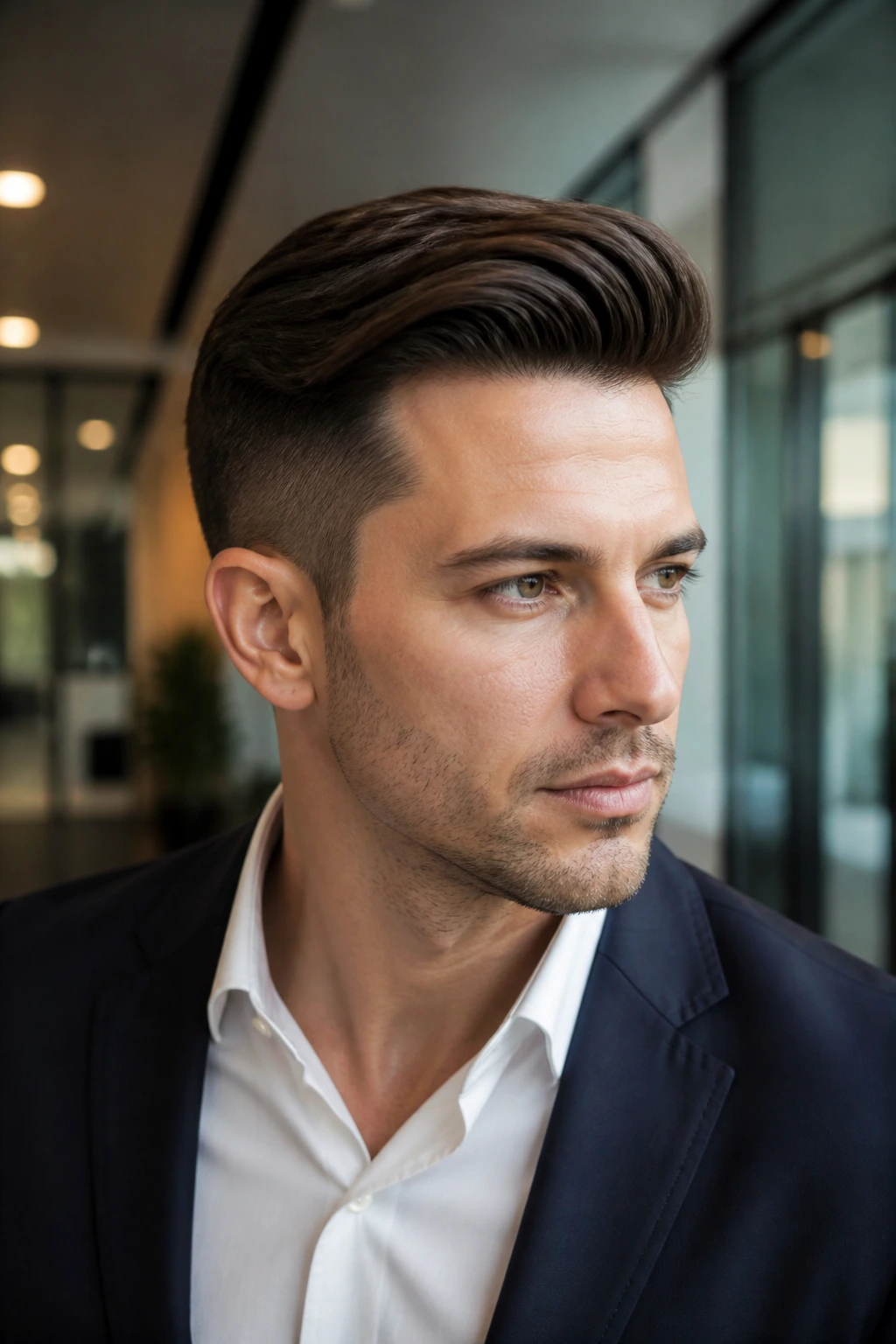
Soft Office Version: Keep the sides tapered instead of skin-short and leave the top just long enough to side-sweep. It still reads masculine-inspired, but the shape feels calmer for workplaces that want less contrast.
Curly-Forward Version: Leave more length on top and let the curl pattern define the silhouette. This works especially well on undercuts and crops where the sides are tight and the top is doing the expressive work.
Color-Blocked Version: Pair a dark undercut with a lighter top, or use a bold tone on the fringe only. The color line makes the cut look even more graphic, which is useful when the shape itself is simple.
Grow-Out-Friendly Version: Choose a taper fade, graduated nape, or textured crop instead of a skin fade. These soften in a cleaner way if you plan to let the cut get longer between appointments.
Hard-Edge Version: Add a shaved part, line-up, or side design to a buzz, crew cut, or crop. The extra line work gives the haircut a more deliberate finish without adding length.
Keeping the Shape Between Appointments
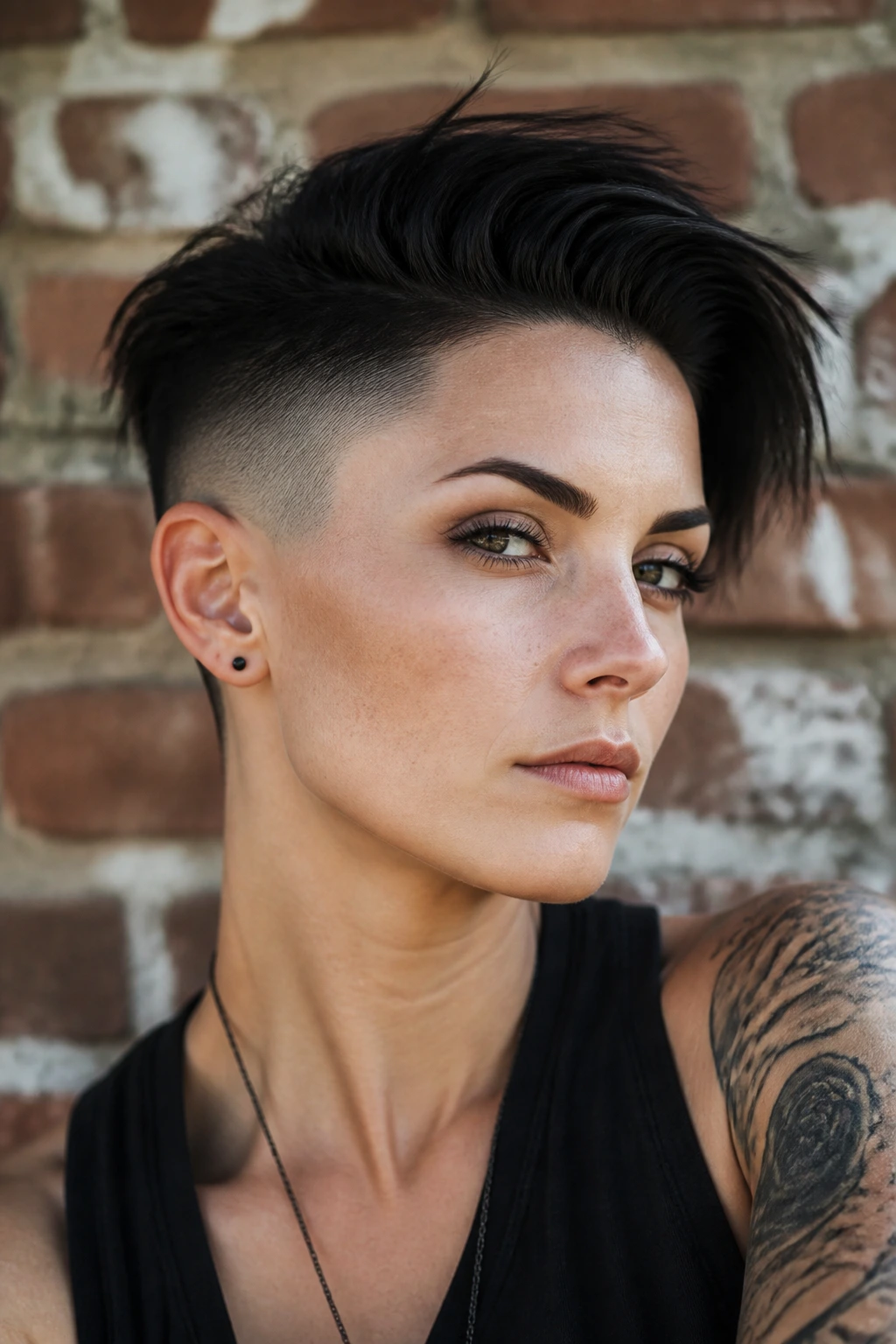
Short masculine-leaning cuts need a rhythm. Buzz cuts and skin fades usually want a tidy-up every 1 to 2 weeks if you care about crisp edges. Taper fades, crops, and Ivy League styles can stretch to 3 to 5 weeks. Pixies with longer tops often hold shape for 4 to 6 weeks, while mullets and wolf-cut hybrids can sometimes go 6 to 8 weeks before they lose their line.
The part people forget is the neckline. That little fuzz under the occipital bone can make a clean cut look sleepy fast. A small trimmer at home can buy you extra time, but go slowly. One bad pass with a guardless trimmer can turn a neat nape into a repair job.
Wash less than you think if your hair is very short and not oily. Short hair can dry out around the edges when shampoo is too frequent. A light rinse, then a tiny bit of product, usually does more than scrubbing it every day.
Frequently Asked Questions
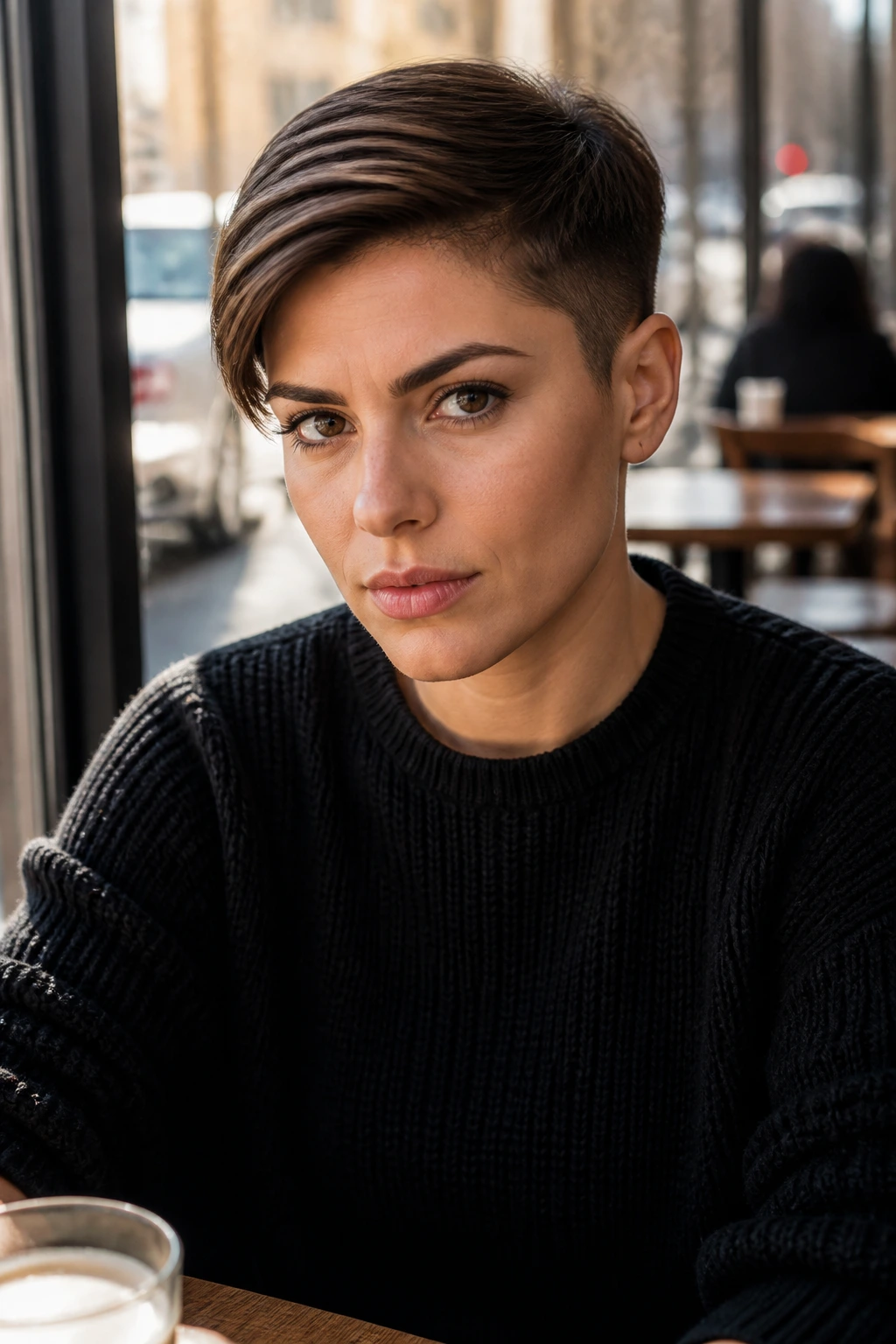
Which face shapes work best with masculine female haircuts?
Most face shapes can wear them, but the shape should match the contrast. Round faces often look sharper with height on top and tighter sides, while longer faces usually benefit from fringe, side-swept weight, or a little fullness at the temples.
Can curly hair pull off a buzz cut or undercut?
Yes, but length matters more with curls than with straight hair. Start a guard length longer than you think you want, because curls shrink and can show more scalp than expected when they’re cut too close.
How often do I need to trim a fade?
Skin fades and hard lines usually need attention every 1 to 2 weeks if you want them to stay clean. Tapers and crops can go longer, but once the edges blur, the whole shape softens fast.
What if my hair sticks up in the back?
That usually means the crown or cowlick was cut too short for the growth pattern. Ask for a little more length in that zone next time, and use less product so the hair isn’t being forced against itself.
How do I grow out a shaved side without looking awkward?
Let the shortest side catch up in stages and keep the top and fringe lightly trimmed so the whole cut doesn’t turn into a lopsided helmet. A taper or mullet-style grow-out is often easier than trying to rush everything to one length.
Do these cuts work if my hair is thin?
They can, but avoid over-layering the top. Fine hair usually looks better with a clean, compact shape such as a crop, taper, or buzz rather than a cut that depends on big volume.
What should I tell a stylist if I want the cut edgy, not severe?
Ask for texture, not just shortness. “Keep the sides tight, but leave the top soft and piecey” is a much better brief than “make it masculine,” because it gives the stylist shape language to work with.
Can I style these cuts without heat?
Absolutely. Many of them look best with fingers, a little water, and a pea-sized amount of paste. Heat helps on quiffs and brushed-up styles, but crops, buzzes, and undercuts often need almost nothing.
Sharp Edges, Soft Grow-Out
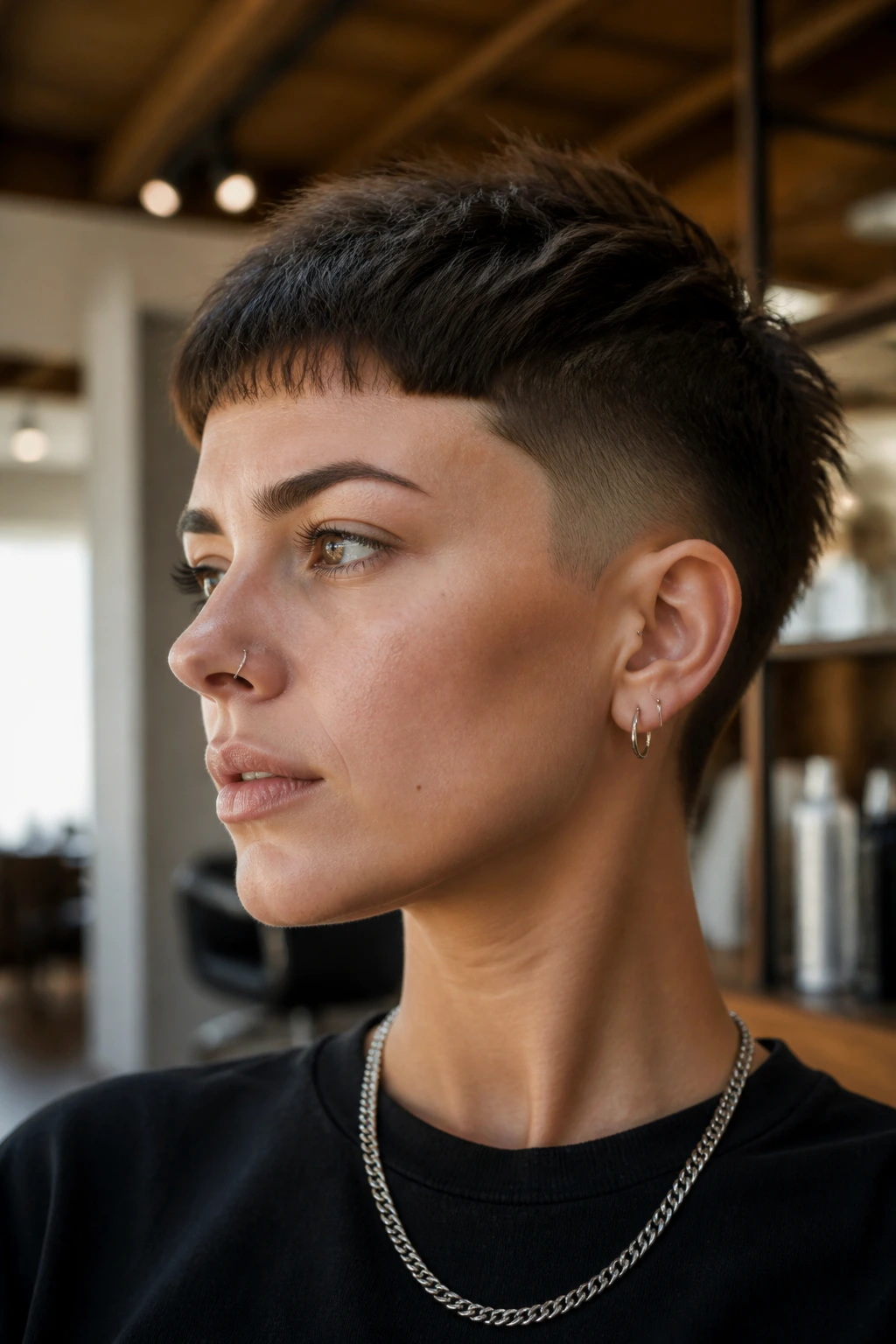
The reason these haircuts keep getting picked is simple: they give you control over the line of the face. A few millimeters at the temple, a tighter nape, a cropped fringe, or a better fade can shift the whole mood without making the haircut feel overworked.
That’s the part I always come back to. These styles don’t rely on hair being long, glamorous, or fussy. They rely on shape. And once the shape is right, the rest gets easy enough to live with — which is the real test for any short haircut worth keeping.
