



A shaved side changes natural hair faster than almost any product in the cabinet. One buzzed panel turns coils, curls, locs, or braids into a shape with edges, not just volume. A high puff gets taller. A twist-out stops looking like a halo and starts looking like architecture. That’s why shaved side looks for natural hair keep coming back—they don’t fight texture; they give it a frame.
The trick is proportion. Natural hair shrinks, spreads, and blooms in a way straight hair doesn’t, so the top and side have to be planned together. If the top is too short, the cut can look top-heavy. If the side is shaved too high, you lose the softness that makes the style wearable past the first week. The best versions respect density, shrinkage, and the way your hair sits after a full day of wear.
Some of these looks are five-minute options. Others ask for braid hair, a good barber, or a careful twist set. All of them share the same logic: keep the silhouette clean, keep the texture visible, and keep the side from swallowing the face. That balance is the whole game.
Why These Shaved-Side Looks Work So Well on Natural Hair
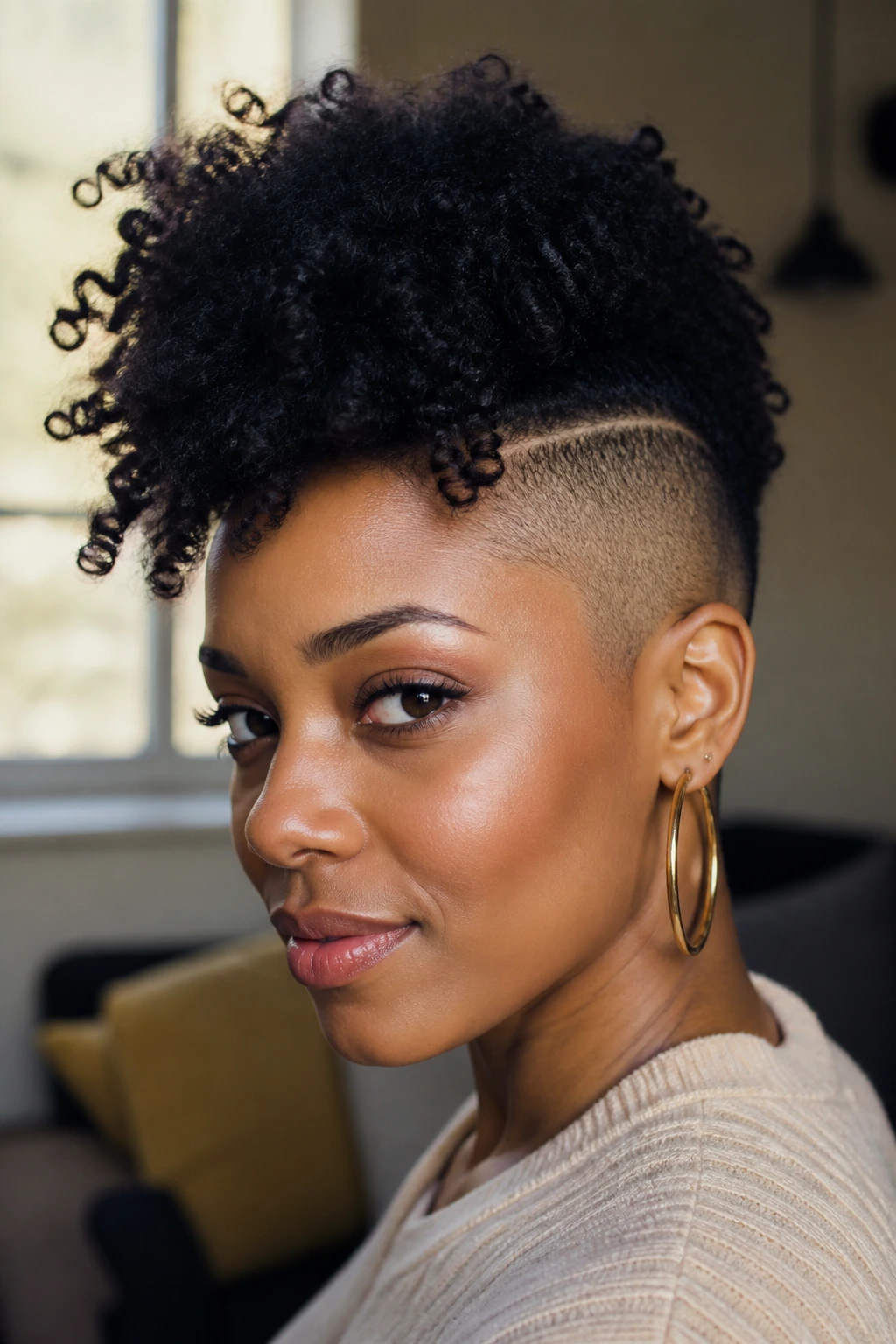
- They make shrinkage work for you: Coils and curls can shrink hard, and the shaved side keeps the shape from ballooning wide when the top dries.
- They sharpen the silhouette: A clean side line gives the eye a place to stop, which makes puffs, braids, and curls look more intentional.
- They give you options: You can wear the top out, tucked, braided, slicked, or twisted while the side stays close and neat.
- They age well between appointments: Even when the buzz starts to grow in, a low fade or temple shave can still look deliberate instead of messy.
- They suit different routines: Some are wash-day simple, some are protective, and some are all about the cut itself.
1. High Puff With One Shaved Side
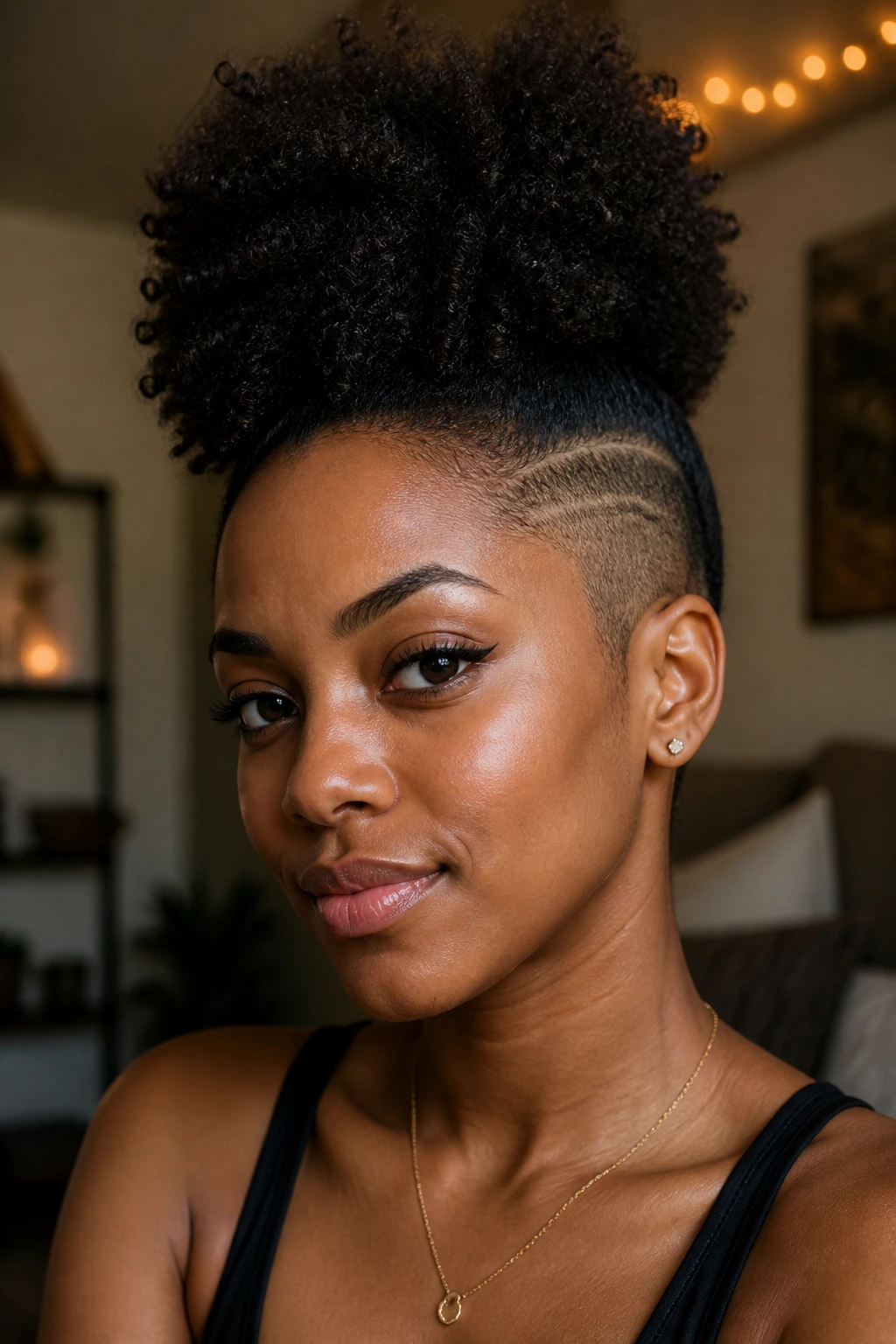
A high puff with one shaved side has a built-in point of view. The puff sits up top like a crown, and the buzzed panel strips away all the visual weight on one side, so the curl volume reads as height instead of bulk. It’s the kind of shape that looks even better on second-day hair, when the coils have settled and the edges are still clean.
If your hair is dense or shrinks a lot, this is one of the easiest ways to make natural texture look dramatic without doing much. Ask for the shaved side to stay low around the temple and ear, not halfway up the head. A #0.5 to #1 guard gives you a crisp contrast; a longer guard softens it if you want a gentler grow-out.
The puff itself needs a little stretch. A light leave-in, a bit of gel at the base, and a satin scrunchie are enough. Keep the top section long enough to fan out when gathered—short curls collapse fast and lose the shape that makes this look work.
2. Defined Wash-and-Go With a Temple Fade
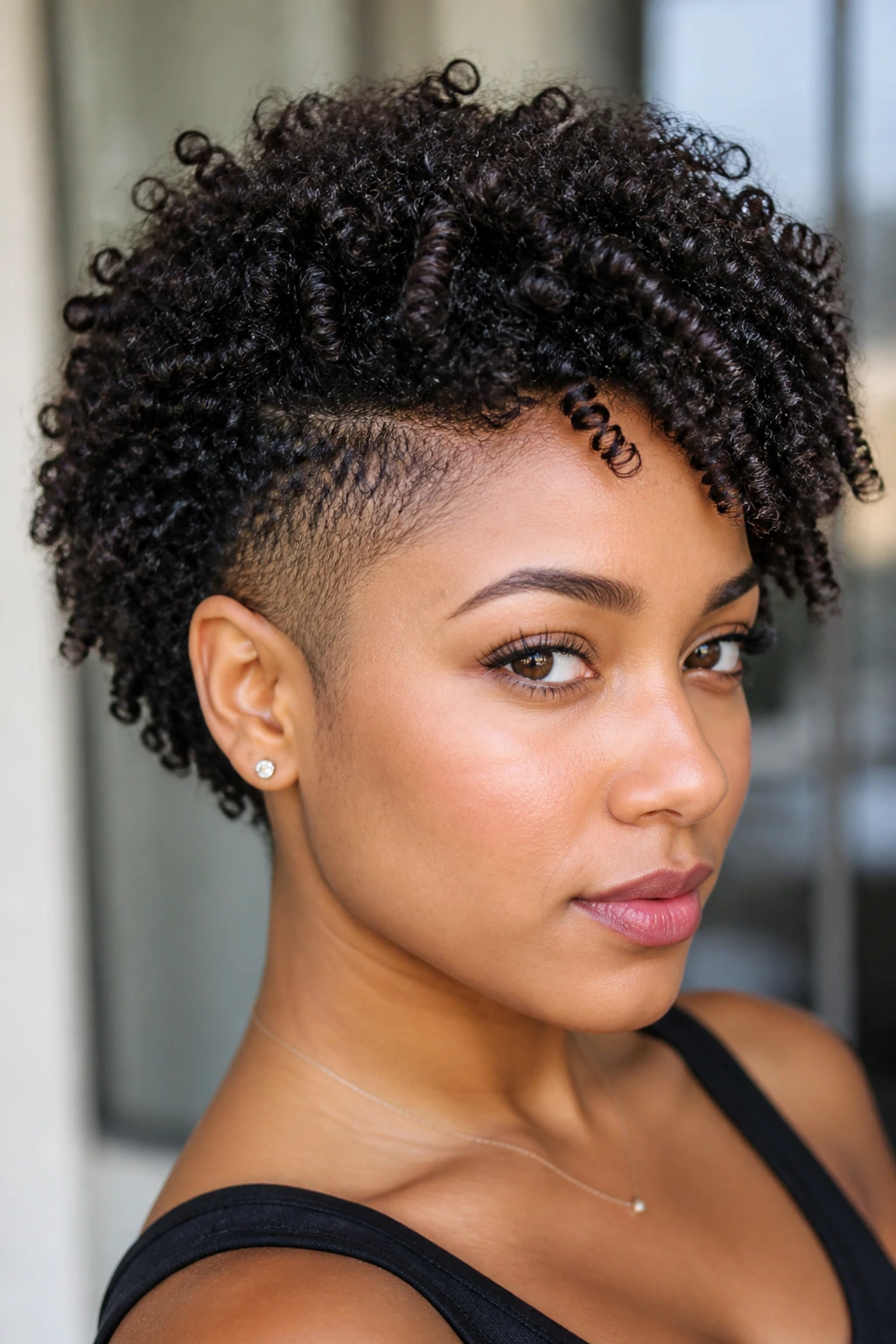
This is the cleanest, most low-drama version of a side shave on natural hair. The curls stay visible from root to tip, the temple fade creates a slim line near the face, and the whole style feels crisp even when the curl pattern is soft or loose. It’s one of the few looks that can read polished with almost no accessories.
The key is definition. Use a gel or foam that sets without turning the hair into a hard shell, then let the curls dry fully before you touch them. If you fluff too early, the temple fade loses its contrast. A diffuser helps, but air-drying works if you’ve got time and your curl clumps hold together on their own.
I like this look when the haircut needs to do the heavy lifting. There’s no braiding to hide behind, no bun to cover a weak part. If the fade is clean and the curls are shaped well, the style looks finished even in a T-shirt and hoop earrings.
3. Twist-Out Frohawk With Tapered Sides
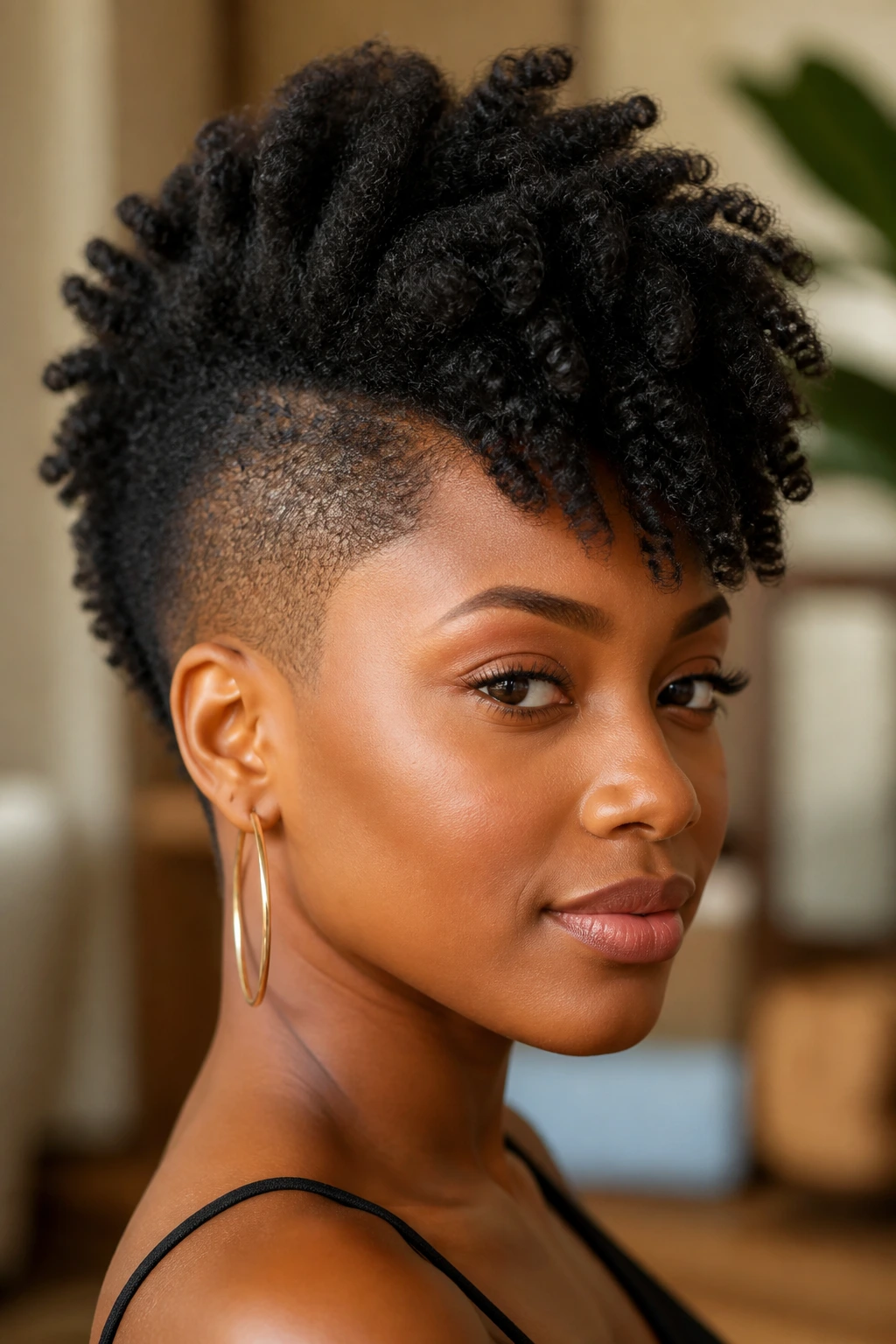
The twist-out frohawk gives you the best parts of both worlds: fluffy texture down the center and narrow, tapered sides that keep the shape from sprawling. It’s especially good for 4a and 4b hair, where the twist pattern can stretch the top just enough to build a strong ridge from front to back.
The sides should taper down rather than disappear abruptly. That softer fade matters, because the frohawk shape already has a lot of attitude. A hard skin shave can make it feel too severe unless your face shape and style lean that way. Leave the top twisted overnight, separate carefully the next day, and keep the roots as fluffy as the ends.
Best with: shoulder-clearing tops, medium-density coils, and a little height at the crown.
Ask for: a low taper on both sides and a longer strip through the center.
Watch for: separating the twists too hard. You want lift, not frizzed-out lint.
4. Two-Strand Twists and a Clean Side Undercut
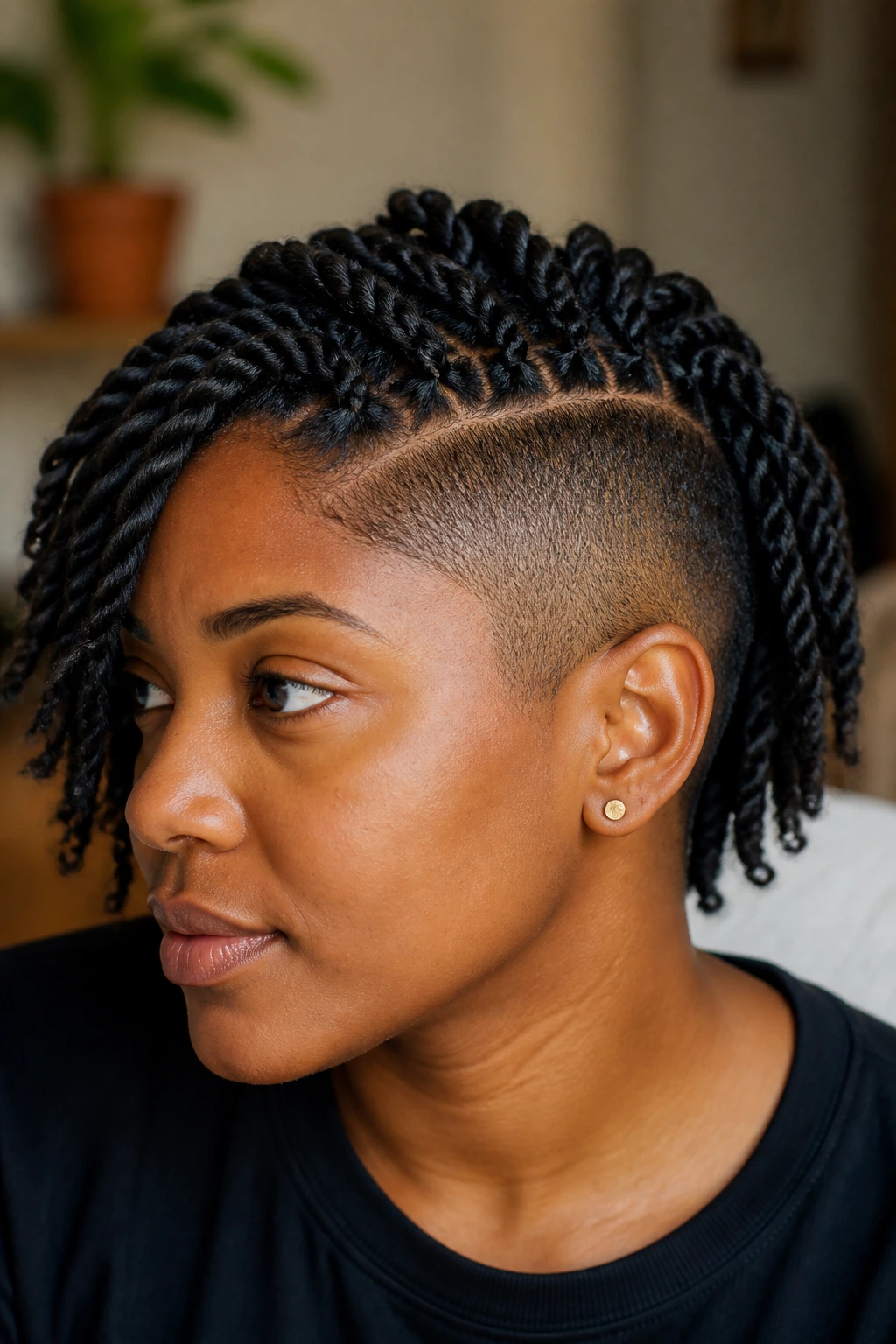
Two-strand twists look sharper when one side is shaved because all that rope-like texture has room to breathe. Instead of fighting for width, the twists can fall forward or stack upward, and the undercut keeps the outline from turning boxy. It’s one of the most practical looks on this whole list because it protects the hair while still looking styled.
Keep the parting neat. Ragged sections show fast with twists, especially near the temple and hairline, so a rat-tail comb and a steady hand matter more than fancy products. Medium-size twists usually work best here; tiny twists can look busy next to a close shave, while jumbo twists can overpower the cut.
The nice thing about this style is how it handles grow-out. Even when the side starts to come back in, the twists still give the eye something to follow. That buys you time between salon visits, which is never a bad thing.
5. Bantu Knot Crown With a Close Shave
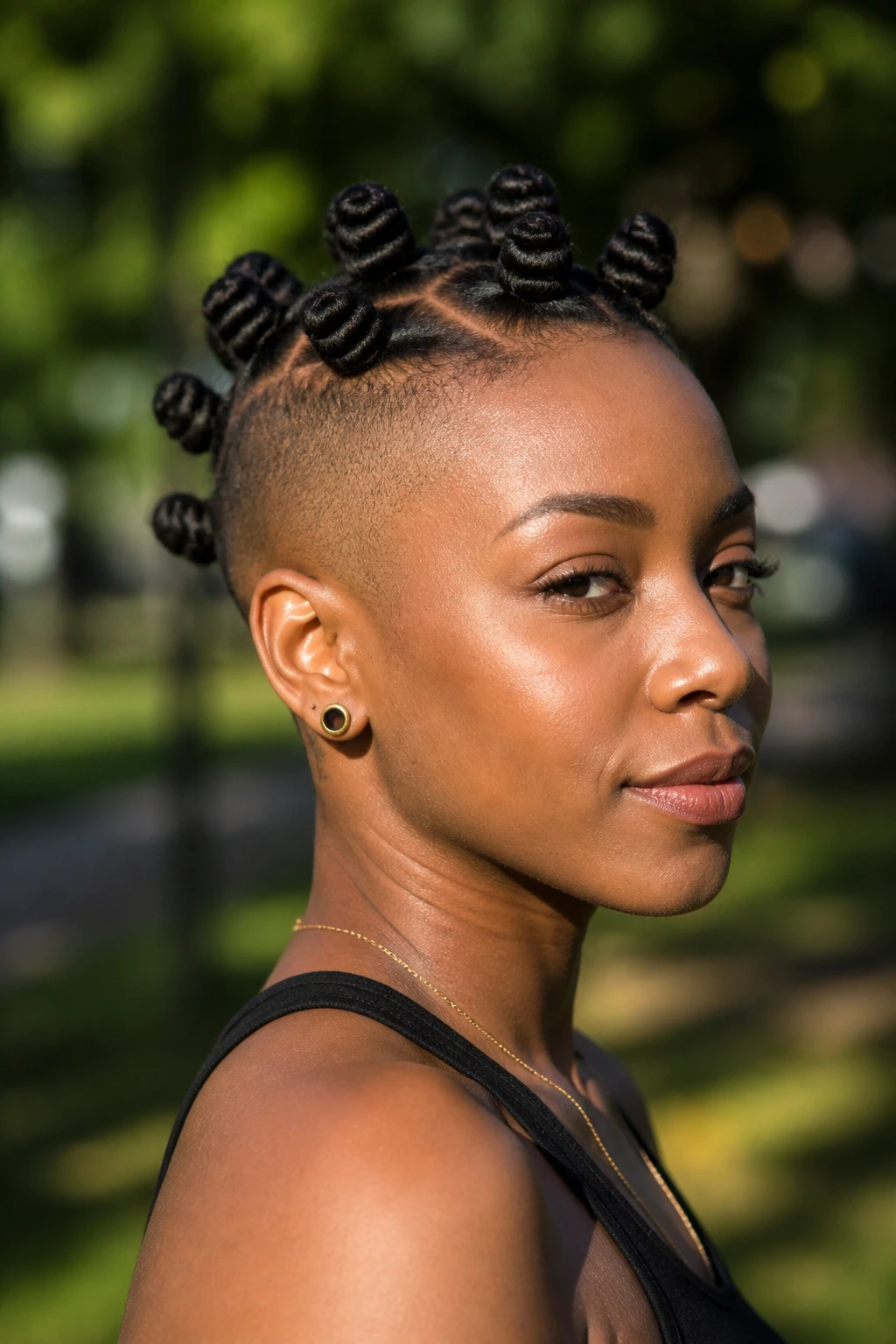
Bantu knots already have shape, but the close shave makes them read like sculpture instead of just a set. The crown sits high and rounded, and the buzzed side keeps the entire style from feeling heavy. It’s a strong look for events, photos, or any day when you want your hair to do something a little theatrical.
Spacing matters here. If the knots are packed too tightly, the crown can look crowded and the shave gets lost. Leave enough room between sections so each knot is visible on its own. A skin-close or near-skin shave on the side works well because the knots bring the texture and the side brings the contrast.
This one rewards clean parting and patience. Use a moisturizing cream only on the sections that need to hold the knots; too much product makes them fuzzy and dulls the shape. Once dry, a small amount of oil on the scalp is enough. The style should look crisp, not greasy.
6. Side-Part Braids With a Buzzed Temple
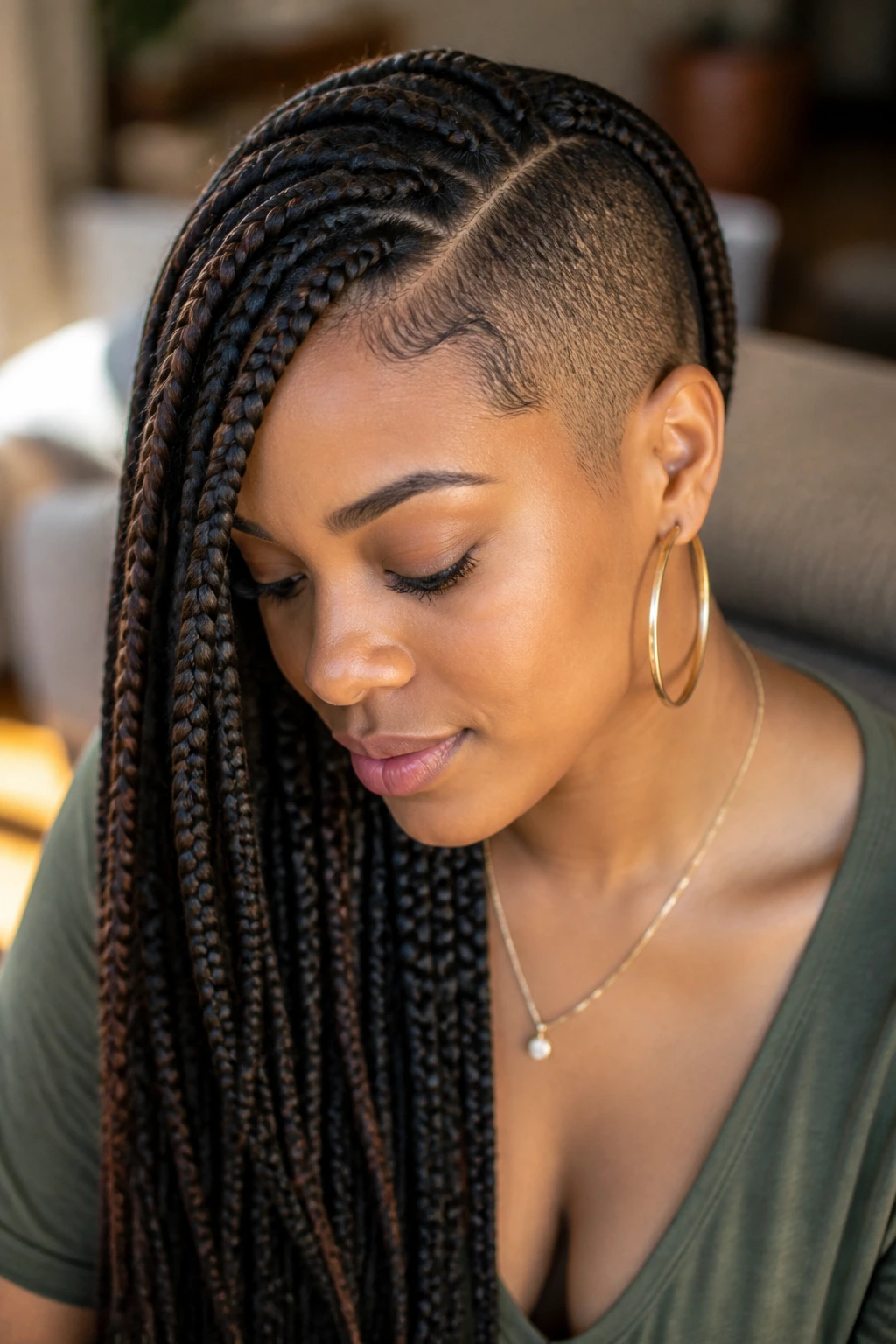
Braids swept over a buzzed temple create one of the easiest asymmetrical looks for natural hair. The shaved side keeps the braid pattern from feeling too traditional or too flat, while the side part adds a line that guides the eye across the face. It’s tidy, wearable, and good for people who want an edge without giving up length.
This style works especially well when the braids are medium size and start fairly high on the head. Thin braids can disappear against a buzzed temple, and giant braids can look bulky unless the top is dense. Keep the part straight and the temple shave low enough that the braids still have something to sit against.
A side part like this also plays nicely with earrings. A big hoop or a single cuff on the shaved side gives the look a finished feel. And yes, if your edges are tender, do not pull the braids tight just because the side is buzzed. The contrast should come from the cut, not from tension.
7. Flat Twist Updo With a Hidden Undercut
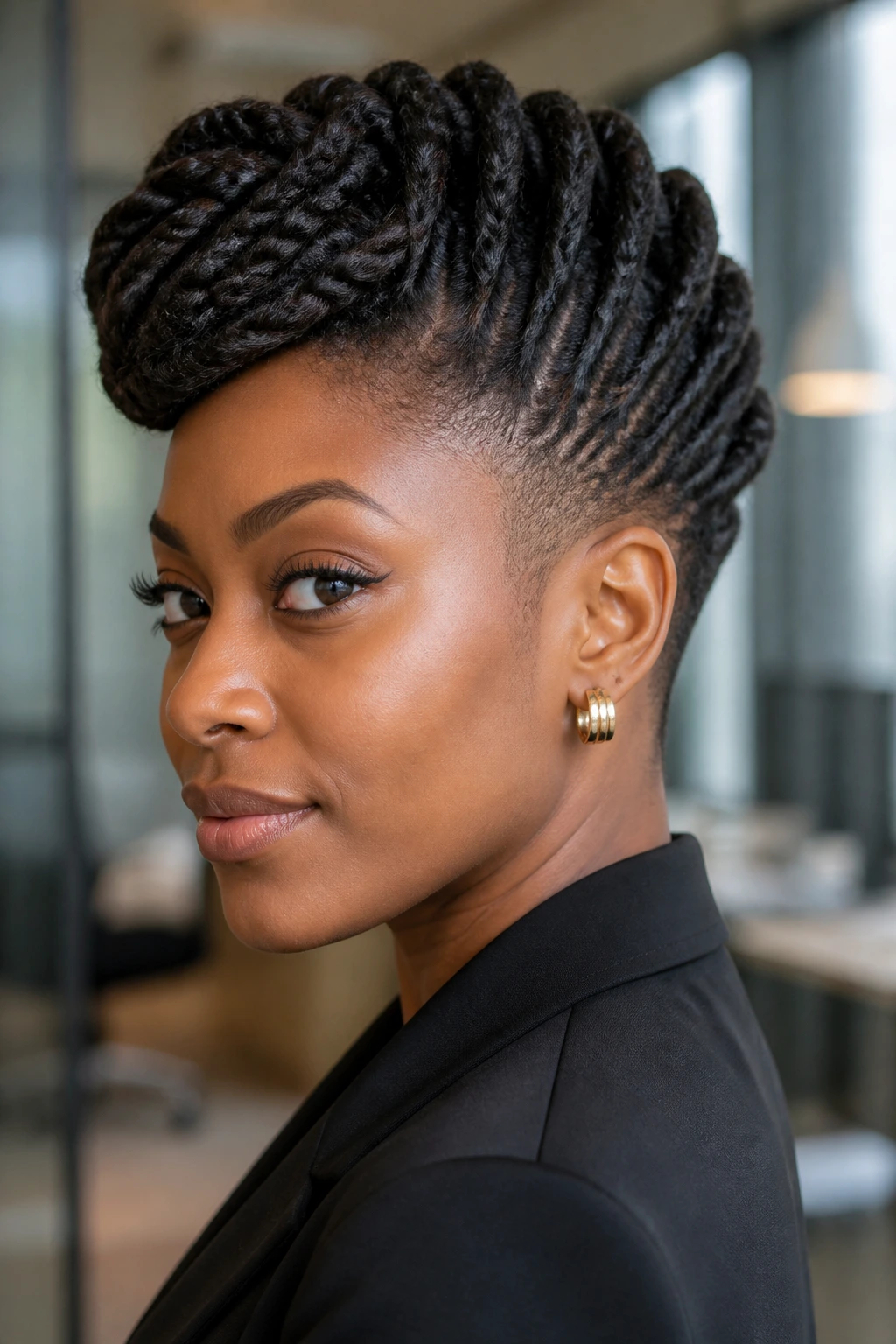
A flat twist updo gets a completely different personality once there’s an undercut hiding underneath. From the front, it can look polished and even formal; from the side, there’s a quiet little surprise. That hidden shave is one of my favorite tricks for people who want a bold cut without wearing it loud every day.
The updo should sit high enough to show the crown line and low enough that the undercut doesn’t interfere with the twists. If the shaved area is too wide, the style can lose support and start to sag at the edges. Keep the undercut narrow and close to the nape or lower side panel if you want the style to stay flexible.
This is a good office-to-evening style. It can look neat in daylight and a little more daring with a slick lip or a sharp collar. The undercut doesn’t need to be flashy to matter.
8. Curly Mohawk With Shaved Sides
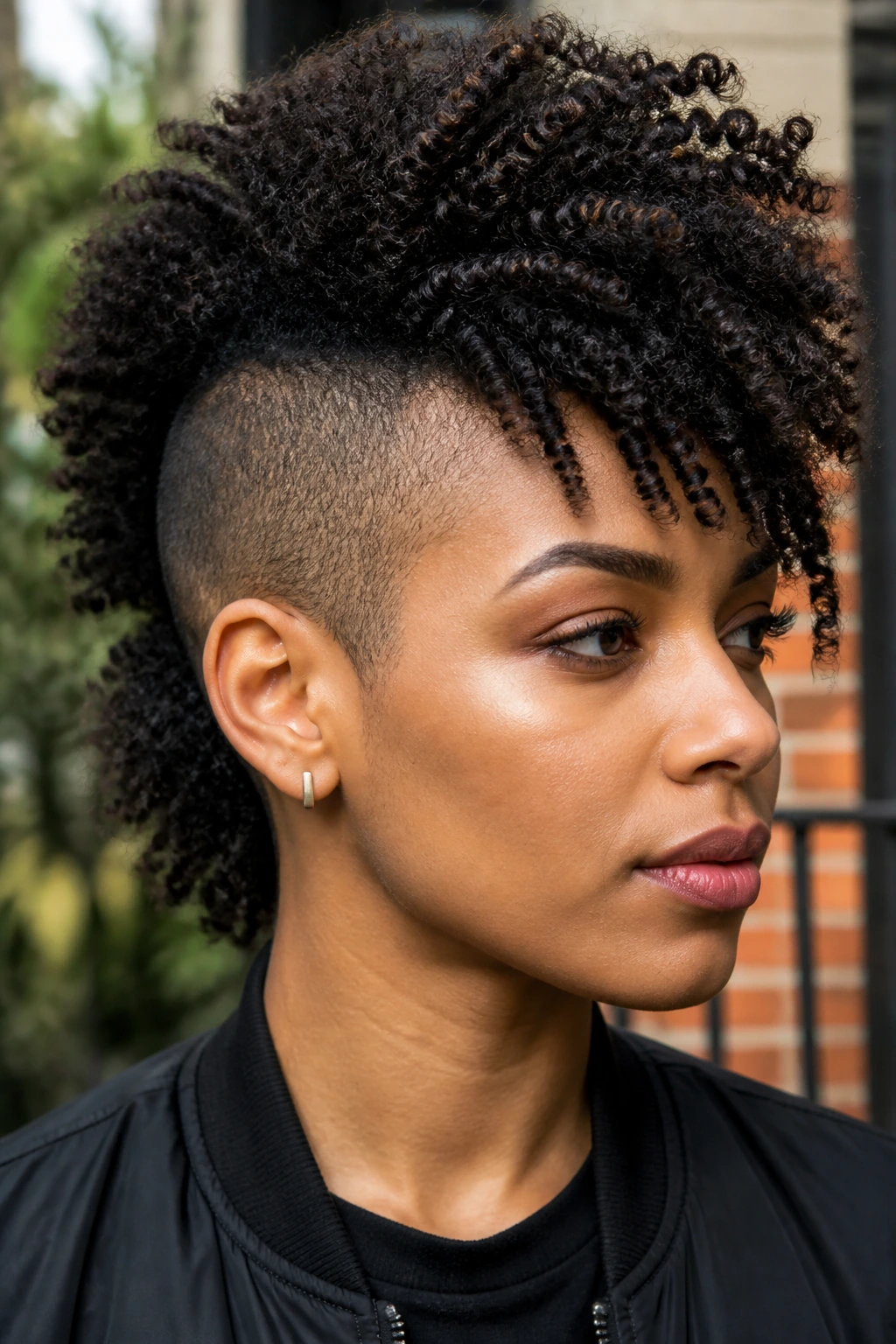
A curly mohawk makes natural hair look taller, denser, and more deliberate than almost any other shape. The shaved sides remove the visual drag, so all the curl energy stacks through the center. If your hair has real volume, this style uses it instead of flattening it.
The center strip needs definition and lift. A curl cream alone usually isn’t enough; use a strong mousse or a light gel first, then fluff the roots after the hair dries. If the top is too short, the mohawk becomes a small ridge. Leave enough length so the curls can stand up and forward a little.
Why it works: the shape creates movement without needing extra accessories.
How to wear it: pair it with sculpted edges, a clean part, and a little root lift at the crown.
Best for: dense coils and anyone who likes a style that reads from across the room.
9. Sleek Low Bun With One Side Shaved
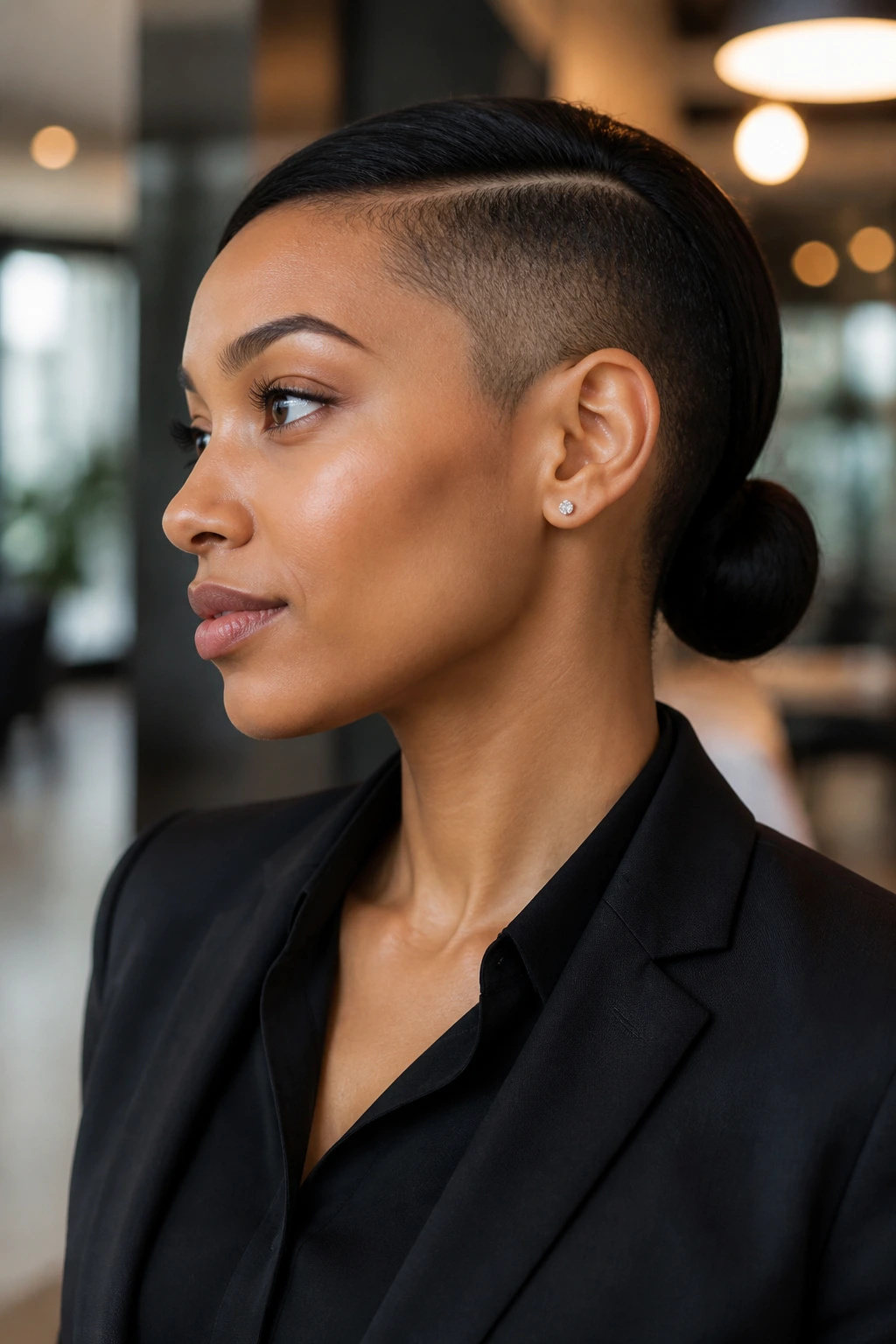
A low bun with one side shaved is all about contrast between strict and soft. The bun keeps the silhouette tight and smooth, while the buzzed side makes the look feel sharper than a standard bun ever could. It’s one of the best options if you need your hair off your neck but still want the side cut to stay part of the story.
Smooth the top with a gel that holds without turning flaky. Use a soft brush, not a heavy-handed one, or the style can look stiff. The bun should sit low and centered, or slightly off-center if you want the shaved side to stay visible without screaming for attention.
This is the look I’d reach for when I wanted polish without losing edge. It works with blazers, gold hoops, a clean neckline, and anything structured. And if the bun is too tight, you’ll feel it by lunchtime, so keep the tension honest.
10. Side-Swept Curls With a Temple Shave
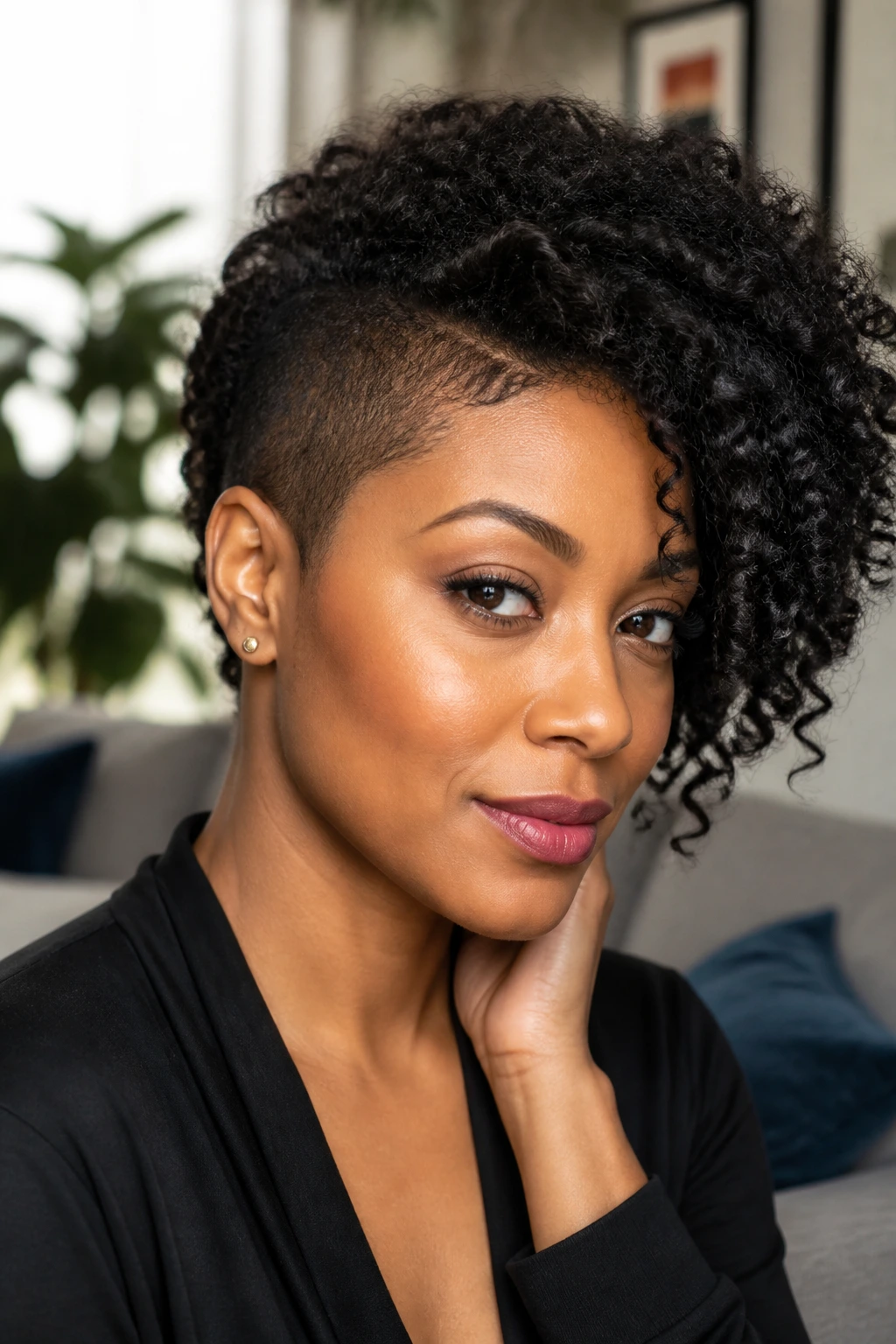
Side-swept curls and a temple shave are a good match because both shapes move in the same direction. The curls spill across the head, the shave clears one edge, and the face gets framed instead of buried. It’s soft at first glance, then sharp once you notice the temple line.
This style loves stretch. A twist-out, braid-out, or stretched wash-and-go gives the curls enough length to drape instead of puffing straight out from the scalp. If the curls are too short, they can fight the asymmetry and stand up in the wrong places. A touch of shine spray can help the curls read as a single sweep.
I like this one for rounder faces or anyone who wants to keep the profile light around the cheeks. The shave opens up the side, and the curls do the rest. It’s a smart shape, not a loud one.
11. Half-Up Space Buns and a Shaved Side
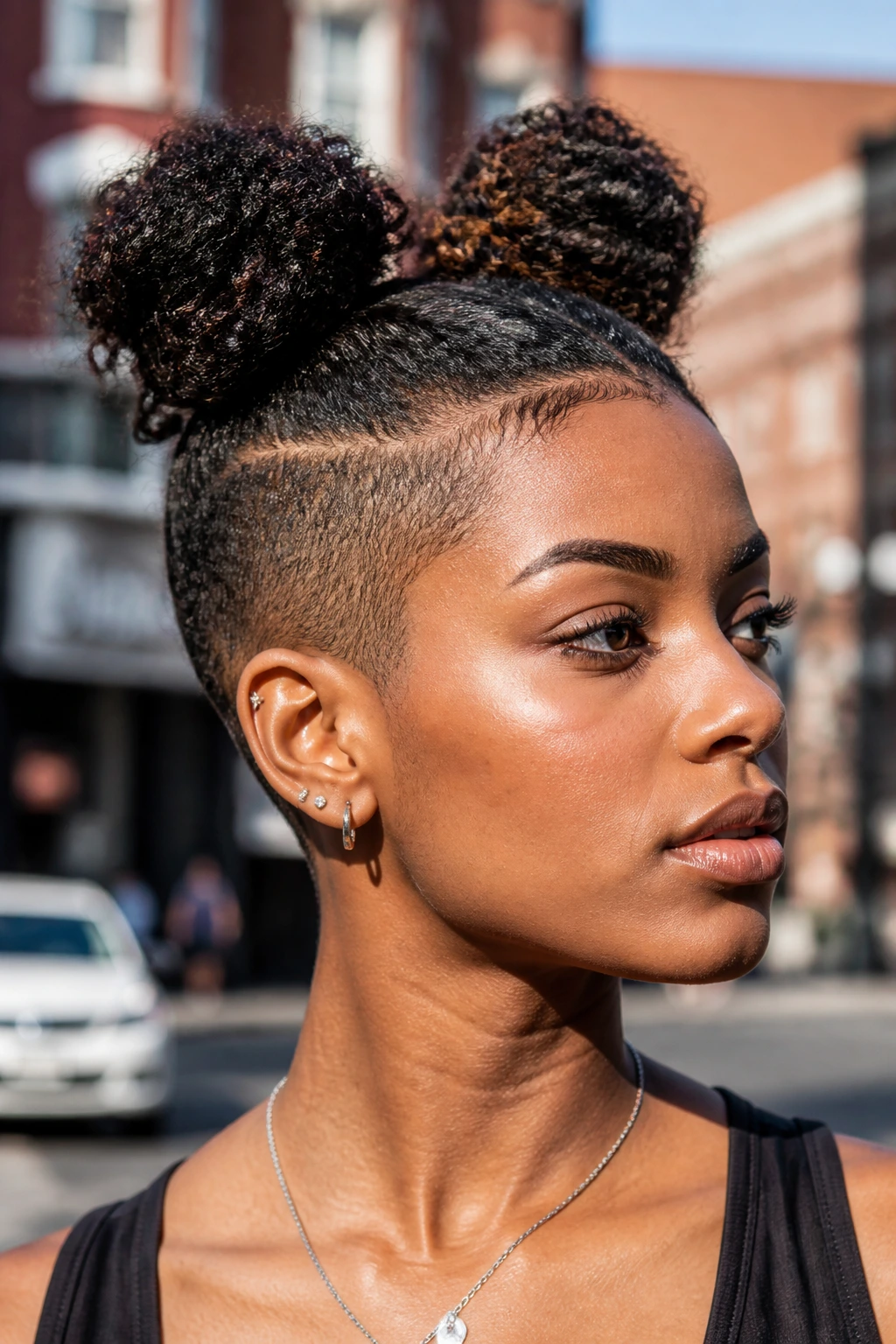
Half-up space buns feel playful, and the shaved side keeps them from turning childish. The side buzz changes the balance completely; instead of two round buns floating on top, the style gets a little bite. It’s a good choice when you want hair that looks fun but still intentional.
The top section should be cleanly parted and gathered with enough tension to hold the buns up without pulling the scalp. If your hair is thick, use smaller buns and leave some curl volume loose underneath. If it’s finer, make the buns slightly fuller so the side shave doesn’t outweigh the top.
Ask your stylist for:
- A low or temple-side buzz that still leaves room for ponytail options.
- A part that can be worn center or slightly off-center depending on your mood.
This look works with hair cuffs, a glossy gel base, and a little frizz around the buns. Don’t over-smooth it. The contrast is the whole point.
12. Feed-In Cornrows Into a High Bun With a Side Fade
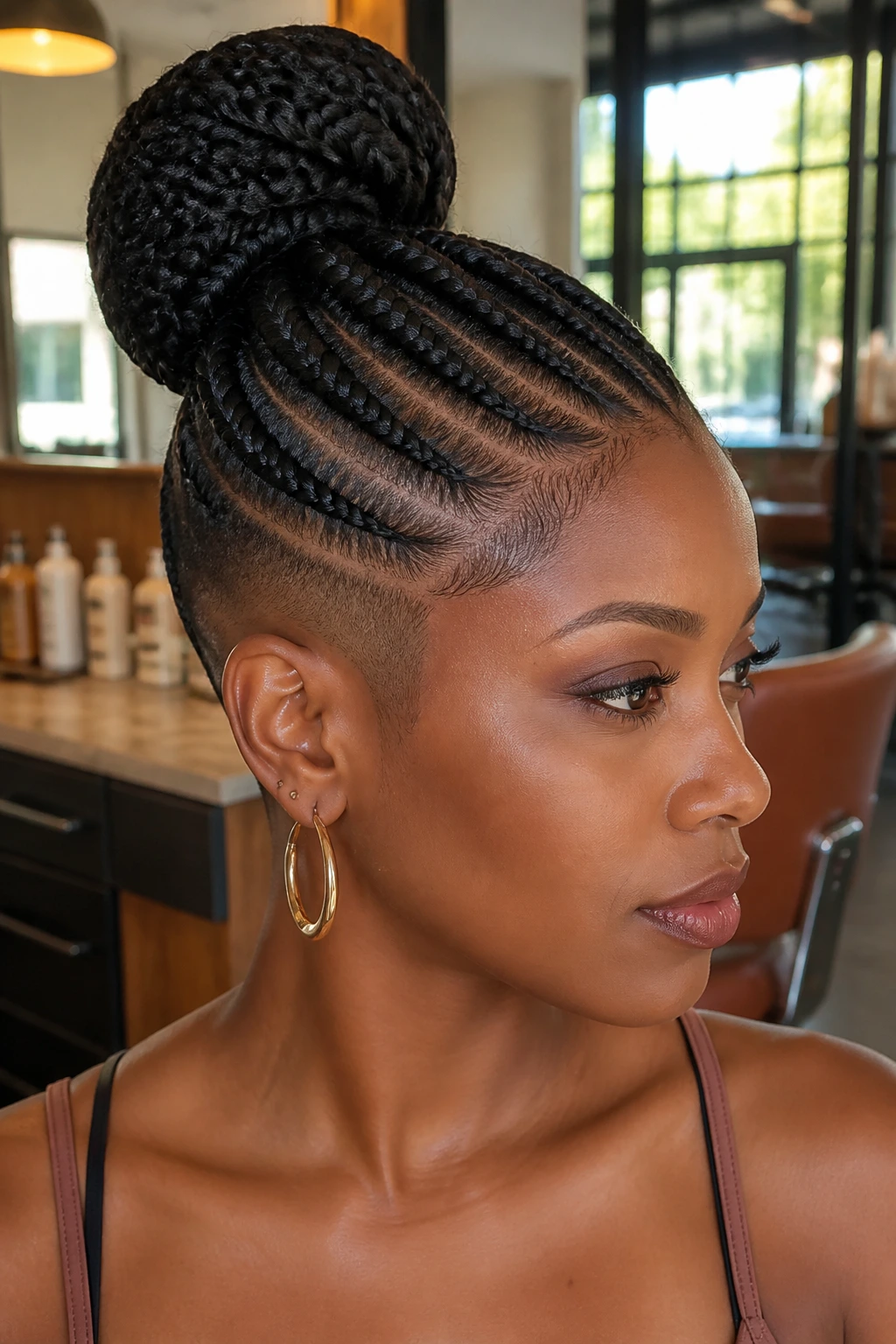
Feed-in cornrows bring structure, and the side fade keeps that structure from feeling too locked in. Sweeping the braids into a high bun lifts the eye, while the faded panel opens one side and keeps the style light around the face. It’s neat, athletic, and easier to sleep in than people expect.
The feed-in section should be gradual so the braids start slim at the hairline and build in thickness. That keeps the front from feeling bulky when they collect into the bun. A side fade works best when it sits low enough not to cut into the braid path. Too much shave, and the bun loses its base.
This is a good style when you need days between wash sessions. The scalp stays accessible, the parting stays visible, and the bun can be refreshed with a little water and mousse. No need to drown it in product.
13. Lemonade Braids With an Undercut
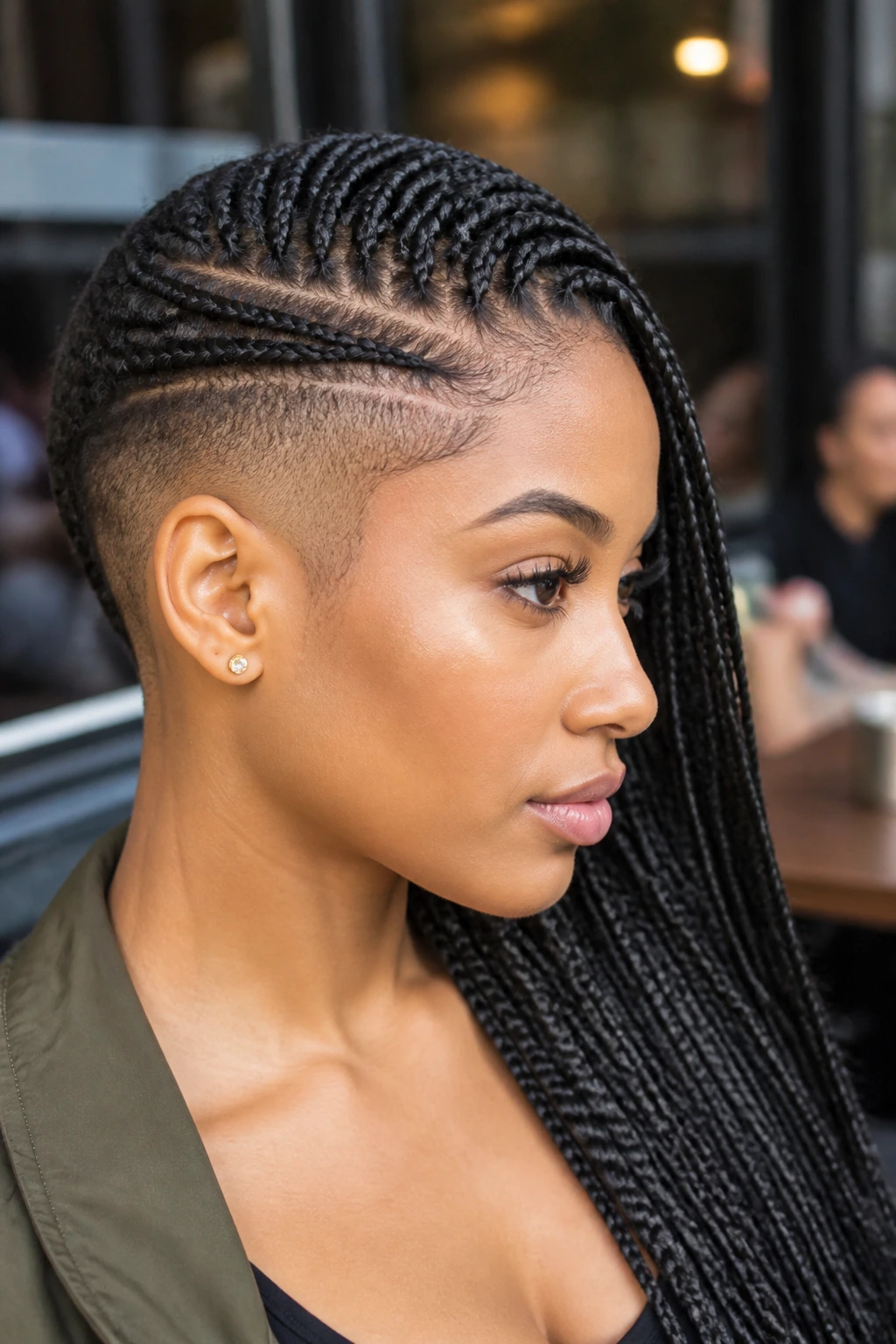
Lemonade braids already have that long, swept look; the undercut just makes the angle cleaner. The braids fall along one direction like a line drawing, and the shaved side under them keeps the profile from feeling heavy. It’s one of the strongest looks for making the head shape look longer and leaner.
The undercut should stay low enough that the braids can still cascade without interruption. If you shave too high, the braid curtain can look chopped. A narrow undercut under the swept side gives you the contrast without stealing the braid’s movement.
This style can hold for a while if the parts are neat and the scalp stays clean. Wrap the braids at night, mist the roots lightly when needed, and keep the buzzed area moisturized with a small amount of scalp oil. That part can get itchy if you forget it.
14. Goddess Braids and a Clean Side Shave
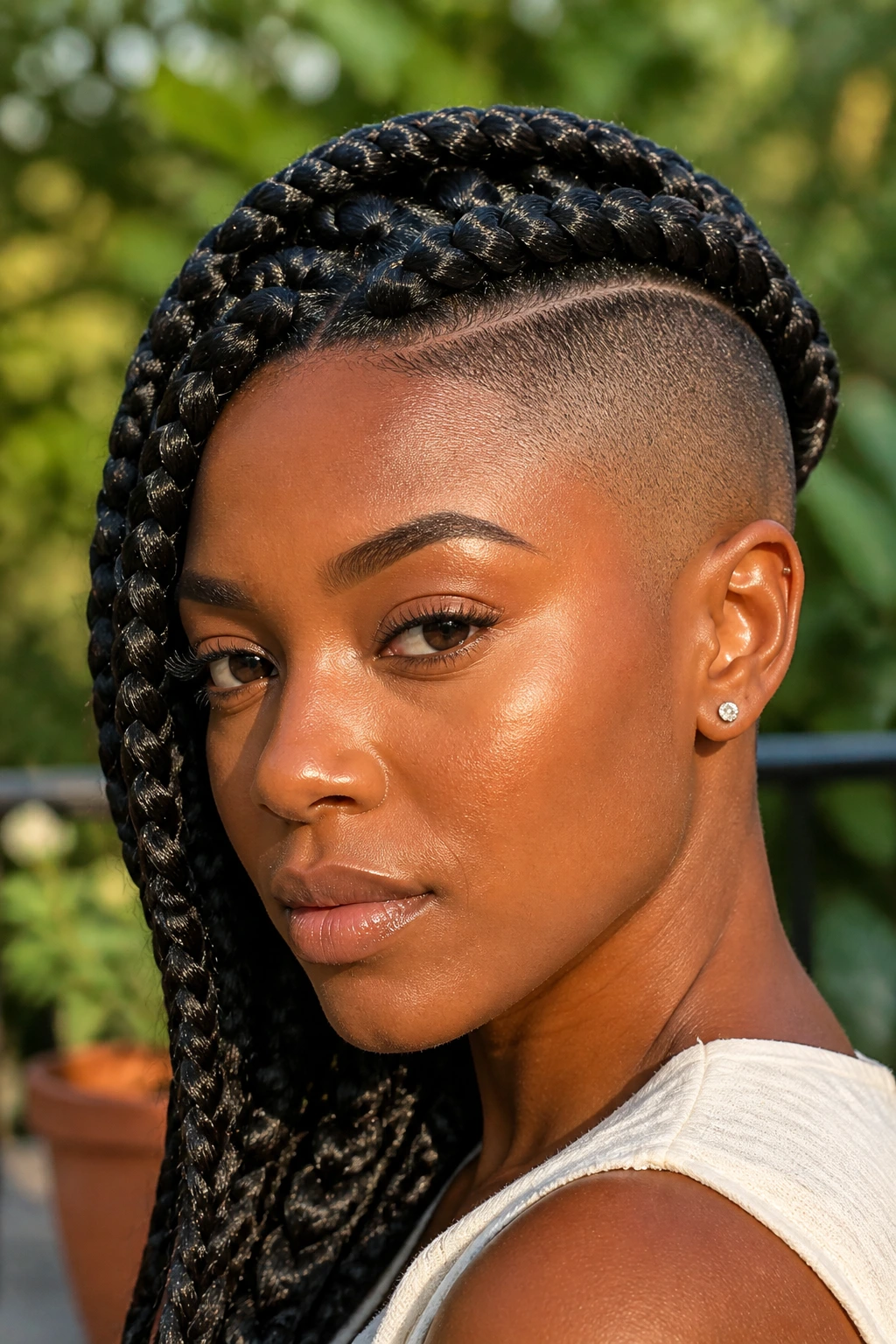
Goddess braids are thicker, softer, and a little more romantic than regular cornrows, which makes them a nice partner for a clean side shave. The large braid lines create shape on top, and the shave pulls the whole look away from being too heavy. It’s a good choice if you want braid texture without the long, narrow feel of lemonade braids.
The braid thickness matters here. Too many small braids can crowd the shaved side and make the head look overworked. Three to five larger braids usually give the best balance. Keep the braids close to the scalp for the first few inches, then let them loosen a little toward the back or side.
This one looks especially good with a fresh lineup and simple jewelry. You do not need a pile of accessories. The braid pattern and the shaved panel already do enough.
15. Loc Bob With a Side Undercut
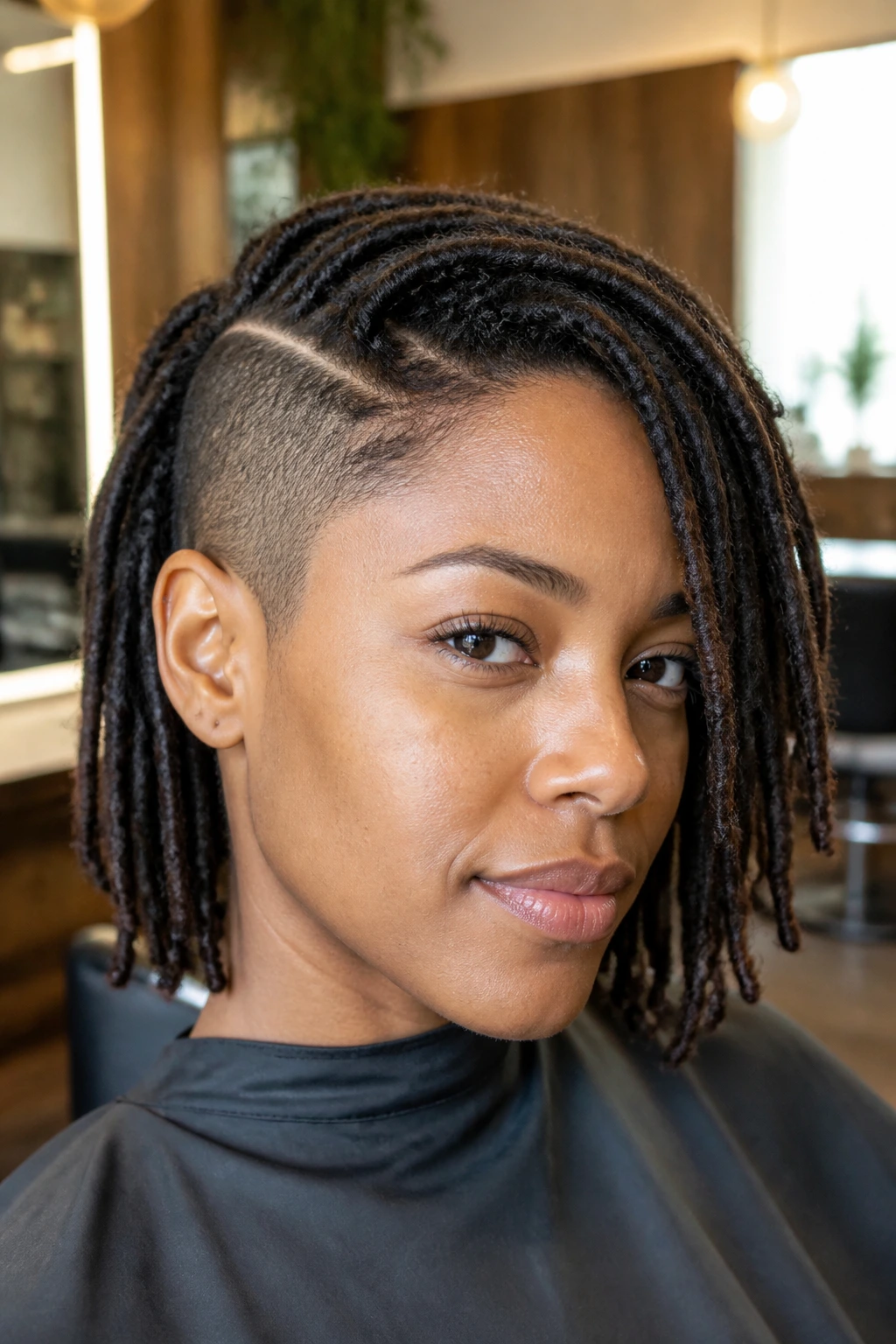
A loc bob with a side undercut is one of those cuts that looks cleaner the less it tries. The locs rest at the jaw or collarbone, the undercut removes bulk, and the whole shape becomes lighter around the neck and ears. If your locs are medium or thick, the undercut can save you from that triangular bulk that sometimes happens with shorter lengths.
The best part is movement. When the locs swing to one side, the undercut keeps the opposite side from looking too dense. You can tuck the locs behind the ear on the shaved side or leave a few pieces out for softness. Either way, the shape stays readable.
A loc bob also ages nicely. As the undercut grows in, the style becomes less stark rather than falling apart. That’s worth a lot if you prefer cuts that soften instead of disappearing.
16. Topknot Loc Ponytail With a Tapered Fade
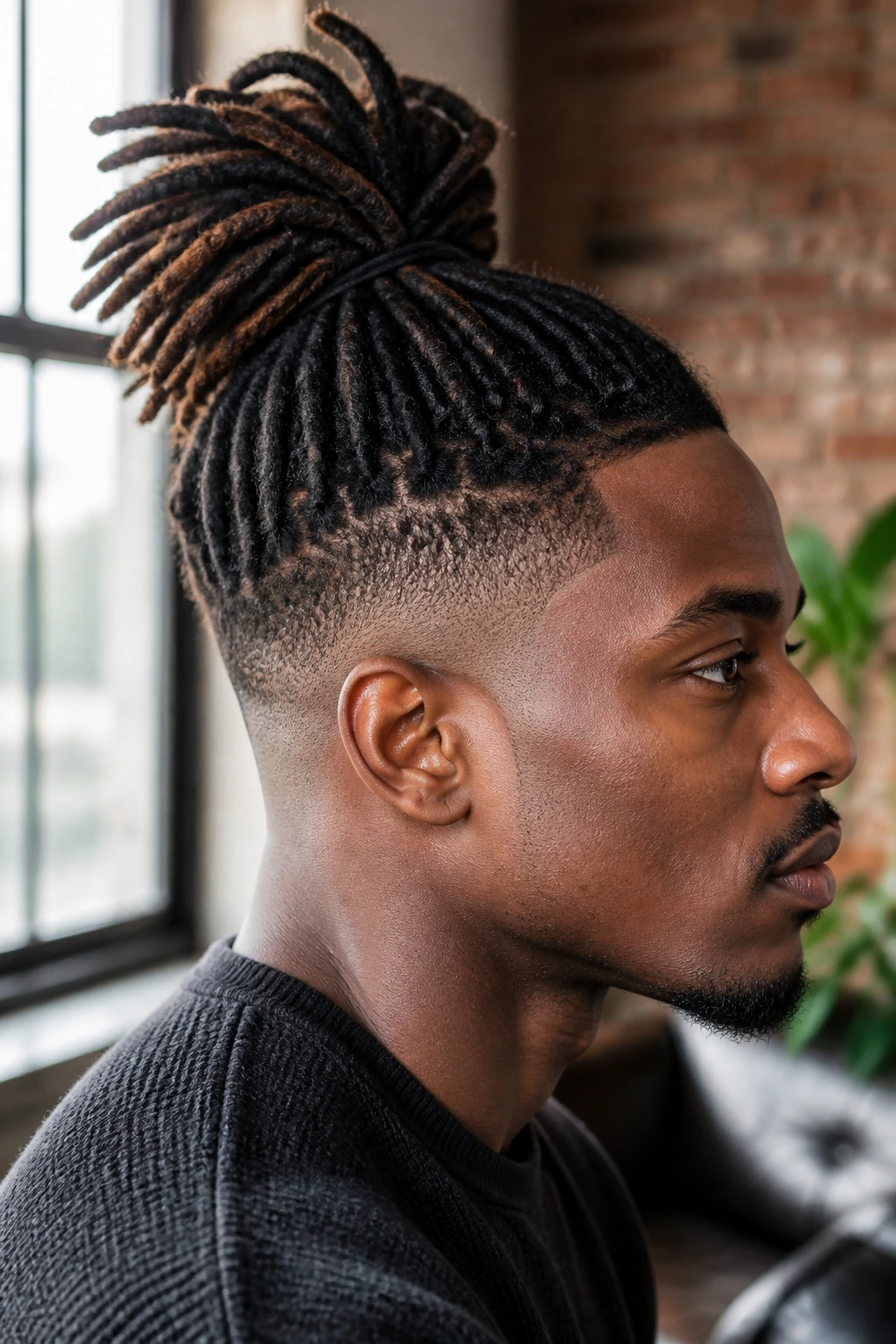
A topknot loc ponytail sits high and clean, and the tapered fade below it gives the style breathing room. The fade stops the locs from looking too heavy at the sides, especially if your locs are long or thick. The topknot becomes the main event; everything else just supports it.
You want the ponytail base secure but not yanked tight. Locs have weight, and pulling too hard at the crown can make the style uncomfortable fast. A tapered fade rather than a full skin shave is a smart choice if you still want the cut to soften naturally over time.
Best with: medium to long locs, a tidy edge-up, and a little scalp oil on the fade area.
Ask for: a low taper that keeps the topknot looking lifted instead of bottom-heavy.
Watch for: buildup at the base of the locs. Clean that area often.
17. Crochet Curls Over a Shaved Side
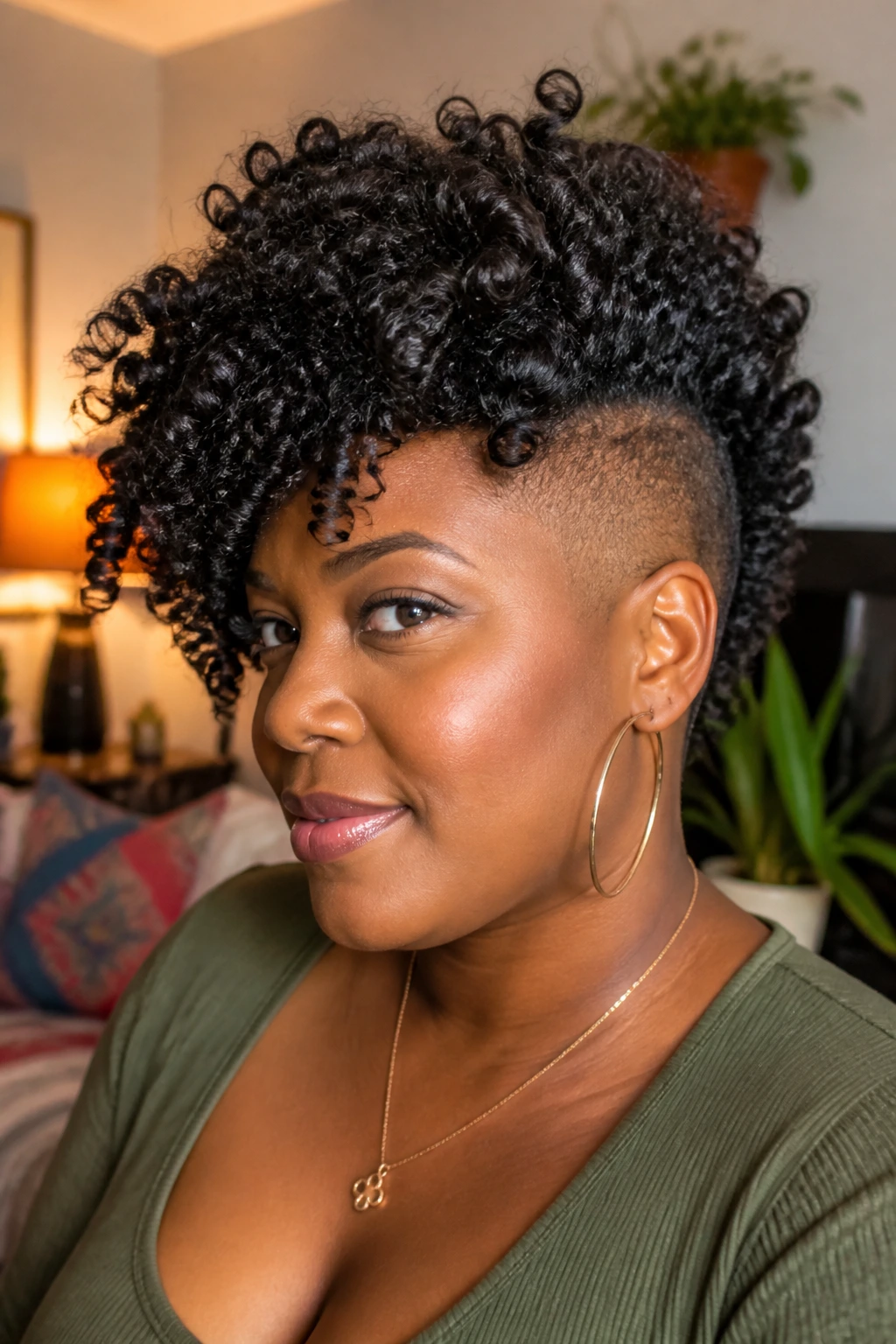
Crochet curls let you build volume fast, and the shaved side keeps that volume from overwhelming the head. This is a good move if you want length for a while without waiting for it to grow. The curls on top can be big, springy, or soft, while the buzzed side keeps the whole thing from turning into a giant round cloud.
The install should start with a solid base. Cornrows or flat twists need to lie low so the crochet hair sits cleanly, not lumpy. If the side shave is too high, the install can feel disconnected. Leave a little natural hair at the sides so the contrast looks intentional, not like two different hairstyles sharing a head.
This style shines when you want fullness without daily styling. Just keep the scalp clean, avoid piling heavy products at the roots, and let the crochet hair move. It should look lively, not stiff.
18. Mini Twists and a Side Fade
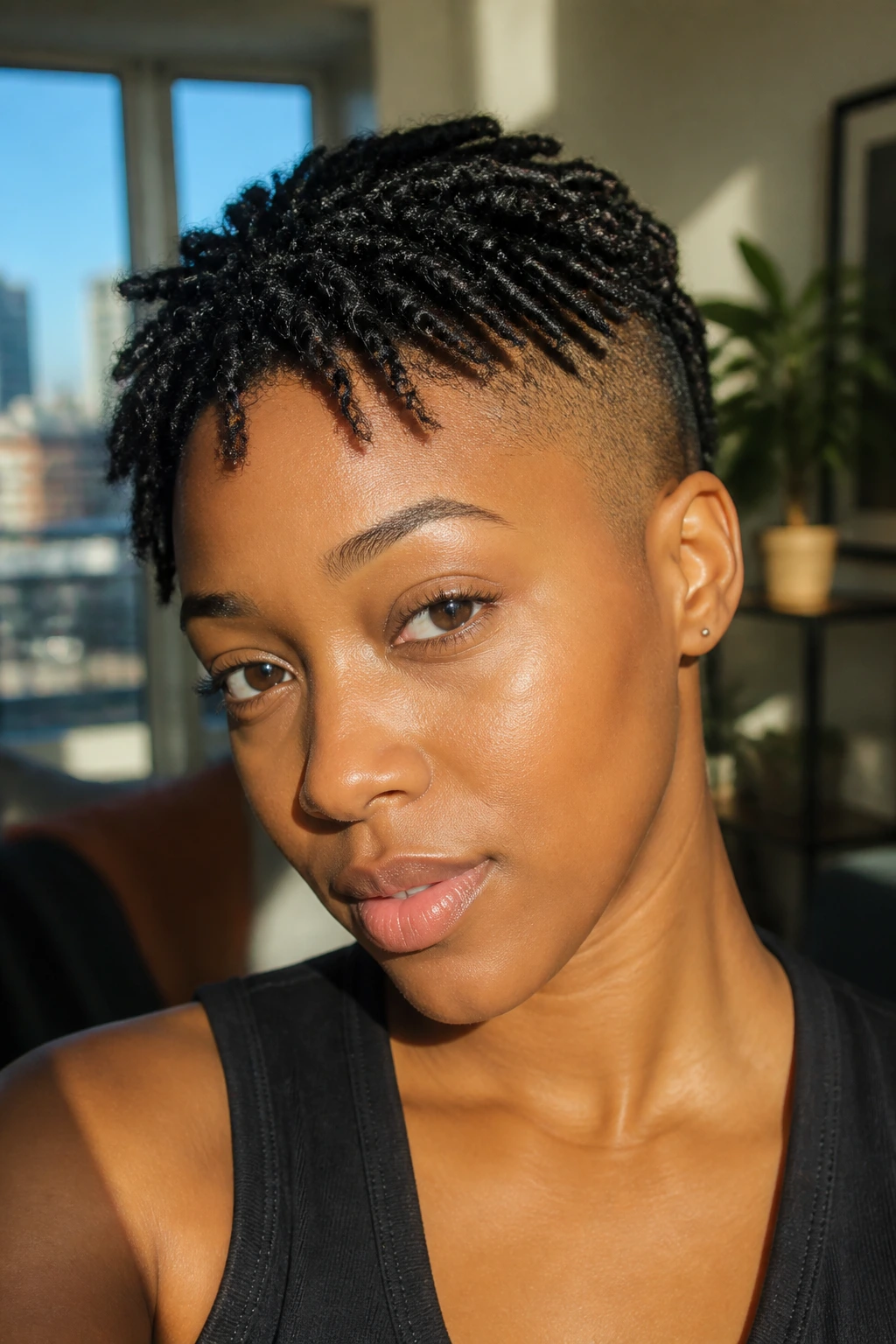
Mini twists give you a lot of texture with very little fuss, and the side fade adds a clean line that keeps the twists from feeling too busy. It’s a low-tension look that can last, especially if your hair likes protective styles but can’t handle much pulling. The fade also makes the style look lighter, which matters when the twists are short and dense.
The twist size is the whole story here. Tiny enough to hang neatly, not so tiny that your fingers spend forever parting them. A side fade should stay close enough to look clean but not so bare that the twists feel detached. The best versions make the twists seem like they’re spilling past a sharp edge.
This is one of the quieter looks on the list, but don’t mistake quiet for boring. Mini twists with a fade can look incredibly crisp in daylight, especially when the parts are exact and the ends are clean.
19. Halo Braid With a Temple Shave
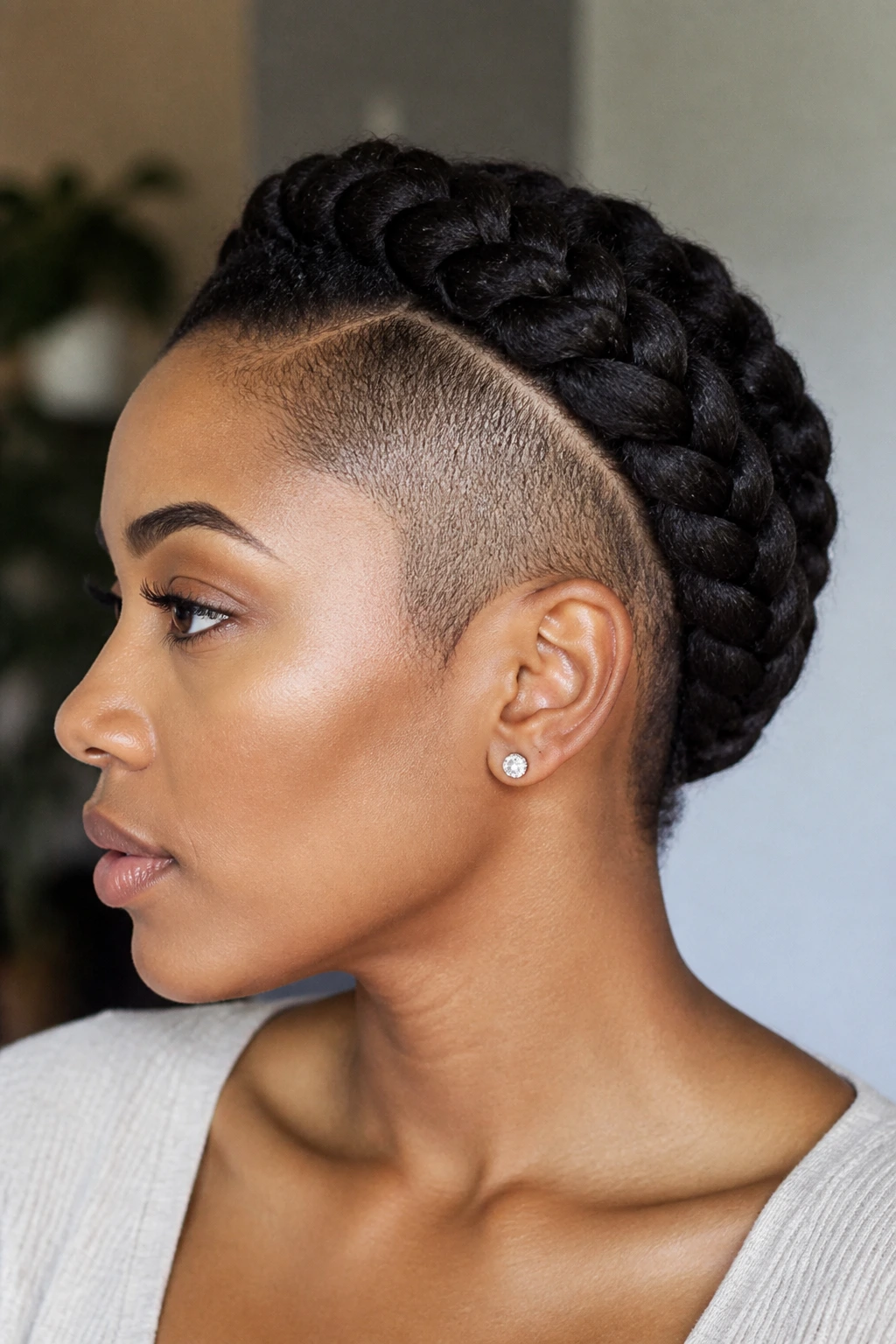
A halo braid usually gives soft, regal lines around the head. Add a temple shave, and the style suddenly gets a modern edge. The braid frames the face from above while the shave opens one side, which keeps the whole look from sliding into costume territory.
The braid should sit low enough to show the temple and high enough to keep its circular shape. If it drops too low, the shave gets hidden. If it sits too high, the halo loses that gentle sweep around the hairline. Medium-to-thick braids tend to hold the shape best.
How to wear it: pair the braid with a clean neckline and a single statement earring on the shaved side.
Why it works: the braid adds softness, the shave adds contrast, and the combo reads elegant without looking fussy.
Best for: weddings, dinners, or any day you want the cut to feel dressed up.
20. Braided Mohawk Into a Top Knot With Buzzed Sides
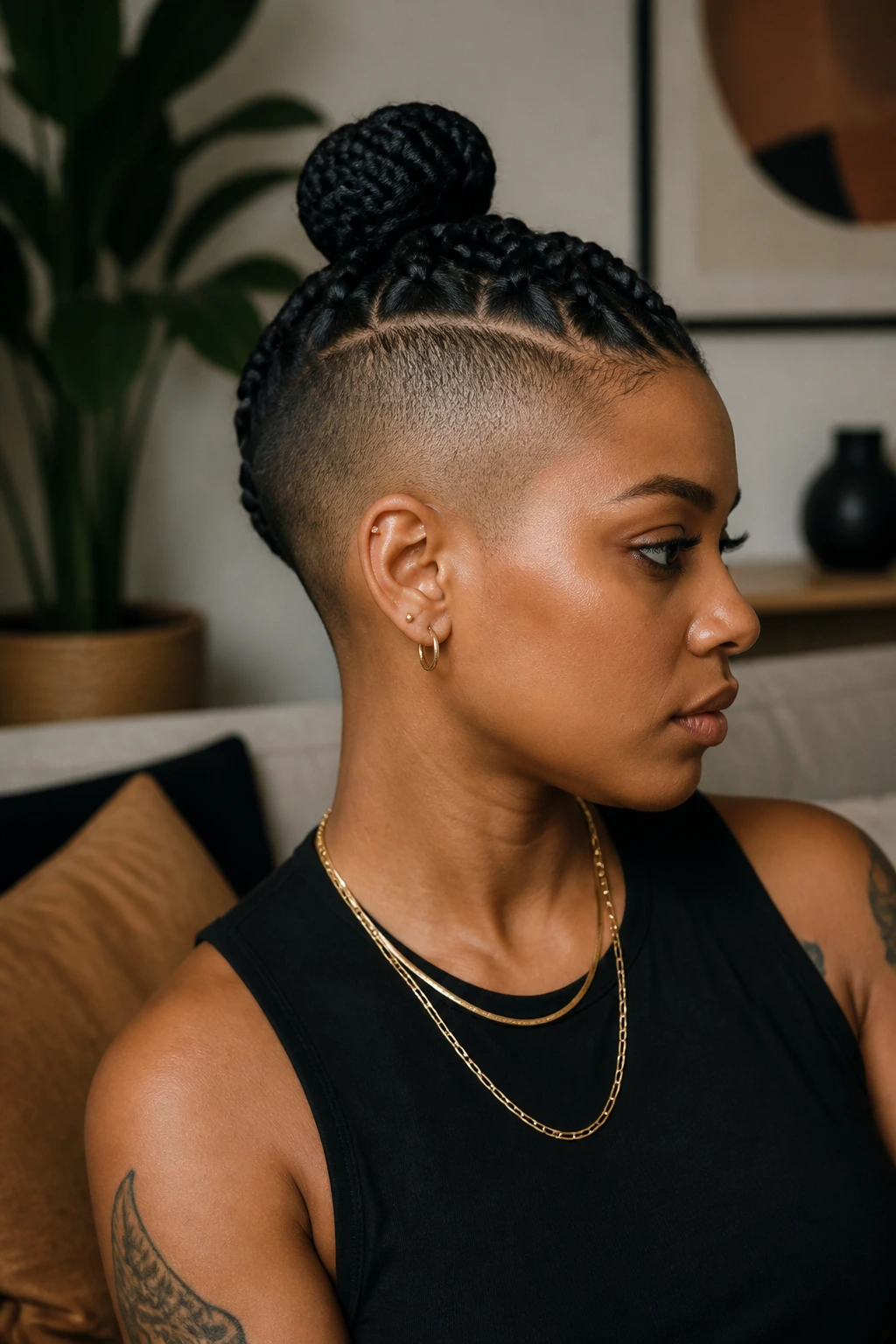
This one is all shape, all the time. Braids pull the eye toward the center, the top knot lifts it even higher, and the buzzed sides clear out the visual clutter. The result is dramatic in the best way: clean sides, strong center, zero confusion.
The top knot should sit firm, not inflated. If it gets too large, the buzzed sides can look like an afterthought. Keep the braid rows tight and the knot compact so the silhouette stays pointed and intentional. This style is stronger when the lines are neat than when they’re oversized.
You’ll notice this cut in a crowd. That’s the point. But it still works because the sides are controlled, and the hair has one clear direction to go.
21. Sculpted Afro With a Hidden Undercut
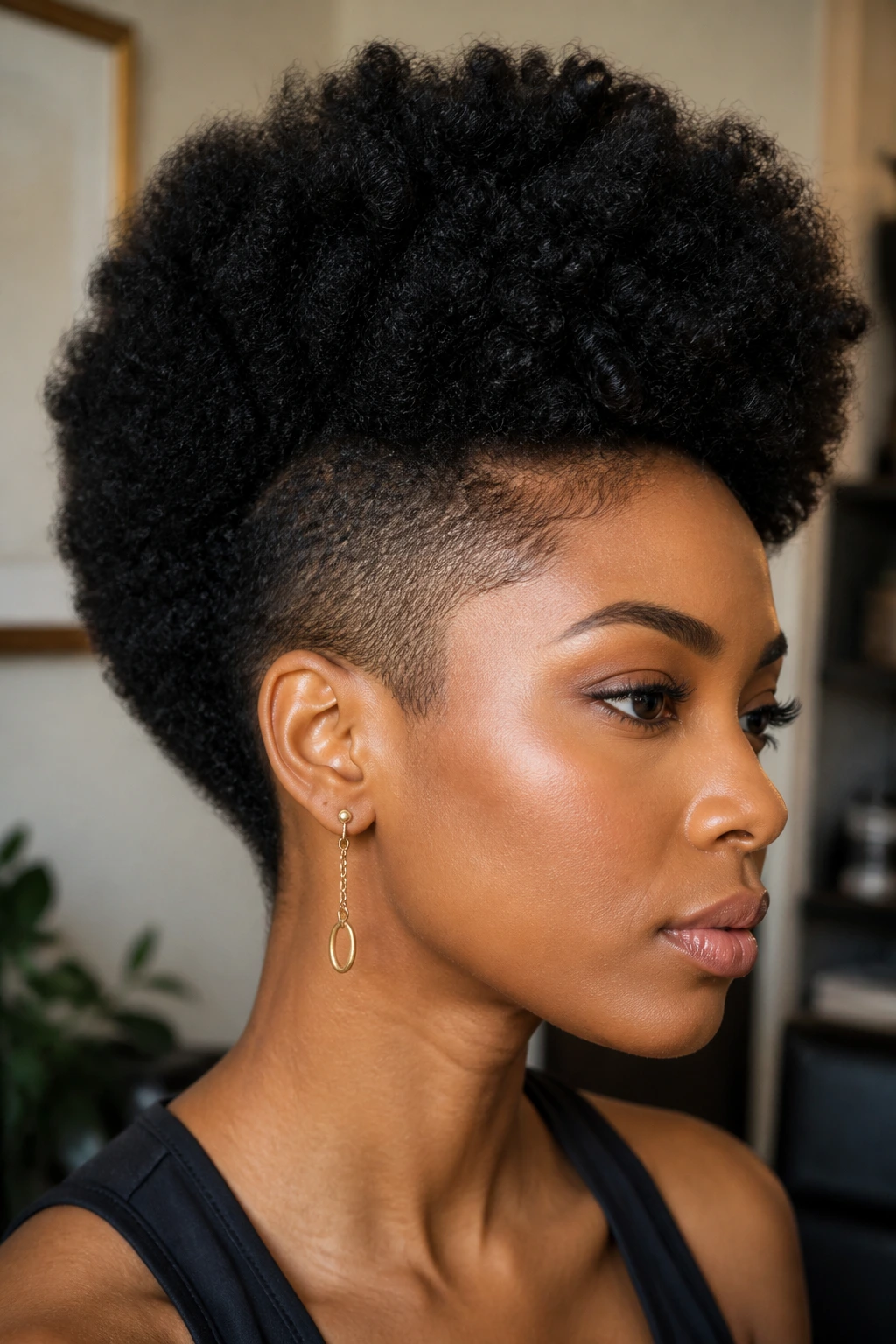
A sculpted afro with a hidden undercut is one of the best ways to wear big texture without letting it sprawl everywhere. The afro keeps its roundness, but the hidden shave removes weight underneath so the shape sits cleaner around the ears and jaw. From the front, it can look classic. From the side, it feels sharper.
The top should be shaped with scissors, not just picked out and left alone. A good afro cut follows the head, with the outer line rounded and the sides balanced. The undercut should stay hidden enough that it doesn’t interrupt the dome unless you tuck the hair deliberately.
This style is ideal if you like volume but hate the triangle effect. The undercut gives the afro room to breathe while keeping the silhouette deliberate. That combination is harder to get than people think.
22. Puff and Scarf With a Buzzed Temple
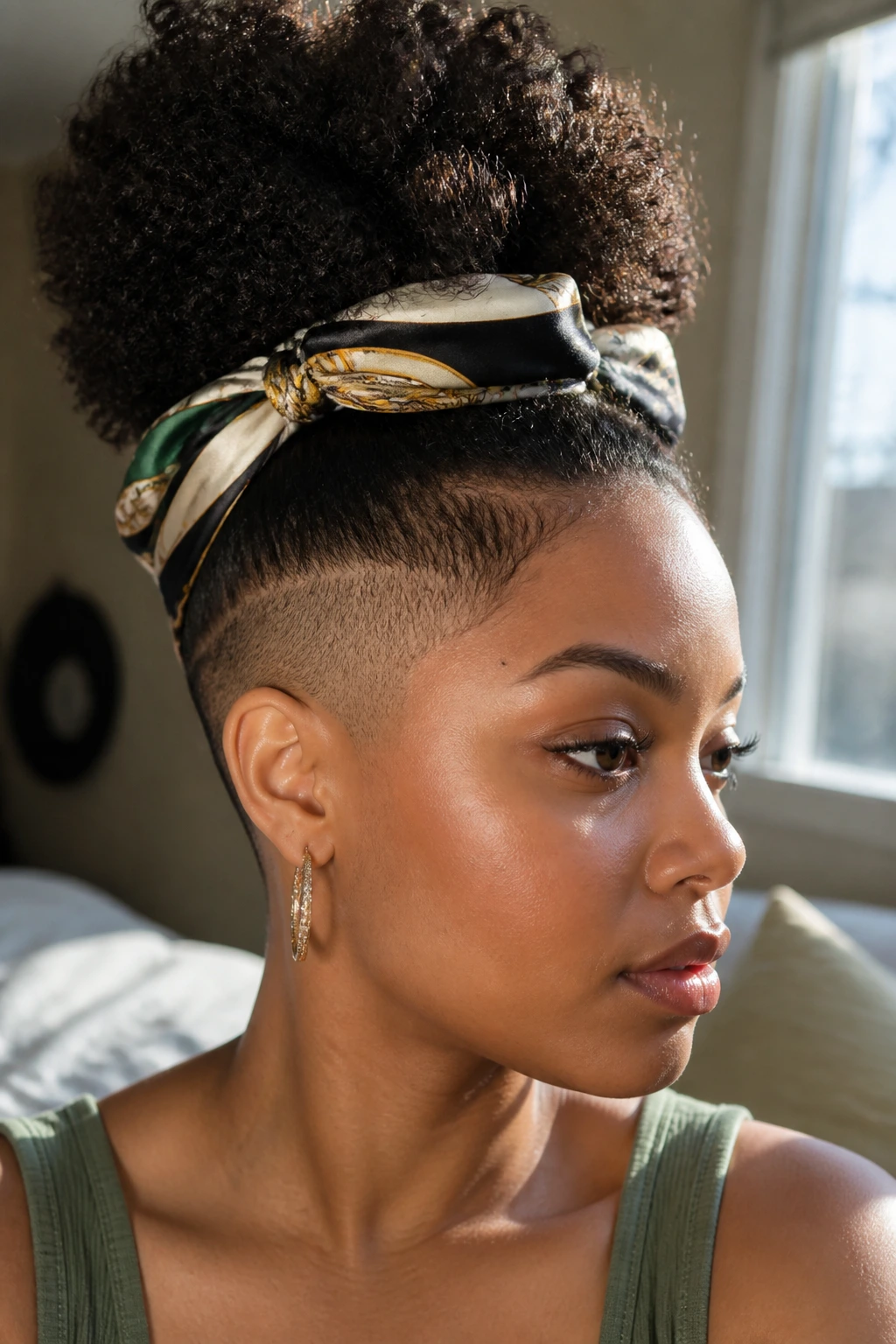
A puff and scarf style can be thrown together fast, but the buzzed temple makes it look styled rather than accidental. The scarf wraps the top into a neat shape, and the shaved side shows just enough edge to stop the look from becoming too soft. It’s an easy daily style with more personality than a plain puff.
The scarf matters more than people think. A silk or satin scarf gives a smoother finish than cotton, and the buzzed side keeps the wrapping line from feeling bulky. Leave enough volume at the crown so the puff still shows over the band or knot.
This is the kind of style you wear on a day when you need to move fast but still want the cut to show. A pair of hoop earrings and a little edge work can make it look deliberate in under five minutes.
23. TWA With Graphic Line Work
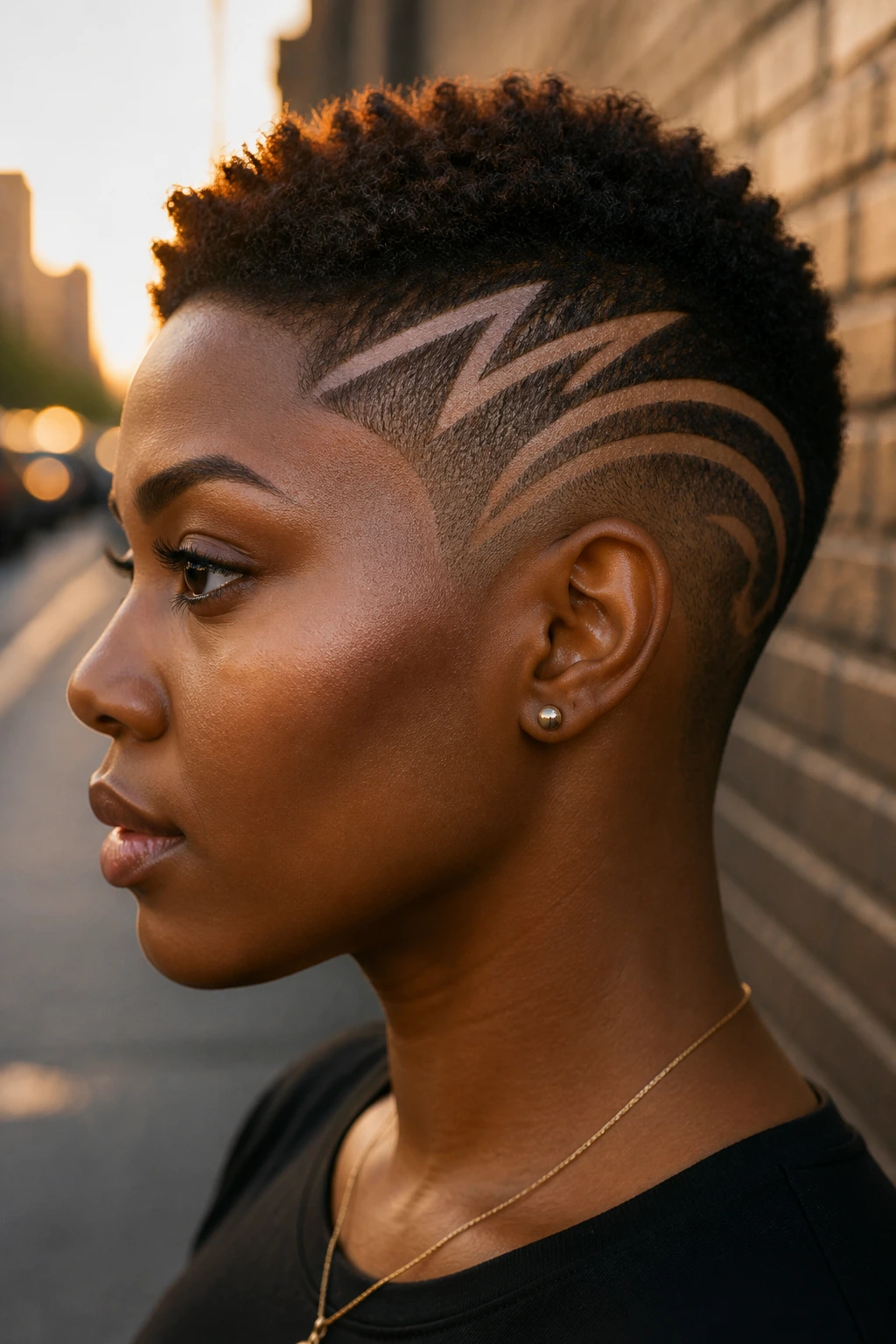
A TWA with graphic line work is the sharpest, simplest style on this list. The hair stays short, the line design adds movement, and the shaved side becomes part of the art instead of just a cut. If you like your hair close and clean, this look has almost no waste in it.
The graphic line should suit the shape of your head, not just follow a random zigzag. A curved line can soften a strong jaw. A straight line can sharpen a rounder face. The TWA itself should stay even, with enough texture left to show the natural pattern instead of looking flat.
Ask your barber for:
- A clean lineup at the forehead and sideburns.
- One or two carved lines only after the main fade is settled.
Lines need upkeep. Once they blur, the style loses some of its punch, so schedule touch-ups before the design gets fuzzy.
24. Finger Coils and a Low Side Fade
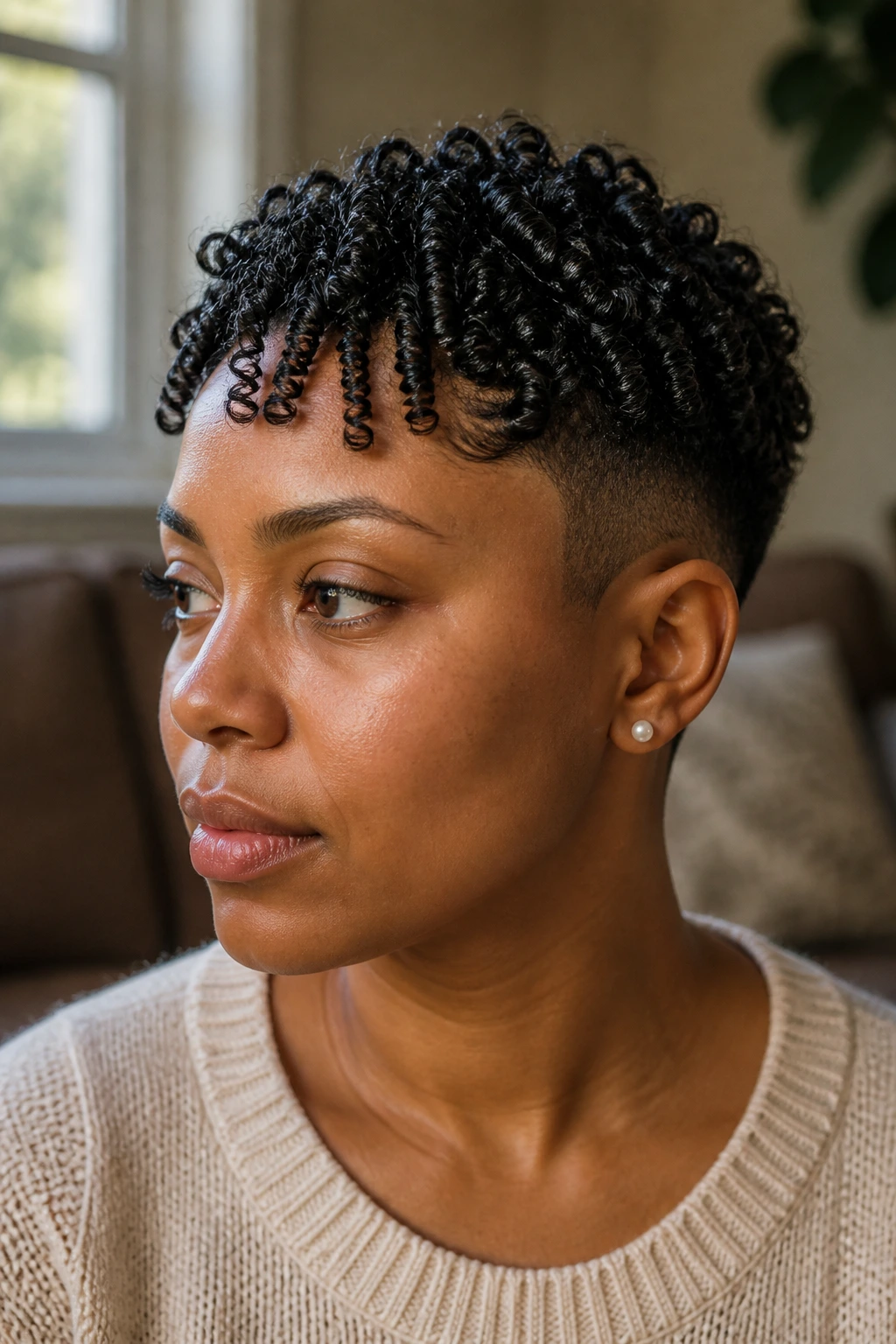
Finger coils and a low side fade work because both are about control. The coils give the top a tight, springy texture, and the fade keeps the sides from pushing the shape outward. It’s a polished look that doesn’t need much length, which makes it smart for shorter natural hair.
The coils should be set on damp hair with enough product to hold their round shape. Too much cream makes them swell and lose the coil pattern; too little leaves them frizzy before they dry. A low side fade lets the coil pattern stay the star while still giving you a clean outline.
This style looks especially good when the coils are uniform and the fade is soft. If one is messy, the other can’t save it. Luckily, the maintenance is straightforward once you find the right product balance.
25. Tapered Cut With Long Top Coils
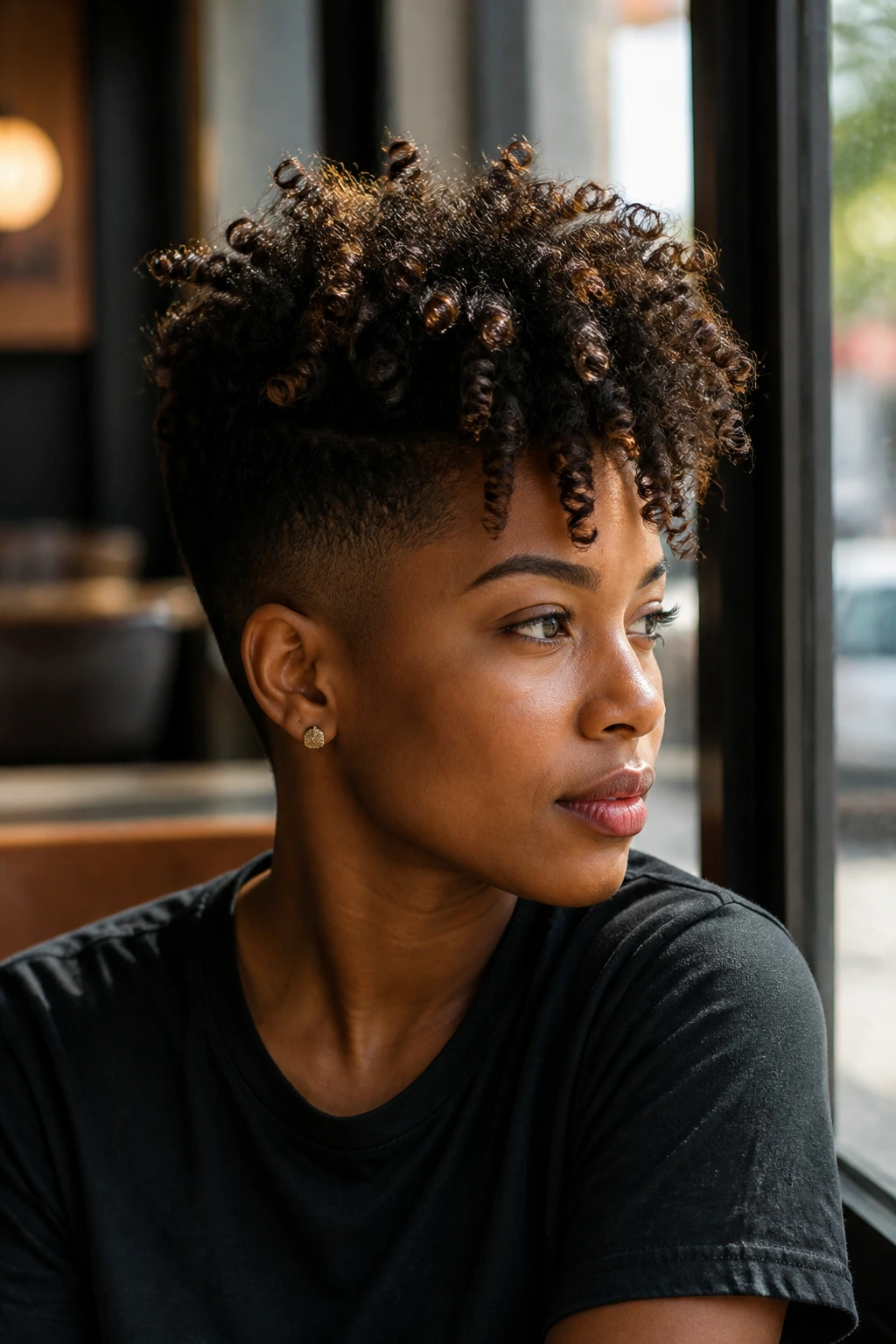
A tapered cut with long top coils is one of the cleanest everyday shapes for natural hair. The sides and back are shortened gradually, while the top stays long enough to show off curls, coils, or a stretched twist set. It’s not flashy. It’s tidy, balanced, and very hard to ruin.
The taper matters more than a hard shave here. Because the transition is gradual, the cut grows out with less drama. That makes it a smart choice if you like sharp shape but don’t want to babysit the sides every week. Keep the top long enough that the coils can sit up, not just lie down.
Best for: people who want a side-shaved feel without going fully buzzed.
How it wears: clean at work, easy on weekends, and still strong when the top gets a little bigger with humidity.
If you’ve never done a side shave before, this is one of the easiest entry points.
26. Frohawk With Defined Curl Pockets
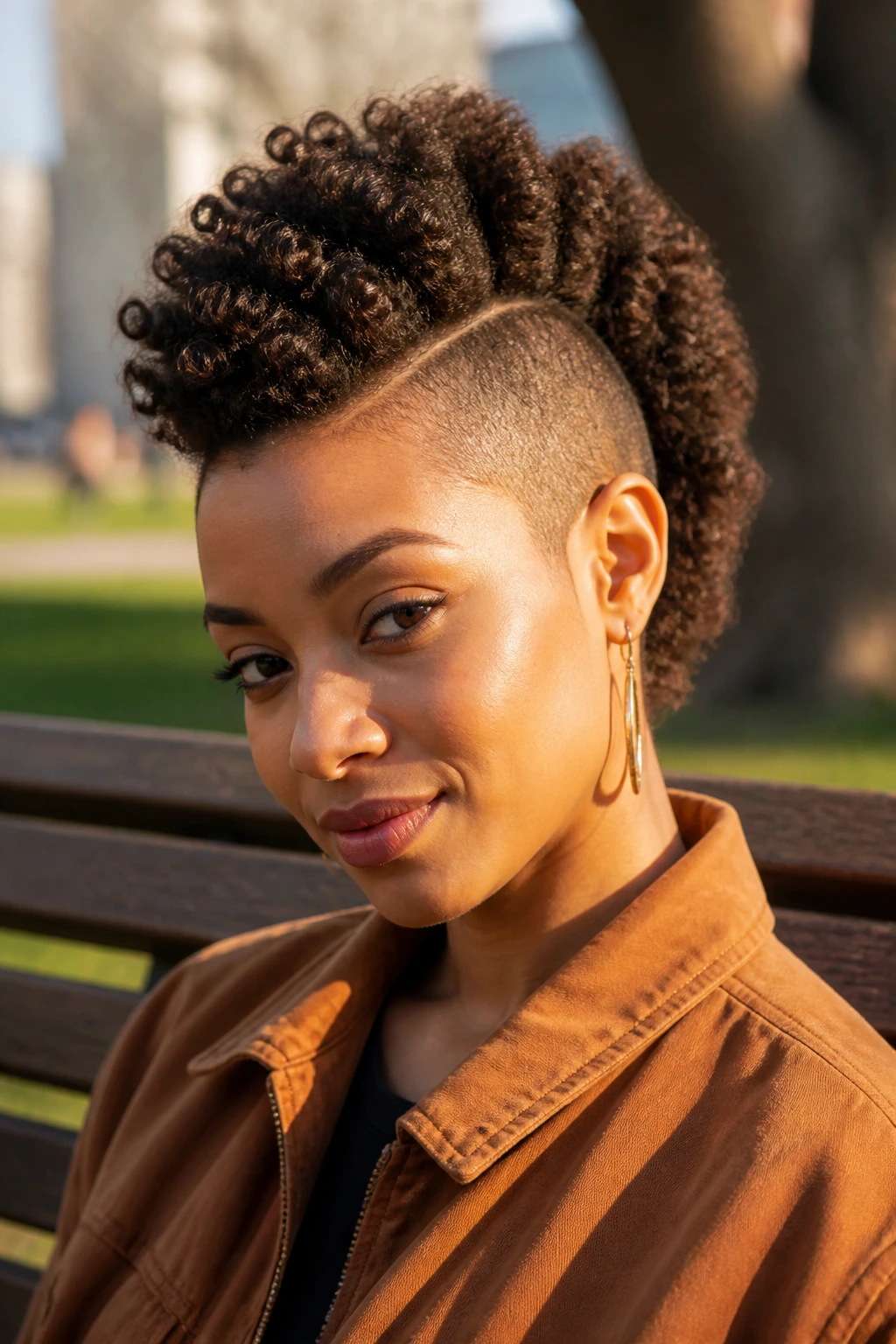
The frohawk with defined curl pockets takes the mohawk shape and softens it with more texture. Instead of one solid ridge, the curls sit in sections or “pockets” down the center, which keeps the style from looking stiff. The shaved sides make room for the curl shape to breathe.
This look works best when the curls are defined before styling, not after. Use a twist-out, braid-out, or a curl cream set to create distinct pockets. Then let the sides stay close and neat. If the center is too flat, the whole thing loses its point, so don’t be shy about height.
It’s a great style when you want structure but still want the hair to feel natural and touchable. The pockets make it look hand-shaped rather than shellacked.
27. Asymmetrical Natural Bob and Buzzed Side
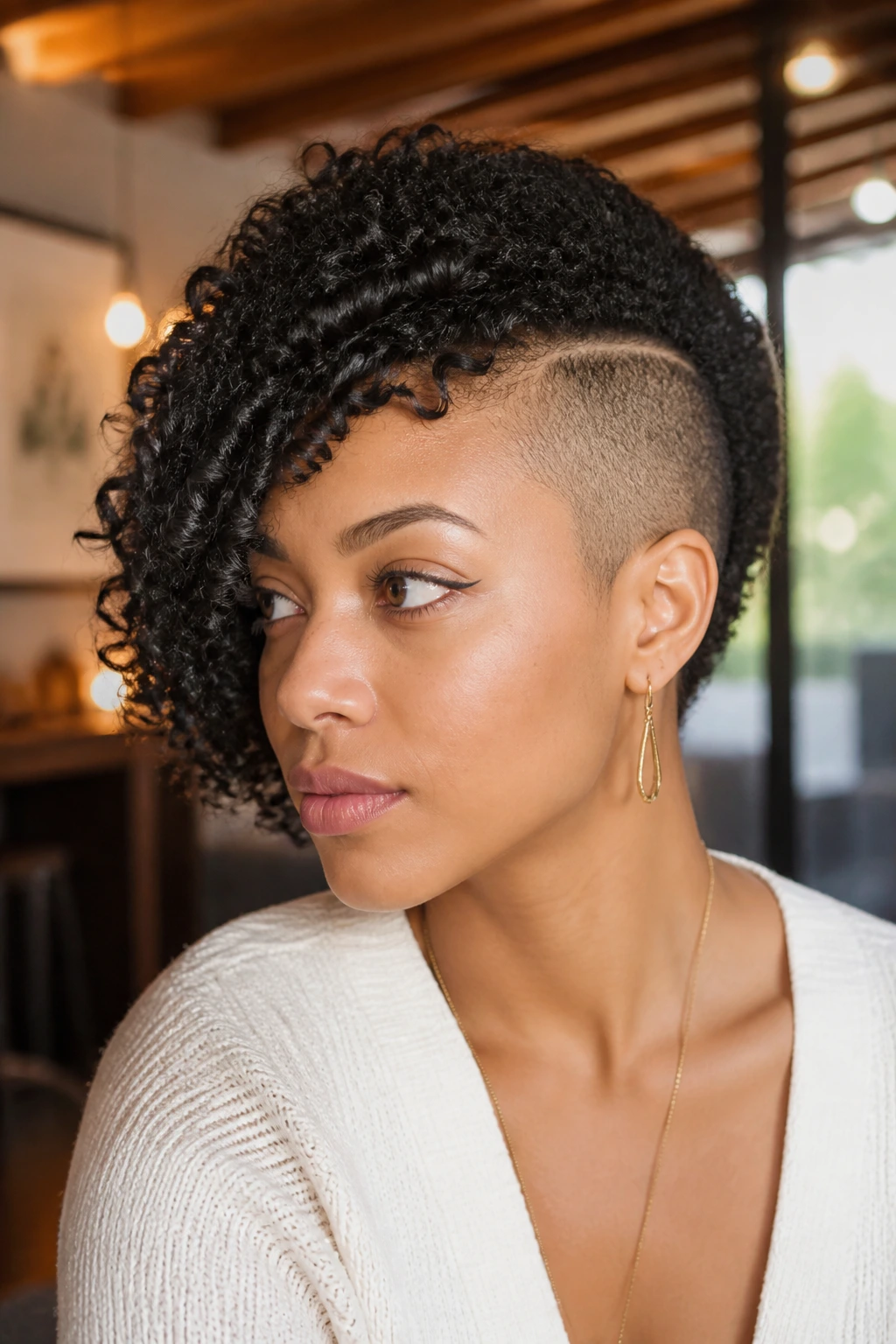
An asymmetrical natural bob and a buzzed side give you movement without the usual full-volume triangle. One side lands longer, one side stays close, and the bob shape becomes interesting the second you turn your head. It’s a smart cut for people who want something modern without giving up softness.
The longer side should be deliberate, not accidental. A bob that’s uneven in a sloppy way reads as a mistake; an asymmetrical bob with a shaved side reads as a choice. Keep the front pieces long enough to graze the jaw or collarbone, and let the buzzed side anchor the shape.
This one works especially well with loose curls or a stretched blowout. The contrast between the soft front and the close side gives the style a little swing. It’s neat, but not severe.
28. Pressed Natural Bob With a Side Undercut
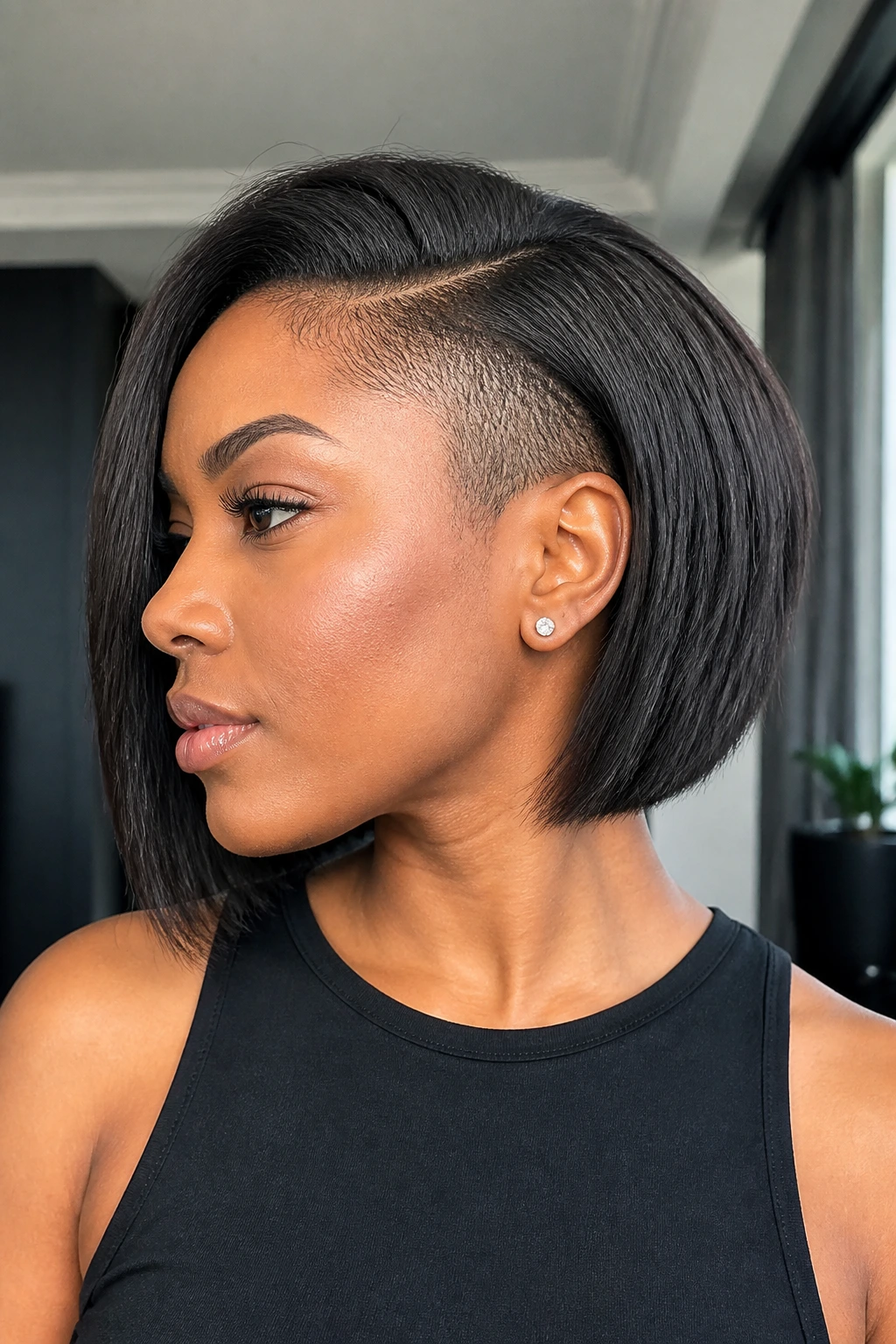
A pressed natural bob with a side undercut has a smooth, controlled finish that feels very different from a curly version. The undercut keeps the bob light, while the pressed texture lets the length swing cleanly around the face. It’s sleek without looking flat, which is a hard line to walk.
Heat matters here. If you press the hair, use a protectant and keep the passes slow and deliberate so you don’t cook the ends. The side undercut should stay low enough to remain hidden when the bob swings. That way, the cut gives you shape without stealing the shine.
This look is best when you want a cleaner profile for a few days. It also photographs well with a deep side part, but the more useful detail is this: keep the ends blunt enough that the bob doesn’t fray at the edges.
29. Textured Pixie With an Undercut
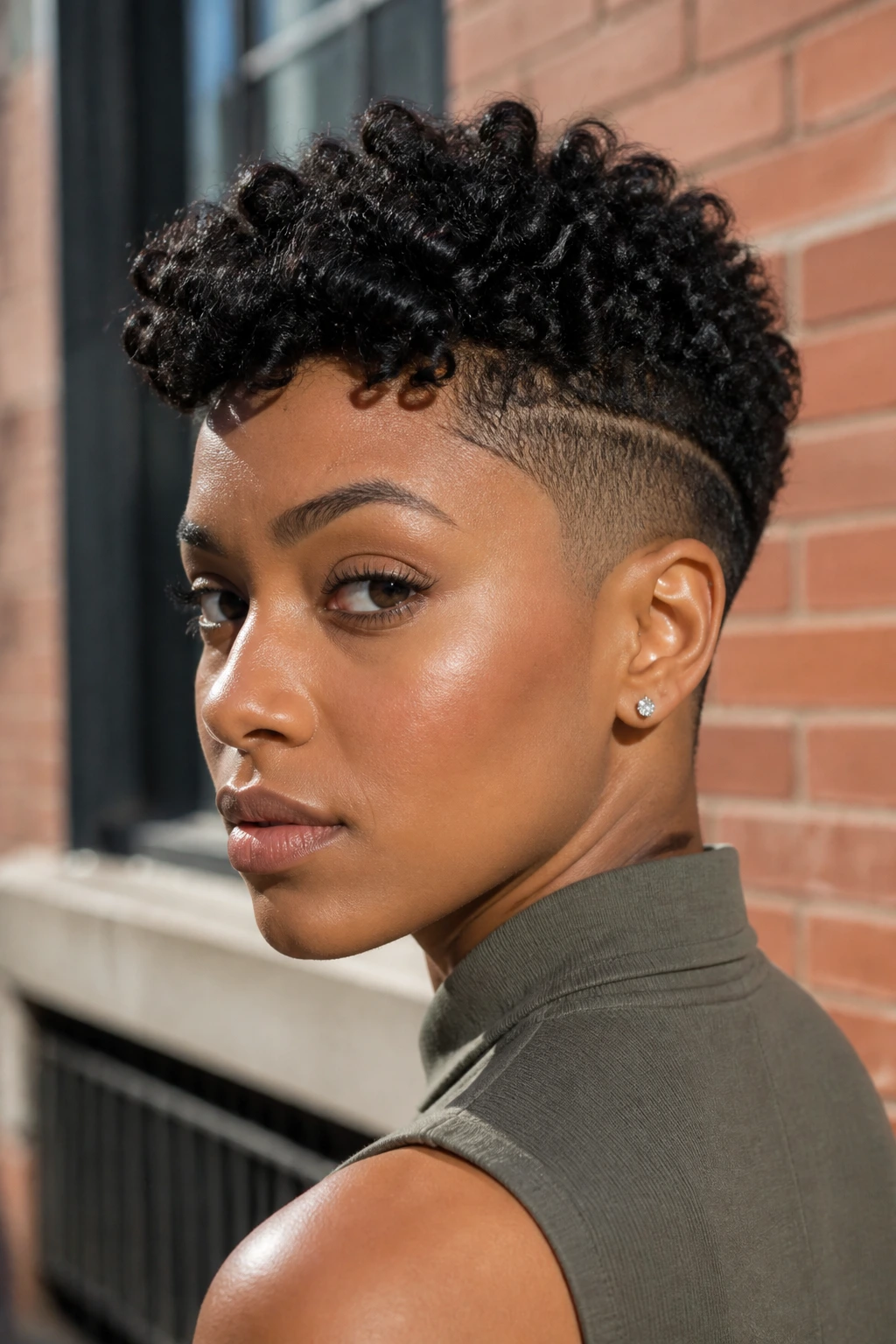
A textured pixie with an undercut puts the focus on your face, your ears, and the shape of the cut itself. The hair stays short enough to move fast in the morning, but long enough on top to hold texture. The undercut removes bulk where a pixie can get puffy, especially around the crown.
The top needs a little product and a little direction. A cream with light hold or a matte styling paste can give short coils some separation without making them stiff. If the sides are too long, the pixie stops reading as a pixie and starts reading as a grown-out cut.
This is one of the easiest styles to wear if you like your natural hair close to the head. It asks for regular trimming, though. Skip the maintenance and it loses the clean line that makes it work.
30. Wash-and-Go Faux Hawk With Buzzed Sides
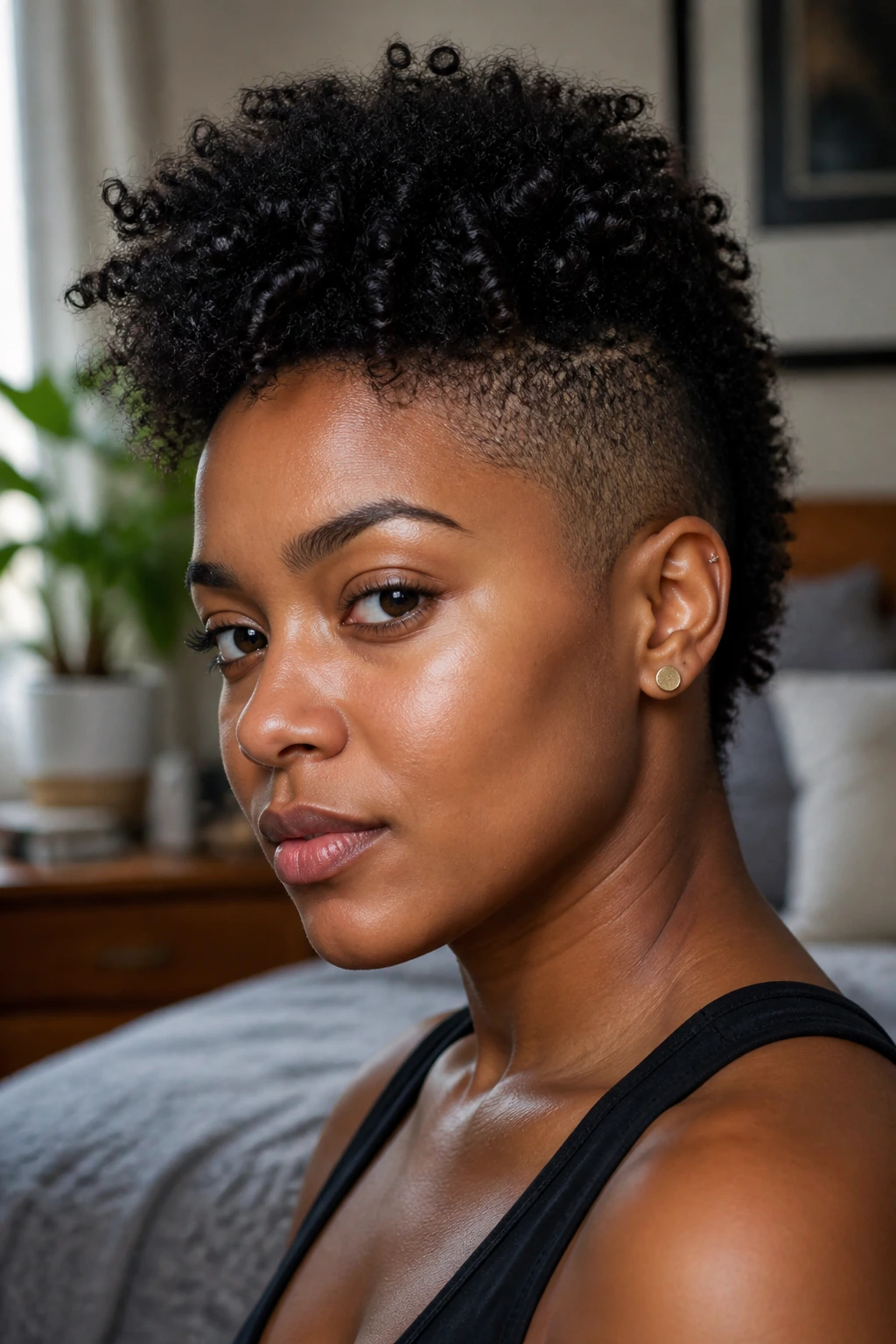
This is the fast cousin of the curly mohawk. The wash-and-go texture stays loose and defined, while the buzzed sides give it the faux hawk outline. You get the shape of a mohawk without needing a full sculpted center strip.
The top should be brushed or finger-shaped slightly toward the middle while it dries. That creates the illusion of a raised center without forcing the curls into a helmet. A foam or medium-hold gel helps the top hold direction, especially near the front hairline where curls like to split.
It’s a strong everyday style because it’s quick to refresh. A spray bottle, a little mousse, and five minutes can pull it back into shape. You’ll know it’s right when the sides feel clean and the top still has some movement.
31. Natural Mullet With Shaved Sides
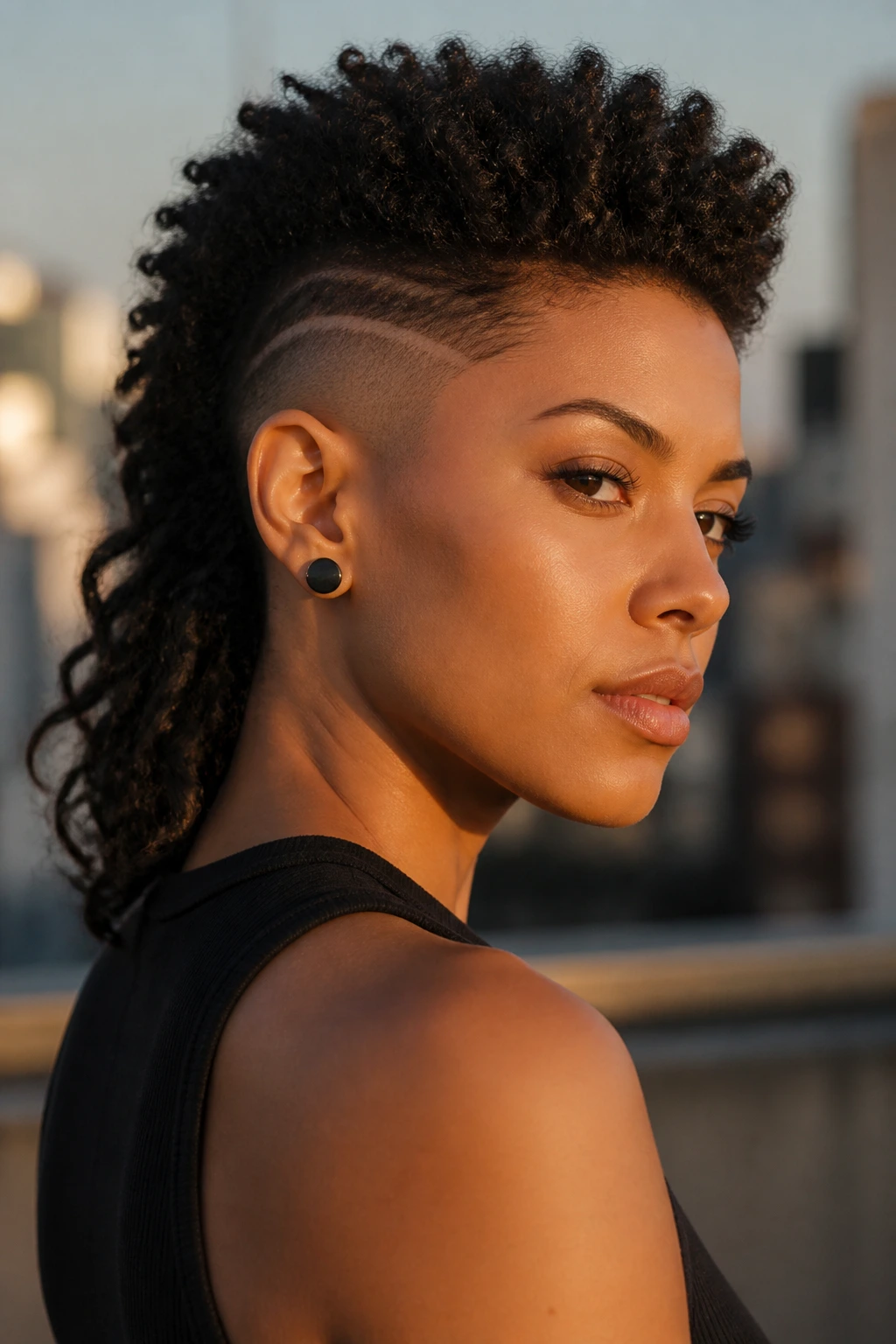
A natural mullet with shaved sides is for people who do not want their hair to behave politely. The front and sides stay shorter, the back hangs longer, and the shaved side exaggerates the shape even more. Done well, it looks fashion-forward; done badly, it looks unfinished. So the cut matters.
The trick is to keep the layers intentional. The top should blend into the back without a sudden shelf, and the shaved side should be clean enough to support the longer rear length. If the back is too bulky, the cut loses its line and starts to look heavy. A little shaping around the nape helps a lot.
This style works best when you want edge and movement at the same time. It’s not subtle, and that’s fine. It should feel a little daring.
32. Curly Bob With One Buzzed Side
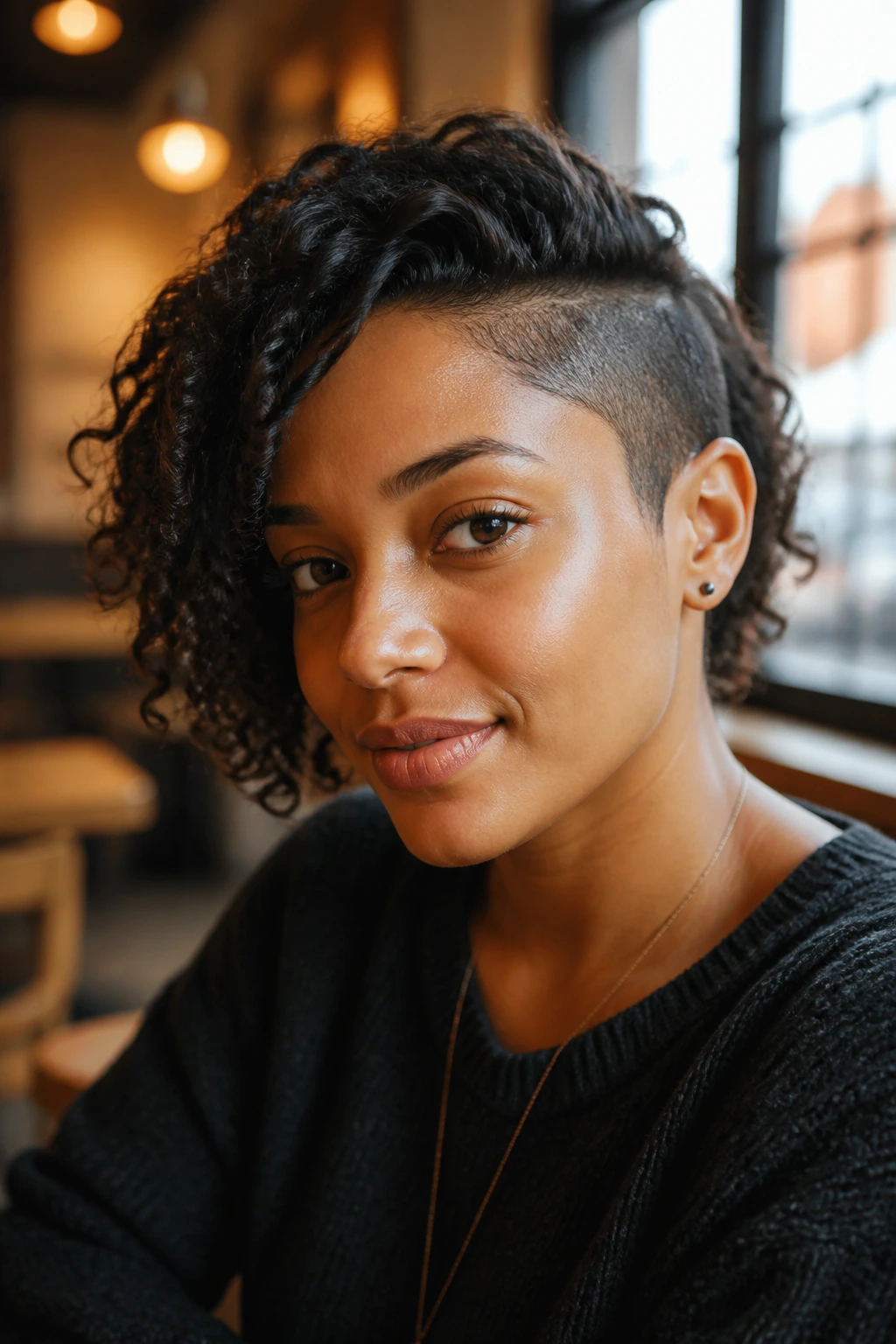
A curly bob with one buzzed side gives you softness on one side and structure on the other. The bob keeps the overall shape familiar, while the buzzed panel changes the mood. That little bit of asymmetry can make a basic bob feel much fresher without losing manageability.
The curl definition matters more than the cut here. If the curls are loose and undefined, the whole thing can look puffy. A good curl cream or gel set gives the bob enough pattern to sit nicely around the jaw. Keep one side tucked behind the ear on the shaved side, and the contrast does the rest.
This is a nice middle-ground style for anyone who isn’t ready for a full undercut. It still gives you the edge, just with more softness around the face.
33. Jumbo Passion Twists and a Side Undercut
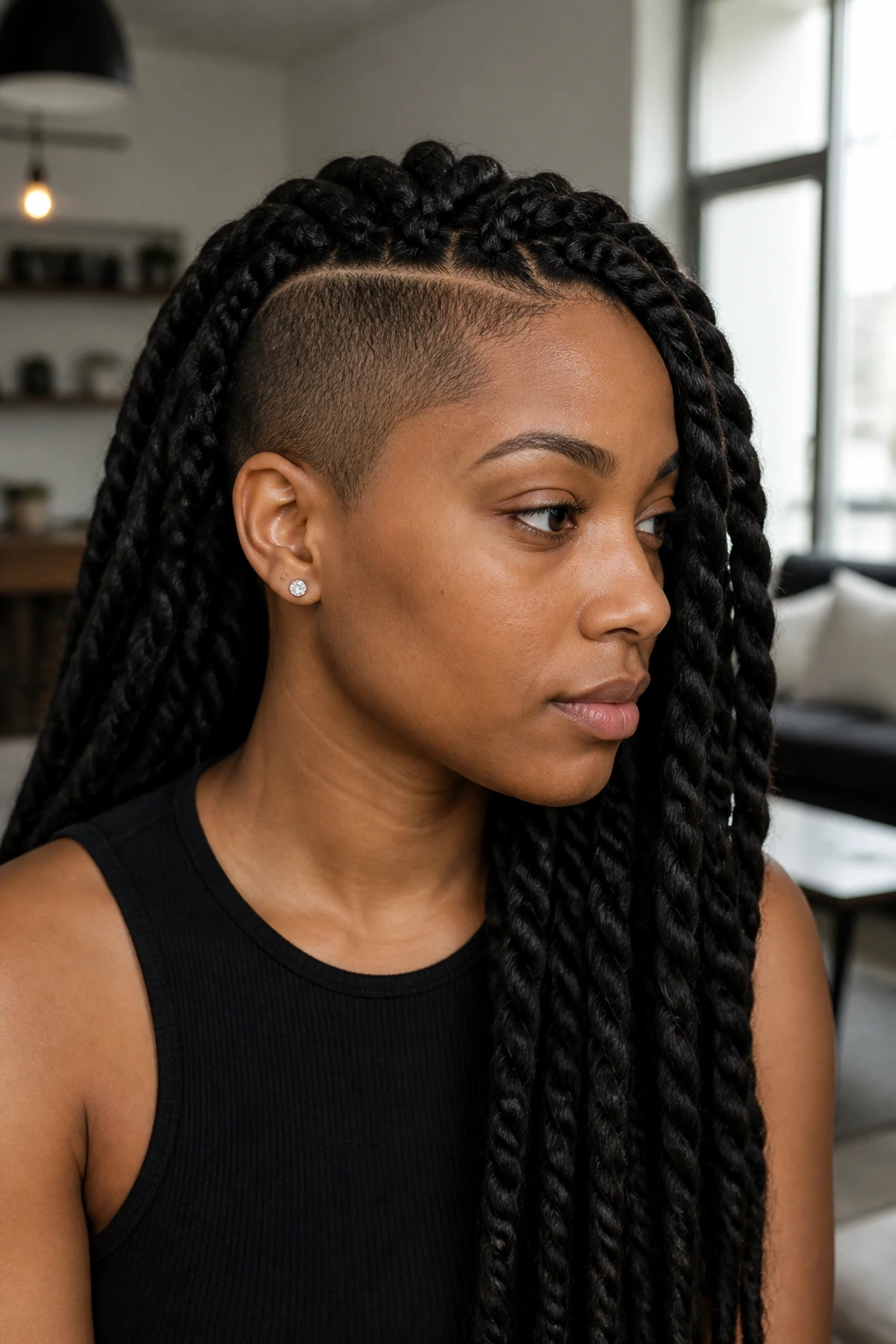
Jumbo passion twists already have weight and texture, so the side undercut keeps the style from feeling too bulky. The twists bring a rope-like softness, and the undercut lets the whole look sit lighter against the head. It’s a good protective style when you want length without a full blanket of hair.
The parting has to be clean or the style loses its polish fast. Jumbo twists show every zigzag in the base, especially near the temples. Keep the undercut low and tucked so the twists still have room to cascade. If you shave too high, the contrast gets harsh and the style can feel disconnected.
This one is nice for someone who wants a long-wear style with a little edge. It also makes a good canvas for cuffs or beads, though I’d keep the accessories sparse on the shaved side. Too much can start fighting the shape.
34. Knotless Braids With a Shaved Temple
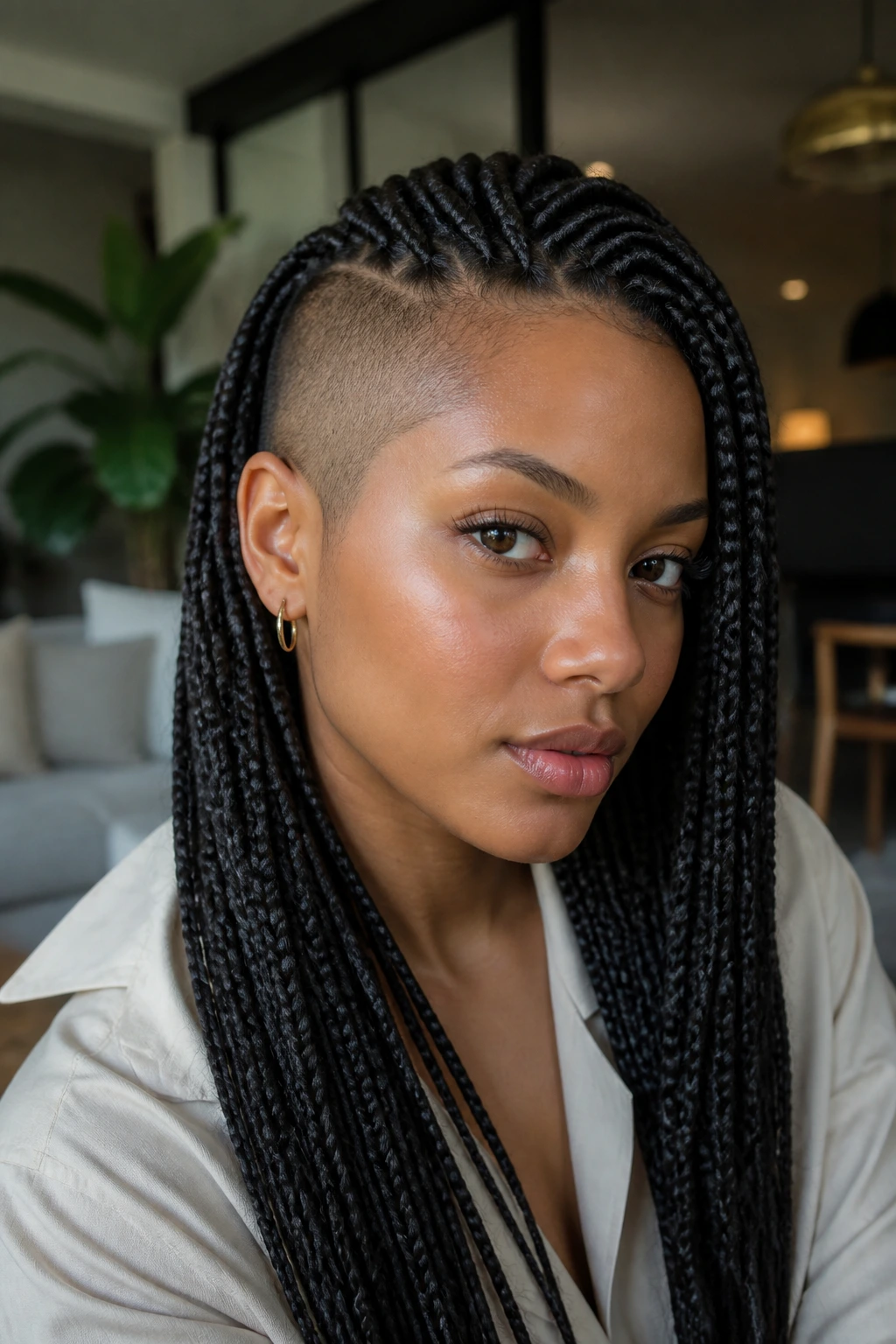
Knotless braids and a shaved temple are a neat match because knotless braids already sit flatter at the root. The temple shave keeps that smooth base from feeling too heavy at the face, and the braid length can swing freely. This style has a softer start than traditional box braids, which makes the shaved panel look even cleaner.
The braids should be light around the hairline. If they pull hard, the shaved temple doesn’t help much because the tension will still show. Medium or long knotless braids usually work best here, since they balance the open side with enough movement.
This is a strong choice if you want a protective style that doesn’t hide the cut. The temple stays visible, the braids stay neat, and the whole look can handle a little color if you want it later.
35. Geometric Undercut With a Short Afro
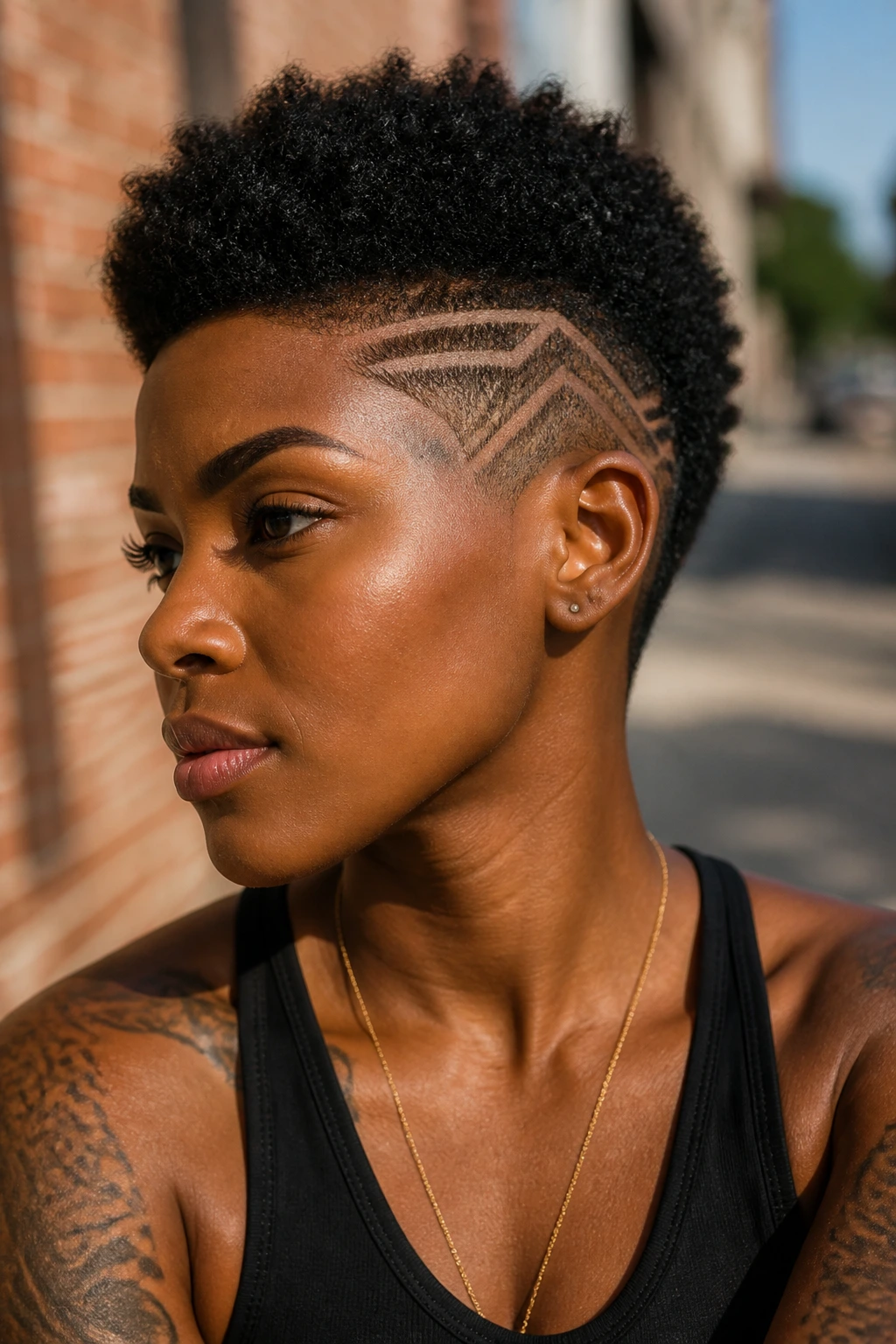
A geometric undercut with a short afro feels sharp in a way that plain shaping never does. The undercut can carry lines, curves, or blocks, while the short afro above keeps the texture soft and compact. It’s an art cut, yes, but it still needs a good haircut first. The design only works if the afro shape itself is balanced.
The lines should match the head, not fight it. A curve near the ear can soften the face. A straight line can add structure. Keep the afro short enough that the design shows clearly, or the texture will hide the whole point of the undercut.
Ask for: a short afro on top, a clean side fade, and one geometric motif that can grow out gracefully.
Watch for: overdesigning the back and sides. A simple line often ages better than a busy pattern.
Best for: people who like crisp cuts and do not mind maintaining them.
36. Bold Side Shave With Color-Blocked Curls
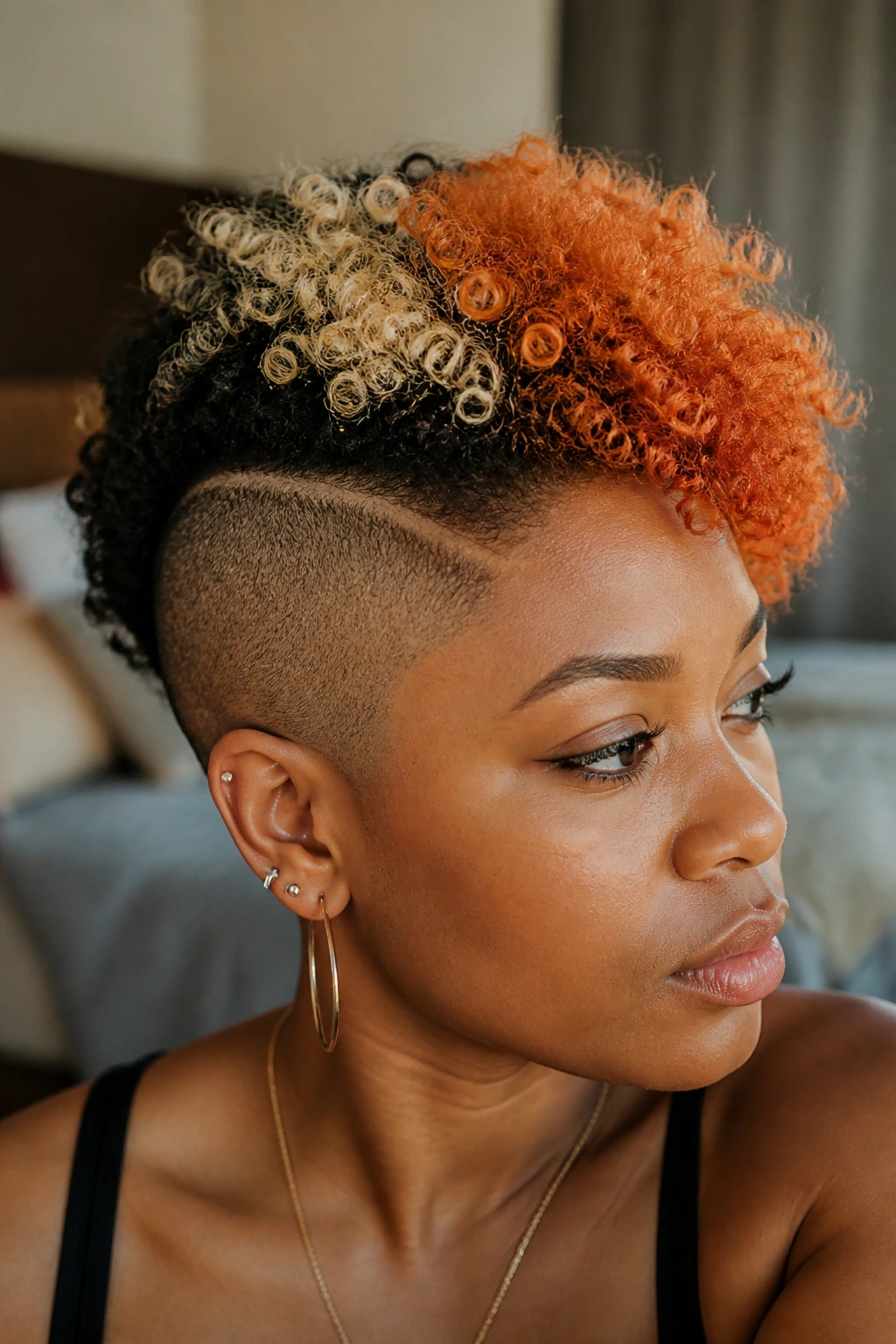
Color-blocked curls and a bold side shave make a loud statement without needing a huge amount of length. The color does one job, the shave does another, and together they turn the head into a strong shape with visible contrast. This is the style for someone who wants the curls to announce themselves before the person even speaks.
The color block should sit where the eye lands first—usually the front, crown, or top layer near the shaved side. Keep the color placement deliberate. If the highlights are scattered everywhere, the cut loses focus. A clean underlayer and a richer top shade can make the side shave look even more graphic.
This look needs care. Colored curls tend to want moisture, but the buzzed side doesn’t need much product. Split your routine: hydrate the top, keep the side clean, and protect the hair at night so the color stays crisp rather than dry and rough.
37. Crown Braid With a Shaved Side
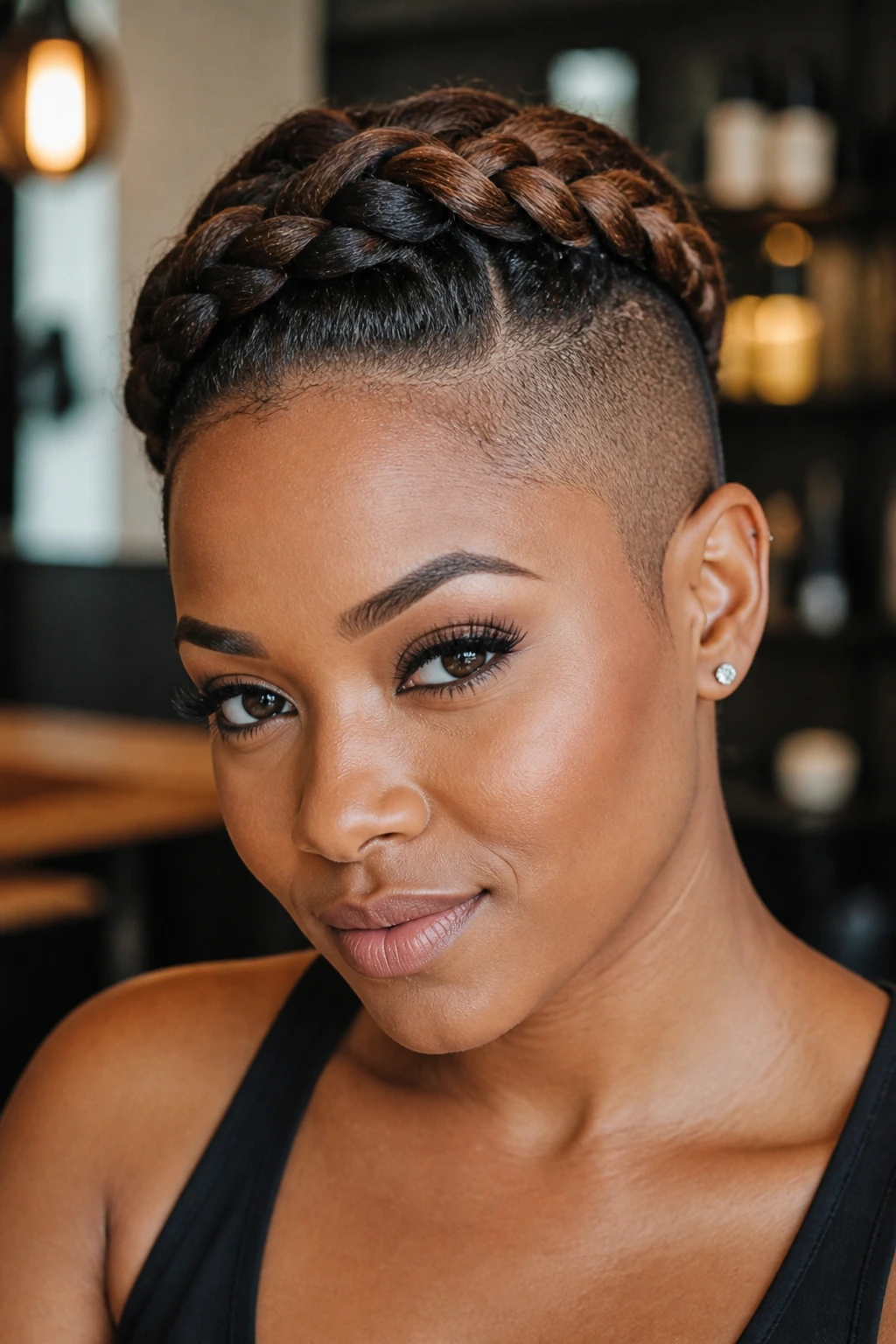
A crown braid with a shaved side feels elegant in a way that still has teeth. The braid wraps the head like a frame, and the shaved panel breaks the sweetness so the style doesn’t drift into costume. It’s especially good when you want hair off your face but don’t want a plain bun.
The braid should sit high enough to reveal the temple or side shave from the front angle. If it sits too low, the contrast disappears. This style works best with medium-to-thick hair that can hold a braid without collapsing. A little edge work around the front keeps the line clean.
This is one of those styles that gets more interesting the longer you look at it. The braid says polished. The shave says you made a choice. That combination is hard to argue with.
38. Side-Swept Coil Cascade With a Skin-Close Fade
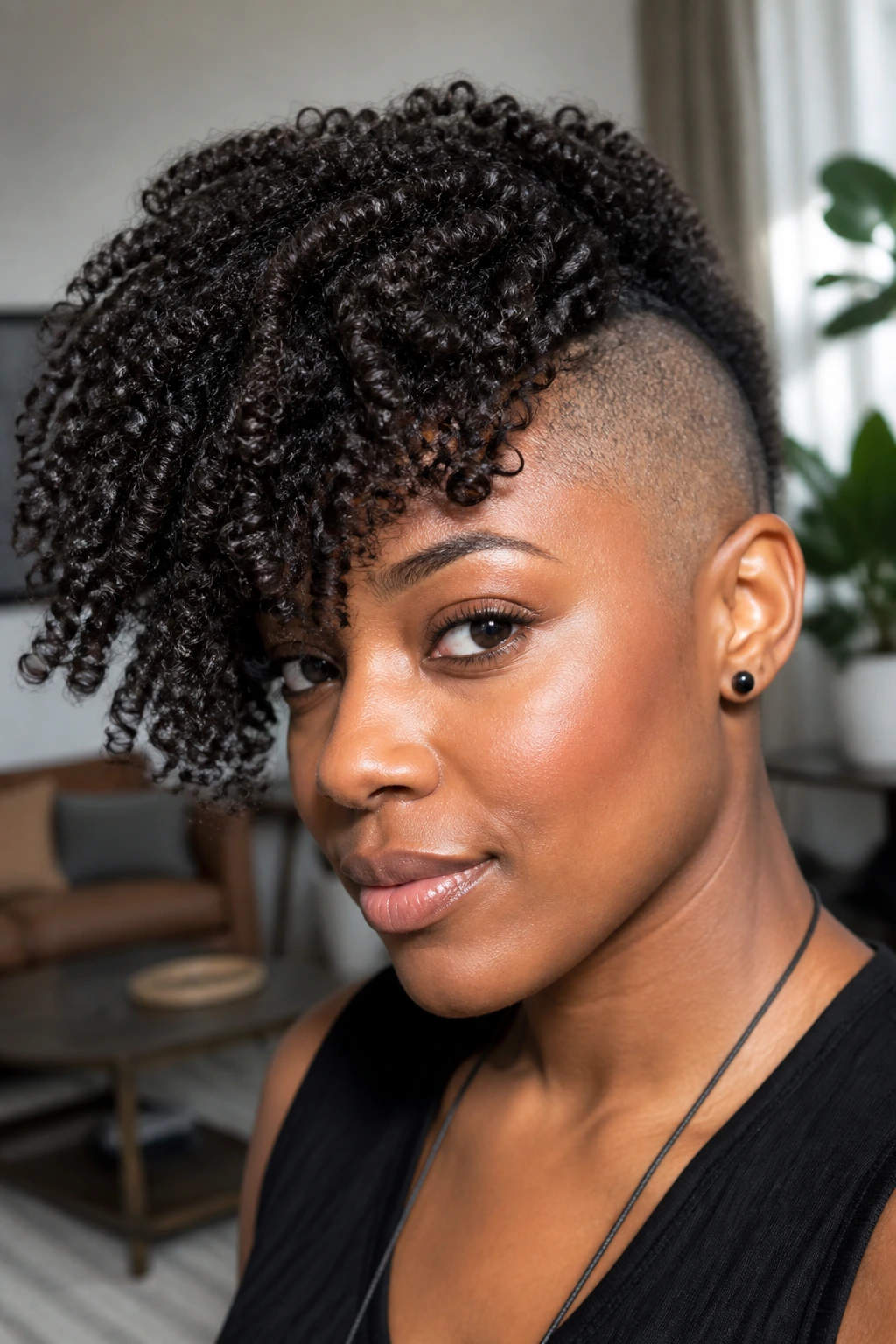
A side-swept coil cascade is all about movement. The coils tumble in one direction, the skin-close fade clears the opposite side, and the result feels fluid instead of heavy. It’s the final style on this list because it shows how a shaved side can work even when the texture stays front and center.
The coils need enough length to fall and separate. If they’re too short, they’ll spring upward and lose the cascade effect. Set them with a strong definition cream or a coil gel, then direct them toward the longer side while they dry. The fade should be close, almost bare, so the motion of the coils stays in focus.
This look is clean, dramatic, and easy to read from a distance. It works best when the coil pattern is neat and the side stays freshly cut. Once the fade grows out too far, the cascade loses some of its edge.
Why the Side Shave Changes the Whole Shape
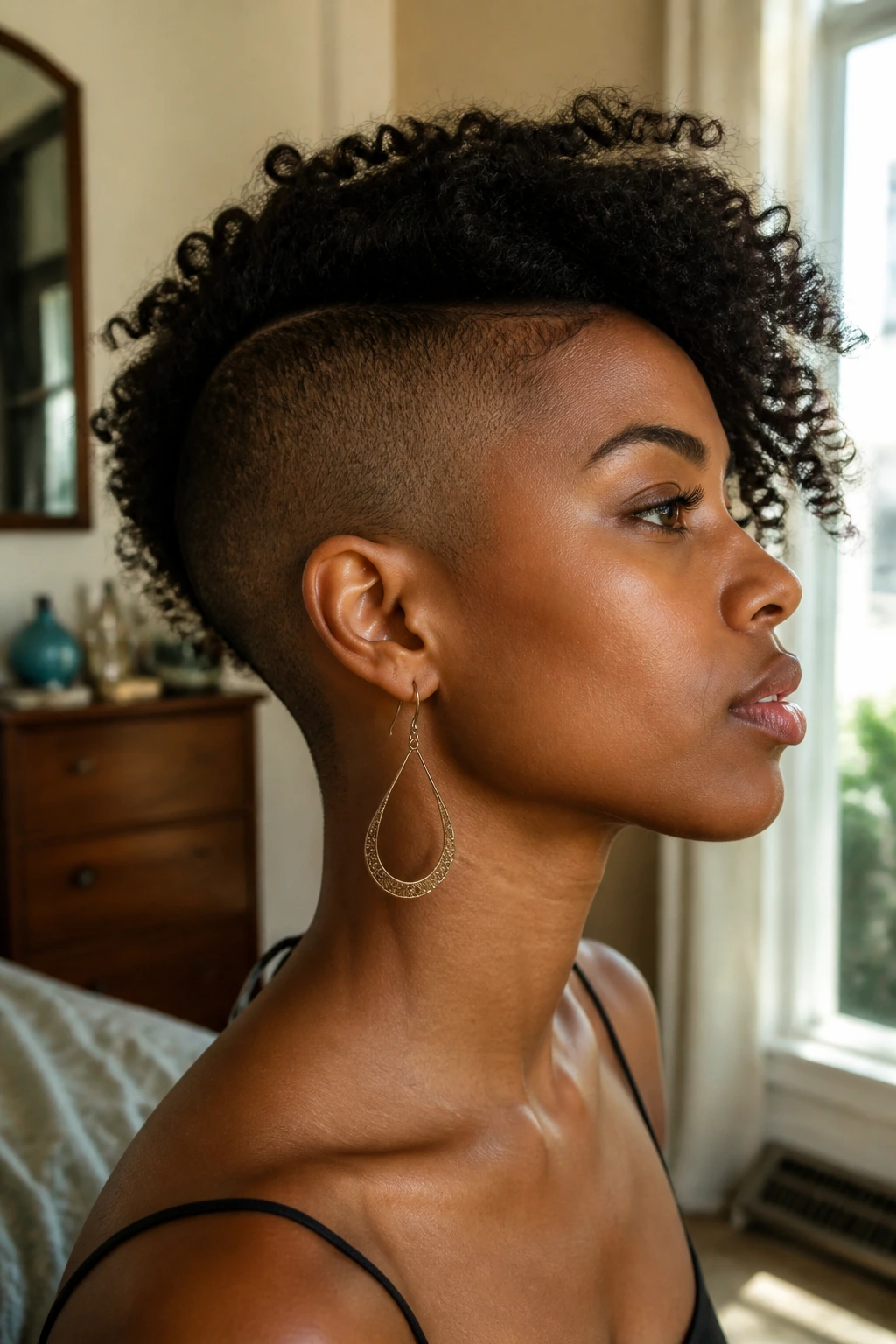
A side shave removes weight where natural hair usually spreads widest: the temple, the side panel above the ear, and sometimes the lower crown. That’s why the style can feel so different even when the top length barely changes. You’re not just cutting hair shorter. You’re changing the way the eye travels across the head.
For coils and curls, that matters because shrinkage can make the silhouette rounder than you expect. A close side keeps the shape from turning into a wide dome, and that makes puffs, frohawks, and twist-outs look cleaner. The cut is doing the framing before the styling even starts.
There’s also a practical side to it. A lower panel of hair means less bulk around the ear, less puffing at the nape, and fewer minutes spent trying to force the sides flat. If you’ve ever fought with a halo of fuzz on one side while the other side behaved, you already know why this works. The haircut solves the problem before the product has to.
Tools and Products That Keep the Style Neat
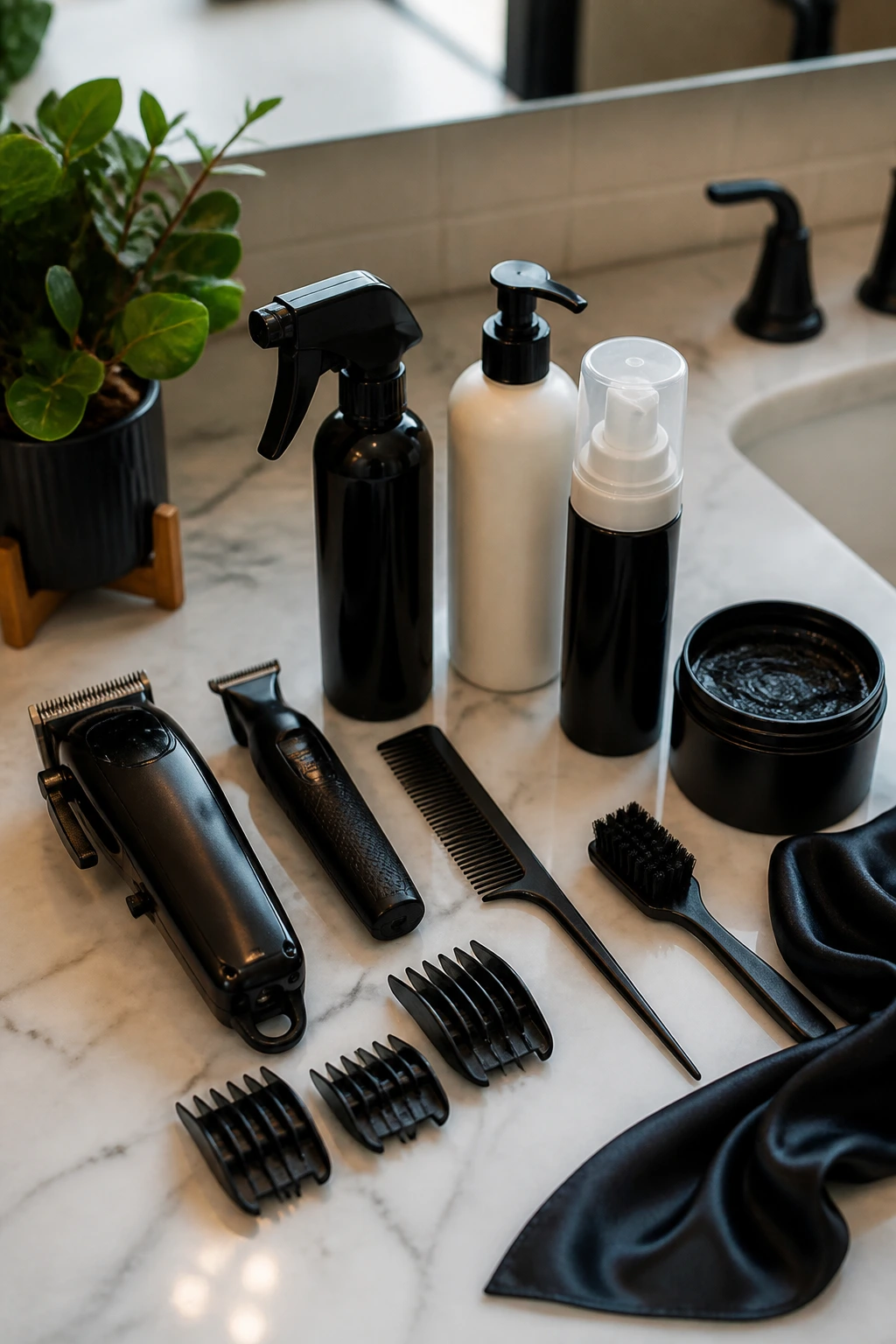
- Clippers with multiple guards: A set that includes a close guard and a longer guard lets you choose between skin-close and soft taper without guessing.
- Detail trimmer or liner: Useful for cleaning the edge around the ear, temple, and any carved parts.
- Rat-tail comb: The narrow tail makes parts cleaner and helps you section the top without tearing through coils.
- Spray bottle: A little water reactivates curl cream, makes parts easier, and helps twists or coils reset.
- Leave-in conditioner: Good for the top section; keep it light so the style doesn’t look weighed down.
- Curl foam or mousse: Best for wash-and-gos, twist-outs, and braid-outs that need hold without heavy buildup.
- Strong-hold gel: Useful for slick buns, defined edges, and braids near the front hairline.
- Edge brush: Keep one for soft shaping, not for scraping product across the hairline until it’s crusty.
- Satin scarf or bonnet: Protects the side cut from friction and keeps the top from frizzing flat overnight.
- Hand mirror or three-way mirror: Lets you check the fade behind the ear and at the back without guessing.
How to Choose the Right Look for Your Texture and Routine
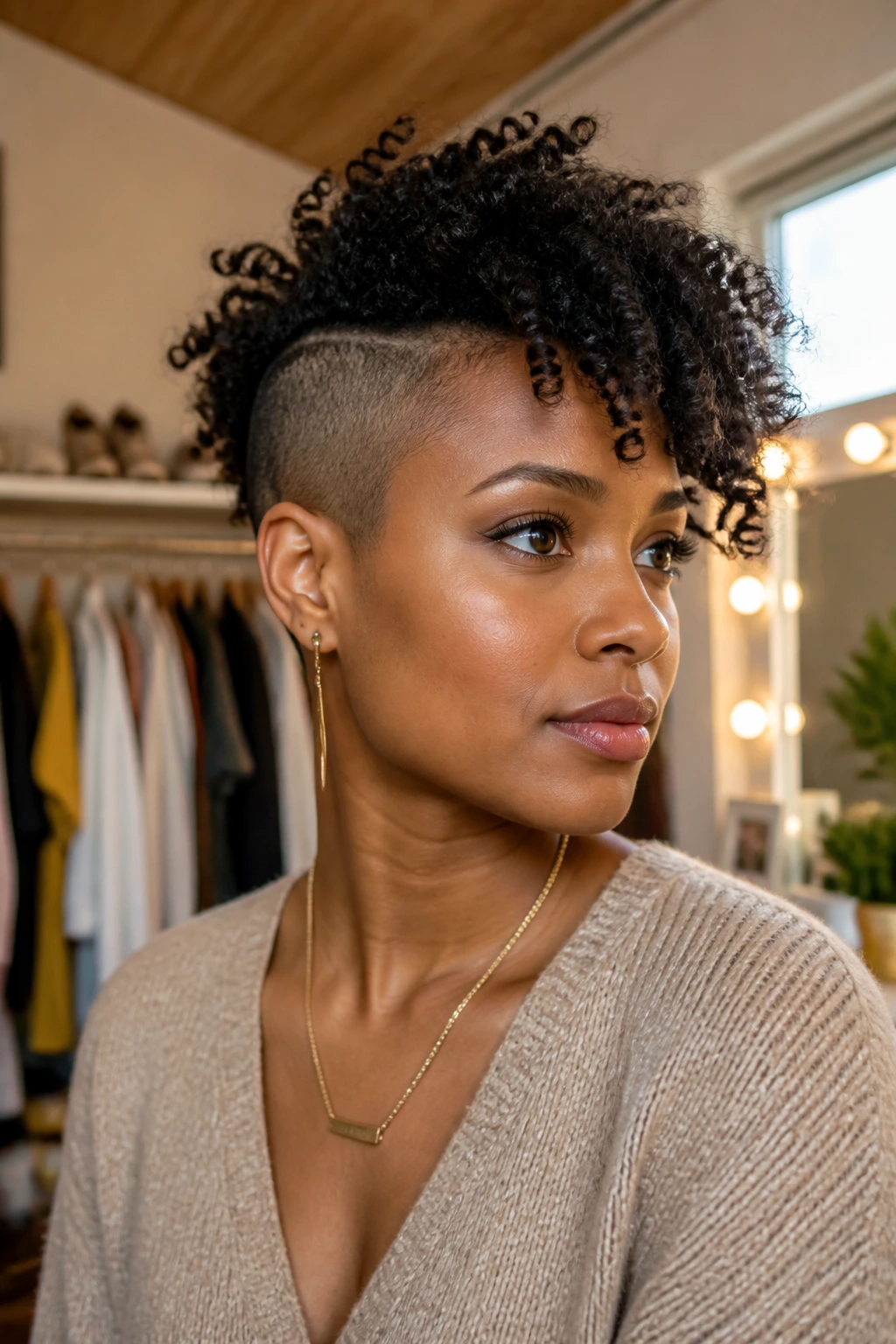
If you want the least daily work: pick the high puff, the TWA, the loc bob, or the puff-and-scarf style. Those shapes stay readable even when you skip a day or two of styling.
If you like defined texture: go for the wash-and-go fade, finger coils, side-swept curls, or the coil cascade. These styles depend on definition, so they reward a good set and a decent drying routine.
If you want protection first: braids, twists, locs, crochet curls, and knotless installs will give you the most wear time. The side shave keeps them from looking bulky while the rest of your hair rests.
If you want the cut to be the main event: choose the TWA with line work, the geometric undercut, the faux hawk, or the bold color-blocked curls. Those styles are less about disguising the shave and more about showing it off.
If you’re nervous about commitment: start with a temple shave or a low taper. You can always go farther later. Growing out a subtle fade is far easier than trying to grow back a high, blunt buzz.
Extra Styling Tricks for Lift, Parts, and Edge Work
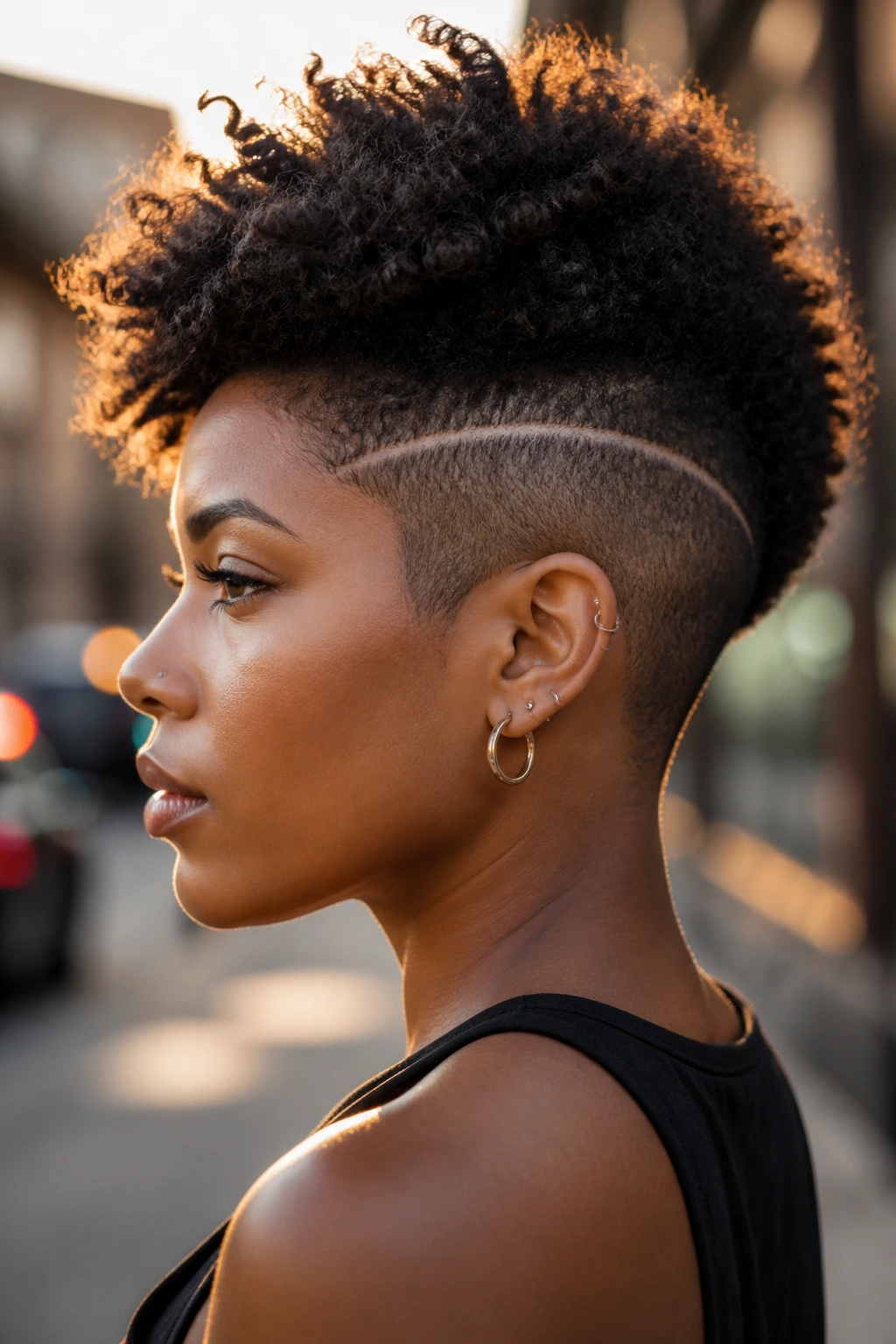
Lift: For puffs, frohawks, and coil styles, dry the top upside down for a few minutes or diffuse just the roots. That small step keeps the hair from collapsing toward the shaved side and makes the silhouette look taller.
Parting: Make parts on damp hair, not dry hair that’s already trying to spring back. A rat-tail comb and a small amount of leave-in help the lines stay visible longer, especially on twist-outs and braids.
Edge Work: Keep the front line clean but not overdrawn. A heavy, painted-on hairline can fight the cut and make the shaved side feel disconnected from the rest of the style.
Color: A soft rinse, copper ends, or honey-brown highlights can make curls stand out against a dark undercut. You do not need a full color job; a little contrast goes a long way.
Accessories: Hoops, cuffs, slim headbands, and silk scarves all work here because they echo the asymmetry. Use them to support the cut, not bury it.
Keeping the Cut Fresh Between Appointments
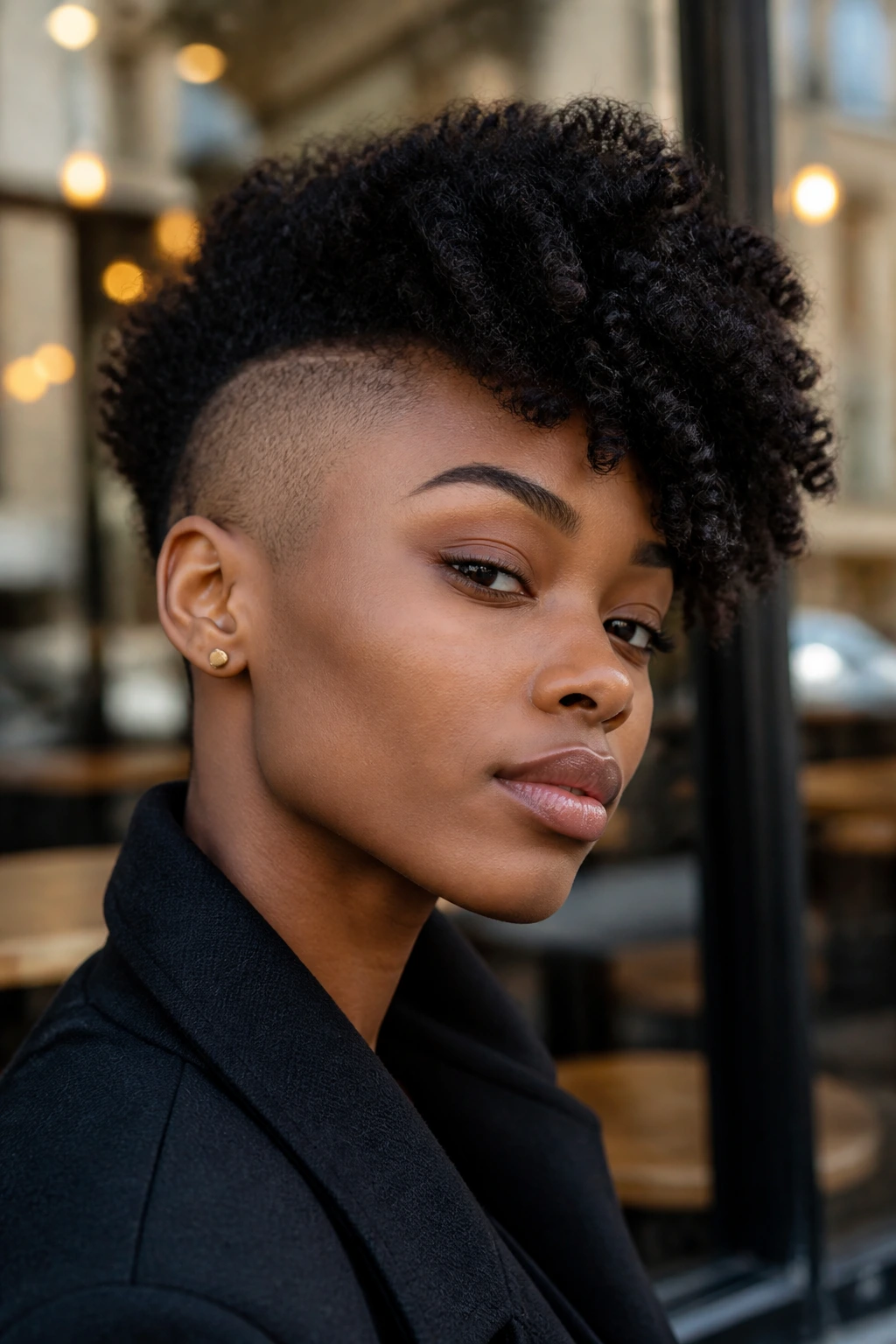
A skin-close shave needs more maintenance than most people expect. If you want that crisp look, plan on a touch-up every 1 to 2 weeks. A low taper can stretch to 3 or 4 weeks before the shape starts to soften too much. If you’re wearing braids or locs, the style itself may last longer, but the side still decides whether the whole look feels fresh.
At night, protect the top and the side separately. A satin bonnet or scarf keeps the curls from frizzing and the buzzed side from rubbing rough against the pillow. If you wear a puff or bun, don’t sleep with the band pulling tight at the same point night after night. That’s how you get a sore scalp and broken edges.
For the buzzed section, keep products light. A small amount of scalp moisturizer or a drop of oil is enough. Heavy butters tend to sit on the clipped hair and collect lint. If you’re growing the side out, ask your barber for a lower taper first, then let the line soften. That gives you a cleaner grow-out than a sudden all-over fuzz.
Wash schedules depend on the style. Wash-and-gos and coils may need weekly cleansing. Braids and twists can go longer, but the scalp still likes regular cleaning every 1 to 2 weeks with diluted shampoo or a gentle cleanser. Clean scalp, clean line, cleaner style. It’s that plain.
Variations and Adaptations to Try
The Temple-Only Starter: If a full side shave feels too bold, shave only the temple and keep the rest of the side at a short taper. It gives you the same contrast with far less commitment, and it grows out more quietly.
The Protective-Style Pause: Wear braids, twists, or crochet styles on top while keeping the undercut small and low. This is a smart option if you want the side cut to exist in the background while your hair rests.
The Art-Line Upgrade: Add a single line, curve, or geometric mark once the basic shape feels right. One clean design often looks stronger than three busy ones, especially on short natural hair.
The Soft Grow-Out: Ask for a low fade rather than a skin shave if you know you’ll want to grow it back later. The result still looks sharp, but the transition to more length stays smoother.
The Color Contrast Remix: Keep the side dark and use color on the top—caramel ends, copper coils, or a soft auburn rinse. The color will make the shaved panel feel even more intentional.
The Texture-First Version: Leave the top shaped to the natural curl pattern instead of forcing it into a slick look. That’s the move if you want the cut to feel like your hair, not a costume.
Common Mistakes That Make a Good Cut Look Off
- Shaving too high on the head: The side starts to overpower the top, and the style can look lopsided. Keep the shave below the widest part of the head unless you really want a dramatic cut.
- Cutting the top too short first: Natural hair shrinks, and a wet curl pattern can lie to you. Leave more length than you think you need, then let it settle before trimming again.
- Ignoring scalp buildup on the buzzed side: Heavy creams and thick butters can sit on the short hair and make the side itch or flake. Use lighter products there.
- Forgetting the grow-out plan: A fresh side shave looks sharp for a while, then fuzzes at the edges. Schedule touch-ups before the cut loses its line.
- Using too much tension on braids or buns: The side shave does not excuse a tight style. If the scalp hurts, the style is wrong, full stop.
Questions People Ask Before They Cut the Side
Will a shaved side work on 4c hair?
Yes, and it often looks especially strong because dense coils create a lot of contrast against the clipped side. The key is leaving enough length on top so the curl pattern can show instead of shrinking into a tight puff you didn’t plan for.
How short should the shaved side be?
That depends on how bold you want the shape. A #0.5 or skin-close shave gives the sharpest line, while a #1 or #2 leaves a softer grow-out and can feel less dramatic.
Can I still wear protective styles with one side shaved?
Absolutely. Braids, twists, locs, crochet installs, and buns all work fine if the style leaves enough anchor hair on top and isn’t pulled too tightly at the hairline.
How often do I need a touch-up?
A close shave usually needs freshening every 1 to 2 weeks if you want it crisp. A taper or temple fade can stretch longer, closer to 3 or 4 weeks, before the outline starts to blur.
Does shaving one side hurt hair growth?
Not if the cut is done cleanly and the scalp is cared for. Hair grows from the follicle, not the clipped shaft, so the real issues are scalp irritation, repeated tension, and poor aftercare.
What if my hair grows out unevenly?
That happens. Ask for a lower taper next time instead of a hard shave, or let the grow-out become part of the style with a slightly softer asymmetrical shape.
Can I do a side shave at home?
You can, but I would only do it if you already know how your clippers behave. Use clean guards, work slowly, and start lower than you think you need. It’s much easier to remove more hair than to put it back.
What products help the top stay shaped?
A light leave-in, foam for sets, and a gel with enough hold for your texture usually cover most of the needs. Heavy butter on the top tends to flatten curls and makes the side contrast less visible.
The Shape That Keeps Its Edge
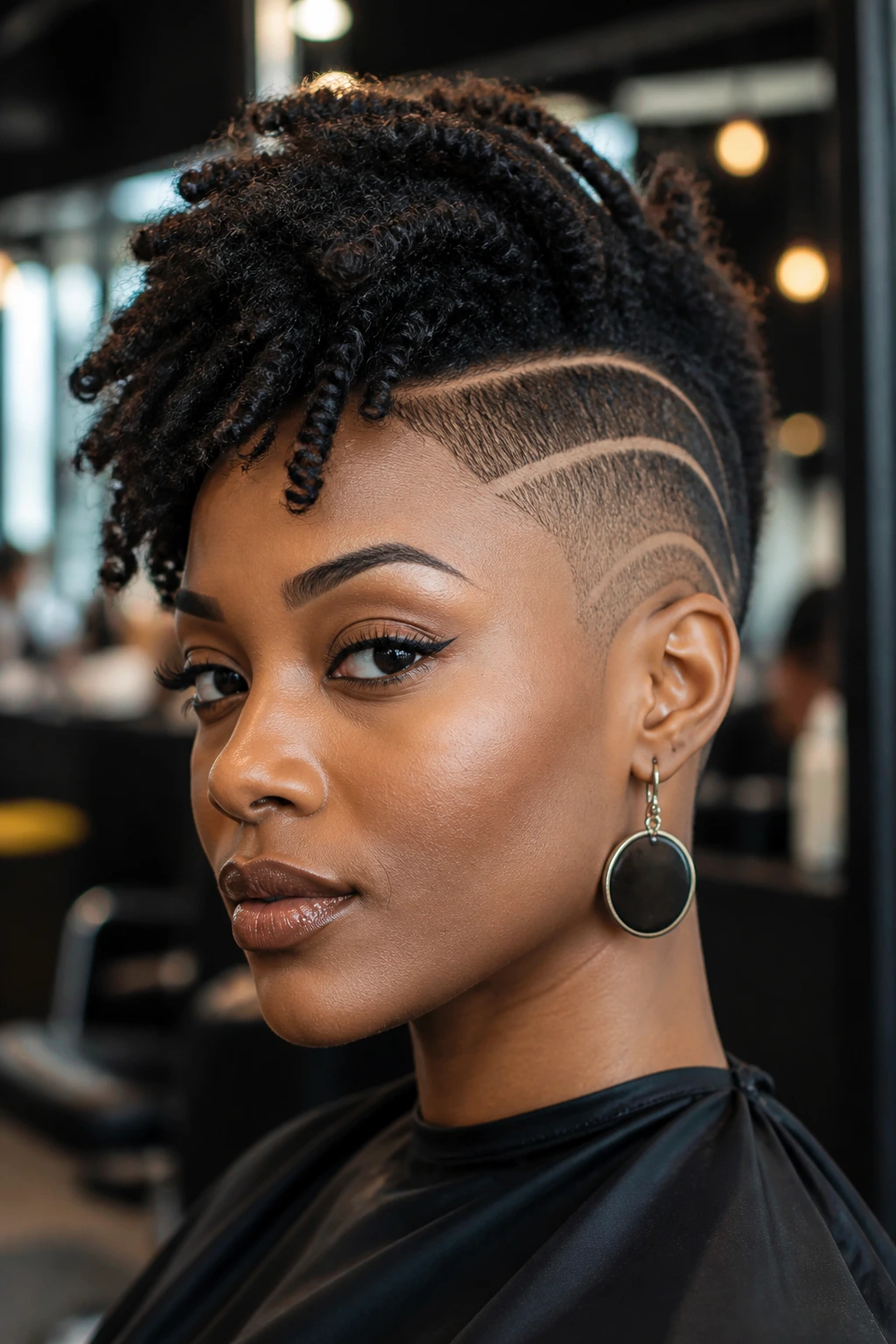
A side shave gives natural hair something many cuts miss: a clean frame. The texture still gets to be the star, but the silhouette has a line, a pause, a place for the eye to land. That’s why these looks keep working across puffs, coils, braids, locs, and short cuts. The side doesn’t steal the show. It makes the show easier to see.
If you’re trying this for the first time, start smaller than your nerve wants you to. A temple fade or a low taper can teach you a lot about how your face, density, and curl pattern behave with a shaved panel. Once you know that, the bolder cuts stop feeling like a leap and start feeling like a choice.
The best version is the one that still looks good when the curls breathe, the braid loosens, and the buzz starts to grow back. That’s the real test.
