



Shoulder length punk haircuts hit a sweet spot most people miss. They keep enough length to flip, tuck, braid, slick back, or drag through color, but they leave room for something sharper than a standard shag. A buzzed temple, a hidden undercut, or a jagged fringe changes the whole silhouette in a way a plain mid-length cut never will.
And that’s the appeal, really. You get movement near the shoulders, so the hair still swings and catches air when you walk, but the shape has teeth. It can look rough, controlled, messy, geometric, or half-grown-out on purpose. That range is why shoulder length punk haircuts keep showing up in salons, backstage dressing rooms, and the occasional bathroom mirror crisis before a concert.
The trick is balance. Too much length and the punk detail disappears. Too much shaving and you lose the shoulder-length part that gives these cuts their flexibility. The best versions keep a clear line of intent: choppy layers, clipped sides, razor ends, blunt fringe, maybe a streak of color that looks like it was placed with attitude instead of caution.
Why This Collection Feels Different
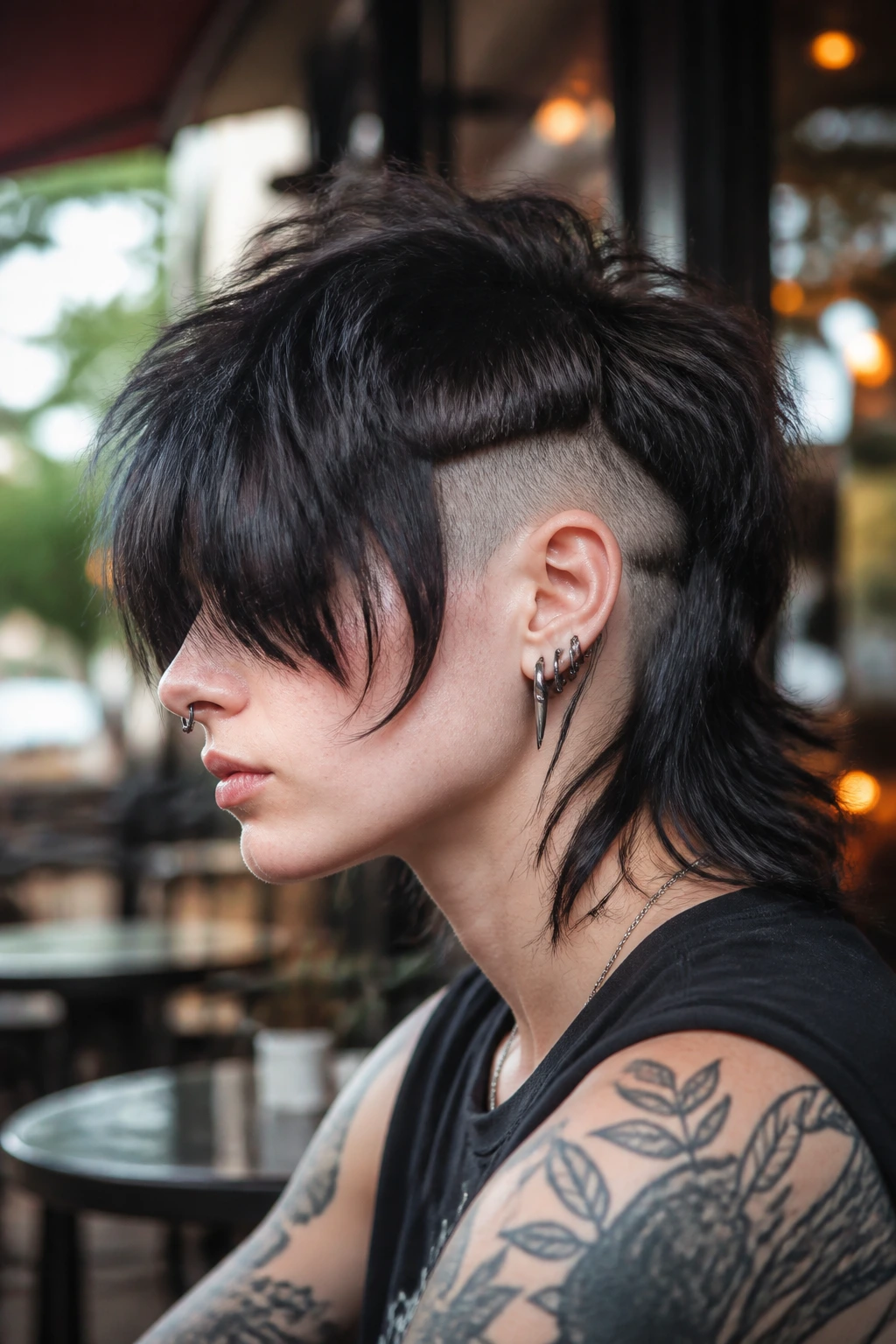
- The length does real work: Shoulder-grazing hair gives you enough weight to create shape, so the shaved sections don’t look like an afterthought.
- The edge comes from structure, not just color: A buzzed nape, an asymmetrical side, or a hard part does more than neon dye ever could.
- These cuts can be dialed up or down: Wear them clean and sharp for one mood, then rough them up with paste and dry texture for another.
- Grow-out is part of the look: Punk hair often looks better with a little imperfection, which makes the in-between stage less annoying.
- They suit different textures: Straight hair shows the lines, wavy hair gives the shape lift, and curly hair adds its own kind of rebellion.
- You don’t need a full mohawk to get the message across: A hidden undercut or one shaved panel can do the same job with less daily maintenance.
1. Side-Shaved Wolf Cut
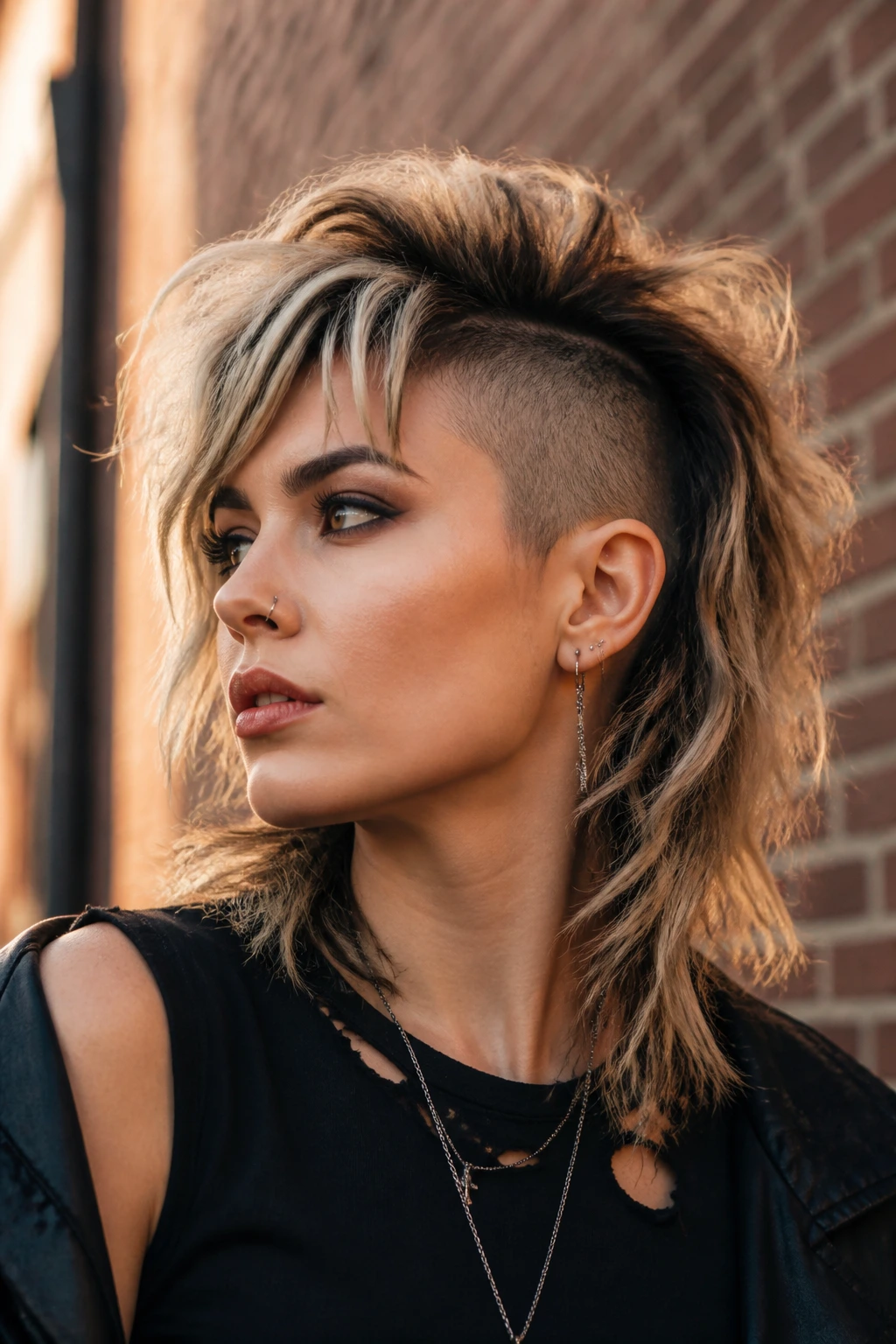
This is the cut for anyone who wants their hair to look like it has been kicked around a little. The layers land around the collarbones and shoulders, but one temple is shaved close—usually with a #1 or #2 guard—so the whole cut tilts instead of sitting politely on both sides.
Why It Works
The wolf cut already has that broken-up, shaggy movement. Add a shaved side and the shape stops reading as “soft layered hair” and starts reading as punk. The contrast matters more than the actual length.
It’s one of the easiest cuts to style badly, so I mean this kindly: keep the layers visible. A quick rough-dry with a diffuser or your hands, plus a little matte paste through the ends, keeps it from turning into a fuzzy triangle.
- Best on medium to thick hair that can hold the choppy texture
- Needs a stylist who can point-cut, not just hack away
- Looks strongest when the shaved side is paired with a deep side part
Bold tip: Ask for enough length at the crown to keep lift. If the top gets over-thinned, the cut loses its shape fast.
2. Asymmetrical Shag with a Buzzed Temple
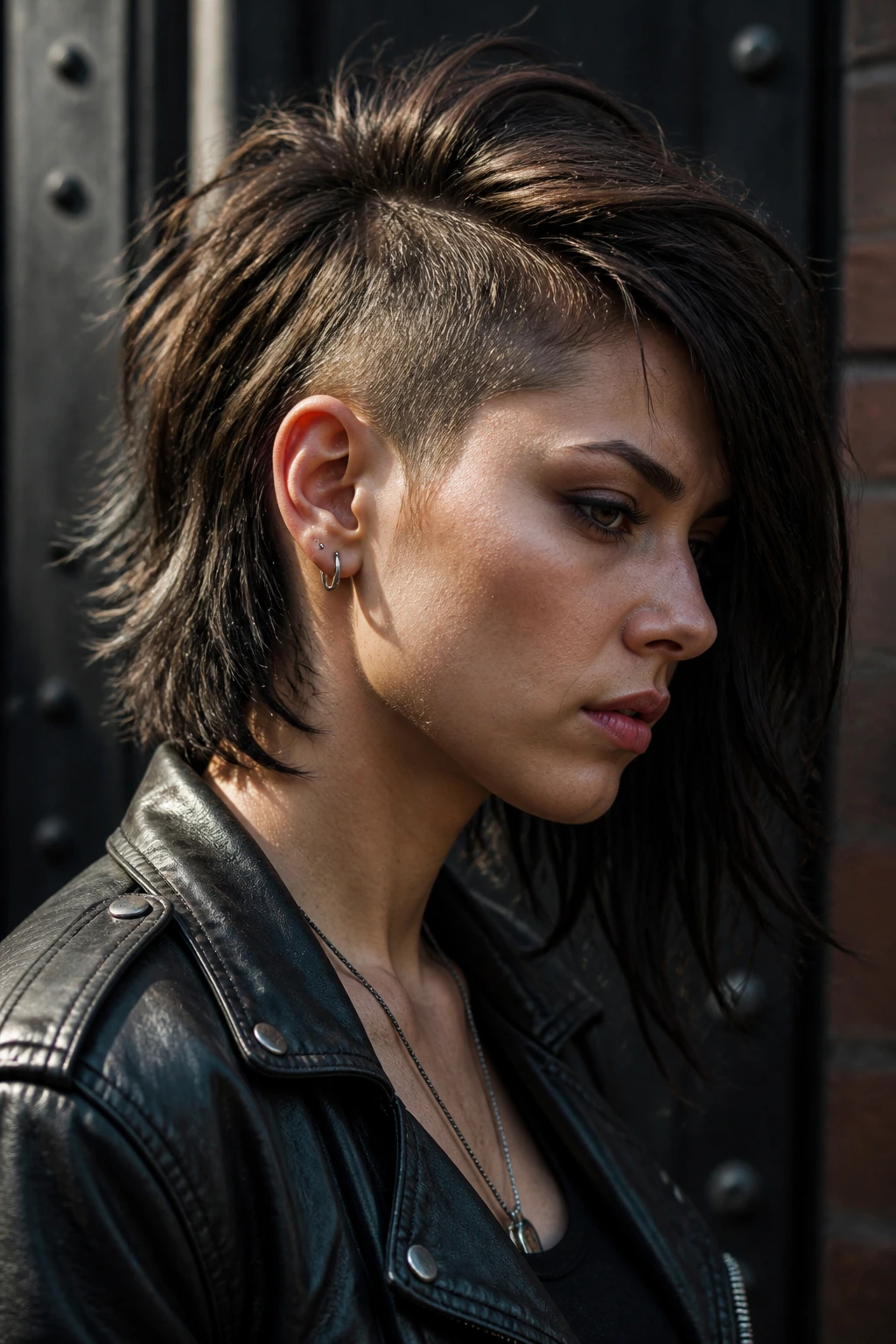
One side skims the jaw and shoulder. The other side is clipped down at the temple, then blended into soft layers that fall just below the collarbone. It sounds dramatic because it is.
The beauty of this cut is the imbalance. When hair swings over the shorter side, it hides the buzz and reveals it again with movement. That little reveal is half the fun, and it keeps the look from feeling frozen in place.
How to Wear It
A center part makes the asymmetry obvious. A deep side part makes it feel a bit more dangerous. Either way, keep the ends blunt enough that the long side doesn’t turn wispy and weak.
This is a strong choice if you like clothes with clean lines—black tees, leather jackets, heavy boots—because the haircut does some of the visual work on its own. No need to pile on extra noise.
3. Shoulder-Length Mohawk Sweep
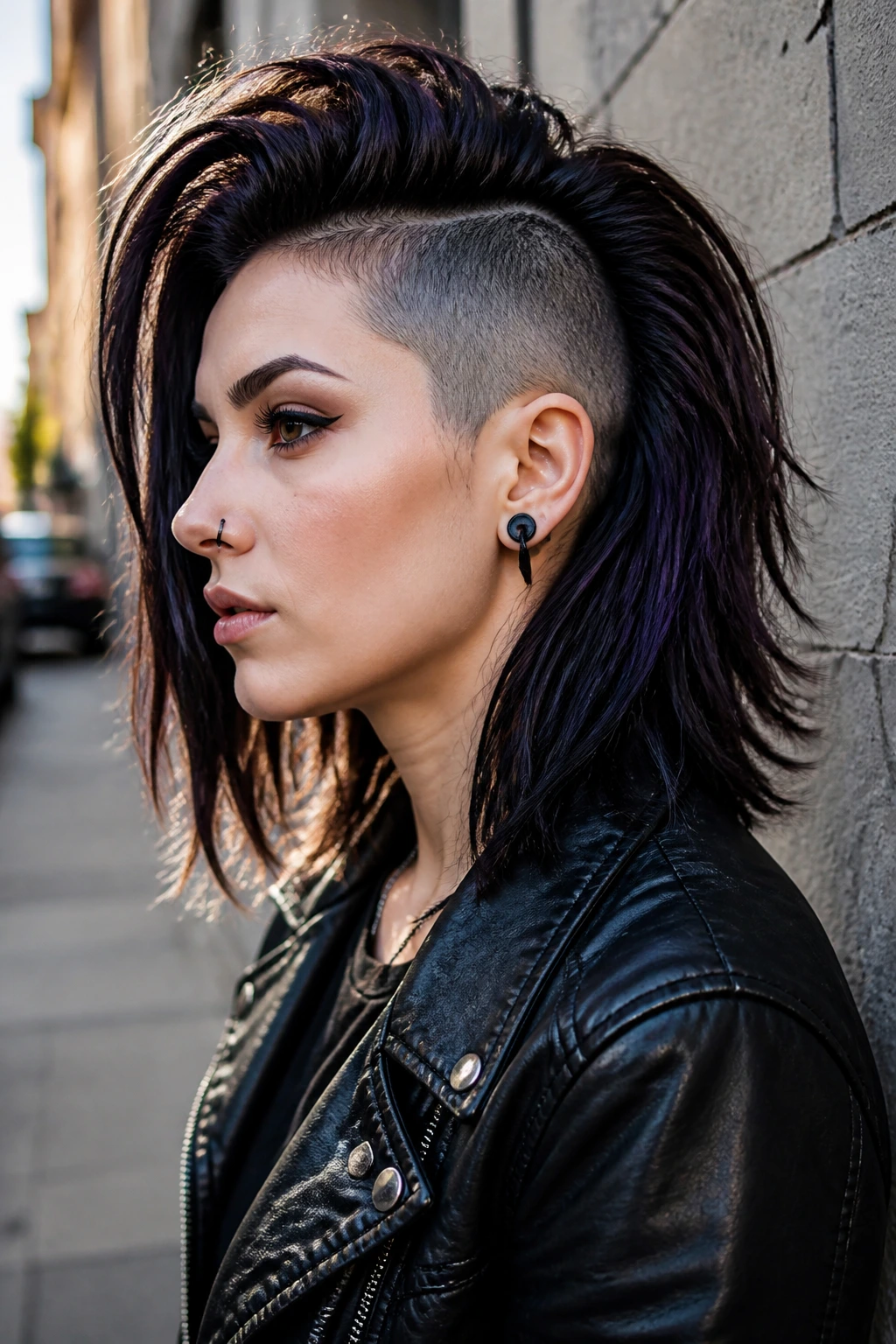
Want the mohawk feeling without living in a permanent strip down the center? This version keeps the sides short—sometimes faded, sometimes buzzed—and leaves the top long enough to brush from forehead to shoulder in one loose sweep.
It has a nice trick. Styled flat, it can pass as a strange but wearable layered cut. Push the top up with paste or rough it forward with dry texture, and it snaps into punk territory fast.
What Makes It Different
The center length is the anchor. If the top is only slightly longer than the sides, the cut loses its attitude. If the top is too long, it falls heavy and starts looking like grown-out hair instead of design.
A lightweight mousse at the roots helps the top stand up without getting crunchy. After that, a small dab of strong paste at the ends keeps the ridge piecey instead of helmet-like.
4. Hidden Undercut Lob
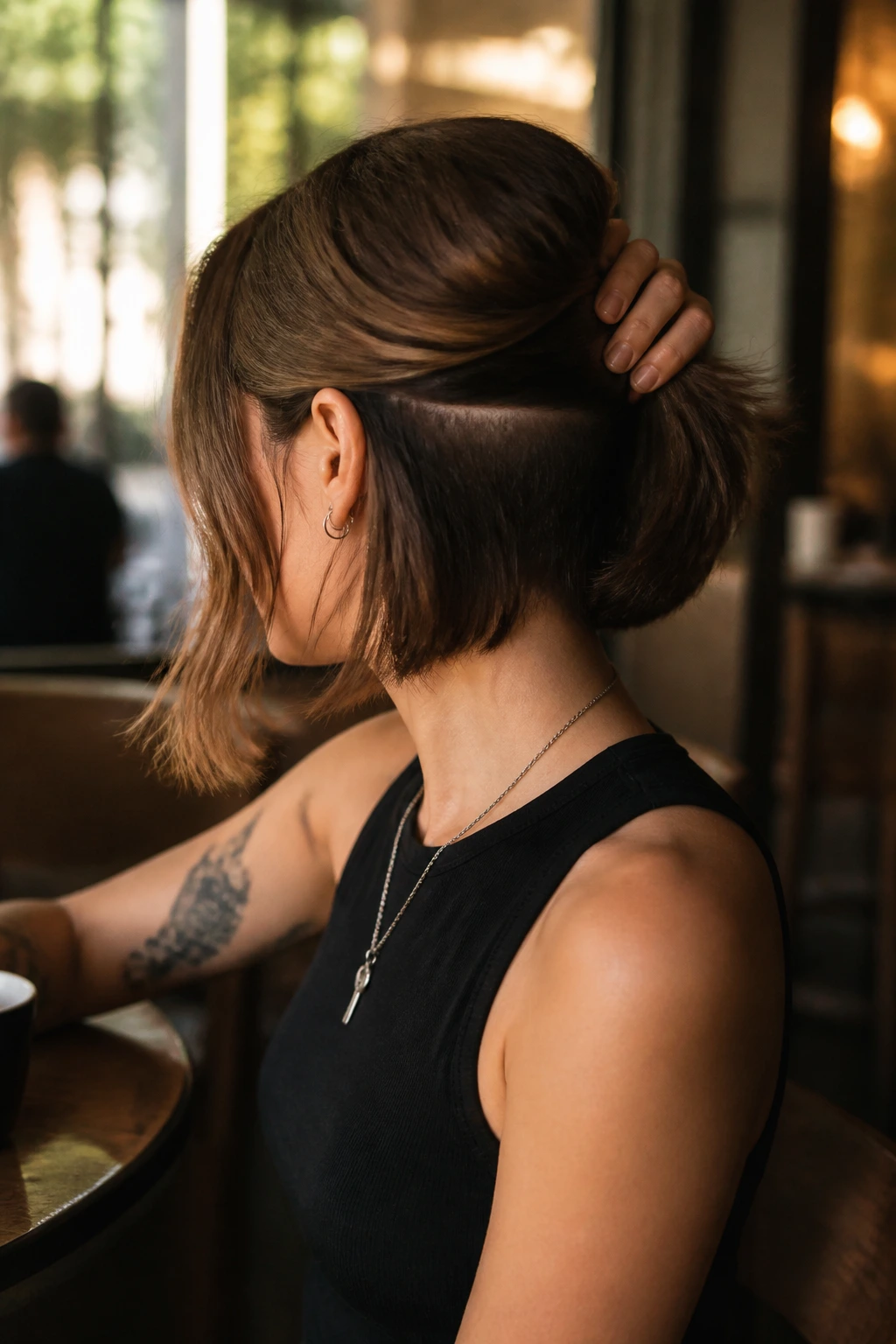
From the front, this one behaves. From the back and underneath, it has a secret. The visible layer grazes the shoulders, but a hidden undercut removes bulk at the nape and beneath the top section, which makes the whole shape lighter and more moveable.
That hidden part is what makes this cut so smart. You can wear it sleek for work, toss it into a half-up knot, and suddenly the shaved section shows up like it has been waiting for its cue.
A lot of people want punk hair without broadcasting it from across a parking lot. This is the answer. It looks clean until you turn your head.
5. Choppy Mullet Shag
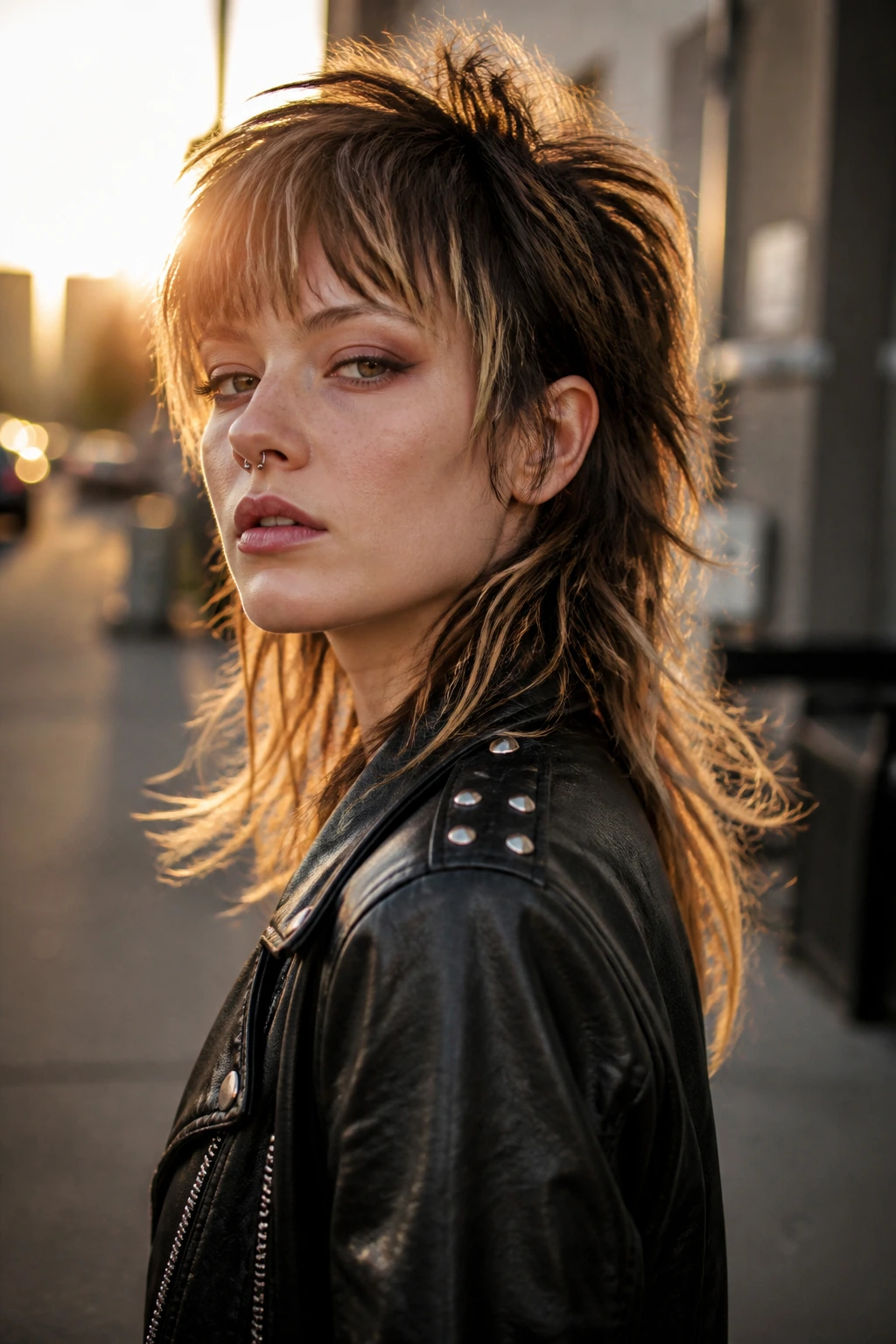
A good punk mullet should not feel like a joke. It should feel deliberate, a little rude, and fully aware that the back is the most interesting part. This shoulder-length version keeps the front and sides jagged, then leaves the back just long enough to brush the shoulders.
The line between shag and mullet is thin, and that’s the fun. The front layers can hit the chin, the crown can be pushed up, and the nape can stay longer and softer. The whole thing should look like it was cut with motion in mind.
Quick Shape Notes
- Ask for disconnected layers, not uniform ones
- Keep the fringe light if your face is small
- Use a razor only if your hair can take it without frizzing out
A touch of dry texturizing spray gives this cut that gritty, lived-in finish. Too much shine and it stops feeling punk almost immediately.
6. Curtain Bang Punk Lob with a Nape Shave
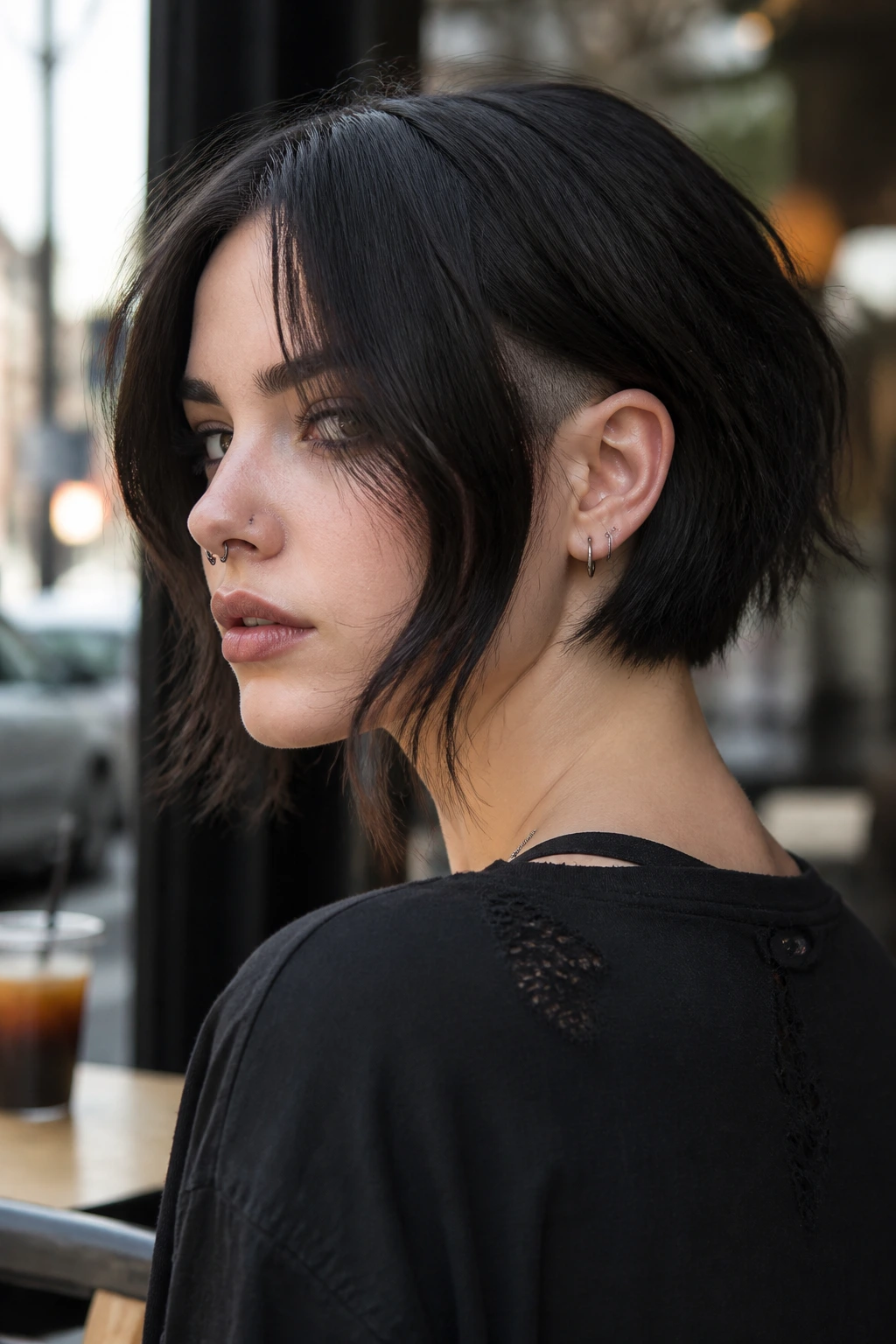
Curtain bangs usually soften a face. The nape shave does the opposite. Put them together and the result is a cut with two personalities, which is exactly why it works.
The bangs split down the middle and fall around the cheekbones. The rest of the lob hangs to the shoulders, but the back is cleaned out close to the neck. That hidden tension keeps the style from drifting into “just a nice lob.”
It’s a good choice if you like wearing your hair down most days but still want a surprise when you clip it up. The shaved nape shows up in ponytails, braids, and messy buns, and that little flash keeps the cut from getting stale.
7. Split-Dye Razor Lob

This is the loud one. A shoulder-length razor lob with a hard color split—black and blonde, red and silver, violet and deep brown—already has enough edge to stop traffic. Add a razor-cut finish and the ends move with a broken, jagged line that suits the color perfectly.
The key is keeping the cut sharp enough that the dye placement looks intentional. Split dye on soft, rounded layers can feel costume-y. Split dye on a bluntish, uneven lob feels like a decision.
A center part usually shows the color split best, but a deep side part makes the two sides collide in a sharper way. Either route works. Just keep the ends hydrated; bleached hair with razor texture can frizz into a halo if you neglect it.
8. Micro Fringe Layered Crop
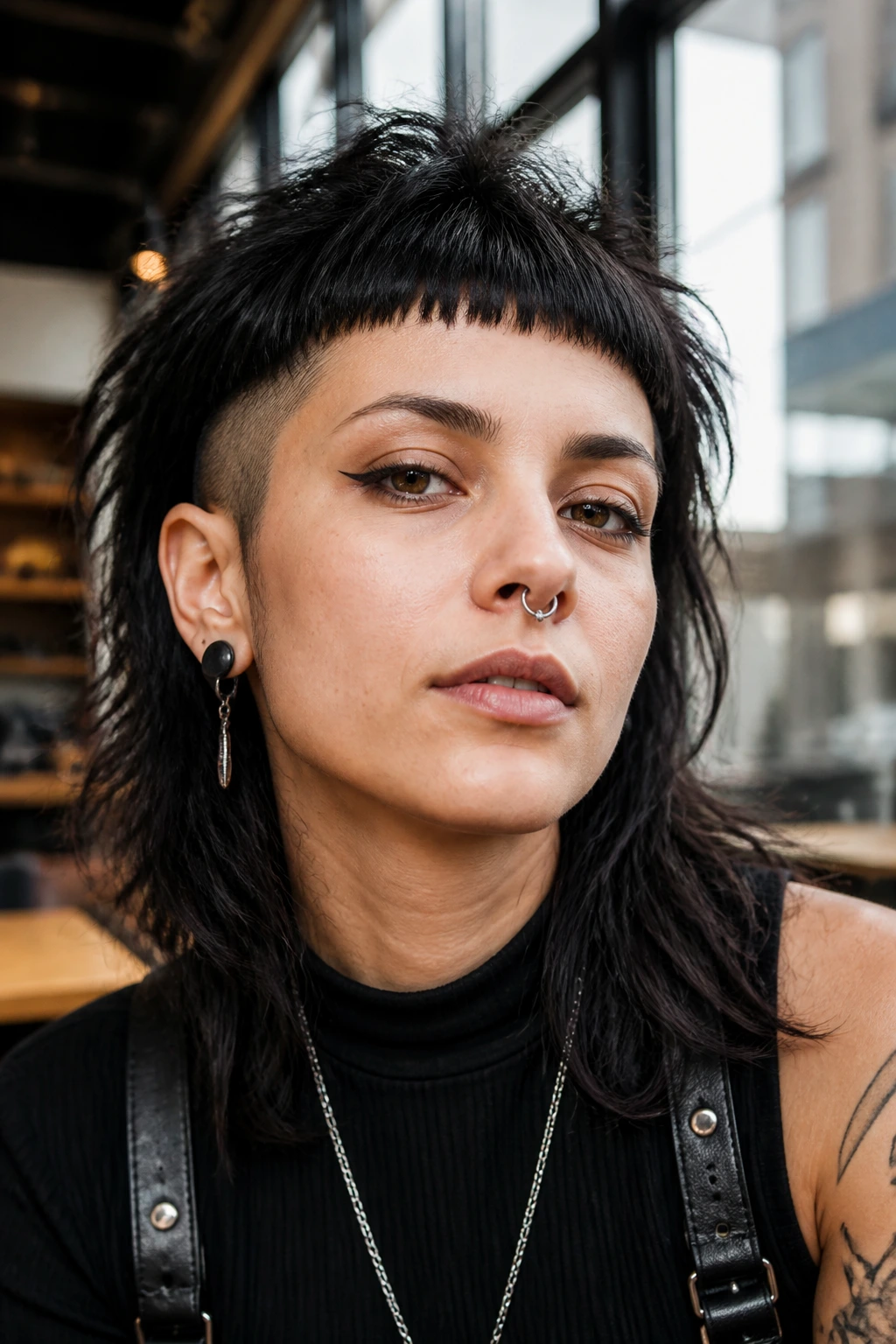
Micro bangs are not for the timid. They expose the forehead, bring attention to the eyes, and make everything else in the haircut work harder. On shoulder-length punk hair, they turn the rest of the cut into a frame.
The layers can stay soft through the shoulders, or they can be chopped into sharper pieces with a hidden underlayer shave. Either way, the tiny fringe gives the look a hard, graphic top line.
Best For
- Straight or slightly wavy hair that can hold a neat fringe
- People who want the cut to feel confrontational without shaving the whole side
- Anyone who likes strong eyeliner, because the bangs make it count
Keep the fringe trimmed often. A micro bang that grows into a regular bang loses the point fast.
9. Heavy Bangs and Buzzed Sides
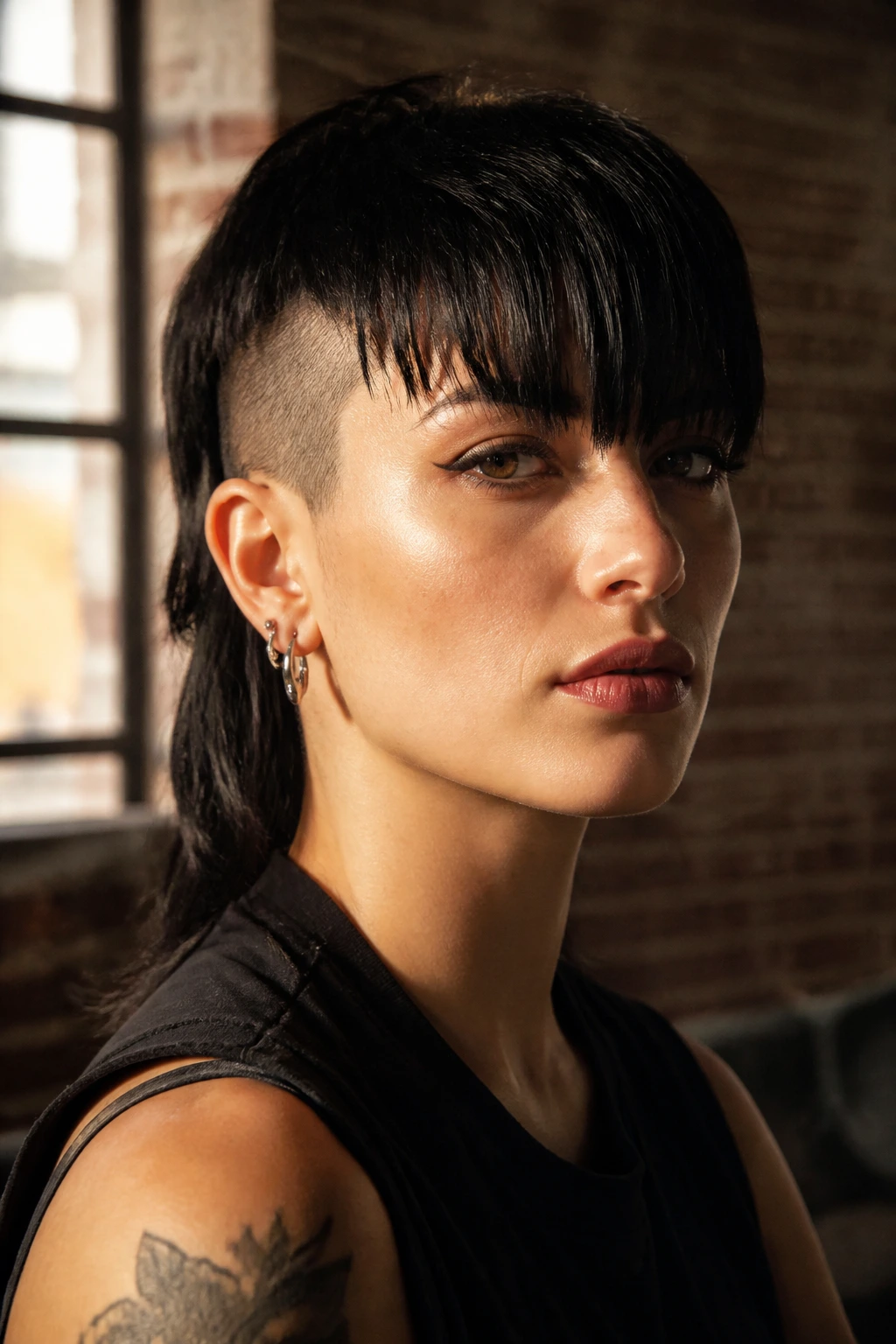
Here, the bangs do the talking. They’re dense, straight, and heavy enough to skim the lashes, while the sides are buzzed down close to the scalp. The shoulders carry the rest of the length, which keeps the whole cut from going full helmet.
I like this version when the hair is thick. The buzz removes bulk where it matters most, and the bangs create one blunt visual block that reads clearly from across the room. It’s dramatic without needing a weird color.
The styling rule is simple: keep the bangs smooth, keep the sides clean, and let the lower lengths stay a little ragged. That contrast is what makes it punk instead of just severe.
10. Grunge Shag with a Deep Side Part
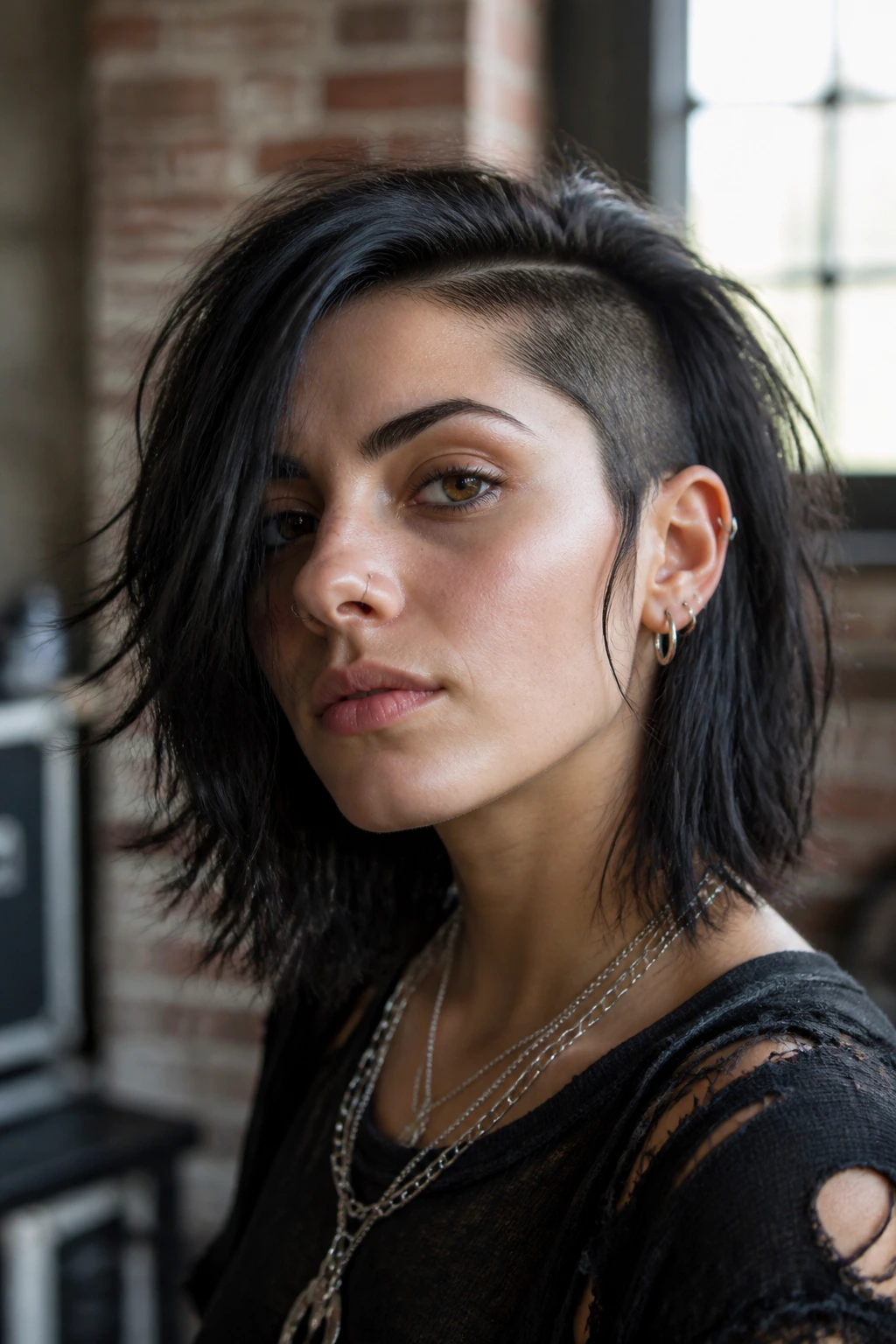
A deep side part changes everything. On a grunge shag that falls around the shoulders, the part creates a heavy side, a lifted crown, and a line that feels slightly off-kilter in the best way.
Add a shaved panel under the heavier side and the shape gets even better. The longer side can fall over the shave, hide it, and then reveal it when the hair moves. That stop-start effect keeps the style alive.
This cut loves second-day texture. A little dry shampoo at the roots, a bit of salt spray through the ends, and you’re done. If the hair looks too neat, it loses its charm.
11. Angular A-Line Punk Bob
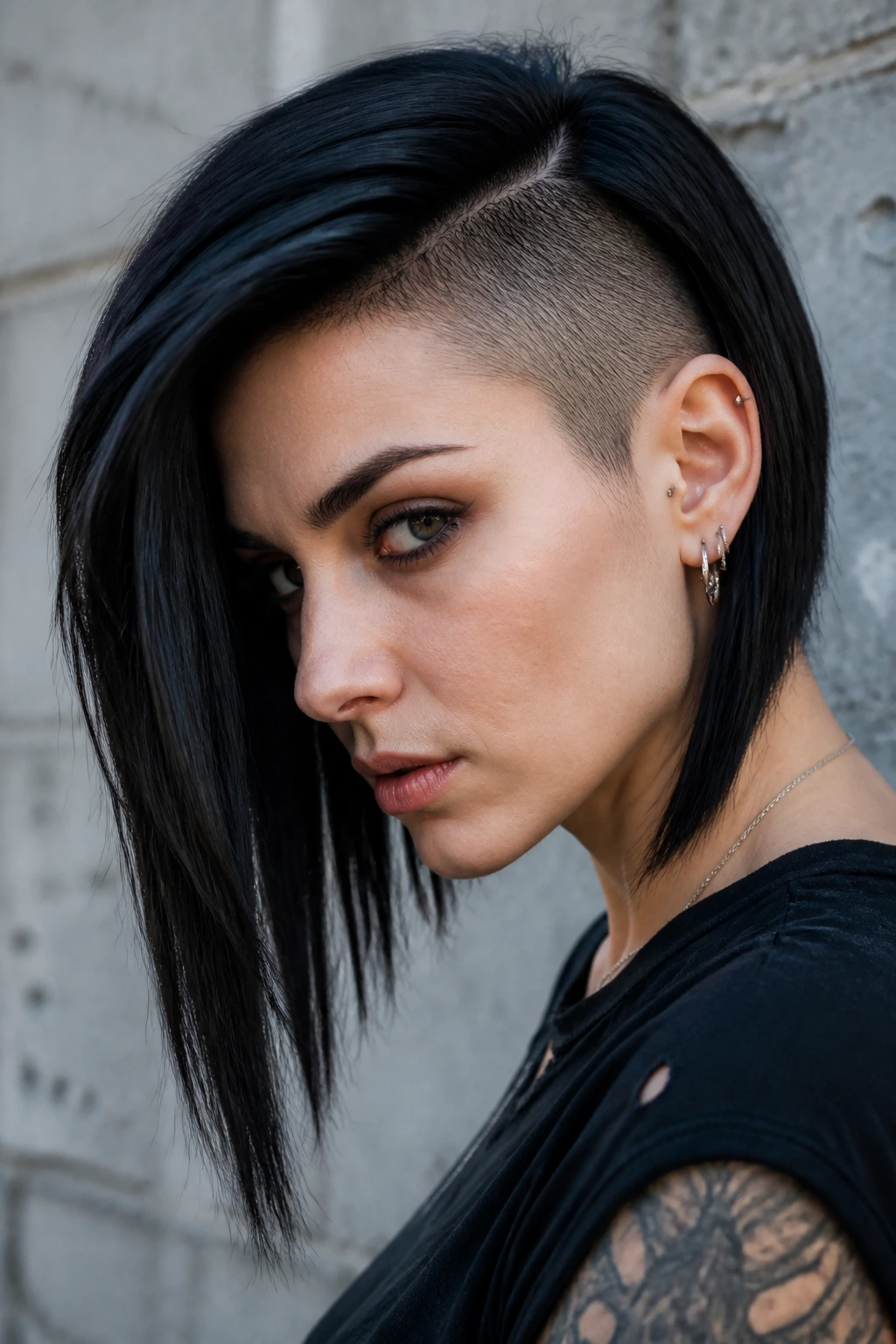
This is not a soft bob. The front stays longer—grazing the shoulders at the front corners—while the back lifts up and often gets a buzzed nape or undercut. The result feels sharp from the profile and even sharper from behind.
The angle gives the cut movement without making it fluffy. Straight hair shows the line best, but a slight wave can make it look rougher and more lived-in. Either way, the silhouette does the heavy lifting.
A matte finishing cream works better than shine serum here. The shape is the point. Don’t polish it into a salon brochure.
12. Feathered Riot Cut
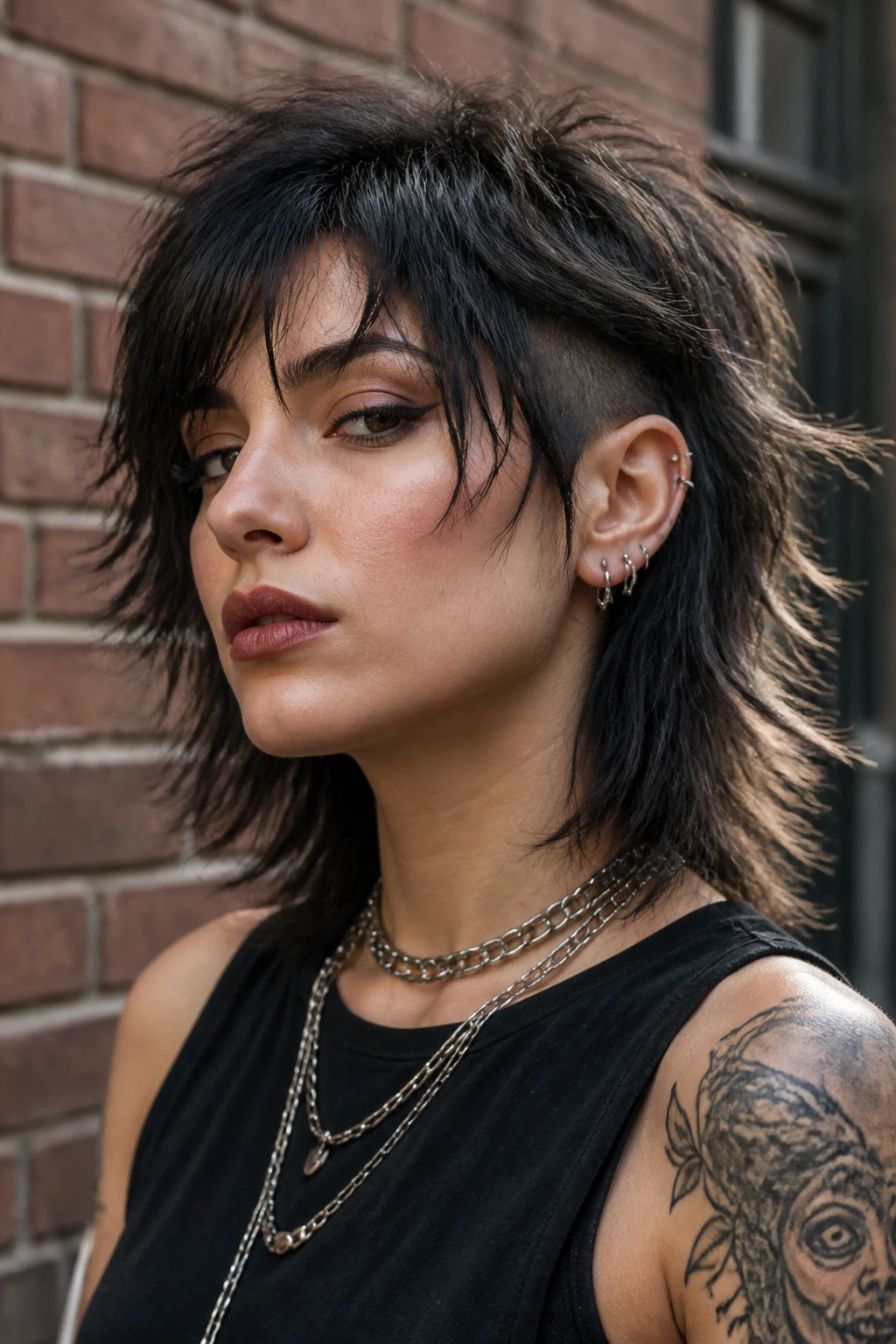
This one borrows from old-school feathering, then roughs it up until the ends look torn instead of blown out. The shoulder-length layers are cut to move away from the face, but the texturing is what makes it punk. A slight undercut at the nape keeps the shape from puffing out too wide.
Feathering can go wrong fast if it gets too soft. You want separation, not fluff. A razor or point-cut finish helps, but only if the hair has enough density to survive it without fraying.
It’s a smart cut for people who like a little softness near the face and a harder line around the back. That mix can look more interesting than a blunt edge, which is saying something.
13. Two-Block Punk Lob
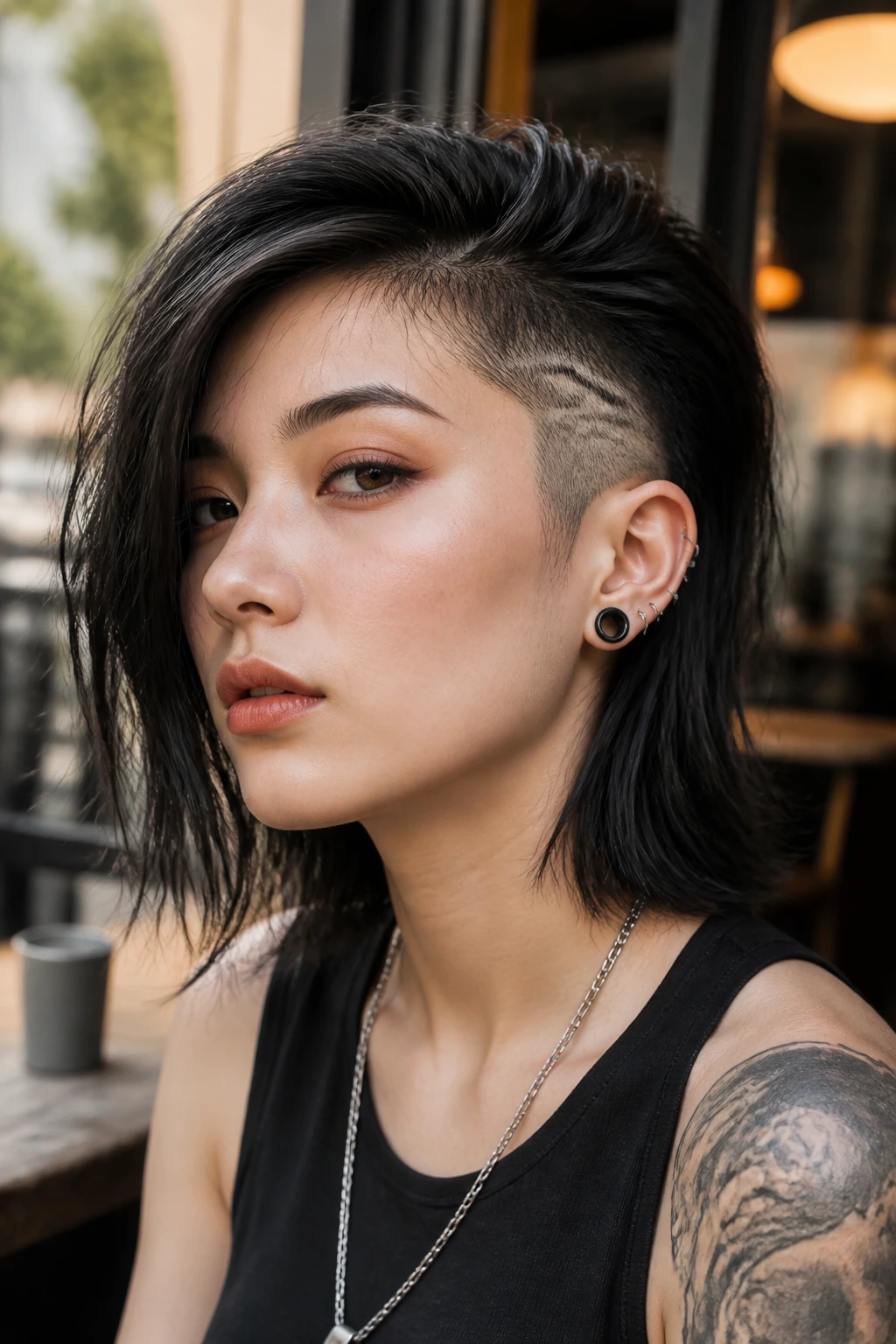
Borrowing from the two-block idea, this shoulder-length version keeps the top section long and layered while the sides and lower back are clipped much shorter. The disconnect is visible, but not cartoonish, which makes it surprisingly easy to wear.
The top can be swept forward, parted, or tousled into a rough curtain that hides the shorter sides. That flexibility is the reason this cut keeps showing up in punk-leaning style circles. It looks technical, but it wears like an everyday shape.
If your hair is dense, this cut removes weight without killing length. If your hair is fine, ask for less aggressive clipping so the top doesn’t look sparse by comparison.
14. Spillover Mohawk
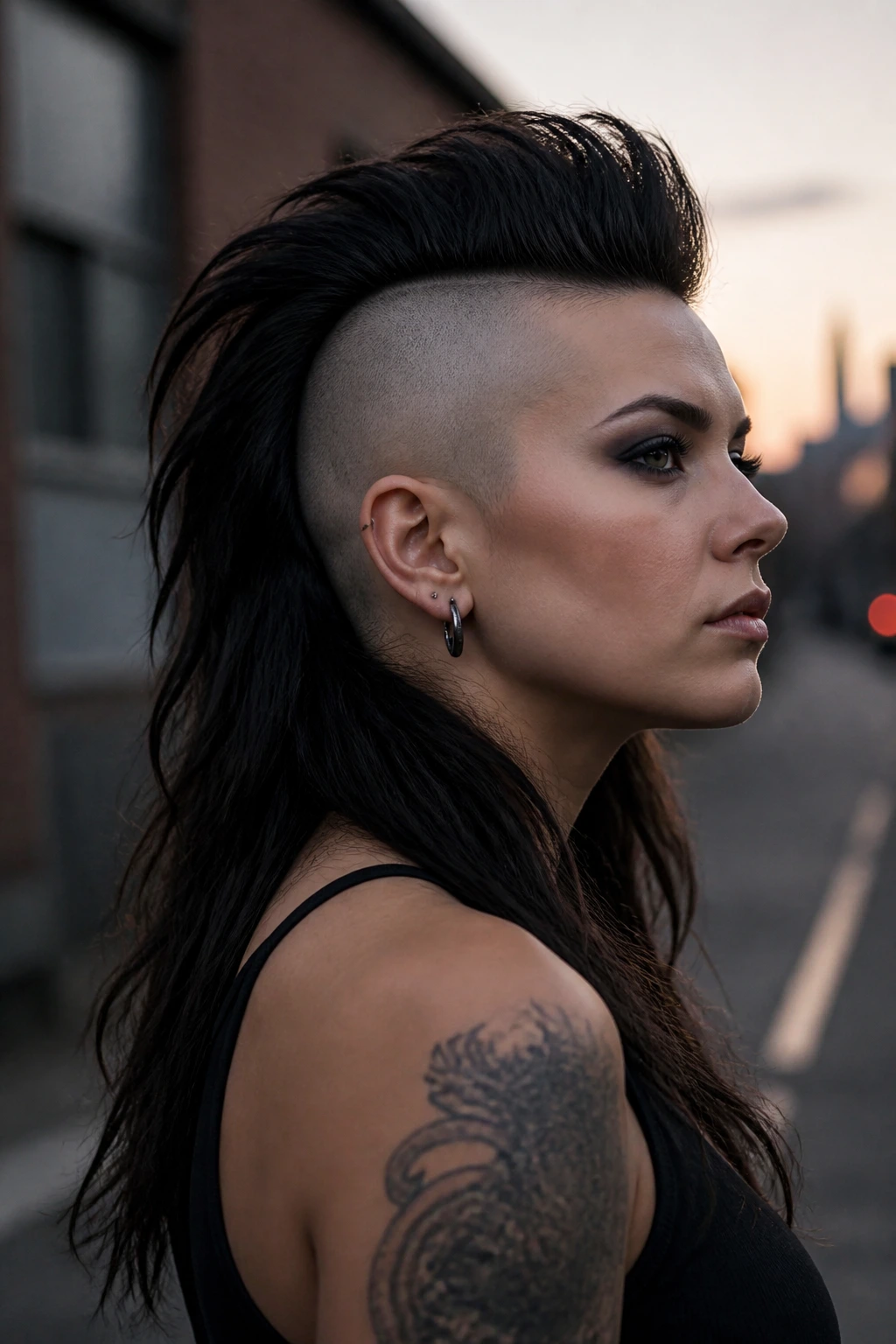
Picture a mohawk that decided it liked shoulders. The center strip stays long enough to fall over the sides instead of sticking straight up, while the sides are shaved or clipped down enough to make the middle stand out.
The drama comes from how the hair behaves when it’s unstyled. Loose and down, it looks like a layered cut with a strong center. Pushed up, it gives you that rebellious ridge without asking for a lot of product.
A little root lift spray makes this cut easier to shape. After that, finger-drying is better than combing. Comb work flattens the texture and turns the whole thing obedient, which is exactly what you do not want.
15. Cyber Punk Diagonal Undercut
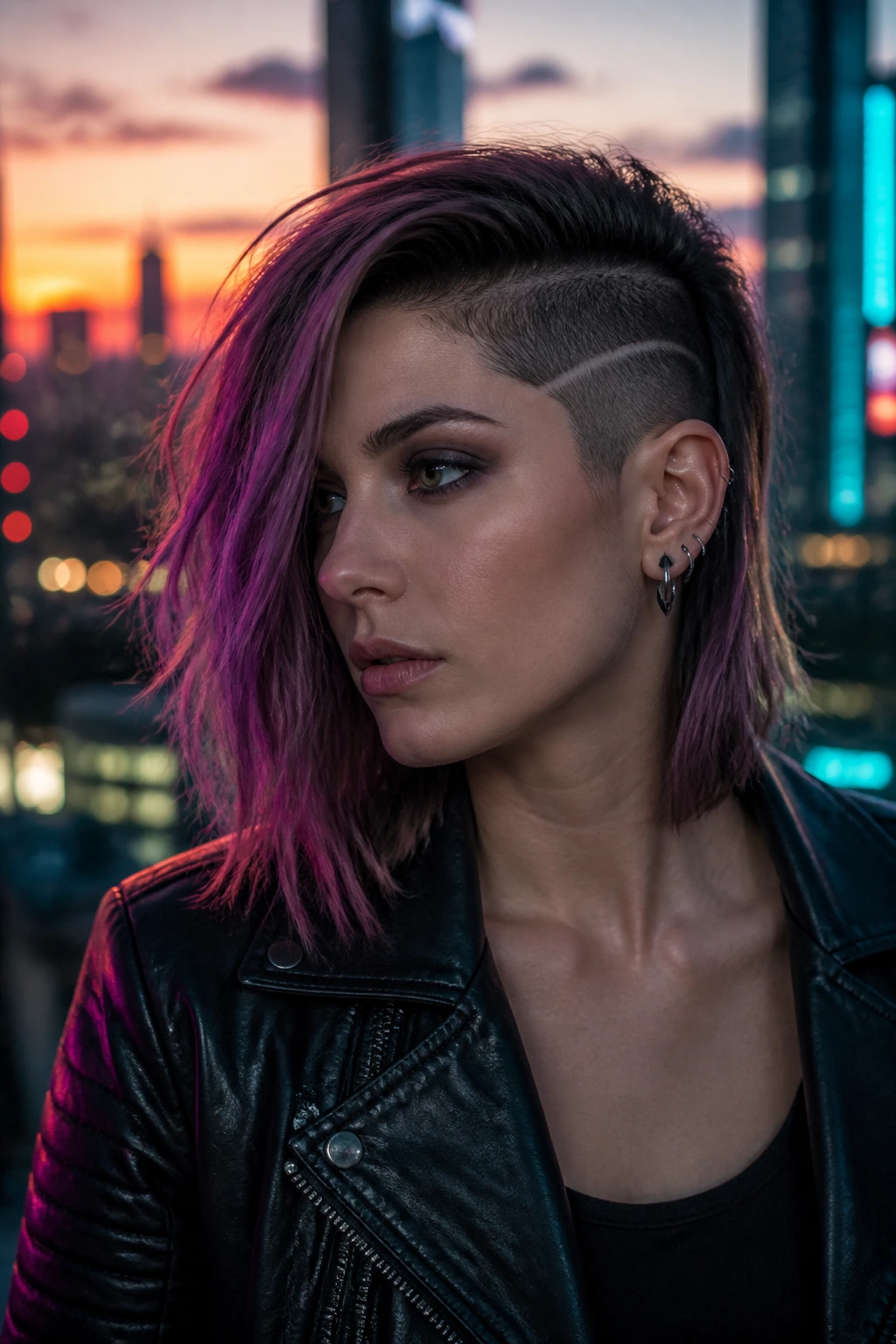
This cut feels geometric. The part is sharp, the undercut runs on a diagonal instead of a straight line, and the shoulder-length top section drops across it like a curtain with bad intentions.
Color helps here, especially a high-contrast placement. A pale panel over black roots, or a copper sweep over dark brown, gives the shape a second layer of structure. The cut still works without color, but the line reads faster when the tones clash.
How to Style It
Use a flat iron only where needed. The top should keep some bend, while the undercut stays clean and visible. Too much smoothing makes the diagonal line disappear.
16. Piecey Shoulder-Length Crop with a Temple Fade
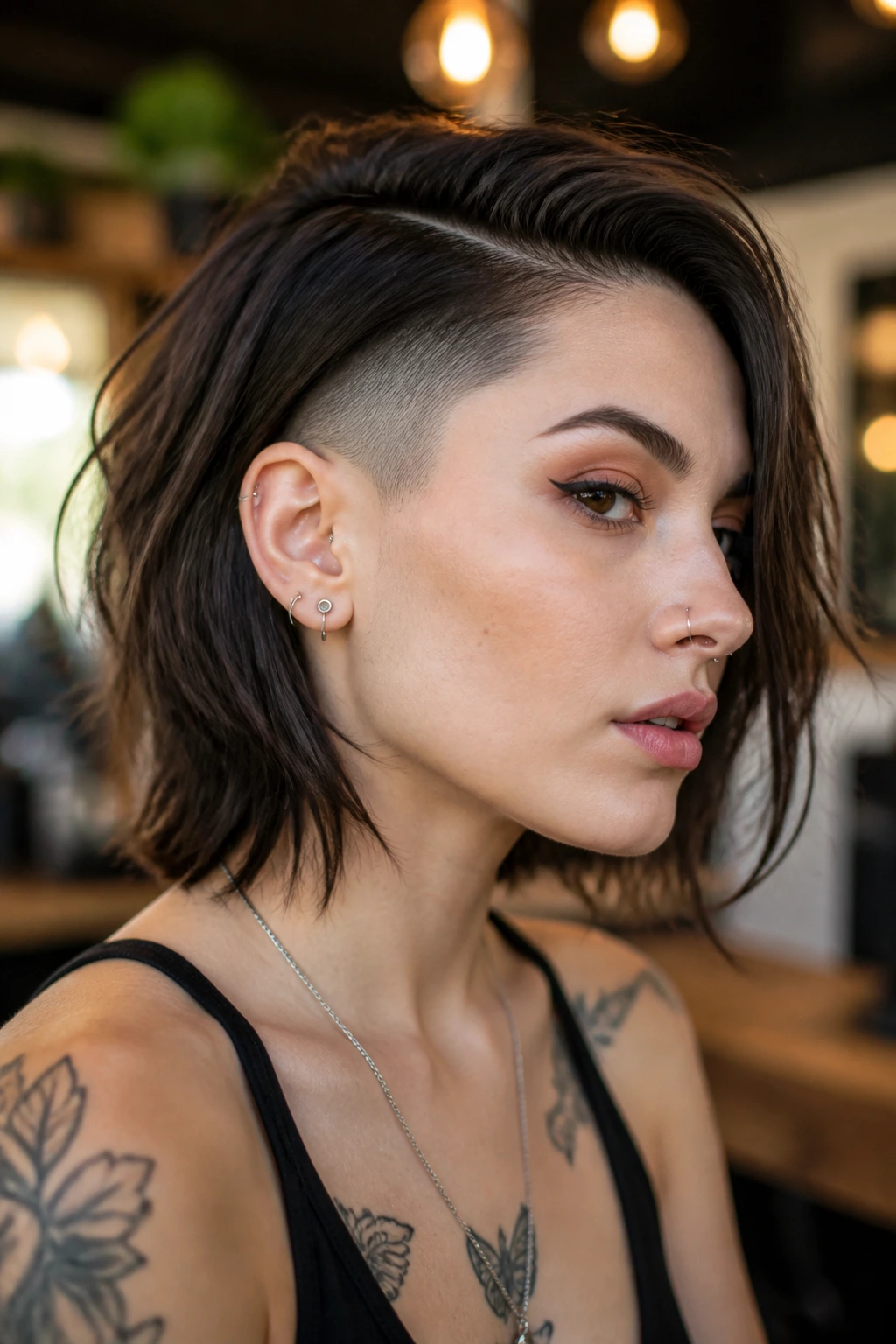
This is the cleaner cousin in the bunch, but it still has bite. The temple fade removes bulk in a soft gradient, while the rest of the shoulder-length crop stays piecey and sharp at the ends.
It’s a good fit if you need a punk cut that doesn’t look aggressive from every angle. The temple fade is hidden until you tuck the hair back or wear one side behind the ear. Then the whole thing changes.
The best styling move here is a light paste worked through dry hair in small sections. Don’t rake it all over. You want separated strands, not a waxed helmet.
17. Side-Swept Fringe and Underlayer Shave
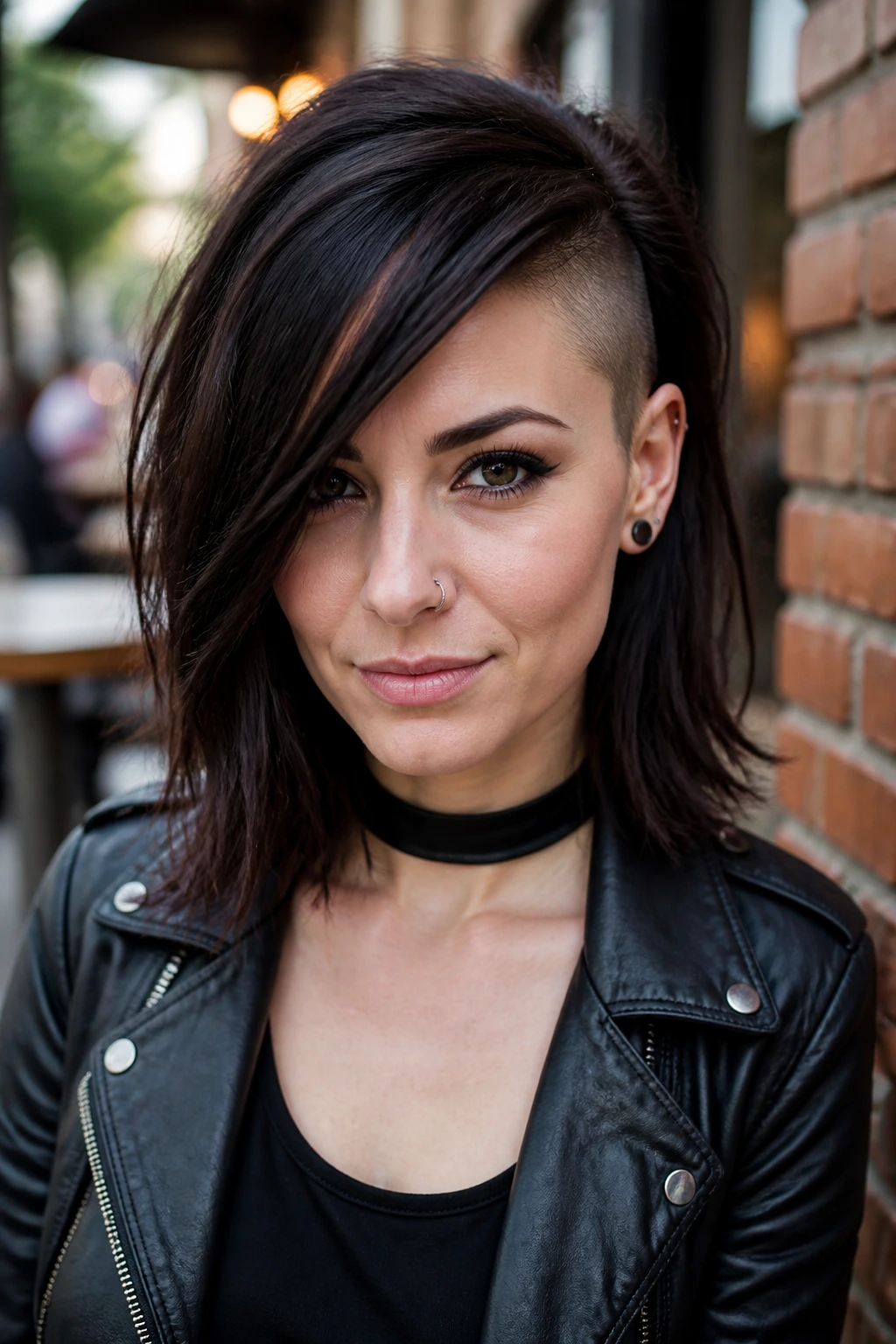
This cut hides its edge in plain sight. The fringe sweeps across the forehead and softens the front, while an underlayer shave sits underneath the longer top section. From the outside, it looks almost calm. Then the hair moves, and the shaved layer shows through.
That surprise is what makes it strong. It’s a nice option for people who want to keep things wearable during the day and show more shape when the hair is clipped up or tucked behind the ear.
A side sweep also gives you room to play with makeup. Thick liner, smudged shadow, or bare skin all work because the haircut already carries the attitude.
18. Cracked Glass Layer Cut
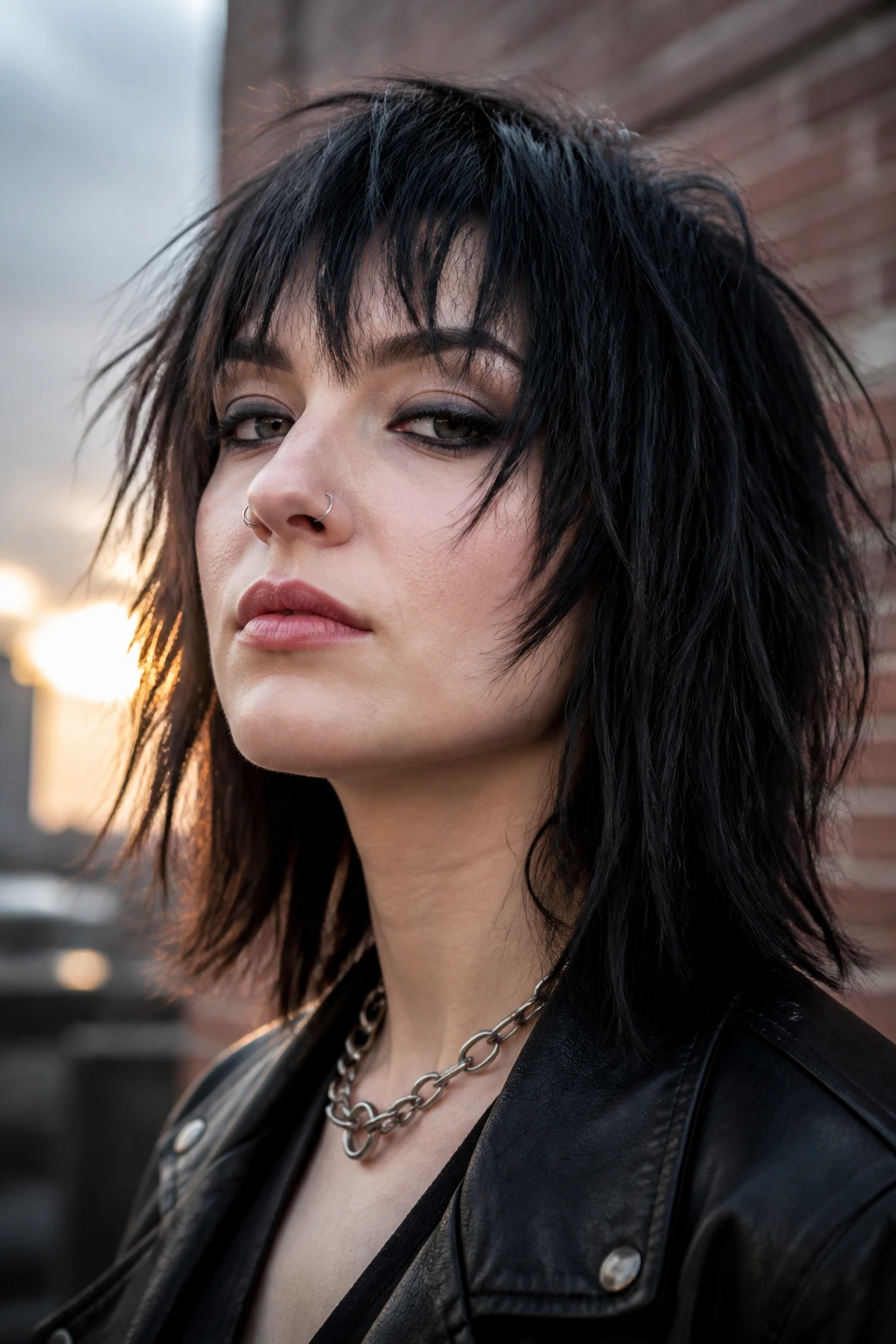
Think blunt exterior, broken interior. The outer line hits around the shoulders in a clean, almost strict way, but the inside is shattered with shorter layers and uneven lengths that make the cut move in pieces instead of a sheet.
It’s a favorite of mine for thick hair because it keeps the outline controlled while reducing the bulky middle. When the layers are cut well, the hair falls with a strange, almost flickering quality.
This one needs a careful hand. If the interior pieces are too short, the cut gets choppy in a bad way. If they’re too long, the whole concept disappears and you end up with a plain layered lob.
19. Neon Streaked Shag with Undercut Panels
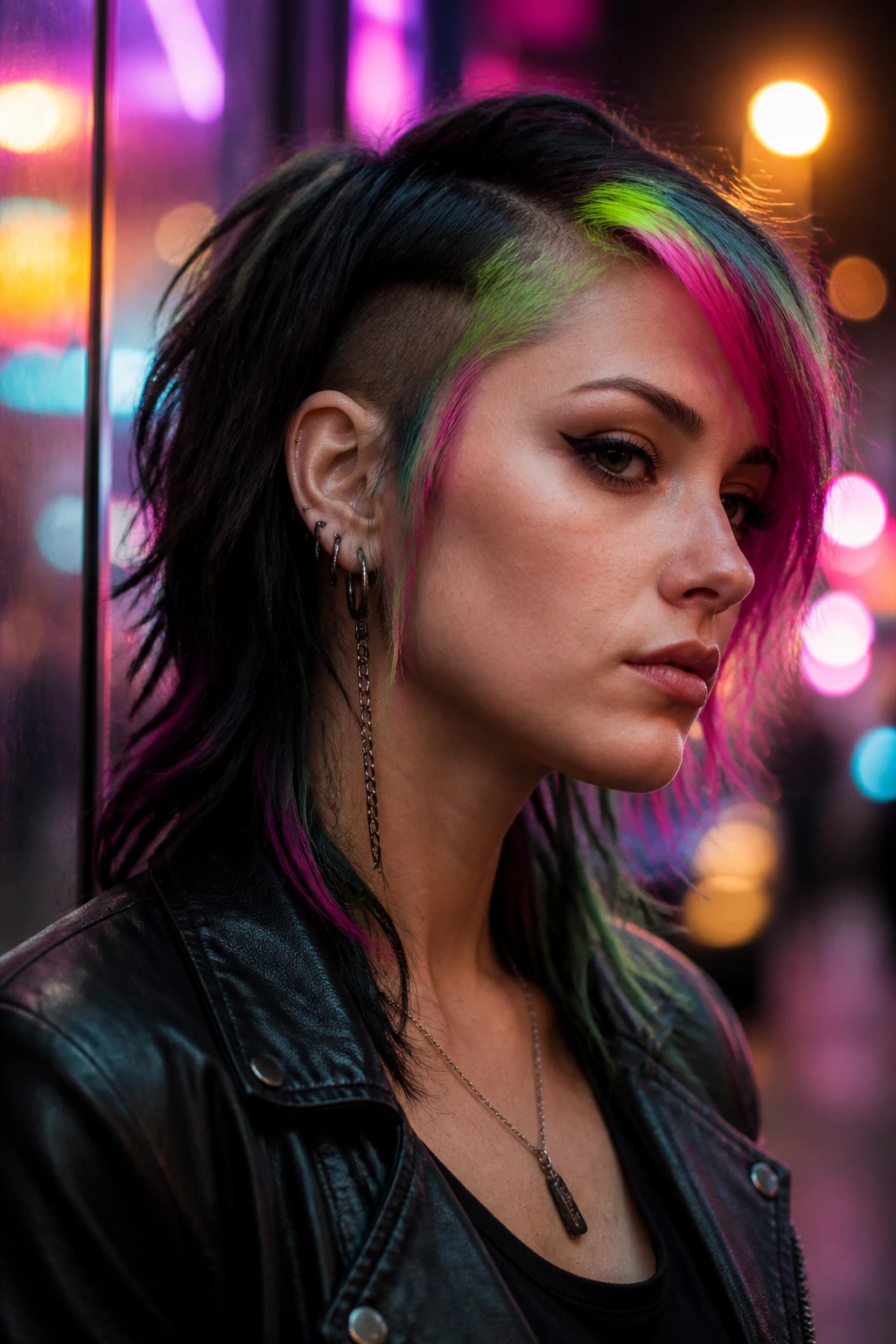
Color does a lot of work here, but the haircut still has to earn its keep. The shag shape falls around the shoulders with loose, uneven layers, while undercut panels remove weight beneath the color streaks so the bright sections have room to show.
A neon strip at the front or a block of electric color near the temple can make the whole cut look sharper. The point isn’t to cover every inch. It’s to place color where the cut can use it.
If you like changing colors often, this shape is forgiving. The undercut panels stay the same even when the dye changes, so the style keeps its structure after the color fades a little.
20. Tousled Razor Lob with an Asymmetrical Buzz
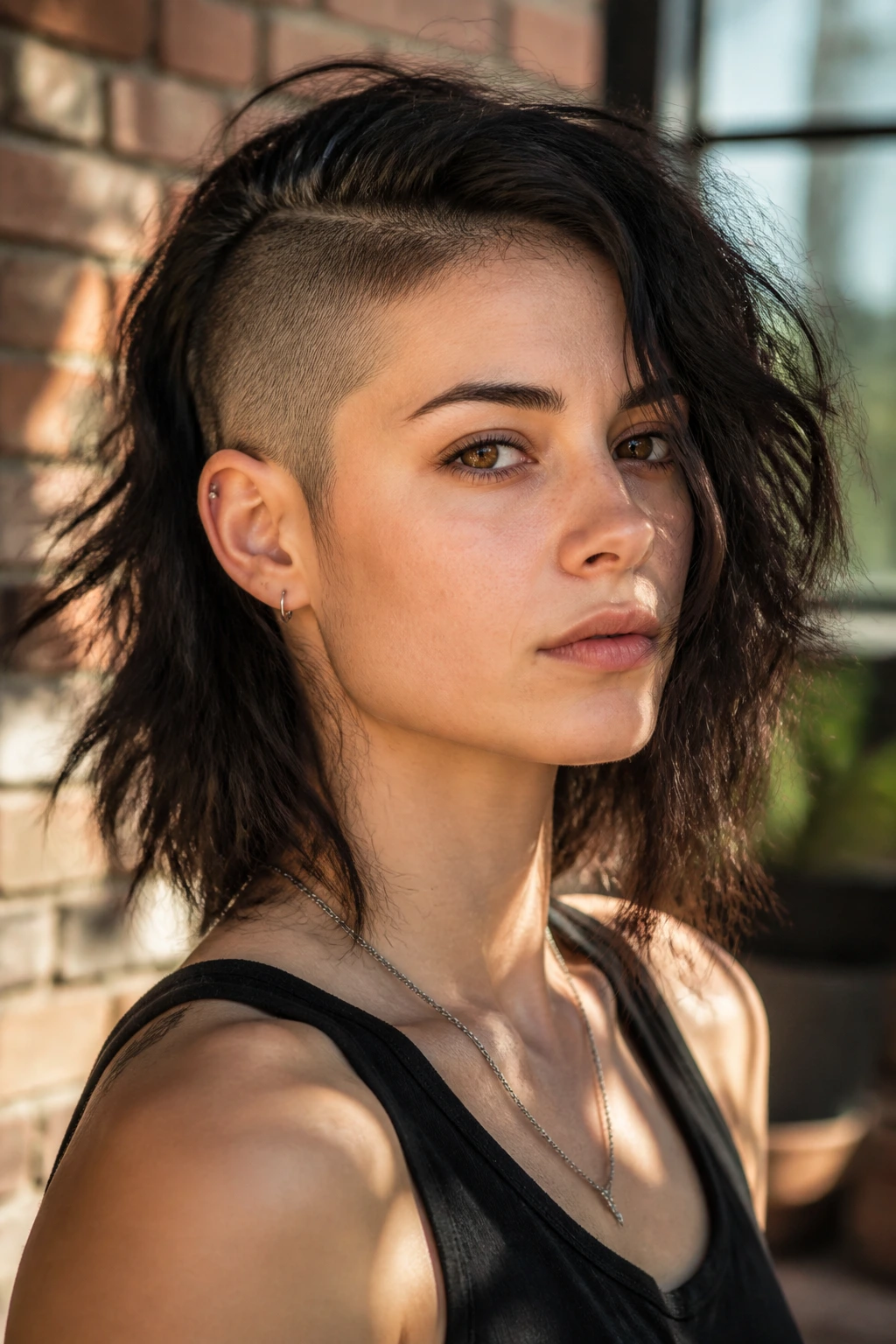
This one has motion baked in. The razor lob keeps the ends airy and jagged, while one side is buzzed shorter than the other. The asymmetry gives the cut a built-in lean, which keeps it from looking generic.
It works especially well when the hair is worn a bit messy. Clean blowouts can flatten the mood, but a rough dry with fingers and a tiny amount of paste keeps the texture alive.
If you want a version that still passes in more conservative settings, keep the buzz narrow at the temple. A wider shave makes a louder statement and leaves less room to hide it.
21. Stormy Black Shag with Micro Bangs
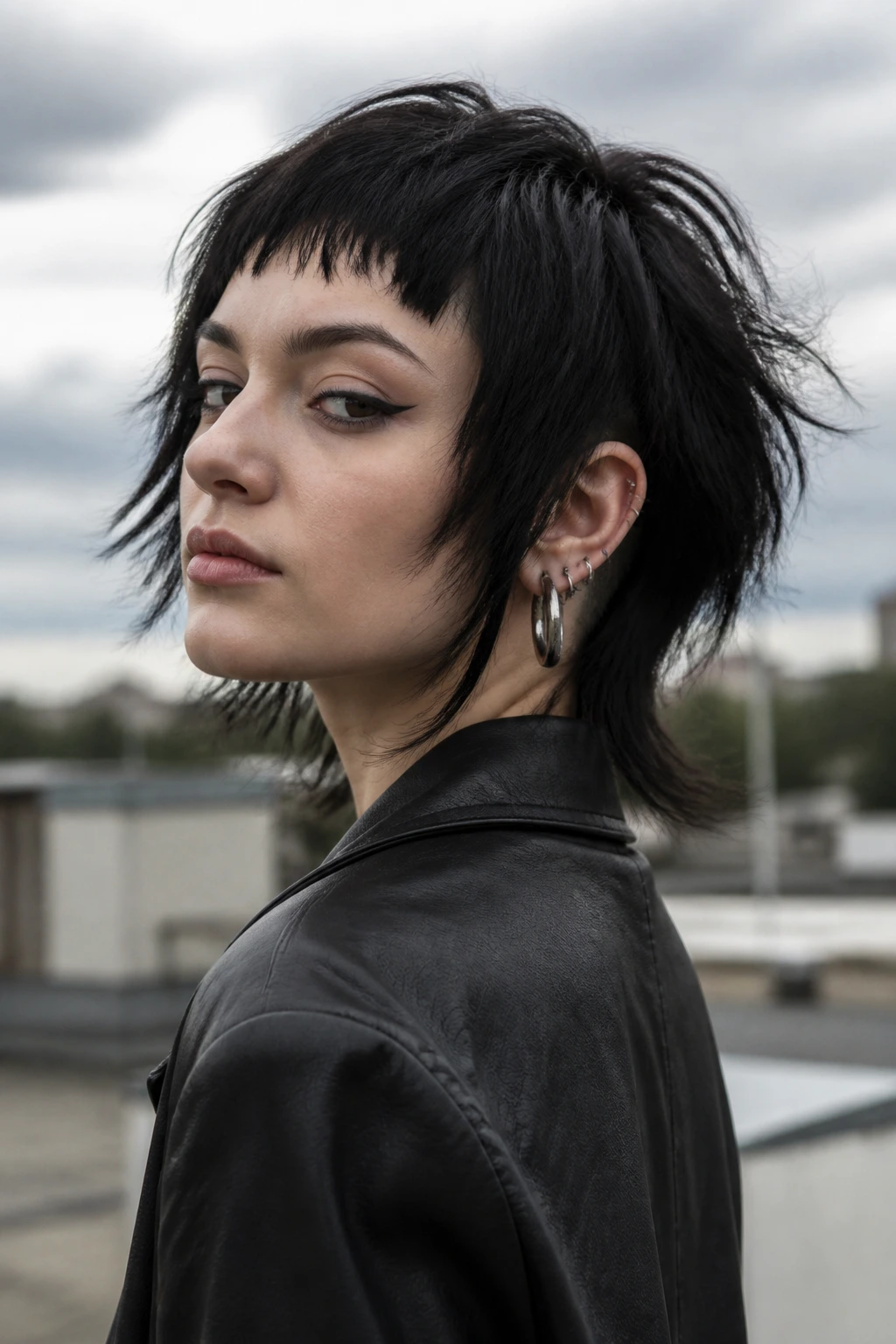
Black hair loves a choppy shag because the layers show up in shadow instead of color. Add micro bangs and the cut gets a strong graphic line up front, then break the shape with a shaved nape so the back doesn’t collapse into a blanket.
The finish should look a little windswept, even when it’s dry. I’d avoid heavy shine here. It softens the jagged lines and makes the cut feel less deliberate.
A wide-tooth comb is enough on most days. If you keep brushing it into perfect alignment, you’ll erase the very thing that makes the cut work.
22. Slick-Back Rebel Cut with a Long Top
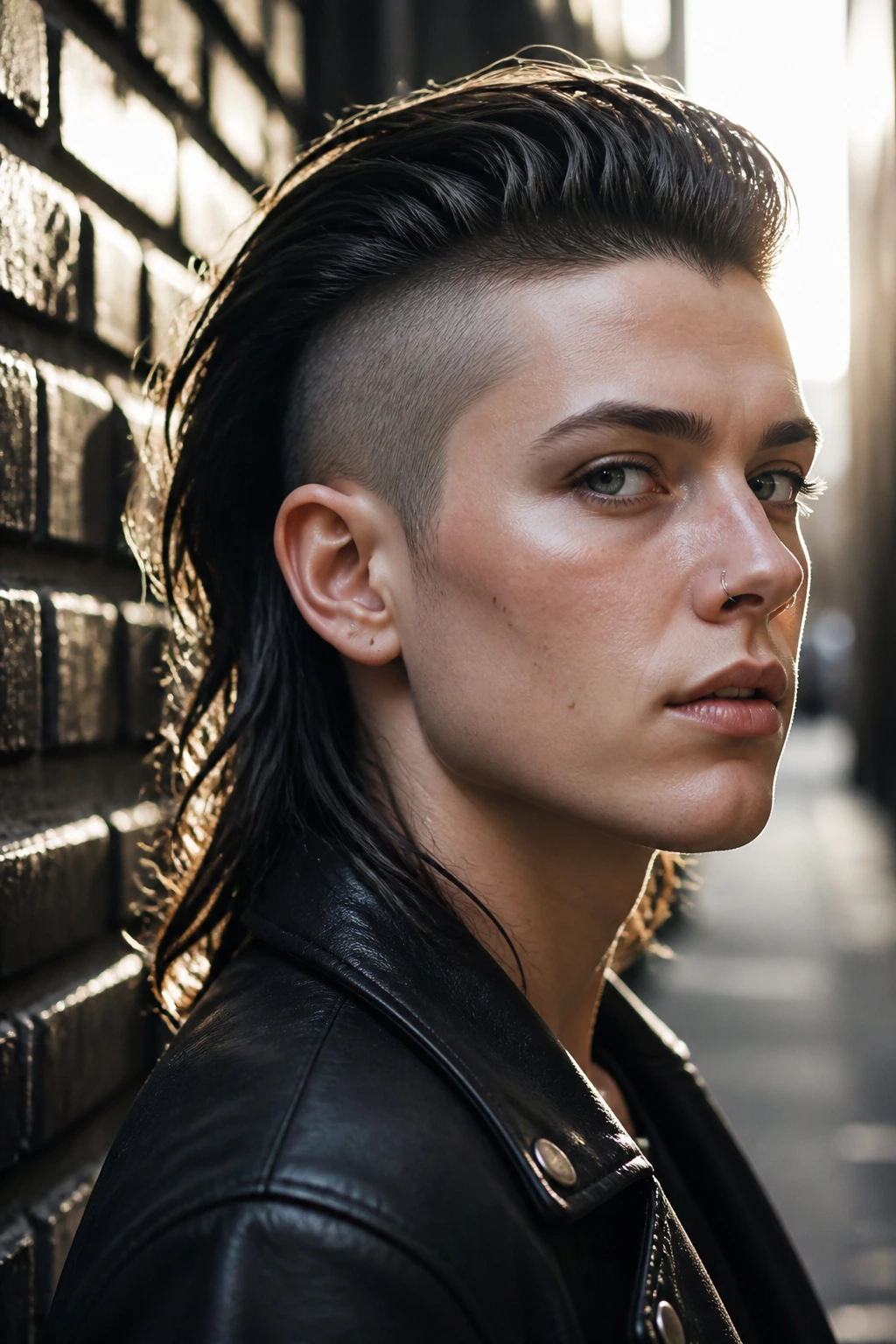
Not every punk cut needs to look messy. This one gets its edge from restraint: the sides are clipped close, the top stays long enough to slick back to the shoulders, and the back can be undercut or cleanly tapered.
When worn back with a bit of pomade, it looks sharp and slightly dangerous. When you push the same hair forward and rough it up, it becomes something else entirely. That duality is what makes it worth considering.
The best version keeps enough length through the top to avoid exposing the scalp too much. If the top is too short, the slick-back looks thin instead of hard-edged.
23. Braidable Punk Lob with a Hidden Shave
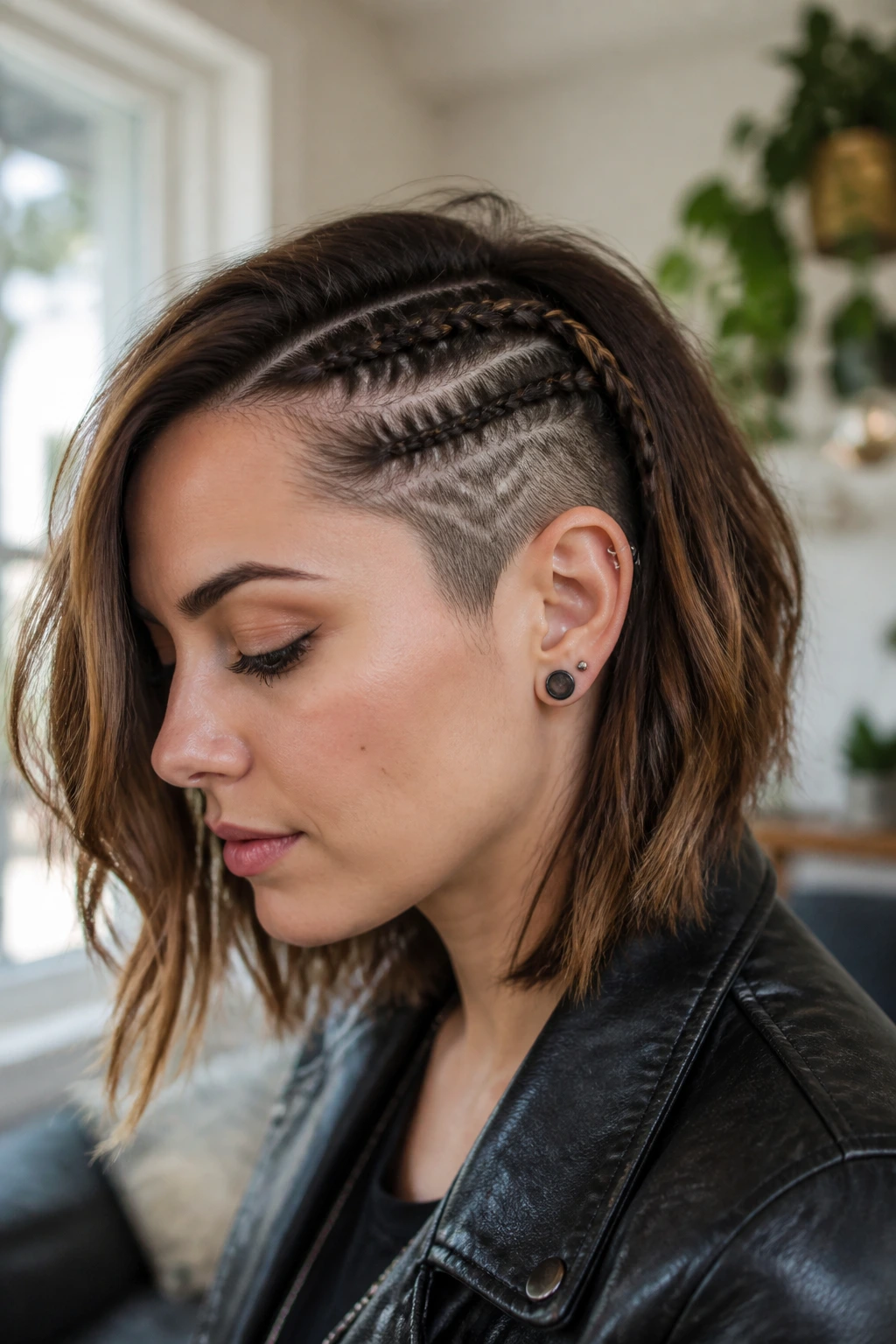
This is the quiet punk haircut that turns loud when you braid it. The shoulder-length top can be worn down like a normal lob, but a hidden shave along the side or nape shows up in braids, twists, and half-up styles.
That hidden detail keeps the haircut interesting over time. You’re not locked into one look. You can wear it smooth on Monday, braided on Friday, and clipped back on Saturday night when the undercut becomes the whole point.
A small braid tucked near the shaved section is enough. You don’t need a full head of braids to make the design visible.
24. Half-Shaved Shoulder Cut
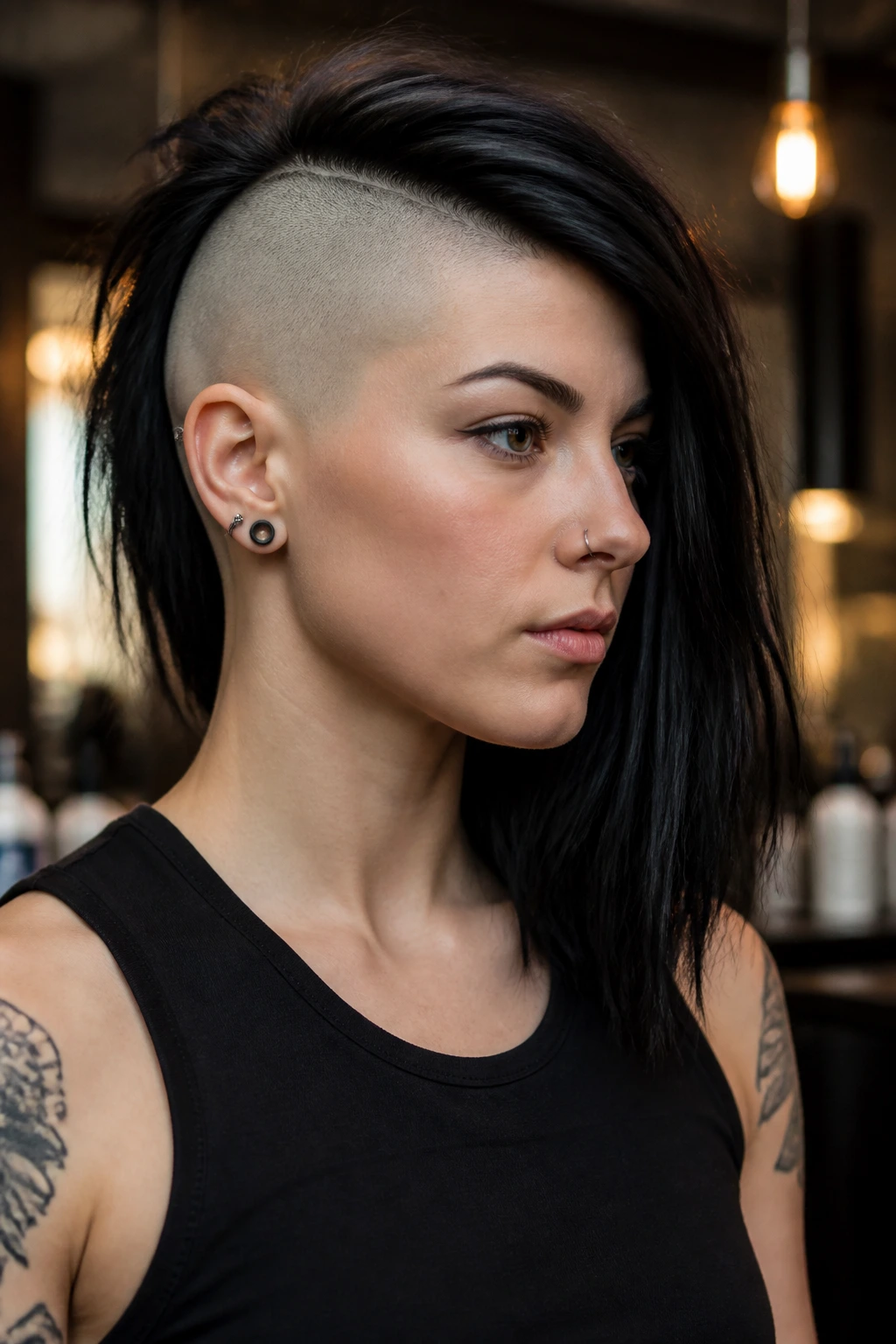
This is the blunt-force version. One side is shaved almost to the scalp; the other side falls to the shoulders in a clean, heavy curtain. No hiding. No pretending it’s subtle.
The cut works because the long side carries enough mass to balance the exposed side. If both sides are too light, the whole thing looks unfinished. If the long side is too heavily layered, the balance gets lost.
This is a strong choice for people who want a haircut that does half the speaking for them. It pairs well with simple clothes because the hair already brings the noise.
25. Loud Fringe Punk Shag with a Double Undercut
This one has layers of intention. A heavy fringe lands over the eyes or just above them, the shaggy length falls to the shoulders, and both sides plus the nape are undercut so the hair can move without getting bulky.
It’s probably the most adaptable style in the list. Wear the fringe straight and blunt for a harder line, or split it into irregular pieces if you want a messier feel. The double undercut gives you room to shape the silhouette in different ways without committing to one static look.
A little root volume spray goes a long way here. The fringe needs some lift at the base, or it starts clinging to the forehead and loses the punch.
Why Shoulder-Length Punk Haircuts Work So Well
Shoulder length gives these cuts room to breathe. That’s the part a lot of people miss. A shaved side or an undercut can look aggressive on short hair, but on shoulder-length hair it has contrast, and contrast is what makes punk hair feel intentional instead of random.
You also get more styling range. The same cut can hang straight, flip out at the ends, or be rough-dried into something bigger and messier. That matters if you don’t want a haircut that only looks right on salon day. A shoulder-length punk cut should still make sense when you wake up on day three and the dry shampoo has already done its work.
Texture helps too. Wavy and curly hair can build height around an undercut without much help, while straight hair shows razor lines and color blocks more clearly. Thick hair benefits from the weight removal. Fine hair benefits from the illusion of density at the ends. That’s why this length keeps winning—it has enough structure to adapt instead of fighting the texture you already have.
The Tools That Keep the Shape Sharp
- Clippers with guards: Essential for clean side shaves, undercuts, and buzzed napes; a #1, #2, and #3 guard covers most requests.
- Trimmer: Best for edge cleanup around the ears, neckline, and temple line.
- Texturizing shears: Useful for removing bulk in thick hair without flattening the whole shape.
- Sharp cutting shears: Regular household scissors chew the ends and leave them frayed.
- Blow dryer with a concentrator nozzle: Helps direct the hair where you want it instead of puffing it everywhere.
- Diffuser: Good for waves and curls that need shape without frizz.
- Flat iron: Handy for a few bent pieces or a blunt fringe; keep it on the lower side of the heat range if the hair is color-treated.
- Rat-tail comb: Makes parts cleaner and helps section out undercuts.
- Wide-tooth comb: Better than a brush for dry, textured styling.
- Matte paste or clay: Gives piecey control without shine.
- Texturizing spray: Adds grit and separation to shag cuts.
- Strong-hold hairspray: Useful when you want a side-swept fringe or mohawk-inspired top to stay put.
Choosing the Right Shave, Undercut, or Buzzed Panel
Start with your growth pattern, not a Pinterest fantasy. If your hair kicks hard at the crown or forms a stubborn cowlick at the temple, a high shave can fight you every single morning. A lower nape undercut or a hidden panel may give you the same visual punch with less daily wrestling.
Face shape matters less than people think, but the placement of the shave matters a lot. A temple buzz can sharpen a round face. A nape shave can slim a heavy back view. A full side shave pushes the eye sideways, which can make long faces look even longer if the top is too flat.
Color changes the mood too. If you bleach, keep the undercut area healthy because those short sections get clipped and dyed often. If you stay dark, lean on shape, texture, and contrast in the cut itself. A strong shoulder-length punk haircut does not need neon to make a point.
If you are asking for one of these in a salon, bring side and back photos. Not just the front. The back and profile are where the haircut either works or falls apart.
How to Wear These Cuts in Real Life
Presentation: Rough-dry the top with your fingers, then press or twist only the pieces that need definition. If you smooth every strand, the whole cut gets too neat and the punk edge softens fast.
Accompaniments: Heavy eyeliner, hoop earrings, black boots, leather, denim, and sharp collars all sit well with these haircuts because they echo the same hard lines. You do not need to wear all of it at once. One or two pieces are enough.
Proportioning the Drama: If the haircut already has a big shave or bold color, keep the rest of the styling slightly simpler. If the cut is subtler—say, a hidden undercut or a side-swept fringe—then the makeup or accessories can carry more of the attitude.
Finish: Matte finishes read rough and lived-in. A bit of shine at the fringe or crown can sharpen a slick-back or mohawk sweep. Pick one and commit. Half-matte, half-wet usually looks accidental.
Extra Edge and Personalization
Color Punch: A split dye, money piece, neon streak, or deep root shadow can push a shoulder-length punk cut from edgy to unmistakable. You do not need every section colored. One strong placement near the front or over the shaved side usually does more work.
Texture Boost: Salt spray on damp hair gives waves a rough, air-dried feel, while a pea-sized amount of paste on dry hair gives straight hair some bend and separation. If the hair is already dry or bleached, use less product than you think you need.
Accessory Move: Metal clips, chains, tiny braids, or a single bold barrette can emphasize the cut without hiding it. I like one strong accessory over a pile of them. Too many pieces fight the haircut.
Make-It-Yours: Fine hair usually looks better with blunt ends and controlled layering. Thick hair can handle heavier texturizing and a deeper shave. Curly hair loves hidden undercuts and longer top sections that keep the shape from ballooning.
Keeping the Shape Between Salon Visits
The shaved parts need the most frequent attention. A nape buzz or temple shave usually needs cleanup every 2 to 4 weeks if you want the line to stay crisp. Hidden undercuts can stretch a little longer, especially if the top covers them most of the time.
The longer shoulder-length sections can go 6 to 10 weeks before they start losing the original outline, but that depends on how precise the cut is. Choppy shags and mullets often survive grow-out better than clean bobs, because the messier lines forgive a little fuzz.
Wash schedule matters too. If you use a lot of paste or hairspray, build-up will flatten the shape and make the ends look dusty. A clarifying wash every 2 to 4 weeks can reset the texture, especially if you use heavy styling products. Keep conditioner on the mid-lengths and ends, not the buzzed sections.
Sleep helps. A silk pillowcase or a loose braid can keep the top from tangling into a flat knot overnight. The undercut and buzzed areas do not need much care, but the shoulder-length layers still do.
Common Mistakes to Avoid
The first mistake is shaving too high too soon. A lot of people want drama and ask for more removal than their hair density can support. The result is a cut that looks patchy instead of sharp. Start lower, then go bolder on the next appointment if you still want more exposure.
The second mistake is over-thinning fine hair. Texturizing shears can ruin the shape if the hair is already soft or sparse. Fine hair usually needs structure, not extra holes in the silhouette.
Another one: ignoring your cowlicks. A punk haircut with a stubborn crown whirl or a side part that won’t sit still needs those growth patterns worked into the plan. If they are not, the haircut will fight your hands every morning and you’ll blame the product when the cut is the issue.
Don’t drown the style in product either. Too much wax or pomade can make the layers clump into one heavy sheet. Use a small amount, warm it in your palms, and build only where the hair actually needs control.
Last, don’t let color and cut argue with each other. A hard asymmetrical shape with a muddy, over-processed dye job can look tired fast. If the color is loud, the cut should stay clean enough to support it. If the color is subtle, the cut can carry more of the edge.
Questions People Ask Before They Cut the Sides
Can shoulder-length punk haircuts work on straight hair?
Yes, and straight hair often shows the cleanest lines. The trick is adding enough texture through point cutting, razor work, or product so the cut does not hang flat and lifeless.
What if I have curly hair?
Curly hair can make these cuts look even better because the texture adds height and movement. Ask for a longer top section and a lower undercut or shave, since curls bounce up more than straight hair does.
How do I ask for one of these at the salon?
Bring photos from the front, side, and back, then say exactly where you want length removed. Tell the stylist whether you want the shave visible all the time or hidden unless the hair is up.
Do I have to dye it to make it punk?
No. Shape does plenty on its own. A sharp side shave, a jagged fringe, or a clean undercut can look more punk than bright color if the cut is strong.
Will a hidden undercut show when my hair is down?
Sometimes a little, depending on density and layering. Thick hair hides it better; fine hair reveals it sooner. If you want it fully concealed, ask for the undercut lower and keep the top section dense enough to cover it.
How often do shaved sides need maintenance?
Most side shaves need cleanup every 2 to 4 weeks if you want them to stay crisp. If a softer grow-out is fine, you can stretch that longer, but the line will blur.
What product works best for these cuts?
Matte paste gives the most control for piecey texture, while salt spray is better for rough, air-dried movement. Use hairspray only after you like the shape, not as the first step.
Can I grow out a punk cut without looking awkward?
Yes, but you need a plan. Let the top and back meet in the middle, keep the neckline clean, and avoid trimming the layers into a boxy shape that fights the grow-out. Hidden undercuts usually grow out more gracefully than a high buzzed side.
The Cut That Keeps Its Teeth
Shoulder length punk haircuts work because they hold two ideas at once: movement and attitude. That balance is what keeps them from sliding into costume territory. The shoulders give the hair something to do. The shaved side, undercut, buzzed nape, or jagged fringe gives it a reason.
The best version is the one that matches your daily life and still feels a little sharp when you catch it in the mirror. That can mean a loud split-dye lob, a hidden undercut that flashes in a braid, or a rough shag with one side clipped close and the other side hanging loose. There’s room for all of it, which is half the fun.
If you choose the shape with your growth pattern, texture, and upkeep in mind, it stays interesting for much longer than a one-week novelty cut ever could. And that’s the sweet spot: hair that behaves when it needs to, then turns around and looks like it has a point.
