



Buzz cut hairstyles for women have a way of stripping the noise out of a look. Once the hair gets down to a guard length, every line matters: the curve of the jaw, the shape of the brow, the angle of the nape, even the way a fade sits around the ears. That’s why one buzz cut can look hard-edged, another can look soft and clean, and a third can feel unexpectedly elegant.
The real trick is that a buzz cut is never only “short hair.” A #1 guard leaves a very different finish from a #3. A skin fade changes the whole read of the cut. A platinum buzz has a louder personality than a natural dark one, and a sharp line-up around the hairline can make the same basic crop feel tailored instead of plain. Tiny choices. Big shift.
Some people want the practical part. Others want the dramatic part. Most want both, honestly. They want the ease of clippers and the feeling that the cut still says something about them. Good news: there are plenty of ways to do that without ending up in the same look everybody else has already worn to death. The fun part is how one short crop can go in 35 different directions.
Why This Collection Stands Out
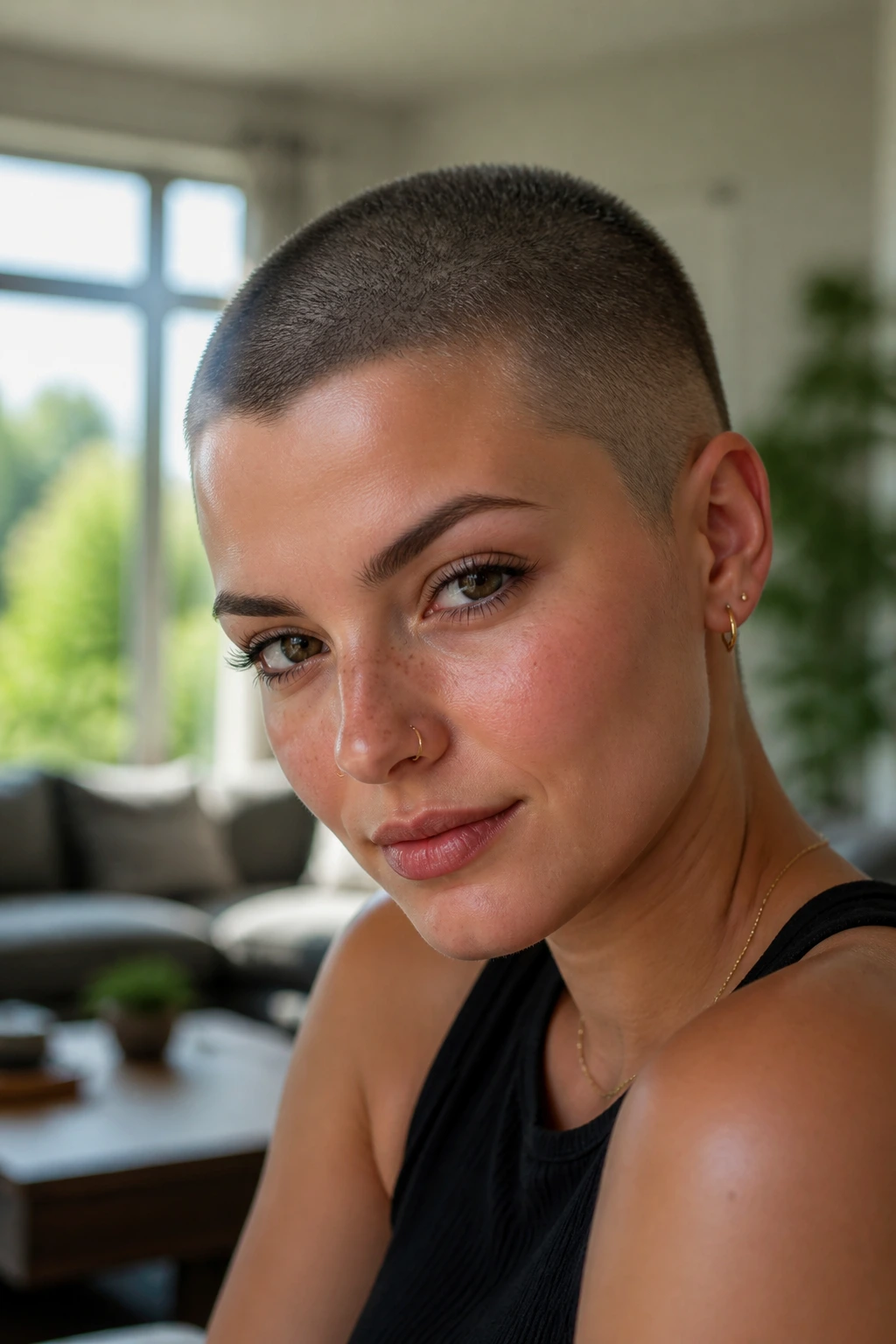
- Guard length changes the mood fast: A #1, #2, and #3 guard all sit close to the scalp, but each one catches light differently and changes how much texture shows through.
- Fade height matters more than people think: A low fade feels softer, while a high fade creates a sharper frame around the head and makes the top read fuller.
- Color does real work on short hair: Platinum, copper, black, silver, and split-dye buzz cuts all turn the scalp line into part of the design instead of hiding it.
- Texture still shows up: Curly, coily, fine, and thick hair each behave differently under clippers, so the right buzz cut respects the hair you actually have.
- Shape beats length: Rounded edges, clean temples, and a tidy neckline can make a close crop look deliberate even when the cut itself is nearly bare.
- Maintenance is part of the style: The best buzz cut hairstyles for women stay crisp because the edges, scalp, and color get regular attention, not because the cut is doing all the work on its own.
1. Number 1 Guard Buzz Cut
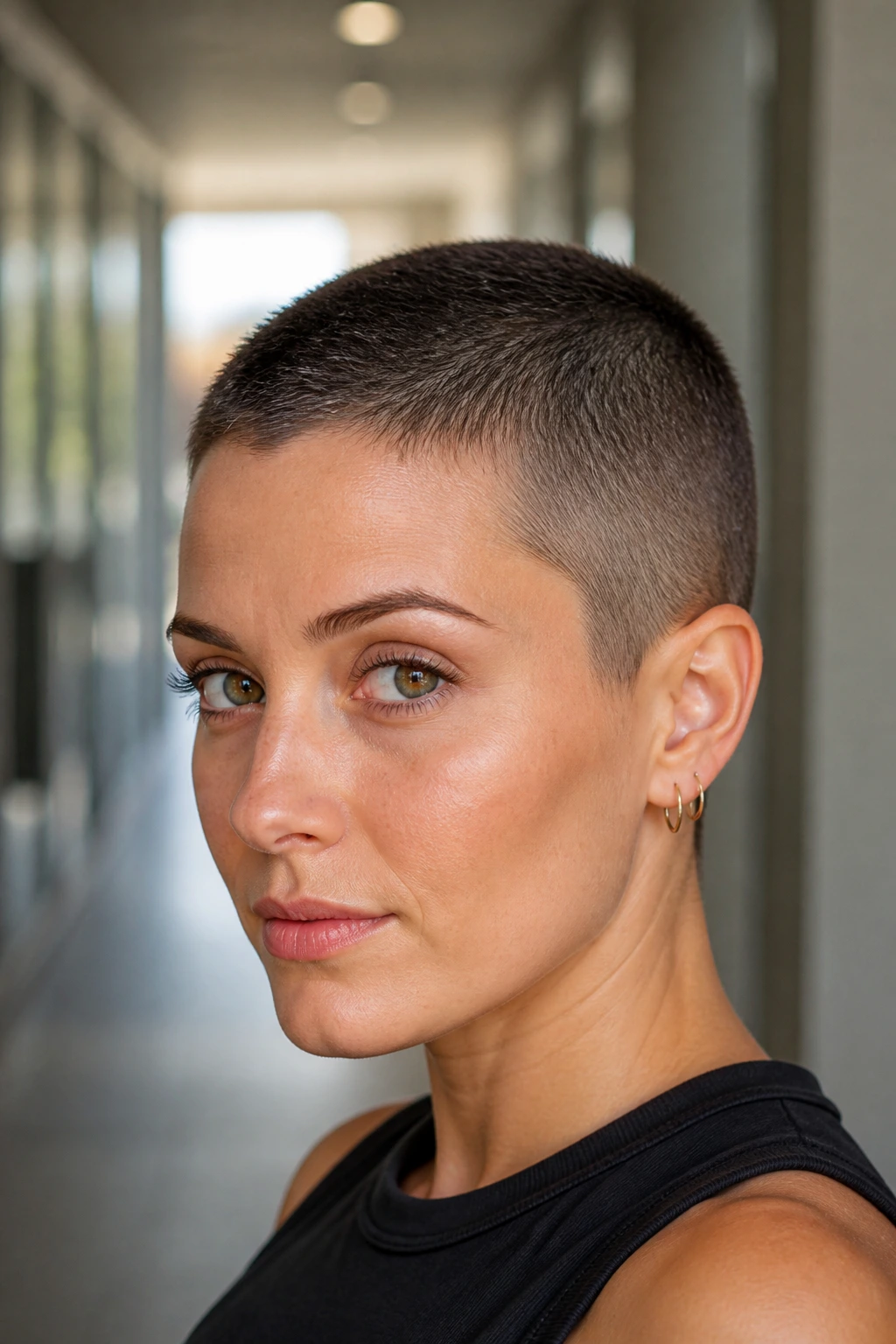
A #1 guard buzz cut is the closest thing to a clean slate without going fully bald. It leaves enough hair to catch a little shadow and texture, which is why it looks less severe than people expect. On most heads, that faint grain is enough to keep the cut from reading flat.
Ask for an even #1 all over if you want a bare, minimalist finish. If your hairline is a little uneven or your crown swirls hard, that tiny length helps smooth out the shape instead of exposing every bump. It’s a good first buzz when you want confidence without quite giving the clippers full control.
Best for: strong brows, sharp cheekbones, and anyone who wants the shortest possible crop with a bit of softness left in it.
2. Number 2 Guard Buzz Cut
A #2 guard buys you a little room. Not much. But enough. The extra millimeter or two softens the outline at the temples and gives wavy or thick hair a faint texture that makes the cut feel less stark in daylight.
I like this length for people who want their face to carry the look, not the haircut itself. It’s also easier to grow out than a super-close buzz, which matters more than people admit on day one. If you’re nervous about the scalp showing too much, start here and trim shorter later if you want more edge.
Tip: a #2 buzz often looks best with clean sideburns and a tidy neckline, even if the top stays blunt and simple.
3. Number 3 Guard Buzz Cut
The #3 guard buzz cut sits in that sweet spot where the hair still looks intentional instead of shaved down to almost nothing. You get more visible texture, more depth at the crown, and a little more forgiveness if your hair grows in different directions.
This length is especially useful on fine hair. A #3 can keep the scalp from showing too much while still giving you that close-cropped shape that makes buzz cuts so striking. It also works well if you want to pair the cut with earrings or a heavier lip color, because the hair itself doesn’t compete for attention.
Shorter than a crew cut. Softer than a skin-close crop. That’s the lane.
4. Tapered Buzz Cut
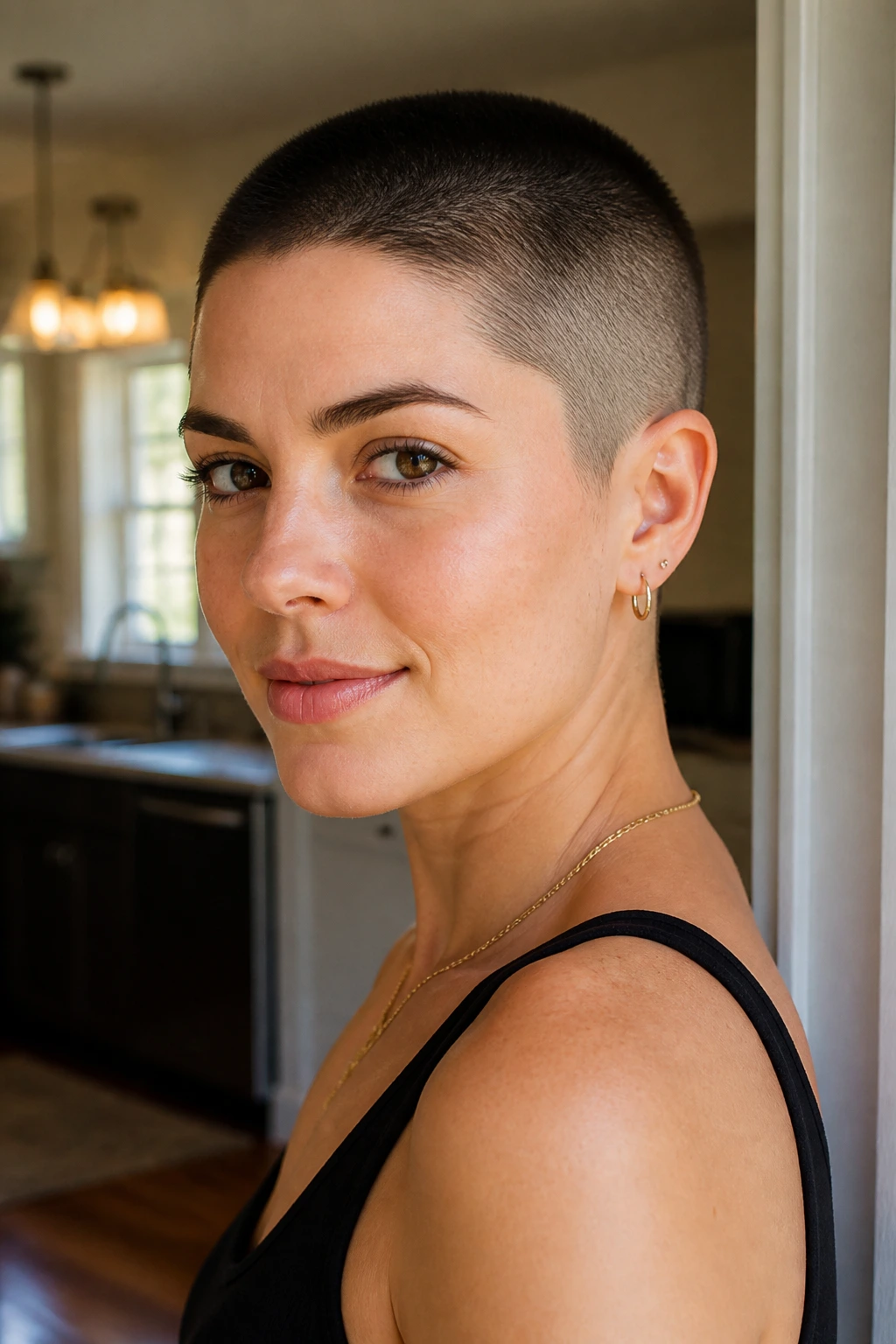
A tapered buzz cut keeps the top short and evens out the sides and back with a gradual drop at the edges. That taper gives the cut shape. Without it, close hair can sometimes look like one big blur from a distance.
The taper is a smart choice if you want the head to look neat even between trims. It’s also one of the easiest ways to make a buzz cut feel tailored instead of accidental. Ask for the taper to be soft around the ears and a touch tighter at the nape if you want the finish to look clean but not severe.
What makes it work: the top still reads as a buzz, but the outline gets a little tailoring, and that makes a big difference.
5. Low Fade Buzz Cut
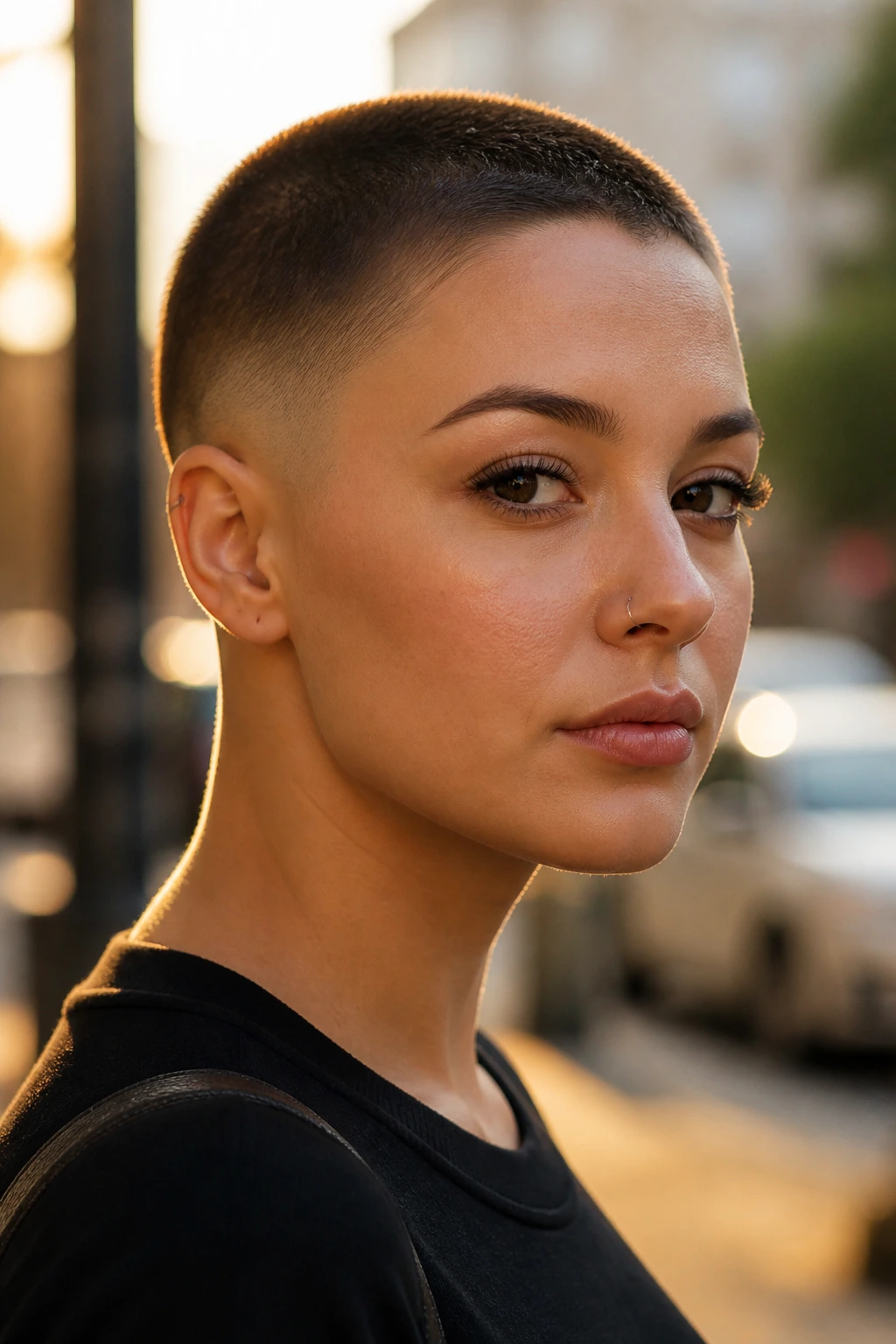
A low fade buzz cut keeps most of the sides dark and close, then fades them down just above the ear. The result is subtle at first glance and sharper when you look closer. It’s the kind of cut that doesn’t shout until someone notices the precision.
Low fades are good if you want contrast without a lot of scalp exposure. They’re also easier to live with during grow-out because the fade line sits lower and doesn’t leave such a dramatic shelf when hair starts coming back. If you wear glasses, this cut can sit especially well because the fade doesn’t fight the frames.
Tiny detail, big payoff. That’s the whole point.
6. Mid Fade Buzz Cut
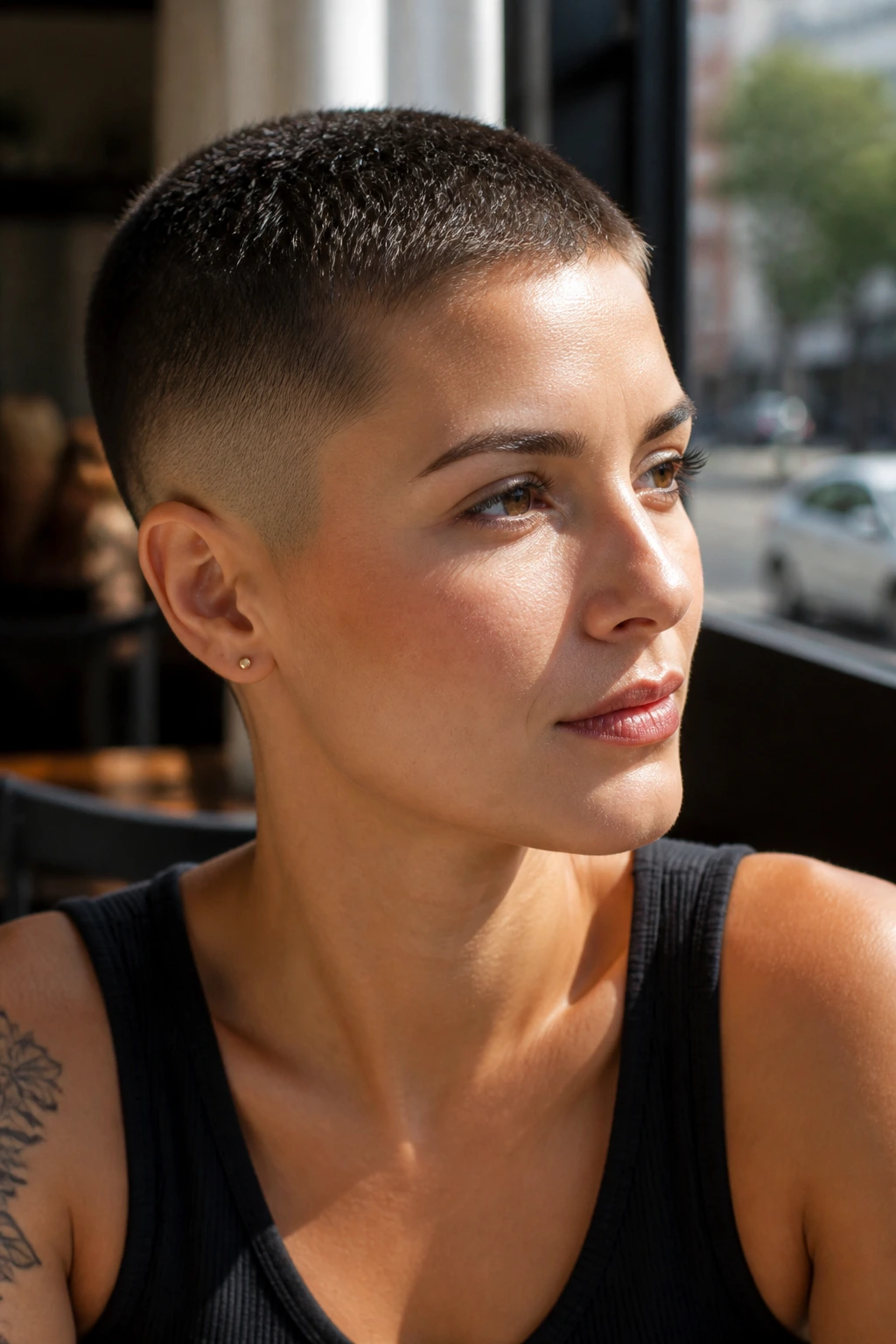
A mid fade buzz cut starts the fade higher on the head, usually somewhere between the temple and the top of the ear. That gives you a clearer shape and a little more drama without jumping straight to the hardest version of the look.
This is the buzz cut for people who want the sides to do some of the styling. The middle section gets tightened enough to make the top pop, but the fade is still balanced enough that the whole haircut doesn’t feel overworked. If your hair is thick, this cut can remove bulk around the sides in a way that makes the head look lighter.
It’s neat. It’s direct. It photographs like it means business.
7. High Fade Buzz Cut
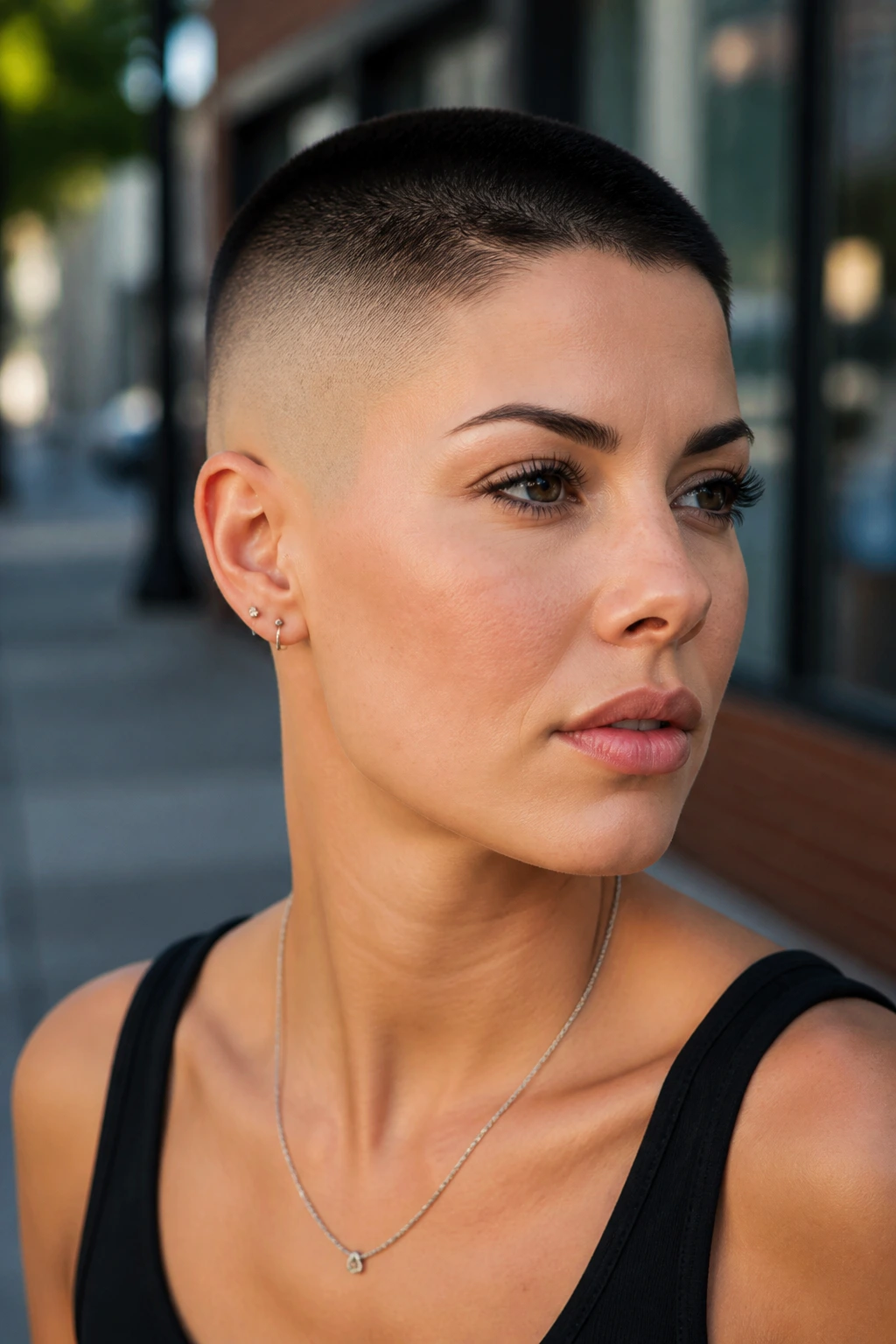
A high fade buzz cut takes the fade up near the top of the sides, which leaves a narrow band of short hair on top and makes the whole shape look bolder. You get more scalp contrast, more edge, and a look that reads almost graphic from the front.
This cut works best when you want your face to carry the softness and the haircut to carry the structure. It’s a favorite if you like a sharper silhouette or if you want a close crop that looks deliberately styled even on a plain T-shirt day. If your head shape has a strong crown curve, a high fade can make that shape part of the design instead of hiding it.
Not shy. Not subtle. And that’s the appeal.
8. Skin Fade Buzz Cut
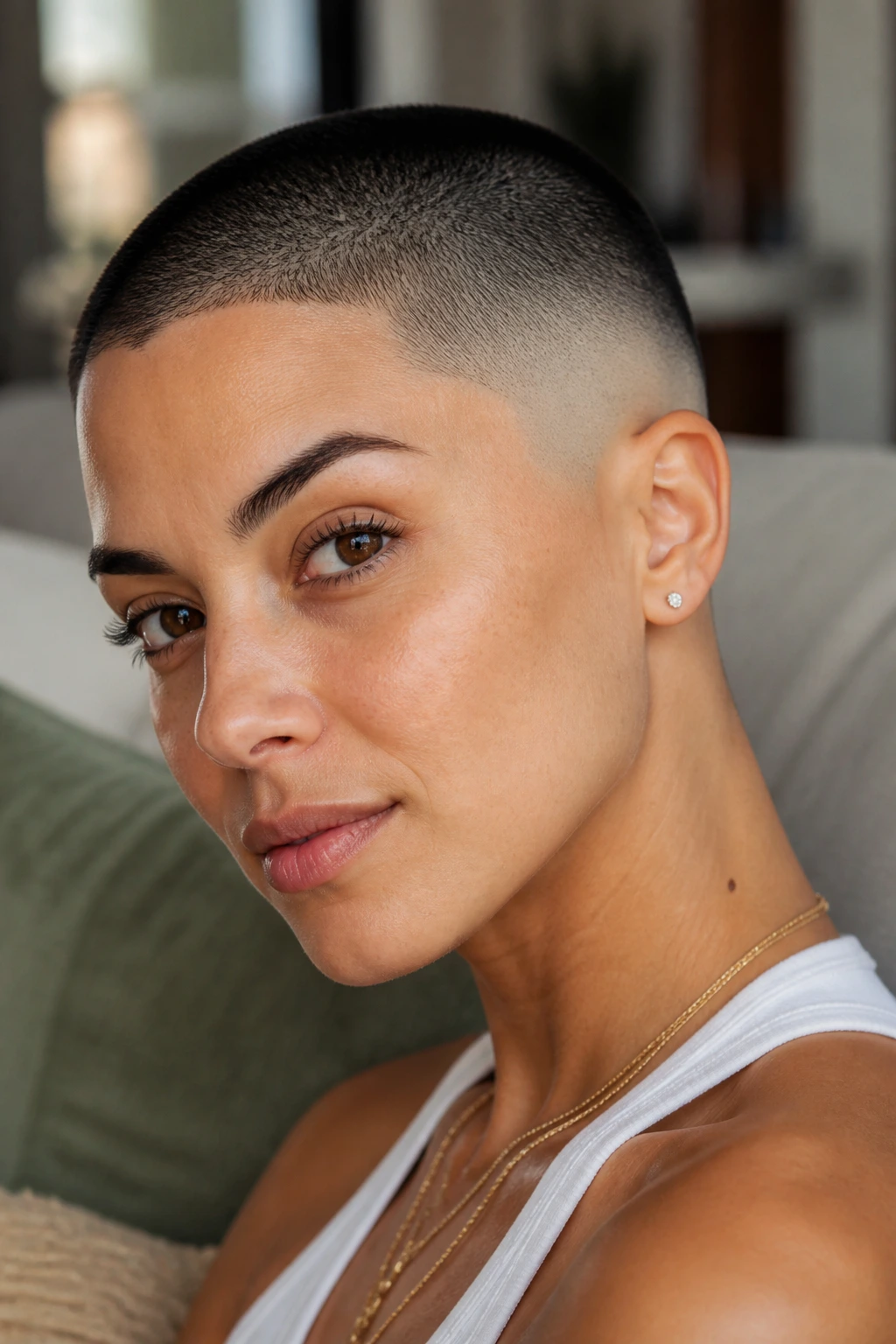
A skin fade buzz cut goes all the way down to bare skin at the sides and often the nape, then blends up into the buzzed top. The contrast is clean and crisp, and the cut feels more engineered than a standard short crop.
This version is for anyone who likes a little drama in the outline. It needs regular upkeep because the skin section grows out fast and loses that razor-clean edge after a couple of weeks. Still, when it’s fresh, it has a very sharp, polished look that makes even a simple black sweater feel more put-together.
Ask for: a soft blend if you want it to grow out gracefully, or a tighter skin fade if you want maximum contrast.
9. Drop Fade Buzz Cut
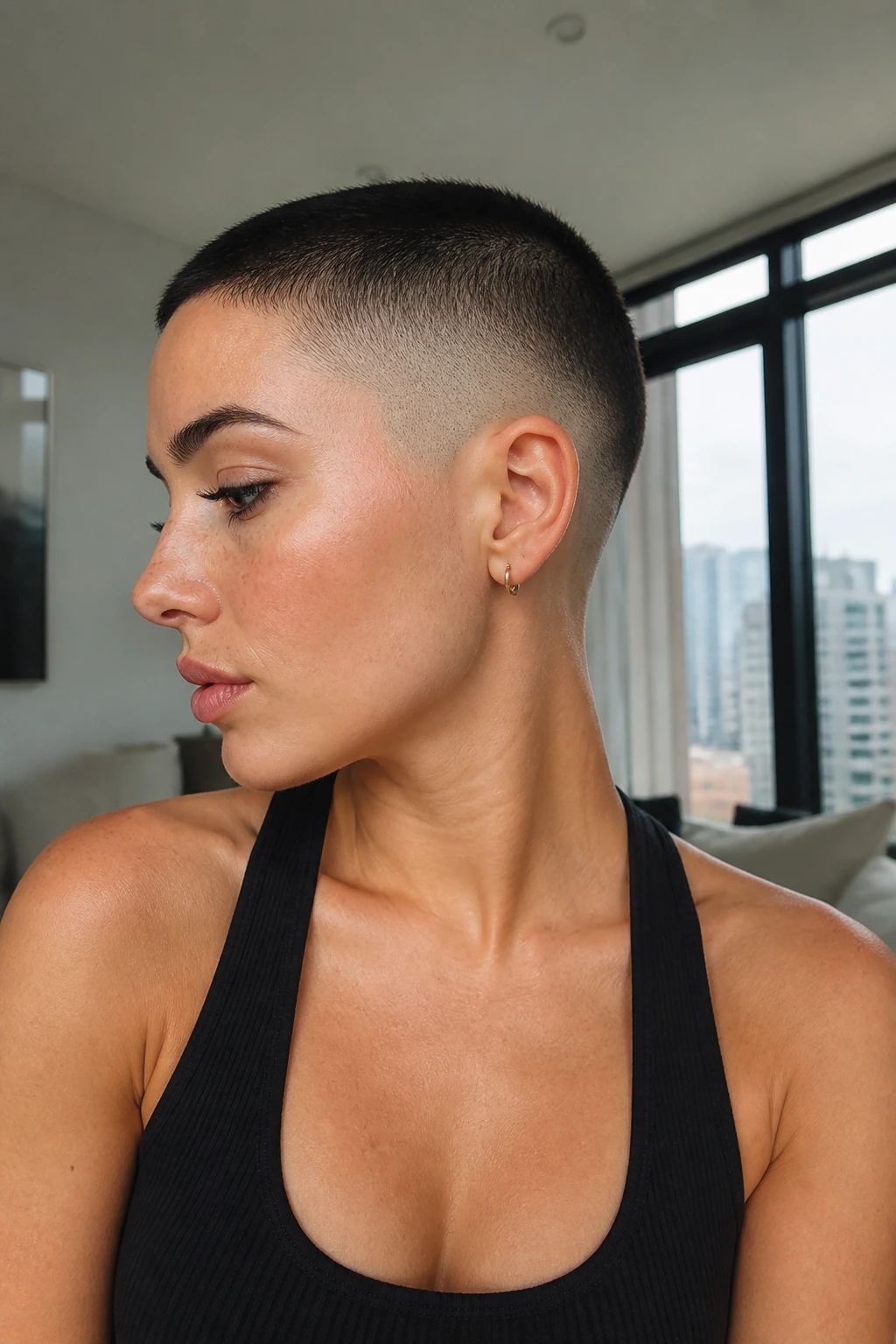
A drop fade buzz cut curves down behind the ear and dips slightly at the back of the head. That little drop follows the natural shape of the skull, which is why this cut often looks more sculpted than a straight fade.
I like this on heads with strong occipital curves or a pronounced crown, because the fade doesn’t fight the shape; it leans into it. The result feels smoother and less boxy than a standard fade. If you want a buzz cut that looks considered from the side, this is one of the better choices.
Best detail to request: keep the fade drop soft behind the ear so the curve reads cleanly, not choppy.
10. Temple Fade Buzz Cut
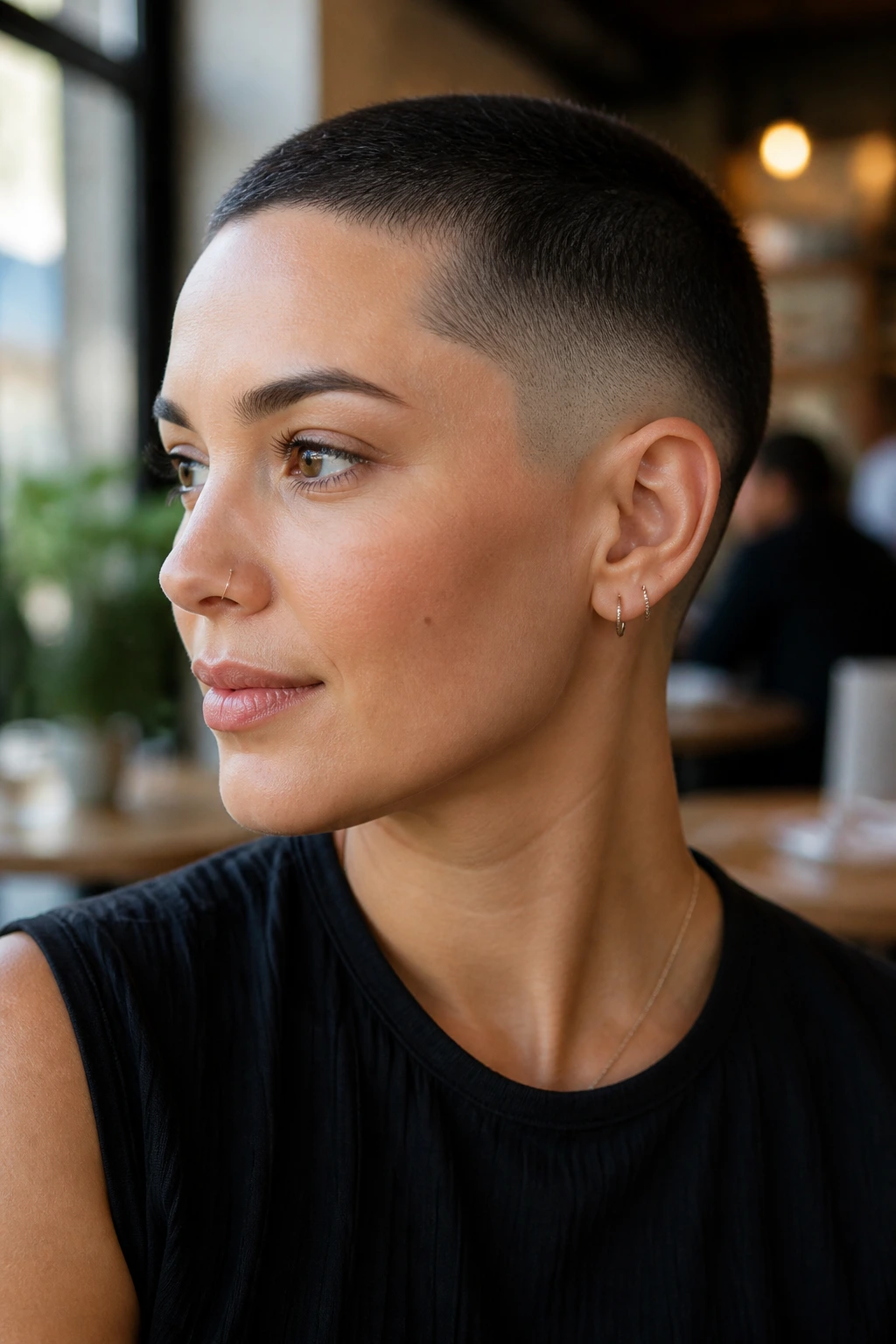
A temple fade buzz cut tightens only the temple area and sideburn zone, leaving more of the sides intact than a full fade. That makes the haircut feel cleaner without losing all the body at the edges.
It’s one of the quietest ways to sharpen a buzz cut. The hair around the face gets edged, so the cheeks and brow area stand out more, but the rest of the cut stays easy and natural. If you’re testing the waters before going shorter, this is a smart middle path.
The temple fade is small. That’s why it works.
11. Burst Fade Buzz Cut
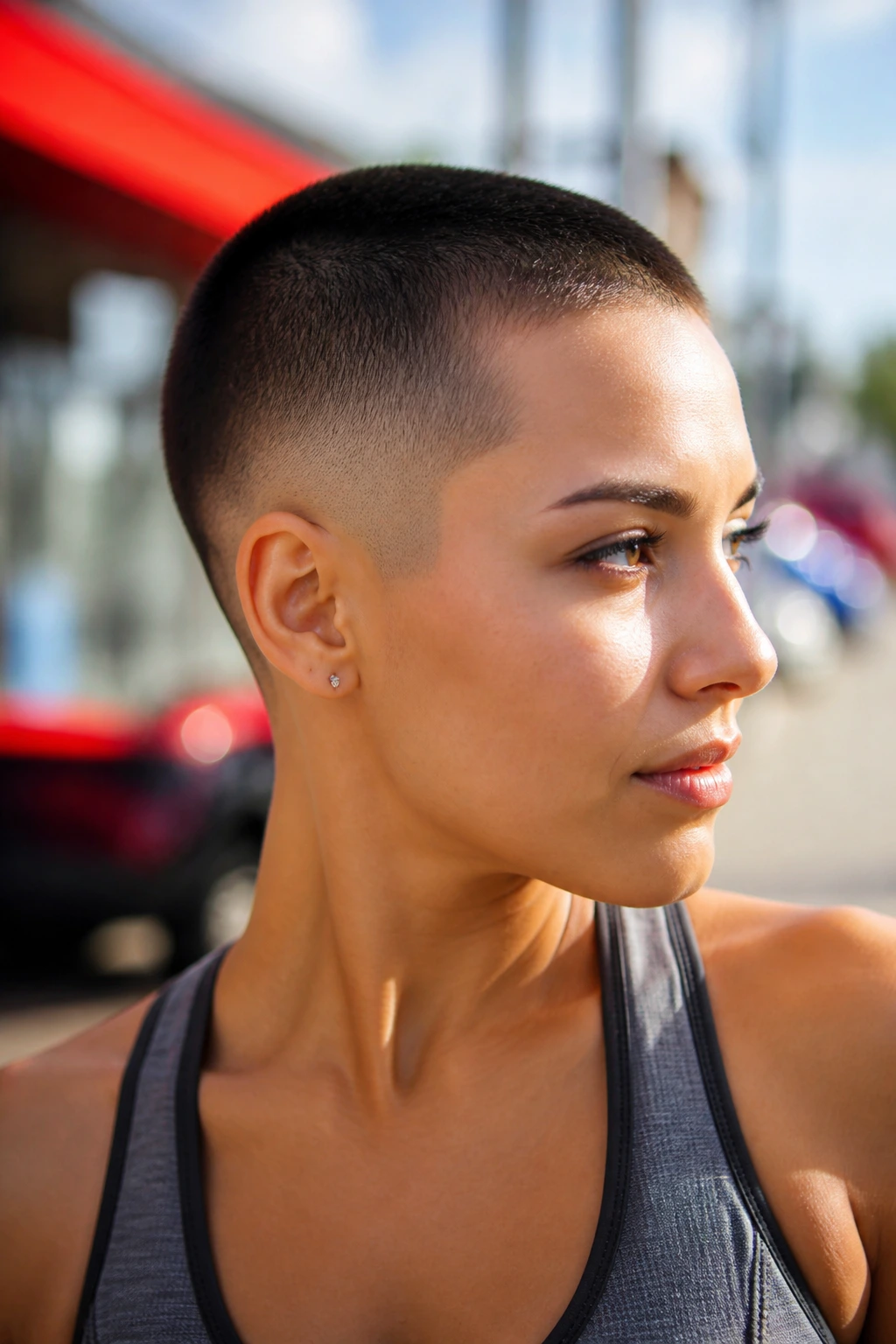
A burst fade buzz cut fans out around the ear in a rounded shape, almost like the fade is “bursting” outward from one point. It gives short hair a little movement and keeps the ear area from looking boxed in.
This style has a sporty, energetic feel. It can lean edgy with dark hair or look almost soft if the top is a little longer and the fade is kept gentle. If you’ve got a strong side profile, a burst fade can balance the curve of the ear and temple in a way a straight fade sometimes misses.
Good to know: this cut needs a steady hand. If the fade line is uneven, you’ll see it immediately.
12. Undercut Buzz Cut
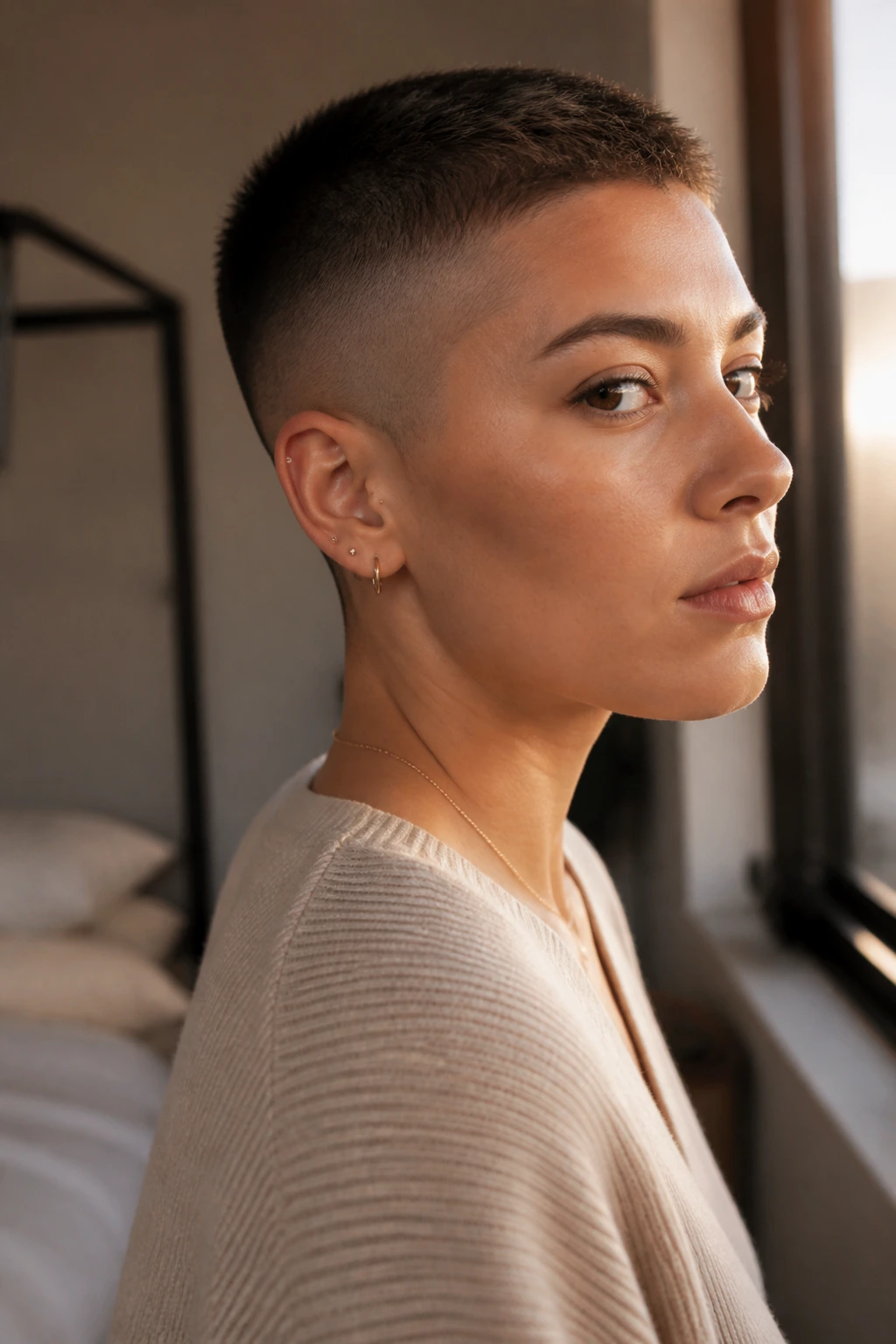
A buzz cut with an undercut leaves the top area slightly fuller and disconnects it from the shorter sides underneath. The contrast is what makes it interesting. Without that break, it would just be another close crop.
This one is great if you like a little architecture in your haircut. The longer top can still be very short, but the separation gives you the option to brush it slightly forward, flatten it, or let it sit with a bit of lift. It’s a clean choice for anyone who wants the buzz cut shape with a stronger upper frame.
Think sharp lines, not softness.
13. Asymmetrical Buzz Cut
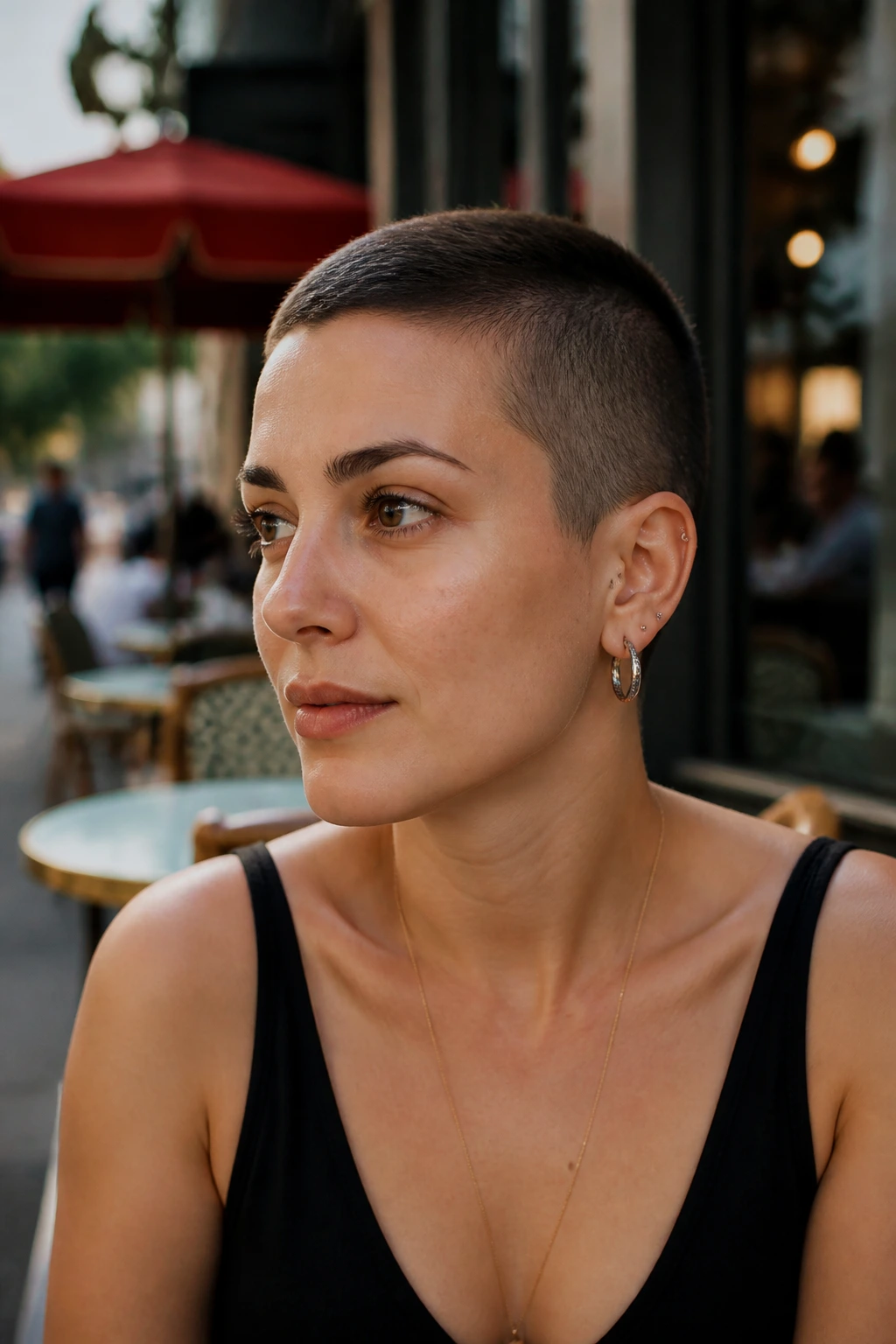
An asymmetrical buzz cut keeps one side a touch longer, or one side a touch tighter, so the whole look feels intentionally off-center. That subtle imbalance keeps short hair from looking too standard.
The key is subtlety. If the difference is too big, the cut starts reading as a mistake instead of a style choice. A slight shift around the temple or a longer panel on one side is usually enough. This is one of the best buzz cut hairstyles for women who like a little tension in a look — something that feels calm from far away and more interesting up close.
A tiny lean. That’s all it needs.
14. Rounded Buzz Cut
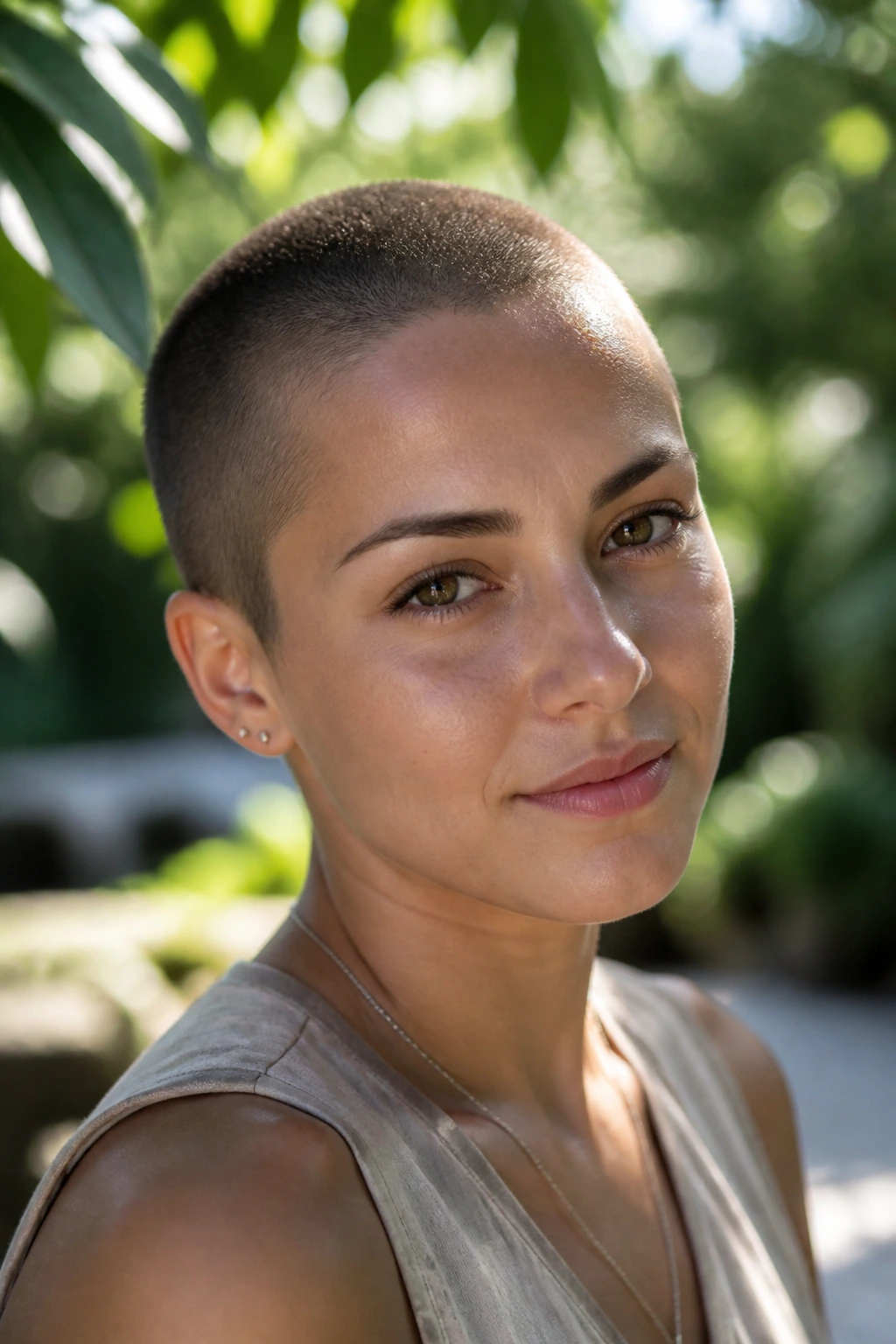
A rounded buzz cut softens the outline around the head so the haircut follows the natural curve of the skull instead of building sharp corners. It’s the opposite of a hard-lined shape, and it often looks easier on the eye for that reason.
If you want a buzz cut that feels less harsh, ask for the edges around the temples and nape to stay curved rather than squared off. The cut can still be close. It just won’t feel stern. Rounded shapes are especially nice if you wear softer makeup, drapey fabric, or gold hoops that echo the curve of the cut.
Gentle lines. Clean finish. No fuss.
15. Square-Line Buzz Cut
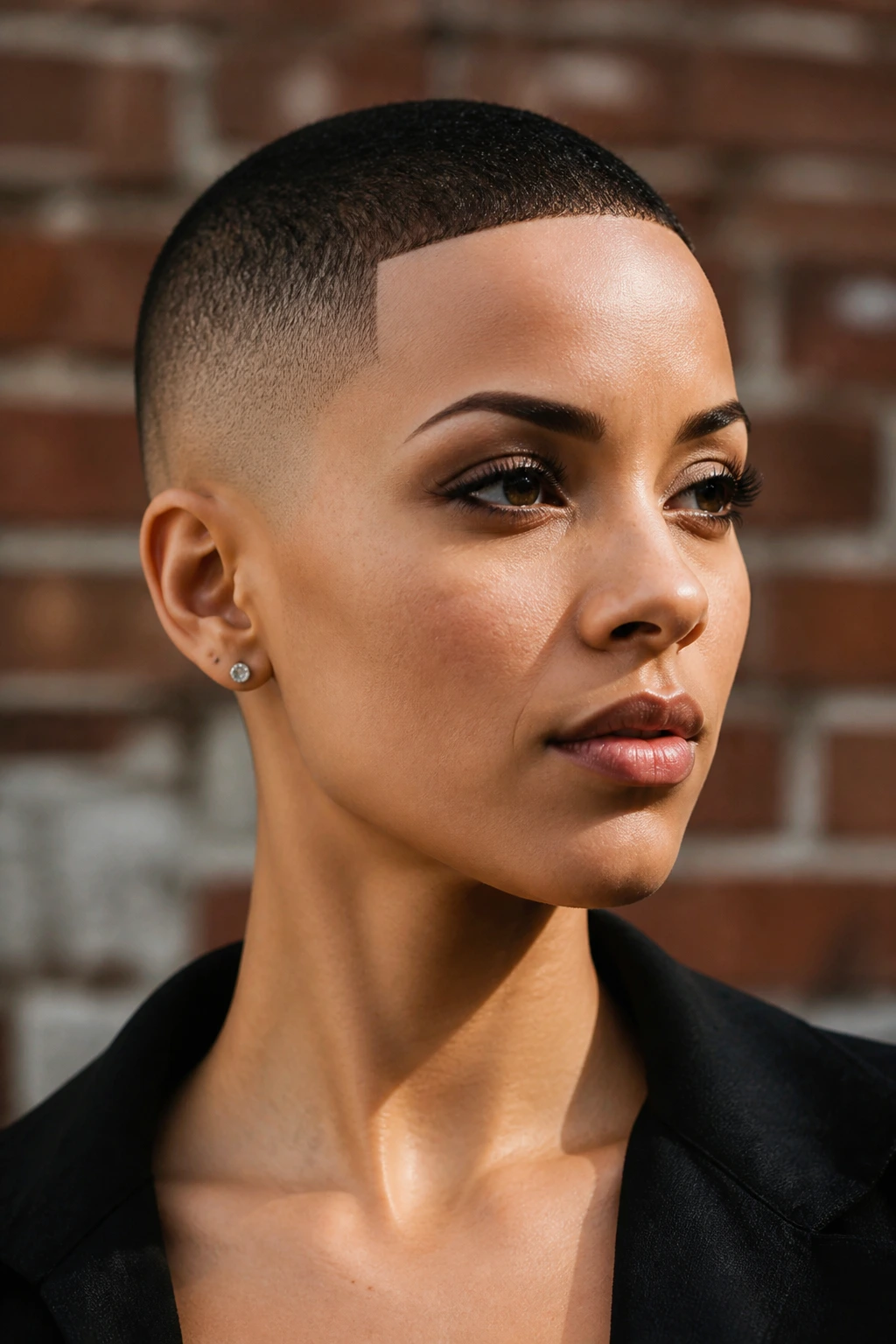
A square-line buzz cut sharpens the corners at the forehead, temples, and neckline so the haircut has a firm, geometric edge. Where the rounded version softens, this one asserts.
It’s a strong choice if you like crisp barbering and want the hairline to feel designed, not accidental. The square shape can make the face look shorter and the jaw feel more defined, especially when the fade is tight. Maintenance matters here; if the line starts to blur, the whole point of the cut weakens fast.
Best for: people who like a hard outline and don’t mind keeping it fresh.
16. Soft Feminine Buzz Cut
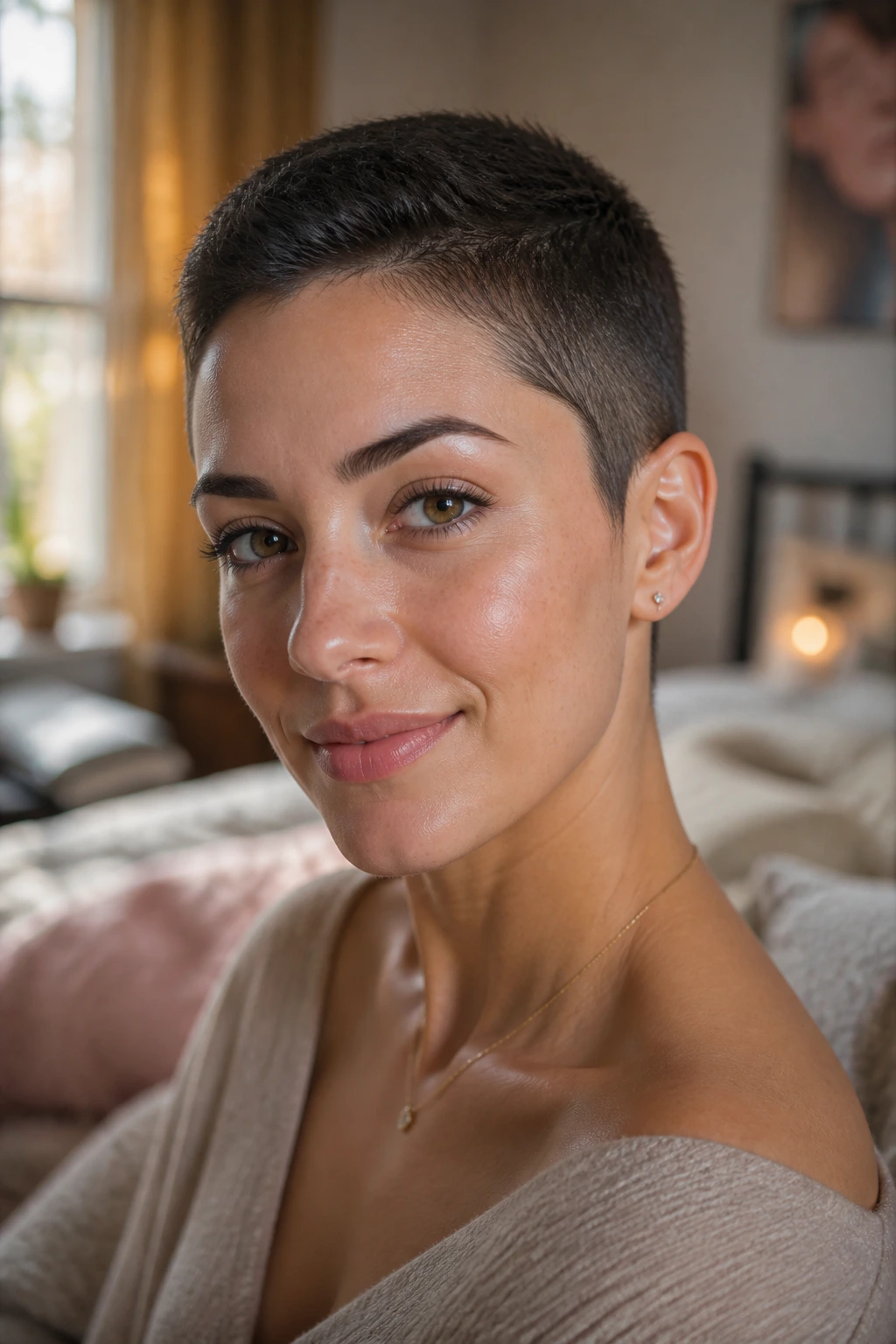
A soft feminine buzz cut usually means leaving a little more length on top — often a #3 or even a #4 — and rounding the edges so the cut feels gentle rather than severe. The word “feminine” can mean different things to different people; what I mean here is softness in the outline, not a rule about how women should look.
This is a good option if you want the ease of a buzz but don’t want the scalp to be the whole story. It plays nicely with mascara, gloss, and earrings because the hair stays close without disappearing completely. If you’re transitioning from longer hair, this version is also less of a shock in the mirror.
Soft doesn’t mean boring.
17. Curly Hair Buzz Cut
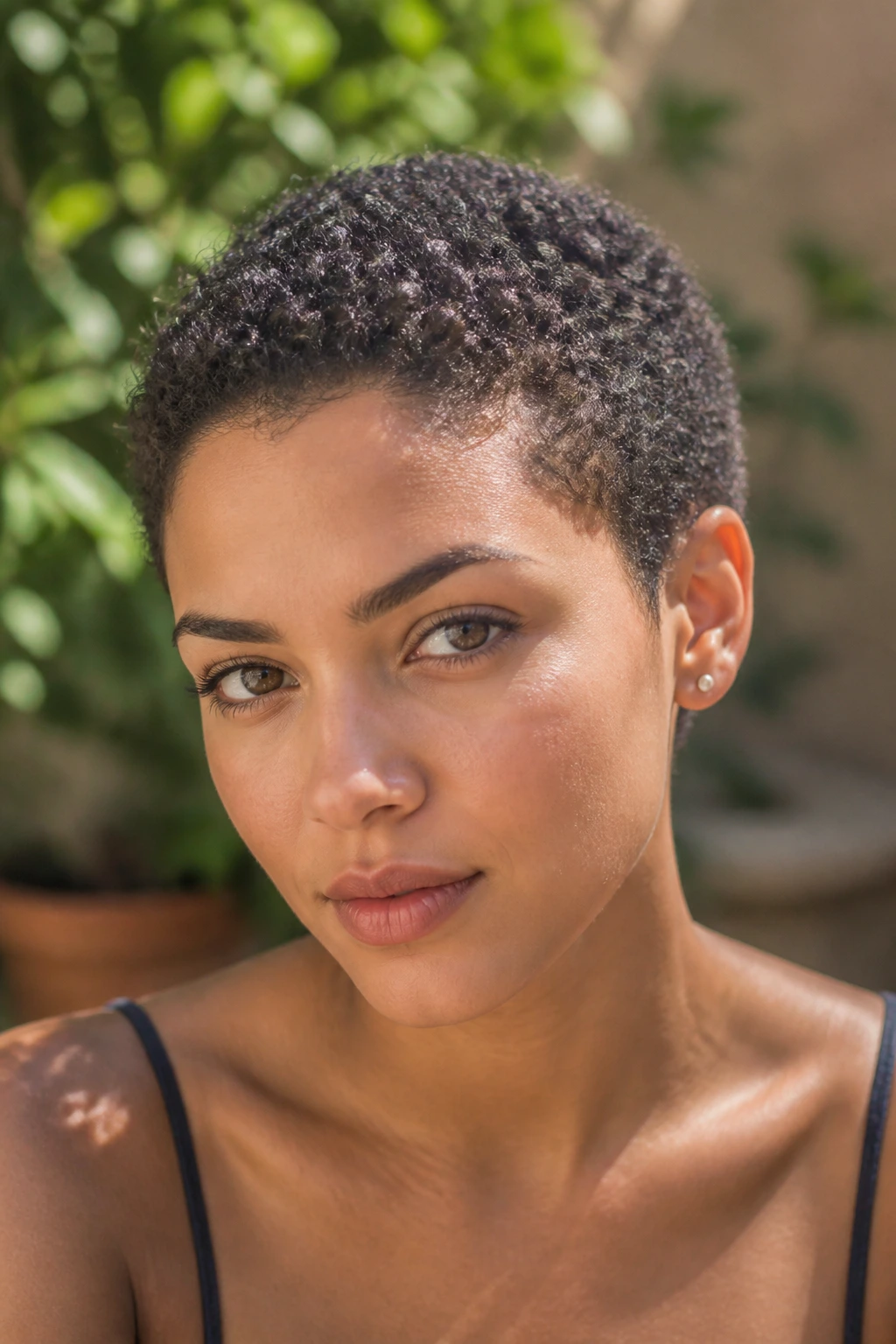
A curly hair buzz cut shows off the curl pattern instead of hiding it. Even at short length, curls create tiny shadows and texture that make the cut look alive in a way straight hair sometimes doesn’t.
The trick is not to go so short that the texture disappears. A #2 or #3 often works better than a skin-close cut because it lets the pattern show through. If your curls are tight, the cut can look almost plush. If they’re looser, the finish reads more feathery and touchable.
Tip: ask for the crown to be checked carefully, because curls there can create a small swirl that changes the whole silhouette.
18. Coily TWA Buzz Cut
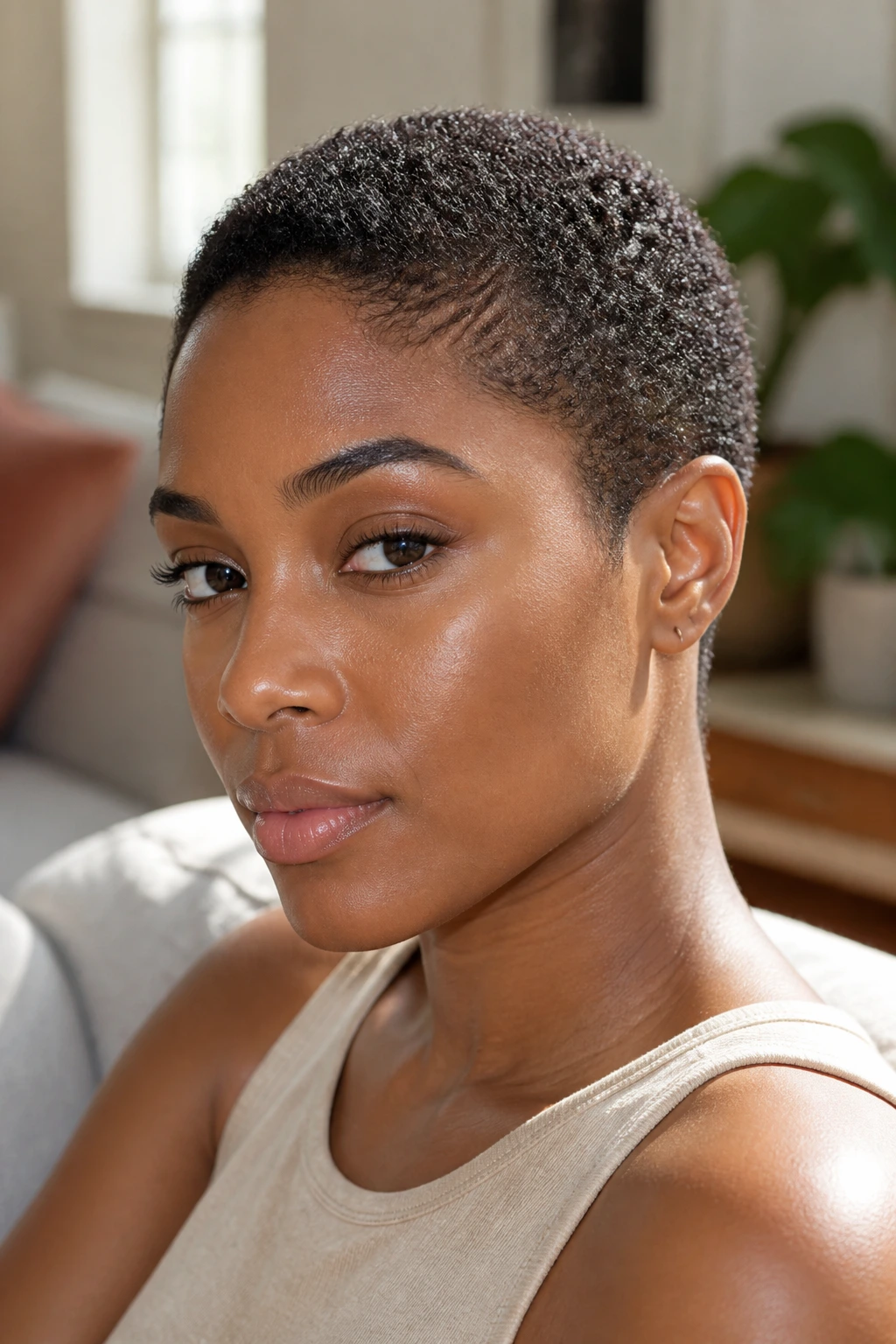
A coily TWA buzz cut keeps tightly coiled hair short enough to sit close to the head while preserving the shape of the coil. The result is compact, clean, and full of texture. Tiny coils can look almost velvety at this length.
This cut is usually better with a careful shape-up at the hairline and neckline, since the outline carries a lot of the style. Moisture matters here too. A little scalp oil or light cream keeps the cut from looking dry and fuzzy at the roots. If you want a very short look without losing the identity of your texture, this is one of the strongest options.
It’s close crop, but it still has personality.
19. Fine Hair Buzz Cut
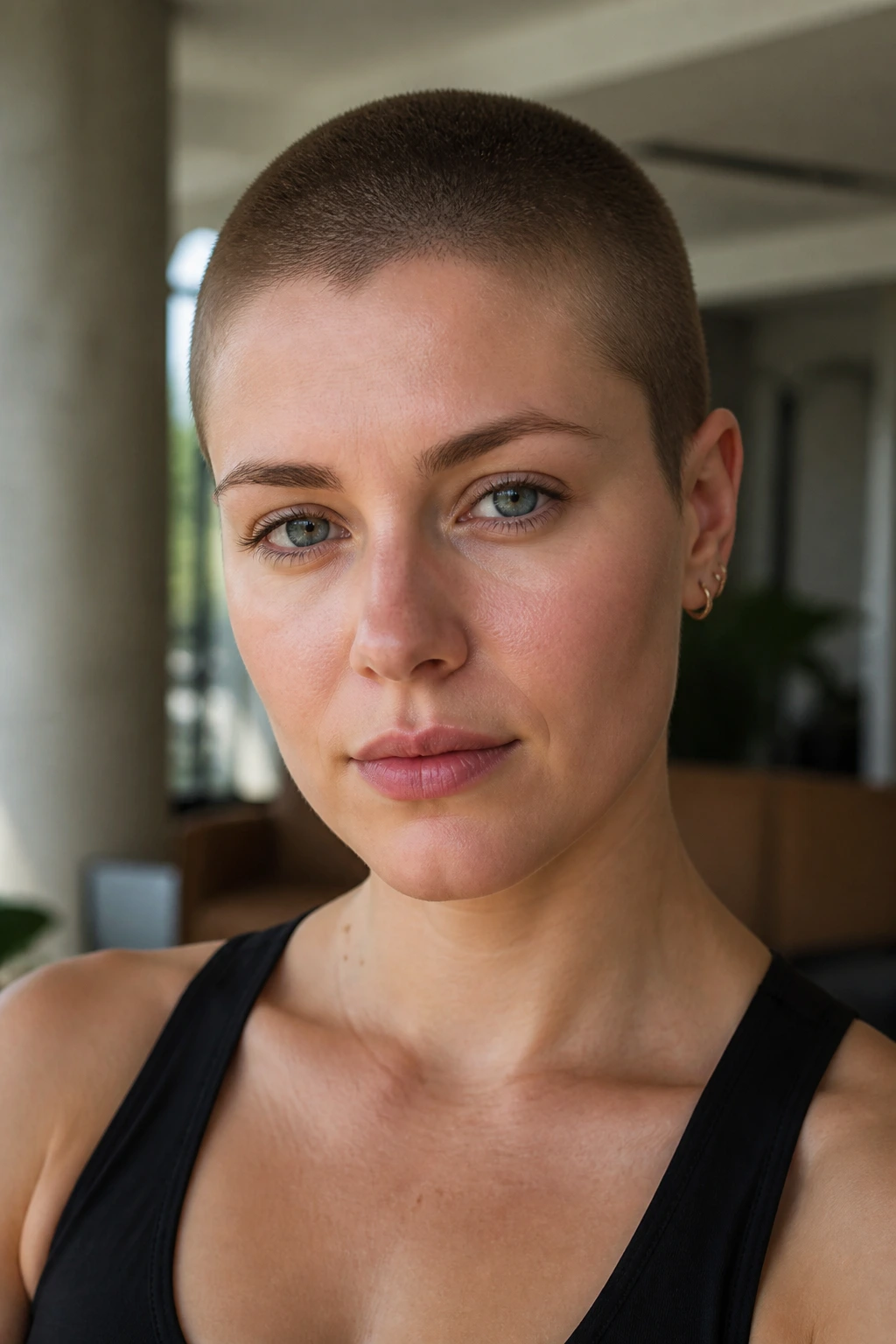
A fine hair buzz cut works best when the length stays just long enough to avoid showing too much scalp. That’s why a #2 or #3 often looks better than going all the way down to skin. Fine hair can turn translucent faster than people expect under bright light.
The upside is that a close crop can make fine hair look denser by removing the uneven ends that usually make it look wispy. A gentle taper around the sides can also help the top feel fuller. If your hair tends to lie flat, a very matte finish keeps the scalp from reflecting too much shine.
Shorter can be smarter here. Not always shorter-shorter.
20. Thick Hair Buzz Cut
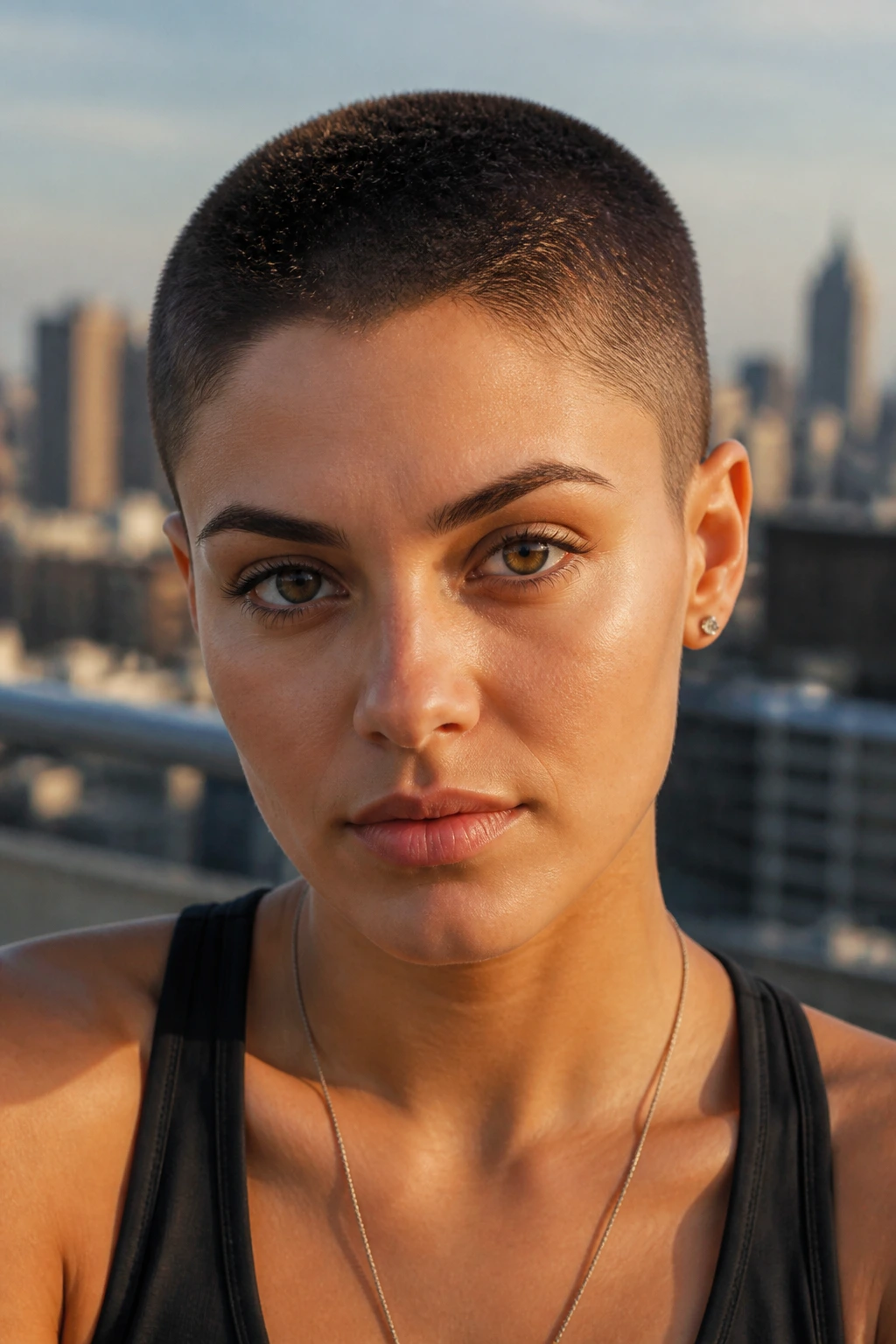
A thick hair buzz cut is about control. Thick hair can balloon outward at longer lengths, but once it’s cropped close, the bulk drops away and the shape becomes cleaner. You can still see density, which gives the cut weight and depth.
A #2 or #3 often works better than the shortest setting because it lets the hair lie down instead of standing up in little spikes. Tapering the sides can help keep the head from looking boxy. If your hair has a stubborn crown, ask for that area to be checked last so the blend stays even.
This cut is less about softness and more about taking command.
21. Platinum Blonde Buzz Cut
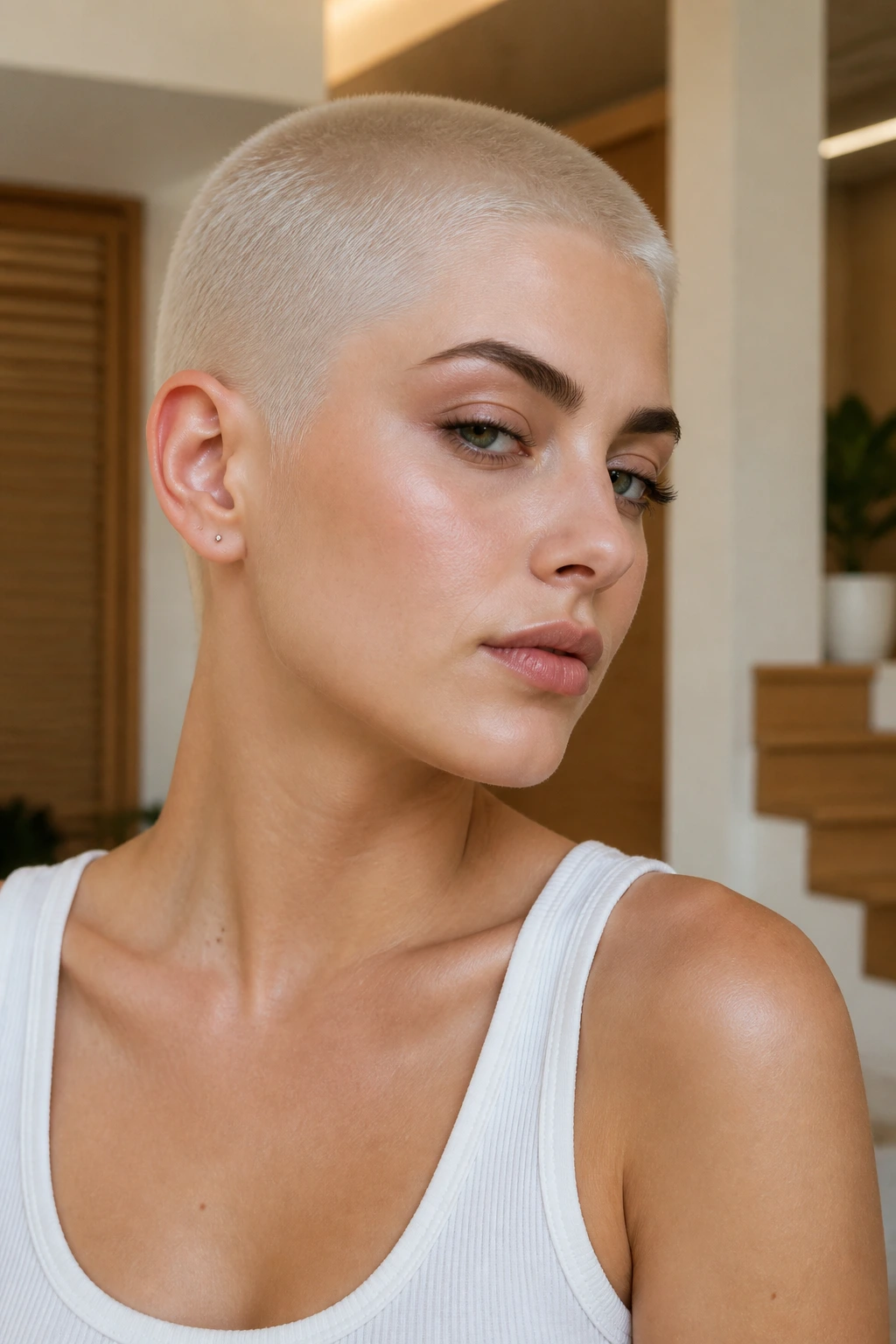
A platinum blonde buzz cut is loud in the best possible way. The short length keeps the bleach from feeling overblown, and the pale tone makes the scalp line and head shape part of the look. It’s stark, bright, and a little cool to the eye.
This color needs care. Bleaching short hair still taxes the scalp and the fiber, so a toner or gloss afterward matters if you want the blonde to stay clean instead of turning brassy. If the roots are naturally darker, the grow-out can look intentional rather than messy, which is a nice bonus.
Ask for: a cool-toned platinum if you want a crisp finish, or a soft beige blonde if you want less contrast.
22. Rooted Blonde Buzz Cut
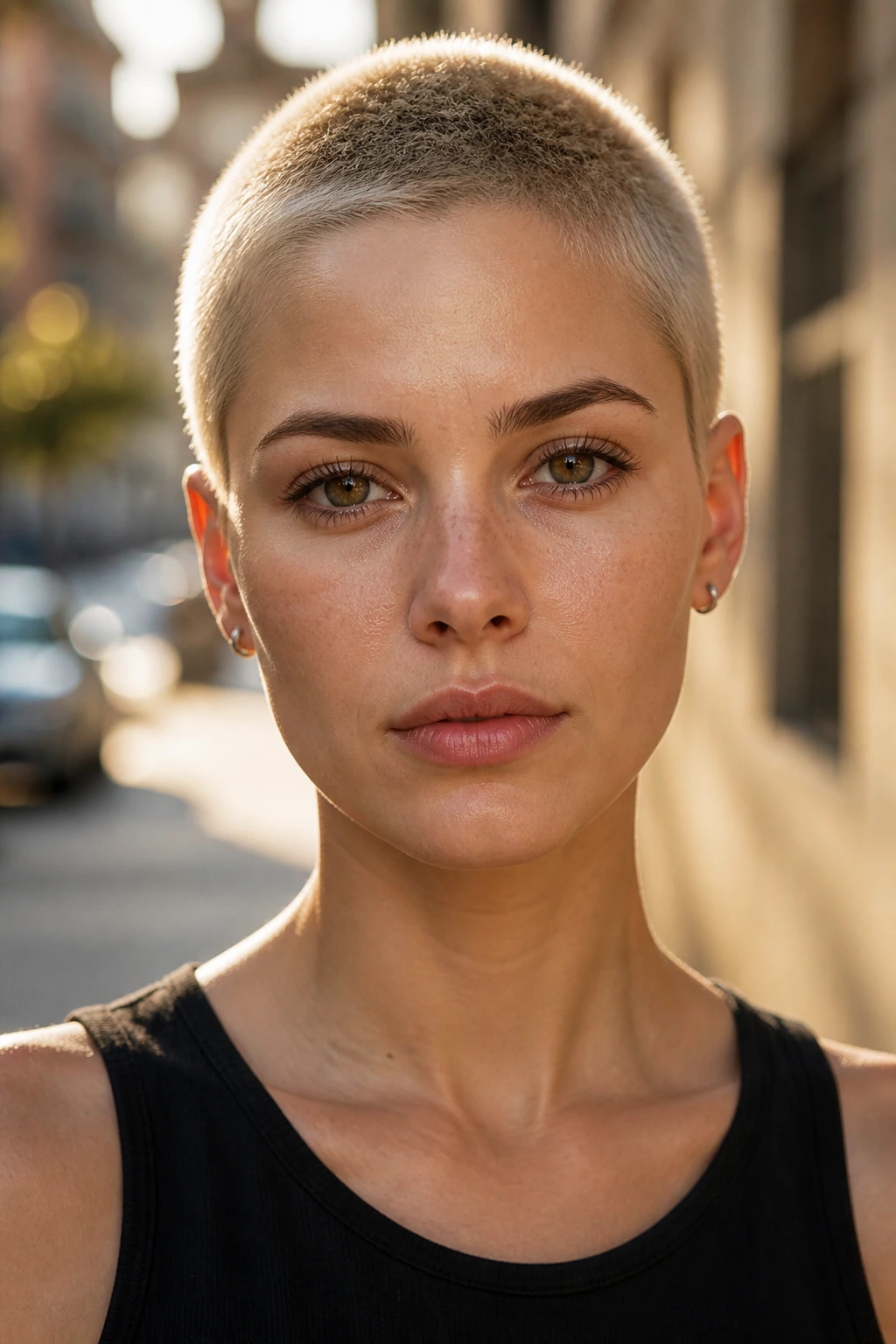
A rooted blonde buzz cut leaves a shadow of darker color at the base and lightens the rest. That dark root gives the cut depth, so the blonde doesn’t float on top like a helmet. It also makes regrowth less annoying because the line between natural color and bleach is softer.
This is one of the easiest blonde buzz styles to live with. The root shadow buys you time between salon visits and makes the color look richer in daylight. If your natural shade is dark blonde, brown, or even soft black, the rooted effect can be especially flattering because it frames the face rather than flattening it.
It’s polished without being fussy. Rare combo.
23. Jet Black Buzz Cut
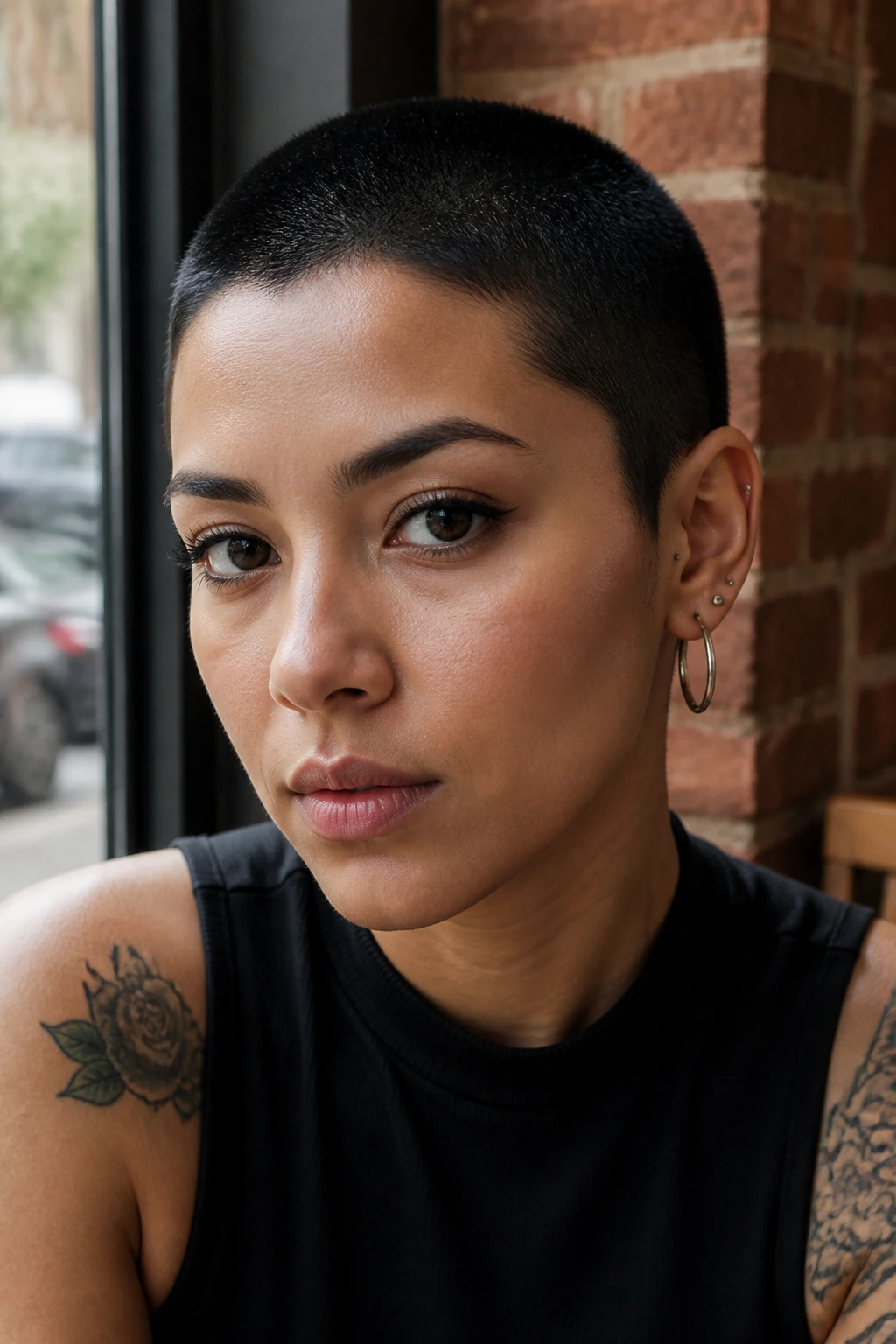
A jet black buzz cut creates strong contrast between hair, skin, and clothes. The color makes the head shape look cleaner and can turn a very simple crop into something graphic and bold.
The shine matters here. A dull black buzz can look dusty if the scalp is dry, while a soft sheen keeps the color from falling flat. A lightweight scalp moisturizer or a tiny bit of shine serum on the hair itself can help. This look works especially well with sharp brows, a clear lip color, or silver jewelry that pops against the dark hair.
Black at this length is blunt. That’s why it looks so good.
24. Copper Buzz Cut
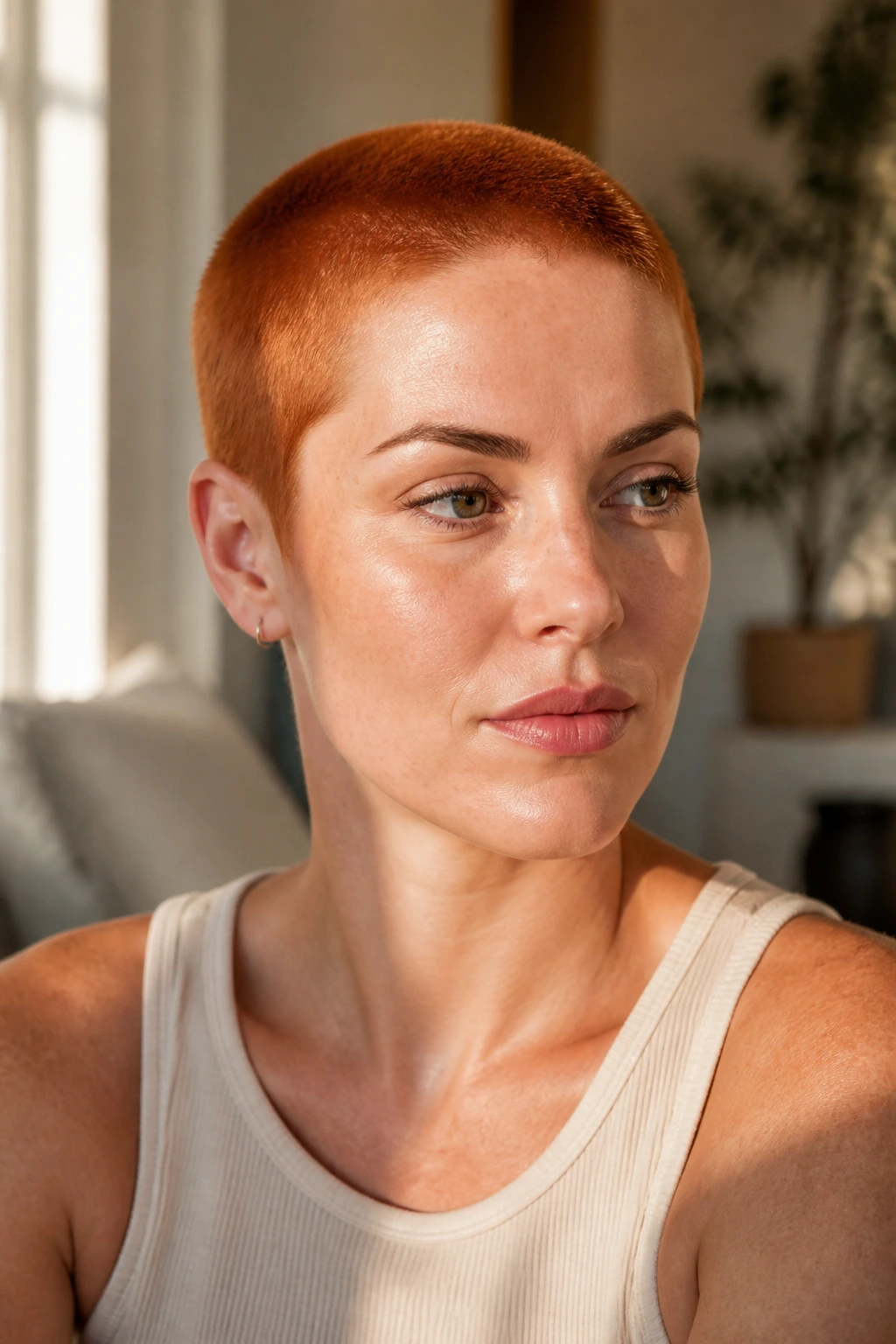
A copper buzz cut adds warmth immediately. On short hair, copper catches light fast, so the cut looks lively even when the shape is very simple. It’s one of the easier colors to wear if you want something noticeable without going neon.
Copper works especially well on warm and neutral skin tones, but the exact shade matters: a deeper auburn-copper feels richer, while a brighter penny tone feels more playful. Because the hair is short, the color becomes the whole accessory. That’s useful if you like minimal styling but still want the cut to feel deliberate.
Warm tone. Tight crop. Easy win.
25. Rose Gold Buzz Cut
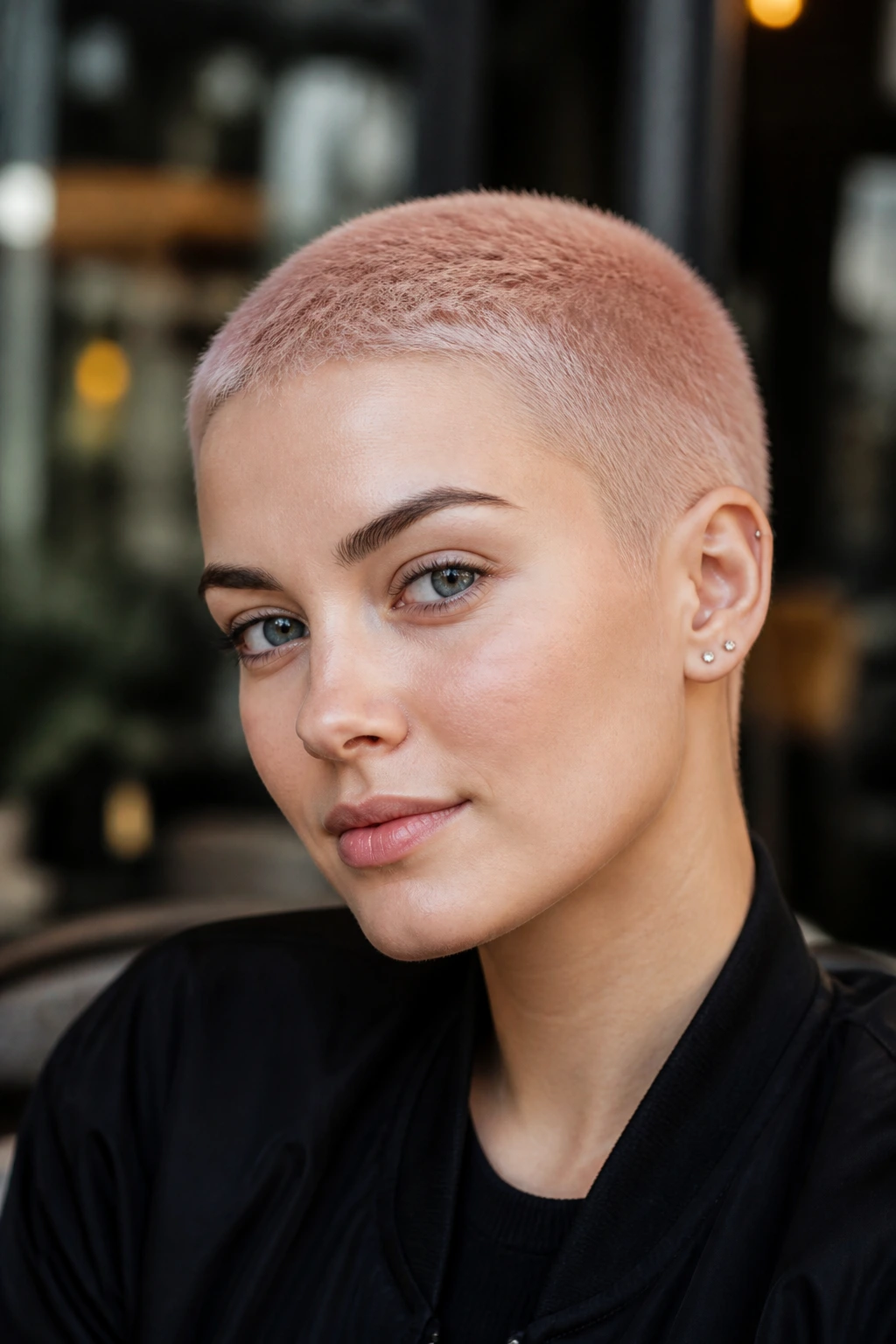
A rose gold buzz cut sits between pink, copper, and blonde, which is why it feels softer than full pink but less ordinary than plain blonde. The color has a blurred, metallic quality that looks especially nice on close-cropped hair where every strand can catch the tint.
This is a smart choice if you want color that feels personal but not loud-loud. The shade fades gracefully too, often shifting toward pastel beige or soft peach as it grows out. If you keep the eyebrows natural and the makeup simple, the hair remains the focal point without shouting from across the room.
It’s gentle. It’s a little weird. That’s part of the charm.
26. Pastel Pink Buzz Cut
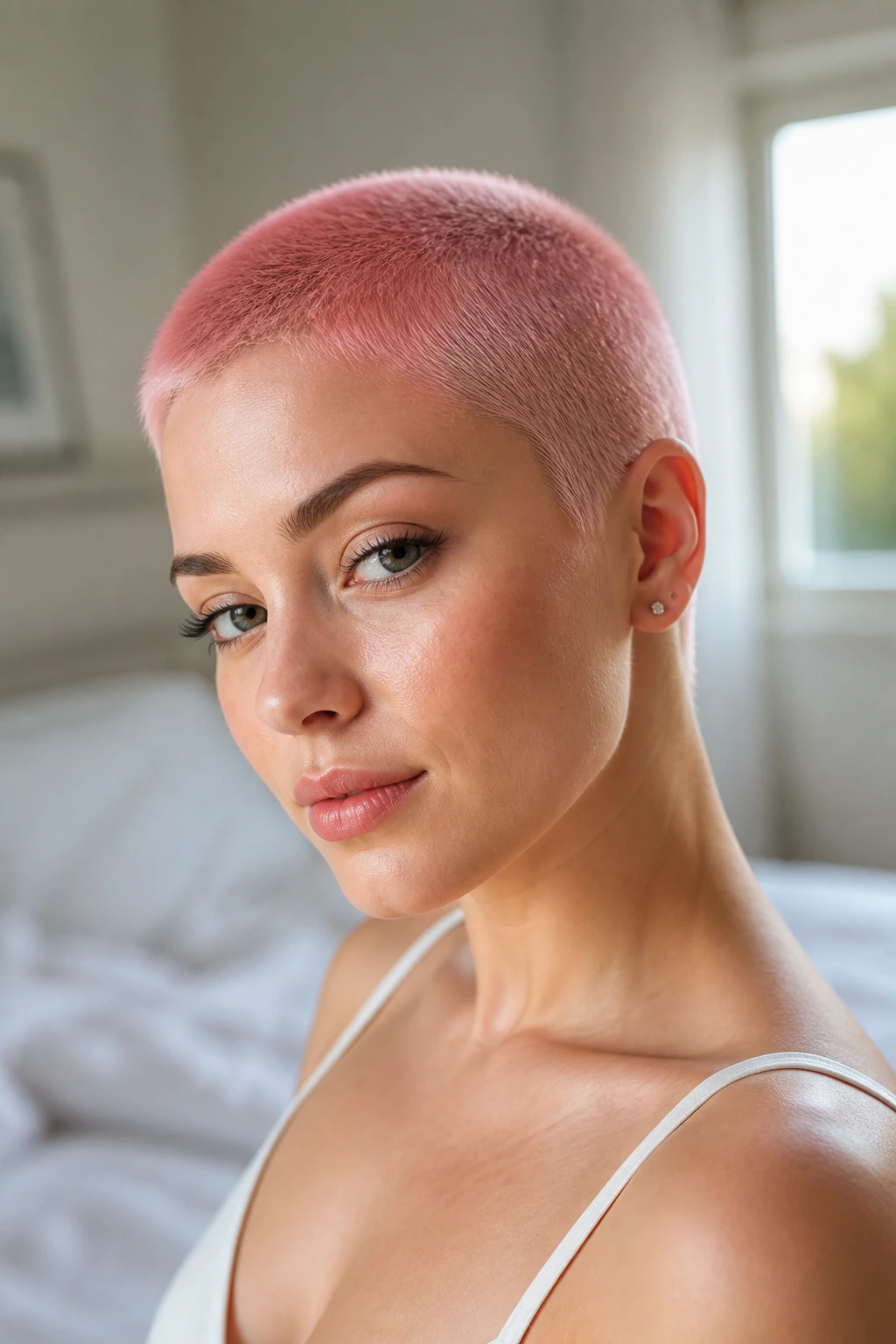
A pastel pink buzz cut has a candy-like softness that changes the whole feel of a short crop. Because the cut is so close, the pink doesn’t become heavy or sweet in a childish way; it reads modern and a little mischievous instead.
This color needs a light touch. Pastels fade fast, so they work best if you’re okay with maintenance or if you like the way soft pink washes out over time. On a buzz cut, that fade can be pretty appealing — first bright, then dusty, then almost blush-toned. If you want the style to feel fun without needing much length, this is one of the easiest colors to justify.
Soft color. Hard cut. Nice contrast.
27. Silver Buzz Cut
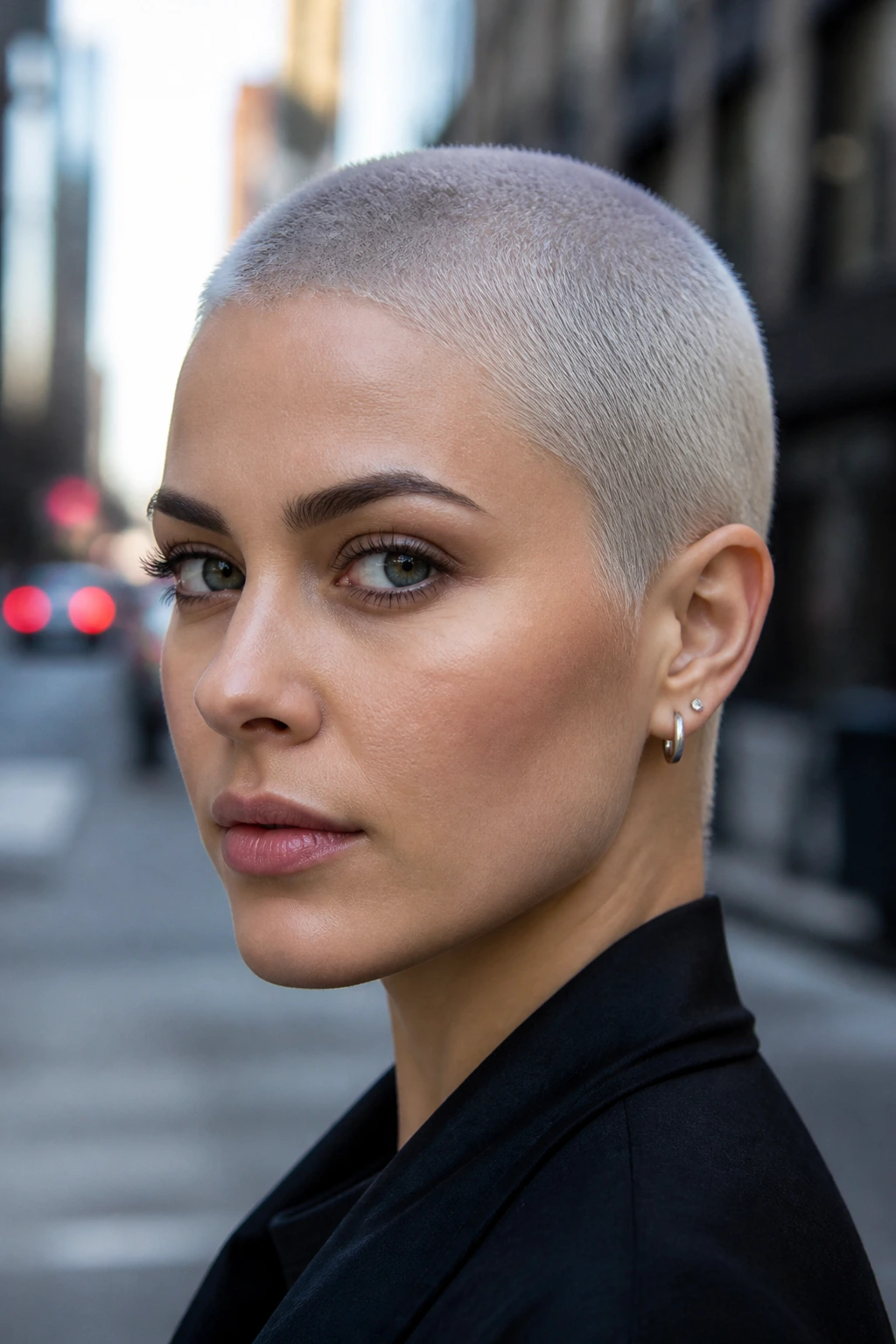
A silver buzz cut can look natural, dyed, or somewhere in between. On a very short length, silver reads cool and clean, and it often makes the head shape look crisp under daylight or indoor lighting.
This shade is especially striking when the cut itself stays simple. No extra design needed. The color does the work. If your natural hair has some gray in it, leaning into silver can make the whole grow-out process less stressful because the line between dyed and natural hair isn’t as obvious. Keep the finish glossy if you want the tone to stay bright instead of dulling into flat gray.
It’s calm, but not plain.
28. Split-Dye Buzz Cut
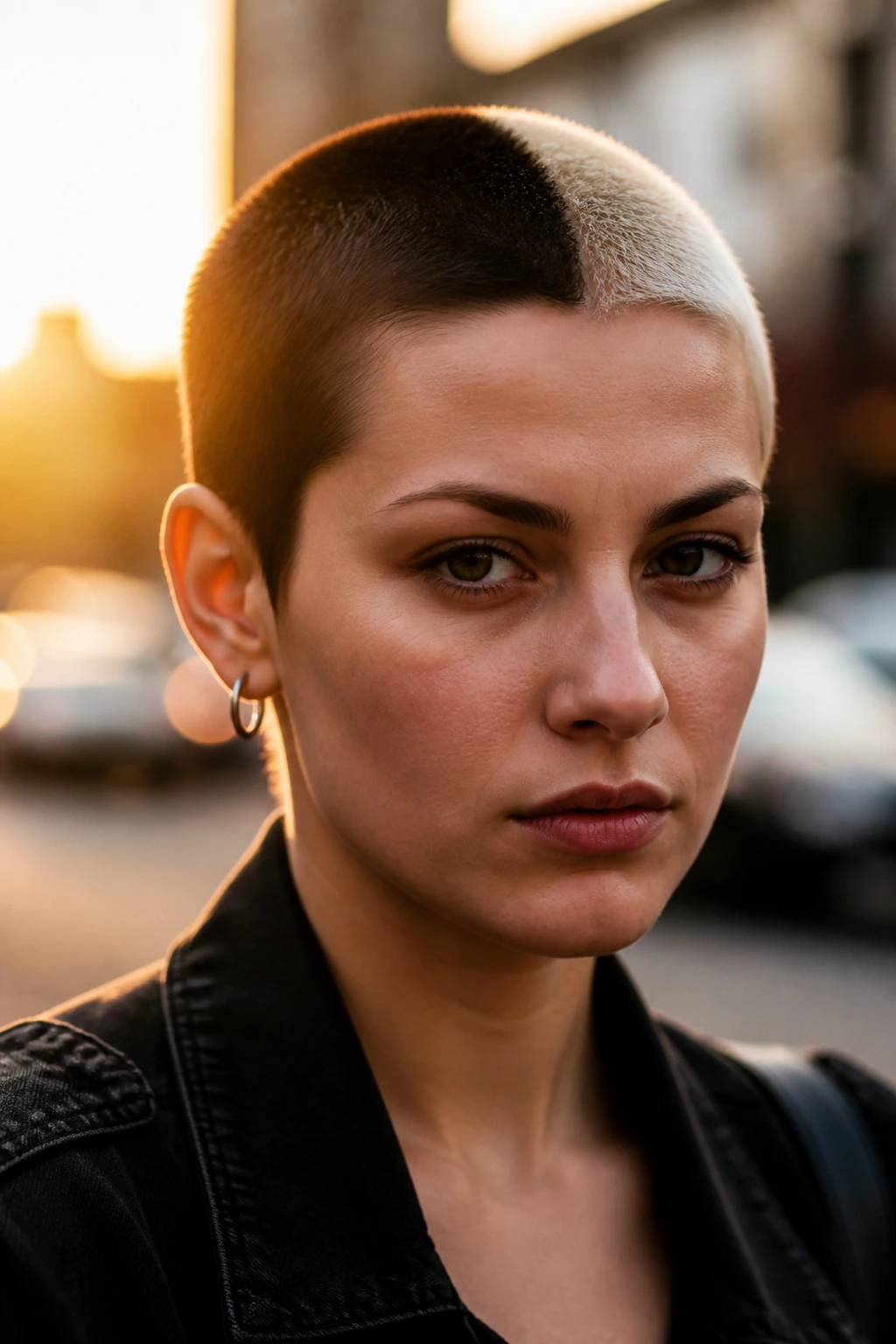
A split-dye buzz cut divides the head into two color zones, usually right down the middle. One side can be black and the other platinum, or copper and blonde, or any pair that gives strong contrast. On a close crop, the division looks bold without needing long hair to carry the idea.
The best split dyes are cleanly planned. The line needs to sit where the head shape can support it, or the whole thing can look lopsided in a bad way. If the part line is crisp and the colors are truly different, the effect is striking from every angle. This is one of the few buzz cut hairstyles for women that turns the haircut into its own graphic design.
High drama. No extra length required.
29. Side Line Art Buzz Cut
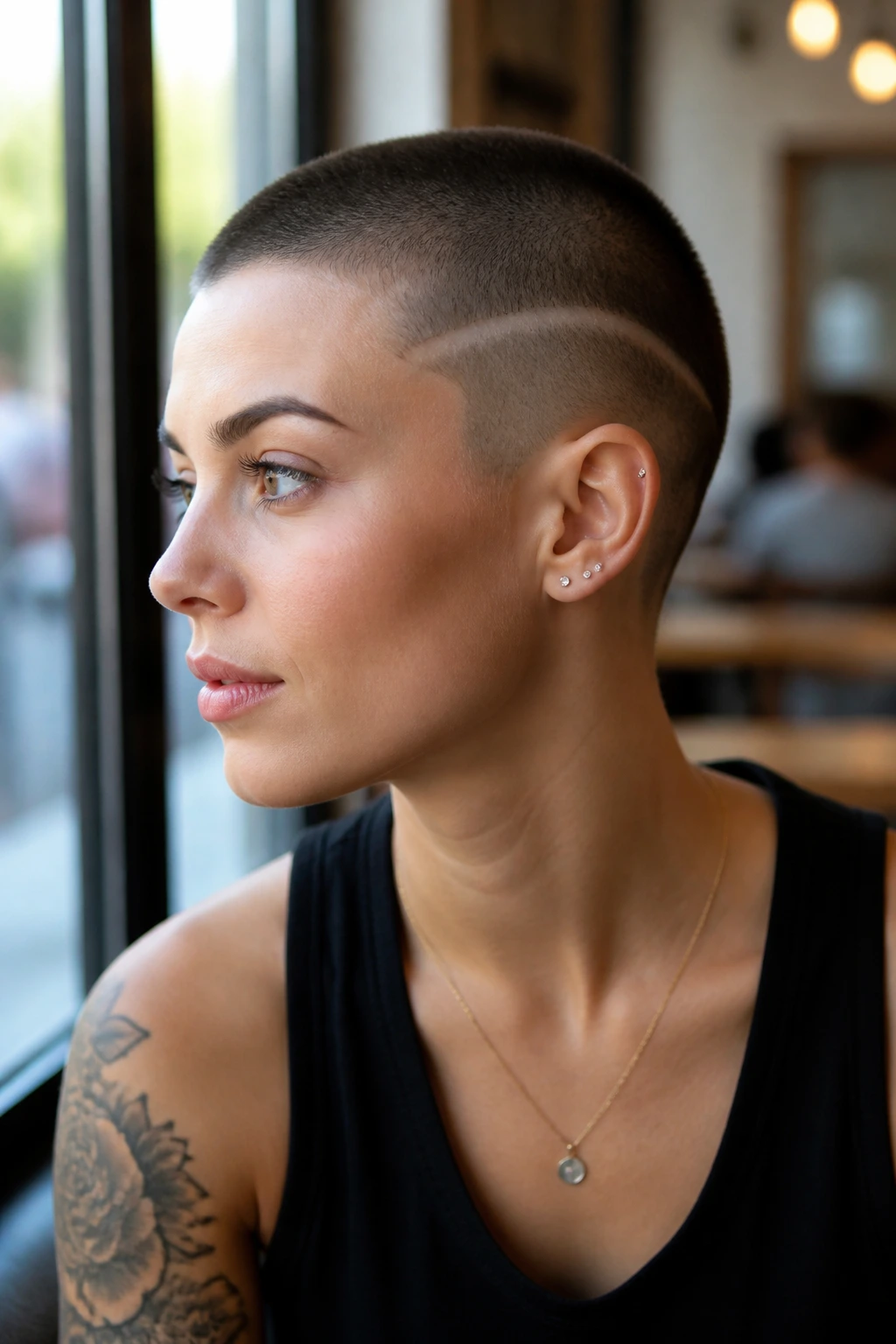
A side line art buzz cut uses one shaved line, or a small cluster of lines, along the temple or above the ear. It’s a small detail, but on short hair small details are everything. A single clean line can change the whole personality of the cut.
This version works well if you want something subtle enough for daily wear but still different from a plain buzz. It also grows out more kindly than a full pattern, which is helpful if you don’t want to be back in the chair every week. Keep the line slim. Thick line art tends to look heavy unless the rest of the haircut is very bold.
Small detail. Big attitude.
30. Nape Design Buzz Cut
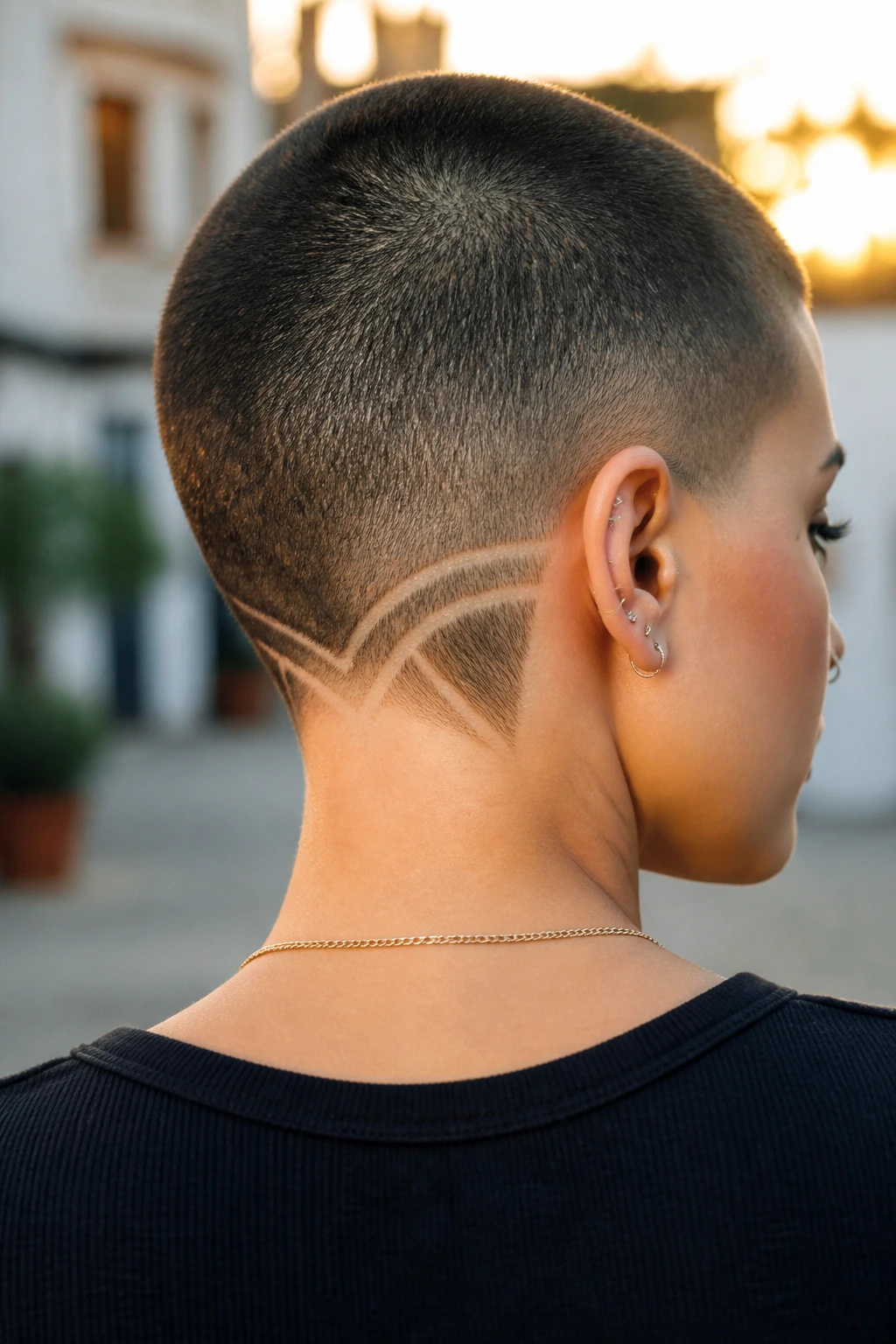
A nape design buzz cut hides the decoration at the back of the head, where a shaved pattern, curve, or word can sit under the top layer of the cut. It’s a fun choice if you like a surprise detail that shows up only when the hair is viewed from behind.
This style is especially good for people who spend time with their hair tied back or who want something personal without making the front too busy. A nape design can be a simple arc, a zigzag, or a tiny geometric shape. Because it sits lower, it also grows out in a way that can be trimmed off without affecting the rest of the cut too much.
The front stays clean. The back gets the wink.
31. Star or Lightning Etching Buzz Cut
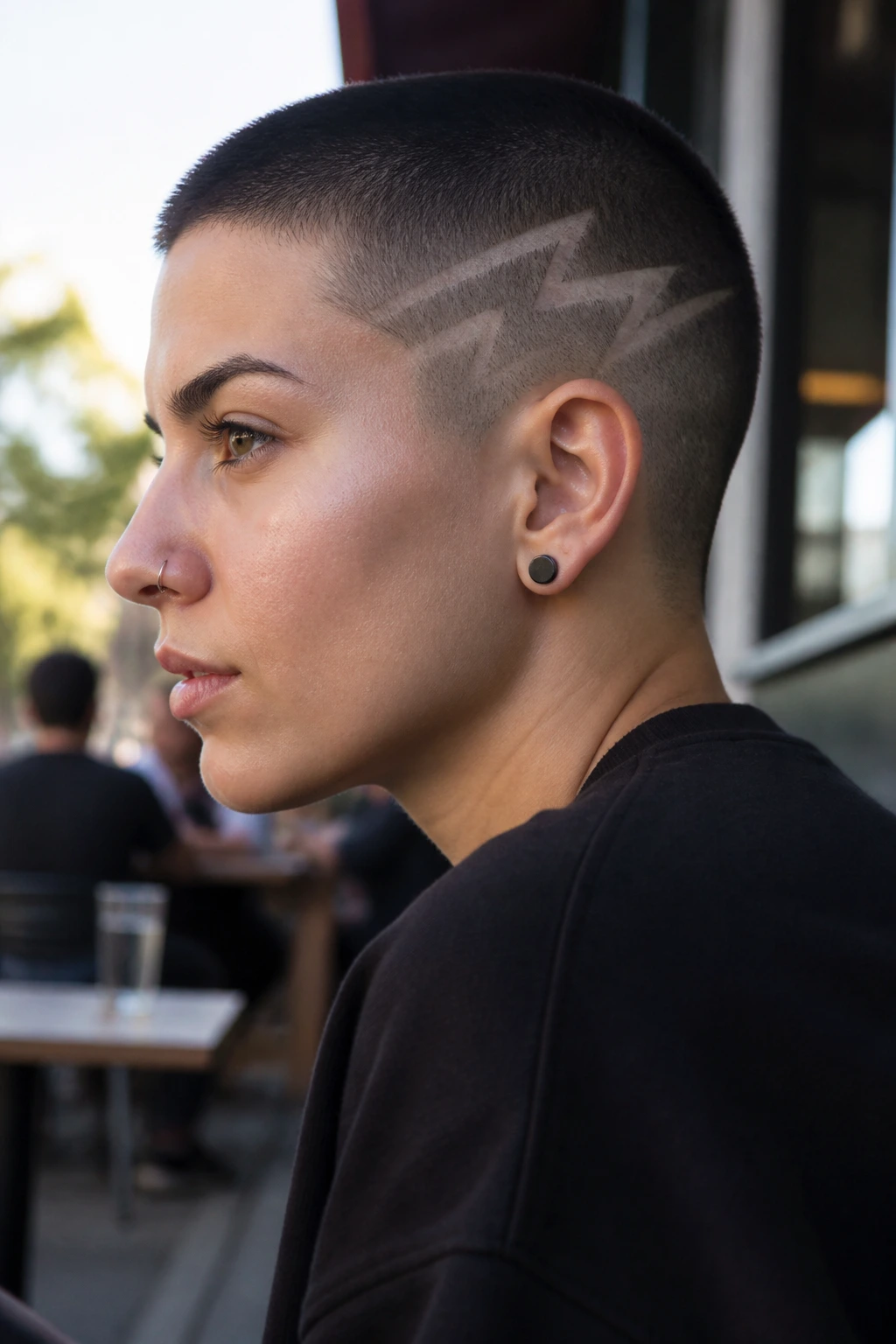
A star or lightning etching buzz cut turns the side of the head into a little statement panel. These designs work best on a fresh buzz with enough contrast in the fade that the carving is easy to see. Thin etching lines can disappear fast if the hair is too dark or too fuzzy.
This is one of the more playful options, and it’s not shy about it. A lightning bolt reads sharp and energetic. A star leans more graphic and a little cheeky. If you want the cut to feel youthful without losing the buzz shape, this kind of etching gives you a clear point of difference.
Go small if you want it wearable. Go bigger if you want the design to lead.
32. Wet-Look Buzz Cut
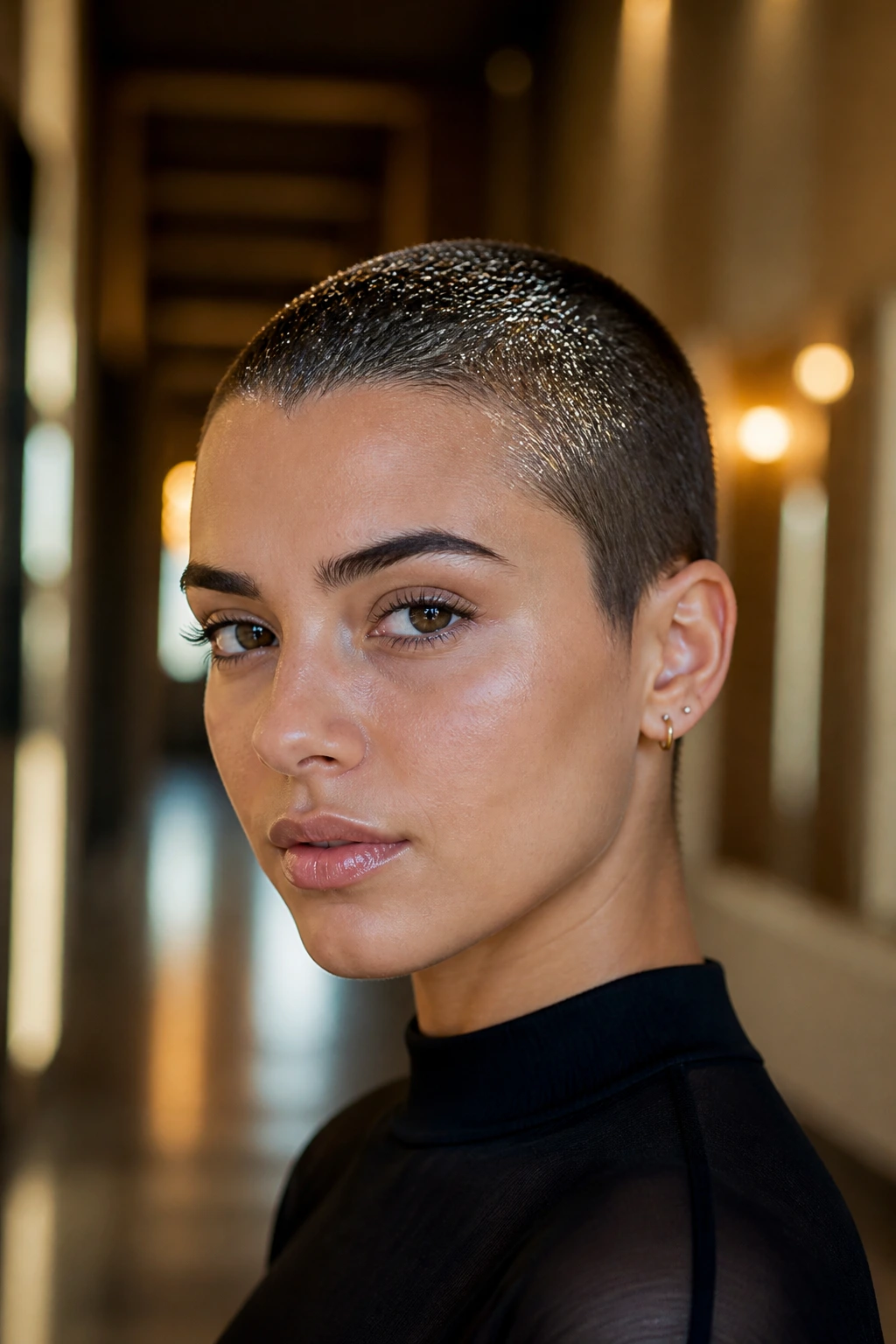
A wet-look buzz cut uses gel, gloss cream, or a lightweight pomade to make the short hair look sleek and reflective. Because the hair is so short, you don’t need much product at all — usually a pea-sized amount warmed between your palms is enough.
This finish can make a basic buzz feel dressed up fast. It’s especially good for evening looks, formal clothes, or days when you want the haircut to feel deliberate instead of casual. The key is not to overload the scalp. Too much product will separate into shine patches and make the hair look greasy rather than polished.
A little gloss goes a long way here.
33. Matte Textured Buzz Cut
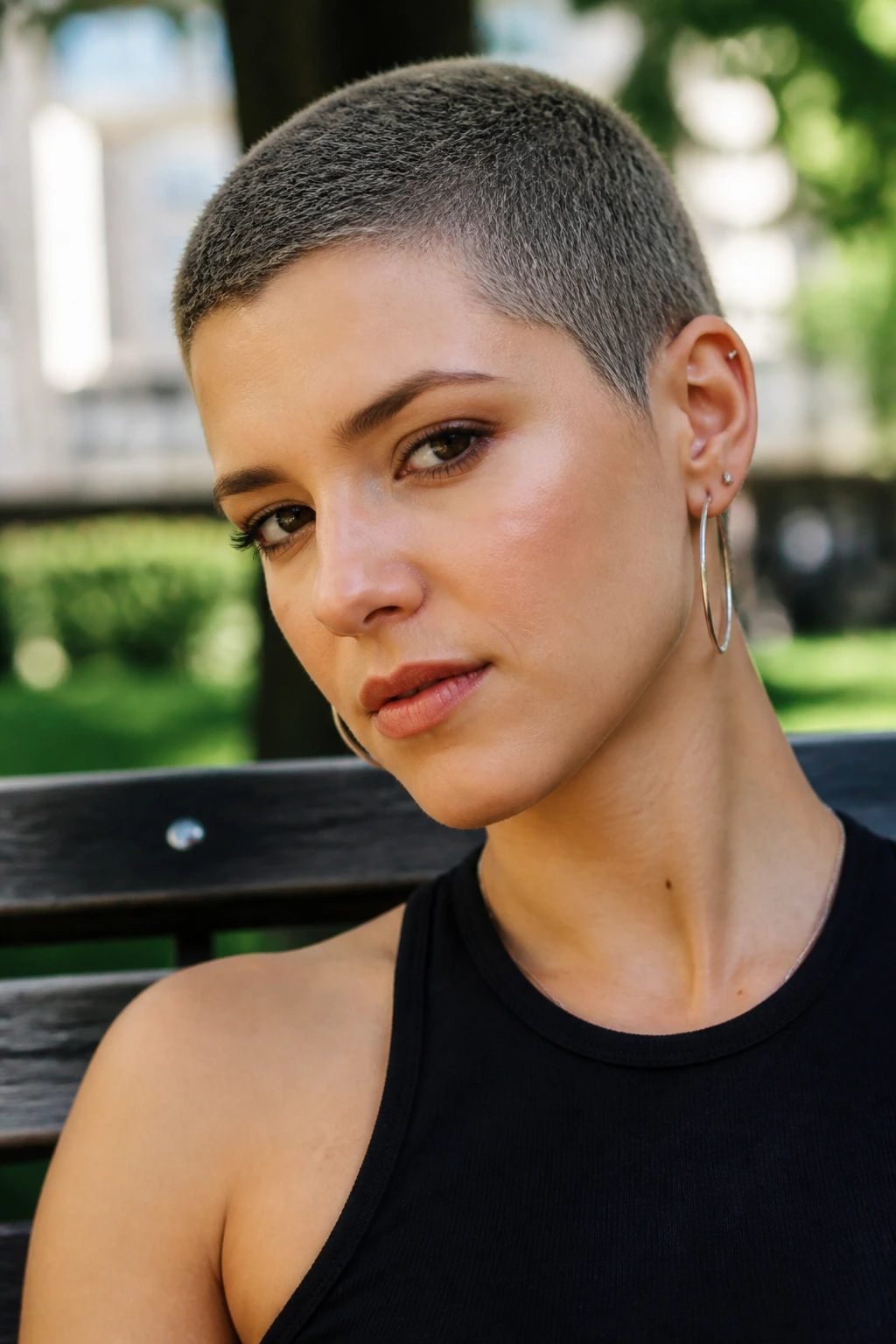
A matte textured buzz cut is the opposite of the wet look. It keeps product light or skips it entirely so the hair looks dry, soft, and very close to the scalp. That matte finish lets the texture stand out without adding shine.
This is my favorite option for people who don’t want the cut to look styled in an obvious way. It still looks clean, but the finish has a quieter energy. If your hair is coarse or grows in multiple directions, a matte product can help tame the lift without making the cut stiff.
It’s the haircut version of a white tee and good denim. Plain, but not plain.
34. Brushed-Forward Buzz Cut
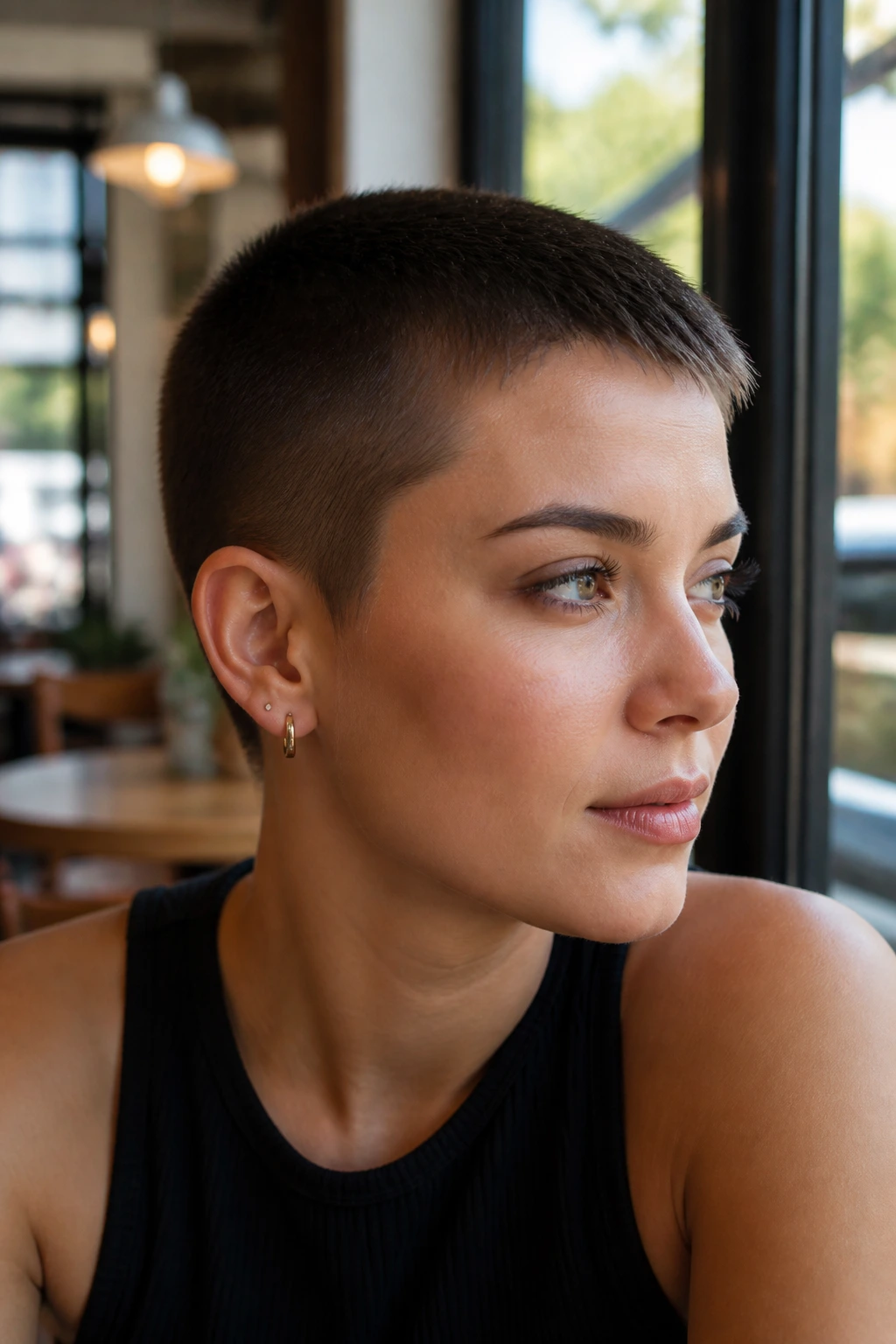
A brushed-forward buzz cut keeps the top just long enough to push slightly toward the forehead, which gives the cut a soft directional line. It can create the illusion of more shape at the front and help balance a strong crown.
This is a smart cut if you like your hair to have a little movement even when it’s short. It works well on straight and wavy hair, especially if the front hairline is something you’d rather soften than expose. A light paste or matte cream can help the direction stay in place without making the cut look crunchy.
Forward. Not flat. That’s the difference.
35. Grown-Out Buzz Cut
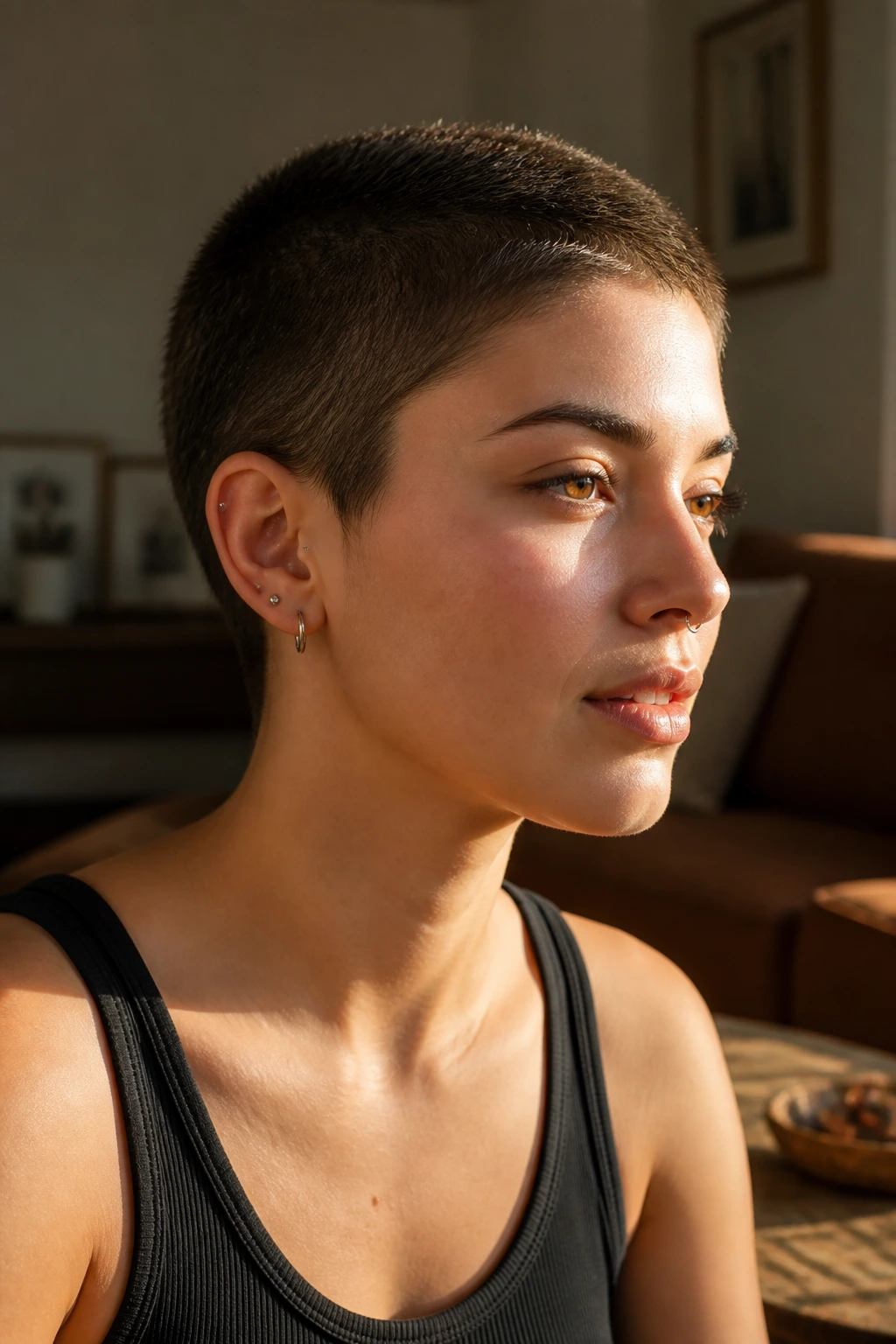
A grown-out buzz cut is what happens when the crop gets a little length back and starts moving toward a soft crop or pixie. Some people think this stage is awkward; I don’t. If the edges stay tidy, it can look relaxed and expensive in that unstudied way people always pretend not to chase.
This is the version you choose when you want room to breathe between trims. Let the top reach a little uneven texture, clean the neckline every few weeks, and keep the sideburns shaped. The haircut stops looking like a fresh buzz and starts reading like a deliberate short style with personality.
Sometimes the best buzz cut is the one that is growing out on purpose.
How a Buzz Cut Changes Your Face Shape
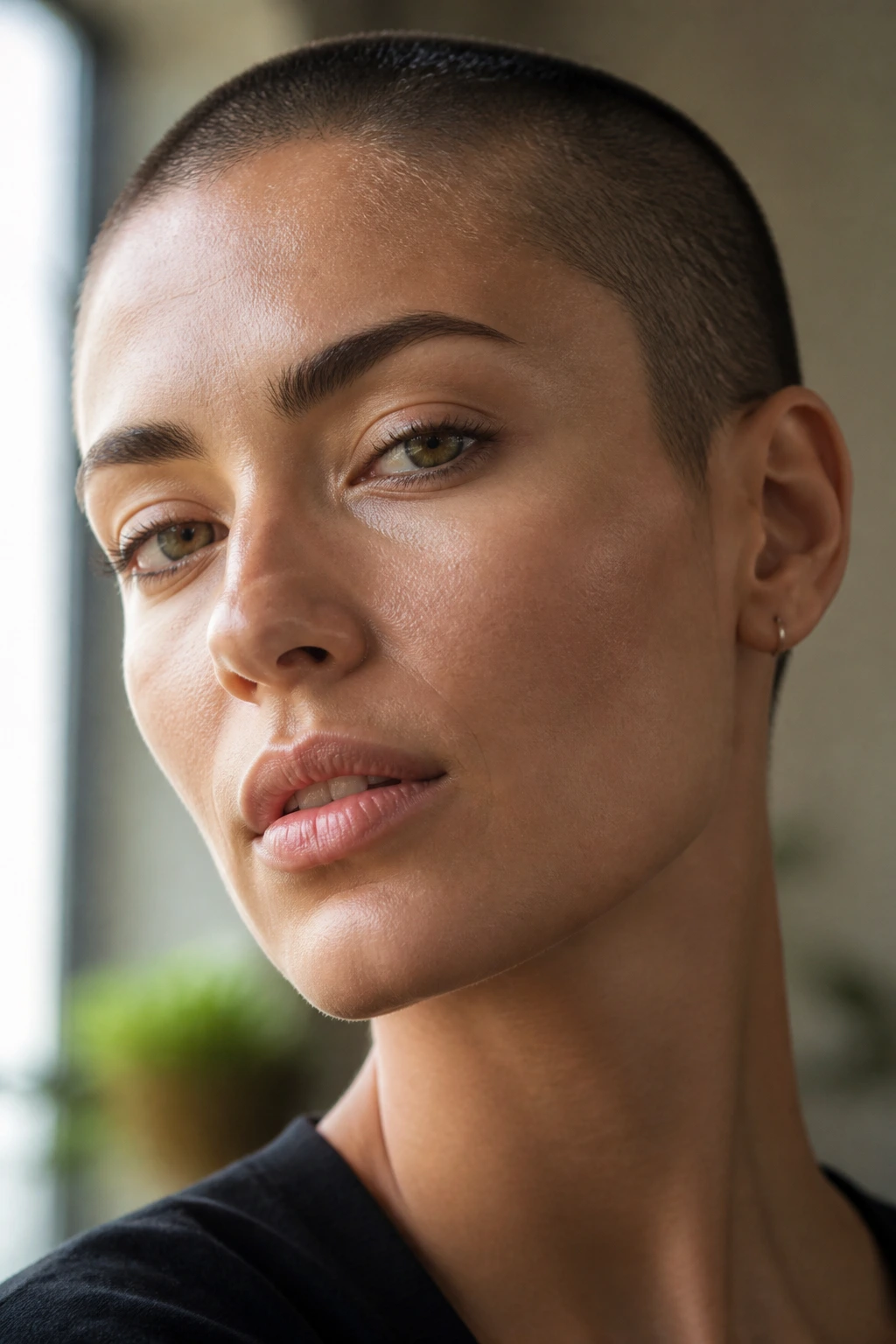
A buzz cut exposes the geometry of the face fast. That sounds dramatic because it is. A full crop removes the softening effect of longer hair, so the jaw, cheeks, forehead, and ears suddenly become part of the styling equation. If the guard is very short, even the skull shape under the hair begins to matter.
That’s why the same cut can feel crisp on one person and severe on another. A rounded hairline softens edges. A high fade tightens them. A little extra length on top can balance a strong brow or a wider cheekbone, while a close skin fade can make the face read taller and narrower. None of this is mysterious. It’s just optics and proportion.
Guard length changes the silhouette
A #1 or #0.5 guard hugs the head and shows every curve. A #2 or #3 gives the face a little more breathing room. If you’re unsure, start longer. It’s easier to shorten a buzz cut than to wish you had left more hair on the first pass.
Fade height changes the mood
Low fades stay gentle near the ears and nape. Mid and high fades carve out a firmer shape. If your face already has strong lines, a softer fade can keep the haircut from feeling too severe. If your features are softer, a sharper fade can add structure without needing length.
Crown swirls are not a minor detail
A stubborn crown swirl can kick hair in different directions and make a close cut look uneven if nobody checks it. A good barber will trim around that pattern instead of against it. If you’re cutting at home, always check the crown in daylight. Bathroom lighting lies.
The Clippers, Mirrors, and Trimmers That Make the Job Easier
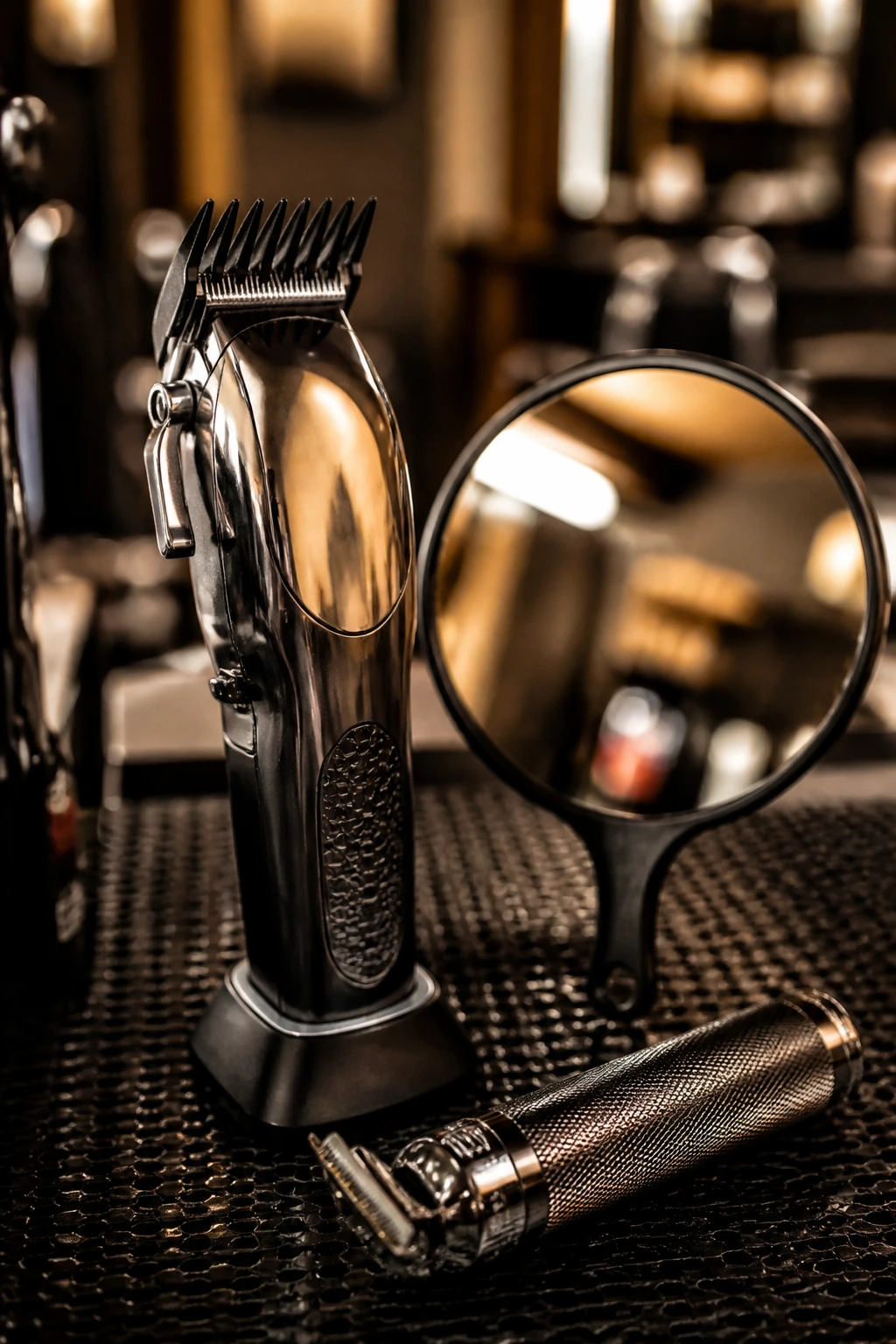
A clean buzz cut is not expensive to maintain, but the right tools save you from uneven patches and awkward edges. I’d rather have one good set of clippers than a drawer full of cheap gadgets that tug and overheat.
- Cordless hair clippers with guard sizes #0.5 through #4: You do not need every attachment ever made. You do need guards that cover the range you plan to wear.
- Detail trimmer: Best for hairline cleanup, sideburns, and nape edges where a full clipper feels clumsy.
- Handheld mirror: Essential for checking the back of the head and the fade line behind the ears.
- Cutting cape or towel: Keeps short hair from sliding down your neck and sticking under clothes.
- Neck brush: Good for sweeping loose clippings off the scalp and collar after a trim.
- Razor or foil shaver, optional: Useful if you want a skin fade or a truly close nape.
- Scalp sunscreen or hat, depending on exposure: Short hair leaves the scalp out in the open, and that matters.
If you’re trimming at home, dull clippers are a bad idea. They pull, skip, and leave little uneven lanes that show up in bright light.
What to Tell Your Barber Before the Clippers Start
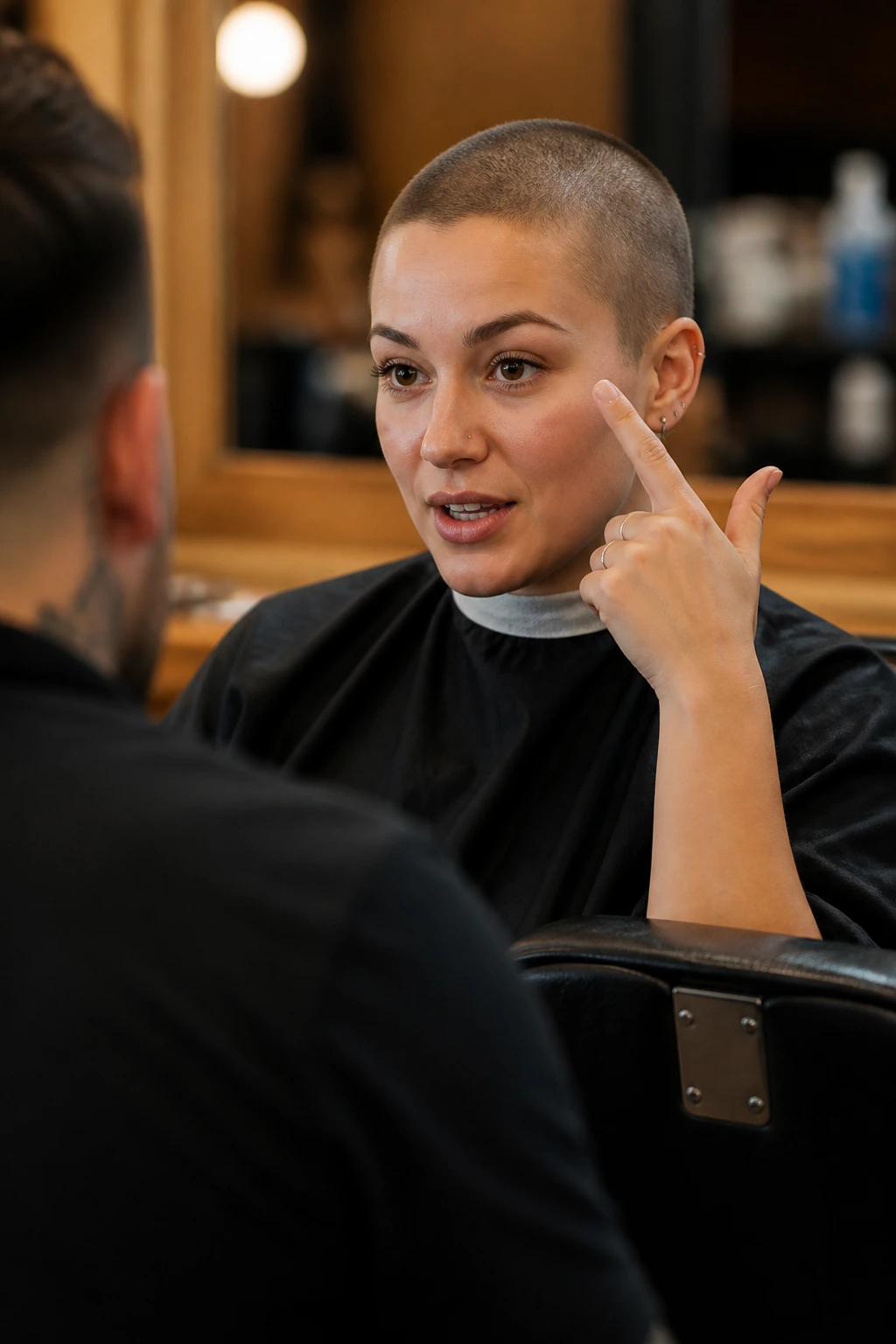
A good buzz cut starts before the first pass. The easiest way to avoid disappointment is to speak in guard numbers, fade height, and neckline shape instead of vague words like “short but feminine,” which can mean seven different things to seven different people.
Bring a photo, then point out exactly what you want from it. Say whether you want the top uniform or slightly longer at the crown. Say whether the sides should be faded down to skin or just tapered clean. If you have a cowlick, a scar, a widow’s peak, or a strong growth pattern at the nape, say that too. Those details matter more on short hair than on longer cuts.
If you’re thinking about color, say that before the cut. Bleaching a buzz after it’s already short can make the scalp more visible, which is fine if you want that effect, but not so fine if you weren’t expecting it. And if you’re cutting at home, do one side in daylight before touching the other. One side at a time is slower, but it keeps the mirror lies from wrecking the shape.
How to Wear a Buzz Cut Without It Feeling Bare
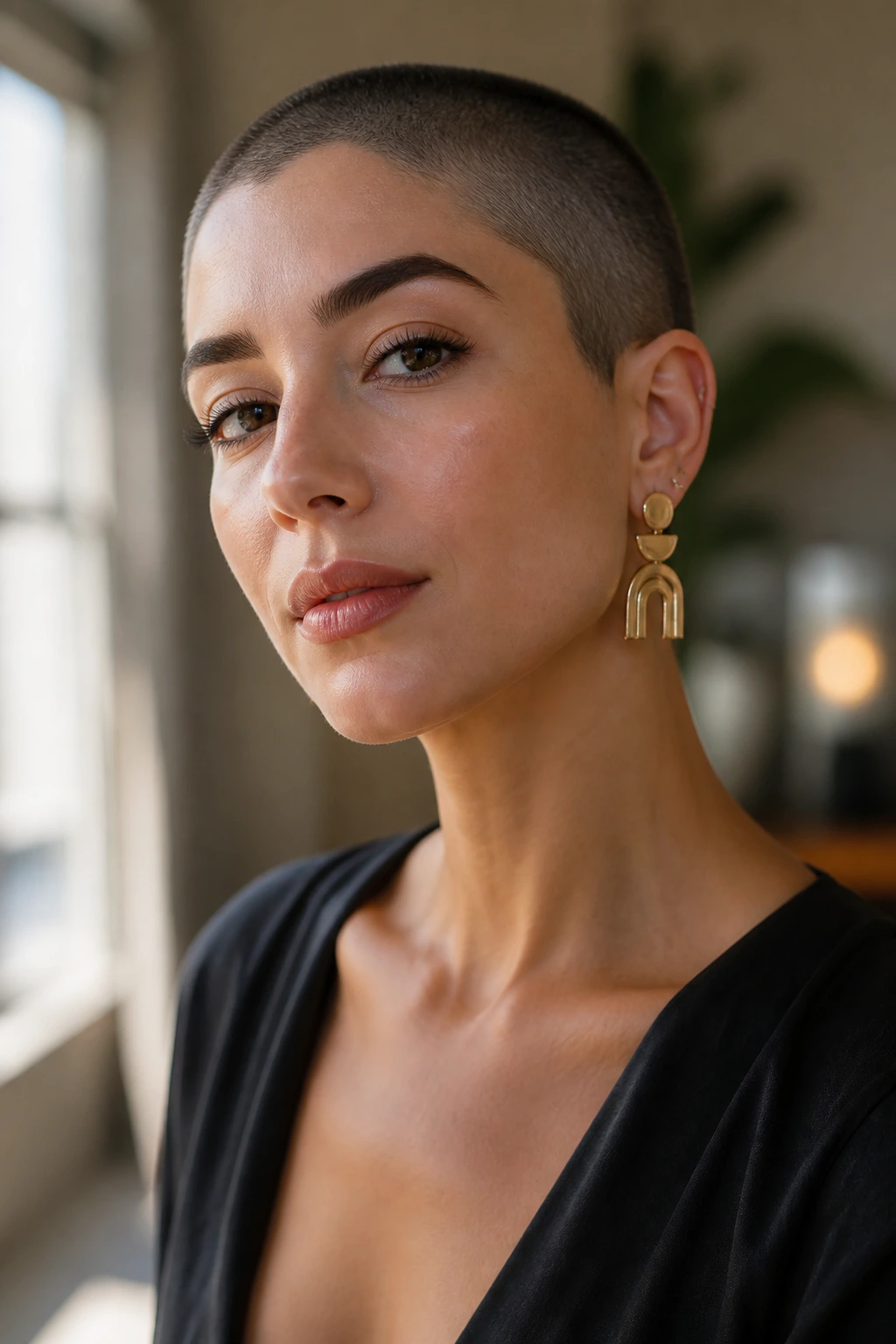
A buzz cut changes the whole styling budget. Hair stops doing the heavy lifting, so earrings, brows, makeup, collars, and necklines suddenly matter more. I like that. It forces the rest of the look to become clearer.
Earrings: Hoops, small drops, and even a single sculptural stud stand out more when the hair is short. If your buzz is very close, the ear area becomes part of the frame, so choose jewelry with a shape you actually want to notice.
Brows: A buzz cut tends to make brows look more prominent, which is a gift if you like strong brows and a headache if you ignore them. Brush them up, fill only the gaps, and stop before they look stamped on.
Necklines: Crew necks can make a buzz cut feel compact; V-necks and open collars lengthen the neck and give the cut more space. Turtlenecks do the opposite, which can look striking if that’s the effect you want.
Makeup: You do not need more makeup, but a little structure helps. A clean lip, some blush, or a sharper liner can stop the face from looking washed out next to very short hair.
Extra Tips for Color, Scalp Care, and Shine
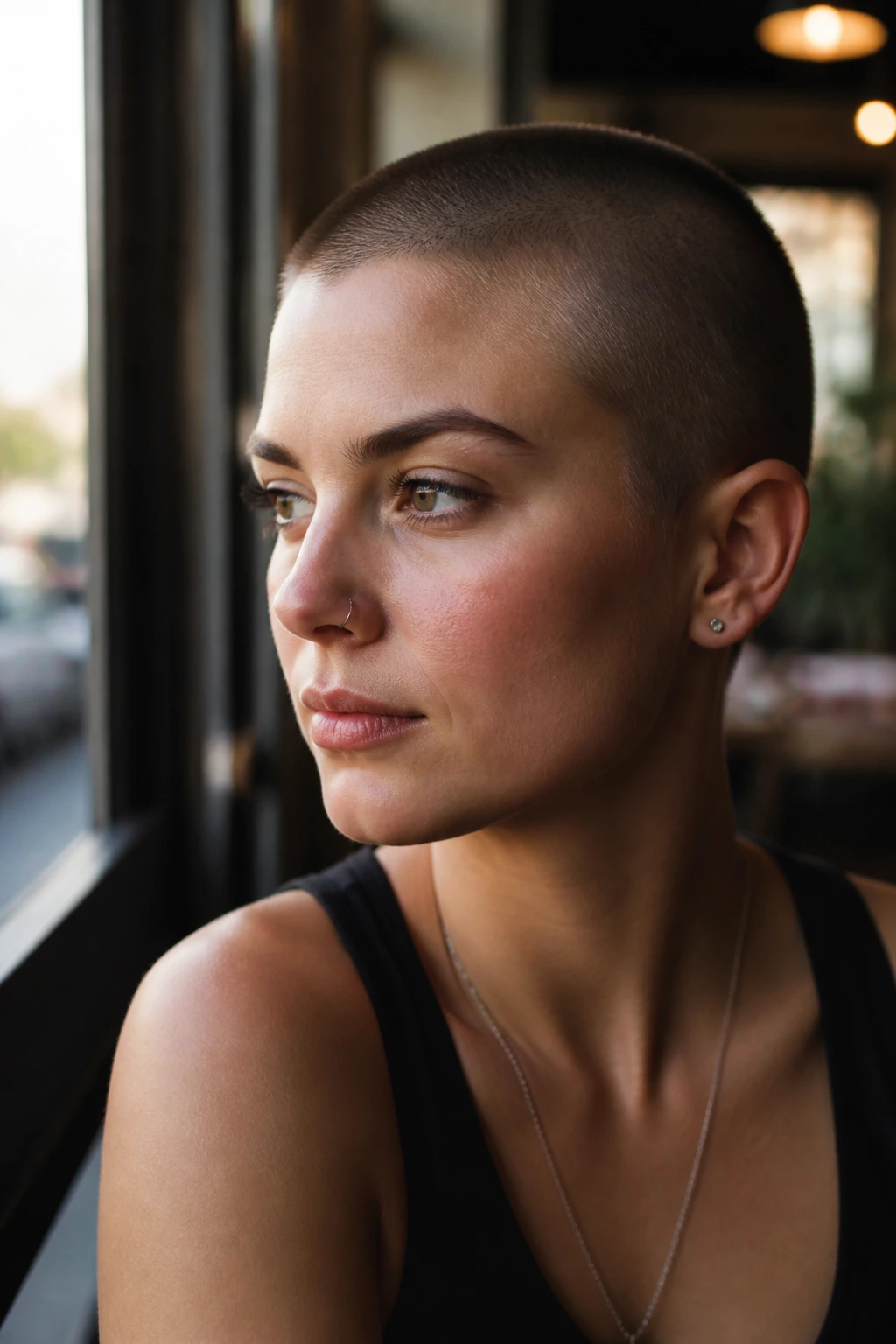
Color Enhancement: On a buzz cut, even a tiny gloss service or toner shift is visible. If you bleach, ask for a toner that matches the undertone you want, not just the one that removes brass for a week and then fades right back.
Scalp Care: Short hair exposes dry skin fast. A light scalp moisturizer, regular shampooing based on your oil level, and a sunscreen habit on sunny days keep the haircut from looking neglected. A flaky scalp under a buzz cut is hard to ignore.
Edge Detail: A clean neckline and sideburn line can change the whole haircut. Even if the top is plain, a sharp edge makes the style feel purposeful. I’d rather see one crisp line than an over-designed cut with a sloppy fade.
Texture Play: A matte cream, tiny bit of gel, or no product at all each creates a different finish. Choose one on purpose. Random product use is how short hair starts looking dusty, crunchy, or greasy.
Make-It-Yours: If you want the cut to feel softer, leave a little length at the front. If you want more edge, tighten the temples and nape. That tiny change can shift the whole mood.
Keeping a Buzz Cut Sharp Between Trims
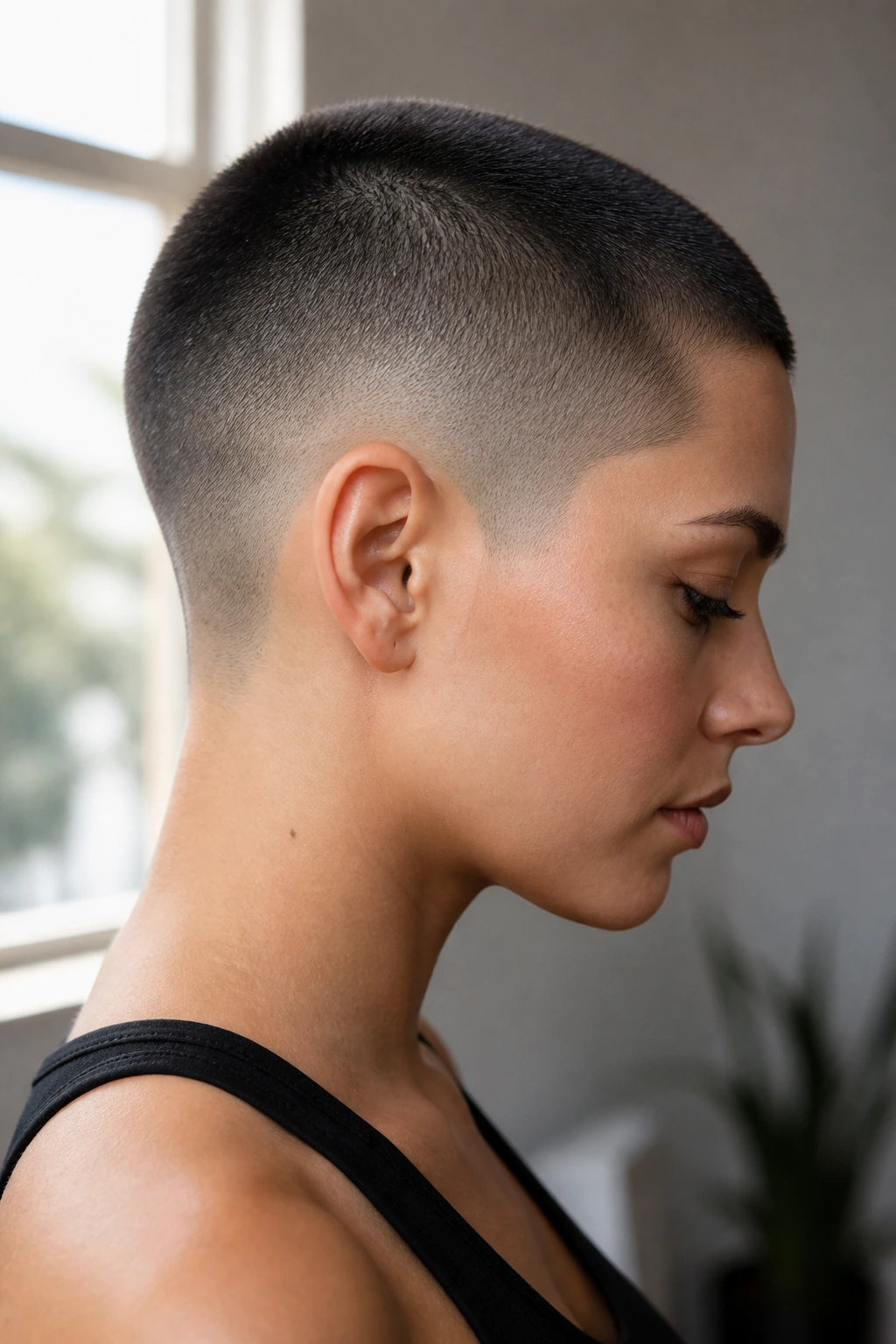
Short hair grows out fast in visible ways. A buzz cut that looked razor-clean two weeks ago can start to blur at the edges by the time you notice your neckline in the mirror. That’s not a flaw. It’s the nature of the cut.
For very short crops like a #0.5 or #1, plan on edge cleanup about every 2 to 3 weeks if you want the shape to stay crisp. A #2 or #3 can usually stretch a little longer, closer to 3 or 4 weeks, before the outline starts to lose its snap. If you’re growing it out, dust the nape and sideburns instead of re-shaving everything. That keeps the haircut from turning into a lopsided in-between stage.
Scalp care matters here too. Short hair shows dryness faster, so a mild shampoo, light conditioner on the scalp if it feels tight, and a satin pillowcase can make the cut sit better from day to day. If you’ve bleached the hair, tone refreshes and deep conditioning need to happen more often, because the color and the fiber both get tired faster than long hair does.
Common Mistakes That Make a Buzz Cut Look Off
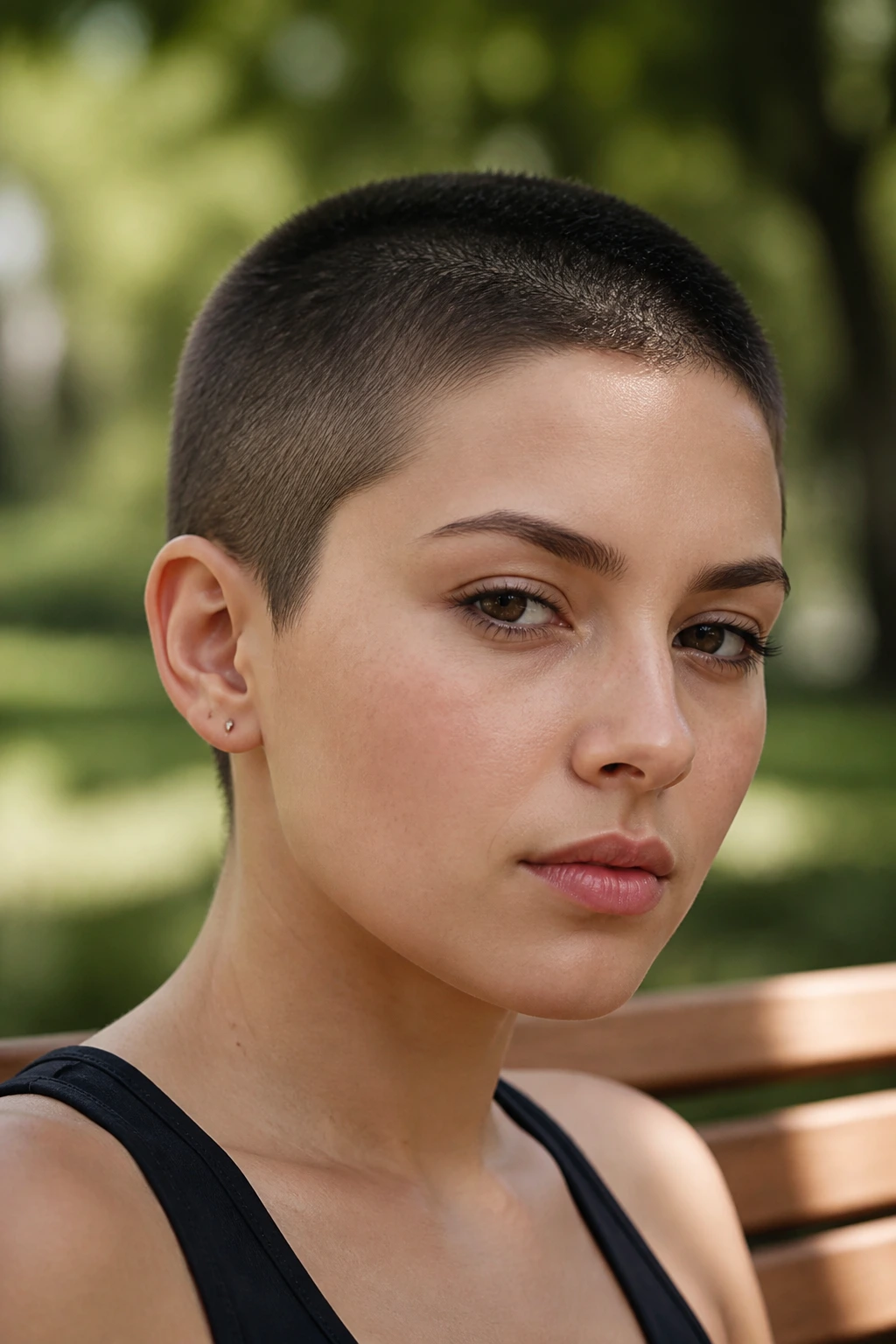
The first mistake is going too short too soon. A skin-close buzz can be gorgeous, but it also shows every bump, crown swirl, and patch of scalp. If you’re not sure, start with a longer guard and work shorter later.
The second mistake is ignoring the neckline. A fuzzy nape can make the whole haircut look like it needs a repair, even when the top is even. The fix is simple: clean the neck line every couple of weeks, or ask for a soft taper that grows out without a shelf.
Bleach is the third trap. Platinum on a buzz cut looks clean when the tone is right and brutal when the toner is wrong. If your scalp is sensitive or your hair lifts unevenly, test first and do not assume the shortest cut will forgive bad color.
There’s one more that gets people all the time: trying to trim the back with a tiny mirror and bad lighting. That’s how flat spots happen. If you’re cutting at home, use daylight, take your time, and check the crown from more than one angle. One sloppy pass shows up everywhere on short hair.
Ways to Adapt the Cut for Texture, Work, and Grow-Out
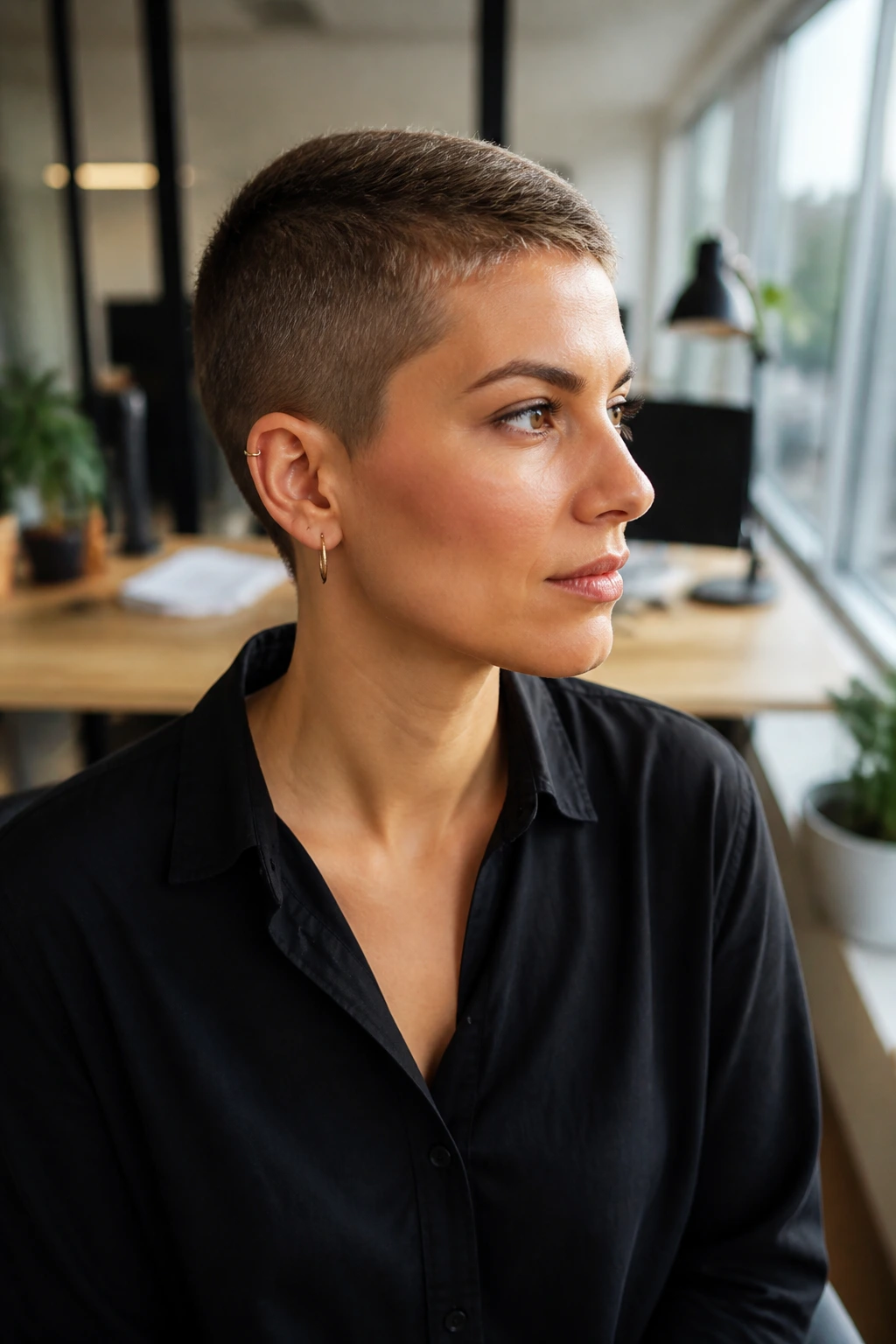
Soft Office Buzz: Keep the top at a #2 or #3, skip hard lines, and use a low taper. It reads neat without feeling too sharp for conservative settings.
Bold Color Buzz: Choose platinum, copper, pink, or split dye if you want the haircut to carry the personality. The shape can stay simple; the color does the talking.
Texture-Friendly Buzz: For curly, coily, or thick hair, leave enough length to show the pattern. A guard that’s slightly longer than you think often looks better than taking it too close.
Grow-Out Plan: If you know you’ll want a pixie later, leave the front and crown a touch longer from the start. That gives the cut a usable shape on the way out instead of a blunt in-between blob.
Minimal Maintenance Buzz: Choose a low or temple fade and avoid patterns or color. You’ll still need trims, but the haircut will be easier to keep up without constant babysitting.
Buzz Cut Questions Women Ask Before the Chop
What guard length is safest for a first buzz cut?
A #2 or #3 is usually the friendliest place to start. You still get the close-cropped look, but there’s enough length left to soften the scalp and hide a little uneven growth.
Will a buzz cut suit a round face?
Yes, if you shape it with intention. A higher crown, cleaner sides, or a slightly longer top can keep the face from looking wider, while a soft fade around the temple helps the cut sit neatly.
Can curly or coily hair be buzzed without looking patchy?
Absolutely. The trick is not going so short that the curl pattern disappears unevenly. A little extra length lets the texture show through instead of exposing every difference in density.
How often should I trim it?
Shorter buzz cuts usually need touch-ups every 2 to 3 weeks. Longer ones can go a bit farther, but once the neckline starts softening and the sides lose shape, the cut stops reading as deliberate.
What if my head shape is uneven?
Most heads are. That’s normal. A good taper, a little more length on top, and a clean neckline usually smooth the visual bumps more effectively than chasing perfect symmetry.
Can I bleach a buzz cut at home?
You can, but it’s one of those jobs where the margin for error is tiny. Short hair shows toner issues and scalp irritation fast, so a strand test and scalp patch test are worth the extra time.
How do I grow a buzz cut out without hating it?
Keep the neckline neat, leave the top slightly longer from the start, and trim the sides before they puff out. That keeps the grow-out looking like a style rather than a mistake.
Does a buzz cut need product?
Not much. Sometimes none at all. If the hair is very short, a matte cream, a tiny amount of gel, or a light scalp moisturizer is enough to change the finish without making it look loaded down.
A Close Crop With Room to Move

A good buzz cut is never accidental. The guard number, the fade height, the outline at the temple, the color on top — all of it adds up. That’s why the shortest cuts can be the most personal. There’s nowhere to hide, so every choice matters a little more.
And that’s the appeal. Once the shape is right, a buzz cut doesn’t need much from you except upkeep and a bit of nerve. Keep the edges clean, respect the texture you have, and choose the version that matches the way you want to move through the room. The hair will be short. The style doesn’t have to feel small.
