

Thick hair changes the bun conversation fast. A style that looks neat on fine hair can turn bulky, sag at the nape, or eat half a dozen bobby pins the second you step outside. That is why bun hairstyles for thick hair need a different approach: less wishful twisting, more structure, better anchoring, and a little respect for weight.
The upside is worth it. Thick hair gives a bun real shape, real presence, and that satisfying full look that smaller hair types have to fake with padding or a donut. The catch is that density can work against you if you pile it up without a plan. You feel it in the scalp first. Then the bun starts leaning, the flyaways spring loose, and somehow the style looks both too big and not secure enough.
What works best is a mix of smart sectioning, sturdy elastic, and the right kind of knot for the amount of hair you actually have. A low sleek bun and a cloud-like top knot both make sense here; so does a braided wrap, a tucked chignon, or a half-up mini bun when you want some relief at the crown. The point is not to fight thick hair into one shape. The point is to give it a shape it can hold.
Why These Bun Styles Earn Their Keep on Thick Hair
-
Built for weight: Each style here uses the bulk of thick hair as part of the shape instead of pretending the hair is light and floppy.
-
Less collapse at the crown: The better buns in this lineup anchor the weight lower, split the hair into sections, or wrap it in a way that stops the whole style from sliding south.
-
Works on clean or day-two hair: Some buns get better once the roots have a little grip, which is a mercy when freshly washed hair feels too slippery.
-
Fits different dress codes: You’ll find polished knots, braided wraps, soft buns, and quick twists, so the same dense hair can look office-ready, date-ready, or gym-run ready.
-
Pinning stays manageable: The smarter styles use elastics and shape first, then pins for cleanup. That matters. Thick hair punishes the “I’ll just pin it” method.
1. Sleek Nape Knot
A sleek nape knot is the cleanest way to make thick hair look controlled without killing its body. The bun sits low, so the weight doesn’t pull against the scalp all day, and the smooth surface makes the whole style feel deliberate instead of bulky. On dense hair, the knot looks fuller than it does on fine hair, which is half the charm.
Use a boar-bristle brush, a strong elastic, and a little gel or smoothing cream at the hairline. If your ends are long, fold them under twice before pinning; if they’re shorter, tuck them under once and lock the center with two crossed bobby pins.
2. Twisted Low Bun
Twisting before you coil changes the whole feel. Thick hair can make a simple bun look like a heavy lump, but a twisted low bun breaks that mass into cleaner lines and gives the style a bit of texture without trying too hard.
This one works especially well when your hair has some natural wave. The twist creates grip, which means you usually need fewer pins than you’d expect. I’d reach for this on days when I want something neat but not severe.
3. Braided Low Bun
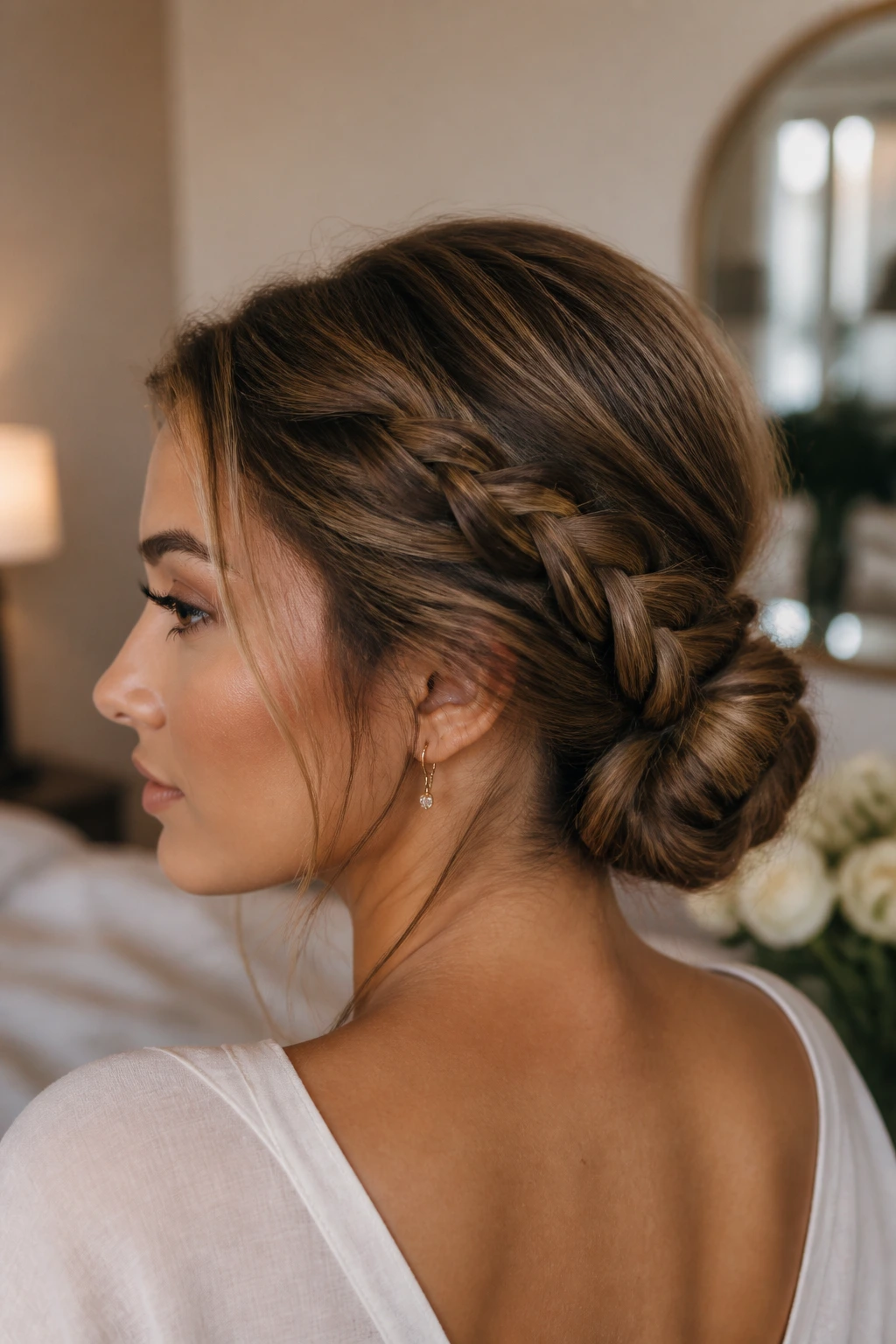
Why does a braid help so much here? Because thick hair already has the volume; the braid just organizes it. A low braid rolled into a bun gives you texture, hold, and a shape that refuses to flatten out by lunch.
A three-strand braid is enough, but a Dutch braid makes the base look richer if you want more visual detail. If your hair is very long, braid it loosely first so the finished bun doesn’t turn into a hard knot at the center.
4. High Top Knot
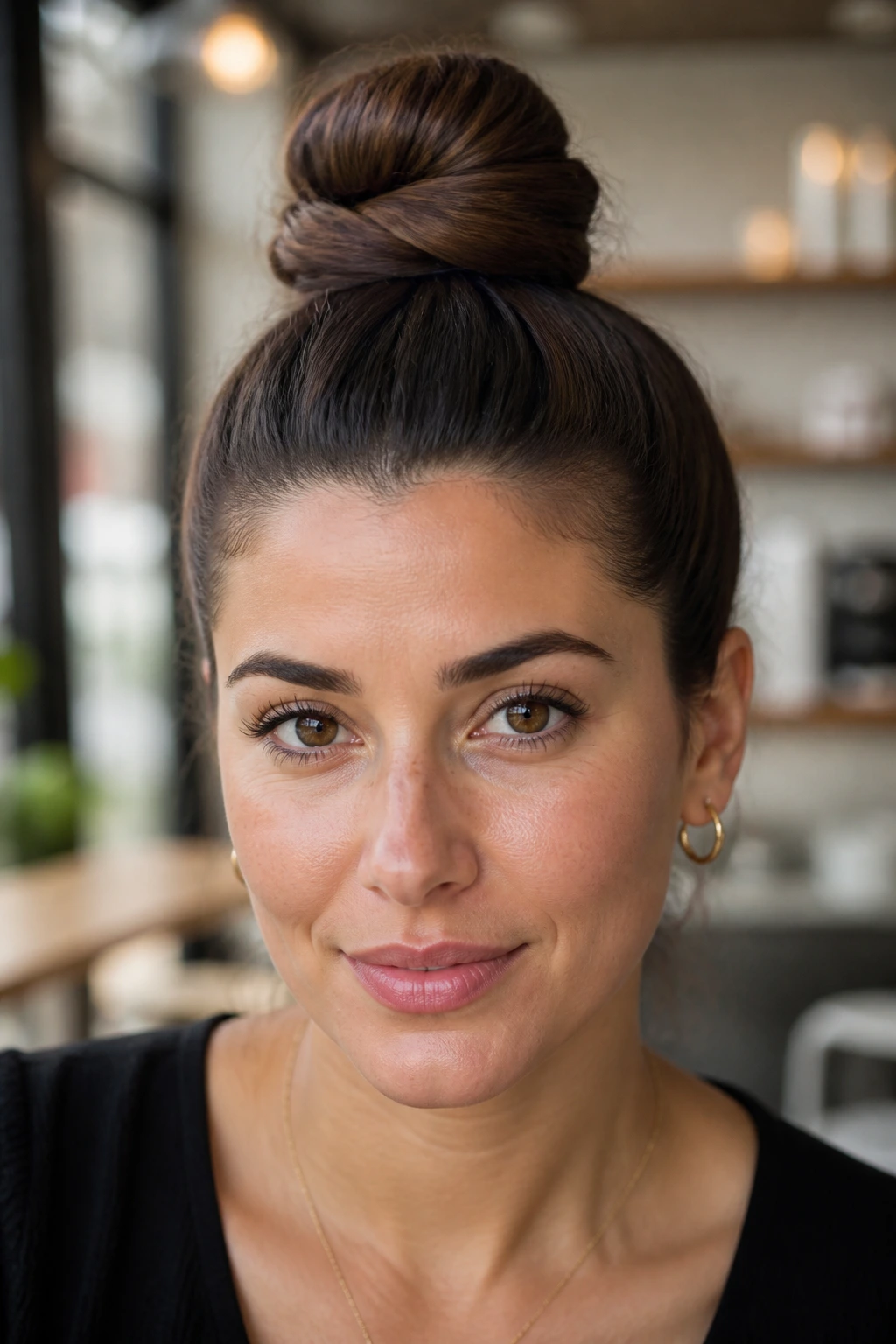
A high top knot is the style people reach for when they want the hair off the neck and the silhouette up where it belongs. On thick hair, this bun reads as bold instead of tiny and practical. That’s the real win.
Pull the ponytail high, twist the length into a coil, then wrap it around its base and pin under the bun rather than through the outer edge only. Thick hair likes support from below. Skip that, and the bun starts tilting backward after an hour.
5. Messy Cloud Bun
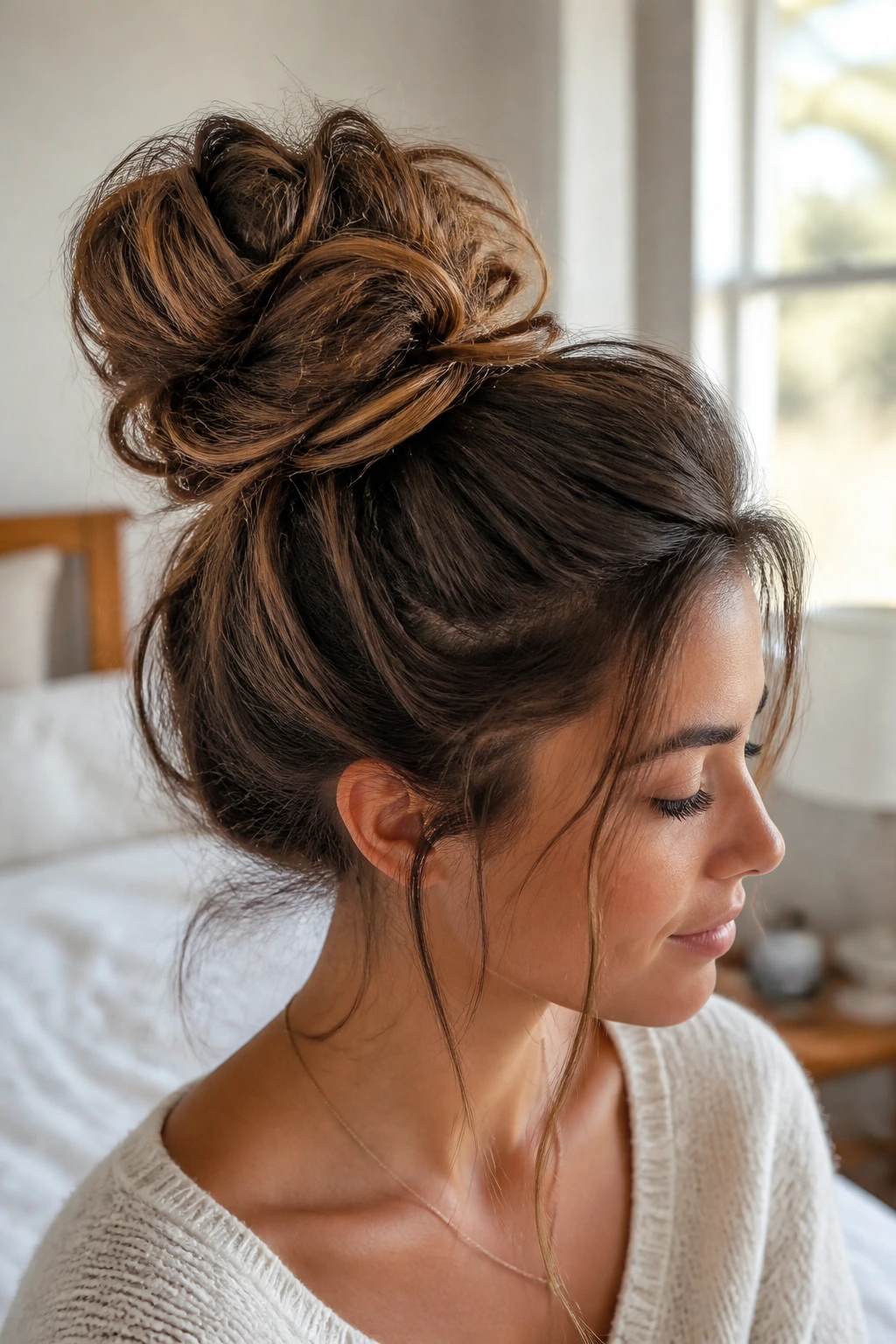
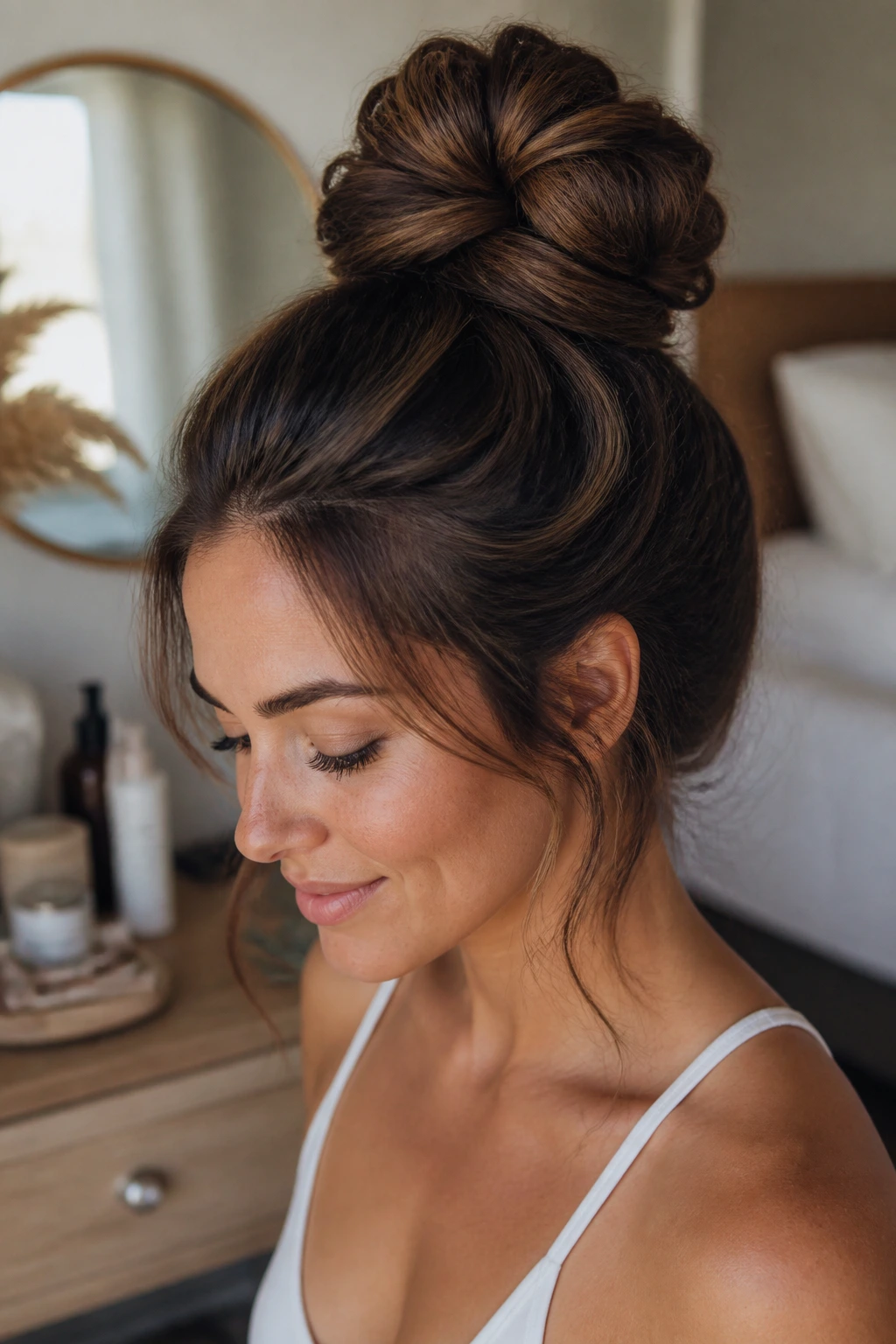
This is the bun that looks best when it is not trying to look perfect. Thick hair gives a messy cloud bun real volume, so you don’t have to over-tease or over-pull to make it feel full. That’s a relief, because overworking dense hair usually makes it frizzier, not better.
The trick is to leave a little movement around the face and a soft loop or two at the crown. Don’t chase symmetry too hard. A cloud bun should look held together, not sculpted with a ruler.
6. Sock Bun
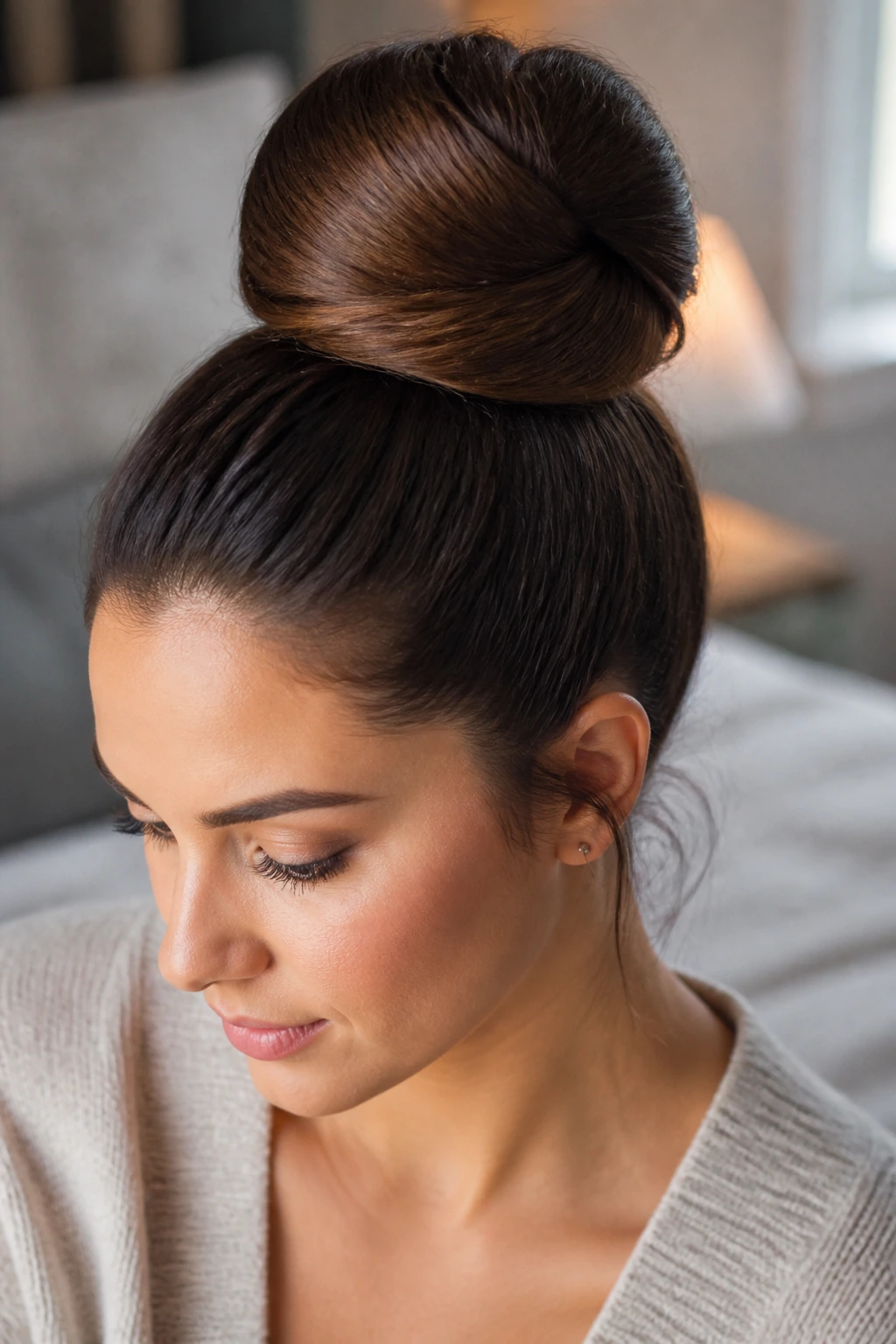
A sock bun is still one of the smartest tricks for thick hair, even if the internet acts like it’s old news. The padding gives all that hair a shape to wrap around, which cuts down on the “why is my bun a giant oval?” problem.
Use a donut form or a rolled sock, and make sure the ponytail is smooth before you start wrapping. Thick hair benefits from the padding because it distributes volume evenly instead of stacking it in one heavy lump at the back.
7. French Twist Bun
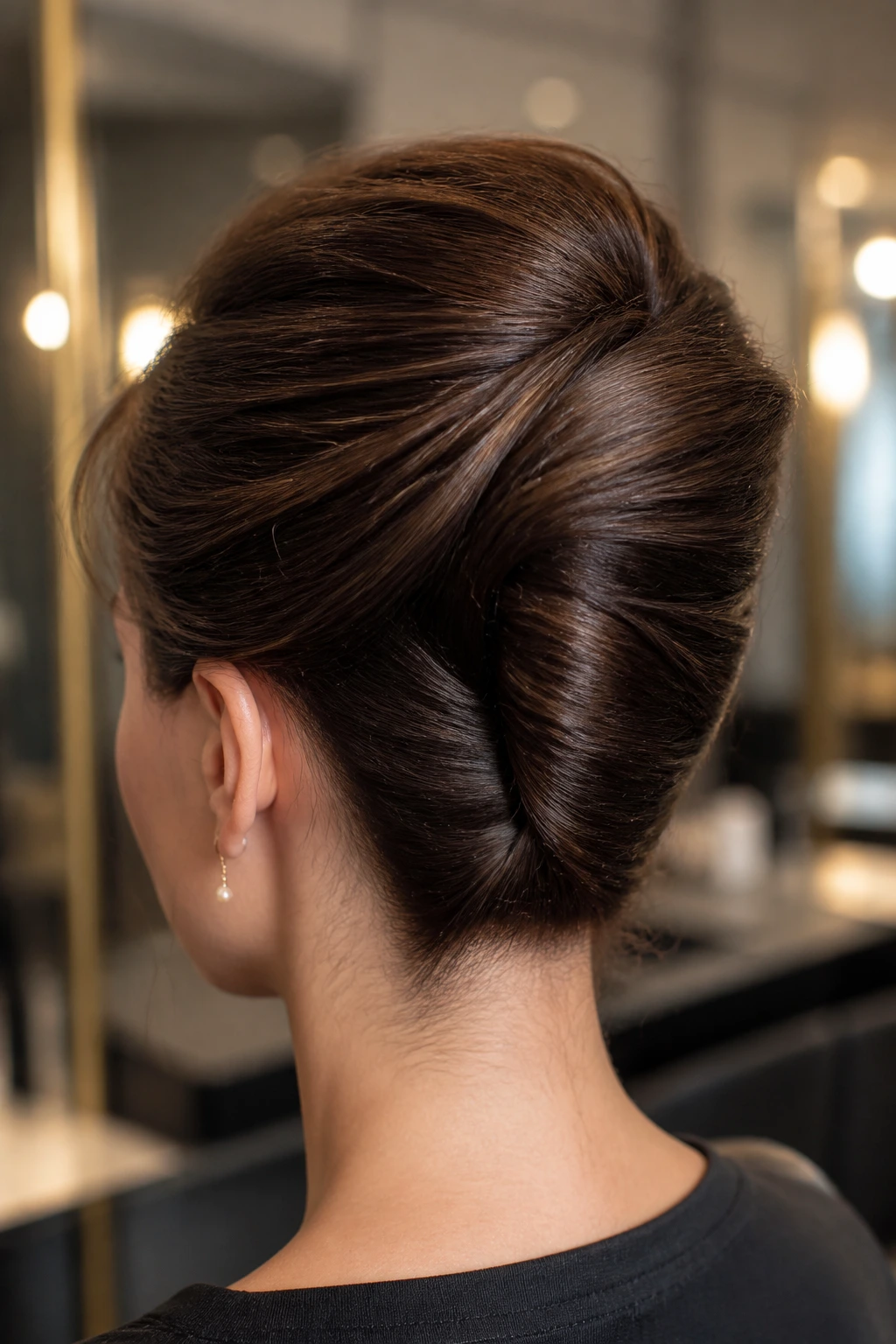
A French twist bun is what I recommend when you want structure without a lot of visible hardware. It keeps the hair vertical, then tucks the length into a narrow roll that feels polished and a little dramatic.
This style rewards medium to long thick hair, especially if it has a bit of day-old texture. The twist gives the hair direction, and the tucked finish keeps the ends hidden, which helps if your layers are prone to flaring out. Keep a handful of U-pins nearby. You’ll use them.
8. Rope-Twist Bun
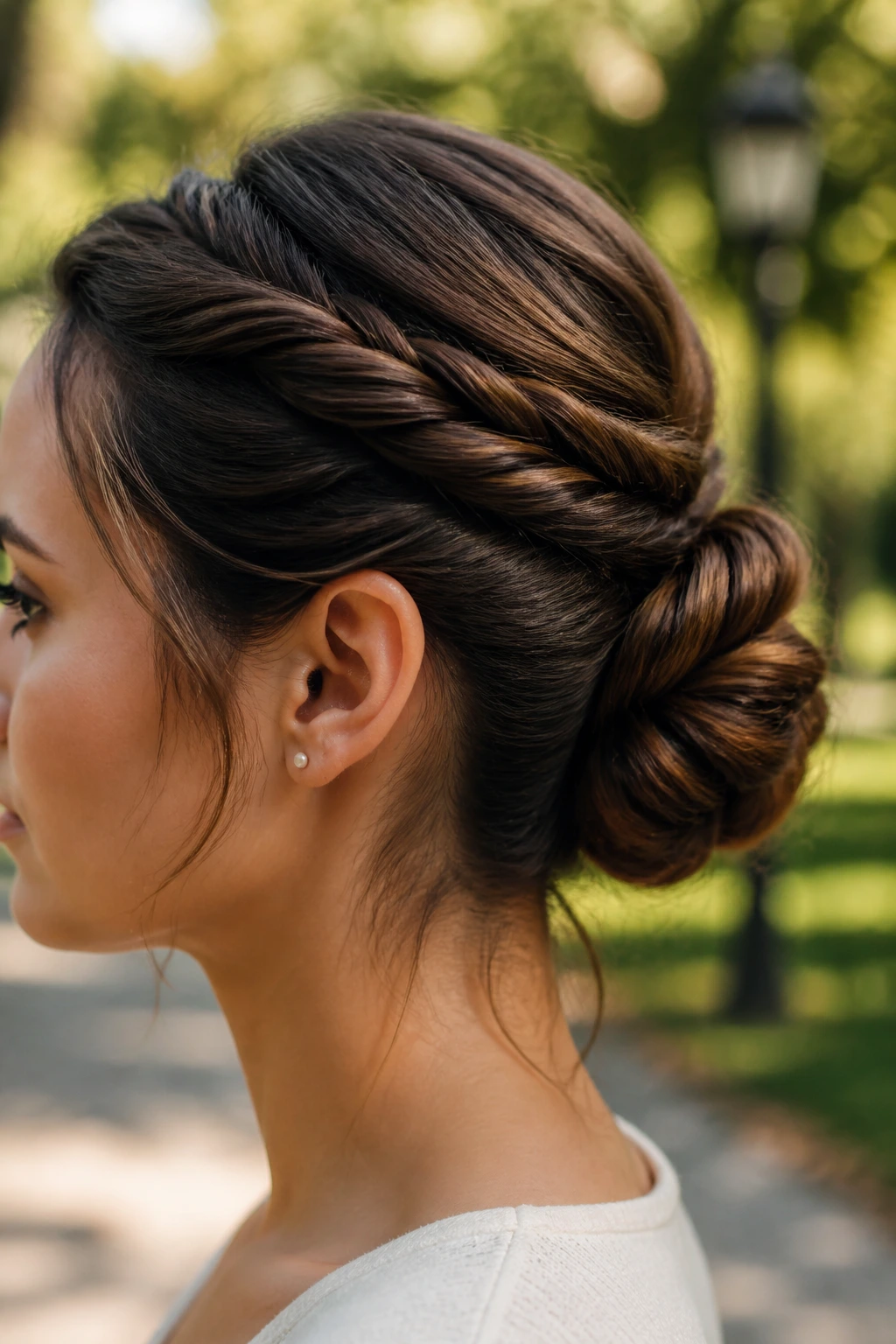
Two sections. Twist each one. Wrap them together. That’s the whole appeal, and it works because rope twisting controls thick hair without making it look too stiff.
The final shape has a nice spiraled texture that reads well even from a distance. If your hair is extra heavy, prep with a little dry shampoo at the roots so the base has grip. Smooth roots plus twisted lengths usually gives the neatest result.
9. Half-Up Mini Bun
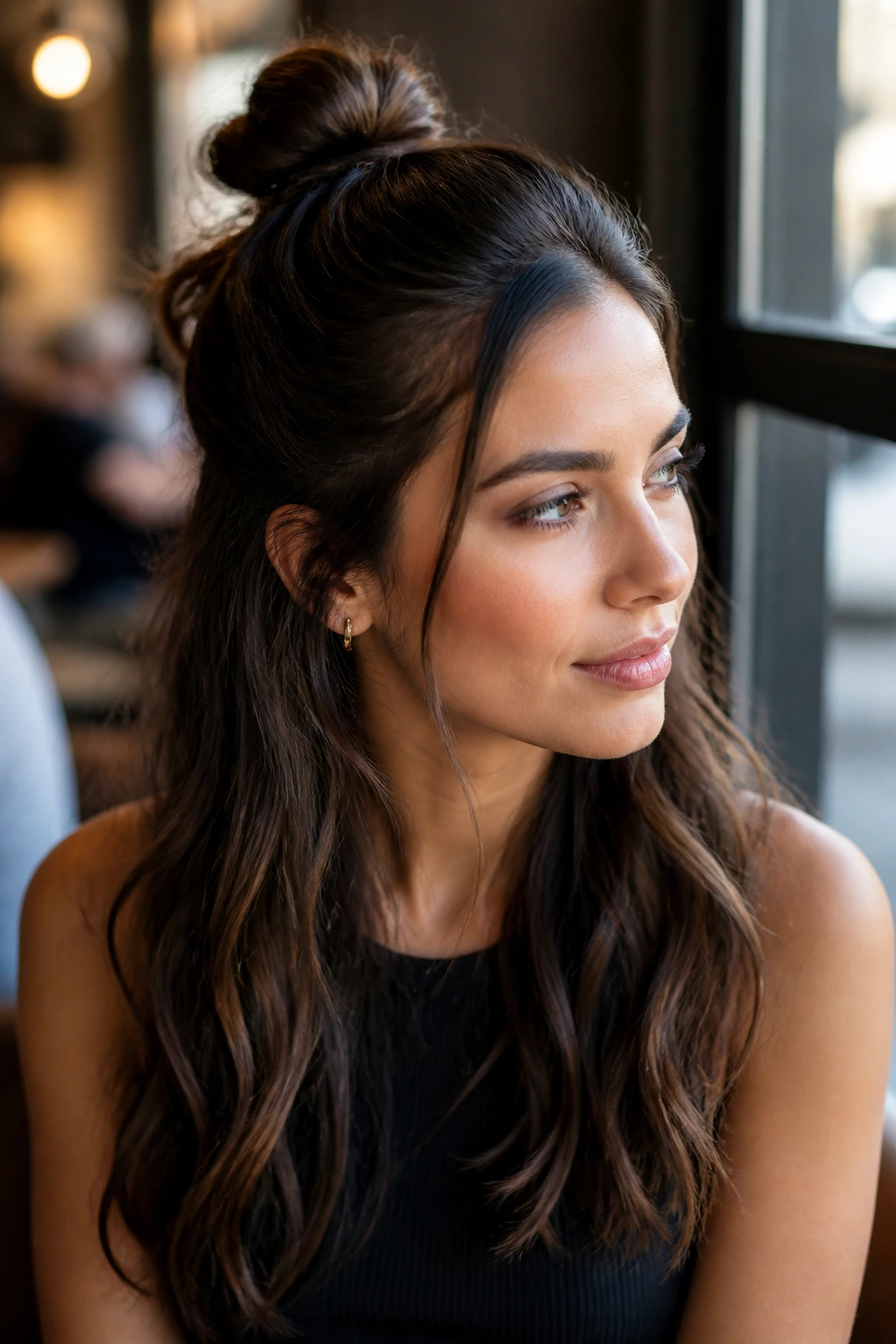
A half-up mini bun is the quiet answer for days when you want some hair off your face but don’t want to spend fifteen minutes taming all of it. Thick hair gives the mini bun enough mass to feel intentional instead of like a leftover topknot.
It also plays nicely with layers. The lower half of the hair stays loose and soft, which means the style feels lighter on your scalp than a full updo. Use a small elastic and don’t over-tighten the top section; the bun should sit, not clamp.
10. Space-Bun Pair
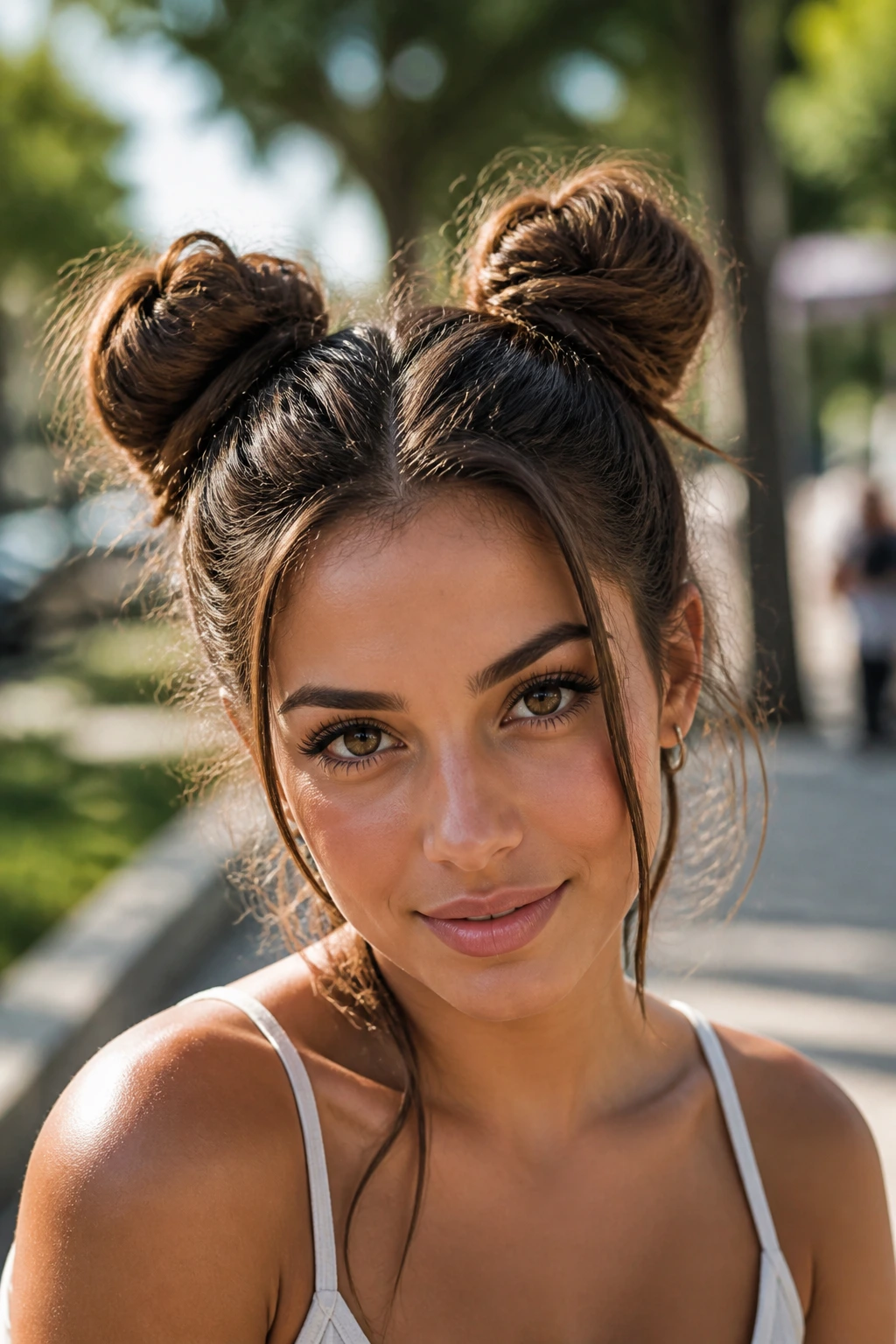
Two buns can be easier than one when the hair is dense, which surprises people until they try it. Splitting the weight into left and right sections makes the style feel more balanced, and thick hair helps the buns look round instead of flimsy.
Keep the buns slightly higher than ear level if you want a playful look, or lower and tighter if you want something more wearable. The important part is sectioning. Clean the parts first, because messy sections on thick hair quickly become lopsided.
11. Side-Swept Bun
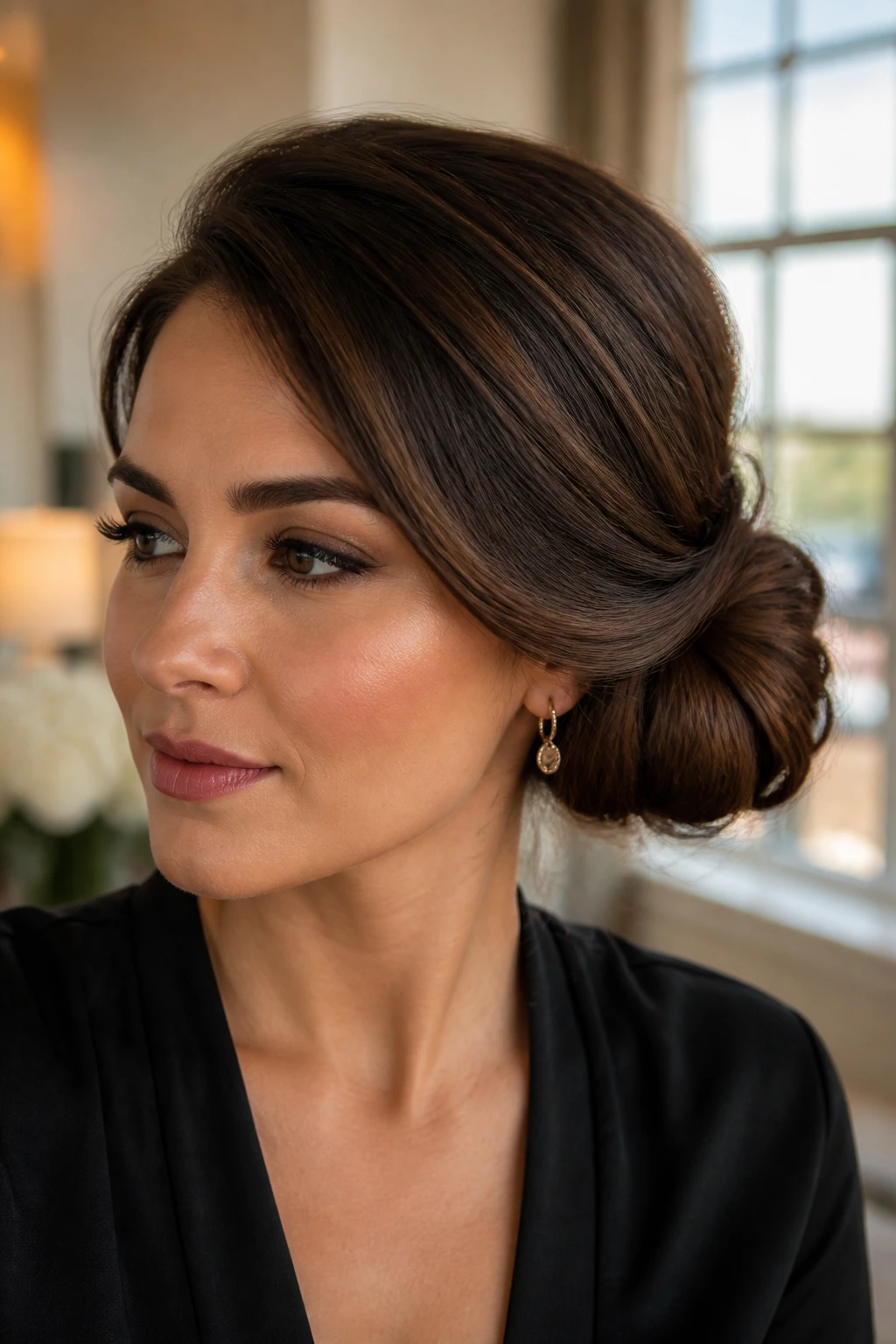
A side bun shifts the weight off the center line, which can be a gift on thick hair. The asymmetry softens the profile and makes the whole style feel less formal than a straight-back bun.
This one works especially well with a deep side part. Sweep the length across the back of the head, tuck it near one ear, and pin it in a low, rounded coil. It’s a good choice when you want the bun to look elegant but not severe.
12. Crown Braid Bun
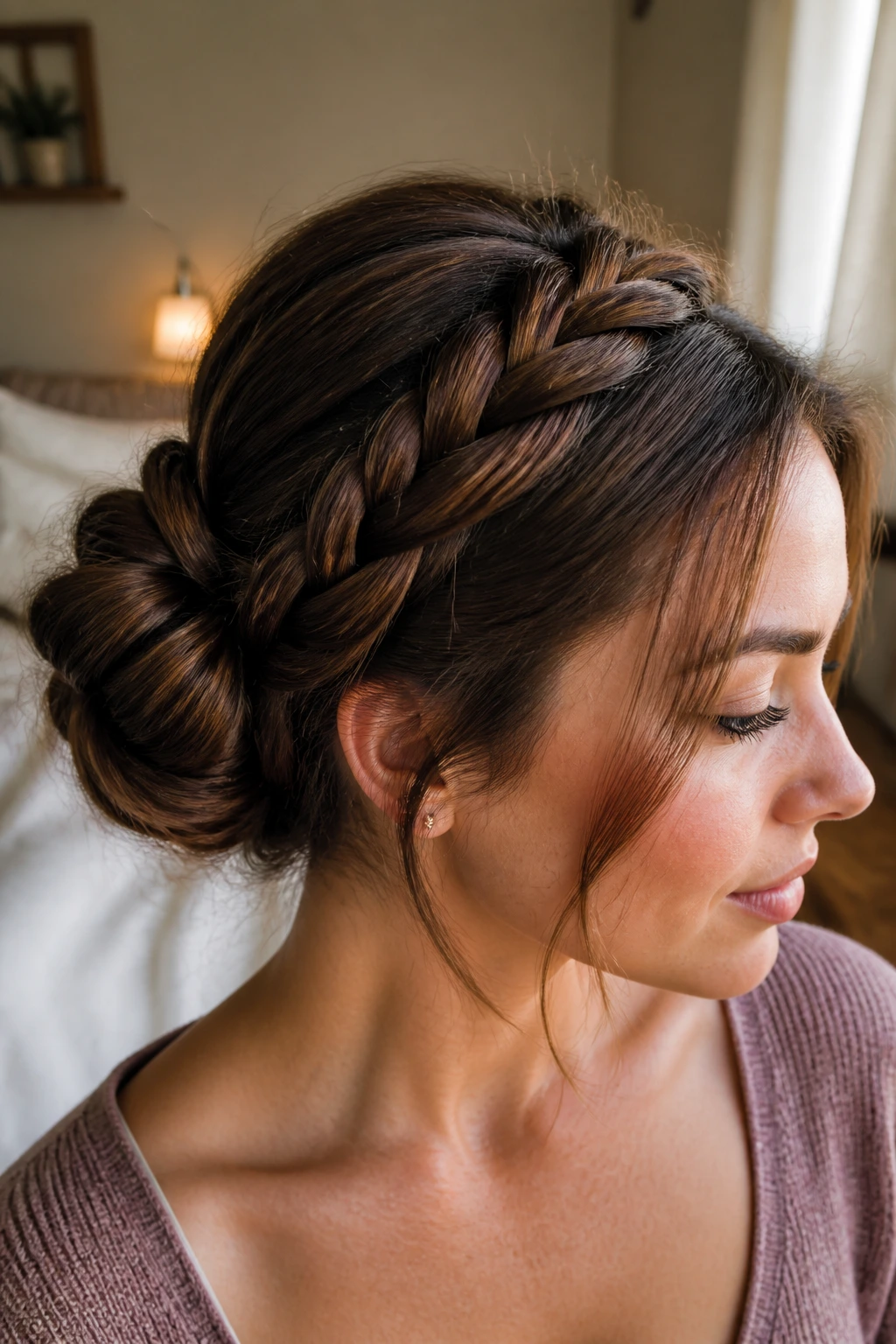
A crown braid bun gives you two things thick hair handles well: braid structure and a solid base. The braid wraps the head, then the leftover length folds into a bun at the back, so the style never feels like it’s fighting itself.
If your hair is very dense, braid a little looser than you think you should. Tight braids can feel heavy and pull at the scalp by the end of the day. Looser sections let the braid breathe and make the bun easier to pin.
13. Knotted Bun
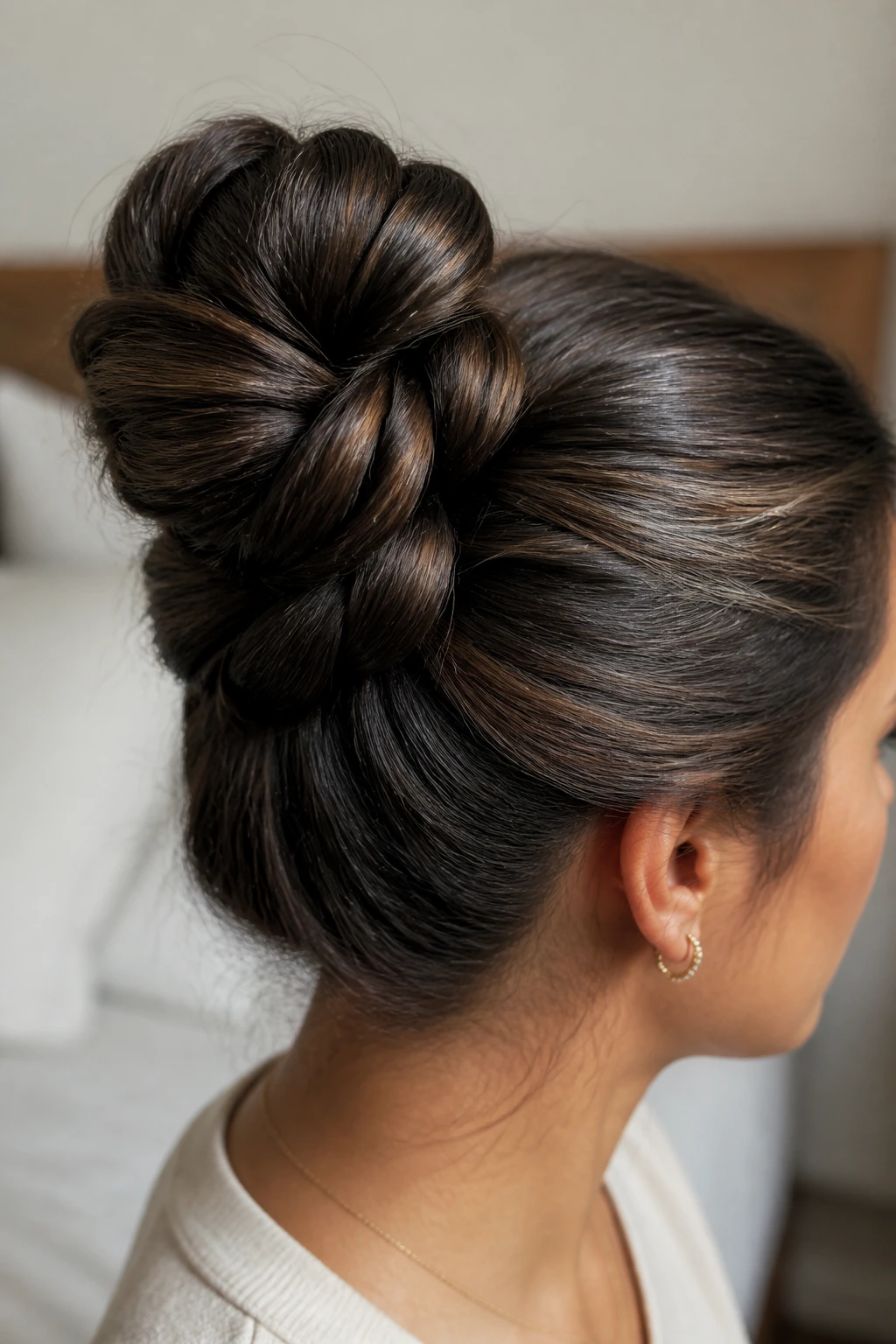
This is one of those styles that looks more complex than it is. Divide the hair into two sections, knot them once or twice, then coil the ends into a bun. Thick hair makes the knot look full and dimensional, which is exactly why this works so well.
It’s a good choice when you want a little texture without committing to a braid. Keep the knot snug at the base, but don’t crush it flat. The raised center gives the bun its shape.
14. Gibson Tuck Bun
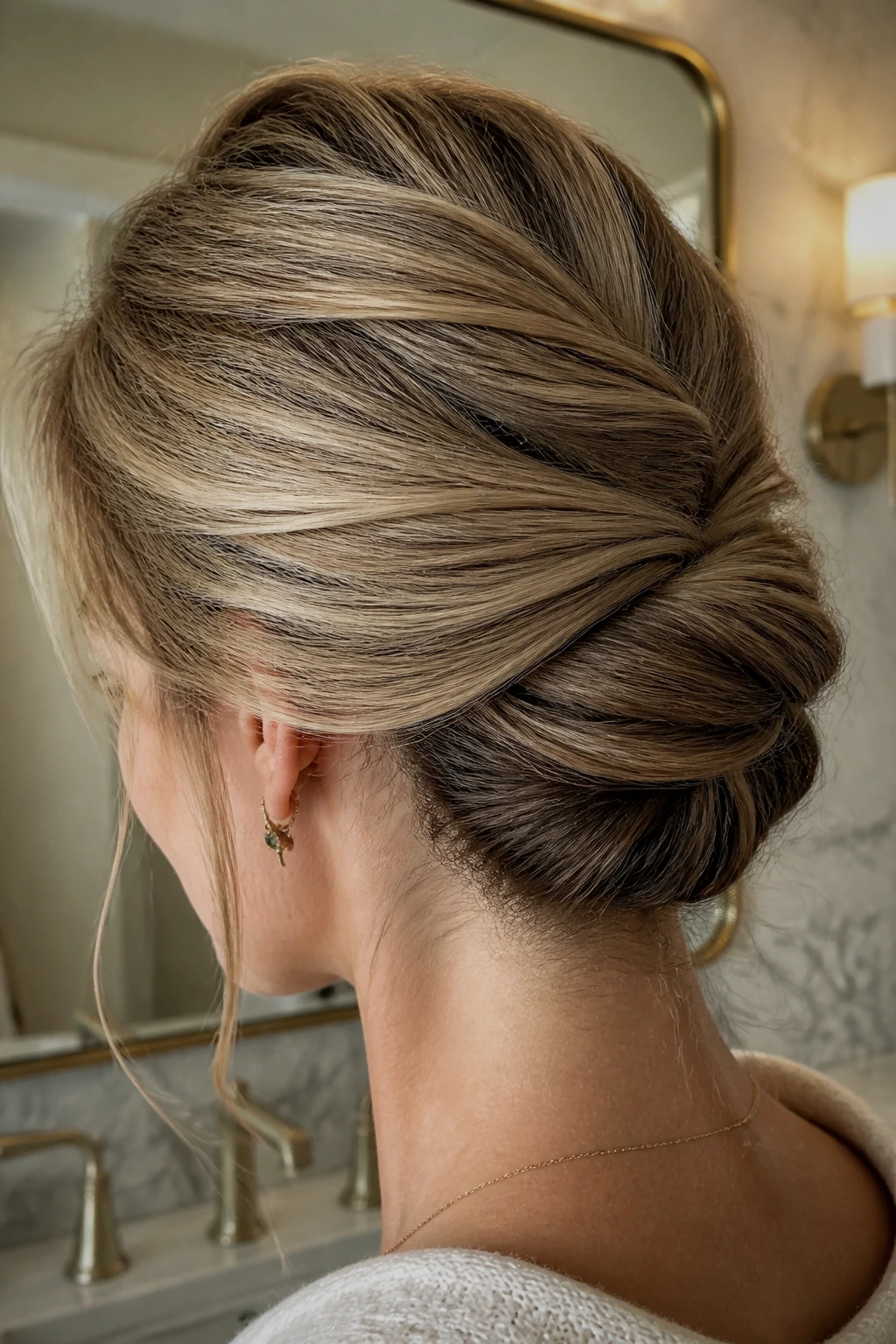
The Gibson tuck has a lovely old-school feel, and thick hair gives it enough body to look rich rather than fussy. The hair rolls inward along the nape, creating a soft pocket that holds the ends neatly.
This style is forgiving if your layers are uneven. The tuck hides a lot. Use a slightly stretchy band to create the base, then roll the length upward in sections so you do not end up with one dense fold that won’t stay in place.
15. Fishtail Wrapped Bun
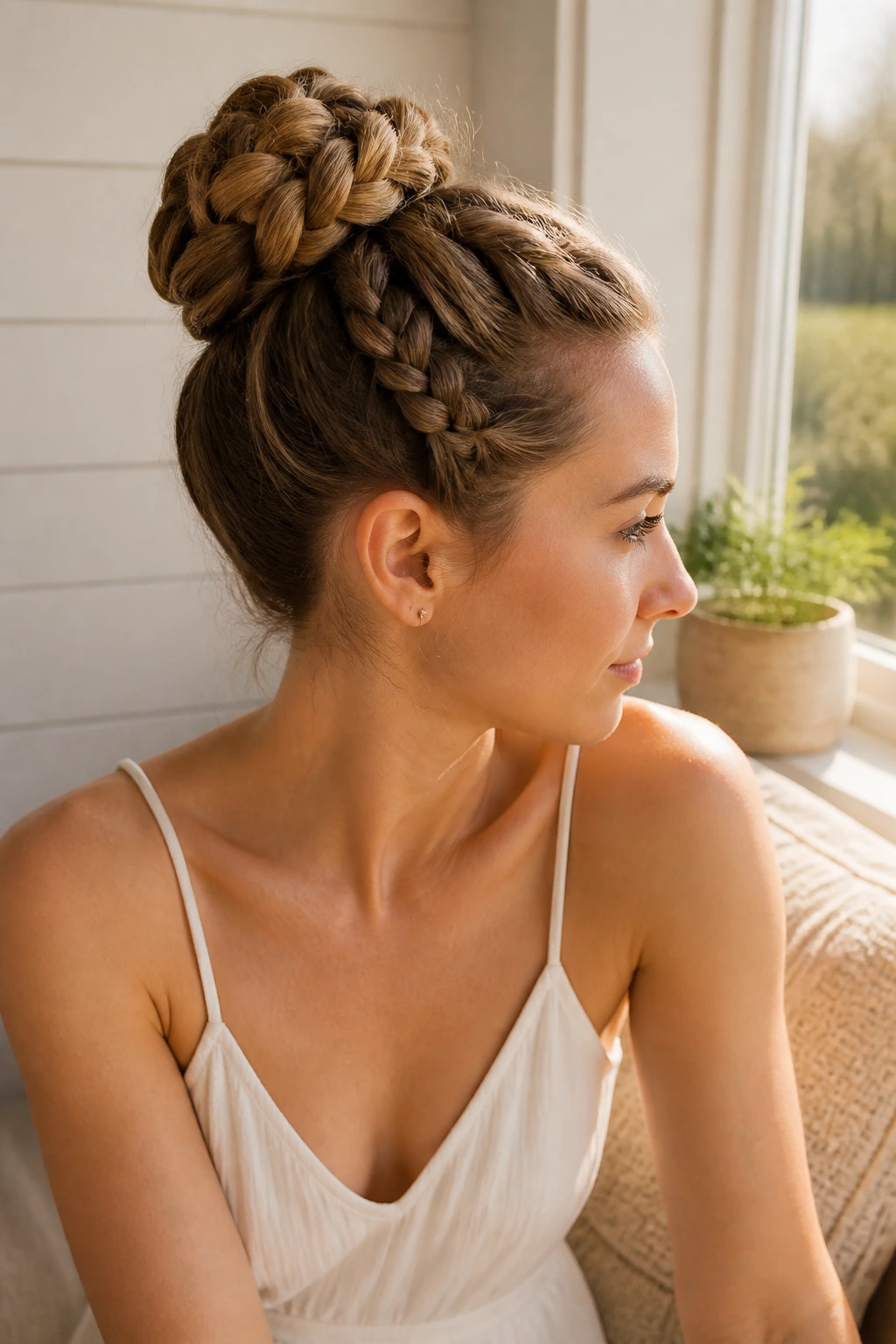
A fishtail braid wrapped into a bun gives thick hair a texture that looks almost woven. It’s a good option when a plain bun feels too plain but you still want the hair secured and off your face.
The braid itself takes a little more time, so this is not the quickest style on the list. But the payoff is worth it if your hair tends to balloon in the wrong spots. The fishtail breaks up the bulk and keeps the finished shape visually interesting from every angle.
16. Claw-Clip Bun
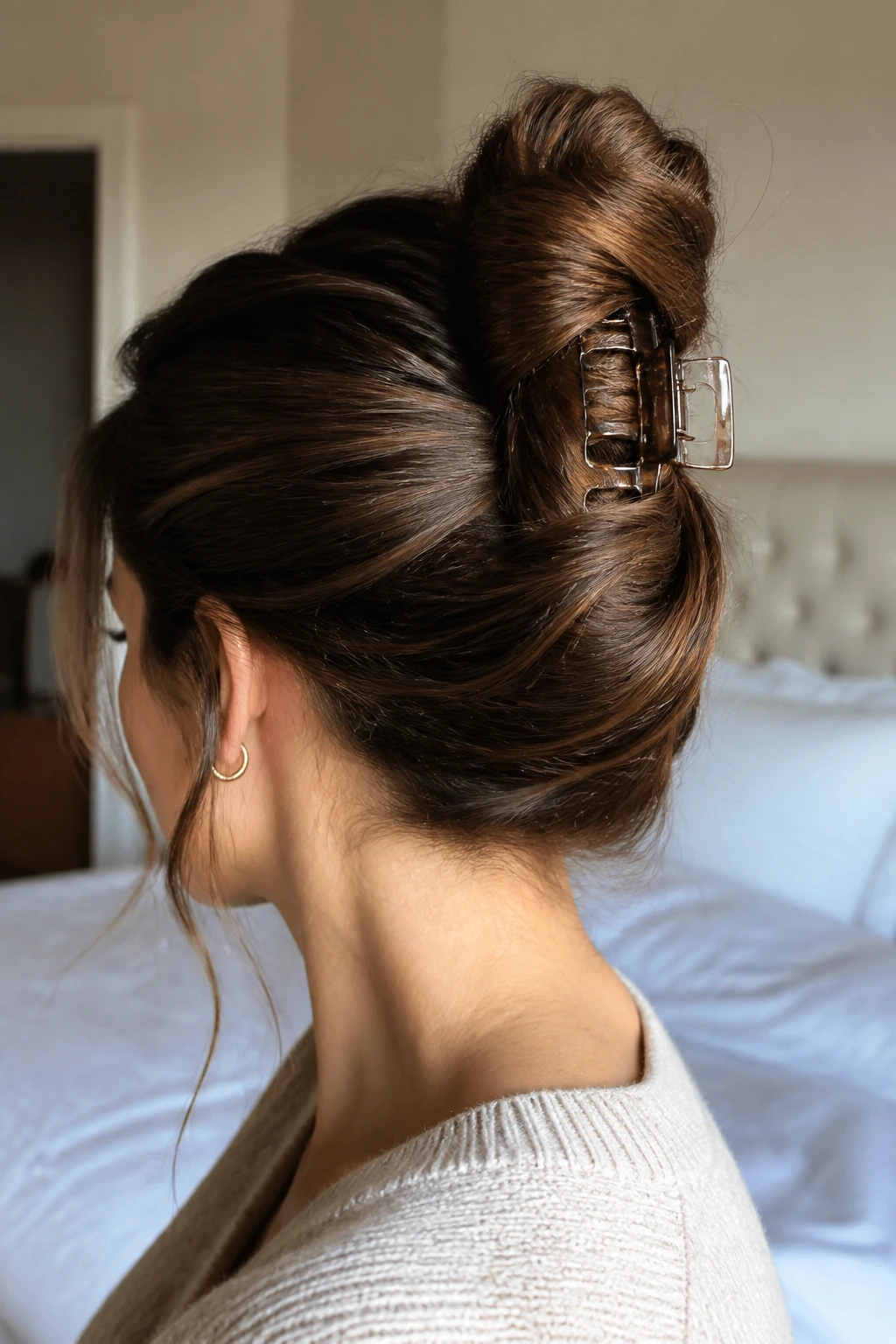
Sometimes the best bun is the one that pretends not to be a bun at all. A claw-clip bun works beautifully on thick hair because the clip grabs a big mass and keeps it off the neck without turning the style into a tight knot.
Twist the length upward, fold the ends under, and catch the bundle with a large strong clip. If the clip feels like it’s straining, the section is too big for that size clip. Go one notch larger, not tighter.
17. Scarf-Wrapped Bun
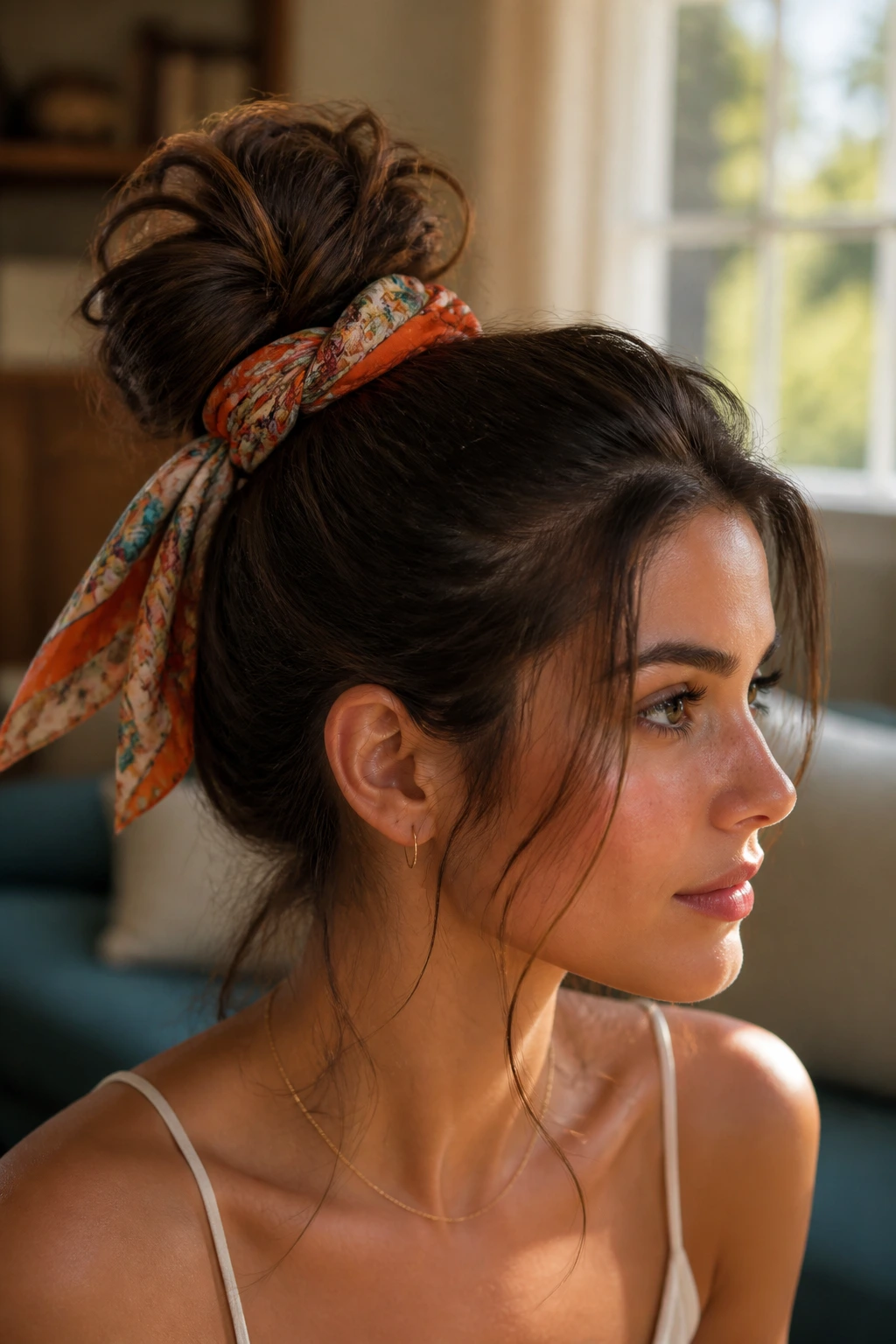
A scarf can do a lot of heavy lifting here. It adds color, helps hold the bun together, and keeps thick hair from puffing loose around the edges as the day goes on.
Tie the scarf around the base after the bun is secured, then let the ends trail or tuck them in depending on how neat you want the look. This style is especially useful if your hair has multiple textures through the length and you want to hide the unevenness a little.
18. Ballet Bun
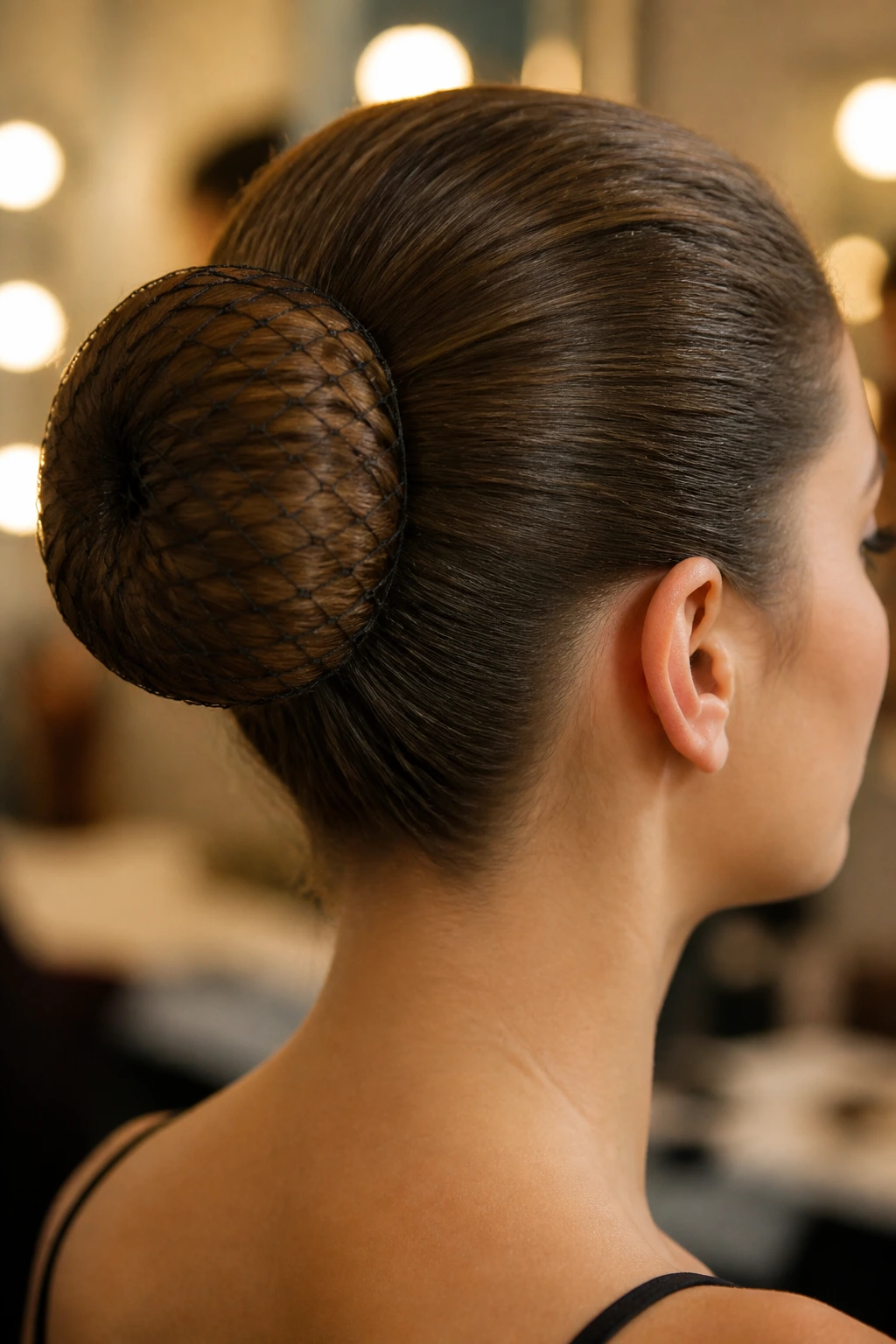
A ballet bun is all about control, but thick hair gives it a fuller profile than the classic version usually has. That’s good. A tiny neat bun on dense hair can look unfinished; a proper ballet bun has enough body to look complete.
Use a hair net if you want the smoothest possible surface. It’s not just for dancers. On thick hair, the net keeps the outer layer from springing loose and makes the bun stay compact longer than pins alone.
19. Low Chignon With Tendrils
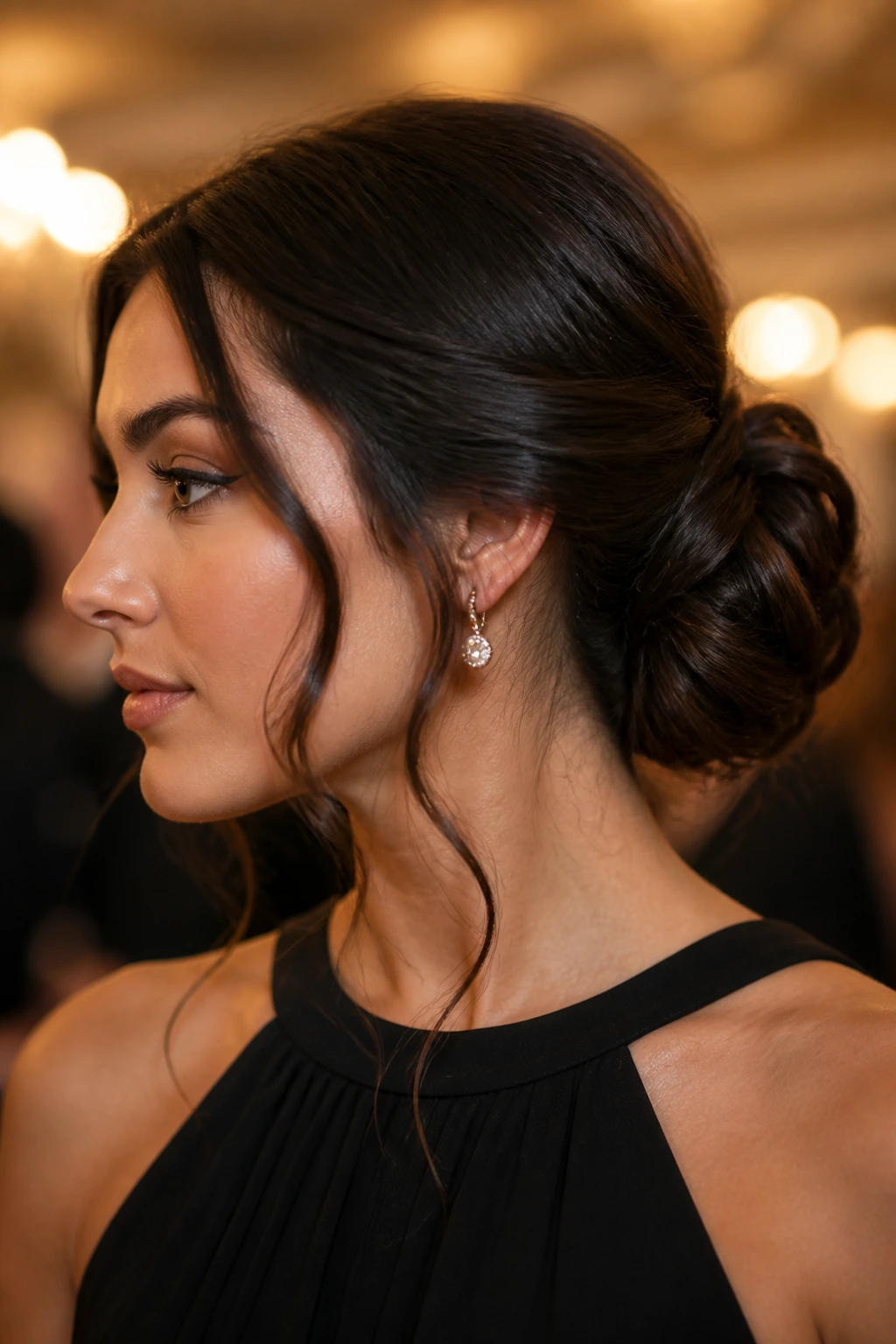
A low chignon with tendrils softens the face while keeping most of the hair secured. Thick hair makes the chignon itself feel plush, and the loose pieces around the front stop the style from looking too strict.
This is the bun I’d choose for events where you want polish but still want to see some movement. Keep the tendrils narrow; if you leave them too wide, the style starts looking undone instead of intentional. A curling iron on the front pieces helps, but only if the rest of the bun is neat.
20. Bubble-Section Bun
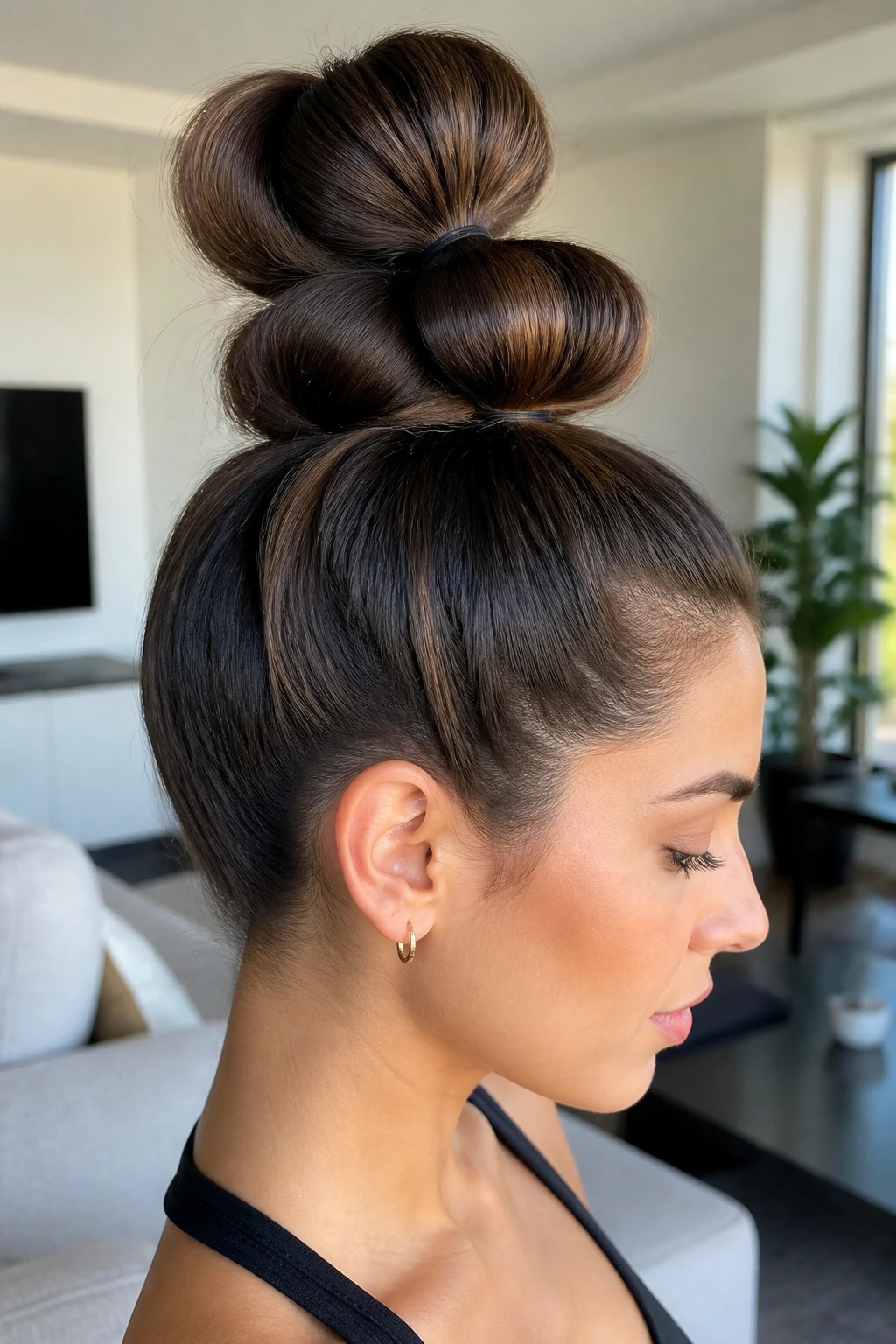
A bubble-section bun looks a little unusual at first, then makes total sense once you see how it handles density. Instead of one heavy wrap, you create a few secured sections before folding them into the bun. That spreads the bulk out.
It’s a smart option for long thick hair that feels unruly when gathered all at once. The “bubble” sections create visible shape, and they can keep the finished bun from becoming too wide at the base.
21. Infinity Twist Bun
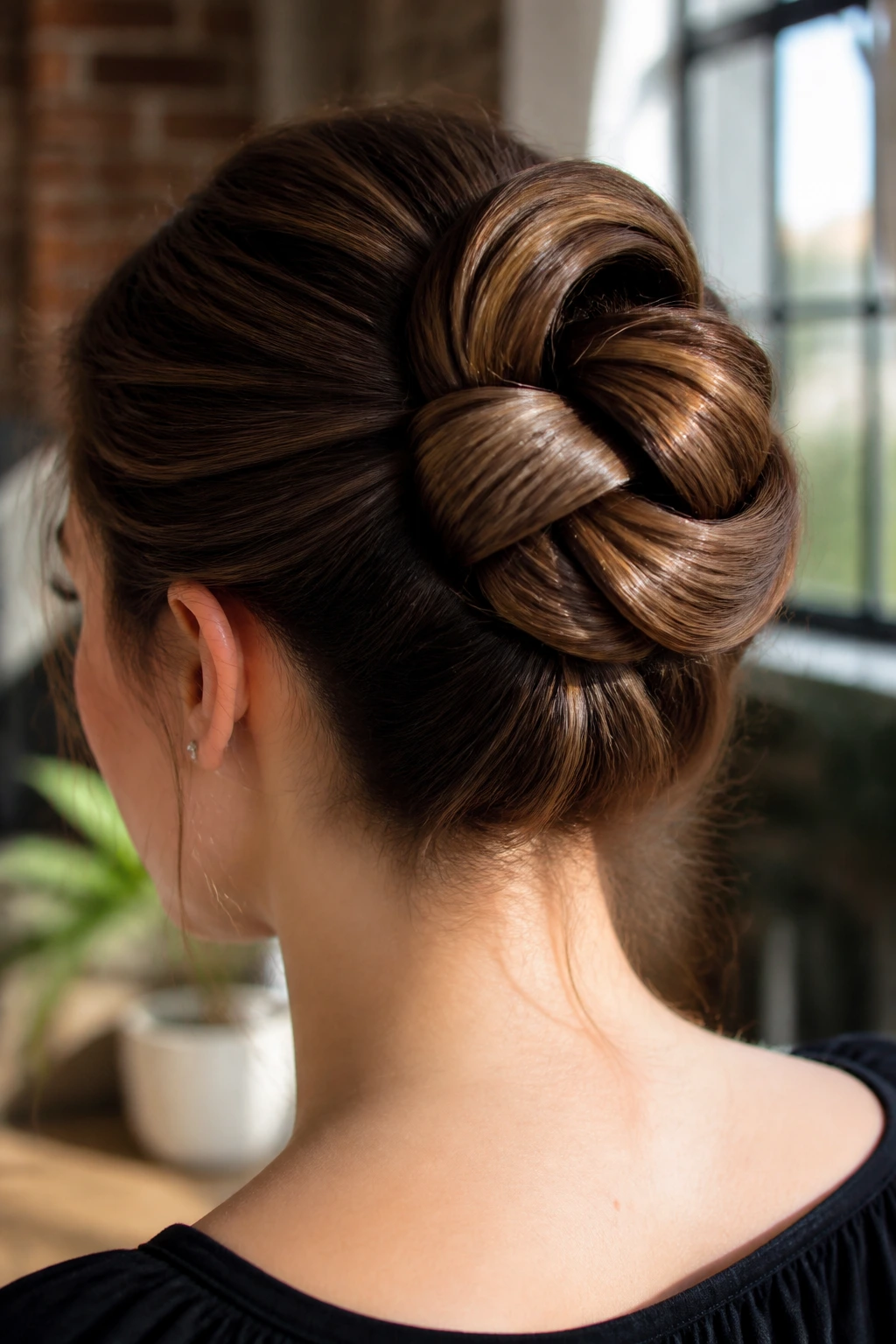
The infinity twist bun has that satisfying looped shape that thick hair makes look extra full. The twist crosses over itself, then folds back into a rounded center, so the final form feels structured without looking stiff.
It works best when the hair has enough length to make one clean wrap. If the strands are sliding, mist the mid-lengths lightly with texture spray first. That little bit of grip makes a huge difference with dense hair.
22. Pineapple Bun
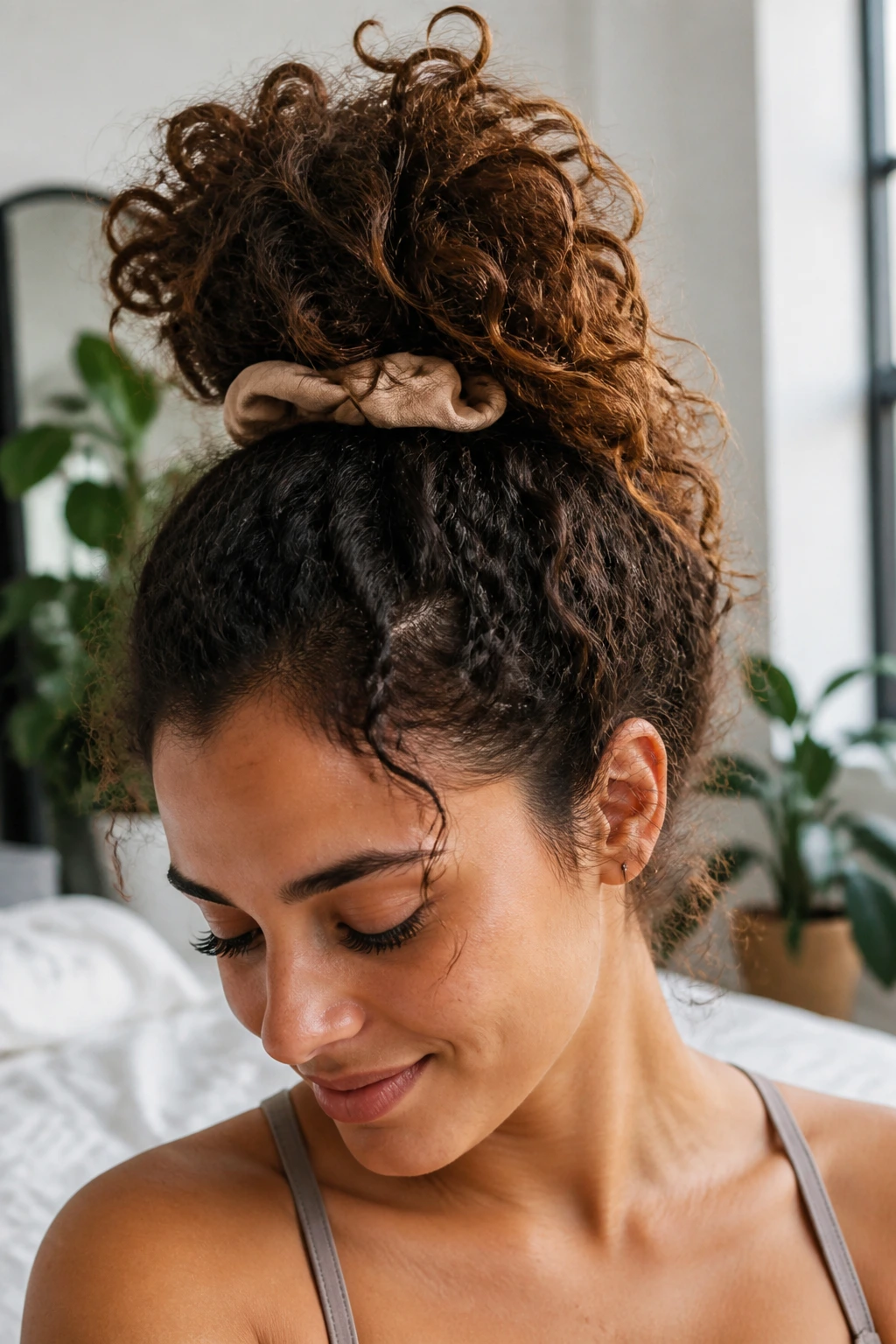
If your hair is curly or coily, the pineapple bun is one of the kindest ways to gather it up. The goal is not to flatten the texture. The goal is to preserve the curl pattern while keeping the bulk above the neck.
Use a soft scrunchie and gather the hair high, but not painfully tight. Leave the ends loose if your texture wants to spring. This is also one of the easiest styles to turn into a night protective style, which is useful if your thick hair gets frizzy fast.
23. Offset Bun
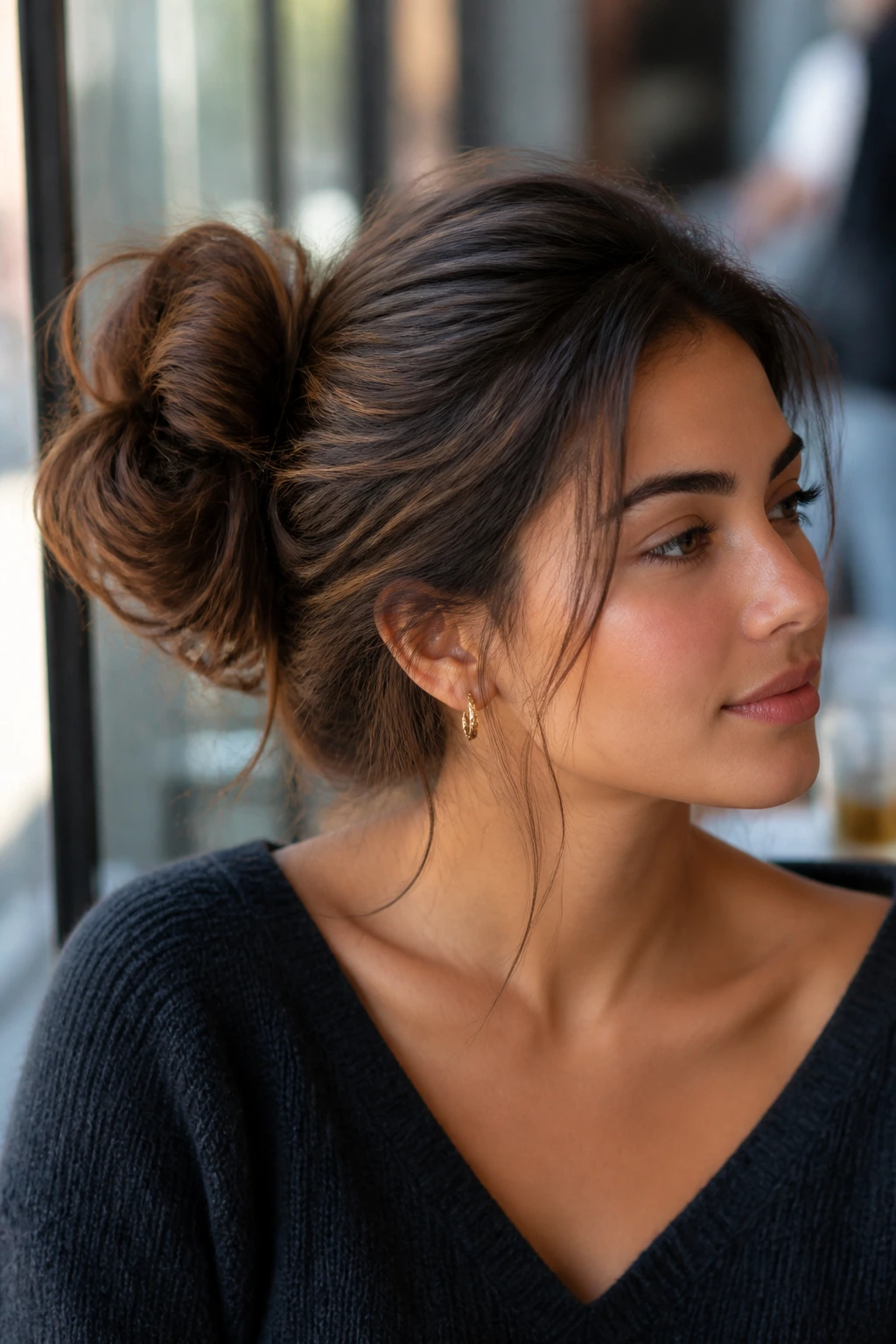
An offset bun sits a little to one side of center, and that small shift changes the whole mood. Thick hair can make a centered bun feel heavy; sliding it off-center breaks that visual block and gives the style more shape.
It also helps if one side of your head has more natural volume than the other. Instead of fighting the imbalance, the offset bun hides it in plain sight. That’s a useful little trick when your hair’s density changes from root to ends.
24. Braided Halo Bun
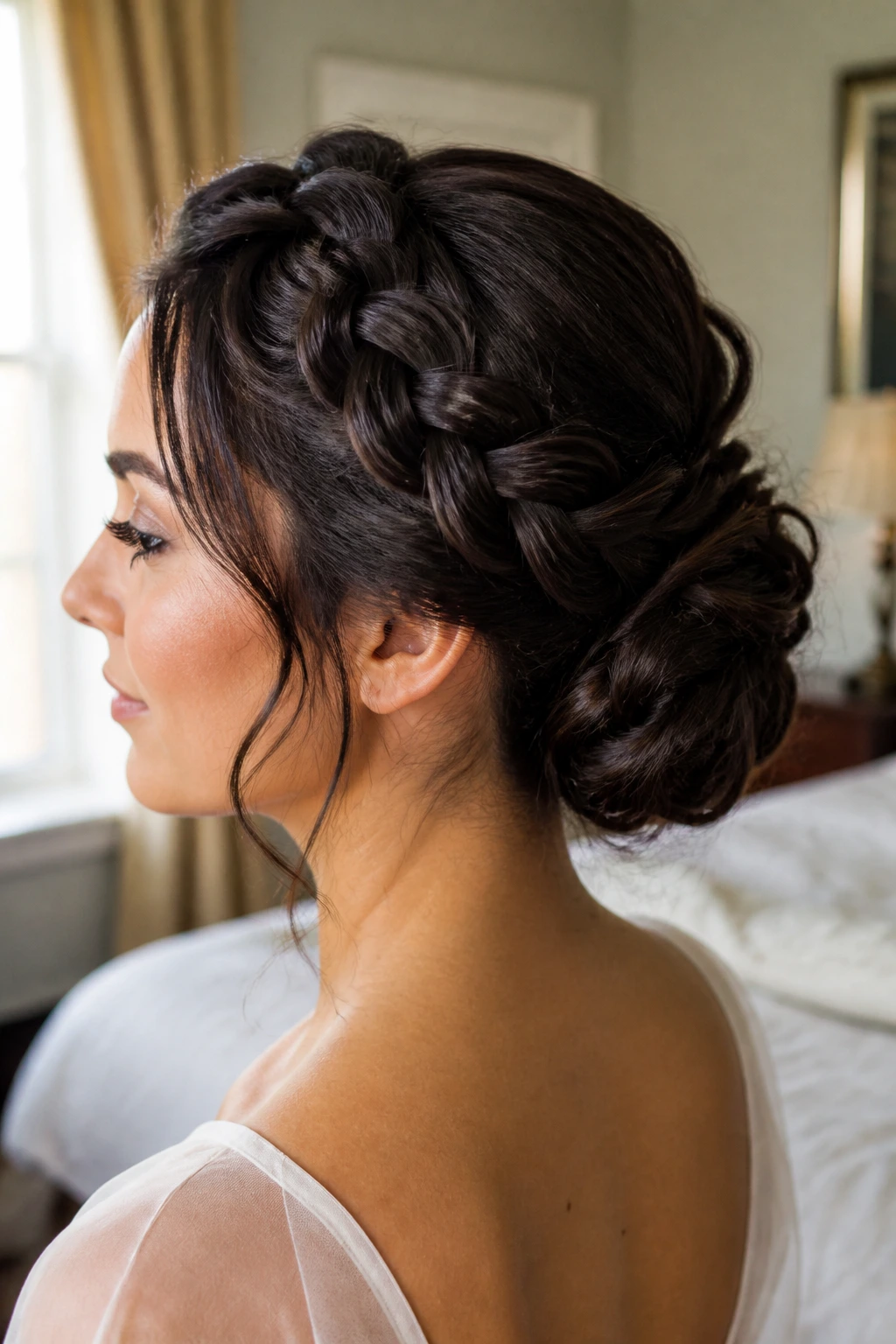
The braided halo bun brings the braid up and around the crown before the leftover hair gathers at the back. Thick hair makes this style look rich and full, almost like it was built in layers.
Keep the braid broad rather than tiny. Small braids can get lost in dense hair. A wider braid reads clearly and gives the bun below it a frame, which is what makes this style feel finished.
25. Faux-Bob Tuck Bun
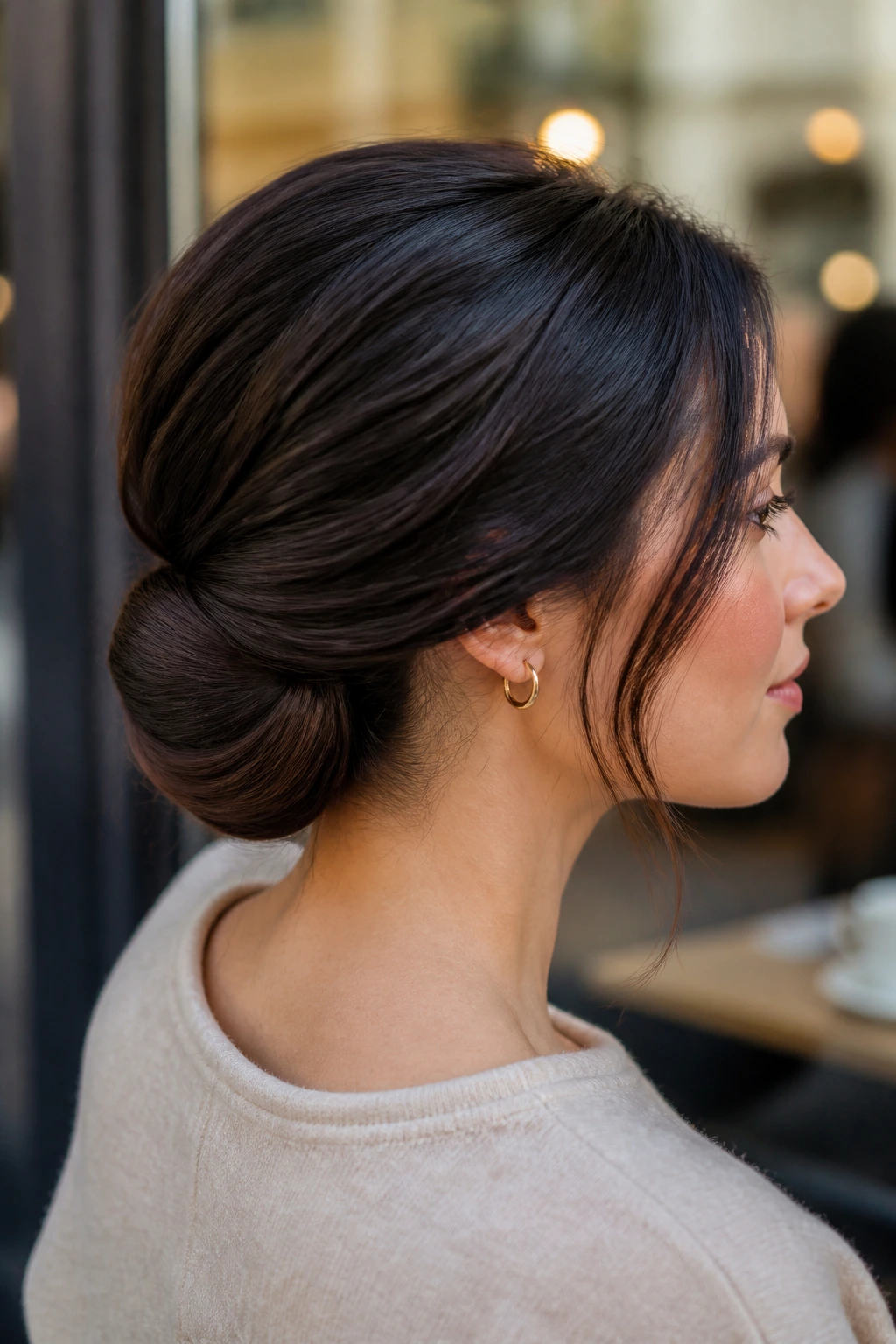
A faux-bob tuck bun hides the ends inside a rolled base so the whole thing sits low and smooth, almost like a short hairstyle from the front. On thick hair, this can look especially good because the tucked volume makes the illusion believable.
Use this when you want a more compact silhouette. It’s also a smart move for hair that’s long enough to snag on coat collars or scarf edges. The tucked ends stay protected, and the shape stays tidy.
26. Four-Section Pin Bun
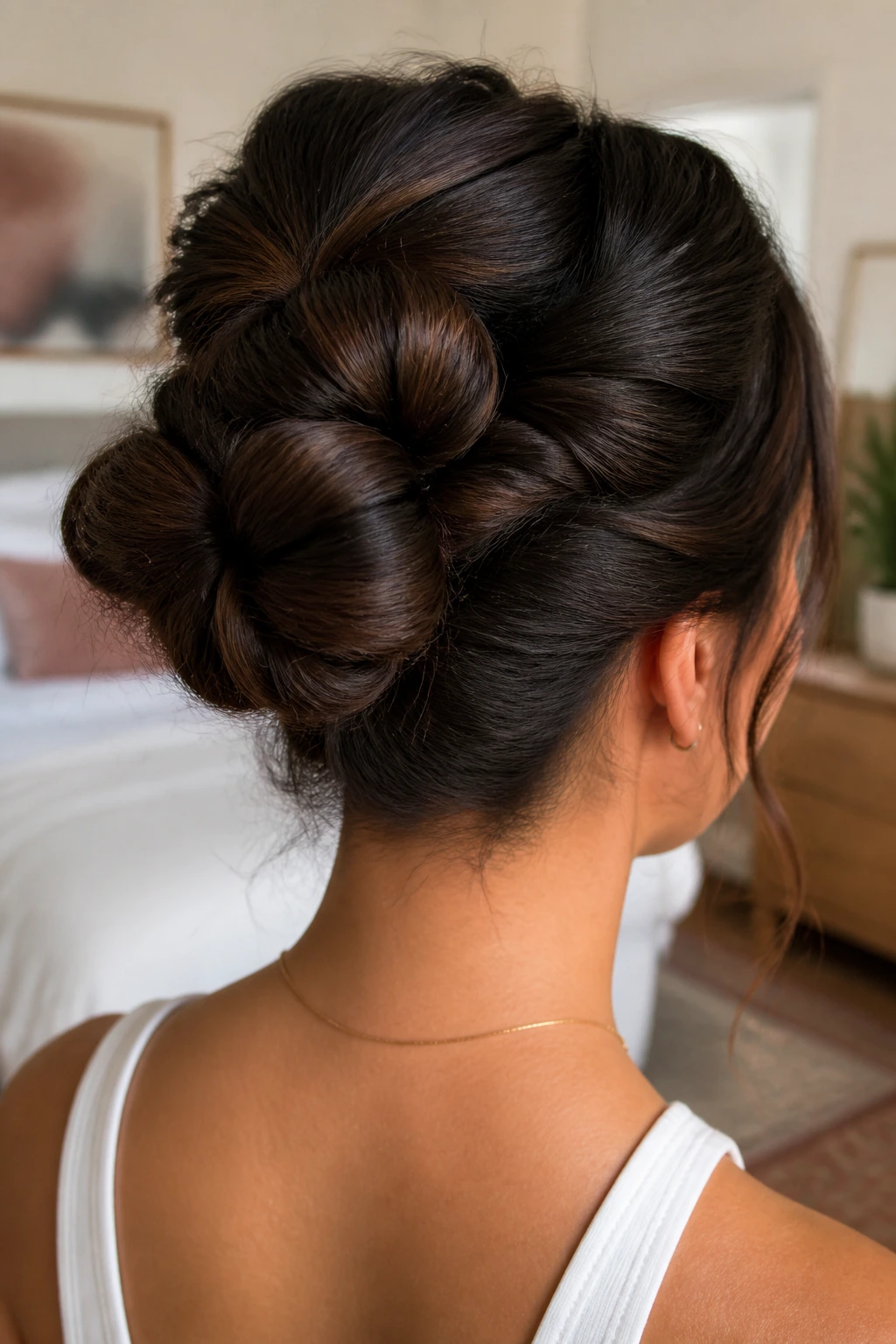
This one is for the person whose hair laughs at weak elastics. Split the hair into four sections, twist each one, then pin them together in a crosswise bun shape. Thick hair holds this structure well because the sections support each other instead of all pulling from one point.
It takes a little more time, but the payoff is a bun that feels stable. If your hair is very dense, this is often easier than trying to corral everything into one single coil.
27. Loop-Through Bun
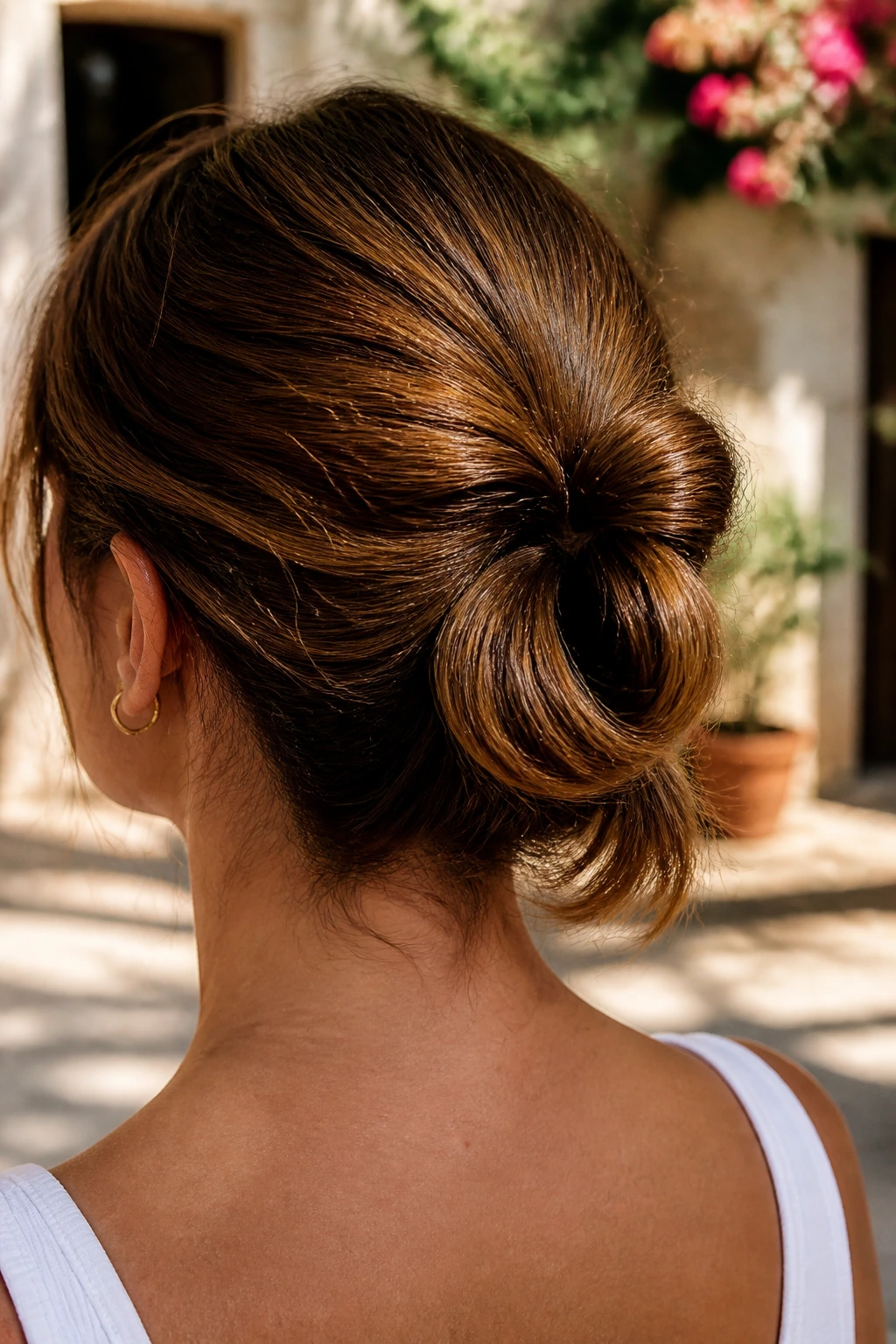
A loop-through bun gets its shape from folding the ponytail halfway through the elastic and leaving the ends partially out. That partial loop creates a rounded base without demanding that every strand be perfectly tucked.
Thick hair makes the loop look substantial, which is nice if you want something casual but not sloppy. You can fan the loop wider or keep it tight depending on how much volume you want at the back of the head.
28. Double-Decker Bun
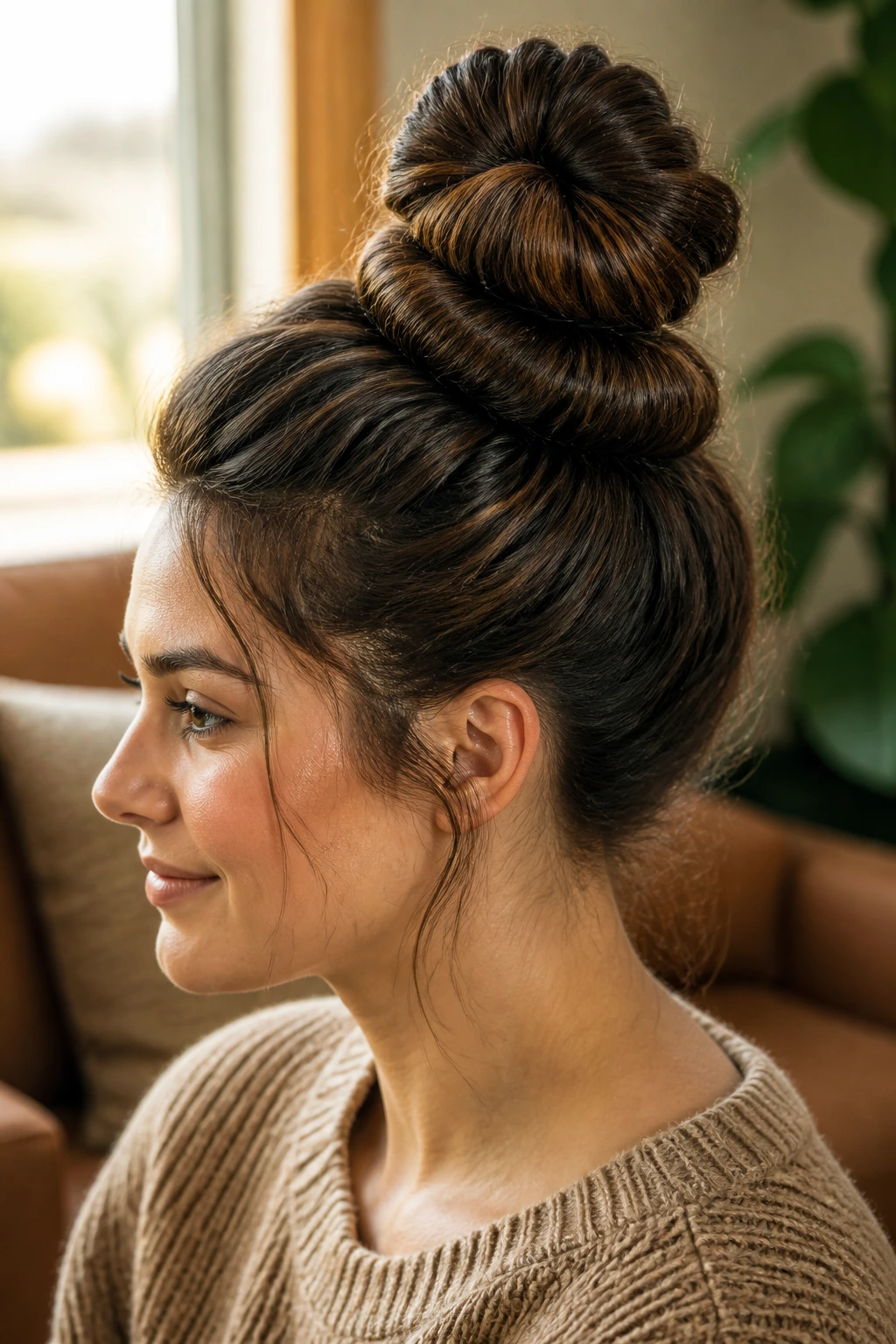
A double-decker bun stacks one wrapped section over another, so the weight is distributed in layers instead of one heavy mass. Thick hair is a natural fit for that because there is enough length and volume to build vertically.
This style gives a little height without the full drama of a top knot. It also helps if your hair is long enough that a single bun would drag at the neck. The stacked shape keeps the style compact and balanced.
29. Rope-Twist Side Bun
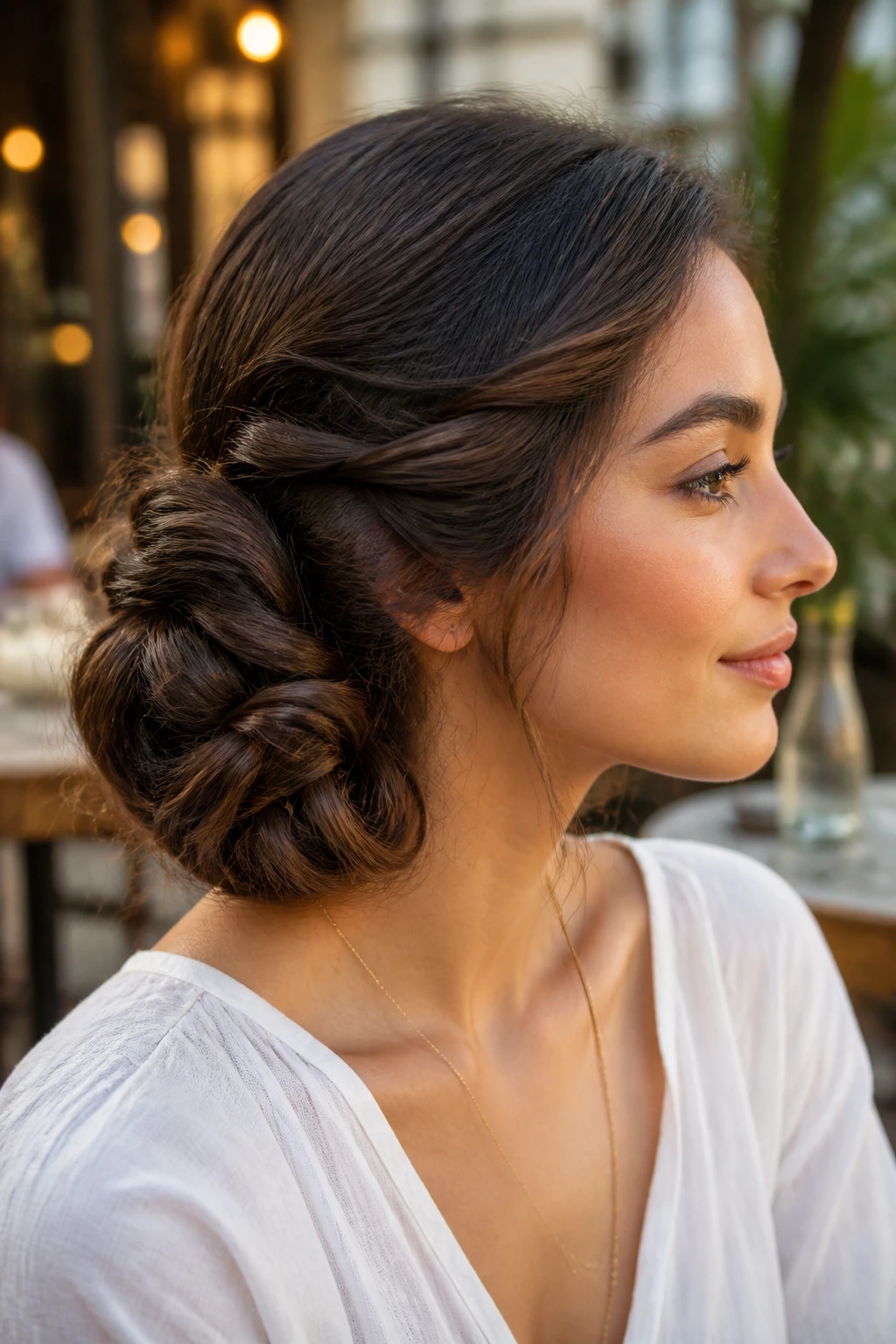
A rope-twist side bun feels softer than a centered updo and a bit more relaxed than a formal chignon. The side placement gives thick hair a place to land, which helps when you want the bun to look full but not oversized.
Twist the hair into a rope, wrap it low toward one side, and pin the coil in an oval shape. If your face shape likes soft asymmetry, this bun is one of the easiest wins on the list.
30. Curly Coil Bun
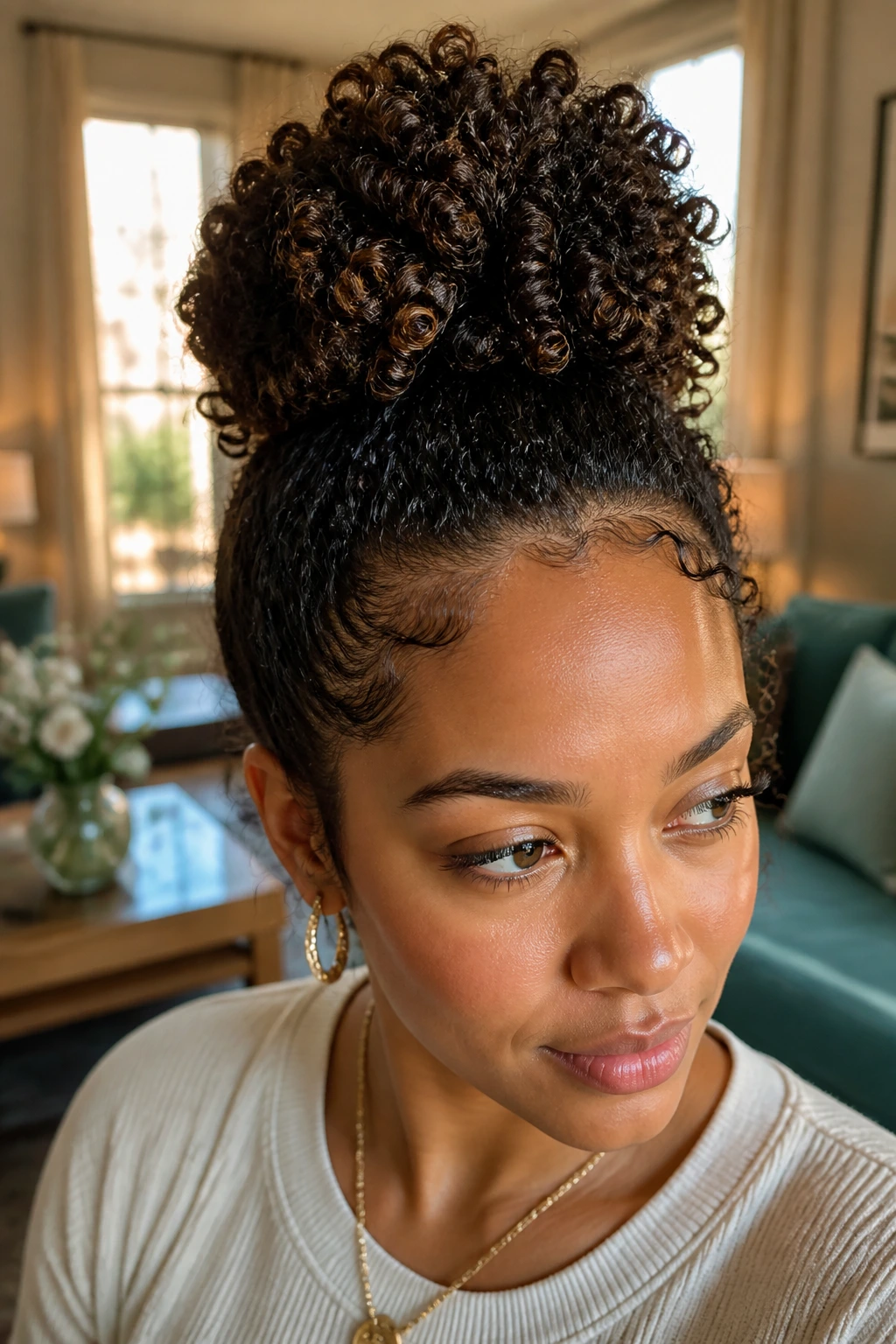
Curly hair changes everything, and this style leans into that instead of smoothing it away. A curly coil bun lets the texture pile into a round shape that feels alive, not flattened.
Use your hands more than a brush. That matters. Brushing out the curl pattern turns a sculpted coil into a puff, and thick curly hair usually looks better when the curl is allowed to keep some definition around the bun’s edge.
31. Hidden-Pin Roll Bun
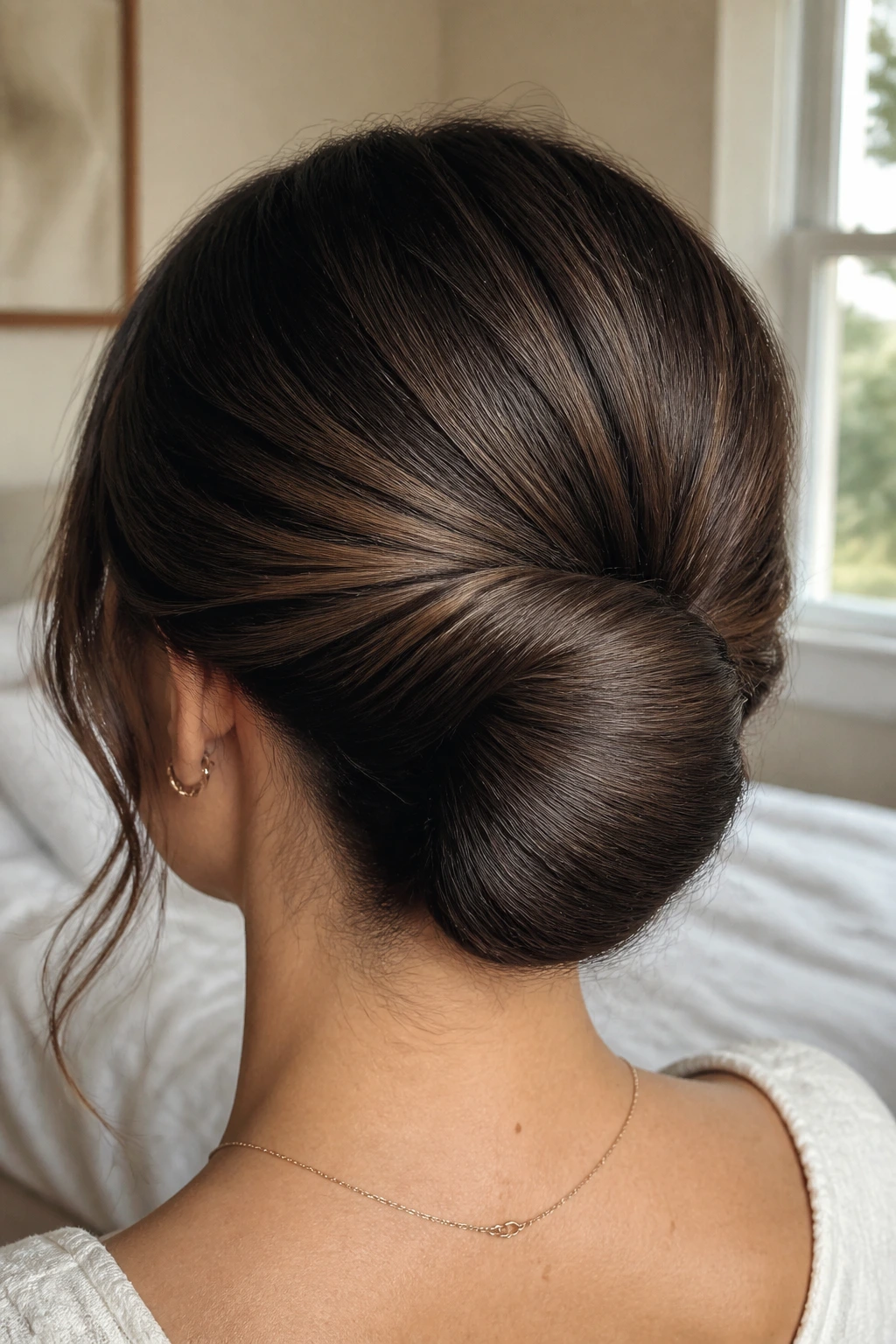
A hidden-pin roll bun is all about neatness. The hair rolls inward, the pins disappear under the surface, and the finished shape looks almost seamless. On thick hair, it can be a little bit magical because the bulk gives the roll enough substance to stay visible.
This is a strong choice for clean dress codes and long workdays. If you use too few pins, the roll opens at the sides. Cross the pins under the fold, not across the top, and the shape holds much better.
32. Donut Bun With Wrapped Ends
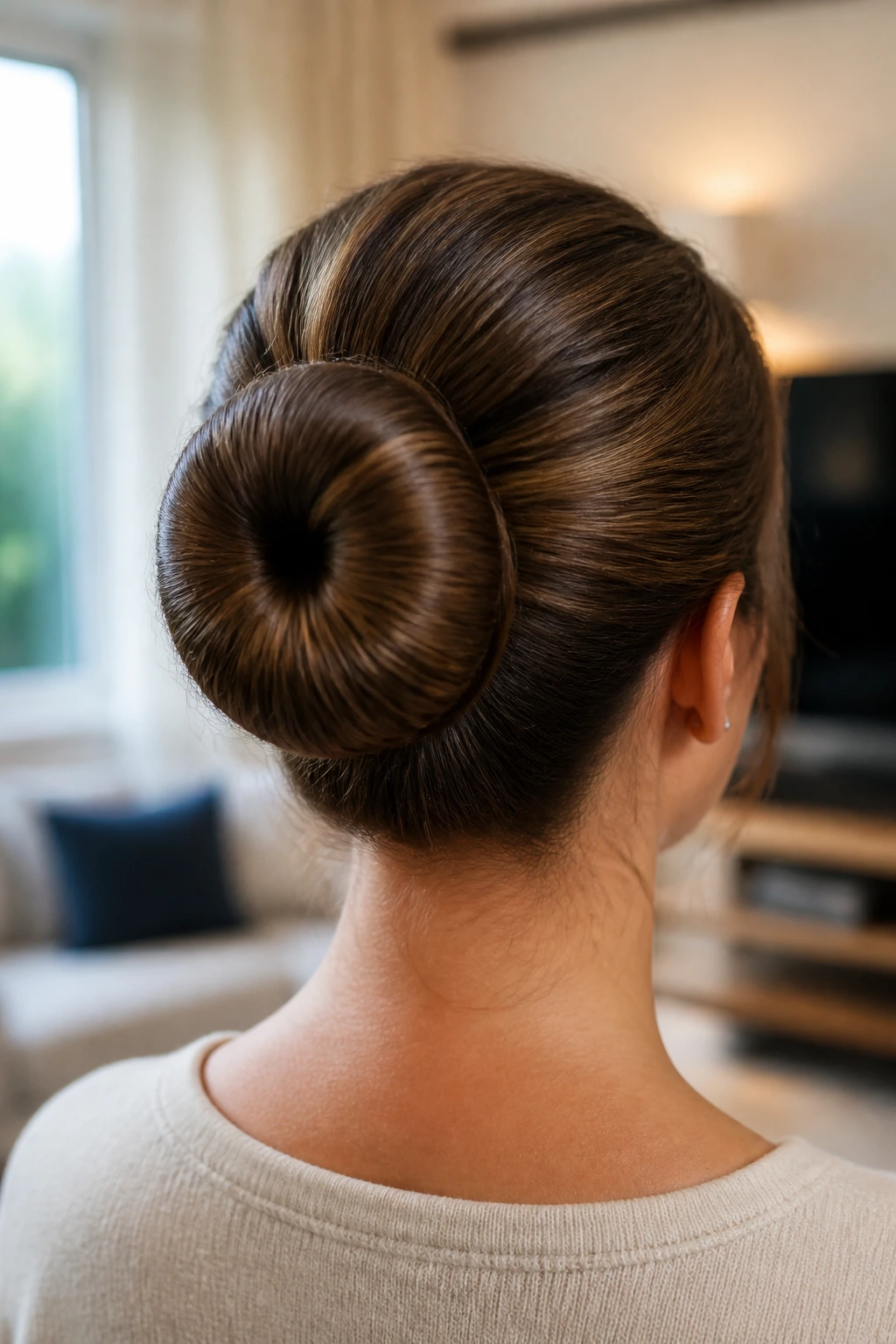
A donut bun with wrapped ends is the cousin of the sock bun, but a hair donut gives you a firmer circular base. Thick hair wraps around it with less fuss, and the finished bun tends to look evenly round instead of lumpy.
This style is a smart pick if you want a classic bun shape and you don’t care for messy texture. It does ask for a smoothing step first, though. The cleaner the ponytail, the cleaner the donut shape.
33. Wrapped Ponytail Bun
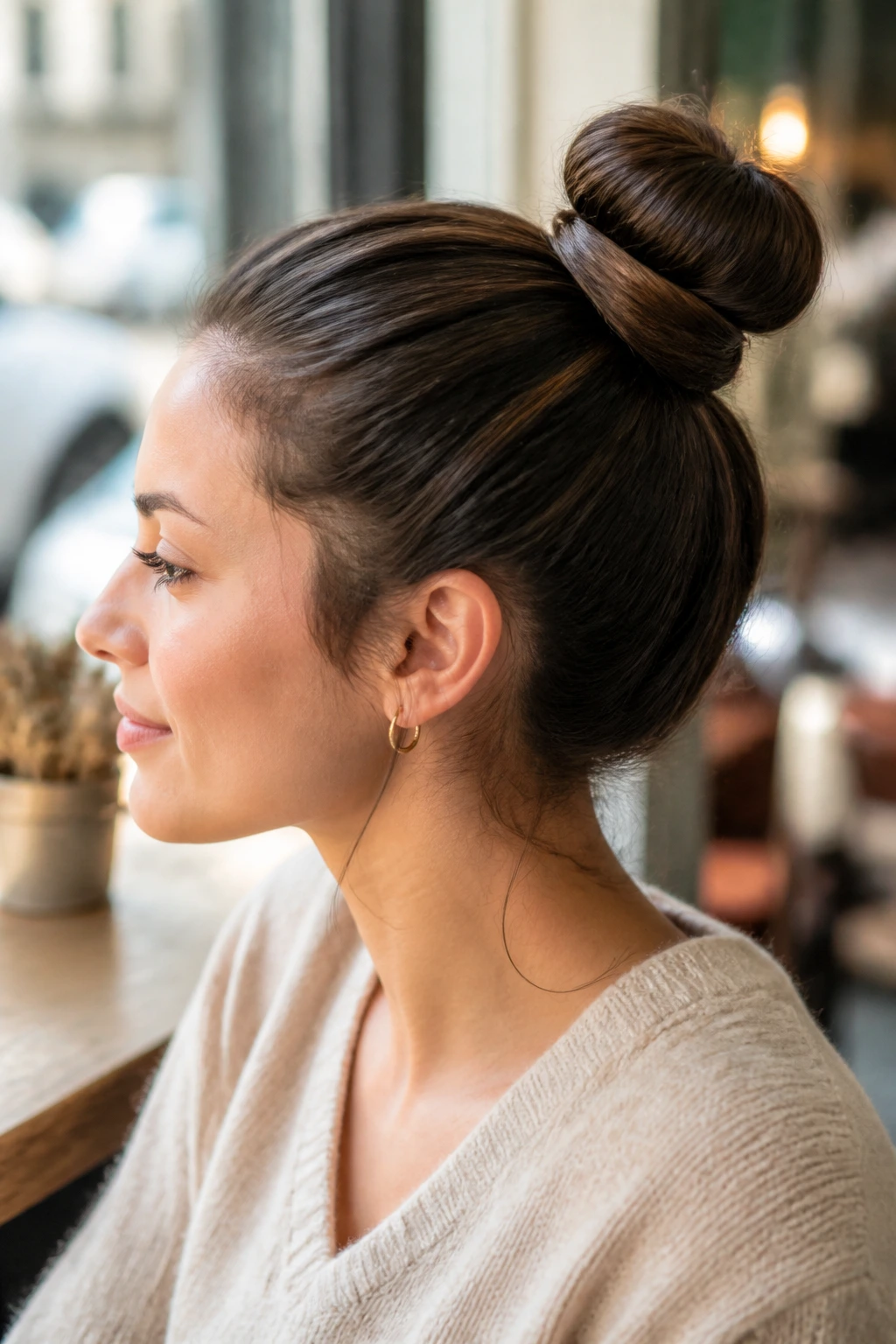
This one starts like a ponytail, then the length wraps around the base in a broad spiral. Thick hair gives the wrap enough weight to look lush without needing extra padding.
I like this style when I need something fast but still polished. The ponytail base gives you the anchor, and the wrapped length keeps the bun from looking too tiny. Use one elastic to secure the ponytail and a second one only if the first feels flimsy.
34. Glossy Wet-Look Bun
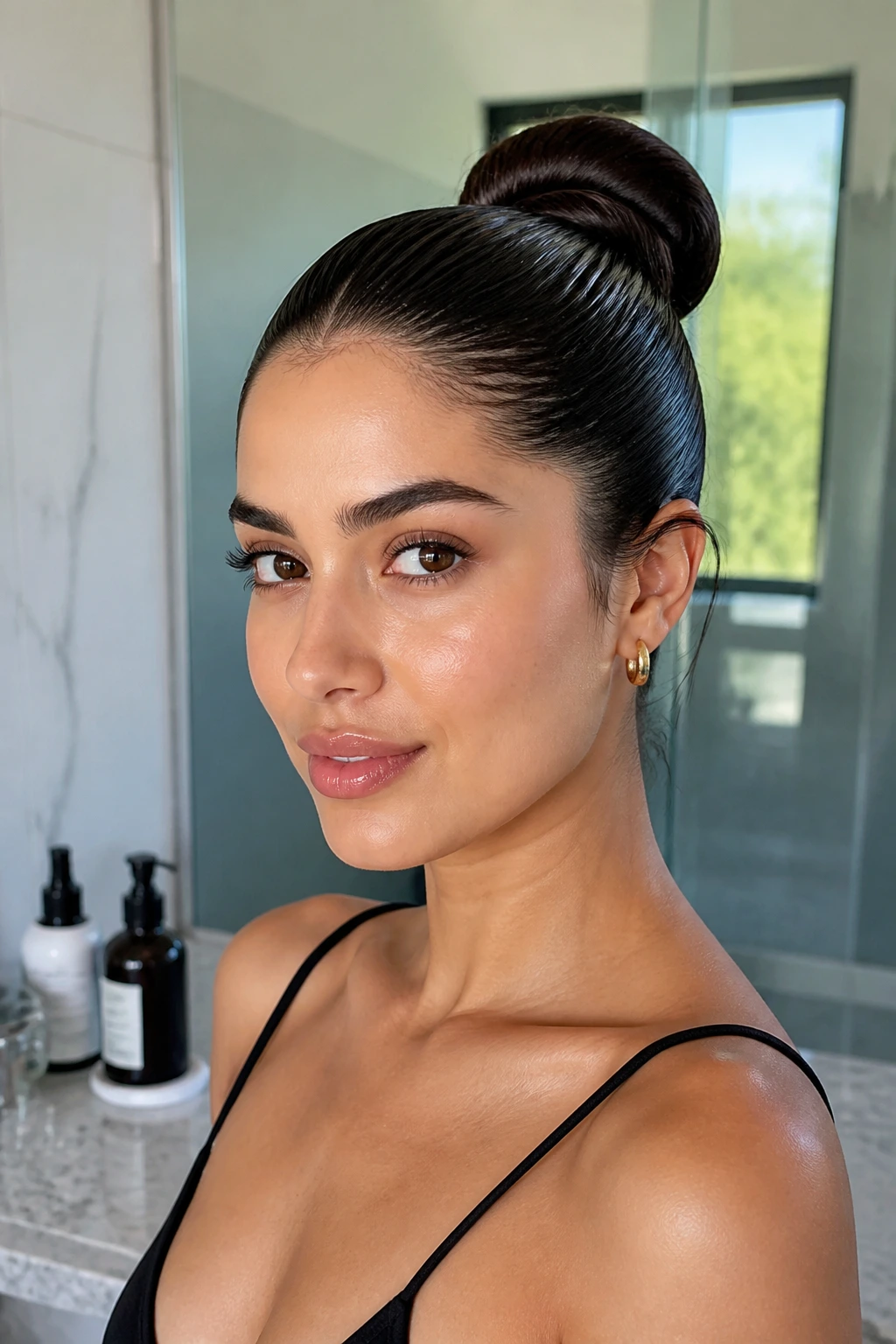
A glossy wet-look bun is the most assertive style on the list. It depends on smooth roots, controlled edges, and enough product to keep thick hair from fuzzing up as it dries. The shine makes the bun look sculpted and deliberate.
Use gel or cream sparingly, because too much product can make the style feel sticky instead of sleek. The goal is a clean surface with shape underneath, not a helmet. Done right, this bun looks sharp from the hairline to the nape.
35. Relaxed Low Knot
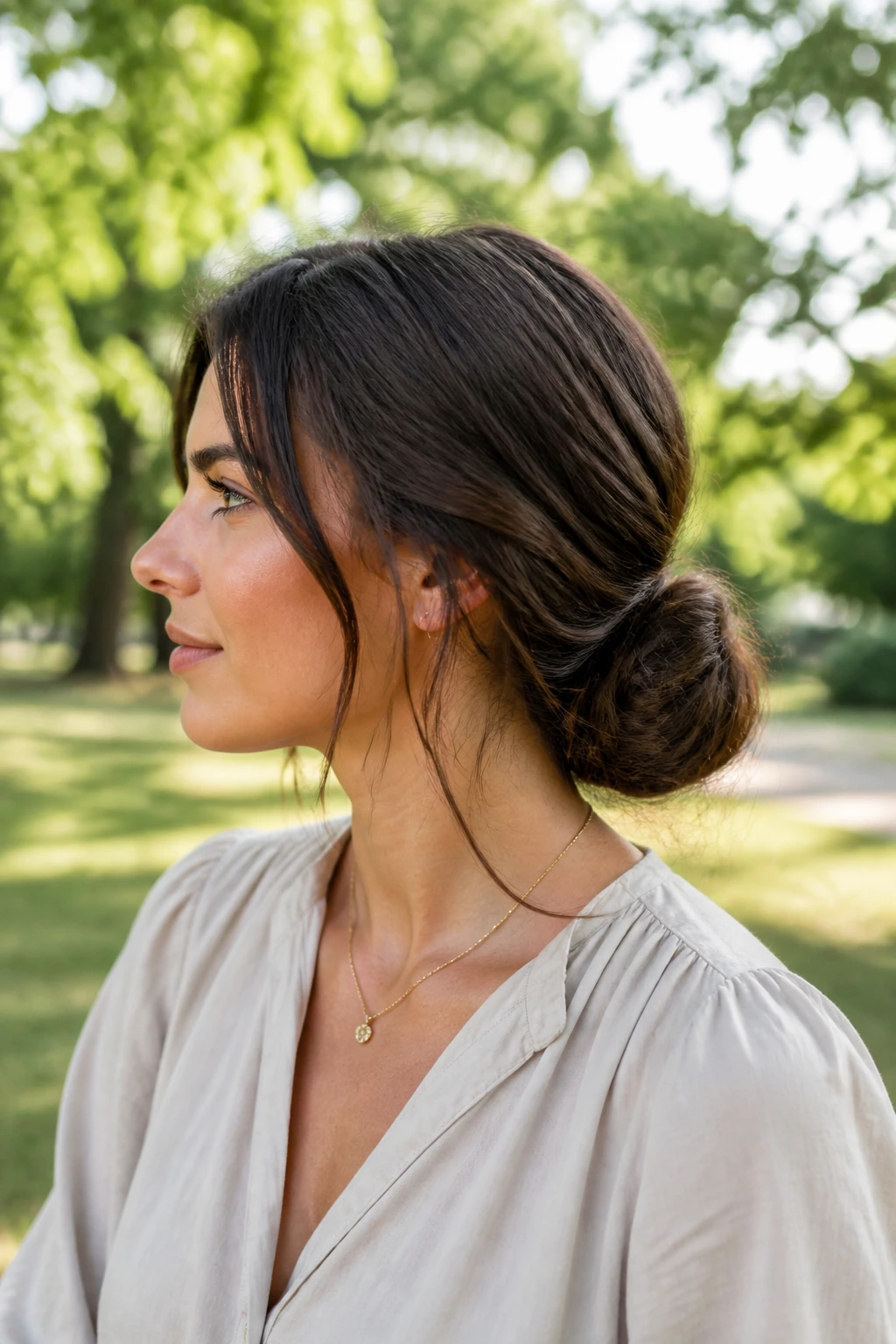
A relaxed low knot closes the list because it’s the style most people end up wearing on repeat. Thick hair makes it look generous and soft without much effort, and the low placement keeps it comfortable for long stretches.
It’s also forgiving. If your sections are not perfect, the knot still reads as intentional. That makes it one of the best everyday buns for dense hair when you want something that looks like you thought about it, even if you only had five minutes.
Why Thick Hair Changes the Bun Equation
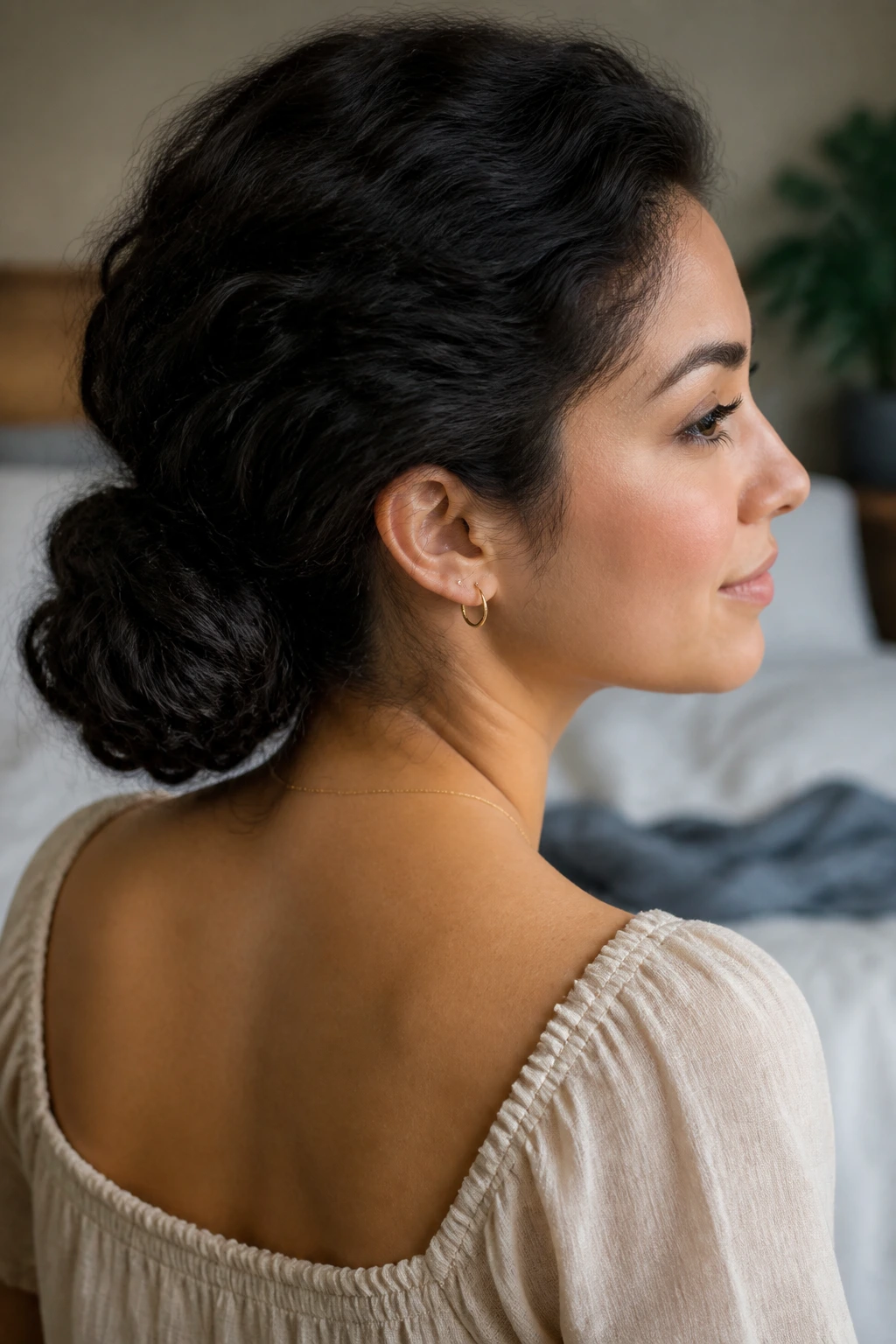
Thick hair does not behave like “more hair, same bun.” It behaves like extra weight, extra friction, and extra shape all at once. That means the same style that looks airy on someone else can feel tight, top-heavy, or flat on you. The solution is usually not more product. It is better placement and a cleaner base.
Low buns tend to win when comfort matters because they keep the weight close to the neck. High buns win when you want the hair fully off your shoulders and you have enough pins to support the lift. Braided and twisted styles help because they divide the bulk into smaller parts. That is the difference between a bun that sits there and one that slowly surrenders.
There’s also a texture benefit that gets overlooked. Thick hair can hold shape better once it has been given direction. Smooth it, section it, braid it, or twist it first, and the bun tends to last longer than a plain wrap. That’s why so many of the styles above start with structure before the final pinning.
Essential Tools for Thick-Hair Buns
-
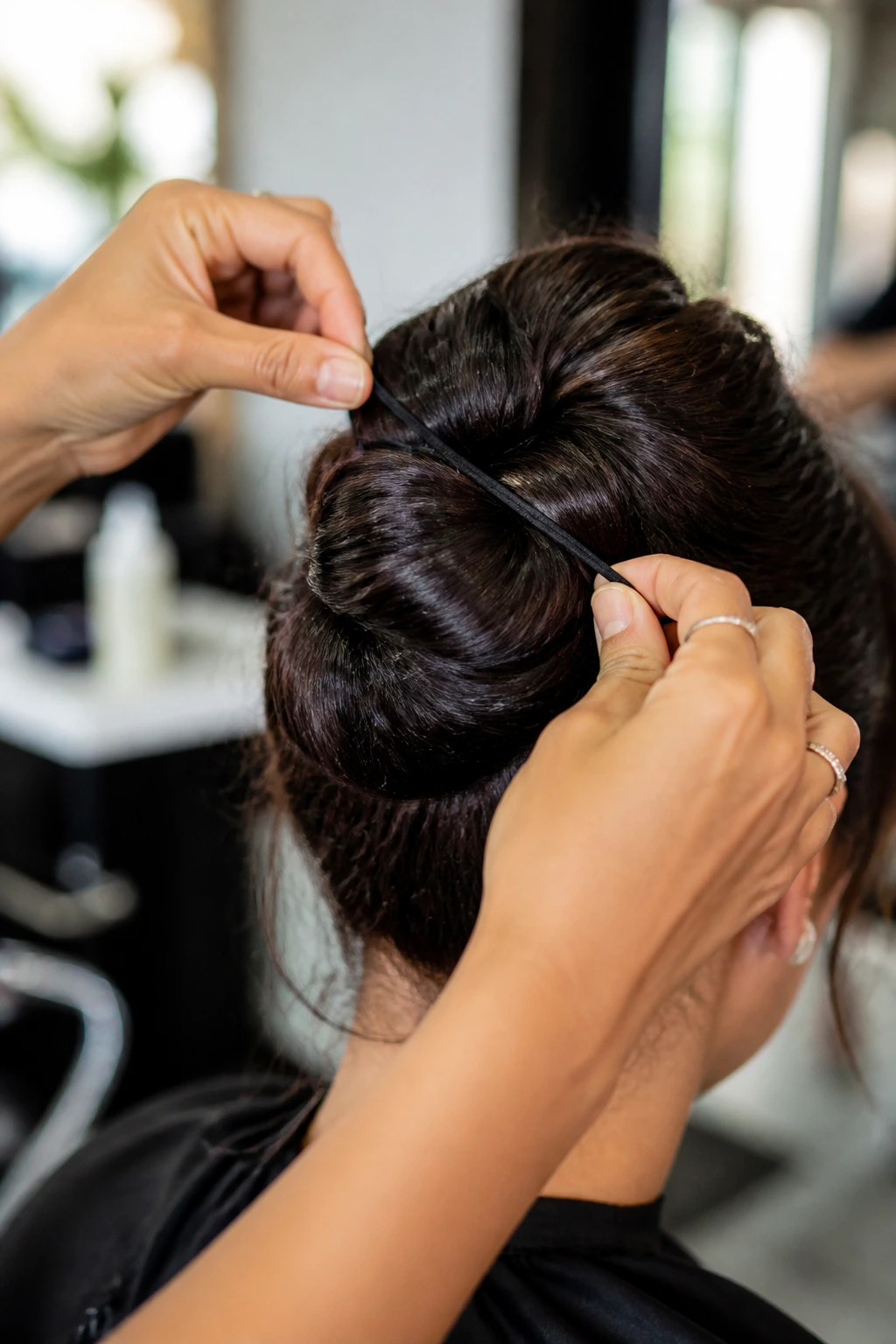
Strong elastics: Coated elastics or spiral ties grip dense hair without snapping as fast as the tiny office-band type.
-
Bobby pins in two sizes: Standard pins handle cleanup, while longer pins help anchor bigger buns and stop them from drifting.
-
U-pins: These are useful for larger buns because they shape the style without mashing it flat.
-
Rat-tail comb: Clean sectioning matters more on thick hair, and this comb helps part the hair without dragging through tangles.
-
Boar-bristle or paddle brush: A firm brush smooths the surface before sleek styles and helps distribute product.
-
Texturizing spray or dry shampoo: This gives slippery roots some bite, especially on freshly washed hair.
-
Gel, cream, or edge control: Use a small amount to smooth flyaways and keep the bun’s outline tidy.
-
Hair net or donut form: A hair net helps with ballet-style buns; a donut form gives roundness and support to heavy hair.
-
Mini claw clip or decorative pin: Handy for quick wrapped buns, side buns, and styles that need a fast hold without a full rebuild.
The Prep Work That Makes Thick Hair Easier to Style
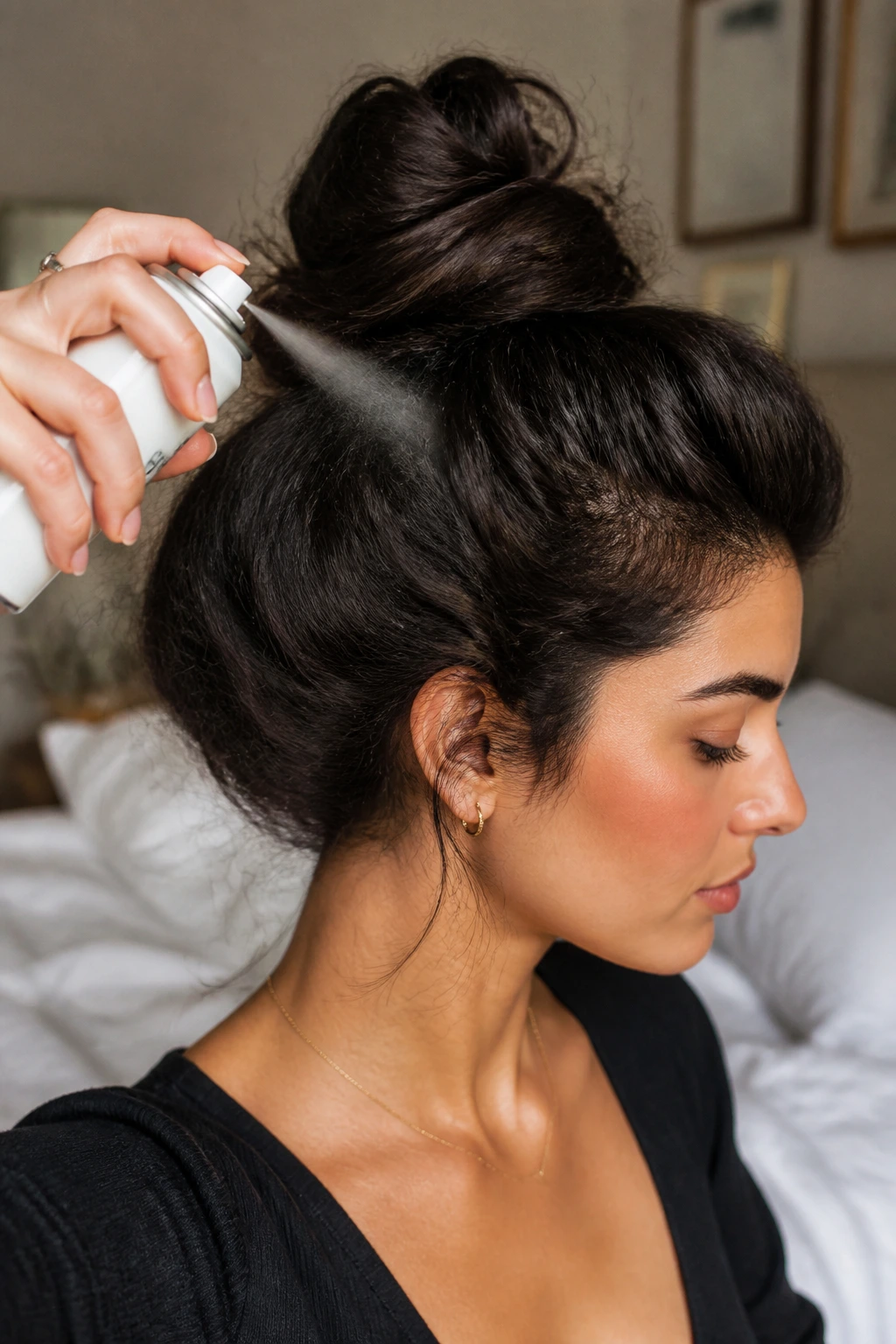
Clean sectioning is the first thing that saves time. Thick hair likes to sprawl, and once it gets loose on the back of the head, you end up fighting it instead of shaping it. Start with a clear part if the style needs one, then decide whether you’re making one ponytail, two sections, or a braid base. That choice matters more than the final pin.
Texture changes the whole game too. Freshly washed hair can be slippery, especially if it’s straight or low-porosity. A little dry shampoo at the roots or a light mist of texturizing spray through the mids gives the hair something to cling to. On the flip side, if the hair is already rough or frizzy, skip the extra spray and smooth the outer layer first so you do not build a fuzzy bun.
And yes, length matters. Hair that reaches the shoulder blades behaves differently from hair that falls past the ribs. Longer, denser hair often needs two anchors: one elastic to create the base, another to compress the wrapped section before pins go in. If you’ve ever had a bun slip because the ponytail was too heavy, that’s usually the problem. Not the style. The base.
How to Keep the Shape Without Giving Yourself a Headache
Anchor: The bun needs a real base, not just hopeful twisting. Start with a firm elastic and, if the hair is extremely dense, a second tie a little lower to share the load.
Section: Split the hair when the style starts to feel too heavy for one wrap. Two or four sections are easier to manage than one giant handful, and they sit more securely.
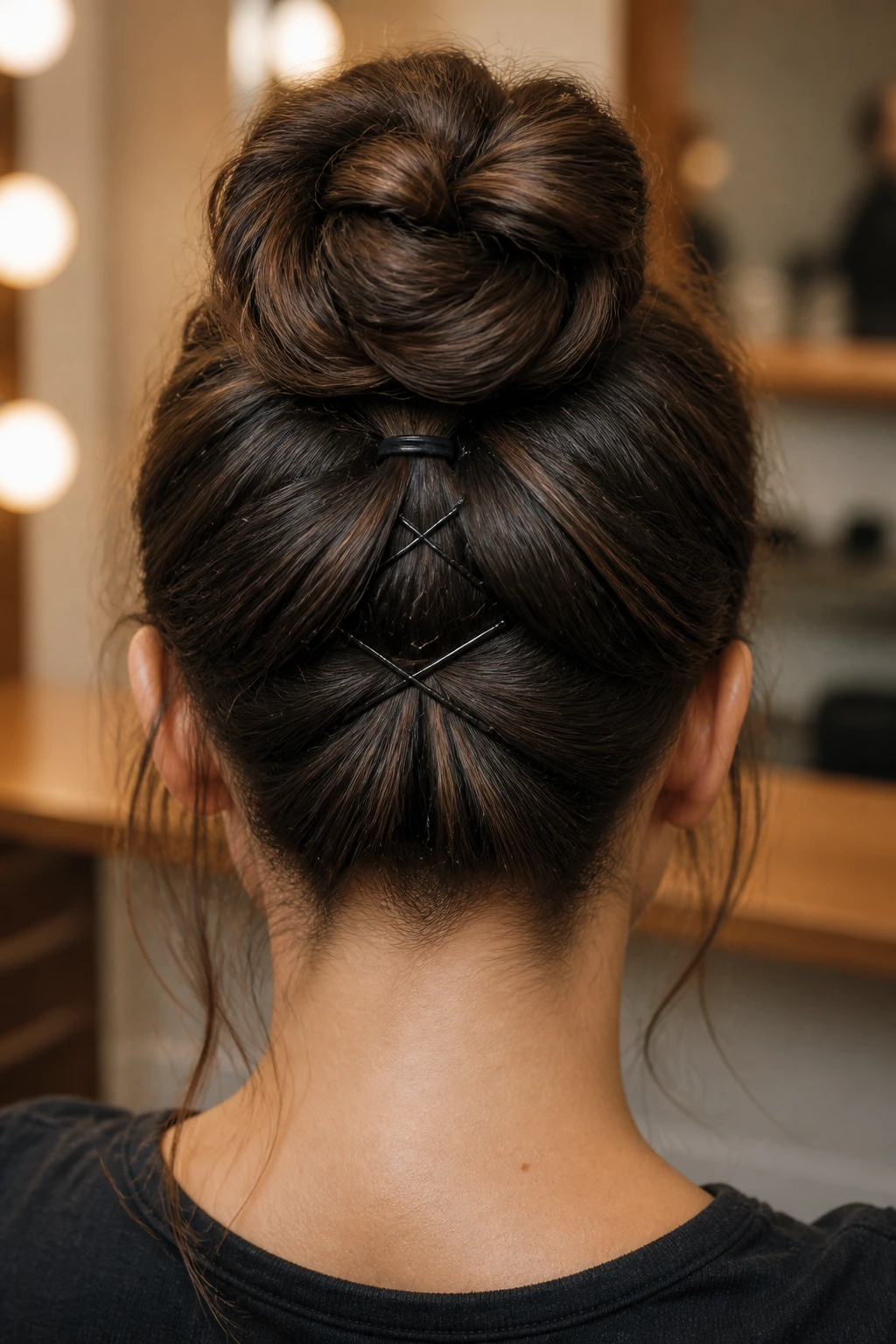
Pin: Cross the bobby pins underneath the bun, not only on the outer shell. If you pin just the surface, the style can look fine and still slide. Use the pins to catch the base hair beneath.
Comfort: Tightness is not the same thing as security. If the scalp feels pulled at the temples or behind the ears, loosen it a notch. A bun that hurts by noon is a bad bun, full stop.
Finish: Lock the perimeter, not every strand. A light spray at the hairline and the bun’s edges usually does more than drowning the whole style in hairspray.
Common Mistakes That Flatten Thick-Hair Buns
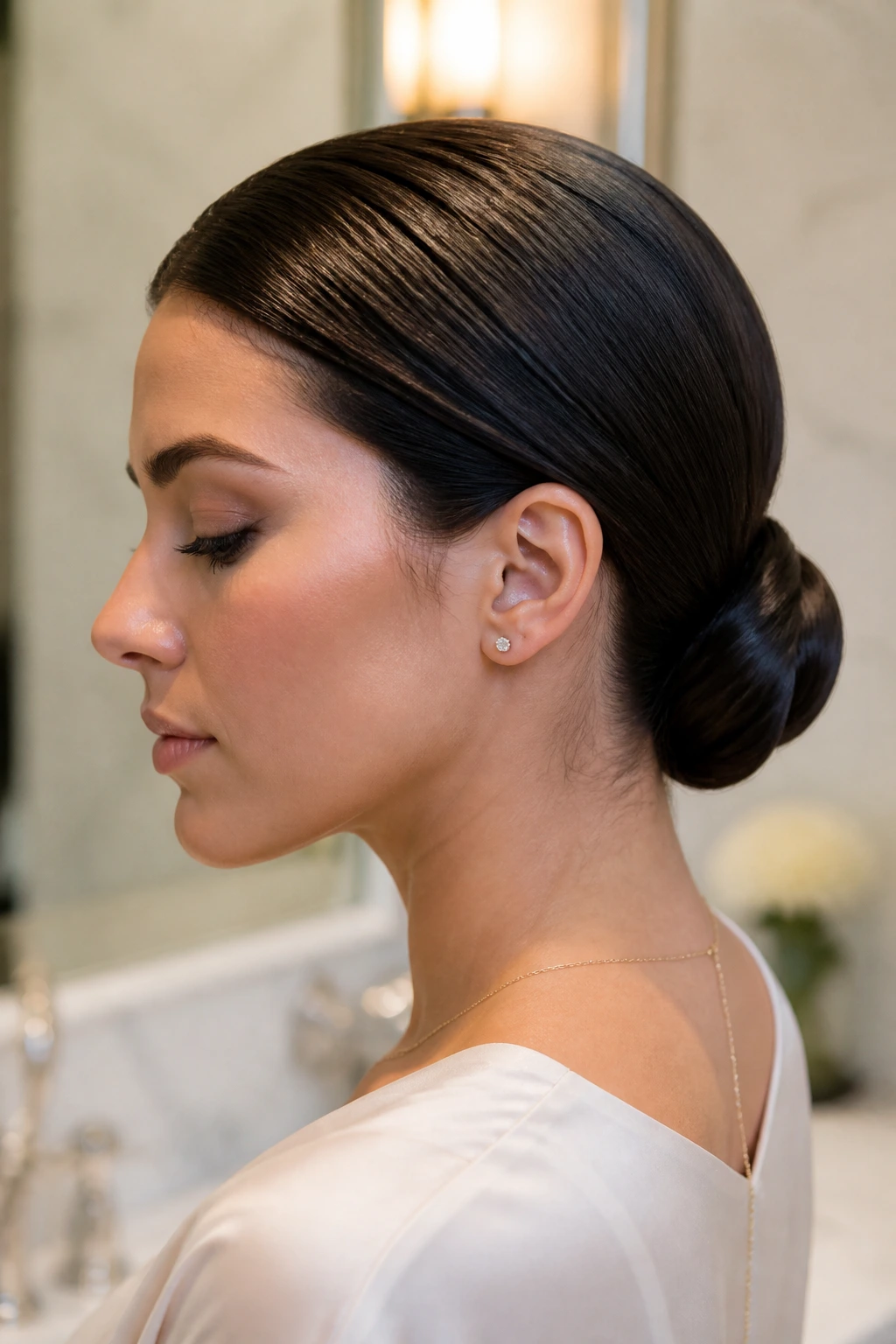
The first mistake is using one weak elastic and hoping pins will save the day. They usually will not. Thick hair has too much pull for that. Start with a stronger tie, then add pins for shaping.
The second mistake is styling hair while it is still too wet. Wet strands stretch, slip, and dry in odd places. If you want a smooth bun, dry the roots first and style from there. If you want a textured bun, work with dry or slightly lived-in hair instead.
Another common miss: piling all the hair into one knot and calling it done. That creates a heavy center that collapses outward. Separate the hair into sections, especially if it is very long. The bun looks cleaner and the weight spreads better.
People also overuse heavy cream or oil. A little product tames frizz; too much turns the surface slick and the bun starts spinning. Use product on the outer layer only. Keep the mids and ends grippy enough to hold.
Finally, don’t pin only the outside layer. If the pins aren’t catching the base, the bun will loosen while it still looks fine in the mirror. That’s the annoying part. It fools you.
Variations and Adaptations to Try
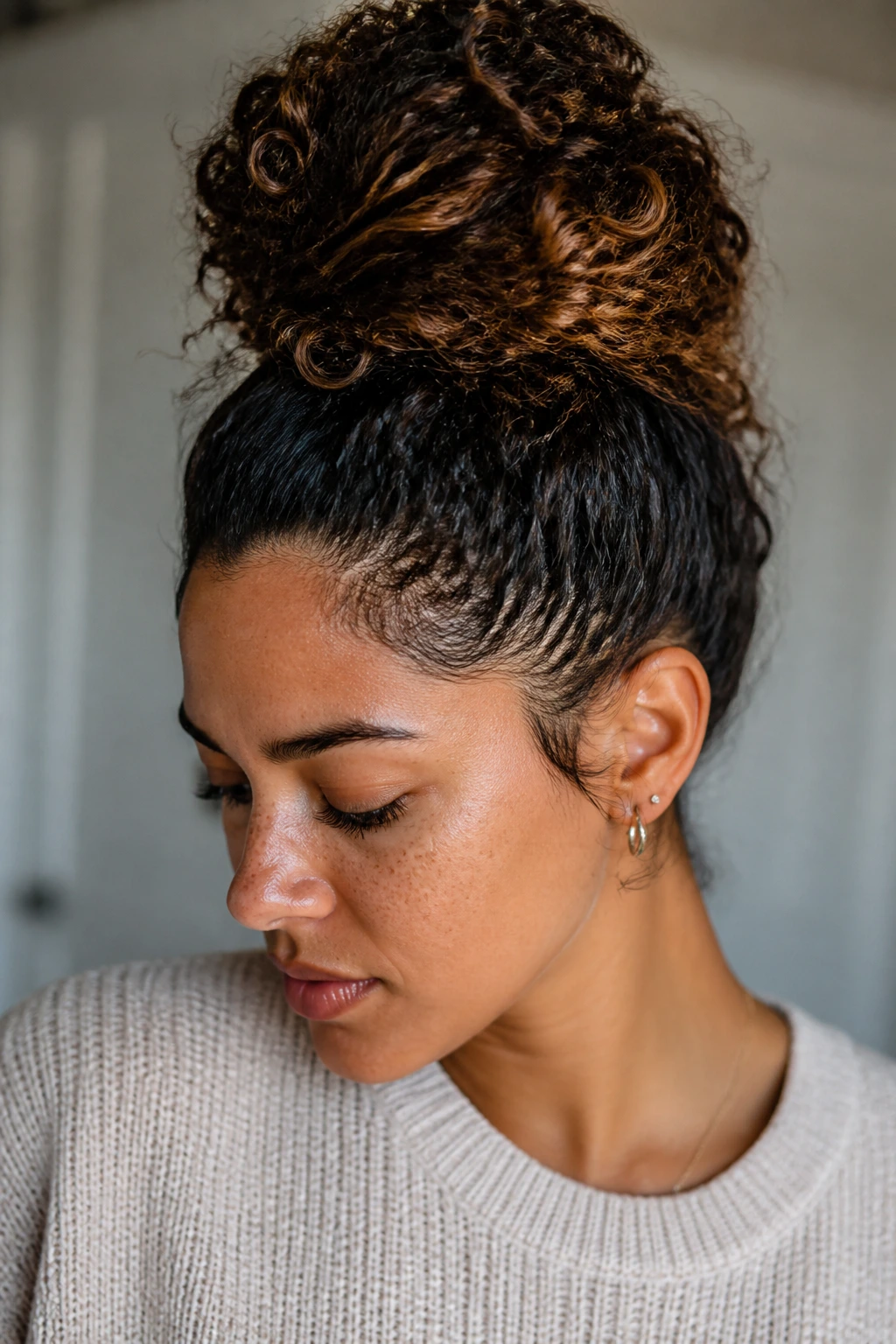
Office-Sleek Version: Choose the sleek nape knot, French twist bun, or hidden-pin roll bun. Use a stronger brush, a touch of gel, and a clean center part for a sharper line.
Curly-Hair Friendly Version: Reach for the pineapple bun, curly coil bun, or a loose low knot. Keep the curl pattern visible and use pins only where the bun needs support.
Workout-to-Errand Version: A claw-clip bun, wrapped ponytail bun, or loop-through bun is faster and less fussy. These styles stay put without needing a full wall of pins.
Formal Finish Version: Go for the ballet bun, sock bun, or crown braid bun. Add a hair net or a few hidden U-pins if you want the outline to stay neat for hours.
Protective Overnight Version: The pineapple bun and a soft low knot both work well for sleeping. Use a satin scrunchie or scarf so the bun doesn’t leave deep dents or rough up the cuticle.
How to Refresh a Bun Between Washes
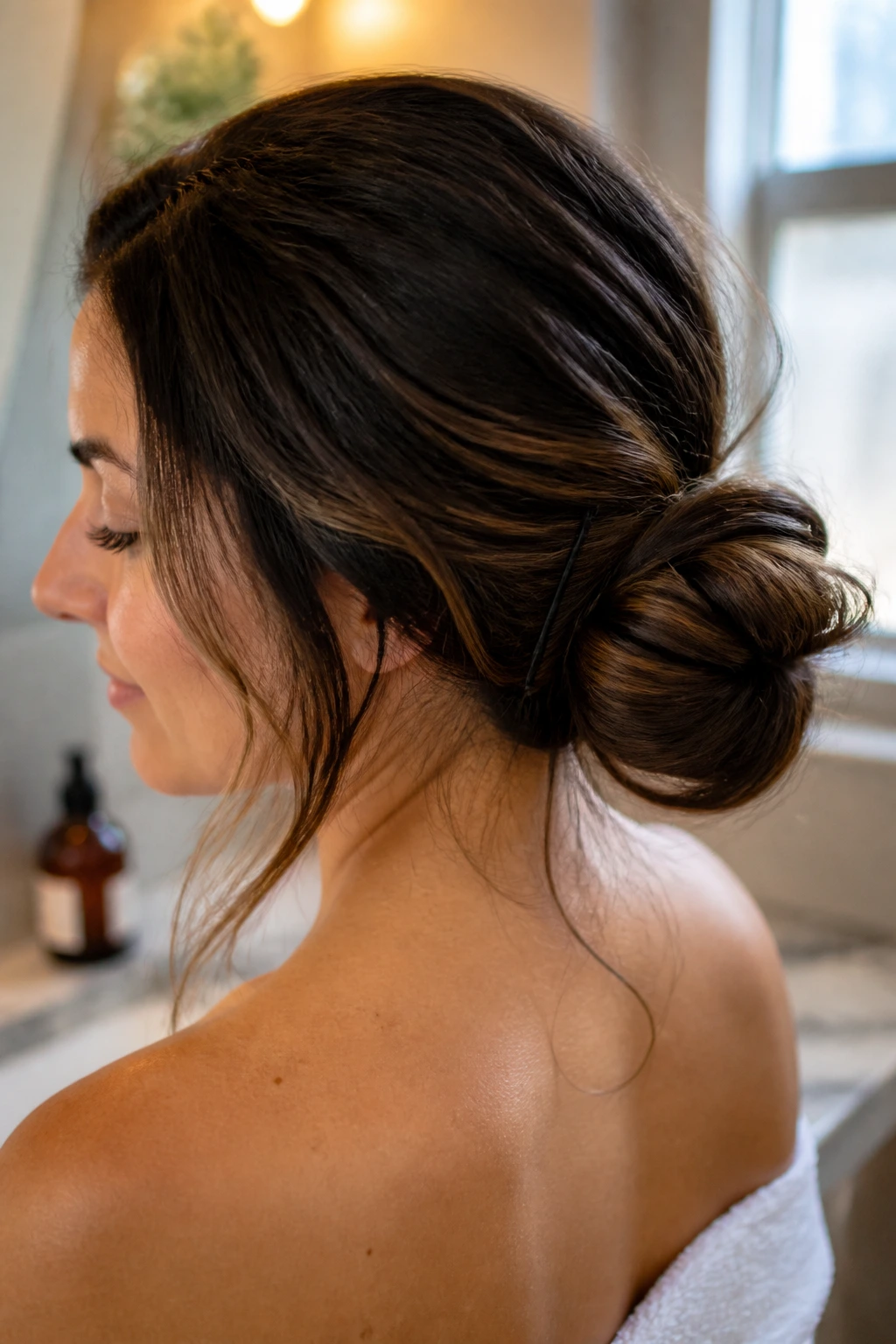
Thick hair usually gives you a second day, sometimes a third, if you handle it right. The best move is to leave the bun slightly looser than you would for a one-night style, then retighten only the pieces that matter in the morning. Do not pull the whole thing apart unless you want to start over.
A dry shampoo mist at the roots helps if the crown starts to look shiny. If the bun itself has gone soft, mist the surface lightly with water, smooth it with your hands, and re-pin the outer edge. A tiny bit of gel on the flyaways can bring the style back to life without making it crunchy.
Sleeping matters more than people admit. A satin scarf or bonnet cuts down on friction and keeps the bun from smashing flat. If you wear a very structured bun to bed, loosen the pins first so you do not wake up with a sore scalp. Rebuild the shape in the morning instead of trying to sleep through the tension.
Frequently Asked Questions
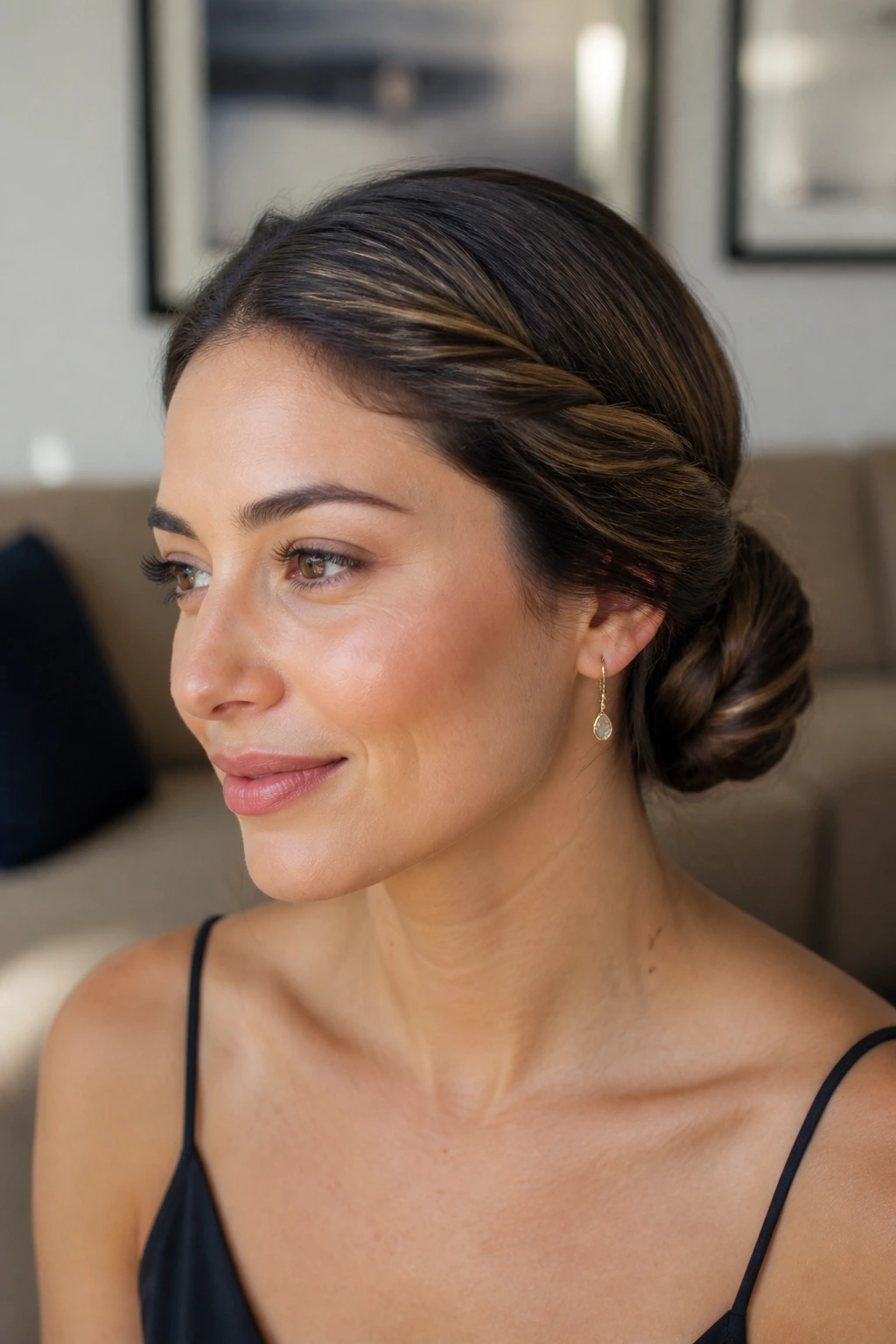
Which bun hairstyle works best for very thick hair?
The safest bets are the sleek nape knot, braided low bun, and double-decker bun. They spread the weight better than a single loose coil, which means less sagging and less pulling on the scalp.
How many bobby pins do I actually need for thick hair?
More than you think, but not all in the same spot. Most thick-hair buns need 6 to 10 pins for a secure finish, while bigger styles or formal buns may need a few U-pins on top of that.
Should I make a bun on clean hair or day-two hair?
Day-two hair usually has better grip, especially for sleek or twisted buns. Freshly washed hair works fine if you add dry shampoo or texture spray at the roots first.
Can curly or coily hair wear these buns too?
Absolutely. Styles like the pineapple bun, curly coil bun, and loose low knot are especially friendly to curls because they respect the texture instead of flattening it. Just avoid brushing the curl pattern out unless the style truly needs a slick finish.
How do I stop the bun from giving me a headache?
Keep the base secure but not tight, and move the support lower on the head when you can. If the bun hurts at the temples or behind the ears, it is usually too tight at the anchor point, not the bun itself.
Is a donut bun a bad idea for really dense hair?
Not at all. It can actually help a lot because the padding gives the hair a shape to wrap around. The key is choosing a donut large enough for the amount of hair you have so the style doesn’t end up cramped.
What if my bun keeps slipping out of place?
Check the base first. If the elastic is weak or the hair is too slippery, the whole style will drift no matter how many pins you use. Add grip at the roots, split the hair into sections, and pin beneath the bun rather than on the surface.
Can I make a bun look smaller if my hair is very voluminous?
Yes. A lower placement, a tighter wrap, and a hair net can reduce the visual size without making the style painful. The French twist bun and hidden-pin roll bun are good choices when you want a slimmer outline.
The Bun That Fits the Hair You Actually Have
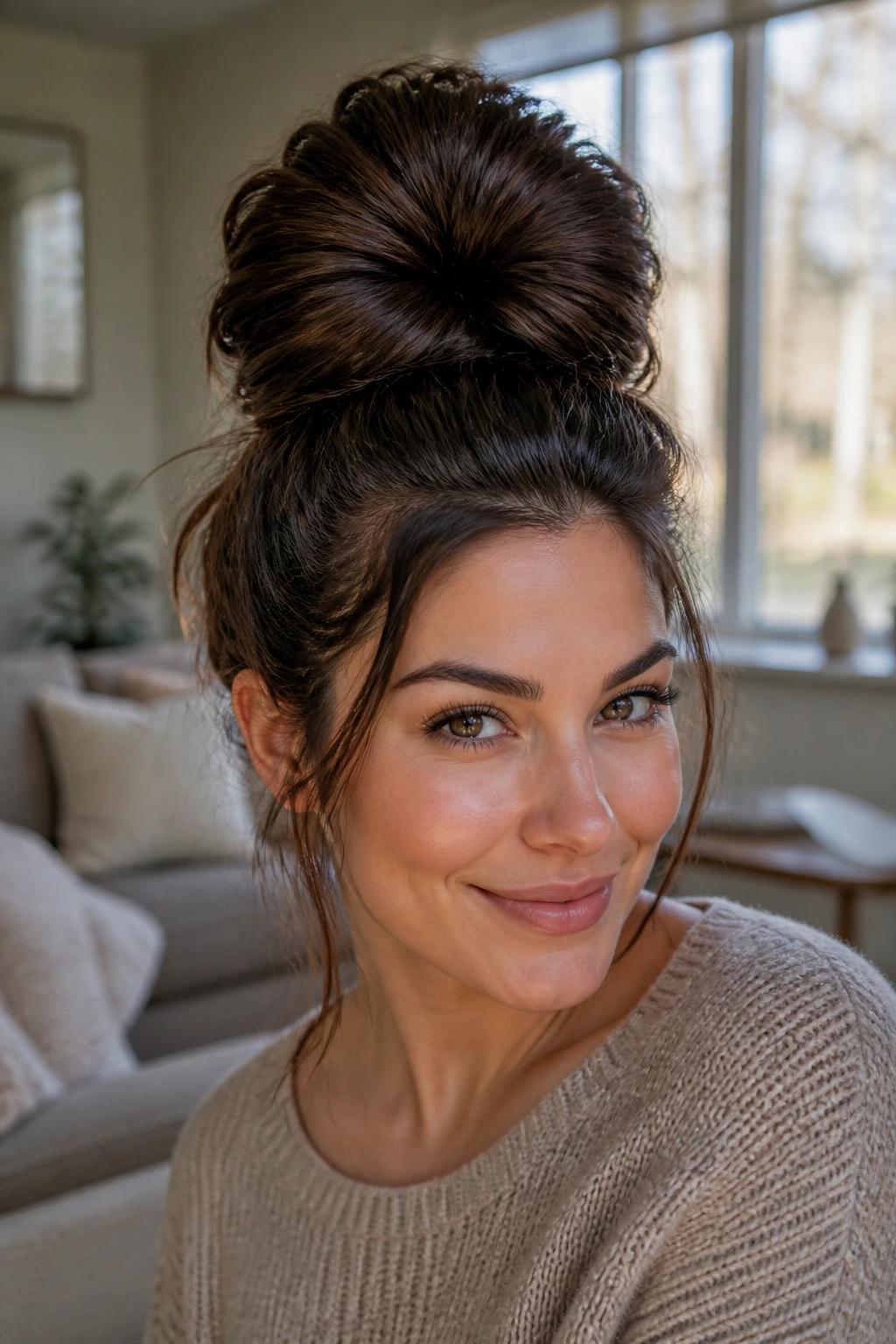
Thick hair does not need to be tamed into one default shape. It needs a bun that respects its weight, uses its volume, and stays put past the first hour. Once you stop treating density like a problem and start treating it like structure, the whole thing gets easier.
That’s the real pattern across these 35 styles: some are sleek, some are loose, some are built for speed, and some are the sort of bun you wear when the rest of your outfit is doing the talking. Keep a couple of them in regular rotation, and the question stops being “Can my hair do a bun?” and becomes “Which one feels right today?”