



Fine hair can look flat even after a careful blowout. That is exactly why half up half down hairstyles for fine hair keep showing up in real life: they take pressure off the roots, keep the lengths visible, and give you a place to build shape where the eye lands first.
The trick is not trying to make fine hair behave like thick hair. That usually ends in a sagging crown, a bulky clip, and a style that feels like it lost the argument halfway through the day. The better move is more surgical than that. Work with small sections. Use a little grit at the roots. Choose accessories that actually grip. Then let the rest of the hair hang where it has some movement.
A good half-up style for fine strands does three things at once. It lifts the crown, disguises the thinner spots that live around the temples and part line, and leaves enough hair down so the whole look still feels light. You do not need a huge amount of hair to make that happen. You need the right shape, the right pin placement, and a few habits that keep the style from sliding south by lunch.
Why You’ll Love This Collection
-
Crown Lift: These styles move the visual weight to the top of the head, which makes slender strands look fuller from the front and the side.
-
Low-Fuss Shape: Half-up styling gives you structure without forcing every strand into a tight updo that can expose the scalp or collapse by noon.
-
Accessory-Friendly: Small claw clips, skinny elastics, barrettes, and bobby pins do real work here instead of feeling decorative for no reason.
-
Fine-Hair Smart: The styles lean on placement, texture, and contrast, not sheer bulk, so they fit hair that slips, flattens, or breaks shape fast.
-
Easy to Reset: Most of these can be brushed out and redone in a few minutes, which matters when your hair has a habit of changing its mind halfway through the day.
-
Flexible Finishes: You can push them toward soft, polished, romantic, or casual without needing a salon’s worth of hair to begin with.
1. The Crown-Twist Lift
If your roots go flat the moment you touch them, start here. The crown-twist lift is one of those half up half down hairstyles for fine hair that looks more complicated than it is, and that works in its favor. The twist creates the illusion of thickness because the eye reads the overlap, not the individual strands.
Why It Flatters Fine Hair
Two small temple sections give you more shape than one giant ponytail ever will. I like this one because it leaves the lower lengths alone, so the style keeps some movement instead of feeling pinned into place. Fine hair also tends to hold a twist better than a full braid, especially if you mist the roots first with dry shampoo.
How to Build It
- Take a 1-inch section from each temple.
- Twist each section backward toward the crown.
- Cross them once at the back and pin underneath with two bobby pins in an X.
- Hide the pin ends under the twist so the finish looks clean, not fussy.
A narrow twist is the whole point. If you grab too much hair, the result turns bulky at the sides and limp at the back. Keep the twist tight, then loosen only the outer edges with your fingers if you want a softer finish.
Best with: straight or slightly wavy fine hair, especially when you want lift without a lot of visible accessories.
One small tip: use matte pins, not shiny ones. Shiny pins slide more on silky hair, and that little difference matters.
2. The Micro-Bubble Half Pony
The bubble ponytail is still one of the smartest tricks for hair that lacks density, and the half-up version is even kinder. Small sections of hair separated by clear elastics create a row of rounded shapes that look fuller than a single thin pony ever could.
The key is restraint. Big bubbles need bulk, and bulk is exactly what fine hair often doesn’t have. Micro-bubbles solve that problem by making each segment compact, then gently widening it with your fingertips so it catches the light and reads as thicker.
Start with a half pony at the crown, then add a tiny elastic every 1.5 to 2 inches down the tail. After each elastic, pinch and tug the sides of that section until the bubble looks rounded. A light mist of texture spray before you begin gives the elastics something to grip.
This one has a playful feel, but it is not childish when you keep the bubbles small and even. It also handles second-day hair beautifully, which is no surprise. Slight grit gives the sections a little more body, and body is the whole game here.
3. The Sleek Wrapped-Elastic Half Pony
This is the polished version of a half-up style, and I use it when I want fine hair to look intentional instead of improvised. The smooth crown and wrapped elastic create a neat line that makes the top half of the hair feel thicker because the shape is clean.
A slicked-back half pony can go wrong fast if you pull everything too tightly. Then the scalp shows more than you want, and the style starts to look severe. The better version leaves a whisper of softness around the hairline while keeping the top controlled.
What Makes It Work
Pull the upper half of the hair back from just above the ears, not from the whole head. Secure it with a clear elastic, then take a thin strand from underneath the pony and wrap it around the band. Pin the strand under the pony so the elastic disappears.
Use a pea-sized amount of smoothing cream only on the surface of the lengths, not at the roots. That keeps flyaways down without turning the crown into a slick sheet that slides apart.
This is the one I would choose for a blazer, a dinner reservation, or any moment when you want the hair to look neat without pretending it has more density than it does.
4. The Pull-Through Half Braid
Traditional braids can vanish in fine hair. The pull-through braid does the opposite. Each little loop makes the section look wider than it really is, which is why this style can be such a cheat code for thin-looking lengths.
The method is straightforward: create a half pony, split the tail, and build the braid with a series of tiny elastics and folded sections. The finished shape feels airy, not tight. That looseness is what gives the braid its size.
Quick Build
- Make a half pony at the crown.
- Divide the ponytail into two pieces.
- Bring a small piece from beneath around to the front, securing each round with a tiny elastic.
- Pancake each loop gently so the braid looks soft and broad.
If your hair is very slippery, rough up the roots with a little dry shampoo before you start. Pull-through braids need some grip. Without it, the elastics will creep and the whole pattern loses definition.
The nice thing about this style is that it looks like you spent more time than you did. That is not a flaw. That is the point.
5. The Double Rope Twist Half-Up
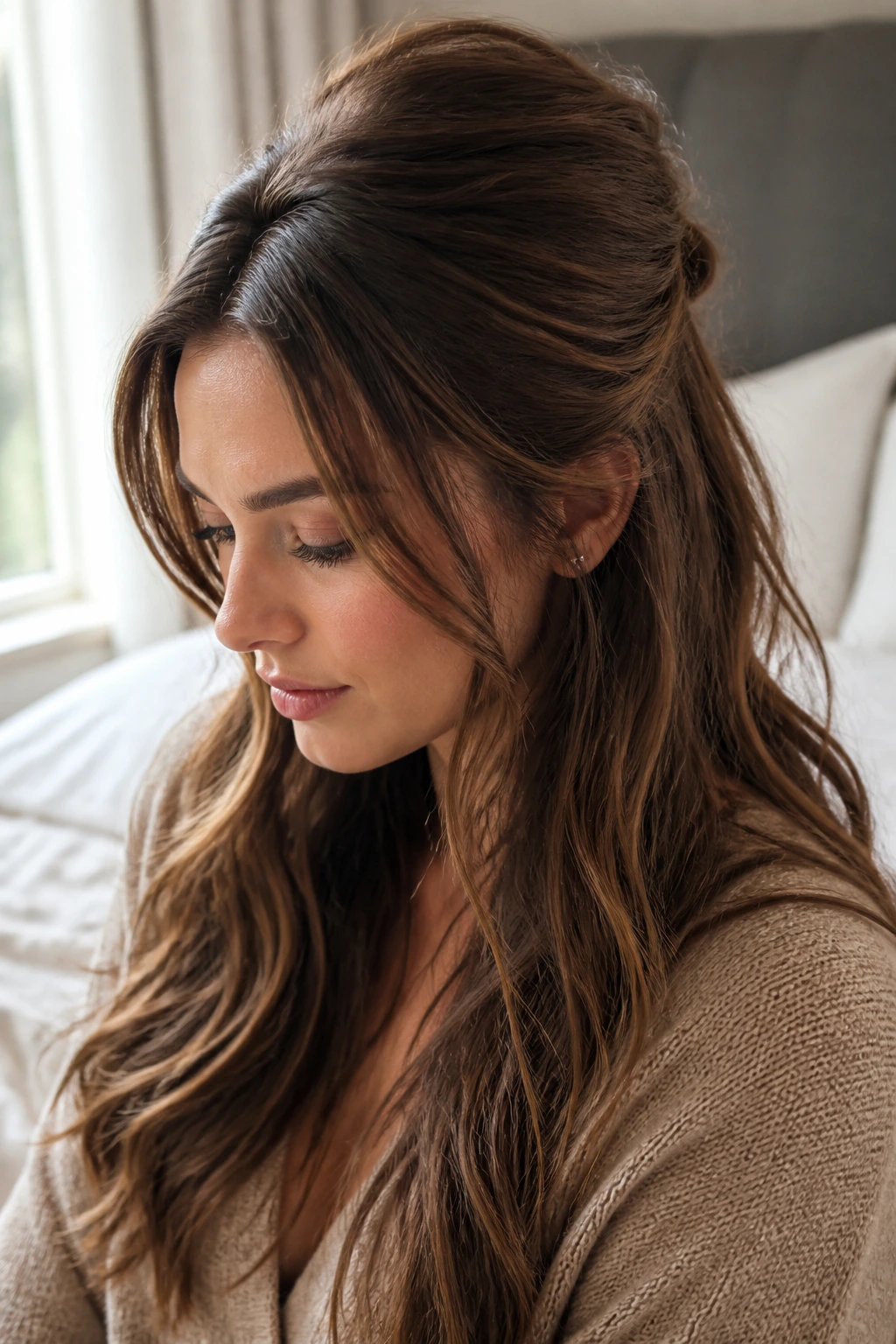
Rope twists have a pleasing tightness to them. On fine hair, that matters, because a regular braid can sometimes look stringy where a rope twist still looks deliberate and sculpted.
Take a small section from each side of the face, divide each into two, twist both pieces in the same direction, then wrap them around each other in the opposite direction. That counter-motion creates the rope effect. Bring both twists to the back and secure them together with pins or a tiny clear elastic.
The best version of this look stays narrow. A fat rope twist on fine hair can start to look sparse at the edges. A slim one looks crisp and elegant, and the lines of the twist add enough texture that you do not need much else.
This style is especially good if your hair is straight and tends to go limp when curled. The twist itself provides the interest. The lower lengths can stay soft and simple.
6. The Mini Top Knot with Teased Crown
A tiny top knot can be a gift for fine hair, but only if the crown gets some help first. If you skip the lift at the roots, the bun sits too close to the head and the whole look loses its shape.
Backcomb the hidden crown section lightly with a tail comb, then smooth the top layer over it so the tease disappears. Gather only the top half into a small knot high on the head, twist once or twice, and pin it with two crossed bobby pins. Leave the rest of the hair loose and soft.
The bun should look small on purpose. If it gets too large, it drags the style down and starts to feel heavy. Fine hair does better with a compact knot and a lifted crown than with a bun trying to impersonate volume it does not have.
This is one of my favorites for shoulder-length hair. It gives height without forcing the ends into a full updo, and that balance looks better than most people expect.
7. The Side-Swept Barrette Sweep
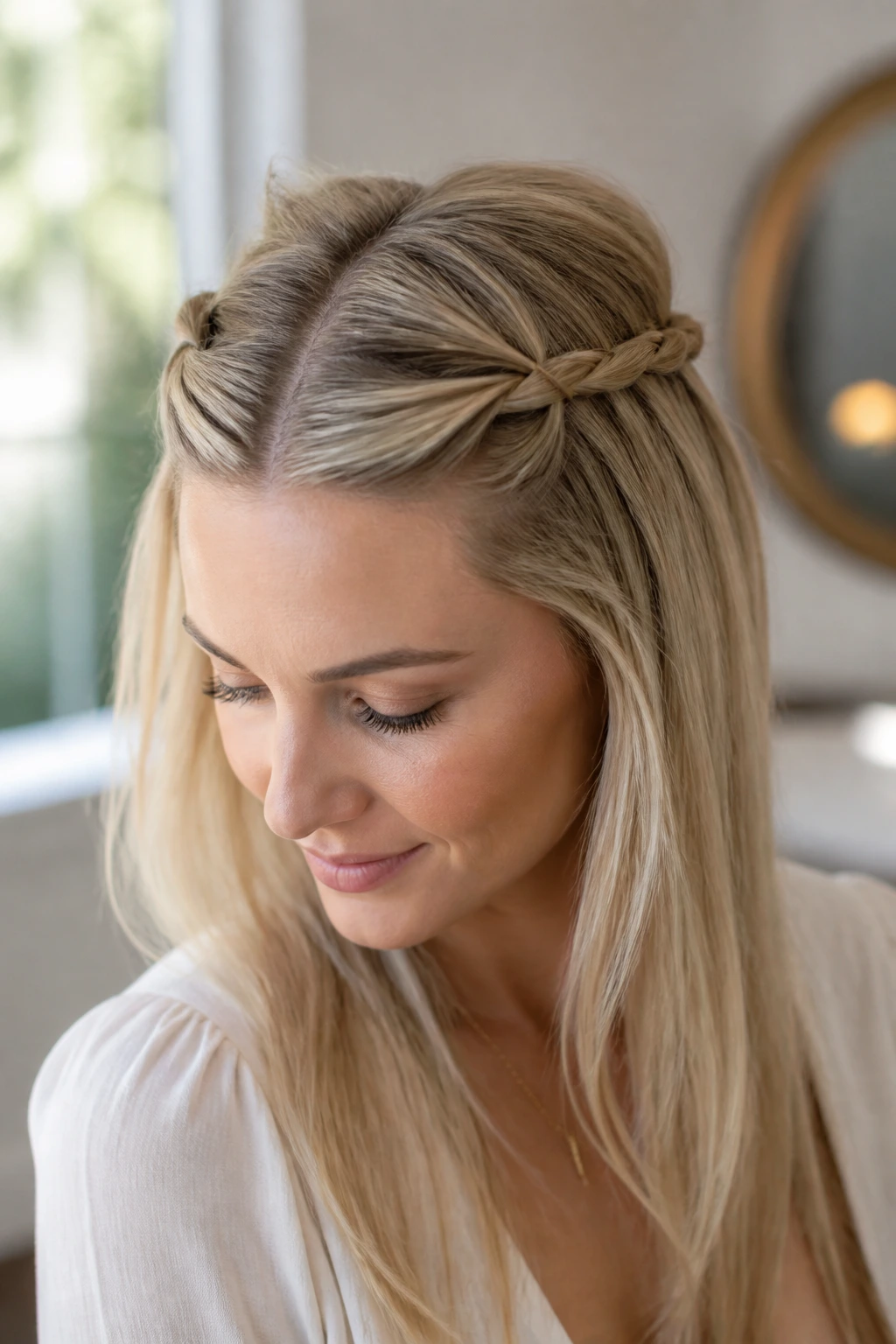
Sometimes the smartest fine-hair style is the simplest one. One strong barrette, one deep side part, and one deliberate sweep of hair can do more than a complicated weave if your hair is especially soft or thin.
This style works because the accessory carries the visual weight. You are not asking the hair itself to do all the work. Sweep one side back from the temple and pin it with a barrette that closes firmly. Leave the other side loose, or tuck it behind the ear for a more asymmetrical line.
I like this look for days when the scalp feels visible at the center part and you want to break that line up quickly. The barrette gives the eye something to focus on, and the side sweep creates an angle that makes the hair look fuller than a straight-down center part.
Use a barrette with a matte or grippy finish. The glossy decorative ones are cute, but a lot of them slide around on fine strands unless the hair is prepped with texture spray first.
8. The Braided Halo Crown Band
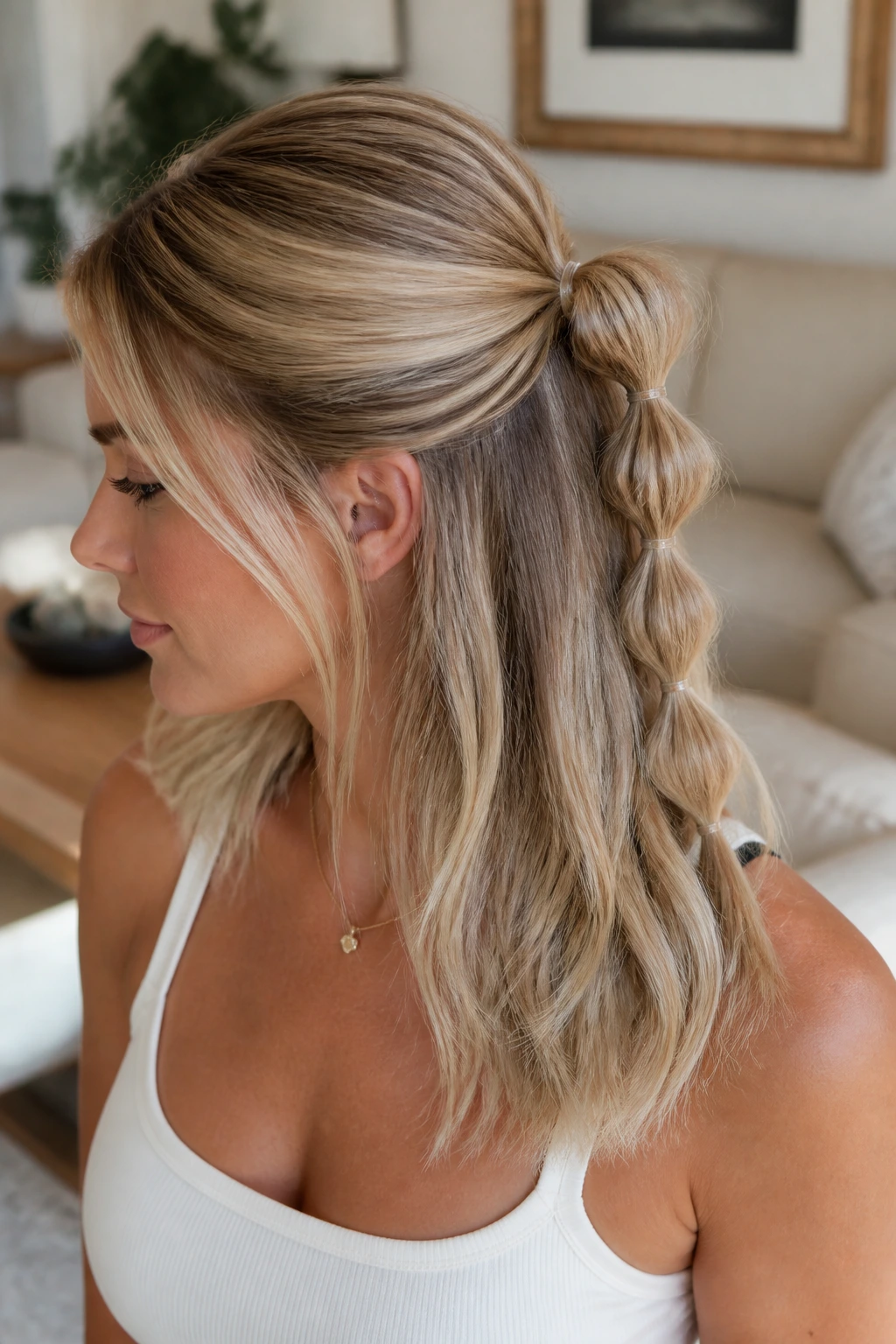
A narrow braid across the crown can mimic the look of a headband without actually using one. That is useful when your hair is too fine to hold a lot of bulk but still needs a finished shape at the top.
Take a slim section from above each ear, braid each side, and cross them behind the head like a crown band. Pin the ends underneath so they disappear into the hair. The braid should sit low enough to anchor, but high enough that it reads as part of the style rather than a random detail.
Fine hair does better with narrow braids here. Wide braids usually expose the gaps between strands and start looking wispy in a way that feels accidental. A thinner braid, then gently widened with your fingertips, gives you the opposite: a neat line with a little softness around the edges.
This style is especially good if you want the front to stay away from your face without pulling everything back. There is a softness to it that full-up styles often lose.
9. The Half-Up Claw Clip Twist
The claw clip has earned its place back in the rotation, but fine hair needs a smaller version than most people reach for. Big clips can overwhelm the hair and slip off the twist. A medium or small claw with curved teeth usually does the job better.
Gather the top half, twist it once, fold it upward, and clip it at the back of the crown. Let the ends spill out of the clip rather than trying to tuck them all in. That loose spill is part of the shape, and it keeps the style from looking overpacked.
This works best when the hair has a bit of texture. Day-old hair, light waves, or a touch of dry shampoo helps the clip stay put. If the hair is freshly washed and slippery, the clip can slide while you walk, which is deeply annoying and very common.
The charm of this style is that it looks like you did not try too hard. The reality is a little more technical than that, but the finish feels easy.
10. The Face-Framing Curtain Pullback
Not every half-up style has to claim the whole crown. Sometimes the prettiest version only pulls back the front pieces and leaves the rest alone. That approach keeps the top soft, which is useful if your hair gets flat as soon as you manipulate it too much.
Take two slim sections from around the temples, pull them back loosely, and secure them with hidden pins or a tiny clip. Leave the crown untouched. Let the lower hair hang freely, with a few face-framing strands left out if you want a softer line.
This is a good option for very fine hair because it avoids the heavy “all or nothing” look. The hair at the back stays down, so the style keeps movement, but the front gets a gentle lift that opens the face.
I reach for this when the hair is cooperative but not generous. It is quiet, not boring. There is a difference.
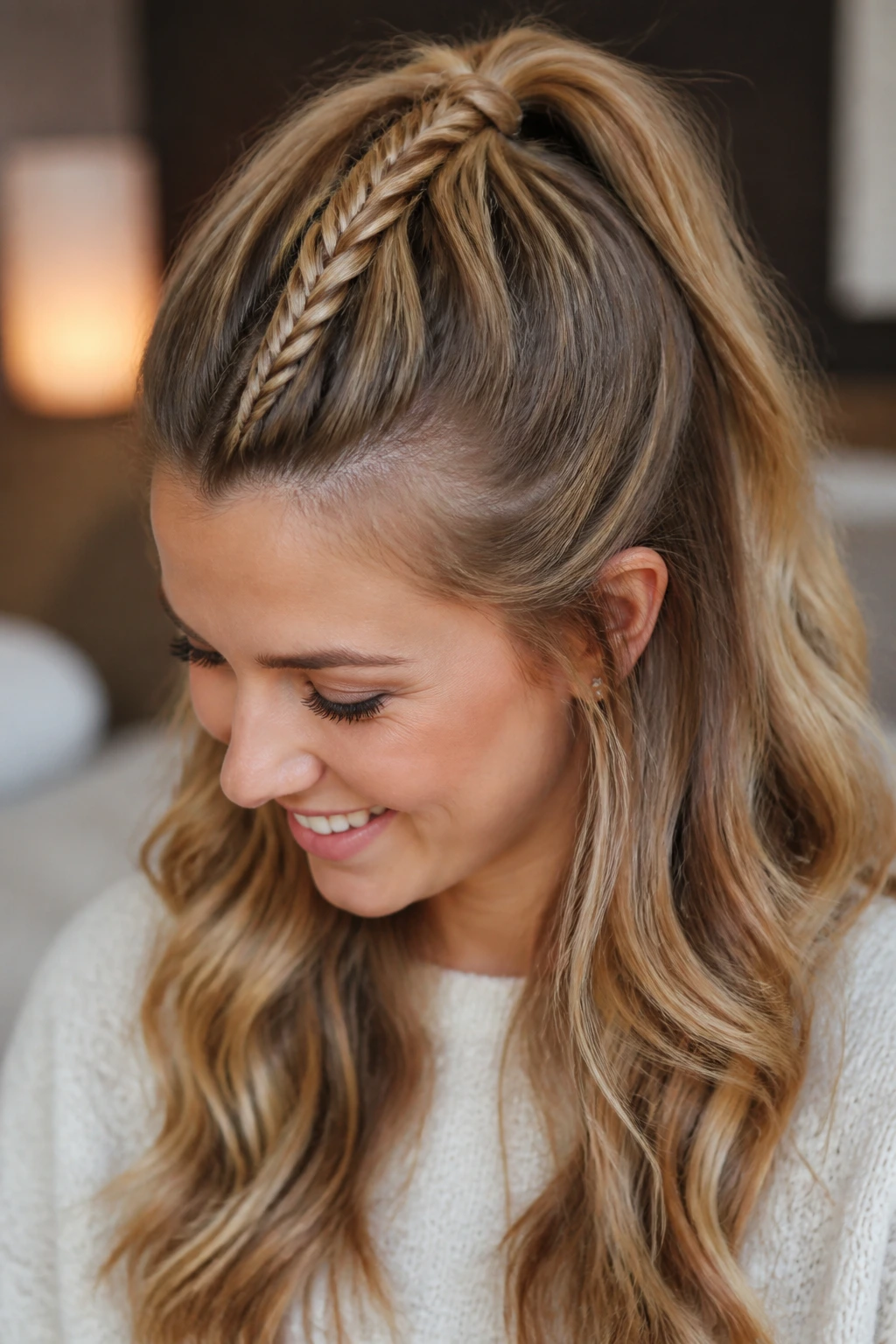
11. The Fishtail Accent Half Pony
A fishtail accent can look intricate, but the half-up version is much easier to manage than a full fishtail braid. More important, it gives fine hair a surface pattern that regular braiding sometimes cannot.
Start with a half pony at the crown, then fishtail just the tail of that pony in a tight, compact braid. Keep the sections small at the start, because the braid can only look as full as the hair you feed into it. Once it is secure, gently pull the outer edges to widen it a little.
The reason this works is simple: fishtail braids have more visible texture per inch than many other braid types. On fine hair, that density of pattern is useful. It tricks the eye into seeing a thicker line.
If your hair is slippery, use a touch of powder at the roots before you start. Fishtails need control, and silky strands will fight you every step of the way if you do not give them a little grip.
12. The Soft Tease-and-Pin Volume Crown
This one is a little old-school, and I mean that as a compliment. The soft tease-and-pin crown is the style you reach for when the top of the head needs a lift, plain and simple.
Backcomb a hidden section at the crown, then smooth the surface layer over it. Bring a loose half section back and pin it in place without flattening the volume you just built. The goal is height, not hardness. If the teased section looks obvious, you went too far.
The best part of this style is how much visual fullness it creates with very little hair. A few controlled inches at the crown can change the whole profile of the head. That matters for fine hair, because volume placed in the wrong spot disappears fast.
Do not brush the tease into oblivion. Use your fingers or a soft bristle brush just on the top layer. Leave the support underneath alone. That hidden structure is the whole reason the style holds.
13. The Scarf-Tied Half Pony
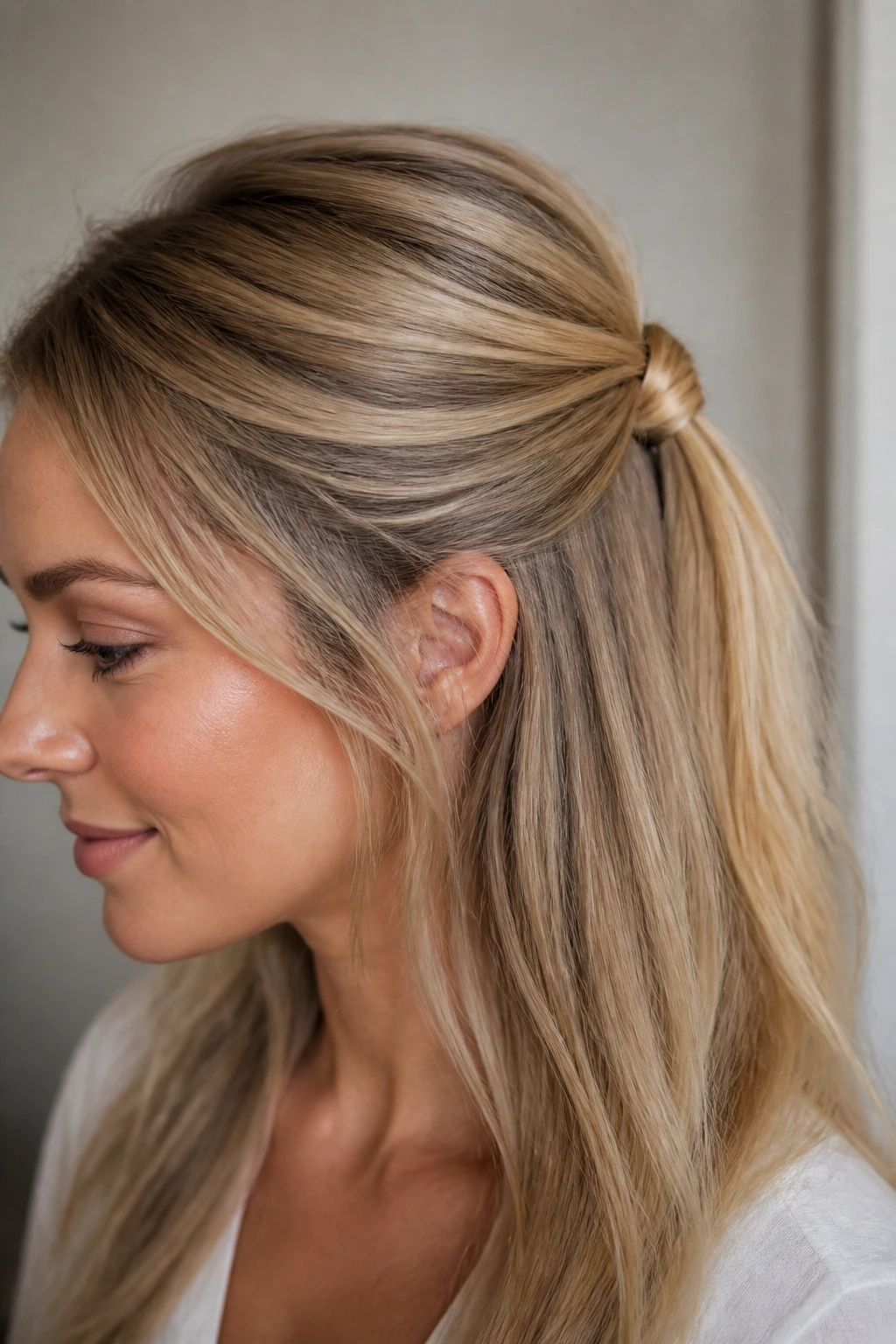
A scarf can do more for fine hair than a full can of product sometimes. It adds color, shape, and visible weight without asking the hair itself to provide all of it.
Make a small half pony at the back of the crown, secure it with a band, then tie a narrow scarf around the base. Let the ends trail down with the hair, or tuck them in for a cleaner line. The scarf becomes part of the style rather than an afterthought.
This works because fabric gives the eye something substantial to read. Fine hair often looks better when it shares the frame with a stronger visual element. The scarf does exactly that.
Choose a scarf that is light enough not to drag the pony flat. A silky square can slip if the knot is too loose, while a narrow cotton or satin strip often stays put more easily. If your hair is extra soft, anchor the pony with a clear elastic before tying the scarf so the scarf is decorative, not structural.
14. The Two-Section Knot Tie
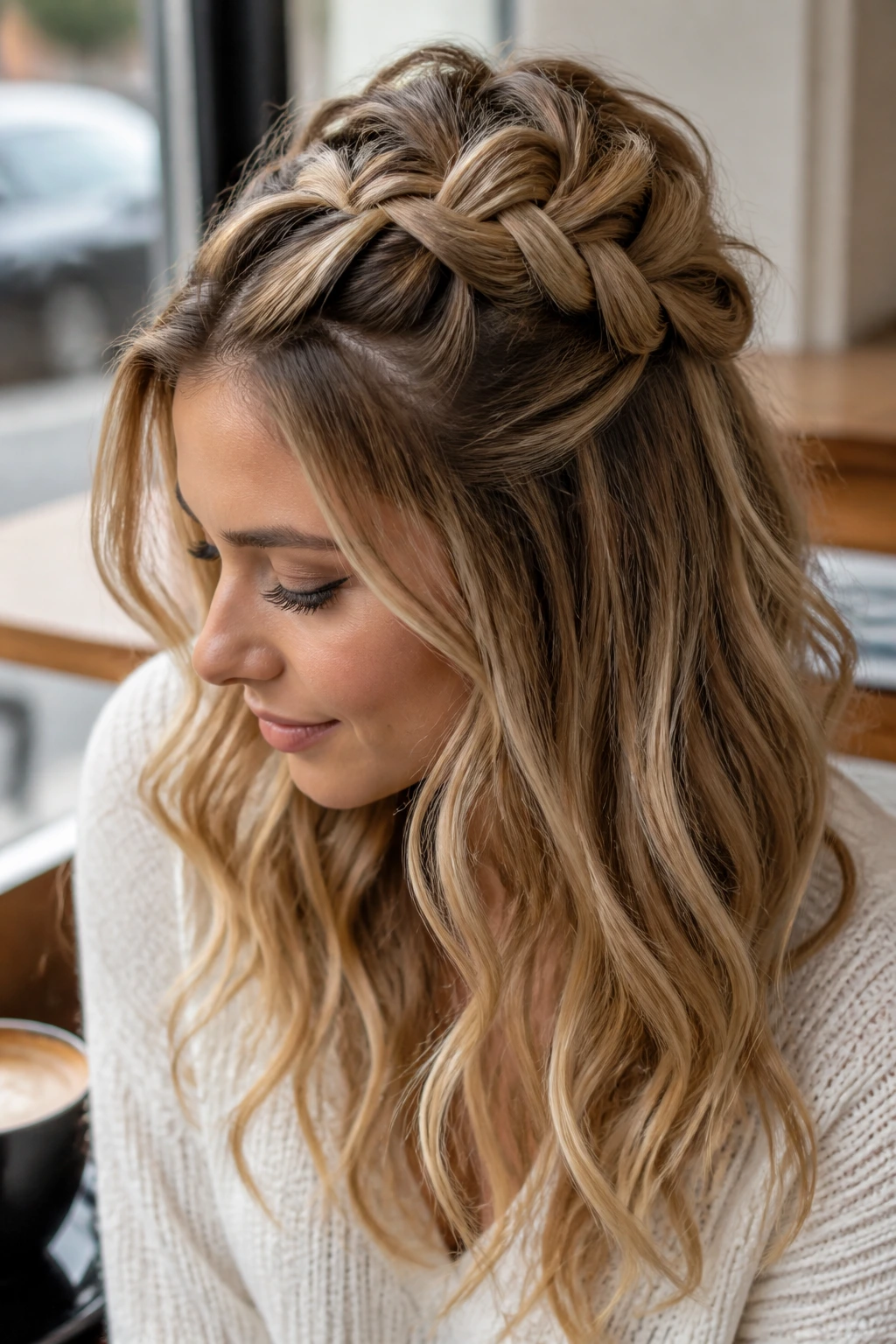
This one feels slightly improvised, which is part of its charm. Instead of a ponytail or braid, you tie the top section into a simple knot and pin it from underneath.
Take one section from each side of the head, bring them to the back of the crown, cross them once, and tuck the ends under with bobby pins. That single knot creates a soft fold in the hair, which reads as volume even when the strands are thin.
It is a smart move for shoulder-length hair because the knot stays compact and the lengths below it keep moving. If the hair is layered, this style can look especially good; the shorter pieces around the face soften the edges of the knot.
Keep the knot low and neat. A sloppy knot on fine hair tends to unravel into a loose mess, and then you are back where you started. A snug tie with hidden pins gives you a much cleaner line.
15. The Flat-Twist Temple Sweep
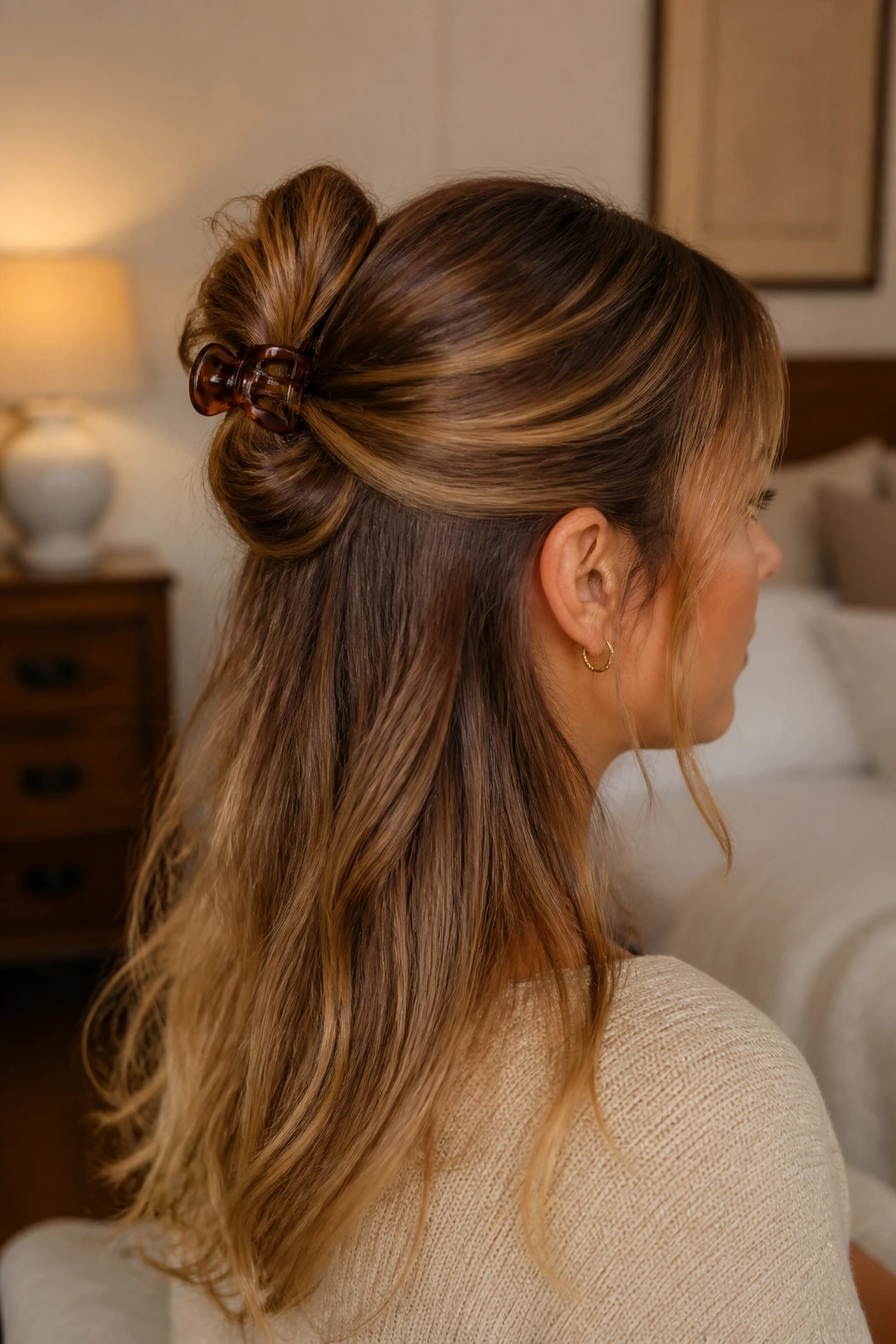
Flat twists are underrated for fine hair because they lie close to the head and give the illusion of control without needing much thickness. They are a clean answer when braids feel too bulky or too loose.
Take a slim section along the hairline, split it into two, and twist each piece back toward the crown while adding tiny bits of hair as you move along the temple. Repeat on the other side, then secure both at the back. The finish looks neat and tailored, with a good line around the face.
This style is especially useful if your hair frizzes at the temples or separates too much at the front. The twist keeps those pieces in place while still leaving the lower lengths loose.
It is not a loud look. That is its strength. Fine hair often looks best when the design is crisp rather than oversized, and flat twists lean into that.
16. The Loose Waved Half Knot
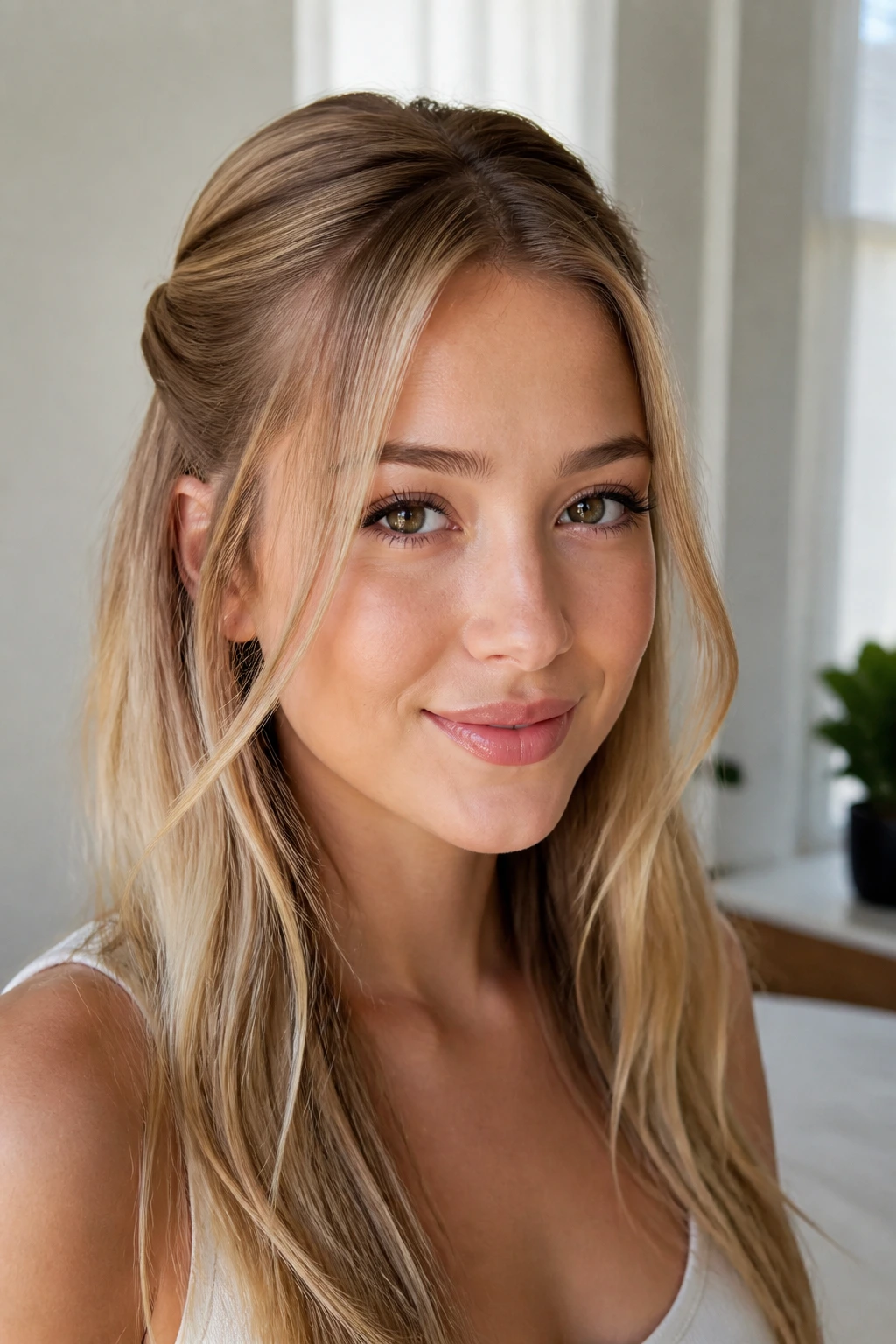
A small half knot sitting on top of soft waves is one of the easiest ways to keep fine hair from looking overworked. The knot gives you height, while the waves below supply movement and softness.
Use a 1-inch curling wand or a flat iron bend to create loose bends through the lower lengths. Then gather only the top section into a knot at the crown and pin it closed. Keep the knot compact. If it grows too big, it starts competing with the waves instead of framing them.
This is a good choice for hair that needs shape but not a lot of structure. The waves stop the lengths from looking flat, while the knot gives the whole style a focal point. The combination is gentle, which is useful when the hair is prone to breakage or slipping.
A light mist of flexible-hold spray after pinning is enough. Heavy spray can flatten the wave pattern and turn the style stiff.
17. The Pearl Pin Ladder
When the hair itself is too fine to make a dramatic statement, accessories can do the heavy lifting. A pearl pin ladder is exactly that kind of solution.
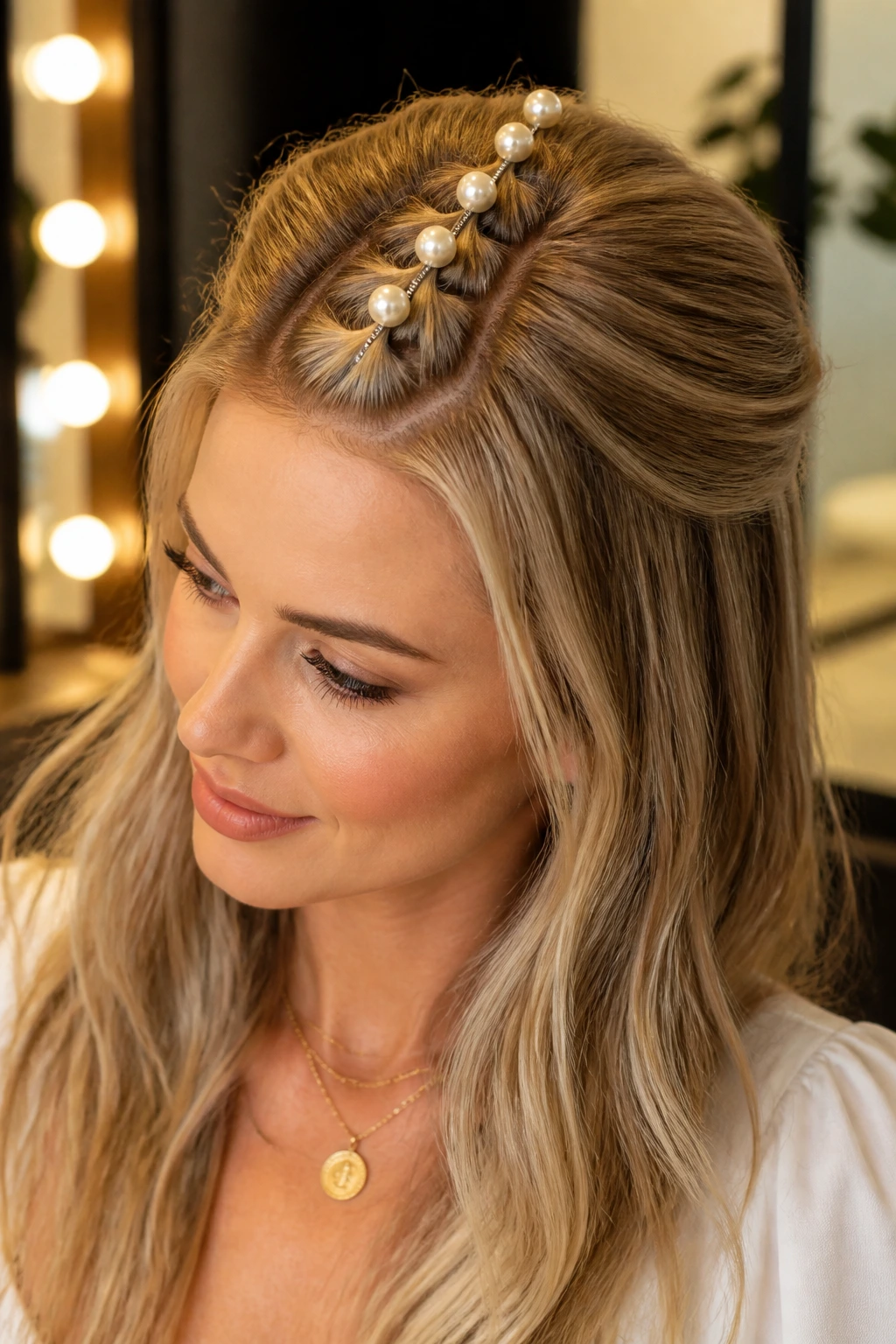
Pull back a small top section and secure it flat against the head with a vertical row of decorative pins, pearls, or slim metallic clips. Space them evenly so the line looks intentional. The lower hair stays loose, and the accessory chain becomes the visual anchor.
This is one of the best looks for very minimal hair days. You are not trying to fake fullness. You are dressing the shape. That distinction matters, because the style reads cleaner when the pins are doing the design work.
Use matching pins if you want the look to stay refined, or mix tiny pearl pins with plain bobby pins hidden underneath if you need extra grip. The decoration should not be the thing that keeps the style on your head. The hidden support should.
18. The Textured Half Pony with Straight Ends
Fine hair often looks best when it is not textured everywhere. A little contrast can go a long way, which is why a textured crown paired with straight ends feels so fresh.
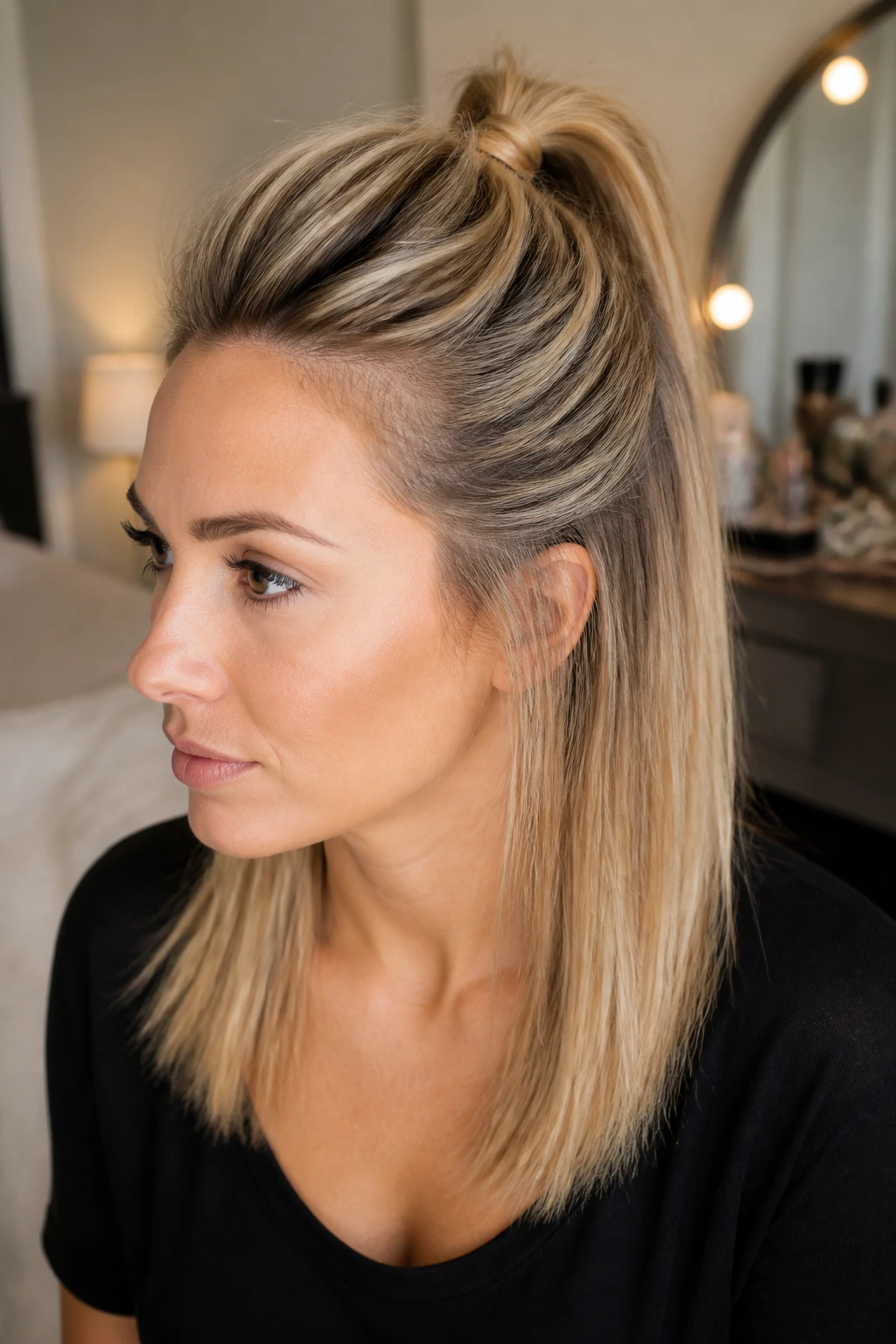
Rough up the roots with dry shampoo or a light texturizing mist, gather the upper half into a pony at the crown, and leave the lengths below straight. The crown gets lift and grit. The ends stay sleek and clean. That difference gives the hair more dimension than a fully curled style sometimes can.
This is especially useful if your hair does not hold curls for long. You do not need the lower section to fight gravity. You only need the top section to look like it has some structure. That shift in focus makes the whole style more wearable.
A small wrapped elastic or a matte band works better than a thick hair tie here. The goal is a crisp line at the top and a smooth fall through the lengths. Keep the two zones separate, and the style does the rest.
Why Half-Up Shapes Work So Well on Fine Hair
Fine hair usually loses the argument at the root, not the ends. That is the part most people miss. They keep adding curl and volume to the lower lengths, then wonder why the crown still falls flat. Half-up styling fixes the problem at the place where it actually starts.
The shape matters more than the size of the style. A small twist, a narrow braid, or a compact pony at the crown can change the balance of the whole head because it pulls the eye upward. The loose lengths below keep the style from feeling overbuilt. That combination gives fine hair some lift without making it look overhandled.
I also like half-up shapes because they let you choose where the tension goes. Full updos can tug on fragile strands and expose every thin patch. A half-up style is gentler. It works with the weight of the hair instead of trying to beat it into submission.
If you have very fine but dense hair, you can use slightly larger sections and a stronger clip. If your hair is fine and sparse, keep the sections narrow and lean on texture spray, small elastics, and hidden pins. Same category. Different math.
Essential Tools for These Styles
-
Tail comb: The pointed end helps you carve clean sections and lift hidden crown pieces without disturbing the top layer.
-
Small clear elastics: Better for bubble braids, pull-through styles, and wrapped ponies where bulky ties would show too much.
-
Matte bobby pins: These grip better than slick, shiny pins, especially on silky fine hair.
-
Mini or medium claw clips: Choose a size that matches the amount of hair you actually have. Oversized clips slip.
-
Texturizing spray: Useful for adding grit at the roots and helping twists or braids stay in place.
-
Dry shampoo: Gives the crown a little roughness and helps fresh hair behave more like day-two hair.
-
Flexible-hold hairspray: Keeps the finished style in shape without turning it stiff.
-
1-inch curling wand or flat iron: Optional, but helpful if you want soft bends in the lower lengths.
-
Hand mirror: The back of a half-up style matters. A quick check can save you from lopsided pins.
Smart Product and Accessory Picks
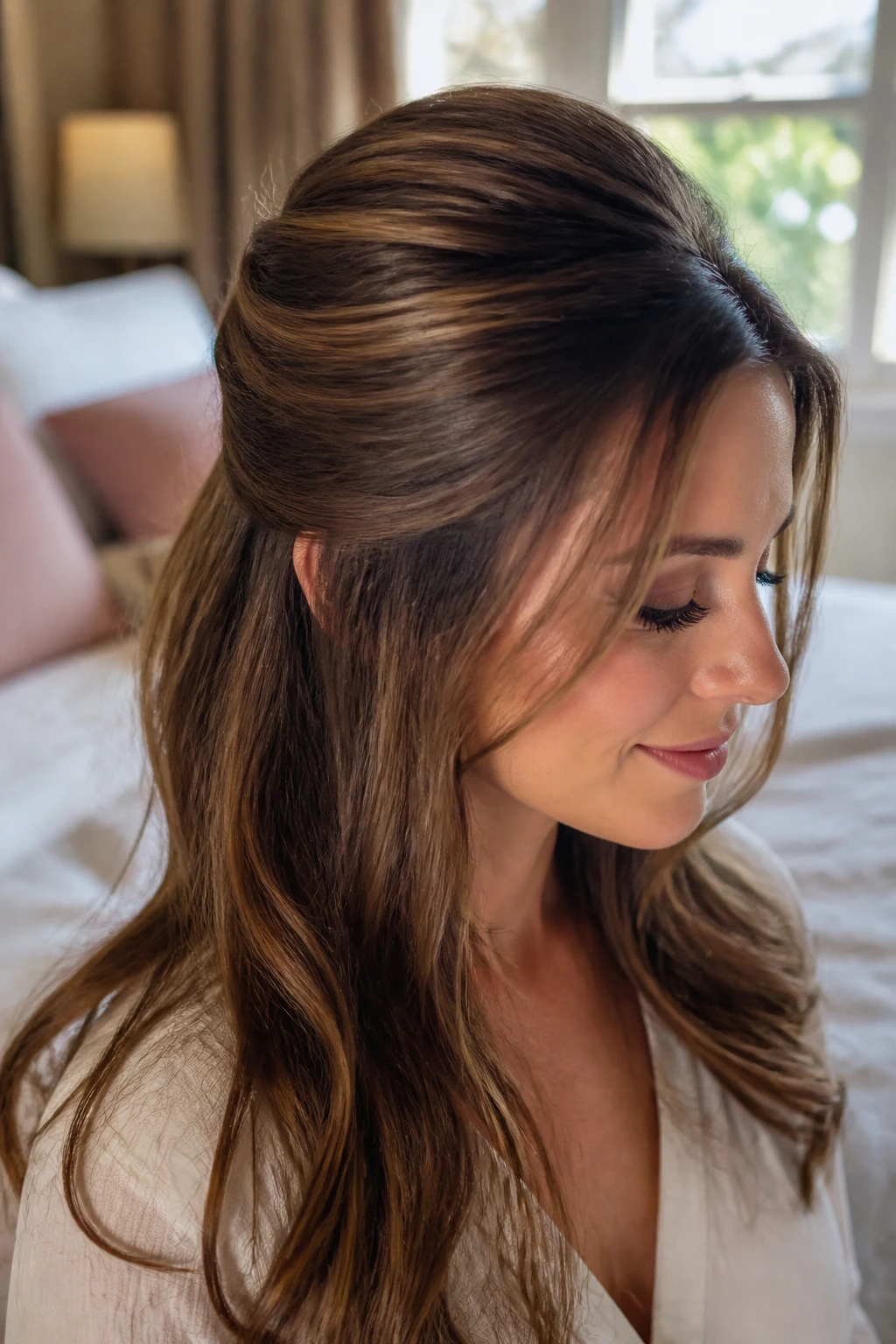
Fine hair is picky about what it can carry, and the shopping list should respect that. Heavy creams, greasy serums, and oversized metal clips can flatten the very area you are trying to lift. I prefer products that add grip first and shine second. That usually means a light texture spray, a dry shampoo with a matte finish, and a flexible hairspray that dries down without crunchy flakes.
Accessories matter just as much. Look for bobby pins with a slight bend or textured ridges. The flat, slippery ones are cheap and annoying, especially if your hair is soft and straight. Clear elastics should be small and snug, not thick and stretchy like the ones meant for chunky ponytails. A small claw clip with curved teeth usually holds better than a decorative clip with a wide mouth and weak spring.
Color also matters. A pin that matches your hair does more than hide. It keeps the eye on the shape instead of the hardware. And if you want the accessory to show, choose one piece that feels intentional: one pearl barrette, one narrow scarf, one neat comb clip. Stacking five random accessories on fine hair usually looks busy before it looks stylish.
If your hair is especially slippery, use products with a little powdery finish rather than glossy ones. Gloss can be lovely on thick hair. On fine strands, it often means slide city.
How to Wear These Styles for Work, Dinner, and Everyday
For work: The sleek wrapped-elastic half pony, the side-swept barrette sweep, and the flat-twist temple sweep all look controlled without feeling overdone. They keep the front pieces in place and read clean under a blazer, sweater, or collared shirt.
For dinner or an event: The pearl pin ladder, the braided halo crown band, and the mini top knot with a teased crown carry a little more drama. They photograph well in the ordinary sense of the word because the shape is visible from the front and the back, which matters when hair is fine and details can vanish.
For casual days: The claw clip twist, the loose waved half knot, and the scarf-tied half pony are the quickest wins. They are the kind of styles that still look considered when you are half-dressed and running late.
For very short-to-shoulder-length cuts: Keep the sections small and the accessories close to the head. Fine hair that is also short can look lost if you try to force a long, loose braid or an oversized knot. Smaller shapes look more believable.
Volume Boosters and Finishing Touches
Root lift: Mist dry shampoo or a texture spray at the crown before you part the hair. Then wait ten to twenty seconds and massage it in with your fingertips. That tiny pause lets the product dry enough to grip instead of just sitting wet on the scalp.
Pin placement: Cross two bobby pins in an X under twists or knots. One pin alone often slides, especially on silky hair. Two pins working against each other usually stay put longer.
Accessory rule: Keep the hardware smaller than you think you need. Fine hair gets swallowed by huge clips and oversized scrunchies. A slim claw, a narrow barrette, or a pair of pearl pins often looks better because the accessory matches the scale of the hair.
Shape trick: Leave two thin face-framing pieces out when the style feels too severe. That little softness can make the whole look feel lighter and keep the crown from reading flat.
Make-it-yours: If your hair is pin-straight, add bend only to the bottom half. If it is wavy, keep the crown smoother and let the texture live below. If it is color-treated and fragile, skip heavy teasing and lean on pin placement and dry shampoo instead.
Keeping the Style Fresh Between Washes
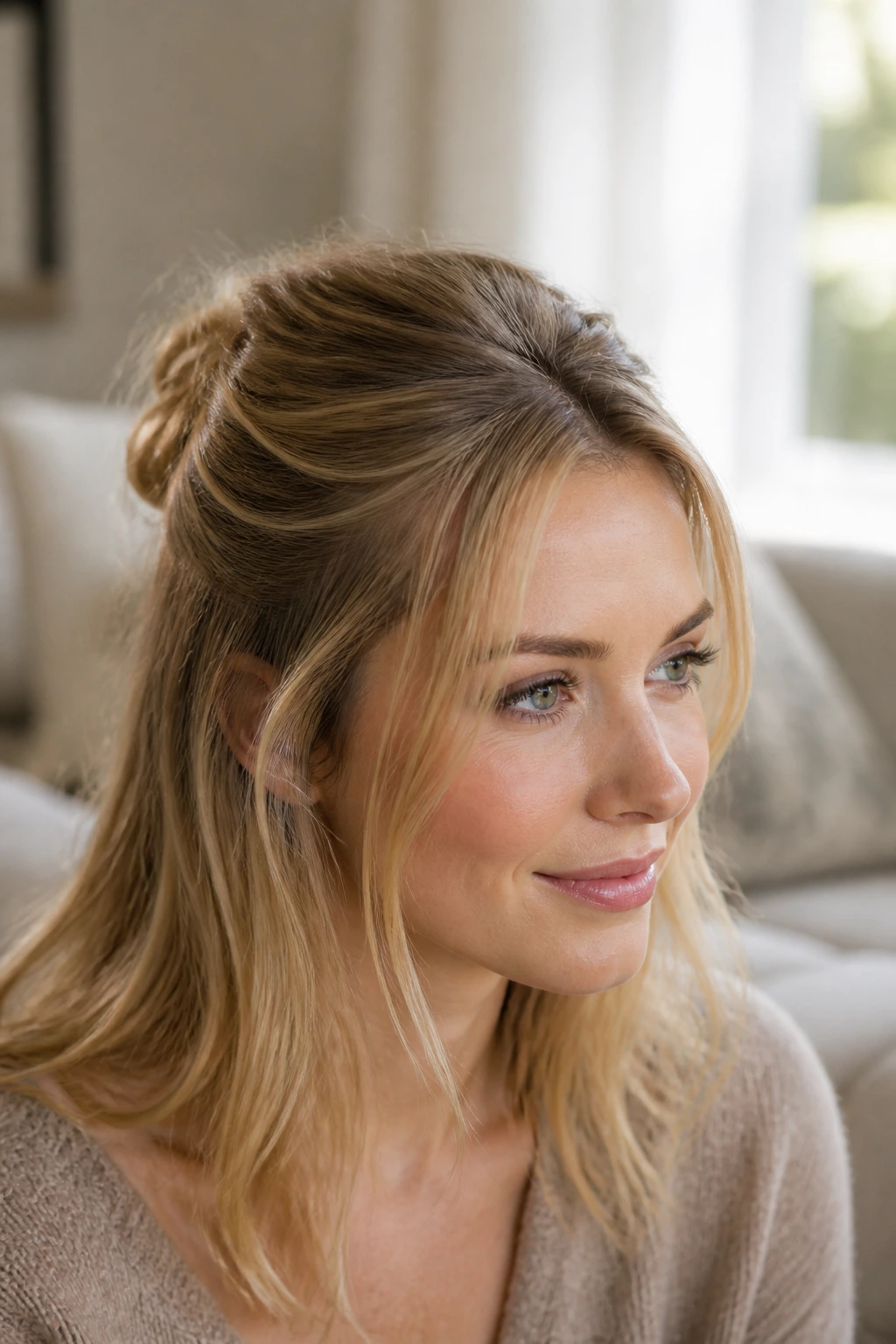
Half-up styles on fine hair usually last longer on day-two hair, but they can still be revived if the crown starts to sag. The fastest fix is not more hairspray. It is usually a small reset. Take out the pins, shake out the root area, add a quick mist of dry shampoo, and rebuild the shape rather than stacking more hardware on top of a collapsing base.
If you need the style to last through a long day, prep the roots first and let the spray dry before you start pinning. Wet product plus fine hair equals slide. That is the part most people learn the hard way.
For overnight protection, do not sleep in a tight half-up tie. It dents the crown and can leave the top sections bent in a way that is hard to smooth out. If you want to preserve waves or a knot for the next day, loosen the elastic, switch to a silk scrunchie, or pin the style more loosely and sleep on a silk pillowcase. You will still need a quick refresh in the morning, but the shape survives better.
The lengths below usually rebound well. The crown is the part that needs the most help. If you start there, the rest of the style falls back into place faster than you might expect.
Variations and Adaptations to Try
The Short-Length Reset: If your hair stops at the shoulders, lean on the crown-twist lift, the side-swept barrette sweep, or the mini top knot. Shorter fine hair often looks better with compact shapes that sit close to the head.
The Ultra-Straight Fix: For hair that slips the second you style it, build every look on dry shampoo and a matte finish spray. Rope twists, flat twists, and the wrapped-elastic pony hold best when the strands have some drag.
The Soft-Wave Version: If you already have bend in the lengths, keep the top half simple and let the wave pattern do the work below. The pull-through braid and loose waved half knot both fit this lane well.
The Dress-Up Edit: Swap plain elastics for pearl pins, a narrow satin scarf, or a clean barrette. Fine hair often looks more finished when one accessory becomes the focal point instead of a pile of styling tricks.
The Minimalist Version: Use just two pins and one small twist. There is no rule saying a half-up style has to announce itself from across the room. On very fine hair, the quietest version is often the most flattering.
Common Mistakes to Avoid
-
Grabbing too much hair: If the half-up section starts too low or too wide, the style gets heavy and the crown goes flat. Keep the top section narrow and centered around the crown, not the whole head.
-
Using oversized accessories: Huge clips and thick elastics can overpower fine hair and slip around. Choose smaller hardware that matches the amount of hair you actually have.
-
Smoothing the roots too hard: A sleek top can be nice, but over-smoothing makes the scalp show more and removes the tiny bit of grit that helps styles stay put. Leave some texture at the crown.
-
Teasing the outer layer: If the backcombing shows through, the hair looks frizzy instead of full. Tease underneath, then smooth only the top layer.
-
Skipping pin support: One pin can look fine in the mirror and fail an hour later. Cross-pinning under twists, knots, and rolls gives the style real structure.
-
Starting on hair that is too clean: Freshly washed fine hair is often too slippery for half-up styles. If that is your starting point, add dry shampoo and wait a minute before styling.
Frequently Asked Questions
Which half-up style gives the most volume to fine hair?
The mini top knot with a teased crown and the soft tease-and-pin volume crown usually give the biggest lift at the top. They work because they build height where the eye starts, not at the ends where fine hair tends to lose shape first.
Can I do these styles on short hair?
Yes, but keep the sections smaller and the shapes closer to the head. The crown-twist lift, side-swept barrette sweep, and face-framing pullback are the easiest options for shoulder-length or slightly shorter cuts.
Should I use clean hair or day-old hair?
Day-old hair usually behaves better because it has a little natural grip. If you must style freshly washed hair, use dry shampoo at the roots and give it a minute to absorb before you pin anything.
What products help fine hair hold a half-up style?
Dry shampoo, texture spray, and a flexible-hold hairspray are the three staples. A tiny amount of smoothing cream on the ends can help polish the finish, but avoid heavy oils near the crown.
How do I stop bobby pins from slipping out?
Cross two pins in an X and slide them in with the wavy side against the scalp. Pins hold better when they grab a little texture, so a bit of dry shampoo at the anchor point helps a lot.
Can I wear extensions with half-up styles?
You can, as long as the placement of the extensions stays hidden under the top section. The half-up styles with minimal lifting, like the wrapped pony or side-swept barrette sweep, are usually easiest to blend.
What if my crown goes flat halfway through the day?
Take the style down, shake out the roots, and rebuild the top section instead of adding more pins on top of a sagging base. A quick hit of dry shampoo before the reset usually helps more than extra hairspray.
Do curls or straight ends work better with fine hair?
Both can work, but contrast often helps. A textured crown with straight ends or a soft wave only in the lower half can make the hair look more dimensional than curling everything evenly.
The Half-Up Sweet Spot
Fine hair does not need to be forced into pretending it has twice the density. It needs a smarter shape. That is why these half-up styles work so well: they give the crown a little lift, keep the lengths visible, and let small accessories and careful pinning do the heavy lifting.
The best part is how forgiving the category is. Some of these looks take two minutes. Others need a tail comb and a little patience. All of them are built on the same idea: make the top half feel deliberate, then let the rest move.
If you keep one rule in mind, make it this one — small sections, real grip, and clean anchor points beat big gestures every time. That is the whole game with fine hair, and once you start styling that way, half-up looks stop feeling like a compromise and start feeling like your sharpest option.
