



The best wavy hairstyles for short thick hair don’t try to bully the hair into behaving. They work with the density, give the wave somewhere to sit, and stop the sides from puffing out like they’ve got their own opinions. That’s the whole trick. If you’ve ever walked out of a cut with too much width at the jaw, too much bulk at the nape, or bangs that turned into a shelf by lunch, you already know how unforgiving short thick hair can be.
The good versions are a lot smarter than they look. A chin-length bob can feel light if the interior is relieved correctly. A pixie bob can look soft instead of harsh if the crown gets a little lift and the perimeter stays clean. Even a blunt line can work on dense hair, but only when the wave pattern has enough room to bend instead of stacking up in a heavy block.
What I like most about short thick waves is that they can go in several directions without losing their backbone. Some styles read polished. Some look a little undone in the best way. A few are the sort of cuts that get better on day two, when the wave loosens and the shape settles. The wrong cut makes thick hair look loud. The right one gives it shape, movement, and that slightly expensive-looking texture that comes from smart weight removal, not a pile of product.
Why This Collection Feels Different

-
Built for density, not against it: Every style here deals with thick hair’s natural bulk by moving weight around instead of stripping it out.
-
Different effort levels: Some looks need nothing more than a quick scrunch and a diffuser; others want a 1-inch iron and five calm minutes in front of the mirror.
-
Short hair, real movement: These aren’t stiff salon helmet cuts. The wave matters, and each style gives it room to bend, flip, or tuck.
-
Grow-out friendly options: Several of these shapes stay neat as they soften, which matters a lot when your hair grows quickly and the bottom line starts to blur.
-
Stylist-friendly language: You can actually ask for these cuts without sounding like you’re reading from a mood board. That saves time for everyone.
-
Works with natural wave or styled bend: If your hair already waves, these cuts amplify it. If it doesn’t, they still hold a bend from heat or rollers without collapsing an hour later.
1. The Chin-Length Tousled Bob

A chin-length tousled bob is one of those cuts that looks relaxed on purpose, which is harder to pull off than it sounds. On short thick hair, the chin line gives the wave a place to land without building too much width at the sides. When the ends are lightly point-cut and the interior has a touch of debulking, the whole shape reads soft instead of boxy.
Why It Works on Dense Hair
Thick hair loves a clean outline with a little movement inside it. That’s exactly what this cut gives you. The perimeter stays strong enough to keep the style from puffing, while the interior layers stop the bottom half from looking like one solid block.
Ask your stylist to keep the weight slightly below the cheekbone and to avoid over-thinning the ends. Too much razor work can make short thick hair fray. A better result comes from controlled removal, not aggressive texturizing.
Styling Note
- Rough-dry until the hair is about 80 percent dry.
- Bend only the front sections with a 1-inch iron, leaving the ends straight for a softer finish.
- Work a pea-sized amount of lightweight cream through the ends, not the roots.
- Tuck one side behind the ear if you want the whole cut to look cleaner and a little sharper.
This is the style I’d point to first if someone wants a short wave that can handle errands, office life, and a dinner reservation without needing a second pass. It does not beg for attention. It earns it.
2. The Deep Side-Part Pixie Bob
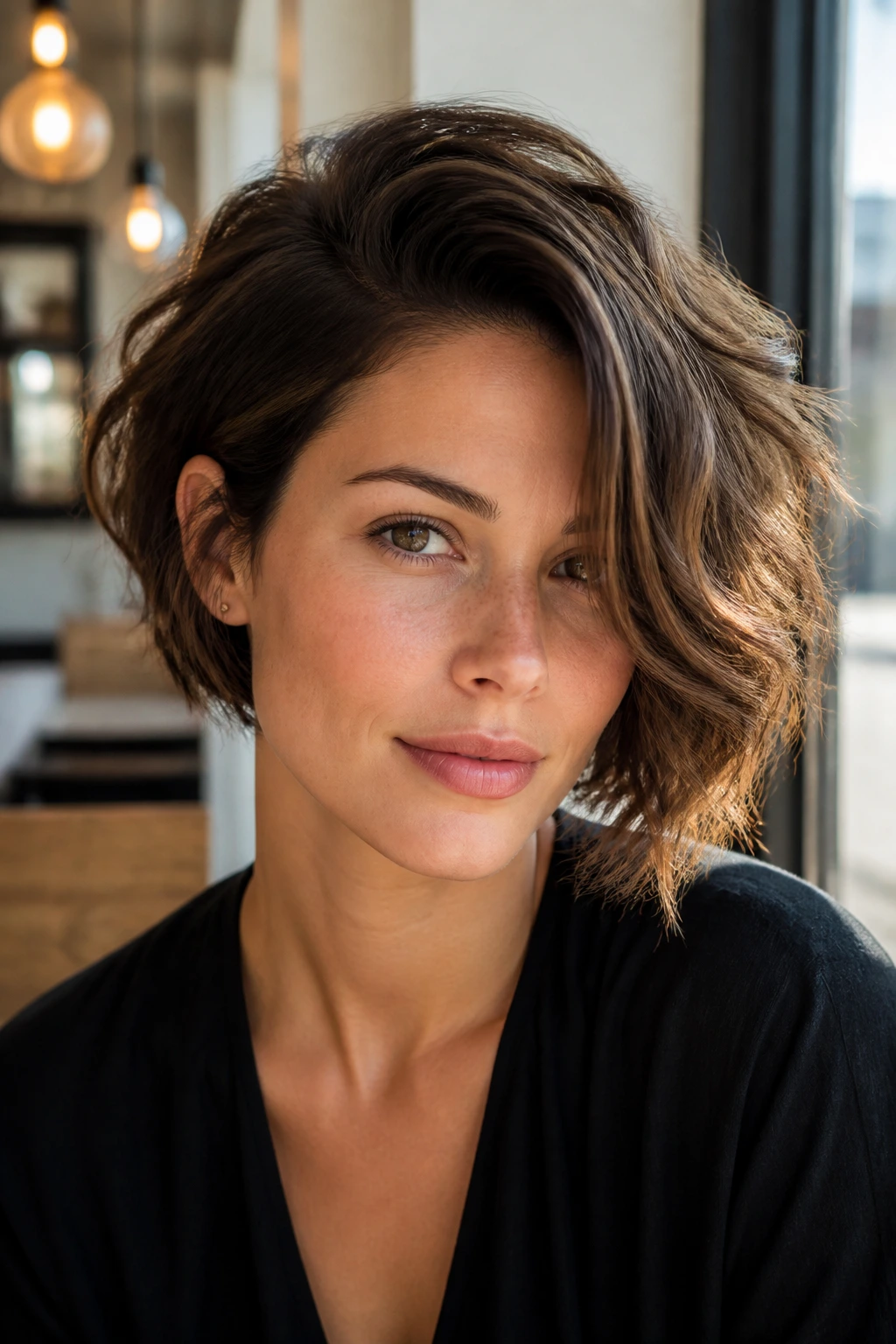
This is the one that proves short thick hair doesn’t have to sit flat or symmetrical to look put together. A deep side part gives the crown instant lift, and that lift matters because dense hair can collapse into itself if everything is cut and styled straight down the middle.
The side-part pixie bob also has a nice bit of attitude. One side hugs the cheek, the other rises just enough to create shape. On wavy hair, that asymmetry keeps the cut from feeling too neat. On thick hair, it keeps the shape from becoming round in all the wrong places.
The best version has a tapered nape, a little more length around the temples, and soft edges rather than blunt ones. I like this style on people who want short hair but don’t want to look severe. It’s a smarter cut than a lot of pixie hybrids, and it gives the wave a chance to show up without turning frizzy at the crown.
3. The French Bob With Brow-Length Fringe

Why does this work so well? Because the French bob knows how to frame the face without asking the rest of the hair to do too much. On thick hair, the blunt line near the jaw gives structure, while the brow-length fringe keeps the forehead from feeling heavy or hidden.
The fringe is the part that needs the most thought. If your hair waves strongly in front, ask for a slightly longer fringe that can bend instead of sitting like a shelf. If your wave is loose, a true brow-skimming length can look crisp and elegant. Either way, the cut should not be packed with too many short layers around the face, or the whole thing starts to feel fuzzy.
Best Styling Move
- Blow-dry the fringe first, while it’s still damp.
- Use a flat brush to guide it side to side, then let it fall.
- Add a tiny bit of styling balm only at the ends of the fringe if they split apart.
- Keep the rest of the bob soft and piecey so the bang line doesn’t feel too hard.
This cut has a nice balance: the line is clear, but the texture keeps it from looking stiff. On thick hair, that balance is worth a lot.
4. The Jaw-Skimming Rounded Bob

If your hair tends to flare out right at the jaw, a rounded bob can be a small miracle. The curve of the shape follows the face instead of fighting it, which keeps thick waves from making the lower half of the head look wider than it is.
The key is in the shape, not the length alone. A rounded bob should sit around the jaw and bend in slightly at the ends, almost like the cut is cupping the face. That tiny inward curve changes everything. It keeps the silhouette compact while still letting the wave show through.
Tell your stylist you want softness through the sides without losing control at the perimeter. That usually means interior layers, a clean edge, and no dramatic stacking in the back. A heavy stack can work on some heads, but on very thick wave patterns it can push the shape too high and make the back feel bulky. This version stays calmer.
5. The Shaggy Crop With Crown Volume

Not every short thick style should be obsessed with the ends. Sometimes the crown is where the problem starts. A shaggy crop with crown volume shifts the focus upward, using shorter layers near the top to lift the whole head shape and keep the sides from spreading.
This is a good cut for people whose waves collapse at the roots but puff at the jaw. The crown layers add height, which changes the balance of the cut. Instead of one wide zone from ear to chin, you get a shape that moves upward and then tapers cleanly.
I like this one with a soft side sweep or a broken fringe. A full blunt bang can make it too heavy, too quickly. The shag works best when it looks lived-in, not over-designed. Use a mousse at the root, diffuse on low heat, and let the ends stay a little piecey. That slightly messy finish is not a mistake here. It’s the point.
6. The Curtain-Bang Wave Bob
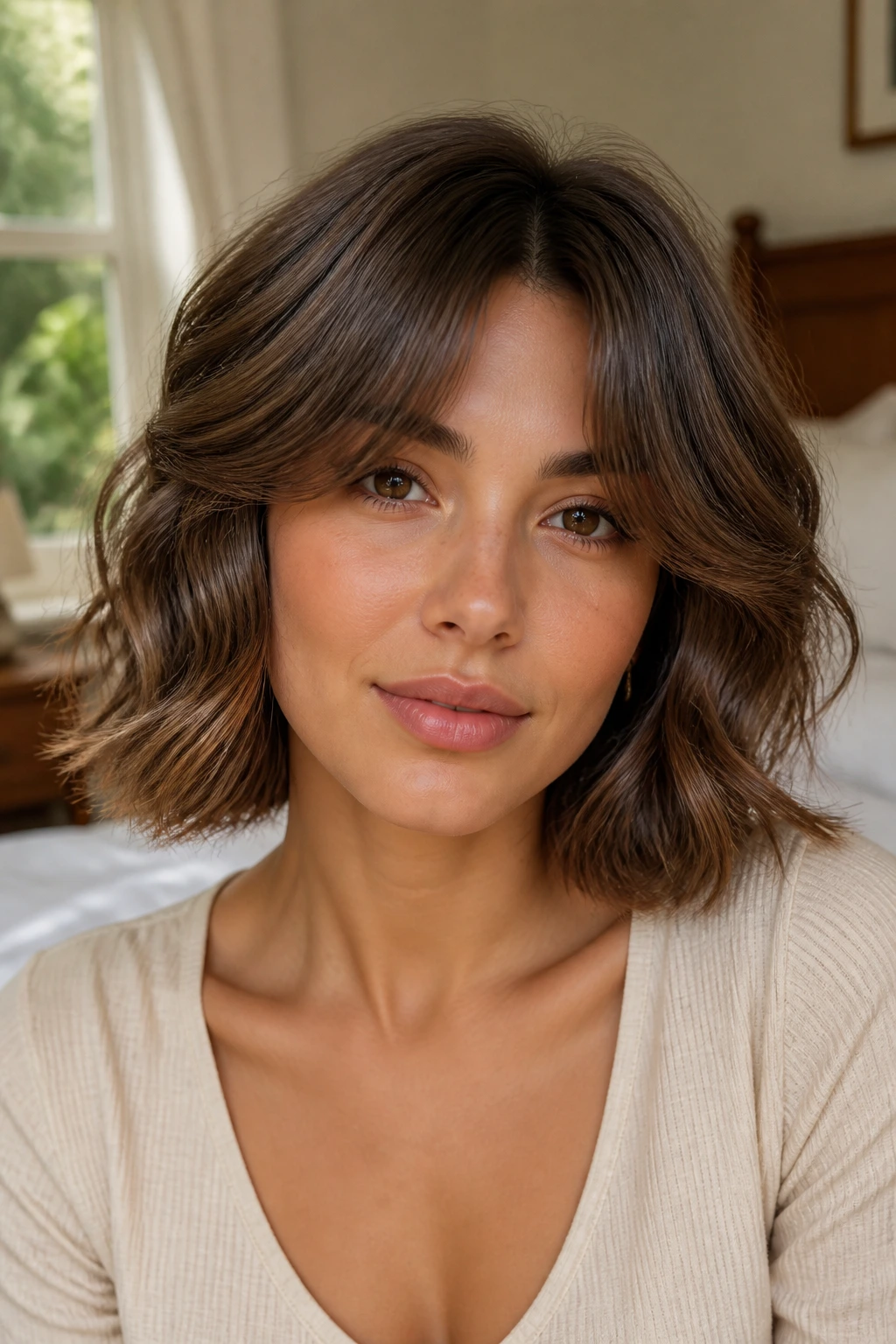
A curtain-bang wave bob is a good answer when you want face framing without the commitment of a full fringe. The bangs split around the center, then fall into the sides of the bob, which helps thick hair feel lighter around the forehead and cheekbones.
The shape also plays nicely with natural wave because the bangs don’t need to sit perfectly straight. They’re meant to bend. That means you can work with a rougher texture and still get a polished result. The rest of the bob can stay shoulder-free and compact, which keeps the overall look modern rather than heavy.
What Makes It Different
A blunt bang on thick hair can eat the whole haircut alive. Curtain bangs do the opposite. They break up the front line, soften the transition into the sides, and let the rest of the bob carry more of the visual weight.
If you wear glasses, this one is especially useful. The bang shape can sit above the frames or sweep around them, instead of crashing into them in a straight line. Ask for longer pieces at the center if you want more styling room; short thick hair grows out fast, and a little extra length in the fringe helps you dodge that awkward in-between stage.
7. The Tucked-Behind-the-Ear Clean Bob

This is the cut for anyone who likes a neat side but still wants texture in the body of the hair. Tucking one side behind the ear changes the whole feeling of a short thick bob. It pulls some of the width away from the face and lets the wave sit where it looks intentional, not busy.
The magic is in the contrast. One side stays loose and wavy, the other gets tucked cleanly away. That asymmetry is forgiving on dense hair, especially if your wave pattern makes one side more stubborn than the other. You do not need perfect symmetry here. In fact, the slight imbalance is what gives it life.
Ask for enough length in front to tuck without creating a little shelf of hair at the ear. That shelf is the enemy. The ends should skim the cheek, then taper lightly toward the jaw. A flat iron can help bend the front pieces under just a touch, but keep the rest airy. Heavy product will kill the effect.
8. The Flip-End Mini Lob

A flip-end mini lob has a nice bit of motion in it that thick hair can hold without falling apart by noon. The length usually sits between the jaw and the collarbone, which gives the ends room to turn out instead of sitting like a blunt wall.
On wavy hair, that little flip at the edge can look almost accidental, and that’s why it works. The wave pattern helps the ends do some of the styling for you. You can coax the flip with a round brush or a medium barrel iron, but the cut itself does most of the work if the perimeter is clean and the interior is not too heavy.
The best version has light face-framing layers and a slightly longer front. That keeps the line from feeling blocky. If your hair is very dense, ask for the weight to be reduced just below the cheekbone, not all through the bottom. The result is easier to blow-dry and less likely to puff at the shoulders.
9. The Stacked Nape Bob
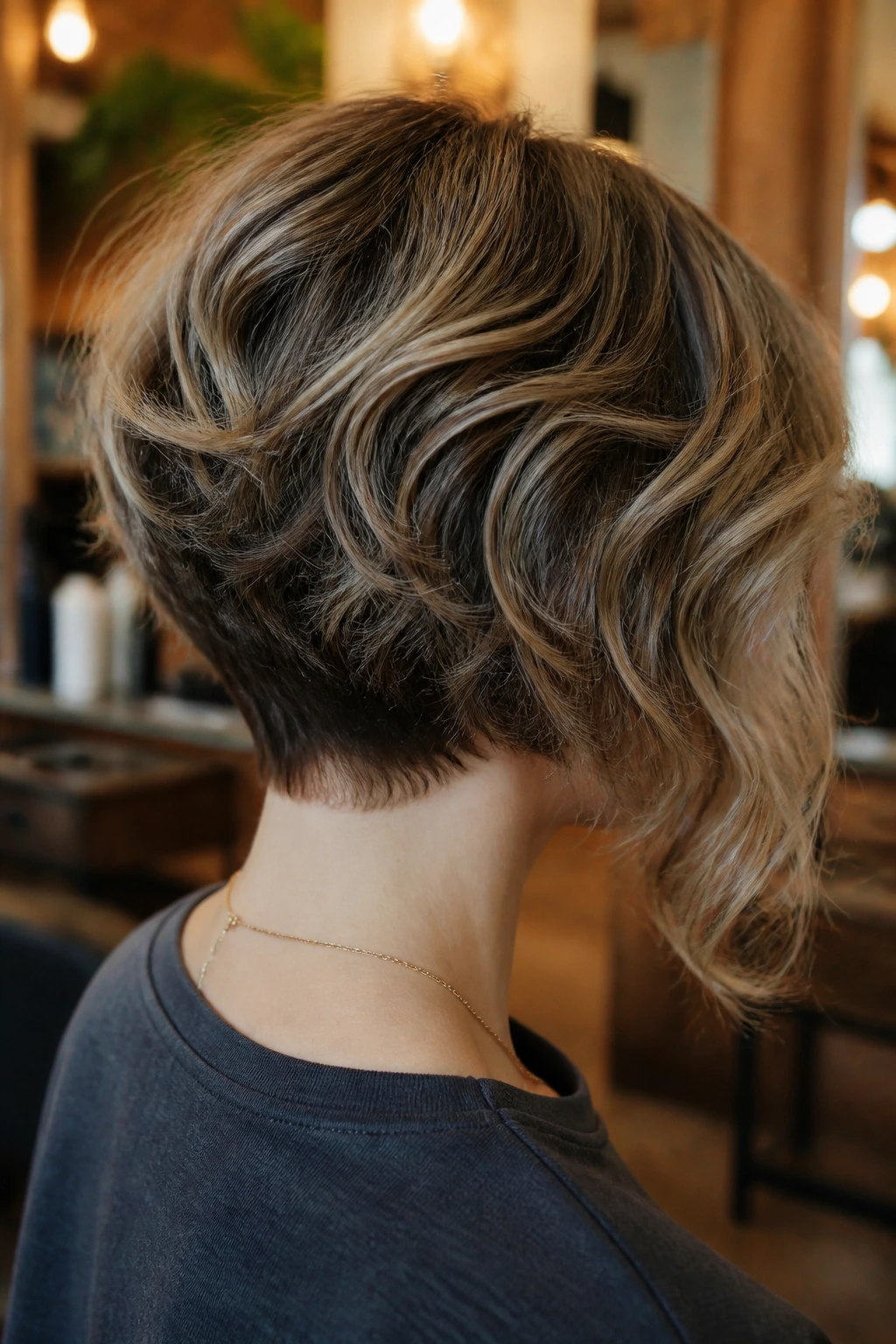
A stacked nape bob is one of the most useful shapes for thick hair that builds too much bulk in back. By shortening and stacking the hair at the nape, the cut removes weight where it tends to gather, then lets the front stay a little longer and softer.
This is a sharper look than some of the looser options here. It gives a neat line through the back of the head and a clear shape at the jaw. If you like hair that feels engineered rather than casual, this is a strong choice. It also keeps the neckline from getting swallowed by dense hair, which is a real issue on short cuts.
The trick is not to over-stack it. Too much elevation in the back can make thick hair sit high and round, almost like a cap. A moderate stack with soft waves through the top layers looks better in motion and grows out more gracefully. If you wear collars a lot, this shape stays tidy against shirts and jackets without much fuss.
10. The Messy Italian Bob

The messy Italian bob is all about presence. It’s fuller than a French bob, softer than a classic blunt bob, and less precise than a lob. On thick hair, it gives you cheekbone volume without making the jaw look heavy, which is a useful trade.
What I like here is the looseness near the ends. The wave isn’t forced into tidy rows. It falls with a little bend, a little separation, and enough body to keep the cut from looking flat. A side part works beautifully, but a slightly off-center part can make the whole shape feel richer and less formal.
Tell your stylist you want movement, not shredding. That distinction matters. The Italian bob can go wrong if the layers are cut too short or too aggressively. You want internal relief and a soft perimeter, plus enough length around the front to swing away from the face. The result looks relaxed, but there’s a lot of technique underneath it.
11. The Airy Wavy Pixie
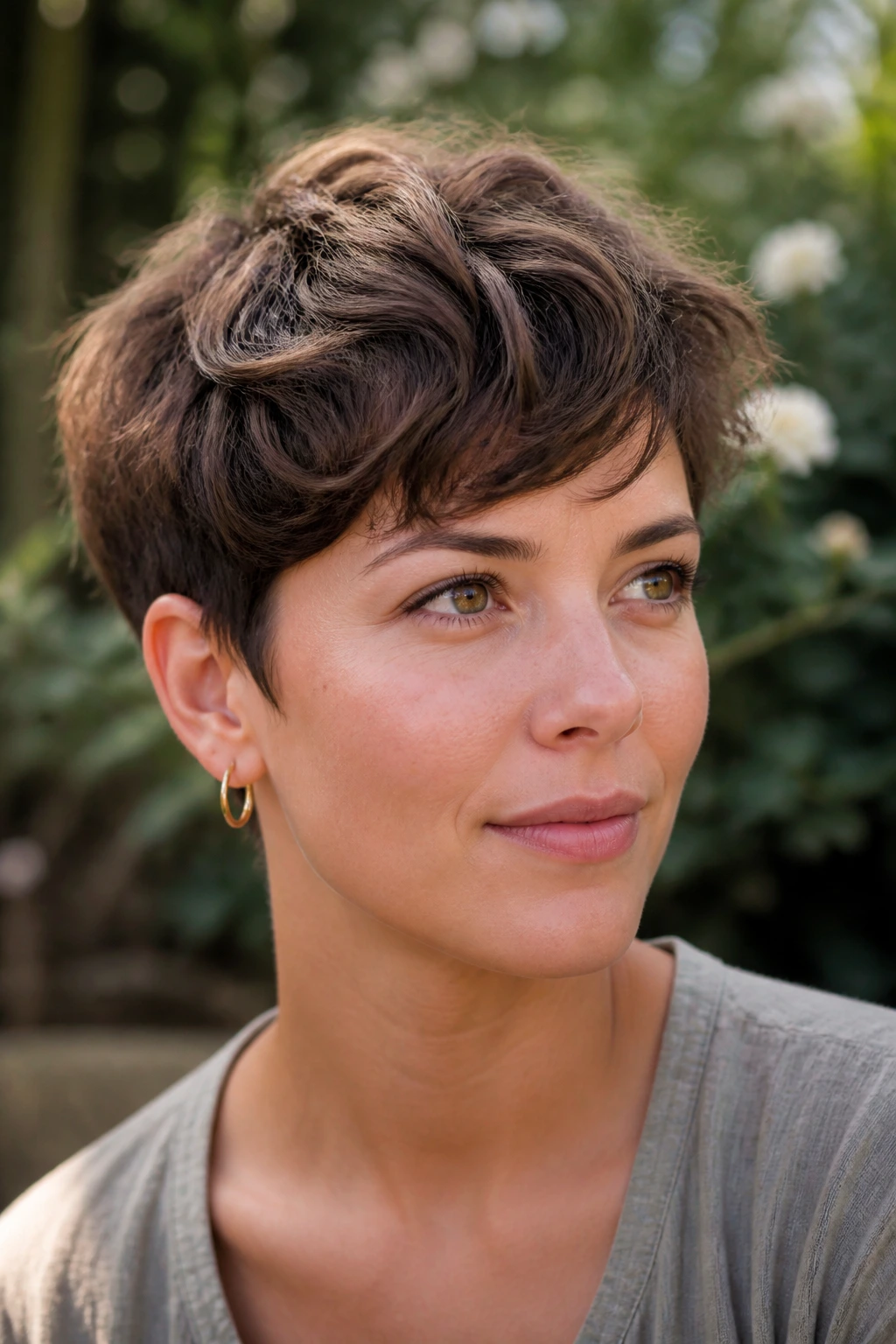
Short doesn’t have to mean tight. On thick hair, a wavy pixie can look softer than a longer bob if the top is left with enough room to move. That’s the part people often miss. If you cut too close to the scalp, the hair can lose its bend and start to sit like a cap.
An airy pixie keeps length on top, trims the sides carefully, and lets the wave pattern show through instead of flattening it. I like a bit of softness around the ears so the cut doesn’t turn severe. If your hair grows outward more than upward, this can be a very forgiving shape because the top remains textured and the sides stay clean.
Use a small amount of paste or cream only on the ends of the top layers. Work it between your fingers first. That tiny step keeps thick hair from clumping in the wrong places. A lot of people overdo product on pixies because they’re afraid the style will fall apart. On dense hair, less is usually better.
12. The Wet-Look Sculpted Crop
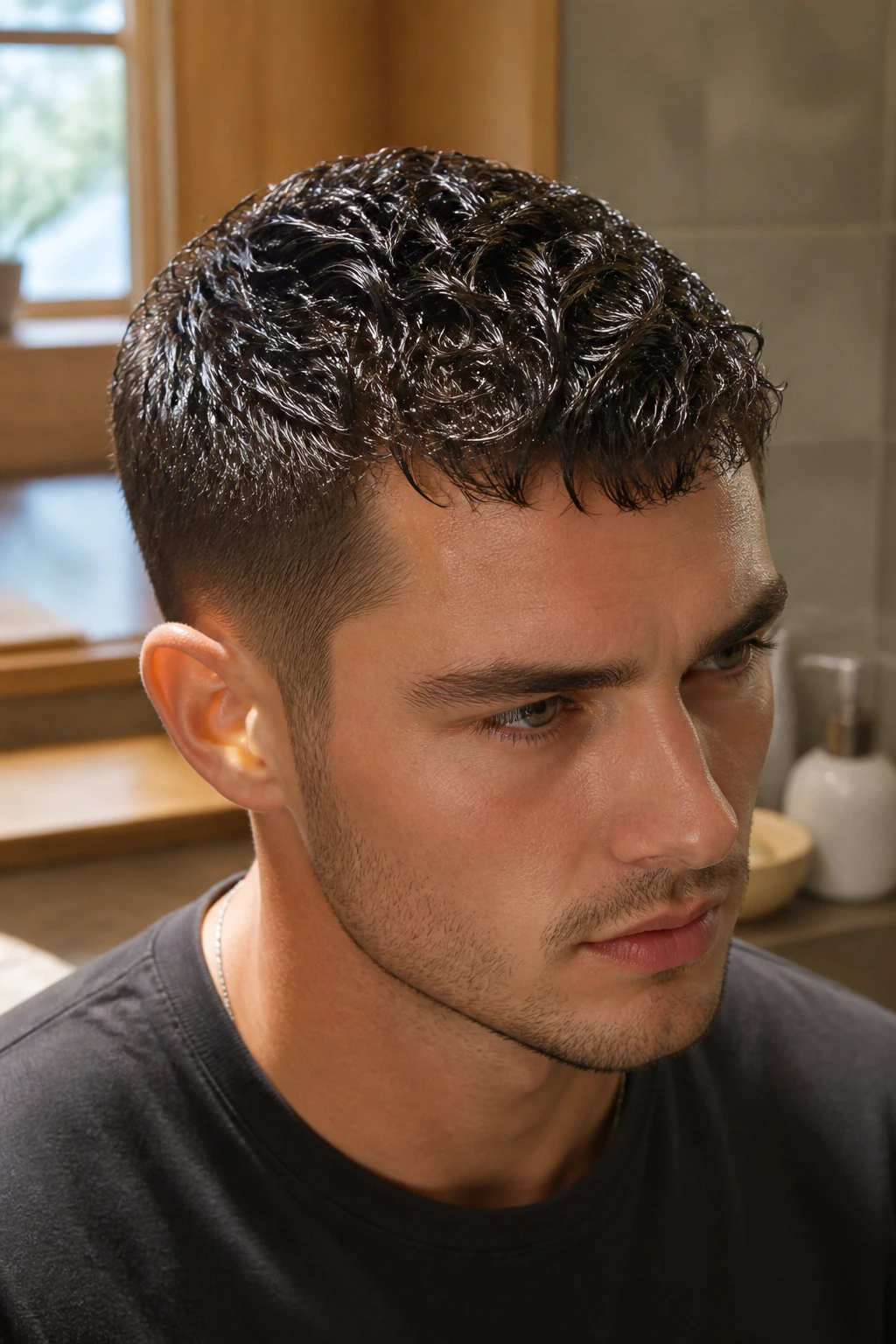
Can short thick hair pull off a wet look without turning into a greasy mess? Yes, if the cut underneath is controlled. The sculpted crop depends on a clean shape first, then a slick finish on top of it. Without the right cut, the product just exaggerates every rough corner.
This style works especially well on wave patterns that go a little wild at the crown or around the temples. The gel or styling cream smooths the surface, while the haircut keeps the bulk in check. You get definition instead of puff. That’s the difference between intentional shine and hair that looks like it was caught in the rain.
The best move is to comb the product through damp hair with a fine-tooth comb, then shape the top and sides with your fingers before everything dries. A deep side part makes the look feel more deliberate. If you want a shorter, sharper version, keep the nape tight and leave just enough length on top for movement. This is one of the few short thick styles that can look genuinely chic in humid weather.
13. The Asymmetrical Wave Bob

A small asymmetry can solve a lot of thick-hair problems. One side a touch longer than the other gives the wave room to fall without building both sides to the same width. That means less bulk near the jaw and more visual line through the face.
This is not a dramatic avant-garde cut. It’s subtler than that. One side might graze the cheekbone while the other slips a half-inch lower. That tiny difference creates movement and keeps the bob from feeling static. On hair that tends to separate or swell unevenly, asymmetry can look more natural than forced symmetry ever could.
Bring a photo and be clear about the difference you want. A quarter-inch can matter. Too much asymmetry gets theatrical fast, and short thick hair already has enough body. The sweet spot is noticeable when you look at it, but not so sharp that the cut becomes the only thing anyone sees.
14. The Modern Mullet Bob

The modern mullet bob sounds louder than it usually is. In practice, it’s a smart short cut that leaves more length in the back, keeps the top layered, and removes the heavy blocky feeling that thick hair can get at the nape.
I like this one when the wave pattern is inconsistent. Shorter layers at the crown help the top move, while the slightly longer back keeps the silhouette from looking chopped off. The face-framing pieces can be soft and feathery or a bit sharper, depending on how much edge you want. The key is that the cut does not sit in one flat plane.
It’s also a good option if you want a short style that can look casual or styled. Air-dry it and it feels relaxed. Blow it out with a round brush and it reads more polished. Thick hair gives this cut a lot of support, which is useful because the shape depends on texture showing up in different places, not on every strand behaving the same way.
15. The Rounded Mushroom Bob

A rounded mushroom bob can go wrong fast if it’s cut too stiff or too full at the sides. But when it’s softened properly, it’s one of the better shapes for thick hair that needs a little structure and a little curve.
The rounded outline gives the wave a dome to live in, while internal layering keeps the bottom from ballooning into a hard shelf. Think of it as the softer cousin of the bowl cut. The line is there, but it doesn’t shout. If your hair is especially dense, this shape can tame the width while still making the top look full and healthy.
I’d avoid this style if you like a lot of movement near the jaw. It’s more controlled than playful. Still, with the right point cutting and a bit of piecey finish on the ends, the mushroom bob can look modern instead of retro in a costume-y way. It has to be softened. That part matters.
16. The Collarbone-Grazing Short Lob
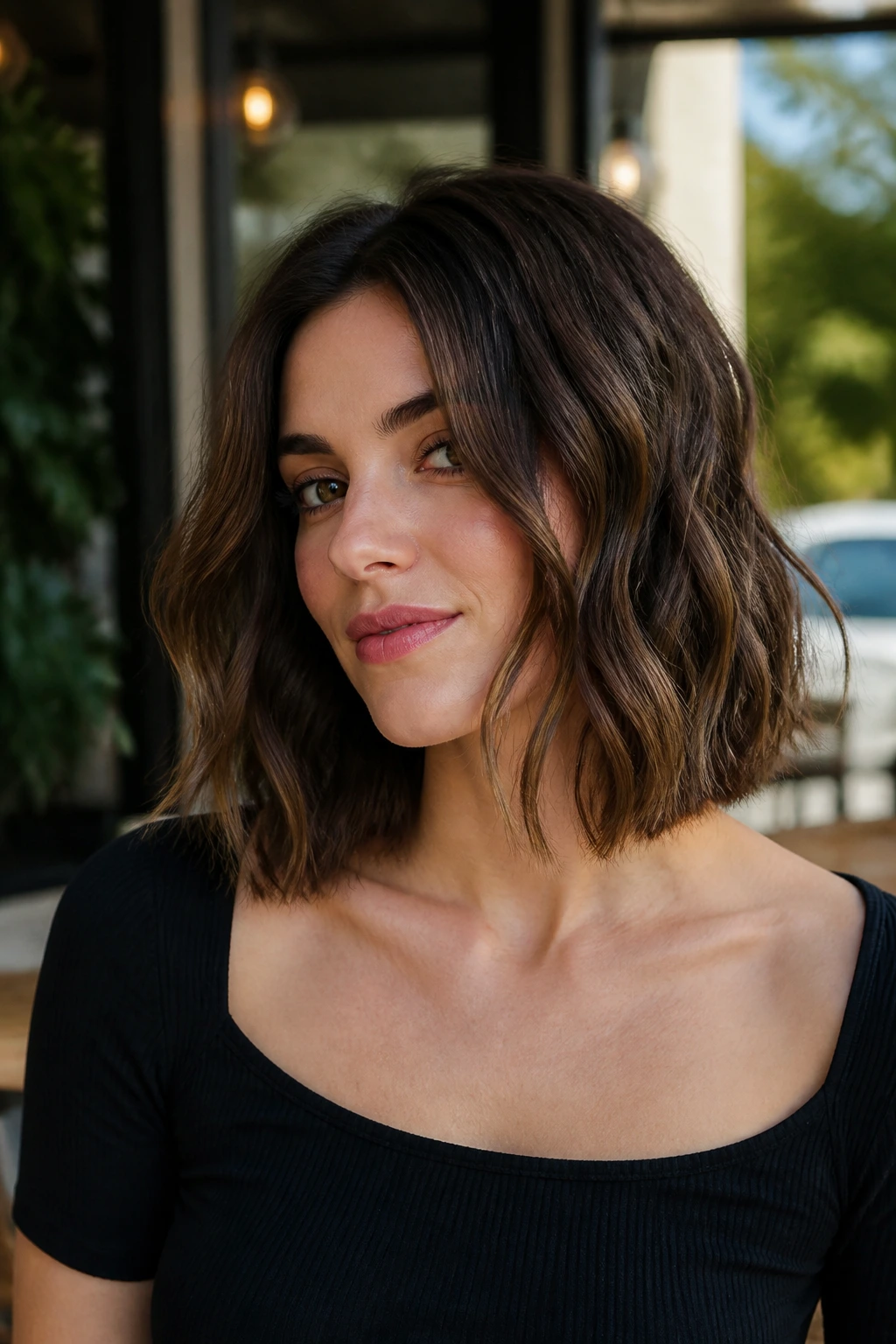
If you are not ready to go truly short, a collarbone-grazing lob is the safety net. On thick wavy hair, this length takes some of the pressure off the silhouette. The wave has more room to drop, which keeps the ends from fanning out too wide.
This is the style I’d suggest to anyone moving down from longer hair and nervous about the first chop. It still feels like a haircut, not a compromise. The length around the collarbone gives you enough room to tuck it, wave it, clip it back, or leave it loose without the heaviness that can make long thick hair look dragged down.
The best version has a blunt-ish perimeter with subtle internal layers. Too many short layers can make the ends kick out in strange directions. A soft bend with a flat iron or a large barrel iron is usually enough here. If your hair grows fast, this length buys you a little time between cuts and still looks balanced as it settles.
17. The Side-Swept Wave Crop
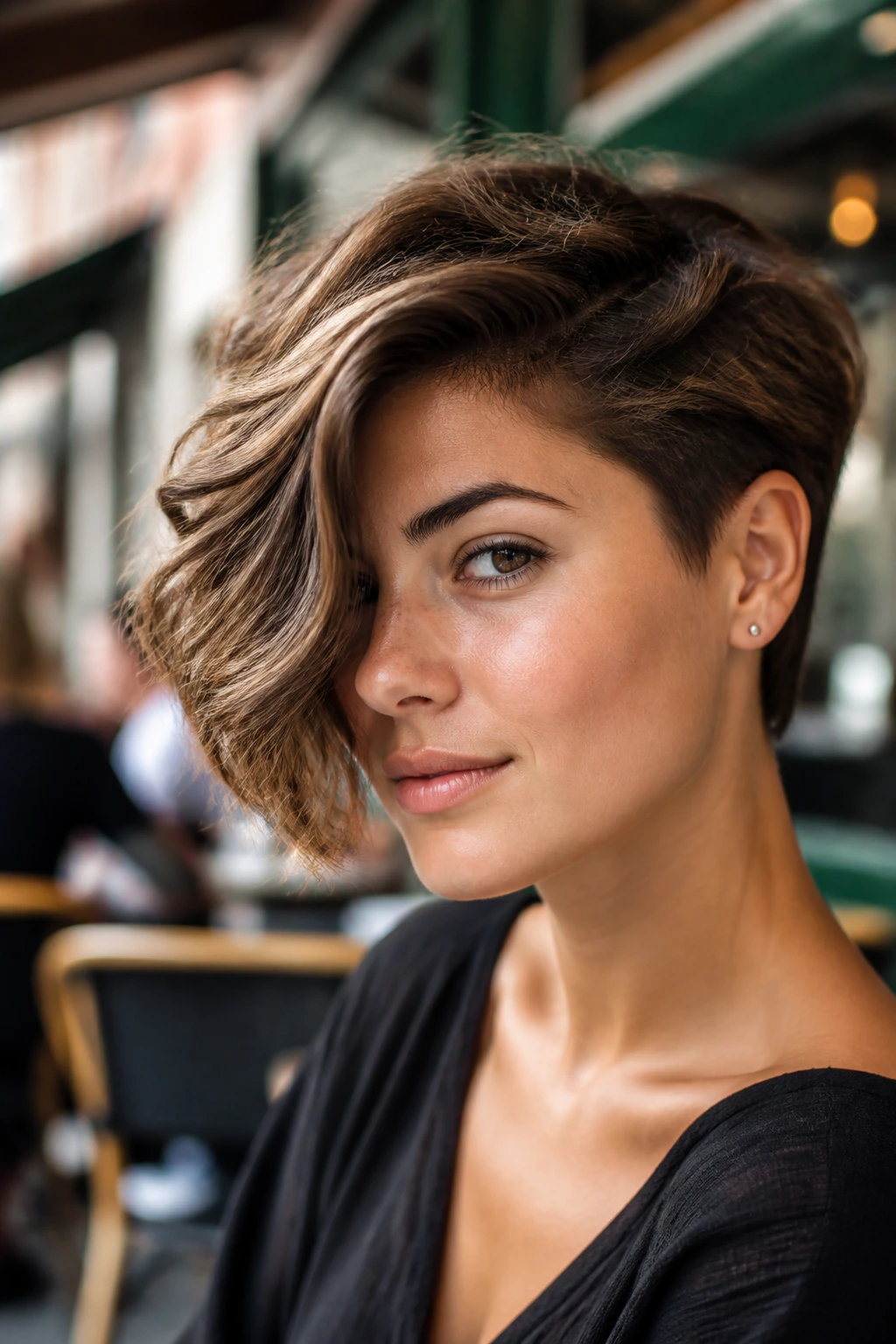
A side-swept crop is one of the smartest ways to make short thick hair look softer around the face. The side-swept front steals the focus from the width of the head and puts it where you want it—across the eyes, along the cheekbone, and through the top.
The crop itself can be short, but the top needs enough length to sweep. That’s the part that makes it work. If everything is cut too close, the style loses its shape and starts reading blunt. On wavy hair, a longer top section lets the movement carry without needing much heat styling.
This is a good match for thick hair that has a stubborn crown. The sweep can distract from cowlicks or uneven growth patterns. I’d ask for soft tapering at the sides and a little extra length where the part naturally falls. That makes the style easier to live with on a rough morning when you want the cut to do some of the work by itself.
18. The Razor-Textured Boyish Bob
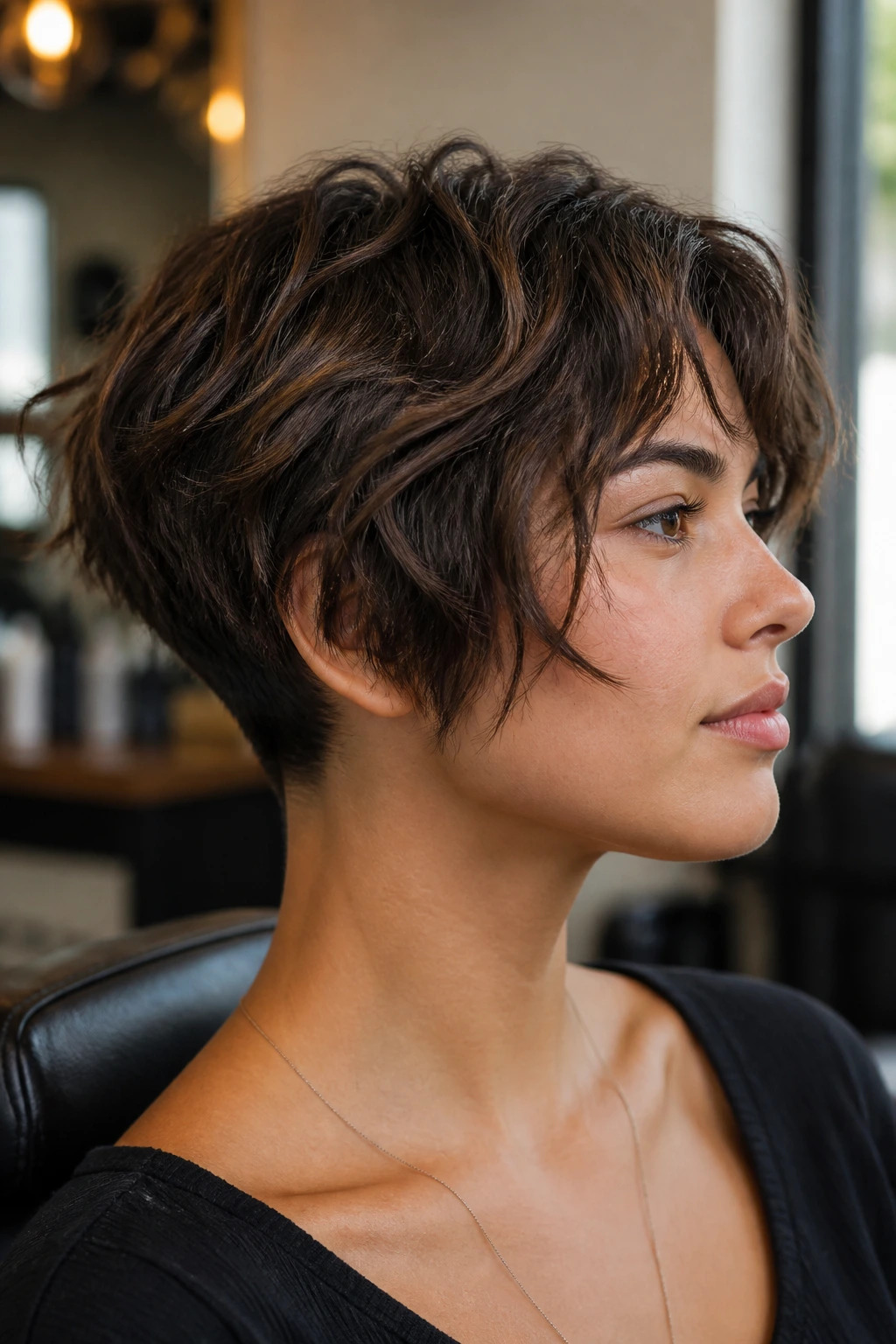
What if you want something sharper? The razor-textured boyish bob is the answer, but it only works when the razor is used with restraint. Short thick hair can take texture, yet it does not need to be thinned into wisps. The shape should stay clean even if the ends look broken up.
This cut leans slightly androgynous. It has a close, neat edge around the neckline, while the top and front stay soft enough to show wave. On the right head shape, that balance is gorgeous. It feels cool without trying too hard, and it lets glasses, strong brows, or a crisp collar do some of the styling work.
The danger is overdoing the texture. Too much shaving or slicing at the ends can make the hair frizz at the first sign of humidity. Ask for controlled razor work, not aggressive thinning. If your hair is coarse, a point cut may actually be a safer choice. I’m partial to this cut on people who want the wave to look edgy rather than romantic.
19. The Glam Finger-Wave Bob
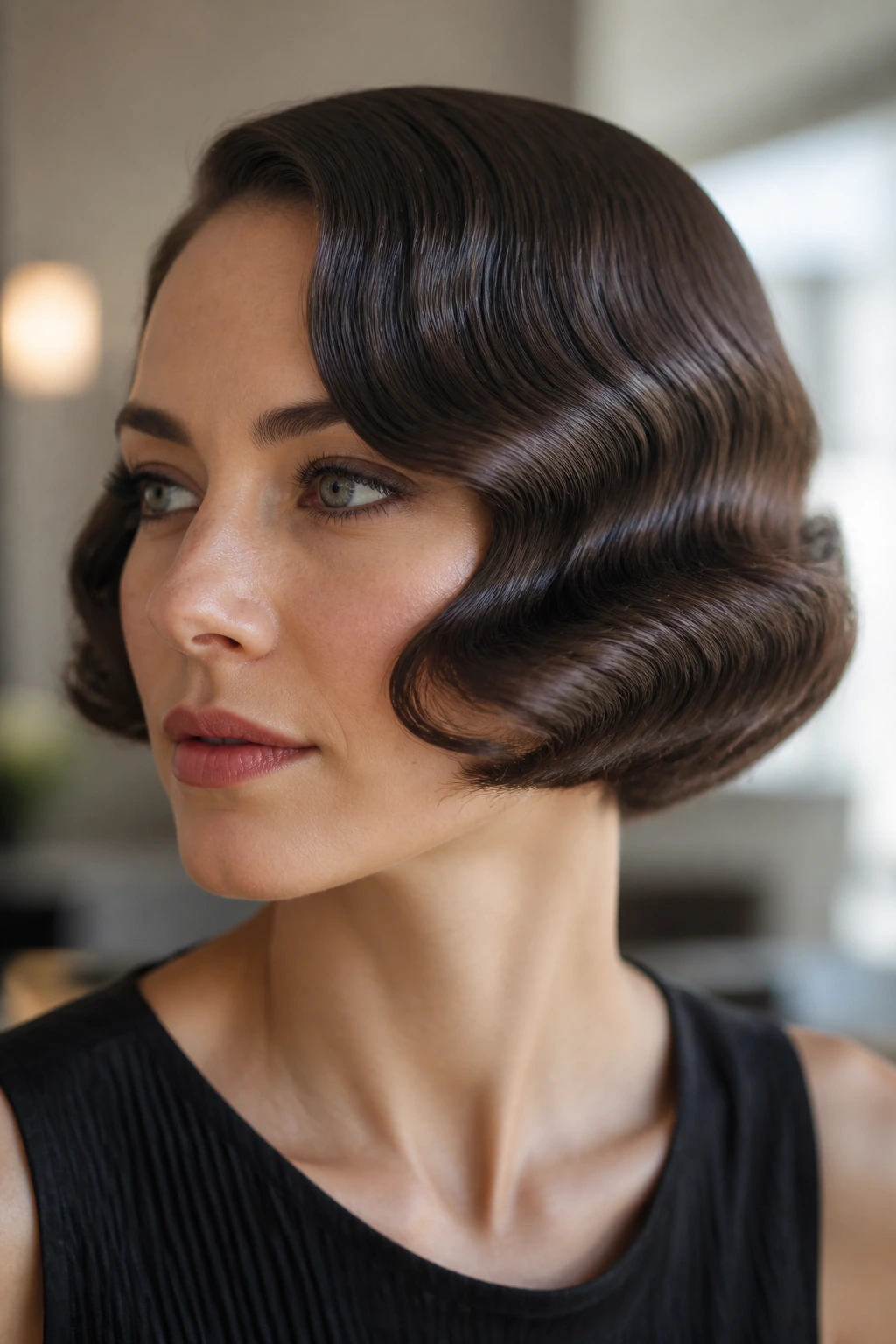
Short thick hair can absolutely go polished, and a finger-wave bob proves it. This style is more sculpted than most of the others here, with the wave pattern shaped close to the head and guided into a smooth, vintage-inspired line.
It works because thick hair holds pattern. That’s a gift here. Once the wave is set with gel or a strong styling lotion and clipped into place while it dries, the hair keeps the form without collapsing into a floppy mess. The result is sleek, deliberate, and a little dramatic in the best way.
This is not the style for a rushed five-minute morning. It wants patience. But when it’s done well, it looks expensive without needing much length. Keep the bob short enough to stay neat, leave enough density for the wave to read clearly, and smooth the surface with a fine comb before it sets. The shine does half the talking.
Why Short Thick Waves Need Internal Layers
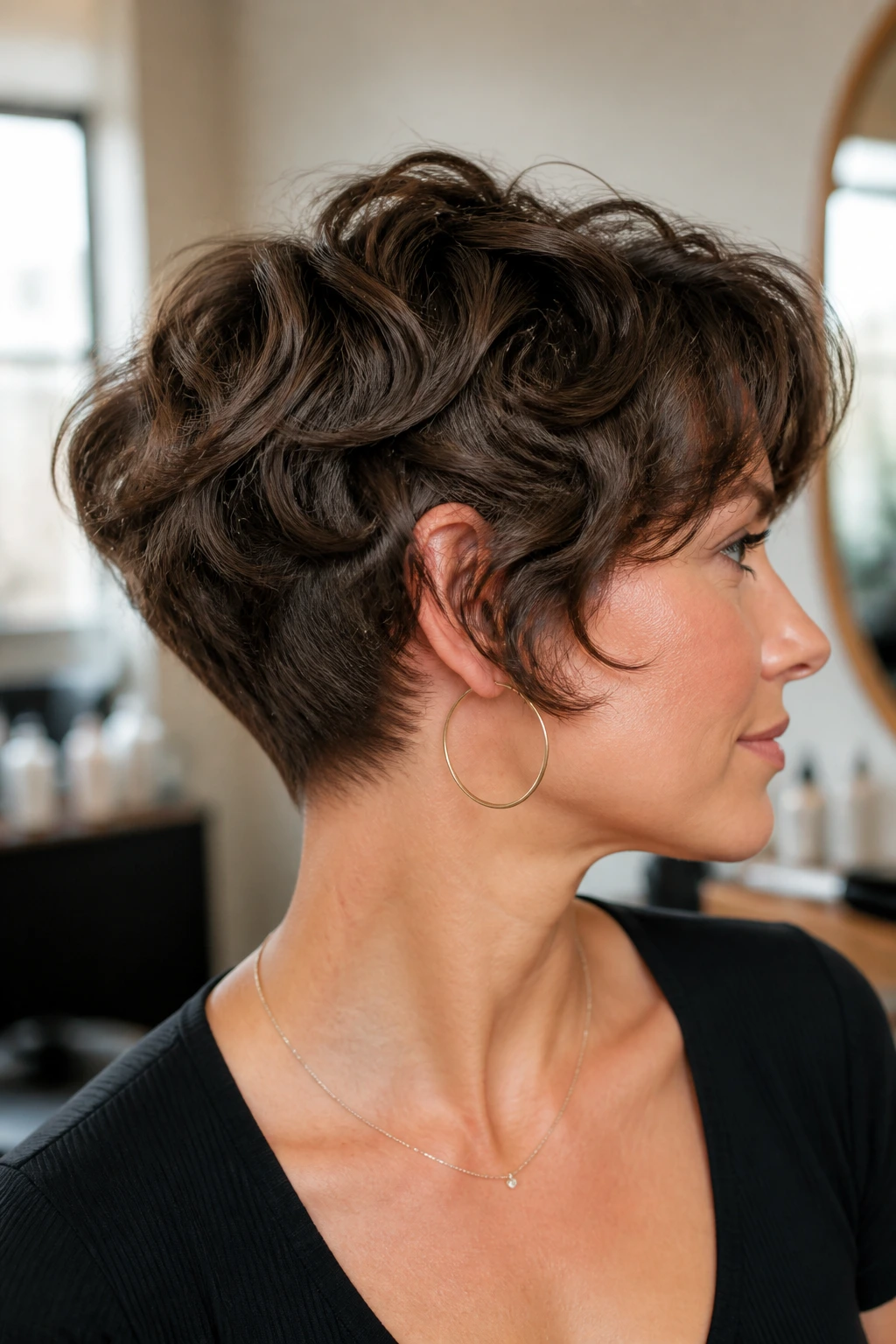
Thick hair at a short length behaves differently from thick hair that’s left long. Once you cut away the extra length, the strands lose some of the weight that was helping them lie down. That’s why short thick hair can suddenly feel bigger, not smaller, after a chop. The wave pattern wakes up, the sides spread, and the bottom edge can look like it’s trying to sit in three directions at once.
Internal layers solve that by moving weight away from the places where the bulk gathers. They do not have to be dramatic. A little relief under the crown, around the occipital bone, or near the lower sides can make a huge difference. The key is keeping the outline intact while softening what’s underneath it.
The mistake a lot of people make is assuming more thinning means more control. That’s not how this hair type usually behaves. Too much razor work can leave the ends airy in a bad way, and then the wave pattern frays instead of shaping itself. A better cut keeps enough density in the perimeter to anchor the style, then removes only what’s getting in the way.
There’s also the matter of movement. Thick hair can hold a bend better than fine hair, but it needs room to move or it goes stiff. Internal layers give the wave a path. Without them, the whole head can read as one heavy shape. With them, the texture starts doing what you want instead of fighting you.
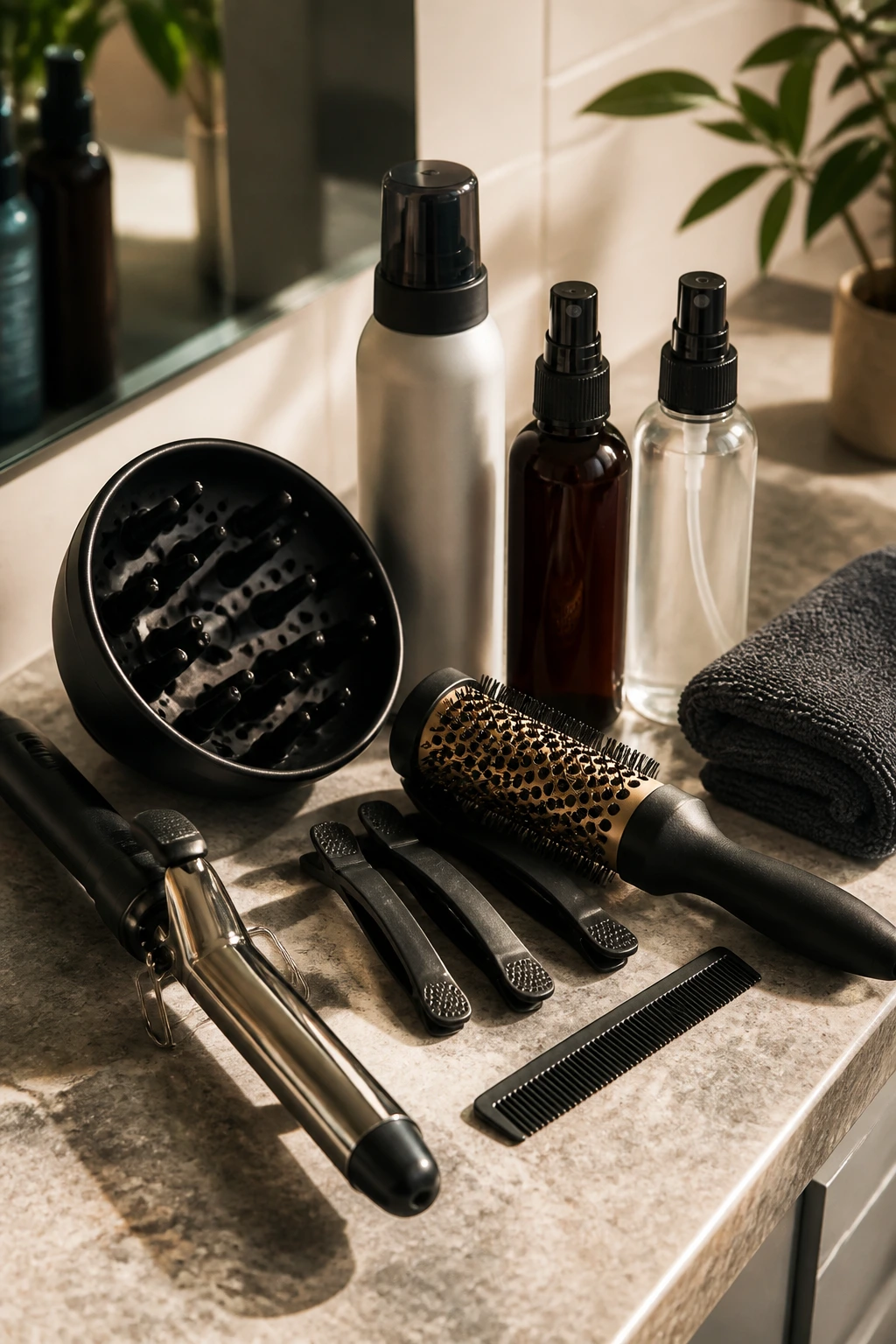
Essential Tools for Styling Short Thick Waves
-
1-inch curling iron or wand: Best for chin-length bobs, pixie bobs, and shorter lobs where larger barrels won’t wrap cleanly.
-
Blow dryer with a concentrator nozzle: Directs airflow so the cuticle lies flatter and the wave doesn’t frizz at the sides.
-
Diffuser: Useful if you air-dry partway and want to keep wave definition without blasting the shape apart.
-
Duckbill clips or small sectioning clips: Help lift the crown while it cools and prevent thick sections from falling flat.
-
Round brush or vent brush: Good for smoothing the perimeter or flipping the ends under or out.
-
Lightweight mousse: Gives grip at the roots without the sticky feel that heavier creams can leave behind.
-
Heat protectant spray: Non-negotiable if you bend the hair with hot tools. Short hair burns faster than people expect.
-
Texturizing spray or dry finishing spray: Adds separation through the mids and ends when the haircut needs a little grit.
-
Microfiber towel or soft T-shirt: Cuts down on roughing up the wave pattern right after the shower.
-
Fine-tooth comb: Best for sculpted styles like finger waves or wet looks, where clean part lines matter.
What to Ask for at the Salon and What to Buy for Home

Thick wavy hair needs more than a cute photo. It needs a shape conversation. Tell your stylist whether your hair is dense, coarse, or both, because those are not the same thing. Dense hair has a lot of strands. Coarse hair has strands that feel bigger and stronger. A cut that works on one can misbehave on the other.
Ask for the weight to be handled where it actually sits. That might mean internal layers through the crown, point-cut ends, a blunt perimeter with softness inside, or a slight stack at the nape. If you want a bob, say whether you want the line to sit at the jaw, the chin, or just below it. A half-inch changes the look more than most people think.
For home styling, choose products by hold and weight, not by fragrance or marketing fluff. Thick hair usually likes a mousse or foam with a little structure at the roots and a flexible spray on top. If your wave is dry or coarse, a tiny amount of cream on the ends can calm it down, but heavy oil near the scalp will flatten the shape and make the sides slump.
There’s one more thing worth saying plainly: bring the tools you actually use. If you never blow-dry, don’t ask for a cut that only works with a polished round-brush finish. If you live with a diffuser and a quick scrunch routine, make that clear. Good short thick hair cuts should fit your habits, not some imaginary routine where you wake up at 6 a.m. and do sectioned styling for fun.
How to Wear These Cuts in Real Life

Presentation: A polished finish usually means a smoother crown and a bit of definition through the ends, while a casual finish keeps the wave separated and slightly imperfect. Thick hair can do both, but the haircut should decide which one looks natural.
Accessories: Short thick waves love earrings, collars, and glasses because those pieces help frame the shape. A clean hoop can make a bob feel sharper. A chunky sweater collar can make a shag feel cozy instead of messy. A pair of strong frames can make a fringe look deliberate rather than heavy.
Scale: If your hair is very dense, keep a little more length in front so the wave has room to collapse into a shape instead of springing outward. If your hair is thick but not coarse, you can go shorter and lean harder into texture without the cut exploding.
Best occasions: Some styles here are office-neat, some are weekend-casual, and a few—finger waves, wet looks, sharply stacked bobs—work best when you want the haircut to feel dressed up on purpose. Pick the style that matches how often you want to fuss with your hair in the morning. That part matters more than people admit.
Styling Tricks That Keep Thick Waves Soft Instead of Puffy

The fastest way to make short thick waves puff out is to blast them in every direction and hope for the best. That usually ends with wide sides and a flat top. Instead, dry the hair with some direction. Point the nozzle downward where you want smoothness, and only rough-dry the roots if you need lift at the crown.
Root control is half the battle. Thick hair often needs a little clip at the crown while it cools so the top doesn’t sink and the sides don’t swell. That clip is a small thing. It changes the whole outline. Take it out once the hair has cooled enough to hold the bend, not while it’s still warm and limp.
Use product like seasoning, not soup. A little mousse at the roots, a little cream on the ends, and maybe a light finishing spray through the mids is usually enough. If the hair starts feeling tacky before you’re done, you’ve gone too far. Thick hair can take more than fine hair, sure, but that does not mean it wants a whole tube of styling cream.
The final detail is the bend direction. If every piece curls the same way, the style can look too arranged. Alternate directions through the crown and front, then break up the ends with your fingers. That gives short thick hair a softer outline and keeps it from reading like one giant wave helmet.
Common Mistakes That Make Thick Waves Misbehave

-
Removing too much bulk at the ends: The haircut can start to fray and separate in a bad way. The fix is controlled internal layering and a stronger perimeter.
-
Using heavy cream from roots to tips: The hair gets sleepy, especially at the crown, and the sides collapse by noon. Keep rich products on the ends only.
-
Curling every section in the same direction: That creates a uniform, overstyled shape that makes thick hair look even wider. Alternate directions and break up the pattern with your fingers.
-
Skipping the dry-cut conversation: Thick wavy hair often lies differently when dry than when wet. If your stylist only cuts it soaking wet and doesn’t check the shape after, the result can surprise you in a bad way.
-
Over-texturizing with a razor: On coarse or very thick hair, too much razor work can make the ends fuzzy and hard to smooth. Point cutting or soft interior debulking is often safer.
-
Keeping the fringe too blunt and too short: Bangs on thick hair can become a wall. Leaving a little extra length gives the fringe room to bend, which makes the whole cut look more intentional.
Variations and Adaptations to Try

The Low-Maintenance Air-Dry Cut: Choose shapes like the chin-length bob, the side-swept crop, or the collarbone lob if you want hair that can air-dry with decent shape. Ask for soft internal layers and avoid overbuilt bangs. A light mousse and a scrunch are usually enough.
The Polished Workday Version: The French bob, the tucked-behind-the-ear bob, and the stacked nape bob all suit a cleaner finish. Blow-dry with a nozzle, smooth the perimeter, and keep the wave defined rather than fluffy. This is the route if you want the cut to look sharp with minimal daily drama.
The Big-Texture Weekend Version: The shaggy crop, the messy Italian bob, and the modern mullet bob all lean into movement. These cuts can take a diffuser, a bit more product, and some finger separation. They look best when they’re not over-brushed into obedience.
The Soft Grow-Out Plan: The collarbone lob, flip-end mini lob, and asymmetrical bob are easier to live with between trims. They keep their line as they grow and don’t suddenly turn into an awkward triangle. If you hate the in-between stage, this is the safest lane.
The Statement Finish: The wet-look crop and the glam finger-wave bob are for days when you want the haircut to do the talking. Both need more setting and more planning, but the payoff is strong. Dense hair actually helps here because it holds shape so well once the structure is in place.
How to Keep the Shape Between Salon Visits

Short thick hair grows out in layers of visible opinion. Around the three-to-four-week mark, the sides can start to widen, the fringe can get heavy, and the nape can lose its clean line. That does not mean the cut is failing. It means it needs a small reset.
For pixie bobs and cropped shapes, plan on trims every 4 to 6 weeks if you want the shape to stay crisp. Bobs and short lobs can usually stretch to 6 to 8 weeks before they start to look soft around the edges. If your hair grows fast, the timeline gets shorter. If it grows slowly, you can buy a little extra time, but the nape and fringe still need watching.
At home, a light refresh goes a long way. Mist the hair with water, add a touch of leave-in or mousse where the wave has flattened, and twist the front pieces back into shape with your fingers. If the crown has collapsed, clip it up while you get dressed. That tiny pause can bring the whole silhouette back.
Sleeping habits matter more than people think. A silk pillowcase helps reduce frizz, and so does pinning the front pieces away from your face if they have a strong bend you want to preserve. Thick hair can survive a lot, but it still hates being mashed flat for eight hours. No miracle there. Just physics.
Frequently Asked Questions
How often should short thick wavy hair be trimmed?
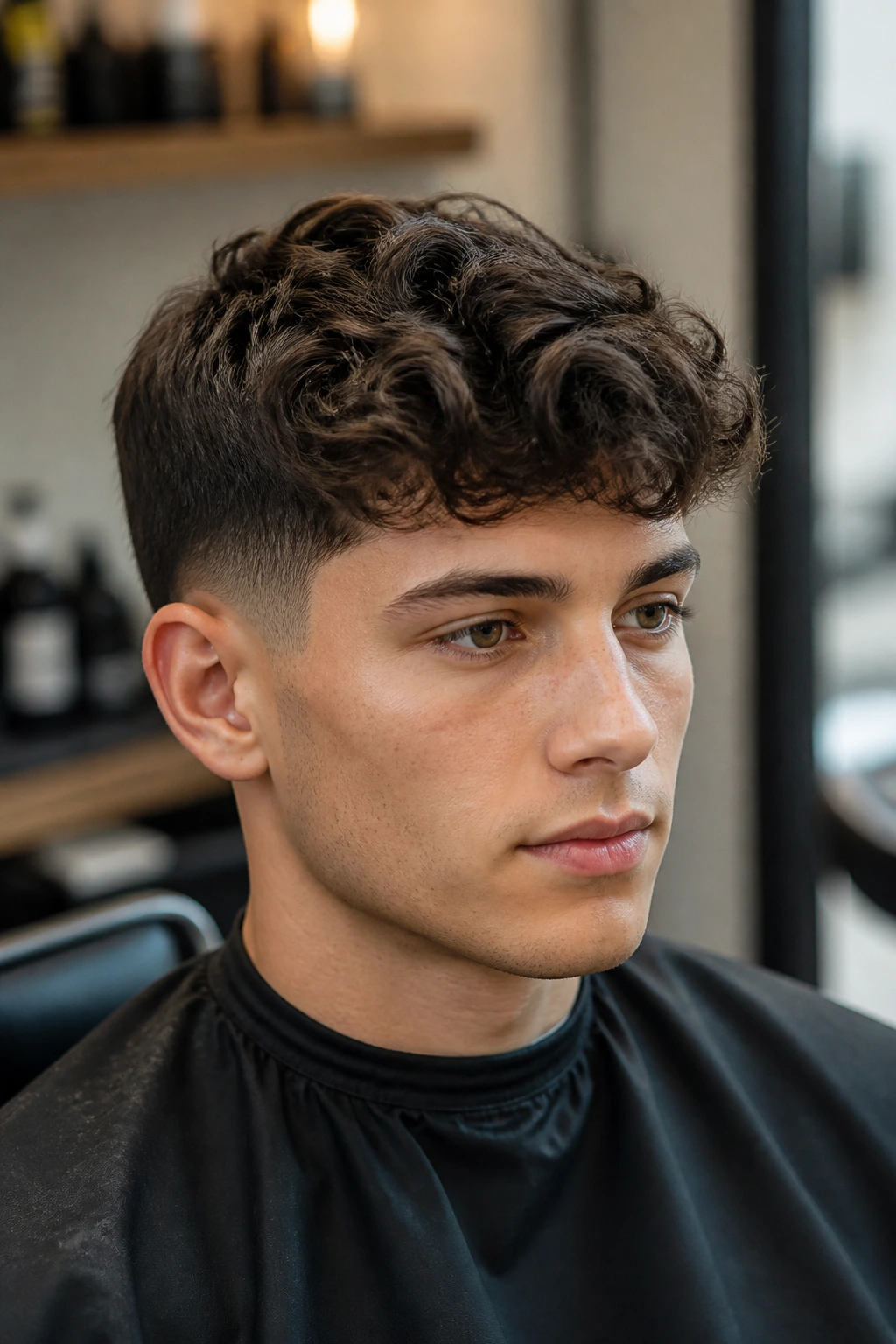
Most short thick wave cuts do best with a trim every 4 to 8 weeks, depending on how cropped the shape is. A pixie bob or stacked nape bob starts losing its line faster than a lob, so shorter shapes need more frequent cleanup. If your fringe sits on your forehead, that area may need a small trim even before the rest of the cut does.
Do short thick waves need layers?
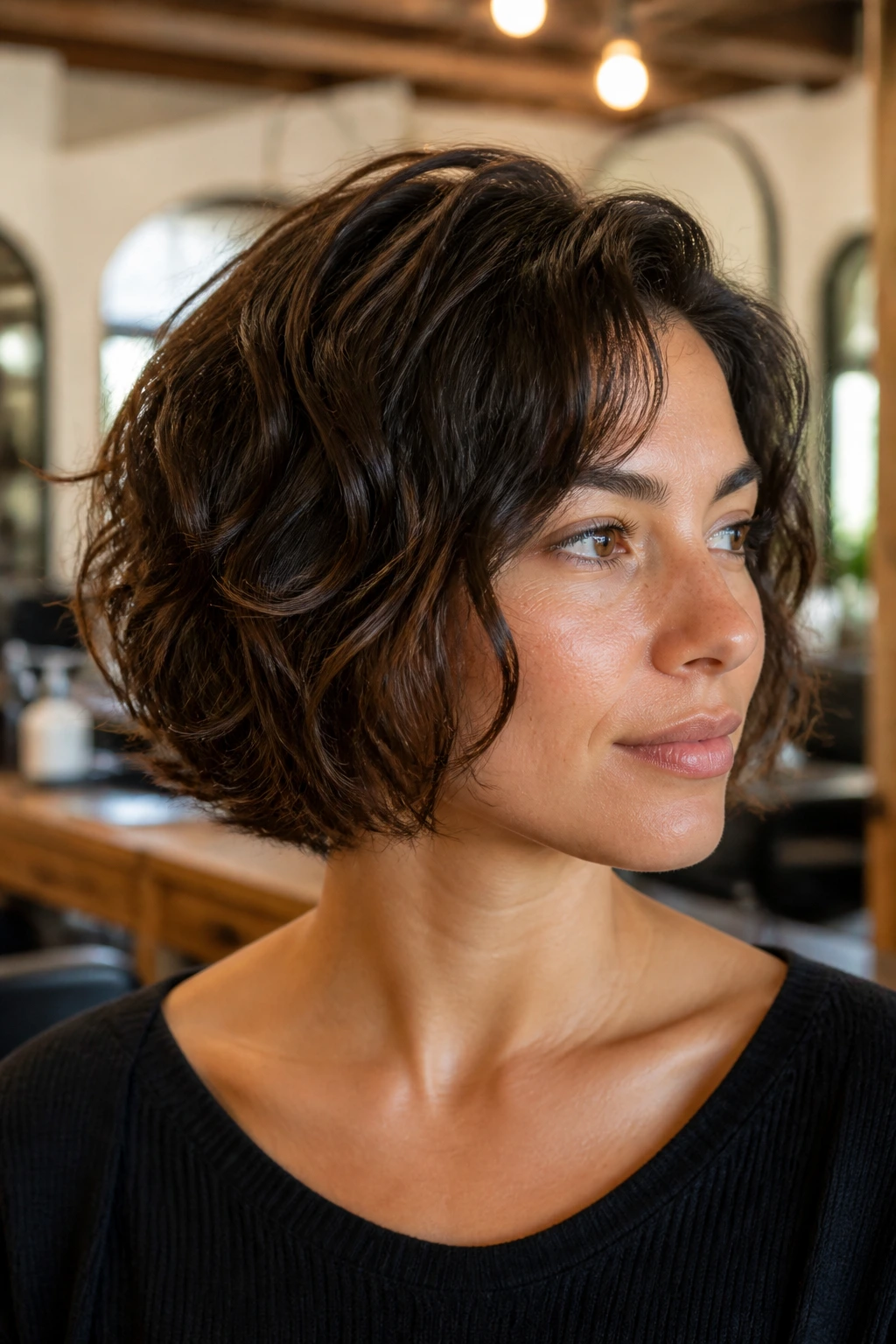
Usually, yes—but not the kind that leave the ends thin and ragged. Thick hair needs internal layers or weight removal in the right spots so the wave can move. The outer edge still needs enough density to keep the shape from puffing, which is why controlled layering works better than random thinning.
What length is best for thick wavy hair if I still want it short?
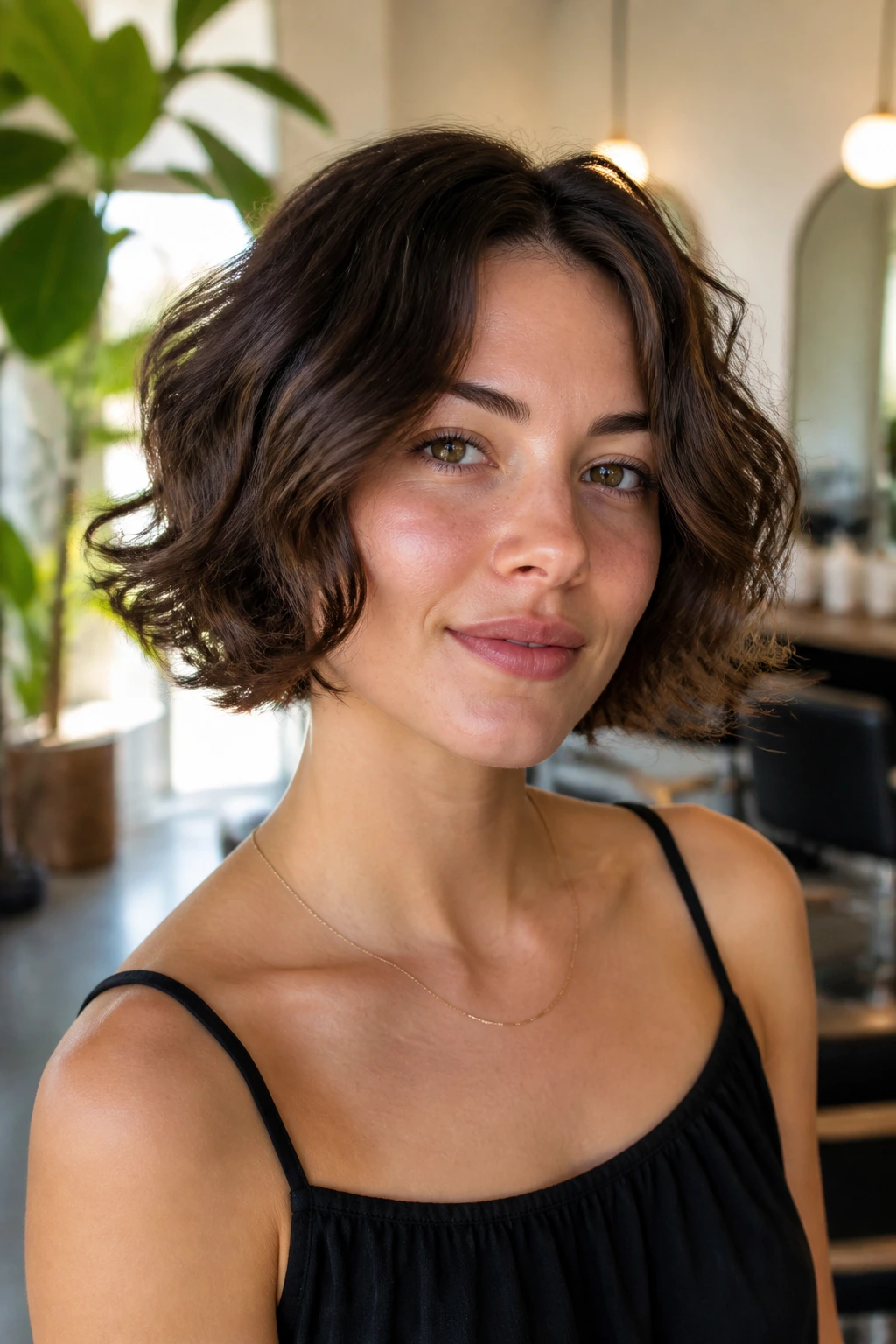
Chin length and just below the jaw are often the sweet spots. Those lengths are short enough to feel fresh, but long enough to keep the wave from springing outward too aggressively. If your hair is very dense, a slightly longer bob can be easier to manage than a very cropped cut.
Can I air-dry these styles and still get shape?

Yes, especially if the cut was designed for wave and density in the first place. A mousse at the roots, a light cream on the ends, and a bit of scrunching can give enough shape for a bob, crop, or lob. The trick is not to overload the hair before it dries, or the wave collapses into fuzz.
How do I stop thick hair from looking triangular?
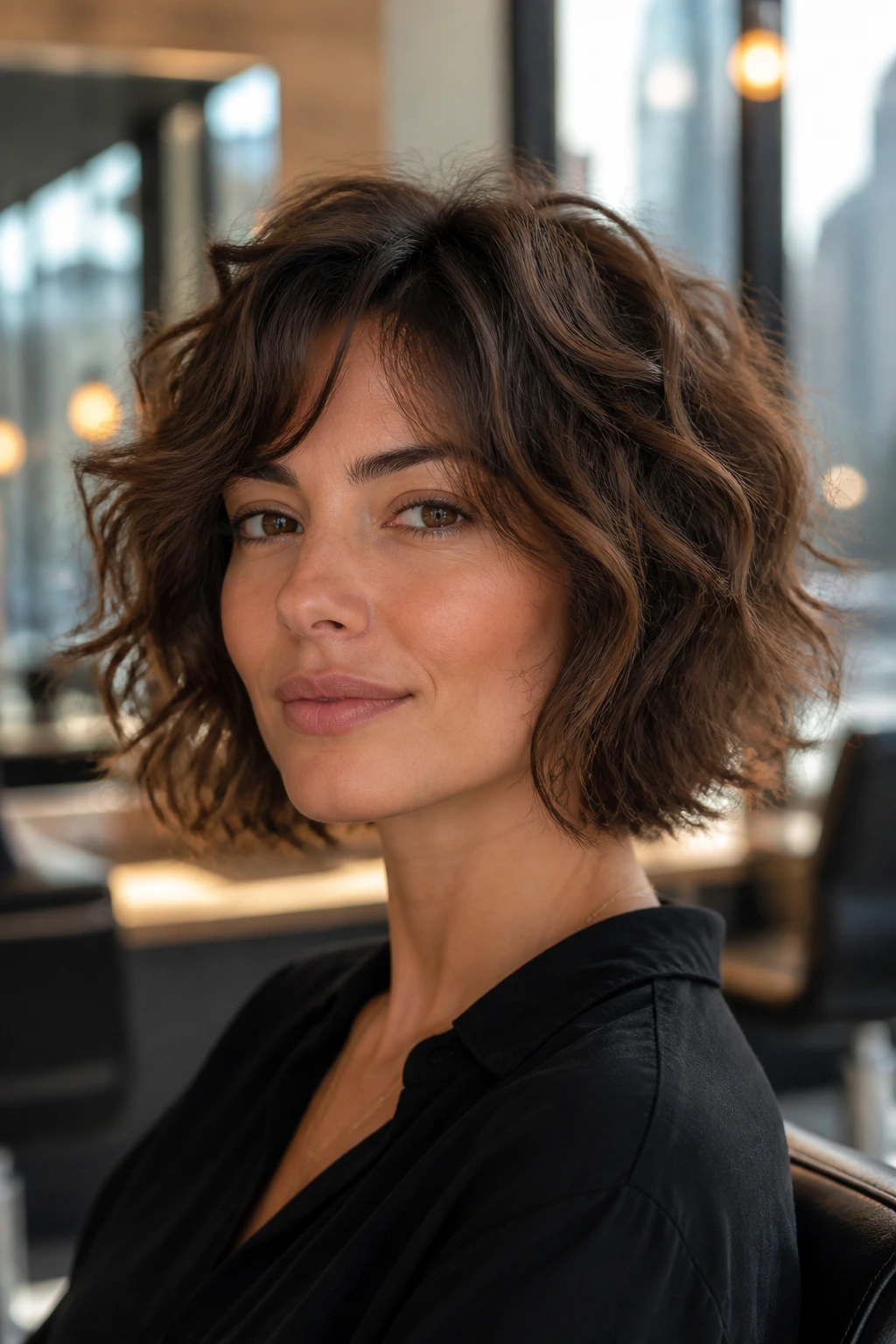
Triangle shape usually shows up when the bottom carries too much width and the crown sits flat. The fix is a smarter balance: a little lift at the top, less bulk at the sides, and a cleaner perimeter. Styles like the shaggy crop, side-part pixie bob, and curved bob are especially useful for this.
Are bangs a bad idea on thick wavy hair?

Not at all, but they need the right length and weight. Brow-length fringe, curtain bangs, or side-swept bangs tend to behave better than very short blunt bangs because they have room to bend. If your wave is strong in the front, leave the fringe a touch longer than you think you need.
What if one side of my hair waves more than the other?
That’s normal. Most people have at least some asymmetry in texture, growth pattern, or cowlick direction. A side part, a slightly asymmetrical cut, or even a tucked-side style can make the difference feel intentional instead of annoying.
The Shape That Lets Thick Waves Breathe
Short thick hair is at its best when it has a clear outline and enough room inside that outline to move. That’s the line running through every style here. Some of these cuts are neat, some are messy, some are polished enough for dinner and soft enough for a sweatshirt. What they share is a refusal to let density run the show without shape.
If your current cut keeps turning into a puffball or a block, the fix usually isn’t more product. It’s a better silhouette. A chin-length bob, a shaggy crop, a stacked nape, or a soft lob can change how the wave sits on your head without asking you to fight your hair every morning.
Pick the shape that matches your routine first, then your mood, then your patience. That order matters more than people think. And the next time your short thick waves start doing that familiar sideways swell at the jaw, you’ll know exactly which cut belongs in the chair.
