



Wavy hairstyles for long thick hair can look impossibly polished or strangely overworked, and the line between the two is thinner than most people think. The difference usually comes down to shape, not effort. Give thick lengths a loose bend, a clean part, and a little strategic lift at the crown, and the whole head suddenly moves instead of sitting there like a heavy curtain.
Long, dense hair has its own personality. It holds weight at the ends, swells at the sides, and usually laughs at tiny curls that disappear before you’ve even left the house. That’s why the smartest wavy looks for this hair type lean into bigger sections, broader barrels, and a bit of direction change so the wave pattern has room to breathe.
The good news: thick hair is not your enemy here. It is the reason these styles can look rich and full instead of wispy. A wave that would collapse on fine hair can stay intact on long thick hair, provided you keep the root area from getting too puffy and avoid making every strand obey the same curl pattern. That’s the trick. And it shows up in every style below.
Why These Wavy Looks Earn Their Keep
-
They use thickness as shape, not weight: Dense hair already has body, so these styles work by directing that bulk instead of fighting it with tiny, overprocessed curls.
-
They hold better after brushing out: Long thick hair tends to keep a relaxed wave longer than a loose, fragile bend on fine hair, which means the style can look softer on day two without falling apart.
-
They solve the “heavy ends, flat crown” problem: The best looks here move some visual weight away from the roots with parts, pins, braids, or half-up sections so the hair doesn’t read as one solid block.
-
They work with both heat and no-heat methods: If your hair hates the curling iron, there are overnight twists, braids, and clipped sets that still give you shape by morning.
-
They’re easier to refresh than a full curl set: A little mist of water, a touch of wave spray, and a quick bend with your fingers can bring these styles back without starting from zero.
1. Glossy Hollywood Waves with a Deep Side Part
A deep side part and long, glossy waves are one of those pairings that never look fussy when they’re done well. On long thick hair, the side part does half the styling work for you by moving a chunk of weight away from the face and creating lift right where the hair wants to lie flat.
Why It Works
The deeper part gives the top section a little drama, while the wave pattern stays broad enough to survive the weight of thick lengths. Smaller curls get swallowed by density. Bigger, brushed-out bends stay visible.
Use a 1¼-inch curling iron or wand and wrap 1½-inch sections away from the face on one side and toward the face on the other. That mix keeps the wave line from looking like a uniform helmet. Pin each curl flat while it cools, then brush it out with a soft boar-bristle brush once the heat is gone.
- Best for: Formal events, dinner out, photo-heavy days.
- Root lift tip: Blow-dry the crown up and away from the scalp before curling.
- Finish: A light mist of flexible hairspray, then one drop of serum on the ends.
The best version is shiny at the top and loose through the lengths. Not stiff. Not crunchy. Just a wave pattern that looks expensive because it moves when you do.
2. Soft Brushed-Out Waves with Face-Framing Layers
What happens when you stop trying to keep every wave separate? You get this. Soft brushed-out waves are one of the easiest ways to make long thick hair look calmer, lighter, and more intentional at the same time.
Why It Works
Face-framing layers matter here more than most people admit. If the front is all one length, waves can pull the whole face downward. A few shorter pieces around the cheekbone or jaw break that heaviness and give the eye somewhere to go.
Curl the hair in large sections with a 1½-inch iron or a wide-barrel wand, then let everything cool completely. Brush from the ends upward with a vent brush or paddle brush until the curls merge into a soft wave sheet. That brushing step is the whole point.
A tiny amount of wave cream or lightweight oil on the palms helps the ends stay smooth. Use too much, and the style goes limp fast. Use too little, and the ends puff. Thick hair gives you some room, but not infinite room.
How to Wear It
This is the wave you reach for when you want movement without obvious curl marks. It works with sweaters, button-downs, and anything with a clean neckline, because the hair itself becomes the softest part of the outfit.
3. Half-Up Twisted Waves That Keep the Crown Lighter
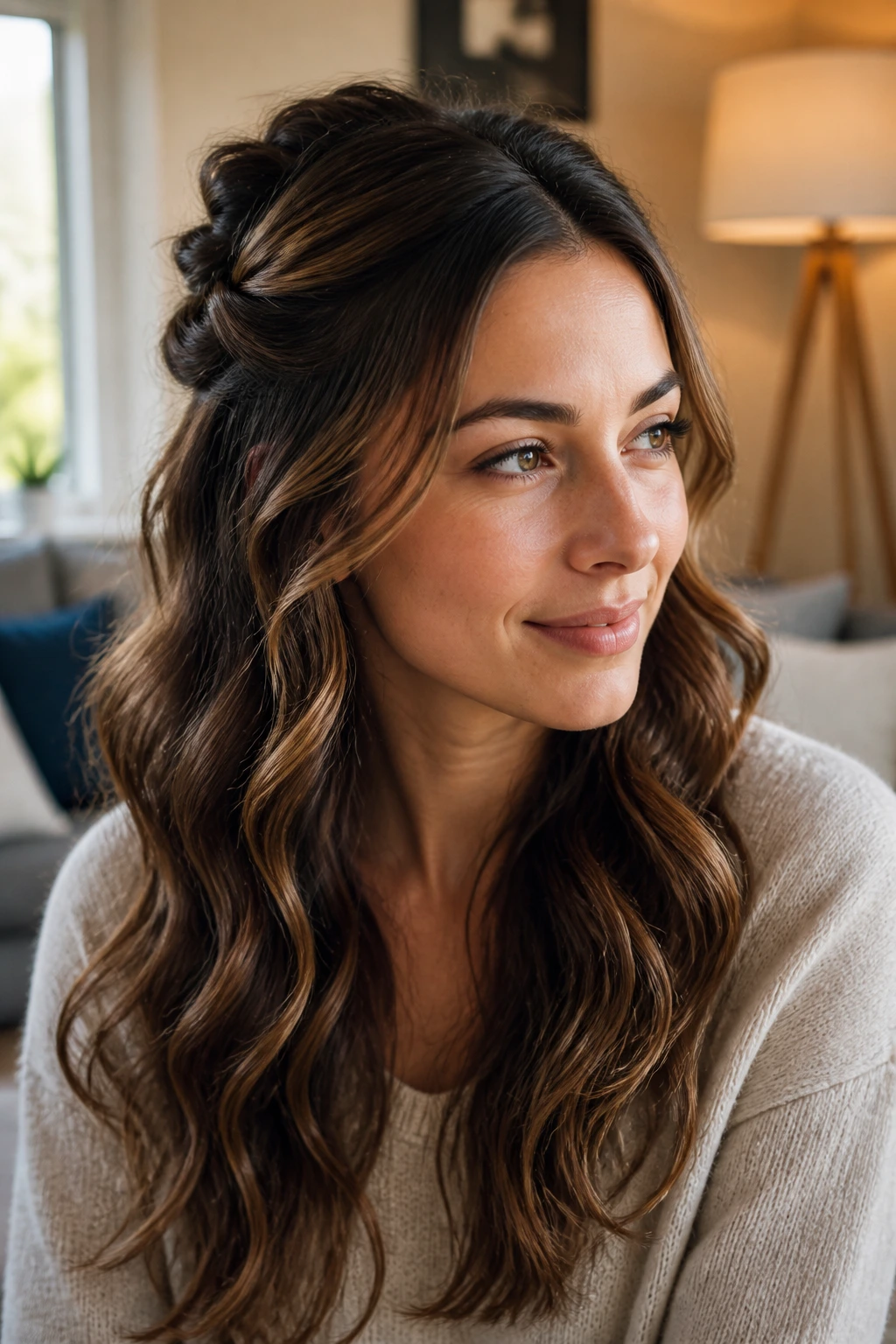
When the crown starts feeling heavy, half of the answer is to stop carrying all that hair in one place. A twisted half-up style lifts the top section just enough to make the long waves below look fuller, not flatter.
The twist can be tiny. It does not need to be precious. Pull back two sections from the temples, twist them once or twice, and secure with a small claw clip or a pair of pins. Leave the lower half wavy and loose.
Why It Works
Thick hair tends to tug at its own roots, especially when the lengths are long. A half-up keeps the top from collapsing into the scalp and gives the lower waves a chance to hang freely. It also makes second-day texture look on purpose, which is a nice upgrade from “I meant to wash it.”
A few face pieces left out keep the style from feeling severe. If your hair is very dense, take narrower sections at the front so the twist sits flat enough to hold. Big chunky twists can slide.
- Best for: Busy days, casual dates, humid weather.
- Best pins: Two crossed bobby pins hold better than one decorative clip if your hair is slippery.
- Quick refresh: Scrunch the lengths with a bit of water and leave the top alone.
4. Rope-Braided Crown Waves for a Boho Finish
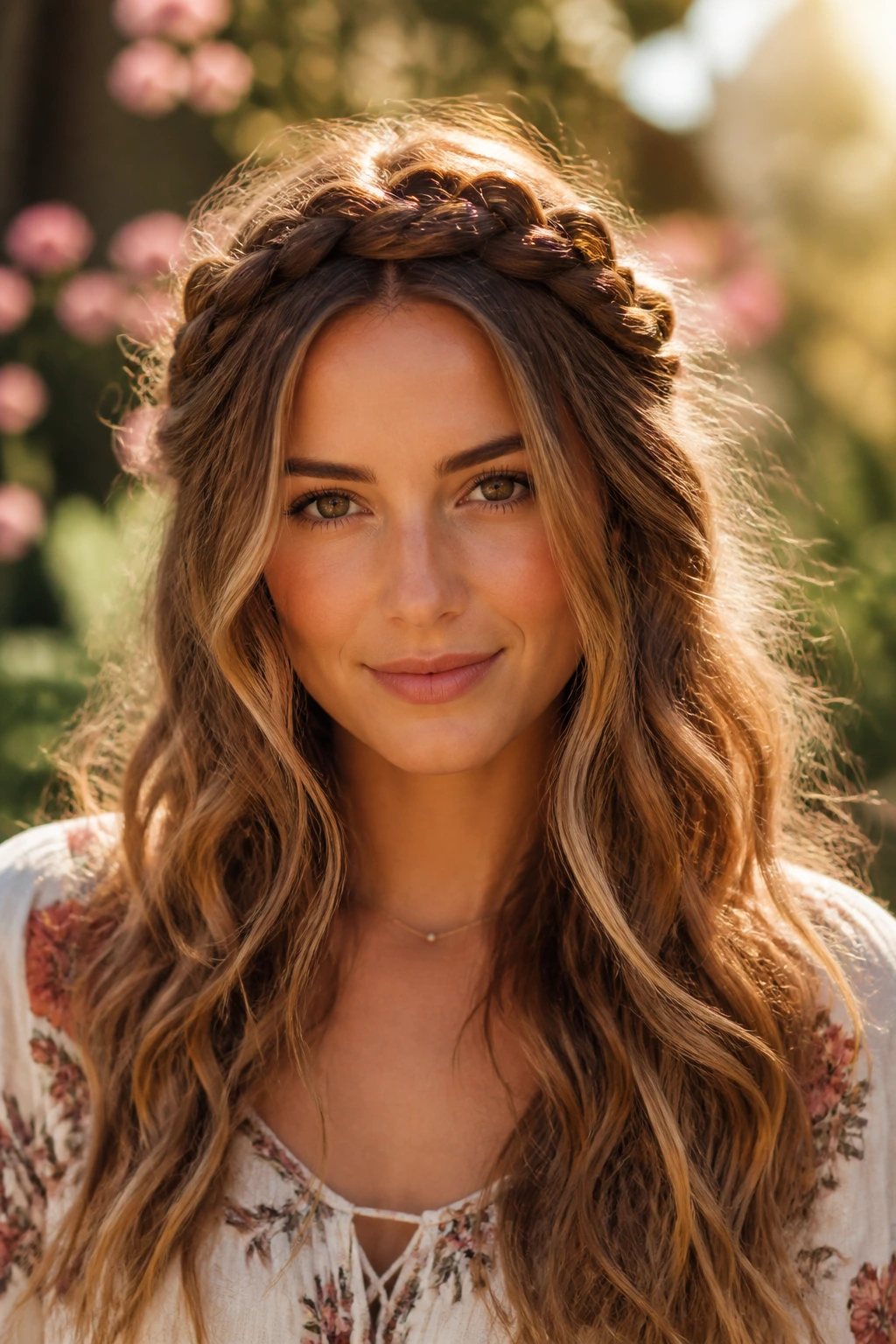
Braids and waves make sense together on long thick hair because braid texture and wave texture do not fight each other. They stack. The result feels fuller at the front without turning the whole head into a tangle of competing patterns.
What Makes It Different
A rope braid, unlike a standard three-strand braid, gives a cleaner twist line and a slightly neater finish. That matters when the rest of the hair is loose and wavy. You want one strong shape near the crown, not five little things happening at once.
Take a one-inch section from each side near the temples, twist each piece tightly, then wrap them toward the back and pin them across one another. Let the lengths fall in soft bends. If you already have natural wave, a little wave spray is enough.
This style is especially useful when the front sections are too short to stay in a standard half-up. The braid keeps them put without making the rest of the hair look overhandled.
Tiny Detail That Helps
Loosen the rope braid edges with the tip of a tail comb after you pin it. Not a lot. Just enough to keep it from looking like a tight cord sitting on top of thick, loose hair.
5. Heatless Overnight Waves with a Loose Claw Clip Set
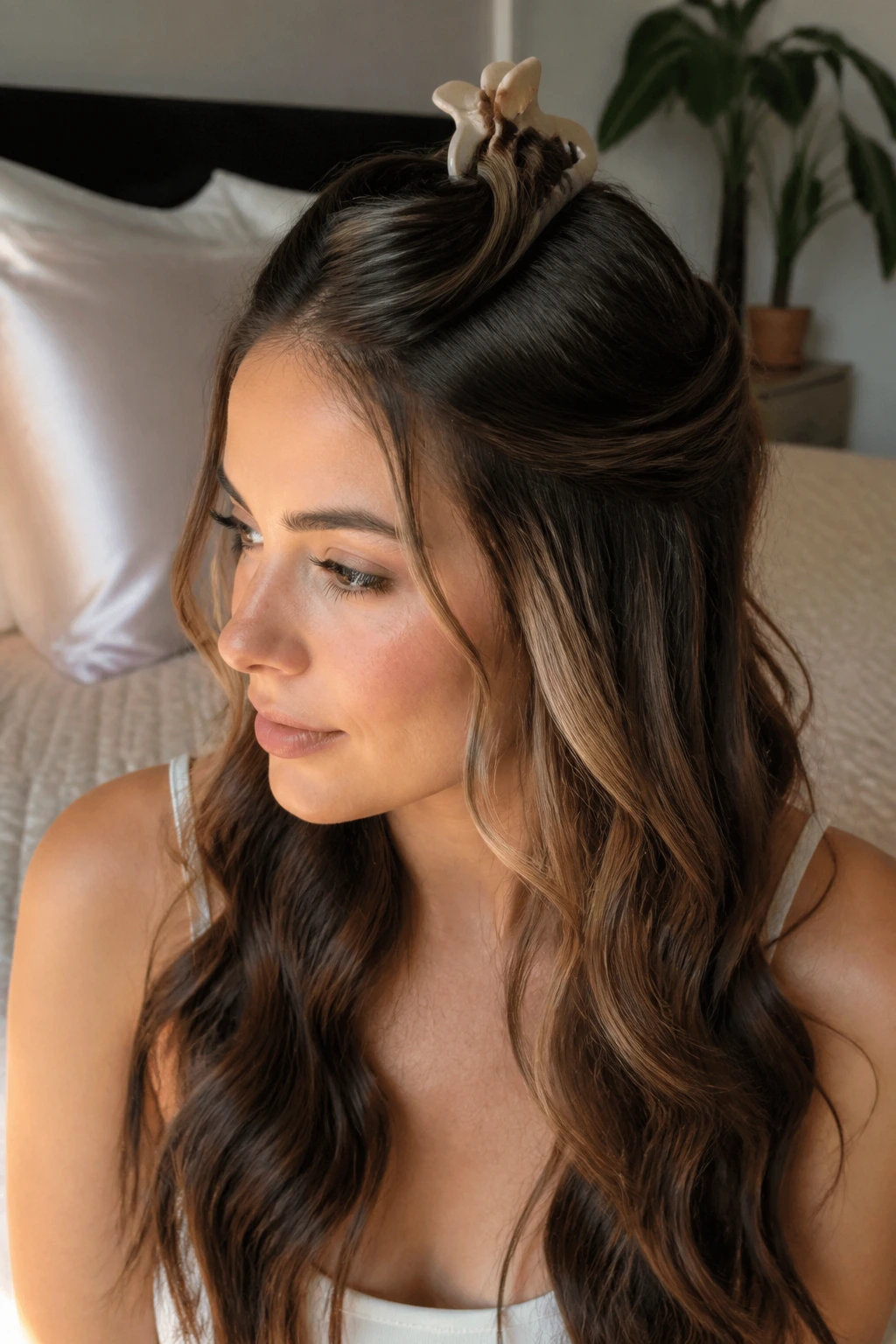
If your hair wants shape without more heat, this is the move. Heatless waves on long thick hair can be excellent, but only if you respect the density and don’t try to force too much pattern into one night.
Start with hair that is damp, not wet. Mist it lightly if needed, then work in a foam mousse or light setting lotion from mid-length to ends. Split the hair into two or three loose twists, clip them low with a claw clip, and sleep on a silk pillowcase if you have one.
Why It Works
Thick hair keeps moisture longer, so overnight setting actually has something to work with. The loose clip shape gives the hair broad bends instead of tight spirals, which is exactly what long dense lengths need. Tight little twists tend to create weird kinks that take forever to smooth out.
In the morning, take the clips out, shake the roots with your fingers, and separate the lengths once. Don’t rake through them like you’re trying to comb out a knot. That ruins the pattern.
A dry texture spray at the ends gives the wave a little grip. Too much, and the style feels dusty. A little is enough.
6. Mermaid Waves with a Bigger Barrel
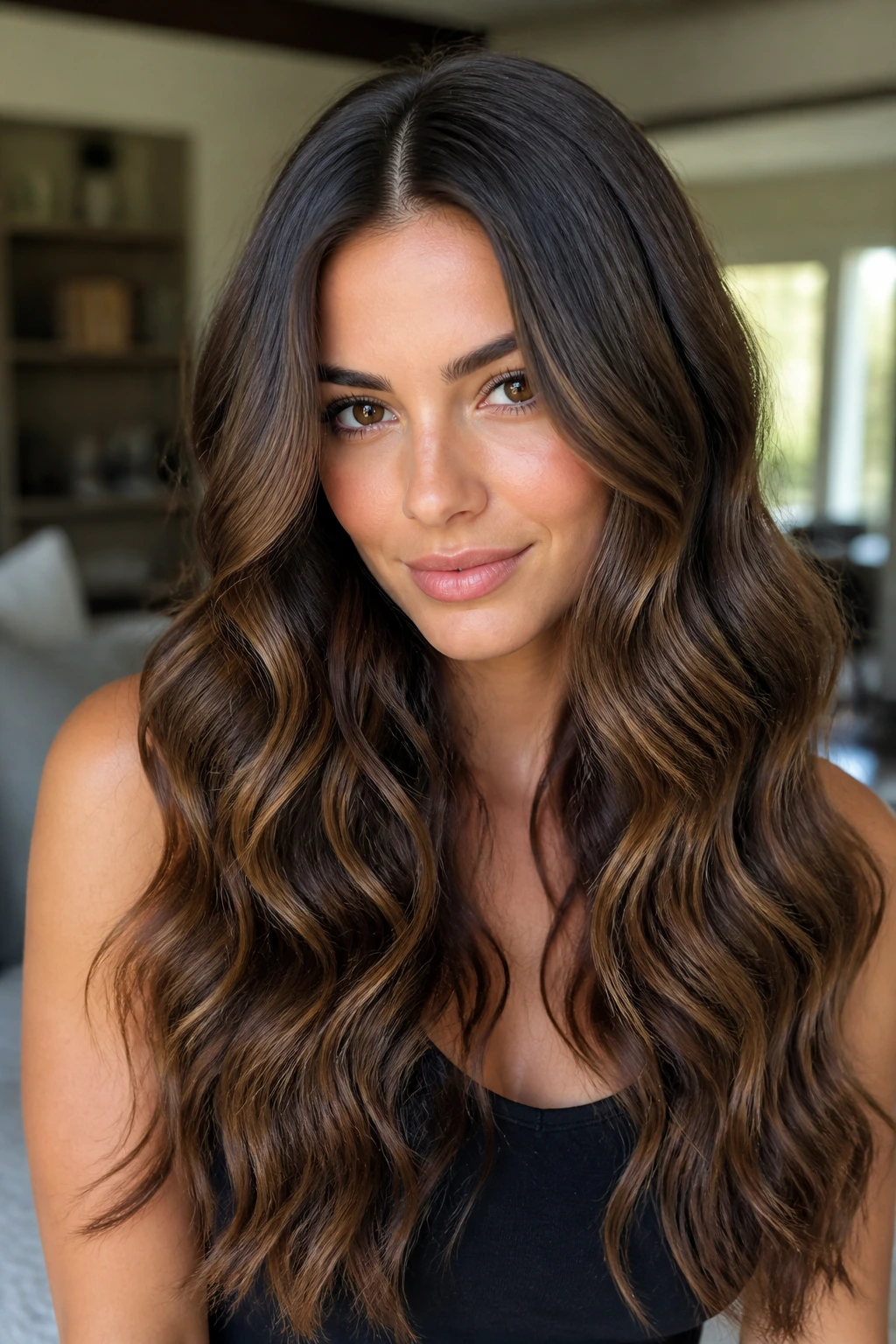
Mermaid waves look best when the hair has room to ripple instead of curl. On long thick hair, that’s a win, because the density helps those wide bends stay visible after they cool.
Use a 1½-inch curling iron, a large wand, or a triple-barrel waver if your hair can take it. Work in 2-inch sections and keep the wave pattern loose from mid-lengths to ends. Leave the roots straighter. If you wave everything from the scalp down, the style can turn into a puffed blanket.
Why It Works
The larger barrel makes the wave line slower and flatter, which sounds less dramatic than tight curls but usually reads better on thick lengths. The eye can follow the pattern. The hair does not fight itself.
This style loves a center part, but a slight off-center part works if your face needs more lift on one side. Once the hair cools, separate only the bottom half of each wave with your fingers. Brushing too hard turns the whole thing soft in a hurry.
For extra definition, twist a few front pieces in alternating directions before you pin them to cool. That tiny shift keeps the front from looking too uniform.
7. Polished S-Waves for a Smooth, Controlled Finish
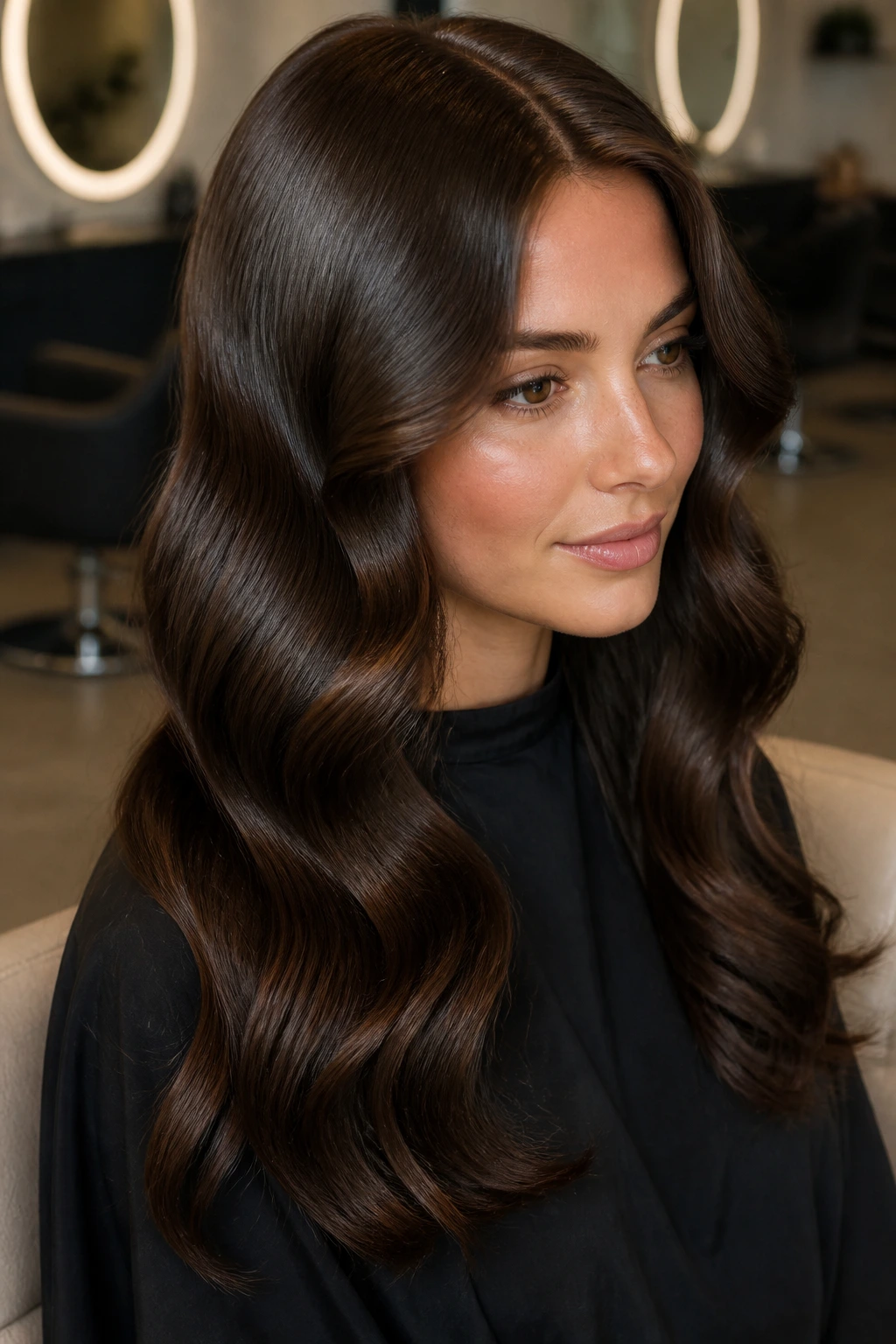
S-waves are the cleaner cousin of brushed-out curls. They sit flatter against the head, move in a visible curve, and look especially good when long thick hair starts to feel too loud and needs a little discipline.
The Shape Matters
Unlike loose beach waves, S-waves keep the pattern more connected from root to tip. That makes them useful when the hair is thick enough to lose definition after an hour or two. The wave stays readable because the bend line is stronger.
Work with a flat iron or curling iron, then set each section into an S-shape with your fingers while it cools. A light mist of hairspray on the palm or on a comb helps the curve hold. The goal is not bounce. It is control.
This style looks sharp with a side part and a clean neckline. It also behaves well under a blazer, which sounds boring until you see how much better it looks than loose curls fighting a collar.
Small Warning
If your hair is coarse, don’t overload it with serum before styling. S-waves lose their grip fast when the surface is too slippery.
8. Voluminous Side-Swept Waves for Heavy Lengths
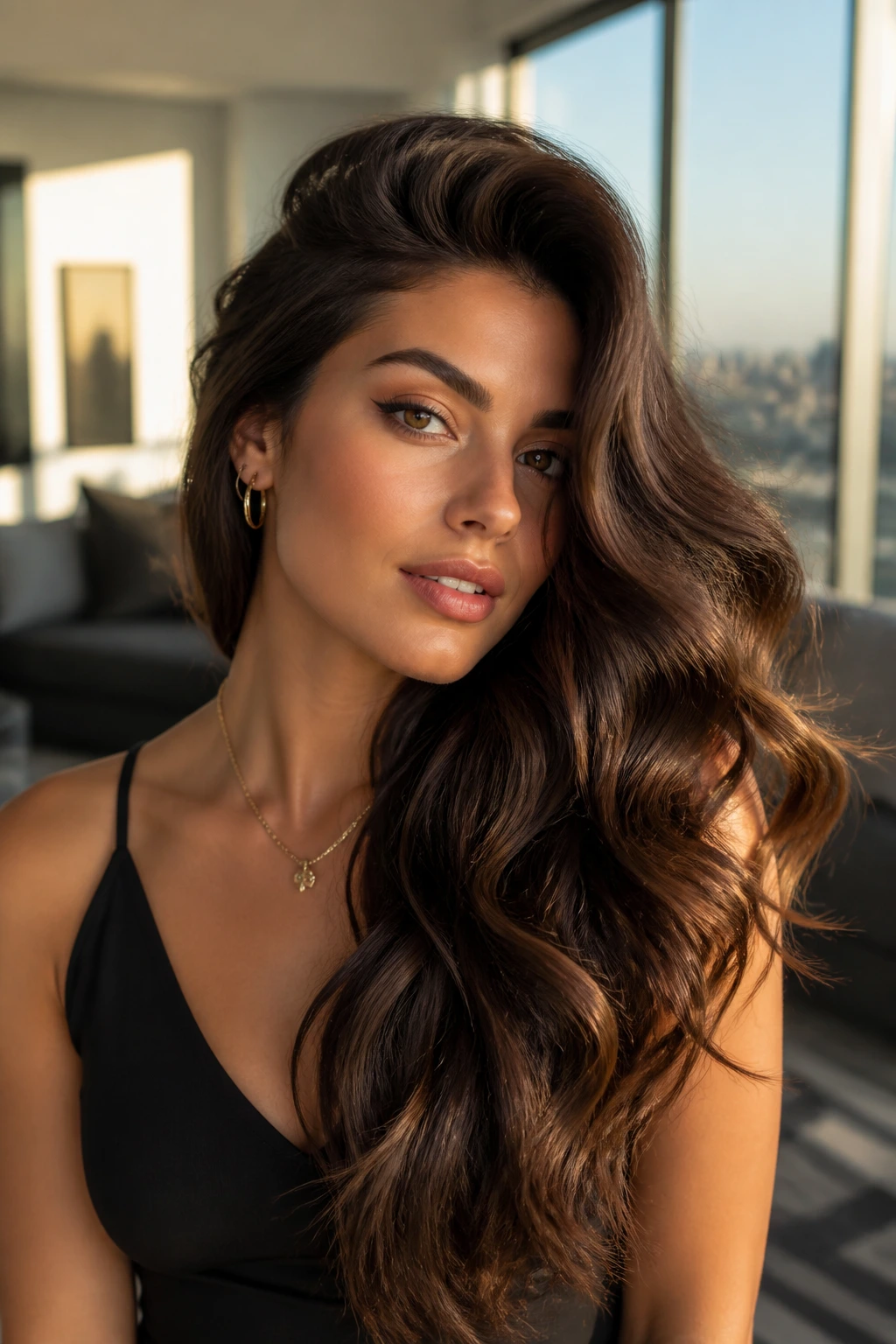
A side-swept wave style is a smart answer to hair that wants to spread outward at the sides. Push the bulk to one shoulder and the whole shape suddenly feels more deliberate.
You can pin one side behind the ear, sweep the rest over the opposite shoulder, and let the waves fall in one strong direction. That asymmetry is doing a lot of work. It narrows the silhouette at the top and gives the length a clear endpoint.
Why It Works
Long thick hair can look shapeless when it hangs evenly on both sides. A side sweep changes that instantly. The wave line becomes visible as a curve rather than a wall.
Blow-dry the roots with a round brush or large paddle brush first, aiming for lift at the crown. Then curl the lengths away from the face so the front sections open up rather than fold inward. If the hair is very heavy, a bit of root spray at the top keeps the style from sinking before dinner.
This one pairs well with statement earrings. The hair pulls off the shoulder just enough to show them, which is part of the whole point.
9. Waterfall Braid into Loose Waves
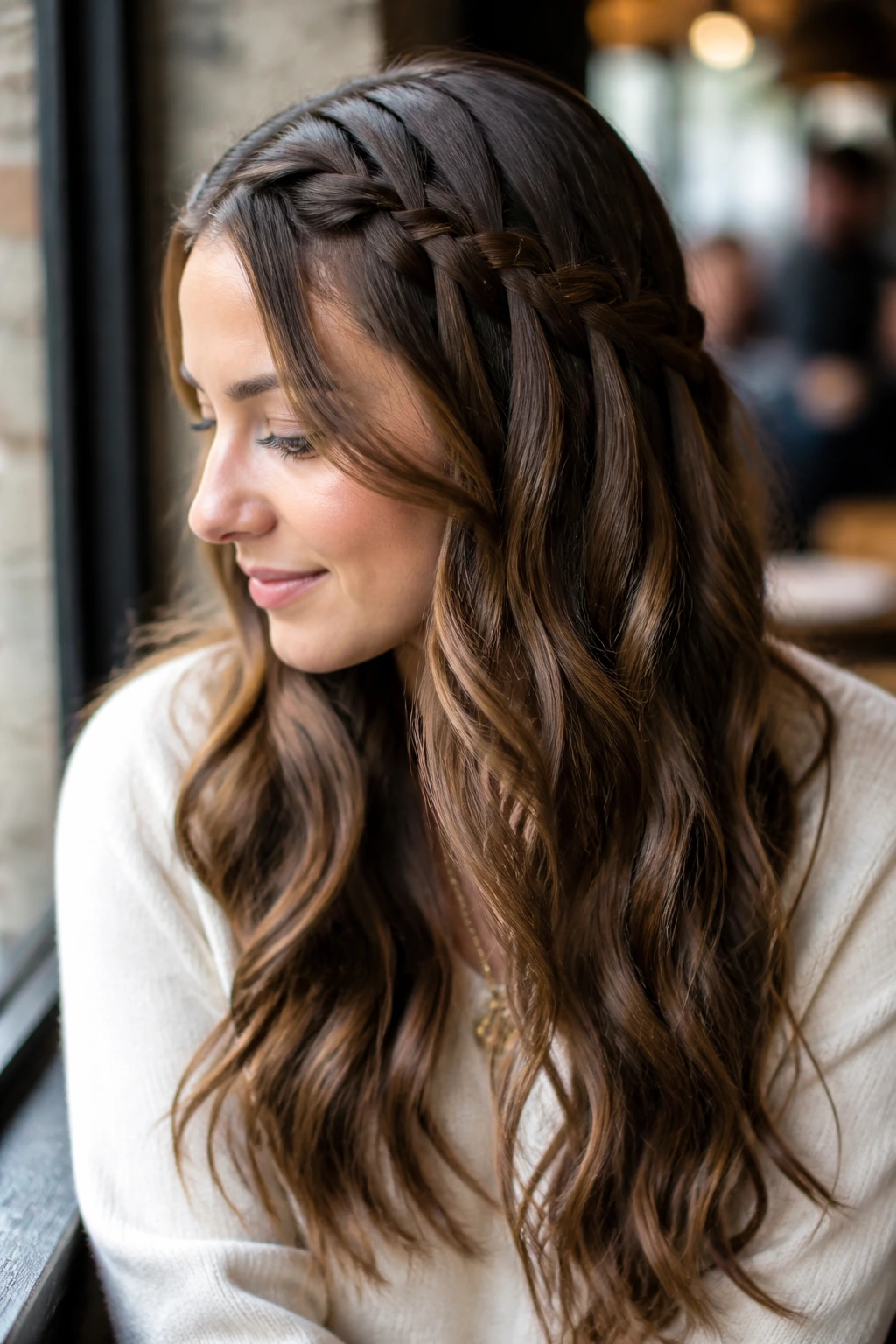
A waterfall braid is one of those details that looks more complicated than it is, and on long thick hair, it has a lovely side effect: it breaks up the mass without stealing all the length.
How It Feels on Thick Hair
Start the braid near the temple and let pieces drop through the braid rather than feeding everything into it. Those released sections fall into the open lengths below, where the waves stay soft. The braid creates structure. The waves keep the style from feeling too fixed.
This is a good option if your hair tends to puff around the face. The braid acts like a frame. Leave the rest of the hair in broad bends or gentle heatless waves so there’s still movement from the shoulders down.
A little texturizing spray at the braid helps the grip, especially if your hair is silky or freshly washed. If it’s day-two hair, you may not need much at all.
Quick Styling Note
Keep the braid loose enough that it doesn’t pull on the scalp. Tight waterfall braids on thick hair can give you a headache and flatten the rest of the style.
10. Low Ponytail with Waved Lengths
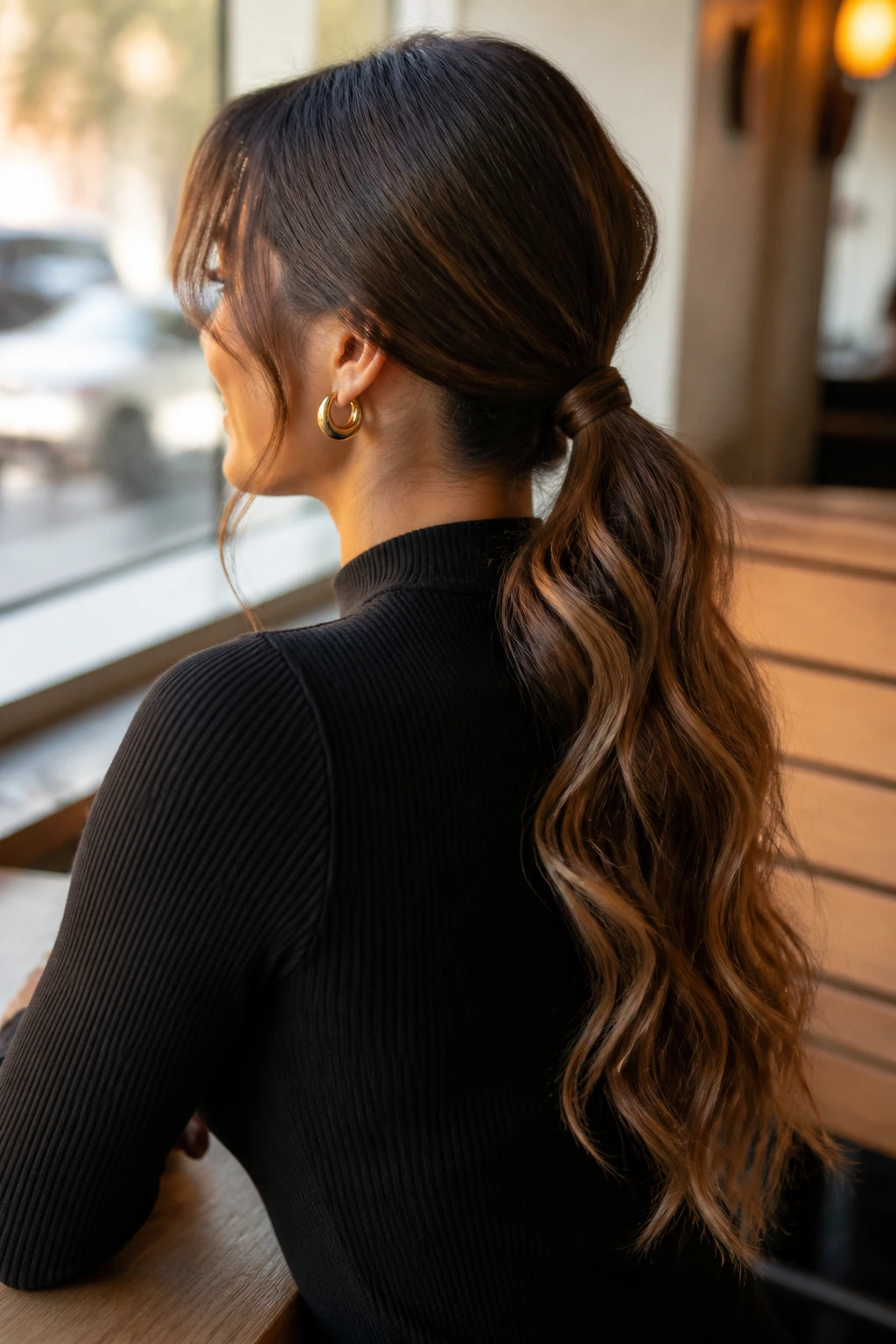
A low ponytail is only basic if you let it be. On long thick hair, a waved ponytail has enough fullness to look finished, not lazy, especially when the base is clean and the tail has movement.
Why It Works
Thick hair gives the ponytail body, so the trick is to avoid making the base too bulky. Smooth the crown back with a brush and a tiny amount of cream, then secure it low at the nape with a strong elastic. Wrap a small strand around the band to hide it.
Wave the tail in large sections so it falls in soft bends rather than rigid ringlets. The contrast between a neat base and loose lengths makes the whole thing feel intentional. If every part of the hair is equally loose, the style gets messy fast.
This is one of the easiest looks to wear with high necklines, collared shirts, or big earrings. It also survives a long day better than hair worn fully down because the base is anchored.
11. Clipped-Back Front Sections and Open Waves
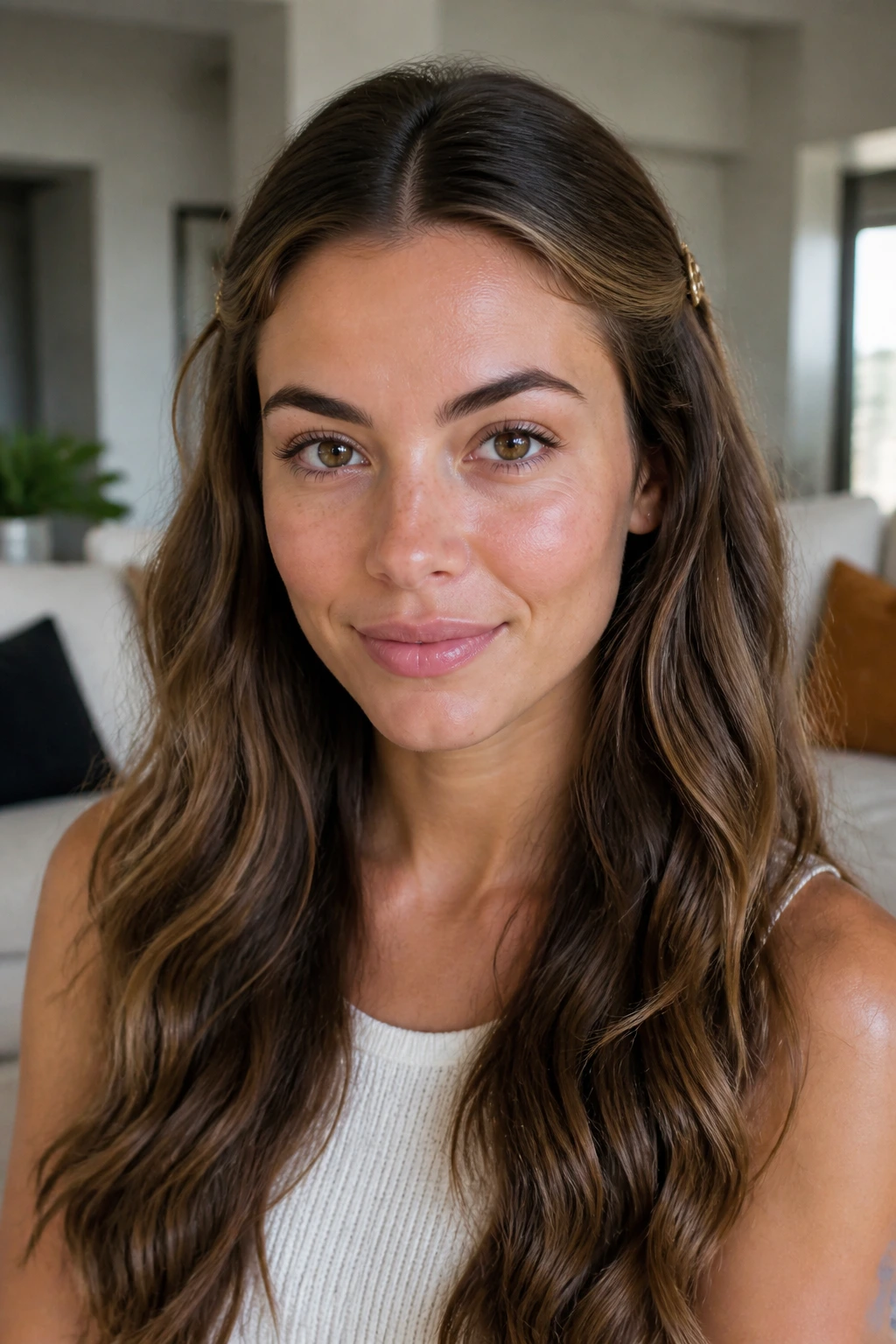
Some days you don’t need a full updo. You just need the hair off your face and the length still visible. That’s where clipped-back front sections shine.
Pull two narrow sections from the front, smooth them back, and secure them just above or behind the ears with pins or decorative clips. Leave the rest of the hair in soft waves. It sounds minimal because it is.
Why It Works
Long thick hair can overwhelm the face when all of it hangs forward. A clipped-back front opens the cheekbones and keeps the crown from puffing up. It also lets the wave pattern show in the lower lengths without competition from too much hair near the face.
This style is fast, but it still looks considered. Use a flat, polished clip if you want it clean, or a tortoiseshell barrette if you want the shape to read softer. I prefer two small pins over one large clip for thick hair. They hold better and sit flatter.
If your hair is prone to slipping, add a little dry shampoo at the roots before clipping. Strange as it sounds, that tiny bit of grip makes the front stay put.
12. Messy Lived-In Waves with Dry Texture
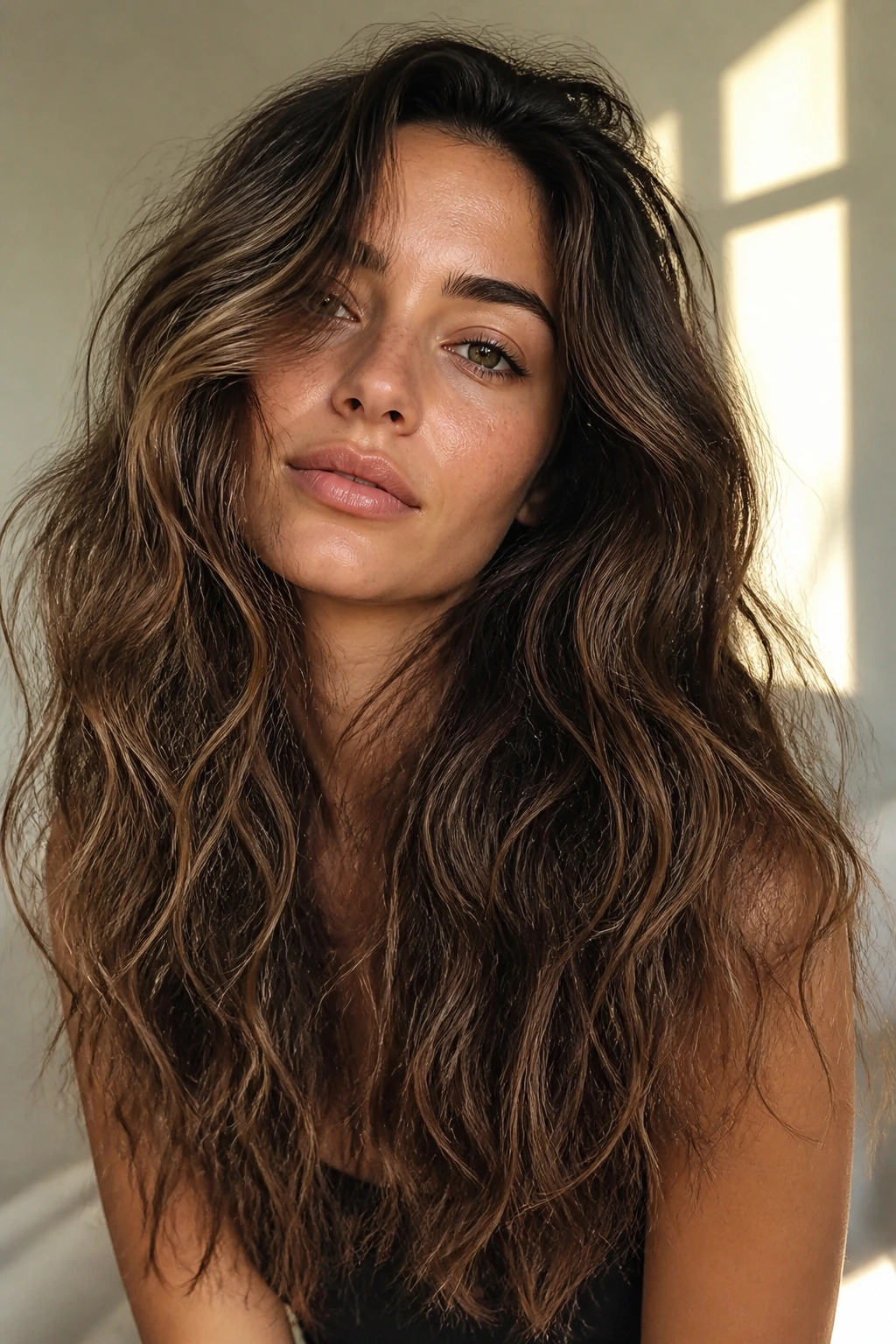
Lived-in waves are not code for “unkempt.” On long thick hair, they’re the style that stops the weight from feeling formal or overdone. The texture does the talking.
The Short Version
Use alternating curl directions so the wave pattern breaks up. Leave the last inch or two of the ends out of the iron if your hair tends to bend weirdly at the bottom. Then scrunch in dry texture spray and let the hair cool untouched for a few minutes.
The goal is a wave that looks a day old in the good sense. Thick hair often looks best once the shine settles down a touch and the pieces separate a bit. That separation shows movement. Too much brushing erases it.
This style is especially useful when your hair is naturally a little wavy and just needs a nudge into shape. It’s also the easiest way to hide the fact that you didn’t wash your hair this morning. No drama there.
Use It When
You want your hair to look fuller, but not formal. This is the one I’d grab for errands, brunch, or any day when “fussy” is the last thing you want.
13. Curtain Bang Waves with Airy Movement
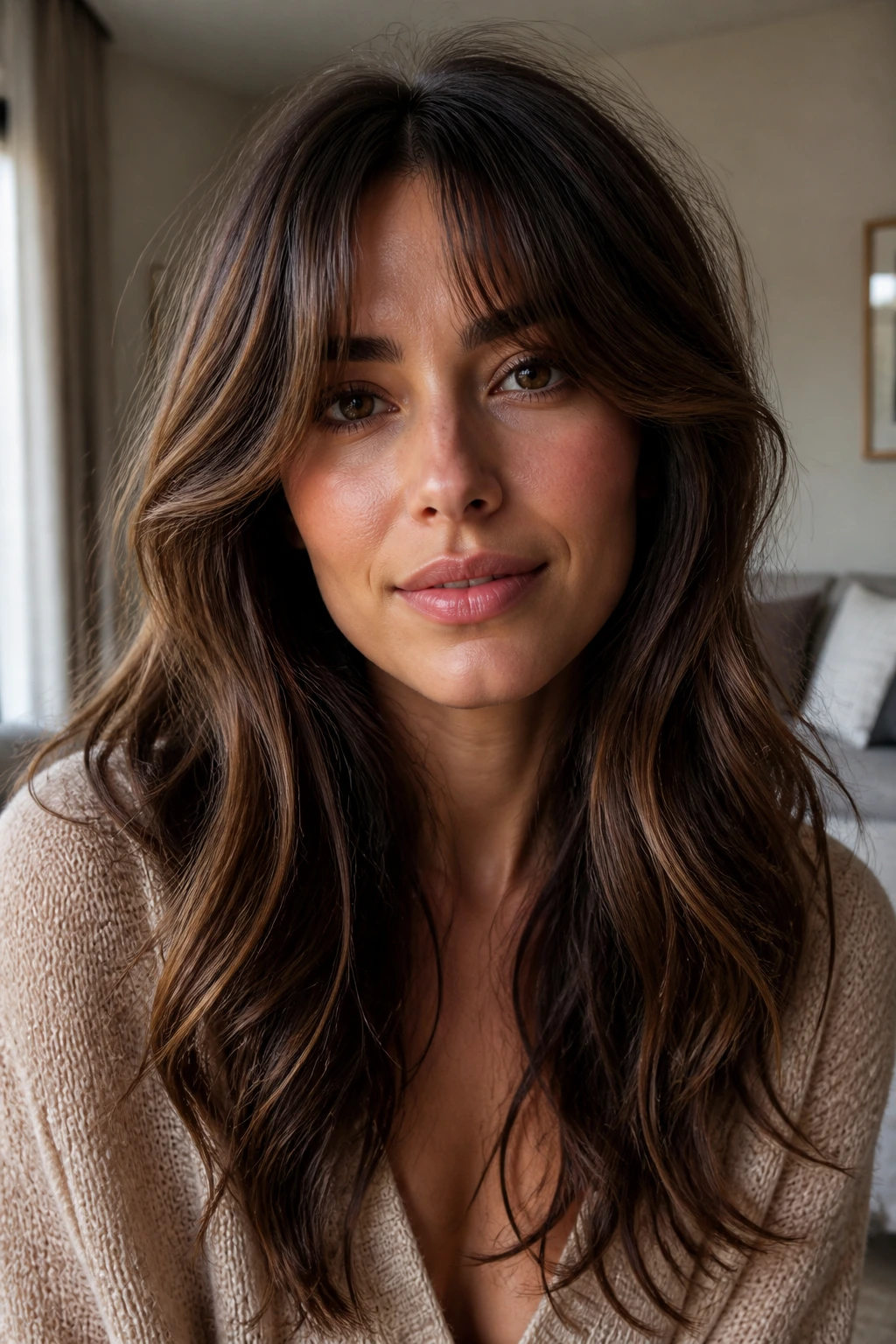
Curtain bangs change the whole balance of long thick hair. They soften the front, open the face, and give the wave pattern a place to start instead of dropping all the movement into the length alone.
Why It Works
Blow-dry the bangs first with a round brush or a big velcro roller while they’re still warm. Sweep them away from the face, then let them settle with a slight bend. If they dry too straight, the contrast with the waves below looks harsh.
The rest of the hair can be styled in broad, loose waves. That combination keeps the front from looking too heavy. Thick hair often needs this kind of interruption near the face because the length can otherwise drag everything downward.
A tiny bit of light styling cream on the bangs helps them sit nicely, but keep it light. Curtain bangs go greasy fast when you overdo product.
Practical Detail
If your bangs are shorter, wave the sections beside them a little more tightly so the transition between fringe and length feels smooth.
14. Bubble Braid Half-Pony with Soft Waves
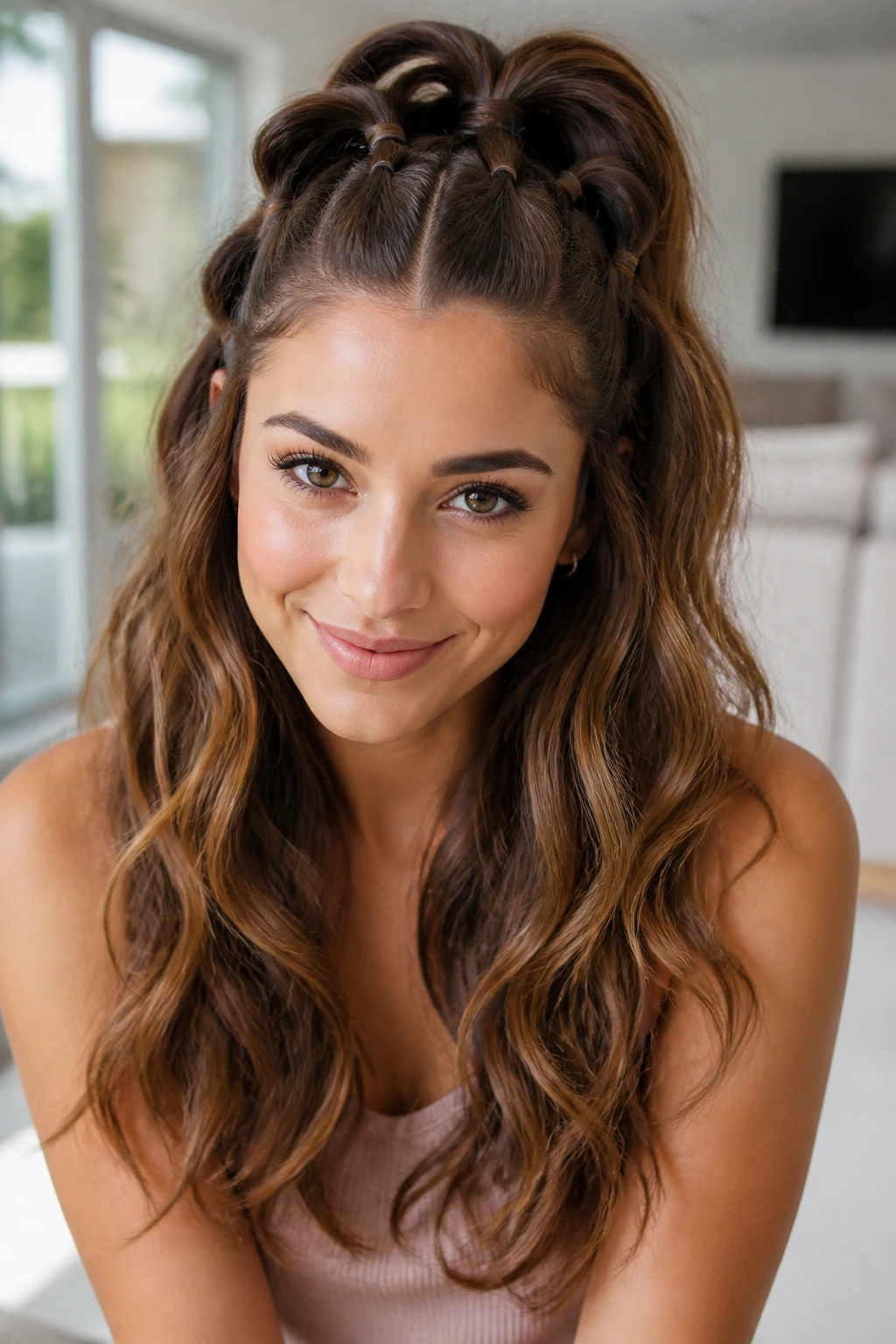
Bubble braids are not subtle. That’s part of the appeal. On long thick hair, the style gets enough volume to make each bubble look full instead of flat and deflated.
Pull the top half of the hair into a ponytail, then add small elastics down the tail every 2 to 3 inches. Gently tug each section outward to create the bubble shape. Leave the lower half in soft waves.
Why It Works
Dense hair gives the bubbles natural puff, which means you do not need to tease the hair much. A little lift from the elastics is enough. The lower waves keep the whole thing from becoming too stiff or novelty-heavy.
This style works well when you want the hair back without hiding the length. It also behaves well on hair that’s a little rough around the roots because the braiding structure hides uneven texture.
If you want it cleaner, smooth the crown first with a brush and a touch of cream. If you want it more casual, skip the smoothing and let a few front pieces fall free.
15. Layered Shag Waves That Break Up the Weight
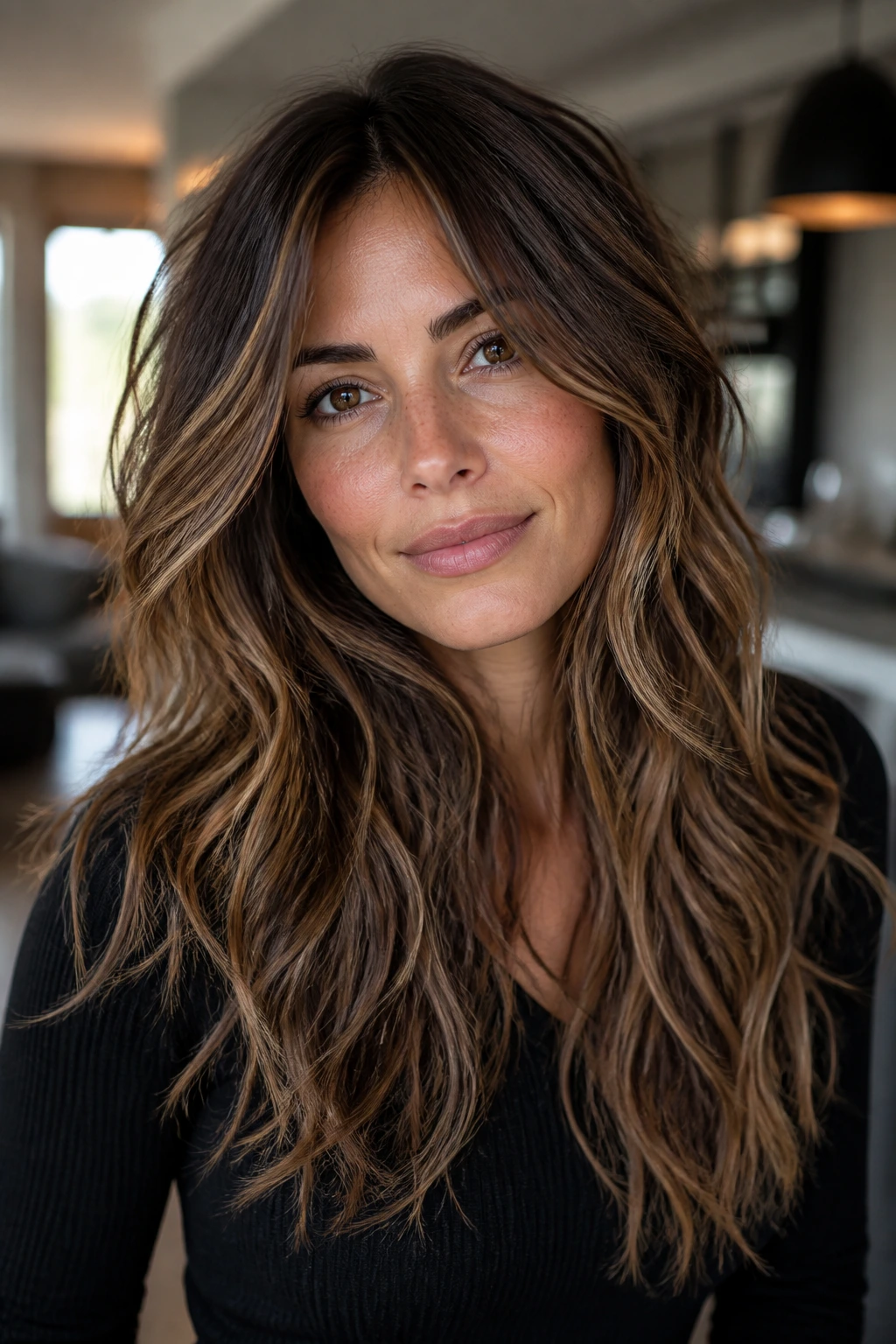
A shaggy wave on long thick hair lives or dies by layers. If the cut has movement, the style has movement. If it doesn’t, the hair can still look like a lot of hair no matter how carefully you wave it.
What Makes It Different
The shag pulls weight out of the ends and redistributes it through the mid-lengths. That’s useful when your hair is so dense it feels like it sits on your shoulders instead of moving over them. The waves land differently because the cut already gives them places to fall.
Use a medium barrel and keep the section sizes irregular on purpose. A little inconsistency helps this look. You want some pieces more bent than others so the shape feels lived-in, not staged.
This is the style that looks best when it has a bit of grit. Dry shampoo, texture spray, and a hands-off finish are your friends. Over-brushing kills the whole mood.
Haircut Note
If the ends feel heavy and blunt, this style won’t show its shape as well. Long layers are the engine here.
16. Glam Waves with Hair Jewelry
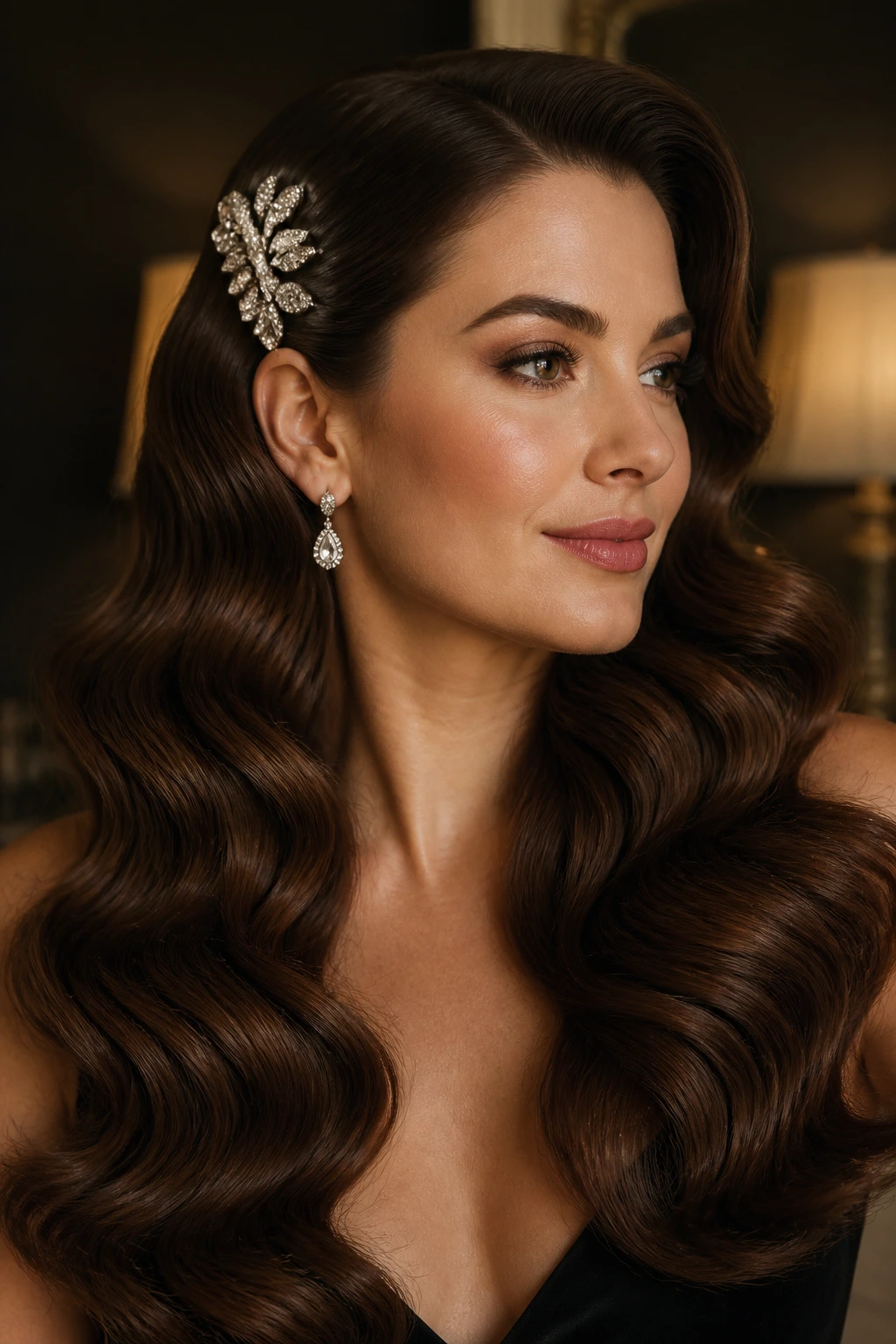
When the hair is long and thick, accessories need a bit of structure to sit against. Glam waves give them that structure. The wave pattern stays broad and smooth, which means pins, combs, and clips don’t disappear into the hair.
Why It Works
A clean wave line lets jewelry read as an accent rather than as clutter. If you add a crystal clip or metal comb near one temple, the hair around it should be polished enough to show the detail. Too much frizz and the accessory gets swallowed.
Brush out the wave first, then place the accessory after the pattern has cooled. That order matters. If you pin while the hair is still hot, the shape can slump and the clip may sit crooked.
This is one of the few styles where a little shine spray can help. Not a soak. A light mist from about 10 inches away is plenty.
Best Use
Think events, long dinners, evenings when you want the hair to do more than just sit there. Thick hair gives the accessory a backdrop with some seriousness.
17. Brushed Barrel Curls Turned into Waves
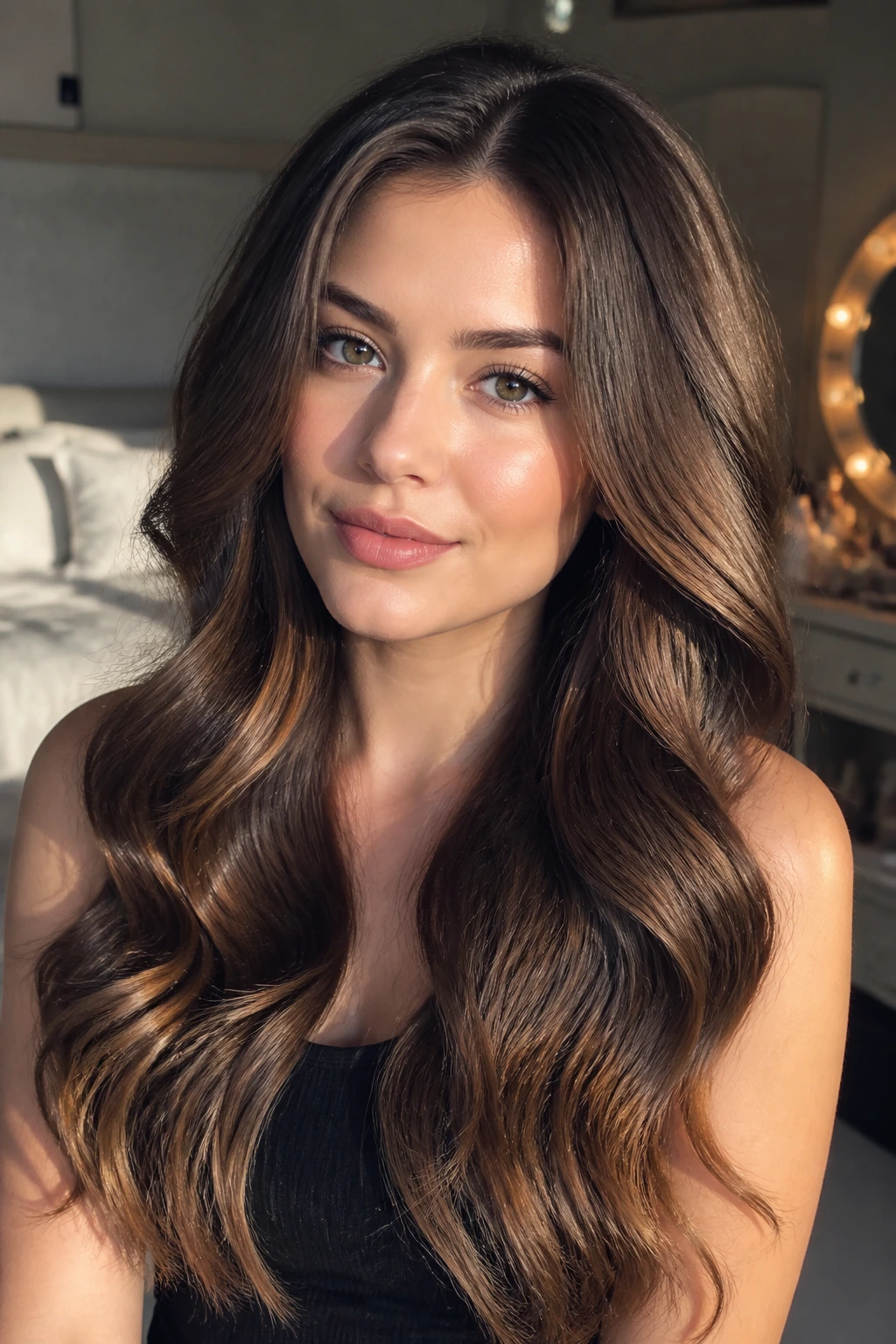
Some wave styles start as curls and end as waves. This one is built that way on purpose, and on long thick hair, the result can be cleaner than trying to create a wave from scratch.
Wrap each section around a 1-inch barrel, pin it flat, let it cool, then brush everything out with a paddle brush until the curl line softens into a wave. The original curl gives the hair memory. The brushing gives it movement.
Why It Works
Thick hair holds the set well, so the brushed-out stage usually lasts longer than it would on lighter hair. The key is to let the curl cool completely before you touch it. If you brush early, you get fluff instead of waves.
I like this method when the hair is especially coarse or resistant. The tighter set gives the hair something to hold onto, and the brush turns that hold into a smooth bend. If you want the ends neater, twist the last inch around the iron and pin them for a longer cool-down.
Quick Caution
Do not flood the hair with oil before the brush-out. That’s the fastest way to turn crisp waves into a slippery mess.
18. Low Bun with Loose Waved Ends
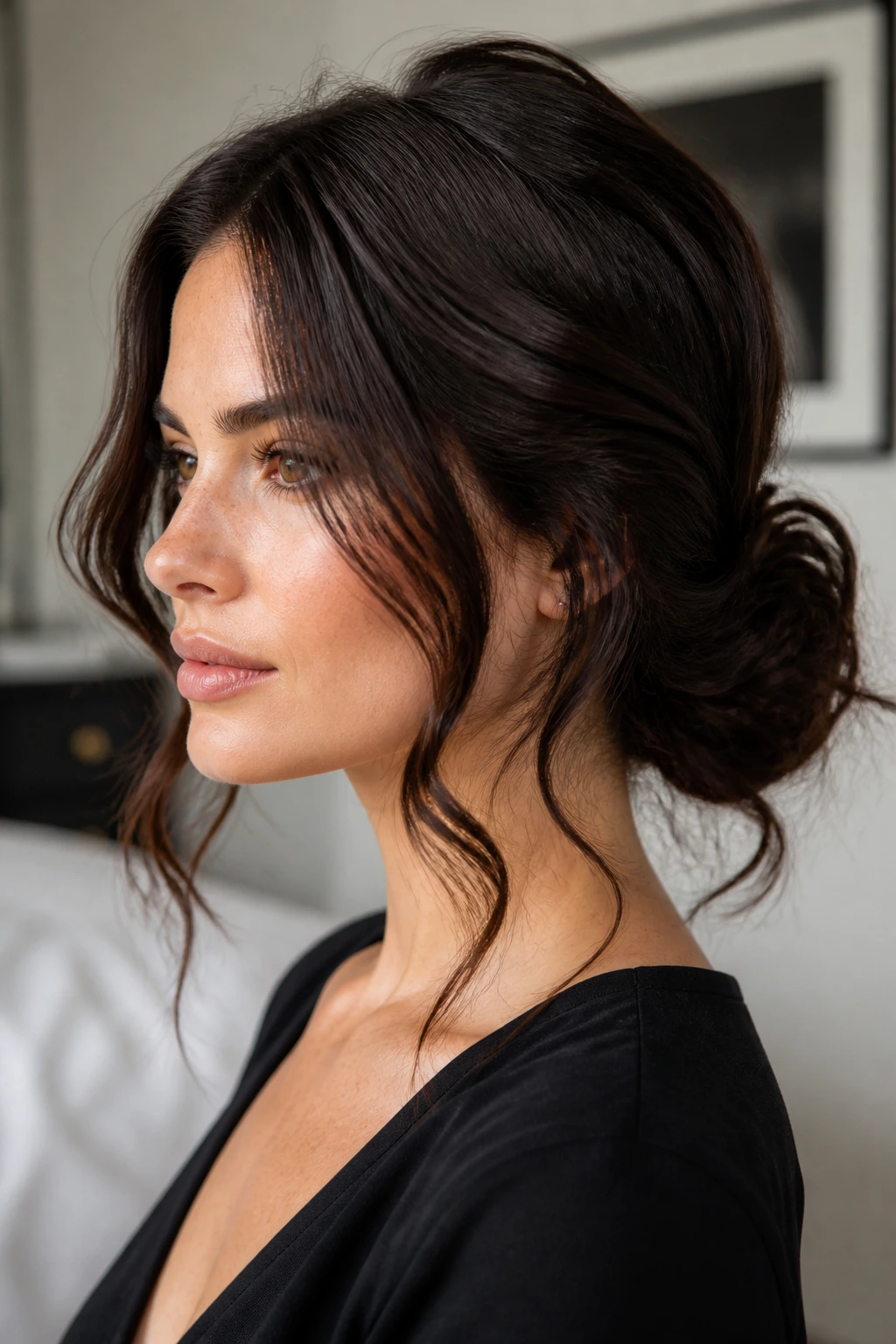
A low bun is a nice reset for thick hair because it takes pressure off the shoulders and still lets some wave show through. Leave a few waved ends loose, and the style stops feeling severe.
Gather the hair at the nape, twist it into a loose bun, and secure it with pins. Then pull out a few ends or let a few face-framing pieces hang free in soft bends. The bun should look full, not tight.
Why It Works
Thick hair makes a low bun look naturally substantial, so you do not need much padding. The waved ends keep the style from becoming too strict and add movement where the eye would otherwise stop.
This is a good option when the hair has already been waved earlier in the day and you want a second style without starting over. It also helps if the length starts to feel heavy by late afternoon. A bun gives the hair a job.
A little shine cream on the surface smooths flyaways without flattening the bun. Use a light hand, or the whole thing can collapse.
19. Fishtail Braid and Waves
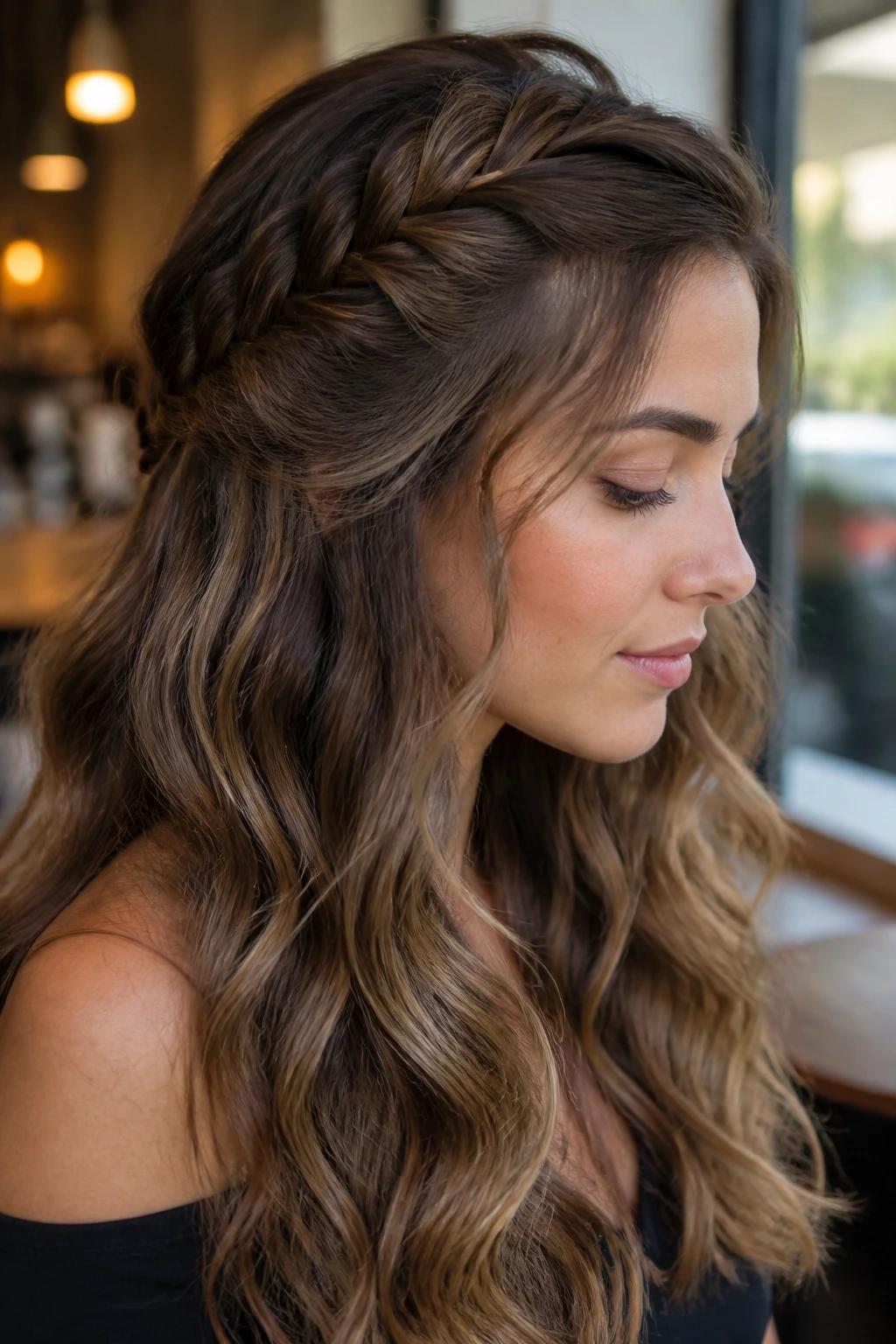
A fishtail braid reads cleaner than a chunky three-strand braid, and on long thick hair, that cleaner line gives the rest of the hair room to breathe.
You can braid just the top section into a loose fishtail and leave the lower lengths wavy, or make the braid a side detail that runs into open waves. Either way, the pattern cuts through the density in a nice way.
Why It Works
Thick hair gives a fishtail braid enough texture to show its pattern without feeling stringy. That matters because the braid needs to be visible against the wave body. If the hair were finer, the braid could vanish.
Loosen the braid by pulling gently on the outer edges once it’s secured. That makes the braid look broader and stops it from feeling too tight against the head. The waves below should stay softer and less structured.
This style is especially good when you want something with detail but not a full updo. It’s also one of the easiest ways to make long hair look styled without loading it with product.
20. Pin-Curled Cascade Waves
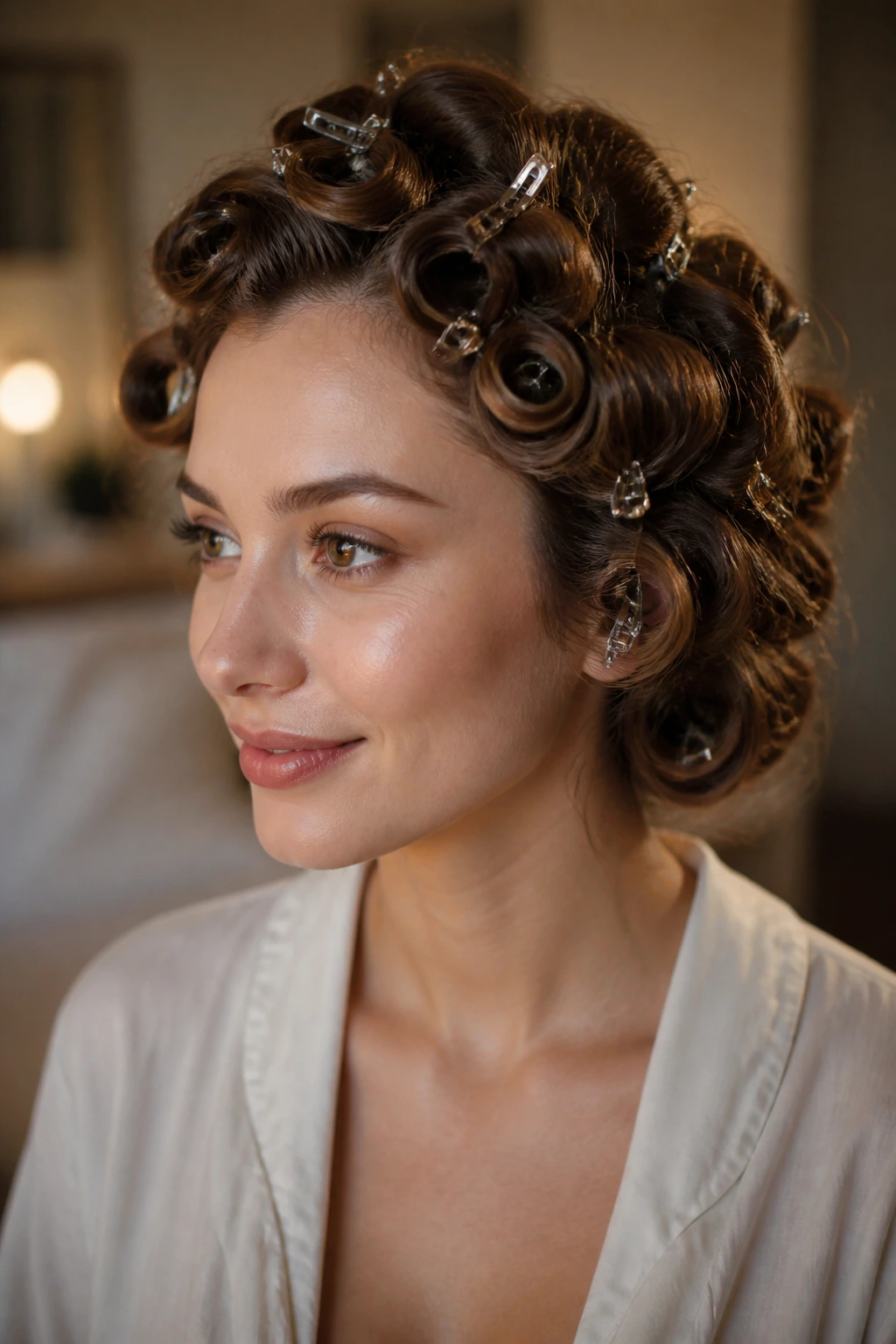
Pin curls are old-school for a reason. They hold. On long thick hair, they can give you a wave pattern with a lot more staying power than a fast curl-and-go method.
The Method
Curl a section, slide it off the iron, and pin it flat to the head while it cools. Do that all the way around. Yes, it takes longer. That extra cooling time is what creates the cascade effect, where each wave falls into the next one without losing shape at the bottom.
This works especially well if your hair is resistant or heavy enough to drop out of a wave in an hour. The pin keeps the pattern locked in while the hair cools fully. Unpin too soon, and the whole thing softens fast.
A wide-tooth comb can soften the finished style, but only after the hair is completely cool. That part is not optional.
Best For
Long events, humid weather, or any time you need the style to survive more than one stretch of the day.
21. Tucked-Behind-the-Ear Waves with a Clean Part
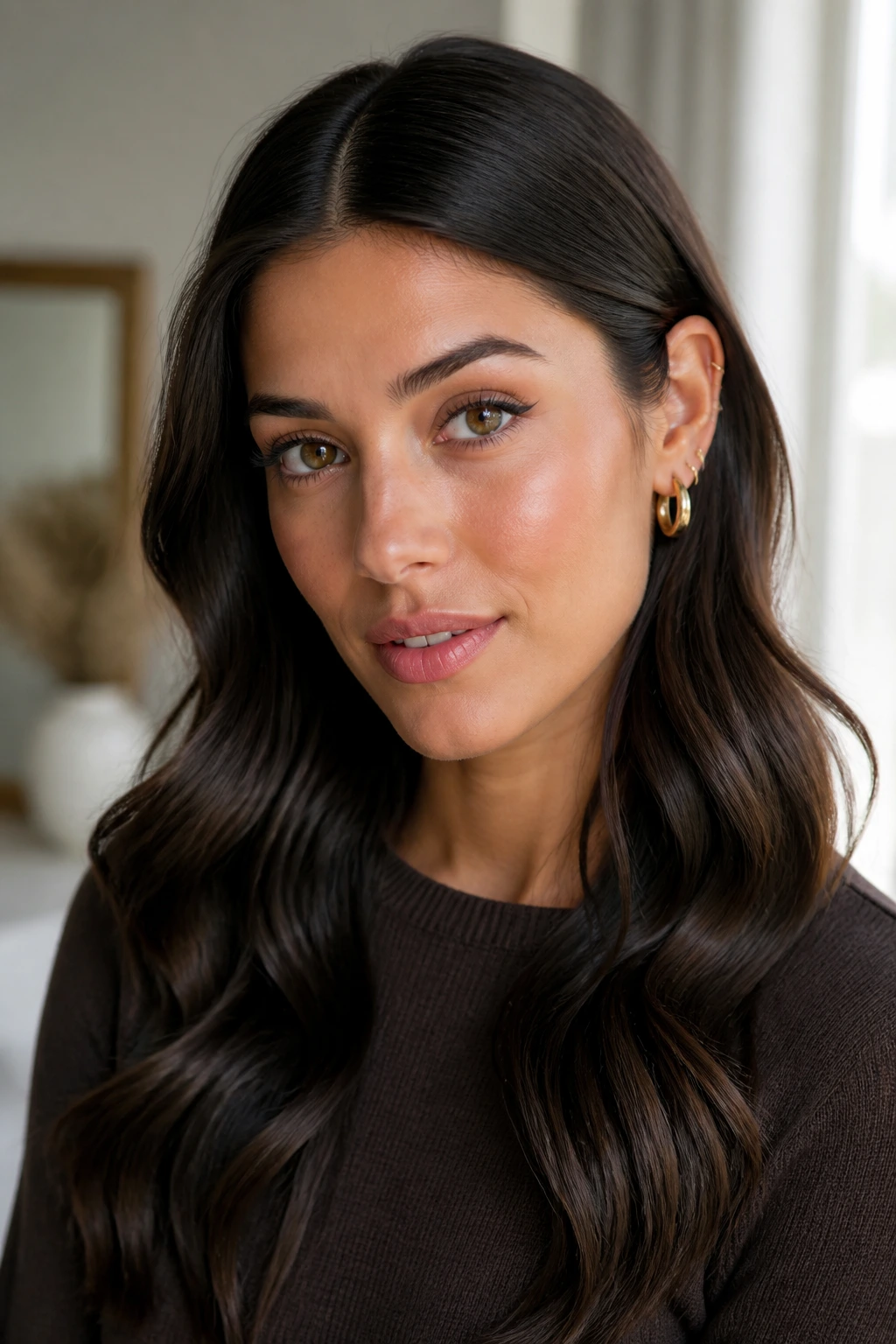
Sometimes the smartest move is the smallest one. Tucking one side behind the ear gives long thick hair a cleaner line without taking away the softness of the waves.
This works best with a neat middle or slight off-center part and broad waves that start below the ear. The tucked side exposes the jaw and cheekbone. The loose side keeps the hair from feeling overcontrolled.
Why It Works
Dense hair can overwhelm the face when both sides are left identical. Tucking one side breaks the symmetry and reduces visual bulk. That’s enough to make the whole style feel lighter.
A tiny dab of serum at the temples keeps flyaways from popping up around the tuck. If you want the tuck to stay in place, slide in one crossed bobby pin under the top layer. It disappears better than people expect.
This is one of the easiest ways to make long waves look deliberate on a day when you don’t have time for much else.
22. Silk-Scarf Waves with a Soft Center Part
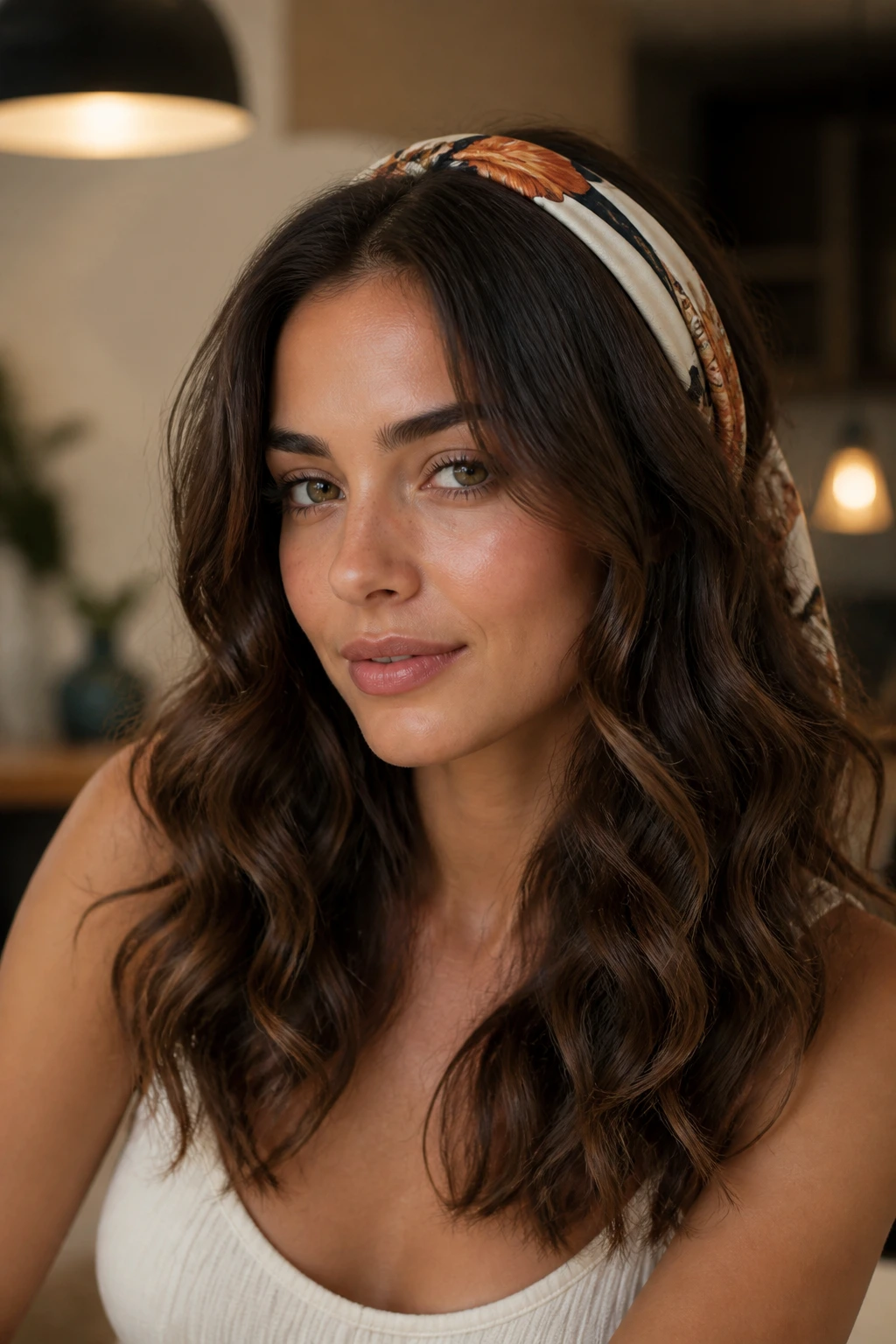
A silk scarf brings a little shape to long thick hair without adding bulk, which is exactly why it works so well here. The scarf becomes part of the styling, not just an accessory dropped on top at the end.
Tie it around a low section, weave it into a half-up, or wrap it as a headband over a softly waved center part. The scarf’s smooth surface keeps the front pieces neat, while the lengths below stay loose and wavy.
Why It Works
Thick hair can make a plain center part look severe. The scarf softens that line and gives the top half a little movement. It also helps disguise frizz around the hairline, which tends to show first on dense hair.
Choose a scarf that’s narrow enough not to crowd the head. Too wide, and it competes with the wave pattern. A slim silk strip or a light satin tie usually sits better.
This style has a nice payoff for minimal effort. It looks planned, but not overworked. And that’s a useful sweet spot.
Why Long Thick Hair Needs a Different Wave Strategy
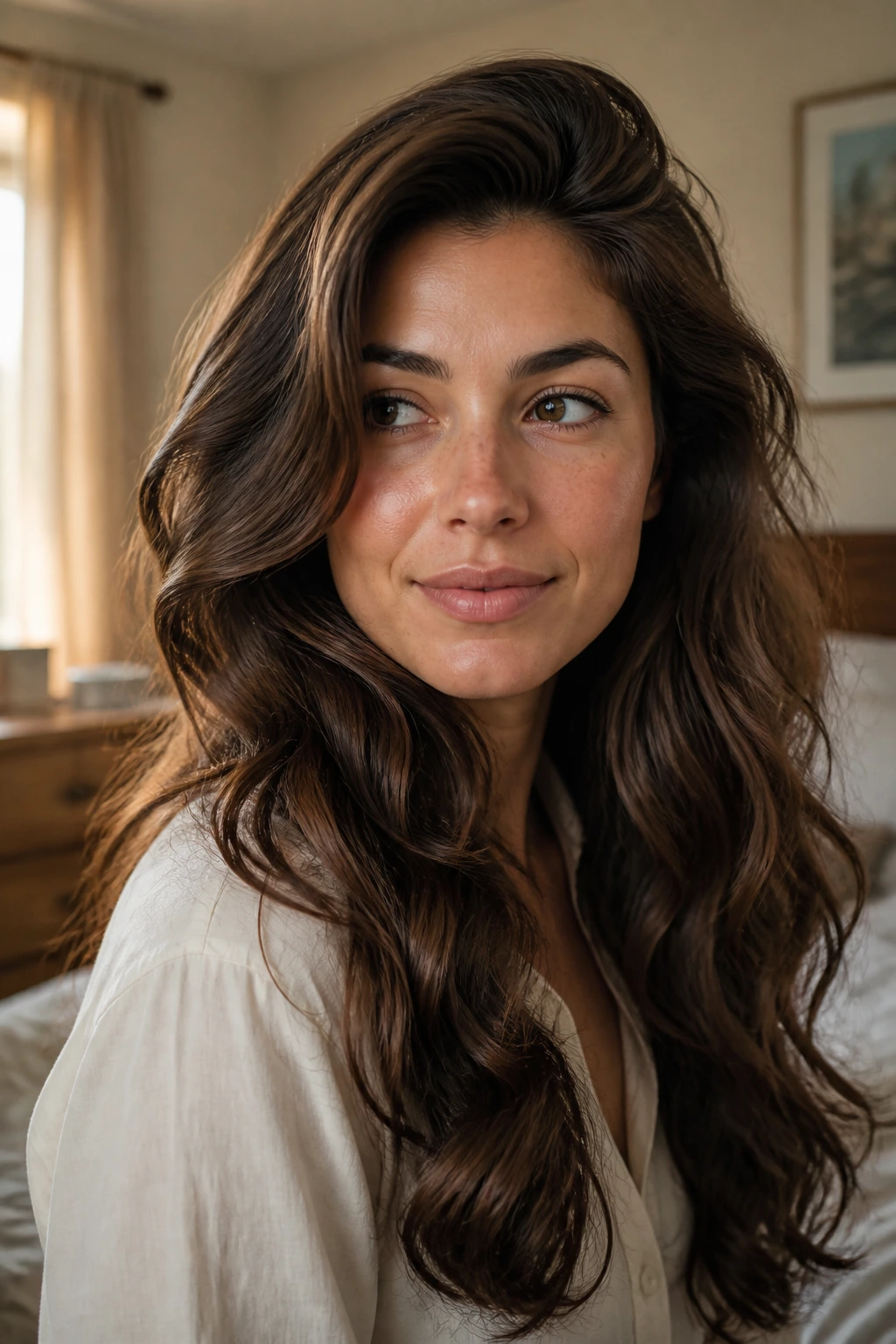
Long thick hair doesn’t behave like a brochure model’s hair, and that’s a good thing. It has more grip, more weight, and more visual presence, which means the styling choices that work best are usually the ones that respect the mass instead of trying to flatten it into submission.
The main issue is distribution. If all the movement sits at the ends, the roots can look bulky and the style feels bottom-heavy. If all the movement sits at the top, the lower lengths look chopped up and frizzy. The best wavy hairstyles for long thick hair spread the shape across the whole head: a lifted crown, a guided side or center part, and a wave pattern that stays broad enough to survive gravity.
What Thick Hair Does Well
It holds a bend longer than many fine textures do. It can carry a brush-out without vanishing by lunchtime. It also gives braids, pins, clips, and half-up sections more structure to sit on, which is why these styles can look richer rather than smaller.
What Usually Goes Wrong
Too-small sections. Too much product. Too much heat. And the biggest one: trying to make thick hair behave like it has less of itself. It doesn’t. The answer is to shape it.
A 1¼-inch iron, a larger barrel, and thoughtful layering will do more for this hair type than any pile of random styling cream. The size of the wave matters. So does the direction. So does the cool-down time. Those boring little details are the whole game.
Essential Tools for These Styles
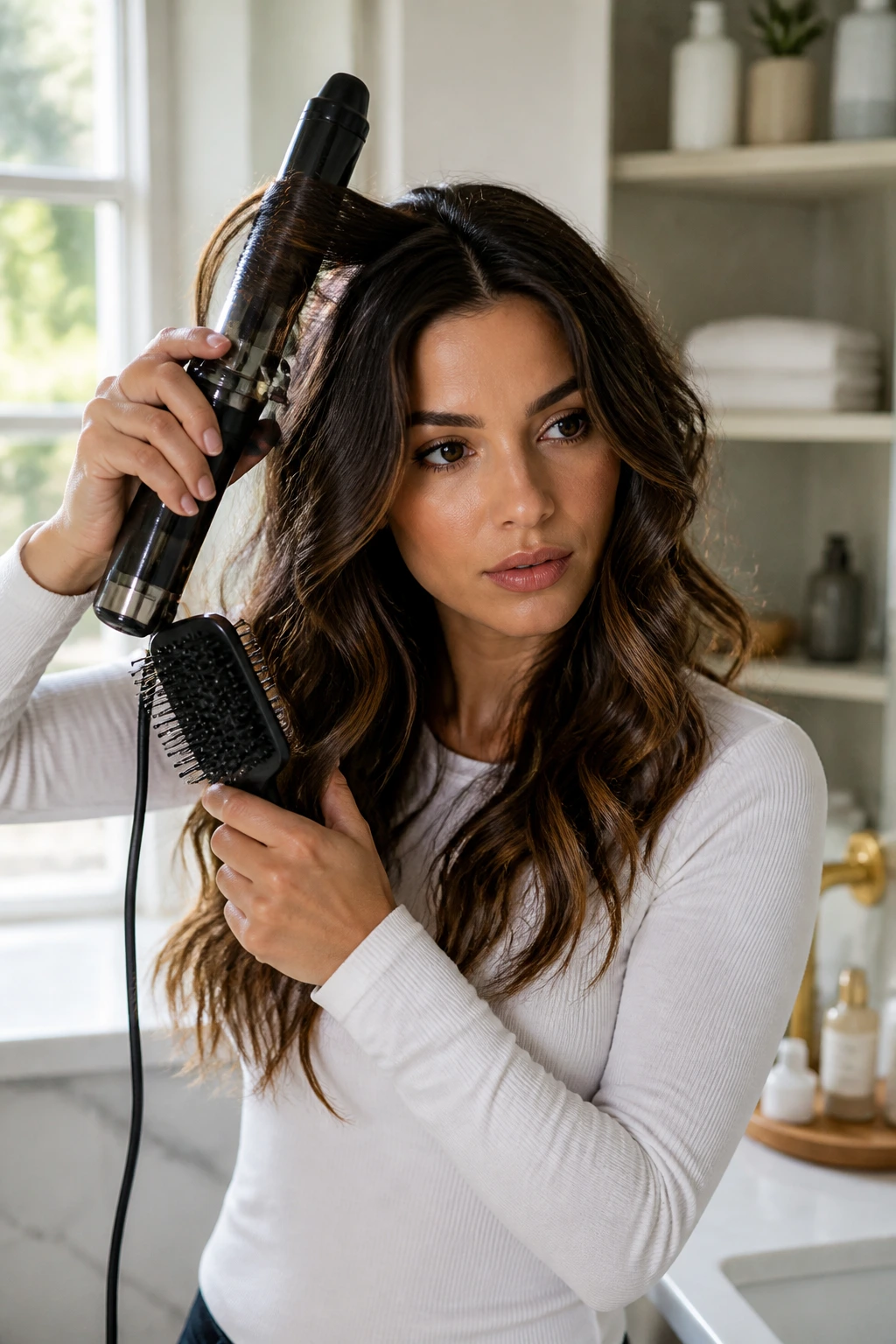
- 1¼-inch curling iron or wand: The safest all-purpose barrel size for broad waves on long thick hair.
- 1½-inch curling iron or triple-barrel waver: Better for mermaid waves and polished bends when you want a looser pattern.
- Heat protectant spray: Use it on dry hair before any hot tool; thick hair still burns and dries out.
- Tail comb: Helps clean up parts, pick up front sections, and loosen braids without shredding the pattern.
- Duckbill or alligator clips: These hold hot sections while they cool, which is often the difference between waves that last and waves that drop.
- Soft boar-bristle brush: Good for brushing out glossy styles without tearing the wave apart.
- Paddle brush: Better for soft, lived-in waves and brushed barrel curls.
- Texturizing spray: Gives grip to braids, heatless sets, and day-two hair.
- Flexible-hold hairspray: Keeps the style moving instead of locking it into a shell.
- Dry shampoo: Helps at the roots, especially when the crown starts to look heavy.
- Silk scrunchies or clear elastics: Useful for half-ups, low ponies, and bubble braids without creating harsh dents.
- Decorative clips or pins: Optional, but handy when you want to turn simple waves into a finished look.
Smart Cut, Product, and Sectioning Choices
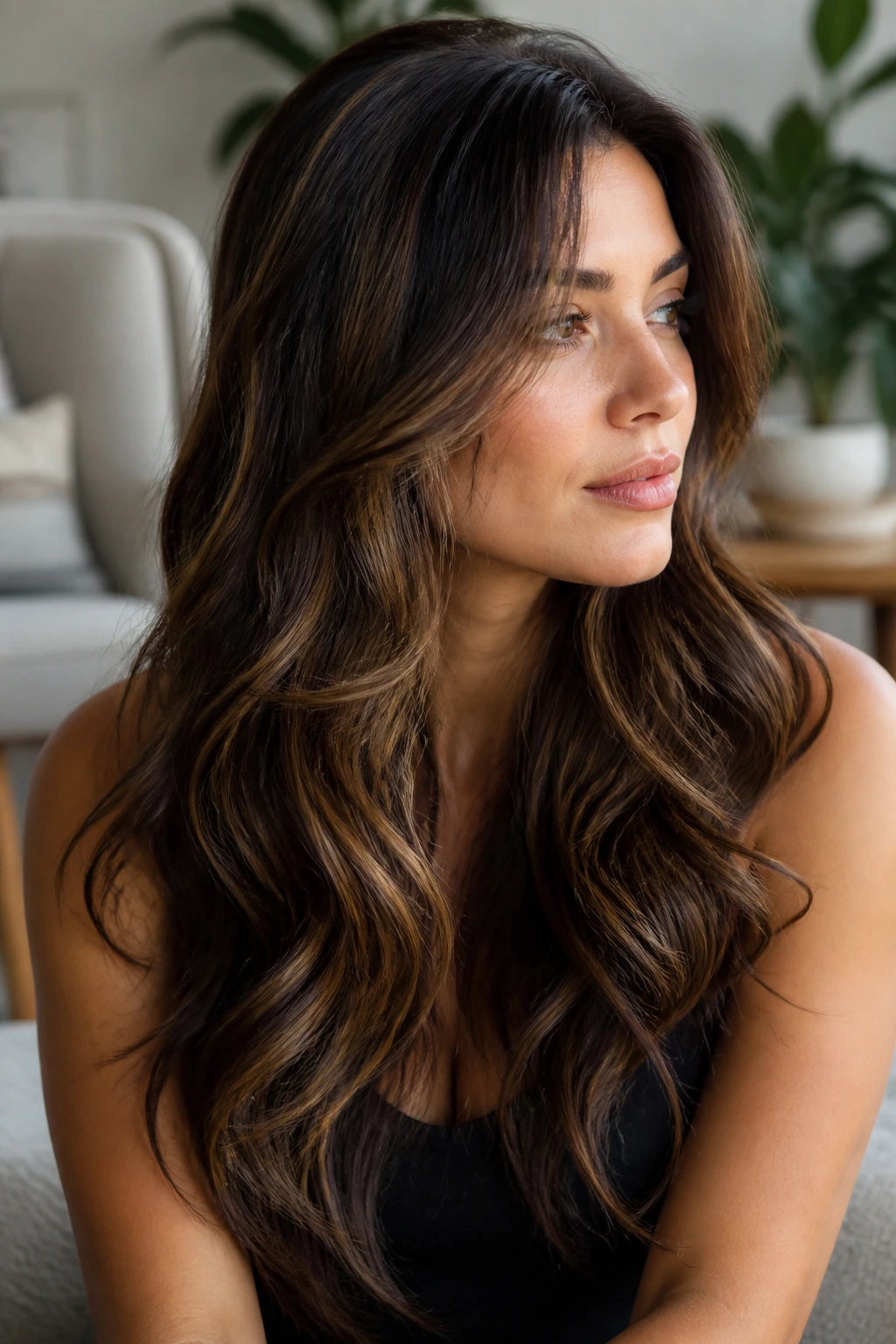
Long thick hair usually looks best with a cut that removes some weight in the right places. A blunt one-length cut can be gorgeous when it’s freshly blown out, but it often fights wave styles because the ends sit too heavy and the top loses shape. Long layers, face-framing pieces, and subtle internal layering give the wave somewhere to move.
Product choice matters too. Heavy oils and thick creams can make thick hair look shiny for five minutes and flat for the rest of the day. Light mousse at the roots, a heat protectant through the mid-lengths, and a touch of serum only on the ends is a cleaner setup. If the hair is coarse, a little more moisture helps. If it’s already smooth, back off.
Section size is where many people waste time. Small sections create tighter waves, but on long thick hair they can create too much work for too little payoff. In most cases, 1½- to 2-inch sections are enough. Around the face, go a little smaller if you want detail. In the back, go wider if you want speed and softness.
One more thing. Thick hair needs a true cool-down. If you pin curls or clip sections, give them time to go fully cold before brushing or separating. Warm hair is still changing shape. That’s when styles slip.
How to Wear These Waves in Real Life
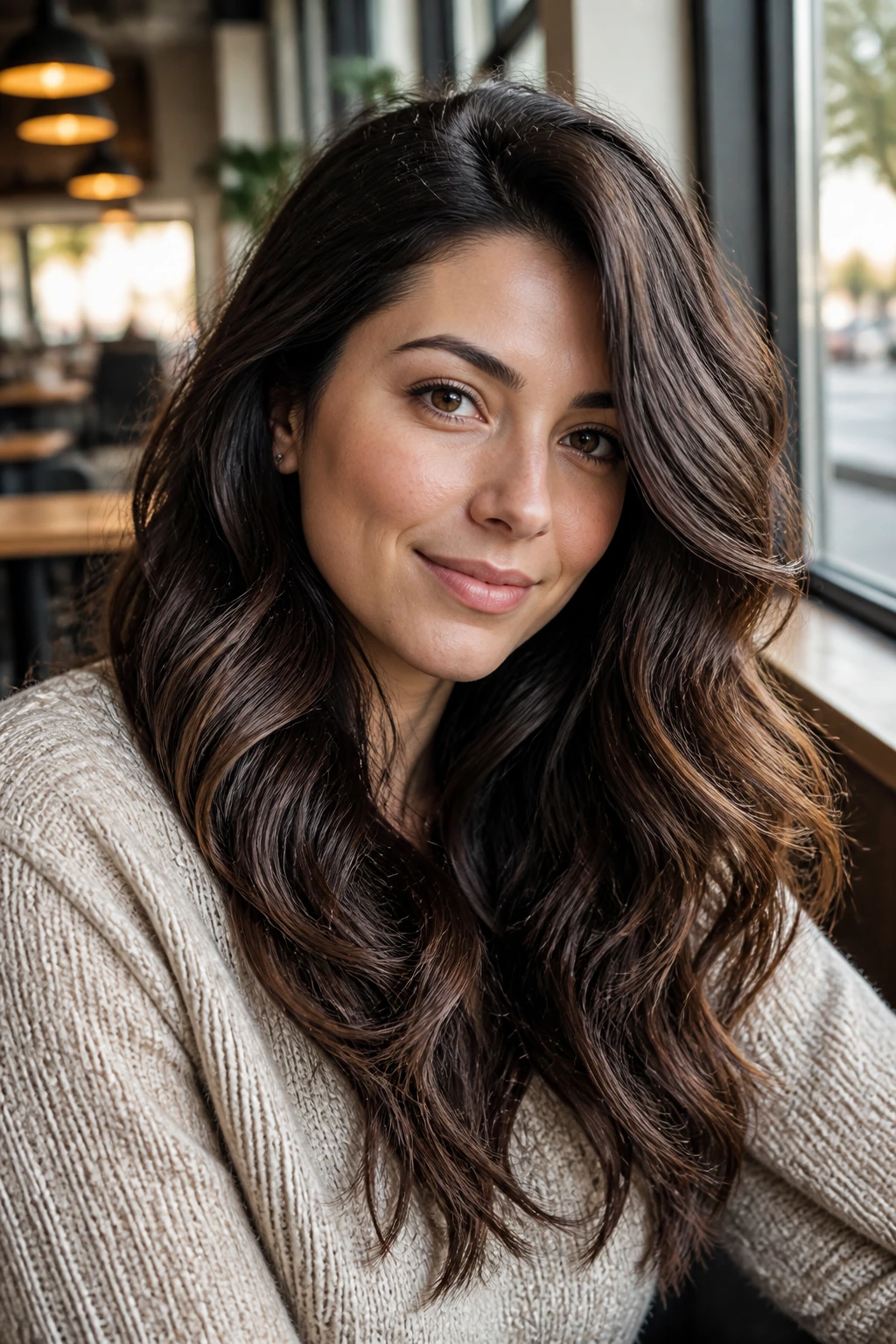
The best wavy hairstyle for long thick hair is the one that fits the rest of your day, not just the mirror. A glossy side part reads formal and clean, which makes it a strong match for structured clothes and earrings. A half-up twist or clipped-back front works when you want the hair off your face but still want the length to move.
For softer clothes, looser waves usually look better. A brushed-out wave can soften a crisp shirt. A braid detail can break up a sweater or high neckline. And if the hair itself is the loudest thing in the outfit, keep the accessories small. Big hair plus big earrings plus a high collar can start to feel crowded fast.
Presentation:
Pick the finish that matches the rest of your look. Sleek roots with broad waves read polished, while dry texture and a little unevenness read relaxed.
Pairings:
Low necklines, open collars, hoop earrings, and simple clips all play nicely with these styles. High necks work too, but usually with a side sweep or half-up shape so the hair doesn’t crowd the throat.
Scale:
If your hair is extremely dense, keep the detail concentrated in one place: one braid, one clip, one twist, one side part. Too many competing elements make the style lose its line.
Finish:
Use shine spray for polished looks, texture spray for lived-in looks, and very little else. Thick hair can handle either direction. What it cannot handle well is confusion.
Small Tweaks That Make the Style Last Longer
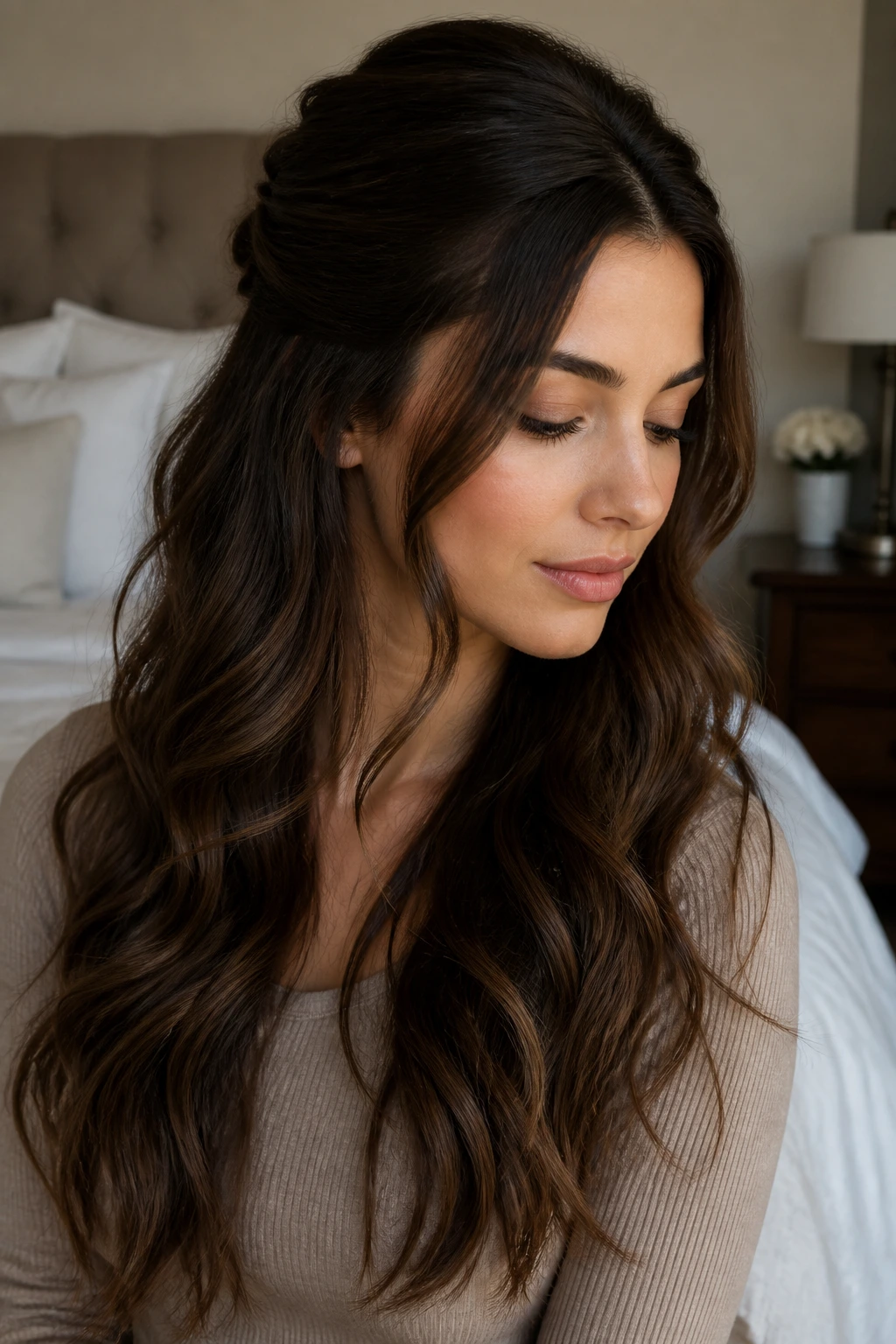
A good wave on long thick hair is one thing. A wave that survives the afternoon is another. The easiest fix is to set the hair in a way that respects its density: larger sections, full cool-down, and fewer passes with the brush. That alone helps more than people expect.
Hold: Clip hot curls flat and leave them alone until they’re room temperature. If you brush while they’re warm, the wave line relaxes too early.
Shape: Keep the crown smoother than the lengths. Thick hair gets puffy when every section is waved the same way from root to end.
Refresh: On day two, mist the hair lightly with water or a wave spray, twist a few front pieces around your fingers, and scrunch the ends. No need to redo the whole head.
Shortcut: If time is short, focus only on the front two inches around the face and the top layer that people actually see. The hidden layers can stay softer.
Finish: A very small amount of flexible hairspray under the top layer can add hold without freezing the style into place.
Common Mistakes That Flatten Thick Waves
-
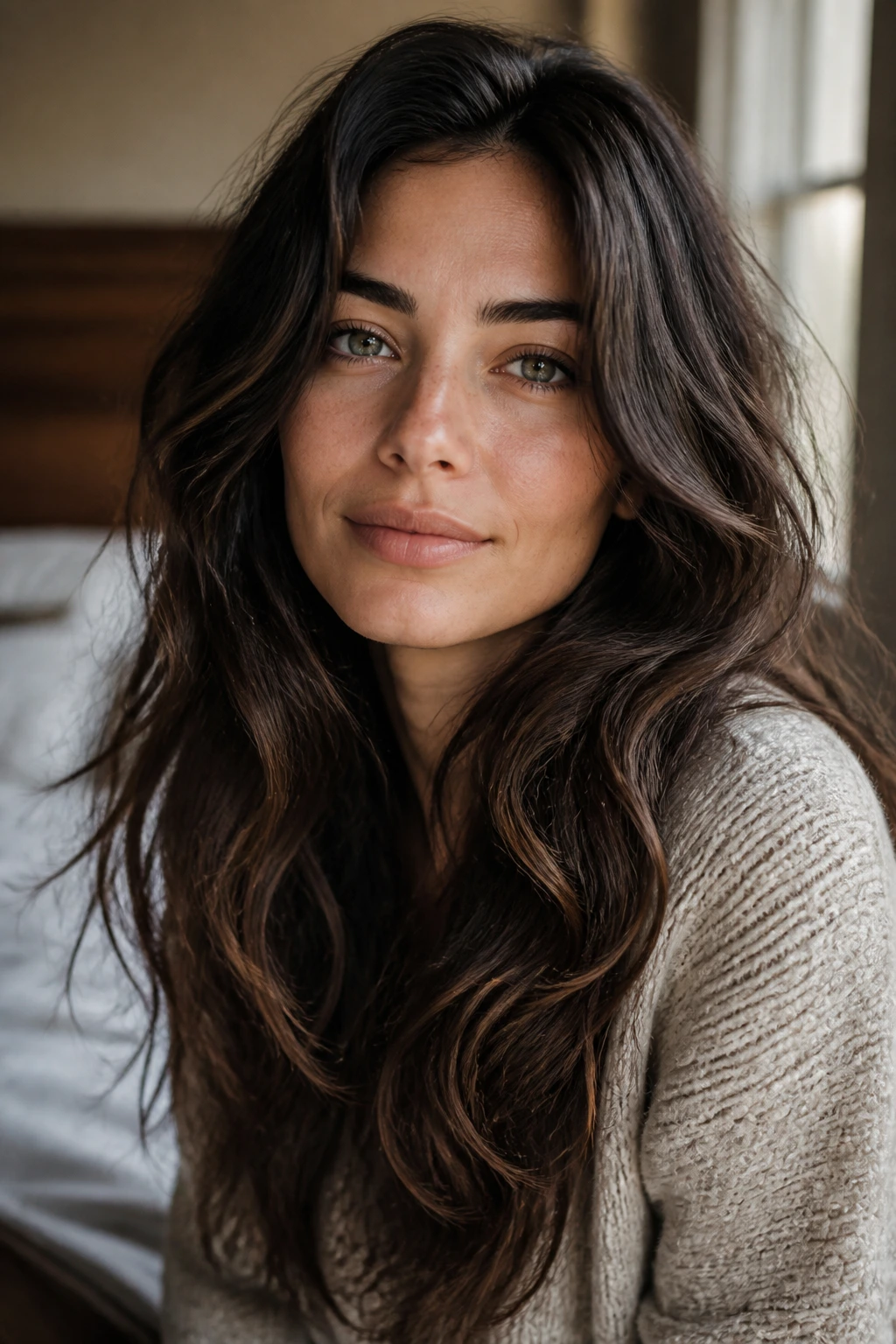
Using sections that are too small: Tiny sections create too much curl and not enough shape, so the hair ends up looking busy instead of wavy. Use broader sections and a larger barrel unless you’re going for a very defined set.
-
Skipping the cool-down: Thick hair can hold heat for a long time. If you brush or pin too early, the wave softens before it has set, and the style drops faster than it should.
-
Overloading with oil or cream: Thick hair can take more product than fine hair, but not endless amounts. Heavy product makes the roots limp and the ends stringy. Put moisture where it’s needed, not everywhere.
-
Curling every piece in the same direction: That gives the hair a rigid, tube-like look. Alternate directions or change the angle in the front so the wave pattern stays soft.
-
Forgetting the crown: Long thick hair can look bottom-heavy if all the attention goes to the lengths. A little lift at the roots or a half-up detail keeps the whole shape balanced.
-
Brushing too aggressively: A wave should loosen, not vanish. Use a soft brush or your fingers, and stop once the pattern blends.
Variations and Adaptations to Try
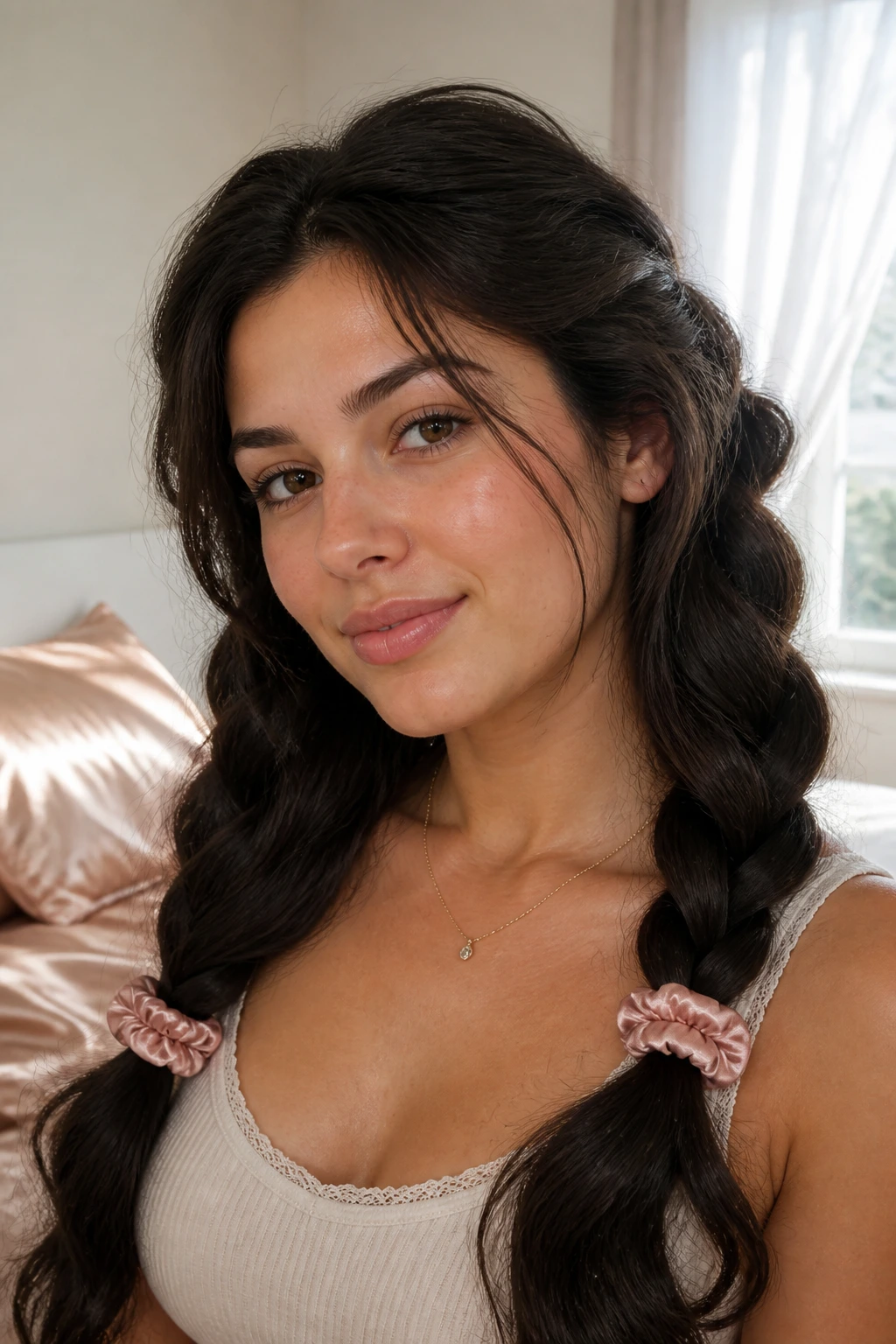
Heatless Satin Set:
Wrap damp hair into two loose twists, secure with satin scrunchies, and sleep on a silk pillowcase. This is the gentlest route if your hair feels dry or you style often. The wave comes out softer and a little less polished, which can be a nice trade.
Humidity-Guard Waves:
Work mousse into the roots, use a heat protectant with some hold, and finish with a light anti-frizz spray only on the outer layer. Thick hair can swell in damp air, so this version keeps the cuticle a little tighter. It’s the right call when you know the style needs extra staying power.
Blunt-Cut Rescue Waves:
If your hair has very few layers, focus on side parts, half-up shapes, and larger wave sections. Those choices break up the heavy line at the ends. A blunt cut can still look good waved, but it usually needs a little more shaping at the front.
Glossy Event Waves:
Brush the curls out fully, then add a trace of serum to the ends and a shine spray to the mid-lengths. This version is cleaner and more formal, with less visible texture and more shine. It works best when the hair is freshly washed or blown smooth first.
Weekend Texture Waves:
Use dry shampoo at the roots and texture spray through the mids, then bend only the top layers with a wand. The lower layers stay soft and casual. It’s a smart option when you want the style to look relaxed instead of done.
Braided Wave Hybrid:
Add a braid on one side or across the crown before waving the lengths. The braid gives the style structure and keeps thick hair from reading too heavy near the face. Good for hair that needs a little visual break-up.
Frequently Asked Questions
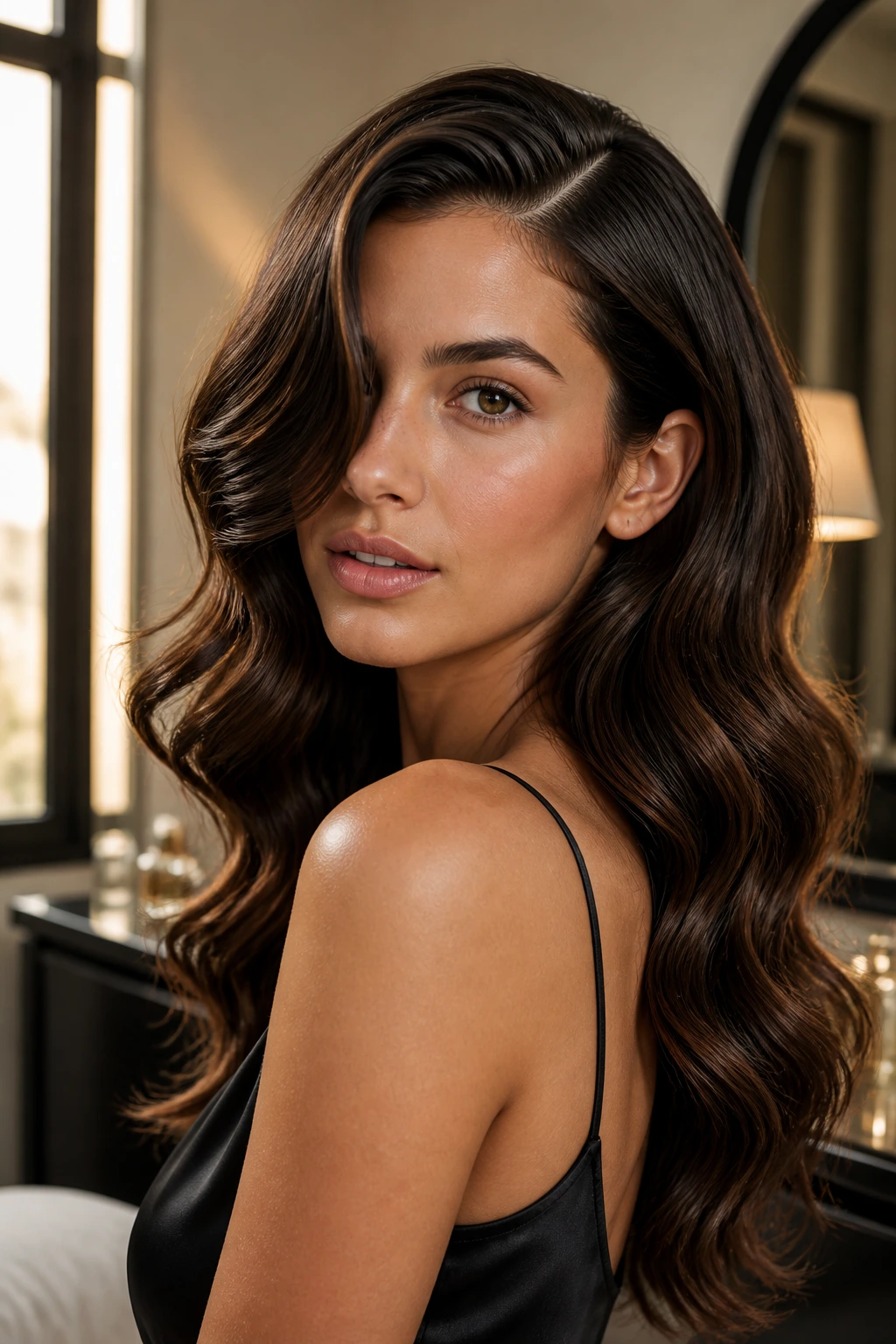
What barrel size works best for long thick hair?
A 1¼-inch barrel is the safest starting point for most long thick hair because it gives enough shape without creating tiny curls that collapse. If you want softer, broader waves, move up to 1½ inches. Smaller barrels can work near the face, but they usually take more time than they’re worth on dense lengths.
How do I keep waves from falling flat at the roots?
Start with root lift while drying, not after styling. Blow-dry the crown away from the scalp, use a little mousse or root spray, and avoid flooding the top section with oil. Heavy hair needs a lighter touch near the roots or the whole style sinks.
Can I do these styles without heat?
Yes, and long thick hair often does well with heatless sets because the density helps the shape hold. Loose twists, braids, and claw-clip sets work best when the hair is damp, not wet. Overnight sets give the best result when you leave them fully alone until morning.
Should I curl thick hair away from the face or toward it?
Both, and that mix is what keeps the wave looking soft. Curling every section away from the face can make the hair look too uniform. Switching direction around the face and through the back keeps the pattern from turning stiff.
Why do my waves disappear so fast even though my hair is thick?
Usually the problem is heat, not density. If the sections aren’t fully cooled before you release them, the shape never really sets. Product overload can also flatten the wave before it has a chance to settle.
What’s the easiest style if I only have ten minutes?
A clipped-back front with open waves or a low ponytail with waved lengths. Both use the wave you already have instead of asking for a full reset. The ponytail is the fastest when the roots are messy.
Do layers really matter that much?
They do. On long thick hair, layers change how the wave falls, especially near the face and through the ends. A blunt cut can still look good, but it usually needs more styling time to avoid that heavy sheet effect.
How do I sleep on waves without wrecking them?
Use a loose silk scrunchie, a satin bonnet, or a soft braid if the style allows it. Sleep on a silk pillowcase if you can. The biggest mistake is lying flat on the hair with no protection, because that crushes the crown and frays the ends.
Keeping the Style Fresh for the Next Day
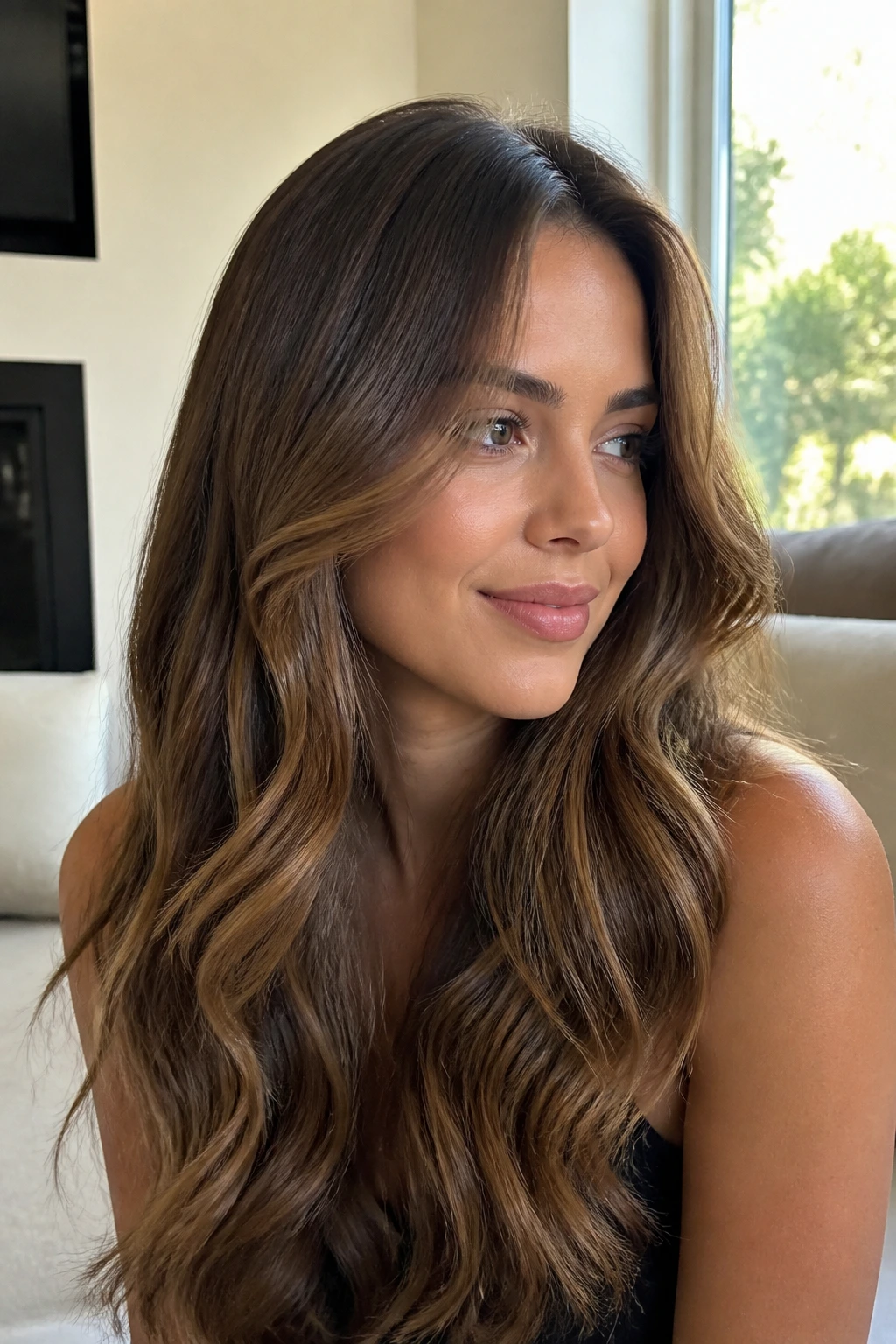
Long thick hair usually does not need a full wash to look presentable again. A little root refresh, a few finger-shaped bends, and a touch of product at the mids can bring most of these waves back without restarting the whole process.
For the first day, use flexible hairspray and keep the finish a little softer than you think you need. That gives the hair room to settle overnight instead of collapsing into a flat mass. If you know you’ll wear the style again, skip the heaviest oils and creams at the start. They shorten the life of the wave.
On the second day, dry shampoo at the roots is your friend. Apply it in sections, let it sit for a minute, then massage it in with your fingertips. Wake up the wave pattern with a light mist of water or a wave spray, twist the pieces that went limp, and leave the ends alone unless they’ve frizzed out.
If you like a style to last longer than one wear, the softest looks to preserve are the half-up twists, low ponies, and braids. The most fragile are polished Hollywood waves and brushed-out event waves. Those need more careful sleeping and a gentler refresh the next day.
The Styles I’d Reach for First
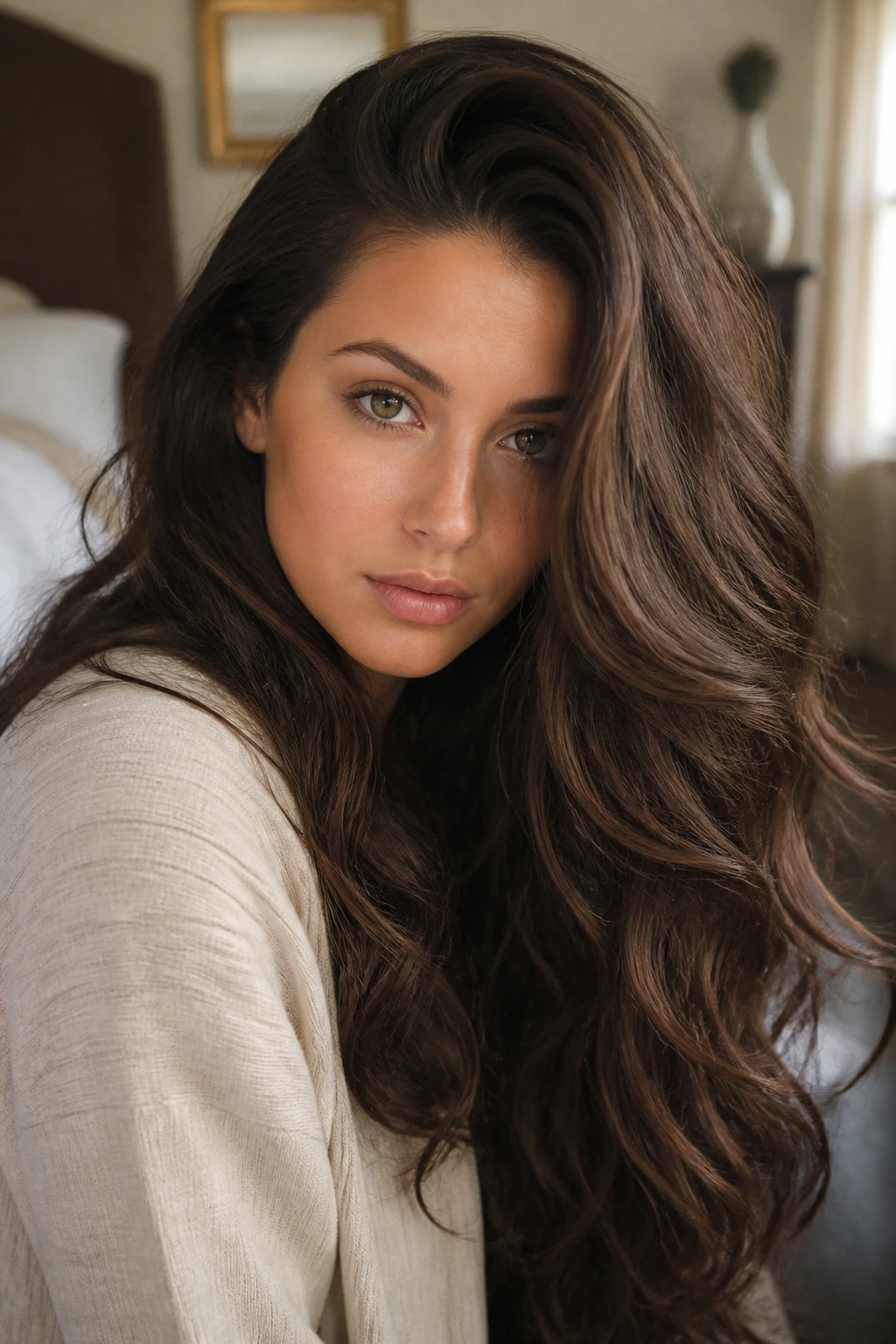
Long thick hair can do a lot, but it looks best when the wave pattern has a clear reason to exist. A deep side part gives it drama. A half-up twist gives it lift. A brushed-out wave gives it softness. A braid or clip gives it shape where the hair would otherwise just sit there and weigh itself down.
The styles above aren’t only different looks. They’re different ways of handling density. That’s why they work. Pick the one that matches how much time you have, how polished you want the finish, and how much hair you feel like dealing with that day. Then let the thickness do the rest.
