



Long wavy hairstyles for older women can go two very different ways: airy and graceful, or heavy and fussy. The difference usually has less to do with age than with shape. Where the layers start, how the ends are handled, and whether the wave bends softly or turns into stiff tube curls — that’s the real game.
I like long waves on older hair because they work with change instead of arguing with it. Hair often gets a little finer at the temples, drier through the last few inches, or more silver in scattered ribbons, and a good cut can make all of that look intentional. A blunt wall of hair tends to show every weak spot. A wave has room to move.
That’s why the best styles below aren’t about chasing youth. They’re about keeping length while giving it lift, softness, and enough shape to look finished on a normal day. Some are polished. Some are casual. Some are built for gray hair, some for thick hair, some for the woman who still wants her hair to brush her shoulders but does not want to spend half the morning fighting it.
Why These Waves Earn Their Place
-
They keep your length without dragging your face down: The right layering pattern makes long hair feel lighter around the cheeks and jaw, which matters a lot once the ends start to thin out.
-
They work with silver, white, and salt-and-pepper hair: Loose waves show off those color shifts instead of hiding them under a hard, helmet-like style.
-
They give thin or fine hair a little lift without fake-looking volume: A wave built with a 1.25-inch iron or a round brush looks softer than teased hair and usually lasts longer.
-
They don’t punish you for imperfect hair days: A wave that’s a little separated or slightly undone usually still looks good. A perfectly smooth straight style is less forgiving.
-
They can be dressy or relaxed with only a small change in finish: Swap a smoothing serum for a dry texturizer, or tuck one side behind the ear, and the whole mood shifts.
-
They play nicely with glasses, earrings, and necklines: That sounds small until you have hair that keeps falling across your frames or hiding your collarbone. Then it matters a lot.
1. Long Layers That Start at the Collarbone
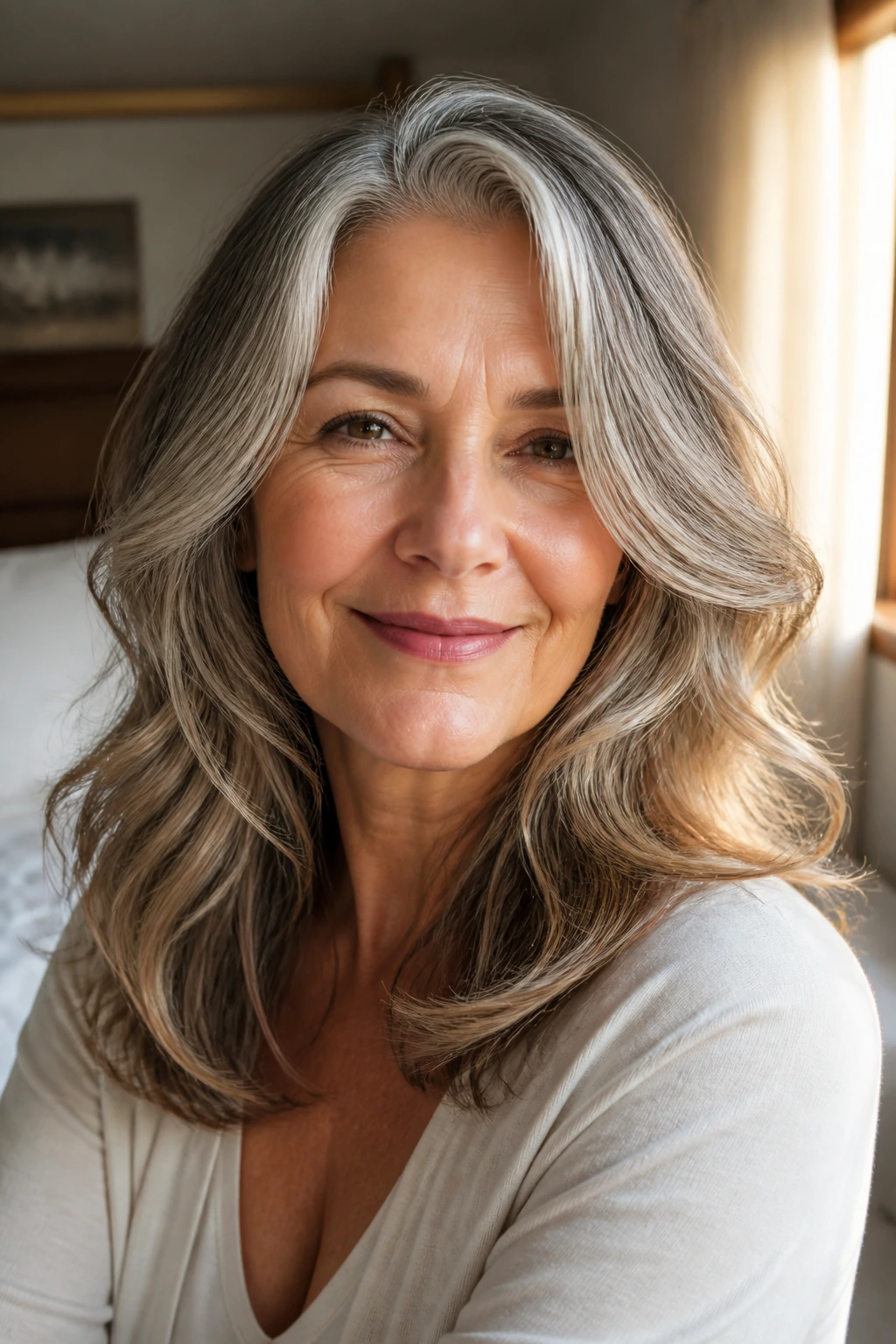
The safest place for long waves to lose weight is around the collarbone. That’s where this cut earns its keep. The length stays there, which means you still get the drama of long hair, but the layers start low enough that the ends don’t look like one tired curtain.
This is the style I’d point to first for women who want to keep their hair long but feel like it’s starting to sit too flat. The wave has somewhere to bend, so the whole shape looks lighter around the face. If your hair is fine, ask for soft internal layers instead of aggressive thinning. Heavy razor texturizing on fine hair can leave the ends wispy in a bad way.
What makes it work
- The collarbone is a natural break point, so the layers do not look chopped.
- The cut keeps enough weight through the bottom to stop frizz from taking over.
- A side part or loose center part both fit this shape.
A 1.25-inch curling iron or wand gives the most useful bend here. Wrap the hair away from the face, leave the last inch out, then cool everything before you run your fingers through it. That little detail keeps the wave from looking curled with a hot-tool grid. It matters more than people think.
2. Curtain Bangs With Soft, Loose Waves
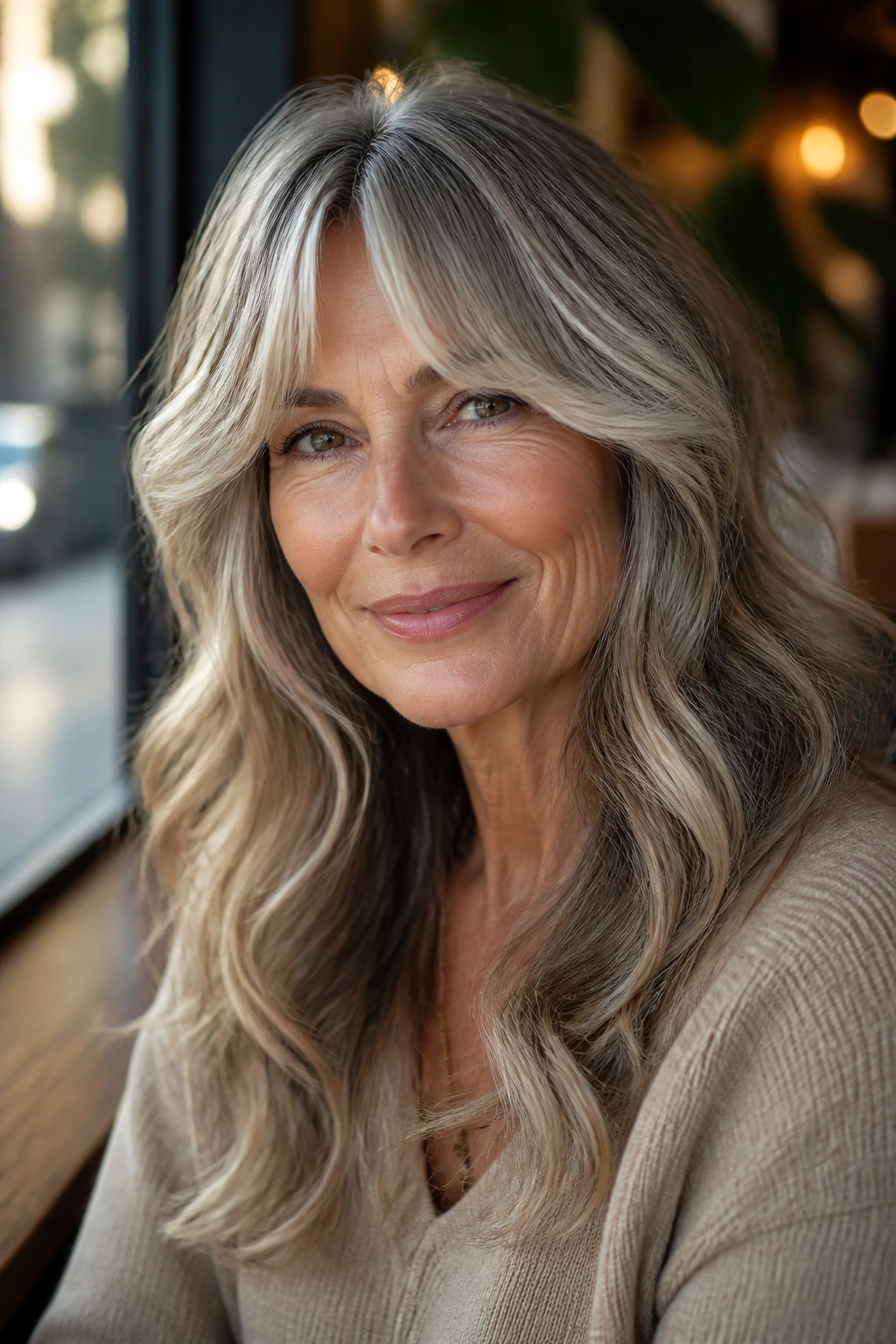
Want a change without giving up your length? Curtain bangs are the easy answer. They split in the middle, sweep out toward the cheekbones, and blend into long waves instead of sitting on top of them like a hard line.
The reason this works so well on older women is simple: curtain bangs soften the top half of the face without trapping you in a short fringe. They grow out more gracefully than blunt bangs, too. If you’re not ready for a maintenance-heavy cut, that part is the appeal. They also look good when the wave is a little imperfect, which is a gift on busy days.
Ask your stylist to keep the shortest point around the cheekbone or just below it. Too short and the bangs flip up in a way that feels fussy. Too long and they disappear. The sweet spot is where they can move with the wave instead of fighting it.
3. Silver Waves With a Gloss Finish
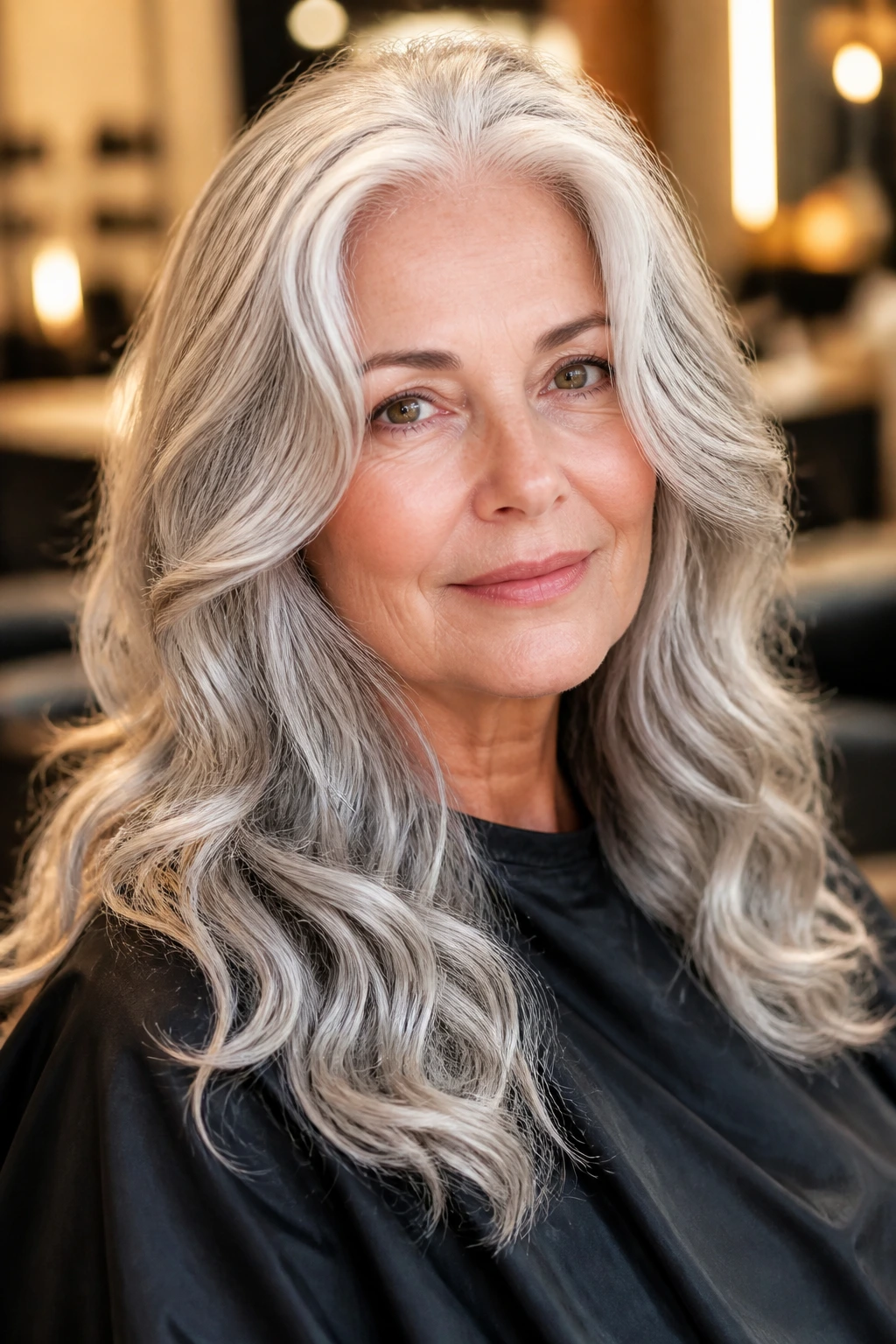
Silver hair and loose waves have a special relationship. When the cut is clean and the surface has shine, the hair looks crisp in a way that dyed hair sometimes tries too hard to imitate. No need for chunky highlights or overworked curl patterns. The silver does the talking.
I prefer a gloss finish here over heavy purple products. Purple shampoo has its place, but too much of it can make silver hair look flat and a little chalky. A clear gloss, a light serum, or even a cool rinse after conditioning keeps the hair reflective without weighing it down. If the hair is coarse, use the serum only on the lower half of the lengths. That’s usually enough.
A few things that help
- Use a wide-barrel bend, not tight curls. Tight curls can make silver hair look dated fast.
- Keep the part soft. A slightly off-center part gives the wave more life.
- Trim the ends often. Silver ends show splitting faster than pigmented hair.
The best version of this style looks calm. Not stiff. Not shiny in a fake way. Just smooth enough that the wave pattern reads clearly from six feet away.
4. Feathered Ends and Airy Movement
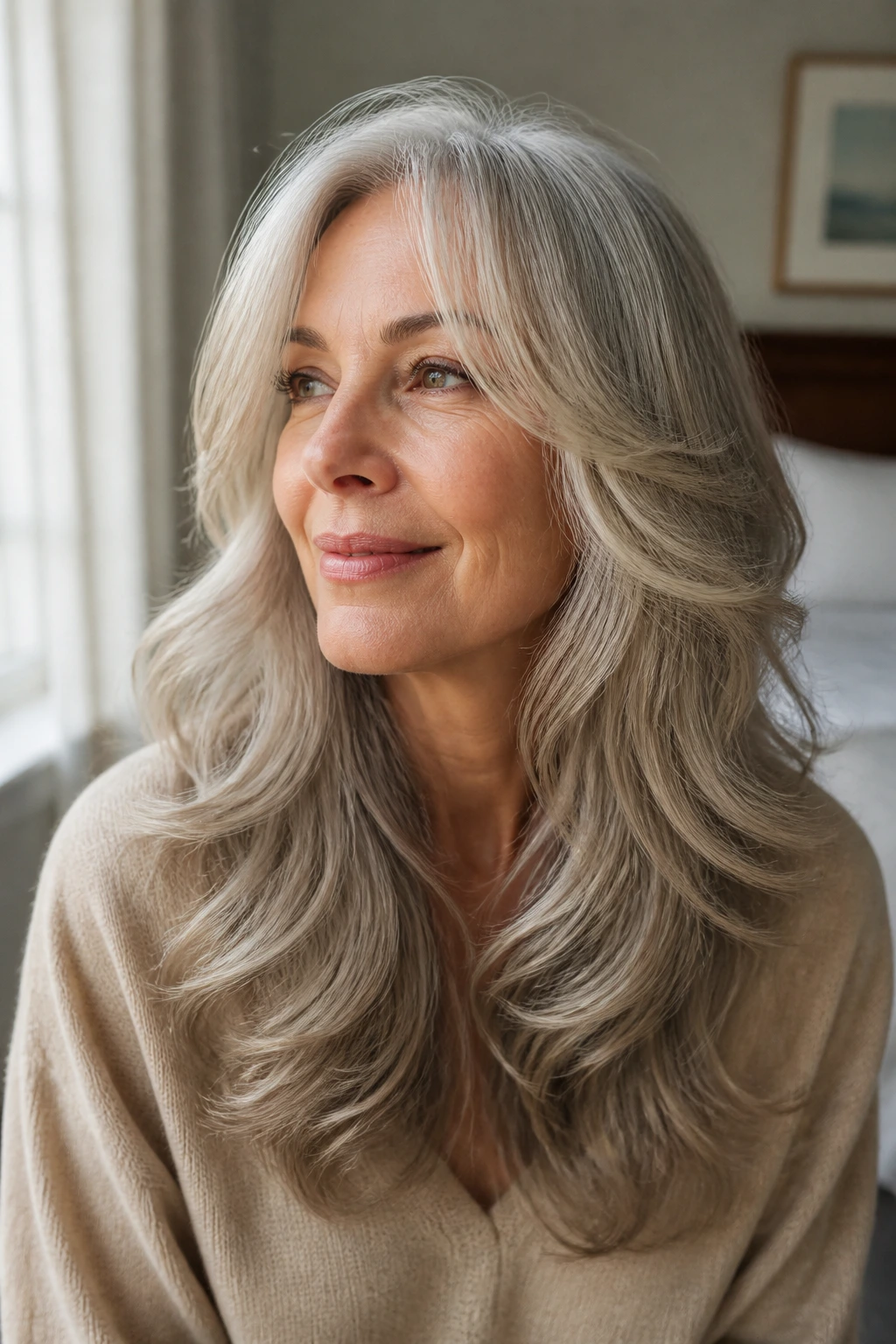
If your long hair feels heavy by lunch, feathered ends can rescue it. This is the kind of cut that lets the lower half of the hair move instead of hanging in one big block. The wave still feels long, but the perimeter has a softer edge.
The trick is restraint. Feathering works when it removes weight from the right places, not when it shreds the ends to pieces. You want shape around the outer line and enough softness through the mids to keep the wave from sitting like a blanket. That’s the difference between a modern finish and a style that looks over-cut.
This is also one of the best options for thicker hair that has a strong wave pattern but tends to puff out in humidity. The feathering helps the hair stack more gently. A leave-in cream and a diffuser on low heat can make this look even better on natural wave days.
5. Long Shag Waves With a Little Edge
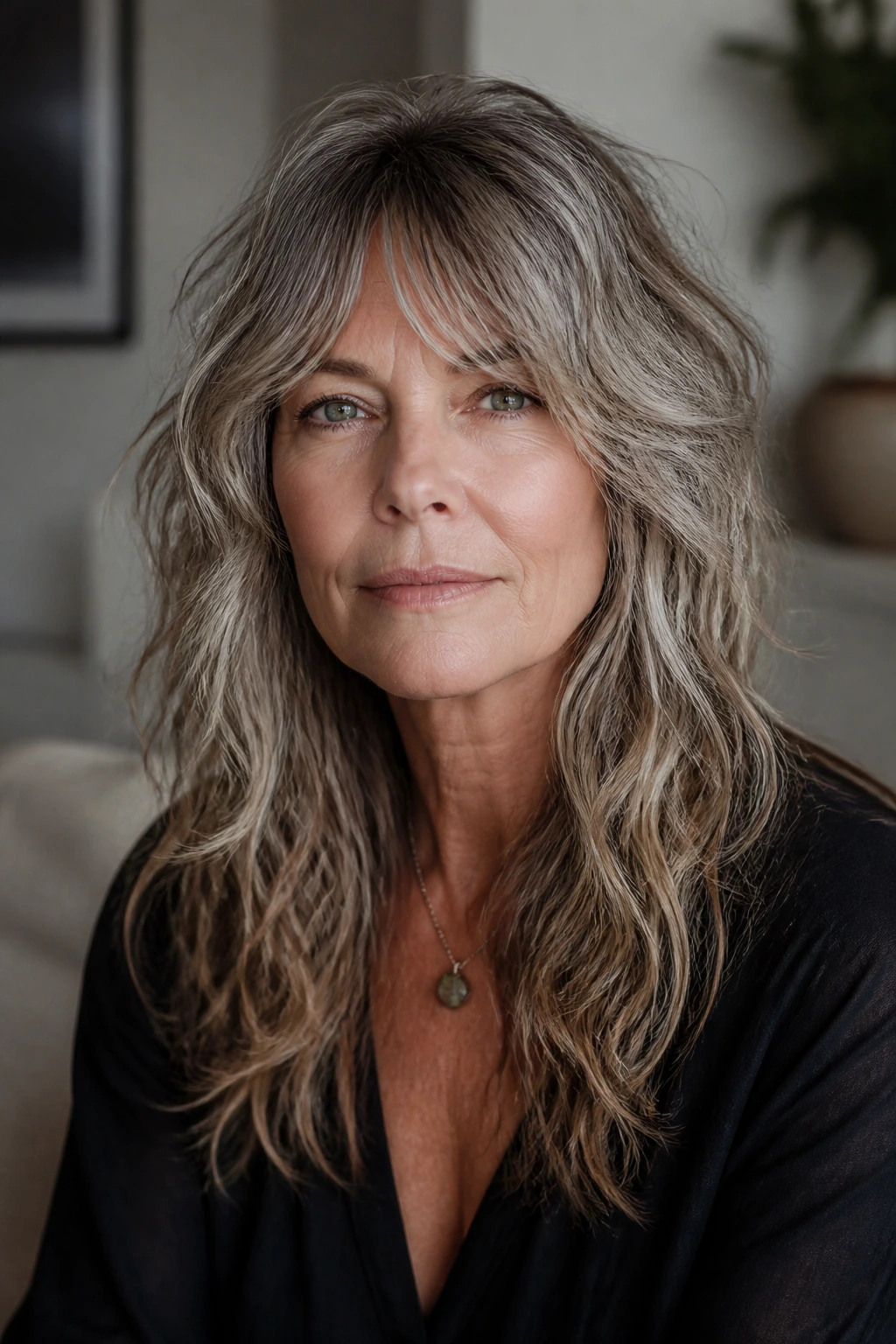
A long shag is not a haircut for women who want their hair to behave politely. That’s fine. Some hair looks better with a little bite in it. The shag gives you crown lift, movement through the lengths, and that slightly undone shape that keeps long hair from looking too precious.
What I like most here is how little work the style asks for once the cut is right. If you air-dry naturally wavy hair with a bit of mousse and scrunching, the layers fall into place on their own. If you use heat, a diffuser or a large wand gets the job done without flattening the texture. Either way, the shag gives the wave a built-in shape.
Best if your hair is:
- Naturally wavy or bent, not pin-straight
- Medium to thick in density
- The kind that collapses when it gets too much oil or cream
Go easy on the top layers if your hair is fine. Too much shagging can leave the crown airy in a bad way, where the ends still feel full but the top looks see-through. A good stylist will know the difference. If yours doesn’t, that’s a problem.
6. Half-Up Waves With Crown Lift
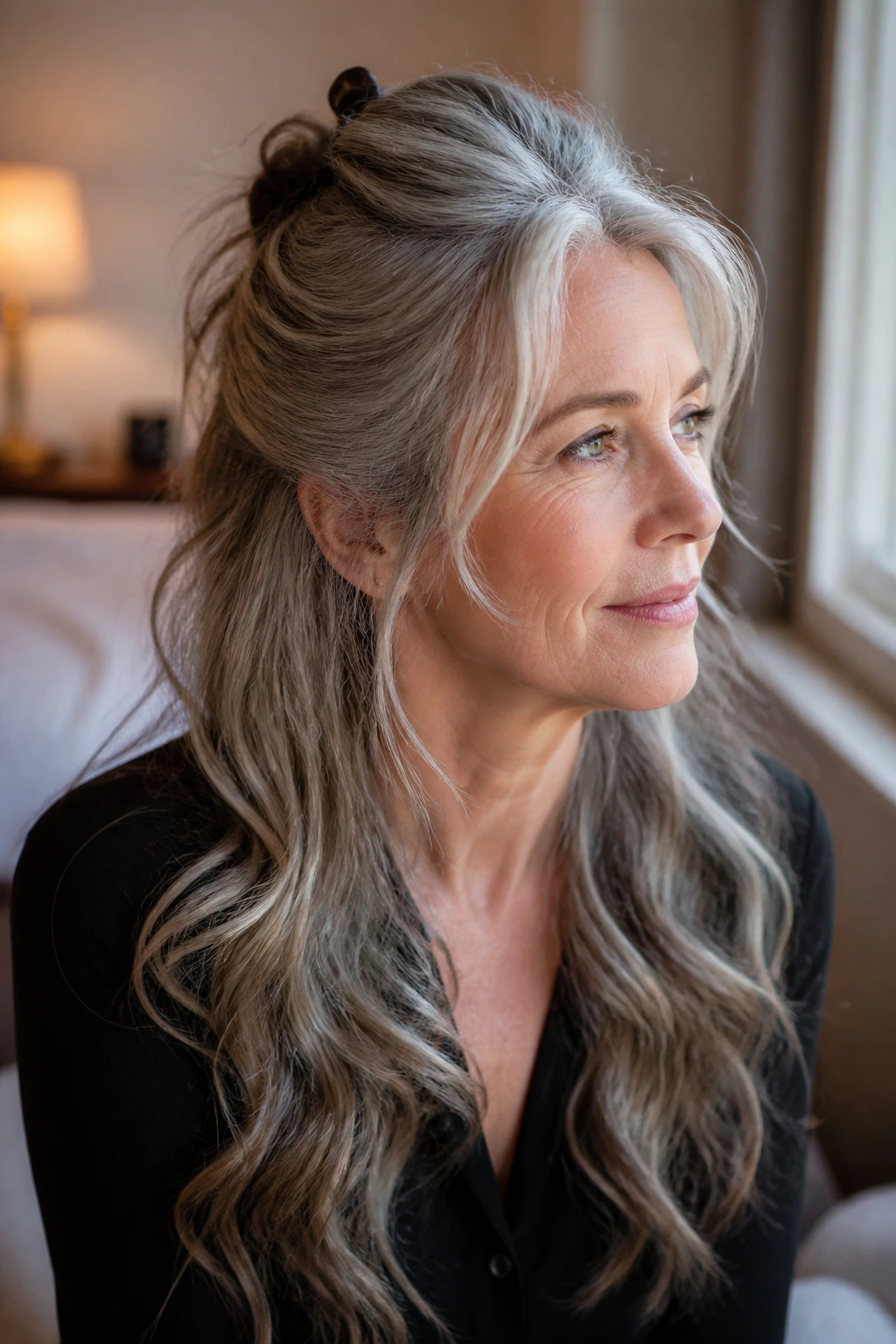
Some days call for a style that keeps the hair off your face but still leaves the length visible. Half-up waves do that without making you look overdone. The crown gets a lift, the sides stay soft, and the ends keep moving.
I like this on second-day hair. A small section from the temples to the crown gets clipped back or pinned, and the rest hangs loose in broad waves. It’s especially good if your hair gets flat at the roots by afternoon. The half-up shape gives you a little height exactly where older hair often needs it.
A small claw clip works better than a tight elastic. Tight bands can make long hair bend in a weird ridge. A clip lets the top stay relaxed while still pulling the shape upward. Leave a few pieces loose near the temples if you want it to look less formal. That tiny bit of movement around the face makes the whole style feel lighter.
7. Deep Side-Part Old-Hollywood Waves
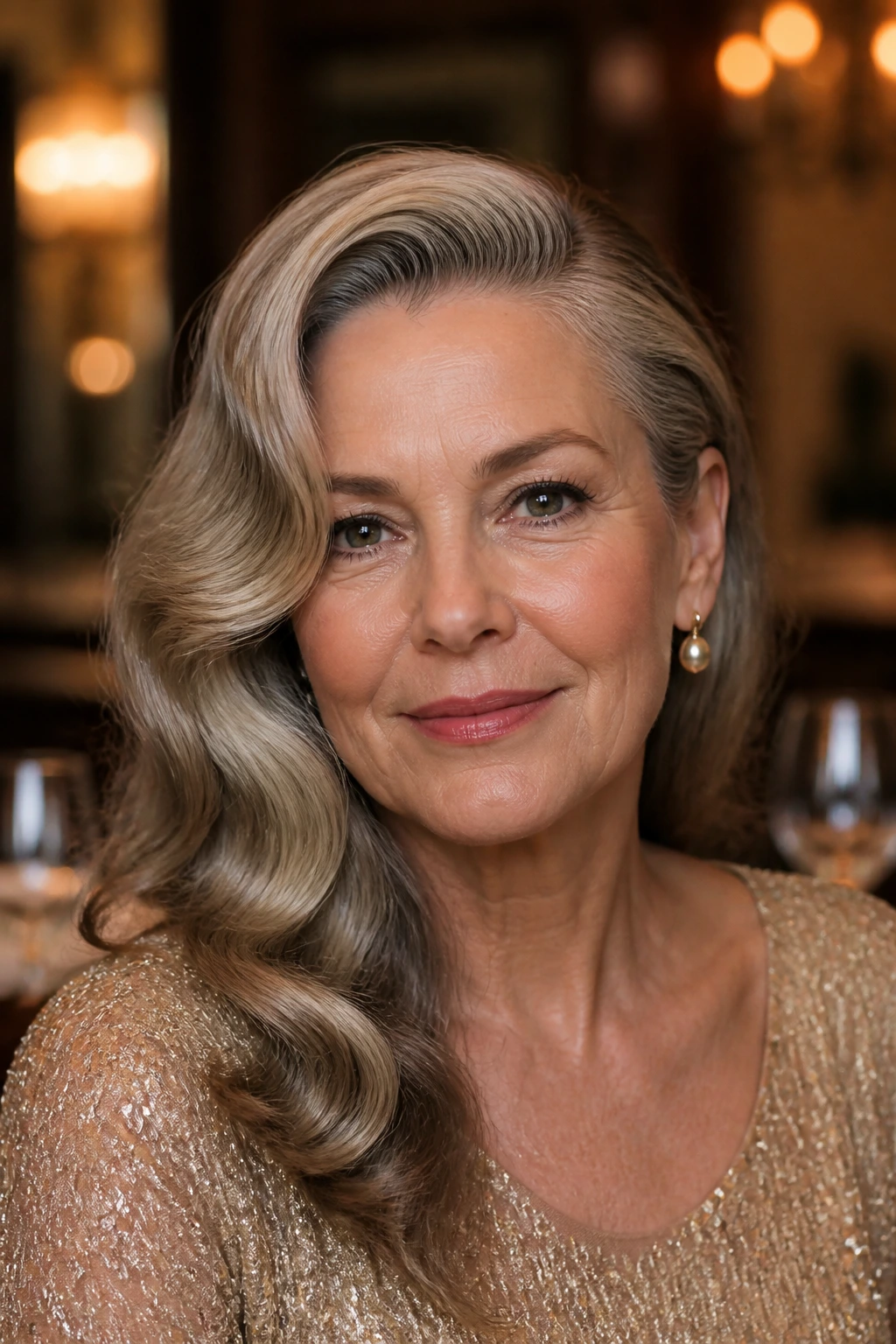
A deep side part is the fastest way to make long waves look deliberate. It adds lift at the root, gives the front a sweeping line, and turns a basic wave into something with a little old-school glamour. Not costume glamour. Better than that. The kind that looks good at dinner and still looks good the next morning if you sleep carefully.
This style works especially well when you want the hair to frame one side of the face more than the other. It can soften a strong jaw, shorten a long face visually, and keep a large forehead from taking over. One side gets tucked behind the ear. The other side sits forward in a smooth arc.
Use a 1.5-inch iron if your hair is dense, or 1.25-inch if it’s finer. Set each curl in your palm for a few seconds while it cools. Then brush it out with a soft paddle brush or your fingers. If you skip the cooling step, the wave drops too fast and you lose that curved shape near the cheek.
8. Air-Dried Beach Waves That Don’t Turn Puffy
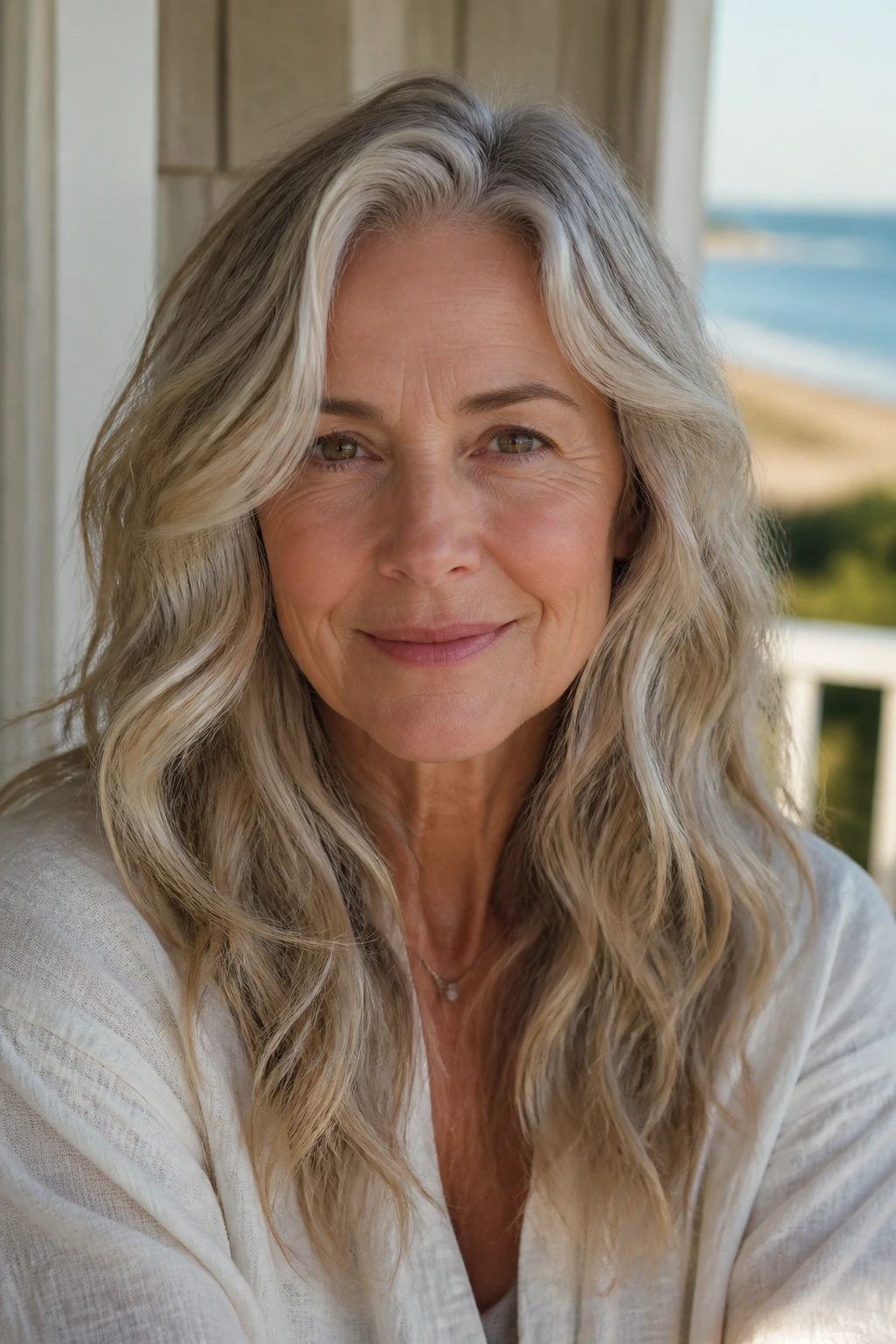
Can beach waves look grown-up? Absolutely. They just need to be broad, soft, and controlled. The tiny, crunchy version reads young in a way that doesn’t flatter older features, and honestly, it can make good hair look hard. Broader waves with a clean finish solve that.
Start with a light mousse or wave cream on damp hair, then scrunch and air-dry until the roots are about 70% dry. If the hair is thick or stubborn, a diffuser on low heat keeps the shape from puffing up. I’d avoid heavy salt sprays here unless your hair is already very fine. Too much salt can rough up the surface and leave the ends frayed.
The best beach wave is not messy for the sake of being messy. It still has a bend that follows the head shape. If you can see straight frizz lines at the crown, the product is too heavy or the drying method was too rough.
9. Center-Part Waves With Tucked Ends
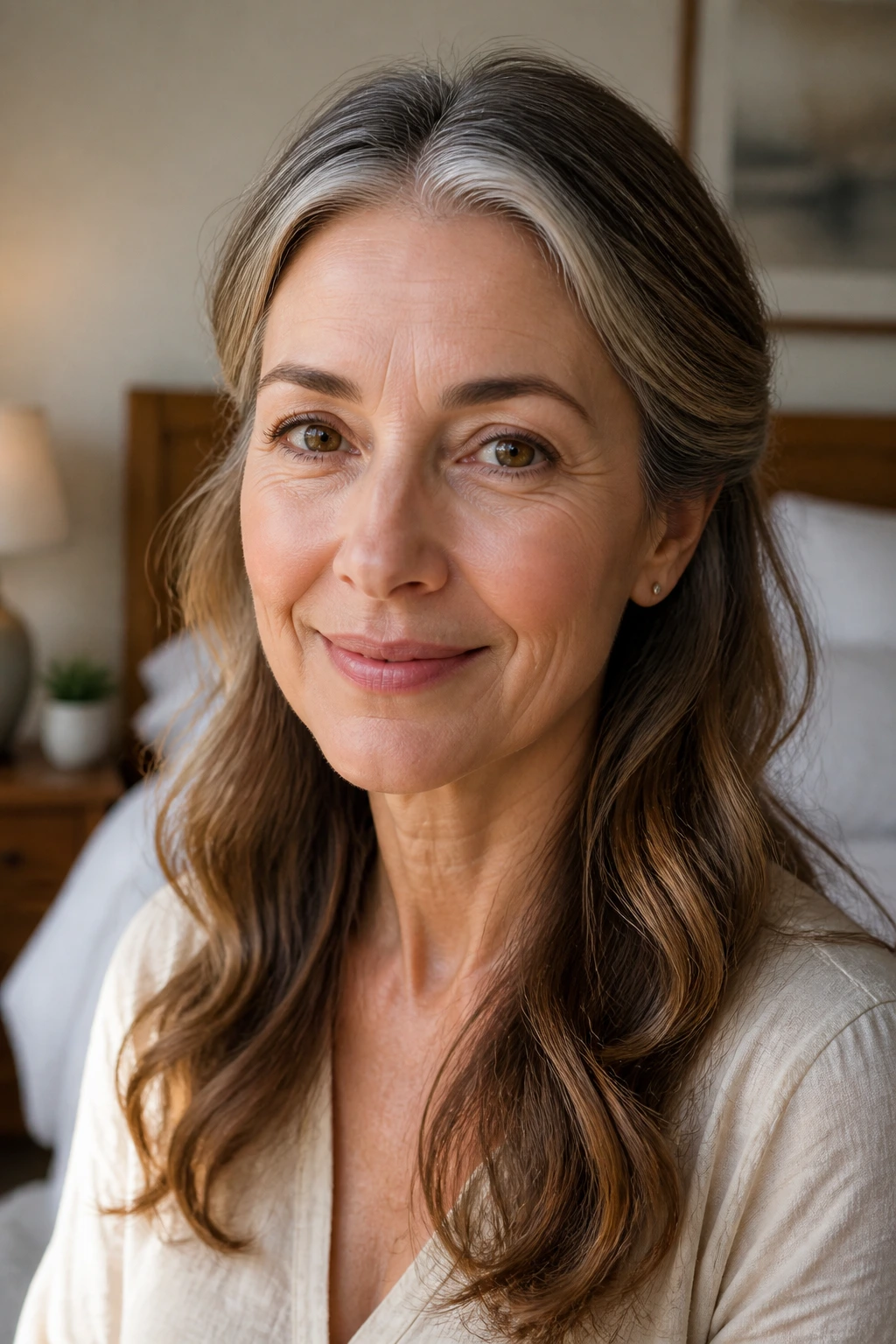
A center part can be elegant, but only if the wave has enough softness to keep the face from looking boxed in. This style leans on symmetry. The waves fall evenly on both sides, and the ends are tucked behind the ears or just skim the jawline before dropping again.
It’s a quiet style. That’s the appeal. There’s no dramatic height, no heavy side sweep, no built-in event hair energy. Just a clean line and a wave that moves. Women who wear glasses often like this one because the hair stays out of the frames without needing constant adjusting.
How to keep it from looking flat
- Put the part in while the hair is damp, not after it dries.
- Add a light root mousse at the crown before blow-drying.
- Leave the front pieces a touch straighter than the mids so the face opens up.
If your hair is thick, this is where long internal layers help. Otherwise the shape can widen too much at the bottom and take on that triangle look nobody wants.
10. Bottleneck Bang Waves
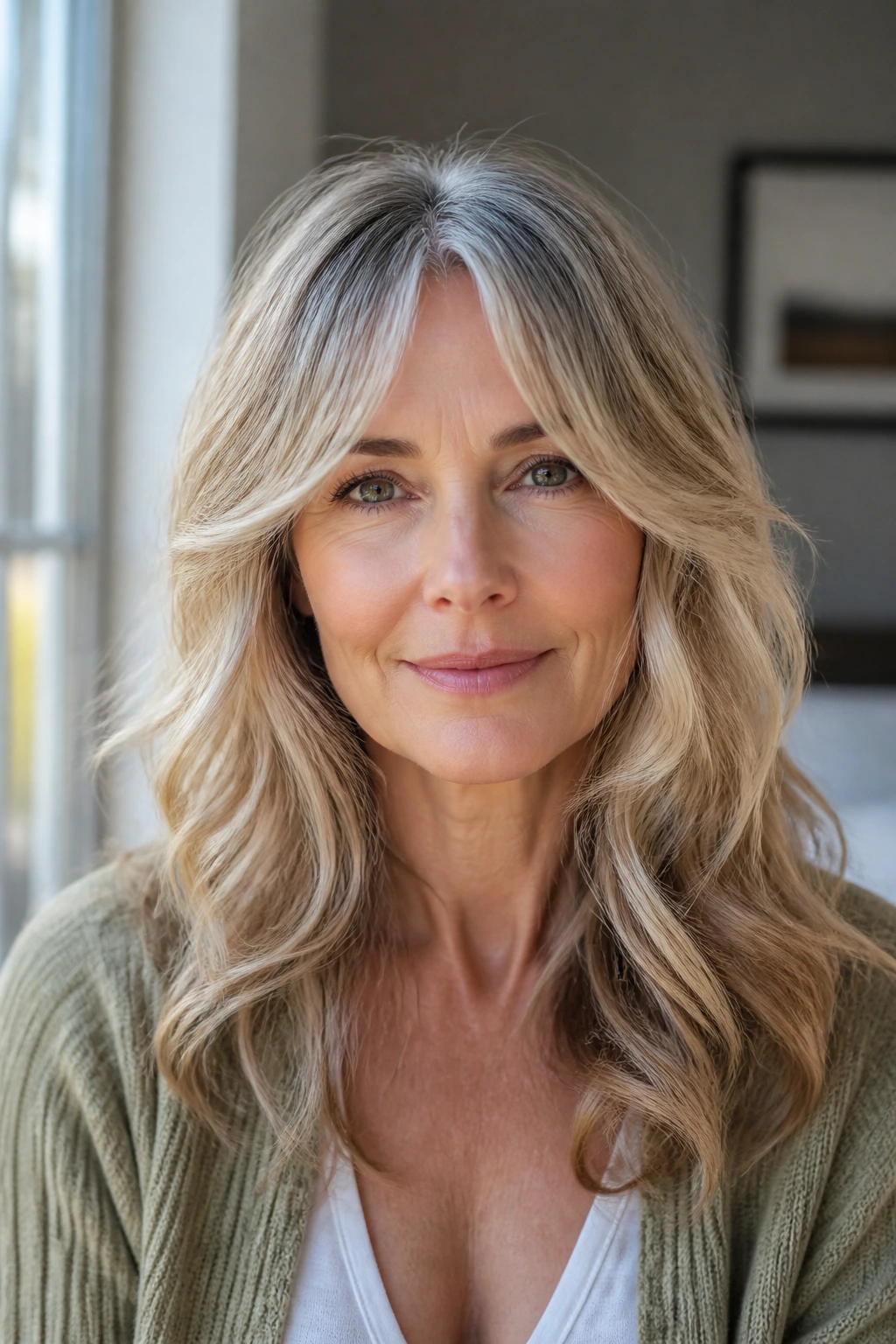
Bottleneck bangs are a smarter version of full fringe. They stay narrow at the center, then open out toward the temples and cheekbones. On long wavy hair, that shape makes the front feel soft without covering too much of the face.
I like this option for women who want the eye-skimming effect of bangs but do not want the upkeep of a blunt line. Bottleneck bangs bend into the wave instead of fighting it, and they grow out with less annoyance. That matters. A fringe you dread trimming every three weeks is not a good fringe.
This cut works especially well when the waves are loose and the hair has a little natural body. Blow the bangs forward with a round brush, then split them with your fingers so the center opens. The shortest part should not sit too high on the forehead. If it does, the whole thing starts to feel more like a curtain from a salon manual than real hair.
11. Brushed-Out Curl Waves
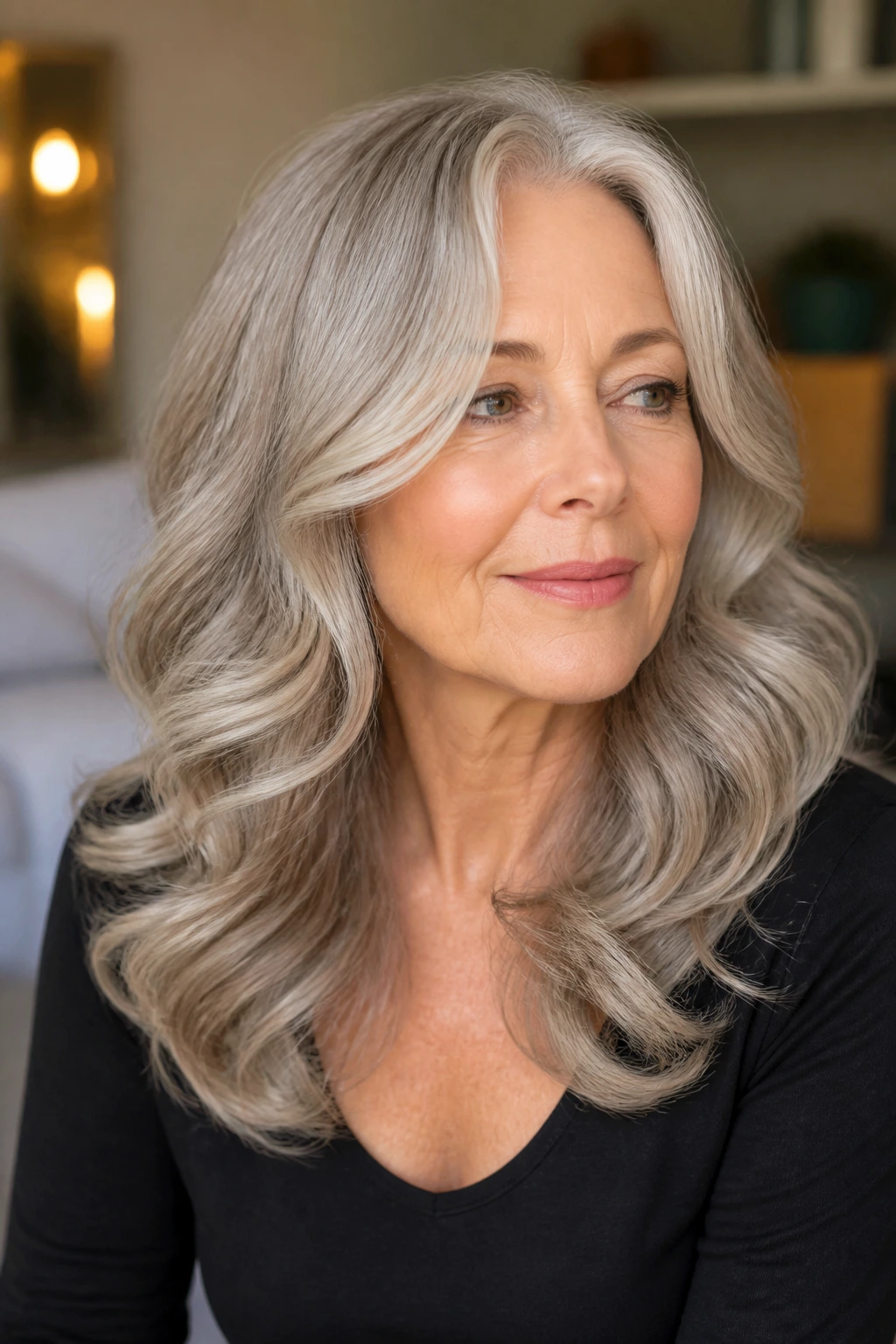
Curls do not have to stay tight to do their job. Brushed-out curls are proof. This style starts with defined curls, then softens them into wide waves once they’ve cooled. What you get is volume, polish, and a finish that feels more refined than beachy.
It’s a good choice for events, dinners, or any day when you want the hair to hold its shape for hours. Set the hair with a curling iron or hot rollers, let the sections cool fully, then brush through with a boar-bristle brush or a wide paddle brush. The brushing step is what changes the personality of the style. Skip it, and you get ringlets. Do it well, and you get smooth, touchable waves with body at the root.
The shine level matters here. Use a light serum on the ends only, not the roots. Too much product weighs down the lift you worked to build. That’s the one mistake that ruins this style fastest.
12. Thick Hair Cascading Waves
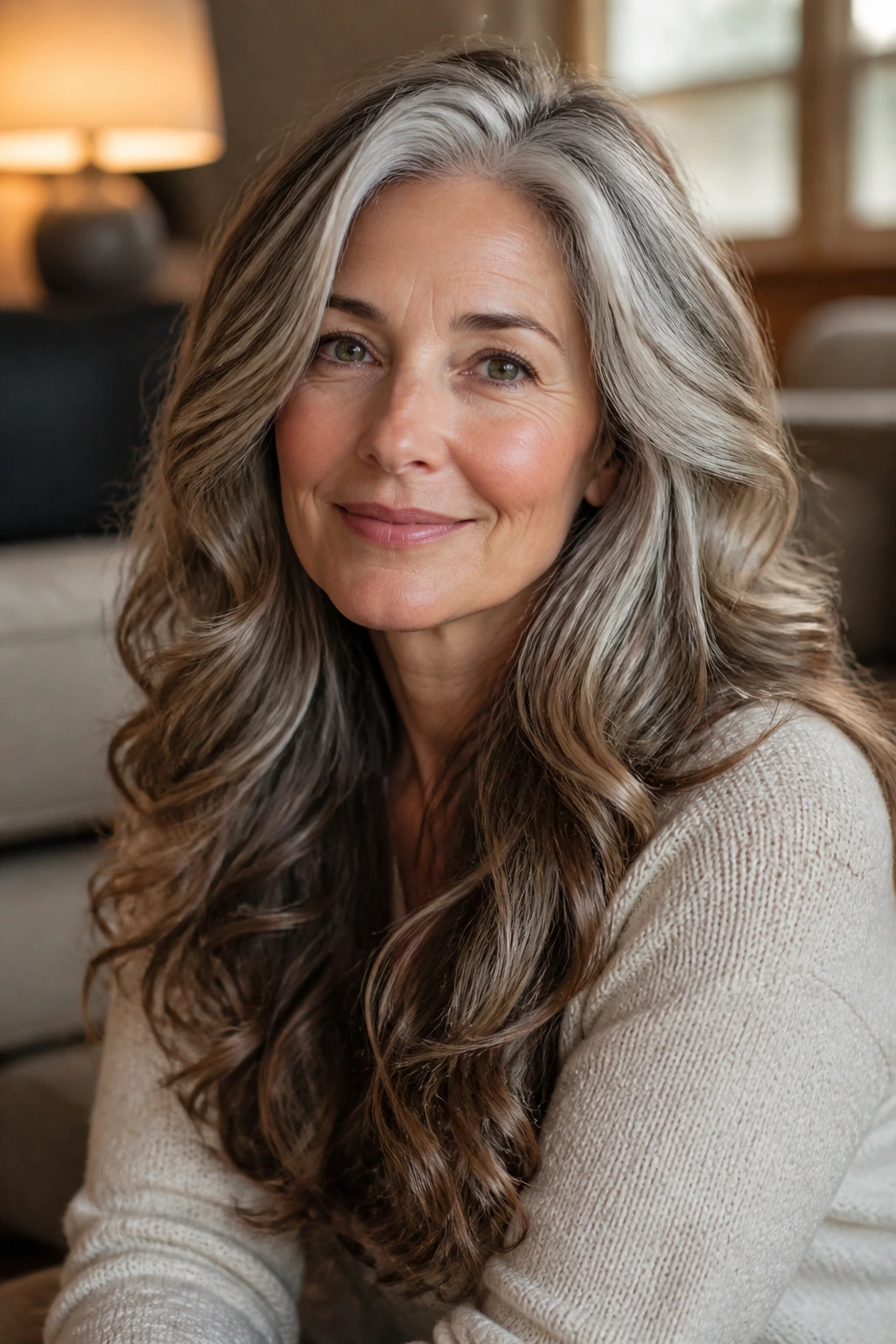
Thick hair needs a shape plan. If it doesn’t get one, the wave can balloon at the sides and drag at the bottom. Cascading waves fix that by moving weight out of the bulk zones while keeping enough density to look lush.
This is one of those styles that benefits from internal layers more than visible ones. You don’t want huge steps. You want the hair to stack in a softer way so the wave falls in pieces instead of one giant sheet. A stylist who knows thick hair will usually cut with a bit of caution and then refine the shape after drying. That second pass matters.
What to ask for
- Layers that remove bulk below the cheekbone
- A softer perimeter around the back
- Enough weight left at the ends so the hair does not frizz up
Style it with a cream that smooths but does not flatten. Thick hair can handle more product than fine hair, but it still doesn’t need to feel coated.
13. Fine Hair Waves With Root Lift
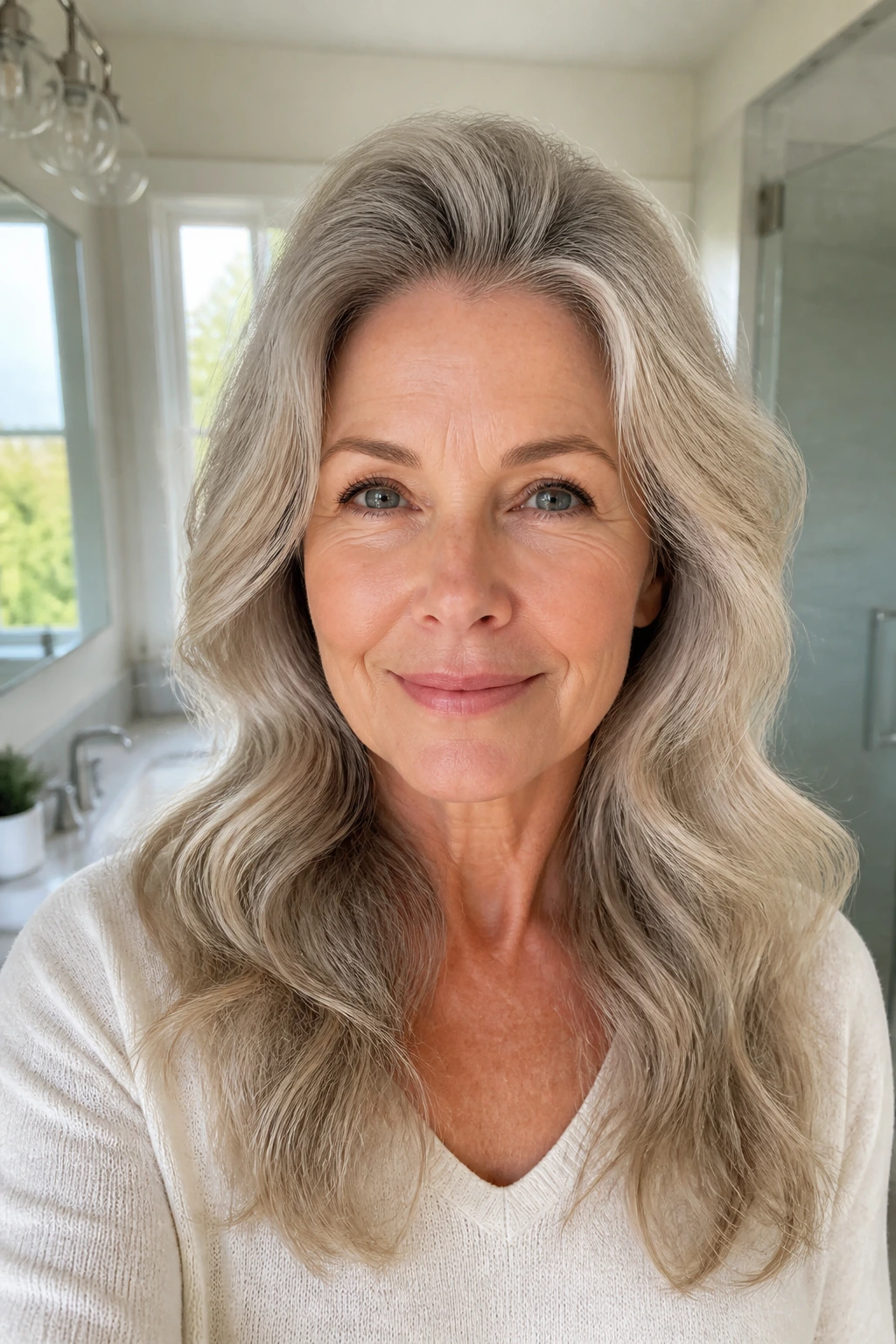
Fine hair usually needs lift at the roots more than anywhere else. The wave itself is not the problem. The problem is that the whole shape can fall toward the head by noon and start looking narrow. Root lift changes that.
The cut should stay a little lighter around the face and not be over-thinned at the ends. Then you build the style upward at the scalp. Mousse at the roots, a round brush or hot brush for the top section, and a light bend through the lengths usually does the trick. Velcro rollers at the crown can help on days when you want more height without extra heat.
This is one of my favorite options for women whose hair is still long but has lost some density. A few big waves can look fuller than a lot of tiny ones. Tiny curls separate the hair too much. Broad waves keep the mass together, which reads as thicker and healthier.
14. Braided Crown Waves
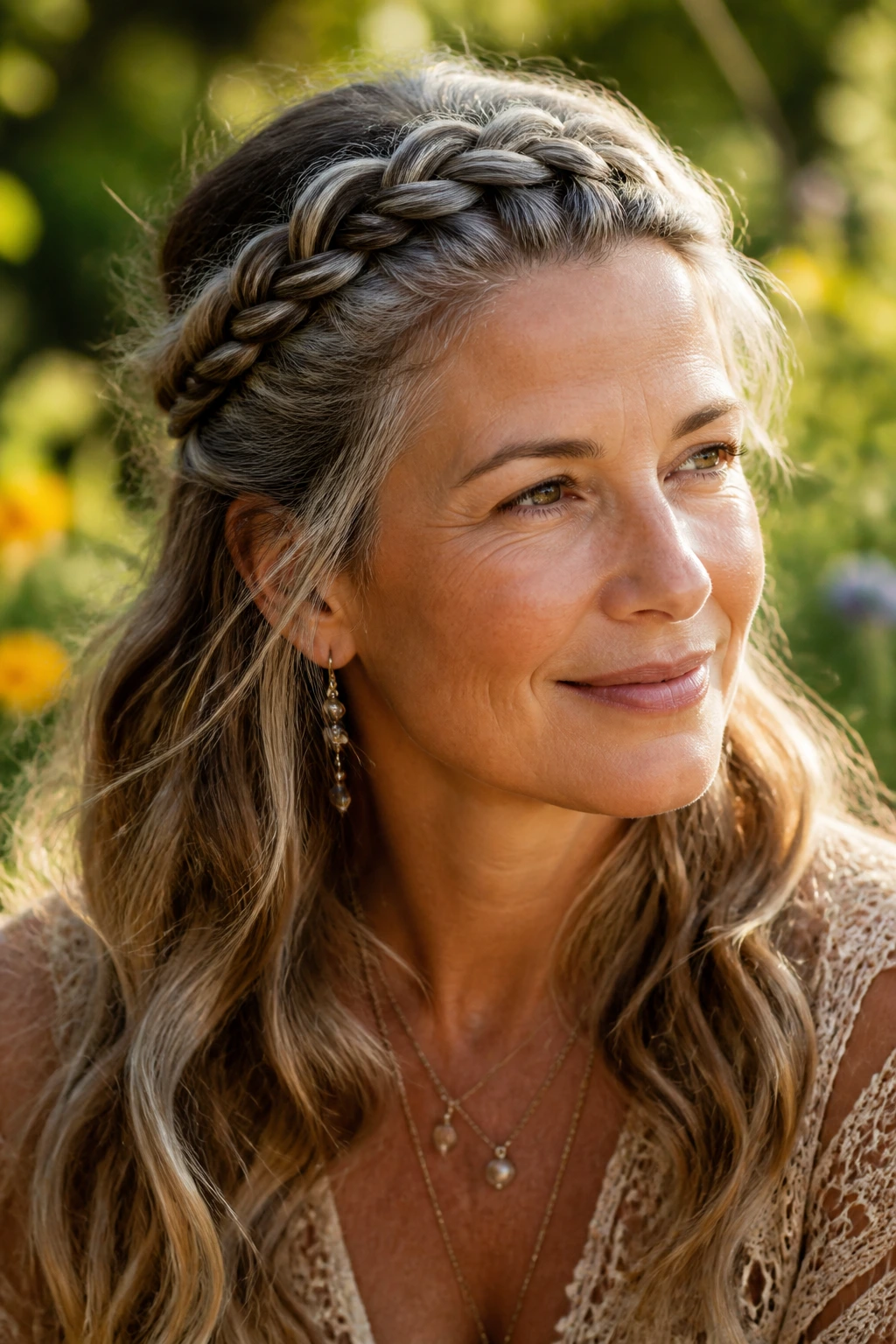
A braid can do more than look cute. It can also control the front of long wavy hair without pinning everything back like a severe updo. A braided crown detail gives the style structure right where the hair tends to slip loose — along the hairline and temples.
This one is good for growing-out bangs, softening a wide forehead, or adding interest to otherwise simple waves. The braid can be narrow and tucked along one side, or it can travel across the top like a soft halo. Either way, the lengths stay loose and wavy underneath.
Keep the braid relaxed. Tight braiding pulls the face back in an unkind way and can create a little ridge that takes ages to flatten. A looser braid, especially when paired with a few face-framing pieces, feels softer and more wearable.
15. Low Twist Waves With Loose Ends
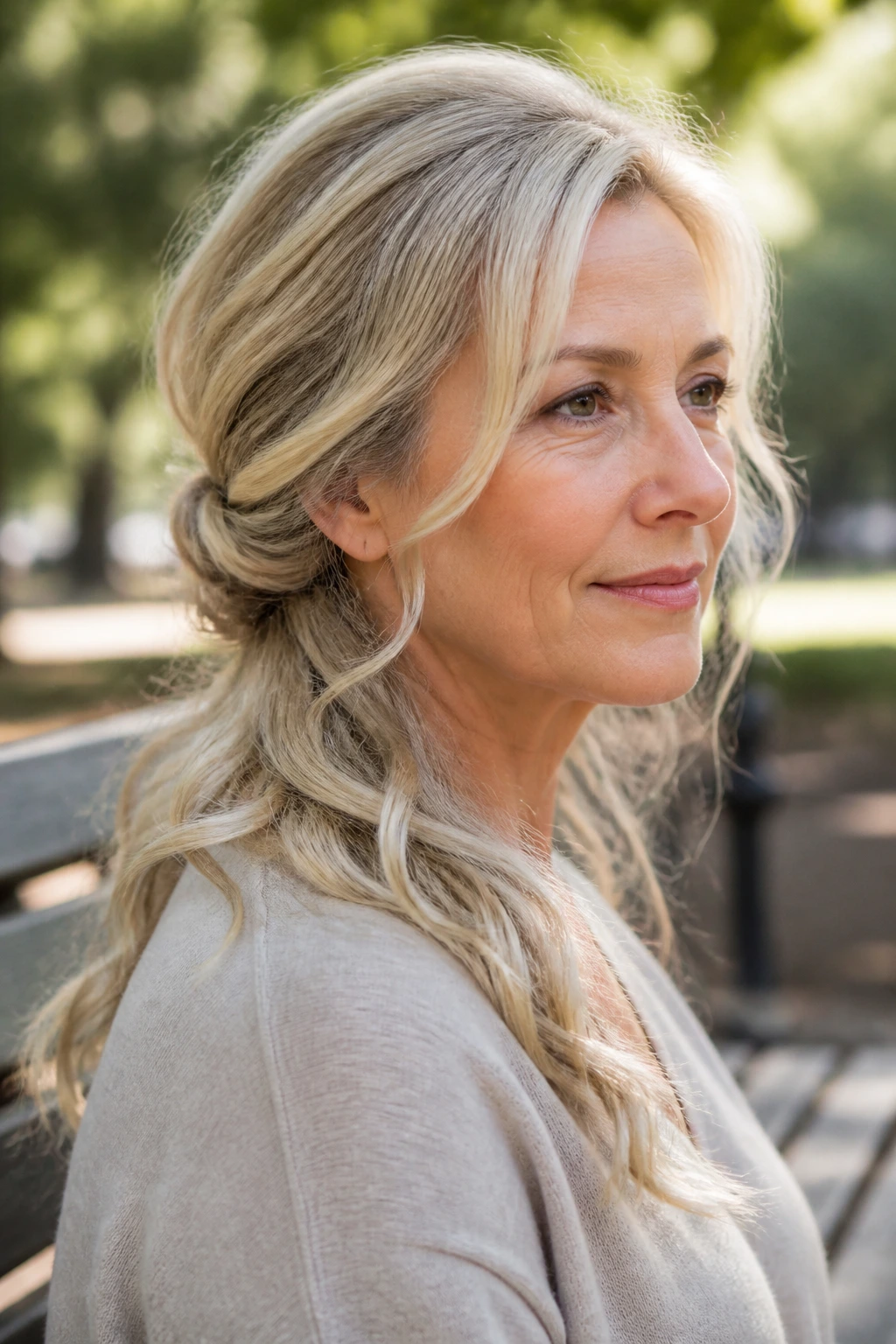
A low twist is one of those styles that looks harder than it is. Hair gets gathered low at the nape, twisted once or twice, and pinned so the ends still show off the wave. It has a polished shape without hiding the length.
I like this for women who want a way to manage long hair on windy days or during long errands. The nape stays neat, the top doesn’t puff, and the ends keep the movement that makes long waves worth having in the first place. It’s also kind to hair that’s dry through the mids, because the twist keeps the body of the style protected instead of rubbing against collars all day.
Use a couple of hidden pins rather than one elastic if you can. Pins keep the twist from looking too tight. And yes, a few loose face pieces help. They stop the style from feeling too formal, which is a very real risk with low twists.
16. Face-Lighting Waves With Soft Highlights
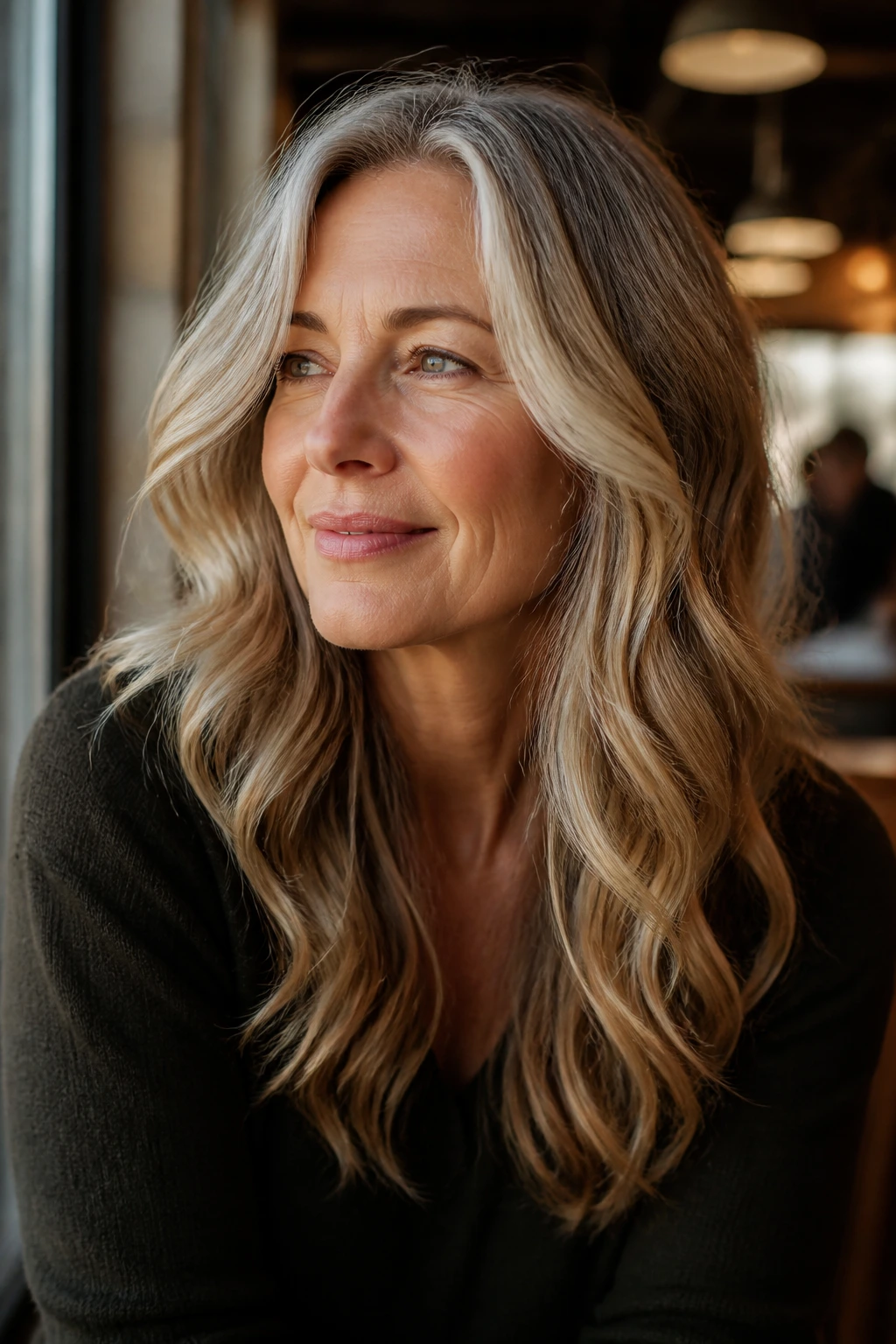
A good highlight placement can do more for long wavy hair than a big cut ever will. Face-lighting highlights bring brightness around the temples, cheekbones, and the first few inches of the lengths, where the eye lands first. The waves then carry that color downward in soft ribbons.
Caramel, beige blonde, champagne, and warm brown tones work especially well here, depending on the base color. I’d avoid chunky stripes. They can make the wave look stripy instead of dimensional. Fine babylights or soft hand-painted pieces are enough. The wave pattern will do the rest.
This is a smart option for women whose hair color has changed a lot over time and needs a little visual lift. It’s also kind to gray blending. A few lighter threads around the face can make silver look deliberate rather than patchy. That’s a subtle difference, but it matters in the mirror.
17. Natural Gray Waves With Dimensional Layers
Some styles are about color. This one is about letting the gray hair do the work. Natural gray waves can look sharp, modern, and very calm when the layers are cut with enough thought to keep the shape from going flat.
The key is dimension. Gray hair can sometimes look one-note if it’s cut too bluntly or left too long without shape. Soft layers through the mids and a tidy perimeter give the wave a sense of motion. A small amount of shine cream helps, but not enough to make the hair greasy. That’s the line.
Best details to keep in mind
- Trim the last inch or two regularly so the silver doesn’t fray.
- Use a gentle purple shampoo only when brass starts showing.
- Let the natural bend stay loose; hard curls fight the texture.
This style has presence without trying to look younger than it is. I like that. Gray hair doesn’t need to apologize, and it definitely doesn’t need to be flattened into submission.
18. Sleek Roots and Soft Wave Midlengths
There’s something elegant about a style that keeps the roots smooth and lets the wave begin lower down. It looks controlled at the top and softer through the body, which is useful if your hair tends to frizz near the scalp but behaves better in the lengths.
The trick is to blow-dry the roots first with a nozzle and a brush, keeping the top section snug and smooth. Then add bend through the mid-lengths and ends with a wand or large iron. The contrast is what gives the style its shape. Smooth up top, soft through the rest. Simple. Effective.
This works especially well in humid weather or on hair that has a lot of natural volume near the crown. Too much wave all the way to the root can make the style puff outward. Leaving the top sleeker keeps the silhouette cleaner and makes the face look a little longer in a nice way.
19. Romantic Long Waves With Minimal Layers
Not every long wave needs a lot of cutting. Sometimes the smartest move is to keep the layers minimal and let the length speak in one long, soft line. This is the style for women who want movement but do not want to lose much length at all.
The waves should start low and stay broad. Think more bend than curl. A center part gives it a classic feel, while a slightly off-center part makes it softer. If the ends are healthy, this can look lovely with only a small amount of product — just enough to keep the frizz in check and let the wave stay separated.
What keeps it pretty, not plain
A little asymmetry helps. One side tucked behind the ear. A few face pieces left out. Maybe a single larger wave at the front instead of matching bends on both sides. Those small choices keep the style from looking flat or overly posed.
What Makes Long Waves Look Fresh Instead of Heavy
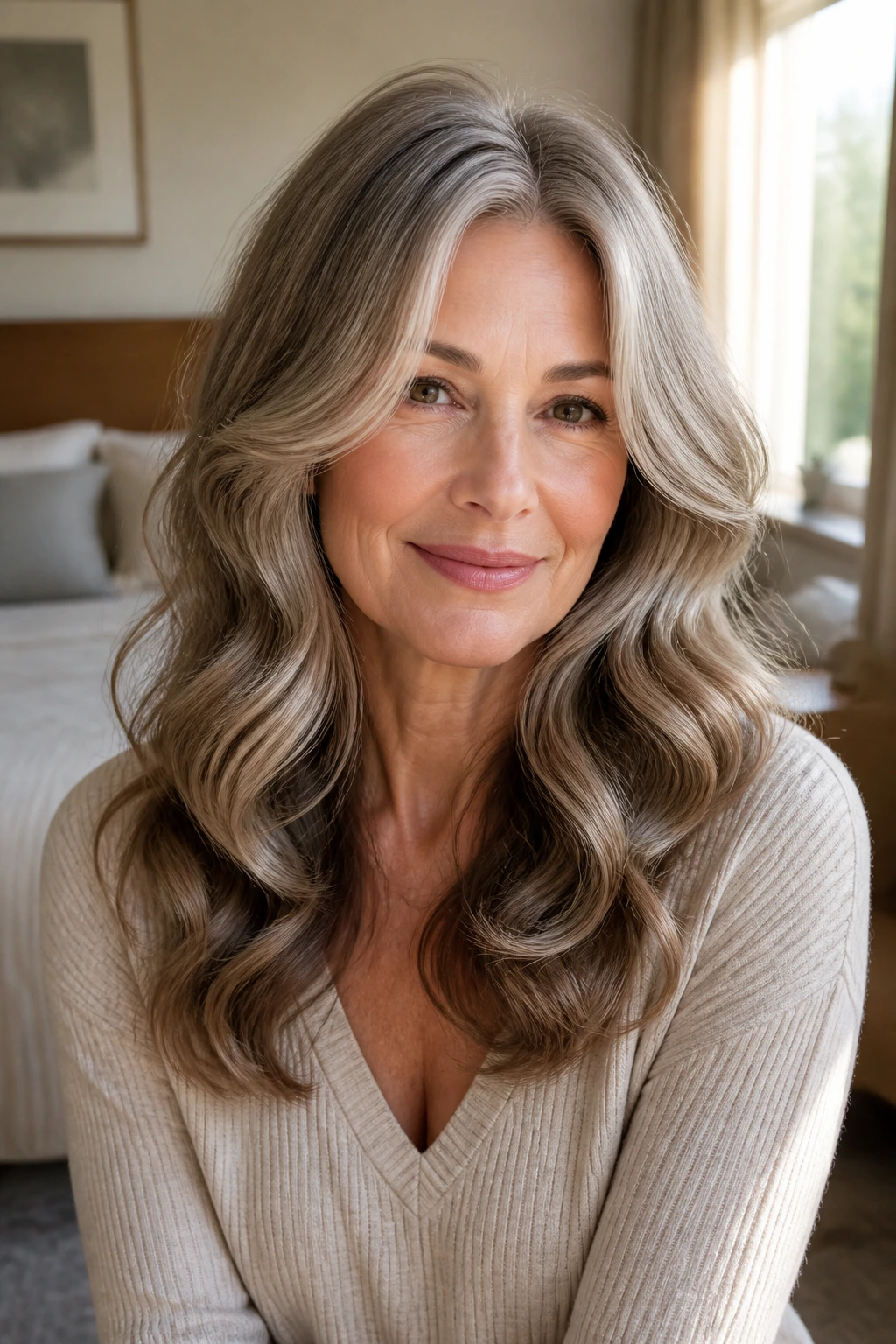
The best long wavy styles are built on weight placement. Not volume for volume’s sake. Weight in the wrong place makes the face look dragged down; weight in the right place makes the wave swing. That’s why the collarbone, cheekbone, and the last two inches of the hair matter so much.
Another thing people miss: older hair usually looks better with movement that starts lower, not higher. If every layer begins near the chin, the shape can puff at the sides and leave the ends looking thin. If the layers start lower, around the collarbone or even just below, the wave falls in a gentler line. That line is the whole story.
And then there’s shine. Dry, frayed ends make every wave look older than it is. A tiny trim every 8 to 12 weeks, plus a serum only on the lower lengths, keeps the style from going straw-like. You do not need mirror gloss. You need ends that look cared for.
Tools That Make These Styles Easier to Wear
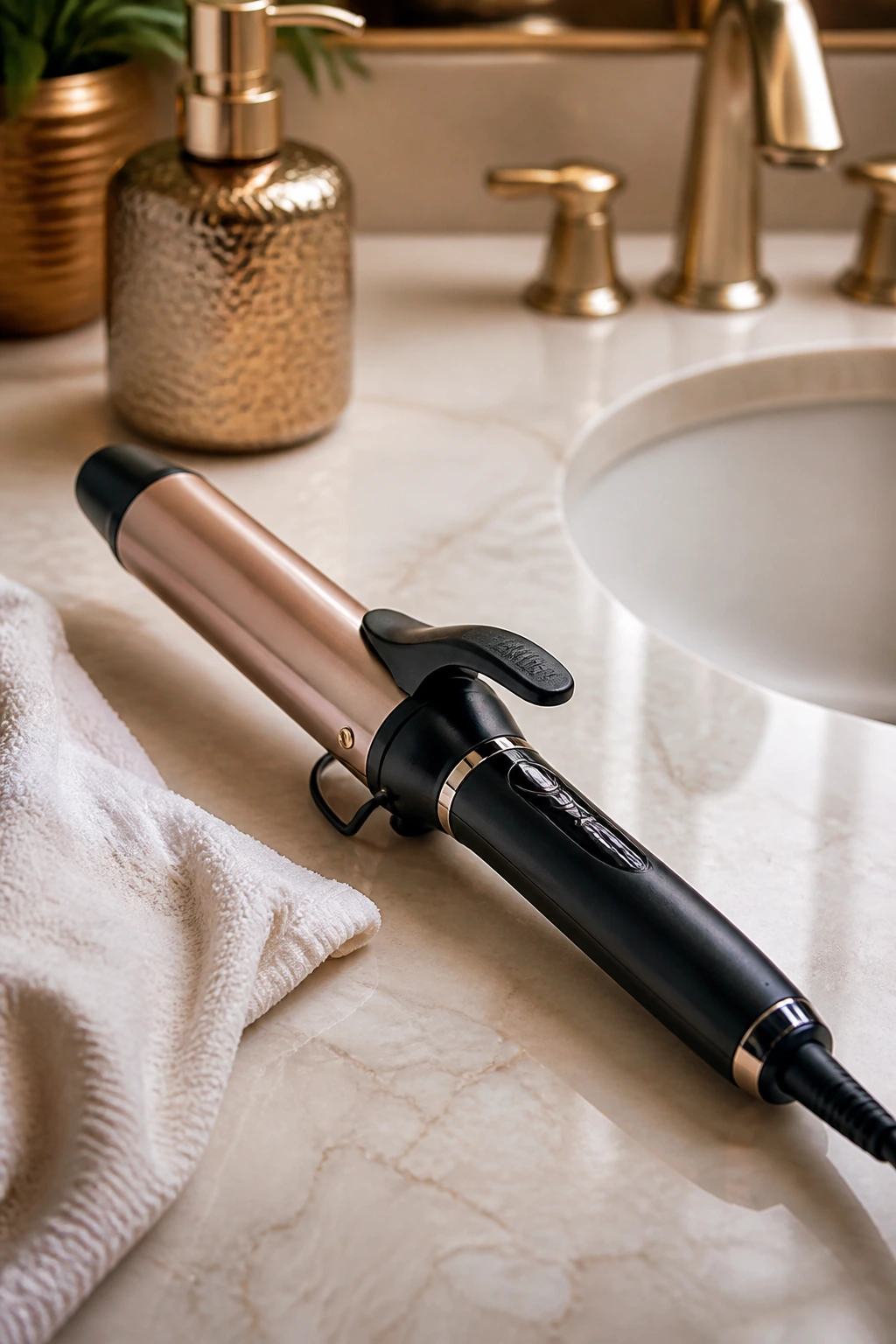
- 1.25-inch curling iron or wand: The sweet spot for loose, soft bends that don’t read as tight curls.
- 1.5-inch curling iron: Better for thick, long hair that needs a broader wave.
- Heat protectant spray: Use it every time you add heat. Fine mist, mids and ends, then comb through.
- Root-lift mousse: Helps fine or flat hair hold shape at the crown without making the lengths crunchy.
- Blow dryer with a nozzle: Useful for smoothing the roots before you add wave.
- Large round brush: Good for curtain bangs, face-framing pieces, and root lift.
- Wide-tooth comb: Easier on long hair than a fine brush when it’s damp.
- Boar-bristle brush or paddle brush: Best for brushing out curls without wrecking the shape.
- Sectioning clips: Keep long hair manageable while you curl or blow-dry.
- Flexible-hold hairspray: Holds the wave without turning it into helmet hair.
- Light serum or gloss cream: Use a small amount on the ends for shine and frizz control.
- Silk or satin pillowcase: Cuts down on overnight roughness, especially for longer lengths.
How to Ask for the Right Cut and Finish
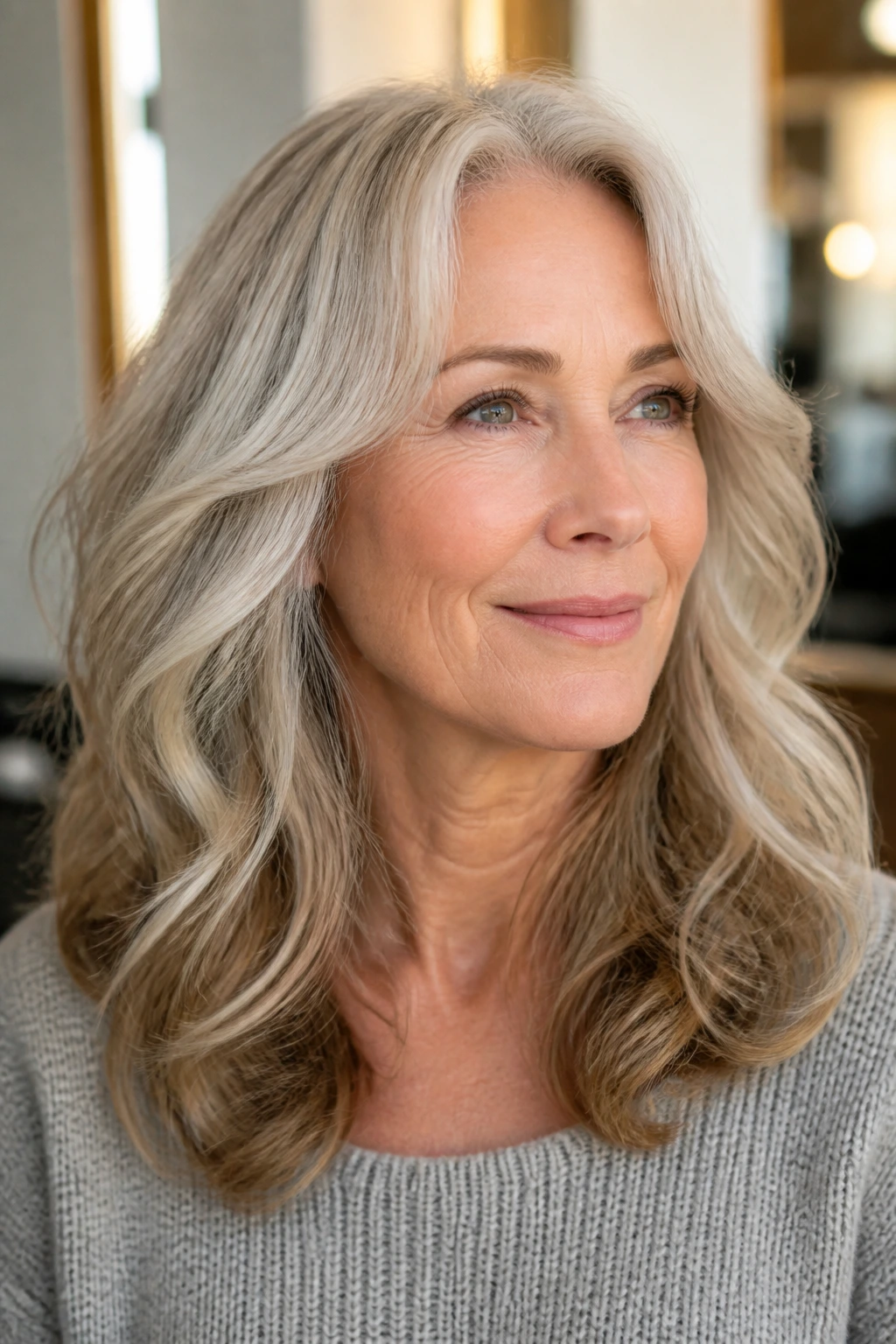
Bring pictures, yes, but bring words too. A photo of long wavy hair can hide a dozen bad choices if the layers are wrong. Tell your stylist where you want the bulk to live, where you want softness, and how much length you are refusing to give up. Those are not small details.
Layer placement: Ask for layers that start at the collarbone or below if you want to keep the length feeling full. If your hair is fine, say that plainly. A good cut on fine hair uses movement, not over-thinning.
Bang choice: If you want a fringe, decide whether you need curtain bangs, bottleneck bangs, or no bangs at all. Curtain bangs are softer to grow out; blunt bangs ask for more maintenance and a steadier hand.
Finish: If you like the look of brushed-out curls, say so. If you prefer broad waves that air-dry with only a little help, say that too. Stylists work better when they know whether you want polished, relaxed, or somewhere between the two.
Color note: For gray or silver hair, ask for glossing rather than heavy toning if you want shine without that flat violet cast. If you color your hair, soft face-framing highlights usually read more modern than chunky streaks. Small difference. Big payoff.
Extra Ways to Make the Style Work Harder
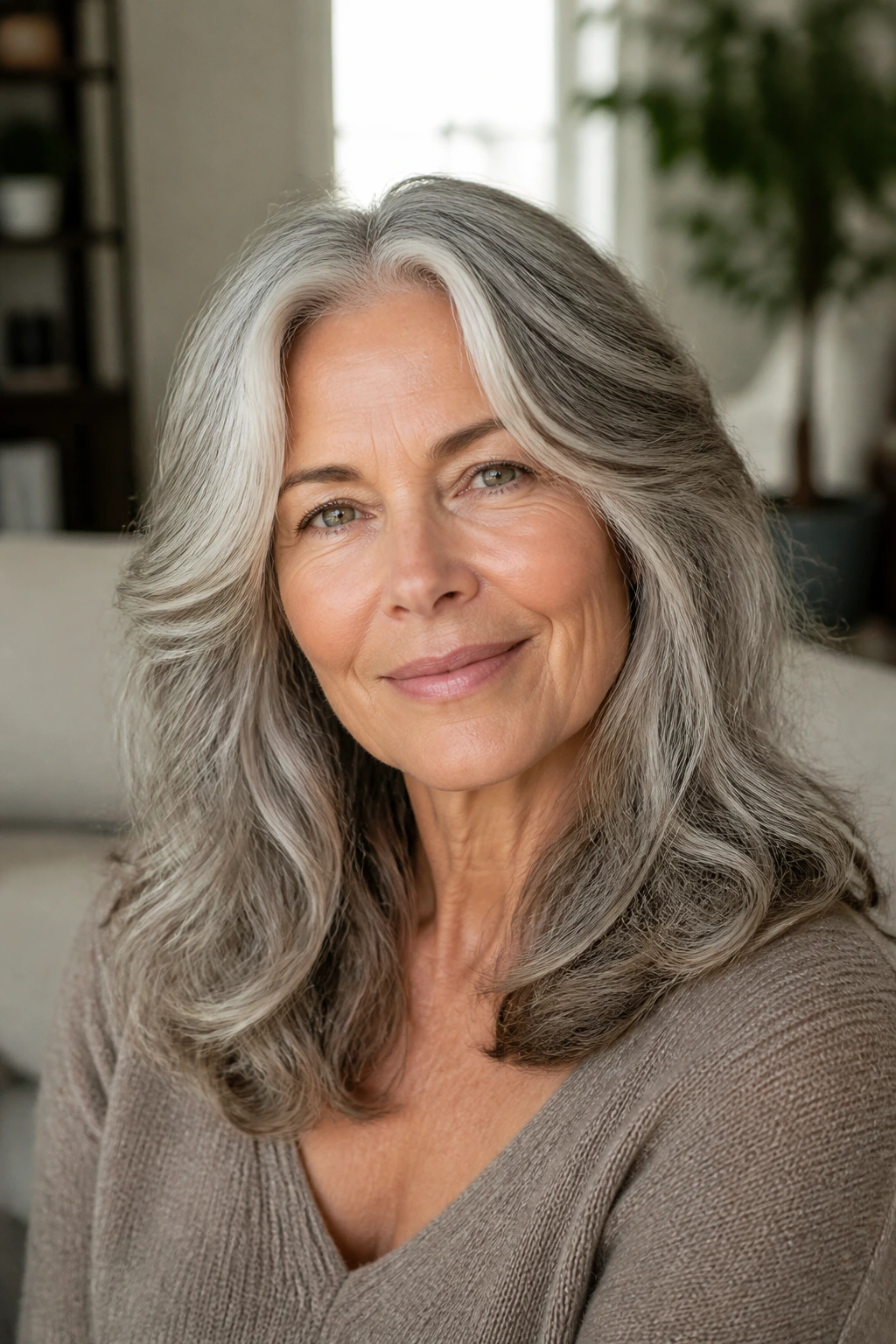
Flavor Enhancement: A pea-sized dab of shine cream through the ends can save a style that looks dry at the bottom. Use less than you think. Long hair needs polish, not coating.
Customization: If your face feels too open with a center part, shift it half an inch to the side and tuck one front piece behind the ear. If it feels too heavy, add a little lift at the crown with clips or rollers.
Serving Suggestions: Pair long waves with medium-to-large earrings, a neckline that shows the collarbone, or a soft scarf in the cooler months. Those little choices change how the hair reads.
Make-It-Yours: Fine hair tends to like broader waves and lighter products. Thick hair usually needs more layering and stronger hold. Gray hair benefits from shine and clean shape. If you remember nothing else, remember this: the same wave formula does not suit every head.
Common Mistakes That Make Long Waves Look Tired
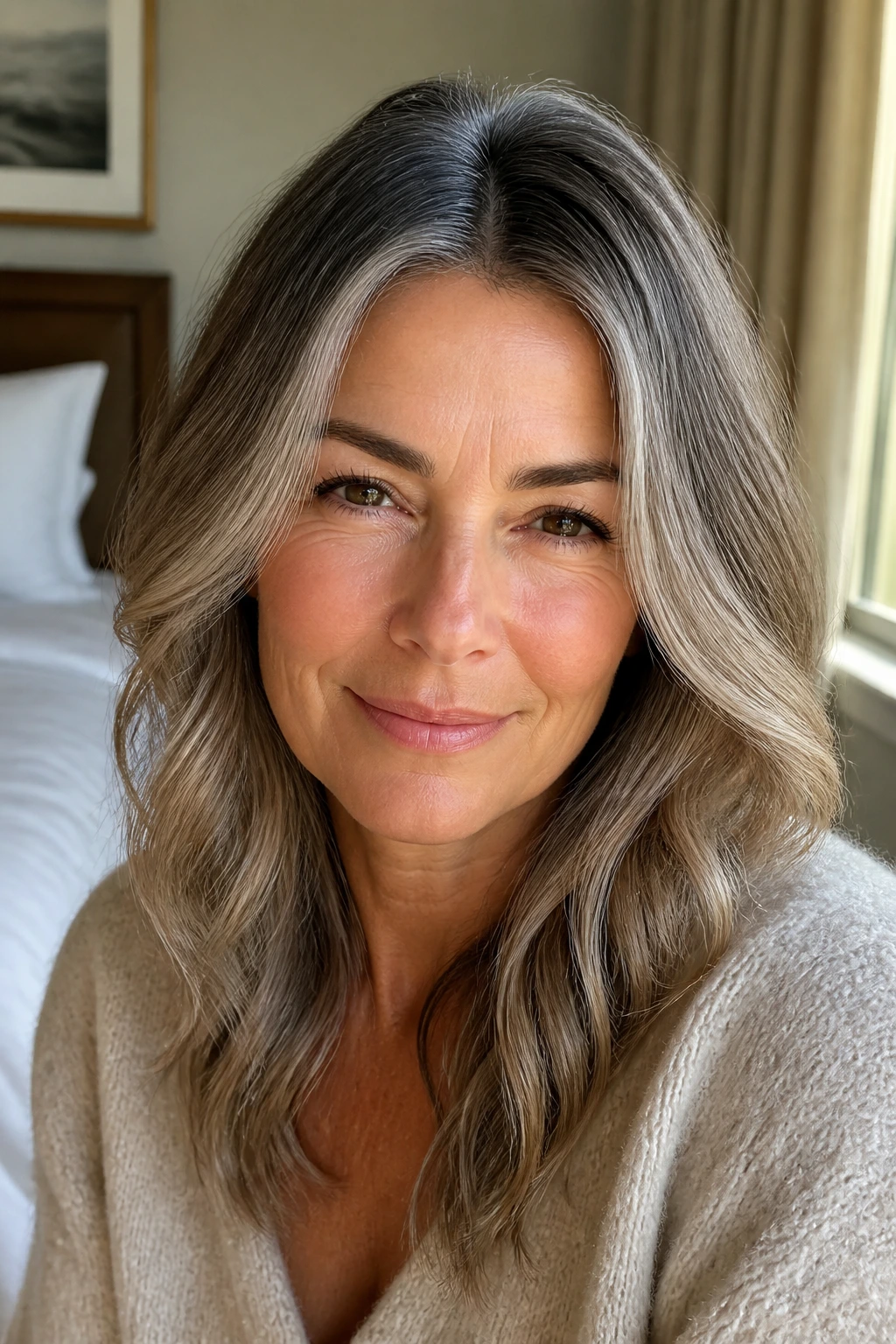
The first mistake is layers that start too high. That usually creates a puff around the cheekbone and leaves the ends looking thin. The fix is a lower layer line, usually somewhere near the collarbone or below.
Another common problem is over-curling every section in the same direction. That gives the hair a tube-like shape and makes long waves look dated fast. Alternate directions, leave the last inch out, and brush lightly once the hair cools.
Heavy product is another trap. A thick cream or oil through the mids can flatten the root and separate the wave in a greasy-looking way. Put shine products only on the lower half of the hair unless your texture is very coarse.
People also forget the crown. If the top lies flat, long hair can look longer in the wrong way — stretched and tired. A little root lift from mousse, clips, or a round brush makes the whole style look more awake.
And then there’s the rough end problem. If the last few inches are split and dry, no wave pattern can save them. Trim those ends. Seriously. That one habit changes long hair more than another bottle of styling product ever will.
Smart Variations and Adaptations to Try
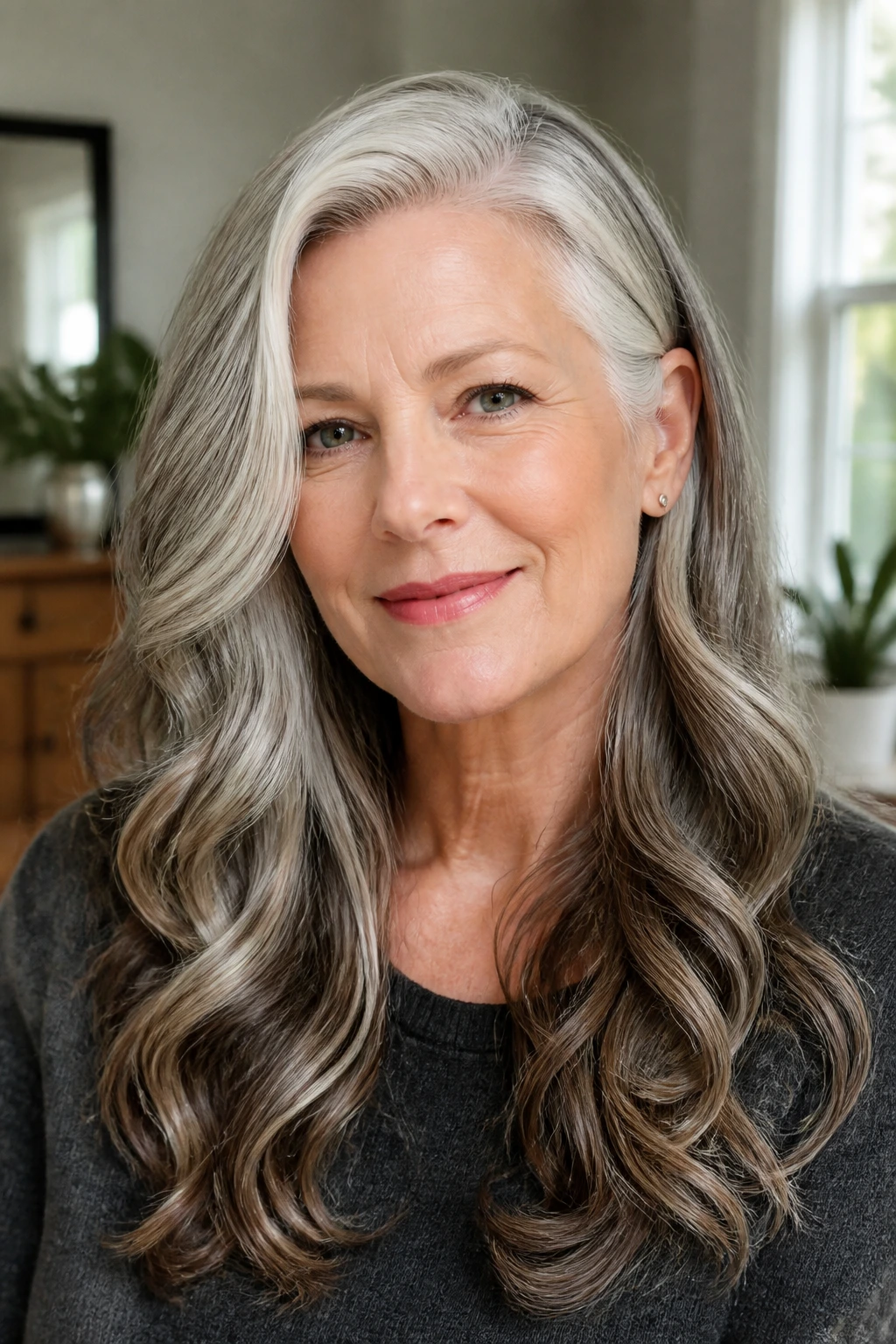
The Soft Side Sweep: Keep the waves broad, then move the part deep to one side and pin one front section back. It gives long hair a little lift near the temple and works especially well for dressier days.
The Silver-Gloss Refresh: If your gray or white hair looks dull, use a clear gloss or a shine treatment rather than trying to force warmth out of it. The goal is reflection, not color correction.
The Air-Dry Weekend Cut: Ask for a shape that still looks good if you do almost nothing with it. That means long layers, not too much thinning, and ends that fall cleanly when scrunched with a light cream.
The Event Brush-Out: Set the hair with a curling iron, let it cool, then brush it into wide waves and tuck one side behind the ear. It gives the wave a smoother finish without losing body.
The Glasses-Friendly Center Part: Keep the front pieces slightly shorter and softer so they sit around the frames instead of fighting them. This keeps the style open and avoids constant pushing hair out of the way.
The Humidity-Smart Shape: If frizz is your main battle, ask for a shape that holds its form even when the wave loosens a little. Broad layers, smooth roots, and a flexible spray beat stiff styling every time.
Day-After Care, Night Protection, and Refreshing
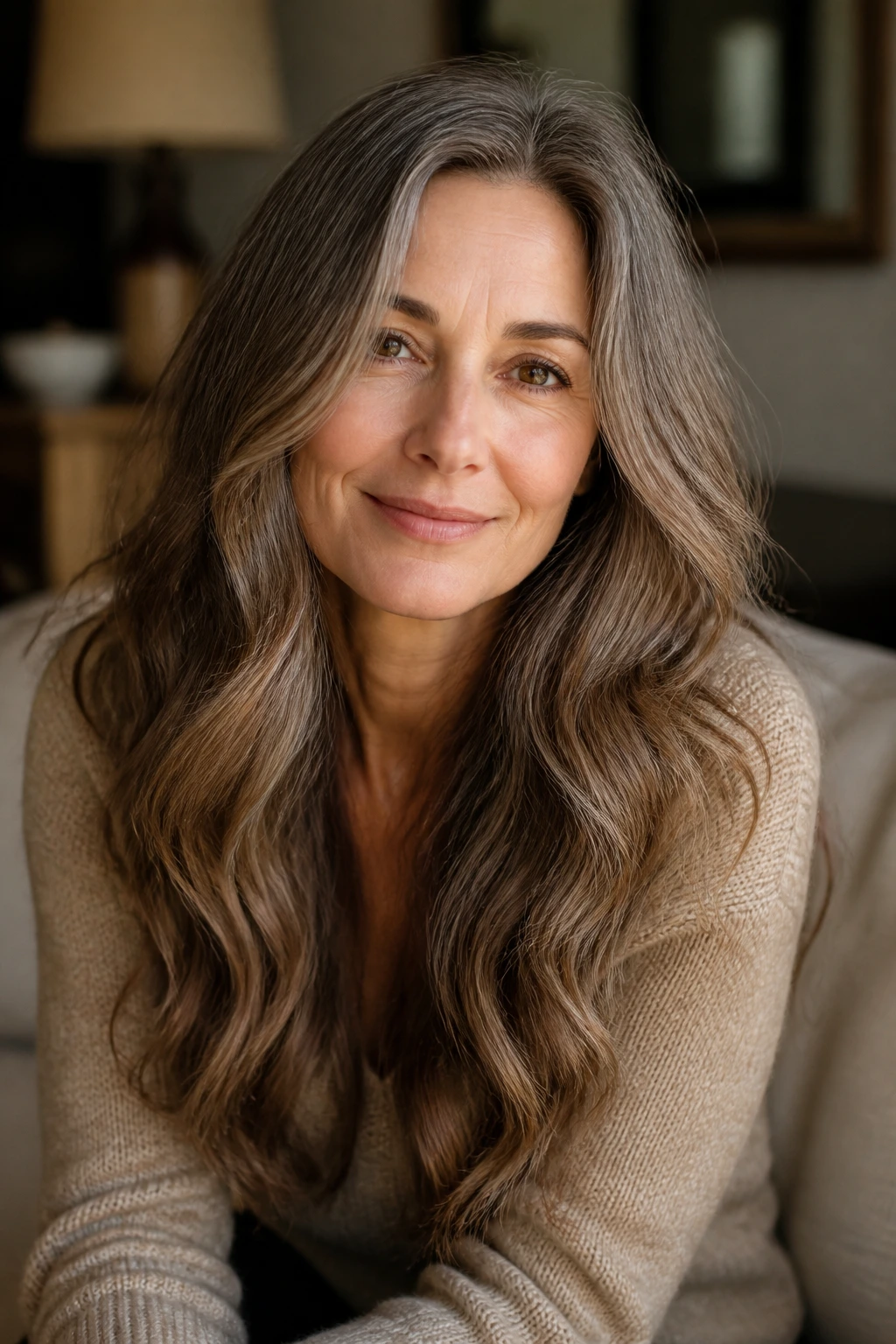
Long waves often look better on day two than they do fresh out of the styling chair. The wave has settled, the product has dried down, and the shape usually feels less skittish. But they do need a little protection overnight or you wake up with one side bent into nonsense.
A silk or satin pillowcase helps more than people expect. So does a loose braid, a soft low pony, or a twist pinned very gently at the nape. Don’t tighten it. You want to preserve the bend, not create a crease. If you sleep hard on one side, leave the top section looser and refresh only the front and crown in the morning.
For washing, most long wavy styles do well every 2 to 4 days, depending on scalp oil and product use. Fine hair usually needs more frequent cleansing; thicker or drier hair can go longer. On the in-between days, dry shampoo at the roots and a tiny mist of water on the ends can bring the shape back. If you used heat, you may only need to re-bend the front pieces and let the rest ride.
Questions People Ask About Long Wavy Hairstyles for Older Women
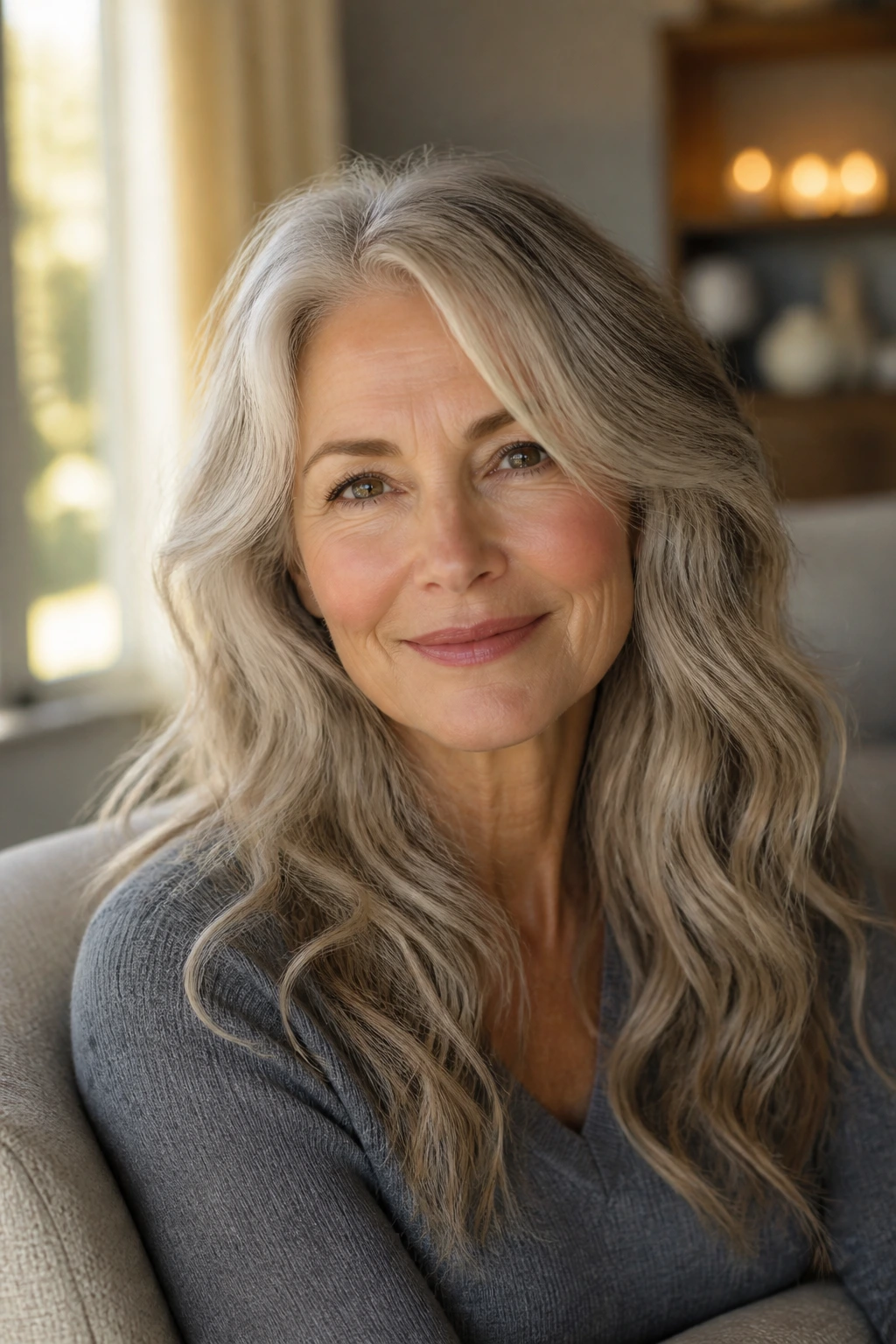
Do long waves make older women look older?
Not when the cut is right. Heavy, one-length hair can drag the face down, but layered waves with movement usually do the opposite. The shape matters more than the length.
Is long hair still flattering after 50 or 60?
Yes, if the ends are healthy and the layers are placed with some thought. Long hair starts to look tired when it loses shape, not because of a birthday.
What’s better for these styles — a center part or a side part?
A side part adds lift and softness. A center part gives symmetry and a cleaner look. I’d pick based on face shape, glasses, and how much root volume you naturally have.
Can fine hair wear long wavy styles?
It can, but it needs lighter layers and broader waves. Too much texture or too many tiny curls makes fine hair look sparse. One or two strong bends often look fuller than many small ones.
How often should long wavy hair be trimmed?
Usually every 8 to 12 weeks. If the ends split early or the wave starts looking stringy, go sooner. Long hair hides neglect right up until it doesn’t.
What if my waves flatten by lunchtime?
Start with less oil, more root lift, and a bigger barrel. Fine or straight hair often collapses when the curl is too tight or the product is too heavy. A looser wave tends to last longer.
Can I wear long waves with glasses?
Yes, and some styles look better with glasses than without them. Center parts, tucked sides, and soft curtain bangs keep the hair from crowding the frames.
Do silver and gray waves need special products?
Not special, exactly — just gentler ones. A light gloss, a soft purple shampoo when brass shows, and a serum on the ends usually cover it. Over-toning is where things go wrong.
The Long Wave Shape That Keeps Working
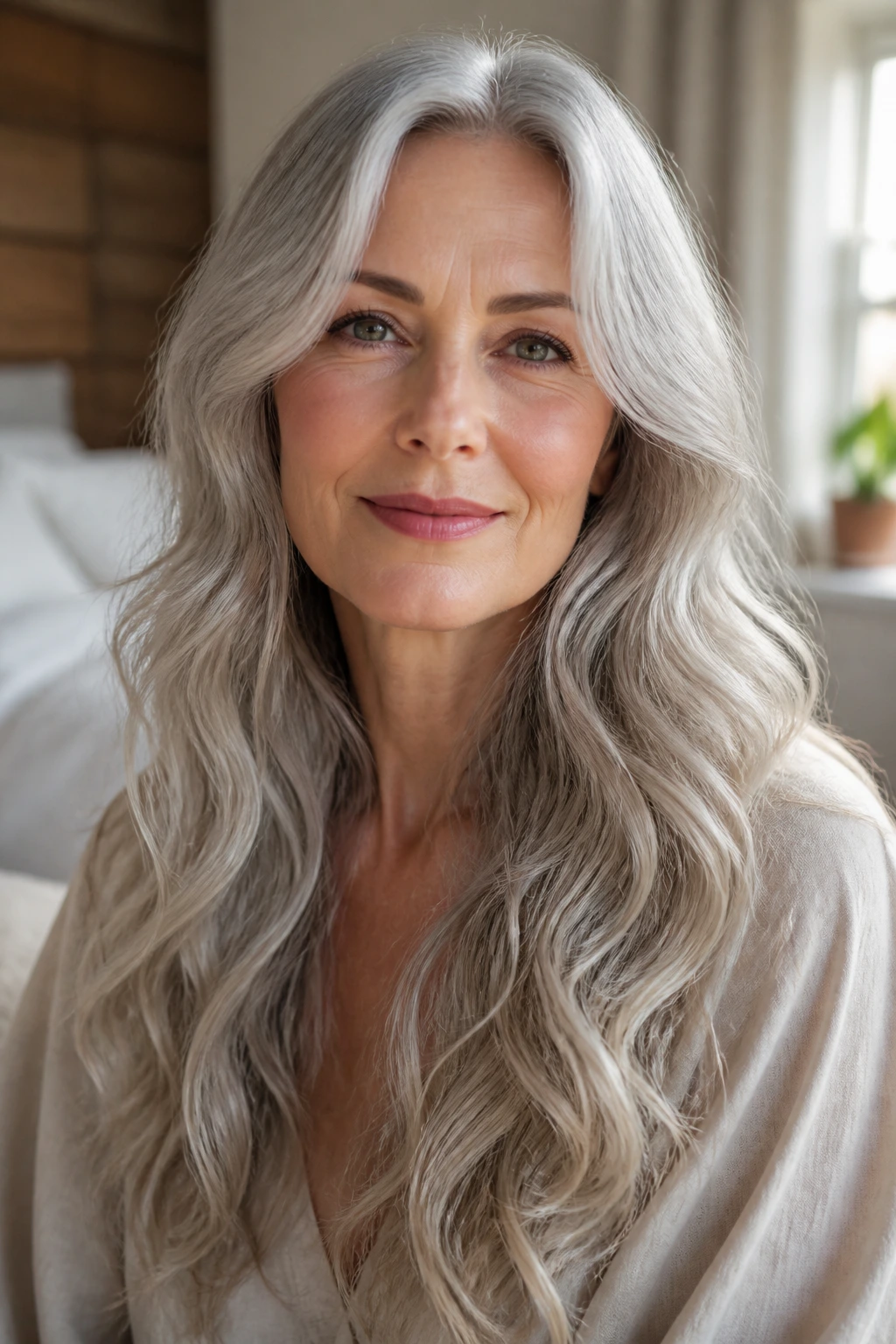
The nicest thing about long wavy hairstyles for older women is that they do not ask you to pretend your hair is twenty years younger. They ask for shape, shine, and a little restraint. That’s a better trade.
If you choose the right layer line, keep the ends healthy, and stop treating every wave like it needs to be identical, long hair stays graceful. Sometimes it even looks better with age, because the texture gets more interesting. More silver. More softness. More character. That’s not a downgrade.
A good wave should feel like hair you know how to wear, not hair that wears you. Pick the version that fits your mornings, your texture, and the amount of effort you actually want to spend — then let the movement do the rest.
