



Waves after 50 have a different job than they did at 25. They’re not there to chase volume for volume’s sake, and they’re not meant to sit in a stiff, salon-sprayed shell. The best wavy hairstyles for women over 50 let the hair bend where it wants to bend, then give it just enough shape so it looks considered instead of accidental.
That’s the sweet spot most people miss. A cut that’s too blunt can make wavy hair fall like a shelf. A cut that’s too shredded can make the ends look thin and fussy. Somewhere between those two extremes is where the good stuff lives: soft movement around the face, a little lift at the crown, and ends that don’t kick out like they’re trying to leave the room.
And yes, age matters here—but not in the gloomy way beauty advice sometimes makes it sound. Hair often gets drier, finer at the crown, or a little more wiry in the gray strands. That changes how waves behave. It also changes which cuts make the hair look lush and which ones just expose every rough edge. The right shape does more work than a drawer full of products, and that’s exactly where the first few styles start making sense.
Why These Wavy Styles Feel Different After 50
-
They build lift without teasing: A good wave cut uses layers and parting, not a ratty backcombed crown, to create height where the hair usually collapses.
-
They soften the jaw and neck: Waves break up hard lines near the face, which helps a strong jaw or a shorter neck look less boxed in.
-
They play nicely with gray hair: Gray strands can be sleek, coarse, or both in the same head of hair, and a wavy shape keeps that texture looking intentional.
-
They work with thinner density: When the temples or crown lose a little fullness, a cut with movement keeps the hair from reading as flat sheet.
-
They can be air-dried or styled: These styles don’t need a full hot-tool routine every day; many of them look better with a touch of bend than with a polished curl.
-
They give you options: Side parts, curtain bangs, shoulder-length layers, chin-length bobs, and long loose waves all live in the same family, which means you can match the cut to your face, glasses, and morning routine.
1. Shoulder-Grazing Layers That Let Waves Bend, Not Bulge
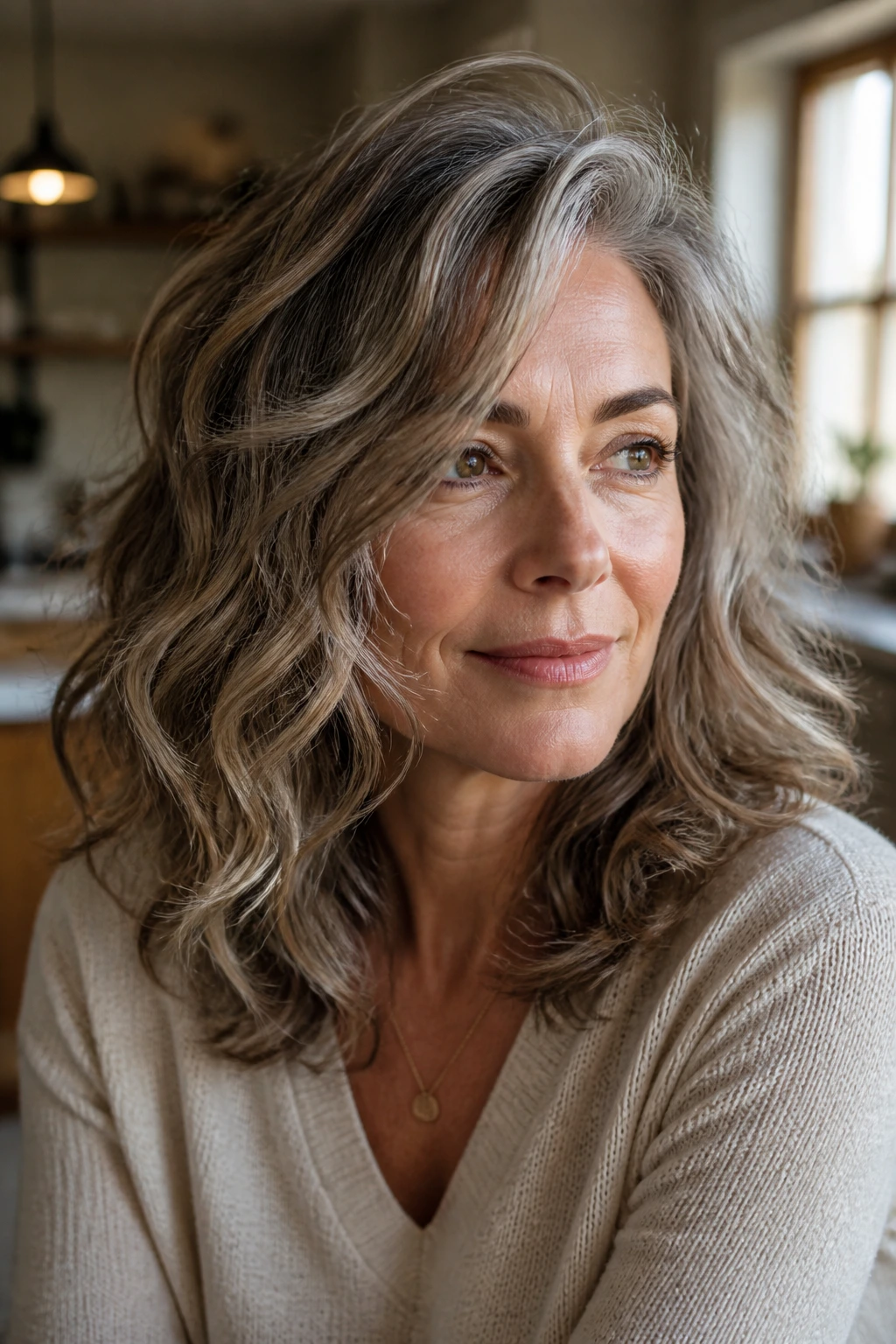
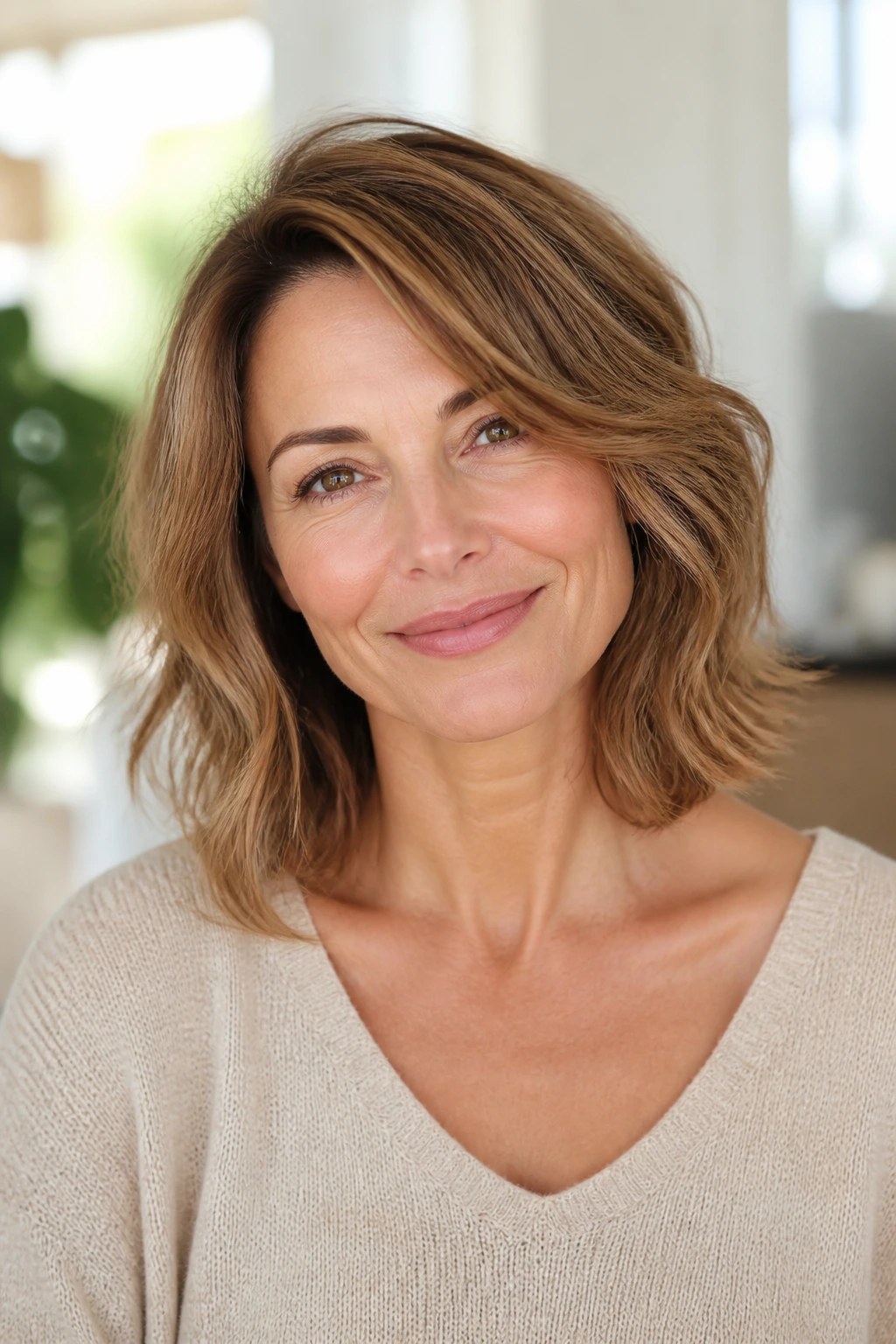
A shoulder-grazing cut with soft layers is the one I recommend most often when someone says, “My waves used to behave, and now they don’t.” It lands in that useful middle zone where the hair has enough length to swing, but not so much weight that the wave pattern gets dragged straight. The ends sit near the collarbone and skim the shoulders instead of clinging to them.
Why it flatters so many face shapes
The shoulder line gives waves a place to stop, which keeps the shape from looking bottom-heavy. If your hair has ever puffed out at the sides and then hung limp at the ends, you already know why this matters. The layers should begin low enough to keep density, but high enough to let the wave separate into clean movement.
What to ask for at the salon
- Keep the longest point around the collarbone.
- Start soft interior layers around the cheekbone or just below it.
- Leave enough weight at the bottom so the hair doesn’t fray.
- Ask for the cut to be checked in natural wave, not iron-straight.
Pro tip: If your hair tends to swell in humidity, ask for slightly longer layers rather than a lot of choppy shorter ones. The cut will still move, but it won’t balloon as fast when the weather turns damp.
2. Chin-Length Wavy Bob With a Clean, Lively Edge
A chin-length wavy bob is a sharp little cut, but not in a severe way. It gives the face a frame right where people tend to want one: around the mouth, jaw, and cheek area. When the waves hit just right, the result feels crisp and easy, not precious.
This one is especially good if your hair is finer or if you want a cut that makes styling decisions for you. The perimeter stays tidy, the movement stays visible, and the whole look reads as deliberate even when you only spent six minutes on it. Keep the ends blunt enough to hold shape, then let the wave do the softening.
3. Collarbone Cut With a Side Part and Soft Lift
Why does a side part matter so much? Because it changes the whole mood of the cut. A collarbone-length style with a side part creates an asymmetrical sweep that gives waves a little drama without crossing into old-school pageant hair.
The side part is useful on days when the crown looks sleepy. It lifts one side almost by accident, and that asymmetry keeps the style from flattening across the top of the head. If you wear glasses, this cut is especially friendly; the hair moves away from the frames instead of sitting on top of them like a shelf.
How to style it
Use a light mousse at the roots on damp hair, then twist two-inch sections away from the face with your fingers. Diffuse on low heat until the roots are set and the ends still feel a touch cool. Finish by sliding a tail comb an inch off your usual part, because even a small shift can wake the whole shape up.
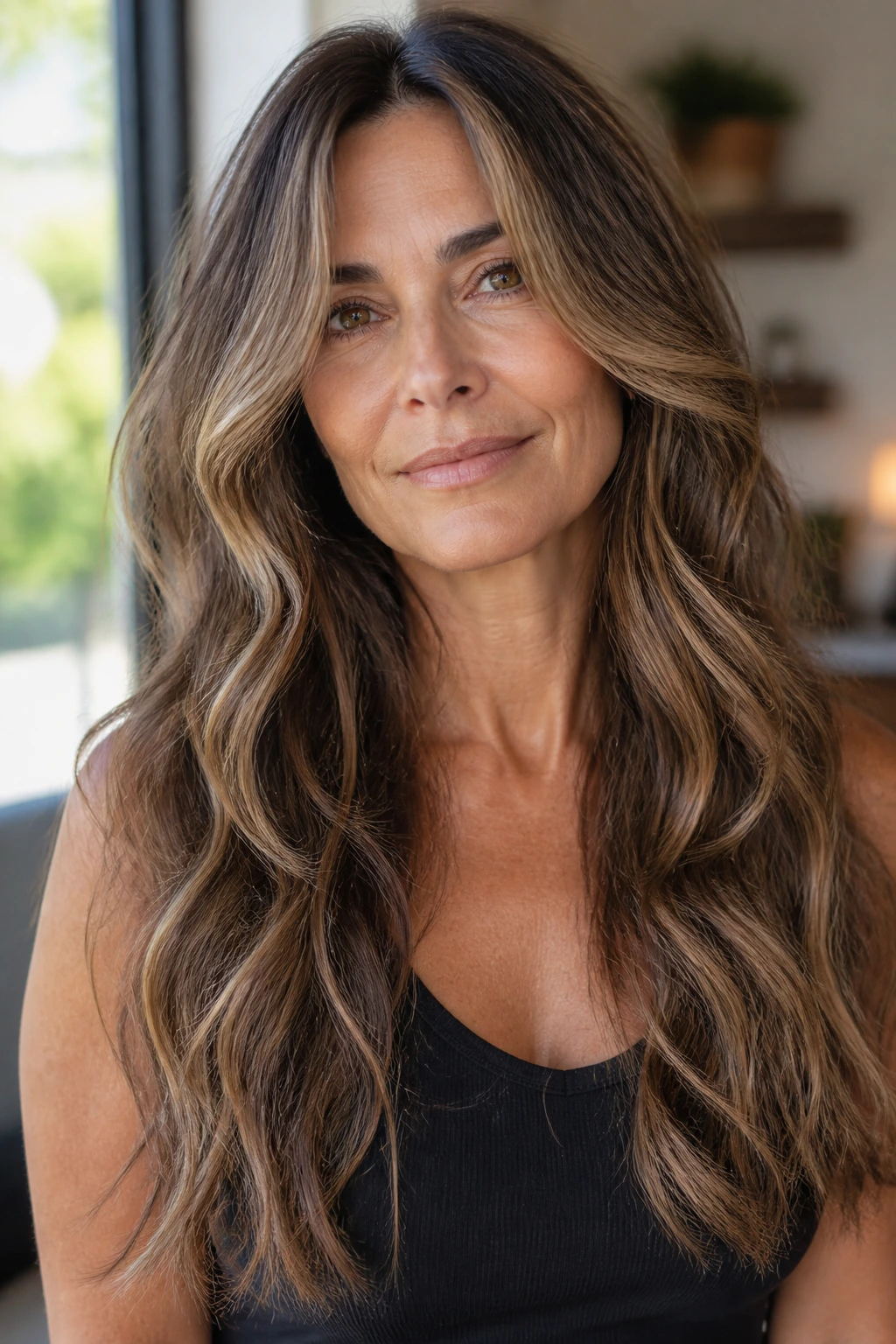
4. Long Face-Framing Waves That Keep the Length Without the Drag
Picture this: the hair is long, the wave is soft, and the ends still look alive instead of tired. That’s the whole point of long face-framing waves. They keep the length people love, but they remove the dead weight that makes long hair sag into one flat curtain.
The trick is placement. Shorter pieces around the cheekbone and jaw give the front some movement, while the back keeps enough length to preserve the sense of fullness. Long hair after 50 does not need to be chopped off to behave. It needs a better map.
- Keep the front pieces a little shorter than the rest.
- Ask for interior layers, not a lot of short exterior choppiness.
- Use a 1¼-inch iron or wand for loose bends, not tight curls.
- Leave the very last inch of the ends out for a softer finish.
One thing to watch: If your hair is very fine, keep the layers conservative. Too much removal and the wave will separate into stringy pieces instead of broad, pretty bends.
5. The French-Girl Lob That Looks Easier Than It Is
There’s a reason the lob keeps hanging around. It does a lot of work without looking like it tried too hard. On wavy hair, the French-girl version lives somewhere between “I just air-dried it” and “I know exactly what my hair is doing,” which is a nice place to be.
This cut usually falls between the chin and the collarbone, with soft ends and a side or off-center part. It likes a bit of bend, a bit of mess, and a little roughness around the face. That is not a flaw. It’s the point. A too-perfect wave makes this style lose its edge.
The best version has enough internal layering to keep the sides from ballooning, but enough length through the front to skim the neck. It’s one of those rare cuts that looks good with jeans and a white shirt, and it also behaves when you dress it up.
6. A Tousled Pixie-Bob for Women Who Want Neckline Lift
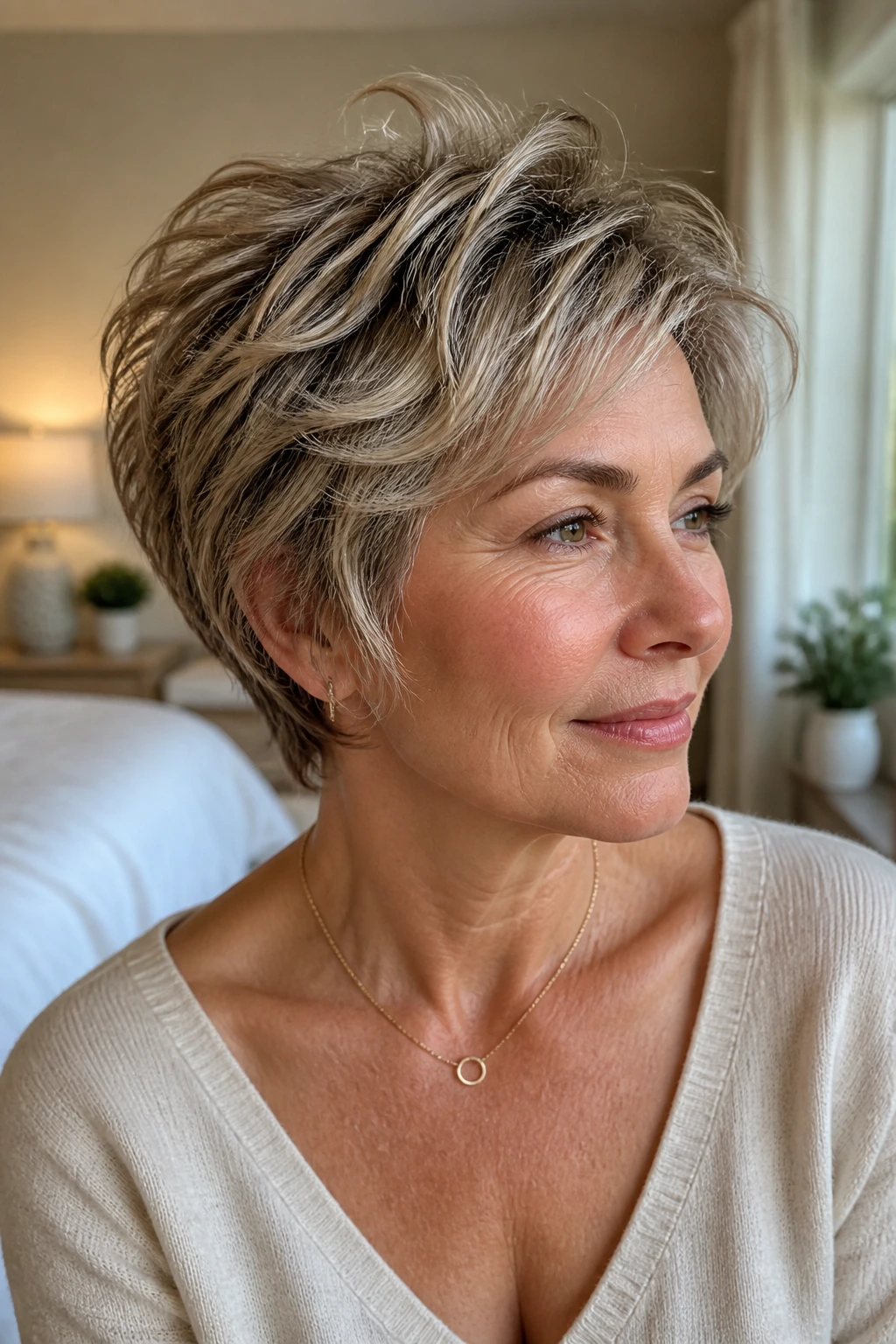
Shorter hair can be a revelation when it’s cut with movement instead of clipped into a hard shape. A tousled pixie-bob keeps the back neat, the sides soft, and the crown lifted just enough to make the whole head look lighter. If your neckline feels hidden by longer hair, this cut opens everything up.
The good version of this style is not helmety. That’s the danger. You want texture through the top and a bit of bend near the temples, not a solid cap of hair. A few longer pieces around the ears keep it feminine and soft; they also give you something to tuck back when you want a cleaner line.
Best for: people who hate fiddling with a brush every morning, people with fine to medium density, and anyone whose waves spring up best when the hair is shorter.
Avoid: over-thinning the top. If the layers get too airy, the cut turns fussy fast.
7. Feathered Shag Layers That Put Volume Where You Want It
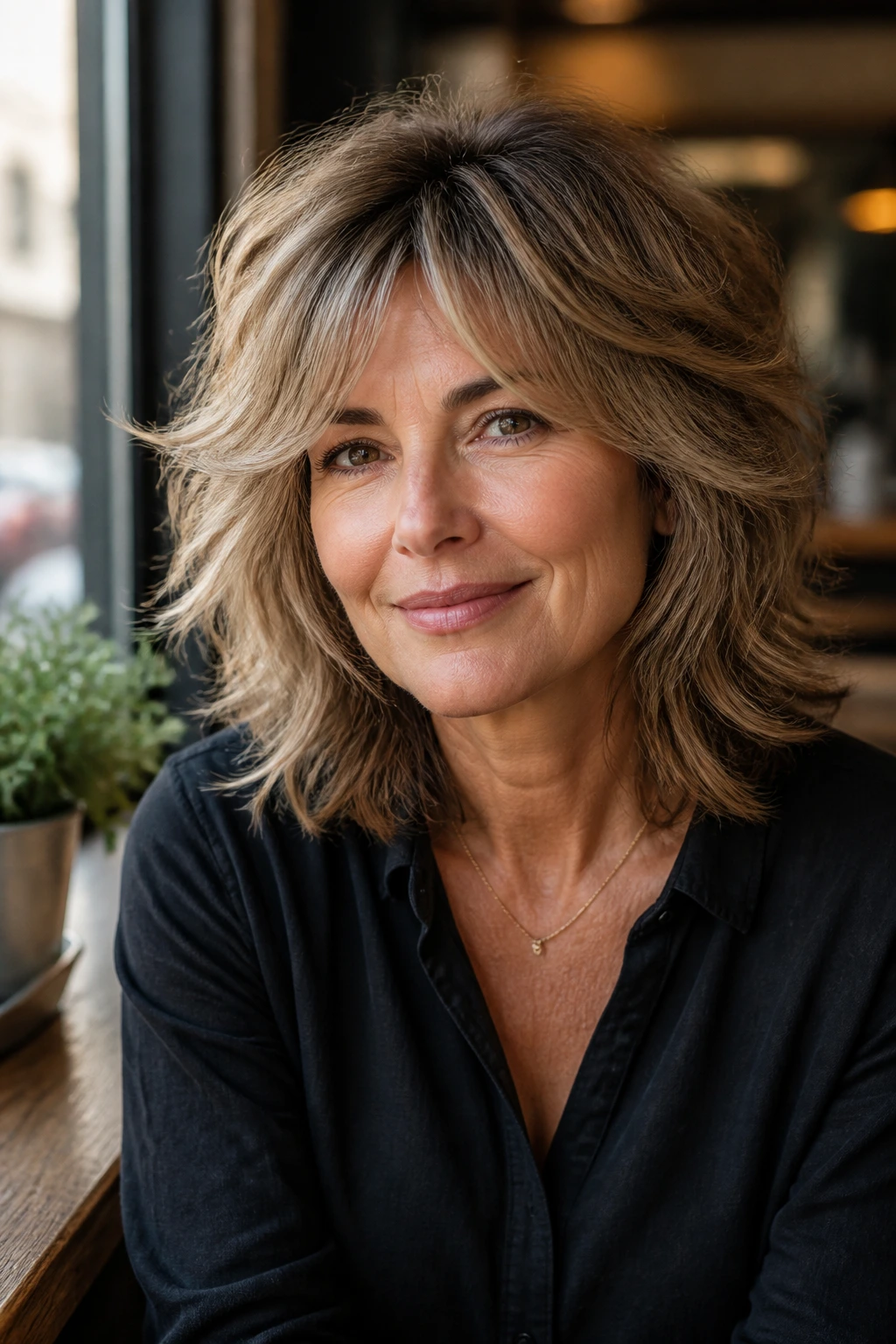
A feathered shag can go wrong if it’s cut like it belongs in a retro costume party. It can also be one of the smartest wavy hairstyles for women over 50 when the layers are handled with restraint. The key is feathering, not shredding.
Why it works
The layers create air between the sections, which is what lets the wave show up as texture instead of as one heavy mass. On medium to thick hair, that air is gold. On finer hair, it keeps the style from slumping by noon.
What to ask for
- Soft, blended layers starting around the cheekbones.
- A little lift at the crown, but not a stacked back.
- Face-framing pieces that shorten gradually instead of stopping abruptly.
- A textured finish on the ends, not razor-thin tips.
Style note: This cut loves mousse and a diffuser. Scrunch, diffuse, leave it alone, and do not keep touching it while it dries. That’s how you get puffy roots and a frizzy crown.
8. Silver Wavy Bob With Curtain Bangs and a Little Attitude
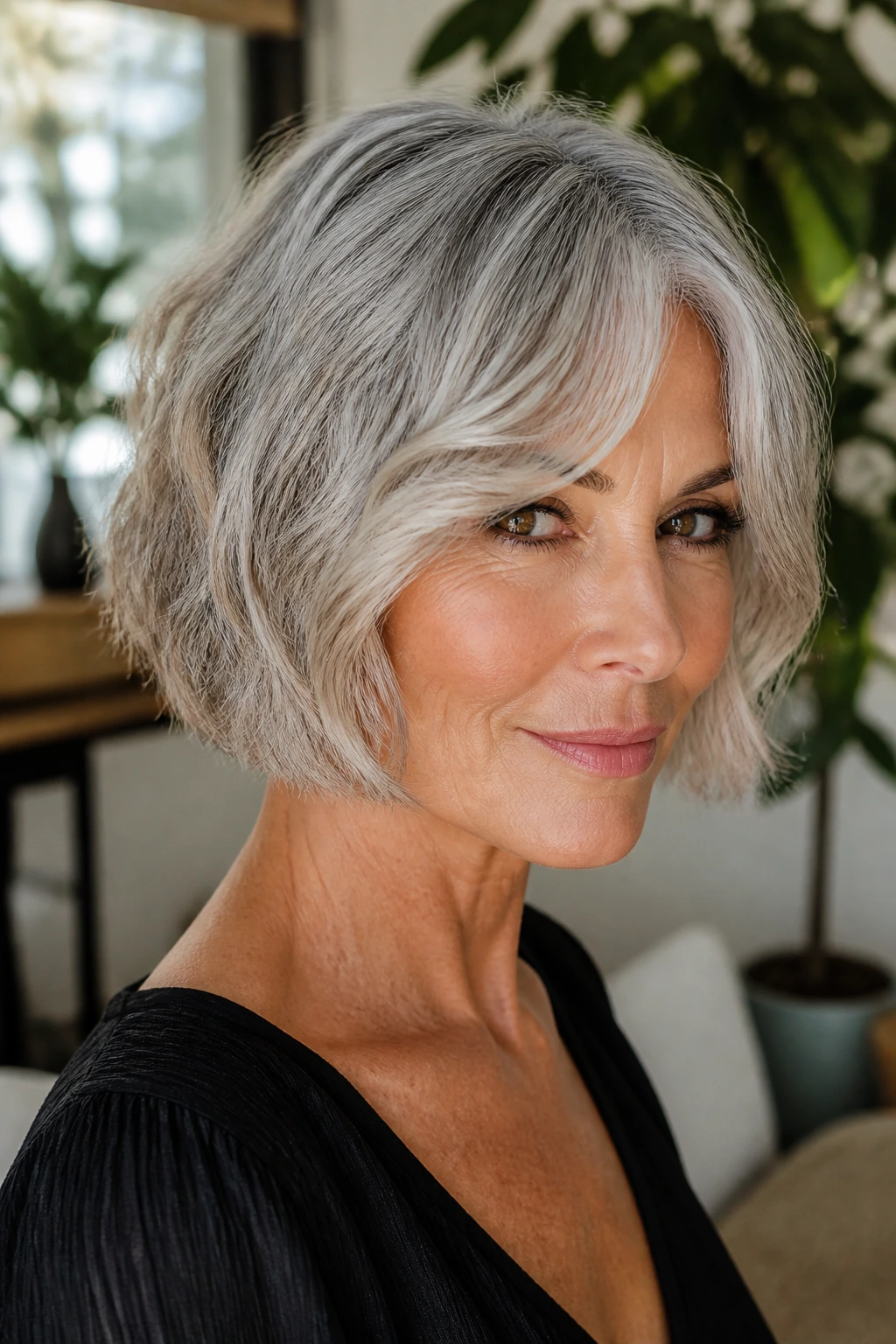
Gray and silver hair can be breathtakingly clean when it’s cut well. Add a wavy bob and curtain bangs, and the whole thing gains movement around the eyes without swallowing the face. This is one of those styles that looks expensive even when it’s not trying to.
The curtain bang is the smart part. It opens from the middle or slightly off-center, which means it doesn’t sit like a flat fringe across the forehead. Instead, it bends into the rest of the wave pattern and softens the brow area without hiding it. If you wear your hair silver, this cut shows off the color changes in the strands—especially where the light hits the bends.
A crisp bob edge keeps the look from turning fluffy. That contrast matters. Without a clear shape underneath, curtain bangs can look too casual.
9. Deep Side-Part Glam Waves That Work for Dinner and Daylight
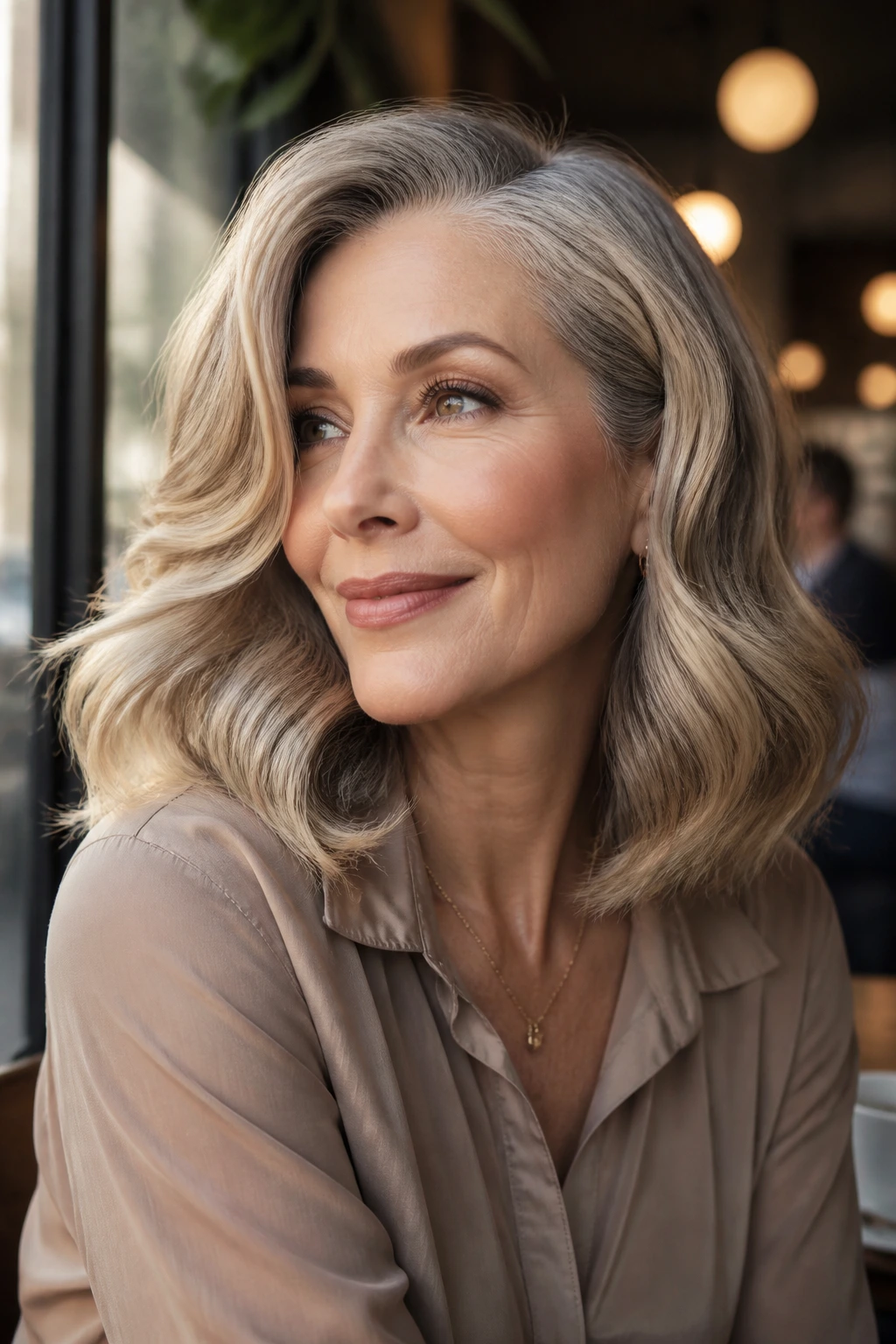
A deep side part changes the attitude of wavy hair in about ten seconds. It throws one side up, pulls the other side across the forehead, and creates a line that feels a little more dressed up than the usual center part. If your face has been wearing the same part for a decade, this is the easiest place to start.
What makes this style work is the bend in the mid-lengths. You don’t need a pageant curl. You need soft, brushed-out waves with enough polish that the style reads as deliberate. A 1¼-inch iron, set away from the face on the heavier side and toward the face on the lighter side, gives the shape a nice asymmetry.
How to use it
Use a root-lifting spray before drying, then clip the top section up while the underlayers dry. That one move keeps the crown from sinking flat under the weight of the side sweep. Finish with a flexible spray, not a shell of hairspray; the hair should still move when you turn your head.
10. Piecey Mid-Length Waves That Never Look Too Heavy
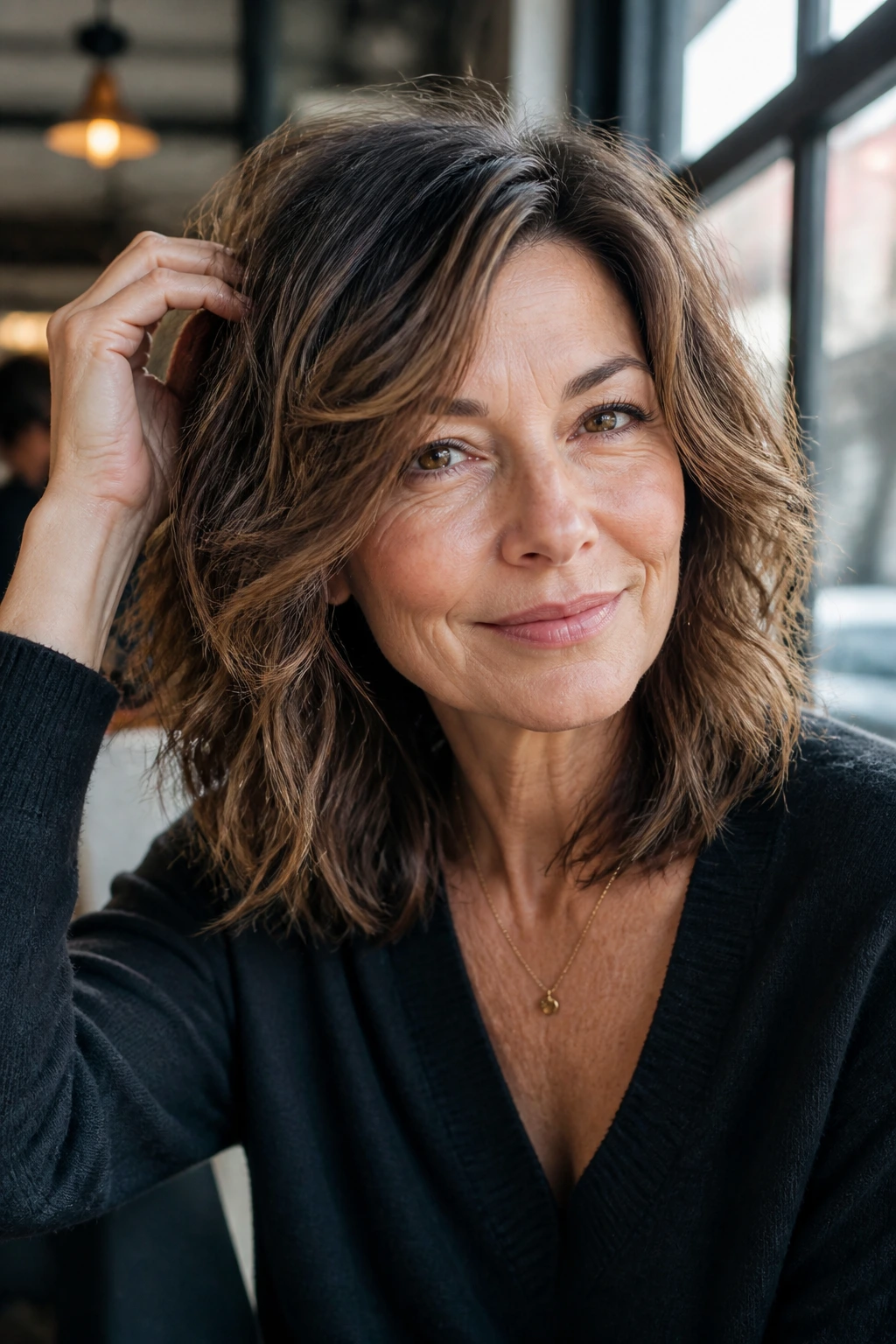
Piecey waves are the antidote to hair that tries to look “done” and ends up looking puffy. Mid-length hair, especially, benefits from this because the length has enough mass to look full, but not enough to hide detail. The trick is creating separated sections without making the ends scraggly.
A good piecey style usually starts with a cut that has a little internal layer and a bit of texture on the surface. Then the styling does the rest. Use your fingers more than a brush. Twist a few random sections while drying. Break up the wave pattern just enough that it doesn’t form one wide, predictable shape.
- Best when you want movement without obvious curl.
- Good for medium-density hair that needs a little air between strands.
- Easier to refresh than a perfectly smooth blowout.
Tiny warning: Too much dry shampoo can make this look dusty. Use it at the roots only, then brush or shake it through so the ends stay clean-looking.
11. Chin-Length Curved Waves That Follow the Jawline
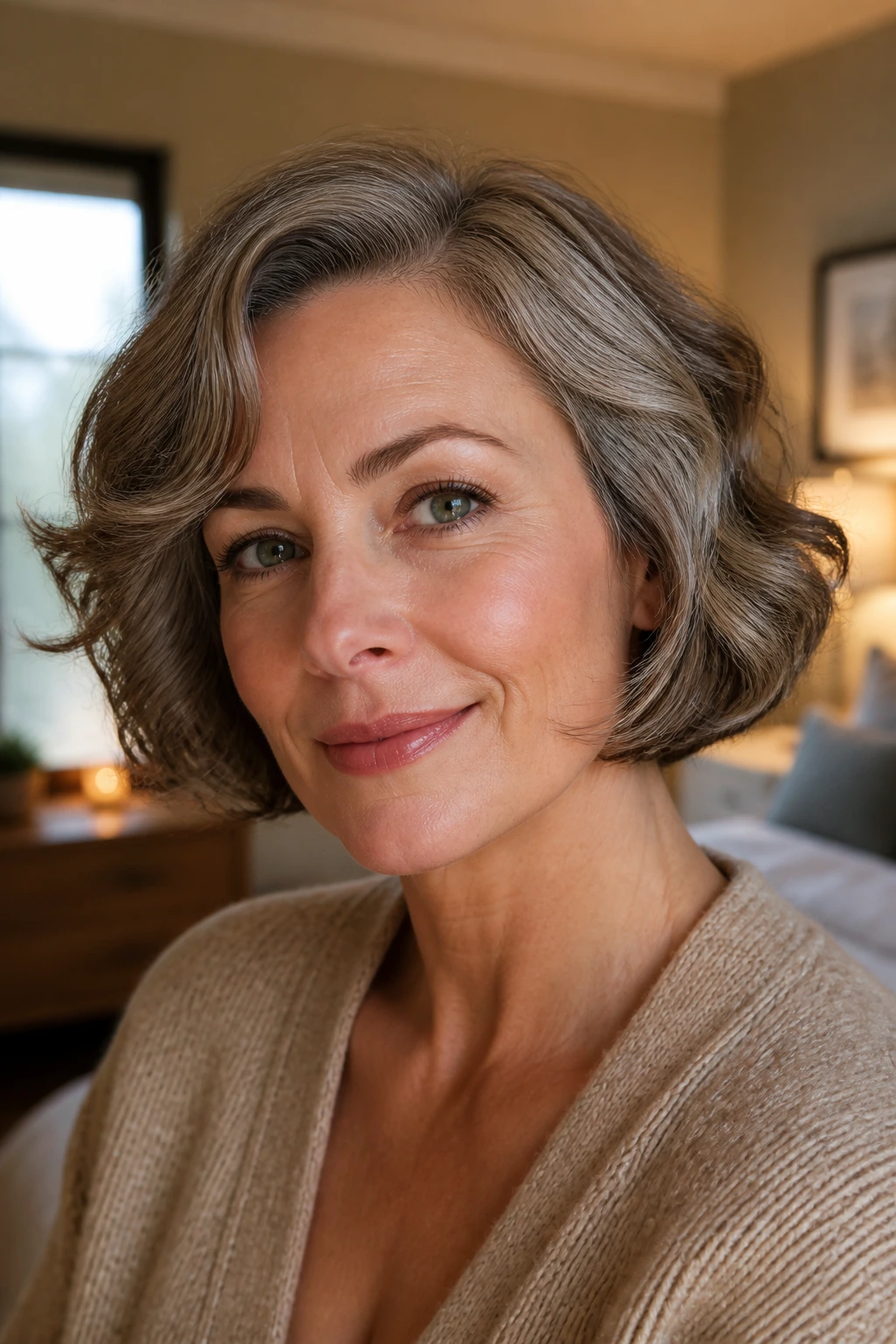
This cut is the one I suggest for people who want the hair to echo the shape of the face rather than fight it. Chin-length curved waves sweep in around the jawline, then tuck slightly under or away depending on how your wave falls. It’s tidy without feeling rigid.
The length matters here. If it sits too high, the cut can look old-fashioned. If it falls too low, you lose the sculpted effect and drift into regular short hair. The sweet spot is the point where the ends brush the jaw or sit just below it, especially if your face is long or narrow.
This style also loves a side part with a bit of bend at the front. That keeps it from feeling too symmetrical, which is where some short cuts start to look stiff. A round brush at the crown and a quick finger-scrunch through the ends is enough on most mornings.
12. Waterfall Layers on Long Hair for Soft Movement
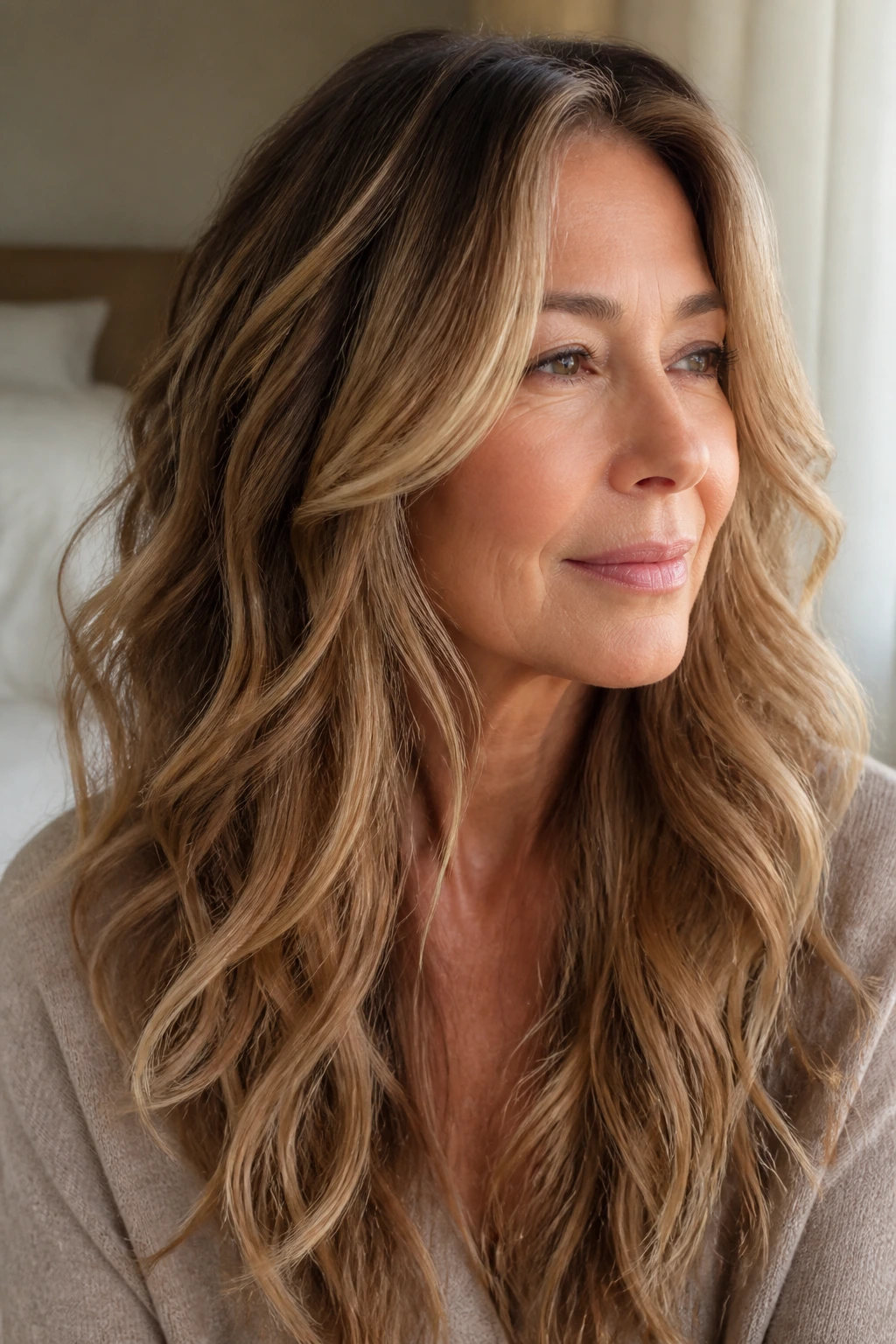
Long hair can still be beautiful after 50, but it has to earn its keep. Waterfall layers help by taking some weight out of the interior while leaving the outside length intact. The result is a shape that moves in soft steps instead of hanging in one big sheet.
Unlike a blunt long cut, this one has air
A blunt line on long wavy hair can be elegant, but it can also make the bottom look thin if the density isn’t there. Waterfall layers make the lengths overlap. That overlap creates the illusion of thickness because you see multiple lengths moving at once.
Best for
- Hair that is naturally wavy from mid-length to ends.
- Medium to thick textures that need help releasing weight.
- Women who want long hair but hate the triangular look.
Ask for this
Tell your stylist you want long layers that blend, not a staircase. The difference is huge. Stair-step layers look dated fast. Blended layers preserve the length and keep the hair from turning into a triangle once it dries.
13. A Wavy Wolf Cut That Softens the Edges
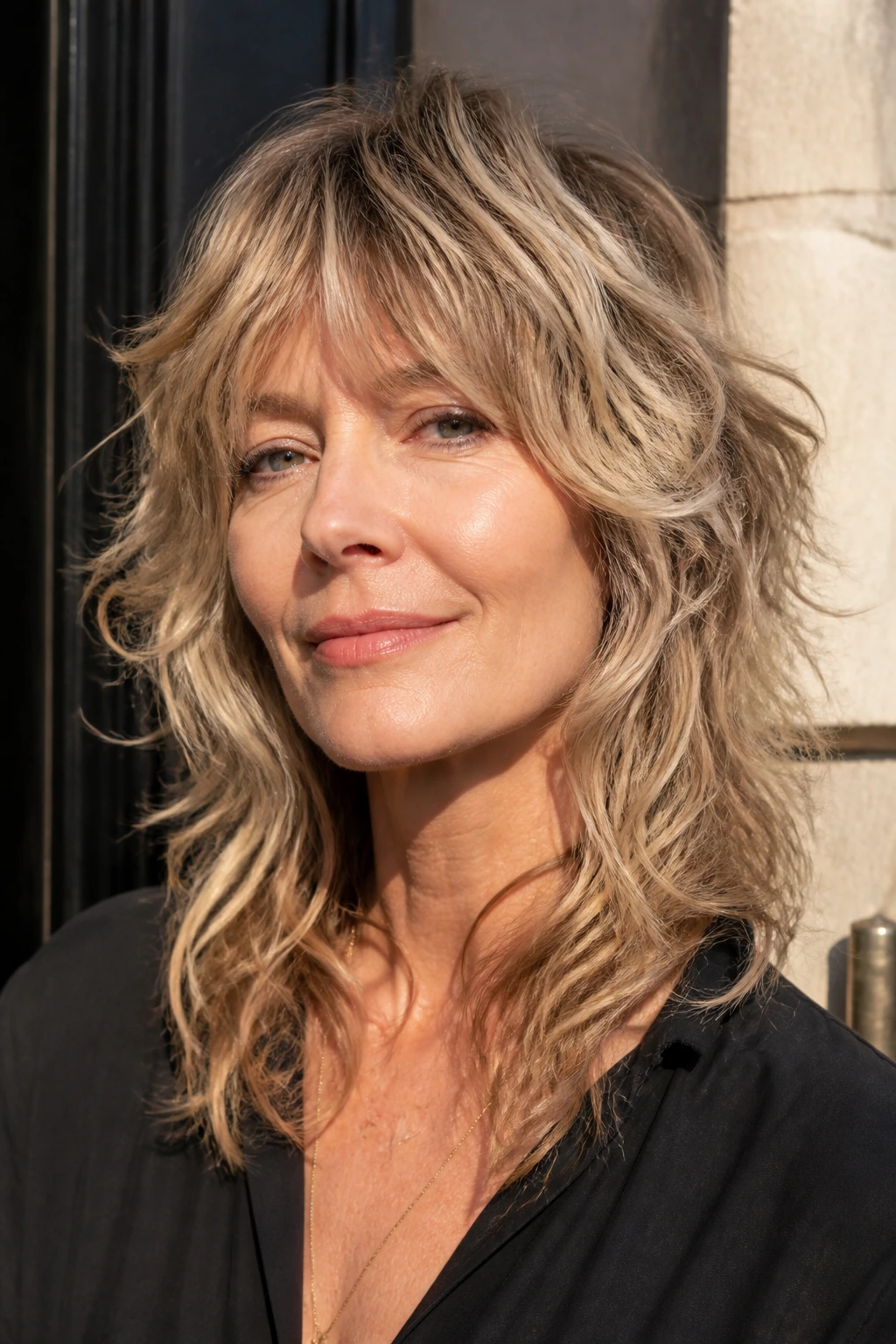
A wolf cut gets a bad reputation when it’s overdone, but the gentler version has real appeal for wavy hair. It brings shape at the crown, movement through the sides, and a slightly undone finish that feels modern without looking like you borrowed someone else’s teenage haircut.
The reason it works on mature hair is that it doesn’t pretend density is endless. Instead, it uses shorter layers on top to create height and longer layers underneath to keep weight where the hair needs it. That balance can be a lifesaver if your crown has gone flat but the ends are still cooperative.
You do need a stylist with a steady hand. The layers should be soft and connected, not ragged. If you want this cut, ask for texture that follows the wave pattern rather than cutting across it.
14. Blunt Lob With Soft Bends for Fine Hair
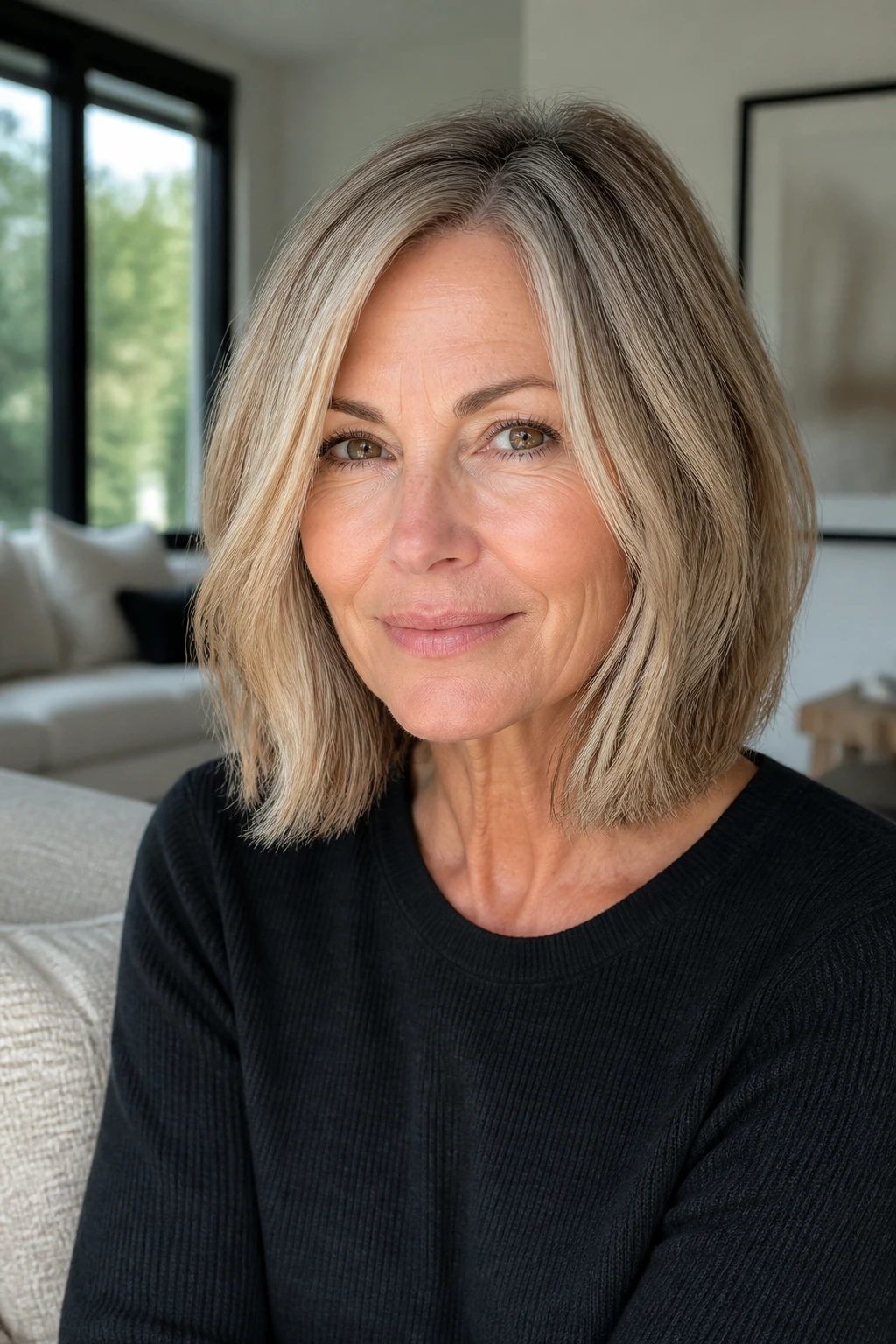
Fine hair often gets treated like it can only live in layers. Not true. A blunt lob can make fine wavy hair look denser because the perimeter holds a straight line, which gives the eye something solid to read. The bend then sits on top of that line like texture, not like weakness.
Why does this matter? Because too many layers on fine hair can remove the little bulk it has left. A blunt lob keeps the ends thick-looking and the overall shape clean. Then you add movement with a wave, not with a million short pieces.
How to style it
Use a large-barrel wand or a flat iron bend on alternating sections. Keep the wave loose and leave the ends straighter if you want the cut to look fuller. A center part can work, but a slight off-center part usually gives the front a little more lift.
If your hair is fine and wavy, this is one of the few styles where restraint beats ambition.
15. Side-Swept Bangs With Waves That Open Up the Face
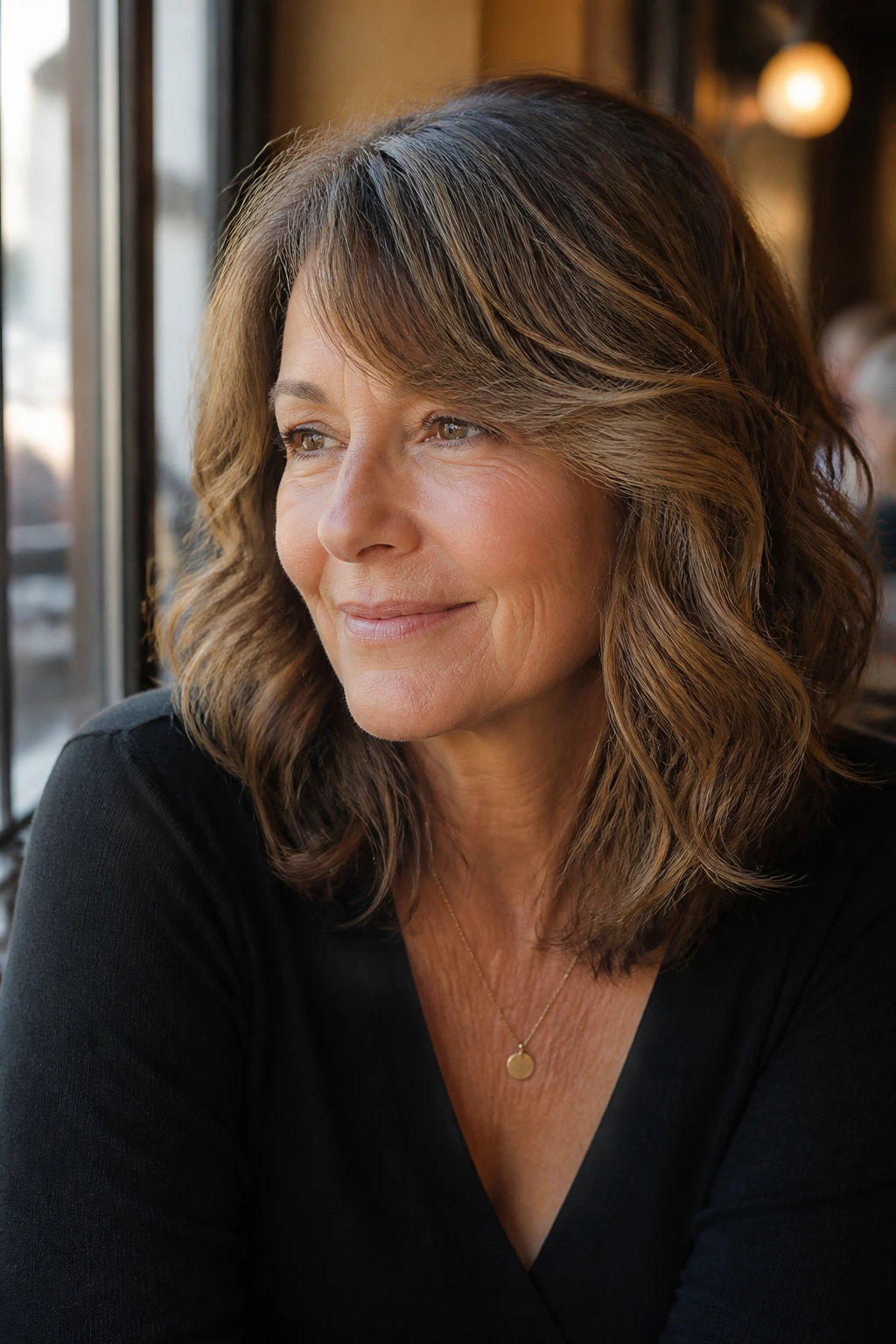
Side-swept bangs can be a gift when they’re long enough to move and short enough to do something useful. On wavy hair, they soften the forehead, bridge the front pieces into the rest of the cut, and make the style feel more finished with almost no extra effort.
The danger is cutting them too short. Short side bangs can spring up and separate, especially on wavy textures. A longer sweep that reaches the cheekbone or just below usually behaves better and grows out more gracefully. If you wear your hair behind one ear a lot, these bangs tuck in nicely without losing their shape.
This look pairs well with shoulder-length cuts, bobs, and even long layers. It’s one of the easiest ways to make a familiar haircut feel new again without touching the overall length.
16. Half-Up Wavy Styles That Keep Hair Off the Neck
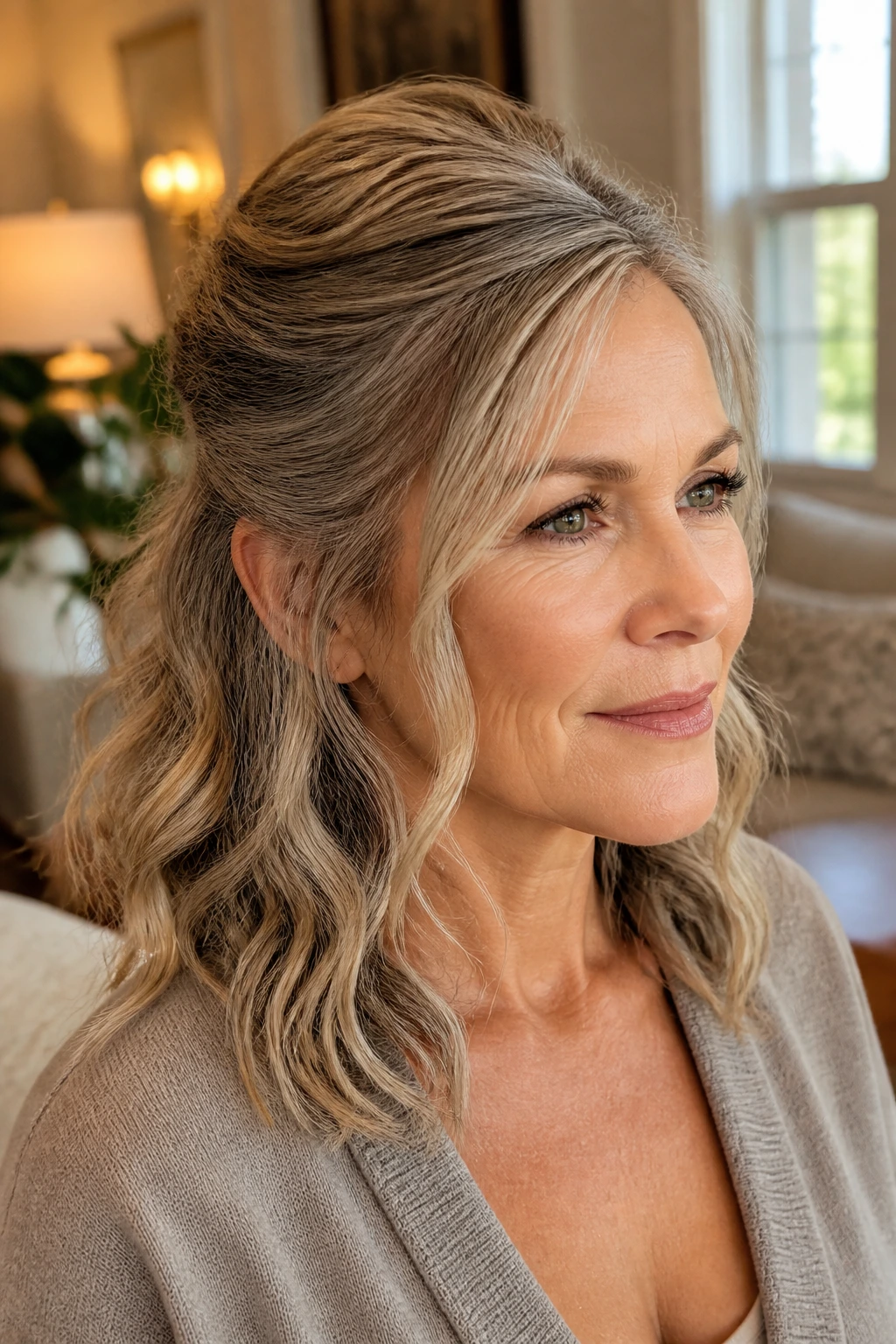
Sometimes the best hairstyle isn’t a cut at all. It’s a way of wearing the hair that keeps the movement but takes the weight off your neck. A half-up wavy style does exactly that, and it’s especially useful if your waves are good on the second day but a little too much around the collar.
Pull back the top third of the hair loosely, not tightly. Let the crown stay lifted and keep the lower waves free. That little split makes the style feel relaxed, and it gives the face a bit of framing without forcing the whole head into a ponytail.
A claw clip, a small barrette, or a soft elastic all work. The best version leaves a few face-framing pieces out in front and doesn’t flatten the top. You want a bend, not a bump.
17. Low Twist Styles That Leave the Ends Loose
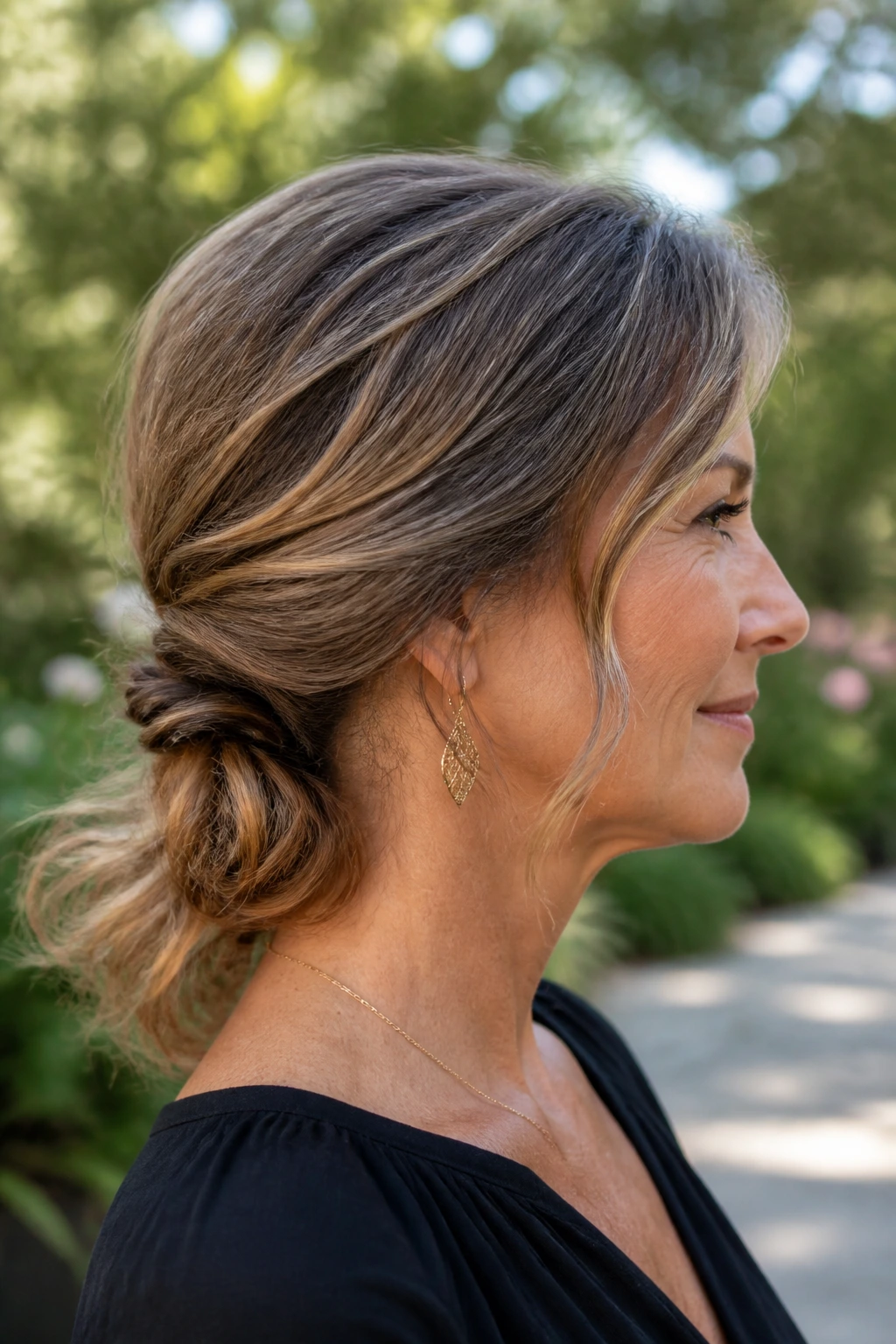
A low twist is one of those quiet styles that looks more polished than it feels to do. It’s especially useful on wavy hair because it keeps the natural texture visible while pulling some of the length back from the face and neck. Think of it as a softer cousin of the bun.
You can twist the hair at the nape and pin it loosely, or gather it into a low knot that still shows the wave in the ends. The trick is not to tuck every strand in. Leave the ends loose and a little irregular. That’s what keeps the style from looking overly neat.
This works well on days when the waves are good but the roots are starting to lose shape. It also behaves nicely with earrings, collars, and higher necklines, which is one reason it shows up so often in real life and not just on mood boards.
18. Air-Dried Waves for Days You Want to Skip Heat
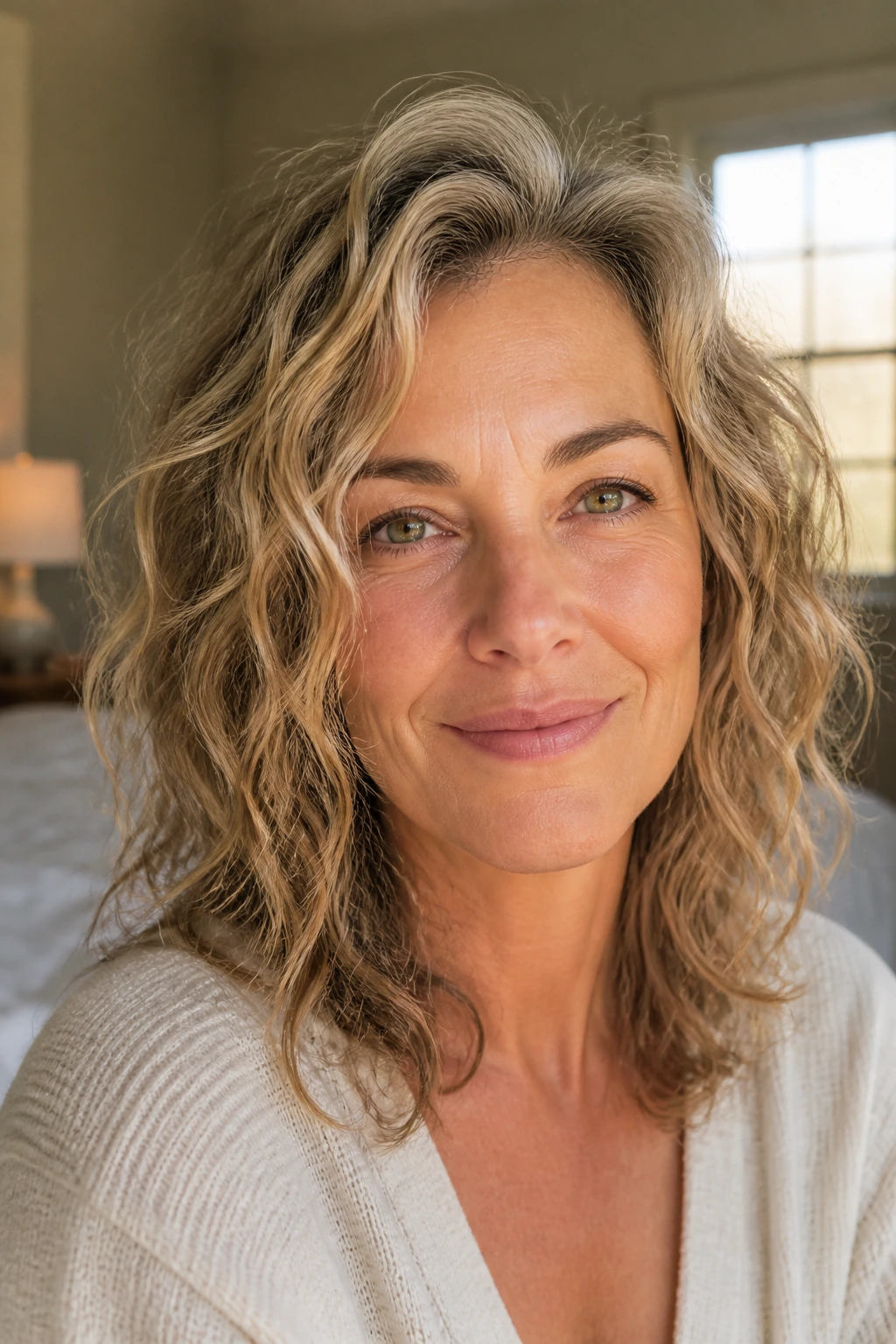
Air-dried waves can be gorgeous when the haircut supports them. The hair should dry into a shape, not into a vague triangle or a frayed cloud. That means the cut matters first, and product matters second.
Use a light leave-in or curl cream on damp hair, then scrunch from the ends upward. Do not rake heavy cream through the roots. That usually leads to flatness at the crown and greasy-looking temples. A little product at the mid-lengths is enough to give the wave something to hold onto while it dries.
If your natural wave is uneven, twist the flatter sections around your fingers while the hair is still damp. That gives the bend a direction. You do not need a full styling ritual every morning. Sometimes the best move is to let the hair dry, then clip one side back and call it done.
19. Soft Occasion Waves That Look Polished Without Getting Stiff
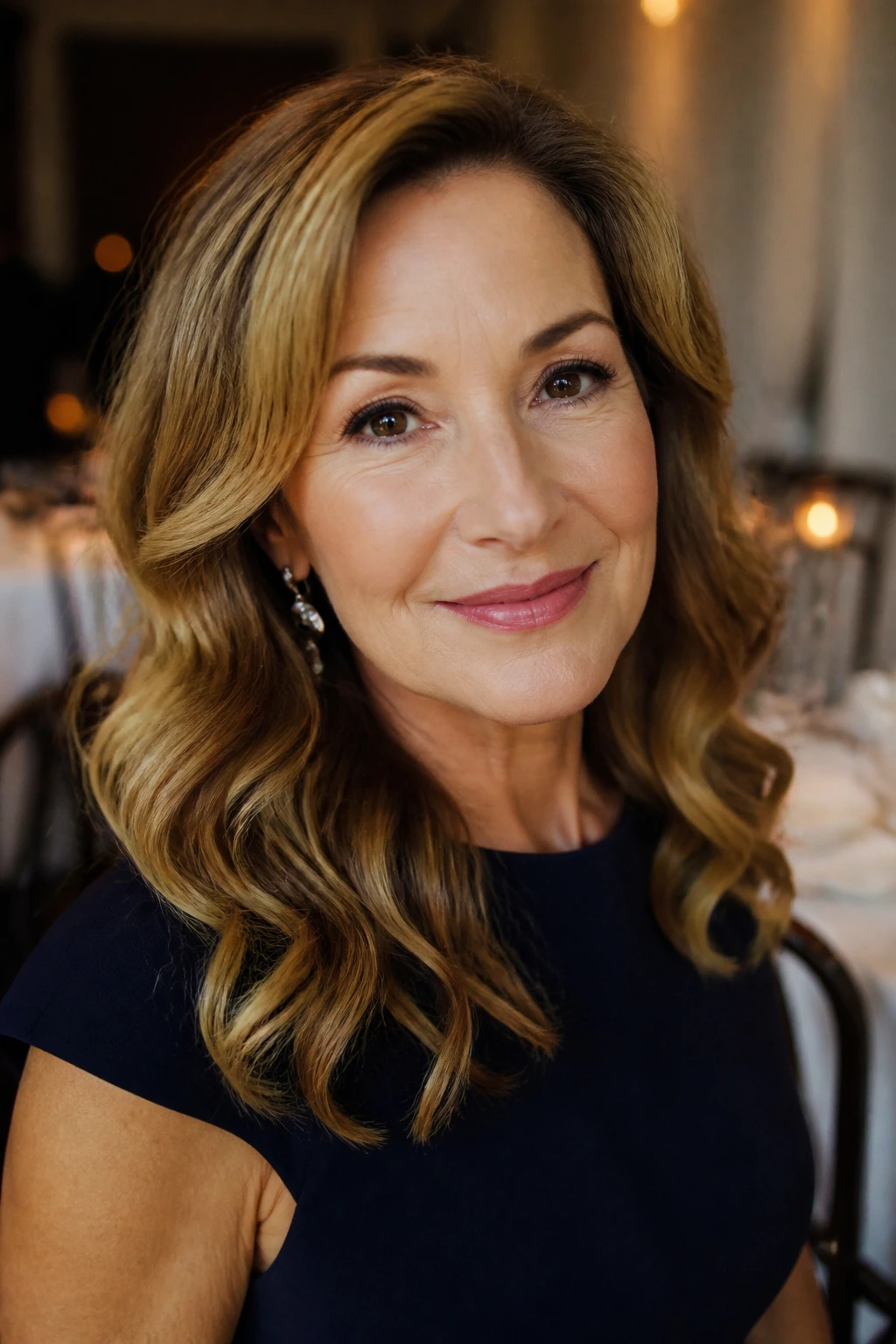
For dinner, a wedding, a big meeting, or a night when you want the hair to cooperate with a nice neckline, soft occasion waves are the grown-up answer. They’re brushed out, touchable, and calm. No crunchy ringlets. No over-sprayed helmet.
The shape works best on medium to long cuts because there’s enough length for the wave to fall into a graceful line. Curl away from the face in alternating sections, then brush the waves gently once they’ve cooled. That brush-out step is what turns “styled” into “softly styled,” which is a much better look on mature hair.
A shine spray at the ends can help if your hair tends to look dry under indoor light. Keep it light, though. Too much shine product makes waves separate in a greasy way, and nobody wants that.
Why Wavy Hair Feels Better When the Cut Does the Work

A good wavy cut after 50 does a very specific job. It gives the hair a place to land. It keeps the wave pattern visible without forcing the strands into a shape they can’t hold, and it saves you from fighting the same flat crown or bulky ends every morning.
That’s why I keep coming back to layers, weight placement, and parting. They sound boring until you see what they do in the mirror. A quarter inch of the wrong shape can make the whole head look tired. A few smart adjustments can make the same hair look loose, awake, and expensive enough that nobody knows you spent twelve minutes on it.
And honestly, that’s the real goal here. Not “young.” Not “severe.” Just hair that looks like it belongs to you, in this stage, with this texture, and no apology attached.
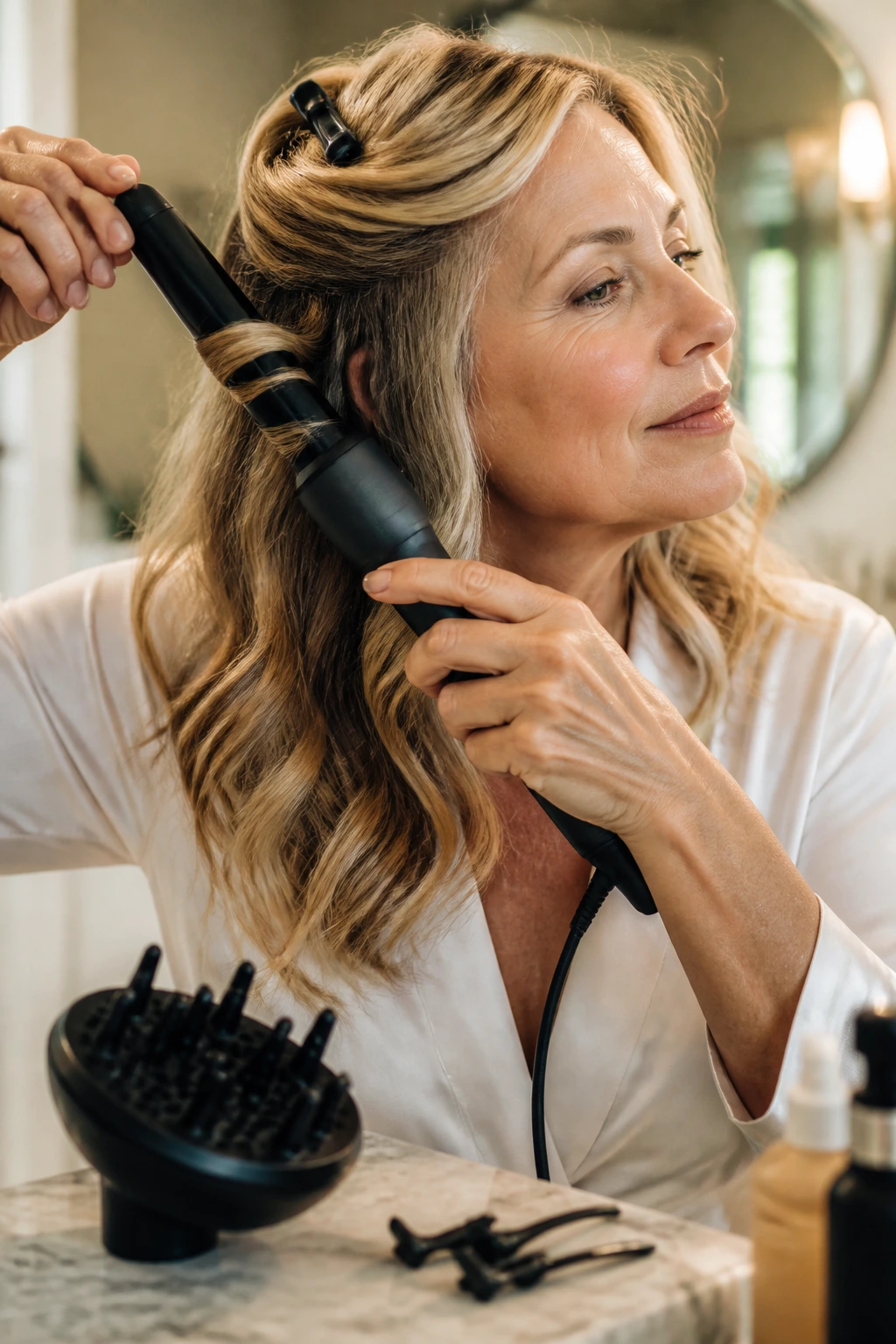
Essential Tools for Styling Wavy Hair
-
Wide-tooth comb: Good for detangling damp waves without pulling them into a frizzy halo.
-
Microfiber towel or soft T-shirt: Cuts down on roughness after washing and helps the wave clump instead of separating.
-
Diffuser attachment: Useful when you want body at the roots and a softer finish through the ends.
-
1 to 1¼-inch curling iron or wand: The sweet spot for loose waves that don’t look like tight spirals.
-
Duckbill clips or small sectioning clips: Helpful for setting the crown, pinning up the top, or cooling styled sections while they hold shape.
-
Light mousse or foam: Gives the hair structure without the heaviness that creams can bring to finer textures.
-
Heat protectant spray: Non-negotiable if you use hot tools more than once a week.
-
Flexible-hold hairspray: Keeps the shape in place while letting the hair move instead of freezing it stiff.
-
Root-lifting spray: Useful when the crown sags faster than the ends.
-
Dry shampoo: Best for day-two and day-three refreshes, especially around the hairline and crown.
What to Tell Your Stylist Before the First Snip
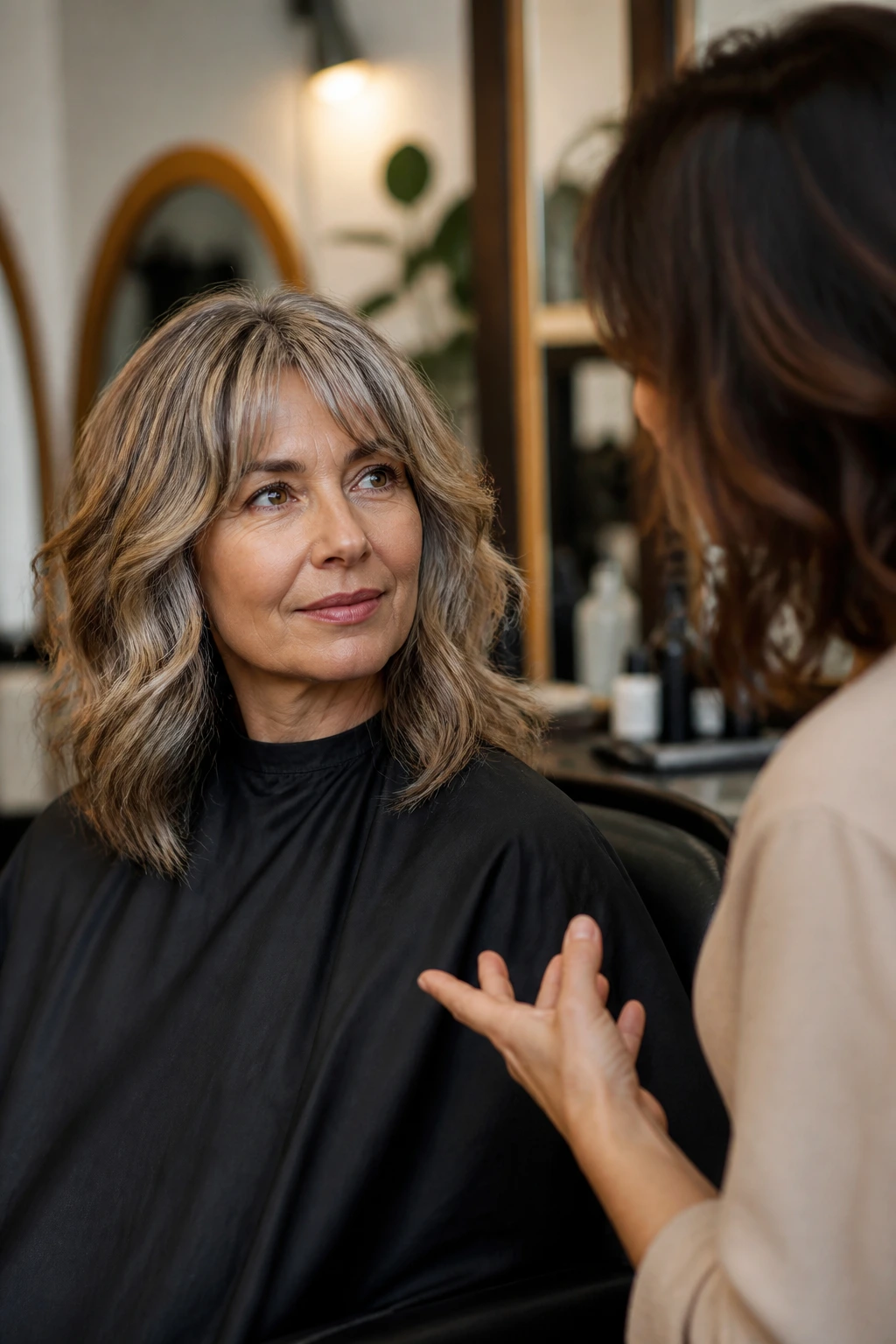
A lot of bad haircuts start with vague instructions. “Make it flattering” doesn’t tell anyone anything. “Take some length off” doesn’t help much either. If you want one of these wavy hairstyles for women over 50 to actually work on your hair, talk about weight, movement, and where the wave needs room to breathe.
Start with the part that annoys you most. Is the crown flat? Are the ends puffing? Does the hair flip out at the shoulders? That detail matters more than a photo alone. A good stylist will look at how your wave falls wet and dry, then shape the cut around the places where the hair breaks or bends on its own.
Say things like, “I want softness around the face but not too many short layers on the sides,” or “I need enough weight at the bottom so the ends don’t look wispy.” If you want bangs, say how much forehead you’re willing to show, because that changes the whole conversation. Curtain bangs and side-swept bangs behave very differently once they meet a wave pattern.
Bring pictures, yes, but bring pictures of hair that looks like your hair. Fine hair and thick hair can wear the same cut in completely different ways. That’s where the trouble starts, and honestly, it’s where a lot of bad salon decisions hide.
Styling Moves That Keep Waves Soft Instead of Puffy
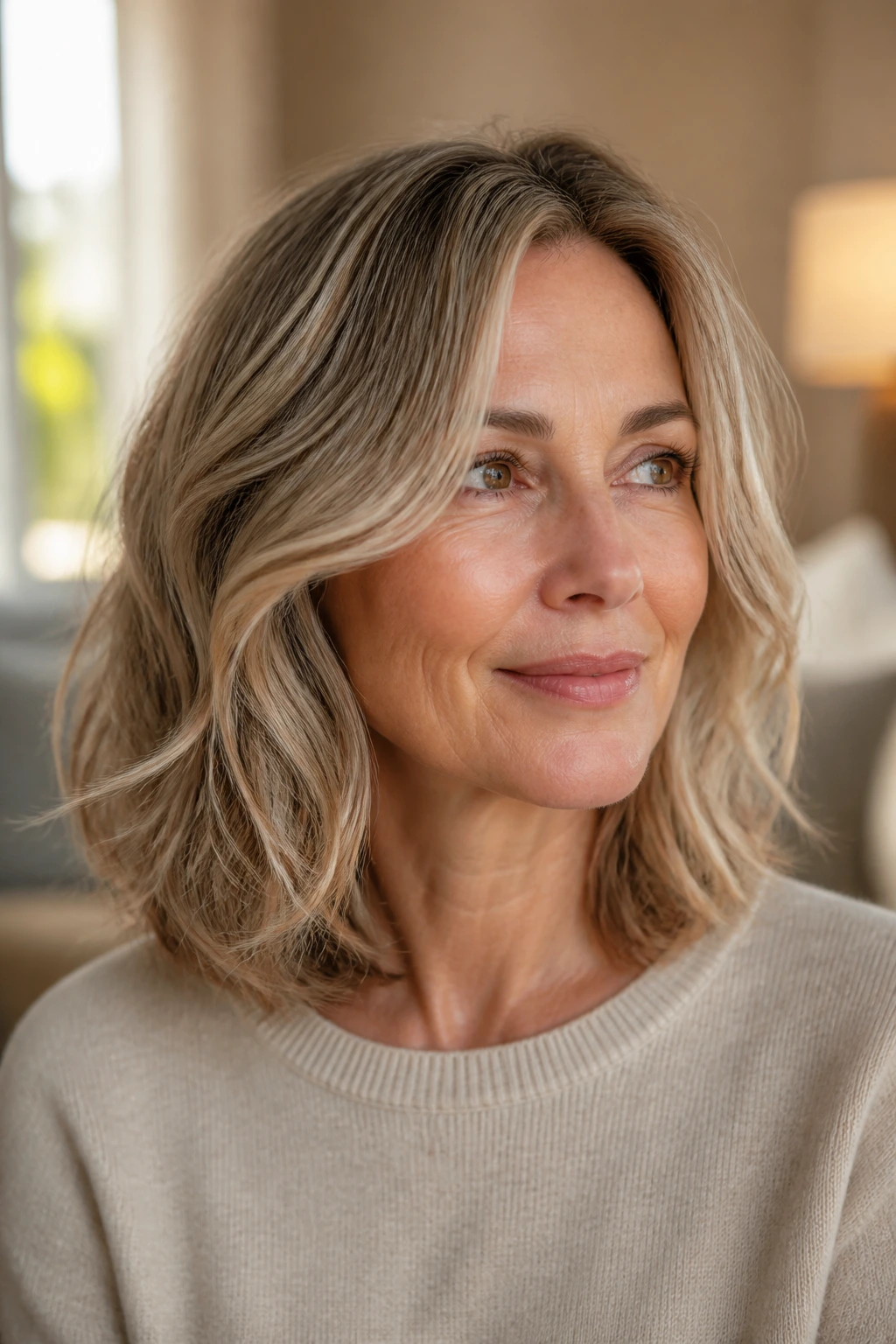
The difference between soft waves and a halo of puff is usually one product choice and one drying habit. Start with less product than you think you need. Apply mousse or foam at the roots, a light cream through the mid-lengths, and keep anything rich or oily away from the crown unless your hair is unusually coarse.
Drying matters even more. If you rough-dry wavy hair with your hands flying everywhere, the cuticle lifts and the whole style gets bigger in the wrong way. Scrunching is better. Diffusing on low heat is better. Air-drying while you resist the urge to touch it is often better than trying to “fix” it every five minutes.
Once the hair is dry, break the wave open a little with your fingers or a wide-tooth comb. Then stop. If you keep brushing and separating, you’ll lose the bend and create fuzz. That’s the annoying part of wavy hair: it rewards restraint. Not silence. Not perfection. Restraint.
A final mist of flexible spray or a tiny drop of serum on the ends can settle the style without flattening it. Use the tiniest amount. More is not more here.
Mistakes That Age Wavy Hair Fast
-
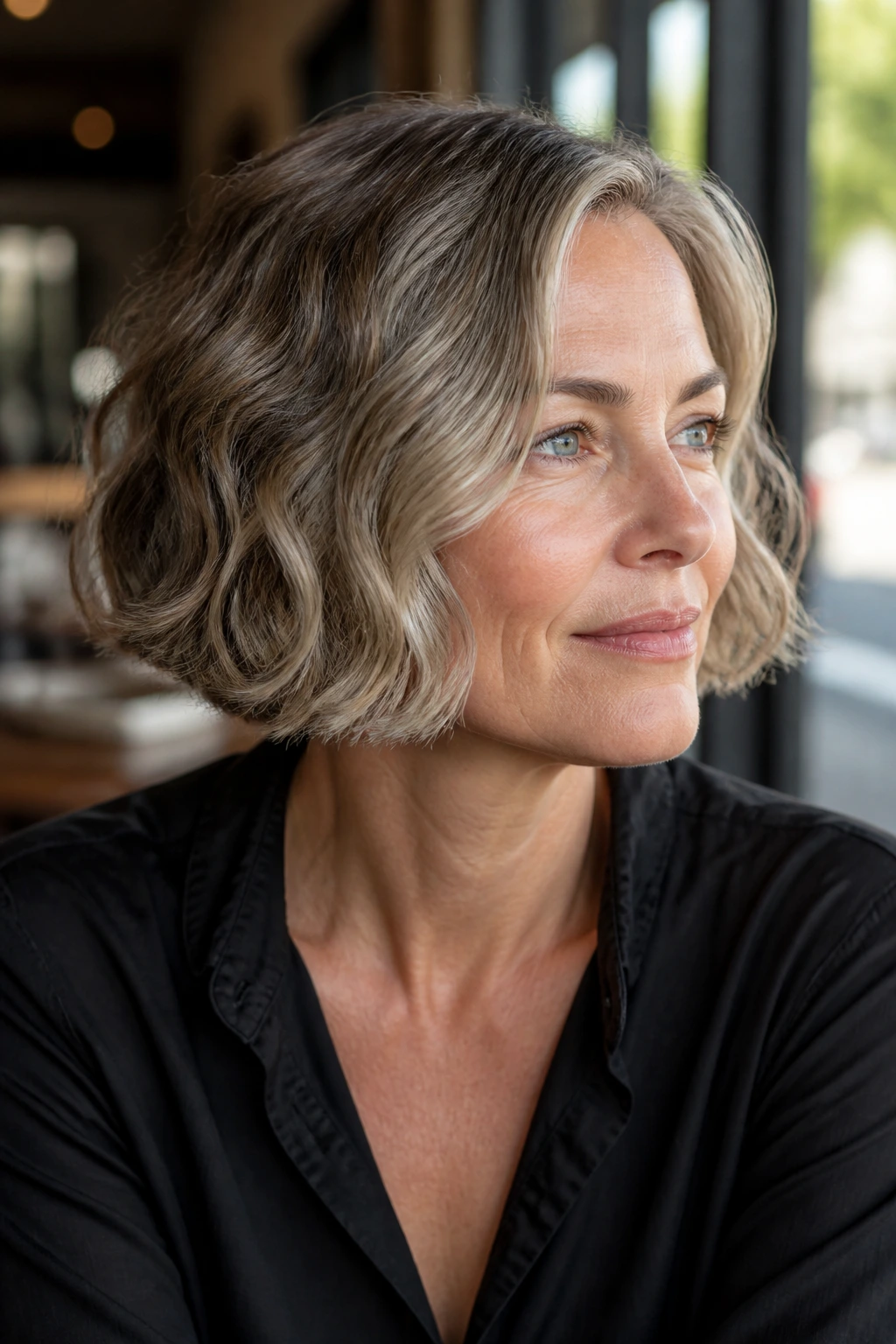
Cutting everything one length: The hair can start to look like a heavy sheet or a triangle, especially around the jaw and shoulders. Ask for soft layering or a slightly beveled edge instead.
-
Using rich cream at the roots: The crown collapses, the part widens, and the wave looks greasy instead of controlled. Put heavier products only from ear level down.
-
Making bangs too short and blunt: Wavy fringe can bounce up, split, or sit stiff across the forehead. Keep fringe longer and softer if you want it to behave.
-
Curling every section the same way: That creates a pattern that looks too uniform and a little dated. Alternate direction, leave the ends out on some pieces, and brush lightly after cooling.
-
Skipping regular trims: Wavy ends show damage fast because the bends expose every dry, see-through bit. Once the ends fray, the whole shape loses its line.
-
Forgetting the part: Wearing the same part for years can flatten one side and make the crown look tired. Shift it an inch or two and see how much lift appears with no cut at all.
Five Ways to Adapt These Looks to Your Hair Type
-
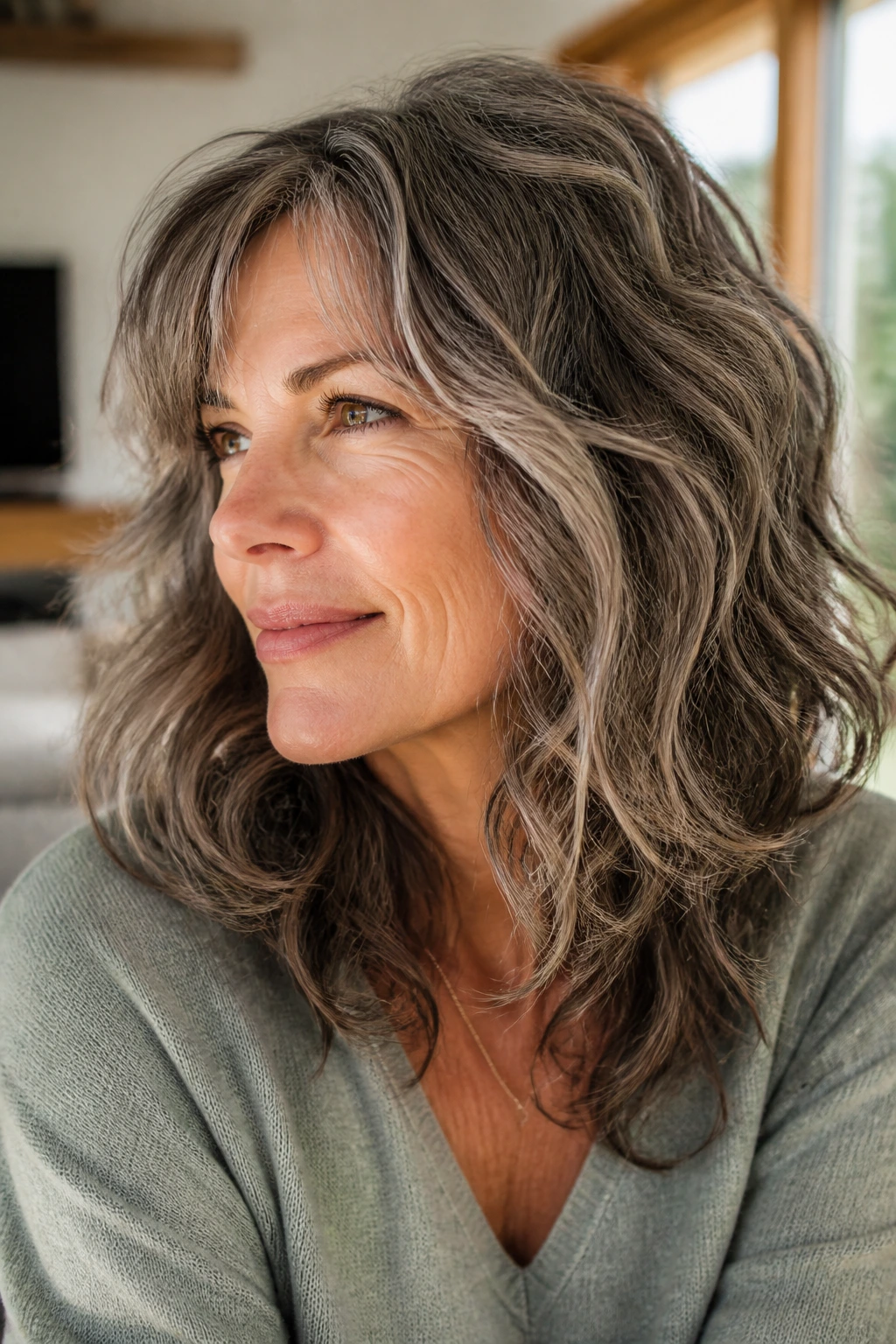
Fine-Hair Lift Layer: Keep the length blunt at the perimeter and add only a few internal layers near the crown. This gives the illusion of thickness without removing the bulk fine hair needs.
-
Thick-Hair Weight-Removal Version: Ask for strategic thinning only inside the shape, not at the ends. Thick wavy hair needs air moving through it, but the outer line should still look full.
-
Gray-Forward Finish: Use a shine spray or smoothing cream sparingly so the silver pieces stay reflective, not dull. Gray hair often looks best when the cut is clean and the styling is light.
-
Glasses-Friendly Fringe: Choose a side sweep or curtain bang that stops above the frames or skims the temples. Bangs that hit the lenses every ten seconds get irritating fast.
-
Low-Heat Air-Dry Plan: If hot tools feel like too much, choose a cut with soft layers and use a mousse-plus-scrunch routine. The haircut does the shape; you just help it along.
Keeping the Shape Fresh Between Salon Visits
Shorter wavy cuts need quicker upkeep than longer ones. A chin-length bob or pixie-bob usually wants a trim every 6 to 8 weeks, because even half an inch can change the line. Shoulder-length layers can usually go 8 to 10 weeks before they start losing shape. Long layers often stretch to 10 to 12 weeks if the ends are healthy.
The rest is maintenance, not drama. Use a clarifying shampoo every week or two if your waves start to feel coated or look dull at the roots. If your hair is dry, follow with a lighter conditioner and keep it off the scalp. Too much residue near the crown is one of the easiest ways to flatten a wave pattern.
If you wear bangs, trim them more often than the rest of the cut. Every 3 to 4 weeks is a sensible rhythm for fringe that hits the eyes. A bang that’s grown out past its sweet spot can make the whole haircut look tired, even if the rest is still in good shape.
Sleep helps too. A satin pillowcase or a loose pineappling clip can keep the waves from getting crushed overnight. Little things. They matter more than people admit.
Questions Women Ask Most About Wavy Hairstyles After 50
What wavy haircut makes hair look fuller after 50?
A shoulder-grazing cut with soft layers often gives the best mix of lift and density. It keeps enough length for movement while removing the drag that makes hair sit flat. If your hair is fine, a blunt lob with soft bends can also work very well.
Are bangs a bad idea with wavy hair?
No, but they need the right length and shape. Curtain bangs and long side-swept bangs usually behave better than short blunt bangs, which can spring up or separate in awkward places.
Can I keep my hair long and still make waves look good?
Yes, if the length is carrying shape instead of dead weight. Long layers, especially face-framing ones, keep the wave visible and stop the ends from looking thin.
Why does my wavy hair puff out at the sides?
That usually means the cut is carrying too much weight through the middle or too many short layers are sitting in the wrong spot. A stylist can remove bulk internally without making the surface look choppy.
What if my waves are uneven on each side?
That’s normal. Most people have one side that bends more easily. Use a slightly off-center part and style the flatter side with a little more product or a few finger-twists while damp.
Is gray wavy hair harder to style?
It can be drier or coarser, which changes the feel, but that isn’t a disadvantage. Gray waves often hold shape well when they’re cut cleanly and not overloaded with product.
Should I air-dry or blow-dry wavy hair?
Either can work. Air-drying gives you a softer, more natural finish; blow-drying with a diffuser gives more control at the roots. The better choice depends on whether your crown needs lift or your ends need calm.
What if my ends flip out at the shoulders?
That usually means the cut is hitting a length that creates a natural bend point. A slight trim above or below that spot often solves the problem, and sometimes a bit of layering is enough to redirect it.
The Shape That Does the Heavy Lifting

Good wavy hair after 50 doesn’t shout. It moves. It sits with enough shape to make the face look open, the neck look longer, and the whole style look like it belongs to a woman who has figured out what her hair does well and stopped arguing with it.
The smartest cuts here are not the flashiest. They’re the ones that use weight, parting, and just enough layering to let the wave show up in a clean way. Once you find that balance, the styling gets easier, the mornings get shorter, and the mirror starts giving you fewer reasons to complain.
Pick the version that fits your texture, your glasses, your neck, and your patience. Then let the waves do what they already know how to do.
