



A good wedding braid has a useful kind of confidence. It doesn’t flop when you lean in for hugs. It doesn’t collapse the moment a veil comb goes in. And it gives you something a lot of soft bridal styles can’t quite manage: structure with movement, polish with a little air around the edges.
That’s why braid hairstyles for brides keep showing up in real life, not just in inspiration boards. A braid can be sleek and sculpted, loose and romantic, or packed tight enough to survive a long ceremony, a hot dance floor, and one too many enthusiastic relatives reaching for your hair. The trick is choosing the right braid for your dress, your hair texture, and the way you want to feel when you catch your reflection five hours after the first pin went in.
There’s also something practical about braids that people underestimate. The pattern itself gives the style a built-in grip. On fine hair, that grip keeps everything from skating around. On thick hair, it stops the style from looking like a heavy lump at the nape. On curly or coily hair, it can show off texture instead of fighting it. And when you’re the bride, those details matter. A lot.
Why These Braid Styles Earn Their Place on a Wedding Day
-
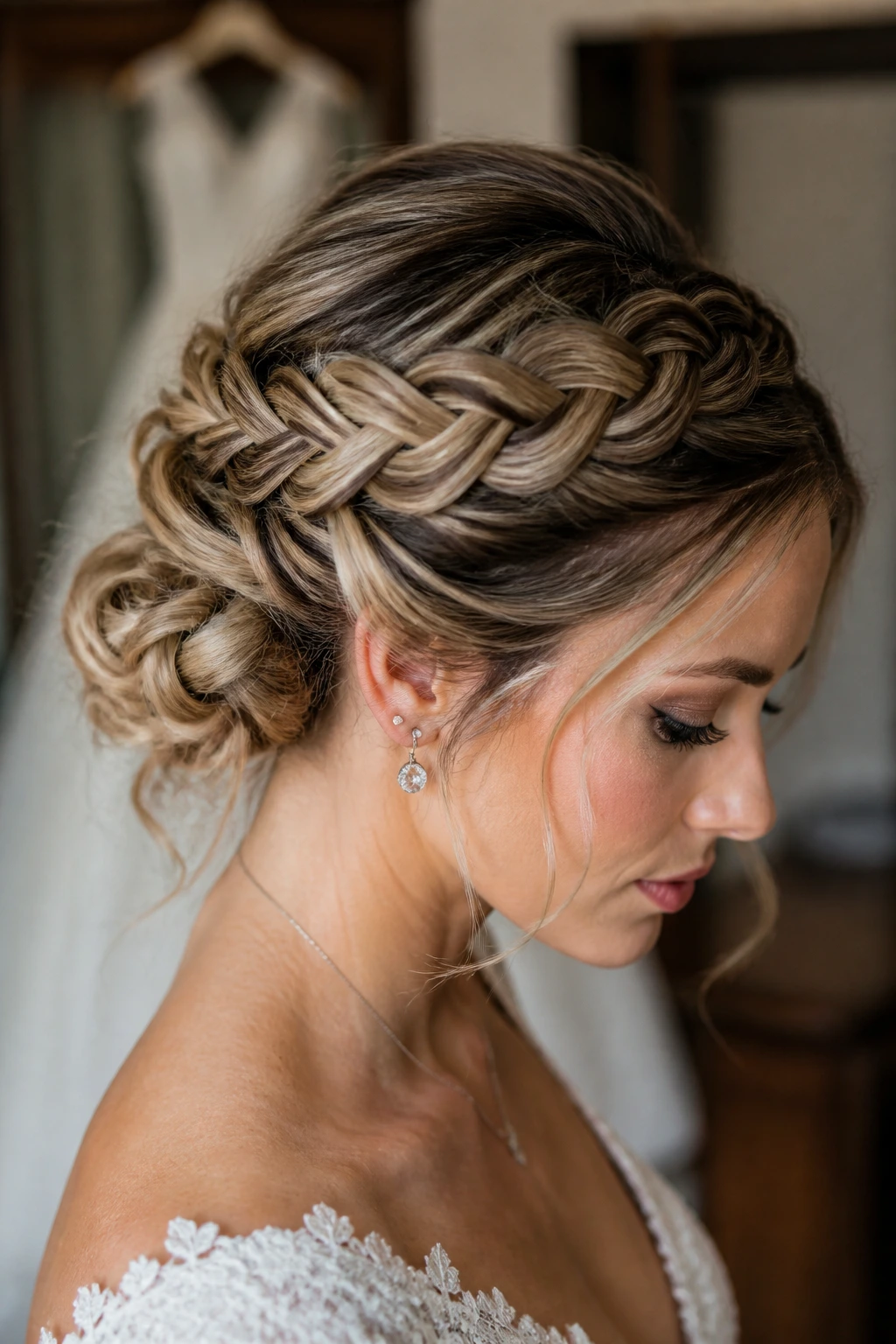
They hold shape better: A braid gives the hair a woven base, so pins have something to grab instead of sliding through soft curls by the hour mark.
-
They work with veils and combs: Low braids, crown braids, and tucked styles leave clean anchor points, which makes the veil placement less fussy.
-
They can be dressed up fast: A braid with pearl pins, a ribbon, or a few fresh blooms looks finished without needing a total restyle.
-
They flatter different hair types: Fine hair gets body from the braid pattern. Thick hair gets control. Curly hair gets definition without being flattened into submission.
-
They can look formal or relaxed: Tight parting and smooth flyaways read polished. Looser sections and face-framing pieces lean softer and more romantic.
-
They survive the whole day better than you’d think: Ceremony, photos, dinner, dancing — a braid usually loosens a bit, but that’s part of the charm if the base is built well.
How to Match a Bridal Braid to Your Dress, Veil, and Neckline
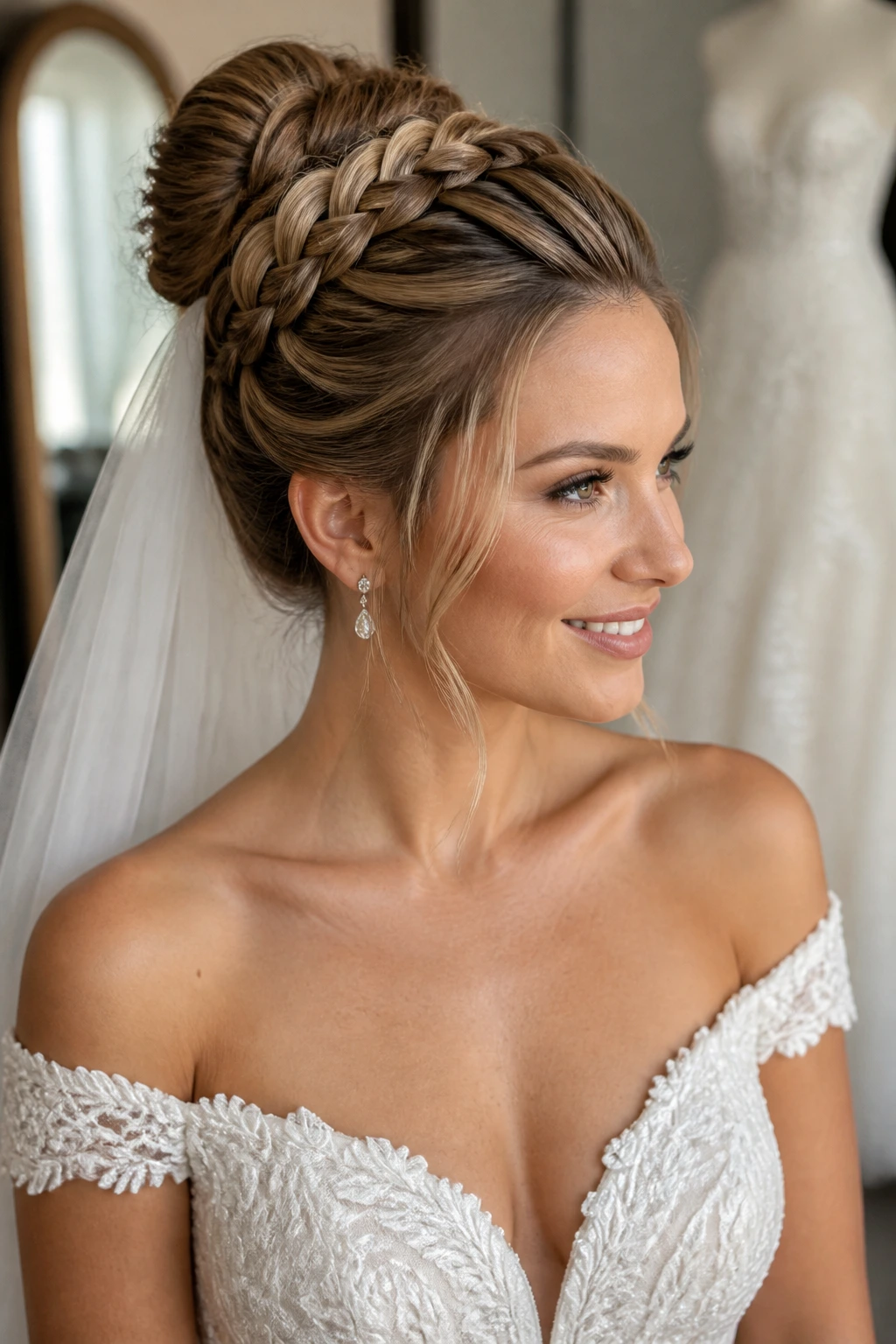
The dress should influence the braid shape more than people expect. A strapless or off-the-shoulder gown can handle a braid that lives higher on the head, because the neckline is already open and the hair gets to be part of the frame. A high neck or halter usually wants something lower, tighter, or tucked away so the top of the dress still gets to breathe.
Veils change the math too. A cathedral veil likes a strong anchor, usually low at the crown or the nape, where the comb can sit without fighting the braid. A birdcage veil or short blusher can sit almost anywhere, which is why those styles play nicely with side braids and half-up looks. If you want a tiara, leave a little clean space at the crown rather than burying the headpiece in a nest of texture.
Hair length matters, but not in the way people assume. Shoulder-length hair can still do a convincing braid if the stylist adds texture and keeps the braid compact. Long hair opens the door to mermaid braids, side fishtails, and long cascades. Shorter hair often does best with accent braids, crown sections, or braided inserts that feed into a bun or ponytail. The goal is not to force hair into a shape it hates. The goal is to make the shape do the heavy lifting for you.
1. Low Braided Chignon
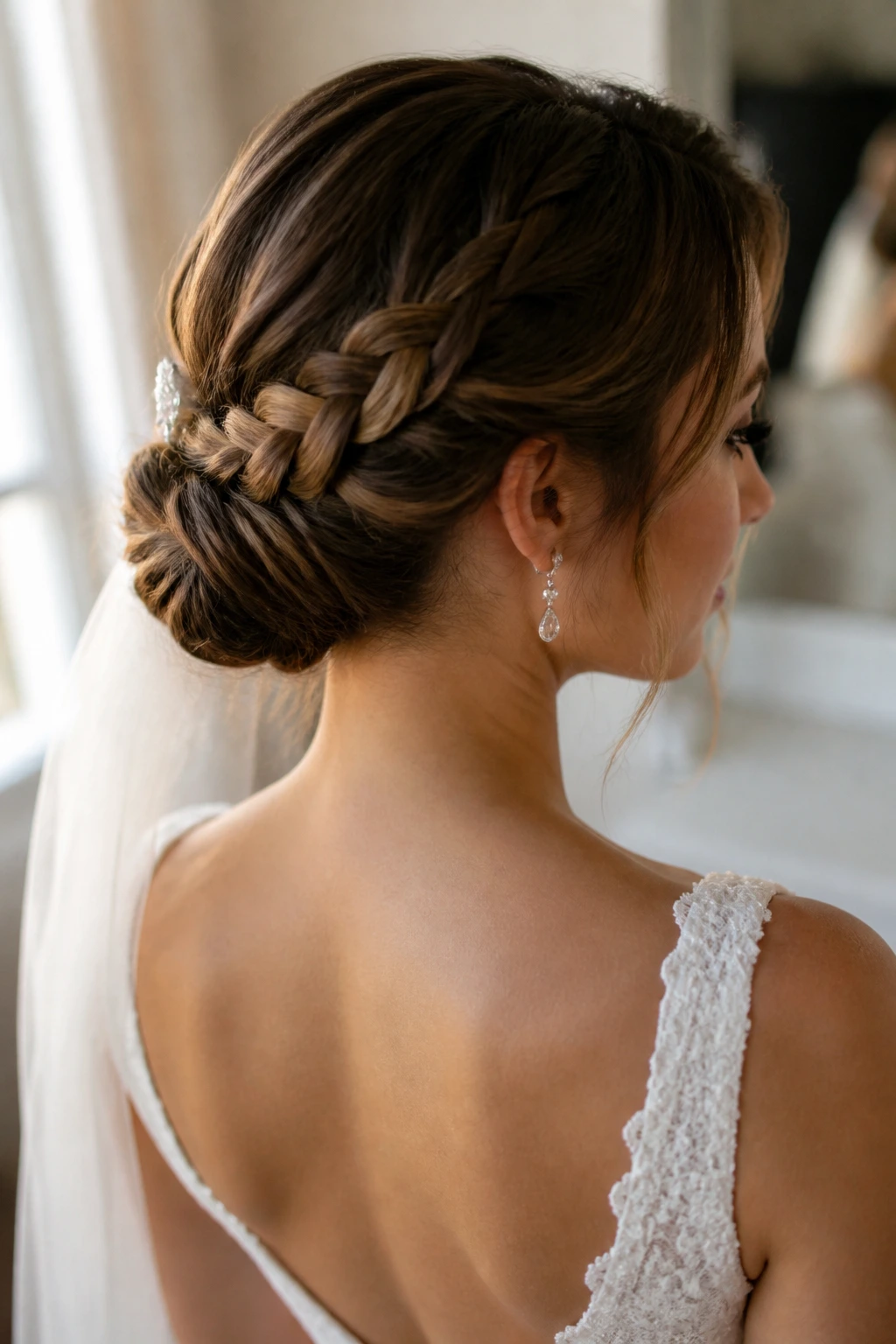
A low braided chignon is the kind of style that looks calm from across the room and more interesting the closer you get. The braid usually starts at the nape, folds under itself, and disappears into a compact bun that sits just below the occipital bone. It’s tidy without looking stiff, which is a nice place to be on a wedding day.
This one shines when the dress has detail at the shoulders or back. The bun stays low enough to leave room for a veil comb, and the braid texture keeps the back from looking flat in photos. A few softly pinned pieces near the ears keep it from feeling too stern.
If you like the idea of classic bridal hair but hate anything that looks helmet-like, this is a safe bet. The braid gives the chignon a little architecture, and the chignon keeps the braid from wandering off.
2. Crown Braid with Soft Ends
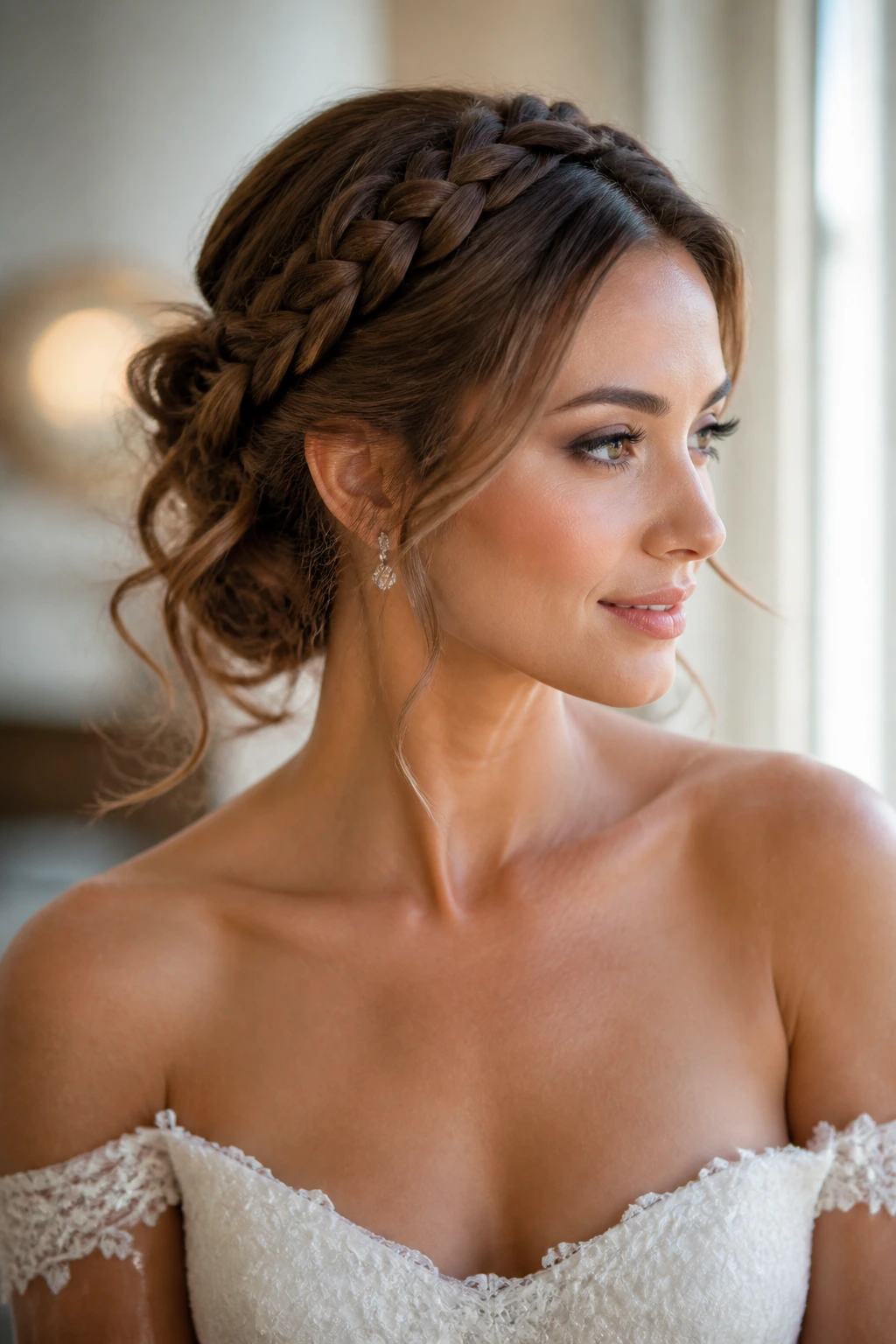
Want the hair off your face without giving up softness? A crown braid does that job beautifully. The braid wraps around the head like a halo, then the ends are tucked, pinned, or left to blend into loose curls at the back.
Best With
- Medium to long hair
- Open necklines
- Floral pins or a small comb
The appeal here is balance. The braid frames the face and keeps the top neat, but the softer ends stop it from feeling too severe. On brides with fine hair, a little backcombing under the braid can make the crown look fuller without adding obvious bulk.
It also works well when you want the veil to sit lower. The braid can live just above the veil comb, leaving enough room so nothing fights for the same patch of scalp. That tiny detail saves a lot of cursing in the chair.
3. French Braid into a Low Bun
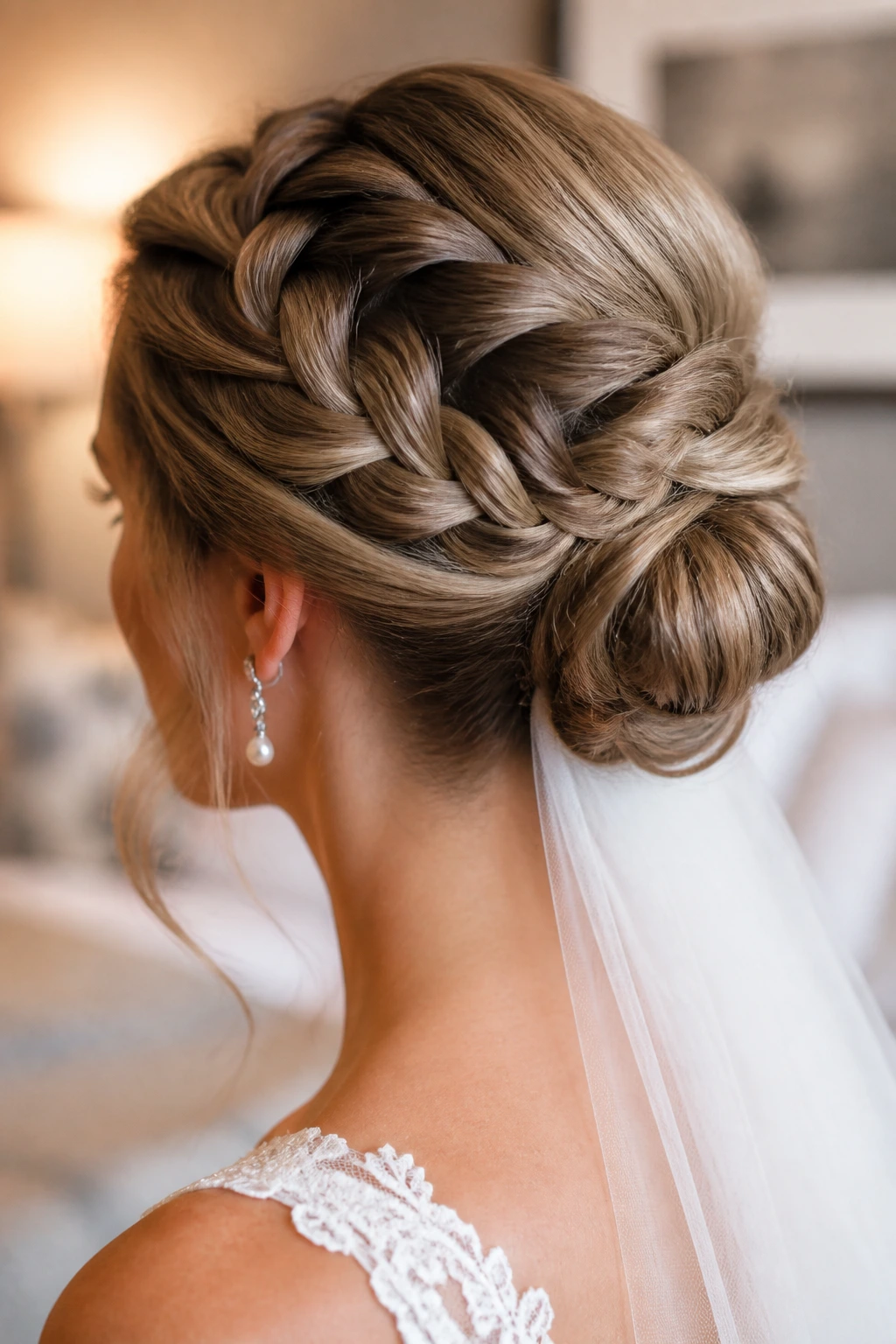
There’s a reason this style never really leaves bridal circles. A French braid that runs from the crown down into a low bun gives you a clean top, a little vertical movement, and a finish that feels deliberate from every angle.
The braid itself acts like a visual path, leading the eye straight to the bun. That makes the back look longer and more elegant, especially on brides with shorter necks or fuller backs on the dress. If the hair is thick, the braid can stay smooth and the bun can stay neat. If the hair is fine, a gentle pancaking of the braid — that little pull on the edges to widen it — creates more visual weight.
This is a good choice when you want the hair to behave. No floating pieces. No drama. Just a style that keeps its shape and lets the dress do its own talking.
4. Side-Swept Fishtail Braid
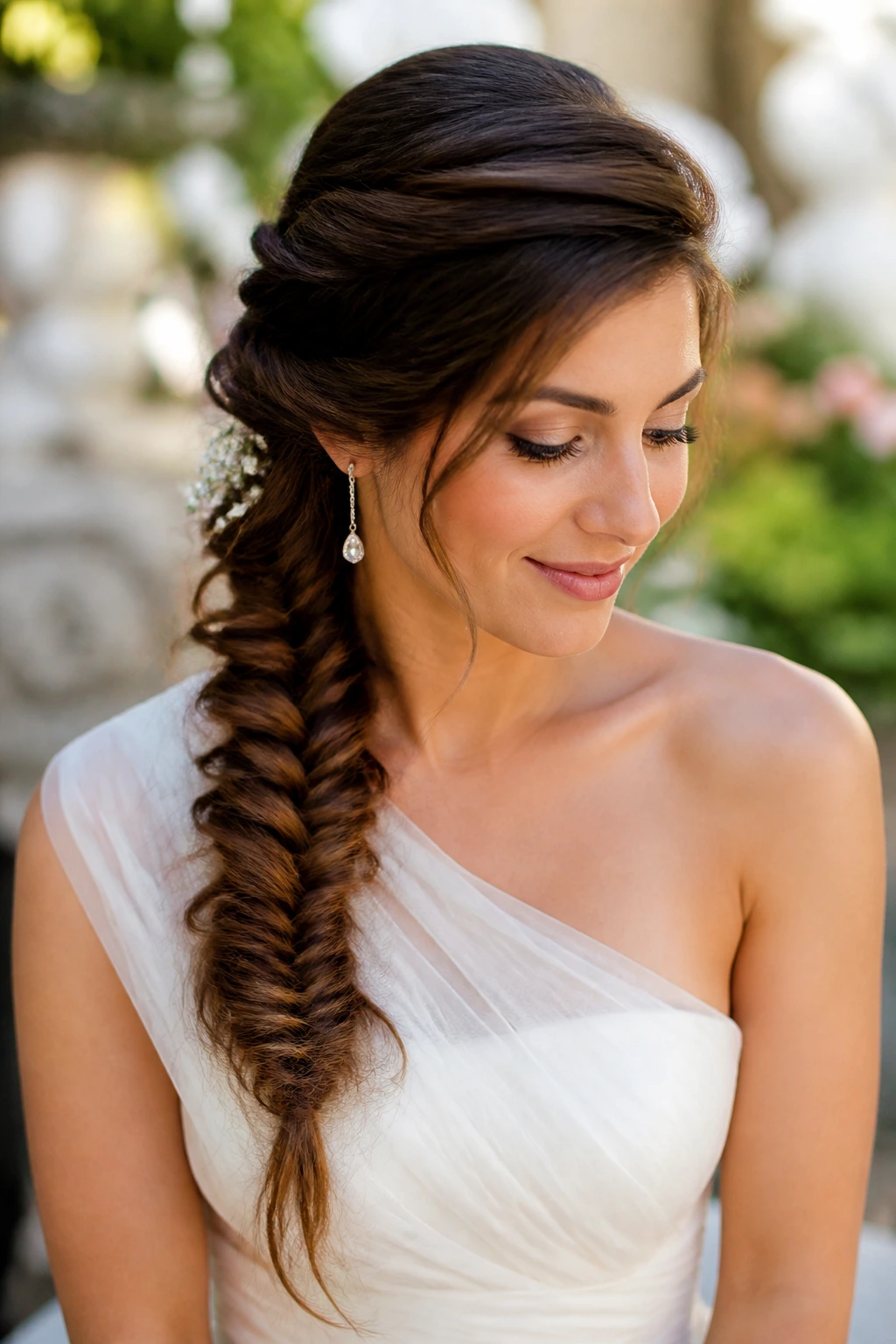
A side fishtail braid has a sharper, more detailed texture than a standard three-strand braid. It looks intricate even when the actual structure is straightforward, which is one reason it photographs so well from the side and back.
The side placement makes it feel softer than a centered braid. One shoulder gets a little more attention, and the style works especially well with asymmetrical gowns or dresses that have one-shoulder draping. If the bride wants a few face-framing pieces, they can be tucked into the front section without breaking the whole shape.
The fishtail itself can be tight and polished or a bit loose and airy. I prefer it just a touch loosened for weddings. Tight fishtails can look too hard, almost rope-like in a way that doesn’t always flatter satin or lace. A softened fishtail keeps the detail but loses the edge.
5. Waterfall Braid Half-Up
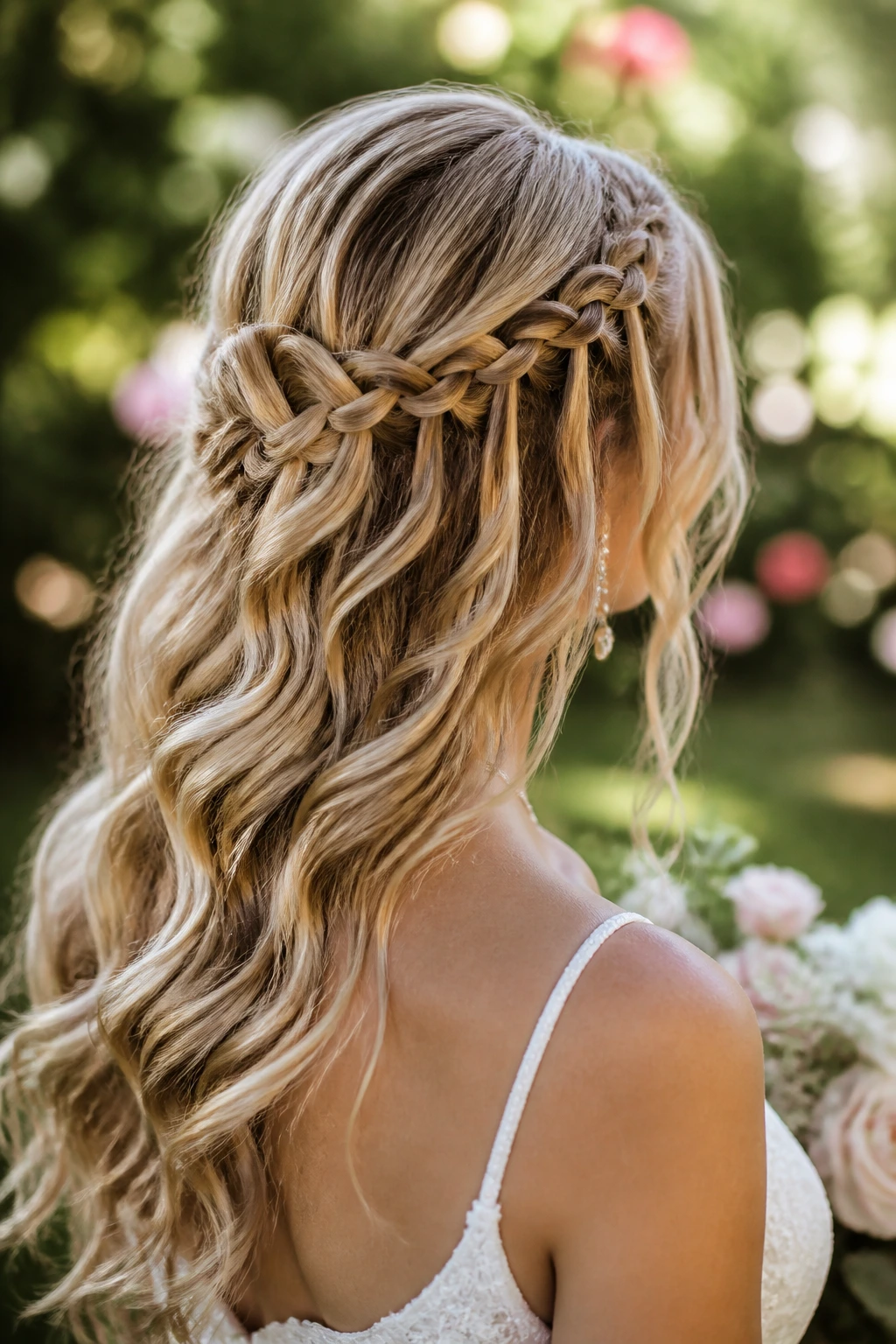
The waterfall braid is for brides who want hair down but not in the way. It lets strands drop through the braid in little arcs, so the style keeps movement while still creating a clear shape across the back of the head.
This is one of those styles that looks delicate but needs a careful hand. The braid itself should sit cleanly at the crown or slightly lower, and the released pieces need enough curl or wave to keep from looking limp. If the hair is pin-straight and heavy, the waterfall effect can disappear fast. A large-barrel iron or a soft bend through the ends helps.
It’s a sweet spot for outdoor ceremonies and lighter dresses. Not too formal. Not too undone. And if you want a veil, the comb usually sits just below the braid line, which keeps the whole thing from getting crowded.
6. Milkmaid Braid Halo
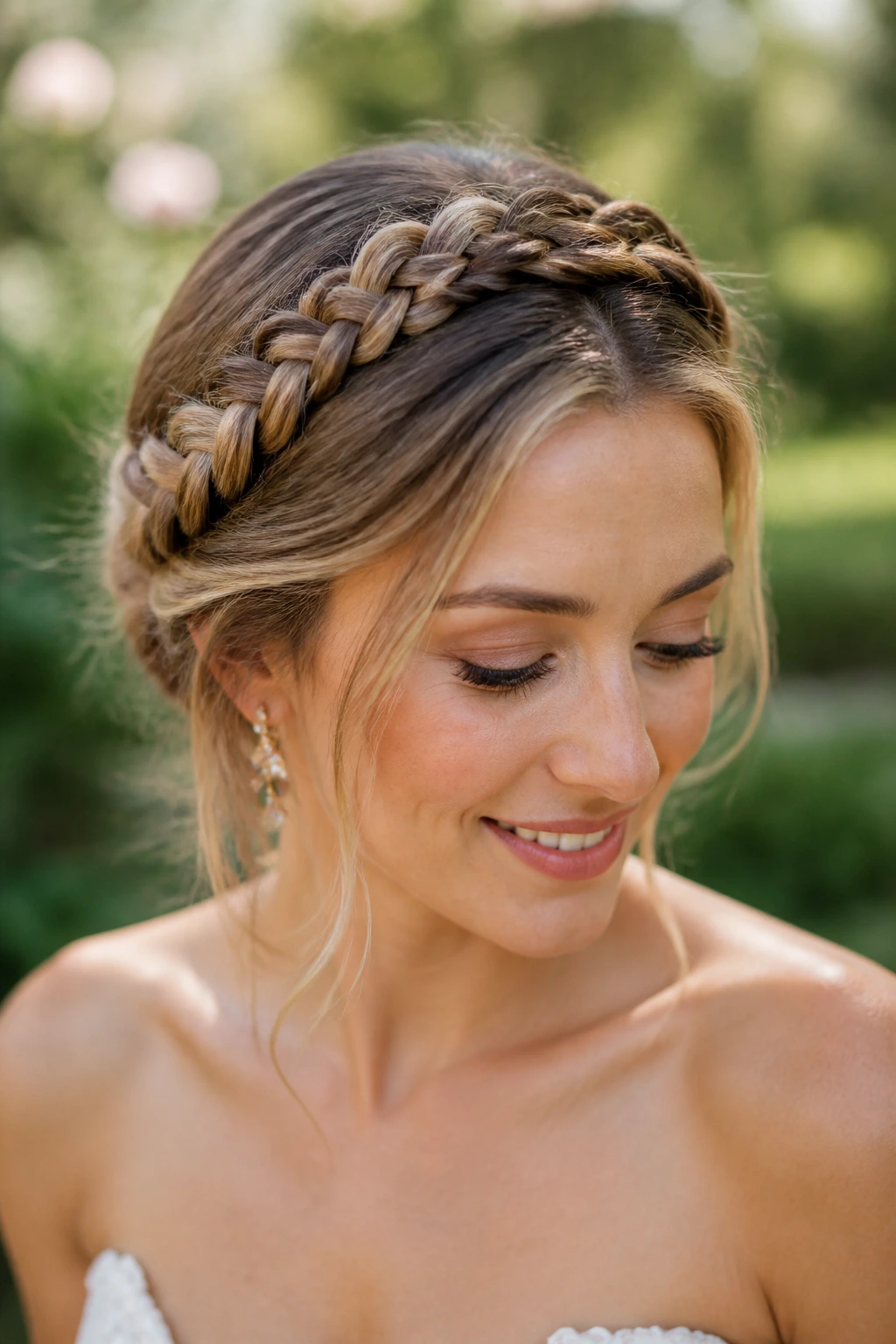
The milkmaid braid halo has a vintage mood without feeling costume-y when it’s done well. Two braids are wrapped across the top of the head and pinned so they sit like a soft frame around the crown.
It’s a strong choice for brides who like the idea of hair completely away from the face. The style opens the cheeks, shows off earrings, and keeps the neckline clean. It also suits gowns with a lot of detail at the bodice because the braid frame doesn’t compete with the dress.
The danger with this look is making it too literal. If the braid is pulled too tight and the center part is too severe, it starts to look rigid. Leave a little softness around the temples, and it lands in bridal territory instead of festival territory. That difference is small on paper. Huge in the mirror.
7. Boho Pull-Through Braid
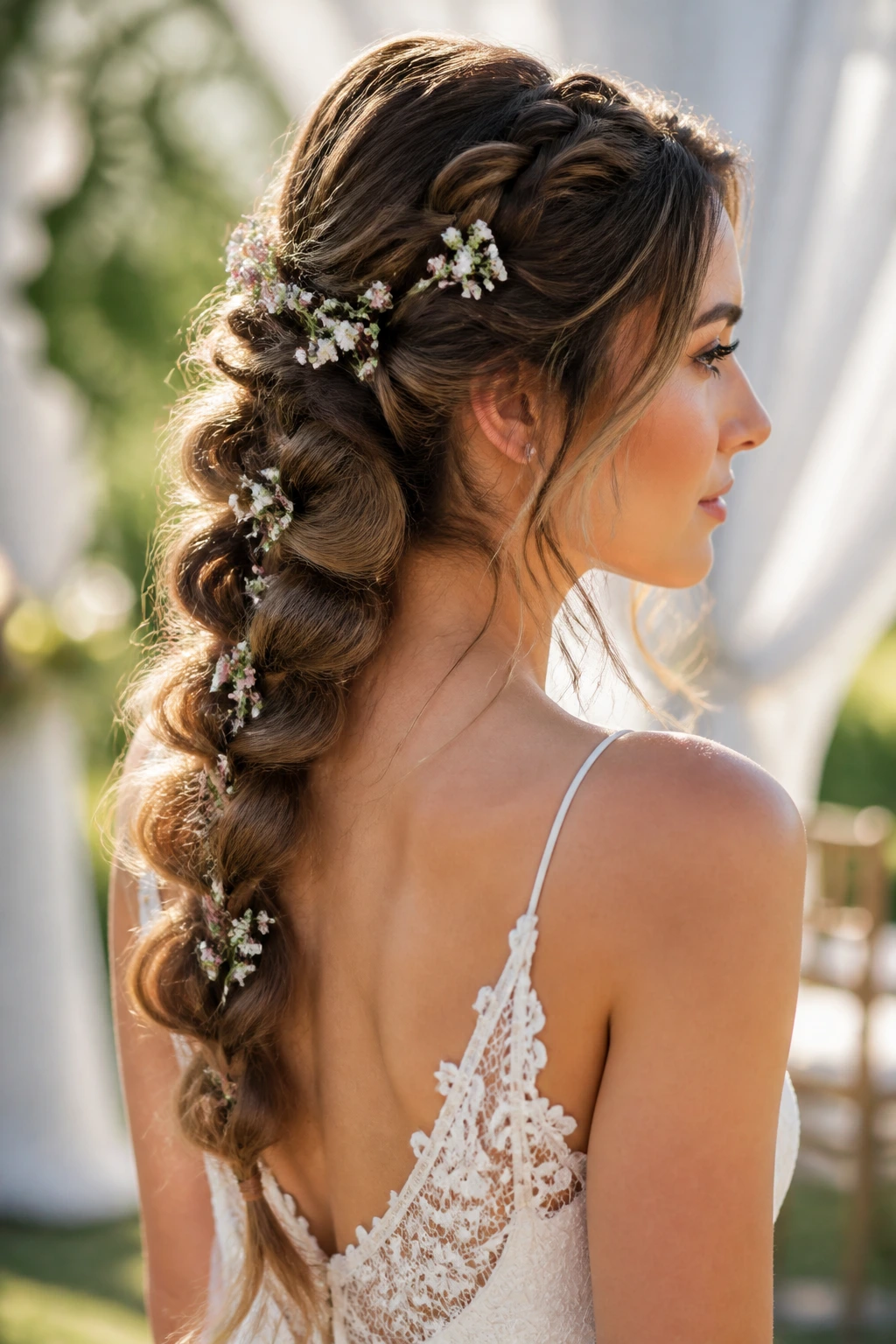
Pull-through braids have that big, airy shape people often want from a braid but can’t get from a standard plait alone. The sections are gathered with small elastics and pulled apart to create chunky loops, which makes the whole braid look fuller and a bit more modern.
For brides, the advantage is volume without requiring absurd amounts of hair. Fine hair can look much denser here. Longer hair can become almost sculptural. Add a few hidden pins and the braid stays in place better than it looks like it should.
Why It Works
The structure is forgiving. If a section loosens slightly, the braid still reads as intentional. That matters when the day runs long and you don’t want to keep checking the back of your head every twenty minutes.
A few tiny flowers or pearl pins can move this style from pretty to bridal fast. Keep the accessories light, though. The braid already has plenty to say.
8. Rope Braid Ponytail
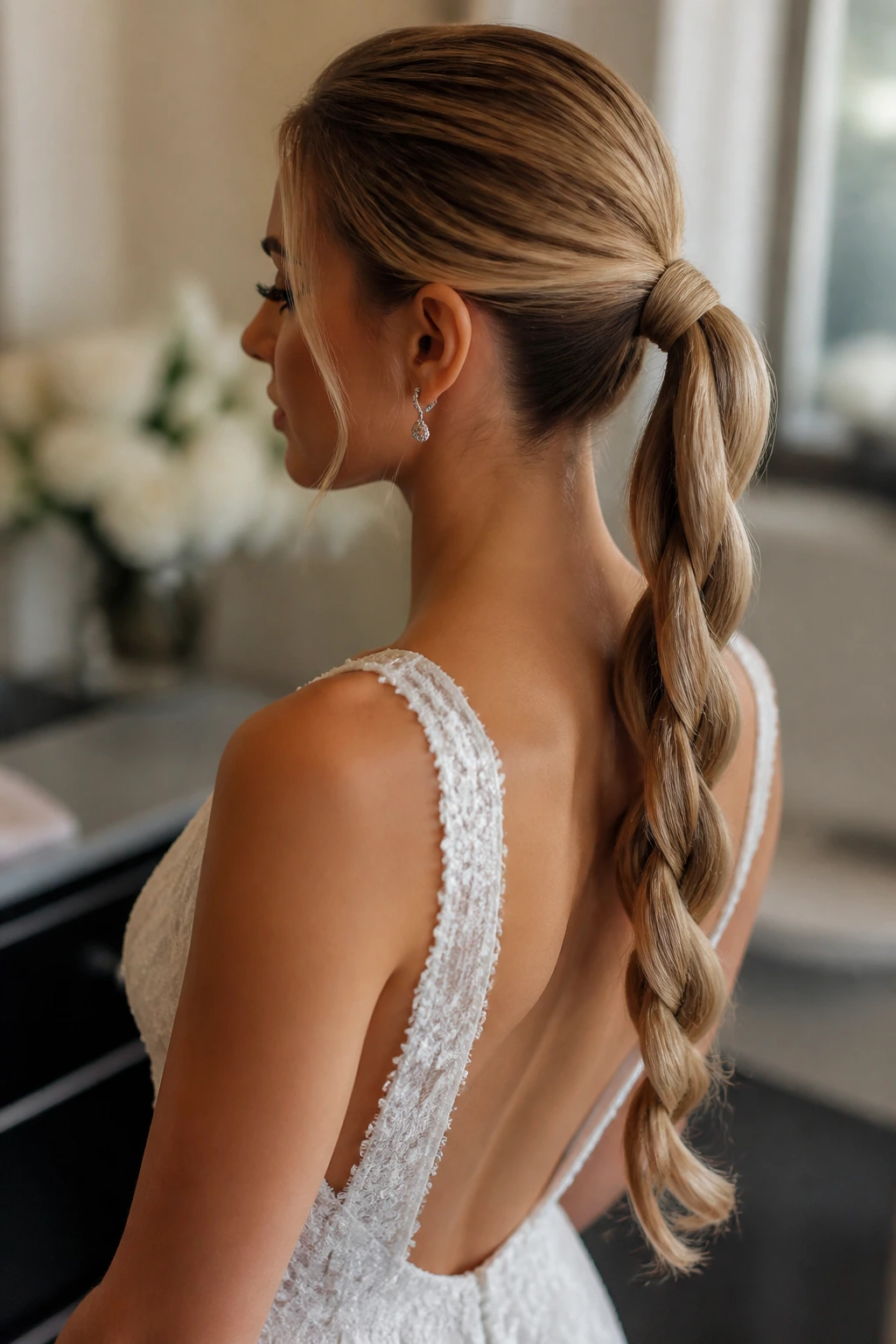
A rope braid ponytail is for the bride who wants clean lines and a bit of shine. Two sections twist around each other instead of crossing in a traditional braid pattern, which gives the style a tight, glossy look.
It’s especially good with sleek gowns, modern silhouettes, and dresses with sharper tailoring. The ponytail keeps the profile long and neat, and the rope twist adds enough texture that the style doesn’t vanish into the back of the dress. If the ponytail sits low, it can feel sophisticated. If it sits a little higher, the look gets more energy.
I like this one for brides who are not interested in a soft, cloudlike updo. It’s tidy, but not dull. And if the hair is very smooth, a light mist of texturizing spray before twisting keeps the sections from sliding apart.
9. Lace Braid with Waves
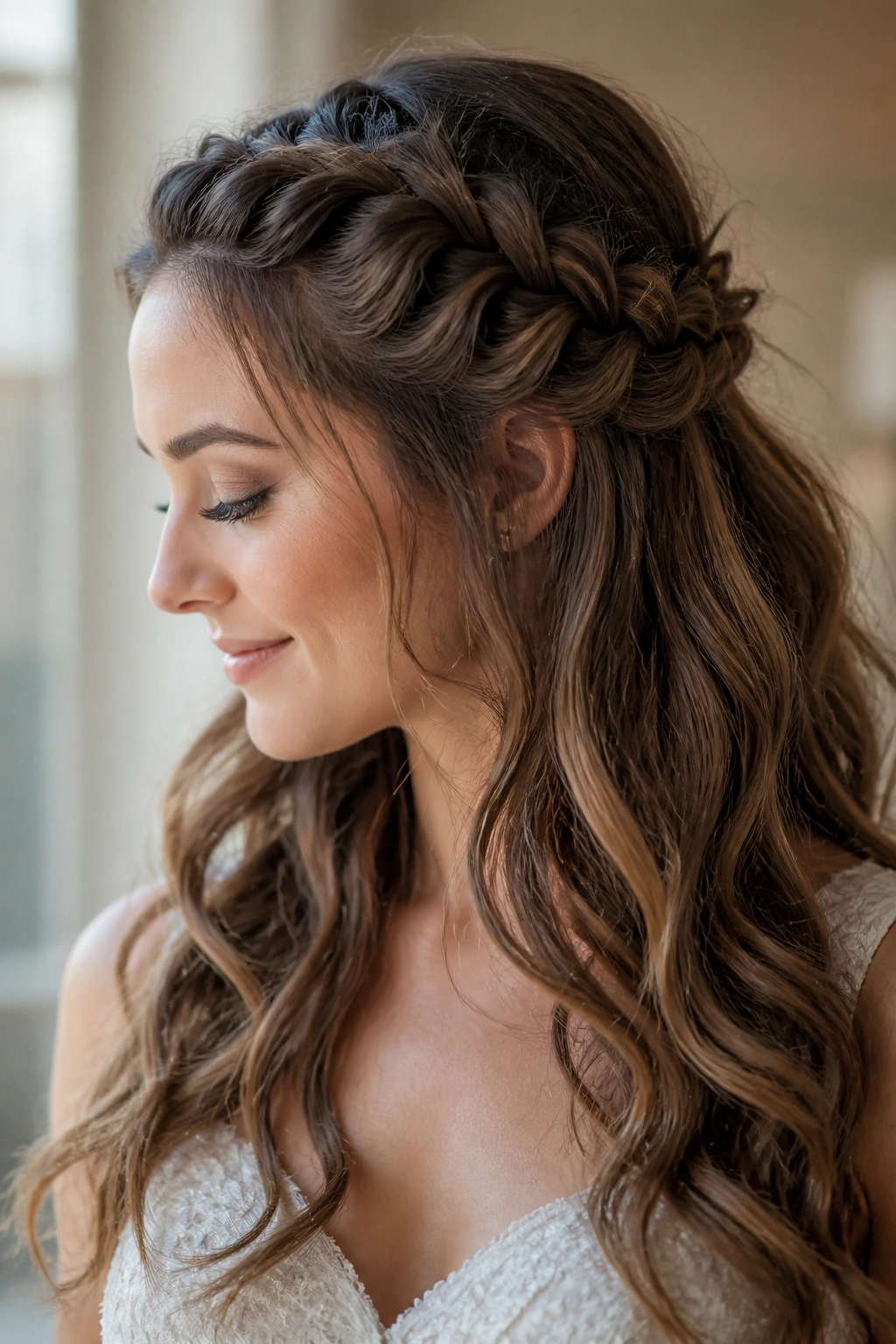
A lace braid is a French braid with one side fed in and the other left free, which creates a braid that hugs the scalp and then drifts into loose texture. On a bride, it feels polished but not locked down.
The braid can start at the temple and travel diagonally toward the back, or it can sit along one side like a soft frame. Either way, it works well with loose waves because the braid gives shape to hair that might otherwise fall a bit too casually. If the dress is simple, the braid becomes one of the main visual details.
This is one of those styles that benefits from a real stylist’s hand. The parting needs to be clean. The braid tension needs to be even. And the waves should start below the braid, not right at the roots, or the whole thing turns fuzzy.
10. Braided Updo with Face-Framing Pieces
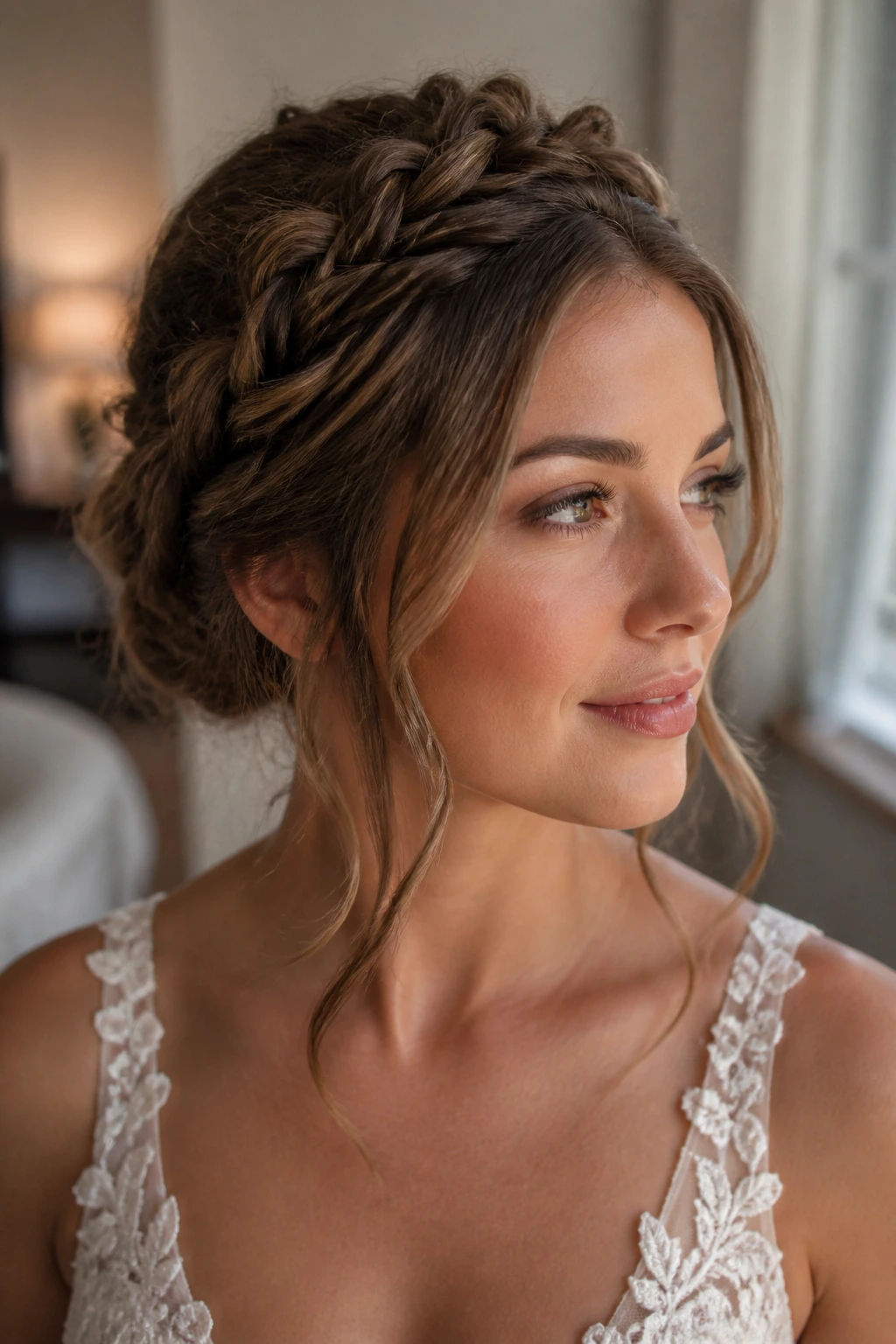
A braided updo with face-framing pieces is less one braid than a small network of them. Tiny braids get folded into an updo, then a couple of loose strands are left near the face to keep the style from feeling too severe.
That little bit of softness makes a difference. Without it, the style can skew formal in a hard way. With it, you get movement around the cheeks and jawline, which is often where brides want the most softness in photos. If the updo sits at the nape, the braids can wrap around it like trim. If it sits a little higher, the shape feels more sculpted.
This is a strong fit for veils that come off after the ceremony. The updo stays in place on its own, and the loose front pieces can be touched up with a curling iron in seconds if they drop flat.
11. Dutch Braid Pigtails Merged at the Back
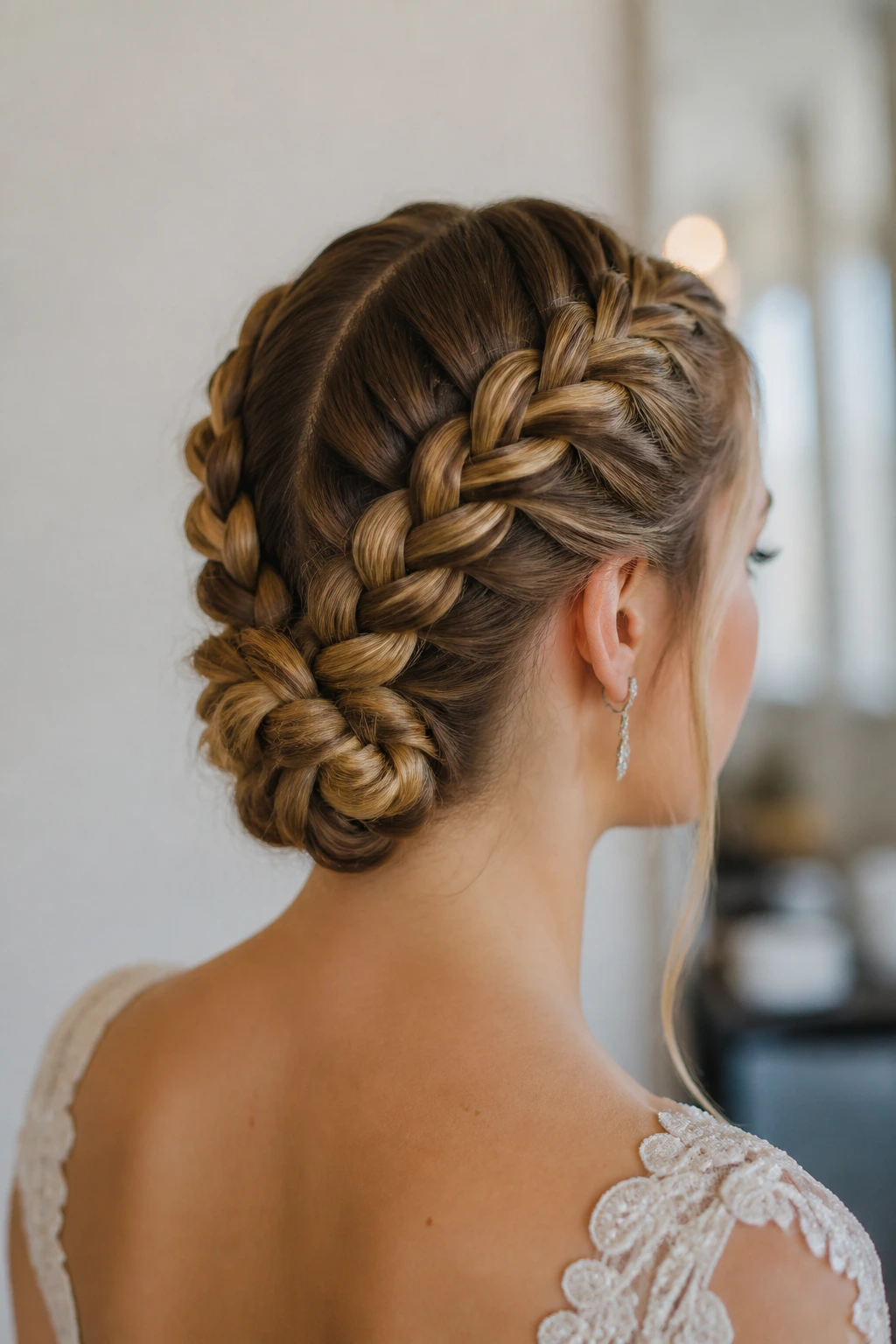
This sounds playful, and it can be, but it doesn’t have to read childish. Two Dutch braids start at the front or temples, run along the head, and meet at the back where they’re tucked into a knot, bun, or wrapped finish.
The raised braid pattern gives the style depth. That’s the main win here. Dutch braids sit on top of the hair instead of sinking into it, so the texture stays visible even from a distance. On thick hair, the result feels substantial. On finer hair, it creates the illusion of density.
The trick is to keep the parting sharp and the merge point clean. If the braids are loose and the ends are messy, the style can lose its bridal edge fast. Keep the front polished, then soften the back if you want movement.
12. Braided Mohawk Bun
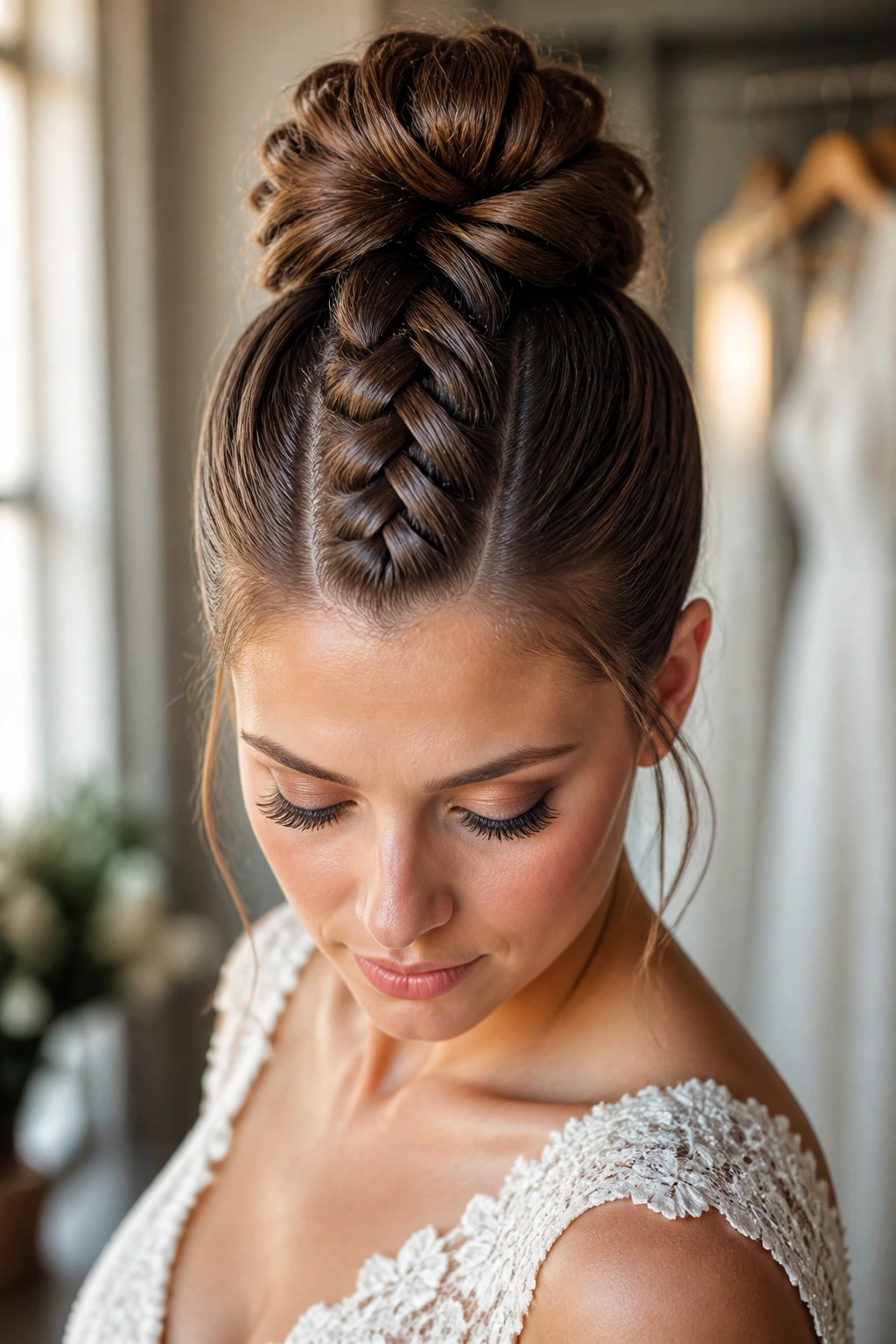
A braided mohawk bun is for brides who want a little attitude in the silhouette. The sides are smoothed or pinned close to the head, while the center braid rises from forehead to crown and then gathers into a bun.
The shape is dramatic in the right way. It elongates the face, opens the sides, and leaves room for statement earrings. It also works nicely with dresses that have a little edge — a square neckline, a clean sheath, or anything that doesn’t want a sugary hairstyle hovering over it.
One quiet advantage: the center braid gives the bun a solid anchor. That means less sagging after a long day. If the hair is very thick, the braid can be built with a bit of tension. If it’s fine, a little padding under the mohawk section makes the shape look fuller without showing the tricks.
13. Four-Strand Side Braid
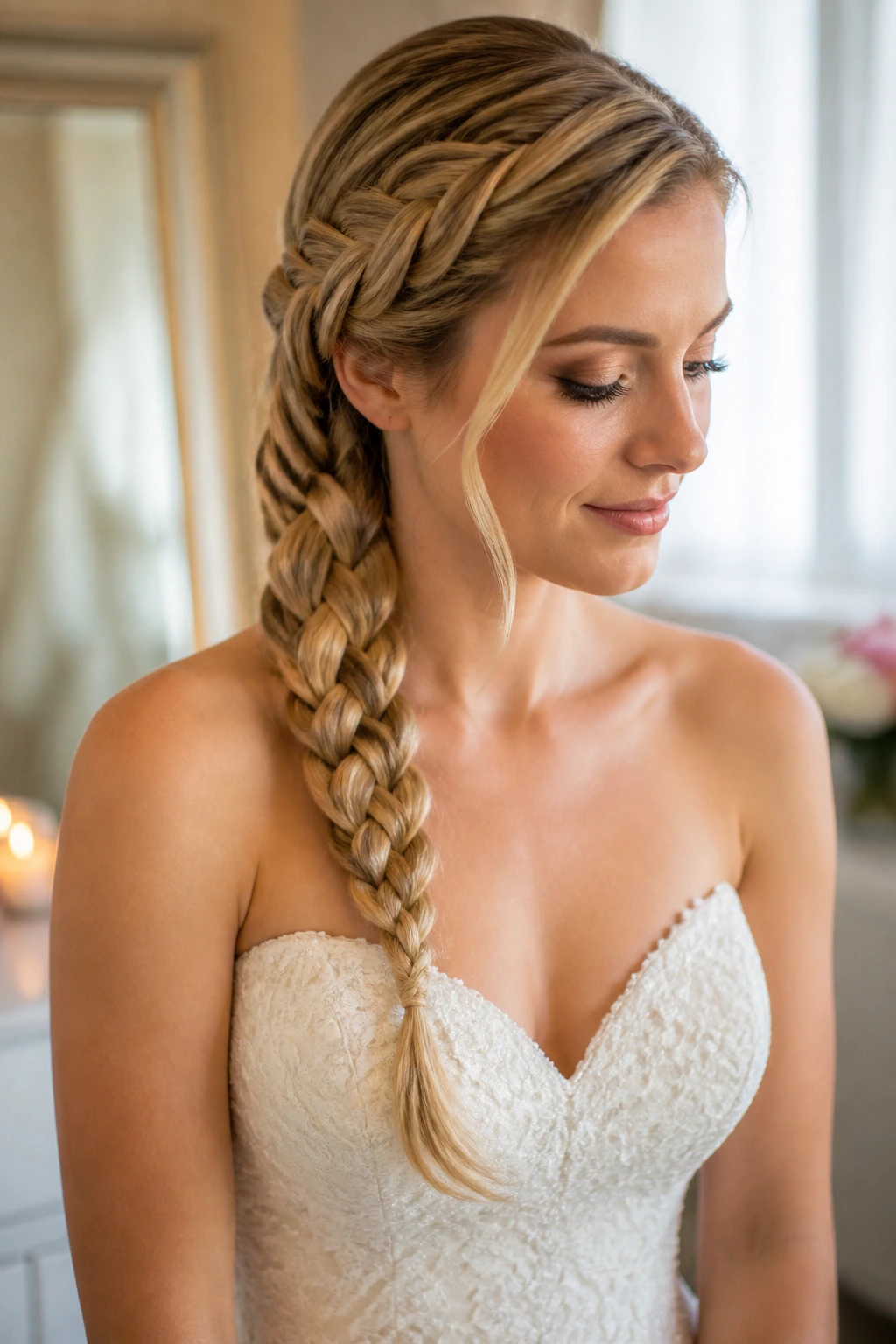
A four-strand braid has more visible pattern than the standard three-strand version, which makes it a lovely choice when the gown is simple and the hair needs to do some visual work. The braid looks woven, almost braided ribbon-like, with a flatter, more tailored surface.
Worn over one shoulder, it can feel formal without being stiff. It also plays well with long earrings and open necklines, because the braid becomes a visible line that leads the eye downward. If the braid is pancaked a little, the sections spread out and the pattern becomes easier to see.
The one catch is execution. A four-strand braid looks neat only when the tension is even. If one section pulls looser than the others, the whole thing can look uneven. During a trial, that’s the point to test: how much volume you want, and how much precision the braid can hold.
14. Accent Braid on a Sleek Low Ponytail
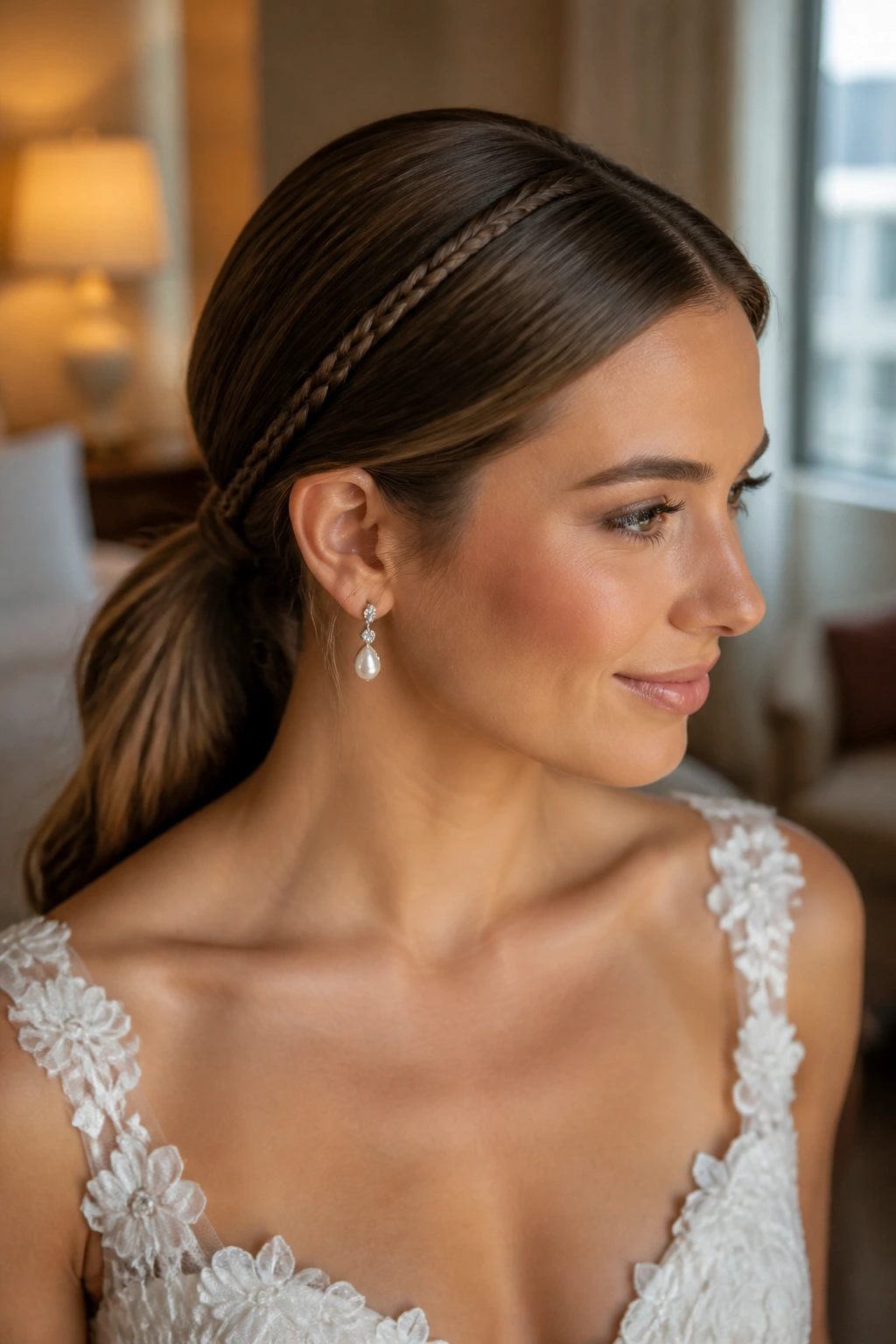
Sometimes the smartest bridal braid is the small one. An accent braid can run along the hairline, wrap the base of a low ponytail, or sit as a slim detail on one side of otherwise smooth hair.
That tiny braid changes the whole feeling of the style. A low ponytail by itself can look almost too simple for a wedding. Add one braid, and it becomes intentional. Add a second braid or a twisted wrap, and the look starts to feel custom without becoming busy.
This is a strong pick for brides who want their dress, makeup, and jewelry to stay in charge. The hair supports the outfit rather than competing with it. That’s not a compromise. It’s restraint, and restraint often ages better in photos than a style trying too hard to be the star.
15. Mermaid Braid
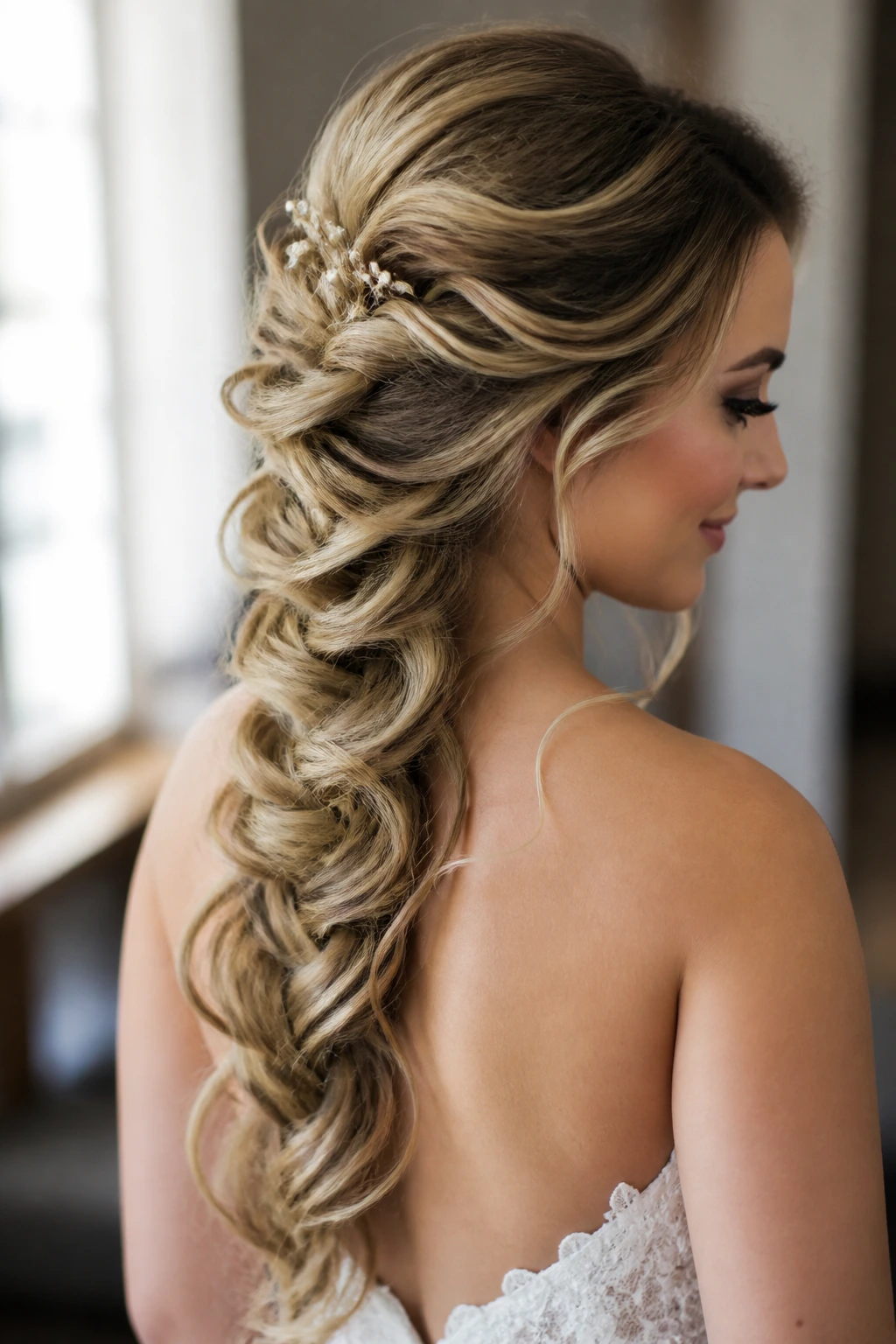
A mermaid braid is a big, loose braid with lots of body, usually created by teasing the sections a bit before weaving them together. The result looks thick and soft, almost like the braid has its own built-in cushion.
It’s especially nice on brides with long hair because the braid can stretch down the back like a feature, not a footnote. The pattern reads from a distance, which helps in large venues where smaller details can disappear. If you’re wearing a backless dress, the mermaid braid gives you something substantial to look at from behind.
This style does need holding power. A strong base, texture spray, and hidden pins at the top help keep it from sliding loose. Otherwise, the pretty oversized shape can flatten halfway through the reception, and nobody wants that. A little grip goes a long way here.
16. Halo Braid Updo
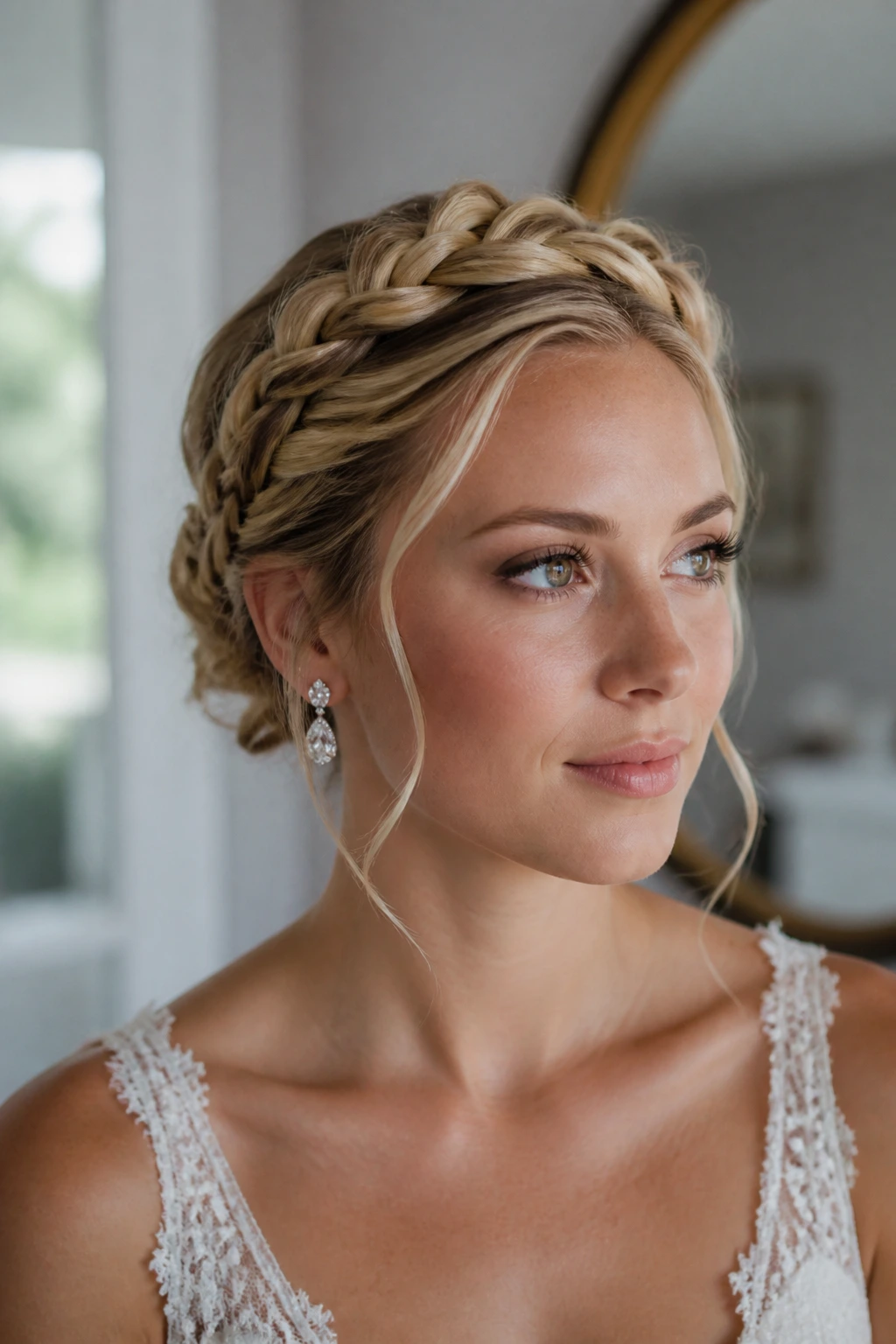
The halo braid updo wraps the braid around the head, then tucks the remaining length into a concealed updo rather than leaving the ends loose. That makes it feel more refined than a simple crown braid.
It works well when the bride wants the face completely open but still wants hair to read as a major part of the look. The halo shape draws attention to the eyes and cheekbones. It also gives a nice frame for earrings, especially if the gown has a bare neckline or an open shoulder line.
A useful detail
The braid should sit close enough to the hairline to look intentional, but not so close that it crowds the forehead. That gap matters. Too high, and the style feels like a headband. Too low, and the halo loses its shape.
17. Twisted Braid Bun
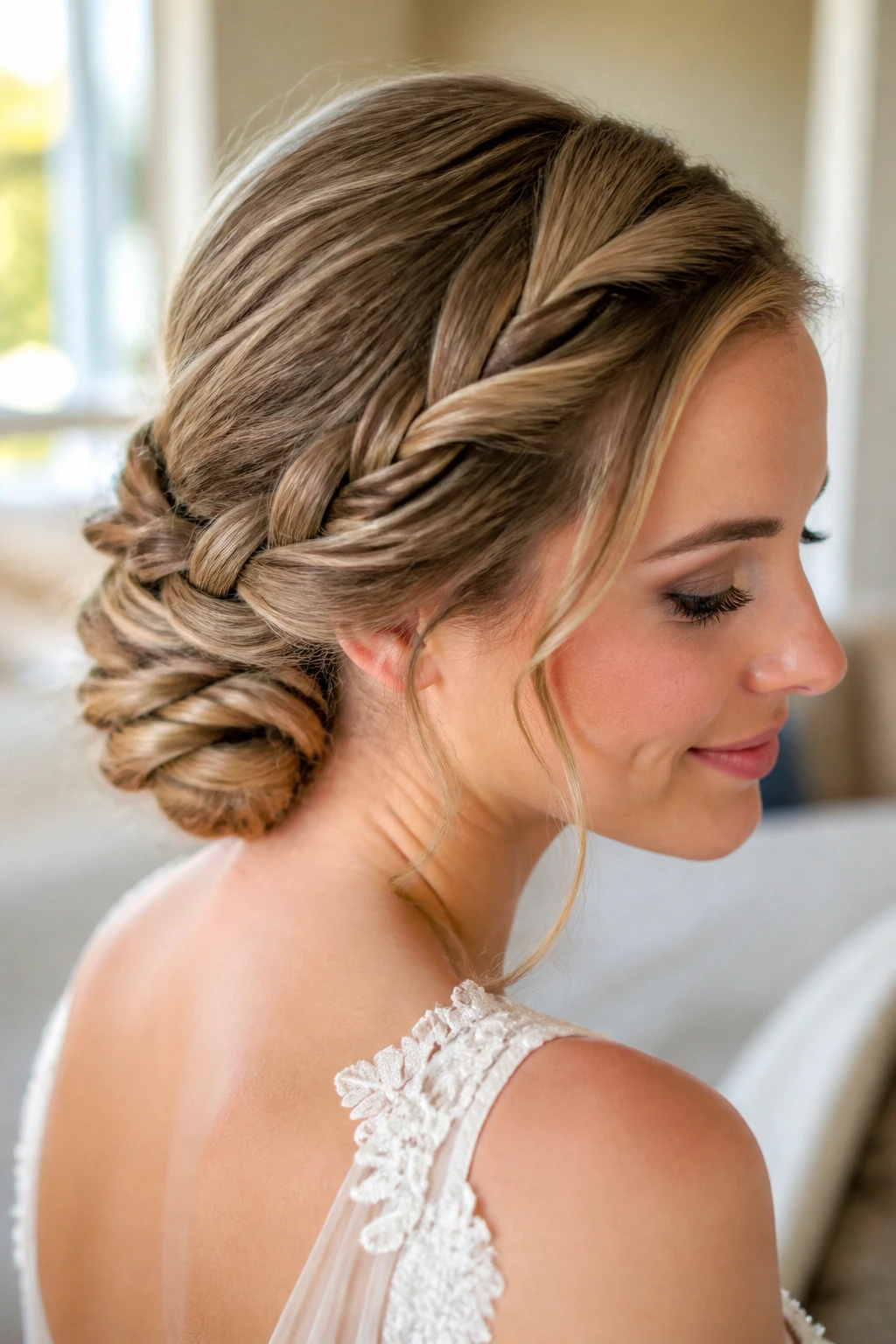
A twisted braid bun mixes rope-like sections with braided pieces, which gives the finished bun a slightly softer edge than a straight braided chignon. It feels detailed without becoming fussy.
The best versions keep the twist and braid visible in the outer layers while the inside stays neat and pinned. That contrast matters. If every inch is overworked, the bun can start to look like a nest. A little clean spacing between the sections makes the texture easier to read and keeps the shape from becoming heavy.
Brides who like classic updos but want something less plain usually land here. It’s formal enough for a black-tie venue, but the texture keeps it from looking like a generic bun from a salon menu. That alone is worth a lot.
18. Bubble Braid with a Braided Base
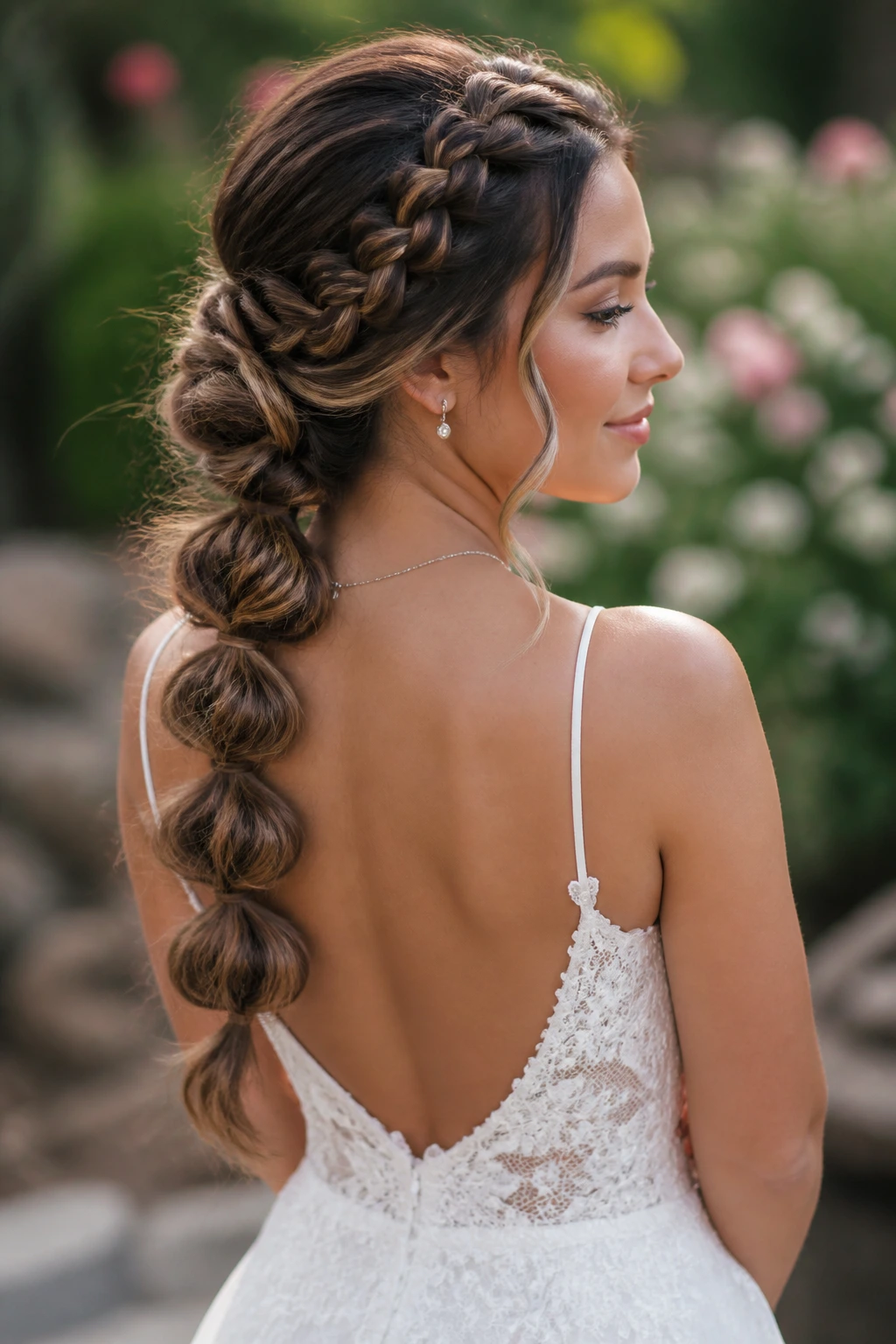
A bubble braid feels playful at first glance, but it can be very bridal if the base is controlled and the sections are evenly spaced. The hair is tied at intervals, then gently puffed out between elastics to create rounded bubbles.
The braided base matters because it gives the style a more finished start near the crown or nape. Without that, the bubbles can feel too casual. With it, the braid-to-bubble transition looks deliberate and a bit sculptural. Pearls or tiny crystal pins can sit between the bubbles if you want extra shine.
This style is especially handy when the bride wants length to show. It keeps long hair visible from top to bottom, which is a nice counterpoint to a dress with simpler lines. The look travels well too. Once it’s built correctly, the bubbles hold shape better than loose waves.
19. Infinity Braid Accent
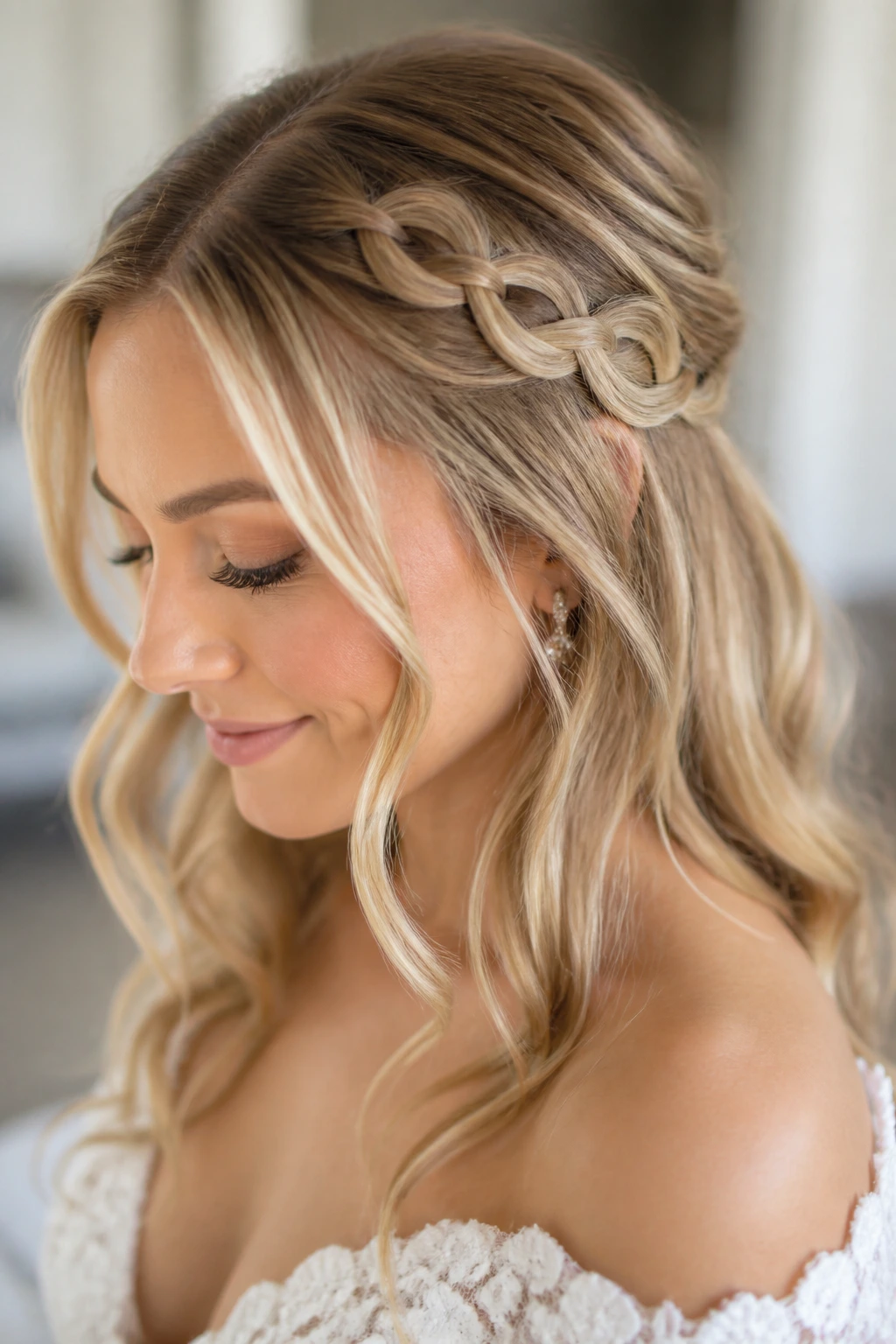
An infinity braid is one of those patterns people notice because it looks more complicated than it is. The braid loops in a figure-eight pattern, creating a little architectural detail that can sit along the side of the head or as a band through a larger style.
For brides, it works best as an accent rather than the whole style. A single infinity braid pinned into loose waves or a low bun gives the hair a custom feel. It’s a nice choice when you want one memorable detail without crowding the whole head with texture.
The pattern is clean and elegant when the strands are evenly tensioned. If one loop gets too tight, the braid loses the rhythm that makes it interesting. During a trial, that’s the thing to watch: the loops should look smooth, not squeezed.
20. Braided Gibson Tuck
A Gibson tuck already has that soft vintage shape where the hair folds under itself at the nape. Add braiding to the front or sides, and the style becomes richer without losing its gentle curve.
This is a lovely option for brides who want an old-fashioned note without leaning into costume. The braid can run from the temples back to the tuck, or it can sit just above the roll to create a little band of detail. Either way, the final shape stays low and elegant, which means it works well with veils that need a sturdy anchor point.
The tuck also keeps the neck open. That matters with higher necklines and dresses with lace or beading at the collar. The hair supports the dress instead of fighting it. A nice exchange.
21. Messy Side Braid with Flowers
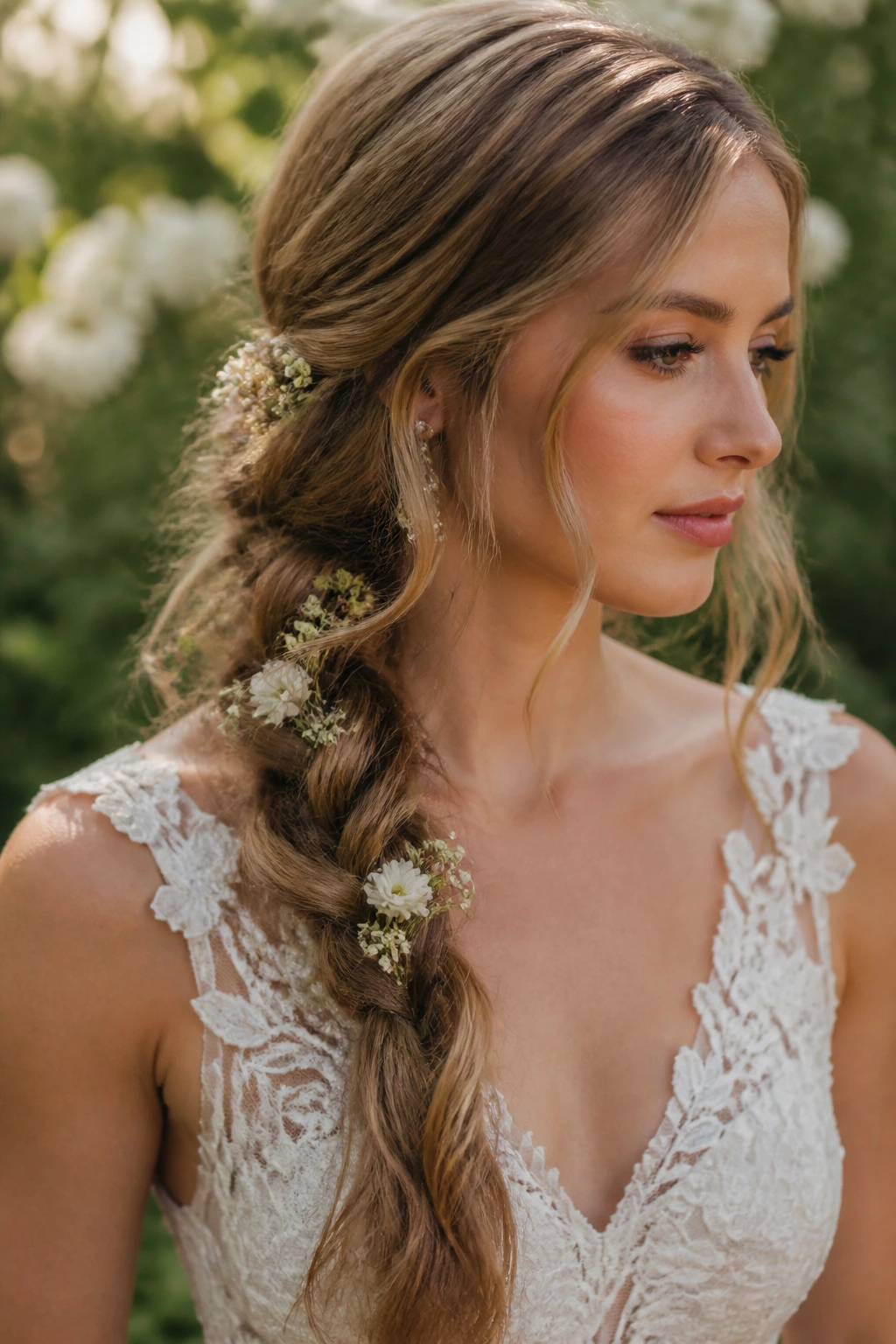
A messy side braid can look ethereal when it’s controlled enough to avoid chaos. The braid starts over one shoulder, is loosened slightly, and is finished with small flowers tucked into the outer loops.
The flowers should not be random. That’s the key. A few tiny blooms, usually clustered near the top or woven through the midsection, work better than scattering blossoms everywhere. Too many and the braid stops reading as hair. Too few and they look lost.
This style fits outdoor ceremonies, garden venues, and dresses that already have a soft hand. It also flatters hair with natural wave because the braid and the texture can blend rather than compete. If the hair is very sleek, some pre-wave or bend helps keep the braid from looking too flat against the flowers.
22. Braided Half-Crown with Veil
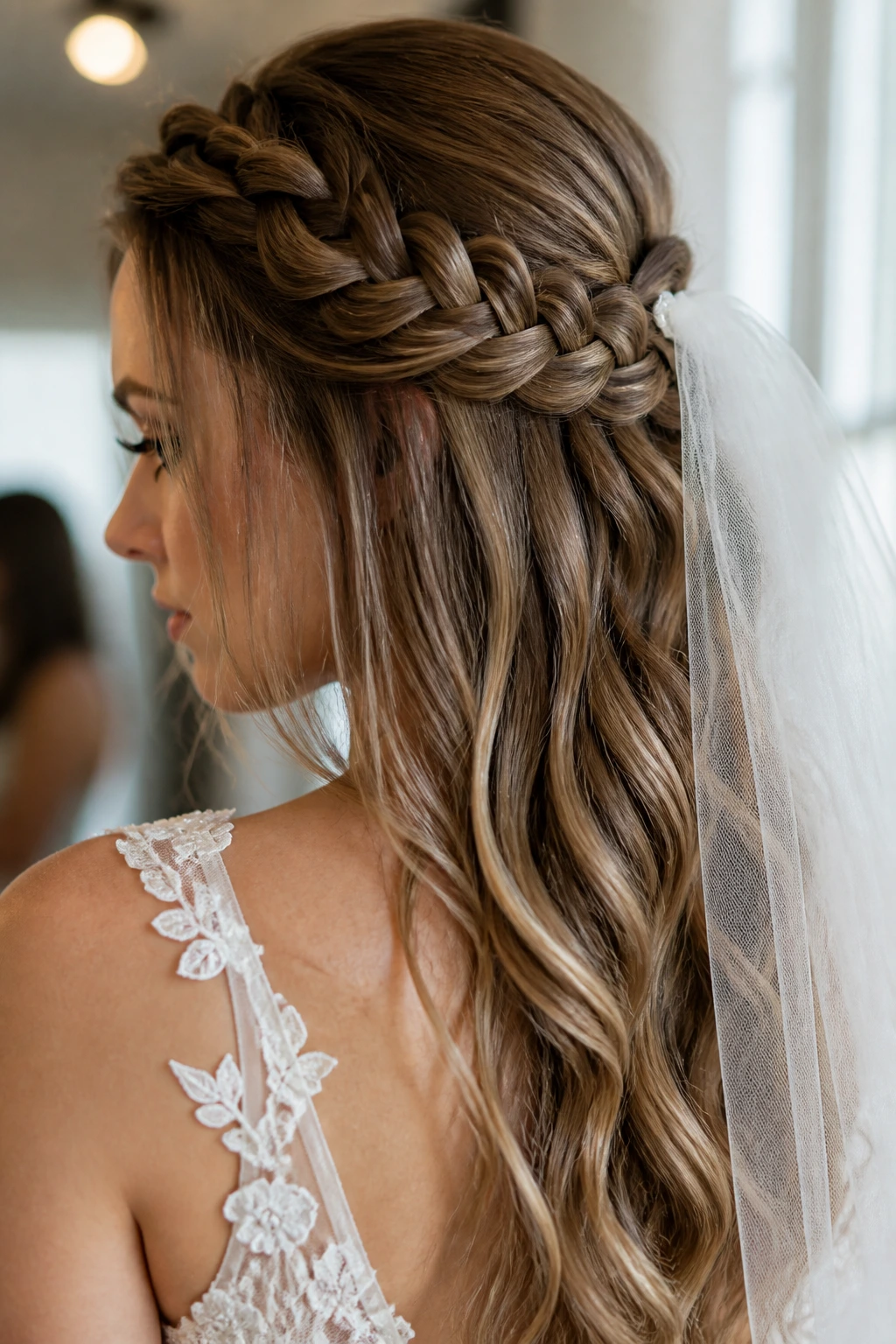
A half-crown braid frames the top and sides of the head without fully circling it. That leaves the back open for loose hair, a bun, or a veil comb placed lower where it won’t clash with the braid.
The benefit is shape without total coverage. The braid pulls the eye upward and around the face, but the style still leaves enough open area to show length. Brides who want a veil often like this because the crown section stays clear while the back can hold the comb securely.
This one works especially well when the dress has a busy neckline. The braid gives structure above, the veil adds softness behind, and the whole look stays balanced. It’s a careful style. Not fussy. Just careful.
23. Pull-Through Braid Chignon
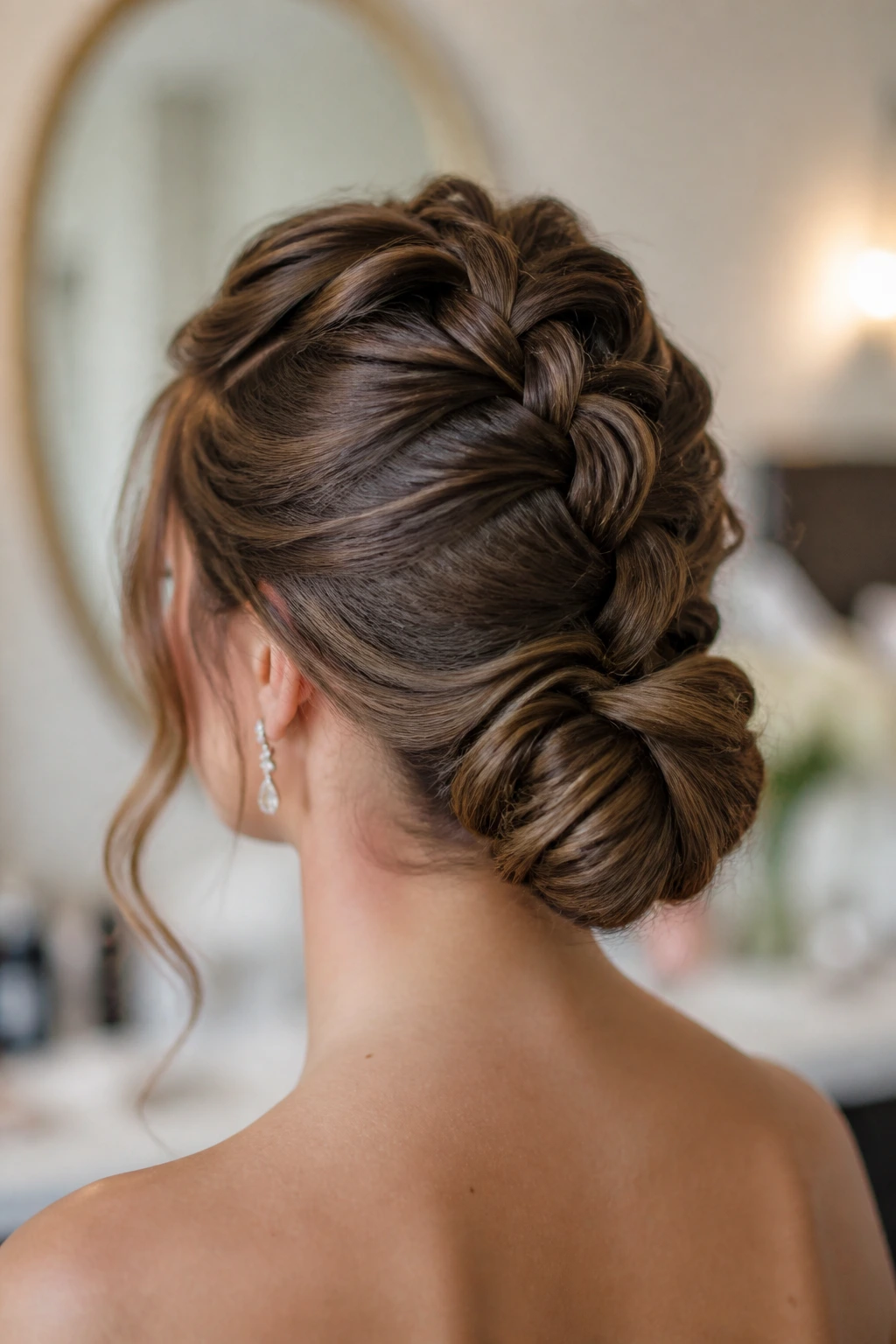
A pull-through braid chignon takes the fullness of a pull-through braid and tucks it into a low, shaped bun at the nape. It’s a smart choice when you want the braid texture to be visible but the overall silhouette to stay compact.
The braid can run from the crown to the nape, then fold into the chignon like a ribbon. Because the braid is built with small elastics, it usually stays more stable than a loose woven plait. That makes it a practical bride style when the day is long and the weather is not doing anyone any favors.
It looks especially good with gowns that have texture in the fabric — lace, embroidered tulle, or anything with layers. The braid gives the eye more to read, while the bun keeps the neck line clean.
24. Cornrow-Inspired Bridal Detail
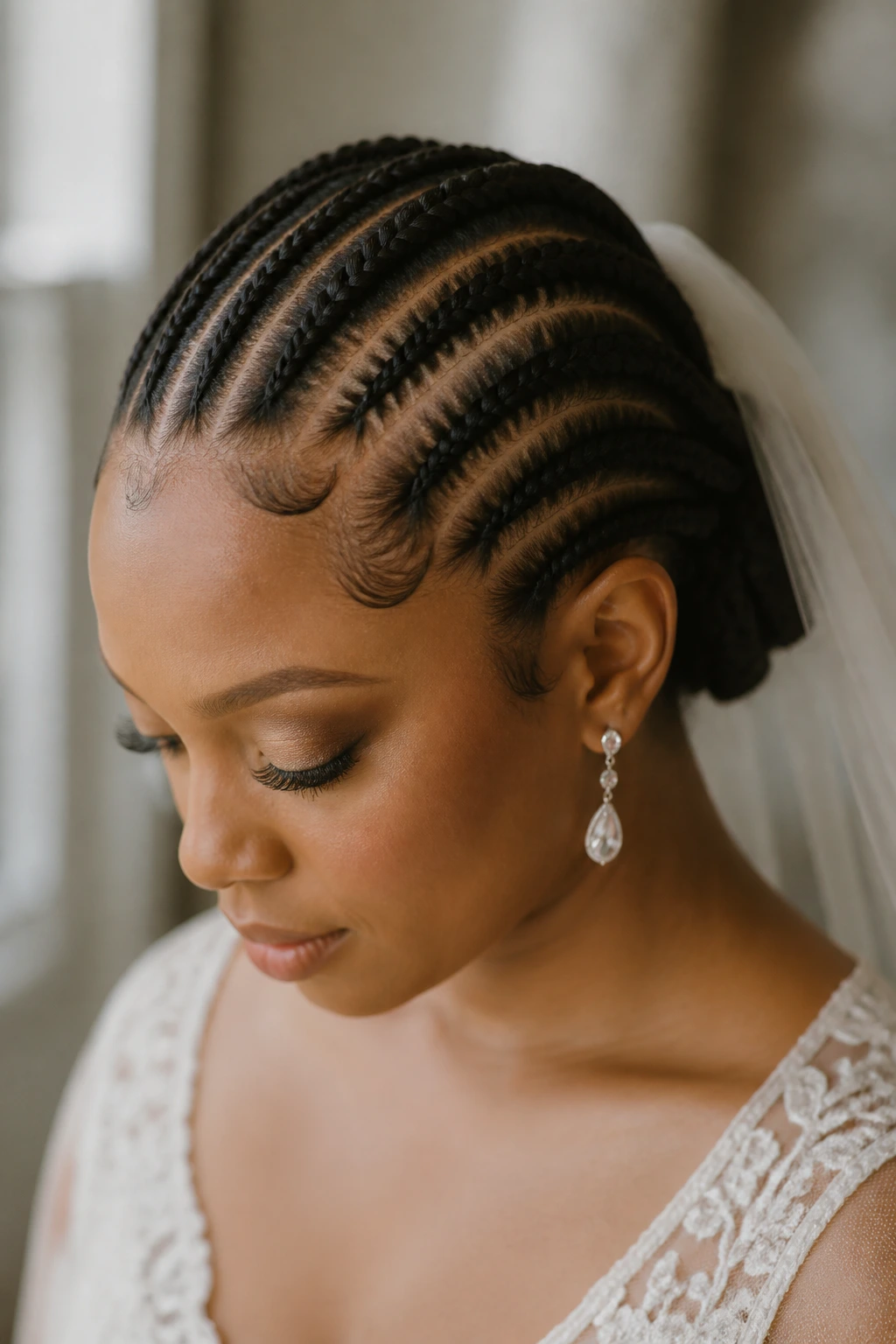
When handled with care, cornrow-inspired detail can be one of the cleanest bridal looks around. Think neat parting, controlled braiding close to the scalp, and a finish that stays elegant rather than busy.
This style is especially strong on natural coils and curls because it respects the hair’s texture instead of forcing it into something else. The braid lines can lead into a bun, ponytail, or loose curly length depending on the bride’s preference. A skilled hand matters here. Parting precision, even tension, and clean edges make the difference between polished and rushed.
If you’re considering this kind of braid pattern, the trial run matters even more than usual. You want to see how the braids sit against the dress, where the veil comb will go, and whether the style still feels like you from the front. It should. That’s the point.
25. Side Waterfall into a Low Knot
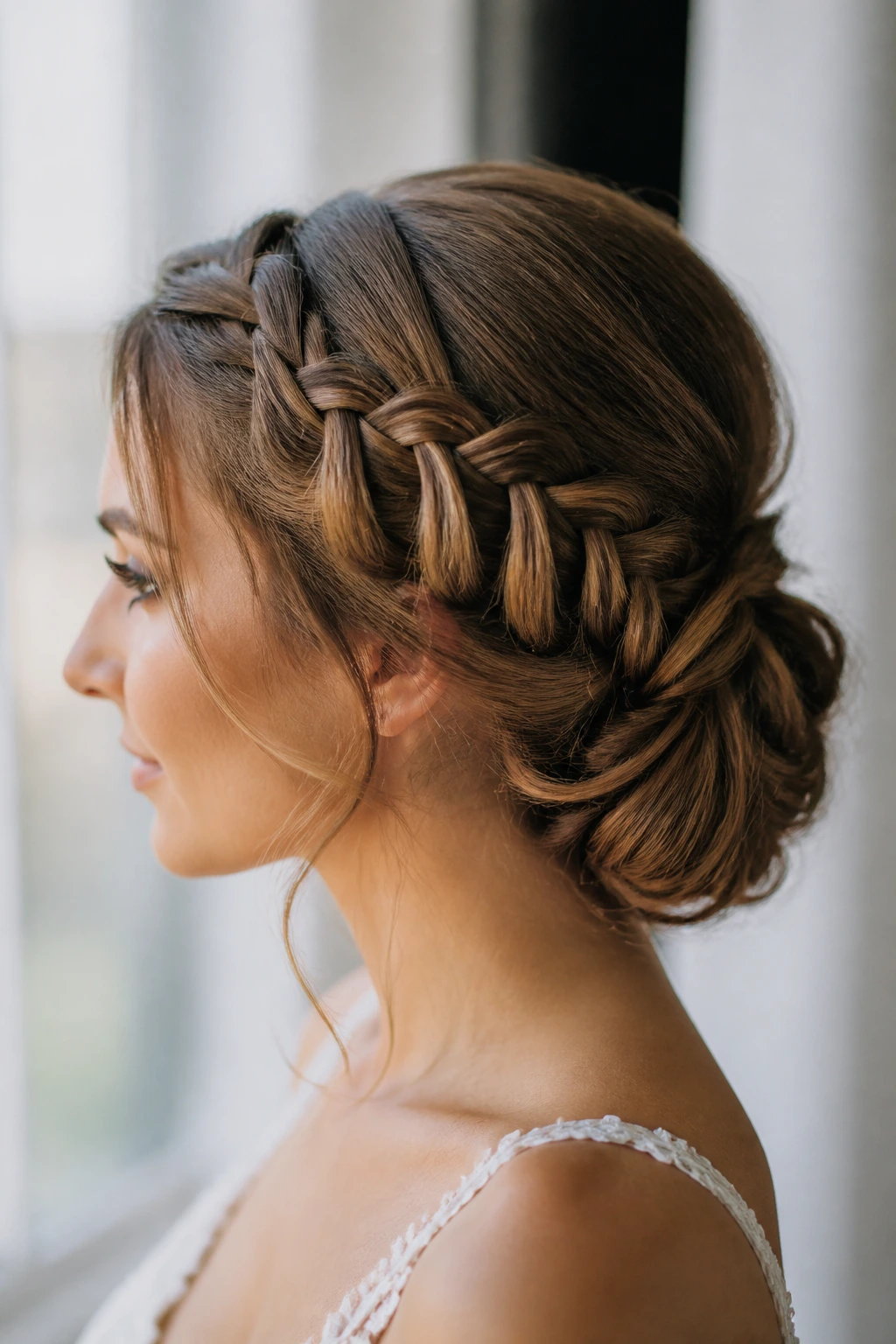
A side waterfall braid that drifts into a low knot gives you movement at the front and control at the back. The braid opens the hair near one temple, then the rest of the hair gathers into a knot that stays tucked and composed.
This is a smart bridge between loose and structured. Brides who can’t decide between wearing their hair down or up often land here because the style gives both moods a seat at the table. The knot stays low enough for a veil, while the waterfall section keeps the front from looking too bare.
A small warning: the loose cascade pieces need to be styled on purpose. If they’re ignored, they can look accidental. Soft bends or curls keep the waterfall from dropping flat and disappearing into the rest of the hair.
26. Braid-Into-Curls Cascade
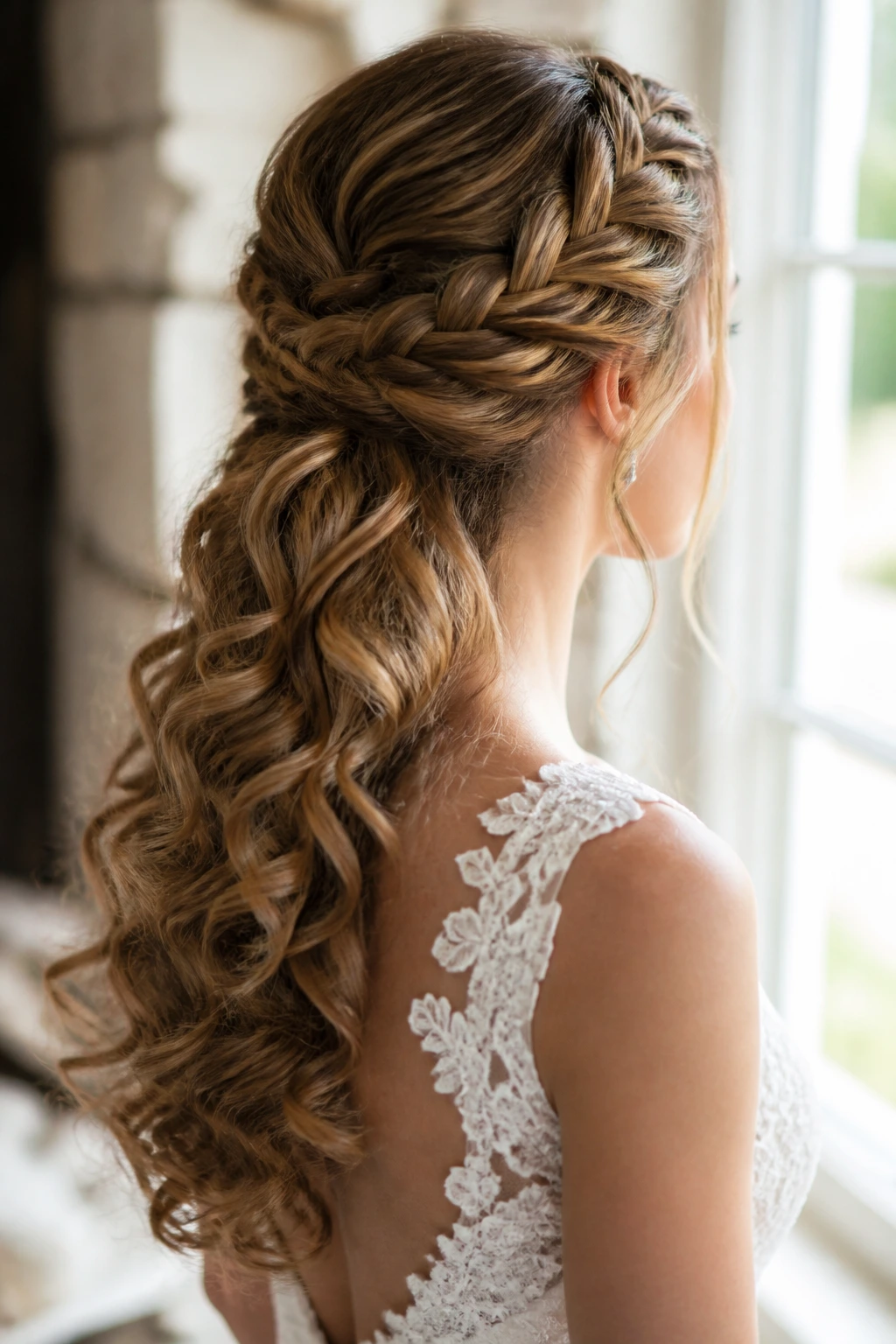
This style starts with a braid at the top or side, then releases into curls that fall down the back. It’s one of the most naturally romantic braid hairstyles for brides because it keeps a clear structure at the crown and a softer finish below.
The transition point matters more than people think. If the braid ends too abruptly, the style can look cut off. If the curls start too high, the whole thing gets busy. The sweet spot is usually just below the occipital bone or off to one side, where the braid has enough room to finish cleanly before the curls take over.
This is a good option for brides who want movement in the photos. The curls give depth, the braid gives a focal point, and the two together keep the style from feeling static. It’s a nice middle ground for anyone who wants a little drama without a hard updo.
27. Bridal Braid Bun with Pearls
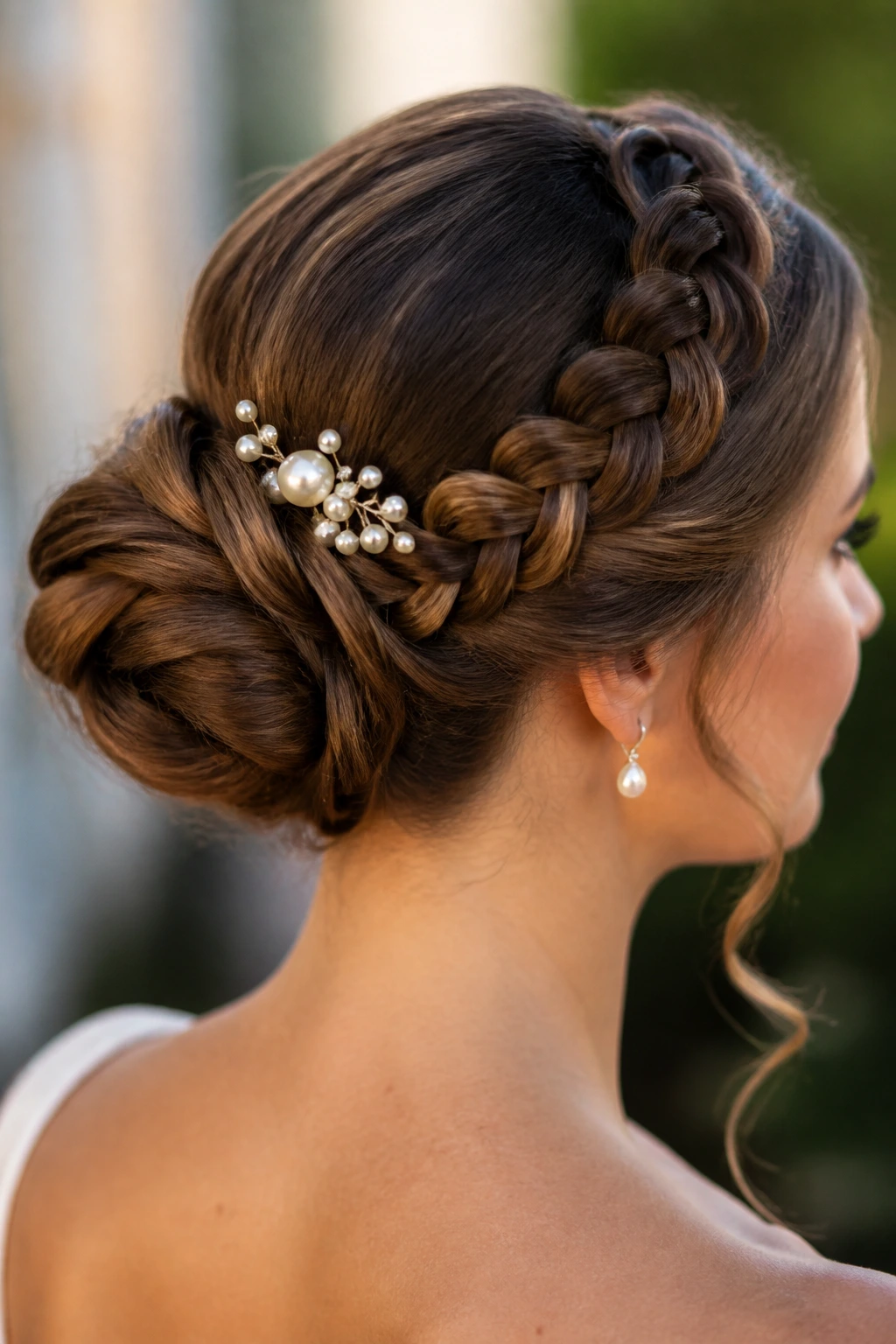
A bridal braid bun with pearls is exactly what it sounds like, and that’s part of its charm. The braid wraps into a bun, then pearl pins or tiny pearl strands are tucked in where the light can catch them without making the style feel crowded.
The pearl placement should be selective. One or two clusters near the twist or around the bun base usually look better than scattering pearls across every inch of hair. You want the eye to move, not stop dead. The bun itself can be sleek or softly padded, depending on the dress and the bride’s taste.
This is the kind of style that photographs cleanly from every angle because it has a defined shape and one clear accent. It’s also easy to adjust for different veils and headpieces. If you like a braid that feels finished the moment it’s pinned, this is the one.
What Makes a Bridal Braid Hold Its Shape All Day
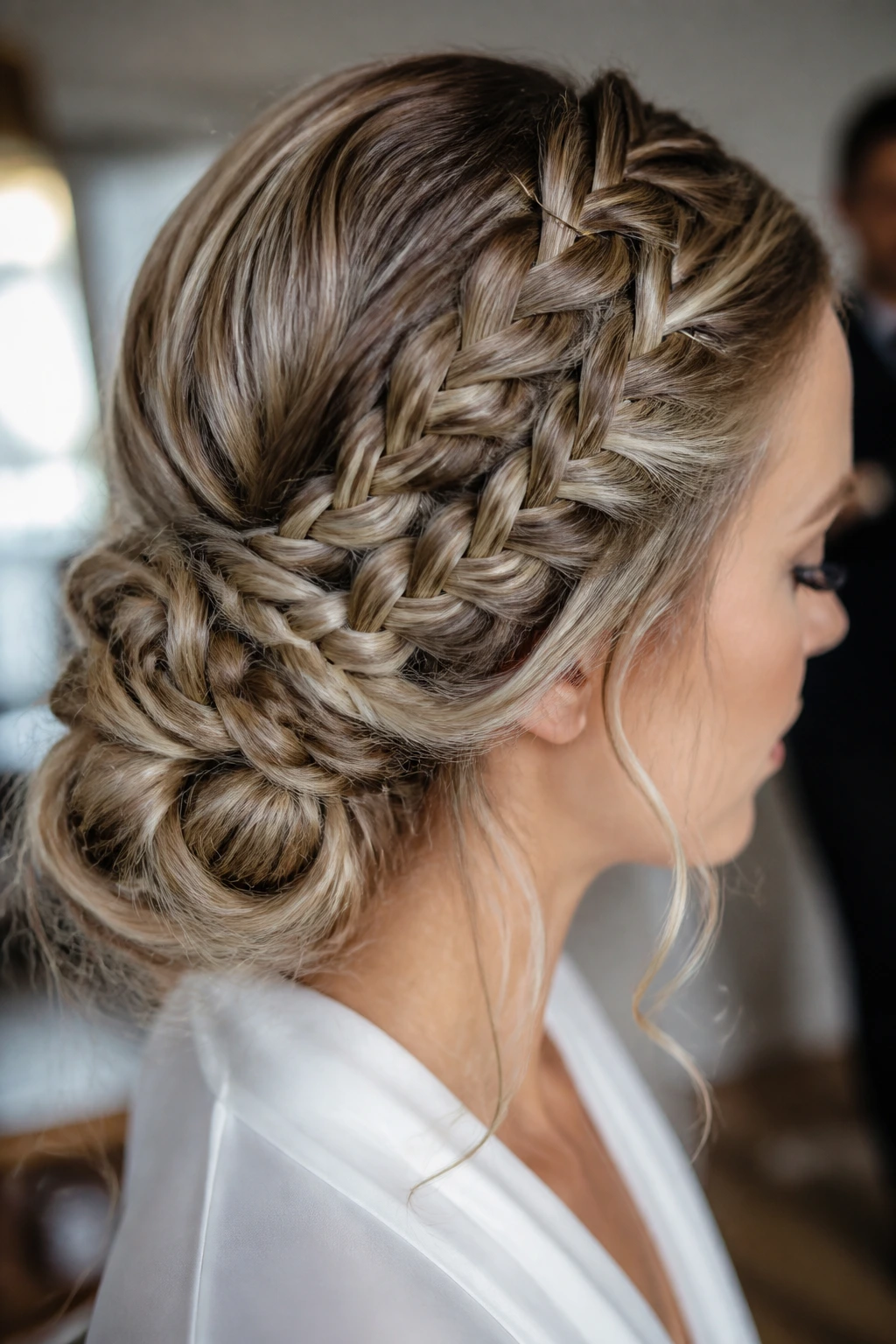
A braid lasts because of structure, not because of luck. Clean sectioning, enough grip at the roots, and the right amount of pinning do most of the work before hairspray even enters the room. Freshly washed, silky hair often slips unless it’s prepped first with a mousse, blow-dried texture, or a light dry shampoo dusting at the roots.
Fine hair usually needs a little roughness. Thick hair usually needs clean control. Curly hair often needs respect more than correction, which means choosing products that define rather than flatten. The common mistake is assuming one product can solve every head of hair. It can’t.
A wedding braid also lasts longer when the base is anchored in two or three places, not one. That’s why stylists often pin under the braid, inside the braid, and at the end point. If one pin gives up, the whole style doesn’t have to fall with it. Smart little habits. Boring to talk about. Very useful in practice.
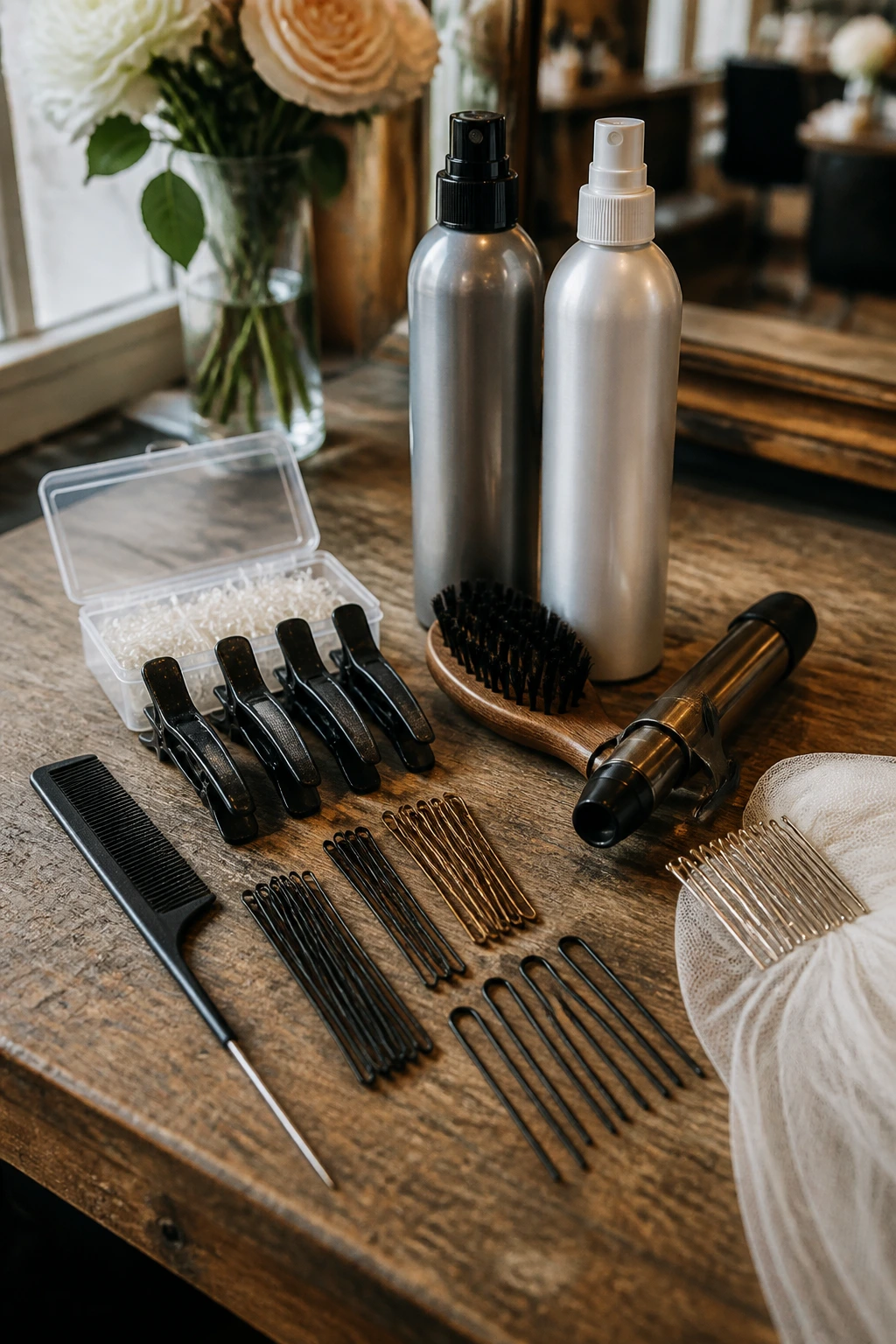
Essential Tools for These Styles
-
Tail comb: Useful for clean parting and for lifting small sections without dragging through the hair.
-
Sectioning clips: Keep the top half out of the way while you braid the lower sections or prep curls.
-
Mini clear elastics: Best for pull-through braids, accent braids, and any place where a small tie needs to disappear.
-
Bobby pins in two shades: Match them to the hair so they do not flash in photos or peek through the braid.
-
U-pins: Great for buns, chignons, and tucked braid ends that need a flatter hold.
-
Texturizing spray: Gives fine or freshly smoothed hair enough grit to hold the braid pattern.
-
Flexible-hold hairspray: Locks the finish without turning the hair shell-like.
-
Small boar-bristle brush: Helpful for smoothing the top without destroying the sectioning.
-
Curling iron or wand: Useful for softening face-framing pieces and the ends of waterfall or side braid styles.
-
Veil comb or headpiece: Not a styling tool, but it affects where the braid should sit, so have it on hand during the trial.
How to Prep Hair for a Bridal Braid Trial and Wedding Morning
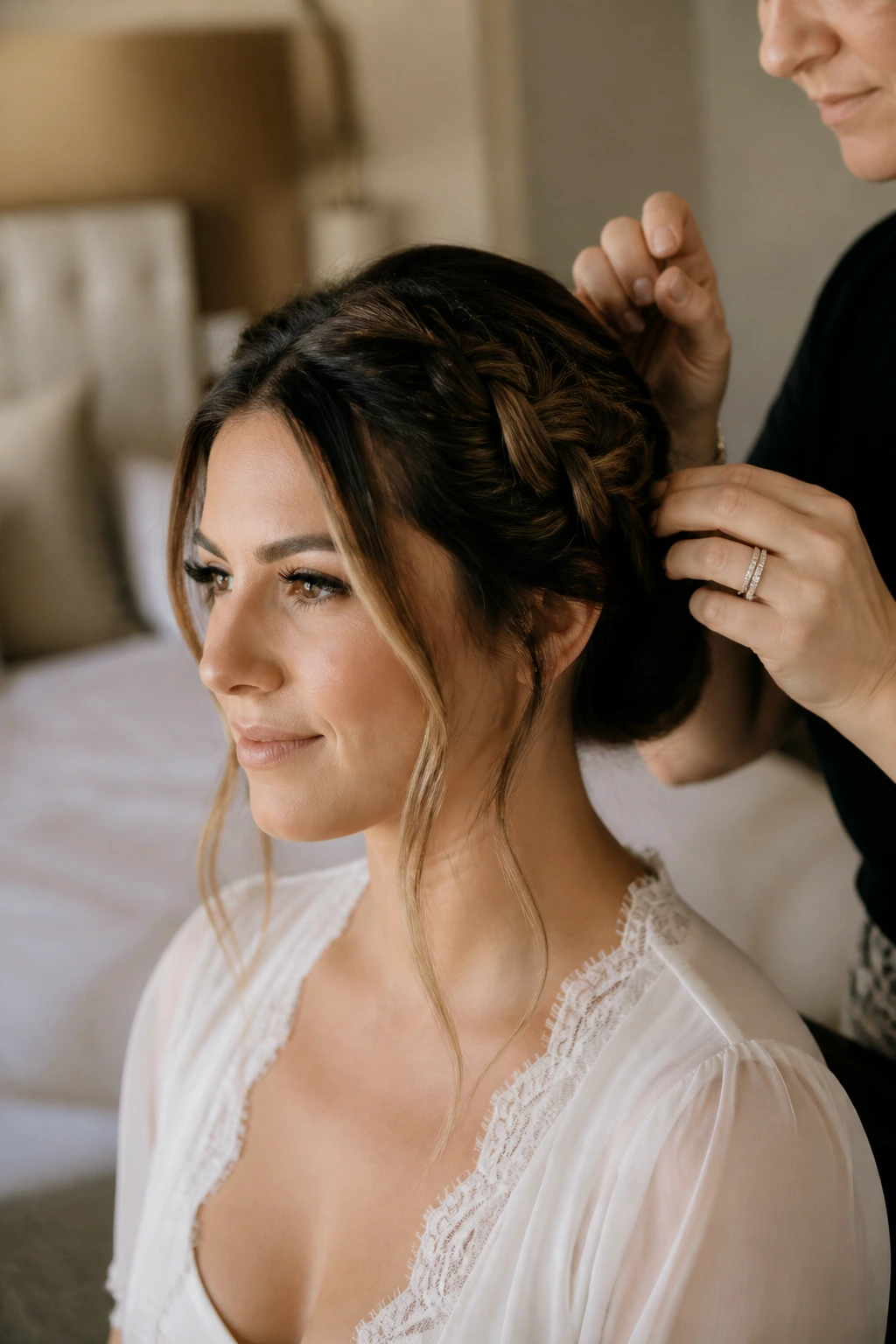
The best braid starts before the braid starts. Hair that is freshly washed and stripped bare can be slippery, especially if it’s fine or very soft. Hair that is a day old usually has enough natural grip to stay put without looking dirty. If the scalp runs oily, a little dry shampoo at the roots the night before can save you from fighting shine on the morning itself.
A trial run should happen with the exact accessories if possible. Bring the veil. Bring the pins. Bring the headpiece, even if it feels a little extra to haul it around. The reason is simple: a braid can look lovely on its own and still fail the minute a comb gets added in the wrong place. The trial is where that gets fixed, not on the wedding chair with ten minutes to spare.
And please, don’t skip photos of the back and both sides. The front is often the least revealing angle on a braid. Turn the chair. Check how the braid sits near the neck. See whether a few wisps are charming or just annoying. That little rehearsal saves a lot of panic later.
Smart Product and Accessory Tips
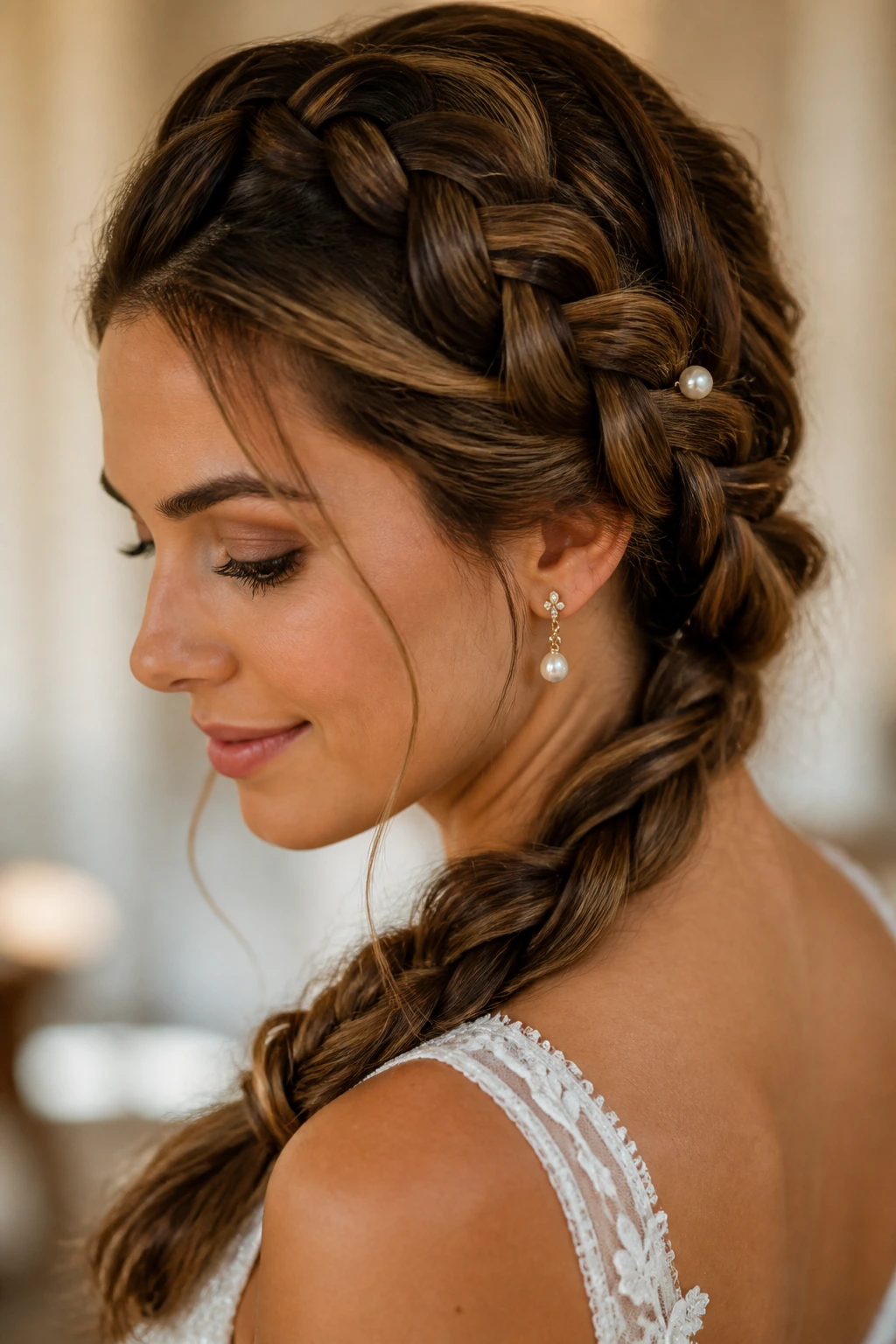
The right products make braid hairstyles for brides easier to build, but the wrong ones can make the hair feel coated and stiff. A light mousse on damp roots, then a blow-dry with a round brush or paddle brush, gives the hair enough body without turning it crunchy. For very silky hair, a texture spray at the mid-lengths usually helps more than extra hairspray at the finish.
For accessories, think in layers. Start with the braid shape, then decide whether the style needs one visible piece — a comb, a barrette, a few pearl pins — or a quieter finish. Too many shiny objects can scatter the eye. One well-placed accessory often does more than five small ones scattered at random.
Fresh flowers look lovely, but they need to be small and well secured. Tiny blooms or buds work better than heavy stems. If you want something that survives heat and time better, faux florals or pearl pins are the safer bet. I’m fond of pearl details for brides because they sit neatly in braids without pulling the whole style toward one season or one mood.
Common Mistakes to Avoid With Bridal Braids
-
Starting with hair that’s too clean: Newly washed hair can slide apart, especially if it’s fine. If your strands are slippery, add texture spray or work the style on day-old hair instead.
-
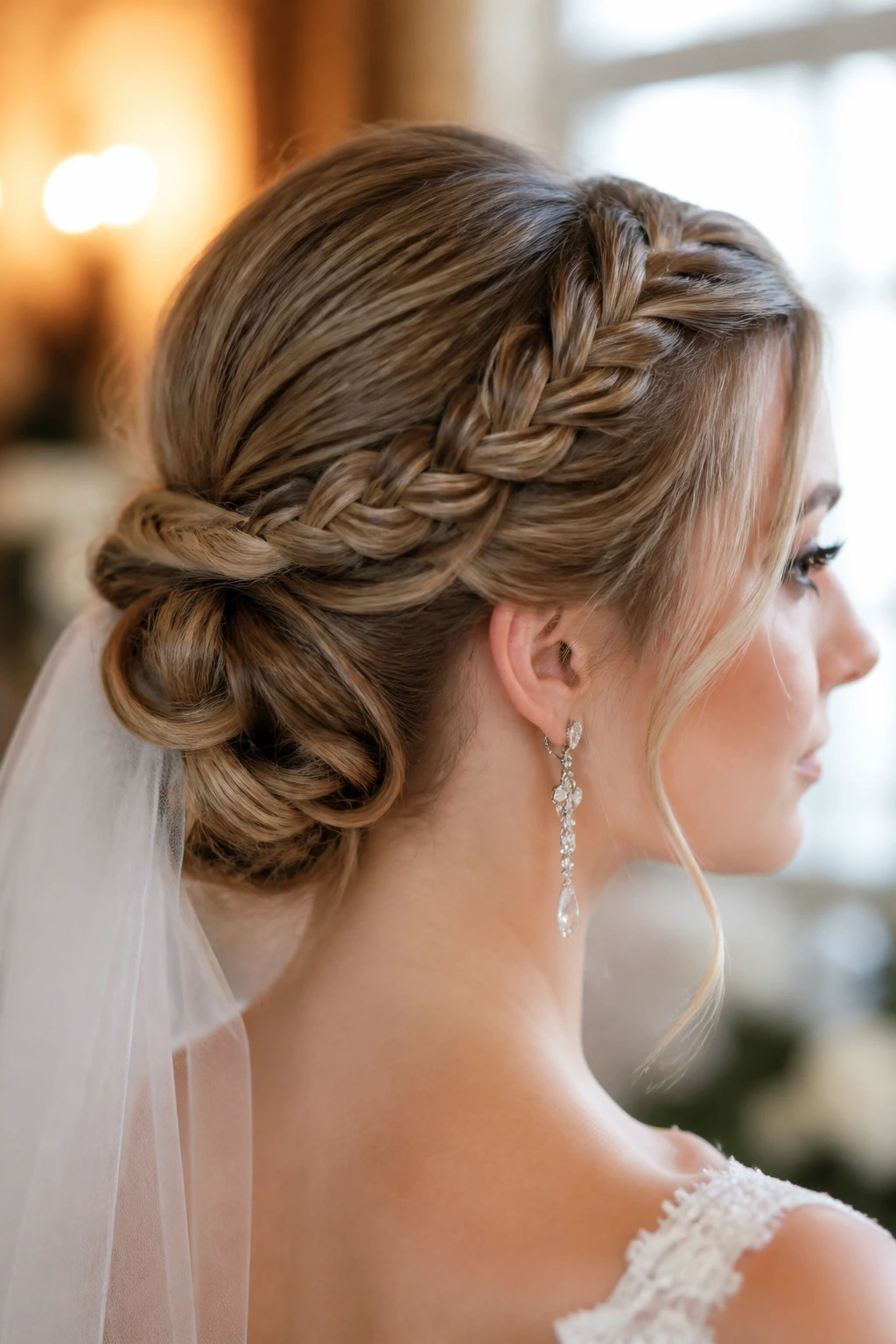
Placing the braid too high for the veil: A crown braid or high braid can fight with a comb placed at the crown. The symptom is a veil that tilts or a braid that gets crushed. Fix it by moving the braid lower or shifting the comb point.
-
Over-loosening the braid: Pancaking helps, but pulling too much destroys the braid pattern and can make the style collapse by mid-evening. Stop when the braid looks fuller, not fuzzy.
-
Adding too many accessories: Pearls, florals, crystal pins, a comb, and a tiara all at once can turn the hair into a cluttered surface. Pick one or two focal points and let the braid breathe.
-
Skipping a back-view check: The front can look polished while the back hides bumpy pins or uneven tension. Always check the style from behind during the trial, not just in the mirror straight on.
Variations and Adaptations to Try
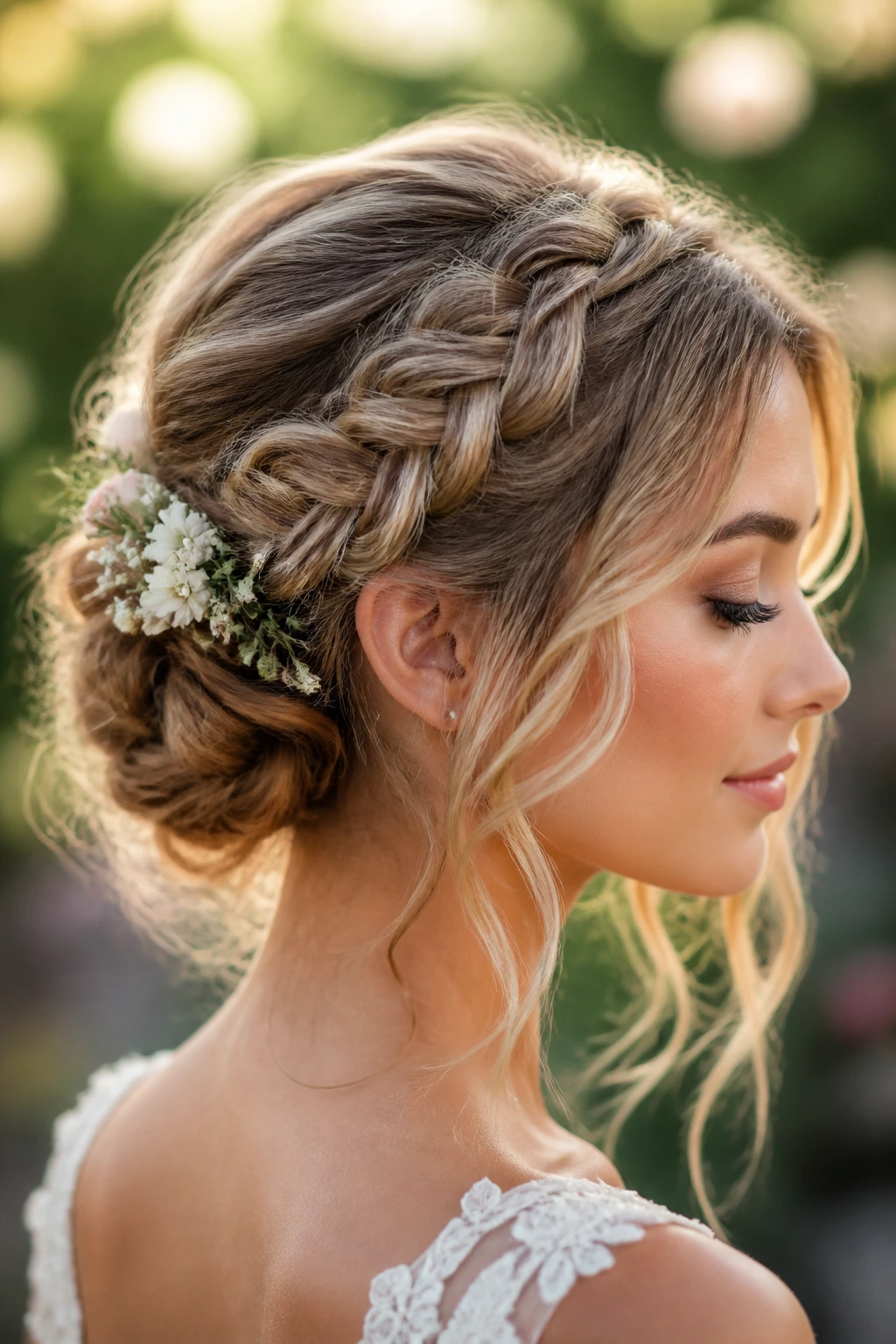
Soft Garden Version: Swap hard edges for looser braids, a few curled tendrils, and tiny floral pins near the ear or nape. This suits outdoor ceremonies and dresses with lace or sheer sleeves.
Minimal Pearl Version: Keep the braid clean and add just a handful of pearl pins at the twist or bun. The result feels quiet and refined, which works well with satin, silk, or a sharply cut gown.
Curly-Texture Version: Let natural coils or curls stay visible inside the braid rather than brushing them smooth. This keeps the style from flattening out and gives the braid more life from the side and back.
Short-Hair Insert Version: Use small accent braids to feed into a bun, half-up style, or low knot. This is where the braid becomes a support detail instead of the whole show.
Veil-First Version: Choose the braid placement after the veil placement is set. That usually means lower, cleaner, and less crowded at the crown so the comb has room to sit properly.
Reception-Ready Version: Build a style that can loosen gracefully, not one that depends on every strand staying exactly in place. A braid that softens a little after dancing often looks better, not worse.
Keeping the Style Fresh From Ceremony to Last Dance
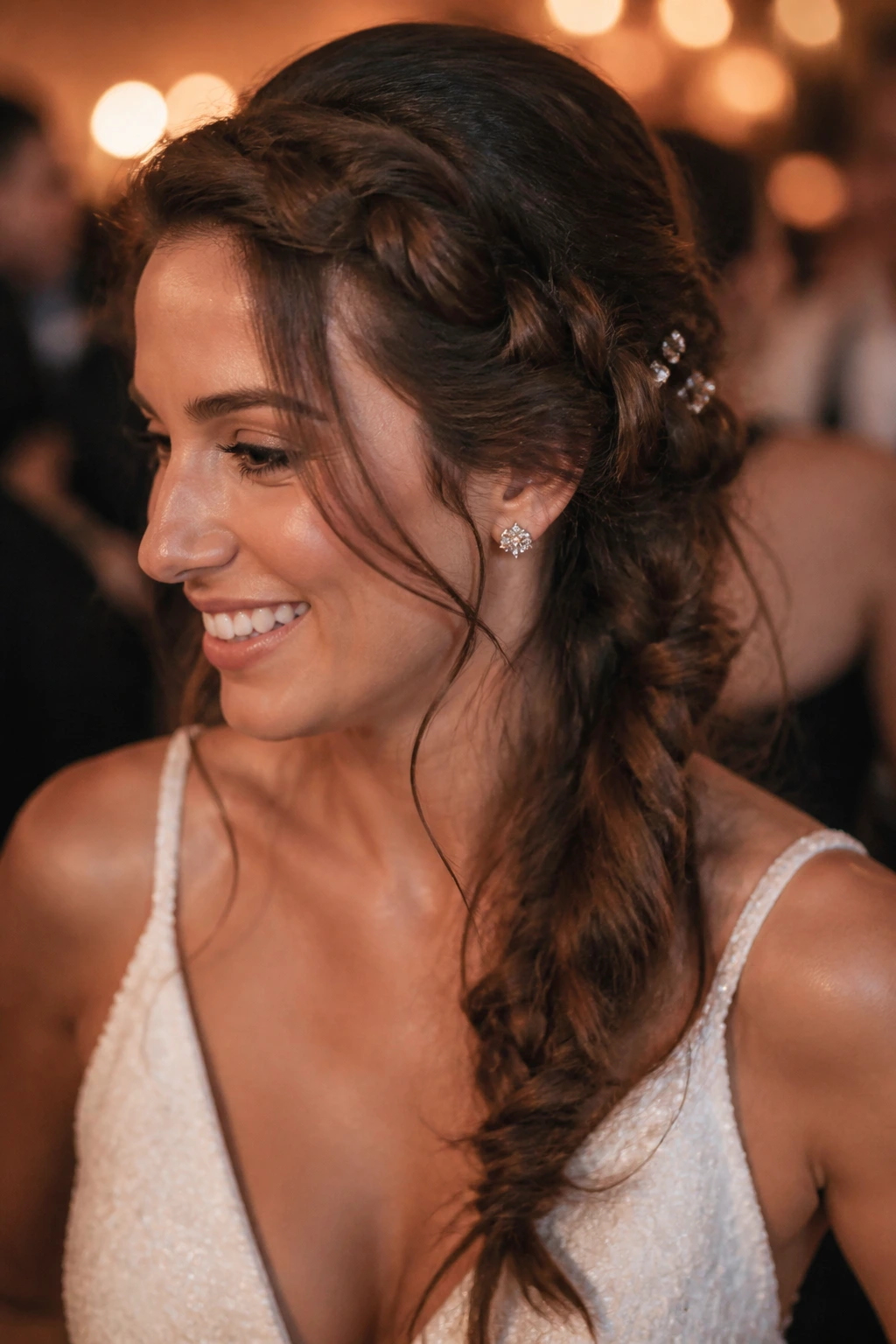
A bridal braid usually needs a touch-up kit, even if the style itself is solid. Pack a few bobby pins, a small can of flexible hairspray, a tiny comb, and one or two spare elastics. That’s enough to fix a loose side piece, re-anchor a veil comb, or tame a section that starts shifting after hugging season starts.
If the ceremony and reception are separated by a few hours, the stylist can build in a smart pause point. That might mean leaving the front slightly softer so it can be refreshed later, or setting the braid with pins that can be replaced without dismantling the whole style. Little things. Big payoff.
At the end of the night, braid care is simple. Undo the pins carefully, detangle from the ends upward, and sleep on a satin pillowcase if you need the style to last into the next day for a post-wedding event. If fresh flowers were used, remove them first. They wilt faster than the braid does.
Frequently Asked Questions About Bridal Braids
Will a braid hold better than loose curls for a wedding?
Usually, yes. Braids have built-in structure, so they resist humidity and movement better than loose curls that depend on spray alone. The exact hold still depends on the hair type and the products used.
Can you wear a veil with a braid?
Absolutely. The trick is placement. Low braids, braided buns, and half-up styles give the veil comb a cleaner spot to anchor than a crowded crown area.
Do bridal braids work on short hair?
They can, especially as accent braids or braided inserts into a bun or ponytail. If the hair is too short to braid through fully, a stylist can still use braid detail to create the look.
Should I wash my hair the morning of the wedding?
Not usually. Hair that’s freshly washed can be too slippery for braids. Many stylists prefer hair that was washed the day before, then prepped with light texture.
What if my hair is very fine?
Fine hair often needs padding, texture spray, or a braid style with more surface area, like a pull-through braid or a pancaked side braid. The goal is grip and visual fullness, not stiffness.
Can braids work with curly or coily hair?
Yes, and often beautifully. The braid can either control the hair or show off the natural texture, depending on the shape you choose. A stylist familiar with your texture will make a huge difference here.
How do I keep the braid from frizzing during the day?
Use a light smoothing product during prep, then carry a travel-size hairspray and a few pins for quick fixes. The more you touch the braid, the faster it frizzes, so fix only what needs fixing.
What if the braid starts slipping before the reception?
Pin it at the base and at the first major cross-over point, not just near the end. If the style was built on very soft hair, a little extra texture spray at the roots can help anchor it without rebuilding the whole thing.
The Shape That Carries the Day
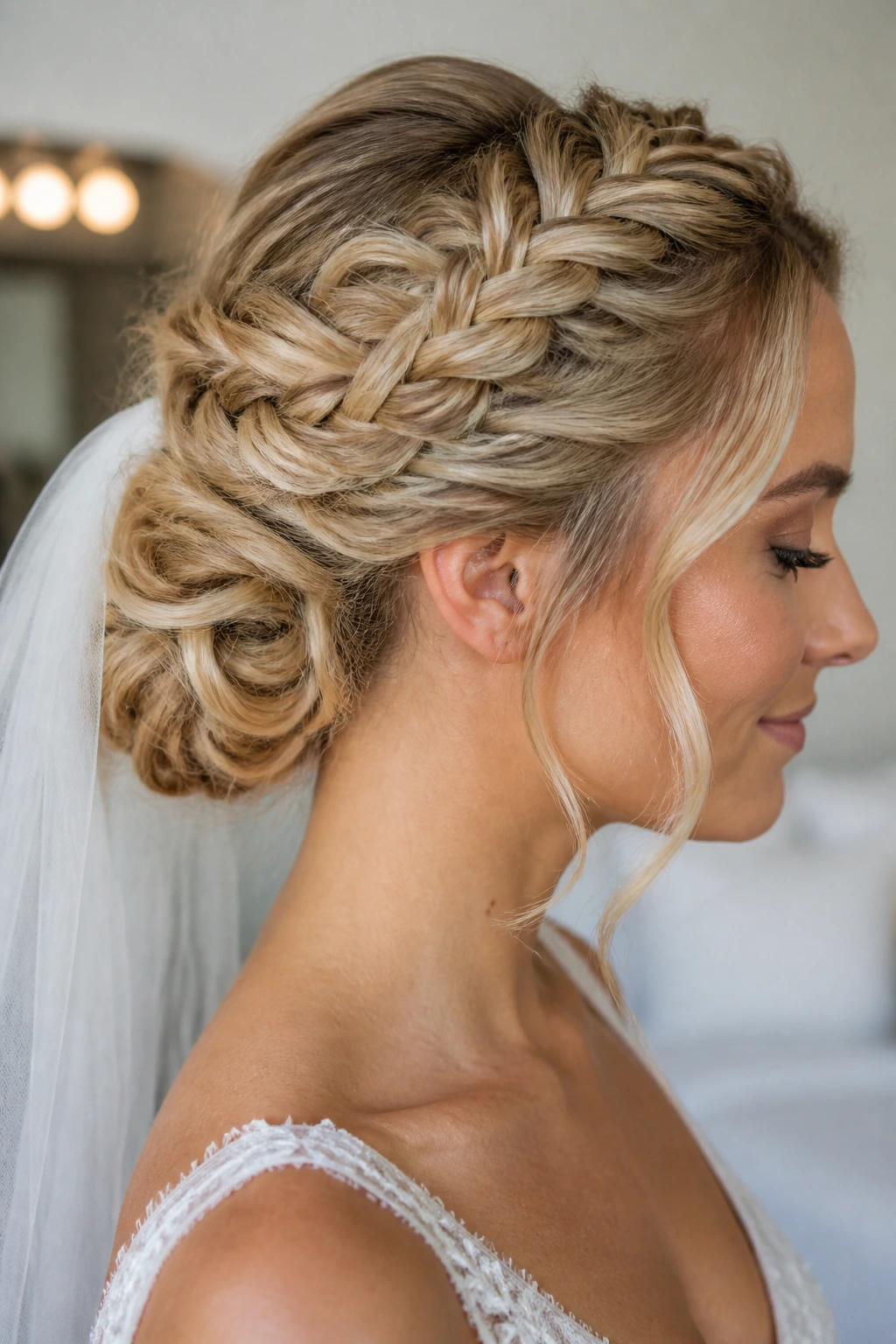
The best braid for a bride is the one that fits the dress, the veil, and the way her hair naturally wants to move. A braid that fights the hair or crowds the neckline may look nice for twenty minutes, then start asking for help. A braid built with the hair’s texture in mind tends to hold up with less fuss.
That’s the quiet appeal of bridal braids. They can be formal or relaxed, vintage or modern, full of flowers or stripped back to the bare shape. Pick the right one, and it doesn’t just sit there. It supports the whole look.
