



Thin hair doesn’t need to be bullied into a giant, overbuilt wedding style. It needs structure. The best wedding hairstyles for thin hair use lift where the eye expects it, keep the base secure, and leave enough softness that the whole thing still moves when you laugh, turn your head, or lean in for a hug.
That matters more than people think. Thin hair can look limp in photos for one simple reason: it gives away every mistake. A heavy bun swallows the crown. A too-sleek ponytail can show scalp gaps. A loose curl pattern that looked fine in the mirror can disappear by the time the ceremony starts. The styles that work are the ones that use shape, texture, and placement with a little discipline.
There’s also a difference between fine hair and thin hair, and brides confuse them all the time. Fine hair means the individual strands are small; thin hair means there’s less density overall. Sometimes you have one, sometimes both, and sometimes your hair behaves like it has a personal grudge against bobby pins. The good news is that the right bridal style can fake fullness surprisingly well — if you build it with intention and stop before it gets mushy.
Why These Wedding Hairstyles Work on Thin Hair
-
Crown lift changes the whole read: Raising the top section even an inch or two makes the hairline look denser in photos and keeps the style from sitting flat against the head.
-
Texture beats bulk: Braids, twists, and brushed-out waves create shadows and edges that make hair look fuller than a smooth, compressed style ever will.
-
Anchors matter more than volume: A small bun form, a veil comb, or a few hidden pins can carry the weight so your own hair doesn’t have to do all the work.
-
Low tension lasts longer: Styles that don’t pull hard at the temples or nape are less likely to slide, separate, or puff out in the wrong places by the reception.
-
Accessories can be structural: Pearl pins, combs, and floral clips do more than decorate thin hair; they help disguise seams, fill visual gaps, and keep the silhouette clean.
1. Crown-Lifted Soft Waves
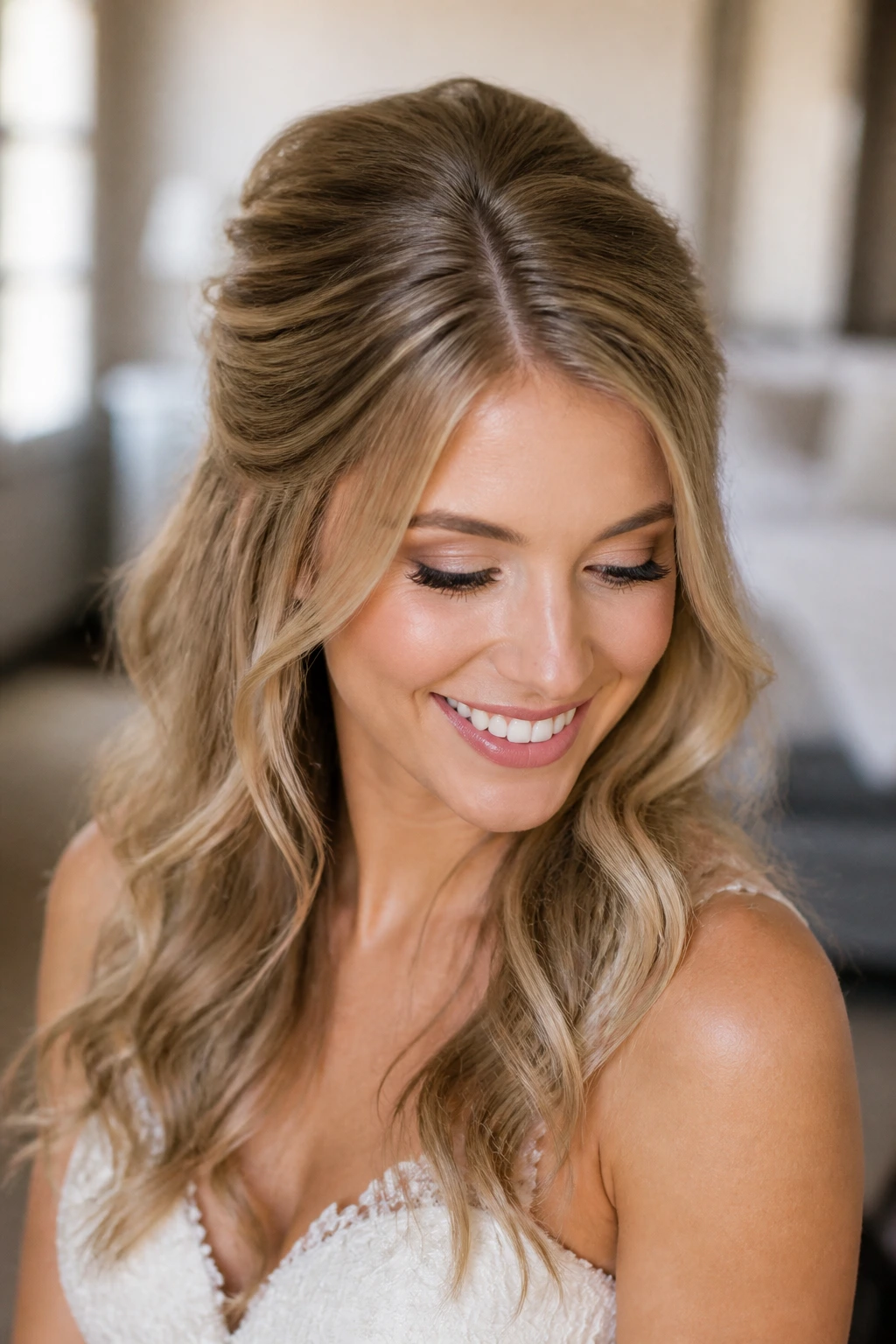
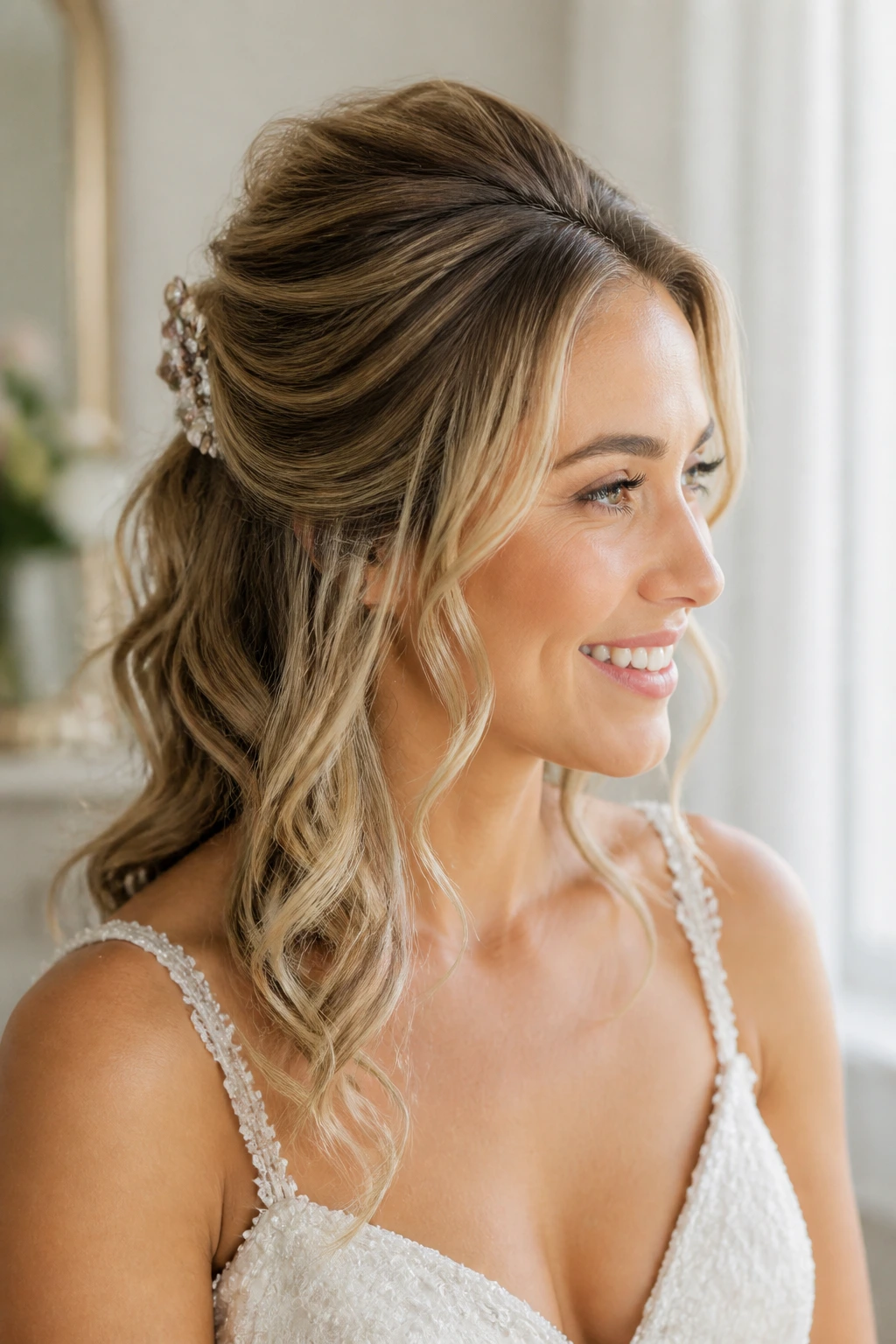
The flat crown is the enemy here, not the wave itself. This style keeps the length soft and loose, but the top section gets a little root lift and a slightly off-center part so the whole shape reads fuller before anybody even notices the curls.
A 1-inch iron, a light mousse at the roots, and a careful brush-out make a big difference. I like this look for brides who want hair down but not limp, because the front stays airy while the back still moves. If your hair is extra silky, a few hidden clip-ins under the top layer give the waves enough body to hold their outline past the first round of photos.
It also plays nicely with drop earrings and a sheer veil. The trick is not piling too much curl on top of the head — once the crown starts looking crowded, the style loses the clean line that makes it work.
2. Low Chignon with a Hidden Cushion
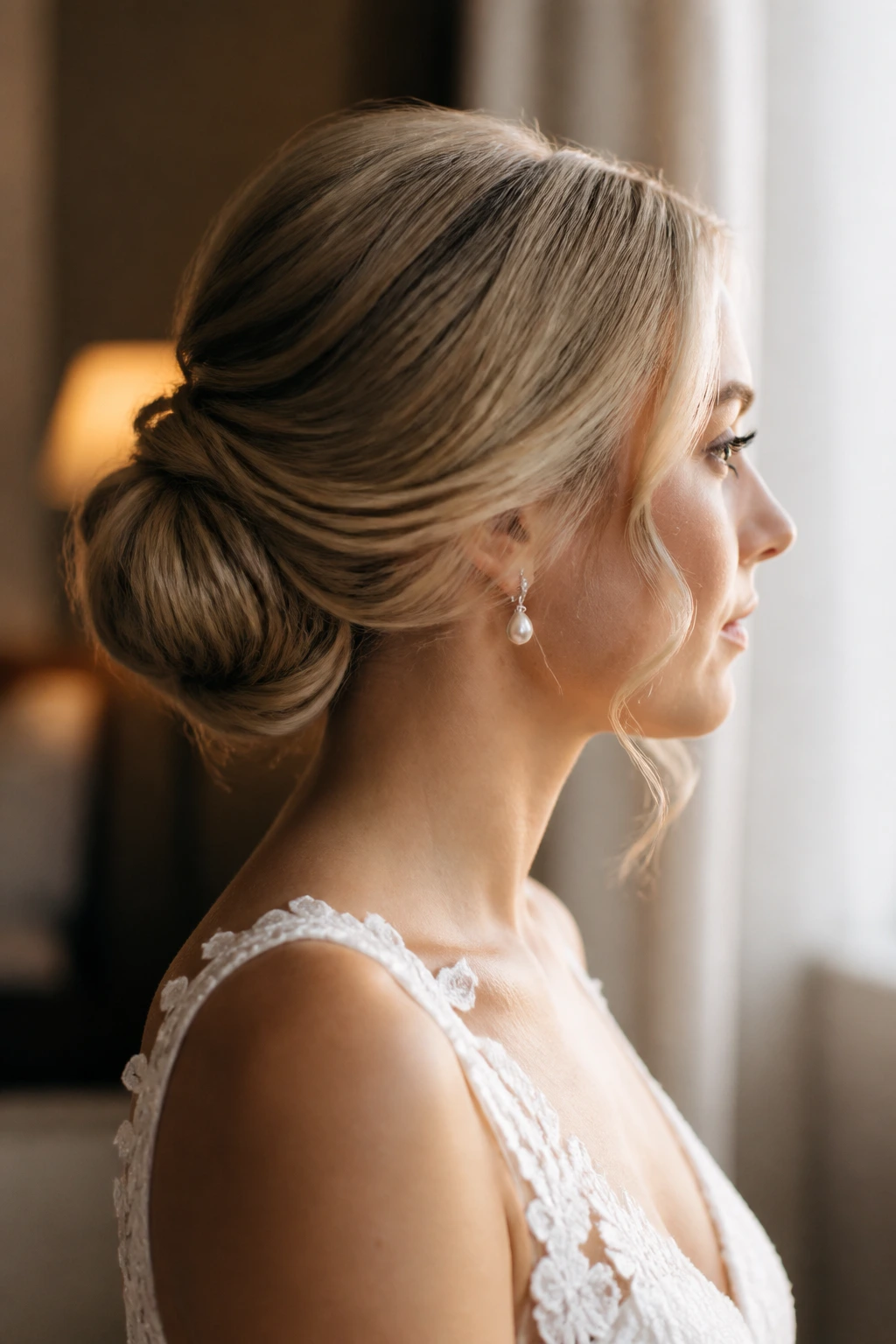
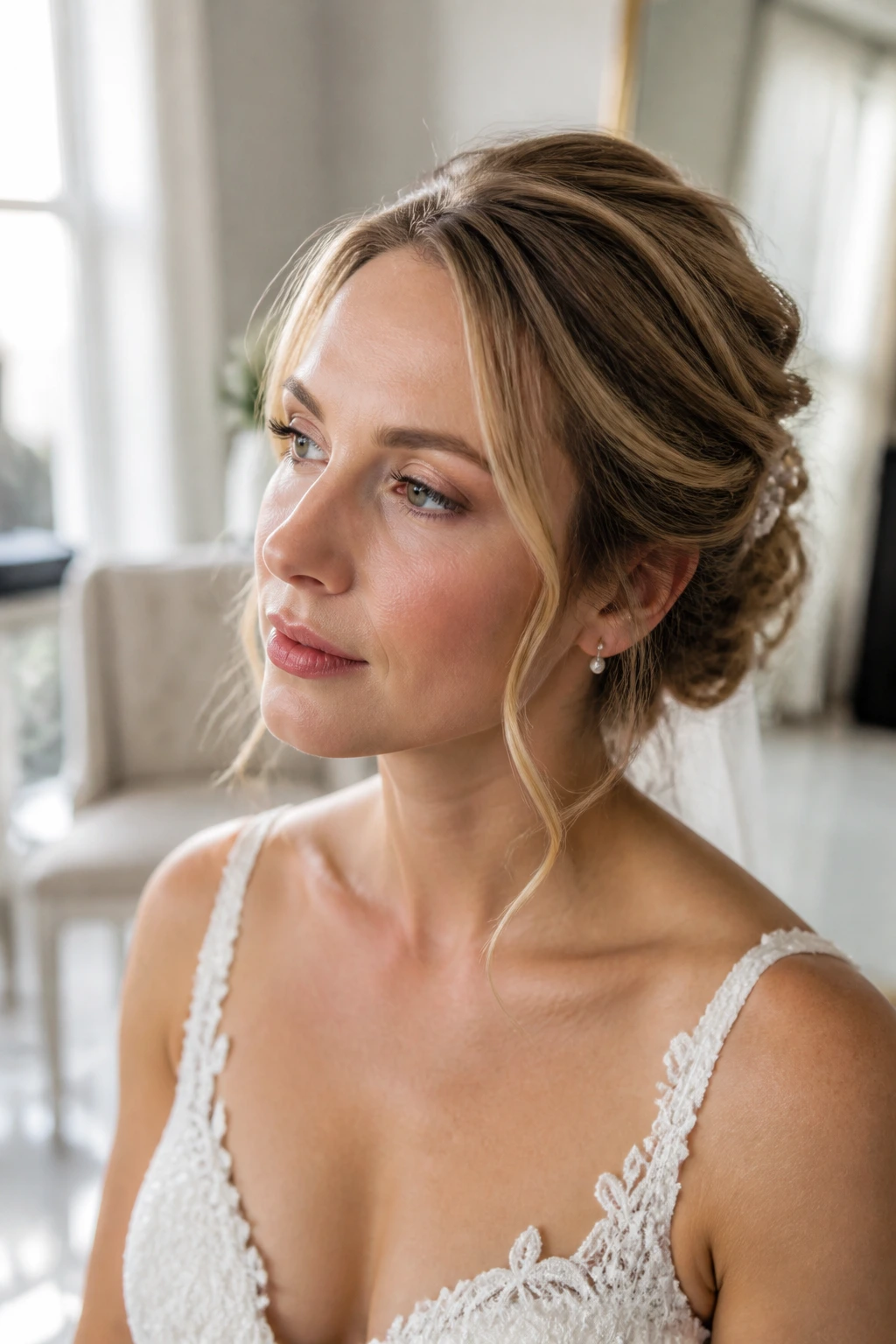
A low chignon is one of the smartest wedding hairstyles for thin hair because it builds size where the eye expects a bun, not where the scalp shows every gap. The secret is a small padded form or a rolled tuck underneath, then hair wrapped over it in smooth sections.
That cushion does the heavy lifting. You do not need a baseball-sized bun; you need a neat shape with enough roundness to look intentional from the back of the aisle. A little backcombing at the base helps, but the finish should still look soft enough that the chignon feels like part of the head, not something perched on it.
This is the style I’d hand to a bride with a classic gown and a veil that clips low. It also stays calm through humidity better than a fluffy updo, which matters more than people admit.
3. Half-Up Twist with Loosened Ends
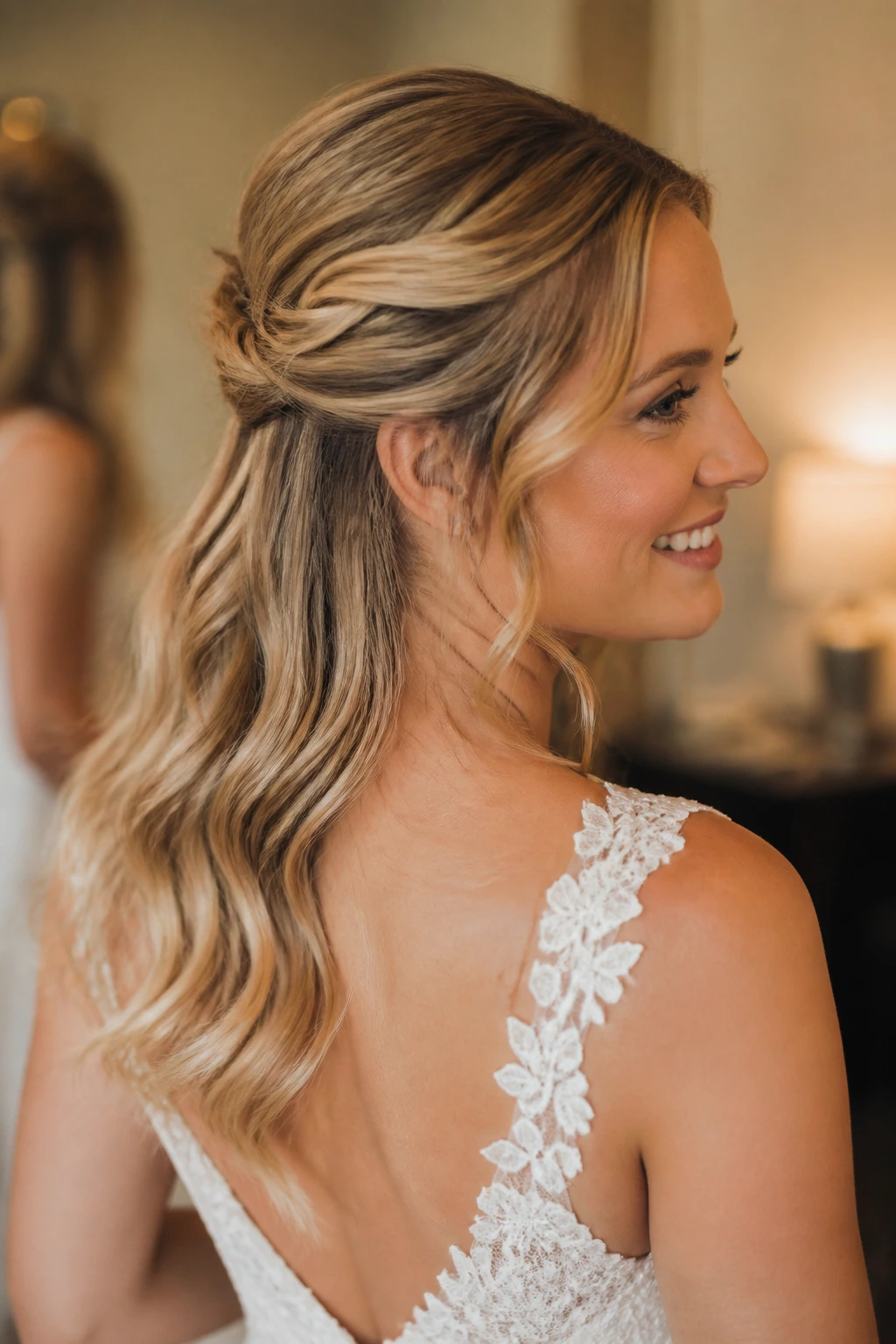
Half-up styles are a gift for thin hair because they give you lift at the crown while leaving the lower length to do some visual work. Two twisted sections from the temples, pinned just behind the crown, make the top half look fuller without forcing the whole head into a bun.
The lower hair should be curled, but not into tiny ringlets. Soft, brushed-out bends are better; they take up more visual space and keep the ends from looking wispy. If the hair is shoulder-length, keep the twist tidy and let the ends do the softening.
This one is especially good when you want your face open for photos but don’t want the bare-neck feeling of a full updo. It also leaves room for a comb, a small floral pin, or a veil that sits just below the twist line.
4. Braided Crown Halo
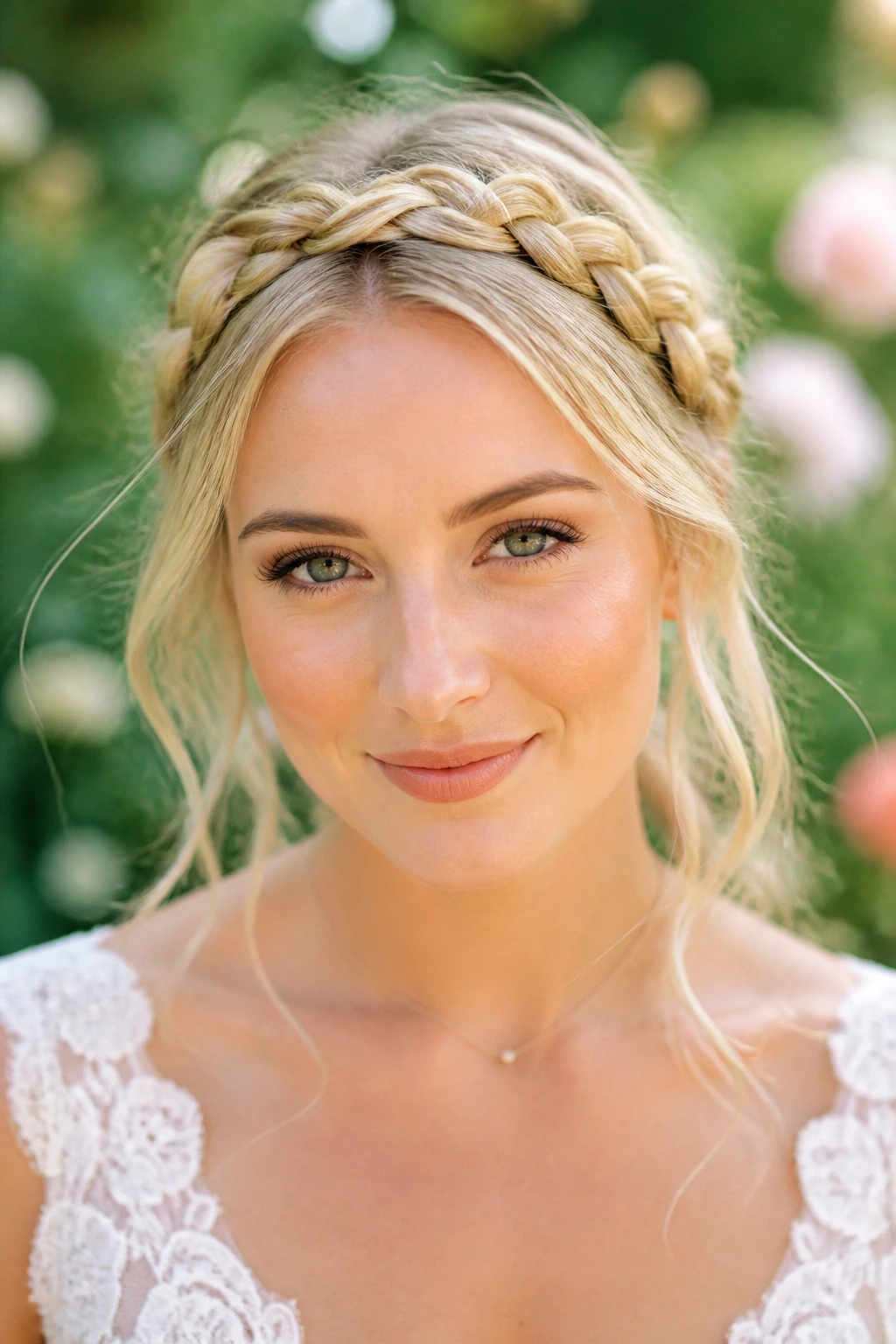
A braided halo does one job extremely well: it adds the illusion of density around the hairline, where thin hair tends to show first. A Dutch or rope braid wrapped around the crown creates a built-in frame, and that frame is what sells the style.
The braid should be loose enough to widen slightly after it’s pinned, but not so loose that it looks fuzzy by the time you’re dressed. I like to pancake the braid with my fingertips after it’s secured, then mist only the surface with flexible spray. That gives the braid a thicker line without turning it crunchy.
This is the sort of bridal style that works for garden weddings, lace gowns, and brides who want their hair off their face without going fully sleek. It also hides a few shorter layers very nicely, which is a detail that matters when your hair has a mind of its own.
5. Sleek Low Knot with a Deep Side Part
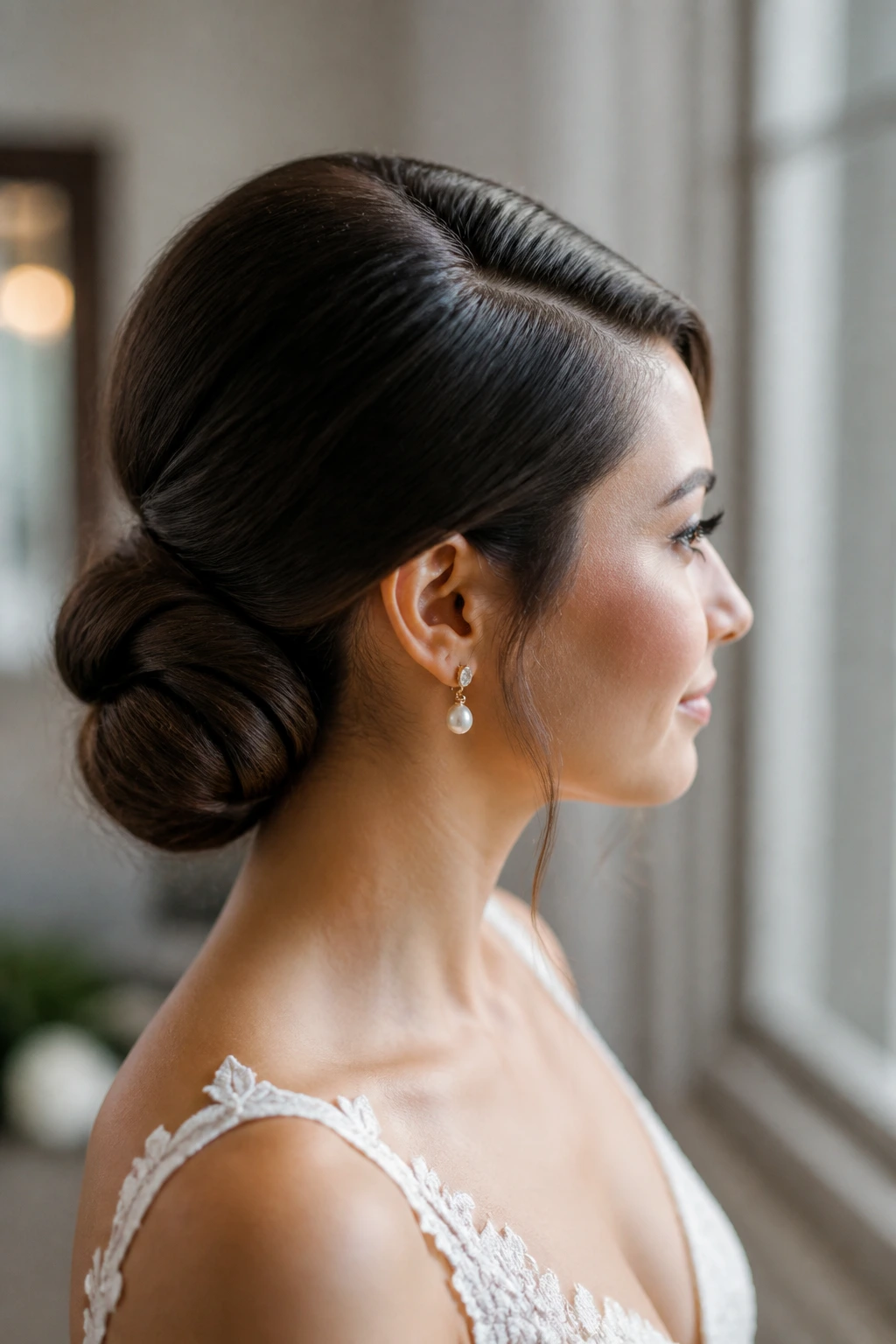
If your hair is fine and tends to puff or frizz, a sleek knot can look richer than a teased style. The deep side part gives the front shape, the surface stays smooth, and the knot sits low enough to look deliberate instead of fussy.
The key is keeping the surface clean before you start twisting. Too much product near the roots makes thin hair collapse, so work a light smoothing cream only from mid-length to ends, then pin the knot tightly with crisscrossed bobby pins. You want the knot to look compact and polished, not swollen with unnecessary filler.
This style is excellent with structured dresses, clean necklines, or bold earrings. It also handles a veil better than people expect, because the low base gives the comb a stable place to sit without fighting the crown.
6. Bubble Ponytail with Wrapped Sections
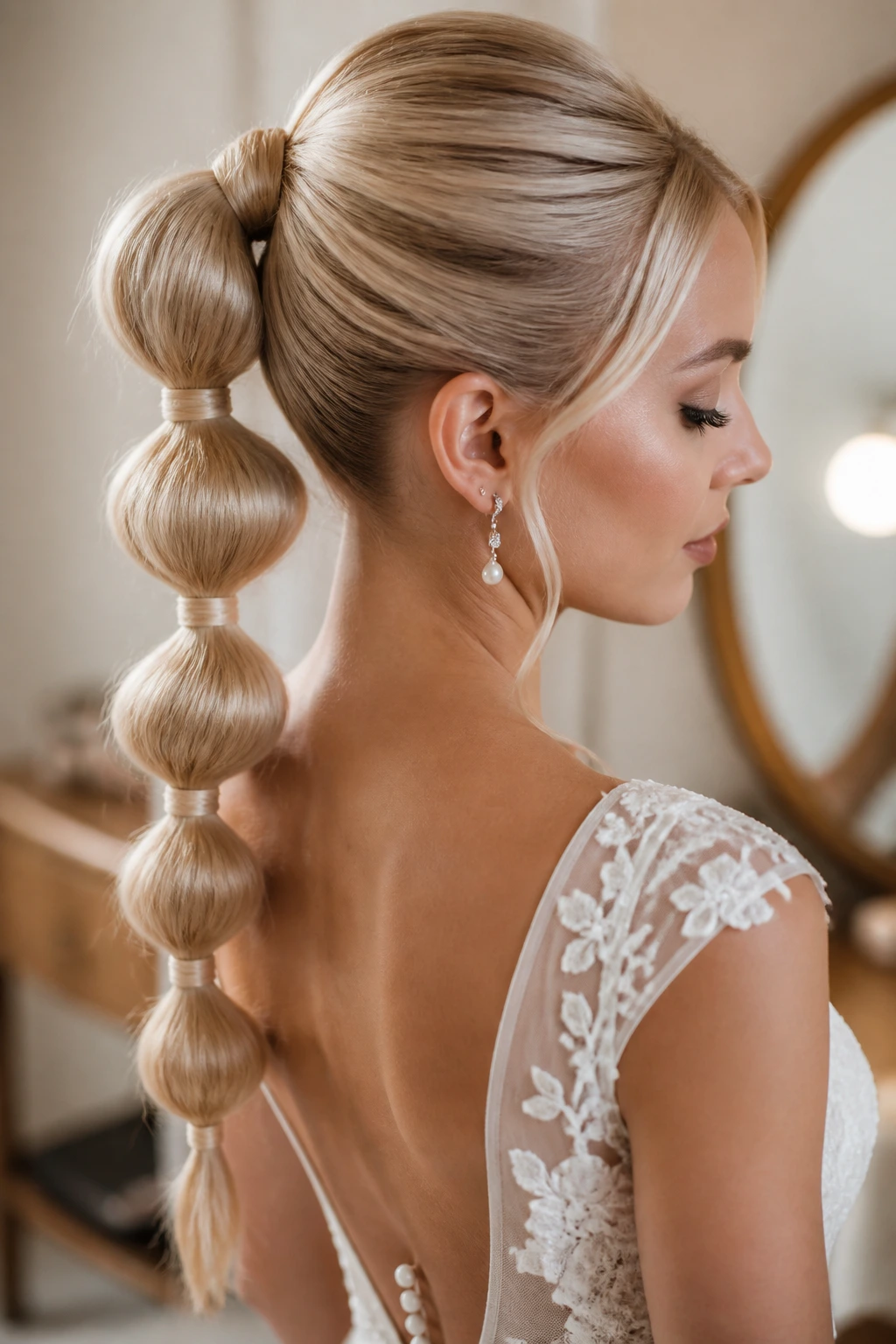
A bubble ponytail sounds playful, but on thin hair it can look surprisingly elegant when it’s done with control. The trick is to keep each elastic about 1½ to 2 inches apart, then gently pull the sections outward so the bubbles become rounded and not saggy.
Thin hair benefits from the rhythm of this style. Each bubble breaks up the length, which keeps the ponytail from reading as a skinny tail on the back of the head. Wrap the first elastic with a small section of hair, hide each band with a neat pin if needed, and stop widening the sections before the shape starts looking ragged.
This is a strong choice for brides who want movement and a little modern edge. It’s also one of the easiest looks to refresh between ceremony and reception — a quick pinch at each bubble and a mist of spray usually does it.
7. Faux Bob with Finger Waves
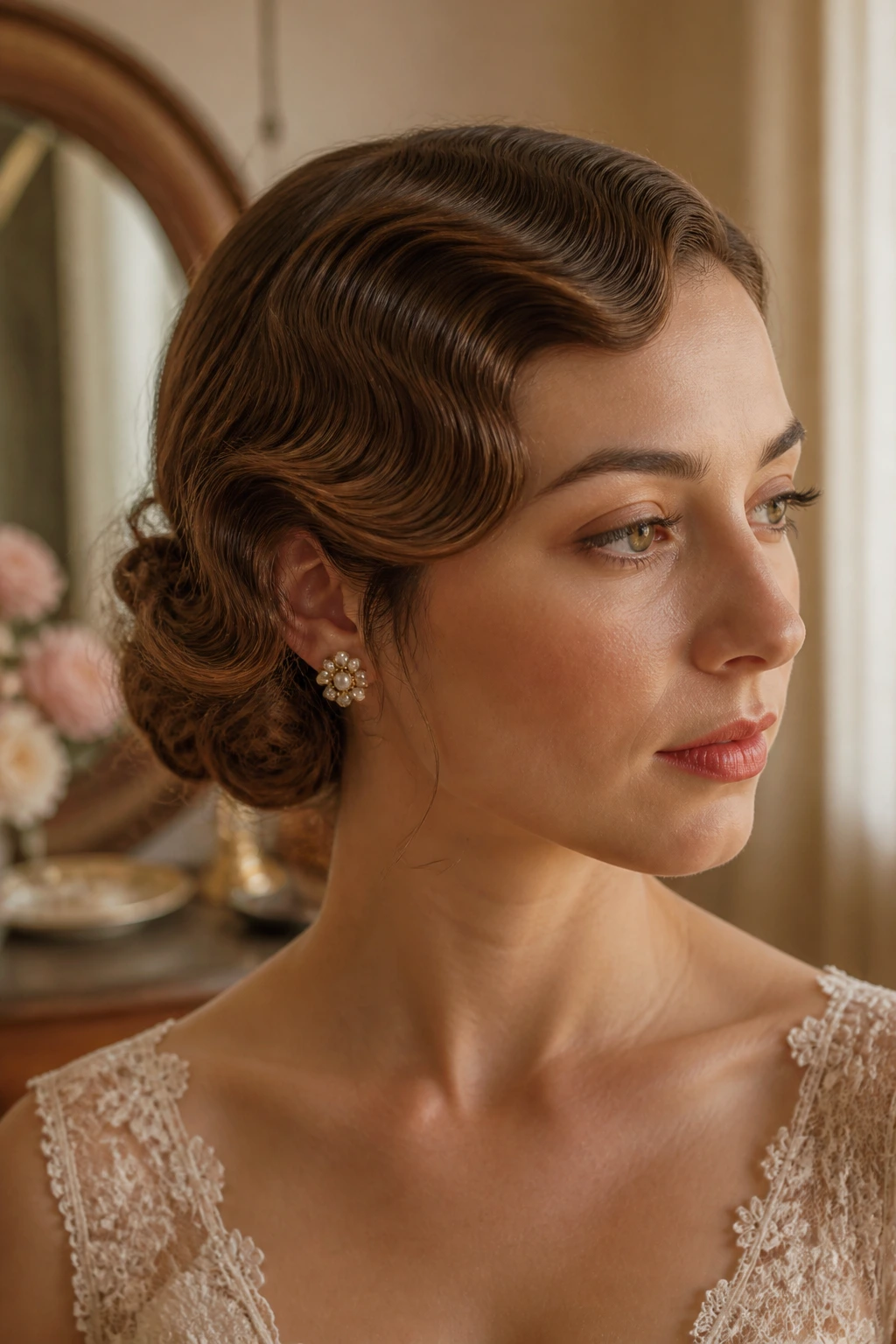
A faux bob is one of my favorite fixes for shoulder-length thin hair, because it turns a length that might hang flat into something with shape and personality. The hair is curled, tucked under, and pinned at the nape so it reads like a shorter cut with old-school polish.
Finger waves at the front make the whole thing look intentional. They lie close to the head, which is useful when your hair is too thin to support lots of lift, and they give the style a sculpted front edge that looks especially good with off-shoulder or beaded dresses.
The best part is practical. If the ends are tucked cleanly and the pins are hidden well, the style can feel very secure. Just don’t overstuff it — a faux bob works because the shape is neat and slightly restrained.
8. Twisted Low Bun with Face-Framing Pieces
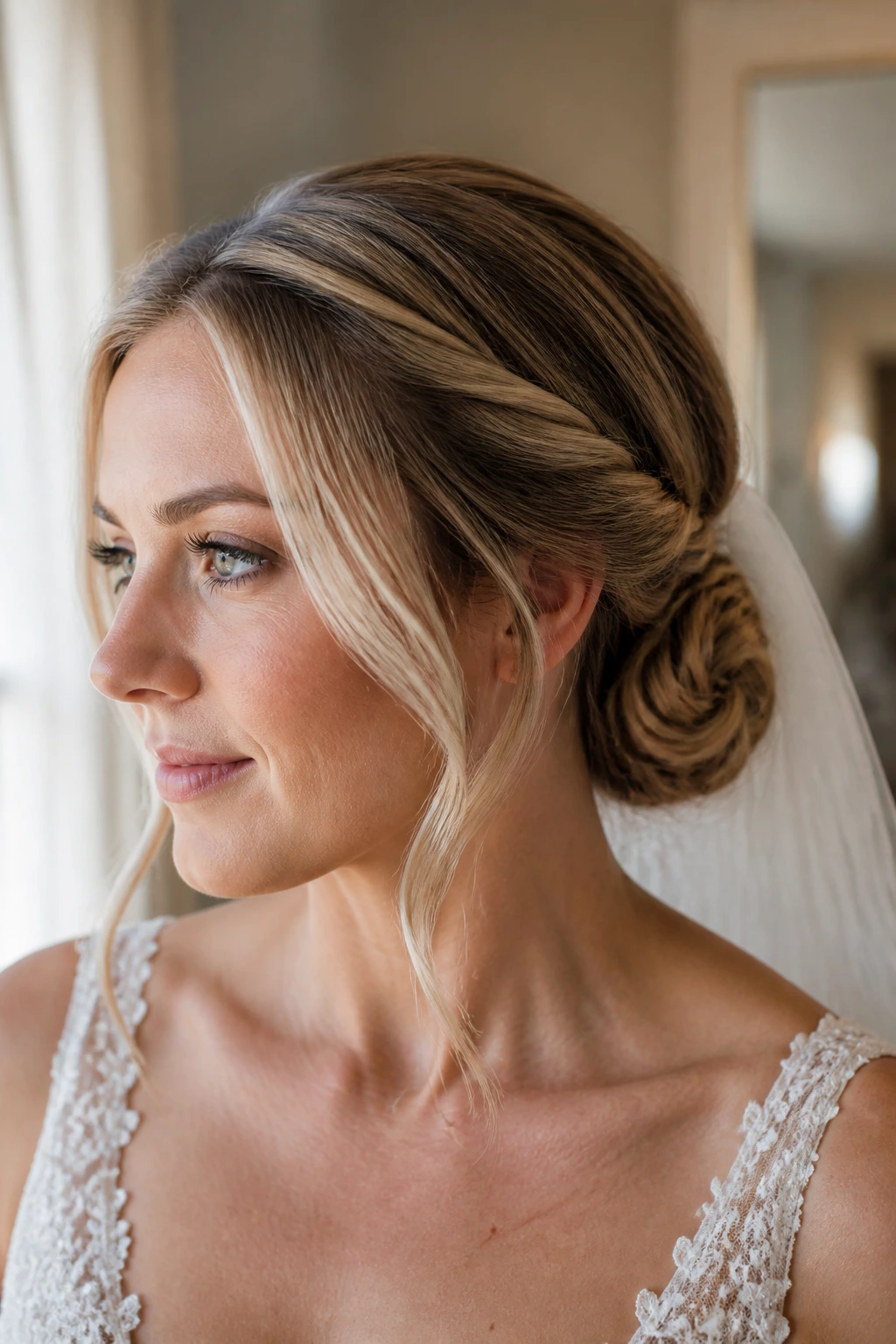
This is the kind of low bun that flatters thin hair because the twists create the illusion of fullness before the bun ever starts. Two side sections get twisted back, a few face-framing pieces stay loose, and the bun itself is built low and slightly off-center.
The face pieces matter. A half-inch to one-inch tendril at the cheek can soften the look, but too many loose bits make the style feel unfinished. I prefer a clean twist line with just enough movement around the face to keep the style from becoming severe.
It works well with veils, especially if the comb sits just above the bun. If your hair is slippery, anchor the twists with small pins first, then build the bun last. That order keeps the whole shape from sliding while you’re dressing.
9. Side-Swept Old Hollywood Waves
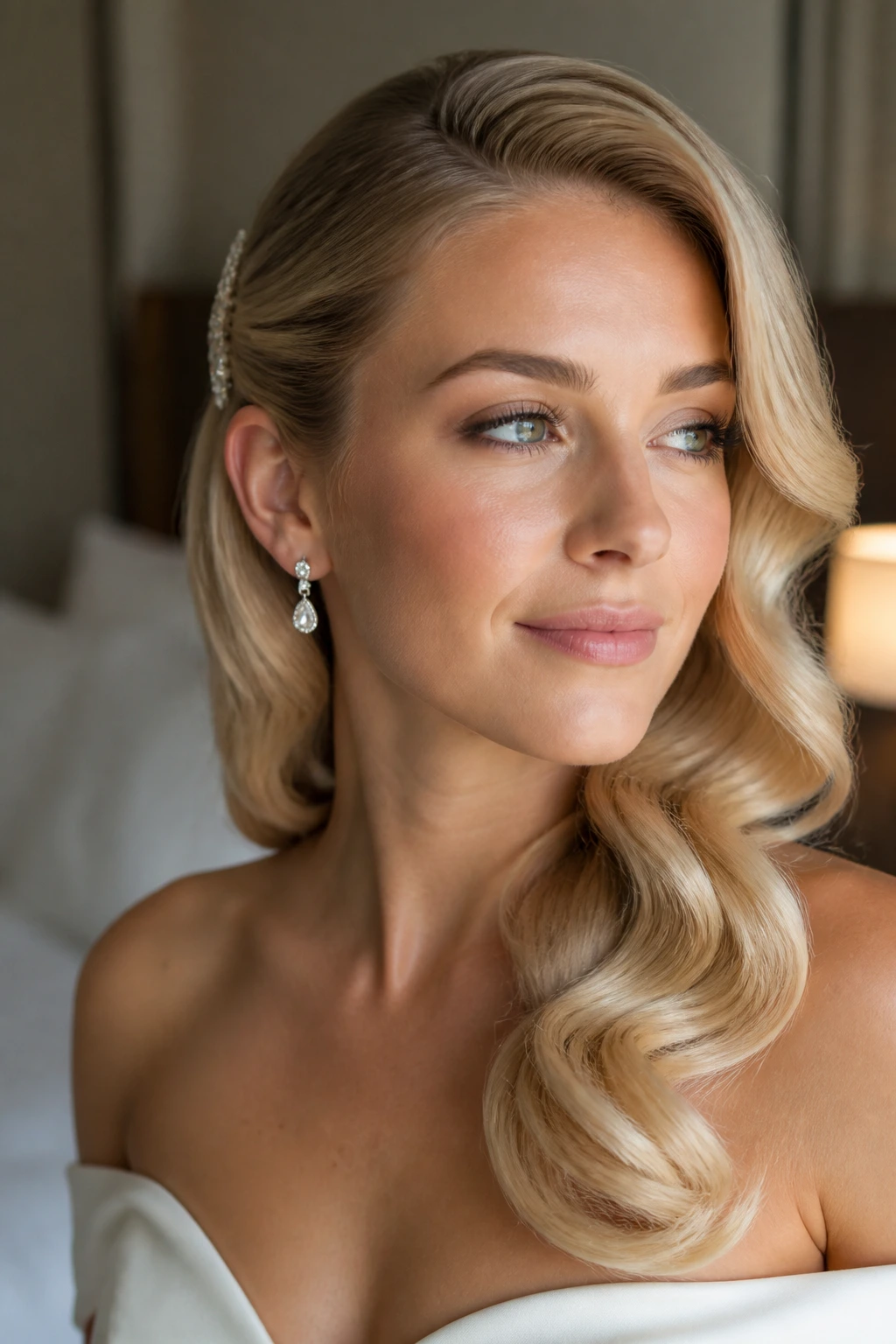
Old Hollywood waves are a good answer when thin hair needs drama, not bulk. A deep side part, a firm set with a 1-inch iron, and a careful brush-out create one strong wave pattern that looks fuller than random curls ever will.
The side sweep gives the face a clear line, and that line is what makes the style feel rich. Pin the back side discreetly behind the ear or along the nape so the wave stays open on the front side and the profile doesn’t collapse inward.
This is the look for brides who like glamour and can tolerate a little product. It photographs well from the front, the side, and the back, which is more than I can say for plenty of over-teased updos that die in the middle of the first dance.
10. Textured Top Knot with Veil Space
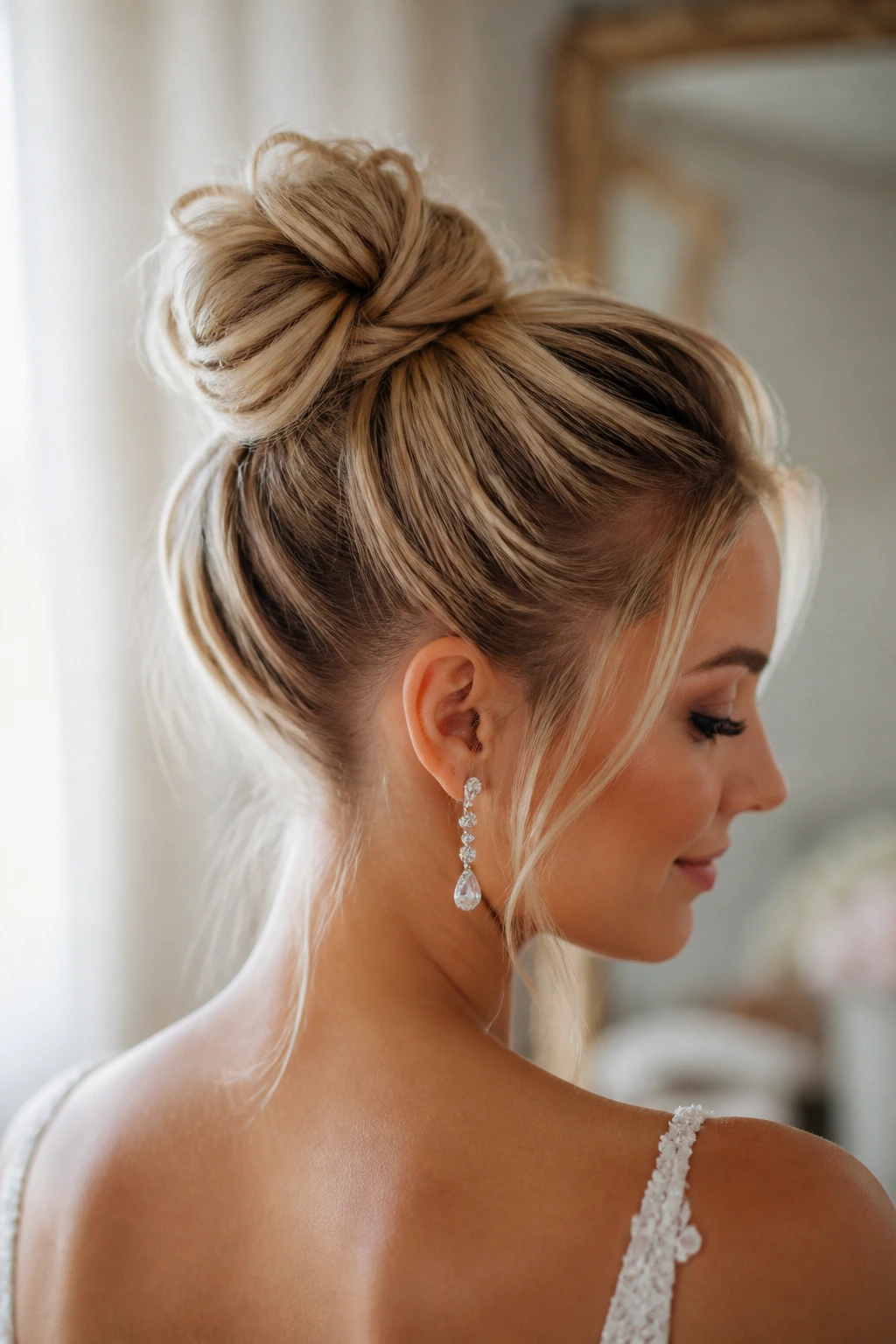
A top knot on thin hair needs discipline. Too high and it starts to look perched; too loose and it turns into a sad little loop. The sweet spot is a lifted knot set just above the occipital bone, where it gives the crown height but still leaves room for a veil comb below it.
A bun form helps here. Pull the top sections smooth, build the knot around the form, and then tug only the outer edges until the bun looks airy. Thin hair should not be stretched until it looks transparent. Give it texture, not exposure.
This works especially well for brides who want to dance and not think about their hair. It also gives earrings room to show, which matters when the dress neckline is already doing a lot of work.
11. Waterfall Braid into Loose Curls
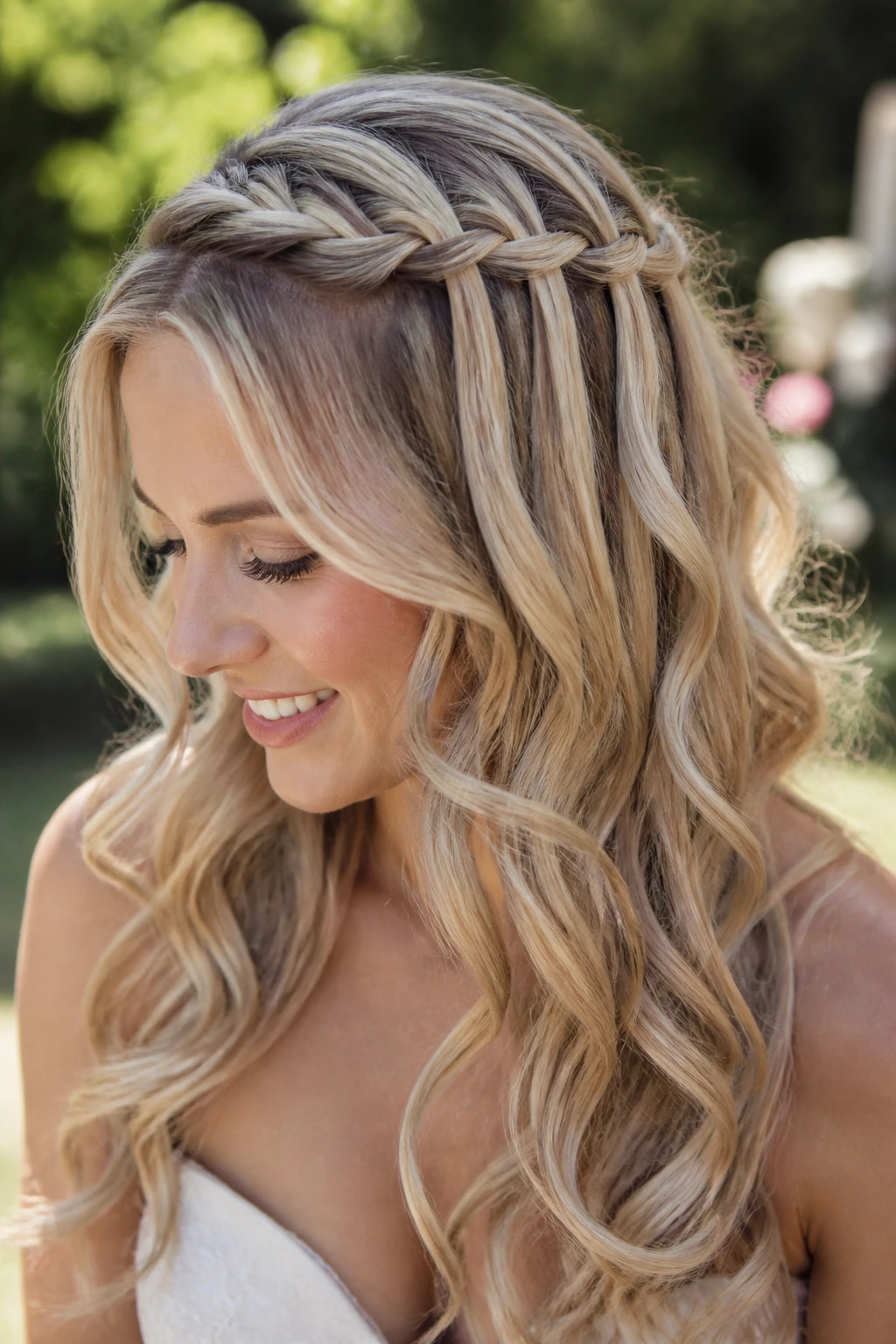
The waterfall braid is one of those styles that looks detailed even when the hair itself is not thick. Because pieces drop through the braid, the style creates movement and pattern without requiring a huge amount of hair to begin with.
Keep the braid small and controlled along the crown or upper side, then let the lower hair fall in soft curls. The contrast is what sells it: structured detail on top, airy length below. If the curls are too tight, they fight the braid; if they’re too loose, the whole thing goes slack.
I like this for outdoor ceremonies, floral dresses, and brides who want something romantic but not syrupy. It does need a little more time than a basic half-up, though, so don’t leave it for the morning of the wedding if you’re not practiced.
12. Low Ponytail with Rope-Twist Detail
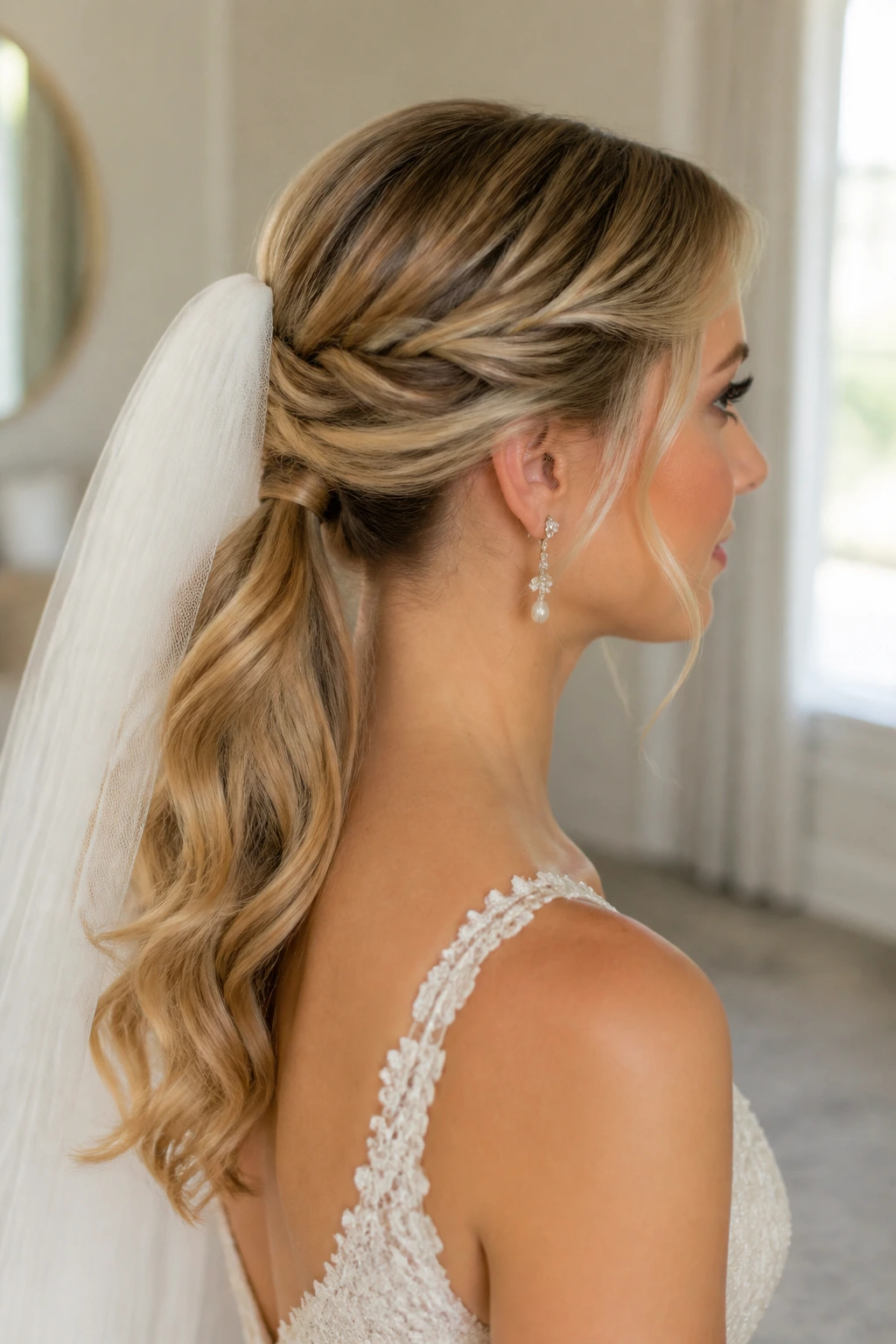
A low ponytail can look thin if it’s left plain, so give it one strong detail: rope twists from each side, or a wrapped section around the base. That single move makes the style feel deliberate and adds just enough visual weight to the back of the head.
Keep the pony low and centered or slightly off to one side. A pony that sits too high can show the scalp line in a way that’s hard to hide on fine hair, while a lower tie lets the length hang with a cleaner shape. Curl the tail in a few large sections if you want more movement.
This one is good for brides who don’t love buns. It’s also easy to pair with a veil, because the base stays tidy and the twist detail gives the comb something solid to sit against.
13. Pin-Back Waves with Pearl Clips
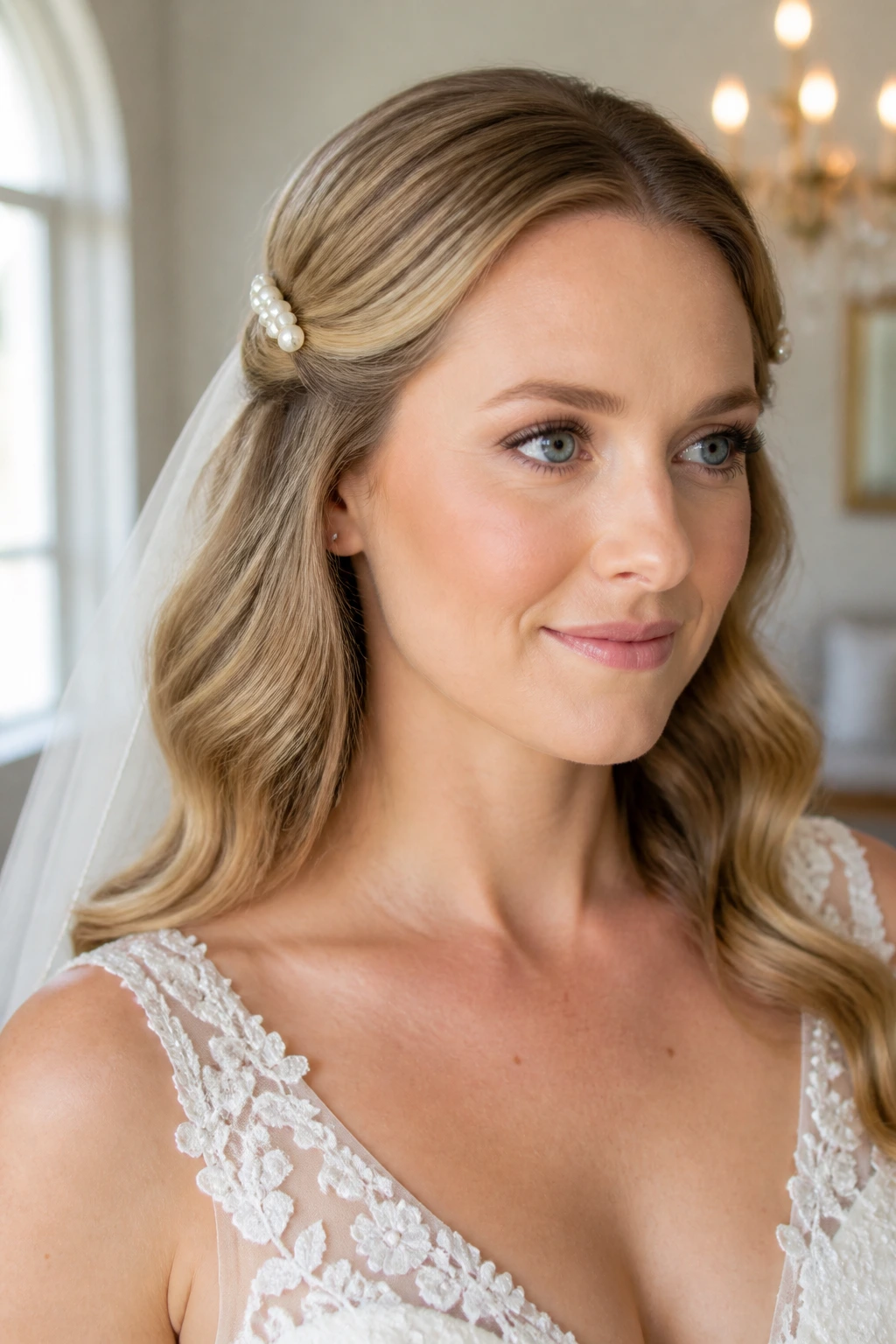
Sometimes the smartest thing you can do with thin hair is stop trying to hide it. Pin-back waves work because they show off the hair’s natural sheen, then use pearl clips or small combs to keep the sides neat and secure.
The style is simple: create soft waves, sweep the front sections back, and pin them in a gentle curve near the temples. The clips are not decoration only. They hold the shape, disguise any sparse area near the part, and make the whole style look finished without needing a lot of bulk.
This is a good choice if your hair is fine but healthy-looking and you want the dress, earrings, or makeup to take center stage. It also survives a long day well because there’s less weight to collapse.
14. Mini Dutch Braids into a Low Bun
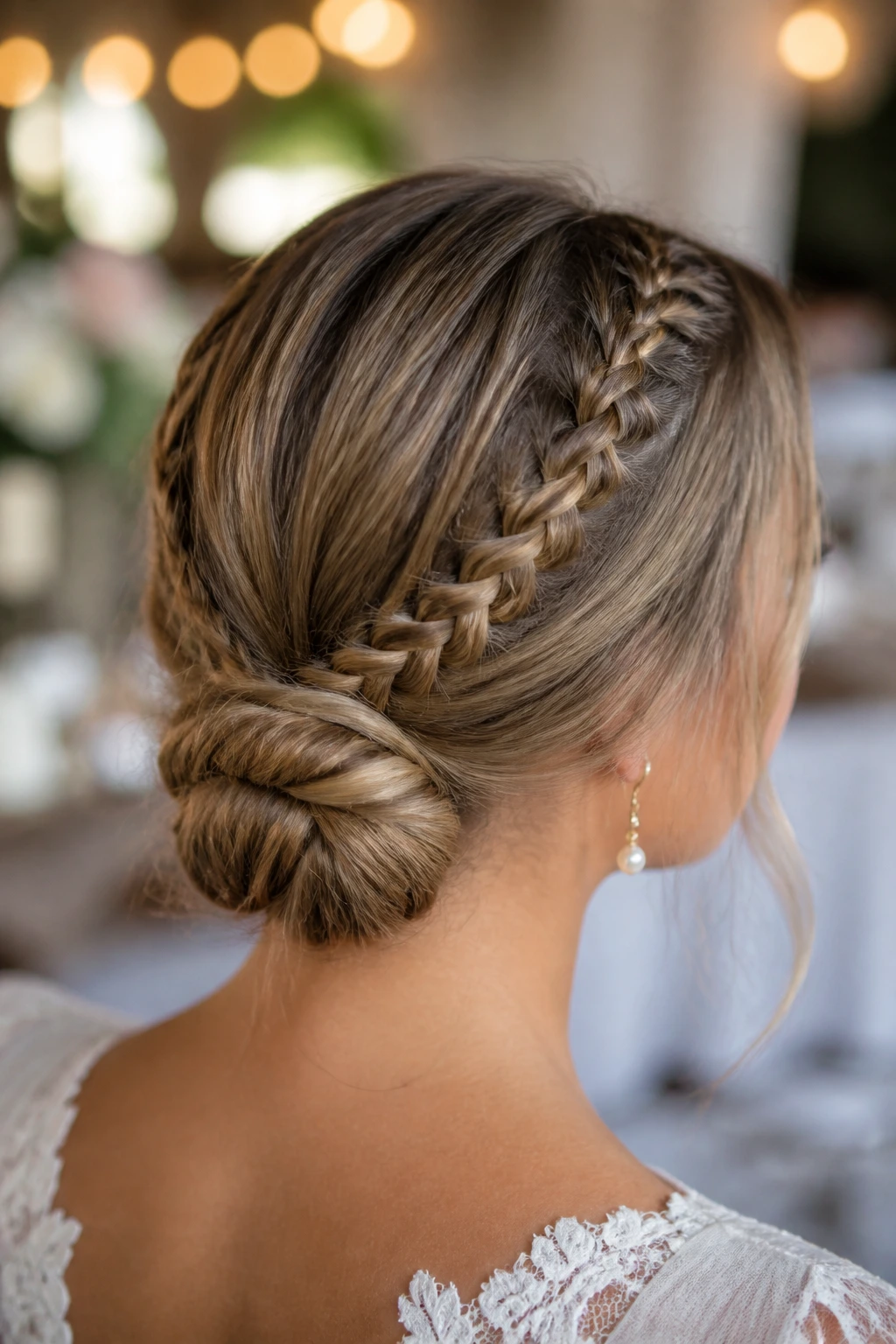
Two small Dutch braids feeding into a low bun are a gift for thin hair. The braids add texture and the bun gains a thicker-looking base, which is exactly where most thin styles fall apart.
Keep the braids narrow and tidy rather than oversized. If they’re too wide, they can eat up the hair you need for the bun; if they’re too tight, they can pull the style flat. Once the braids meet at the nape, wrap the remaining hair into a compact bun and tuck the ends in carefully.
This style holds especially well with veils because the braids act like a built-in anchor. It also photographs cleanly from the back, which is useful if your aisle walk or reception setup means people will see the back of your head more than the front.
15. Rolled French Twist
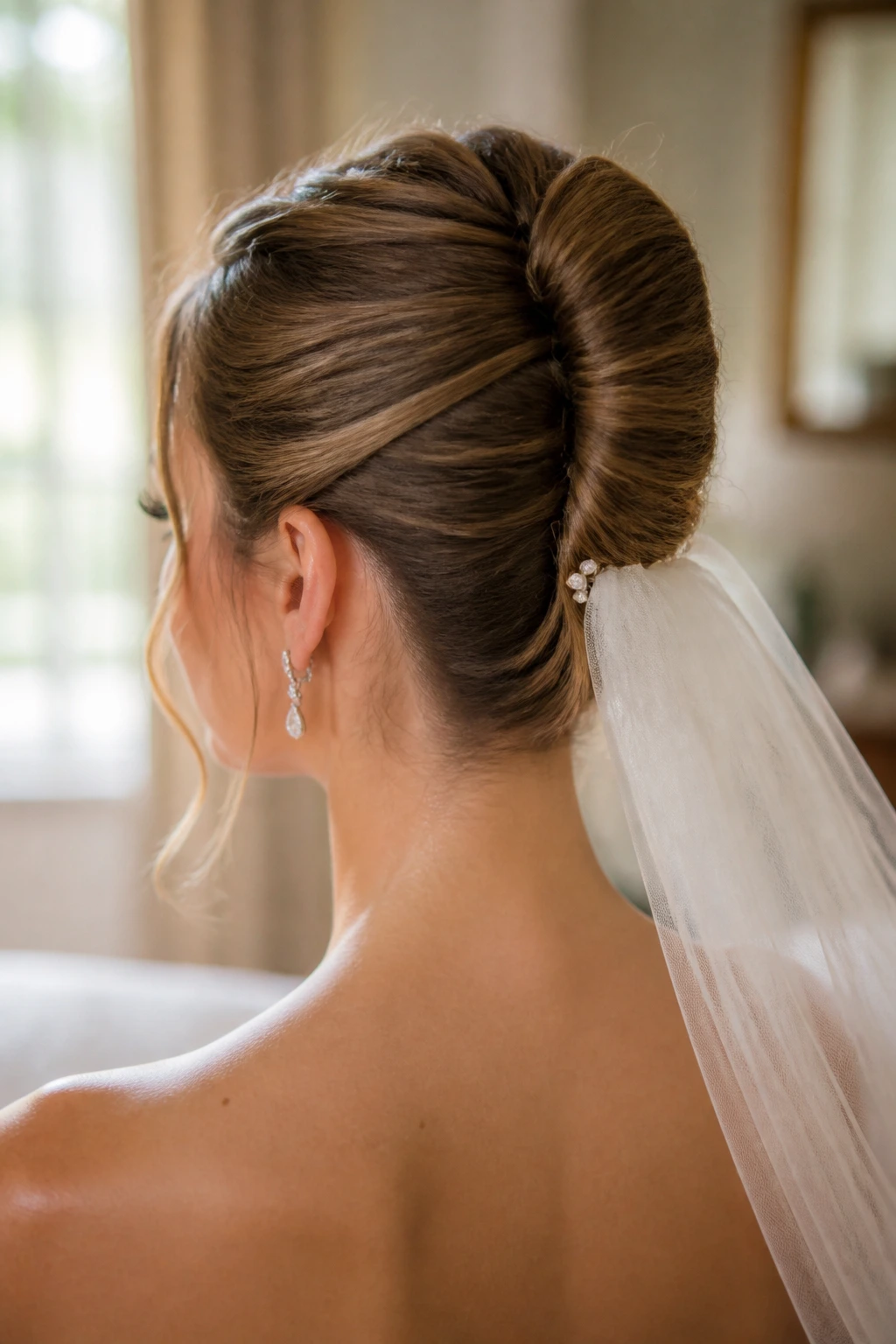
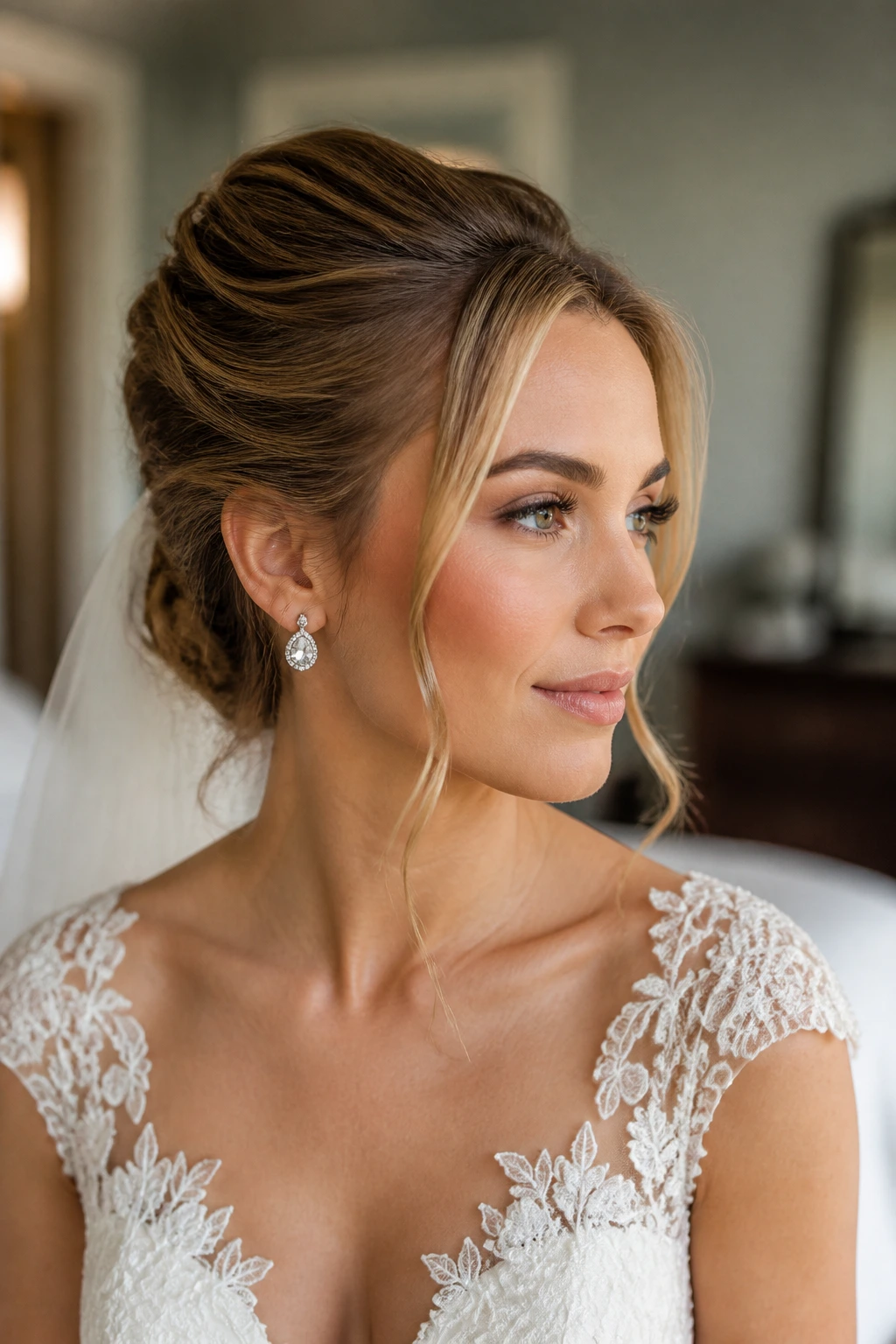
A French twist looks grown-up in the best possible way, and thin hair often suits it better than thick hair does. The rolled shape creates a sleek vertical line, which reads as polished and full even when the actual hair count is modest.
The trick is backcombing only the interior section and keeping the outer shell smooth. You want a strong seam down the center where the roll closes, then pins hidden vertically along the spine of the twist. A light veil comb can sit above or beside the roll if the dress calls for it.
This style is a good match for minimal gowns, high necklines, and brides who do not want soft romance all over their head. It’s precise. That’s the point.
16. Soft Loop Bun with Floral Pins
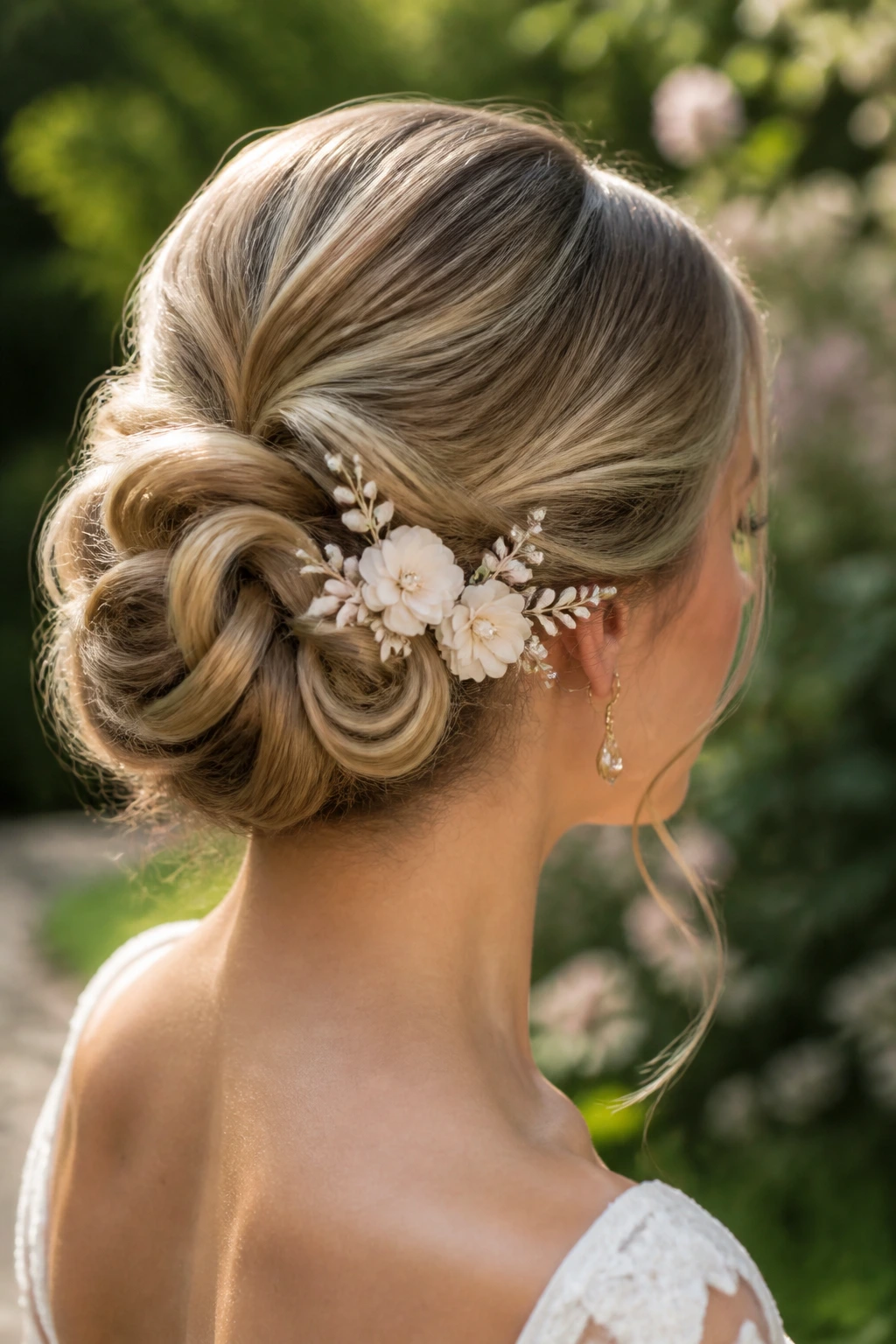
A loop bun gives thin hair a shape it can actually hold. Instead of forcing every strand into a dense knot, you build a series of soft loops and tuck the ends underneath, then place floral pins where the bun needs cover or interest.
The flowers are doing more than decorating. They break up the edges of the bun and hide the fact that thin hair often has less natural thickness at the perimeter. Keep the flowers clustered on one side or just above the base so the look stays clean.
This style is lovely for outdoor weddings, garden settings, or dresses with lace and soft drape. It has enough romance to feel bridal, but it doesn’t rely on a massive amount of hair to get there.
17. Half-Up Bow Bun
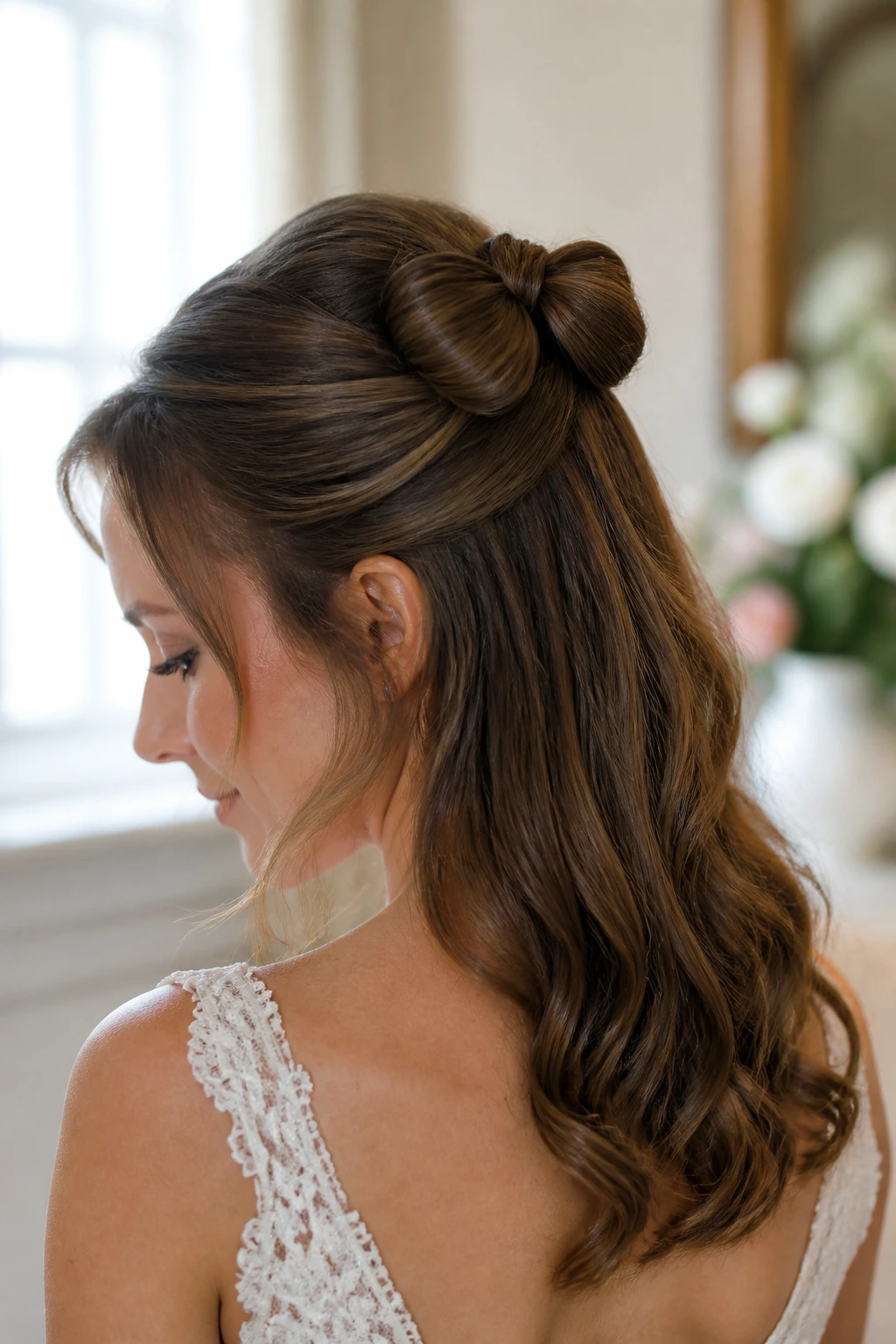
A bow bun sounds playful, and it can be, but on thin hair it works best when the shape is crisp and the loops are small. The hair is sectioned into a half-up knot, then split and shaped into a bow-like loop with the ends tucked through the center.
This style needs texture at the crown or the loops will slide. A little dry shampoo, a little teasing, and a few hidden pins are usually enough. Keep the bow low and balanced rather than oversized, or it starts to look costume-like fast.
I’d reach for this on a bride who wants something memorable but still neat. It pairs well with a simpler dress because the hair becomes the detail.
18. Slick Ponytail with a Lifted Crown
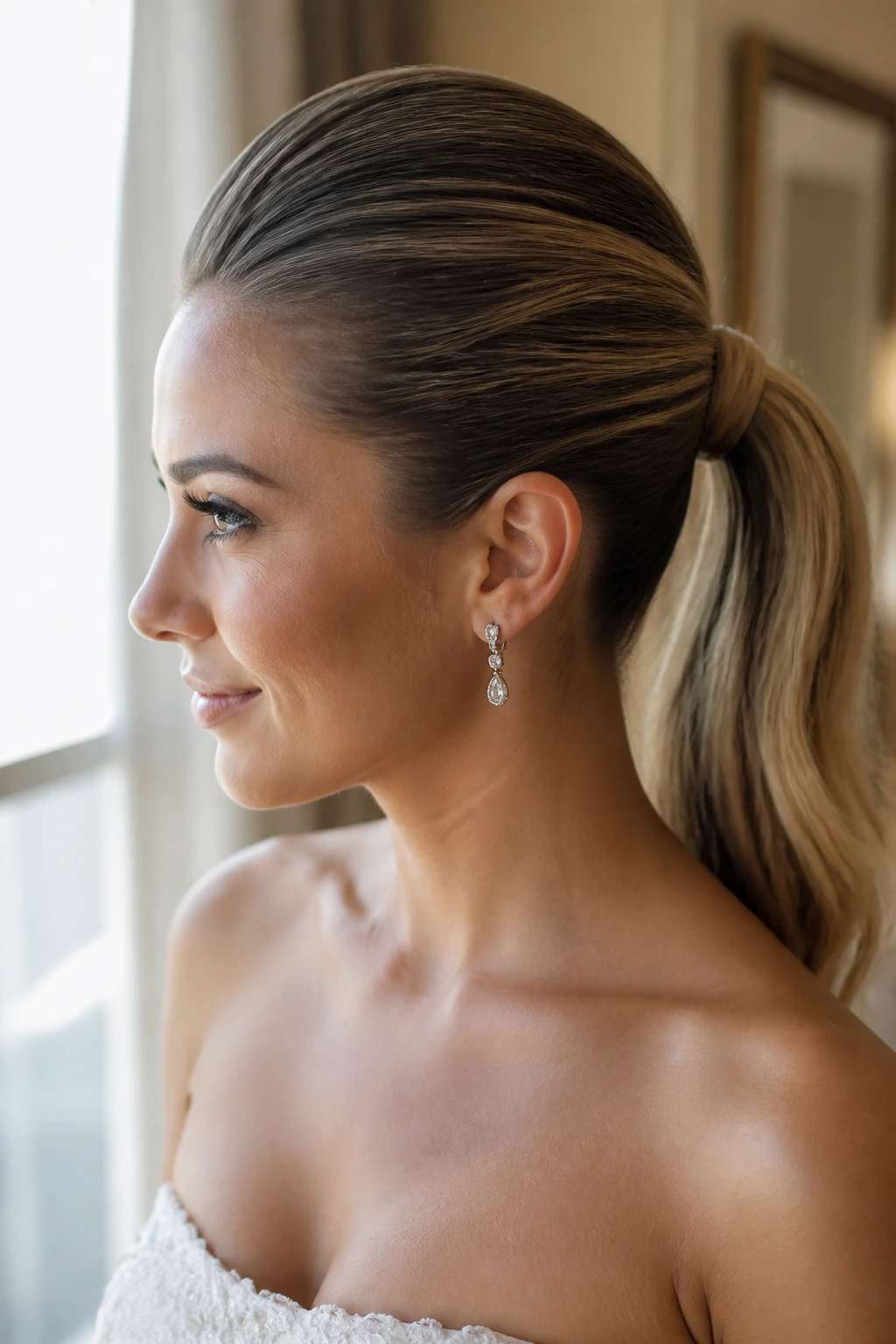
A slick ponytail can work on thin hair if the crown is given some height before the sides are pulled back. That little lift matters. It stops the style from looking like it was flattened against the head and gives the ponytail a stronger starting point.
The surface should be smooth, but not glued down. Use a soft brush, a touch of smoothing cream, and a teasing comb at the crown before gathering the hair low or mid-height. Wrap the base with a piece of hair so the elastic disappears, then leave the tail straight, waved, or softly bent depending on the dress.
This style suits modern gowns, square necklines, and brides who want clean lines. It’s also one of the easiest looks to freshen later with a fast brush and a bit of spray.
19. Pinned Finger Waves with a Deep Side Part
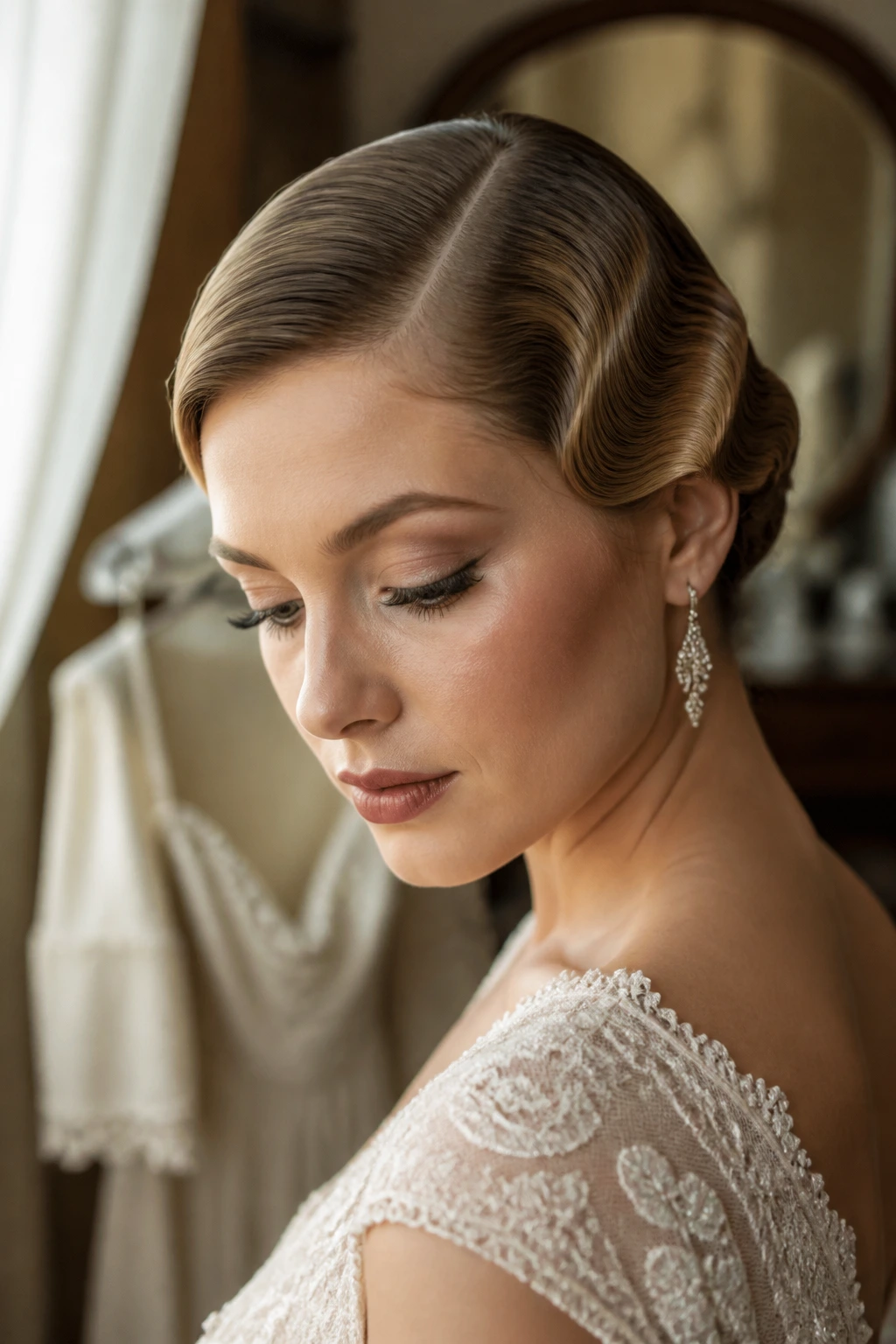
Pinned finger waves are a strong choice when thin hair needs sculpted structure more than loose volume. The waves lie close to the head, which makes the front look smooth and deliberate, and the deep side part gives the style a clear shape from the start.
This is not the look for someone who wants airy softness. It’s for brides who want the hair to stay put, especially around the temples and front hairline. Pin the wave sections in place while they cool, then release only what you need for the final shape.
It works beautifully with vintage gowns, satin fabrics, or bold lipstick. The whole style has a kind of quiet authority that thin hair can pull off very well.
20. Braided Low Ponytail with a Wrapped Base
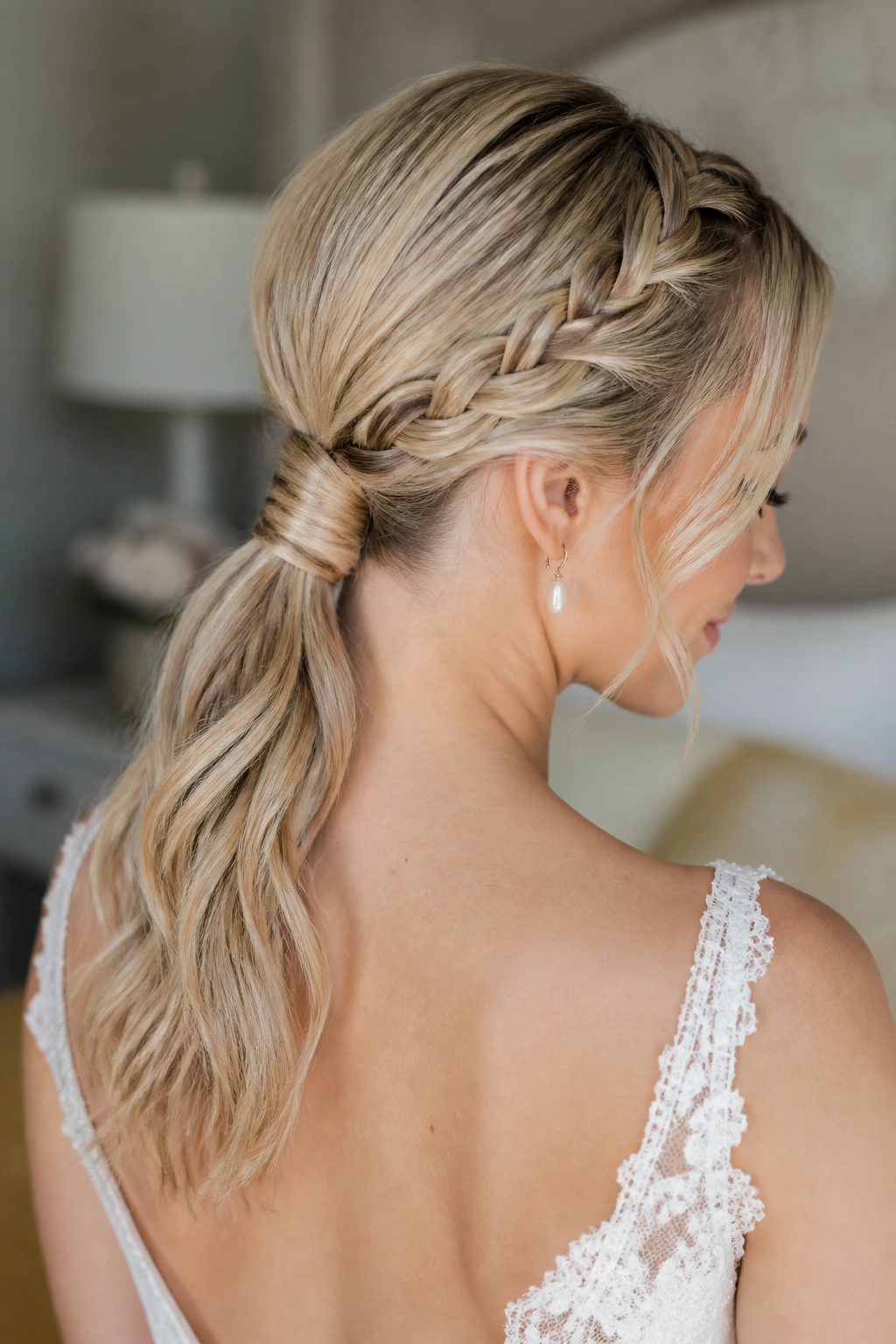
Braids and low ponytails are friends for a reason. The braid adds texture, the ponytail keeps the shape simple, and the wrapped base hides the elastic while giving the whole style more visual weight.
You can braid a small section from each side and gather them into the pony, or build a single braid along the crown before tying it low. Either way, keep the braid compact and the ponytail softly curled or waved. That keeps the style from looking stringy at the ends.
This one feels easy to wear all day. It doesn’t fight the veil, doesn’t crowd the neckline, and doesn’t need a miracle to survive a little humidity.
21. Shoulder-Grazing Lob Styled with an Accessory Focus
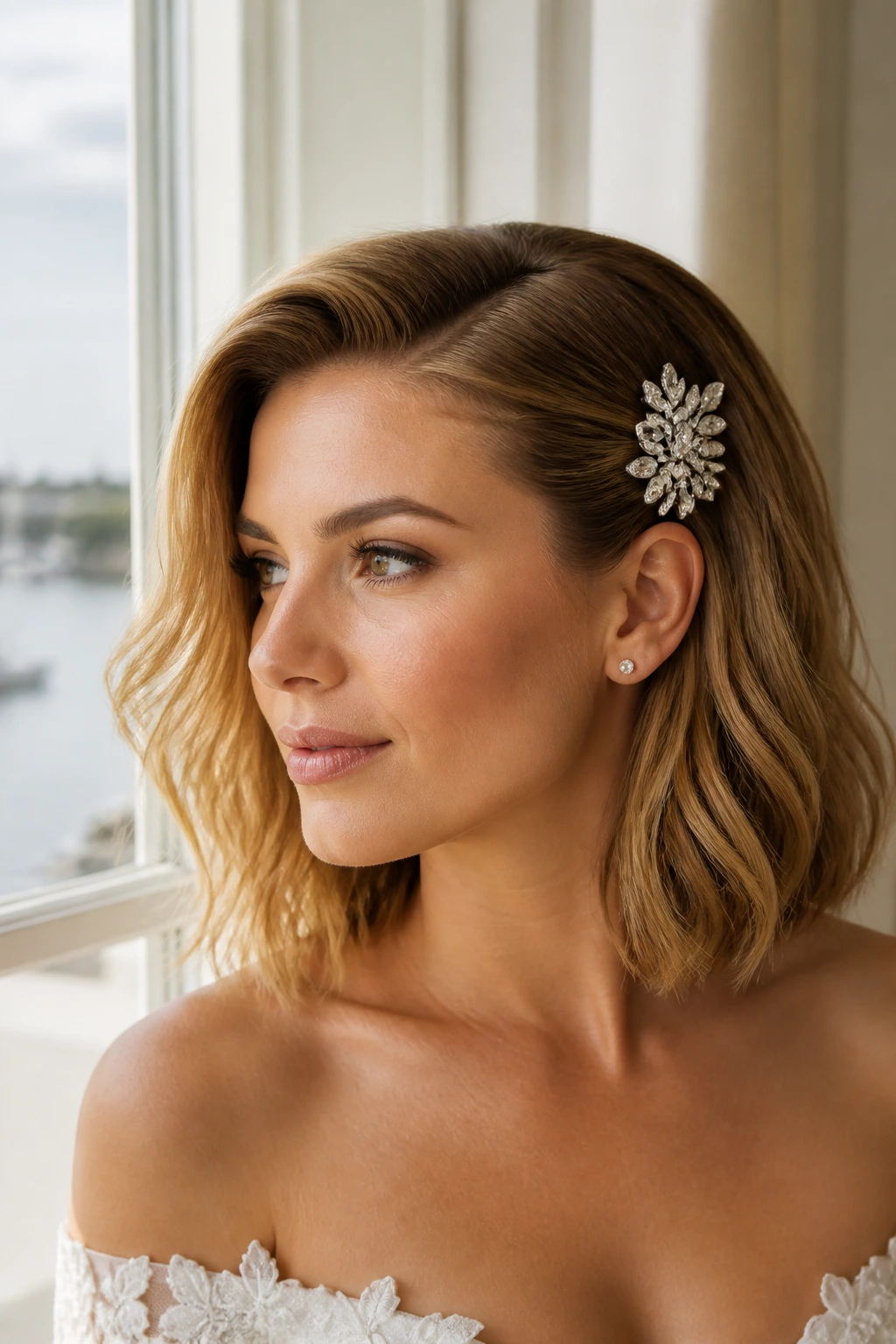
If your hair stops at the shoulders, you do not need to pretend it’s longer. Work with the cut. A shoulder-grazing lob can look full and bridal with a strong side part, a flipped-under end, and one good accessory doing the visual work.
A comb, a crystal clip, or a row of pearl pins can make the whole style feel finished without asking the hair to become something it isn’t. Thin shoulder-length hair often looks better when the ends are tucked or bent just slightly under, because blunt lines can feel sharp in photos.
This is the style for brides who want polish and sanity. It’s faster to refresh than a complicated updo, and it looks intentional in a way that a half-finished curl set never does.
22. Soft Side Bun with an Asymmetrical Sweep
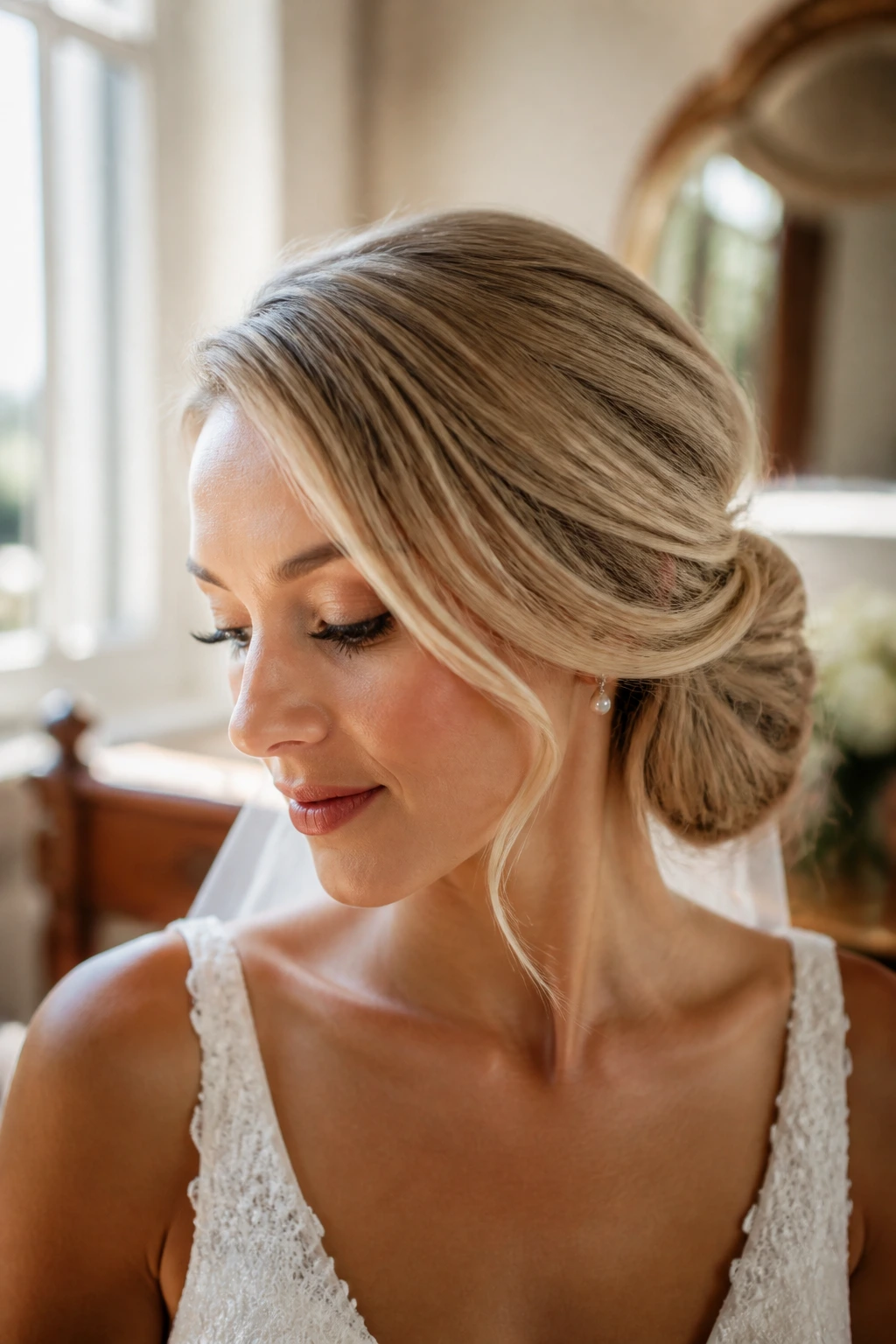
The side bun is quietly one of the best answers for thin hair because all the visual weight sits in one area. Sweep the hair to one side, build the bun just behind the ear, and leave the opposite side softer so the face stays open and the style feels airy.
Asymmetry helps here. It gives the eye a place to land, which makes the bun seem fuller than it really is. If your hair is very fine, start with a small padded base or a twisted core, then pin the outer sections over it so the bun has roundness without puffing.
This style is a strong fit for brides who want romance but not fuss. It also works with a veil pinned just above the bun, since the low side placement leaves room for hardware and keeps the silhouette from getting crowded.
The Shape Tricks That Make Thin Hair Read Fuller
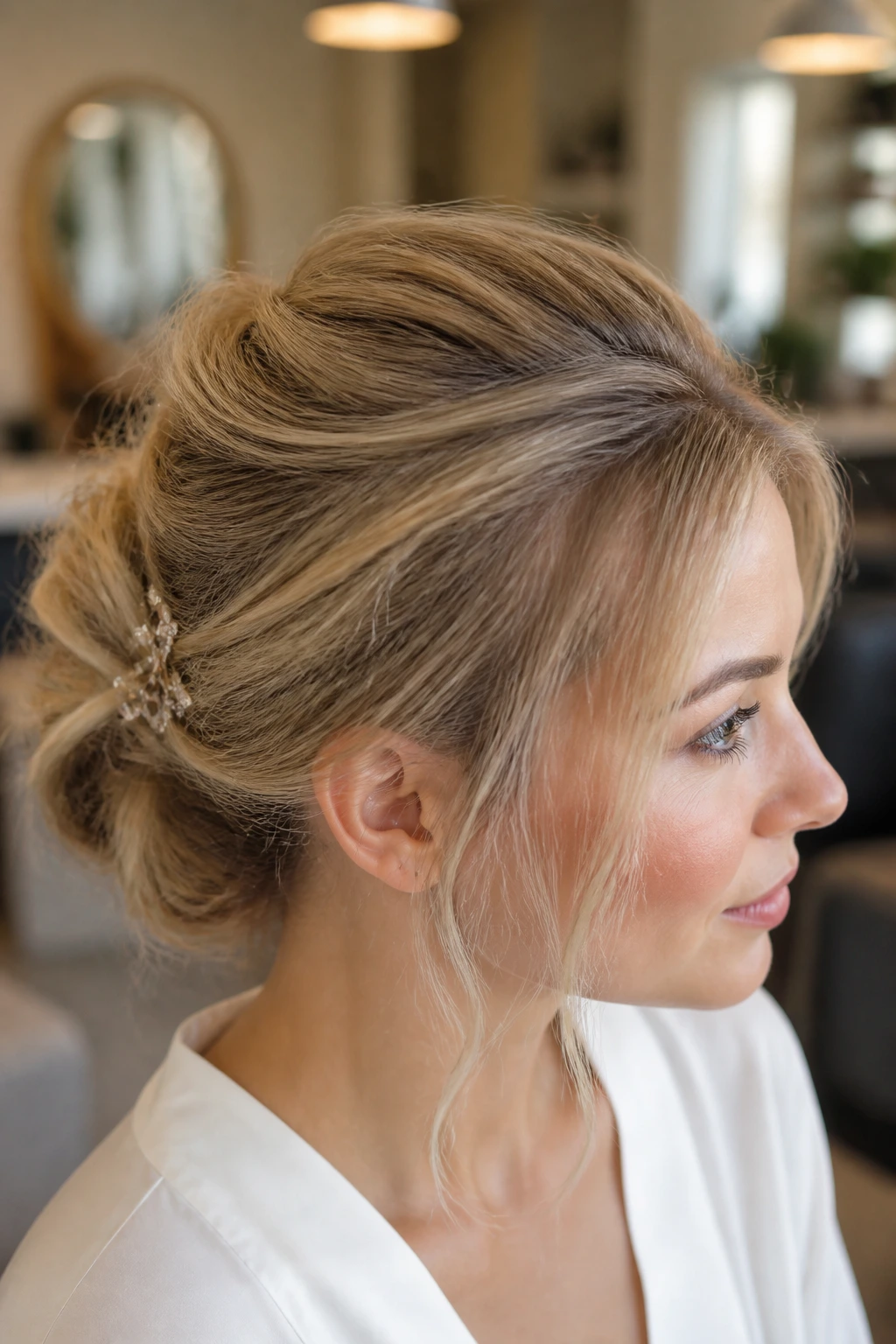
The best styles in this collection all do the same quiet work: they build shape where the eye looks first and hide the parts that give away density. That means the crown, the part line, the nape, and the seam where a bun or twist closes. Miss those spots and the whole style can look flatter than it should.
Lift at the Crown, Not Everywhere
You do not need giant volume from the front hairline to the back of the head. You need a controlled bump or cushion at the crown so the head shape feels taller and the style doesn’t cling to the scalp. A little lift goes farther than aggressive teasing that gets brushed out five minutes later.
Hide the Anchors
Thin hair looks best when the pins, elastics, and padding are tucked out of sight. That’s why low buns, wrapped ponytails, and braid-fed styles work so well. The support lives underneath, and the surface stays clean enough for photographs.
Let One Detail Carry the Style
Pearl clips, braided bands, side twists, or a veil comb can do real visual work. If everything is trying to be a statement, thin hair can look overworked. Pick one thing to lead and let the rest stay calm.
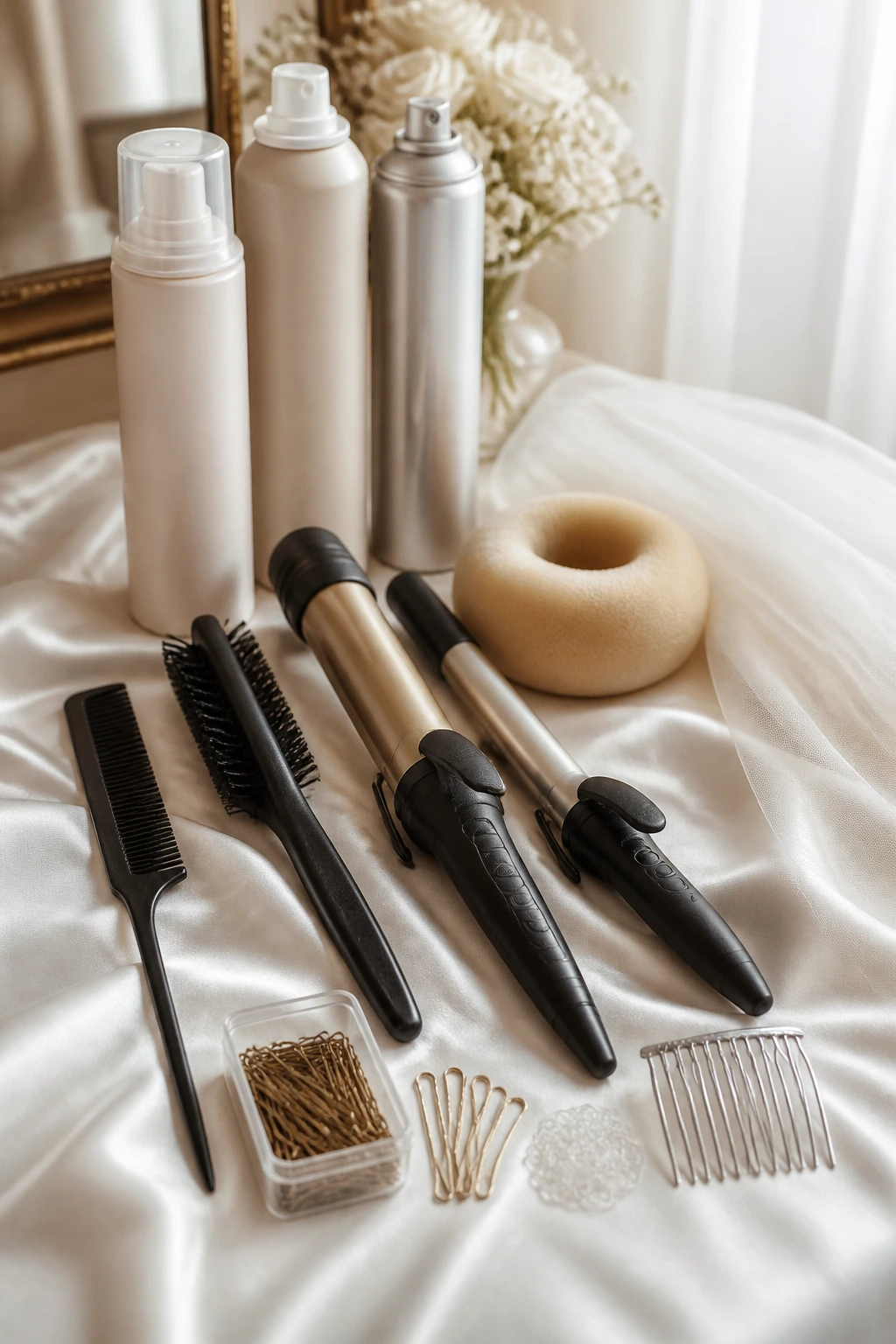
Essential Tools for Bridal Styling on Thin Hair
-
Tail comb: Clean parts and tiny lift sections are much easier with a pointed comb than with fingers alone.
-
Teasing brush: Better than a wide brush for controlled backcombing at the crown and behind the ears.
-
1-inch curling iron or wand: The sweet spot for curls that hold shape and brush out into fuller-looking waves.
-
3/4-inch iron: Handy for shorter hair, finger waves, and tighter texture when the style needs extra grip.
-
Volumizing mousse: Gives thin hair memory at the roots before blow-drying, which helps every style hold longer.
-
Dry shampoo or texture spray: Adds grip where smooth hair would otherwise slide apart.
-
Strong-hold but brushable hairspray: Keeps the finish in place while still letting you adjust a curl or pin.
-
Color-matched bobby pins and U-pins: Thin hair needs pins that disappear and lock properly, not shiny slivers that flash in photos.
-
Small clear elastics: Useful for bubble ponytails, braid ties, and twisted styles where a big band would show.
-
Padded bun form or small donut: A quiet lifesaver for chignons and top knots when your own hair doesn’t have much bulk.
-
Veil comb or clip: Worth testing with the finished style so the weight and placement don’t surprise you later.
How to Prep Thin Hair So It Holds Shape
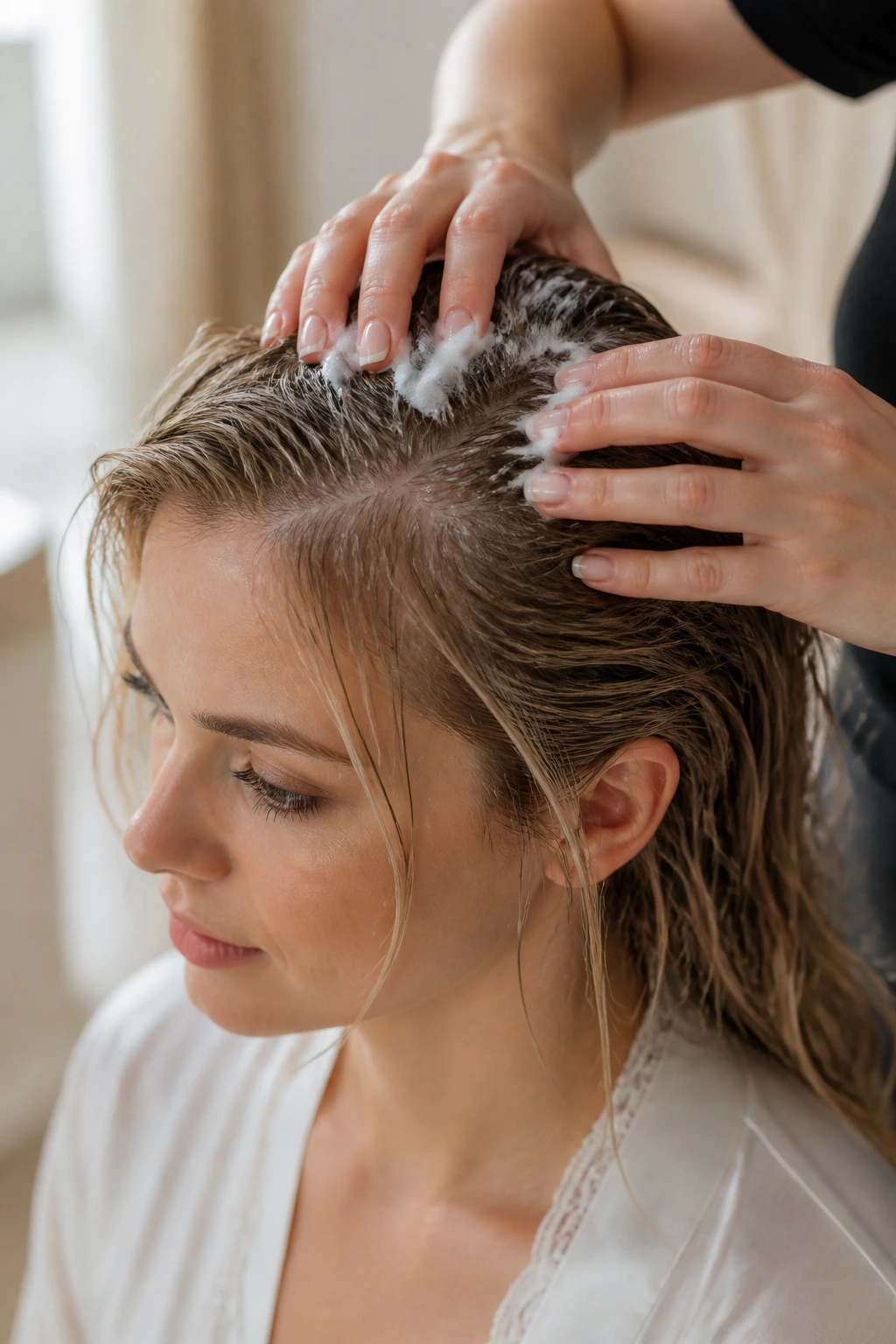
Thin hair usually needs prep more than it needs product volume. Start with a wash schedule that leaves the hair clean enough to move, but not so squeaky fresh that it slides through every pin. For many brides, that means styling on hair that was washed the day before, then rough-dried with a little mousse at the roots.
If you plan to use clip-ins or a small bun form, buy them before the trial and bring them to the appointment. Color matching matters more than people think. A piece that is a shade off can show through in daylight, especially around the part or the nape.
The products that actually help
Use volumizing mousse on damp roots, not heavy cream near the scalp. Save the smoothing serum for the ends only, or the whole style can slip. A light mist of dry texture spray at the crown and mid-lengths gives pins something to grab, which is half the battle with fine strands.
The test worth doing
Wear the exact earrings, veil, and neckline you plan to use. A style that looks balanced with a T-shirt can sit too high or too low against a real dress, and thin hair shows that mismatch fast. If the trial feels a little too soft, ask for more anchor points rather than more spray.
How to Wear These Styles With Veils, Jewelry, and Necklines
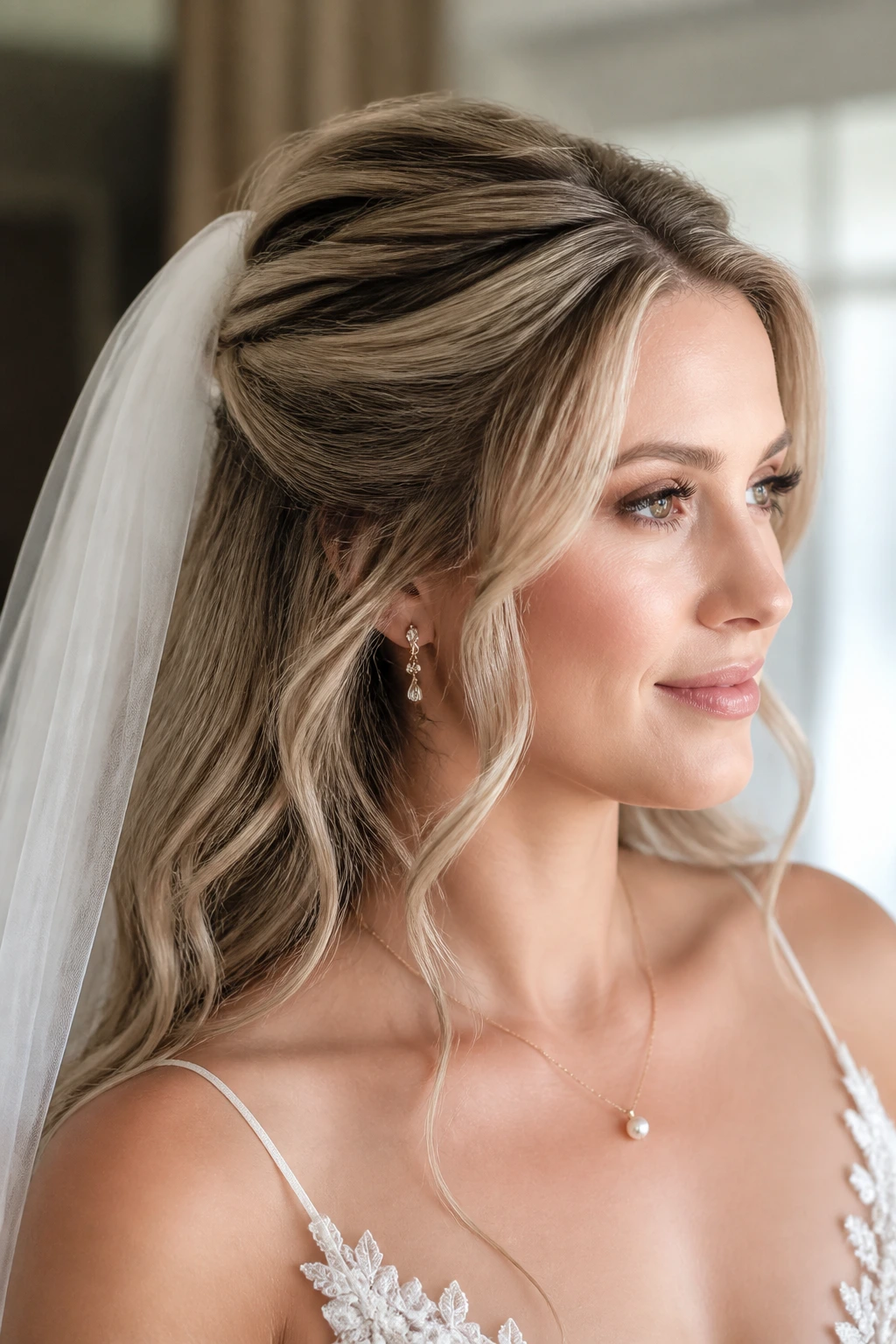
Veil Placement: Low buns, twists, and braided styles usually hold a veil comb best when the comb sits in the densest part of the style, not right on top of teased crown hair. If the veil is heavy, ask for a second anchor point. Thin hair does not love extra weight hanging from one tiny spot.
Accessory Pairing: Pearl pins suit sleek styles and wave patterns; floral pieces look right in braids and soft buns; one oversized comb can carry a minimalist ponytail or lob. The accessory should solve a problem or sharpen the shape, not just sit there looking pretty.
Dress Necklines: High necks and halters work well with lifted crowns, low knots, or smooth ponytails because they keep the neckline open. Strapless and sweetheart styles can take more side volume, loose waves, or a side sweep without feeling crowded.
Comfort Check: Turn your head, tilt your chin back, and sit down before you leave the chair. If a pin pokes or a veil comb shifts when you move, it will bother you more later, not less.
Extra Texture, Volume, and Shine Moves
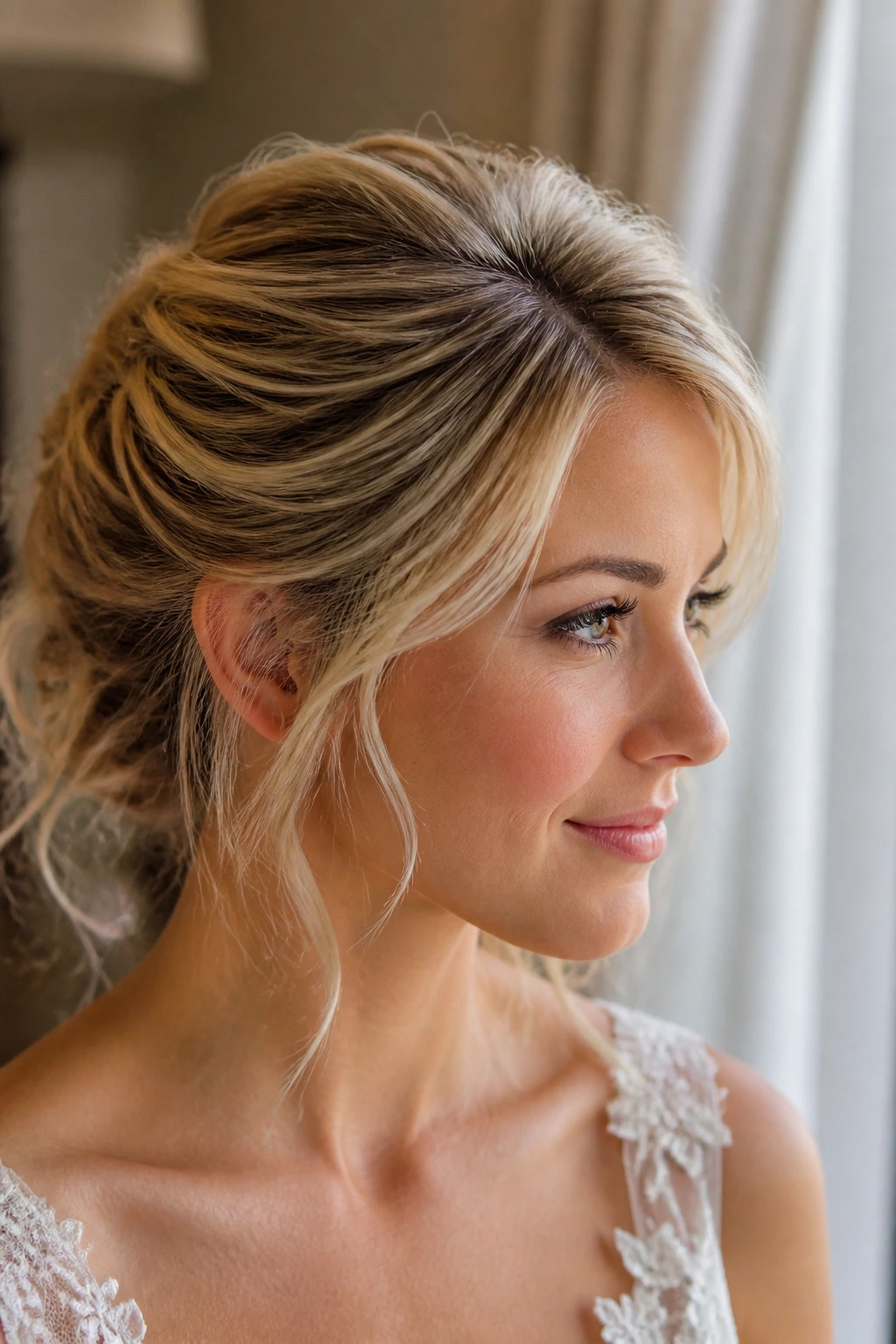
Texture Boost: If your hair is too slippery, crimp a hidden 1-inch strip underneath the top layer near the nape or crown. You will never see it, but the style will hold pins better and resist that annoying slow slide thin hair loves to do.
Volume Boost: Blow-dry with your head lifted, then cool the roots with the dryer pointed downward for the last pass. That tiny change helps the cuticle lie flatter at the ends and keeps the top from collapsing as fast.
Shine Control: A pea-size drop of serum rubbed between the palms and pressed lightly over the ends is enough. More than that, and the crown starts looking greasy in photos, which thin hair can’t afford.
Make-It-Yours: If you want more softness, leave a few face pieces and bend them with a smaller iron. If you want more drama, add one strong accessory instead of piling on three small ones. Thin hair usually looks stronger with one clear decision.
Make-Ahead, Trial Runs, and Touch-Up Care
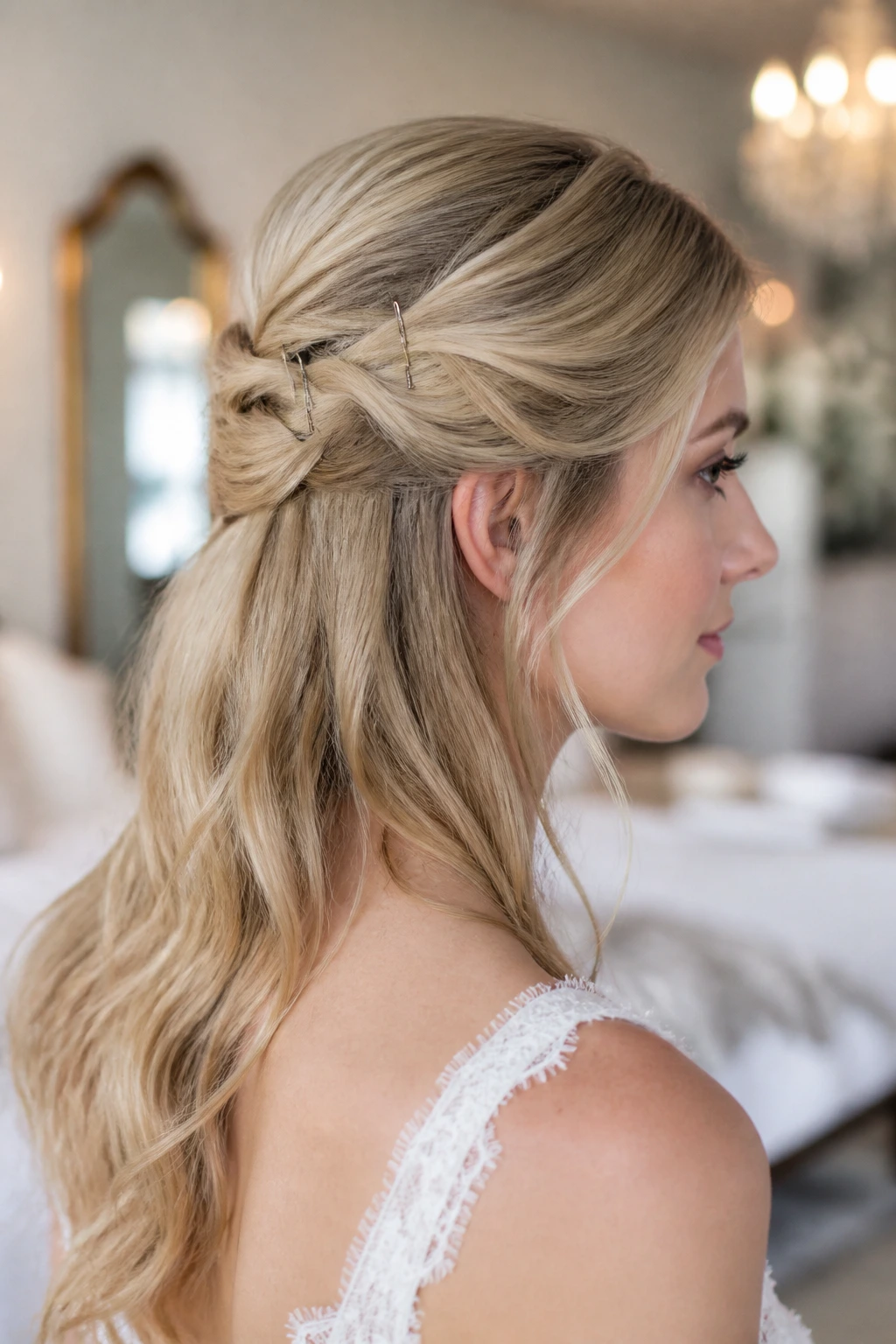
A bridal hair trial is not optional if the style needs pins, veil hardware, or clip-ins. Book it with the exact accessories you plan to wear, and give the stylist a clear look at your dress neckline. A style that sits perfectly with a loose blouse can sit too high or too low against the real dress.
For prep, wash according to how your hair behaves. If it gets oily fast, a fresh wash the morning of the wedding can help. If it slips when it’s too clean, wash the day before and let a little natural grip build back into the hair. That one choice changes how well pins stay put.
Keep a small touch-up kit nearby: 6 to 10 bobby pins, a travel-size hairspray, a tail comb, and 2 clear elastics. If curls flatten, do not keep brushing them into submission. Pin the section back, mist lightly, and let it cool for a few minutes before touching it again.
After the event, brush out the style gently before washing so you’re not fighting a mat of spray and pins the next morning. If you used extensions, clip-ins should be brushed, stored flat or hung, and kept free of product buildup so they stay soft for the next trial or event.
Common Mistakes Brides Make With Thin Hair
-
Using too much conditioner at the roots: The hair feels silky in the chair and then slides apart by the time the veil goes on. Keep conditioner from mid-length to ends and wash the roots clean.
-
Picking a style that’s too big for the hair you have: A huge bun built on very little hair often looks patched together. Use a padded base or choose a lower, tighter silhouette instead.
-
Brushing out every bit of texture: Softening the top is fine. Flattening the whole style turns curls into weak bends and braids into loose fuzz. Leave some shape intact.
-
Forgetting the weight of the veil or accessory: A heavy comb can pull a style backward, especially on fine hair. Test the real piece during the trial instead of guessing.
-
Teasing and then over-spraying: The hair gets stiff, the crown looks dusty, and the style can crack when you move. Use enough spray to hold, not enough to freeze the surface.
Questions Brides Ask About Thin-Hair Wedding Hairstyles
Can thin hair really hold a wedding updo all day?
Yes, if the style has a stable base and the pins are doing actual work. Low buns, twists, and braided styles usually hold better than big loose updos because they rely on structure, not sheer hair mass.
Are clip-in extensions a good idea for thin hair?
They can be, especially if you want waves, a fuller ponytail, or more length for braids. The main rule is to match the color and keep the clips hidden under enough real hair that they don’t flash through the top layer.
Should I wear my hair up or down if it’s thin?
Either can work. Down styles need crown lift and texture so they don’t go flat, while up styles need padding or twisting to look full. The better question is which neckline, veil, and earrings you’re wearing.
What’s the best part line for thin bridal hair?
A soft off-center part is often the safest bet because it gives the hair a fuller read without exposing the scalp the way a hard center part can. That said, a center part can work if the style has strong crown lift or sleek structure.
How much teasing is too much?
If you can see a rough, frayed surface before the spray goes on, you’ve probably gone too far. The goal is lift and grip, not a nest. A little teasing at the crown is enough for most bridal looks on thin hair.
Can I wear a veil with a ponytail?
Absolutely. A low ponytail, bubble ponytail, or wrapped ponytail can take a veil well if the comb is anchored into the densest part of the style and not just clipped over a smooth surface.
What if my hair is too short for braids or buns?
Then go for pin-back waves, a faux bob, a French twist with hidden ends, or a shoulder-grazing lob styled with one strong accessory. Shorter thin hair usually looks best when the shape is controlled instead of forced.
How do I keep my style from collapsing by the reception?
Start with the right prep, let curls cool before brushing, and use pins where the style needs support. Keep a tiny touch-up kit close, and don’t keep touching the crown with your hands; that’s how lift disappears faster than it should.
The Bridal Style That Stays in Place
Thin hair can do more than people give it credit for. It can look polished, soft, vintage, modern, romantic, or clean-lined — as long as the style respects what the hair can actually hold and doesn’t try to fake a density it doesn’t have.
The smartest bridal hair choice is usually the one with a clear shape, honest structure, and one or two good support points hidden underneath. That’s what keeps the style looking neat in the getting-ready photos, the ceremony, and the slightly chaotic hour when somebody asks you to hug three relatives in a row.
Pick the silhouette first, then build the lift, pins, and accessories around it. Thin hair behaves much better when the plan is calm and specific, and that is exactly what makes these looks worth trying before the wedding day arrives.
