



A brunette bob doesn’t need a loud color to make an entrance. In rich warm tones, it does the opposite: it catches light in the mid-lengths, softens the jawline, and makes the cut look fuller than a flat ash brown ever can. Chestnut, mocha, caramel, cinnamon—those shades have depth, and on a bob, depth matters.
Brunette bob haircuts are one of those styles that change completely with a half-inch of weight or a few ribbons of color. Cut it blunt and warm brunettes look crisp. Add movement and the same color turns softer, almost plush. That’s why stylists keep coming back to this shape when they want brown hair to look expensive without asking for a dramatic dye job.
A good brunette bob is not one haircut. It’s a family of cuts—sleek, shaggy, curved, chopped, tucked, air-dried, polished—that all benefit from the same glossy brown palette. Some sit right at the jaw. Some skim the collarbone and still count as a bob in my book. The trick is picking the shape that gives your brown hair more life, not just more length.
Why These Warm Brunette Bobs Stand Out
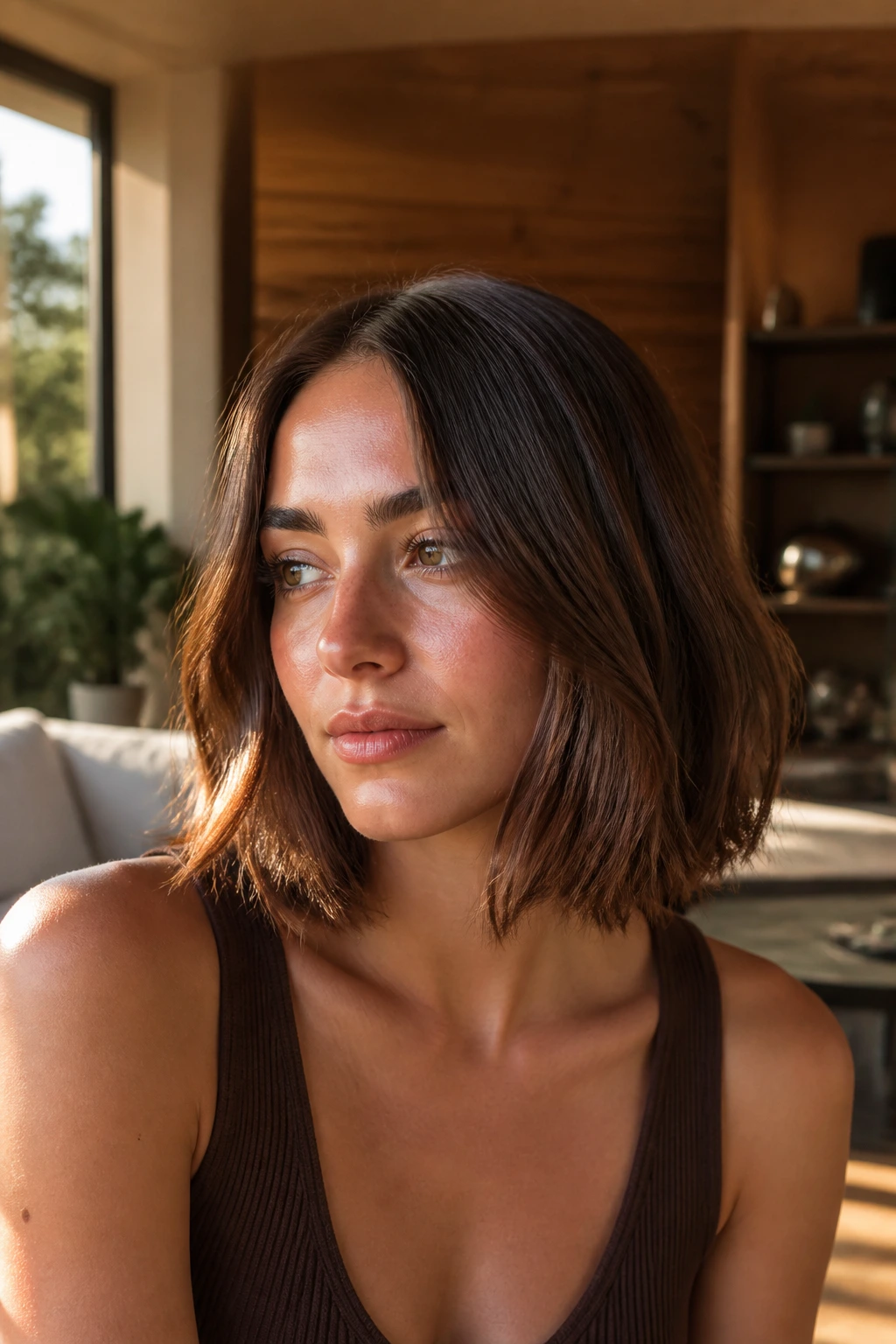
- Warmth does the heavy lifting: Chestnut, caramel, and auburn tones reflect more light than flat neutral brown, so the cut looks shinier and fuller at the ends.
- The shape changes the mood fast: A blunt jaw-length bob reads sharp and polished; a shaggy bob with the same color looks loose and lived-in.
- These cuts flatter without fighting your texture: Straight hair gets cleaner lines, waves get movement, and curls get a better outline when the bob is cut with the texture in mind.
- They grow out well: A warm brunette gloss blurs small shape changes as the cut softens, which makes salon grow-out less awkward than a high-contrast color.
- They’re easy to personalize: Bangs, side parts, money pieces, and lowlights shift the feel of the cut without changing the whole haircut.
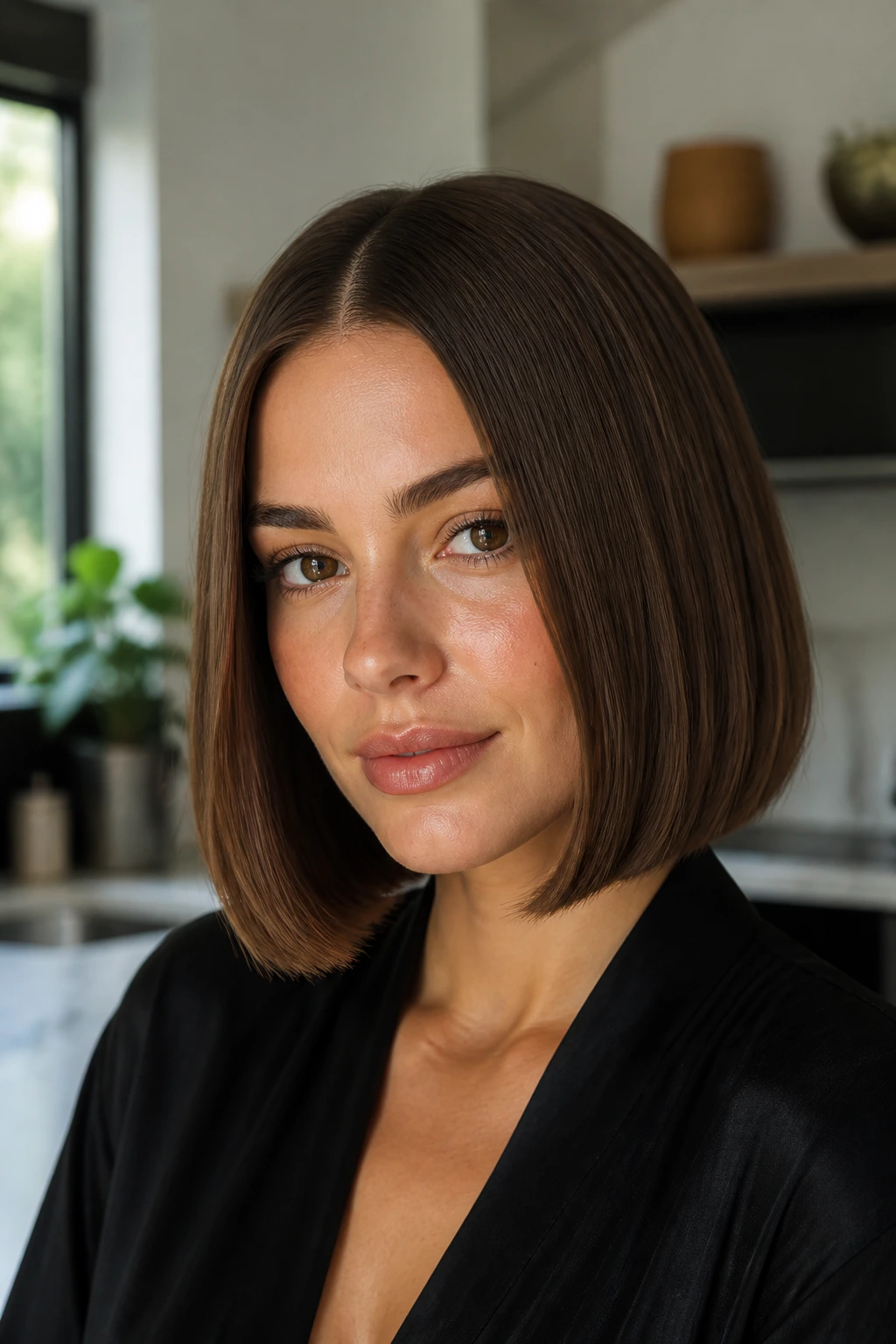
1. Chestnut Blunt Bob with a Center Part
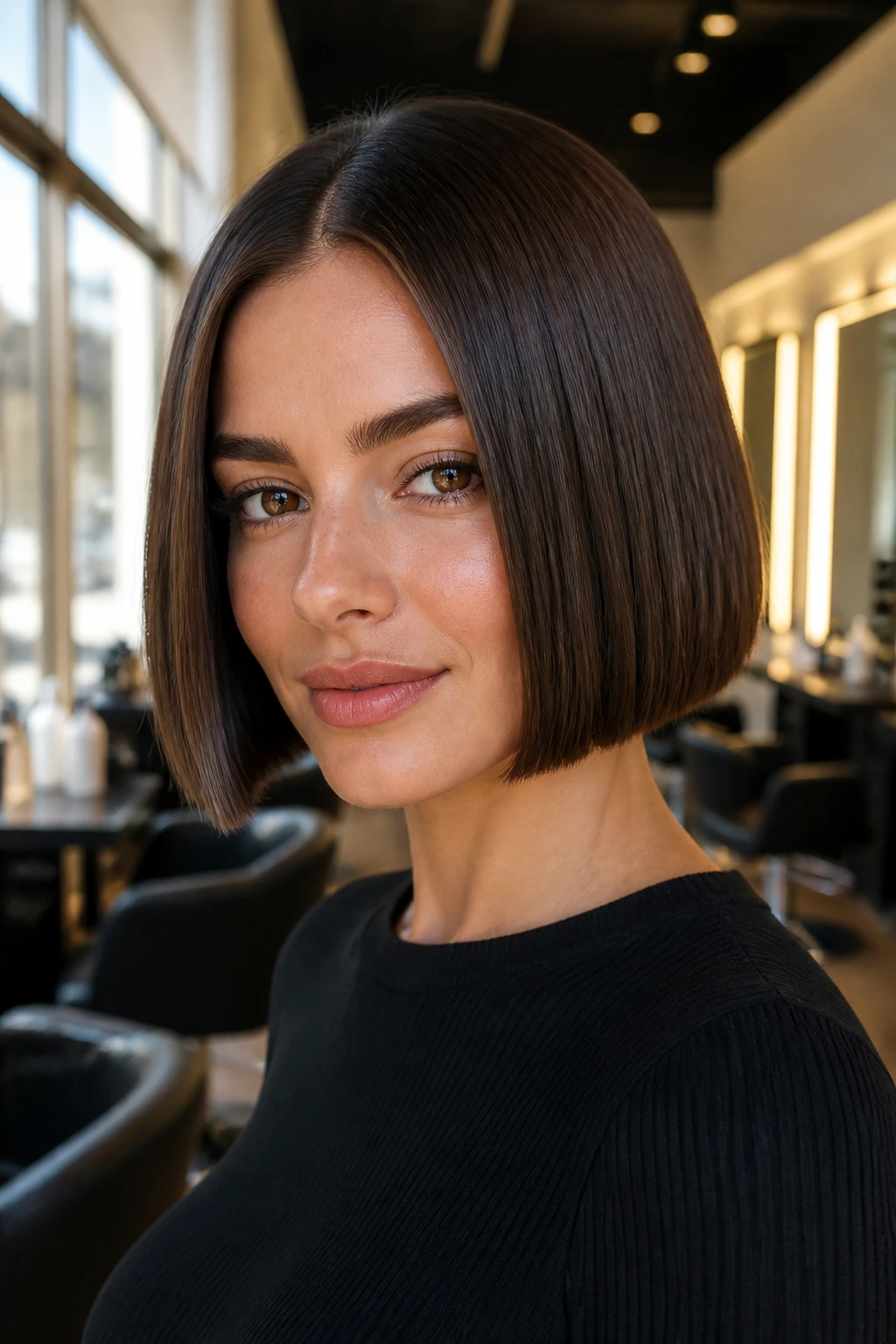
A chestnut blunt bob has a clean, almost graphic edge, but the warmth keeps it from looking severe. That’s the magic here. Chestnut is one of those shades that sits between brown and red, so the hair still reads brunette, but the light picks up a soft glow at the ends and around the face.
A center part makes the line feel modern and calm. I like this shape most on straight to slightly wavy hair because the perimeter stays visible. If the cut is even and the chestnut gloss is rich, the whole style looks denser than it really is.
This is the bob for someone who wants brown hair that looks deliberate. No fluff. No fuss. Just a sharp edge, a middle part, and that warm brown tone doing quiet work.
A good version ends right at the jaw or a hair below it. Too long and the blunt line gets muddy. Too short and the chestnut can read harsh instead of deep.
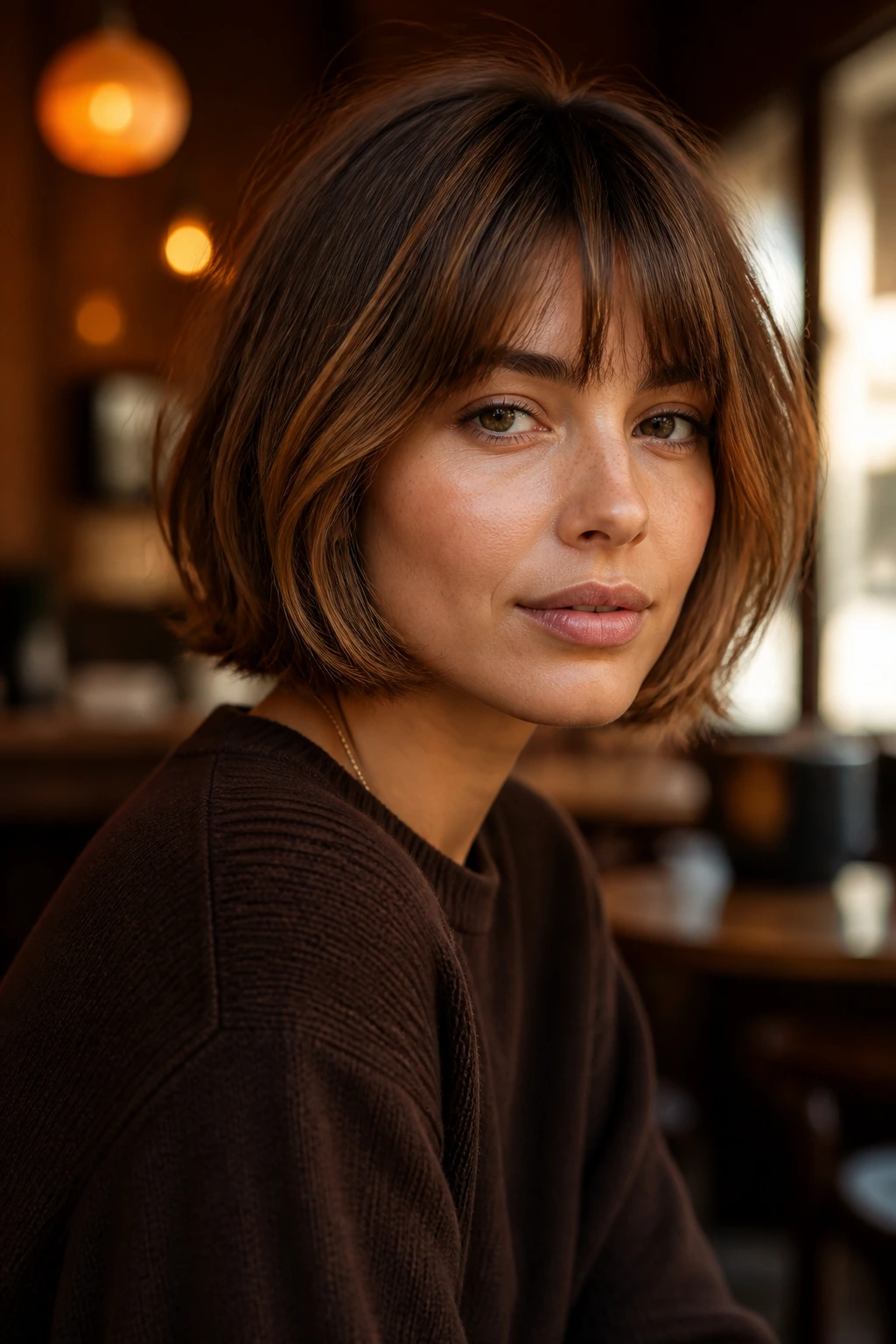
2. Caramel French Bob with Brow-Skimming Bangs
Does a bob have to feel строг? Not even close. The French bob shows that a chin-length cut with soft bangs can look easy in the best way, and caramel ribbons make it warmer, softer, and a touch more sunlit.
Why It Works
The length is short enough to show off the neck and jaw, which makes the face look open. Brow-skimming bangs bring the eye upward, and caramel pieces around the fringe keep the front from going flat. On a bob this short, color placement matters more than people think; a few brighter threads near the cheeks can do more than an all-over lighter brown.
This cut works best when the ends are blunt but the bangs are a little airy. Heavy, solid fringe can overpower the shape. Light, cheekbone-grazing fringe with a warm brown base reads more relaxed.
I’d call this one especially good for hair that air-dries with a soft bend. A quick finger-dry, a touch of cream, and you’re basically there.
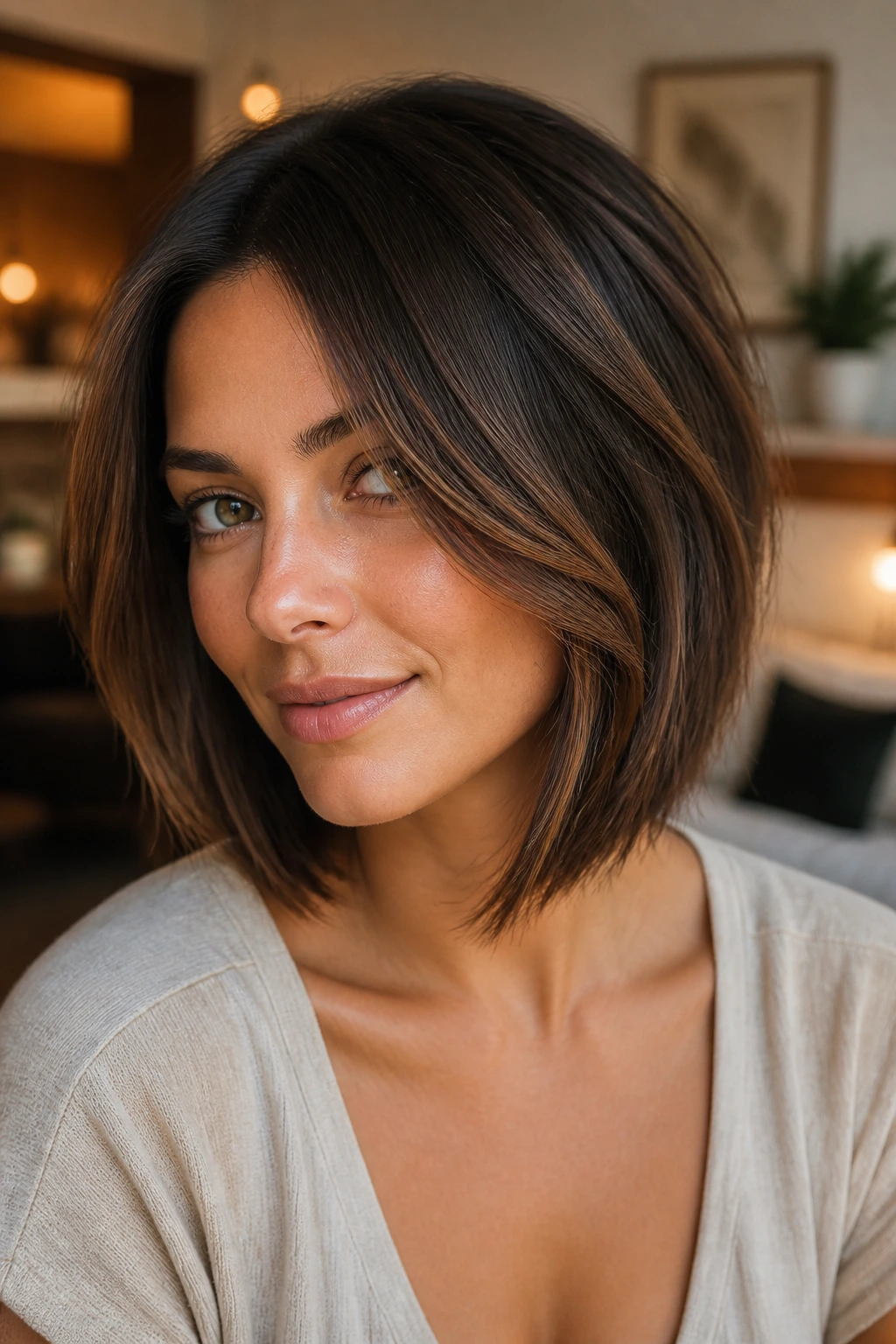
3. Mocha Italian Bob with a Soft Bend
The Italian bob has a little more swing than a blunt jaw cut, and mocha brown gives it that plush, polished finish people keep trying to fake with shine spray. The shape usually sits somewhere between the chin and the collarbone, with enough weight left in the ends to keep it from looking wispy.
Mocha is a smart shade here because it has depth without going nearly black. That matters. In a bob with a soft bend, a deep brown tone can flatten out if the dimension is missing. Mocha stays rich even in low light, which is exactly where this cut tends to live most of the time.
I like this bob for thicker hair or anyone who wants a round-brush blowout that still looks good after it loosens. The bend at the ends should feel smooth, not curled. Think gentle curve, not pageant blowout.
If your hair likes to swing when you turn your head, this is the cut that lets it do that without getting messy.
4. Cinnamon Textured Bob with Choppy Ends

A cinnamon textured bob has more bite than a polished one. That’s the point. The choppy ends make the shape feel airy, and the warm cinnamon tone keeps the cut from drifting into punk territory.
What Makes It Different
Unlike a blunt bob, this one depends on movement. The ends are cut with a little irregularity, which breaks up the line and lets the brown tone show different depths as the hair shifts. The color should not be neon red. Too much red pushes it away from brunette and into copper. Cinnamon works because it stays brown at the root and only warms up in the light.
This version is especially good for hair that wants body but not weight. A few soft bends with a flat iron or a wand give the layers some shape, but the cut should still look good if you mostly air-dry it.
The choppiness does one other useful thing: it keeps the bob from looking helmet-like. That matters more than people admit.
5. Honey Brown A-Line Bob
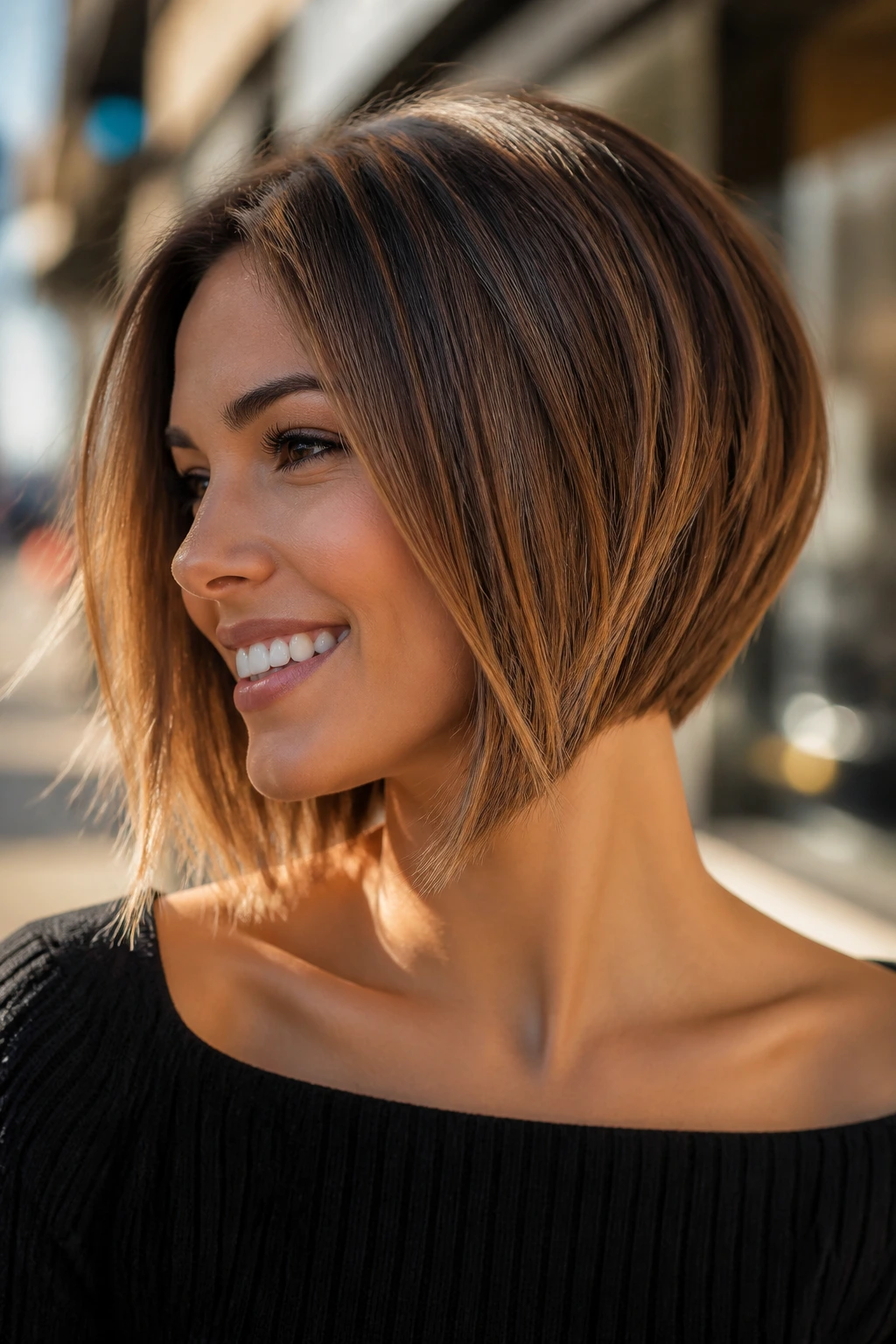
An A-line bob is shorter in the back and a little longer in front, which is exactly why honey brown loves it. The front pieces catch light, the back stays neat, and the whole cut gets a lift that plain brown hair rarely gets on its own.
This shape is one of the easiest ways to sharpen the jawline without making the cut feel severe. The angled front pieces lead the eye downward, and the honey brown color adds warmth right where the hair touches the cheek. If you want a bob that brightens the face without using obvious highlights, this is a strong move.
I’m fond of this cut on hair that sits somewhere between straight and wavy. The angle gives structure; the honey tone gives softness. A small round brush pass at the ends is usually enough. No need to overwork it.
It also grows out in a forgiving way. The angle softens before it gets annoying.
6. Auburn Curly Bob

Curly hair and auburn brown belong together more often than people expect. The red-brown tone picks up the curve of every curl, and a good bob shape keeps the curls from ballooning out into a triangle.
Why It Works
The best auburn curly bob leaves enough room for the curl pattern to breathe. That means less forceful layering at the top and a clean shape around the perimeter. If the curls are cut dry, even better. You can see exactly where the spring sits instead of guessing.
Auburn adds warmth that shows up in daylight and under indoor lamps. It makes the curls look defined instead of dull. I like a bob that lands around the chin or just under it for this texture, because it gives the curls somewhere to land without dragging them down.
A diffuser helps, but the shape should carry the style. That’s the real goal. If the bob only works when it’s styled within an inch of its life, the cut is doing too much or too little.
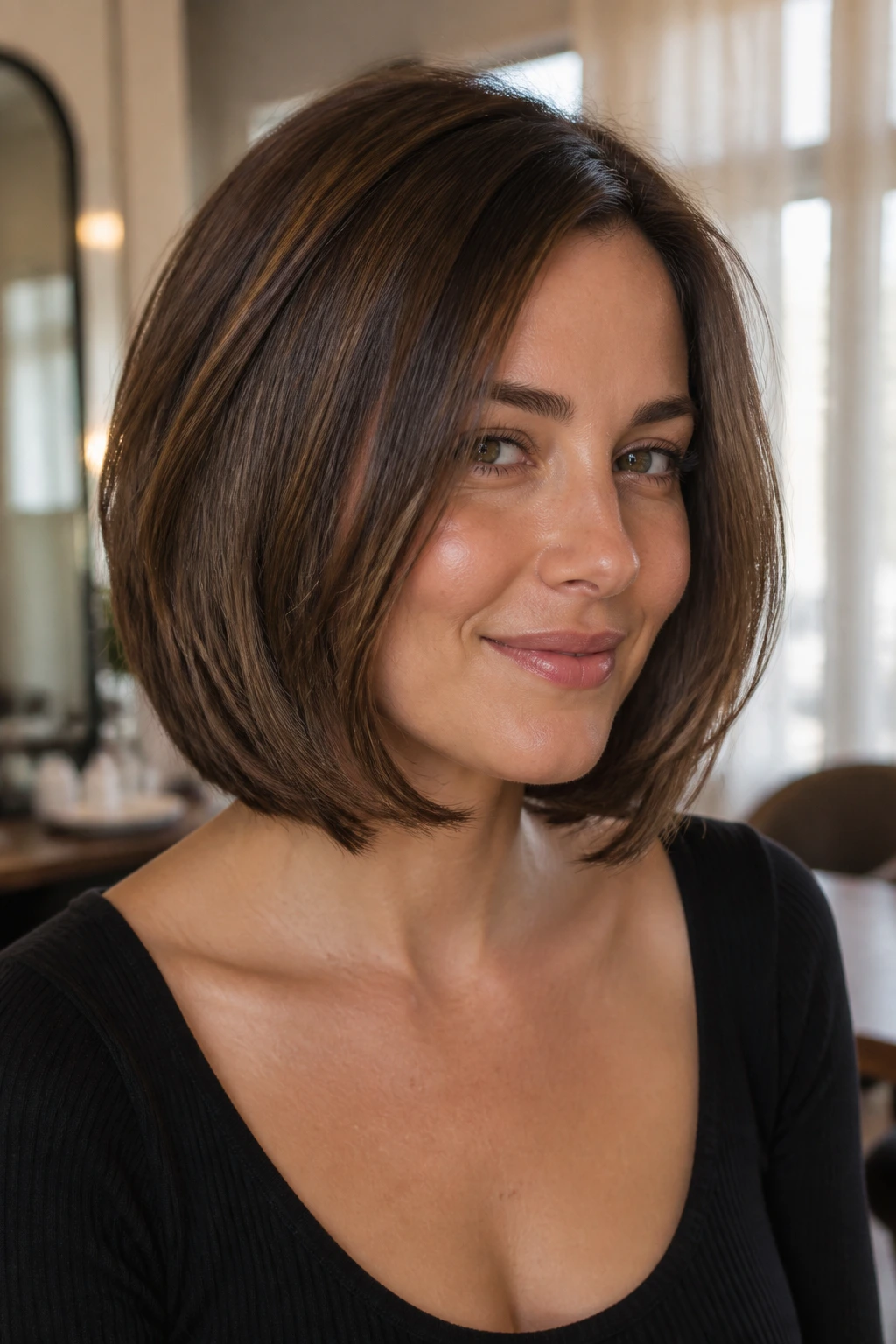
7. Toffee Layered Bob with a Side Part
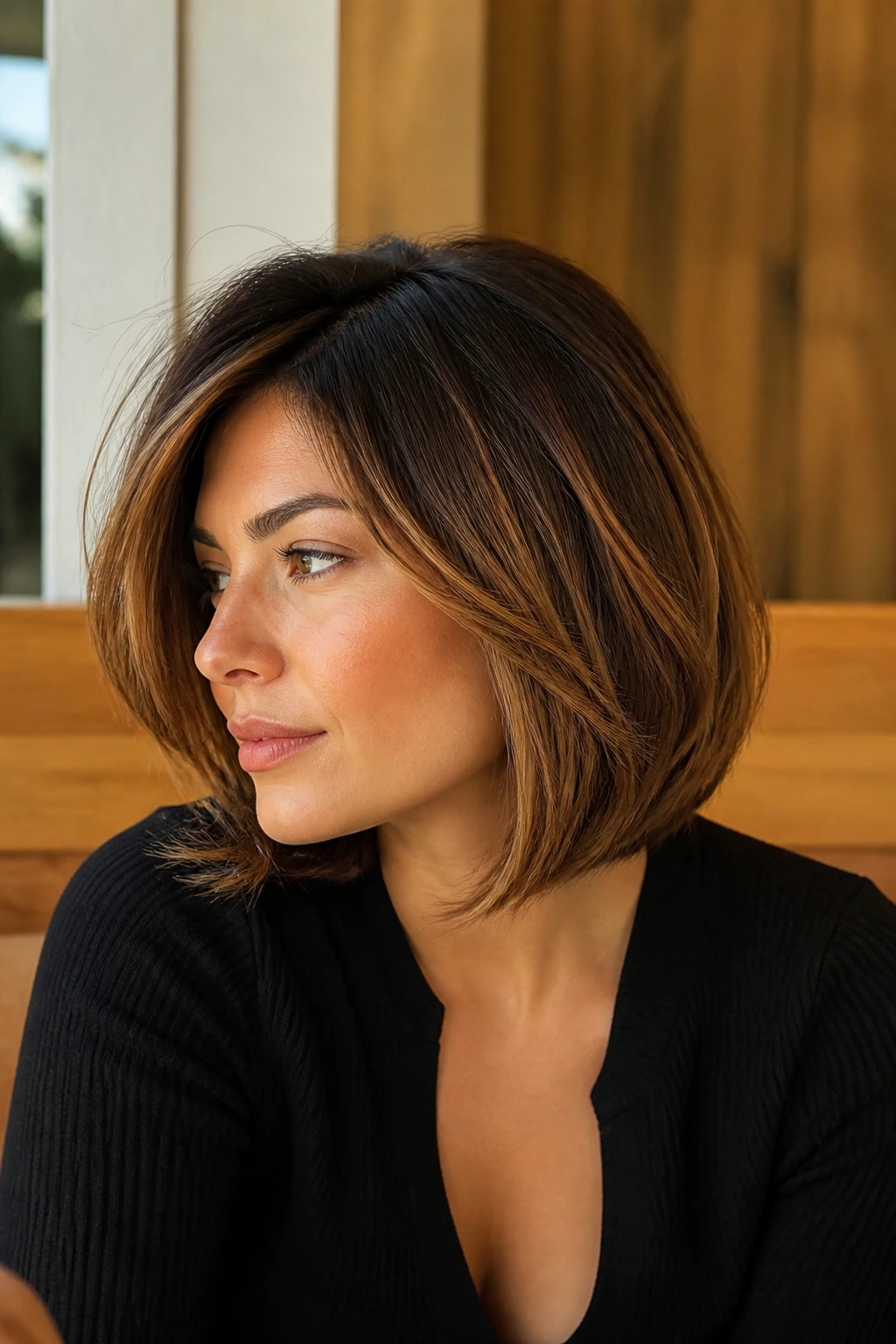
Thick hair can turn a bob into a cube fast. A toffee layered bob fixes that by removing just enough bulk while keeping the outline full. The side part matters, too. It gives the cut a little lift at the crown and lets the toffee highlights move across the surface instead of sitting in one flat stripe.
The layers here should be soft and internal, not shredded. You want the bob to move when you turn your head, not fall apart. Toffee is a nice shade for that because it sits in the golden-brown family and brings a little sweetness to the finish without looking blonde.
This is one of my favorite shapes for anyone who wants body at the back and softness around the face. A side part with a bob can look old-fashioned if the layers are stiff. With the right cut, it just looks easy.
A blowout brush helps, but a quick bend at the ends is enough. Keep the crown lifted and let the side part do the rest.
8. Espresso Box Bob with Sharp Edges
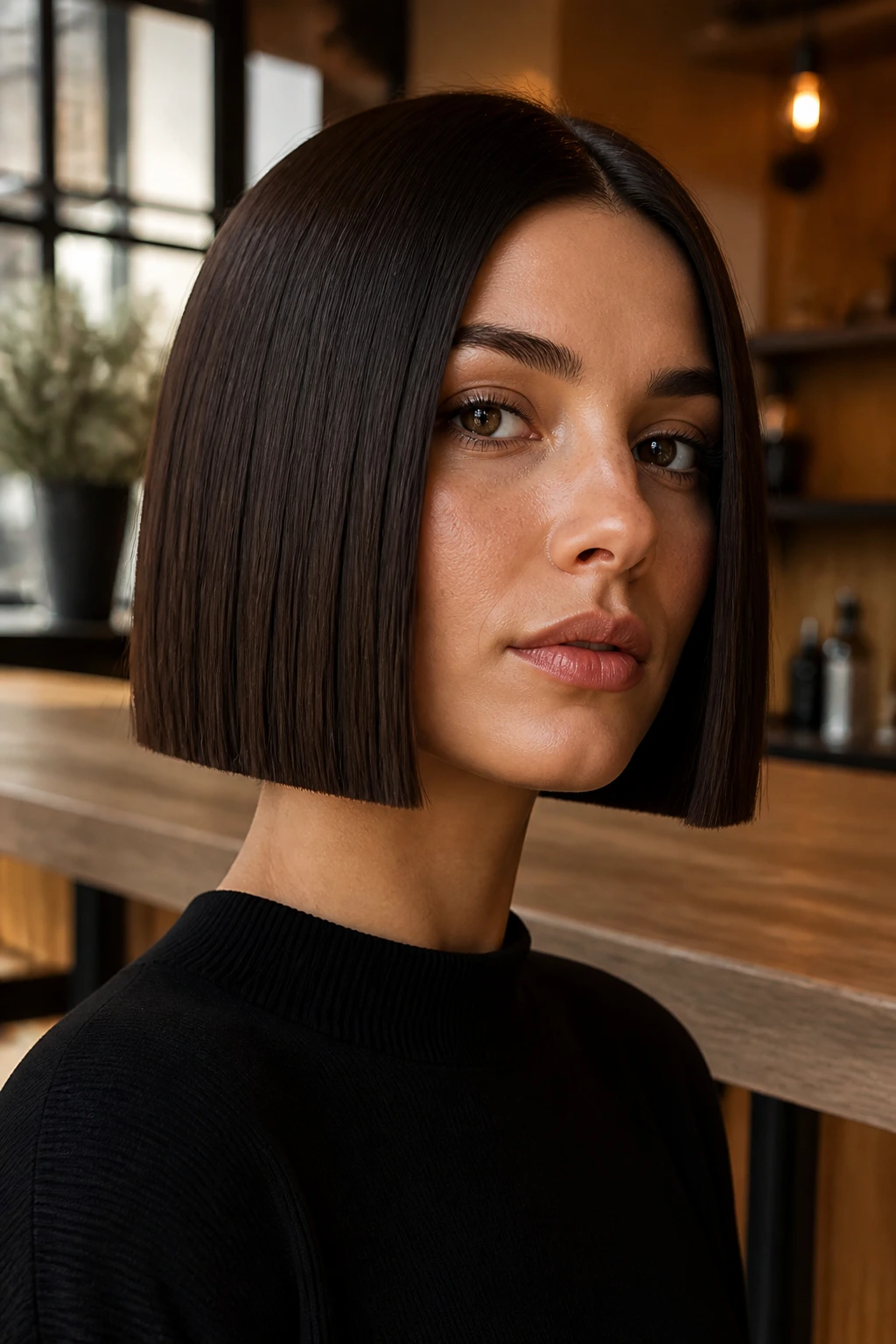
Dark brunette does not have to mean flat. The espresso box bob proves it. The box shape keeps the bottom line straight and full, while the deep brown tone gives the whole cut a glossy, almost lacquered finish.
If you like hair that looks precise, this is your lane. The edges should hit cleanly, usually around the jaw or a little below. There’s not much room for softness here, and that is the appeal. The cut looks strongest on straight hair or on hair that can be blown smooth with a paddle brush and a nozzle.
Best For
- Hair that loses shape fast
- People who want a sharp perimeter
- Dense hair that needs weight kept at the ends
- Anyone who likes a sleek finish more than beachy texture
The trick is keeping the color rich, not black. A true espresso brown has enough brown in it to show dimension; otherwise the cut can disappear into one dark block. Shine spray helps, but the haircut does most of the talking.
9. Mahogany Side-Swept Bob
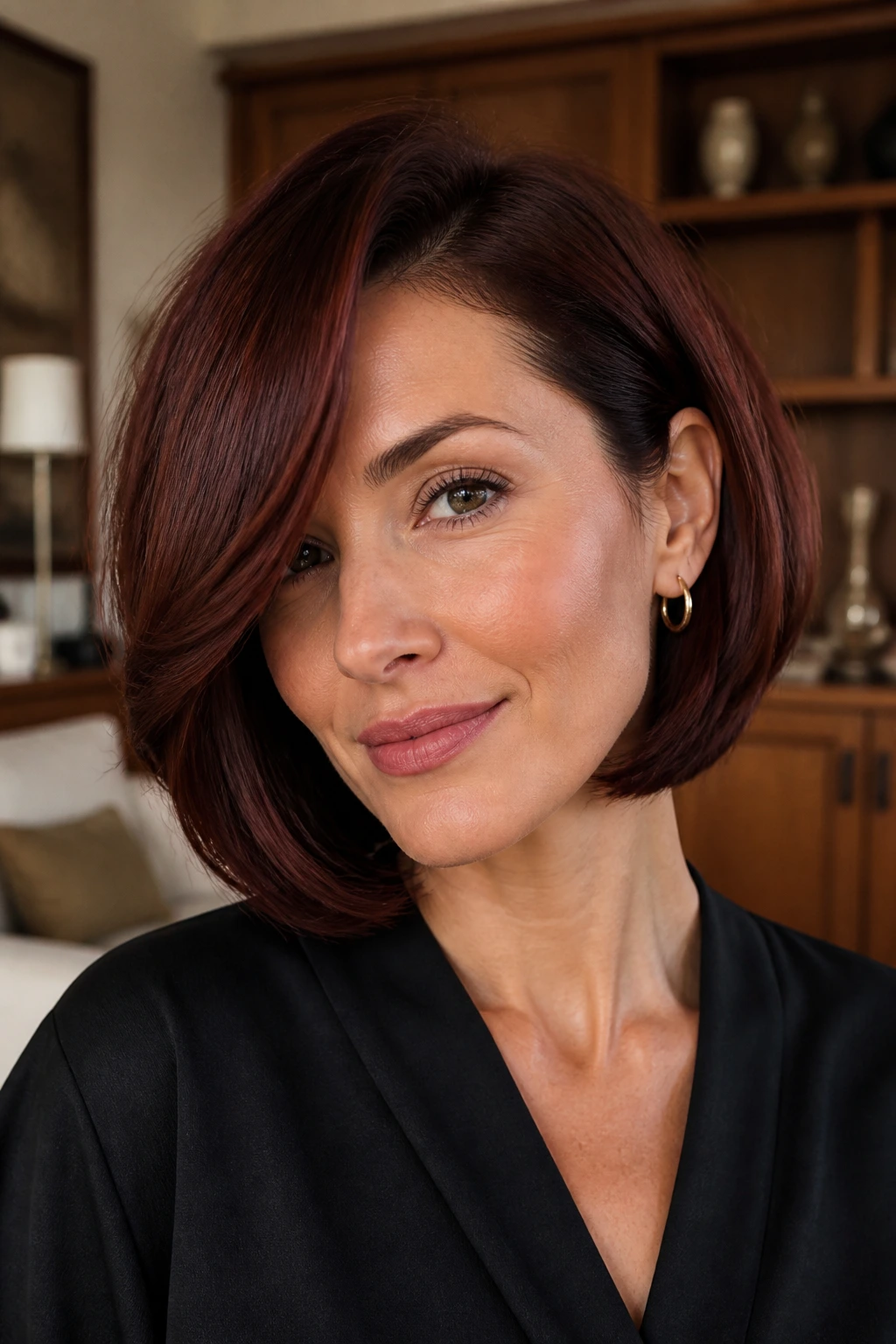
Mahogany has a deeper, red-brown feel than chestnut or caramel, and on a side-swept bob it can look especially rich. The side part makes room for a sweep of hair across the forehead, which gives the cut a little drama without turning it into a formal style.
This one is excellent if you want warmth that reads more elegant than bright. Mahogany catches light in a slower way than caramel. It doesn’t flash. It glows. That’s a big difference in brown hair.
The shape can be chin-length or slightly longer, but I prefer it with a clean outline and one soft face-framing bend. Too many layers, and the color loses its weight. A good mahogany bob looks expensive because it keeps the silhouette simple.
It’s also a nice choice if your hair naturally leans dark and you don’t want constant lightening at the salon.
10. Bronze Wavy Bob with Curtain Bangs
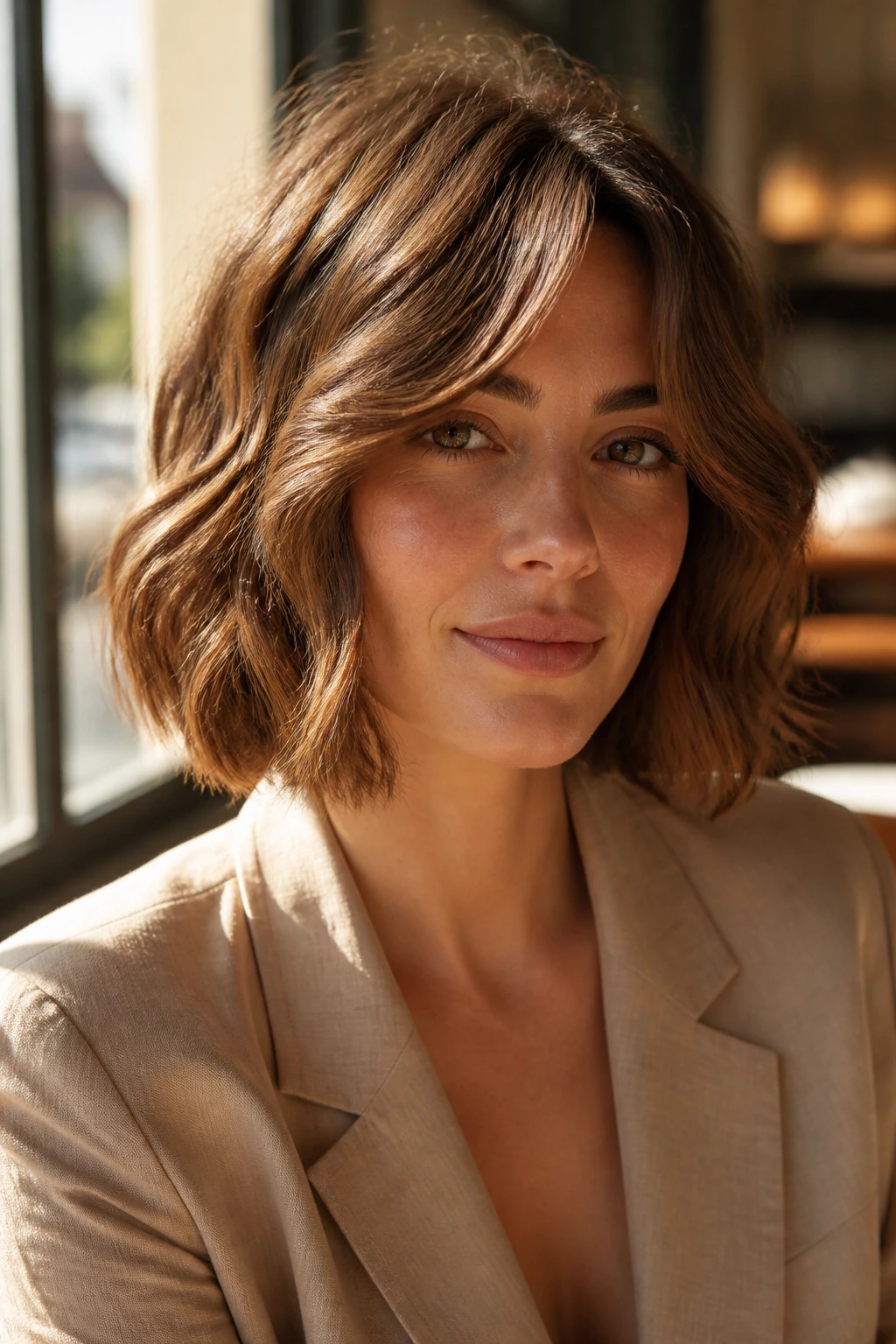
Bronze is the warm brown shade that can flirt with gold without crossing into blonde territory. On a wavy bob, that warmth sits on the bends and gives the whole cut a lifted, reflective look. Curtain bangs make it feel softer right away.
A wavy bob needs a little air around it. Curtain bangs help because they break the front line and keep the face from feeling boxed in. If the waves are loose and the bangs are parted just off-center, the cut lands in that sweet spot between polished and casual.
How to Ask for It
Tell your stylist you want a bob that keeps movement at the ends and doesn’t collapse at the sides. The bangs should start near the cheekbones and soften toward the temples. Bronze highlights can be painted through the outer layer, with a little extra brightness around the fringe.
This cut is one of the easiest to wear if you don’t like spending twenty minutes with a round brush. A rough dry, a curling wand on a few pieces, done.
11. Chestnut Shag Bob
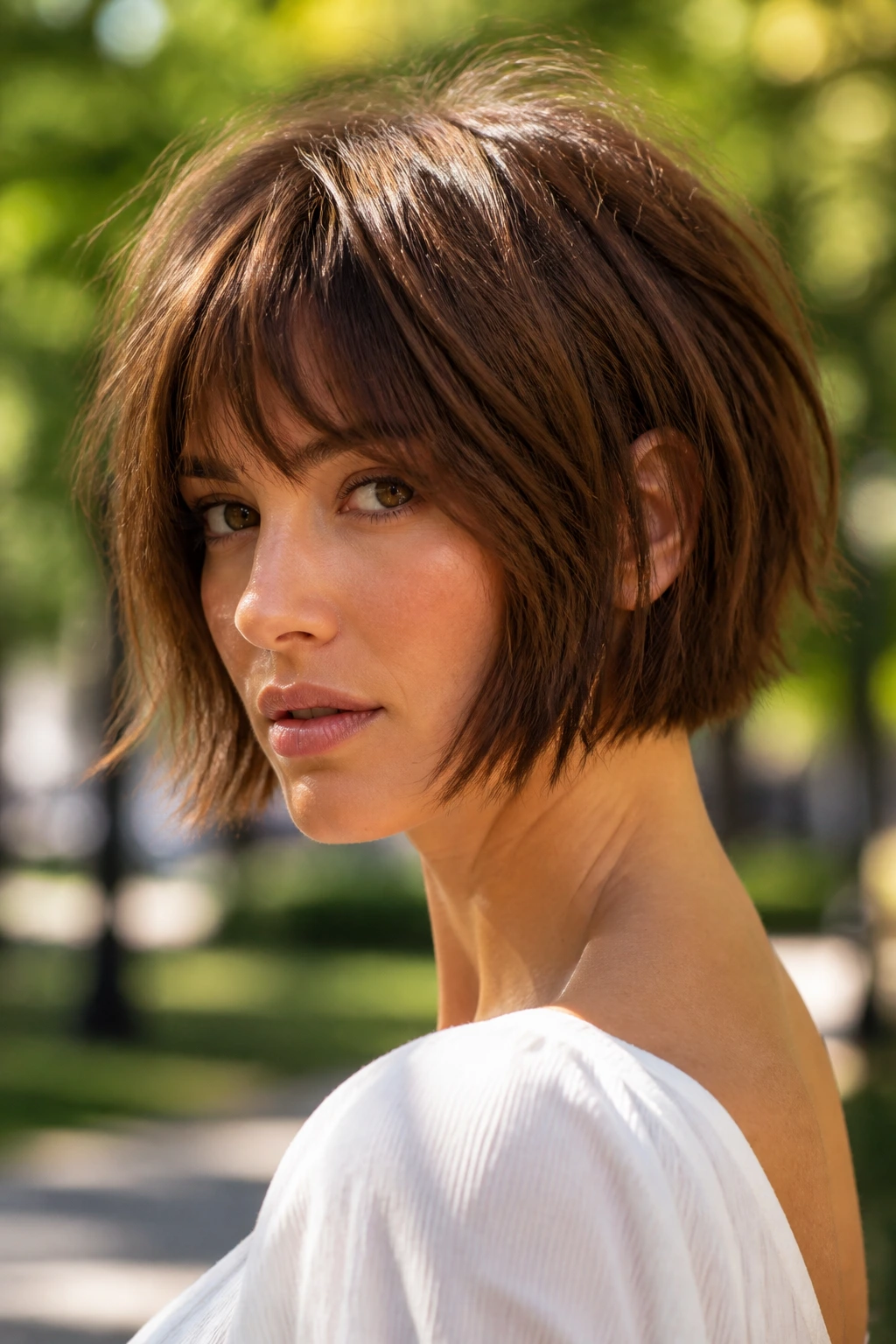
Can a bob be shaggy and still look tidy? Yes, if the layers are controlled and the chestnut tone keeps everything grounded. A shag bob has more separation at the ends and more lift at the crown, which is why it works so well for fine hair that needs motion.
Chestnut makes the layers read richer. Without warmth, a shag can look patchy. With chestnut, the texture looks intentional. The shape usually sits around the chin or slightly below, and the top layers should be soft enough that the cut doesn’t puff out into a triangle.
This style suits people who like hair with some mess in it. Not bad mess. Good mess. The kind that moves when you run your hands through it and still lands back in shape.
I’d style it with a little mousse at the roots and a small amount of cream on the ends. Too much product and the shag goes limp fast.
12. Copper-Glazed Micro Bob
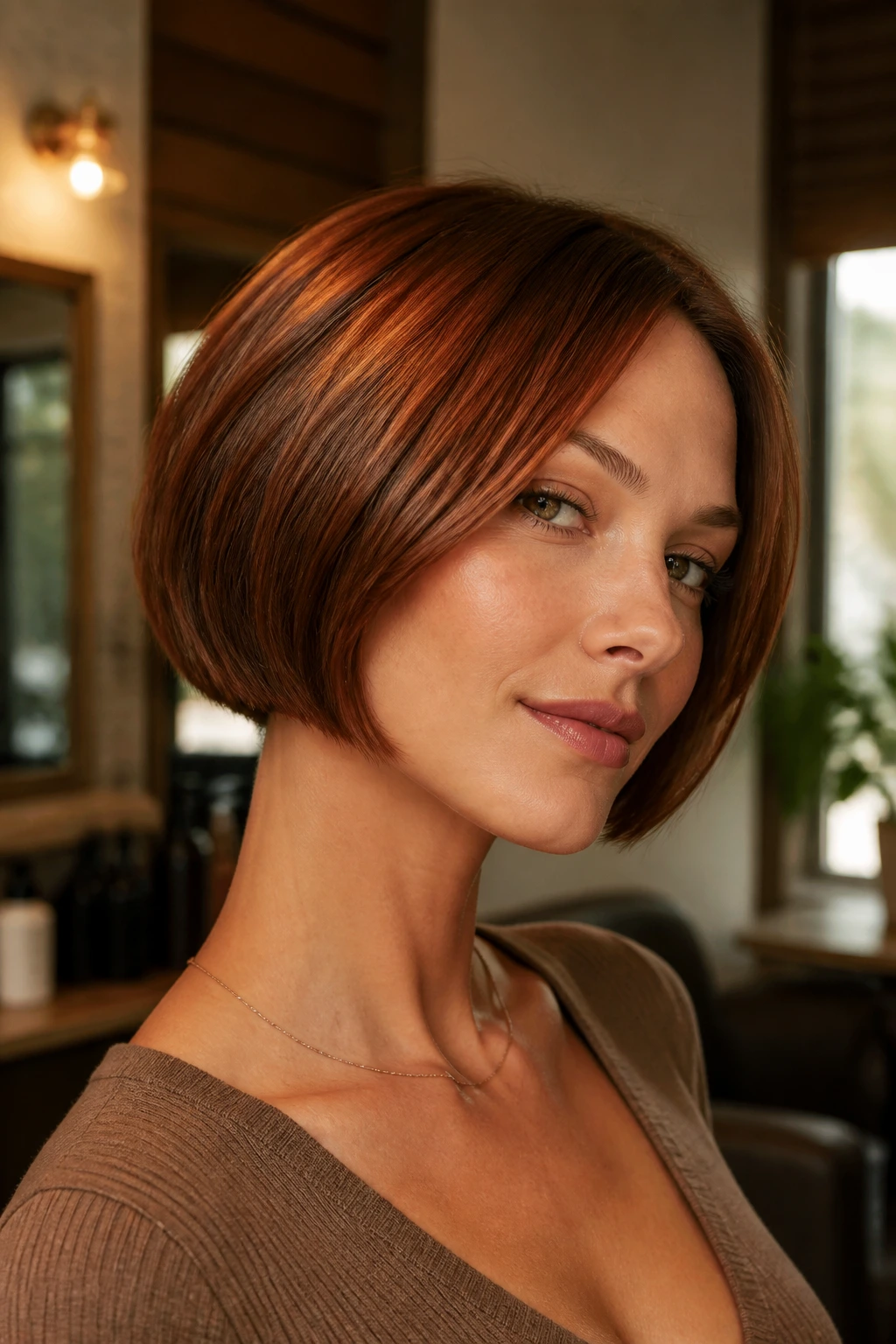
A micro bob is short, sharp, and not for the shy. The copper glaze softens the edge, which is exactly why this version works. You get the clean line of a very short bob, but the warm copper-brown tone keeps it from feeling severe.
What to Notice
The cut should sit somewhere between the jaw and just below the ears, depending on face shape. That’s a tiny amount of hair, so precision matters. The line needs to be clean around the nape and around the front, and the color needs to be reflective enough to show off the shape.
Copper isn’t the same as bright orange. In this cut, it should sit over brunette depth like a warm filter, not a costume color. A gloss service does a lot here because the shine is part of the haircut’s appeal.
This bob looks strongest with minimal styling. Tuck one side. Leave the other loose. Let the color and the line do the work.
13. Hazelnut Rounded Bob
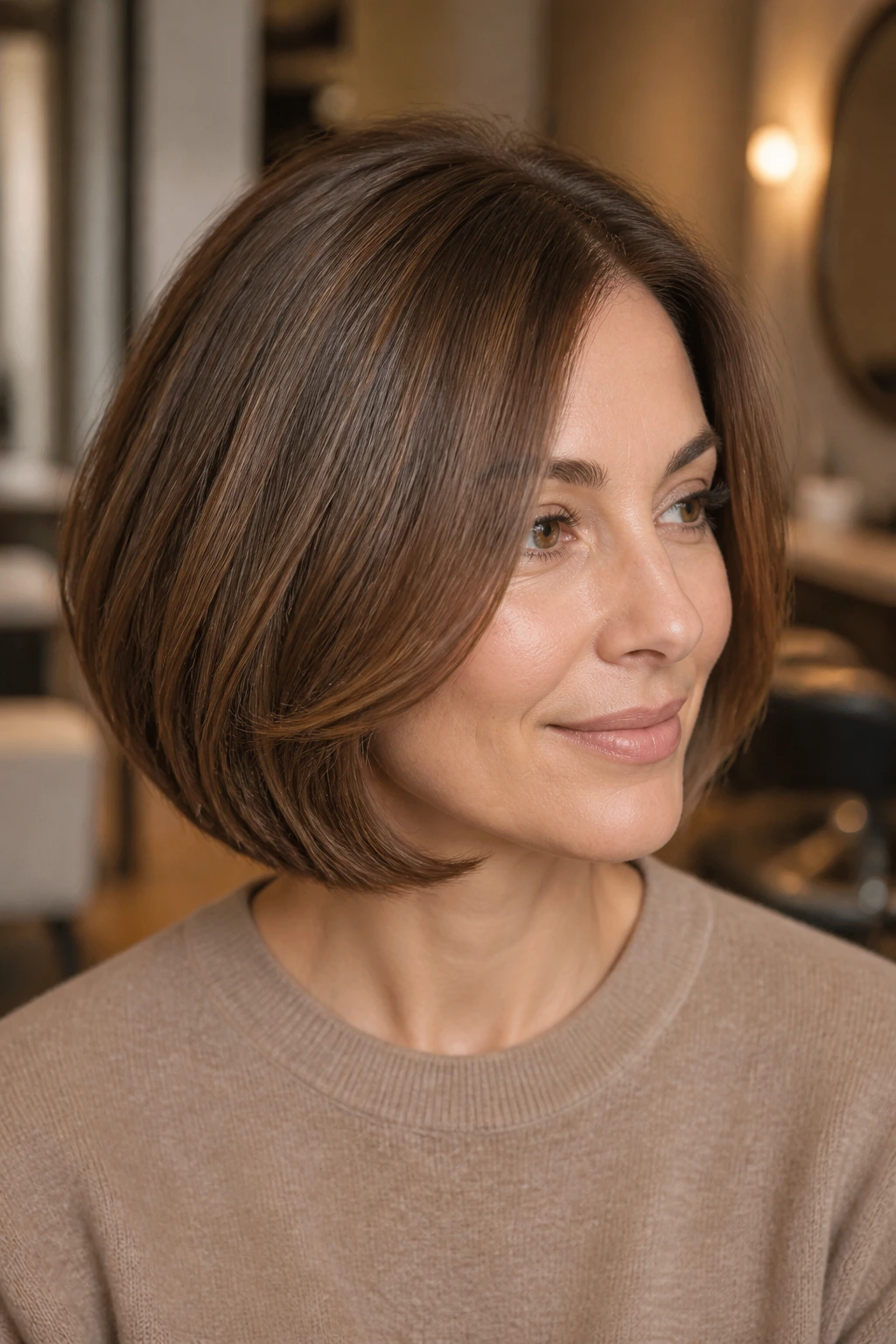
A rounded bob curves under at the ends and frames the face in a softer way than a square cut. Hazelnut brown is the right shade for it because the warmth makes the curve look plush instead of puffy.
This shape is nice for hair that frizzes a little at the bottom. The rounded finish gives the cut a purpose. Instead of fighting the bend, you build it in. A quick blow-dry with a medium round brush usually gets the ends to hug the neck and jaw.
Hazelnut is a gentle color, but not dull. It sits in that sweet brown range that looks good indoors and outside without needing a bright highlight panel to wake it up.
If you want a bob that feels soft around the edges and easy to wear with earrings, this is a clean choice.
14. Mocha Inverted Bob
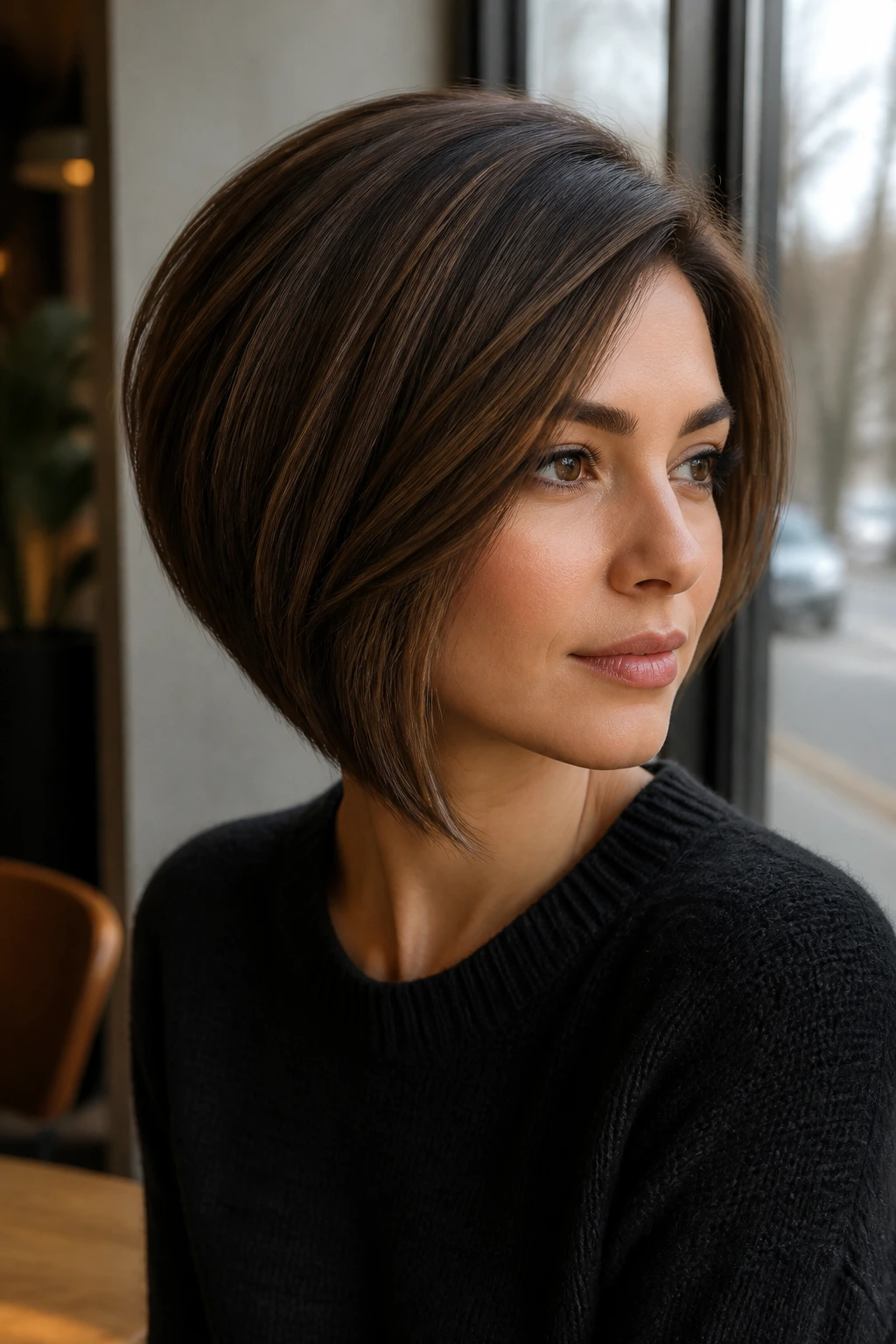
The inverted bob stays shorter in the back and longer toward the front, which gives the cut a little tension. Mocha brown is the right backdrop because it keeps the geometry from feeling too stark.
Why It Stays Interesting
A sharper shape needs a color with depth. Mocha gives you that. The back can be stacked enough to build lift, and the front pieces can skim the chin or the collarbone. The contrast between the two lengths is what makes the haircut feel alive when you move.
This works well for straight to medium-textured hair. The stacked back shows off the neck, and the longer front pieces keep the face from feeling chopped off. I like it best when the color stays slightly darker underneath and a touch warmer through the top layer. That gives the angle more shadow and shine.
It’s a tidy haircut, but not a stiff one. There’s enough swing in the front to keep it from looking too engineered.
15. Walnut Tousled Bob
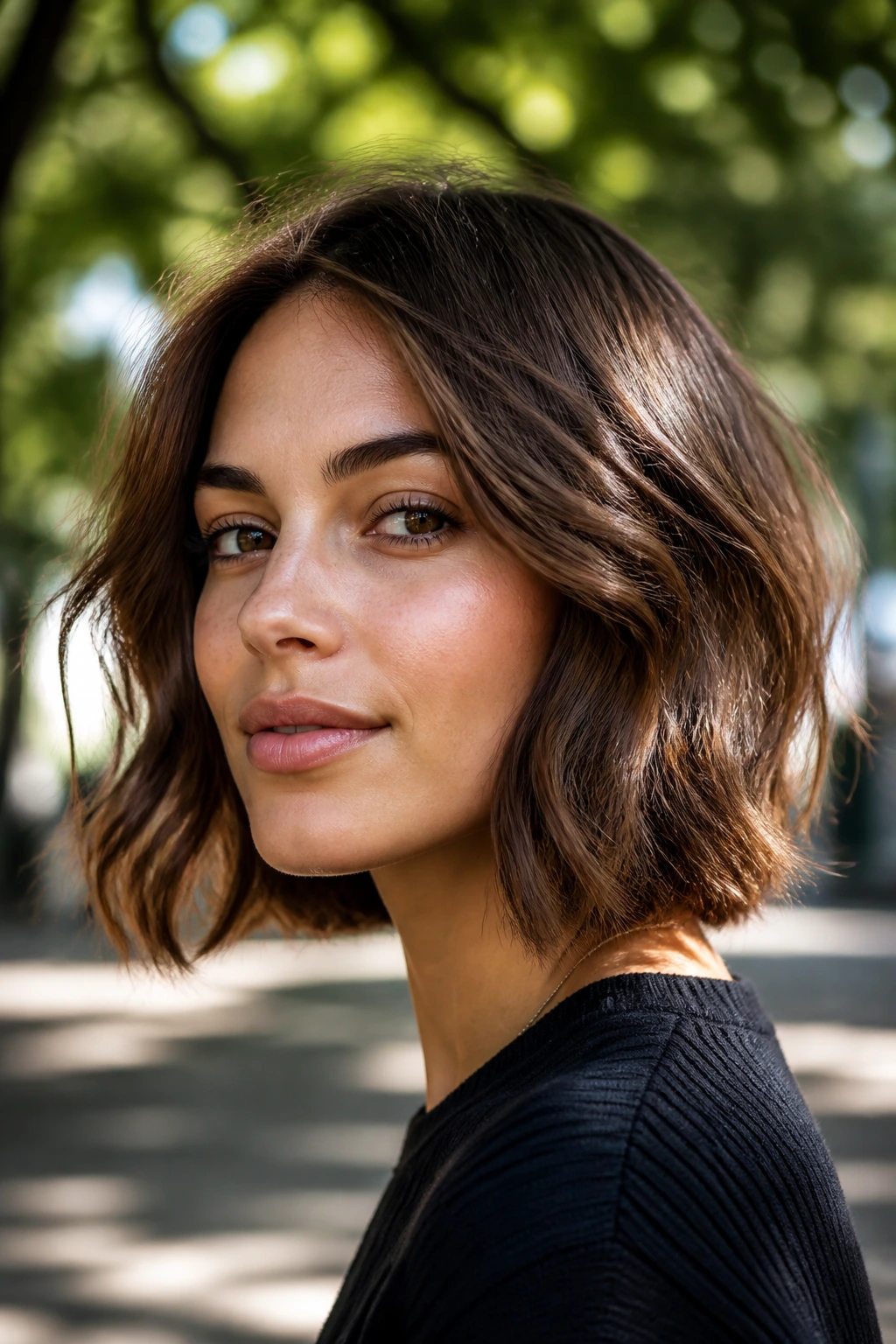
Walnut brown has a grounded, earthy feel that suits a tousled bob better than a glossy, formal one. The cut should look like it has been loosened up, not brushed into place. A little bend in the mid-lengths, a little separation at the ends. That’s the whole point.
This is a strong choice for hair that hates looking too done. The bob shape still gives the outline, but the texture makes it wearable. Walnut is a great shade for that because it sits in the middle of warm and neutral, so the style can lean casual without losing richness.
You do not want the waves to be too perfect here. If every piece curls the same way, the cut starts looking dated. A few uneven bends read better.
I’d wear this one with a side part or a soft off-center part. It keeps the shape from settling into one heavy side.
16. Cinnamon Lob with Face-Framing Layers
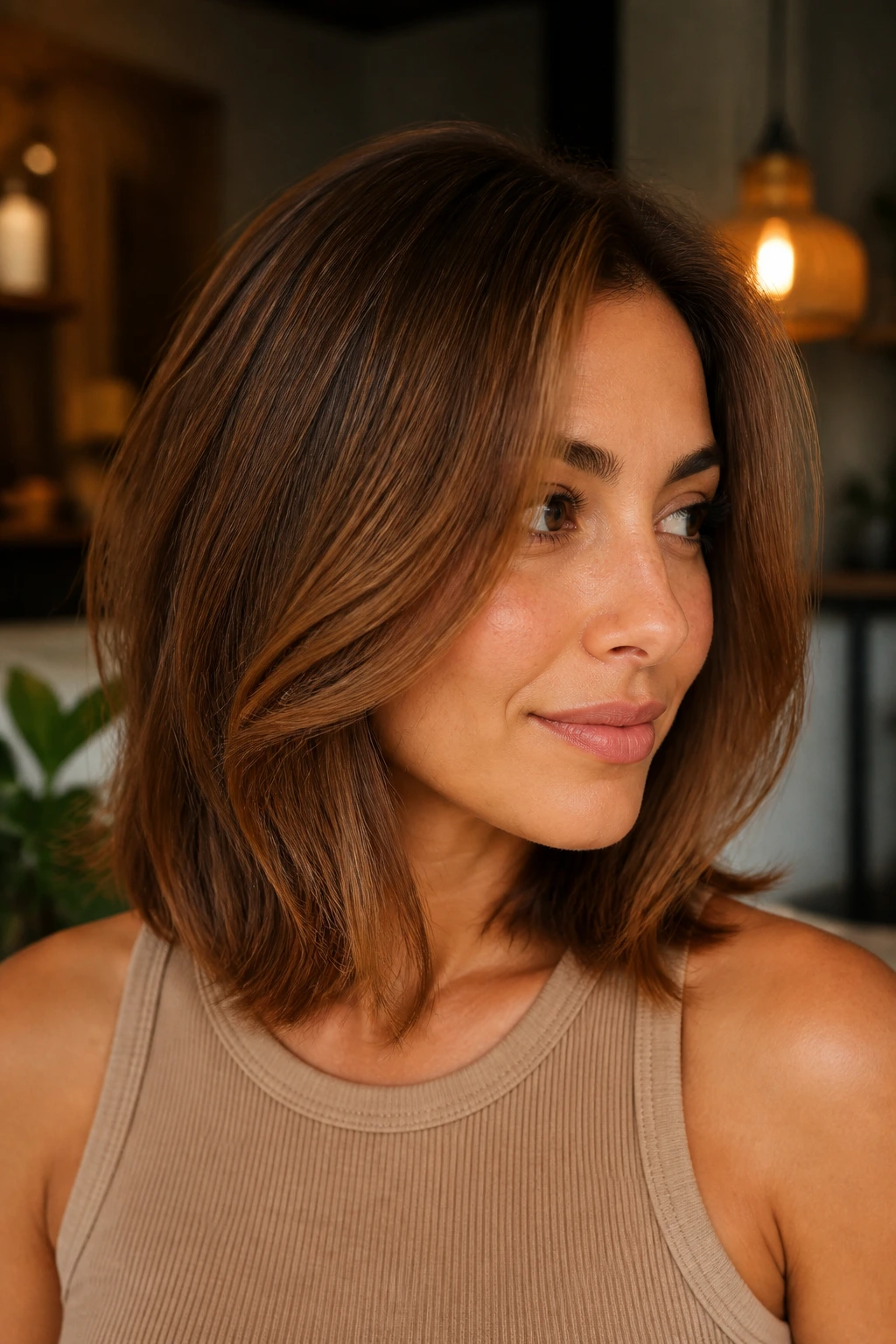
A lob gives you bob energy without giving up all your length, which is why it’s often the first step for people nervous about going shorter. Cinnamon warmth adds a little edge, and the face-framing layers keep the front from feeling blunt or boxy.
The length usually lands somewhere between the collarbone and the top of the chest. That’s long enough to tuck behind the ear or throw into a small clip, but still short enough to count as a bob family cut. I like this shape for medium to thick hair because the extra length keeps the weight from puffing up too much.
A Small Detail That Matters
The face-framing layers should start lower than most people think. If they begin too high, the cut can get choppy fast. Let the cinnamon tone do some of the work instead. Warmth around the face softens the whole haircut without needing a lot of slicing at the front.
This one grows out gracefully. That matters more than people admit.
17. Caramel Money-Piece Bob
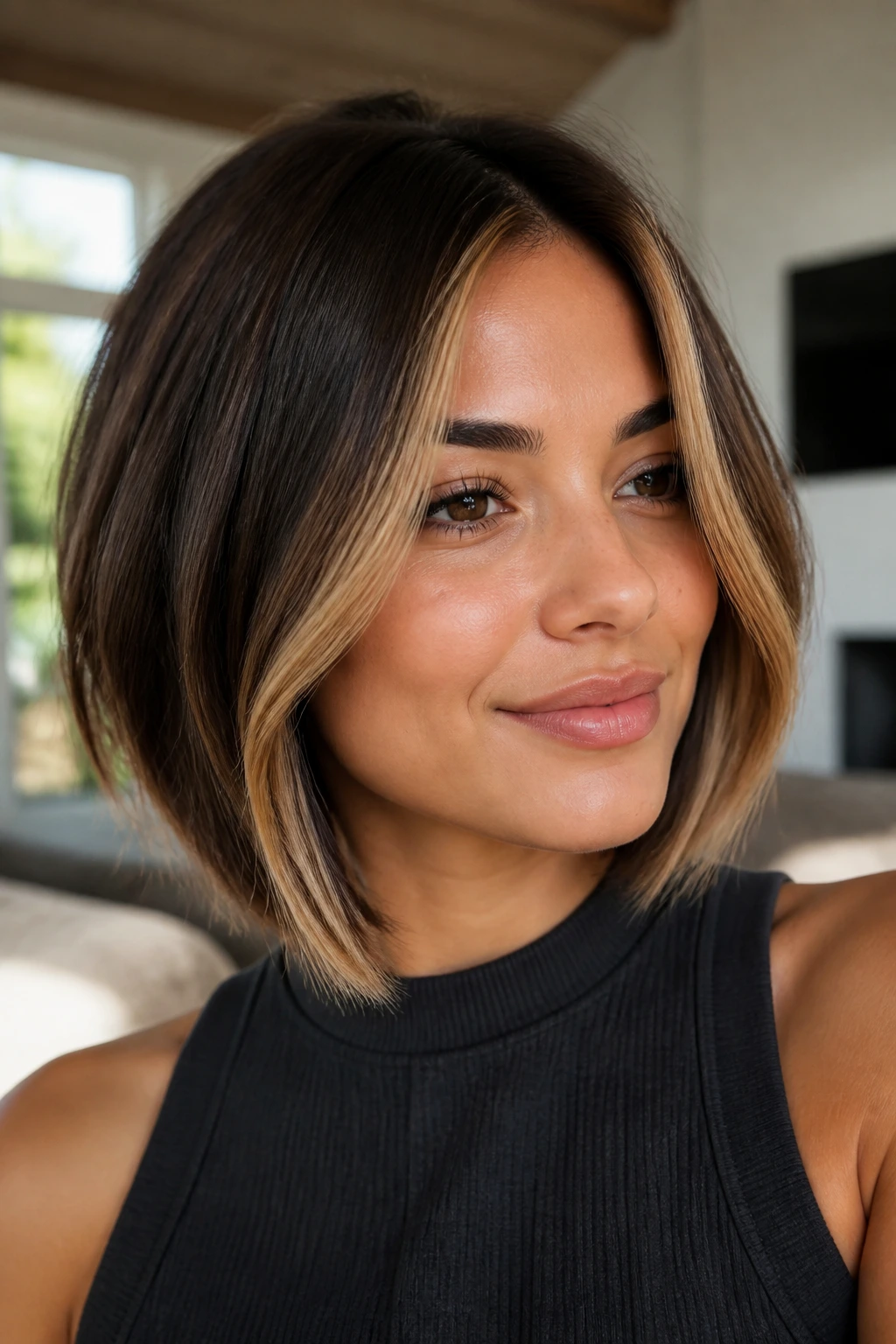
A money piece can change the whole feel of a bob. If the front section is brightened with caramel, the face gets a frame of warmth and the haircut reads lighter even when the base stays brunette. That’s useful when you want dimension without a full color overhaul.
The bob itself can be blunt, slightly layered, or tucked at the ends. The real drama comes from the front pieces. They should be close enough to the face to catch light when you turn, but not so bright that they break the brunette story.
This is one of those styles that works because it understands restraint. Too much highlight and the cut loses its brown richness. Just enough caramel, and the whole shape wakes up.
I especially like this on a center part or a soft side part. Both let the bright front pieces do their job.
18. Tawny Blunt Bob with Tucked Ends
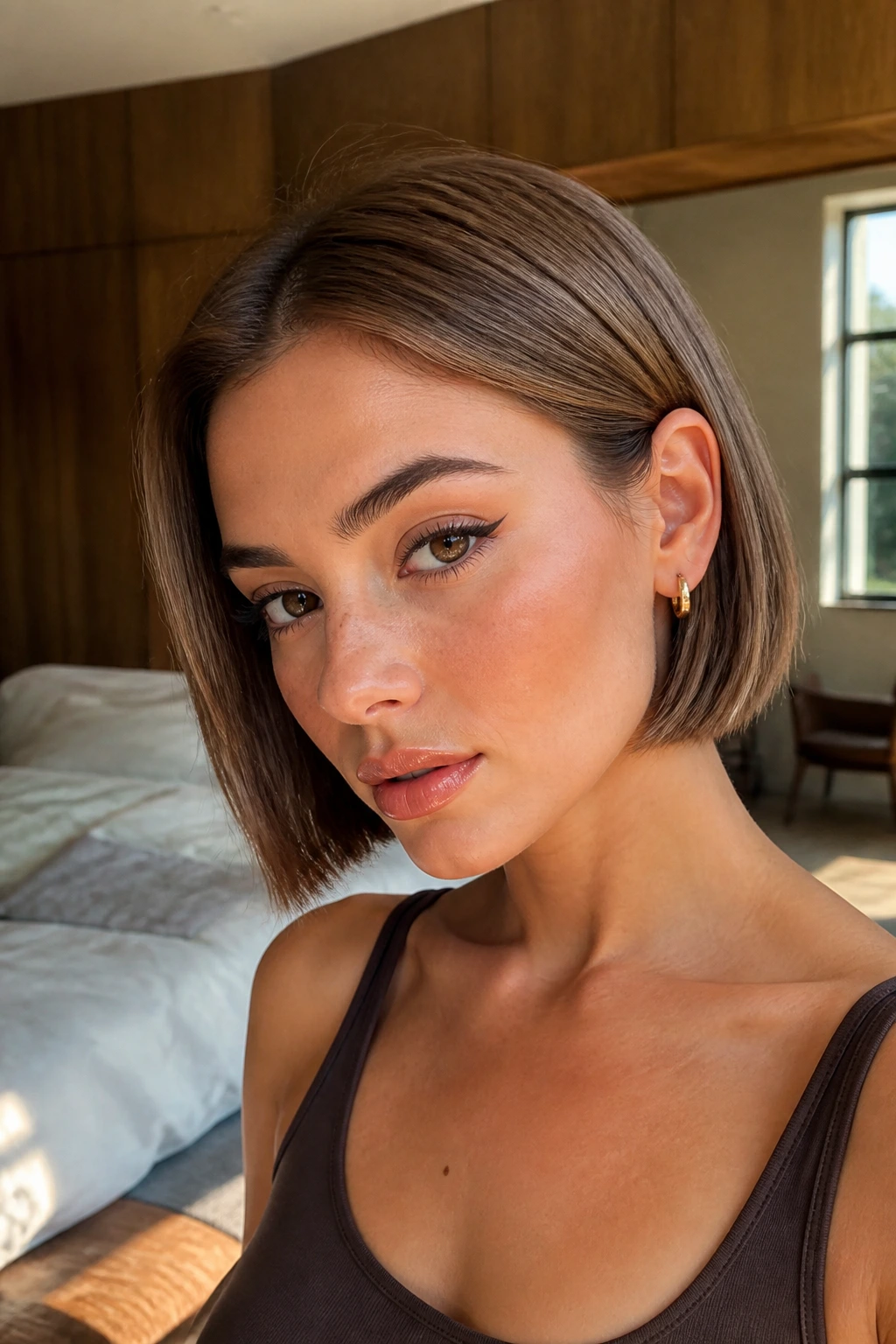
Why does a tucked bob look so neat? Because the ear does half the styling for you. A blunt tawny bob with ends that curve just enough to tuck behind the ears feels tidy, modern, and a little edited.
Tawny brown has golden warmth without screaming highlight. That makes the blunt line feel softer. The ends should be clean, with only a small inward bend. If they flip out too much, the whole effect gets messy fast.
The Part That Sells It
The front needs enough length to tuck, but not so much that the shape collapses. That’s the balance. I’d keep the part slightly off-center if the hair is fine, or dead center if the hair is dense and wants symmetry.
This bob looks especially good with earrings, a collar, or anything that puts the jawline on display. It’s minimal, but not plain.
19. Deep Chocolate Bob with Invisible Layers
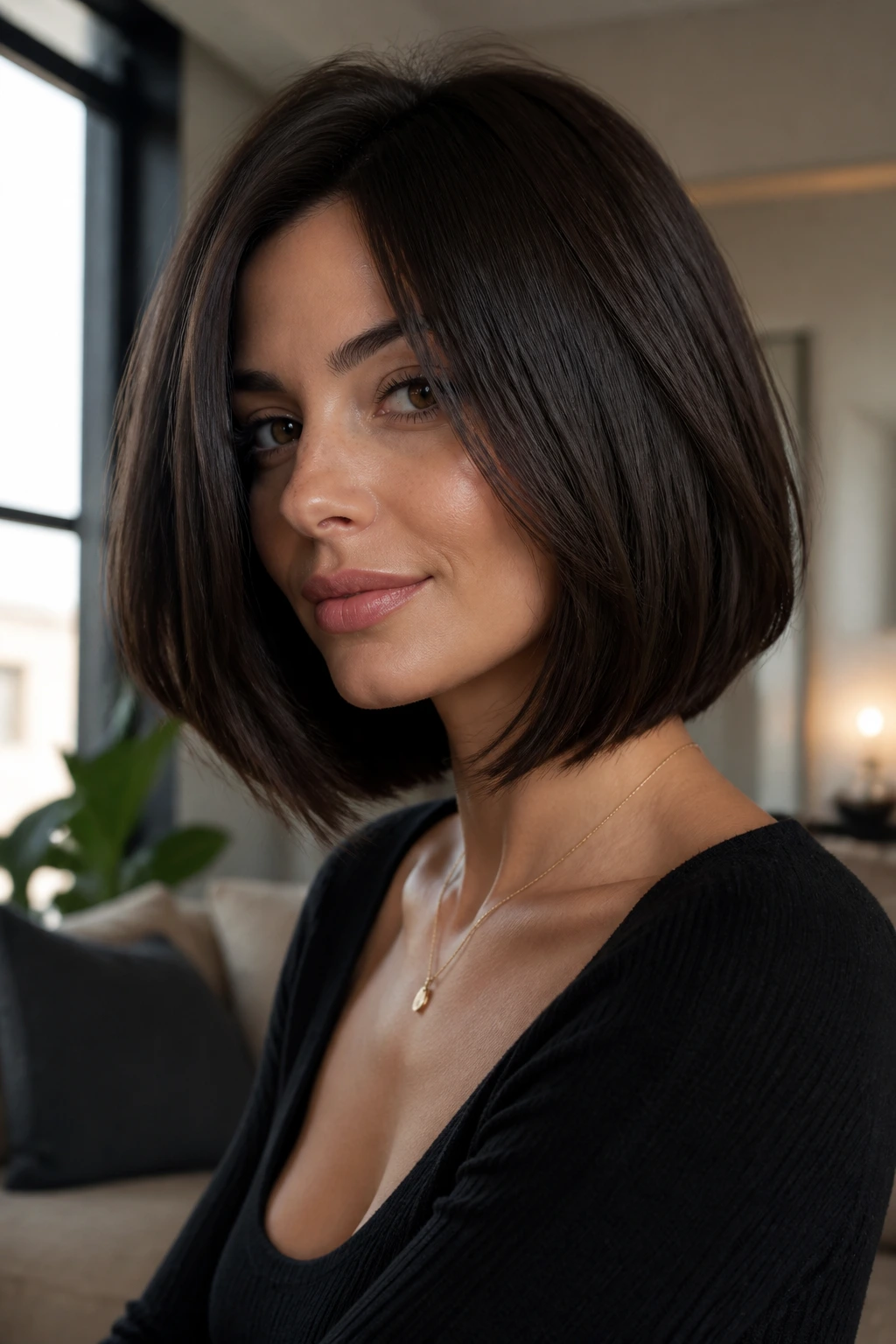
Invisible layers are the sort of thing people notice without realizing why. The cut keeps its blunt outline, but the inside is relieved just enough to stop the hair from puffing up or collapsing into one heavy block. On deep chocolate brown hair, that can be the difference between sleek and heavy.
This is the bob for anyone who wants movement without visible choppiness. The outside line still looks clean. The inside does the quiet work. That means the cut can survive thick hair, straight hair, or a smooth blowout without losing its shape.
Chocolate brown is rich, but if it’s too one-note, it can look dark and flat. Those hidden layers let the light move through the cut a bit more. Not flashy. Just enough.
I’d call this one the working woman’s sleek bob, except that phrase is boring and not especially helpful. The useful part is simpler: it behaves.
20. Burnished Brunette Bob with Soft Fringe
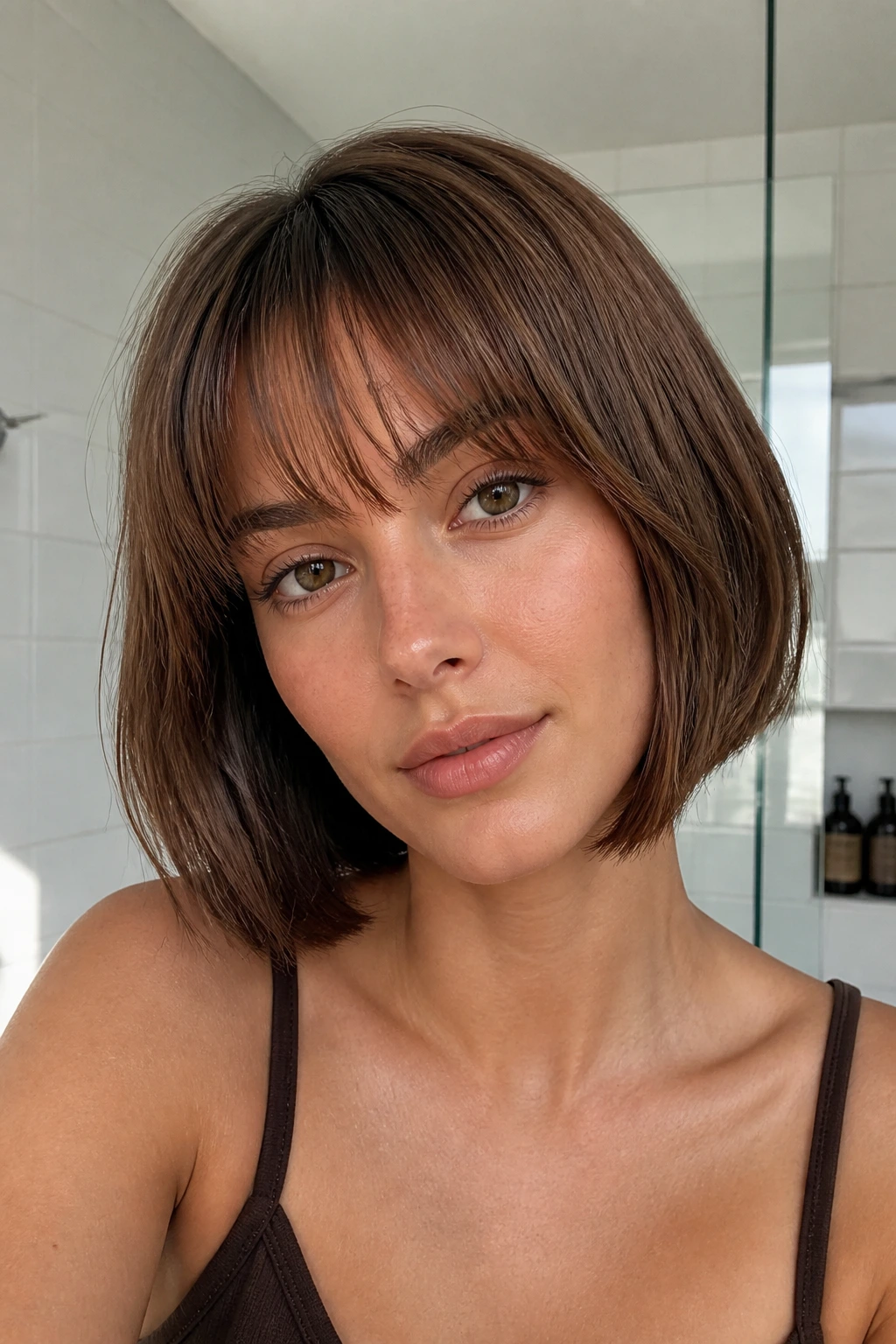
A burnished brunette bob has warmth that feels polished rather than loud. Add a soft fringe, and the whole cut gets a little romance around the eyes without losing the bob’s clean shape. It’s one of the easiest ways to make brown hair look finished.
The fringe should not be heavy. That’s the trap. Soft fringe means broken-up ends, a little see-through texture, and enough movement that the forehead still shows through. The cut itself can sit at the jaw or just below it, depending on how much face-framing you want.
Burnished brown sits between chestnut and cocoa, with a faint golden-red shine that shows up best in natural light. I like this version when the goal is warmth without obvious highlights. It keeps the color deep and the outline gentle.
It’s a good final note because it does a bit of everything. Shape. Softness. Shine. No drama required.
How Warm Brunette Bob Haircuts Catch Light
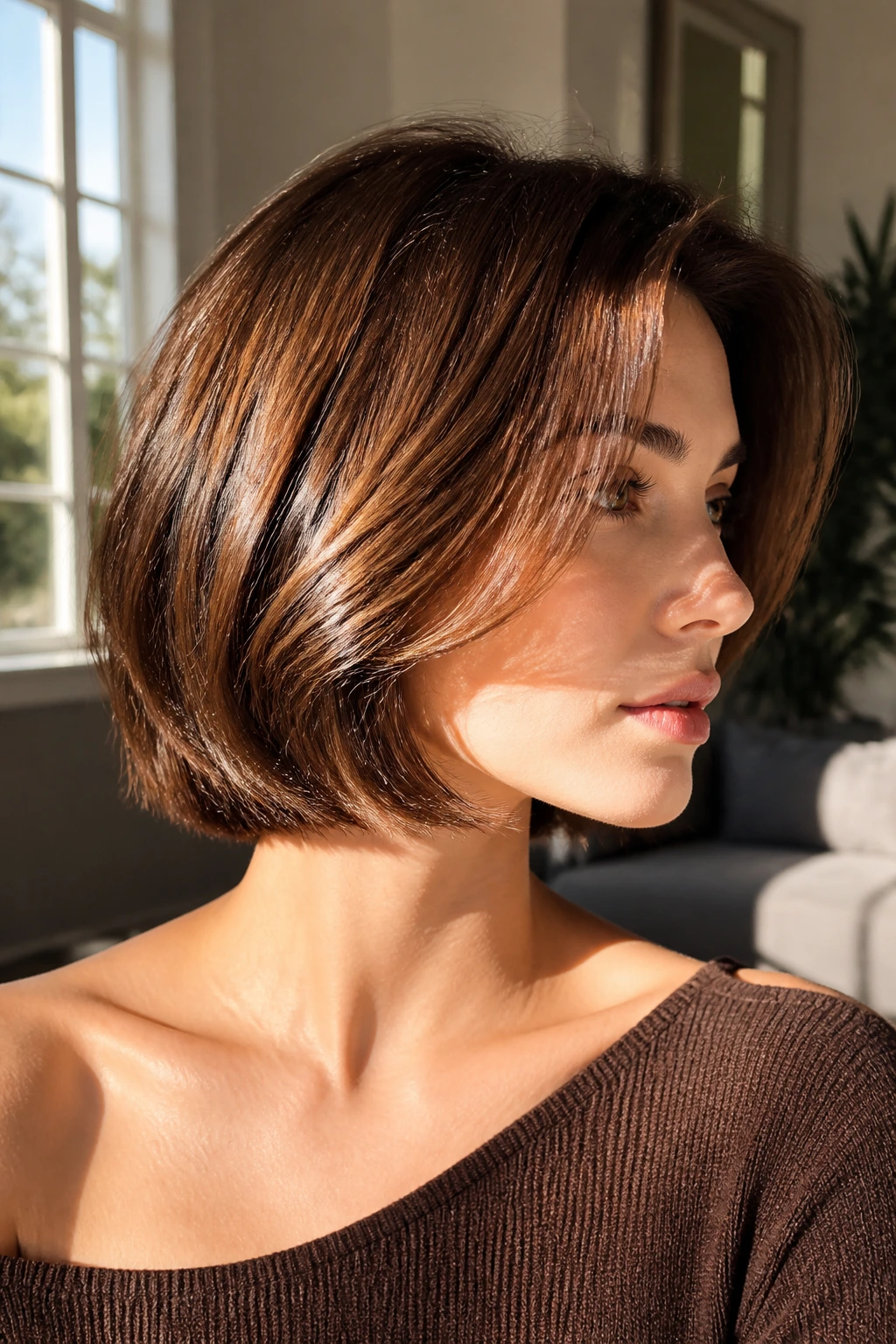
Warm brunette shades work because they don’t swallow light the way very cool browns can. Gold, copper, and red-brown pigments reflect differently across the surface of the hair, so a blunt line or a curved bob shows more depth with less effort. That is why chestnut can look glossy at the ends, why caramel pops around the face, and why auburn curls seem to move more than they should.
The cut matters just as much as the color. A blunt bob puts the shine on display because the edge is clear. A layered bob uses movement instead, which makes warm tones flicker when the hair shifts. Even a one-length cut changes once the weight is removed from the right spot. The same shade can look flat in a long cut and rich in a bob. Small shape, big difference.
I also like warm brown because it behaves better than people expect in everyday light. Under bathroom bulbs, in a car mirror, by a window at noon—those are the moments that tell the truth. Warm brunettes tend to look deeper there, not duller. That’s a better test than any salon photo.
The Cut Shapes That Keep Brown Hair Full
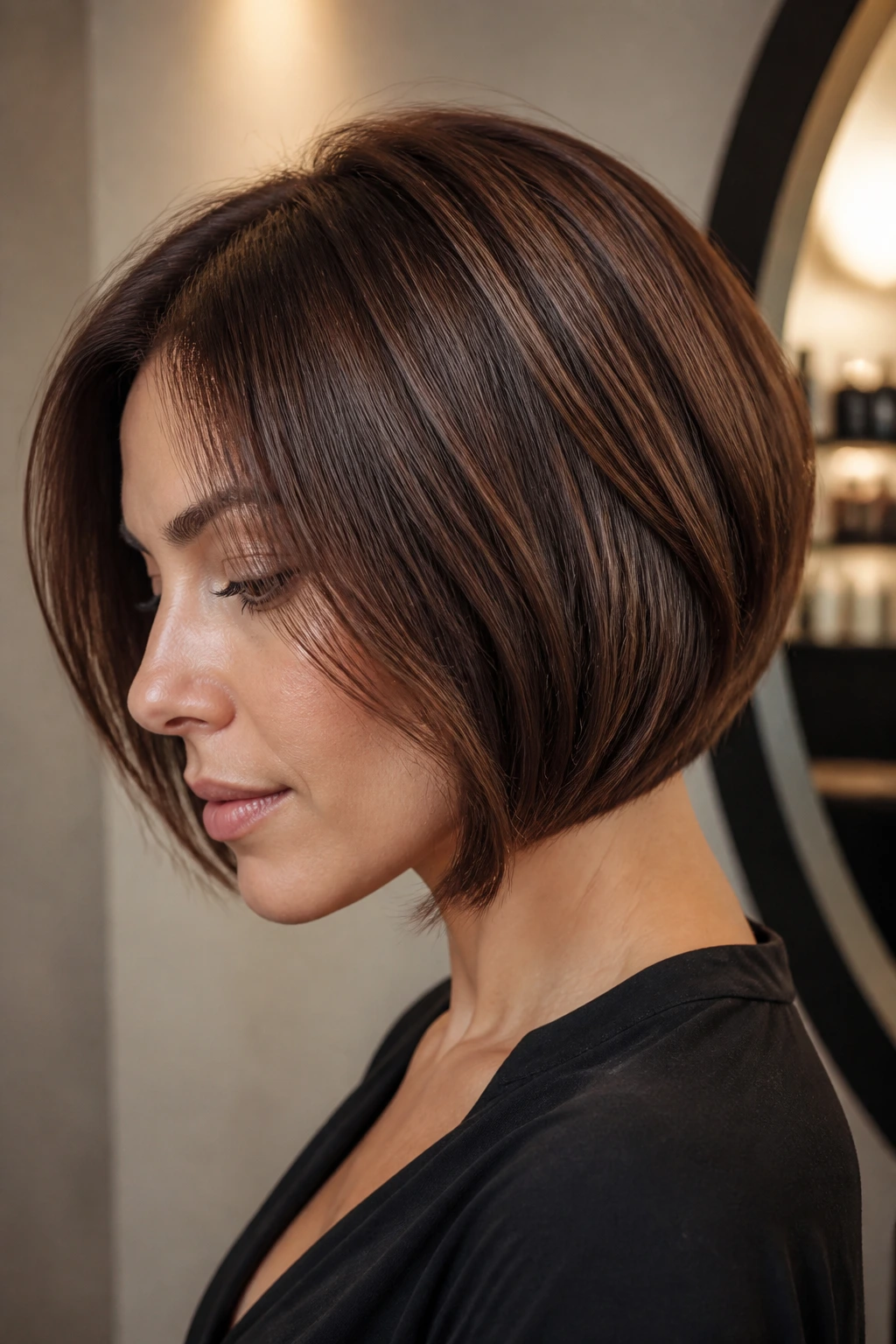
A good bob shape is mostly about weight distribution. Too much bulk at the bottom makes the hair hang. Too many layers near the top make the crown puff out and the ends disappear. The best brunette bob haircuts sit between those two problems and solve them with a clear outline.
Blunt cuts are the easiest way to make fine hair look thicker. The line stays full, so the eye reads density all the way across. Rounded bobs soften the outline and work well when you want a little face-hugging curve. Inverted and A-line shapes add movement without giving up structure, which is why they show up so often in salon chairs.
If your hair is thick, internal layers matter more than face-framing pieces. If your hair is fine, a blunt edge and a slight bend at the ends usually beat a lot of slicing. Curls need shape cut into them while dry or close to dry, because spring changes everything. Straight hair can carry the sharpest lines, but it still needs some weight left in the perimeter or it turns stringy fast.
No single bob shape fixes everything. But the right one makes the brown color look expensive instead of just brown.
Essential Tools for Styling These Cuts
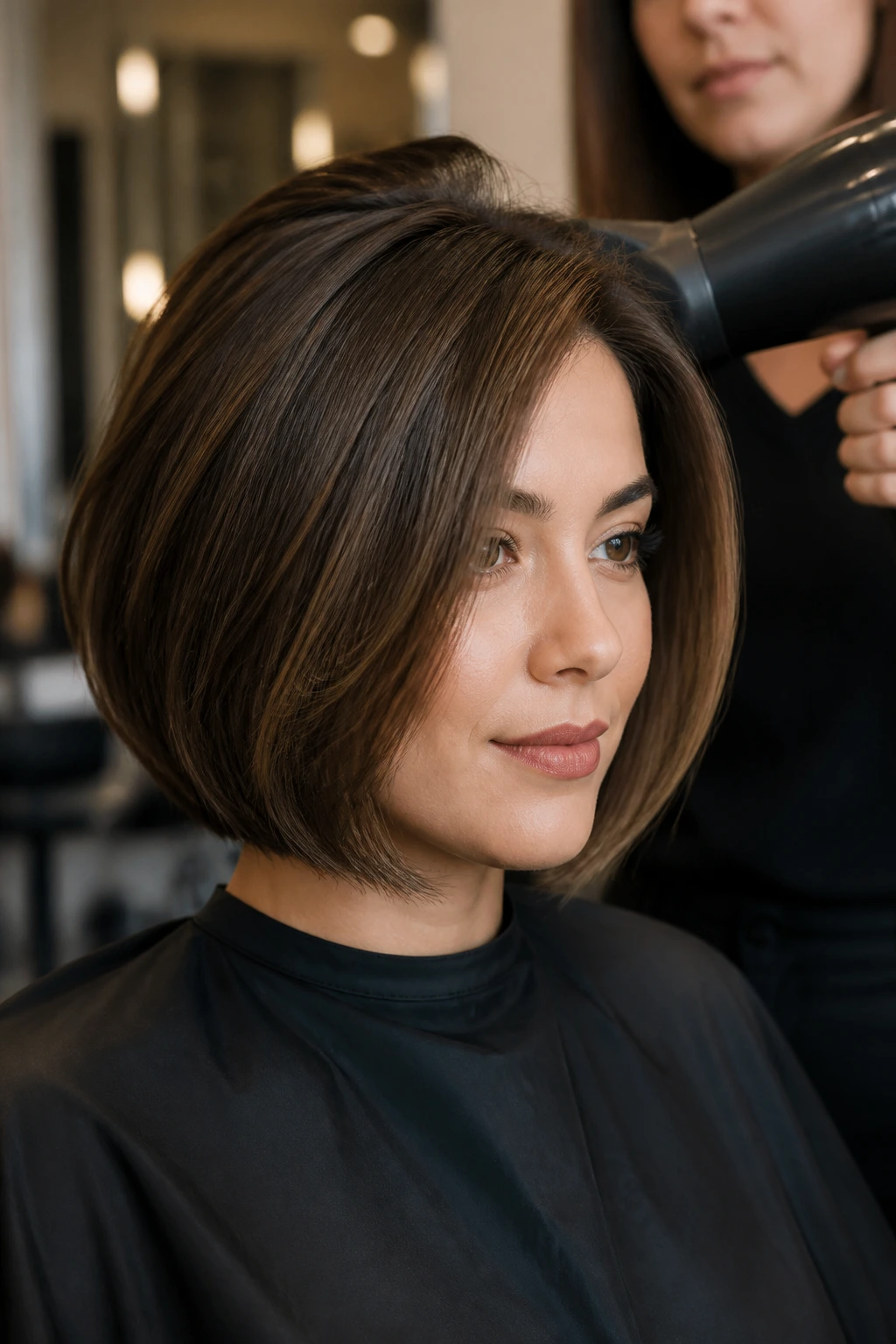
- A blow-dryer with a nozzle attachment: The nozzle keeps the airflow directed so the cut dries smooth instead of fuzzy.
- A 1-inch round brush: Best for turning the ends under on blunt, rounded, and A-line bobs.
- A flat iron with beveled edges: Easier to bend the ends or add a soft wave without creating hard creases.
- Heat protectant spray: Skip this and the brown tone loses shine faster than the style loses shape.
- Lightweight mousse or root-lift spray: Helpful for fine hair that needs a little lift without stiffness.
- A shine serum: One pea-sized amount on the mid-lengths and ends is enough; too much makes warm brunettes look oily.
- Duckbill clips: Useful for sectioning when you blow-dry bangs, face-framing pieces, or the top layer.
- A wide-tooth comb: Better than a brush for wavy or curly bobs when you’re trying to keep the outline soft.
How to Choose the Right Warm Brown Shade
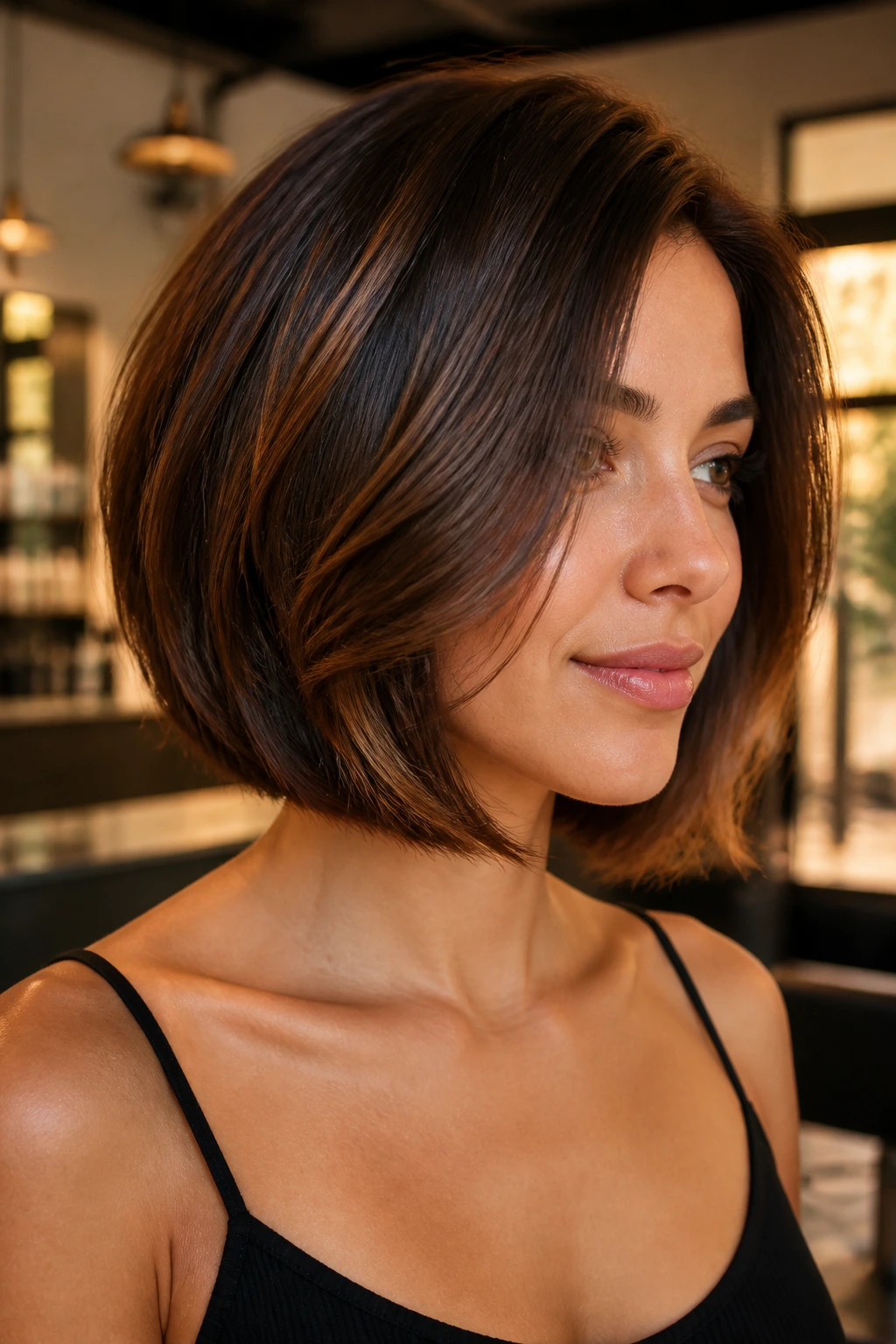
The best warm brunette isn’t the same for every head of hair. A chestnut bob can look rich on one person and muddy on another if the tone fights the skin or the starting color is wrong. That’s why I like to think in families: golden brown, red-brown, caramel brown, mocha brown, and deep chocolate with warmth. Those five cover most of what people actually ask for.
If your skin leans peach, gold, or olive, caramel and chestnut usually sit well because they echo the warmth already in the face. If you have cooler features and still want a warm bob, keep the warmth in the highlights or gloss rather than pushing the whole head into copper. That keeps the color from overpowering your face. Very dark brunettes can also get there with a gloss and a few fine ribbons near the front, which is often smarter than lightening the whole head.
Texture matters, too. Fine hair tends to look fuller with a slightly deeper, shinier brown. Thick hair can take brighter warmth because the shape has enough body already. Curly hair often looks best when the warm tone is placed where the curls catch light, not buried underneath.
And if you’re sitting in a salon chair trying to describe what you want, use plain words. Say warm brunette, glossy chestnut, caramel around the face, keep the ends blunt, or no ash. That is much clearer than asking for something “soft but dimensional,” which can mean almost anything.
Pro Styling Tips for a Bob That Holds Its Shape
Shine first, volume second. Warm brunette hair shows every bit of dullness at the ends, so a small amount of heat protectant and a light serum matters more than a pile of styling cream. If the hair is fine, keep the product off the root area. That’s where bob styles go limp fastest.
Blow-dry the perimeter before anything else. The ends make the haircut. Once the line is set, you can fuss with the top or the fringe, but not before. I like to dry the bottom half in sections and only then move to the crown.
Do not overcurl a bob. Too many uniform curls make the shape round in the wrong way and hide the cut. If you’re using a wand, leave the last inch out and alternate directions. It looks less pageant, more expensive.
Ask for gloss, not just color. Warm brunettes often lose their glow after a few washes if they never get refreshed. A clear or tinted gloss can bring the tone back without changing the haircut at all.
Common Mistakes That Flatten Brunette Bobs
- Choosing ash when you want warmth: The cut can be clean, but the color will look dusty instead of rich. Ask for golden, chestnut, caramel, or red-brown depth if warmth is the goal.
- Removing too much weight from fine hair: Heavy layering on a thin bob makes the ends disappear and the top float. Keep the perimeter solid and let movement come from styling.
- Cutting thick hair with no internal relief: If the hair is dense, a blunt line alone can turn into a box. Internal layers or a slight angle keep the bob from sitting like a helmet.
- Overusing purple shampoo: It can mute warm brown hair fast. Fine for a tiny bit of brass near the ends, but weekly use on a warm brunette can push the shade colder than you want.
- Ignoring the nape: A bob that looks good from the front but puffs at the neck looks unfinished. The back line needs just as much attention as the face-framing pieces.
- Styling every day the same way: A blunt bob, a wavy bob, and a curly bob each want different products. One cream does not solve everything.
Variations and Adaptations to Try
The Soft-Grow-Out Bob: Keep the base shape blunt, but let the front fall a little longer than the back. This is the easiest version to live with if you hate frequent trims and still want the brunette color to look polished.
The Warm Money-Piece Bob: Brighten just the pieces around the face with caramel or honey brown. It’s a good choice if you want visible dimension without changing the whole head or going lighter everywhere.
The Curly Shape-Saver Bob: Leave the length a touch longer and keep the layers dry-cut. This keeps curls from springing too short while still letting the warm brown color show off the curl pattern.
The Sleek Office Bob: Stay with a blunt edge, center part, and mocha or espresso gloss. It looks tidy, moves from day to night easily, and does not need much styling beyond a fast blow-dry.
The Messy Weekend Bob: Add choppy ends, a soft bend, and cinnamon or walnut tones. This version looks best when it’s touched, not overdone.
Frequently Asked Questions About Warm Brunette Bob Haircuts
Which warm brown shade looks richest on a bob?
Chestnut and mocha usually give the most depth because they sit in the middle of brown, red, and gold without tipping too far into any one direction. They also hold up well on blunt lines, where shine matters a lot.
Will a bob make my thick hair look puffy?
It can, if the cut is all perimeter and no internal shaping. Thick hair usually needs a little removal inside the shape, plus a blunt or slightly angled outline to keep it from ballooning.
Are warm brunette bobs hard to maintain?
Not really, but the ends need attention. A trim every 6 to 8 weeks keeps the line clean, and a gloss refresh every 4 to 6 weeks helps the brown stay glossy instead of muddy.
Can I wear bangs with a brunette bob if I have a round face?
Yes, but the bangs should be soft and slightly separated, not thick and heavy. Brow-skimming fringe or curtain bangs tend to work better than a blunt wall across the forehead.
What if my brown color looks flat under indoor lights?
That usually means the shade is too one-note. Ask for subtle caramel, chestnut, or mahogany pieces, or try a gloss with a warmer undertone so the hair shows different depths when it moves.
Do I need highlights for a warm brunette bob to look dimensional?
No. A good gloss, a strong cut line, and a few face-framing lighter pieces can do the job. Highlights help, but they are not the only route to dimension.
Is a lob still a bob?
Most stylists treat it as part of the bob family once the length sits at the collarbone or above. It’s longer, yes, but the same shape rules still apply.
What’s the easiest brunette bob to style air-dried?
A French bob, shag bob, or soft rounded bob usually air-dries best because the texture is already built into the cut. Straight blunt bobs tend to need more help if you want them to look smooth.
Keeping the Cut Sharp Between Salon Visits
A warm brunette bob stays at its best when the shape gets checked before it gets shaggy. For a blunt or boxy bob, 6 to 8 weeks is the sweet spot if you care about the line. For a shag, layered bob, or lob, you can often stretch to 8 or even 10 weeks because the shape softens instead of breaking.
The color side needs a little care, too. Warm brunettes can drift dull when the ends get dry, so a hydrating mask once a week helps more than people expect. Use a color-safe shampoo, keep the water lukewarm instead of hot, and save clarifying washes for when product build-up starts making the hair feel coated. If your tone starts turning flat or muddy, a salon gloss is usually the cleanest fix.
Heat makes a big difference. A warm brunette bob looks best when the ends are protected and the blow-dry is not blasting the hair from every angle. A nozzle attachment, low to medium heat, and a quick pass with a round brush on the perimeter will keep the line neater for longer. Sleep on a silk or satin pillowcase if you can. Friction is sneaky. It roughs up the ends faster than most people realize.
The Cut That Makes Brown Hair Glow
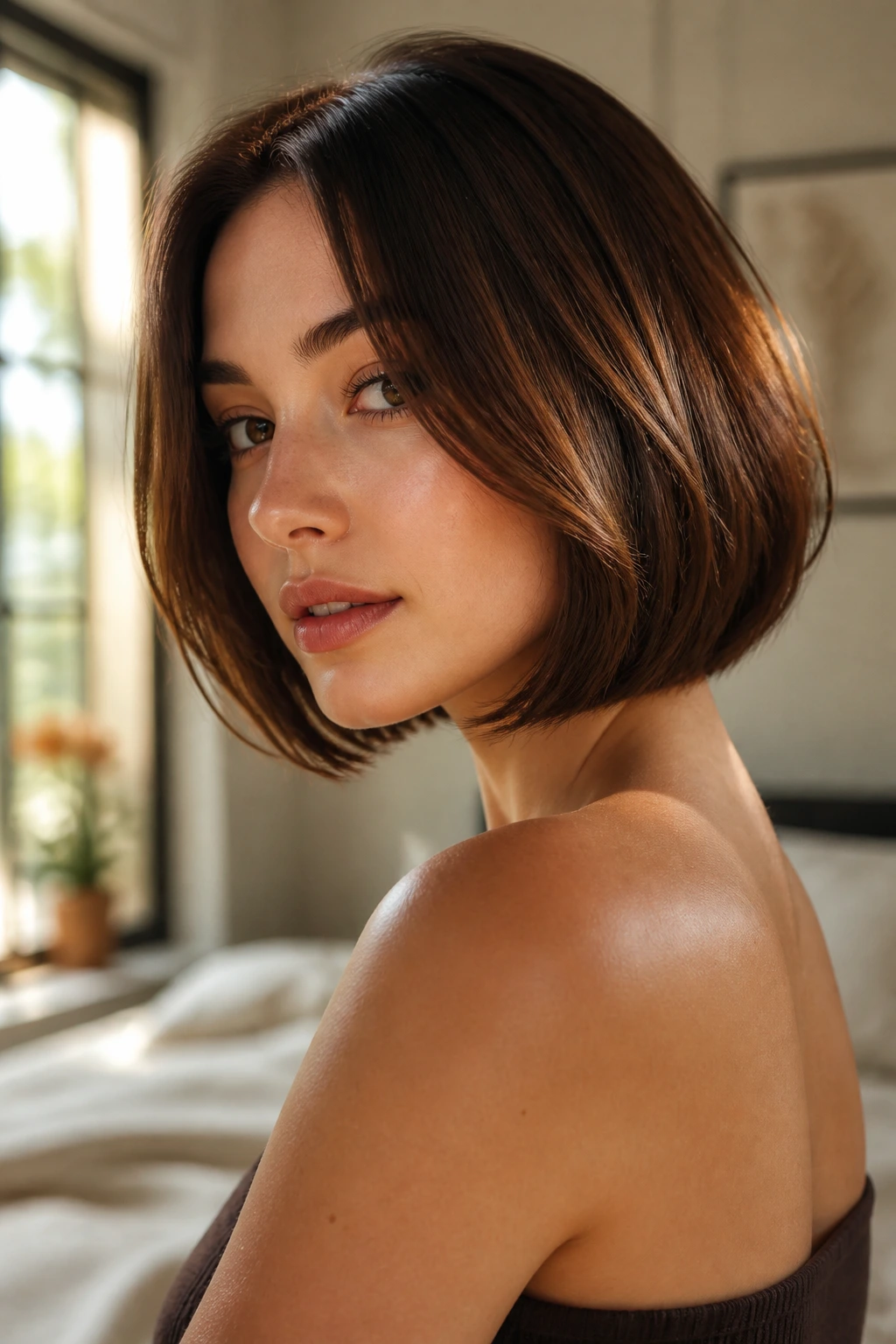
A warm brunette bob works because it respects both parts of the equation: the shape and the color. Get one wrong and the whole style feels off. Get both right and the hair looks fuller, shinier, and more expensive without asking for much drama.
That’s why these cuts hold up so well. A blunt chestnut bob, a caramel French bob, a moody mocha Italian bob—they each do something slightly different, but they all use warm brown depth to make the line better. Clean edges. Soft movement. A color that reflects light instead of hiding from it.
Pick the version that matches how you wear your hair on an ordinary day, not the version that only looks good in a mirror after forty minutes of styling. That’s the one that will keep paying off.
