



Blunt bob cuts for medium length hair have a very specific kind of charm: they make the ends look denser, the line look cleaner, and the whole haircut look like it was meant to be there. There’s no soft blur at the perimeter to hide behind. That’s the point. When the length hits the collarbone, jaw, or the top of the shoulder, a blunt edge suddenly matters a lot more than people expect.
I keep coming back to this haircut because it solves a real problem for medium-length hair that wants to look full but not heavy. Too much layering and the outline starts to fray. Too much length and the shape drifts into “almost a lob, maybe, if you squint.” A blunt bob is the neat answer, but not a boring one. The same straight-edged cut can read sleek, French, swingy, airy, or coolly severe depending on where it lands and how you wear the part.
There’s also a small but important bit of hair logic here: medium-length hair sits right in the danger zone where ends start to look wispy, shoulders create a flip, and wet hair lies to you about its real shape. A blunt line cuts through all that. It gives the eye one clean place to stop. And once you know how many versions of that line are possible, the haircut gets a lot more interesting than the word “bob” suggests.
Why These 22 Blunt Bob Cuts Stand Out on Medium Length Hair
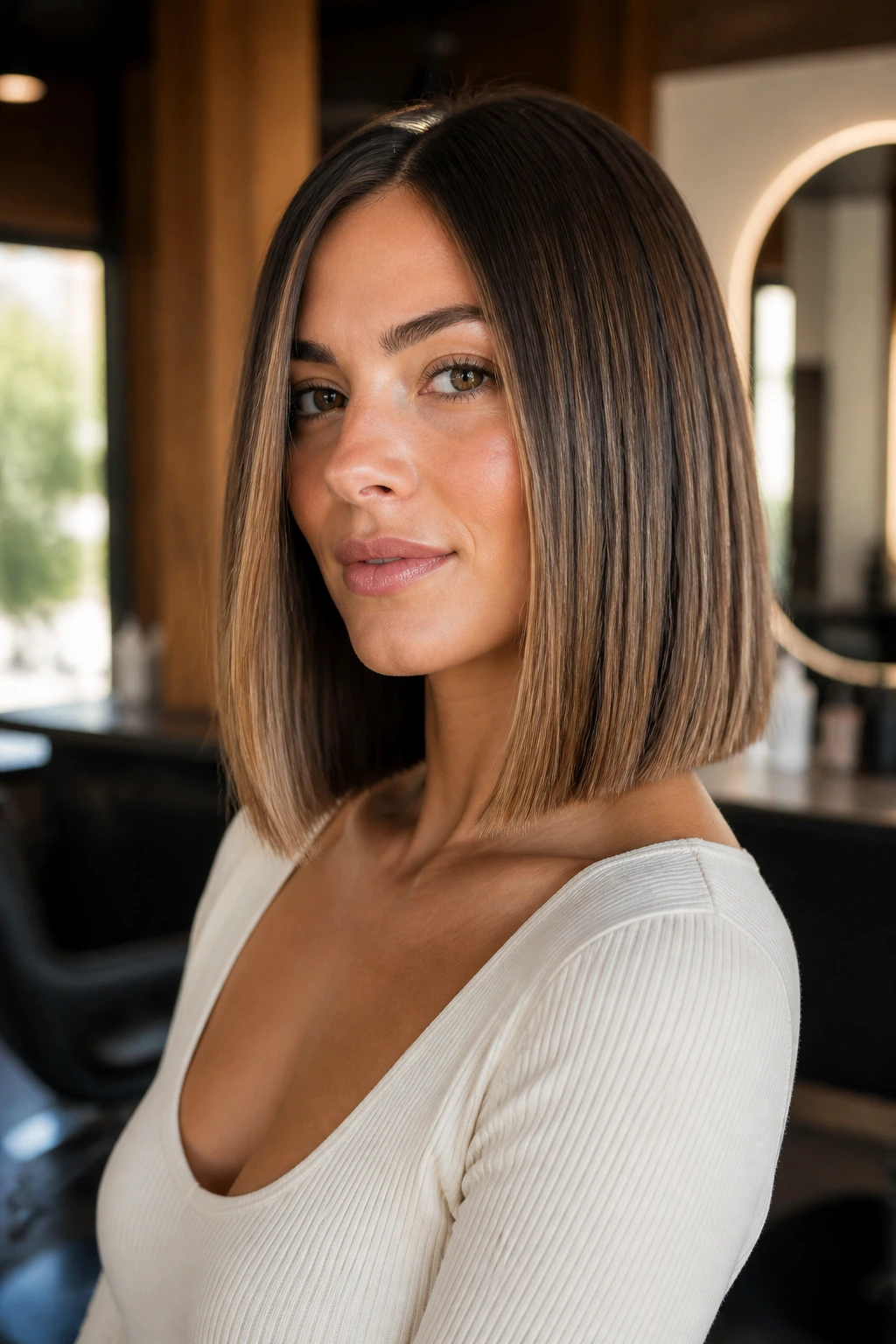
-
Density at the edge: A one-length perimeter makes medium-length hair look thicker at the ends, which is where most cuts start to look tired first.
-
The shoulder changes everything: Hair that brushes the collarbone or shoulder can kick outward in odd ways, so the exact landing point of the cut matters more than it does on shorter bobs.
-
Straight, wavy, and curly all need a different plan: The blunt outline works across textures, but the way you cut, dry, and style it changes a lot once natural bend enters the picture.
-
The part can change the whole mood: A middle part, deep side part, or tucked side can make the same haircut look polished, sharp, soft, or slightly undone.
-
Maintenance stays manageable: Crisp edges do need trims, but they usually grow out more gracefully than heavily layered shapes that lose their structure halfway between appointments.
Why the Blunt Line Works So Well on Medium Length Hair
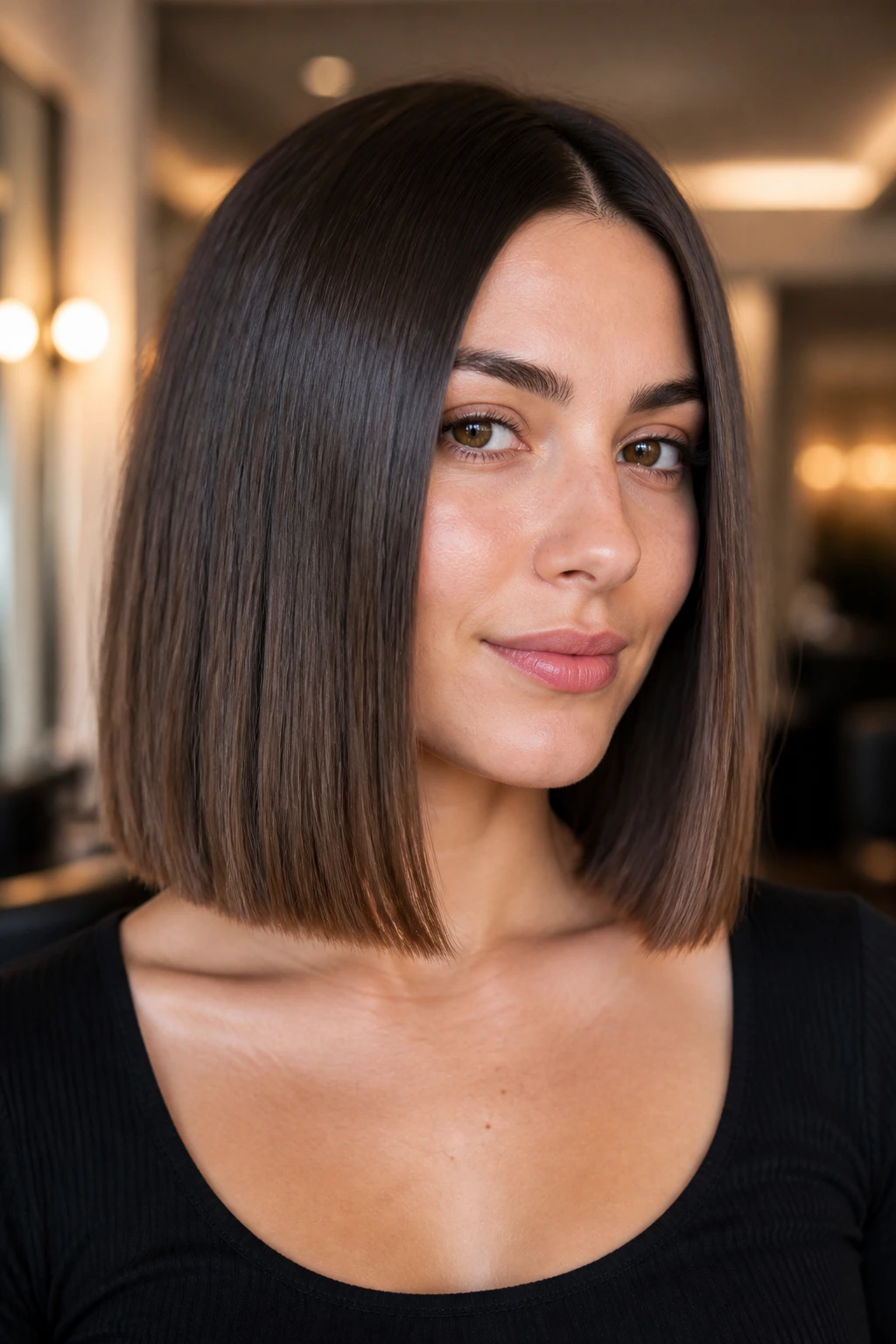
Medium length is the sweet spot where a blunt cut can look deliberate instead of severe. Go too short and you’re in classic bob territory, which is fine, but less forgiving around the ears and jaw. Go too long and the blunt edge starts to behave like a blunt lob, which can be gorgeous, though it changes the whole balance. Sitting in between gives the haircut weight, swing, and enough surface area for shine.
The other reason this length works is friction. Hair that lands exactly on the shoulder tends to flip, bend, or kick out when you don’t want it to. A clean perimeter can either tame that movement or lean into it. I’ve seen blunt bobs fail when the stylist ignored that shoulder line and I’ve seen them sing when the cut was nudged a half inch shorter or longer to avoid the exact spot where the hair catches.
What the line does in real life
A blunt edge is not only about looks. It changes how the hair falls. The ends meet the same visual point, so the eye reads fullness instead of taper. That matters a lot for fine hair, but thick hair benefits too because the cut can stop the bottom from ballooning into a triangle if the weight is placed smartly.
And if your hair has even a little wave, the blunt perimeter gives the bends a boundary. That boundary is the whole game. Without it, medium hair can drift into mush. With it, the shape feels intentional. Not fancy. Not fussy. Just clean.
What to Tell Your Stylist Before the First Snip
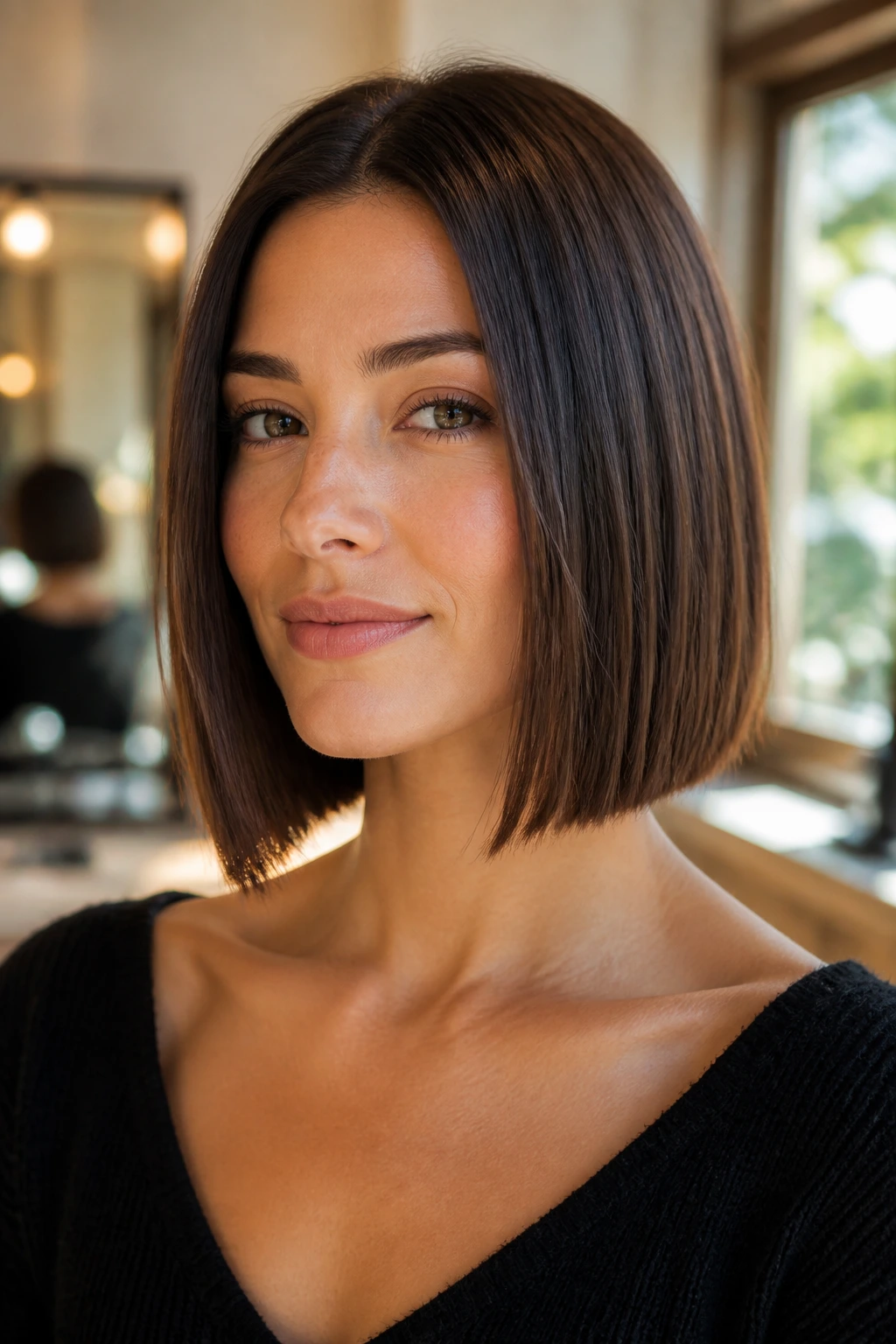
A blunt bob goes wrong more often in the consultation chair than in the mirror at home. That’s blunt honesty, not drama. The difference between a crisp one-length cut and a vague “make it shorter” request is usually a handful of details you can say out loud in ten seconds.
Ask for the perimeter first. Then talk about length. Then talk about texture.
- Say the length in landmarks: chin, jaw, collarbone, top of shoulder, or just below the shoulder.
- Ask for a one-length or mostly one-length shape: If you want blunt, the ends should form a clear line, not a stacked or heavily shattered finish.
- Mention your normal part: Middle-part bobs and side-part bobs sit differently, and the fringe area should be cut for the part you actually wear.
- Say how you style it most days: Air-dried, blow-dried smooth, bent with a round brush, flat-ironed, or curled.
- Bring up your texture honestly: Wavy, coarse, fine, or curly hair all sit differently when they dry.
- If your hair is thick, ask about removing bulk without shredding the ends: That part matters. A blunt bob should feel solid at the line, not hacked up with thinning shears.
One small thing people skip: mention whether you tuck your hair behind your ears. That habit changes how the front pieces should be cut. A haircut that looks perfect when it hangs in front of the face can feel crooked the second you tuck one side back all day.
1. The Collarbone Blunt Bob
The collarbone version is the safest starting point, and I mean that in the best way. It gives you the clean edge of a blunt cut while leaving enough length to tuck, bend, or pin back without feeling trapped by a too-short line. When the ends land right at the collarbone, the haircut gets a built-in pause. The shape reads full from the front and slightly swingy from the side.
Why It Works
The collarbone acts like a natural stop sign for the eye. Hair that ends there looks finished, not accidental. It also keeps the perimeter out of the awkward shoulder-flip zone for a lot of people, though not all. If your shoulders are broad or your posture pushes the hair forward, ask for a small adjustment up or down.
What to Ask For
- A one-length line that lands at the collarbone
- Minimal layering in the interior
- Soft dusting only if the ends need cleanup
- A dry check at the end if your hair bends a lot
Quick tip: If your hair grows fast and you hate losing the shape too soon, this is the version I’d pick first. It keeps its line longer than a chin-length bob and still feels sharp after a few weeks.
2. The Center-Part Glass Bob
A center part turns a blunt bob into something cleaner and a little more severe, which sounds plain until you see it on medium length hair. Then it looks expensive in the old-school sense: glossy, even, and a touch self-possessed. Straight hair especially loves this cut because the line from crown to ends stays uninterrupted.
Why It Works
The middle part forces symmetry, and blunt ends love symmetry. The shape becomes almost graphic. That means any unevenness shows up fast, which is why this version is best when your stylist is careful with the perimeter and the blow-dry is smooth. If your hair has a stubborn cowlick near the front, this cut can still work, but it needs a little direction at the root.
Styling Note
Use a nozzle on the dryer and guide the hair down with a paddle brush or a flat brush. Finish with a tiny amount of serum on the last inch only. Too much product near the roots will flatten the crown and make the whole cut look narrow.
If you like a crisp, deliberate look and don’t mind spending a few minutes with a brush, this one is hard to beat.
3. The Deep Side-Part Power Bob
A deep side part changes the blunt bob from tidy to angular. One side falls heavier; the other side gets a bit of lift near the temple. That small imbalance gives medium length hair a lot of movement without touching the perimeter.
Why It Works
The blunt edge stays intact, but the part adds drama at the root. That makes this version useful for finer hair that needs height on top or for rounder faces that benefit from a little diagonal line. The side part also gives the front pieces a longer swing, which can soften a strong jaw.
Good For
- Hair that falls flat at the crown
- Faces that need a little length through the front
- People who want movement without layers
- Anyone who hates how a middle part sits on their head
A deep side part can look very polished, but I think it looks best when it isn’t over-styled. Let the root lift happen naturally, then smooth the lengths. If you curl only the very ends under, the shape keeps its bluntness and avoids that old-fashioned pageant feel.
4. The Jaw-Skimming Blunt Bob
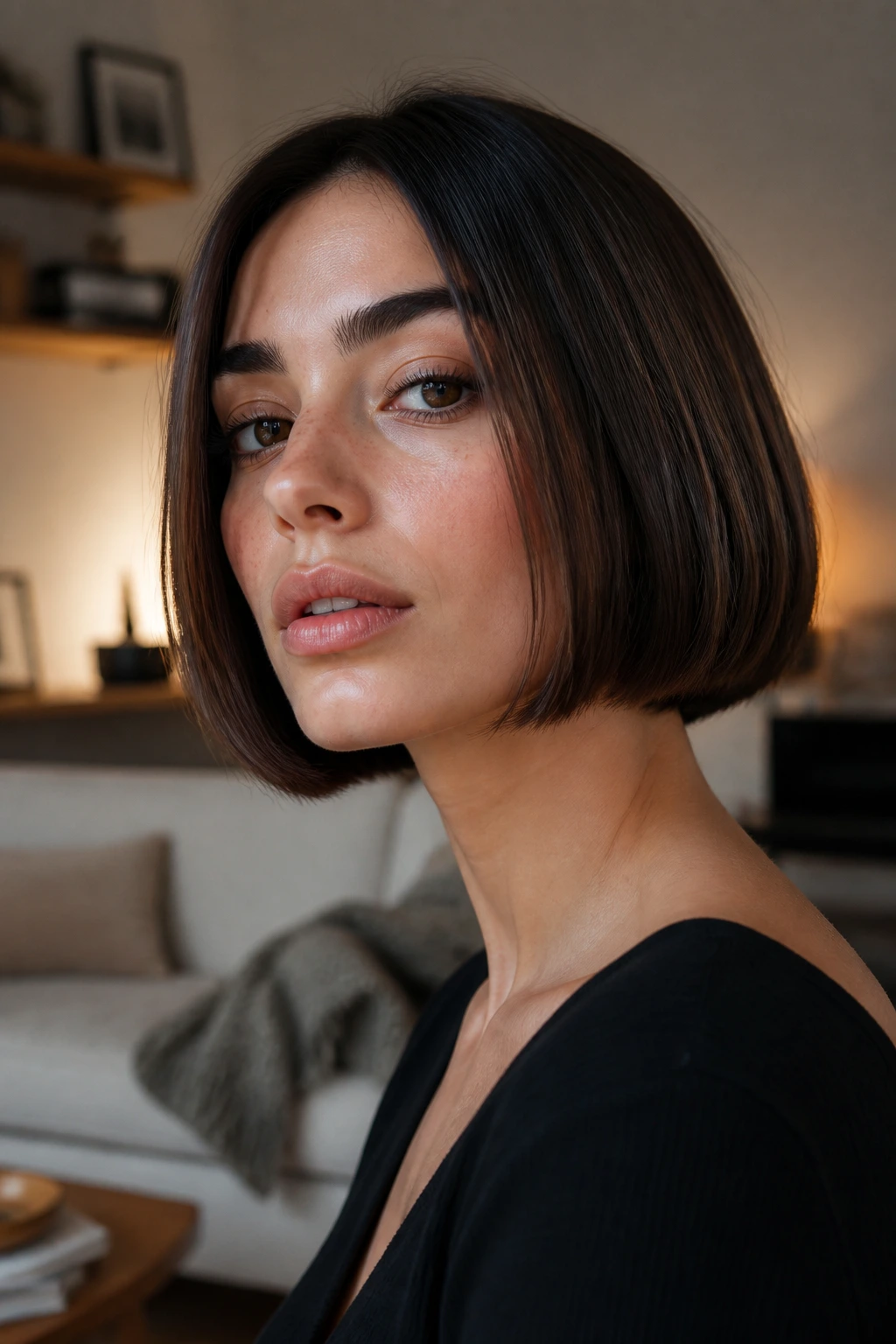
This is the shorter, sharper cousin in the group. It lands right near the jawline and uses that line to make the face look more defined. It’s one of the best blunt bob cuts for medium length hair if you want the cut to do visible work immediately.
Why It Works
The jawline is a strong anchor point. Put a blunt edge there and the haircut gains structure fast. It can sharpen a soft face, highlight cheekbones, and make earrings or a strong collar neckline stand out. It’s also the version that feels most like a classic bob without getting into ultra-short territory.
Watch the Friction
Jaw-length hair can flip under the chin or kick out along the neck when it dries. That’s not a flaw in the cut; it’s a behavior you need to plan for. A round brush or a quick pass with a flat iron usually settles it. If your hair is very thick, keep the line clean and resist the urge to texturize the ends too much.
This is a bold little haircut. It doesn’t whisper.
5. The Shoulder-Skimming Blunt Lob
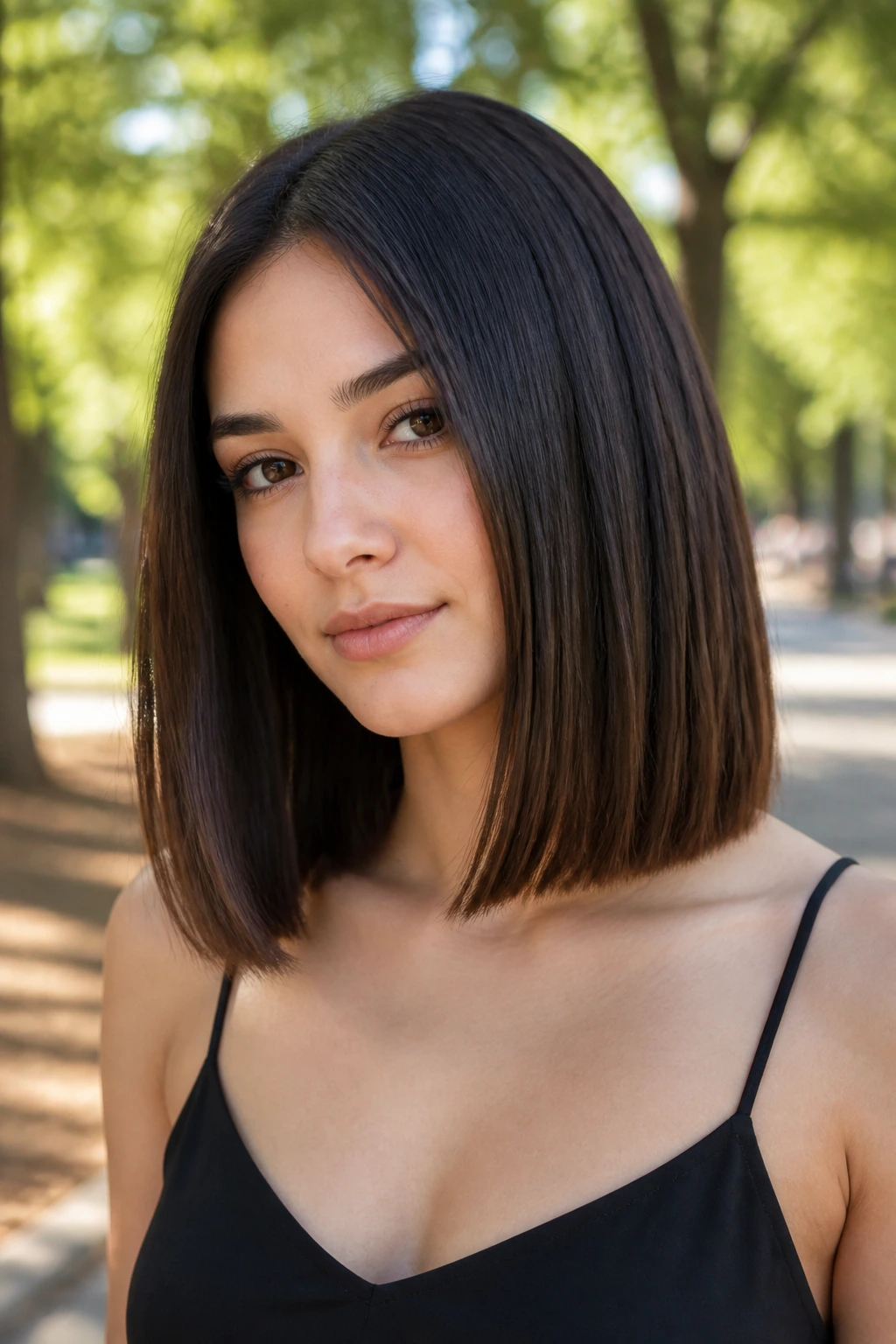
The shoulder-skimming blunt lob is the version people ask for when they want the security of length with the line of a bob. It lives right at the edge of medium hair, and that’s why it works. You can wear it straight, bent, tucked, or air-dried without losing the shape.
Why It Works
A longer blunt perimeter gives the hair more weight, which helps fine to medium textures behave. It also grows out with less panic. A half-inch of regrowth does not wreck the outline the way it can on a shorter bob. That makes this one a smart choice if you like getting haircuts less often than your calendar would prefer.
How It Feels
This version feels softer around the face than jaw-length cuts, but not layered-soft. The ends still look solid. The overall mood is calm rather than sharp. I’d call it the sweater you can also wear with a blazer.
If you like a clean silhouette but do not want your hair grazing your cheeks, this is the one to save.
6. The Curtain-Bang Blunt Bob

Curtain bangs and blunt bobs get along because they solve different problems. The bob gives weight at the ends; the bangs bring motion around the face. Together, they keep medium length hair from looking too fixed or too plain.
Why It Works
Curtain bangs split in the middle and sweep outward, which softens the blunt line without erasing it. They are especially useful if your face feels too long with a straight bob or if you want a little movement near the eyes without committing to a full fringe. The key is blending. The bangs should meet the bob, not sit on top of it like an afterthought.
How to Style It
Use a round brush or a medium-barrel brush to bend the bangs away from the face while keeping the rest of the bob smooth. If the bangs are too curved, the look starts to drift into retro territory. If they’re too flat, they’ll disappear. Aim for a soft fold at the cheekbone, not a curl.
This is one of the most forgiving options in the whole group.
7. The Full-Fringe Blunt Bob
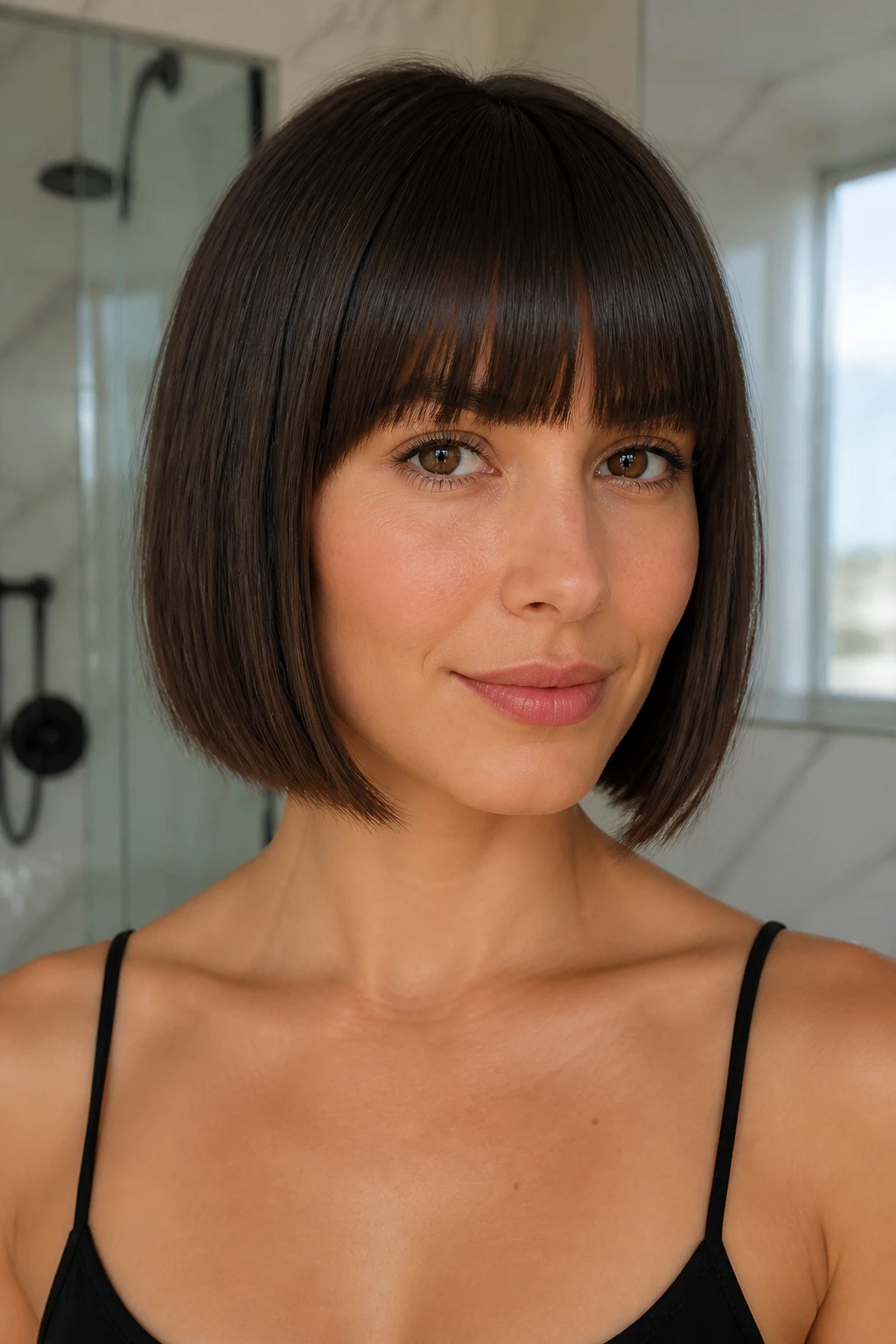
A full fringe changes the personality of a blunt bob fast. The haircut goes from clean to decisive. On medium-length hair, that combination can look striking, especially if the fringe sits just above the brows or barely skims them.
Why It Works
A straight fringe creates another hard line to match the blunt perimeter, and that parallel structure looks good when the cut is precise. It also shortens the face visually, which can balance longer features. If the fringe is too thick, though, the haircut can feel heavy in the front, so the density of the bangs matters as much as the length.
What to Watch For
The fringe needs its own maintenance. It grows fast and starts poking the eyes before the rest of the haircut feels old. A lot of people love the look and then get annoyed by the upkeep. Fair enough. It is part of the deal.
Still, there’s nothing timid about a blunt bob with a full fringe. It has attitude built in.
8. The Tucked-Behind-Ear Blunt Bob
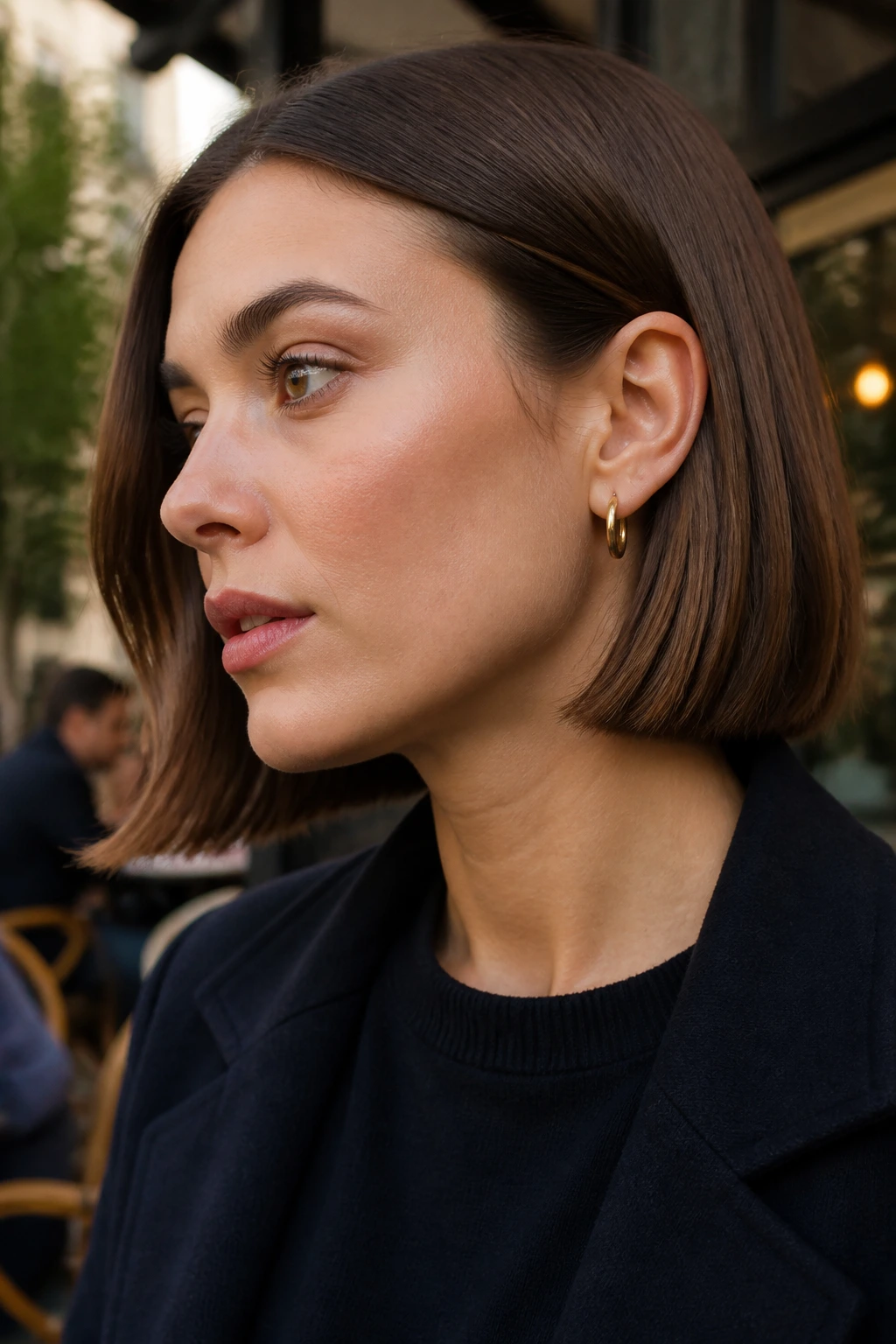
This one is all about the side profile. Tucking one or both sides behind the ear changes a blunt bob from a block of hair into a shape with angles. Medium length makes the tuck easy without exposing too much scalp or making the front look chopped off.
Why It Works
The tuck shows off the jaw, neck, and earrings, which means the haircut suddenly has a second job: framing what you put next to it. A clean blunt line makes that tuck feel intentional rather than messy. It also helps if you have one side of your face you prefer more than the other. Use it.
Styling Trick
Ask your stylist not to leave the front pieces too heavy. If the front is too blunt and too dense, it can bulge after the tuck. A slight length drop toward the front usually makes the tuck sit flatter against the ear.
One side tucked, one side loose. That simple contrast does a lot.
9. The Soft-Waved Blunt Bob
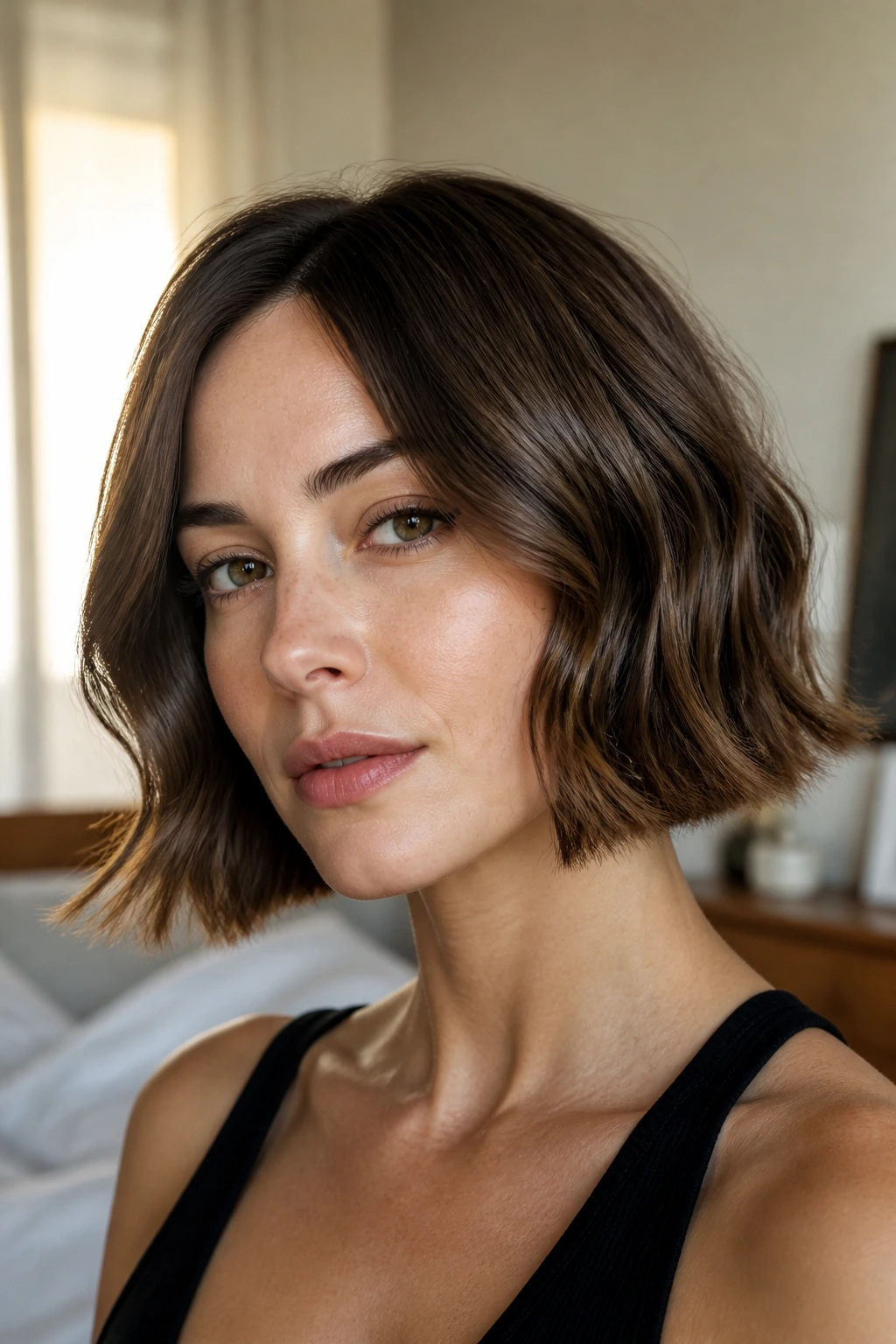
Not every blunt bob has to be poker straight. In fact, on medium length hair, a soft wave can make the perimeter look richer because the bend sits above the blunt line rather than replacing it.
Why It Works
The trick is keeping the ends blunt while adding shape through the mid-lengths. That creates a nice contrast: movement in the body, discipline at the edge. Use a 1-inch or 1.25-inch iron and leave the last inch straighter than the rest. That last inch matters. If you curl it all the way through, the cut stops reading blunt and starts reading piecey.
Best For
- Hair that is naturally wavy
- People who want polish without a stiff finish
- Medium hair that looks flat when worn straight every day
A soft-wave blunt bob has a little more life in motion. It swings. It doesn’t just sit there.
10. The Air-Dried Blunt Bob
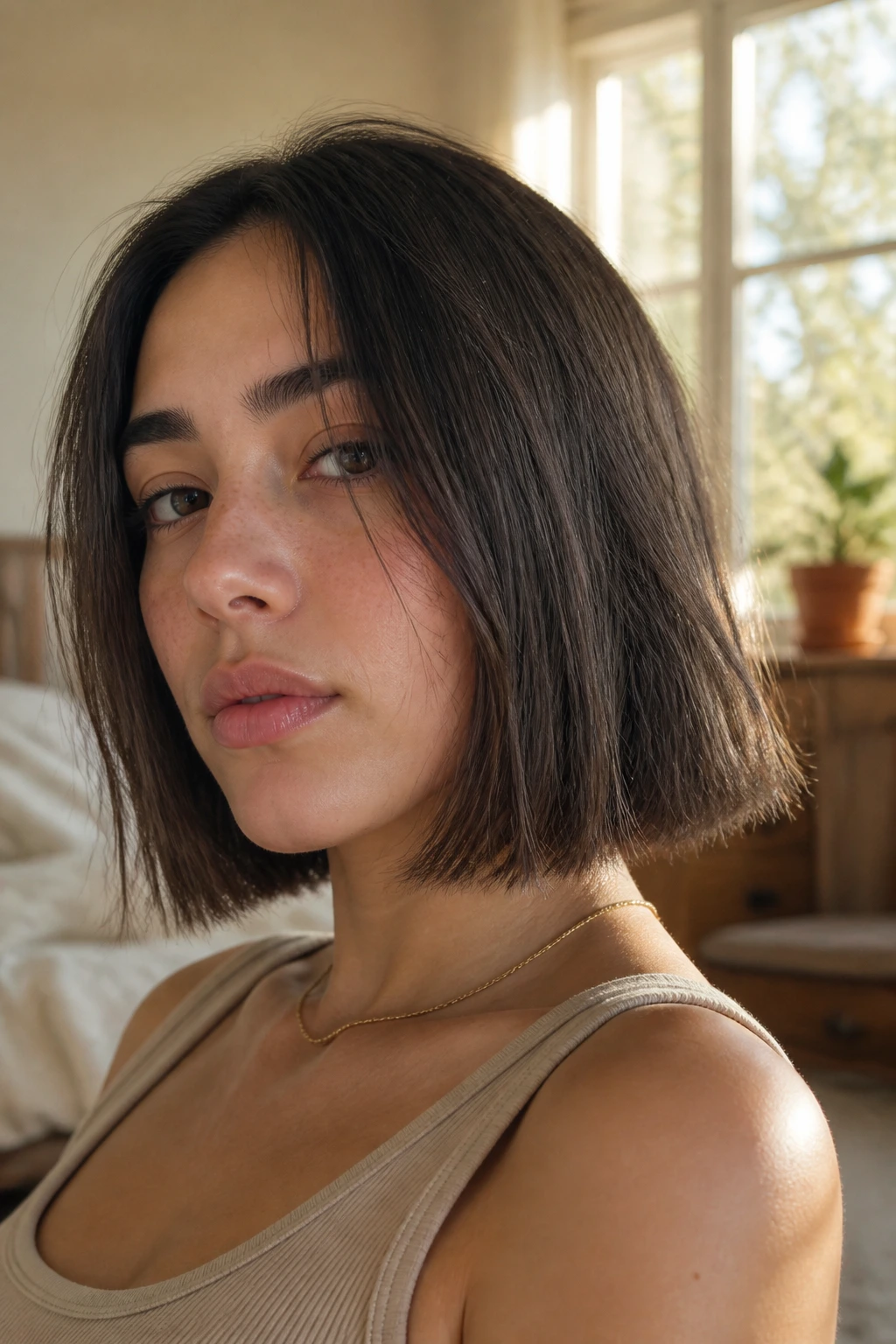
This is the version for people who would rather not negotiate with a blow-dryer every morning. The hair is cut blunt enough to hold its shape when it dries naturally, which is harder than it sounds. On medium length hair, the outline has to be placed with real care so the natural bend doesn’t eat the perimeter.
Why It Works
Air-dried hair needs margin. A blunt cut that looks perfect blown smooth can shrink or kick when left alone. The best air-dried versions are slightly longer than you think and cut with the natural bend in mind. If your hair is wavy, curly, or coarse, ask for a dry check before the final trim.
How to Wear It
Use a leave-in conditioner, scrunch lightly, and leave the ends alone. Hands are a problem here. Too much touching creates frizz, and frizz is the enemy of a clean line. If you want a little polish, smooth the outer layer only after it dries.
This cut is easy only when it’s planned that way.
11. The Curly One-Length Bob
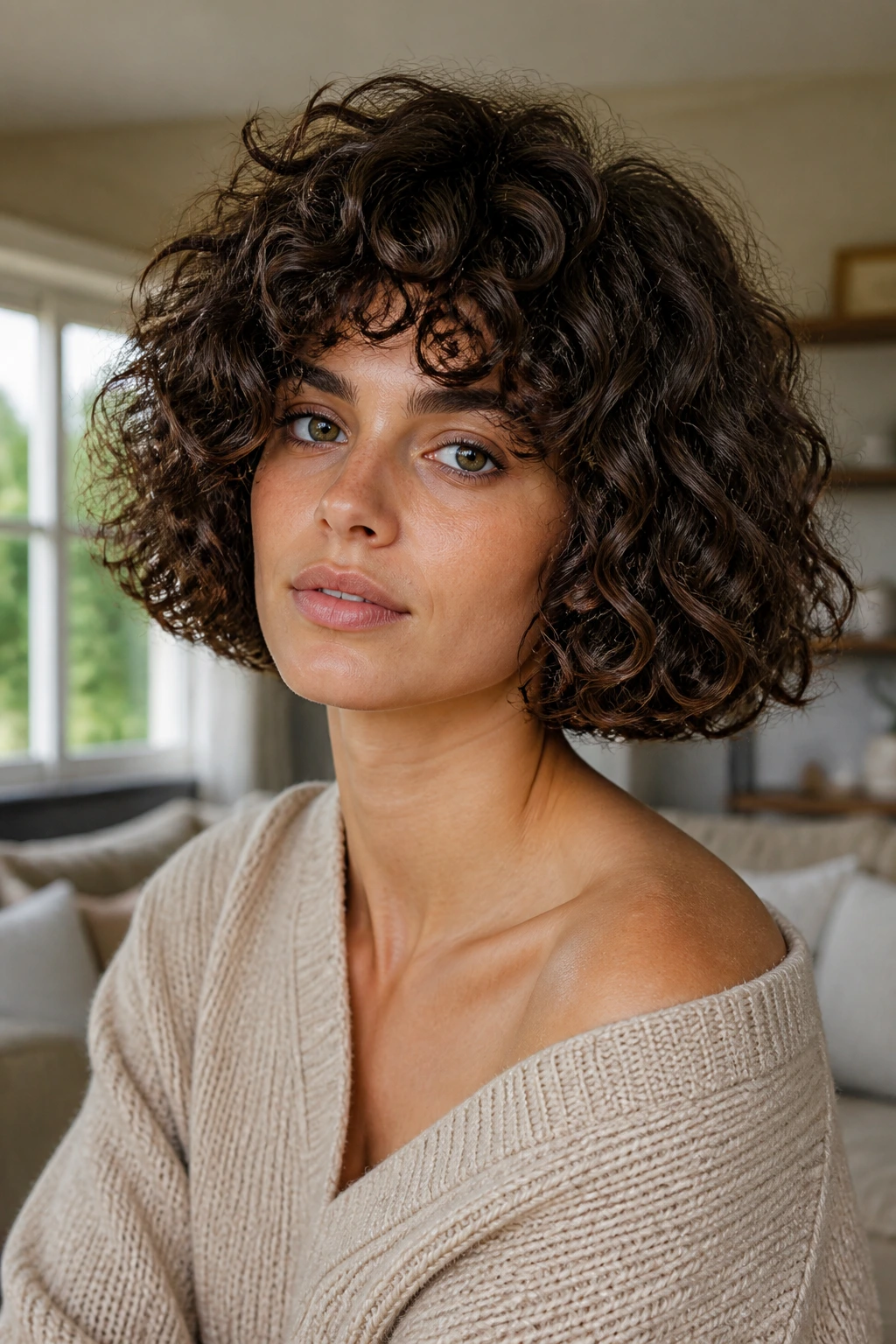
Curly hair and blunt ends can be a gorgeous pair, but only if the cut respects shrinkage. A one-length curly bob on medium length hair should never be judged while wet alone. The shape changes. A lot.
Why It Works
A blunt perimeter gives curls a defined bottom edge, which keeps the silhouette from turning into a puff of random pieces. It can make the hair look dense and sculpted rather than round and unruly. The best curly blunt bobs usually sit a little longer than expected when wet, because curls spring up once they dry.
The Practical Bit
Ask for the cut dry or for a stylist who is comfortable shaping curls in their natural state. That matters more than any styling product. If your curls are tight, the edge may need to land lower on the neck than you first imagine. If they’re looser, the bob can sit around the jaw or collarbone and still hold a blunt feeling.
This is one of the most misunderstood versions of the whole group. Done well, it’s clean and full. Done badly, it puffs.
12. The Thick-Hair Blunt Bob
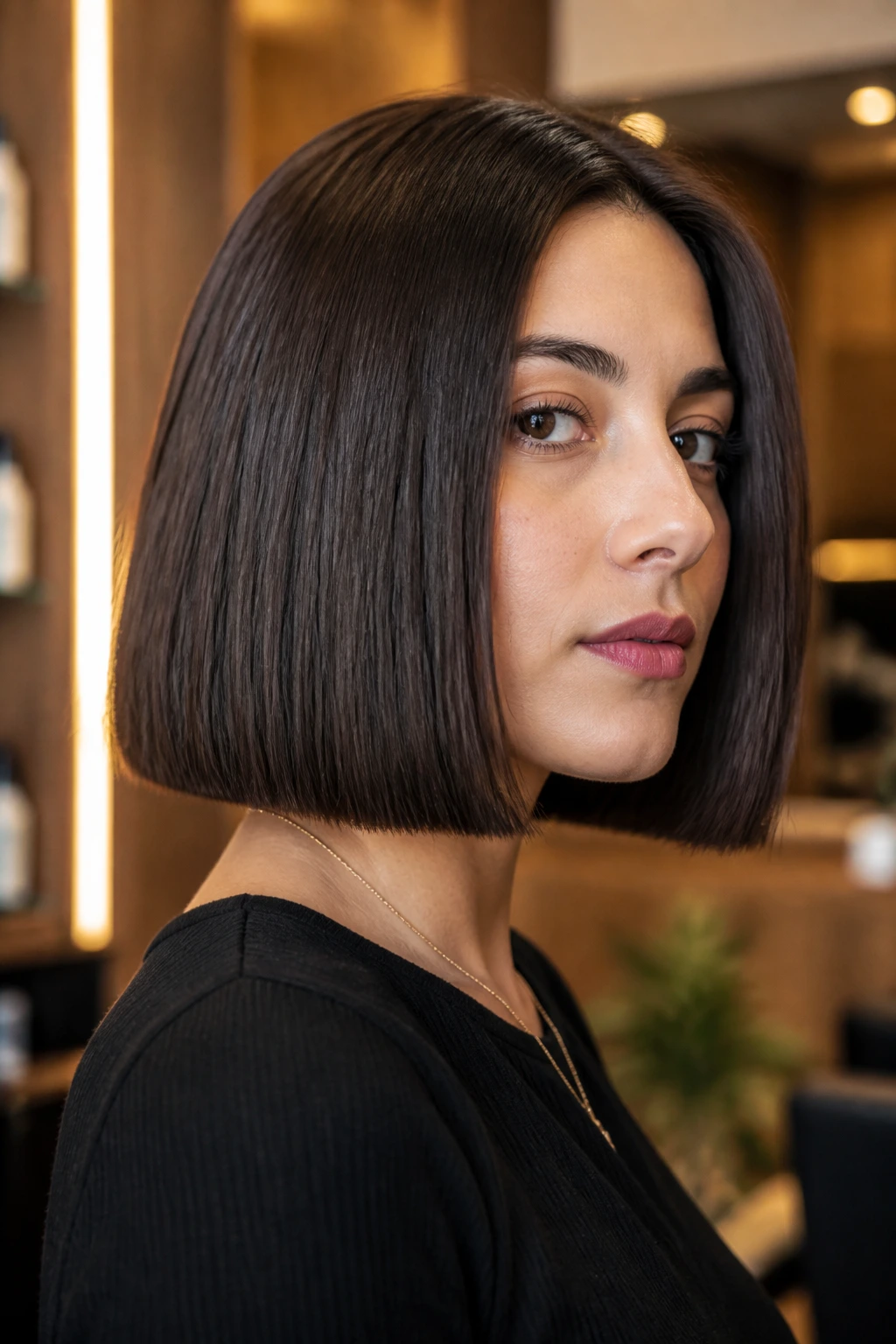
Thick hair loves a blunt bob when the bulk is handled with restraint. The perimeter stays strong. The inside can be adjusted. That balance keeps the haircut from turning into a triangle, which is the main thing thick-haired people are trying to avoid.
Why It Works
A blunt line gives thick hair order. Without it, the ends can look heavy and chopped. The mistake is assuming thick hair needs lots of thinning. Usually it needs careful internal weight removal, not end shredding. The shape at the bottom should still look like a single line, not a broom.
Salon Note
If your hair is dense, ask your stylist where they plan to remove weight. The answer matters. You want the bulk relieved inside the shape, not carved away at the perimeter. And if your hair is super straight, the finish can look almost architectural. That’s not a downside if you like clean edges.
I’d never call thick hair “too much” for a blunt bob. I’d call it the hair type that benefits most from clean planning.
13. The Fine-Hair Density Bob
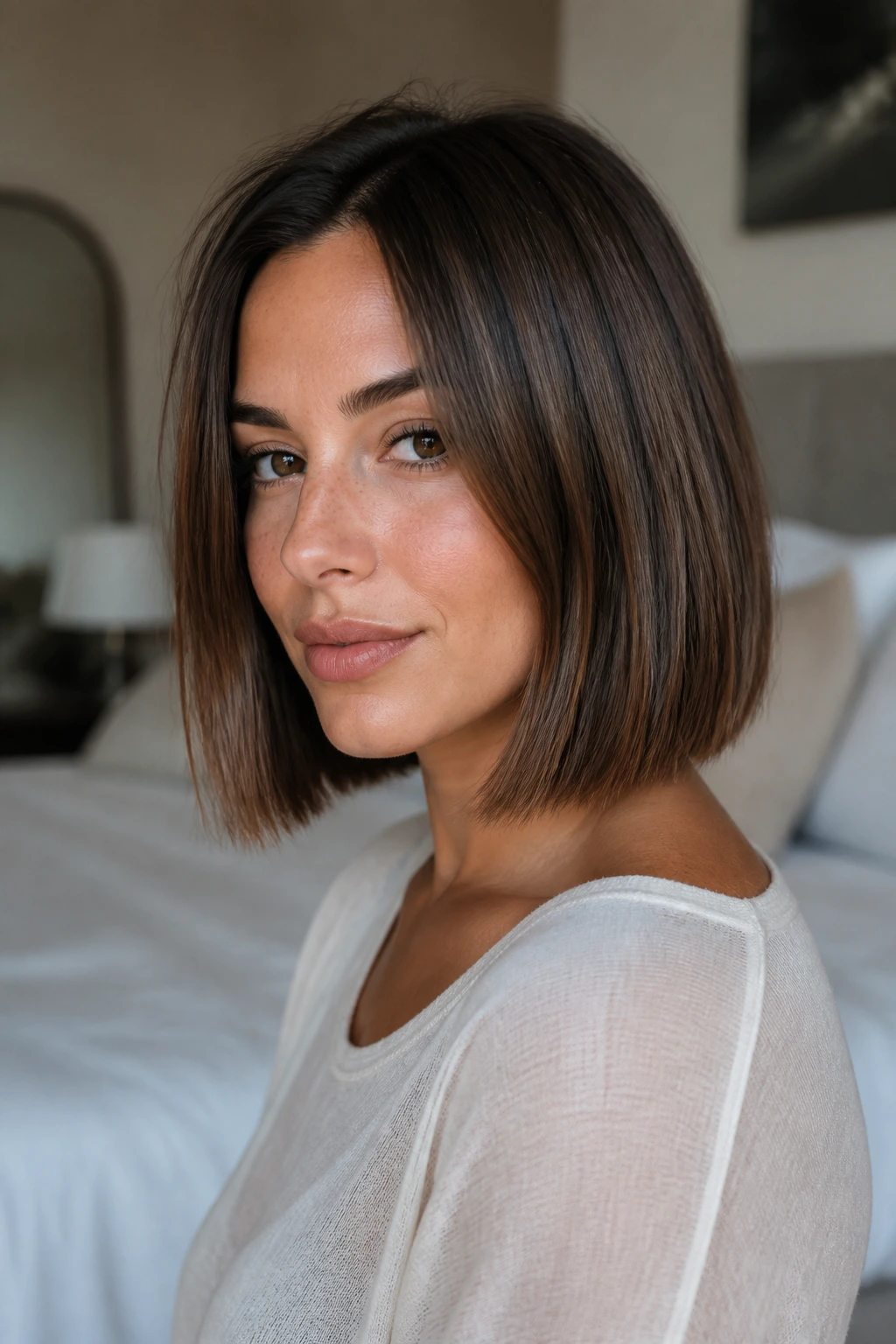
Fine hair often looks better in blunt bob cuts for medium length hair than people expect. The reason is simple: the eye reads the edge as fullness. When the perimeter all lands together, the hair looks denser than it would in a long, tapered cut.
Why It Works
A line that’s too soft makes fine hair look thin at the bottom. A blunt line solves that fast. The cut should usually sit a little shorter than the shoulders, because very long fine hair can drag the shape down and make the ends look transparent. Keep layers out of the bottom inch unless there’s a very specific reason to add movement.
What Helps
A root lift spray at the crown and a lightweight mousse through the mids can make the shape last longer between washes. Heavy oils are a mistake here. They collapse the whole point of the haircut.
This is a good reminder that “blunt” does not mean heavy. It means clean at the edge, and that can be a gift for hair that needs more visible body.
14. The Inverted Blunt Bob
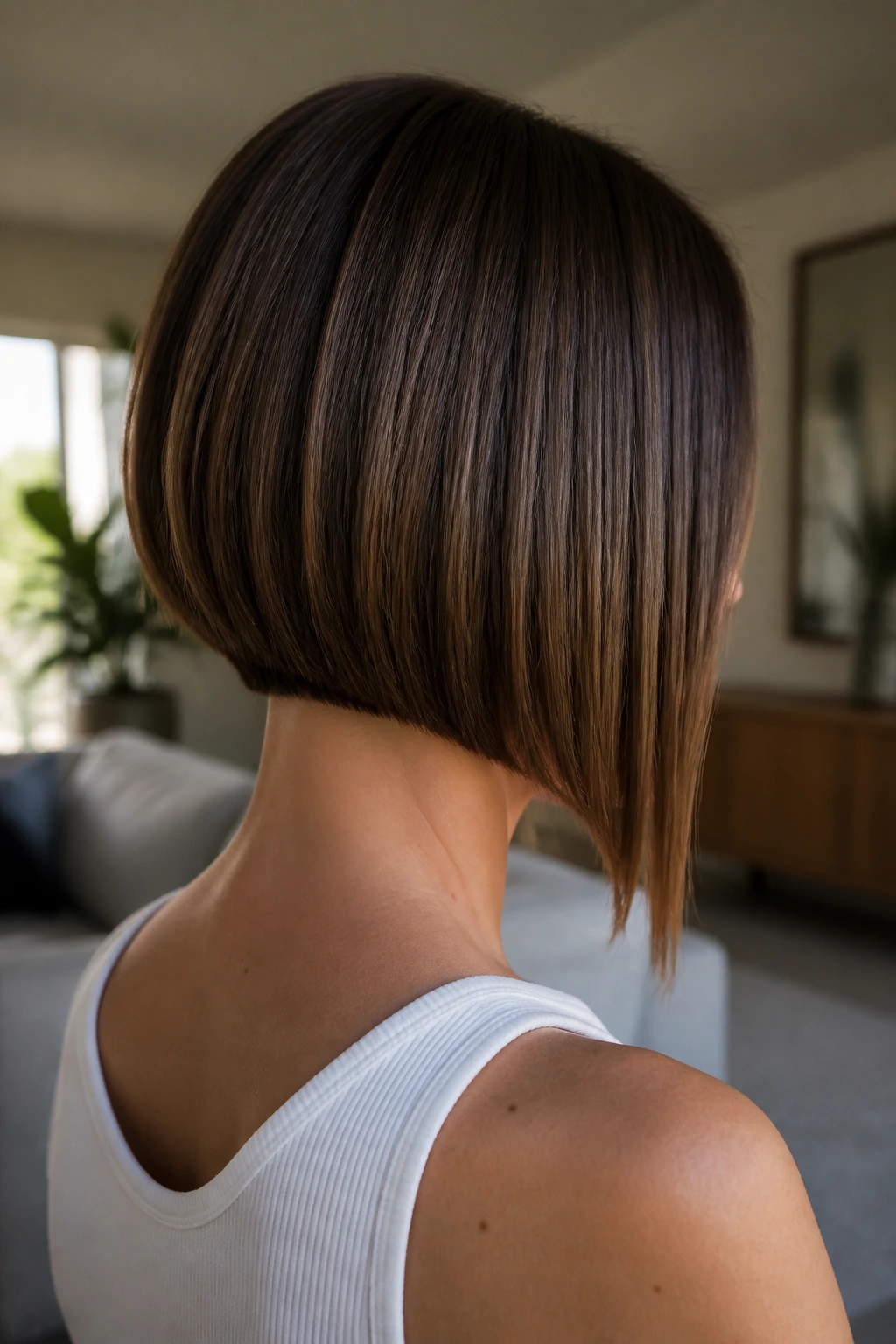
The inverted version keeps the back a touch shorter and lets the front drift slightly longer, but the outline stays blunt. It’s not stacked and it’s not shaggy. The shape is just angled enough to add movement when you turn your head.
Why It Works
The shorter back creates lift at the nape, which helps medium-length hair avoid a boxy block. The longer front pieces soften the jaw and keep the cut wearable. This version is smart if you like the idea of a bob but don’t want the same length all the way around.
When It Fits
- Hair that feels flat at the back of the head
- Faces that like a little forward movement
- People who want a shape with a bit of edge, not a lot of layering
The danger here is overdoing the angle. If the front gets too long or the back too short, the haircut stops looking blunt and starts looking accidental. Keep the difference subtle.
15. The Soft-Beveled Blunt Bob
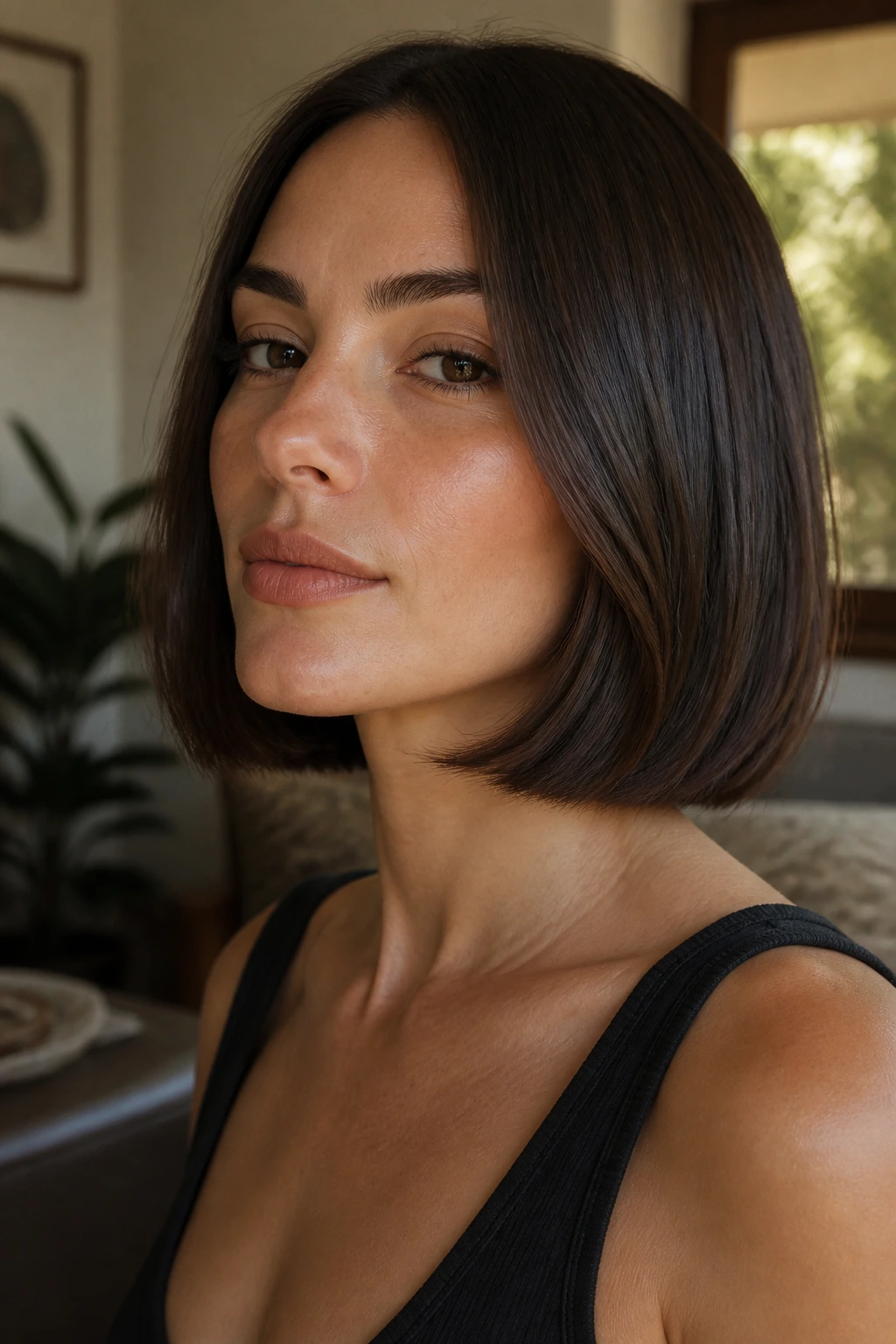
A soft bevel is not the enemy of a blunt bob. It’s a small finish choice. The perimeter still reads one length, but the very ends are nudged inward with a brush or a slight point of the scissors so the shape curves instead of hanging dead straight.
Why It Works
Straight blunt cuts can look severe on some hairlines and face shapes. A beveled edge softens that without giving up density. It’s also a smart choice if your hair tends to puff at the bottom or if you want the line to curve inward around the neck.
Styling Detail
Use a round brush or a flat brush with a slight wrist turn at the ends. Don’t curl the whole head. Just shape the bottom half inch. That tiny bend keeps the bob from looking rigid.
This version is for people who want the blunt effect, just not the sharpest possible version of it.
16. The French Bob with a Clean Fringe
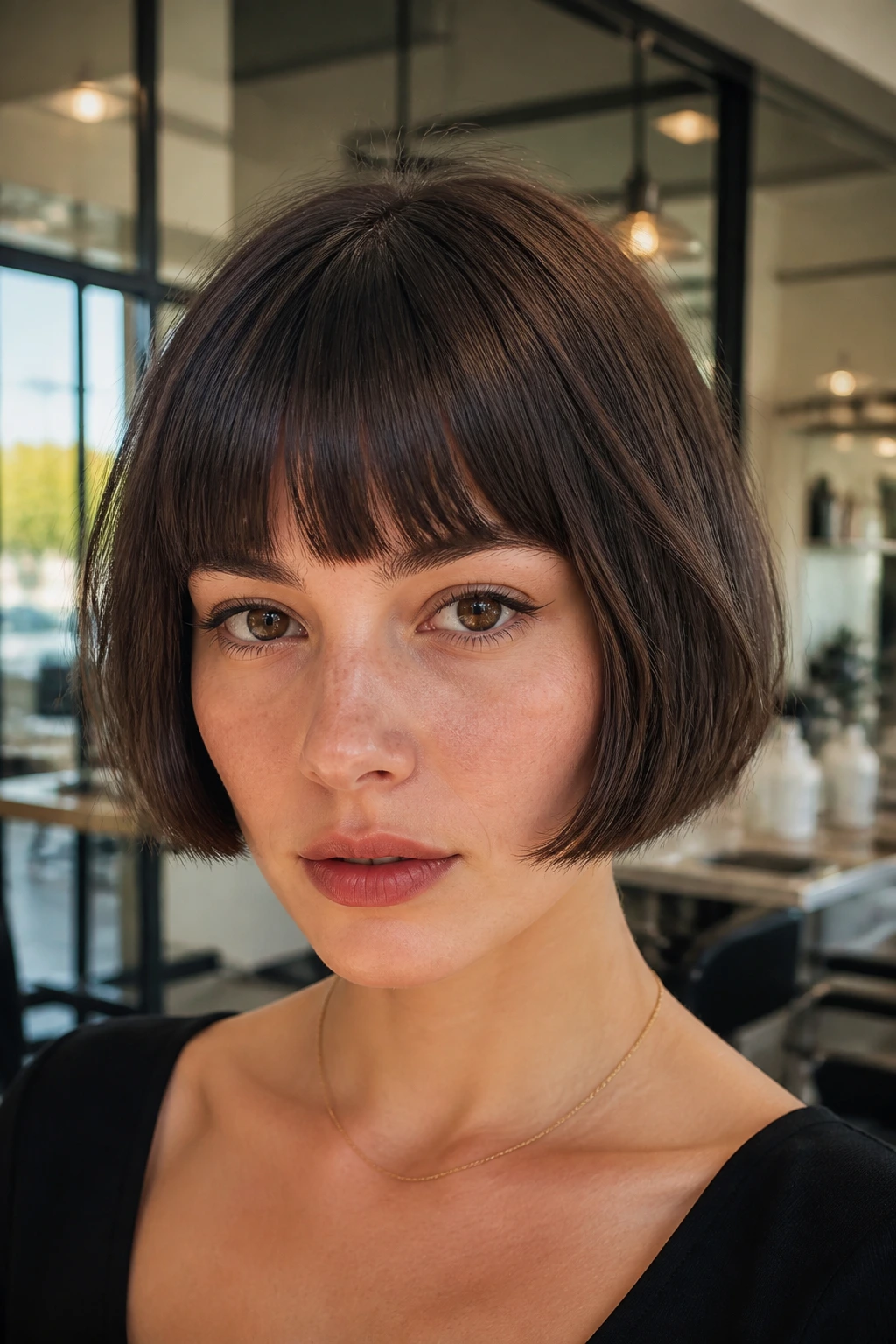
The French bob sits a little shorter and usually carries some fringe, which gives it a compact, face-forward shape. On medium-length hair, this version can be cut just below the cheekbones or closer to the jaw, depending on how strong you want the line.
Why It Works
A French bob depends on proportion. The fringe adds weight at the top, and the blunt edge keeps the bottom from feeling too airy. The result is small but not delicate. It has structure. If you have a long neck or a narrow face, this shape can be especially sharp.
A Small Warning
This is not the cut to ask for if you want zero maintenance. The fringe needs attention, and the shorter length can show every missed trim. But if you like a haircut that looks deliberate even on a simple day, it delivers.
There’s a reason stylists keep coming back to this shape. It has enough edge to feel current without chasing trends.
17. The Glass-Hair Blowout Bob
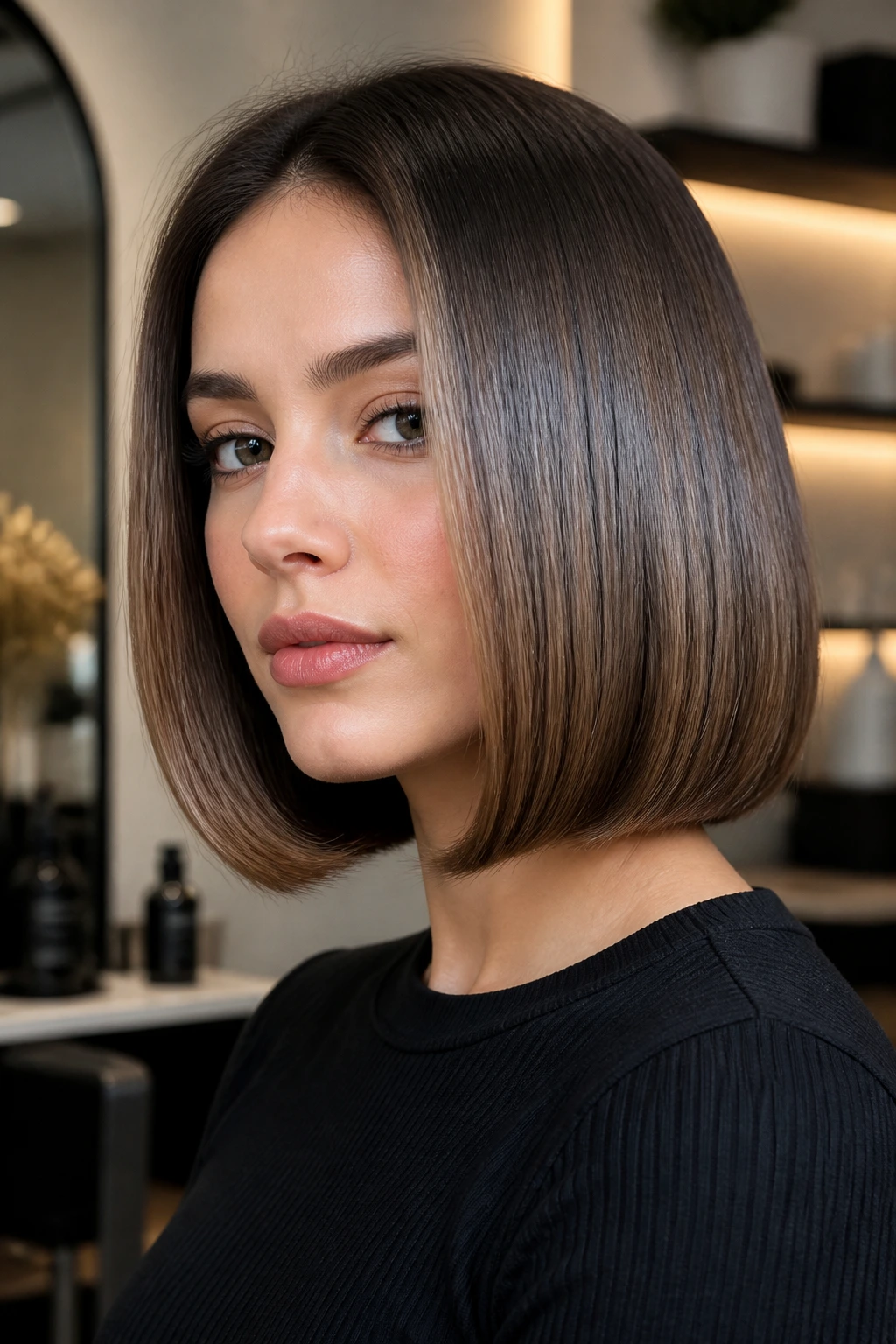
This version is all about polish. The cut itself is blunt, but the styling pushes the hair into a smooth, reflective finish that makes the perimeter look almost liquid. It works best on medium-length hair that can hold a brush set or flat-iron pass without puffing back up immediately.
Why It Works
The blunt line gives the shine a place to land. When every end sits together, the light catches the surface more evenly. The blowout should focus on smooth roots, controlled mids, and ends that curve under only a touch. If the finish gets too round, the haircut loses its clean edge.
Style Note
Heat protectant is not optional here. Neither is a nozzle on the dryer. You want control, not volume chaos. Finish with a tiny amount of serum, then stop touching it. The more you fuss, the less glassy it looks.
This is the bob for a sharp collar, clean makeup, or a day when you want your hair to look almost too neat on purpose.
18. The Hidden-Undercut Blunt Bob
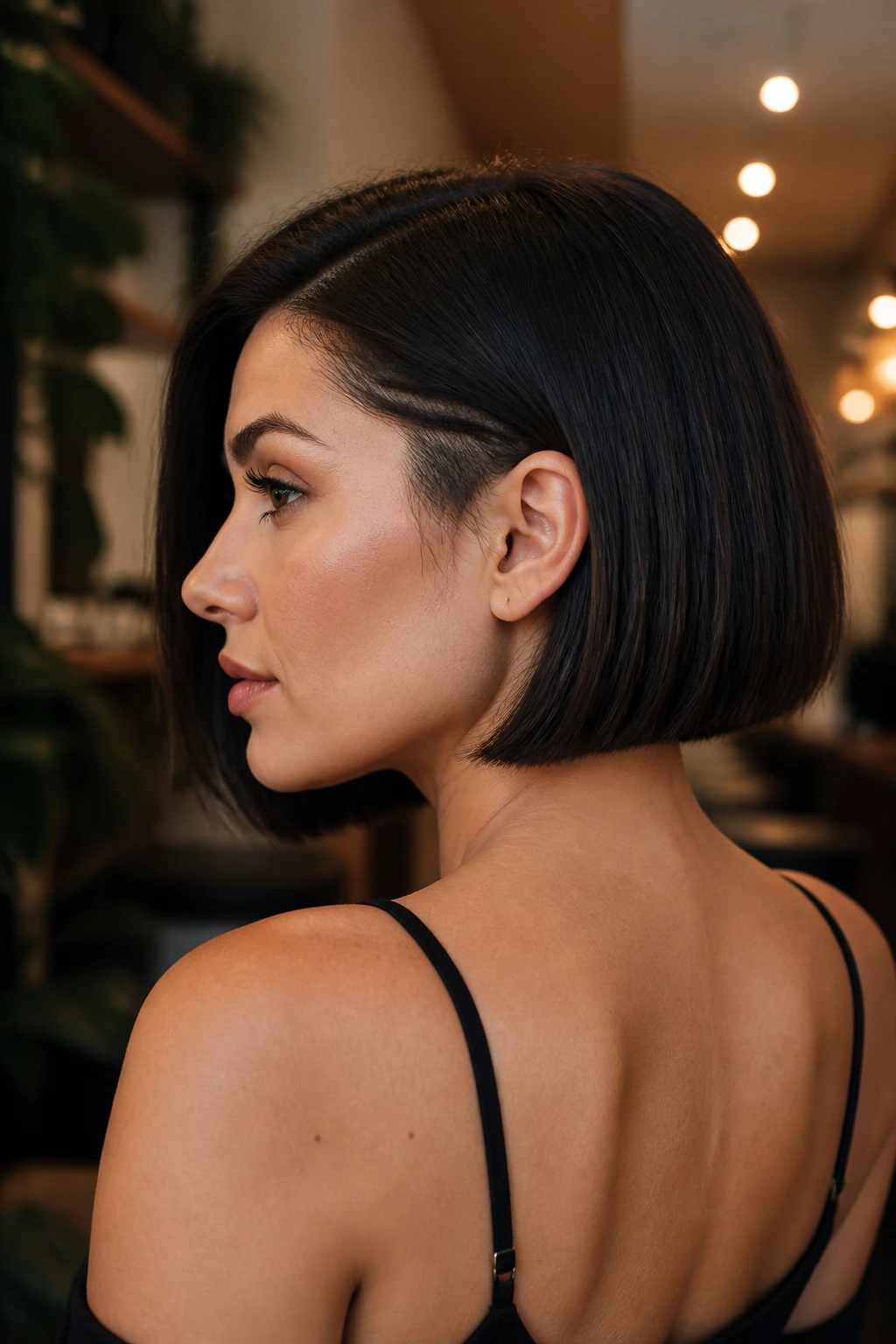
A hidden undercut can save a blunt bob on very thick medium-length hair. The outside still reads as a solid one-length cut, but the bulk underneath is reduced so the shape sits closer to the head and moves better.
Why It Works
The undercut removes weight where no one sees it. That keeps the surface blunt without making the bottom feel like a shelf. It’s especially useful if your hair gets hot, heavy, or too wide through the nape area. Done well, the haircut looks cleaner, not thinner.
Ask About This If
- Your hair feels dense at the back of the neck
- Your bob puffs out instead of falling down
- You want blunt ends but less bulk
Not every stylist reaches for this approach right away, and that’s fine. It’s a specialized fix, not a default. But when it’s the right move, it can make the whole haircut sit better.
19. The Asymmetrical Blunt Bob
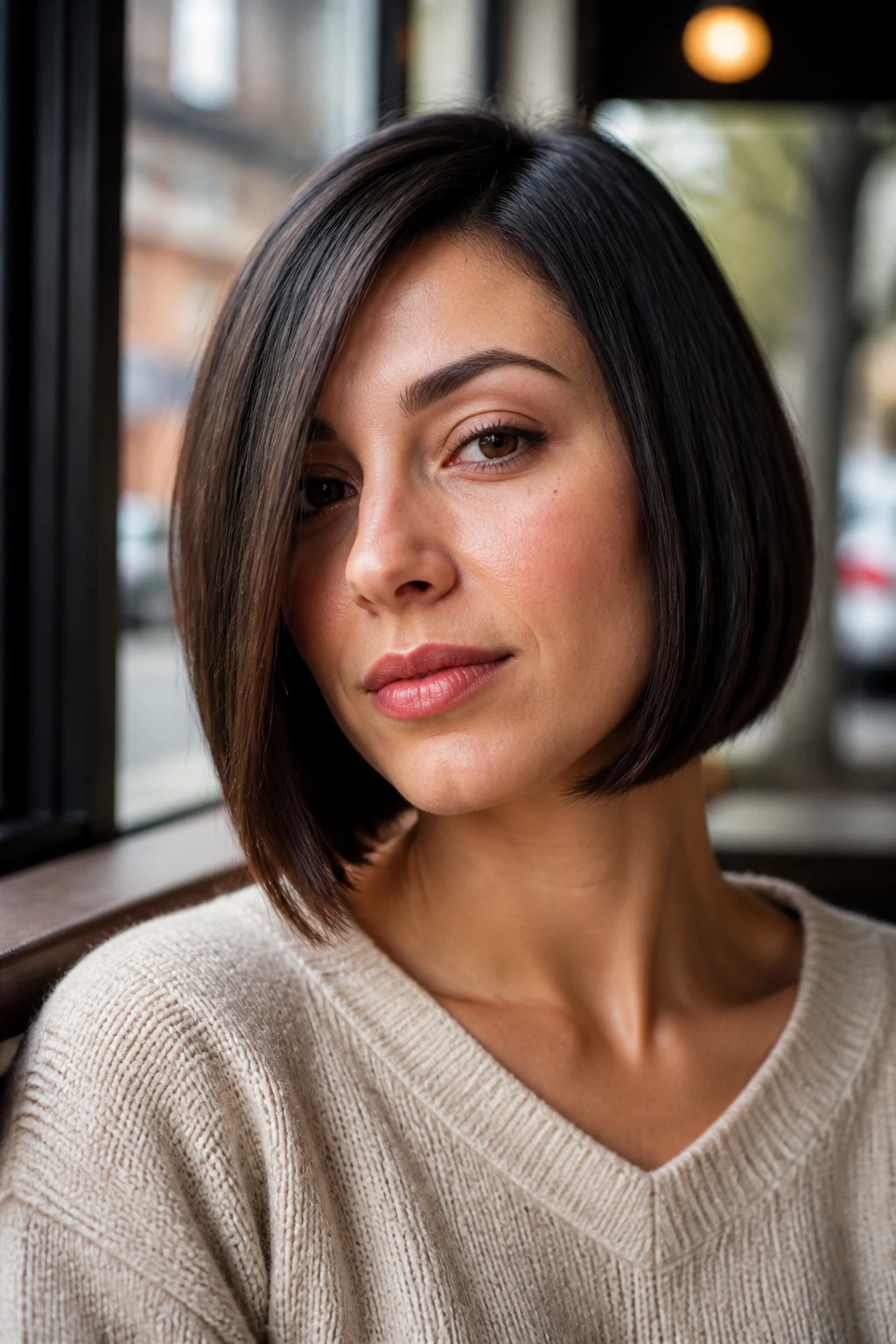
A slightly longer side on one half of the haircut gives the blunt bob a modern edge without turning it into a fashion stunt. The line is still clean. It’s just not perfectly even from side to side.
Why It Works
Asymmetry creates motion even before you style the hair. That makes it useful for medium-length hair that feels too neat in a straight one-length cut. It can also help balance facial features if one side of the face feels stronger or broader than the other.
The Key Is Restraint
A tiny difference looks chic. A huge difference looks like a mistake. Keep the length gap subtle, and make sure the shorter side is not so short that the shape stops feeling blunt. You want the eye to notice the angle, not the math.
This is one of those cuts that sounds louder than it looks. In real life, it usually reads as polished with a little bite.
20. The Grow-Out-Friendly Blunt Lob
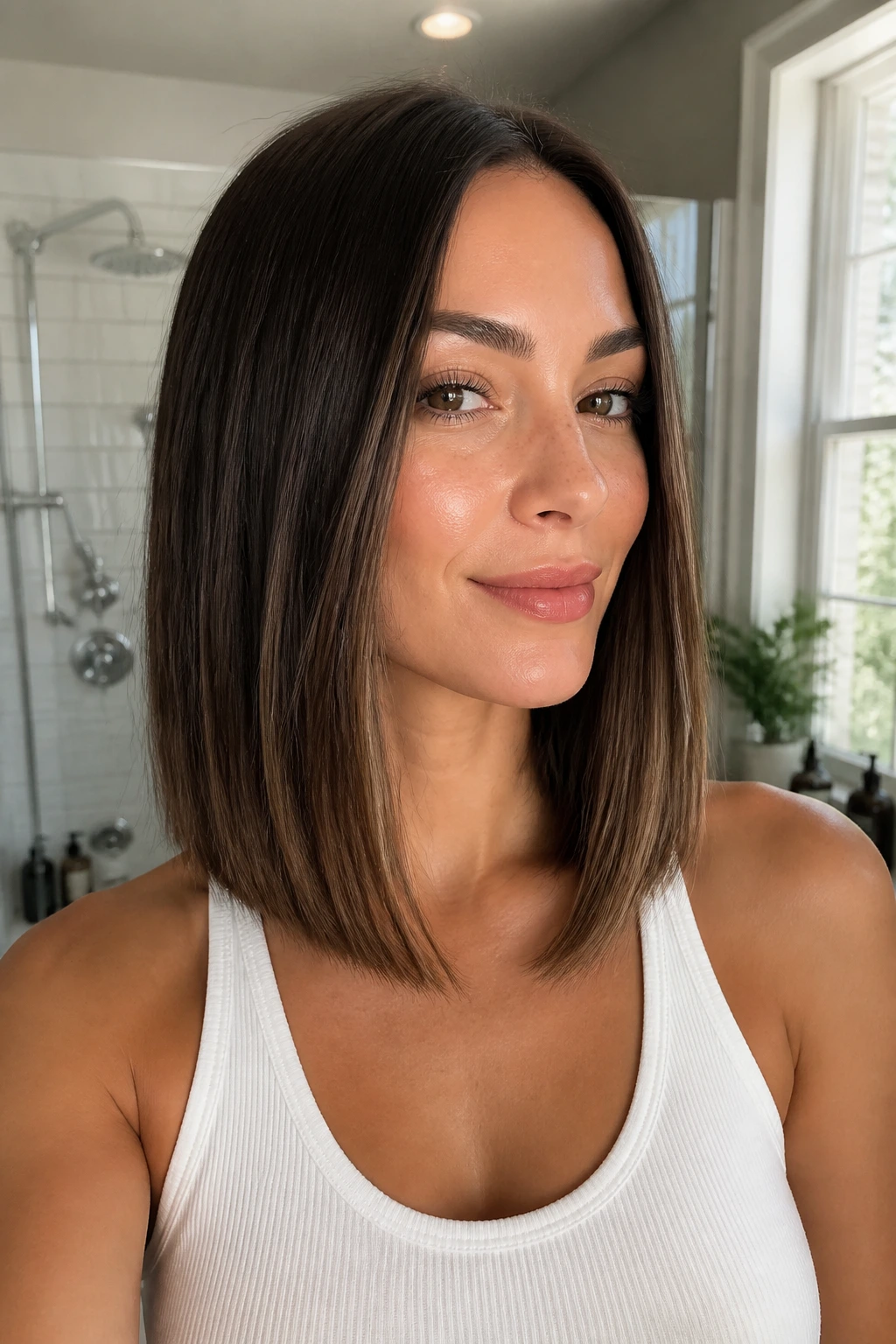
If you want the blunt look but hate seeing a haircut fall apart before your next trim, this is the sensible version. The grow-out-friendly blunt lob lands a little longer, usually between the collarbone and the top of the chest, so the line stays neat as it softens.
Why It Works
Longer blunt hair grows out in a less dramatic way. A quarter-inch or even half-inch of regrowth does not ruin the silhouette as fast. That makes it useful for busy people, people with fast-growing hair, or anyone who likes the look of a fresh haircut more than the logistics of maintaining one.
Best For
- Lower-maintenance schedules
- Medium hair that sheds shape quickly
- People who want to keep hair long enough for ponytails and clips
This one may be the least flashy entry on the list, but I think it’s one of the smartest. The haircut survives real life.
21. The Invisible-Layer Blunt Bob
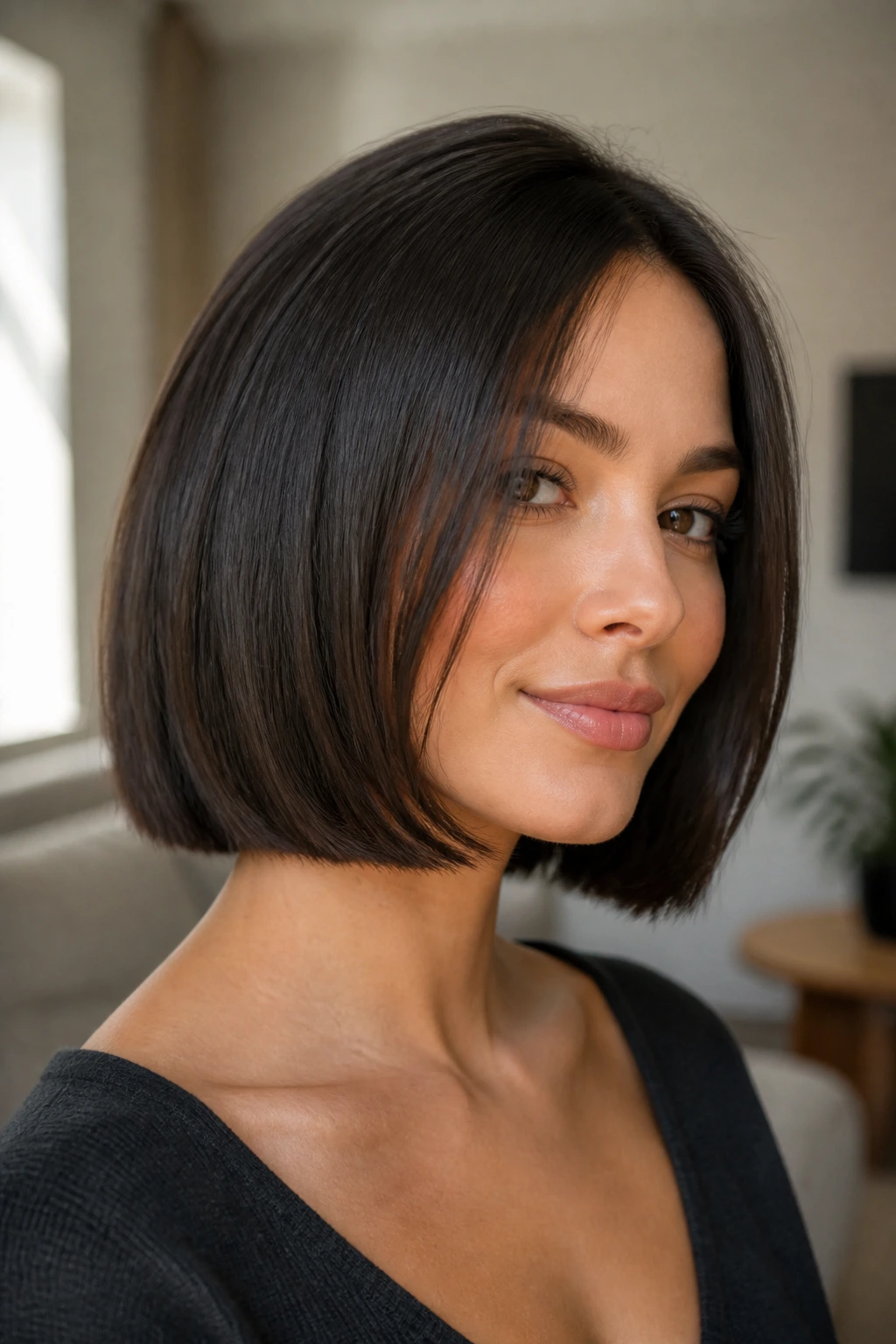
Invisible layers are the quiet trick used when the hair needs movement but the perimeter should still look blunt. The layers sit inside the shape and do not break the outline. You get a little lift and a little bend without the ends looking shredded.
Why It Works
This is useful for medium-length hair that feels too heavy in a strict one-length cut. The internal shape can help the hair curve around the head better, especially if your texture is dense or slightly wavy. The outside still reads as blunt, which keeps the whole point intact.
Important Caveat
Too many invisible layers and the haircut stops being blunt. That’s the line. If the hair has a fine strand count, this approach should be very light. If the hair is thick, the stylist can use it more confidently.
It’s the haircut equivalent of adjusting the lighting without changing the room.
22. The Rounded Blow-Dry Bob

A rounded blow-dry bob keeps the ends blunt but nudges the shape into a soft curve that follows the head. It’s polished, a little retro, and very flattering on medium length hair that needs a smoother outline around the jaw and neck.
Why It Works
The round brush creates bend from mid-length down, while the perimeter stays full. That means the haircut still looks dense at the ends even though it has movement. If your hair naturally kicks outward, a rounded finish can tame the flip without making the shape stiff.
How to Wear It
Blow-dry the roots for lift, then turn the brush only at the last inch or two. You want a smooth curve, not a curl. A tiny bit of spray wax or flexible hairspray can hold the bend without making the hair helmet-hard.
This is the version I’d choose for someone who likes a neat finish but doesn’t want the cut to feel sharp all day long.
How to Style a Blunt Bob Without Killing the Shape
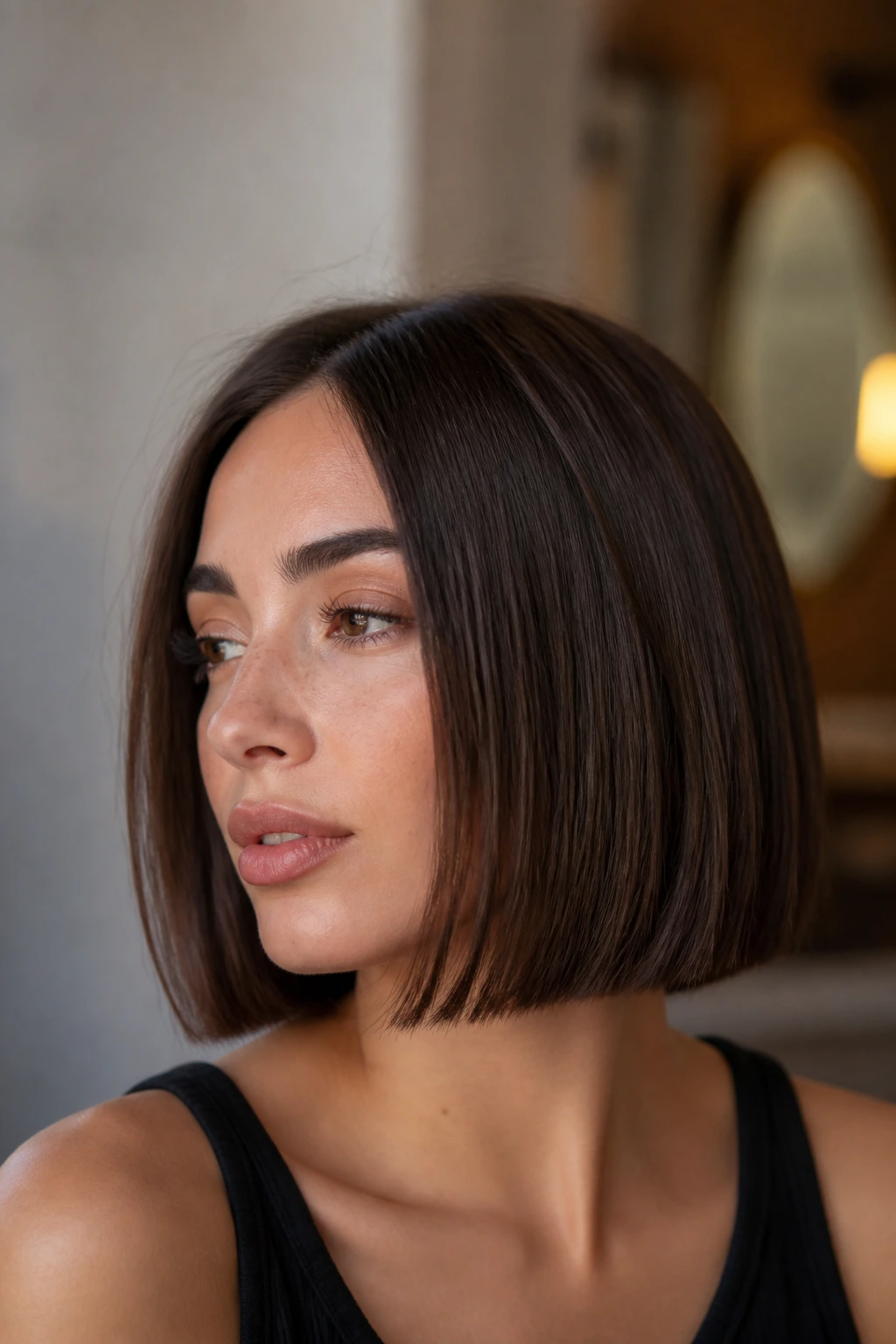
A blunt bob is easy to ruin with the wrong styling habit. The biggest mistake is trying to force movement everywhere. That turns the ends fuzzy and the perimeter weak. A better approach is to leave the bottom line alone and put your effort in the roots, mids, or fringe area where the shape can actually benefit from it.
For straight hair: Start with a blow-dryer nozzle and a paddle brush. Dry the roots first, then guide the lengths down. If you want a sleek finish, use a flat iron only on the outer inch or two. The ends should look polished, not carved into a sharp edge.
For wavy hair: Let the hair dry to about 80 percent before you reach for heat. Then smooth the top layer and leave a little bend in the body. A blunt bob looks best when the wave lives in the middle and the perimeter stays readable.
For curly hair: Dry in sections and resist the urge to stretch the curls too much at the ends. You want the line to stay visible. Too much pulling changes the whole silhouette.
A small amount of product goes a long way here. Weighty creams and oils can drag the shape down by noon. Use just enough to control frizz, not enough to mute the cut.
The Tools That Make This Cut Easier at Home
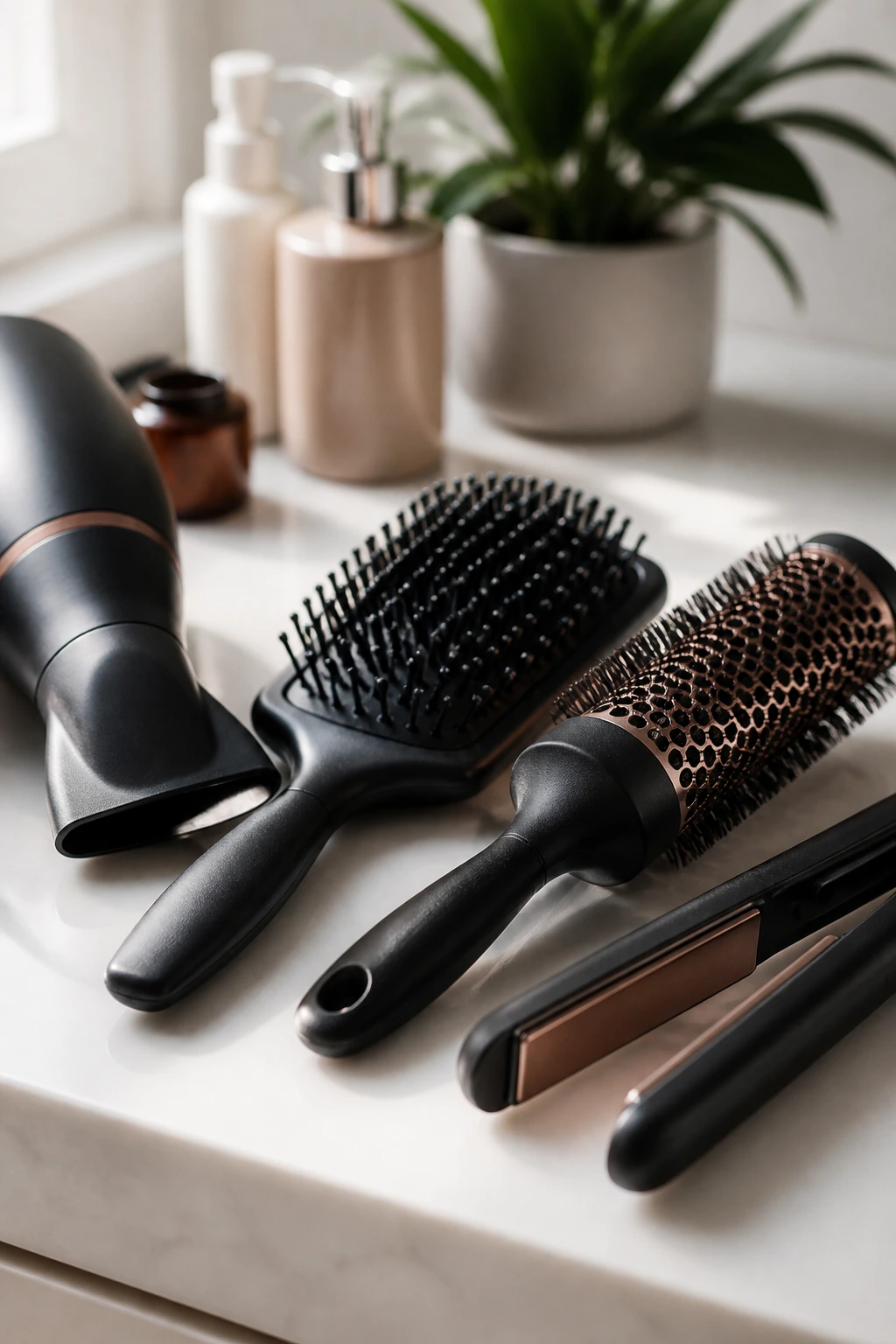
- Blow-dryer with a nozzle attachment: The nozzle keeps air where you want it and helps the cut dry in a smoother line.
- Paddle brush: Best for straightening the lengths without creating too much bend.
- 1-inch or 1.25-inch round brush: Useful for beveling the ends and shaping the fringe.
- Flat iron with smooth plates: Handy for glassy finishes and quick touch-ups on the bottom inch.
- Tail comb: Makes parts cleaner and helps section the hair evenly.
- Heat protectant spray: Non-negotiable if you use heat more than once a week.
- Light smoothing serum or cream: Use a tiny amount on the mids and ends only.
- Flexible hairspray: Holds the line without freezing it hard.
- Dry shampoo: Helps the roots stay lifted when the ends are sleek.
- Hand mirror: Worth keeping nearby if you tuck one side behind the ear and want the back to look balanced.
Smart Salon Notes and Product Choices
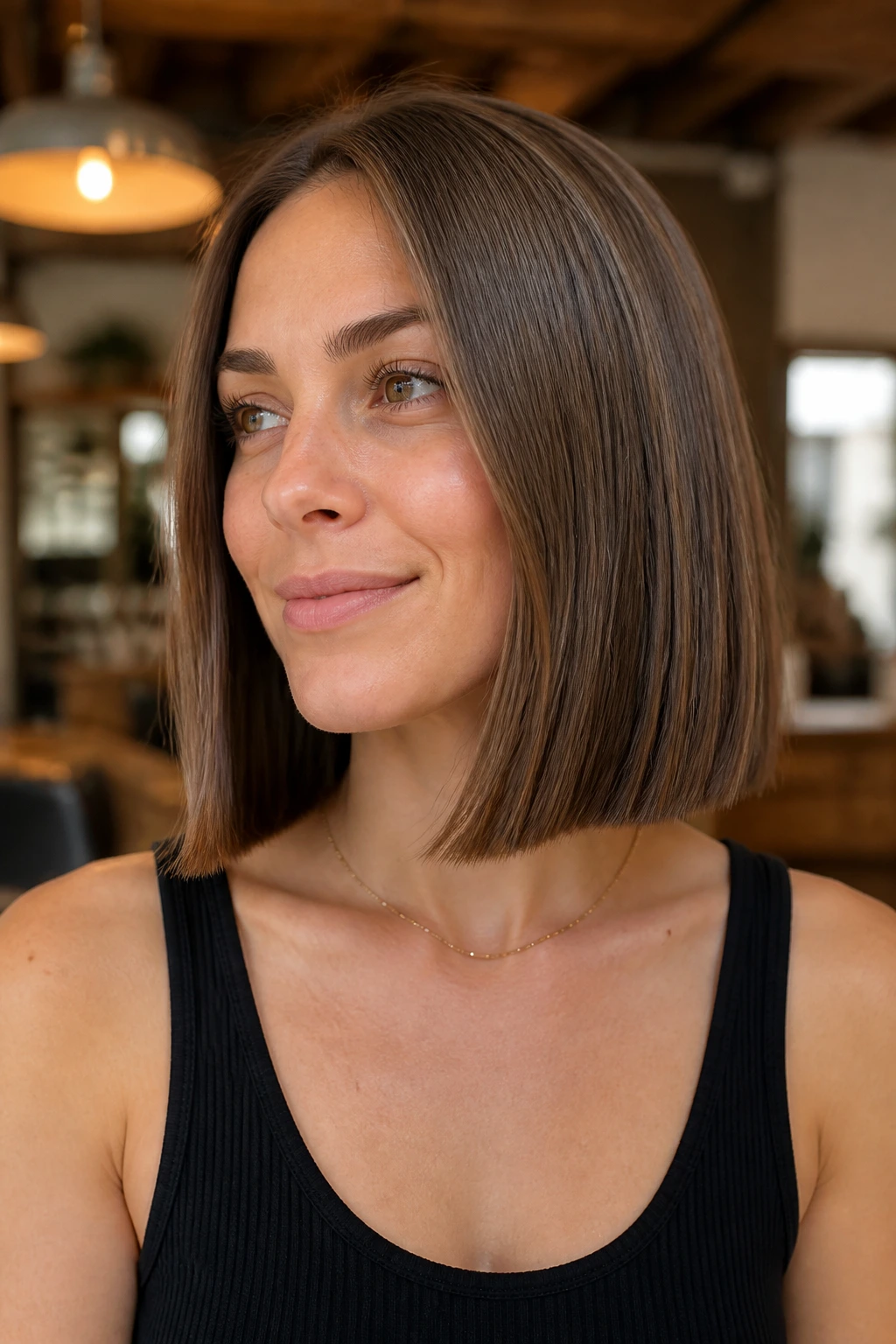
A blunt bob looks simple until you start shopping for the wrong products. Then it gets muddy fast. The best products for this cut tend to be lightweight and specific: a heat protectant that doesn’t leave residue, a smoothing cream that doesn’t behave like grease, and a flexible spray that won’t turn the ends crunchy.
If your hair is fine, skip heavy oils near the roots. Use them only at the very last inch if the ends feel dry. Fine hair loses shape fast when overloaded. Thick hair is the opposite problem; it needs control through the mids so the bottom edge doesn’t puff out. A little cream or balm can help, but again, only a little.
At the salon, I’d pay attention to how the stylist handles the perimeter. If they start aggressively texturizing the bottom line, ask why. Sometimes it’s needed. Often it isn’t. A blunt bob depends on the ends looking like they belong to the same haircut, not like they were individually negotiated.
One last thing: if your hair has a strong natural bend, bring that up early. A cut that looks perfect when blown smooth can sit crooked once you live with it. Good consultation work saves you from that surprise.
Keeping a Blunt Bob Sharp as It Grows
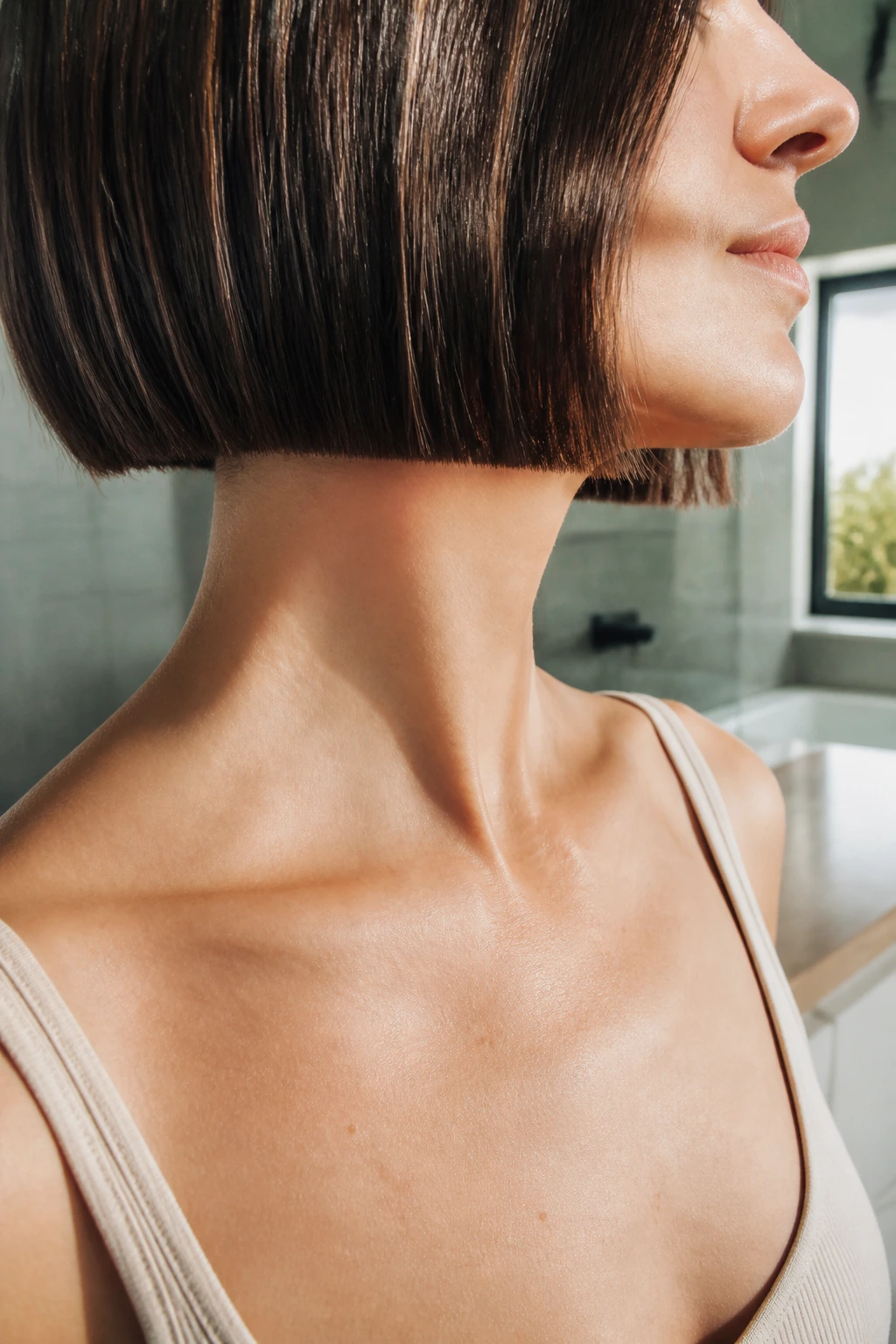
The crisp line on a blunt bob usually needs a trim every 6 to 8 weeks if you want it to stay neat. If you wear a fringe, that part may want cleanup every 3 to 4 weeks. Let it go longer, and the shape doesn’t disappear, but it does soften enough that the ends stop looking as dense.
Between appointments, the easiest maintenance move is drying the hair in the direction you want it to sit. That sounds obvious. It isn’t. A bob that dries in the wrong bend every morning will start fighting you by the end of the week. If the ends flip out, try a quick blast from a dryer with a round brush or a flat iron pass on the bottom inch only.
Sleep matters too. A satin pillowcase or loose sleep wrap can keep the ends from getting crushed and frizzy overnight. If the haircut is sleek, rough cotton pillowcases can make it look puffier by morning than the actual shape deserves.
And if you’re trying to stretch time between cuts, keep the neckline clean. A little trim around the nape or a tidy fringe can make the whole haircut feel fresher without touching the perimeter much.
Common Mistakes That Make the Shape Fall Flat
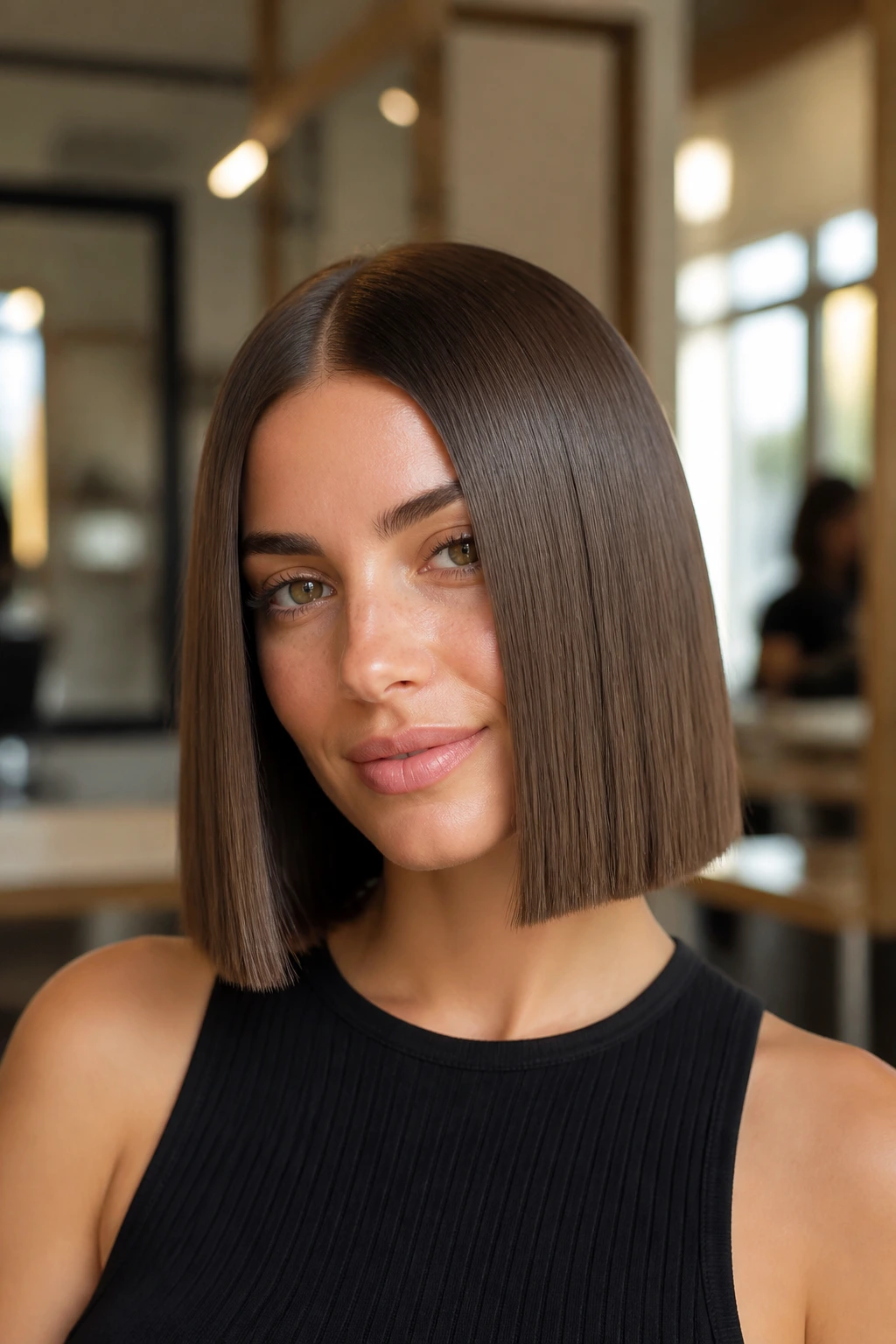
The first mistake is asking for a blunt bob and then letting the stylist carve layers all through the bottom. The cut may feel lighter, but the ends start to look stringy. If the goal is density, the perimeter has to stay intact.
The second mistake is ignoring shoulder length friction. Hair that lands exactly where your shoulder hits will flip out in a way that can drive you mad. Move the cut a half inch up or down, and the haircut often behaves better. Tiny change. Big difference.
Another one: using too much product. Heavy cream at the root, thick oil through the mids, and a strong gel all at once will collapse the shape. The bob needs support, not armor.
Skipping trims is another easy way to lose the point of the haircut. Once the line starts to fray, it stops looking blunt and starts looking overdue.
And finally, people often choose a length based on a photo without checking how their own hair falls at the neck, jaw, and shoulders. Same haircut. Different body. Different result. That’s not a flaw in the style; it’s just anatomy doing what anatomy does.
Variations and Alternatives to Try
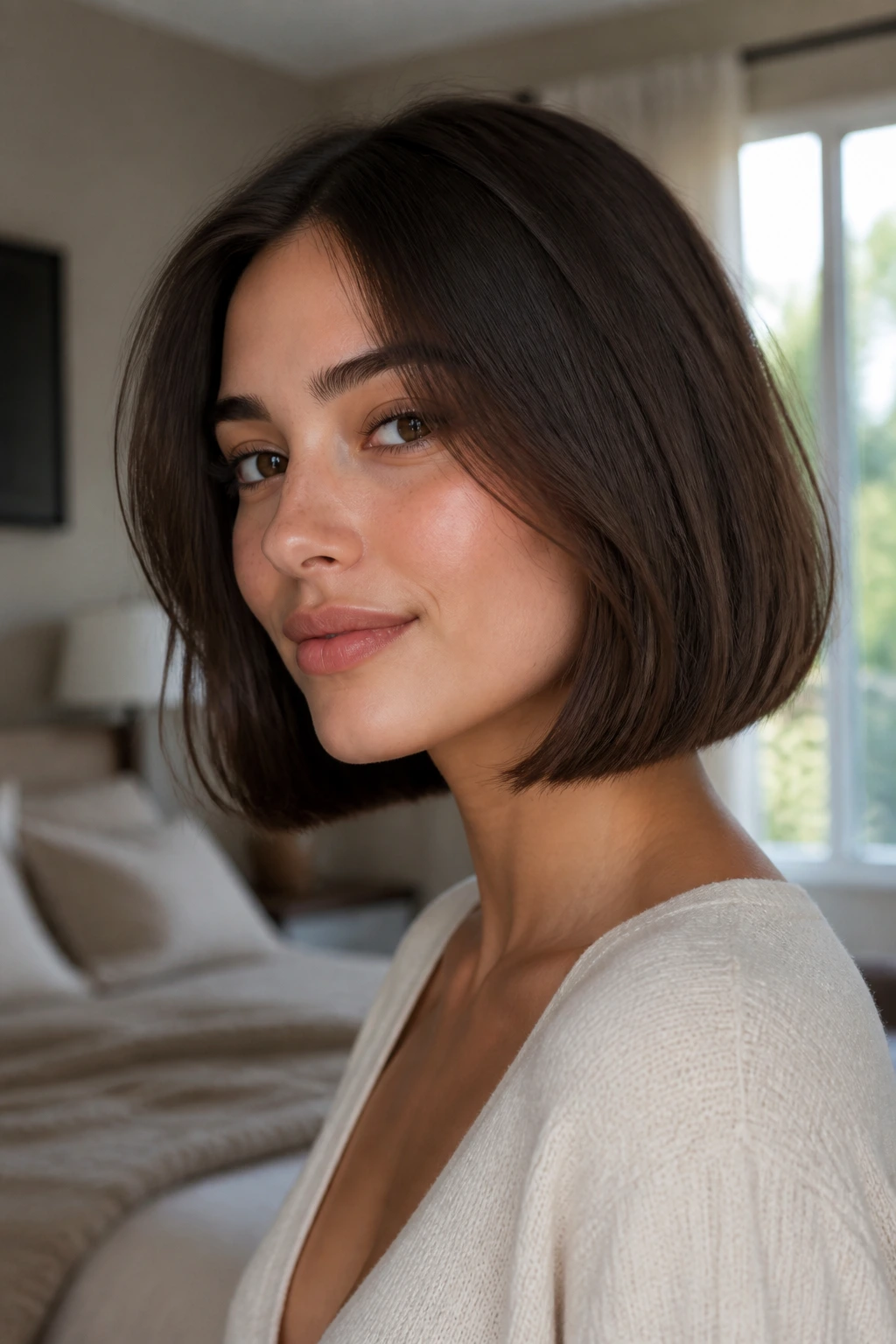
The Softer Edge: Keep the blunt perimeter but ask for a tiny bevel at the ends. This works if a hard line feels too severe around your jaw or neck.
The French-Style Framing Bob: Add a shorter fringe and keep the body compact around the cheeks. It’s a good fit when you want more face framing without visible layering.
The Long-Line Lob: Let the blunt line sit just below the collarbone. This is the least risky version if you want to test the look before going shorter.
The Curl-Respecting Bob: Cut the hair in its natural texture and leave the length a touch longer than you think you need. Great for waves and curls that shrink a lot.
The Thick-Hair Weight-Relief Version: Keep the outside blunt, but remove bulk from the interior. Useful when the hair is heavy enough to puff at the bottom.
Frequently Asked Questions
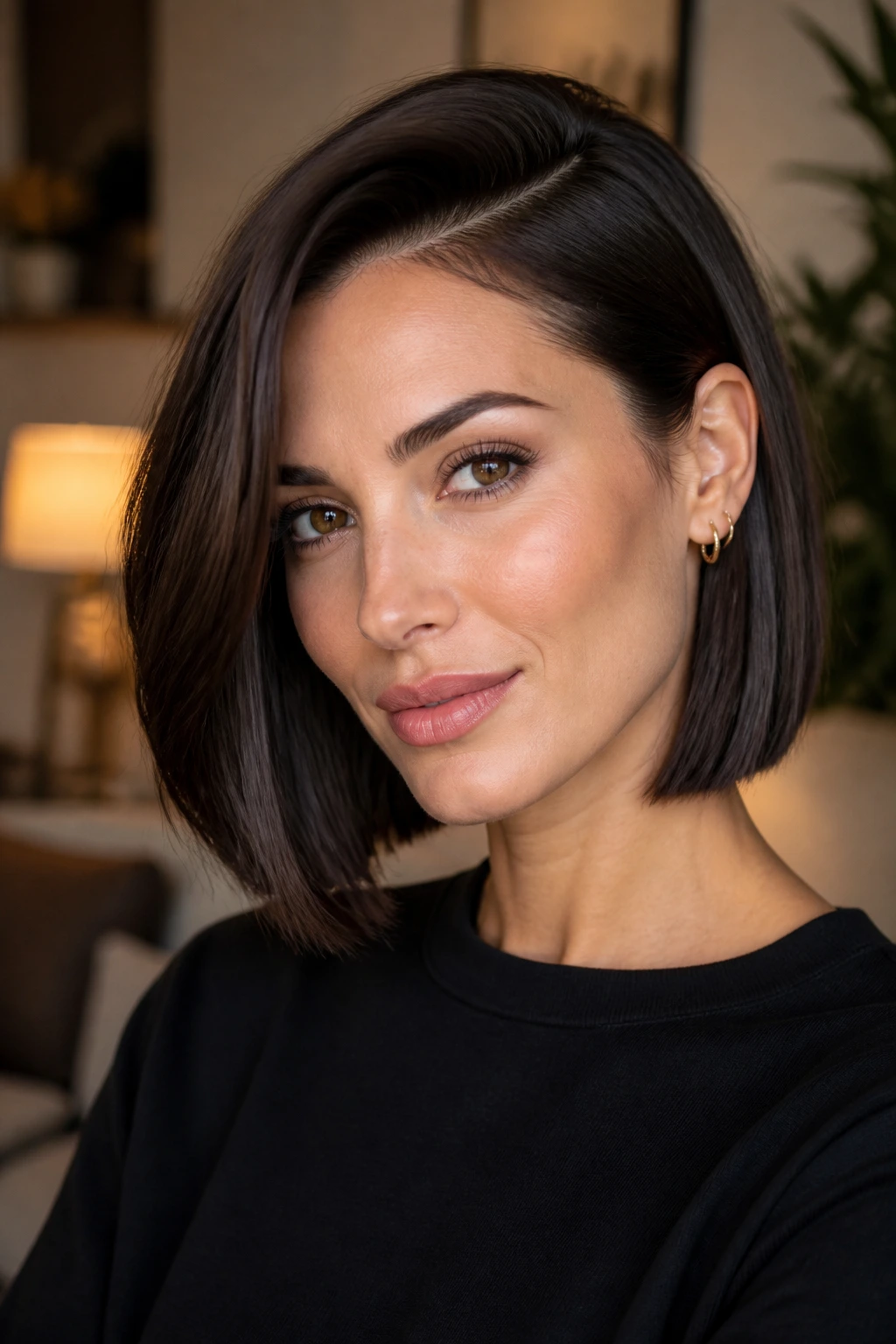
Will a blunt bob work if my hair is fine?
Yes, and in many cases it works better than layered cuts. The straight perimeter makes the ends look fuller because the eye reads one clean line instead of wispy tapering. Keep the length around the collarbone or just above it if you want the most density.
Can curly hair wear a blunt bob at medium length?
Absolutely, but the cut needs to respect shrinkage. A curly blunt bob should usually be shaped while dry or checked dry before the final trim so the perimeter lands where you actually want it. Wet curls are not honest about length.
How often should I trim it?
Every 6 to 8 weeks is the sweet spot for keeping the line crisp. If you wear bangs or a fringe, that part may need a quicker cleanup. Let it go too long and the haircut still works, but the blunt edge stops looking deliberate.
Why does my bob flip out at the shoulders?
Because the shoulder is a physical obstacle, not a styling failure. Hair that lands right there often catches and bends outward. The fix is usually a tiny length adjustment or a different blow-dry direction, not a brand-new haircut.
Can I wear a middle part with a blunt bob?
Yes, and it’s one of the cleanest ways to wear the cut. A middle part emphasizes symmetry and makes the blunt edge look even sharper. If your hairline resists it, a slight off-center part may be easier to live with.
Do I need heat styling every day?
No. You can air-dry some blunt bobs, especially if the cut was made with your natural texture in mind. If you want a glassy finish or a curved under-edge, heat helps, but daily heat is not required for the haircut to work.
What if the cut feels boxy after I leave the salon?
First, wash and style it the way you actually plan to wear it. A blunt bob can feel boxy when it’s freshly cut but settle once it’s dry and moving. If it still feels too wide after a few days, ask for a tiny bit of internal weight removal next time, not a bunch of layers.
Can I still tuck it behind my ears?
Yes, and that’s one reason medium length works so well. Tucking the front pieces changes the silhouette fast, especially if the cut was planned with that habit in mind. If you tuck often, mention it before the haircut starts.
The Shape That Still Looks Good on Day Three

A blunt bob at medium length does something a lot of haircuts fail to do: it keeps its point. Even when it softens a little, the outline still reads. That’s why the style keeps showing up in salons, on busy people, on people who like a clean finish, and on people who are tired of hair that goes fuzzy the minute it dries.
What makes it worth saving is not one single version. It’s the range. Collarbone, jawline, side-parted, waved, curly, tucked, beveled, glassy — the same blunt idea can move in all those directions without losing its backbone. And hair with a backbone is easier to live with than hair that keeps changing its mind.
If your medium-length hair has been hovering between too limp and too shapeless, this is the shape to try next. Keep the line clean, keep the consultation specific, and let the cut do the work.
