



Copper bob haircuts have a way of doing two jobs at once: they sharpen the shape around the jaw, and they turn the color into a living thing instead of a flat dye job. On bob length, copper stops looking decorative and starts looking structural. You notice the line first, then the shimmer, then that warm hit of glow right where the face needs it most.
A plain brown bob can feel neat. A copper bob feels awake. The shade picks up amber, cinnamon, rust, apricot, and gold depending on the light, and bob length gives those shifts a place to land. When the ends are clean and the cut is honest, the color looks richer. When the shape is sloppy, copper shows every blunt corner and dry edge. That’s the part a lot of mood boards skip.
The sweet spot is finding a cut that works with the copper you want, not fighting it. Bright ginger, burnished auburn, peachy copper, and deep rust all behave differently on straight hair, wavy hair, and curls. The good versions look deliberate. The forgettable ones look like someone asked for “red” and hoped for the best.
Why Copper Bob Haircuts Look So Clean and So Bold at the Same Time

- The perimeter does the heavy lifting: A bob gives copper a hard edge, so the color reads from the last inch instead of disappearing into length.
- Warmth lands near the face: Copper reflects around the cheekbones, jawline, and neck, which is why a good bob can make skin look less flat without any makeup trickery.
- The shape can be loud or subtle: The same copper shade looks sharper on a blunt line and softer on a textured cut, so you get room to pick your level of drama.
- Texture changes the whole mood: Straight hair makes copper look glossy and graphic; waves soften the warmth; curls turn the shade into little flickers of light.
- Grow-out is easier than people think: A slightly rooted copper bob or a collarbone-skimming version can blur the line between salon visits instead of screaming for constant touch-ups.
1. Bright Copper Chin-Length Bob
A chin-length copper bob is the version that does not need a lot of explanation. The line sits right at the jaw, the color lands immediately, and the whole cut feels crisp the second it dries. If you like a haircut that shows your earrings, the curve of your neck, and the shape of your cheekbones, this is the one that does the job without fuss.
Why It Works
The shorter length makes bright copper read cleaner. At chin level, the color doesn’t get lost in layers or movement, so every copper note stays visible. That matters if you want that warm bold glow to feel intentional rather than washed out. This cut also makes fine hair look denser because the ends sit together in a solid line instead of tapering away.
Quick Shape Notes
- Best on straight to softly wavy hair.
- Ask for the ends to sit blunt with only a slight bevel.
- Works well with a middle part or a soft off-center part.
- Needs a quick polish pass with a round brush or flat iron if you want the line to stay sharp.
My advice: keep the finish smooth and the copper bright. A fuzzy chin-length bob loses the whole point.
2. Textured Apricot French Bob
Not every copper bob needs to behave. This French-inspired version keeps the shape short and a little cheeky, with soft texture and a lighter apricot-copper tone that feels airy instead of heavy. It’s the kind of cut that looks best when it’s not overworked, which is half the charm.
The shorter nape and loose front pieces make the cut feel casual, but the copper shade keeps it from drifting into sleepy territory. That combination is what makes it good: the shape says easy, the color says you meant it. I especially like this on hair that already bends a little at the ends, because the texture becomes part of the haircut instead of a problem to fight.
What Makes It Different
Unlike a blunt bob, the French version leaves a little room around the face. That room matters on apricot copper, which can look too sweet if the cut is too rigid. Keep the fringe soft, let the ends move, and don’t flatten it into a helmet. No one needs that.
3. Blunt Ginger Micro Bob
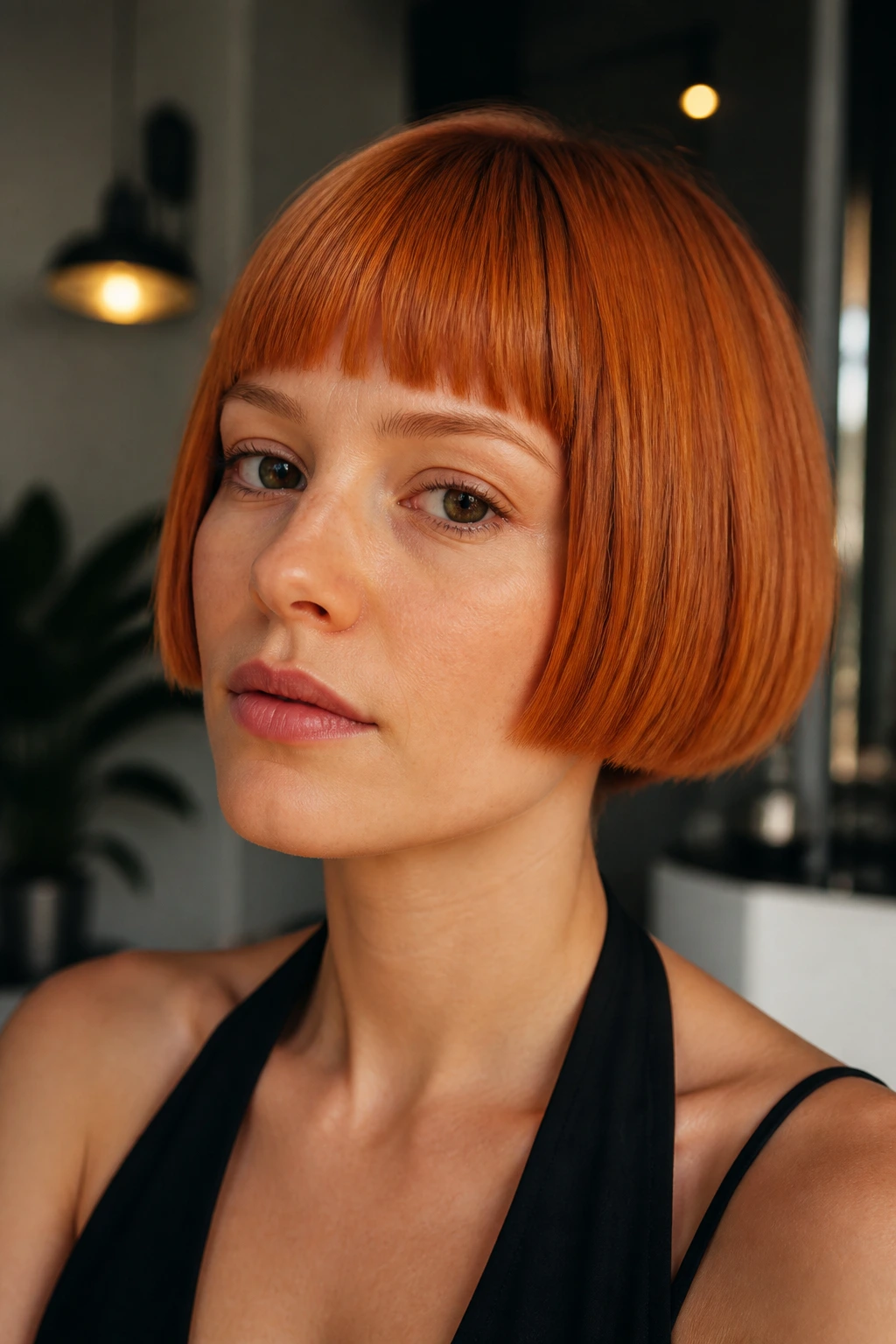
If you want copper to read from across the room, the micro bob is the loudest choice in the stack. It sits above or right at the jaw, the line is hard, and ginger copper makes the whole thing feel graphic in a way longer hair never quite can. There is no hiding here. That’s the appeal.
It’s also a haircut that likes confidence more than volume. On straight hair, the geometry looks expensive; on wavy hair, it turns a little edgy and less formal. I’d keep the color bright but not neon, because the cut already does enough talking. Too much saturation can make the shape feel toy-like. The best versions look clean, sharp, and slightly cheeky.
Best For
- Strong jawlines or faces that can carry a short perimeter.
- Anyone who likes a tucked-behind-the-ear look.
- Hair that sits naturally flat or only needs a small amount of root lift.
- People who don’t mind trimming every 4 to 6 weeks to keep the shape crisp.
4. Soft Angled Cinnamon Bob
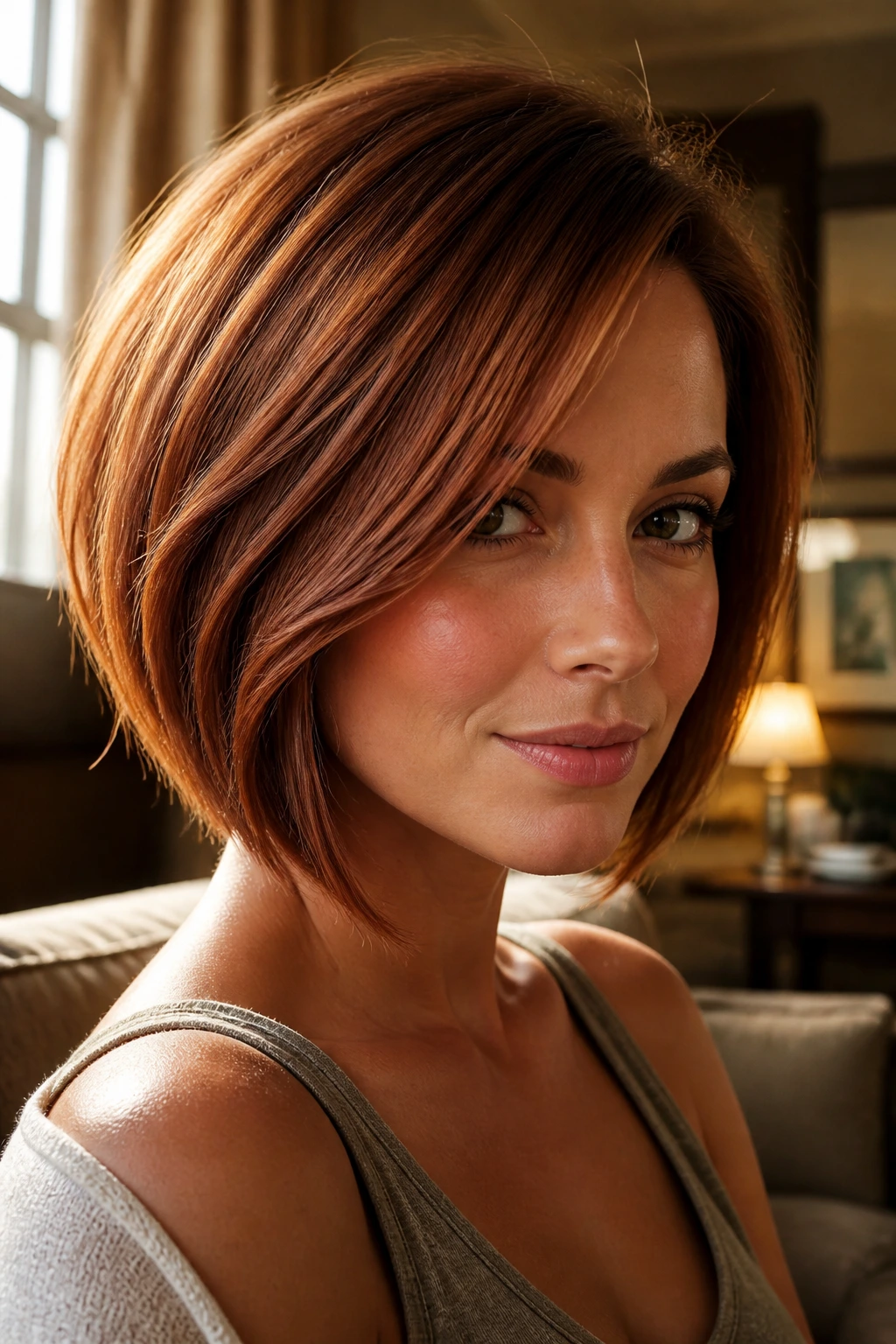
A soft angled bob is the easiest way to get movement without losing the bob feeling. The back sits a little shorter, the front drifts forward, and cinnamon copper gives the cut a warm, polished finish that never feels harsh. It’s a smart choice if you want shape first and drama second.
The angle quietly narrows the face. That makes it useful for rounder cheeks or anyone who wants the front pieces to fall past the jaw while the back stays neat. It’s one of those cuts that looks more expensive when it moves, so don’t overstyle it. A bend at the ends is enough. Overdone curls fight the line.
If you like to tuck one side behind the ear, this is your haircut. The longer front pieces give you that built-in asymmetry without needing a dramatic side shave or a heavy undercut.
5. Copper Bob With Curtain Bangs
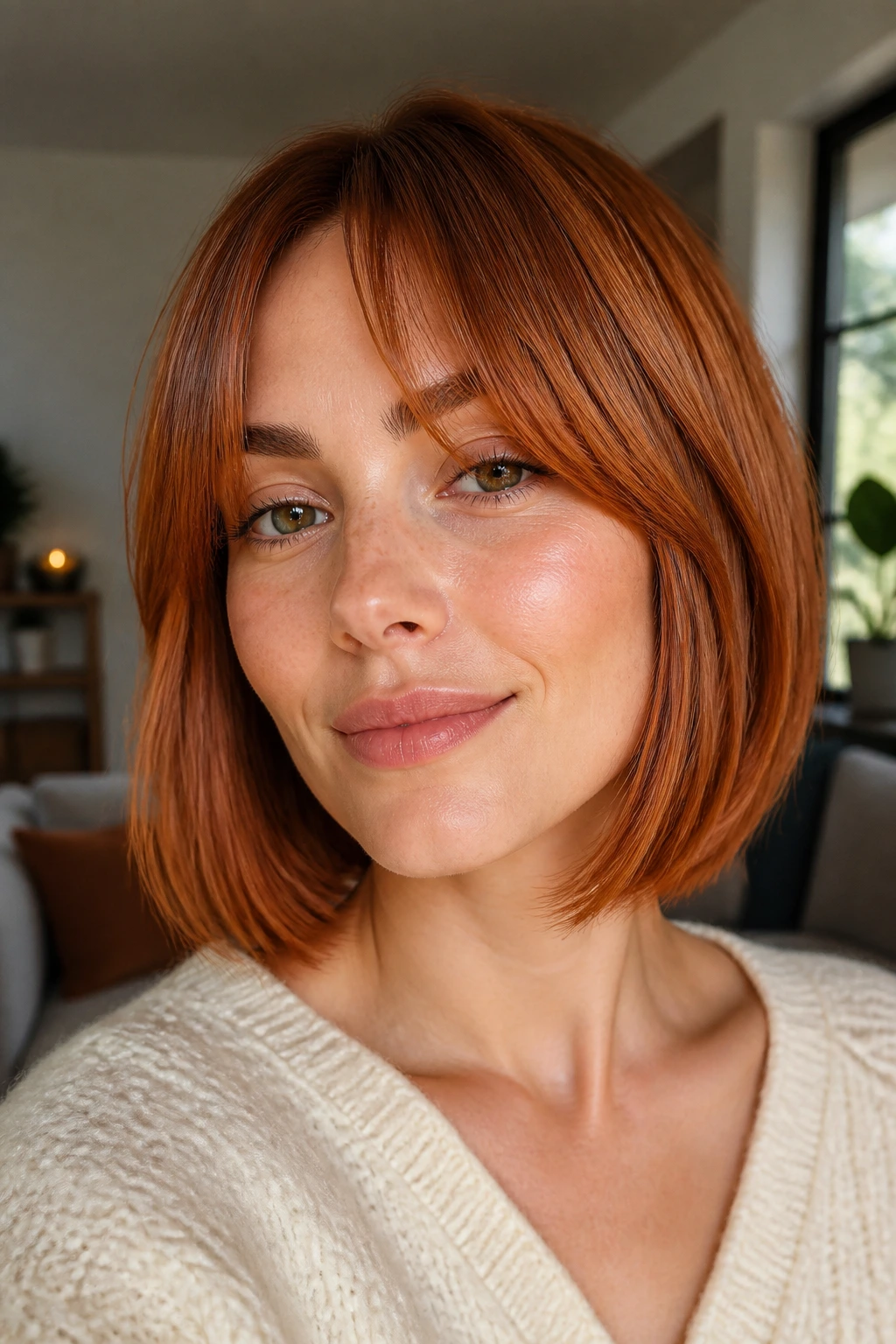
Why do curtain bangs work so well with copper bobs? Because they soften the face without stealing attention from the color. The bangs split at the center, skim the cheekbones, and make the warm shade feel framed instead of boxed in.
This is one of the easiest ways to keep a bob from looking square. The bangs draw the eye inward, then the copper takes over around the mouth, jaw, and collarbone. On finer hair, curtain bangs add the illusion of fullness around the front; on thicker hair, they break up the weight so the style doesn’t feel blocky. The key is keeping the bangs long enough to blend, not chopped to the point where they fight the rest of the cut.
How to Style It
- Blow-dry the fringe first with a small round brush.
- Bend the side pieces away from the face, not under it.
- Use a light serum only on the ends of the bob; bangs need less product than people think.
- Trim the fringe before it gets into your eyes, because copper shows sloppy shape fast.
6. Stacked Burnished Copper Bob
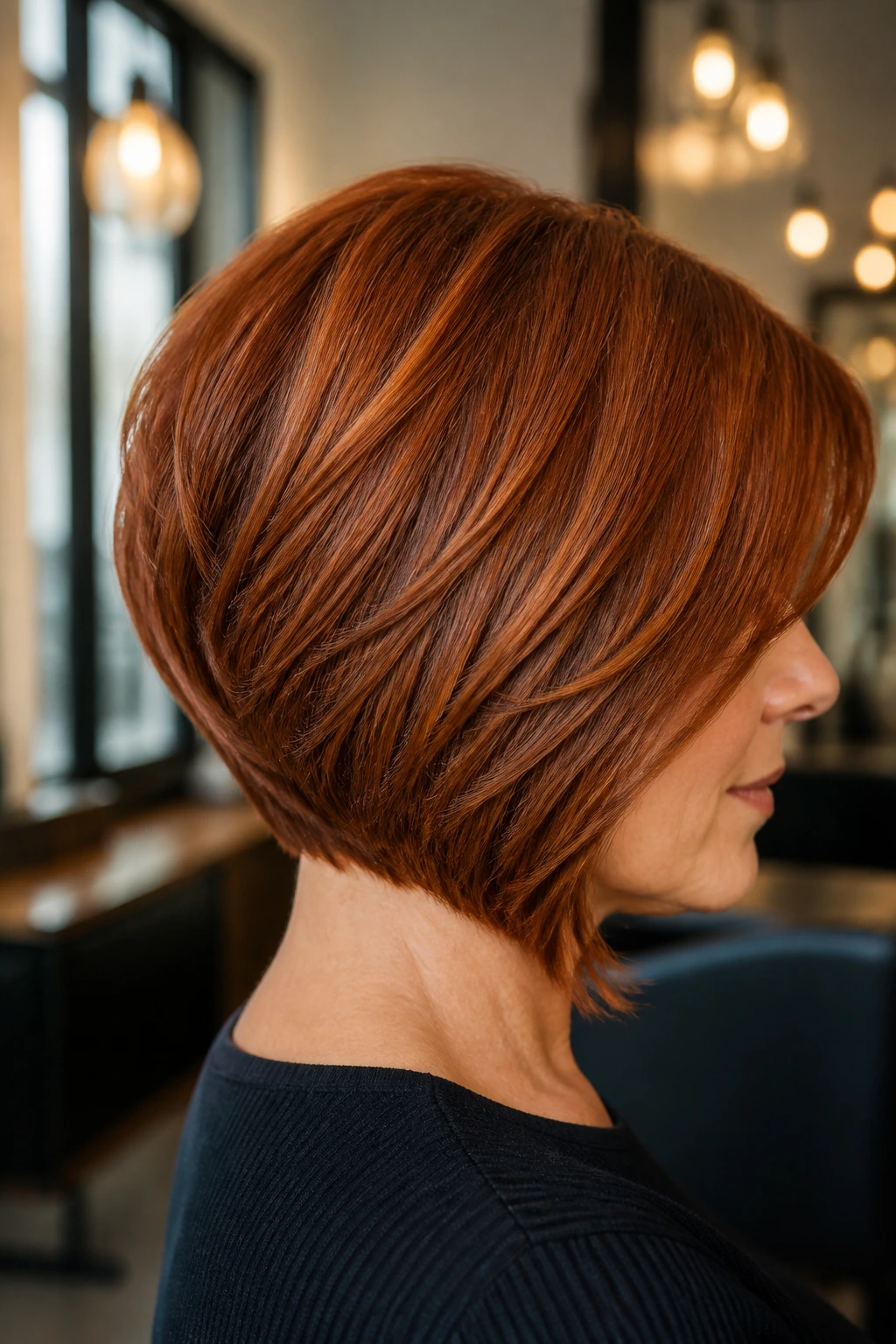
A stacked bob builds volume at the back, which is exactly why it looks so good on burnished copper. The shadow at the nape and the lift at the crown make the color feel deeper, almost dimensional, even if the shade itself is fairly simple. It’s a haircut with posture.
This is the one I reach for when hair sits flat behind the ears and refuses to cooperate. The stacking lifts the rear section, and the copper brings the whole shape forward. If the cut is done well, you get a rounded back, a neat neckline, and that full, polished silhouette that makes fine hair look more substantial than it actually is. Keep the layers controlled, though. Too much stacking can turn into a wedge, and nobody wants a triangle pretending to be a bob.
7. Rounded Curly Copper Bob
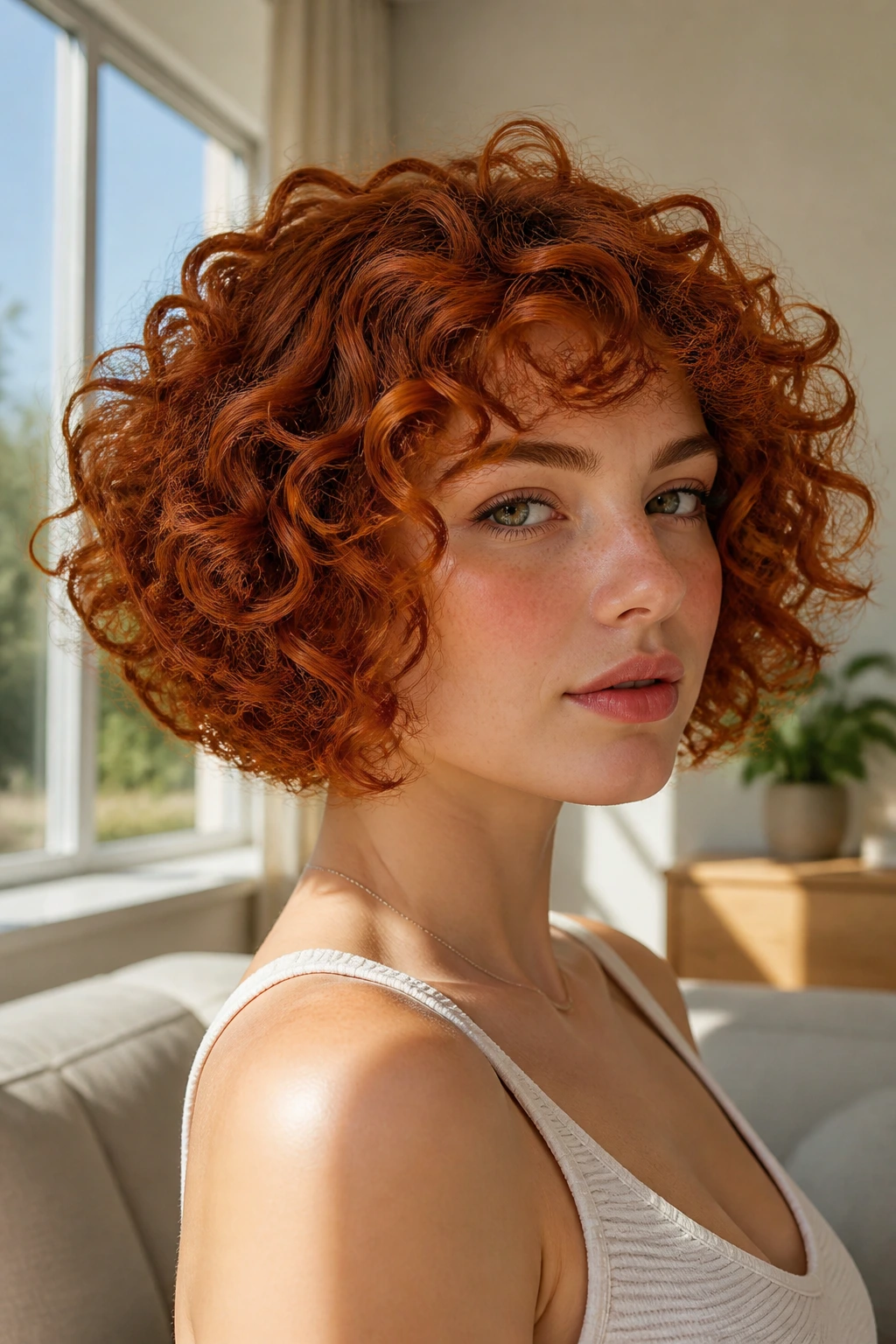
Curly hair and copper are a strong pair when the shape is rounded instead of boxed. A curved bob lets curls sit on top of one another in a soft halo, and copper bounces between the coils in a way that straight hair just can’t mimic. It looks alive. That’s the whole point.
Ask for Shape, Not Just Length
The best curly bobs are usually cut with shrinkage in mind. Bring your curl pattern into the conversation and ask for the shape to be built while the hair is dry or mostly dry, because wet curls lie. A rounded outline keeps the ends from puffing out at random angles, and copper makes the curl definition easier to read.
A diffuser helps, but the real win is not over-layering. Curly copper bobs can get fluffy fast if they’re thinned too aggressively. Leave enough weight so the color sits in soft ribbons rather than scattered frizz.
8. Shaggy Rust Copper Bob

A shaggy bob gives rust copper a little grit, which is exactly why it feels cooler than a tidy version. The choppy layers break the perimeter, the texture gives the color movement, and the whole haircut lands somewhere between polished and undone. That balance is hard to fake.
This cut works best when you want your bob to look like hair, not a sculpture. The layers should be soft enough to move but visible enough to keep the ends from sitting like one heavy curtain. Rust copper is especially good here because it deepens in shadow and glows at the tips. If you wear a lot of denim, leather, or plain white shirts, this shape has a nice contrast against all of that.
A little wave spray and a finger-dry is often enough. Too much curling iron work makes the shag look overhandled, and the point of the cut is that it can look casual while still being carefully shaped.
9. Shoulder-Skimming Copper Lob

The shoulder-skimming lob is for the person who wants copper bob energy without surrendering all their length. It lands right at that useful middle ground: long enough to tuck, tie, or flip, short enough to keep the ends fresh and the color bright. I think of it as the easiest copper cut to live with.
It also gives copper more room to blend. A deeper cinnamon or auburn-copper shade looks especially nice here because the extra length lets the color shift through more visible sections. If your hair is thick, the lob keeps the bulk from stacking up around the jaw. If your hair is fine, ask for minimal layering so the ends stay solid and don’t drift into wispy territory.
A lob is the best answer when you want to test copper without committing to a short crop. It grows out cleanly. That matters more than people admit.
10. Side-Part Auburn Copper Bob

A deep side part changes a bob faster than most people expect. Suddenly there’s lift at the crown, one side drops a little longer, and auburn copper gains an easy asymmetry that makes the whole cut feel more styled. You don’t need a dramatic haircut if the parting does the heavy lifting.
This is a smart move for flat roots or fine hair that collapses at the top. The side part creates volume where the hair naturally resists it, and the longer sweep across the forehead gives auburn copper a darker, richer frame. On square or angular faces, that diagonal line softens the shape without turning the haircut into a curtain of hair. It’s neat. It’s not fussy. That’s the appeal.
If you’re bored with a center part but don’t want a new cut, start here. The part can change the whole mood in five seconds.
11. Face-Framing Peach Copper Bob

A face-framing bob is all about placement. The front pieces hit the cheekbones or just below them, the shade leans peach-copper, and the result feels softer than a blunt bob but brighter than a muted auburn. It’s a nice place to go if you want warmth without the full ginger punch.
The face-framing pieces do more than flatter. They give the color a place to shine where people actually look first. Around the eyes and cheeks, peach copper can make the skin look fresher, especially if the ends are kept clean and the layers stay long enough to move. I like this shape when the rest of the hair is simple; the face frame does the styling for you.
Keep the front slightly longer than the chin if you want the look to stay elegant rather than bubbly. That little extra length keeps the bob from feeling too cute.
12. Glassy Golden Copper Bob
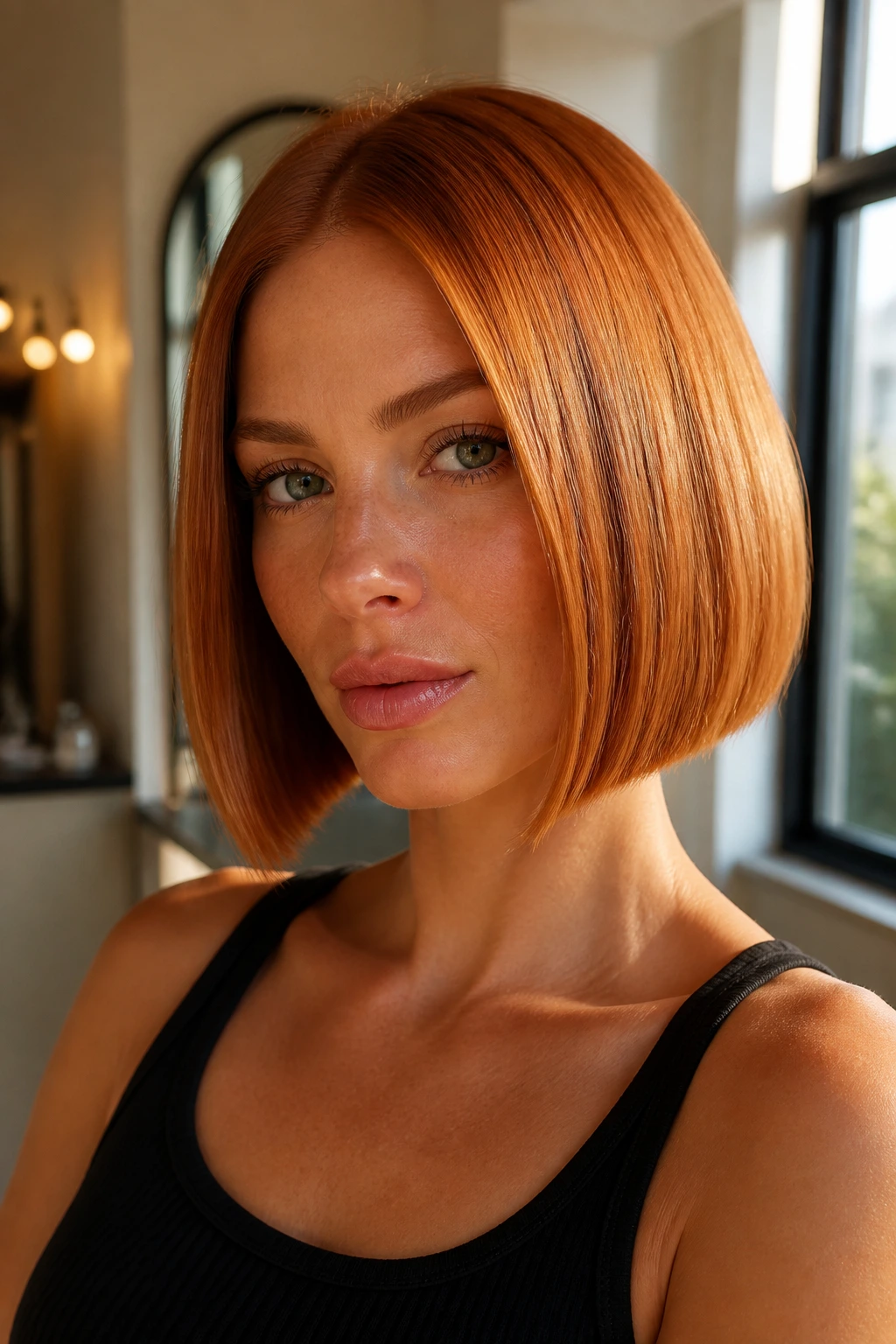
A glassy copper bob is the one that looks the most expensive when the finish is right. The cut is usually simple: blunt, neat, and controlled. The magic comes from the shine. Golden copper on smooth hair catches every bit of light, which makes the edges look sharper and the color look richer.
This version is not the place for heavy layers or frizzy texture. It wants a clean blowout, a narrow nozzle on the dryer, and a flat iron pass only if the hair needs it. Keep the heat moderate, around 300 to 325°F, and use a heat protectant every time. Copper shows dryness faster than brown does, so the surface has to stay smooth.
A tiny amount of serum on the ends is enough. Too much product makes the hair collapse, and then the whole glassy idea falls apart. Less shine product, more clean hair.
13. Wavy S-Bend Copper Bob

A wavy copper bob with S-bends feels relaxed, but it isn’t sloppy. The wave pattern is soft and controlled, the copper catches on each curve, and the haircut keeps enough structure to avoid turning into generic beach hair. That distinction matters.
What Makes It Different
S-bends give you movement without big curls. The waves sit flatter against the head, which keeps the bob looking modern rather than prom-like. On copper, those shallow bends create tiny flashes of light that move as you turn your face. It’s subtle, but it reads beautifully in person.
How to Wear It
- Set two-inch sections with a flat iron or a large-barrel iron, then brush them out lightly.
- Leave the ends a little straighter so the bob still reads as a cut, not a set of curls.
- Finish with a dry texture spray, not a sticky hairspray.
My rule: if the wave starts looking like ringlets, stop. The shape should still feel like a bob.
14. Asymmetrical Burnt Copper Bob

An asymmetrical bob sounds bolder than it actually feels. Usually, one side is only a little longer than the other, and that slant gives burnt copper a sharper edge without making the haircut look theatrical. The line is the story here.
If your face is naturally balanced, this cut adds interest. If one side of your face tends to dominate in photos, the asymmetry can offset it. Burnt copper works well because the darker tone keeps the shape grounded; you don’t get the visual chaos that can happen when a very bright copper is paired with a very uneven line. The whole thing lands as intentional.
I’d keep the difference in length modest. Half an inch to an inch is enough for most people. Go wider and the style starts shouting when it only needed to speak up.
15. Air-Dried Copper Bob

If your hair already bends on its own, stop trying to make it behave like a salon blowout. An air-dried copper bob can look better than a perfectly polished one because the shape keeps a little life in it, and copper loves movement. The shade looks warmer when the ends aren’t frozen stiff.
The trick is setting the haircut up before you walk away from the mirror. Use a lightweight cream or mousse, rake it through damp hair, then tuck the ends into the right direction with your fingers. If the bob is cut well, it will settle into a shape that looks deliberate once it dries. The piece that fails here is usually the perimeter. If the line is too ragged, air-drying exposes everything.
Let it dry mostly untouched. Scrunching every ten minutes only creates fuzz. Hands off helps more than people want to admit.
16. Copper Bob With Bottleneck Bangs

Why do bottleneck bangs look so good on copper? Because the center stays a little narrower, the outer pieces open around the temples, and the face gets framed without a hard curtain sitting across the forehead. On a bob, that shape gives the color a softer, more wearable front.
The bangs taper beautifully into the rest of the cut, which keeps the copper from feeling heavy near the eyes. I like this on medium-density hair, where the fringe can have enough body to sit properly but still move. Blow-dry the center first, then sweep the sides away from the face with a round brush or a velcro roller. That tiny bit of lift changes everything.
If curtain bangs feel too broad and blunt bangs feel too strict, this is the middle path. It has a little personality without becoming high-maintenance.
17. Rounded Copper Bob for Thick Hair
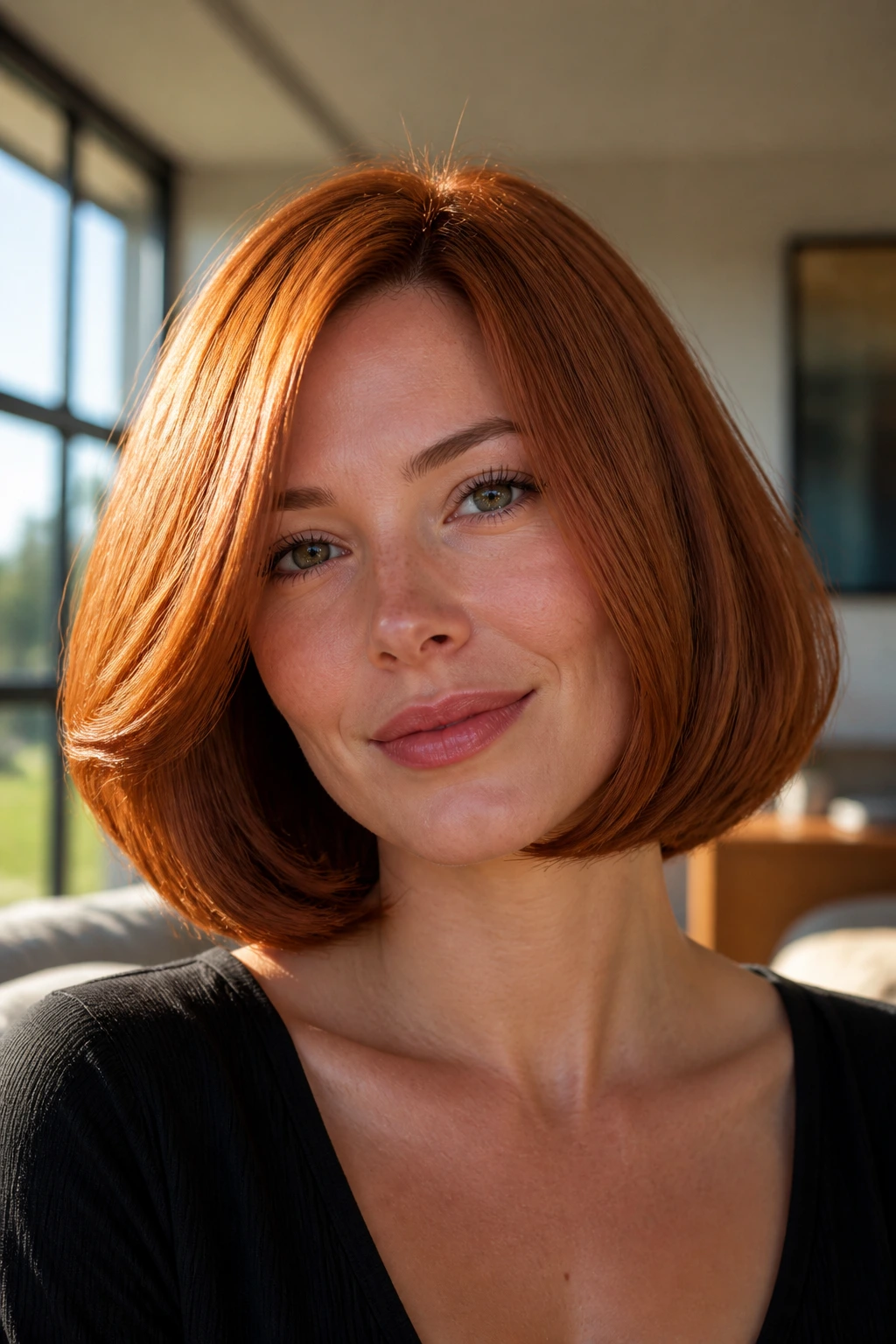
Thick hair needs a bob that understands weight. A rounded copper bob keeps the bulk contained, lets the ends curve under, and stops the whole shape from flaring out at the sides like a bell. That matters more on copper because the color makes volume easier to see.
Key Details
- Ask for internal shaping, not aggressive thinning.
- Keep the outside line smooth so the bob still feels full.
- Use a blow-dry brush or large round brush to direct the ends inward.
- Let the copper lean toward burnt orange or cinnamon if your hair is very dense; the deeper tone reads cleaner in heavy texture.
The mistake with thick hair is trying to remove too much weight and ending up with frizz at the mid-lengths. A rounded bob should feel controlled, not hollowed out. If you can see a lot of uneven gaps in the silhouette, the cut has been thinned too hard.
18. Feathered Copper Bob for Fine Hair
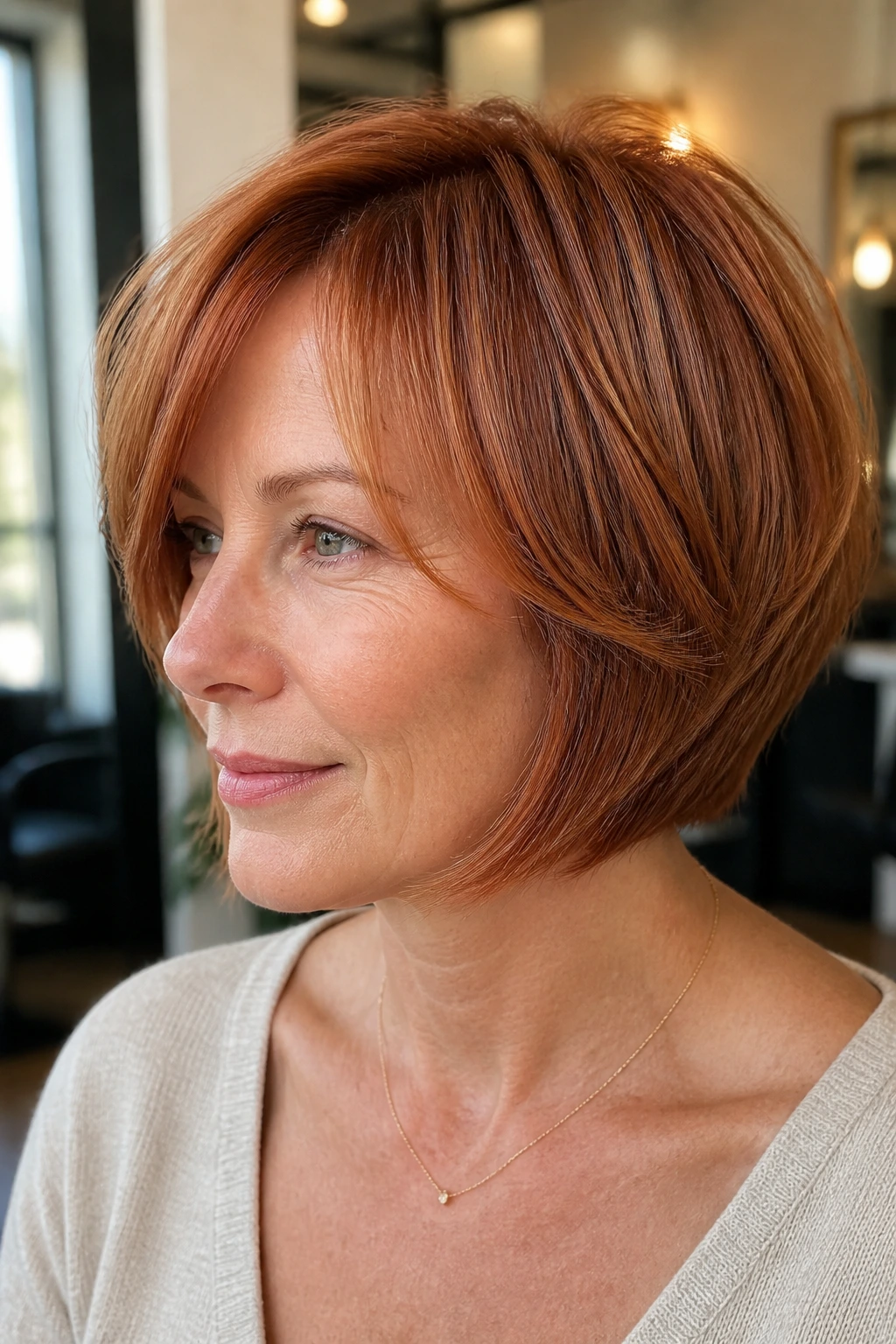
Fine hair can absolutely wear copper, but the cut has to leave enough substance behind. A feathered bob gives you lift and movement without turning the ends into transparent scraps. The color helps too. Copper visually thickens fine hair more than a cool blonde usually does, because the warmth catches the light in a fuller way.
The best version keeps the outer perimeter a little blunt while the interior gets light feathering. That gives the illusion of softness without losing density. If the layers go too high, the bob starts to look airy in the wrong way. Keep the shape compact around the jaw or slightly below it, and the whole thing reads as fuller.
A root-lift spray at the crown and a round brush at the ends can do more than a pile of product. Fine hair gets weighed down fast. Use less than you think.
19. Boxy Copper Bob
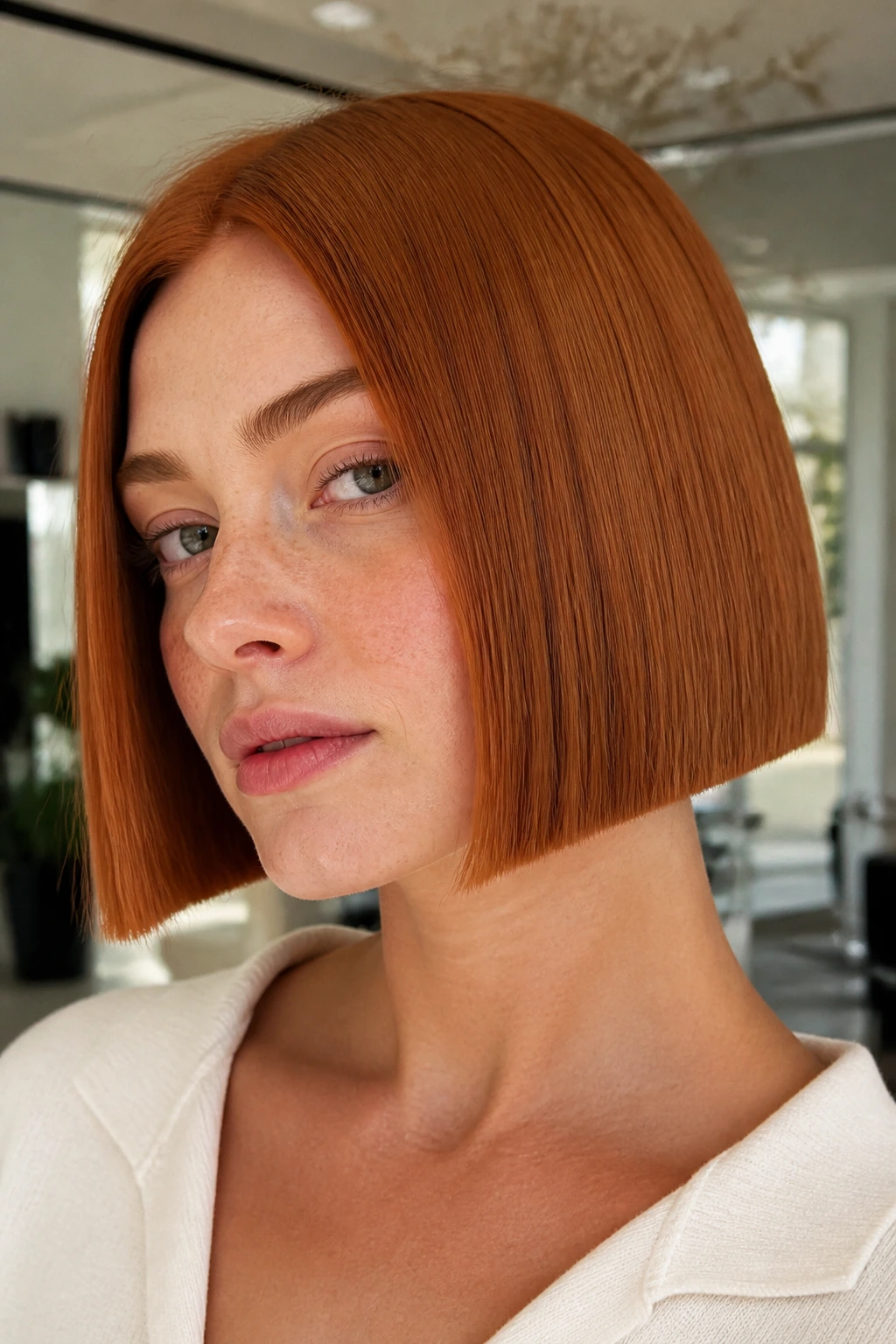
A boxy bob is the sharpest, most graphic version in the bunch. The sides sit strong, the corners are visible, and the copper shade turns those edges into a statement. If you like clean lines and a haircut that looks almost architectural, this is the one.
It works especially well on straight hair because the shape stays visible. Curly or very wavy hair can still wear it, but the cut has to be planned with texture in mind or the boxy outline gets lost. The payoff is a haircut that looks cool without needing a lot of styling. A blowout, a side tuck, and maybe one pass of a flat iron are usually enough.
I’d avoid too many wispy layers here. The charm is in the structure. Once the corners soften too much, it stops being boxy and starts being just another bob.
20. Peekaboo-Dimension Copper Bob
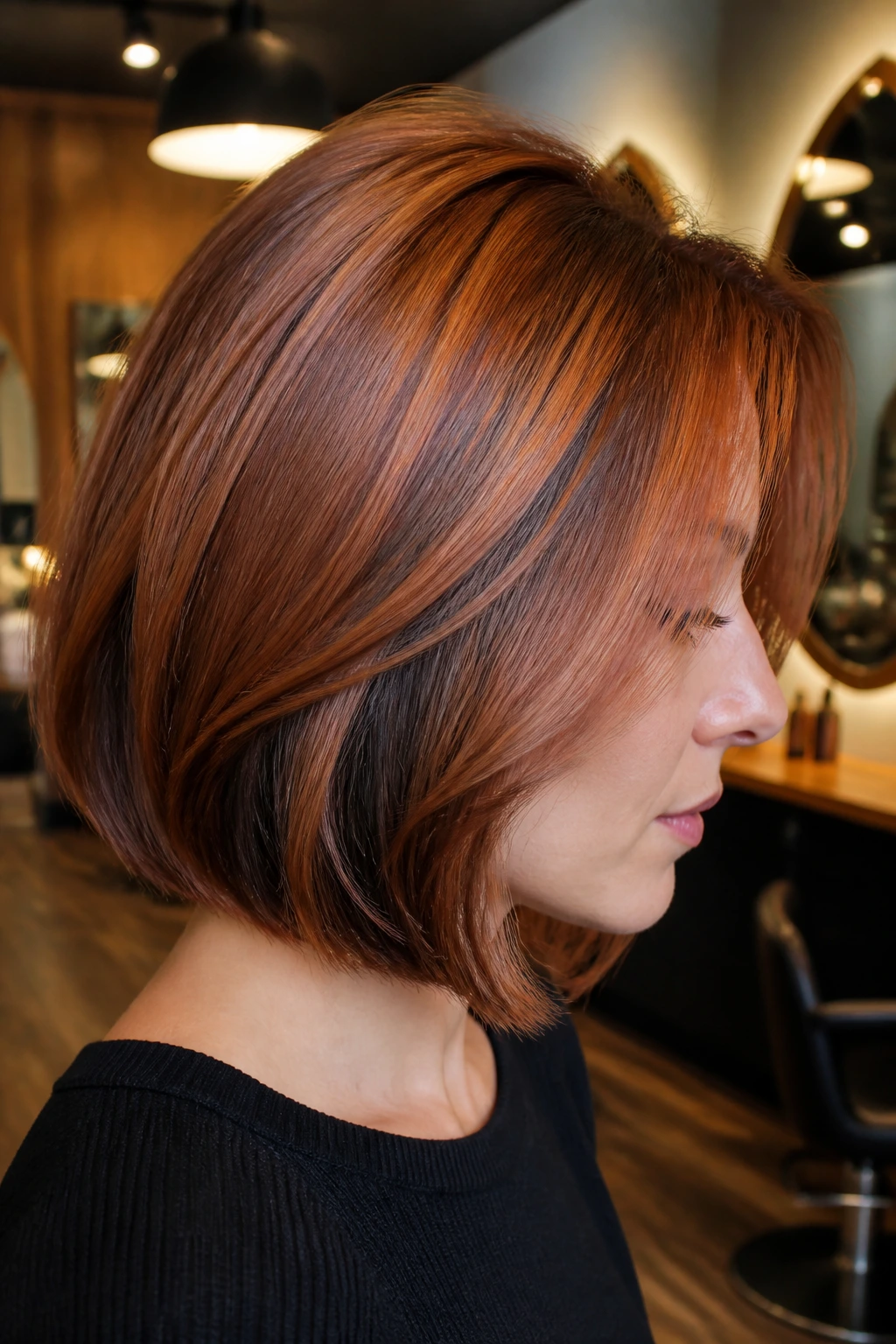
A peekaboo-dimension bob is for someone who wants the color to keep moving as the head turns. The surface may read as copper, but there are hidden lowlights or slightly deeper ribbons underneath that make the haircut look richer from every angle. It’s a smart option if you want dimension without a lot of visible contrast.
This version works well on medium to dark natural bases, because the deeper pieces can sit under the copper and give it a little shadow. The bob itself can be simple — chin-length, slightly layered, or softly angled — but the hidden color keeps it from looking flat. I like this approach more than streaky highlights on a bob, which can sometimes look too busy at short length.
Where the Dimension Lives
- Under the crown for lift.
- Around the back for movement.
- Under the face frame for depth.
- In a few hidden panels so the color changes only when the hair moves.
21. Retro Rounded Copper Bob
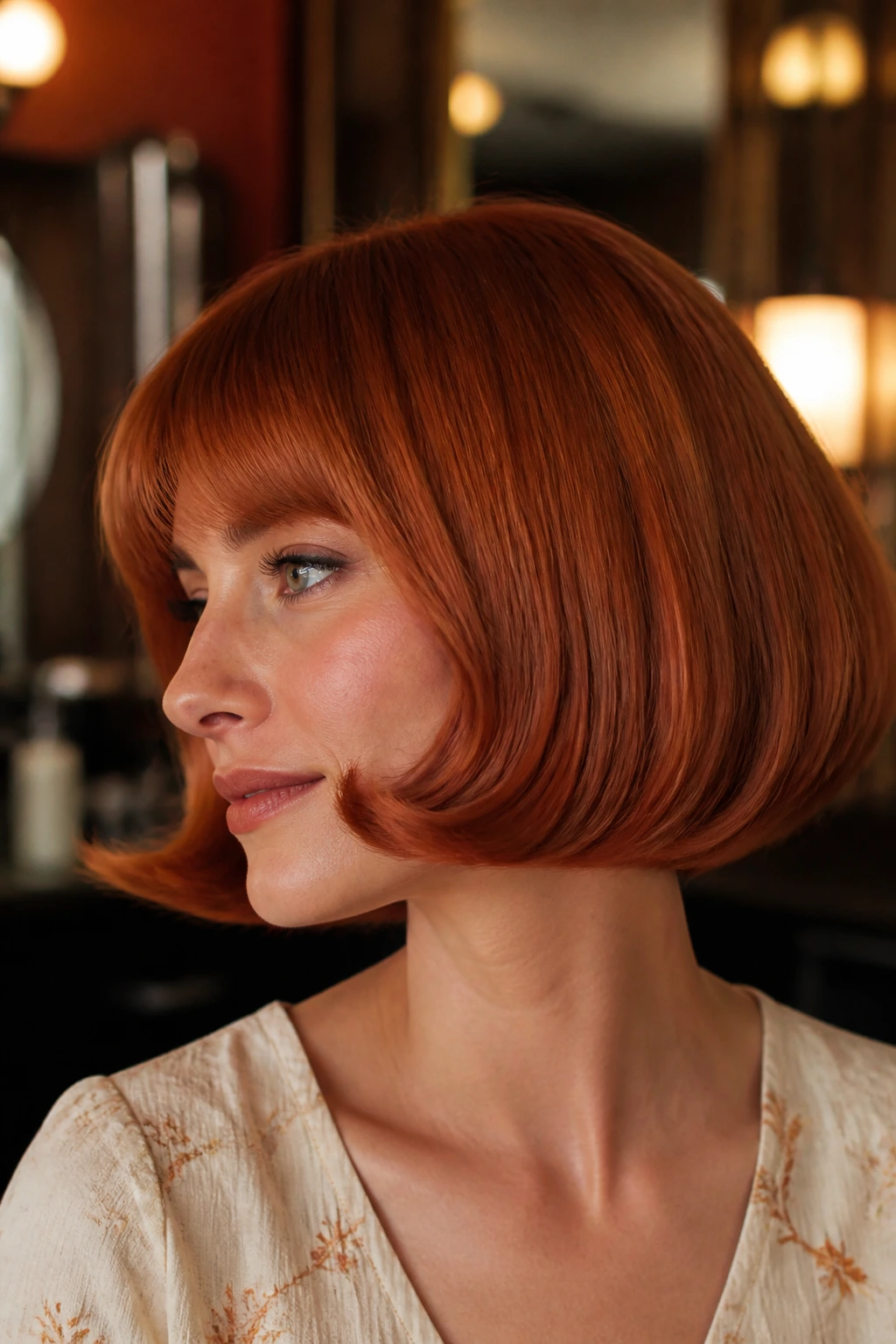
A retro rounded bob brings the ends inward and the crown smooth, which gives copper a polished, old-school finish without looking costume-y. It’s the kind of cut that works beautifully with a soft side part, a tucked-under blowout, or a little flip at the ends. Copper loves that rounded silhouette because the shape makes the warmth feel plush.
This is not a flat iron bob. The whole point is the curve. Think large round brush, direction at the roots, and a careful bend at the ends. On medium-thick hair, it can look almost velvet-like in texture. On finer hair, it gets a touch of lift that keeps the style from falling limp. The retro feel is there, but only if the finish is smooth.
If you’re tired of wavy bobs that all look the same, this shape is a nice reset. It feels deliberate without being stiff.
22. Root-Shadow Copper Bob

A rooted copper bob is the most forgiving version of the whole group. A slightly deeper base near the scalp softens grow-out, gives the color more depth, and keeps the warm shade from looking too one-note. If you want copper but do not want to be chained to the salon chair, start here.
The root shadow also makes the haircut look fuller at the crown. That’s a nice bonus on finer hair, but it helps everyone because it keeps the top from looking like a bright helmet. The contrast should be gentle, not stripy. I’d aim for a root that’s one to two shades deeper than the mid-lengths, enough to create dimension without looking obvious.
This is the copper bob I’d suggest to someone testing the color for the first time. It grows out with more grace, and the bob shape stays readable long after the first appointment has faded.
Why Copper and Bob Length Make Each Other Look Better

Copper needs a shape that lets it breathe. Long hair can hide the color in layers, but bob length keeps the warmth close to the face, where it actually changes how the whole cut feels. That’s why a blunt copper bob can look sharper than a much more expensive color job on longer hair. The geometry does half the work.
The other reason is healthier-looking ends. Copper shows dryness faster than neutral browns do, so a bob with clean ends and regular trims keeps the shade from looking tired. I’d rather see a slightly darker copper on a healthy bob than a bright one on rough, frayed ends. The first reads rich. The second reads rushed.
H3: The Shape Matters More Than People Admit
A copper shade can go a little orange, a little auburn, a little peach. The bob decides whether that movement looks intentional. A blunt line makes the color bold. A layered or wavy line makes it soft. Same dye family, different mood.
Picking the Right Copper Shade for Your Base and Undertone
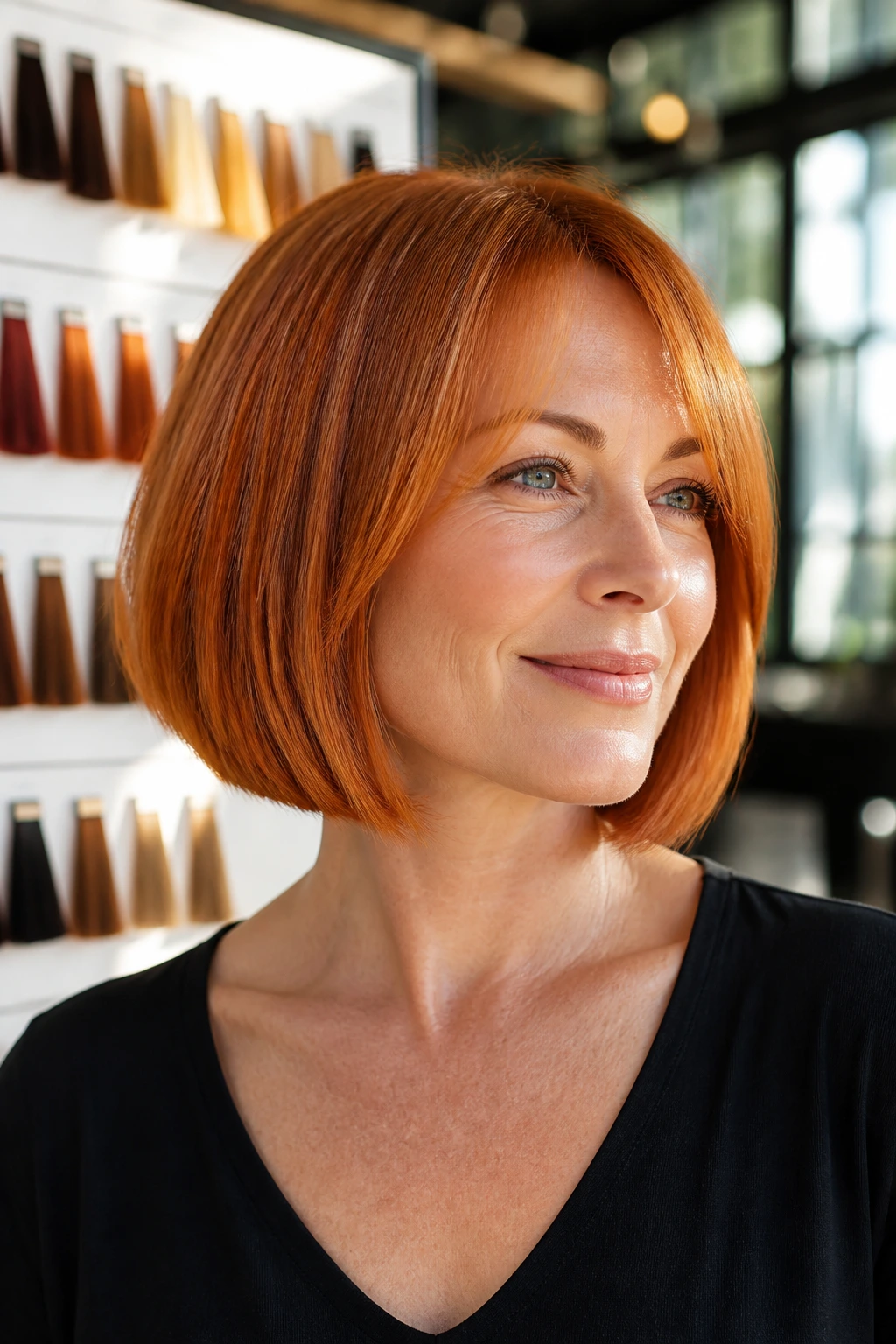
Copper is not one color. It stretches from bright ginger to deep rust to rose-gold apricot, and the one that looks best depends on both your natural base and the haircut shape. A bright chin-length bob can handle more punch. A shaggy bob usually looks better with a deeper or smokier copper so the texture doesn’t get lost in too much shine.
If your skin leans cool, a copper with more red and less orange tends to sit better. If your skin leans warm, golden copper or apricot-copper usually feels easier to wear. Neutral undertones get the widest range, which is unfair but useful. For darker natural bases, a rooted copper or auburn-copper gives you depth without a full pre-lightening session. For lighter bases, brighter ginger and peach tones can show up faster and with less processing.
The best salon conversations happen when you bring photos that show both color and shape. One picture for the bob line, one for the copper tone. Those are not the same decision.
Styling the Shape: Straight, Wavy, Curly, and Air-Dried
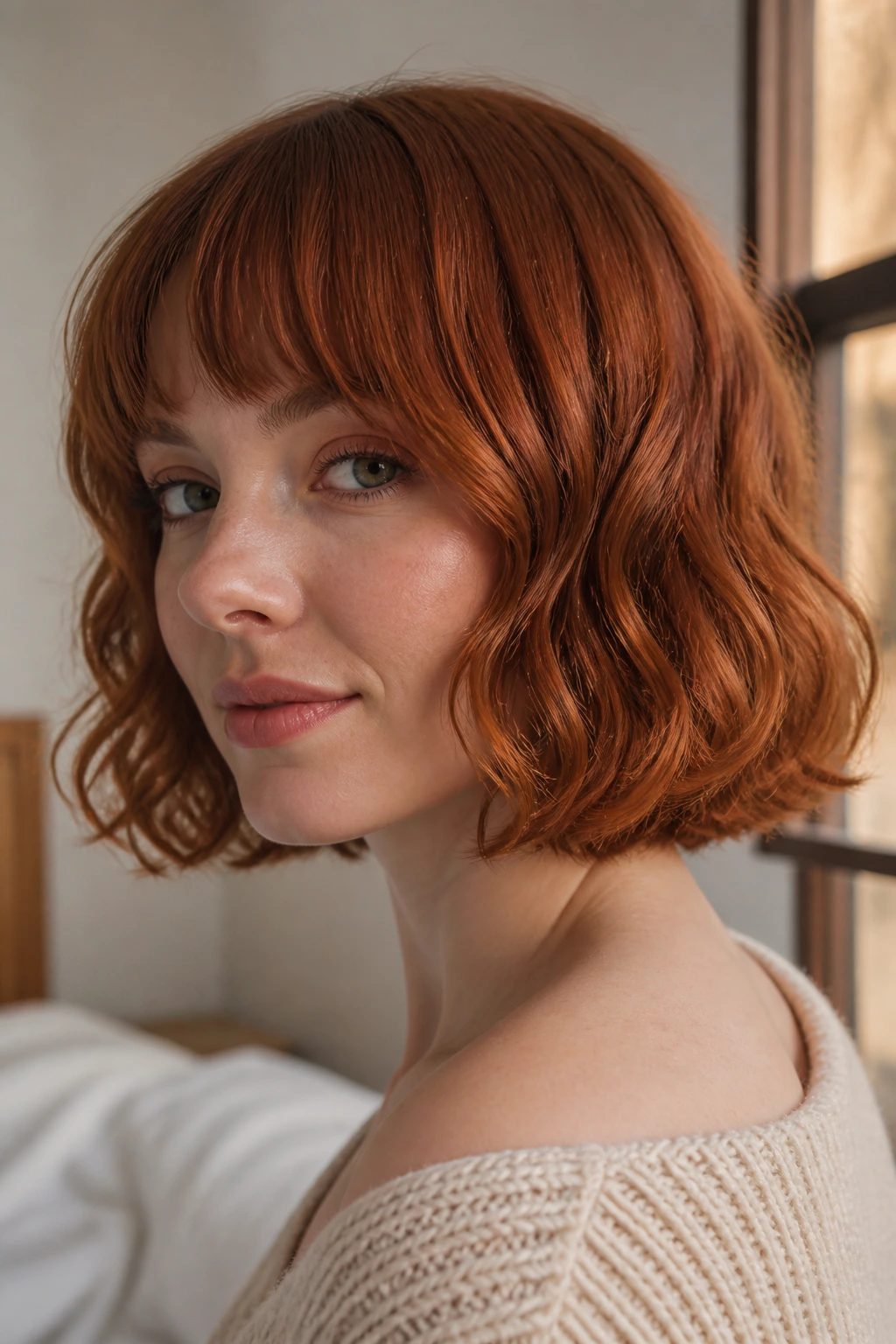
Copper bobs are forgiving when the styling matches the haircut instead of fighting it. Straight hair loves a glassy or boxy finish because the line stays clean. Wavy hair usually looks best with soft bends, a middle or off-center part, and a little texture spray at the mid-lengths. Curly hair needs shape carved around the curl pattern, not after it.
Air-dried versions can look polished if the cut has enough structure in the perimeter. A tiny amount of cream through damp hair and a quick finger shape at the ends is often enough. What usually ruins the style is over-touching. Copper reflects every rough patch, and a bob does not hide them for you.
H3: Heat Settings and Product Limits
Keep heat protectant in the mix if you use a dryer or flat iron. Copper fades faster when hair is dried out, and hot tools above what you need only speed that up. A light oil or serum belongs on the last inch or two of hair, not the roots. Heavy product at the crown makes bob shapes collapse fast.
Essential Tools for Copper Bob Haircuts
- Precision haircut photos: Bring two or three images, one for the shape and one for the color, so your stylist can separate the requests instead of guessing.
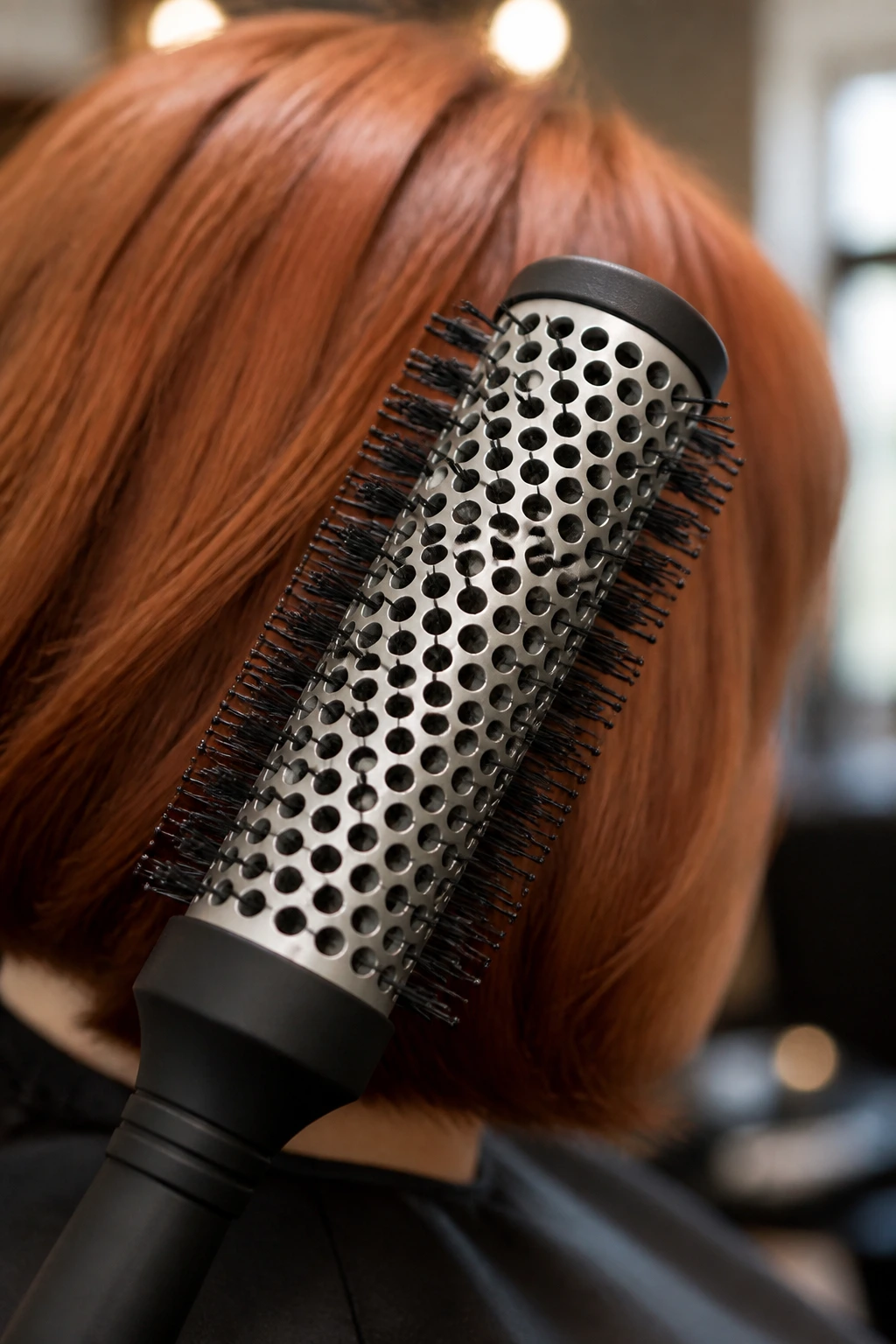
- Round brush, 1 to 1.5 inches: Best for chin-length bobs, curtain bangs, and rounded finishes.
- Blow dryer with nozzle attachment: Keeps the cut smoother and helps copper look glossier by reducing frizz.
- Flat iron with adjustable heat: Useful for glassy, blunt, or boxy bobs; keep the temperature moderate, around 300 to 325°F for most hair.
- Heat protectant spray or cream: Non-negotiable if you want the shade to stay bright and the ends to stay soft.
- Lightweight texture spray: Helps French, shaggy, and wavy bobs keep movement without looking crunchy.
- Color-safe shampoo and conditioner: Protect the copper tone and stop it from washing out too fast.
- Gloss or color-depositing mask: Handy for keeping warmth alive between appointments.
Smart Salon Notes and Color-Care Shopping
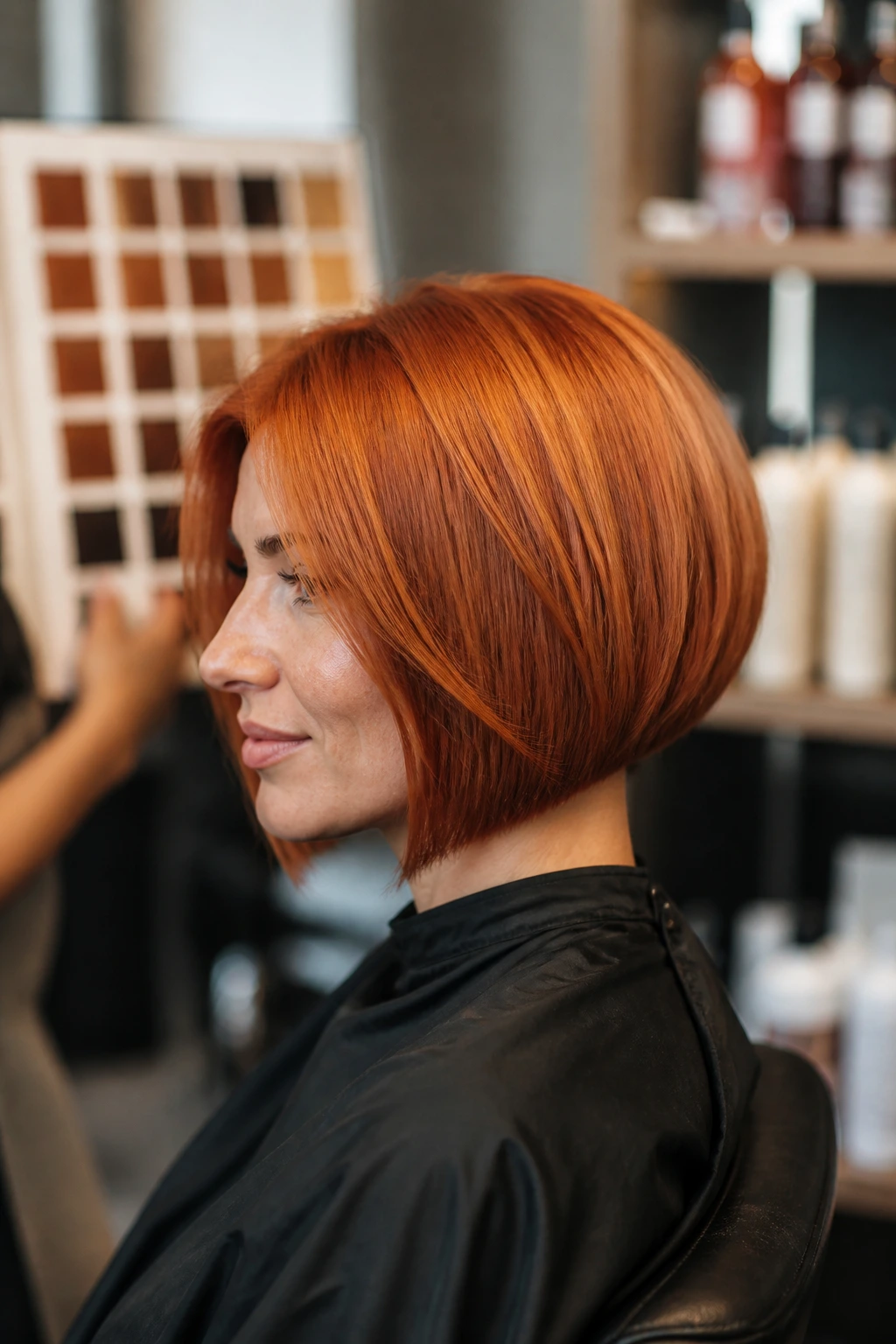
Copper goes best when the salon plan is specific. Ask whether the color will be permanent, demi-permanent, or gloss-based, because those choices change both brightness and how it fades. A demi or gloss often gives better softness on bob-length hair, especially if the ends are porous or recently highlighted. Permanent color has its place, but it can look harsher if the haircut is very blunt and the hair is already dry.
Bring up porosity. Seriously. Porous hair drinks up color fast and gives it back even faster, which is why some copper bobs fade into dull peach in a couple of washes while others stay rich. If your hair grabs color, a root shadow or gloss refresh may make more sense than chasing a brighter formula every time.
At home, buy for maintenance, not for hype. A color-safe shampoo, a once-a-week conditioning mask, and a glossing product that matches the tone will do more for the hair than a pile of random stylers. Copper likes consistency. It does not love a dozen competing products.
Keeping the Glow Bright Between Trims
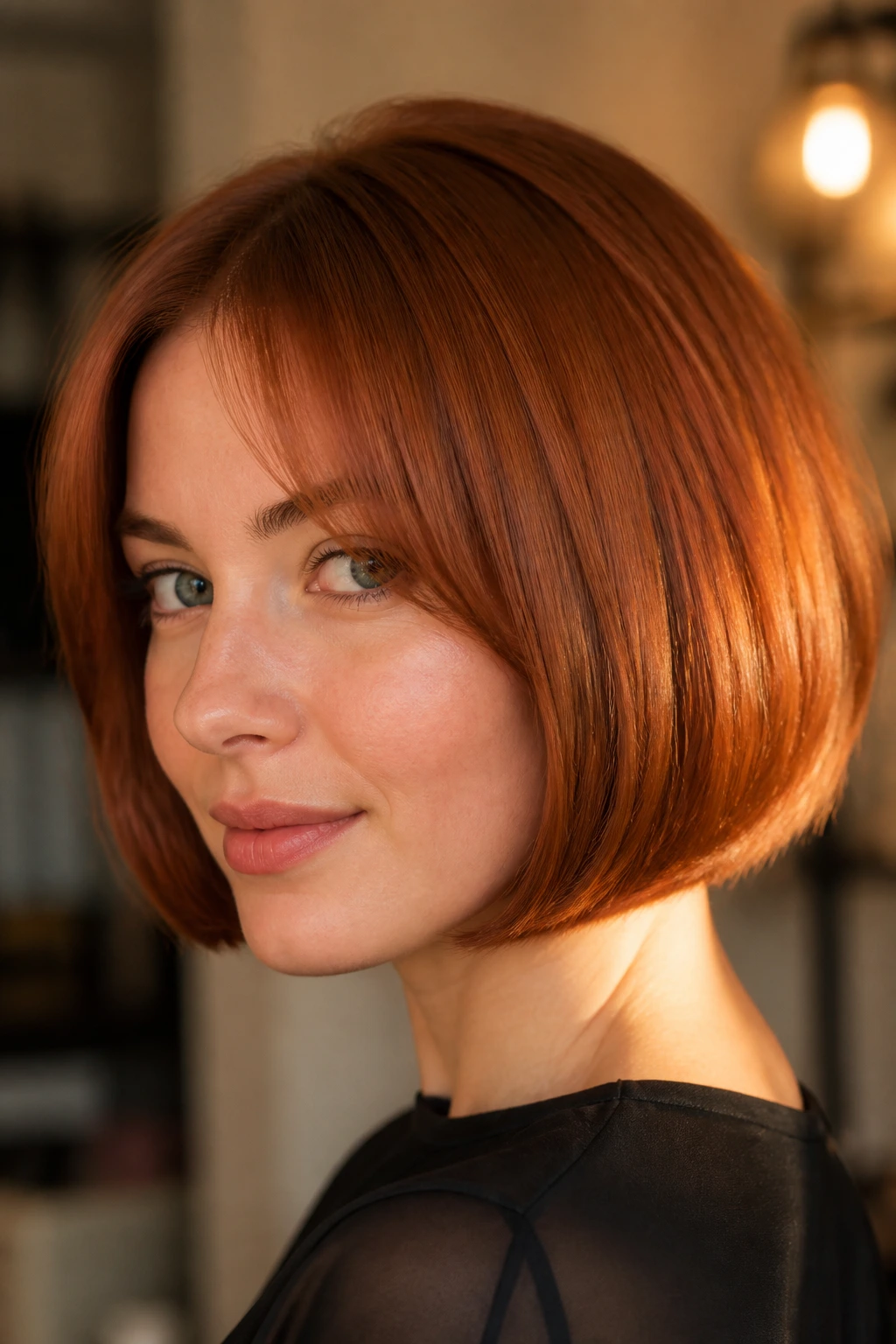
A copper bob looks best when the ends stay tidy and the tone stays fresh. That means trim appointments matter. Most bobs need a shape check every 6 to 8 weeks if you want the line to stay clear, and copper color usually benefits from a gloss or tone refresh around the same rhythm if the shade is bright. If your version is rooted or deeper, you can often stretch that a bit longer.
Wash less often if you can. Two to three times a week is kinder to copper than daily washing, especially if you use warm water and heat styling. A cool rinse at the end helps smooth the cuticle so the color reflects better. Sun, hot tools, and hard water all flatten copper faster than most people expect, so a shower filter or leave-in protectant can make a real difference if your water is rough.
H3: What to Do When the Color Starts to Fade
If the copper turns dull rather than orange, reach for a gloss or color-depositing mask before you panic. If it turns patchy, it usually needs a salon glaze, not another layer of shampoo magic. And if the ends feel crispy, color is not the main issue anymore — the haircut needs a trim first.
Extra Tips for Shine, Lift, and Soft Movement
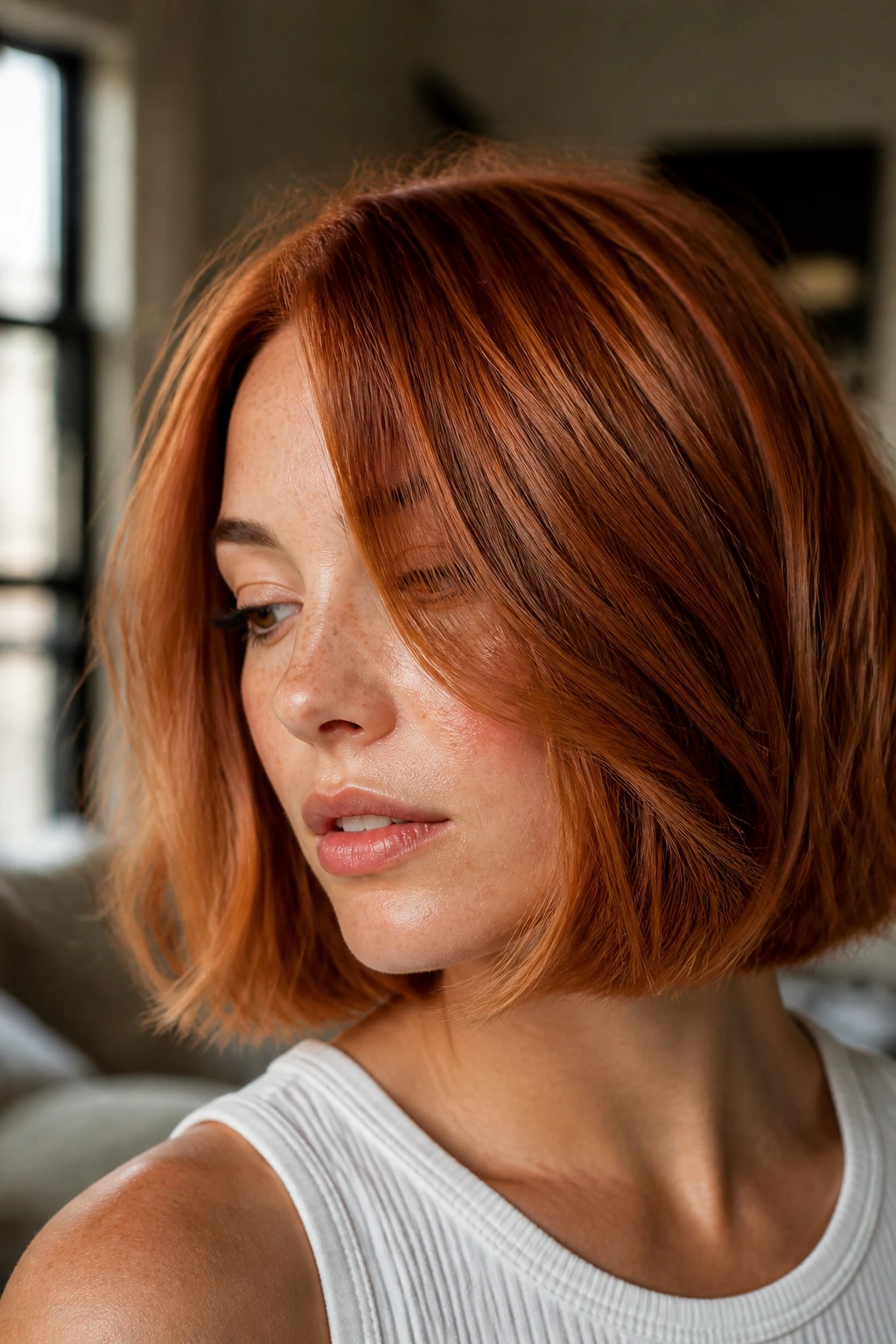
- Flavor enhancement: A clear gloss or shine spray on dry hair can make copper look deeper without changing the shade at all.
- Customization: If the color feels too bright, ask for a root melt or deeper lowlights at the next appointment instead of trying to dull it with purple shampoo. Purple shampoo can muddy copper fast.
- Serving suggestions: Pair a polished bob with a center part and small hoops, or go softer with a side part and a textured finish around the temples.
- Make-it-yours: Fine hair usually benefits from a blunt edge and less layering; thick hair usually needs internal weight removal and a more rounded outline; curly hair needs the shape drawn around the curl pattern, not squeezed into a straight-haired template.
Common Mistakes That Flatten the Cut or Muddy the Color
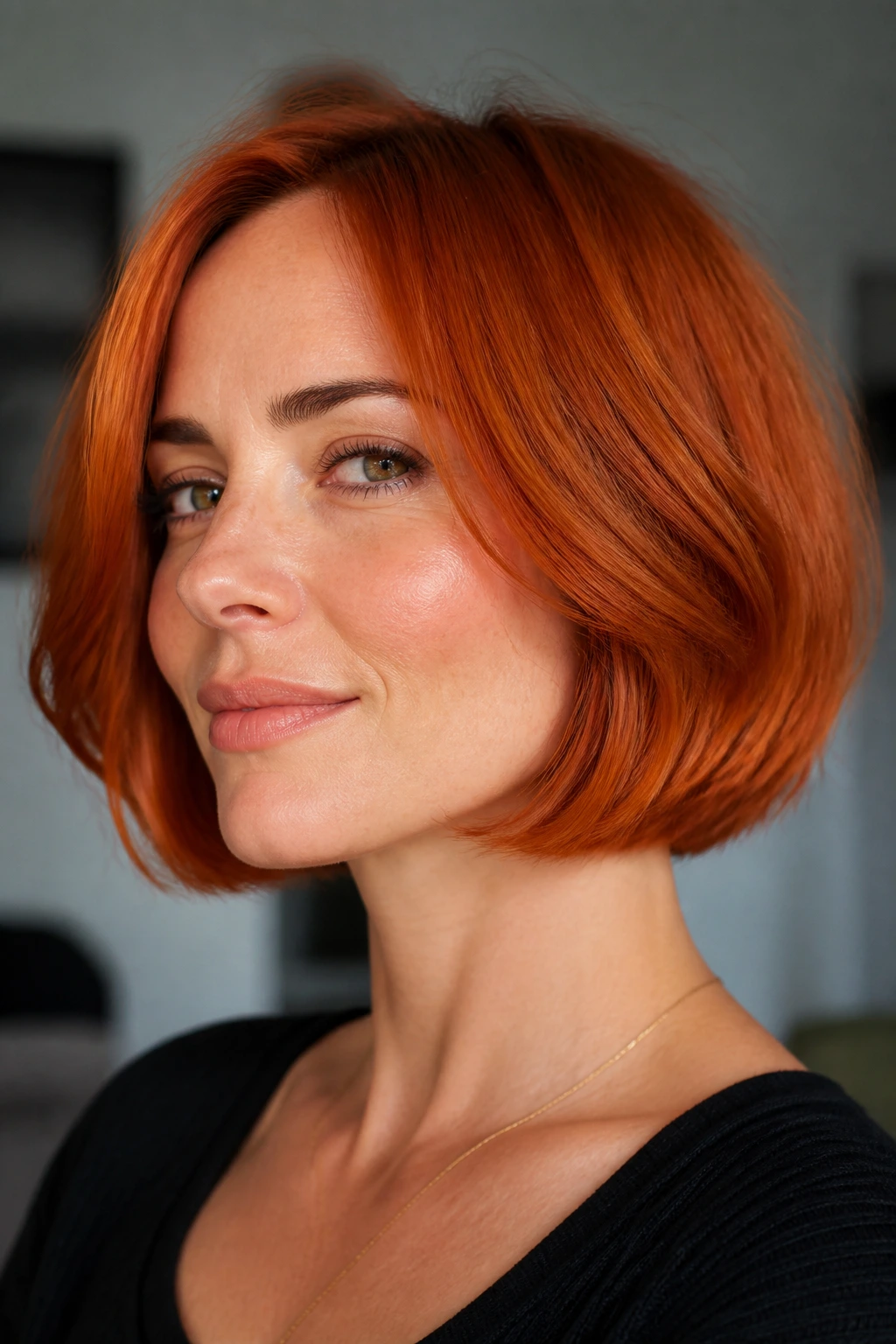
The first mistake is choosing a copper shade that is too bright for the cut. A neon ginger on a heavily layered bob can look busy instead of warm. The fix is simple: match intensity to shape. Blunt and short can take more saturation. Shaggy and textured usually need a deeper copper with a little brown in it.
Another problem is over-thinning, especially on thick hair. The ends get wispy, the bob loses its line, and the copper starts to look patchy because there isn’t enough hair holding the light. Ask for internal shaping, not aggressive texturizing shears all over the surface.
Purple shampoo is the quiet villain here. It can make copper look muddy or gray if you use it like you would on blonde hair. Use a color-safe cleanser instead, and save toning products for when a stylist actually recommends them.
Heat is the last big one. A copper bob that gets blasted with a high-heat flat iron every day will fade and dry out fast. Lower the temperature, use protectant every time, and stop once the cut looks smooth. More passes are not better passes.
Variations and Adaptations to Try
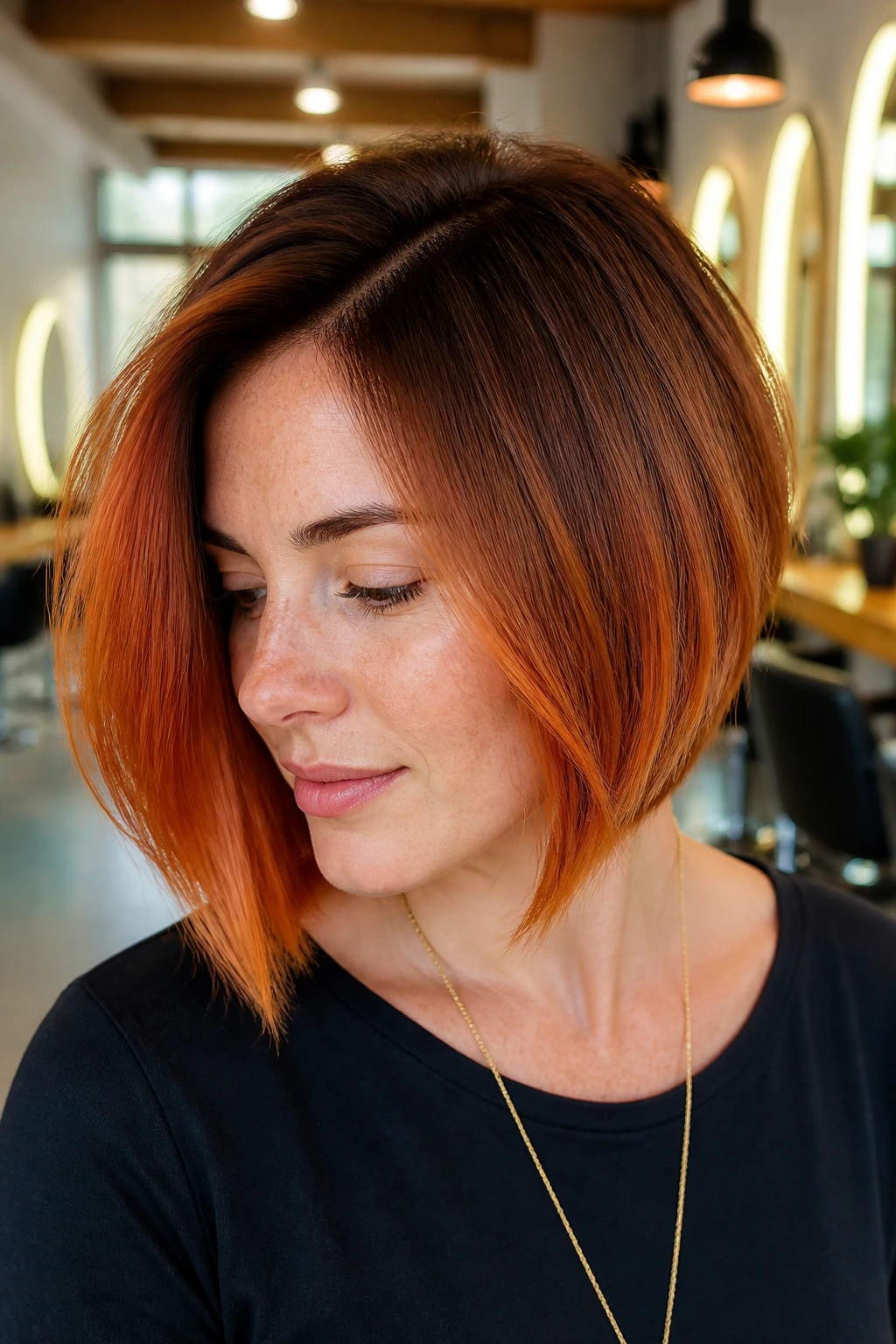
Rooted Sunset Copper: Keep the base a shade deeper and fade into brighter copper through the mids and ends. This works well if you want grow-out that doesn’t look harsh after a few weeks.
Peach-Ribbon Bob: Add a few lighter peach and apricot ribbons around the front pieces. The result is softer than all-over copper and especially good on fine hair that needs a little visual lift.
Burnt Copper Curly Crop: On curls, deepen the shade and keep the outline rounded. The darker copper reads richer in the texture and holds its shape better in humid weather.
Grown-Out Lob: Let the bob skim the collarbone and keep the color more auburn than ginger. This is the most forgiving option if you like to tuck your hair up, tie it back, or stretch trims.
Micro-Gloss Bob: Use a simple blunt bob and a clear gloss instead of adding more pigment every visit. It’s a good choice when the hair is already warm and you want the shine to do the talking.
Frequently Asked Questions

Will copper bob haircuts work on dark hair without bleach?
Sometimes, but the result depends on how much warmth your hair already has. Dark brown hair can pick up auburn or burnt copper tones with a demi-permanent color or gloss, while brighter ginger usually needs some lift first.
Are copper bobs high-maintenance?
The color can be, but the cut doesn’t have to be. A rooted copper or auburn version grows out more softly than a bright ginger, and a blunt bob often needs fewer styling steps than longer layers.
What face shapes suit a copper bob best?
Almost any face shape can wear one if the length and fringe are adjusted. Chin-length blunt bobs flatter stronger jaws, angled bobs help soften round faces, and curtain bangs are useful when you want to break up a longer forehead.
Can curly hair pull off a copper bob?
Yes, and it can look excellent. The trick is to cut the shape around the curl pattern and avoid stripping out too much weight, or the bob will puff out instead of sitting in a rounded frame.
How often should I refresh the color?
A bright copper usually benefits from a gloss or tone refresh every 4 to 6 weeks. Rooted or deeper copper can stretch longer, but the ends still need moisture and the cut still needs trimming so the shape stays clean.
What if my bob starts flipping out at the ends?
That usually means the bevel or weight balance is off, or the hair is drying with too much bend in the wrong direction. A round brush blow-dry, a quick flat-iron pass, or a small trim can fix it before the shape gets weird.
Can I keep the copper while growing the bob out?
Absolutely. In fact, a root-shadow copper or auburn blend is one of the easiest ways to grow a bob into a lob without looking like you missed an appointment. The color transition can make the length change feel intentional.
Should I use purple shampoo on copper hair?
Only if a colorist specifically tells you to, and even then, use it carefully. Purple shampoo is built to cancel yellow on blonde hair, and on copper it can mute the warmth or leave the tone muddy.
Why Copper and Bob Length Keep Working So Well

The reason copper bob haircuts keep coming back is simple: the combination makes both parts better. Bob length gives the color a shape to sit in, and copper gives the cut a warmth that plain brown or black rarely has. That’s why these styles can feel so different from each other even when they sit at the same length.
If you want the most flattering version, choose the version that fits your hair texture first and your color mood second. That order matters. A good copper bob should look easy from the outside and carefully thought through underneath, and when both parts line up, the glow stays with the haircut instead of sliding off it.
