



An easy bob earns its place when it behaves on a sleepy Tuesday. You wash it, rough it up with a towel, maybe add a dab of cream or a spritz of spray, and it still looks like a haircut rather than a rescue mission. That’s the real promise of layered bobs: not drama, not fuss, just shape that keeps working after you’ve stopped thinking about it.
The trick is that layered bobs are not all built the same. Some are cut to sit neatly against the jaw and do almost nothing all day. Others are designed to move when you turn your head, hide cowlicks, or tame thick hair that would otherwise puff out like a lampshade. The good ones look intentional with a quick finger-comb. The bad ones need a round brush, three clips, and a quiet prayer.
And that’s why this cut keeps showing up in salon chairs. It can be blunt or airy, curly or straight, chin-length or collarbone-grazing, polished or a little undone. The best versions solve a specific problem: too much bulk, too little volume, a stubborn wave pattern, a face shape that wants softness, or a routine that simply cannot support a high-maintenance blowout. The list below stays focused on the bobs that do their job without asking for much back.
Why These Layered Bobs Stay Easy to Wear
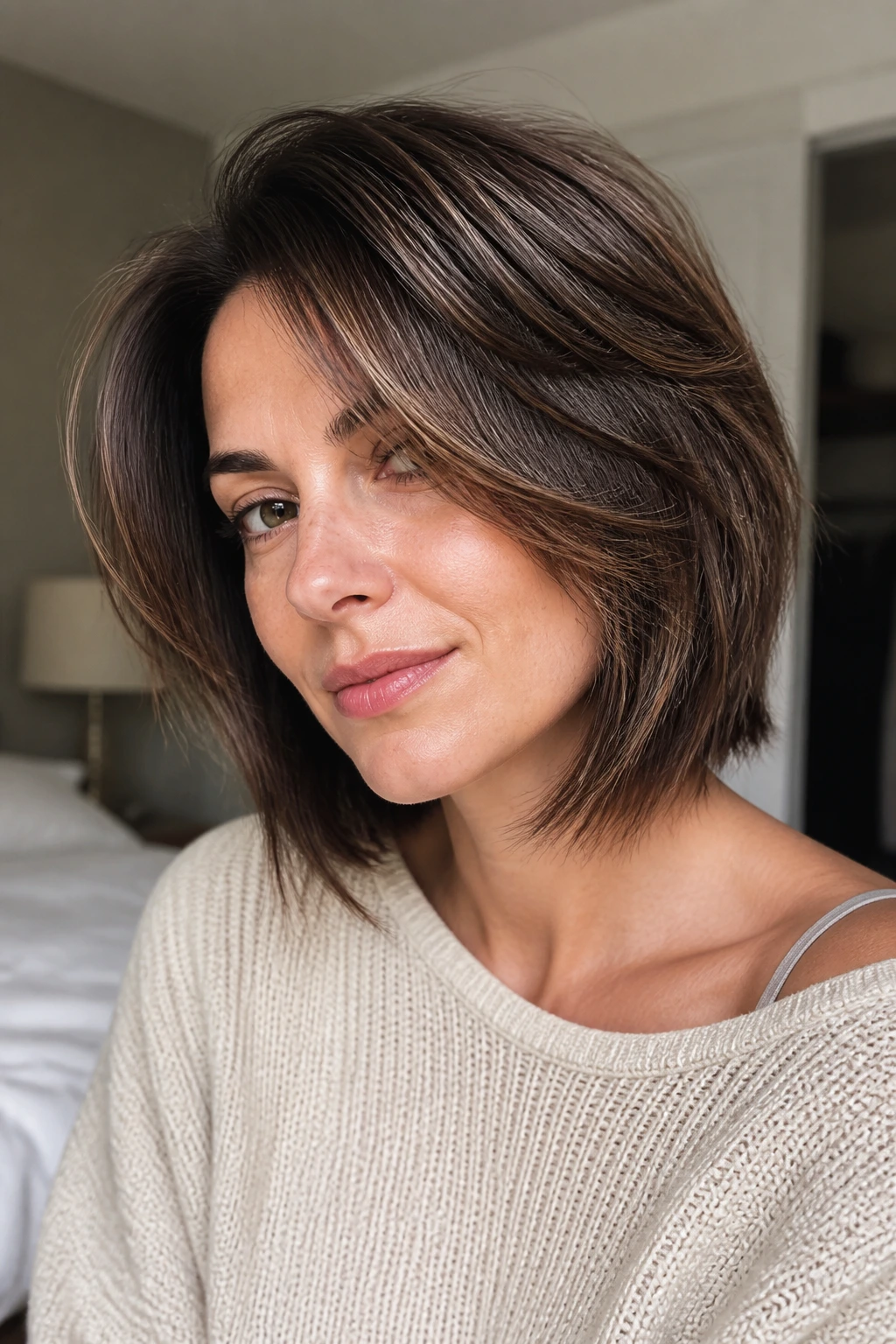
- They keep a real outline: A strong perimeter means the haircut still looks finished even when you skip heat styling.
- They remove weight where hair gets puffy: Internal layers stop thick hair from ballooning at the sides and back.
- They work with texture instead of fighting it: Wavy, curly, and slightly coarse hair behaves better when the cut follows its natural bend.
- They grow out in a softer way: When the layers are placed well, the haircut doesn’t turn blunt and boxy between trims.
- They need less daily correction: You’re not chasing every strand with a flat iron, which is the whole point for most people.
- They can be tailored to density: Fine hair gets lift without collapse, and dense hair gets movement without losing shape.
What Makes a Layered Bob Low Maintenance
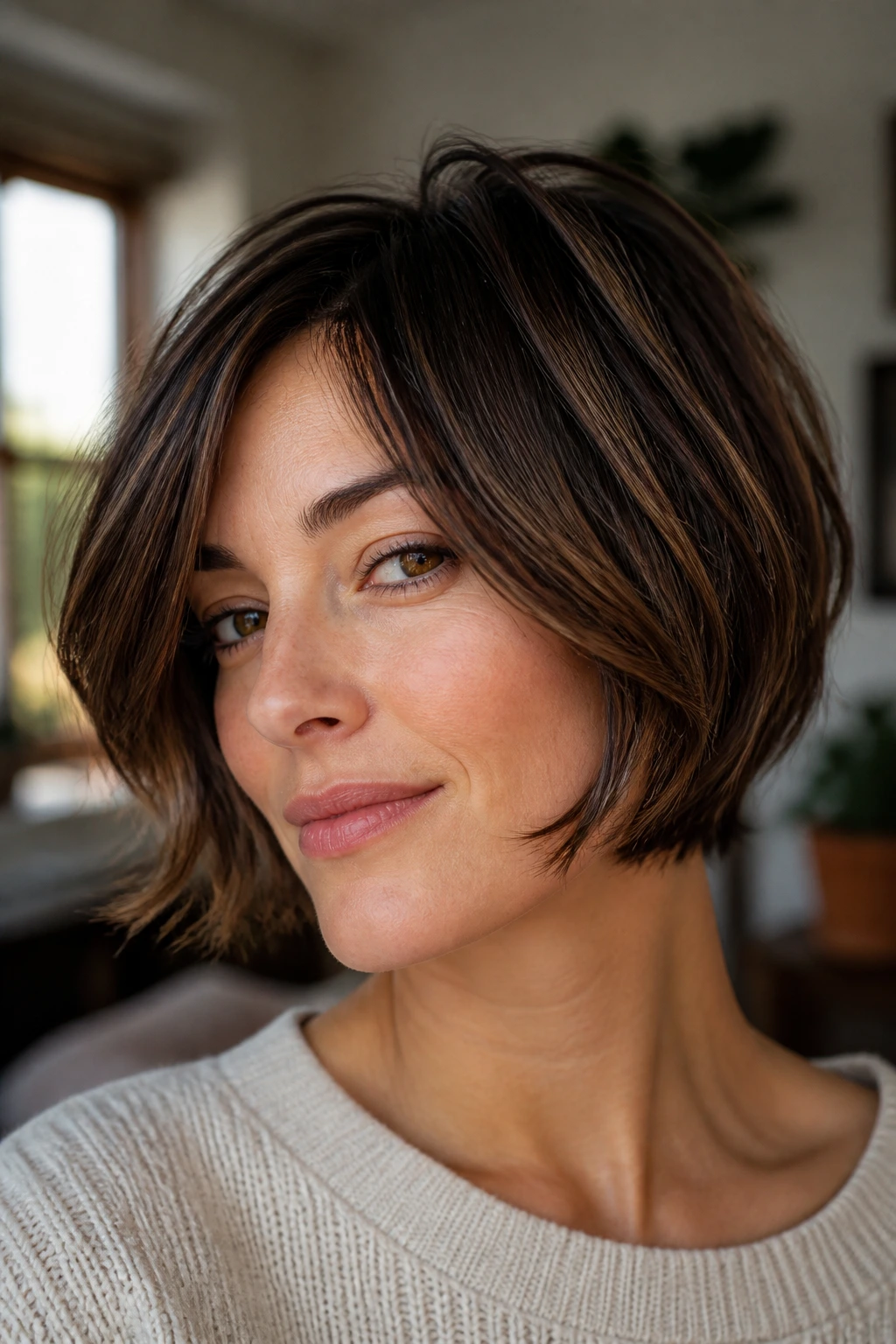
The phrase “low maintenance” gets thrown around a little too easily in hair circles. In practice, it means the haircut still looks like a haircut after sleep, weather, and one rushed shampoo. The best layered bobs do that by keeping one clear shape and using layers as support, not as the whole show.
The perimeter does the heavy lifting
A bob needs a line you can actually see. That might be jaw-length, chin-length, or a little longer at the collarbone, but there should be a readable edge. When the edge is clear, the cut looks finished even if the ends are a touch bent or tucked behind one ear.
The layers should solve a problem
The right layers remove weight from thick hair, lift the crown on fine hair, or stop wavy hair from bulking out at the sides. They should not be scattered everywhere just because the word “layered” sounds flattering. Too many short pieces around the head and the haircut starts asking for work.
Texture changes the math
Straight hair shows every line. Wavy hair forgives a little chaos. Curly hair needs a different kind of layering altogether, usually cut where it lives in its natural state. That’s why one person’s easy bob is another person’s frizz factory if the shape was guessed at instead of designed.
Hairdressers tend to reach for a simple formula here: keep the silhouette readable, place the layers where the hair needs release, and leave enough length that the cut can bend without breaking the shape. That’s the real low-maintenance trick. Not magic. Just good geometry.
1. The Air-Dried Collarbone Bob
A collarbone-length bob with soft layers is the haircut I’d hand to anyone who wants movement without commitment. It brushes the collarbone, which gives the ends a little room to flip or bend naturally, and the layers usually start low enough that the cut doesn’t turn feathered and fragile. It’s the kind of shape that still looks decent when you’ve done almost nothing to it.
Why it stays easy
This length has a built-in advantage: gravity helps. Hair that lands right around the collarbone tends to settle rather than spring out, and that makes air-drying more forgiving than a shorter bob. If your hair has a soft wave, it can dry with a bend that feels intentional instead of accidental.
The best version keeps the front slightly longer than the back and uses subtle face-framing pieces instead of short crown layers. That keeps the bob from puffing out at the cheeks. It also grows out cleanly, which matters more than people admit.
Best for: medium density, light wave, and anyone who wants a shape that still works after a messy bun day.
2. The French Bob With Soft Interior Layers
Short, chic, and not nearly as fussy as it looks. A French bob usually sits somewhere between the cheekbone and the jaw, but the low-maintenance version uses soft interior layers so the head of hair doesn’t feel like one hard block. The outer line stays clean; the inside gets just enough release to move.
That’s the whole appeal. A blunt short bob can be a little exacting, especially if your hair is dense or your part never stays put. Interior layers let the style breathe without turning it into a shag. You still get that neat, compact shape around the face, just with less mushroom effect at the sides.
What to ask for
Ask for a strong perimeter with minimal internal layering and a soft point-cut finish at the ends. If you want bangs, keep them airy rather than heavy. Heavy fringe on a short bob can push the whole haircut into daily blowout territory.
This one suits straight hair especially well, but it can also work on a slight wave if the stylist leaves enough length in front. Too short, and it starts demanding precision. Nobody needs that.
3. The Shaggy Chin-Length Bob
This is the bob for hair that refuses to be perfect and has no interest in pretending otherwise. Chin-length plus choppy layers gives the cut a little roughness at the edges, and that roughness is the reason it works. When it dries with bends and stray pieces, it looks like that was the plan all along.
What the texture is doing
Shaggy bobs are built around movement. The layers are often point-cut or lightly razored, which keeps the ends from sitting in one dense line. That makes them much kinder to wavy hair than a blunt chin bob, which can suddenly flip outward in a way nobody asked for.
A side part or soft off-center part helps the shape settle. So does a bit of mousse scrunched into damp hair. You do not need a full blowout here. In fact, the haircut loses some of its charm if you try to iron every piece flat.
Use this if: your hair has a little rebellion in it already. The cut will meet it halfway.
4. The Stacked Bob With a Clean Nape
A stacked bob earns its keep on thick hair. The back is graduated just enough to lift the shape off the neck, while the front stays a little softer so it doesn’t look rigid. Done well, it feels tidy and compact. Done badly, it looks like a helmet. So yes, the hand of the stylist matters here.
The reason this stays low maintenance is simple: the haircut does some of the volume control for you. Thick hair often gets widest at the jaw and nape, and stacking reduces that bulk without forcing you to fight it every morning. The nape dries faster, the back sits closer to the head, and the silhouette feels cleaner even on day two.
- Best for: dense straight hair and coarse wave patterns.
- Keep the layers controlled: too much graduation turns into a salon-only shape.
- Ask for softness around the front: the face needs a little give, not a hard shelf.
This is one of those cuts where “more layers” is not the answer. Better layers, yes. More, no.
5. The Curly Layered Bob
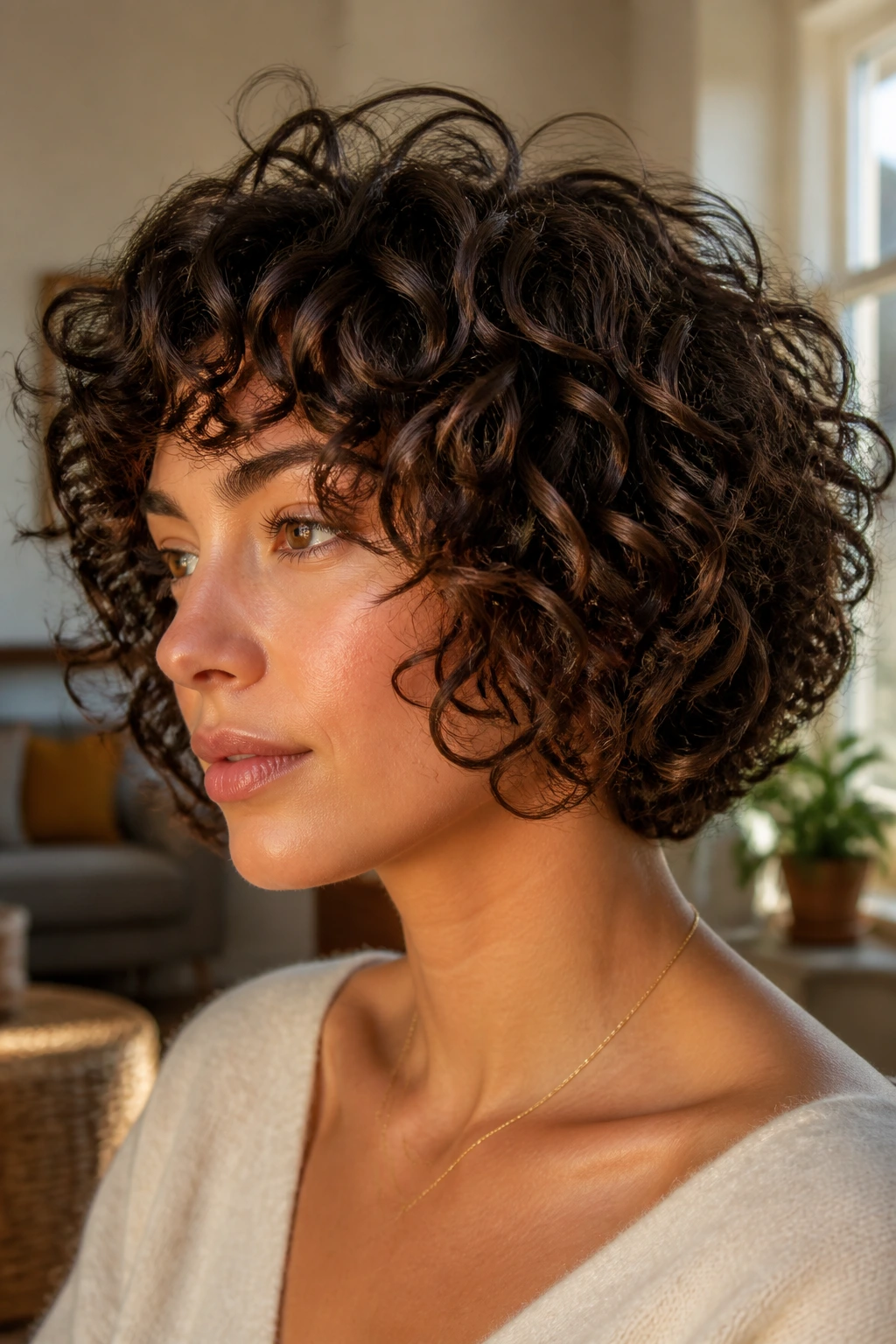
Curly hair and bobs can be a beautiful match, but only if the cut respects the curl pattern. A layered bob for curls should be shaped where the hair naturally falls, not stretched straight and snipped like it lives in another universe. When that happens, the curls stack cleanly instead of forming the dreaded triangle.
The easiest curly bob has layers that follow the curl’s spring, with enough length left in the bottom section to keep weight in the shape. That weight matters. If the cut is too short or too aggressively layered, curls can frizz upward and leave the ends too thin.
Why this one saves time
Curly hair usually wants a shape once it’s been cut correctly. That means fewer styling decisions and fewer mornings spent trying to force one curl to match the next. A cream, a diffuser, and a five-minute scrunch often do enough.
The catch? It should usually be cut in its curly state or at least with a very honest sense of shrinkage. If someone cuts it while it’s stretched and guesses wrong, the bob can bounce up higher than expected.
6. The Long Bob With Hidden Weight Removal
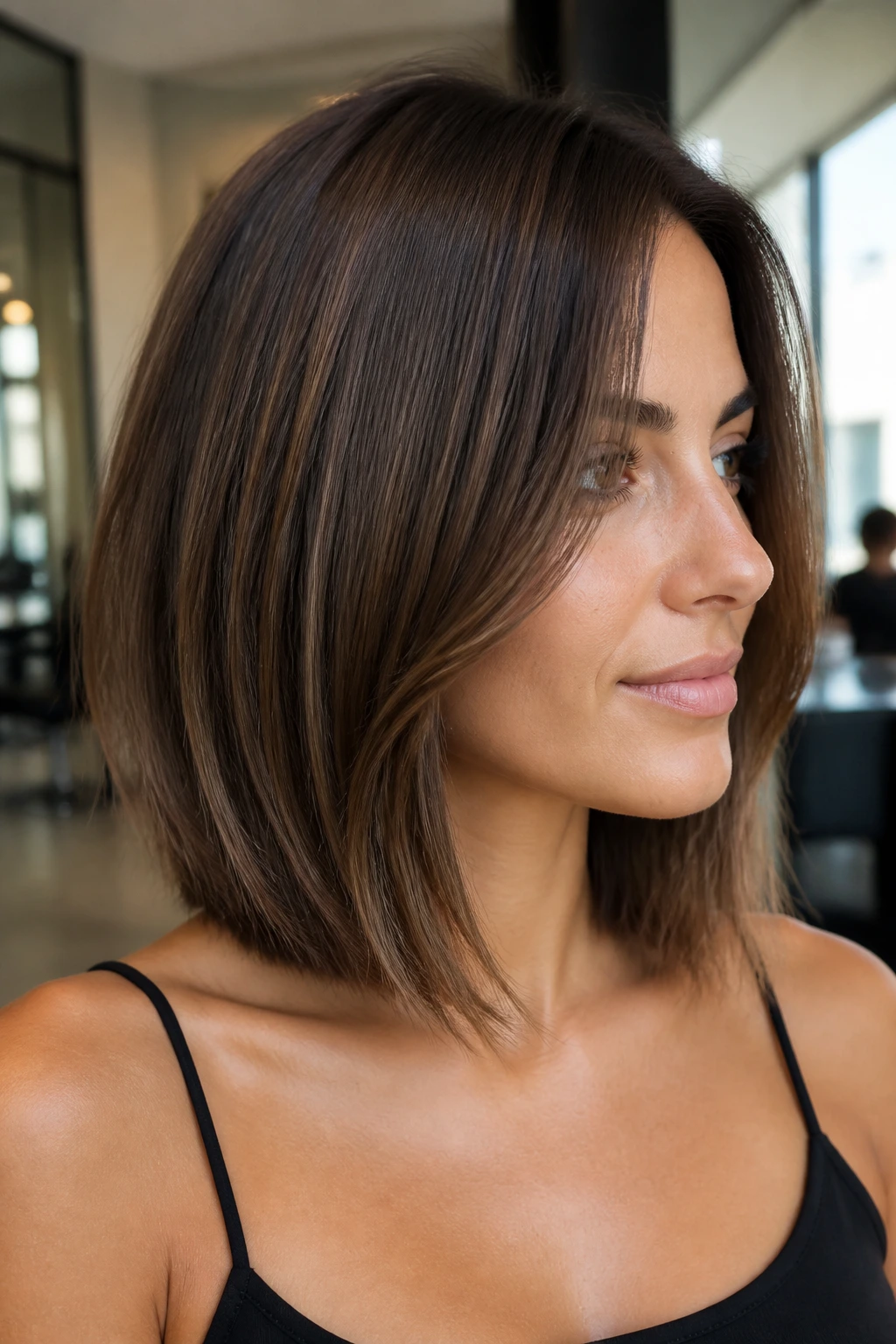
Why do some lob cuts feel polished without looking styled? Because the weight has been removed from inside the hair, not from the edges. That’s the whole quiet genius of this version. From the outside, it still reads like a clean, grown-up bob. Inside, it has enough movement to avoid sitting like a brick.
Invisible layers, ghost layers, internal layering — the name changes, but the idea stays the same. The length usually lands somewhere between the jaw and the collarbone, which gives the cut room to settle. The outer line stays intact, which is why this one grows out so gracefully.
How to get the most from it
Tell your stylist you want movement without obvious layering. That phrase matters more than asking for “a lot of layers,” which can mean wildly different things depending on who hears it. Keep the face frame modest, especially if your hair is fine.
This is the bob for people who like clean clothes, clean lines, and hair that doesn’t scream for attention. It just sits there looking organized. Nice trait.
7. The Razor-Cut Bob With Piecey Ends
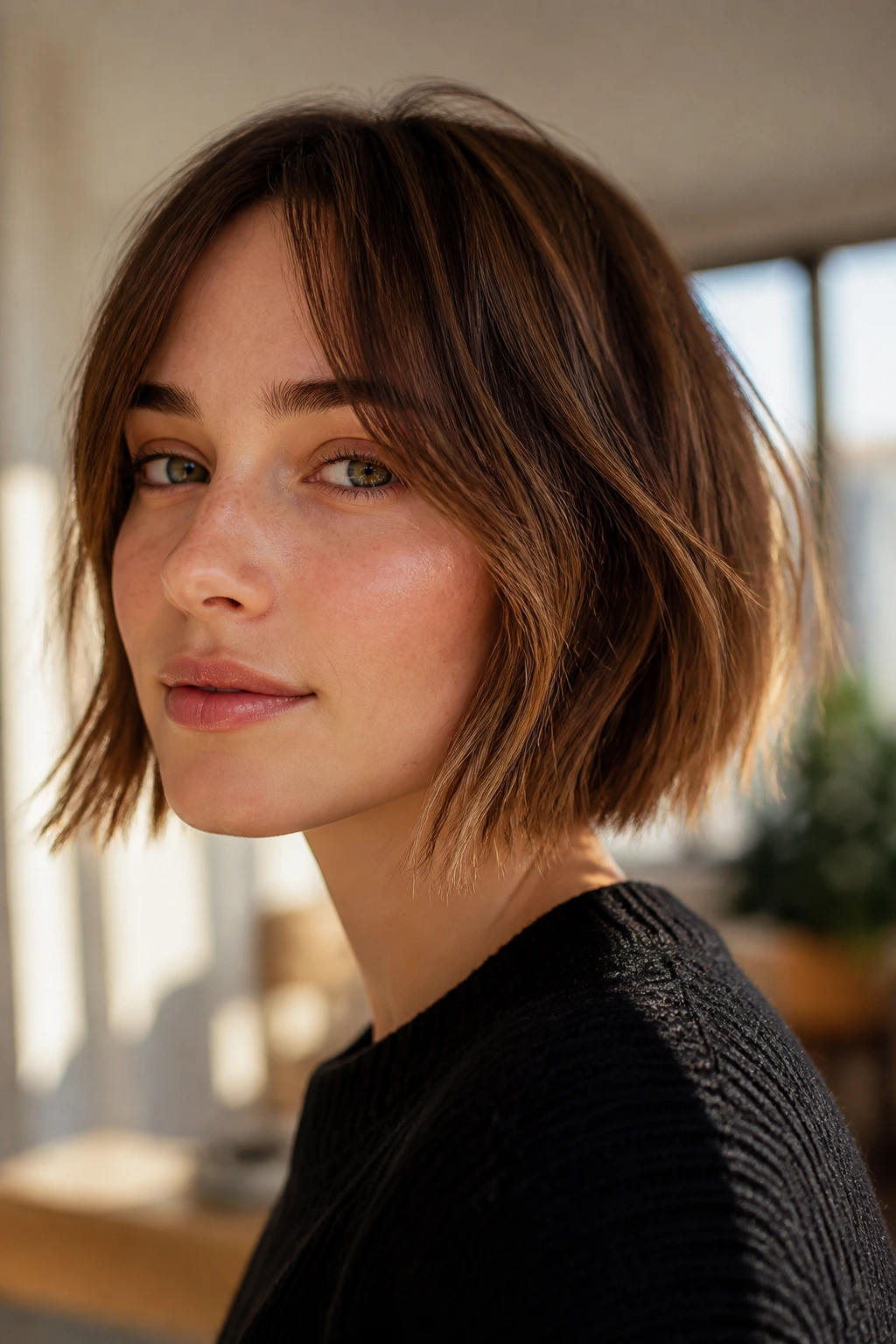
A razor-cut bob sounds a little edgy because it is. The razor softens the ends and separates the strands, which gives the haircut a piecey finish that looks naturally lived-in. If your hair has density or a bit of wave, that texture can make the whole shape feel lighter without needing a lot of day-to-day work.
The best part is that the haircut does not need a perfect finish to look good. Slight separation is the point. A touch of styling cream or texture spray makes the ends move without turning them greasy or stiff. It’s a sharp haircut with a relaxed attitude.
One caution: razor cutting is not friendly to every head of hair. Very fine strands can look wispy if the cut gets too aggressive, and very frizz-prone hair may need a gentler hand. The stylist should know exactly how much softness to introduce.
This one suits people who like their bob a little undone. Not sloppy. Just less polished, more street-smart.
8. The Side-Part Bob That Falls Into Place

A side part can do more for a bob than another inch of layering ever will. It creates built-in lift at the crown, shifts weight away from a flat side, and gives the haircut a shape that feels like it arrived on its own. For a lot of people, that alone is enough to make the cut easier to wear.
This style is especially useful if your hair has a stubborn cowlick or likes to split down the middle and collapse. Moving the part can change how the bob sits around the face, and a few soft layers keep the heavier side from dragging down the whole shape. It’s subtle. It works.
The low-maintenance part comes from cooperation. You’re not forcing the hair to behave in a symmetrical way it does not want. You’re giving it a part that makes more sense and letting the cut follow the head shape.
And that’s usually the difference between “I styled it” and “it settled.” One is work. The other is a haircut doing its job.
9. The Rounded Bob for Thick Hair
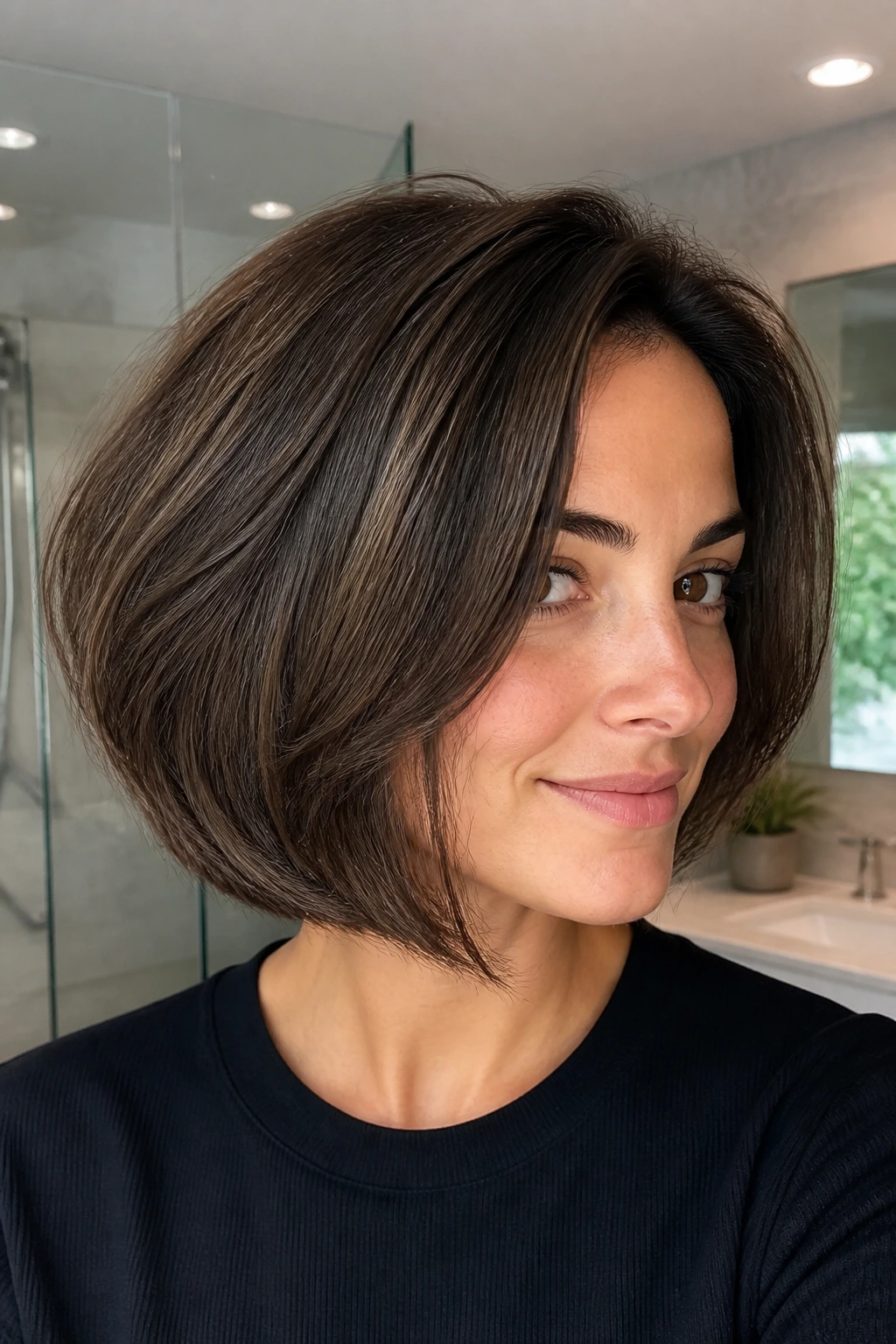
Thick hair needs a shape that knows what to do with all that bulk. A rounded bob keeps the perimeter curved rather than boxy, which helps the haircut sit closer to the head and avoids the sides flaring out. The layers inside are there to reduce weight, but the overall outline stays soft and curved.
A lot of people with dense hair get told to go shorter when the real issue is shape, not length. If the bob is too blunt and too wide, it looks heavy. If it’s rounded with carefully placed internal layers, it dries faster and lays better without needing constant shaping.
- Good for: coarse straight hair, dense waves, and hair that balloons at the sides.
- Ask for: soft graduation and a curved side profile, not a blocky edge.
- Avoid: over-thinning the ends, which can make thick hair look frayed instead of lighter.
It’s a practical haircut, and I mean that in the best way. It solves the problem instead of decorating around it.
10. The A-Line Bob With Longer Front Pieces
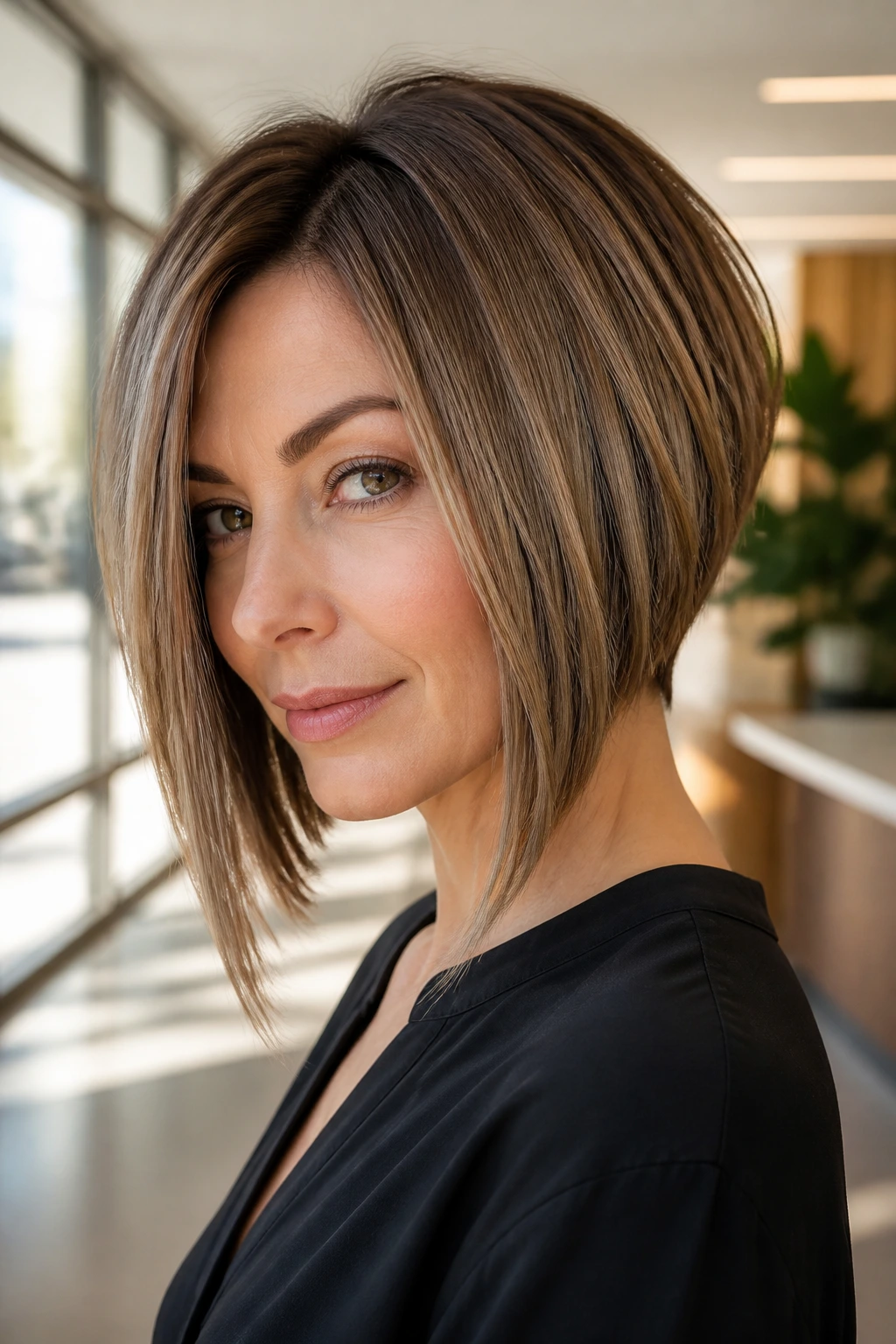
An A-line bob gives you a little swing in the front and a shorter back that keeps the shape tidy. The front pieces usually land longer than the nape by an inch or two, which adds a clean line along the jaw and makes the haircut feel structured without becoming stiff. If you like a bob that still moves when you turn your head, this is a smart one.
What makes it low maintenance is that the front length gives you room. Room to tuck, room to bend, room to grow out a bit before it looks tired. The back stays neat because it’s shorter and lighter, so the cut doesn’t drag at the neck.
The shape is especially nice if you want a bob that flatters the profile. It has a little angle, but not the severe kind. There’s no need to polish every strand into place. The cut already knows where it wants to go.
11. The Boxy Bob With Barely-There Layers

Do you want a bob that still feels crisp on day three? This is the one. A boxy bob with barely-there layers keeps the outline strong and the structure obvious, which is why it can look so clean with almost no styling. The layering is more about internal balance than about visible movement.
That makes it a strong pick for straight hair and for people who hate chasing textured pieces around their face. The ends sit in a clear line, so the haircut doesn’t lose itself when the weather turns humid or when you skip a blow-dry. If anything, it often looks better the less you fuss with it.
Why it works
The strength is in restraint. Short layers would fight the blunt edge and make the shape feel chopped up. Barely-there layers simply help the bob breathe from the inside, which is enough to keep it from feeling heavy.
This is not the right cut if you want a messy, lived-in look. It is for people who want tidy hair with minimal effort. There’s a difference, and it matters.
12. The Layered Bob With Curtain Bangs

Curtain bangs can make a layered bob feel softer around the face without adding much styling burden. The fringe opens away from the center, then blends into the side layers, which means the grow-out is easier than a blunt bang. That alone is a mercy.
The cut works especially well when the layers begin around the cheekbone or jaw. That gives the bangs something to merge into, instead of hanging there as a separate little project. You can dry the bangs with a round brush, or twist them with your fingers while they’re damp and let them fall naturally.
The nice thing is that the bangs change the mood of the bob without making it high maintenance. They add shape around the eyes and cheekbones, which means the rest of the haircut can stay relatively simple. A small change, a big visual payoff.
If you want a bob that feels softer than a blunt crop but doesn’t need full shag energy, this is a solid middle path.
13. The Wavy Bob With Face-Framing Pieces
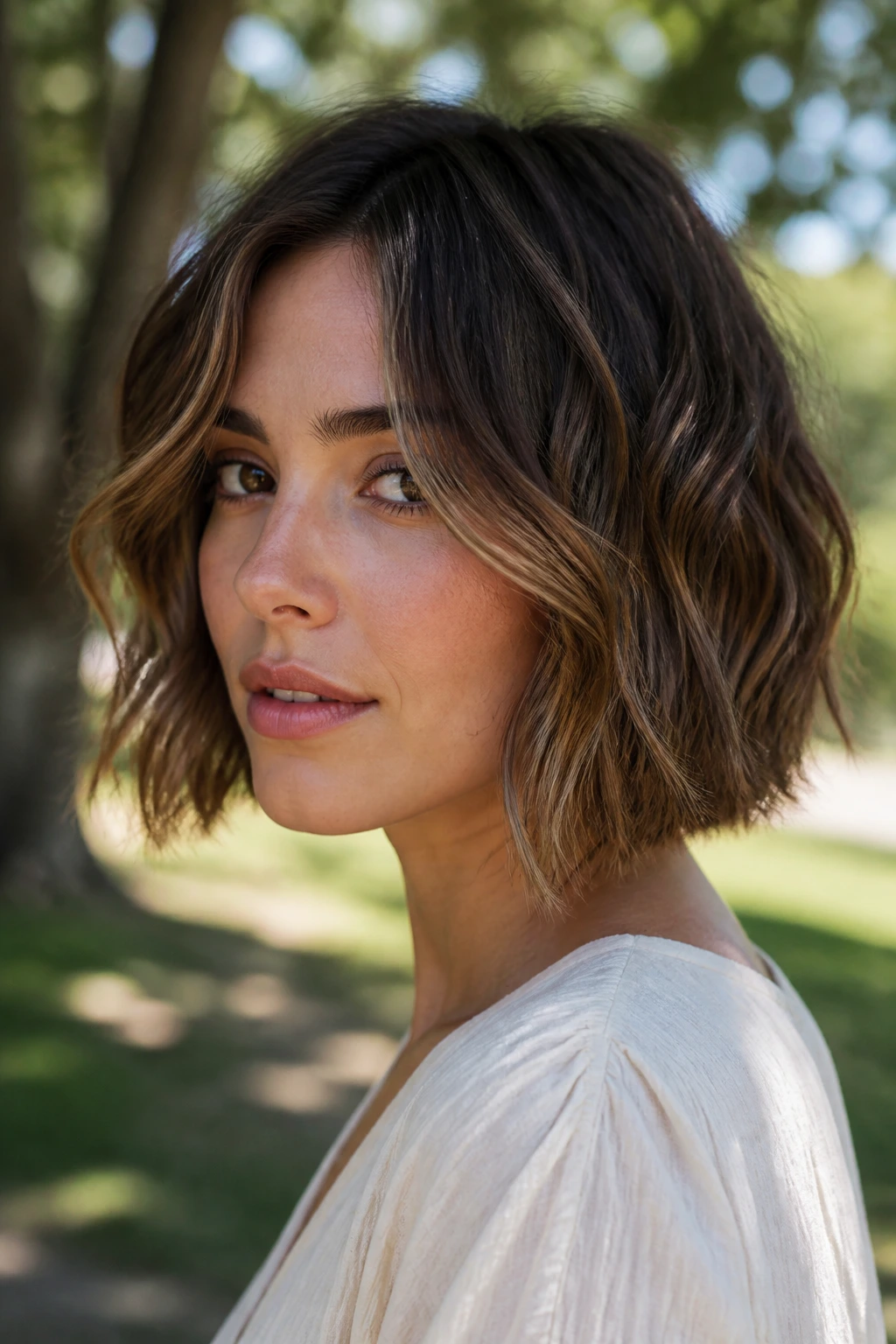
Natural wave loves a bob that understands it. A wavy layered bob usually sits somewhere between the jaw and the shoulder, with face-framing pieces that start around the cheekbone and blend into the rest of the cut. Those pieces keep the front from looking blocky while the wave does the rest.
I like this one because it doesn’t demand perfection from the styling. Scrunch in a lightweight mousse, let the hair air-dry or use a diffuser for a few minutes, and the shape usually falls into place. The ends don’t need to curl the same way every day. In fact, they shouldn’t.
- Best for: S-waves, loose curls, and hair that gets texture after washing.
- Ask for: face-framing pieces that begin high enough to soften the jaw, not so high that they look disconnected.
- Skip heavy layers in the back: they can make the cut feel frizzy instead of airy.
This is one of the friendliest bobs in the bunch. The texture is allowed to show, which is half the reason it feels so easy.
14. The Fine-Hair Bob With Lifted Crown Layers
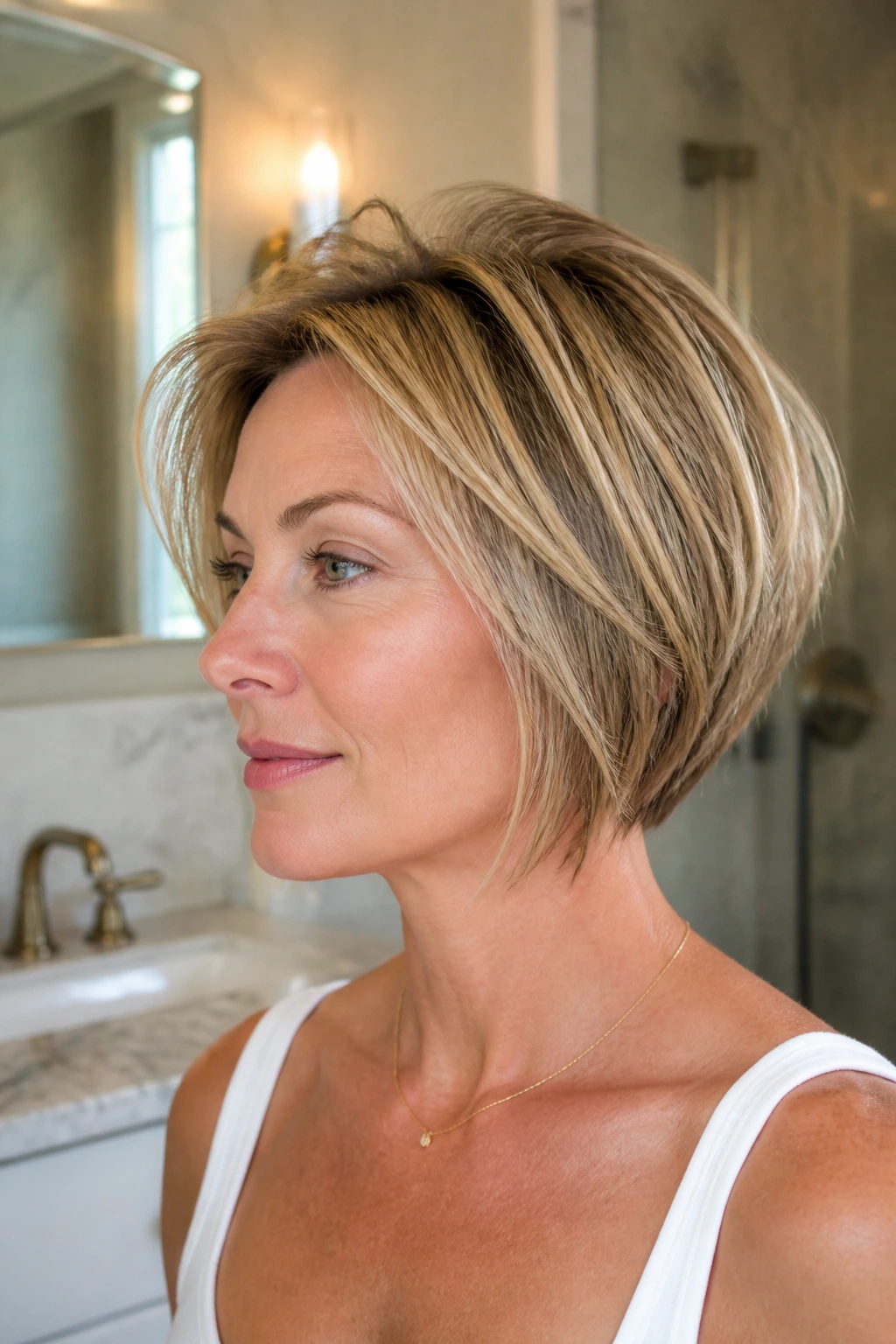
Fine hair needs a different strategy. Too many layers on the ends and the shape collapses. The better move is to keep the perimeter solid and place the layers higher up, near the crown, so the top gets lift without sacrificing too much density at the bottom.
That gives the haircut a bit of body right where fine hair usually needs it most. It stops the top from lying flat against the scalp, and it keeps the ends from looking see-through. A small round brush or even a few velcro rollers at the crown can help, but the cut itself should do a lot of the work.
The important part
A fine-hair bob gets hard to live with when someone chases volume by removing too much weight. Then you’re left with fluffy roots and thin ends, which is not a good trade. Better to keep the haircut compact and let lift come from placement, not from thinning.
This cut works best with a soft side part or a slightly off-center part. That adds movement without requiring a giant styling routine.
15. The Choppy Bob With a Soft Fringe

This is the bob that says you can have edge and still get out of the house quickly. The choppy texture gives the ends a broken-up finish, while a soft fringe keeps the face from looking too severe. It feels modern without needing a lot of precision, which is a nice combination.
The fringe should stay light. Not thick and dense. A soft fringe that lands a little above or at the brows can blend into the side pieces and move with the rest of the haircut. That means less daily correction and less fear of the bangs suddenly becoming a project.
What makes it easy
The messier the shape is meant to be, the less you have to manipulate it. A tiny bit of styling paste at the ends is often enough. You’re not trying to smooth every layer into a single polished sheet.
If your hair has natural texture, this cut can look excellent with almost no work. If your hair is straight, the choppiness gives it interest without forcing a complicated styling routine. Either way, the haircut has enough attitude to stand on its own.
16. The Blunt-Looking Layered Bob
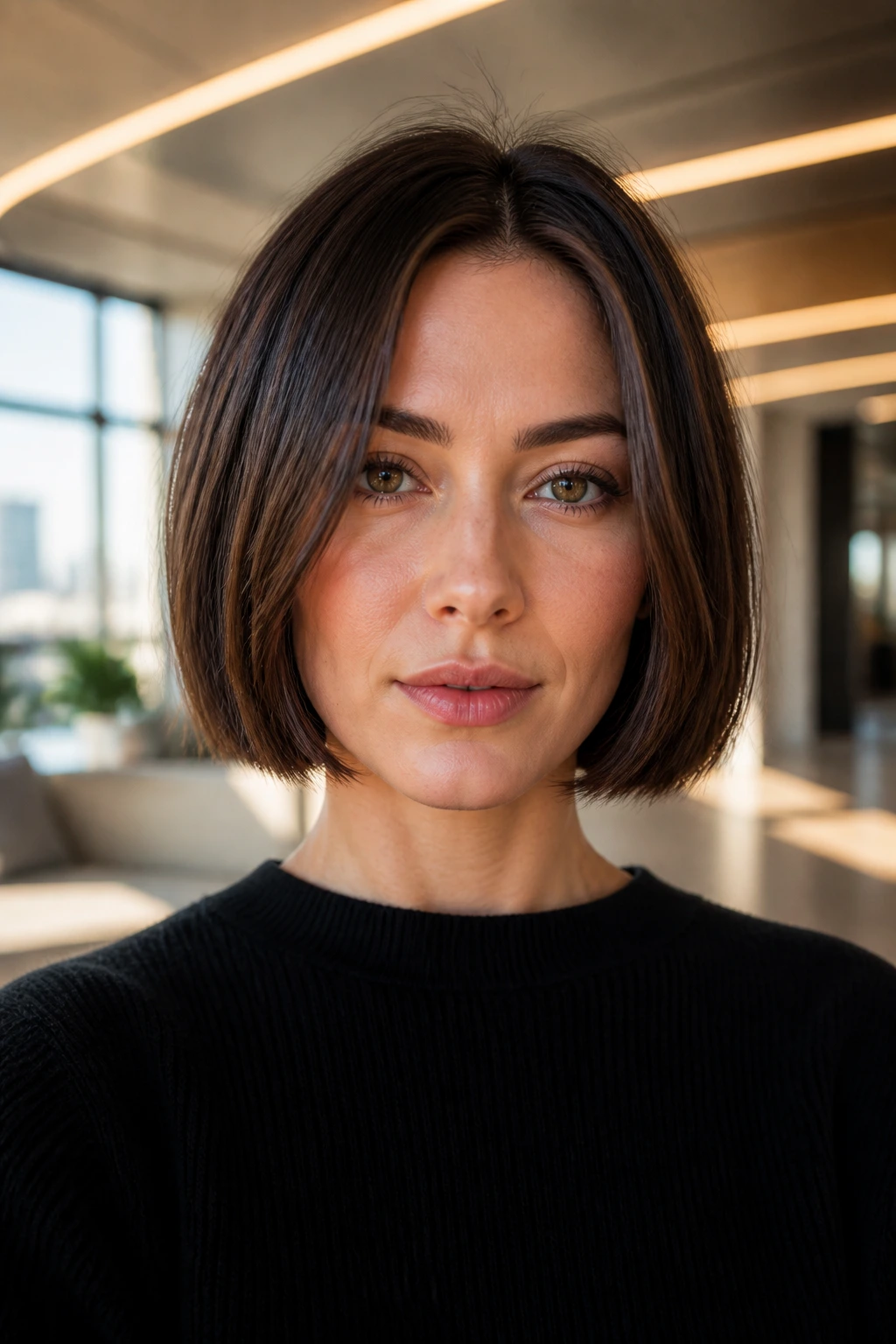
A bob that looks blunt but moves like it’s layered is a very useful thing. From the outside, the shape reads as clean and compact. Inside, though, there are subtle layers that keep the hair from getting too heavy or blocky. That means you get the polished look without the stiffness.
This one is especially helpful if you want a bob that can go from tucked behind the ears to loose around the face without losing its shape. The line stays clear, but the movement is still there. It’s a discreet haircut, and I mean that as a compliment.
The trick is restraint. If the stylist takes too much from the interior, the illusion breaks and the haircut starts looking hollow. If the layers are gentle and well-placed, the bob keeps its weight and its swing.
This is a good option for people who like their hair to look expensive in the plainest possible way. No spectacle. Just order.
17. The Salt-and-Pepper Bob With Soft Movement

Gray hair often has a texture all its own. Sometimes it’s coarser, sometimes it’s more wiry, and sometimes it has a little halo effect that only shows up when the light hits it from the side. A layered bob with soft movement can make all of that easier to live with.
The haircut should respect the way the hair behaves after color changes. Soft layers keep the silhouette from feeling dense at the bottom, and a bit of bend around the face makes the color look dimensional without needing much styling. If the hair has silver strands mixed in, movement prevents the shape from reading as flat.
It’s a cut that benefits from honesty. Don’t fight the texture just because it changed. Shape it. Let the bob move a little, and it tends to look better for it.
And yes, this is one of those haircuts that can look especially good when it’s not freshly styled. That’s not a flaw. It’s part of the charm.
18. The Tucked-Behind-Ear Bob

There’s something very practical about a bob that knows how to live behind one ear. The front pieces are long enough to tuck, but the back stays light and controlled, so the haircut can change shape with a simple sweep. It’s neat when you want it neat, and loose when you don’t.
This cut suits people who wear glasses, earrings, or scarves a lot because the hair doesn’t fight those things. The layers help the front fall back into place after you untuck it, which saves a fair amount of mirror-checking. It’s a small thing. Small things matter.
- Best for: medium length bobs with a little face framing.
- Ask for: front pieces that are long enough to tuck without springing back up.
- Skip over-texturizing: you want the tuck to look easy, not shredded.
It’s a practical bob with a slightly casual attitude. That’s a useful combination.
19. The Grazing-Jaw Bob With Long Layers
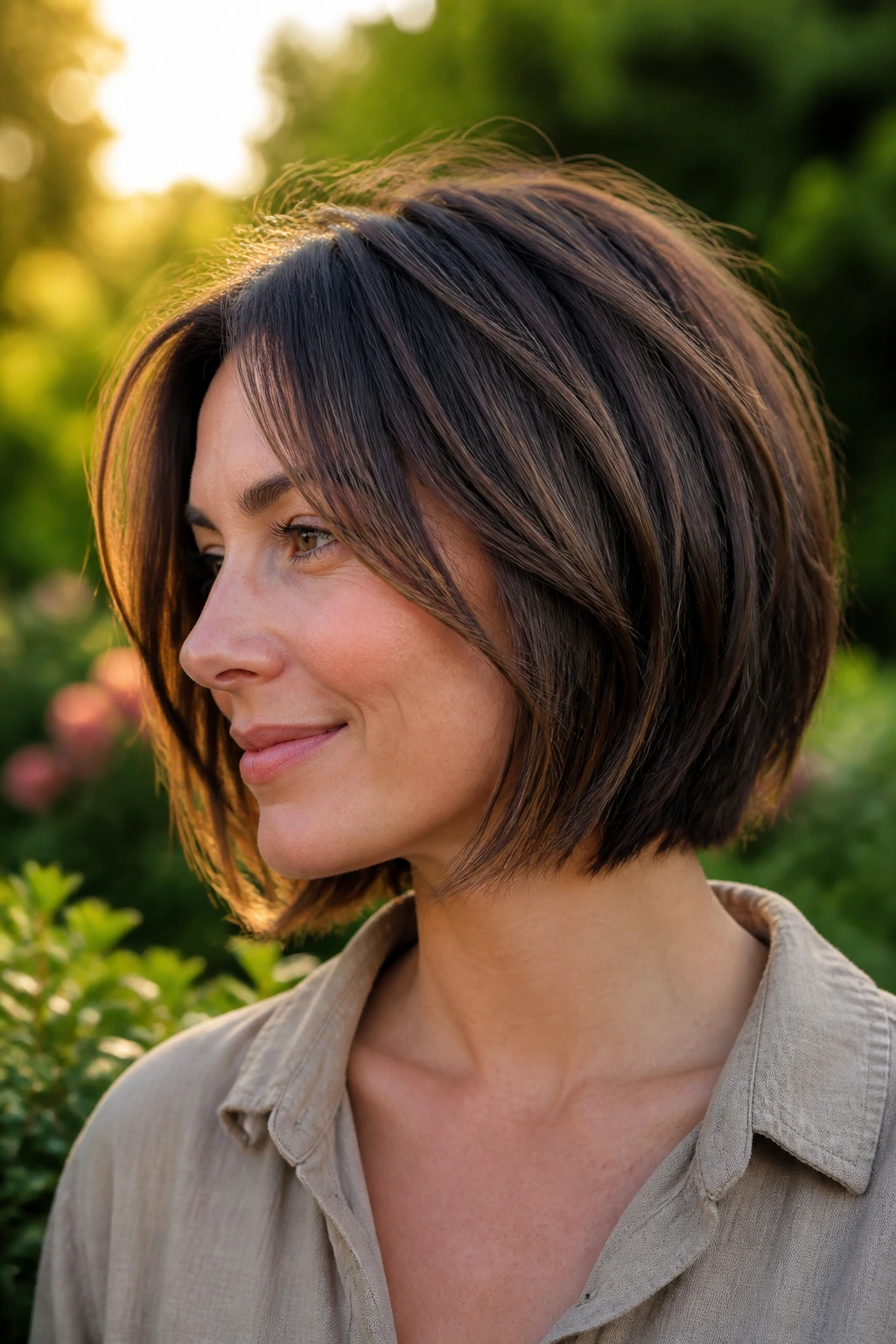
If someone asked me for one bob that stays easy, grows out cleanly, and does not need much handholding, I’d start here. A jaw-grazing bob with long layers gives you shape without making the haircut too short to live with. The jaw length keeps the line visible, while the longer layers soften the bulk and let the hair move.
That length is kind to nearly everyone because it leaves room for error. Sleep on it, clip it back, air-dry it, and it still tends to look like a choice. The layers should be long enough to blend rather than shout, which keeps the haircut from turning choppy as it grows.
This is the bob for people who want to look like they meant it, not like they need a trim every three weeks. It’s balanced, which is a boring word for a very useful haircut. Boring can be good.
How to Ask for a Layered Bob That Grows Out Cleanly
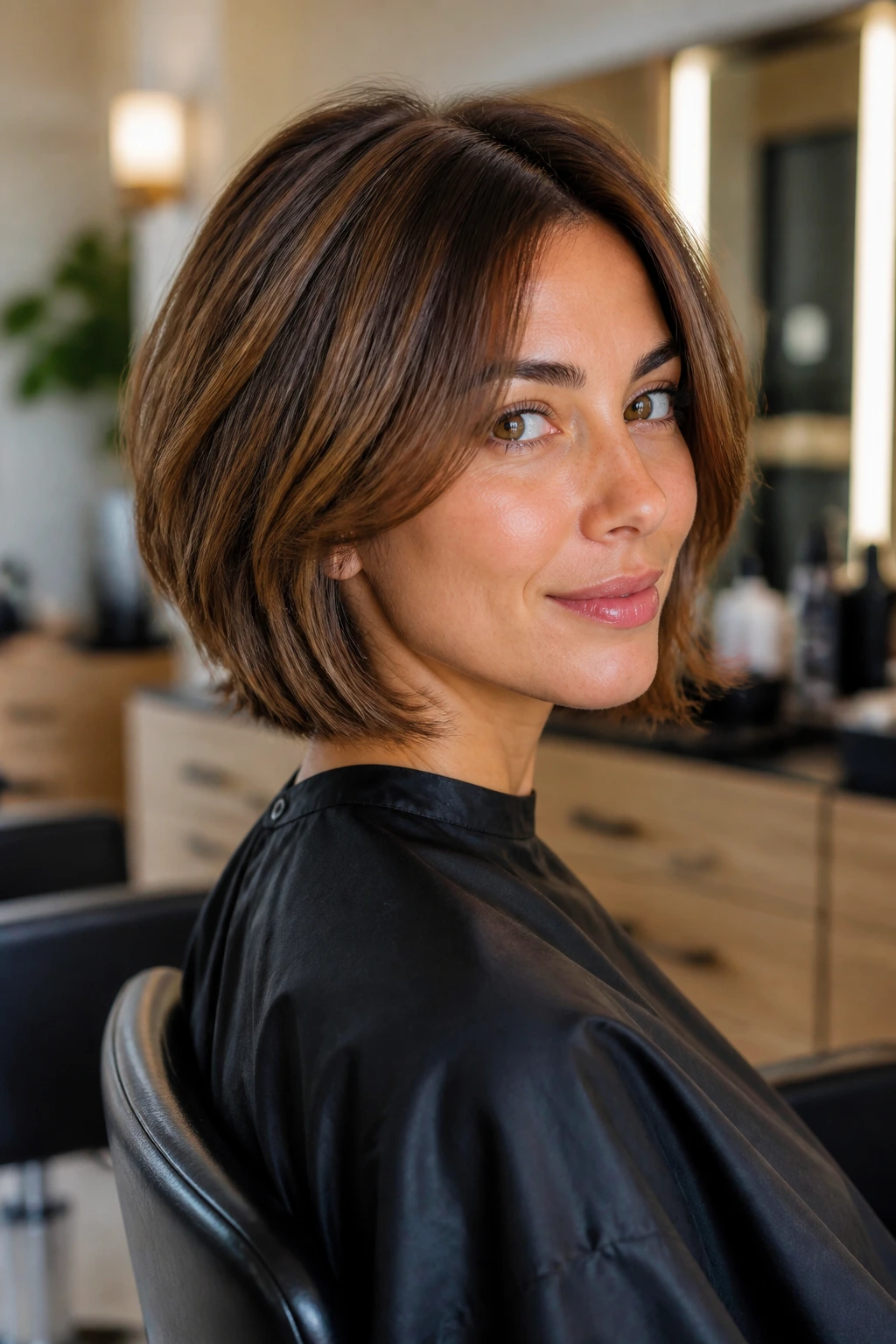
The best salon request is specific without becoming a haircut lecture. Tell your stylist the length you want in relation to your jaw, collarbone, or cheekbone, and bring photos that show the front, side, and back. A single front-facing picture never tells the whole story, and bob shape lives in the silhouette.
Ask for a perimeter that stays strong even if you air-dry. That usually means soft internal layers instead of aggressive choppiness, unless you’re deliberately going for a shaggy effect. If your hair is dense, ask where the weight should come out. If it’s fine, ask where the lift should sit and how much density should remain at the ends.
The phrases that help
- “I want the haircut to air-dry well.”
- “Keep the outline clean.”
- “I want movement, but not short pieces everywhere.”
- “Please leave enough weight in the ends so it doesn’t puff up.”
If you have curls, say so before the cut starts, and mention whether you wear your hair curly or stretched most of the time. That changes everything. For curly bobs, the cut should follow the shape you actually wear.
The Tools That Make Bob Days Easier
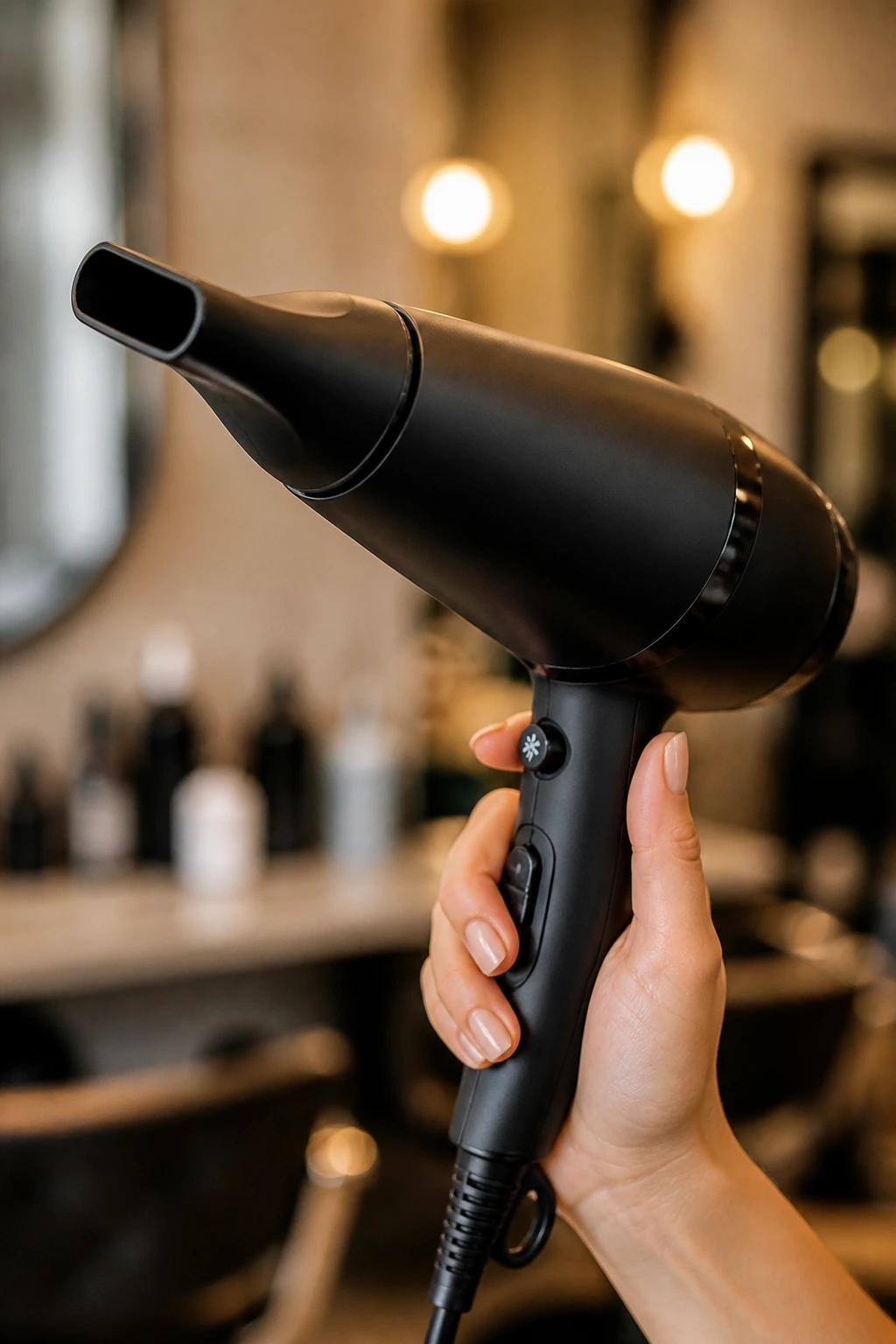
You do not need a suitcase full of gadgets, but a few good tools make a layered bob behave better.
- Blow dryer with a narrow nozzle: Directs airflow so the ends don’t scatter in every direction.
- Small or medium round brush: Helps tuck the ends under or give the front a little bend.
- Wide-tooth comb: Gentler than a brush on damp hair, especially if the cut has layers.
- Microfiber towel or cotton T-shirt: Cuts down on frizz when you’re air-drying.
- Dry texture spray: Useful for shaggy, piecey, or wavy bobs that need separation.
- Light mousse: Good for fine or wavy hair that needs a bit of memory without crunch.
- Hair clips: Helpful for setting a side part, lifting the crown, or drying bangs in place.
- Silk or satin pillowcase: Reduces friction overnight, which matters more than people think with shorter cuts.
Fast Styling Moves for a Layered Bob
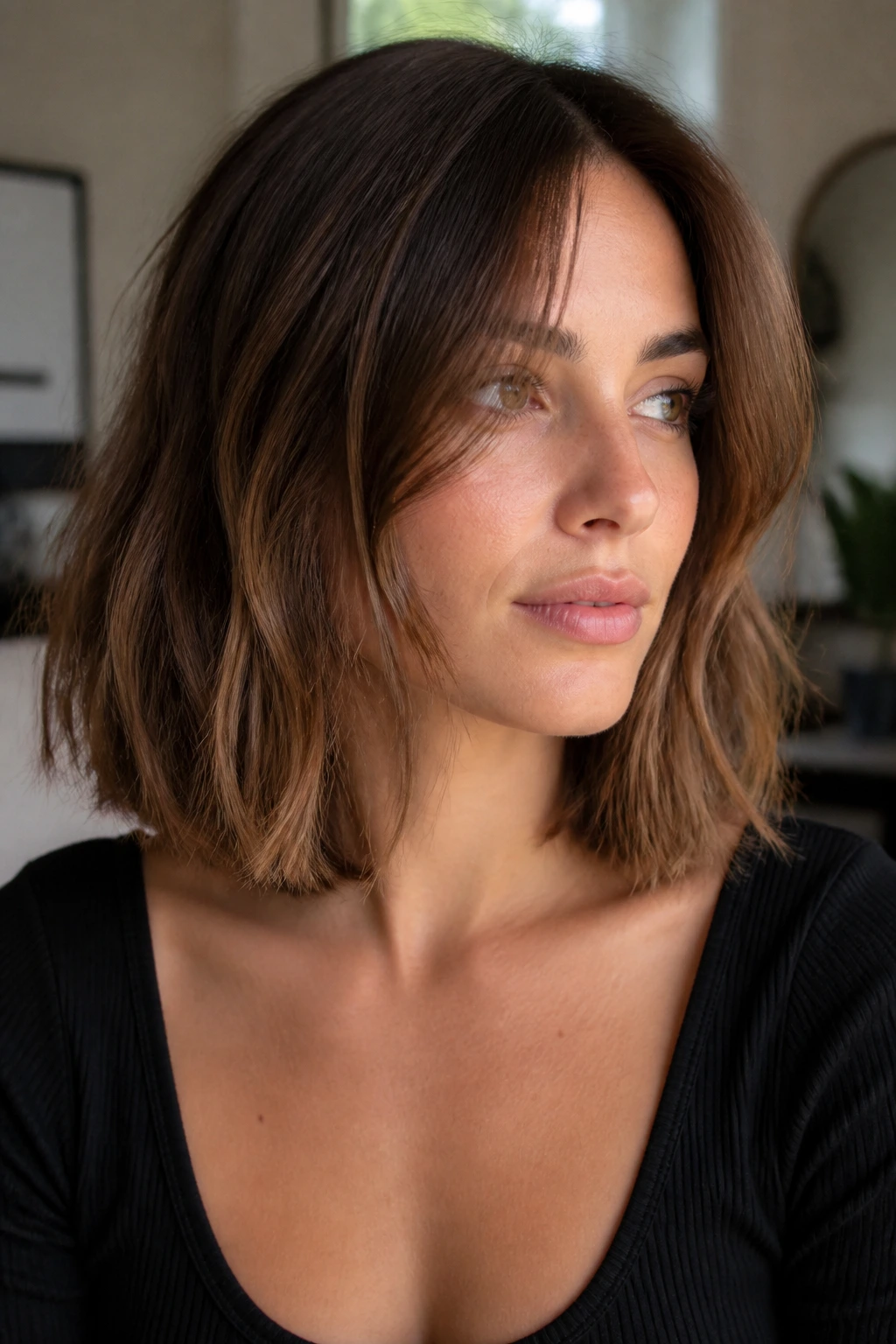
A layered bob gets easier when you stop trying to force it into one polished shape every day. Start by blotting, not rubbing, the hair dry. Rubbing roughs up the cuticle and makes the layers frizz out, especially around the ends.
Root lift first. If your hair is fine or flat, put a little mousse at the crown while it’s damp and lift the roots with your fingers. You do not need to coat the whole head. Just the top inch or two is enough to help the bob keep its shape.
Let the cut do the rest. For wavy and shaggy bobs, scrunch in product, flip the part once, and stop touching it. Too much finger-combing breaks up the pieces you want to keep. For smoother bobs, rough-dry until the hair is mostly dry, then smooth only the front and ends with a brush.
Second-day hair is not a problem. A little dry shampoo at the roots and a tiny bit of serum on the ends usually wakes up a bob fast. If a side piece has gone weird, mist it lightly, twist it around your finger, and let it set for a minute. That small reset often matters more than a full restyle.
Common Mistakes That Make a Bob Harder to Live With

- Too many short layers at the crown: The symptom is a bob that puffs up on top and goes thin at the bottom. The fix is to keep the crown layers longer and concentrate movement lower in the shape.
- Over-thinning thick hair: The haircut starts to look frayed instead of lighter. Ask for weight removal in the right places, not everywhere.
- Choosing a front length that is too short for your texture: Hair flips out, shrinks up, or loses its tuck. Leave enough length to let the shape settle naturally.
- Ignoring how your hair dries on its own: A bob that looks great in a salon chair can behave badly at home if your texture was not considered. Always ask how it will air-dry.
- Styling every day with high heat: The ends can get wispy and tired fast. A low-maintenance bob should not need a daily battle with the iron.
- Using heavy products on fine hair: The bob collapses and the layers disappear. Light mousse or spray usually works better than cream.
Low-Fuss Variations Worth Requesting

The Ghost-Layer Bob:
This version keeps the outline almost blunt, but the interior has soft, hidden layers for movement. It’s a smart choice for straight hair that needs a little air without looking choppy.
The Curly Dry-Cut Bob:
Your stylist shapes the bob while your curls are in their natural form, which helps the final cut match the way you actually wear your hair. This is one of the cleanest ways to avoid triangle shape and surprise shrinkage.
The Collarbone Grow-Out Bob:
A little longer than a classic bob, this cut gives you room to live between trims. It feels especially forgiving if you are growing out a shorter style or nervous about going too short.
The Micro-Fringe Bob:
A short, airy fringe changes the whole mood of the haircut without adding much styling time. It works best when the rest of the bob stays simple, so the bangs can be the detail instead of the project.
The Heatless Wave Bob:
This version is cut to support braids, bends, and air-drying tricks. It’s useful if you want texture but do not want to spend half the morning with a hot tool.
Keeping the Shape Between Trims

A layered bob usually looks best when it’s trimmed every 6 to 10 weeks, though curly and collarbone-length versions can sometimes stretch a little longer. Shorter bobs with bangs tend to ask for more frequent cleanup. That is just part of the deal.
If you’re air-drying often, keep the ends hydrated but not greasy. A pea-sized amount of serum or cream on damp ends is usually enough. Too much product piles up fast on shorter hair, and then the bob starts to look sleepy.
Sleep matters, too. A silk pillowcase cuts down on friction, and a loose clip or soft scrunchie can keep the layers from bending at odd angles overnight. If the bob is wavy, a quick mist of water in the morning often brings the shape back faster than fully rewetting the hair.
Color-treated bobs need a little extra care because dry ends show faster on shorter cuts. A lightweight conditioner or weekly mask can help, but don’t overdo it at the roots. The goal is softness, not collapse.
Frequently Asked Questions
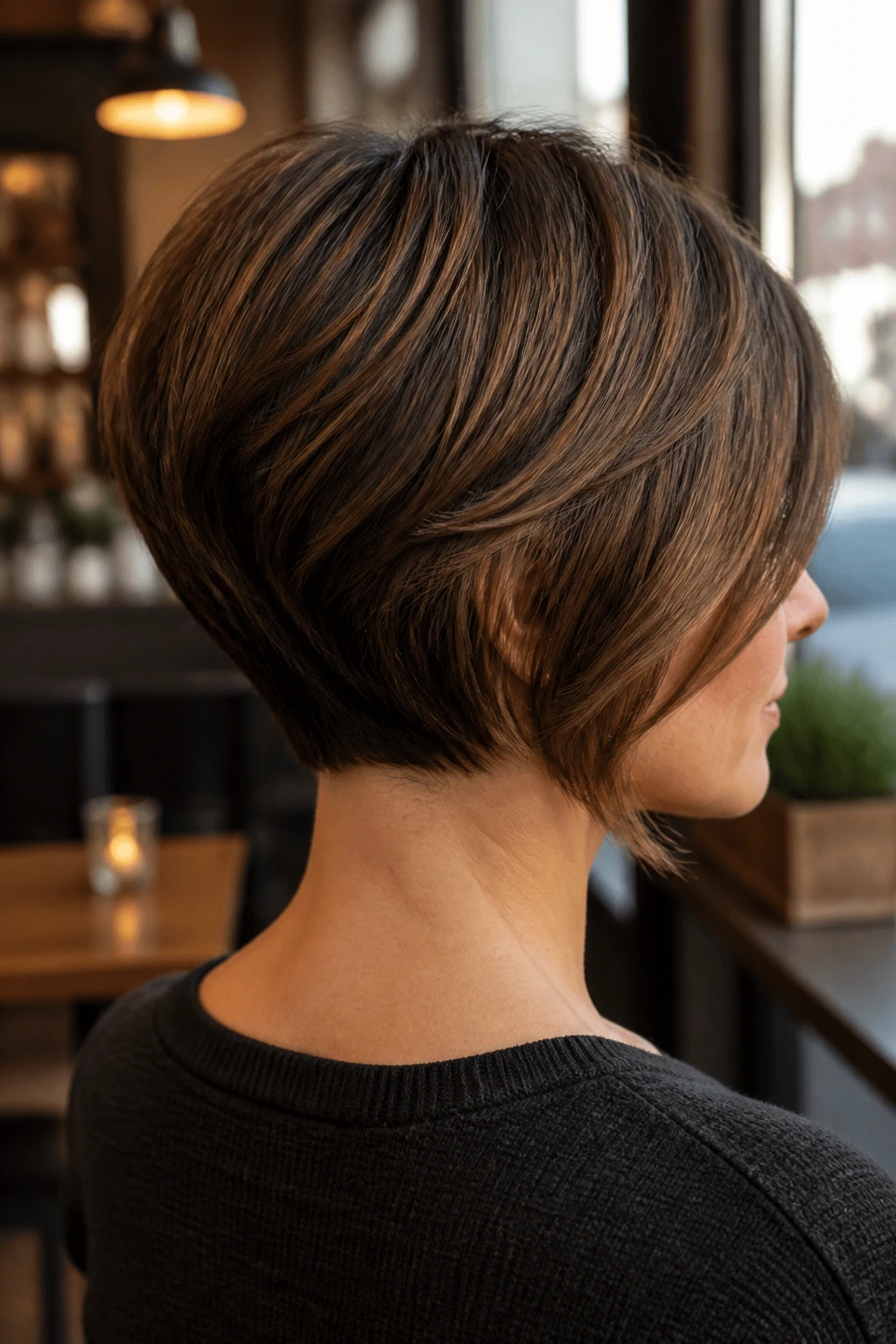
Which layered bob is easiest if I hate styling?
The collarbone bob and the blunt-looking layered bob are the most forgiving. Both keep a clear outline, so they still look deliberate when you air-dry and walk out the door.
Do layered bobs work on fine hair?
Yes, but the layers need to stay higher and lighter. Too many short pieces at the bottom will make the hair look sparse, so the cut should keep density at the ends.
Are layered bobs good for thick hair?
Very good, if the weight is removed in the right spots. Thick hair usually benefits from internal layering or a rounded shape that stops the sides from swelling outward.
Can curly hair wear a bob without looking triangular?
Absolutely, but it needs the right cut. Curly bobs should usually be shaped around the curl pattern, not stretched and guessed at, or the outline can flare out.
How often should I trim a low-maintenance bob?
Most need a trim every 6 to 10 weeks to hold the shape. If you have bangs or a shorter French bob, you may want a cleanup sooner.
What if my bob flips out at the ends?
That usually means the length is landing at a point where your hair naturally bends outward. A small length adjustment, a different layering pattern, or a lighter hand with heat can fix it.
Can I ask for layers without losing volume?
Yes. Ask for internal movement and keep the perimeter strong. That gives you softness without making the ends disappear.
What should I bring to the salon?
Bring two or three photos that show the front, side, and back, plus one sentence about your routine. “I air-dry most days” tells the stylist more than ten vague compliments.
A Bob That Stays Out of Your Way

The best layered bobs do something rare: they make your hair look like it has a plan, even when you don’t. That may sound modest, but it’s exactly why these cuts hang around. They handle different textures, different densities, and different levels of morning ambition without asking you to babysit them.
If you want the safest starting point, pick the version that matches how you already live. Air-dryers should look at the collarbone bob. Thick-haired people should study the rounded or stacked shapes. Anyone who wants polish with the least friction should keep an eye on the blunt-looking layered bob or the jaw-grazing cut with long layers.
Save the one that feels closest to your hair, not just your mood in the salon chair. That’s the version you’ll still like when you’re late, the weather is weird, and your brush is nowhere to be found.
