



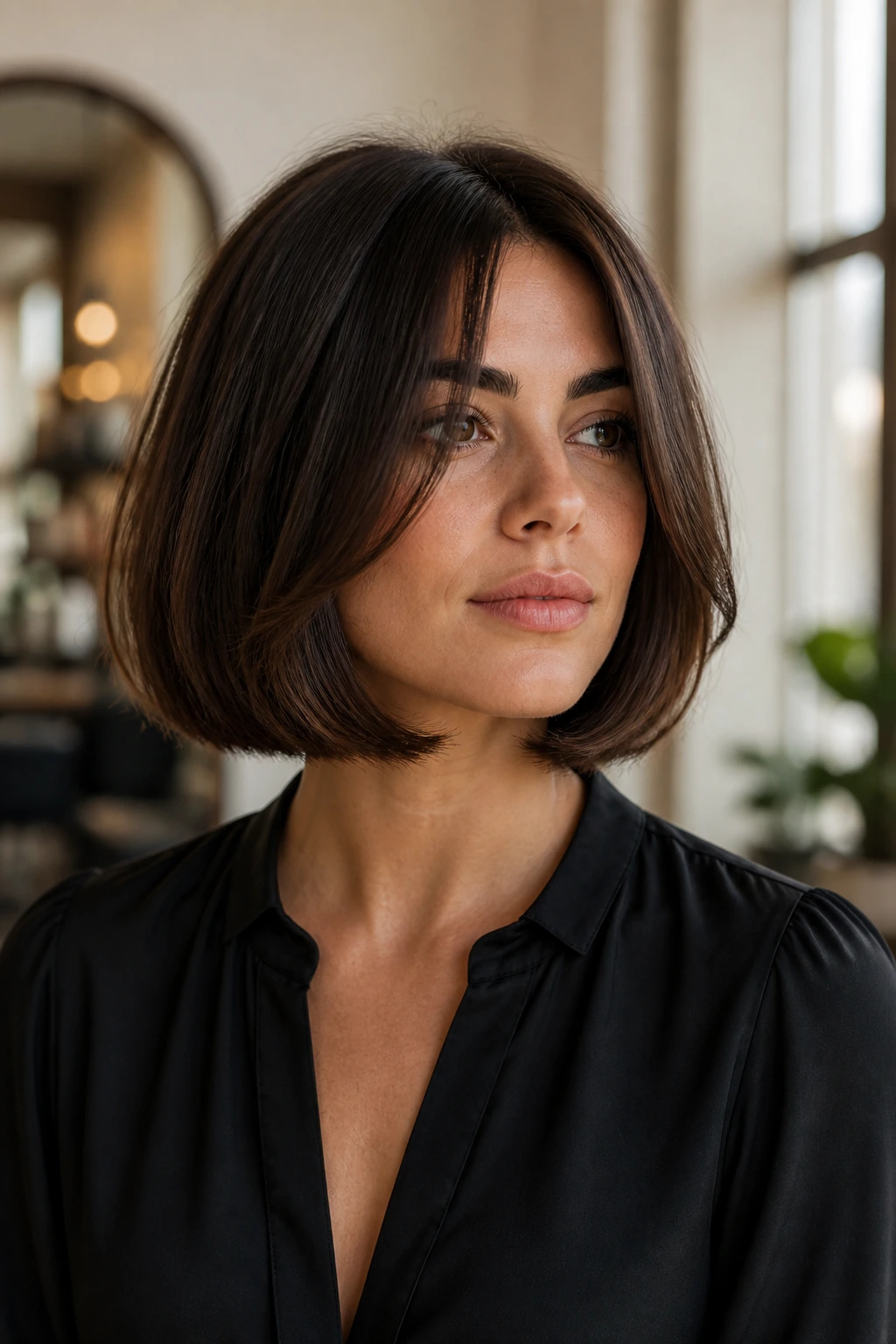
Italian bob haircuts don’t look loud from across the room. That’s part of the appeal. The shape is soft, dense at the ends, and usually a little bent under at the edge, so it reads polished without feeling stiff. Get close, though, and you can see how much is happening in the weight line, the part, and the way the front pieces skim the face.
A bad bob can feel boxy fast. A good Italian bob feels expensive in the plainest, least annoying sense of the word: the hair has body, the outline stays clean, and the cut does some of the styling for you. That’s why this shape keeps showing up on straight hair, wavy hair, thick hair, fine hair, and every client who says, “I want it shorter, but I still need movement.”
What makes the Italian version stand apart is the balance. It’s not shaggy. It’s not helmet-flat. It usually sits somewhere between chin and collarbone, with enough density at the perimeter to keep the line plush and enough bend to keep it from looking severe. The details matter here, maybe more than with any other bob. One inch changes the whole mood.
Why This Collection Stands Out
- Soft structure: The Italian bob keeps weight at the ends, so the hair looks full even when the styling is minimal.
- Length range: These versions live between the chin and the collarbone, which gives you room to choose between crisp and forgiving.
- Texture flexibility: There’s a version here for straight, wavy, curly, fine, and thick hair, as long as the cut respects the hair’s natural behavior.
- Face-framing power: A center part, a side part, or a fringe can shift the whole shape without changing the length much.
- Easy salon language: These styles are simple to explain if you know what to ask for — perimeter, bend, weight line, fringe, and part.
- Clean grow-out: Because the outline stays deliberate, the cut can grow into a lob without turning awkward halfway there.
1. Chin-Grazing Italian Bob
This is the version that makes the jaw look cleaner and the cheekbones look sharper. It lands right at the chin, sometimes a hair below, with the back kept just a touch shorter so the line curves inward instead of hanging in a square block. I like this length when the face needs definition fast. It does a lot without shouting.
Why the Length Matters
A chin-grazing bob puts the visual focus right where the face narrows. That makes it especially useful on oval and heart-shaped faces, but it can also soften a wide forehead if you keep the front pieces a little longer. The trick is not to let the cut drift too low. Once it slides much past the chin, you lose that clean, lifted read.
What to ask for
- Keep the front at the chin or ¼ inch below it.
- Leave the back only slightly shorter, not stacked.
- Add a soft bevel at the ends so they curl inward.
- Avoid heavy, disconnected layers unless your hair is very thick.
Best for: clients who want a crisp bob shape without going severe.
Tiny styling note: dry the front last. That’s where the shape either lives or dies.
2. Deep Side-Part Italian Bob
The crown is the whole trick here. A deep side part gives the bob instant lift on one side and a soft fall on the other, which makes the hair look fuller at the roots without asking it to do much. If your hair goes flat by noon, this is the version I’d reach for first.
A side part also changes the face shape in a useful way. It creates a diagonal line, which feels softer than a dead-center split and less predictable than an even middle part. On rounder faces, that diagonal can be a gift. On straighter, narrower faces, it adds just enough asymmetry to keep the cut from feeling too neat.
The best version starts with the part shifted about 1 to 1½ inches off center, then the heavier side is bent slightly away from the face with a round brush or a flat iron. Don’t overdo the curl. A small bend near the mid-lengths is enough.
Best when: you want volume at the crown without adding layers everywhere.
3. Glossy Blowout Italian Bob
Want the version that looks like it came from a very good salon chair? This is it. The glossy blowout Italian bob is all about smooth roots, a clean perimeter, and a rounded finish that turns under just enough to catch the light. It’s not stiff. It’s not curled. It’s a controlled bend, and that’s the whole point.
The shape depends on tension when you dry it. Use a concentrator nozzle, a medium round brush, and slow passes from root to ends. If you rush the brush, the ends kick out. If you hold the brush too long in one spot, the shape goes puffy. The sweet spot is a steady pull with a cool shot at the end.
How to wear it
- Keep the part clean and deliberate.
- Smooth a pea-size amount of serum only through the ends.
- Let the front pieces fall a little more polished than the back.
- Refresh day two with a quick round-brush pass on the top layer.
This version is for people who like a bob that looks finished, even when the outfit is a plain T-shirt and jeans.
4. Curved-In C-Shape Italian Bob
Straight hair can turn on you here. If the ends flip out in the wrong direction, a bob can look stubborn. The C-shape Italian bob solves that by building a soft inward curve from the mid-lengths to the perimeter, so the hair bends under instead of sticking out like a ruler.
The shape starts with how the ends are cut. Ask for a gentle bevel, not a blunt chop with no movement. The goal is a visible curve that feels soft around the jaw. On hair that naturally wants to bend, this is easy. On pin-straight hair, the blow-dry matters more. Angle the brush slightly under the hair and finish each section with a cool blast before releasing it.
Key details
- Best on straight or lightly wavy hair.
- Keep the perimeter dense.
- Use a 1.25-inch round brush for the front.
- Don’t over-layer the top; the curve should come from the outline.
It’s a neat cut. Not fussy. Just controlled.
5. Soft Blunt Italian Bob
A soft blunt Italian bob is the version I like when the hair is already full and healthy. The outline stays one length, or nearly one length, but the ends are nudged with a bevel so the line doesn’t feel hard or boxy. That little bit of softness keeps the bob from looking like a shelf.
This cut is especially good on thick, straight, or slightly wavy hair because the density does the heavy lifting. Too many layers would only make it lose its weight. Here, the perimeter is the point. You want the edge to read clean from a few feet away and plush when you touch it.
If your hair tends to frizz at the ends, keep the finish smooth and keep the trimming schedule tight. Once the shape grows out too long, the bluntness disappears and the whole effect gets muddy. A cut like this wants regular maintenance. That’s not a flaw. It’s part of the deal.
Best for: people who like a sharper silhouette with a softer finish than a classic blunt bob.
6. Italian Bob With Curtain Bangs
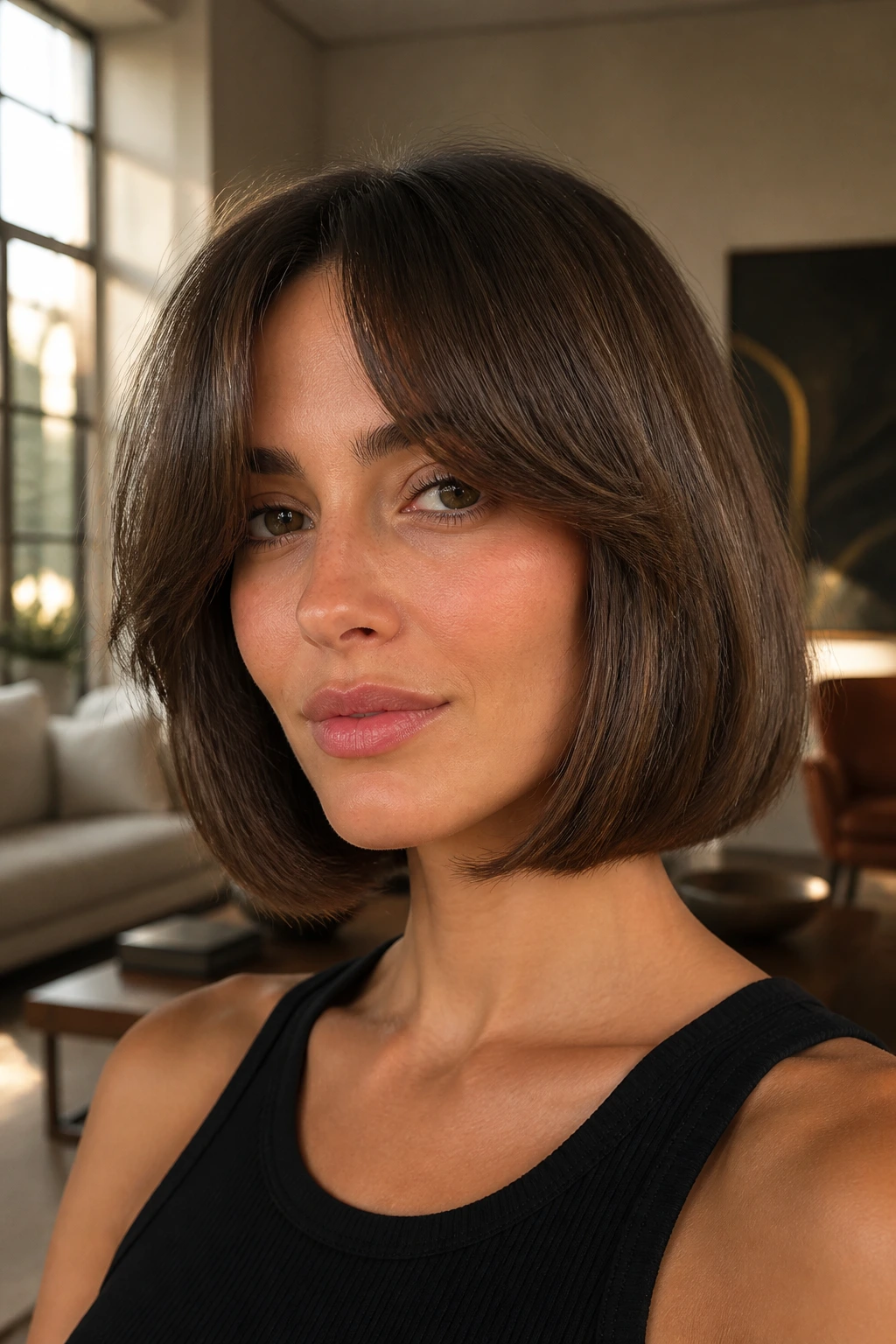
Curtain bangs change the whole mood of an Italian bob. They open the face, break up a heavy forehead, and let the rest of the cut stay dense without feeling too closed in. I prefer this pairing when someone wants movement near the eyes and cheekbones but doesn’t want a full fringe sitting on the brows.
The shortest point of the bangs should sit near the brow bone, then taper longer toward the cheekbones or lip line. That gives the face a soft frame without swallowing the forehead. On a bob, curtain bangs also help the front pieces blend more naturally into the rest of the cut, especially if the hair has a bit of bend.
Use them if you like hair that can be tucked, swept, or parted in the middle on a good day and slightly off center on a lazy one. They’re forgiving. And they grow out without a fight.
I’d pick this version for: heart-shaped faces, medium foreheads, and anyone who wants the cut to feel softer around the eyes.
7. Air-Dried Wavy Italian Bob

This is the one for people who don’t want to stand in front of a mirror every morning. The air-dried wavy Italian bob keeps enough structure to look intentional while letting the wave pattern do the heavy lifting. It’s less polished than the blowout versions, but that’s the right trade when your hair already has bend in it.
The shape should be cut with shrinkage in mind. If the wave pattern tightens as it dries, you need a little extra length so the bob doesn’t climb up to the ears. A dry cut can help here, or at least a careful wet cut with the wave pattern respected section by section. Add a light cream or mousse, scrunch gently, and leave the roots alone until they’re dry.
What makes it work
- The perimeter stays dense enough to hold shape.
- The wave adds movement without extra layers.
- A side part can keep the crown from puffing out.
- A diffuser on low heat helps if the roots collapse.
I like this version because it looks like hair, not effort.
8. Thick-Hair Italian Bob With Weight Removal

Thick hair does not need more layers. It needs better weight control. That’s the whole argument for this version of the Italian bob. The perimeter stays strong, but the interior gets just enough debulking to keep the shape from ballooning out like a triangle.
Where you remove weight matters. If the ends are thinned out too much, the bob turns wispy and loses its plush edge. Better to take out bulk inside the middle sections, where the hair is densest, while leaving the outer line full and clean. That way the hair can move without the shape collapsing.
Where the weight should stay
The outline. Always.
The nape can be lighter by a sliver, but not shredded.
The front should hold enough density to tuck behind the ear and still look deliberate.
This version is a smart choice if your hair gets hot and heavy around the neck. It feels cooler, dries faster, and behaves better under a brush.
9. Fine-Hair Italian Bob With Root Lift
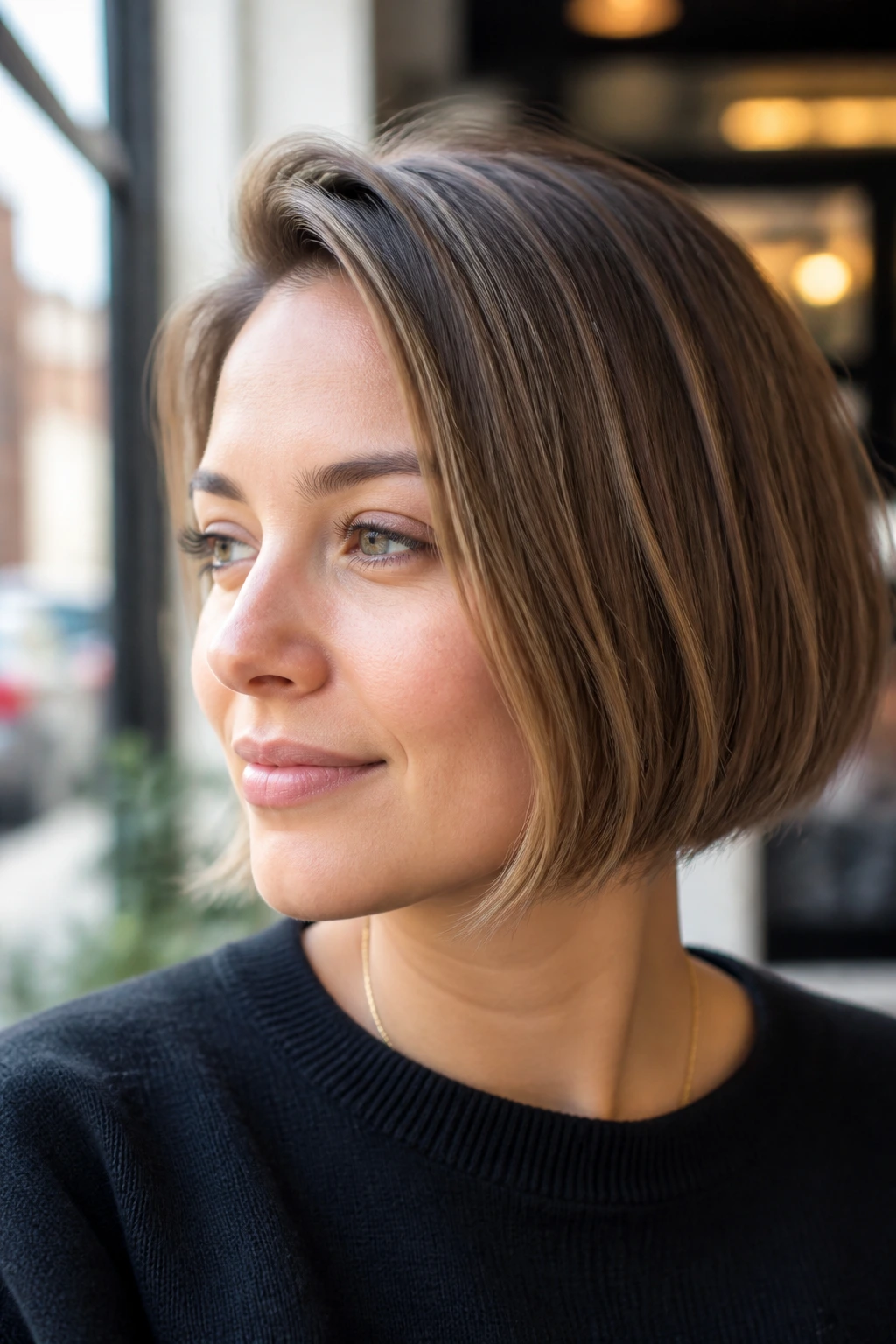
Can a bob look full on fine hair? Absolutely. It just needs the right shape. The fine-hair Italian bob keeps the ends blunt enough to look dense, and the roots get a little help from parting, styling product, and a length that doesn’t drag the hair down.
I usually like this one slightly shorter than collarbone length. Once the bob gets too long on fine strands, it starts to look stringy at the bottom. Keep the outline around the jaw or a touch below, and avoid over-thinning the ends. The cut needs to look like it has substance, even when the individual hairs are light.
What to tell your stylist
- Keep the perimeter blunt.
- Add tiny internal shape, not big layers.
- Leave the crown long enough to lift with a brush.
- Use a root mousse or spray before blow-drying.
This version gets a boost from a side part, too. It makes the top look fuller in a way that no amount of fluffy styling powder can fake.
10. Curly Italian Bob

Curly hair changes the math. The bob has to be cut with shrinkage in mind, because curls bounce up and in different directions once they dry. A good curly Italian bob keeps the perimeter shaped, not chopped, and leaves enough room for the curl pattern to settle without crowding the face.
Dry cutting can be a smart move here. So can a careful curl-by-curl trim if your hair is tight or uneven. The goal is not to turn curls into a straight-line bob. The goal is to give the curls a clean outline so they sit in a sculpted halo around the jaw and neck.
What works best
- Leave extra length for shrinkage.
- Keep the front slightly longer if your curls spring high.
- Use a diffuser on low heat.
- Skip heavy layering if the curls already have a lot of bounce.
I love this version when the curl pattern is healthy and the cut respects it instead of fighting it.
11. Bottleneck Bang Italian Bob

Bottleneck bangs are a little more precise than curtain bangs, and that precision changes the whole face framing. They start narrow at the center, then widen toward the temples, which makes them feel softer near the brows and fuller where the cheekbones begin. On an Italian bob, they add shape without making the front heavy.
This version is especially useful if you want a fringe but don’t want a dense wall of hair on the forehead. The bottleneck shape opens the middle just enough to keep the face from feeling closed in. It also works well if your forehead is shorter or if your hairline has a cowlick that fights a straight fringe.
Ask for the shortest center point just above the brow, then let the sides blend down into the bob. Keep the transition soft. Too abrupt, and the bang stops feeling elegant.
This is one of those cuts that looks more considered than it sounds. That’s a good thing.
12. Jaw-Length Power Bob
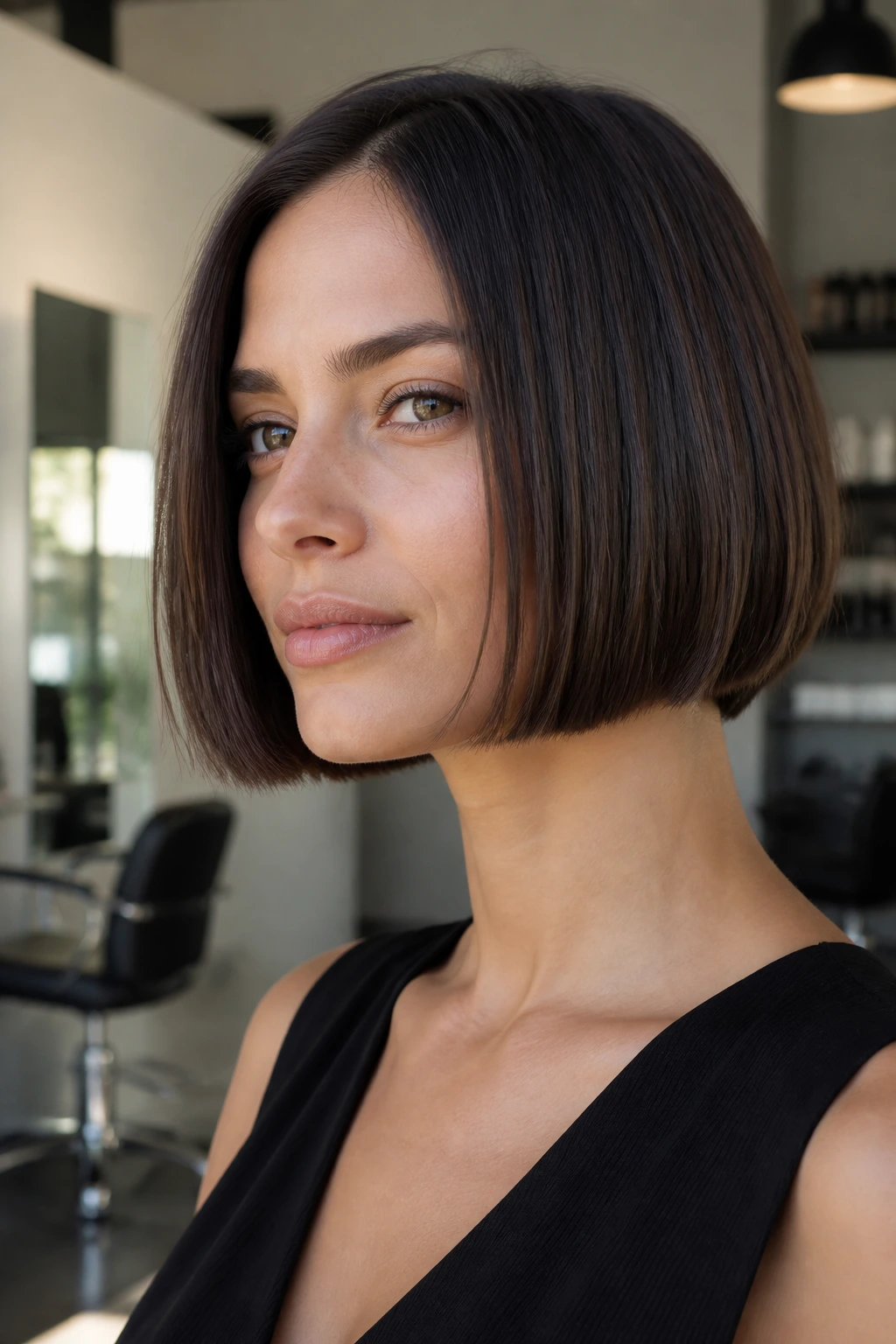
The jaw-length Italian bob has a stronger personality than the softer chin-grazing versions. It lands right on the jaw or just under it, which gives the cut a little more visual bite. The line is clean, and the whole silhouette reads intentional from across the room.
I like this length on people who wear strong collars, structured jackets, or earrings that deserve room to show. It gives the neck space and puts the focus on the lower half of the face. On square or oval faces, it can look excellent. On rounder faces, a slight side part or a longer front piece usually helps.
This cut needs regular trims. The shape reveals growth fast, and once it drifts, the jawline effect disappears. If you want that crisp reading, book maintenance before the ends start to feather out on their own.
Best when: you want a bob that looks sharper than the collarbone version but less strict than a classic blunt cut.
13. Collarbone Italian Bob

The collarbone version is the most forgiving member of the group. It still reads as a bob, but it gives you a little more length to tuck, wave, or grow out without panic. For anyone nervous about going too short, this is usually the safest way in.
It’s also easier to live with on hair that flips or frizzes, because the extra inch or two gives the ends room to settle. The cut should still keep a dense outline. Don’t let the extra length turn the shape limp. A slight bevel at the bottom keeps the line from drooping.
This version plays nicely with both straight and wavy hair. You can blow it smooth for work and add a bend on the weekend without changing the haircut itself. That flexibility is why I recommend it so often to people testing the waters.
If a chin-length bob feels like a jump, start here.
14. Off-Center Part Italian Bob

A full middle part can be a little too symmetrical on some faces. Shift the part half an inch to an inch off center, and the whole cut wakes up. The off-center Italian bob feels softer, more natural, and a touch less severe than the dead-even version.
This is especially useful if one side of your hair grows fuller than the other or if a center part shows a cowlick too clearly. Moving the part slightly changes where the hair falls at the cheek and where it lifts at the crown. The result is a bob that looks shaped rather than split.
It’s a small move with a big payoff. The line across the ends stays Italian-bob clean, but the face framing gets more relaxed. I like this on people who want polish without looking overstyled.
If you only change one thing about your bob, changing the part is often the easiest win.
15. Tucked-Behind-Ear Italian Bob

This version is for people who like to show earrings, cheekbones, or a good pair of glasses. One side stays tucked behind the ear while the other side falls free, so the cut gets a little asymmetry without losing its outline. It’s understated, but not boring.
The key is to leave enough length on the tucked side that the hair stays flat against the ear instead of puffing out. If your hair is thick, ask for a little internal control near the cheek so the tuck doesn’t turn into a lump. On finer hair, a touch of root lift on the open side keeps the shape from collapsing.
This cut is also useful if you want a bob that shifts easily from casual to dressed up. Tucked on one side, it feels cleaner. Worn loose, it reads softer.
There’s nothing flashy here. That’s the point.
16. Lived-In Piecey Italian Bob

If you hate a polished blowout, this is your lane. The lived-in piecey Italian bob keeps the same solid perimeter, but the styling is looser, more separated, and less shiny than the salon-smooth versions. It works best when the hair has a little natural texture or when you’re willing to rough-dry it and call it done.
The cut usually needs a touch of internal movement so the pieces don’t sit like one heavy block. Not a lot. Just enough to let the ends separate once you add a cream or light paste. The shape should still read bob, though. Piecey doesn’t mean shaggy, and that line matters.
Why it feels different
The hair falls in small sections instead of one glossy sheet.
The crown stays relaxed.
The front can tuck, swing, or fall into the eyes a little.
It’s a good choice if you want the bob to look a bit cooler and less polished on purpose.
17. Subtle Inverted Italian Bob
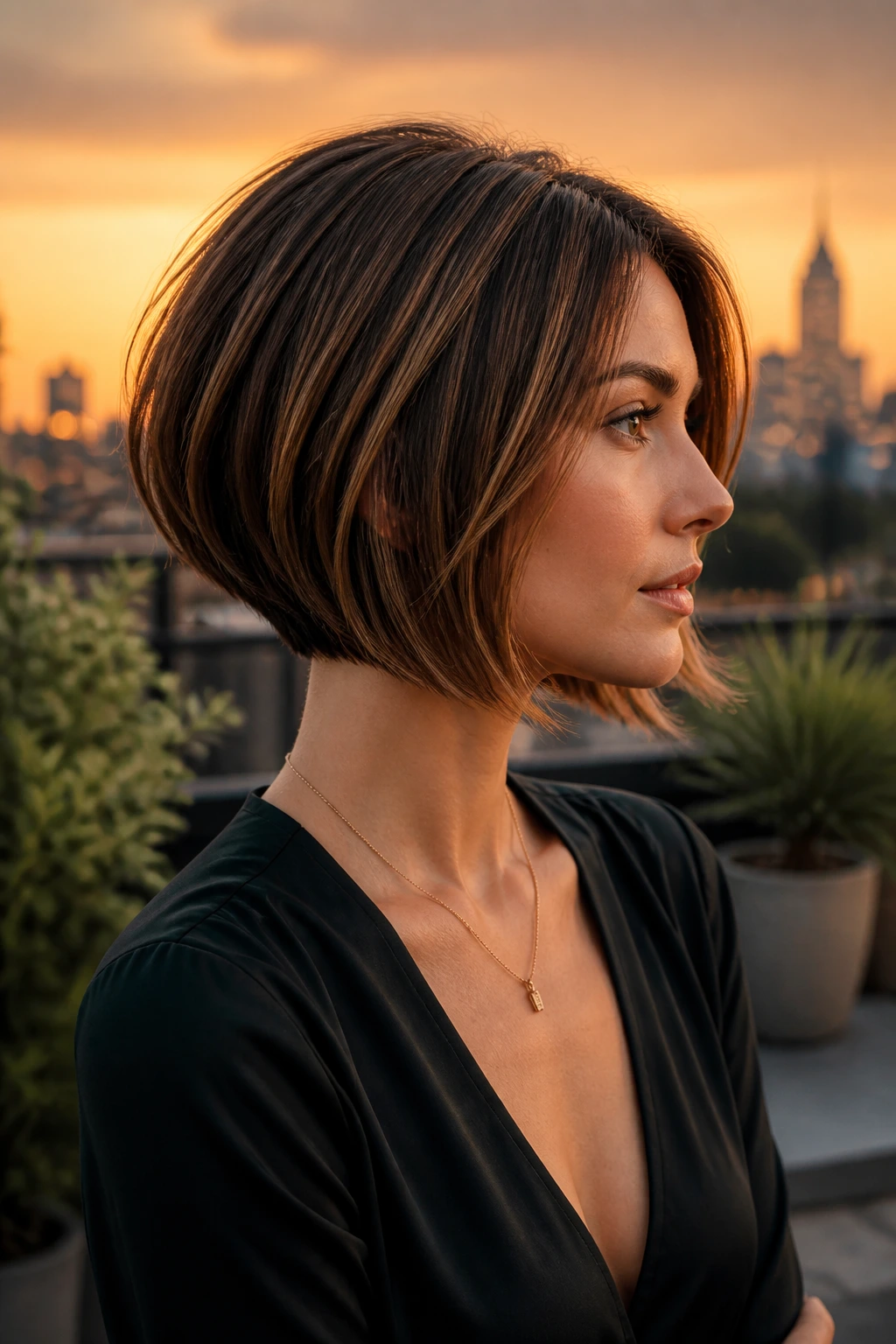
A subtle inverted bob has just enough angle to matter, but not so much that it feels dated or severe. The back sits a little shorter than the front — usually by half an inch to an inch — which gives the neck a cleaner line and lets the front pieces fall with a touch more swing.
That tiny angle can help if your hair tends to puff at the nape or if you like the front to frame the face more than the back frames the neck. Keep the graduation gentle. A steep inverted cut turns into something else entirely, and you lose the soft Italian feel.
This version suits people who want structure with a little motion. It has more shape than a one-length bob, but it doesn’t lean into the stacked, angular look. The difference is subtle, and that subtlety is what makes it wearable.
If you want the bob to have a little lift in the back without screaming for attention, this is the one.
18. Side-Swept Fringe Italian Bob

A side-swept fringe changes the whole mood of the cut. It softens the forehead, breaks up a strong front hairline, and gives the bob a little sweep that feels easy on the eyes. I like this version when a full fringe would be too much commitment but no fringe at all feels too bare.
The fringe should blend into the side of the bob, not sit as a separate piece. Ask for the shortest point around the brow area, then let the length taper across the forehead and into the cheekbone zone. That gives you flexibility. On days you want less forehead coverage, you can tuck or redirect it. On days you want more softness, it falls right back.
This version also helps if your face needs a diagonal line. Round faces often like it. So do faces with a strong jaw that need a little front softness.
It’s a small detail. It changes the whole read.
19. Glassy Straight Italian Bob
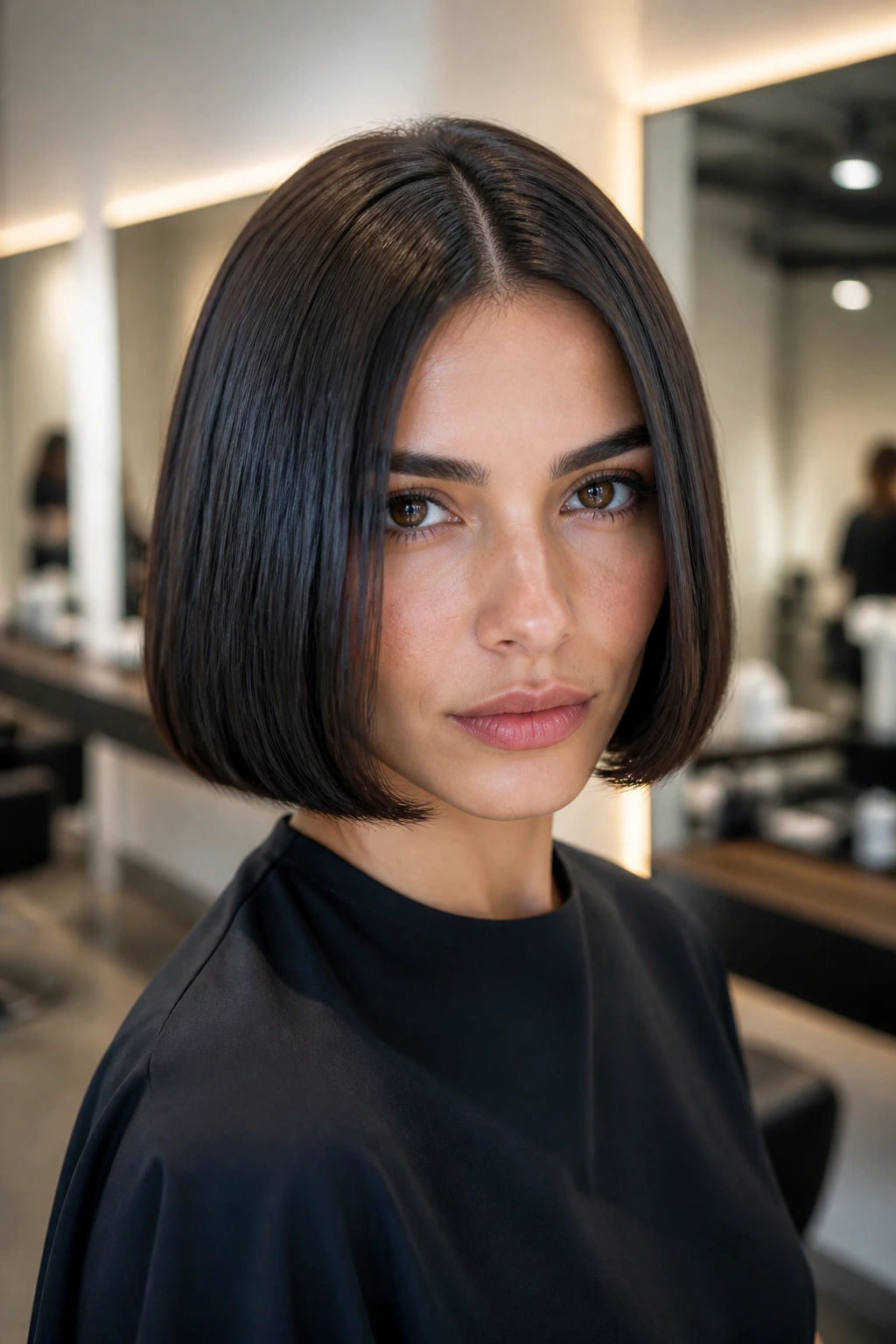
This is the sharpest reading of the Italian bob. The glassy straight version strips the shape down to its cleanest line: smooth roots, flat surface, and ends that sit with a precise bevel instead of a messy flip. It’s the bob I think of when someone wants order more than softness.
Heat protection matters here. So does slow, careful drying with the nozzle pointed down the hair shaft. Once it’s dry, a flat iron pass should be deliberate and not hurried. One slow pass per section is usually enough. If you keep going over the same pieces, the ends start to look thin and tired.
A few details that matter
- Use a lightweight serum only on the last inch of hair.
- Keep the part clean.
- Seal the ends with cool air.
- Don’t overload the roots with oil or the whole shape drops.
This version looks best when the hair is healthy enough to reflect light instead of soaking it up.
20. Rounded Feather-Ends Italian Bob
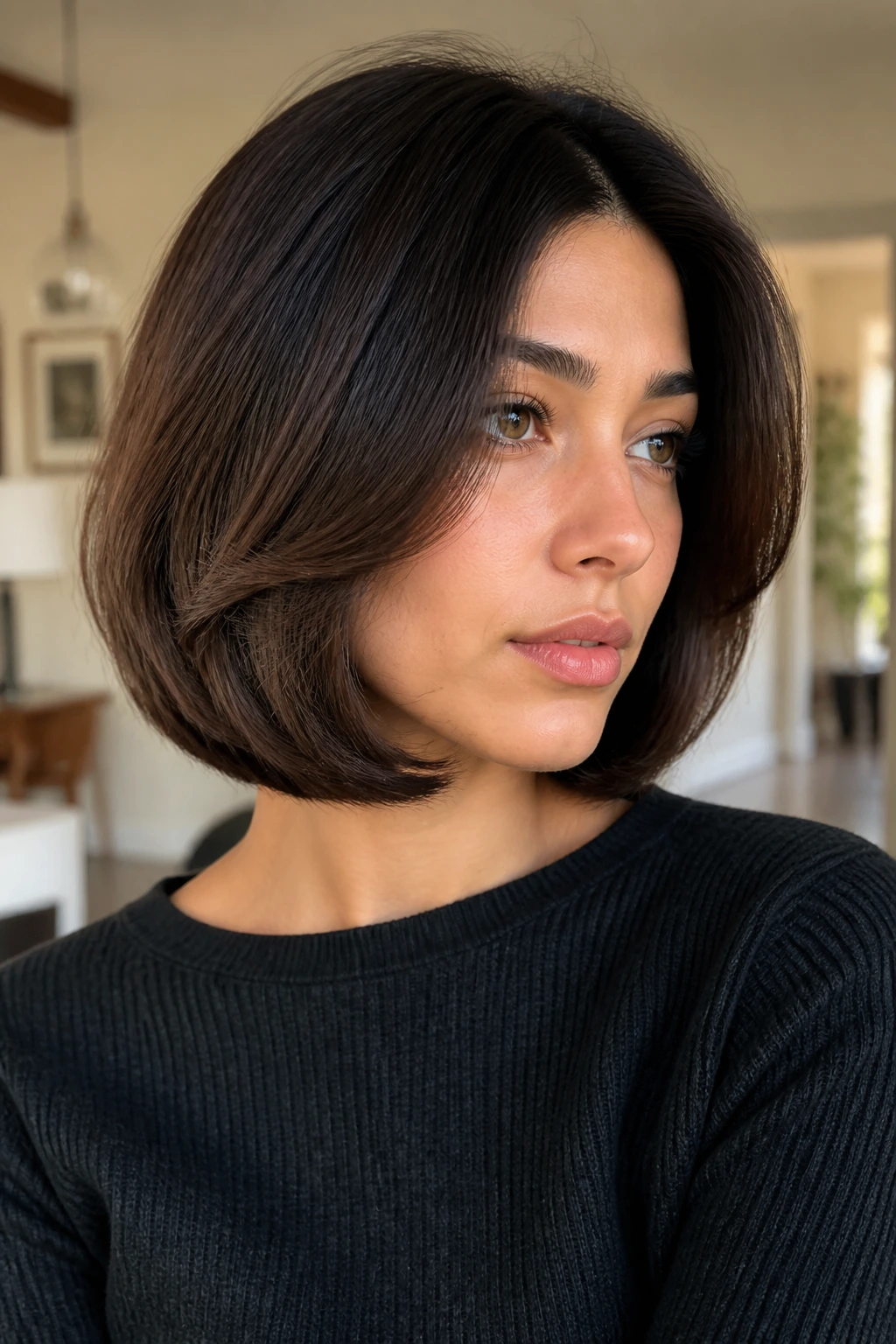
This version softens the outline without making the bob feel wispy. The ends are lightly feathered so the perimeter still looks full, but the edge doesn’t read as one hard, blunt block. It’s a smart move for thick or coarse hair that needs movement but can’t afford to lose density.
The feathering should happen at the very ends, not up through the whole cut. Too much cutting inside the shape turns the bob thin in the wrong places. Keep the root and mid-lengths stable, then let the finish loosen a little at the bottom. That gives you swing without the fray.
This is also one of the easiest versions to wear with casual clothes because it never looks overbuilt. A sweater, a tee, a blazer — it sits with all of them. You don’t have to dress up the haircut to make it make sense.
It’s a quiet version. But quiet is not the same as plain.
Why Italian Bob Haircuts Hold Their Shape
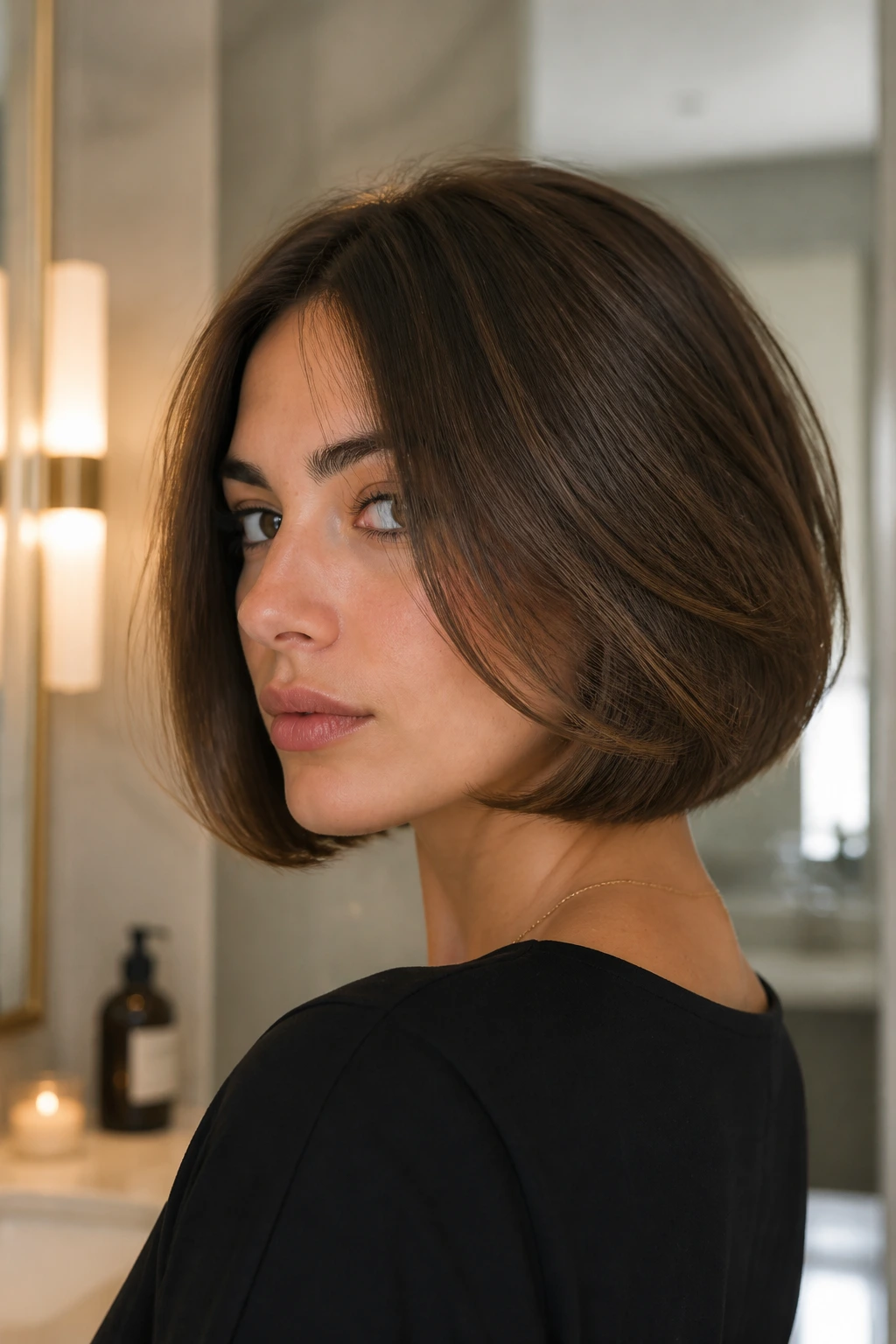
The Italian bob works because it respects weight. That sounds boring until you see what happens when a bob loses it. The ends go stringy. The outline puffs. The whole haircut starts to feel accidental. The Italian version keeps the heaviest point near the perimeter, which makes the shape look dense even when the hair itself isn’t especially thick.
That weight line is why the cut feels plush. The hair at the bottom sits like a curtain, not a spray. The slightly beveled ends help the line curl inward, so the bob has movement without collapsing into layers. If you’ve ever seen a bob that looked oddly hollow in the middle, you’ve seen what happens when that balance goes wrong.
Part placement matters, too. A center part gives the cut symmetry. A side part lifts the crown. An off-center part softens the whole face. Small shifts change the haircut more than people expect, and that’s one reason stylists who know bobs well are so picky about where the line falls.
The best Italian bob haircuts are not about making the hair do something unnatural. They’re about placing the hair where it sits well.
Essential Tools for These Cuts
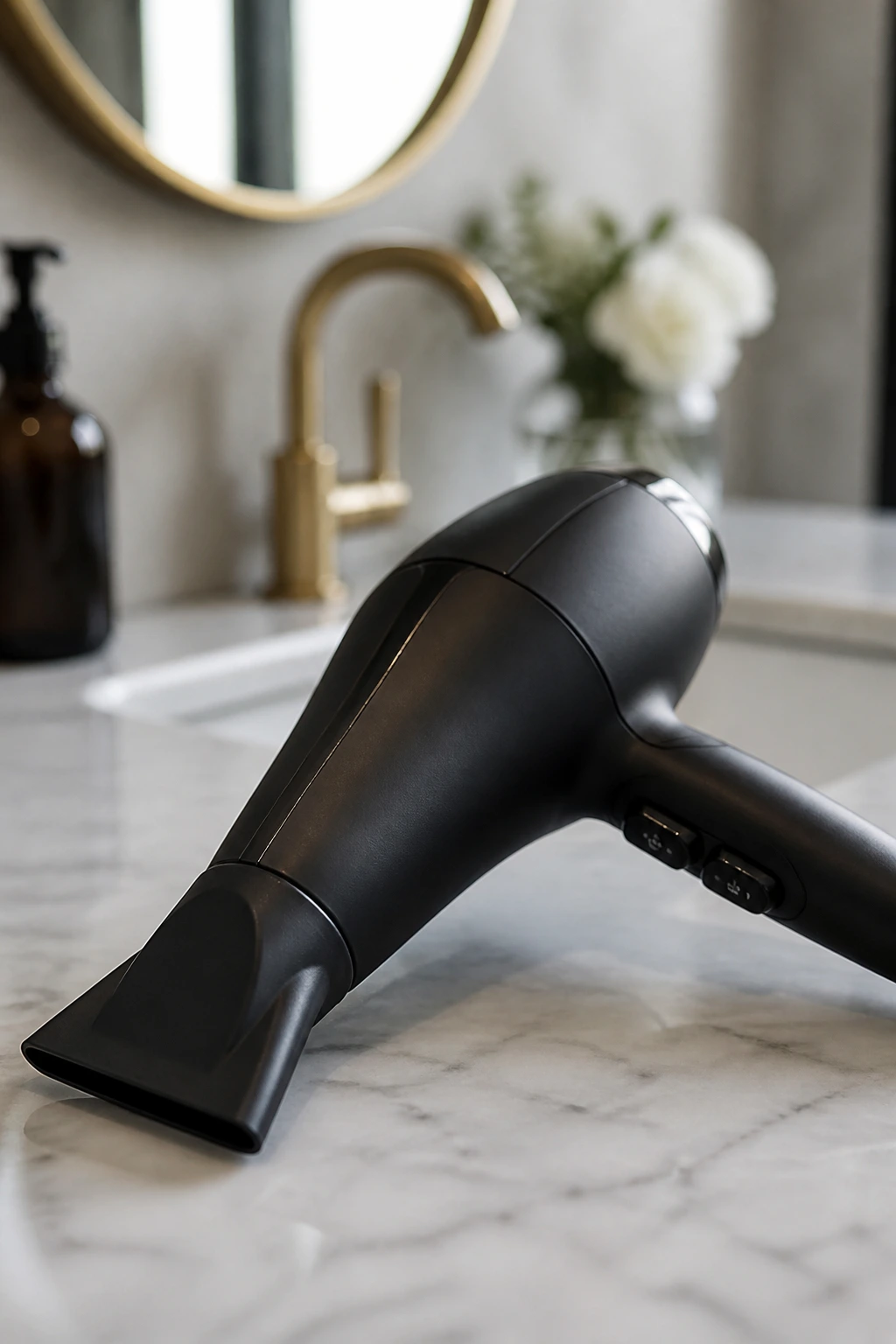
- Blow dryer with concentrator nozzle: Helps direct the hair down the shaft so the ends stay smooth instead of frizzy.
- 1.25-inch round brush: The best size for shaping the ends under without making the bend look corkscrewed.
- Tail comb: Useful for parting cleanly and sectioning the top from the bottom.
- Sectioning clips: Keep the back organized while you dry the front in smaller pieces.
- Heat protectant spray: Non-negotiable if you use hot tools more than once a week.
- Lightweight mousse or root lift spray: Good for fine hair or any bob that needs help at the crown.
- Flat iron: Handy for glassy versions or for smoothing only the last inch of the ends.
- Diffuse attachment: Worth using on wavy or curly hair when you want shape without a puffy halo.
- Shine serum or light oil: A tiny amount on the ends keeps the bob from looking dry after styling.
- Wide-tooth comb: Better than a brush for curls and damp wave patterns.
How to Ask for an Italian Bob That Fits Your Hair

Bring photos, but bring the right photos. One image that shows the length is useful. Another that shows the texture is even better. A picture of a sleek, straight bob tells your stylist very little if your hair is wavy and dense. The haircut lives differently on different heads.
Tell Them the Length in Real Terms
Say where you want it to hit: chin, jaw, or collarbone. Those words are easier than vague hand gestures at the mirror, and they keep the conversation grounded. If you’re nervous, ask for a longer first pass. You can always go shorter at the next appointment.
Mention How You Style Your Hair
If you air-dry, say so. If you use a round brush, say that too. A stylist can shape the bob around your routine, but only if they know what the routine actually is. A cut built for a weekly blowout will feel wrong on hair that mostly dries on its own.
Name the Parts That Matter
Talk about your cowlicks, your natural part, and any side that falls flatter than the other. Thick hair usually needs interior weight control. Fine hair usually needs a stronger perimeter. Curly hair usually needs room for shrinkage. Those are not small details. They are the cut.
How to Style and Wear an Italian Bob

Presentation: A round-brush bend at the ends gives the bob that soft inward curve people tend to associate with the shape. If you want it sleeker, flatten the top and let only the last inch or two turn under.
Accessories: Small hoops, a strong brow, or a clean neckline make the bob read more deliberately. Turtlenecks and crew necks can look sharp with jaw-length cuts, while V-necks and open collars tend to suit the collarbone version.
Scale: Shorter bobs put the emphasis on the face and neck. Longer bobs feel less dramatic and are easier to tuck behind the ear. If you’re unsure, choose the length that leaves at least 1 inch of movement below the chin.
Best Setting: Polished versions belong with a smooth blow-dry and light shine. Lived-in versions work better with a rough-dry, a little texture cream, and fingers instead of brushes.
Smart Ways to Match the Cut to Your Hair
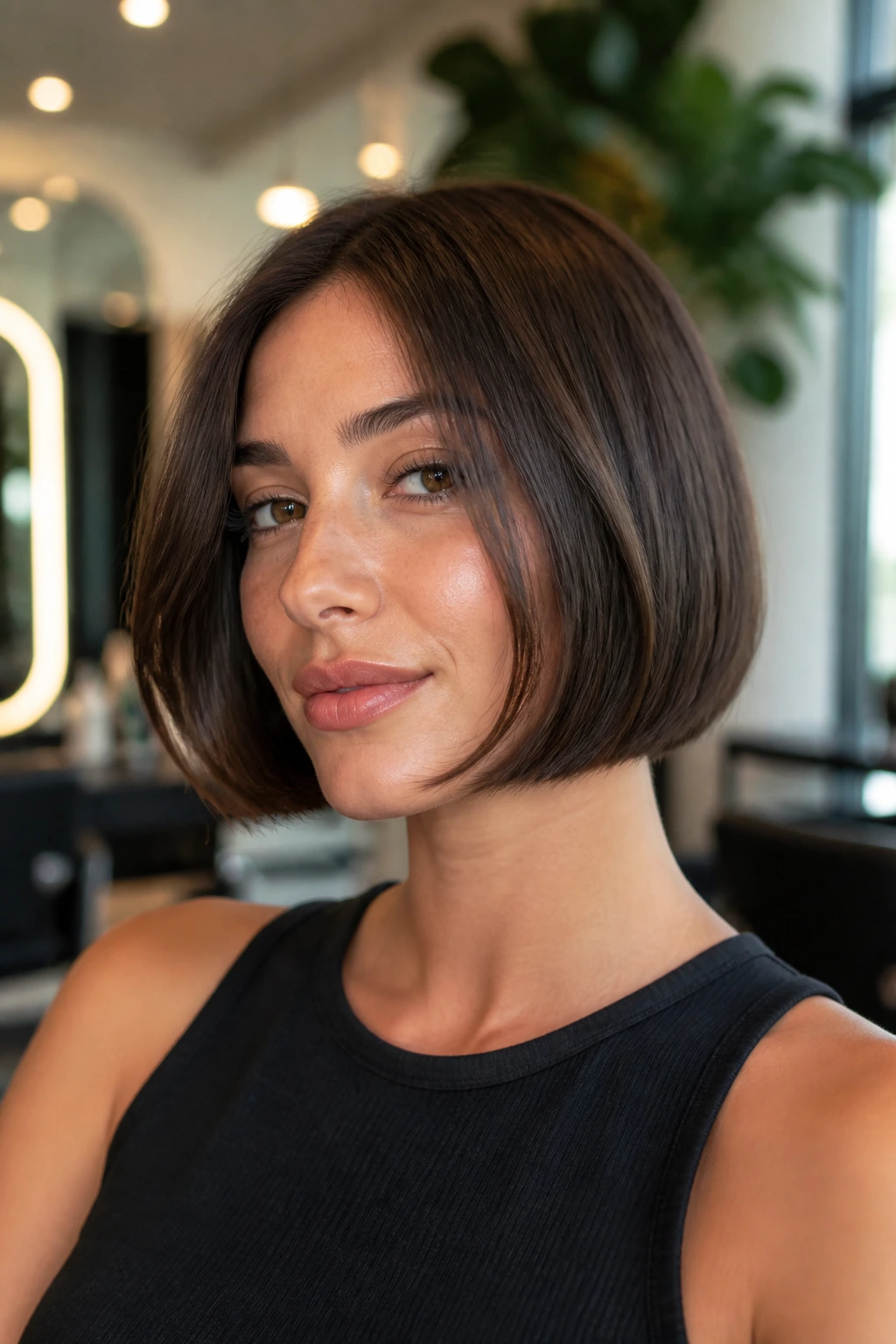
Fine hair likes a strong line. Thick hair likes interior control. Curly hair likes room. Those three truths save people from bad bob decisions all the time.
Fine Hair Wants Density at the Bottom
If your strands are soft and lightweight, keep the perimeter blunt and resist the urge to slice in layers everywhere. A short, dense outline makes the hair look fuller. Once the ends get too airy, the cut starts to look thin no matter how much product you use.
Thick Hair Needs Shape, Not Removal Everywhere
Bulk should come out of the inside, not the edges. That keeps the silhouette plush while lowering the daily volume. Too much thinning at the ends makes thick hair frizz sooner and grow out in a messy way.
Curly Hair Needs Shrinkage Room
Curly bob lengths should be chosen after you think about how much the hair lifts when it dries. Some patterns jump 1 inch. Some jump 3. That is the difference between a bob and a puff. Leave room for the spring.
Round and Square Faces Often Like Diagonals
A side part, an off-center part, or a sweeping fringe adds a line that softens width. Straight middle parts can still work, but they need a little more care in the way the front pieces are cut.
Additional Tips and Personal Tweaks

Shape Boost: Ask for a slight bevel at the perimeter. That tiny inward bend keeps the bob from looking boxy, especially around the jaw.
Texture Boost: Use mousse or root spray before you dry, not after. Product put on wet hair has a better chance of helping the shape hold through the day.
Customization: If you wear glasses, keep the front pieces long enough to sit cleanly beside the frames. If you wear earrings often, one tucked side and one loose side give the cut some movement.
Make-It-Yours: Fine hair should stay blunt and clean. Thick hair can take a little interior relief. Wavy hair benefits from a softer outline. Curly hair should keep enough length to respect shrinkage, even if that means the bob starts a little longer than you first wanted.
Keeping Italian Bob Haircuts Fresh Between Cuts
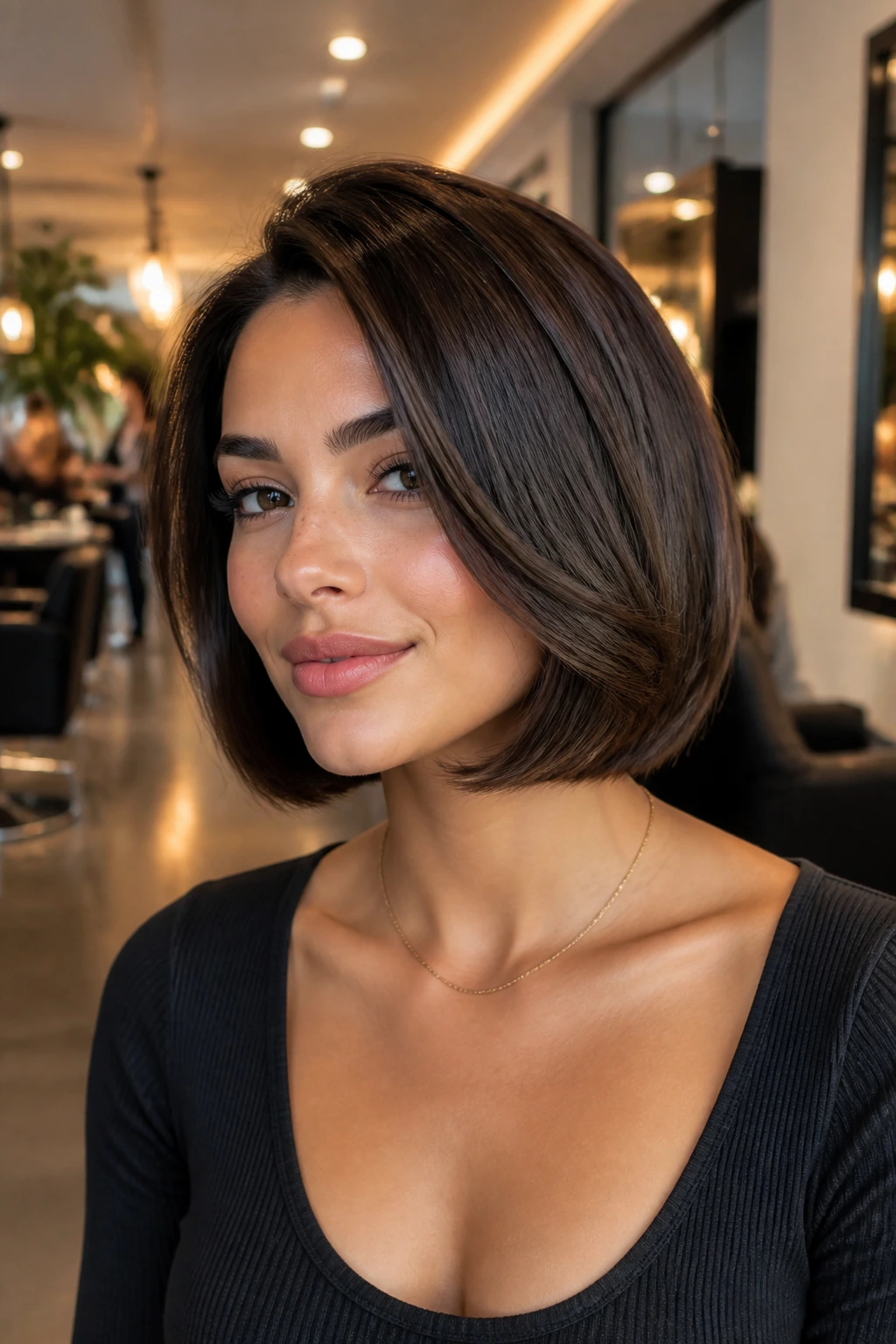
The cleanest Italian bob shapes usually need trims every 6 to 8 weeks. If the cut is shorter — chin or jaw length — growth shows faster. Collarbone versions can often stretch to 8 or 10 weeks before the outline starts to lose its edge. Fringe trims, if you have them, usually need attention sooner. Every 3 to 4 weeks is common.
Day-to-day care is simpler than people fear. Wash only as often as your scalp needs it, then reset the front and crown with a round brush or a quick flat-iron pass. On day two, dry shampoo at the roots can save the shape, but don’t dump it on the ends. That only makes the bob look dusty.
At night, a loose clip at the crown or a silk pillowcase helps keep the bend from flattening. Curly versions can usually go two or three days between full refreshes if you mist the hair lightly and re-define only the pieces that need it. The goal is not to re-create the whole blowout every morning. It’s to keep the outline believable.
If the cut starts to lose its line, it’s usually not because the hair is “bad.” It’s because it has simply grown past the point where the perimeter can carry the shape on its own.
Common Mistakes to Avoid

- Too many short layers: The bob loses its dense edge and starts to look wispy around the jaw. Fix it by keeping the perimeter fuller and asking for interior weight removal only where it’s needed.
- Cutting the back too high: A stacked nape can make the Italian bob feel dated or mushroom-like. Keep the back gentle unless you want a clearly angled shape.
- Ignoring the natural part: Fighting a cowlick every morning gets old fast. Work with the part your hair wants, then adjust the front pieces around it.
- Over-thinning thick hair: The ends fray faster, and the haircut puffs out in humidity. Ask for soft debulking inside the shape instead.
- Using heat on random sections: If one side is straight and the other is bent, the bob reads uneven. Dry the front sections with the same direction and finish both sides the same way.
- Letting it grow too long: Once the bob drifts far below the collarbone, the shape stops reading as an Italian bob and starts reading as an in-between grow-out. Trim before that happens.
Variations and Adaptations to Try
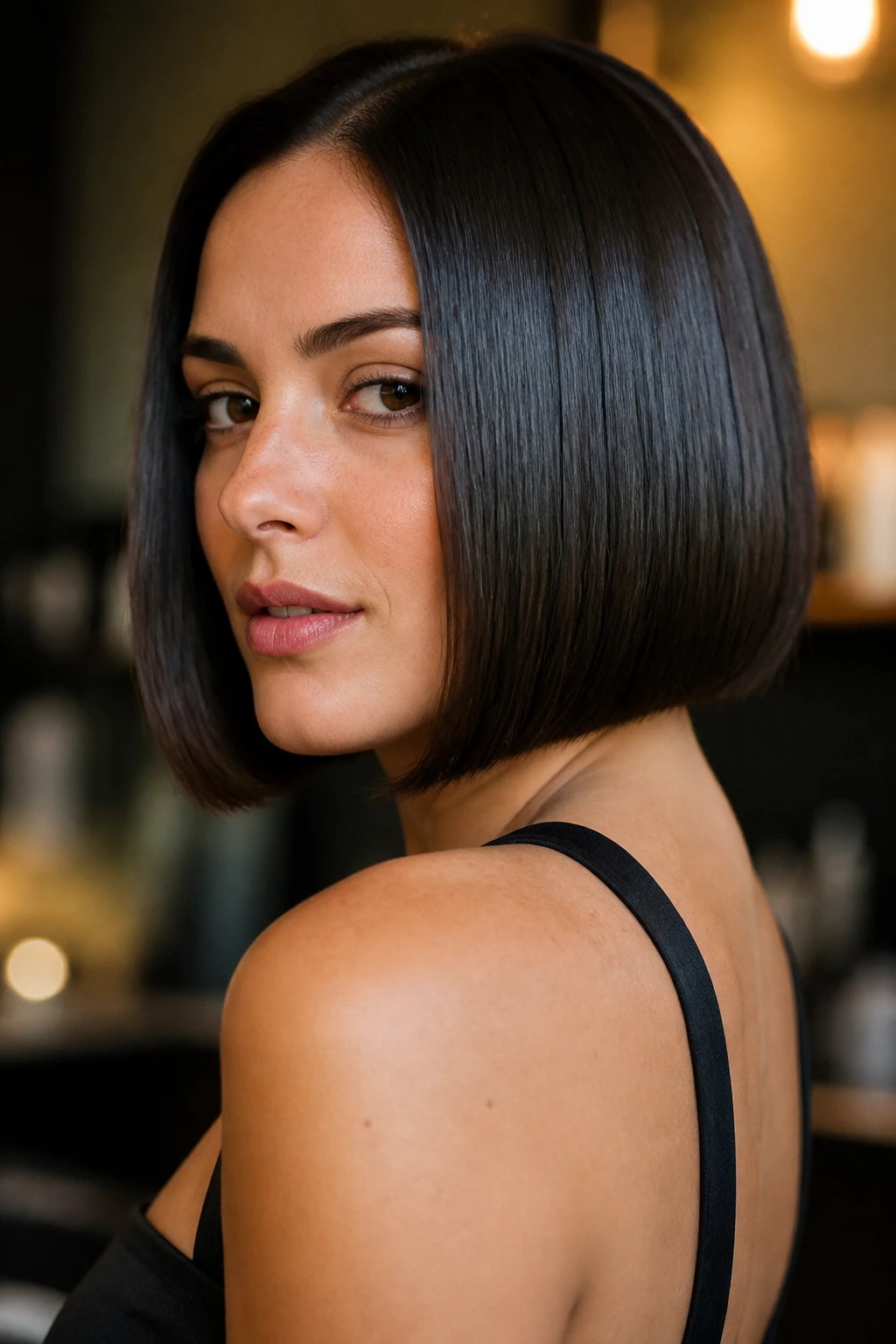
The Glass-Polish Version: This leans sleek, shiny, and very controlled. Use it if you like a smooth finish and don’t mind a few minutes with a round brush or flat iron. It’s sharp, but not harsh.
The Air-Dry Friendly Version: Keep the perimeter dense and the layers light, then let natural wave or bend do the rest. This suits people who want shape without a full styling routine.
The Curl-Safe Version: Leave more length, cut with shrinkage in mind, and avoid over-texturizing the ends. The bob still looks shaped, but it respects the curl pattern instead of flattening it.
The Thick-Hair Version: Focus on internal weight removal and a clean outline. This keeps the bob from ballooning while preserving that plush Italian edge.
The Grow-Out Lob Version: Let the cut sit closer to the collarbone with a slight bevel. It keeps the Italian feel while giving you more room to grow between trims.
Frequently Asked Questions

What makes an Italian bob different from a regular bob?
An Italian bob usually keeps more weight at the ends and a softer bend through the outline. A plain bob can feel boxier or flatter, while the Italian version aims for body, movement, and a denser perimeter.
Is an Italian bob good for fine hair?
Yes, if the cut stays blunt enough to make the ends look full. Fine hair often does better with a shorter length, a clean line, and a part that gives the crown some lift.
Can curly hair wear an Italian bob?
Definitely, but the cut has to respect shrinkage. Curly hair usually needs more length than straight hair to land in the same visual place once it dries.
Do I need bangs with this haircut?
No. Bangs can help if you want face framing, but the bob works well without them. Curtain bangs, bottleneck bangs, and side-swept fringe all change the feel in different ways.
How often does it need a trim?
Shorter versions usually need shape-ups every 6 to 8 weeks. Longer collarbone versions can go a little longer, but once the perimeter starts to lose its line, the whole cut feels less intentional.
What if my hair flips out at the ends?
Ask for a softer bevel and dry the ends under with a round brush. If the flip is still stubborn, the cut may be sitting at a length where your hair naturally kicks outward. A half-inch change can fix that.
Can I air-dry an Italian bob and still keep the shape?
Yes, especially on wavy hair. The key is to keep the perimeter dense and use a small amount of cream or mousse so the ends don’t dry fuzzy.
Will it grow out badly?
Not if the outline starts with enough length. A collarbone version or a soft jaw-length cut usually grows into a tidy lob instead of a messy in-between stage.
The Shape That Keeps Working
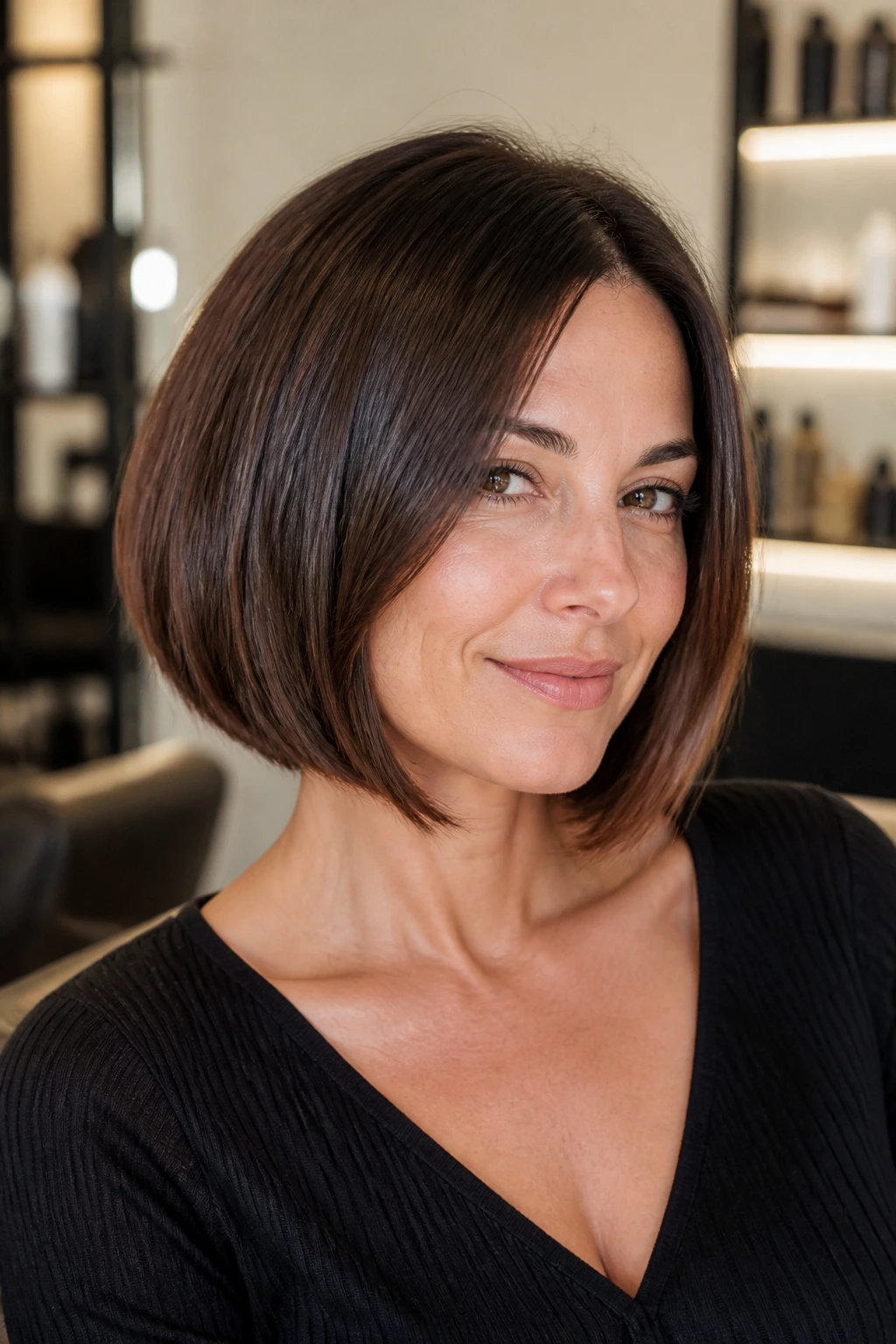
The reason Italian bob haircuts keep coming back is simple: the shape does the heavy lifting. When the weight sits in the right place, you don’t need a heroic styling routine. A round brush, a little tension, and a clean perimeter are often enough to make the hair look finished.
That’s also why the best version for you is the one that matches your texture, not the prettiest photo on a mood board. The right bob should sit with your hair, not argue with it. If you choose the length, part, and fringe with that in mind, the cut will hold up on real mornings, not just salon-day lighting.
