



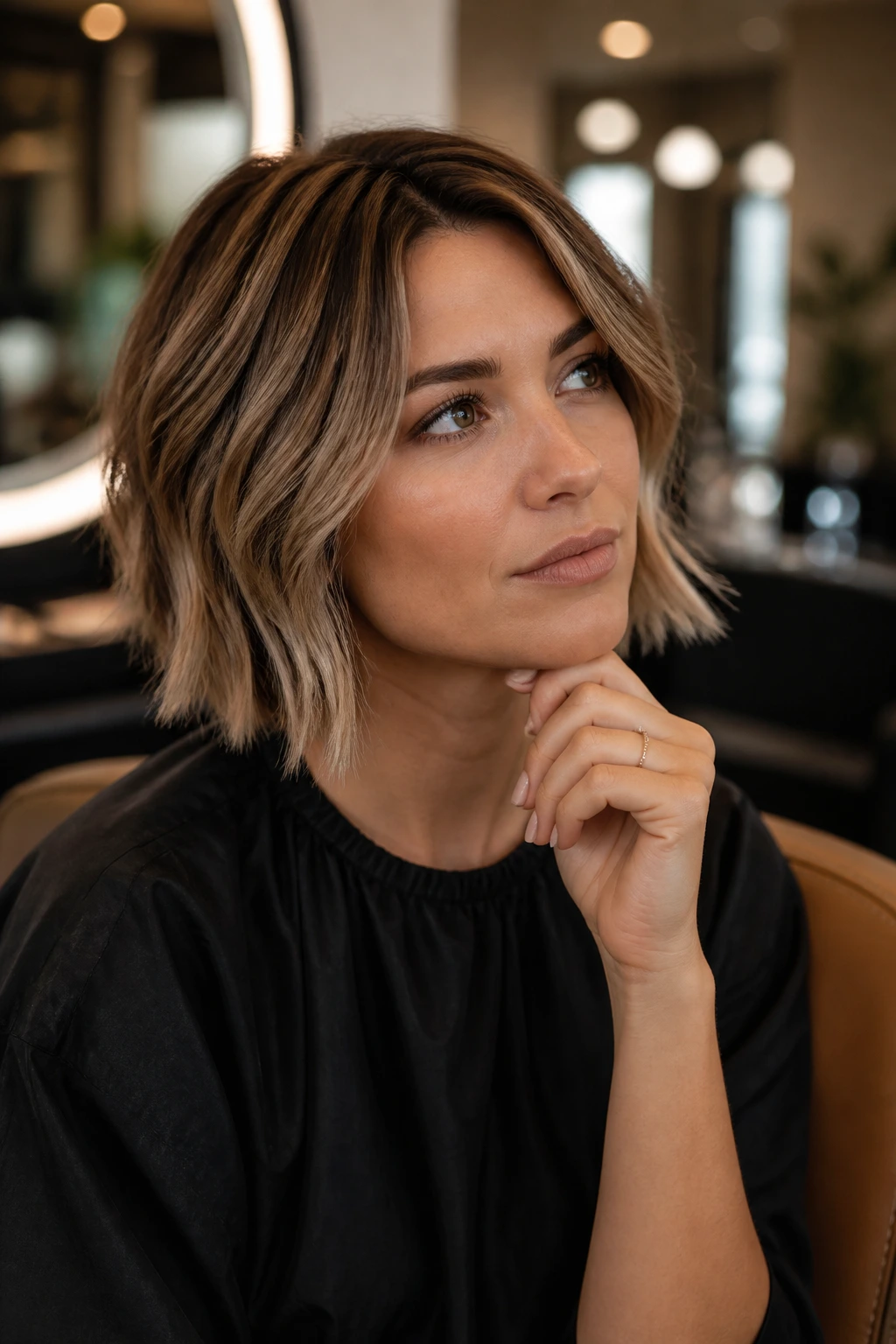
A bob can turn rigid fast. One stripe too high, one highlight too close to the root, and the whole cut starts looking boxy instead of sharp. That’s why bob hair balayage has such staying power: the color lands where the haircut can use it, the roots stay a touch deeper, and the shape keeps its line while the surface gets movement.
On short hair, placement matters more than volume. A long cut can hide a messy highlight pattern under layers and waves; a bob cannot. Every ribbon of color shows, which is exactly why the softer balayage approach works so well. It gives you brightness without turning the haircut into a spreadsheet of stripes.
The 20 looks below range from caramel and honey to mushroom brown, beige blonde, copper, rose gold, smoky plum, and pearl brunette. Some are built for blunt edges, some for stacked shapes, some for curls that need a little light around the face. The common thread is simple: dimension first, drama second.
Why These Bob Balayage Ideas Feel Softer Than All-Over Color
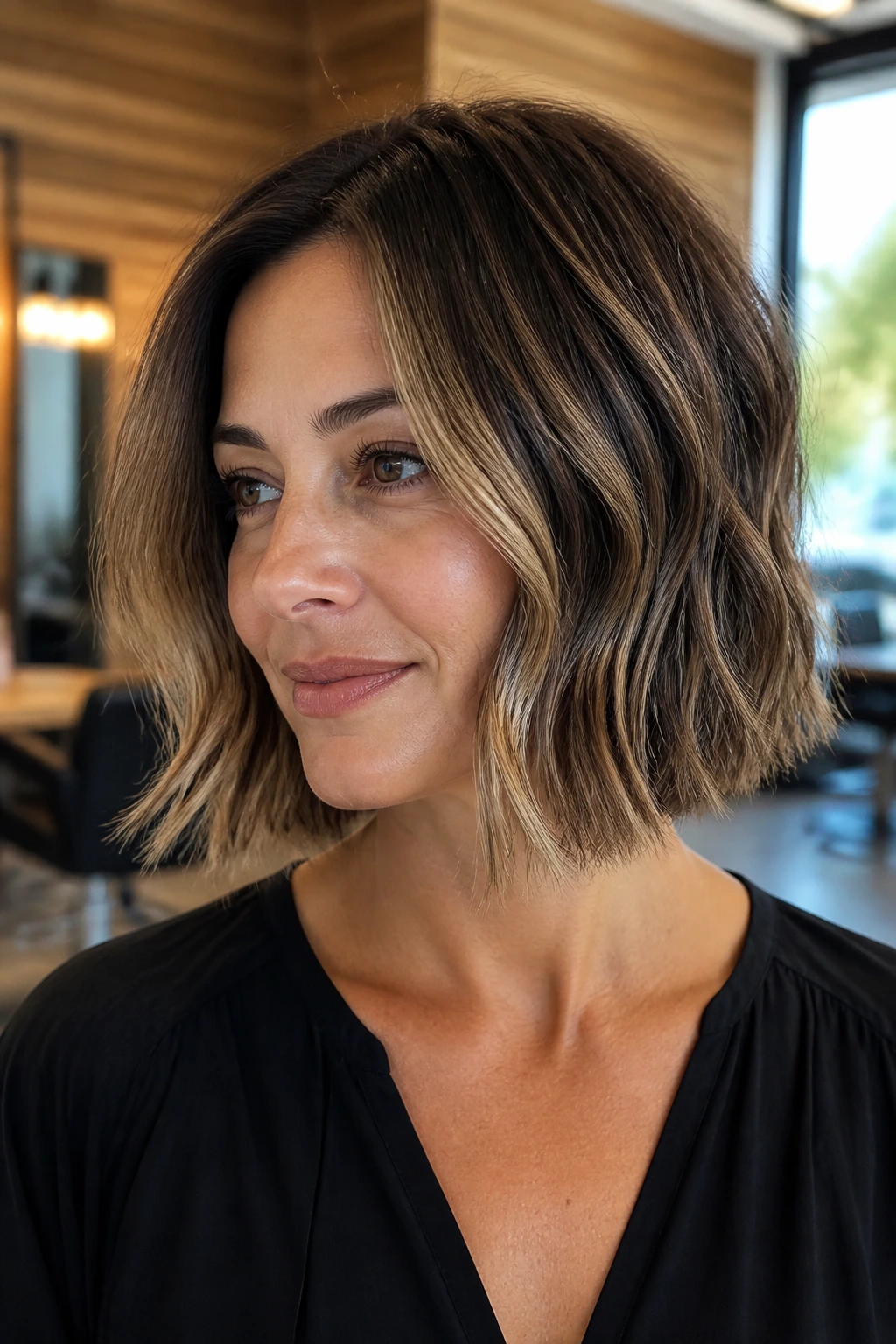
- The root stays deeper: Leaving 1 to 2 inches of natural depth near the scalp keeps the cut from looking flat and gives the highlights room to breathe.
- Brightness lands in the right places: On a bob, the cheekbone, jaw, and outer ends do the visual heavy lifting, so painted ribbons there matter more than a full head of lightness.
- The shape still reads clean: A blunt line needs contrast, but not loud contrast. Soft balayage lets you see the haircut first and the color second.
- Grow-out looks calmer: A softer blend at the root means fewer harsh lines when the color grows, which matters a lot on short hair because regrowth shows sooner.
- Texture changes everything: Waves, bends, and even a slight flip under at the ends make dimensional color look richer than pin-straight strands ever will.
1. Caramel Ribbon Balayage on a Blunt Bob
A blunt bob with caramel ribbons is the move when straight hair needs warmth without losing its edge. Keep the base around a level 5 or 6 brunette, then paint caramel through the mid-lengths and ends so the brightest pieces sit just below the cheekbone. The cut still looks crisp, but the color stops it from reading like one solid block.
Why It Works
Caramel is one of those shades that plays nicely with a blunt perimeter. It’s warm enough to soften strong lines, yet not so light that it blows out the shape of the bob. I like this especially on hair that air-dries straight, because the ribbons show even when there isn’t a wave pattern doing the work.
Placement Notes
- Keep the root shadow about 1 to 1½ inches deep.
- Put the lightest caramel around the front and crown, then feather it downward.
- Leave the nape a little darker so the haircut still looks dense.
Best tip: ask for a gloss that stays caramel-beige, not gold. Too much gold and the bob starts to look brassy instead of rich.
2. Mushroom Brown Balayage on a French Bob
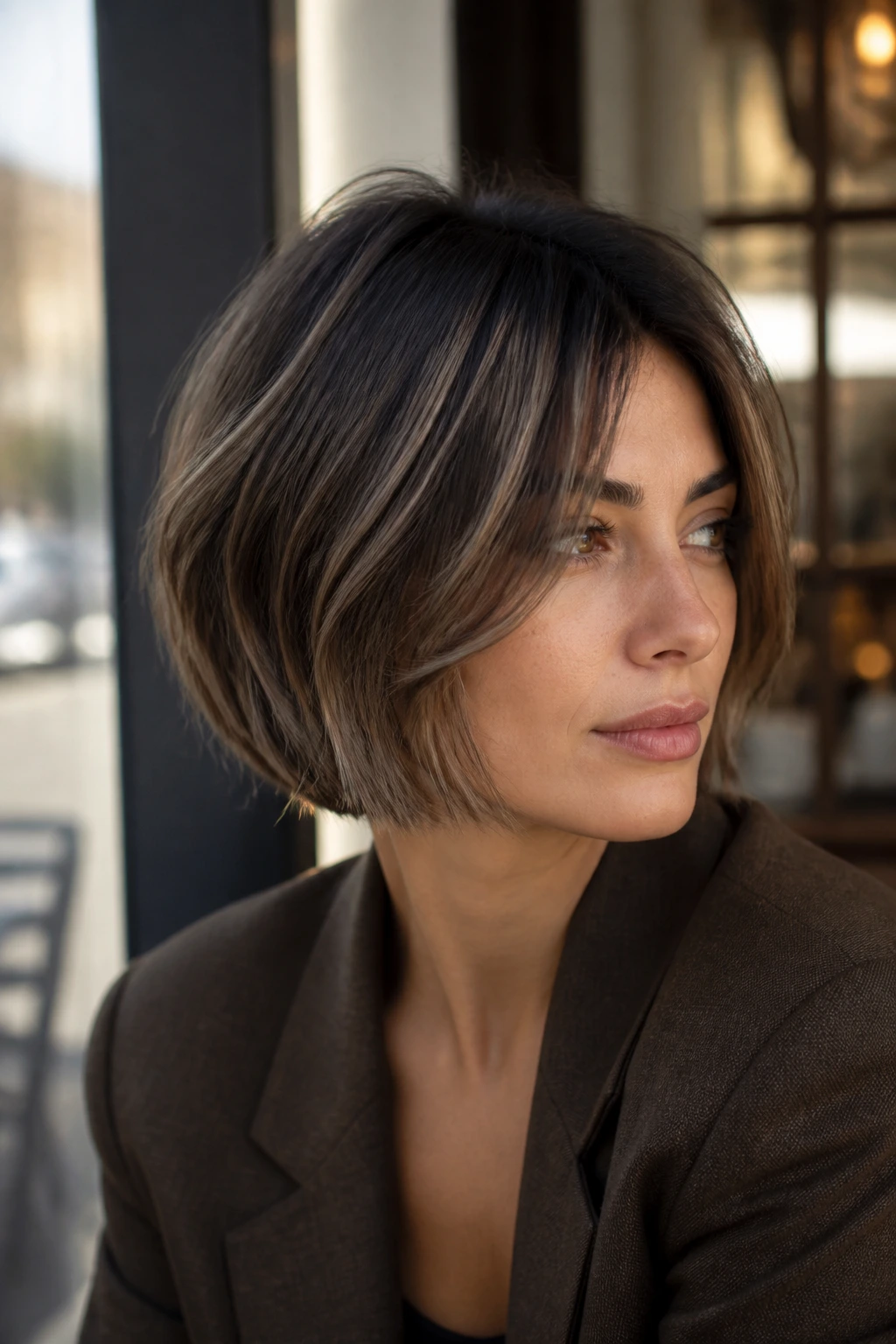
This is the shade I reach for when someone wants dimension without obvious highlights. Mushroom brown sits in that cool-neutral zone that makes a French bob look expensive in the most restrained way. The color is deeper at the root, smoky through the mids, and softly lighter only where the hair bends.
The trick is restraint. Mushroom brown on a bob should look like the hair changed in different lighting, not like it was painted in blocks. On a chin-length French bob, that kind of subtlety is the whole point. The cut stays airy around the jaw, and the color makes the texture look almost velvety.
Wear it with a tucked-behind-the-ear finish or a soft bend at the ends. A flat iron bend is enough; you do not need big waves here. The best version has movement you notice only when the light hits it from the side.
3. Beige Blonde Balayage on a Layered Bob
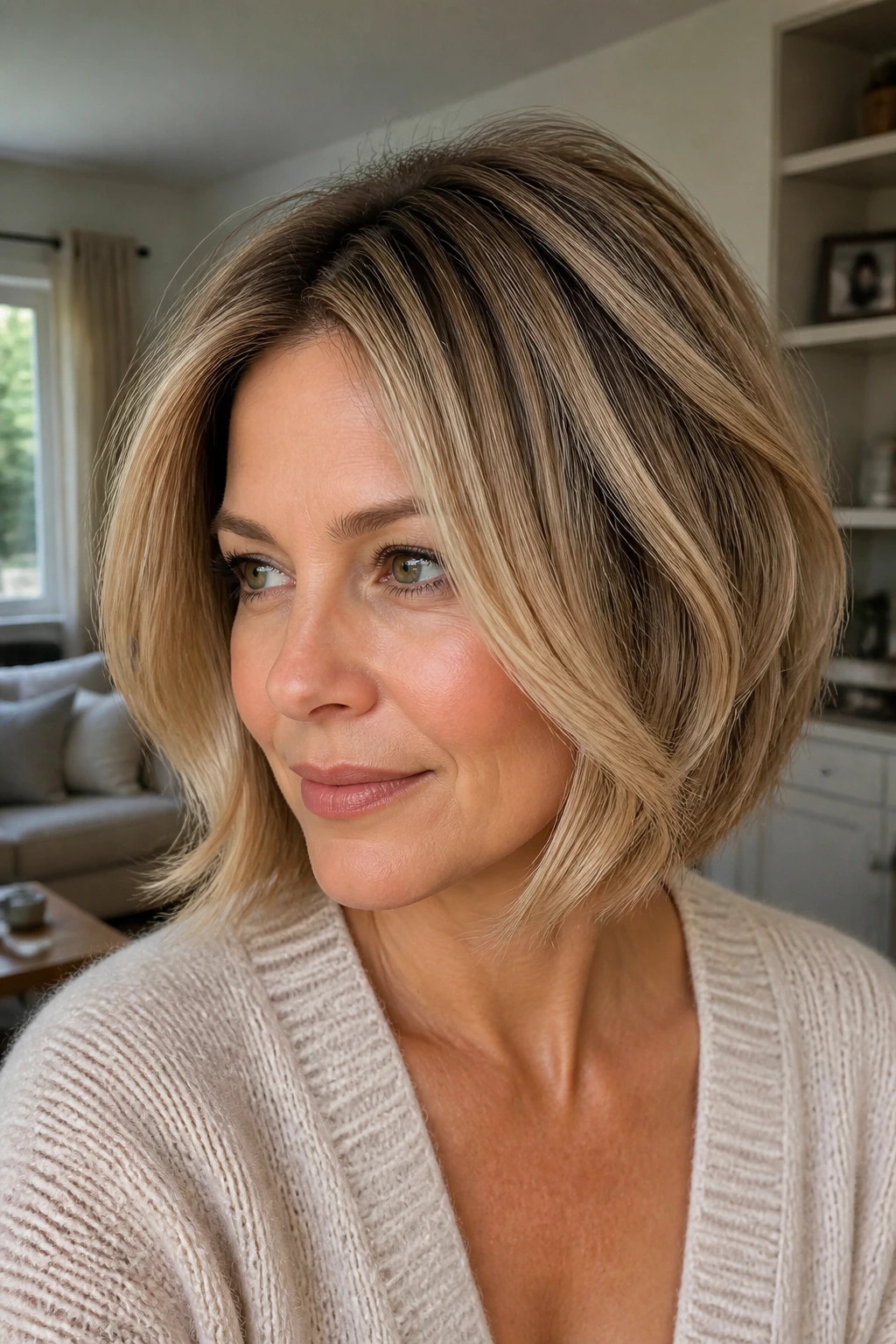
Can beige blonde work on a layered bob without turning choppy? Yes — if the layers are doing some of the blending for you. Beige blonde is a calmer choice than icy blonde, and on a layered bob it makes the mid-lengths glow without screaming for attention.
What Makes It Click
The color works because the layers already create visual breaks. You can place beige blonde in soft ribbons through the top and around the face, then leave the underneath pieces slightly darker so the cut still has depth. That contrast keeps the bob from looking puffy or overexposed.
How to Wear It
A round brush blowout gives this one the cleanest finish, especially if the ends flip under by a half inch. If you like waves, keep them loose and brushed out so the blonde looks misty rather than stripey. A middle part is fine, but a slightly off-center part tends to make the face-framing pieces do more work.
4. Copper Balayage on a Jaw-Length Bob
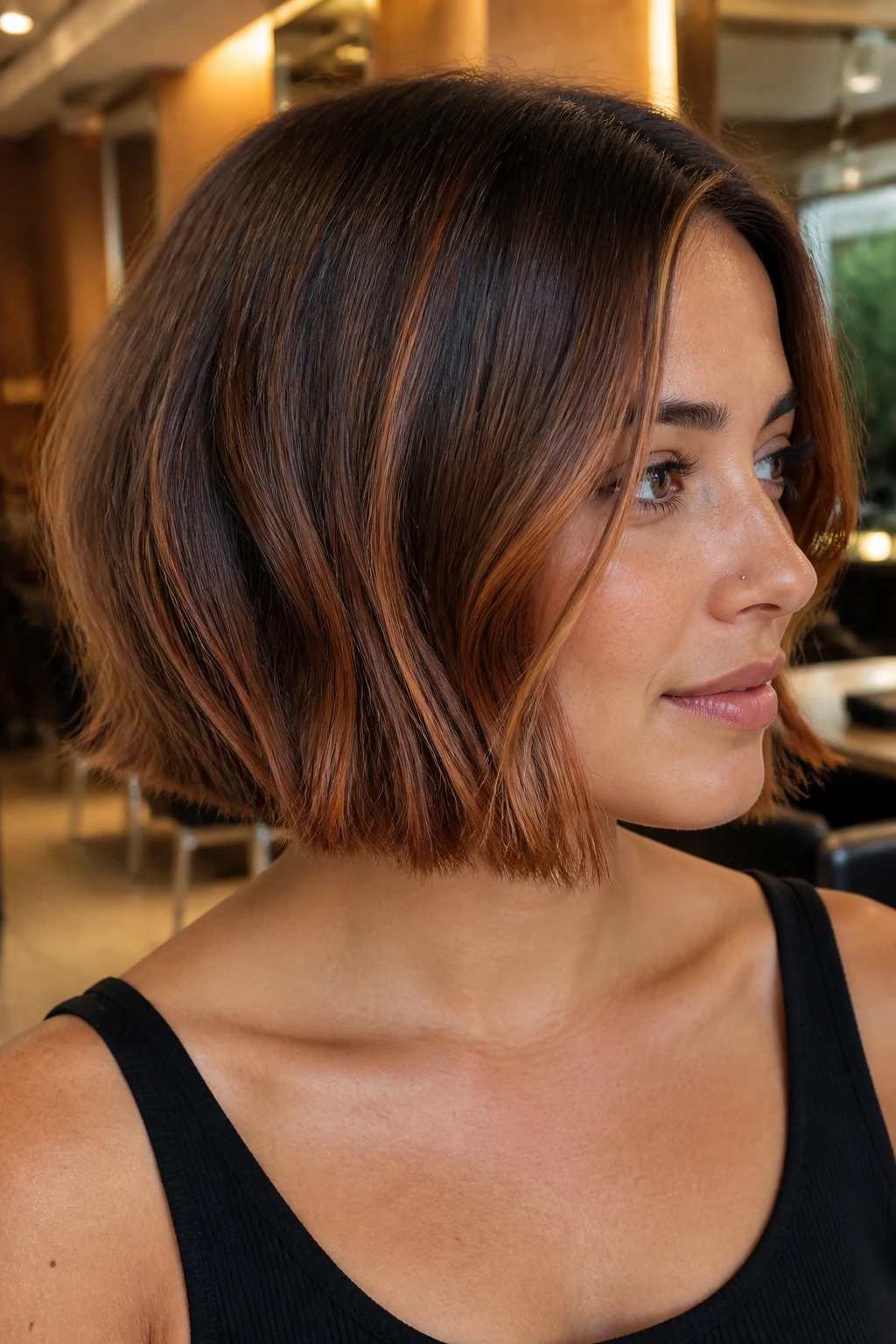
A jaw-length bob with copper balayage has real presence. Not loud. Presence. The warmth catches on the outer curve of the cut, and because the bob sits right at the jaw, the copper makes the whole silhouette feel intentional instead of severe.
This look is especially good on medium brunettes who want warmth without going full red. The copper should be painted in thin ribbons, not one chunky block along the surface. If you’ve ever seen copper done badly, you know the problem: too much pigment, not enough blend. On a bob, that mistake shows fast.
Wear this one with texture. A slight wave or a tousled blow-dry helps the copper break up into little flashes of color. Straight and sleek can work too, but the finish should still feel touched, not stiff.
5. Espresso-to-Mocha Balayage on a Sleek Bob
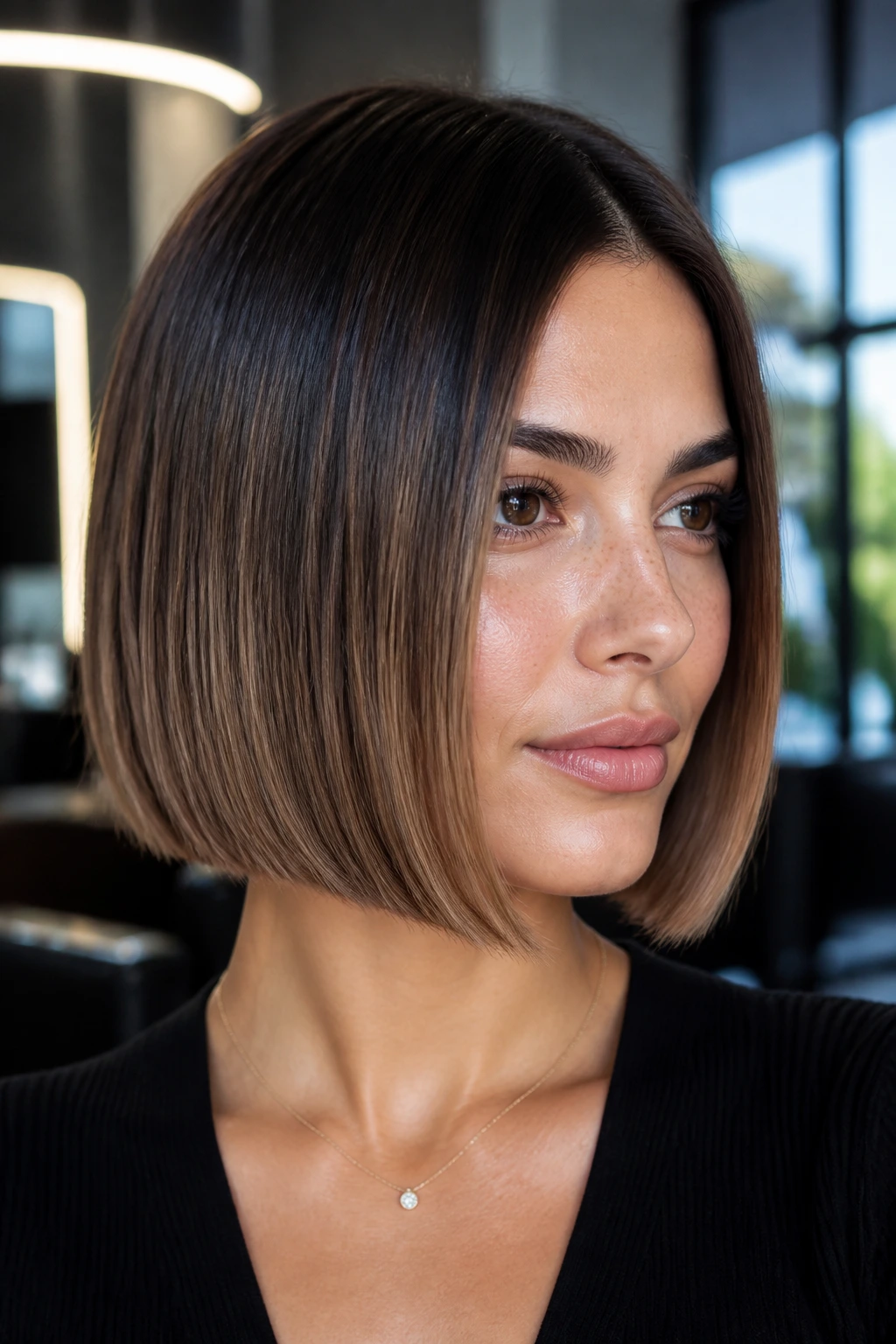
Espresso roots fading into mocha lengths is the kind of color that makes a sleek bob look expensive without looking fussy. The base stays deep, almost glossy black-brown, then the mocha appears quietly through the mids and ends. There’s no hard line. Just a slow shift.
That slow shift matters because sleek bobs have nowhere to hide. If the color turns stripey, the eye goes straight to the mistake. Mocha balayage avoids that by keeping the contrast low and the shine high. The result is smooth, polished, and a little moody in the best way.
I like this on hair that’s naturally straight or lightly waved. Flat iron the ends just enough to tuck them under by a quarter inch, then finish with a light serum. Heavy oil kills the whole thing and makes the mocha disappear.
6. Honey Balayage on an Inverted Bob
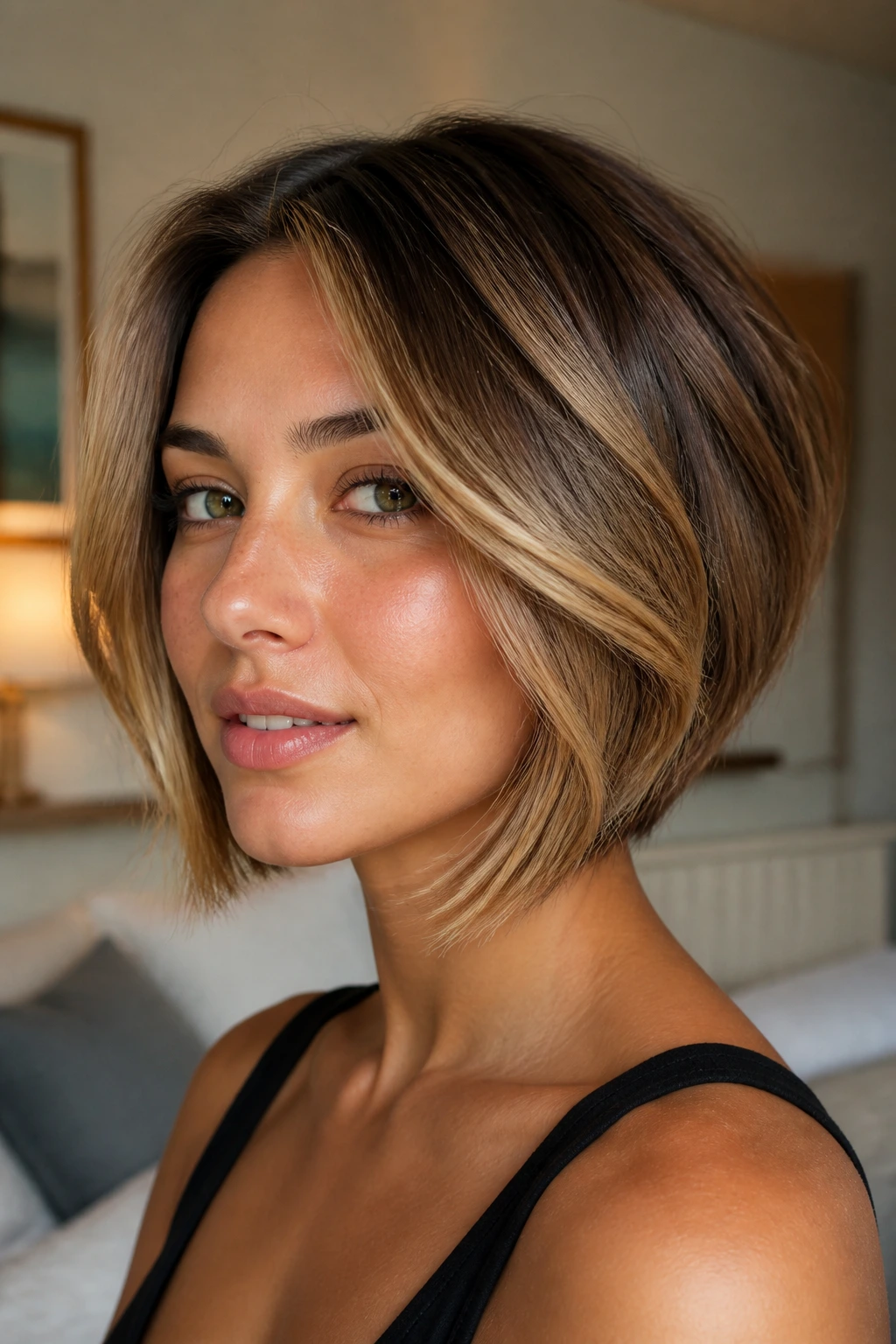
Unlike cooler balayage looks, honey on an inverted bob gives you movement and warmth at the same time. The shorter back lets the darker root stay compact, while the longer front pieces can carry the honey ribbons farther toward the collarbone. That stretch makes the color feel larger than the cut actually is.
Honey works best when the pieces are thin and scattered, not packed together. You want the front to glow around the face and the back to stay deeper so the angle of the bob doesn’t get lost. If every section gets bright, the inverted shape starts to flatten out visually.
A soft wave through the front length makes this color sing. The back can stay cleaner and tighter. That contrast — controlled front, darker back — is what keeps the haircut readable.
7. Ash Brunette Balayage on a Textured Wavy Bob
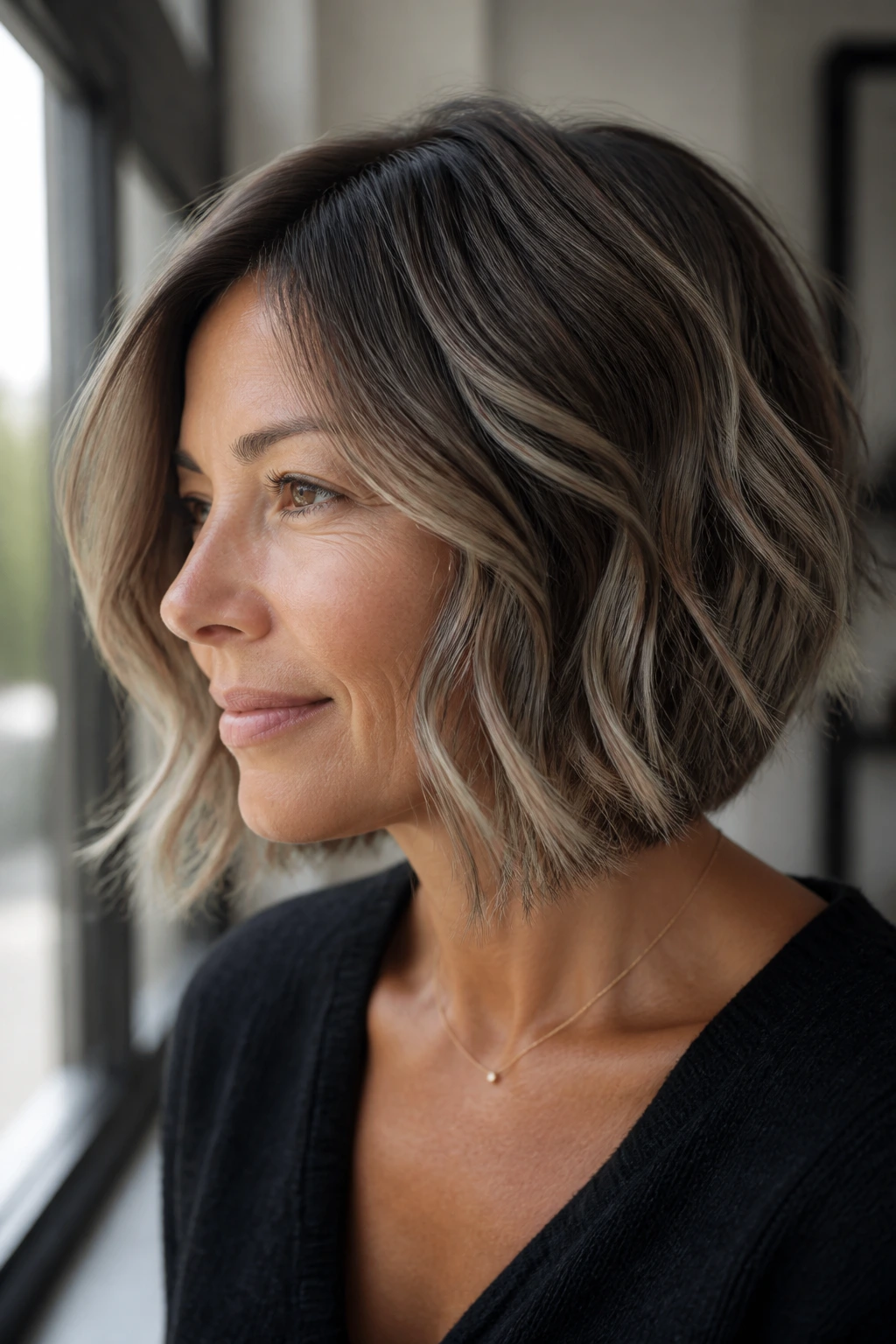
Would ash brunette on a wavy bob look too cool? Not if the lift is gentle and the waves are loose. Ash brunette is one of the easiest ways to add dimension to darker hair without dragging it into warm caramel territory, and the texture breaks up the cool tones so they don’t feel heavy.
The Science of the Soft Look
Ash tones work when they’re mixed with movement. On a textured bob, the wave pattern creates dark and light pockets, and the cool ribbons slide into those spaces instead of sitting on top like paint. That’s what keeps the whole thing from going flat and gray.
Best Placement
- Keep the brightest pieces around the outer curve and face frame.
- Let the nape stay deeper so the bob doesn’t lose density.
- Use a light wave, not a tight curl, or the ash will read darker than you want.
A matte cream or texture spray is better here than a shiny oil. Shine can make ash look flat. Texture makes it look deliberate.
8. Face-Framing Blonde Balayage on a Curly Bob
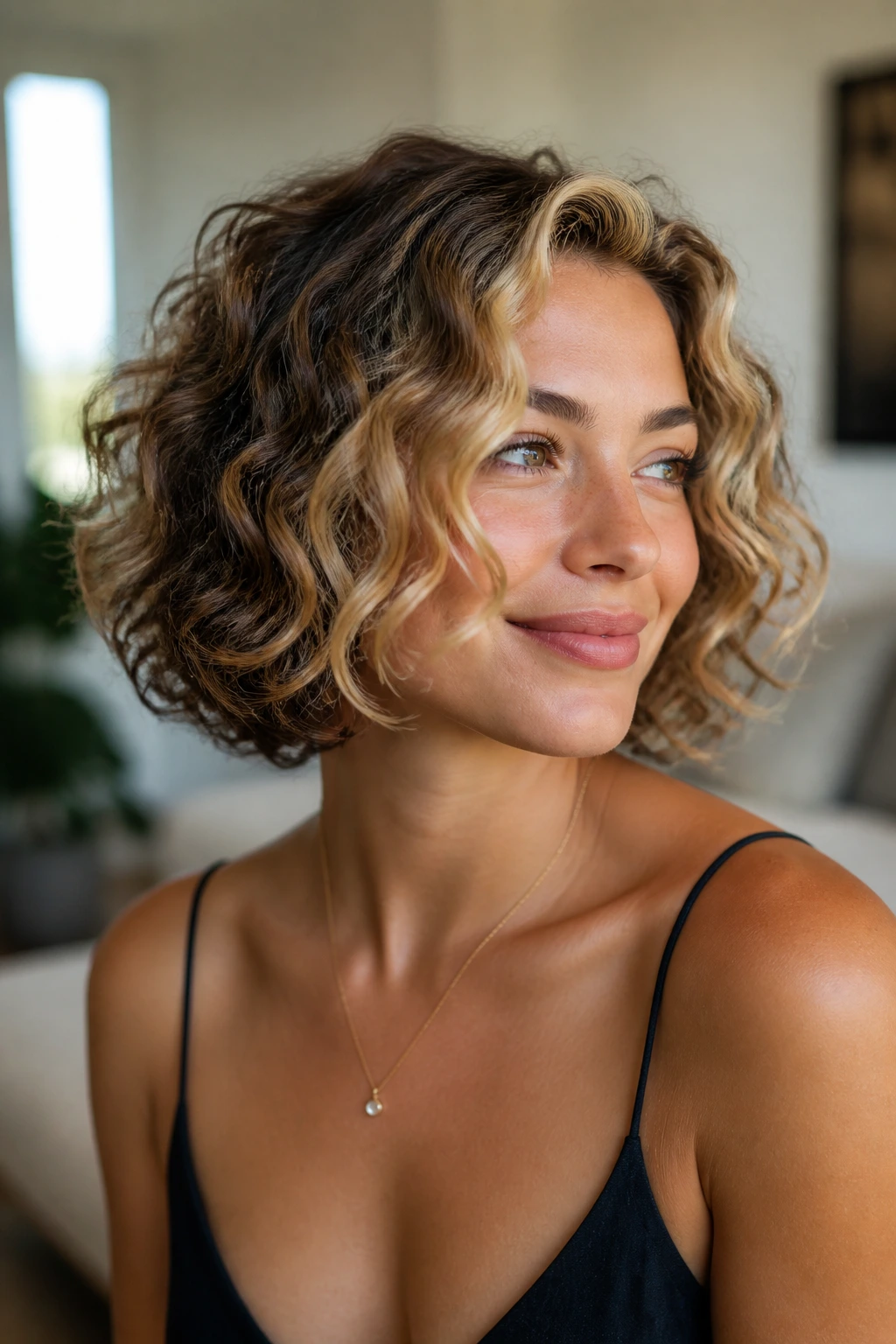
A curly bob with face-framing blonde pieces does one thing very well: it pulls light right where your eyes go first. The curls keep the brightness from reading harsh, and the blonde around the front creates a lifted shape even if the back is compact and rounded.
I’ve always liked this look more than full-head lightening on curls. Full saturation can erase the pattern in curly hair. Face-framing pieces keep the dimension visible, and they respect the curl memory instead of fighting it. If the curls are loose, the blonde ribbons should be just a shade or two lighter than the rest. If the curls are tighter, keep the lift softer.
Ask for the lightest pieces to start near the cheekbones and stop before the ends get too thin. On curly hair, over-lightened ends can fray fast. A clean curl with a controlled bright front reads better than a pile of pale tips.
9. Bronde Balayage on a Stacked Bob
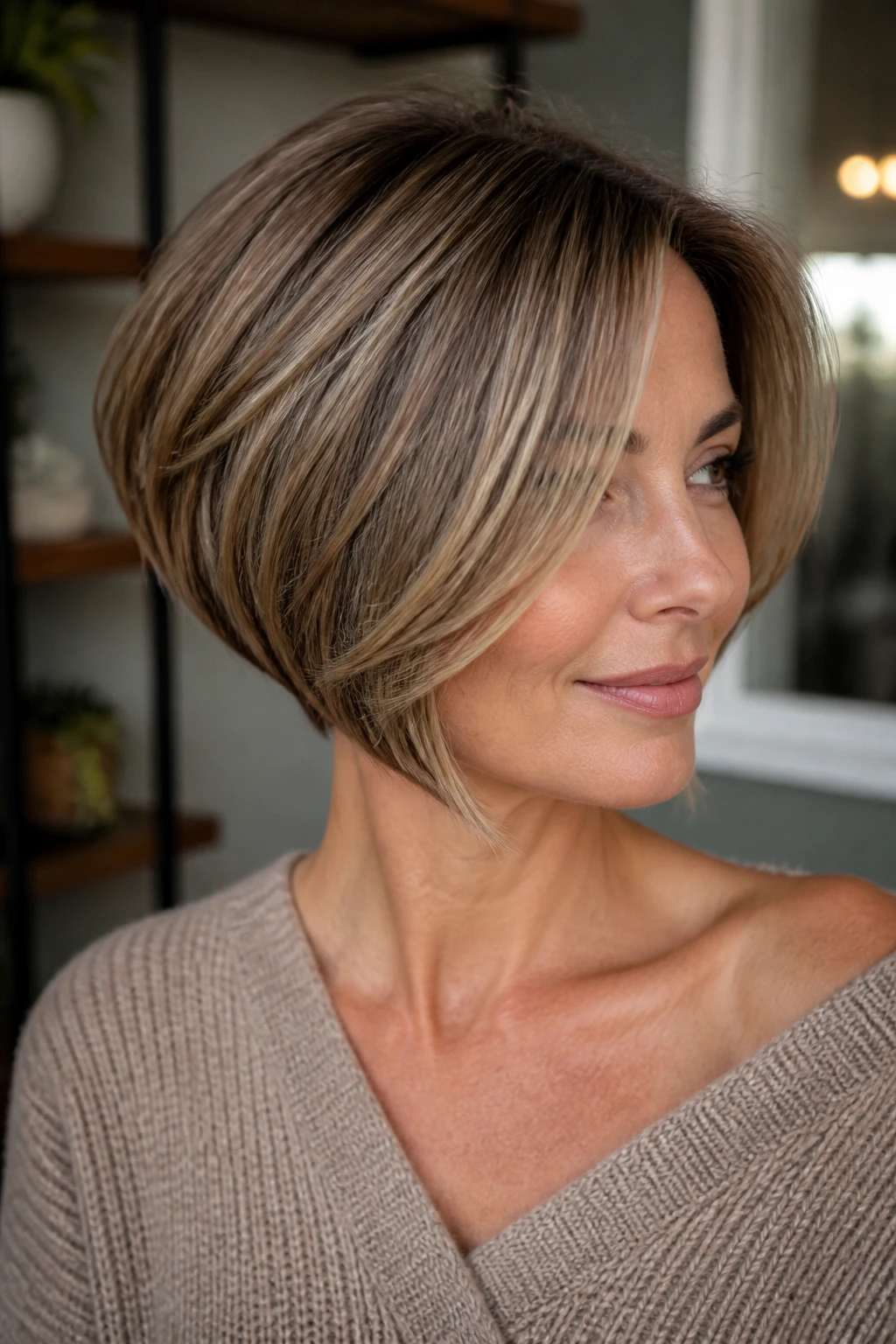
Bronde is my favorite compromise shade for a stacked bob. It keeps the crown darker, lets the stacked back show off the cut, and introduces enough beige-brown brightness through the top layers that the shape never feels heavy. There’s a reason this look photographs well in real life, not just in salon mirrors: the color follows the geometry of the haircut.
The stacking at the back gives you natural lift, which means the lighter pieces don’t need to work as hard. A few bronde ribbons through the top and side panels are enough. If you overload the back with lightness, the whole shape goes puffy and the graduation disappears.
Wear this one with volume at the crown and a smooth finish through the ends. It’s neat, but not stiff. The slight contrast between the darker lower layers and the beige-brown top is what keeps the bob from feeling flat.
10. Vanilla Cream Balayage on an A-Line Bob
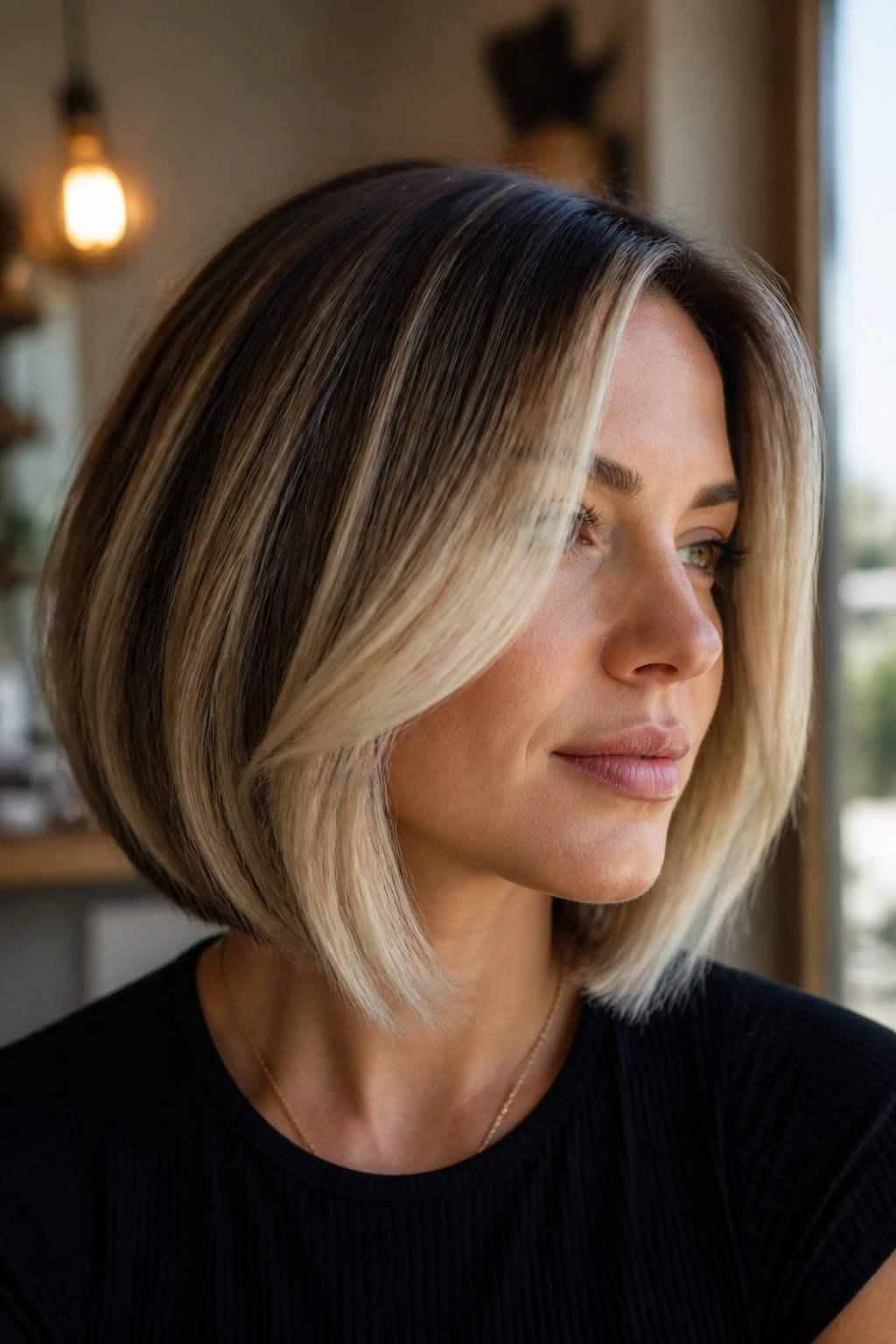
Vanilla cream balayage on an A-line bob has a clean, soft brightness that sits between blonde and beige. The front gets longer, so the cream can stretch there a little more, while the shorter back stays closer to the base shade. That contrast makes the cut swing forward in a way you can actually see.
What I like about this shade is how gentle it looks on a sharp angle. A-line bobs can get severe quickly. Vanilla cream keeps the perimeter tidy, but it takes the edge off the face-framing length. It’s a useful trick on finer hair too, because the lighter pieces create the impression of more movement without needing a lot of layering.
A polished bend with a round brush works best. If you curl it, curl away from the face at the front and leave the back smooth. Too much wave makes the angle disappear.
11. Chestnut Balayage on a Bob with Curtain Bangs
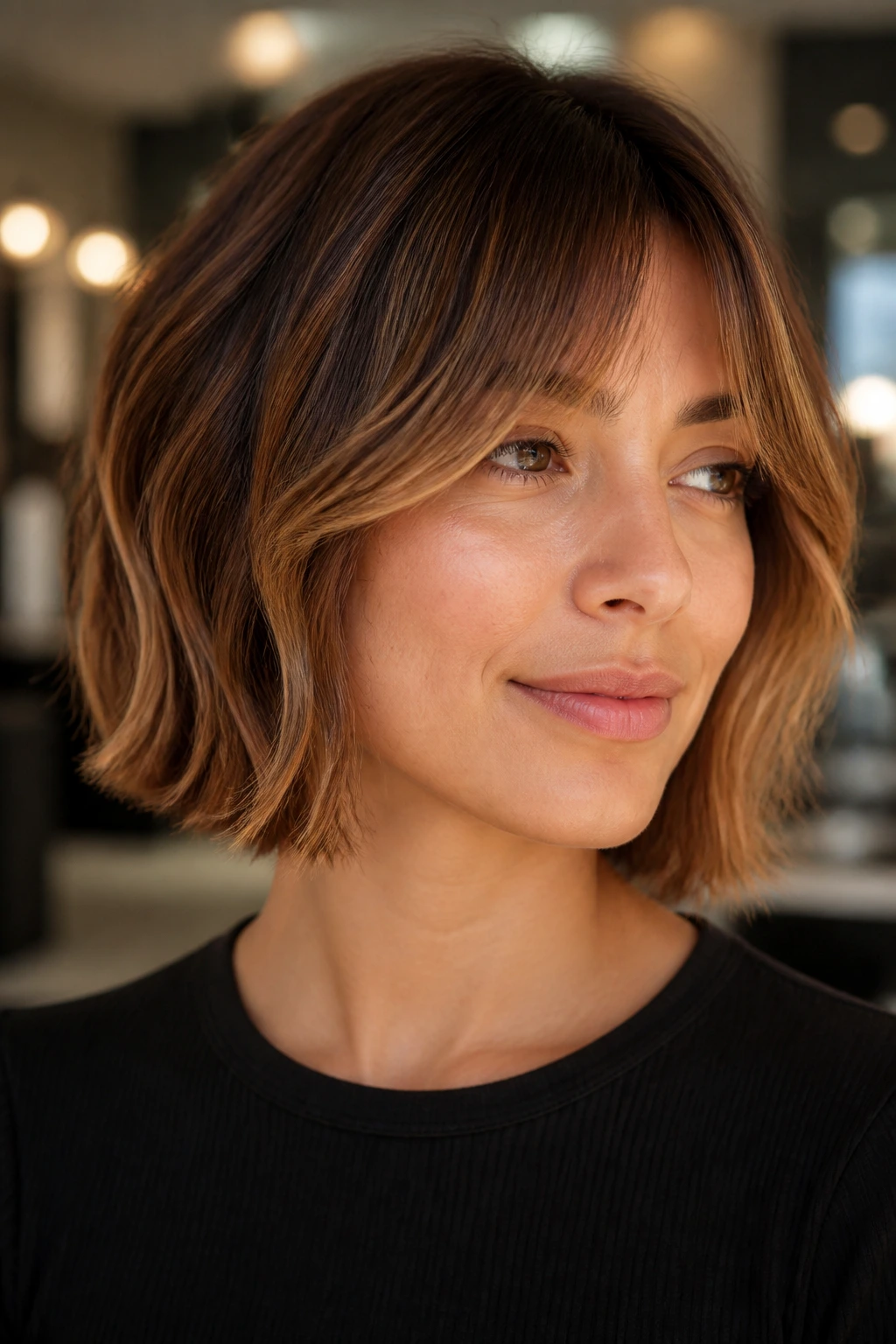
Chestnut balayage and curtain bangs are a good match because both rely on soft framing rather than hard contrast. The bangs get a little lighter at the ends, the sides carry the warm chestnut through the cheek area, and the bob underneath stays rich enough to anchor the whole cut.
Why It Feels Balanced
Curtain bangs can swallow a face if the color is too dark, and they can look disconnected if the front gets too bright. Chestnut sits right in the middle. It adds warmth to the fringe, keeps the top from feeling heavy, and helps the bob and bangs read as one shape instead of separate pieces.
Quick Notes
- Keep the brightest chestnut on the bangs’ outer edges.
- Blend the color down the front panels so the lines don’t look chopped.
- Ask for a soft glaze, not a copper-red toner.
This is one of those looks that gets better with a little bend in the bangs. A round brush and a cool shot from the dryer are enough.
12. Soft Rose Gold Balayage on a Rounded Bob
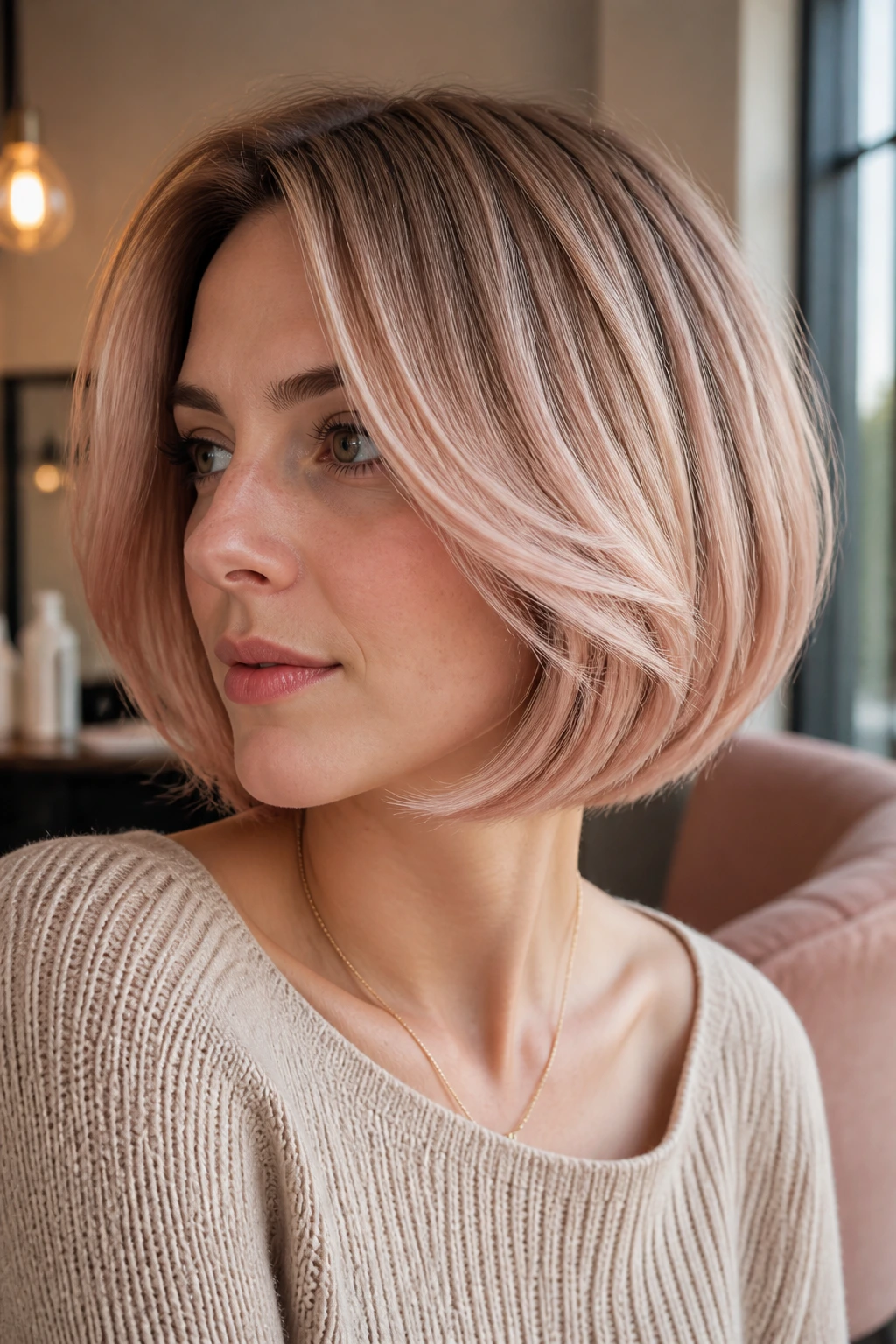
Can rose gold look soft on a bob? Absolutely, if you keep it muted and creamy rather than shiny pink. A rounded bob gives rose gold the right base because the curves let the color catch on the sides without taking over the whole head.
The best version starts with a beige-blonde lift and a very light rose glaze on top. You want the pink to feel like warmth in the light, not a fashion-color block. On a rounded bob, this can be gorgeous because the shape is already gentle; the color just makes it feel a little more polished and a little less plain.
I’d pair this with smooth styling, not tight curls. A soft underbend or a brushed wave gives the rose gold enough surface to show up. If the hair is too textured, the tint can get muddy.
13. Golden Cinnamon Balayage on a Box Bob
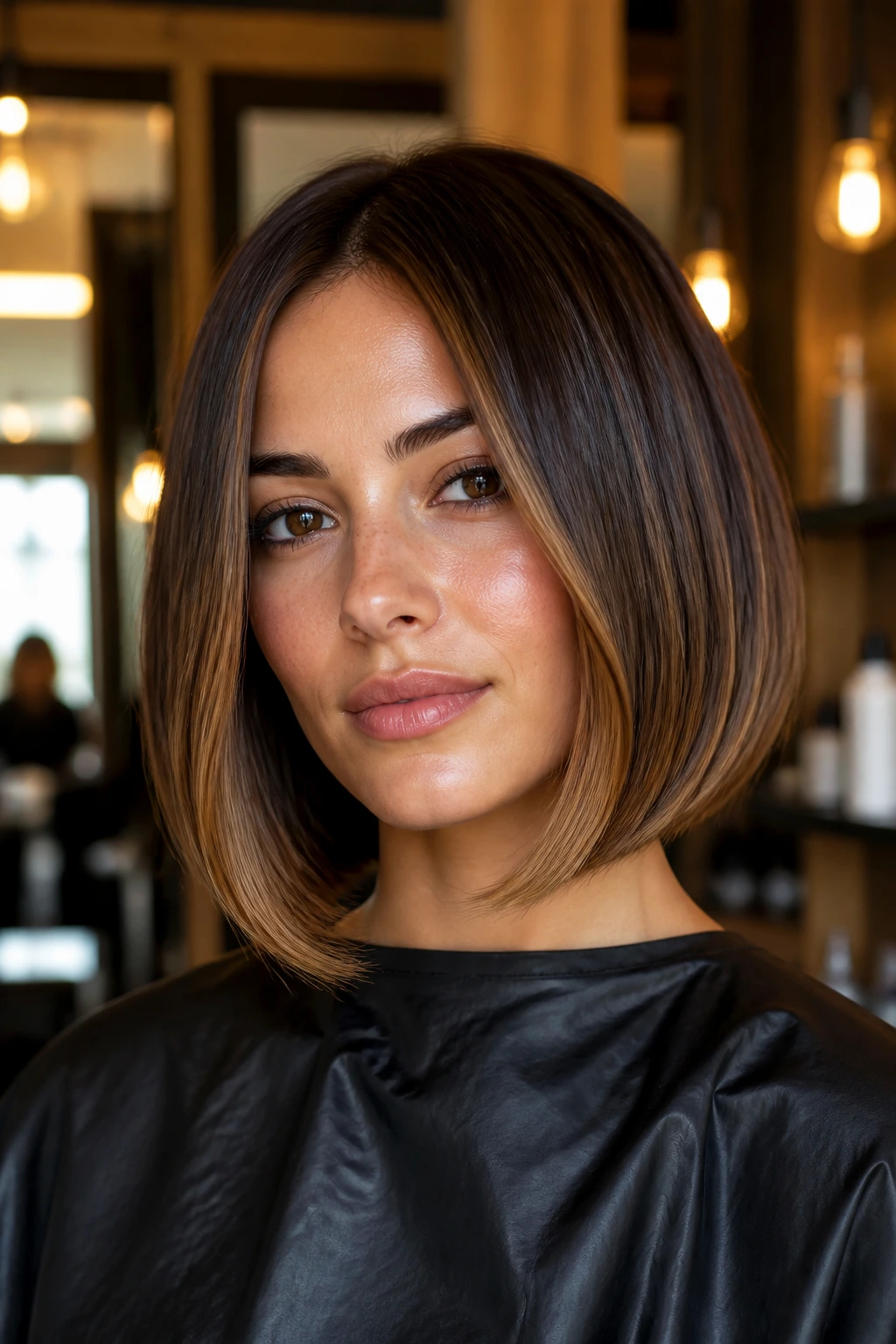
A box bob lives and dies by its line, which is why golden cinnamon works so well on it. The color is warm enough to keep the shape from feeling blunt in a harsh way, but it still respects the crisp edges. Golden cinnamon ribbons through the mid-lengths add depth without breaking the perimeter apart.
This shade suits brunettes who want warmth that isn’t too yellow. Cinnamon brings a reddish-brown note; gold softens it. Together, they make the bob look dimensional under indoor light and even richer outdoors. If the lift is too bright, the box shape can turn fuzzy, so stay moderate with the lightest pieces.
Wear this one smooth, with ends that curve under just a little. A box bob looks strongest when the finish is controlled. The color should feel like a glow inside the cut, not a surface pattern.
14. Icy Champagne Balayage on a Micro Bob
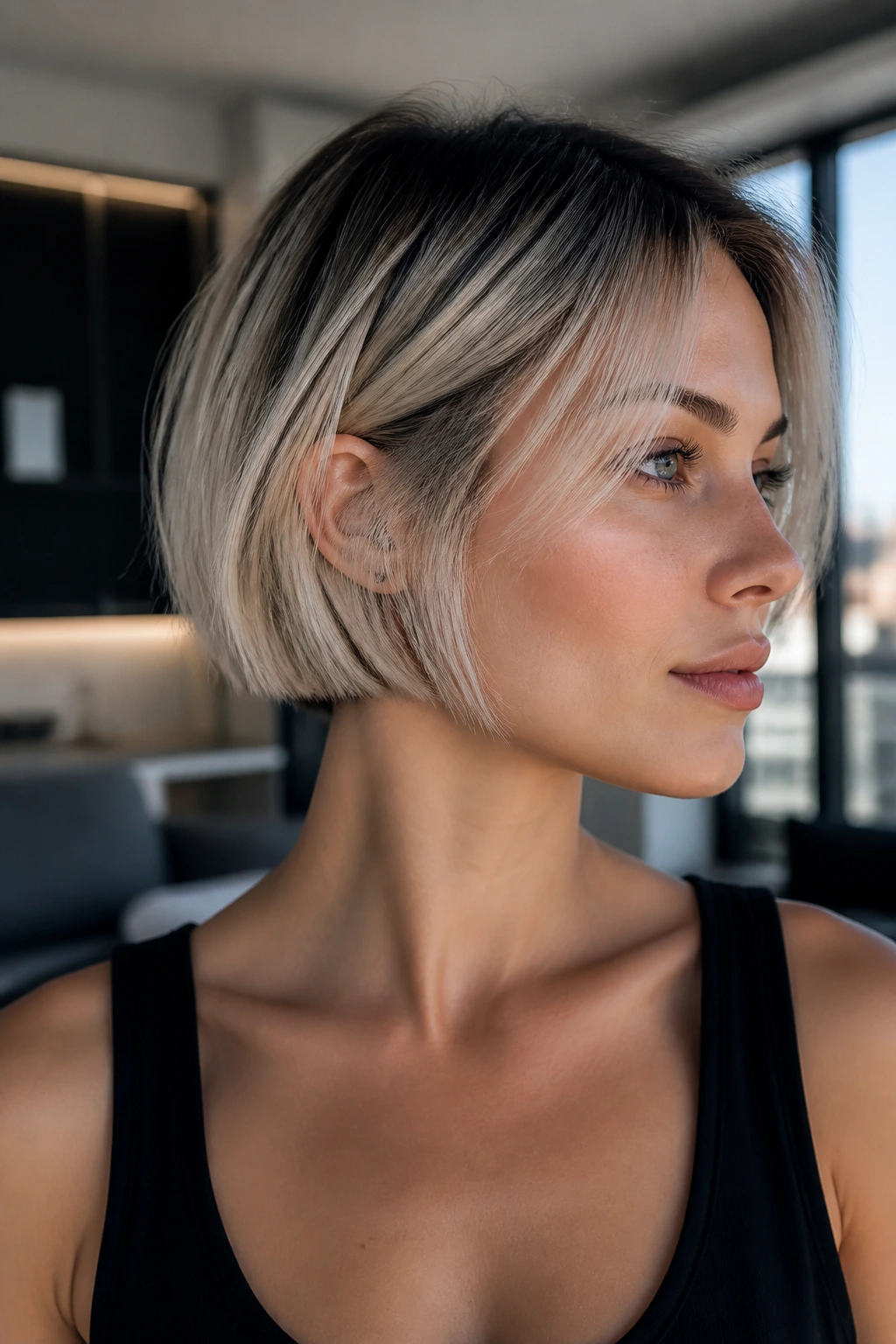
A micro bob can handle icy champagne better than most people think. The reason is simple: the cut itself is so short and graphic that a pale, soft-metallic tone adds contrast without needing much length to show off. Champagne keeps the blonde from going flat white, while the icy note brings sharpness to the edges.
The key is restraint at the root. Let the base stay dark enough to frame the face, then place the lightest pieces around the top layer and front line. If you push the blonde all the way through the back, the shape turns airy in a bad way and the bob loses its compact punch.
This is a look for straight or slightly bent styling. The finish should be sleek, with a little movement at the ends. Too much wave makes the micro length feel fussy, and the champagne loses its clean edge.
15. Soft Auburn Balayage on a Wavy Bob
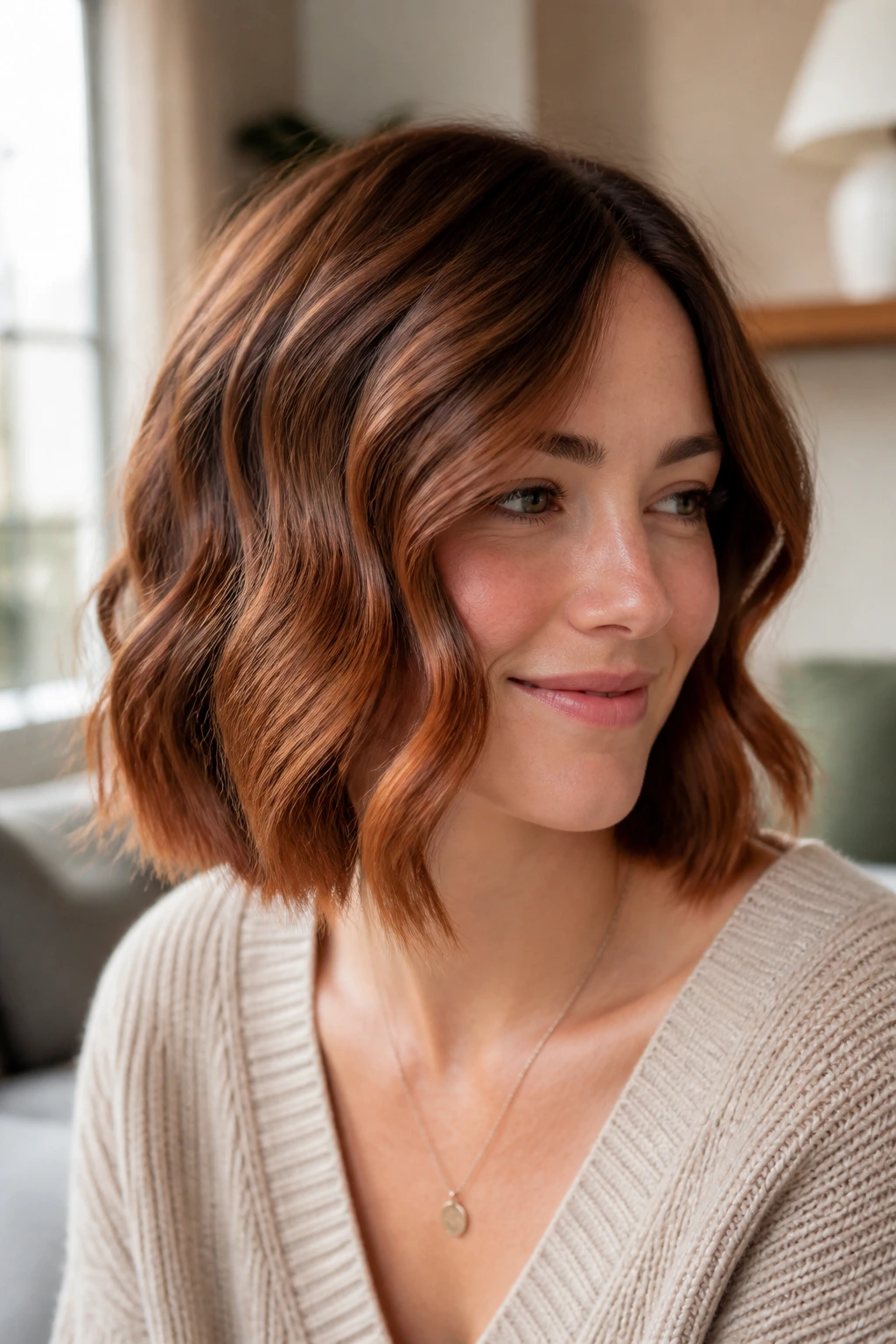
Soft auburn on a wavy bob feels lived-in in the best sense of the word. The waves break the auburn into little pockets of color, so the warm pieces never sit too loudly on top of the base. It’s especially flattering on medium brunette hair that wants a seasonal shift without a hard red commitment.
What makes this version work is the overlap between red and brown. Pure red can be loud on short hair. Auburn slides easier because it carries some depth. The base stays anchored, the warmer pieces live around the bends, and the whole cut picks up movement every time the hair shifts.
A diffuser or a loose wand wave helps here. The wave does not need to be perfect. In fact, the slightly irregular pieces are what make the auburn read soft instead of salon-stiff.
16. Sandstone Balayage on an Italian Bob
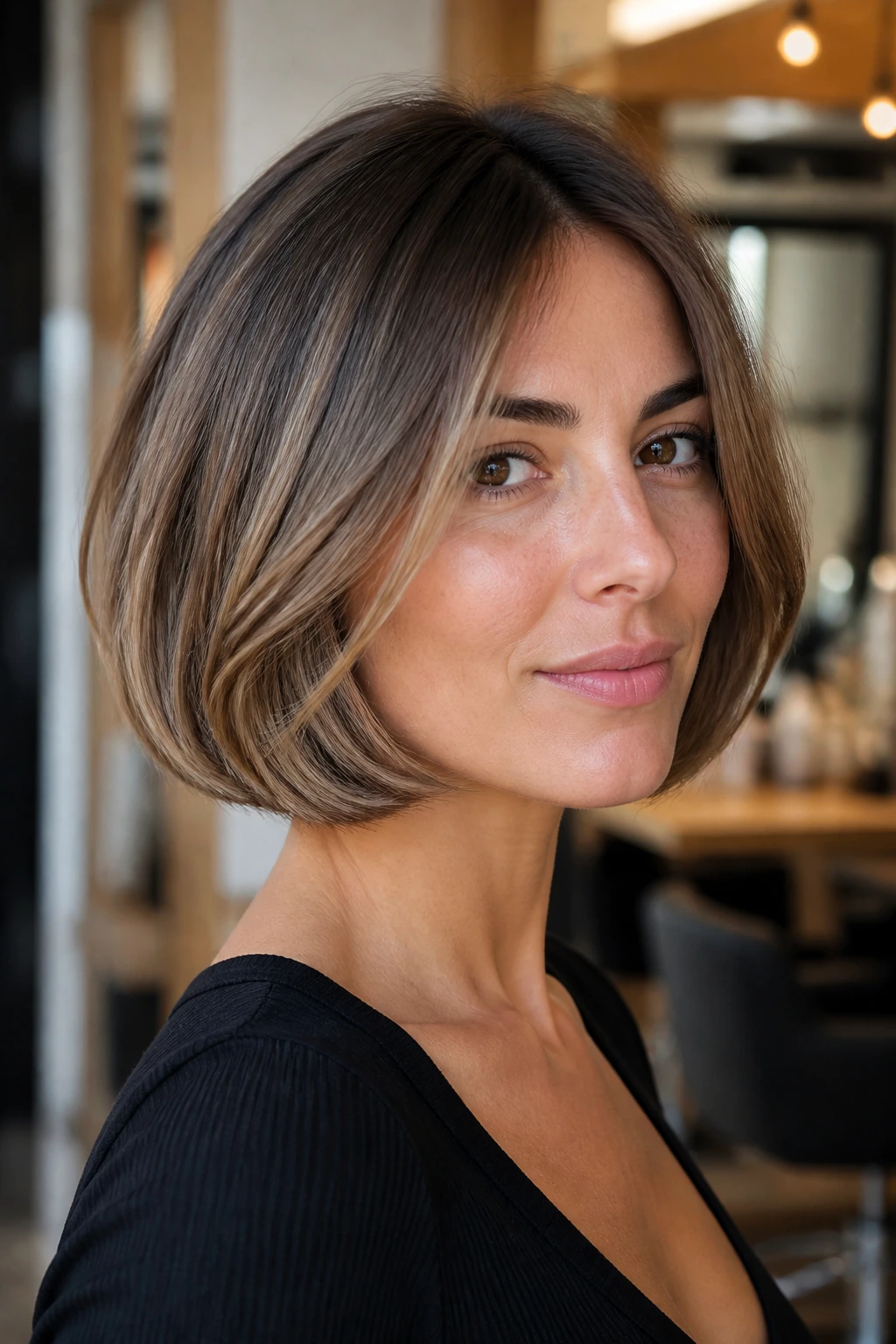
Sandstone is one of those shades that makes an Italian bob look expensive without trying too hard. It sits between beige, taupe, and soft brown, which is exactly why it works on a fuller bob with a little air around the ends. The color adds light, but it never steals the shape.
Unlike brighter blonde balayage, sandstone keeps the bob grounded. The hair still looks rich near the roots and around the underlayers, while the outer panels get that dusty, sun-warmed effect. On a rounded Italian bob, the result is elegant without feeling formal.
I’d keep the styling smooth with a slight bend and a side part or a loose off-center part. That tiny shift lets the sandstone ribbons fall differently across the face, which makes the color seem more expensive than a flat center part ever could.
17. Toffee Balayage on an Asymmetrical Bob
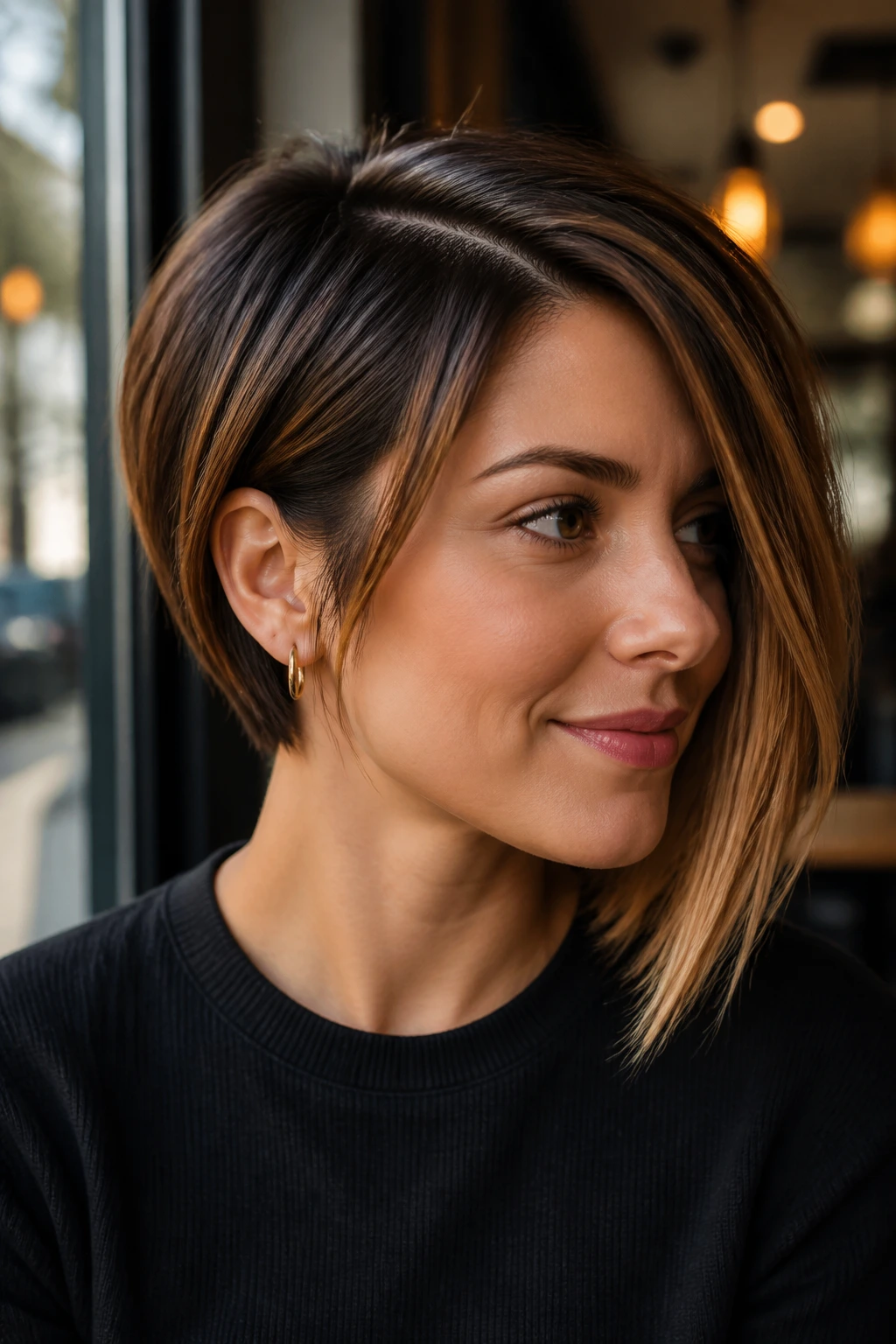
Toffee on an asymmetrical bob gives you a little sweetness and a little edge. The longer side can carry more brightness, while the shorter side stays deeper and more grounded. That asymmetry becomes a feature instead of something you have to ignore.
Toffee works because it’s warm without crossing into orange. It brings out movement in the longer front piece, especially if the bob swings just below the chin on one side. A heavy highlight pattern would ruin the angle, but a soft painted blend keeps the geometry intact.
If you like wearing one side tucked back, this is a smart color choice. The exposed side gets the toffee ribbons and the tucked side keeps the darker depth. That contrast adds shape with almost no effort.
18. Cool Mocha Money-Piece Balayage on a Chin-Length Bob
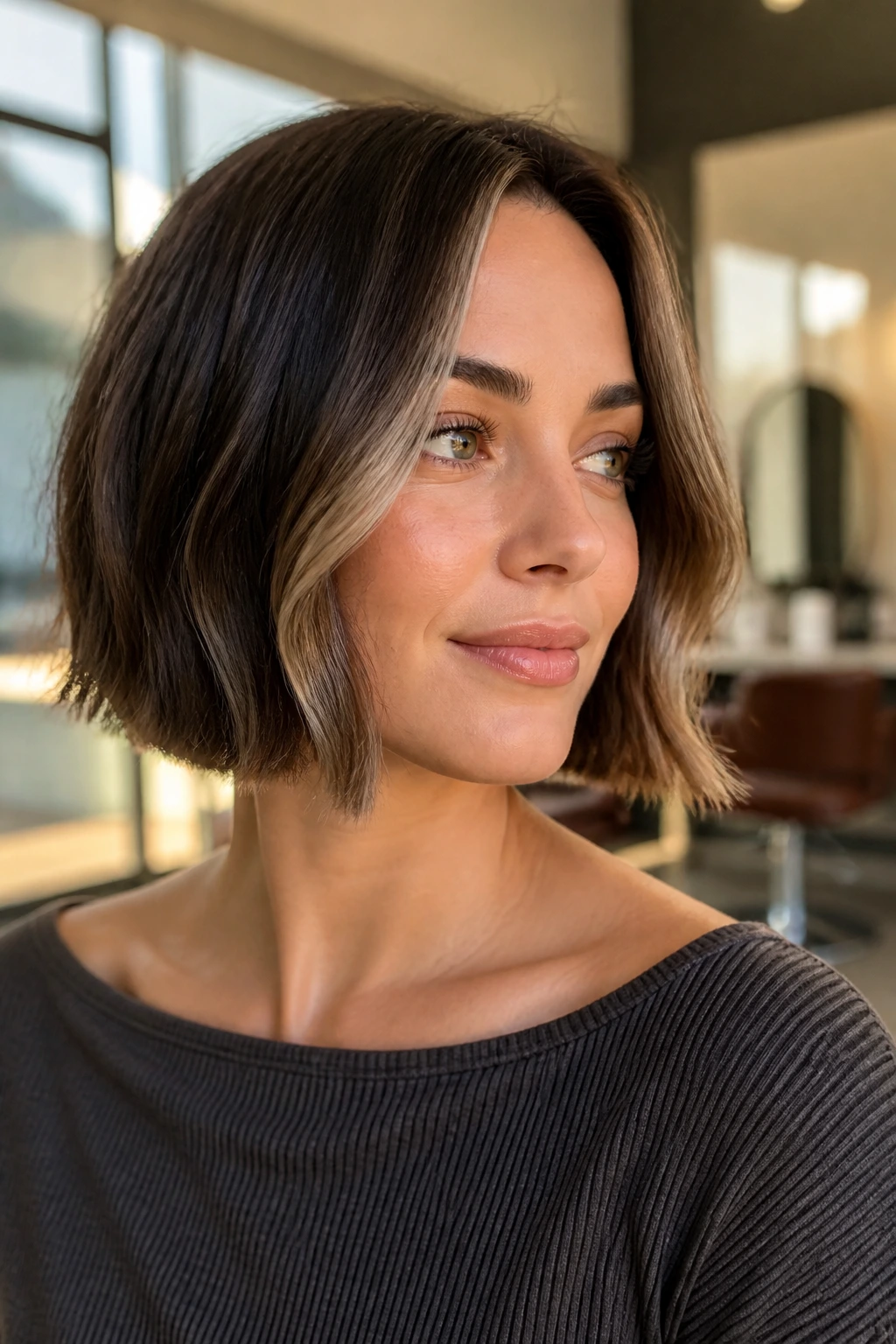
A cool mocha money-piece on a chin-length bob is for someone who wants the front to do the talking. The rest of the hair stays deep and soft, while the face frame gets painted in a mocha-beige ribbon that lifts the eyes and sharpens the jawline. It’s subtle, but not shy.
The beauty of this placement is that it keeps the bob from looking over-highlighted. On short hair, too much brightness can erase the shape. A focused money piece gives you enough contrast to make the cut pop, especially if the rest of the color stays rooted and smoky.
This works best with clean styling around the face — either a loose bend or a polished tuck. The front pieces should fall in one clear sweep, not a tangled wave. That keeps the mocha visible and the chin-length line neat.
19. Smoky Plum Peekaboo Balayage on a Dark Bob
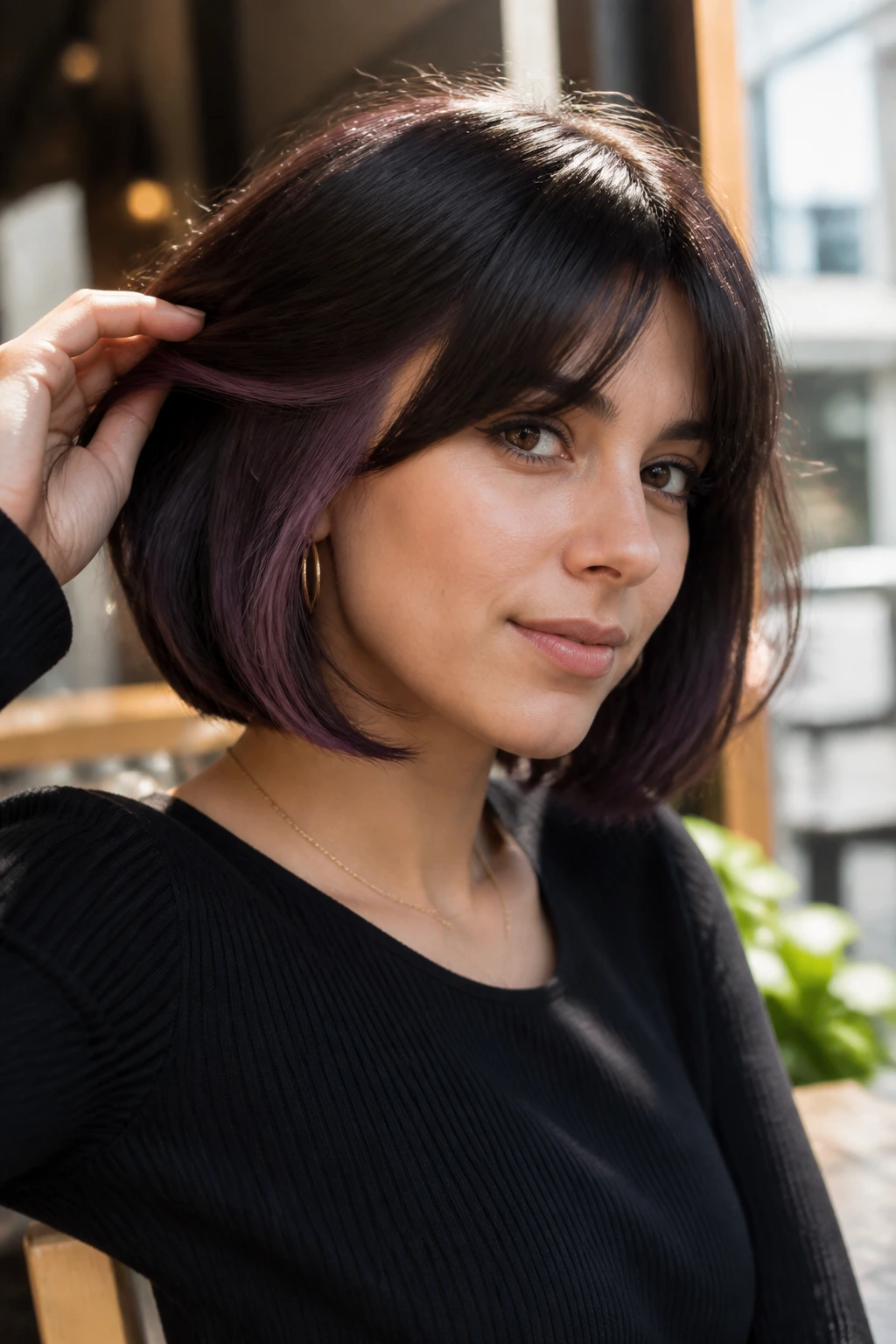
Smoky plum peekaboo color is for the person who likes dimension with a little surprise. The top layer stays dark and glossy, while the hidden sections underneath show plum-violet notes when the hair swings or tucks behind the ear. On a bob, that reveal feels controlled, not theatrical.
The best part is that the plum does not need to be bright to work. A smoky version keeps the color rich and wearable, especially on dark brown or near-black hair. The contrast lives in the movement, not the saturation. That makes it a strong option if you want something interesting but still office-friendly.
I’d wear this with blunt or softly rounded ends. When the lower layer peeks through, the clean shape gives the color a better frame. It’s one of those looks that gets more interesting the more you move.
20. Pearl Brunette Balayage on a Rounded Bob
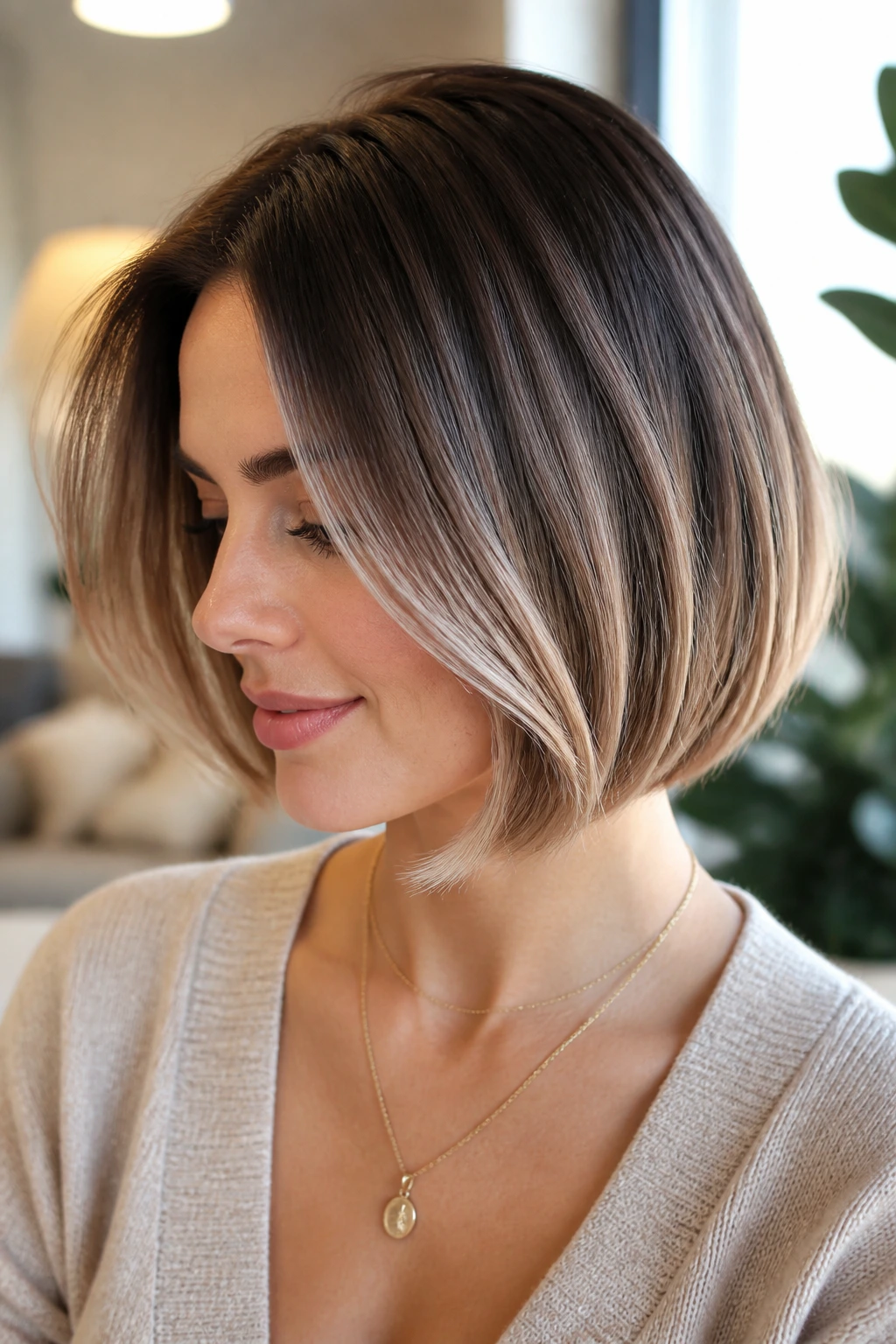
Pearl brunette is what happens when brunette balayage gets a little lighter, a little cooler, and a lot softer around the edges. On a rounded bob, that pearl finish hugs the curve of the cut and gives the hair a glossy, lifted look without pushing it into full blonde territory.
What I like here is the control. The root remains brunette, the mids carry the pearl-beige lift, and the ends stay soft enough to keep the bob looking full. If the pieces are placed too high, you lose that plush, rounded silhouette. If they’re too low, the color can disappear into the shape. The sweet spot is right through the side panels and front curve.
A smooth blowout with a round brush suits this best. The rounded finish lets the pearl tones catch the light in bands, which is exactly where the dimension shows up.
What Makes Balayage Work So Well on a Bob
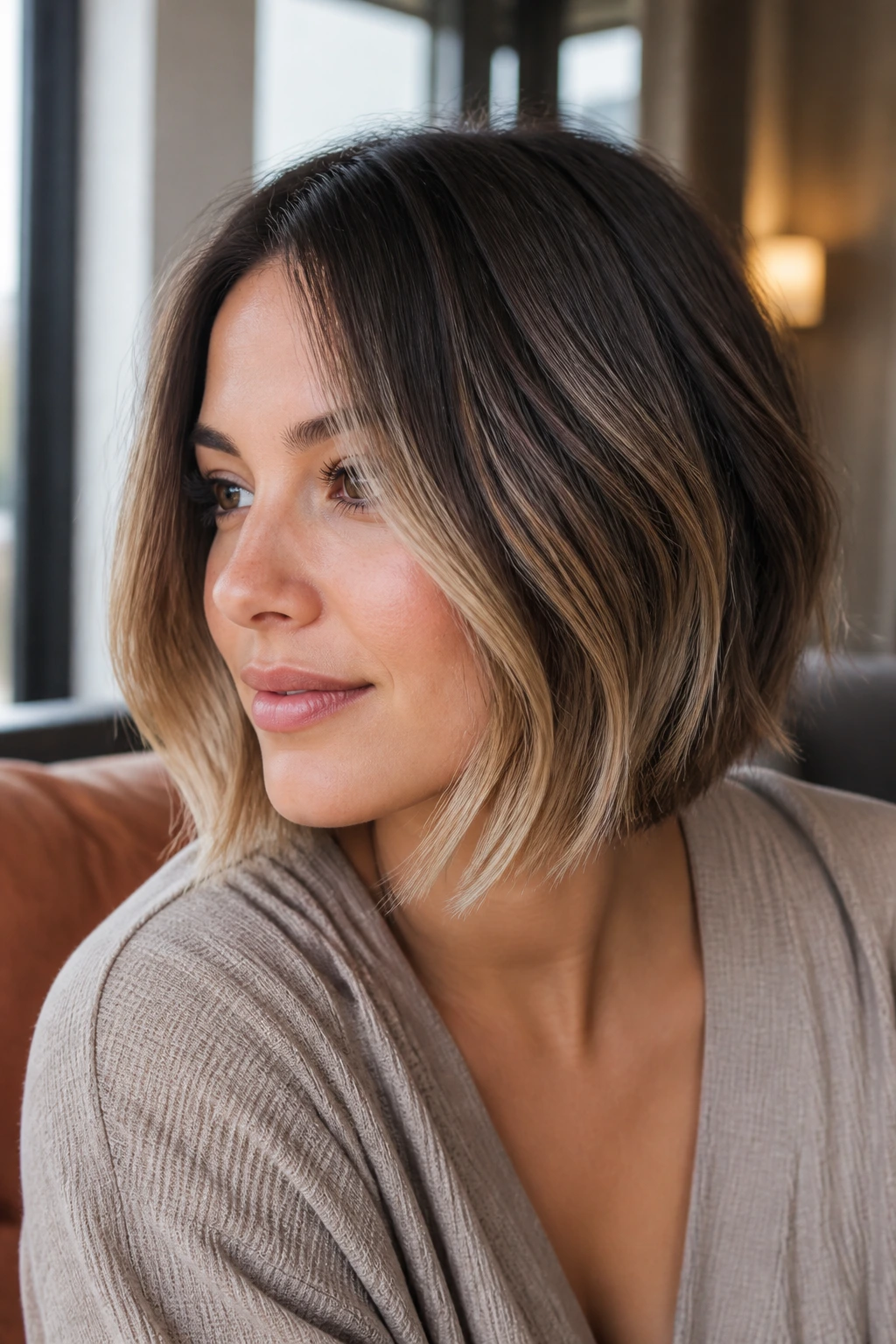
Bob length changes the whole color game. There’s less hair to hide behind, which sounds like a drawback until you realize it forces better placement. A good balayage bob depends on where the light lands: around the face, through the top layers, and down the outer edge where the cut moves.
That’s why hand-painted color often looks softer than foils on short hair. Foils can be fine, but they can also turn a bob into a grid if the placement is too symmetrical. Balayage skips the hard schedule and follows the haircut. The result is a color pattern that bends with the ends instead of fighting them.
The grow-out is easier to live with too. Short hair grows fast in the eyes of the person wearing it, and a hard line at the root can make a bob feel overdue before you’re ready to refresh it. A softer melt buys you time. It also keeps the haircut looking intentional when it grows a half inch past the original line.
The Tools and Products That Make These Looks Easier to Wear
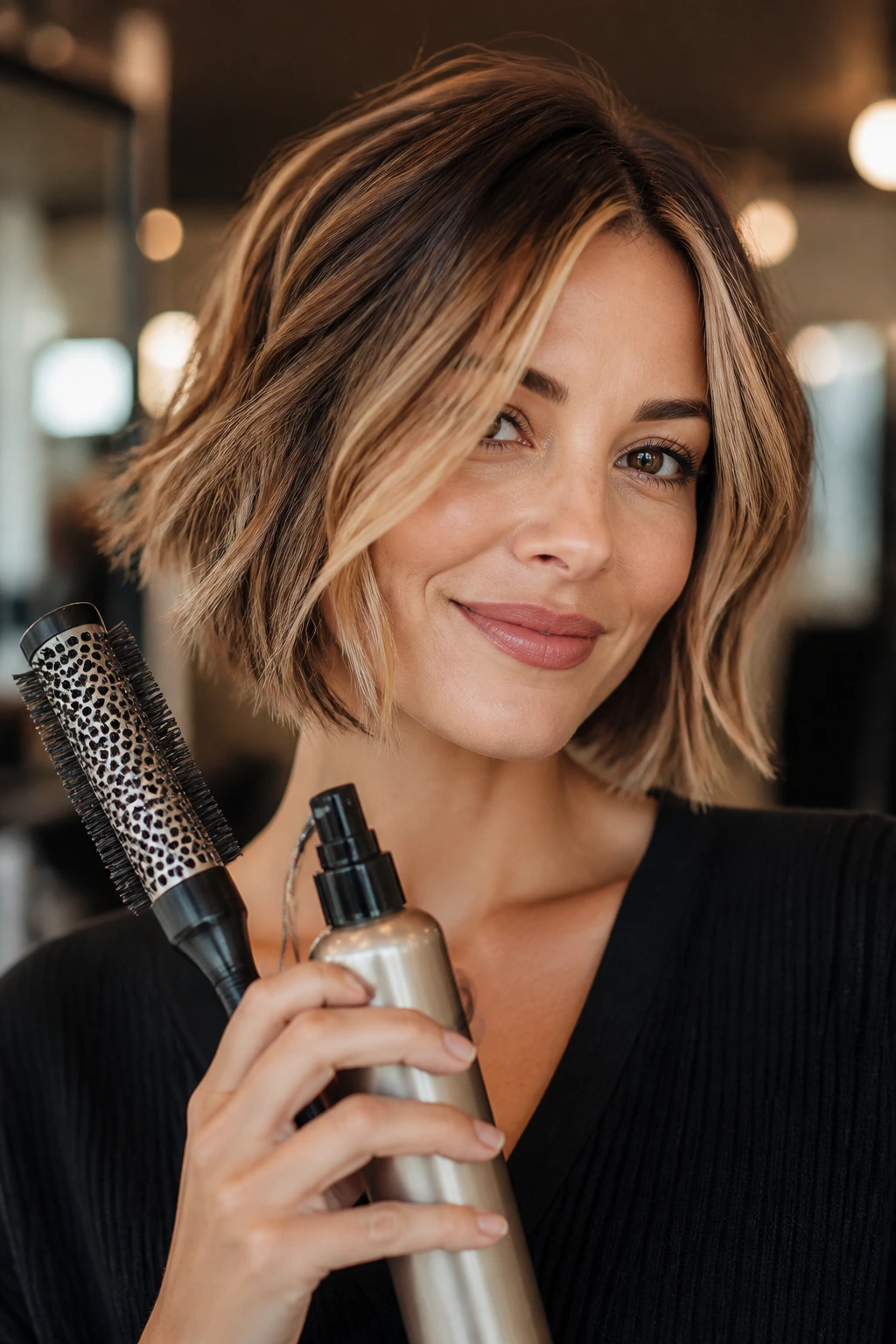
A bob balayage look can look great in the salon chair and turn flat at home if you skip the right tools. Short hair needs lift at the root, bend at the ends, and enough protection to keep lighter pieces from drying out.
- Round brush, 1 to 1½ inches: Best for creating a soft curve under the ends without over-rounding the bob.
- Blow dryer with a nozzle: Helps direct the air so the top stays smooth and the color reads clean.
- 1-inch curling wand or flat iron: Useful for adding loose bends that show off the ribbons of color.
- Heat protectant spray: Use it before every hot tool pass; lighter balayage pieces snag first.
- Lightweight glossing serum: A pea-sized amount is enough for shine on short hair.
- Purple shampoo: Helpful for beige, champagne, or icy looks, but use it sparingly or the hair can go dull.
- Root lift spray or mousse: Gives short hair enough body so the highlights don’t collapse into the head.
- Microfiber towel or soft T-shirt: Cuts down on frizz while the hair dries, which matters a lot on wavy and curly bobs.
- Wide-tooth comb and clips: Good for sectioning and for keeping the shape intact while styling.
How to Choose the Right Tone for Your Bob
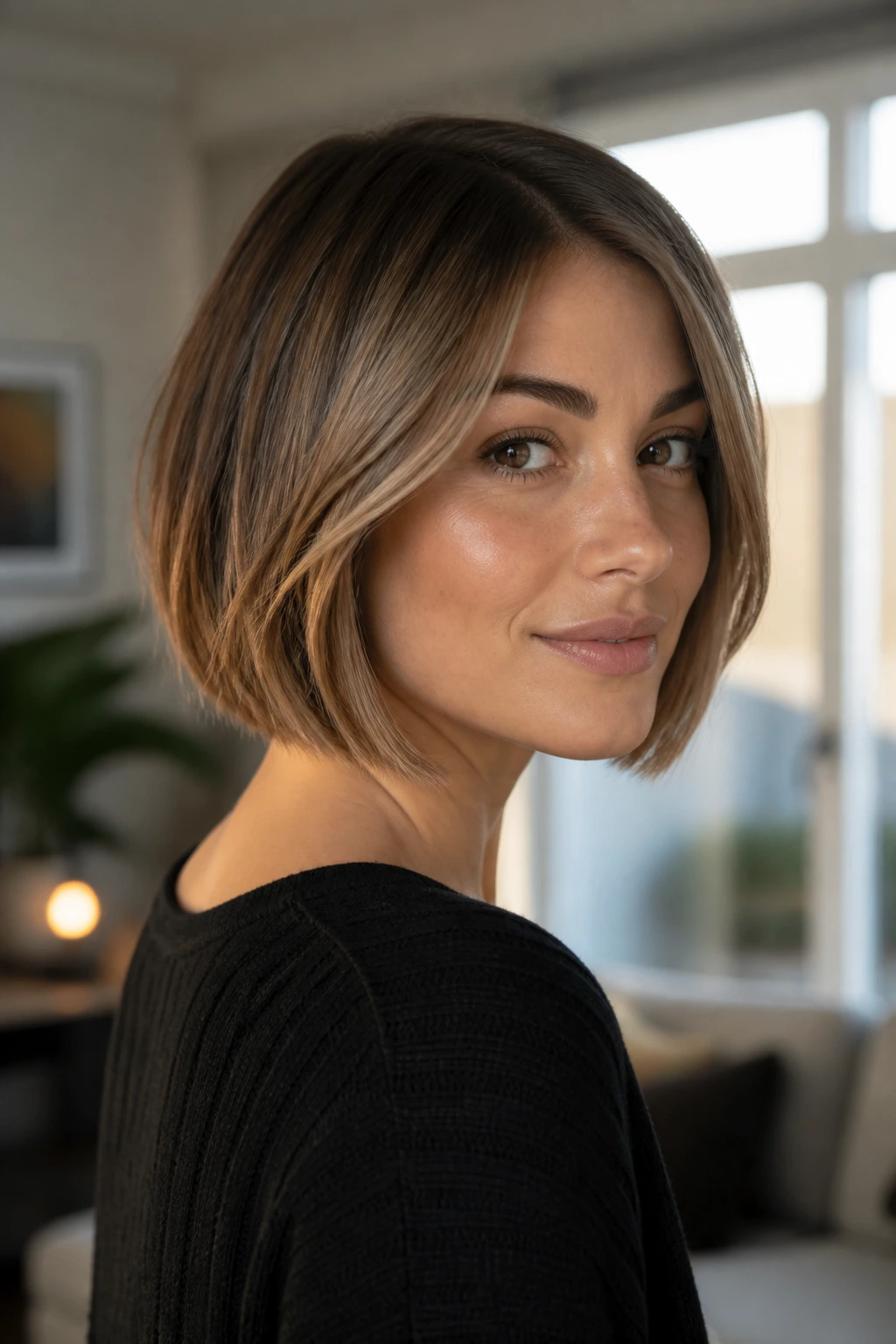
Warm, cool, and neutral tones behave differently on short hair. On a bob, that difference shows up fast because the color sits close to the face and the cut has less length to soften the edges. A warm brunette usually looks richer with caramel, honey, copper, chestnut, or toffee. A cooler base tends to prefer mushroom brown, ash brunette, beige blonde, pearl brunette, or champagne.
If your natural color is around level 4 or 5, I would not force a pale blonde balayage unless you want a bigger maintenance job. Deep brunettes look better with ribbons that are one to three levels lighter. That keeps the bob dimensional without making the ends look thin. Level 6 to 8 hair can handle beige, vanilla, and pearl tones more easily because the lift is less of a leap.
Skin tone matters, but not in a rigid, prescription-style way. Warm undertones usually come alive with golden or cinnamon notes. Cool undertones often look cleaner with ash, mushroom, or champagne. Neutral skin can wear almost anything, which is mildly unfair but convenient.
The real question is how much contrast you want to see when the hair is tucked, waved, or blown straight. If you want the color to whisper, stay near your natural base. If you want the bob to announce itself across the room, widen the gap between root and ribbon. The haircut will tell you which direction it wants to go.
How to Style These Looks So the Dimension Actually Shows
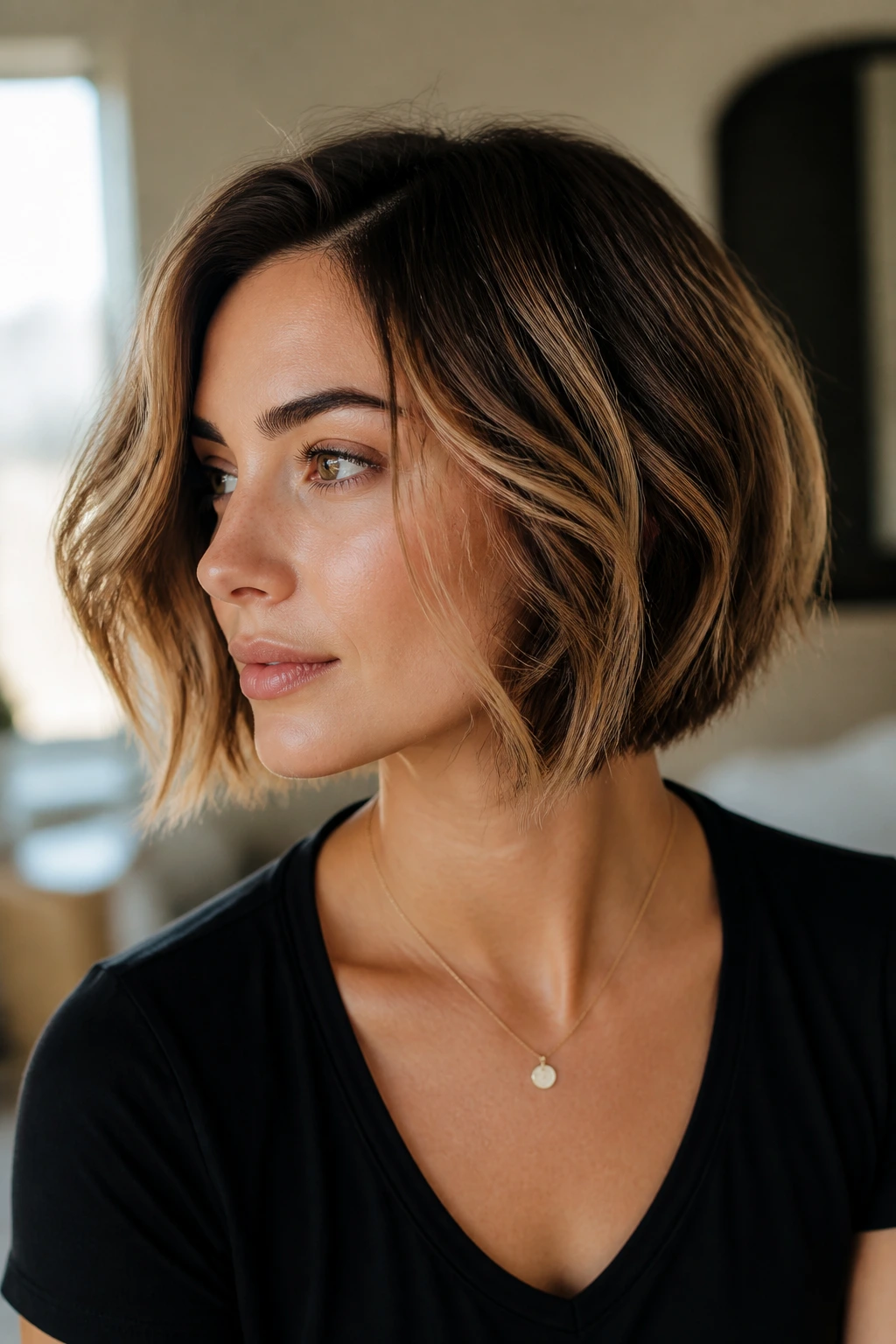
Texture is the difference between “nice color” and “I can see every ribbon.” On short hair, a perfect flat blow-dry can hide the very thing you paid for. A slight bend, a flipped edge, or a loose wave creates shadows and highlights that make balayage look deeper.
- Air-dried texture: Best for ash brunette, smoky plum, and curly bobs. Scrunch in a light cream, not a heavy oil.
- Polished blowout: Best for blunt, A-line, and box bobs. Use a round brush and keep the ends tucked under or flicked just slightly.
- Loose waves: Best for caramel, honey, toffee, and auburn. Alternate curl directions and brush them out once they cool.
- Face-framing polish: Best when the front pieces are blonde, champagne, or mocha. Smooth the front away from the face so the placement reads clearly.
- Part changes: Move the part an inch left or right once in a while. It lets the light ribbons land in new places and keeps the style from looking stale.
One thing I see too often: people pile on shine serum and flatten the whole head. Don’t do that. A dime-sized amount, warmed in the palms and tapped only on the ends, is enough. The shine should sit on the hair, not glue it to the skull.
Extra Tone Boosters and Styling Tricks
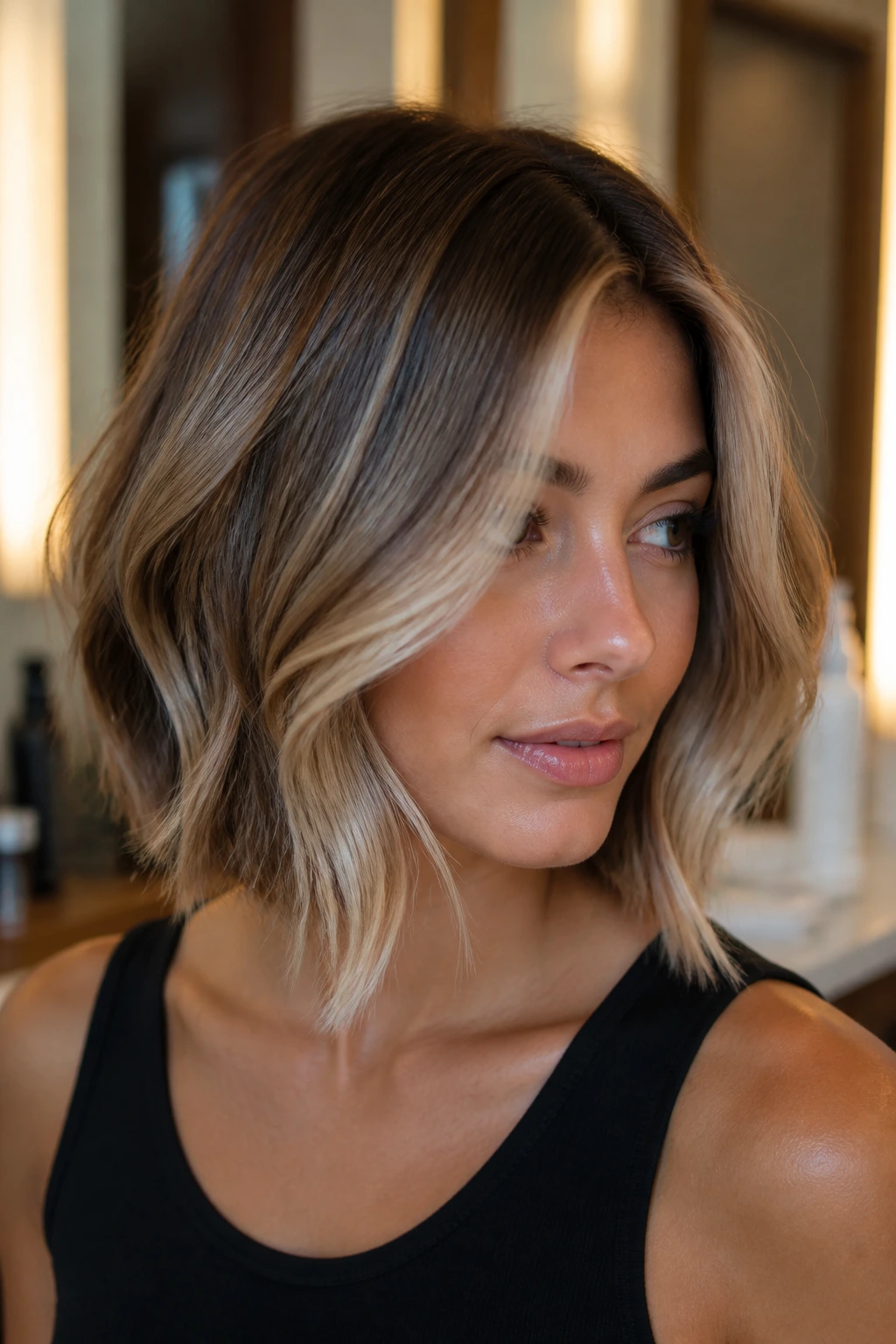
Glossing matters more than people think. A balayage bob can lose its softness if the toner goes too ashy or too gold. A demi-permanent gloss every 6 to 8 weeks keeps caramel creamy, blonde beige, and brunette shades from looking tired. If you want the color to stay plush, ask for a glaze that is one shade softer than the highlight, not louder.
Customization: Add a small money piece if you want the face to pop, or keep the color low and around the mids if you prefer a calmer look. On a blunt bob, I like the brightest strands around the front and outer edge. On a stacked bob, I prefer the lift up top, where it supports the shape instead of breaking it apart.
Serving Suggestions: Think about finishing touches the way a stylist thinks about jewelry. A tiny tuck behind one ear shows off the front ribbon. A clip at the temple can reveal a hidden plum or champagne layer. And if the bob looks too polished, a quick finger rake through the crown breaks the surface just enough.
Make-It-Yours: For fine hair, keep the color scattered and the ribbons thin so the bob still looks full. For thick hair, you can support a bigger contrast and more visible depth. For curly hair, place the lightest pieces where the curls naturally open up, usually around the face and outer halo. For low-maintenance wearers, leave the root deeper and choose a tone close to your natural shade.
Common Mistakes That Flatten a Balayage Bob
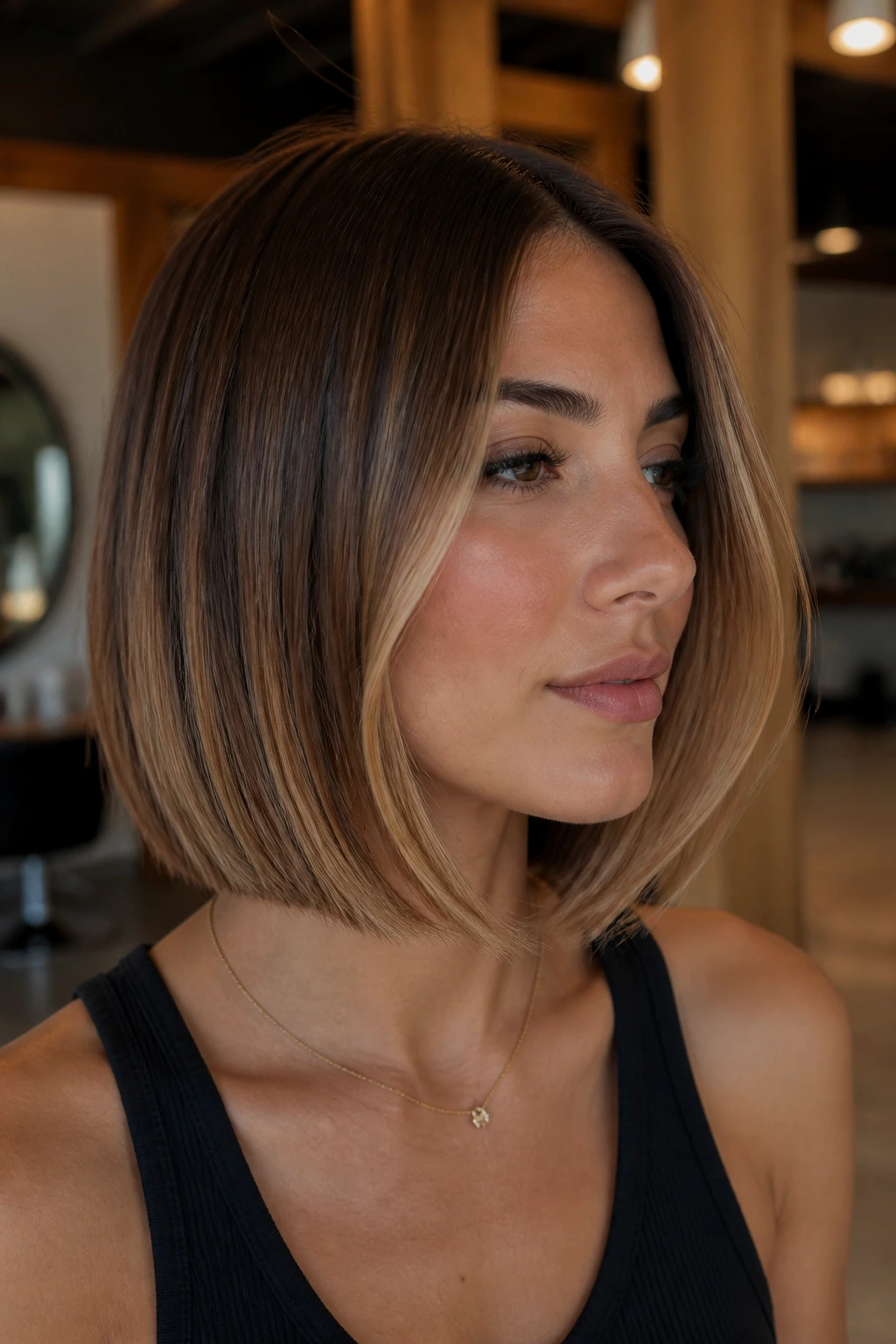
- Painting too high at the root: The bob loses its shadow line and starts to look overdone. Keep the lightness lower unless you’re intentionally going for a brighter face frame.
- Using one bright tone everywhere: A single blonde or copper shade from root to tip turns short hair into a flat sheet. Ask for lowlights, root depth, or a glaze that softens the transition.
- Letting the ends get too thin and pale: On a bob, over-lightened ends can look wispy fast. Keep the brightest pieces controlled and stop before the perimeter starts to fray visually.
- Choosing a toner that fights the base: Too much ash on warm brown hair can make the color muddy. Too much gold on a cool brunette can make it look orange. The fix is a glaze that respects the base instead of sanding it down.
- Skipping trims: A grown-out bob can swallow the whole color story. Trim every 6 to 8 weeks if you want the shape and the placement to stay clean.
- Using heavy finishing oils: A thick oil can darken light pieces and make the whole look feel greasy. Short hair only needs a few drops on the ends.
Variations and Adaptations to Try
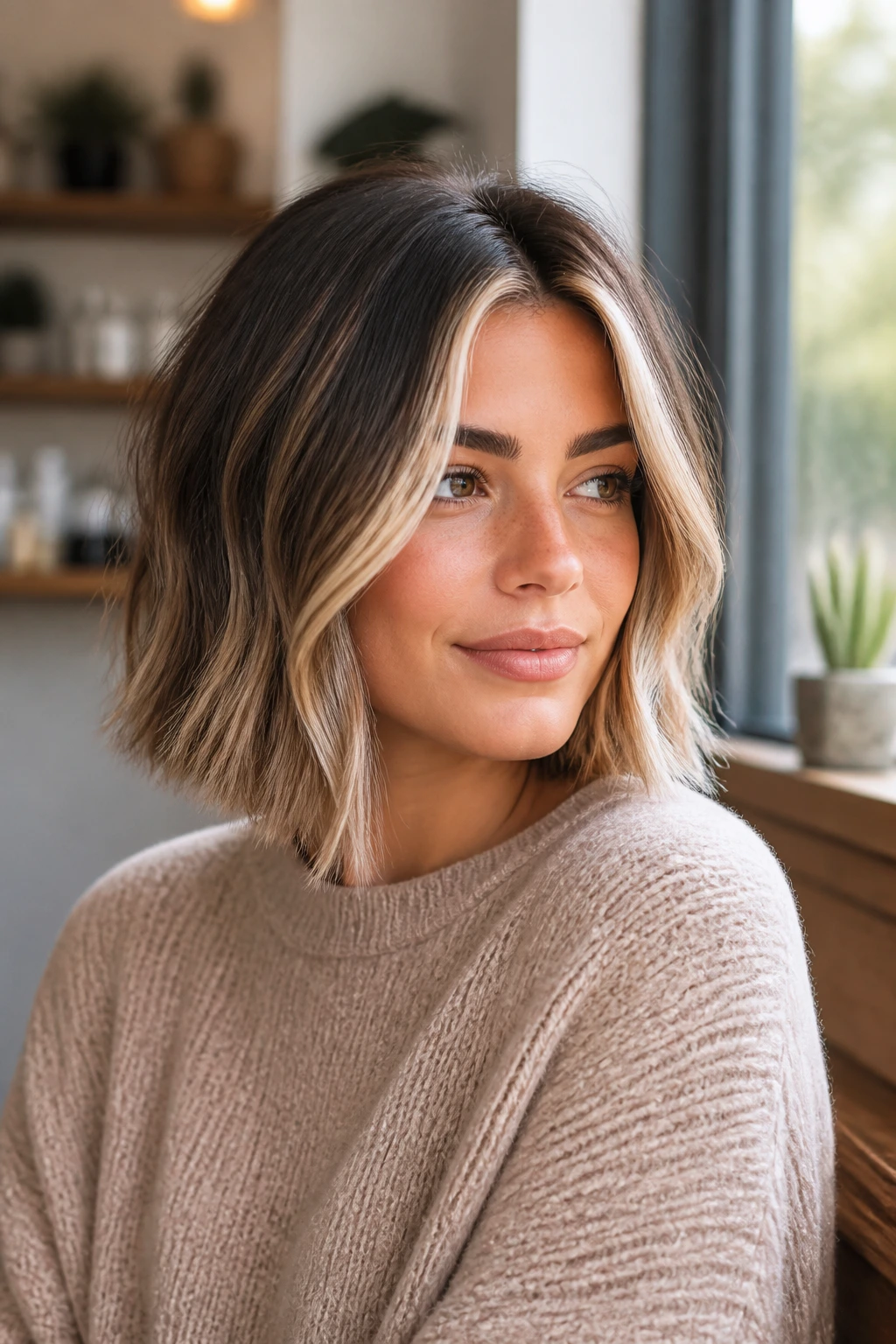
Muted Brunette Melt
Keep the base close to your natural brunette and add only one to two levels of lift through the mids. This works well if you want the bob to look richer, not brighter, and it’s one of the easiest looks to grow out without a hard line.
Bright Face-Frame Edit
Leave most of the bob softly shaded, then concentrate the lightest pieces around the front. This is a smart choice for people who want their face to stand out without committing to a high-maintenance full head of highlights.
Cool Smoke Version
Swap warm caramel or honey for mushroom, ash, or pearl beige. It’s a cleaner look on cooler skin tones and on very straight bobs that need polish more than warmth.
Warm Glow Version
Replace beige with caramel, chestnut, copper, or toffee. This version suits textured hair and bobs with movement because warm color catches every bend.
Curly-First Placement
For curls, place the light pieces where the curl opens widest instead of following a strict linear parting. That keeps the color from disappearing inside the pattern and helps the bob keep its rounded shape.
Color Care, Wash Days, and Salon Refreshes
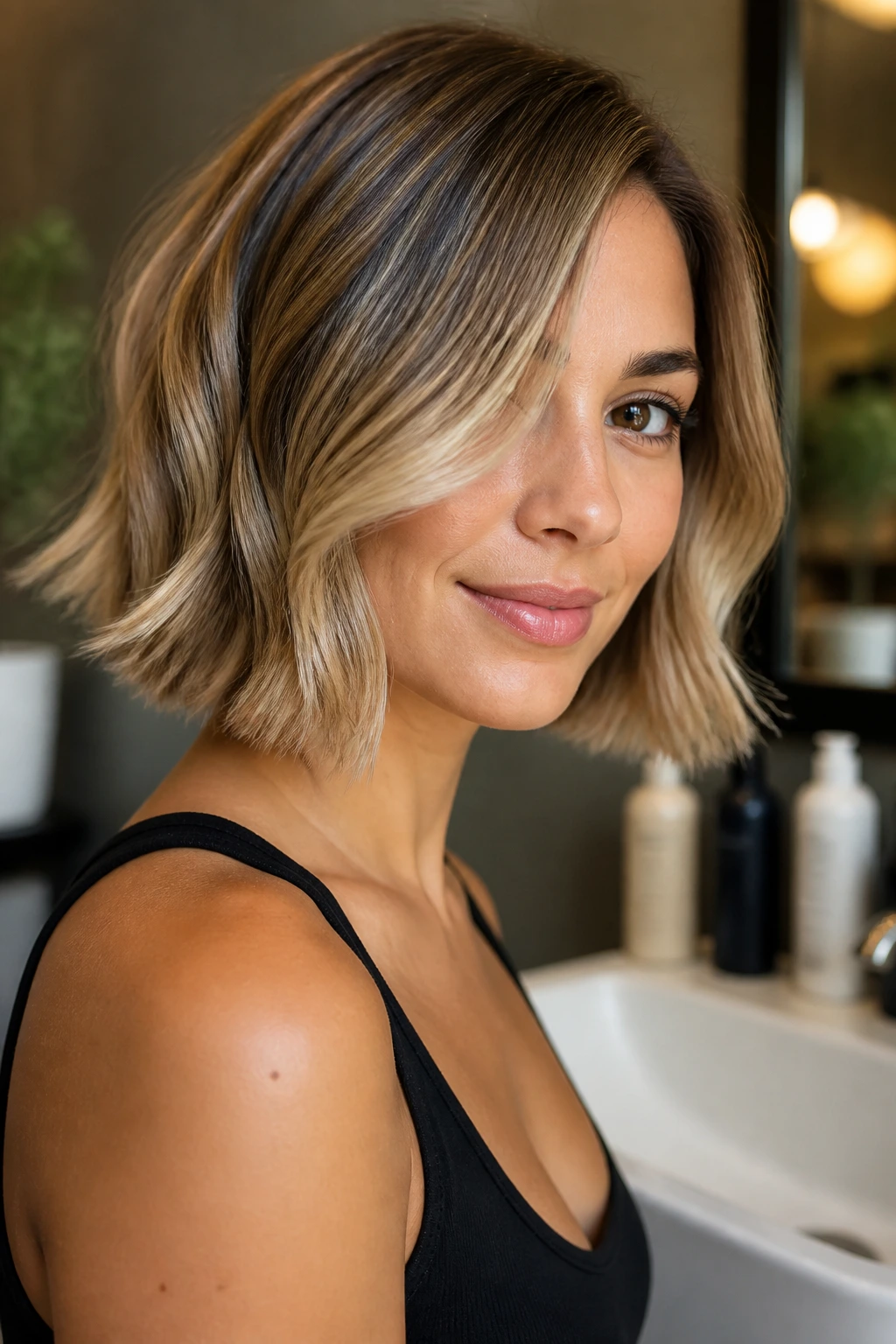
Balayage on a bob looks best when the tone stays soft, not when it gets scrubbed to death. If your hair was freshly colored, give it 48 hours before the first shampoo when possible. After that, use a color-safe shampoo and conditioner 2 to 3 times a week, and skip the harsh clarifying wash unless product buildup is making the hair feel coated.
Blonde, beige, and champagne looks usually need a purple shampoo every 1 to 2 weeks. Not every wash. Too much purple can leave short hair dull and chalky, which is a bad trade when dimension is the whole point. Warm tones like caramel, copper, and honey usually do better with a color-depositing mask or a gloss that keeps the tone from fading flat.
Schedule a gloss refresh every 6 to 8 weeks if you want the color to stay soft and polished. Trims every 6 to 8 weeks keep the bob line clean, and that matters more than people think. A slightly overgrown bob can hide a tired color job; a clean cut makes the same color look deliberate.
Heat styling is fine, but use protectant every single time. Lightened pieces are thirsty. They’ll show dryness first, especially at the front and around the perimeter where the hair gets touched most.
Questions People Ask Before Booking a Balayage Bob
Does balayage work better on a blunt bob or a layered bob?
Both can work, but the placement changes. A blunt bob benefits from lower, softer ribbons so the line stays sharp, while a layered bob can handle more scattered brightness because the cut already has movement.
Can dark brown bob hair get balayage without turning orange?
Yes, if the lightening is controlled and the toner is chosen with the base in mind. Dark brunettes usually do better with caramel, mocha, mushroom, or smoky copper tones than with very pale blonde.
How often does a balayage bob need to be refreshed?
The color itself can stay attractive for months, but a gloss or toner refresh every 6 to 8 weeks keeps it from looking dry or muddy. Trims matter on the same schedule if you want the bob shape to stay crisp.
Will balayage damage short hair more than long hair?
Short hair does not automatically get damaged more, but damage shows faster because there’s less length to hide rough ends. That’s why I’m picky about placement and about not over-lightening the perimeter.
What if the highlights look stripey after the appointment?
That usually means the placement was too even or the contrast was too sharp. The fix is often a root shadow, a glaze, or adding a few softer mid-tone pieces to blur the line.
Can curly bobs wear balayage without losing curl pattern?
Yes, as long as the lightening is spread with the curl pattern in mind and the ends aren’t pushed too pale. Curly hair looks best when the brighter pieces follow the curl’s natural opening.
Which bob balayage idea is lowest maintenance?
The softest brunette-to-caramel, mushroom, or pearl-brown looks usually grow out the best. They keep a deeper root and a gentle transition, so the line doesn’t shout when it moves.
What should I ask for at the salon if I want a softer result?
Ask for a root shadow, hand-painted mid-lengths, and no heavy foil line around the face. Those three phrases point the colorist toward blend instead of striping.
Soft Color, Clean Shape
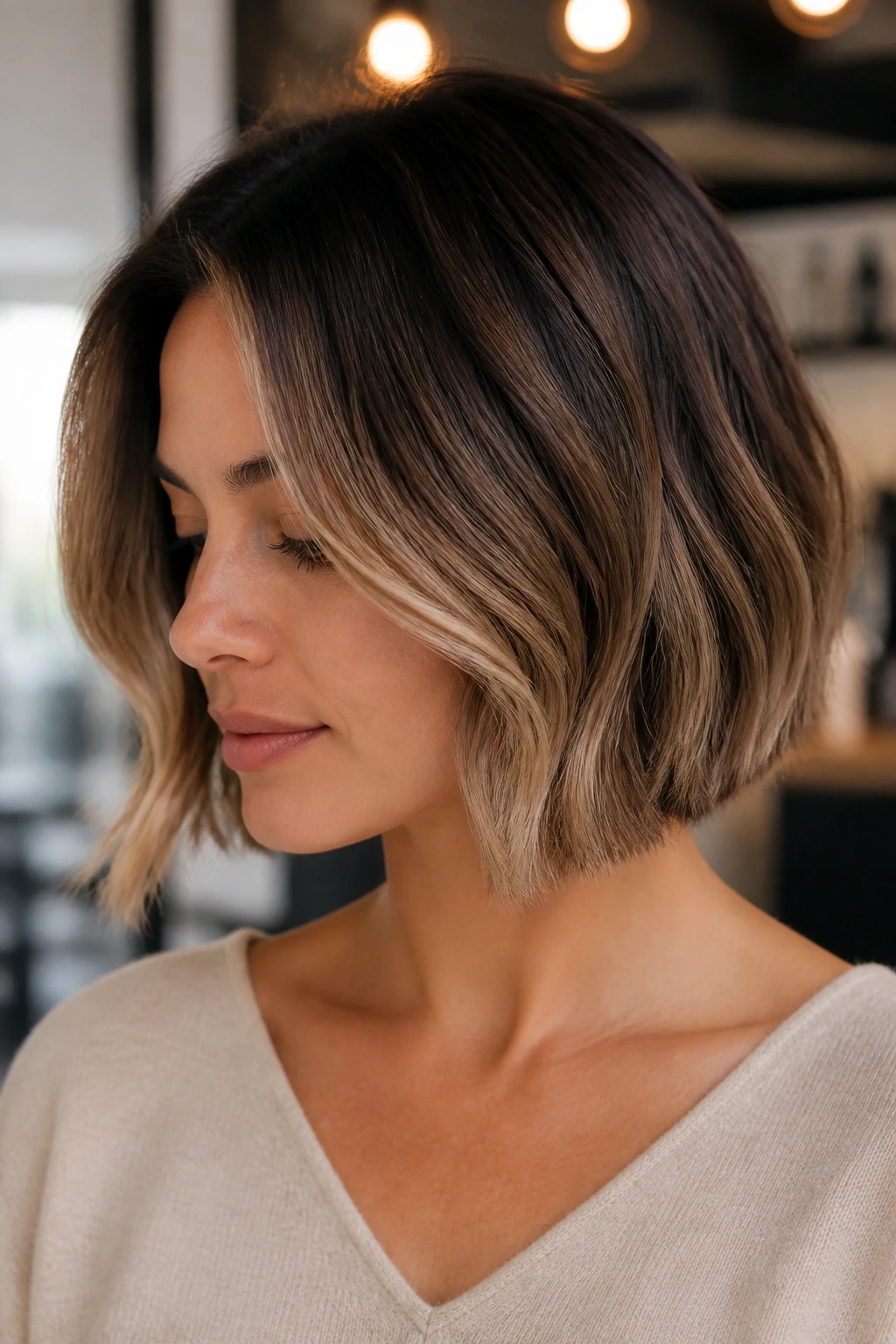
The best bob balayage looks do one thing well: they let the haircut stay visible. That’s the part people miss when they chase brightness. A bob needs shape first. Once that’s in place, the color can warm it, cool it, smoke it out, or make it glow around the face.
If you’re choosing between two looks, pick the one that leaves a little depth at the root and a little softness at the ends. That’s where the dimension lives. And on a bob, dimension is the whole game.
