



A good bob can do more for a face than a shelf of styling products. On the right head, it lifts the jaw, shows off earrings, and makes silver hair look deliberate instead of apologetic. That is why vintage bob hairstyles for older women keep coming back: they don’t ask the hair to be something it isn’t. They shape it. They tidy it. They give the whole head a cleaner outline.
The trick is that “vintage” does not have to mean fussy. A finger-wave bob can look sharp and modern in daylight. A tucked-under pageboy can feel neat, polished, and easy to live with. A flipped-out sixties bob brings a little attitude without needing a lot of length. The common thread is control — not stiffness, not spray-can armor, just enough structure to make the cut read as intentional.
Age changes the hairline, the density, and the way texture sits after a wash. Some crowns flatten. Some ends get wiry. Some gray strands take on a lovely glassy sheen while other sections decide to do their own thing. That is exactly why these shapes work so well: they let you steer the silhouette without fighting the natural movement. Start with the bobs below, and pick the ones that match your face shape, your texture, and how much morning effort you’re willing to give.
Why These Bobs Earn Their Keep

-
They clean up the jawline fast: A chin-length edge or a soft curve under the cheek can make the lower face look neater without hiding it.
-
They show off silver, gray, and salt-and-pepper hair: Smooth bevels and shiny bends catch light better than long, frayed ends ever will.
-
They don’t need heavy layering to move: Most of these cuts rely on shape, not a pile of razor cuts that can make finer hair look thin.
-
They dress up easily: A side pin, a roller set, or a little lift at the crown changes the mood in minutes.
-
They keep the neck and collarbone visible: That matters if you like scarves, V-necks, statement earrings, or just want the shape of the cut to read clearly.
-
They can be styled softly or sharply: The same bob can lean boardroom, dinner, or old-Hollywood depending on the finish.
What Makes a Vintage Bob Look Elegant Instead of Costume-y
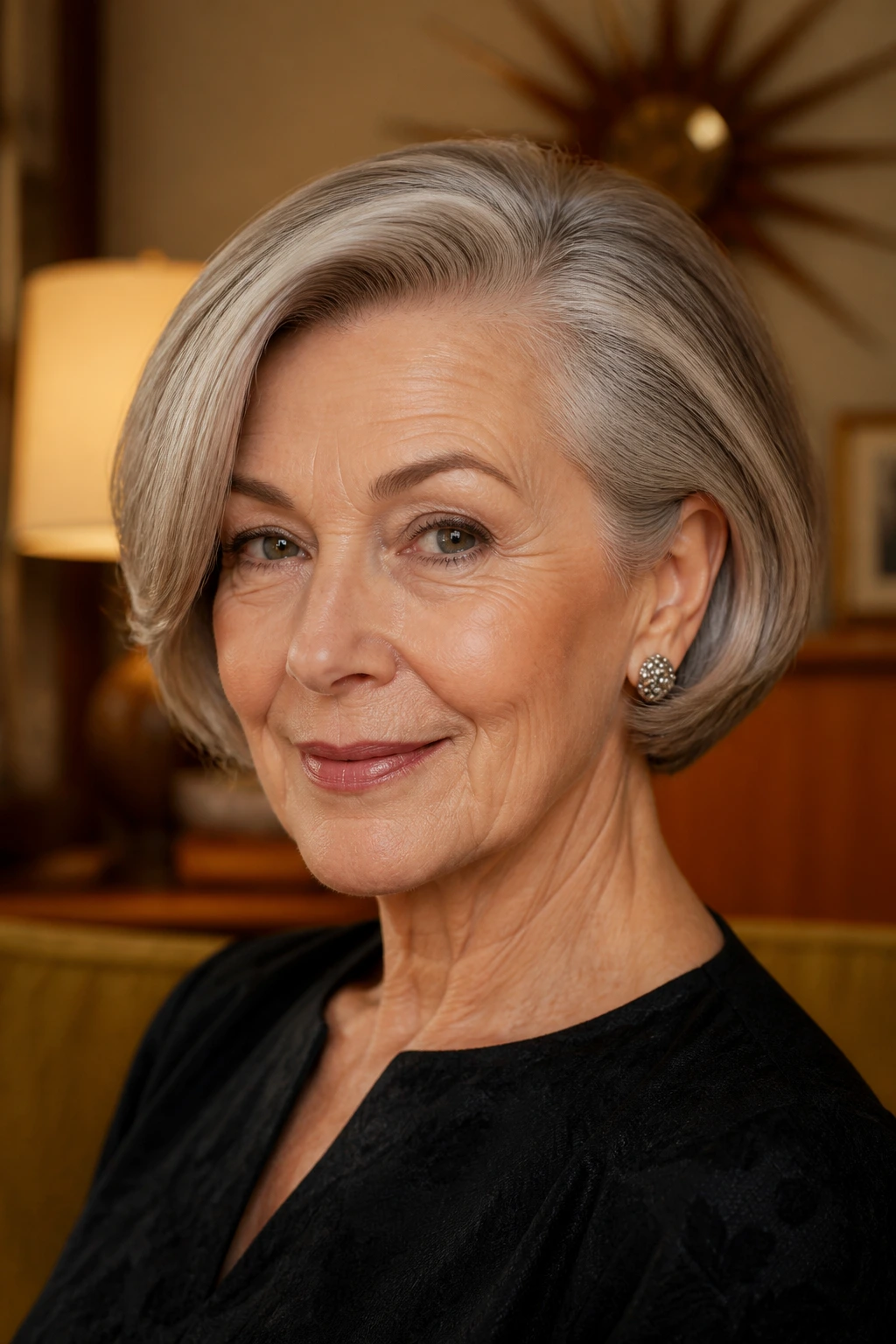
A vintage bob only gets silly when it tries too hard. The difference between a polished retro cut and a costume-party wig usually comes down to three things: the part, the finish, and the amount of lift at the crown. Keep one era cue strong — a wave, a flip, a side part, a smooth undercurve — and let the rest stay calm.
Heavy teasing is the fastest way to date a bob in the wrong direction. So is spraying the surface until it feels crunchy. The better approach is a soft root lift with a round brush or rollers, then a controlled bend through the ends. You want movement you can see, not hair that freezes when the room gets warm.
Another detail people miss: the edge around the face matters more than the back. A little softness near the cheekbone, a clean nape, or a tucked side can make the cut feel current even when the inspiration comes from decades ago. That is the part that keeps these styles wearable.
1. Finger-Wave Bob
A finger-wave bob has that quiet, sculpted drama that looks especially good on silver hair. The wave sits close to the head, almost like fabric folded by hand, and the shape brings attention straight to the eyes and cheekbones. It is one of those styles that looks more expensive than it is. That’s the whole magic.
This version works best when the hair is chin length or just below, with a clean side part and a smooth nape. If your hair has a bit of natural bend, the set comes together faster. If it’s straighter, you’ll want a setting lotion, a fine-tooth comb, and a few duckbill clips to hold each ridge while it cools.
The look is strongest when you keep the rest of the bob simple. No wild layering. No fuzzy ends. Just a crisp outline and a wave that sits where you put it. That is what makes it feel vintage without tipping into pageant territory.
Best when you want:
- A polished shape for weddings, dinners, or photo-heavy days.
- A style that flatters fine to medium hair.
- A bob that looks especially good on gray or white hair.
A small warning:
If your hairline has cowlicks at the temples, set those areas first. Fighting them later is a nuisance.
2. Soft Pageboy Bob
Why does the pageboy keep showing up in older women’s haircut inspiration? Because it has range. The rounded undercurve at the ends keeps the bob neat, and the optional fringe lets you soften the forehead without needing heavy layers. It can look prim, yes, but it can also look clean and very chic if the finish stays smooth.
The best pageboy bobs do not puff out at the sides. They hug the head near the cheek and then tuck under at the jaw or nape. That curve matters. It gives the cut its old-school shape while making it easier to wear with glasses, earrings, or a sharp collar.
I like this one for hair that is medium density and a little resistant to sitting flat. The pageboy’s shape gives that hair a job to do. It doesn’t just hang there. It bends.
How to wear it:
- Blow-dry with a small round brush, curling the ends under as you go.
- Keep the fringe soft and slightly piecey if your forehead is short.
- Use a light cream, not a heavy paste, or the curve loses its clean edge.
3. Marcel Wave Bob
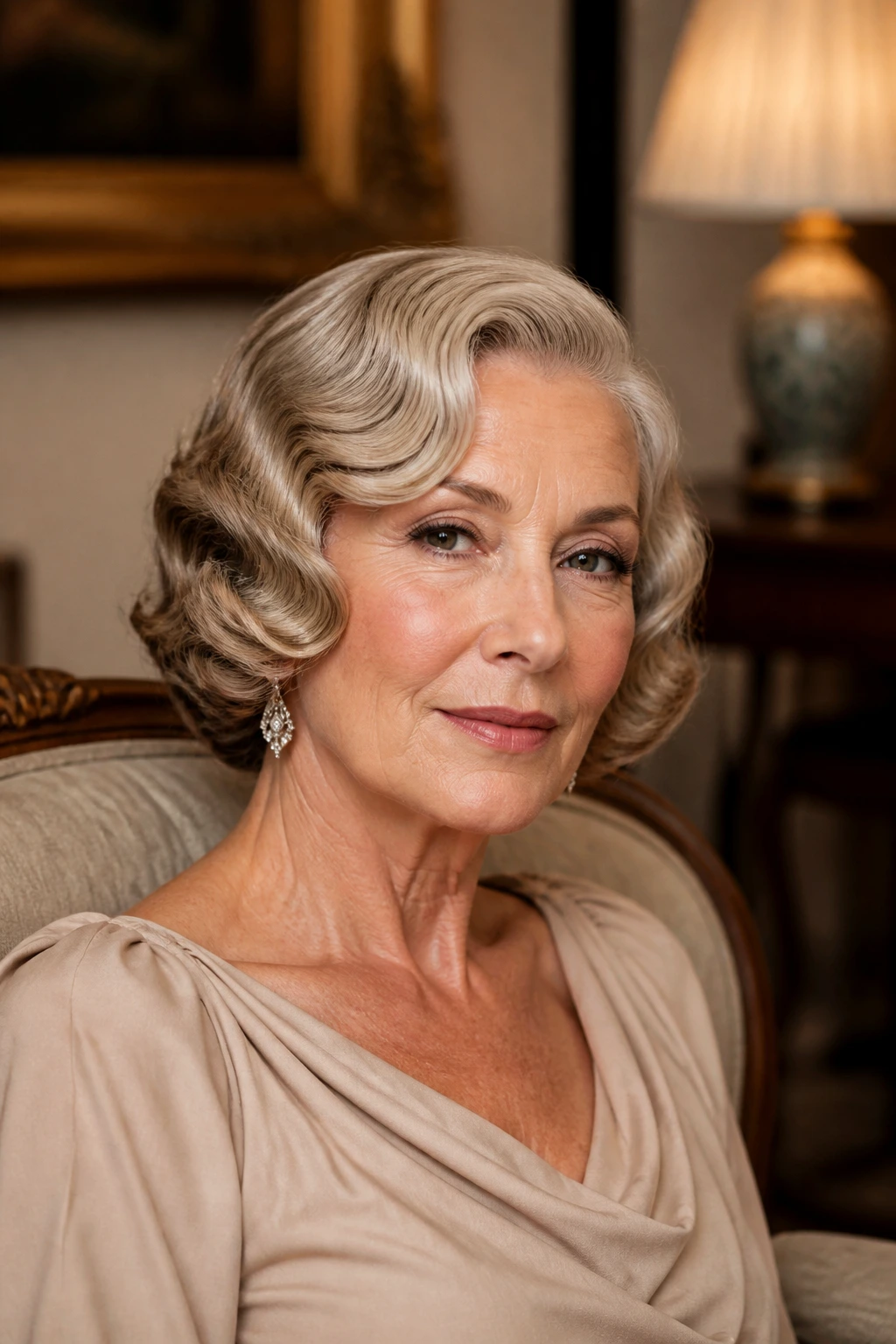
The Marcel wave bob is the one that makes people glance twice. It has a ribbed, glossy movement that runs through the sides and front, and it reads as pure vintage in the best way. There’s a reason this shape keeps showing up on formal hair mood boards: the wave pattern does the work for you.
This is not the bob for someone who wants a quick air-dry and a shrug. It needs sectioning, heat, and patience. A 1-inch iron or a Marcel iron, if you have one, gives the clearest wave, but rollers can get close if you pin and cool each section properly. The finished look should feel smooth to the touch, with the wave pattern visible but not stiff.
It suits older women who want hair that looks dressed up without needing a lot of length. The shape frames the face cleanly, and the side sweep makes the cheekbones look a little sharper. That’s a useful trick, not a gimmick.
4. Tucked-Under Curved Bob
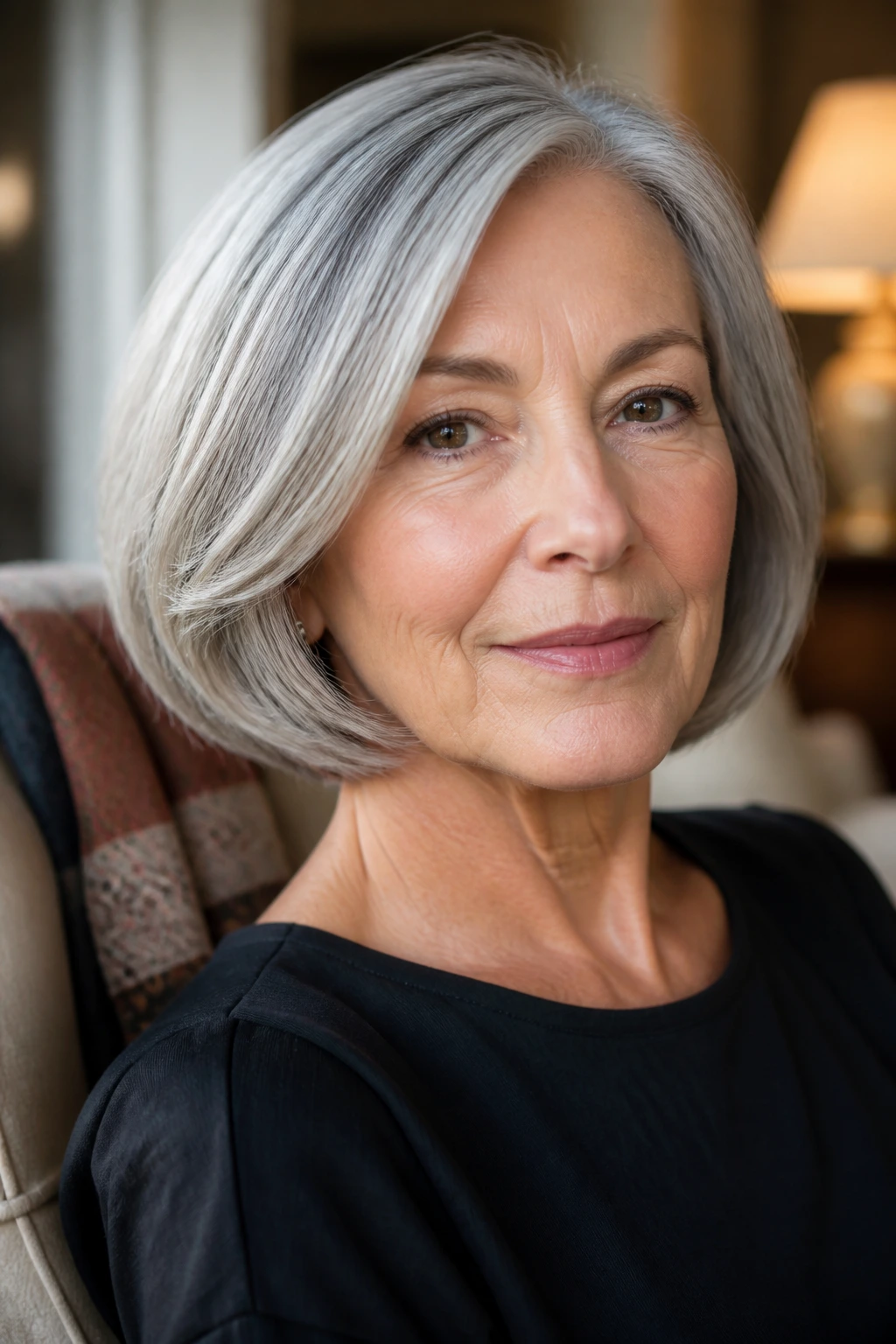
A tucked-under curved bob is the haircut equivalent of a well-cut jacket. It gives shape without shouting. The ends bend inward toward the neck, and the whole outline feels rounded, neat, and easy to control. On straight or slightly wavy hair, this is one of the most forgiving vintage bob hairstyles for older women.
The key is the bevel. If the ends flip too much, you lose the softness. If they sit flat, the cut looks unfinished. So the goal is a controlled inward curve, especially at the jaw and nape. A blow-dryer with a concentrator nozzle and a medium round brush does most of the work.
This shape is especially kind to fine hair because it creates the illusion of thickness at the line of the cut. Not bulk. Just presence. That distinction matters. A bob should look full where it counts, not puffy everywhere.
Good fit if you want:
- A shape that sits well under scarves and high necklines.
- A low-drama styling routine.
- A bob that still looks neat on day two.
5. Flipped-Out Sixties Bob
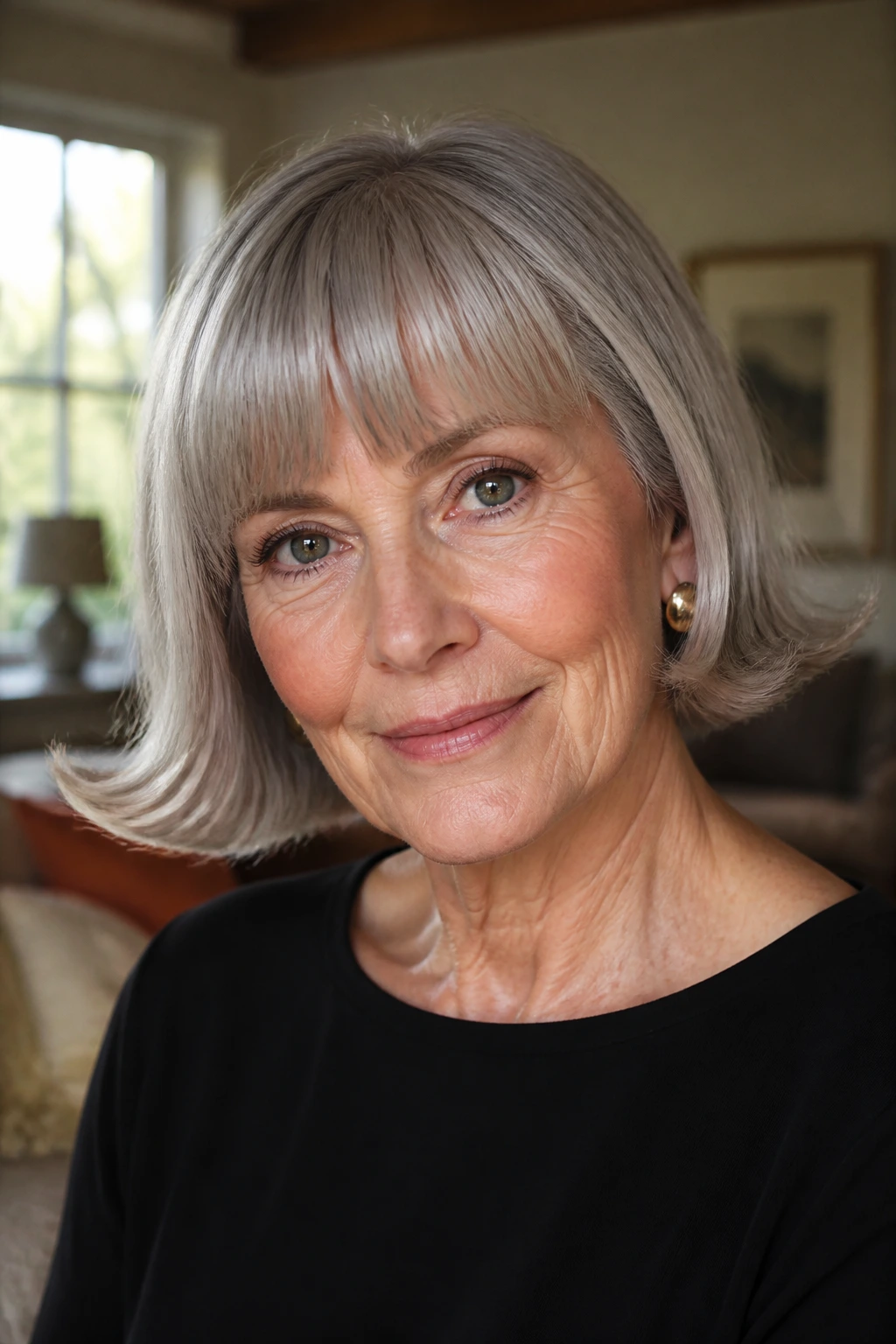
A flipped-out bob brings a little personality to the table. The ends turn outward instead of under, and that small change changes the mood completely. It feels lighter, cheekier, and a bit less formal than a tucked-under version. If you like structure but don’t want to look pinned down, this is a smart choice.
The flip should happen mainly at the bottom inch or so. Too much outward curl and the whole shape starts to read like a wig from the wrong decade. A soft outward bend at the jawline is enough. You can get it with a round brush, a large barrel iron, or even velcro rollers placed at the ends while the hair cools.
This one is especially nice if your face needs a little width near the chin. The outward edge creates balance. And if your hair is naturally straight and a bit stubborn, the flip often holds better than a curl because it does not need to be perfect. It just needs direction.
6. Pin-Curl Set Bob
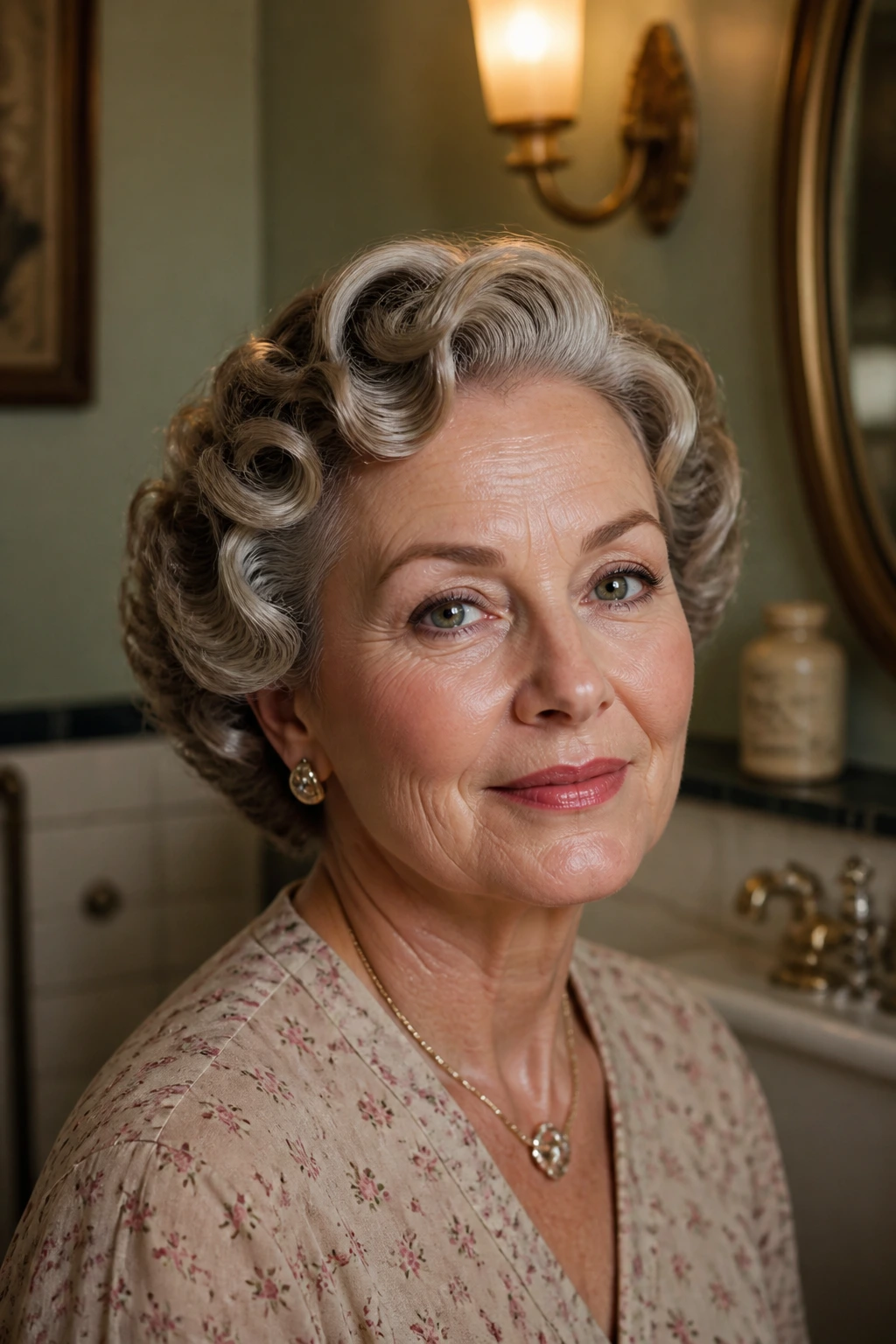
The pin-curl set bob has an old-fashioned backbone and a soft surface. It’s the sort of style that looks calm from across the room, then reveals all its detail up close. The curls are usually brushed into a gentle wave or molded into a rounded shape, which keeps the whole bob from looking too curly or too flat.
This style rewards patience. Set damp hair into small curls, pin them flat, and let them cool completely before brushing or shaping. If the pins come out early, the wave will collapse. That’s the annoyance. But the payoff is a bob with memory — one that keeps its form longer than a rushed blowout.
It’s a fine choice for older women who want a more formal vintage look without committing to a tight perm. And it’s kind to hair that is slightly dry at the ends, because you’re setting the shape rather than dragging a brush through it for twenty minutes.
7. Side-Part Sculpted Bob

A deep side part changes everything. It lifts one side, softens the forehead, and gives the bob a clean, intentional line that feels elegant rather than plain. On older women, it can be especially useful because it creates height where hair often wants to lie flat.
This version works with straight, wavy, or relaxed curly hair. The styling is about direction: blow the front away from the face, tuck one side behind the ear, and keep the top smooth enough that the part reads clearly. If you like a little drama but dislike obvious styling, this is a good middle path.
The cut itself can be chin length, jaw length, or just brushing the neck. The part is the star. I think that’s why this bob wears so well with glasses and earrings — the asymmetry gives your features a frame instead of boxing them in.
8. Rounded Italian Bob
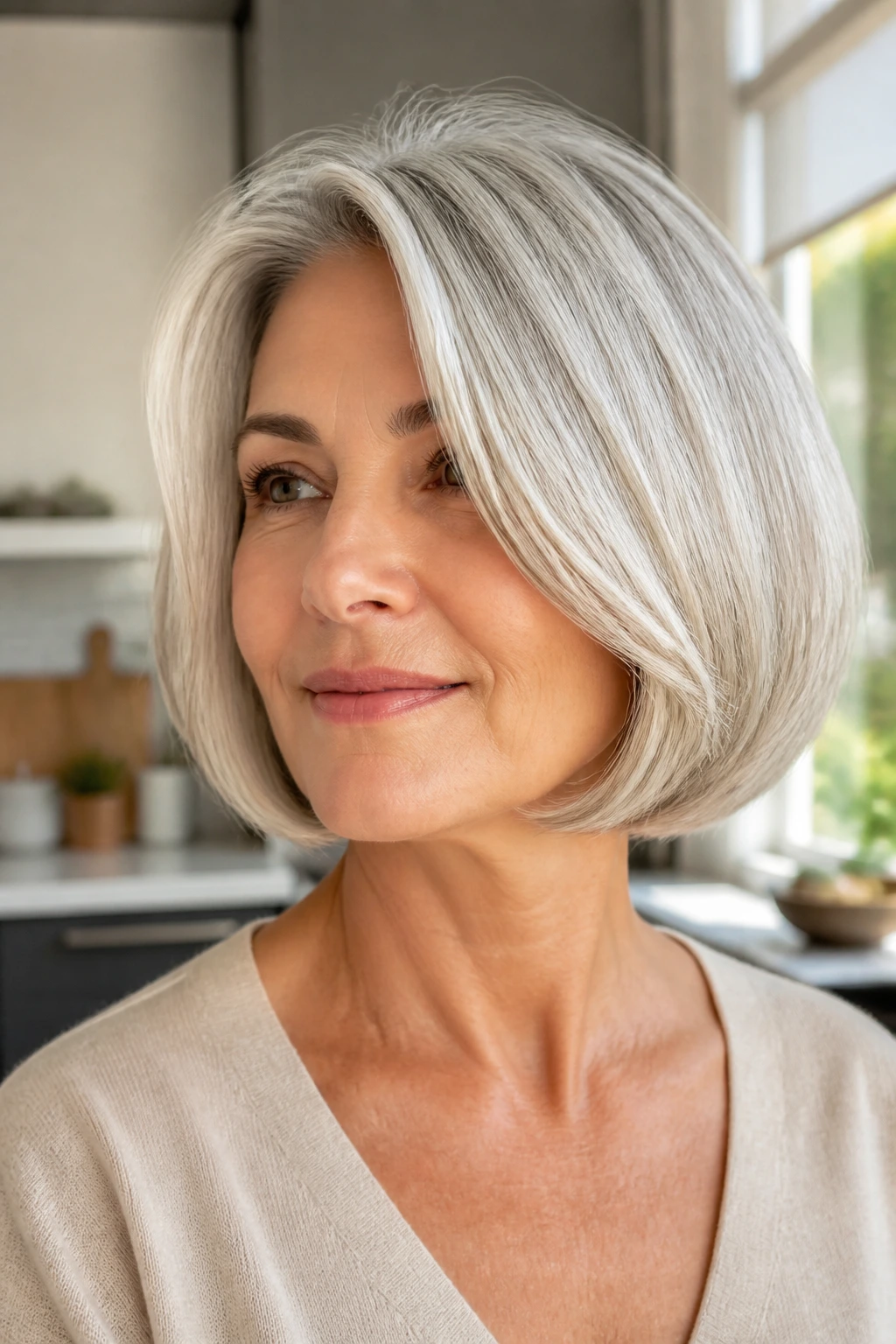
The rounded Italian bob has body in the right places. Not too much, not too little. The silhouette is fuller through the mid-lengths, with ends that arc inward and a crown that sits softly lifted rather than flat. It’s polished, but not severe. A good version has a plush shape without losing the bob line.
This is a smart pick for thicker hair, because the rounded curve keeps the bulk under control. It also works nicely with gray hair that has a little coarse texture. The shape turns that texture into structure. A good blow-dry with a 1.5-inch brush and a smoothing cream is usually enough.
What I like most here is the balance. The cut feels classic from every angle, and it doesn’t rely on bangs to do all the work. If you want a bob that still feels soft when you turn your head, this is one to keep on the shortlist.
9. A-Line Retro Bob
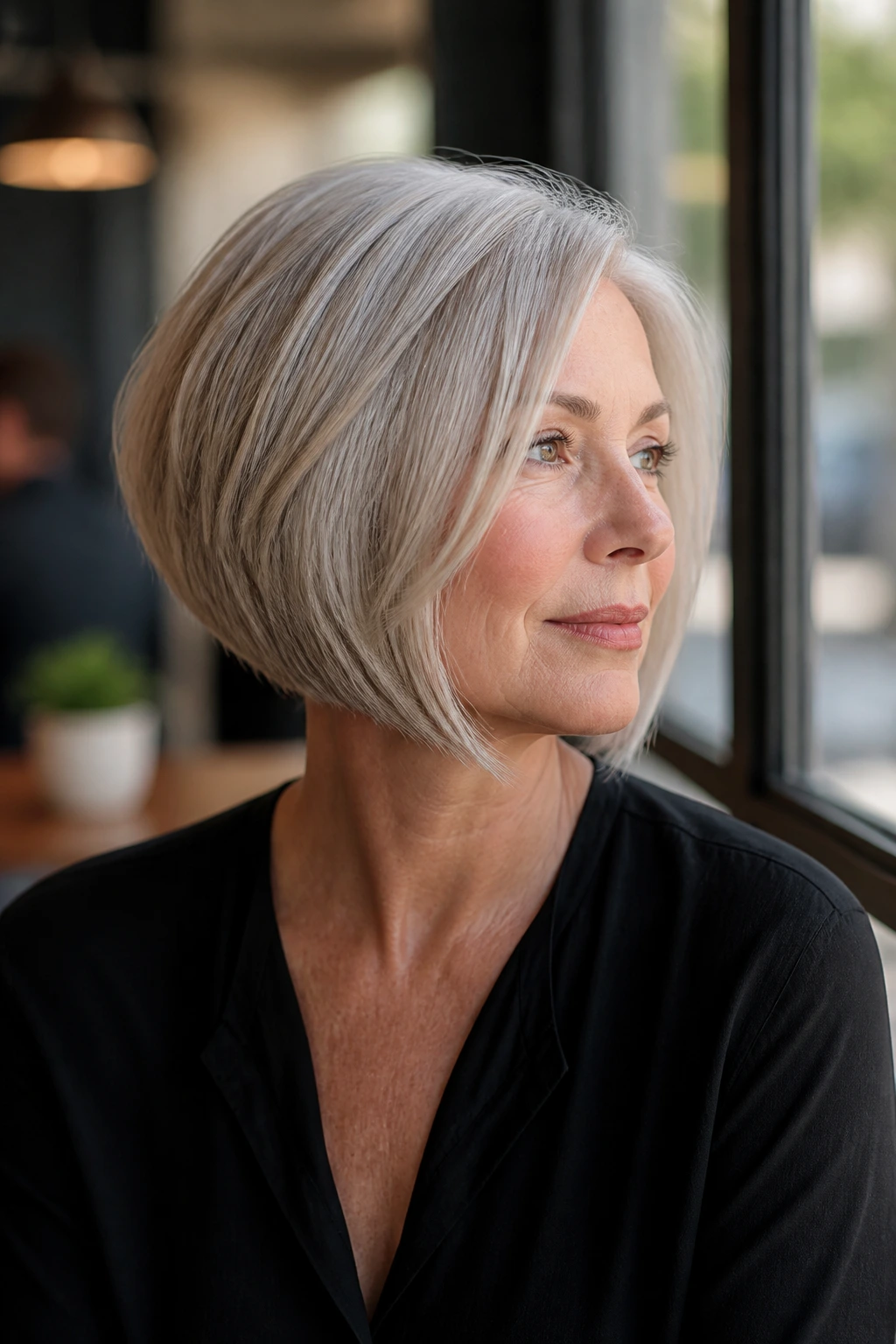
The A-line bob is slightly longer in front and shorter at the back, which gives the whole shape a clean forward sweep. It has a neat, architectural look that feels vintage without borrowing too much from one single era. That’s useful if you want retro energy but not a costume-catalog finish.
This shape is especially flattering when the front pieces skim the jaw or collarbone. The angle draws the eye downward in a graceful way, and it can make the neck look longer. If your face is round or square, that forward extension can help soften the edge.
There’s a catch. If the back is cut too short or the angle is too steep, it can look severe. Ask for a gentle A-line, not a hard wedge. A soft bevel through the front keeps the bob wearable.
What to ask for:
- A subtle angle, not a dramatic slope.
- Clean perimeter lines at the nape.
- Enough length in front to tuck behind the ear if you want.
10. Bouffant Bob
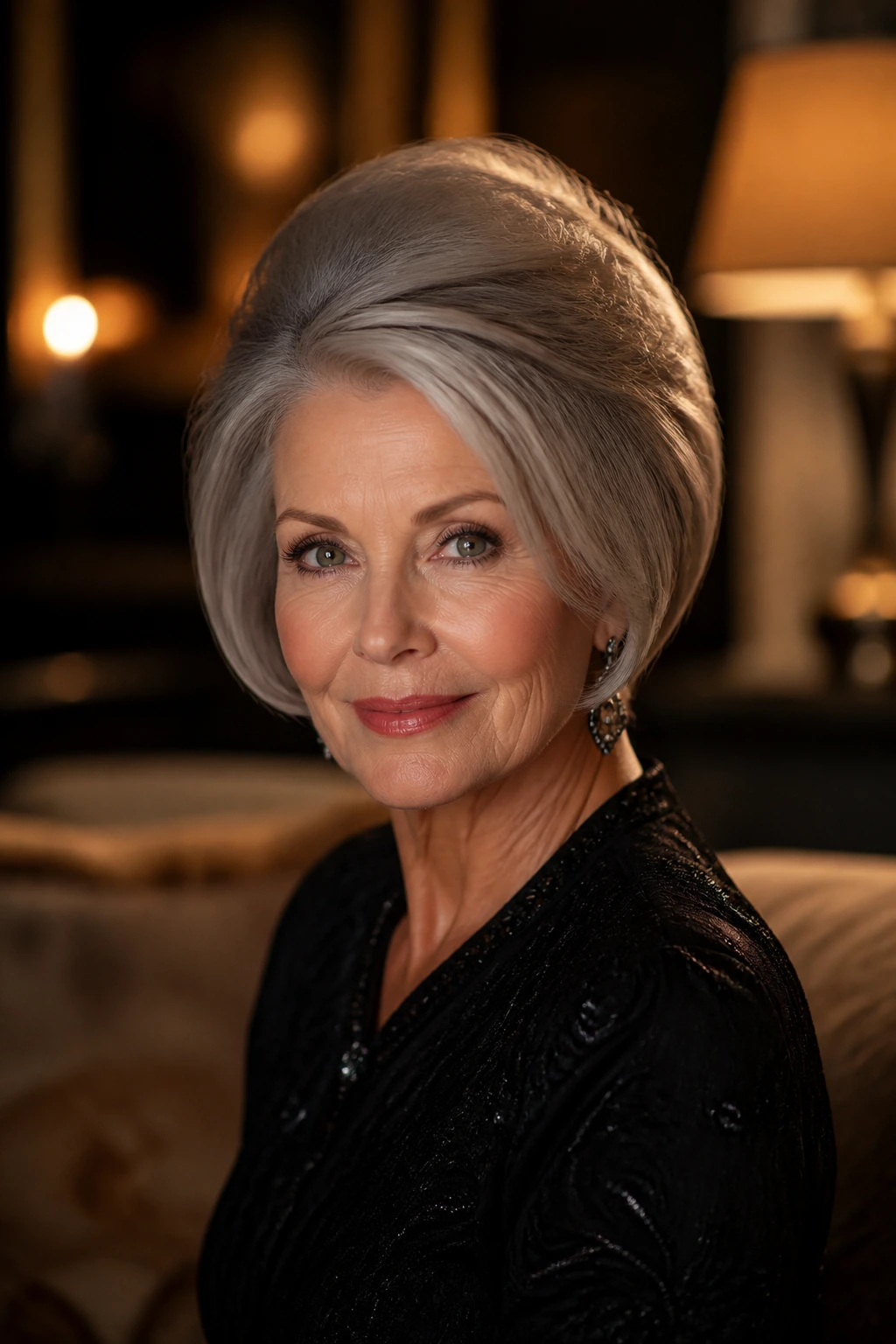
The bouffant bob is for the woman who is not afraid of a little height. The crown lifts, the sides stay controlled, and the silhouette feels airy and glamorous. Done well, it gives the face more vertical space and makes the hair look fuller right where many people want it.
This style needs root support. Rollers at the crown, a round brush at the front, or a little backcombing under the top layer can build that lift without turning the hair into a helmet. The important part is restraint. The volume should feel shaped, not sprayed into a fixed shell.
It’s a lovely choice if your hair is thinning a bit at the top or if you want the bob to hold attention from across a room. The bouffant shape pairs especially well with bold earrings and a strong side sweep. It likes a little glamour. No apology required.
11. S-Wave Bob with Side Sweep
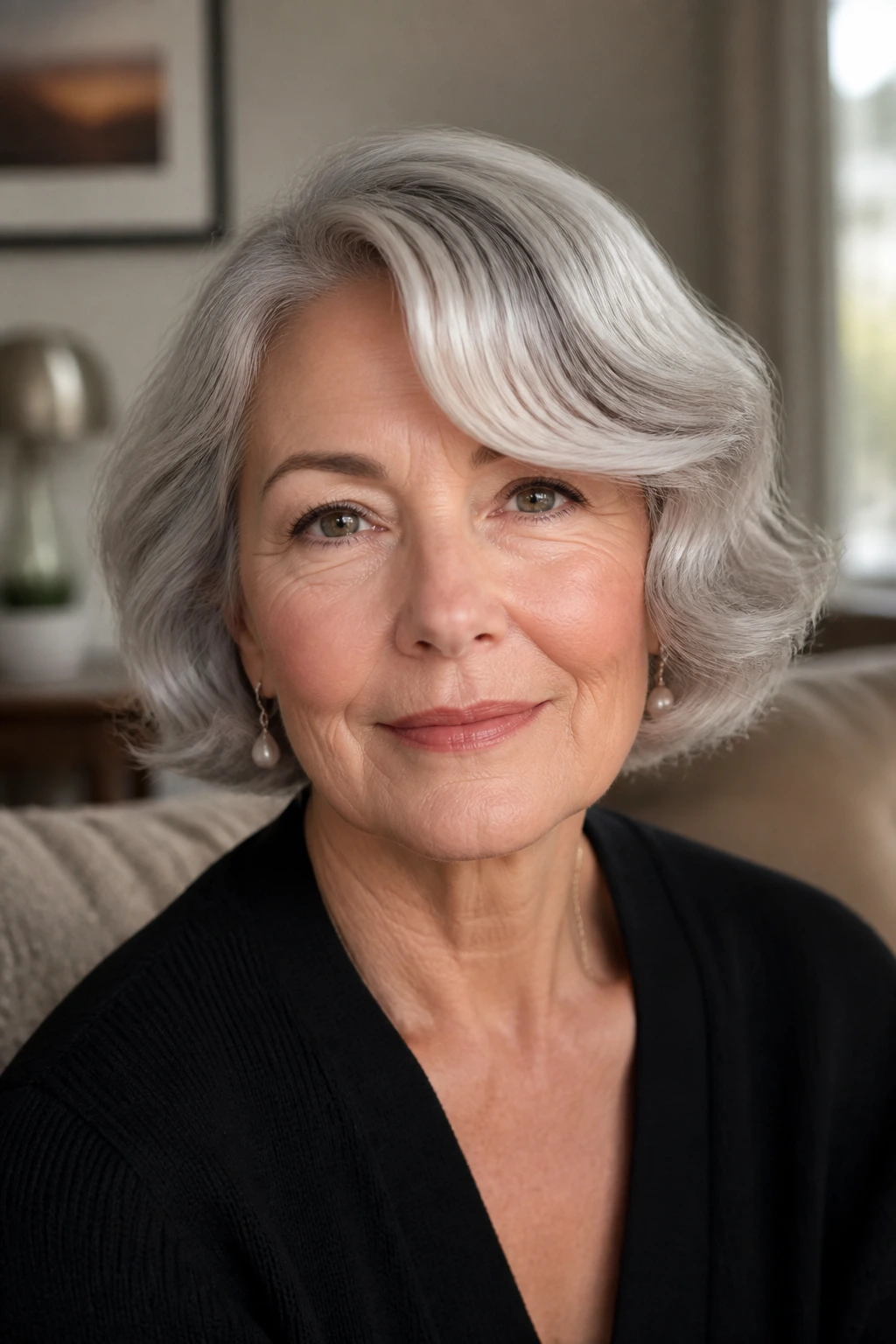
Can a bob be soft and structured at once? Absolutely. The S-wave bob with a side sweep does exactly that. The wave bends gently across the front, usually starting near the part and curving toward the cheek, which gives the style movement without making the whole head look curly.
This shape flatters a lot of older faces because it breaks up the forehead and cheek area in a quiet way. It’s not a blunt curtain. It’s more like a line drawn with a loose hand. If your hair has some natural wave, you can encourage it with setting lotion and finger-coiling. If it’s straight, a medium iron and a little brushing will create the bend.
The side sweep matters here. It prevents the style from feeling too symmetrical or too stiff, and it gives you a nice place to tuck a pin if you want the look to lean dressier.
12. Curly Silver Bob
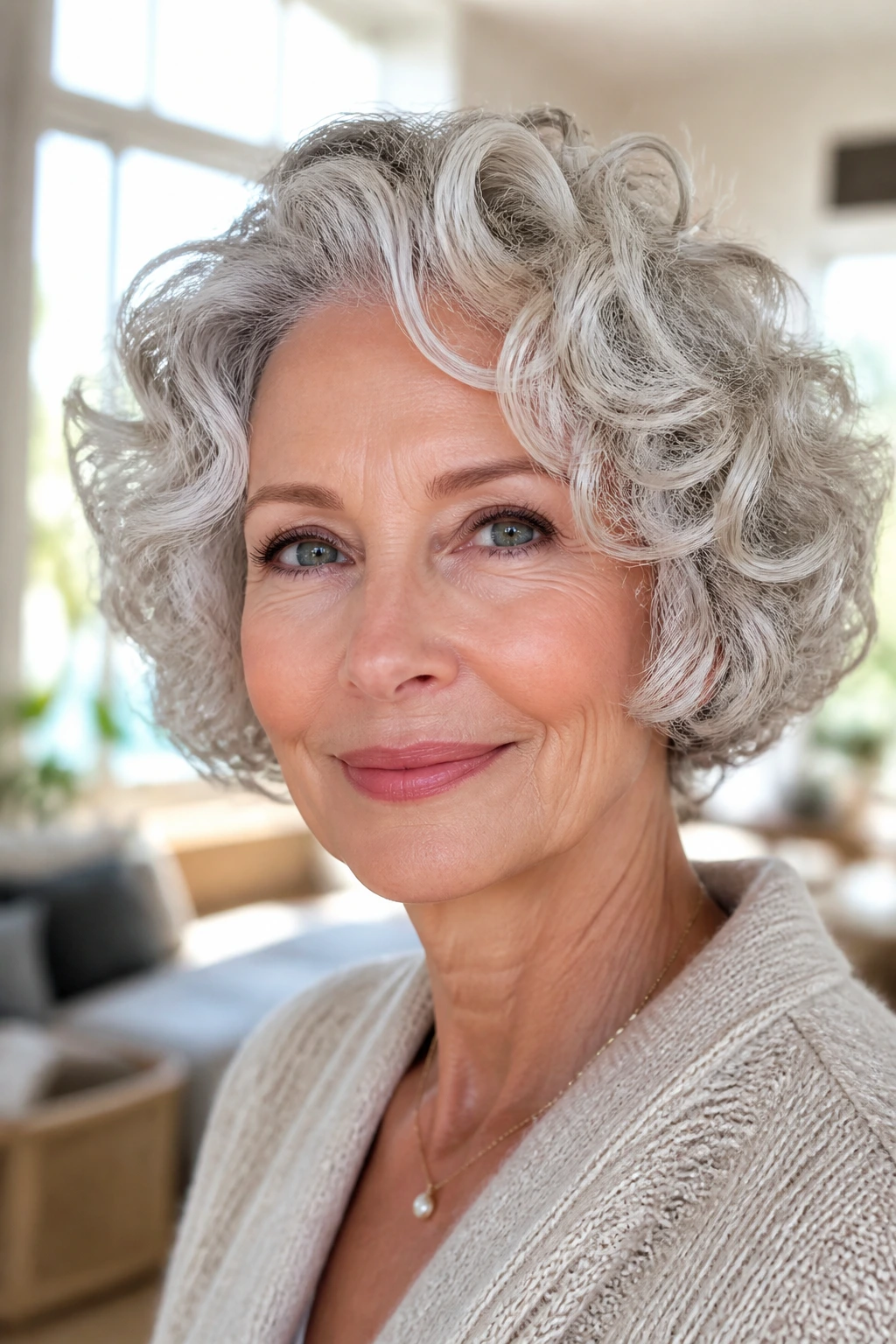
Curly hair and a bob can get along beautifully when the shape is cut with the curl pattern in mind. A curly silver bob lets the texture do what it already wants to do, while keeping the outline tidy enough that the style still reads as a bob and not just “short hair.”
The best version usually sits at the jaw or just below it, with enough length for the curls to spring without ballooning too high. That matters. Gray and silver curls can get airy fast, especially if the hair is fine. A little weight in the right spot helps keep the shape grounded.
I like this one because it doesn’t ask curls to behave like straight hair. It respects the curl, then trims the perimeter so the silhouette stays clear. If you’ve spent years fighting your texture, this is the bob that lets you stop fighting and start editing.
13. Micro-Fringe French Bob

A micro-fringe French bob is a bold little cut, and I mean that in the good way. The short fringe draws the eye up, the bob sits close to the face, and the whole look has an easy, slightly artistic edge. It can be brilliant on older women who like strong shapes and don’t mind a little forehead exposure.
The fringe should be soft, not choppy to the point of looking accidental. If the bangs sit too blunt and too thick, the style turns hard. Keep the ends light and the bob itself slightly rounded or slightly tucked under so the line stays graceful.
This is not the most forgiving cut in the world. It asks for regular trims and a bit of styling. But when it works, it has a kind of effortless discipline that pairs beautifully with strong brows, glasses, and a red lip. Not everyone wants that. Some do. If you do, lean in.
14. Shoulder-Grazing Vintage Bob
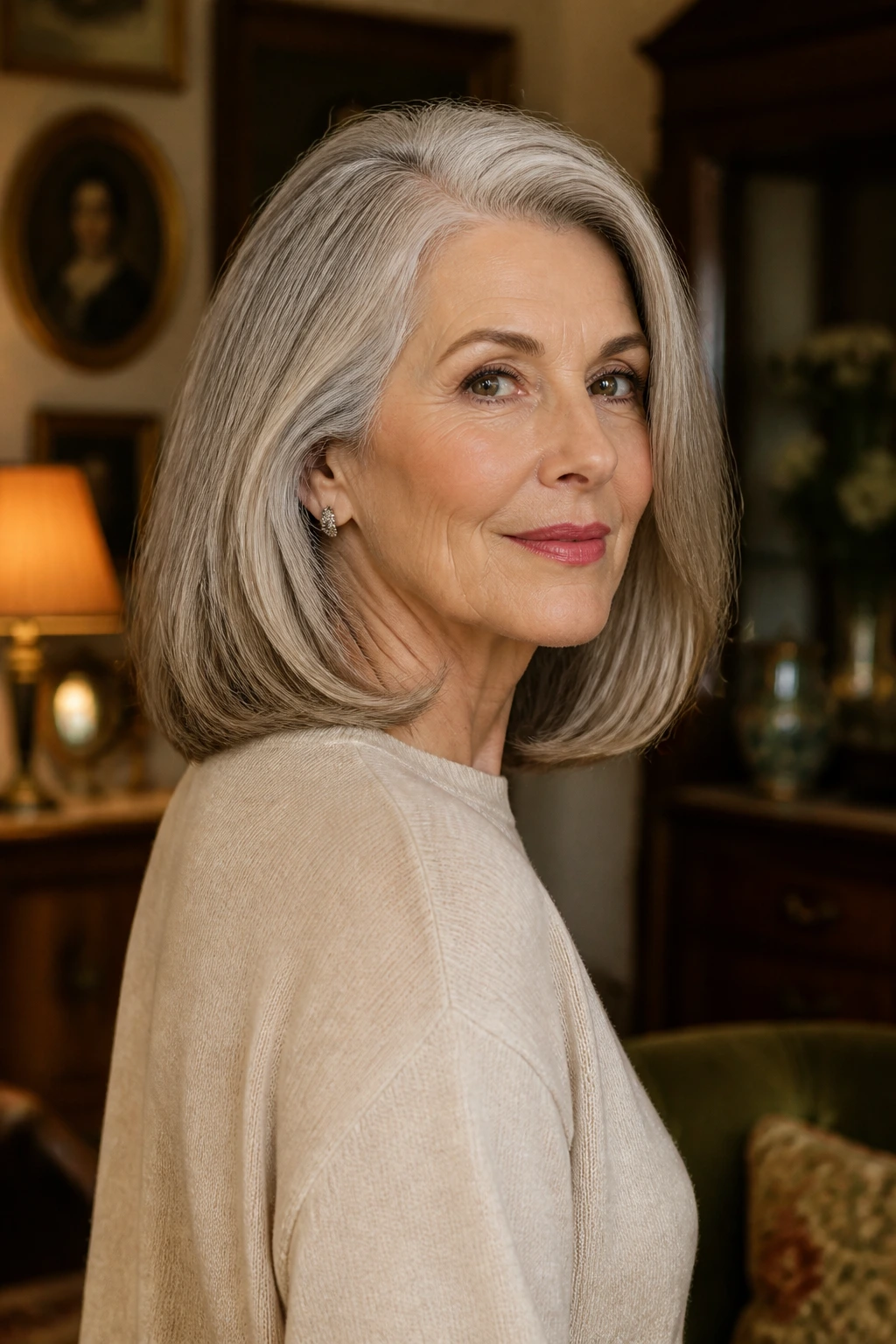
A shoulder-grazing vintage bob is the friendly version of retro hair. It keeps the bob idea but gives you a little more length to work with, which is useful if you like to tuck hair behind the ear, set loose waves, or make the style soften into your neckline instead of stopping right at the jaw.
This length is kind to thicker hair and to anyone who wants more styling options. You can curve the ends under, flip them out, or pin one side back and let the rest fall. It also gives you room if you like to wear your hair up in a partial set on busy mornings.
The key is keeping the outline tidy. Long bobs can go shapeless fast if the ends are left too wispy. Ask for weight at the perimeter and a soft internal shape that supports the movement. That’s the difference between “growing out a bob” and “a bob with a little extra air.”
15. C-Curl Bob
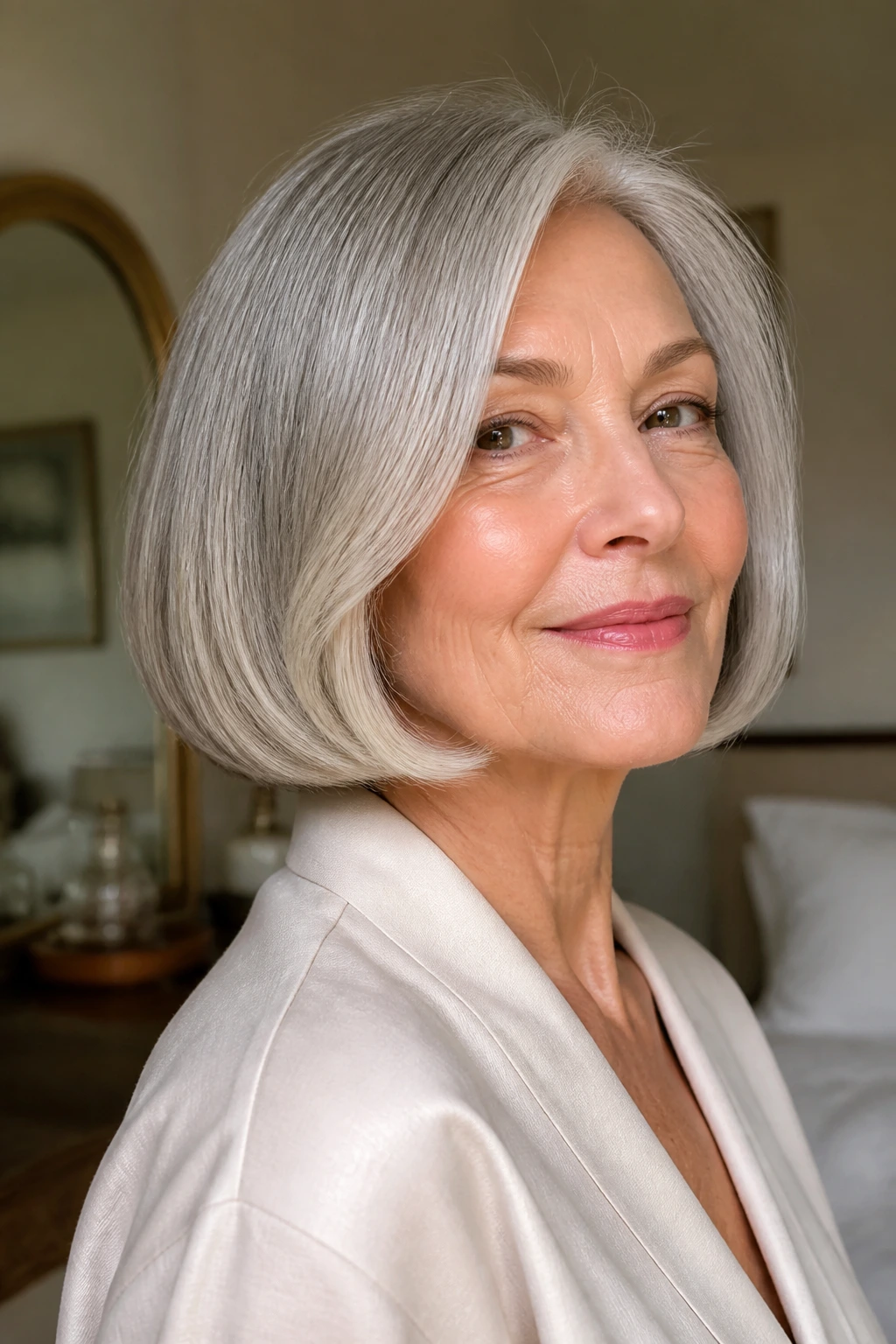
The C-curl bob is one of the cleanest vintage shapes around. The ends curve under in a neat C, just enough to soften the line without making the hair look round and puffy. It’s simple. It’s controlled. And it works better than people give it credit for.
This style suits just about anyone who wants a calm, tidy finish. It can be chin length, jaw length, or slightly longer. The real job is the ends. They need to bend in one smooth motion, not kink or fold. A round brush and a bit of heat usually do the trick, though hot rollers can set the shape more evenly.
I think this is a sleeper hit for older women with fine hair because it gives the perimeter a clear edge. You get shape, not fuss. And if the rest of the day is going to be busy, a C-curl bob tends to stay in its lane without a lot of fussing.
16. Pinned-Back Evening Bob
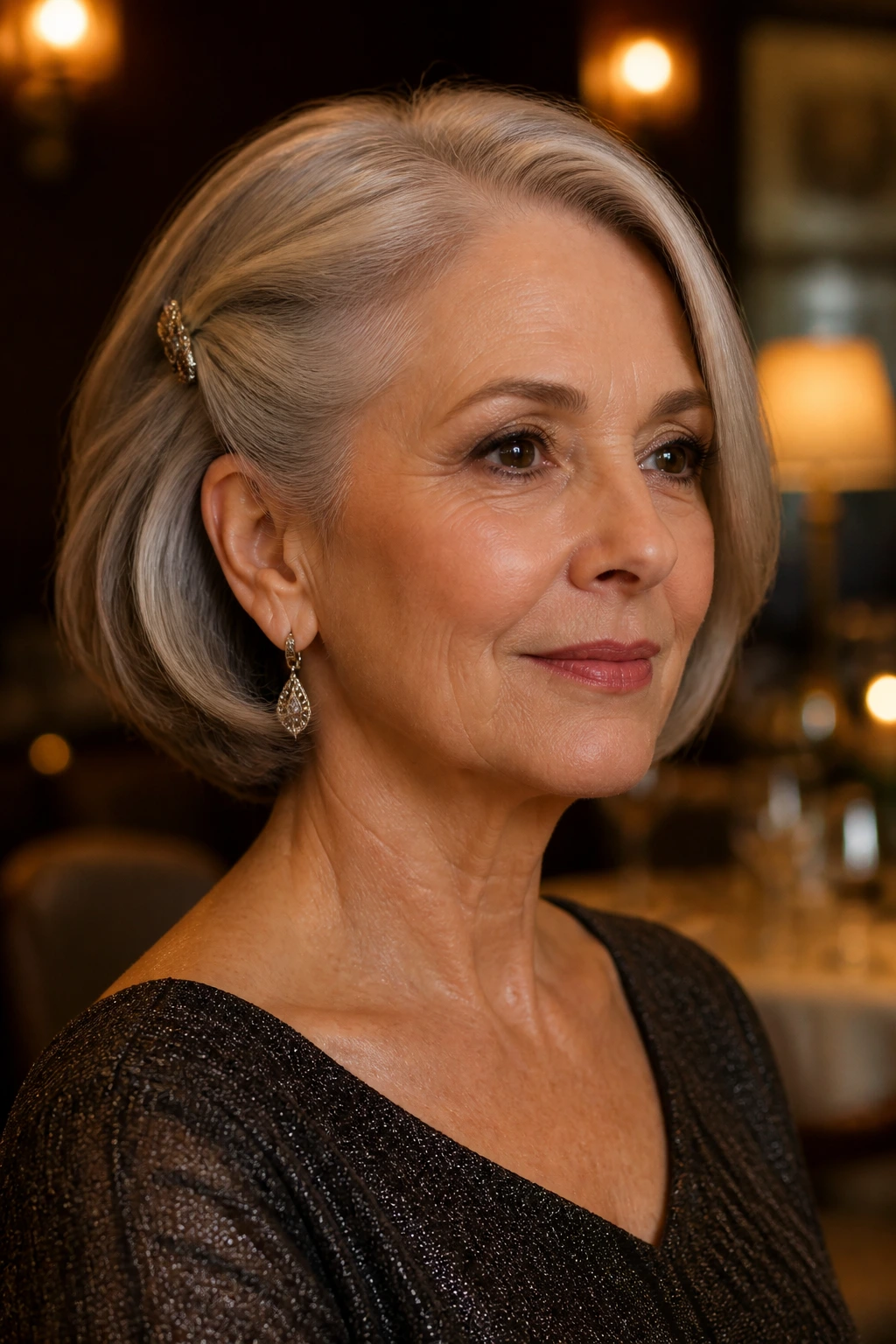
The pinned-back evening bob is the kind of style that turns a plain bob into something slightly formal with one small move. One side gets tucked or pinned back, the front keeps its shape, and the rest of the hair stays smooth. That asymmetry gives the cut a dressed-up feel without needing an updo.
This works especially well on chin-length and collarbone-length bobs, because there’s enough material to tuck but not so much that the pin disappears. A decorative clip is optional. I actually prefer a simple metal pin if the rest of the look is already doing the talking.
The nice part is that this style can start as a day bob and end as an evening bob in under five minutes. If you’re heading out and don’t want to rewash, this is one of the easiest ways to make the cut feel intentional again.
17. Glossy Hollywood Bob
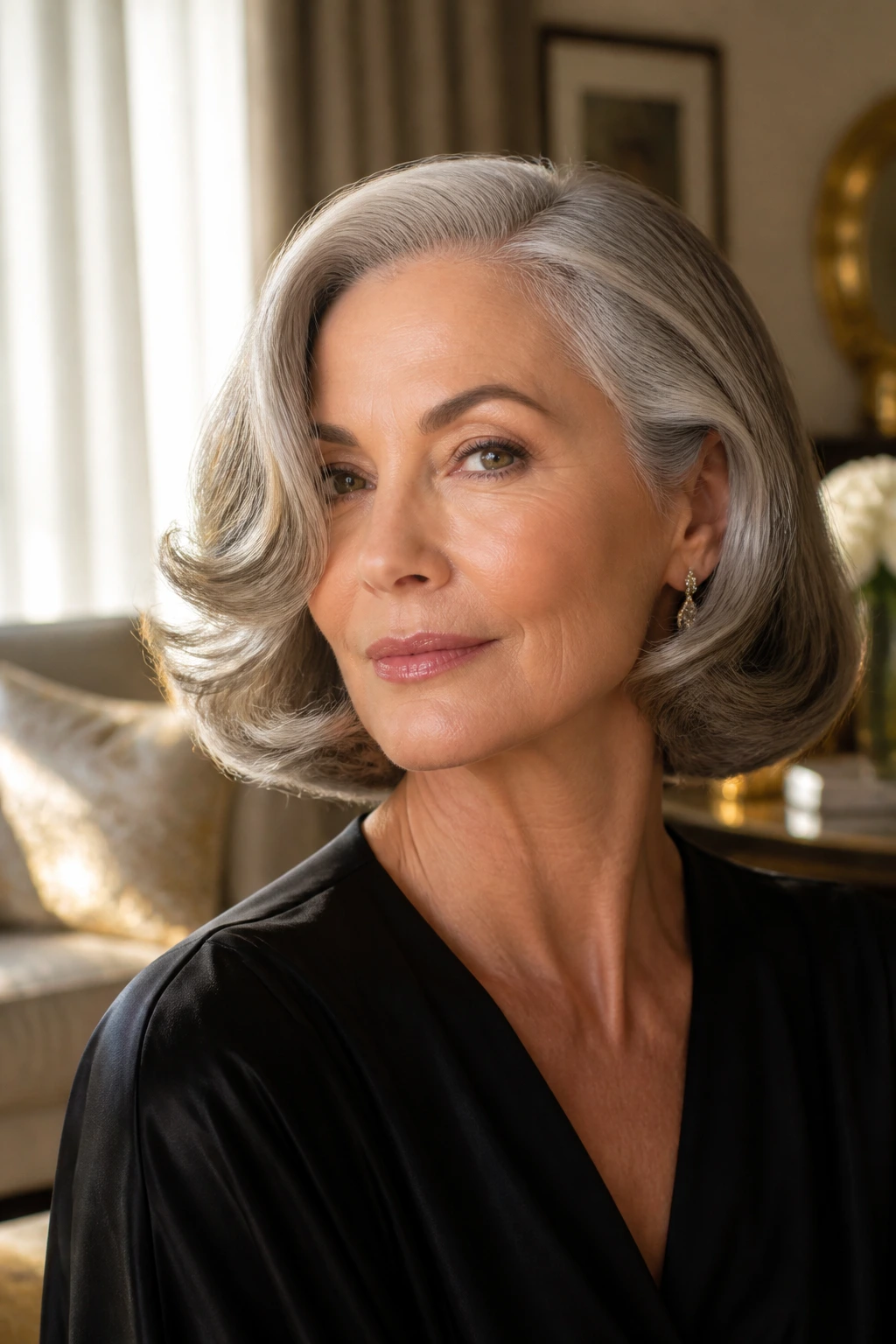
The glossy Hollywood bob is all about smooth shine, a side part, and a soft wave that curves away from the face. It has a camera-ready finish, but it doesn’t need to be stiff. The best versions move when you move. They just do it with polish.
This look is especially flattering on older women with strong cheekbones or a defined jaw, because the wave frames the face without covering it. A smoothing cream, a large barrel iron, and a boar-bristle brush are usually enough. The surface should look sleek, not flattened into a lifeless sheet.
If you like hair that feels a little dressed up even on an ordinary day, this is the bob to save for last. It has enough glamour for an event and enough restraint to wear without feeling overdone. That balance is hard to fake.
How to Choose the Right Vintage Bob for Your Face and Hair Texture
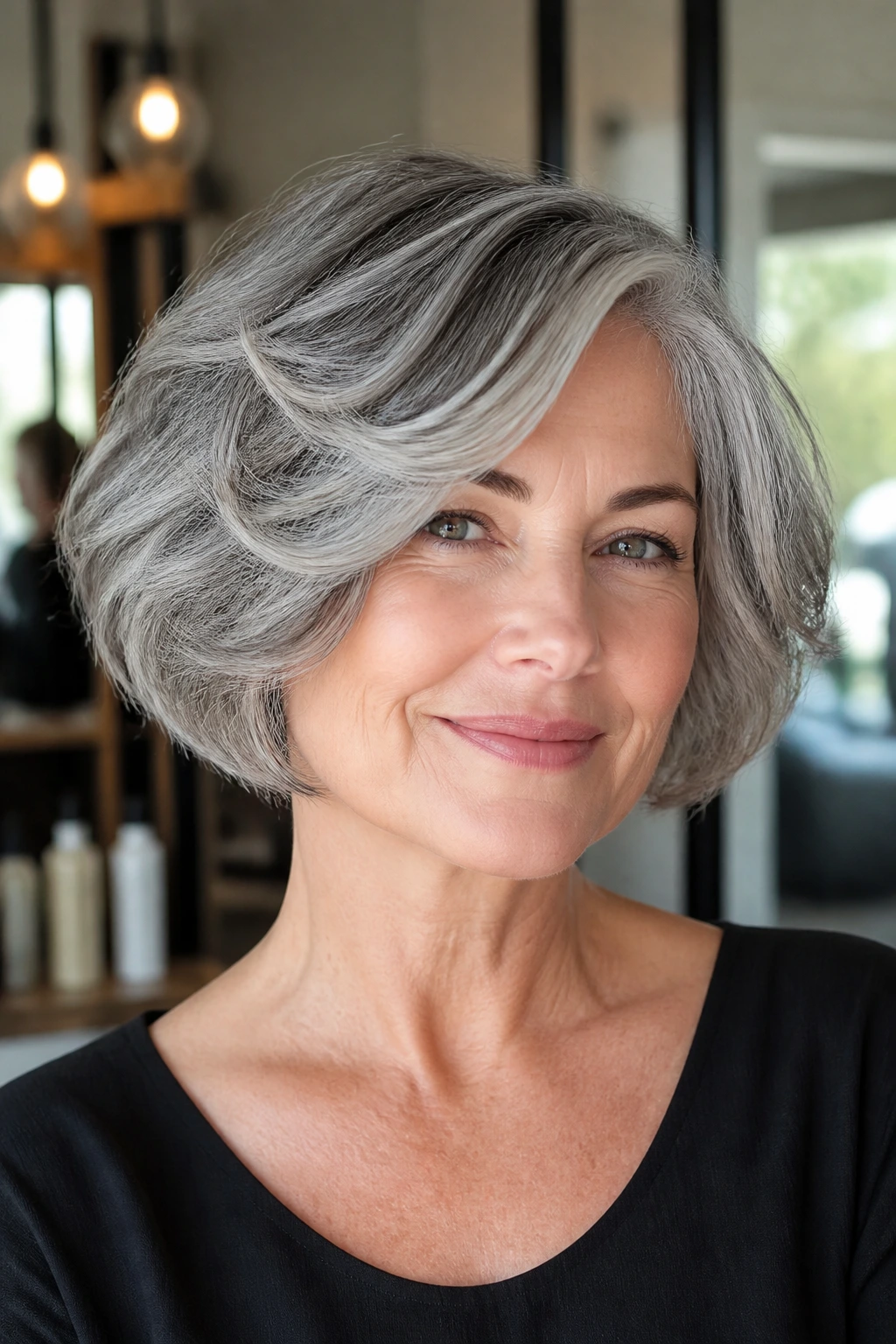
The right vintage bob starts with your hair, not the photo on the salon wall. Fine hair usually behaves better in shapes with a clear perimeter, like the C-curl bob, the pageboy bob, or the tucked-under curved bob. Thick hair often wants a little more internal weight removal, so the rounded Italian bob or the shoulder-grazing version can sit more comfortably.
Face shape matters, but not in the rigid, chart-on-the-wall way people love to repeat. If your face is round, a side part or an A-line front can give a little length. If your face is long, a bouffant crown or a soft fringe can bring back some width. If your jaw is the feature you want to soften, aim for a curve that lands just below it instead of cutting straight through the widest point.
Hairline quirks count too. Cowlicks at the front? Ask for a cut that works with a part you can actually keep. Glasses? Make sure the length doesn’t jam into the frame arm. A strong bob should solve a problem, not create one.
Tools That Make the Set Easier
-
1.5-inch round brush: Good for beveling the ends inward without making the bob curl into a ball.
-
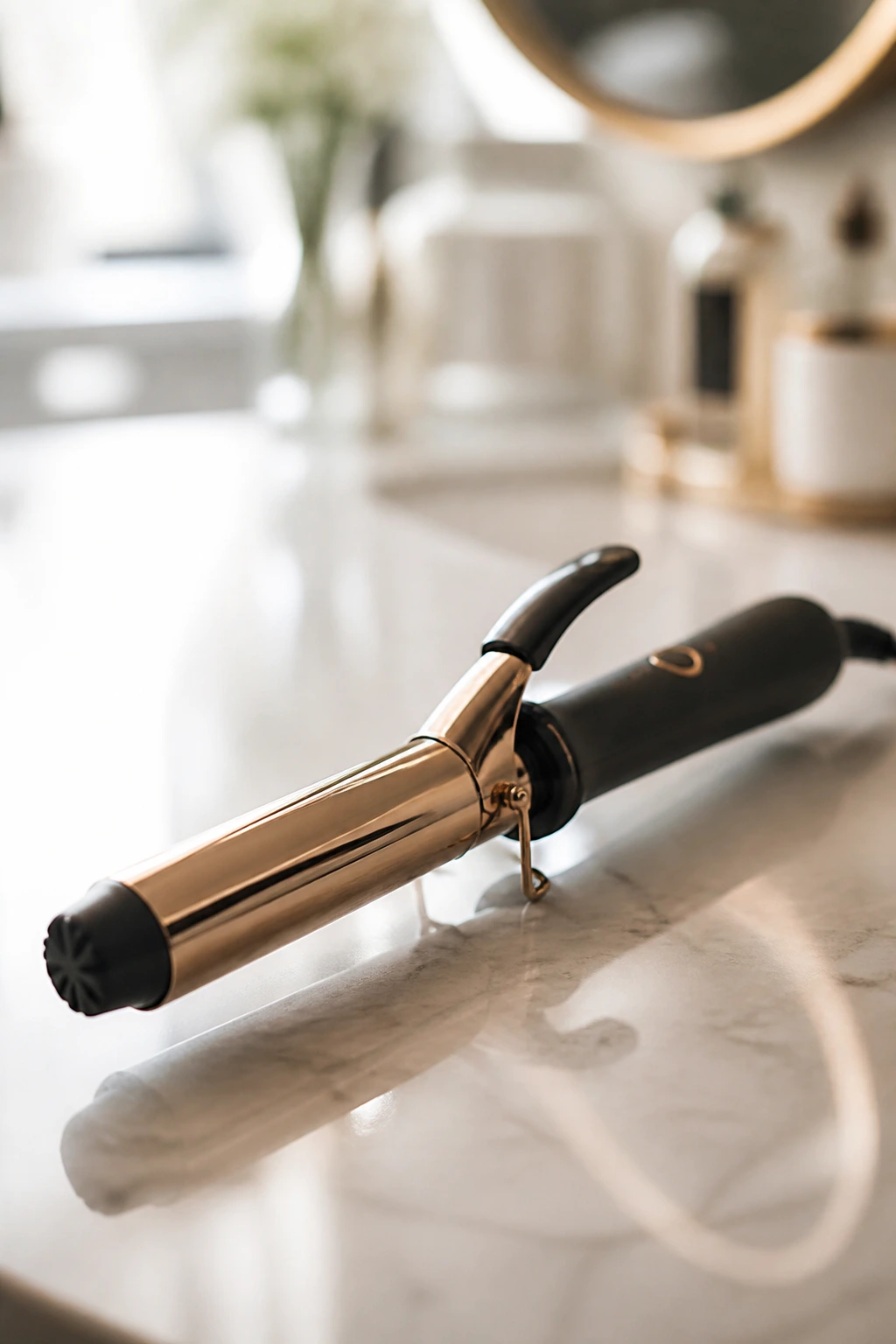
1-inch curling iron or Marcel iron: Useful for finger waves, S-waves, and soft flips when you want cleaner definition.
-
Velcro rollers: Handy at the crown and the front if you want lift without a lot of heat.
-
Duckbill clips: These hold waves, bends, and sectioned curls while they cool.
-
Fine-tooth comb: The right tool for setting a side part, smoothing the surface, and shaping waves.
-
Boar-bristle brush: Best for polishing the surface after heat-setting, especially on glossy bob styles.
-
Light setting lotion or mousse: Gives the hair a bit of memory without turning it crunchy.
-
Flexible-hold hairspray: Keeps the shape in place while still letting the hair move.
-
Heat protectant: Non-negotiable if you use irons or hot rollers more than once in a while.
Styling Moves That Keep the Shape Crisp, Not Stiff
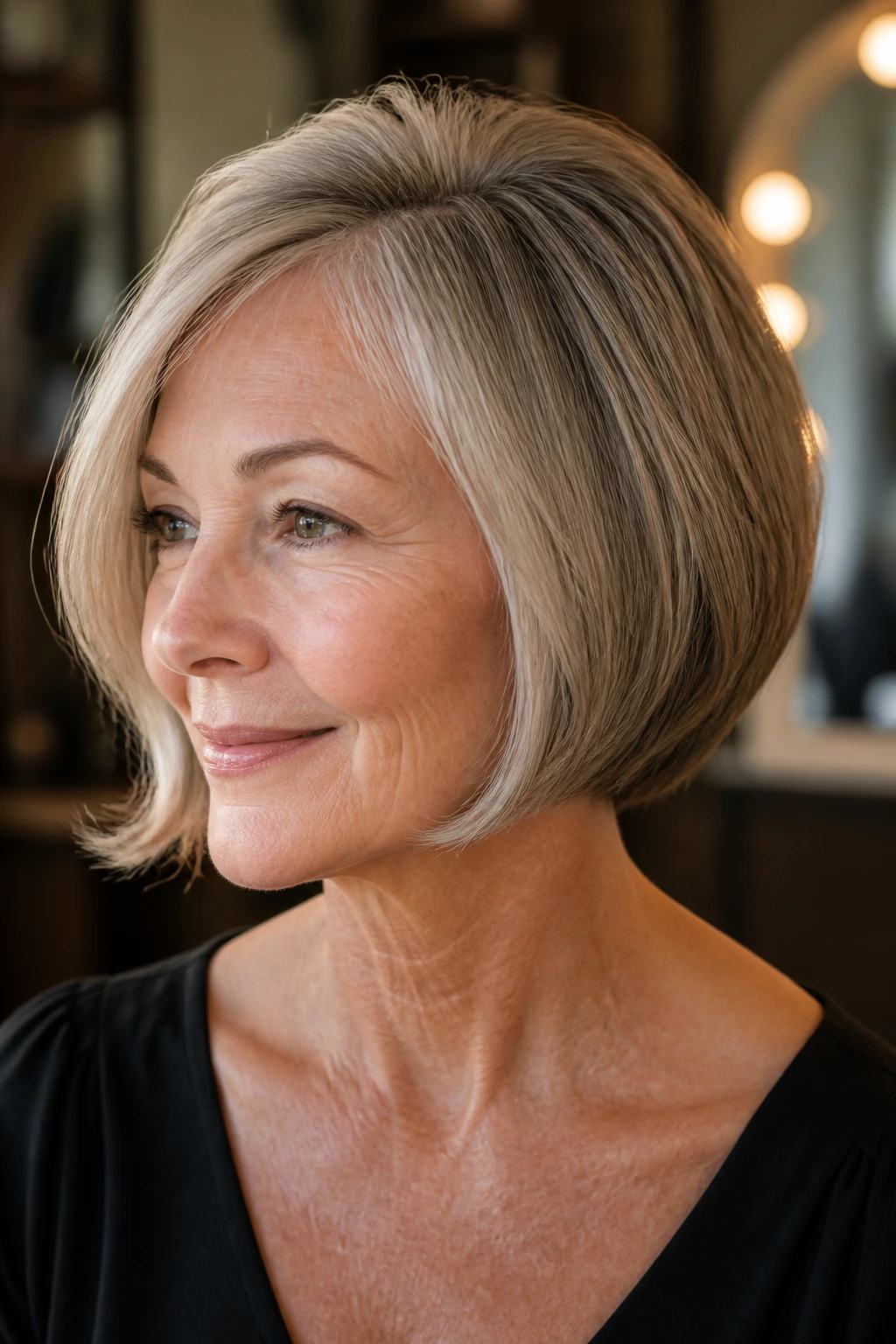
Start at the roots, not the ends. That is the part people skip, then wonder why the bob goes flat by lunchtime. A little lift at the crown, even if it’s only from a round brush or two rollers, gives the cut its backbone. Without that, the ends can be perfect and the whole style still looks tired.
Cool the hair fully before brushing it out. Warm hair lies. It looks set, then collapses after ten minutes. Let each section cool in place, especially if you’re doing a wave, a flip, or a tucked-under finish. That pause is boring. It matters.
Use less product than you think. A bob looks best when the surface can still move a little. If the hair starts to feel coated or sticky, you’re probably past the sweet spot. I’d rather see a touch of frizz than a heavy, frozen finish.
And do not ignore the neckline. The back edge is the part that makes many vintage bobs look sharp from behind. A clean nape, even if it’s soft, changes everything.
Common Mistakes That Make a Vintage Bob Look Dated in the Wrong Way
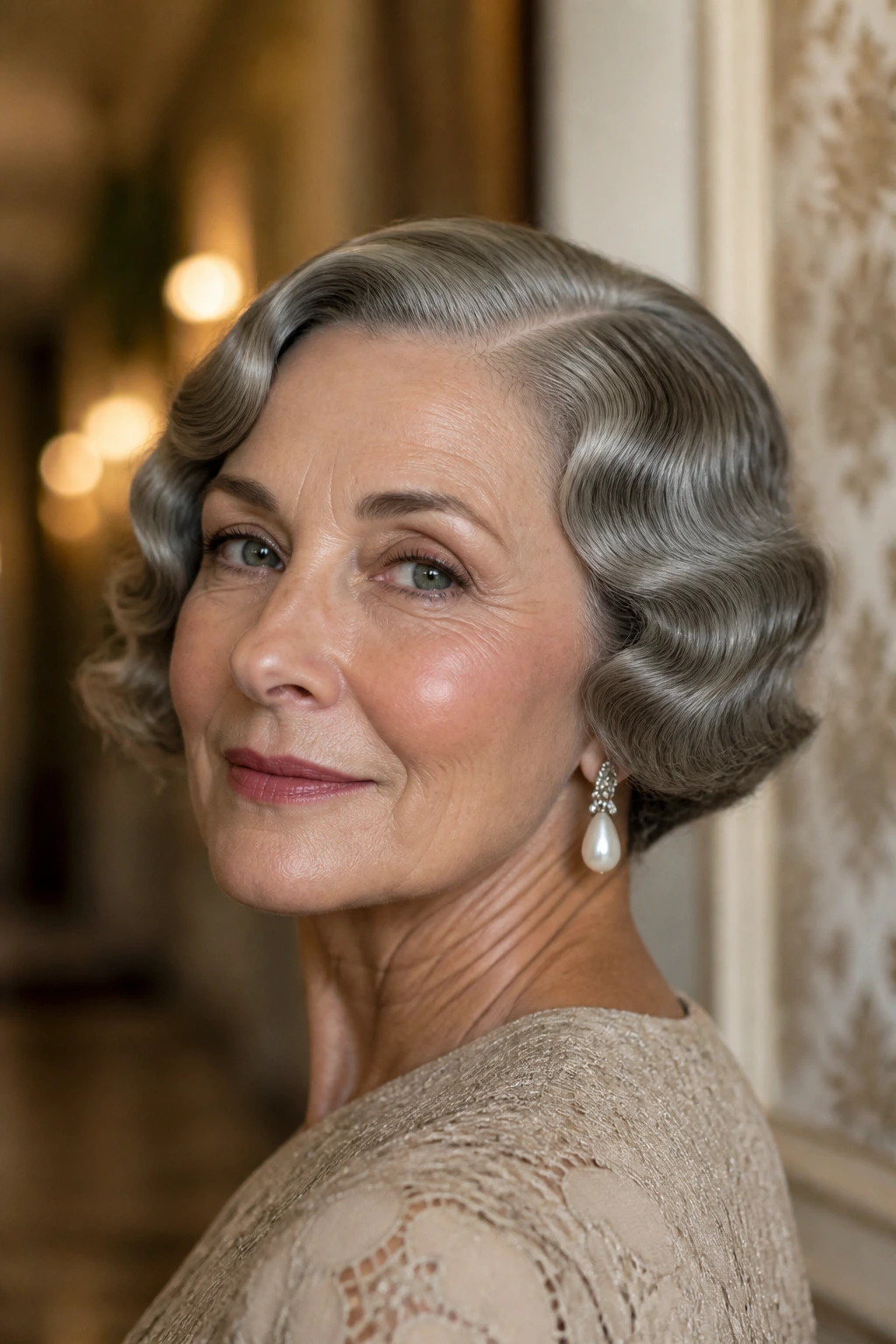
The first mistake is making the shape too stiff. Hair that has been sprayed into a rigid shell loses the very movement that makes these bobs attractive. The fix is simple: use a flexible hold spray and stop styling when the outline is set, not when the hair feels glued.
The second mistake is chasing volume in the wrong place. A huge crown with flat ends can make the bob look top-heavy. A bob needs balance. If you add lift at the top, keep the sides and ends polished so the shape still feels anchored.
Blunt bangs can also be tricky. A heavy fringe on a fine forehead or a strong cowlick can drag the face down and make the cut feel harsh. Soften the edges, or switch to a side-swept shape if the straight fringe keeps misbehaving.
Another common issue: cutting the bob too short at the back before testing how it sits with your natural texture. On paper, a short nape sounds clean. In real life, it can kick out, puff up, or sit oddly above the collar. Leave a little room if your hair has a mind of its own.
Fresh Ways to Wear the Same Vintage Shape

Soft-Burnished Silver: Keep the bob shape simple, then let the shine do the talking. A smoothing cream and a clean side part make gray hair look crisp and intentional.
Heat-Free Set: Use damp setting lotion, large rollers, and a full cool-down instead of a daily iron. The finish is gentler on the hair and tends to hold more evenly than rushed heat styling.
Dressy Side Sweep: Tuck one side behind the ear, leave the other side soft, and add one small pin near the temple. It changes the mood fast.
Lived-In Retro: Brush the waves or curls out a little more than usual so the finish feels softer and less exact. This works well when you want vintage shape without a formal set.
Fringe Swap: If bangs feel too fussy, trade them for a long side fringe or a face-framing sweep. You keep the retro character and lose some of the maintenance.
Keeping the Cut Sharp Between Salon Visits
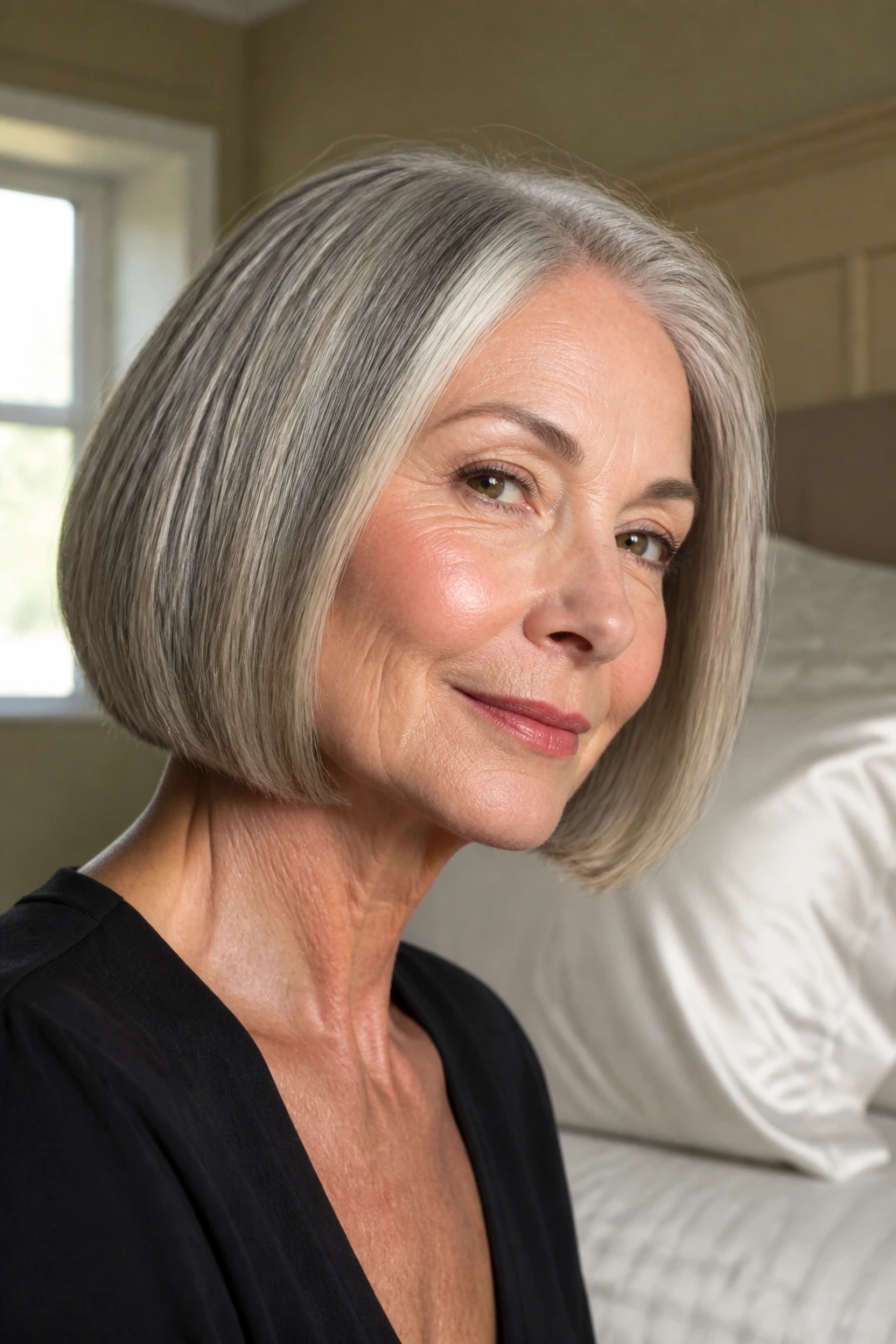
The shape of a bob lives or dies by the trim schedule. For most chin-length and jaw-length versions, a tidy-up every 5 to 7 weeks keeps the line from fraying. If your hair grows fast or your nape loses its shape quickly, aim closer to 5 weeks. If the cut is longer and softer, you can often stretch it a little.
At home, sleep matters more than people think. A satin pillowcase or a loose wrap keeps the ends from snagging, especially on smoother styles like the glossy Hollywood bob or the tucked-under curved bob. If you wake up with a weird bend, a quick mist of water and a round brush usually fixes it faster than a full wash.
On day two or three, don’t rebuild the whole style. Refresh the root, touch the front, and reset the ends. Too much reworking just makes the hair tired. A bob should feel easy enough to revive without a full production.
Frequently Asked Questions About Vintage Bob Hairstyles for Older Women

Which vintage bob is best for fine hair?
The C-curl bob, tucked-under curved bob, and soft pageboy bob usually give fine hair the cleanest shape. They create a strong outline without needing a lot of layered bulk, which can make the ends look thinner.
Can older women wear a bob with bangs?
Yes, but the fringe needs to suit the face and the hairline. Soft side-swept bangs, wispy French fringe, or a light micro-fringe usually age better than a heavy, blunt wall of hair.
Do I need hot rollers to style these looks?
No, though they help. A round brush, blow-dryer, and a 1-inch iron can handle most of these shapes. Hot rollers are useful when you want longer-lasting lift with less direct heat on the hair.
What if my hair flips out where I want it to tuck under?
That usually means the ends need more directional drying or a stronger perimeter shape from the cut. Blow-dry the ends inward while they’re still damp, then let them cool with a clip or roller in place.
Will a vintage bob work with glasses?
Yes, and in some cases it works better than longer hair. Chin length, jaw length, or a soft side part keeps the hair from fighting the frames, which is the main thing to watch.
How do I keep a bob from looking too severe on a long face?
Choose a bit of width — a soft wave, a rounded side shape, or a bouffant lift at the crown. A center part plus a flat top can make the face look longer, so avoid that if length is already your main feature.
Is a vintage bob hard to maintain?
Not if the cut matches your texture. The more your natural hair wants to bend, the easier the style will be. Straight hair needs a little more shaping, but even that usually comes down to a brush, a clip, and ten careful minutes.
The Bob That Knows Its Own Shape
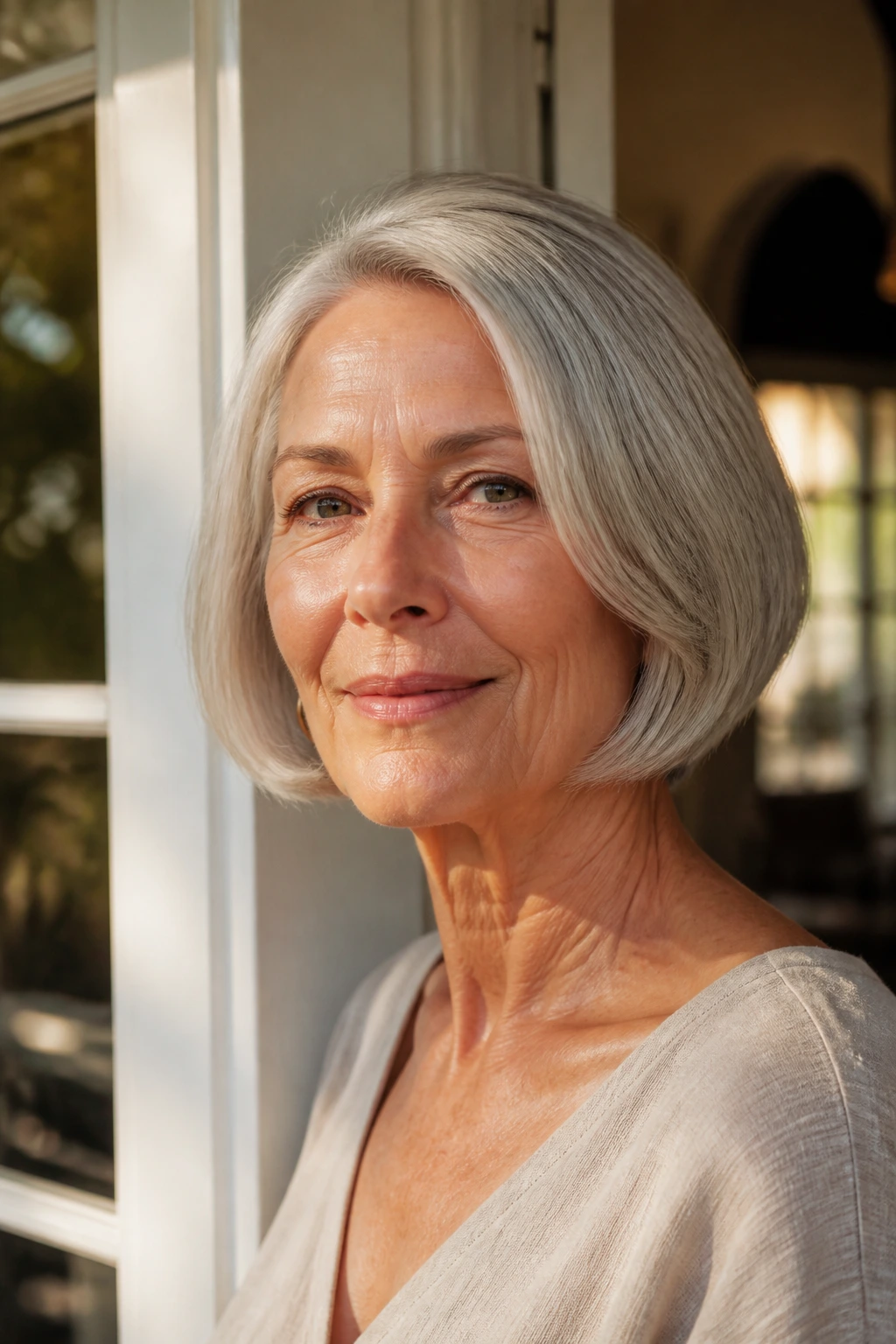
The best vintage bob doesn’t fight age, texture, or face shape. It gives all three something useful to do. That is why these styles work so well on older women: they frame the face with purpose, keep the silhouette neat, and leave room for silver, gray, curls, or a little natural bend to shine through.
Pick the version that fits your mornings, not the one that only looks good on a salon mirror with perfect lighting. A bob you can actually wear will always beat one that needs twenty minutes of coaxing and a prayer. Start with the outline, trust the texture, and let the finish stay human.
