



Thick hair can swallow color if the placement is too timid.
That’s the first thing people learn when they ask for balayage looks for thick hair and end up with ribbons so fine they vanish under the top layer. Dense hair needs a different hand. Bigger painted sections. A root that stays a shade deeper. Brightness that shows up when the hair moves, not only when it’s pinned up and examined under salon lights.
The upside is that thick hair gives you room to play. You can carry contrast better than fine hair can, which means caramel can sit next to espresso without looking harsh, and a cooler mushroom brown can keep its shape instead of collapsing into a flat brown sheet. When the placement is right, thick hair looks expensive in the plainest, least fussy way: full at the roots, airy through the mids, and bright enough at the ends to catch light as it swings.
What matters most is not chasing the lightest blonde in the room. It’s choosing a balayage pattern that can actually be seen through the bulk of the hair. A smart look on dense hair has to read from the front, the side, and the back — and still look like hair, not stripes. That’s where the good stuff starts.
Why These Balayage Looks Work on Thick Hair
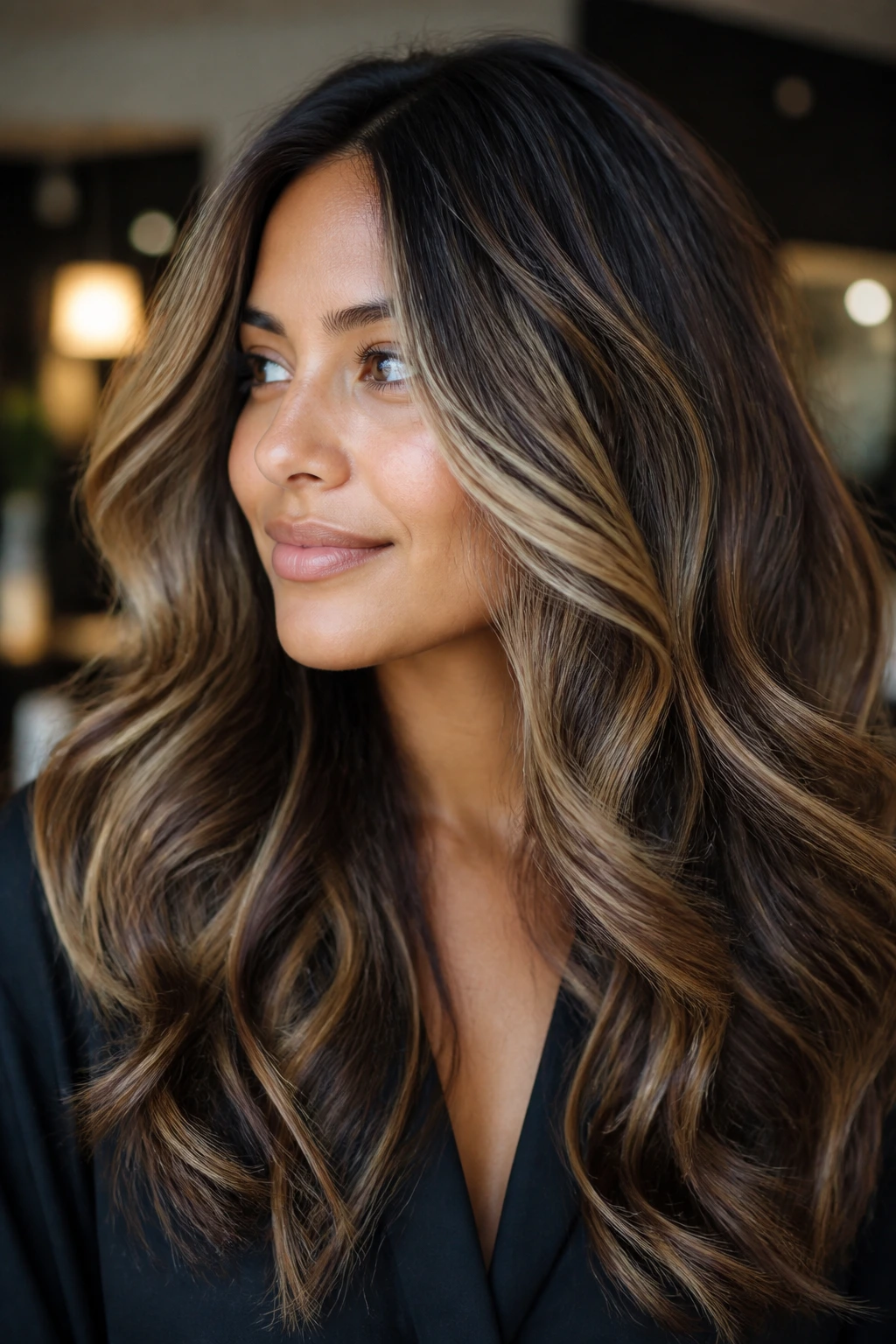
- Chunkier ribbons: Thick hair hides tiny highlights fast, so broader painted pieces keep the color visible through the canopy.
- A deeper root: A soft shadow at the scalp stops dense hair from turning into one bright block at the top.
- Face-framing payoff: Brighter pieces around the cheekbones and jawline make heavy lengths look lighter without bleaching the whole head.
- Layer-friendly placement: Balayage that lands on long layers shows movement when the hair swings, which is where thick hair really earns its keep.
- Lower-maintenance grow-out: A blended root gives you a few extra weeks before regrowth starts shouting for attention.
- Styling flexibility: These looks can read soft in loose waves, sharper in a blowout, and richer in natural texture.
Why Balayage Looks for Thick Hair Need Wider Sections
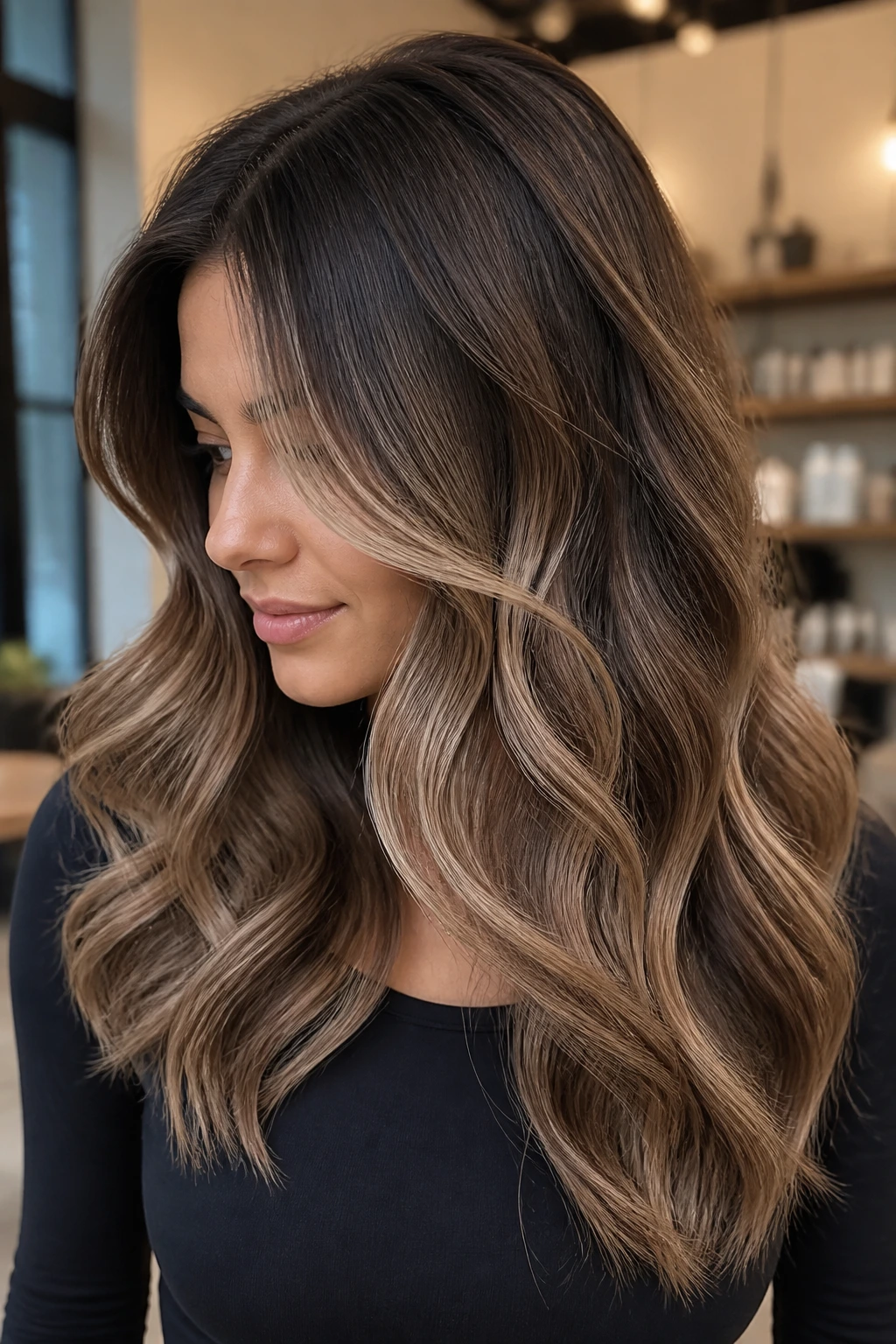
Dense hair behaves like a curtain. If the color sits only on the outside edge, you get a pretty surface and not much else. The better trick is to let the lighter pieces live inside the hair as well as on top of it, so the brightness flashes when the layers separate.
That’s why very fine baby lights can disappear on thick hair. They’re not wrong; they’re just too timid. A painted section that’s a little wider, or a few foiled ribbons tucked underneath, gives the eye something to catch. Without that, the color can look strangely polite. It’s there. You just have to hunt for it.
Surface Color Isn’t Enough
A lot of thick-haired clients want “subtle,” then wonder why the result looks dull. The issue usually isn’t the shade. It’s the placement. If every light piece lives at the surface, the underlayers stay dark and the whole head looks heavier than it should.
Layers Are the Secret Door
Long layers help balayage breathe. They open little windows where the brighter ribbons show through, especially around the mid-lengths and ends. If your haircut is one blunt sheet, the color needs more contrast. If your hair has movement cut into it, the balayage can be softer and still read clearly.
Root Softness Keeps the Shape
Thick hair with a hard grow-out line looks bulky fast. A soft root smudge or shadow root keeps the top from feeling like a helmet. It also lets the lighter ends do the talking, which is usually what people want anyway.
1. Honey Ribbon Balayage
Honey Ribbon Balayage is the classic brunette-to-golden look that thick hair wears well when the pieces are wide enough to show through the density. The warmth sits between gold and beige, so it brightens the mids without sliding into orange. On a heavy wave or a big blowout, those ribbons move like actual strands of light instead of a flat glaze.
Why it reads well on thick hair
The honey tone gives you softness at the ends and enough warmth near the face to keep darker bases from feeling heavy. Ask for a root that stays one to two levels deeper than the lightest pieces, then let the honey land through the outer third of the hair and just under the top layer. That’s where thick hair tends to hide the good stuff.
- Best on medium to dark brunettes
- Looks strongest on loose waves and round-brush blowouts
- Needs a beige or golden gloss every 6 to 8 weeks to stay warm, not brassy
- Works especially well if your haircut has long, sliding layers
My favorite detail: keep the face frame a touch brighter than the rest. It wakes up the whole cut.
2. Espresso-to-Caramel Melt
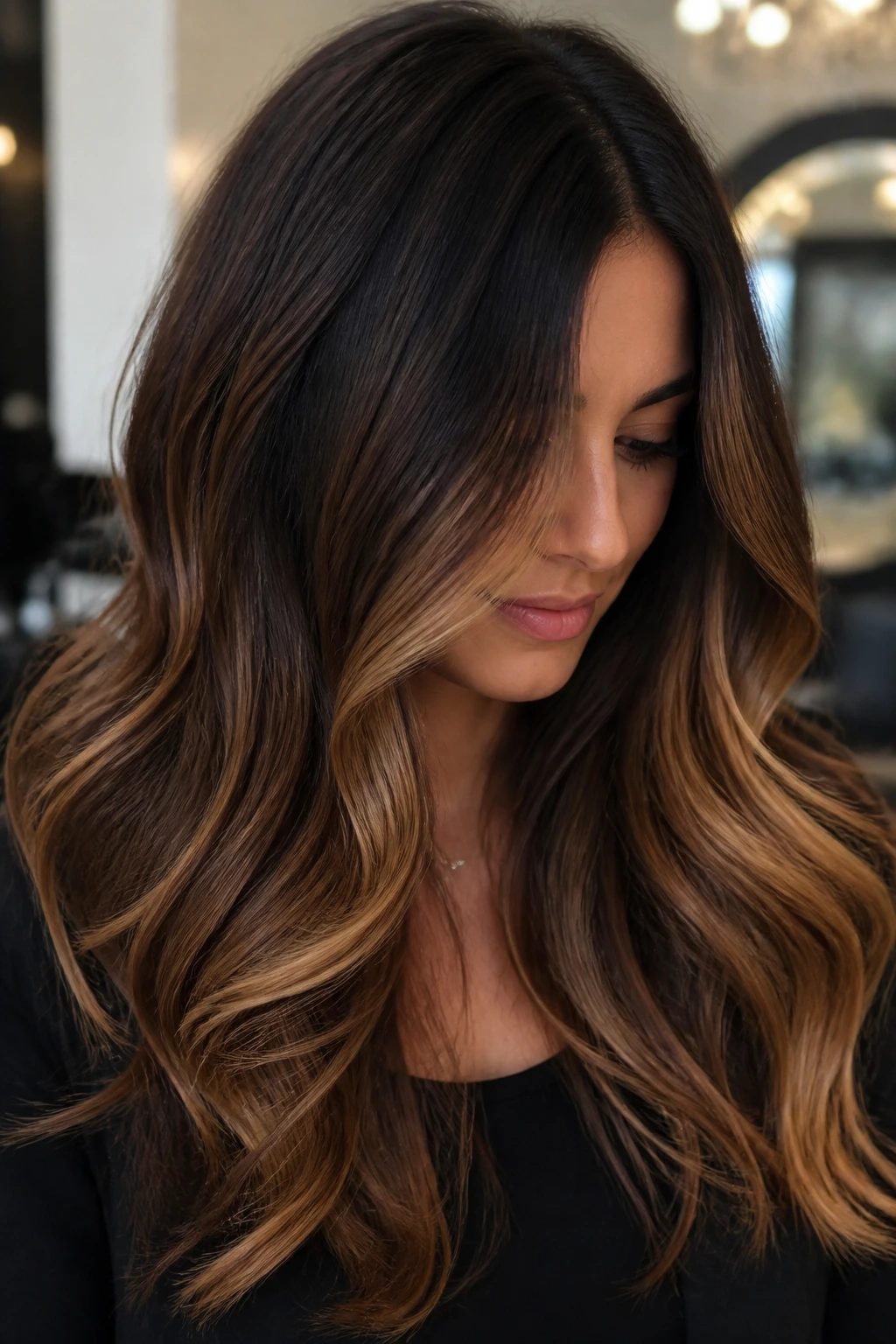
This one is all about a slow fade from deep espresso at the roots into smooth caramel through the lengths. On thick hair, that gradual shift matters because abrupt lightening can look chopped up once the hair expands in volume. A melt keeps the eye moving instead of stopping at every color change.
The best version feels like warmth built into the hair, not painted on top. I’d ask for the caramel to start low enough that the top third still looks rich and dense. If the lightness starts too high, the whole style can lose the heavy, glossy finish that thick hair does so well.
A blowout brings this look to life. So does a 1.25-inch curling iron, especially if the curls are brushed out afterward. The caramel sits on the bends and suddenly the whole head has more dimension than you expected.
3. Chestnut Cashmere Balayage
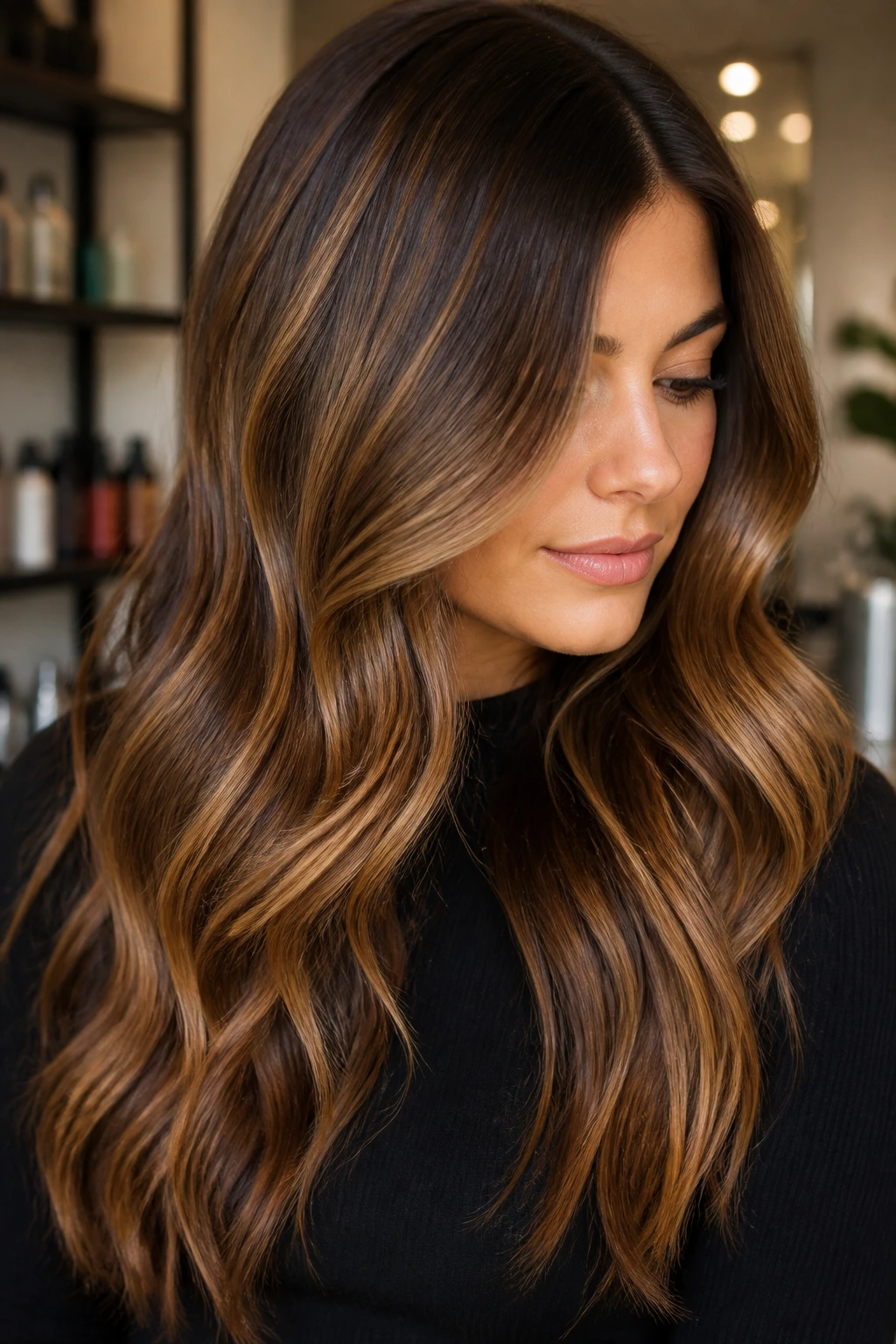
Chestnut Cashmere Balayage is for the person who wants movement more than brightness. The tone stays in the brown family, but the chestnut and soft beige gloss keep the hair from reading like one solid block. Thick hair often looks best when the change is small but deliberate.
What to ask for
Ask for a chestnut base with a few soft beige ribbons through the mids and a whisper of brightness at the ends. That keeps the hair rich from a distance and dimensional up close.
- Choose this if you wear your hair straight most days
- Ideal for dense hair that turns puffy when over-lightened
- Works well with a gloss in the neutral-brown range, not icy ash
- Easier to maintain than blonde-heavy balayage
It’s subtle, but not sleepy. There’s a difference.
4. Buttery Brunette Face Frame
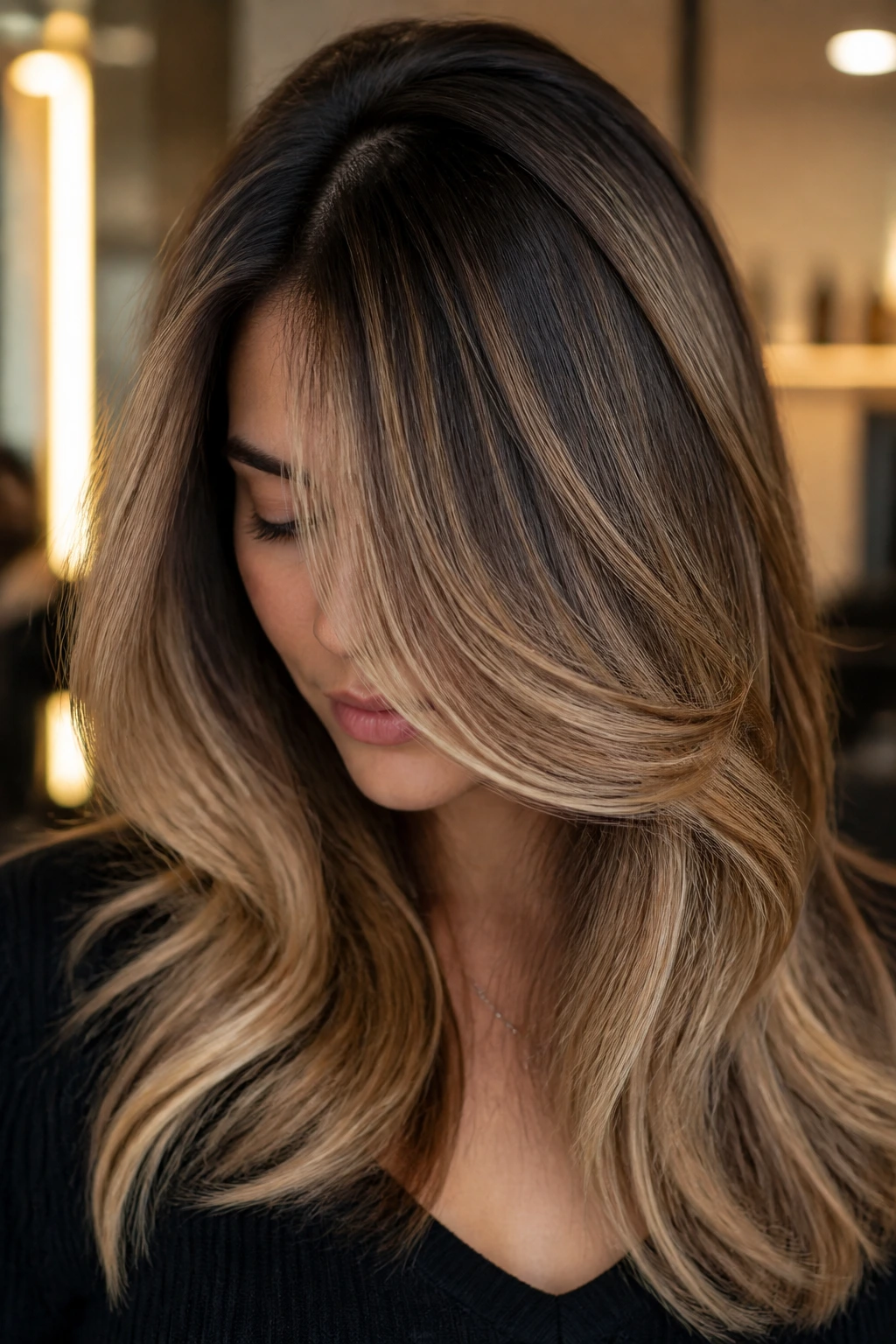
A buttery brunette face frame is one of those looks that makes thick hair feel lighter without taking away its body. The interior stays brunette, which keeps the fullness intact, while the front pieces lift enough to open the face. That contrast is the whole point.
When thick hair is all one dark shade, the length can drag the face down. A brighter face frame fixes that fast. The trick is keeping the brightness concentrated around the hairline and the first few inches behind it, then leaving the rest of the head deeper so the hair doesn’t lose its shape.
Quick notes
- Best if you part your hair the same way most days
- Needs good blending at the temples so the color doesn’t look stamped on
- Feels strongest in a blowout with ends curled under
- Can be toned beige, gold, or slightly neutral depending on your skin tone
5. Mushroom Brown Balayage
Mushroom Brown Balayage is the cool-toned answer for thick hair that pulls red or orange every time it’s lightened. The shade sits in that smoky brown-taupe zone, which keeps the color calm even when the hair has a lot of natural warmth underneath. It’s a smart choice if you want dimension without brass.
This is one of my favorite looks for dense hair because it doesn’t fight the volume. It works with it. The root stays deep, the ribbons are softly cool, and the whole finish feels tailored rather than high-contrast. If your hair is coarse, this shade can tame some of the visual bulk.
Don’t overdo the ash, though. Too much and the hair can look flat in bad indoor light. The sweet spot is a cool brown with enough beige in it to keep the strands readable.
6. Soft Mocha Moons
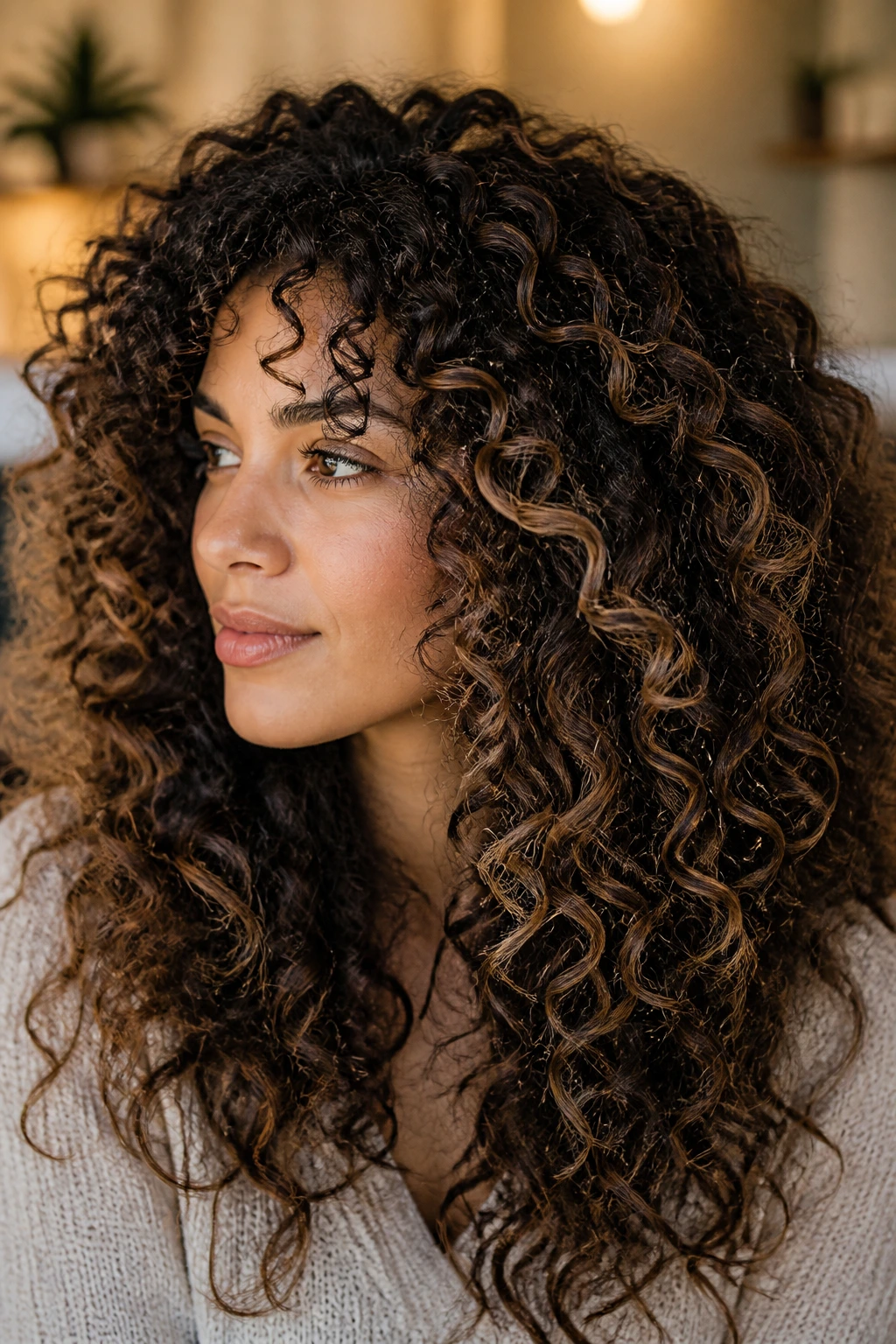
Soft Mocha Moons is built for curls and waves that need color to follow the shape of the hair, not just sit on the outside. Instead of painting broad horizontal strips, the lighter mocha pieces arc through the interior like half-moons, so the curls show depth when they spring up.
That matters on thick curly hair, which can hide surface-only balayage in a hurry. The color has to live in the bends of the curl pattern. Otherwise it disappears the second the hair dries and shrinks.
Best for
- Thick curly or wavy hair
- Medium brunette bases
- Hair that gets cut into layers or a rounded shape
- People who air-dry and want the color to show without extra styling
A diffuser makes this one sing, but the placement does most of the work.
7. Cinnamon Swirl Layers
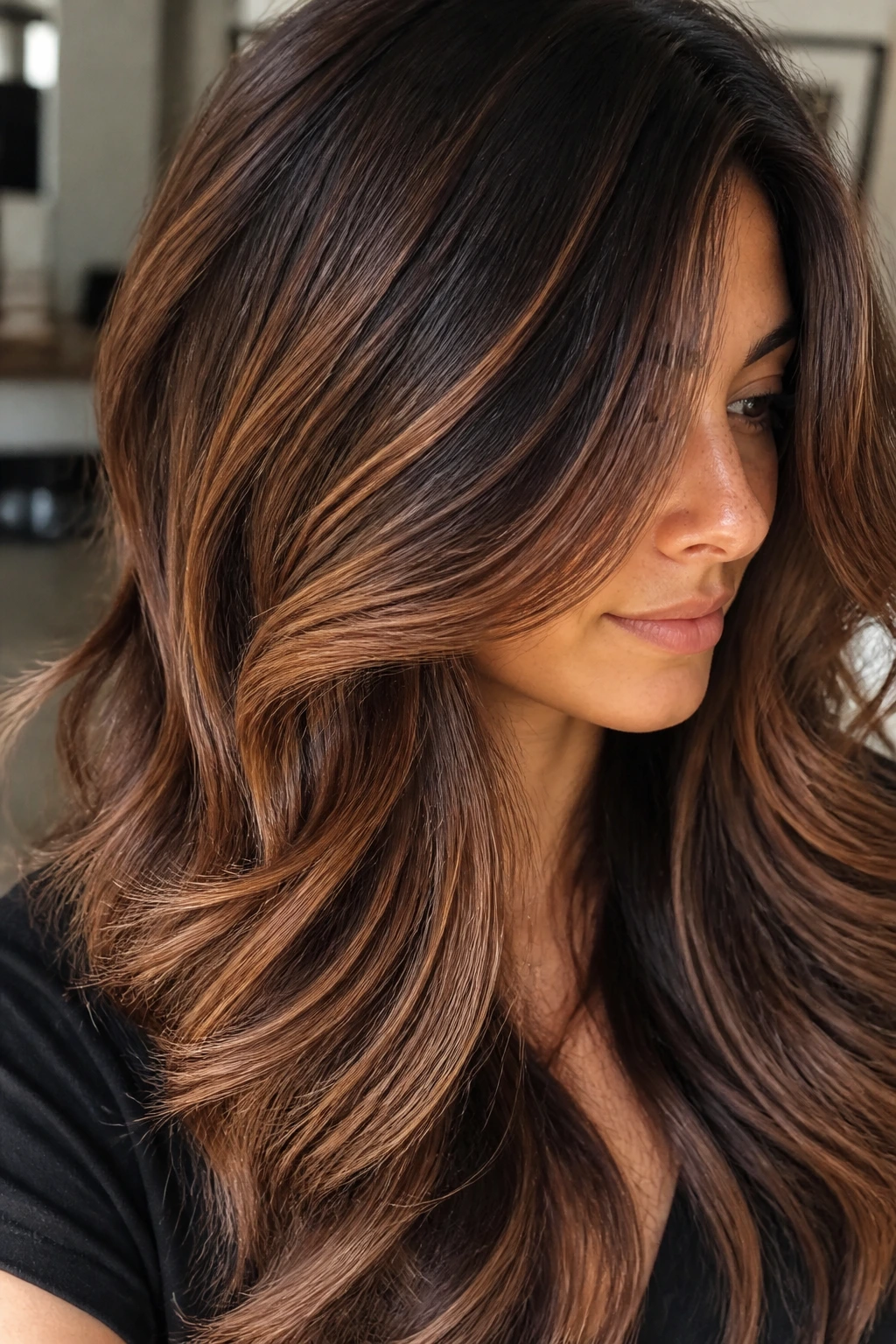
Cinnamon Swirl Layers has warmth, but it isn’t loud. The cinnamon pieces move through the layers like a soft thread, and thick hair gives them room to show without turning stripey. On a long cut, the color lands best where the layers kick out and catch light.
I like this look on brunettes who want a seasonal feel without committing to copper. The cinnamon tone sits between auburn and caramel, which gives the hair a little spice and a lot of life. It’s a good answer when brunette starts feeling too heavy.
The key is restraint at the roots. Keep the base deep, then let the warmth build through the mids and ends. If the scalp area gets too light, thick hair loses that plush, grounded feel.
8. Toffee-Drip Balayage
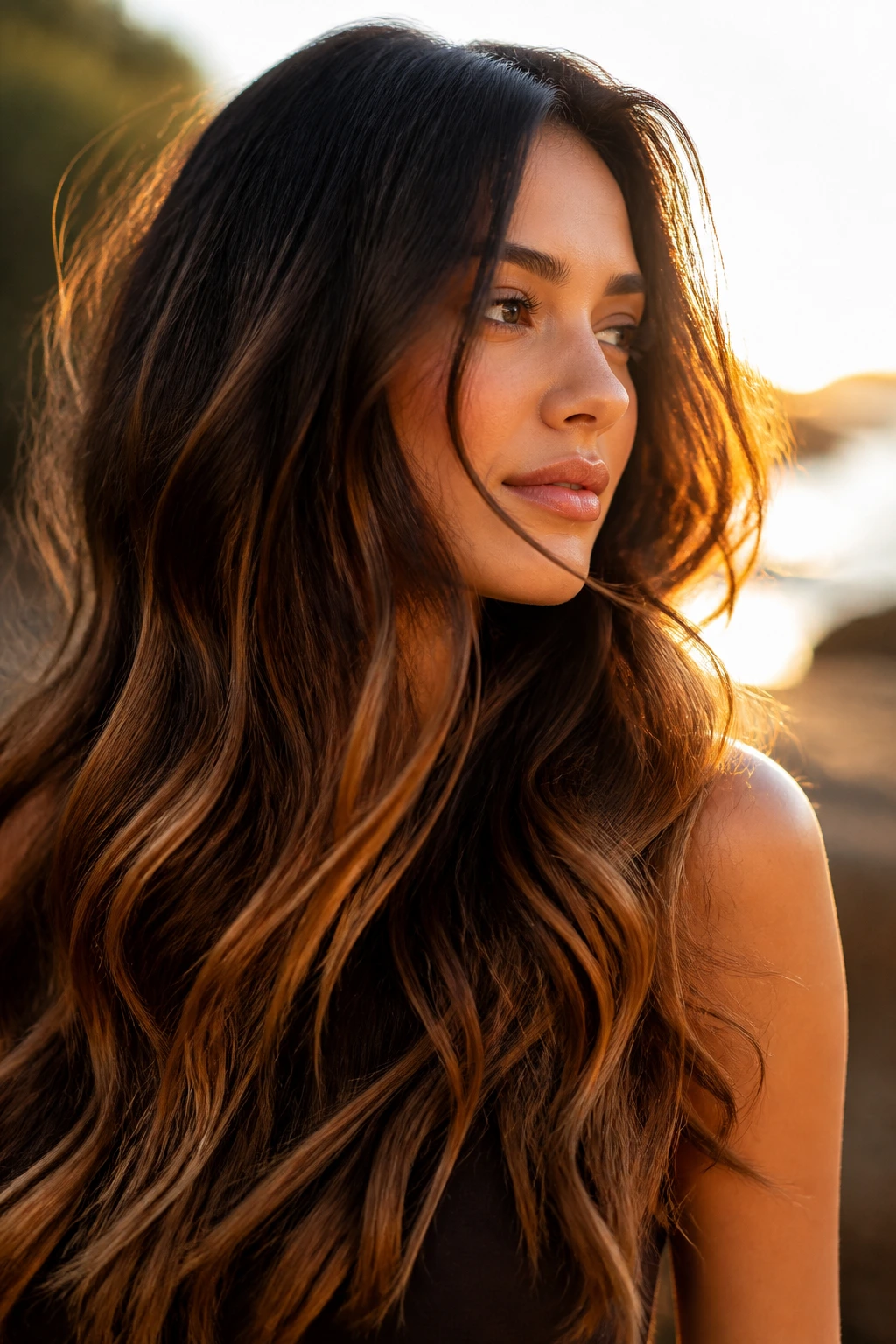
Toffee-Drip Balayage looks exactly like it sounds: a slow drip of warm toffee through darker lengths. Thick hair does this look well because the blend needs mass to read properly. A wispy version can look lost. A fuller version looks polished.
What makes it work is the shift from rich brown near the top to syrupy caramel lower down. The contrast is gentle, but it’s there. You can see it most clearly when the hair moves over a shoulder or gets caught in a breeze.
If you wear your hair in big waves, this is a strong pick. The toffee pieces catch on the bends and make the texture look intentional, not accidental. That’s the kind of detail thick hair deserves.
9. Beige Blonde Panels
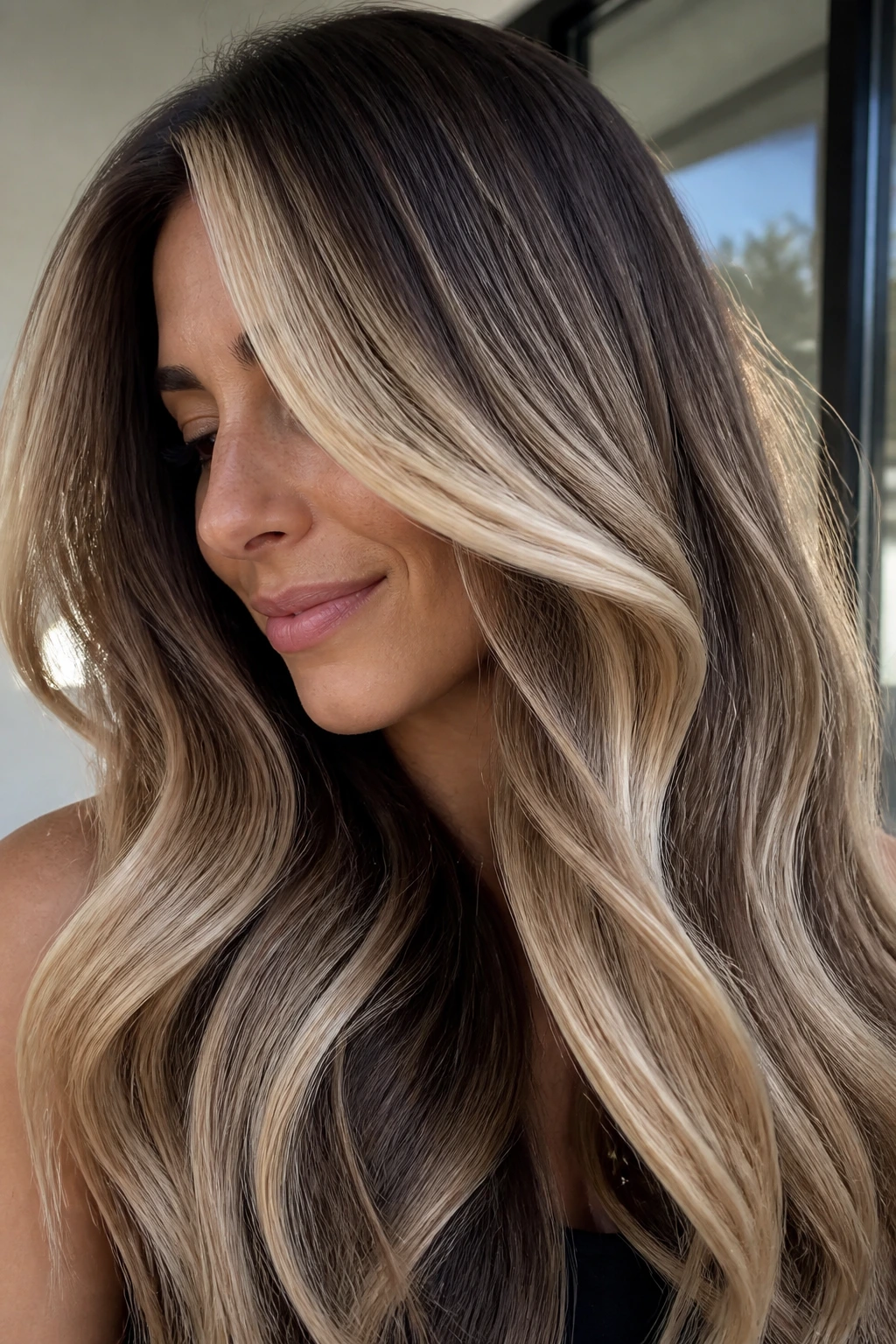
Beige Blonde Panels are for thick hair that can handle a brighter finish without tipping into harshness. Beige is the smart middle ground. It lifts the hair, keeps it creamy, and avoids that raw yellow look that sometimes shows up when dense dark hair is pushed too light too fast.
What to watch for
The sections need to be broad enough to show. Thin beige pieces get swallowed by thick hair, especially if you wear it straight. Ask for stronger placement through the mids and front, then keep the underlayer deeper so the blonde has something to sit against.
- Best for brunette hair that can lift cleanly
- Works well with shoulder-length cuts and long layers
- Needs purple shampoo only when the tone starts going too yellow
- Looks nicest with a glossy finish, not a chalky matte one
A beige blonde can be soft and still be noticed. That’s the point.
10. Ashy Walnut Balayage
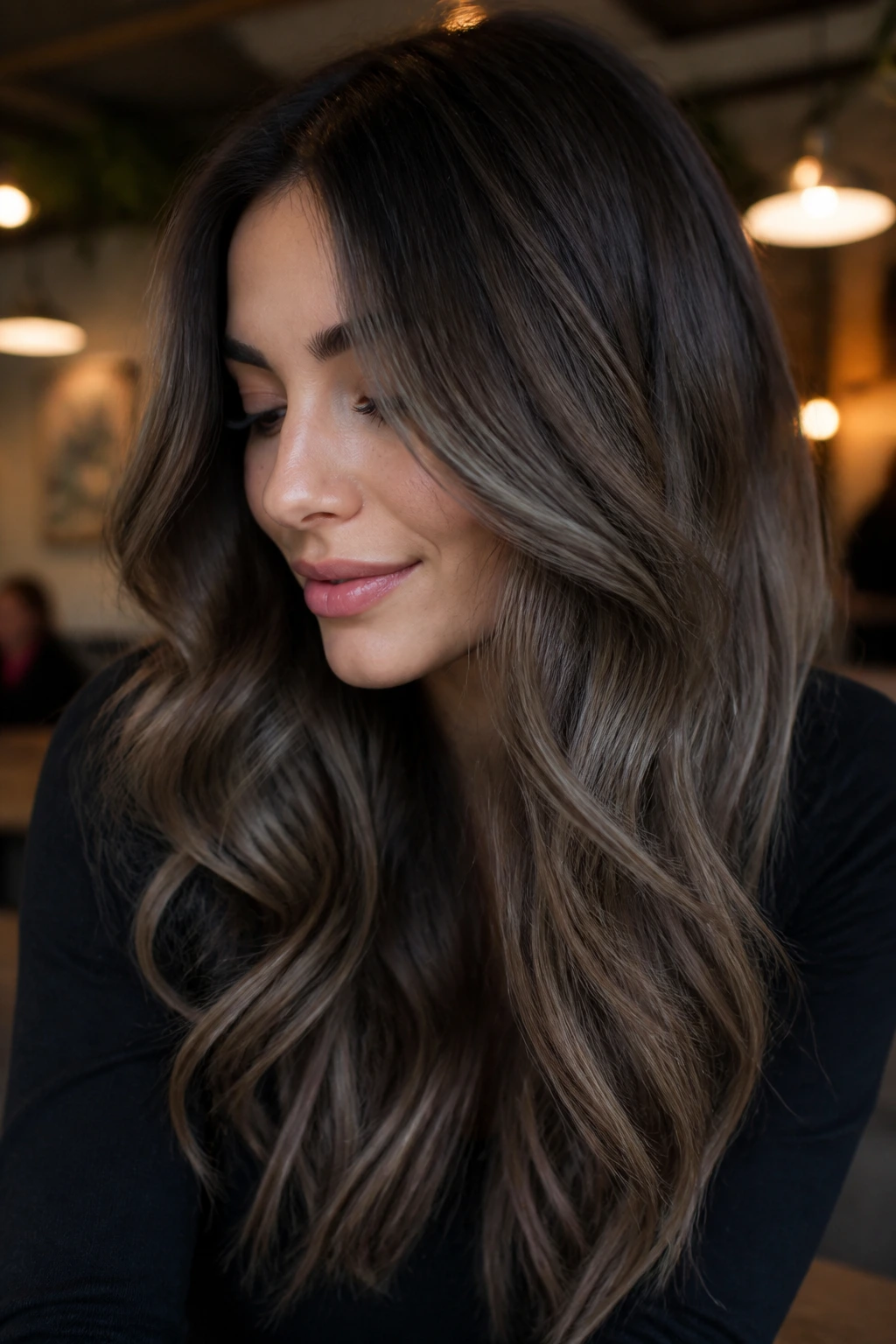
Ashy Walnut Balayage gives thick hair a cooler, more tailored look. The walnut base keeps the hair grounded, while the ash-toned ribbons add shape without yelling for attention. If you’ve ever wanted brunette that looks expensive in a dim restaurant and still reads in daylight, this is the lane.
The reason it works on dense hair is simple: the contrast is low enough to stay elegant, but the tonal shift is strong enough to create motion. Thick hair often doesn’t need more brightness. It needs a cleaner transition.
Ask your colorist to keep the ends neutral-cool and avoid muddy green ash. That old, dead-brown outcome is what happens when the toner goes too hard. Walnut should still feel alive.
11. Golden Maple Ends
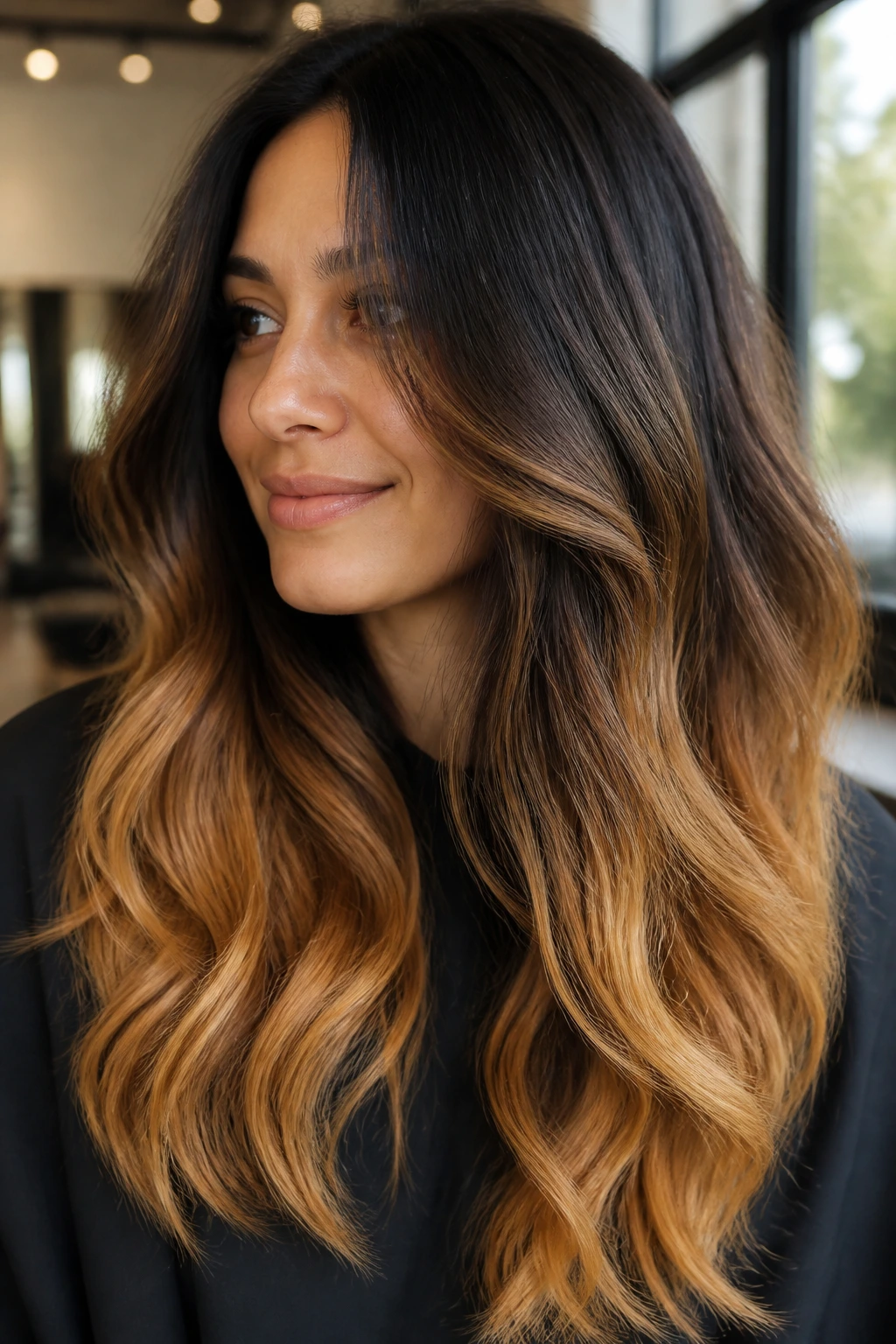
Golden Maple Ends keep the root rich and shift the drama to the lower half of the hair. Thick lengths can carry this kind of brightness because the ends already have weight and presence. When they lighten into maple gold, the whole shape feels lifted.
I like this look when the goal is movement more than maintenance. The upper half stays dark enough to grow out quietly, while the bottom section gets the glow. It also pairs well with big curls, since the gold shows on the outside curve of each wave.
A little caution: if your ends are dry or porous, gold can go too hot. A slightly beige maple tone is safer than a bright yellow-gold. The difference is small in the bowl, but obvious on the head.
12. Copper Lattice Balayage
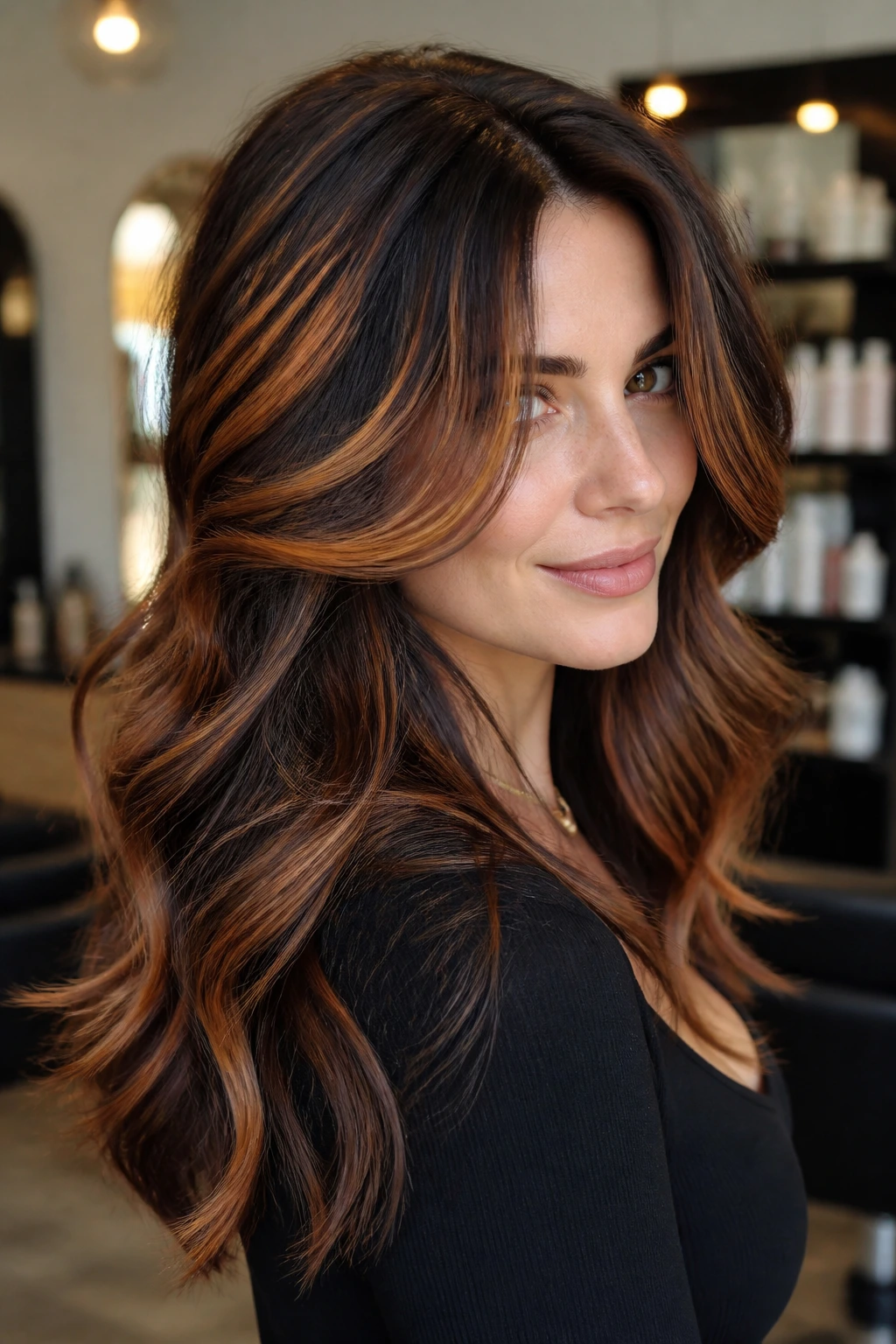
Copper Lattice Balayage threads copper through thick hair in a way that feels woven instead of painted. That matters, because dense hair can make single-tone copper look blocky. A lattice approach breaks the warmth into pieces, so the hair still has shape and air between the brighter sections.
This look is strongest on brunettes who want warmth without full redhead energy. The copper pieces can sit around the face, through the crown, and in the lower mids, leaving enough depth between them to keep the color dimensional. On curly hair, the pattern looks even better because the coils bend the copper into little flashes.
If you want this to stay rich, skip harsh clarifying shampoos. Copper fades faster than brown, and thick hair can hide that fade until it suddenly looks dull. A color-depositing conditioner in copper or warm brown helps.
13. Strawberry Bronde Glow
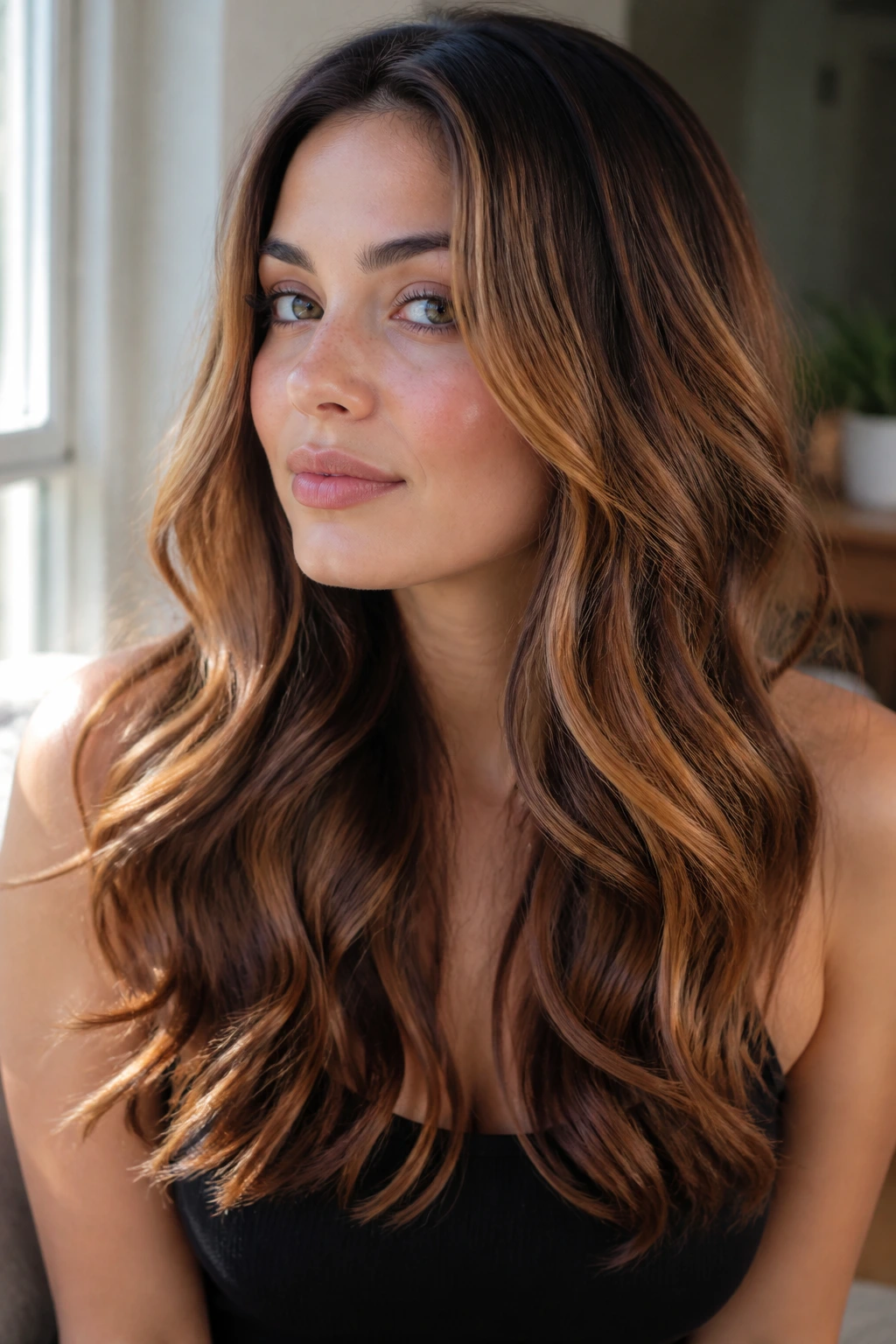
Strawberry Bronde Glow is a softer cousin of copper. It mixes brunette depth with strawberry-beige warmth, which makes thick hair look sun-touched without turning pink. The best versions stay muted enough that the hair still reads as brunette at a glance.
How to wear it
This shade works best if the brightness sits around the face and through the top layers, with the deeper interior left alone. Thick hair needs that deeper interior to keep the style from flattening out into one pale sheet.
A few practical notes:
- Ask for strawberry only in the lightest pieces, not across the whole head
- Keep the root neutral or soft brown
- Style with bends, not pin-straight ironing
- Choose this if your skin tone likes warmth but not orange
It’s playful, but not loud. That’s rare.
14. Smoky Bronde Contour
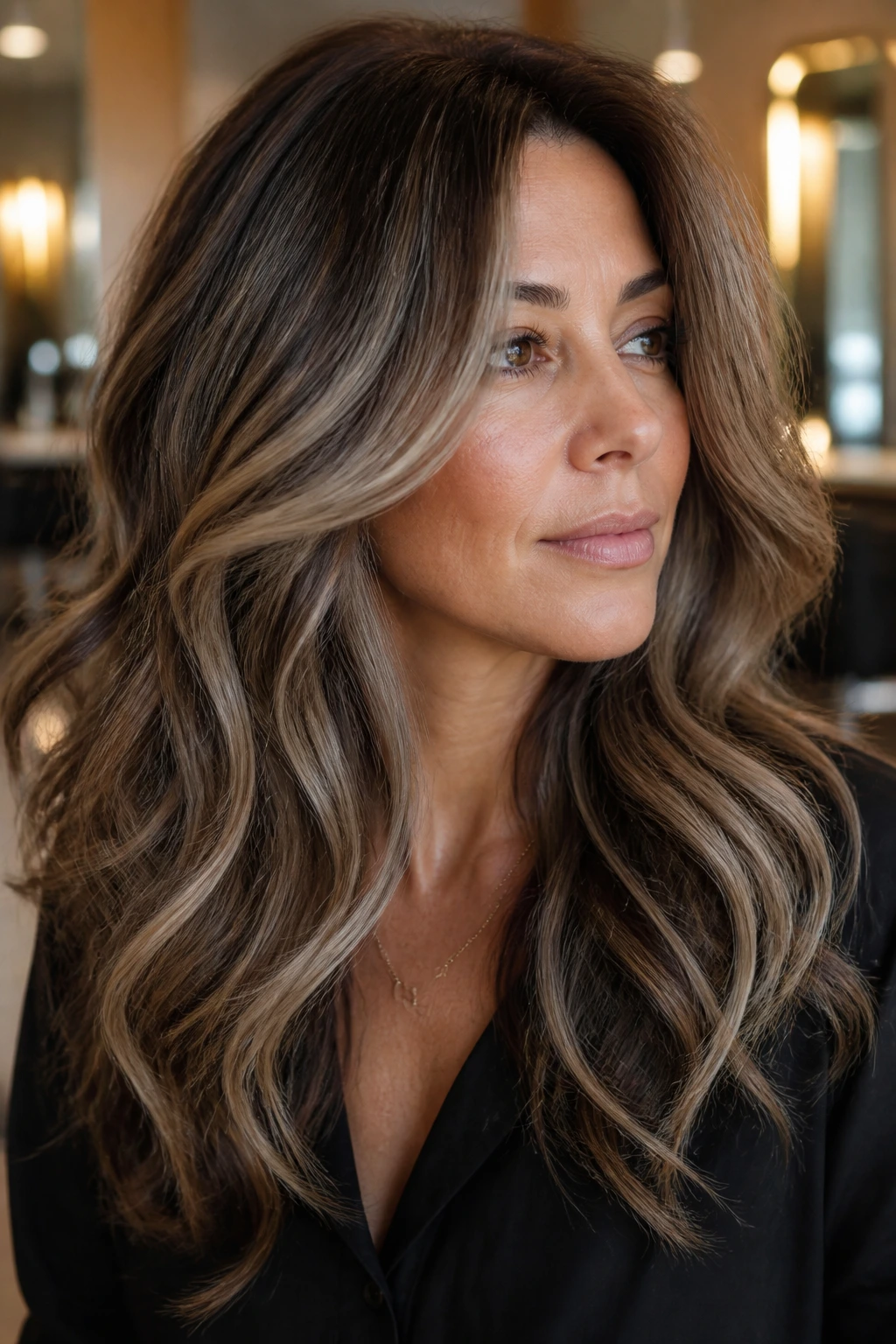
Smoky Bronde Contour is a smart choice when thick hair needs contrast, but not too much warmth. The darker brunette base gives the hair heft, and the smoky beige pieces contour the face, the crown, and the lower sides. The effect is more sculpted than shiny.
I especially like this on layered cuts. The contour placement follows the shape of the haircut, so the hair feels shaped by color instead of covered by it. If your hair is very dense, keep the ribbons a little wider so they don’t disappear into the bulk.
This one also grows out nicely. The smoky tone doesn’t demand constant toning, and the root can stay a touch deeper without looking neglected.
15. Vanilla Cream Peekaboo
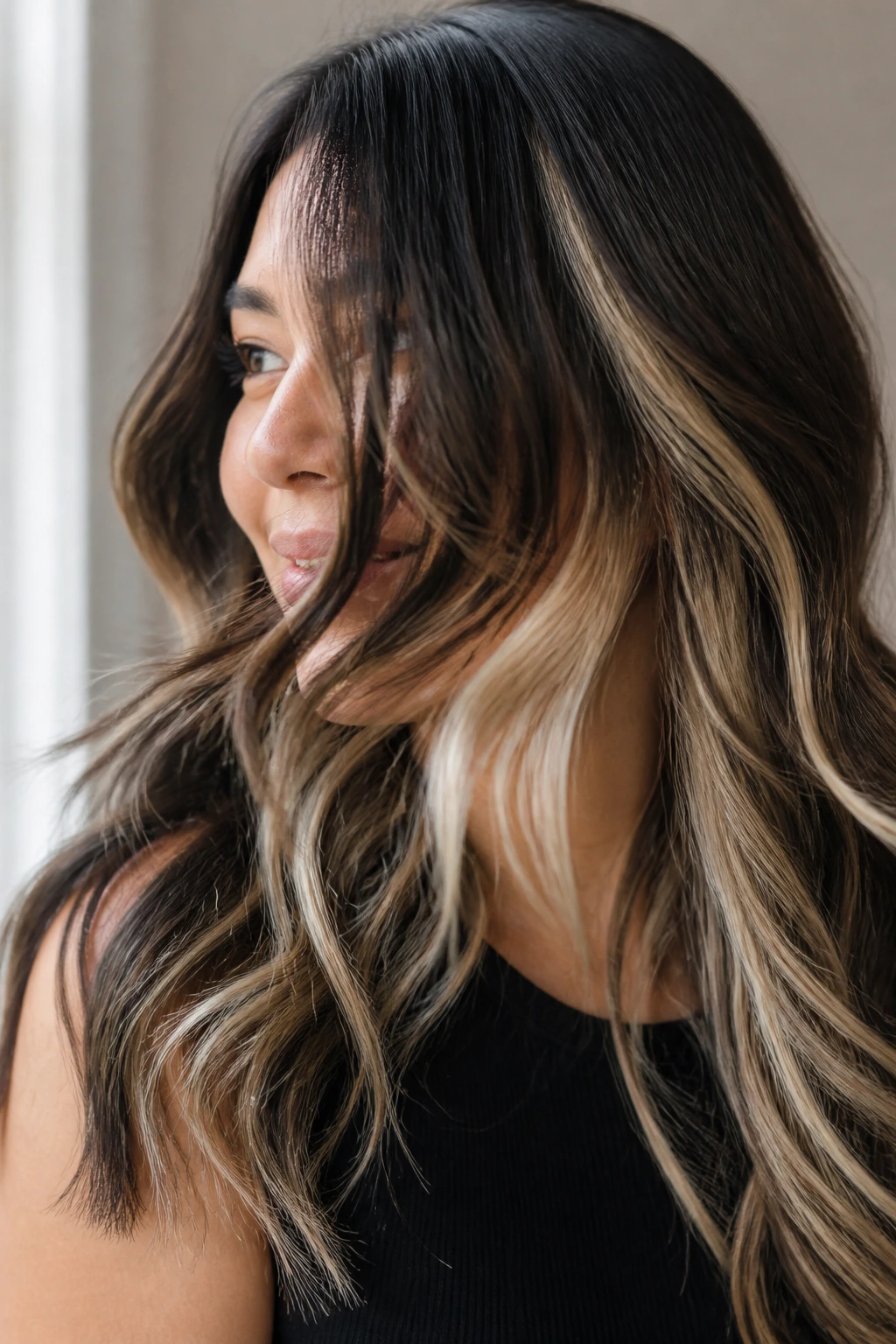
Vanilla Cream Peekaboo hides brighter pieces underneath the top layer, which is a clever move on thick hair. You get that flash of cream when the hair moves, but you keep the surface rich and full. It’s one of the few blonde-heavy ideas that doesn’t demand a full commitment on top.
Why it works
Dense hair is often layered internally even when it looks heavy from the outside. Peekaboo placement uses those hidden layers to show color only when the hair shifts, turns, or gets tucked behind the ear.
A few ideas for the chair:
- Ask for vanilla cream only through the lower mids and underlayer
- Keep the crown and top veil one or two shades deeper
- Wear it with waves to reveal the hidden pieces
- Great for people who want brightness without a high-maintenance scalp line
A little surprise goes a long way here.
16. Hazelnut Halo Balayage
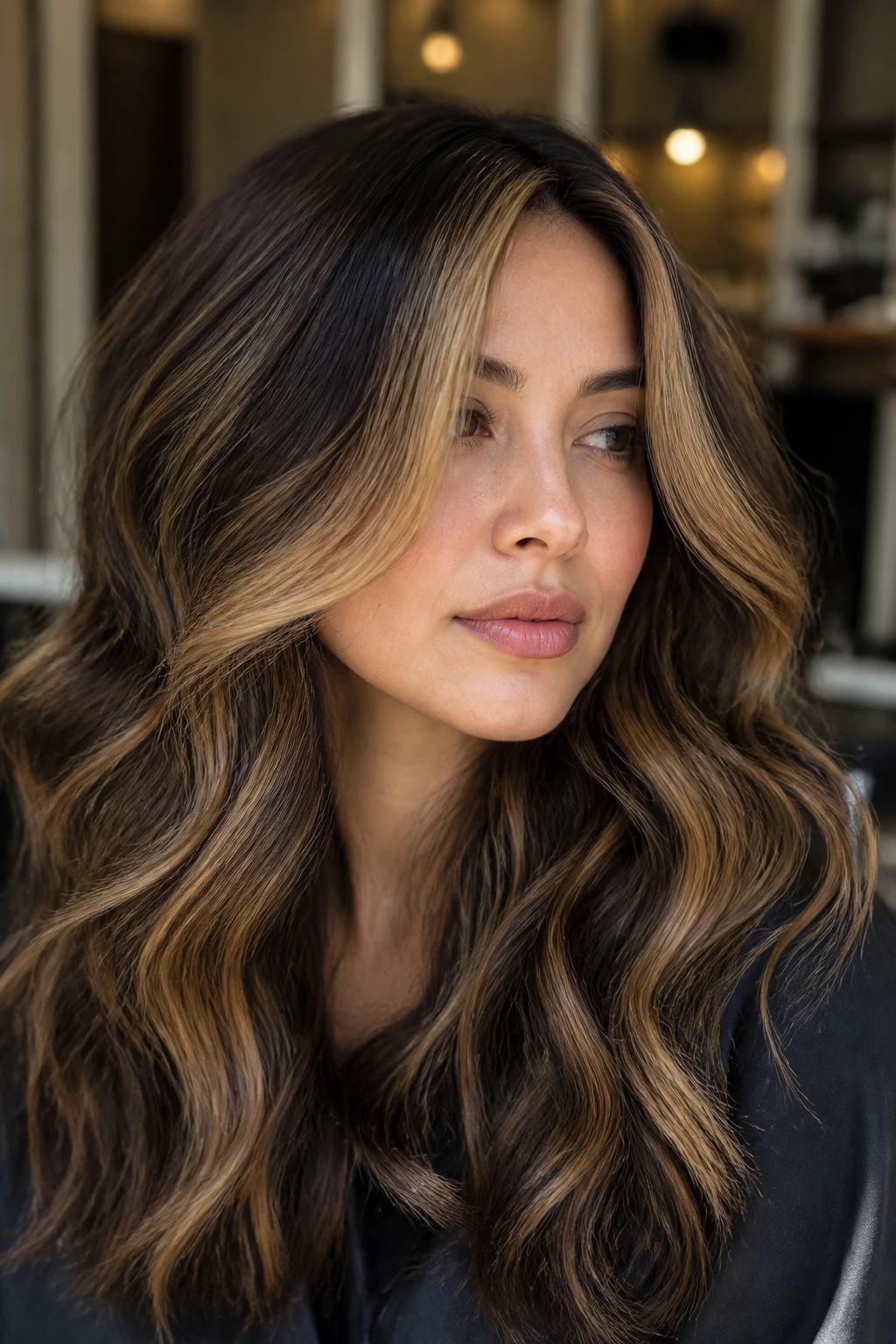
Hazelnut Halo Balayage places warmth in a circle around the top and upper sides of the head, almost like a soft crown of color. Thick hair wears this shape well because the halo gives structure without bleaching everything else. The darker underlayer holds the volume.
This look is good when you want the brightness to stay near the face and upper contour of the hair. The bottom can remain hazelnut-brown, which keeps the finish rich. If the halo is too narrow, it can look like a streak. If it’s too wide, the hair loses that plush depth. The middle ground is the sweet spot.
It’s a very salon-friendly look for someone who styles hair fast and wants the color to do most of the work.
17. Rooted Champagne Waves
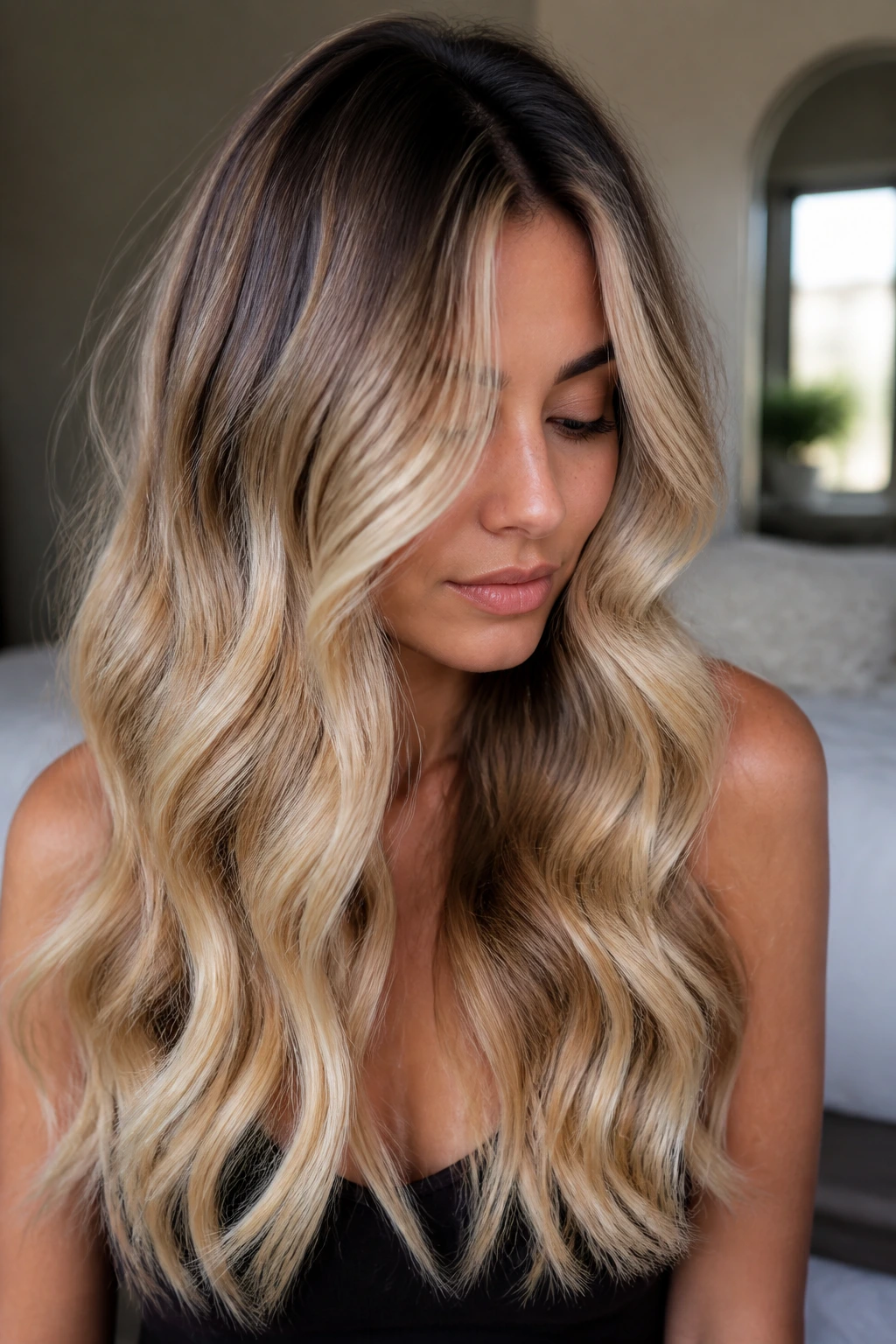
Rooted Champagne Waves are what happens when you keep the base deep and let the mid-lengths drift into champagne blonde. On thick hair, the dark root prevents the brightness from looking floaty, while the champagne tone adds sheen instead of stark contrast. The result reads soft, but not washed out.
This is a strong choice for long hair that’s worn in waves most of the time. The champagne catches the curves and the root gives the whole style shape. On straight hair, it’s prettier than flashy. On waves, it has more movement than most blondes.
If you want this to stay refined, keep the toner neutral-beige. Too much silver can make champagne look cold. Too much gold and it starts to lean brassy.
18. Sunkissed Sand Balayage
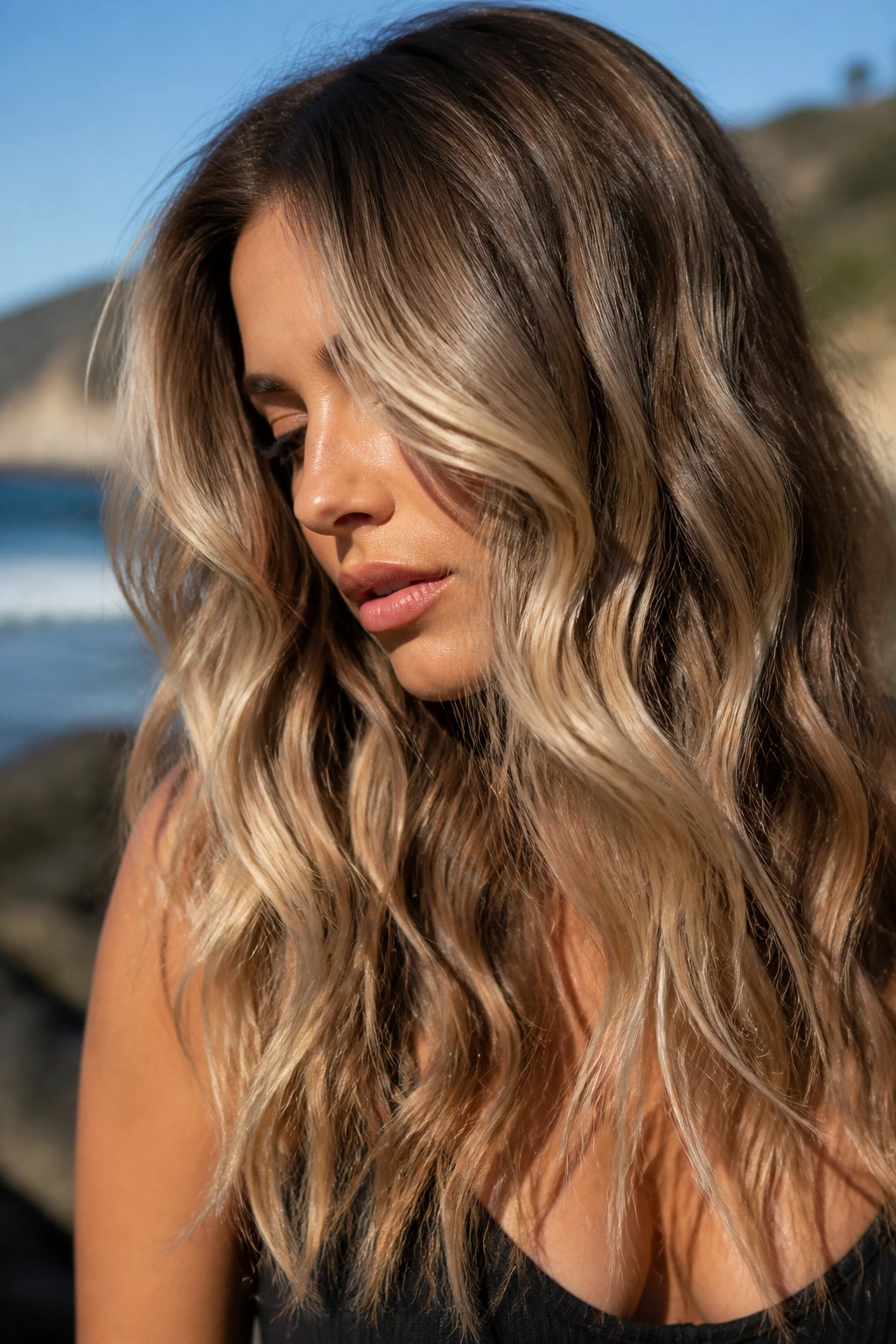
Sunkissed Sand Balayage is the beachy brunette look that thick hair can handle without looking too undone. The sand tone sits softly in the beige family, and the placement usually favors broad, painterly ribbons through the lengths. It gives the impression of old sunlight, not fresh bleaching.
A lot of thick hair benefits from this kind of softness because the color doesn’t fight the size of the hair. It gives shape to the body already there. If you’ve got a layered lob or long waves, sand balayage can make the cut feel lighter without chopping off a single inch.
Best results come from
- A soft root blur
- Beige toner, not icy toner
- Hair that is styled with a bend or wave
- A haircut with enough movement to show the ribbons
It’s laid-back color, but still deliberate.
19. Espresso with Mocha Money Pieces
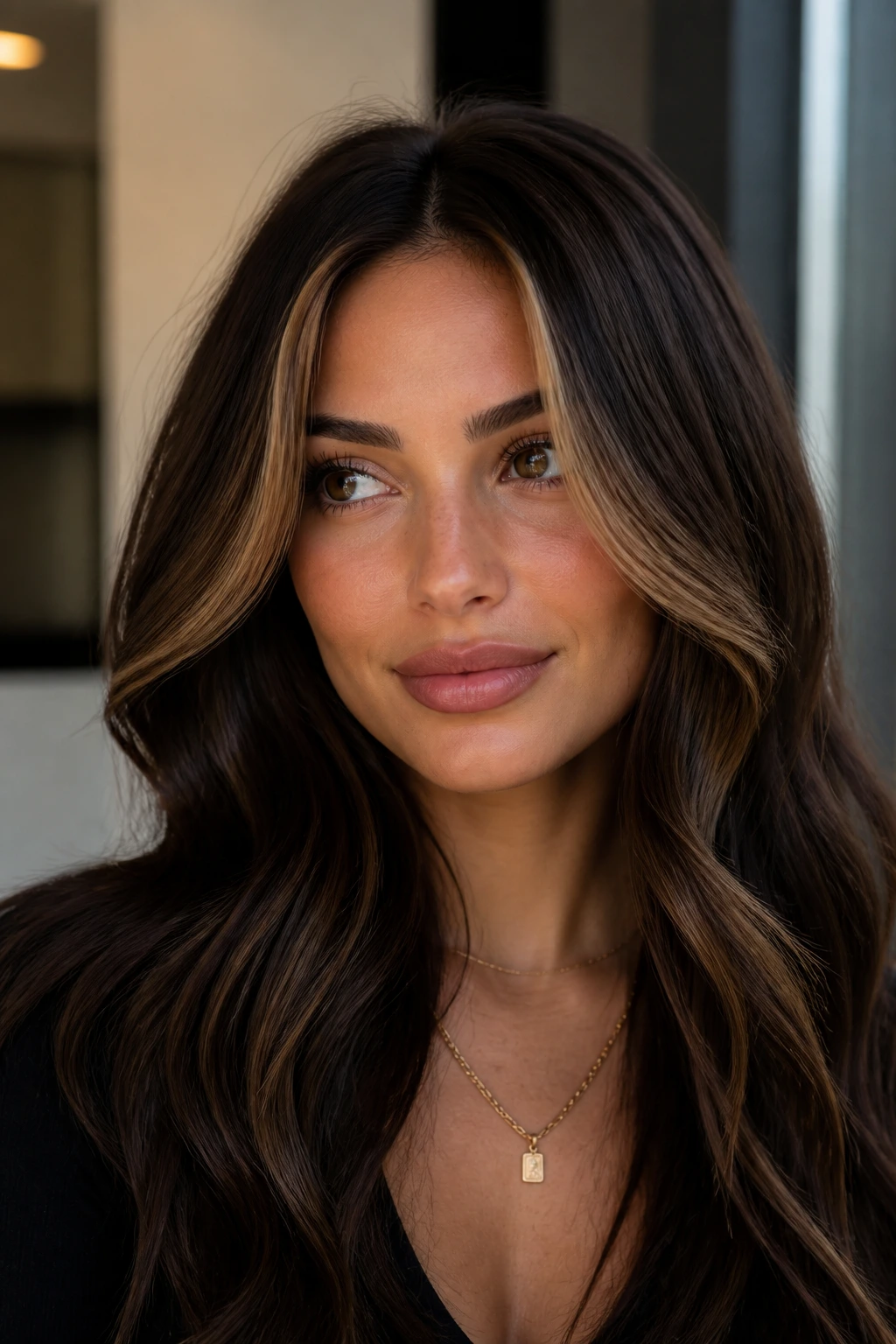
Espresso with Mocha Money Pieces is for people who want drama near the face and restraint everywhere else. Thick hair is good at holding this kind of contrast because the dark interior keeps the body of the style intact while the front pieces do the talking. It’s a very efficient look.
The money pieces should be bright enough to frame the cheekbones, but not so light that they separate from the rest of the hair. Mocha works better than pale blonde here if you want the style to stay cohesive. The hair should look like one idea, not a bunch of disconnected swatches.
This is one of the fastest ways to update a thick brunette cut. You get brightness without a full maintenance overhaul, and the grow-out is forgiving.
20. Peach Tea Balayage
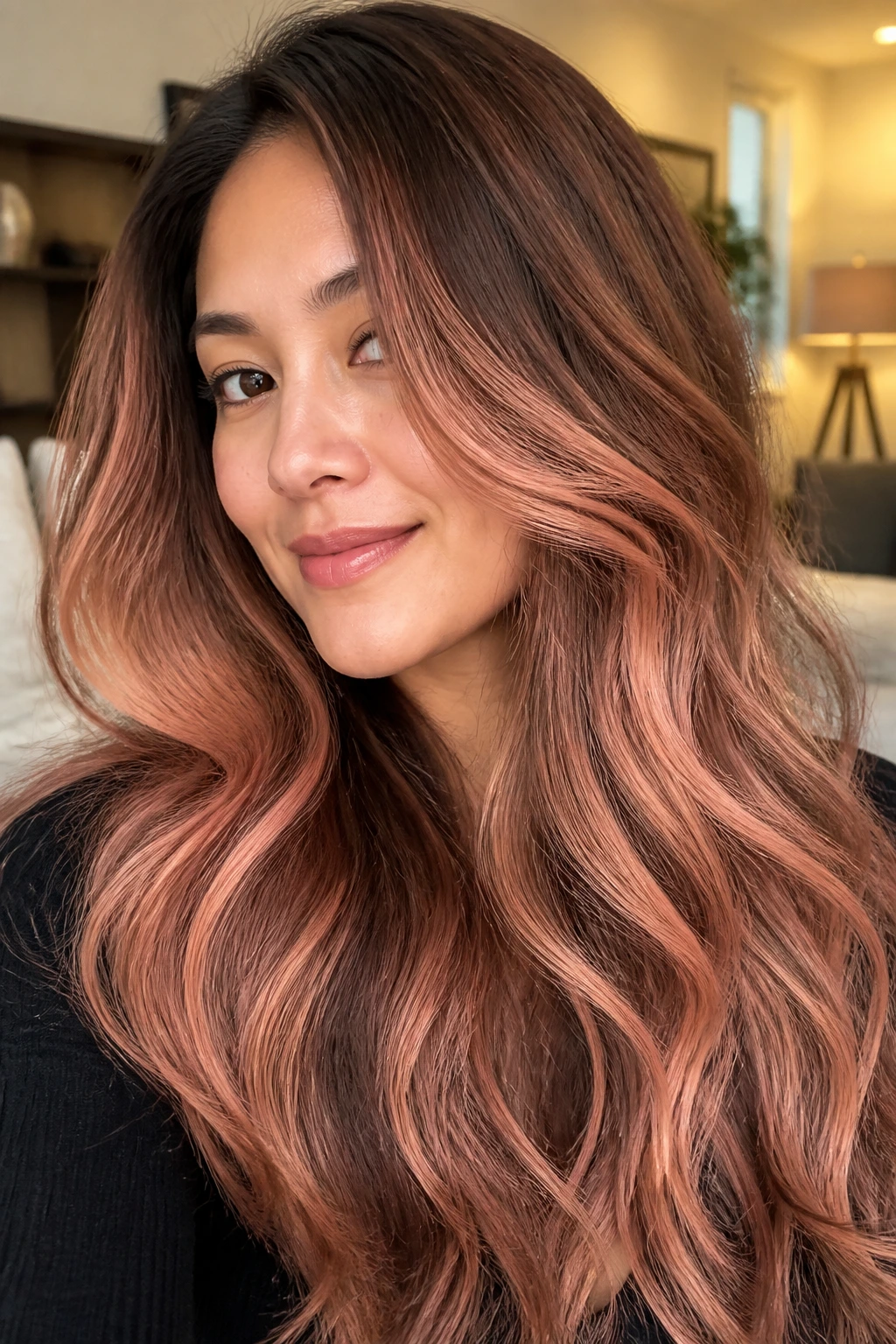
Peach Tea Balayage softens brunette hair with a peach-beige wash that feels warm and a little unexpected. Thick hair gives this color enough surface area to show, which is important because peach can disappear if it’s painted too lightly or too narrowly. The shade should read as a glow, not a neon tint.
I like this on hair that tends to look flat under indoor lighting. Peach wakes it up. The trick is to keep the base brown enough that the whole style remains grounded. If the peach takes over, the look starts to feel costume-y fast.
It’s a good choice for someone who wants warmth but is tired of the same caramel story.
21. Bronze Velvet Melt
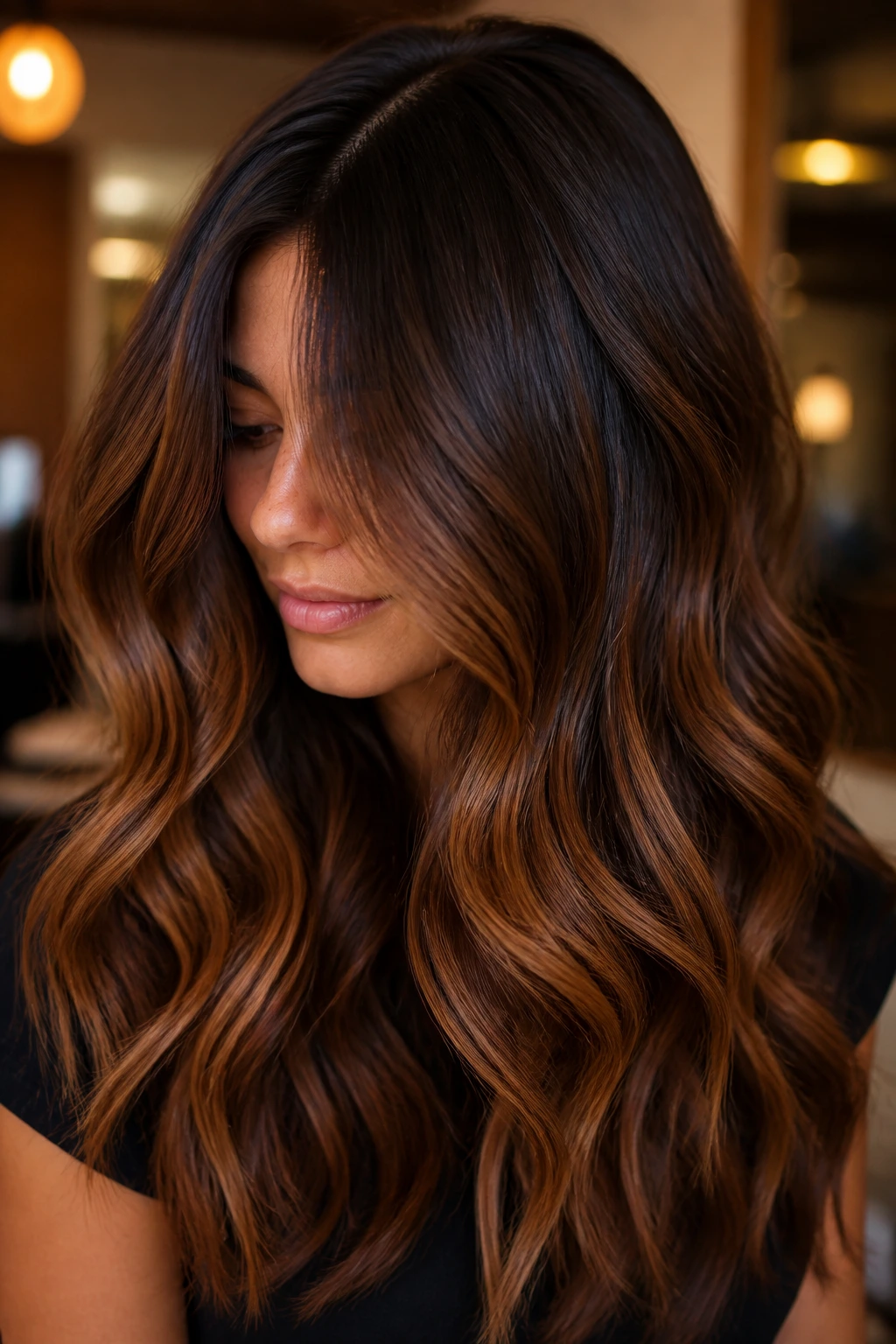
Bronze Velvet Melt is rich, smooth, and a little more polished than a standard caramel look. Bronze brings depth, and the velvet part comes from the soft transition between dark root and warmer mid-lengths. Thick hair handles this because the color has enough weight to match the density of the hair.
A bronze melt looks especially good on layered hair that’s styled with a round brush or large barrel curls. The shimmer lands on the bends, and the hair looks thicker in the right way — plush, not bulky. That’s a real difference.
If your skin tone likes warmth, this is one of the easiest brown-based balayage looks to wear. It’s warm without going orange, and it doesn’t need constant toning.
22. Plum-Infused Brunette Balayage
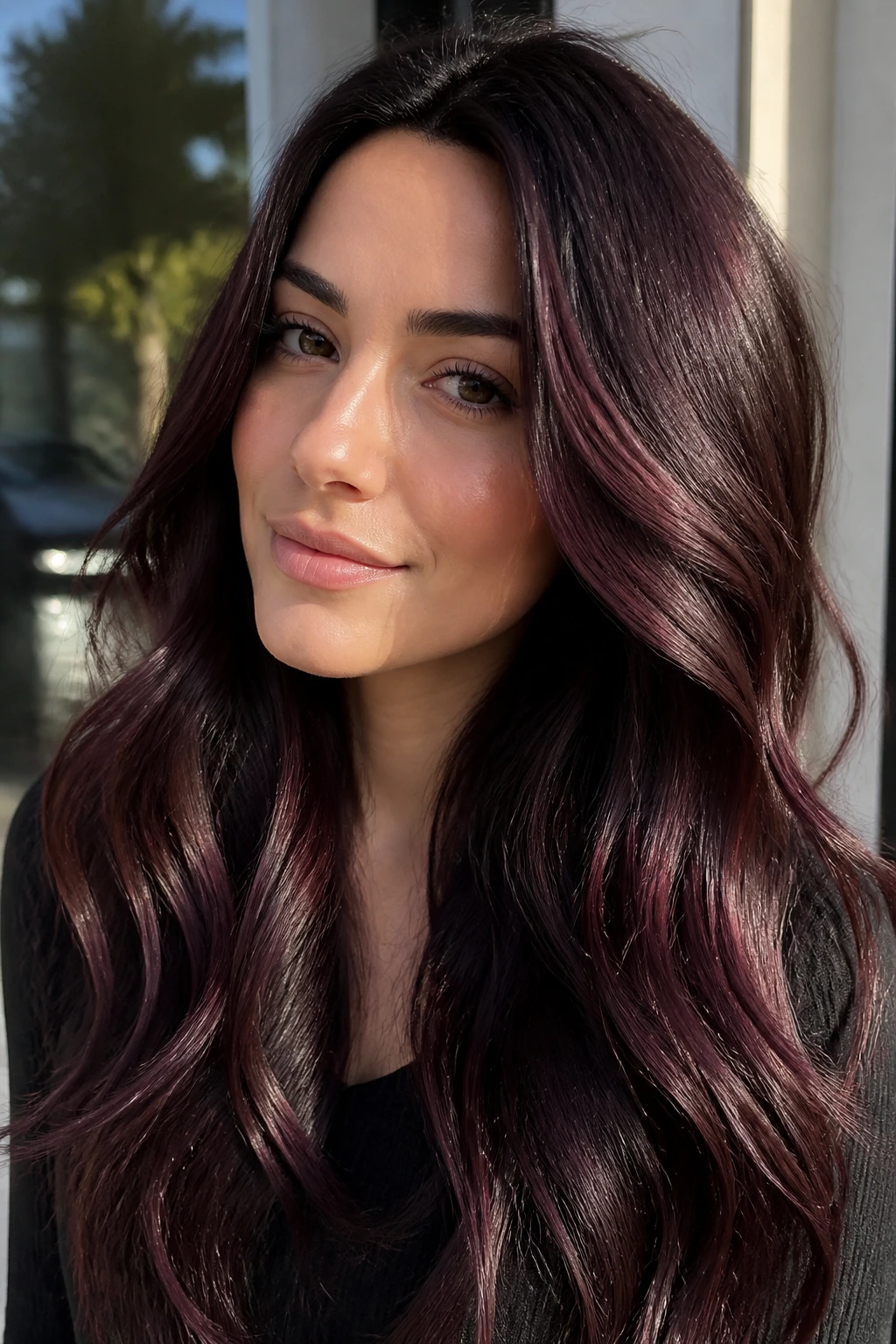
Plum-Infused Brunette Balayage is a dark, moody option that thick hair wears better than most people expect. The plum tone doesn’t have to look purple. In a subtle version, it reads as a wine-brown sheen that shows in sunlight and turns richer indoors.
This is the sort of look that works best when the hair is dense enough to hold depth. Thin hair can make plum look thin too. Thick hair gives it a backdrop. Ask for plum only in selected panels, or the whole head can go flat and overly cool.
It’s a good one for someone who wants color that feels a little less expected than caramel and blonde, but still wearable every day.
23. Caramel Cowgirl Balayage
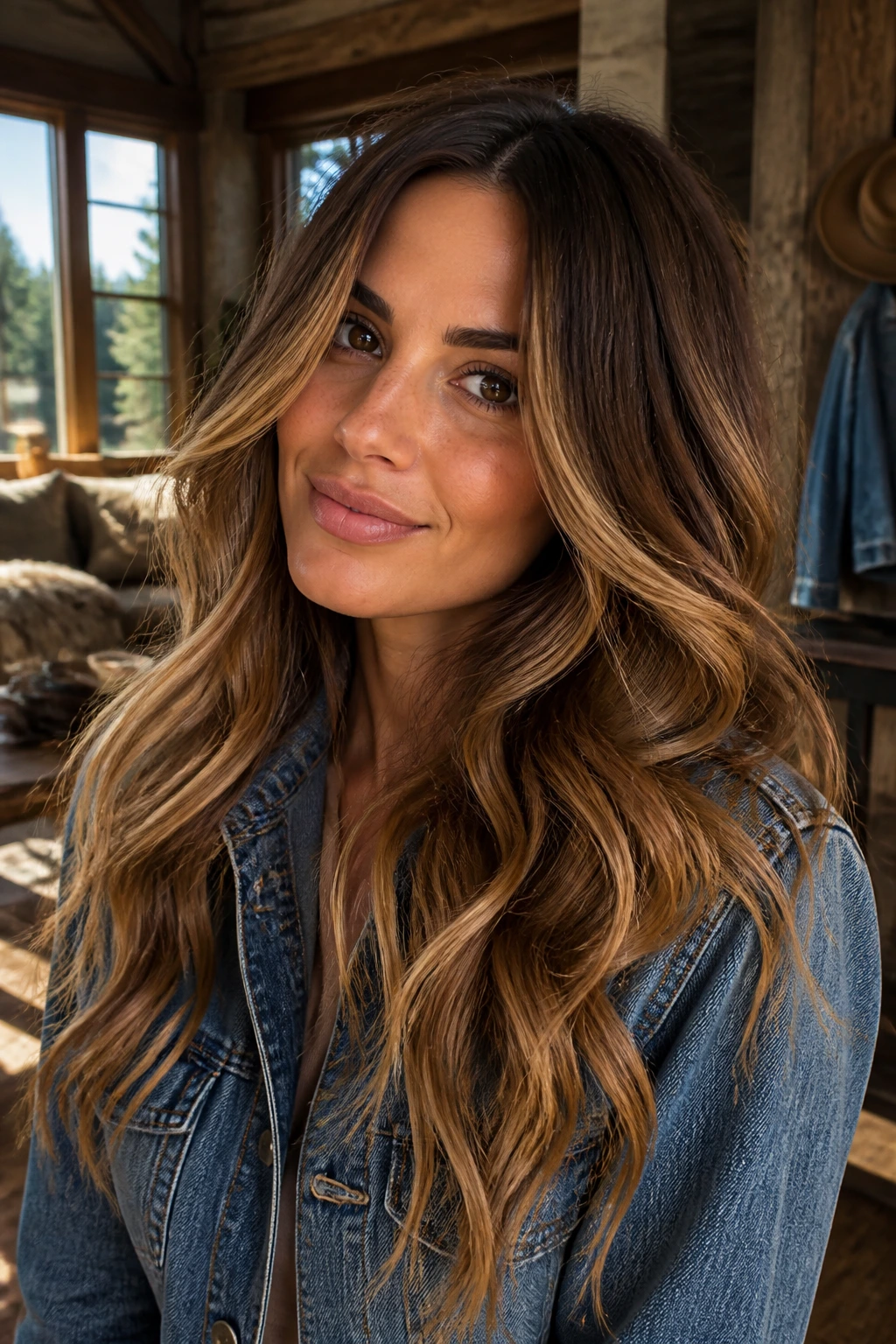
Caramel Cowgirl Balayage leans warm, roomy, and easy to wear. The caramel pieces are usually larger and more visible than in a soft, barely-there brunette look, which is exactly why thick hair takes it so well. Dense hair can carry bigger pieces without looking overdone.
The placement should hit the front, the mid-lengths, and the lower third, with enough root shadow to keep the color from climbing too high. If the caramel starts too close to the scalp, the style can feel wide in the wrong way. The best version looks lived-in and a little sun-faded, not stripey.
It’s a friendly look for people who wear boots, jeans, and a blowout or loose wave. It doesn’t need a fussy finish to make sense.
24. Sunlit Auburn Slices
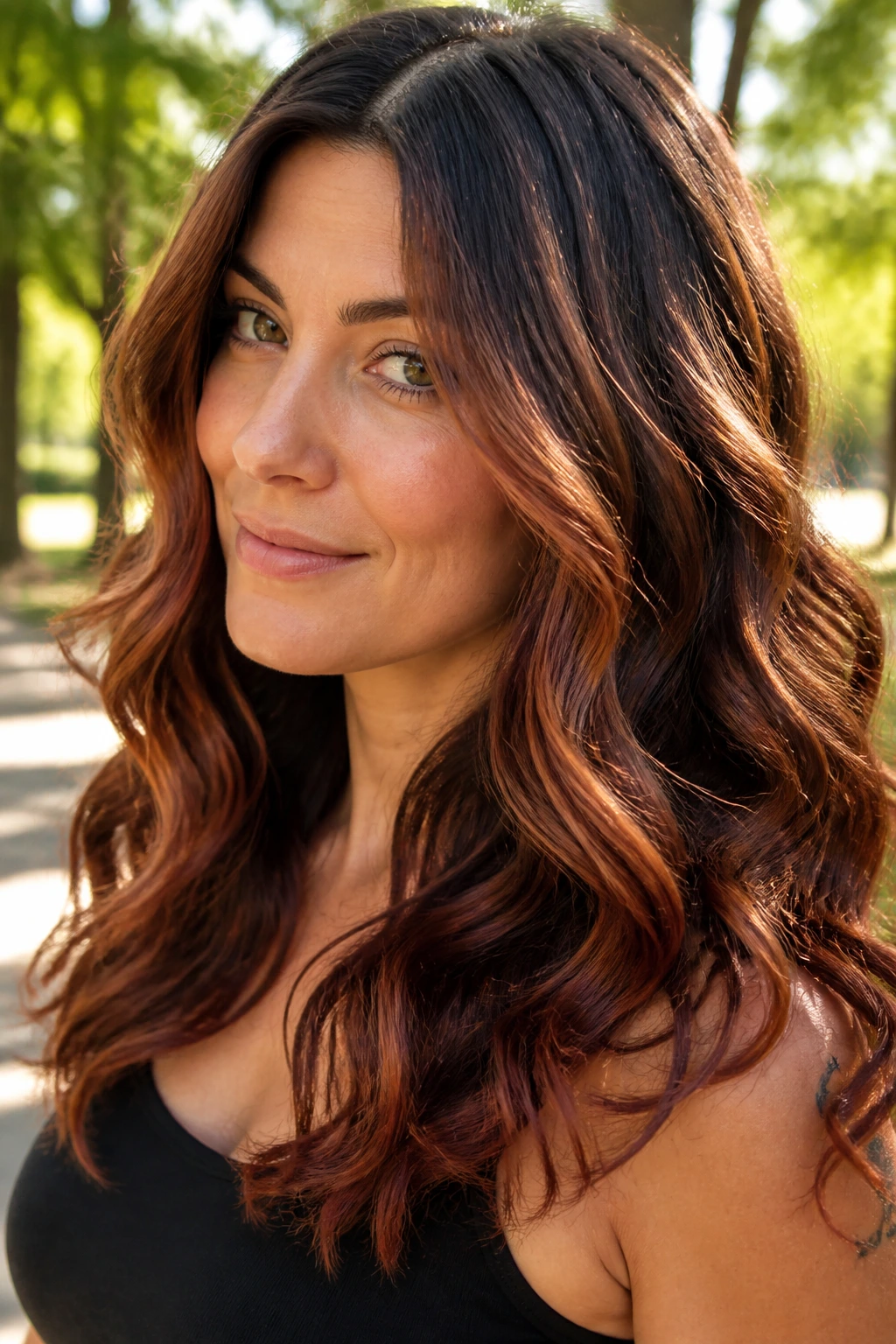
Sunlit Auburn Slices bring warmth and shape to thick hair without making it all copper. The slices are broader than a delicate highlight, which matters because auburn can get lost on dense brunettes if the pieces are too thin. The color should be visible in motion.
This is a strong choice for curly or heavily layered hair. The auburn lands on the bends and gives the curls definition. If the hair is straight, the look becomes more subdued, almost like a warm brown with a hint of red. Either way, it keeps the style from feeling one-note.
Ask for the auburn to stay soft around the crown and stronger through the mids and ends. That keeps the root from looking too warm.
25. Toasted Coconut Blonde
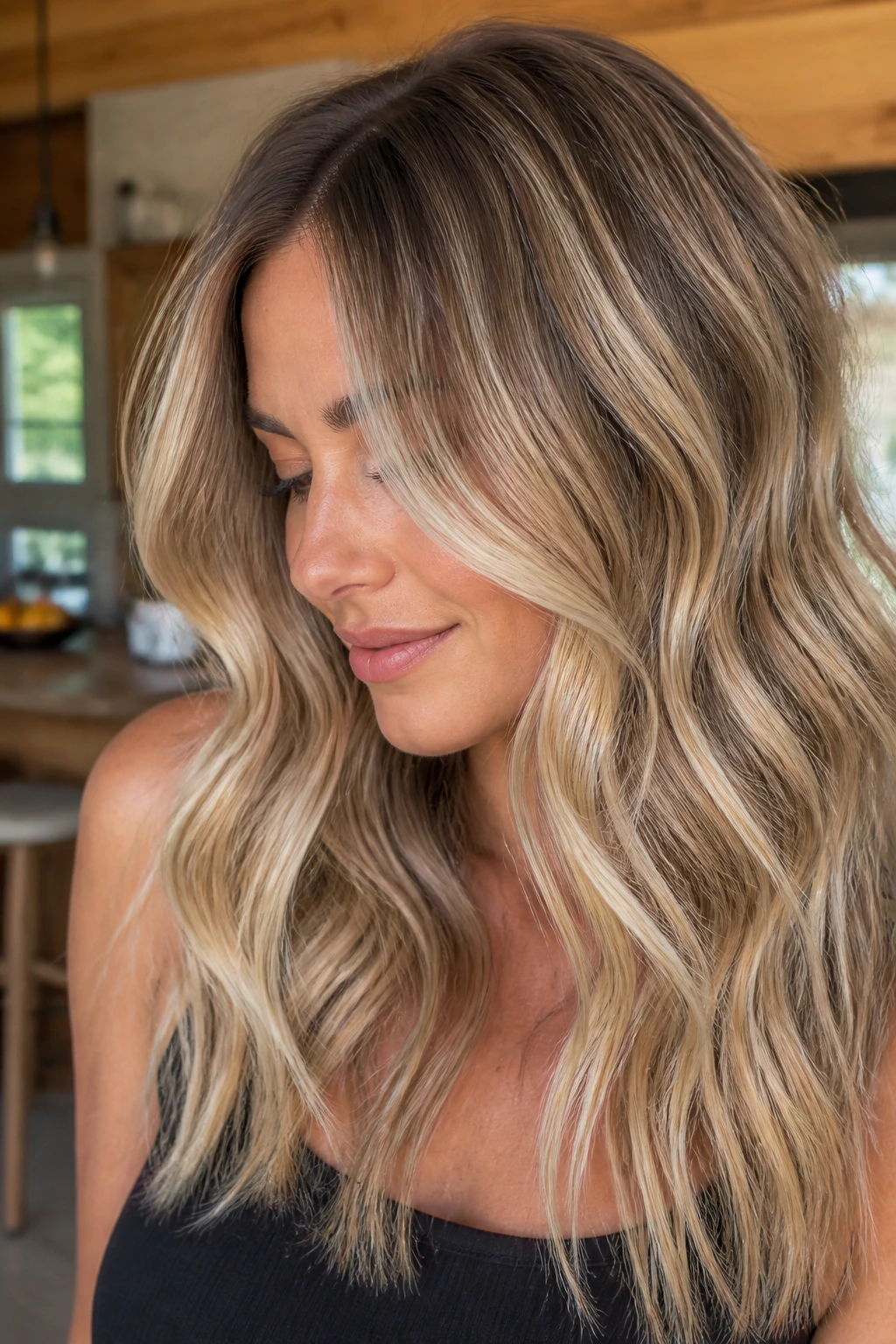
Toasted Coconut Blonde uses a darker root and a creamy, beige-blonde body to keep thick hair bright without making it brittle-looking. The “toasted” part matters. Pure pale blonde on dense hair can look harsh fast, especially if the hair is long and heavy. A warmer coconut tone keeps it softer.
The look works best when the lightness is placed in broad strokes. Thin, scattered lights can vanish. Thick hair needs panels, not confetti. If you wear your hair in big bends or loose curls, the blonde will show in a nice, broken-up way that feels expensive without trying too hard.
This is one of the stronger choices if you want light hair but still want your hair to look like a lot of hair.
26. Smoky Silver Bronde
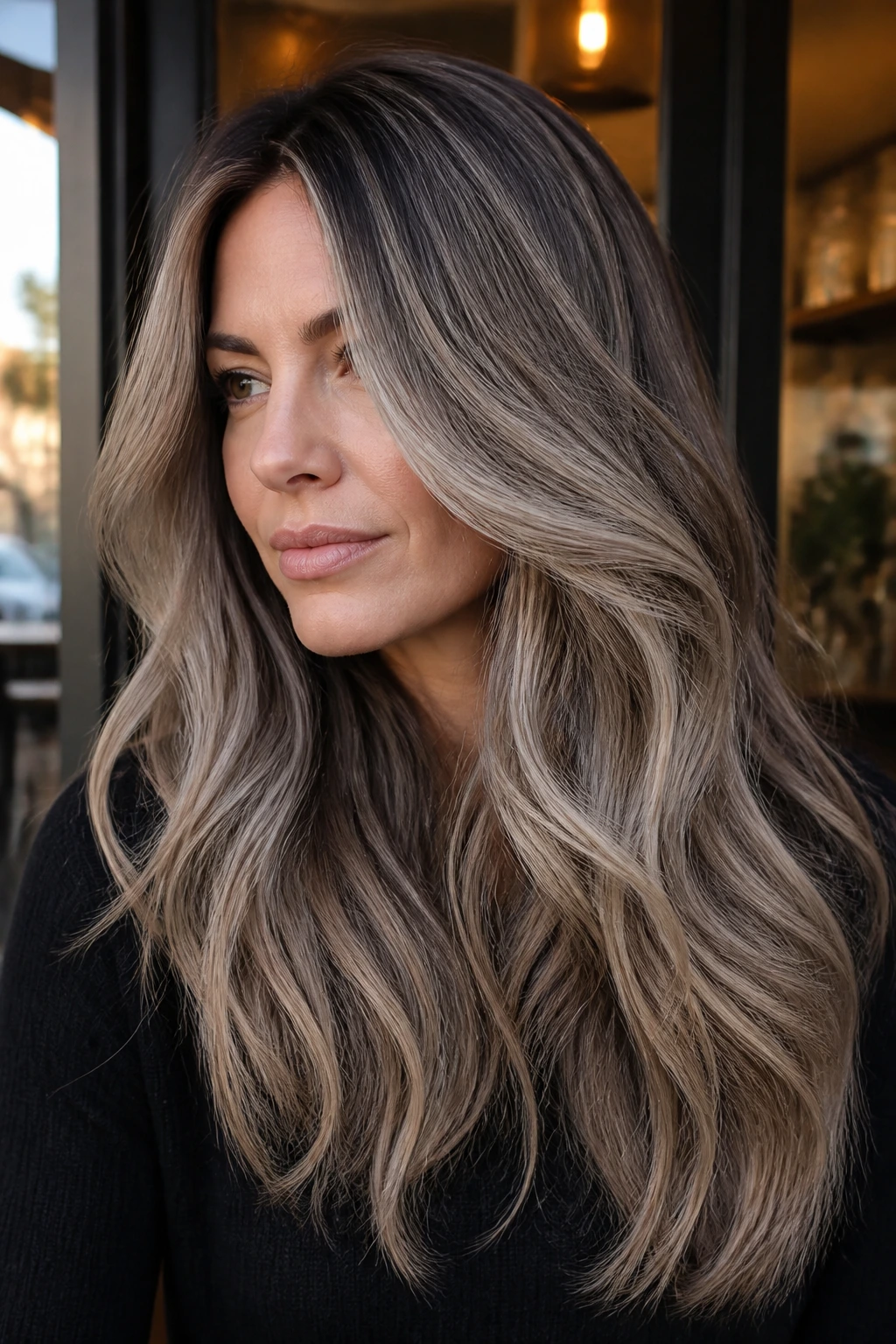
Smoky Silver Bronde is for the cool-tone crowd who still wants depth. The silver-beige ribbons can be striking on thick hair because the density gives the color room to settle into a coherent shape. On very fine hair, this look can feel wispy. On thick hair, it feels structured.
The color needs a dark enough base to keep the silver from looking washed out. That’s where the bronde part matters. Keep the root cool brown, then layer silver-beige in the mids and brighter edges. A gloss with a neutral-cool finish keeps the whole thing from turning yellow.
It’s not a casual shade, and that’s part of the appeal. The hair looks composed.
27. Honeyed Copper Melt
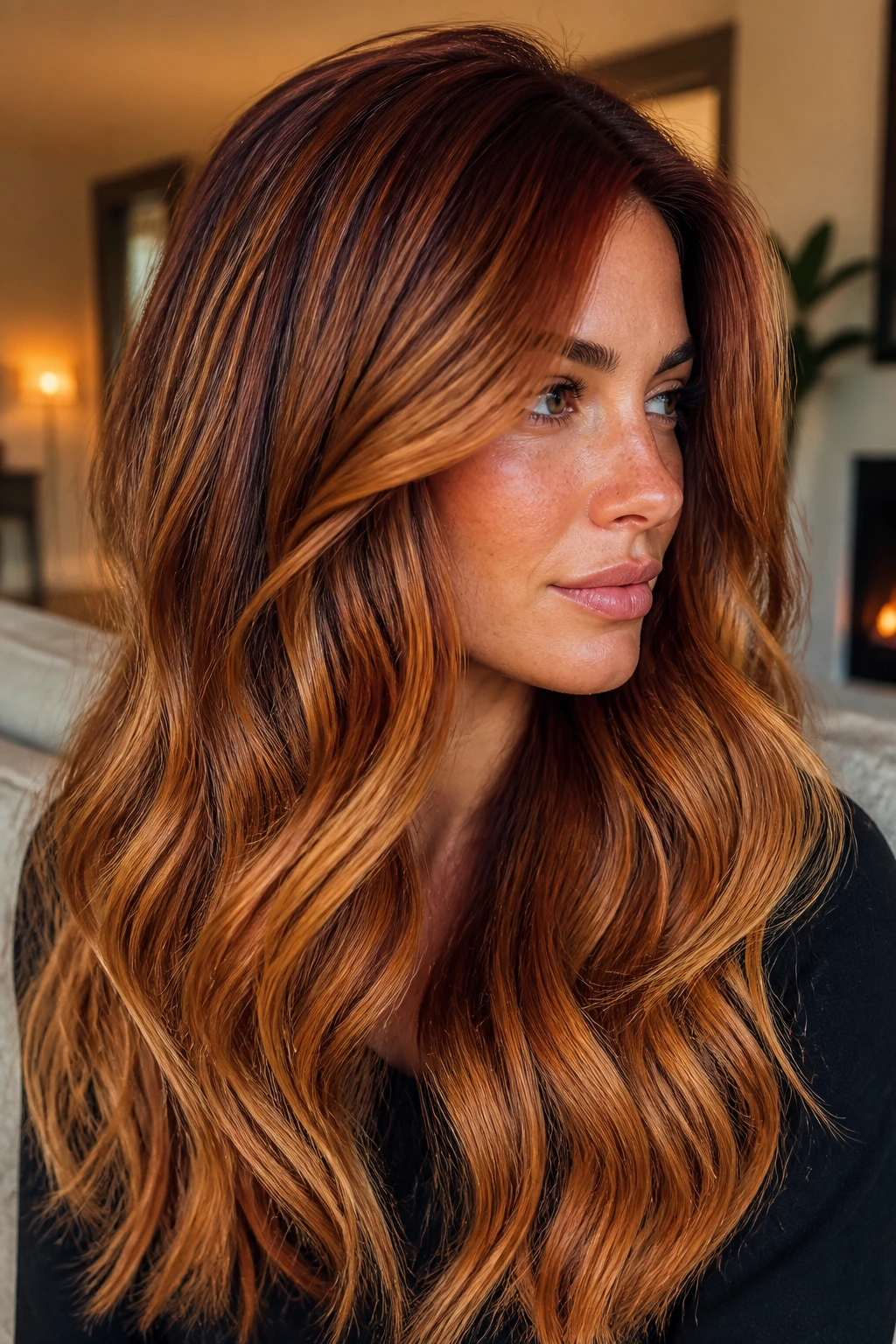
Honeyed Copper Melt combines the warmth of honey with the sharper glow of copper, which gives thick hair a rich, multi-tonal finish. It’s warmer than a caramel look, but not as red as full copper. That middle ground is hard to get right, and thick hair helps by giving the color more space to unfold.
The best version keeps the root deep and lets the copper live mostly in the mids, with honey closer to the ends. That makes the color feel layered rather than painted all at once. If your hair is coarse, this mix can make it look smoother. If your hair is wavy, it looks lively fast.
Ask for a gloss that leans gold-copper, not orange. Orange can flare up under indoor lighting in a way that’s hard to ignore.
28. Maple Biscuit Blonde
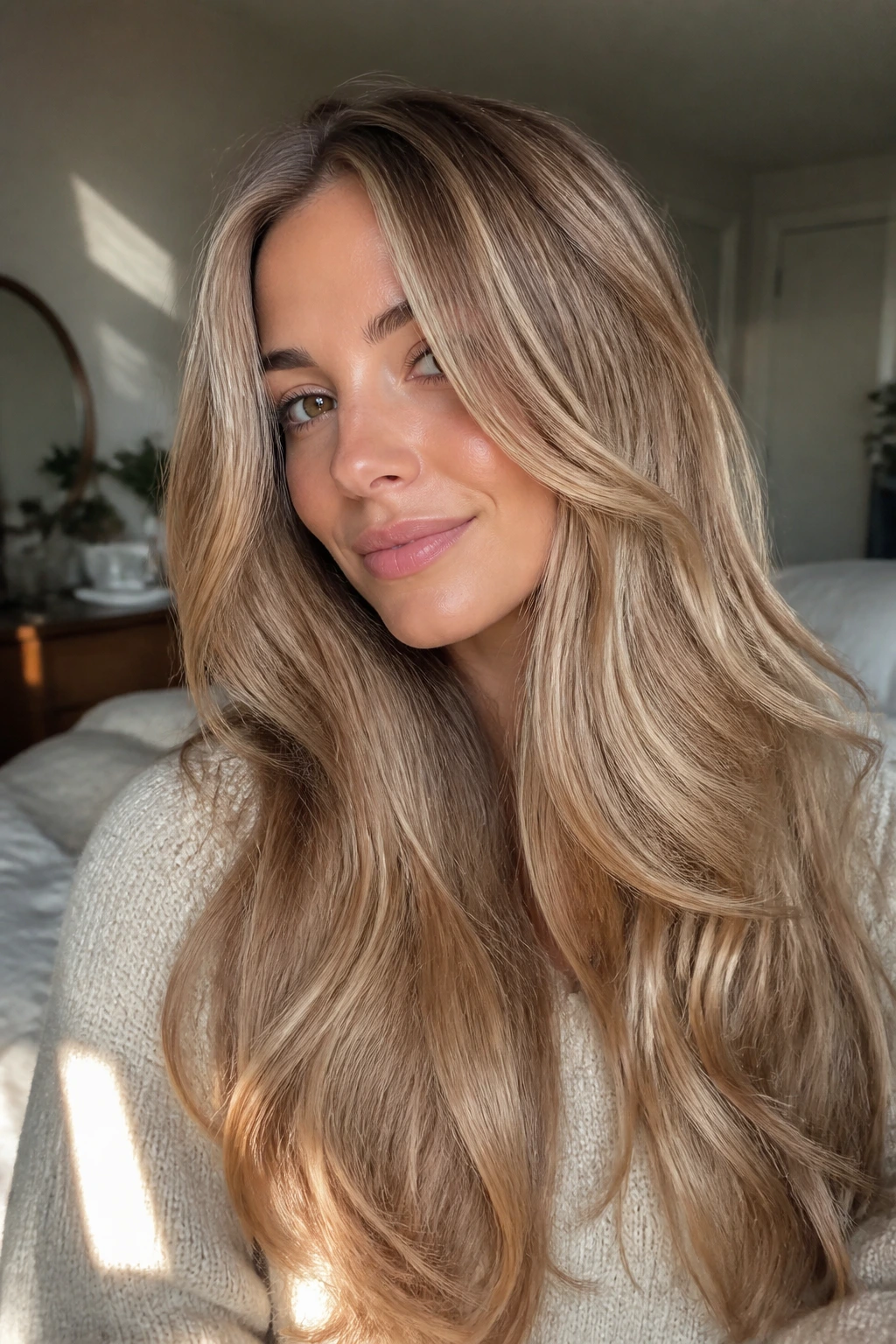
Maple Biscuit Blonde is soft, buttery, and a little nostalgic in the best way. The color sits in that warm beige family that thick hair can wear without becoming too bright too fast. The “biscuit” part comes from the creamy base, while the maple gives it a warmer edge.
This look usually benefits from larger sections, especially through the front and the ends. Thick hair can eat delicate beige lightness alive if the placement is too fine. Bigger panels keep the color readable and make the overall finish look lush.
It’s an easy one to style. A loose wave, a blowout, or even a low bun with a few face-framing pieces will show the color without extra effort.
29. Vanilla Latte Balayage
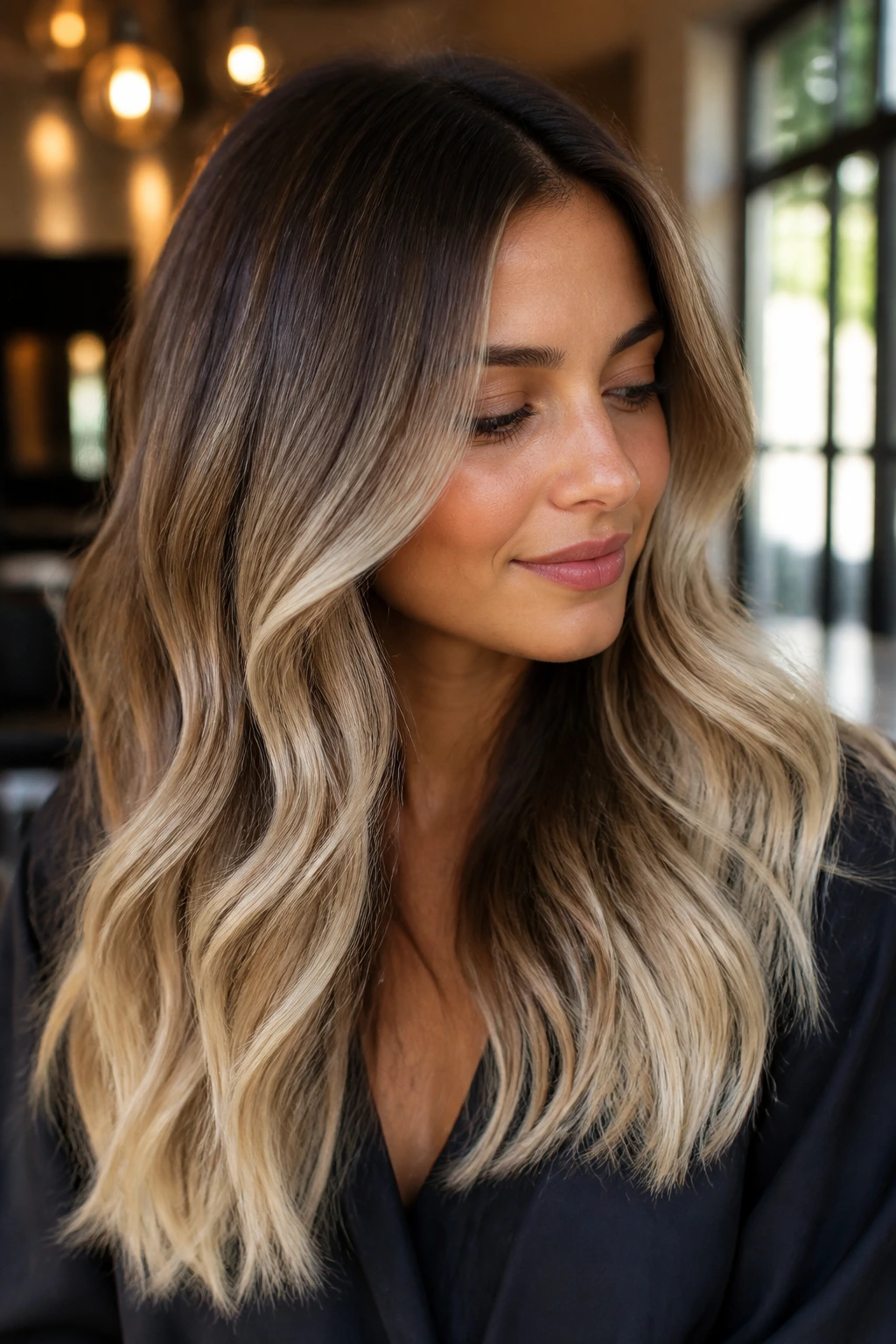
Vanilla Latte Balayage is a creamy brunette-to-blonde transition that stays softer than a sharp blonde lift. Thick hair wears this well because the layers can hide and reveal the lighter ribbons, which keeps the color from looking static. The root stays coffee-toned, and the ends soften into vanilla cream.
Why I’d recommend it
If you want lightness but don’t want your hair to feel thin, this is a smart pick. The creamy tone keeps the finish smooth, and the deeper root gives the length some grip.
- Best for brunettes who want a softer blonde
- Works with round-brush blowouts and polished waves
- Needs regular glossing if you want the cream tone to stay clean
- Pairs nicely with long layers and curtain bangs
It’s calm blonde, not loud blonde. Big difference.
30. Spiced Cherry Balayage
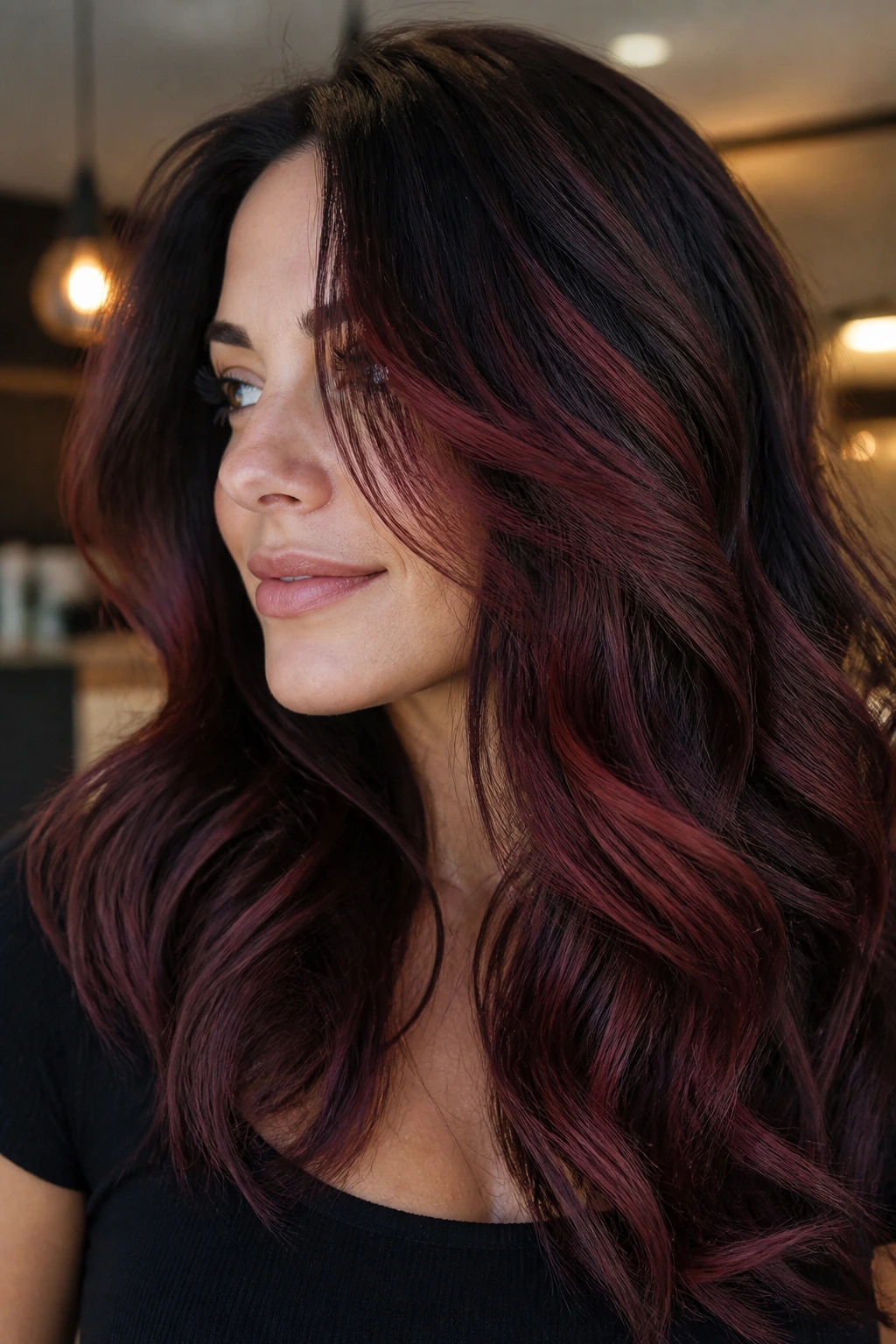
Spiced Cherry Balayage adds cherry-red ribbons to a dark brunette base, and thick hair is one of the few places this color really lands well. The density keeps the red from looking too thin or too scattered. You want the cherry to show in patches, not all over, so the hair still looks dimensional.
This is a bolder choice, but it’s not loud if the base stays deep. The red should feel like it’s been tucked into the hair rather than painted over the whole head. On curls, it looks especially good because the red flashes in and out as the shape moves.
If you’re nervous about committing, ask for the red only near the front and in a few interior panels first. You can always build more.
31. Cocoa and Cream Dimension
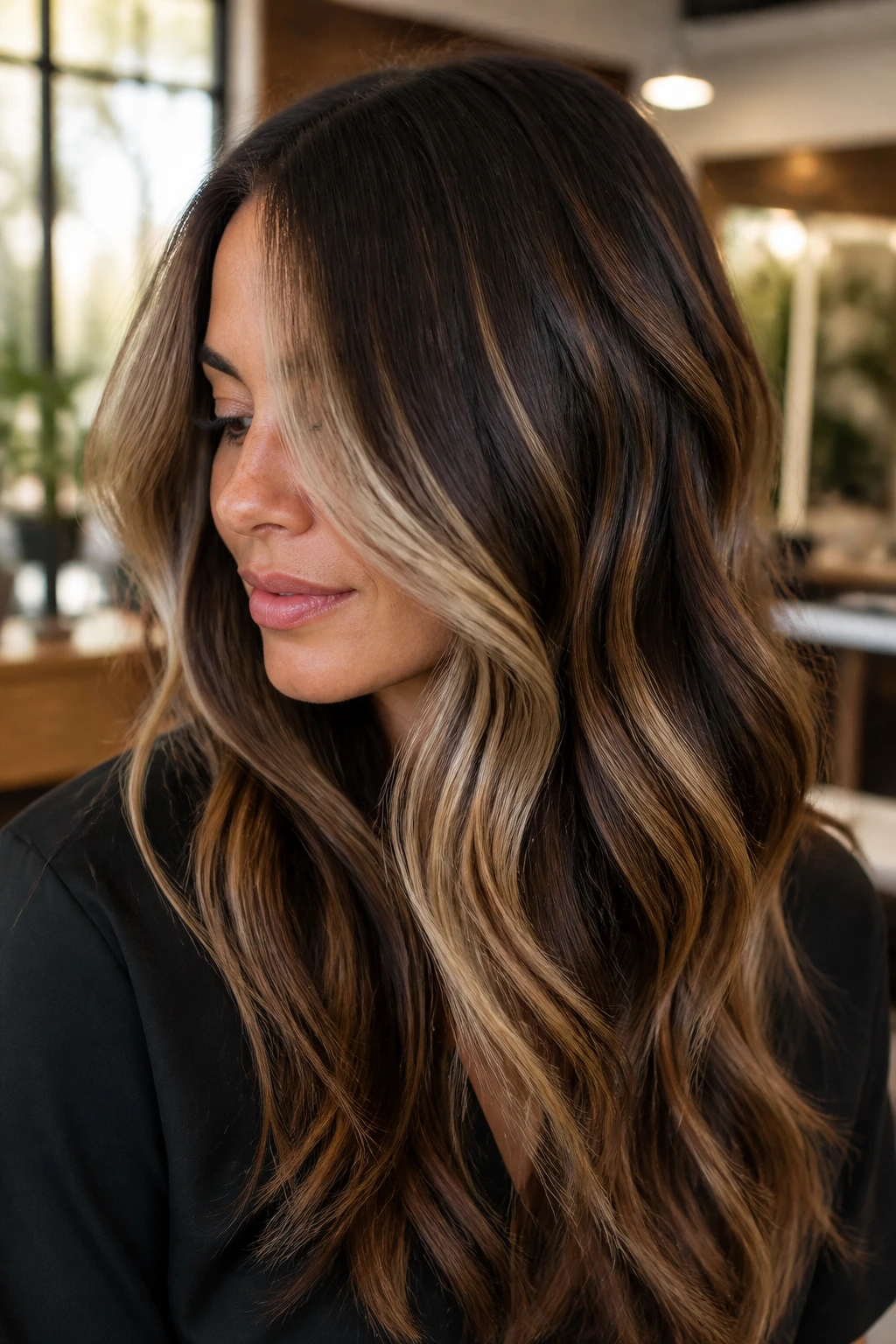
Cocoa and Cream Dimension is a high-contrast brunette look with broad cream pieces set against a deep cocoa base. Thick hair handles this because the darker bulk underneath keeps the color from feeling too sliced up. The cream pieces then do exactly what they’re supposed to do: break the weight and create movement.
The most important part is balance. Too much cream and the hair loses its depth. Too little and the look disappears. The sweet spot is visible contrast with soft edges. It should feel bold when you catch it in the mirror, but not messy.
This style comes alive on curled ends and layered lengths. Straight, it looks more graphic. Wavy, it looks fuller and softer at the same time.
32. Sandy Brunette Surf Balayage
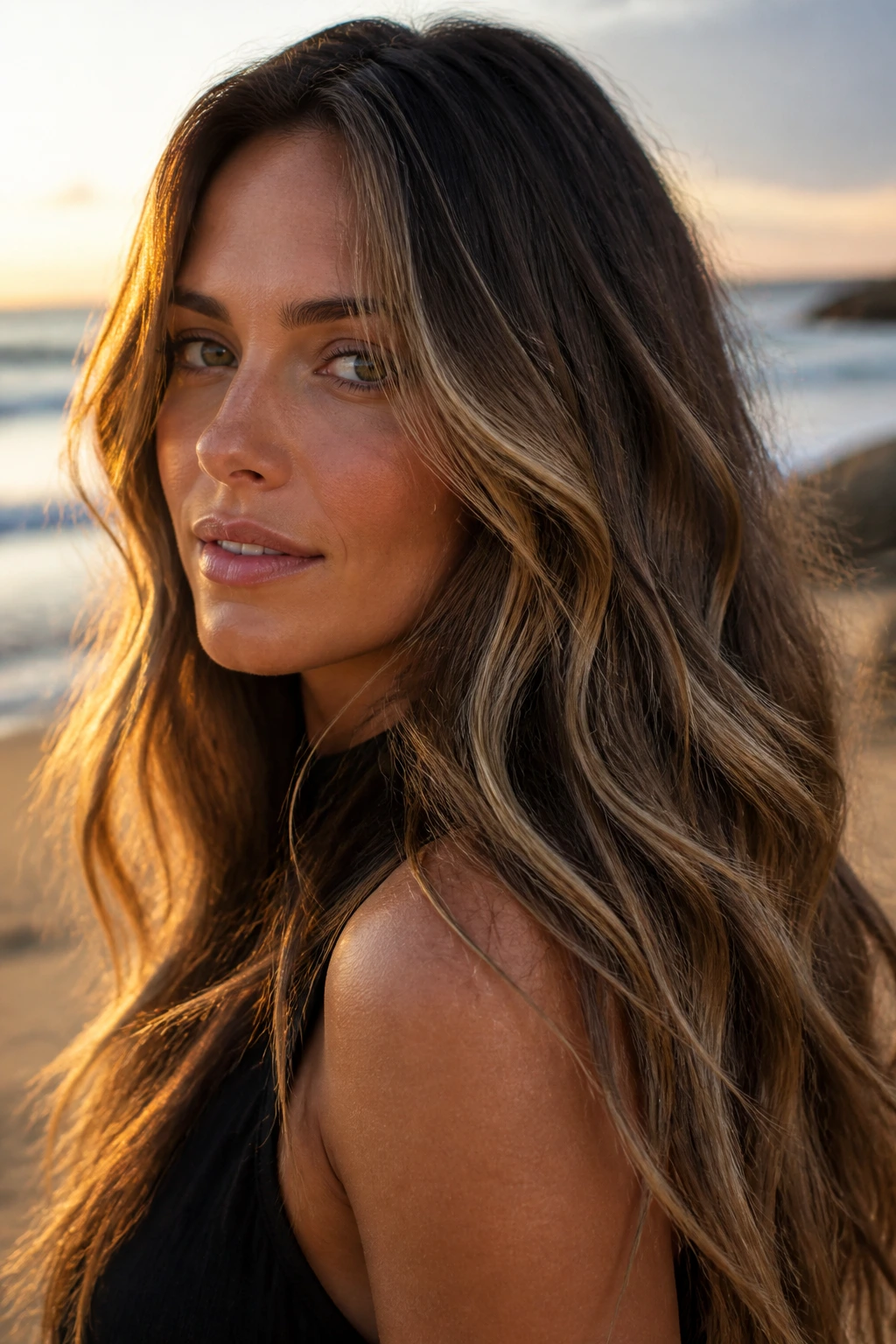
Sandy Brunette Surf Balayage has that lived-in, beach-bend feel that works especially well on thick hair because the color placement is roomy. The sand pieces sit over a brunette base, so the hair keeps its structure while still looking lighter around the edges. It’s one of the easier ways to make heavy hair look mobile.
I like this for long hair with natural wave. The sand tones catch where the wave crests, which makes the color look like it belongs there. If the hair is pin-straight, the look can read a little flatter, so a soft bend helps.
The roots should stay grounded. That’s what keeps it from looking bleached-out or dry. Thick hair needs that sense of weight at the top.
33. Dimensional Mocha Smoke
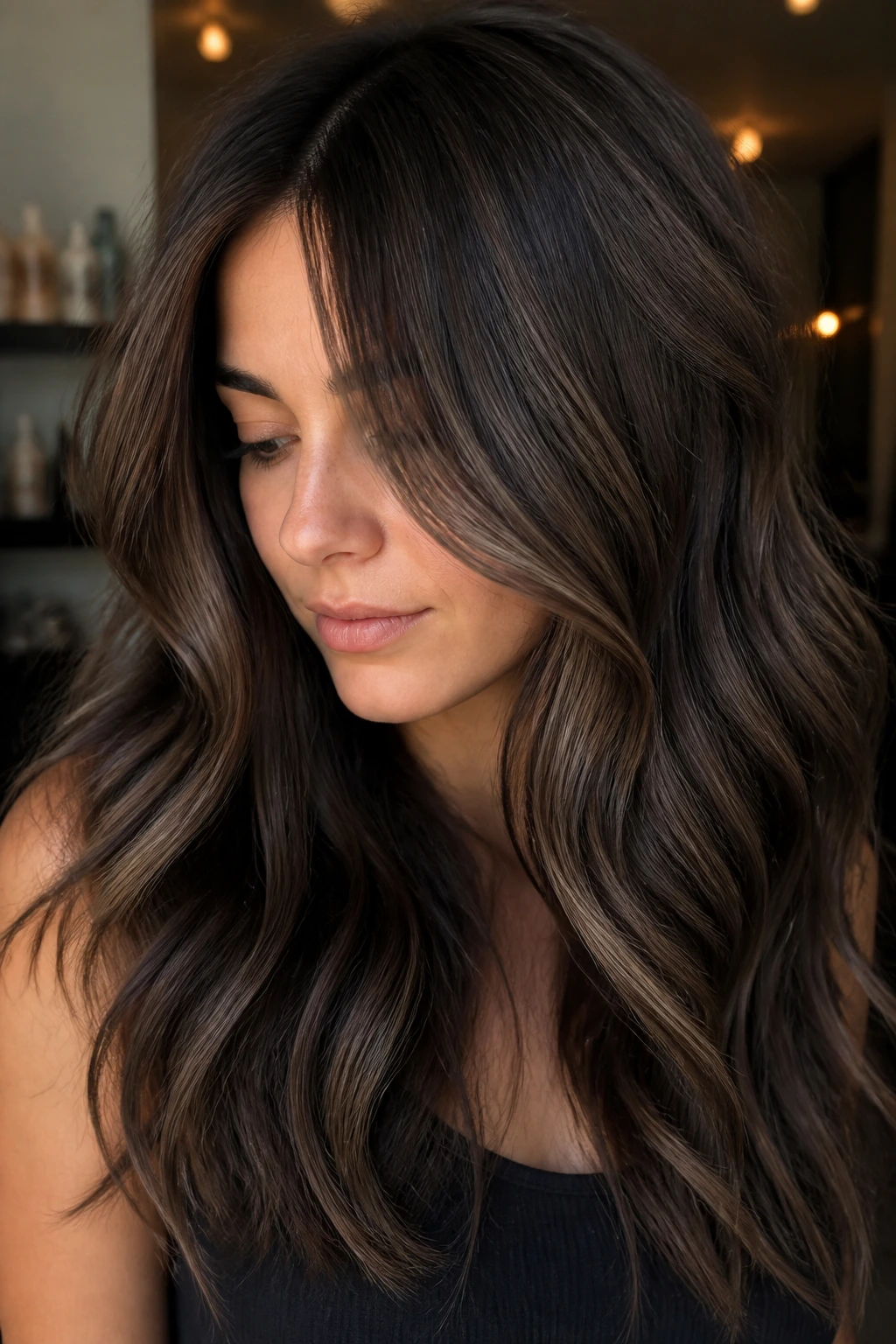
Dimensional Mocha Smoke is the one I’d pick for someone who wants brown hair with depth, movement, and a cooler finish that still feels plush. The smoke tones keep the shine controlled, while the mocha base keeps the whole style from looking flat. Thick hair is the right canvas for it because the density lets the shades stack without getting muddy.
Use this look if you like subtle drama. It doesn’t scream from across the room. It looks good when the light moves across it, when the hair is tucked behind one ear, when the layers separate just enough to show the different tones underneath. That’s the kind of color thick hair can carry without effort.
A soft curl or a polished blowout will make the dimension obvious. Straight and glossy, it feels refined. Wavy, it feels richer.
How to Brief Your Colorist Without Getting Lost in the Gloss Talk
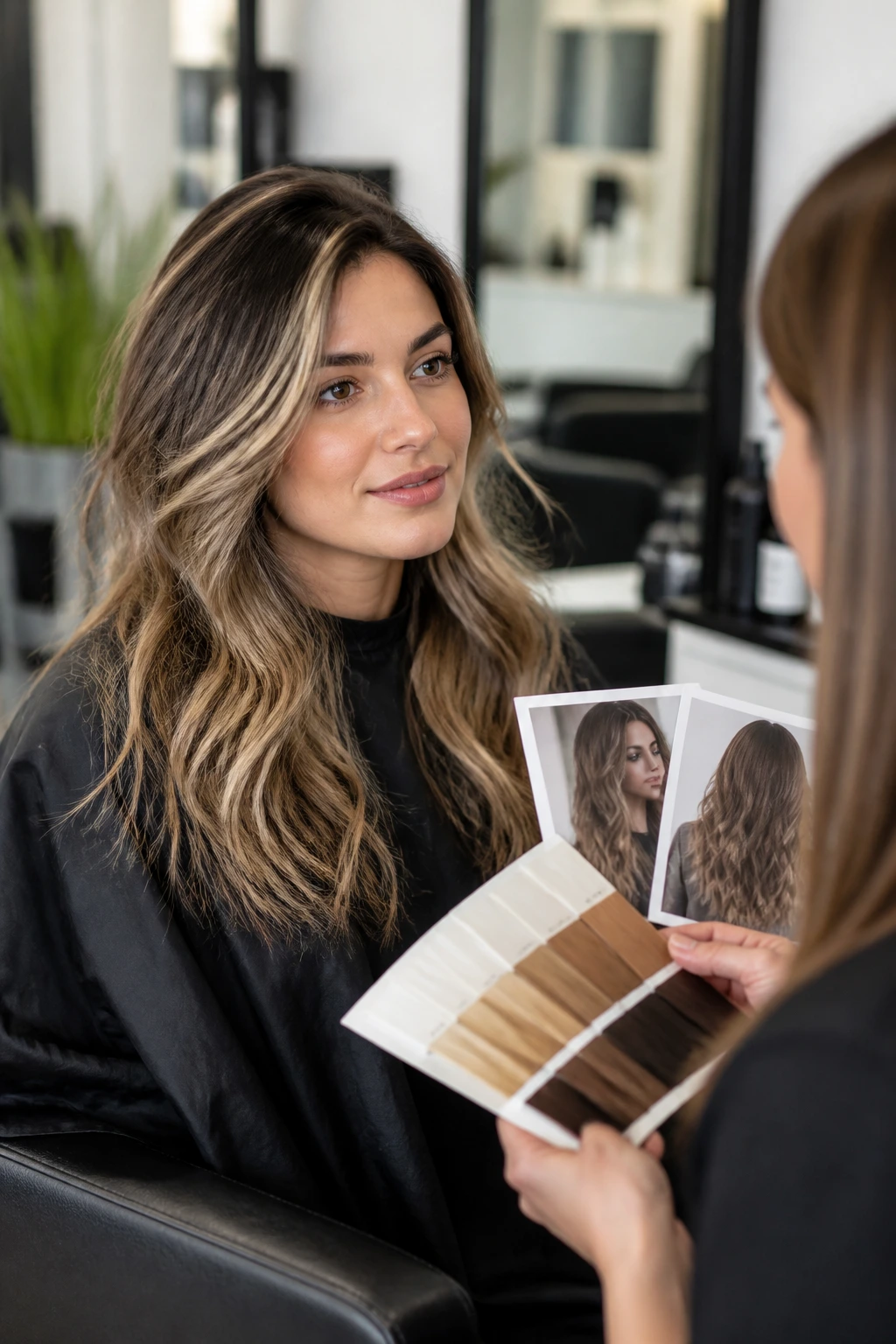
Dense hair can take a careful mix of painting, foiling, and toning, so the salon conversation matters more than people think. Bring two photos if you can: one for the shade and one for the placement. A lot of problems start when both are hidden inside the same picture and the colorist has to guess which detail you actually care about.
Say how you wear your hair most days. Straight, curly, air-dried, blown out, clipped up. Thick hair changes personality depending on the styling method, and the placement should match the way you’ll actually see the color. If you only curl your hair on weekends, don’t let the look rely on curling alone to make sense.
Ask for ribbons, not fog. That’s the phrase I keep coming back to. Thin misty lightness gets lost in dense hair. Broader pieces, a controlled root shadow, and a gloss that suits your base will hold up better between appointments.
Essential Tools for Keeping Thick Hair Balayage Looking Clean
- Wide-tooth comb: Gentle detangling keeps the lightened ends from snapping when they’re wet.
- Color-safe sulfate-free shampoo: Helps the tone last longer without stripping the gloss out in two washes.
- Purple shampoo or blue shampoo: Purple is better for blonde and beige pieces; blue is better for brunette hair that pulls orange.
- Heat protectant spray: Thick hair often needs more heat to style, and that means more risk if you skip this.
- Deep-conditioning mask: A weekly mask keeps the lightened mids and ends from feeling rough.
- Silk or satin pillowcase: Less friction, less frizz, fewer dull ends in the morning.
- Sectioning clips: Useful if you dry your hair in sections or touch up your waves with a curling iron.
- 1.25-inch curling iron or wand: A larger barrel keeps thick hair from looking too cramped or springy.
- Root clip or lift spray: Optional, but handy if the top layer needs a little air without extra teasing.
- Shower filter: Worth it if your water is hard and your blonde keeps going dull fast.
Smart Product Choices for Tone, Shine, and Wash Day
Hair color products are where people spend too much money on the wrong thing, then blame the balayage. For thick hair, the best shampoo is usually the one that cleans without squeaking the life out of your mids and ends. Look for color-safe formulas with a mild lather, and save stronger clarifying shampoos for the occasional reset when product buildup starts flattening the tone.
Toner choice matters more than people admit. Beige keeps blonde and brunette blends soft. Gold keeps caramel and honey from looking muddy. Ash cools down brass, but too much ash can make thick hair look dull in indoor light. If your colorist says the lift is there but the tone needs “just a little gloss,” that’s usually the right instinct.
Heat protectant is not optional on thick hair. Dense hair often needs a hot tool to show the color properly, which means the ends are getting more wear. Use the spray before every blow-dry or iron pass, not only on wash day. And if your water is hard, a shower filter can quietly save your toner from fading out before its time.
How to Wear These Balayage Shades Day to Day
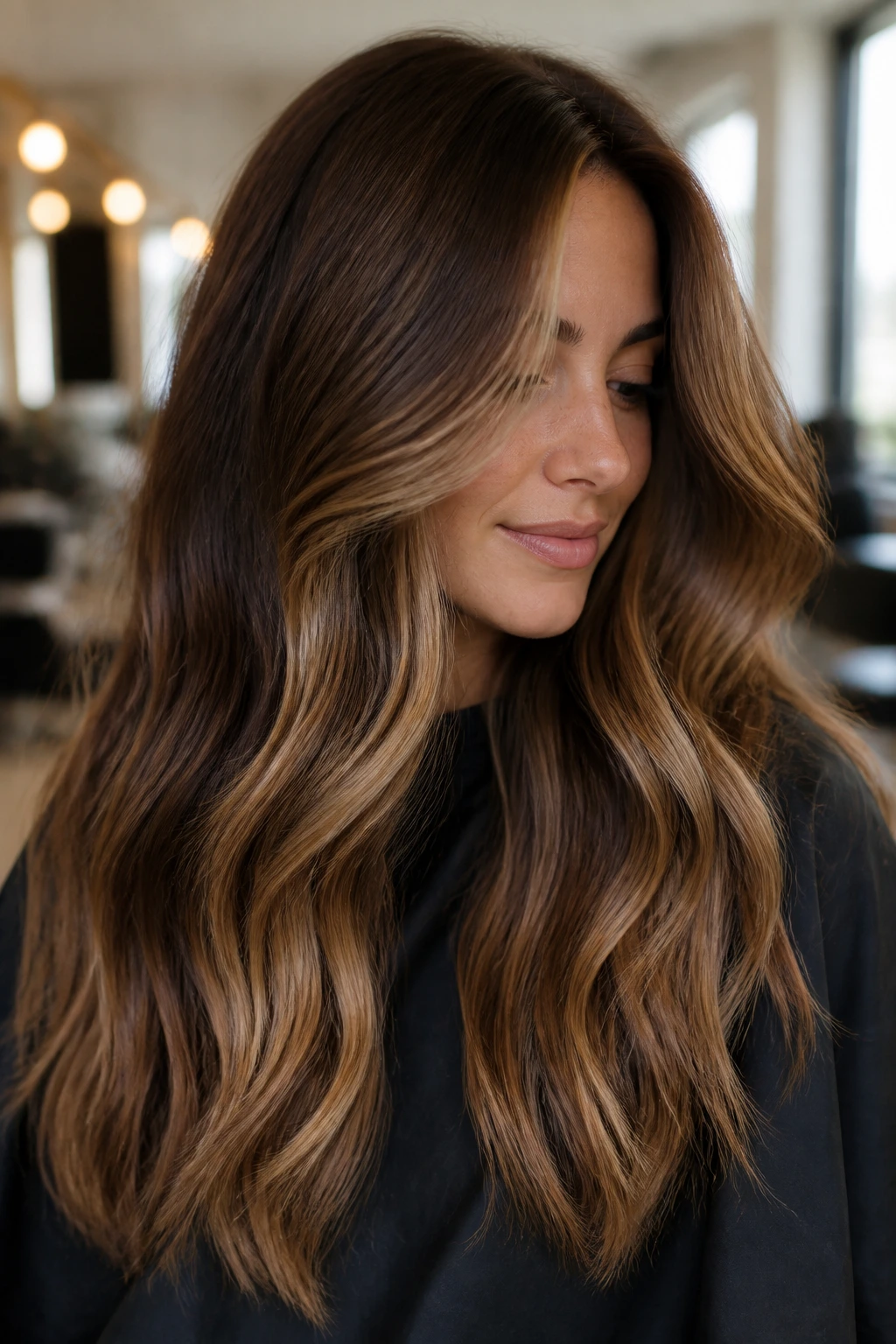
Loose Waves: A loose wave is the easiest way to make thick-hair balayage read clearly because the bends split the color into visible ribbons. A 1.25-inch iron, wrapped away from the face, gives a soft pattern that doesn’t fight the hair’s natural bulk.
Blowouts: Big blowouts show off the face frame and the mid-length blend. If your look depends on contrast, a round brush and a little root lift at the crown will help the lighter pieces stand out instead of hiding under the top layer.
Natural Texture: Air-dried thick hair can still look good, but the placement has to be strong enough to survive shrinkage and volume. That’s why curls and coils need wider painted sections and a bit more contrast than straight hair does.
Pinned-Up Days: Clips, buns, and half-up styles expose the underlayer, which is where peekaboo pieces and interior ribbons shine. If you wear your hair up a lot, ask for color under the top canopy too, not only around the outside edge.
Common Mistakes That Flatten Balayage on Thick Hair
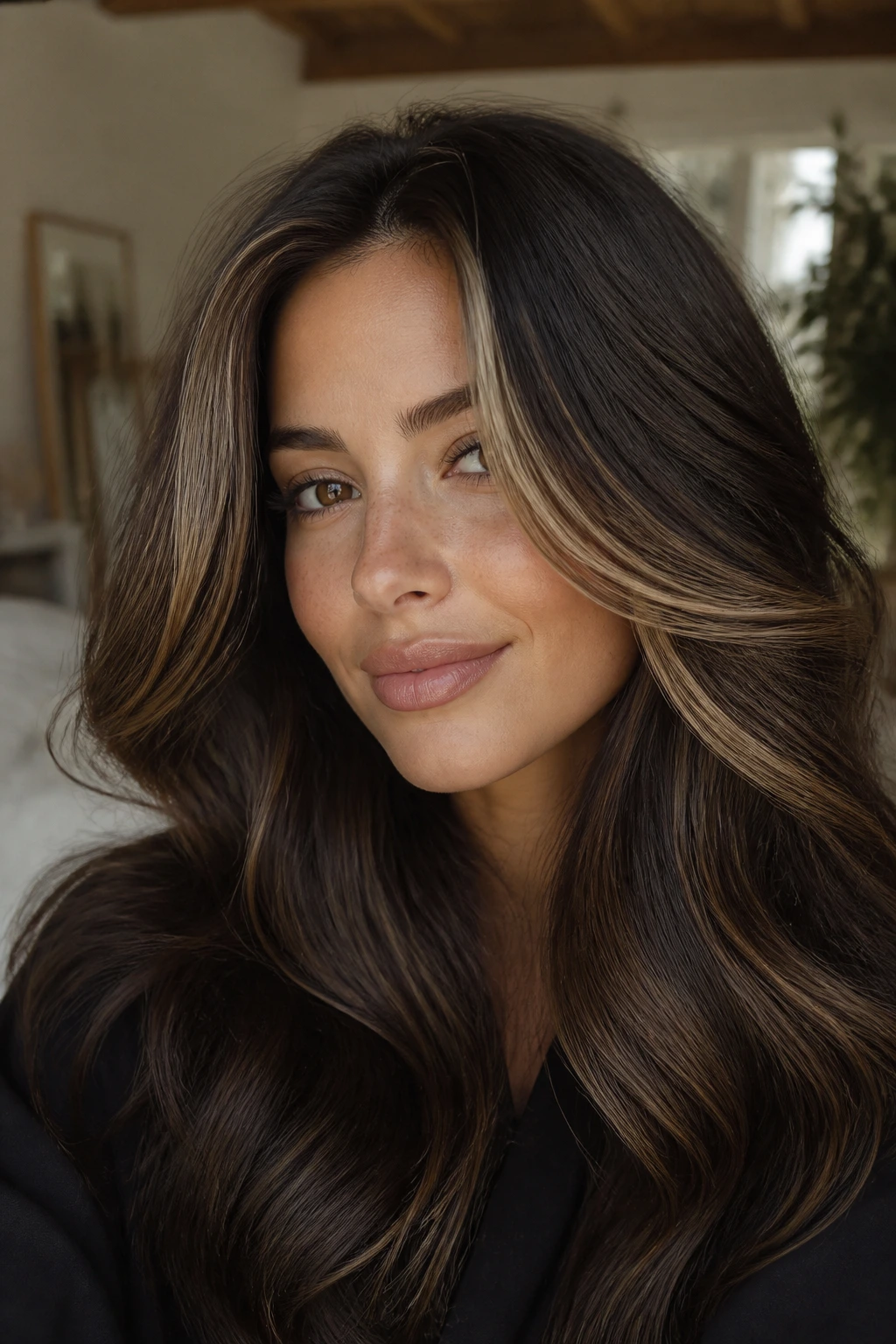
The first mistake is going too fine with the light pieces. Tiny highlights can look refined on paper and disappear in thick hair once it dries. The fix is simple: ask for broader ribbons or a mix of freehand painting and foils so the brightness survives the density.
The second mistake is lightening the top without protecting the interior. That can leave thick hair looking pale on the surface and dark underneath, which feels disconnected. A few interior panels solve that fast.
Skipping toner is another one. Thick hair often holds warmth, and if you leave the lightened sections untreated, they can swing yellow or orange within a couple of washes. A good gloss doesn’t have to make the hair icy. It just keeps the tone honest.
And yes, over-washing matters. Balayage on thick hair can look dry if the oils are stripped out too often. Two or three washes a week is enough for most people, with dry shampoo filling the gap when needed.
Variations and Adaptations to Try
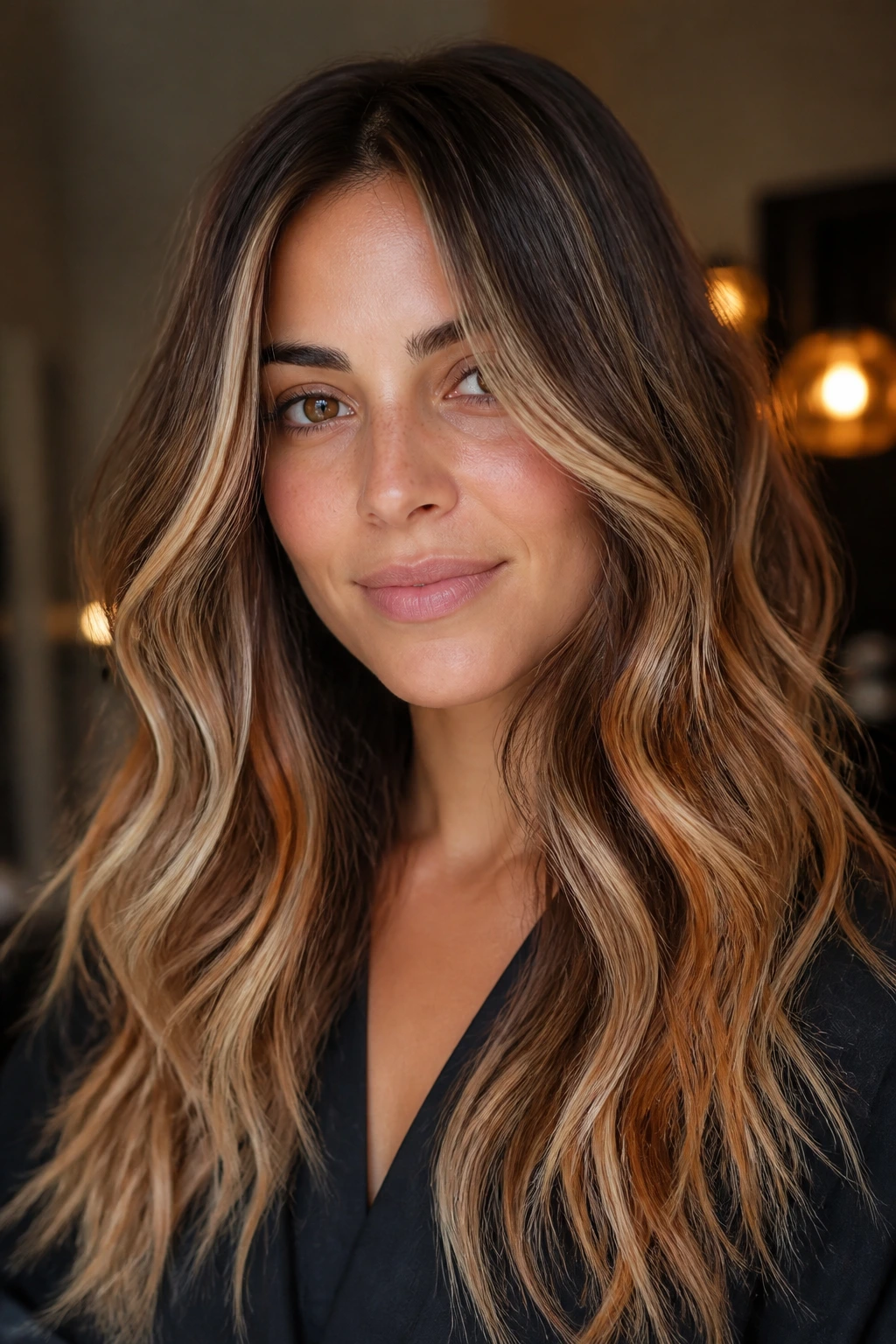
Soft-Root Edit: Keep the root two shades deeper than the mids and ends, then ask for a beige gloss. This is the cleanest option if you want less upkeep and more depth at the scalp.
High-Contrast Ribboning: Go for wider, brighter panels through the front and lower lengths. It suits thick hair that you wear in waves, because the movement breaks up the stronger contrast.
Cool-Toned Ash Refresh: If your brunette keeps turning orange, lean into mushroom, walnut, or smoky beige tones. The cool finish helps the color stay calm, especially on coarse hair.
Copper Glow Version: Add copper or auburn only in selected ribbons instead of everywhere. That gives warmth without making the whole head look red.
Curly-Hair Foilyage: Use foils on selected curls for a bit more lift, then keep the rest painted freehand. Curls need enough brightness to show through shrinkage, and this method gets there without over-lightening the whole head.
How to Keep the Color Soft Between Salon Visits
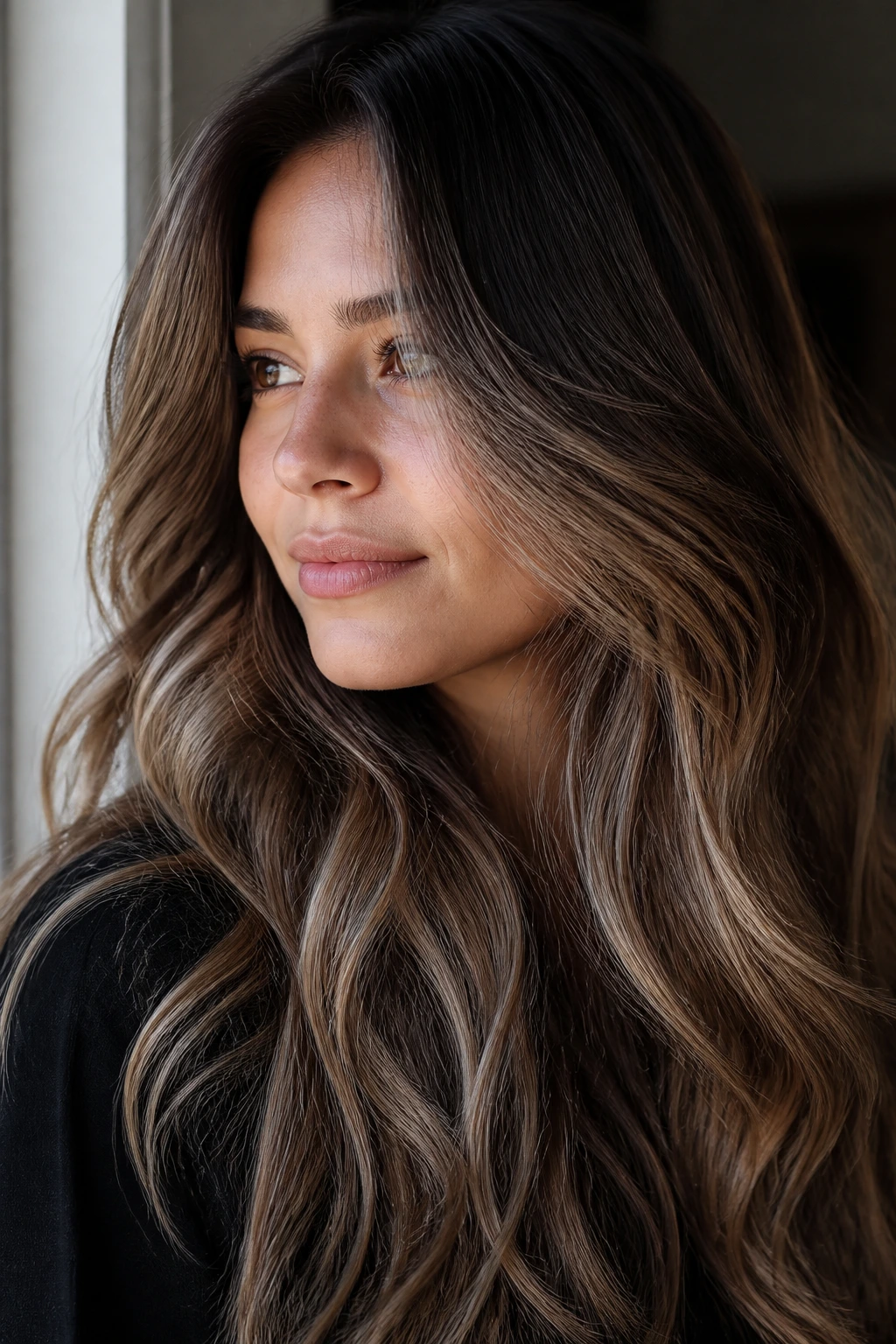
Thick hair balayage usually stays presentable longer than an all-over color job, but it still needs a plan. A toner or gloss every 6 to 8 weeks keeps the shade from drifting too warm or too flat. If you wear a blonde or beige version, purple shampoo once a week is enough; using it every wash can make the hair look dry and matte.
For brunettes and copper tones, a color-depositing conditioner can stretch the tone between appointments. Use it every other week, not daily, or the hair can start to look stained instead of dimensional. If your ends feel rough, swap in a deep mask once a week and leave it on for 10 minutes. No rush.
Full balayage refreshes usually make sense every 3 to 6 months, depending on how bright the look is and how fast your hair grows. The darker and softer the root, the longer you can push it. Heat styling, sun, and hard water all shorten that window a bit.
Frequently Asked Questions About Balayage on Thick Hair
Does balayage show better on thick hair than highlights do?
Often, yes. Thick hair gives balayage more surface area to work with, so broad painted ribbons can look richer and less stripy than tiny foiled highlights. The catch is placement; if the pieces are too small, the hair can swallow them.
Which balayage look is easiest to maintain on dense hair?
The rooted brunette looks, like chestnut cashmere, espresso-to-caramel melt, or hazelnut halo, usually grow out with the least fuss. They keep the root deep enough that regrowth doesn’t shout at you after a few weeks.
Can curly thick hair wear balayage without looking frizzy?
Yes, but the placement has to follow the curl pattern. Curls need painted panels that show after shrinkage, and they usually need a stronger root shadow so the lighter pieces don’t puff out and look scattered.
How light can thick hair go before it starts looking thin?
That depends on the haircut and the natural color, but hair that’s lightened all over can lose some of its fullness if there’s no depth left at the root or underneath. Keeping the interior darker is what preserves that thick, plush look.
What if my balayage turns brassy?
That usually means the toner faded or the underlying pigment was still warm. Use the right shampoo for the tone — purple for blonde, blue for orange-brown brass — and book a gloss if the color has lost its shape instead of just its shade.
Do I need layers for balayage to work on thick hair?
No, but layers help. They create openings where the lighter pieces can show through. Without them, the color may still look good, but it often needs stronger contrast to read the same way.
Can I get balayage if I usually wear my hair straight?
Absolutely, but ask for more visible ribboning and face-framing brightness. Straight hair doesn’t split the color the way waves do, so the placement has to do more of the visual work.
How do I keep balayage from looking stripey?
Blend the root, vary the width of the light pieces, and avoid placing every bright section at the same height. Stripey color usually comes from repeated, evenly spaced lines rather than a mix of wide and narrow ribbons.
Soft Grow-Out, Strong Shape
Thick hair gives balayage room to breathe, which is why the best looks here aren’t the tiniest, most delicate ones. They’re the ones with a little structure at the root, enough width in the ribbons to stay visible, and a tone that matches the way the hair actually falls.
That’s the part people miss. Balayage on dense hair isn’t about making the hair look smaller. It’s about making the color read through the volume, so the whole shape feels lighter, richer, and more intentional when it moves.
Pick the version that matches how you wear your hair most often, then ask for placement that shows up even when the hair isn’t curled and polished to within an inch of its life. That’s the look that lasts.
