



Straight hair tells on a bad highlight job.
There’s nowhere for a chunky foil to hide, no wave to blur a hard line, and no curl pattern to soften a tone that’s a little too yellow or a little too gray. That’s exactly why highlights for straight hair can look so polished when they’re placed with care — and so awkward when they’re not. On a flat, sleek surface, every slice of color shows its hand.
The upside is huge. Straight strands catch light in long, clean ribbons, which means tiny shifts in beige, caramel, ash, copper, or platinum show up fast. A good color placement can make a blunt bob look richer, a long center-parted cut look thicker, and a fine-haired style look less see-through at the ends. A sloppy one looks striped by lunchtime.
What follows is the kind of list I wish more salon menus would spell out: not just the pretty color family, but the placement, tone, upkeep, and the small details that make each idea work on hair that lies flat.
Why Straight Hair Makes These Ideas Shine
- Visible Placement: Straight hair shows the foil map instead of hiding it, so babylights, slices, and money pieces read clean and intentional.
- Soft Grow-Out Options: Rooted blends, contour highlights, and fine weaves leave less of a hard line at the part, which matters on hair that parts the same way every day.
- Room for Drama: Chunky panels and platinum pieces hit harder on straight hair because the surface is uninterrupted and the contrast stays visible.
- Tone Control Matters More: Beige, ash, caramel, copper, and smoky brunette shades each behave differently on a smooth canvas, so the wrong toner will shout.
- Works Across Lengths: A blunt bob, a collarbone lob, and waist-length glassy hair all take highlights differently, and there’s a look here for each one.
- Low- and High-Maintenance Choices: Some options need glosses every 6 weeks; others can drift longer between appointments without looking tired.
1. Feather-Fine Babylights
Feather-fine babylights are the safest place to start if you want straight hair to look a little lighter without advertising the work. Think strands so thin they barely read as separate pieces until the light hits them. On straight hair, that’s a gift. The color never has to fight with texture, so tiny blonde, beige, or caramel threads can do the heavy lifting by themselves.
Why they work so well on straight hair
Babylights avoid the stripe effect that can happen when slices are too wide on a flat finish. Ask for weaves no wider than a shoelace, placed mostly along the part line, the temple area, and the top two layers. On a level 6 or 7 brown base, that usually gives the hair a softer level 8 or 9 glow without turning the whole head into one bright block.
They also grow out better than most people expect. That’s the part I like. The root stays soft because the highlights are blended into the top layer instead of dropped in as a hard band.
Best for: fine straight hair, first-time highlight clients, and anyone who hates obvious regrowth.
Maintenance note: a gloss every 6 to 8 weeks keeps the tone from drifting too yellow or too smoky.
2. Creamy Money Piece
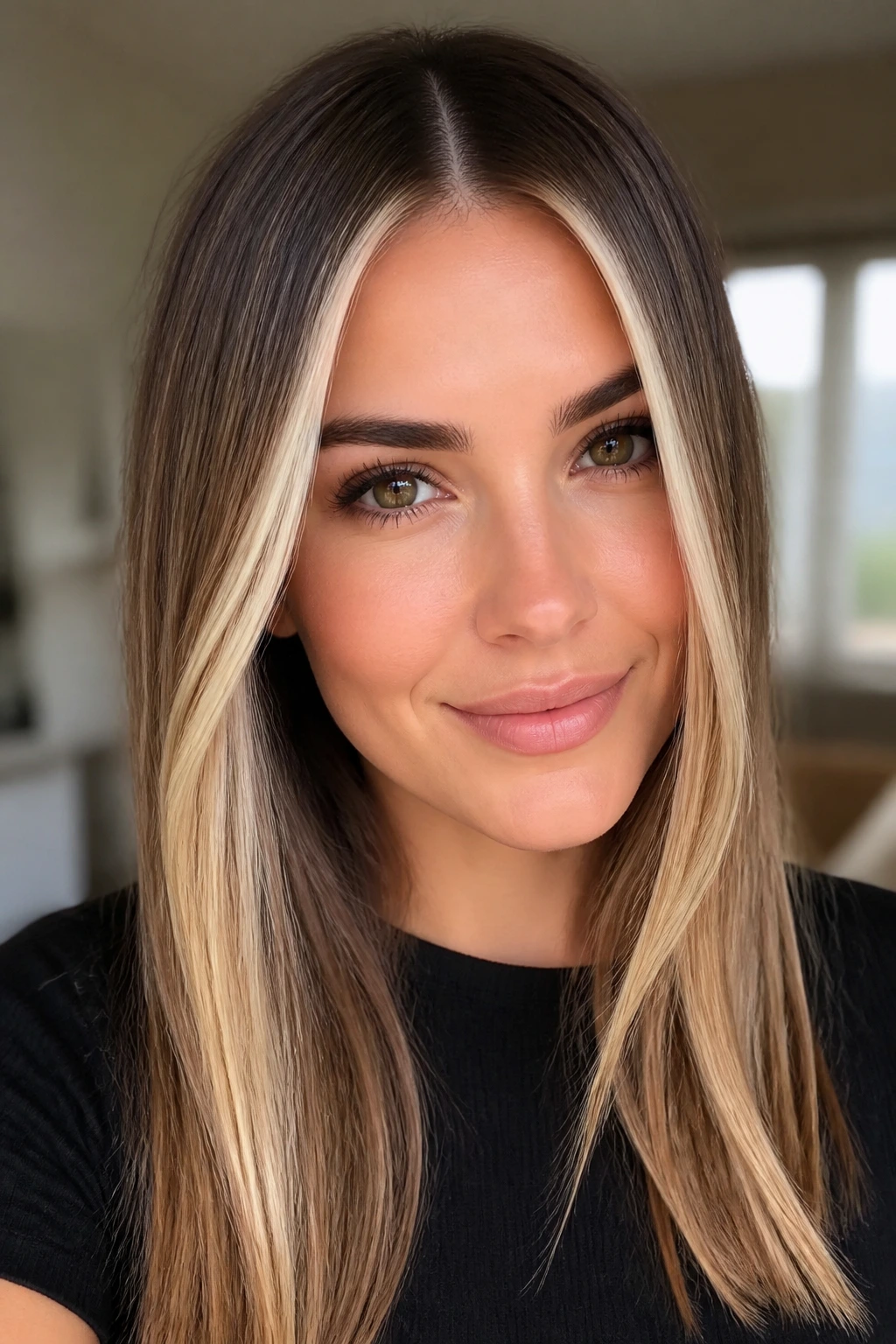
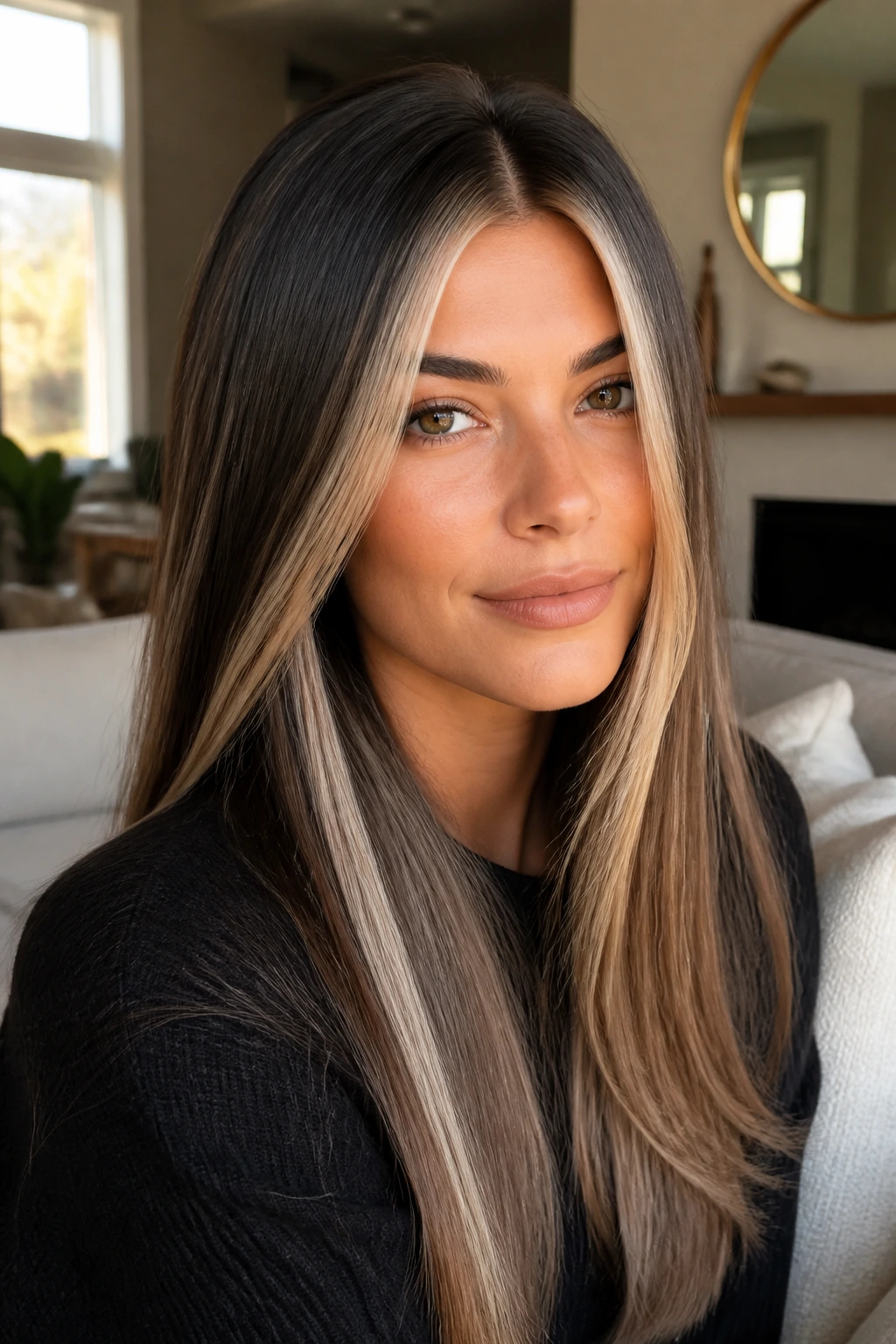
A creamy money piece is the move when you want straight hair to show contrast right away. One bright frame around the face does more visual work than a whole head of medium-light foils, especially on hair that’s worn center-parted and flat-ironed. The trick is keeping the brightness soft enough to look expensive, not brash.
This is where straight hair gets a little unfairly good at showing placement. A money piece can sit right at the cheekbone, brighten the eyes, and make a blunt cut look sharper in two seconds. If the hair is dark brunette, ask for a beige or vanilla blonde rather than a high-white toner unless you truly want that icy finish.
Keep the slice narrow at the hairline and slightly thicker just behind it. That little move keeps the frame from looking like a harsh stripe once the hair tucks behind the ears.
Best for: bobs, lobs, and long straight hair that needs face-framing brightness.
Watch the upkeep: the front pieces fade first because they’re touched, washed, and heat-styled more often than the rest.
3. Caramel Ribbon Highlights
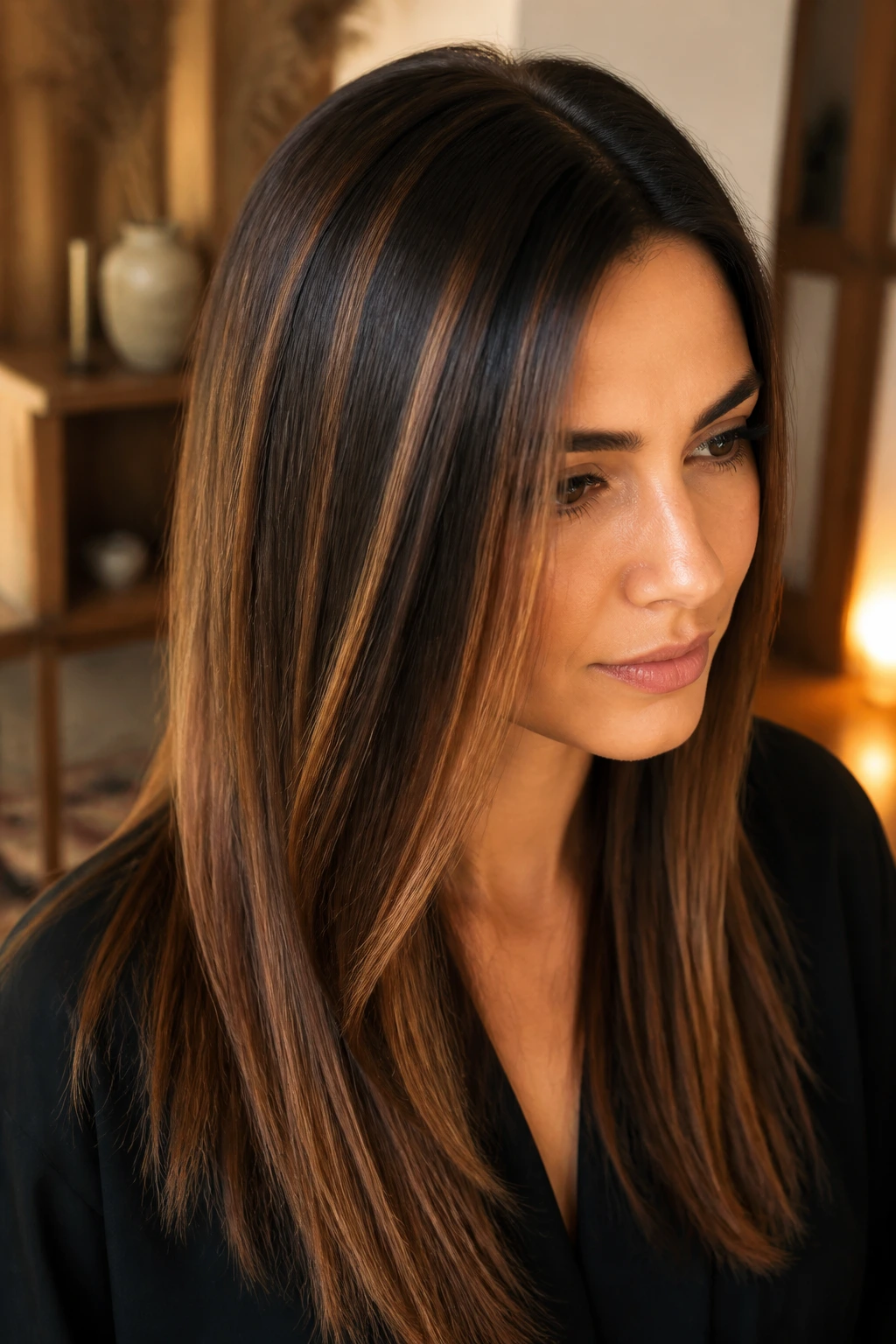
Why do caramel ribbons look so good on straight brunette hair? Because they don’t vanish into the base. They sit on top like warm threads, and on a smooth canvas that warmth reads as depth instead of mess.
This is the look I reach for when the goal is richer, not lighter. Ask for ribbon-like slices through the mid-lengths and ends, with the brightest pieces around the crown and temples. On a level 5 or 6 brunette, a caramel tone at level 7 or 8 keeps the finish from going orange, which is the trap a lot of brunettes fall into when they ask for “something warm.”
How to ask for it
Tell your colorist you want long, narrow highlights rather than scattered chunky foils. The difference matters. A ribbon through straight hair should look like a deliberate stroke, not confetti.
This style is especially good if you wear your hair pinned back often. Pulling one side behind the ear exposes the caramel and gives the whole cut more movement without needing a curl.
4. Mushroom Brown Micro-Lights
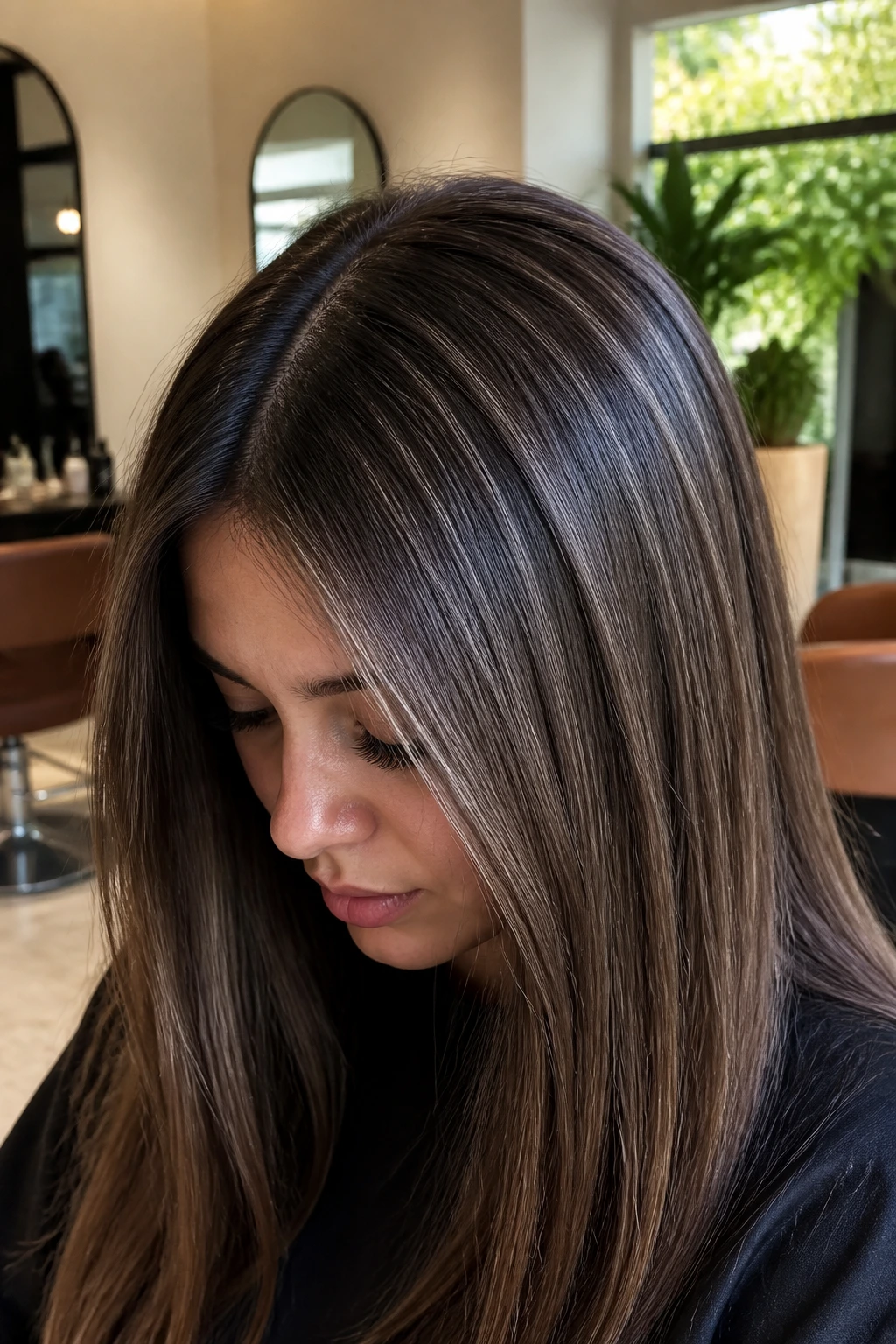
A straight bob can look flat at the crown even when the cut is excellent. Mushroom brown micro-lights fix that in a way that’s subtle enough to miss until you see the reflection from the side. The shade lives in that cool taupe zone between brunette and ash blonde, and it’s one of the few cool tones that doesn’t make straight hair look lifeless.
The beauty here is restraint. Micro-lights, not big ribbons. A few level 6 to 7 taupe-beige pieces through a level 4 or 5 base soften the top line and give the hair a little haze of light. On straight hair, that haze matters because there’s no bend to create it for you.
Quick notes
- Ask for a soft root shadow so the top doesn’t flash too light.
- Keep the lightest pieces near the part and face frame.
- Pair with a beige toner, not a hard silver one, unless you want the color to lean colder.
This is one of those styles that looks quiet in the chair and much richer out in daylight.
5. Chunky ’90s Blonde Panels
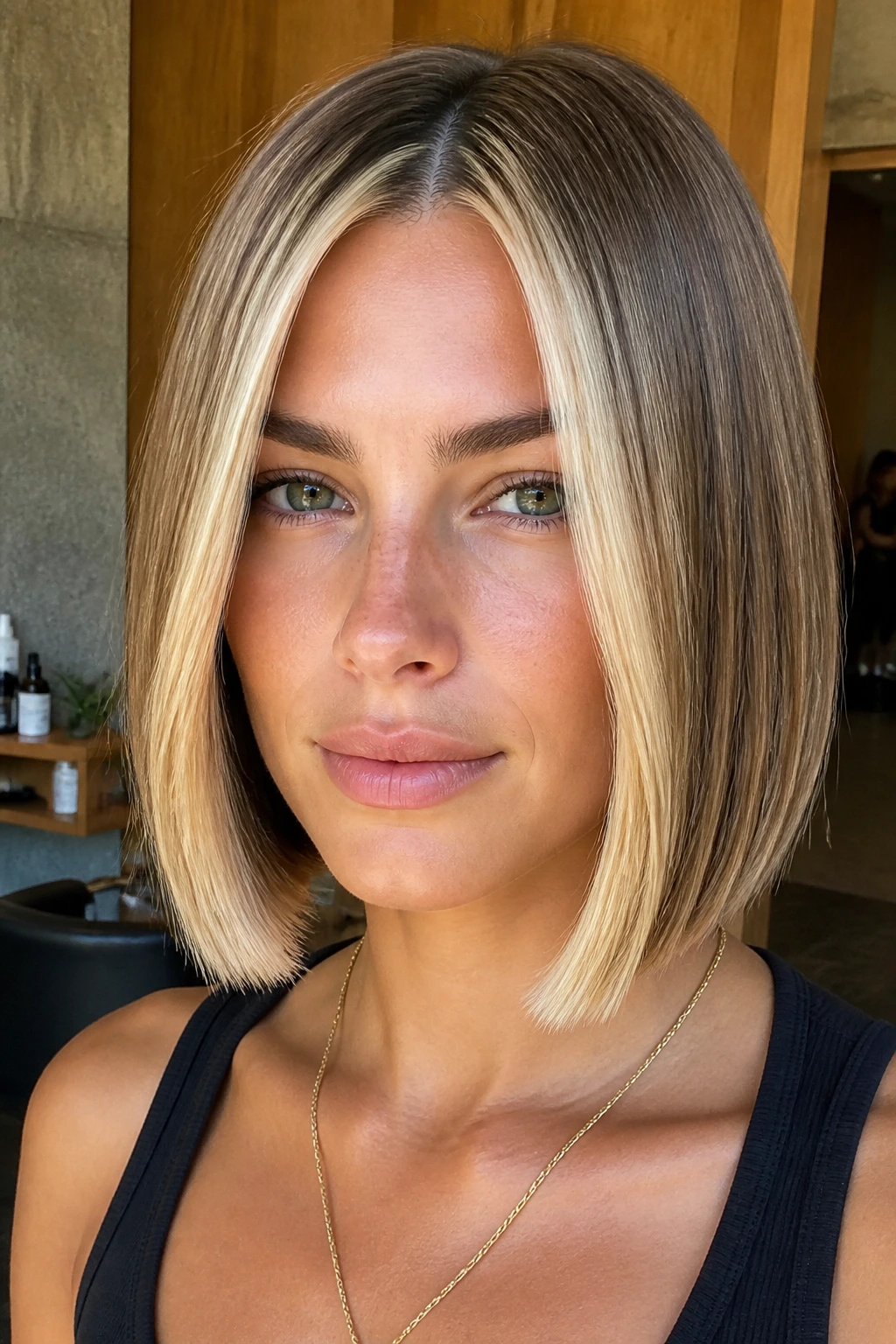
This is the loud one. The unapologetic one. Chunky blonde panels on straight hair have the same energy as a crisp white shirt under a black blazer: simple, high-contrast, and impossible to miss.
Straight hair is one of the few textures that can carry chunky highlights without looking like an accident. The reason is plain. The panels stay visible as the hair moves, so if the spacing is smart — around the part, along the face frame, and through the outer layers — the result looks deliberate rather than streaky. On a blunt cut, especially, these panels can make the shape feel sharper.
That said, they need commitment. If you like color that disappears into your hair for eight weeks at a time, this is not your lane. The grow-out is part of the look. A root smudge helps, but the contrast is still the point.
Best for: fashion-forward blondes, sharp bobs, and anyone who wants visible color from across a room.
One blunt opinion: ask for wider panels only if your cut is clean. On messy layers, they lose the edge that makes them interesting.
6. Honey Bronde Balayage
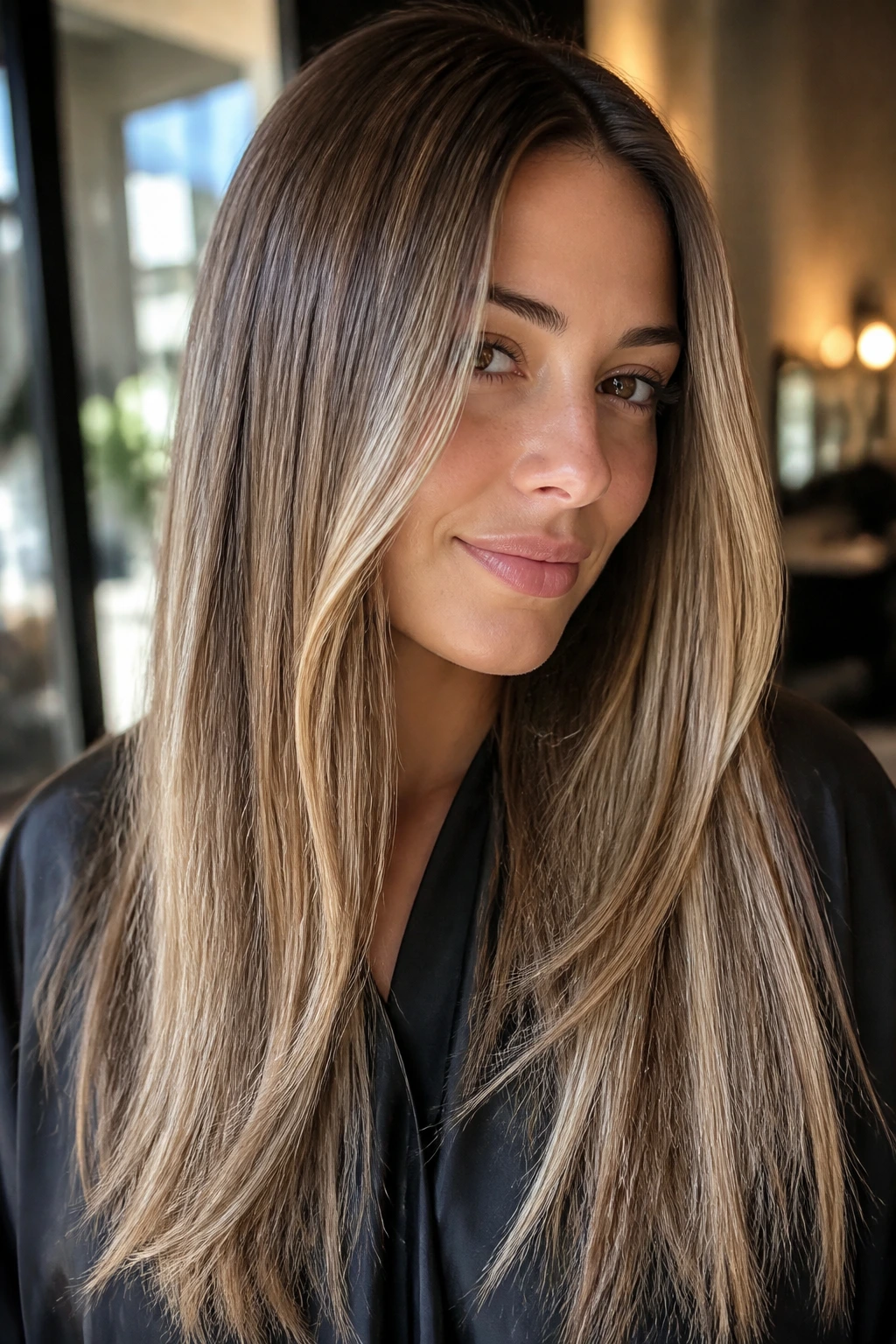
Honey bronde balayage sits in the sweet spot for straight hair that wants brightness without losing its brown base. It’s warmer than beige, softer than gold, and less fussy than a full blonde session. On a smooth finish, the honey pieces catch light in long, easy lines that make the hair look thicker through the mid-lengths.
Unlike more obvious highlight maps, bronde leans on a rooted melt and a softer hand through the ends. That matters on straight hair because the eye reads the length in one glance. If the transition is too abrupt, you get a shelf. If it’s too blurred, you lose the lift.
Ask for honey tones on a level 7 or 8 lift if your base is medium brown. Keep the lightest pieces around the front and the upper crown, then let the lower lengths stay slightly deeper. That contrast keeps the cut from looking flat when it hangs straight.
It’s a good choice if you want color that still looks like your hair — just with better weather in it.
7. Cool Beige Foils
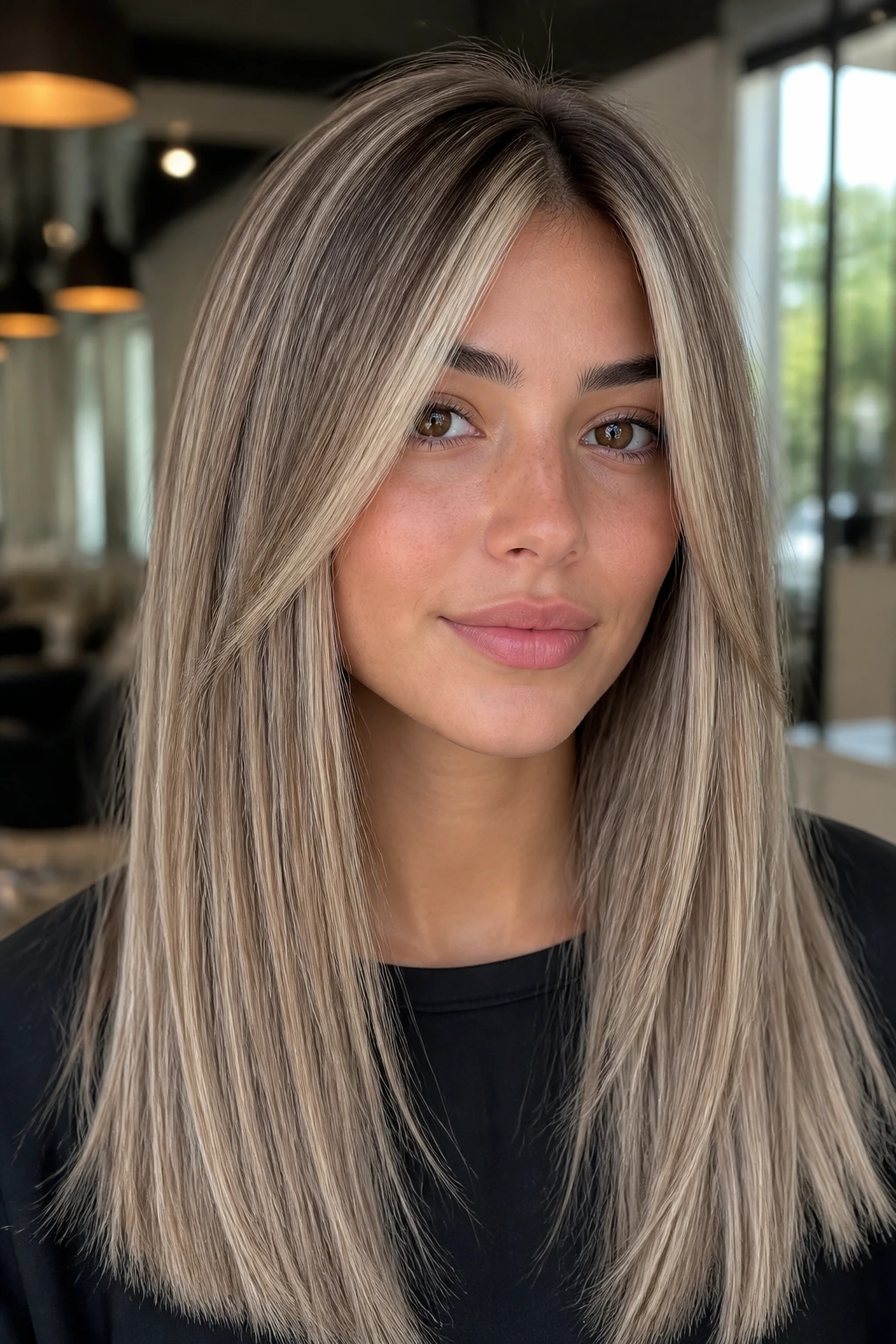
Cool beige foils are the answer when ash blonde feels too gray and gold feels too yellow. Beige sits right in the middle, and on straight hair that middle ground can look expensive in a way harsh platinum rarely does. The color catches light softly, not in a blinding flash.
I like this look on naturally dark blondes and light brunettes. The foils should be fine, evenly spaced, and concentrated where the hair falls around the face. If the highlights are too wide, the beige reads as blocky. If they’re too sparse, the color disappears when the hair is tucked behind the shoulders.
A lot of people ask for “neutral” and get something dull. Don’t do that. Ask for beige with a touch of warmth, then keep the toner soft enough that the finish still looks alive in daylight.
This is one of the best straight-hair highlight ideas for people who wear a lot of black, white, camel, or denim. The shade sits quietly against those colors and never fights them.
8. Copper Veil Highlights
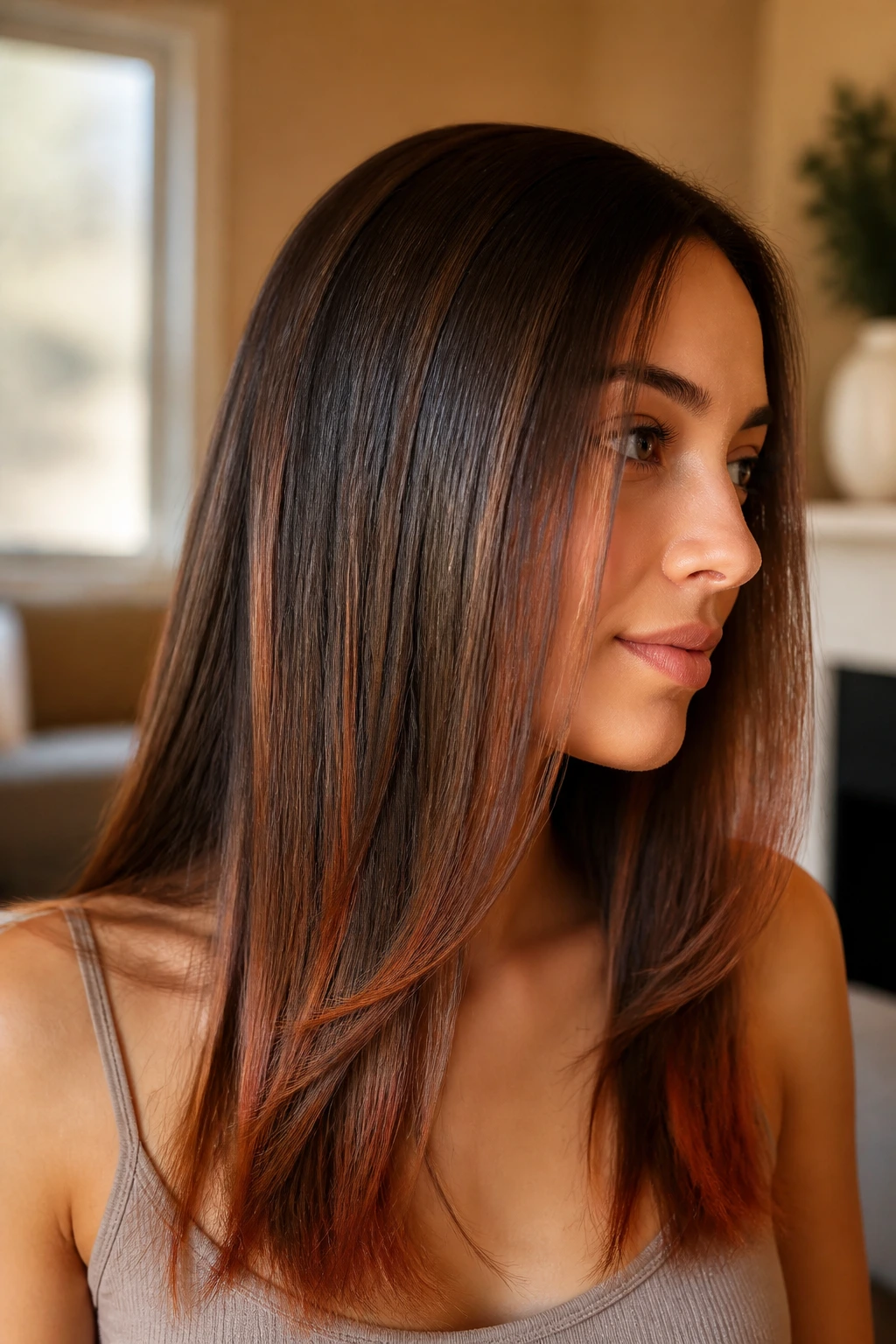
Copper veils are for the person who wants warmth with some nerve. On straight hair, copper doesn’t disappear into a wave pattern the way it can on textured hair. It stays visible. Every strand looks like a fine line of metal in the sun.
The best version is translucent rather than opaque. Ask for fine copper threads over brunette or dark blonde hair, not one thick orange blanket. A veil effect gives the whole head a warm finish, especially around the ends and the sides of the face. On a straight cut, those thinner copper pieces can look almost painterly.
This color does fade. That’s not a flaw; it’s part of the deal. Copper tone shampoos and weekly color masks help, but the deeper truth is that this shade looks best when it has a little softness, not when it’s clinging to week-one brightness.
If you like: autumn warmth, red-brown lipstick, and a straight style that looks richer in low light.
If you don’t like: frequent gloss appointments, skip this one.
9. Peekaboo Jewel-Tone Panels
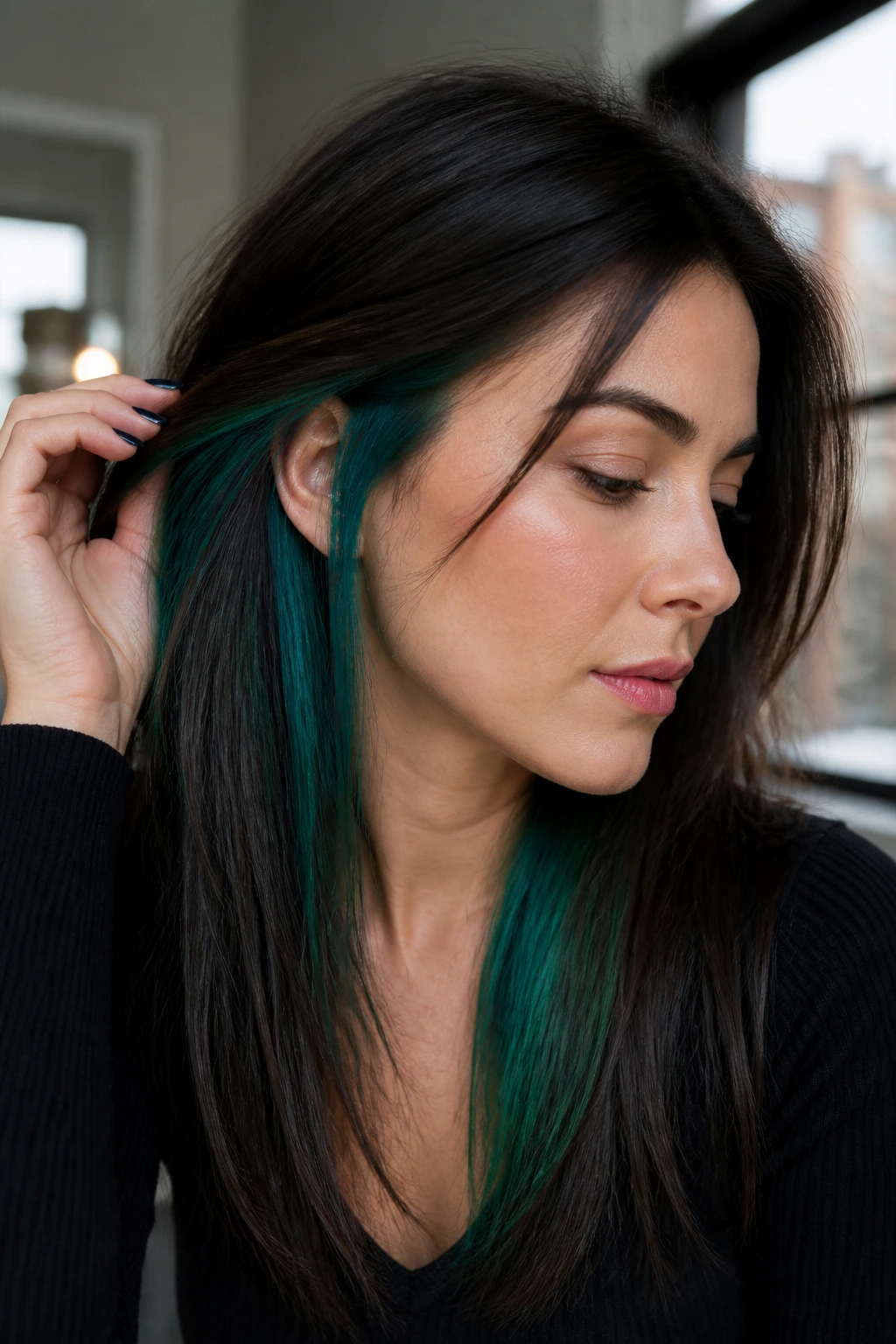
Peekaboo color is one of the smartest straight-hair ideas on this list because it gives you drama without making the whole head loud. Hidden panels of teal, plum, sapphire, or emerald sit under the top layer, so the color only shows when the hair moves, parts, or gets tucked behind the ear.
That’s the fun part. Straight hair reveals peekaboo color in flashes, not blur. The result feels deliberate and a little sly, which is better than obvious if you work in a conservative setting or just want your color to surprise people later.
How to wear it
Keep the top layer a natural shade — brunette, blonde, or black — and place the jewel tones underneath in broad, neat panels. The panels should start low enough that the upper layer hides them when you’re standing still.
This is also one of the easiest ways to test fashion color without going all-in. If you get bored, the panels can be clipped away, grown out, or toned into something softer later. No giant commitment, no awkward all-over fade.
10. Platinum Scattered Foils
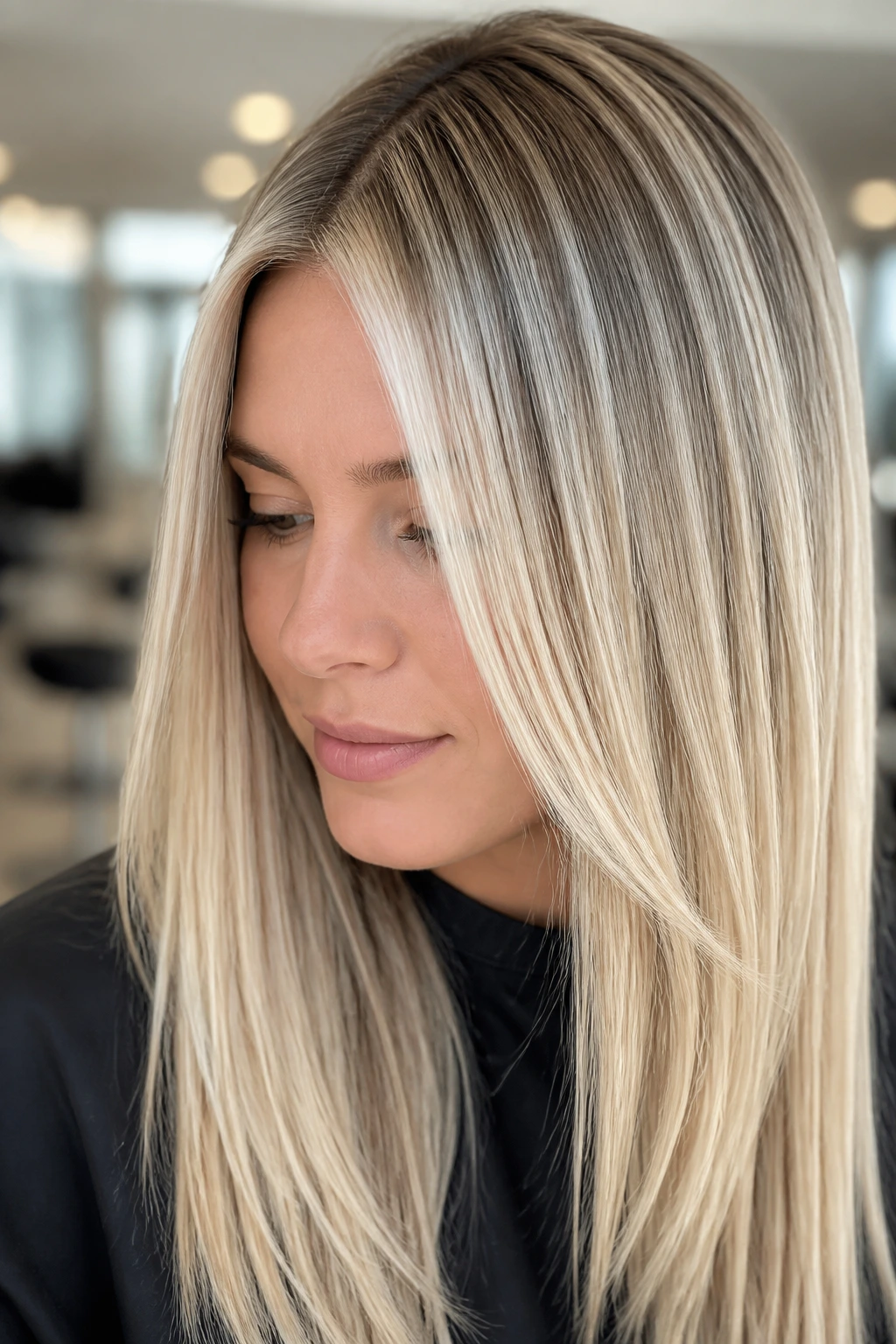
Platinum scattered foils are not for the faint of heart. They give straight hair a glassy, expensive look when the lift is clean and the placement is disciplined. The key is “scattered.” If the foils are packed too tightly, the hair starts to look flat and over-processed. If they’re too far apart, the platinum loses the punch that makes it worth the effort.
Ask for narrow foils through the crown, face frame, and top lengths, with a soft root shadow to keep the regrowth from looking blunt. On straight hair, platinum reads especially bright because there’s no bend to mute it. That means you need healthy ends. Dry, porous hair will show every rough edge.
I like platinum most on short straight bobs and sharp lobs. The cut itself supports the high contrast. On longer hair, the look can still work, but it benefits from occasional loose bends so the color doesn’t feel too severe.
This is one of the more maintenance-heavy ideas here. The payoff is obvious. So is the upkeep.
11. Champagne Blonde Slices
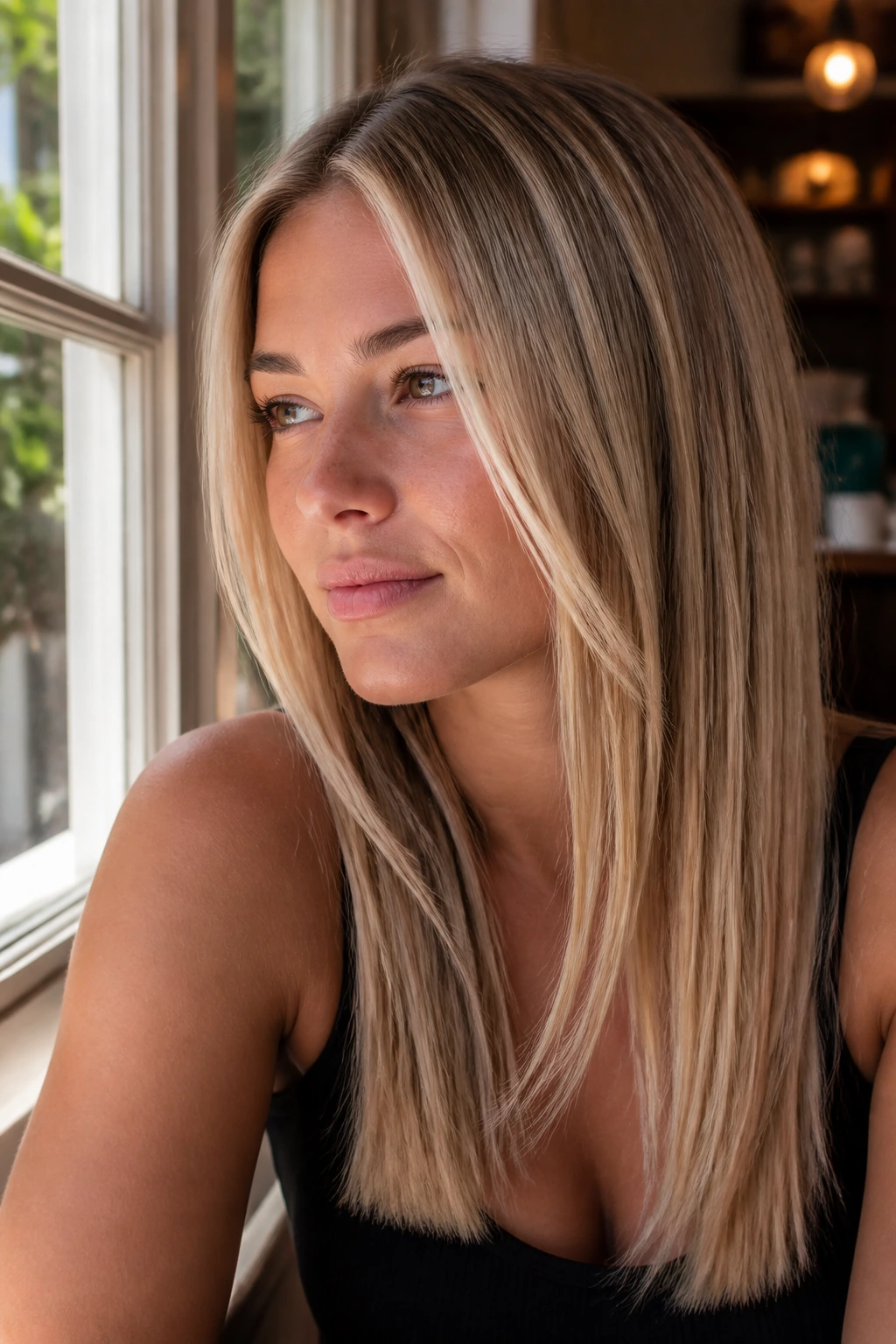
Champagne blonde sits in that pretty middle zone between beige, gold, and a whisper of pink. On straight hair, it reads clean and soft, which is exactly why it works. The color catches the light without going chalky, and it doesn’t tip as brassy as a warmer blonde can after a few washes.
This look is especially strong on natural blondes and light brunettes who want brightness but not a stark change. Ask for slices rather than a full veil if you want the hair to keep some of its natural depth. The best champagne finish has a few brighter ribbons around the front and softer pieces through the back.
It’s a good salon choice if you like polished hair, crisp parts, and minimal frizz. Straight hair shows the cool shimmer well, and the result can look almost metallic in daylight if the toner is right.
Tip: keep the toner slightly beige, not pearl-white, unless your skin tone needs the cooler reflection.
12. Cinnamon Thread Highlights
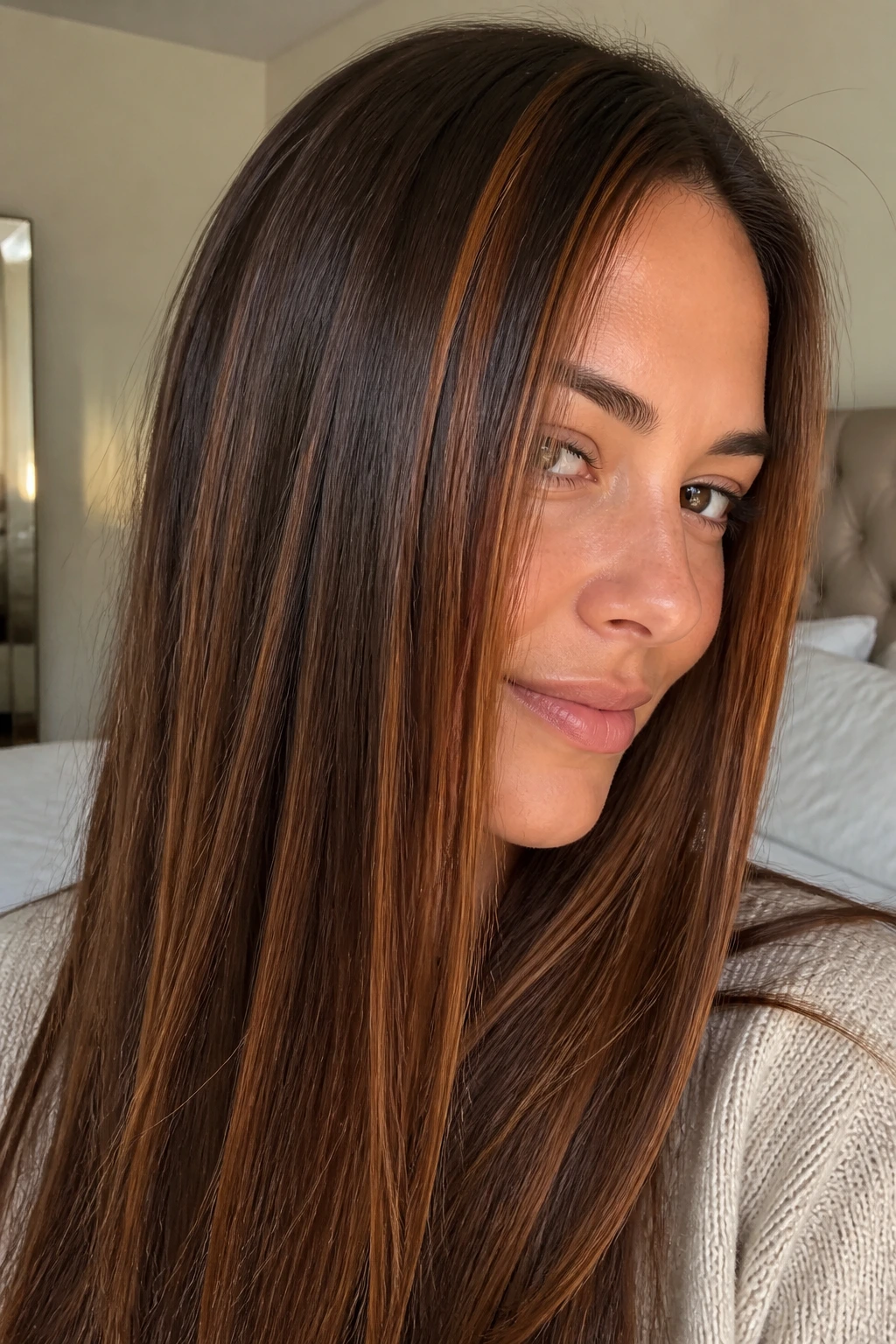
Cinnamon thread highlights are the answer when you want warmth but don’t want your hair to veer into obvious copper. The shade sits between auburn and brunette, which makes it easy to wear on straight hair. Fine threads of cinnamon can wake up a dark chestnut base without stealing the whole show.
This look is especially good on hair that already has some red in it. The added threads line up with the existing undertone, so the finish feels believable. Straight hair shows this kind of shade beautifully because the threads read like deliberate lines instead of blended blur.
I’d ask for narrower placement than you think you need. Cinnamon gets louder fast. A few pieces around the face, the crown, and the first inch of the ends usually do more than a heavy hand through the back.
If you’re bored of blonde but want something warm and dimensional, this is a smarter bet than going full copper.
13. Smoked-Out Root Melt
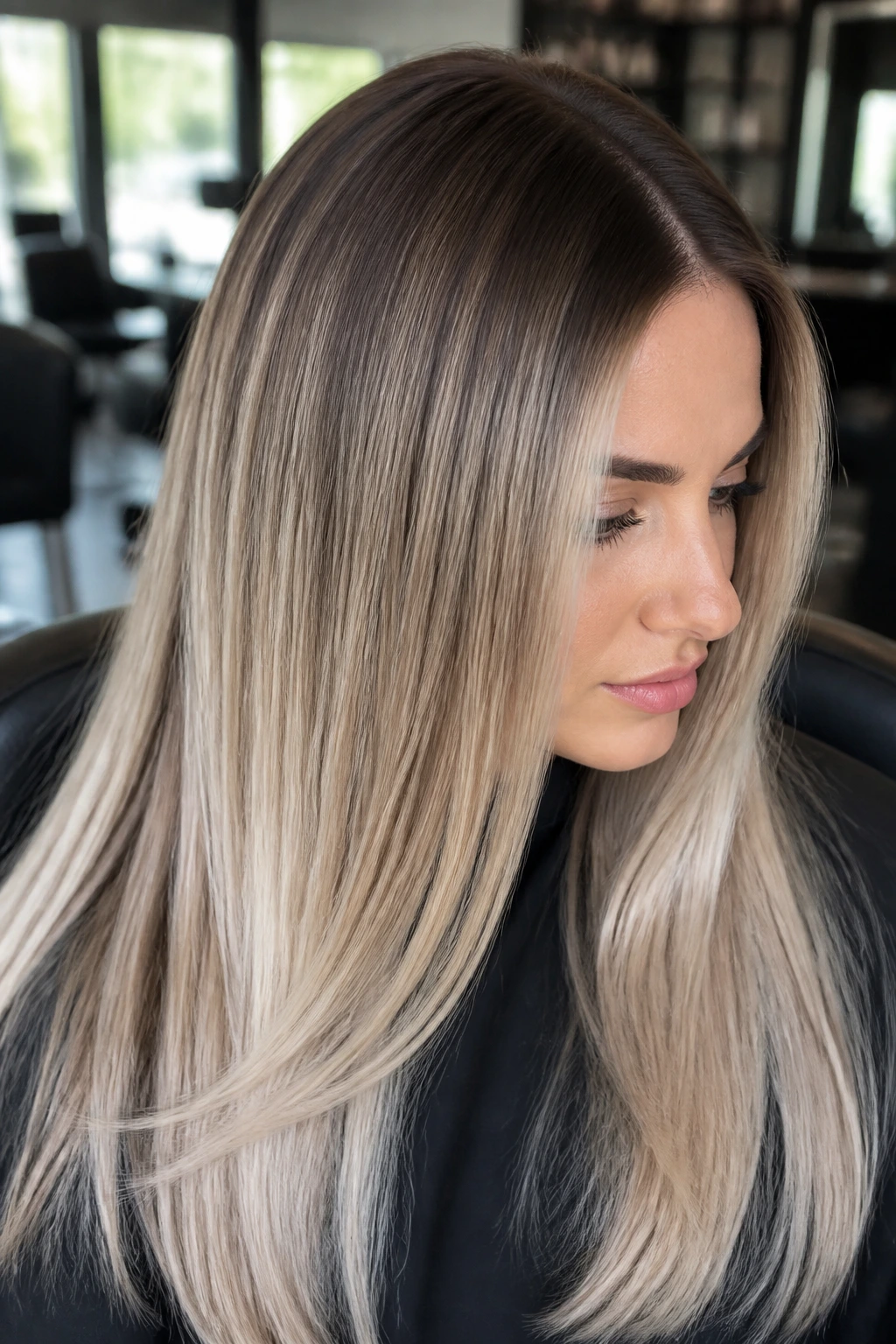
A smoked-out root melt is one of the best straight-hair moves if you hate obvious regrowth but still want lighter lengths. The root stays deeper — brunette, dark blonde, or soft ash brown — and the color drifts into lighter mids and ends in a way that looks almost airbrushed.
Straight hair loves this because the root depth keeps the top from reading as one flat pale sheet. A lot of blondes go too light at the scalp and then wonder why the style looks wide. The root melt fixes that. It adds shape back into the cut.
Why it earns its place
- The grow-out line stays softer.
- The crown looks fuller.
- The lighter ends still catch light when the hair is worn sleek.
If you’re bringing this to a stylist, ask for a rooted blend with a beige or ash-blonde midsection rather than a harsh jump from dark to light. The whole point is a smooth fade. Not a stripe. Never a stripe.
14. Rose Gold Overlay
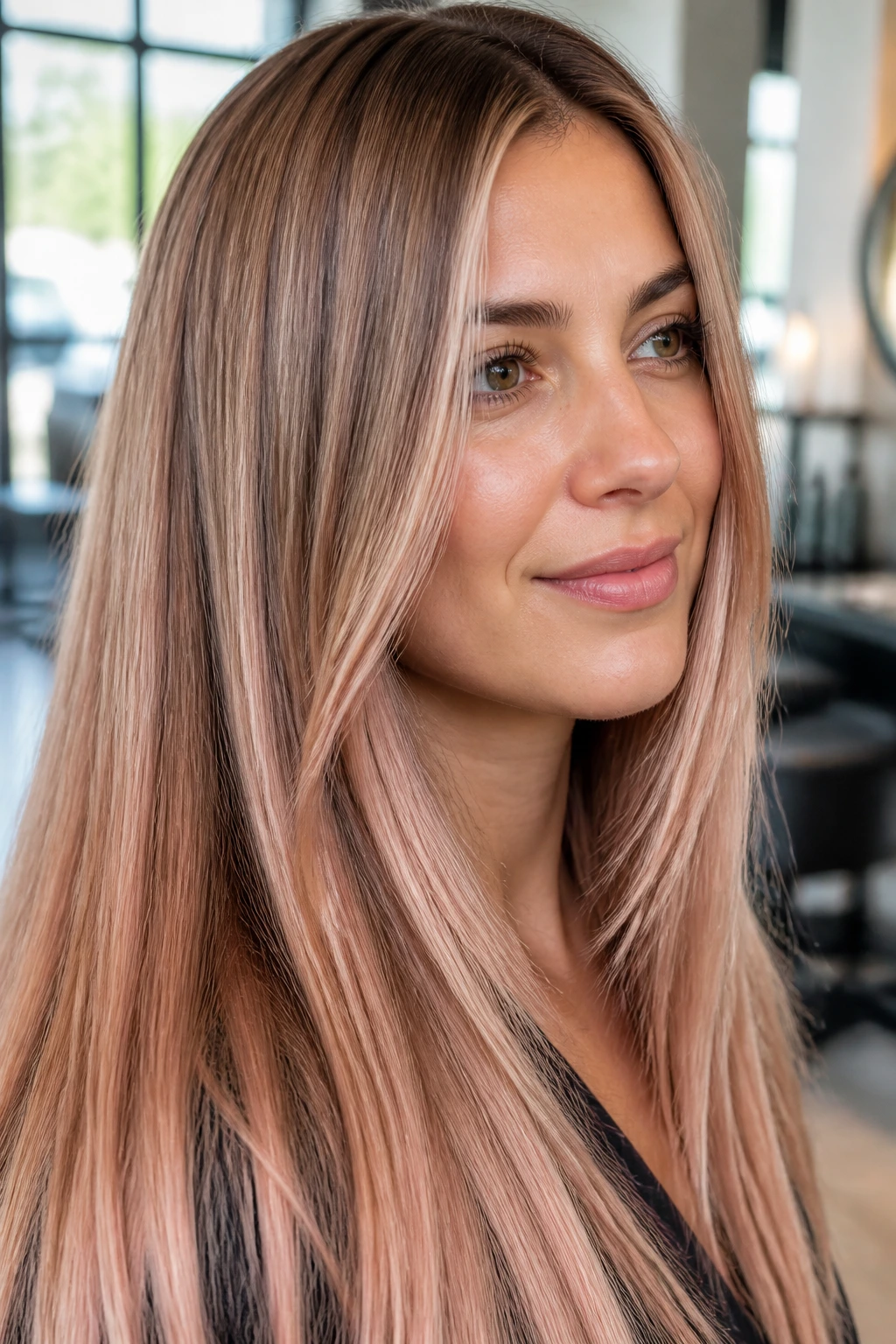
Rose gold can get tacky fast if it’s too pink, but when it’s handled with a light hand on straight hair, it looks fresh and expensive. The color is part blush, part copper, part beige, which gives it a soft glow that doesn’t fight with sleek styling.
This works best on light brown or pre-lightened blonde hair. Straight strands show the rose tone immediately, especially near the front where the light hits first. If the hair is very dark, the pink will barely show unless the base is lifted first, so don’t expect a vivid result on virgin brunette hair without a proper lightening step.
I like rose gold as an overlay rather than a full-head commitment. A few slices through the top layer and face frame are enough. That keeps the look from turning sugary.
Pro move: keep the makeup side simple here. Clean skin, a neutral lip, and the hair does the talking.
15. Vanilla Ends on a Dark Blonde Base
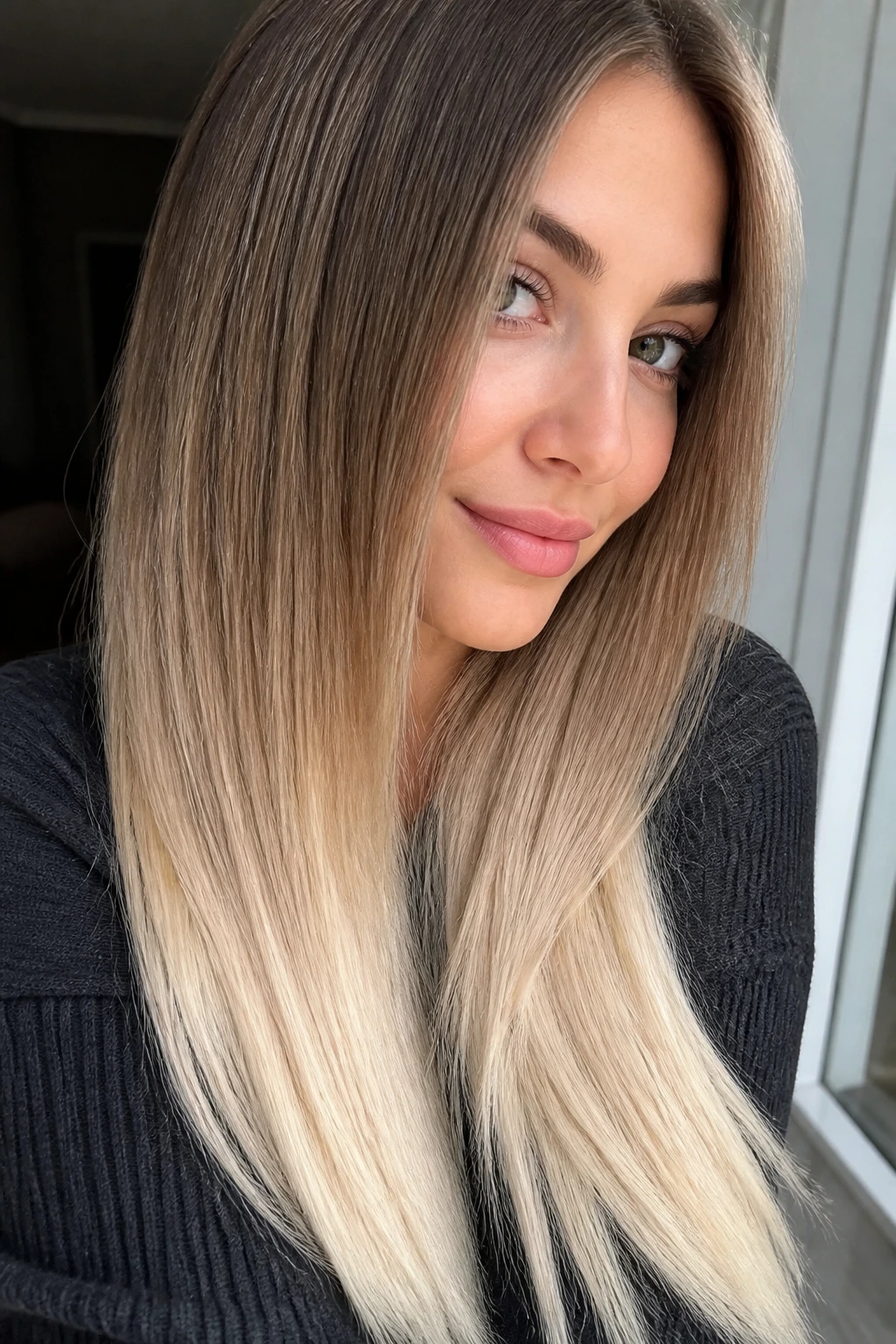
Why do vanilla ends work so well on straight hair? Because the lighter color stays visible all the way through the lengths, and straight hair doesn’t break up the transition. You get a soft ombré feel without the old-school dip-dyed line.
The key is where the lightening starts. Too high, and the style loses its depth. Too low, and the effect barely registers. For shoulder-length or longer straight hair, starting the lighter section below the chin gives enough room for the fade to breathe.
Vanilla is a cooler, creamier blonde than honey. It works well if your skin tone likes soft neutral color and you don’t want heavy brass. Ask for a slightly darker root and creamy ends rather than a full white blonde finish. The hair looks more expensive that way, and it’s easier to live with.
This idea is especially good when you wear your hair down most of the time. The ends do the work. The rest stays calm.
16. Silver Smoke Streaks
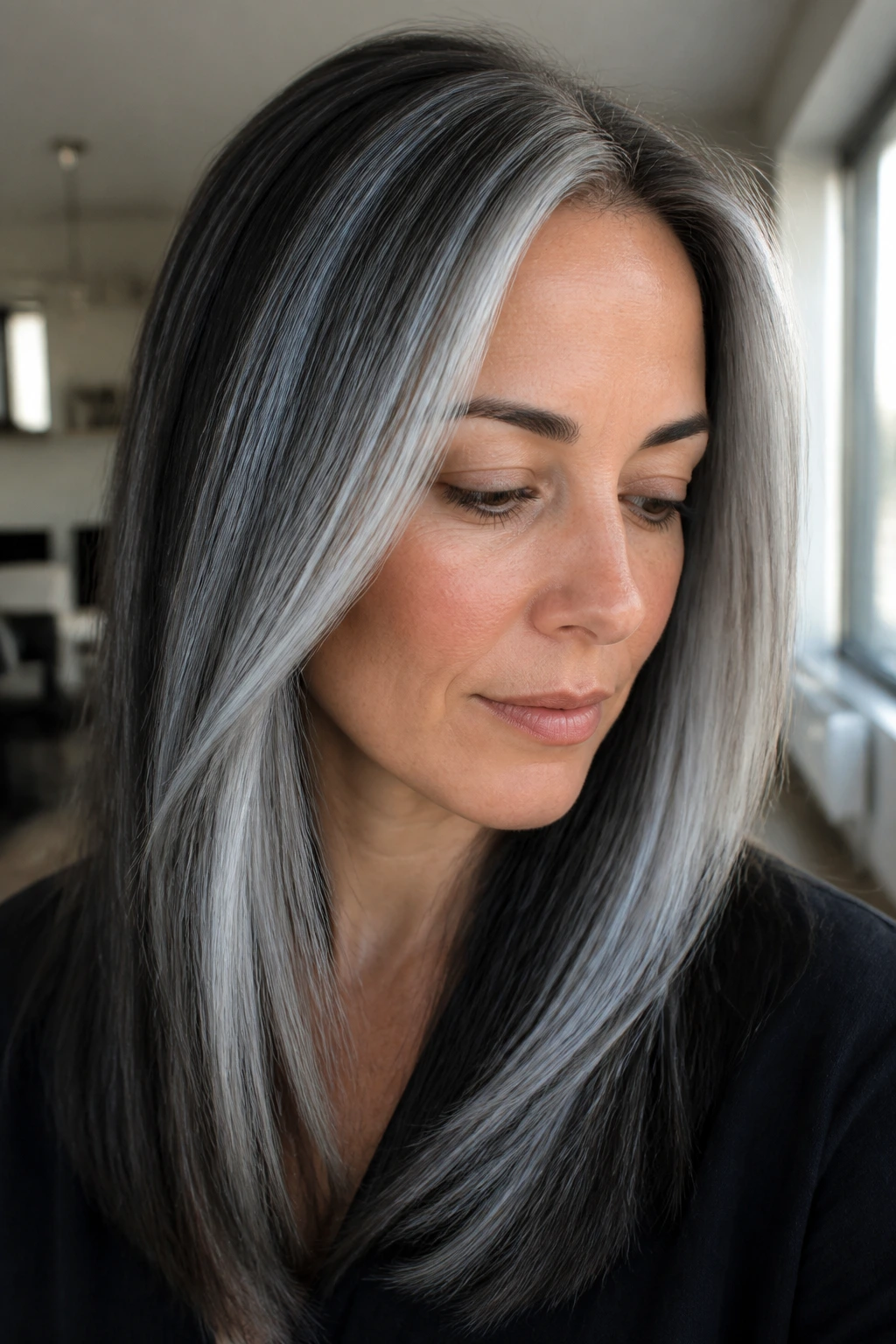
Silver smoke streaks are for straight hair that can handle contrast without apology. The color sits somewhere between pale silver, cool smoke, and graphite, and when the tone is right it looks polished instead of costume-y. On a smooth finish, every streak feels deliberate.
This style works best on naturally dark hair that’s been lifted cleanly, or on salt-and-pepper hair that wants a sharper edge. Straight hair shows silver in crisp lines, which is why placement matters more than breadth. Fine streaks around the crown and face frame give the style movement. Too many wide sections, and the whole thing starts to feel heavy.
I’m a fan of this look on blunt cuts. The edge of the haircut and the edge of the silver talk to each other. That can be a little dramatic. Good.
If you want something cooler than blonde but less obvious than fashion color, silver smoke is a satisfying middle ground.
17. Auburn Threading
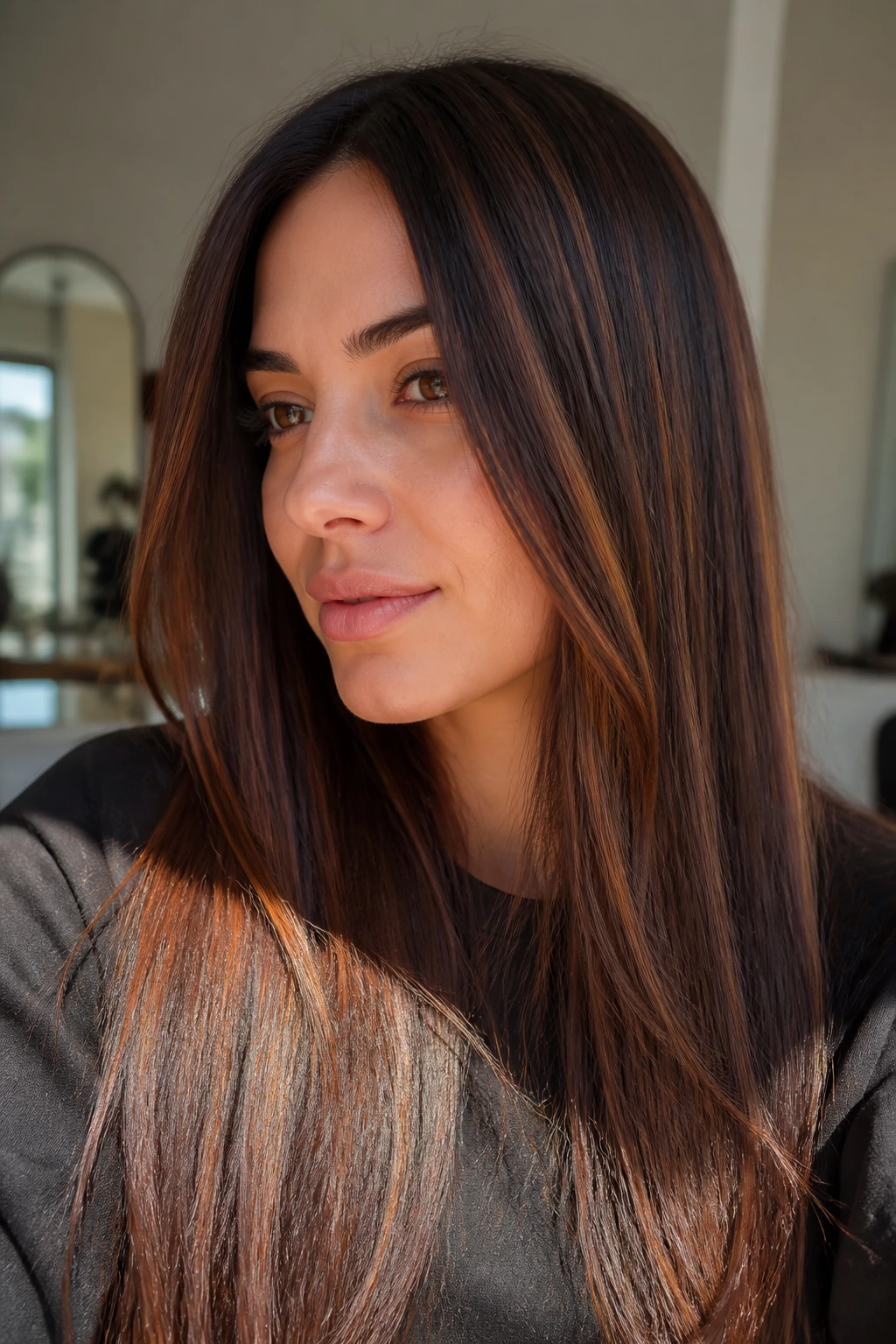
Auburn threading gives straight hair that rich, burnished look that sits between copper and brown. It’s warmer than cinnamon, deeper than copper, and easier to wear if you want color that looks expensive in low light. Fine auburn threads through a brunette base can make the hair look thicker without pulling the whole head red.
This is one of the best choices for people who like warmth but don’t want obvious orange. On straight hair, auburn reads as a soft ribbon, not a cloud. That’s the magic. The base stays dark enough to keep the finish grounded, while the auburn pieces show up when the light hits the mid-lengths and ends.
Best pairing: chestnut bases, layered lobs, and long straight hair with a little movement at the ends.
Avoid: piling on too many bright red pieces at the front. One heavy-handed face frame can hijack the whole look.
18. Reverse Balayage Depth
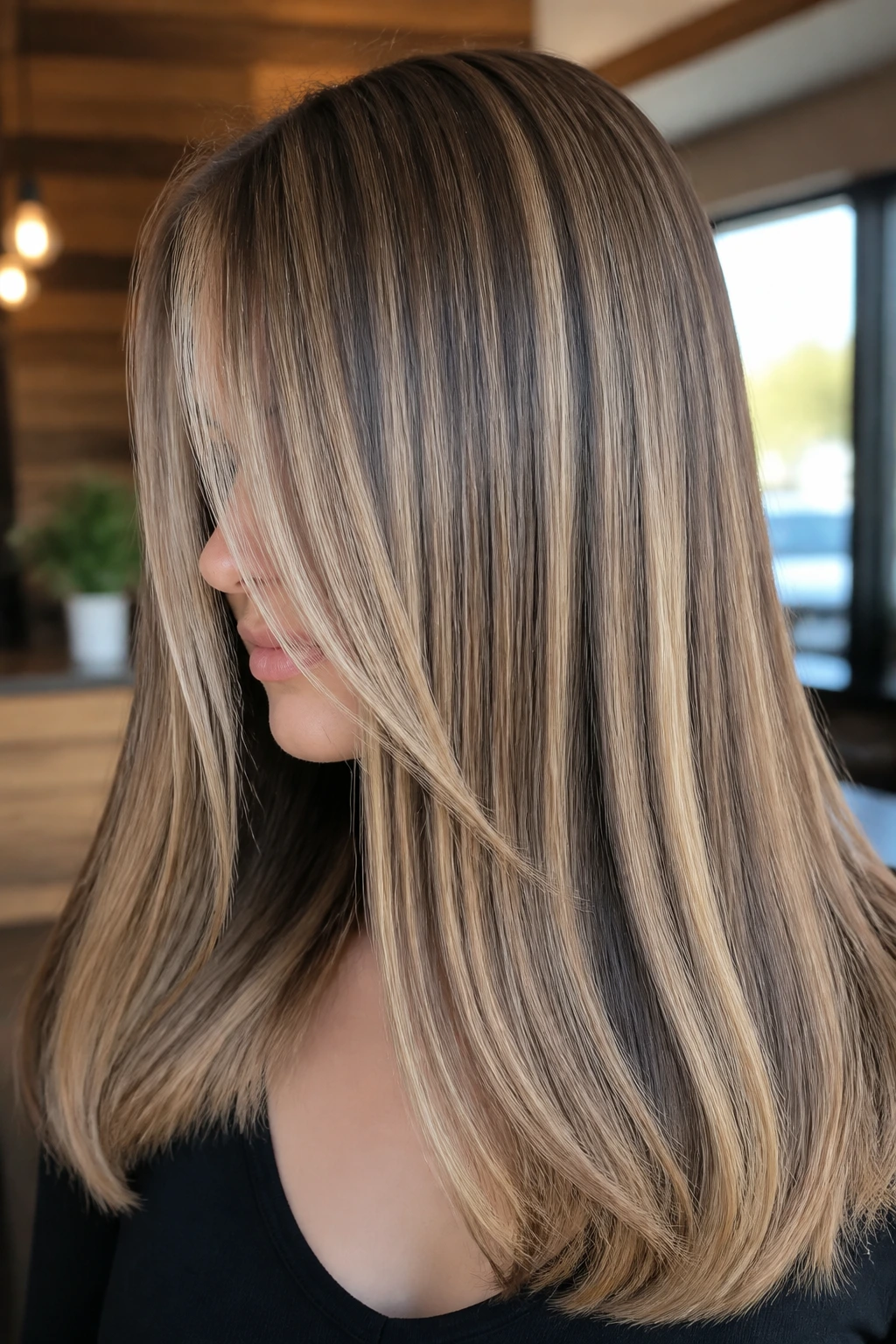
Reverse balayage is the quiet hero of this list. Instead of lifting everything lighter, you add deeper ribbons or lowlights into hair that’s already blonde or light brown. Straight hair needs that depth more than people think, because a very light, uniform canvas can look thin and washed out.
This approach gives the ends and underlayers some weight back. It’s especially useful if your current blonde feels too bright or too one-note. Ask for lowlights a shade or two deeper than your base, feathered through the interior and around the nape. On straight hair, the result is more noticeable than it would be on curls, where the movement does some of the work for you.
I like reverse balayage on long straight hair that has lost its shape after too many lightening sessions. It puts the shadow back where the haircut needs it. Not every blonde needs more blonde.
19. Toffee Contour Pieces
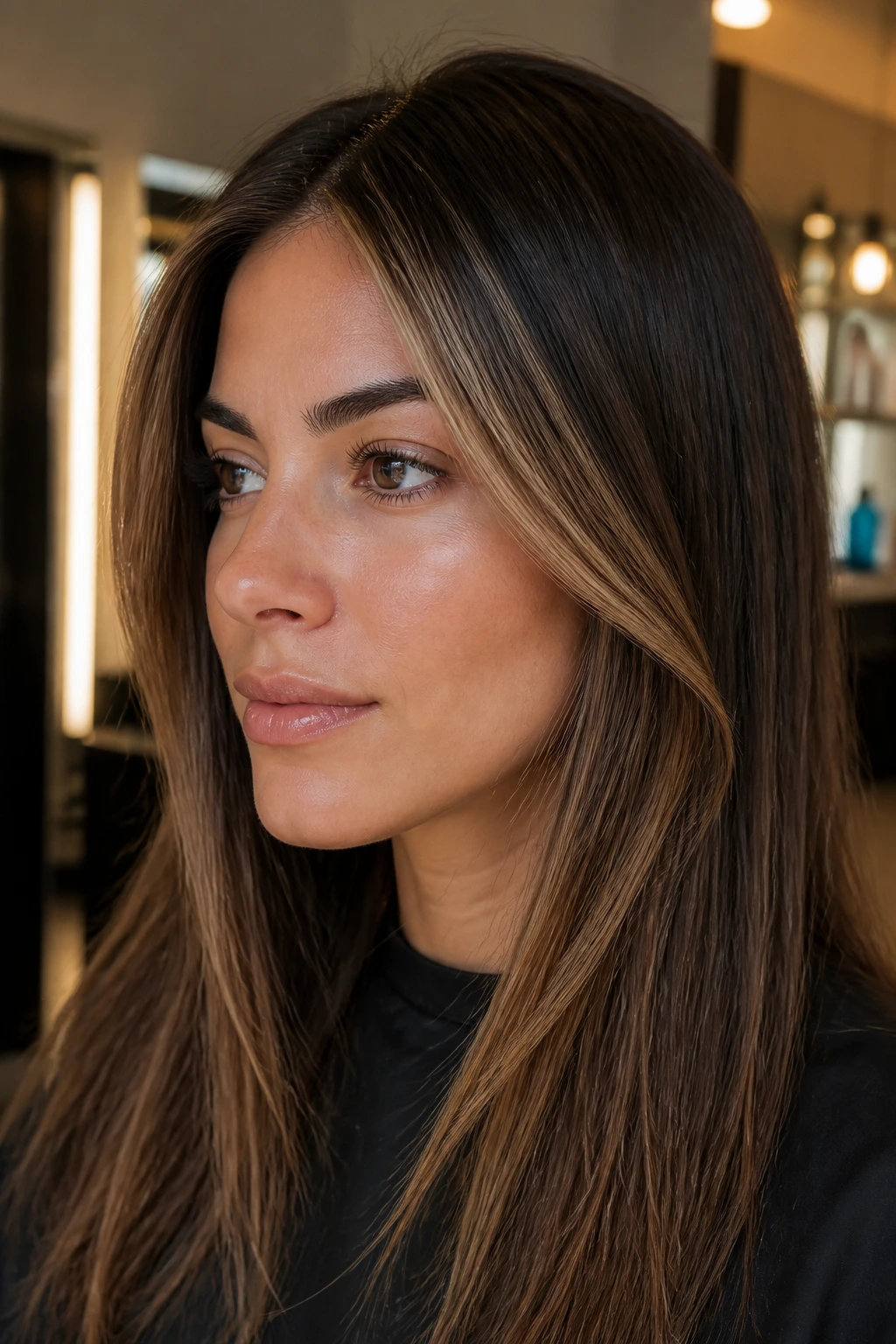
Toffee contour pieces behave a lot like makeup contour. They’re placed where the eye naturally notices shape — temple, cheekbone, jawline, and the curve of the face frame — which makes straight hair look more sculpted. That’s useful on blunt cuts and long, pin-straight lengths that can otherwise fall like a curtain.
The toffee tone itself is warm, golden-brown, and easy to wear on medium brunettes. It doesn’t demand the upkeep of blonde, and it won’t wash the face out the way some cool highlights can. If your hair part is always in the same place, these contour pieces are one of the smartest ways to keep the style from going stale.
A side part makes this look even more obvious. So does tucking one side behind the ear. Little things. But they matter.
This is a good salon request if you want the face to brighten without carrying high maintenance through the entire head.
20. Espresso-and-Ivory Contrast
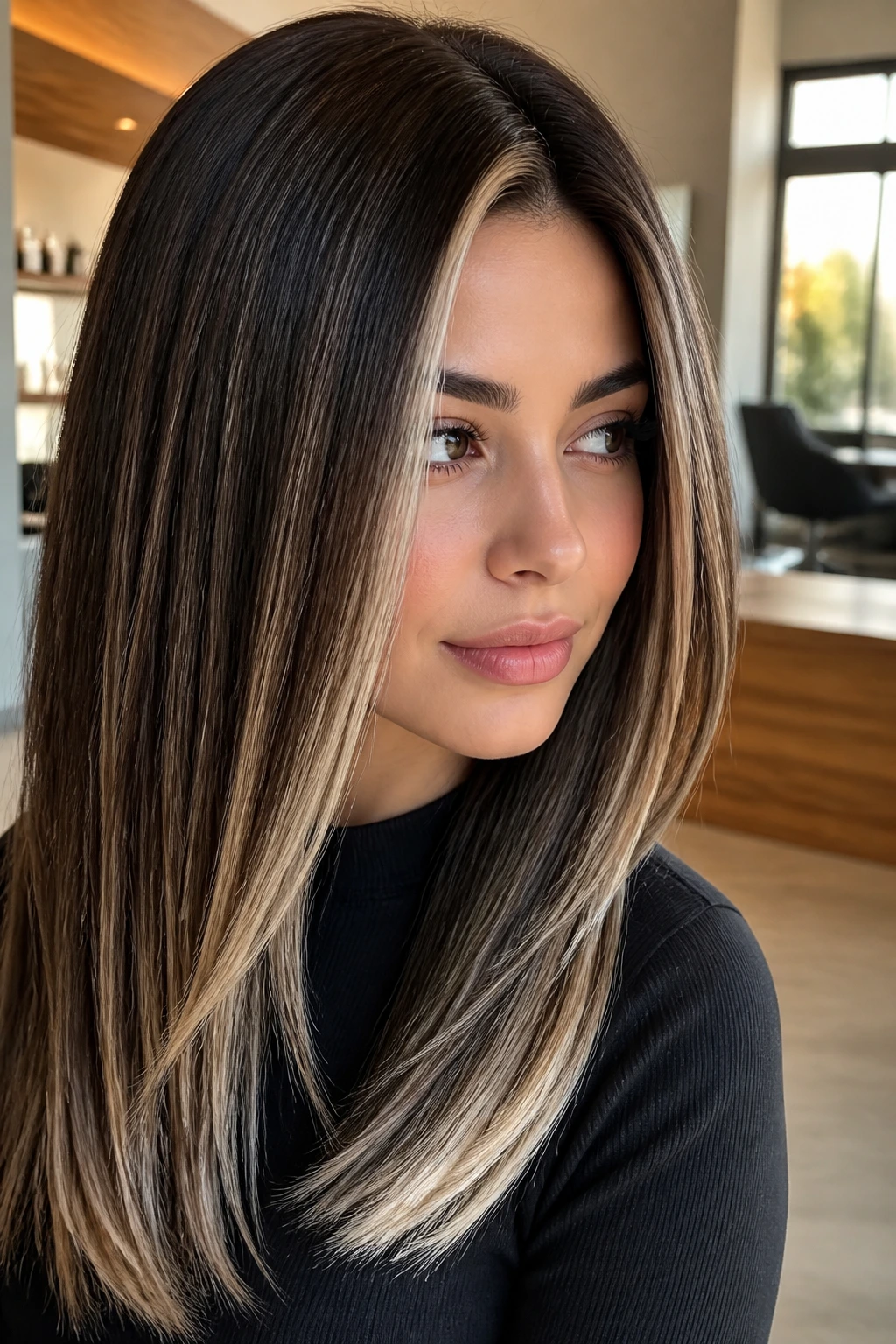
Espresso-and-ivory contrast is the bold, high-drama finish that still makes sense on straight hair. The espresso base keeps the color grounded, while narrow ivory pieces break through in a way that feels graphic rather than fuzzy. On a smooth surface, the contrast shows exactly where you want it.
The trick is restraint with the pale pieces. Keep the ivory slices narrow and placed with intention — around the front, through the crown, and in a few longer ribbons near the ends. If the light pieces get too wide, the contrast starts to look striped. On straight hair, that mistake is hard to miss.
I like this look on very dark brunettes who want a visible change without going full blonde. It’s crisp. It’s sharp. It has edge, which straight hair can carry better than most textures because the finish already looks controlled.
If you want something that reads from across the room and still looks clean up close, this is the one.
Why Straight Hair Changes the Way Highlights Read
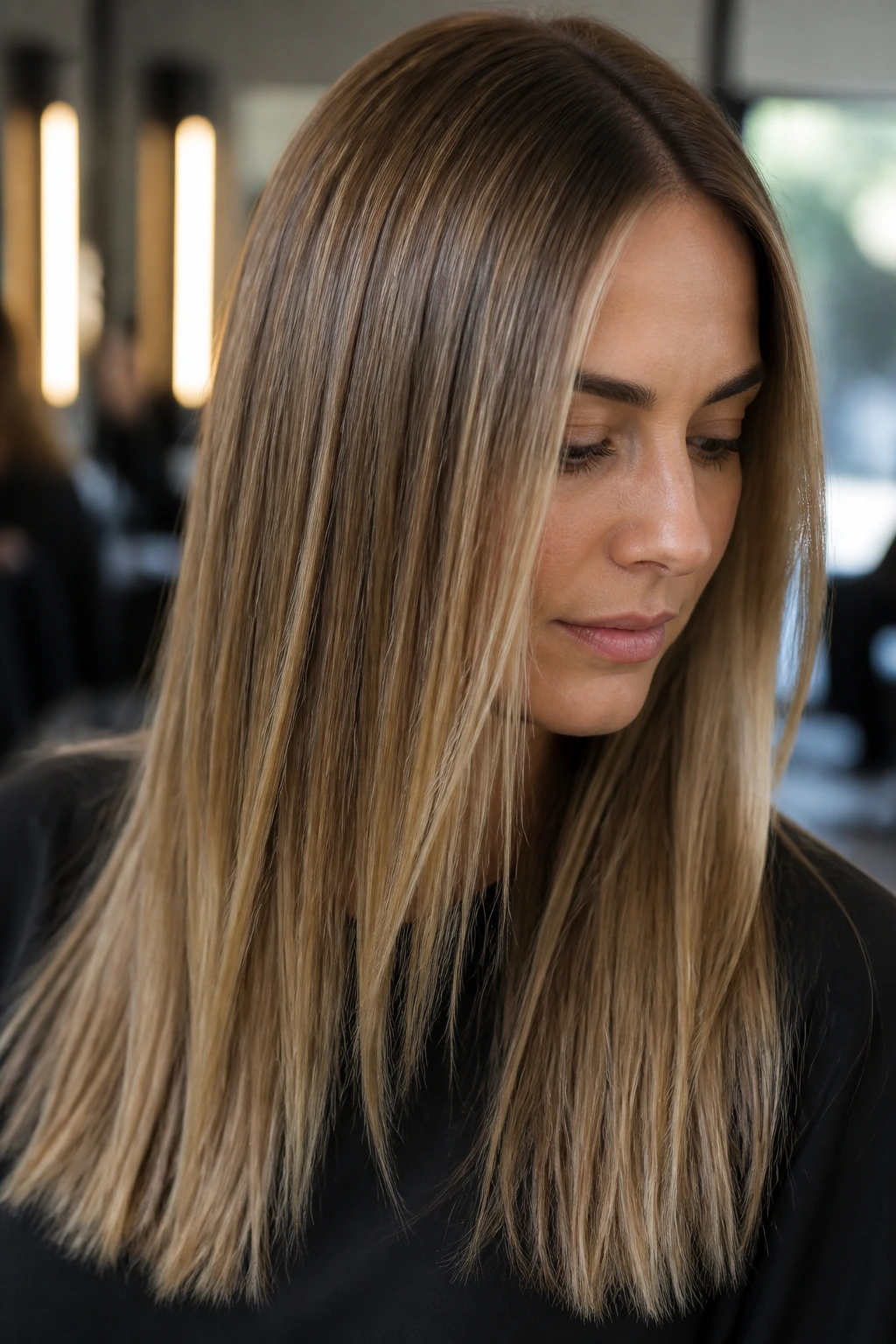
Straight hair acts like a mirror with a memory. It keeps the color placement visible, and it keeps the tone honest. That’s why a highlight that looked soft in a curled inspiration photo can read blunt, obvious, or even streaky once the hair is flat-ironed smooth. There’s no movement to hide bad spacing.
That same quality is what makes straight hair such a good canvas. Clean lines show off babylights. A rooted melt looks richer because the transition is visible. Chunky panels land harder because the contrast stays crisp. The style rewards precision. It also punishes guesswork.
The other thing straight hair does well is expose the undertone. Ash blonde on a cool base can go smoky fast. Copper on a porous brown can turn louder than you expected. Beige often saves the day because it sits between warm and cool, but even beige needs the right toner. If the tone is off, straight hair will tell you before anyone else does.
Essential Tools for These Looks
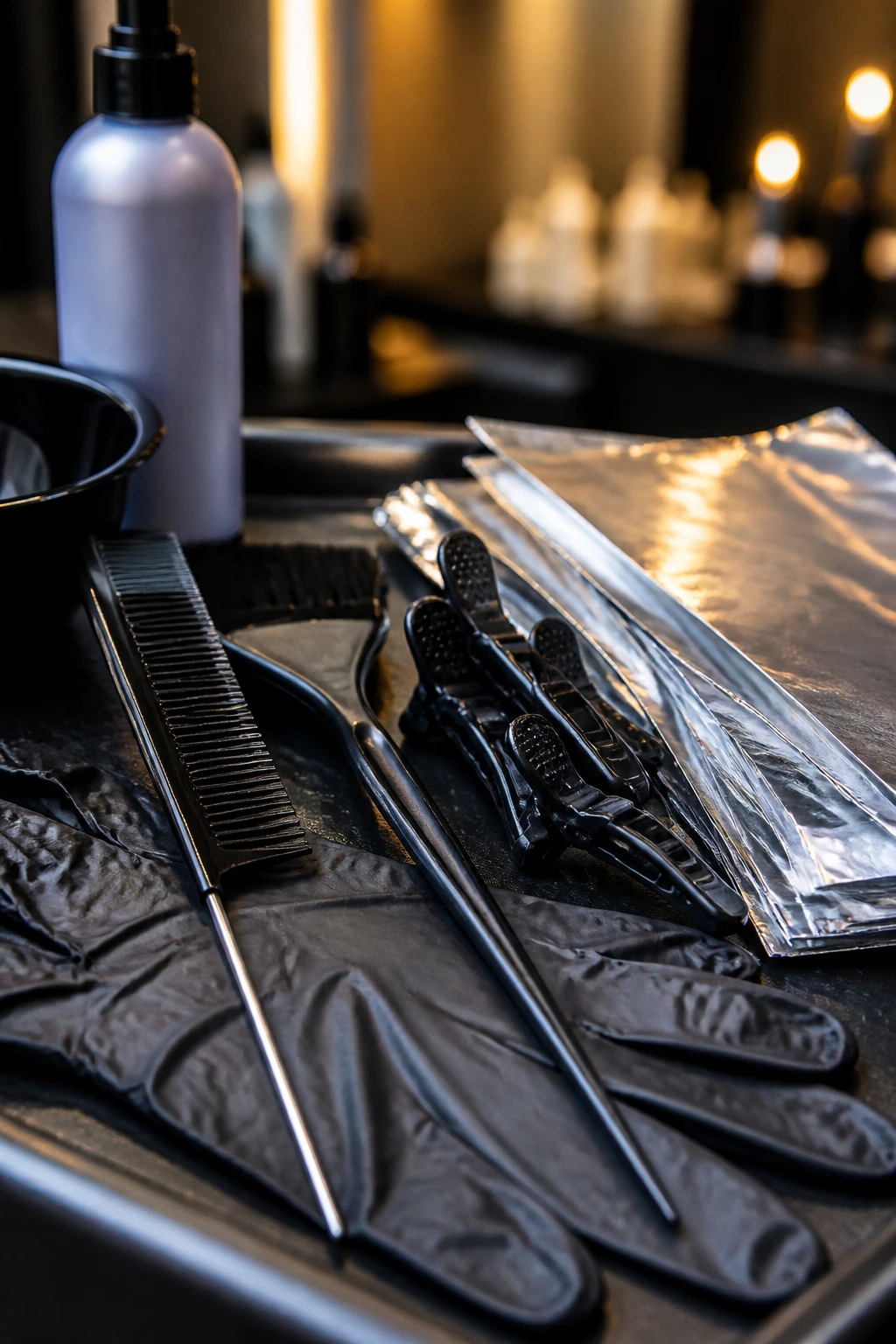
- Tail comb: Clean parting matters on straight hair, and a fine tail comb keeps slices neat.
- Sectioning clips: Use at least 4 to 6 strong clips so the top layers stay out of the way while you place foils or paint.
- Tint brush: A narrow brush helps place babylights, money pieces, and contour pieces without overloading the strand.
- Foils or balayage boards: Foils give sharper lift; boards help when you want a softer painted blend.
- Gloves: Bleach and toner are not friendly to skin, and stained hands make cleanup annoying.
- Color-safe shampoo: A sulfate-free cleanser keeps toner from washing out faster than it should.
- Purple or blue shampoo: Purple helps blondes; blue helps brunettes fight orange brass.
- Heat protectant: Straight hair usually gets more flat-iron or blow-dryer time, so this is not optional if you care about the ends.
- Microfiber towel: Less friction, less frizz, less breakage at the lightened sections.
- Gloss or color mask: Useful for keeping beige, caramel, copper, and champagne tones from looking flat between salon visits.
Smart Shade and Consultation Notes
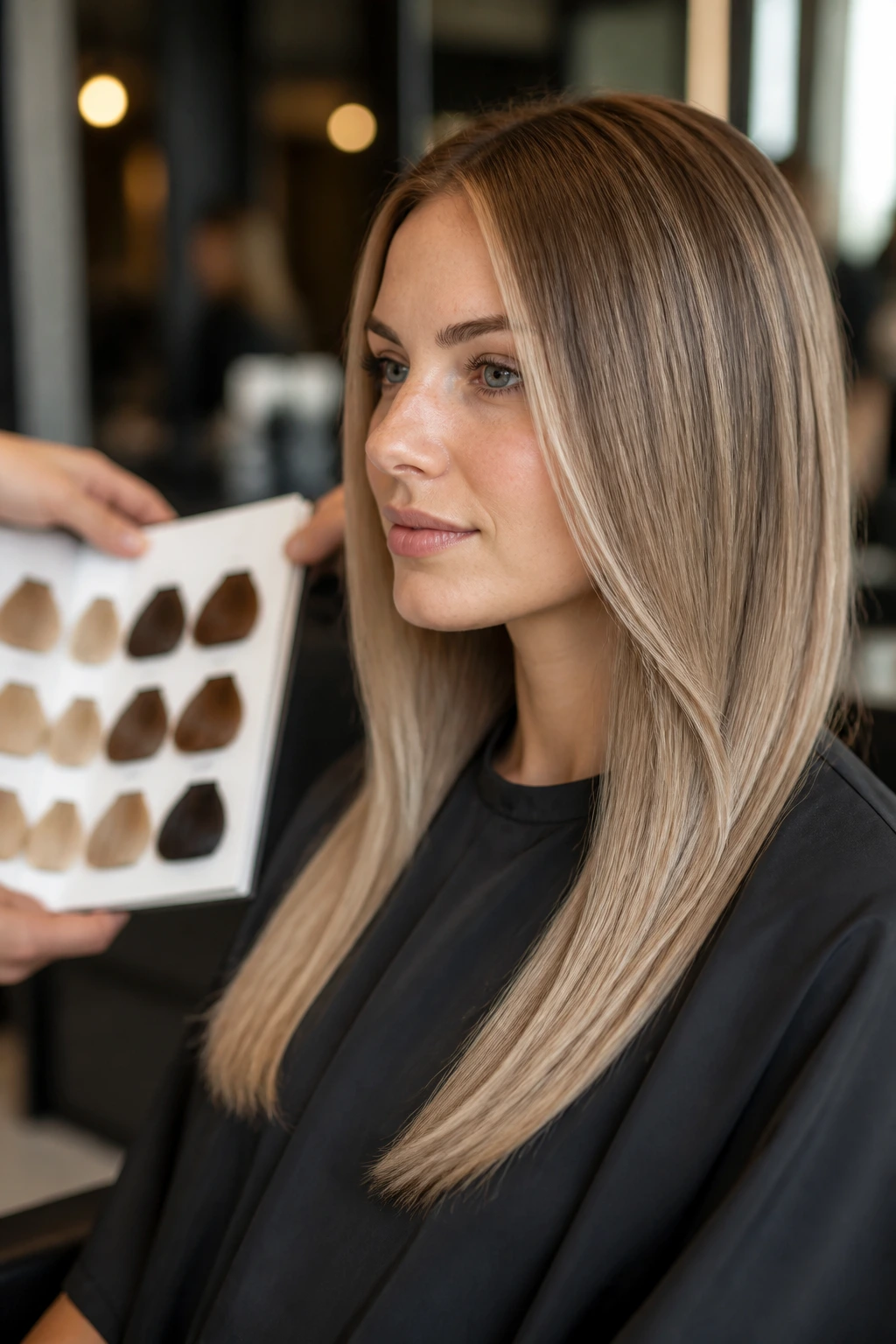
Straight hair is one of those cases where the shade family matters as much as the actual highlight style. If you ask for “blonde,” you might get something that looks washed out on your base. If you ask for “ash,” you might end up with a tone that reads gray under indoor light. The consultation needs to be a little more exact than that.
Base level first
A level 4 or 5 brunette usually looks better with caramel, toffee, copper, or mushroom tones than with super pale blonde. A level 7 light brown can take beige, champagne, and honey with less effort. If your natural base is already light, babylights and pale foils make sense. If it’s deep, the color has to earn its place.
Tone family second
Warm tones — honey, copper, cinnamon, rose gold — bring softness to straight hair. Cool tones — ash, mushroom, silver, smoky beige — sharpen the line and can make the cut feel more modern. Beige sits between them and tends to be the easiest shade to live with. That’s why so many straight-hair looks in salons drift beige rather than pure ash or pure gold.
Placement third
Ask where the light pieces will sit when your hair is worn the way you actually wear it. Center part? Side part? Tucked behind the ear? Pulled into a clip? Straight hair exposes all of that. A color map that looks balanced in a photo won’t always look balanced on your head.
Upkeep fourth
If you hate salon visits, ask for rooted or blended placement. If you don’t mind glosses and toners, you can go brighter or cooler. Straight hair will usually show toner fade faster than wavy hair because the surface reflects everything. That’s not a flaw. It’s just the math of the finish.
How to Style Straight Hair So the Color Shows
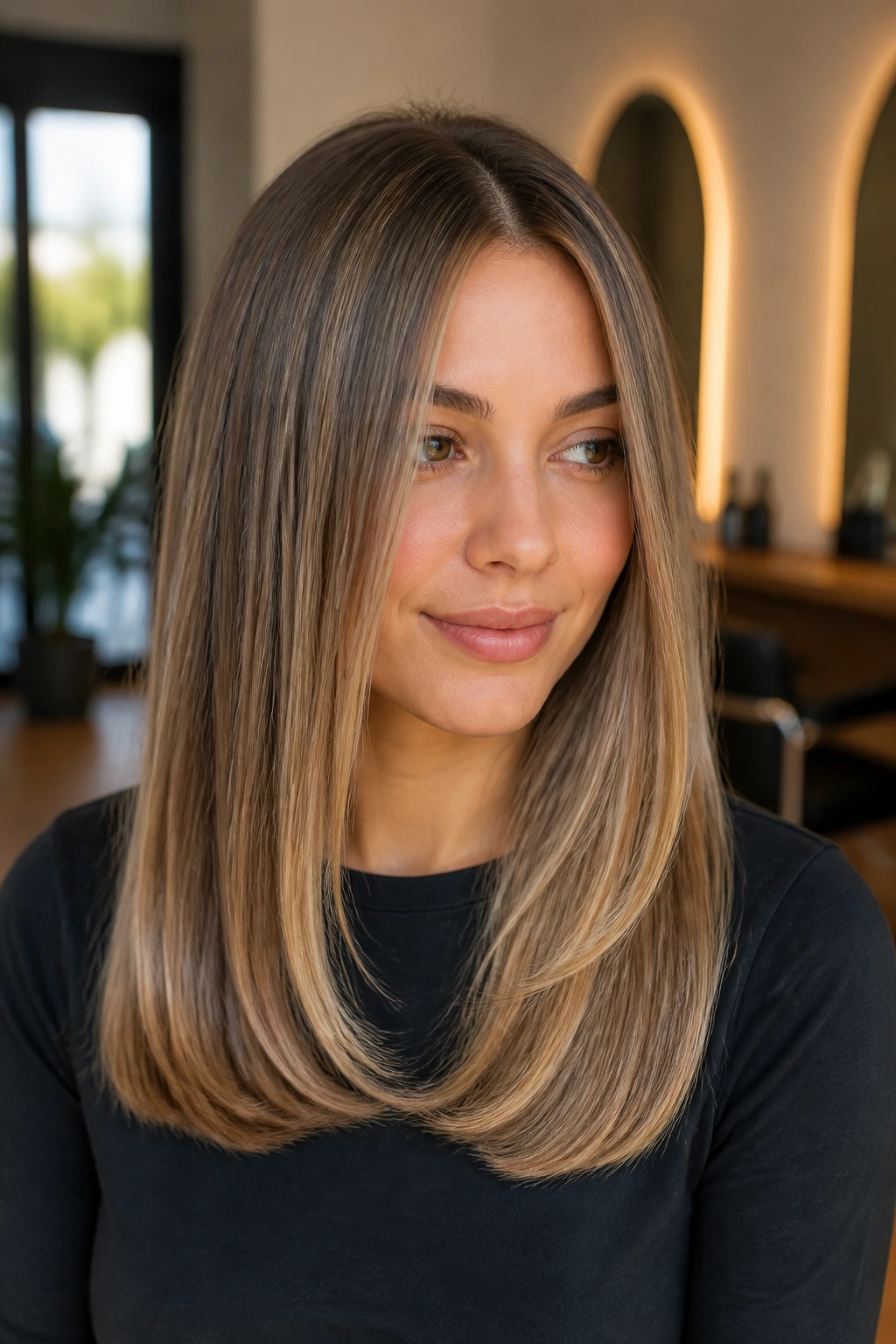
A highlight can be good and still look flat if the styling is lifeless. Straight hair needs a little shape in the finish, even when the goal is sleek. A center part with pin-straight lengths can be gorgeous, but it can also turn every highlight into a single vertical line if the pieces are too blunt.
A soft bend through the last few inches changes everything. Not curls. Not beach waves. Just a slight inward or outward turn with a flat iron, especially through the front sections and mid-lengths. That tiny change makes ribbons, contour pieces, and money pieces pop because the light catches them at different angles.
Center Part: Best for babylights, champagne slices, and smoked-out root melts. It puts the brightest pieces on both sides of the face and gives the hair a cleaner, more editorial look.
Off-Center Part: Better for toffee contour pieces and face-framing money pieces. It softens symmetry and keeps the highlight from looking too staged.
Flat-Iron Finish: Use a heat protectant and keep the iron moving. Slow passes can bend the cuticle and make the lightened pieces look rougher than they should.
Second-Day Texture: A tiny bit of dry shampoo at the roots and a drop of serum on the ends can make highlight placement easier to see, oddly enough. Clean hair can be too slippery and too shiny.
Additional Tips and Shine Boosters
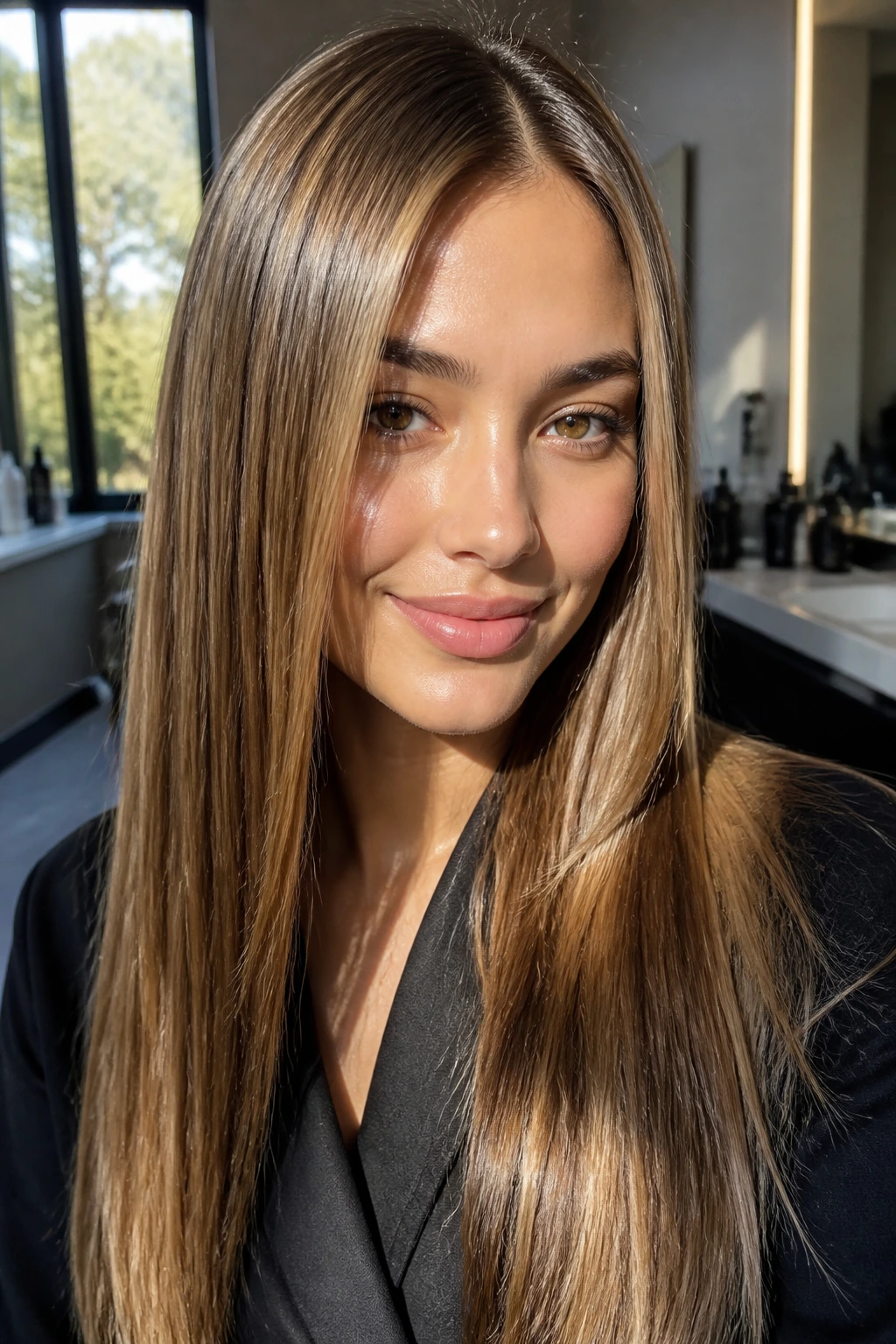
Glossing: A clear, beige, or slightly warm gloss every 4 to 8 weeks keeps the lighter pieces from going dull. If your highlights are copper or rose gold, refresh sooner; those tones fade faster than beige or ash.
Customization: Ask for lowlights if your hair is very fine and straight. A few deeper pieces underneath give the cut more body, which keeps light color from making everything look thin.
Serving Suggestions: Tuck one side behind the ear, clip the front with a small barrette, or wear a half-up style when you want the face-framing pieces to show. Straight hair needs a little styling direction or the best color can disappear into the length.
Make-It-Yours: If you prefer low upkeep, ask for babylights, root shadow, or a smoked-out melt. If you want a bolder look, ask for a money piece, chunky panels, or ivory contrast. If warmth flatters you, stay in honey, caramel, copper, or toffee. If cool tones suit you, look at beige, mushroom, smoke, or silver.
Common Mistakes to Avoid
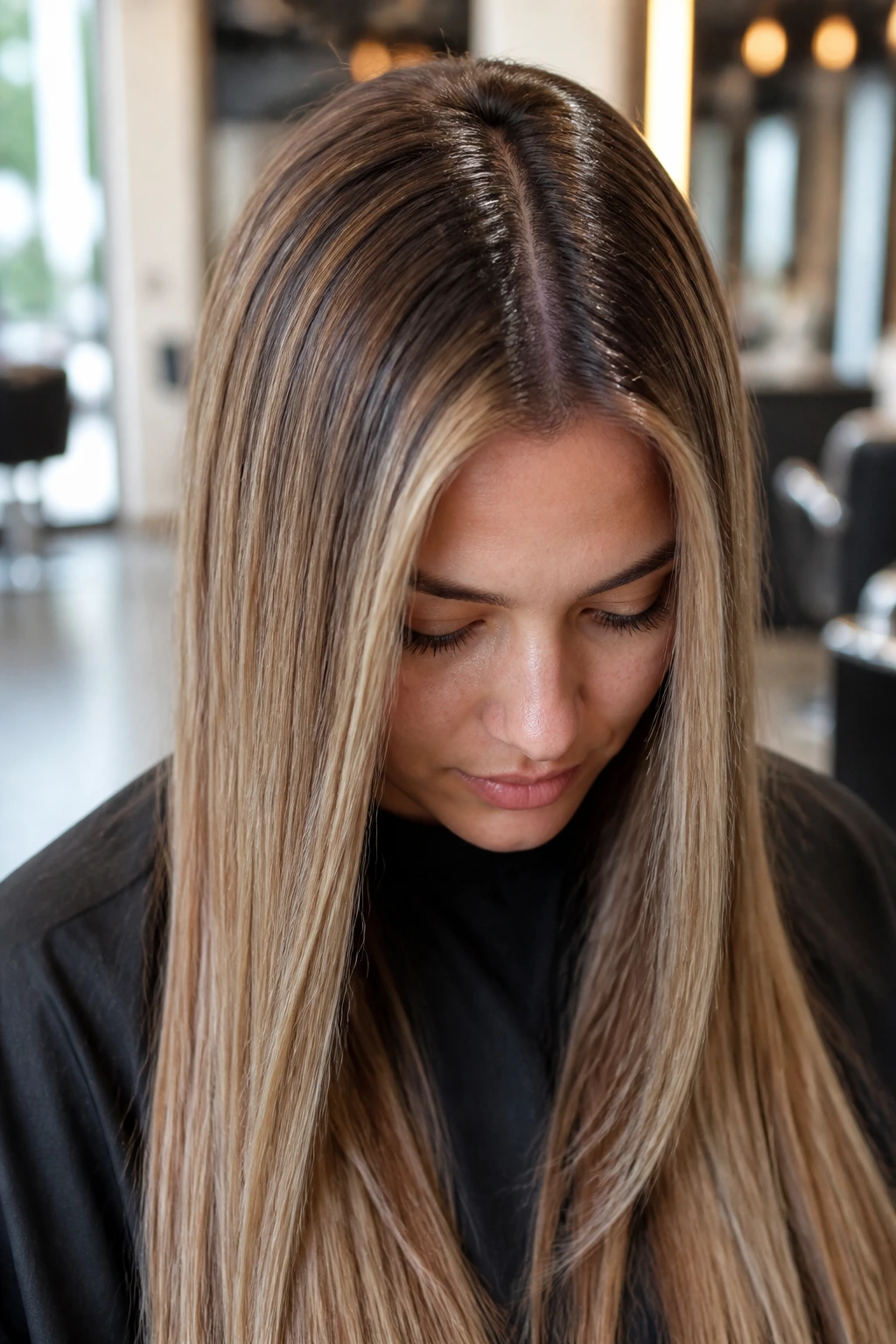
- Too-wide slices: Thick highlights on straight hair turn into obvious stripes. The fix is narrower weaving, especially around the part and hairline.
- Tone mismatch: A cool toner on a warm base can look muddy, while too much gold on a pale base can go brassy fast. Match the toner to your natural undertone and the finish you actually want.
- No root depth: Lifting everything to the same light level makes straight hair look flat and can exaggerate the shape of the head in a bad way. Leave some shadow at the root or inside layers.
- Over-lightening fine hair: Straight fine strands show damage faster than wavy hair. If the ends are already fragile, keep the lift softer and use lowlights to build the look back up.
- Ignoring the part line: Straight hair often lives in one part for months. If the color map doesn’t consider that, the regrowth line will show early.
- Skipping heat protection: Flat ironing lightened hair without protection fries the ends. The damage shows as roughness, not just dryness.
Variations and Alternatives to Try
Low-Maintenance Beige Blend: Ask for babylights plus a root shadow in beige or soft ash. This is the version that grows out with the least drama and still gives straight hair movement around the face.
High-Contrast Fashion Frame: Keep the base dark and place a bold money piece in ivory, champagne, or platinum. It works best on blunt cuts and clean straight styling, where the contrast can stay crisp.
Warm Brunette Glow-Up: Use caramel, honey, and toffee pieces together instead of one single blonde tone. The mix keeps straight hair from looking one-note and gives you warmth that still feels natural.
Cool Smoky Finish: Choose mushroom brown, ash beige, or silver-smoke pieces with a deeper root. This suits people who like clean, cool color and don’t want copper or gold anywhere near their head.
Fine-Hair Illusion Builder: Blend babylights with a few strategic lowlights. The lighter pieces catch the eye, and the deeper ones make the hair look denser through the mid-lengths and ends.
Maintenance, Toning, and Regrowth Guidance
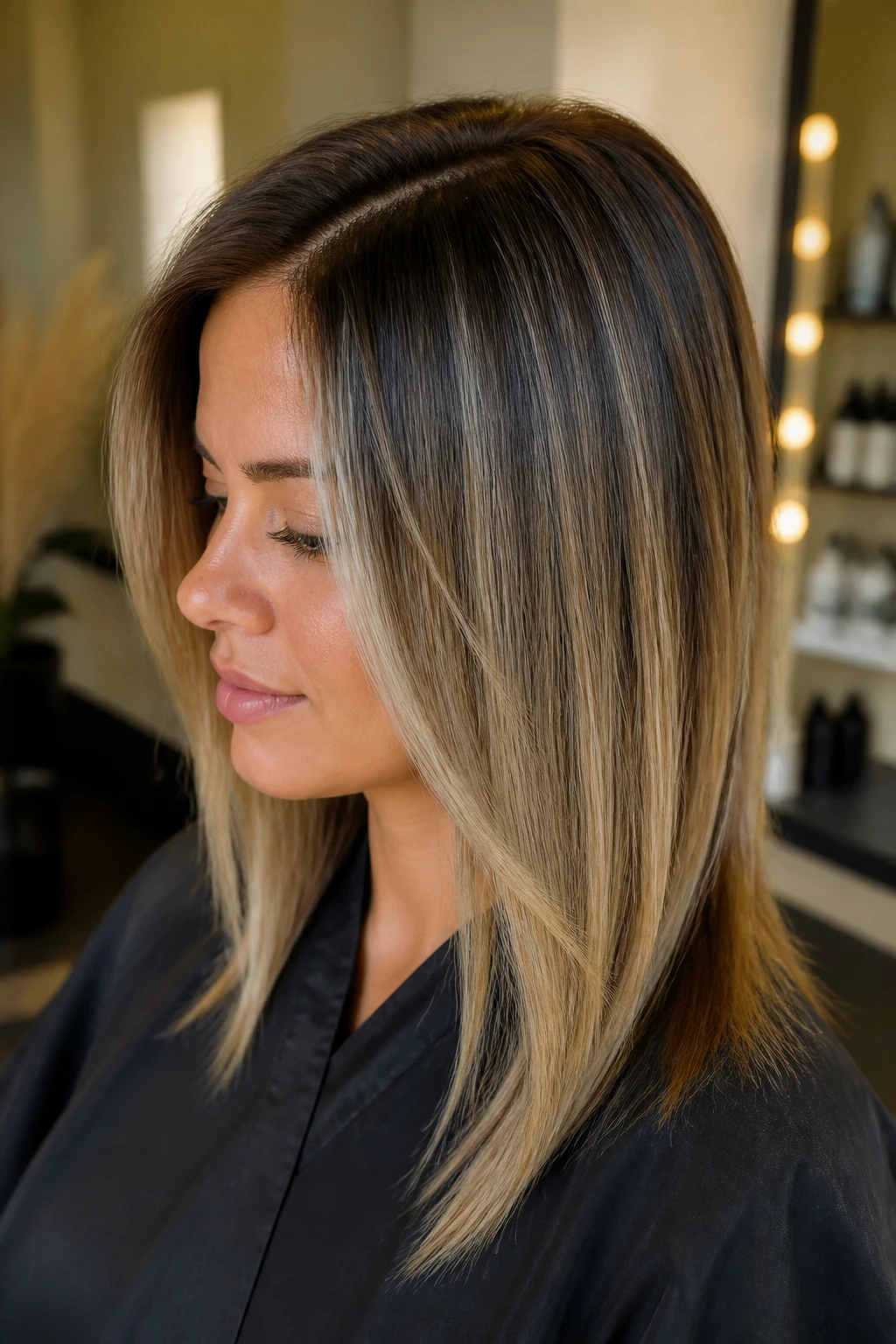
Straight hair usually needs color maintenance on a more visible schedule because there’s nowhere for fading to hide. Blondes and beige tones often hold their shape for about 6 to 8 weeks before they start drifting. Copper, rose gold, and champagne tones may need a gloss sooner, especially if you wash often or use hot tools several days a week.
Purple shampoo works best on blondes used once a week or every other wash, not every day. Overusing it can make straight hair look dull or dusty. Blue shampoo does the same job for brunettes who lean orange. Keep it on the mids and ends for a short minute or two, then rinse well.
If you’re wearing a rooted blend, you can usually stretch salon visits longer than with a bright all-over blonde. Babylights and reverse balayage tend to be the easiest to live with because the grow-out line stays soft. Platinum, chunky panels, and money pieces are more visible as they grow, which is part of the look — but it also means you’ll notice the regrowth sooner.
For home care, wash in lukewarm water, use a heat protectant every time you smooth the hair, and avoid rough towels. Straight highlighted hair shows surface damage fast. A glossy finish is half the look, and damaged ends ruin that faster than any brassiness ever will.
Frequently Asked Questions
Which highlights look best on pin-straight hair?
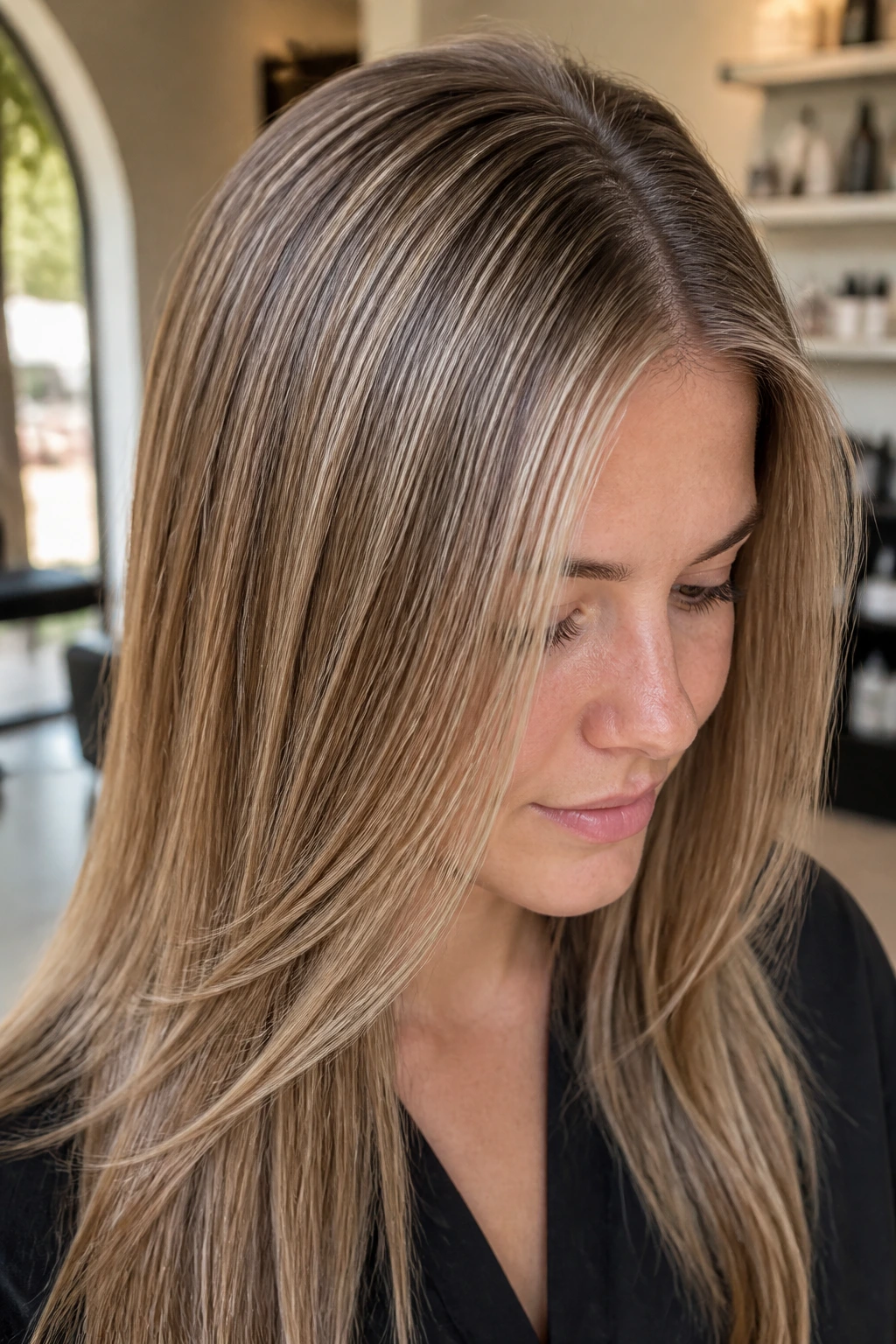
Feather-fine babylights, beige foils, and soft money pieces usually look the cleanest on very straight hair. They keep the surface from reading striped and give you brightness without a harsh foil map.
Are balayage highlights good for straight hair?
Yes, but the placement has to be precise. On straight hair, balayage needs enough depth at the root and enough softness through the mid-lengths so the transition doesn’t look like a hard band.
Can straight hair pull off chunky highlights?
It can, and sometimes that’s the best choice. The key is clean spacing and a cut with strong edges, like a blunt bob or a sharp lob, so the bold panels look intentional.
How do I keep blonde highlights from turning brassy?
Use a purple shampoo once a week, limit hot water, and ask for a beige or cool gloss at your refresh appointment. Straight hair shows brass quickly, so a small toner shift can make a big difference.
What should I ask for if I want low-maintenance highlights?
Ask for babylights, a rooted melt, or reverse balayage with soft regrowth. Those styles keep the grow-out line mellow and let you go longer between full refreshes.
Do highlights make fine straight hair look thinner?
They can if the placement is too pale and too even. The fix is to add a few lowlights or keep some root depth so the hair keeps visual weight through the lengths.
Can I mix warm and cool tones in the same head of highlights?
Yes, and on straight hair that can look richer than a single tone. A beige base with a few caramel or smoke pieces often gives the hair more life than one flat color family.
How often should I get a gloss or toner?
Every 4 to 8 weeks is a good range for most straight-hair highlight looks, with copper and rose tones needing the faster end of that window. If the finish starts looking flat before then, that’s your clue.
The Finish That Lasts
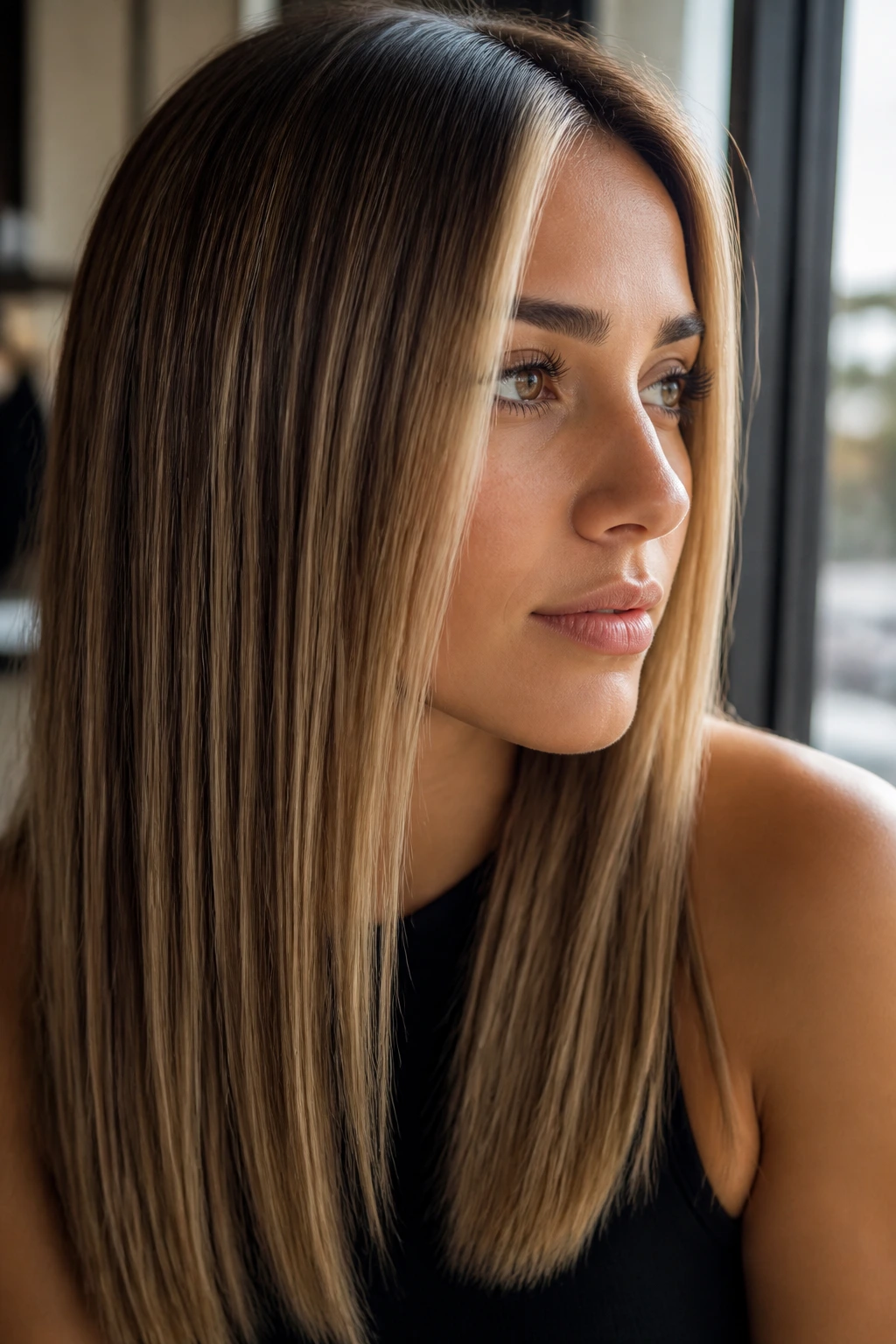
Straight hair does not hide anything, which is exactly why the right highlight can look so good on it. Clean babylights, careful money pieces, and smart rooted blends all play better on a flat surface than they do on a fluffy one. You see the placement. You see the tone. You see the difference between a careful hand and a rushed one.
That’s the fun of it, honestly. Straight hair asks for precision, but it pays you back with clarity. When the color is right, the whole style looks sharper, calmer, and more finished without needing a lot of extra styling.
Choose the version that fits how you actually wear your hair. Not the one that looks best in a filtered salon photo.
