



Shoulder length feathered haircuts have a rare sweet spot. The length is long enough to keep the outline looking full, but short enough that the layers can actually move instead of hanging there like a damp towel. When the cut is done well, the ends bend, the face frame opens up, and the whole shape gets that soft, swung-out finish that looks deliberate even when you only spent ten minutes with a brush.
I’ve always liked feathering most at this length because it gives a stylist room to sculpt without shredding the perimeter. Too short, and the feathering can turn choppy fast. Too long, and the movement gets weighed down before it ever has a chance to show. At shoulder level, the haircut can do both jobs at once: hold some body through the body of the hair and still feel airy around the face.
Color helps, too. A few ribbons of balayage or lighter face-framing pieces make the layer pattern easier to see, especially when the hair bends away from the cheekbone. That’s part of why these cuts keep coming back in different forms. They’re not one trick. They’re a whole family of shapes, and the useful part is how many directions you can take them.
Why These Shoulder Length Feathered Haircuts Stand Out
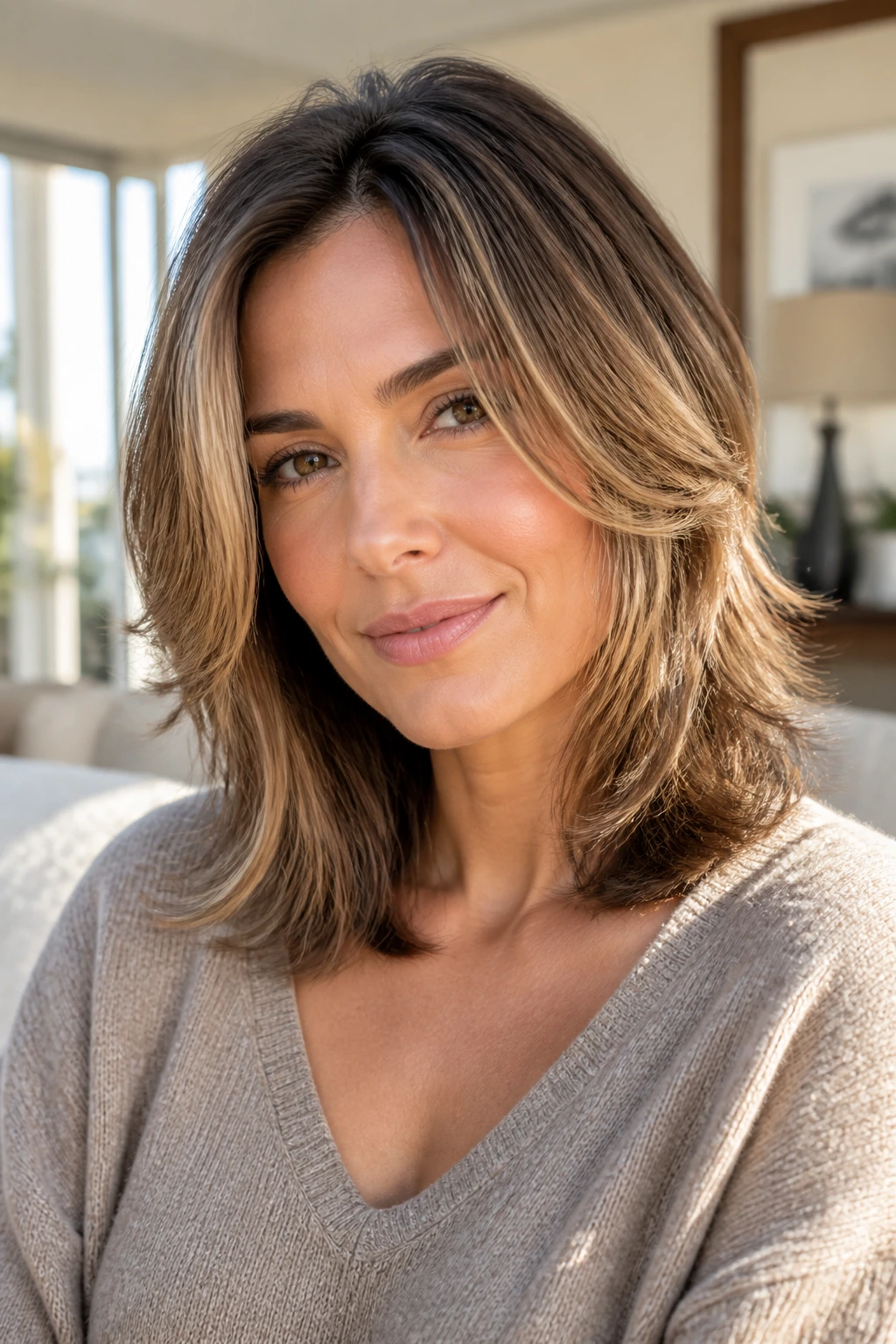
Movement without losing shape: Feathering keeps the ends soft, but the shoulder-length perimeter still gives the cut a clean outline, so it never turns into a wispy blob.
Kind to fine hair and thick hair: Fine hair gets lift without too much chop, and thick hair gets weight removed where it matters most — usually around the sides and mid-lengths, not just the ends.
Easy to tailor: A center part, side part, curtain fringe, blunt base, or layered fringe can all change the mood without changing the whole haircut.
Color shows better here: Balayage, highlights, and money-piece pieces catch on the bends and layers, which makes the shape read clearly even when the styling is loose.
Grows out with less drama: When the layers are placed with some restraint, the cut can slide forward a few weeks without looking broken at the ends.
1. Classic Feathered Lob With Cheekbone Movement
A classic feathered lob is the version I reach for when someone wants movement without the haircut shouting about itself. The shortest face-framing pieces sit near the cheekbone, the perimeter stays close to the collarbone, and the whole shape bends under instead of flipping out in a hard shelf.
That balance matters. Too much layering too high on the head, and the lob starts to puff at the sides by midday. Keep the bottom line intact, though, and the feathering stays soft and clean. A 1.25-inch round brush or a large curling iron gives this cut its easy, polished bend.
Why It Works So Well
The cheekbone-length front pieces pull attention upward, which softens the jaw and gives the haircut a little lift around the eyes. The longer outline keeps the style from feeling over-cut, so you still have enough weight for the ends to tuck under neatly.
Best for: straight to softly wavy hair that needs shape, not drama.
Ask for: long face-framing layers, a collarbone perimeter, and light internal layering through the mid-lengths.
Style with: a root-lifting mousse and a loose underbend at the ends.
My favorite part: it still looks good on day two when you flip the part and mist the roots with dry shampoo.
2. Feathered Shoulder Cut With Curtain Bangs
Why do curtain bangs work so well with feathering? Because both pieces of the haircut want to move away from the center, which gives the face a soft opening instead of a straight curtain of hair hanging down the sides. The bangs should begin around the cheekbone or just below the eye, not up in the forehead where they start acting like a separate little haircut.
The rest of the layers should echo that shape. Let the front drift first, then let the shoulder-length layers follow. If the transition is smooth, the cut looks expensive in the best possible way — not flashy, just carefully shaped.
A round brush helps here, but only on the front sections. You do not need to round-brush every strand into submission. In fact, the messier mids and back can make the bangs look softer and less overly styled.
3. Soft Shag Feathered Layers at the Shoulders
If your hair has ever sat at the shoulders and decided to flare sideways, this is the corrective version. A soft shag with feathering keeps the texture and lift, but it removes the heavy shelf that makes medium-length hair look bottom-heavy.
The trick is restraint. The crown gets some movement, the mid-lengths get some airy separation, and the ends stay light without turning see-through. That means the cut still has attitude, but it doesn’t turn into a full shag mullet situation. I like this look when the hair has natural bend or a little wave, because the texture fills in the layers without much coaxing.
What to Ask for
- Layers that start around the mouth or chin, not way up near the temples.
- A soft, pieced-out top section, not a chopped crown.
- Slightly disconnected ends if you want texture, but keep the perimeter visible.
- A blow-dry that pushes the front away from the face rather than straight down.
Good to know: this cut gets better when you rough-dry the roots and finish only the top half with a brush.
4. Blunt Perimeter With Hidden Feathering
A blunt base does not cancel feathering. It often makes the whole haircut look cleaner. The outer line stays solid, which keeps the length honest, while the interior gets soft movement that only shows when the hair bends or the light hits it a certain way.
I like this choice for people who get nervous when they hear the word “layered.” It’s a safer-feeling cut, but it still has shape. The hidden feathering takes some weight out of the middle, so the ends don’t hang like a curtain. And because the outline stays blunt, the haircut still looks polished when you air-dry it with almost no effort.
This version is especially good if your hair is medium density or slightly fine and you want movement without losing bulk at the bottom.
5. Feathered Layers That Make Fine Hair Read Fuller
Fine hair needs feathering with discipline, not enthusiasm. If the layers start too high, the ends go see-through and the whole cut looks thinner than it did before the appointment. Keep the perimeter strong and let the feathering live mostly in the front and upper mid-lengths.
That’s the part many people miss. Feathering on fine hair should create the illusion of fullness by moving the eye, not by stripping away density. A light mousse at the roots and a 1.5-inch round brush can make the crown look lifted without collapsing the ends.
- Layer start point: ask for the shortest front pieces around the cheekbone or below, not near the brow.
- Weight line: keep enough length through the bottom so the cut doesn’t separate.
- Finish: a dry texture spray gives grip without making the hair stiff.
- Avoid: heavy creams near the roots. They flatten the exact places you want to keep buoyant.
My rule: if you can see daylight through the ends when the hair is dry, the layers were cut too aggressively.
6. Feathered Layers That Take Weight Out of Thick Hair
Thick hair can wear feathering beautifully, but only if the cut removes bulk in the right places. If a stylist just thins the ends and calls it a day, you get a frizzy outline and a heavy head of hair that still feels bulky at the sides. That’s not feathering. That’s a bad compromise.
The better version opens space around the jaw, under the cheekbone, and through the mid-lengths. The shoulder length gives the cut enough weight to sit down, while the layering keeps it from ballooning. I especially like this shape when the hair wants to triangle out after a day of wear.
Key Details to Keep in Mind
- Keep the bottom line strong enough to anchor the cut.
- Use slide cutting or long internal layers rather than over-thinning the ends.
- A blow-dry with a nozzle helps direct the hair and calm the bulk.
- If your hair is very dense, ask for weight removal around the nape and sides, not just the tips.
Best result: a softer outline that still feels like real hair, not a halo of frizz.
7. Shoulder-Length Feathered Curls With Rounded Ends
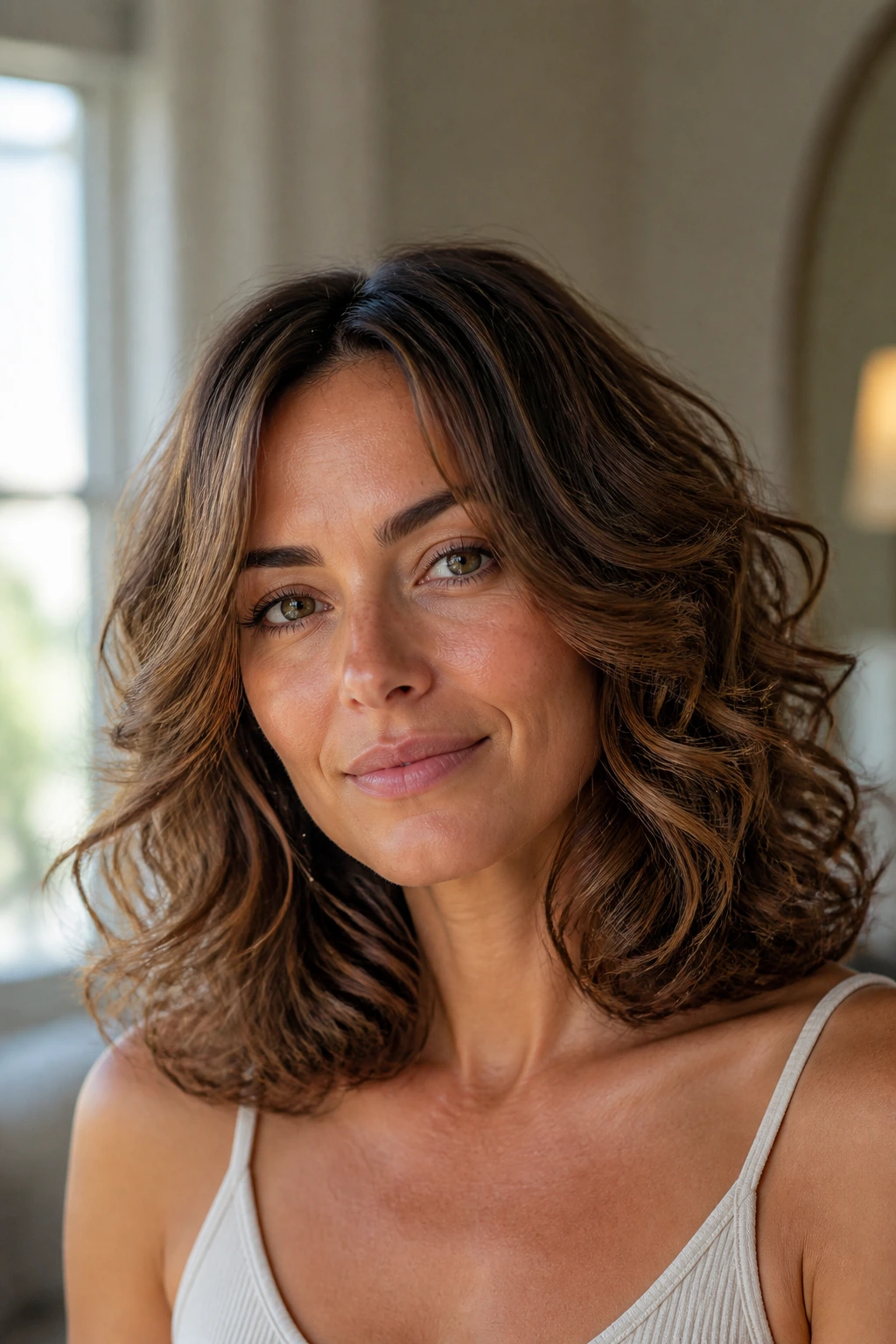
Can curls be feathered without turning fuzzy? Yes, but the cut has to respect the curl pattern. Dry cutting or curl-by-curl shaping usually works better than dragging every strand wet and hoping the spring lands where you want it.
At shoulder length, curled feathering does something nice: it lets the curls stack just enough to feel full without turning into a triangular mushroom. The face frame should be longer than the rest if you want a gentle sweep, and the ends should still have enough length to settle instead of bouncing up too far.
A diffuser helps, but the real trick is sectioning. Clip the top away, dry the sides with low airflow, and stop touching the hair once the cast starts forming if you use gel or cream.
8. Butterfly Feathering at Shoulder Length
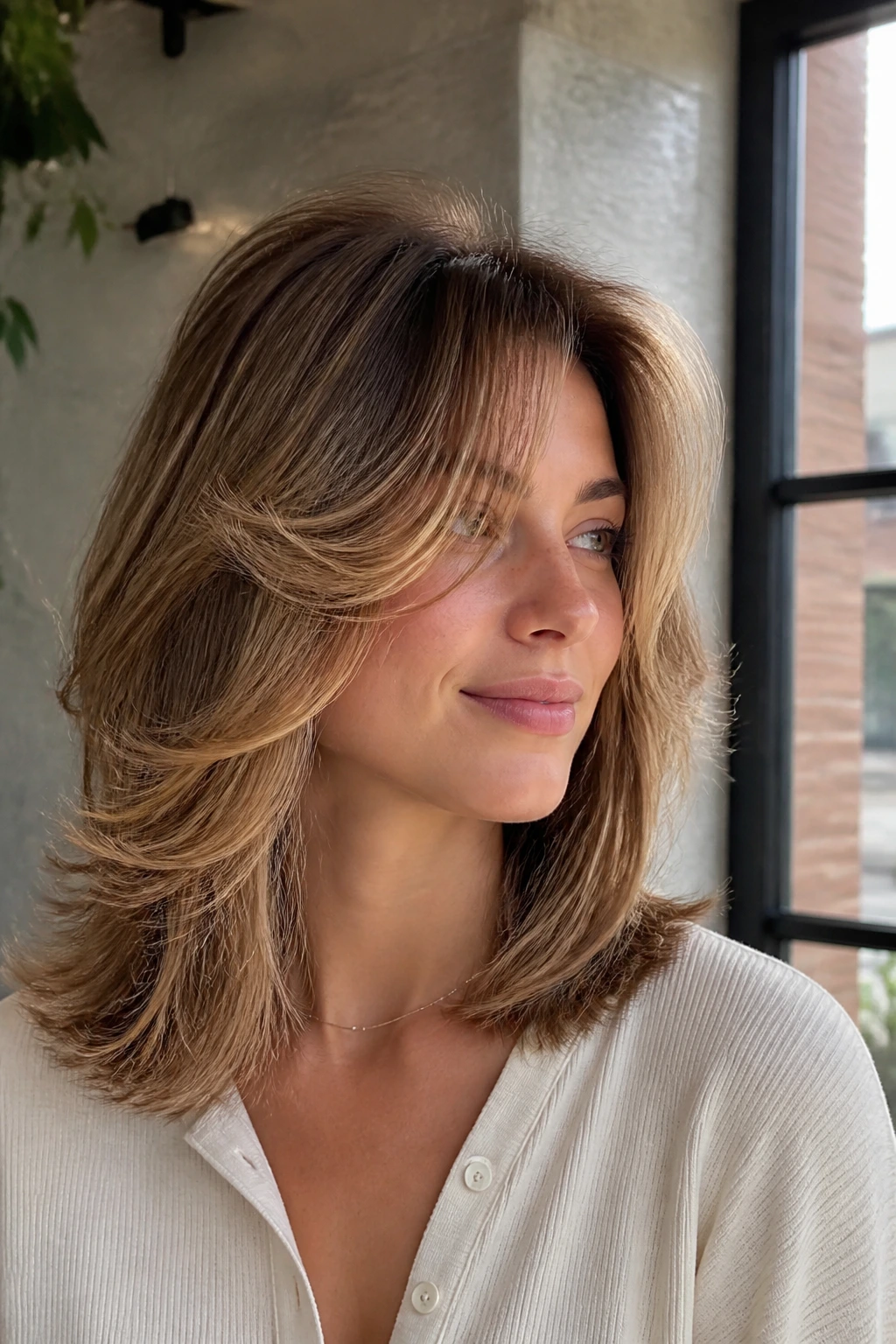
Butterfly layers and feathering are cousins, not twins. The butterfly shape gives you longer layers underneath with shorter face-framing pieces on top, so the hair looks fuller at the crown and softer around the face while keeping the overall length. At shoulder length, that structure has room to breathe.
This works best when you want the hair to look styled even on a plain day. The front pieces can be bent away from the face with a round brush, while the lower lengths keep their own movement. It is a smart choice if you like volume at the top but do not want a short haircut.
A blowout makes the butterfly effect obvious, but a soft air-dry can still show the shape if the front pieces are cut with enough intention.
9. Side-Swept Bangs With Soft Feathered Ends
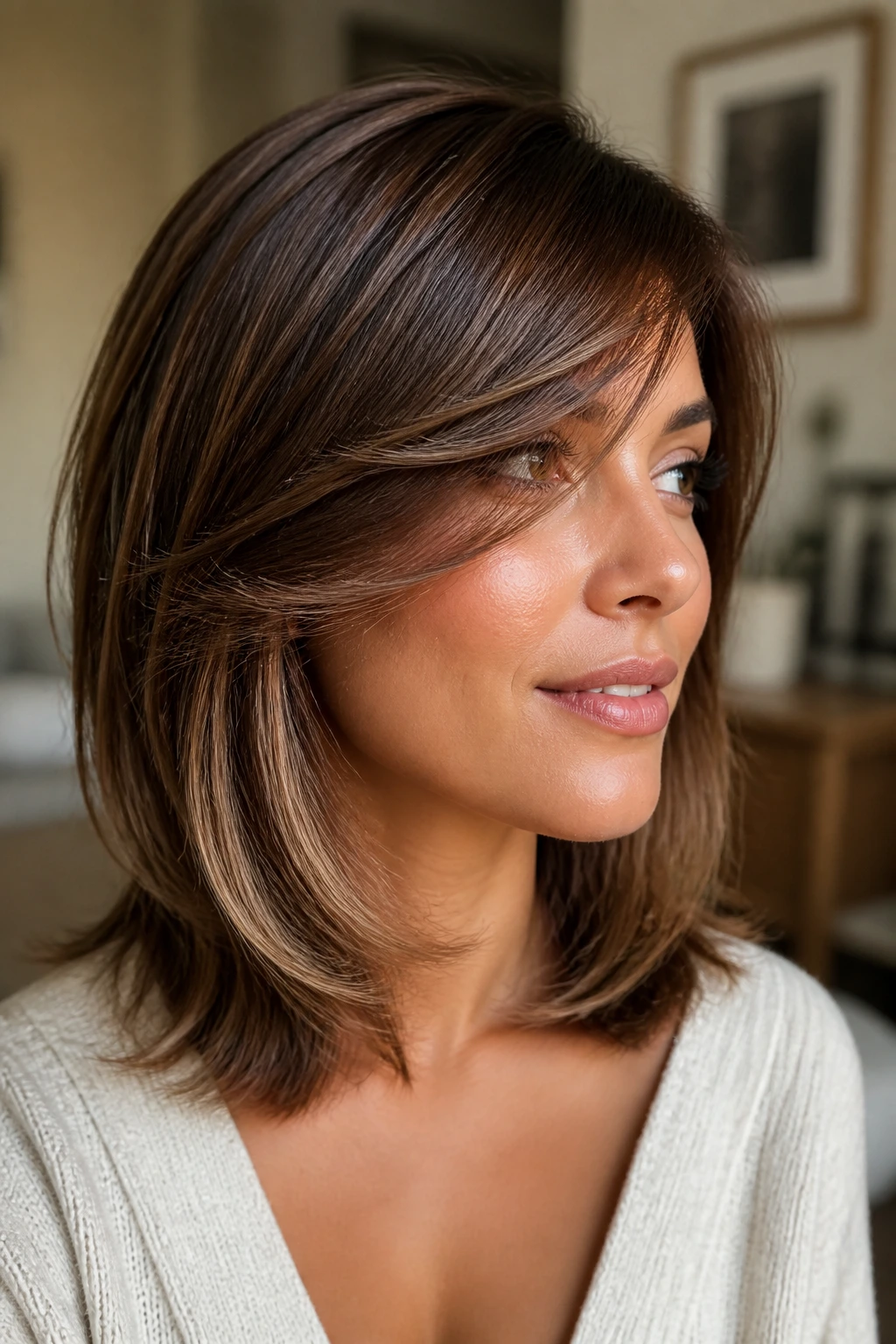
A deep side sweep changes everything. It gives the shoulder-length feathered cut an instant diagonal line, which pulls the eye across the face and makes the layers feel a little more dramatic without making the haircut shorter.
I like side-swept bangs on hair that refuses to lie flat at the front. The sweep can control a cowlick, soften a broad forehead, or break up a heavy center line. The ends should stay feathered and light, not chopped into a hard corner near the cheek.
The styling is simple. Set the fringe first, brush it away from the face, then let the rest of the haircut fall underneath. That order matters more than people think.
10. Flip-Out Feathered Ends With a Retro Bend
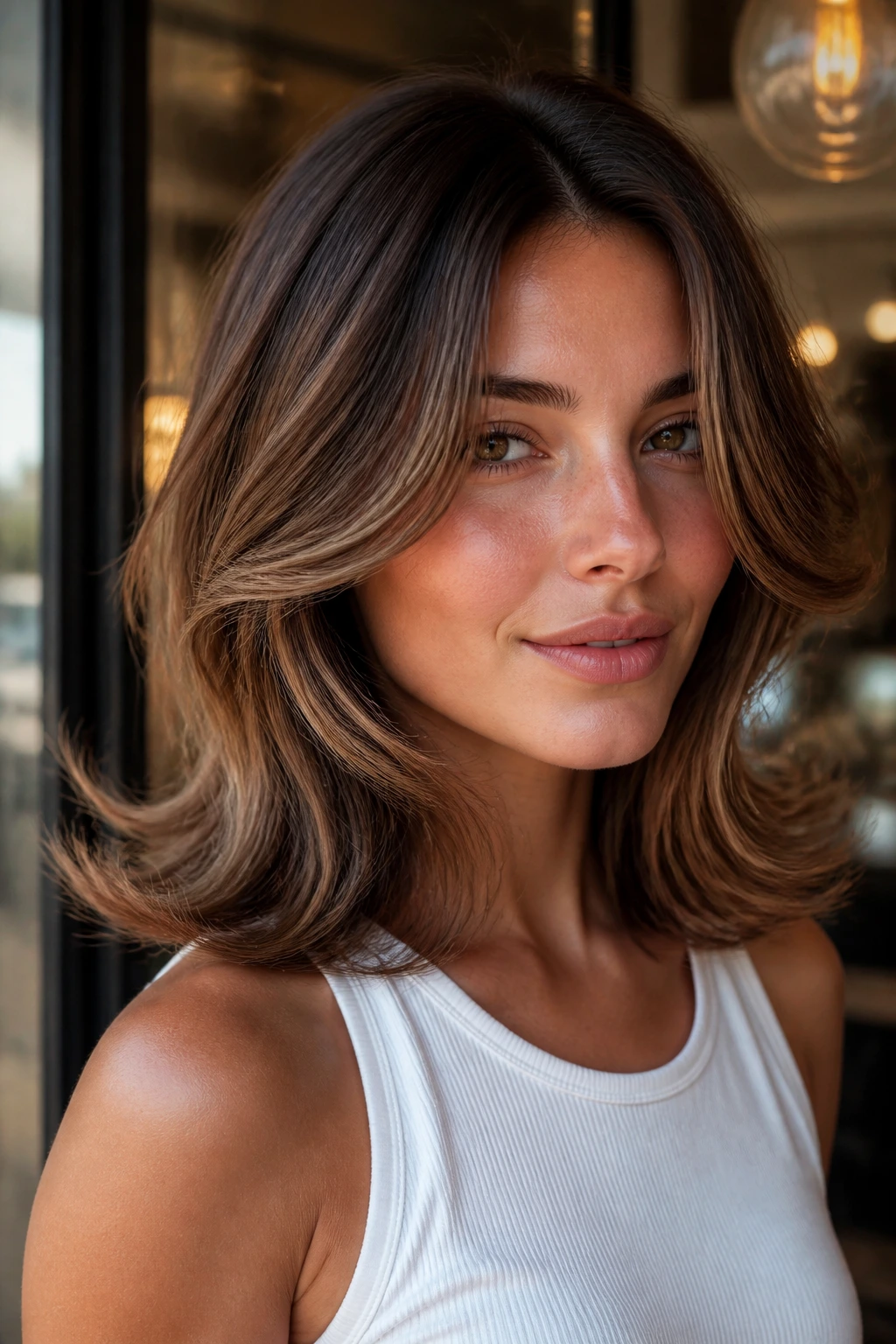
Flip-out ends are having a long conversation with the past, and I am fine with that. A shoulder-length feathered cut with a flipped perimeter has a lively feel that works especially well when the ends are light and the face frame is soft.
The key is not to make every strand turn outward like a helmet. You want a bend at the bottom, usually with a one-inch or 1.25-inch iron, and a slight lift through the front pieces. That keeps the look playful instead of costume-like.
This cut is a good fit if your hair naturally turns out at the ends and you’ve spent years trying to fight it. Sometimes the answer is not to flatten the flip. Sometimes the answer is to make the flip look intentional.
11. Collarbone Lob With Light Feathered Framing
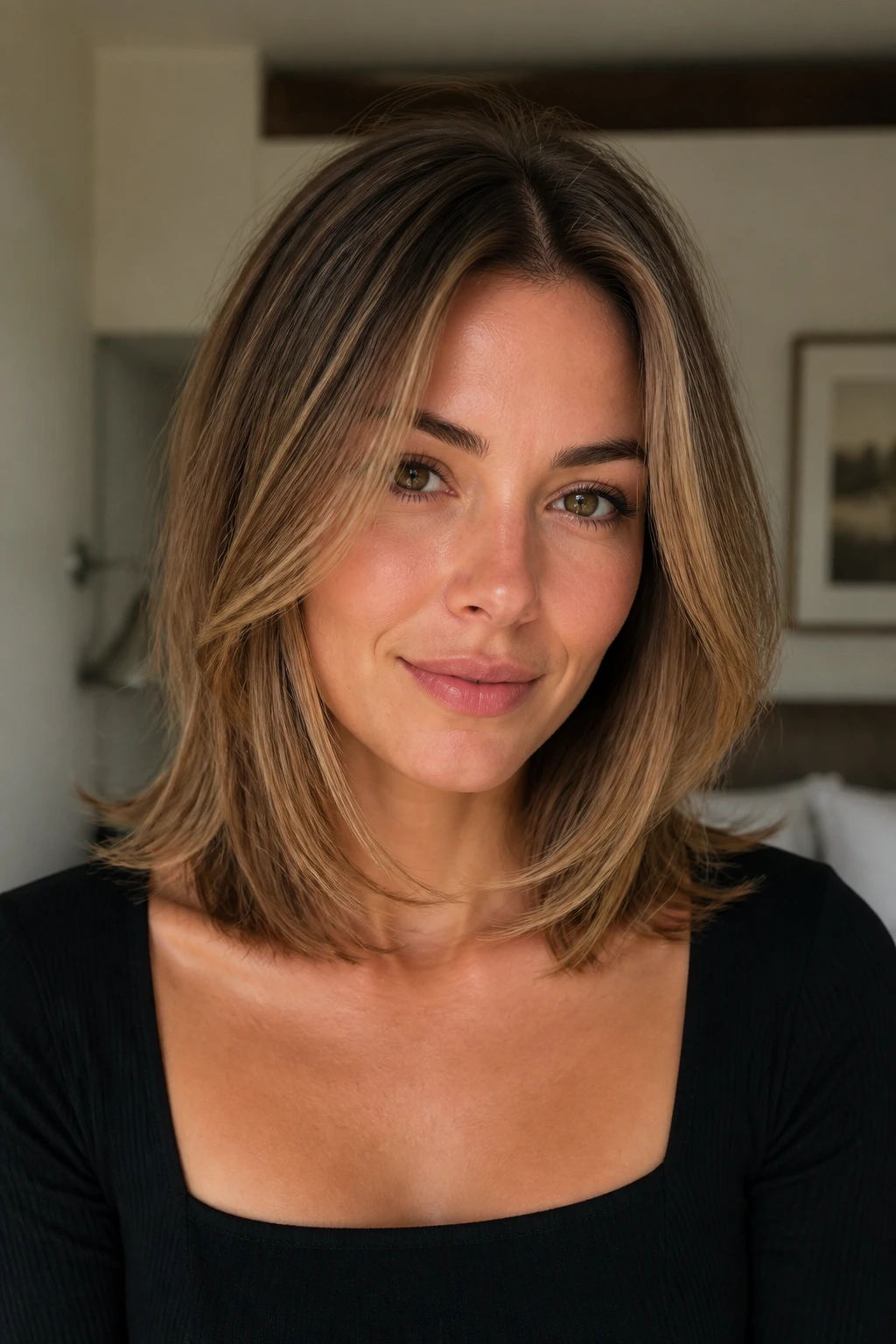
A collarbone lob with feathered framing sits in that useful zone where the cut still feels grown-up and clean, but the layers keep it from going flat against the neck. The front pieces should graze the collarbone or just sit above it, then soften as they move back toward the shoulders.
This is a good compromise if you want movement but not a lot of obvious layer drama. The haircut can be worn straight, curved under, or bent with a flat iron and still keep its shape. It also grows out gracefully, which matters if you hate frequent appointments.
If your hair is colored, this shape is nice with subtle balayage because the light pieces catch on the front frame and the bends at the bottom.
12. Feathered Layers Made for Balayage and Face-Framing Color
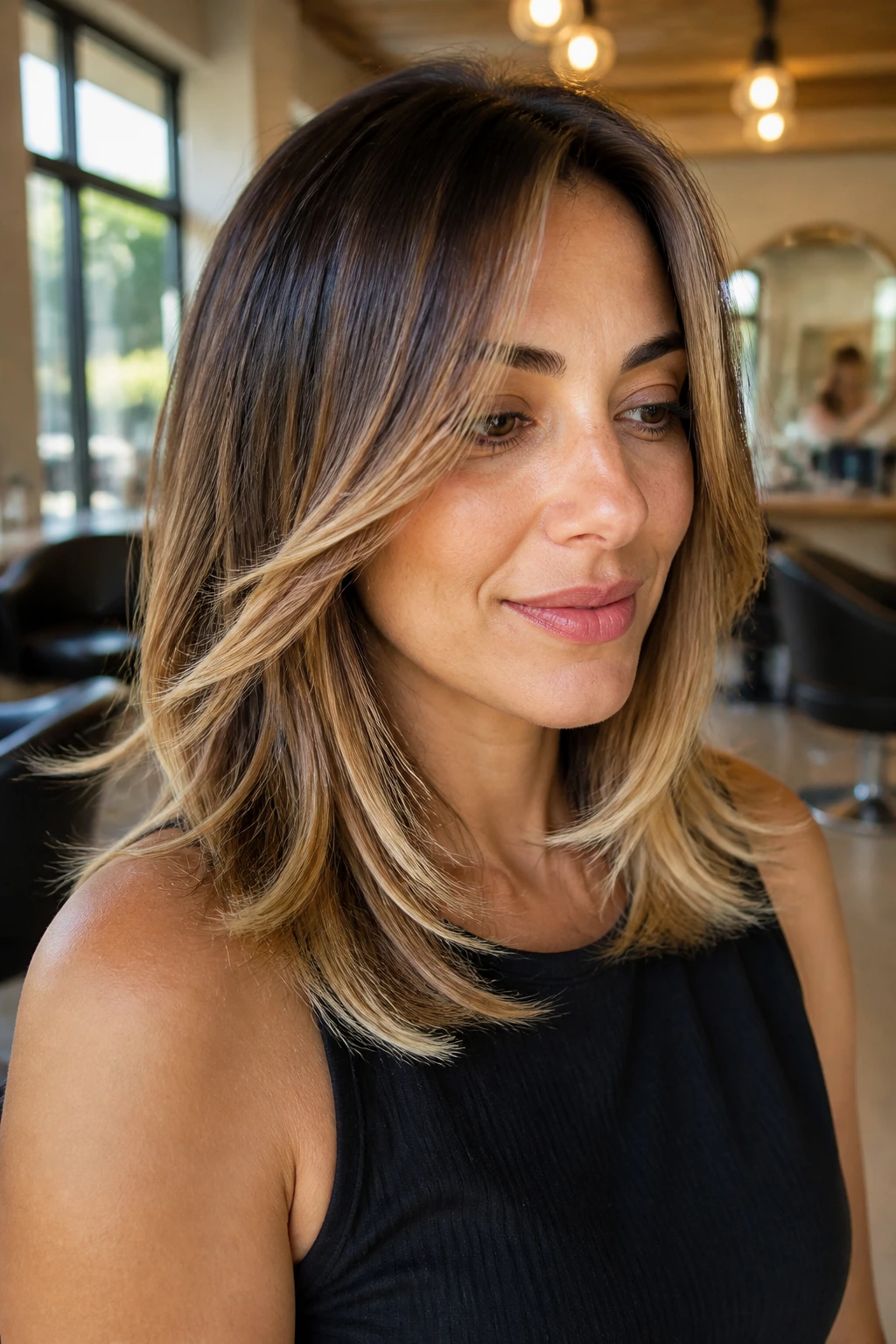
Feathered layers are where balayage earns its keep. The lighter ribbons sit right on the bends and edges of the haircut, so every layer reads more clearly than it would on a one-color base. That’s especially useful at shoulder length, where the cut can sometimes look very smooth from a distance.
I prefer this combo when the color is placed with the haircut in mind, not sprinkled in afterward as an afterthought. Face-framing pieces should land on the layers, not float awkwardly above them. If the lighter strands sit where the hair turns under, you get depth without needing a lot of dramatic contrast.
Best approach: ask for lighter pieces around the cheekbone, mouth, and the ends that touch the shoulders. That creates a soft frame without turning the haircut into stripes.
13. Razor-Soft Feathering for Lived-In Texture
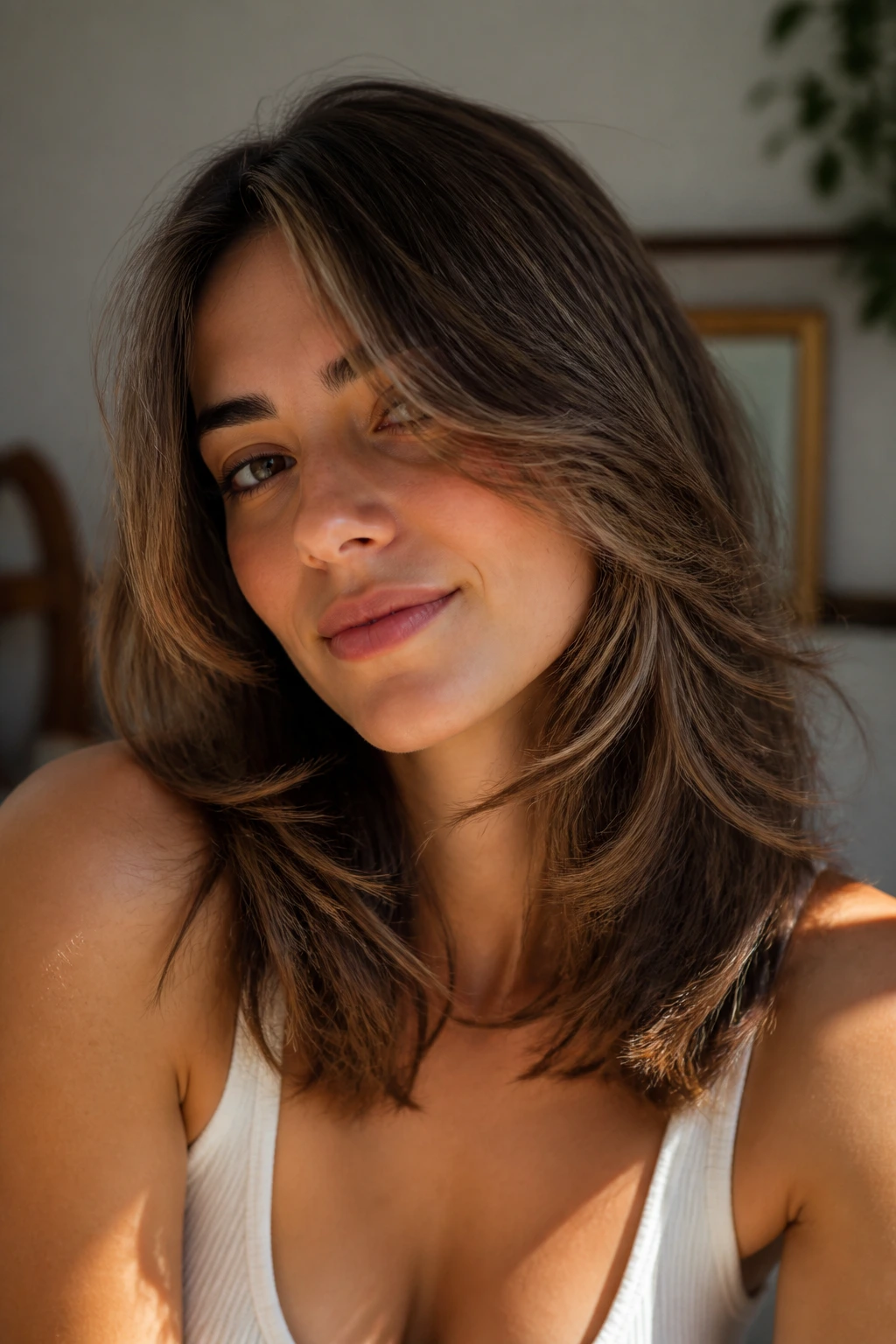
Razor feathering can look airy and soft on the right head of hair, but I would not treat it like a universal fix. It works best on healthy medium-density hair that already has some movement. On dry or fragile ends, a razor can make the finish look frayed.
When it works, though, it’s lovely. The ends blur into each other, the layers melt instead of stacking, and the cut feels lighter than a scissor-cut version. This is the one I think of when someone wants that broken-up, slightly undone finish that still has a real shape underneath.
The trick is to keep the razor work controlled. You want softness, not shredded ends.
14. Wispy Feathered Layers for Straight Hair
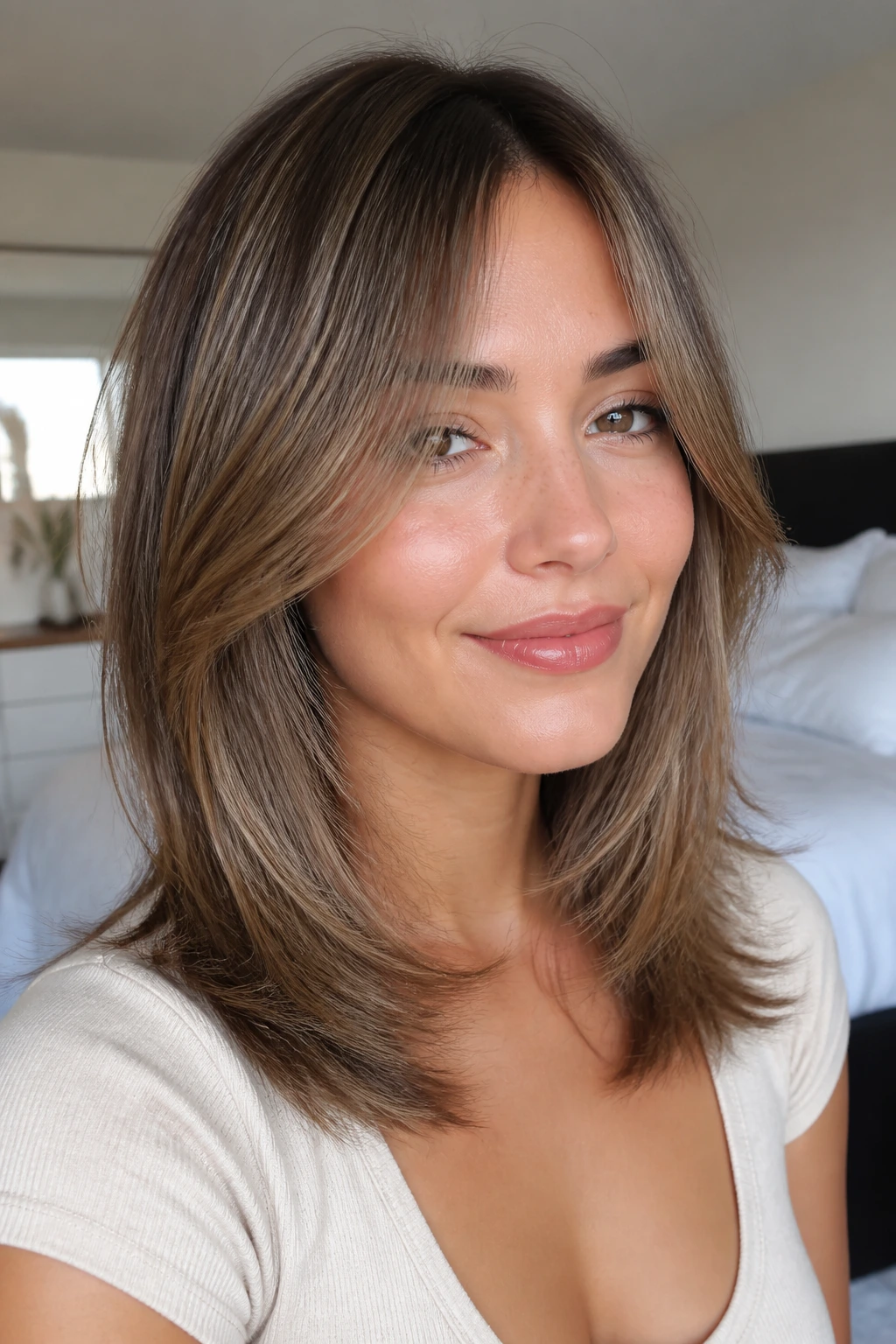
Straight hair can make feathering look harsher than it does on wavy hair, so the cut needs softer edges and a clean weight line. A little bevel at the bottom helps the ends move instead of hanging in one flat sheet. That alone changes the whole mood of the haircut.
I like this version with a center part or a barely off-center part, especially when the front pieces are long enough to frame the cheekbones. If the hair is very straight, a single pass with a flat iron to add a tiny curve at the ends is enough. You do not need curls. You need bend.
A lightweight serum through the mid-lengths keeps the look smooth without erasing the texture.
15. Feathered Layers That Keep a Natural Wave
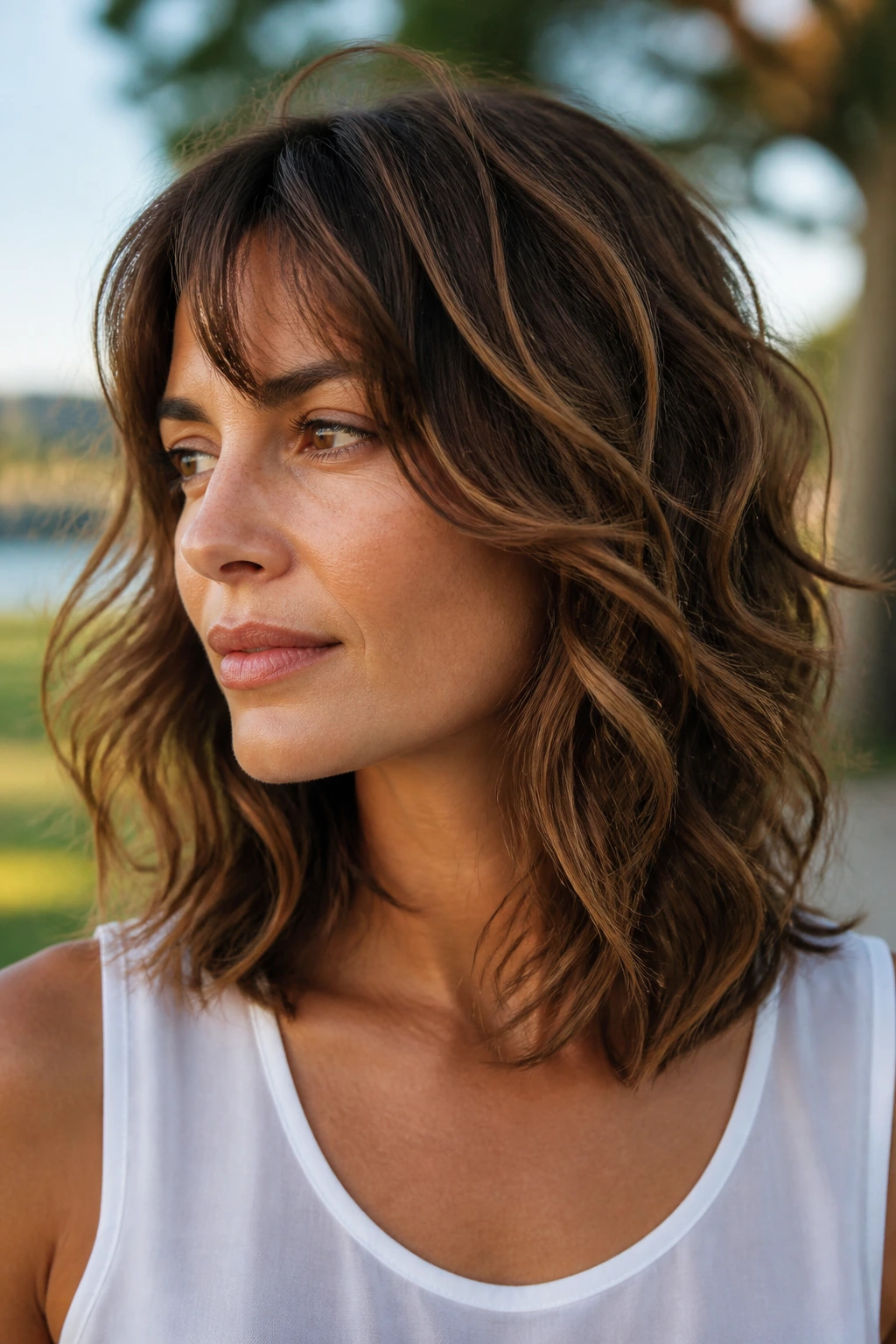
Wave is where feathering starts behaving like it was made for the hair instead of imposed on it. The layers can follow the bend, especially at shoulder length, and the haircut gets movement even when you do not touch a hot tool.
The one thing to watch is over-layering. Wavy hair can explode outward if too much weight is removed from the sides. Keep the interior soft and the bottom visible, and the waves will stack in a way that feels relaxed rather than fluffy.
A salt-free texturizing cream or a light curl lotion can help the wave set into the layer pattern without drying the ends.
16. Shoulder-Length Feathering That Softens a Round Face
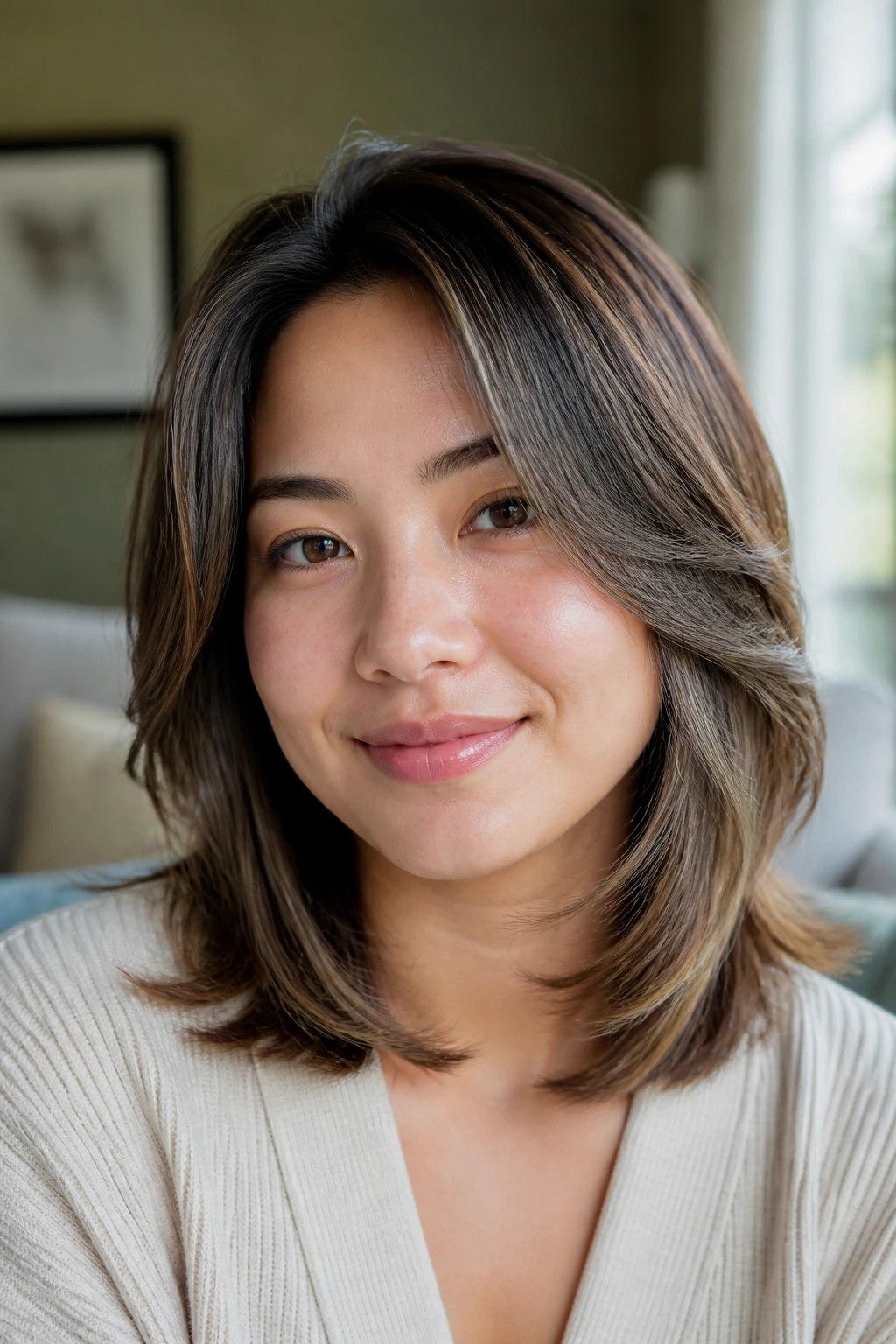
A round face usually looks best with feathering that starts lower than people expect. If the shortest pieces hit right at the widest part of the cheeks, the haircut can echo that roundness instead of softening it. I prefer pieces that begin around the mouth or just below the cheekbone.
The shape should stretch vertically. A slightly off-center part, longer face-framing layers, and a collarbone perimeter help the eye travel downward, which gives the face more length. That does not mean the cut has to be severe. It just needs direction.
A gentle bend away from the face at the front pieces makes a bigger difference than people realize.
17. Shoulder-Length Feathering That Blends a Square Jaw
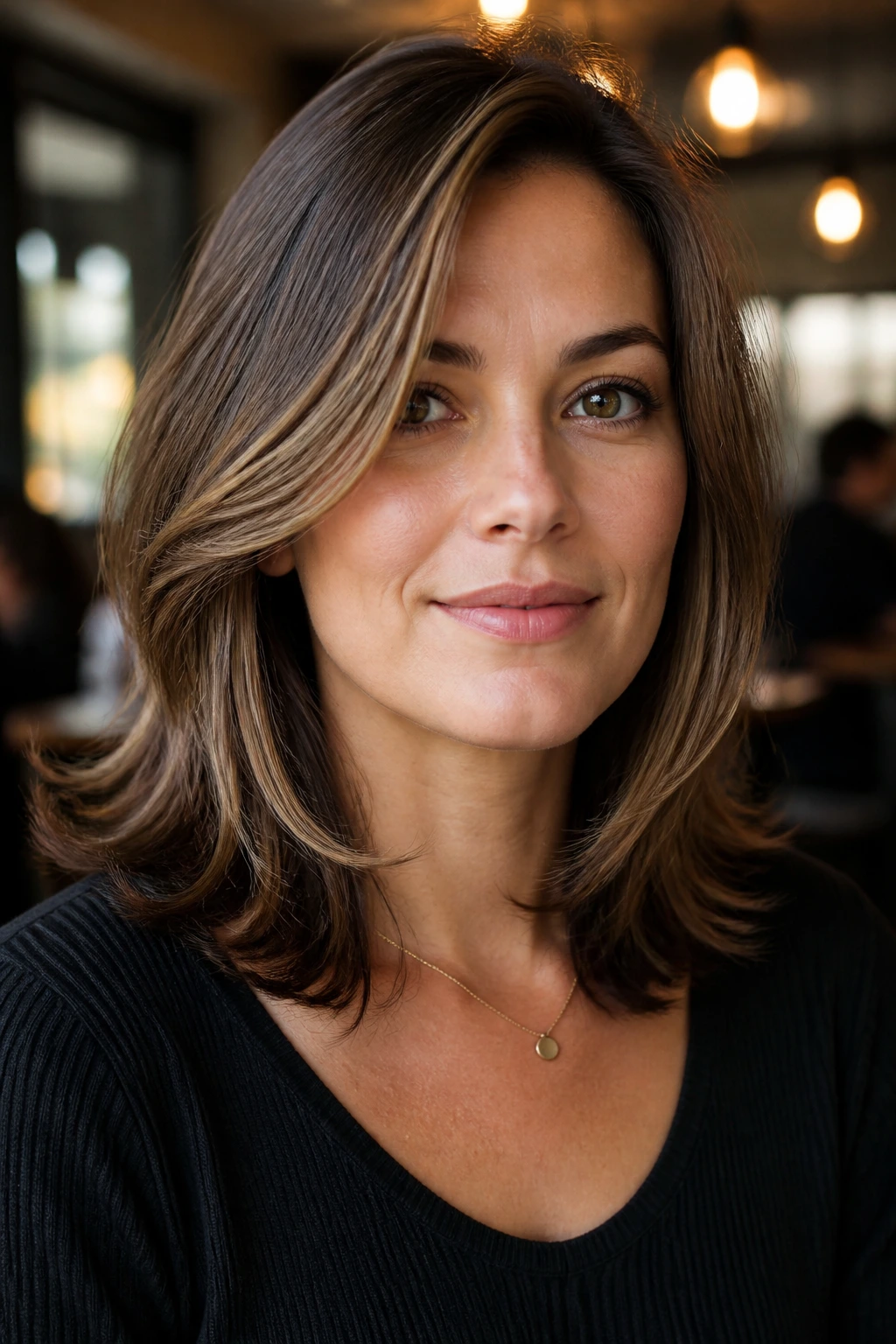
Square jawlines look strong in the best way, but some feathered cuts can make the edges feel too sharp if the layers end right at the jaw. The smarter move is to let the front pieces fall a little past it, then soften them with feathered ends that taper instead of stop abruptly.
This shape works because it breaks up the lower line without hiding the bone structure. You still get the clean shape of the jaw, only with a softer frame around it. A side part can add a little drift, which helps if you like a haircut that feels less structured.
I would ask for the softest layering around the chin and the longest point to land below the jaw rather than at it.
18. Deep Side Part Feathering With Crown Lift
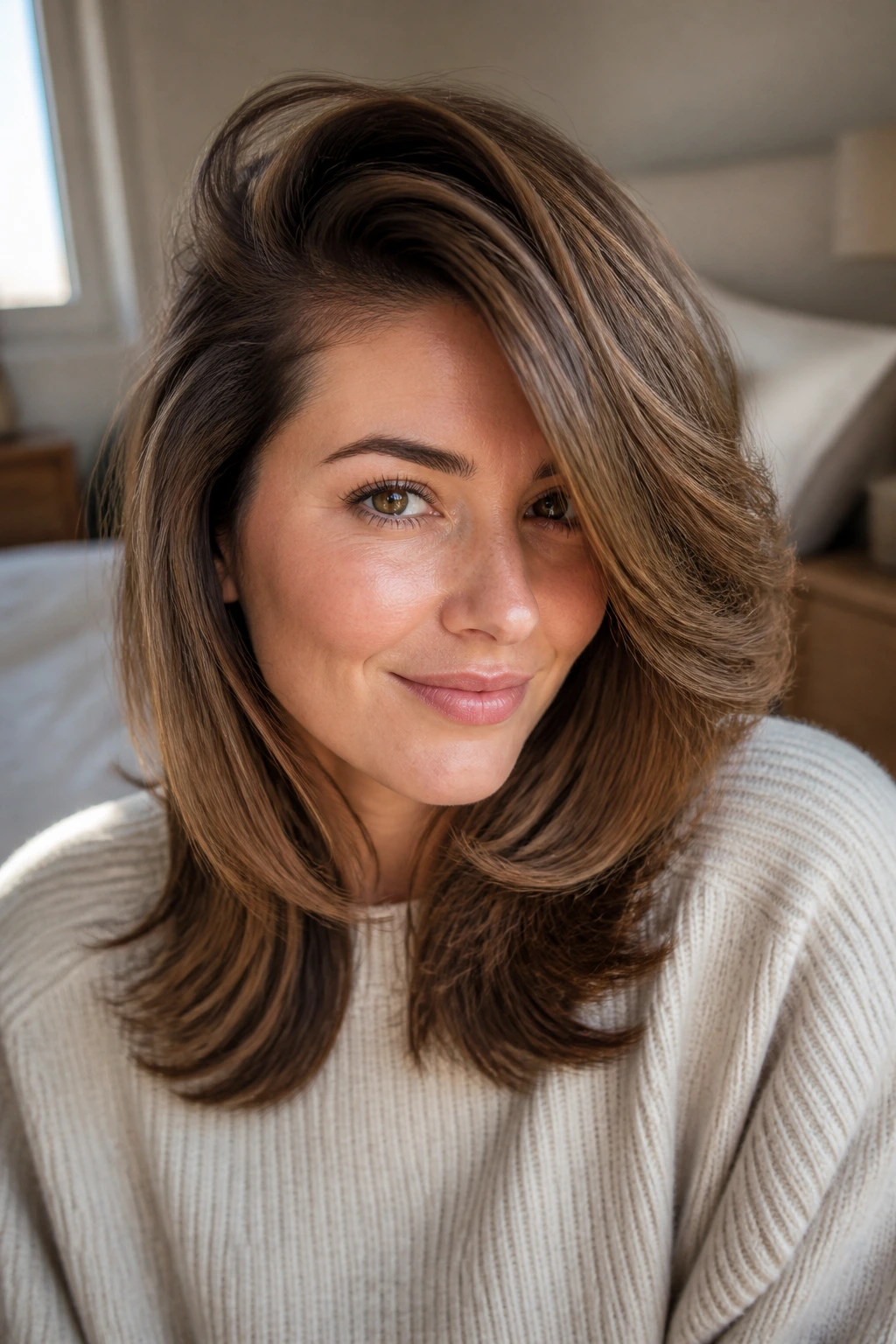
A deep side part changes the whole haircut with almost no extra length. The crown gets lift, the front collapses across the forehead in a sweeping line, and the shoulder-length feathering suddenly looks more dramatic than it did with a center part.
This is a good move if your hair naturally lies flat at the root or if you want one side to feel fuller. The part should be placed where the hair wants to open, not where you think symmetry should live. A round brush at the crown and a clip while the hair cools can make the lift last longer.
If the layers are already soft, the side part adds enough tension to make them show.
19. Feathered Layers That Brighten Gray and Silver Hair
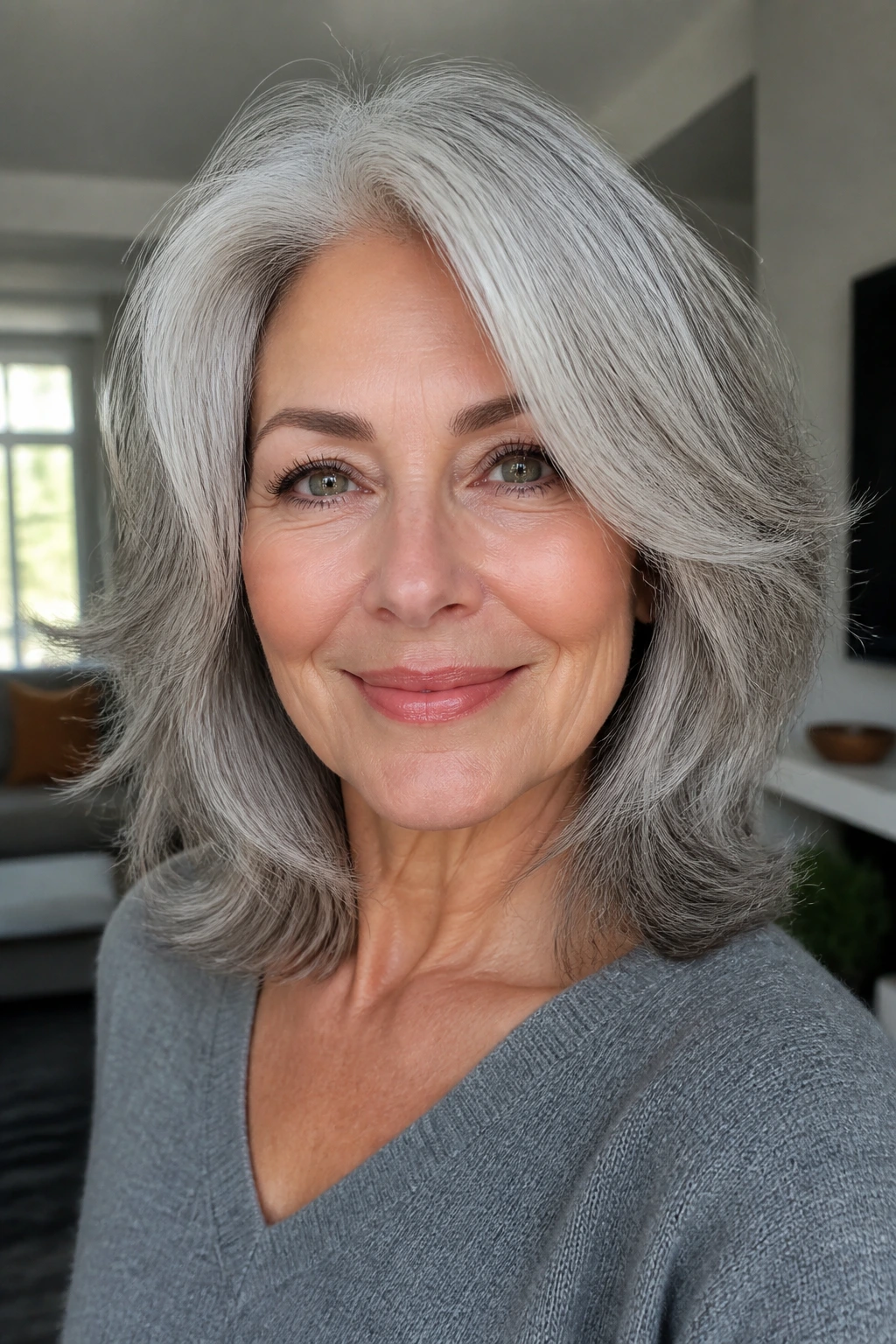
Gray and silver hair can look spectacular with feathering because the light catches the different lengths and bends so clearly. The texture is often a little coarser, though, which means the cut has to respect moisture and softness more than a darker, silkier head of hair might.
I like this shape with a polished finish, not a crunchy one. A light cream or serum keeps the silver from looking dry, and the feathering gives the color movement without making it look flat. If the hair has natural salt-and-pepper depth, the layers can make that variation stand out in a very clean way.
A soft face frame keeps the style from feeling severe. That matters more than people think.
20. Face-Frame-Only Feathering for Minimal Layers
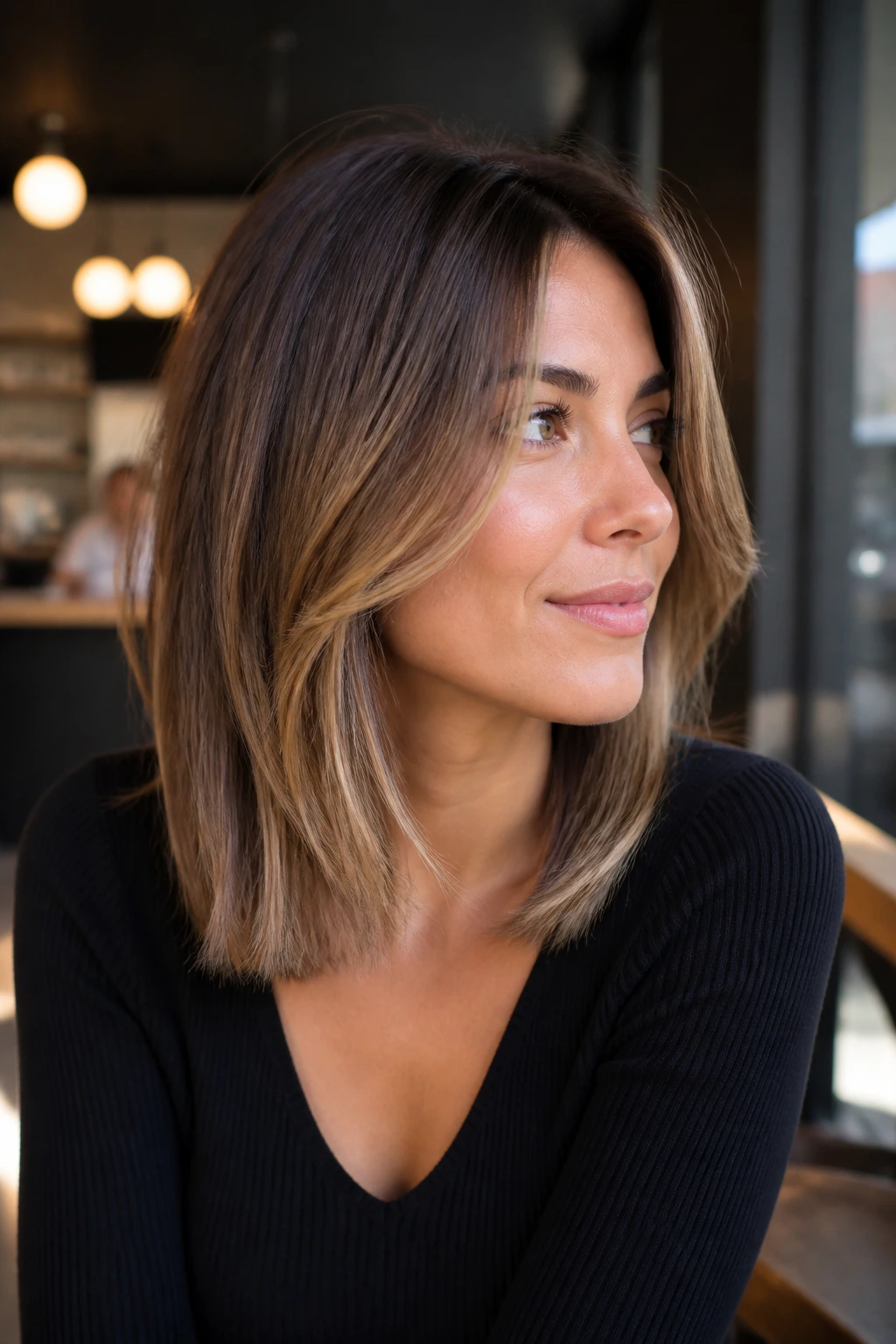
Not everyone wants full layers. Some people want a haircut that mostly stays one length but softens around the face and bends a little at the ends. Face-frame-only feathering gives you that, and it is one of the smartest choices if you’re nervous about losing density.
The front pieces should be the focus. Start them around the cheekbone, then let them taper into the shoulder-length outline. The rest of the hair can stay fairly blunt, which makes the haircut easier to grow out and easier to manage on busy mornings.
This is the version I suggest to anyone who says, “I want movement, but not a lot of maintenance.” That is a fair request. It just needs the right balance.
21. Air-Dry Feathering for Low-Maintenance Mornings
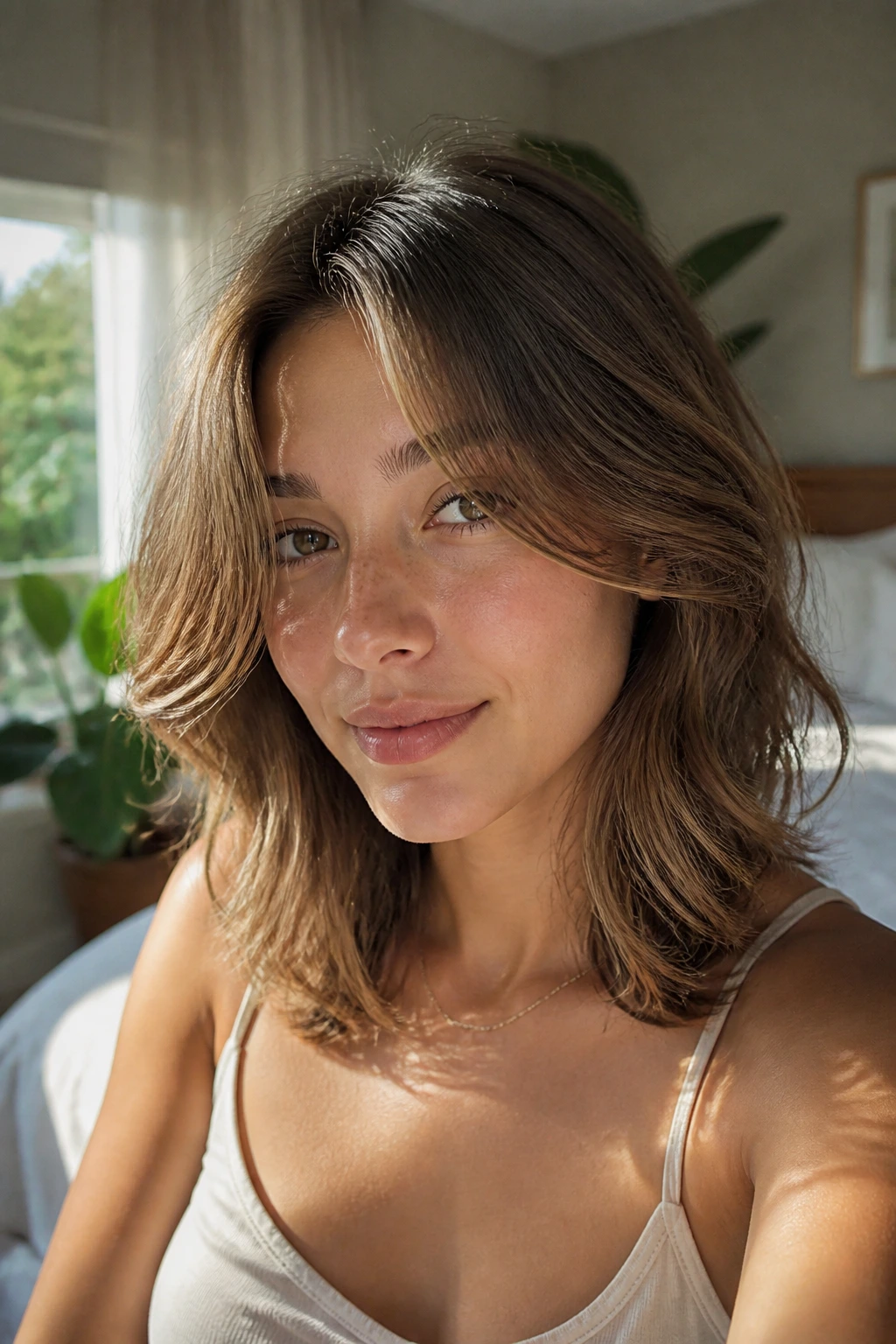
Air-dry feathering is not the same as doing nothing. You still need a cut that bends in the right places, and you still need to guide the hair while it’s damp so it dries with some shape instead of collapsing into a triangle or sticking straight out at the ends.
A little leave-in cream, a touch of mousse at the roots, and a soft twist of the front sections can do a lot. If the hair is wavy, clip the crown while it dries to keep the lift from disappearing. If it’s straighter, tuck the front pieces behind the ears for the first hour so they cool into a gentle bend.
This version is best when you don’t want to rely on heat every day.
22. Full Blowout Feathered Layers With Big Movement
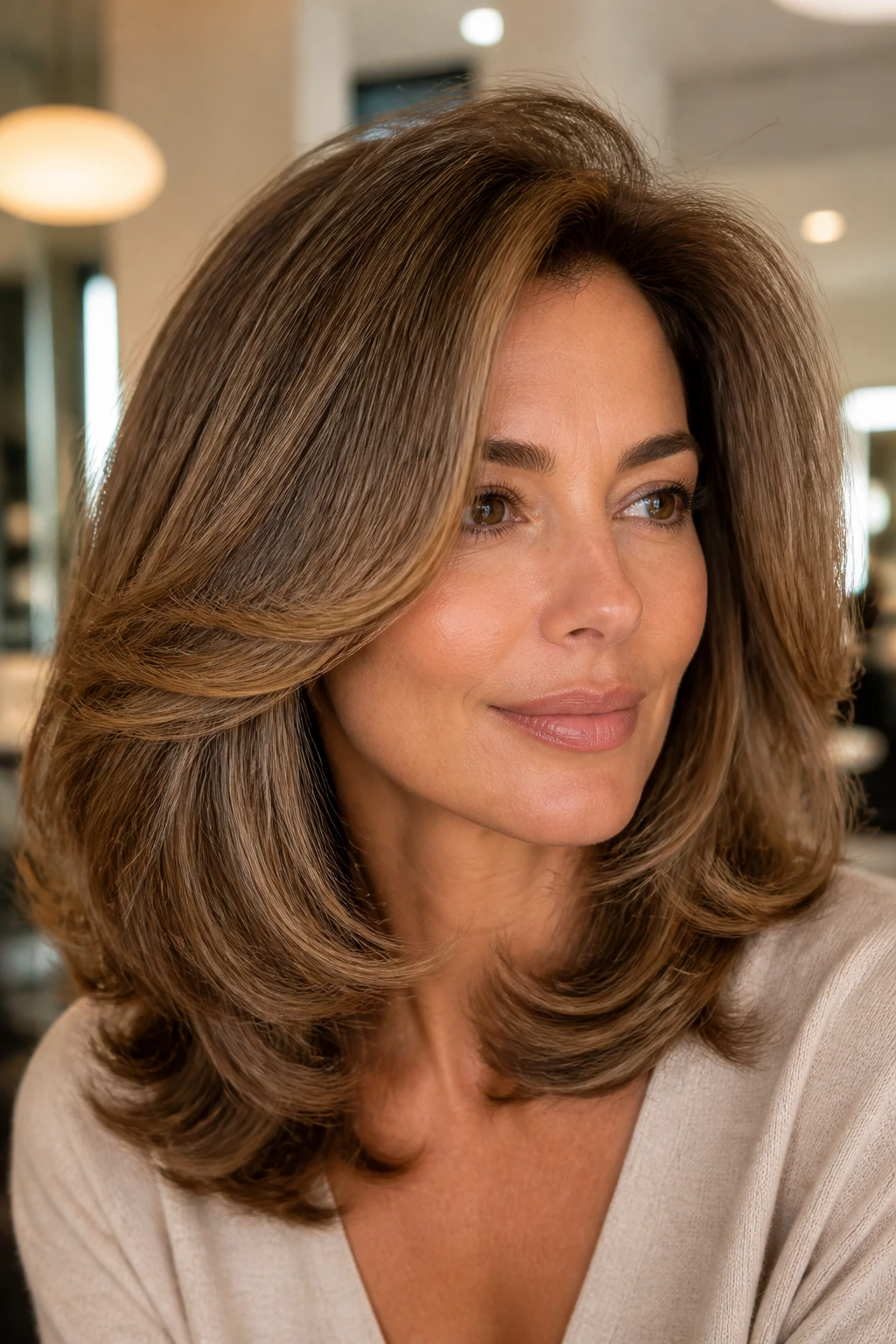
Some feathered haircuts are made to be brushed out and fluffed up. This is one of them. The shoulder-length perimeter gives the blowout enough length to swing, while the layers let the ends turn under and the front pieces sweep away from the face.
A round brush, a nozzle, and a little setting spray are the whole game here. Work in sections, lift at the root, and let each piece cool before you touch it again. That cooling step is what gives the shape staying power. Skip it, and the whole thing falls faster than it should.
I like this version for hair that already has some density or for anyone who wants that fuller, salon-finished look without cutting the hair any shorter. It is the most styled version of the group, but it is not the hardest to live with if the layers are cut cleanly.
How Feathering Changes the Shoulder-Length Silhouette
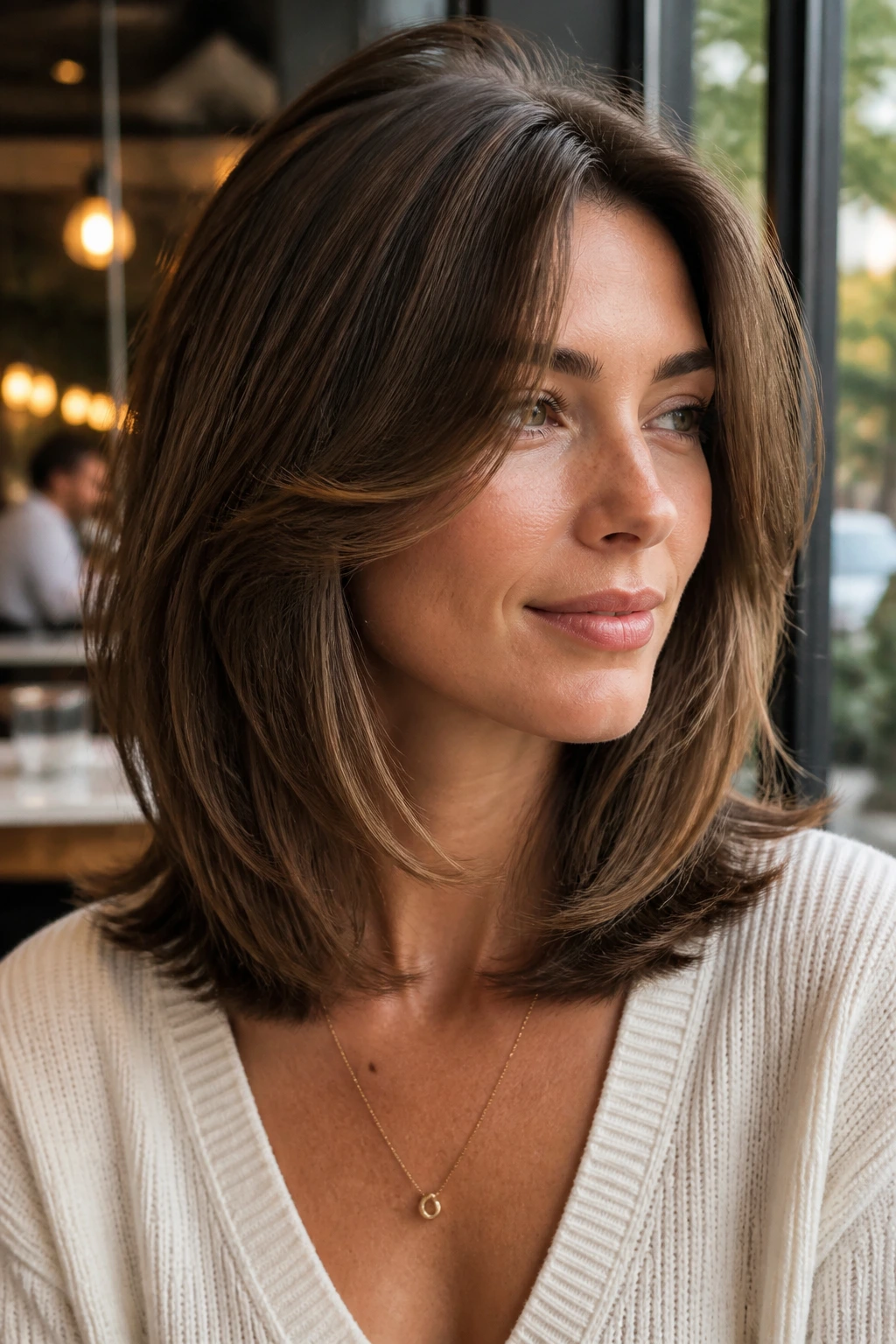
Shoulder length is the sweet spot because the hair still has enough weight to hang in a line, but not so much length that the layers get buried. Feathering works here by removing bulk from the middle and softening the ends, which changes the silhouette from blocky to airy without making it fragile.
Where the Layers Should Land
The best feathering usually starts at a point the eye can see — cheekbone, mouth, chin, or collarbone — instead of disappearing up near the crown. That keeps the haircut readable. If the shortest pieces are too high, the whole cut can balloon. If they’re too low, the feathering barely shows.
Why the Weight Line Matters
A clean perimeter line gives the haircut something to sit on. That is especially true at shoulder length, where the hair already wants to flip, bump, or rest on clothing. Keep some density at the bottom and the layers behave better. Remove too much and the ends start looking stringy, which is a different problem altogether.
What Feathering Actually Does
Feathering is not magic. It is shape control. Slide cutting, point cutting, and internal layering soften the transition between lengths so the hair moves in a gentler way. On a good cut, the pieces should separate enough to show texture, then fall back together when you brush through them.
Styling Tools That Make Feathering Behave
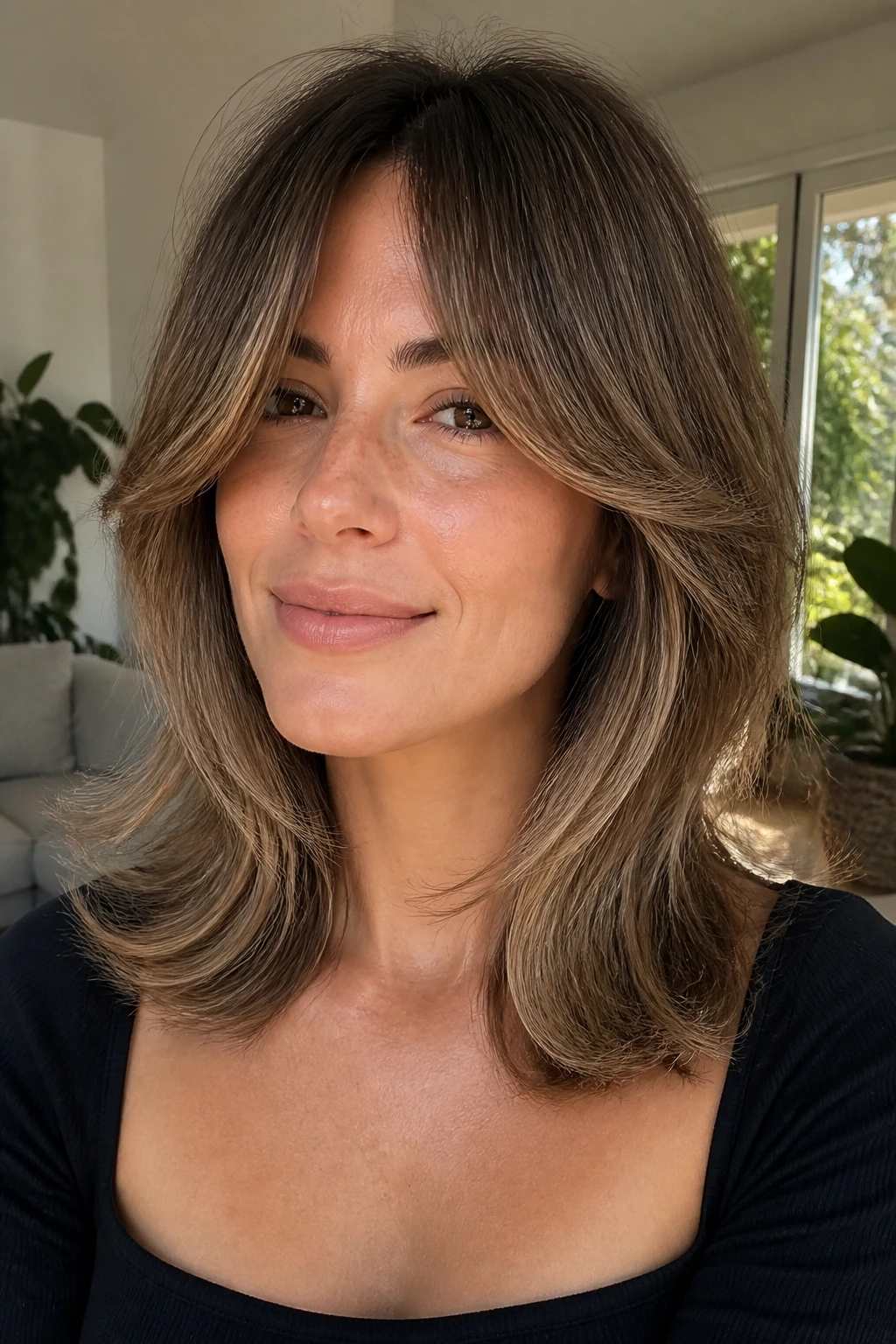
- 1.25- or 1.5-inch round brush: Gives the front pieces and ends a soft bend without making the haircut look over-curled.
- Blow dryer with a concentrator nozzle: Helps aim airflow down the shaft and keeps the cut smoother at the crown.
- Heat protectant spray: Use it every time you reach for a round brush, flat iron, or curling iron.
- Volumizing mousse or root spray: Best for fine hair or flat roots; work it into damp hair before drying.
- Lightweight smoothing cream: Good for thick or coarse hair that needs the ends to stay calm.
- 1-inch curling iron or flat iron: Useful for flipping the ends or adding a soft wave to the face frame.
- Texturizing spray: Gives grip to feathered layers without the crunchy feel of old-school hairspray.
- Clips: Keep sections out of the way while you dry the top or set the front.
- Wide-tooth comb: Better than a fine comb once the hair starts to dry and separate.
- Optional diffuser: Worth having if your hair is wavy or curly and you want to preserve the bend.
How to Ask for the Shape You Want at the Salon
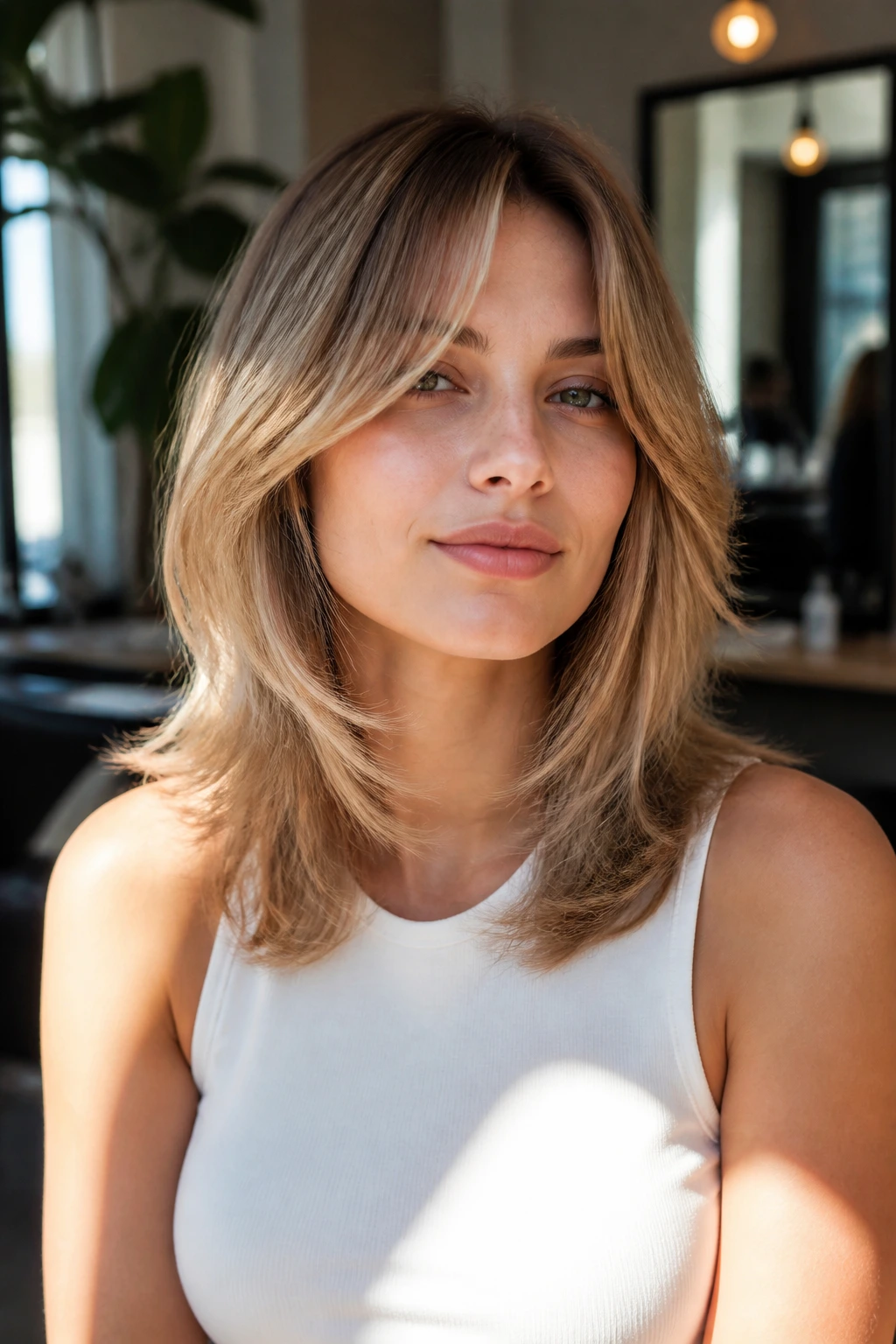
Length map: Point to where you want the bottom line to sit — shoulder top, collarbone, or just below the shoulders — because “medium length” means something different to every stylist.
Layer start point: Tell them where the shortest face-framing pieces should begin. Cheekbone, lip, or chin are useful landmarks. “Some layers” is not enough.
Texture plan: Say whether you blow-dry, air-dry, curl, or straighten the hair most days. A cut that looks great with a round brush can behave very differently when it air-dries untouched.
Density note: If your hair is thick, ask for bulk removal through the mid-lengths. If it’s fine, ask for softer, longer layers and a stronger perimeter so the ends don’t go see-through.
Color placement: If you wear balayage or highlights, ask for lighter ribbons near the face frame and through the bends of the layers. That keeps the color from floating randomly and makes the feathering easier to see.
Bring photos, yes. But bring the right ones. One photo for length, one for texture, and one for fringe shape is better than a single image that only matches the vibe. Haircuts fail when everyone assumes they’re talking about the same thing.
What Usually Goes Wrong With Feathered Shoulder-Length Hair
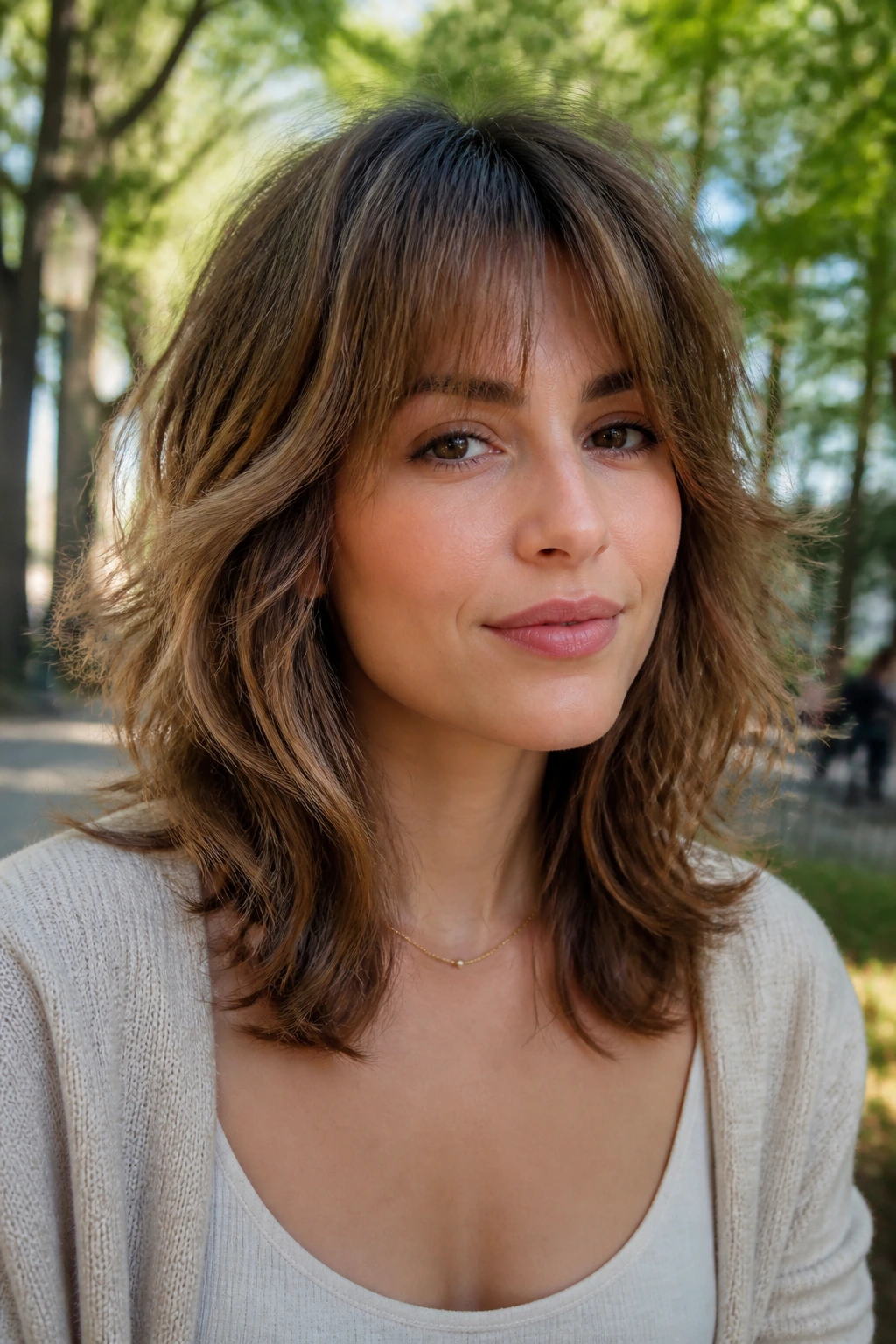
Layers start too high. The symptom is puffiness at the sides and a shape that feels too big near the cheeks. The fix is simple: keep the shortest pieces lower and preserve more density through the bottom.
The ends are thinned too hard. Hair starts to look stringy or wispy at the outline, especially when it’s dry. Ask for soft internal layering instead of aggressive thinning shears near the perimeter.
The hair is blown straight down. That kills the feathered bend and leaves the layers hanging limp. Aim the brush slightly under and away from the face so the movement lives where it should.
Product gets piled on. Heavy cream or too much oil makes the layers clump together. Use lighter product, and keep it mostly from mid-length to ends.
The part is ignored. If your hair naturally opens on one side, forcing a dead-center part can flatten the root and hide the layering. Work with the part your hair wants, then move it only a little if needed.
The front pieces are too short for the rest of the cut. That creates a disconnected frame that looks accidental. The face frame should connect back into the shoulder-length shape, not sit on top of it.
Variations and Texture Tweaks to Try
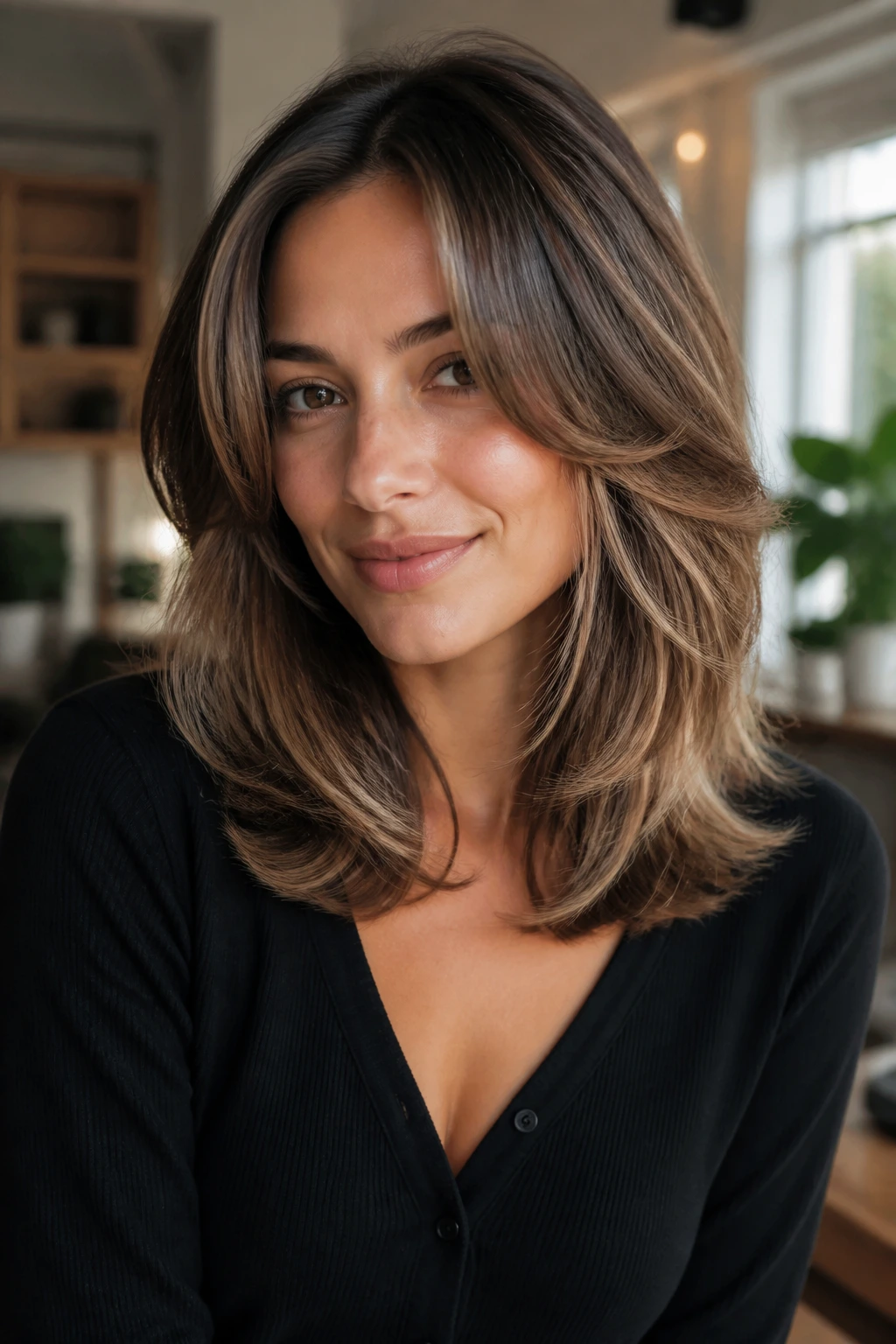
The Butterfly Lift: This version keeps longer layers underneath and shorter face-framing pieces on top, which gives you a softer crown and a fuller-looking midsection. It works well if you want a little drama but still want to pull the back into a clip.
The Razor Whisper: A razor-soft version gives the ends a feathery blur, but only if your hair is healthy enough to take it. I like it on medium-density hair that already has bend and can handle a little airiness at the edges.
The Balayage Ribbon Cut: Here the haircut and color work together. Light ribbons are placed where the layers bend, so every swing of the hair shows a little contrast. It is a smart choice if you wear soft highlights and want them to do more than sit there.
The Air-Dry Shape: This version uses longer internal layers and a strong face frame so the hair settles nicely without hot tools. It fits people who want movement but do not want to reach for a brush every morning.
The Big Blowout Version: This one keeps enough layer variation to lift the crown and flip the ends. It’s the most polished option in the group, and it looks especially good when paired with a little root volume spray and a brushed-out finish.
Keeping Shoulder Length Feathered Haircuts in Shape Between Cuts
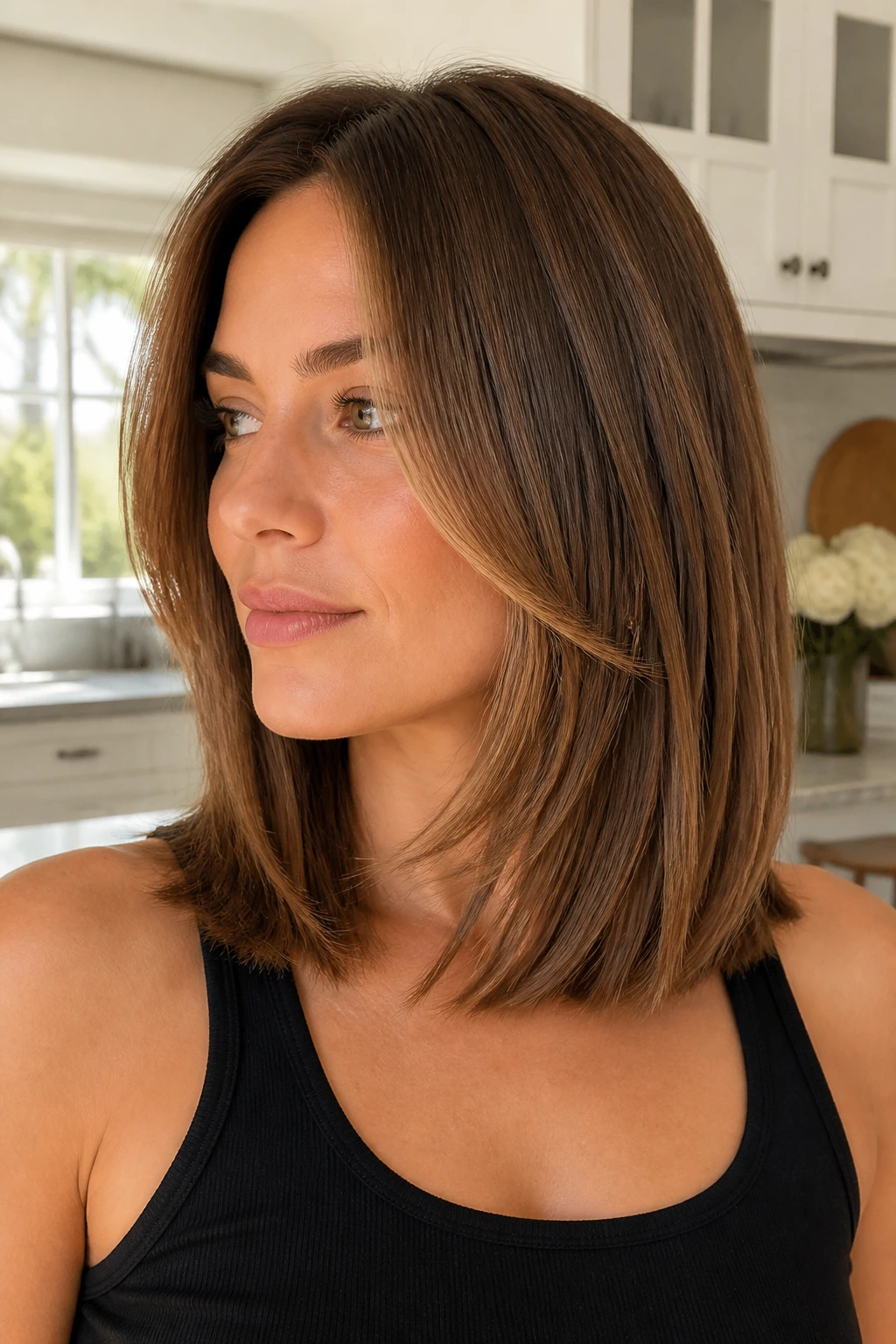
Trim rhythm matters more than people think. Feathering looks soft when the layer ends stay connected. Once the shortest face-framing pieces grow too far past their intended point, the whole cut can drift into a blunt shape or, worse, a messy one that lost its reason for being.
Trim schedule: Plan on a cleanup every 6 to 8 weeks if you want the layers to stay crisp. If you wear curtain bangs or a strong fringe, that front area may need a small trim every 3 to 4 weeks so it doesn’t drop into your eyes.
Wash pattern: Fine hair often looks better with more frequent washing because product buildup kills lift fast. Thick or coarse hair can usually go a little longer between shampoos, but feathered ends still need a clean base so they don’t clump.
Product reset: Clarifying shampoo every 2 to 4 weeks is useful if you use dry shampoo, mousse, or hairspray. Too much buildup near the root makes the feathering collapse. Keep conditioner mostly from the ears down if your hair tends to flatten.
Night care: A loose clip, a silk pillowcase, or a soft scrunchie helps the front pieces keep their bend. If you sleep hard on one side, expect the layers to lean that way in the morning — that’s not a flaw, just hair being hair.
If you color the hair, touch up the toner or gloss on the same rhythm as the trim when the shine starts looking muted. Feathered hair shows off tone shifts fast, and a flat color can make a good cut read tired.
Frequently Asked Questions
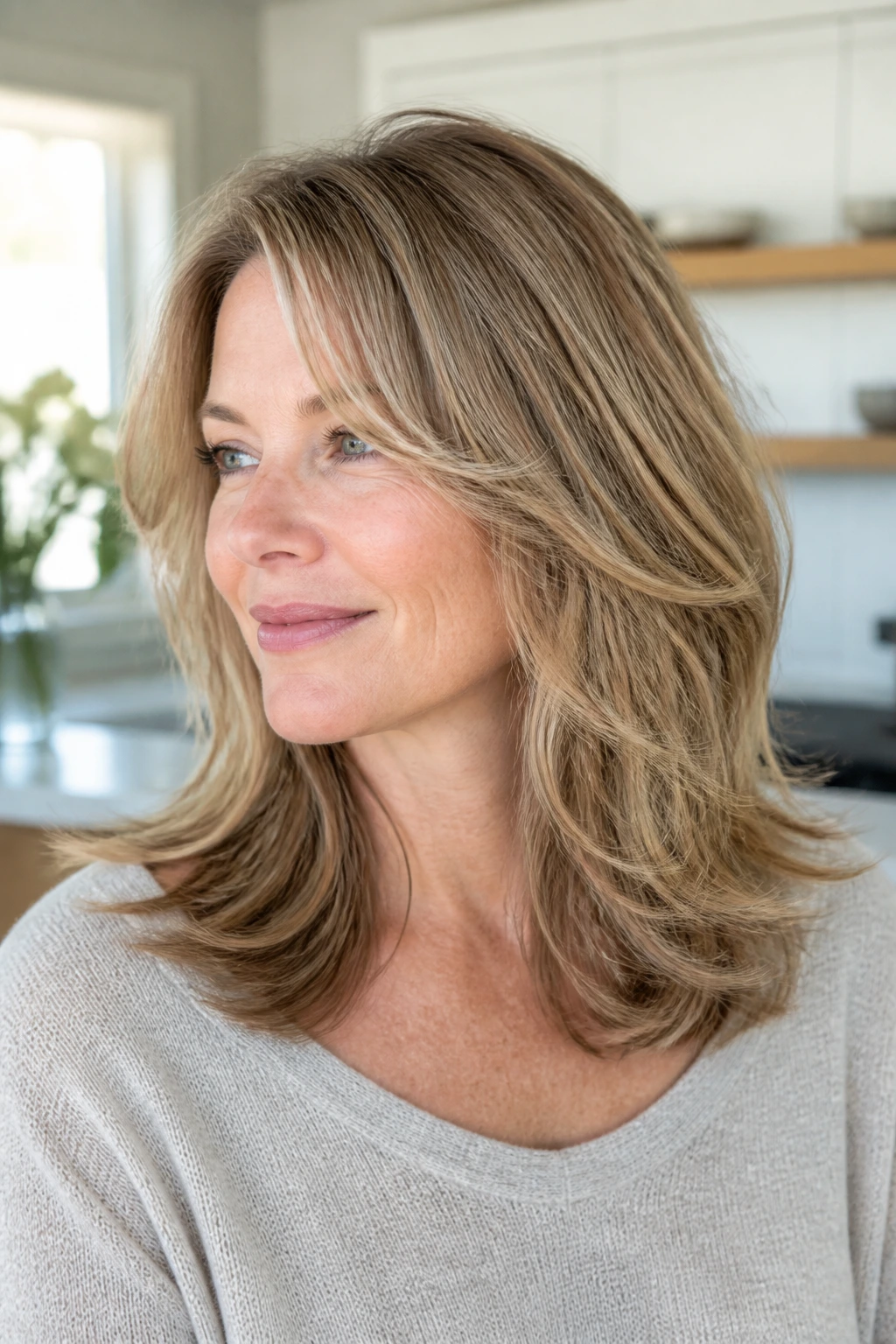
What is the difference between feathered layers and regular layers?
Feathered layers are softened at the ends so they taper into each other instead of landing in heavy steps. Regular layers can be chunkier or more obvious, while feathering usually looks lighter and more fluid around the face and ends.
Are shoulder-length feathered haircuts good for fine hair?
Yes, as long as the layers are kept longer and the bottom line stays fairly solid. Fine hair needs shape without too much removal of density, or the ends start to look thin and transparent.
Will feathering make thick hair look poofy?
It can, if the layers start too high or the stylist thins the ends too aggressively. Thick hair usually needs bulk removed through the mid-lengths and nape, not just the very bottom.
Can I wear this cut with curly or wavy hair?
Absolutely, but the cut should follow the pattern of the waves or curls. Dry cutting or curl-by-curl shaping usually gives a better result than cutting everything wet and hoping the shape returns later.
How do I style it without a round brush?
A flat iron or a large curling iron can still give the ends a bend, and you can air-dry the rest with a little mousse or curl cream. The goal is a soft turn at the front and bottom, not a perfectly round blowout every time.
How often should I trim it?
Most shoulder-length feathered cuts hold their shape for about 6 to 8 weeks before the layers start to drop. If you have curtain bangs or a face frame, those front pieces may need a quicker touch-up.
What should I ask for if I want soft feathering, not a shag?
Ask for a collarbone or shoulder-length perimeter, long face-framing layers, and minimal crown disruption. Saying “soft movement” is much safer than simply saying “feathered,” because that word can mean very different things in different chairs.
Does balayage make feathering stand out more?
Yes. Highlights or balayage land on the bends and edges of the layers, which makes the movement easier to see. The best placement usually follows the face frame and the ends that actually move.
The Shape That Keeps Its Swing
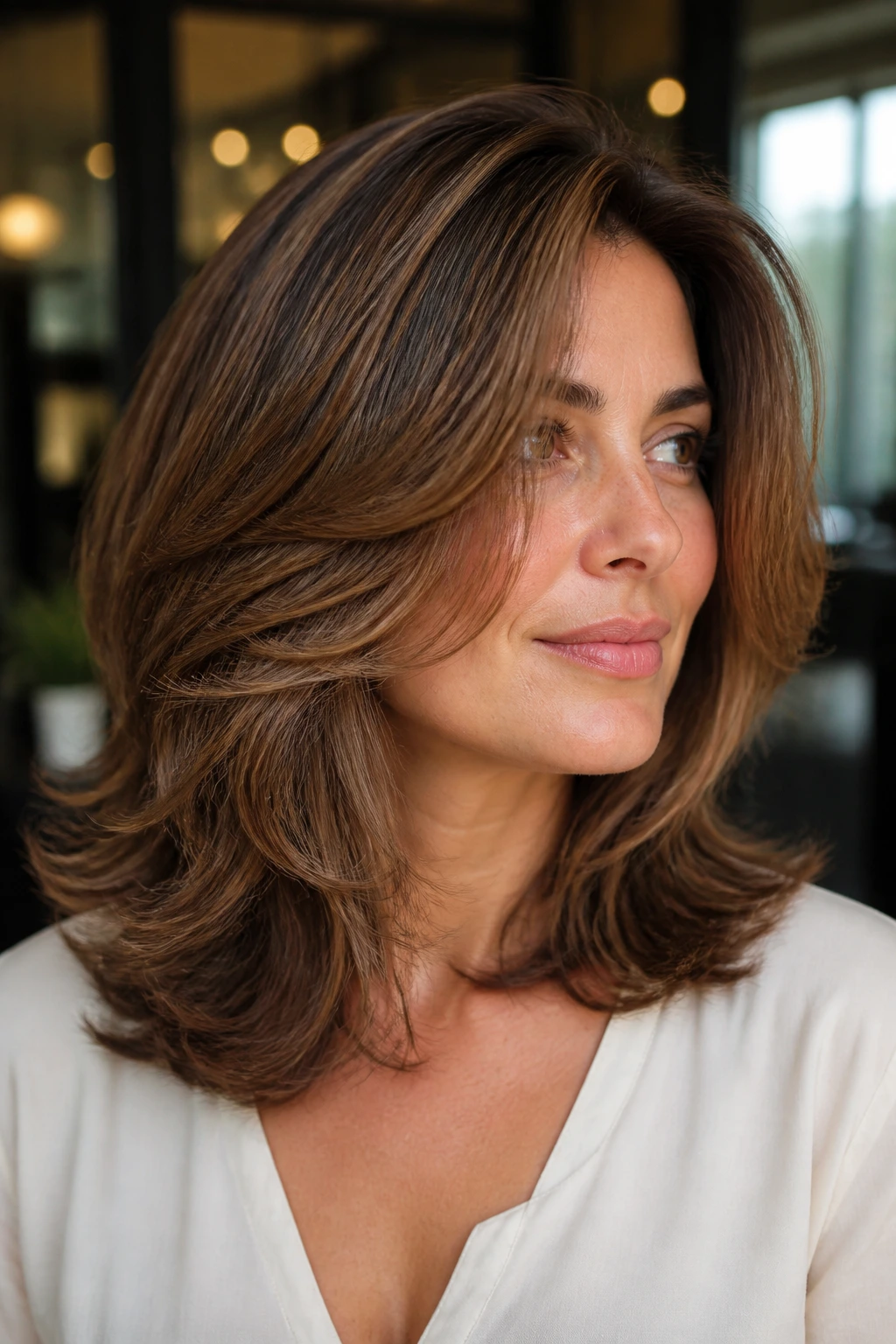
Feathered shoulder-length hair works because it gives you options without forcing the hair into one mood. It can look soft and blown out, air-dried and easy, or slightly flipped and retro, and the same haircut still behaves. That kind of flexibility is hard to beat, especially when the perimeter is strong enough to keep the whole thing from drifting apart.
If you want this cut to land well, bring a clear idea of where the length should sit and where the shortest layers should start. That one detail changes everything. The difference between a beautiful feathered shape and a puffy, over-layered mess is often just a couple of inches and one honest conversation in the chair.
