



Curly fade haircuts work when the barber respects shrinkage. That sounds like a small thing, but it’s the whole game. Curls do not sit still the way straight hair does. They rise, coil, and spread after they dry, and a fade has to leave room for that movement without turning the sides into a fuzzy blur.
Get the balance wrong, and you see it fast: a blunt shelf behind the temple, a fade that disappears into the top too early, or a shape that looks sharp in the chair and lopsided by lunch. Get it right, and the haircut does something much nicer. The curl pattern stays alive. The sides stay clean. The head shape looks intentional from every angle.
The best versions are never only about removing bulk. They’re about framing texture. A low fade can calm loose curls and make them look fuller. A high skin fade can make tight coils sit like a crown. A drop fade can follow the natural curve of the head so the whole cut feels softer around the back. Once you start seeing the difference, you stop asking for “a fade” and start asking for the right fade.
Why These Curly Fade Haircuts Keep the Bounce
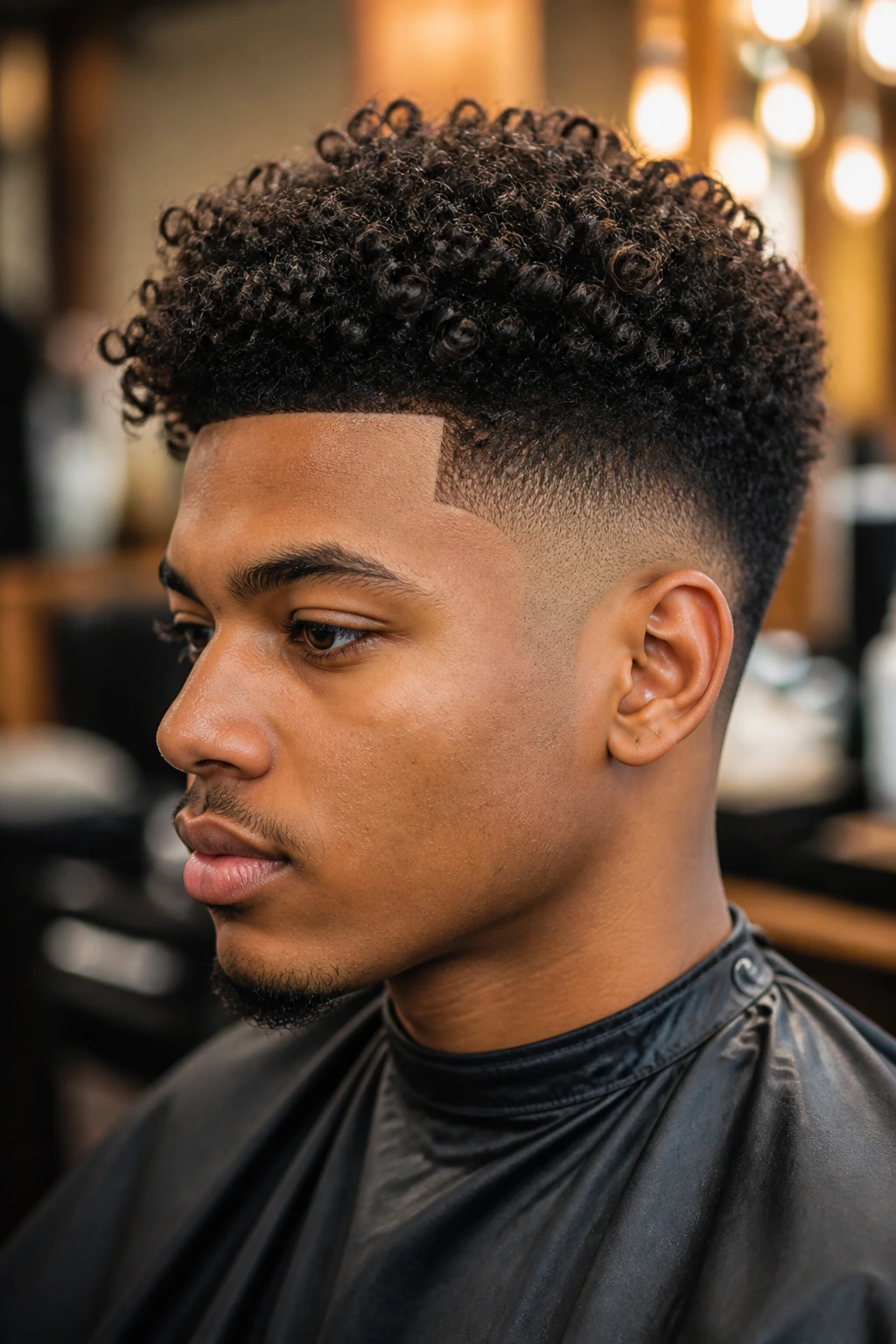
- They let the curls stay the star: The top keeps enough length to spring, while the sides get cleaned up so the shape doesn’t puff out at the ears.
- They work with shrinkage instead of fighting it: A barber who leaves the right length on top knows curls often tighten by half an inch or more once they dry.
- The fade changes the mood instantly: A low fade reads softer, a mid fade looks balanced, and a high skin fade gives the cut more contrast.
- They make thick hair easier to wear day to day: When the bulk is removed near the temples and nape, the haircut feels lighter without losing texture.
- They age well between visits: Even when the line-up softens a bit, a good curly fade still looks shaped instead of overgrown.
1. Low Curly Fade with Soft Temple Blend
This one is the safest place to start if you like your curls to look full, not chopped down to the scalp. The fade begins low around the ears and nape, then melts softly into 2 to 4 inches of top length. On loose 3A curls, it reads clean and easy. On denser 3C hair, it keeps the sides from turning into a triangle by the end of the day.
Why It Works
A low fade keeps the eye near the curl pattern instead of dragging attention straight to the scalp. That matters when your hair has a lot of movement, because the fade should support the shape, not fight it. The temple area stays soft, which helps the haircut look grown-in rather than overly clipped.
Ask for the fade to start just above the ear tip and keep the transition gradual. If your curls shrink a lot, leave the top a touch longer than you think you need. Curls dry shorter. Always.
- Best guard range: #1.5 to #3 on the lower blend
- Top length: 2.5 to 4 inches for a springy finish
- Best finish: curl cream with a light hold gel
- Barber note: keep the temple corners rounded, not squared off hard
A small amount of diffusing does more here than a heavy product load. Too much cream weighs down the top and makes the fade feel heavier than it should.
2. Mid Curly Fade with Rounded Crown
A mid curly fade is the haircut I reach for when someone wants the cut to look balanced from every side. The fade sits between the temple and the parietal ridge, so the top has room to breathe without the sides looking bulky. It’s a clean shape, but not a severe one. That matters.
The rounded crown is the real detail. Instead of cutting the top flat, the barber keeps the upper shape slightly domed so the curls stack naturally. That gives the haircut a fuller silhouette, especially if your curls are medium density and tend to lean forward. A flat top on curly hair can look boxy in a hurry. A rounded crown avoids that.
This cut works best when the top is left around 3 inches and the fade is blended with a #1 or #1.5 near the lower section. If you wear glasses, it’s a nice choice because the fade keeps the area around the temples clean without making the face look too exposed. I also like it on oval and square faces because the curve on top softens the angles a little.
3. High Skin Fade with Tight Coil Top
Why does a high skin fade look so good on tight coils? Because the contrast does half the styling for you. When the sides go down to skin and the top stays dense, the coils look like they’re floating above the head shape. It’s crisp. A little dramatic. Never boring.
The trick is not to overcut the top. Tight coils can lose their shape fast if the barber gets impatient with the clippers. Keep 1.5 to 3 inches on top, then let the fade rise high enough to make that coil texture pop. If the top is too short, you lose the bounce. If it’s too long, the silhouette can start to look heavy instead of sharp.
How to Wear It
- Use a sponge or curl pick if your coils need extra separation.
- A pea-size amount of styling cream is enough for short tops.
- Keep the line-up sharp only if your hairline is naturally strong; a harsh line on weak edges looks forced.
- Best for 4A to 4C hair that holds shape well after a wash.
This is the cut for people who like a clean outline and do not mind a barber visit every couple of weeks. It is not low maintenance. But it photographs like it means business.
4. Drop Fade with Dense Curls
If your curls puff out at the ears by the second day, a drop fade is the fix people miss too often. The fade dips lower behind the ear and follows the curve of the head, so the haircut feels shaped instead of chopped off in a straight line. That slight drop matters more than it sounds like it should.
Dense curls need room in the back. They also need the nape cleaned up with some honesty, not hacked into a blunt block. A drop fade gives you both. The top can stay 3 to 5 inches if you want length, but the key is the contour around the back of the head. That curve keeps the style from turning into a square.
A barber should blend the sides carefully so the fade doesn’t look like a step. If the blend line sits too high, the hair will look like it has a shelf. If it sits too low, the haircut loses edge. The best drop fades sit right in the middle and make thick curls feel deliberate. Not bulky. Deliberate.
5. Burst Fade Curly Mohawk
This cut has attitude, and I mean that in the useful sense. The burst fade curves around the ear in a semi-circle, leaving the center strip of curls longer so the shape has height and movement. It’s the kind of style that looks strongest when the curls are lively, not flattened out.
The mohawk strip does not have to be extreme. A softer version with 2 to 4 inches on top and a tight burst around the ear can look just as bold as a tall one, only easier to wear. I prefer that approach unless the hair is very thick and can support a taller ridge without collapsing. The wrong version gets floppy in the middle. The right version keeps lift from front to back.
This is a good cut if you like a barbered shape that still shows off your natural texture. It works especially well with a matte curl cream or a little mousse, because shine can make the strip look narrower than it is. Keep the sides tight. Let the center breathe. That’s the whole point.
6. Temple Fade with Crisp Line-Up
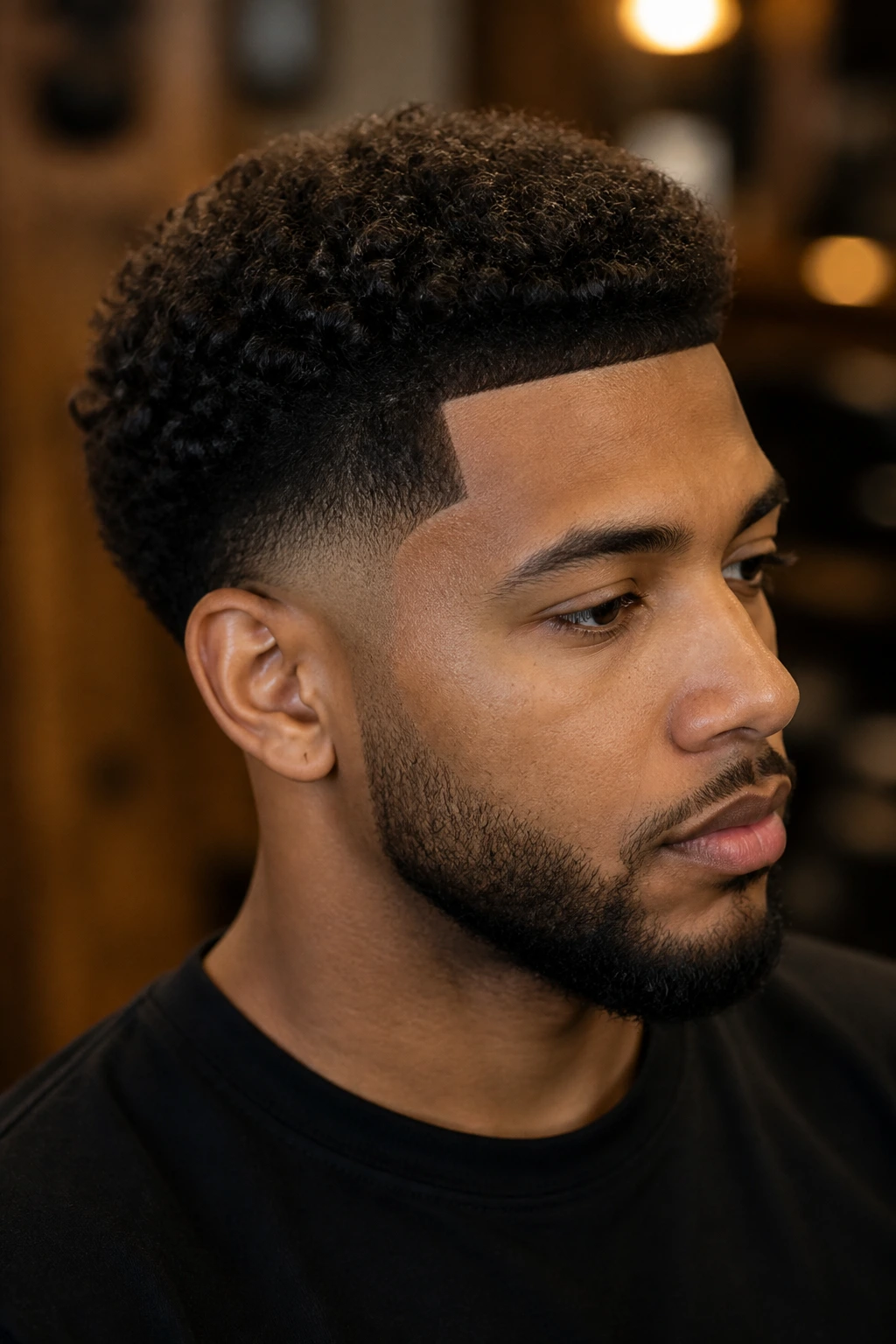
A temple fade is all about restraint. Instead of taking the sides down hard, the barber cleans up the temples and sideburns while keeping more weight through the lower side. It’s a smart cut for curly hair that already has shape, because the haircut doesn’t try to overpower the texture.
Compared with a full skin fade, the temple fade feels calmer. The outline still looks neat, but the hair grows out more gracefully. That’s one reason I like it for people who don’t want to visit the barber every 10 days. The haircut can hold for a little longer before it starts looking shaggy.
The line-up matters here. Keep the forehead edge sharp only if your hairline is naturally dense and even; otherwise, a softened edge looks better and ages better. I’d ask for the temples to be cleaned with a #0.5 or trimmer finish, then leave the top curl length untouched except for shape. It’s one of the few curly fades that can look polished without looking severe.
7. Curly Afro Fade
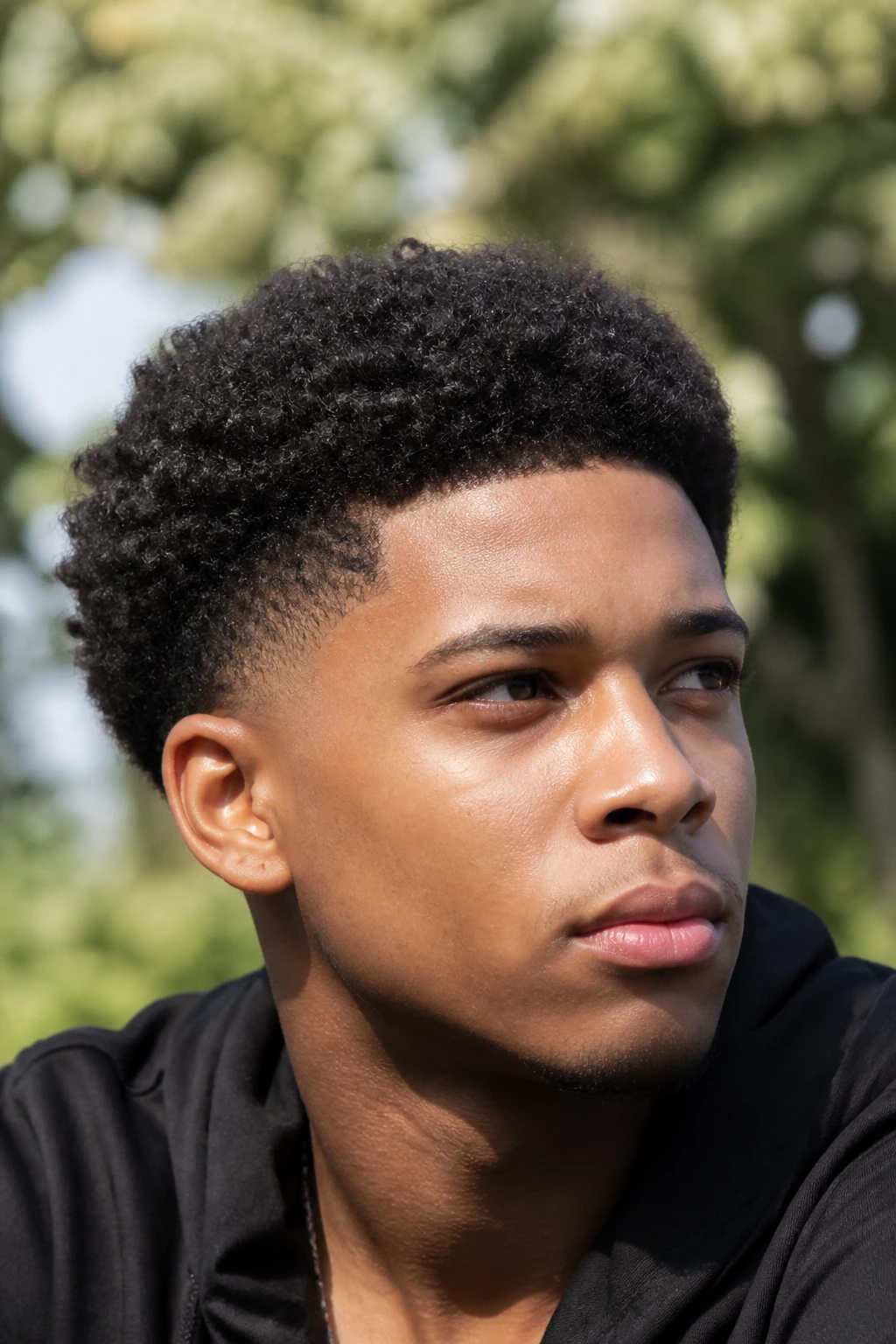
The curly afro fade is what happens when you stop fighting volume and start framing it. The top keeps its round, natural shape, while the sides and back taper down enough to stop the silhouette from getting too wide. It’s a beautiful cut on hair that wants to stand up and out.
The best afro fades keep the crown full and the edges rounded. A hard box shape can work on some heads, but I usually prefer the curve because it lets the curls read as soft instead of architectural. That little difference changes the whole mood of the haircut. Round looks natural. Boxy looks engineered.
This cut usually needs a bit more shaping than a typical fade. The barber should trim the outside shape with shears, then blend the sides with clippers so the perimeter stays even. If the top is too carved in, the haircut loses that honest, airy bounce. Leave enough length for the curls to move. That’s where the charm lives.
8. Shadow Fade with Medium Ringlets
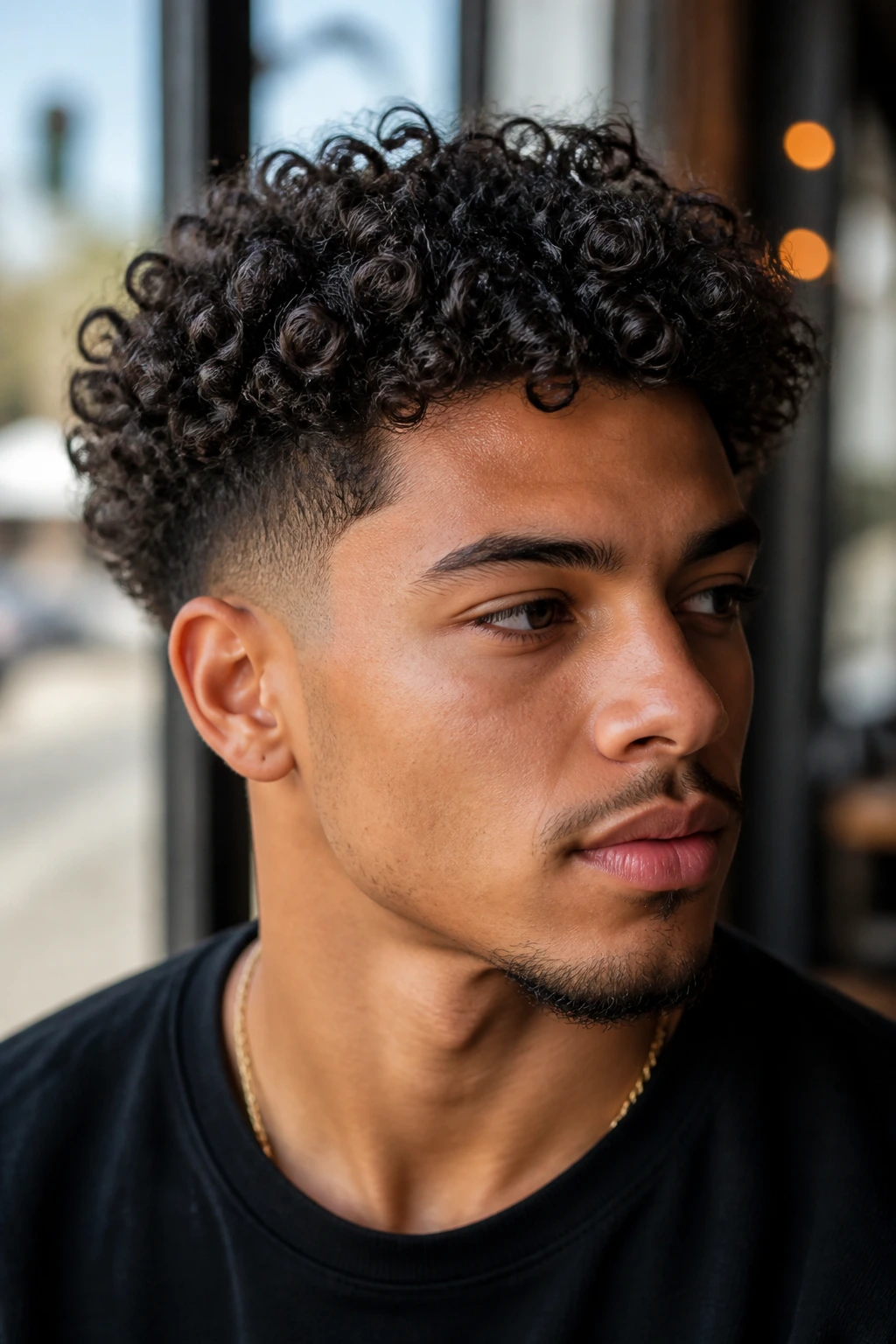
A shadow fade is the quiet cousin in this group. Instead of disappearing straight to skin, it keeps a soft haze of hair on the sides, which is ideal when your ringlets are medium tight and you want the cut to feel gentle rather than hard-edged. It’s a nice option for people who like shape but don’t want the scalp fully exposed.
Why choose shadow over skin? Because medium curls often need a little visual softness at the bottom of the cut. A shadow fade gives you that. The blend is cleaner than a taper, but it does not shout. That can be a better match for ringlets that already have plenty of movement.
How to Use It
- Ask for the fade to stay soft at the lowest point, usually with a #0.5 or #1 guard.
- Keep the top at 2.5 to 3.5 inches for defined spirals.
- Use a light mousse or foam if your curls flatten when dry.
- Best if you want a cut that looks tidy even when product is minimal.
The shadow fade is underrated because it does not try to impress in one glance. It just holds up well.
9. Taper Fade with Sponge-Defined Coils
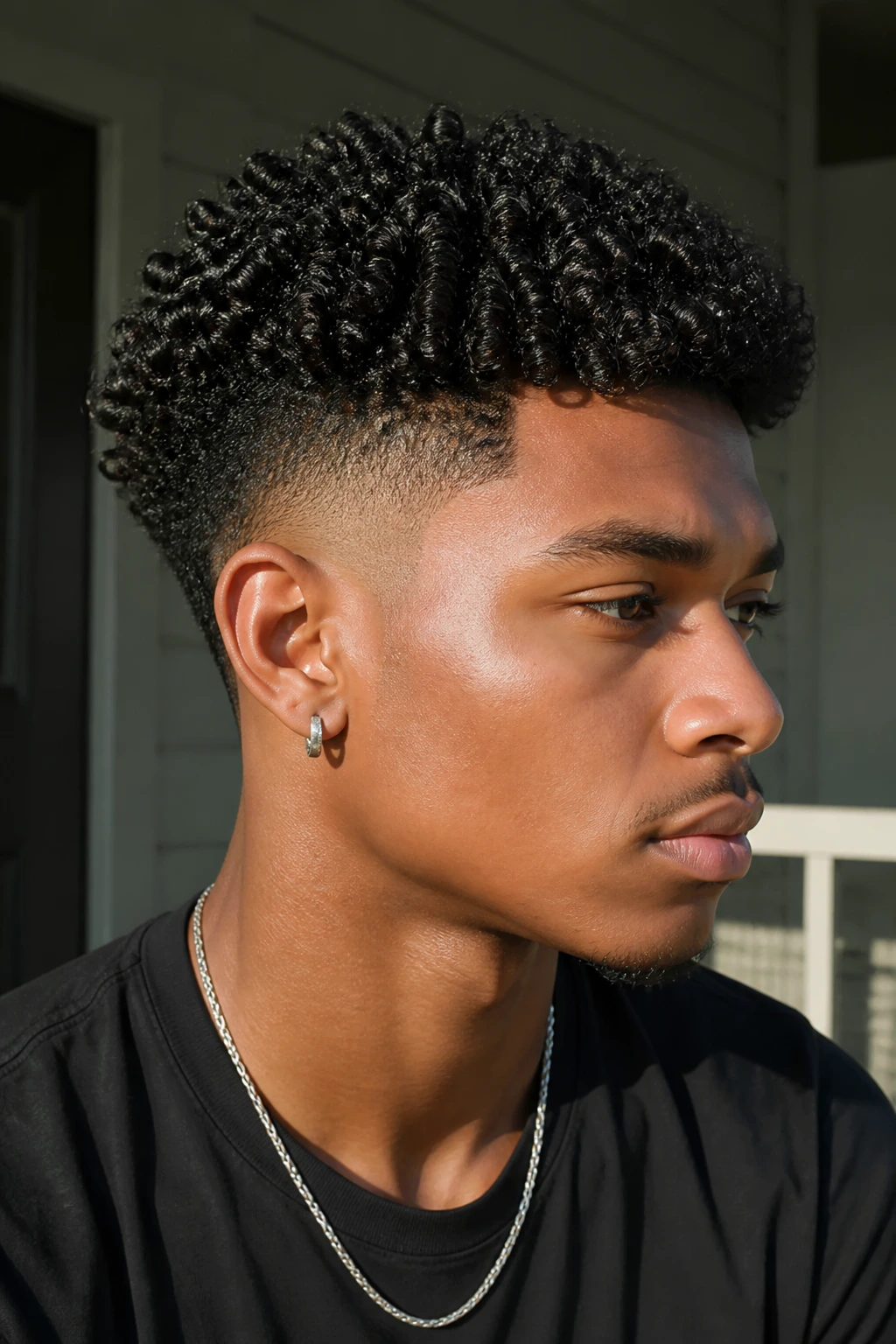
This one is for the person who likes their hair to look shaped, not shaved. The taper fade only cleans up the edges around the sideburns, temples, and nape, while the sides keep more fullness. On coily hair, that means the top stays dominant and the shape keeps a natural flow.
A sponge helps here because it gives the coils more separation without turning them frizzy. I’d use it on damp hair with a small amount of curl cream, then stop before the hair starts to feel sticky. Too much product kills the definition. Too much sponge work can rough up the cuticle and make the top look dry. There’s a sweet spot, and it’s not far from minimal.
- Best hair type: 4A to 4C coils
- Top length: 1.5 to 3 inches
- Fade detail: only the edges are tapered, not the whole side
- Best styling pair: curl sponge + leave-in conditioner
This cut works because it gives coily hair the structure it already wants. It doesn’t flatten the texture. It just trims the frame.
10. Bald Fade with Curly Fringe
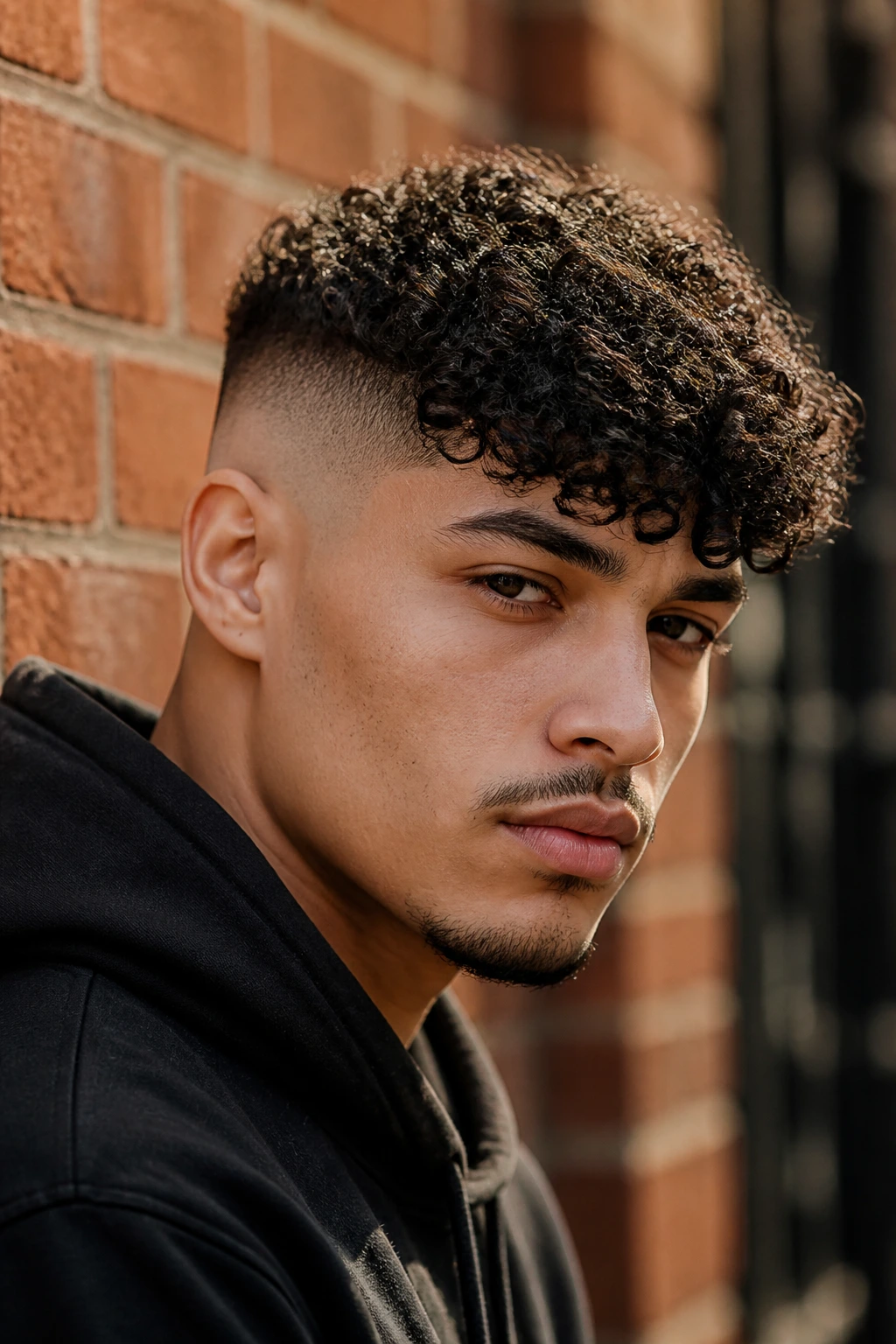
A bald fade with a curly fringe is a sharp choice when you want the front to do the visual work. The sides go all the way down to skin, then the curls fall forward in a short fringe that softens the forehead. It’s one of those cuts that looks cool even when the styling is minimal.
The fringe should be cut with care. Too much length and it hangs in the eyes. Too little and the whole point disappears. I like a front length of about 2 to 3 inches, cut so the curls can sit forward without forming a helmet. The fade underneath has to be clean enough that the fringe looks like a design choice, not a patch of leftover hair.
This is a strong option if you’ve got a longer face or a high forehead and want a bit of balance. It’s also useful for thick curls that need direction. A tiny bit of curl cream, scrunched through the fringe, is enough. Skip the heavy gel unless you want the front to look stiff.
11. Curly Crop with Short Sides
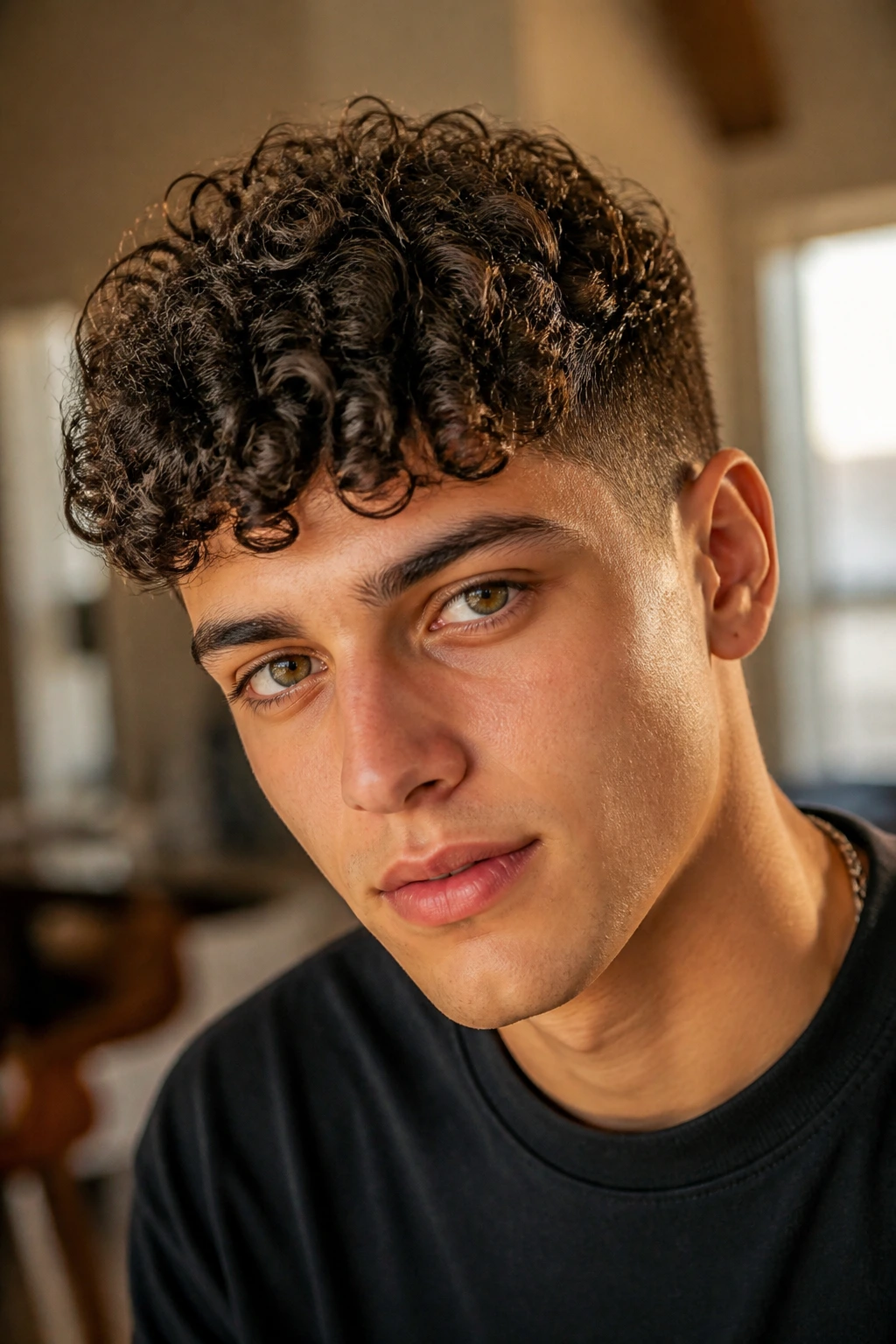
The curly crop is a blunt, practical haircut that still has shape. Think short sides, short top, and enough curl left up there to show texture instead of fuzz. It’s not flashy. That’s the appeal. It wakes up fast and behaves in bad weather.
The crop works best when the top is kept around 1.5 to 2.5 inches and the fringe is cut with slight texture rather than one straight line. If the curls are cut too evenly, the front can puff. A barber who point-cuts the fringe a little will usually get a better result. It gives the top movement and keeps the edge from feeling too heavy.
I like this cut on people who want their curls but do not want to spend much time styling them. A quick rinse, a dab of cream, and a finger-comb is usually enough. It’s not the haircut for someone chasing height. It is the haircut for someone who likes clean shape and low fuss.
12. Side-Part Curly Fade
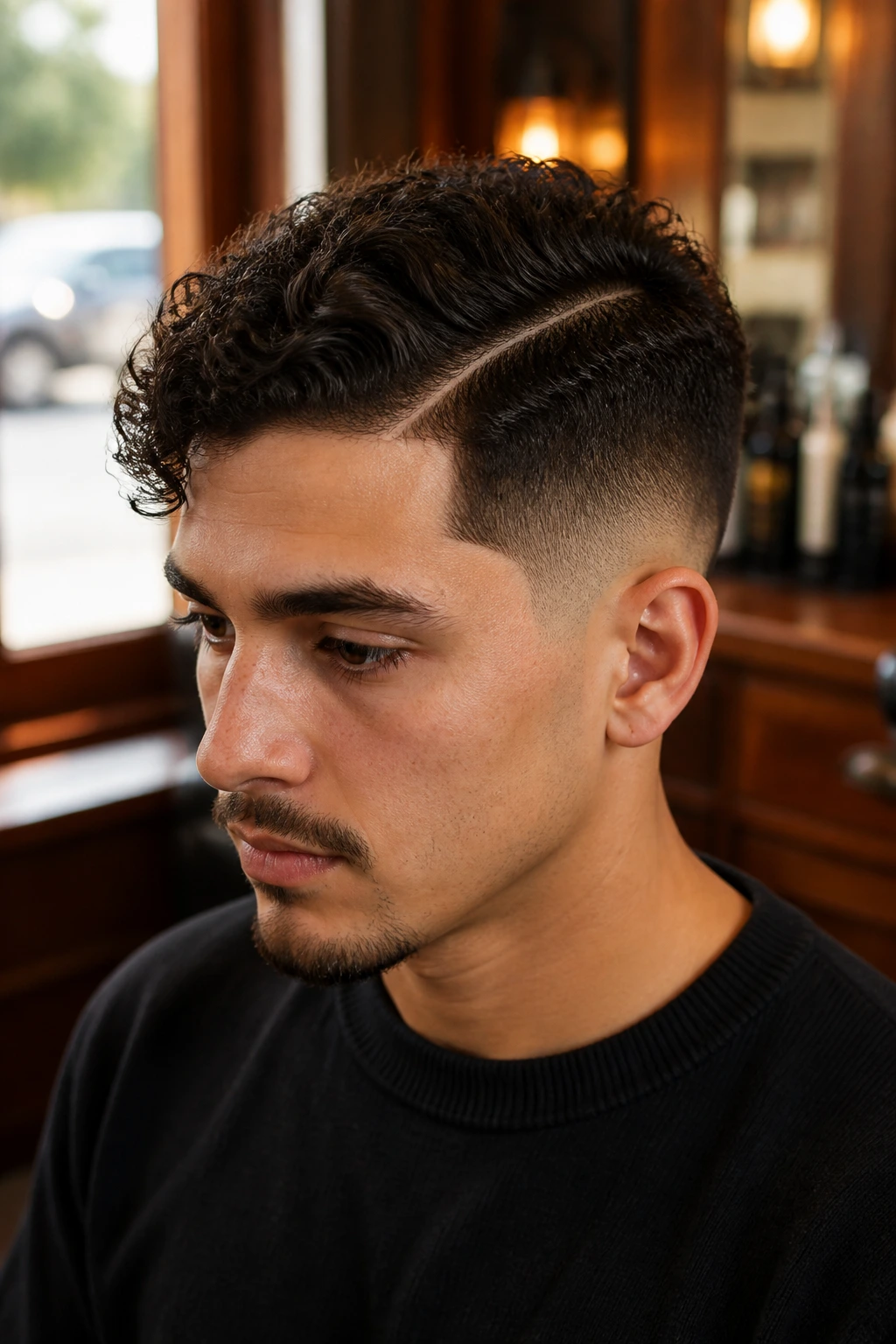
A side-part curly fade is a little old-school, which is exactly why it works. The part gives the curls a clear direction, and the fade keeps the lower half from getting bulky. The result looks controlled without losing softness on top.
The part should be real, not fake. That means the barber should work with the way your hair naturally falls. Forcing a deep part on hair that fights it only creates extra product work in the morning. A softer side part, especially on loose to medium curls, looks more believable and ages better as the hair grows out.
This style is strongest when the top is left longer on one side and gently tapered down toward the part. A little cream through the longer side helps the curls settle. Use a comb only if you need to set the part line. After that, fingers are safer. They keep the curl pattern from getting too stretched or too tidy.
13. Curly High Top Fade
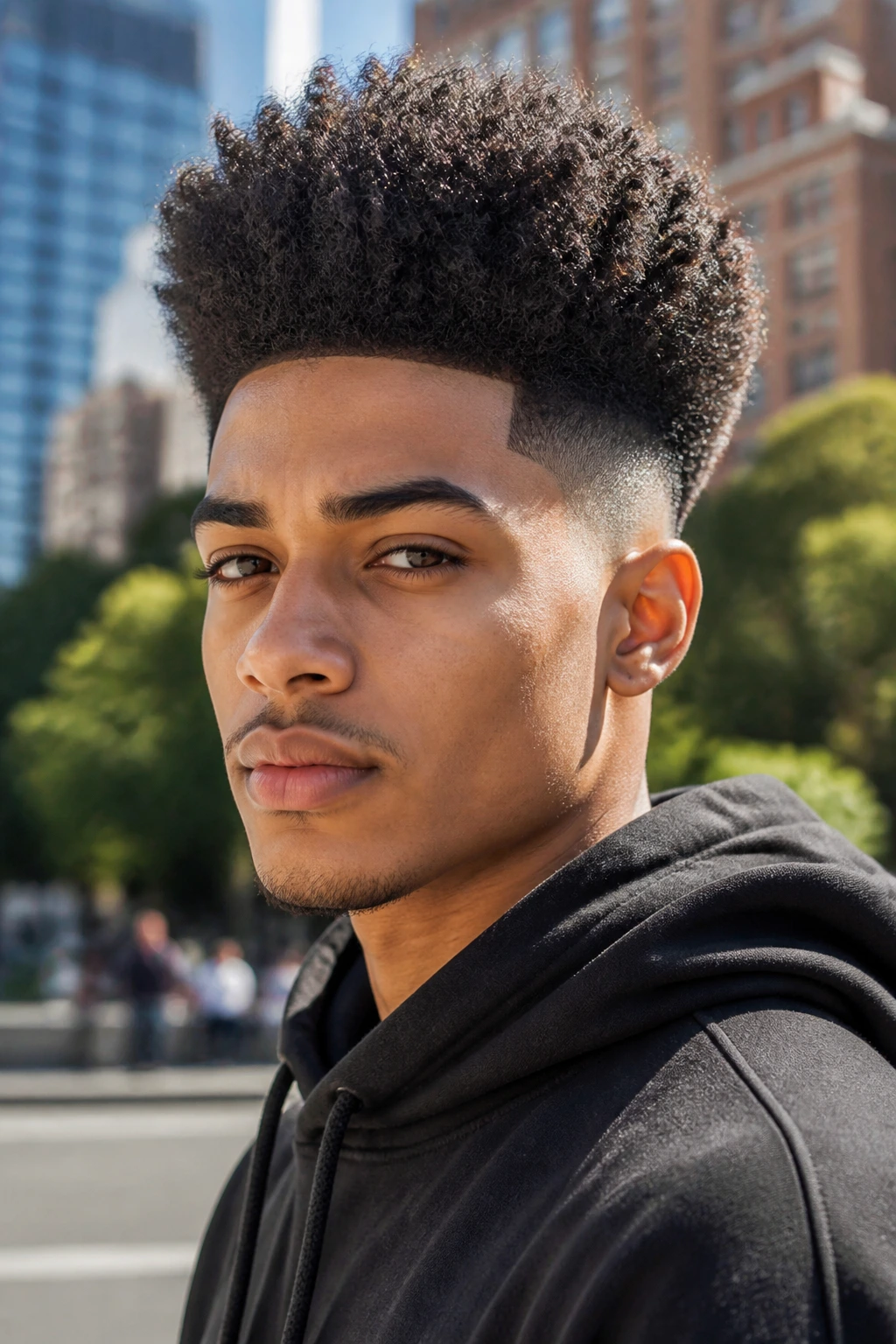
If you like height, the curly high top fade gives you a lot to work with. The top stays tall and rounded, while the sides drop aggressively so the curls stand up in a clean column. It’s bold, but the shape is clean enough to wear every day.
The barber has to respect the head shape here. A high top that ignores the natural roundness of the skull can look blocky from the side. A better version follows the crown slightly and keeps the top balanced front to back. On thick curls, that means leaving enough density so the top doesn’t collapse after a few hours.
This cut usually looks best with tight coils or dense curls that can hold height. A pick can lift the roots after drying, and a little matte product keeps the top from shining too much. If you want the haircut to stay crisp, the fade line needs regular cleanup. The silhouette depends on that contrast.
14. Curly Undercut with Clean Disconnect
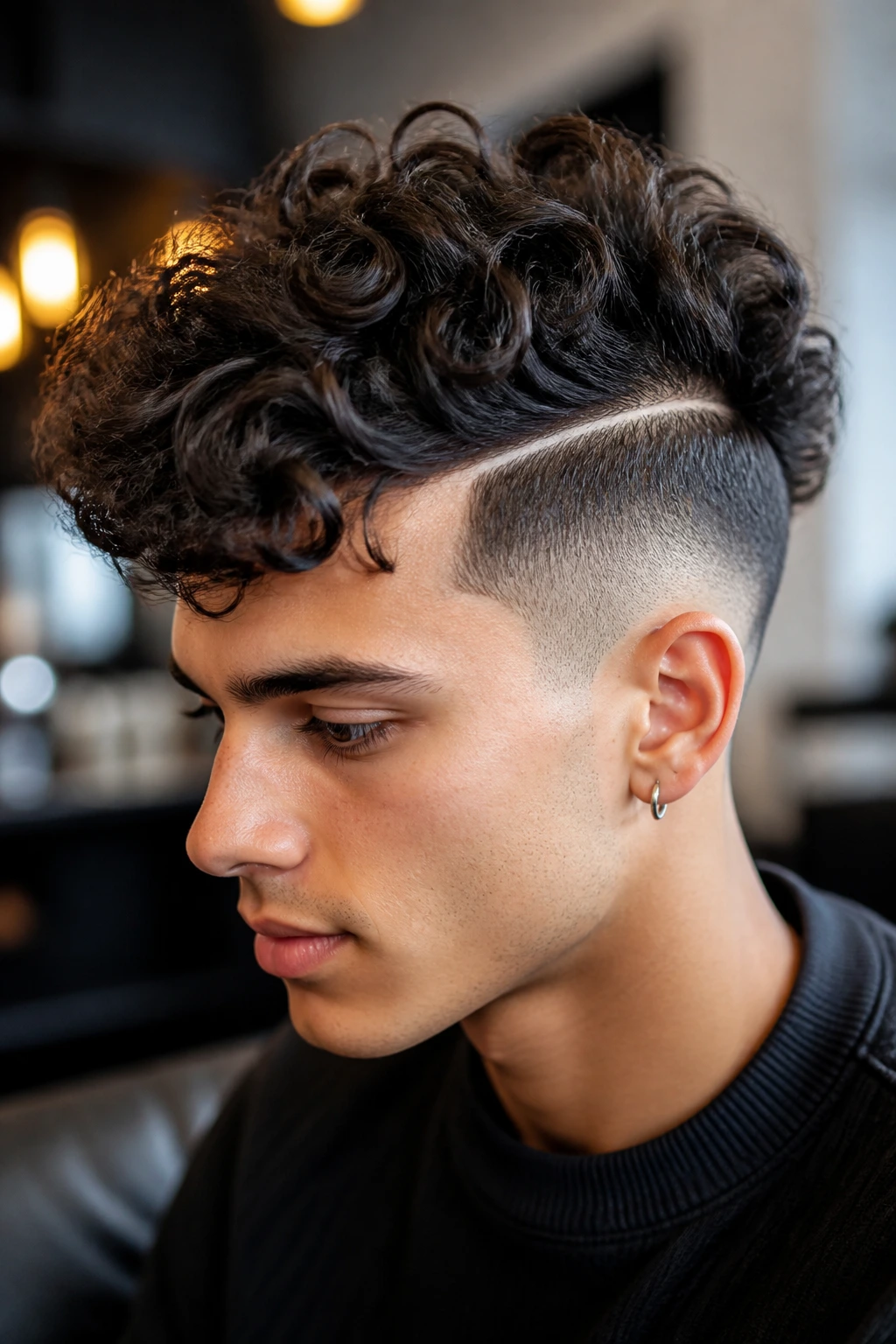
A curly undercut with a clean disconnect is not pretending to be subtle. The sides are taken down short, sometimes very short, and the top stays long enough to look like a separate shape. That contrast is the whole point. It can be dramatic in a good way.
This cut suits thick curly hair because the undercut removes a lot of bulk fast. If your curls are dense and heavy at the temples, it gives the top room to move without the side volume swallowing the face. I like it especially when the top is left around 4 to 6 inches and styled with a loose side sweep or pushed back slightly.
The downside is grow-out. You need to keep the separation clean, or the undercut starts looking accidental. That means trims matter. If you are not going back to the barber often, a softer fade may be kinder. But when the disconnect is fresh, the shape has serious presence.
15. Curly Mullet Fade
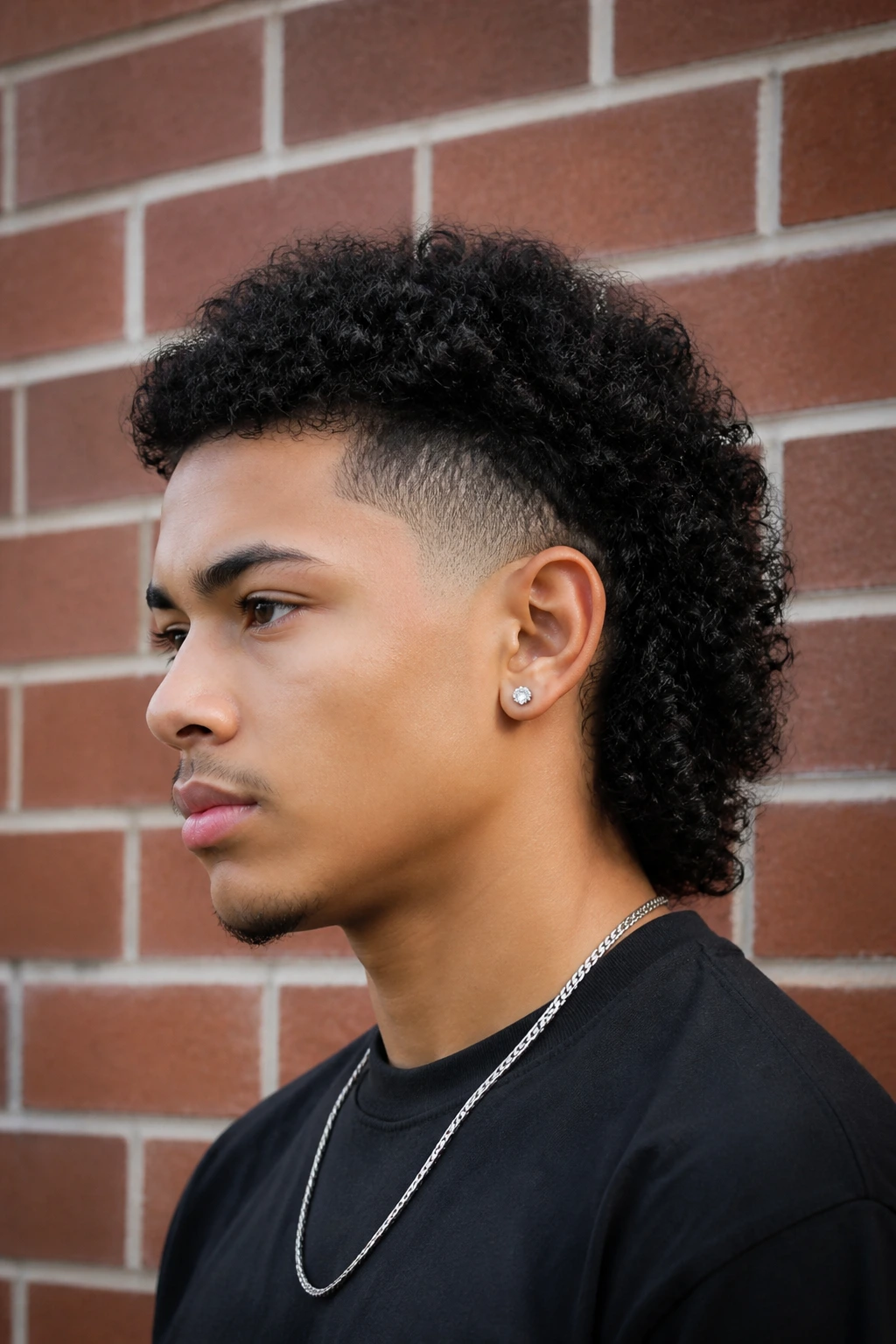
The modern curly mullet fade is better than its reputation. It is not a joke haircut when it’s cut well. The front and sides stay controlled, while the back keeps more length so the curls can hang and move. On the right head shape, it looks sharp, a little rebellious, and much more wearable than people expect.
The fade around the temples keeps the front honest. The longer back gives the curls a place to do something interesting instead of sitting in a uniform dome. If the back is shaped with shears, it can follow the neck nicely and avoid that ragged tail look that ruins the whole cut.
I would not push this cut on someone who wants a clean, conservative style. It needs a bit of confidence. But if your curls have texture and your neck length is balanced, the result can be excellent. Keep the top and back connected with a gradual transition, not a hard shelf. That is where the haircut usually goes wrong.
16. Scissor-Top Curly Fade
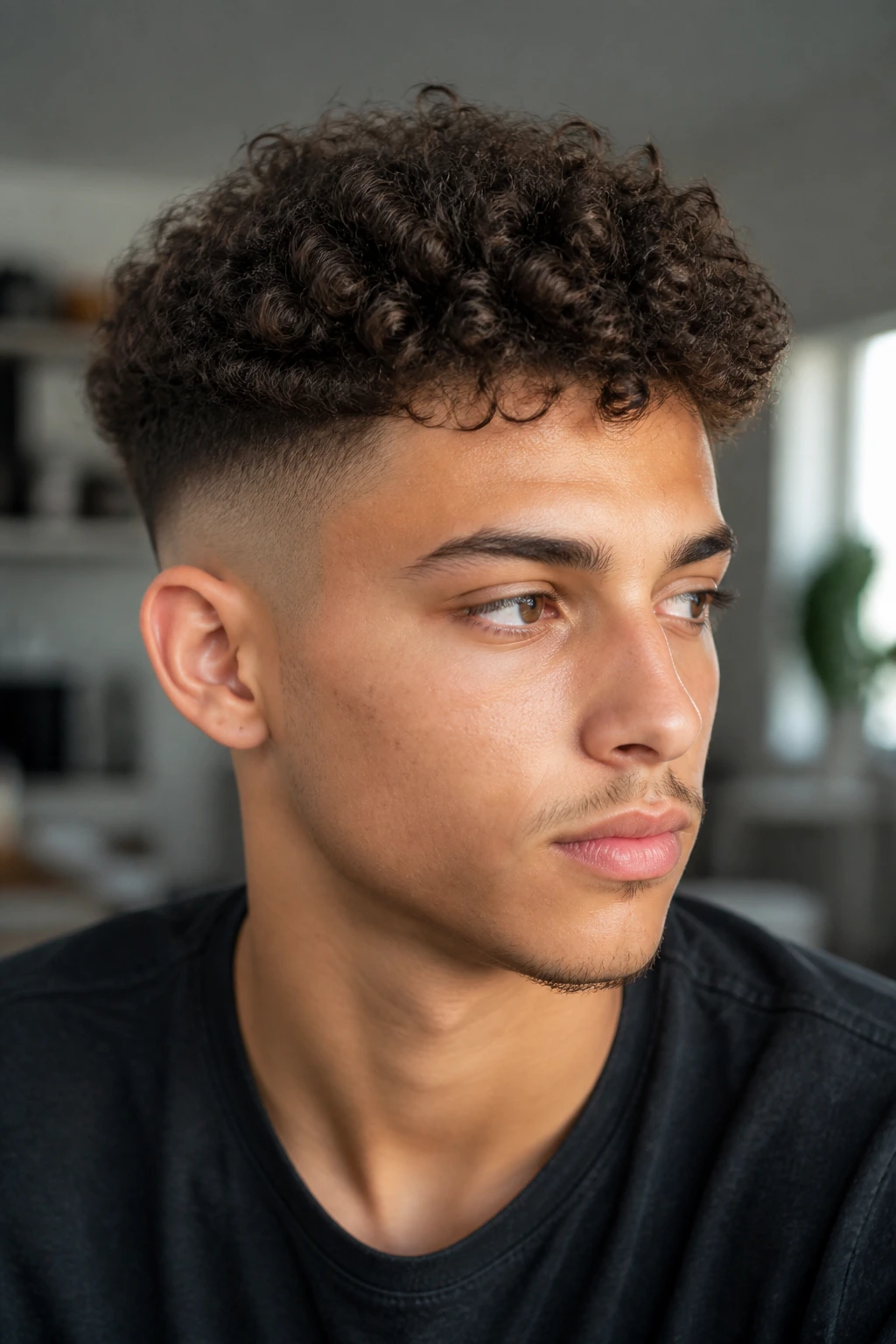
A scissor-top curly fade is the answer for anyone who hates that clipped, too-even finish some curly fades get. The top is shaped mostly with shears, which keeps the curl pattern irregular in a good way. The fade below it still cleans up the sides, but the top feels softer and more natural.
This method is especially useful for looser curls and waves. Clippers can make that kind of hair look overly neat or a little flat. Scissors preserve movement. They also let a barber remove weight without chopping every curl to the same length, which matters when the top grows in different directions.
If you want a haircut that air-dries with less drama, this is a strong choice. Ask for a scissor-over-comb finish on the upper sides if your barber works that way. It gives a smoother transition and helps the fade blend into the curl pattern instead of stopping under it.
17. Low Burst Fade with Textured Top
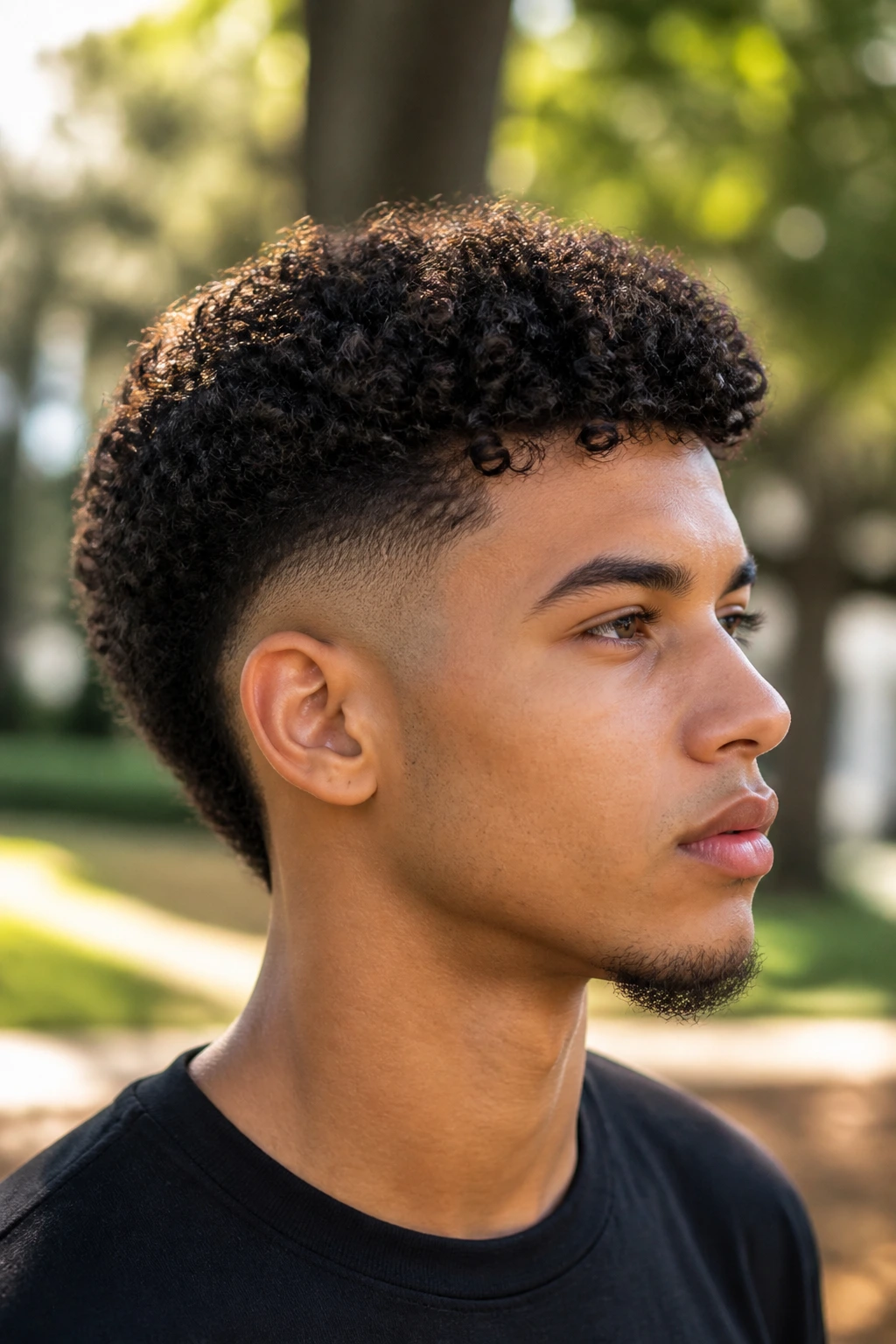
A low burst fade is one of those cuts that quietly solves shape problems. The curve around the ear gives the haircut a nice bend, while the low placement keeps the style from becoming too aggressive. Add a textured top, and you get a cut that feels lively without shouting.
The texture on top should be visible, not shredded. I like point-cut layers here because they separate the curls enough to show movement while keeping the overall mass under control. Too much thinning can make curly hair frizz up, which defeats the point. Keep the top between 2.5 and 4 inches depending on curl type.
What Makes It Work
- The burst curve keeps the ear area tidy.
- The low fade makes the top look fuller.
- The textured top stops the haircut from looking flat.
- A light diffuser pass helps the curls set into the curve.
This is one of the easiest curly fade haircuts to wear if you want shape but hate a severe outline. It feels active, not stiff.
18. French Crop Curly Fade
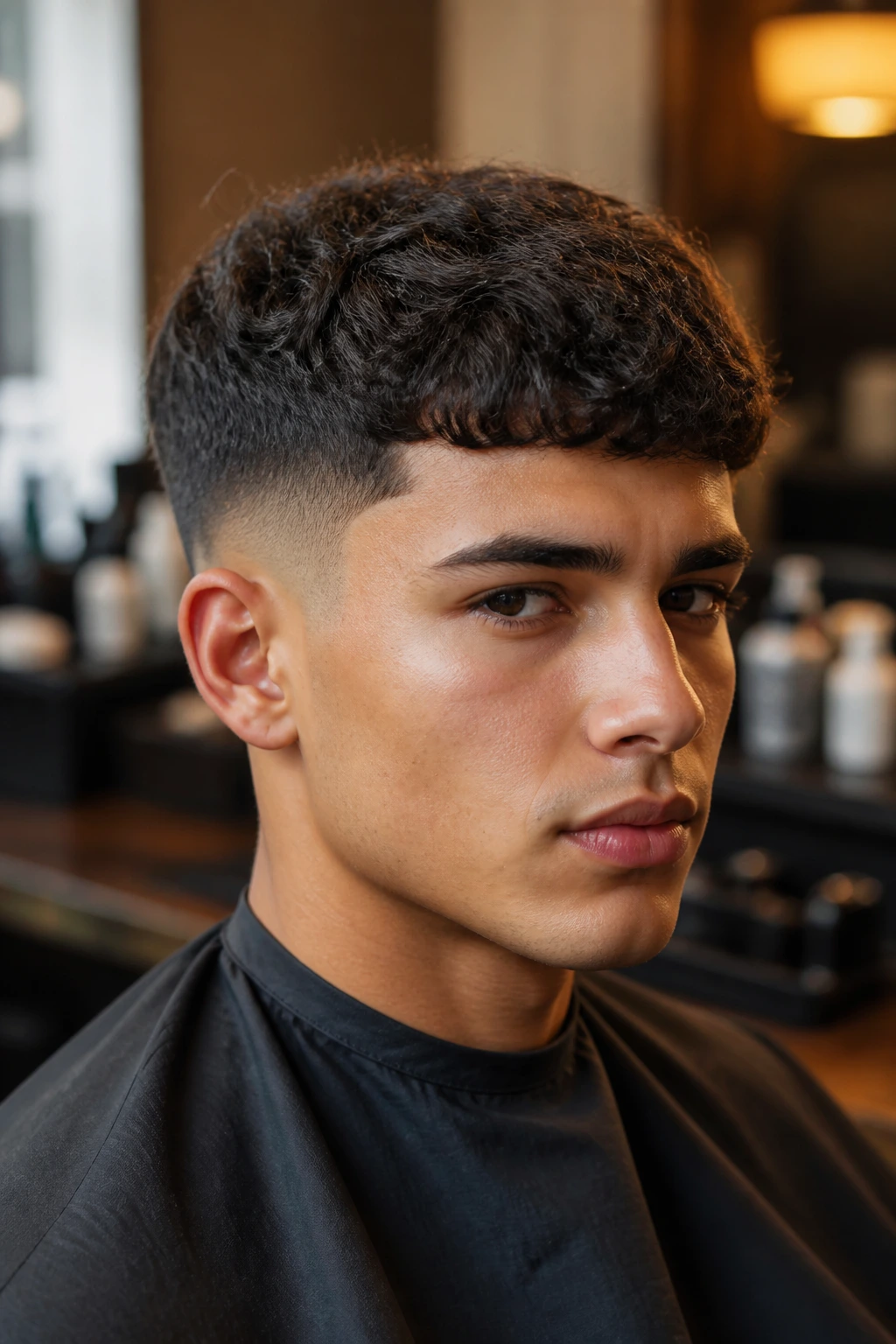
A French crop on curly hair can be excellent if the barber respects the fringe. The crop keeps the top short, the fringe slightly forward, and the fade neat around the sides. It is neat in a very practical way. No extra drama. No heavy styling routine.
The key is texture. If the fringe is cut as one blunt line, curly hair can puff up in the wrong place. A few subtle snips with the point of the shears make the front sit better. That little bit of irregularity helps the curls fall in a softer line instead of jumping straight up.
This style suits people who want a haircut they can wear in a hurry. A small amount of matte cream or light paste is enough. If the curls are loose, you can even wear it nearly product-free and let the natural bend do the work. The fade underneath keeps it tidy when the top is a little messy, which is half the appeal.
19. Shape-Up Fade with Full Front Curls
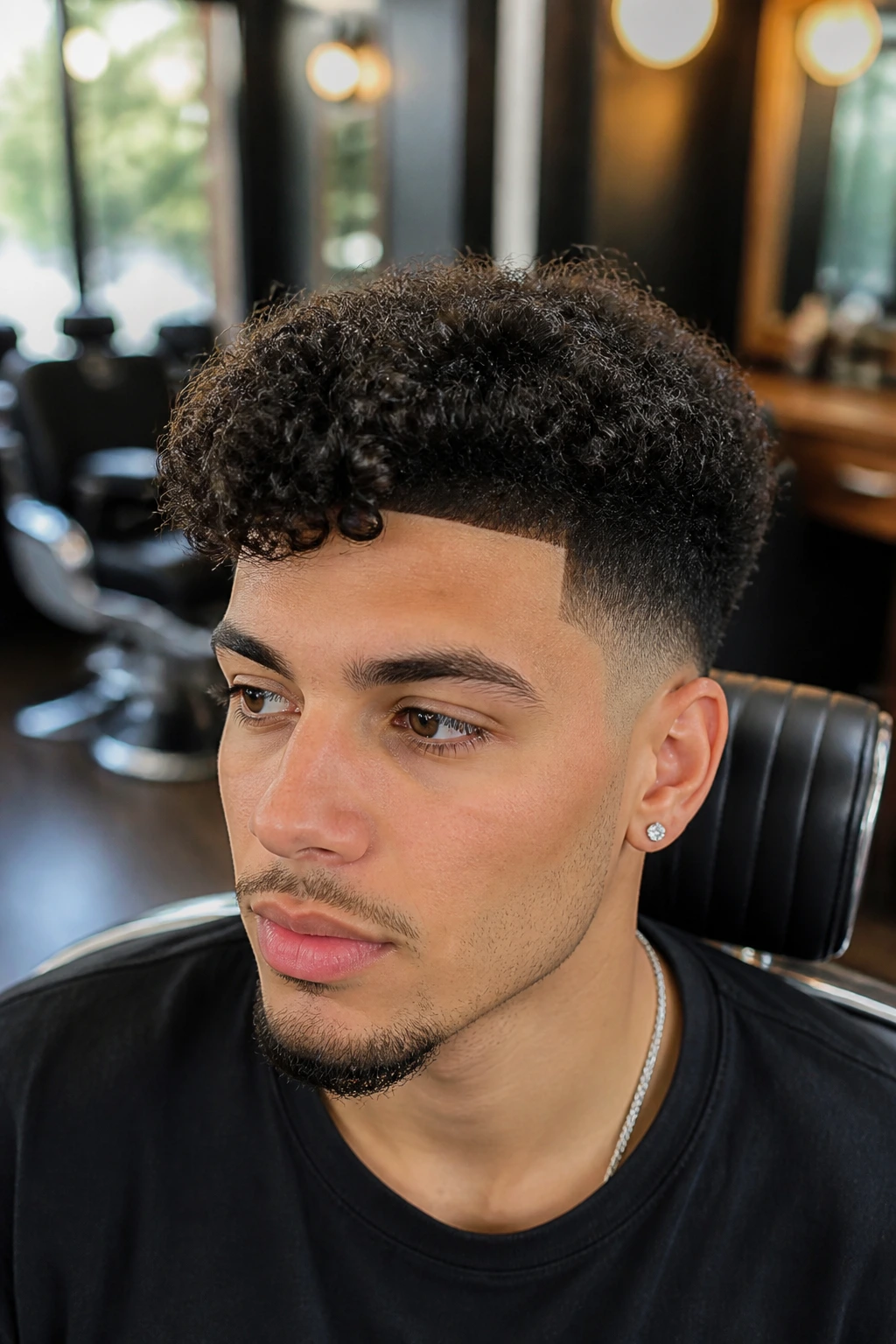
This cut puts the focus where the face needs it most: the front. The shape-up gives the hairline a crisp border, while the top keeps enough curls to push forward and frame the forehead. It’s a strong move when the front of your hair is dense and you want that growth pattern to look deliberate.
The front curls should not be hacked too short. Leave enough length for them to stack, then clean the hairline around them. If the line-up gets too squared off, the haircut can look stiff. A slightly softened front edge often works better with curls because it lets the hairline and the texture talk to each other instead of competing.
This is a useful style for people who like a strong outline but still want movement. The front becomes the focal point. The sides stay obedient. The result can look polished on purpose, which is not the same thing as looking overly done.
20. Drop Taper Fade with Natural Volume
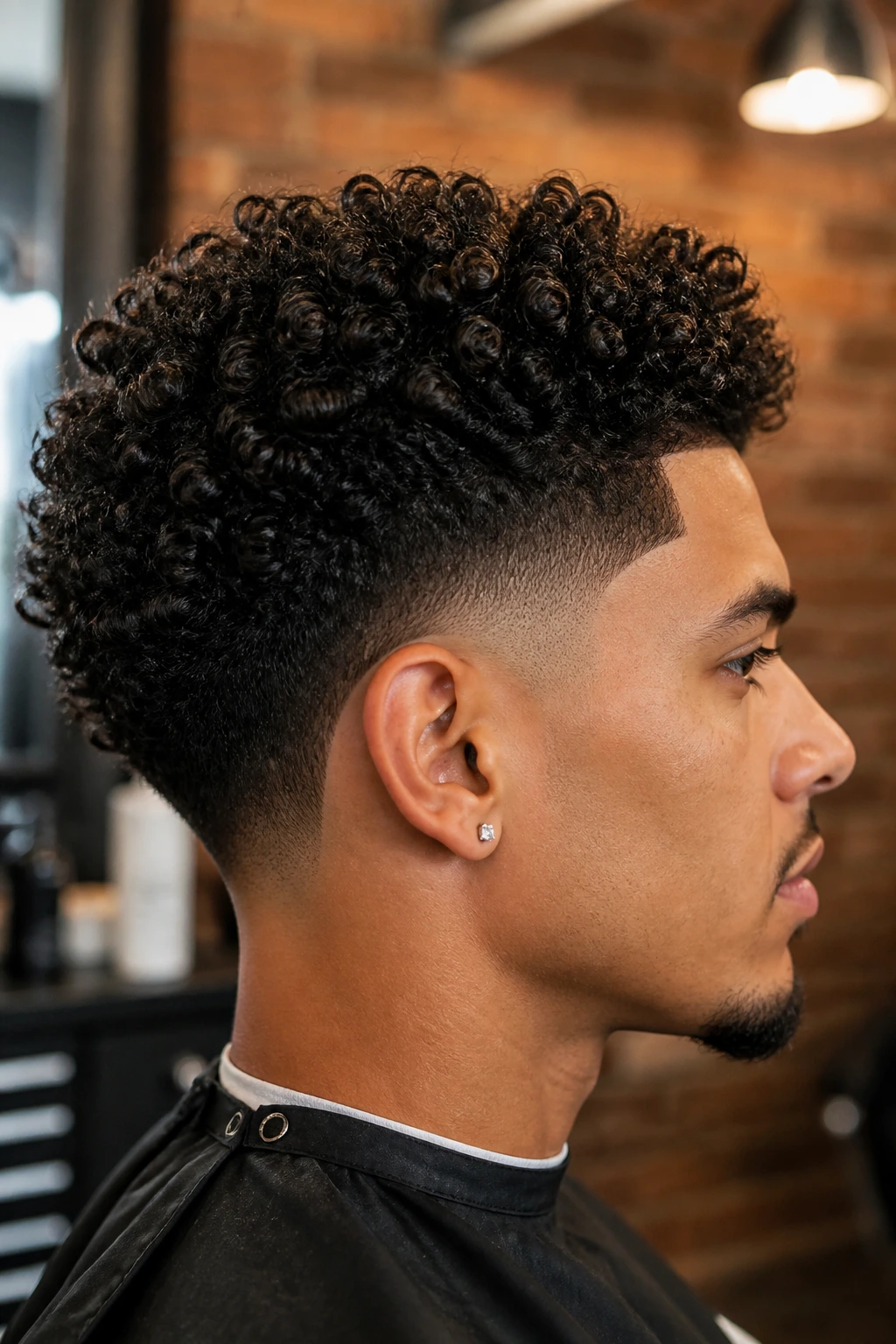
This is the most balanced cut in the group, and that’s why I end with it. The drop taper keeps the fade low and curved, then blends the edges without stripping the whole side down. The top keeps its natural volume, so the curls still look like curls, not a uniform cap of texture.
I like this cut because it does not ask the hair to become something else. It just trims the frame. That frame lets loose curls, medium ringlets, or even thick waves sit in a shape that feels easy. You can wear it with a side push, a forward curl, or a soft lift at the crown. It adapts.
Ask for a gentle drop around the back, a tapered neckline, and enough length on top to show the curl pattern when dry. If your hair grows fast, this is one of the cuts that still looks acceptable after a few weeks because the fade transitions slowly. That matters more than people admit.
What Makes a Curly Fade Hold Its Shape
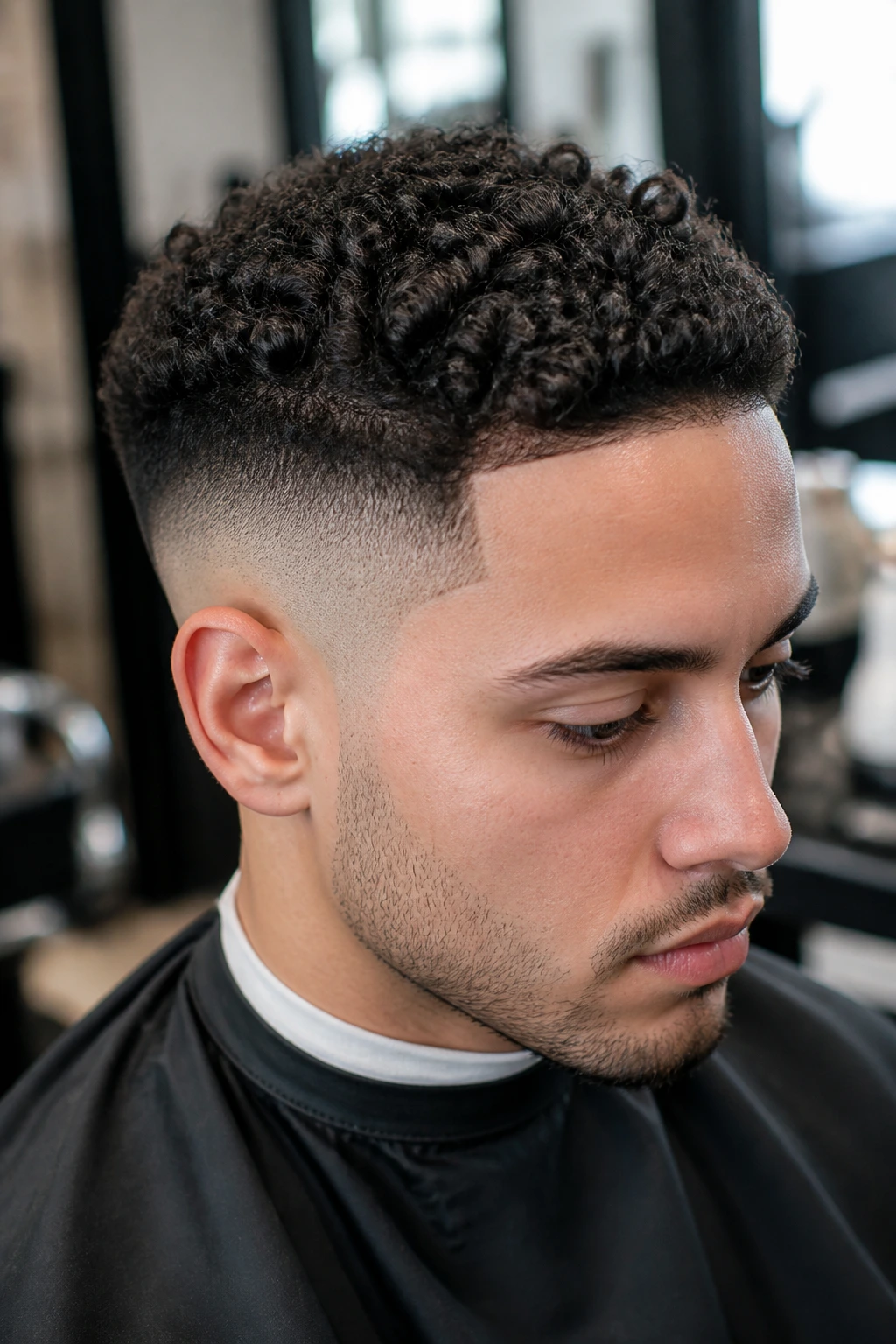
A curly fade looks good only when the haircut and the hair’s own movement agree with each other. That’s the part people skip. They focus on the fade height, maybe the line-up, but not on how curls behave after the first wash. And that’s where the shape either settles in or starts drifting sideways.
The big variable is shrinkage. Loose curls might drop only a little. Tight coils can shrink enough to change the whole outline. A barber who cuts curly hair well usually leaves more length on top than the visual result suggests, because they know the curls will tighten once they dry. If you cut for the wet look only, you’ll end up too short.
Density matters too. Thick curls need bulk removed in the right zones, usually around the temples, behind the ears, and through the lower back. Fine curls need the opposite treatment: less aggressive tapering, more softness, and careful layering so the top doesn’t look thin. A good curly fade should feel lighter, not empty.
The most useful question to ask is simple: Where does your hair get wide? Some heads puff out at the temples. Some at the crown. Some at the nape. Once you know the trouble spot, the fade stops being generic and starts doing real work.
Essential Tools for Cutting and Styling Curly Fades
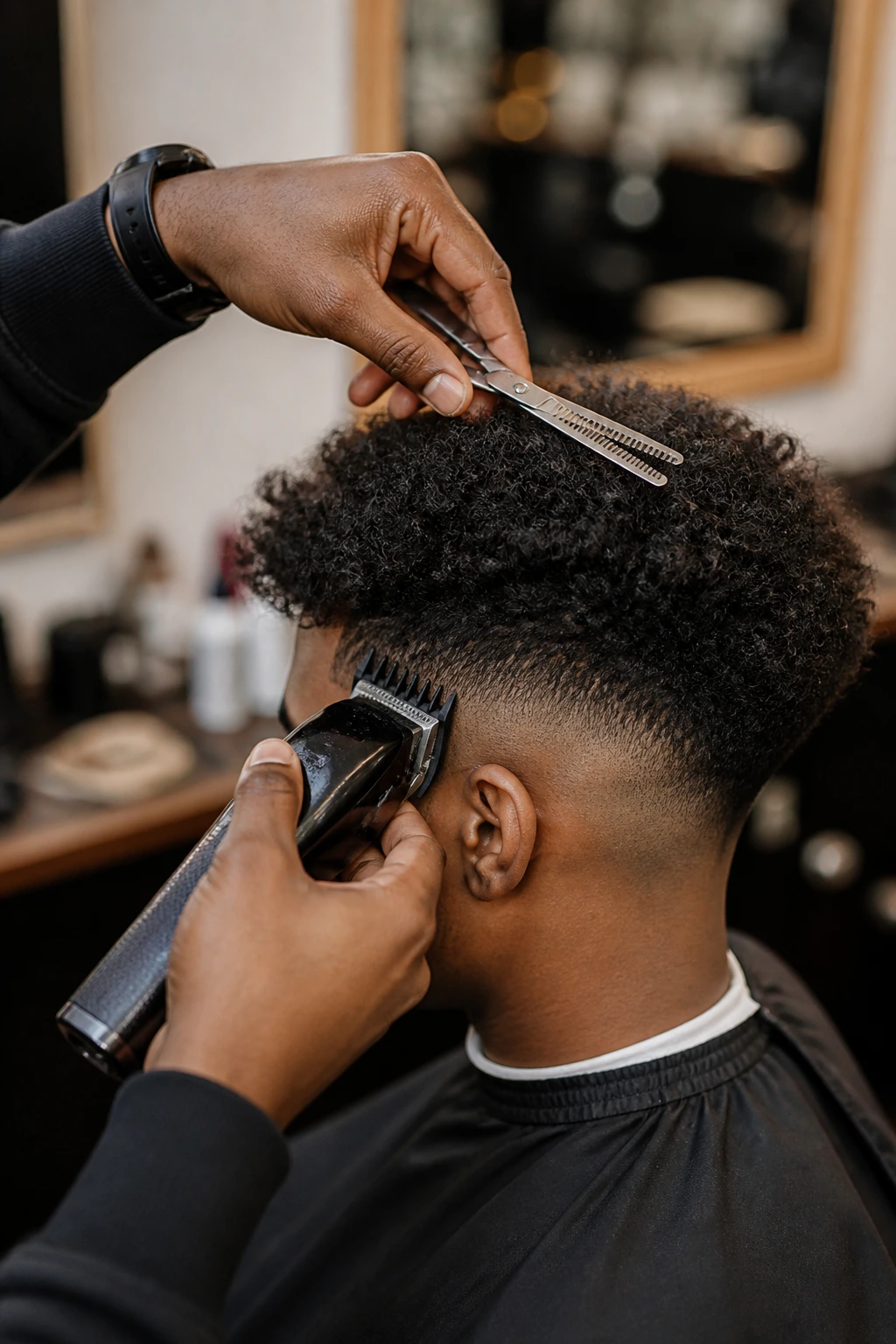
- Clipper set with guards #0.5 through #4: Most curly fades live in this range, and the half-guards matter more than people think.
- Detail trimmer: Clean edges around the temples, sideburns, and neckline need a sharper tool than a main clipper.
- Shears and thinning shears: Shears are safer for shaping the top; thinning shears should be used carefully, or curls get frizzy.
- Spray bottle: Damp hair is easier to cut evenly, especially when the curl pattern changes from dry to wet.
- Wide-tooth comb or pick: Good for lifting curls without tearing through them.
- Diffuser attachment: If you dry curly hair with a regular nozzle, you usually blow the pattern apart.
- Curl cream or leave-in conditioner: Keeps the top soft and helps it spring instead of puff.
- Light mousse or gel: Useful when you want the curl shape to hold a little longer.
- Hand mirror: You need one to check the back taper and the fade around the ear line.
- Neck duster: Not glamorous. Useful anyway.
How to Ask for the Right Fade Height at the Barber Chair
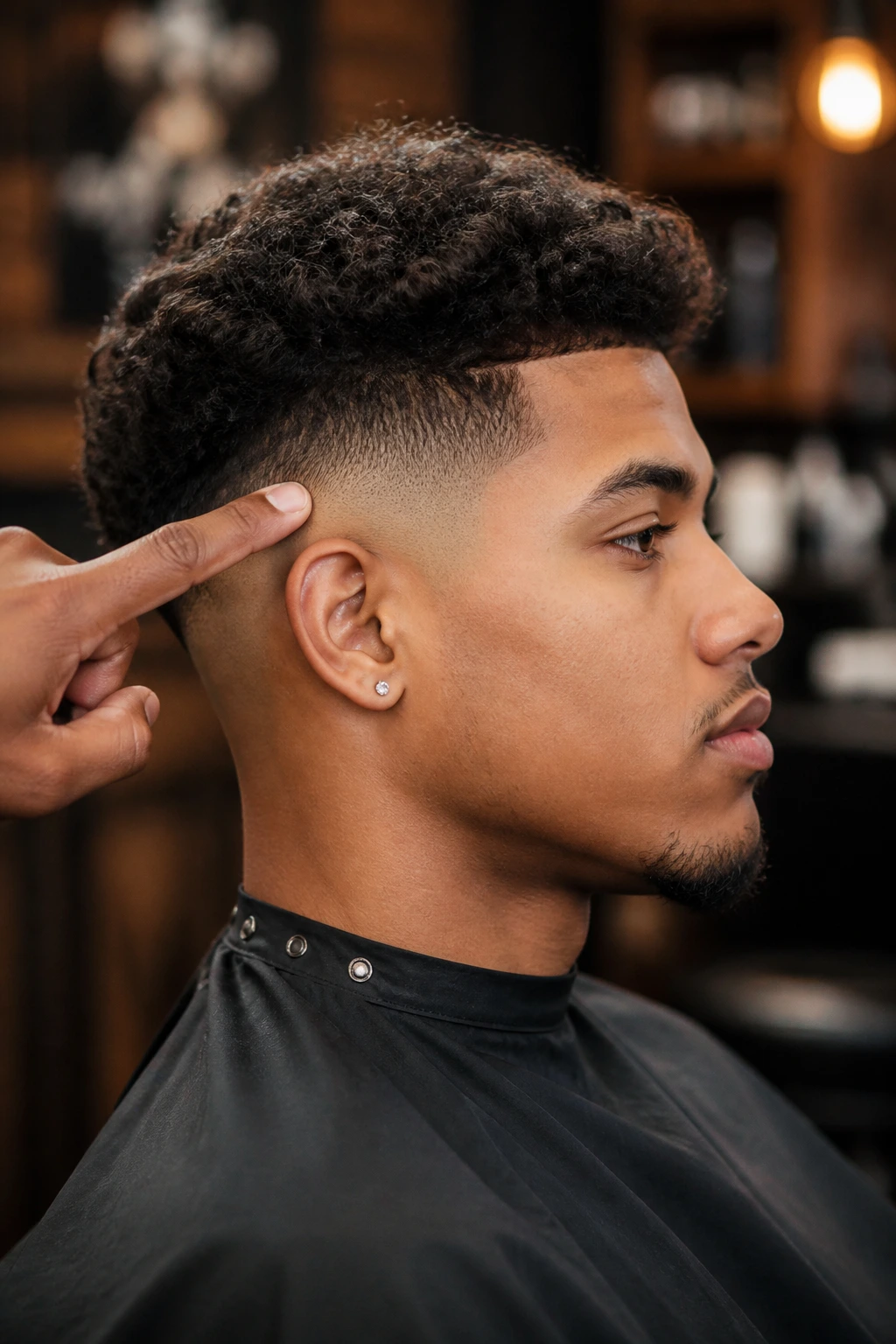
Do not just say “low fade” and hope the barber guesses the rest. Curly hair needs clearer direction because the top and sides affect each other so much. If you’ve got a photo, bring one, but make sure it shows the same curl pattern and hair density you actually have. A photo of a model with looser curls can mislead everybody in the room.
Start with the top length. Say how many inches you want to keep, or point to the length you’d like. Then name the fade height: low, mid, high, or drop. If you care about the temples, say so. If you want the neckline clean but not shaved bare, say that too. The more specific the request, the less room there is for guesswork.
A useful script sounds like this: “Keep about 3 inches on top, start the fade low, blend softly at the temples, and don’t take the top down too much because my curls shrink.” That one sentence gives the barber a lot to work with. Short. Clear. No drama.
Smart Styling Moves That Keep the Bounce
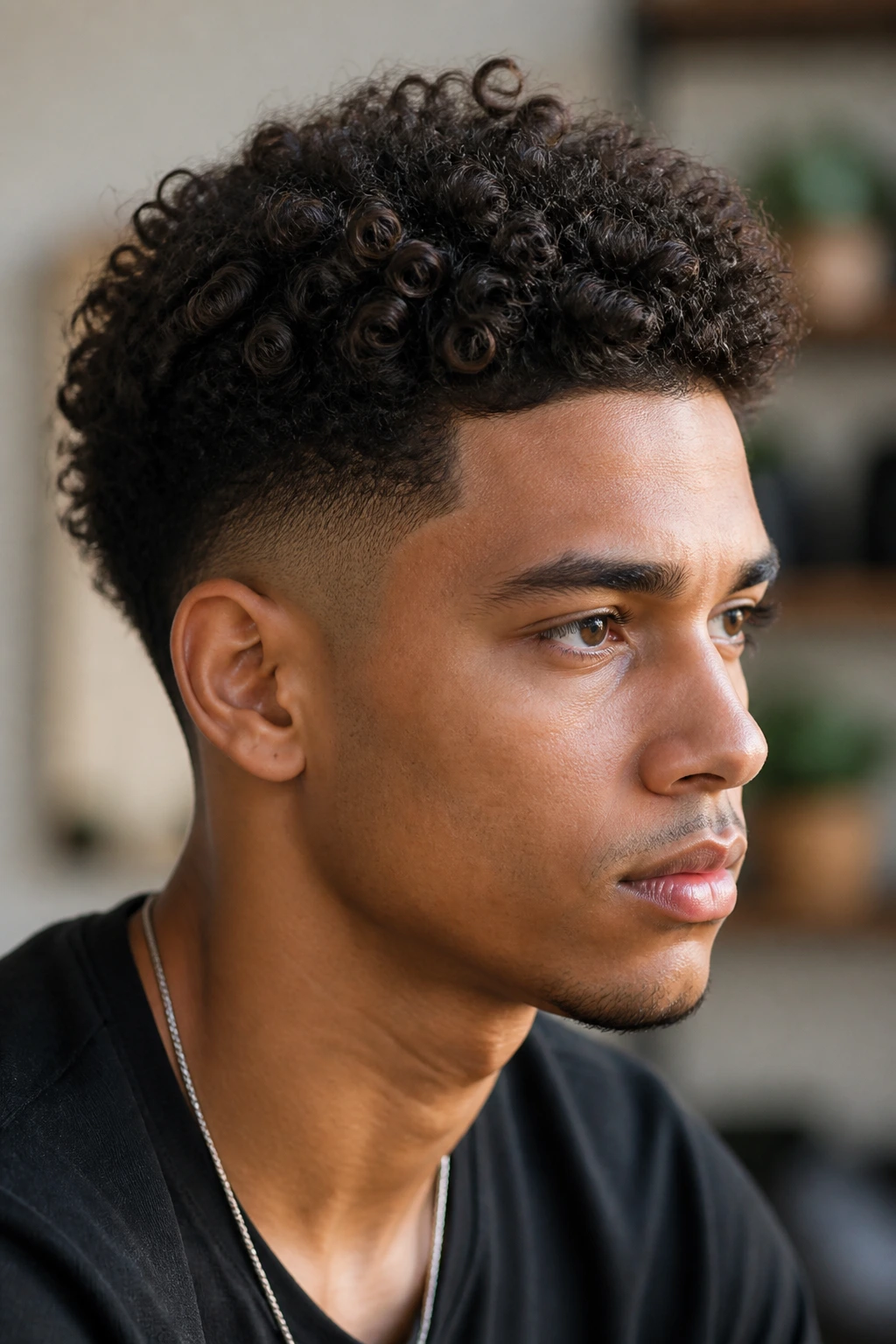
Curly fade haircuts look best when the styling stays light enough to let the pattern move. Heavy products flatten the top and make the fade feel disconnected from the rest of the haircut. I’m a bigger fan of leave-in conditioner, a small curl cream, and a little mousse than I am of thick, greasy products that sit on the surface.
Use product on damp hair, not dripping wet hair. That’s where a lot of people go sideways. If the hair is soaked, the product spreads thin and the curls dry in weird clumps. If the hair is too dry, the cream sits on top and leaves the curls looking dull. Damp is the sweet spot.
Less product beats more product on most curly fades. Start with a dime-size amount if the hair is short, maybe a nickel-size amount if the top is longer. Emulsify it in your palms first. Then scrunch, rake, or twist lightly depending on your curl type. If you see white residue, you used too much. If the curls frizz out by noon, you probably used too little or dried them too roughly.
Keeping the Fade Fresh Between Cuts
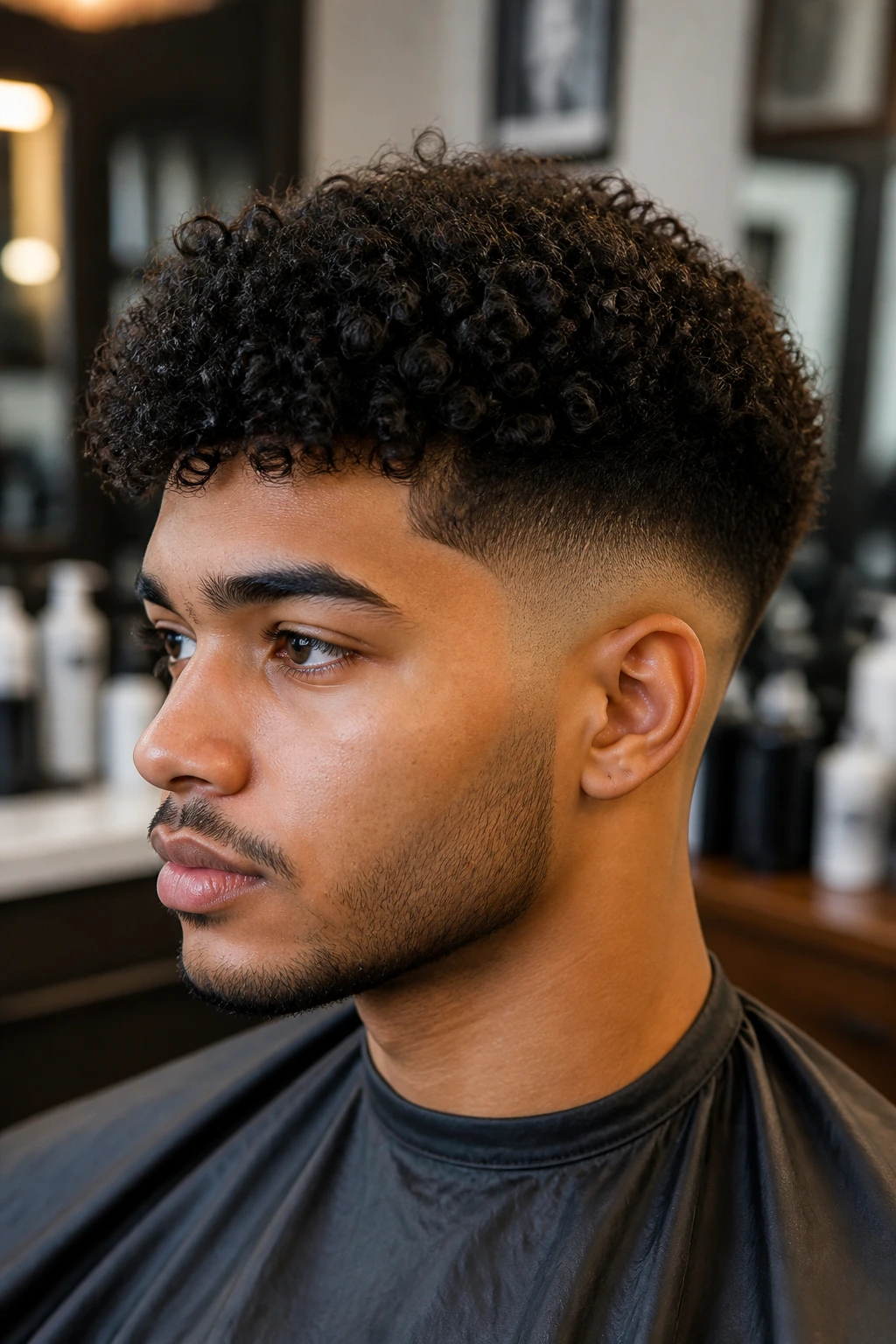
The fade is usually the first thing to go, not the curls. Sideburns start thickening. The neckline softens. The temple blend loses that clean edge. That does not mean the haircut is failing. It means hair grows. Annoying, but true.
A light cleanup every 1 to 2 weeks helps a curly fade look crisp, especially if the sides are very short. If the fade is softer, you can stretch that a little longer. A full shape-up or re-fade usually lands well around 3 to 4 weeks, depending on how fast your hair grows and how sharply you like the outline.
Wash the top with a gentle shampoo when it needs it, not every time you feel like being extra clean. Curly hair dries out fast. Conditioner matters more than most people want to admit. If the hair starts looking dull and rough, the fade will seem less sharp even if the barber work is fine. The top and the sides affect each other. They always do.
Common Mistakes That Flatten Curly Fades
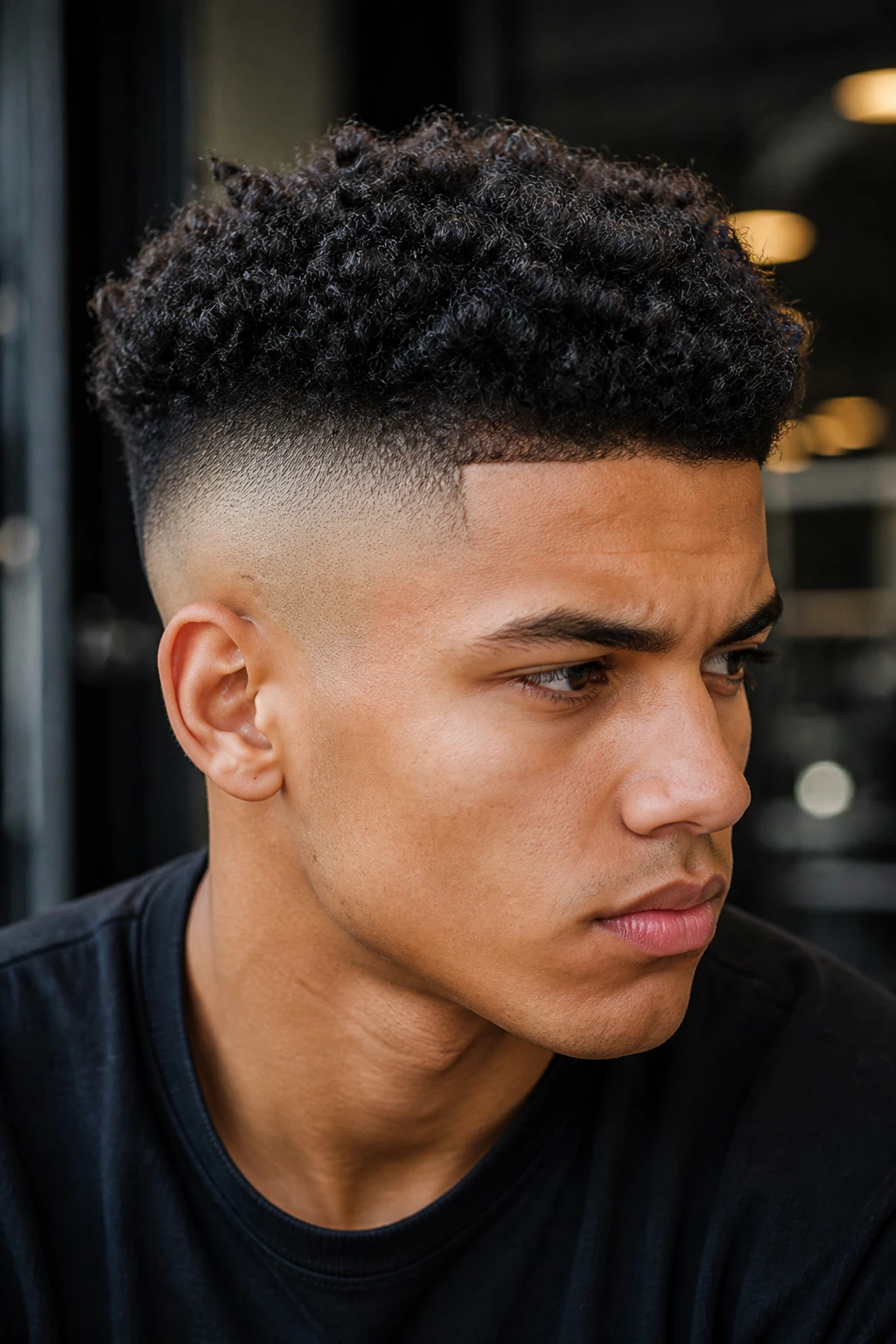
- Cutting the top too short after it’s wet: Curly hair shrinks, and a top that looks fine wet can come back much tighter and smaller once dry.
- Taking the fade too high for the curl density: On thick curls, a high fade can make the top look like a cap floating over bare sides.
- Using heavy product every day: Thick cream or pomade can weigh curls down and make the fade look greasy instead of clean.
- Ignoring the temple and nape areas: Those spots puff first, and if they’re left alone, the haircut loses shape fast.
- Forgetting to shape the back: A curly cut can look good from the front and messy from behind if the nape is never cleaned up.
- Rushing the line-up: A harsh, uneven edge is more obvious on curly hair because the texture already creates visual movement.
Variations and Adaptations to Try
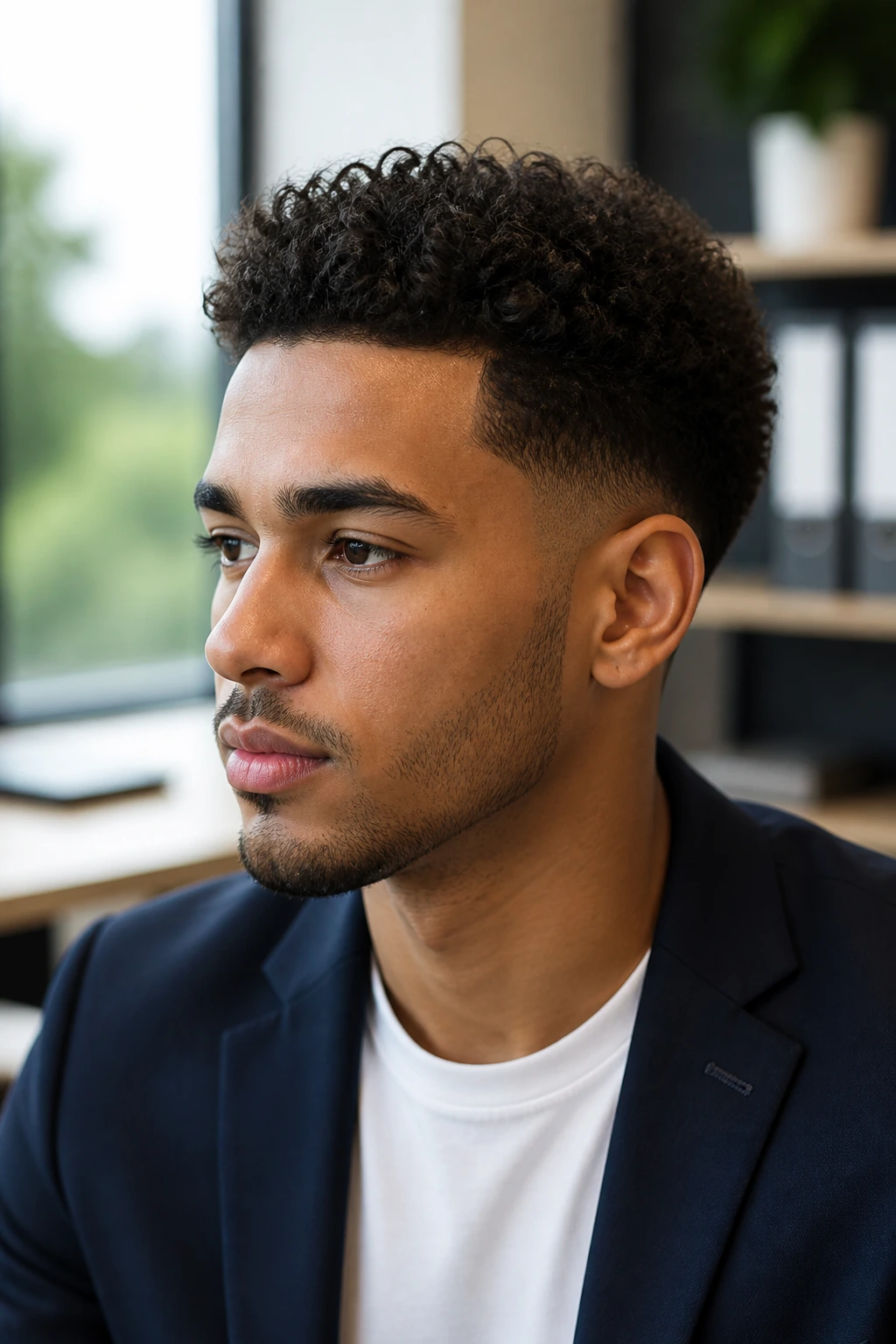
Cleaner Office Version: Ask for a softer taper around the temples and a rounded top instead of a hard skin fade. It still looks neat, but it reads less aggressive.
Long-Top Texture Version: Keep 4 to 6 inches on top and use a diffuser so the curls stack higher. This works well if you like volume and don’t mind more styling time.
Low-Maintenance Short Version: Cut the top down to about 1.5 to 2 inches and keep the fade low. Less styling. Less fuss. Still enough curl to show texture.
Statement Cut Version: Push the fade higher and pair it with a burst or mohawk shape. This gives you more contrast and a stronger outline, especially on dense curls.
Soft Grow-Out Version: Choose a shadow fade or taper fade rather than skin. The grow-out is kinder, and the haircut stays wearable longer between barber visits.
Questions People Ask Before They Sit in the Chair
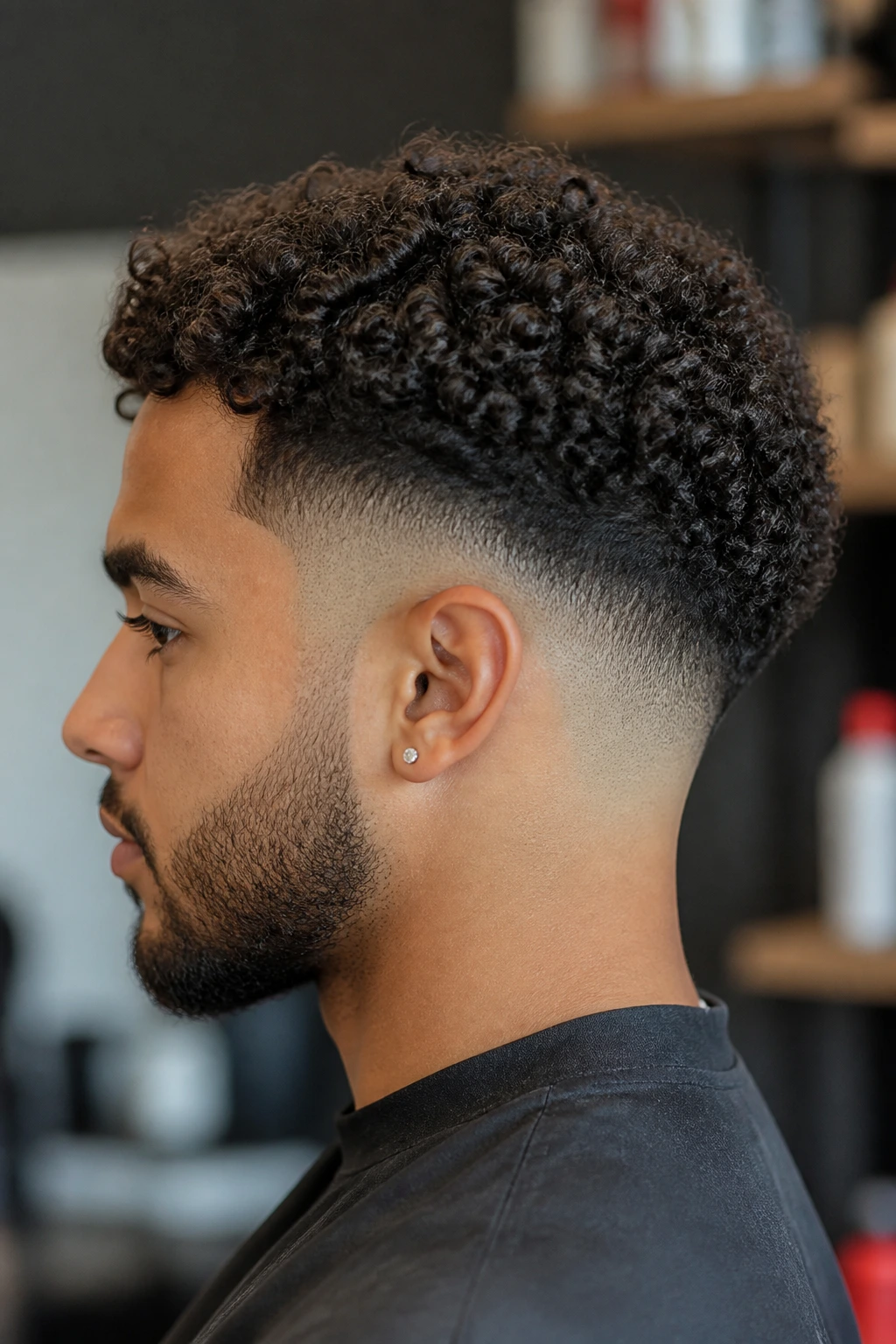
Will a fade make my curls look thinner?
Not if the barber leaves enough length on top and keeps the blend honest. The fade should remove bulk at the sides, not steal volume from the curls themselves.
What fade is best for loose curls?
Low and mid fades usually work best because they keep the shape softer. Loose curls can look too exposed with an aggressive skin fade if the top is not long enough.
What fade is best for tight coils?
High skin fades, burst fades, and taper fades all work well, depending on how much contrast you want. Tight coils can handle a sharper outline because the texture already carries the cut.
How much length should I keep on top?
Most curly fades need somewhere between 2 and 5 inches on top, but the curl pattern changes that number fast. Tight coils need less raw length than loose spirals to look full.
Can I wear a curly fade without product?
Yes, but the result depends on your curl type. Some hair holds its shape fine with just water and a quick scrunch. Others frizz or collapse without a little leave-in.
How do I stop the sides from puffing out?
Keep the temple and nape areas trimmed regularly, and ask for a fade height that matches your density. Heavy curls left too wide at the bottom will always try to flare out.
Does a curly fade work with a receding hairline?
It can, if the line-up stays soft and the barber does not force a sharp front edge. A shape-up that follows the natural hairline usually looks better than one that tries to redraw it.
What should I tell the barber if I want bounce, not stiffness?
Say you want the top shaped with shears, not overcut with clippers, and ask for enough length to let the curls spring once dry. That one instruction changes the result more than people expect.
Why These Cuts Stay in Rotation
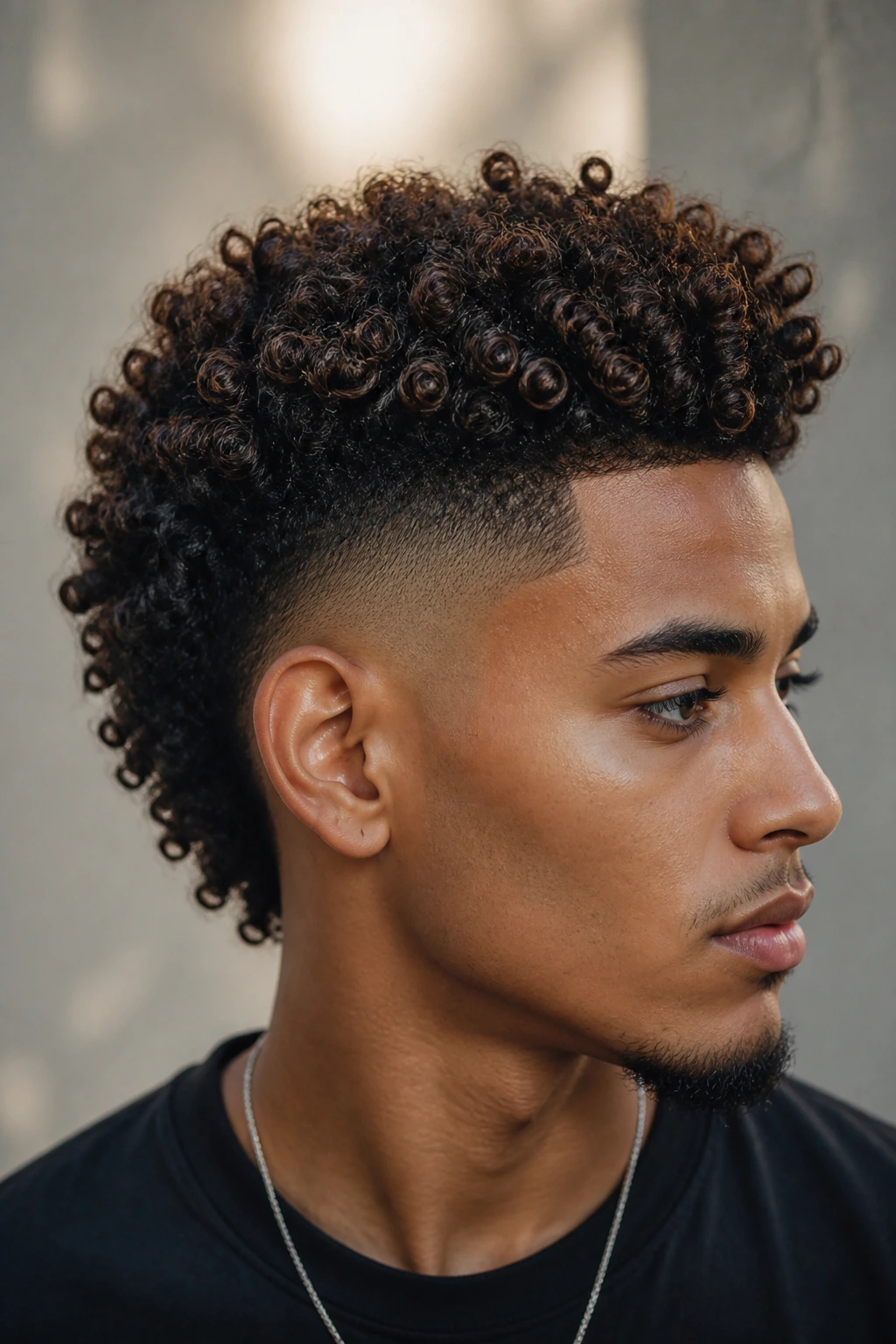
A good curly fade does a rare thing: it gives texture room to behave while still cleaning up the parts that usually turn messy first. That is why the style keeps showing up in barbershops, even though the exact fade height changes from head to head. The haircut works because it solves a real problem. Too much width. Too much bulk. Too little shape.
The best version is the one that matches your curl pattern, your density, and how often you’re willing to keep the edges fresh. Some days that means a low fade and a soft temple blend. Other days it means a high skin fade with a tight coil top. There’s no single correct answer, which is annoying if you want easy rules and useful if you like hair that actually fits your face.
Pick the cut that leaves your curls looking alive on day one and still respectable on day ten. That’s the one worth keeping.
